
Part of the regional summaries: Chagos Archipelago - Salomon / Blenheim / Speakers Bank and Chagos Archipelago
More info
Chagos (NOAA CRW virtual station)BIBL86 is the most turf-dominated reef recorded anywhere in the Chagos Archipelago, with fire coral (Millepora) rather than Acropora as its leading taxon. Coral cover measured 47% with about 10% of coral bleached, and cover varied enormously by depth, from 24% to 66% across the profile. Surveyed on the Living Oceans Foundation's Global Reef Expedition.
🗺 Detailed map of the Global Reef Expedition dive sites, Blenheim Reef, Chagos (Khaled bin Sultan Living Oceans Foundation; opens in a new window)
23 of these 27 photographs are shown beside the text that discusses them under "Site description" below.
Site description
Setting
BIBL86 is a submerged forereef at Blenheim under intermediate exposure, surveyed 23 April 2015 at 27.0 m.
General benthic features
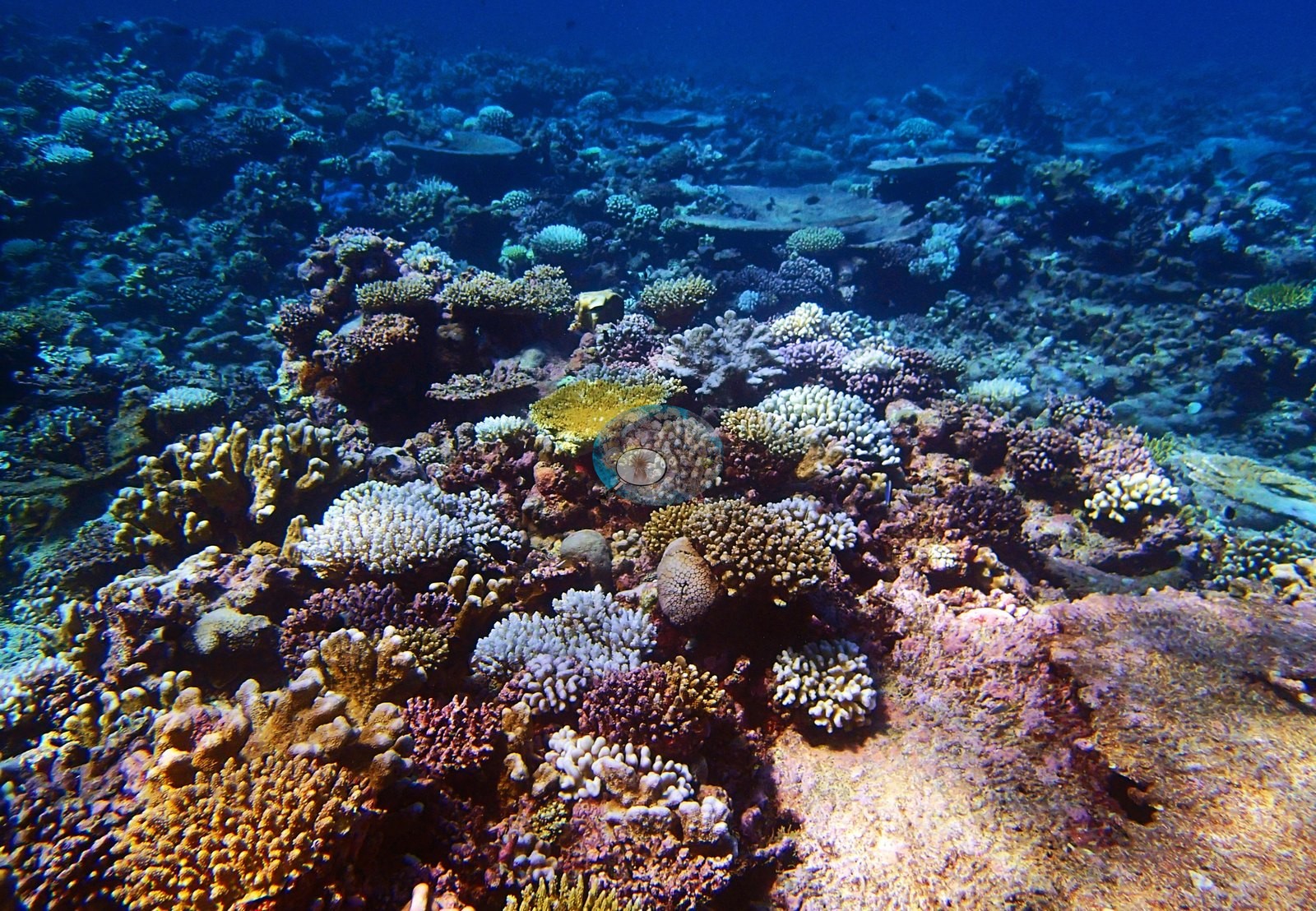
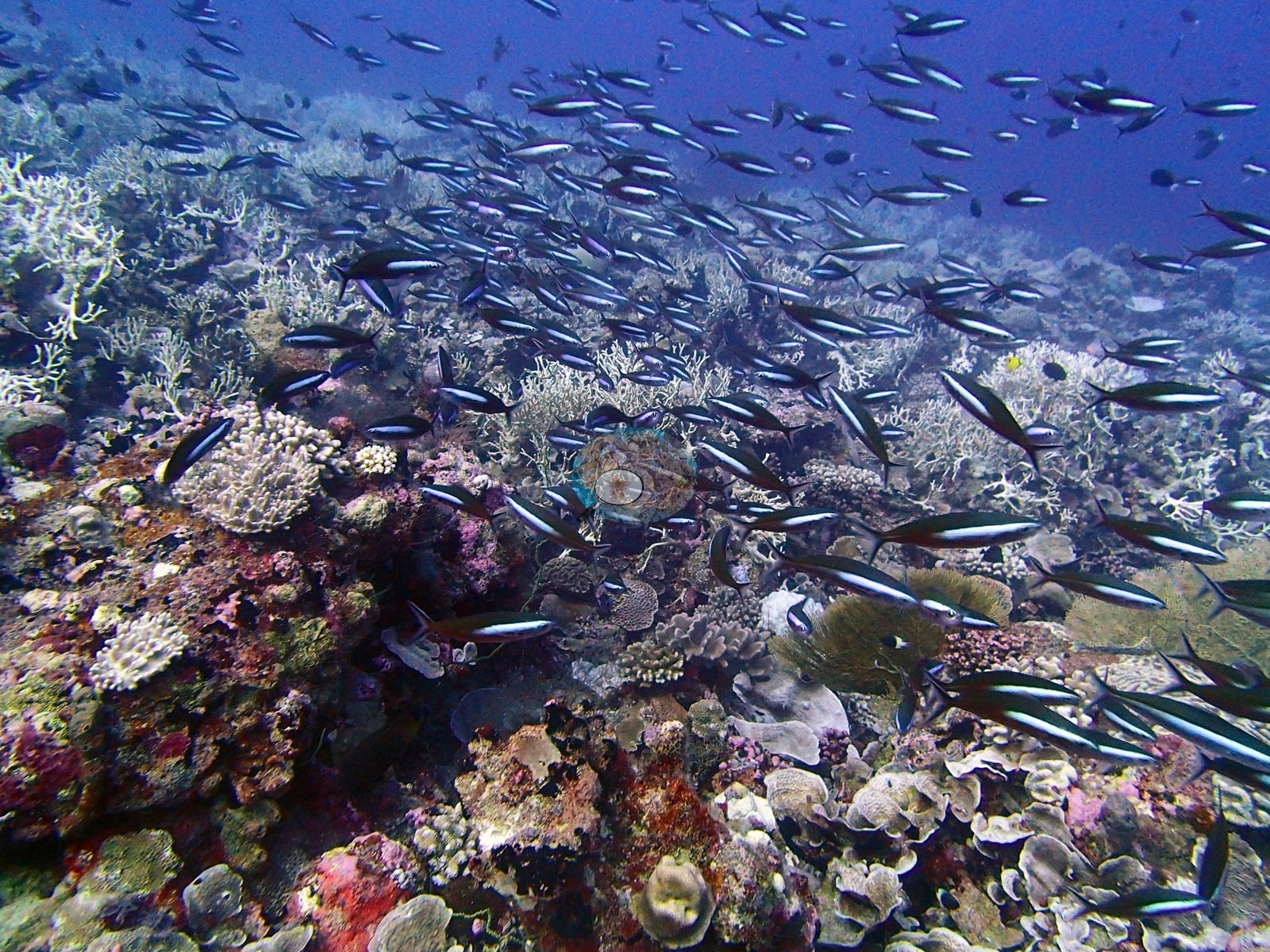
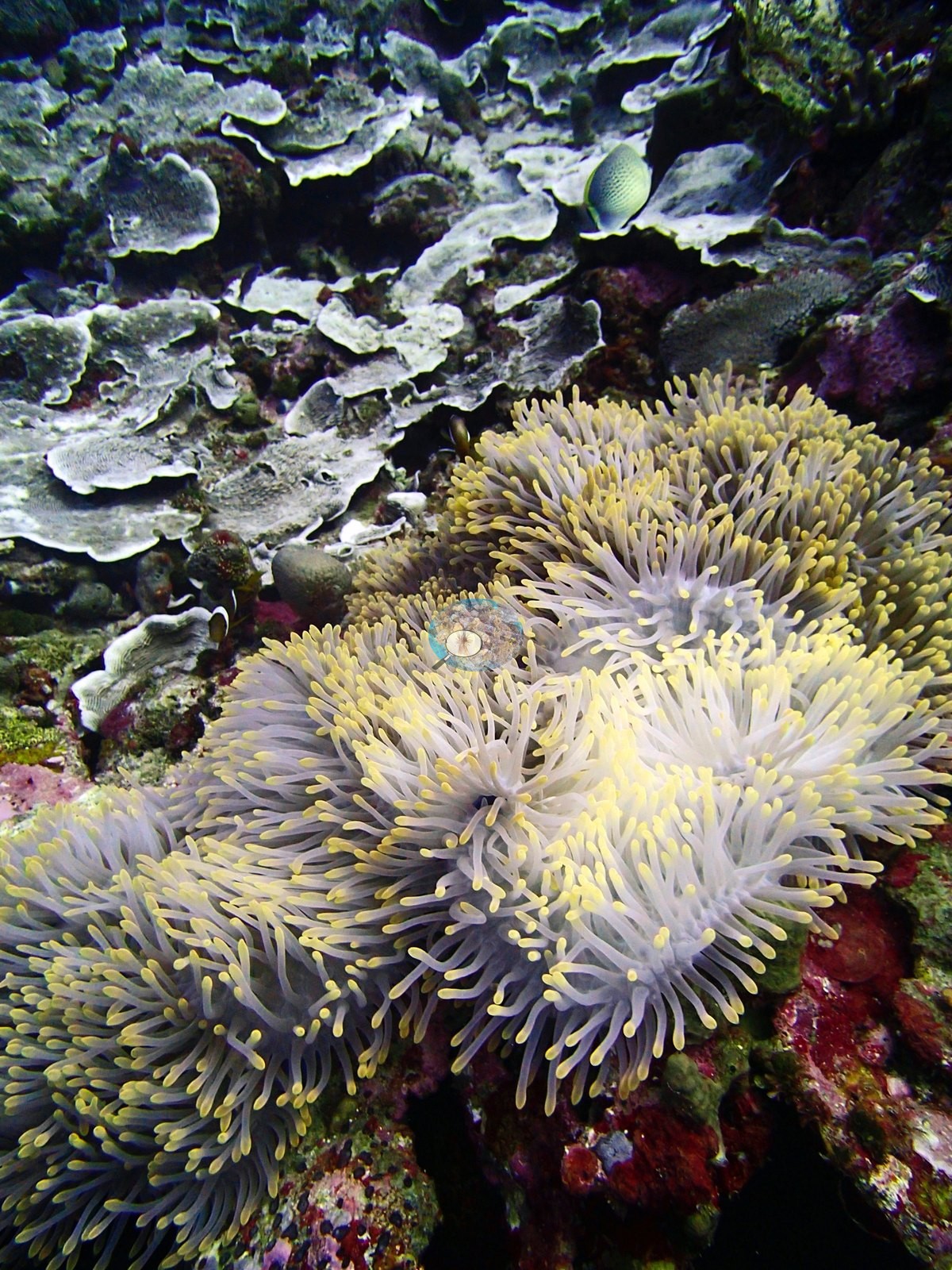
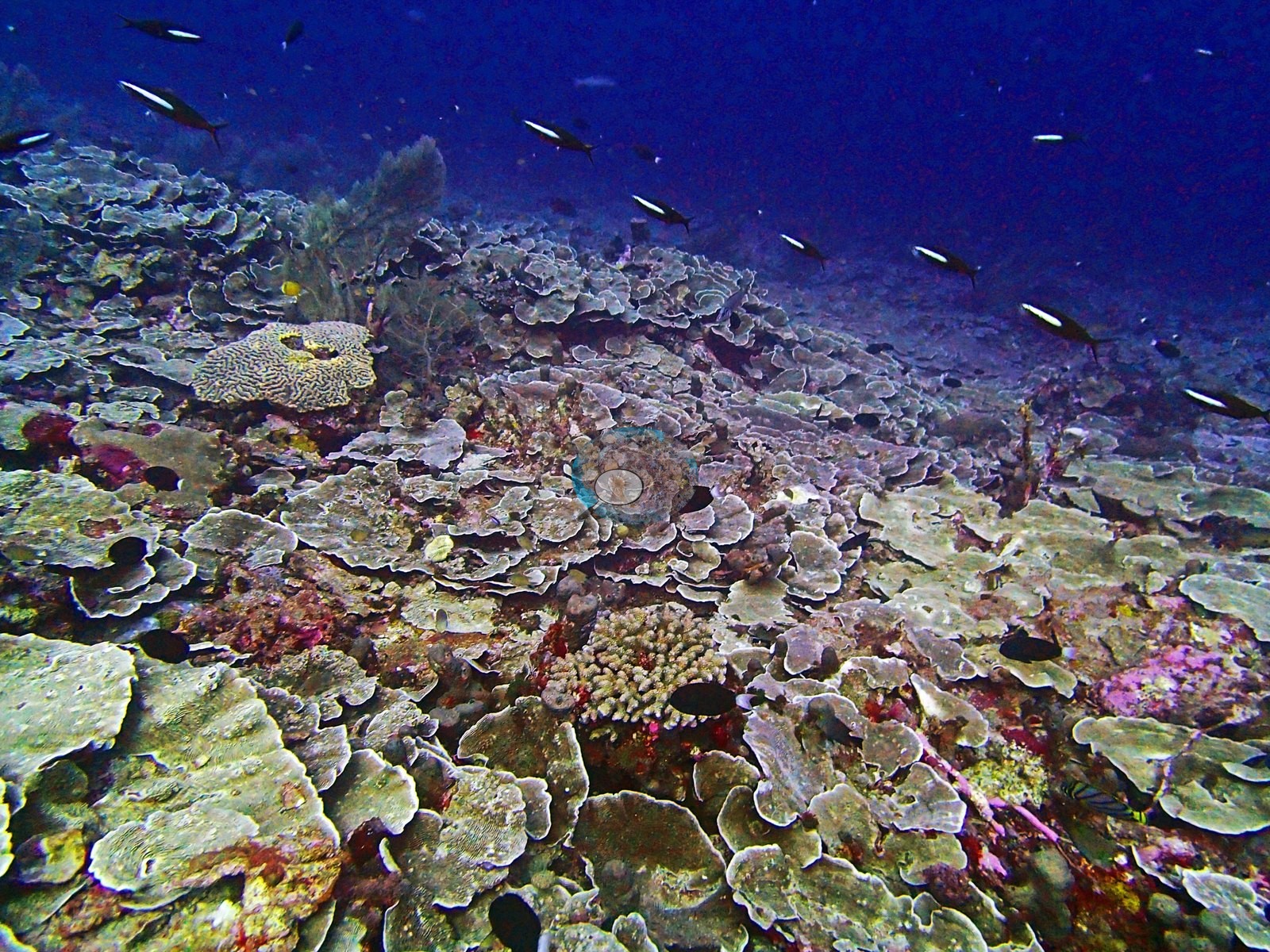
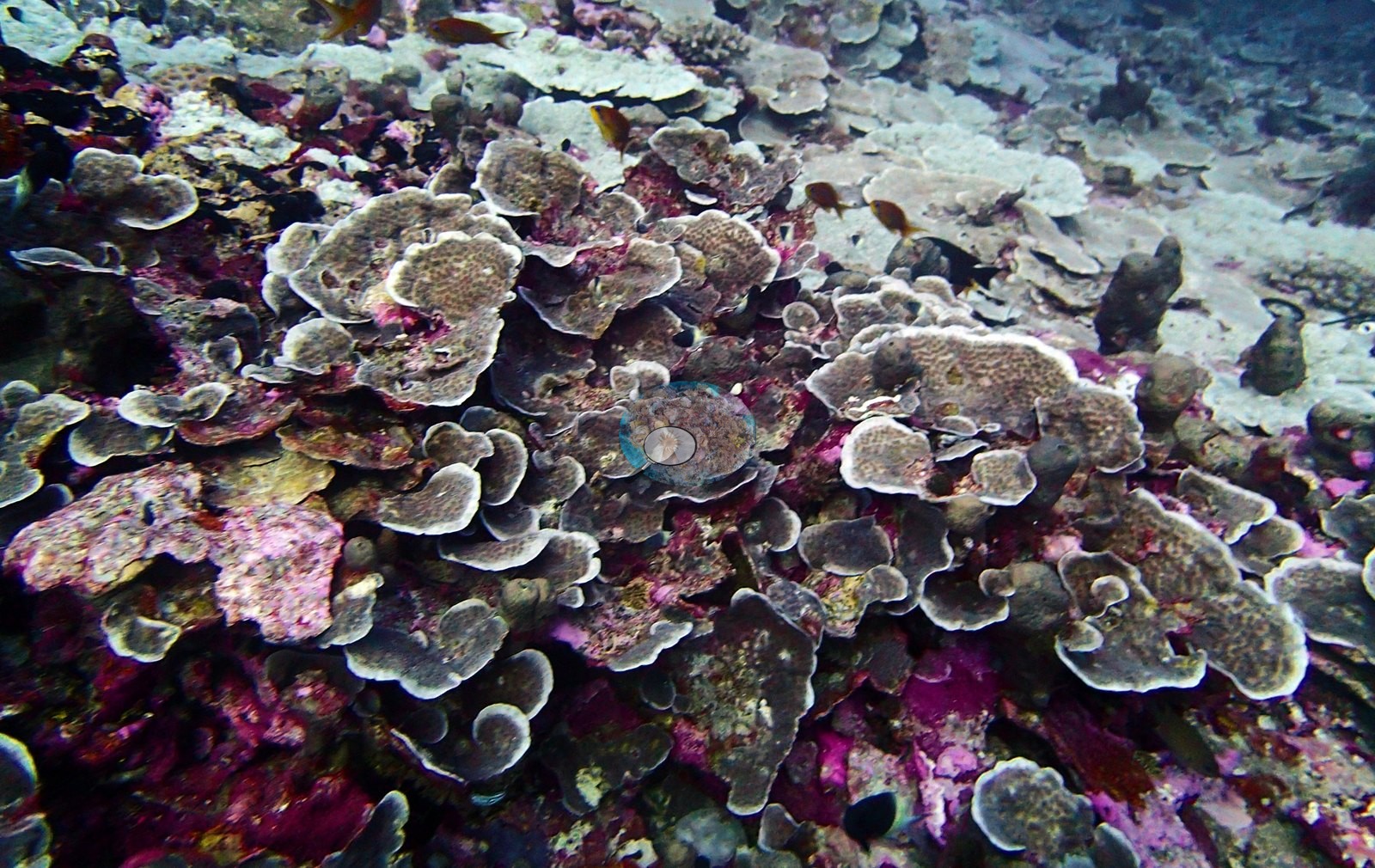
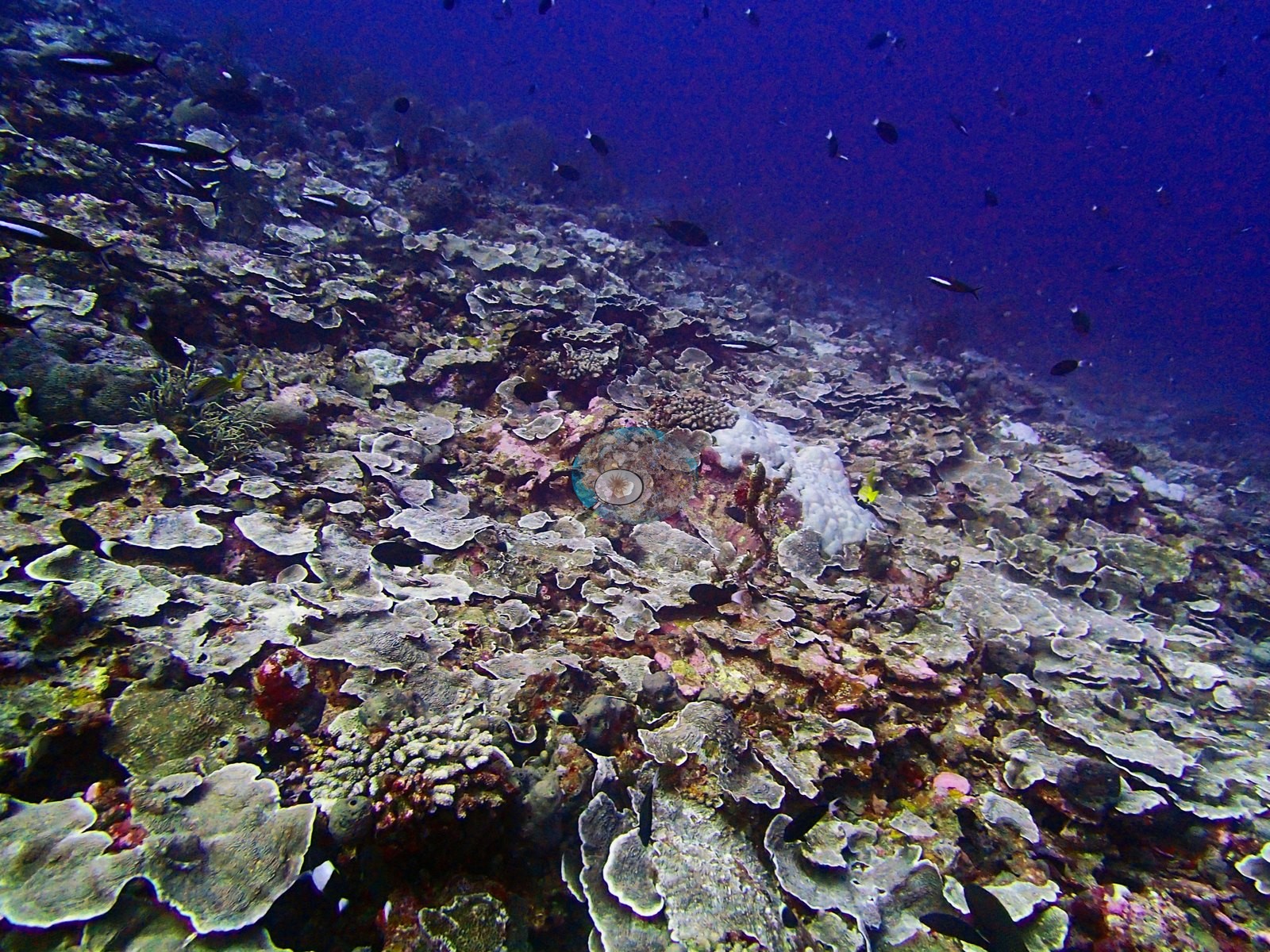
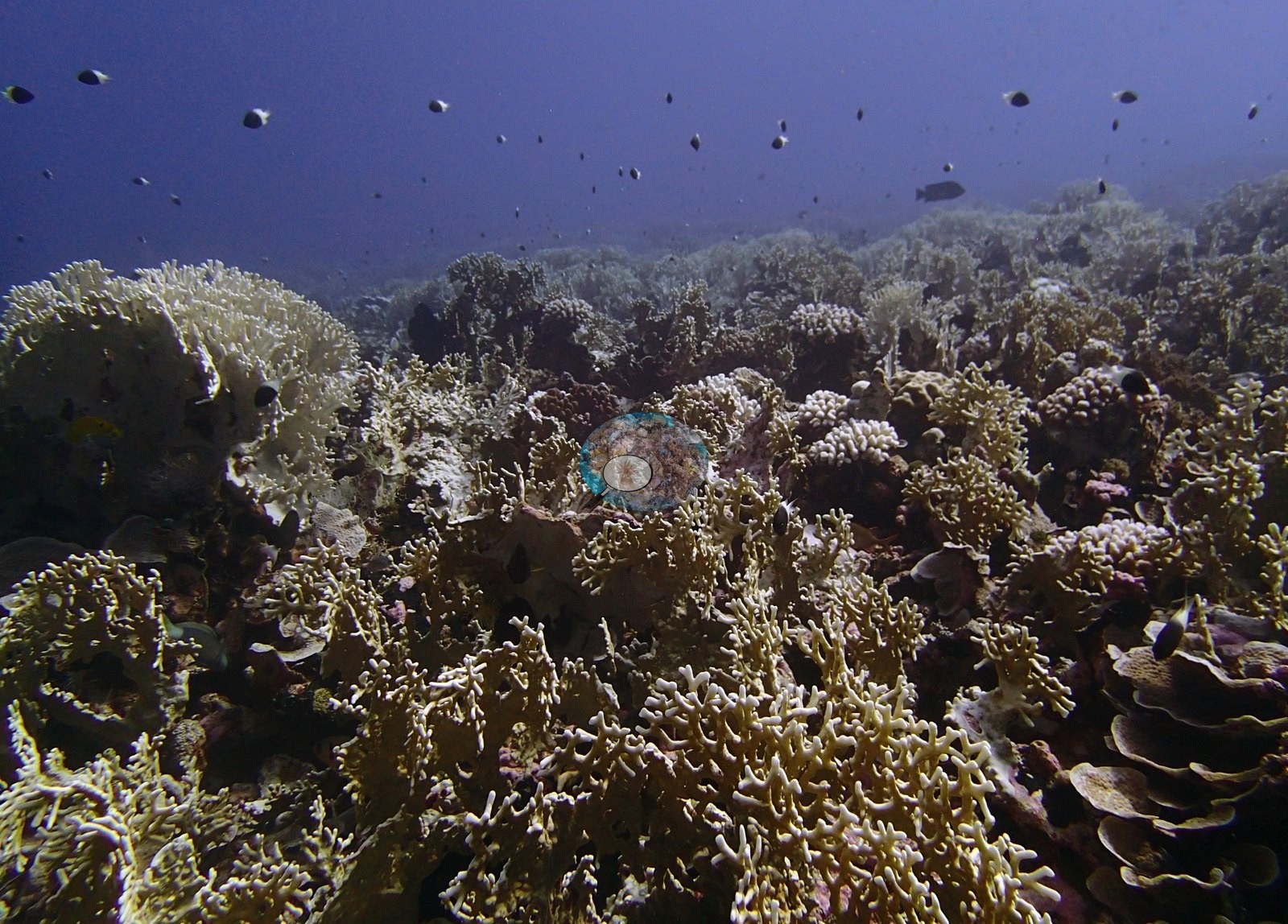
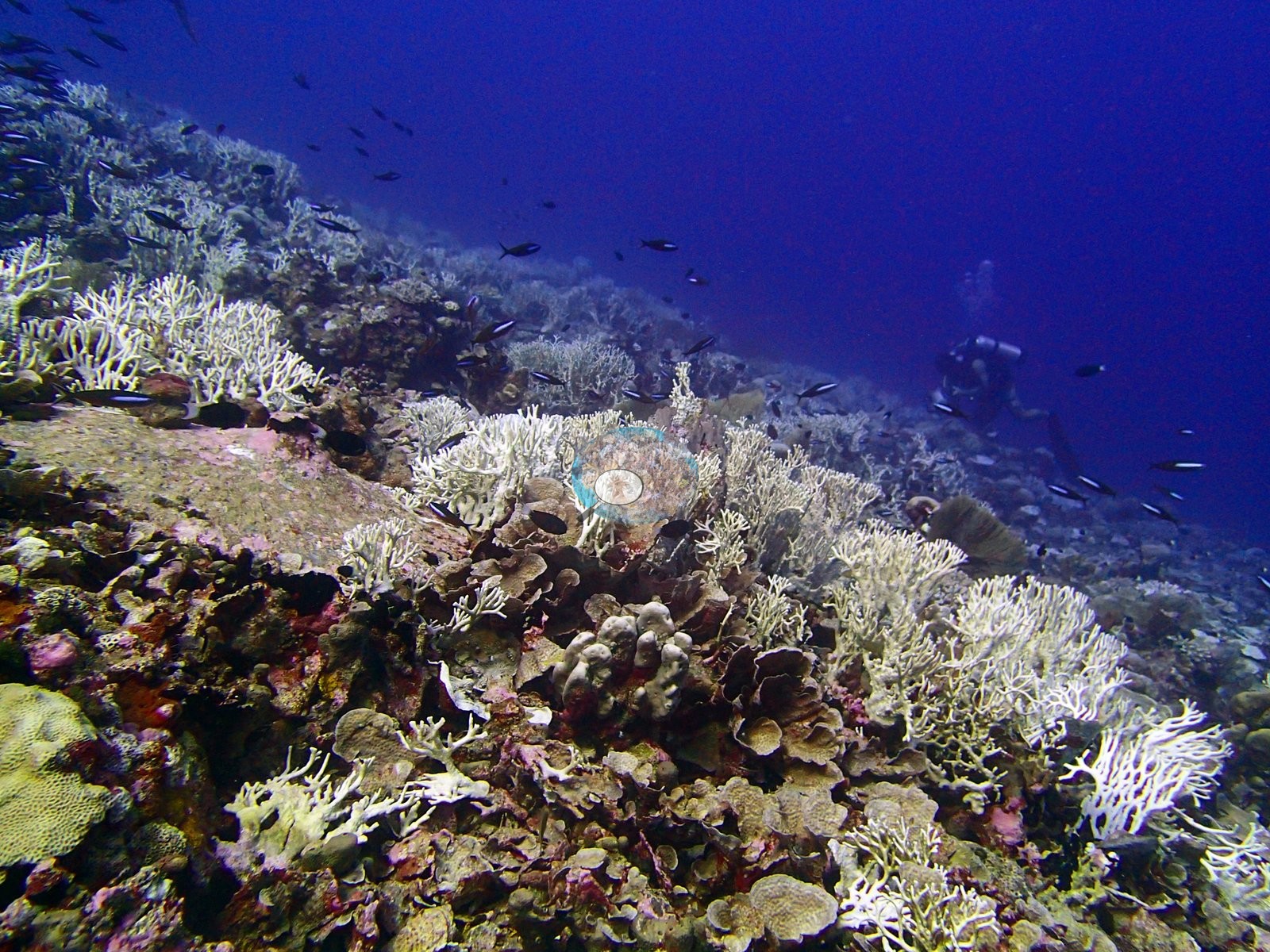
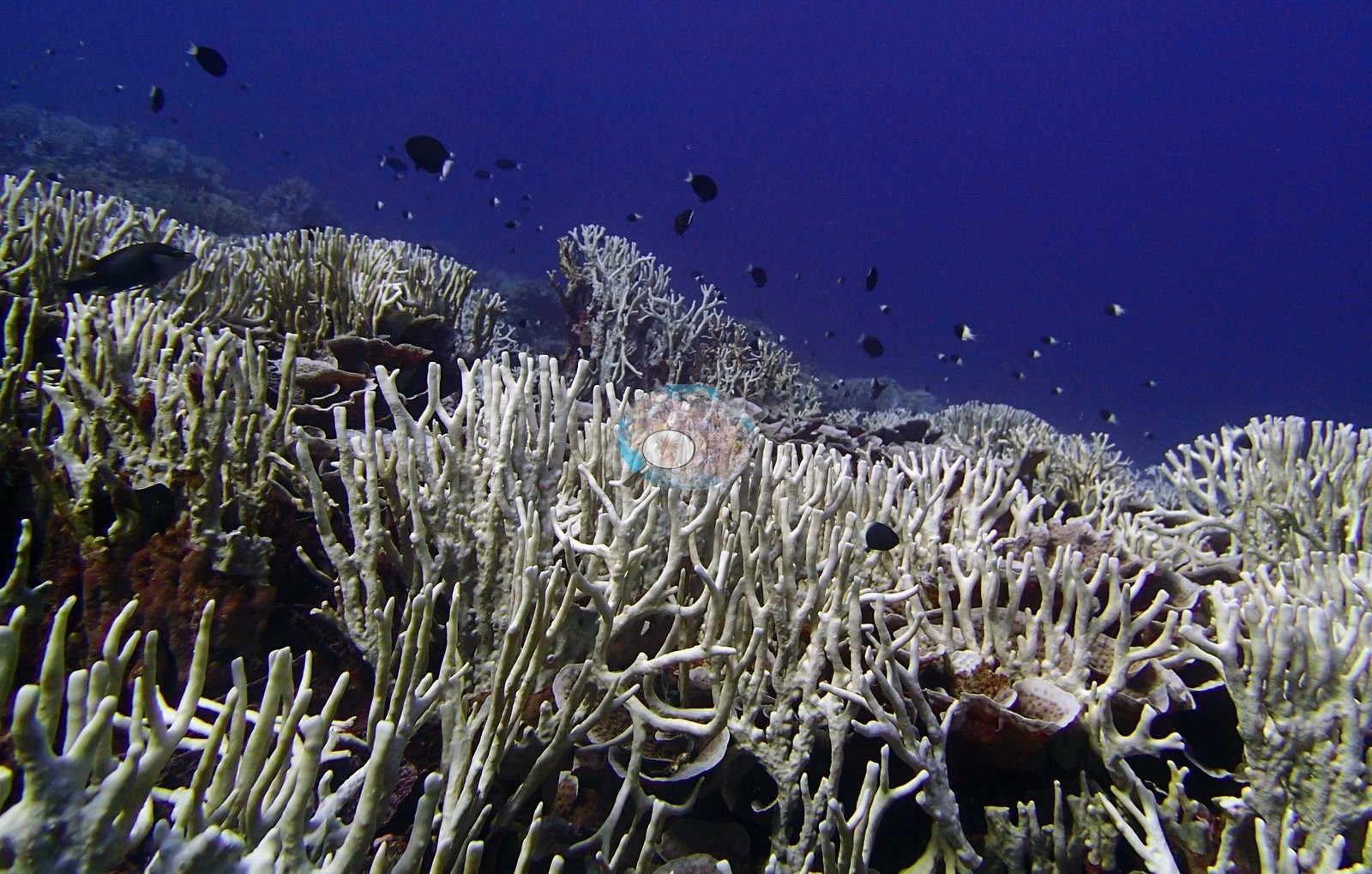
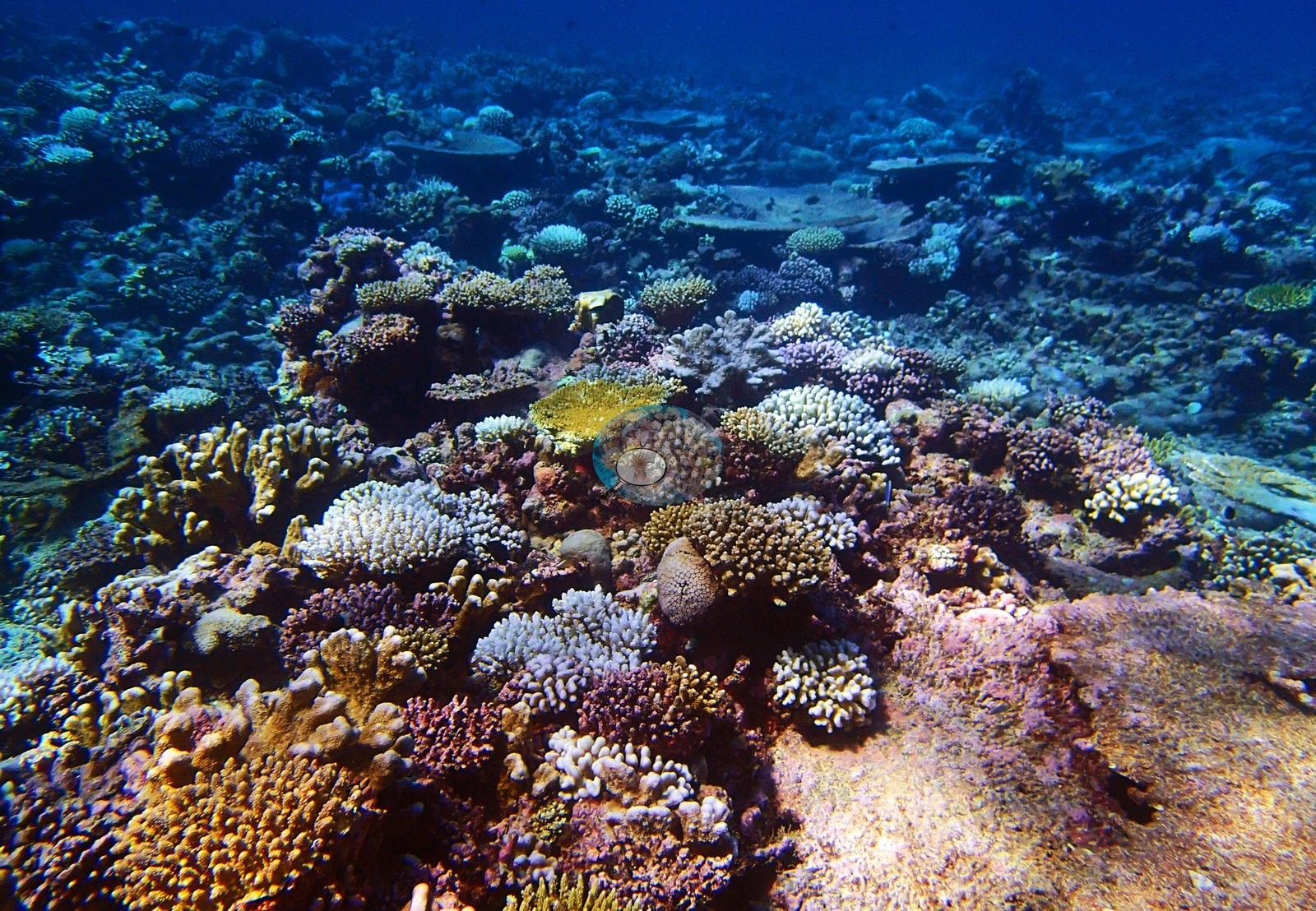
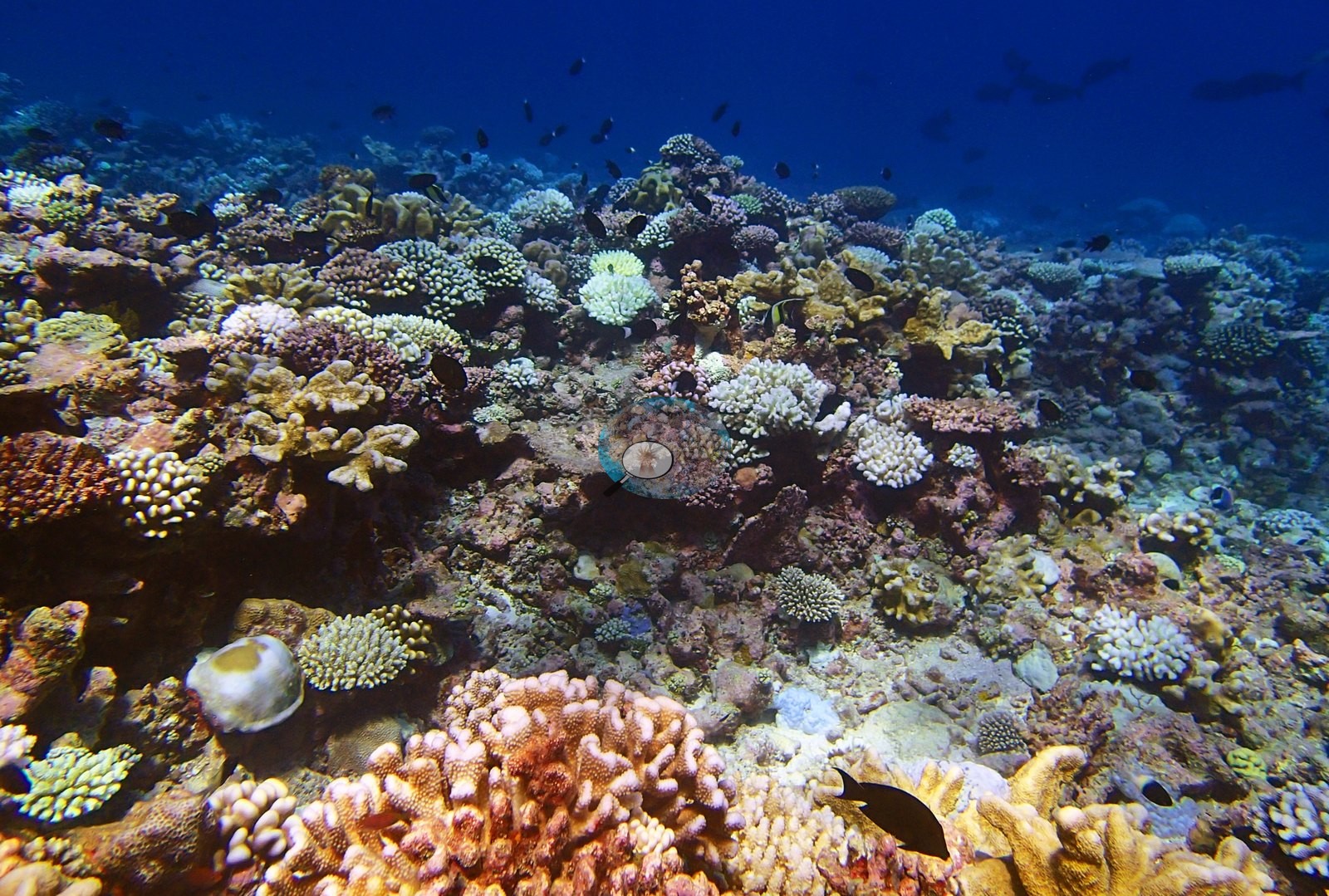
The leading taxon is Millepora, a fire coral rather than a stony coral, at 23% of the recorded cover, ahead of Porites, Pachyseris, Pocillopora, and Turbinaria; Acropora, dominant at most Chagos sites, ranks only seventh here (e.g., Image 5, Image 10, Image 13, Image 18, Image 20).
Coral cover
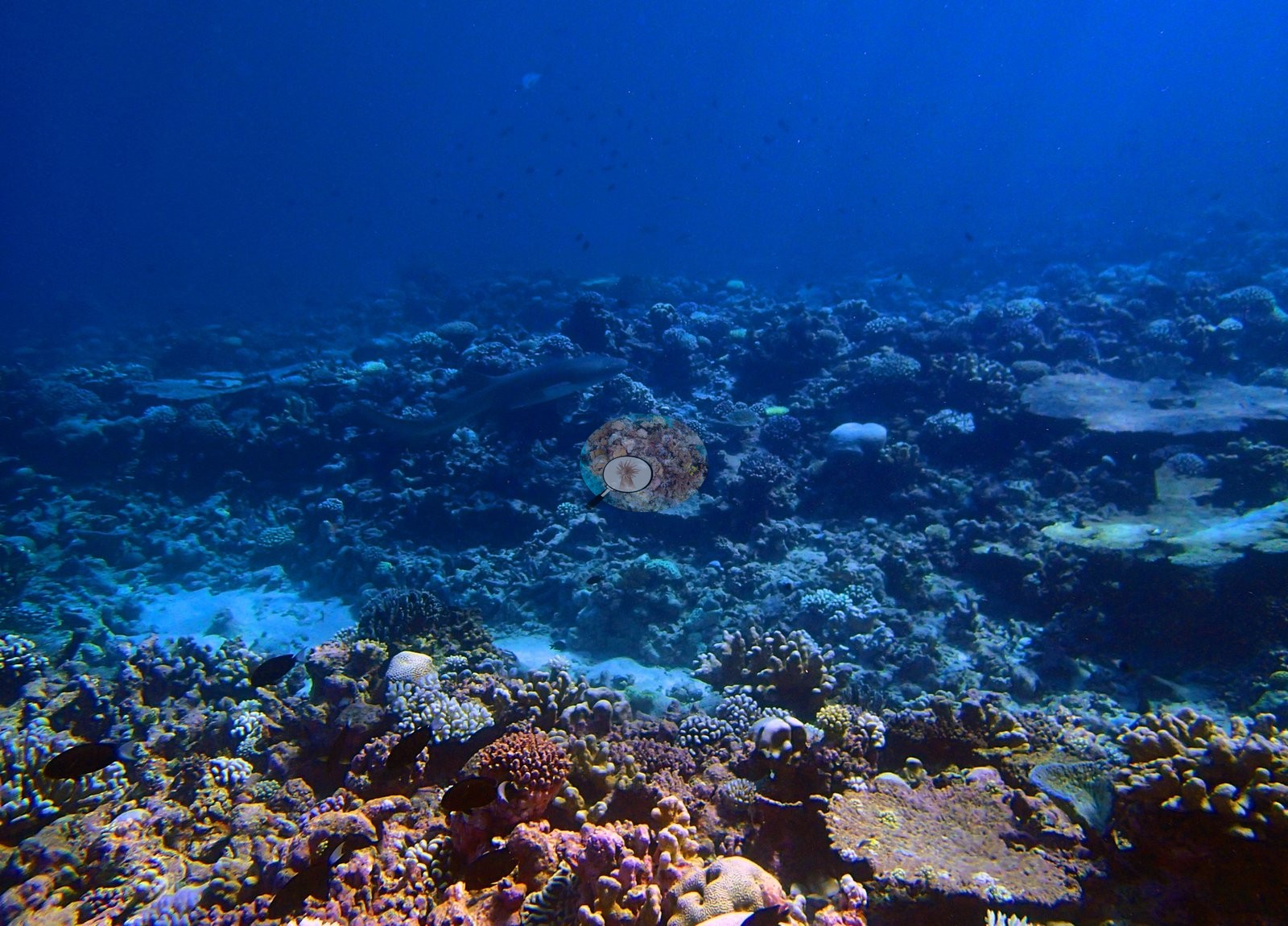
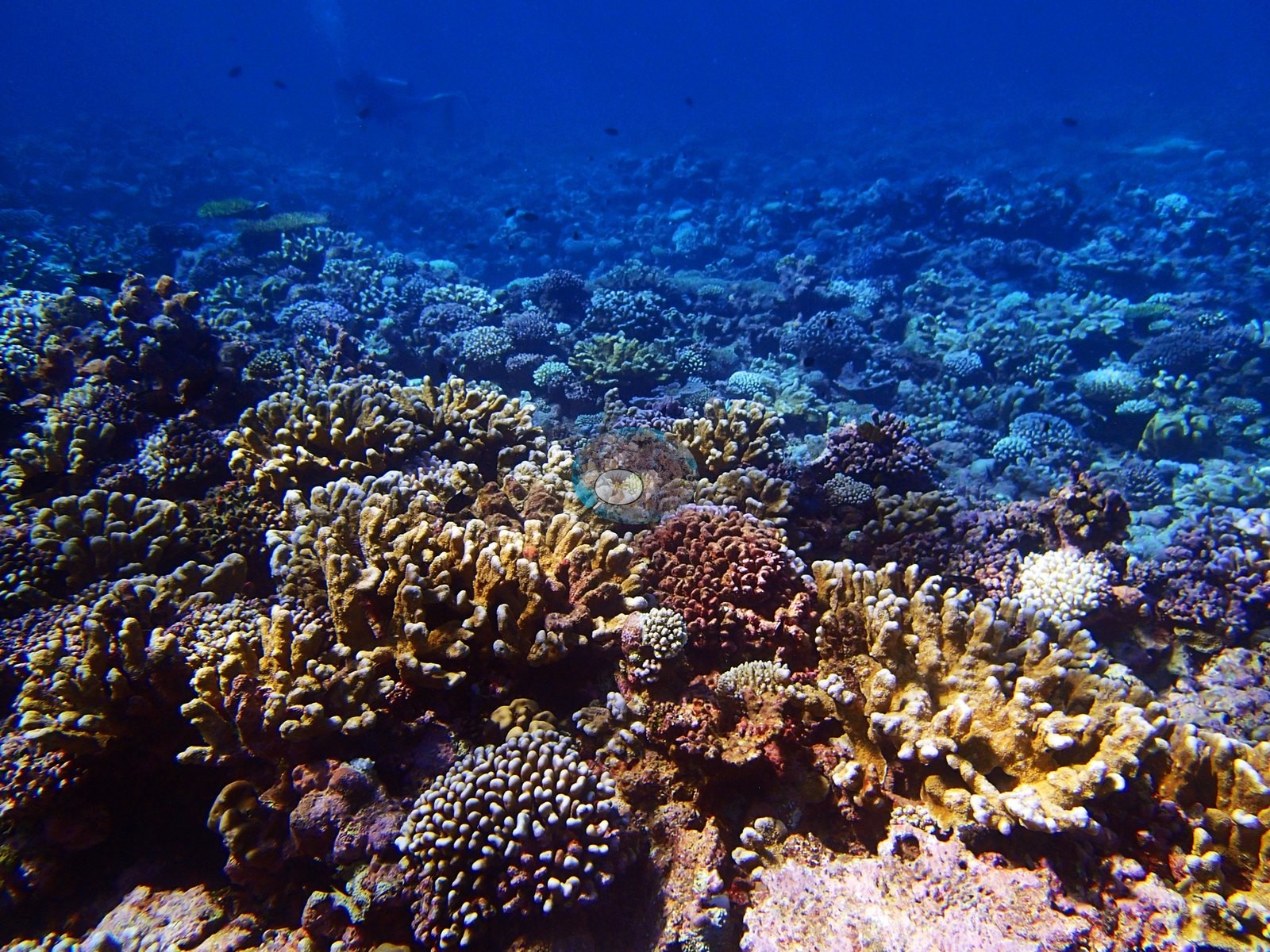
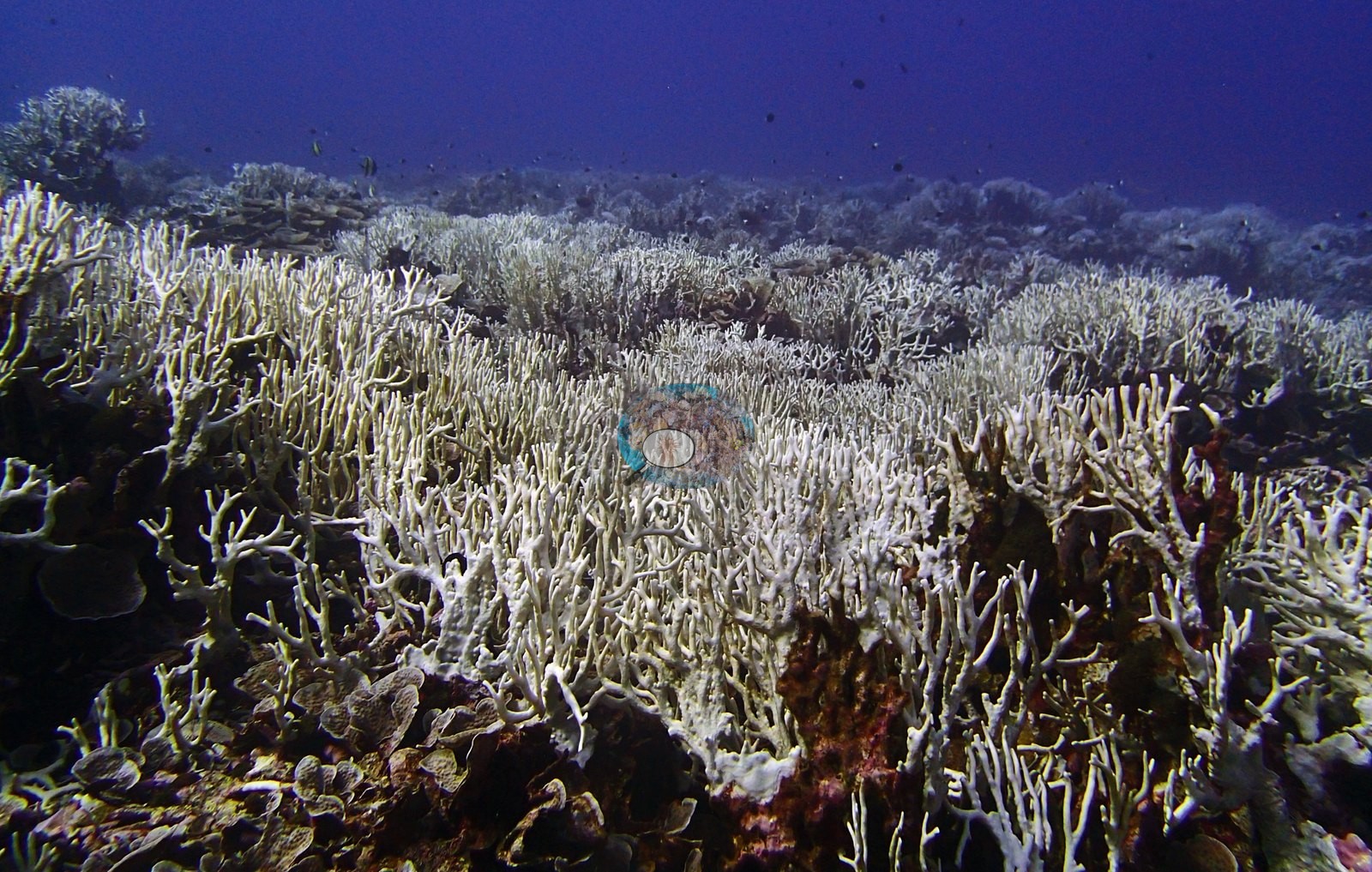
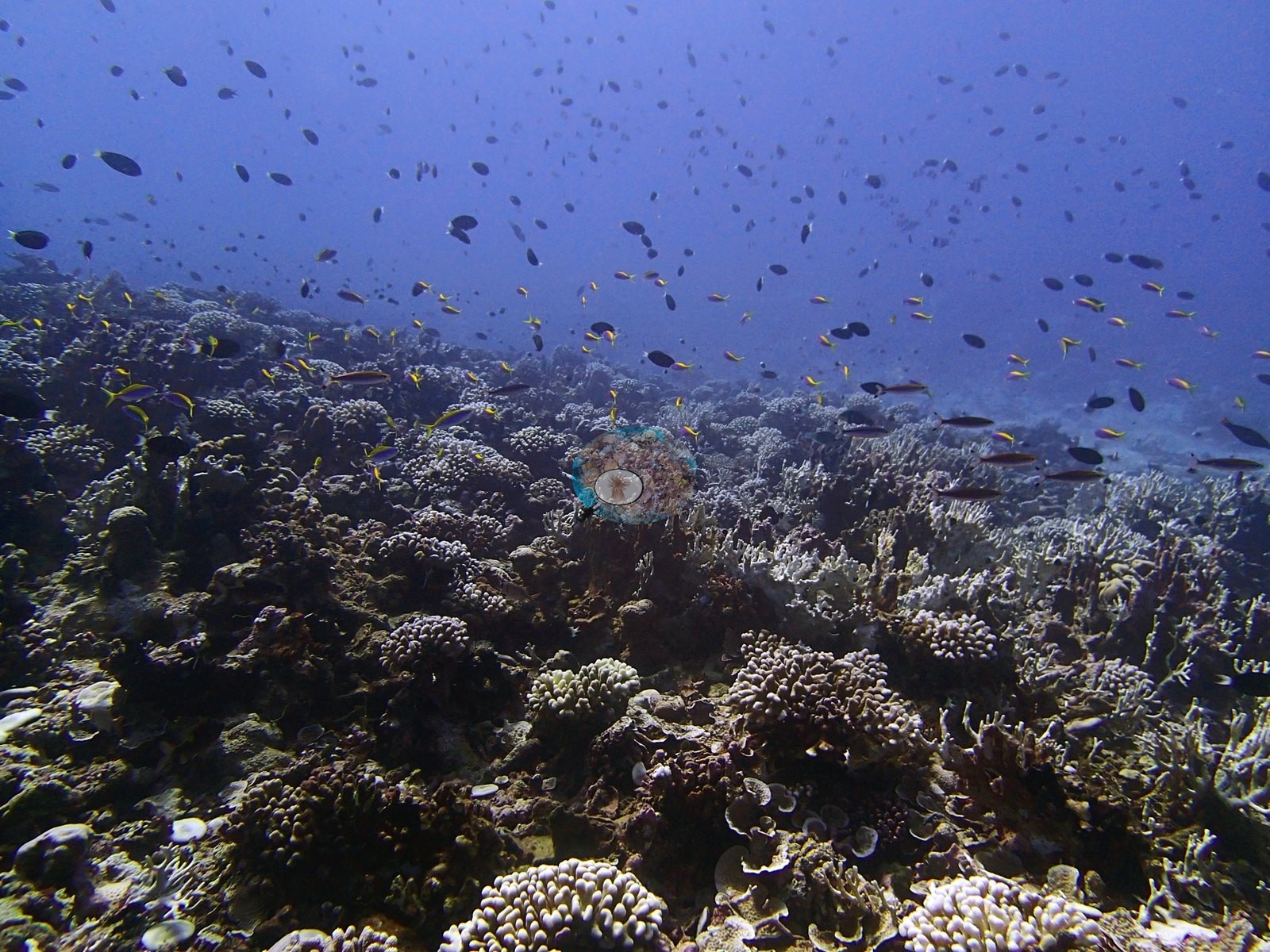
Formal transects recorded 47% coral cover against 44.2% algae, on the most turf-dominated ground in the archipelago — its 22.6% fleshy turf is the highest of all 109 Chagos sites (e.g., Image 8, Image 14, Image 16, Image 25, Image 29).
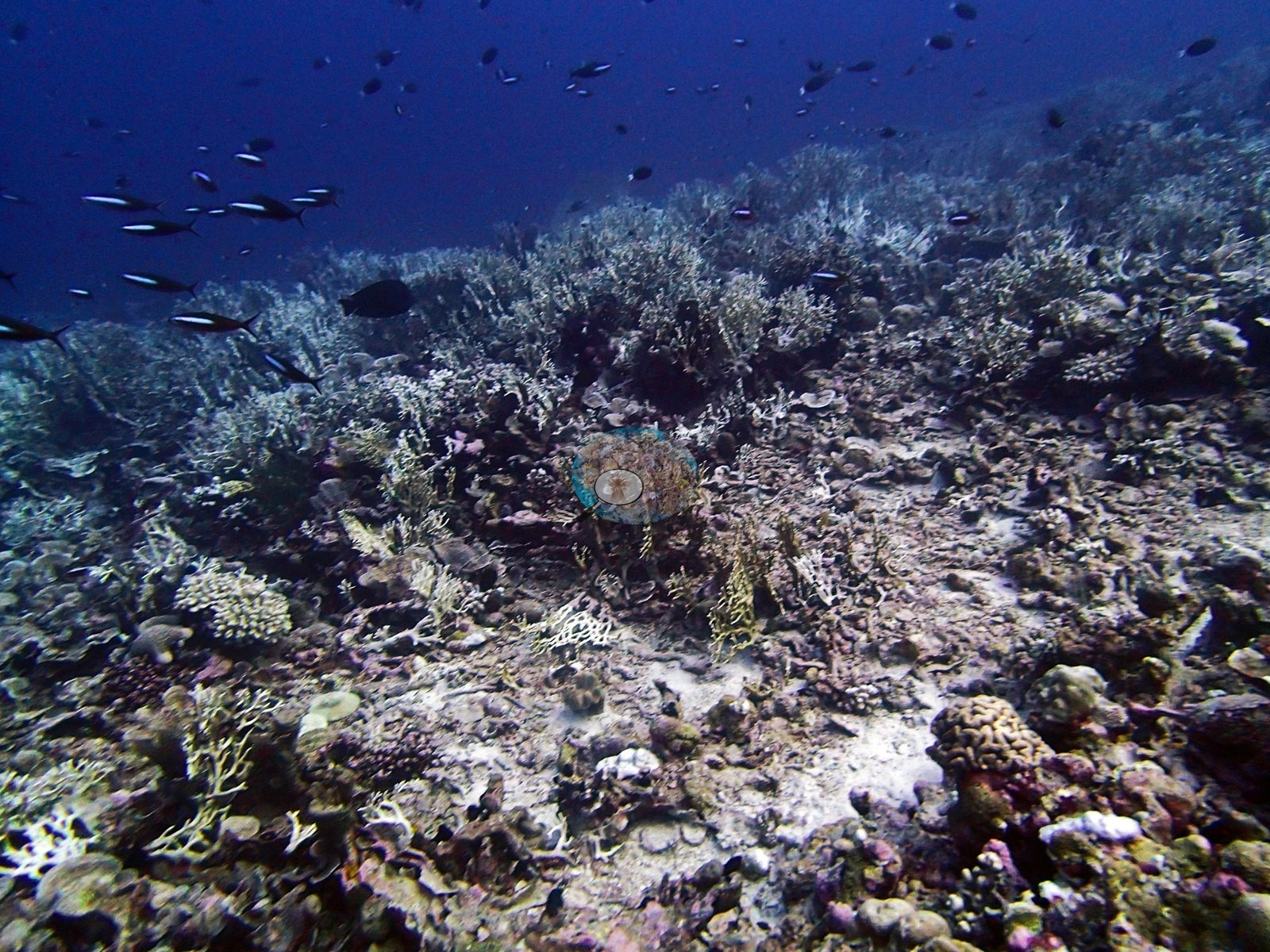
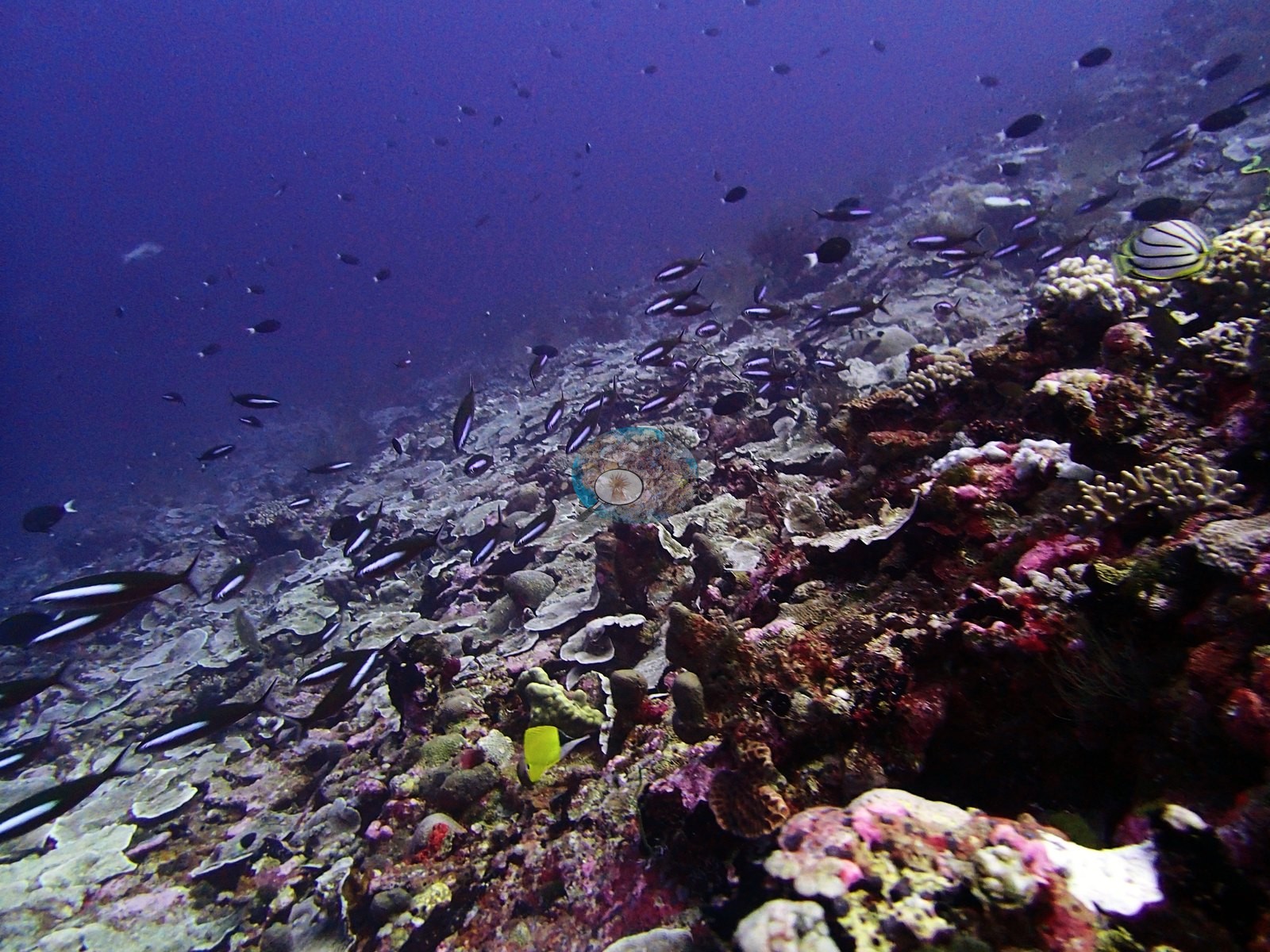
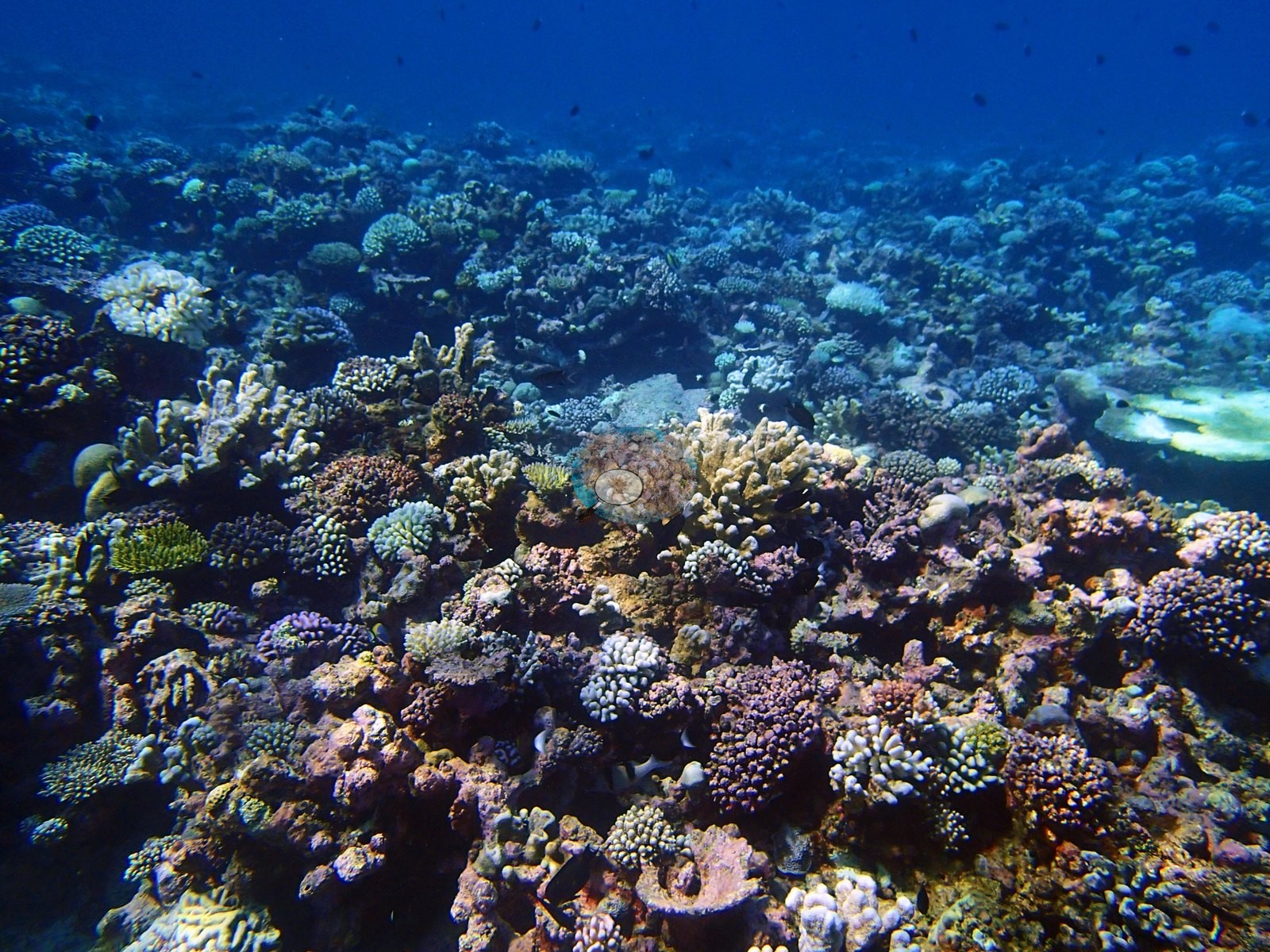
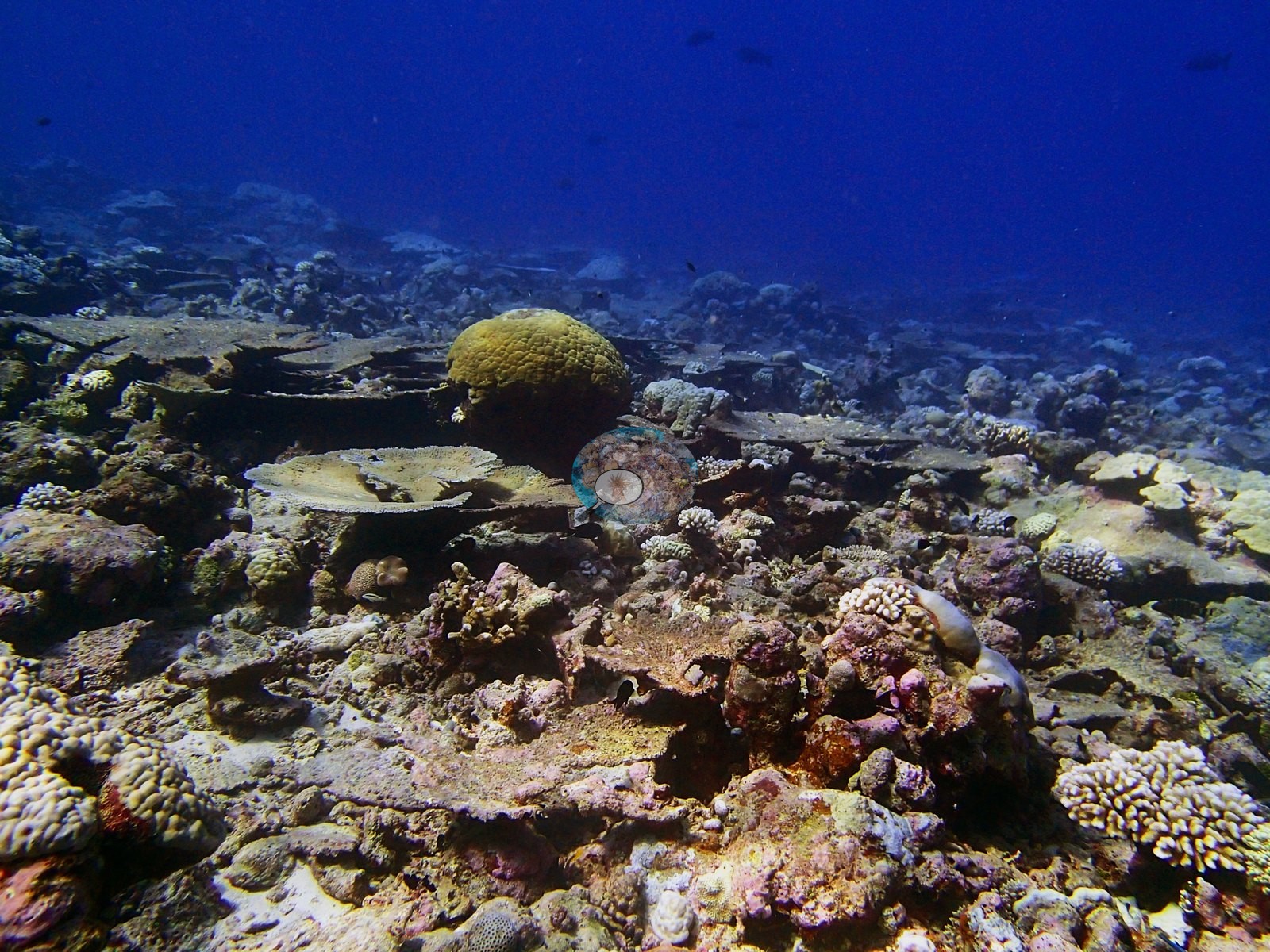
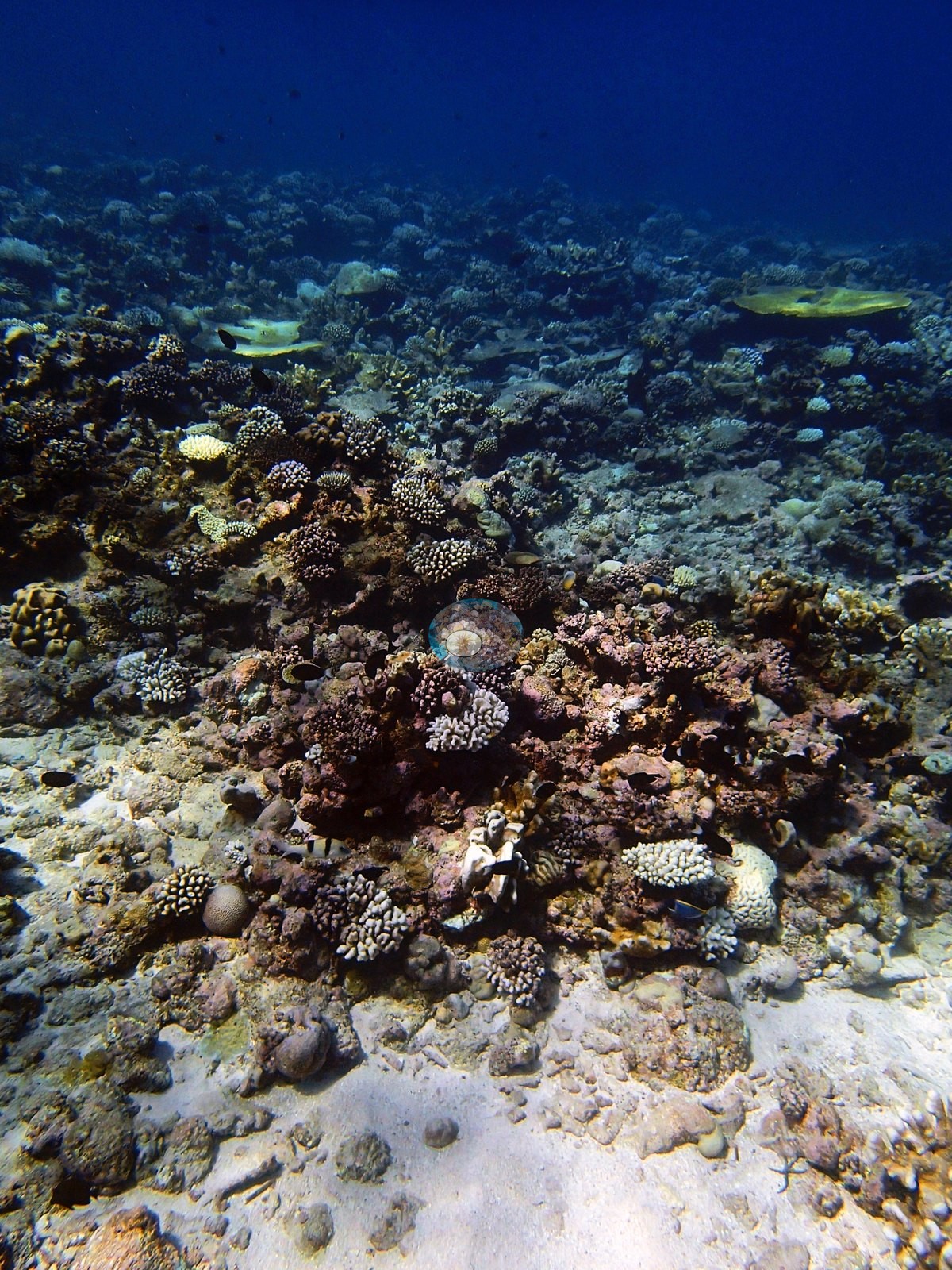
The four depth transects swing hard, from 24% cover at the shallowest station to 61% at mid-depth under heavy Millepora dominance, back to 38%, then up to 66% at the deepest station where Porites holds half the coral. Image-based methods read this reef 23–26 points lower than the transects (CoralNet 21.4%, Coralscapes 24.3%); the three are not interchangeable and should not be averaged (see the full report).
Stressors
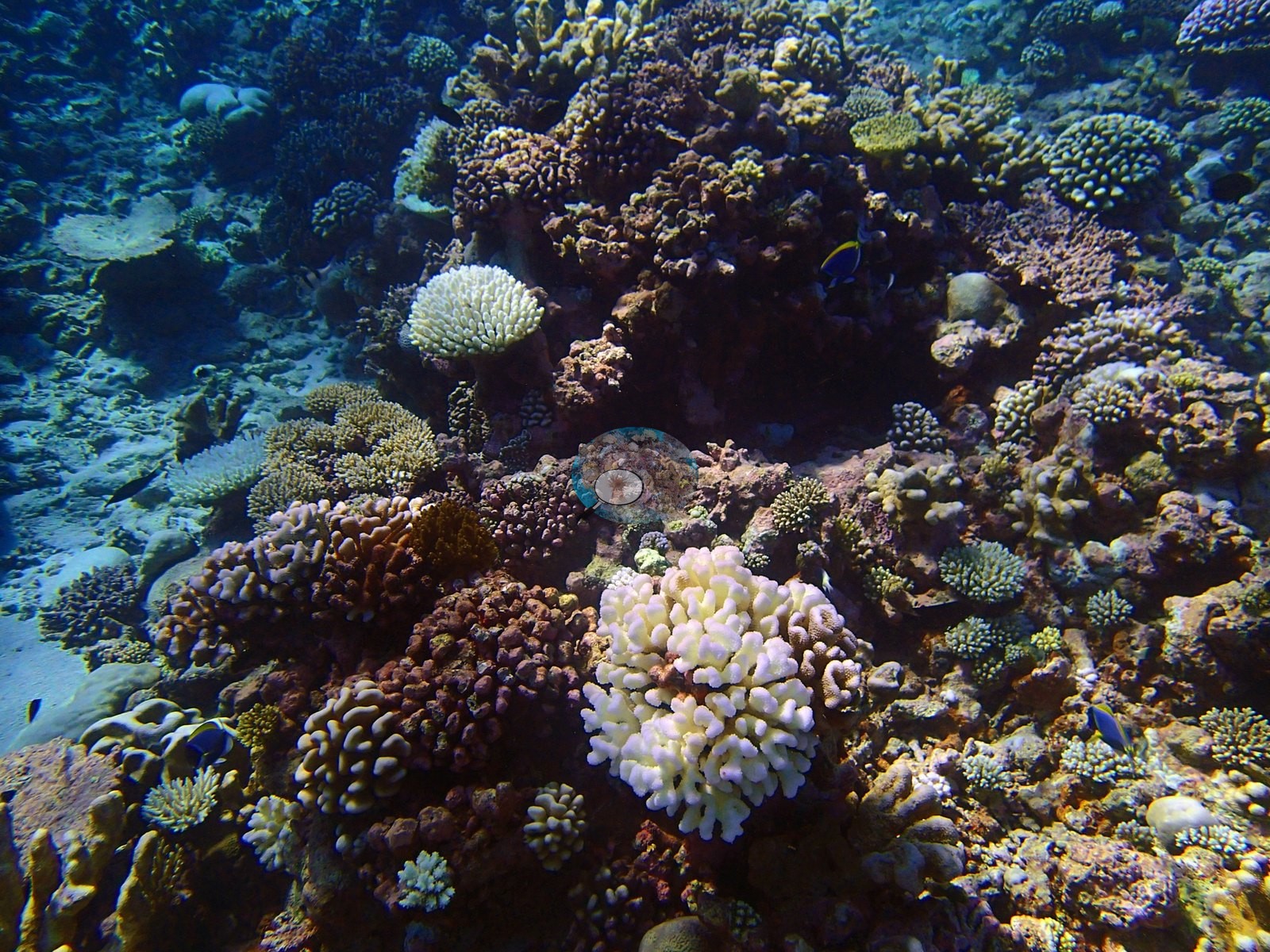
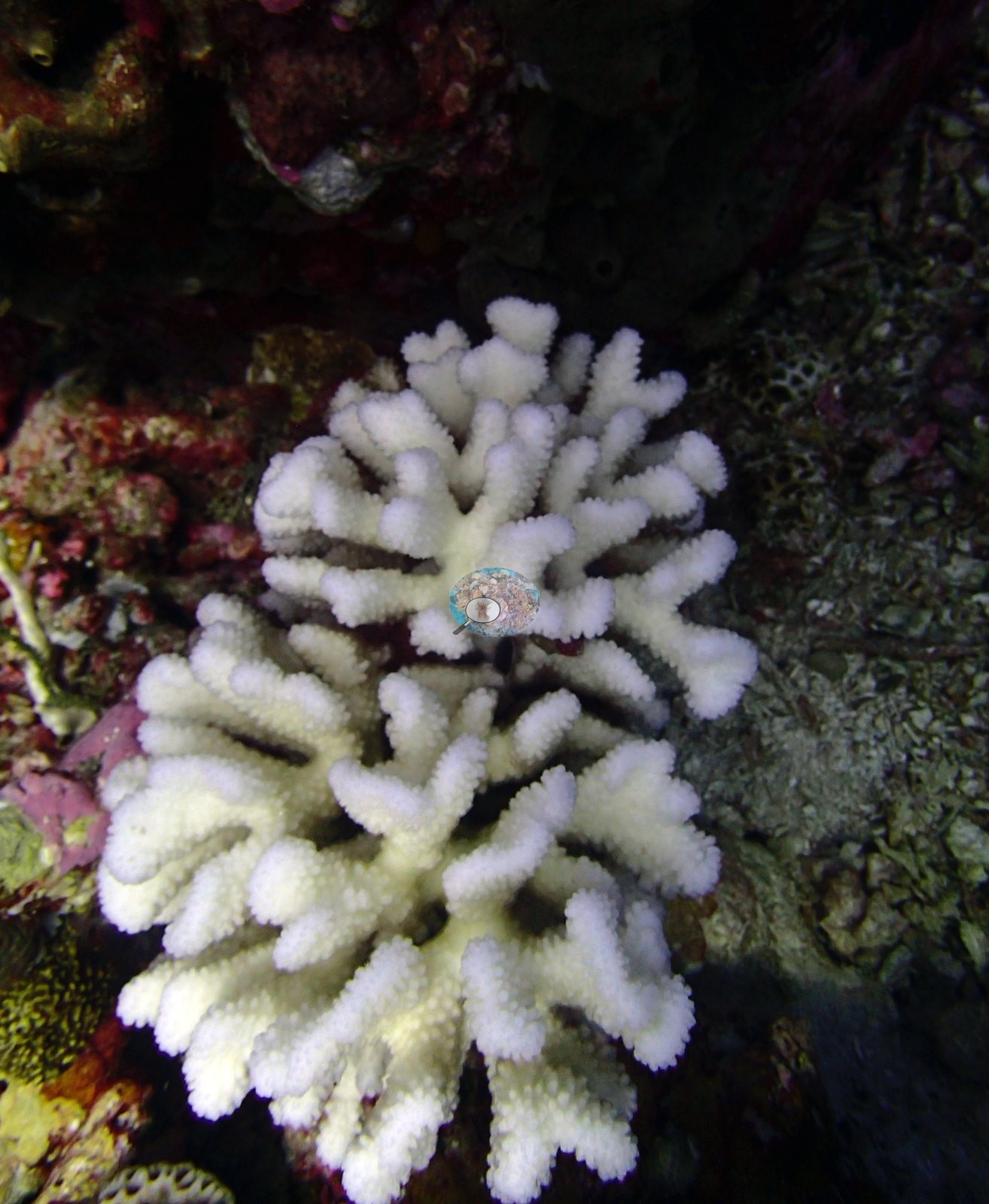
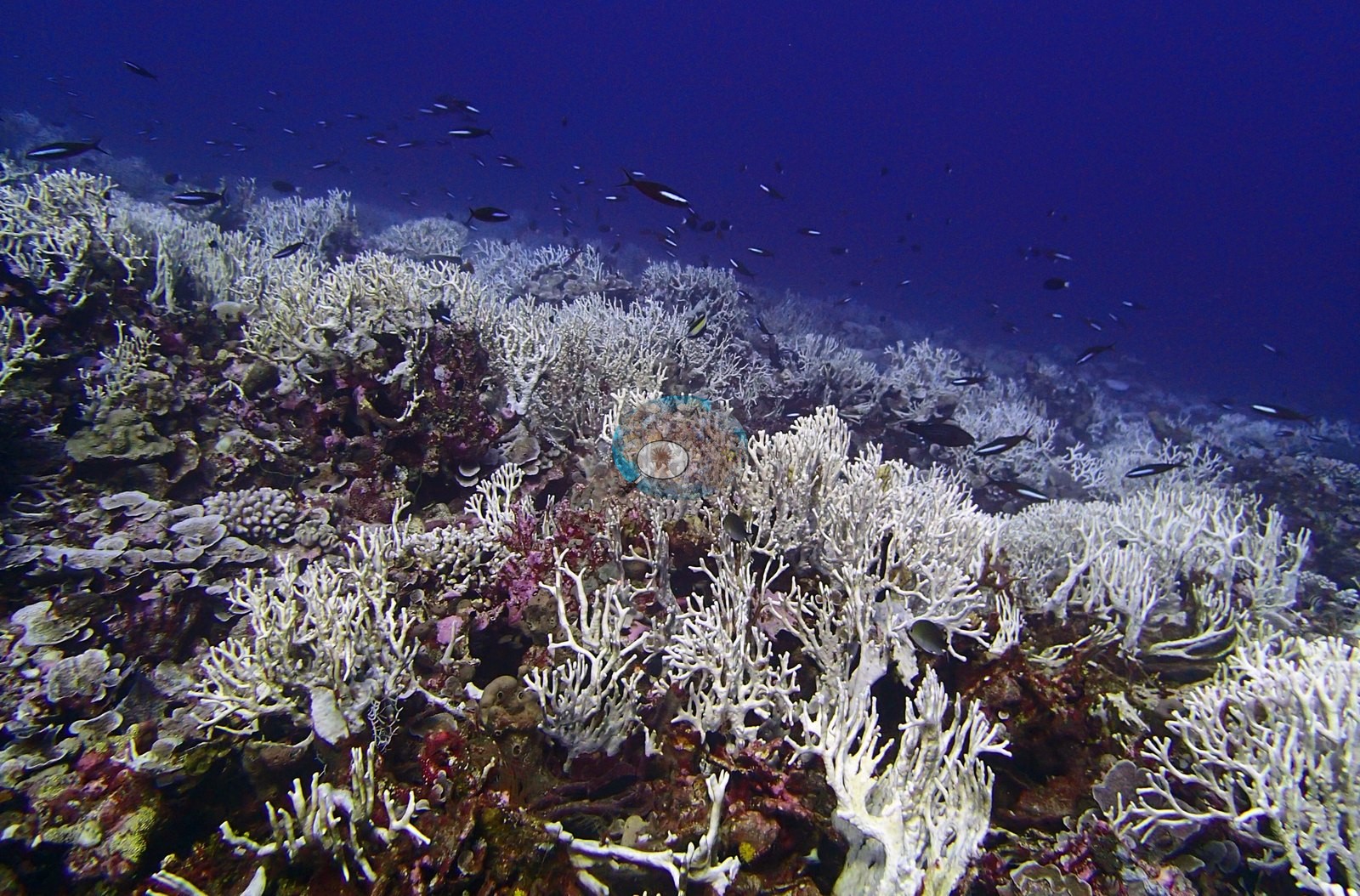
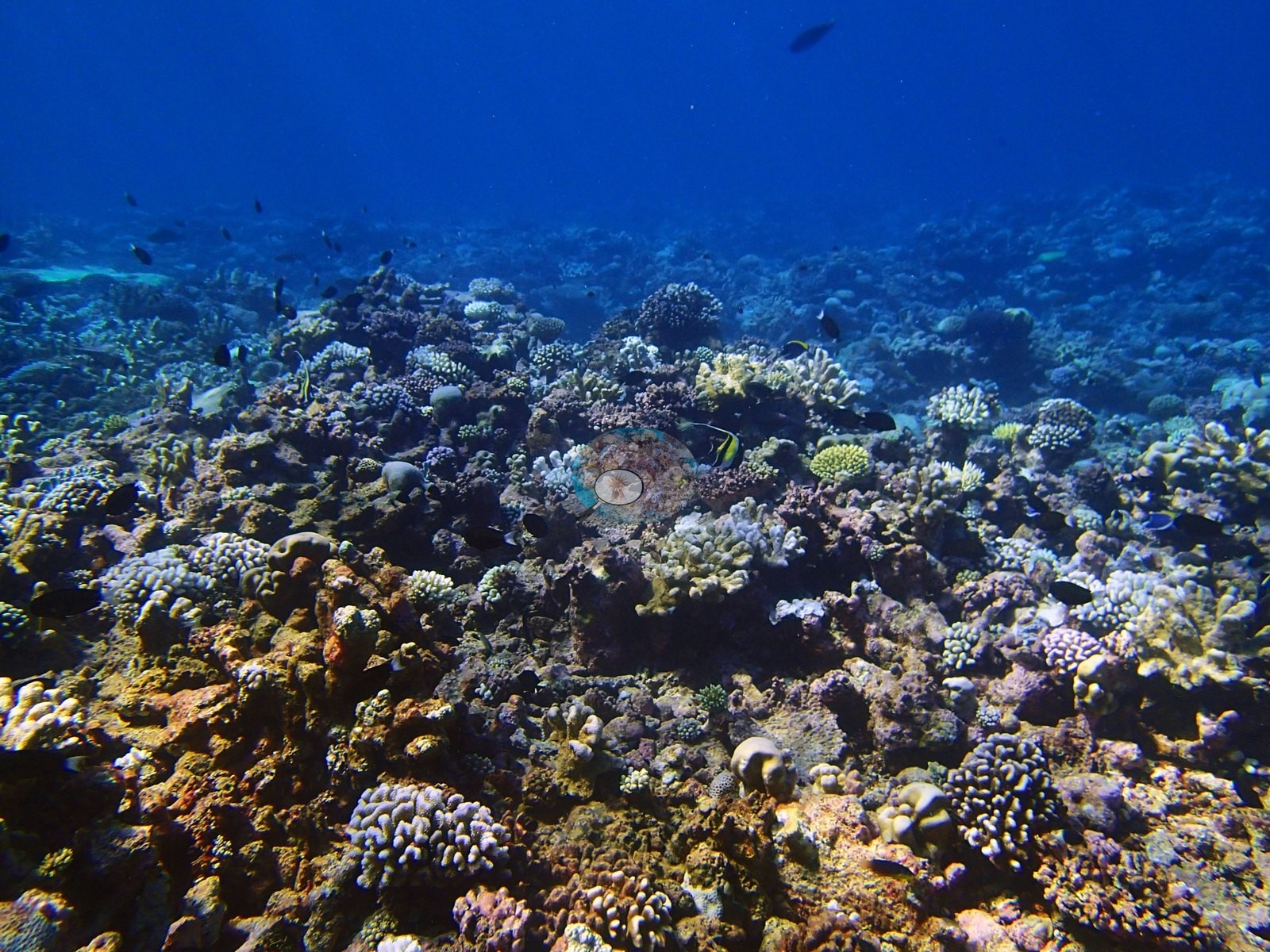
Published bleaching is 10.1%, and the photographs show extensive white branching thickets — though pale fire coral and bleached stony coral cannot be separated from imagery (e.g., Image 1, Image 2, Image 12, Image 15, Image 17, Image 19, Image 27).
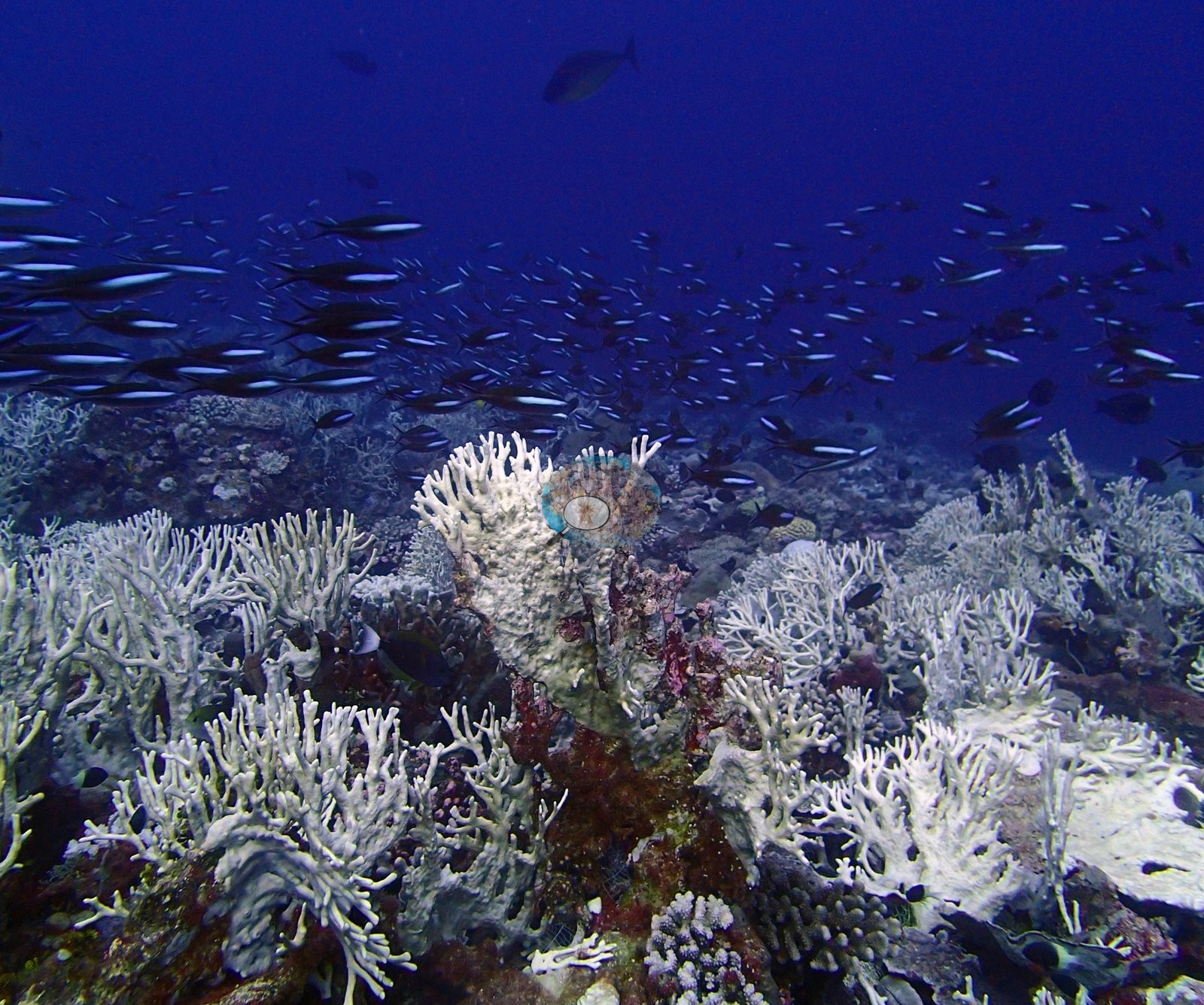
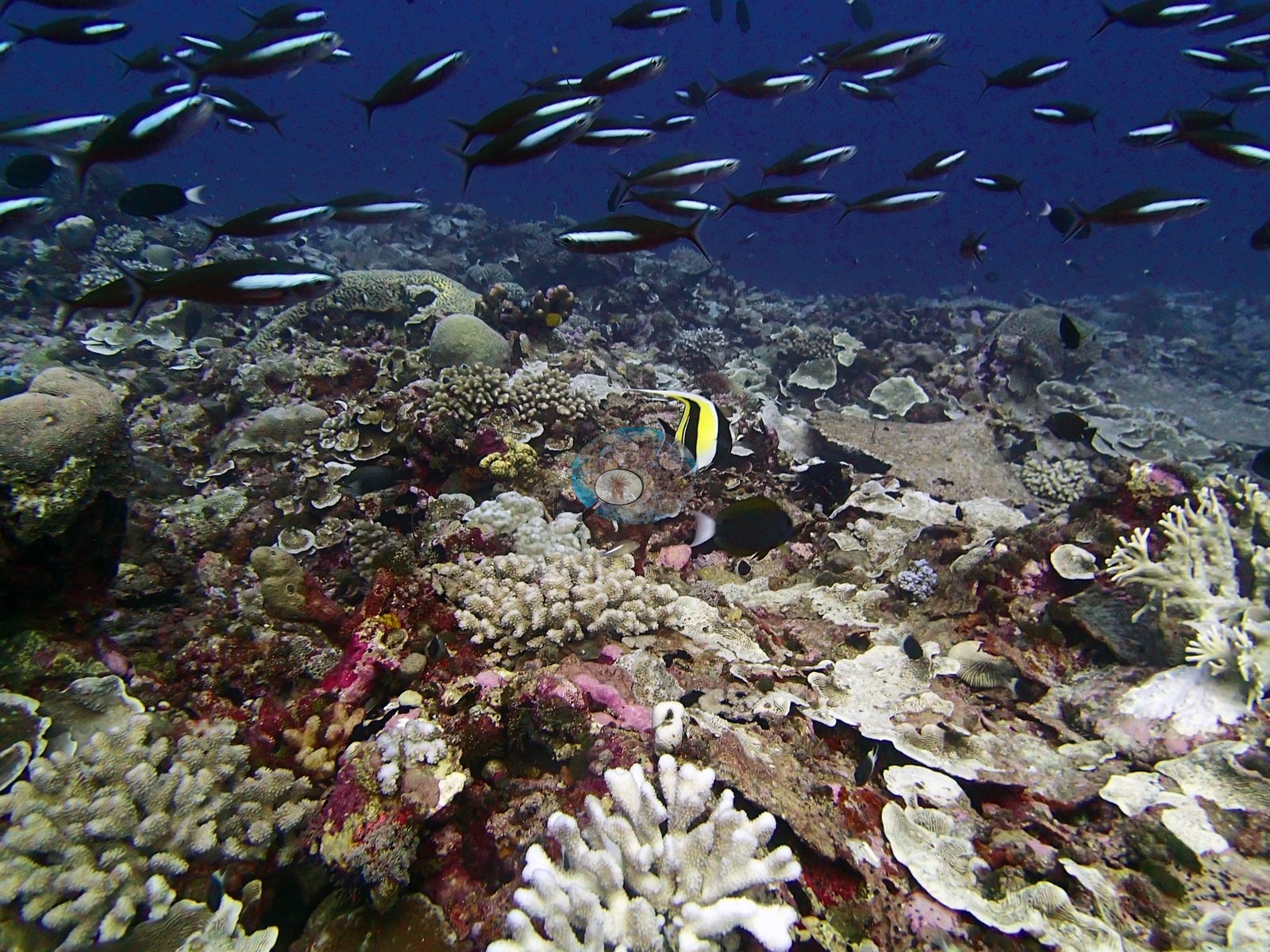
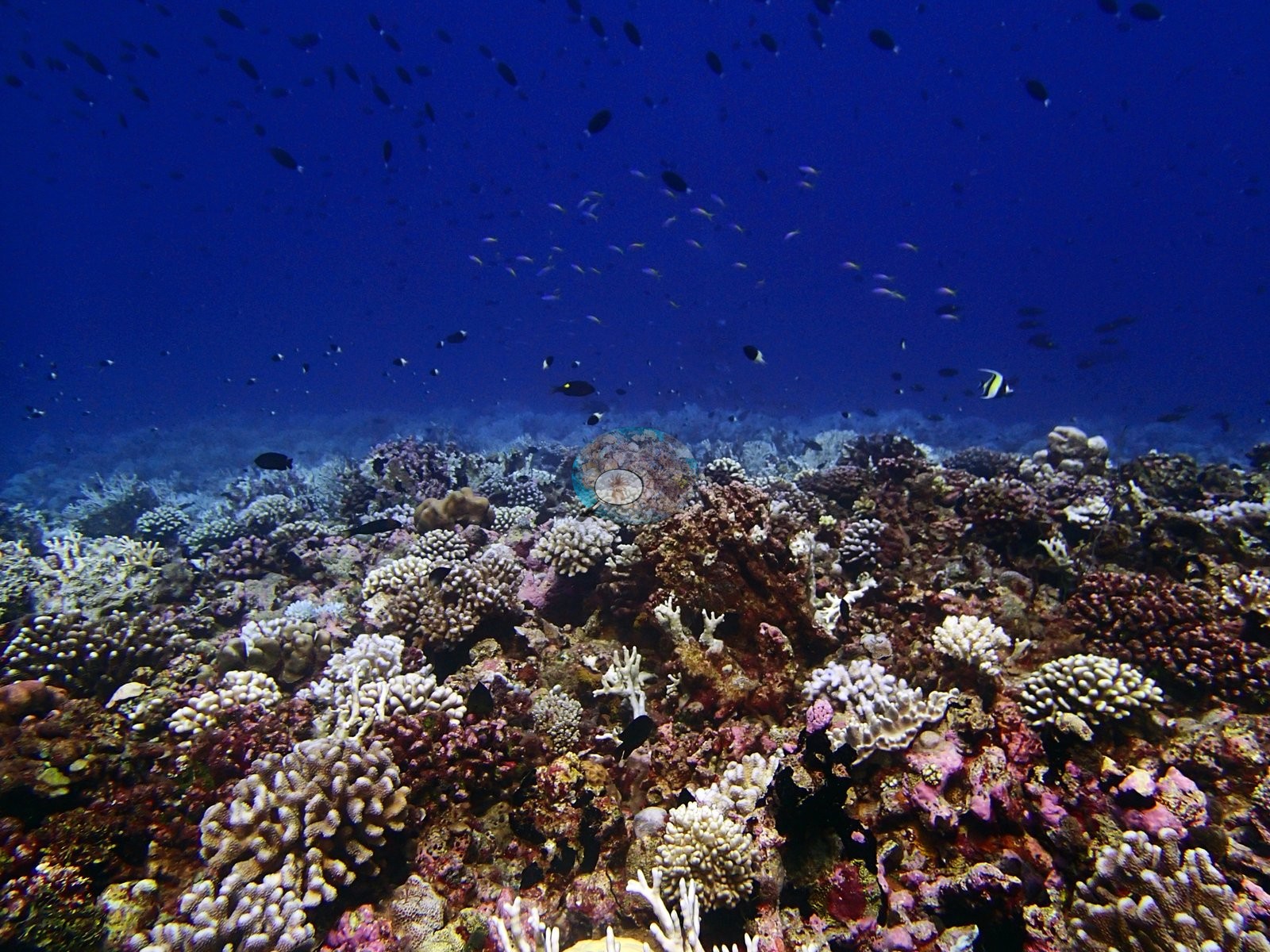
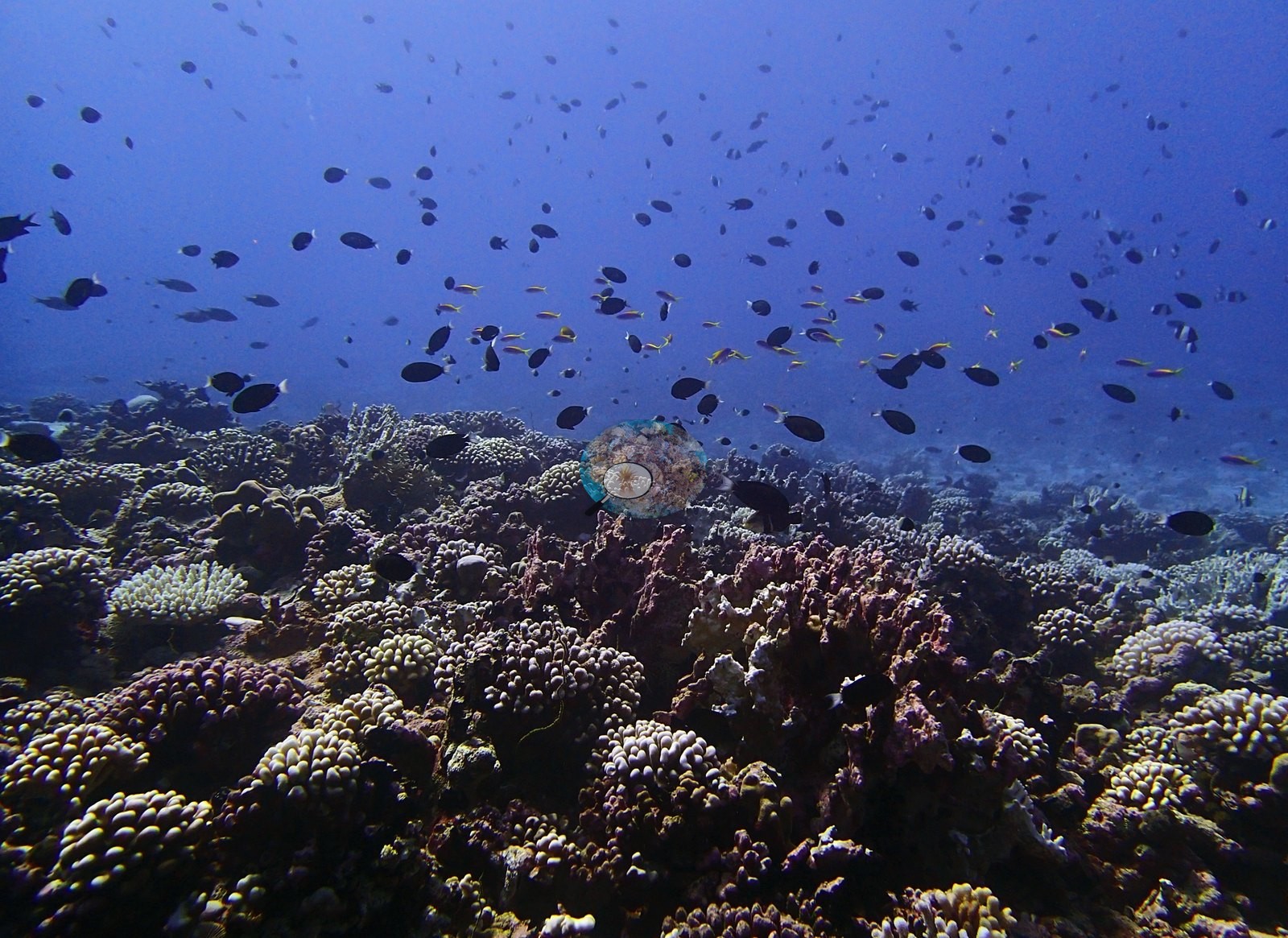
No crown-of-thorns or disease signs were identified in the 27 stills reviewed (e.g., Image 3, Image 6, Image 7, Image 11, Image 22, Image 28).
The bleaching percentage is a computer vision figure — CoralNet annotation of the informal survey images, not a diver's field estimate — and human-vs-model agreement is weaker for bleaching (r = 0.40) than for coral cover (r = 0.72).
Comparisons with other data
No prior survey data from this site. If you would like to share yours, please email us.
CV model comparison
More info
Those are point counts on the photographs; this is a diver swimming a transect. The models and the reference never saw the same thing. ⚠ SITE-LEVEL ONLY. The 2,500 frames were not associated with any transect taken within 200 m of them, so transect-vs-image comparisons are site means, never frames. The transect value is already in the pin `cover` field (109 of 112 pins, sourced to the paper's suppl. S1) and is read from there, never re-imported. The transect is THE coral-cover value for this site and stands alone. The rows below it are a methods comparison only: no computer-vision value is averaged with it, feeds the headline, or carries over to the site's cover figure (Anderson, 2026-09-22).| Method | Hard-coral cover (%) |
|---|---|
| Transect (published) | 47.2 |
| CoralNet | 31.9 |
| In-house DINOv3 | 36.0 |
| CoralSCOP edited | 25.1 |
| Claude | 34.4 |
Data & links
- Read the full site report ↗
- Download benthic survey data (CSV) ↗
- Download all LOF-GRE data (933 sites) ↗
- CoralNet image repository for this region ↗
- Photo portfolio ↗
- Coral Reef Diagnostics page for this area ↗
All images from Coral Reef Diagnostics. Data are from Coral Reef Diagnostics.
 © Coral Reef Diagnostics.