
Dongsha, 6 April 2016
Part of the regional summaries: Taiwan - Dongsha and Taiwan
More info
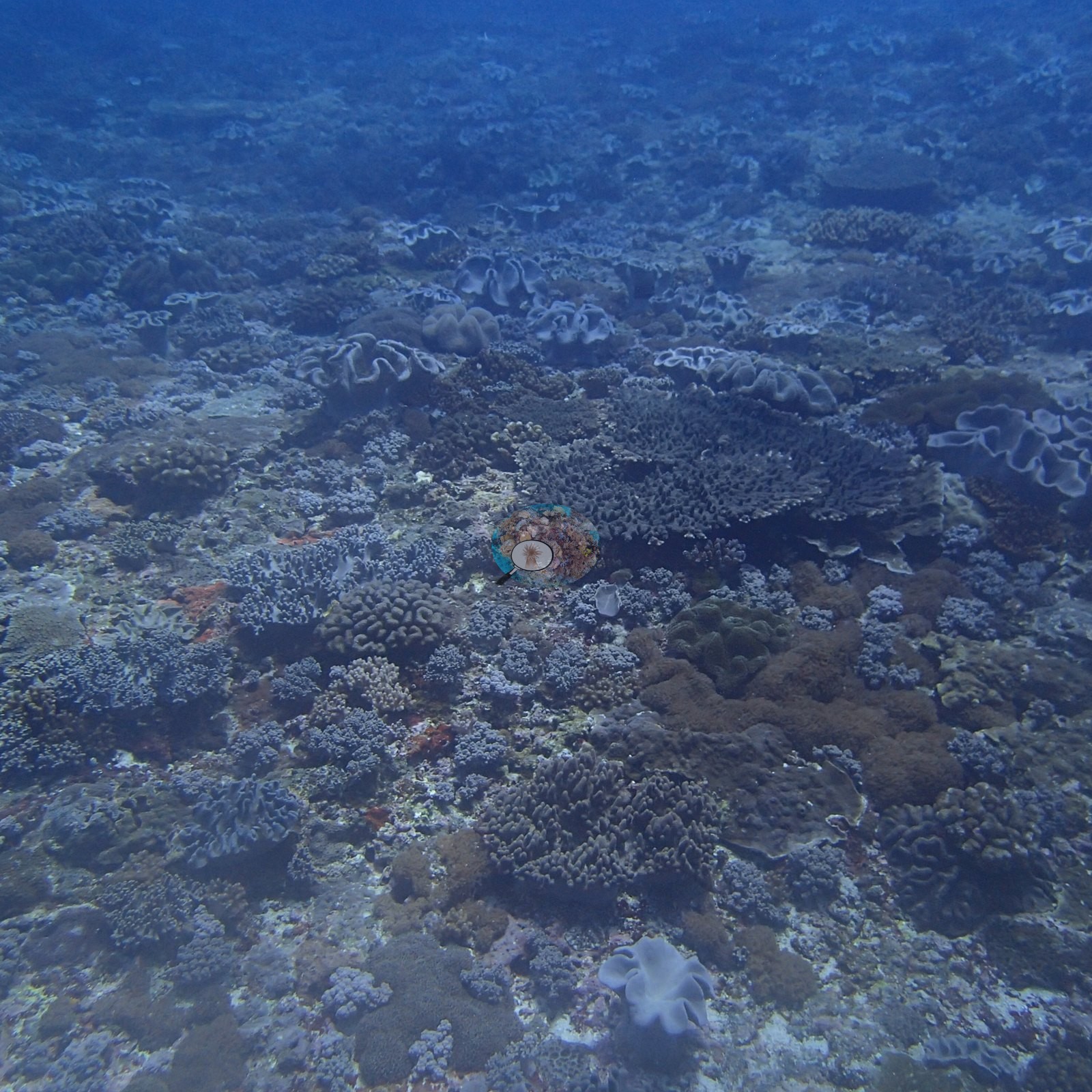
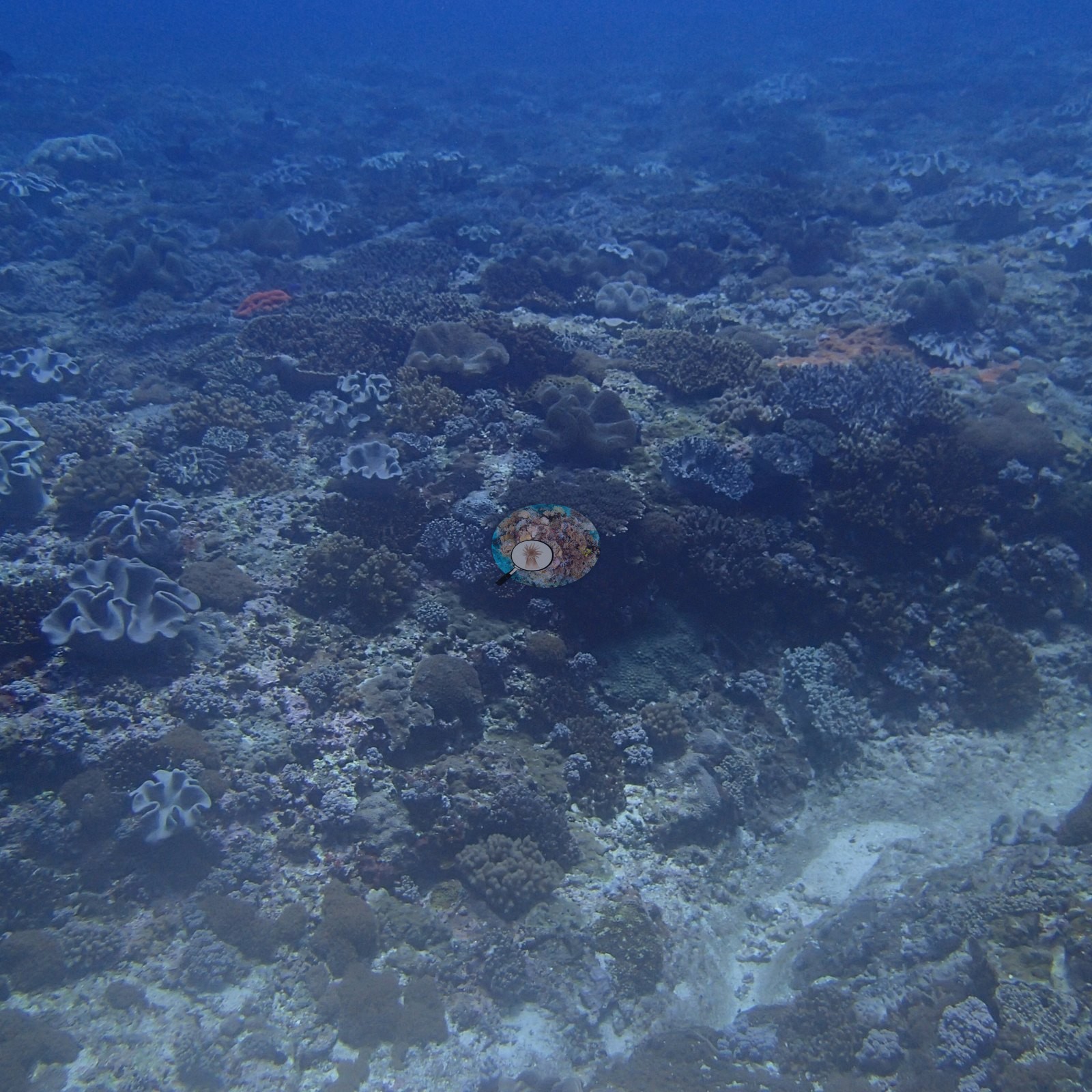
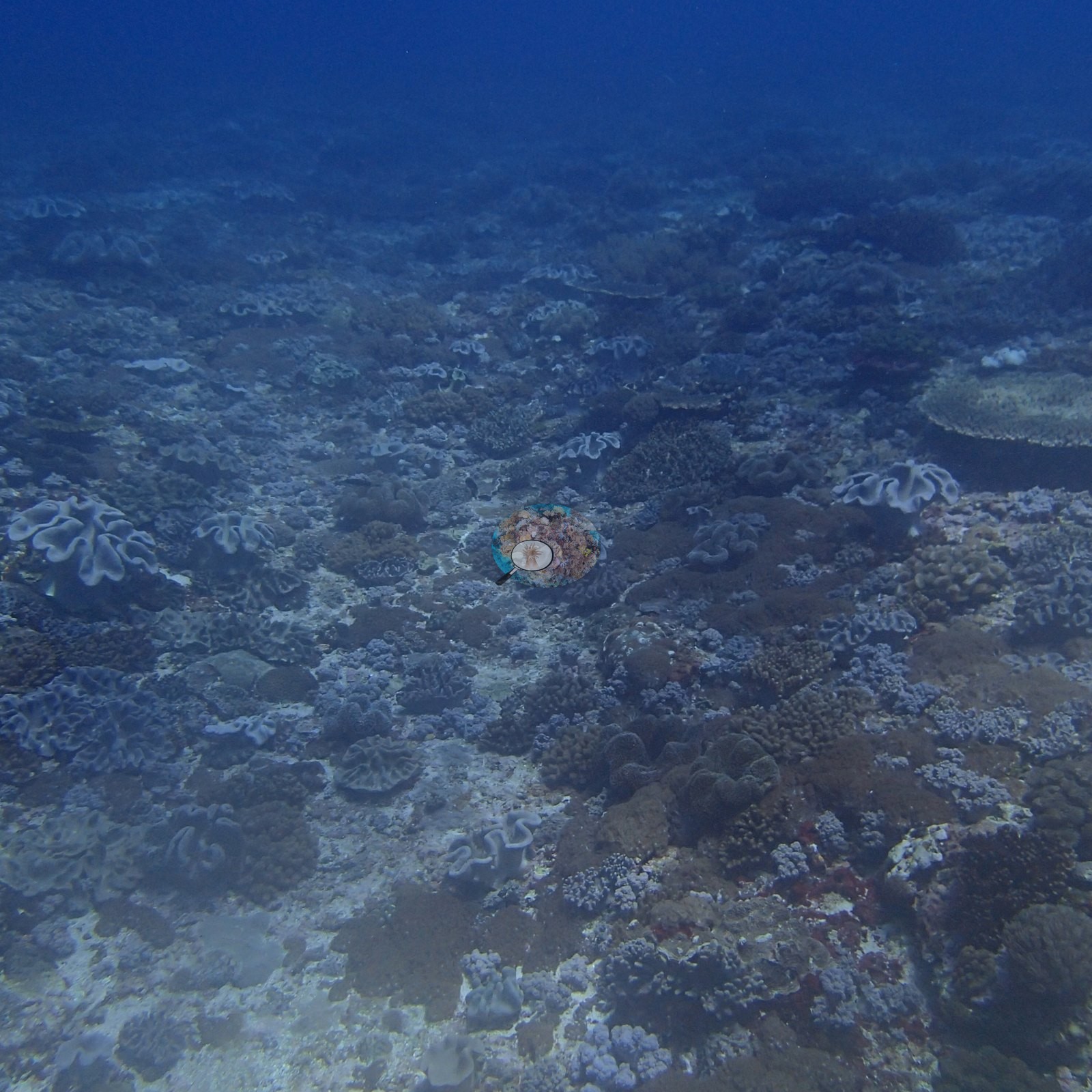
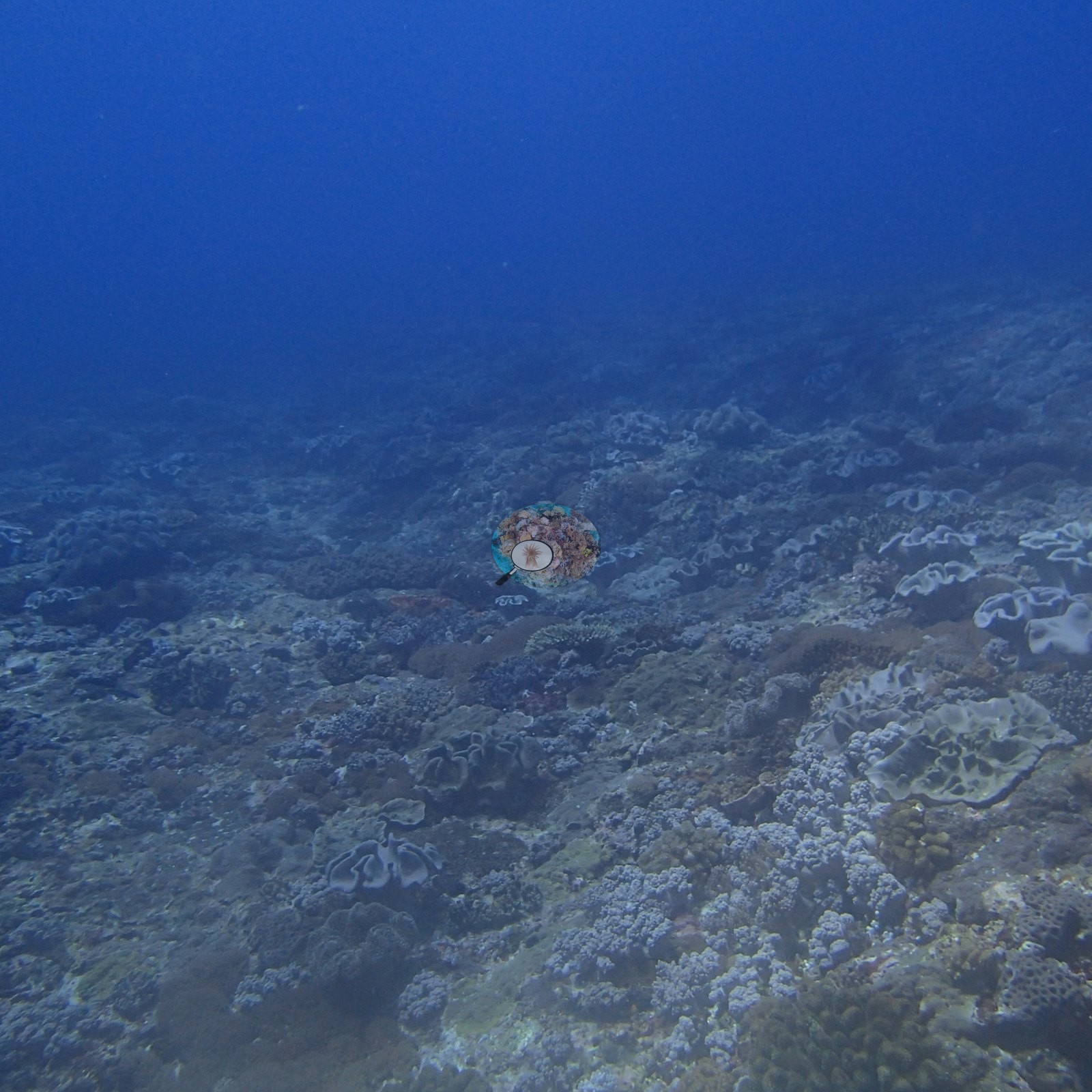
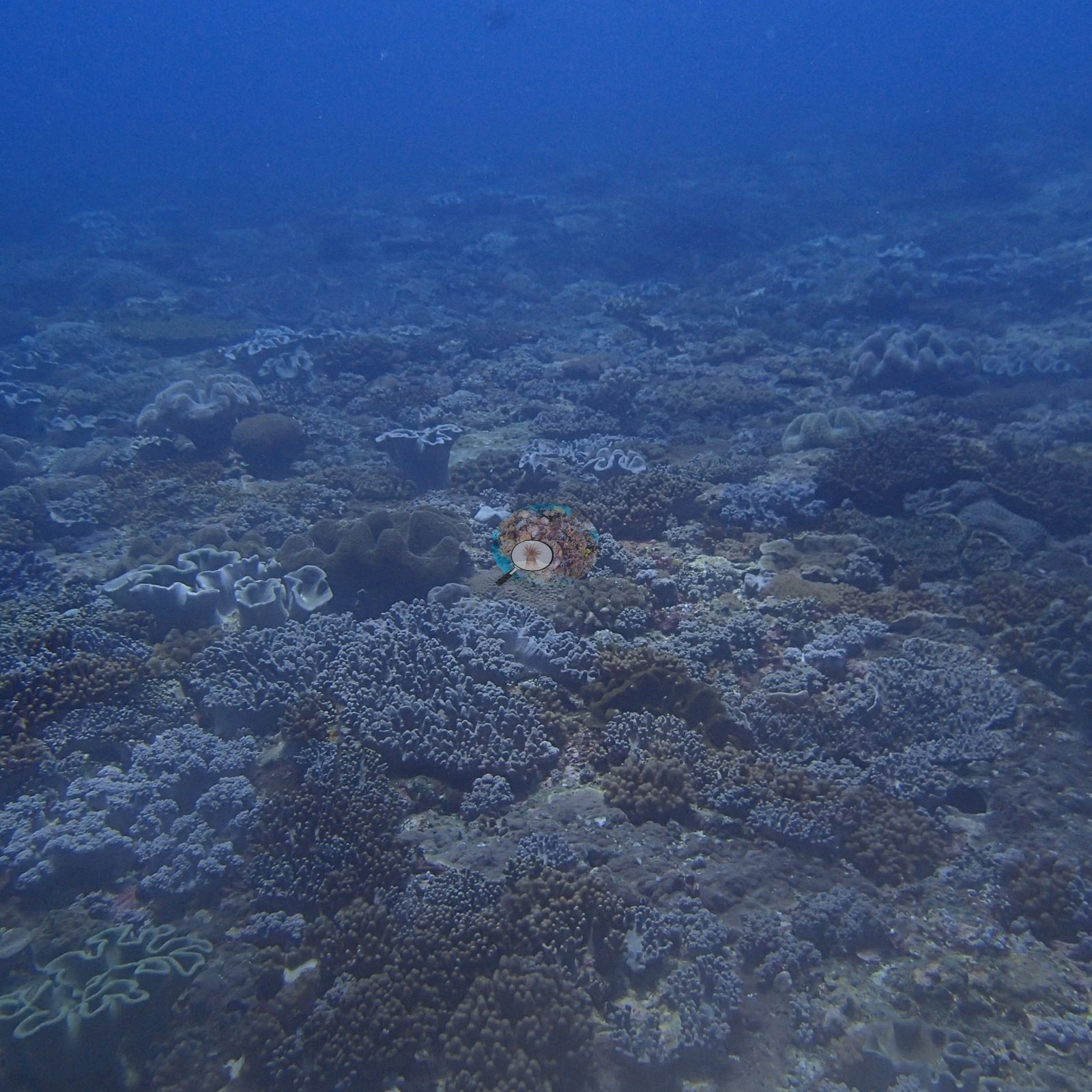
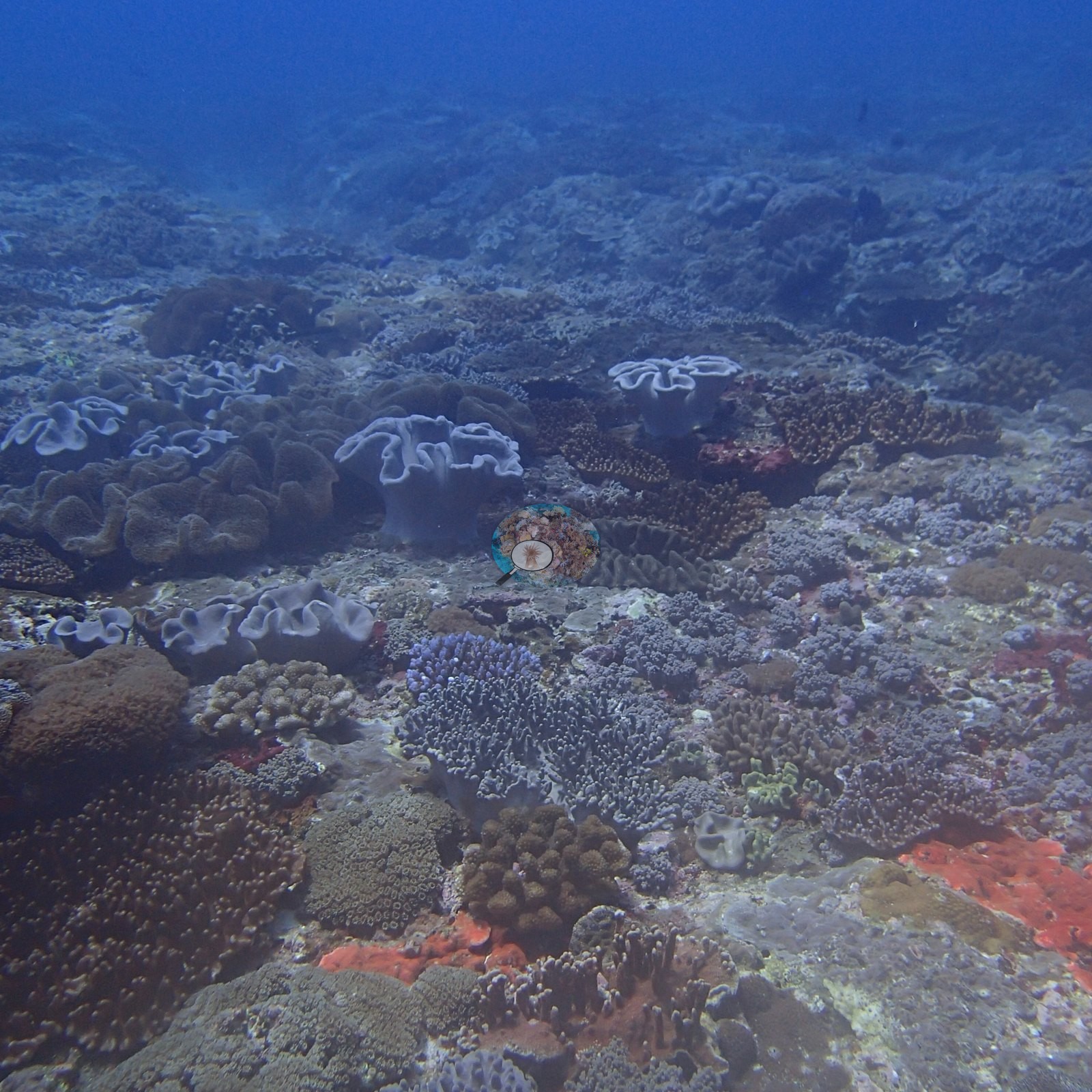
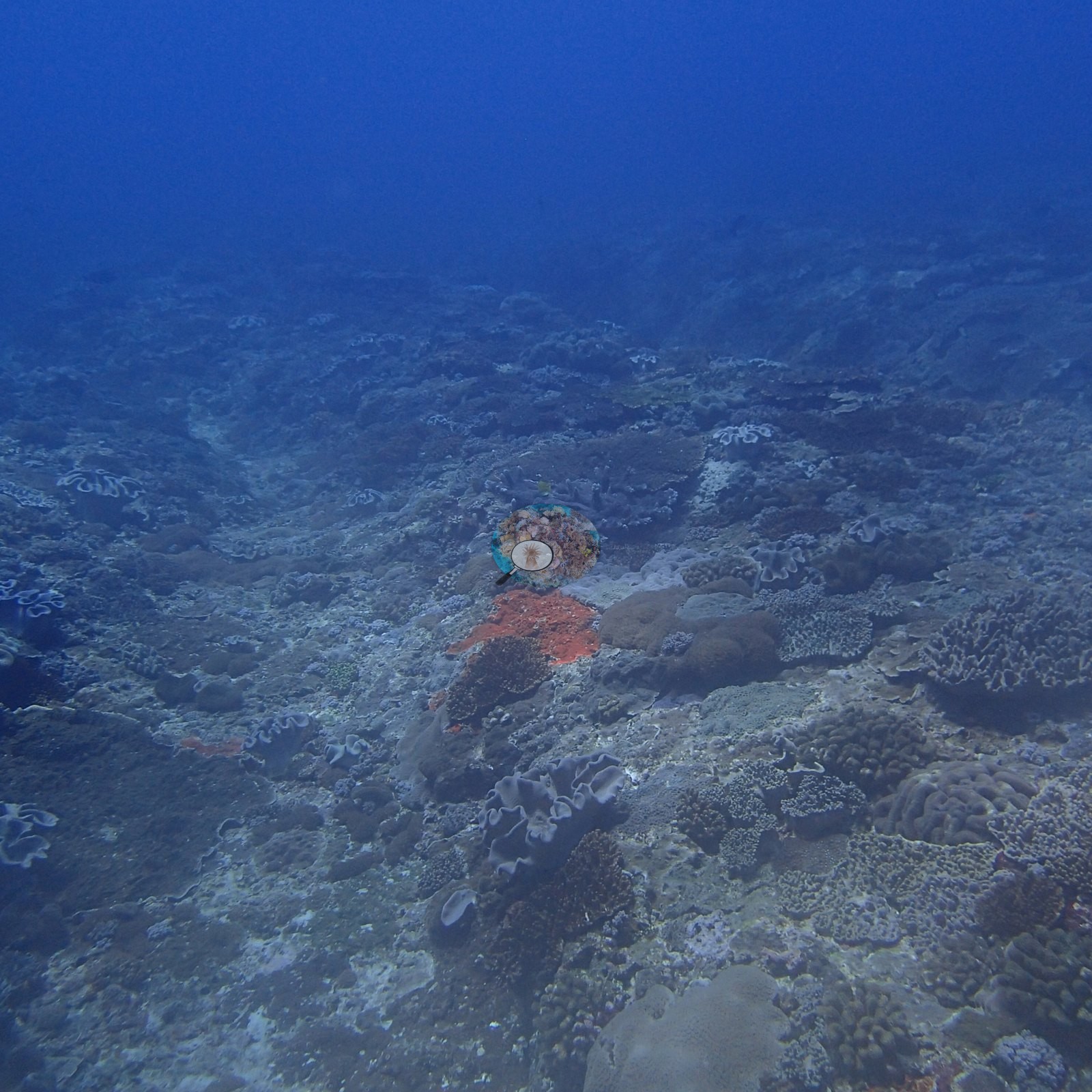
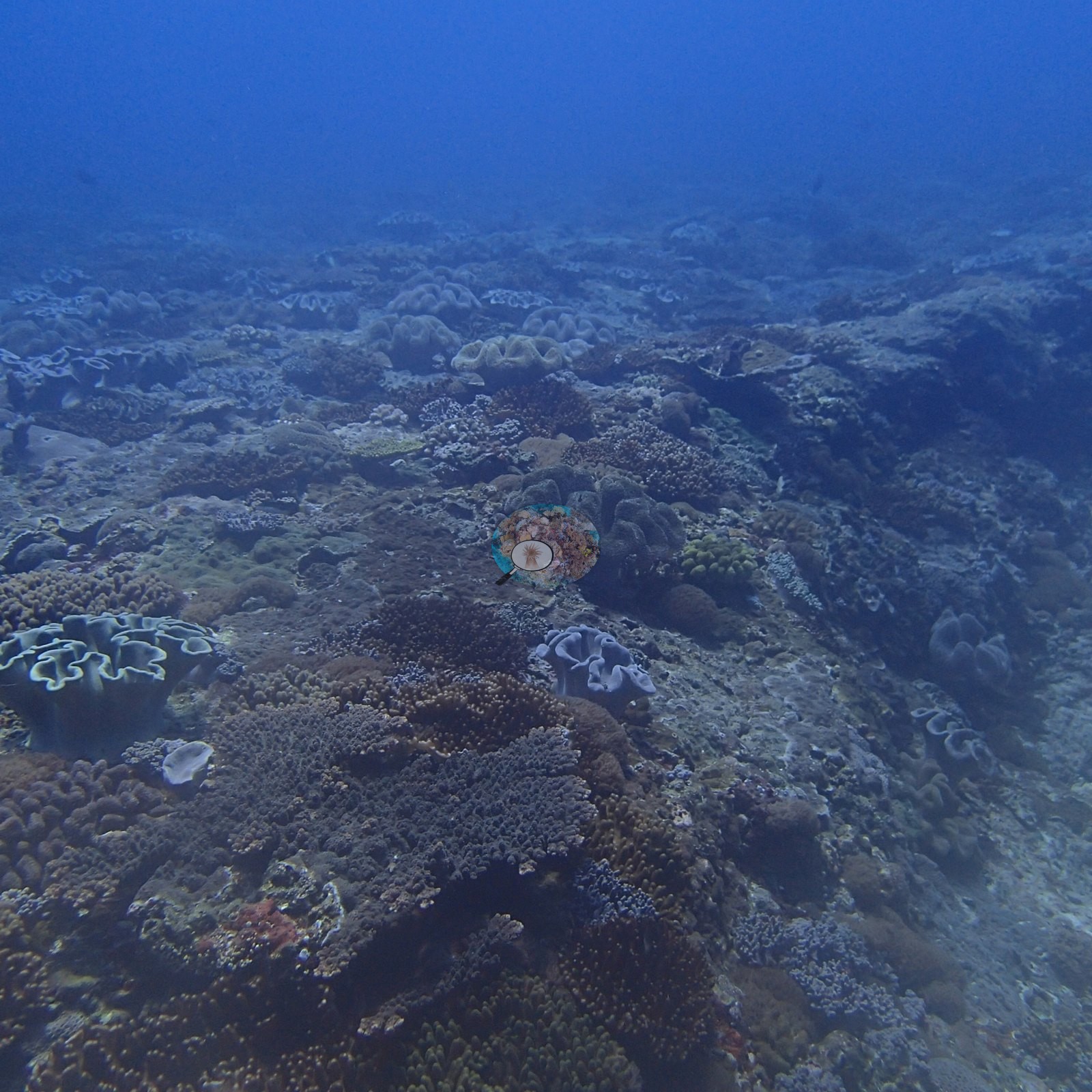
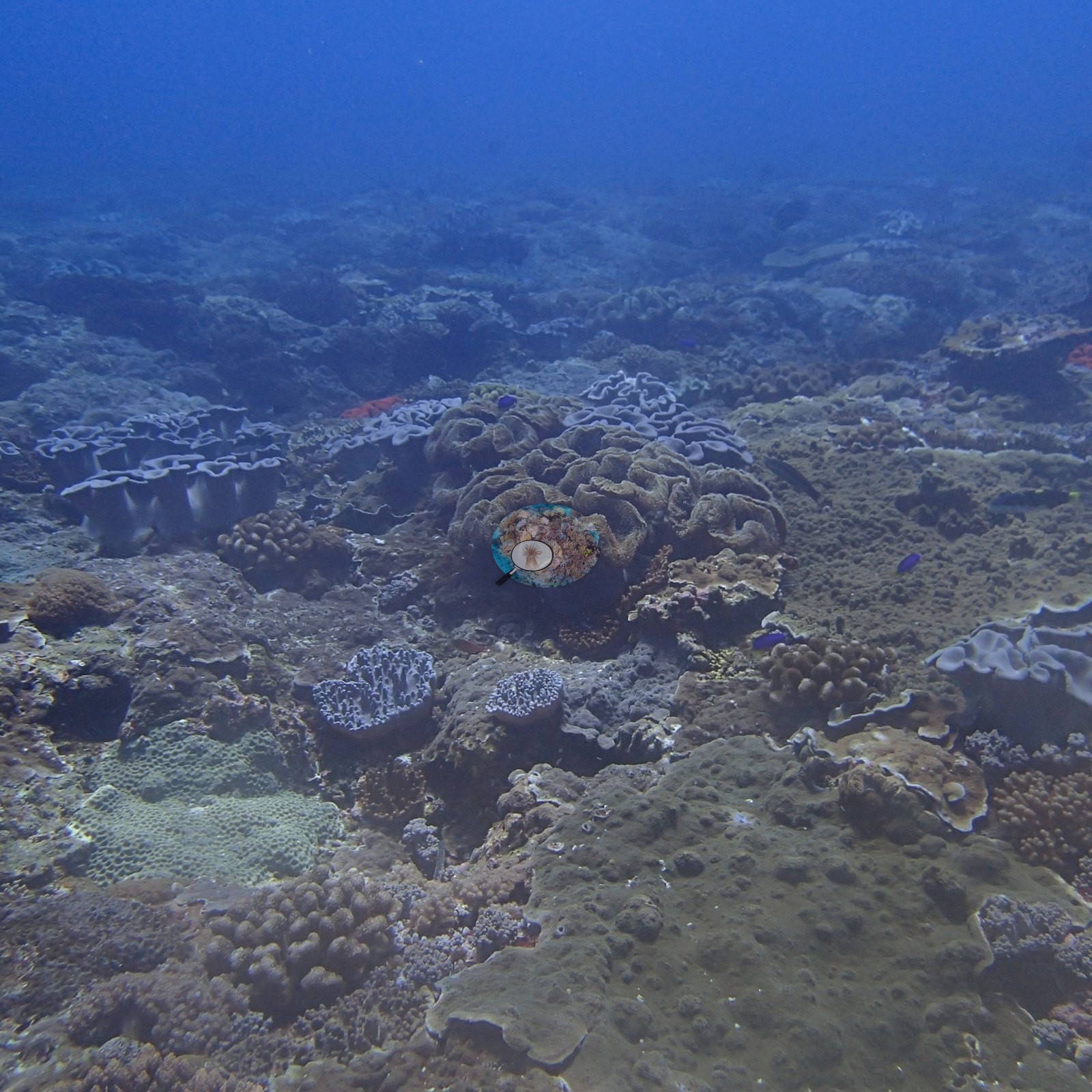
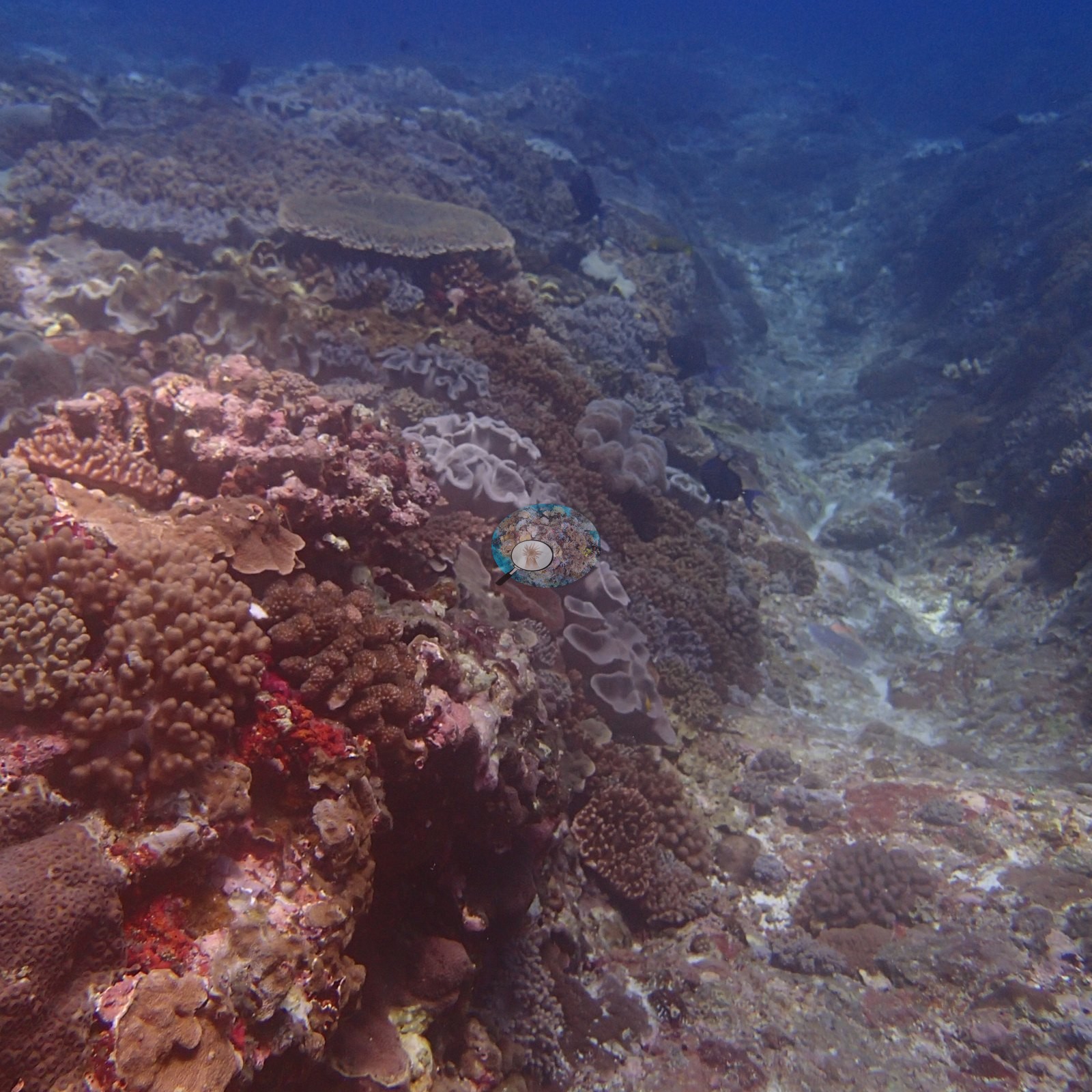
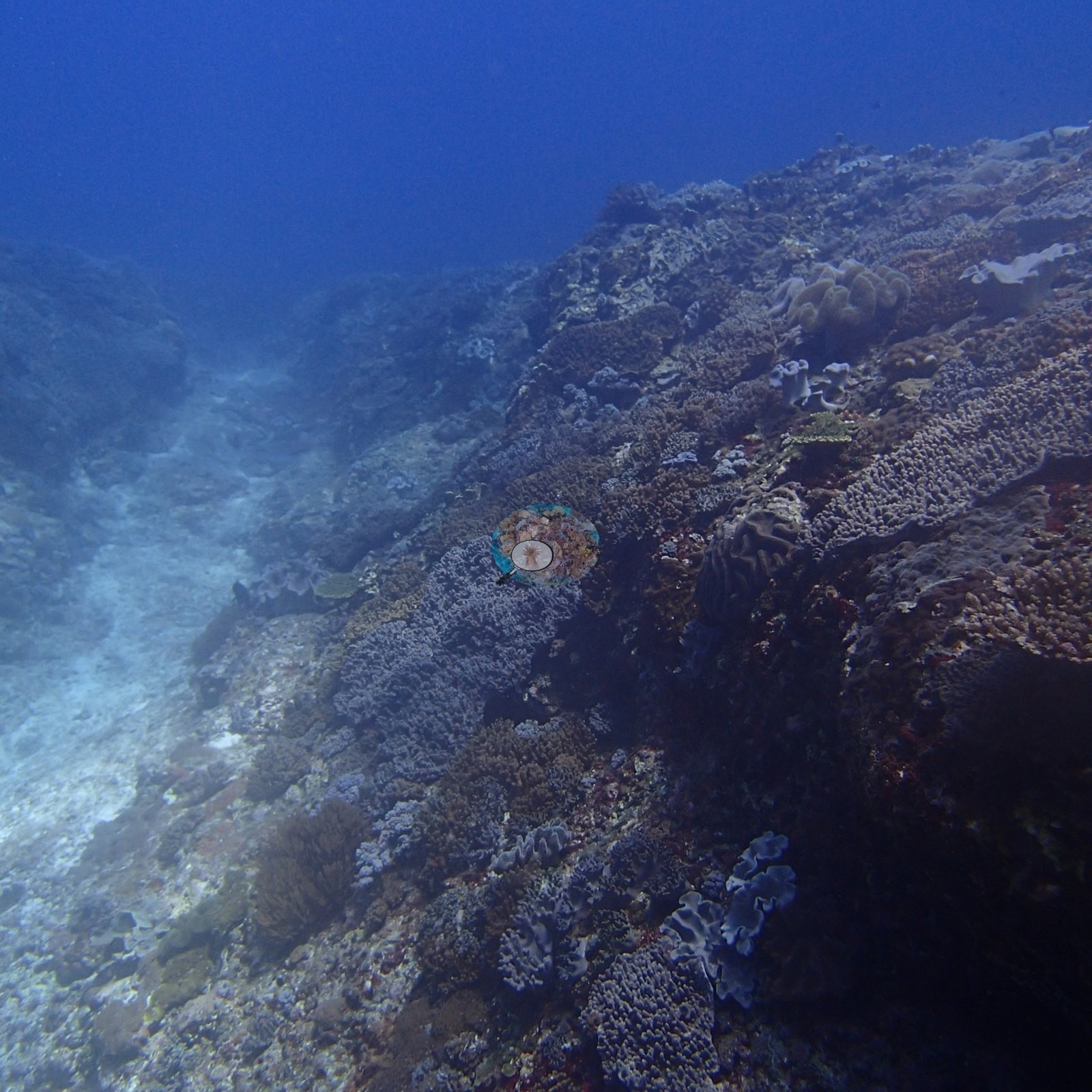
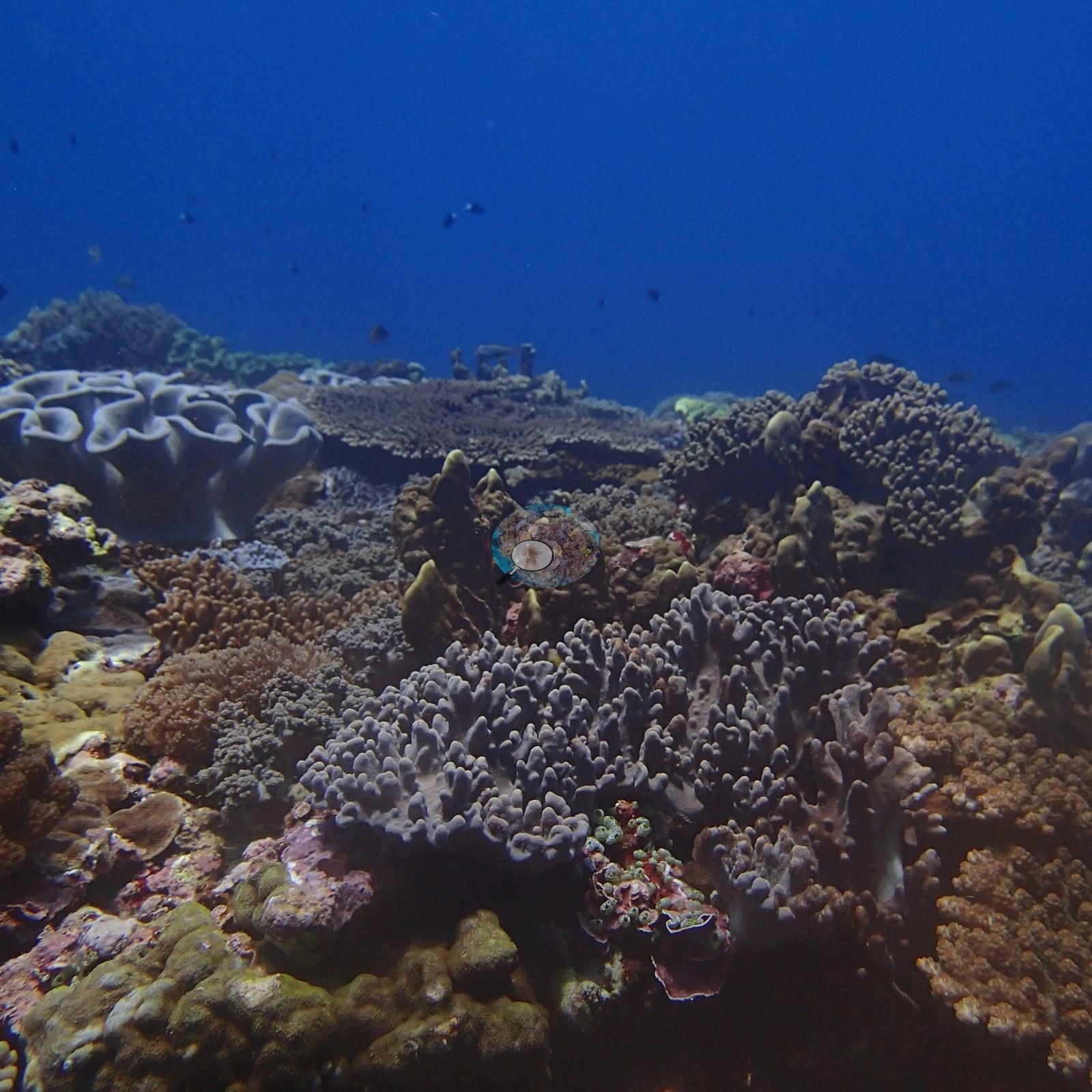
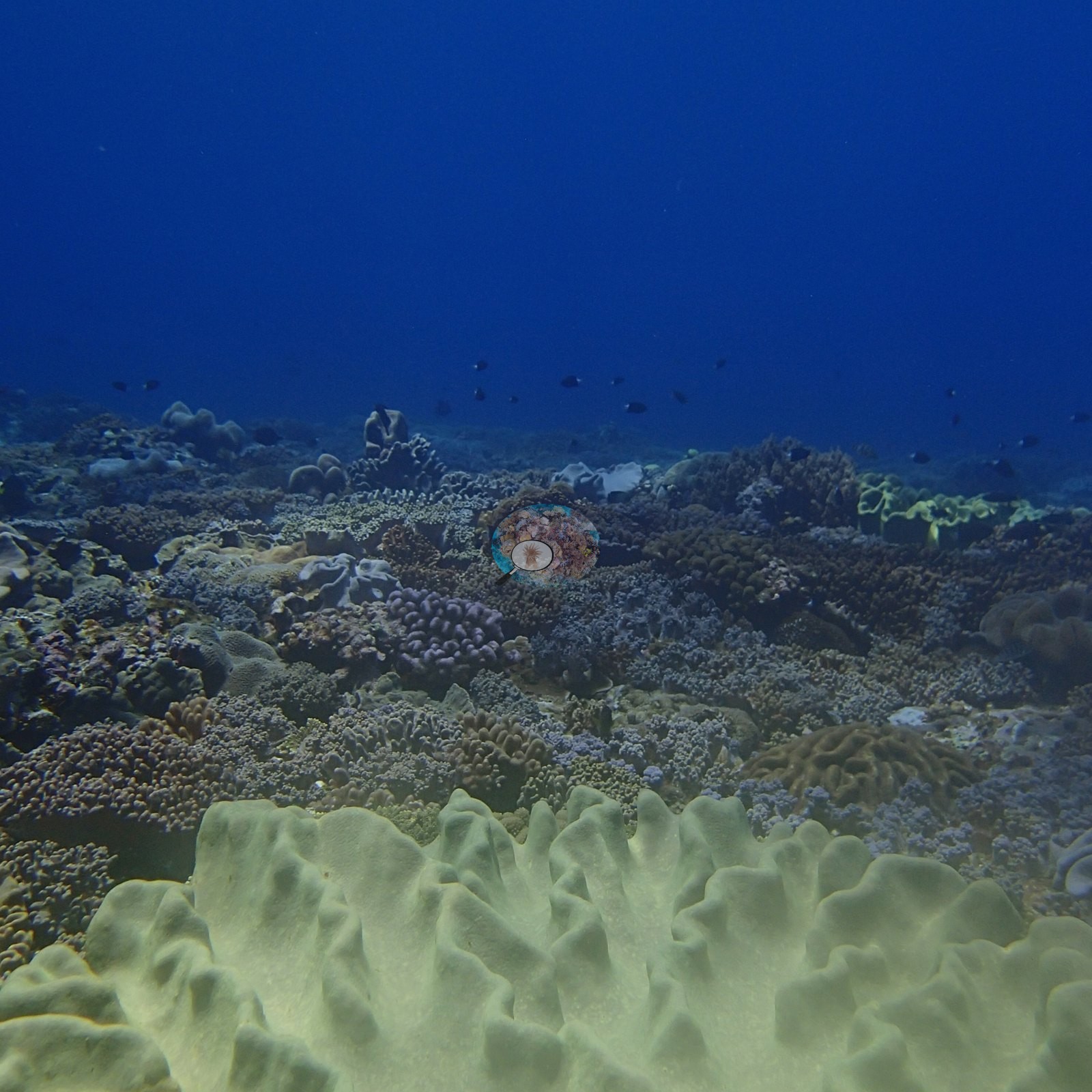
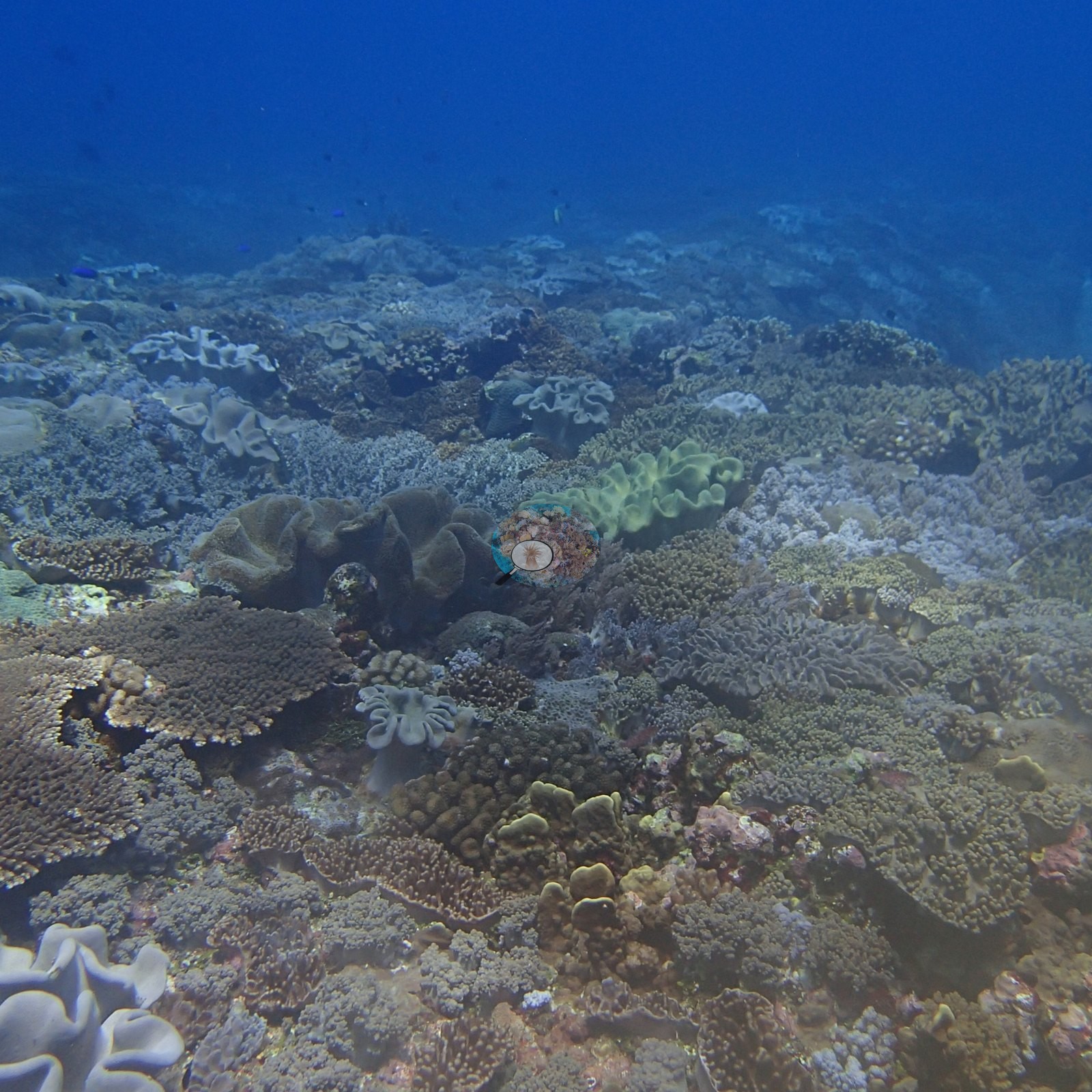
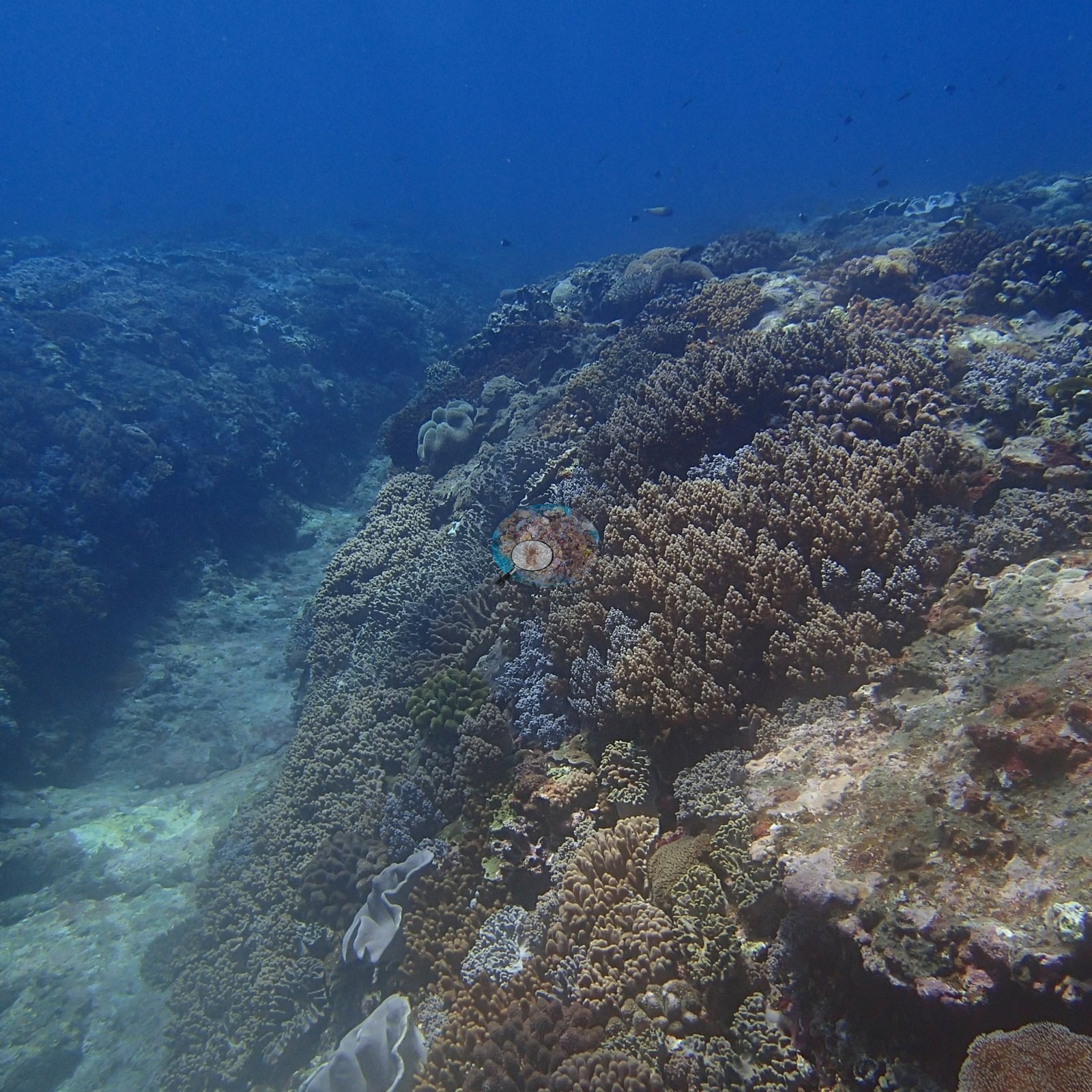
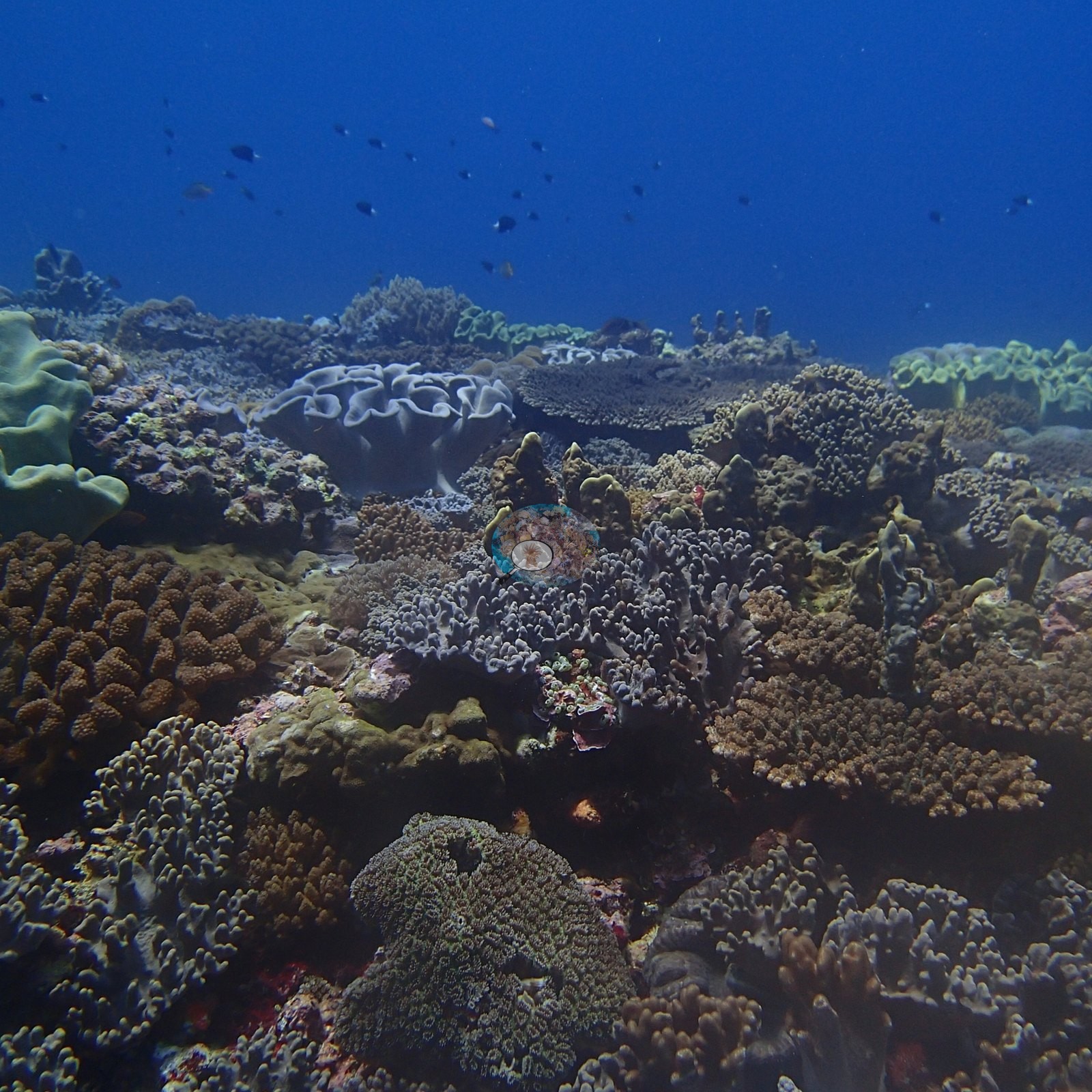
Dongsha, Taiwan (NOAA CRW virtual station)Two dives at Dongsha Atoll on 6 April 2016, at a site whose position was not recorded, crossed a lower, murky flat carpeted with hundreds of leathery soft corals among small hard corals, plate corals, and a gold table coral. A barracuda, damselfish schools, and divers working a hose-fed device appear in the frames.
2016年4月6日在東沙環礁的兩次潛水(該處位置未有紀錄)行經一片較低平、水色混濁的礁坪,其上鋪滿數以百計的革質軟珊瑚,間有小型石珊瑚、片狀珊瑚與一株金黃色桌形珊瑚。照片中可見一尾梭魚、成群的雀鯛,以及正在操作一具軟管連接裝置的潛水員。
本摘要由 AI 翻譯;以英文版本為準。
This page shows 50 of the 70 photographs from this site, including every one the text cites.
21 of the 50 photographs on this page are shown beside the text that discusses them under "Site description" below.
Site description
Setting
These two dives on 6 April 2016, the day after the Site 6 dive, were at a Dongsha Atoll site whose position was not recorded: Anderson's sample sheet leaves the site blank for both, and its note on the second dive reads "39 km one way from island!". The frames were filed with Site 6, but they show a different habitat, and the sheet's note on the first dive, "No Pdam / No S. hystrix", does not fit Site 6, where eight Pocillopora damicornis colonies were collected the day before.
General benthic features
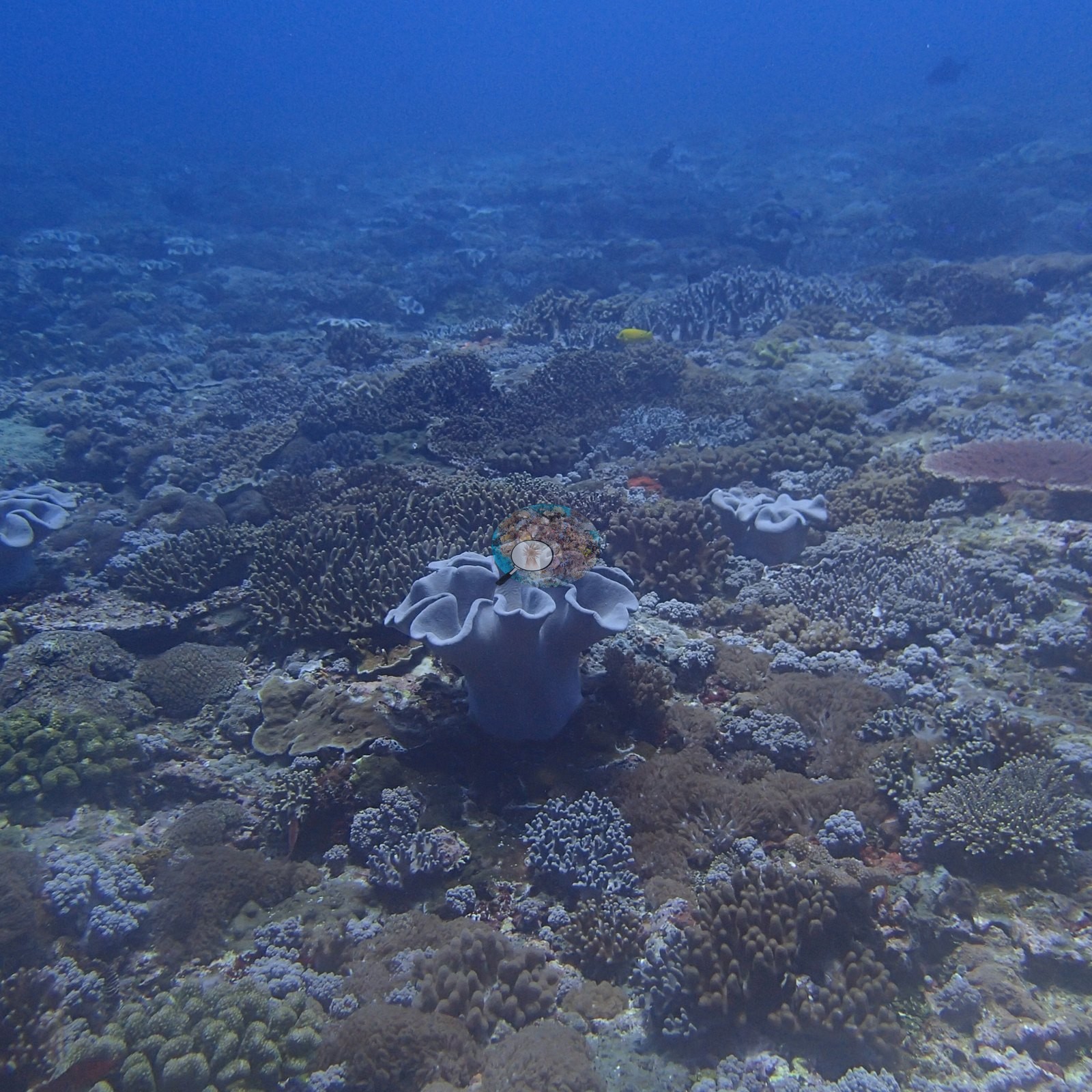
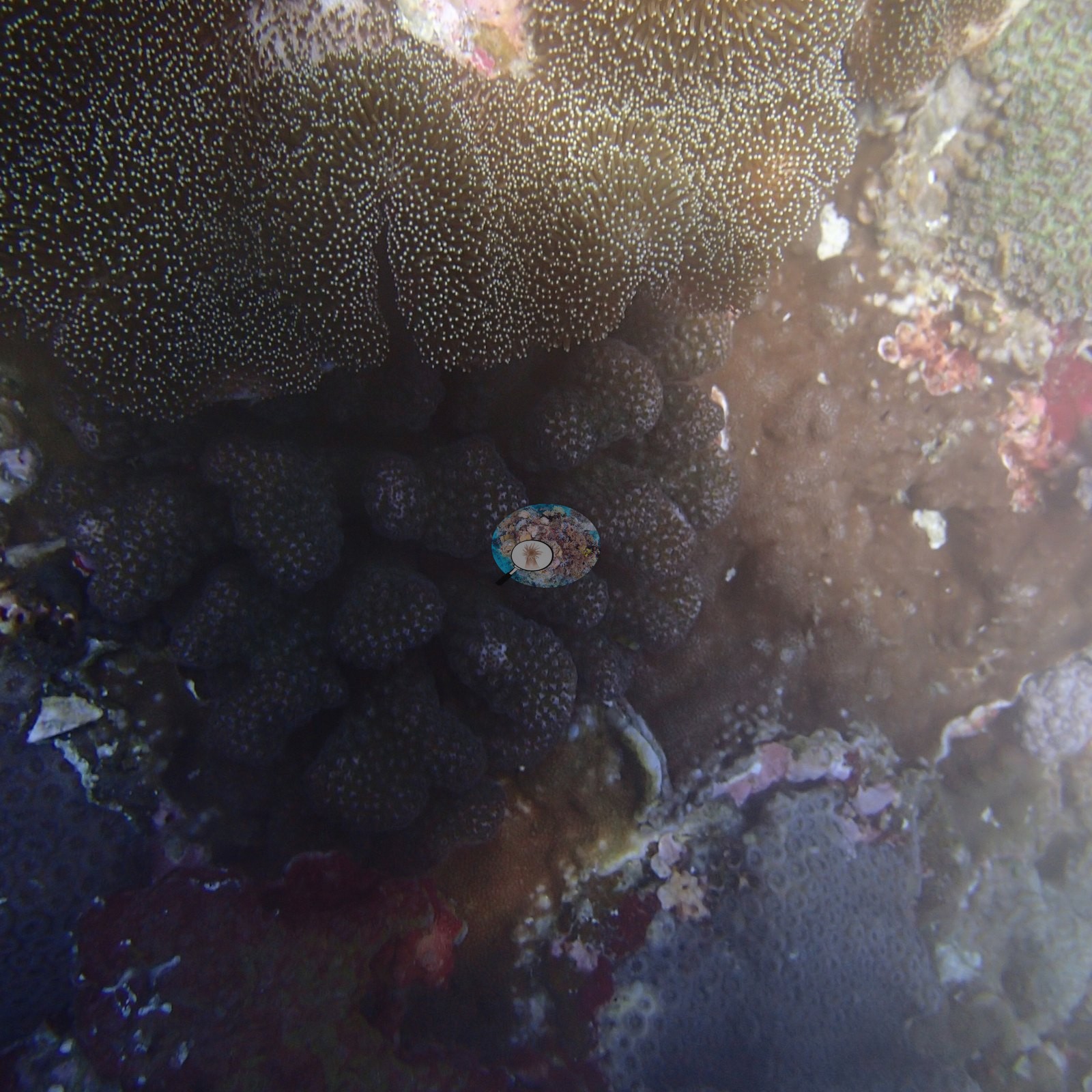
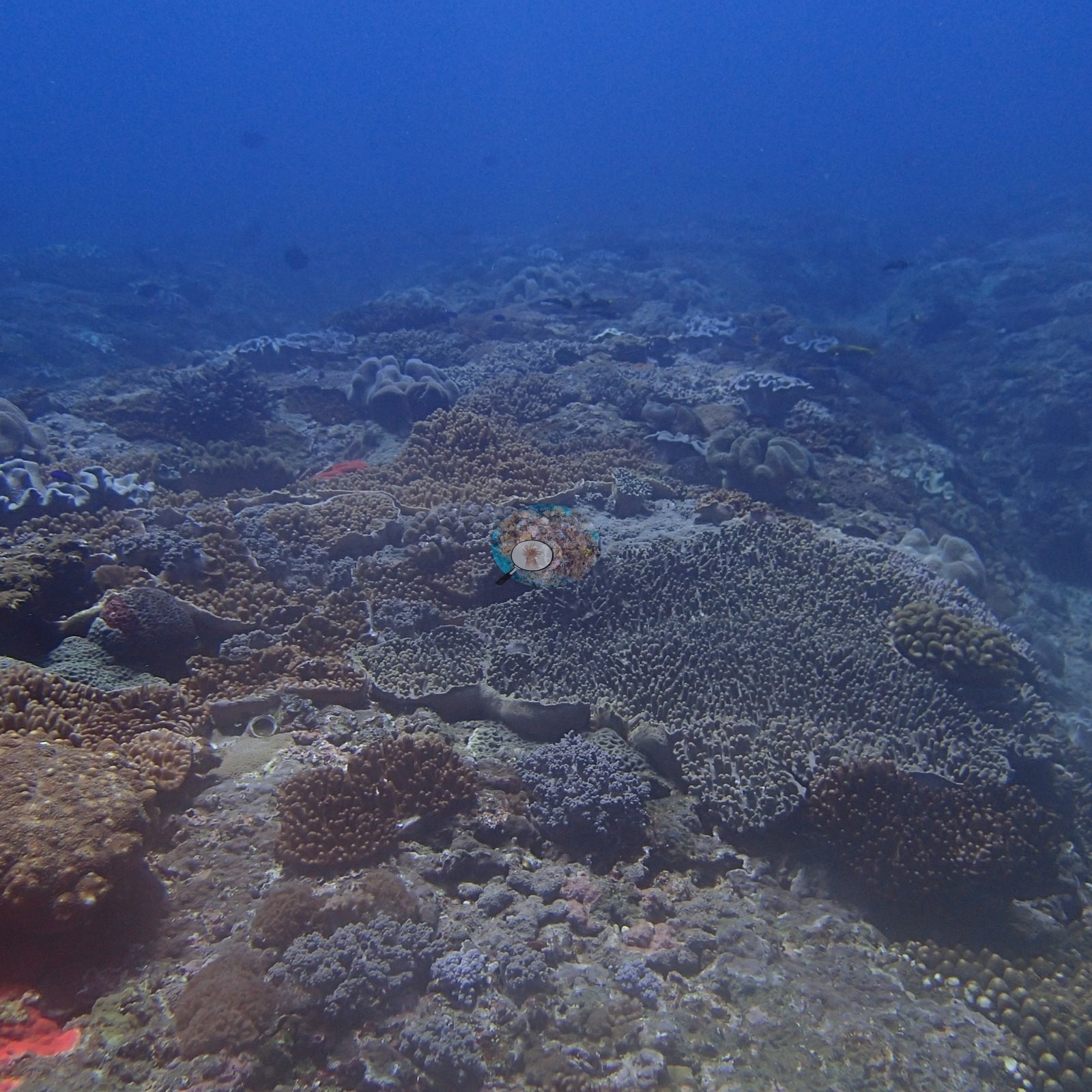
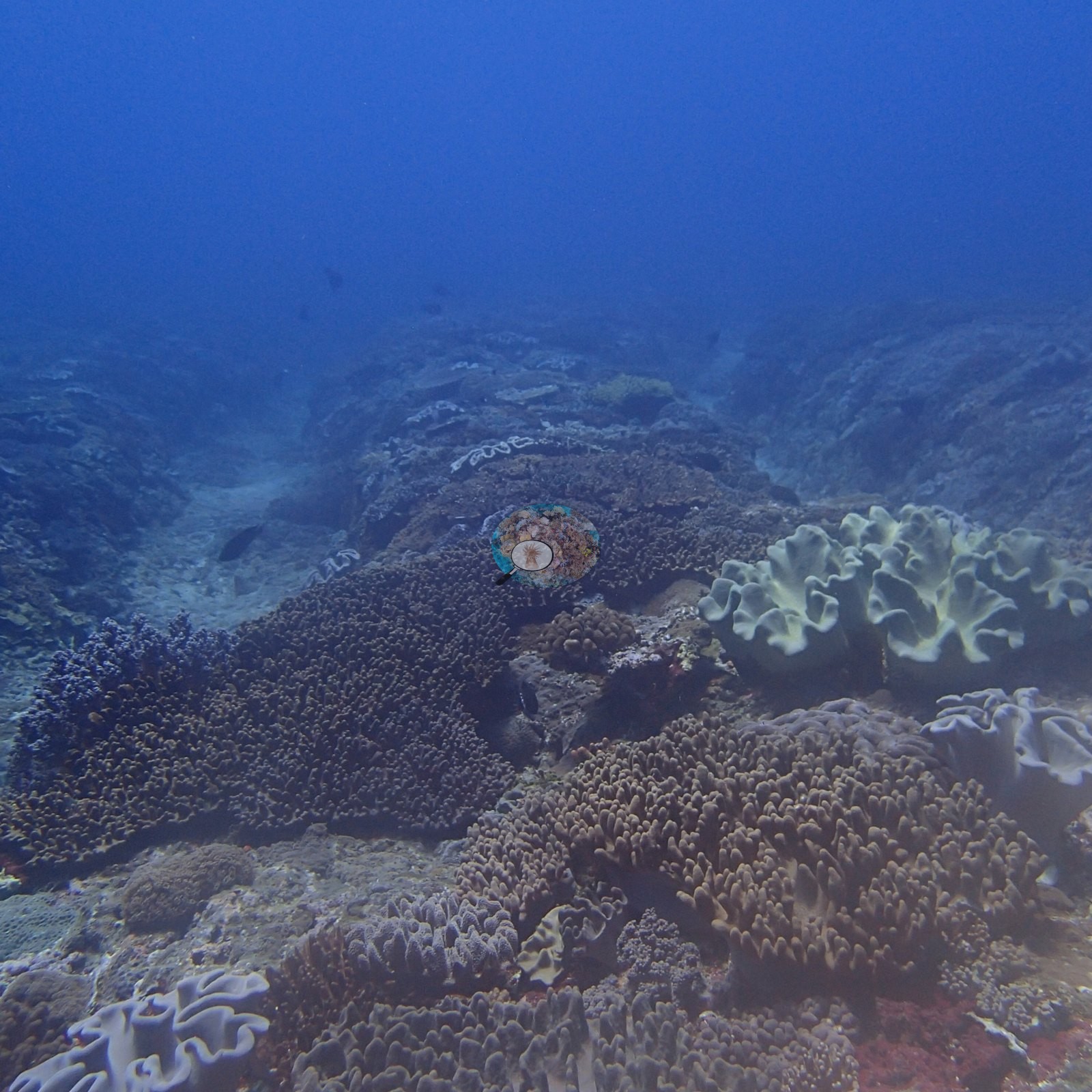
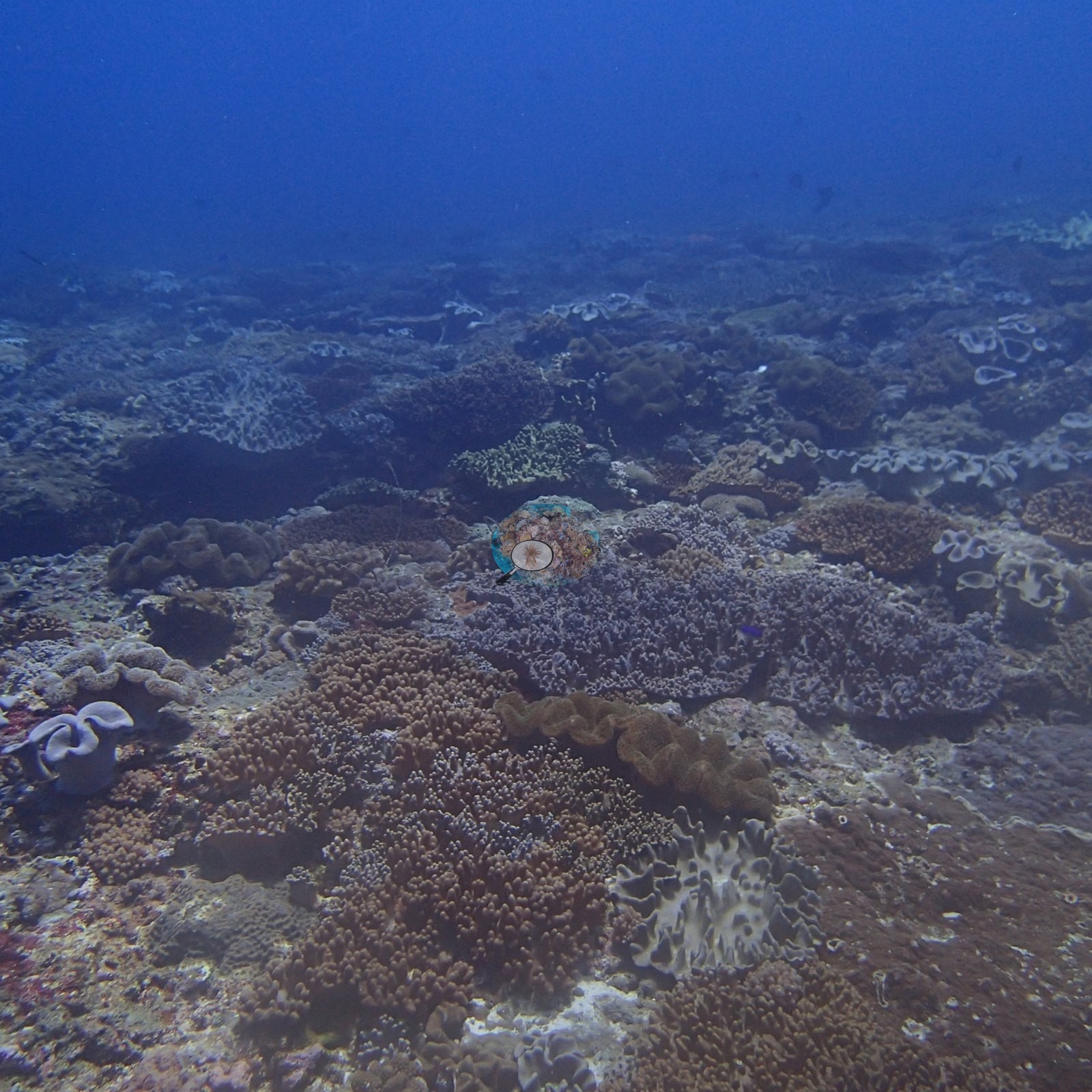
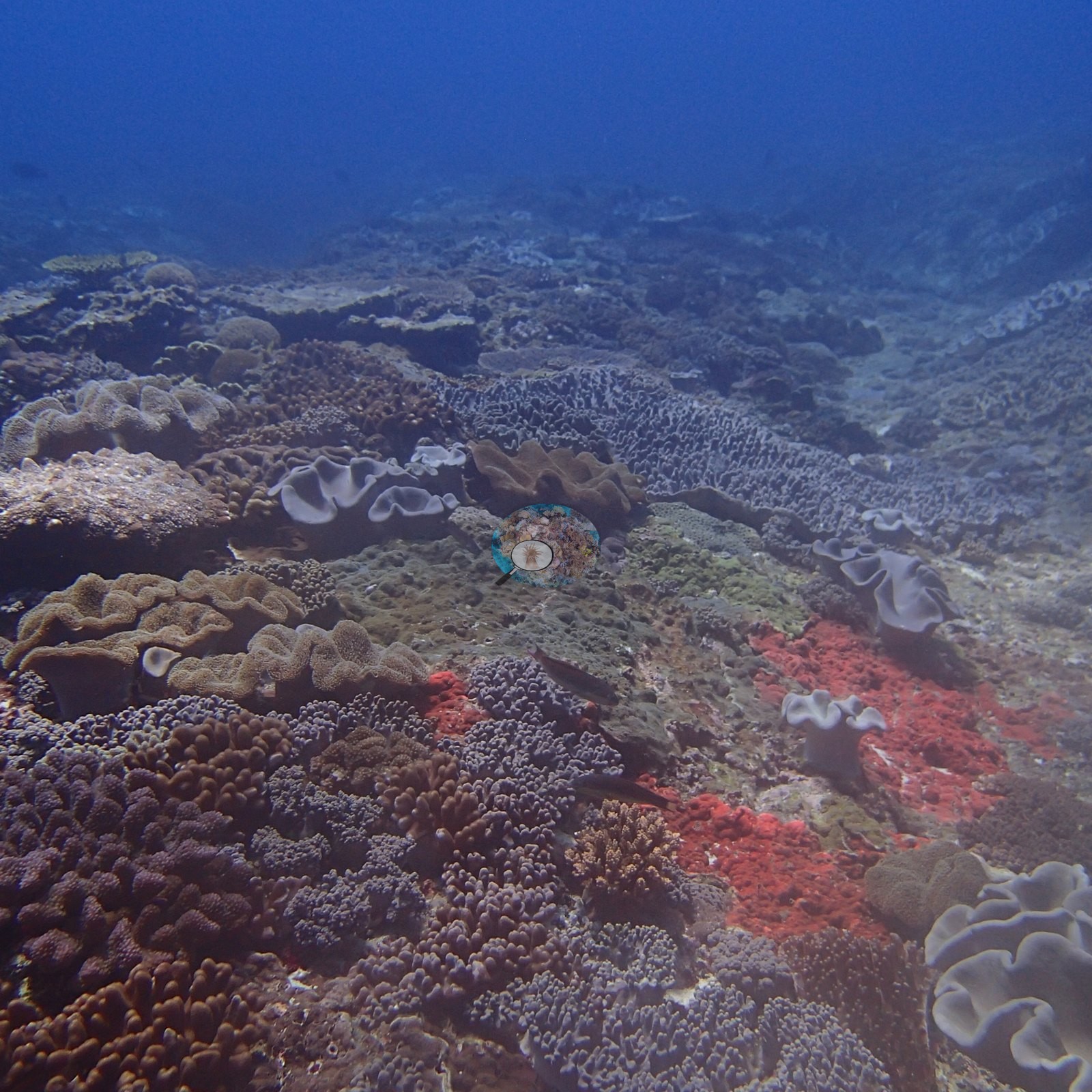
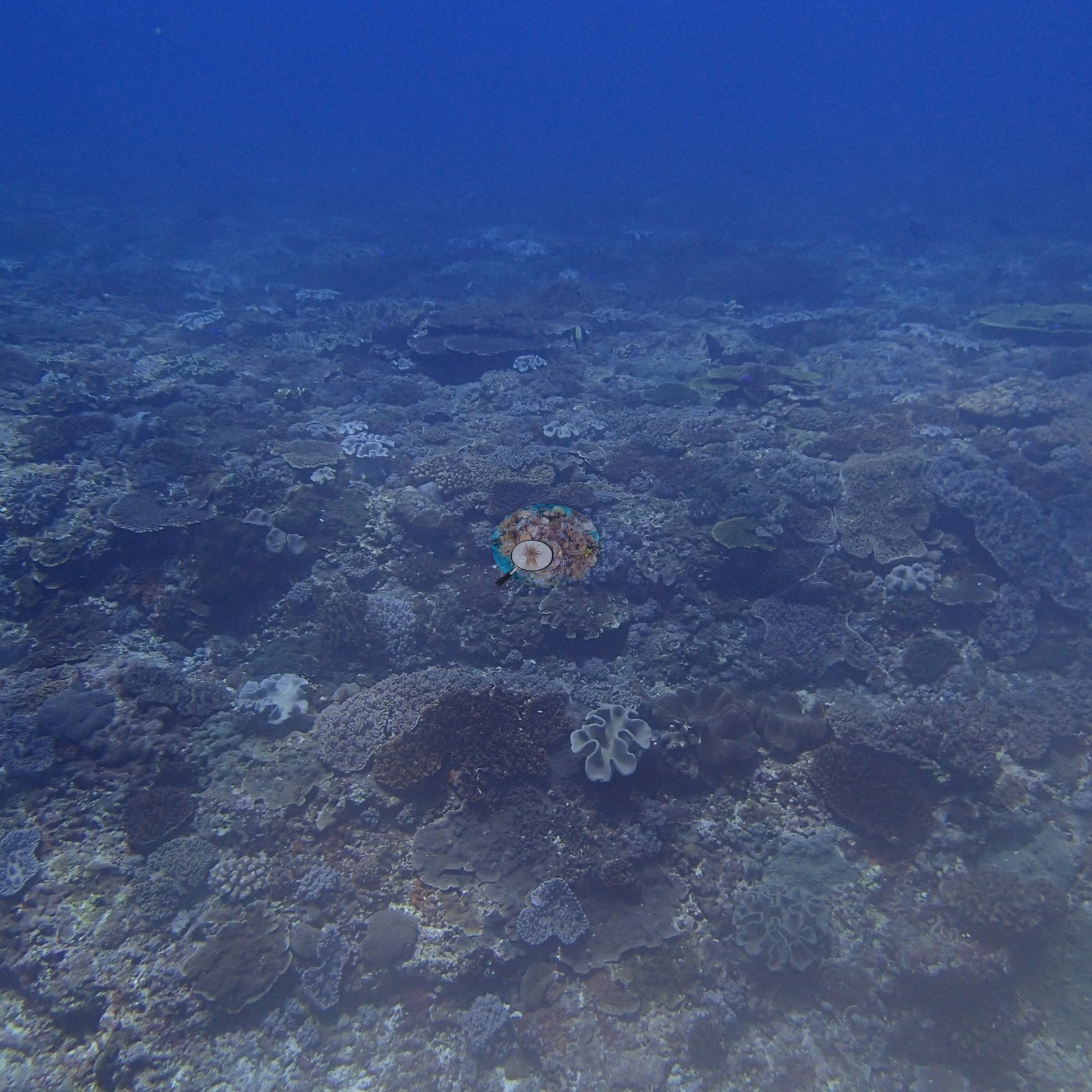
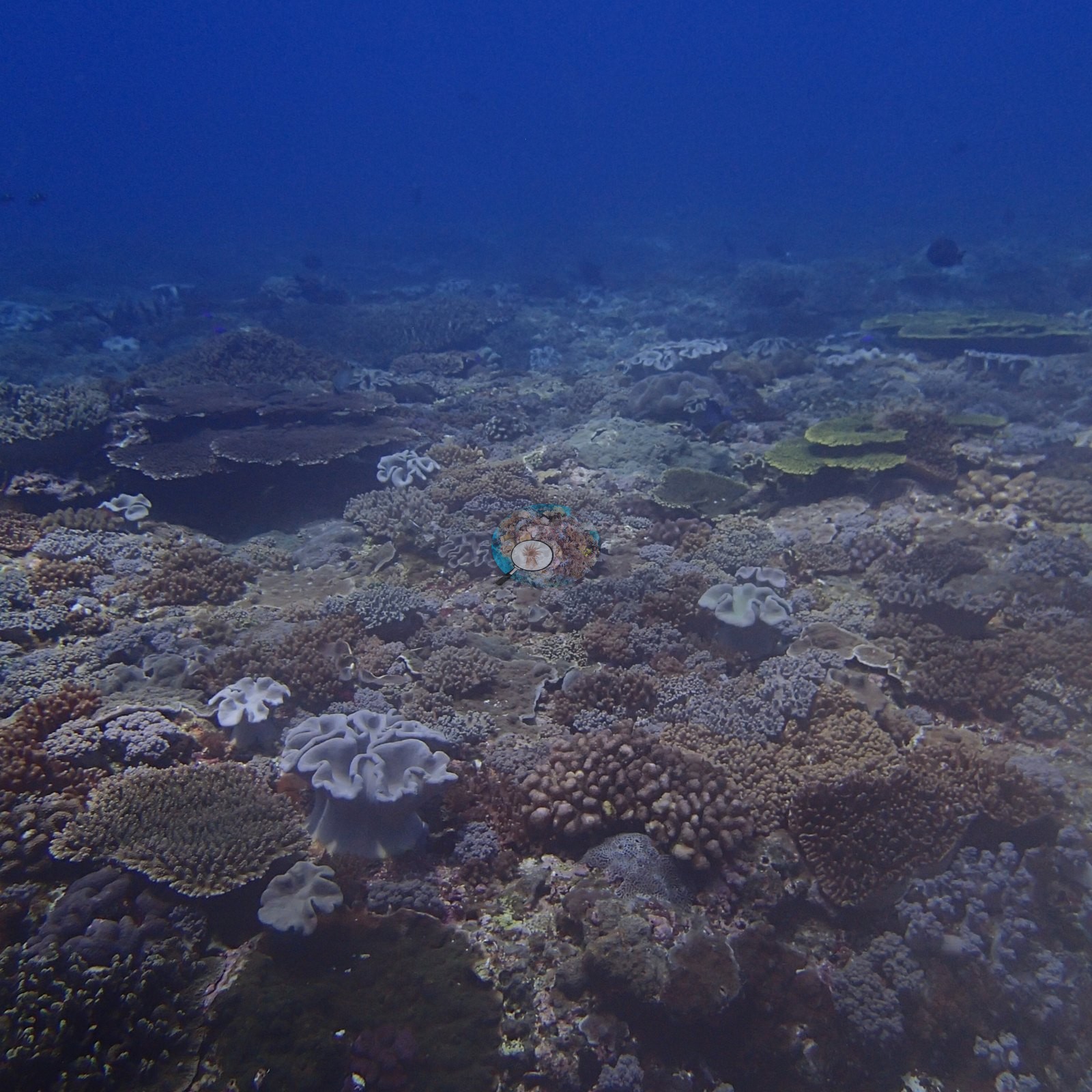
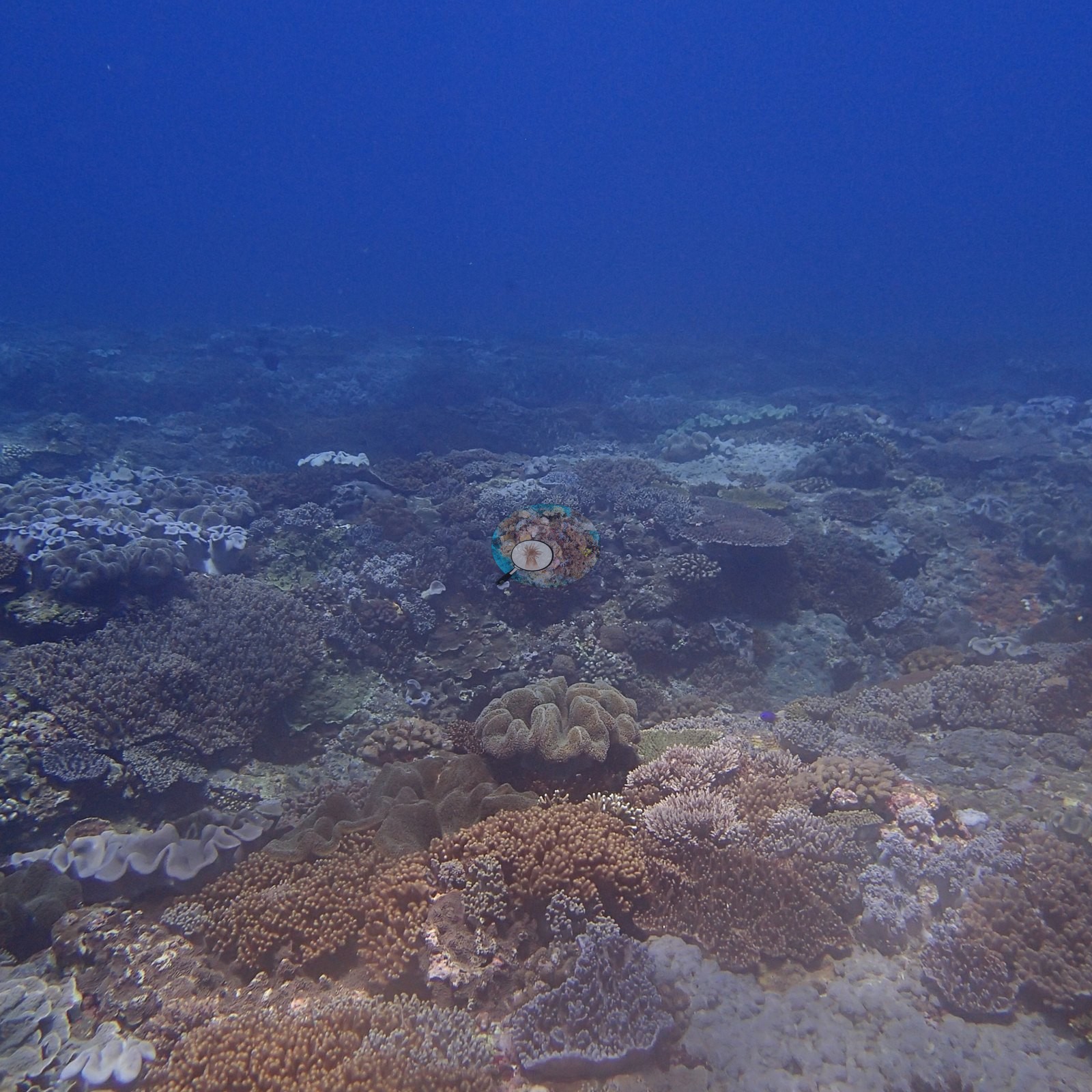
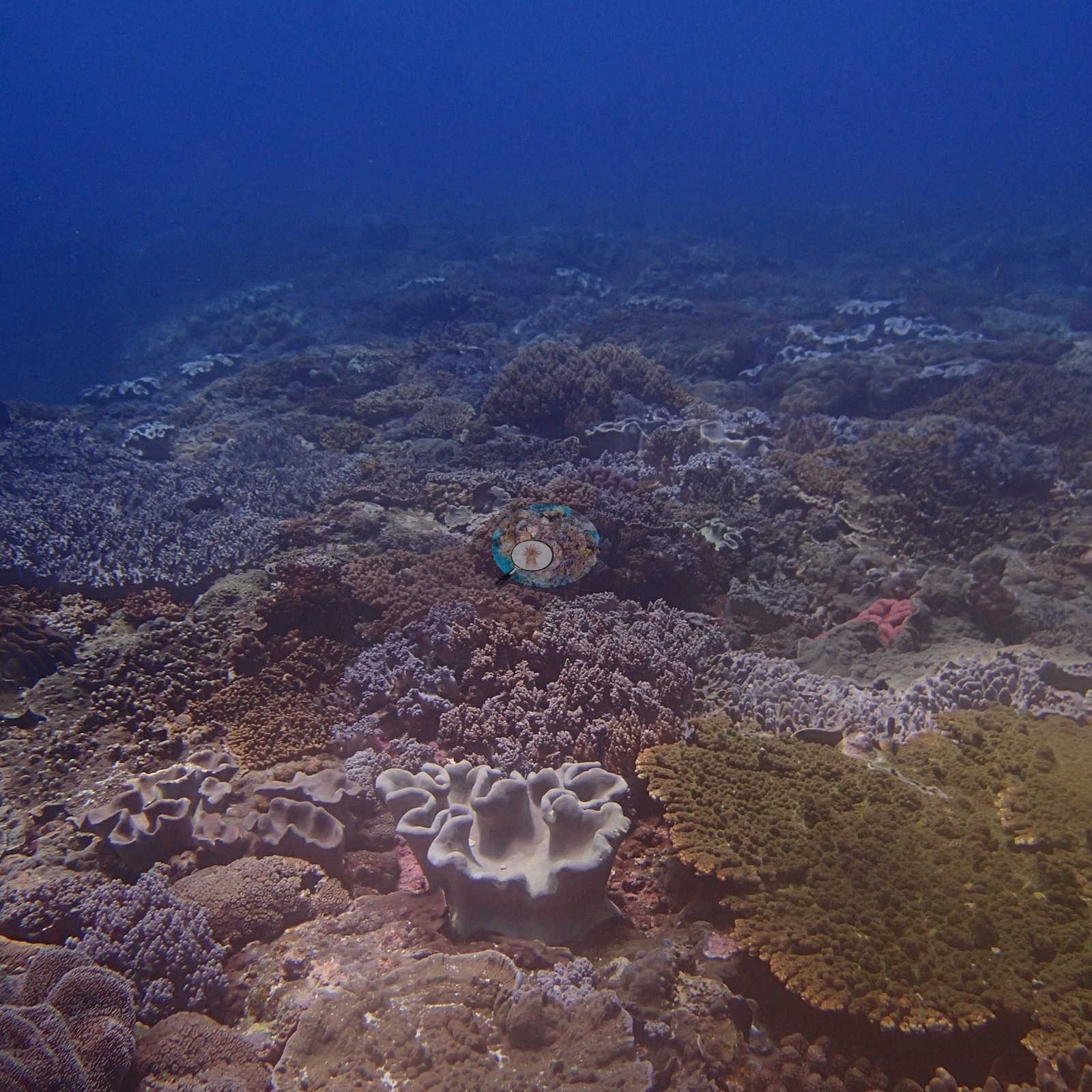
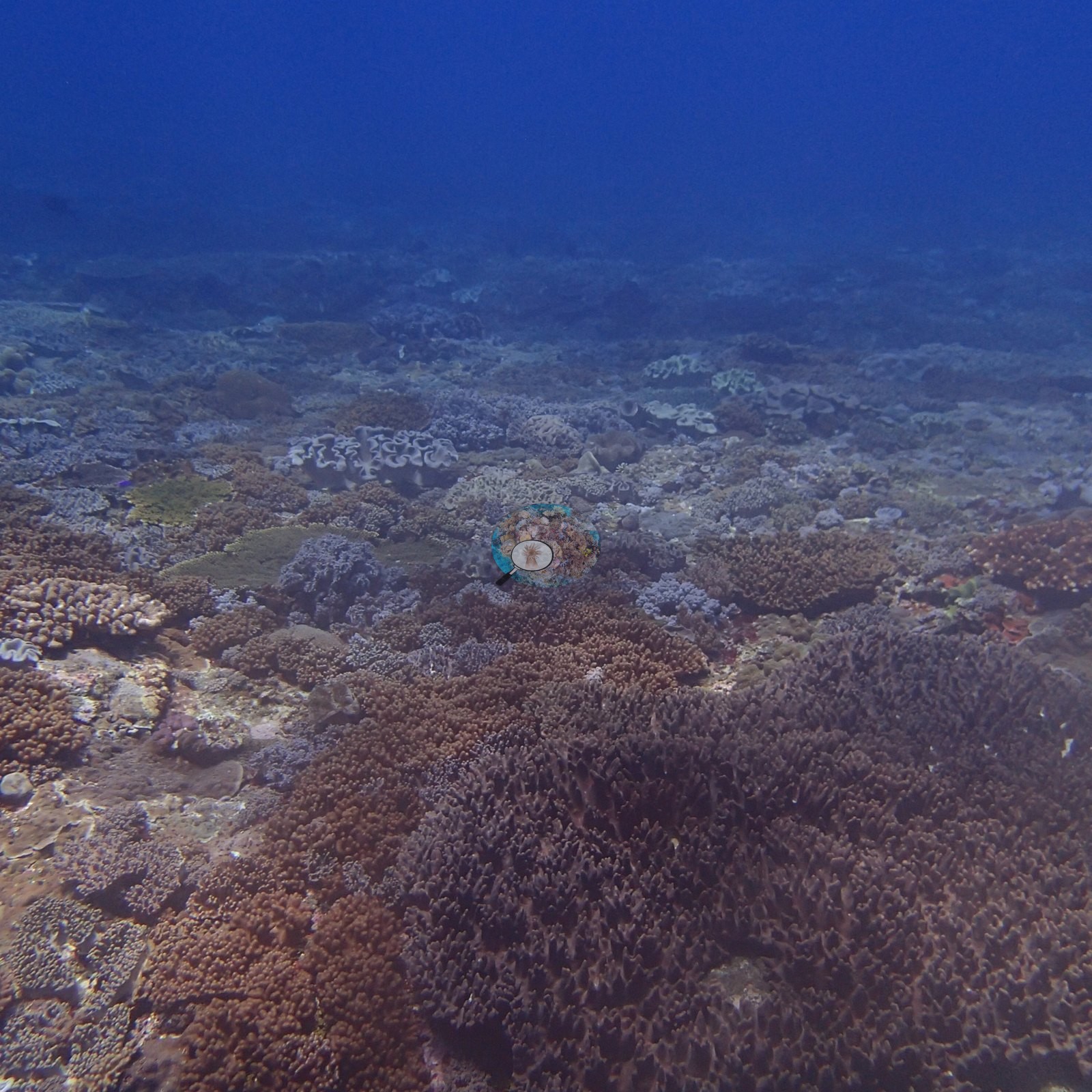
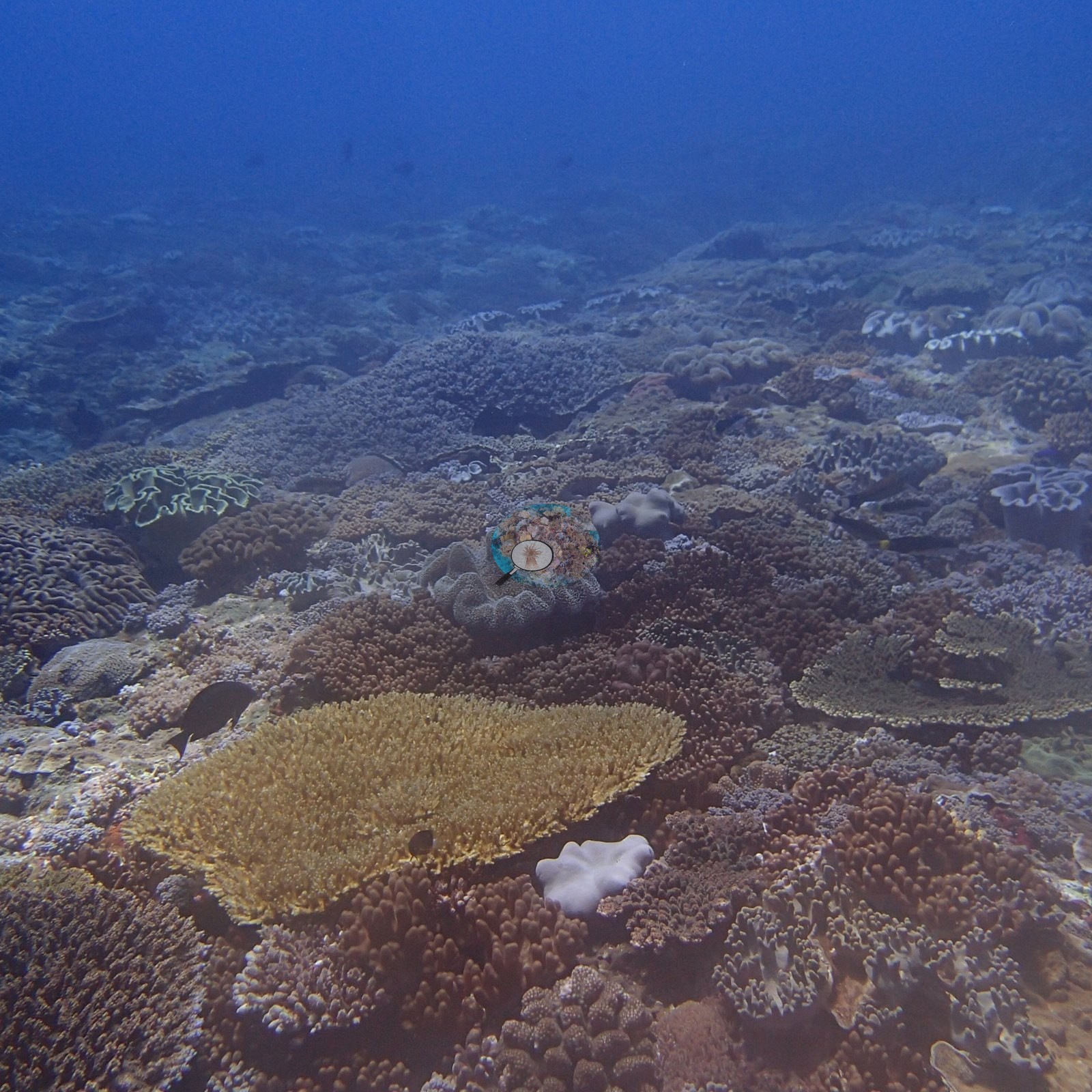
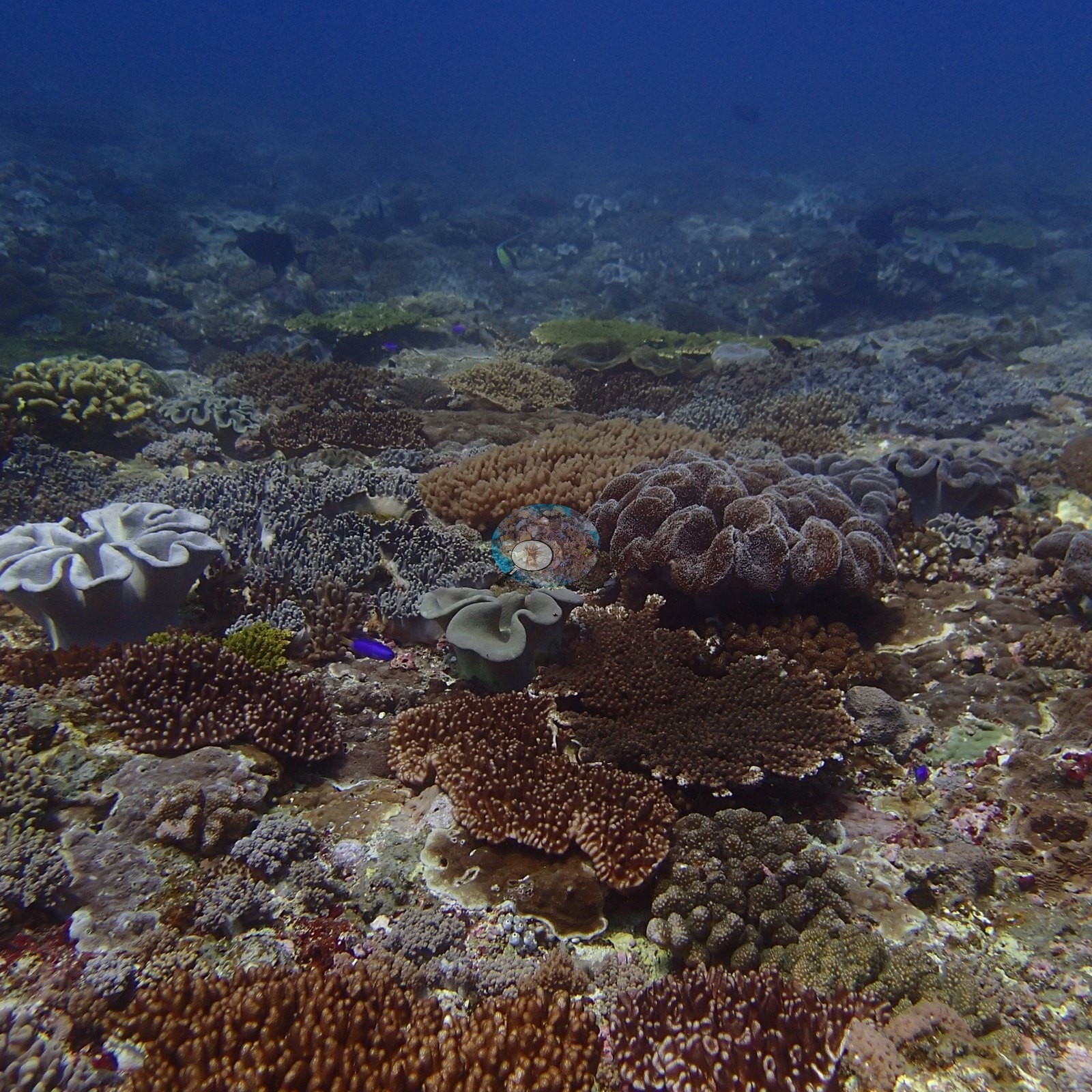
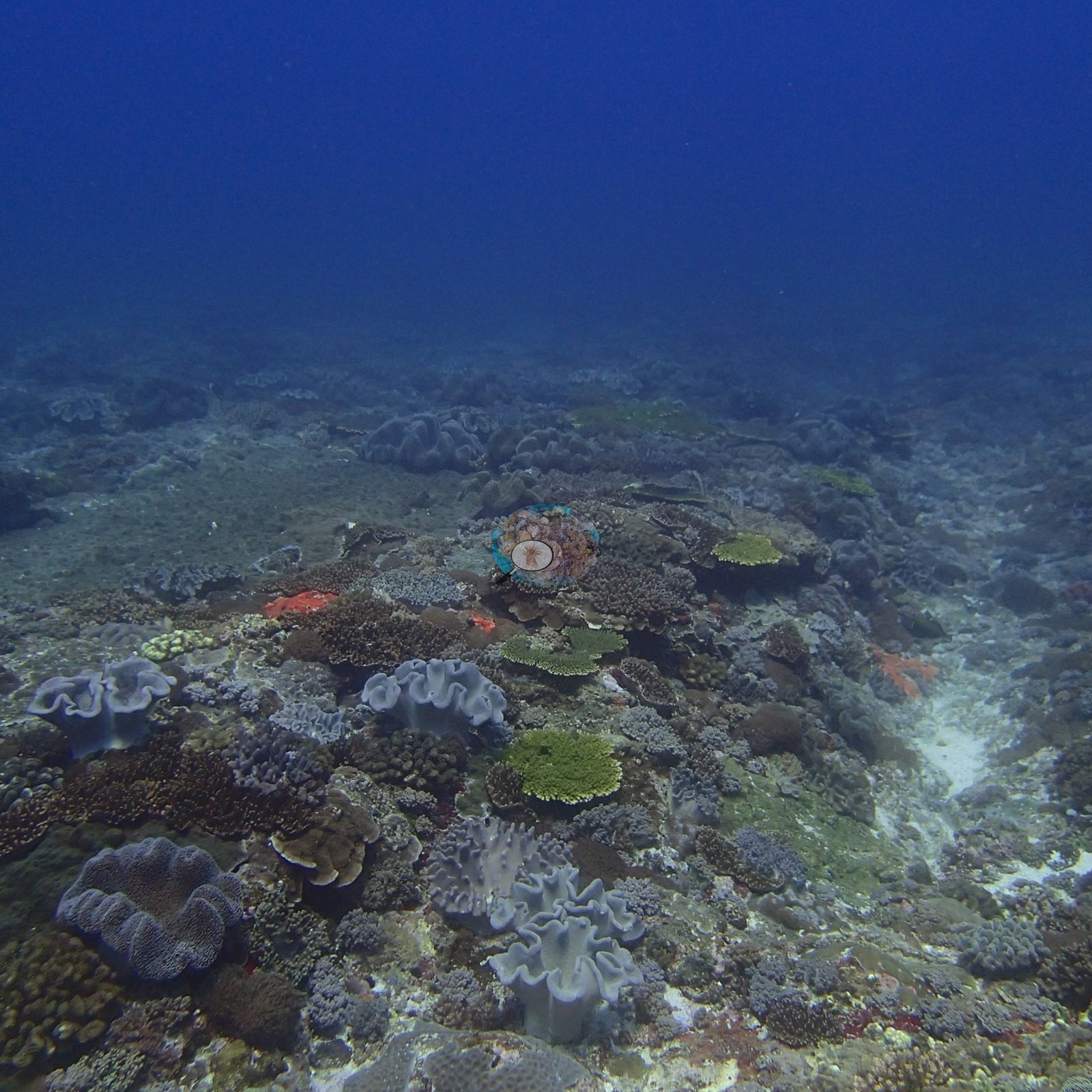
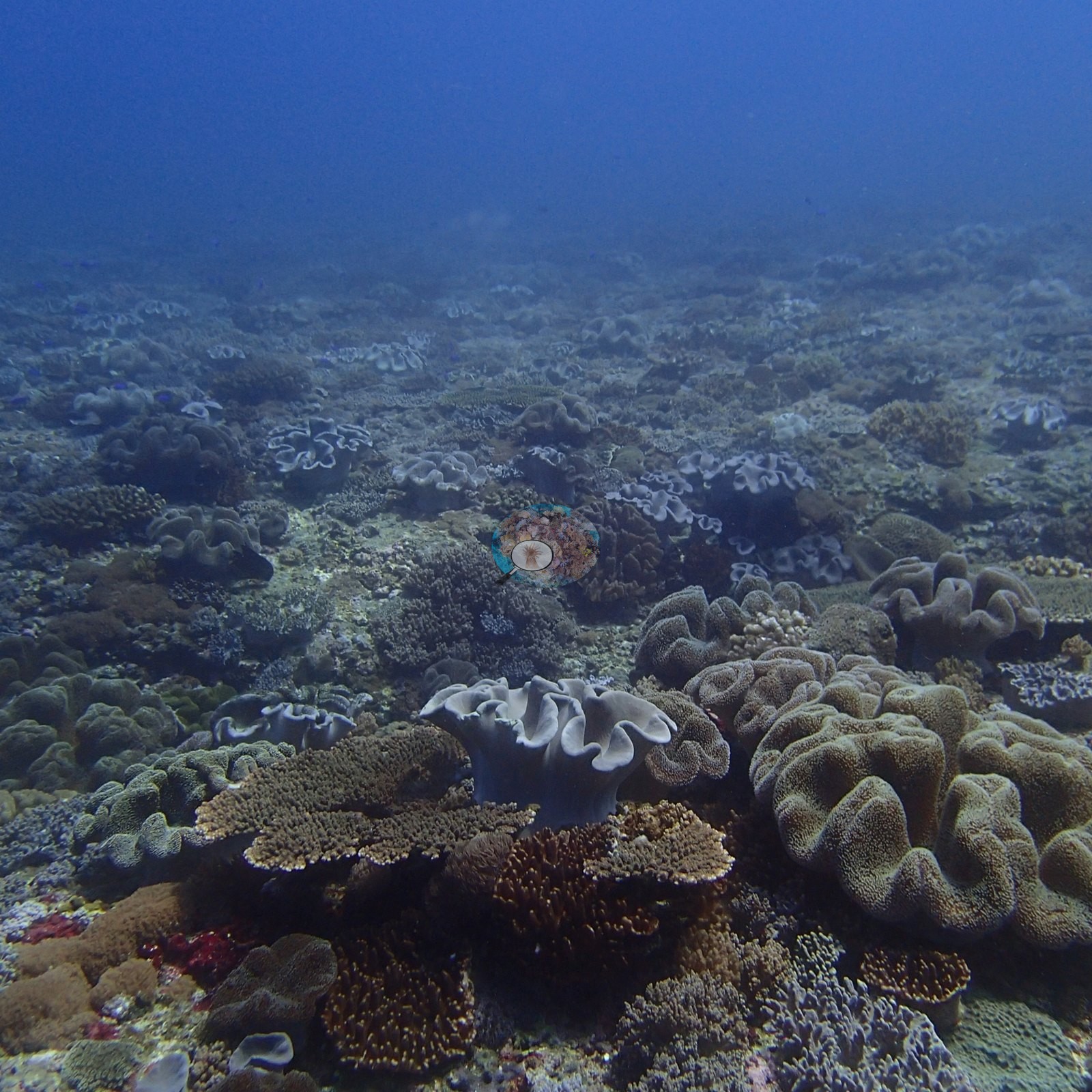
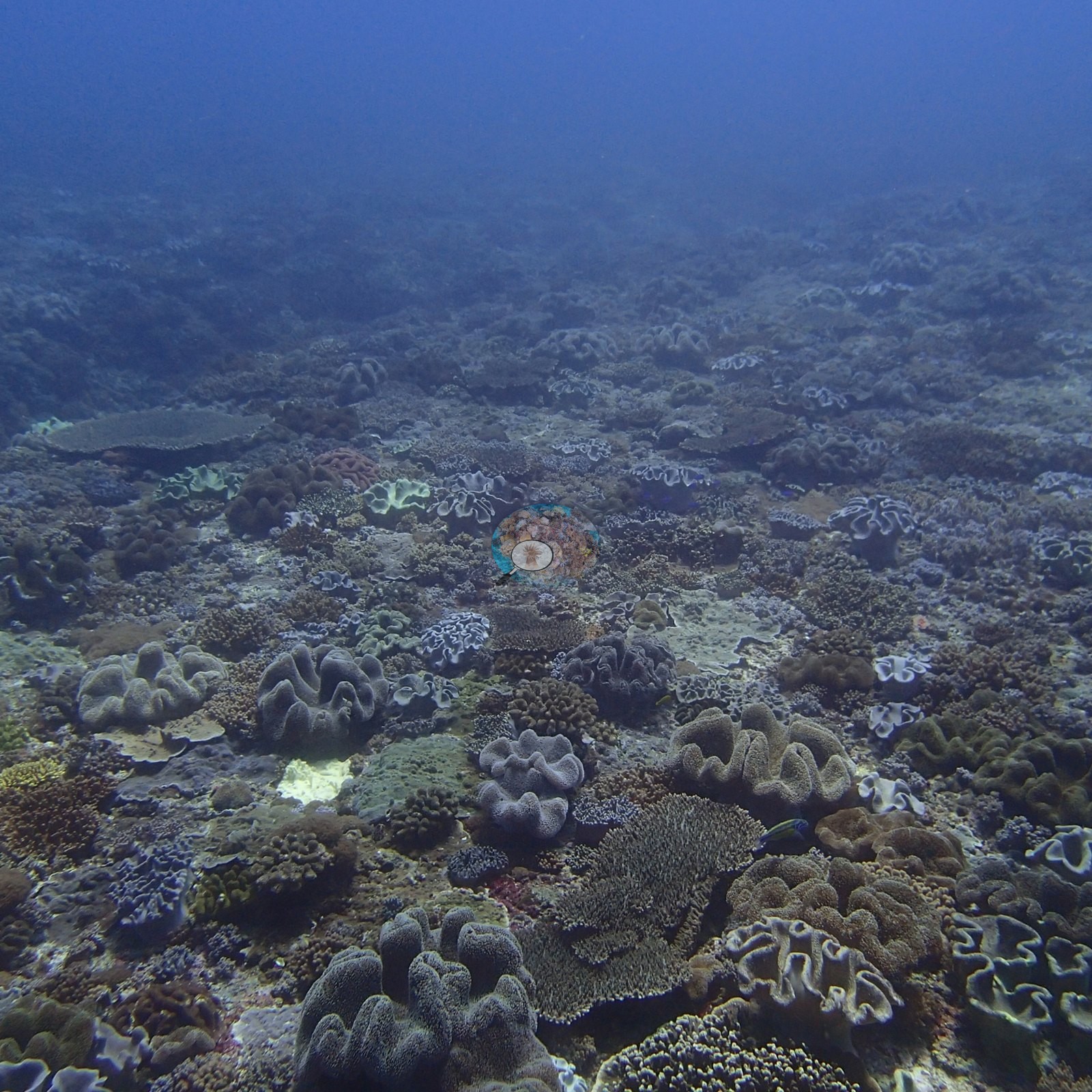
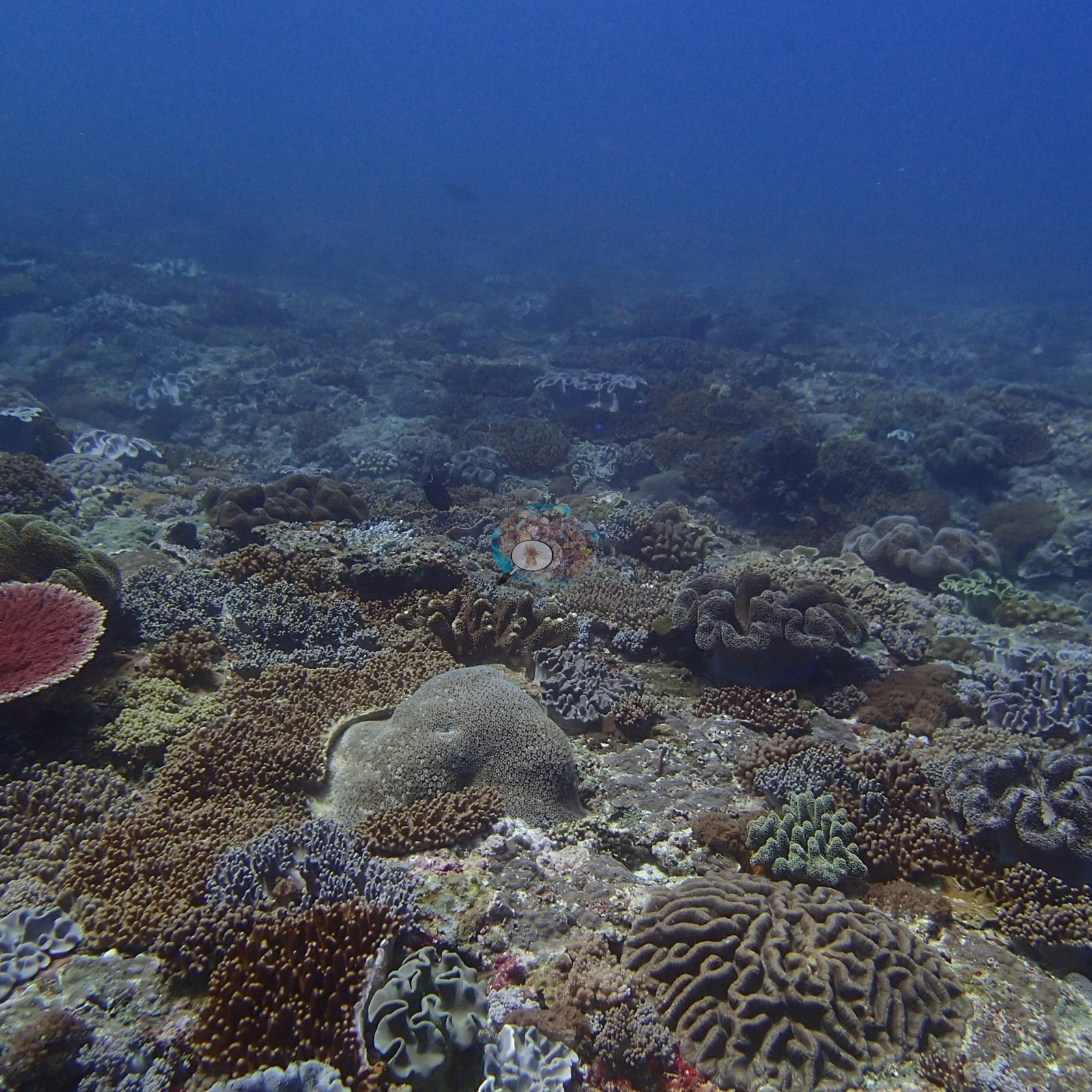
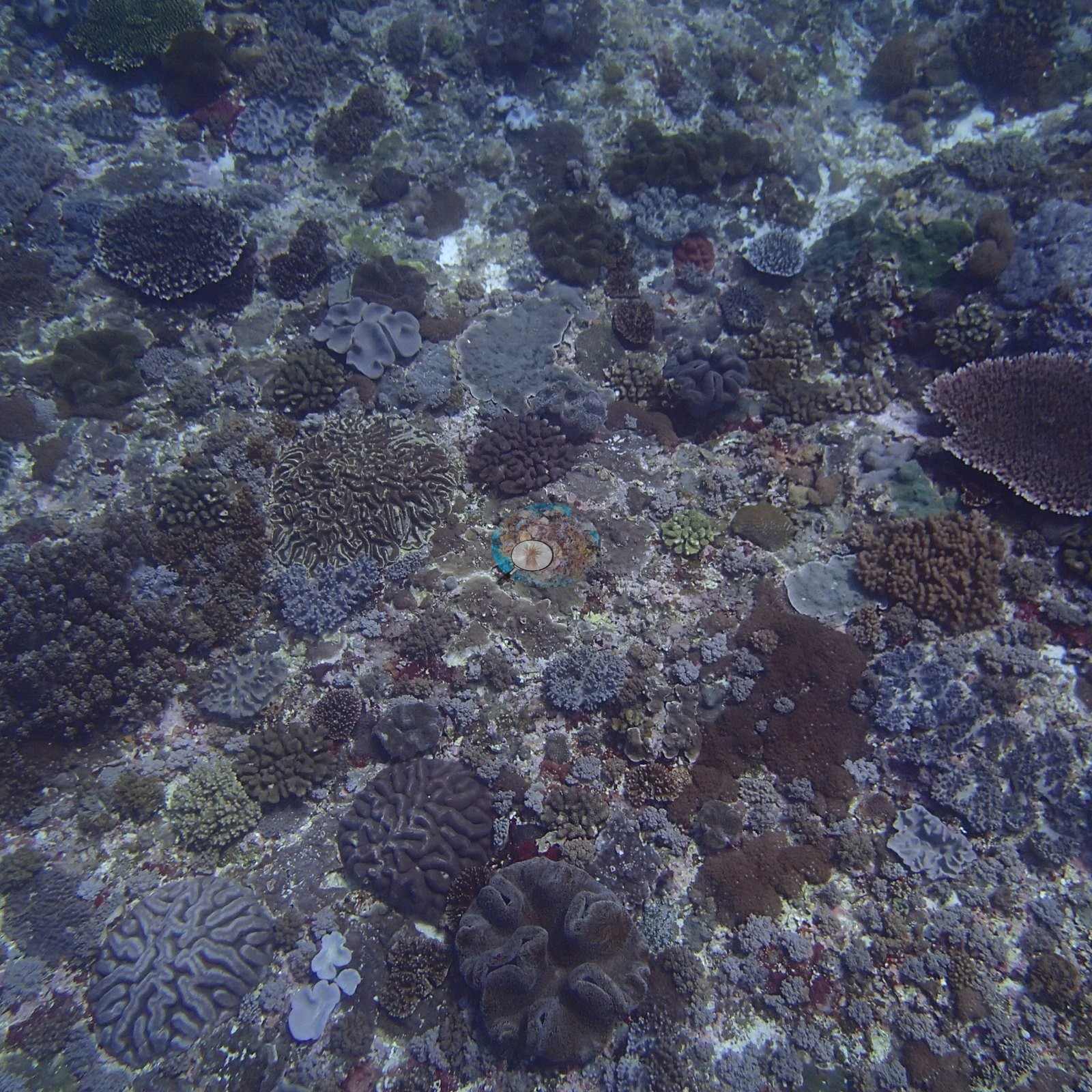
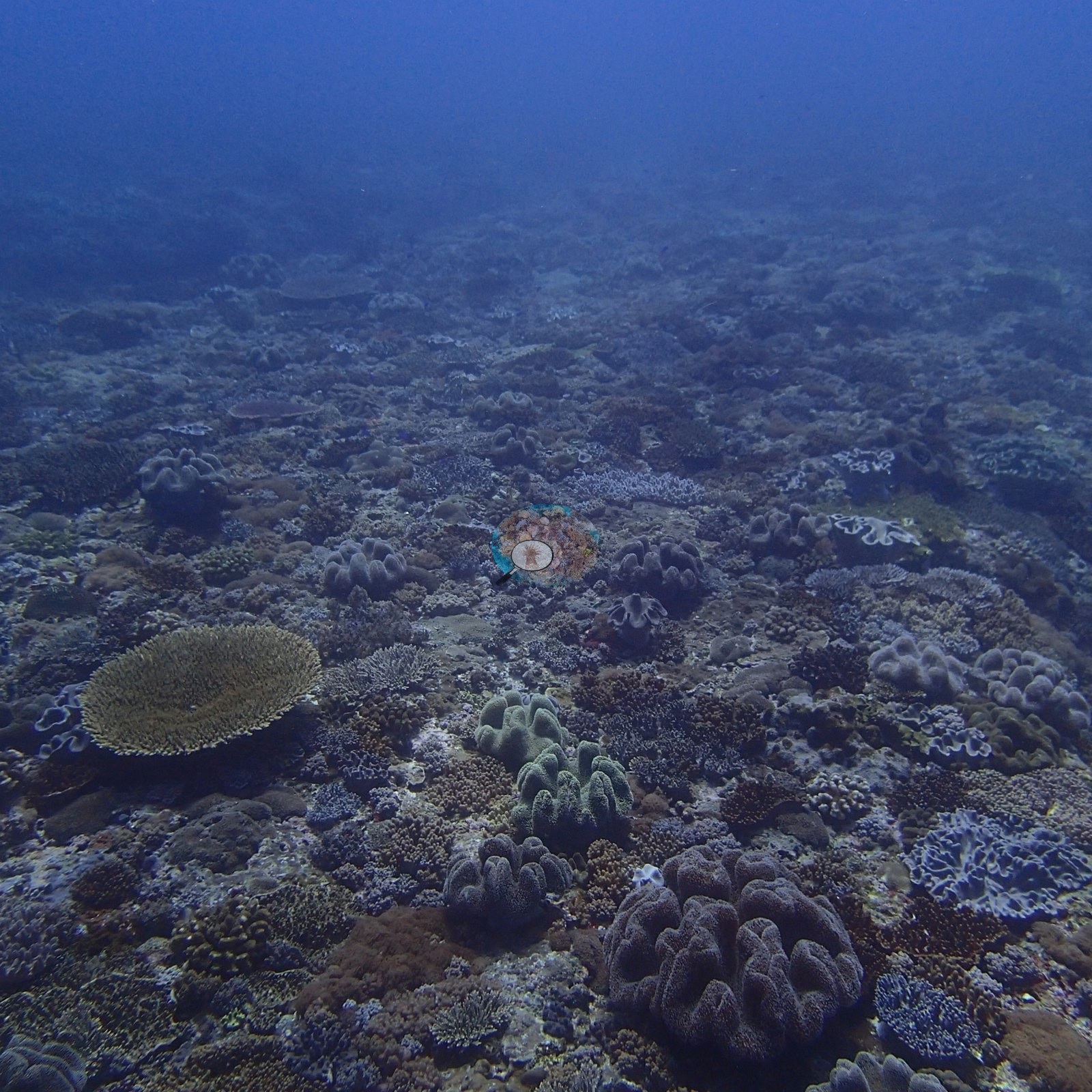
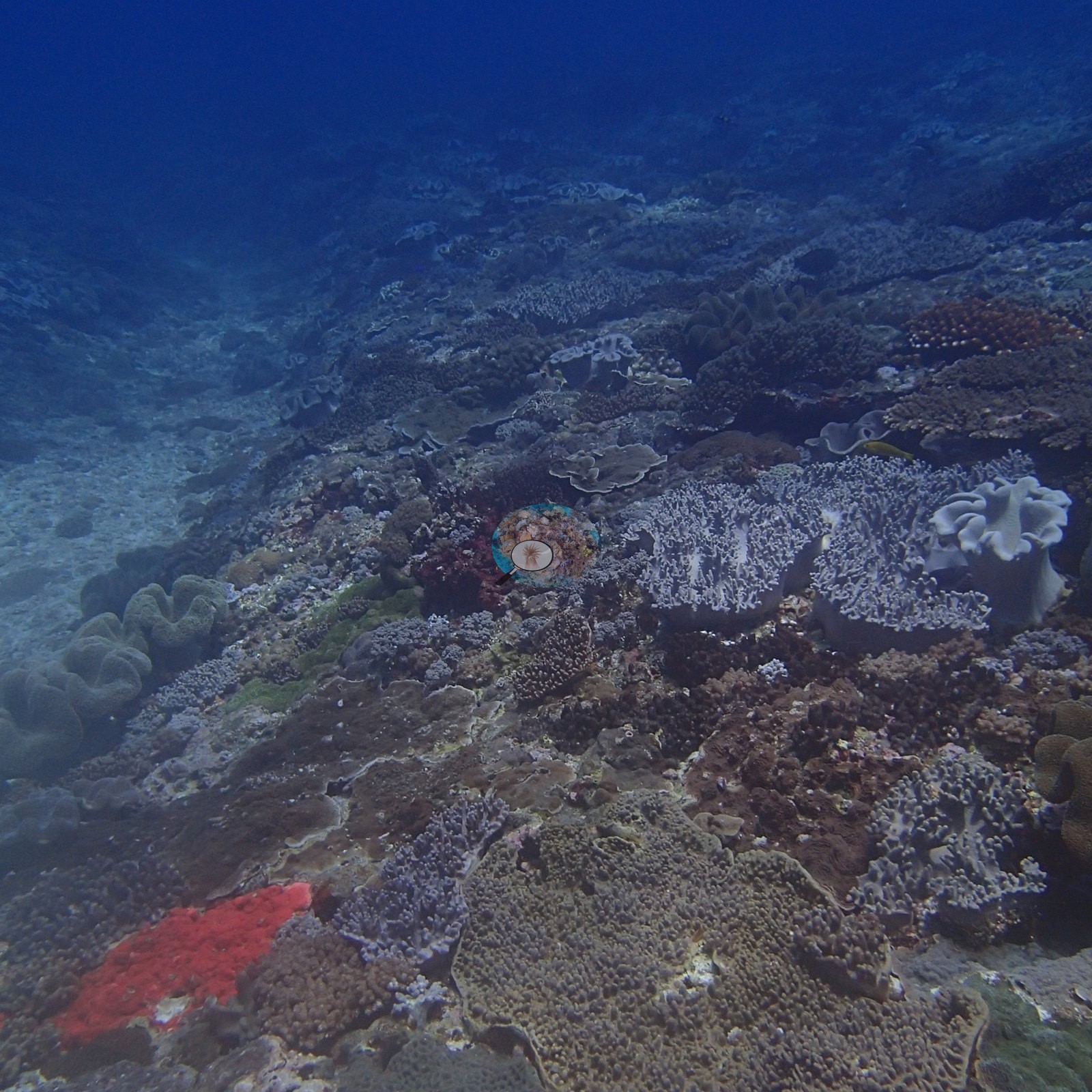
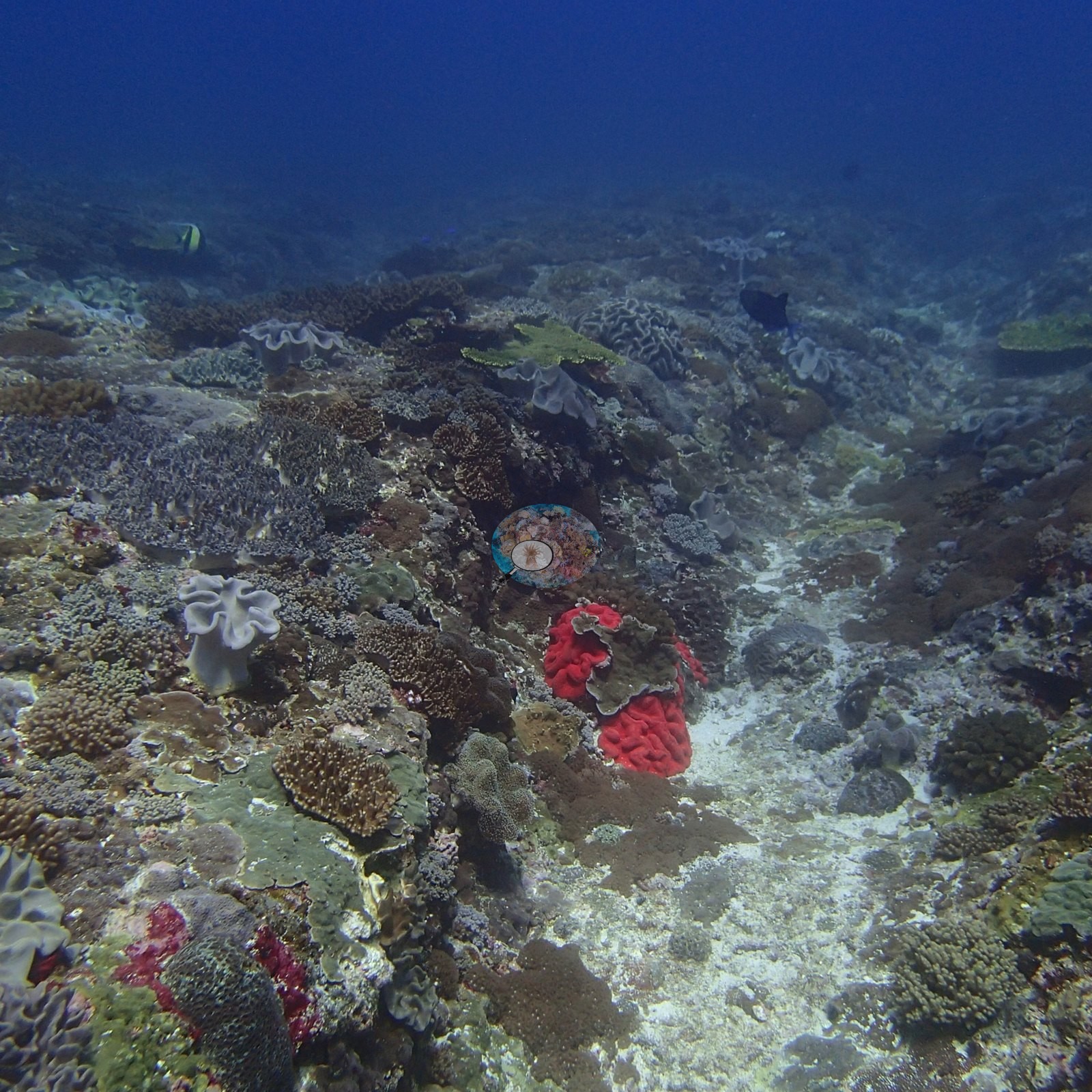
The dives crossed a lower-relief, more turbid soft-coral flat (e.g., Image 4, Image 46, Image 61).
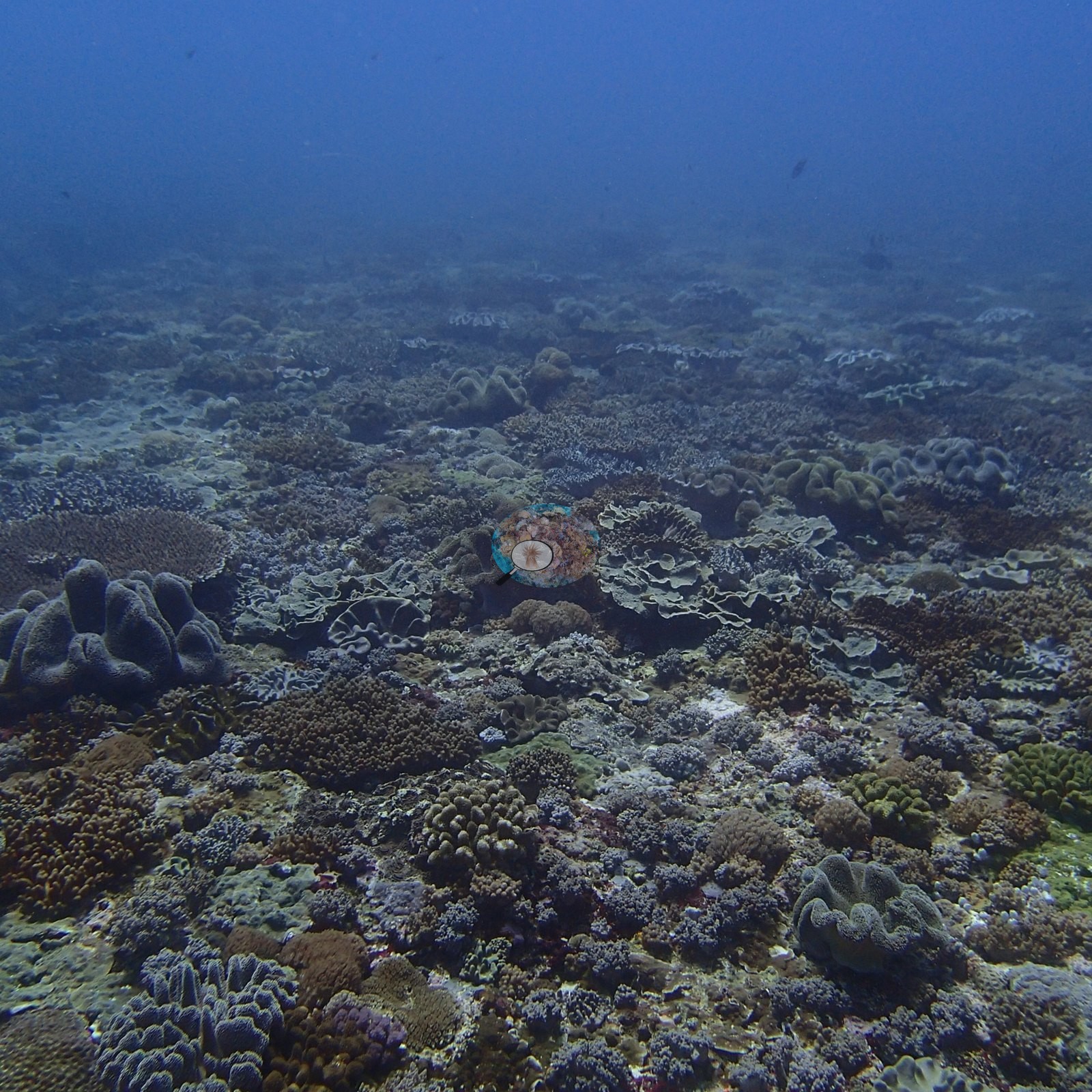
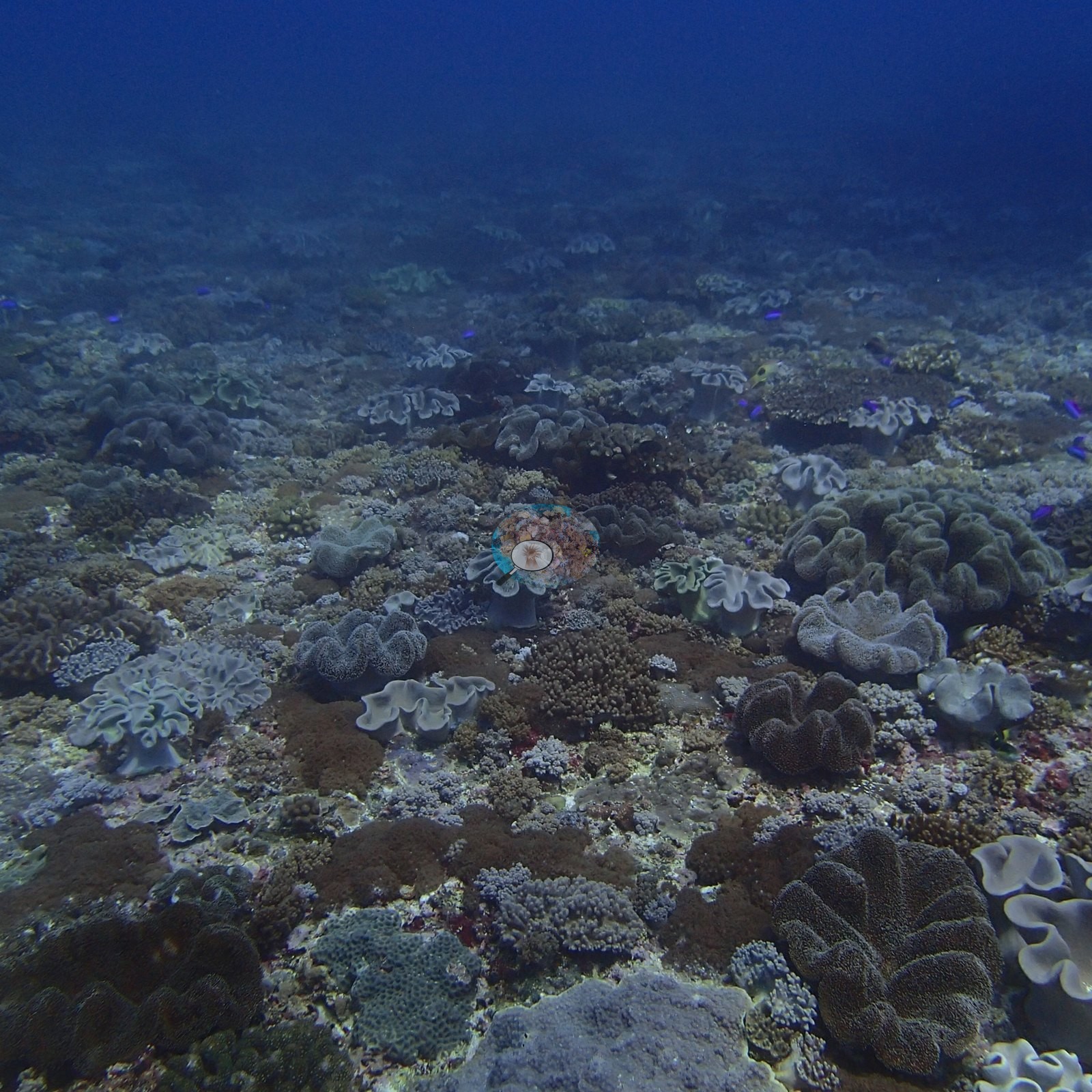
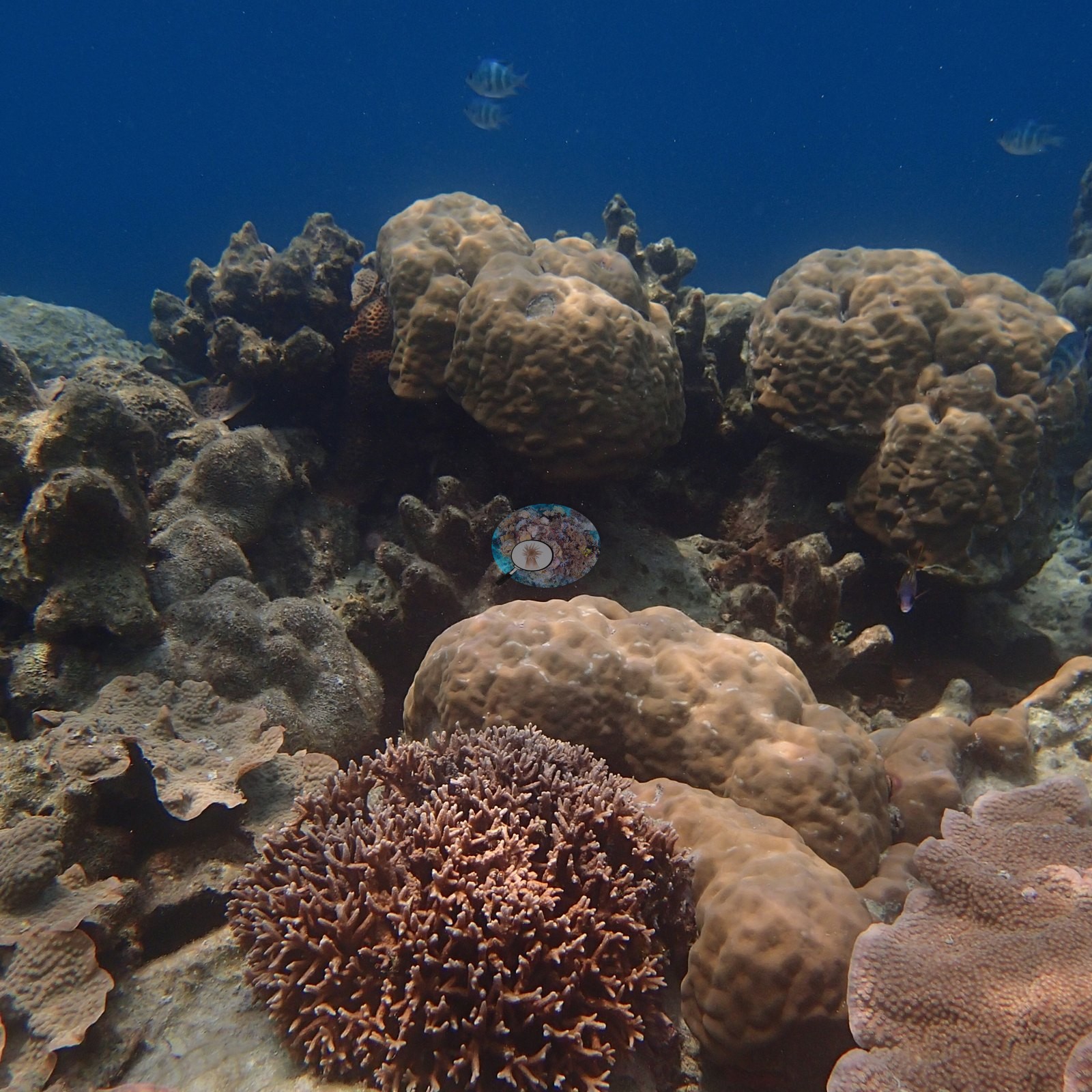
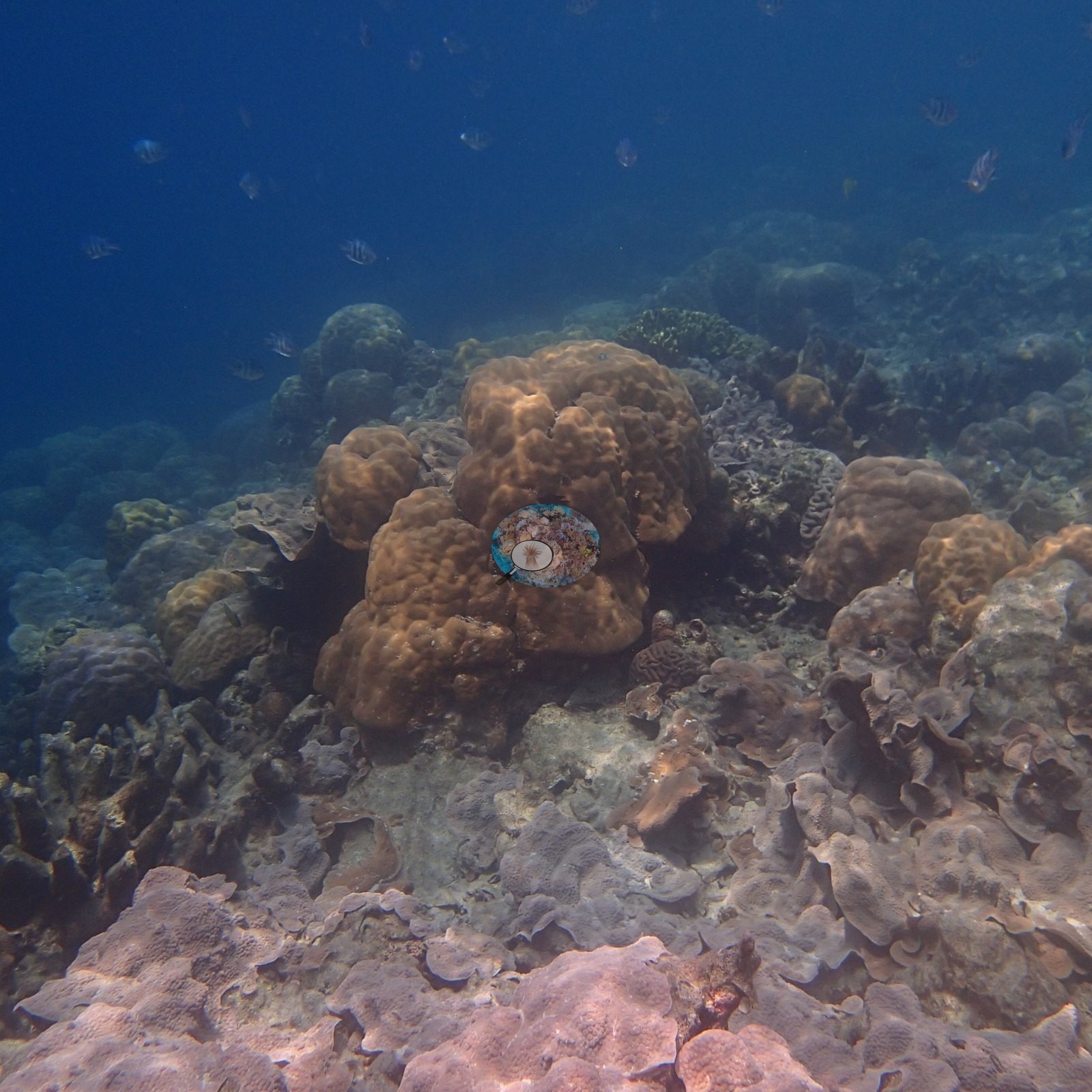
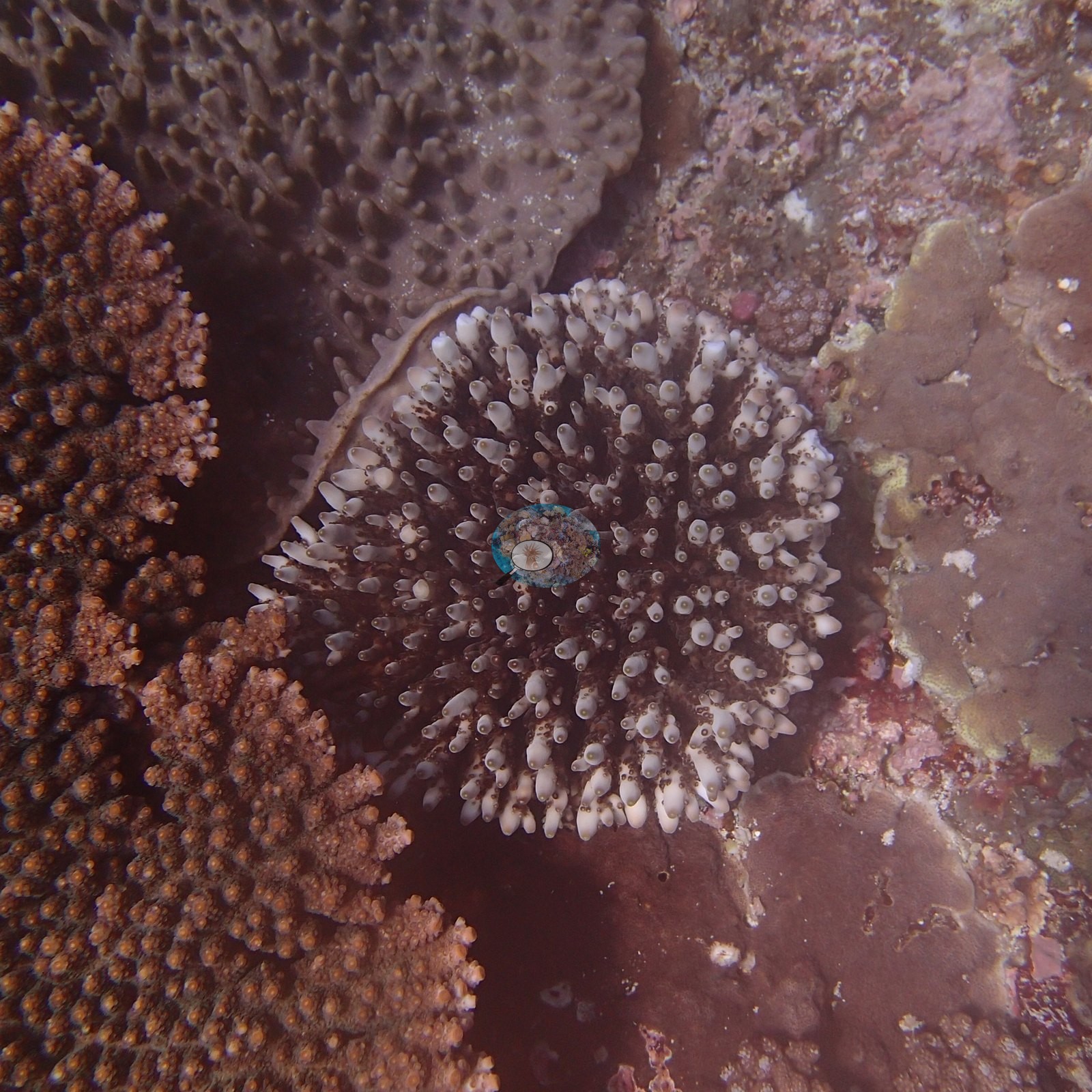
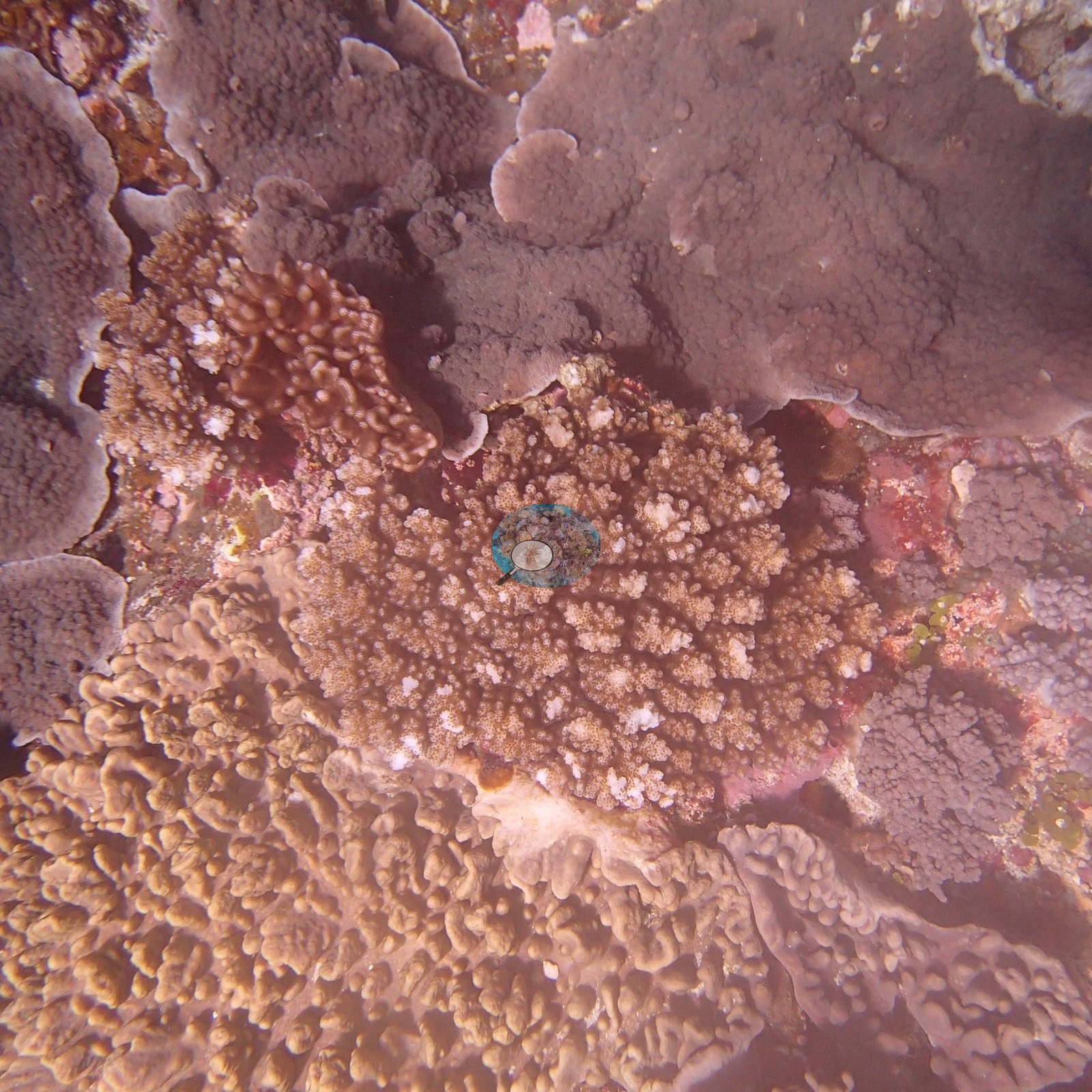
Leathery soft corals in gray, mauve, cream, and olive — mushroom-form Sarcophyton and lobed Lobophytum and Sinularia growth forms — are scattered in the hundreds (e.g., Image 20, Image 51, Image 56, Image 59, Image 65) across a pavement of small Pocillopora-form and digitate hard corals, foliose plates, brain corals (e.g., Image 47, Image 70), and one clean gold table Acropora about a meter across (e.g., Image 67), punctuated by vivid scarlet and orange encrusting sponge (e.g., Image 16, Image 54).
Coral cover
- Reference: Claude CV point count (this site's photos)
- Coral cover: 24% — a blind Claude computer-vision point count of 67 of Anderson's photographs from these two dives, 20 edited and 47 unedited camera originals (20 points per photo; water, fish, and obstructions excluded); median 20%. Soft corals are common here, so a few points on soft corals may have been read as hard coral. Other computer-vision methods are listed in the method table.
Stressors
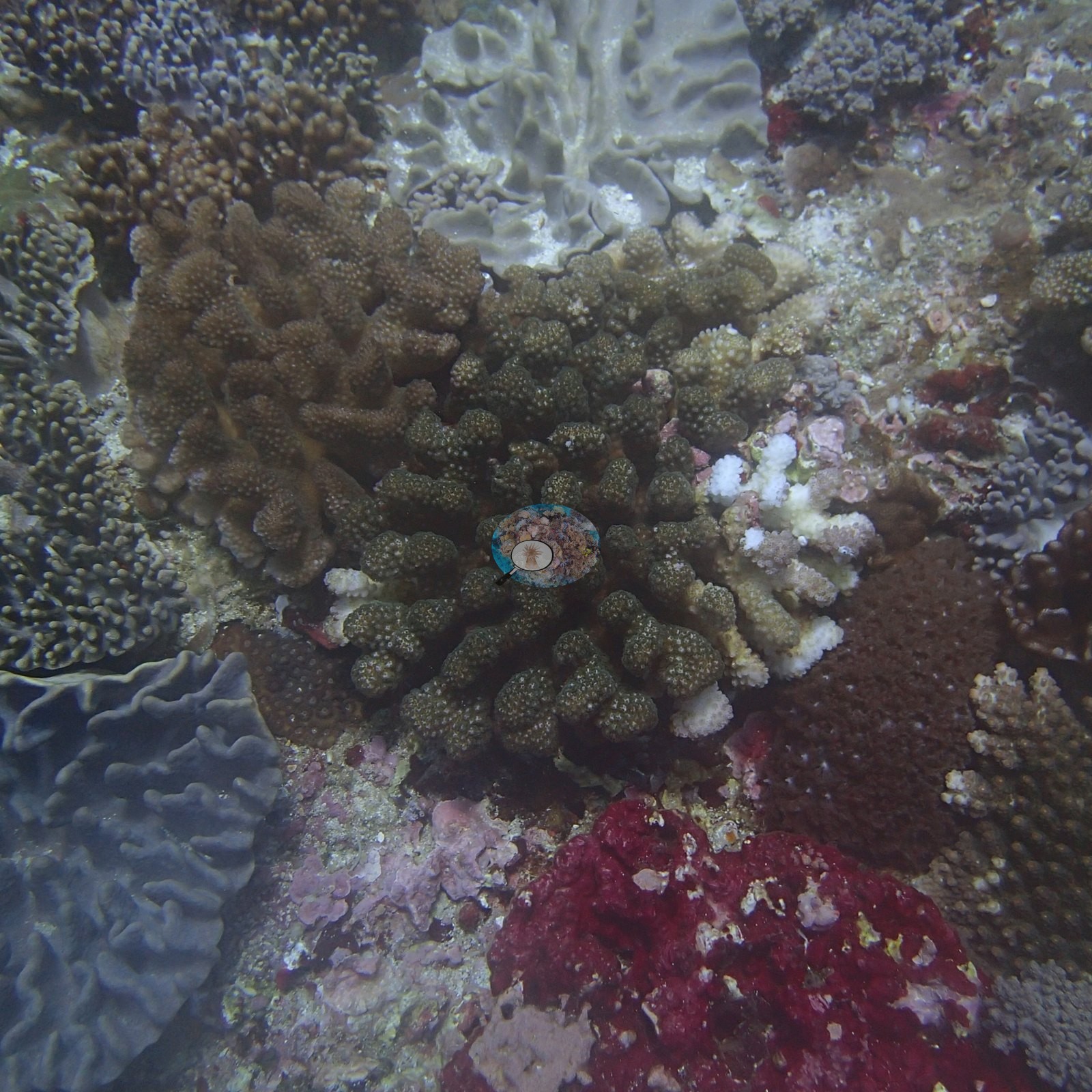
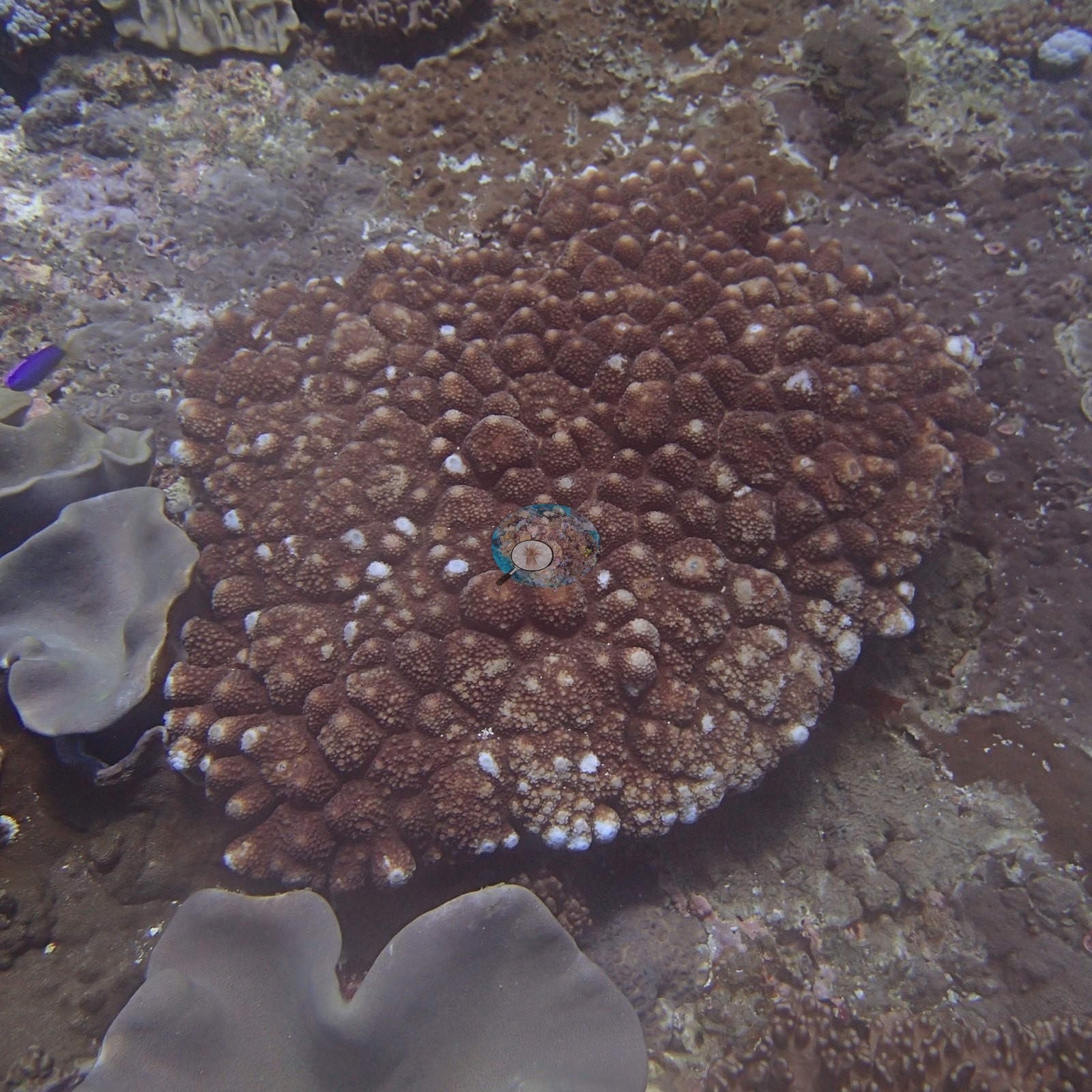
One brown branching colony has stark-white branch tips (e.g., Image 7), and a massive colony carries many small white spots on its knob tips (e.g., Image 17); both are recent mortality, cause not stated.
No crown-of-thorns starfish (COTS) or other corallivores were evident.
Fish and other fauna
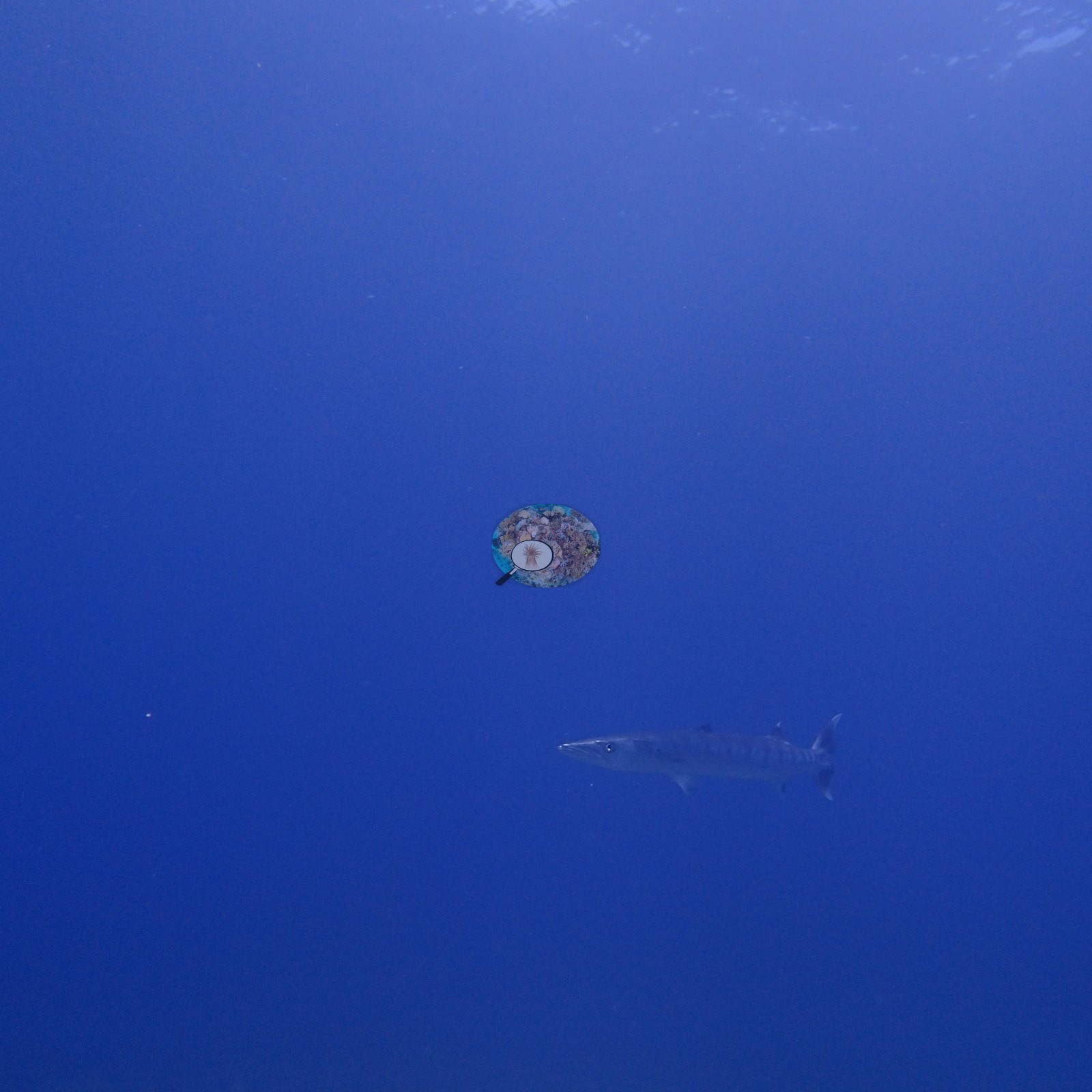
Fish are conspicuous: dense damselfish aggregations and small purple and blue planktivores over the flat (e.g., Image 33).
Two frames hold a large barracuda in open blue water (e.g., Image 25).
Comparisons with other data
No other survey can be matched to this site, because its position was not recorded. If you have survey data from this site to share, please email us.
Dive record
Anderson's sample sheet logs two dives on 6 April 2016 with no site name: Dive 6, in at 12:36 for 33 minutes to a maximum depth of 12.4 m, and Dive 7, in at 13:27 for 23 minutes to 12.8 m. The camera frames run 12:37-12:55 and 13:28-13:47 (70 frames); no water temperature was recorded.
Other notes
Five frames put divers in the picture: one diver working a hose-fed device in a cloud of suspended sediment (e.g., Image 43), and, in the last frames of the second dive, three to four divers gathered on the bottom around a hand-held device fed by a heavy coiled orange hose running up to a cylinder (e.g., Image 64, Image 68, Image 69).
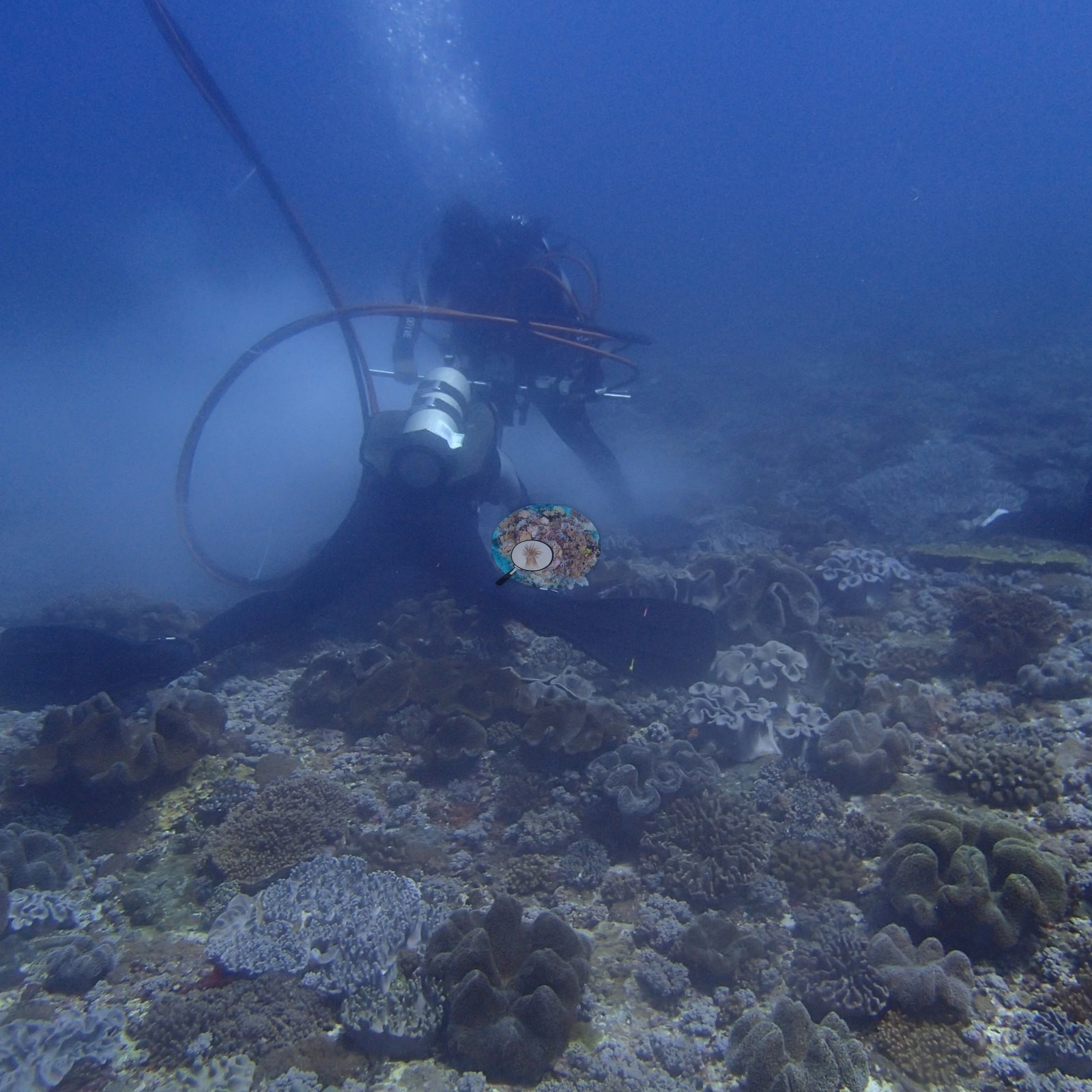
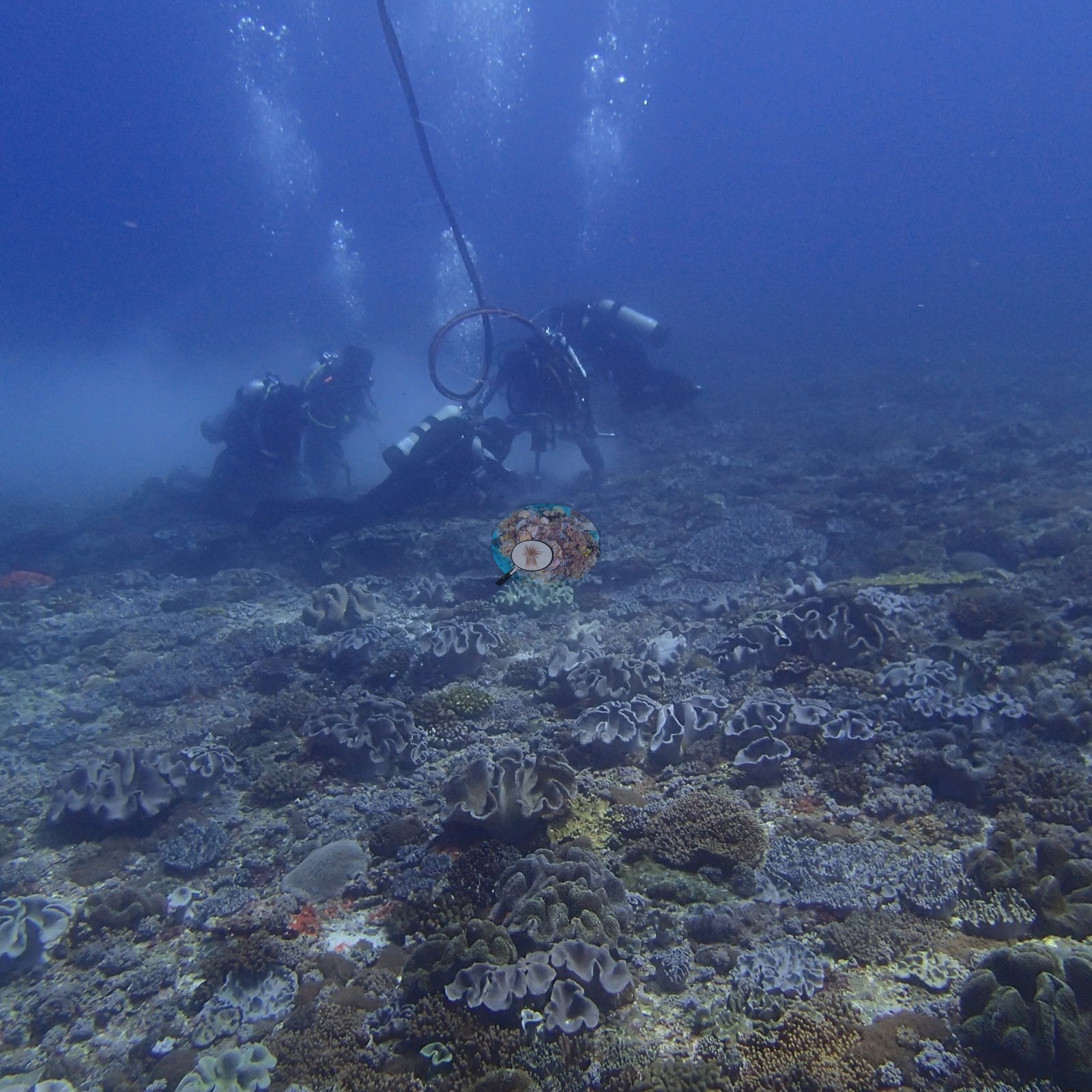
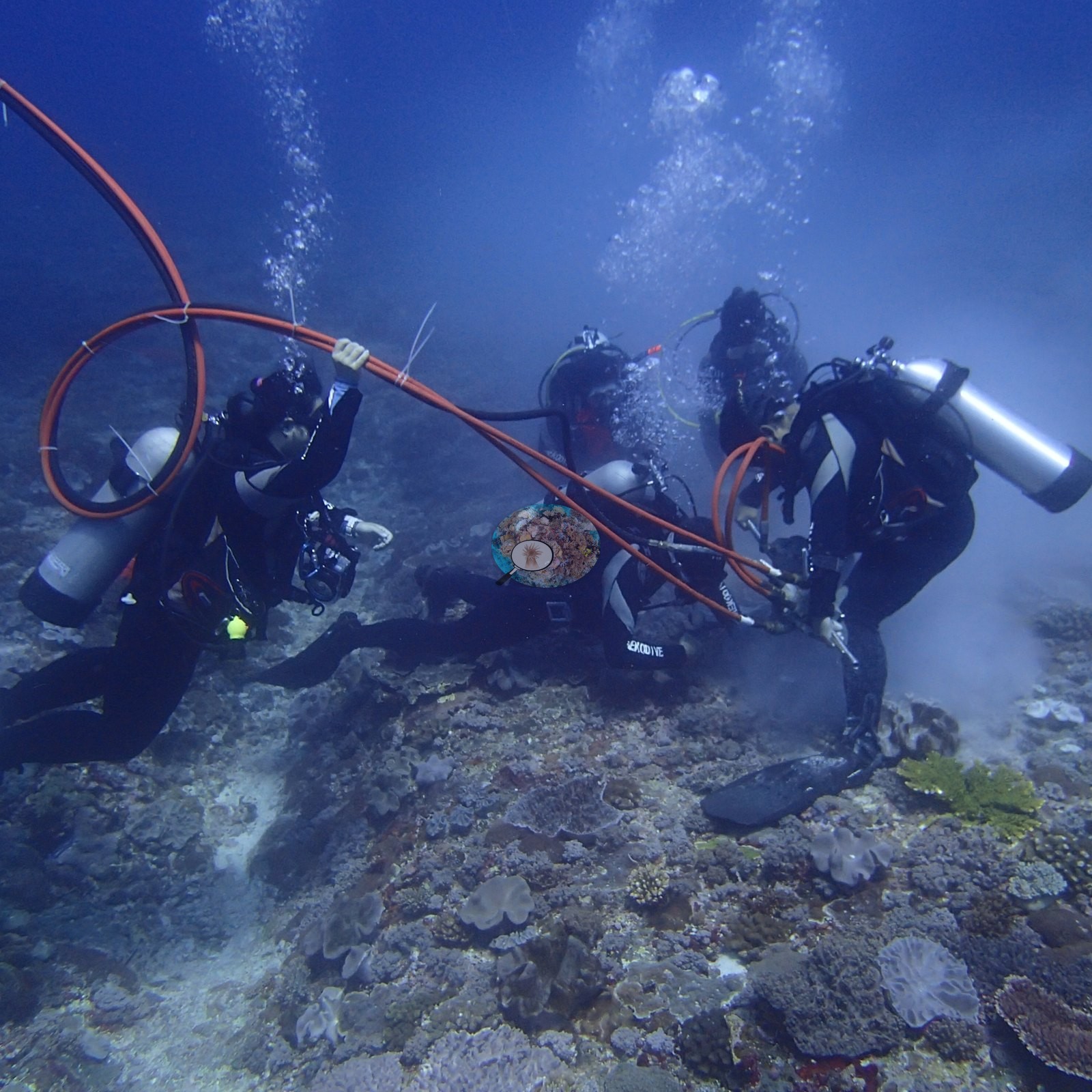
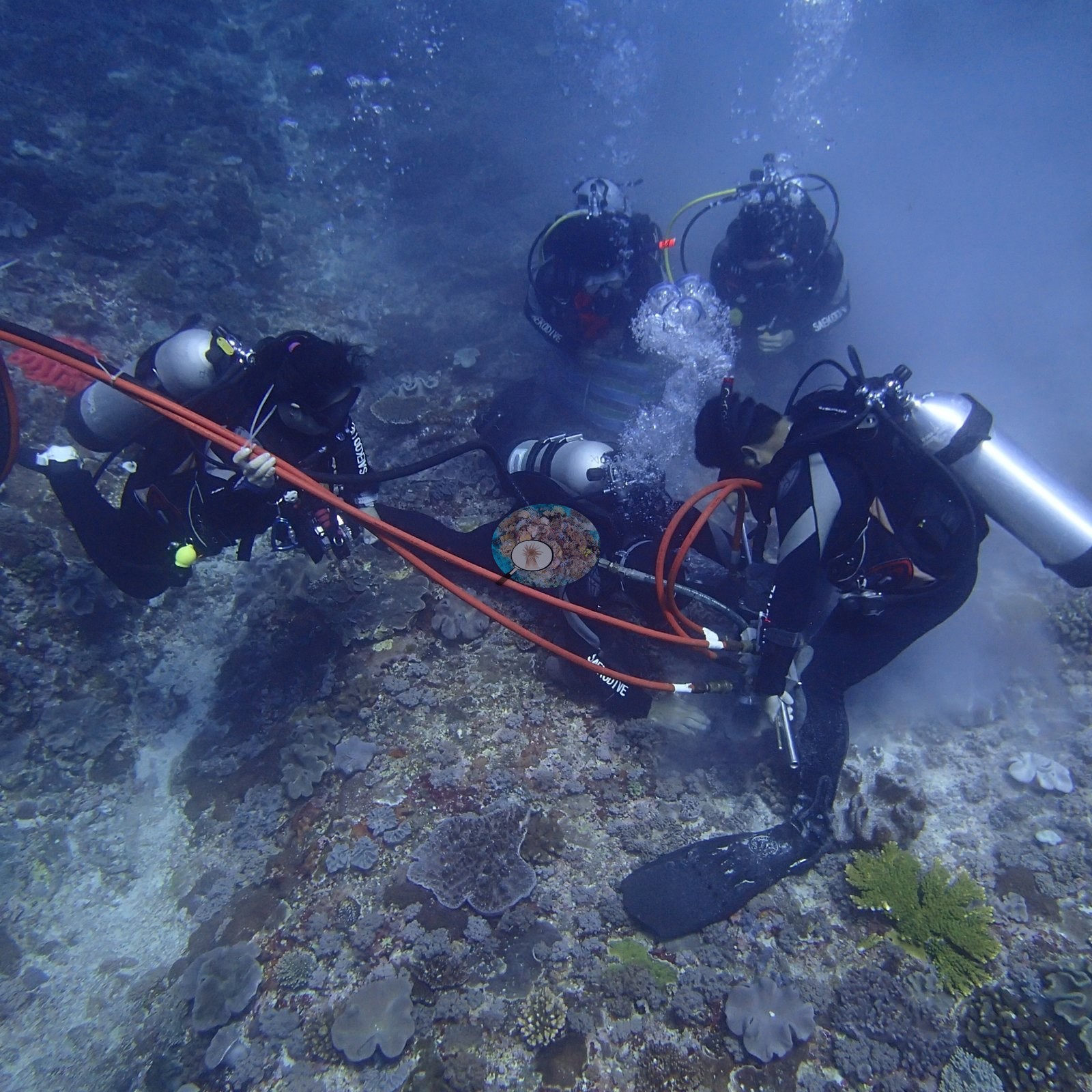
What that tool is cannot be settled from the frames.
CV model comparison
More info
No computer-vision method yet estimates coral cover accurately on new images, so treat this as indicative rather than a measurement; it is revised as the methods improve.More info
Other rows are for comparison only and are never averaged. No diver transect exists for this trip, so agreement between rows is not accuracy. Soft corals are common here, and a few hard coral points may sit on soft corals.| Method | Hard coral cover (%) | Photos (n) ± SE |
|---|---|---|
| CoralSCOP edited | 42.2 | n = 61 · SE 1.2 |
| Claude | 24.0 | n = 67 · SE 2.0 |
CoralSCOP (edited photos) reads 42.2%, 18.2 pp above Claude's blind point count (24.0%); the headline stays Claude's blind point count because no transect or manual count exists here.
Data & links
All images from Coral Reef Diagnostics. Data are from Coral Reef Diagnostics.
© Coral Reef Diagnostics.