
St. Lucia - Pigeon Island snorkel

Part of the regional summary: St. Lucia
More info
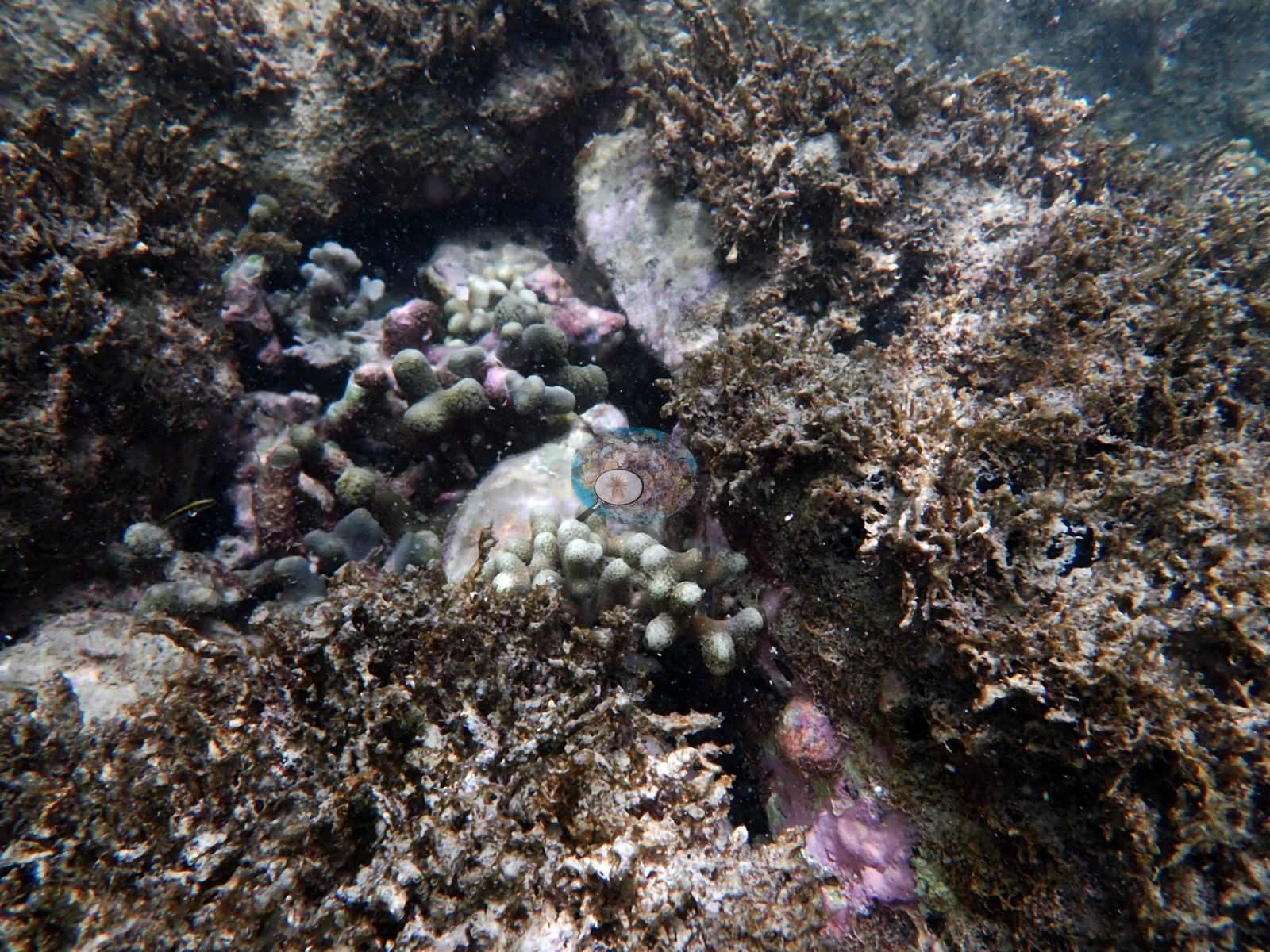
Windward Caribbean Islands (NOAA CRW virtual station) · Eastern Caribbean ecoregion mean: 13.1 degree heating weeksPigeon Island is a nearshore rocky reef where live coral is real but scattered among turf, sediment, and abundant sponge - finger-coral stands and an intact brain coral are the healthiest patches, though some massive colonies show pale patches of recent partial mortality. A blind Claude computer-vision point count puts coral cover around 13%.
One independent survey station shown with the program’s logo — click one to see how far it is from this site.
5 of the 42 photographs on this page are shown beside the text that discusses them under "Site description" below.
Site description
General benthic features
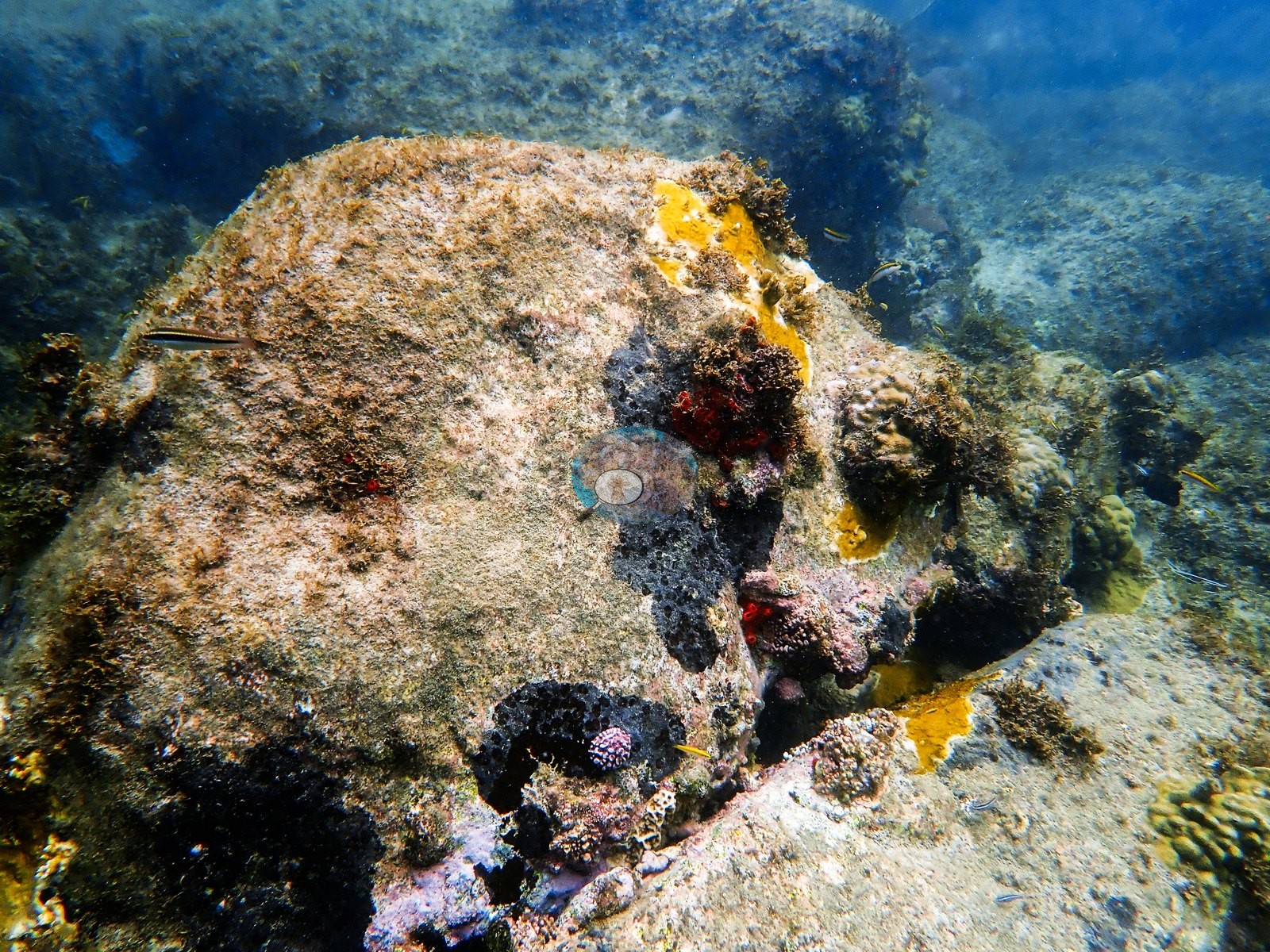
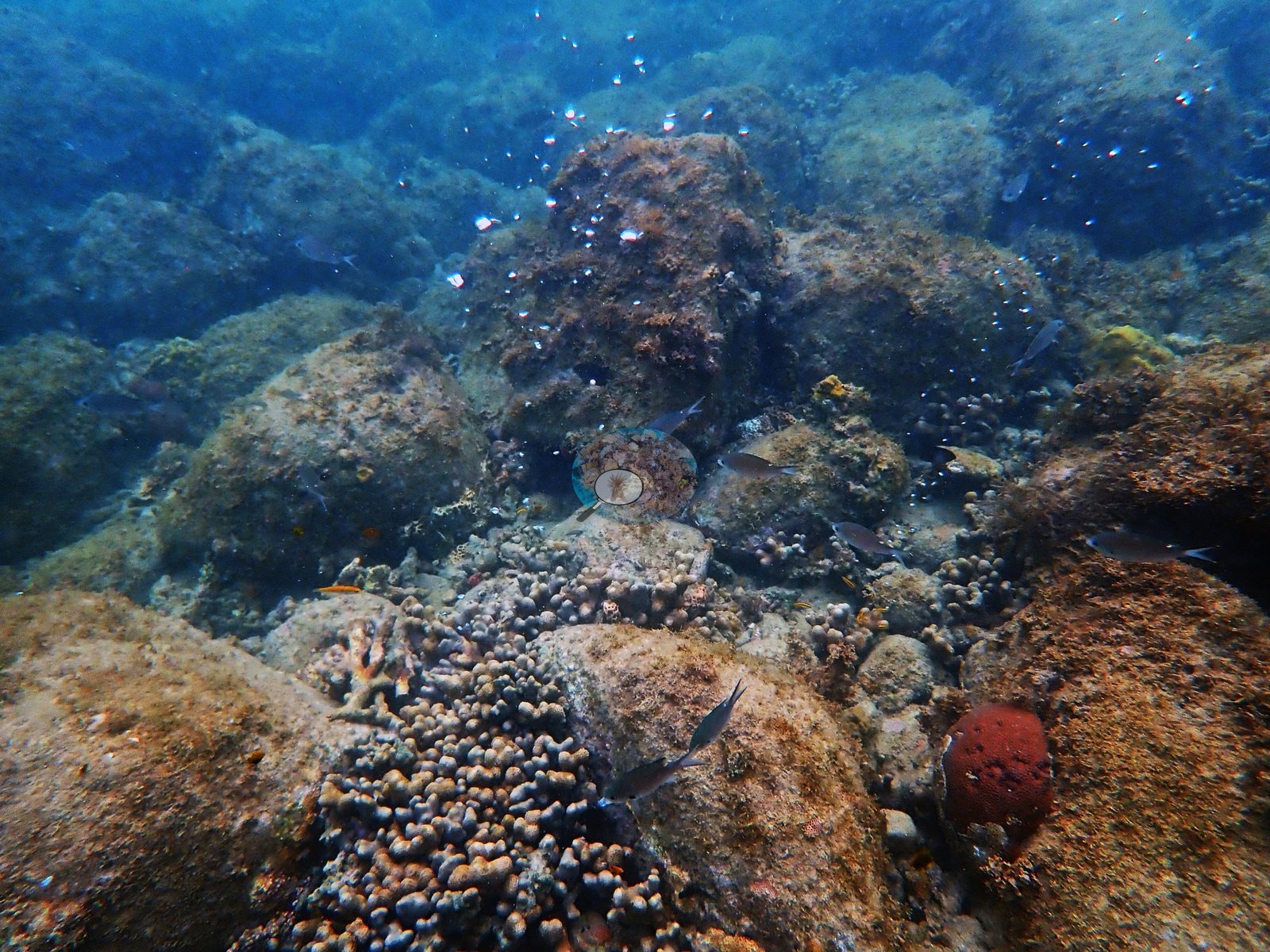
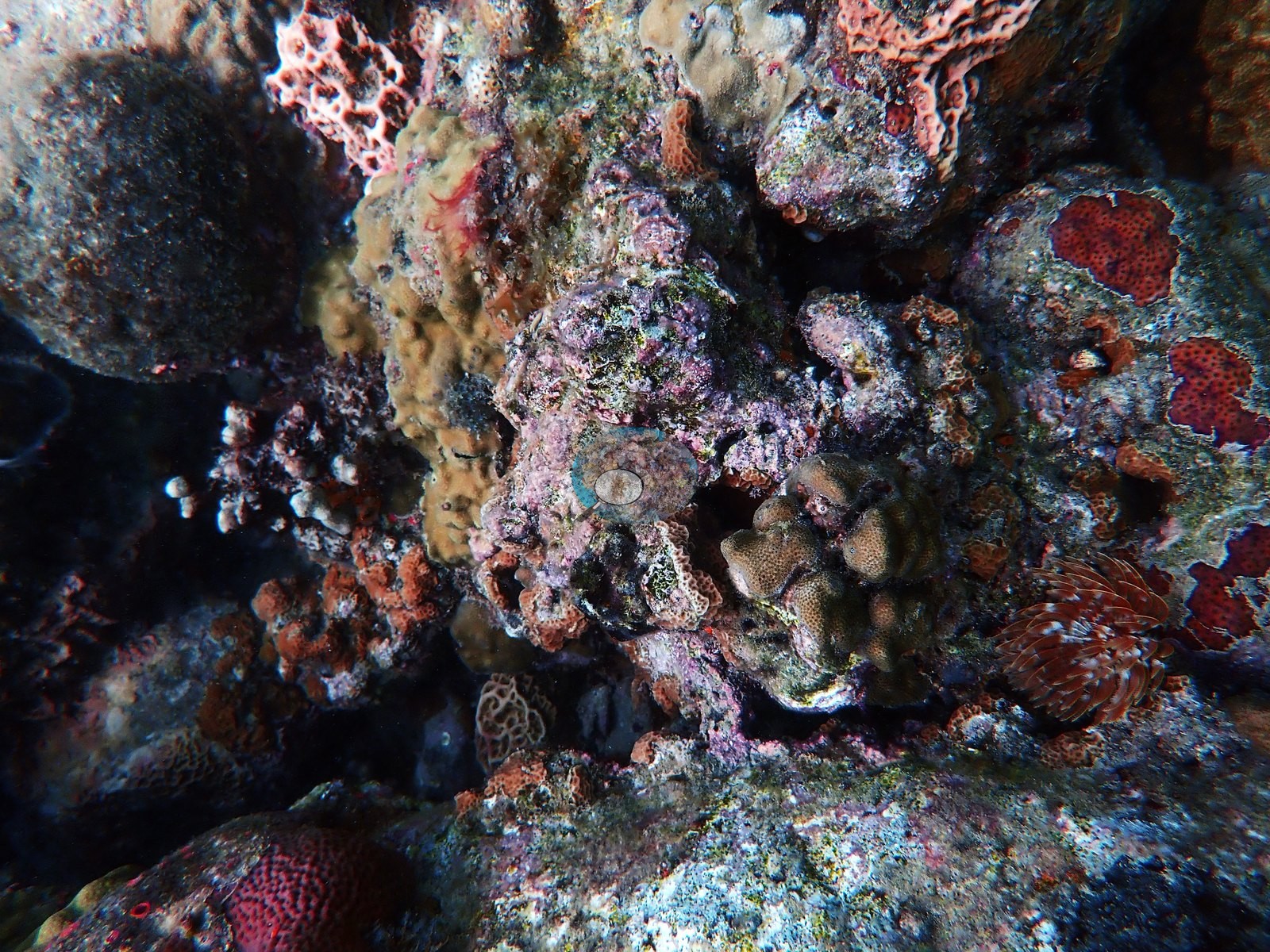
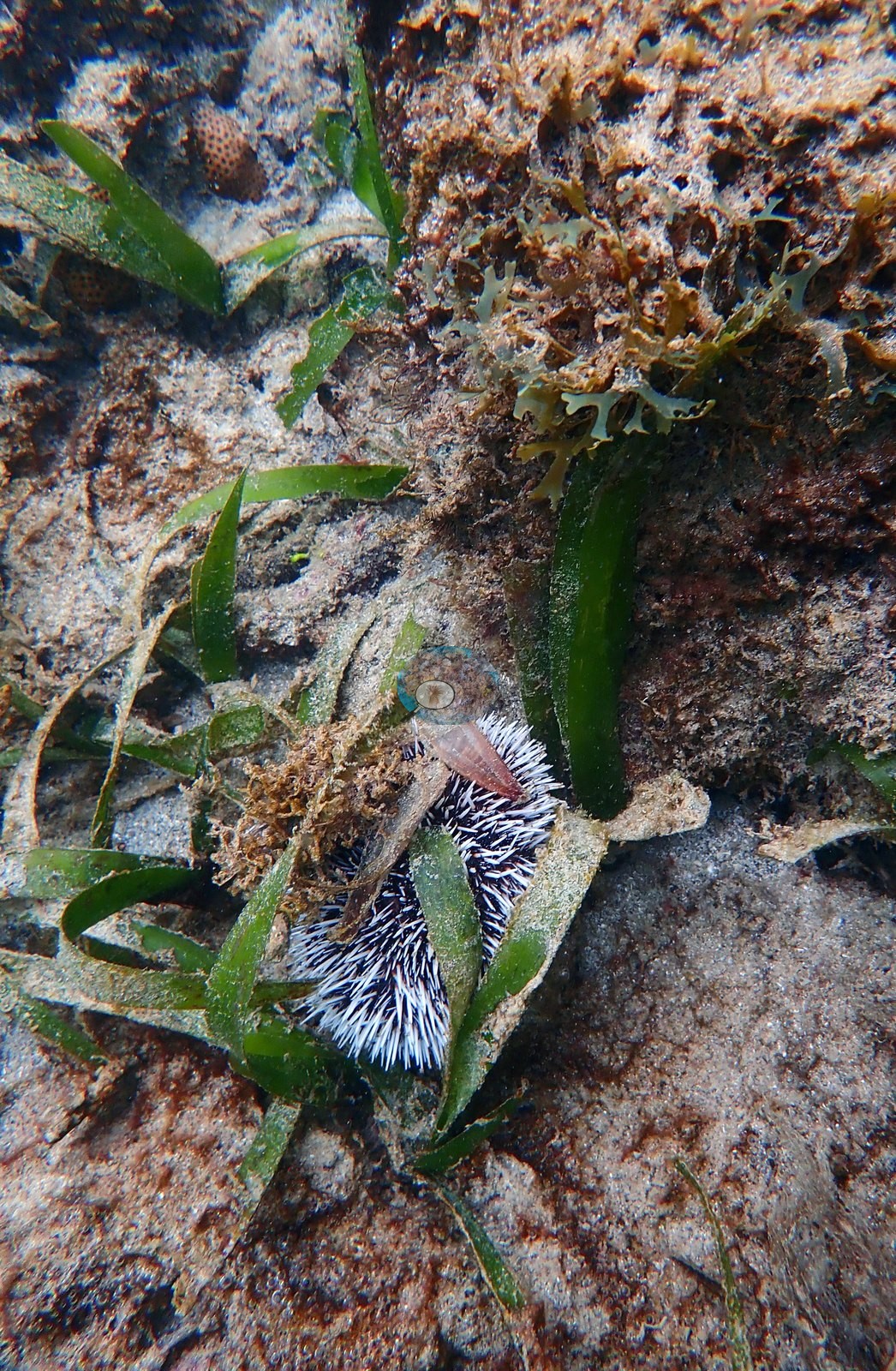
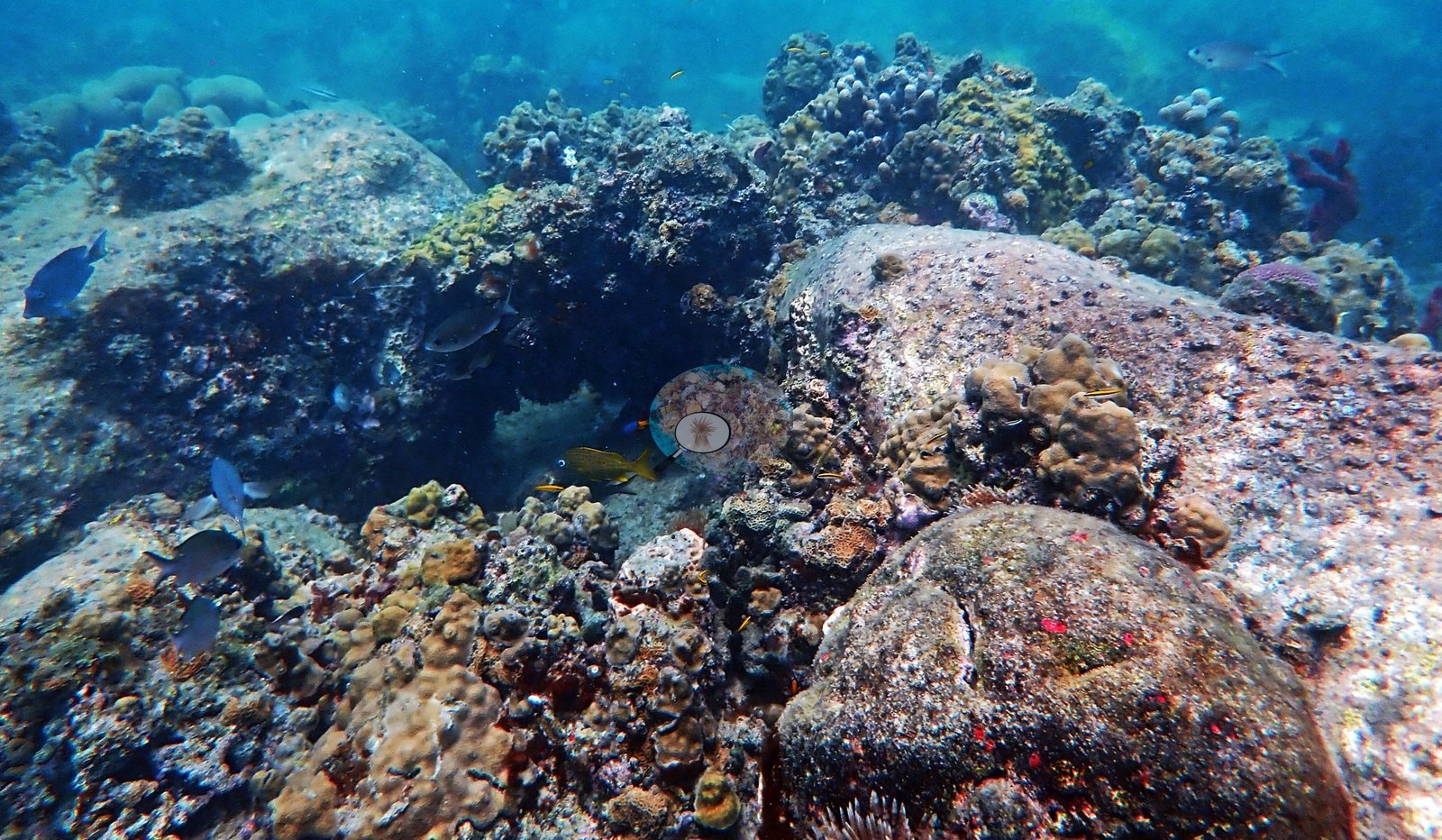
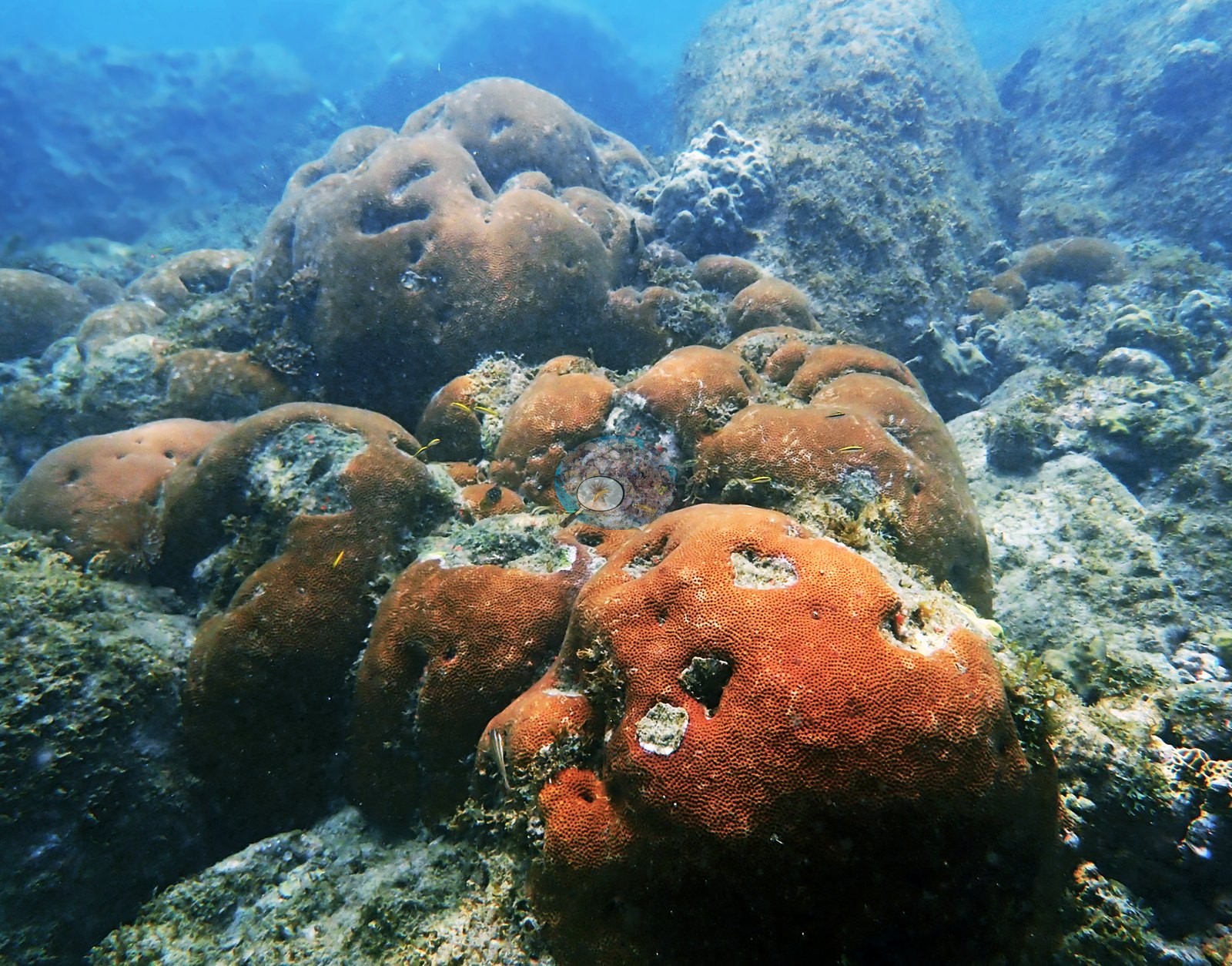
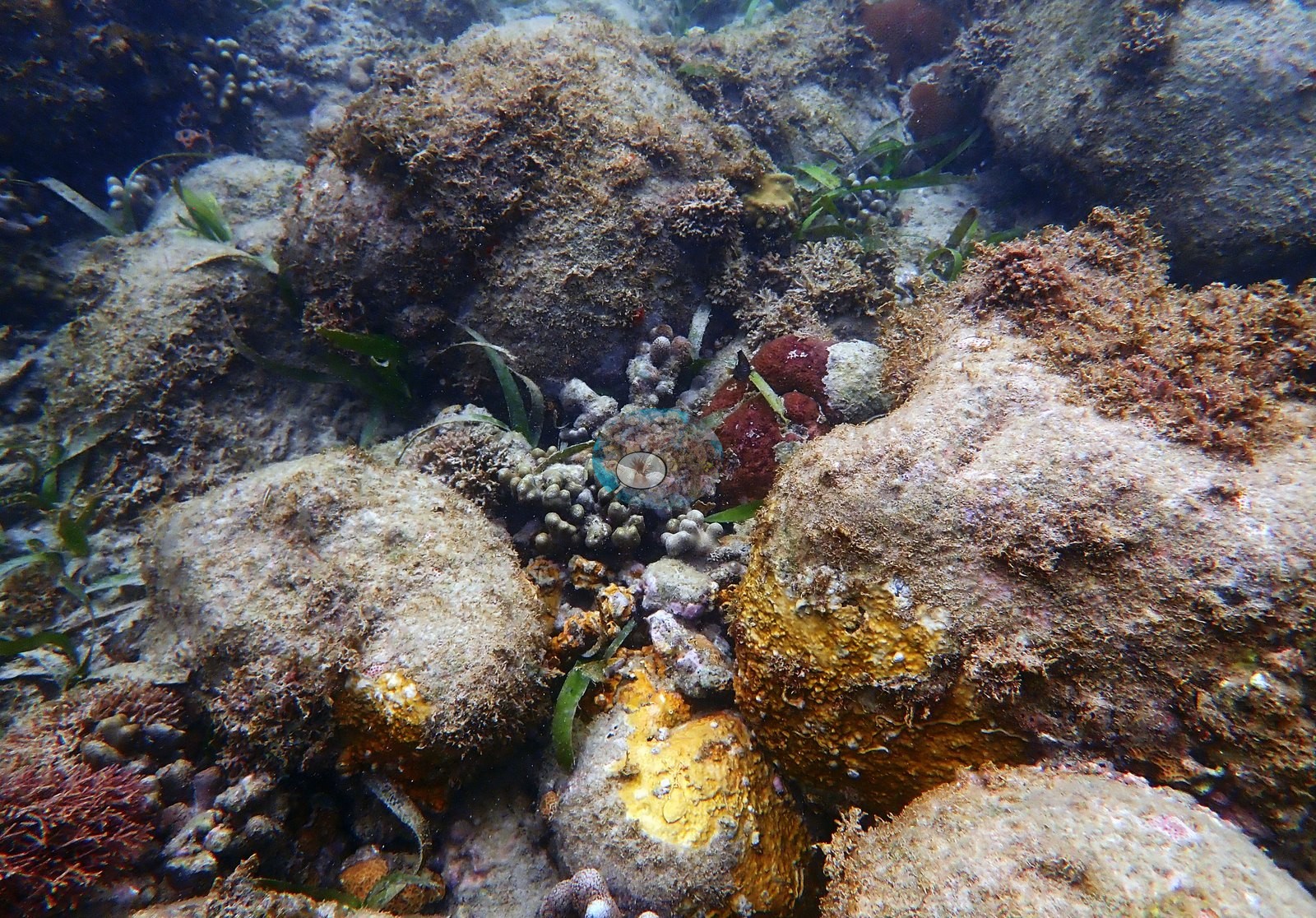
Shallow frames in turbid green-blue water show a nearshore Caribbean rocky reef where live coral is real but scattered among turf, sediment, and a great deal of sponge. Frame 1 is a large mostly-dead massive coral boulder, its dome smothered in fine sediment and turf algae, with bright yellow encrusting sponge spilling over one shoulder, dark gray sponge with open oscula across its flank, and small red encrusting patches (e.g., Image 1).
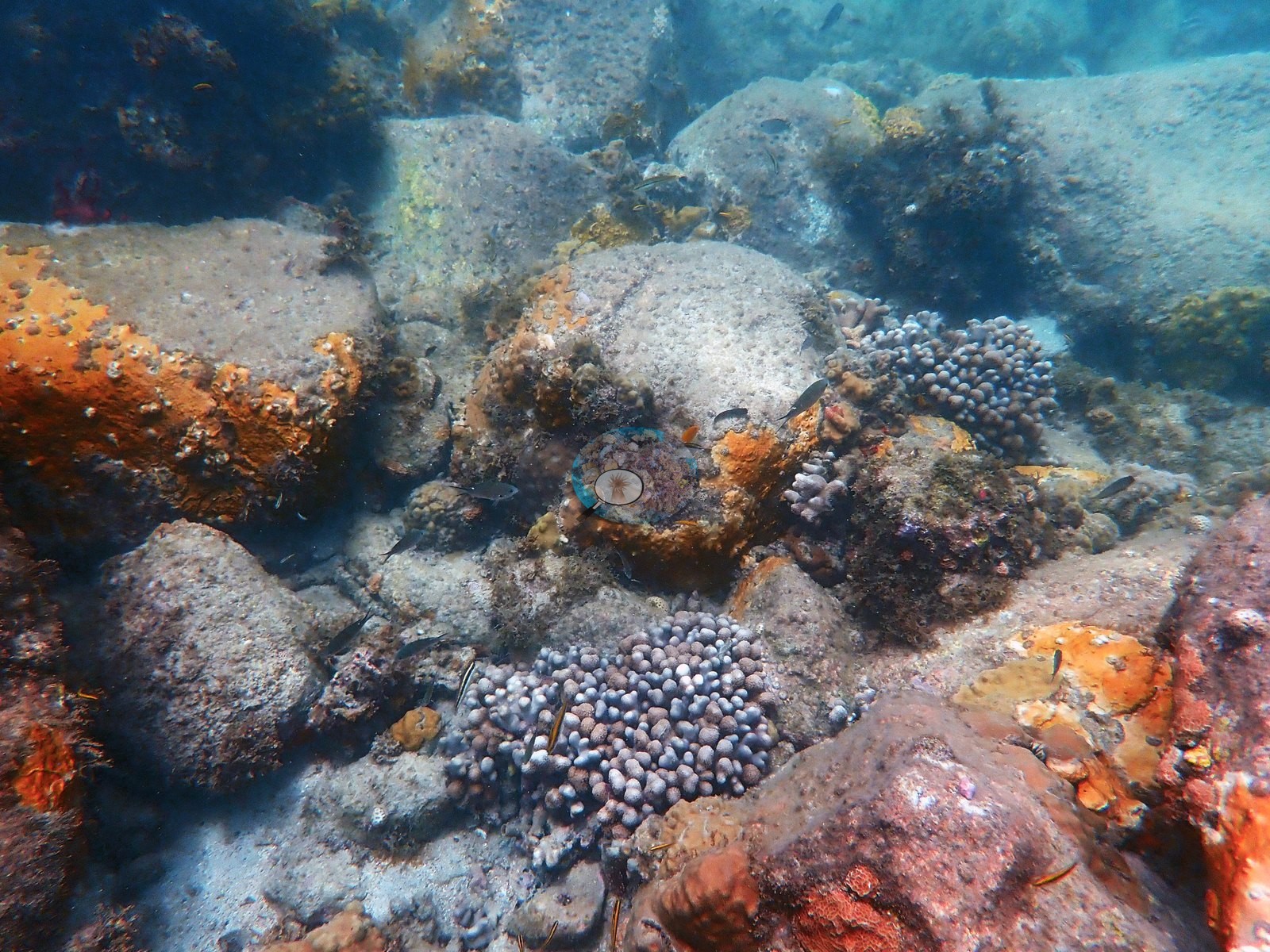
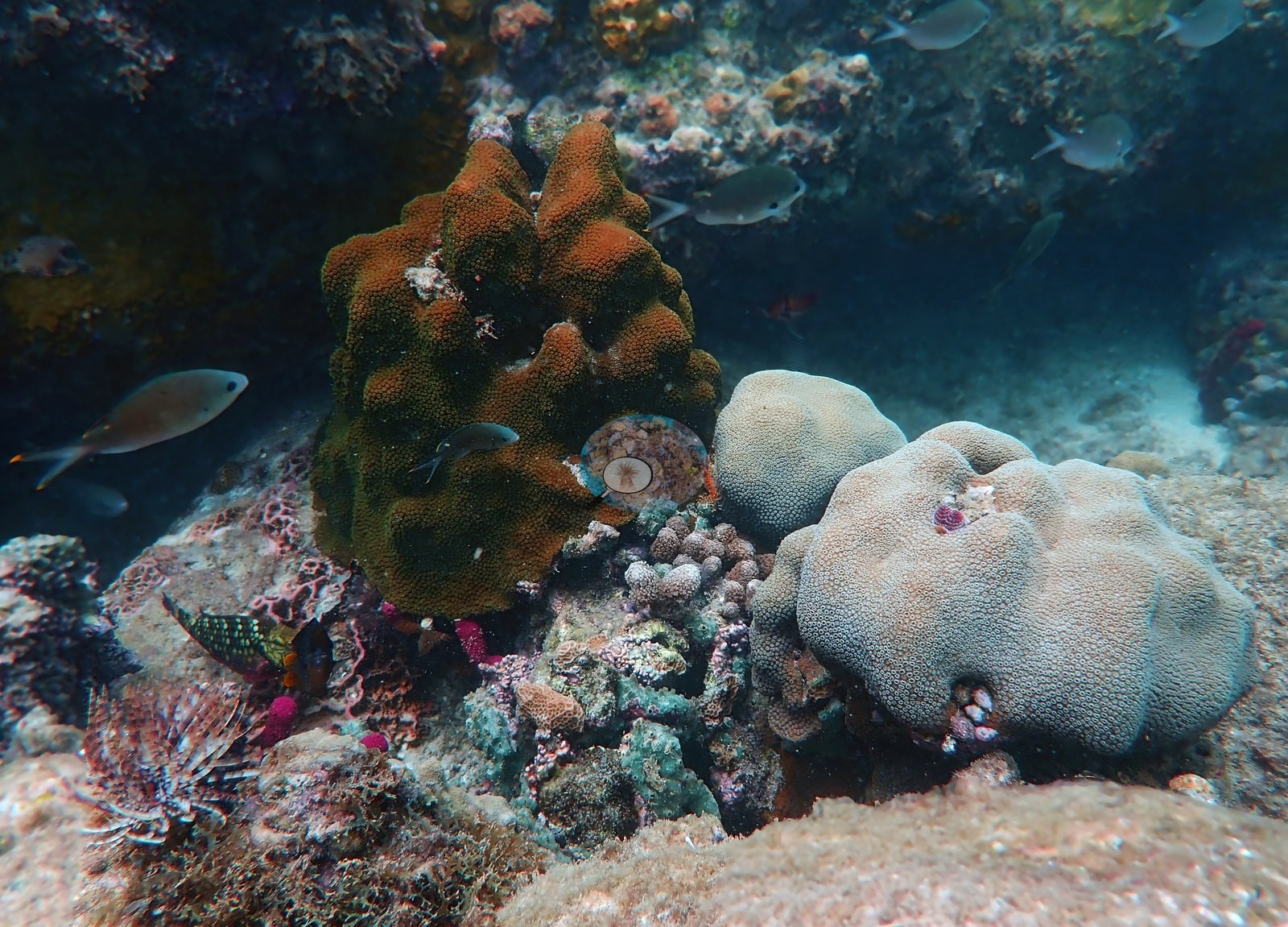
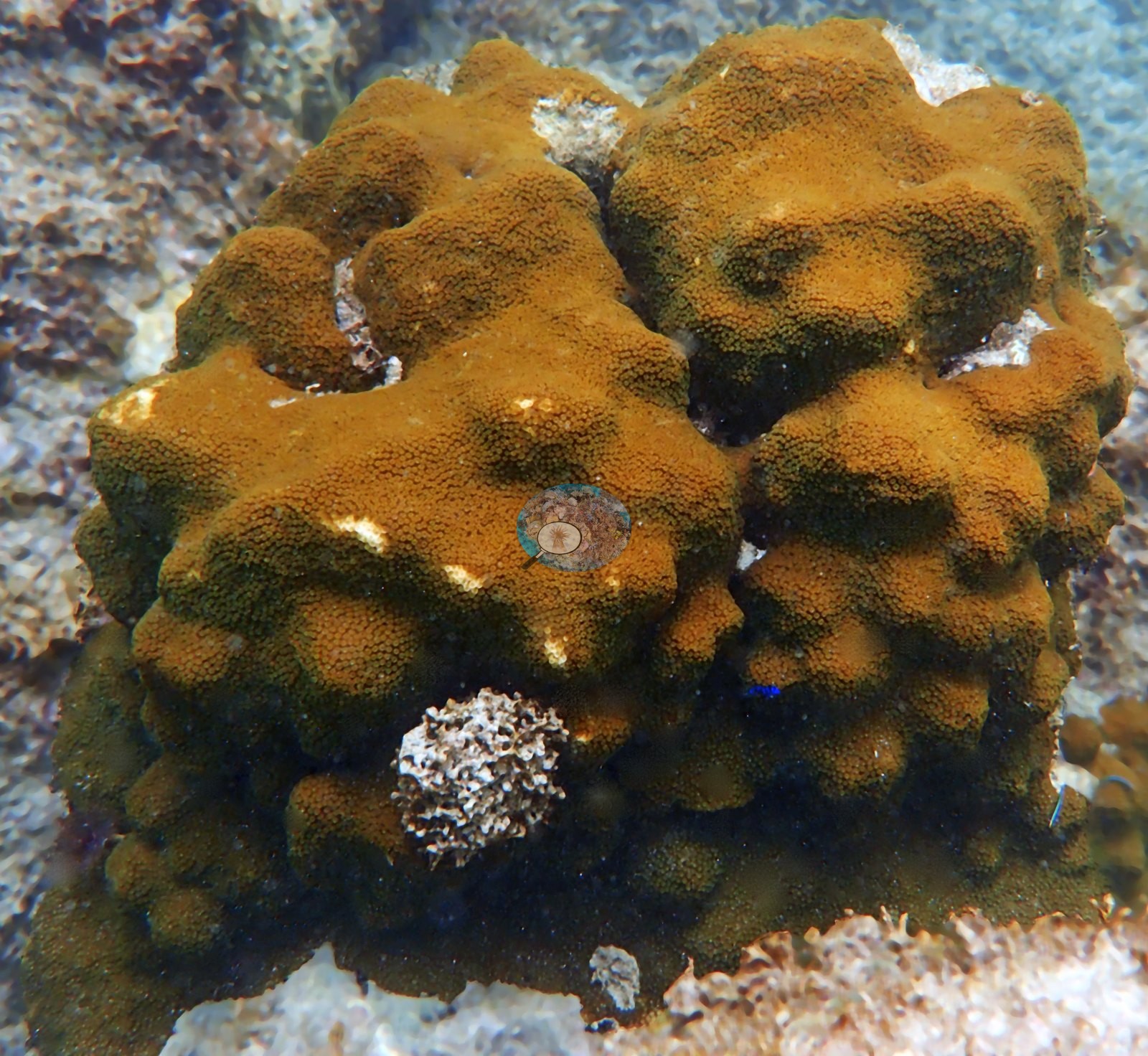
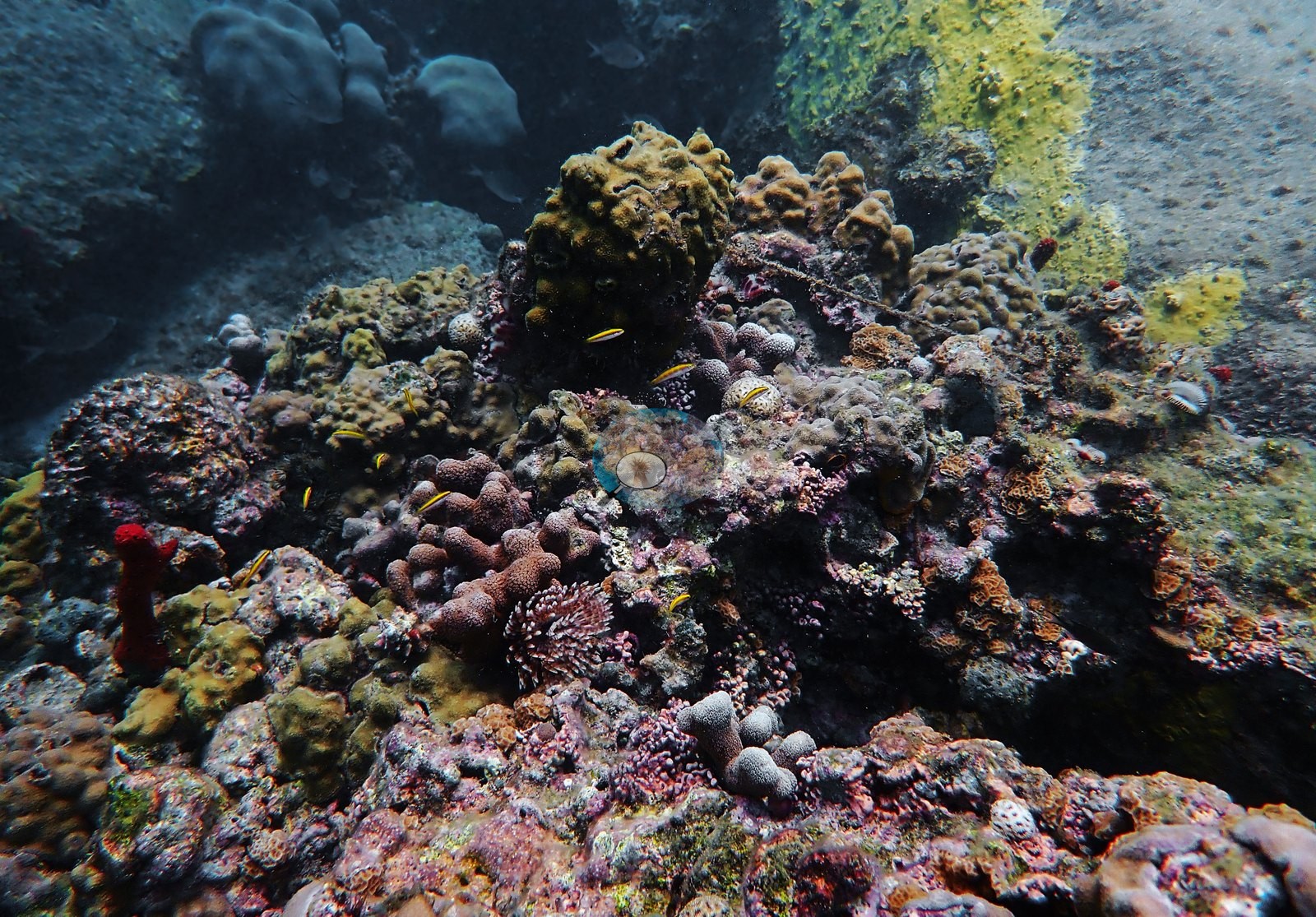
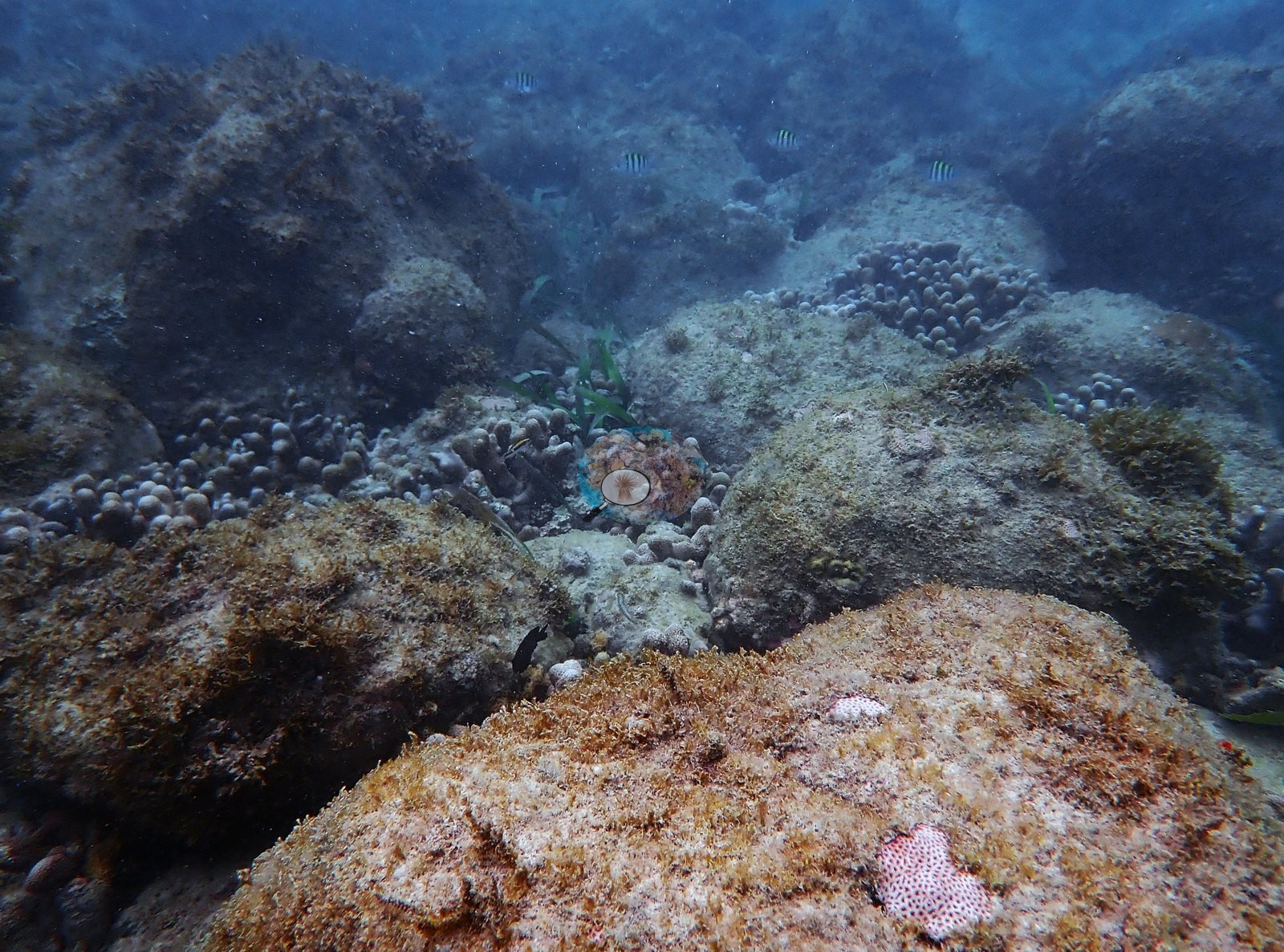
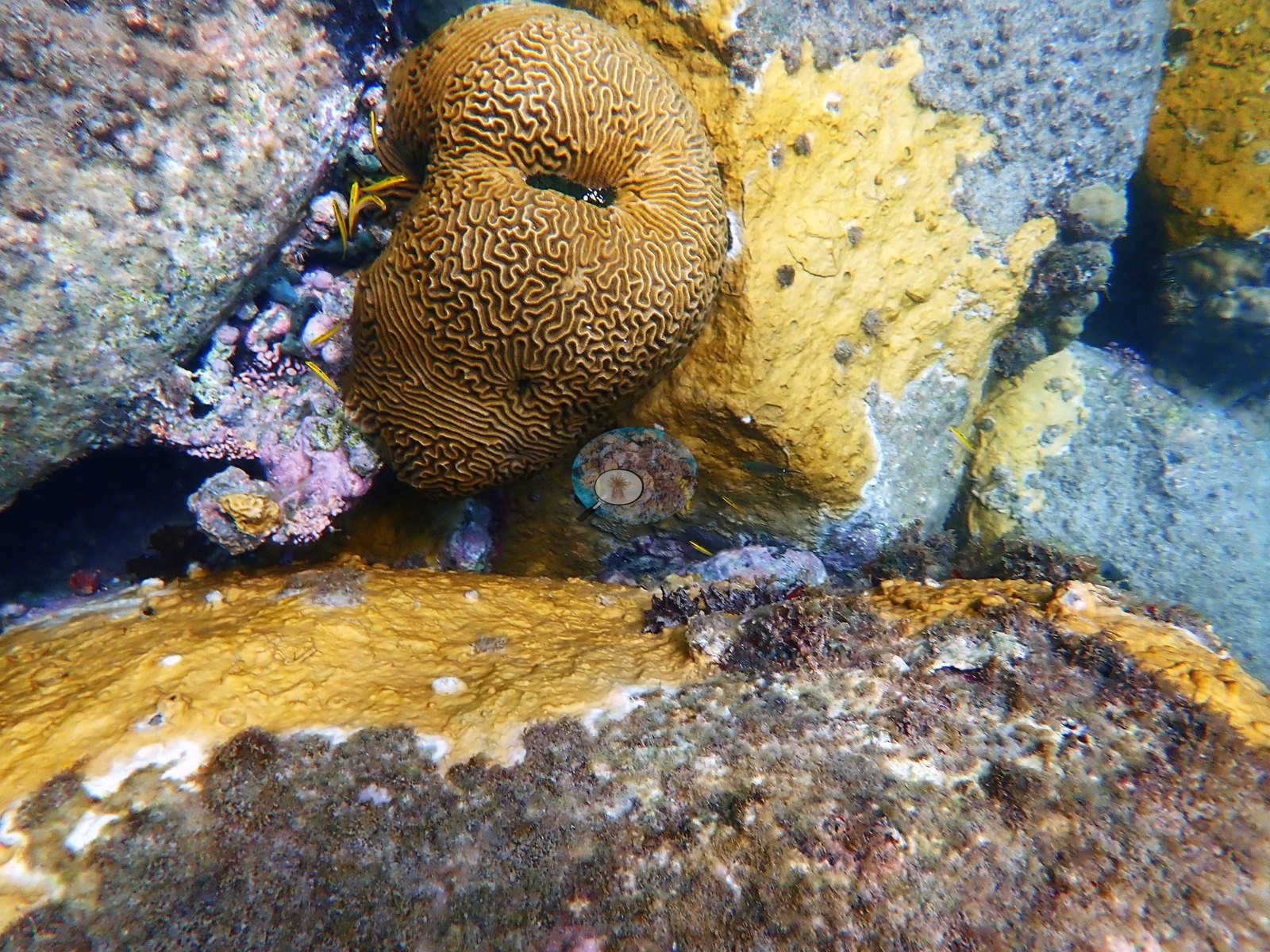
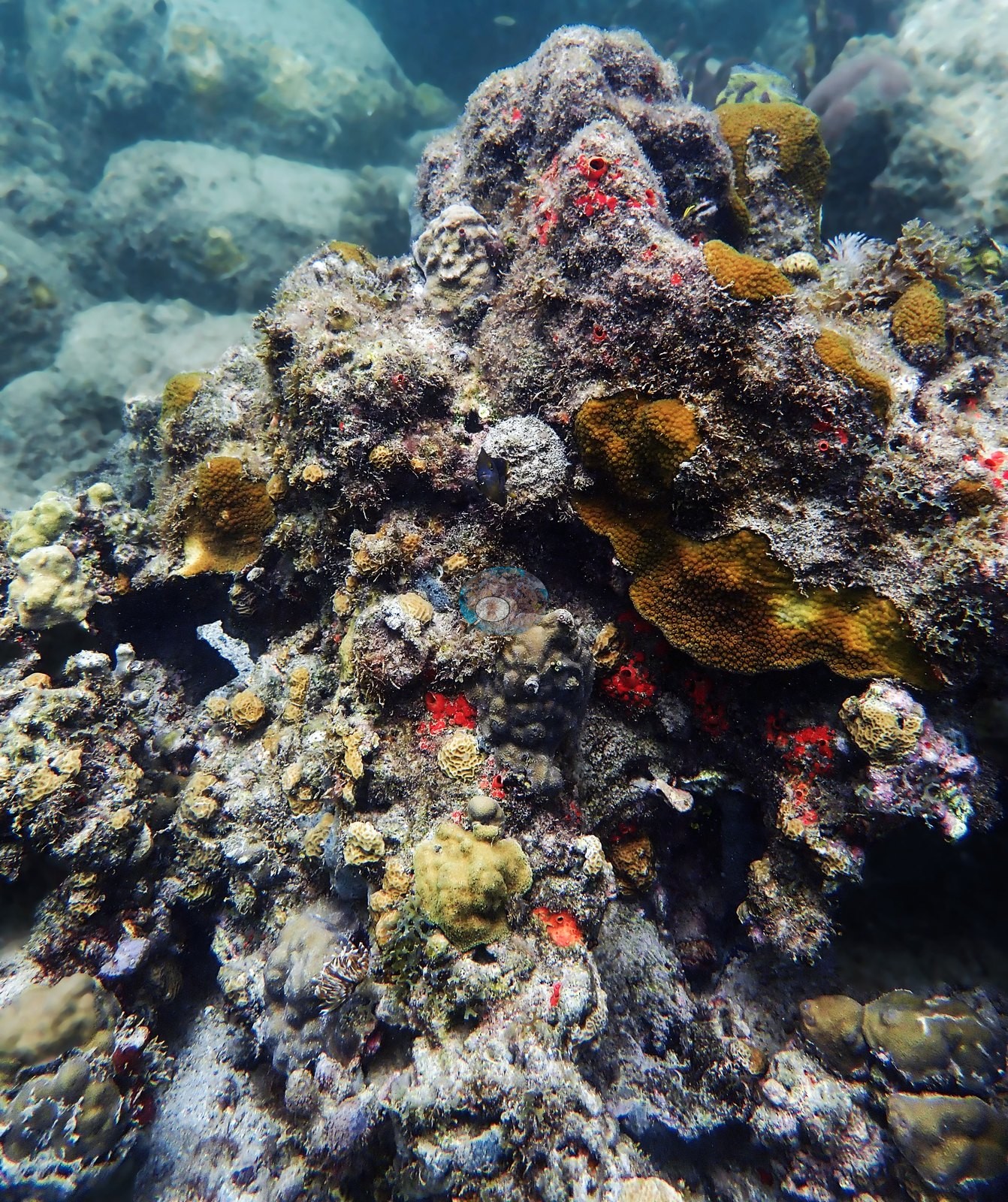
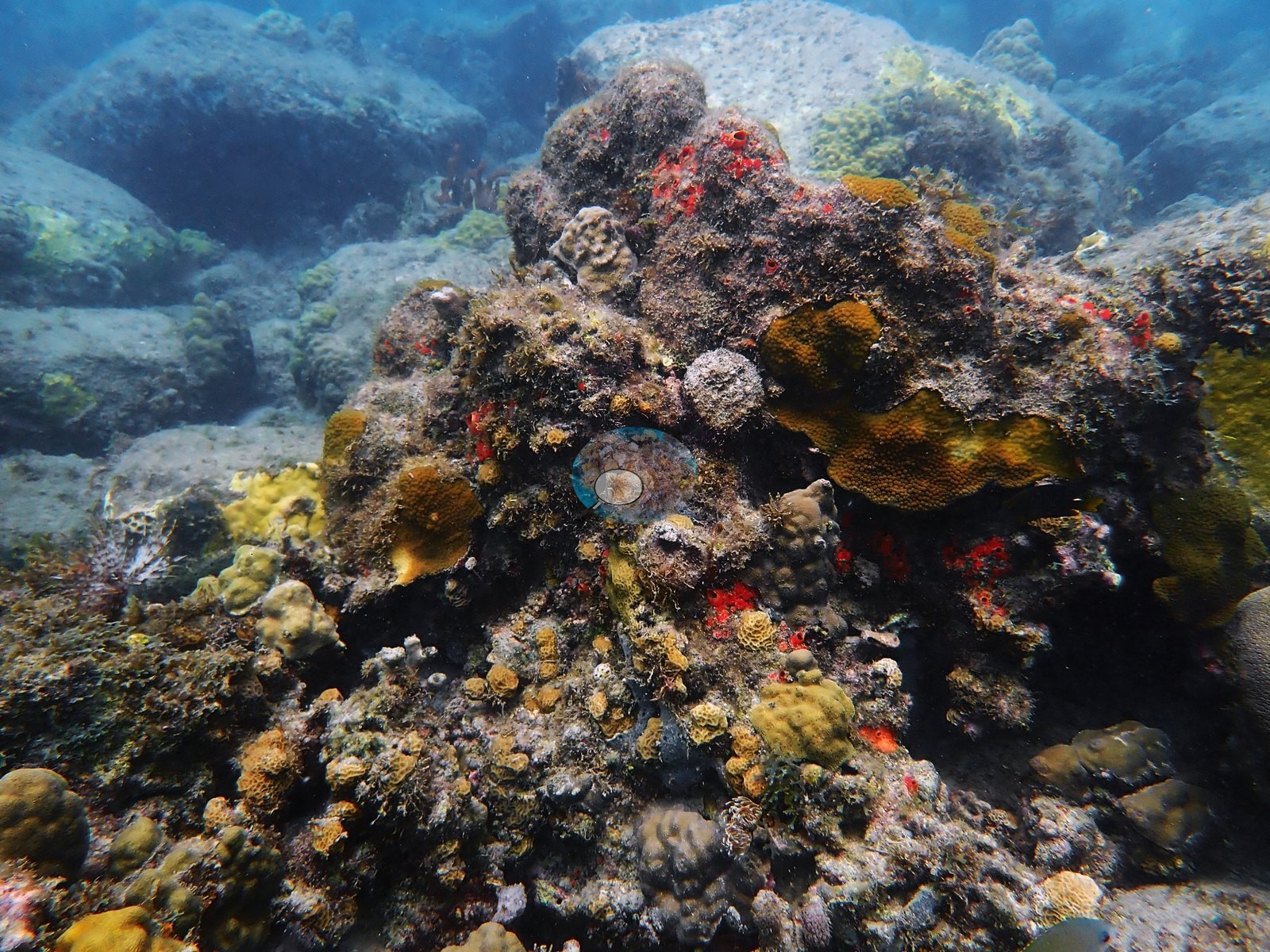
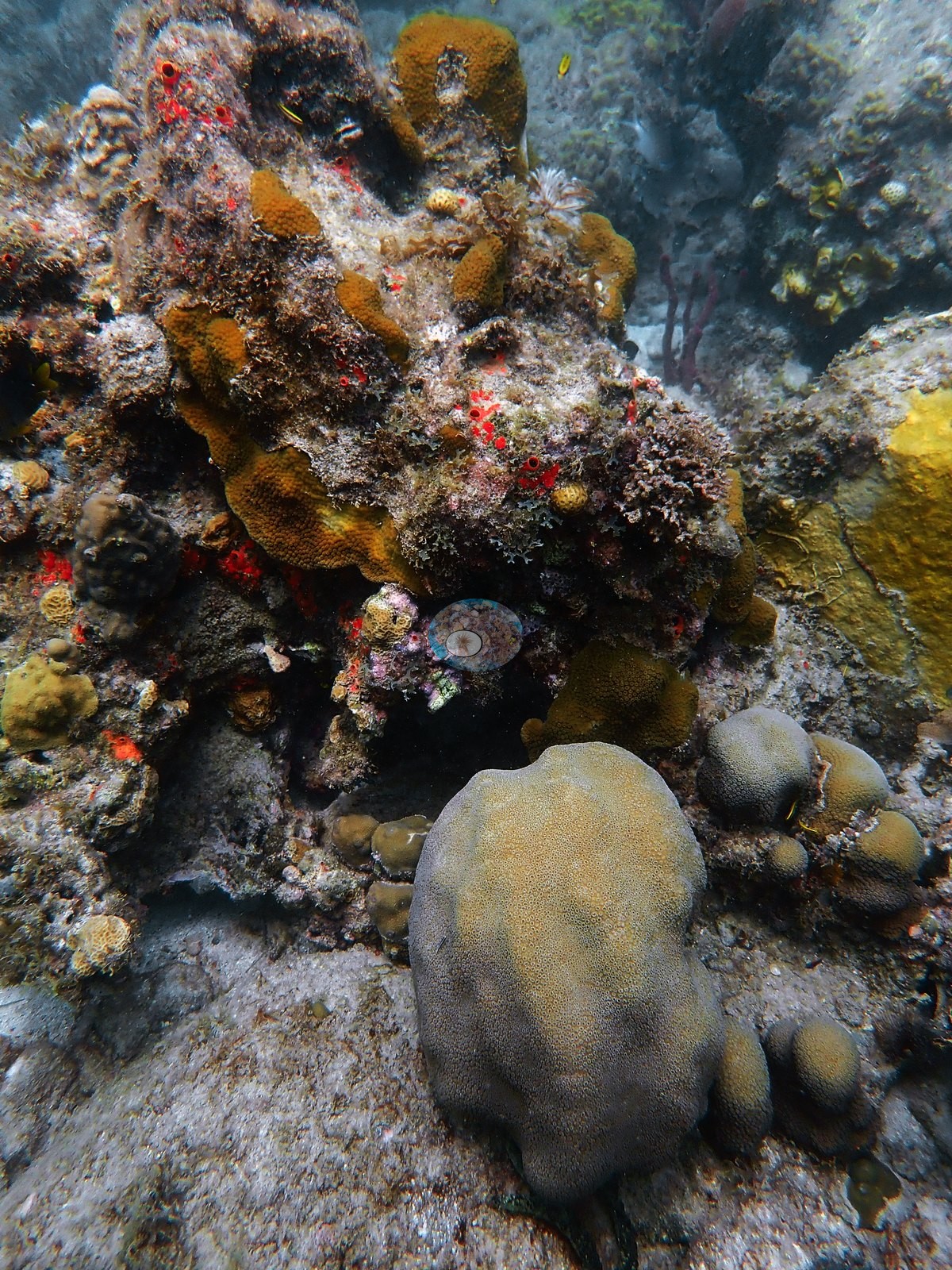
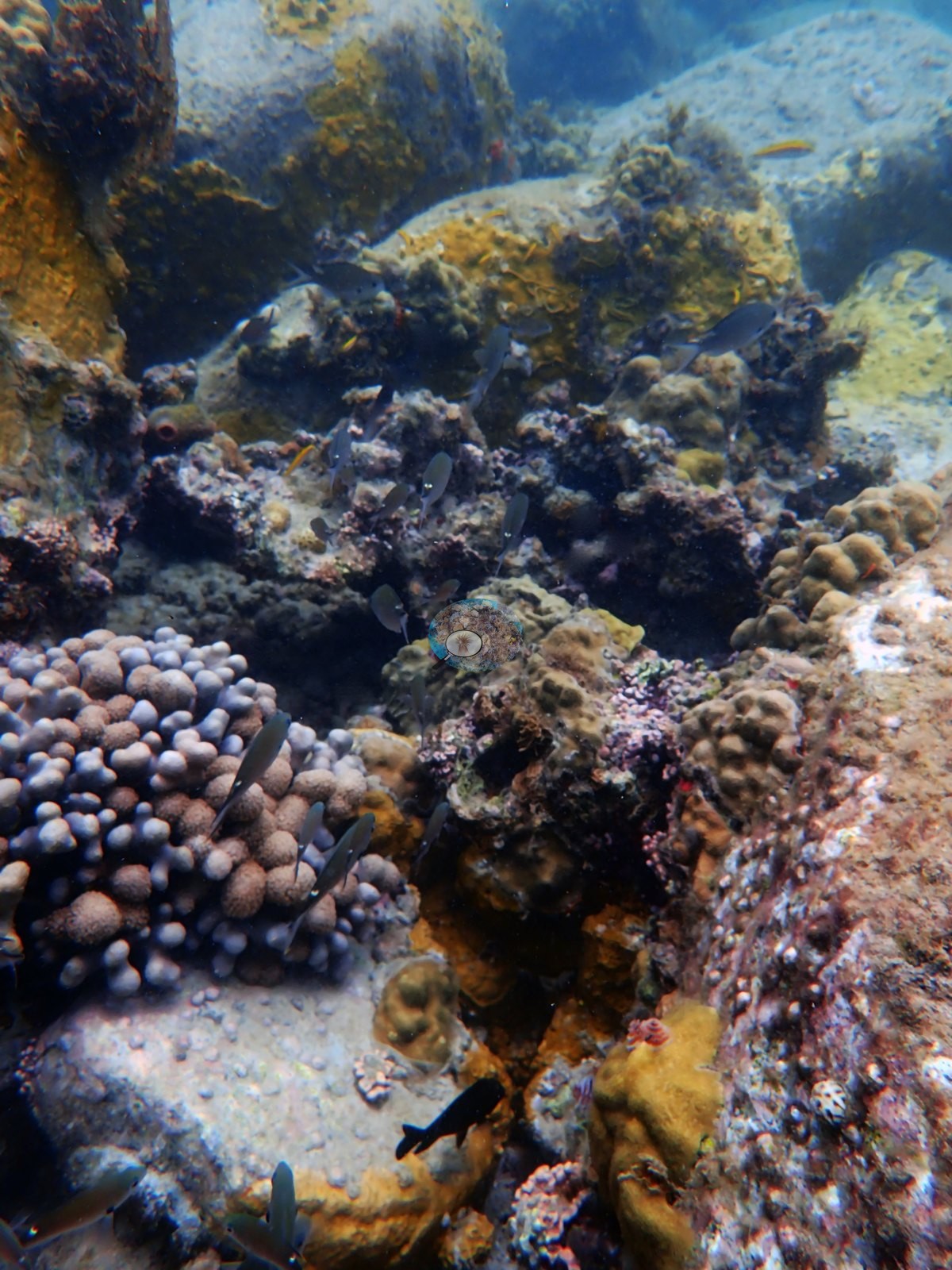
Frame 2 is the most diagnostic: red-brown massive colonies with finely pitted surfaces on the left, several carrying pale patches of recent partial mortality; a large dark brain coral with sinuous meandering valleys (Pseudodiploria-type) on the right, much of its surface overgrown by red-brown turf; and between and beneath them several massive bright yellow sponges pressed hard against the coral margins, with a long-spined Diadema urchin tucked in below and brown damselfish overhead (e.g., Image 2).
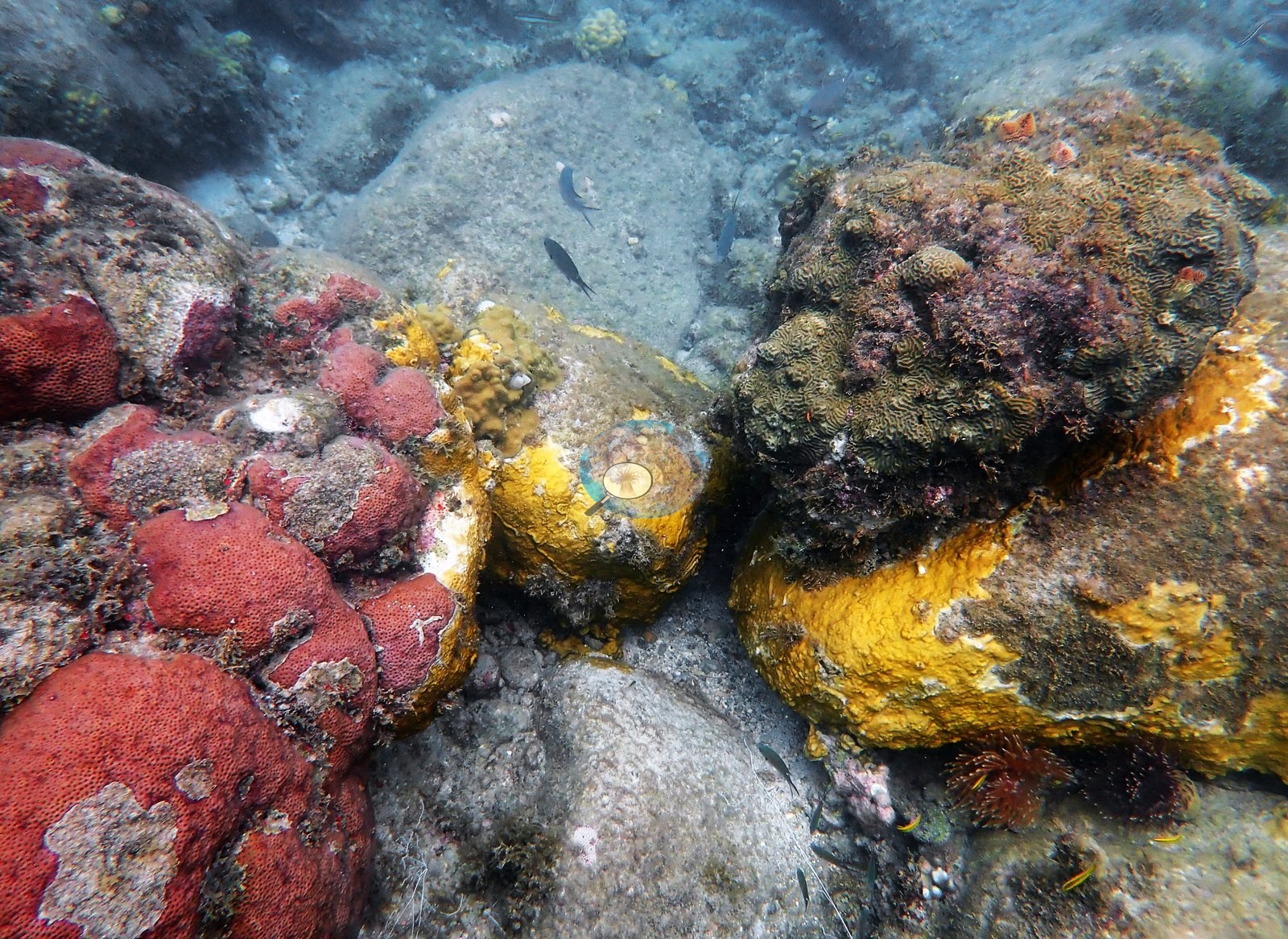
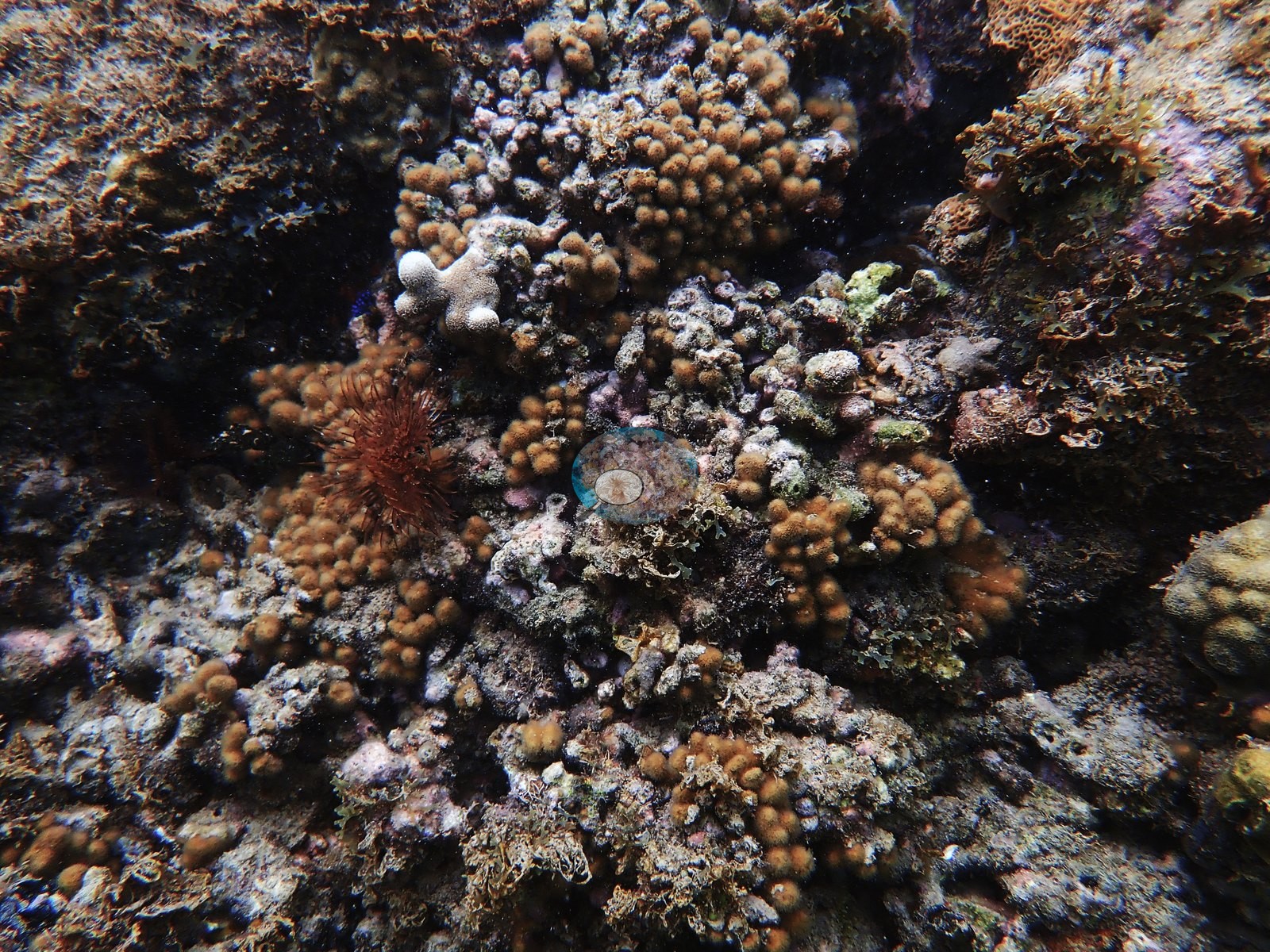
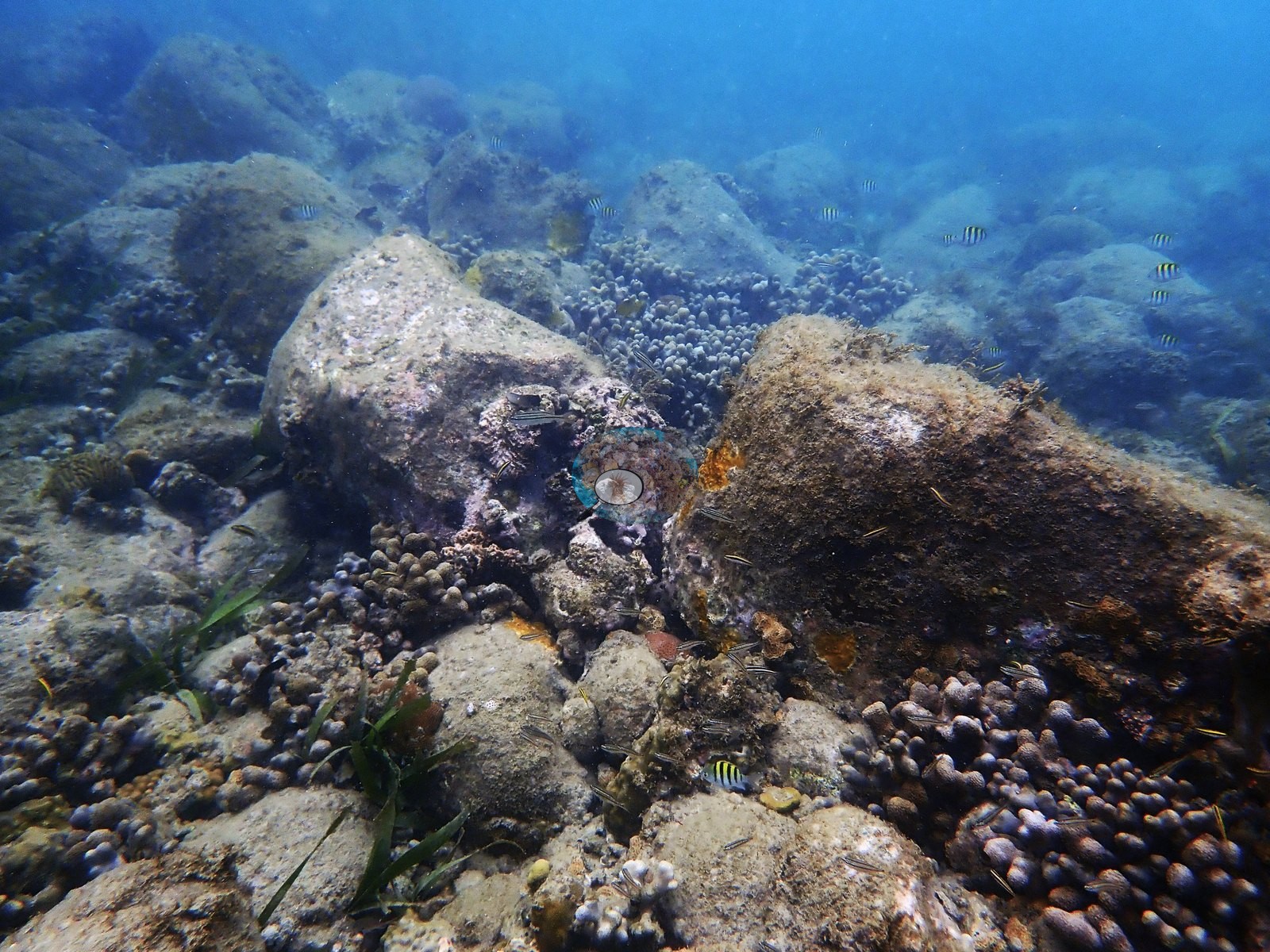
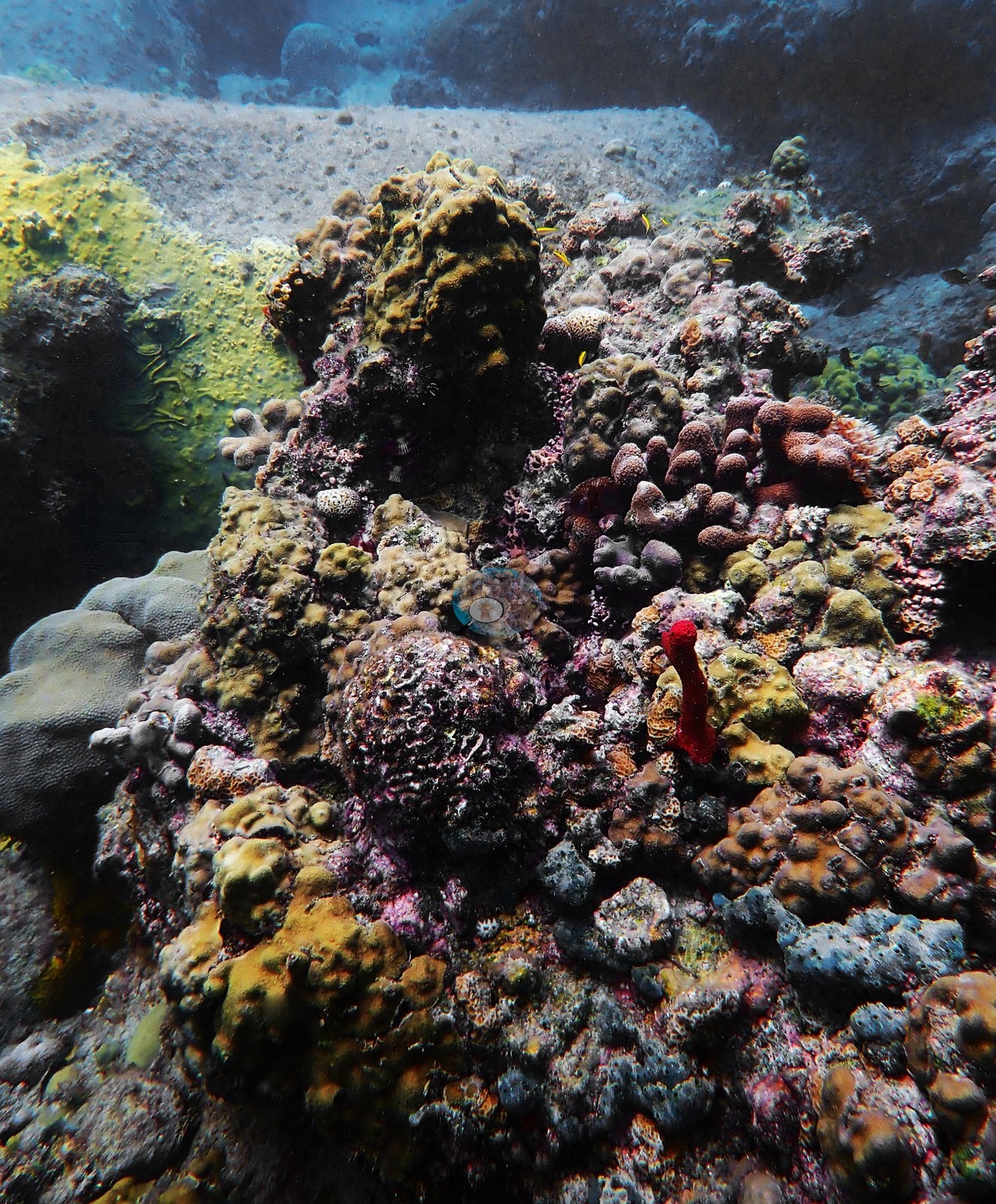
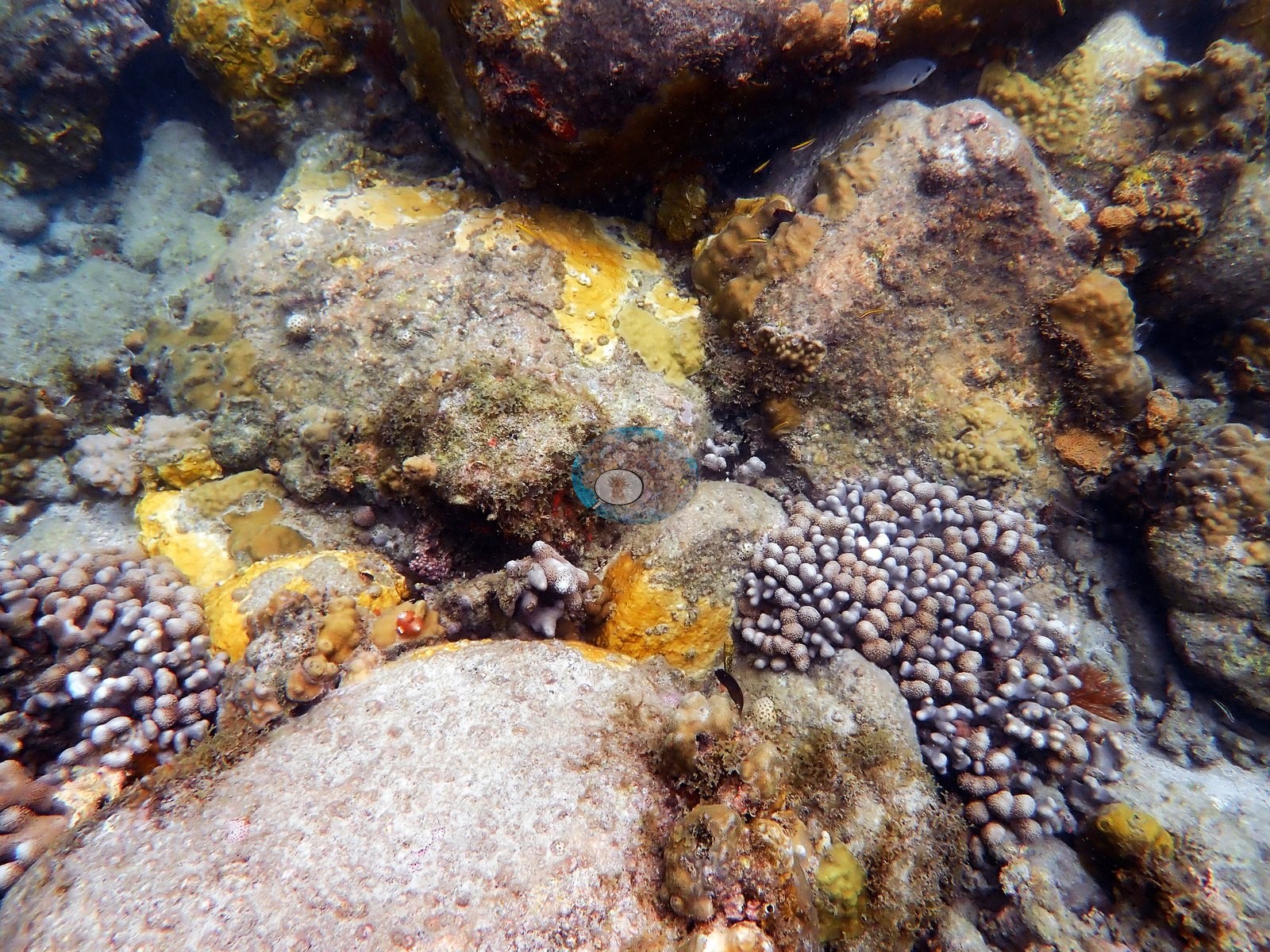
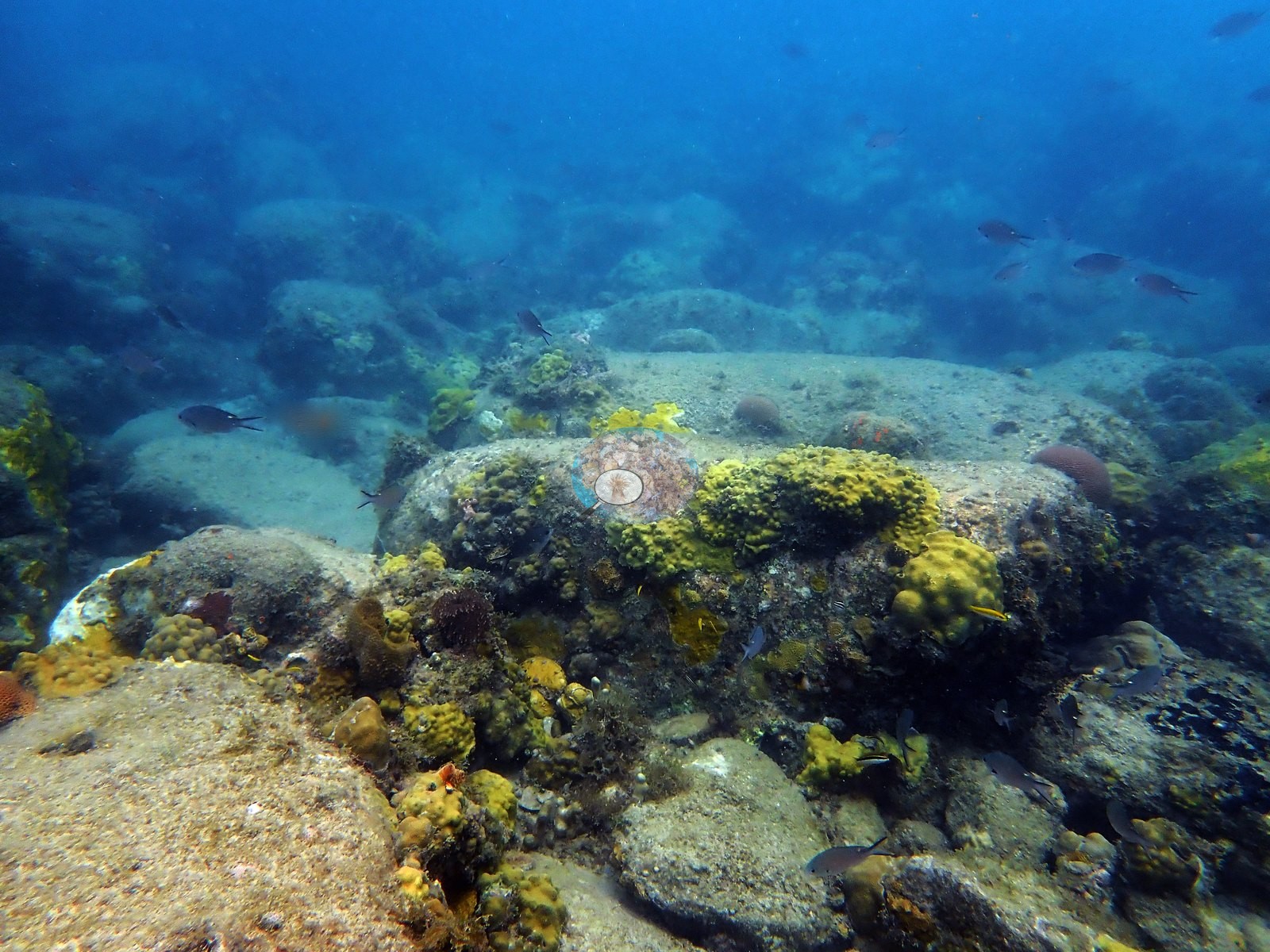
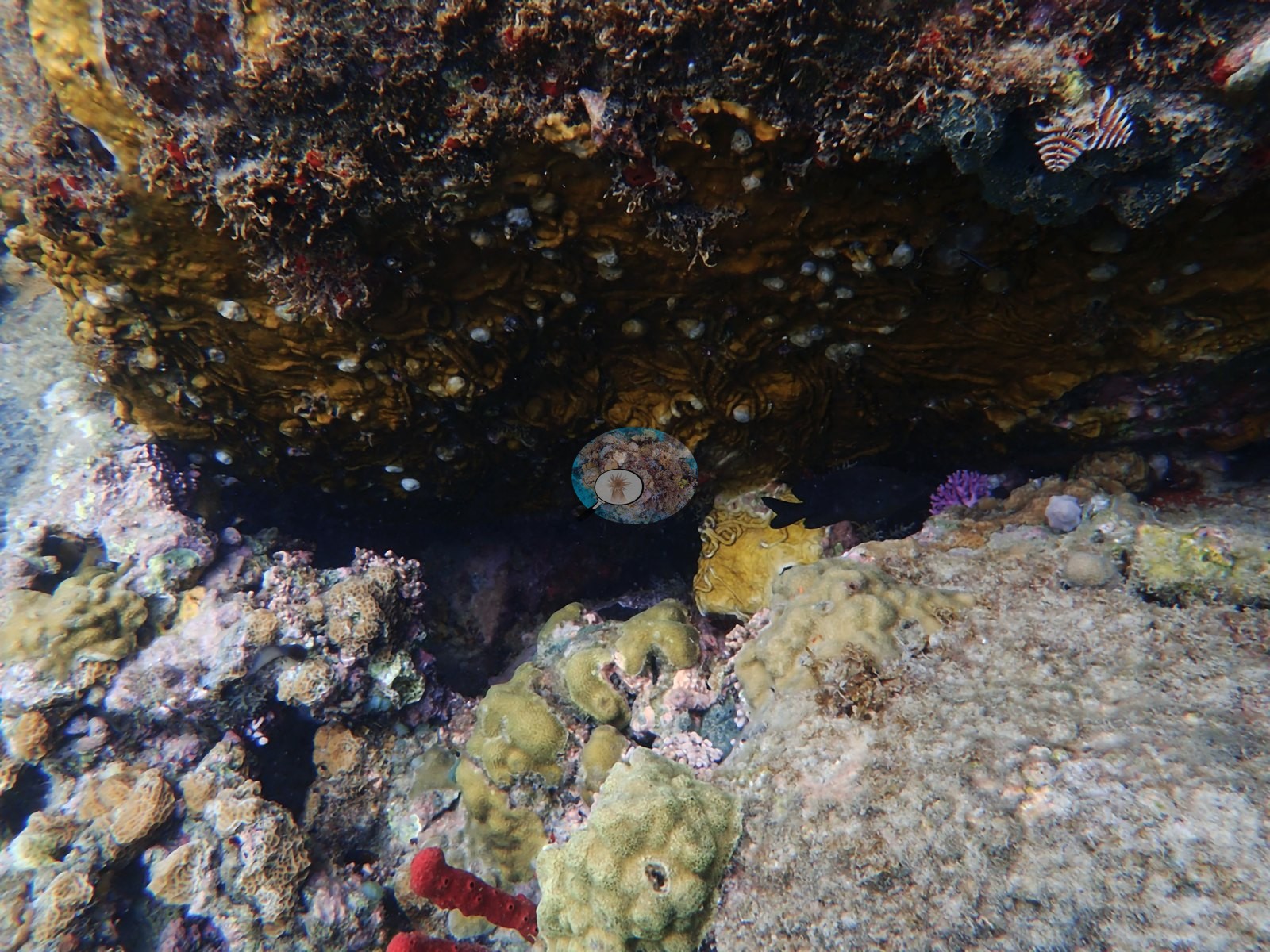
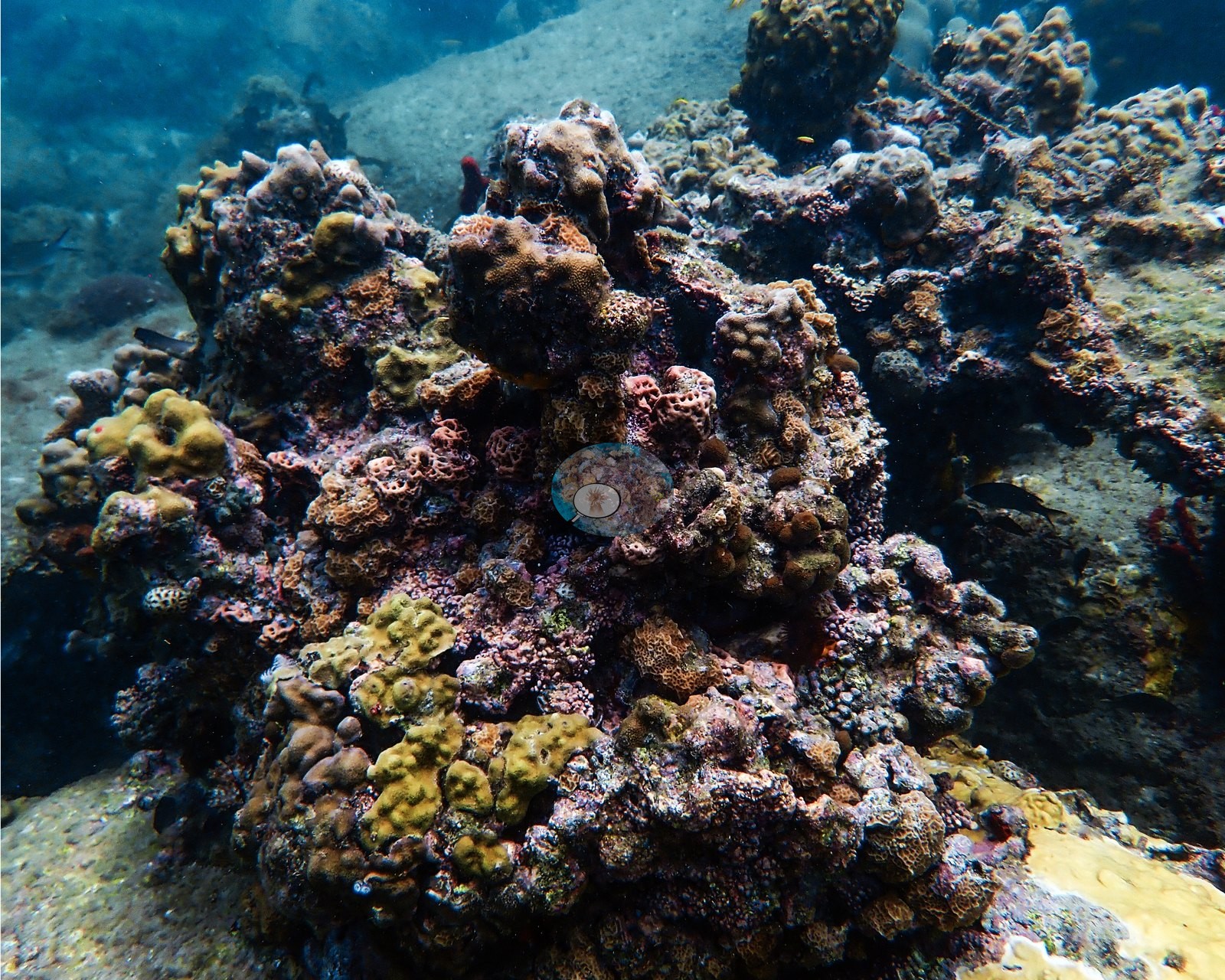
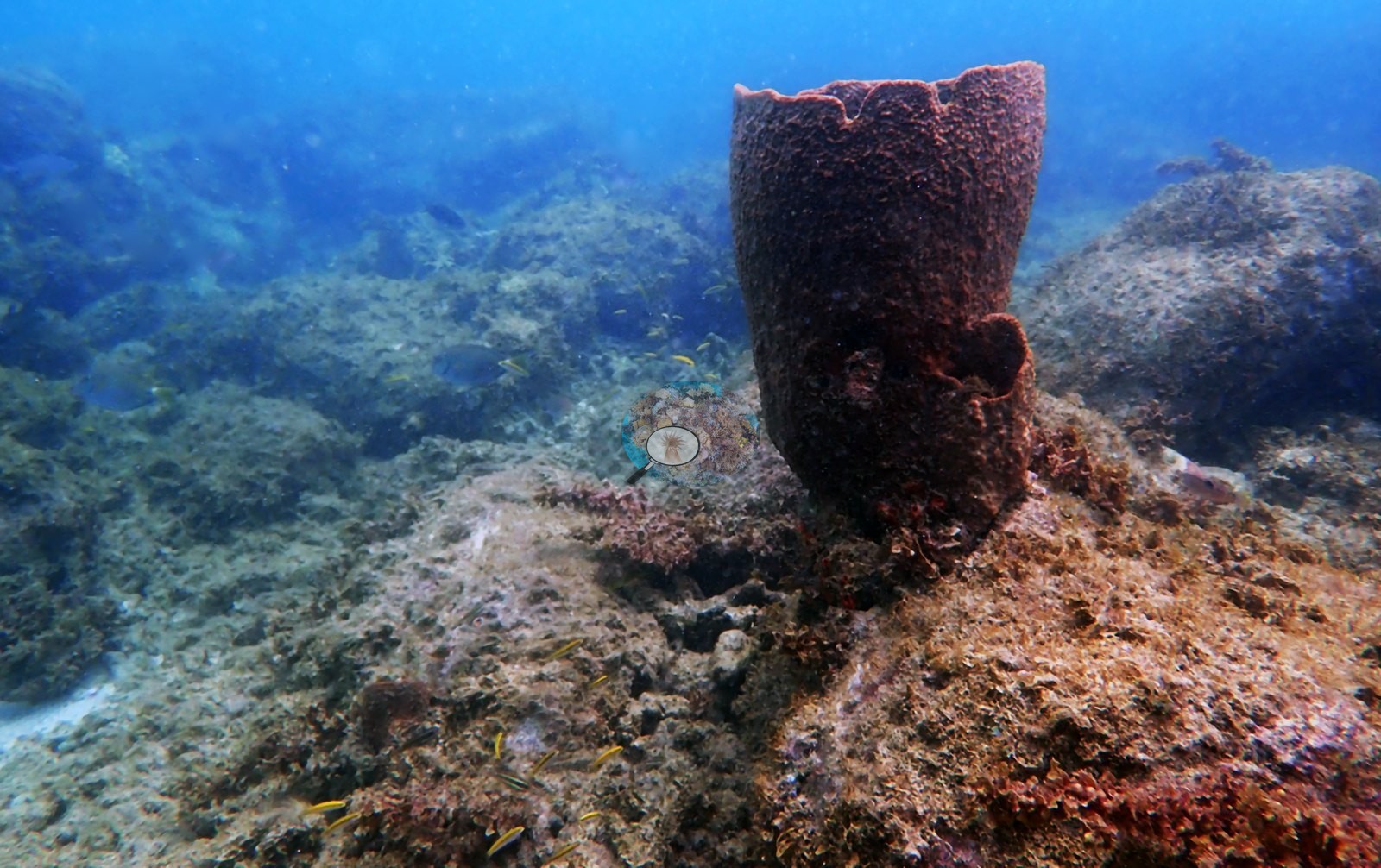
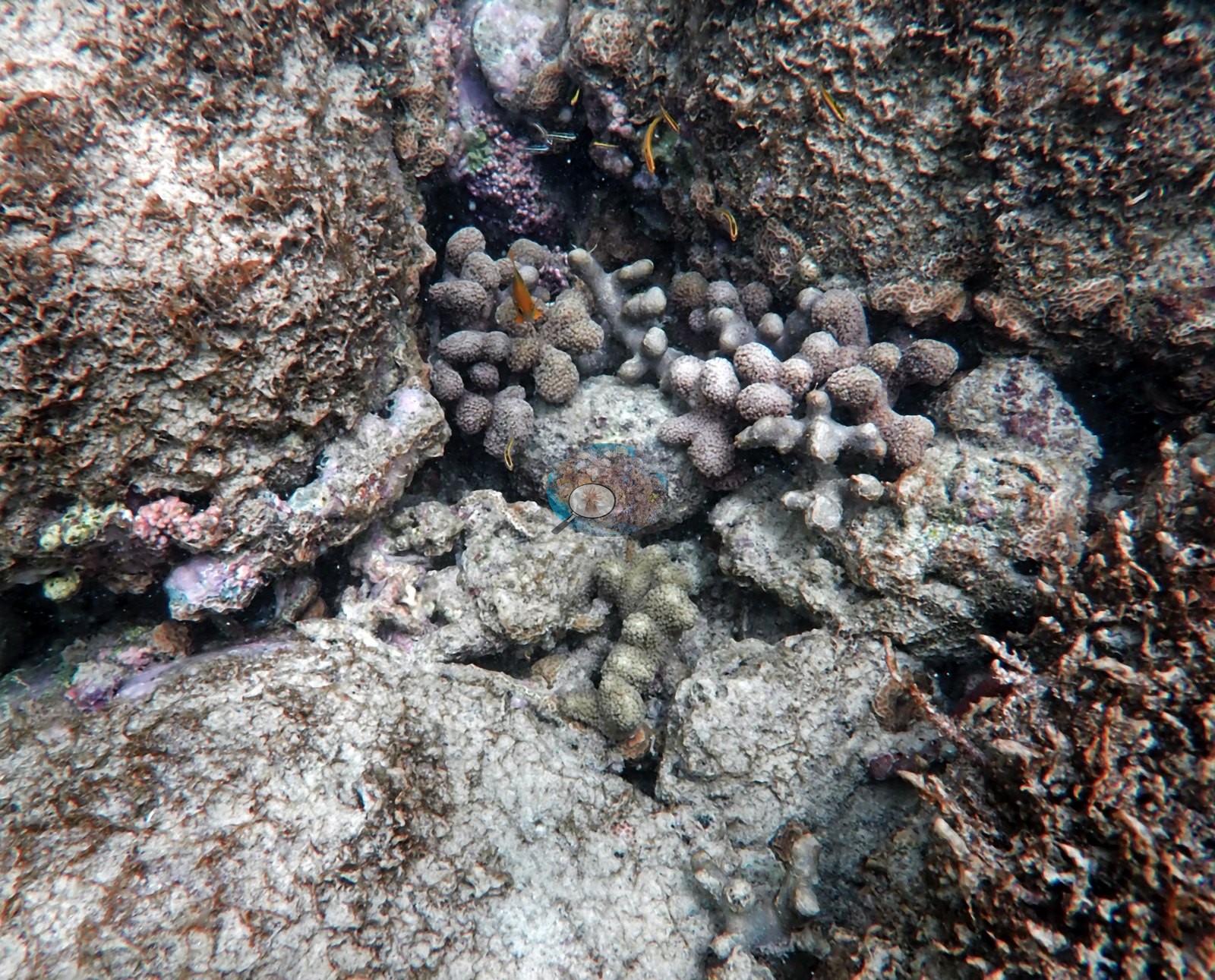
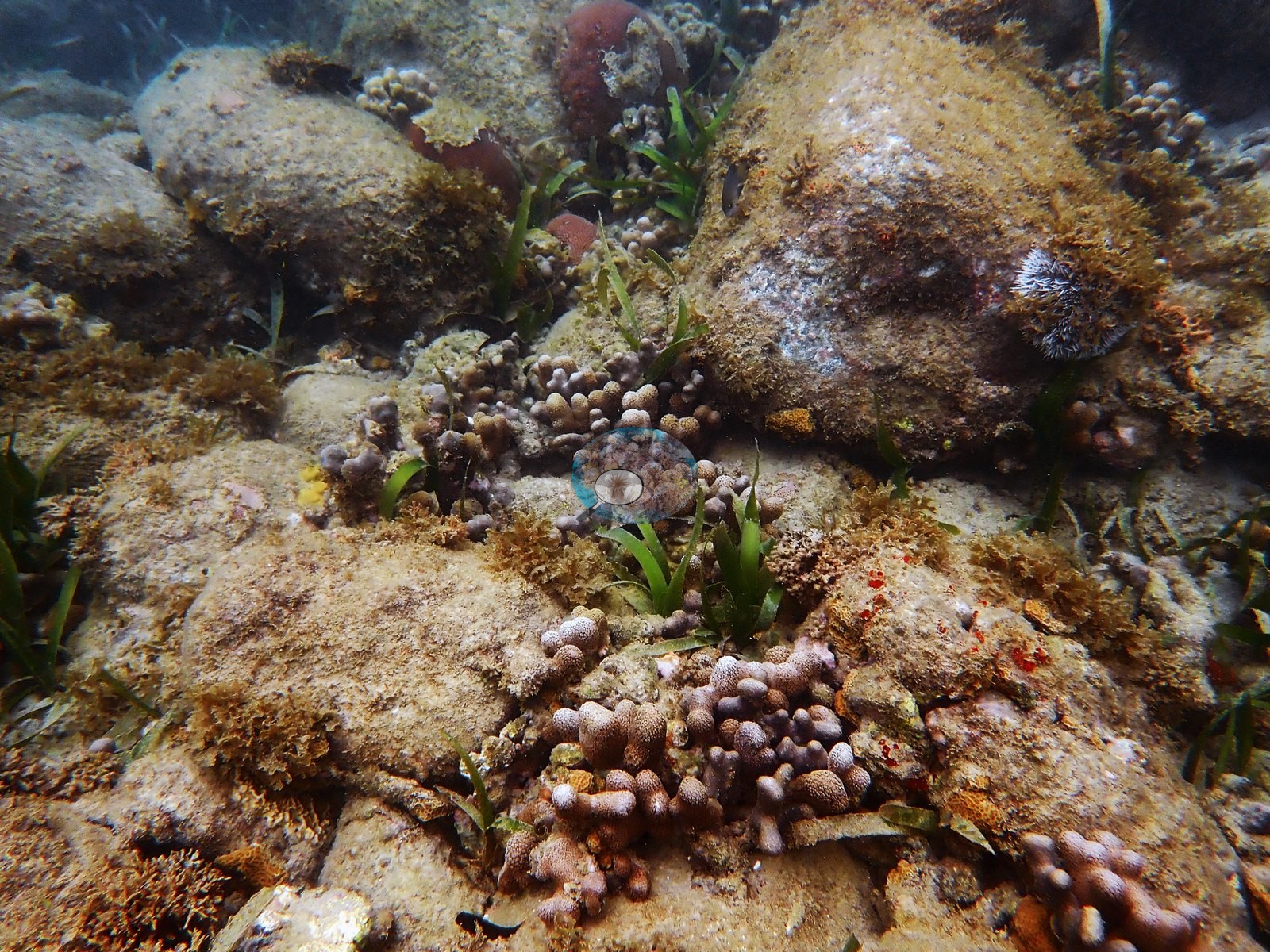
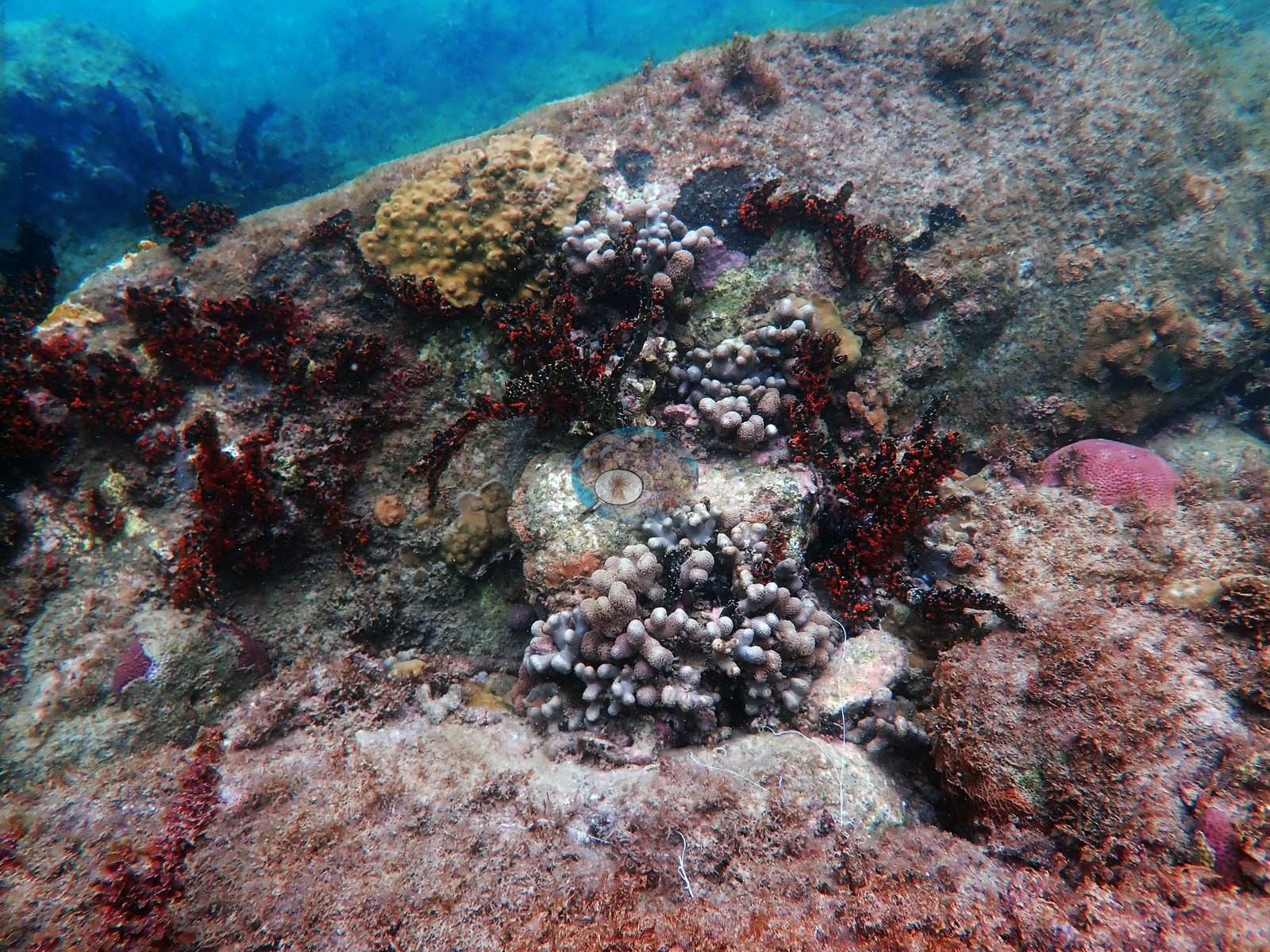
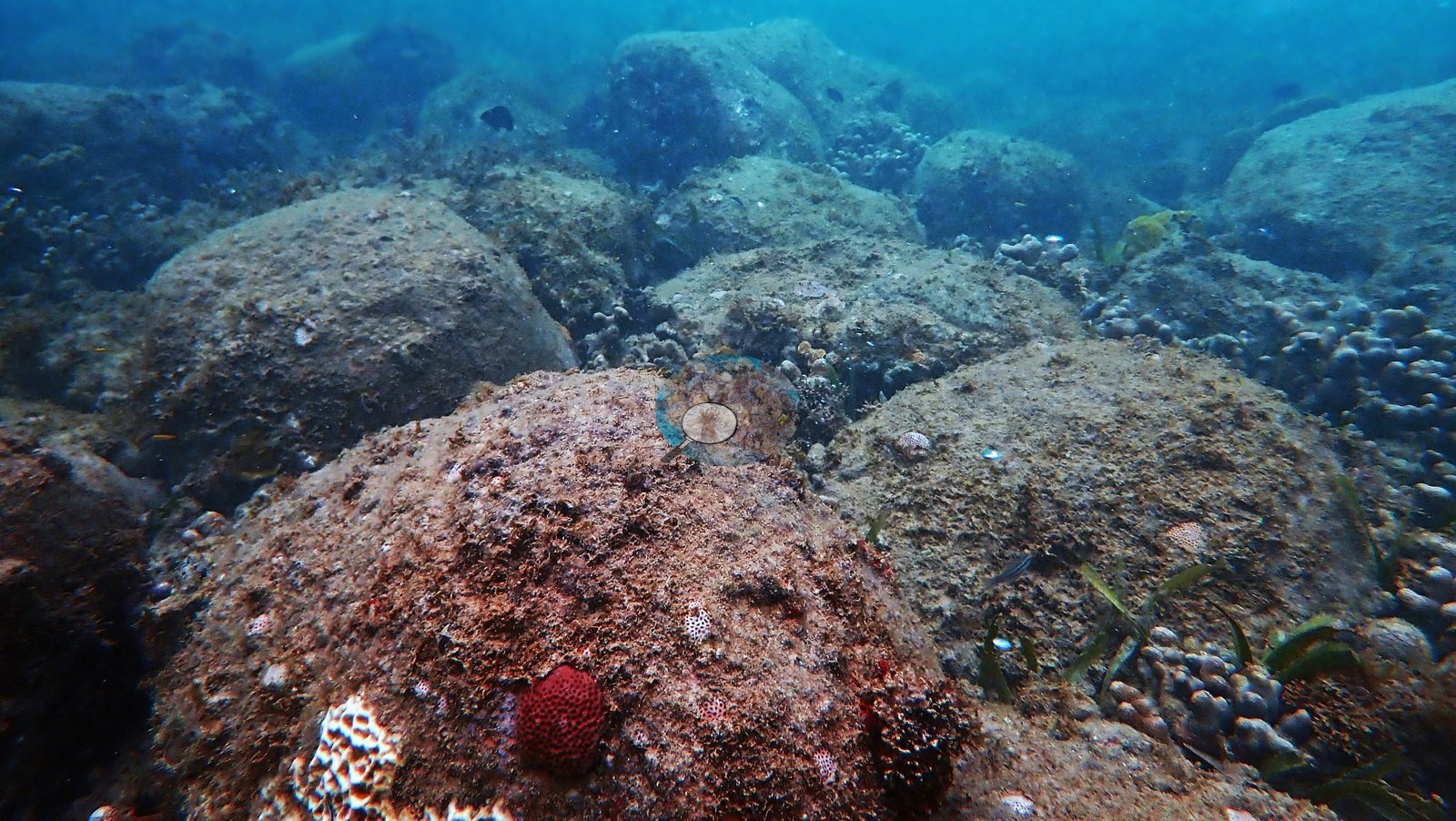
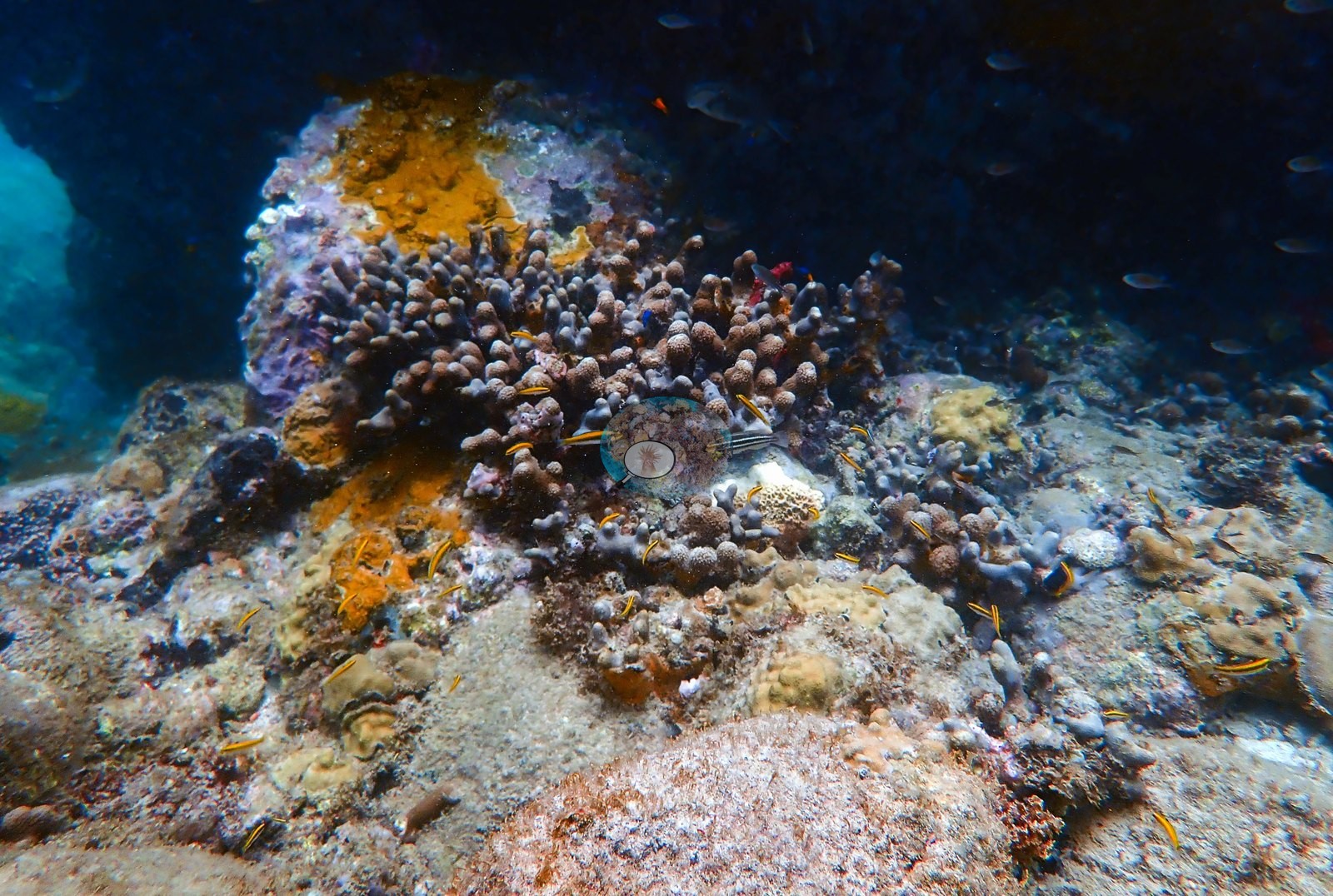
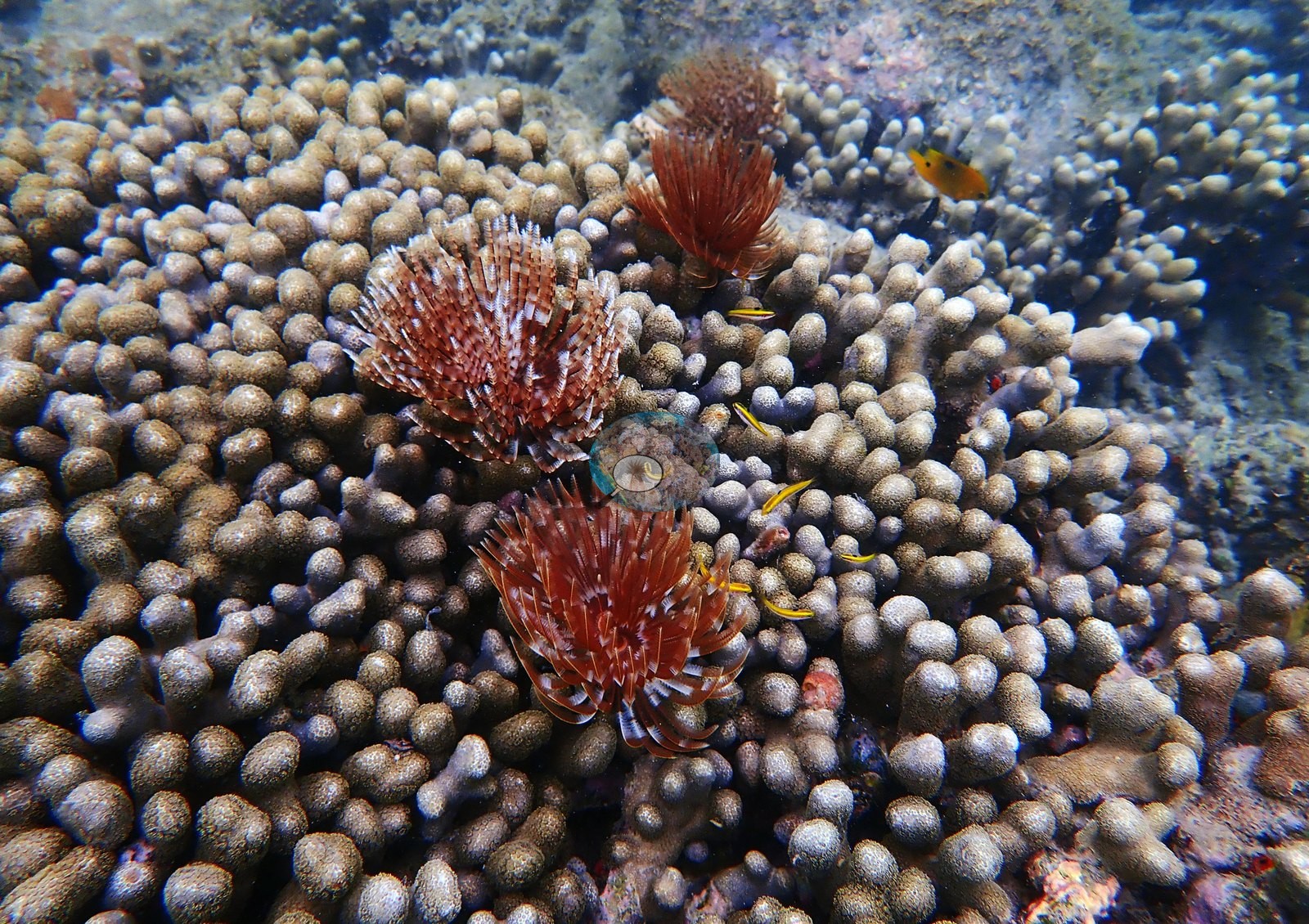
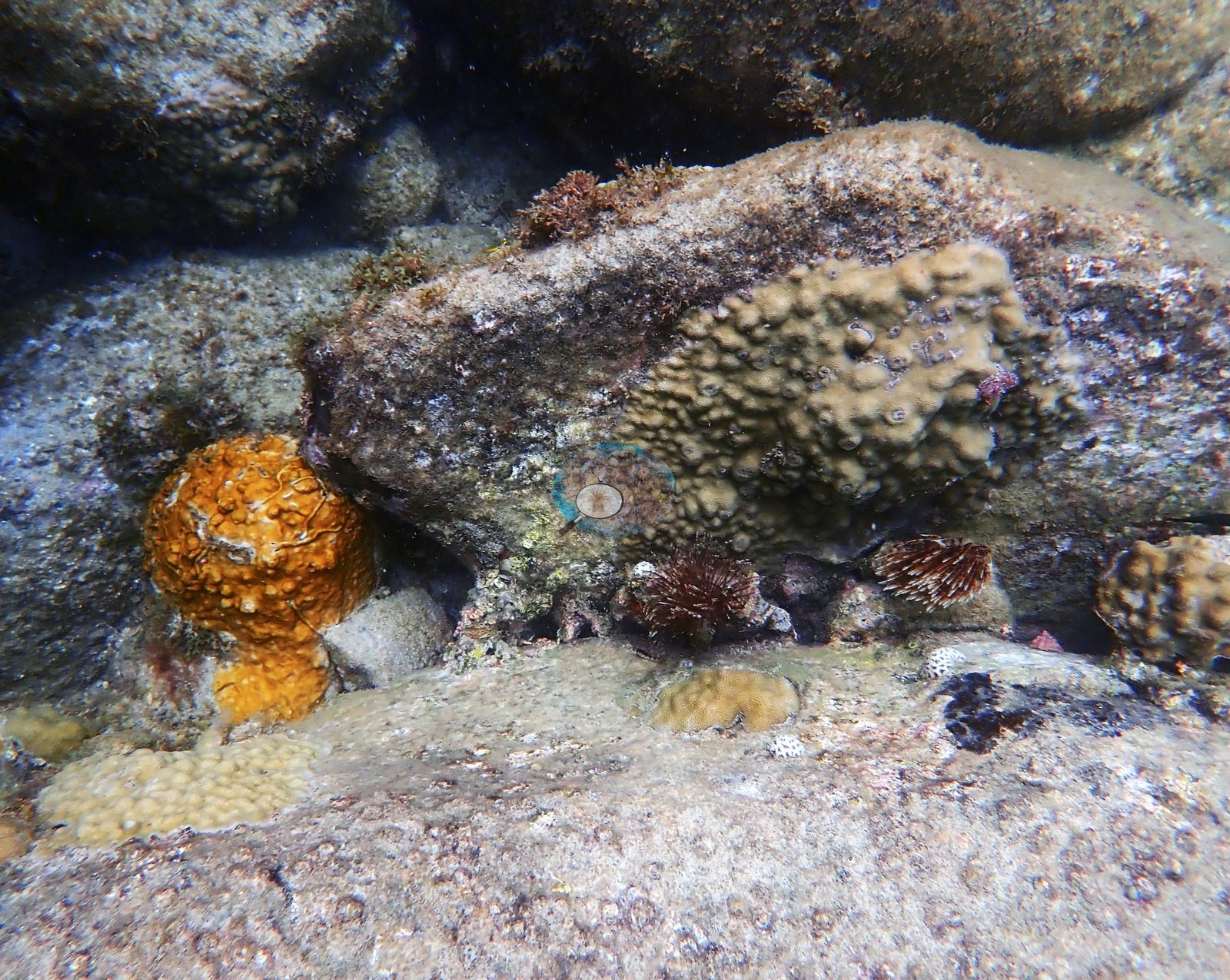
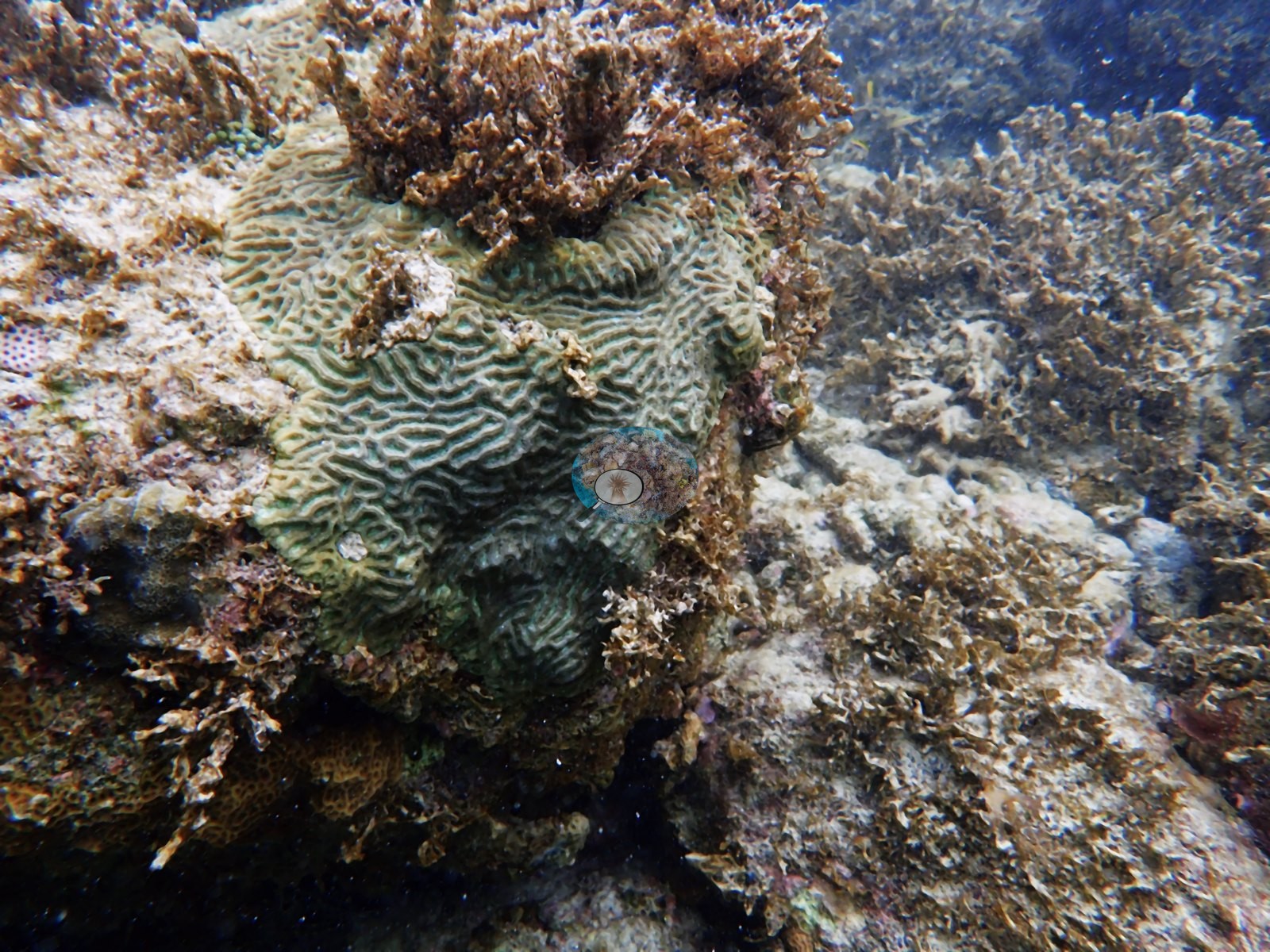
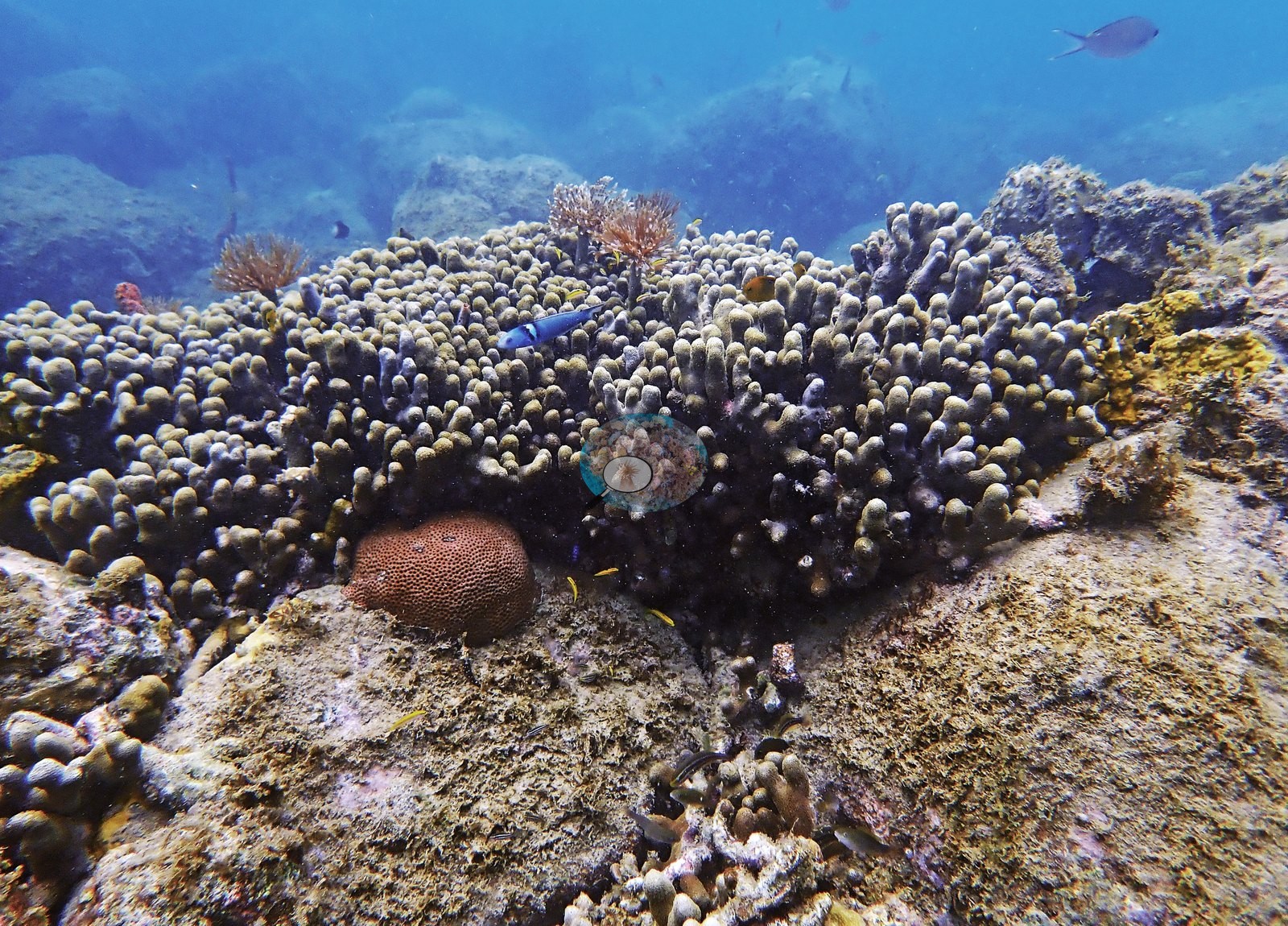
Frames 3 and 4 are the good news: broad stands of club-branched finger coral (Porites porites-type) in gray-lilac and tan forming continuous low mounds, with tan social feather-duster worms among the branches, a small star-corallite massive colony, a blue-headed wrasse and juvenile yellow-striped fish working over them, and yellow sponges around the margins (e.g., Image 3, Image 4).
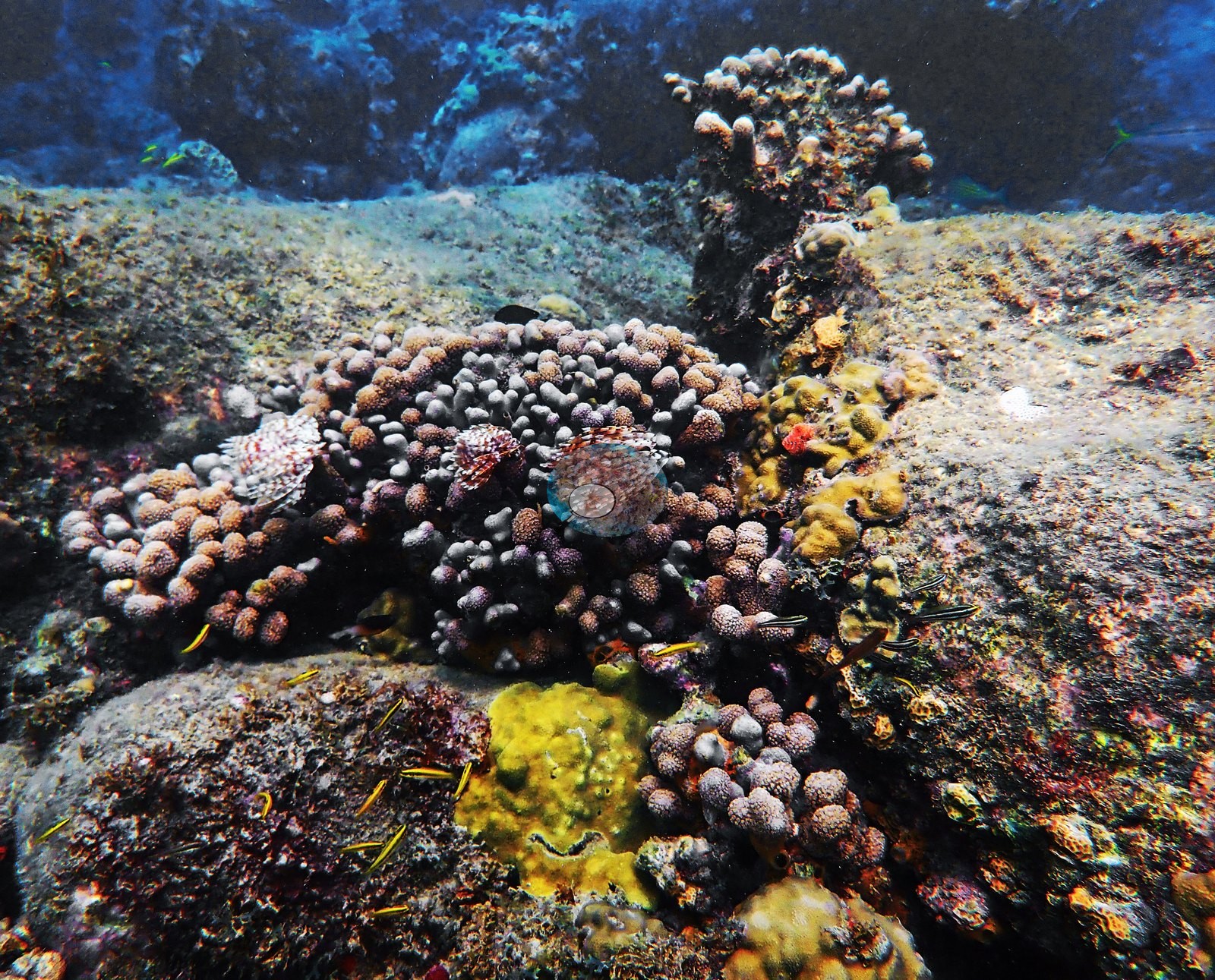
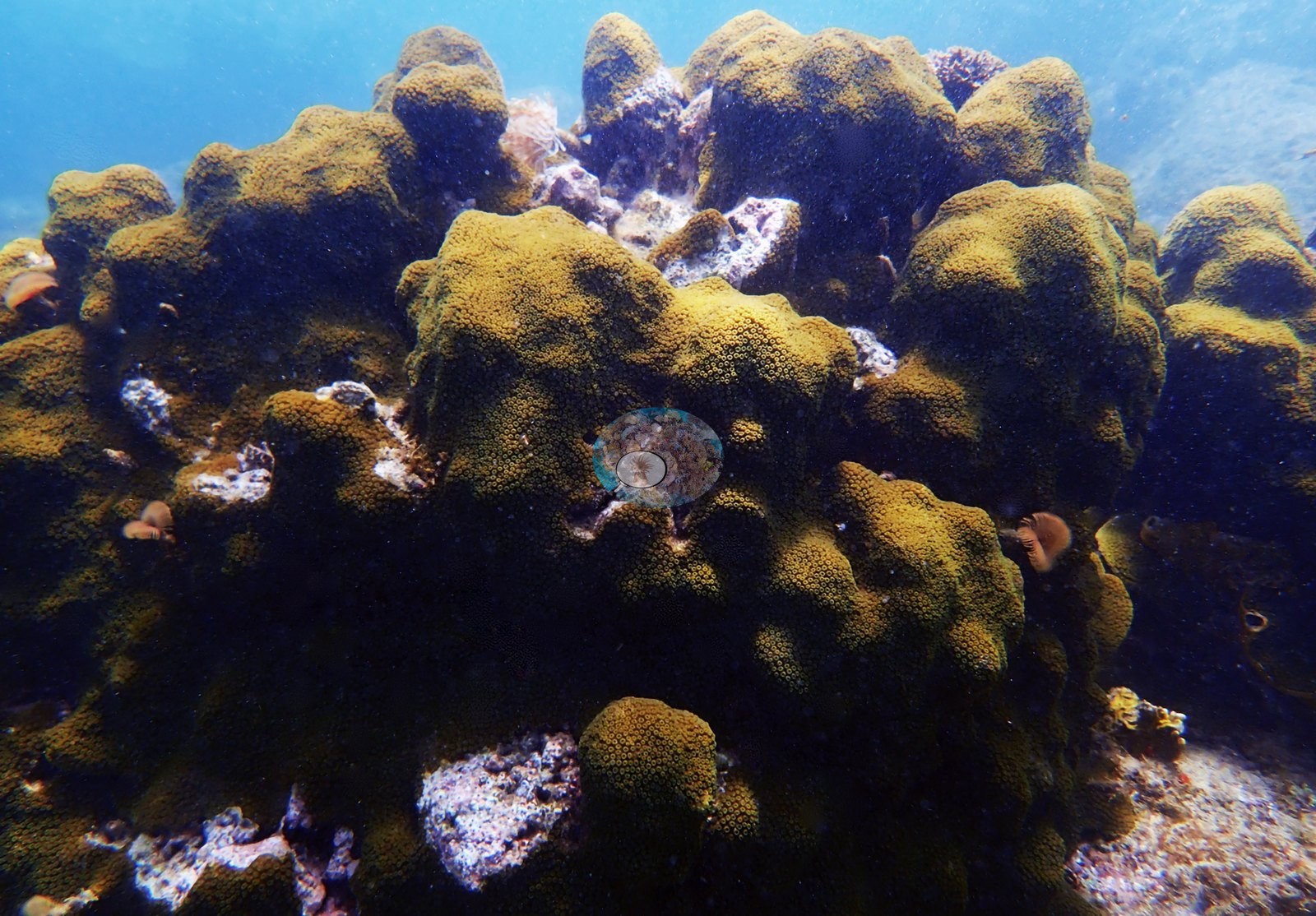
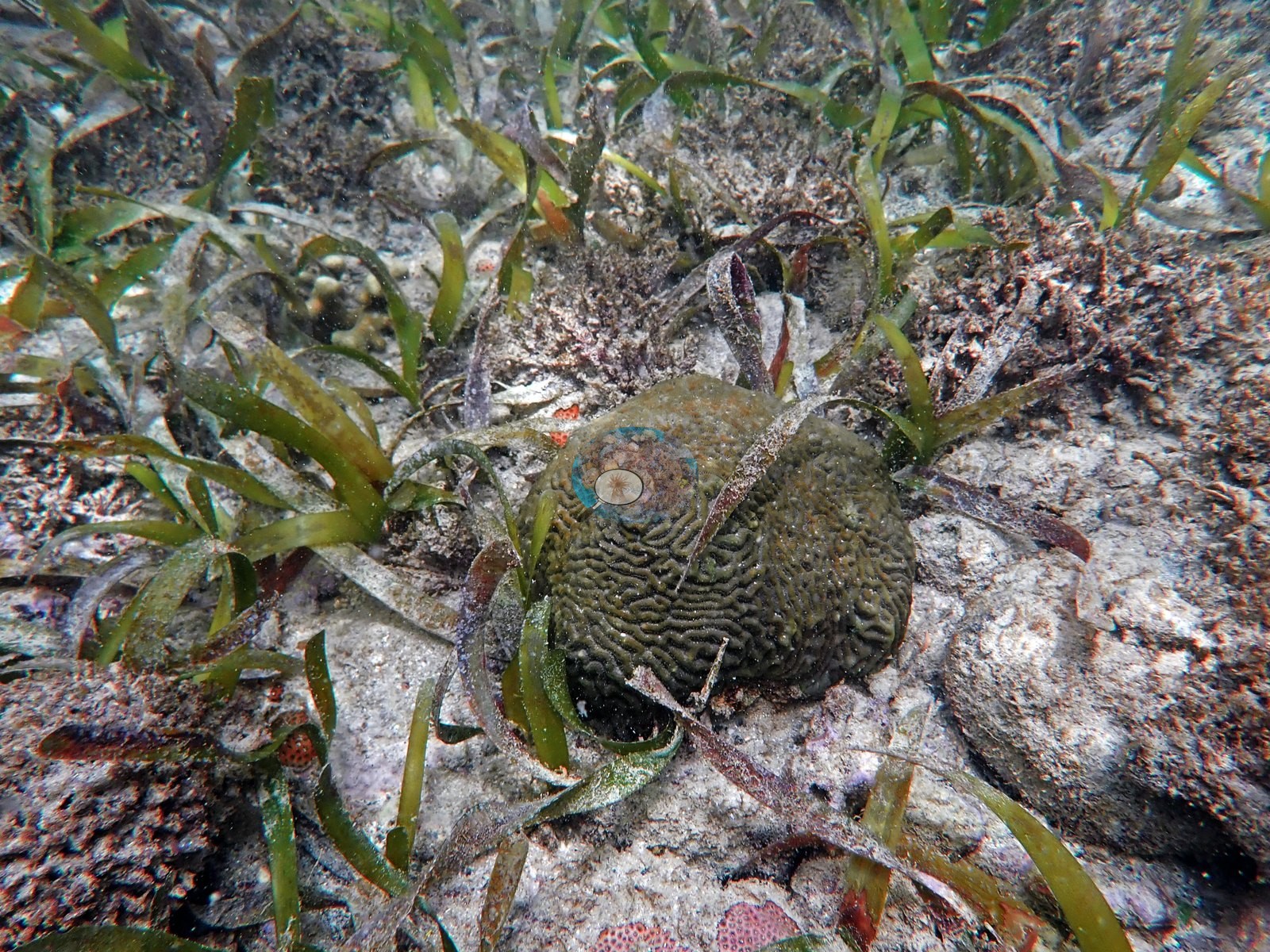
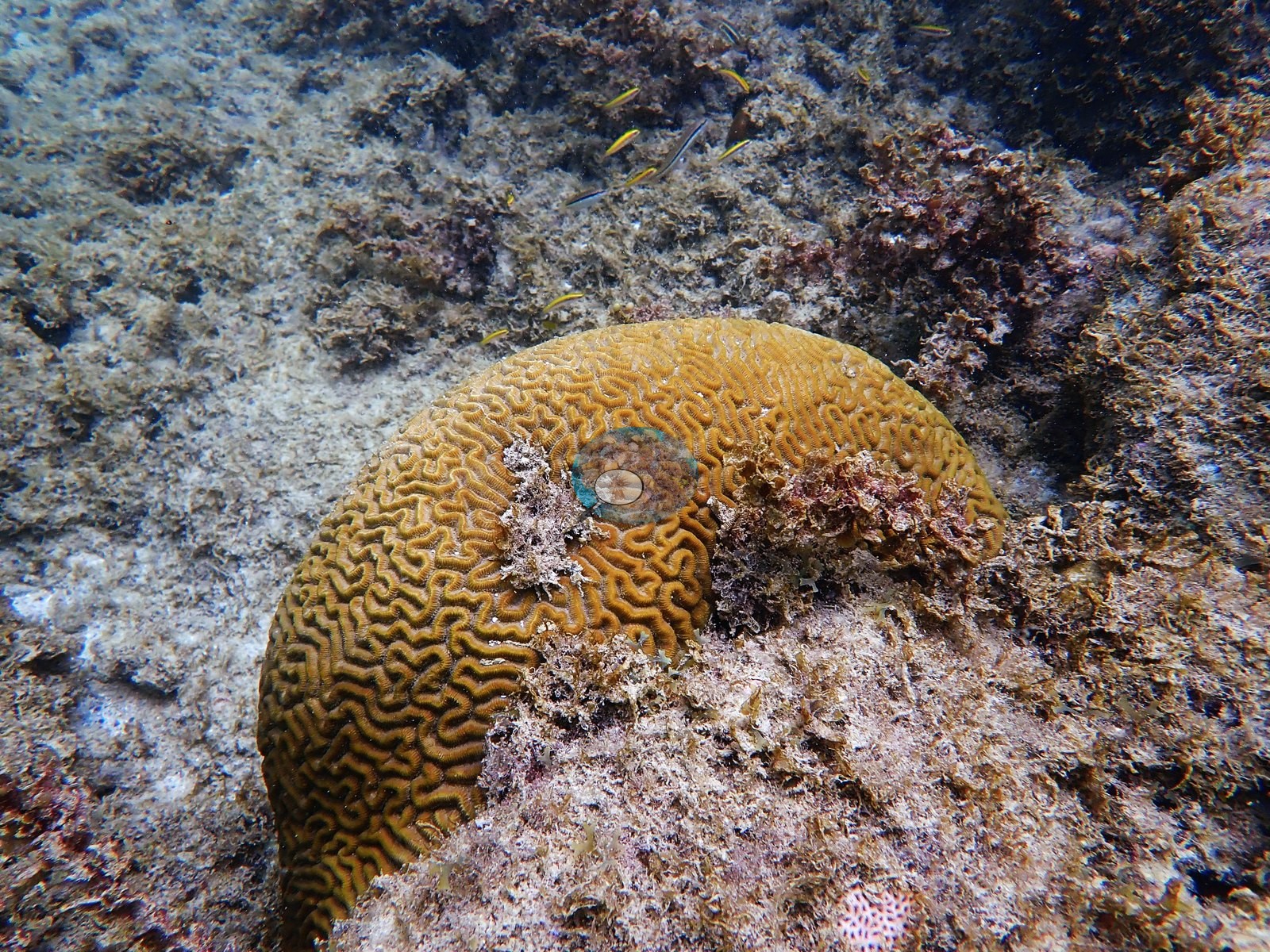
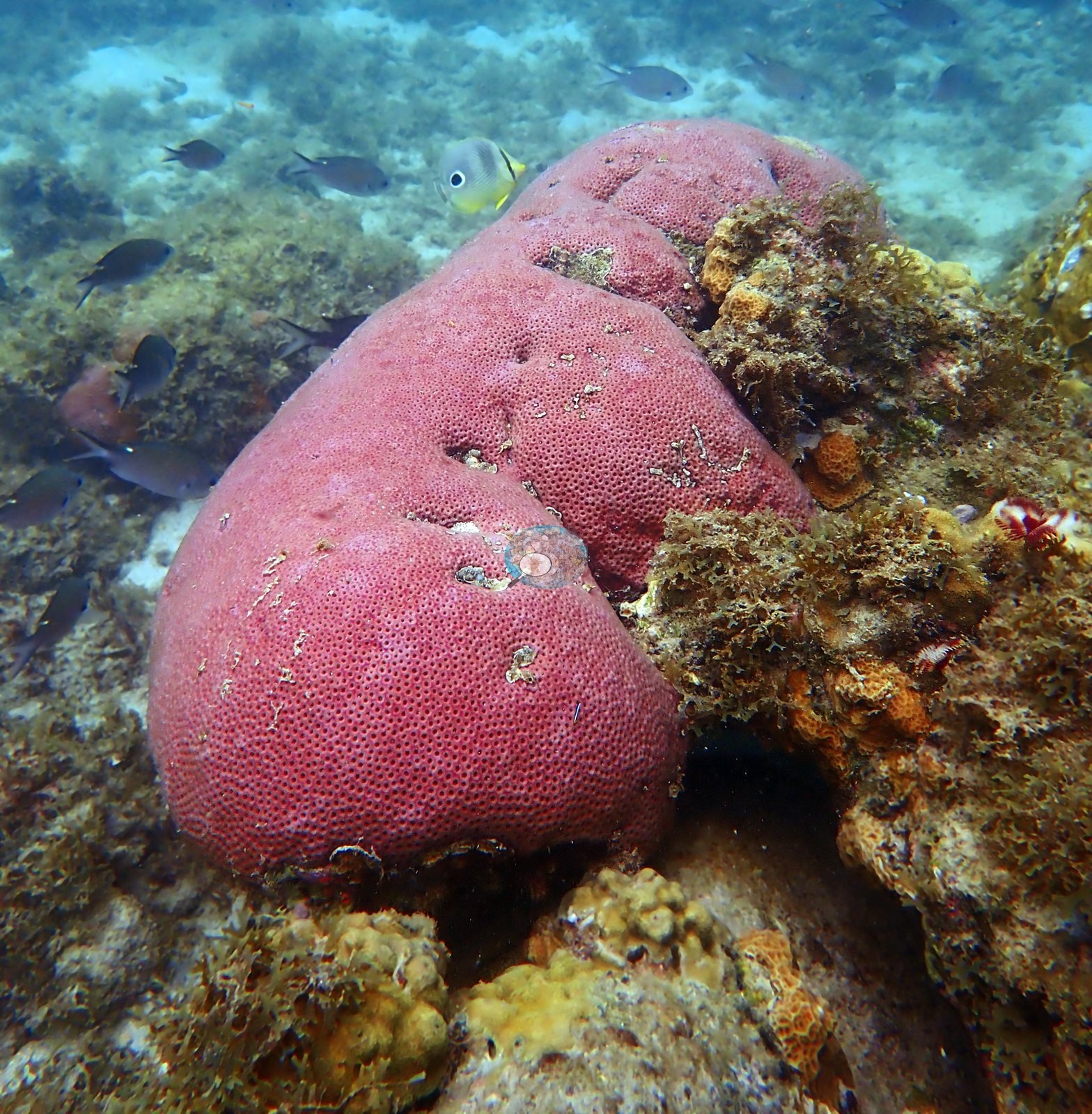
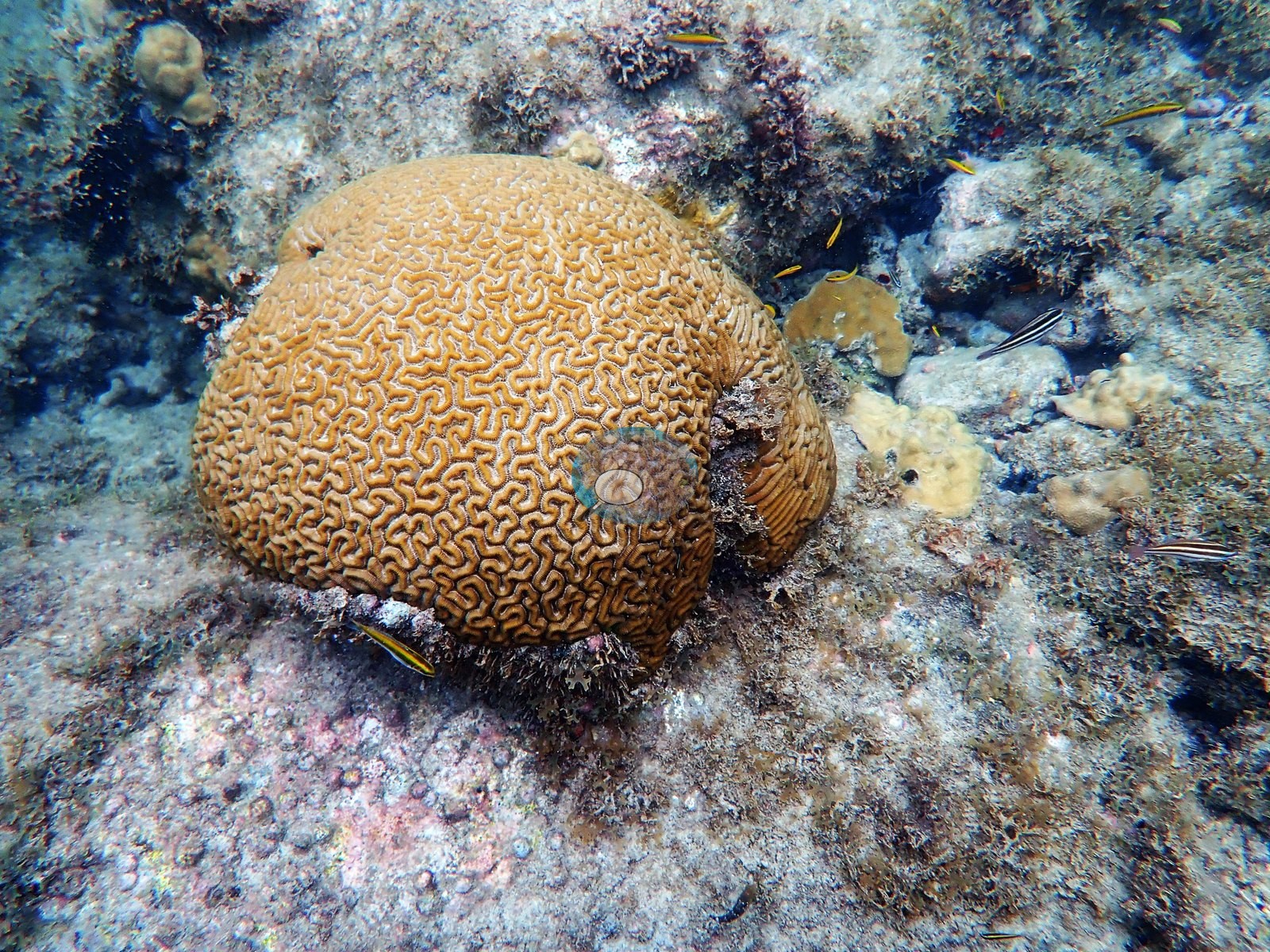
Frame 5 is a single intact golden-tan brain coral roughly half a meter across, in visibly good condition apart from an algal-colonized scar at its base, with a Diadema sheltering beneath it on sediment-dusted pavement (e.g., Image 5).
Coral cover
- Reference: Claude CV point count (this site's photos)
- Coral cover: 13% — a blind Claude computer-vision point count of 41 of Anderson's edited photographs (20 points per photo; water, fish, and obstructions excluded). Other computer-vision methods are listed in the method table.
Stressors
No corallivores evident.
Comparisons with other data
No other surveys have been conducted at this site to date. Within 5 km, one independent station, Reef Check at Le Sport Reef, 1.39 km away, read 8.8–15% between 2003 and 2006.
Other notes
Frames 3 and 4 are the good news: broad stands of club-branched finger coral (Porites-type) in gray-lilac and tan forming continuous low mounds, with tan social feather-duster worms among the branches, a small star-corallite massive colony, a blue-headed wrasse and juvenile yellow-striped fish working over them, and yellow sponges around the margins (e.g., Image 3, Image 4).
CV model comparison
More info
A few colony-focused photos raise the mean; the median is the typical photo. No computer-vision method yet estimates coral cover accurately on new images, so treat this as indicative rather than a measurement; it is revised as the methods improve.More info
Other rows are for comparison only and are never averaged. No diver transect exists for this trip, so agreement between rows is not accuracy.| Method | Hard-coral cover (%) |
|---|---|
| CoralSCOP edited | 28.3 |
| Claude (edited photos) | 12.5 |
See a more detailed, stand-alone version of this table.
Independent surveys nearby
 Coral Reef Diagnostics
Within 5 km, 1 independent survey station recorded hard coral cover in 3 surveys between 2003 and 2006. Of the 1 station surveyed in more than one year, 1 declined between their first and latest surveys. The longest record, Le Sport Reef (Reef Check, 1.39 km away), went from 15% in 2003 to 9.4% in 2006. The most recent nearby survey is from 2006, so these values predate recent heat stress. This site's own estimate (13%) sits within the range of these surveys (8.8–15%); the methods differ, so the comparison is context, not a like-for-like test.
Collected by other programs using different methods (Reef Check uses point-intercept transects), so these are context for the figures above, not a like-for-like comparison. Where a station was surveyed more than once the range is shown. Station names are not dive-site names.
| Agency | Site / location | Date | Hard coral cover (%) | Distance |
|---|---|---|---|---|
| Reef Check | Le Sport Reef | 2003–2006 | 8.8–15% (3 surveys) | 1.39 km |
Data & links
All images from Coral Reef Diagnostics. Data are from Coral Reef Diagnostics and the organizations named in the data sources above.
© Coral Reef Diagnostics.