
St. Eustatius - The Ledge to Hangover

Part of the regional summary: St. Eustatius
More about this place: Sint Eustatius on Wikipedia
More info
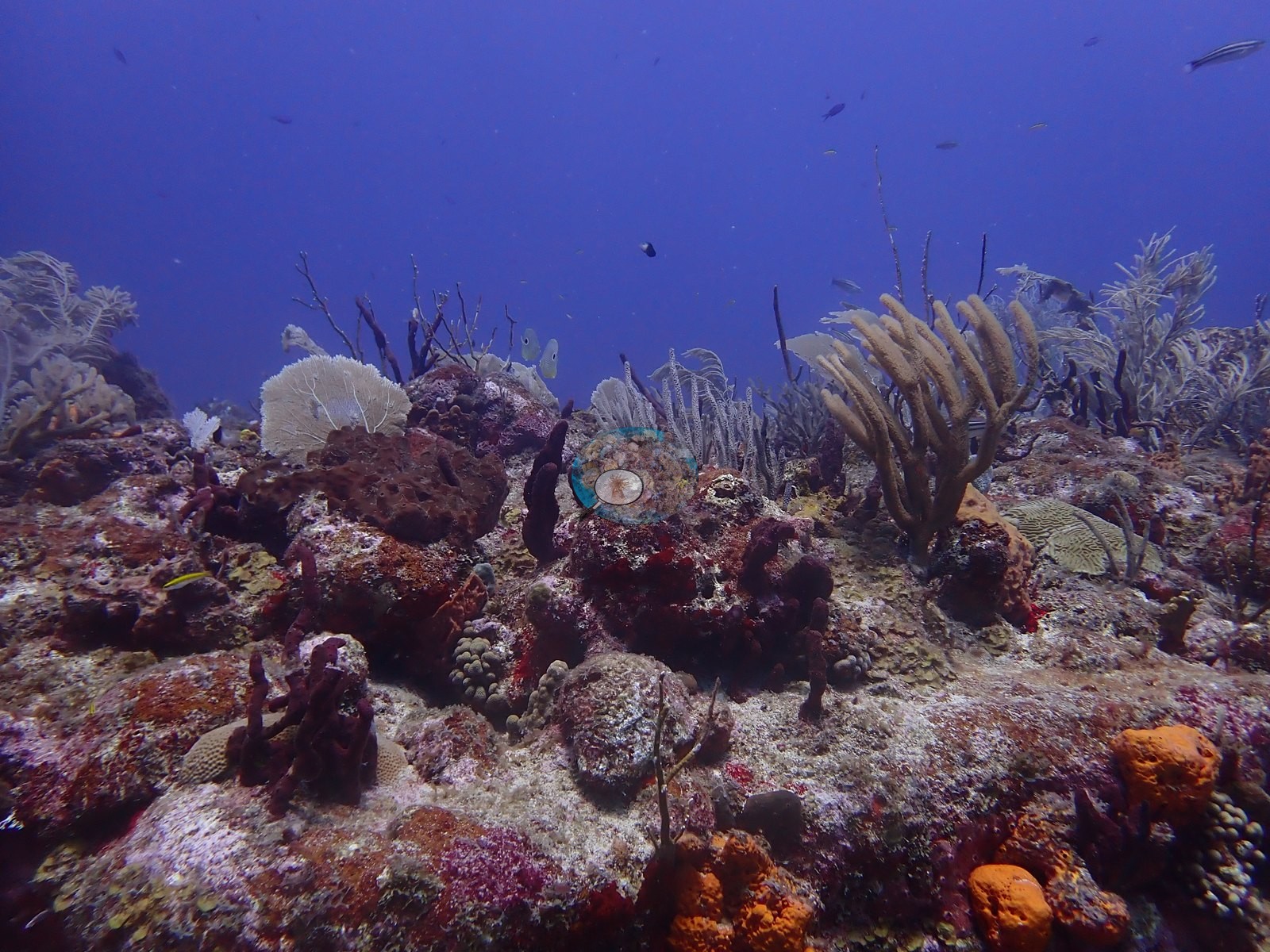
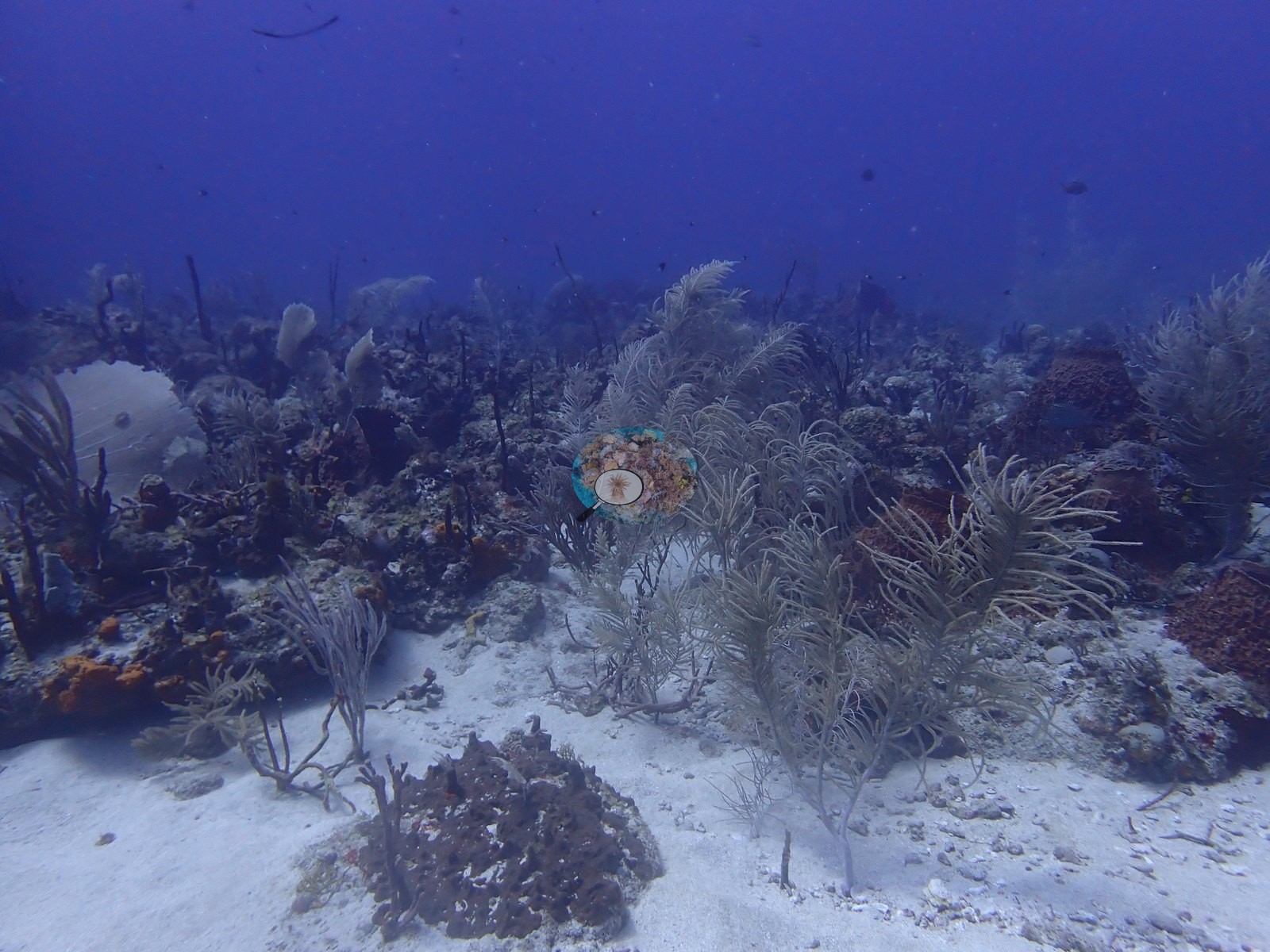
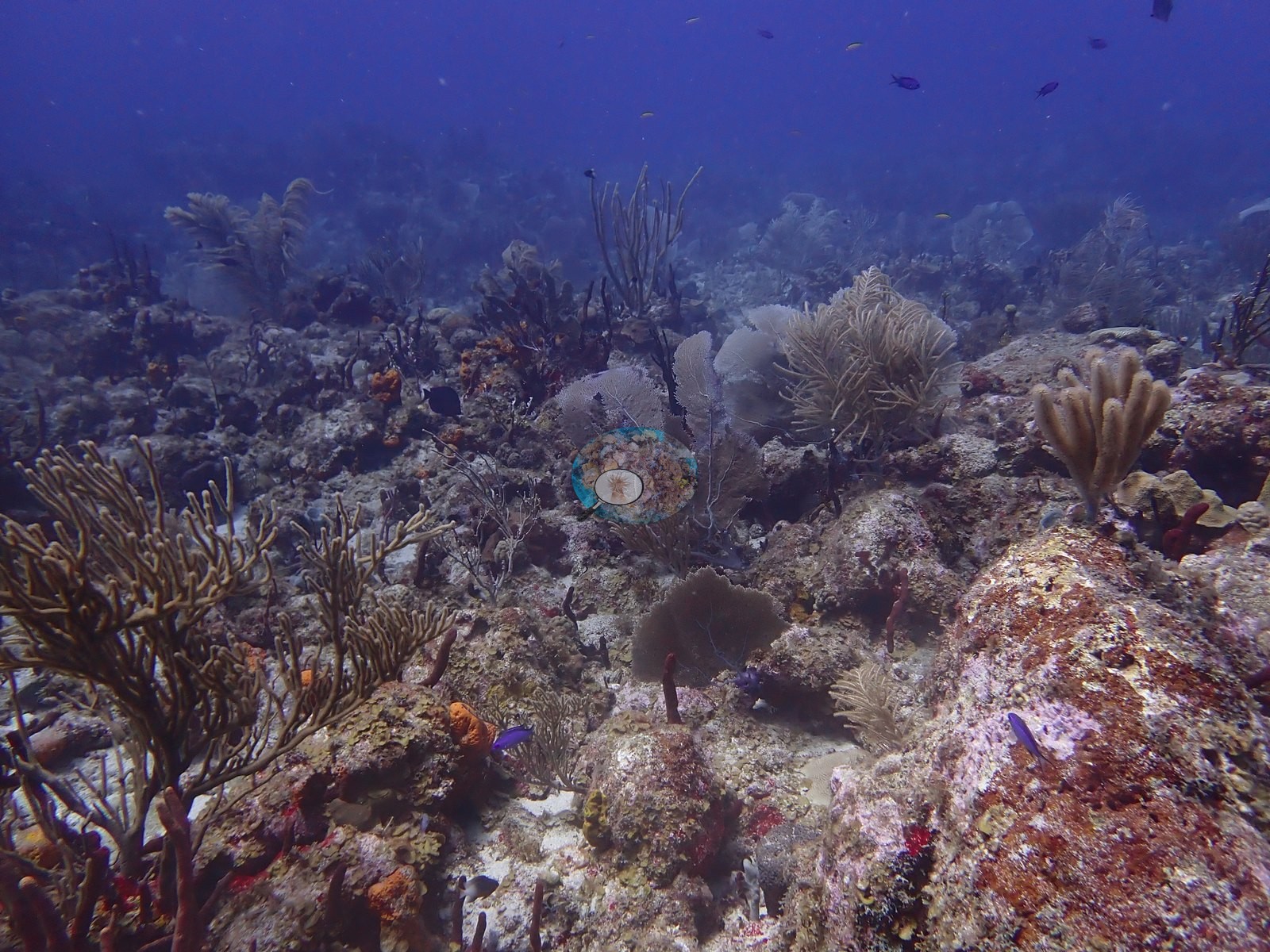
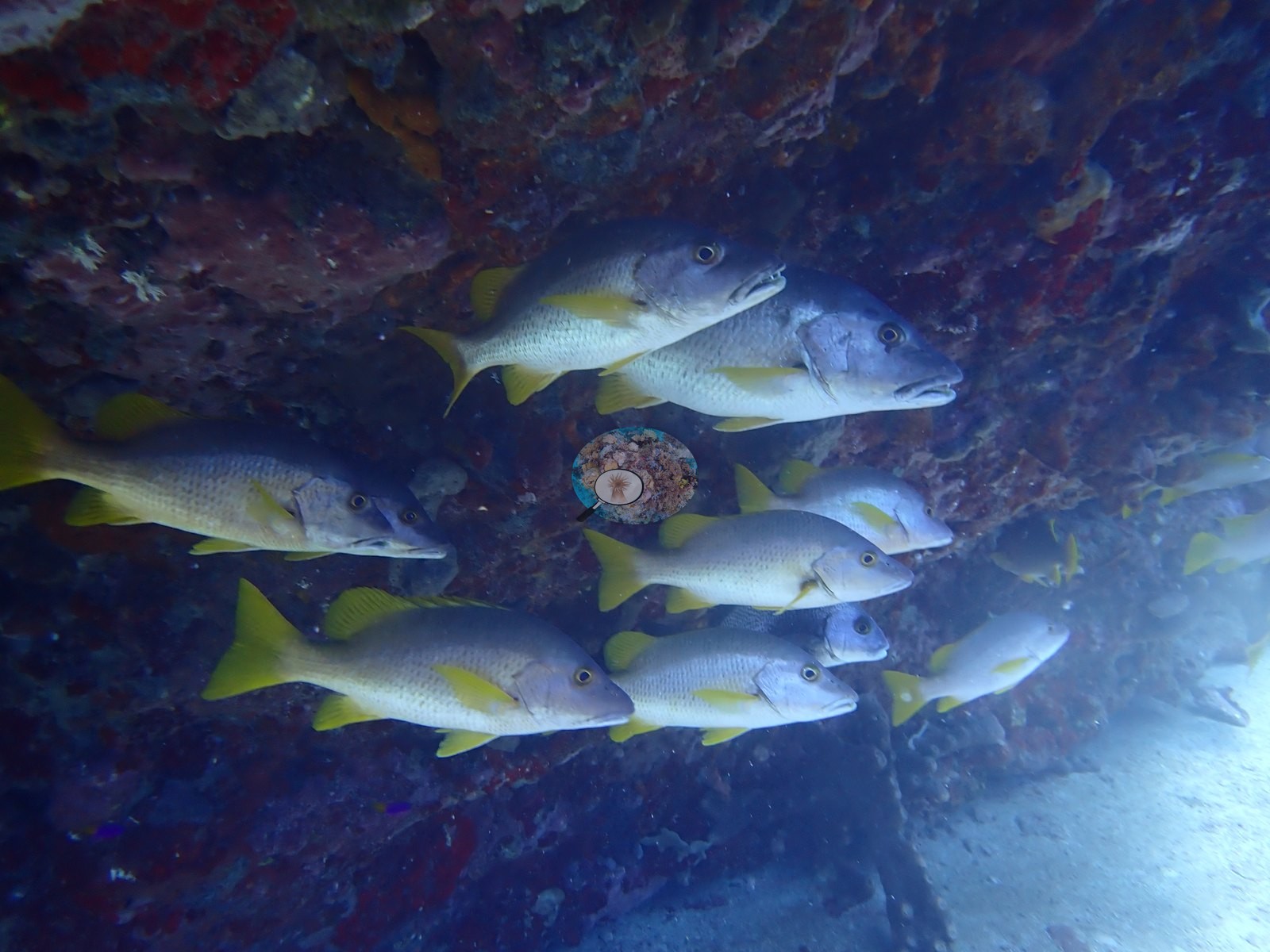
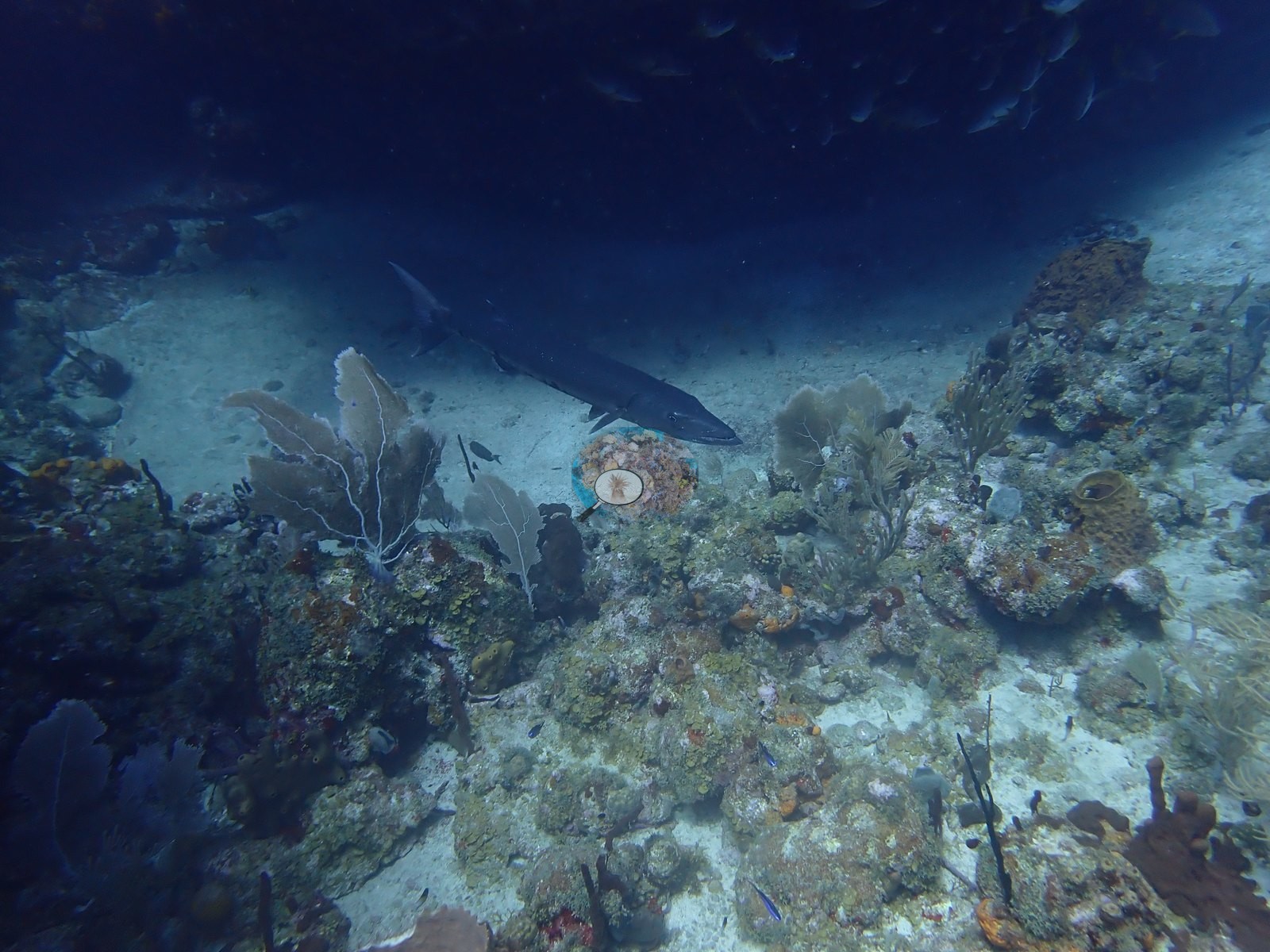
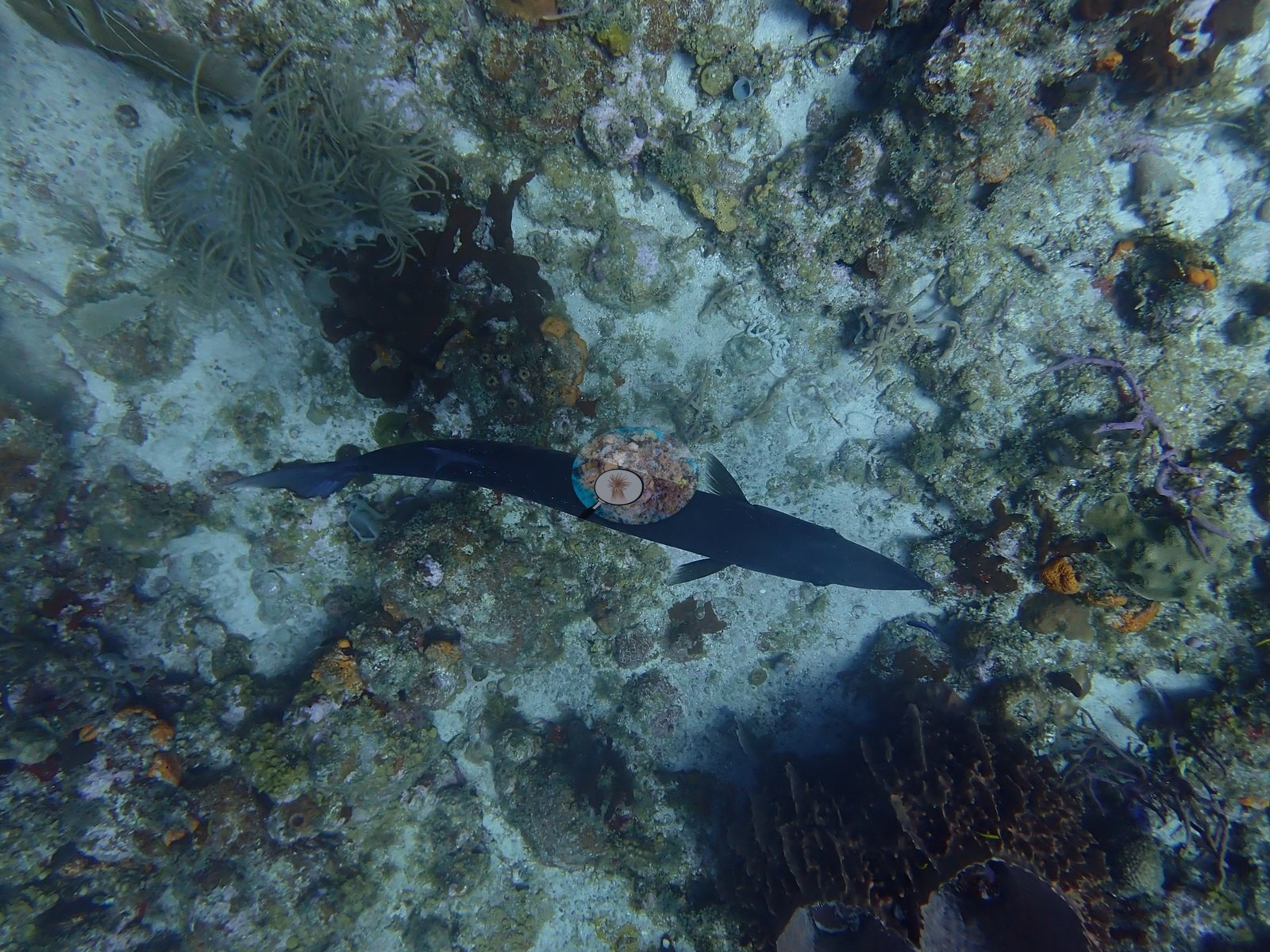
Leeward Caribbean Islands (NOAA CRW virtual station) · Eastern Caribbean ecoregion mean=13.1°C-heating weeksLow, gorgonian-carpeted pavement stepping down to a 1.5-2 m undercut ledge (the "Hangover"), where a great barracuda rests and snapper school beneath the overhang. Sea fans and giant barrel sponges dominate, while stony corals are small scattered brain corals, one of which shows a band of fresh tissue loss worth follow-up.
Six independent survey stations shown with the program’s logo — click one to see how far it is from this site.
Three other CRD dive sites within 5 km shown in orange — click a marker to open its page.
47 of these 50 photographs are shown beside the text that discusses them under "Site description" below.
Site description
General benthic features
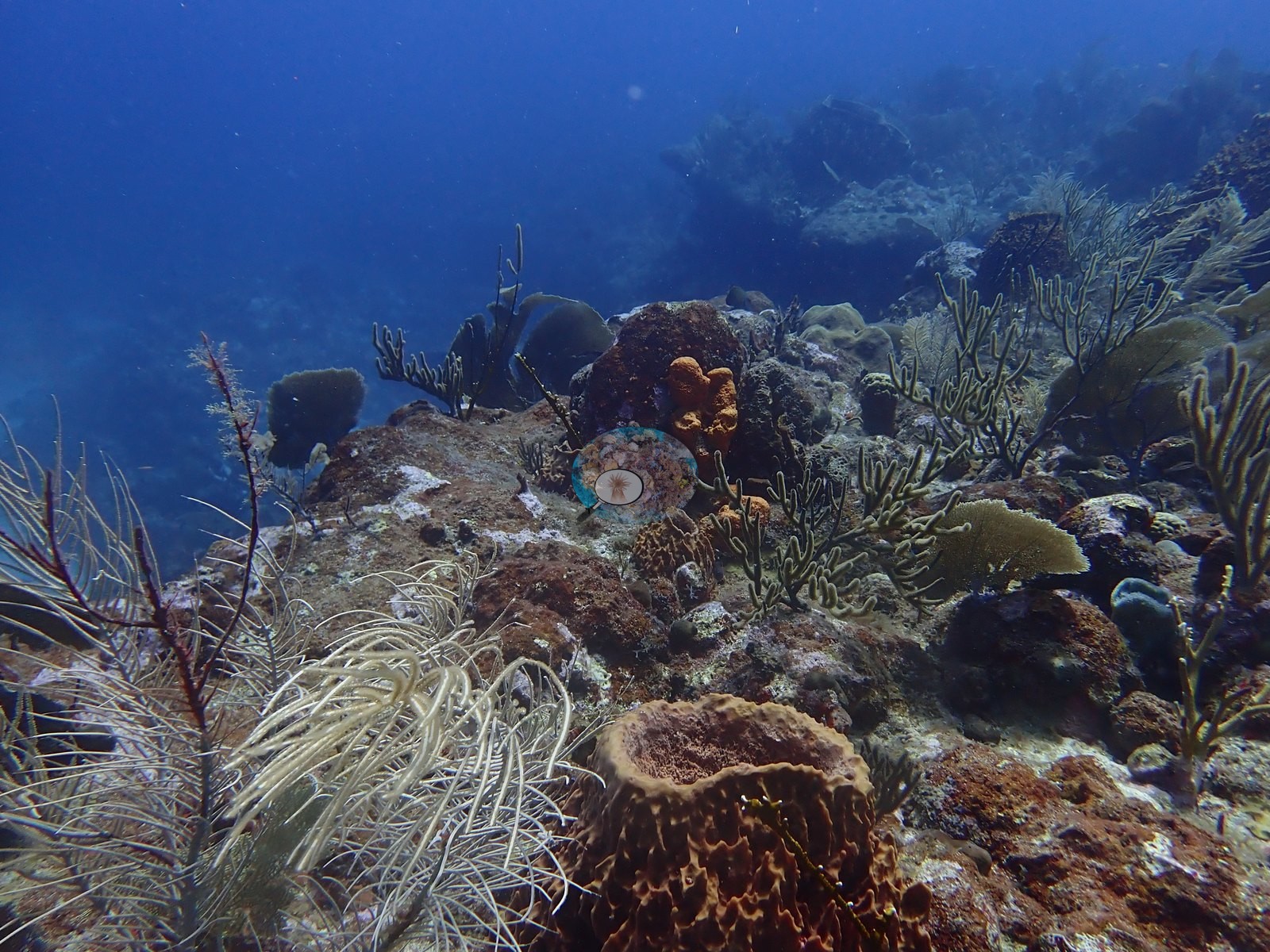
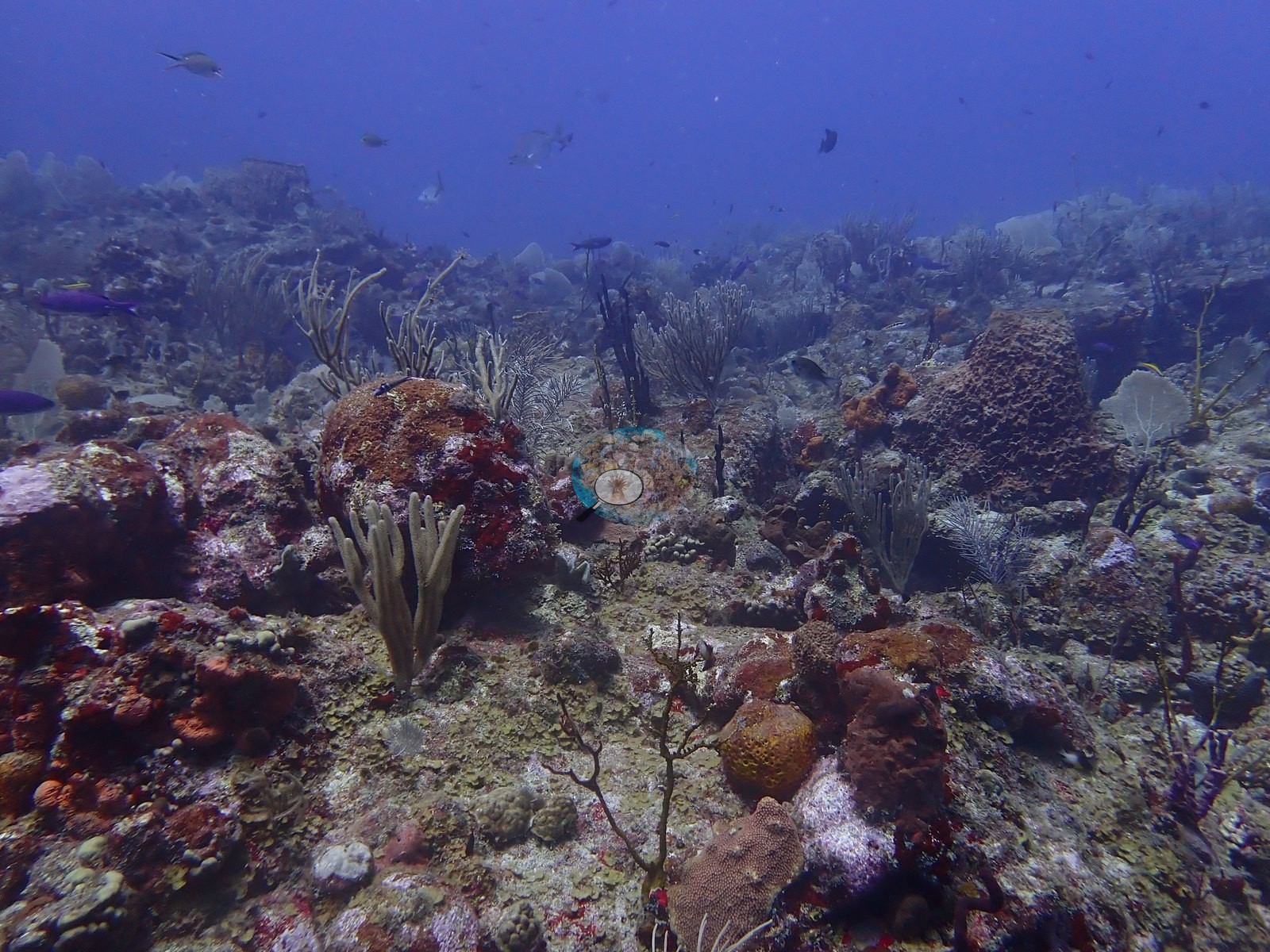
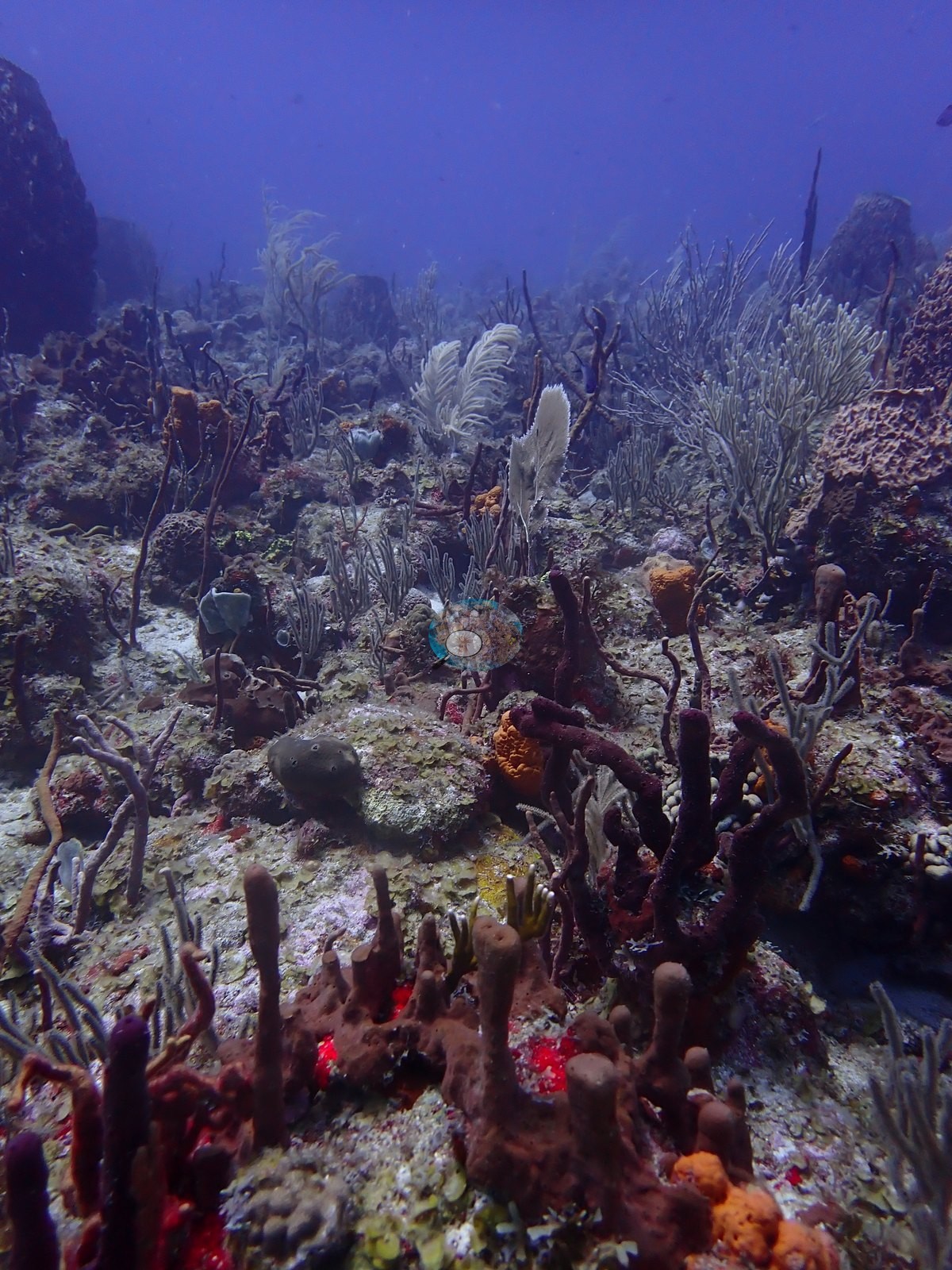
Across all 95 unedited frames the habitat is a bioeroded coralline-algal pavement of rounded mounds cut by white sand grooves (3, 18, 79, 80), stepping down at one point into a distinct vertical ledge 1.5-2 m high with a sand-floored undercut beneath it - the "Hangover" (44, 46-47, 59, 76, 89) (e.g., Image 2, Image 12, Image 16, Image 20, Image 22, Image 45).
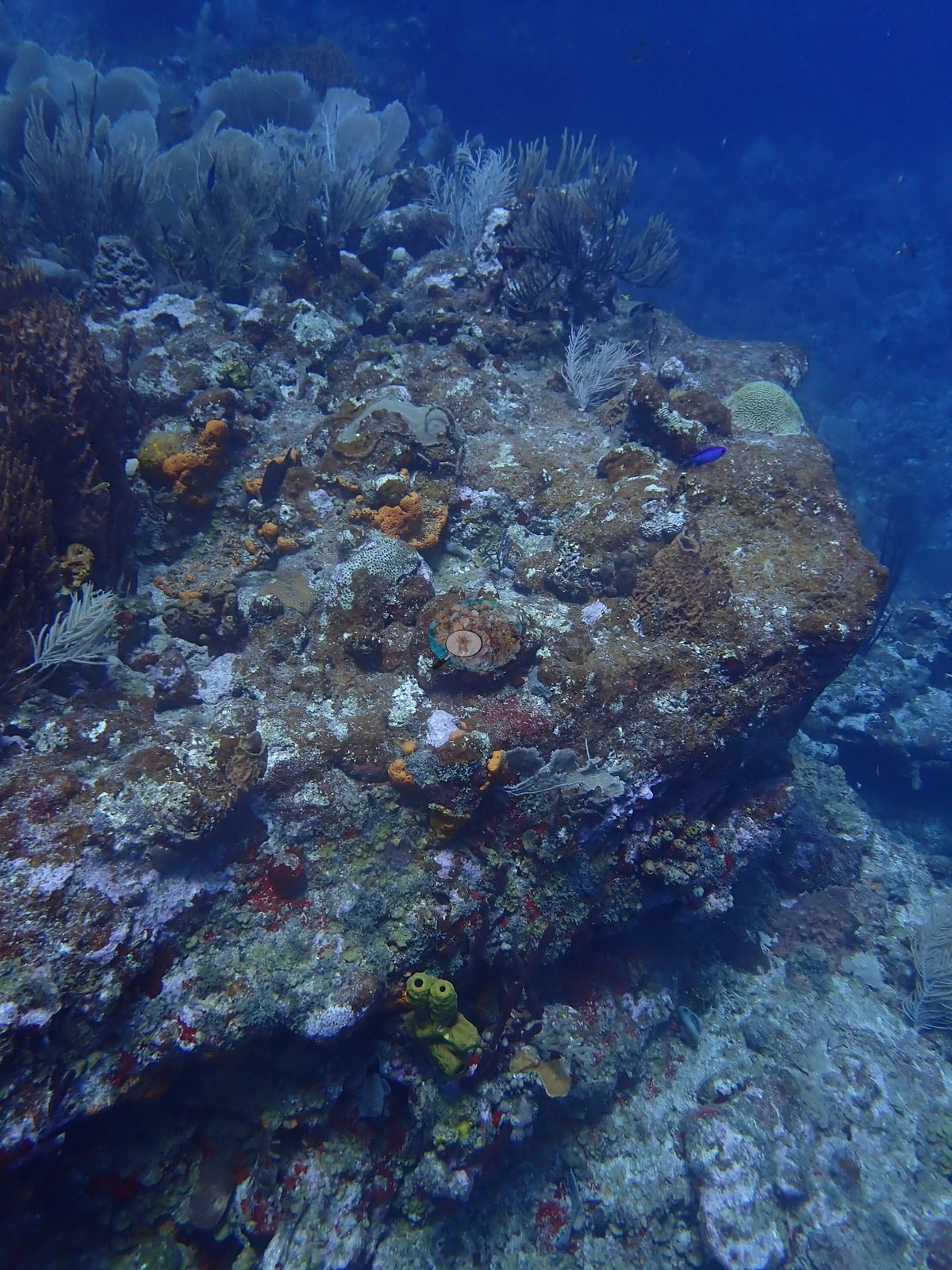
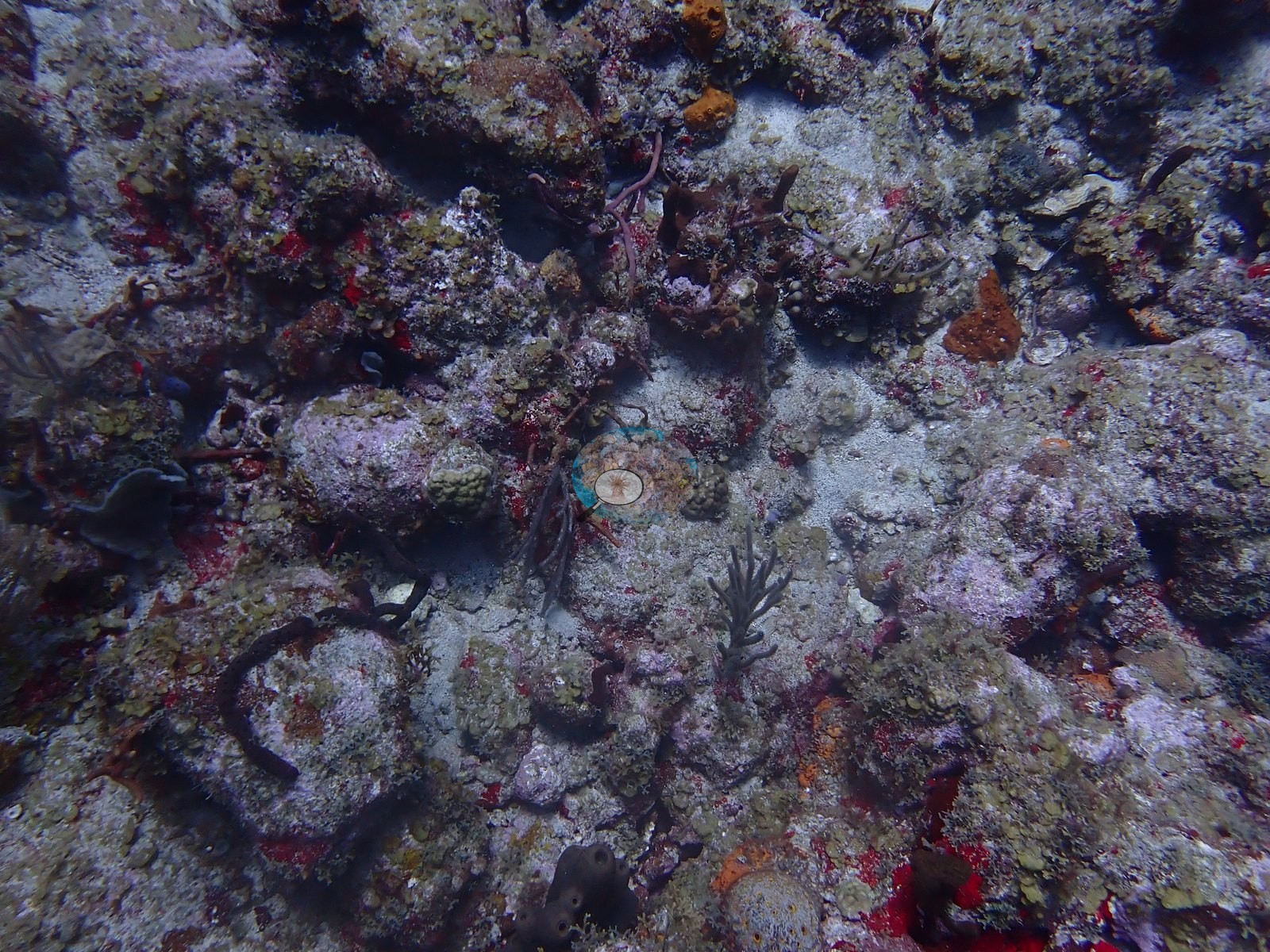
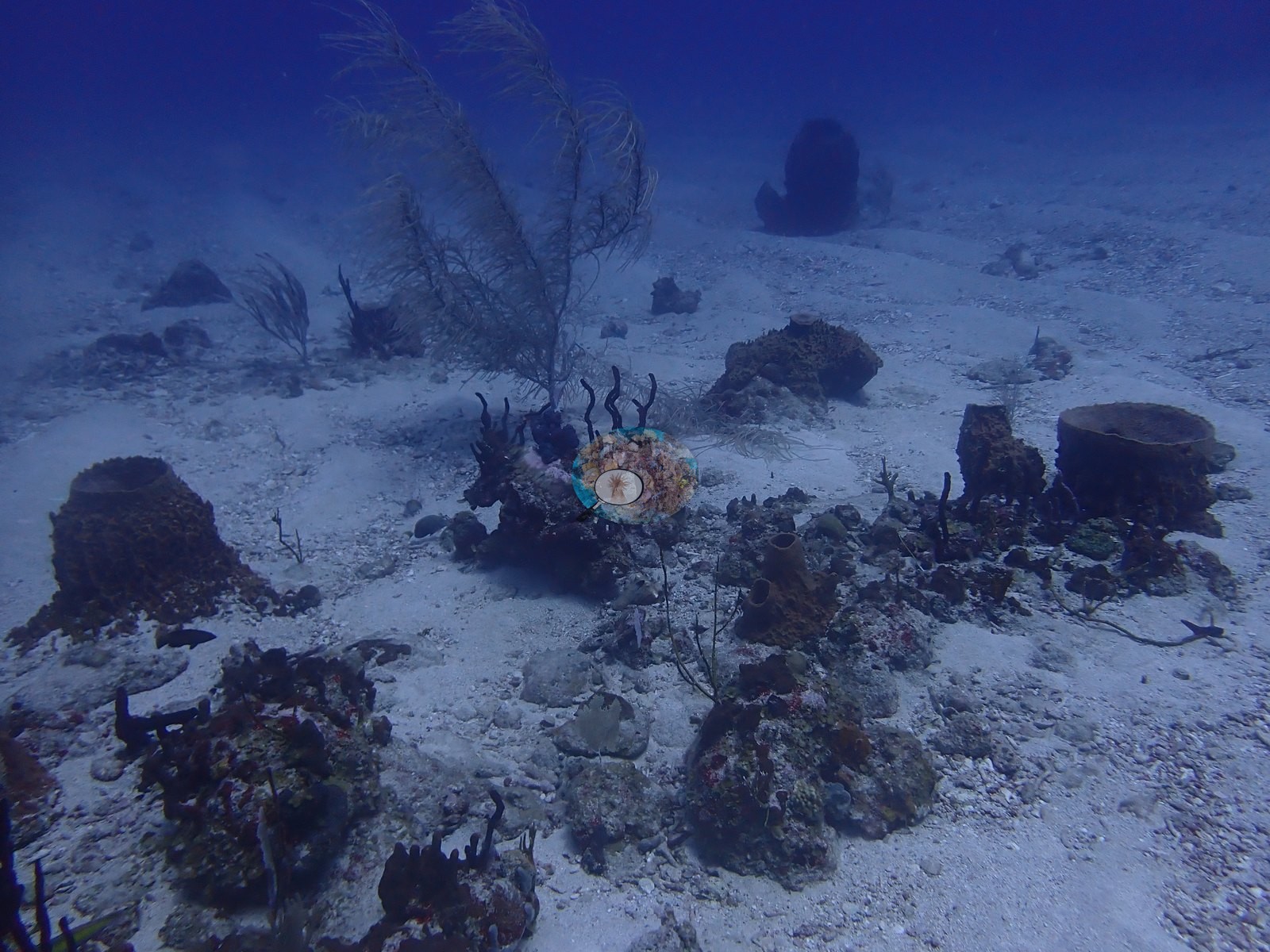
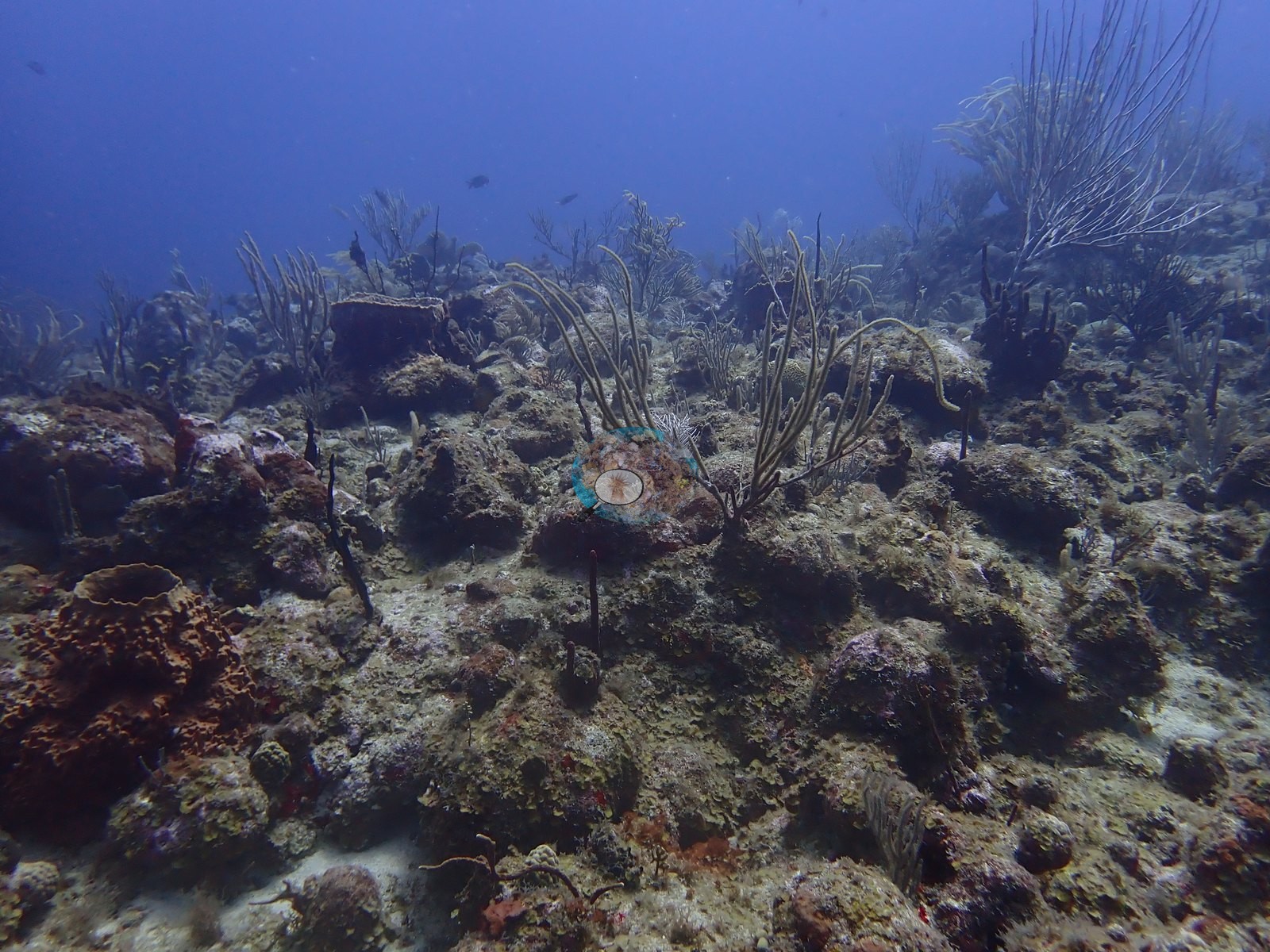
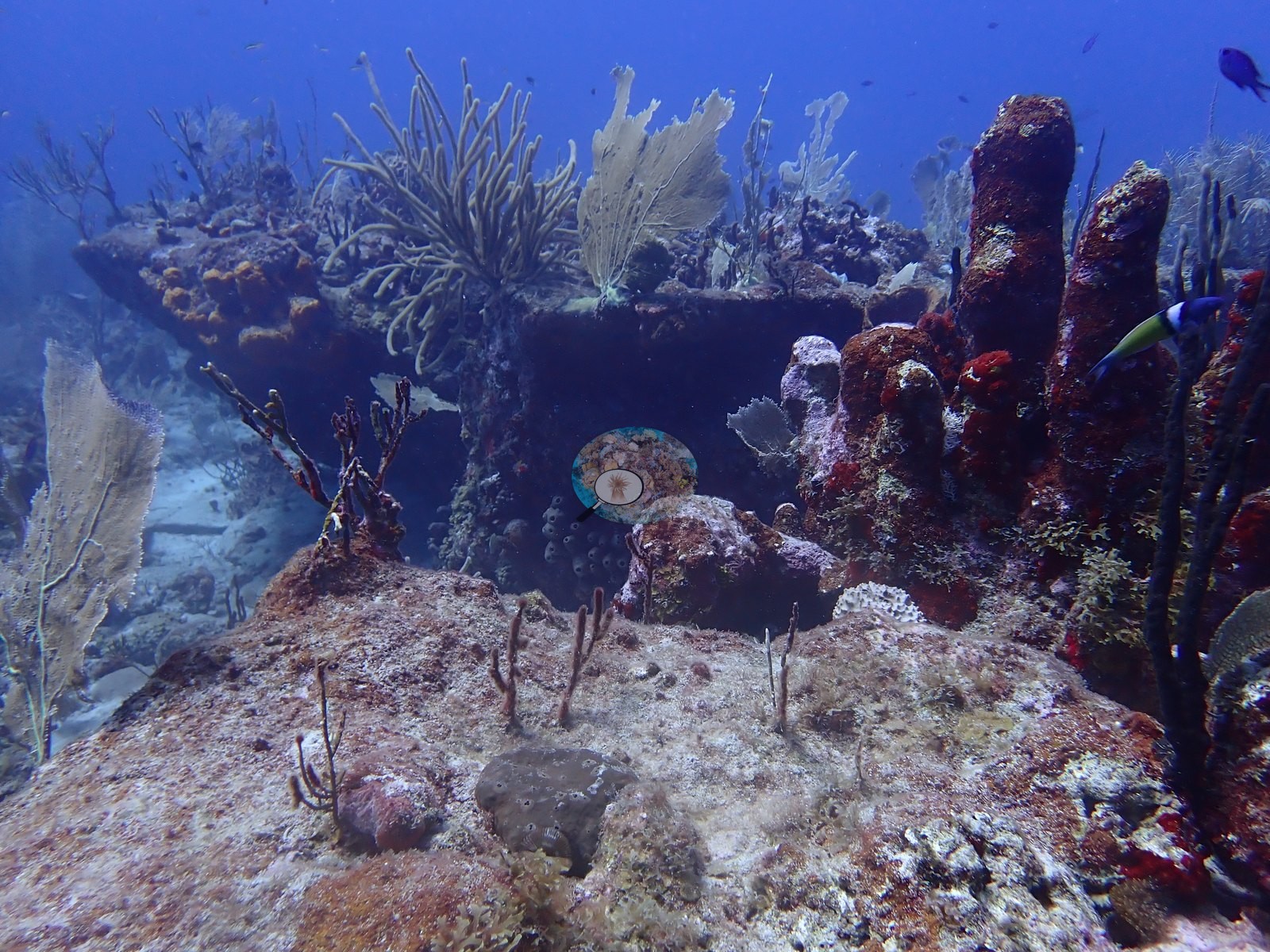
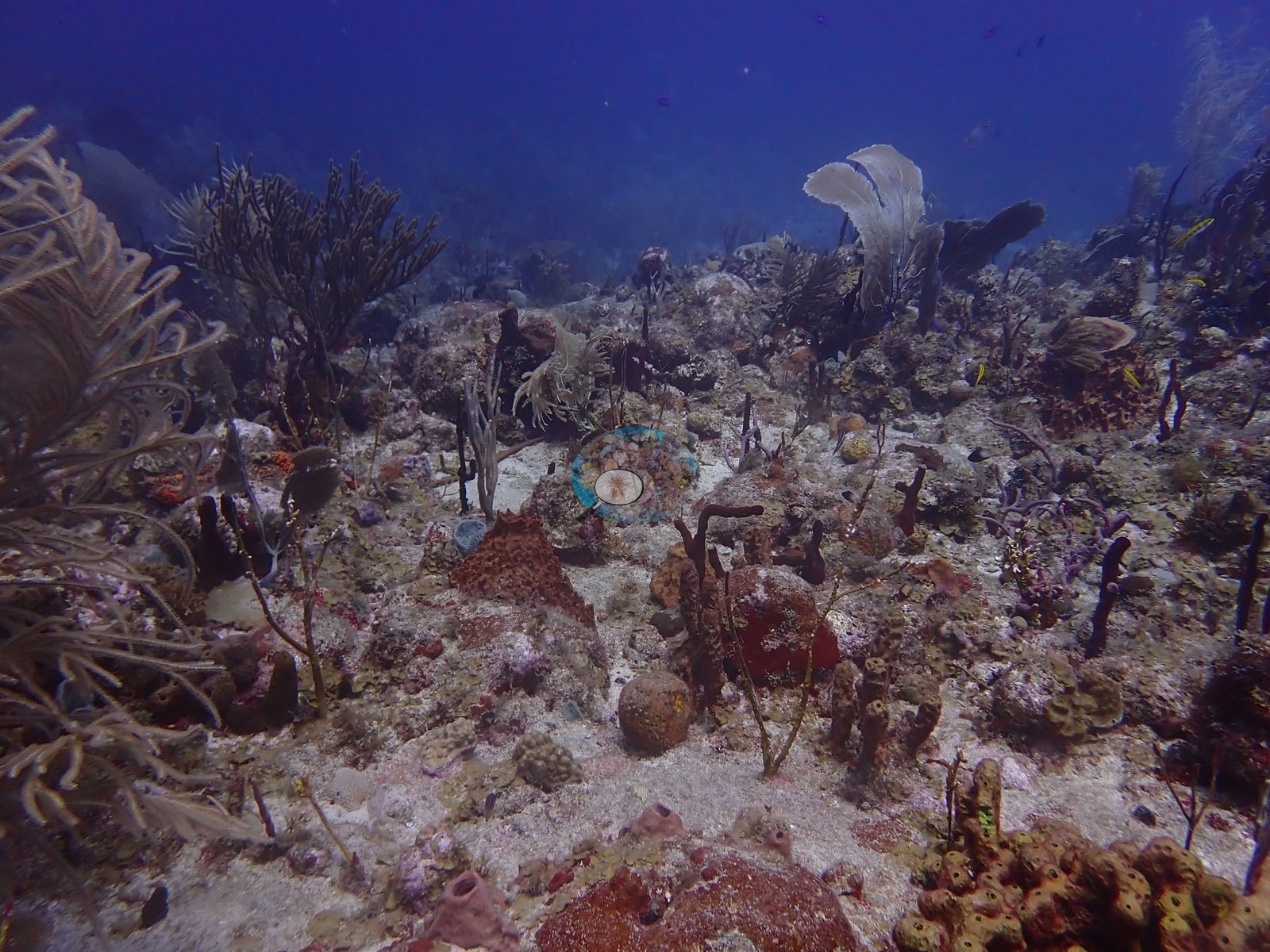
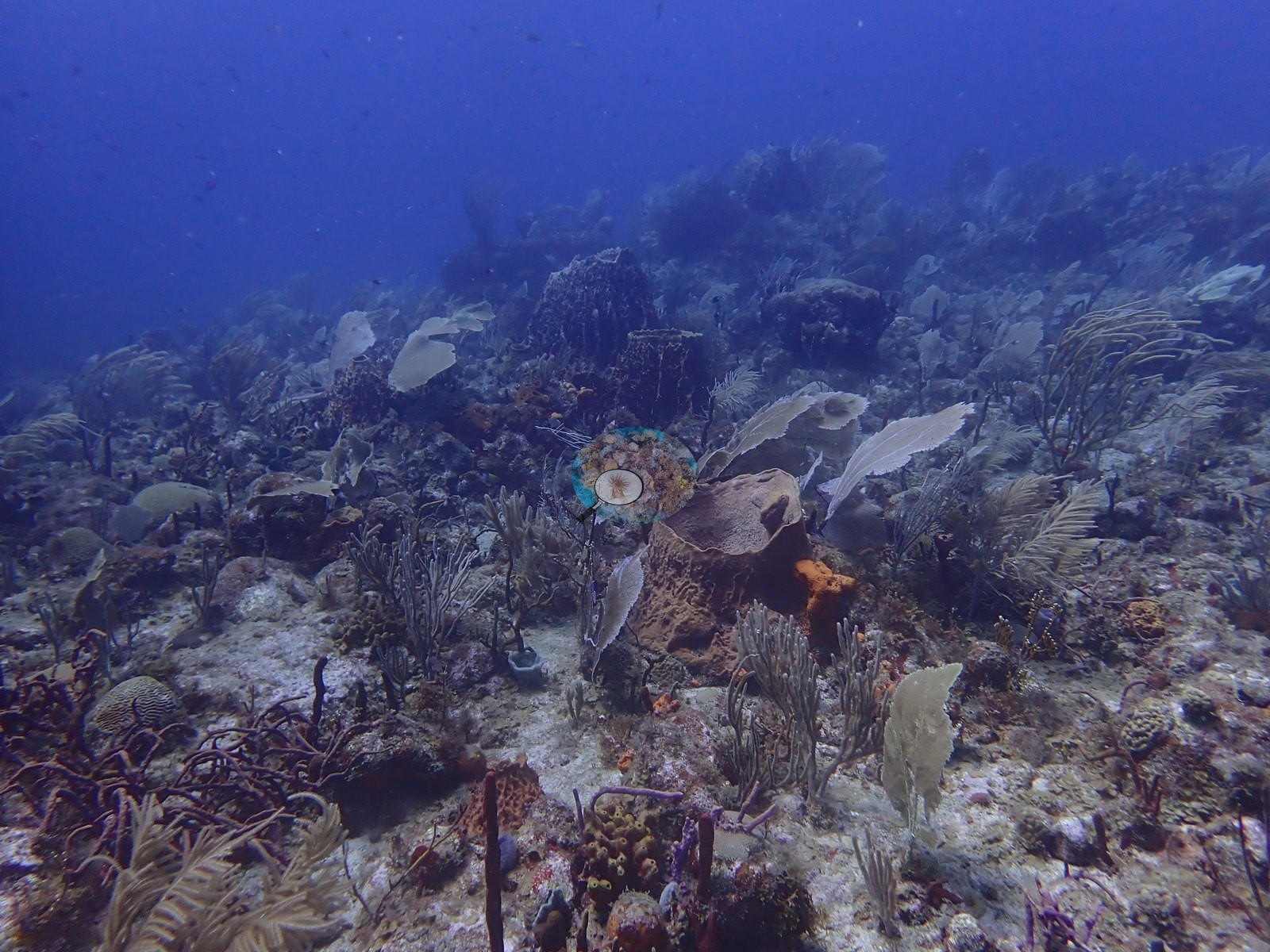
Gorgonians, not corals, build the visual structure: sea fans Gorgonia ventalina in dense stands (38, 40, 63, 77, 87), feathery sea plumes Antillogorgia, thick sea rods (Eunicea, Plexaurella, Pseudoplexaura), dark Plexaura-type rods, a black sea fan Iciligorgia (56-57), and whip-like wire coral (75) (e.g., Image 4, Image 7, Image 8, Image 9, Image 17, Image 19, Image 23, Image 24, Image 25, Image 26, Image 34, Image 43, Image 46, Image 48).
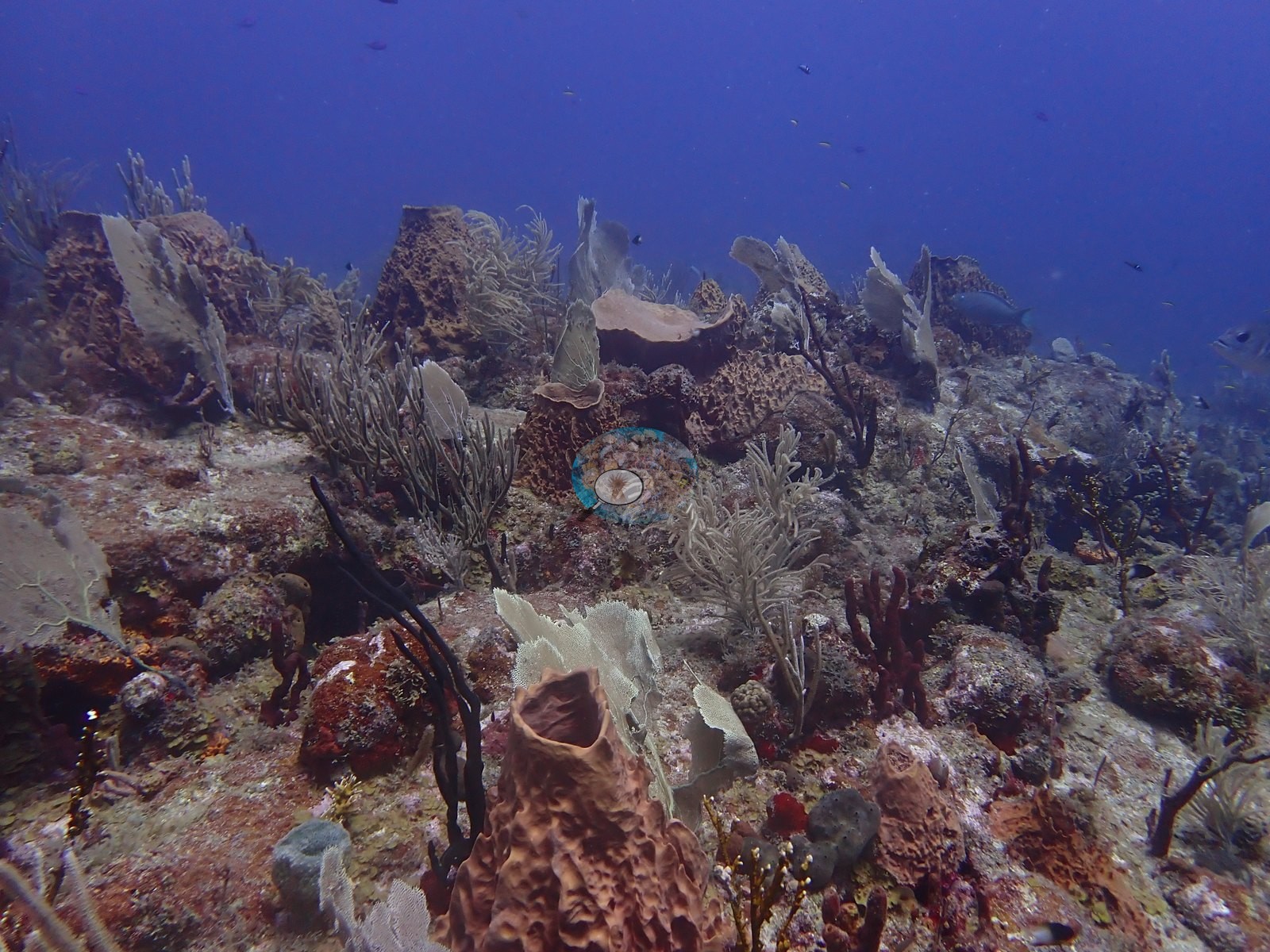
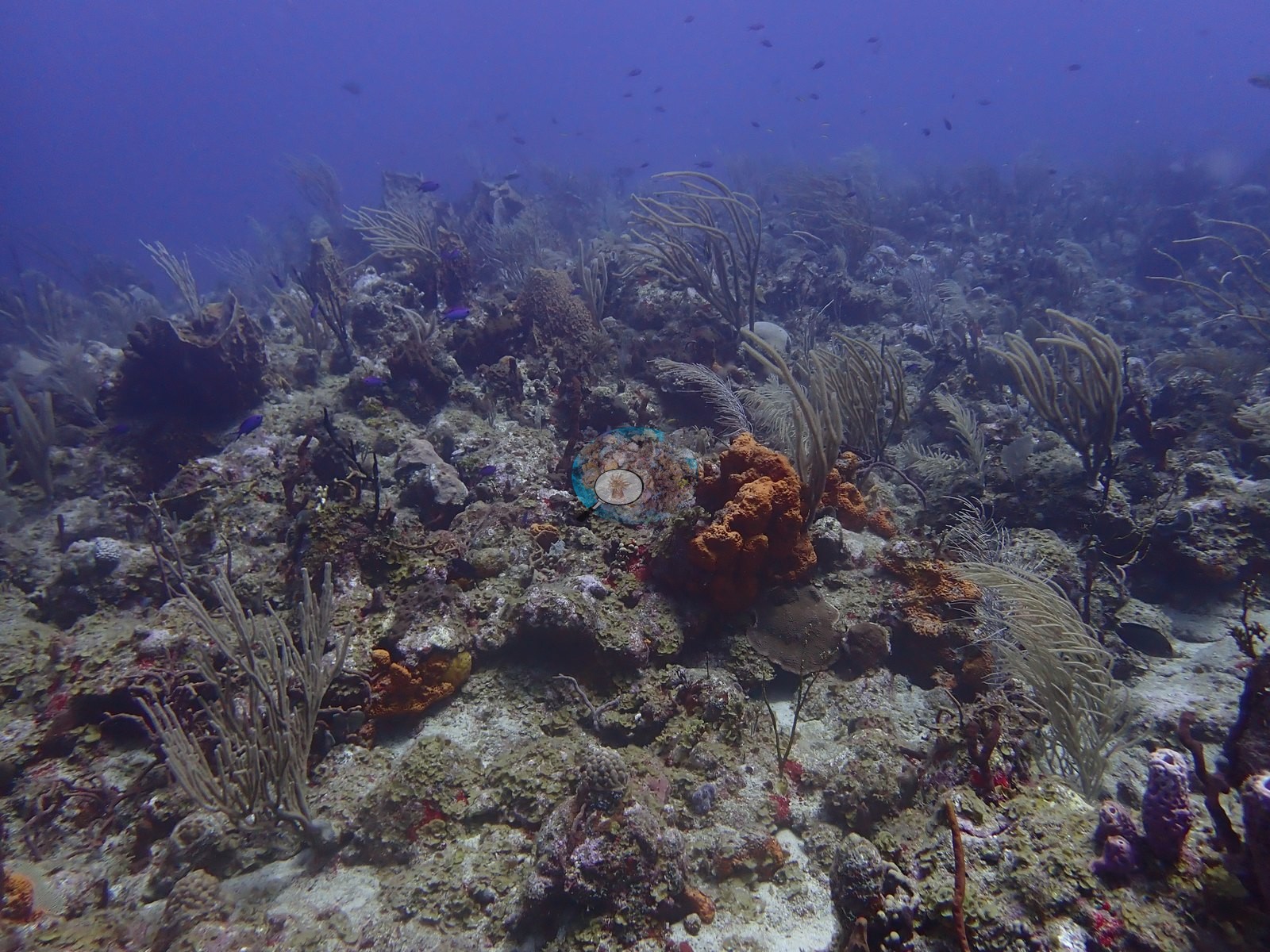
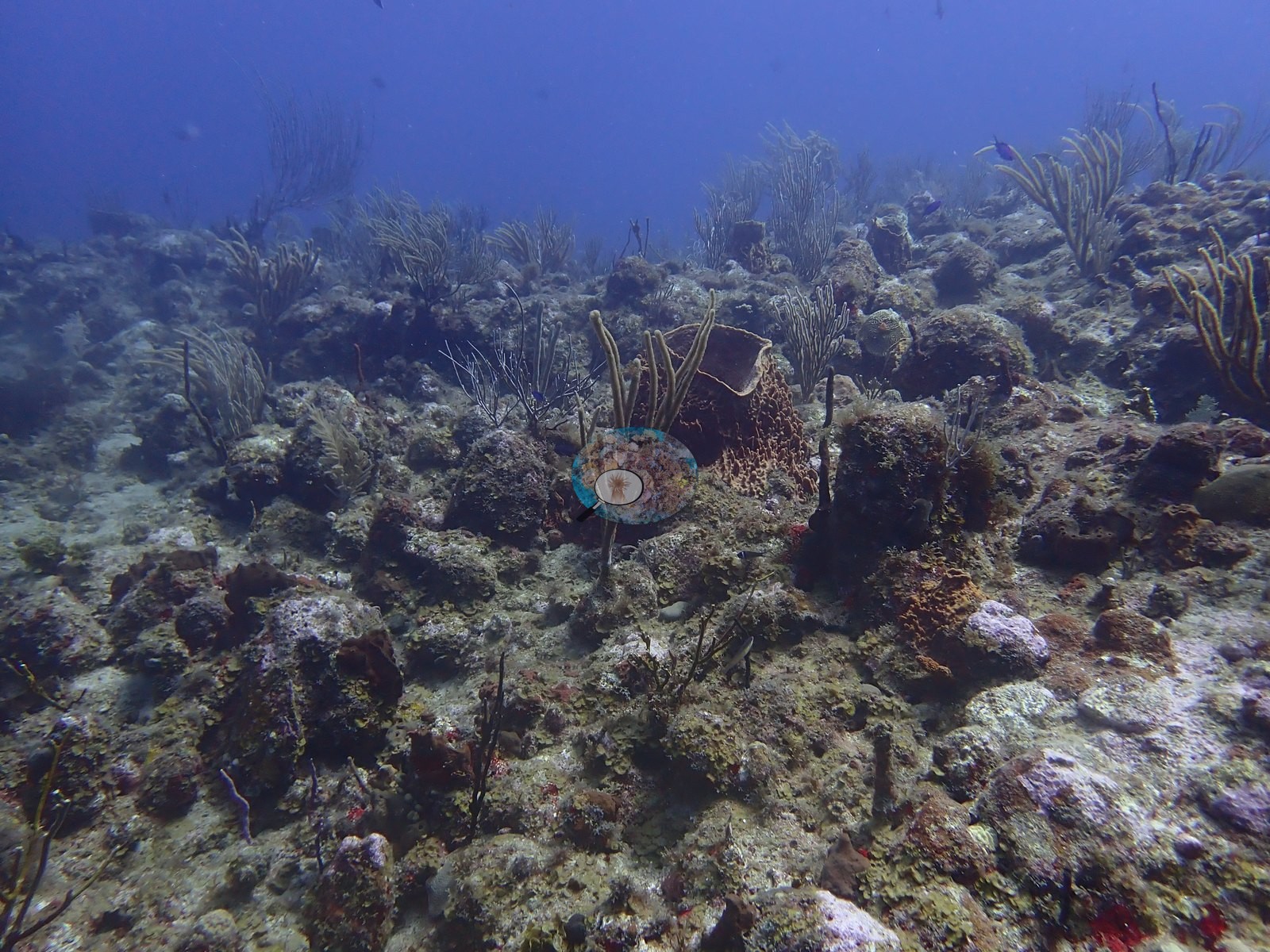
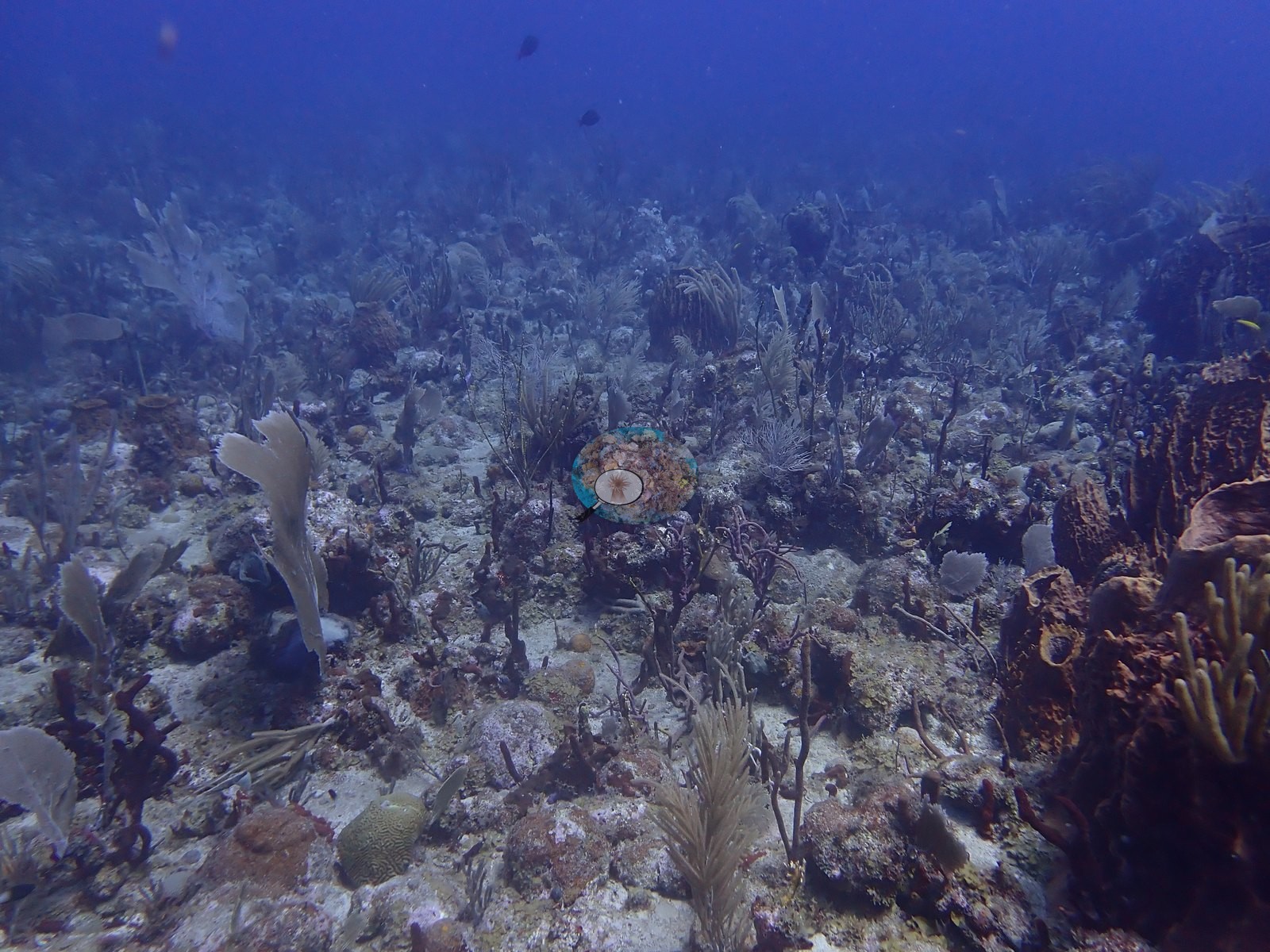
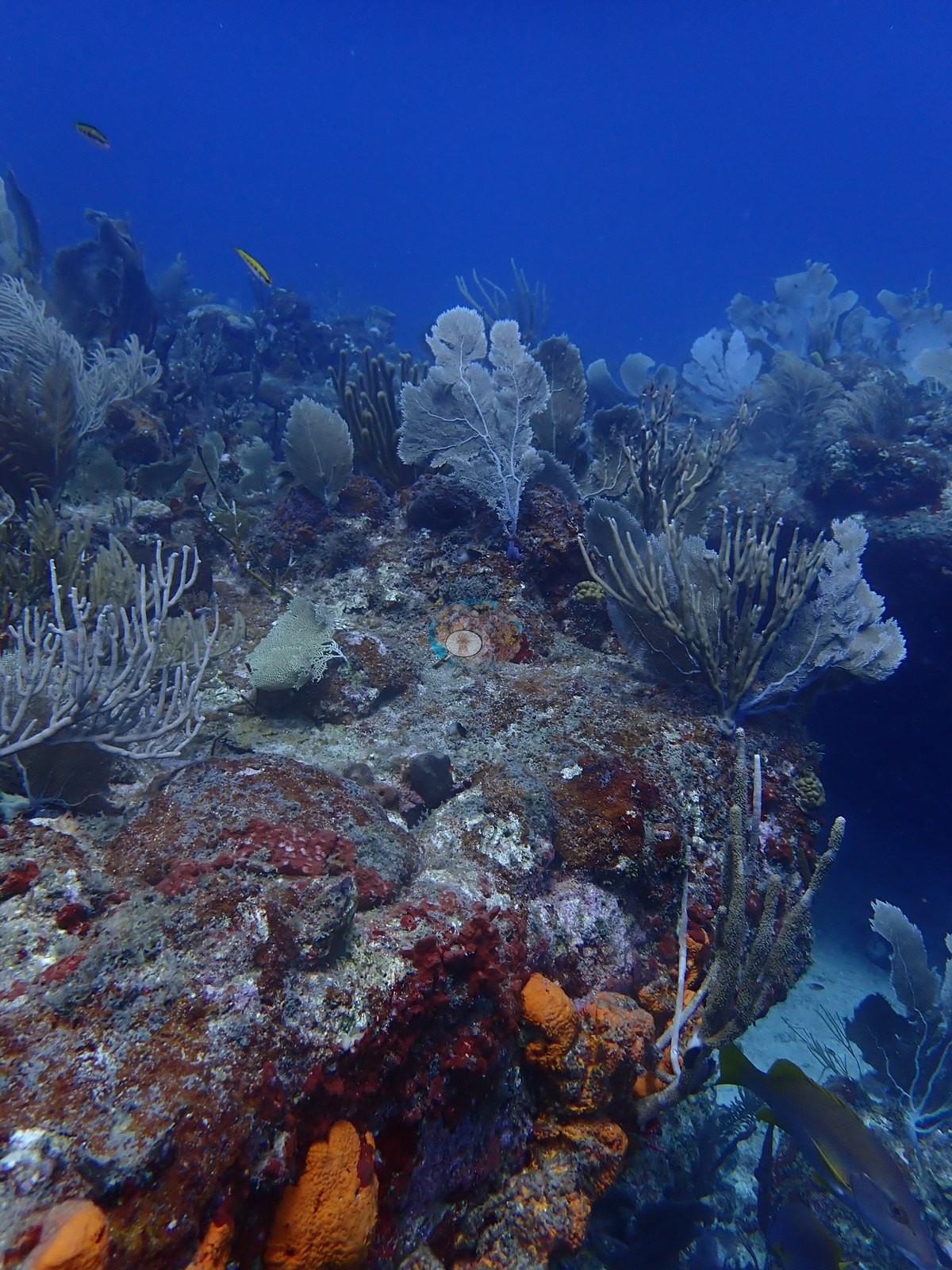
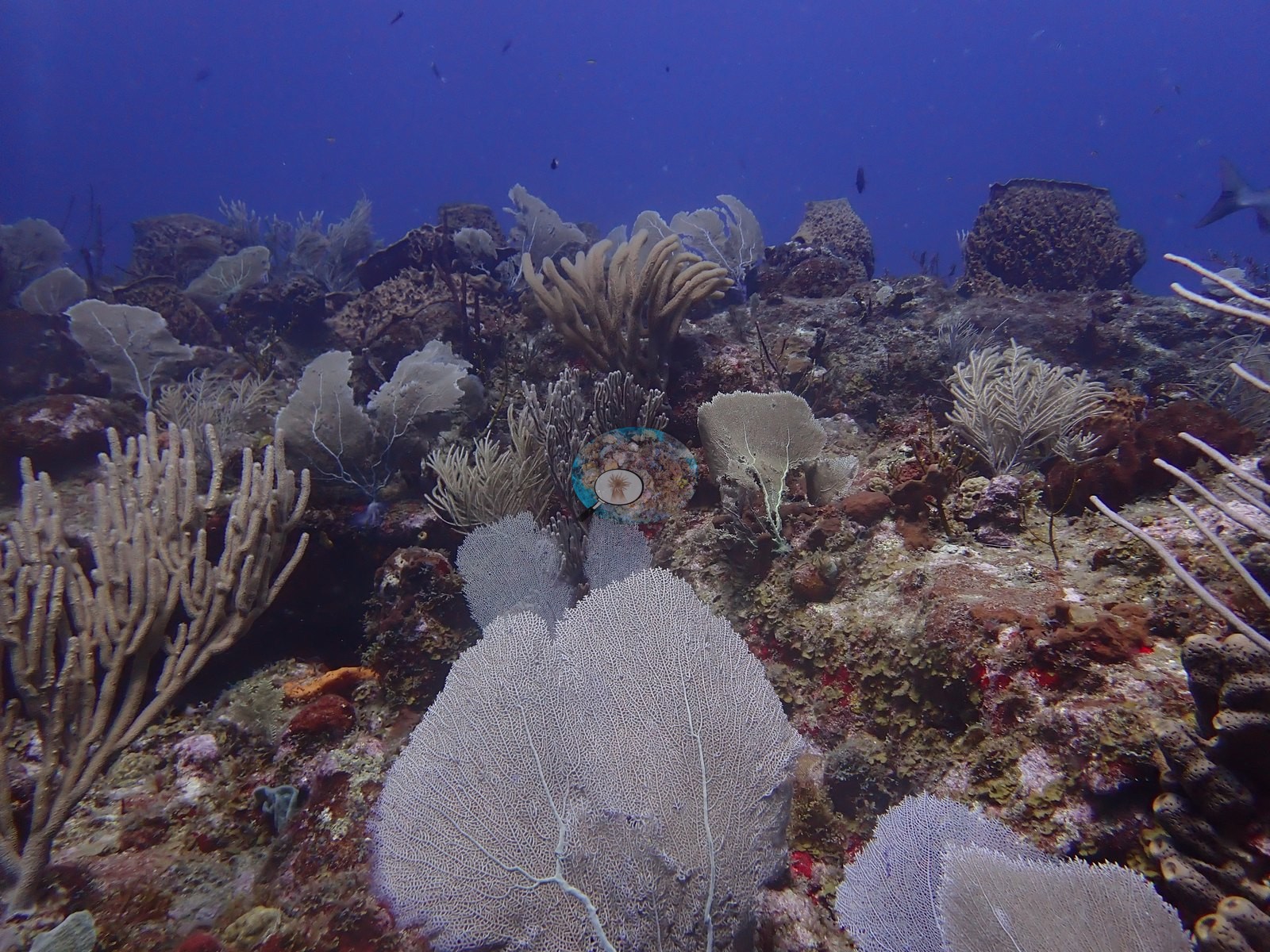
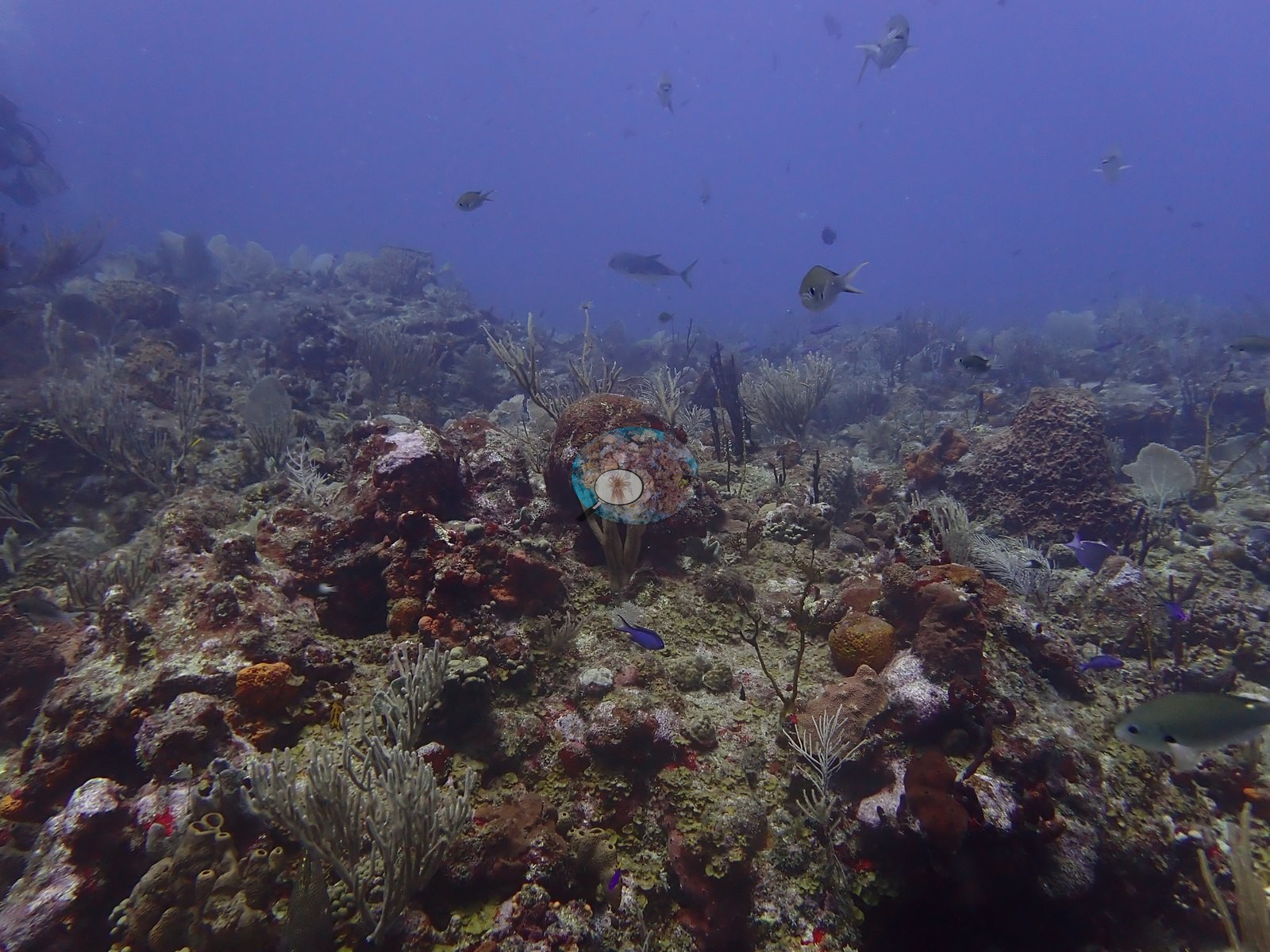
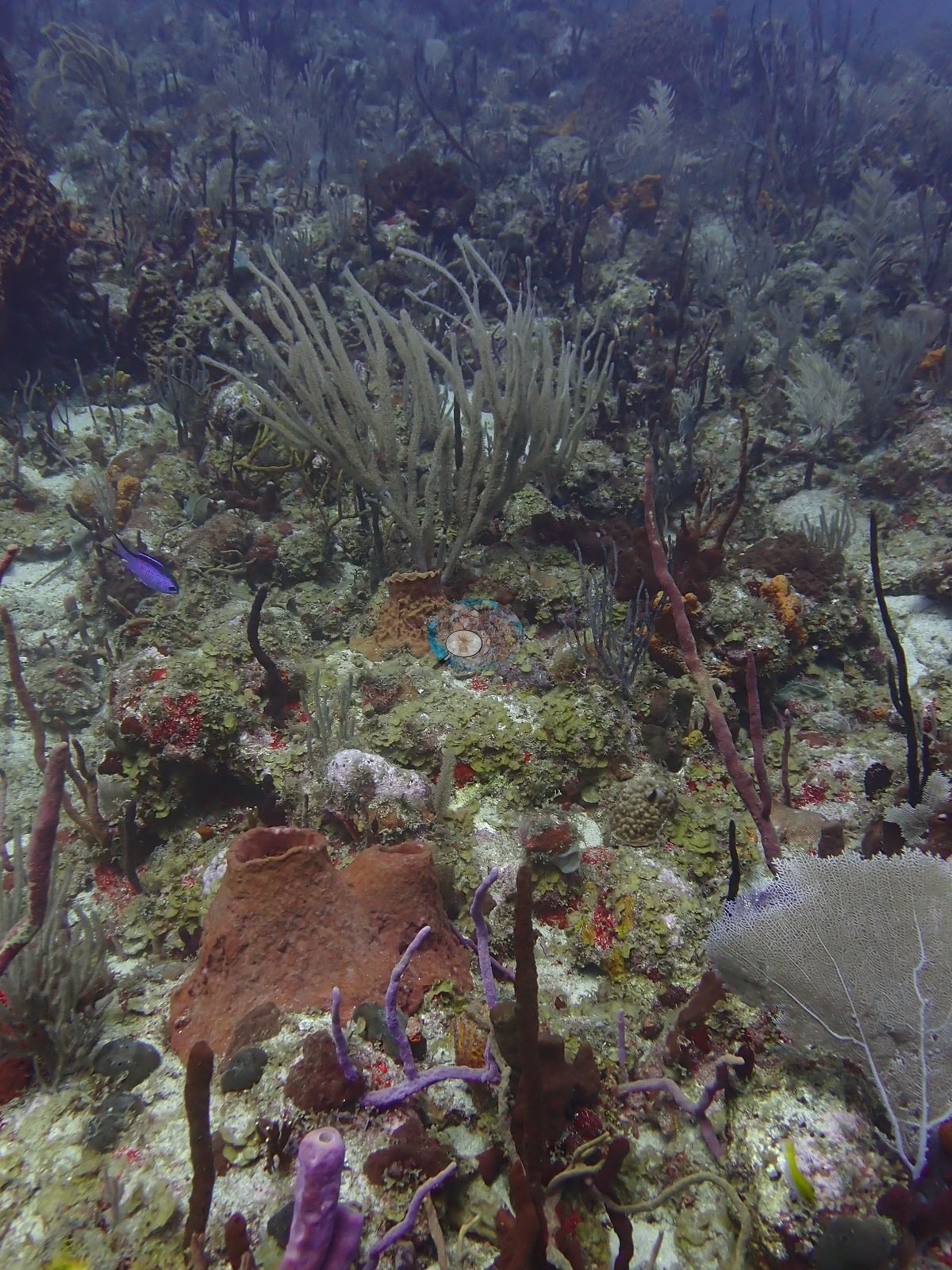
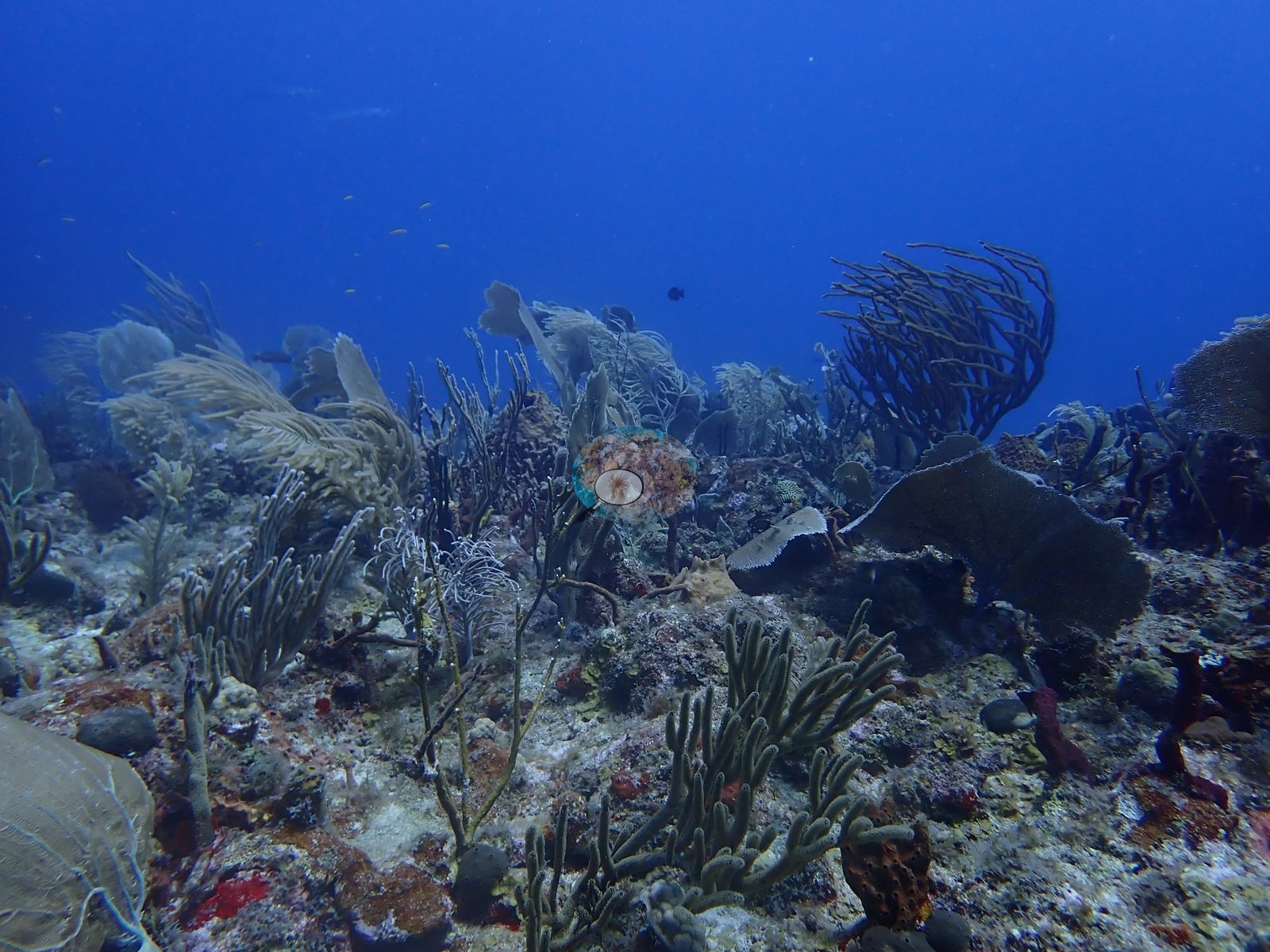
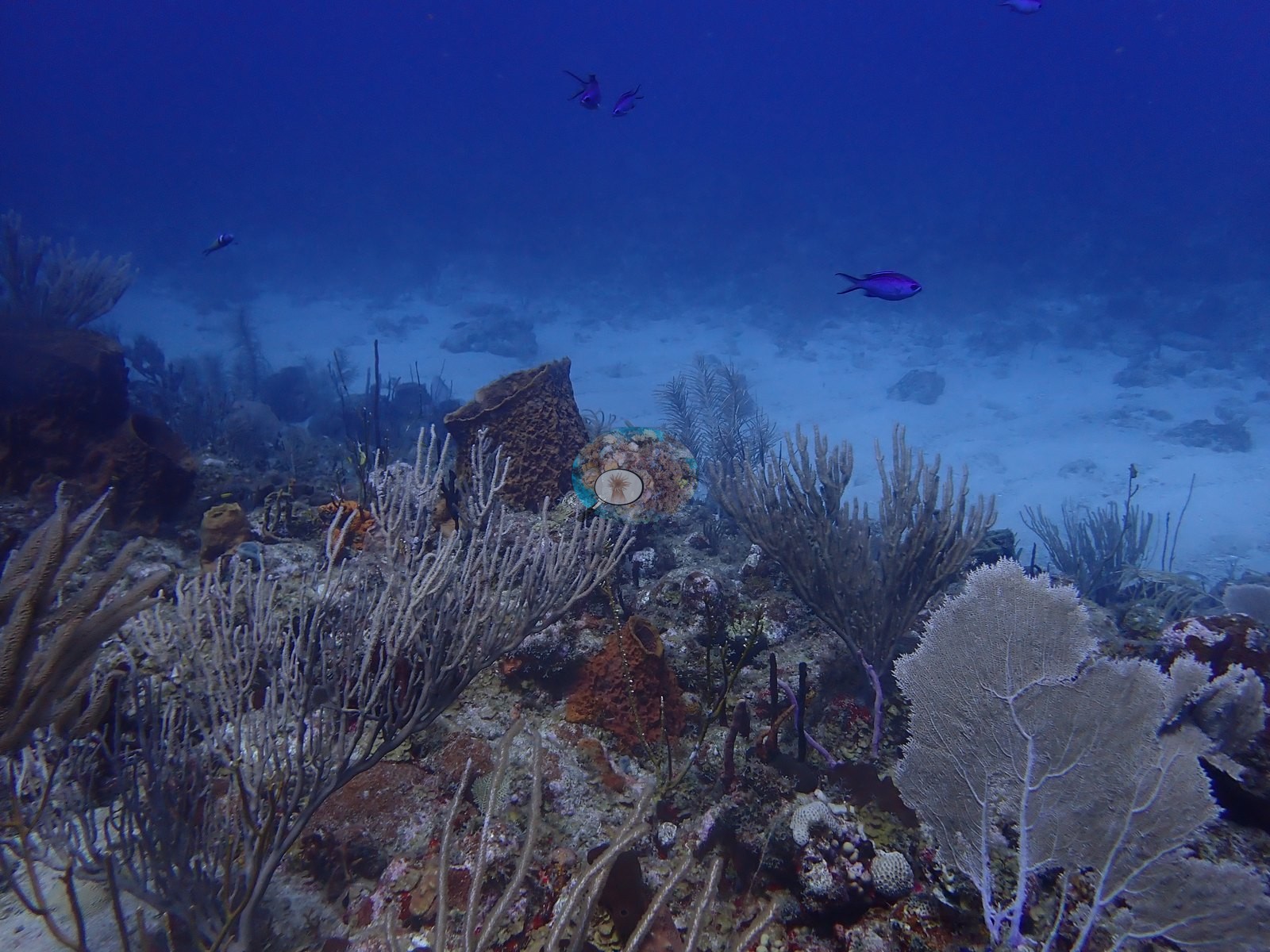
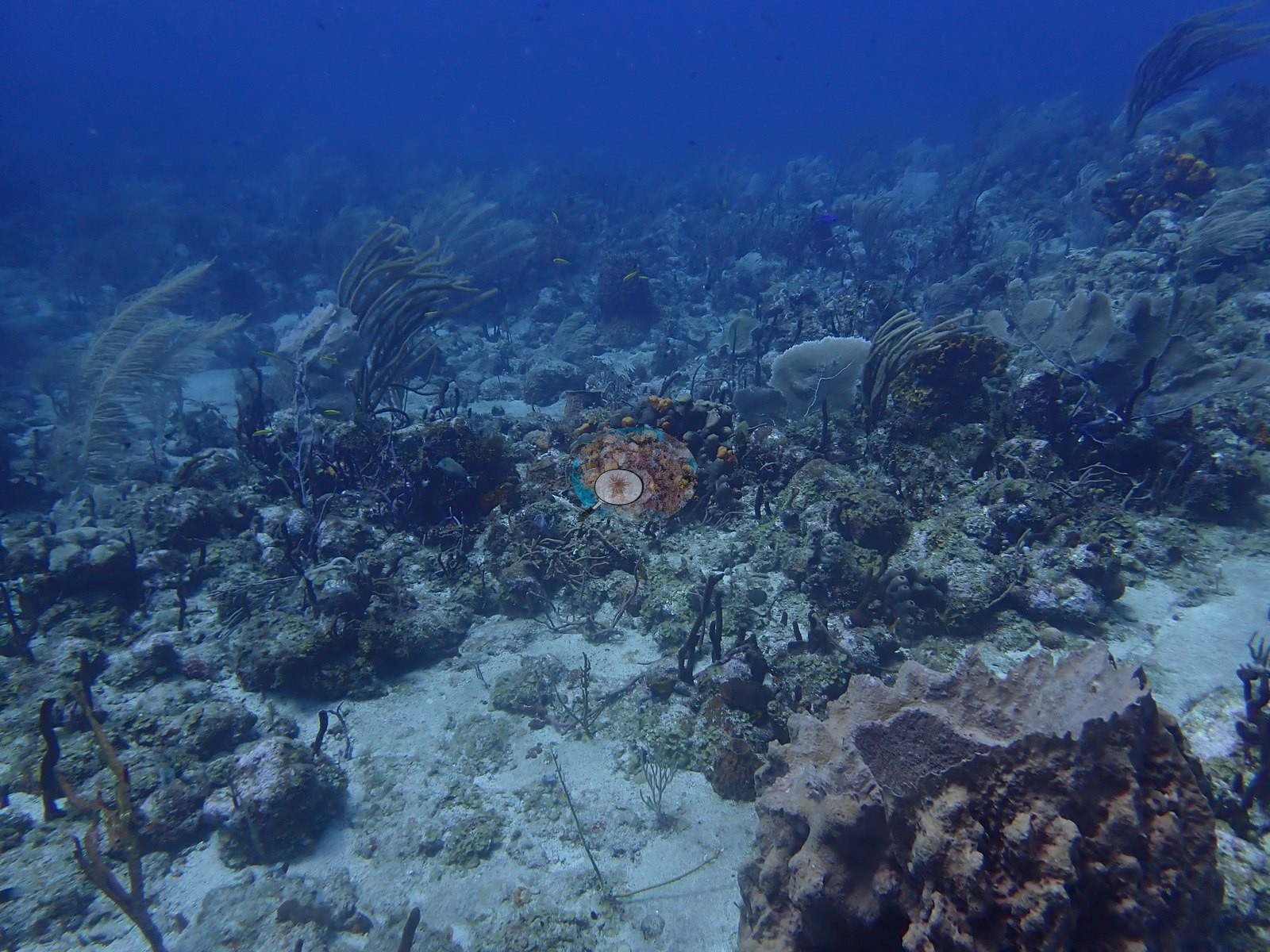
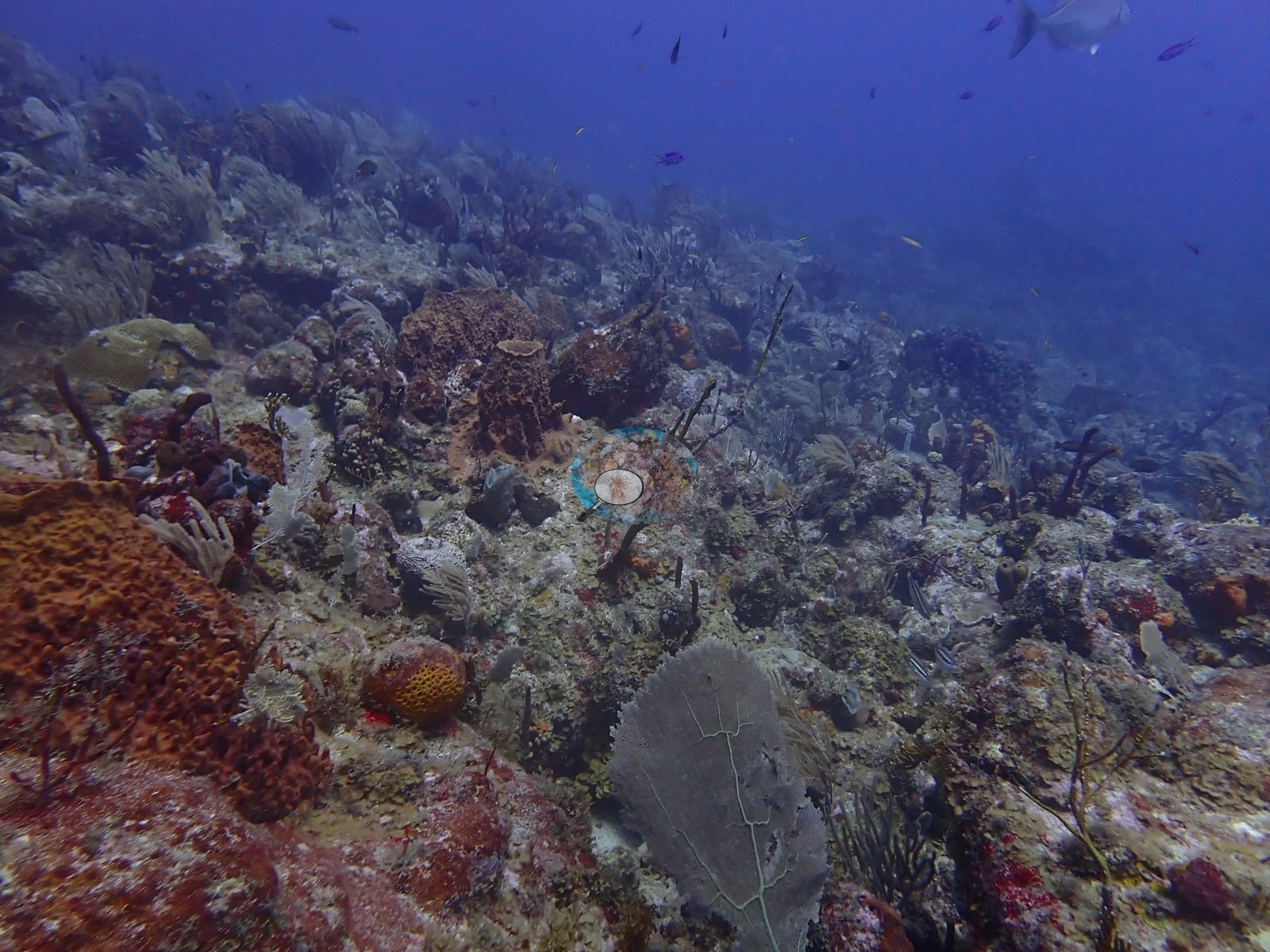
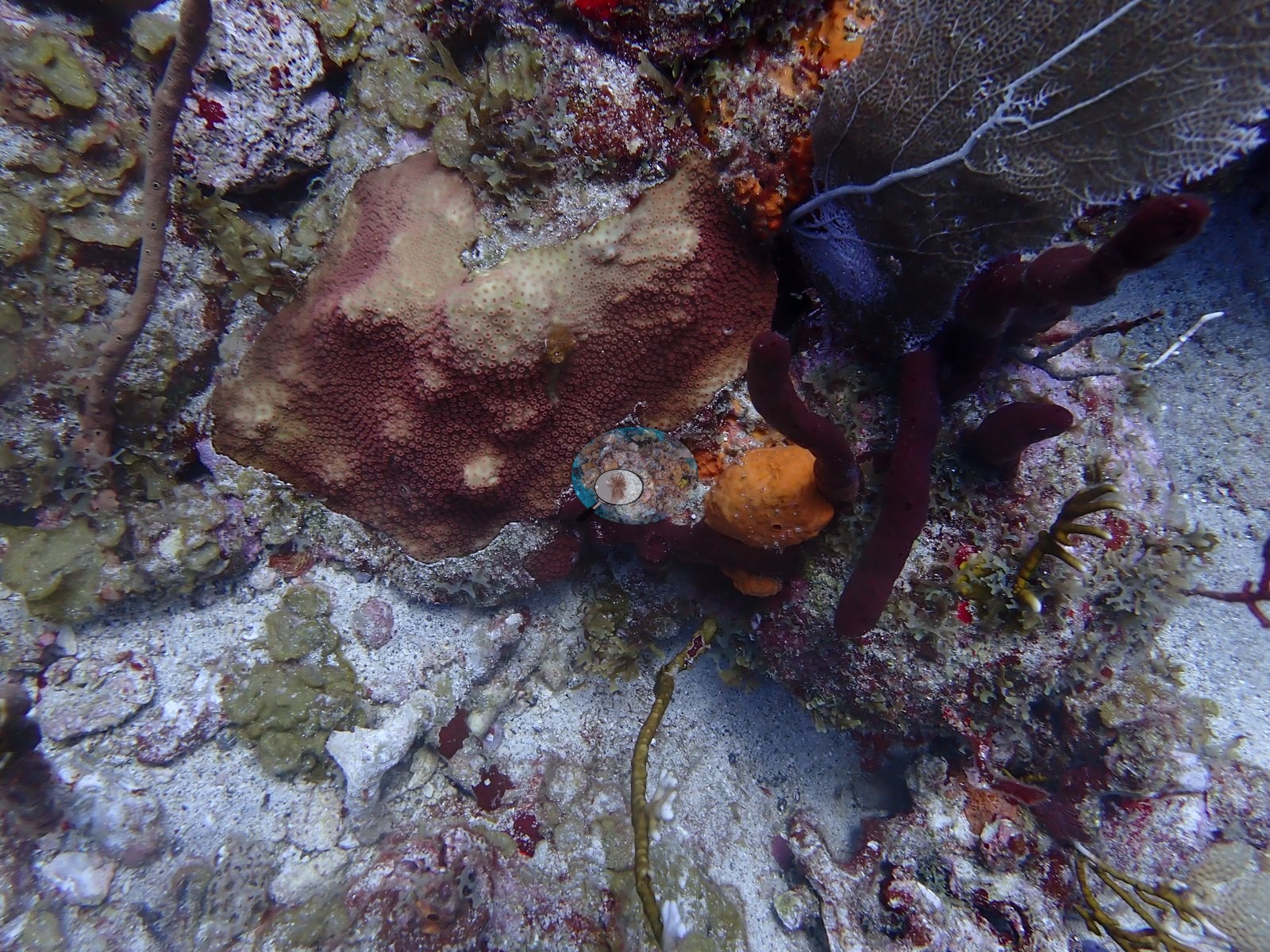
Sponges are the other dominant: giant barrel sponges Xestospongia muta recur in almost every wide frame (12-13, 61, 68-70, 82), with brown tube and vase sponges (Agelas conifera), orange elephant-ear (Agelas clathrodes, 8, 37), maroon rope sponges (Aplysina cauliformis), pink-brown vase sponges (Niphates), orange ball sponges, and extensive blood-red to maroon encrusting sheets (e.g., Image 1, Image 6, Image 10, Image 11, Image 14, Image 18, Image 21, Image 28, Image 30, Image 32, Image 35, Image 36, Image 44, Image 49).
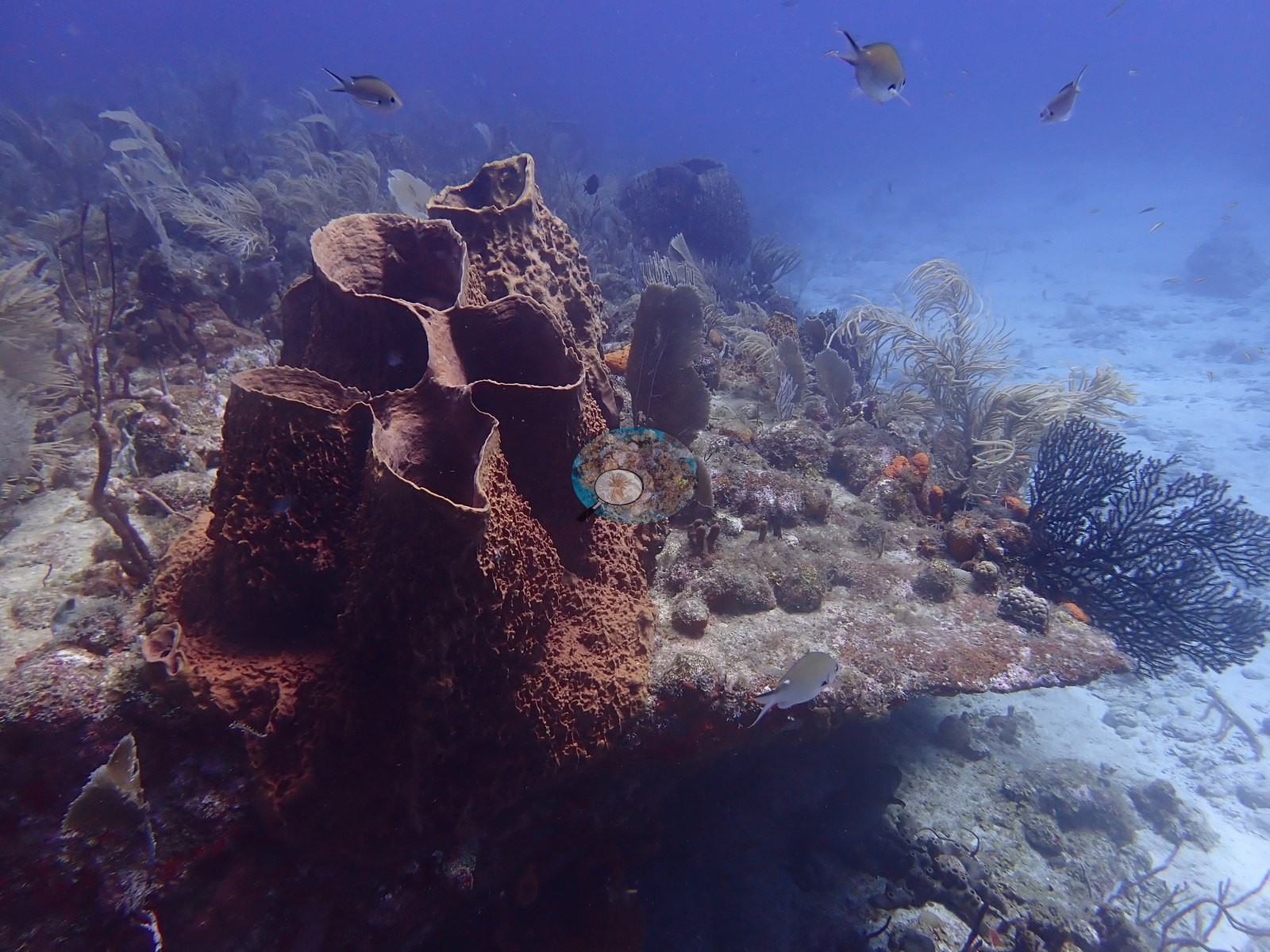
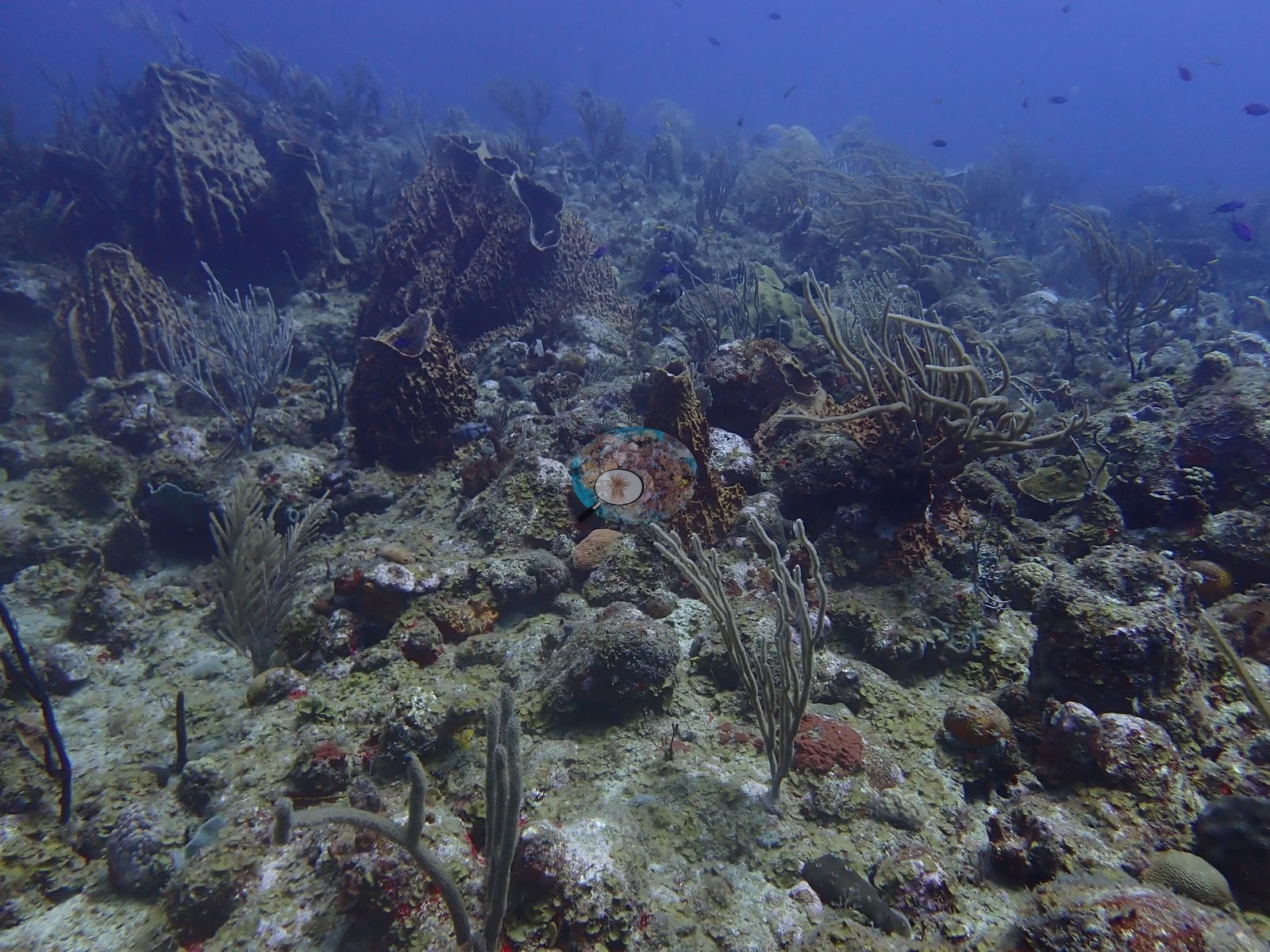
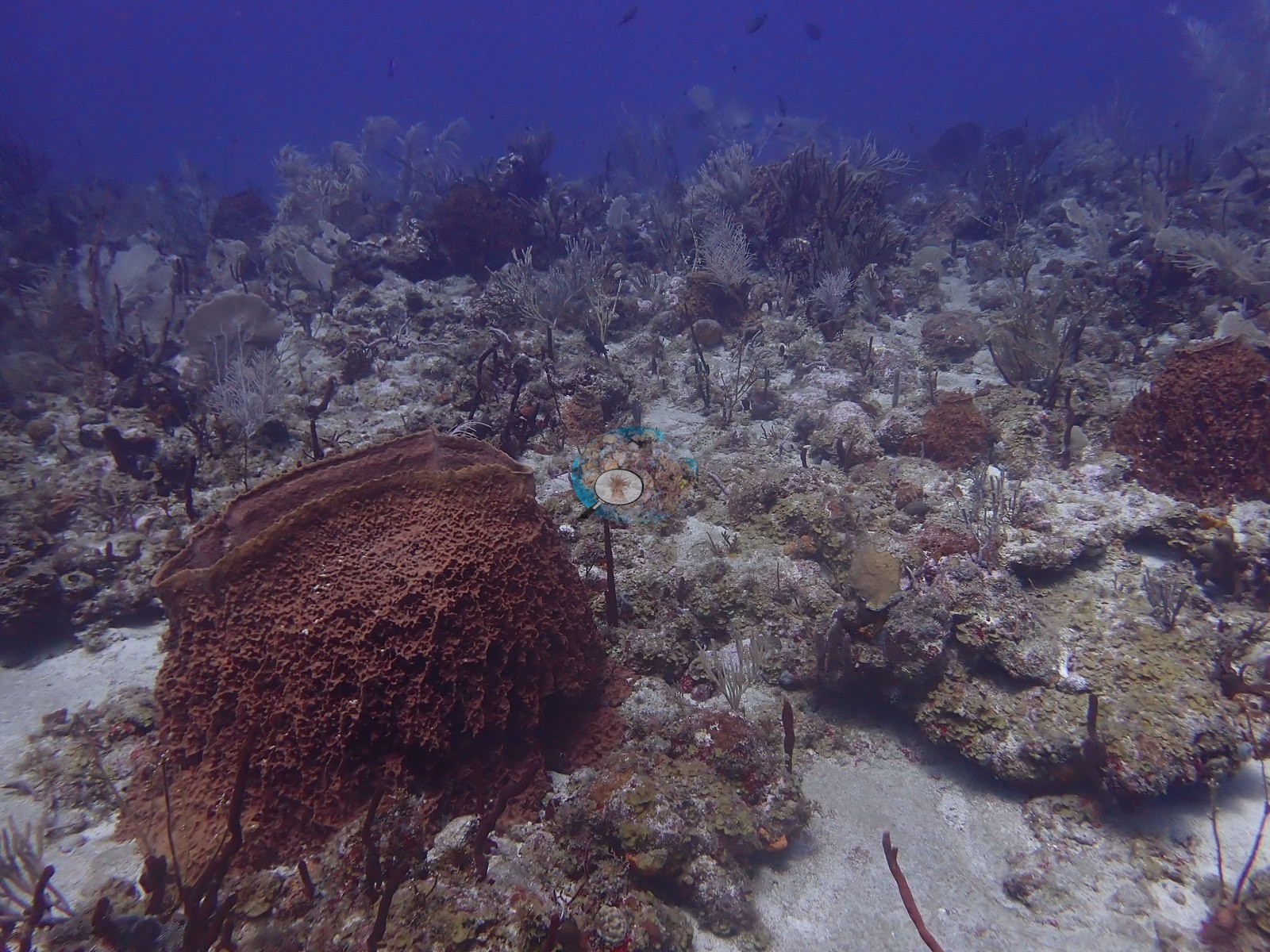
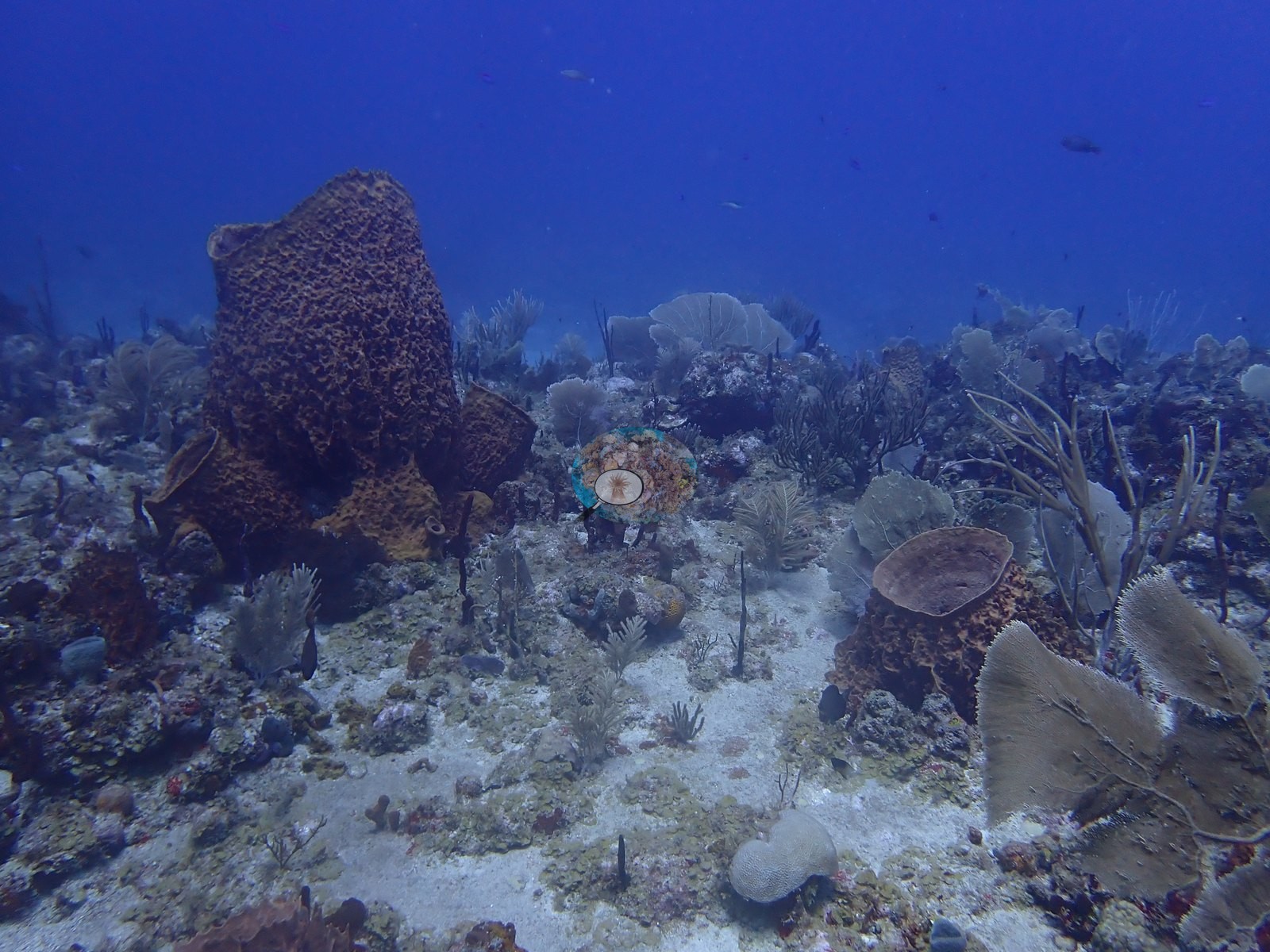
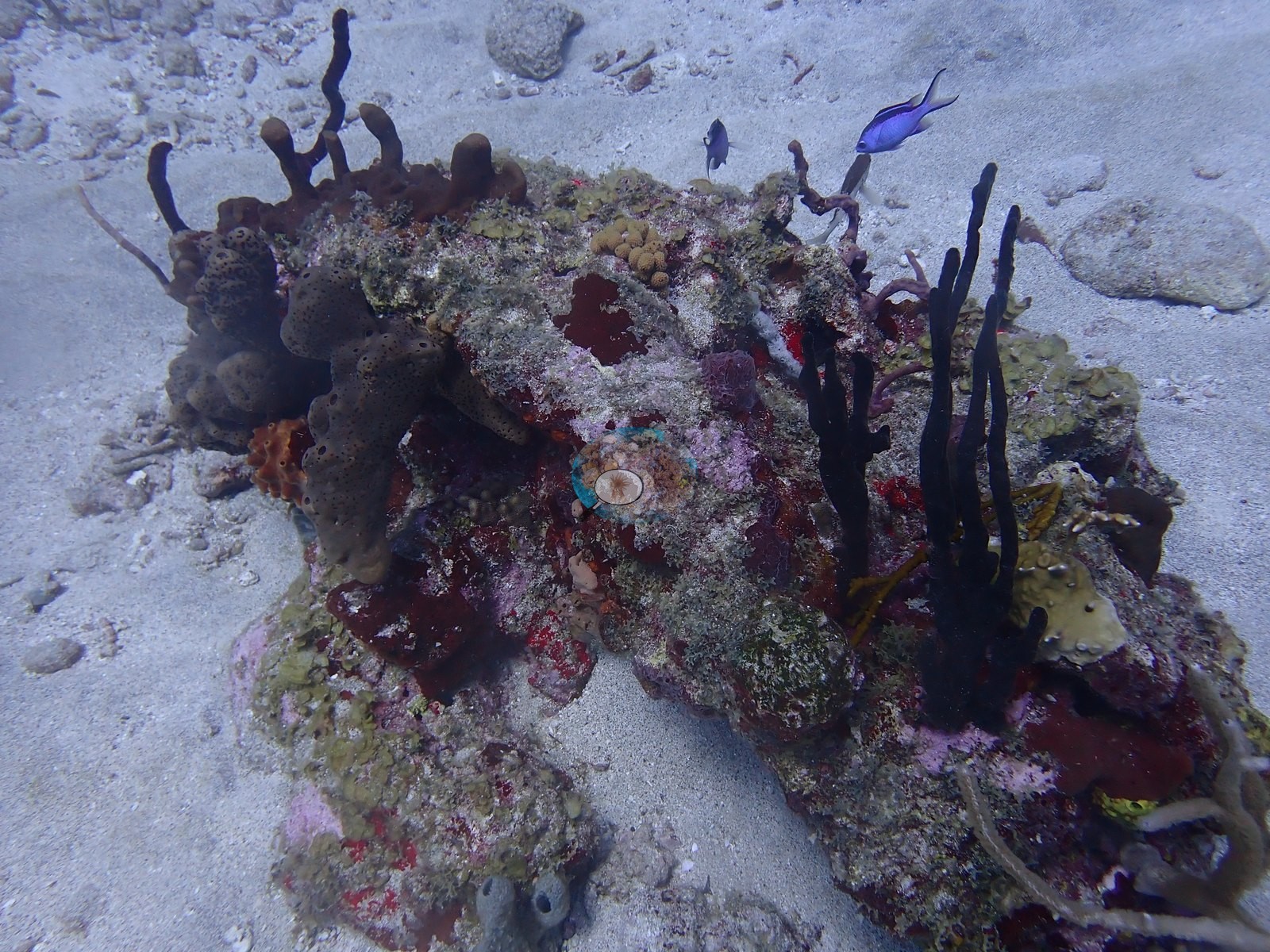
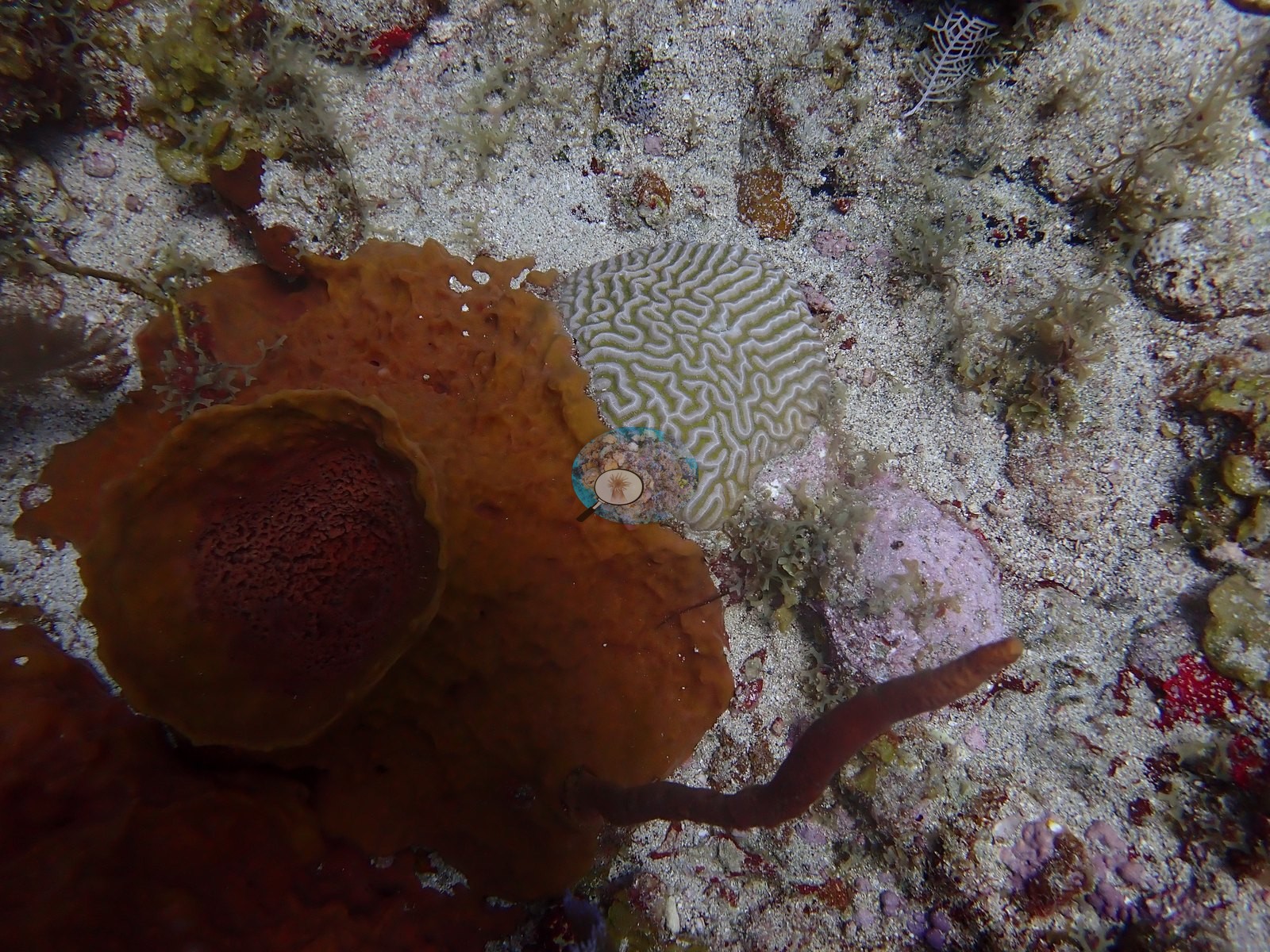
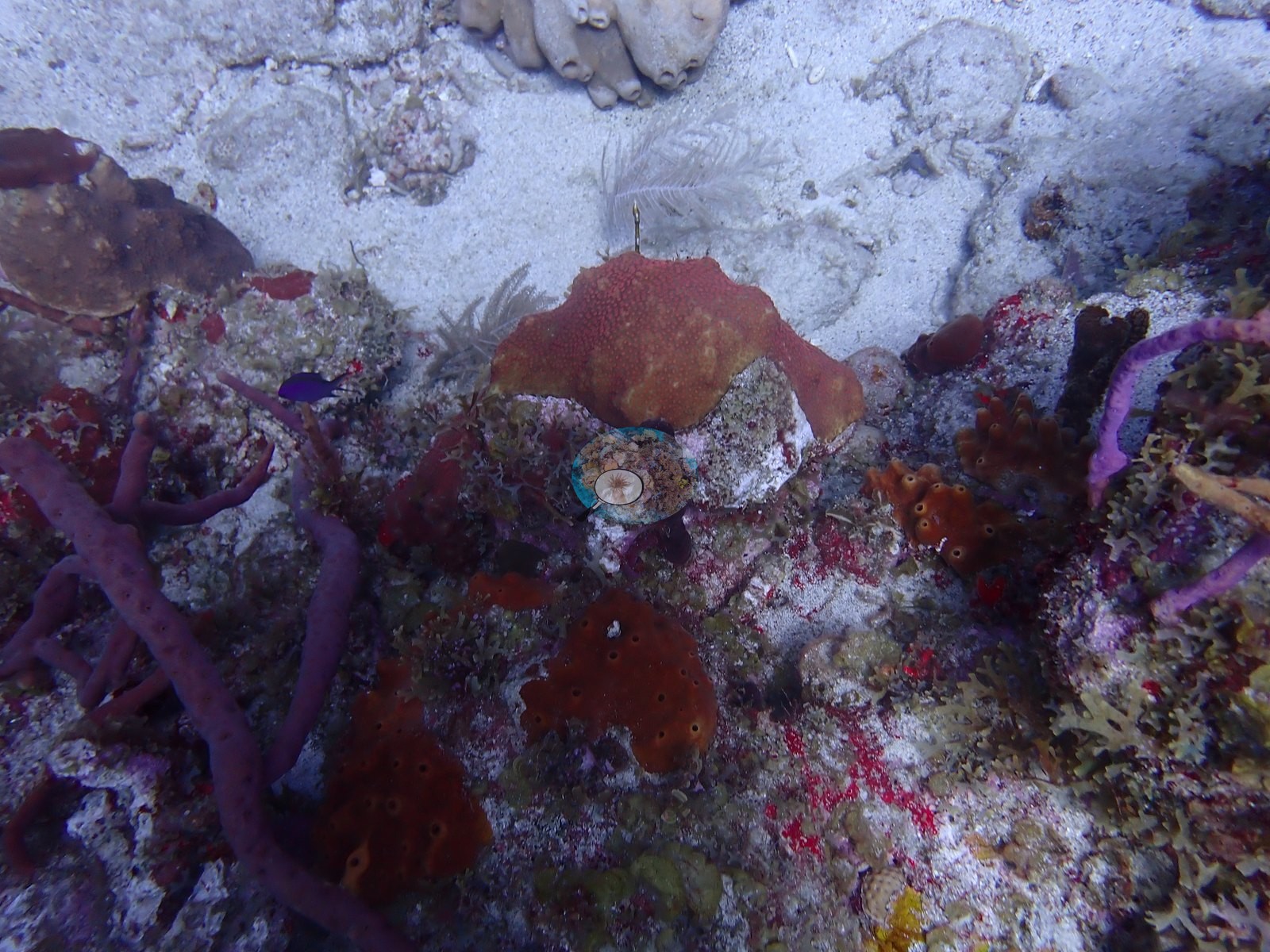
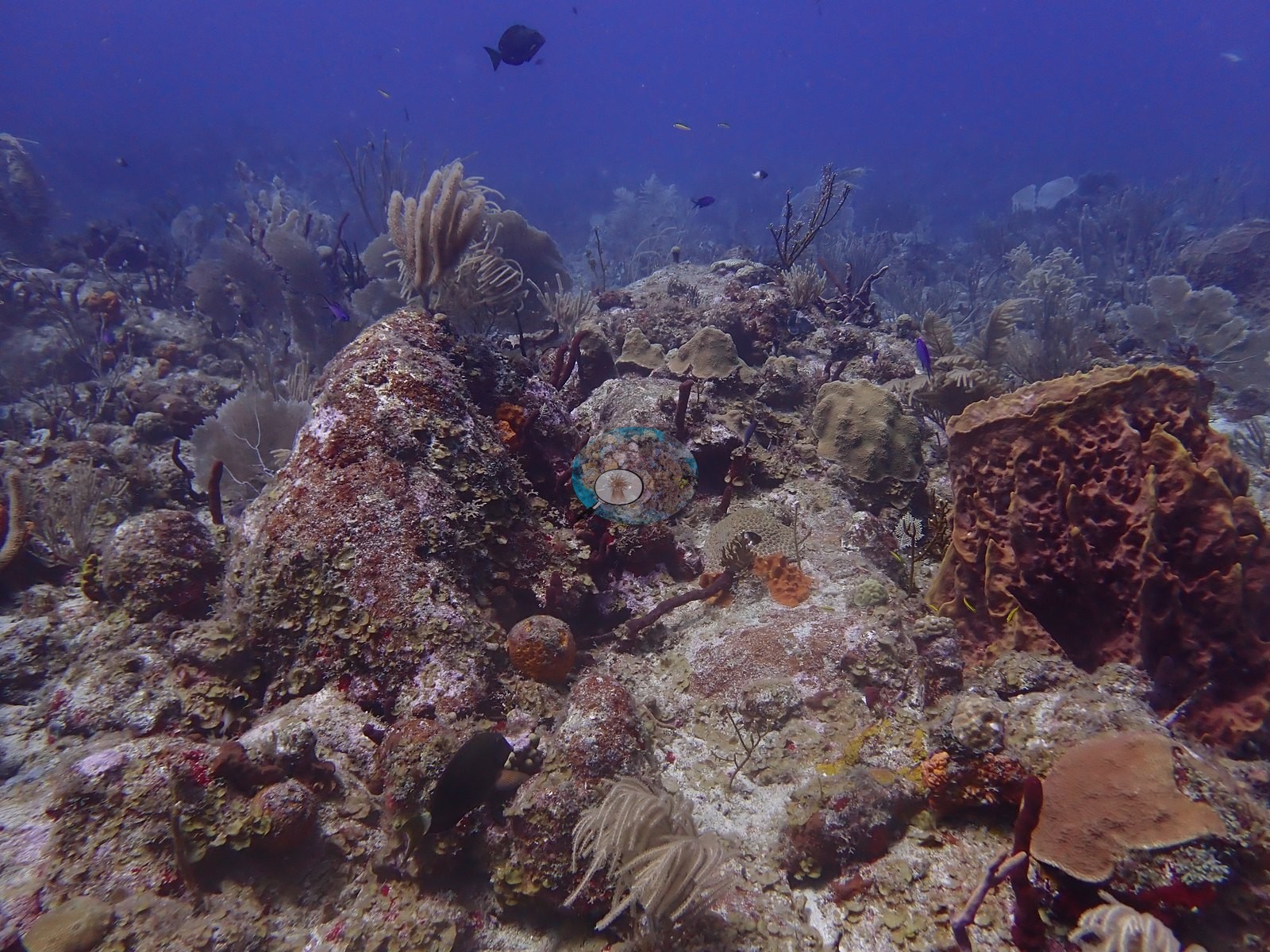
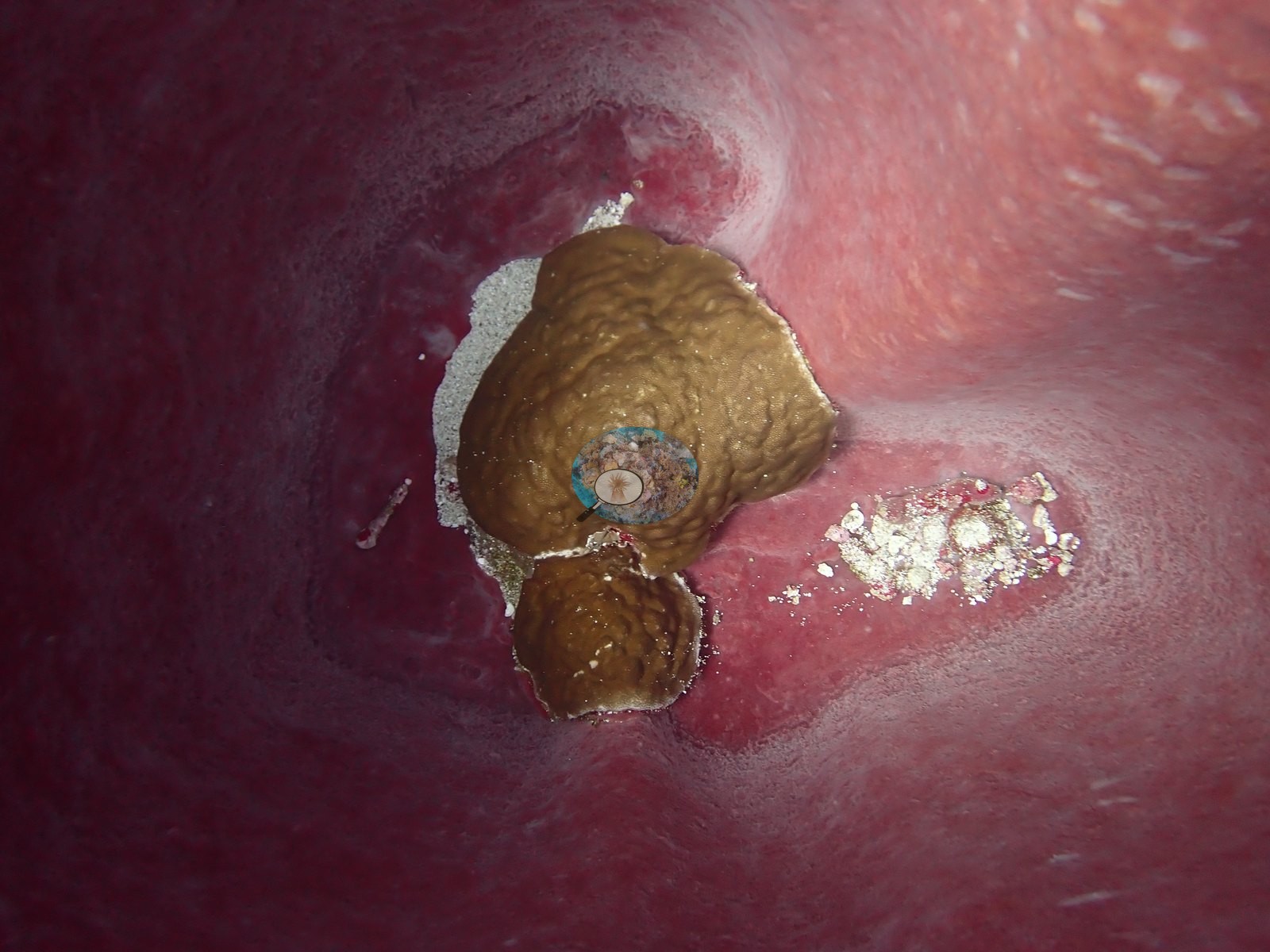
One barrel sponge hosts an epizoic olive sponge inside its cavity (23-24) and another shelters a stout reef crab (21) (e.g., Image 3).
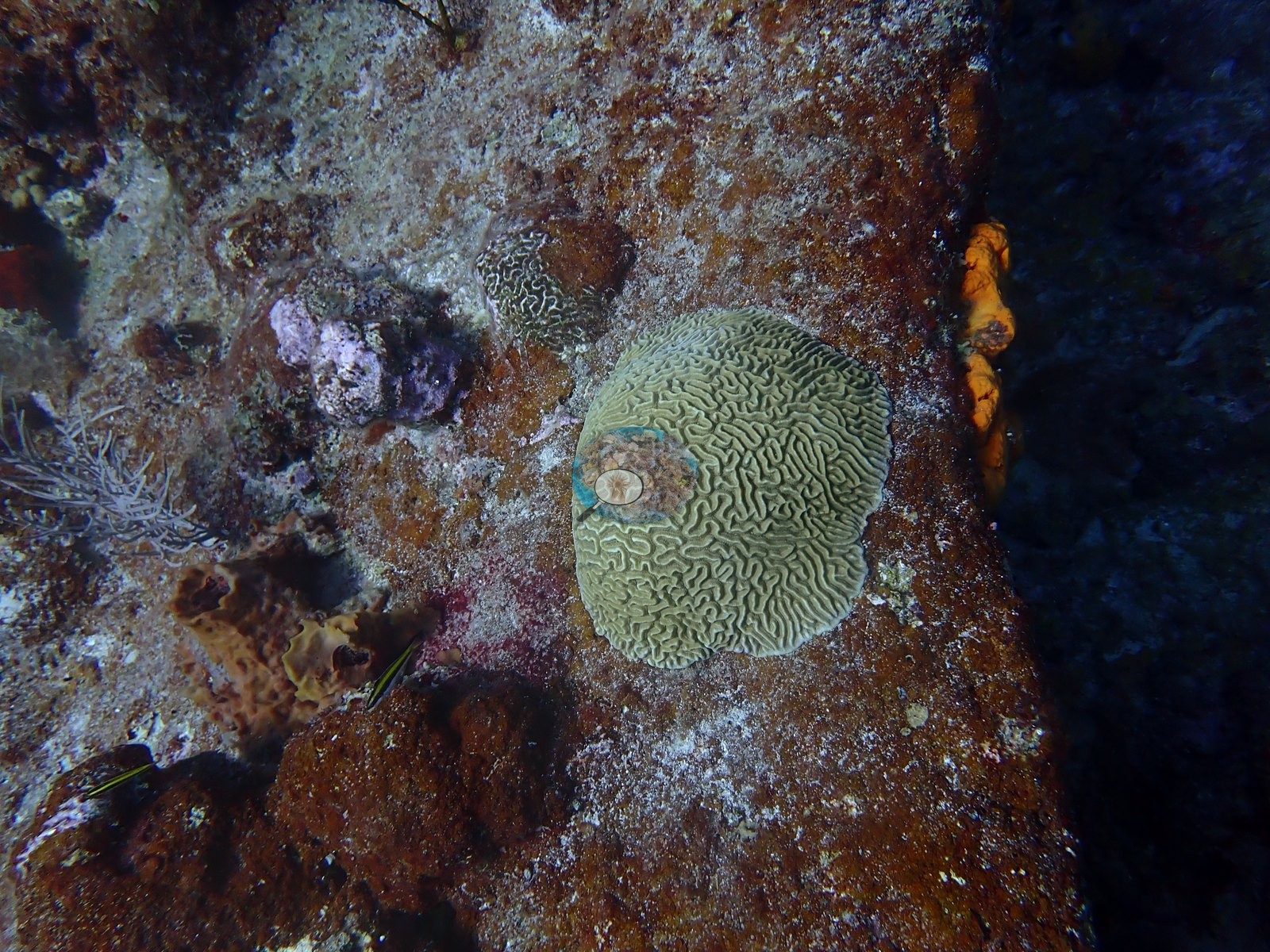
Stony corals are small, scattered and dominated by brain corals: Pseudodiploria strigosa appears repeatedly as isolated domes and free-lying plates (16, 26, 52, 62, 64, 73, 85, 87, 93-94), with grooved-brain Diploria labyrinthiformis (93), plating Orbicella/Montastraea, olive foliose Agaricia, and small Porites astreoides, Porites porites, and Siderastrea (e.g., Image 33, Image 39, Image 40, Image 47).
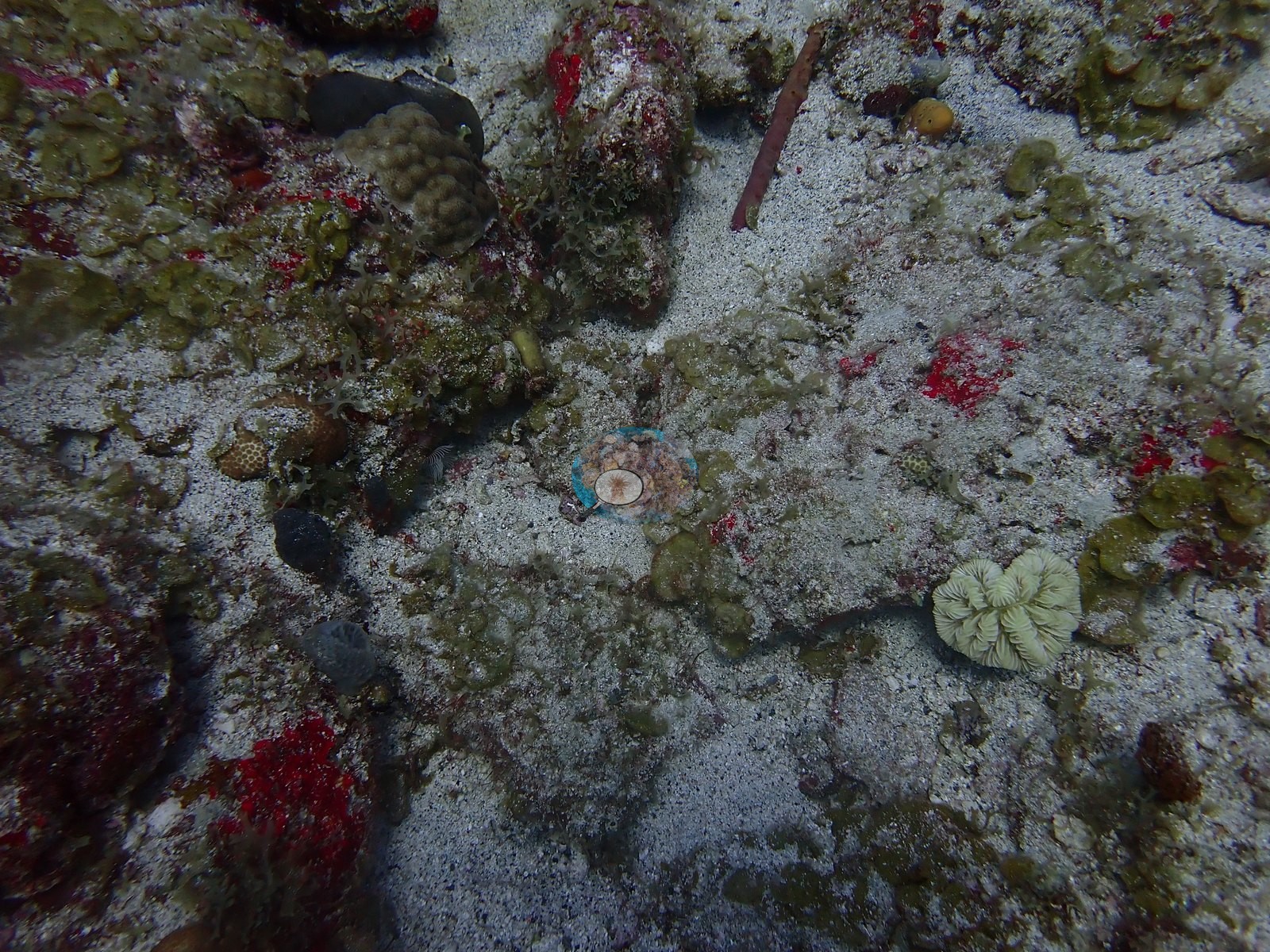
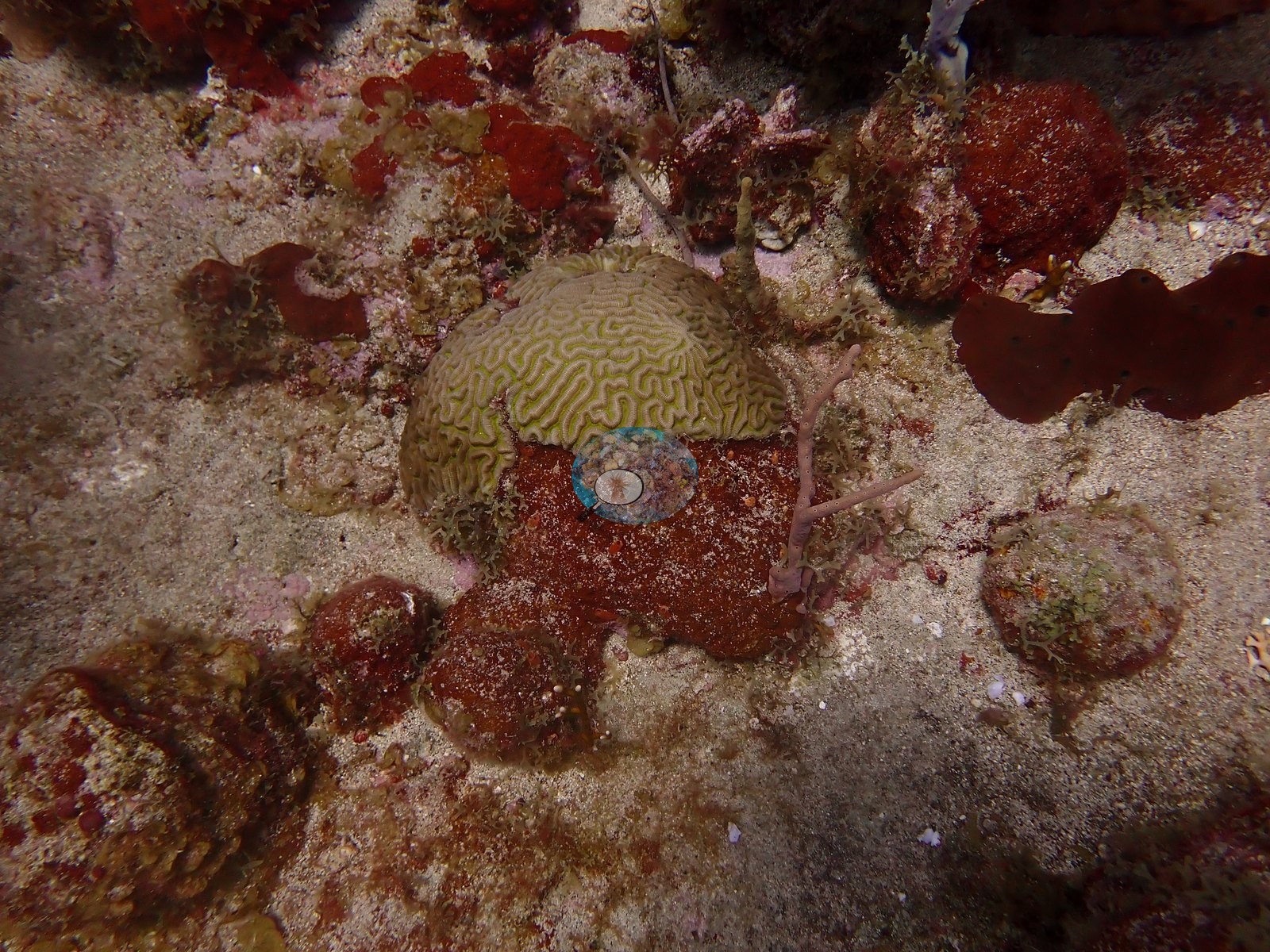
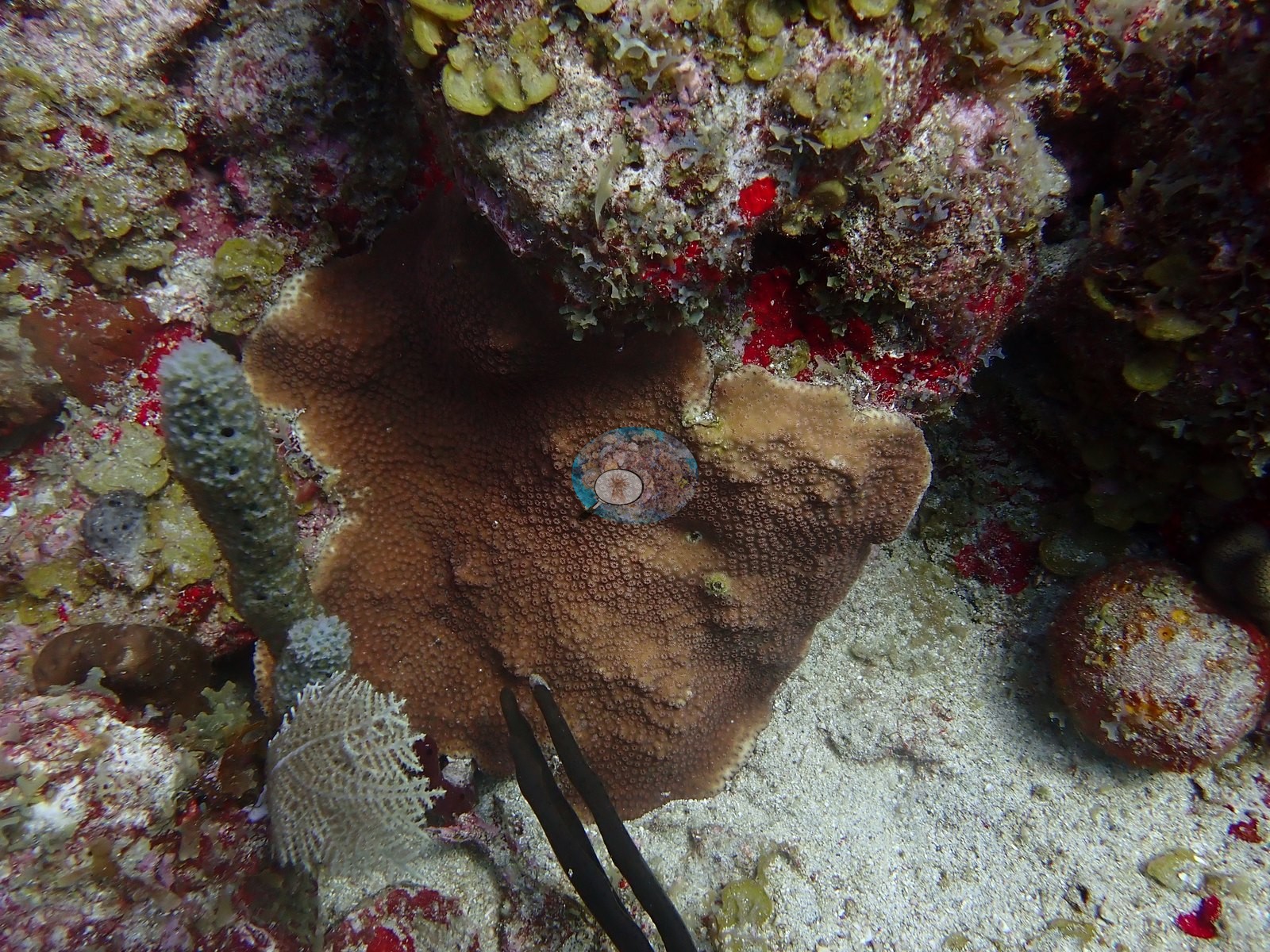
Bare gorgonian axes recur (7, 11, 27, 81), and macroalgae plus turf cover much of the pavement (e.g., Image 27).
Coral cover
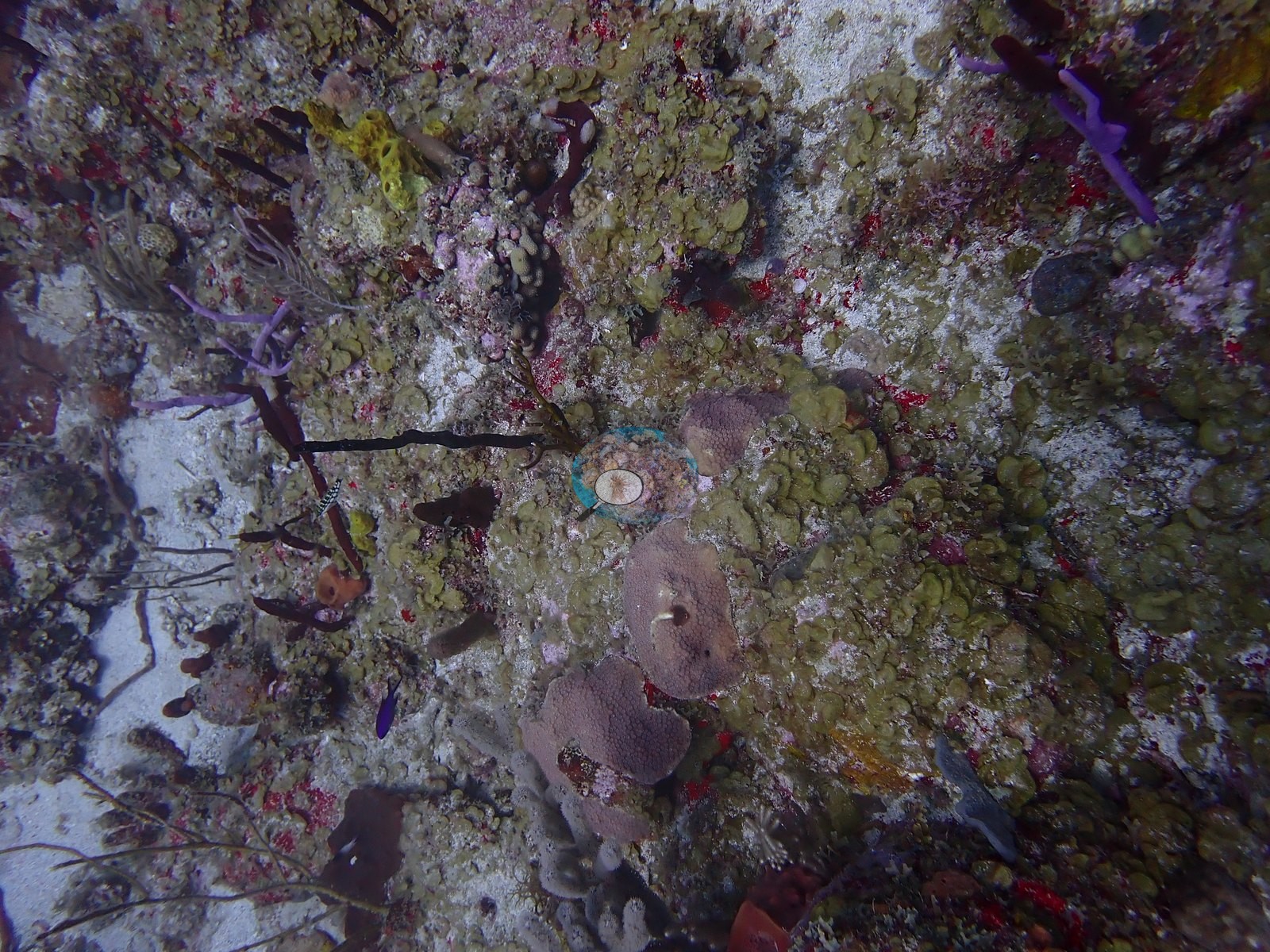
Coral cover: 2.9% — a blind Claude computer-vision point count of 88 of Anderson's unedited photographs (20 points per photo; water, fish, and obstructions excluded). Other computer-vision methods are listed in the method table. Coral cover: no value is published for this site.
Stressors
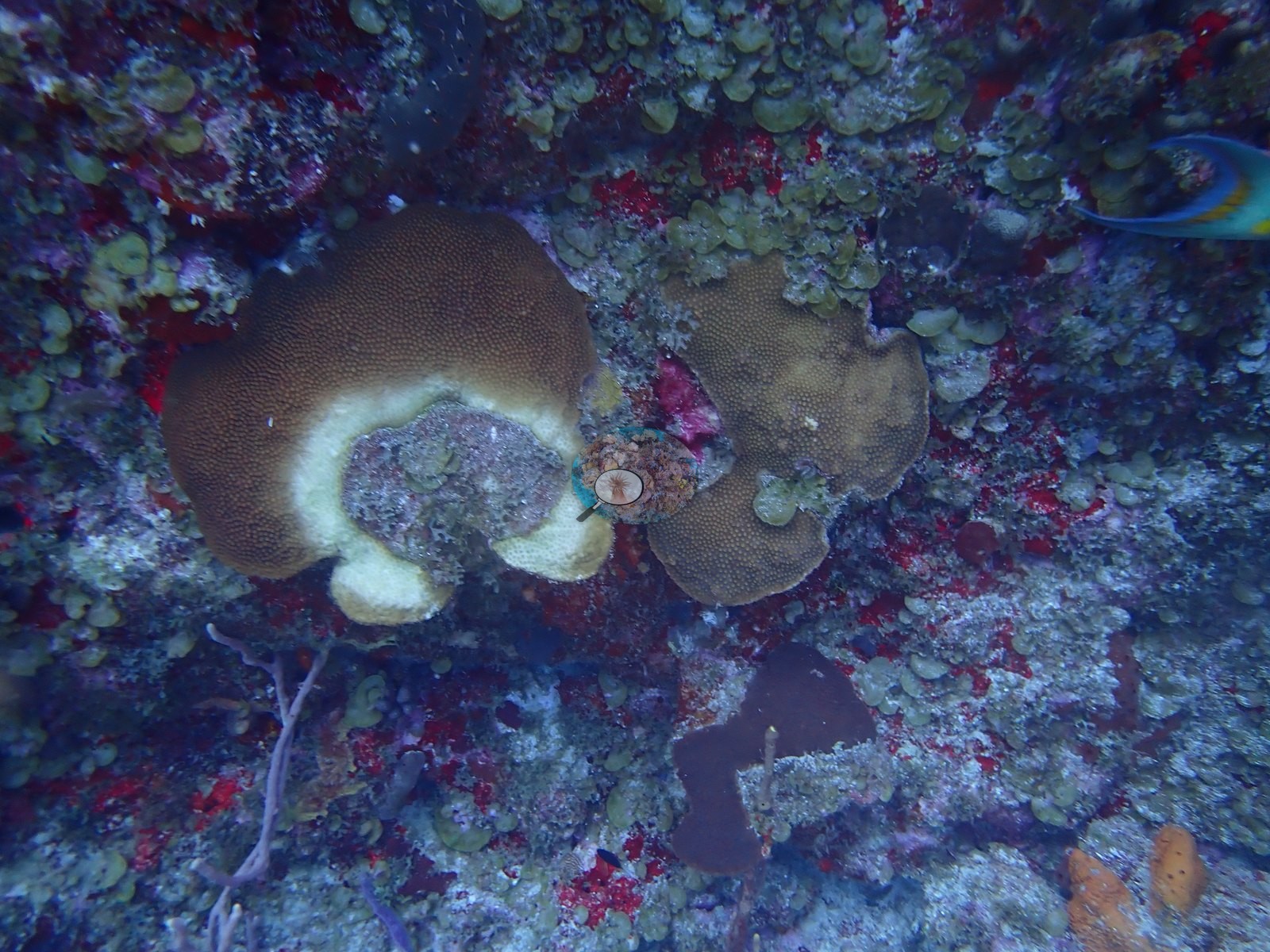
Frame 53 shows a massive colony with a bright white band of freshly exposed skeleton beside a sediment-covered dead center - active tissue loss, worth follow-up (e.g., Image 37).
Fish and other fauna
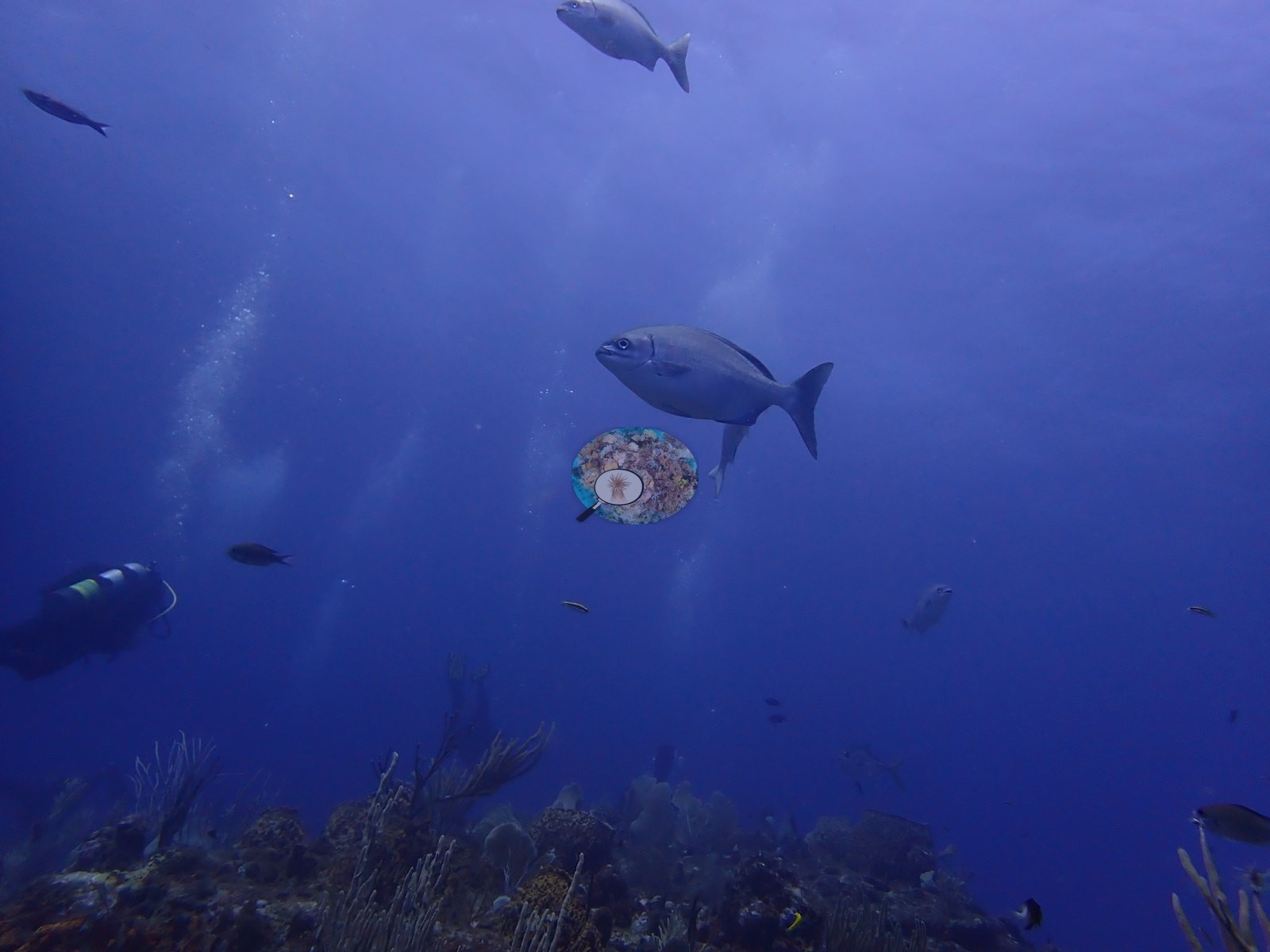
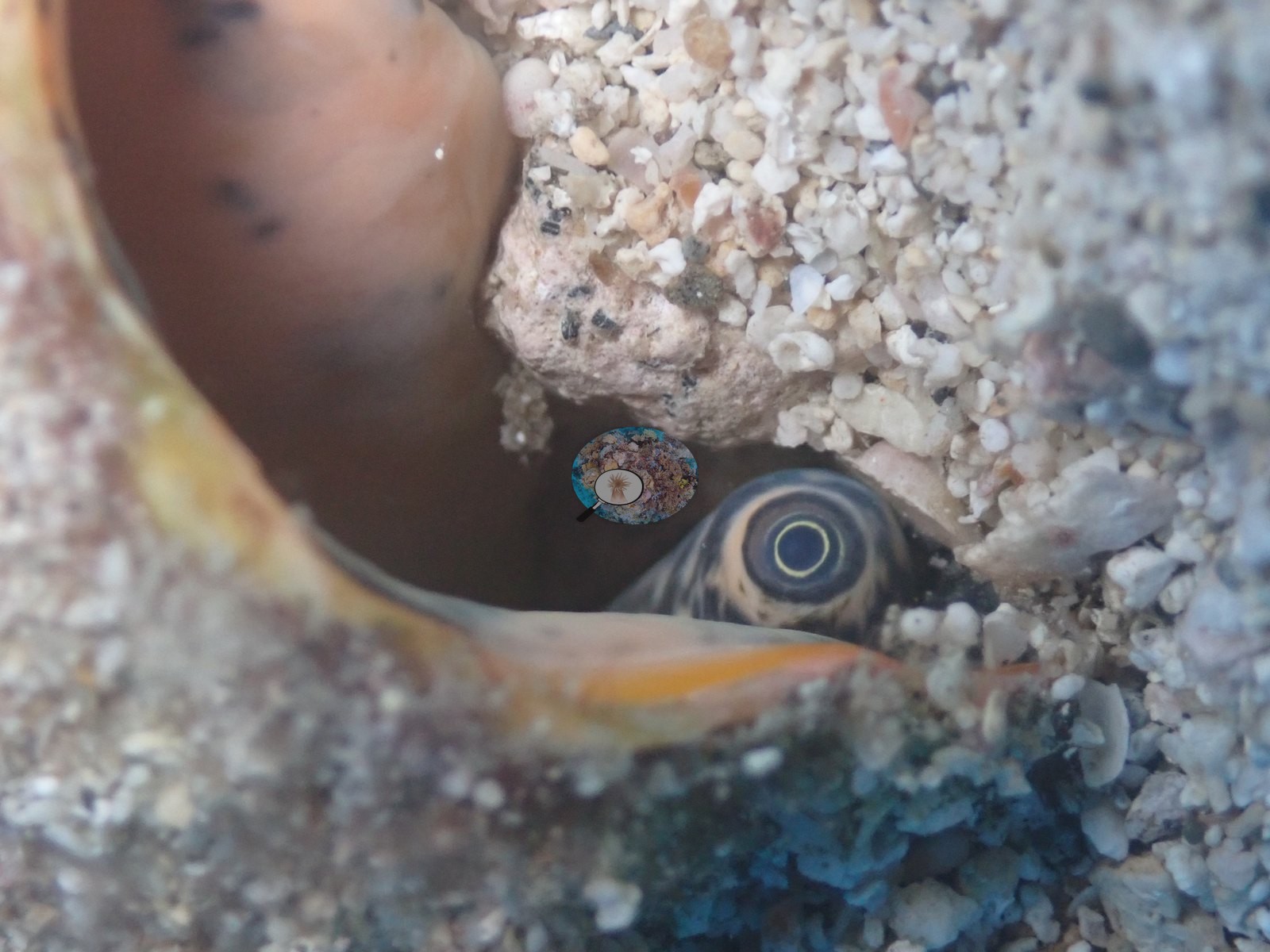
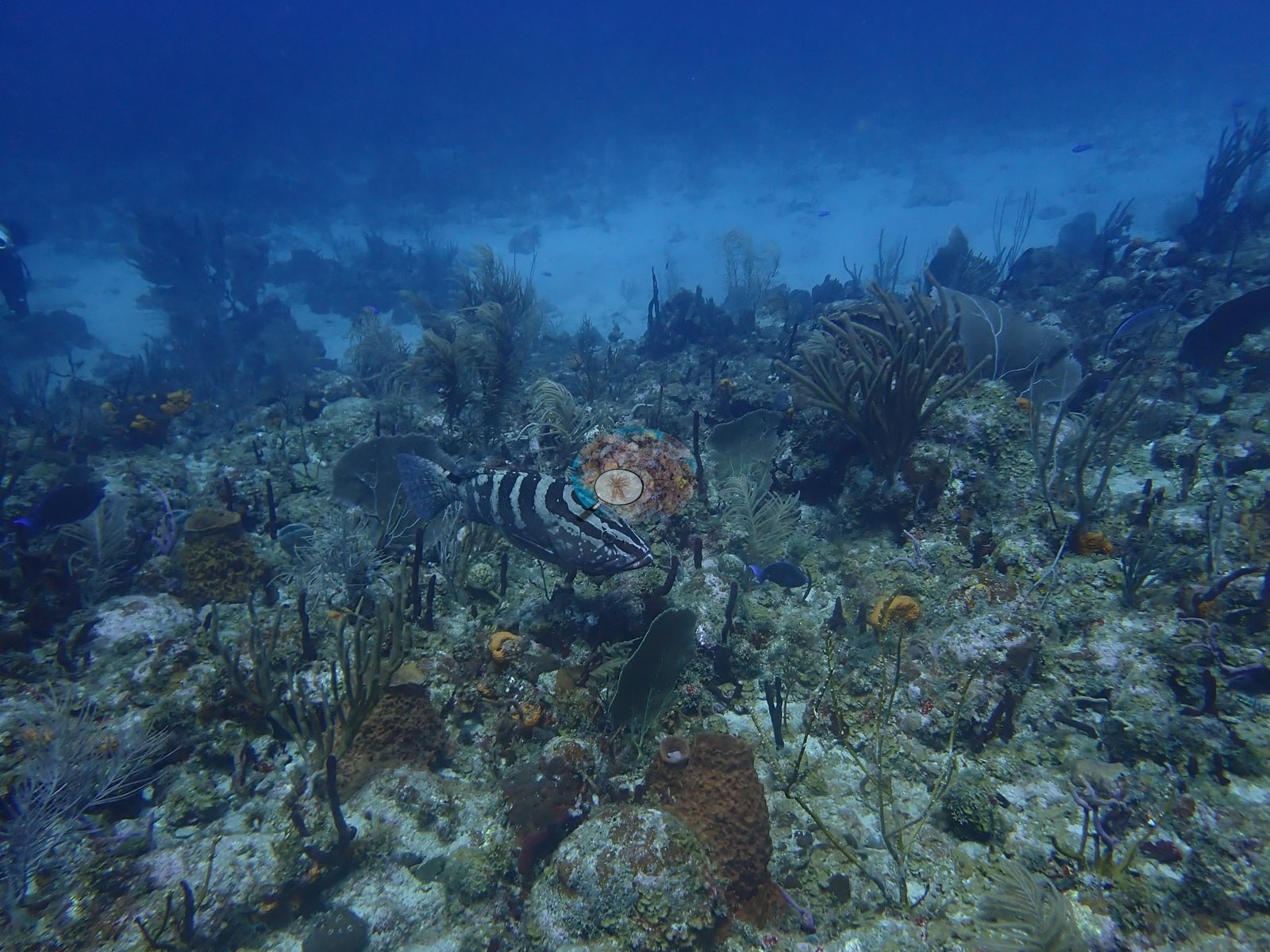
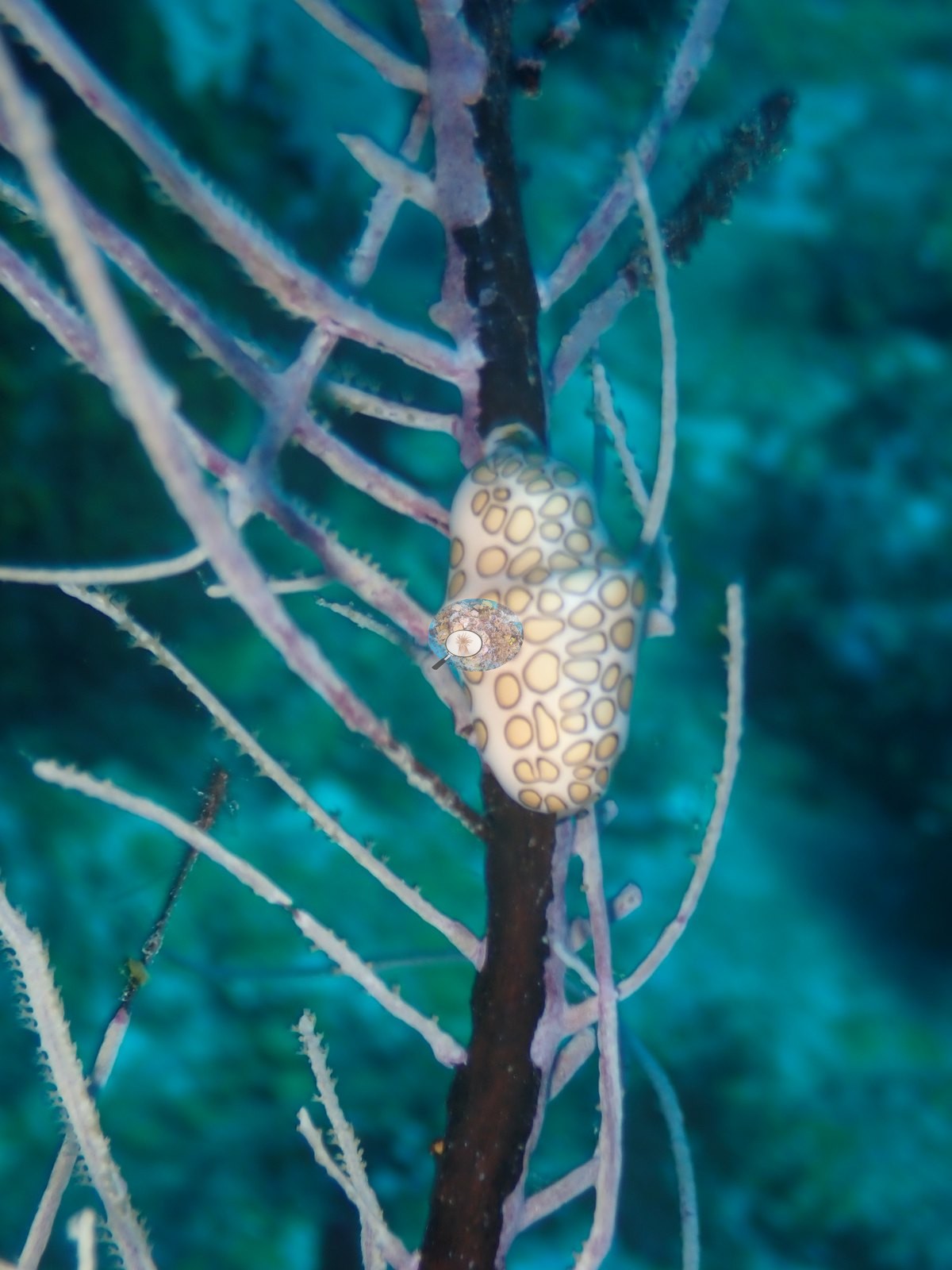
Fauna: a Nassau grouper (91), great barracuda resting under the ledge (89-90), a schoolmaster snapper school tucked into the overhang (55, 69), porcupinefish (58), a large indistinct fish deep in the undercut (46-47), Bermuda chub (35), stoplight parrotfish, Spanish hogfish, blue tang, blue, and purple chromis, fairy basslets, a flamingo tongue snail Cyphoma gibbosum on a gorgonian branch (45), and a live queen conch photographed eye-to-eye (19-20) (e.g., Image 5, Image 29, Image 31, Image 38, Image 41, Image 50).
Comparisons with other data
No independent survey was made at this exact site; the nearest ones are listed in the table below.
Dive record
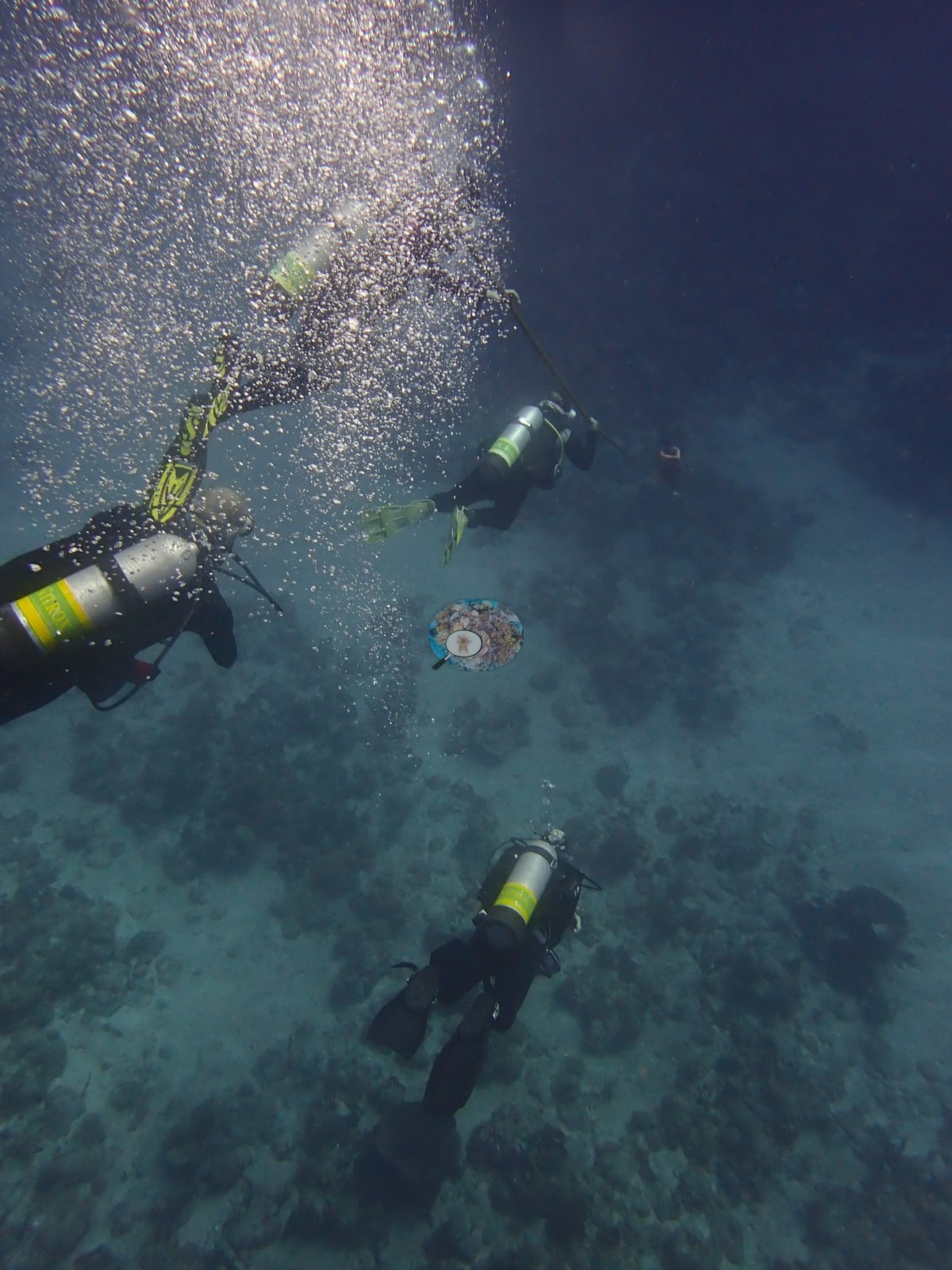
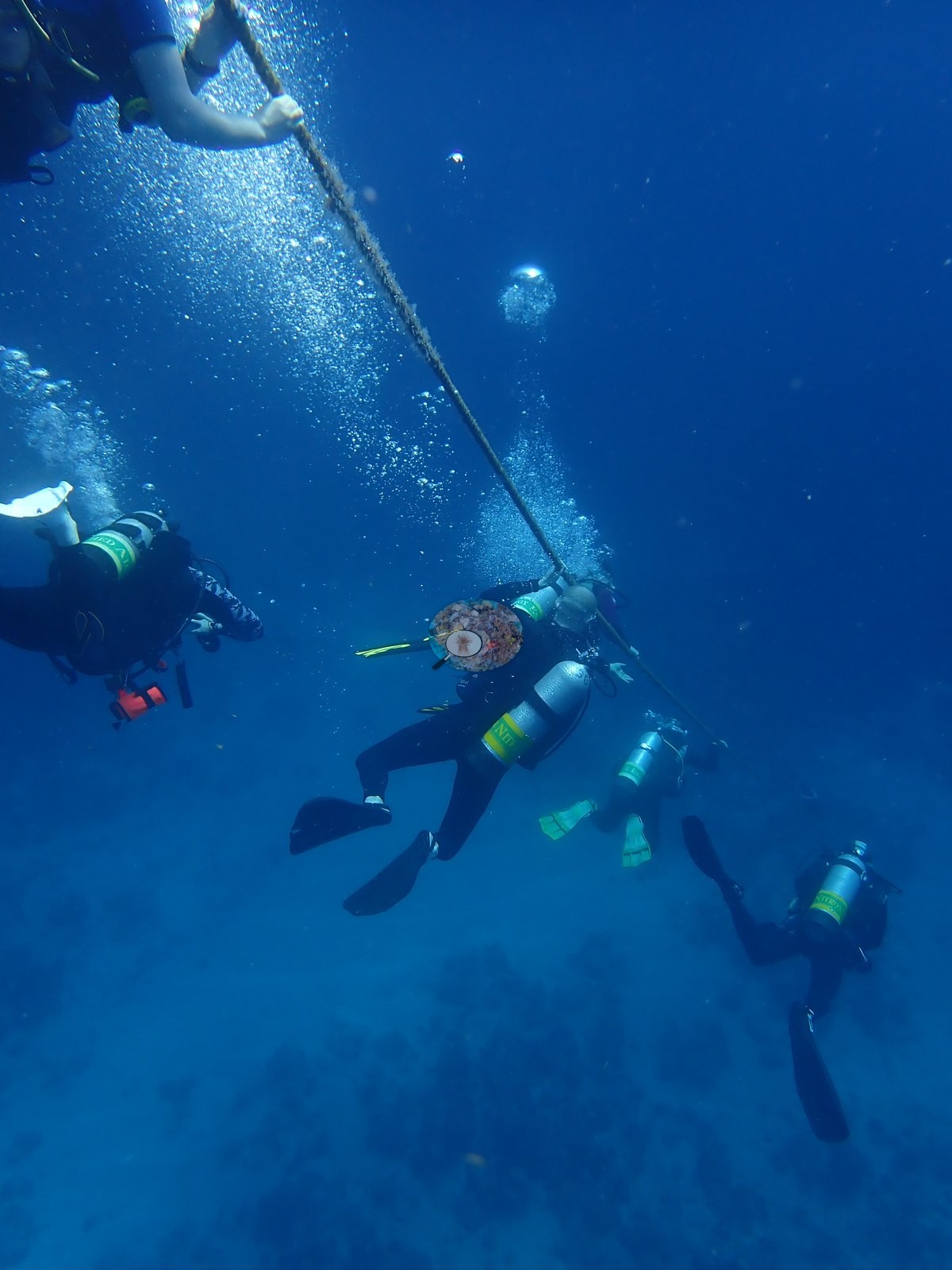
Dived as the second dive of 24 Feb 2026, descending a mooring line through clear blue water (frames 1-2) onto low-relief reef.
Other notes
Stony corals are small, scattered and dominated by brain corals: Pseudodiploria strigosa appears repeatedly as isolated domes and free-lying plates (16, 26, 52, 62, 64, 73, 85, 87, 93-94), with grooved-brain Diploria labyrinthiformis (93), plating Orbicella/Montastraea, olive foliose Agaricia, and small Porites astreoides, Porites, and Siderastrea (e.g., Image 33, Image 39, Image 40, Image 47).
CV model comparison
More info
DINOv3 and CoralSCOP were run on the same photos and are listed for comparison. Coralscapes v2 and v1 were also run but are not shown: Anderson does not consider Coralscapes reliable for these photos. No diver transect exists for this trip, so agreement between the rows is not accuracy, and as of September 2026 no computer-vision method estimates coral cover accurately on new images; treat every row as indicative.| Method | Hard-coral cover (%) |
|---|---|
| In-house DINOv3 | 17.0 |
| CoralSCOP unedited | 26.0 |
| Claude | 2.9 |
Independent surveys nearby
| Agency / program | Year(s) | Stations / distance | Link |
|---|---|---|---|
| Reef Check | 2005–2010 | 4 stations, 0.67–0.84 km | Records ↓ |
| XL Catlin Seaview Survey | 2013 | 2 stations, 1.07–1.15 km | Records ↓ |
 Dr. Coral (CRD)Year-average (no detectable trend)
Within 5 km, 6 independent survey stations recorded hard coral cover in 16 records between 2005 and 2013. Of the 4 stations surveyed in more than one year, 1 declined, 1 increased, and 2 changed by less than 5 percentage points between their first and latest surveys. The longest record, Barracuda Reef Line 1 (Reef Check, 0.84 km away), went from 28% in 2005 to 26% in 2010. The most recent nearby survey is from 2013, so these values predate recent heat stress. This site's own estimate (2.9%) sits within the range of these surveys (0.7–38%); the methods differ, so the comparison is context, not a like-for-like test.
Collected by other programs using different methods (Reef Check uses point-intercept transects; the XL Catlin Seaview Survey uses photo-transects with automated image annotation), so these are context for the figures above, not a like-for-like comparison. Where a station was surveyed more than once the range is shown. Station names are not dive-site names.
| Agency | Site / location | Date | Hard coral cover (%) | Distance | Link |
|---|---|---|---|---|---|
| Reef Check | Mushroom Garden Line 1 | 2005–2009 | 9.4–33% (4 surveys) | 0.67 km | — |
| Reef Check | Mushroom Garden Line 2 | 2005–2007 | 24–38% (2 surveys) | 0.67 km | — |
| Reef Check | Barracuda Reef Line 1 | 2005–2010 | 11–28% (6 surveys) | 0.84 km | — |
| Reef Check | Barracuda Reef Line 2 | 2005–2007 | 24–25% (2 surveys) | 0.84 km | — |
| XL Catlin Seaview Survey | transect 25016 | 2013 | 0.7% | 1.07 km | — |
| XL Catlin Seaview Survey | transect 25015 | 2013 | 2.0% | 1.15 km | — |
Data & links
All images from Coral Reef Diagnostics. Data are from Coral Reef Diagnostics and the organizations named in the data-sources table above.
© Coral Reef Diagnostics.