
Saudi Red Sea - unnamed site 2 (Al Qunfudah)
Part of the regional summaries: Saudi Arabia and Red Sea
More info
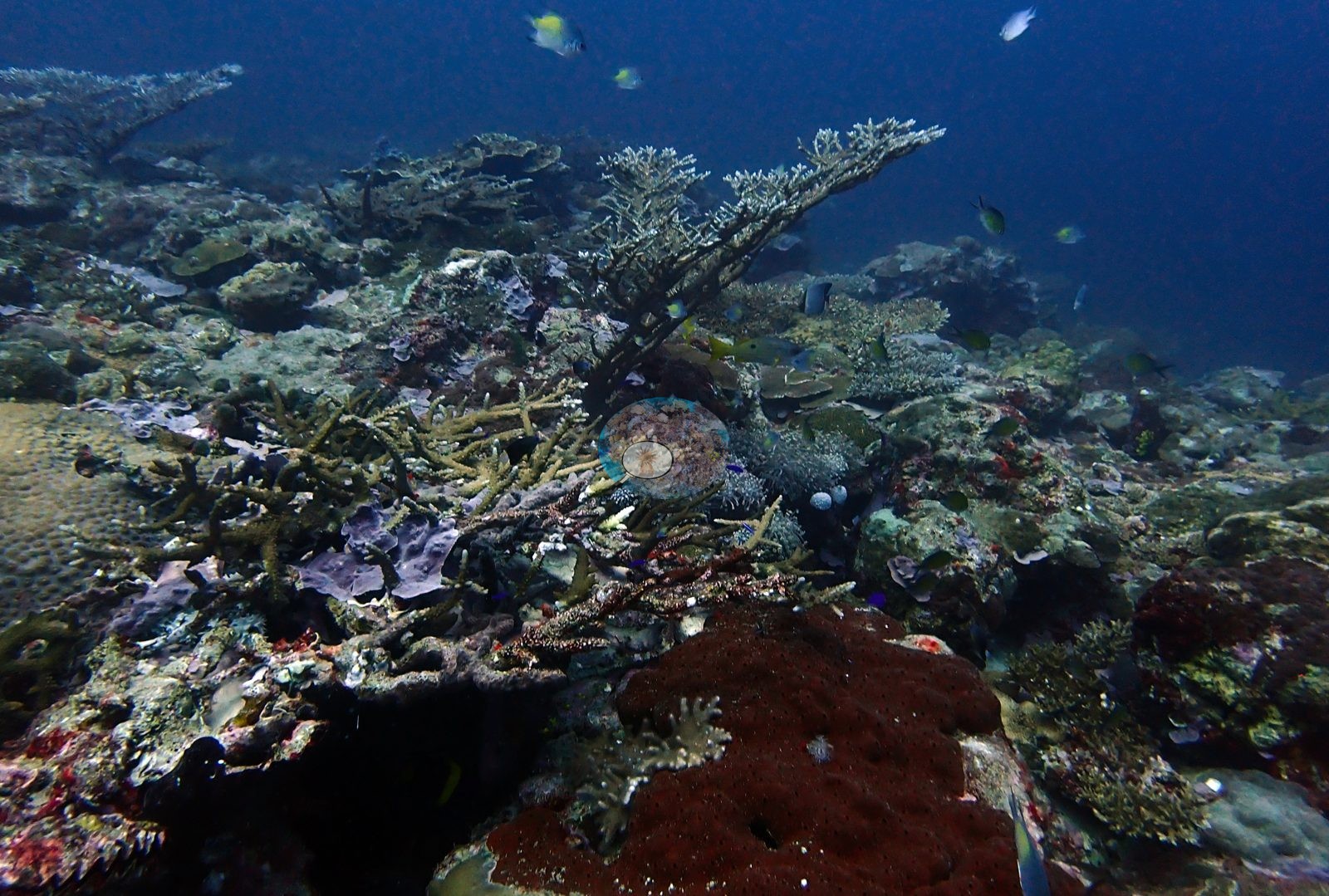
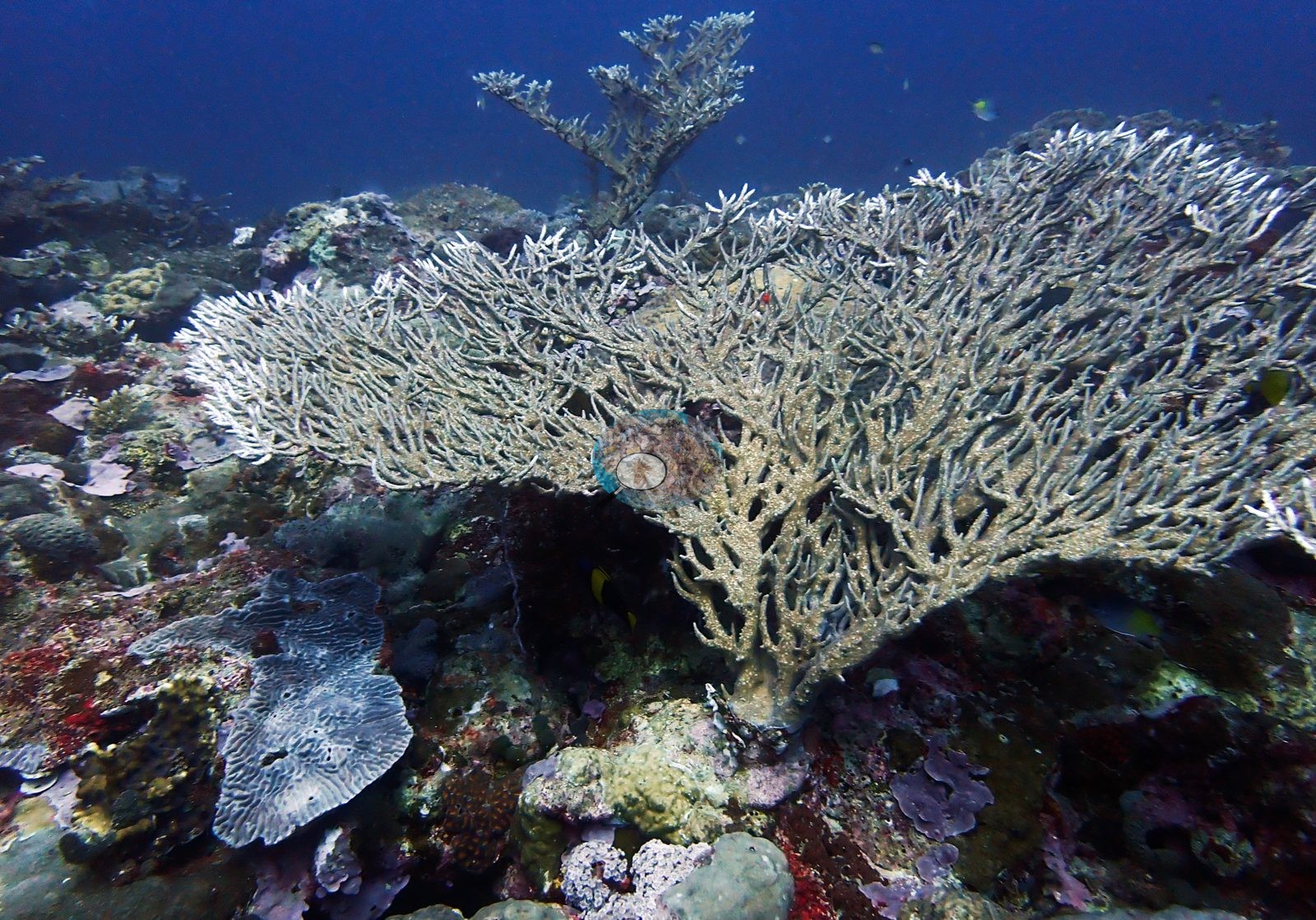
Al Madinah and Makkah (NOAA CRW virtual station)An Al Qunfudah reef with more standing structure than its neighbor, including waist-high candelabra Acropora a couple of meters across and staghorn thickets over tiers of plating corals. Condition is the story, with much of the branching framework stark white or bone-pale and about 18% of coral tissue bleached under heavy heat stress in August 2024.
شعاب في القنفذة ذات بنية قائمة أكثر من جارتها، منها Acropora شمعدانية بارتفاع الخصر وعرض مترين تقريبًا وأجمات قرون أيل فوق طبقات من المرجانيات الصفائحية. والحالة هي جوهر القصة، إذ إن جزءًا كبيرًا من الهيكل المتفرع أبيض صارخ أو شاحب كالعظم، ونحو 18% من نسيج المرجان مبيضّ تحت إجهاد حراري شديد في أغسطس 2024.
ترجمة هذا الملخص بالذكاء الاصطناعي؛ النص الإنجليزي هو المعتمد.
One other CRD dive site with its own page within 5 km shown in orange — click a marker to open its page.
9 of the 12 photographs on this page are shown beside the text that discusses them under "Site description" below.
Site description
General benthic features
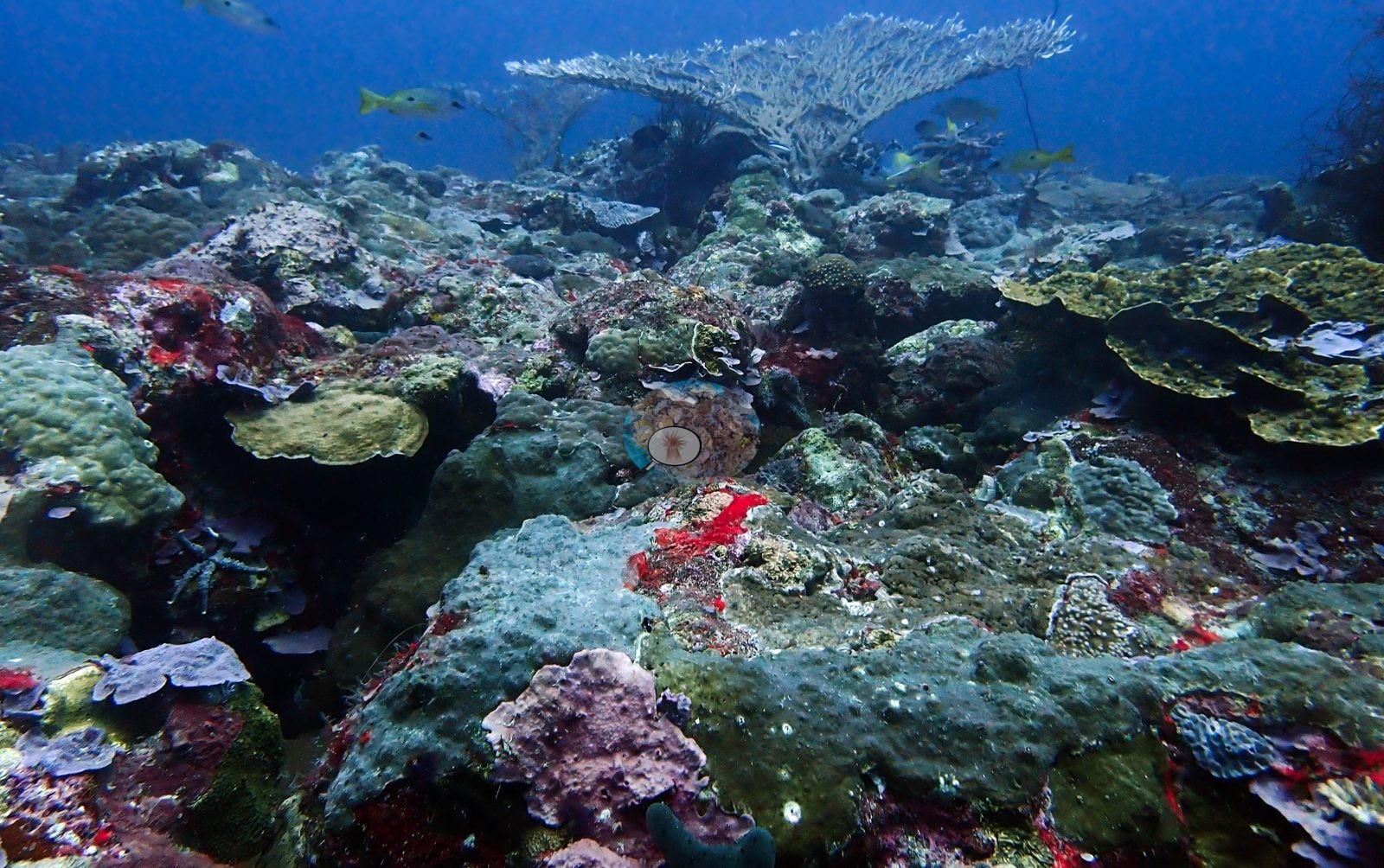
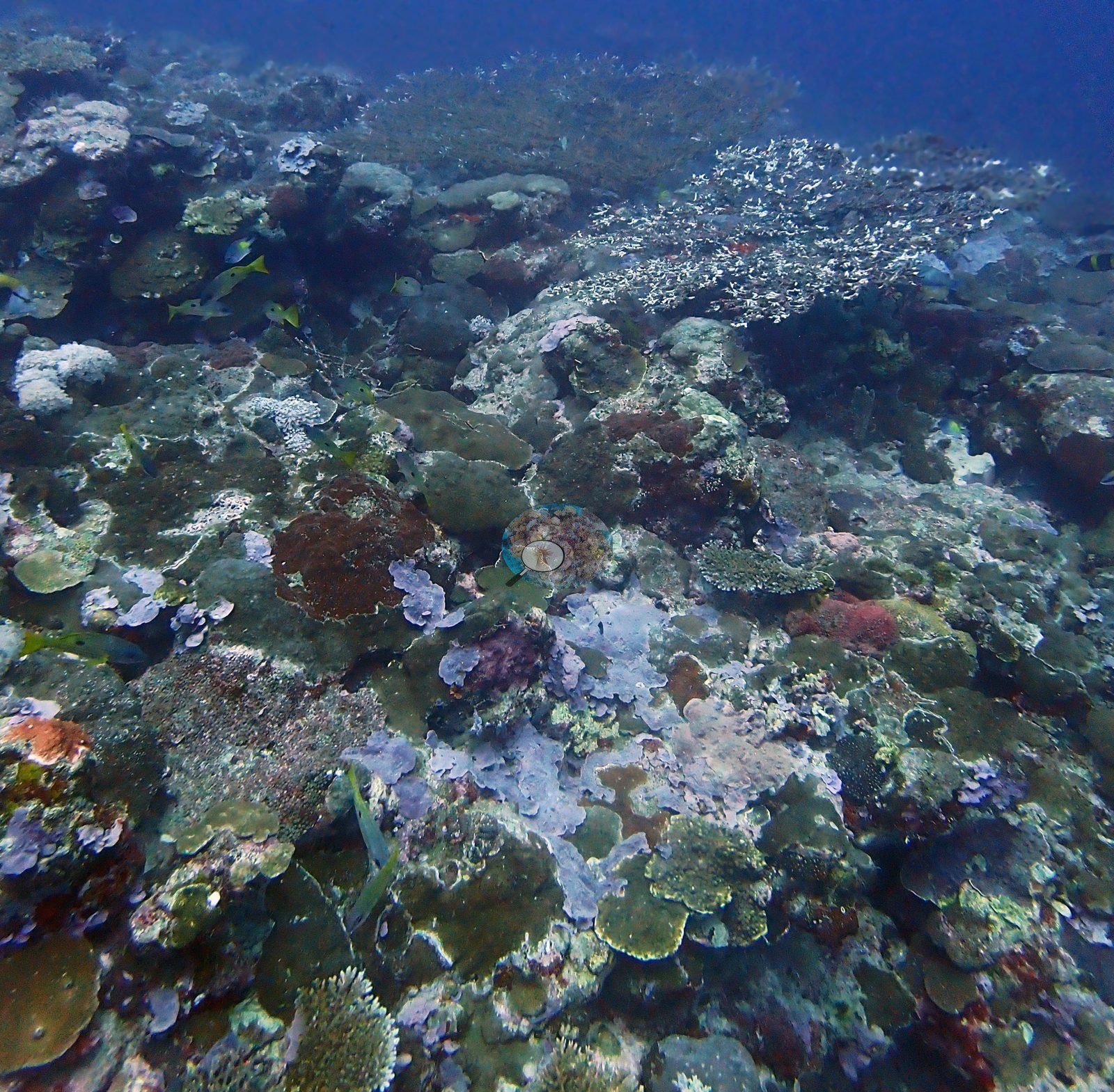
This one has more standing structure: elegant branching and arborescent Acropora colonies stand clear of the substrate, one of them a broad, waist-high candelabra a couple of meters across and stands of thinner staghorn thickets run along the reef top (e.g., Image 1, Image 2).
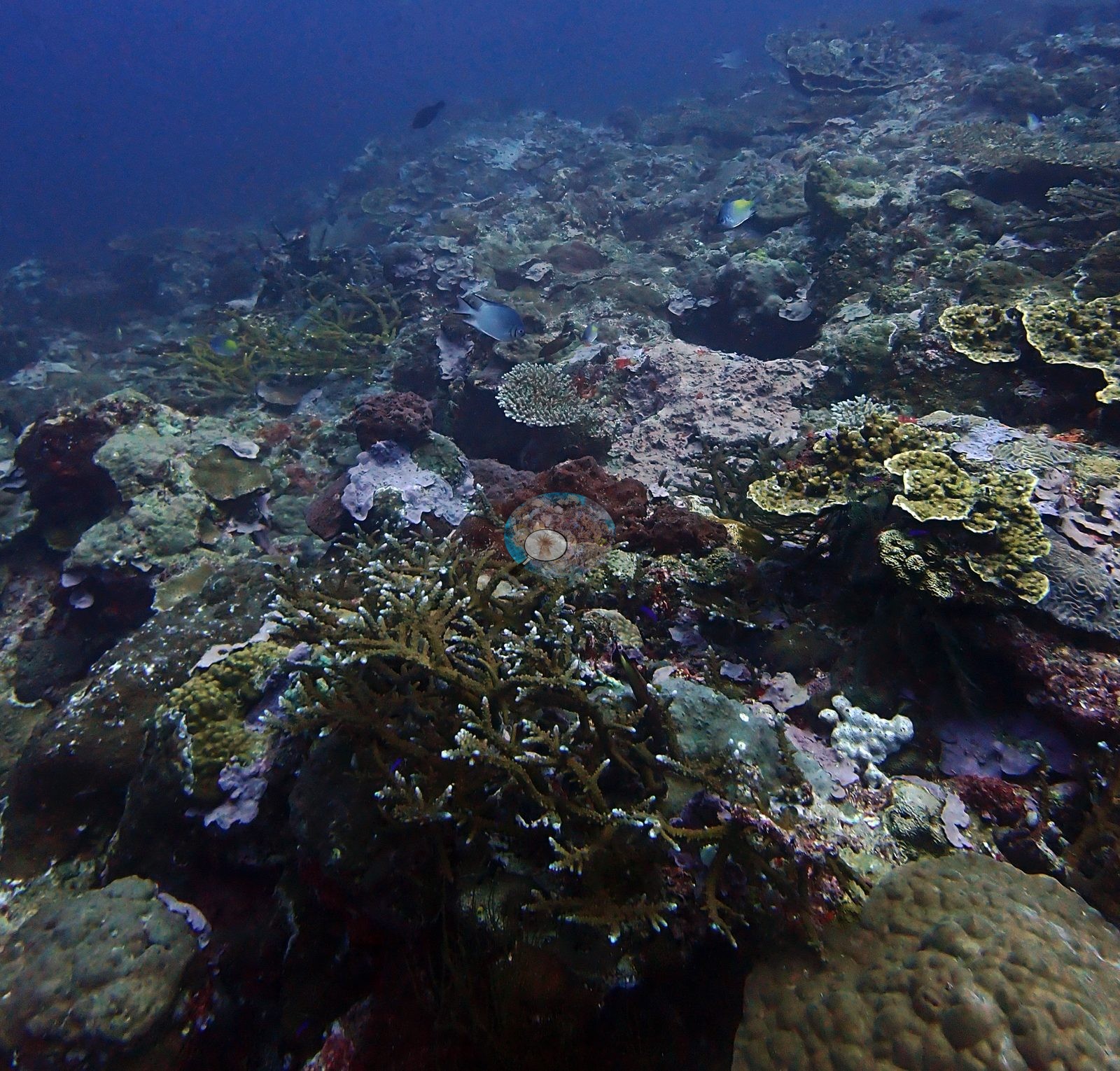
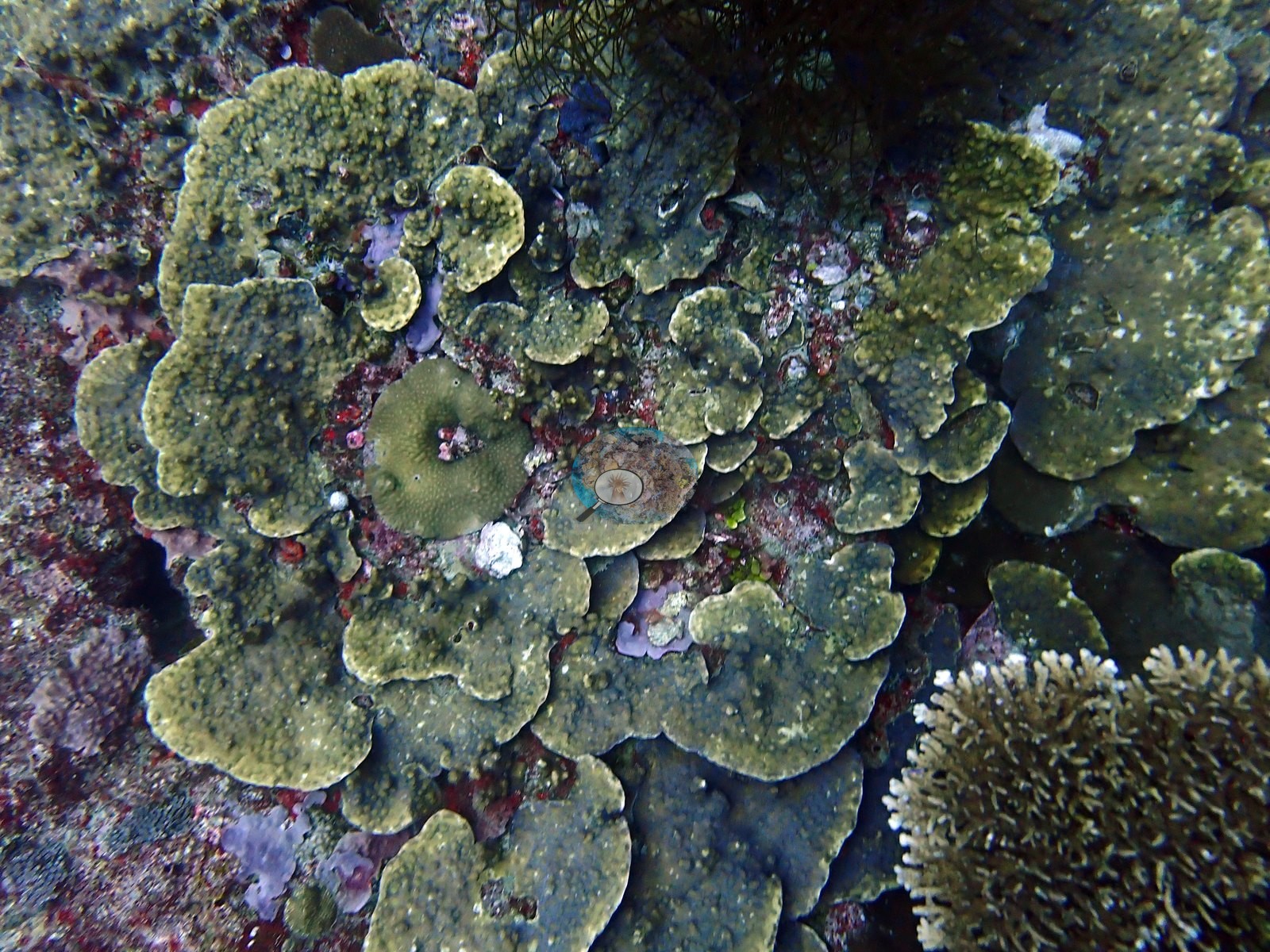
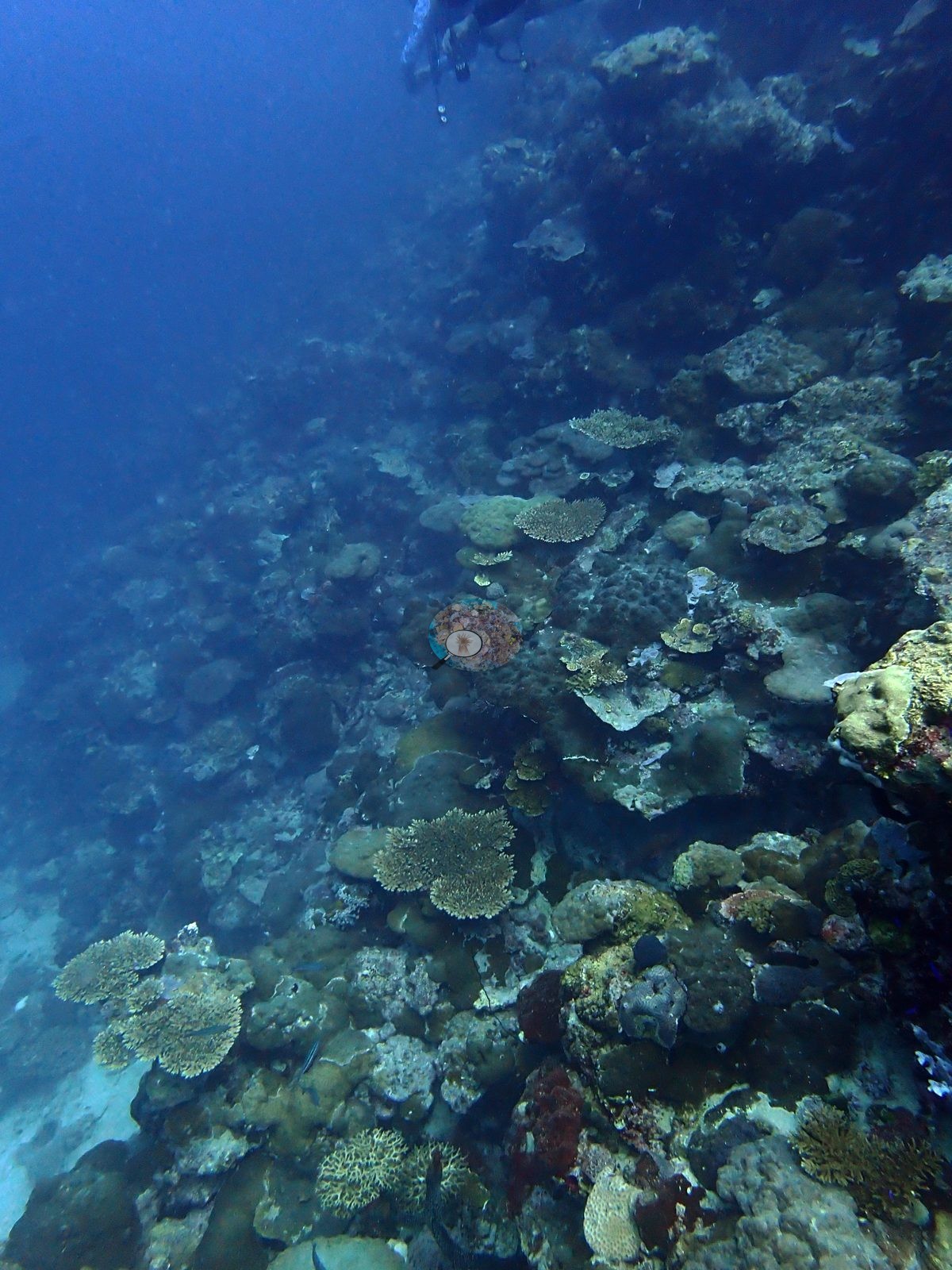
Beneath and around them the pavement is a dense mosaic of plating and foliose colonies stacked in overlapping tiers, low domes, red and purple encrusting sponges, and crustose coralline algae, with the reef top falling away as a steep terraced slope studded with table colonies into blue water (e.g., Image 3, Image 4).
Coral cover
- Reference: Mayfield (2025)
- Data file: (Mayfield, 2025-appendix A)
- CoralNet submission package (accession #5546)
- Published CoralNet point counts give 17% total coral cover (bleached included) against 8.5% algae, with 18% of coral tissue bleached at roughly 20.4 degree-heating-weeks (the published CoralNet point count from Anderson's own paper, most frames annotated by CoralNet's AI, trained and checked by the author).
- This figure carries the provenance of the paper it appears in and is not subject to the CoralSCOP caveats applied elsewhere on this map.
Stressors
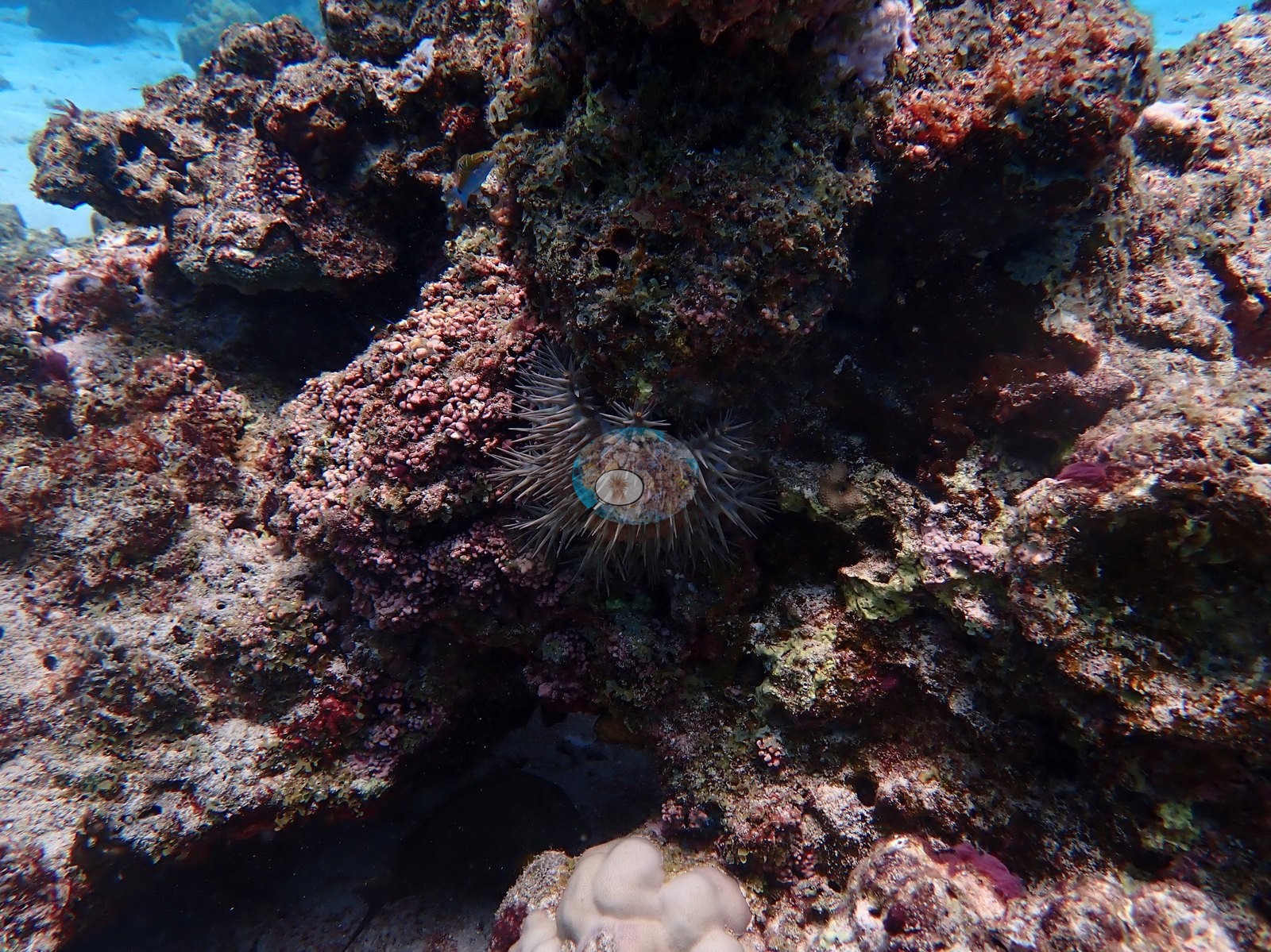
The condition is the story: much of the branching framework in the frame is stark white or bone-pale, plating colonies show blanched leading edges, and the bright tan-and-cream corals stand in sharp contrast to those still fully pigmented. Two of Anderson's frames show a crown-of-thorns starfish on this reef (e.g., Image 7).
Fish and other fauna
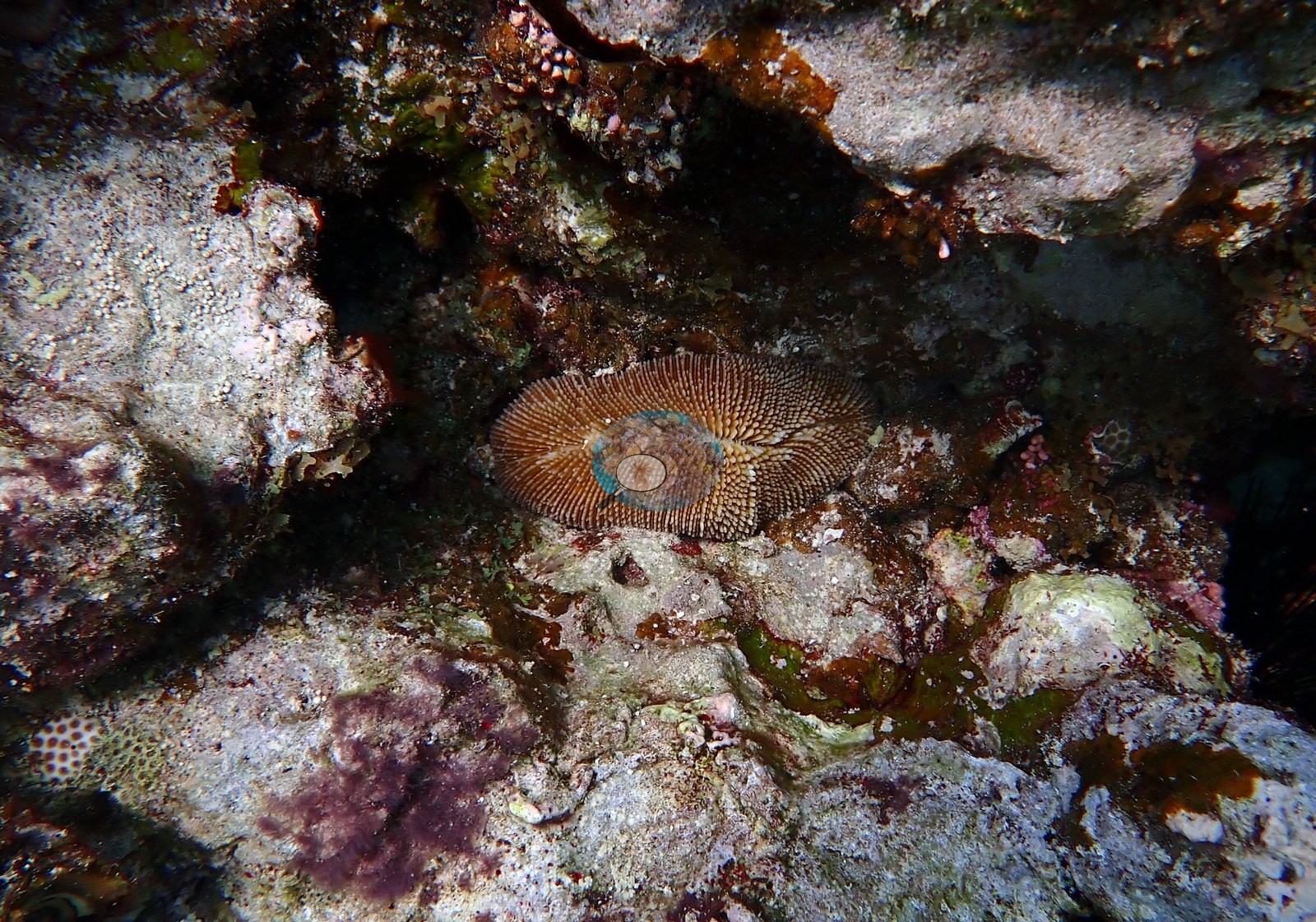
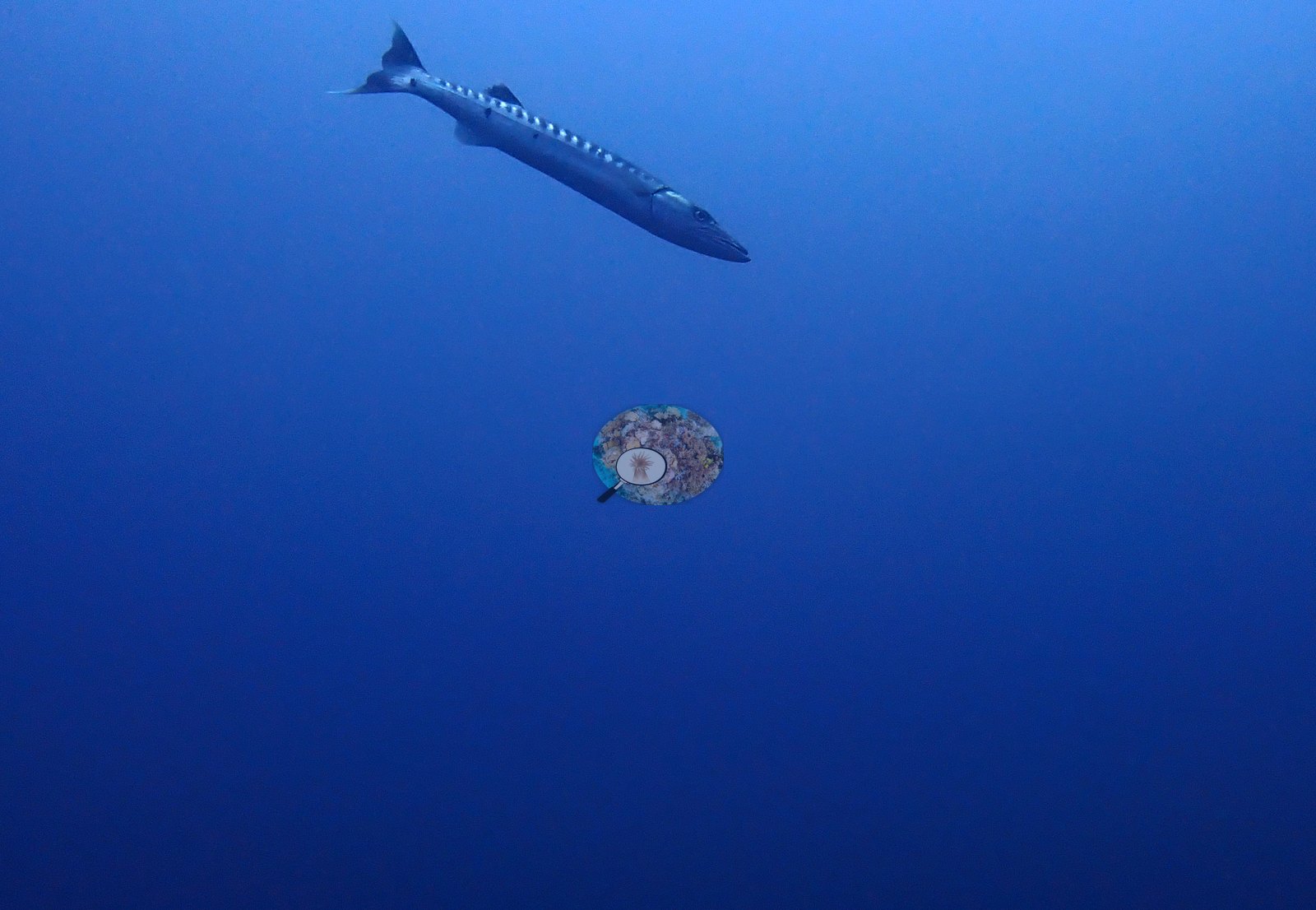
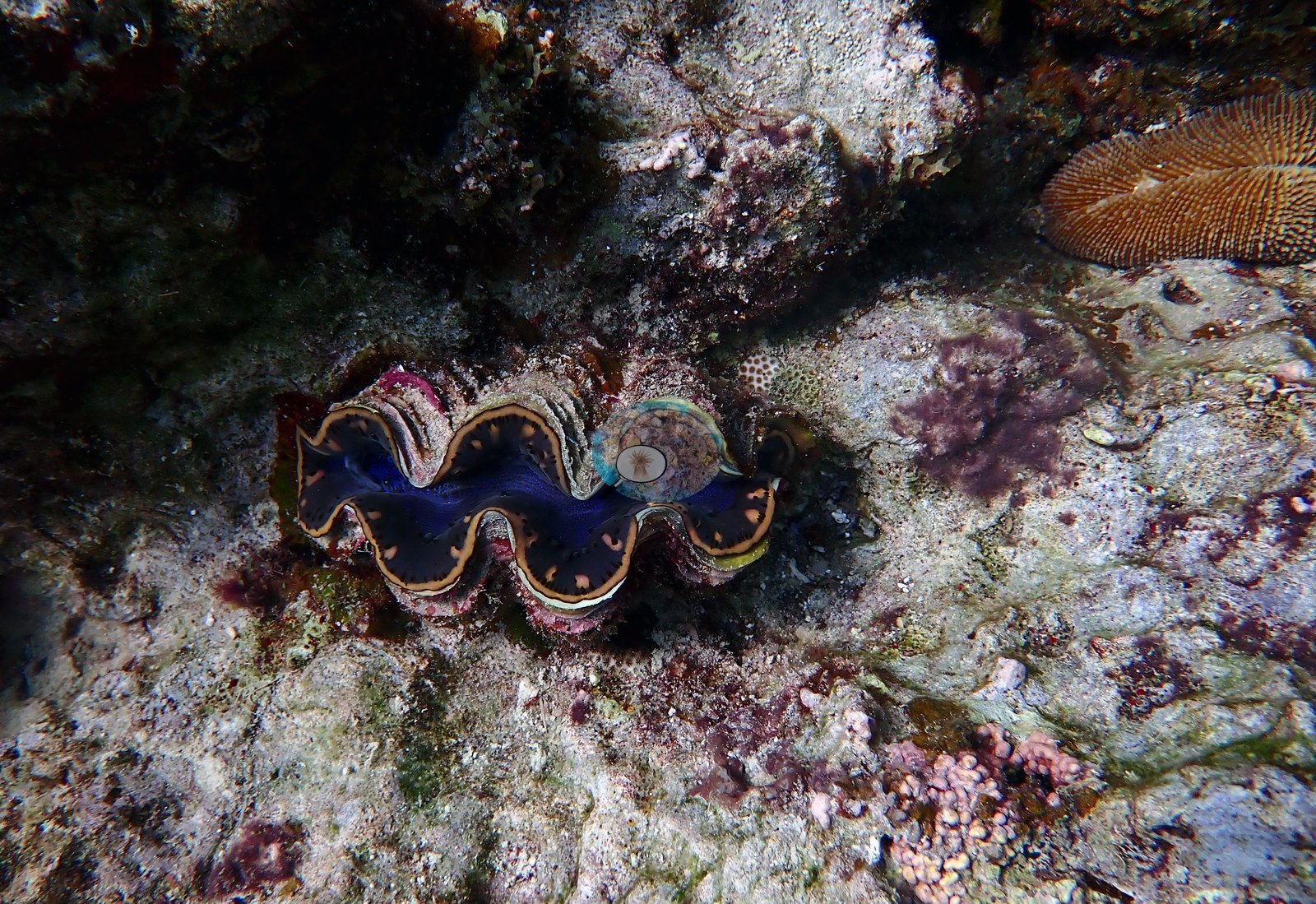
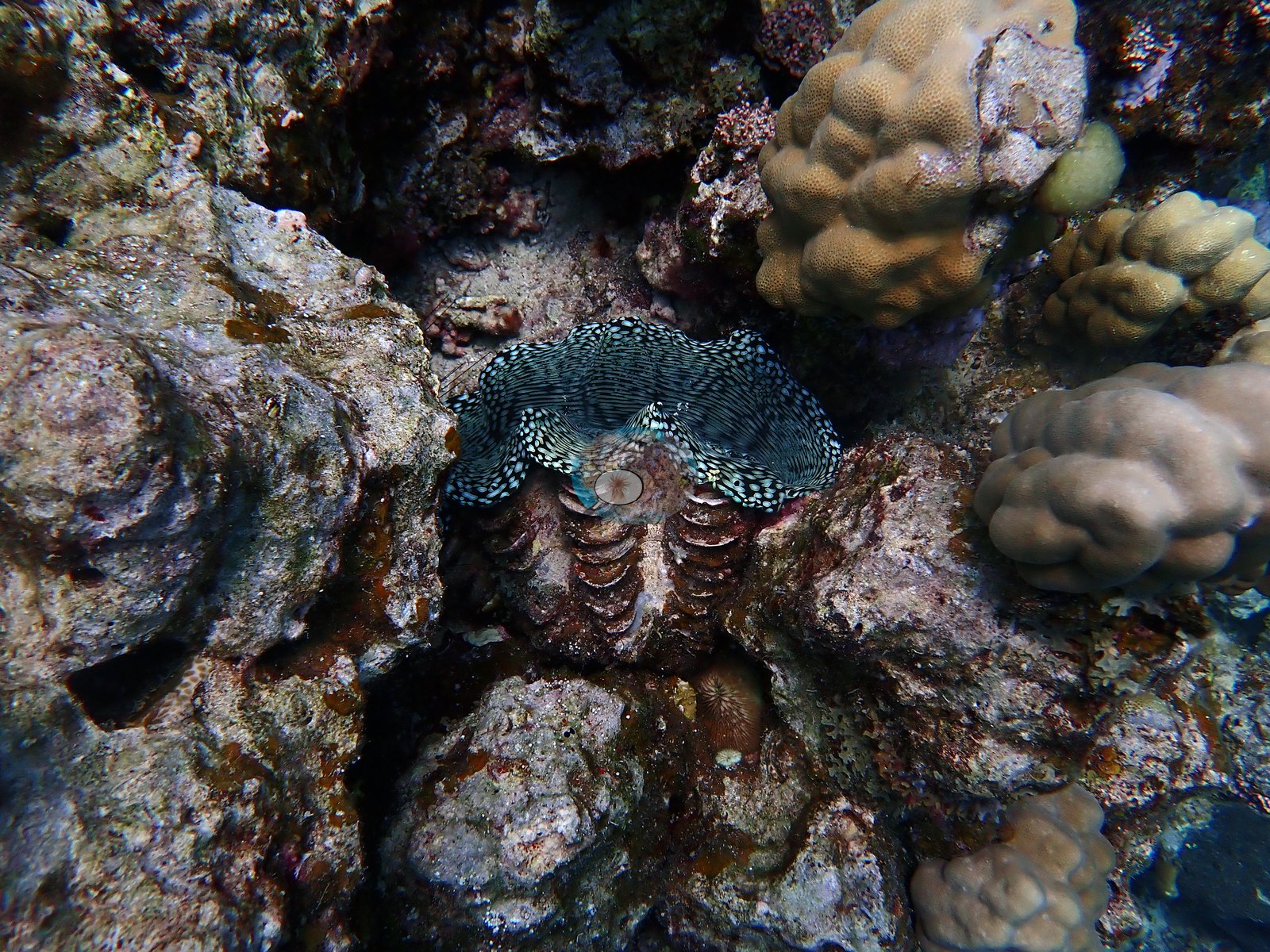
Snapper and small damselfish move over the top. A mushroom coral (Fungia, Anderson's identification) sits loose on the rubble (e.g., Image 8), and the photographs also record barracuda (e.g., Image 10) and giant clams (e.g., Image 11, Image 12).
Comparisons with other data
Apart from our own published survey shown here, we found no other surveys at this site as of 2026. If you would like to share yours, please email us.
Dive record
A second unnamed Al Qunfudah reef nearby, surveyed the same day, 30 August 2024, with Al Qunfudah Diver; the map marker is offset slightly so both sites show, and its position is approximate.
CV model comparison
More info
The reference is this dive site's own published CoralNet point count by the author (Mayfield 2025, Environments 12:248, Appendix A; most frames annotated by CoralNet's AI, trained and checked by the author). The computer-vision rows are this site's own values: Claude is a blind point count of all of the site's edited photographs, and CoralSCOP is the site's finished survey of its edited photographs. They are on different frame sets from the published count, a row under 30 frames is indicative only, and no computer-vision method yet estimates coral cover accurately on new images.| Method | Hard coral cover (%) | Photos (n) ± SE |
|---|---|---|
| Published point count (CoralNet-assisted) | 16.6 | |
| CoralSCOP edited | 24.4 | n = 70 |
| Claude (edited photos) | 11.2 | n = 86 · SE 1.6 |
The two computer-vision methods disagree by 13.2 pp (11.2–24.4%) and read on both sides of the published point count (16.6%); the headline is the published point count because it is the site's published value (CoralNet-assisted: most frames were annotated by CoralNet's AI, trained and checked by the author).
See a more detailed, stand-alone version of this table.
Data & links
All images from Coral Reef Diagnostics. Data are from Coral Reef Diagnostics.
© Coral Reef Diagnostics.