
Saudi Red Sea - unnamed site 1 (Al Qunfudah)
Part of the regional summaries: Saudi Arabia and Red Sea
More info
Al Madinah and Makkah (NOAA CRW virtual station)This unnamed reef off Al Qunfudah, in southern Saudi Arabia, is an old, structurally complex framework carrying only a thin living skin of coral — mostly shingled plating and foliose corals with pale leading margins, plus a few clean table and staghorn Acropora. Published cover is a modest 16%, with 14% of coral tissue bleached despite accumulated heat stress of 20.4 DHW.
هذه الشعاب غير المسماة قبالة القنفذة، في جنوب السعودية، هيكل قديم معقد البنية لا يحمل إلا جلدًا حيًا رقيقًا من المرجان — معظمه مرجانيات صفائحية متراكبة وورقية ذات حواف أمامية شاحبة، إضافة إلى بضع Acropora طاولية وقرون أيل سليمة. والتغطية المنشورة متواضعة عند 16%، مع ابيضاض 14% من نسيج المرجان رغم إجهاد حراري متراكم قدره 20.4 DHW.
ترجمة هذا الملخص بالذكاء الاصطناعي؛ النص الإنجليزي هو المعتمد.
One other CRD dive site with its own page within 5 km shown in orange — click a marker to open its page.
6 of the 17 photographs on this page are shown beside the text that discusses them under "Site description" below.
Site description
Setting
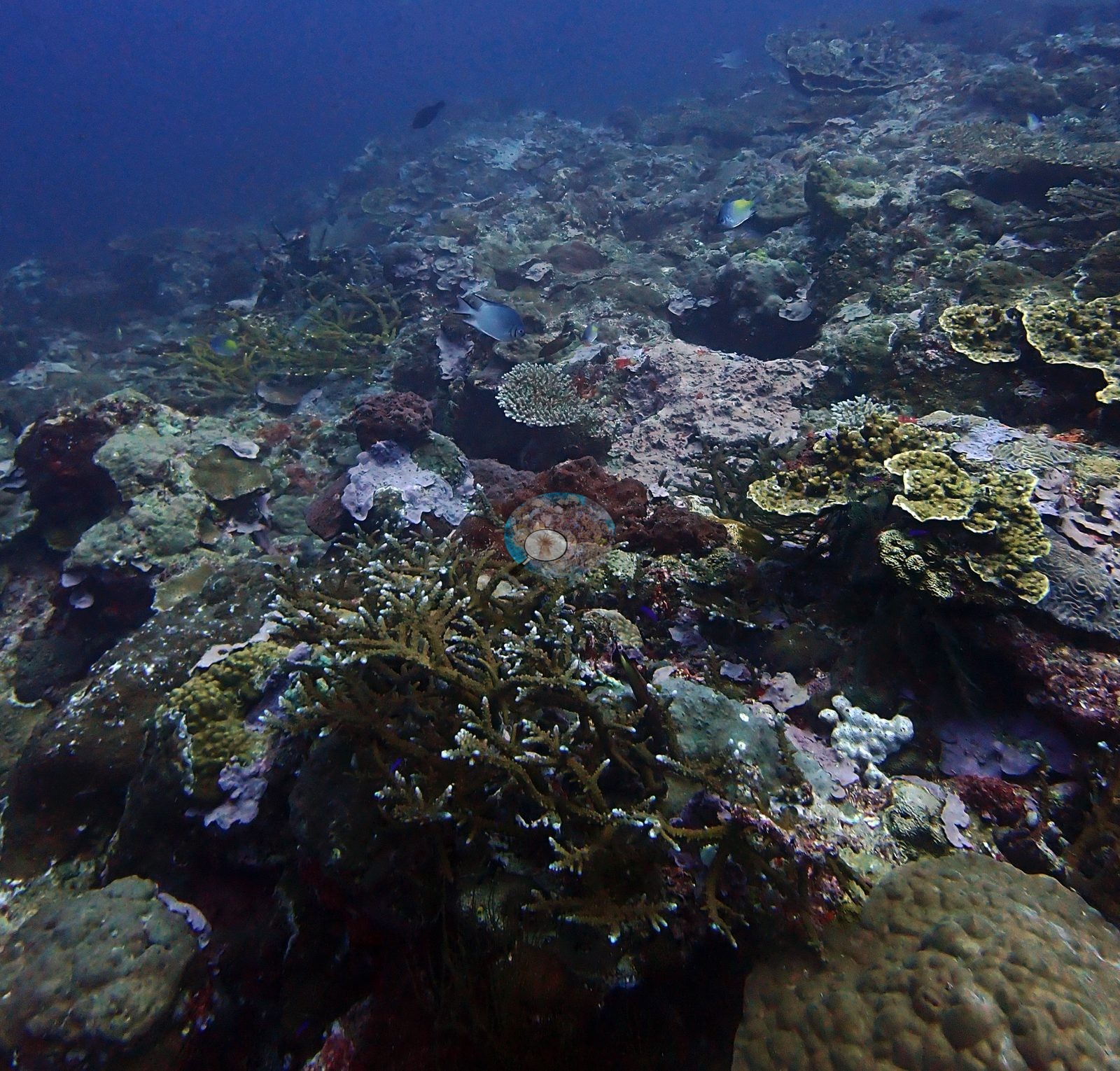
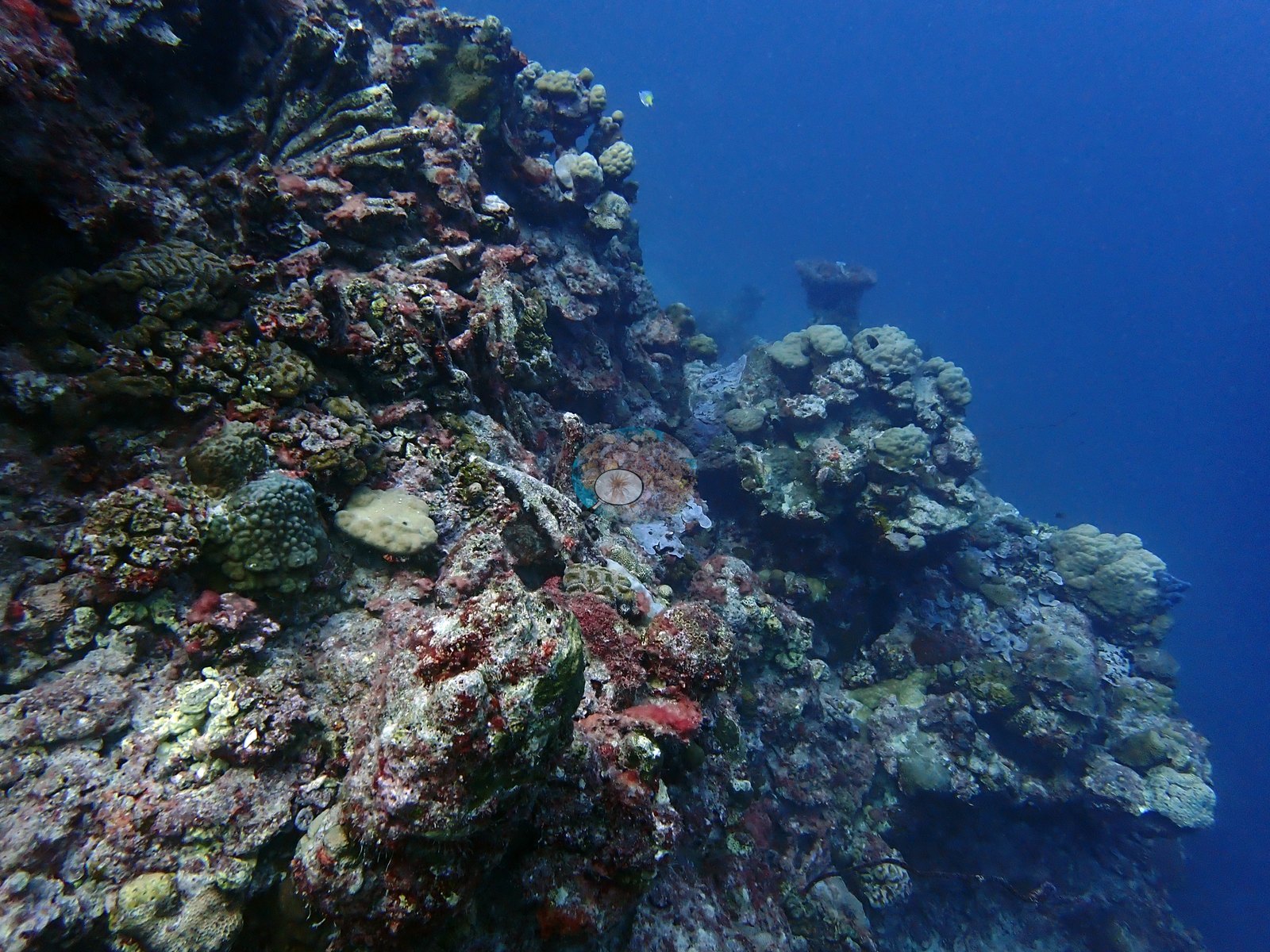
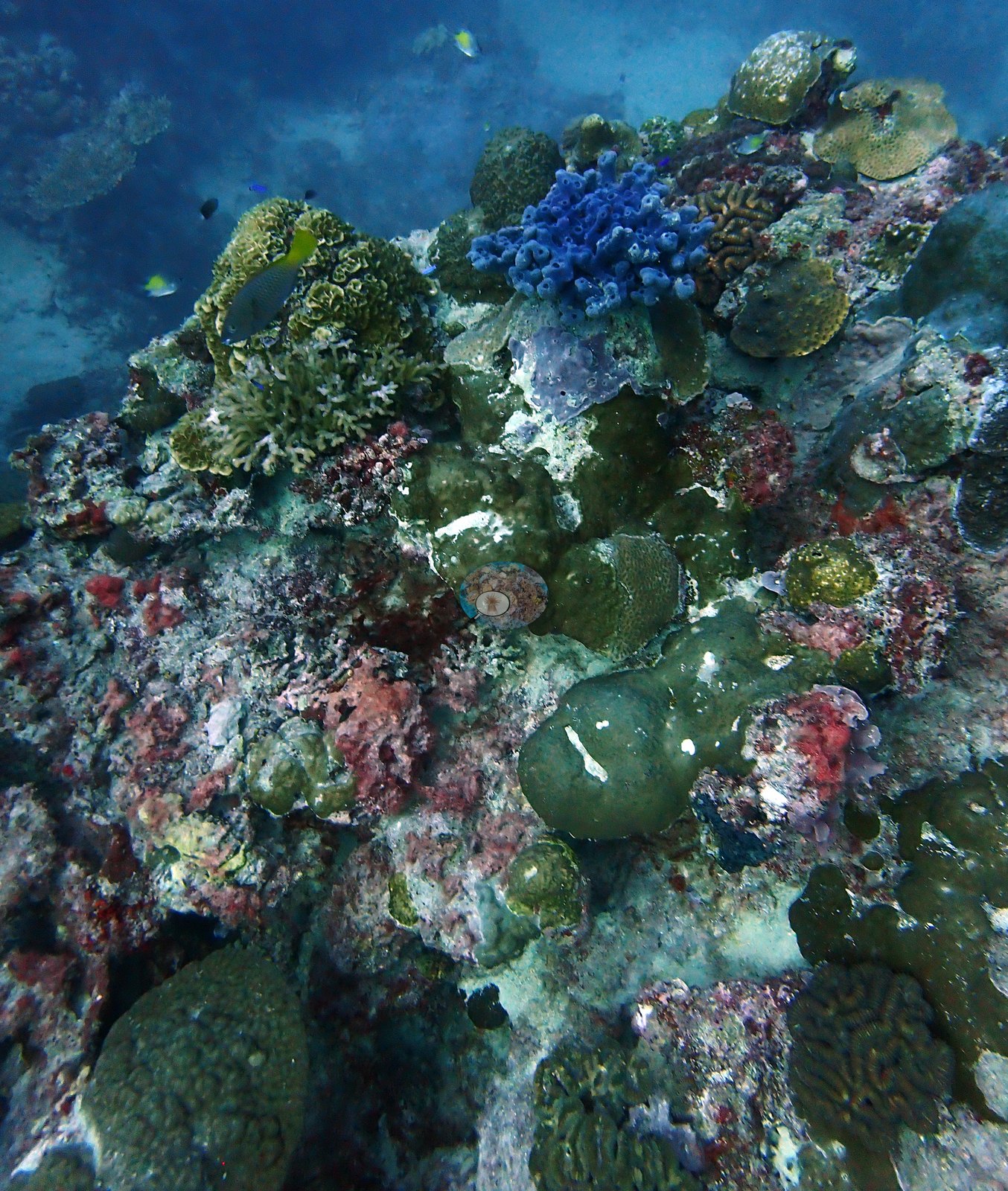
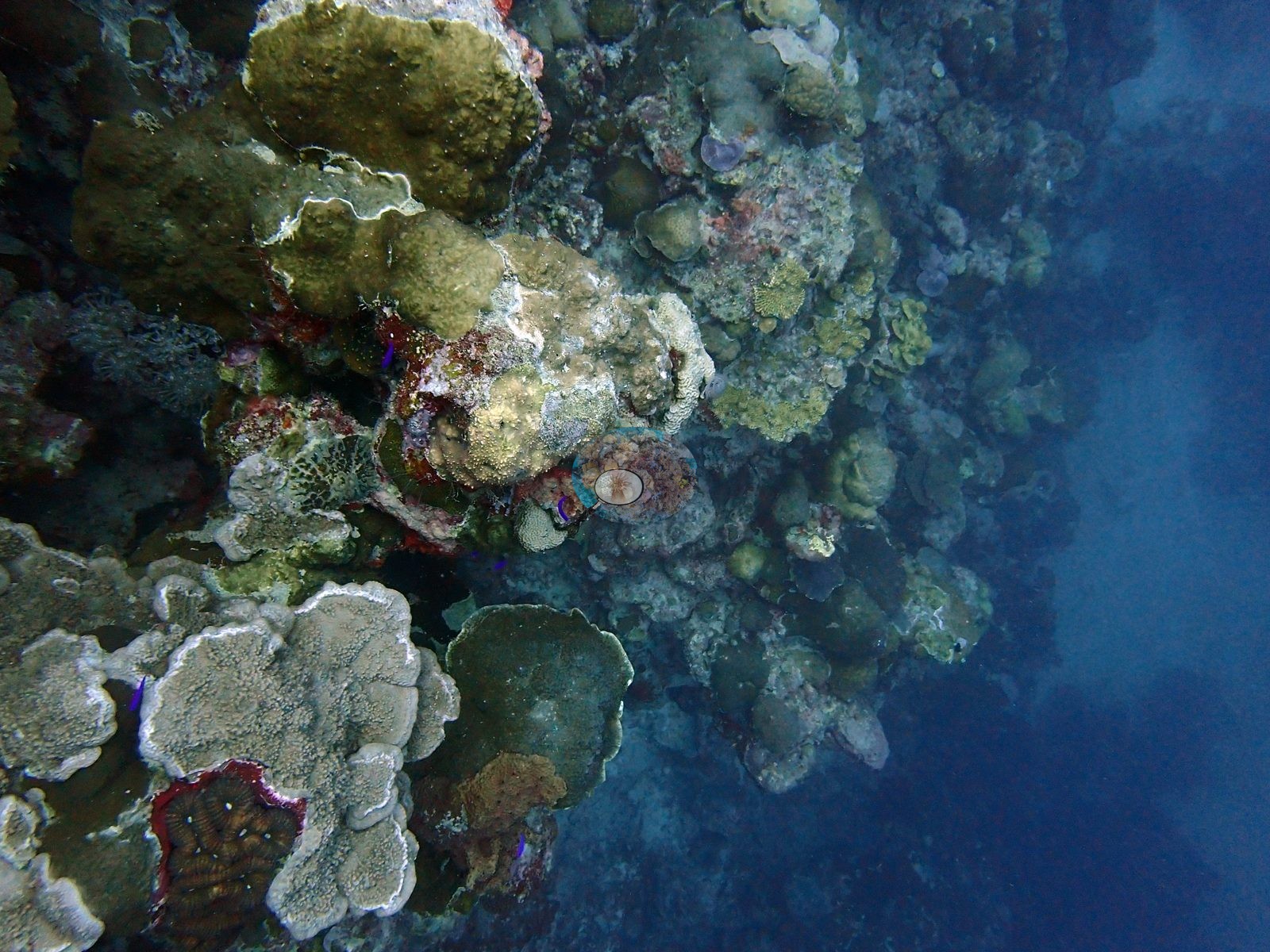
An unnamed reef off Al Qunfudah on the southern Saudi Red Sea coast, surveyed 30 August 2024 in partnership with Al Qunfudah Diver during the 2023-24 bleaching event. On the seaward side the terrace ends abruptly at a steep, coral-studded drop-off into blue water (e.g., Image 3).
General benthic features
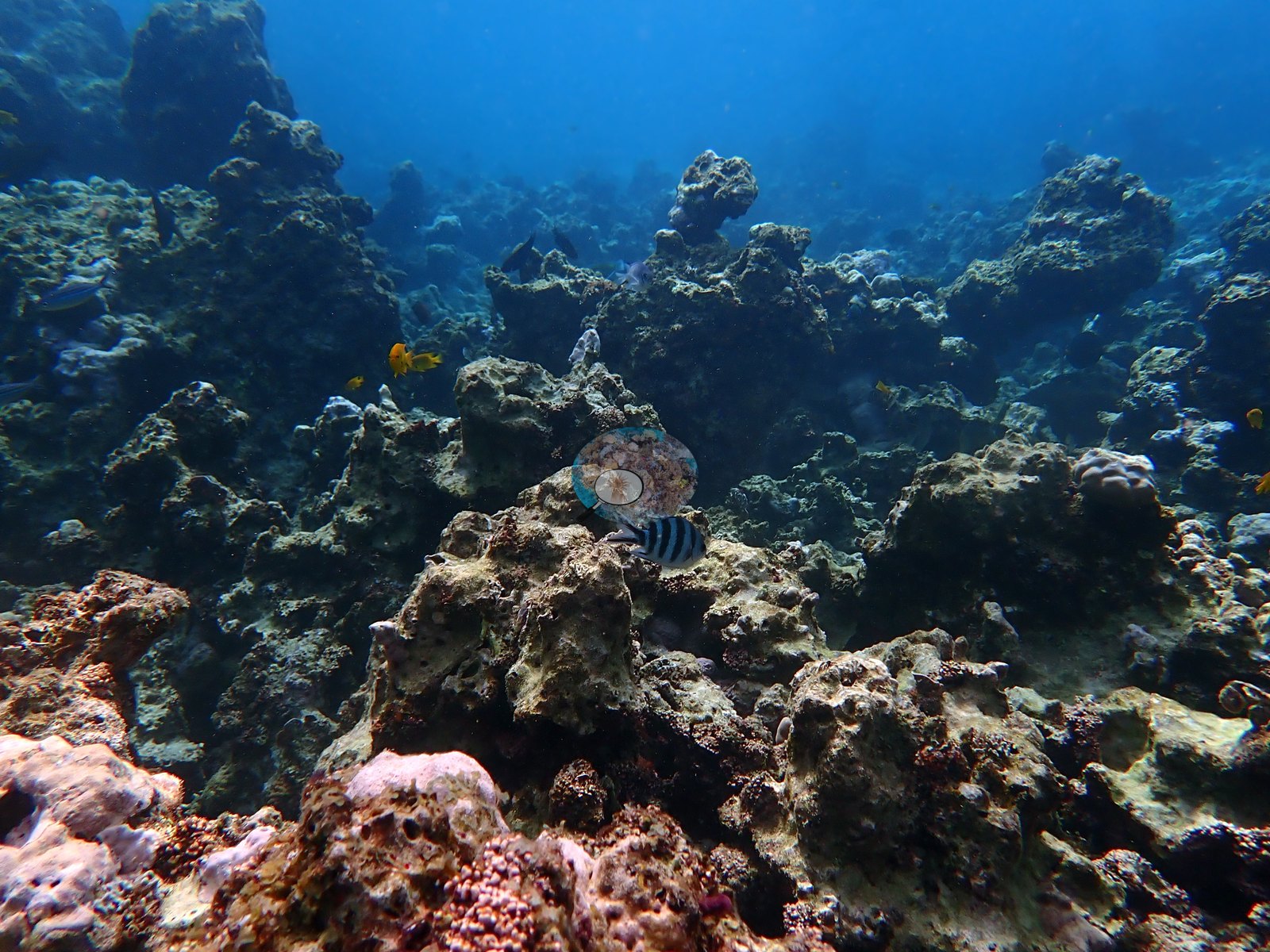
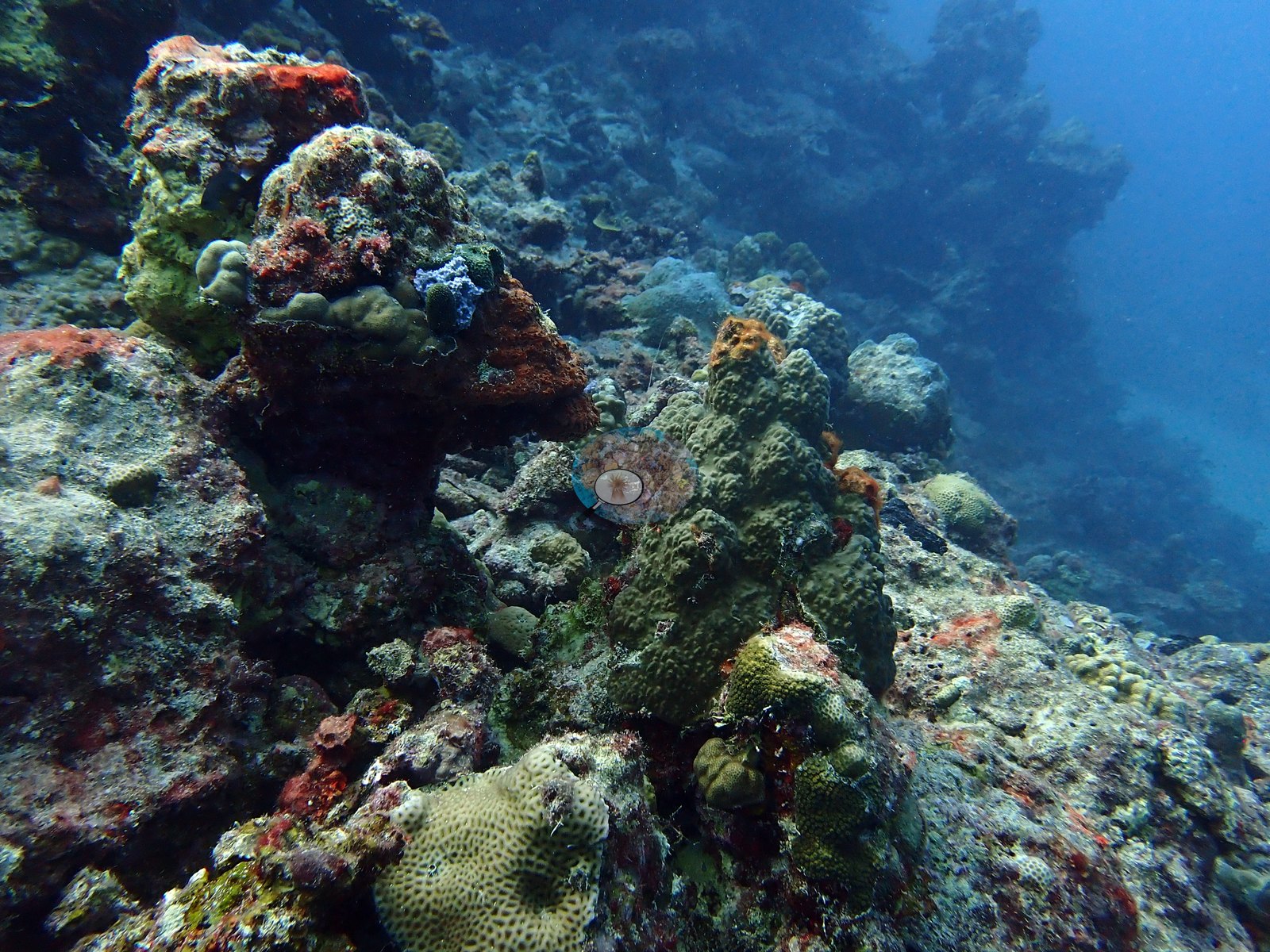
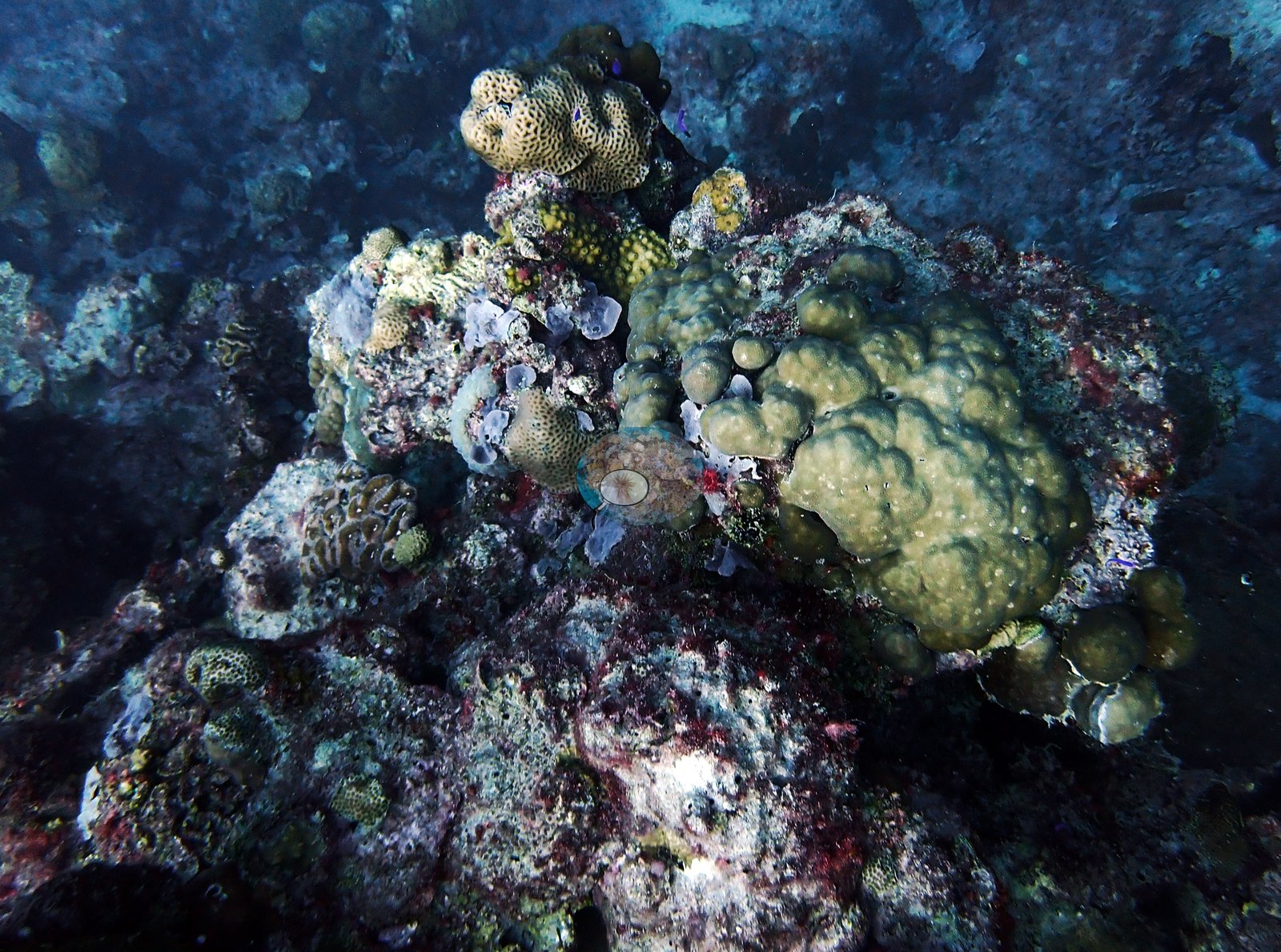
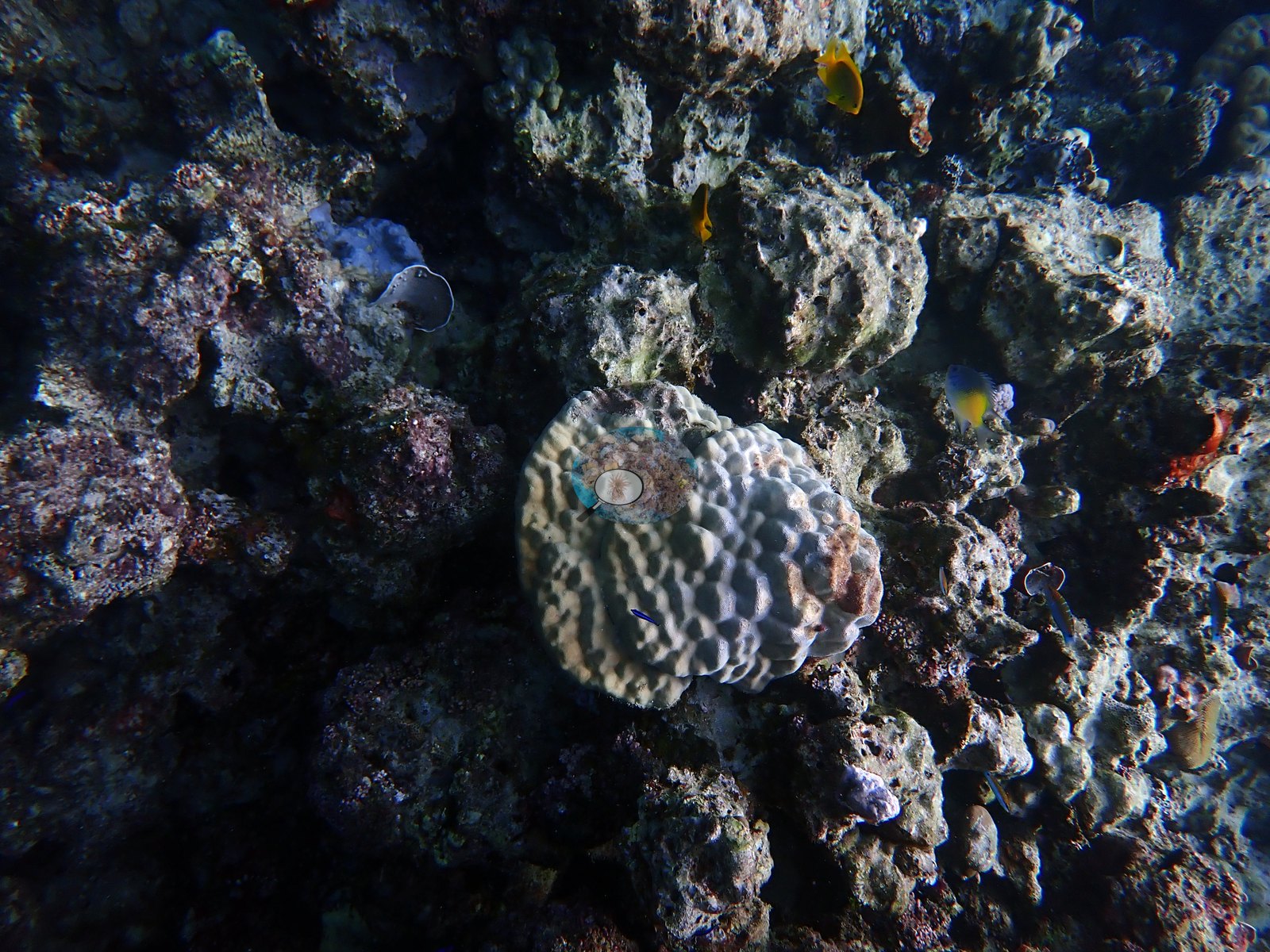
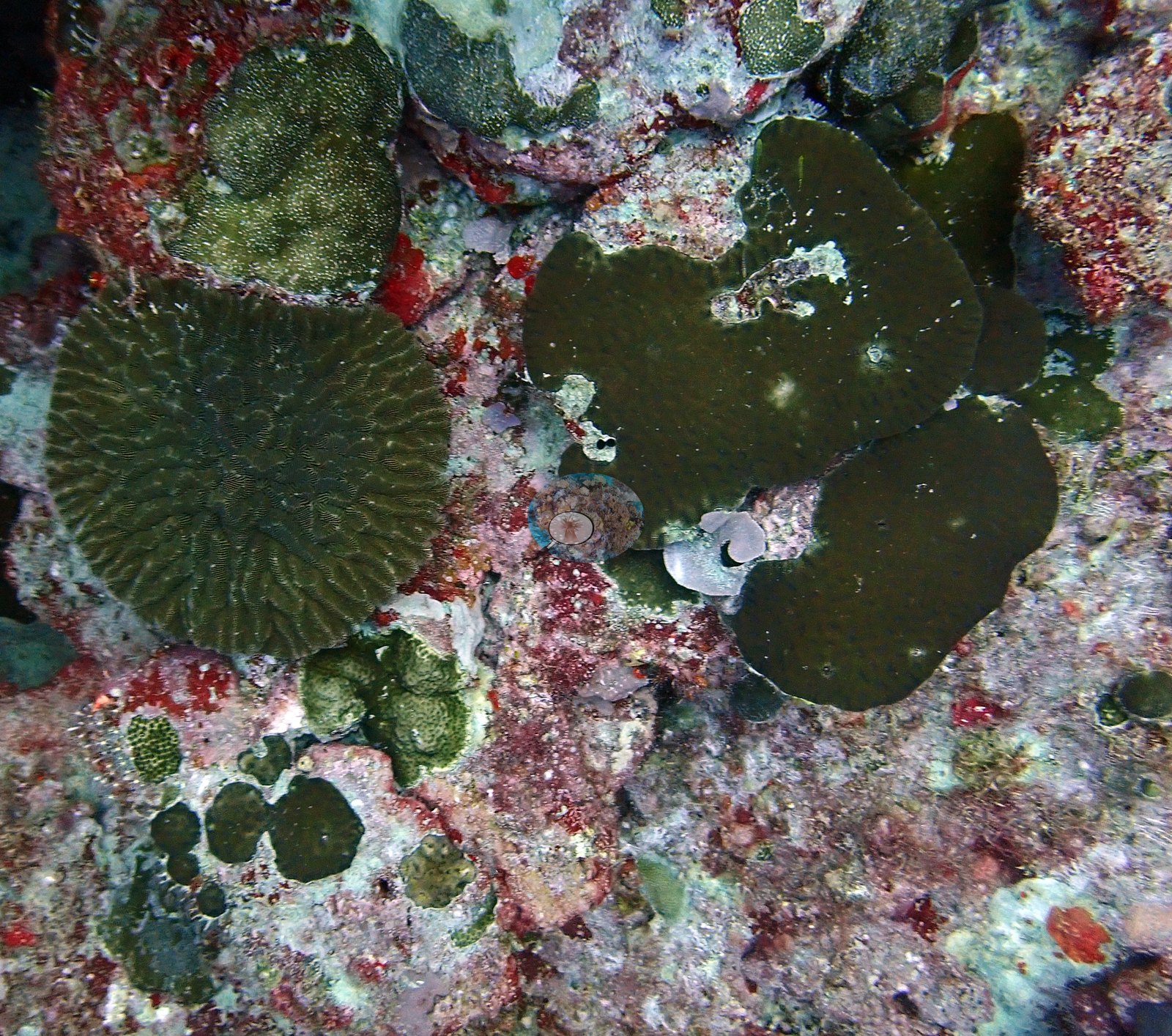
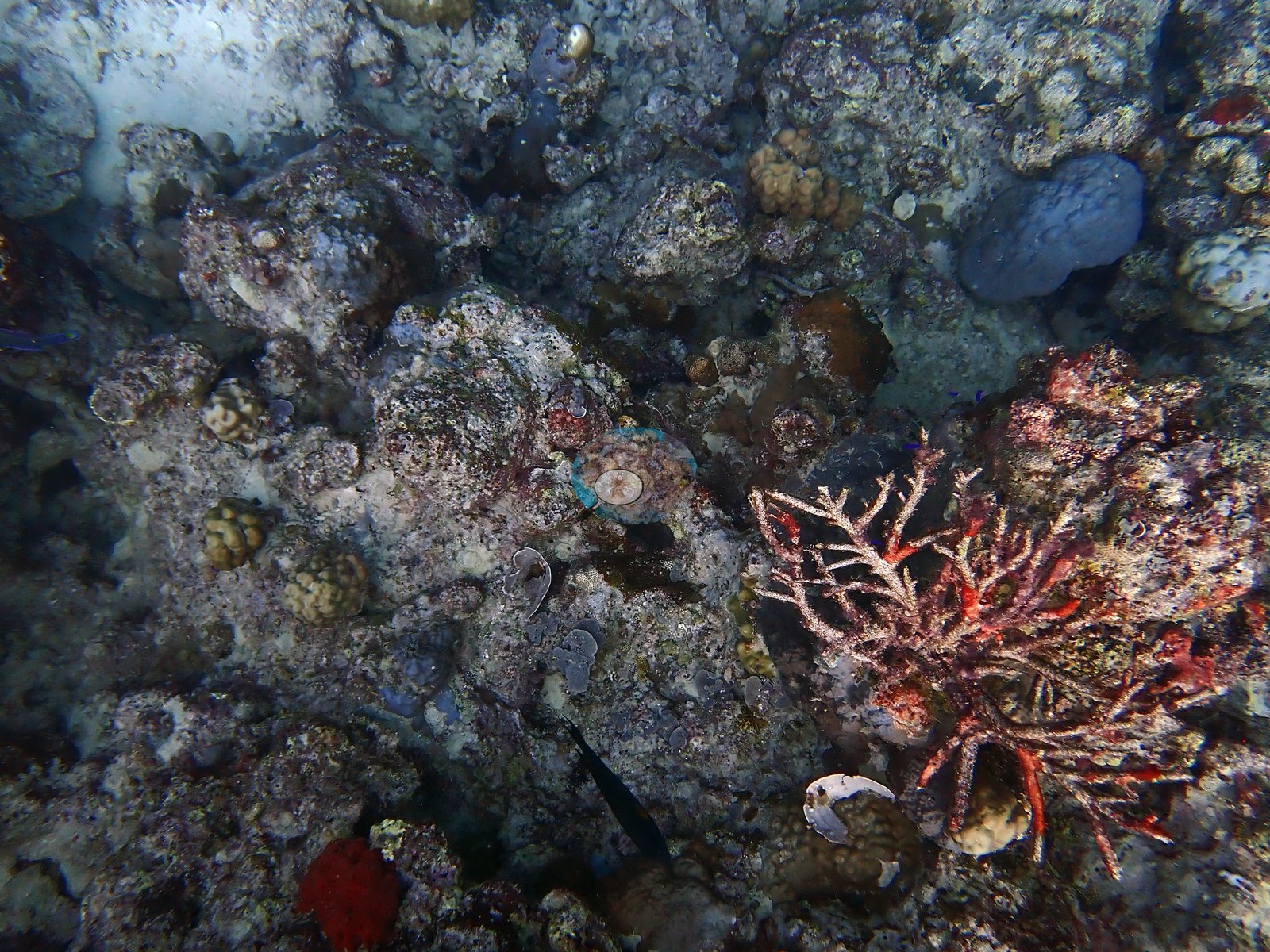
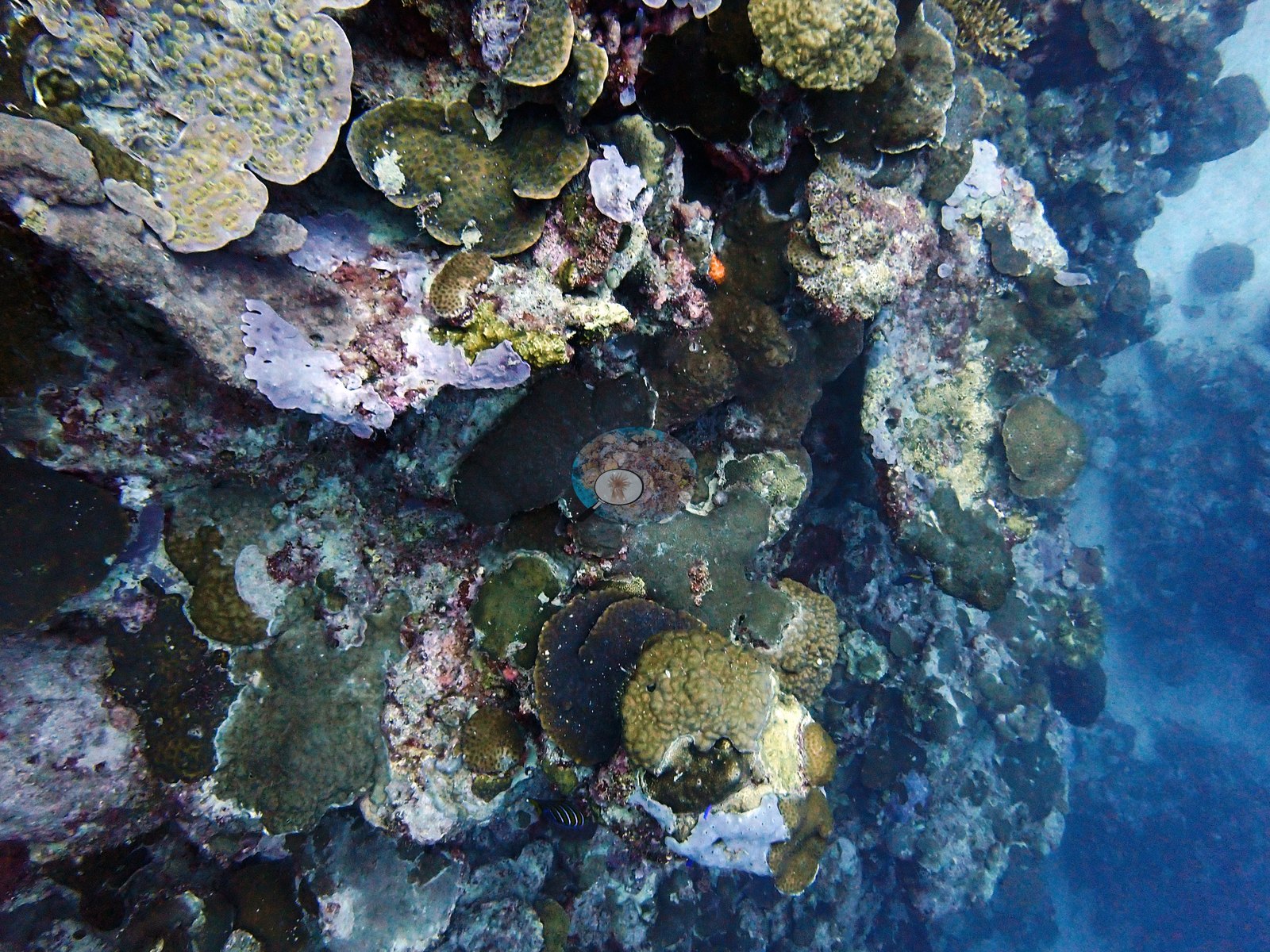
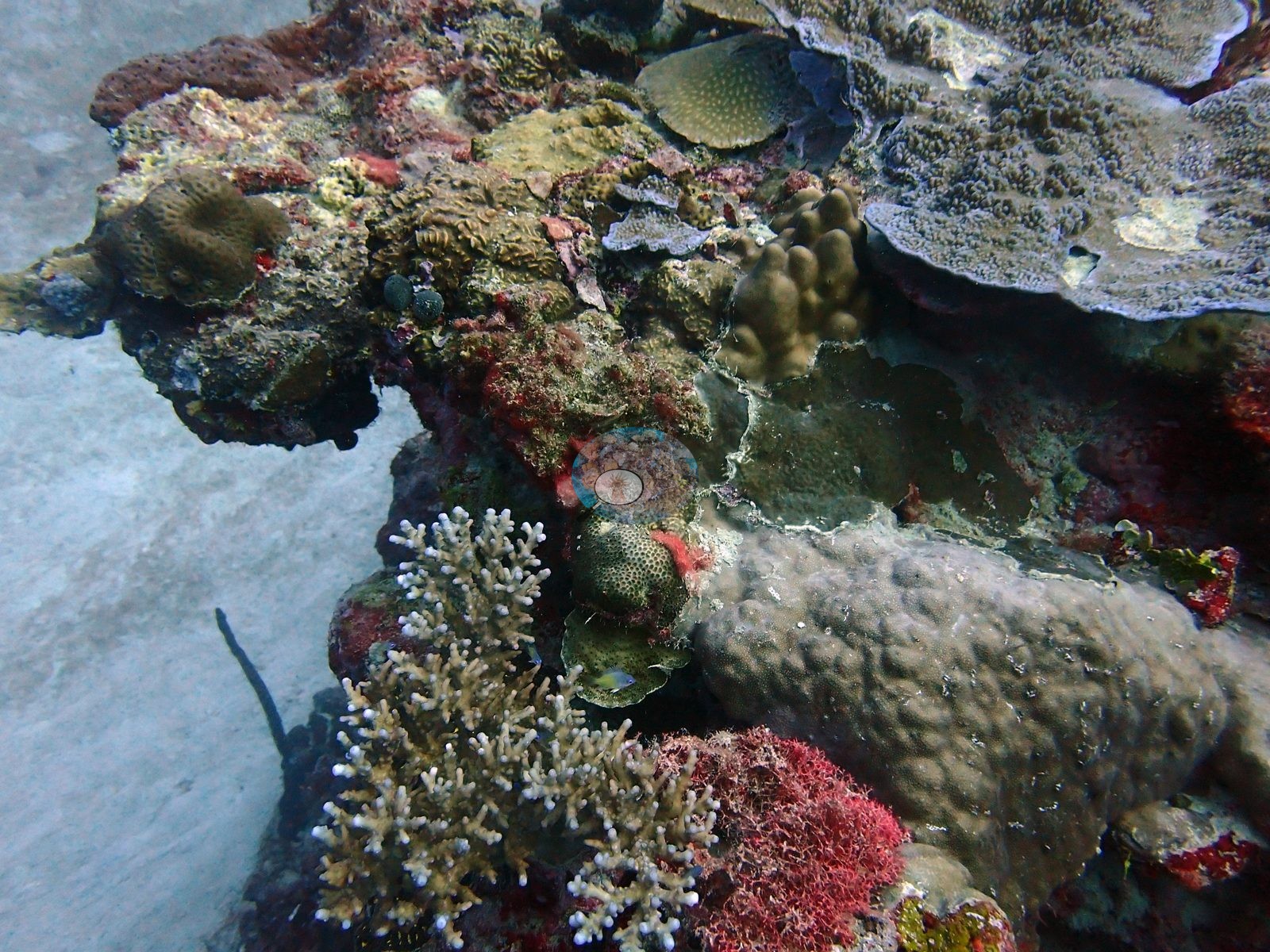
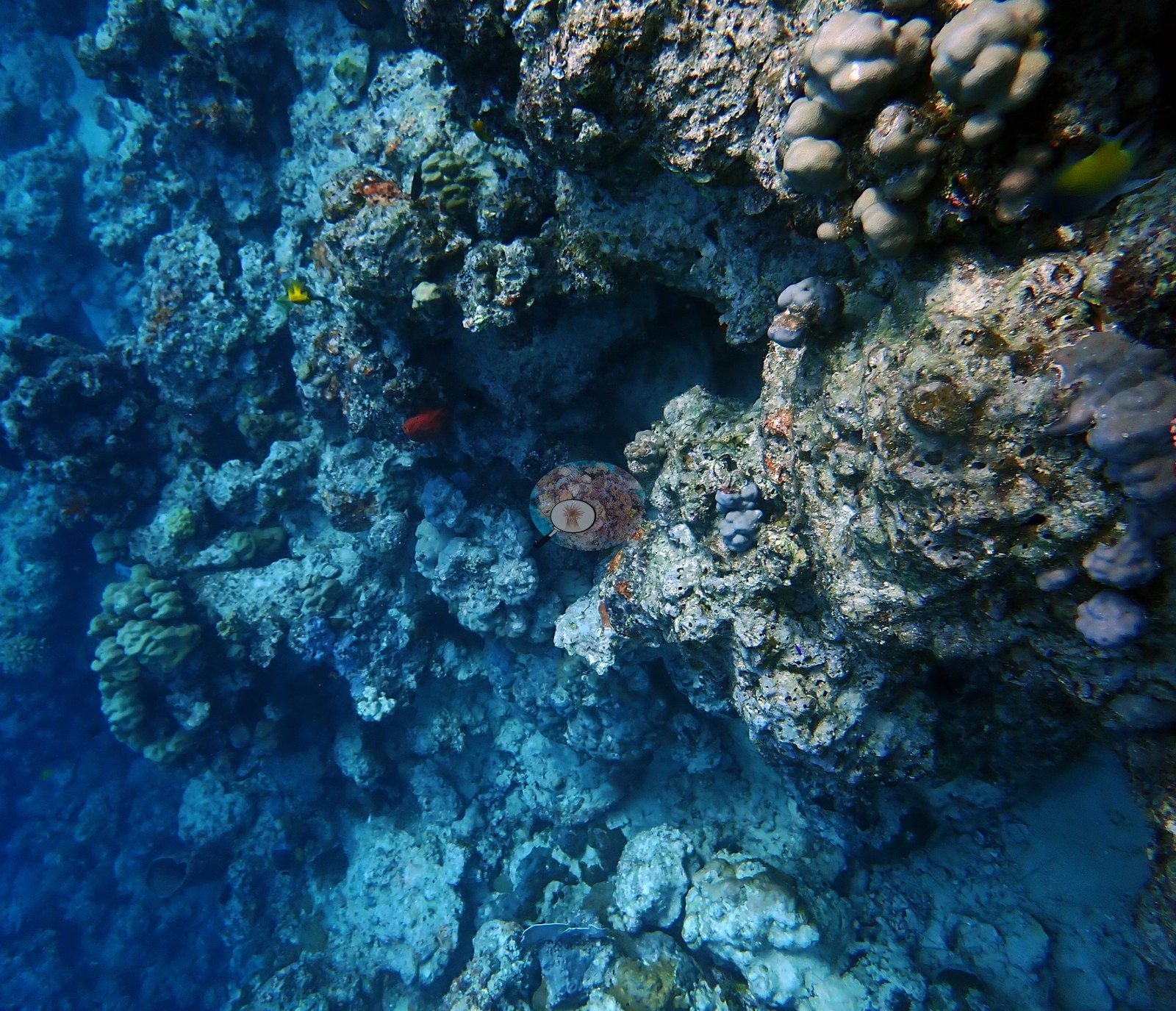
The reef reads as an old, structurally complex framework carrying a thin living skin: consolidated rock and coralline-crusted rubble, sponges, and red encrusting algae, with living colonies scattered rather than continuous (e.g., Image 4, Image 8).
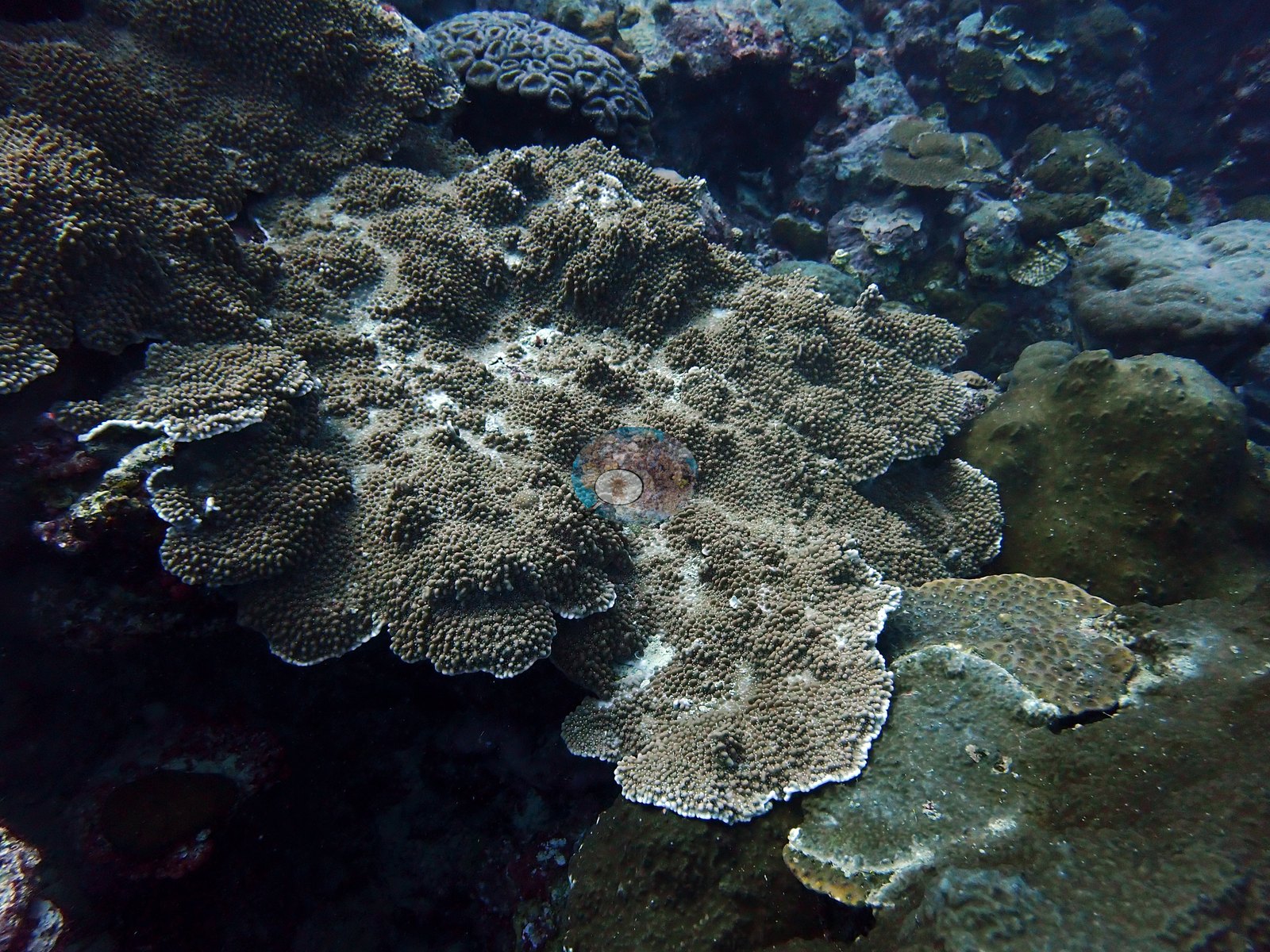
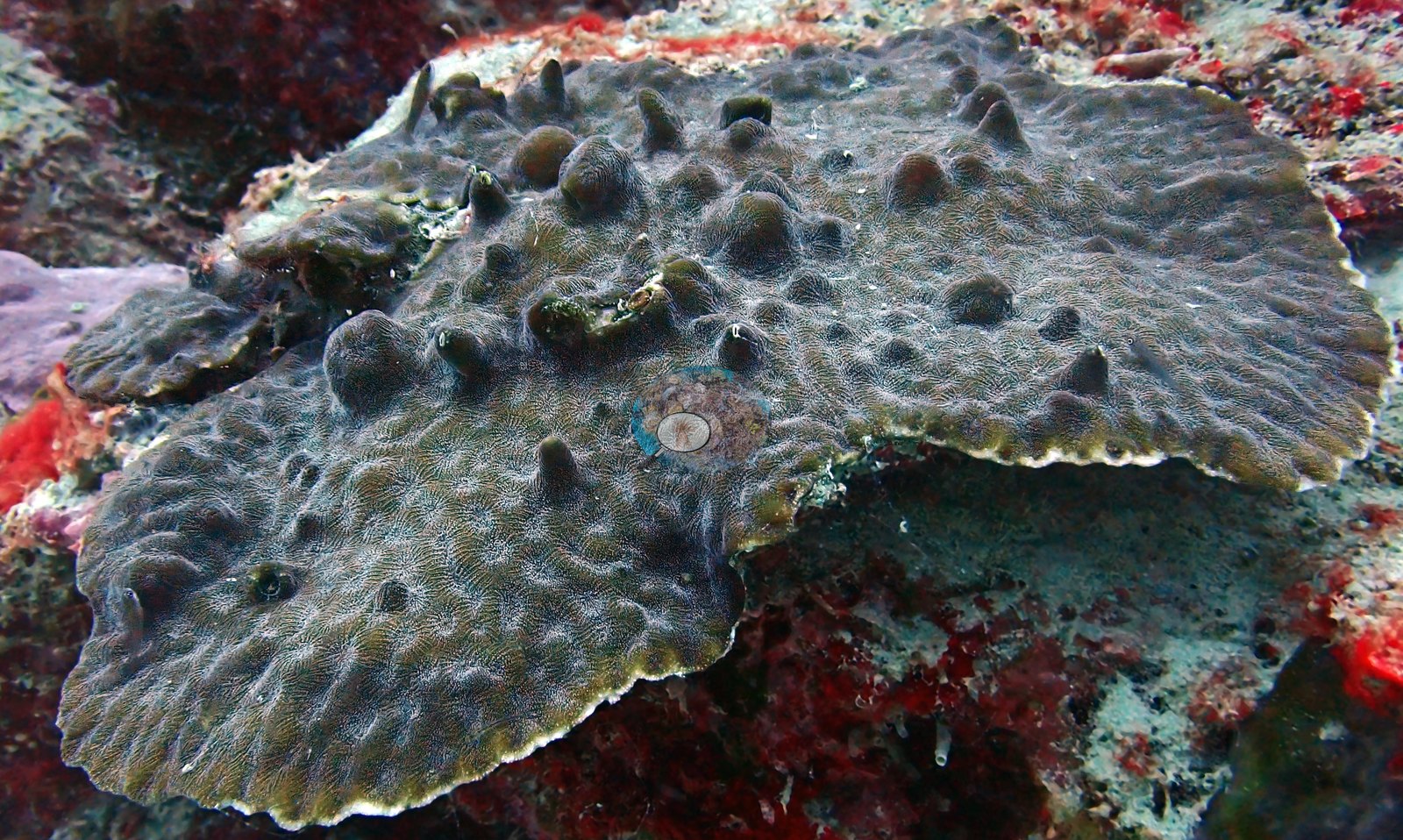
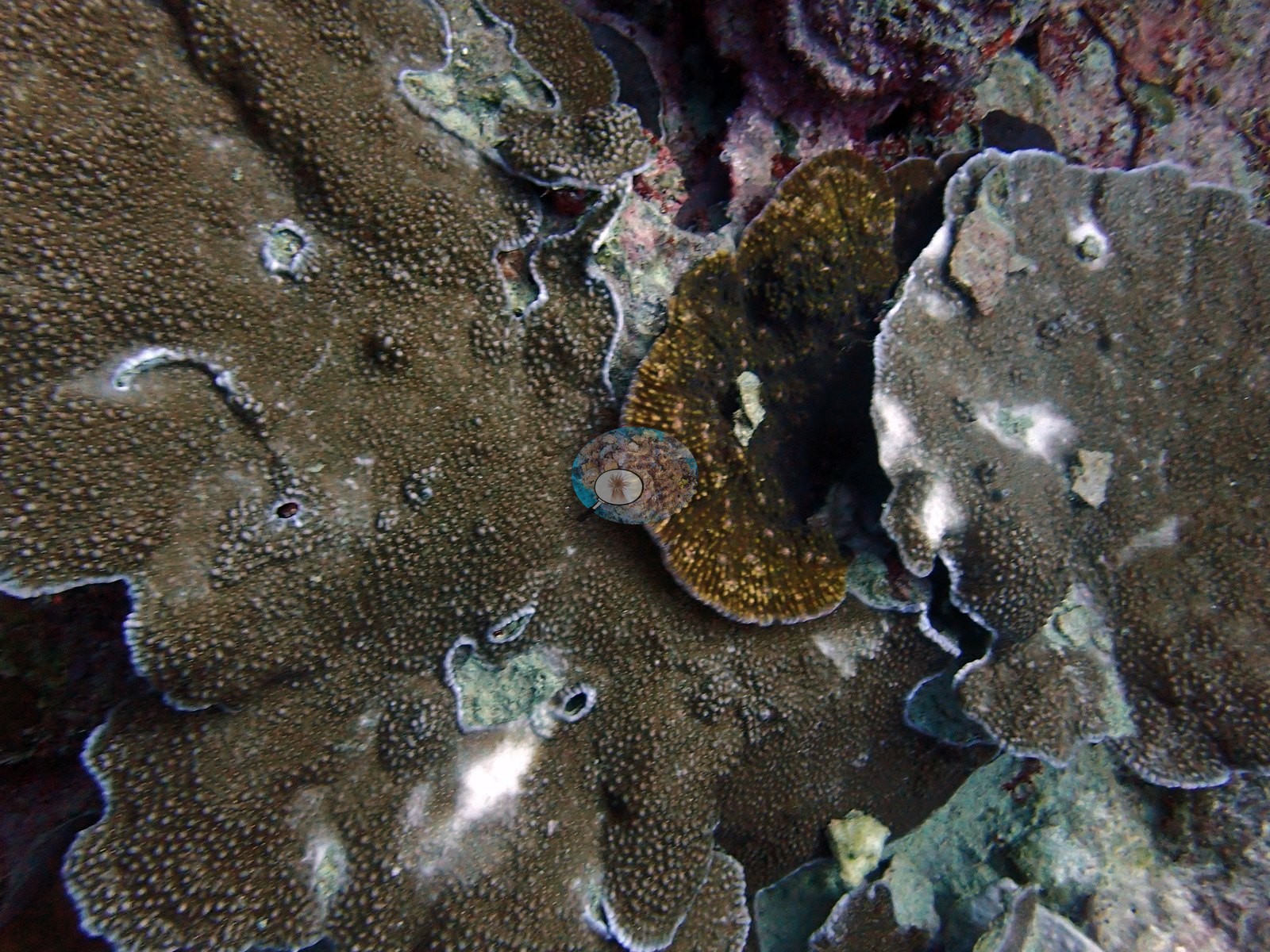
Plating and foliose corals stacked in shingled tiers are the commonest live form, many of them with pale leading margins; broad low domes, knobby massives, and a few clean table and staghorn Acropora colonies fill in around them (e.g., Image 7).
Coral cover
- Reference: Mayfield (2025)
- Data file: (Mayfield, 2025-appendix A)
- CoralNet submission package (accession #5546)
- Published CoralNet point counts give 16% total coral cover (bleached included) against 9% algae, with 14% of coral tissue bleached at about 20.4 degree-heating-weeks.
- That is the published CoralNet point count from Anderson's own paper (most frames annotated by CoralNet's AI, trained and checked by the author).
- This figure carries the provenance of the paper it appears in and is not subject to the CoralSCOP caveats applied elsewhere on this map.
Stressors
No crown-of-thorns starfish (COTS) or other corallivores were evident.
Fish and other fauna
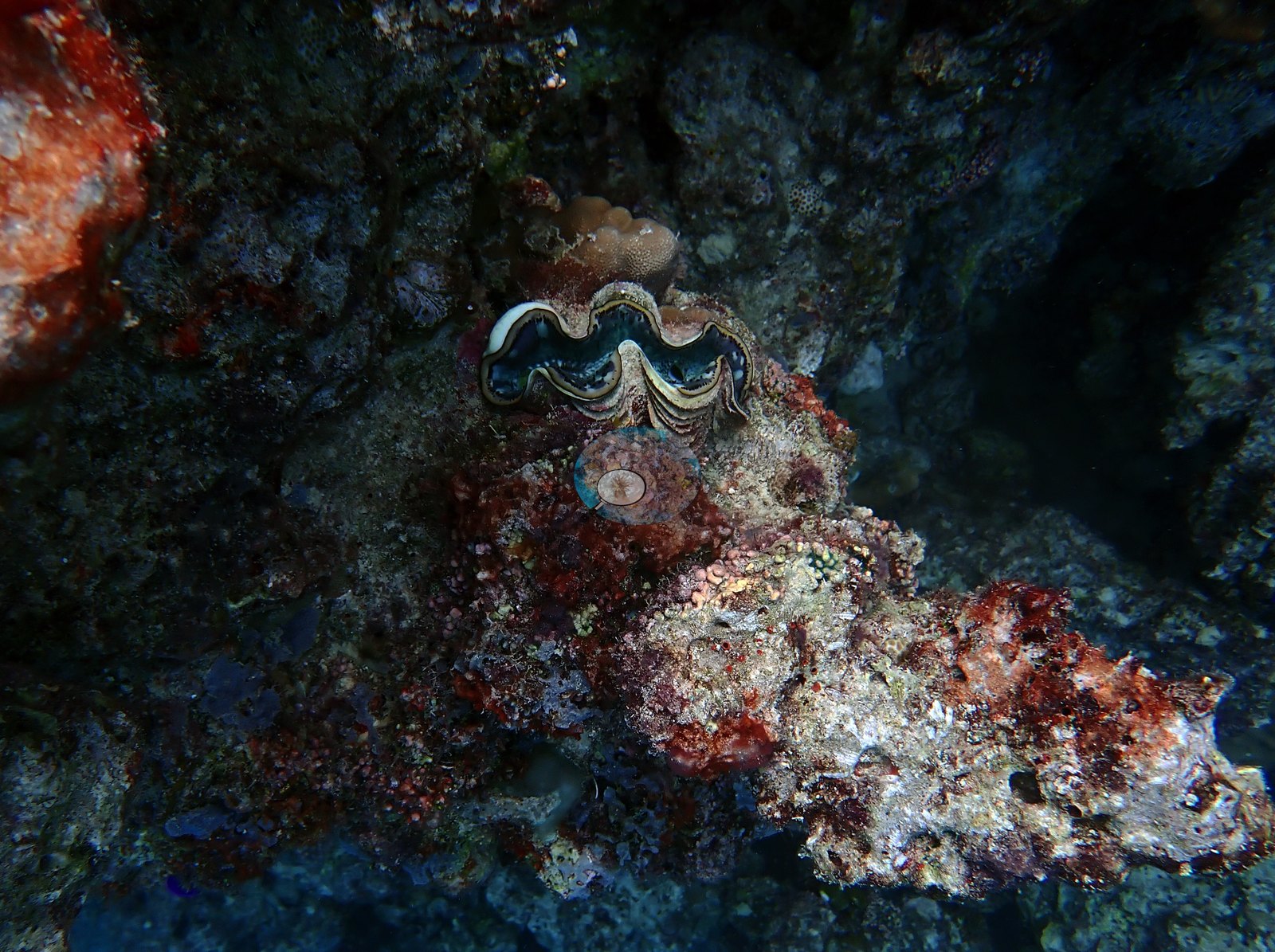
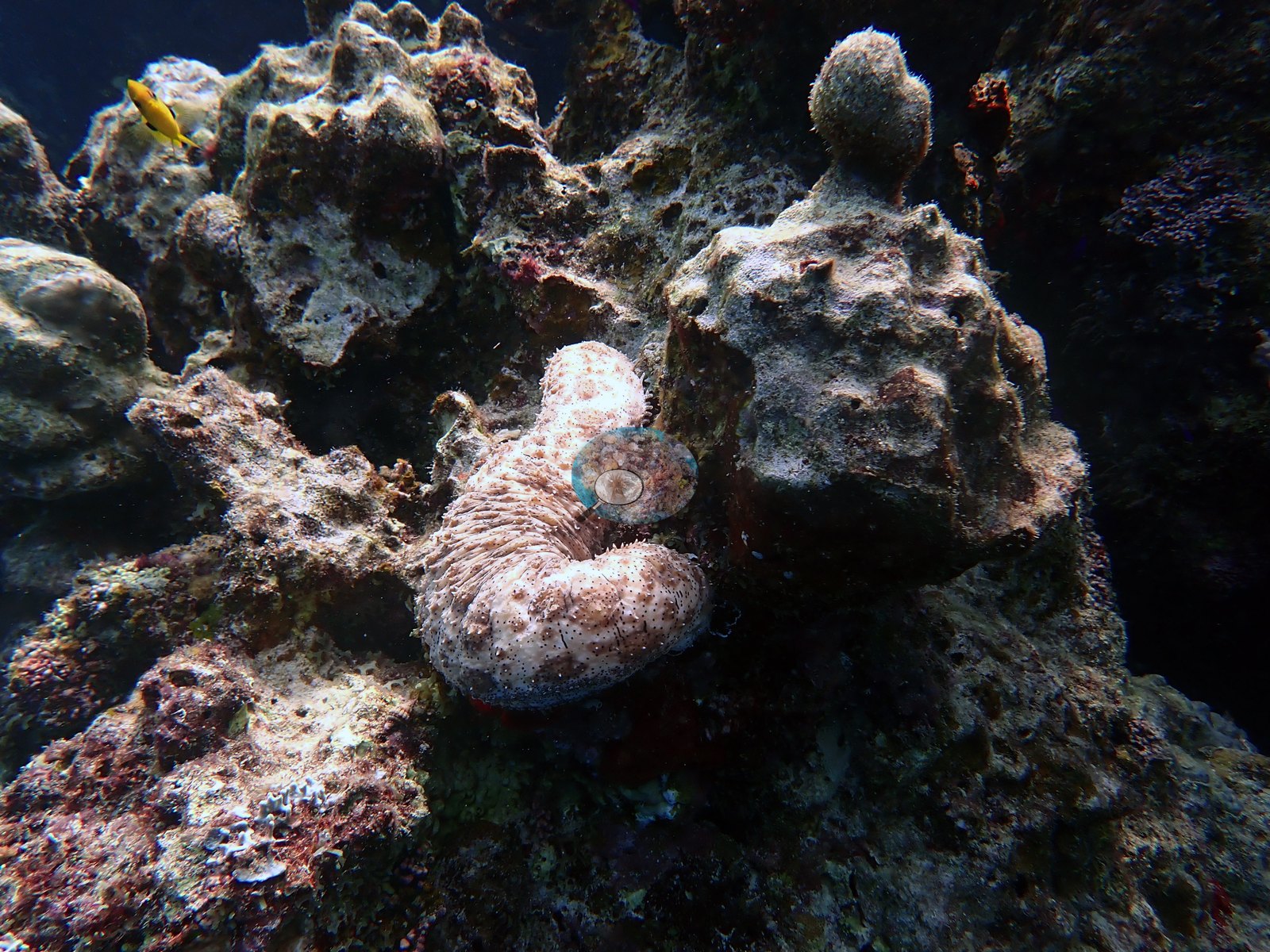
Fish are present but sparse in frame — a few snapper, a butterflyfish, and small damselfish. Anderson's frames also show a giant clam (e.g., Image 21), large groupers (photo not shown), and a sea cucumber (a field identification) (e.g., Image 22).
Comparisons with other data
Apart from our own published survey shown here, we found no other surveys at this site as of 2026. If you would like to share yours, please email us.
CV model comparison
More info
The reference is this dive site's own published CoralNet point count by the author (Mayfield 2025, Environments 12:248, Appendix A; most frames annotated by CoralNet's AI, trained and checked by the author). The computer-vision rows are this site's own values: Claude is a blind point count of all of the site's edited photographs, and CoralSCOP is the site's finished survey of its edited photographs. They are on different frame sets from the published count, a row under 30 frames is indicative only, and no computer-vision method yet estimates coral cover accurately on new images.| Method | Hard coral cover (%) | Photos (n) ± SE |
|---|---|---|
| Published point count (CoralNet-assisted) | 16.4 | |
| CoralSCOP edited | 31.4 | n = 119 |
| Claude (edited photos) | 17.6 | n = 123 · SE 1.6 |
The two computer-vision methods disagree by 13.8 pp (17.6–31.4%) and read 1.2–15.0 pp above the published point count (16.4%); the headline is the published point count because it is the site's published value (CoralNet-assisted: most frames were annotated by CoralNet's AI, trained and checked by the author).
See a more detailed, stand-alone version of this table.
Data & links
All images from Coral Reef Diagnostics. Data are from Coral Reef Diagnostics.
© Coral Reef Diagnostics.