
Raja Ampat - Shadow Reef
Part of the regional summary: Indonesia - Raja Ampat
2018-10-20
More info
West Papua (NOAA CRW virtual station)Shadow Reef's second dive is defined by extraordinary fish biomass - giant trevally, tuna, large batfish schools, and a sleeping shark under a table coral - over a site where soft coral generally outweighs hard coral, though a 5 m Acropora table and Porites bommies stand out at 12-14 m. A blind Claude computer-vision point count puts coral cover around 17%.
Penyelaman kedua Shadow Reef dicirikan oleh biomassa ikan yang luar biasa — ikan kuwe raksasa, tuna, gerombolan ikan kelelawar besar, dan seekor hiu yang tidur di bawah karang meja — pada lokasi yang secara umum karang lunaknya melebihi karang keras, meskipun satu meja Acropora selebar 5 m dan gundukan Porites menonjol pada kedalaman 12-14 m. Penghitungan titik buta visi komputer Claude memperkirakan tutupan karang sekitar 17%.
Terjemahan ringkasan ini oleh AI; versi bahasa Inggris yang berlaku.
Eight other CRD dive sites within 5 km shown in orange — click a marker to open its page.
 2
2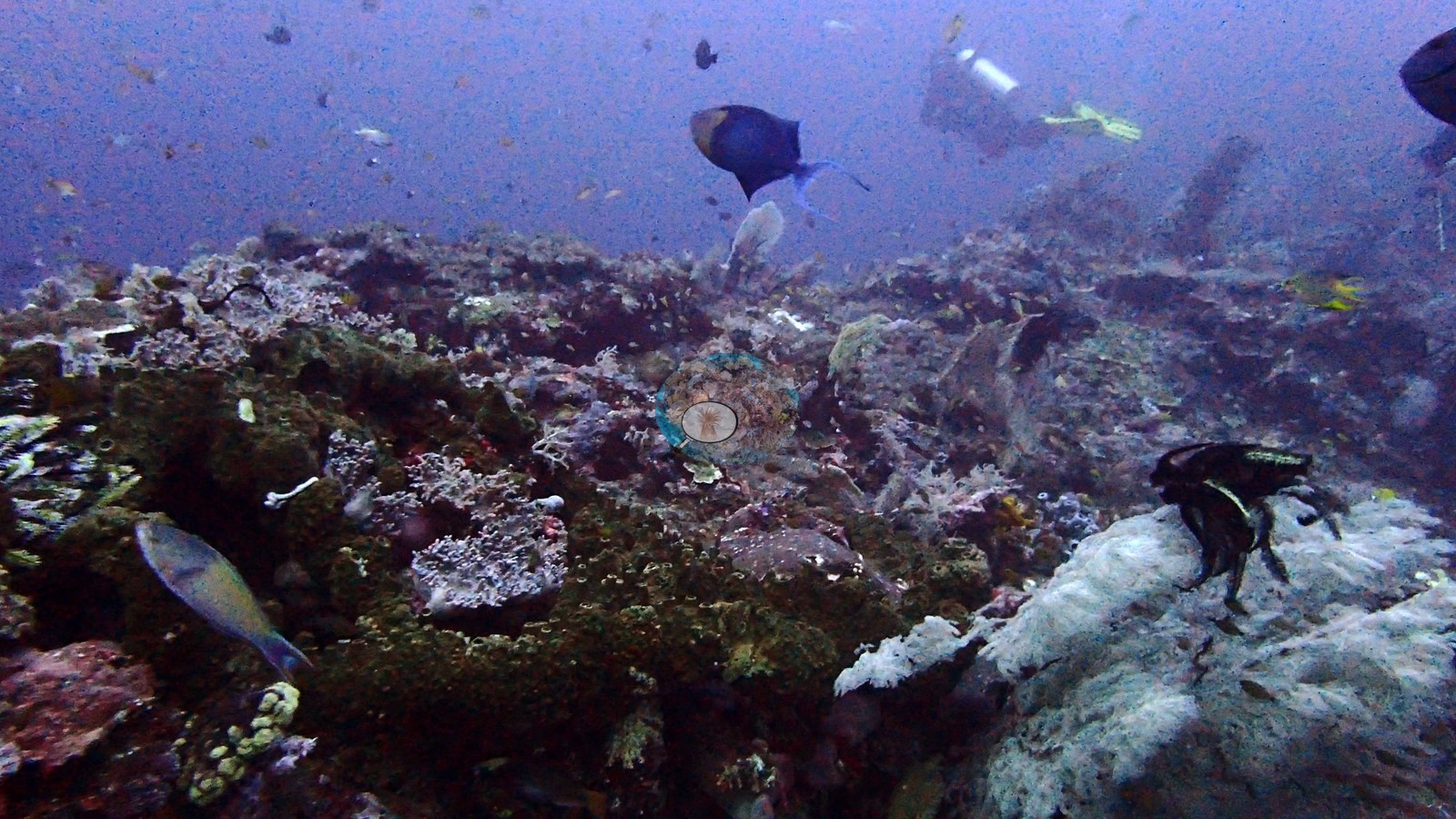 3
3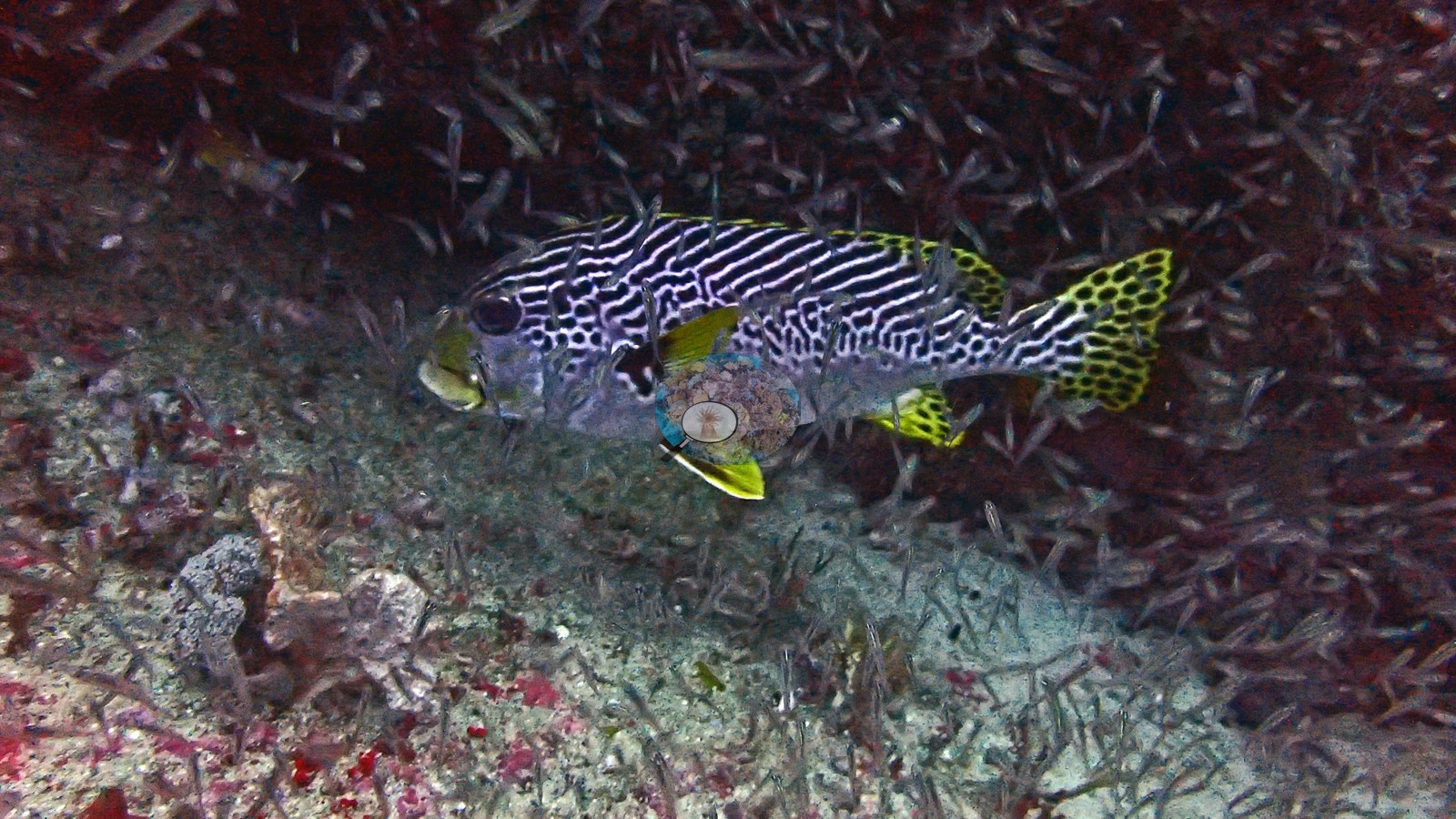 45
45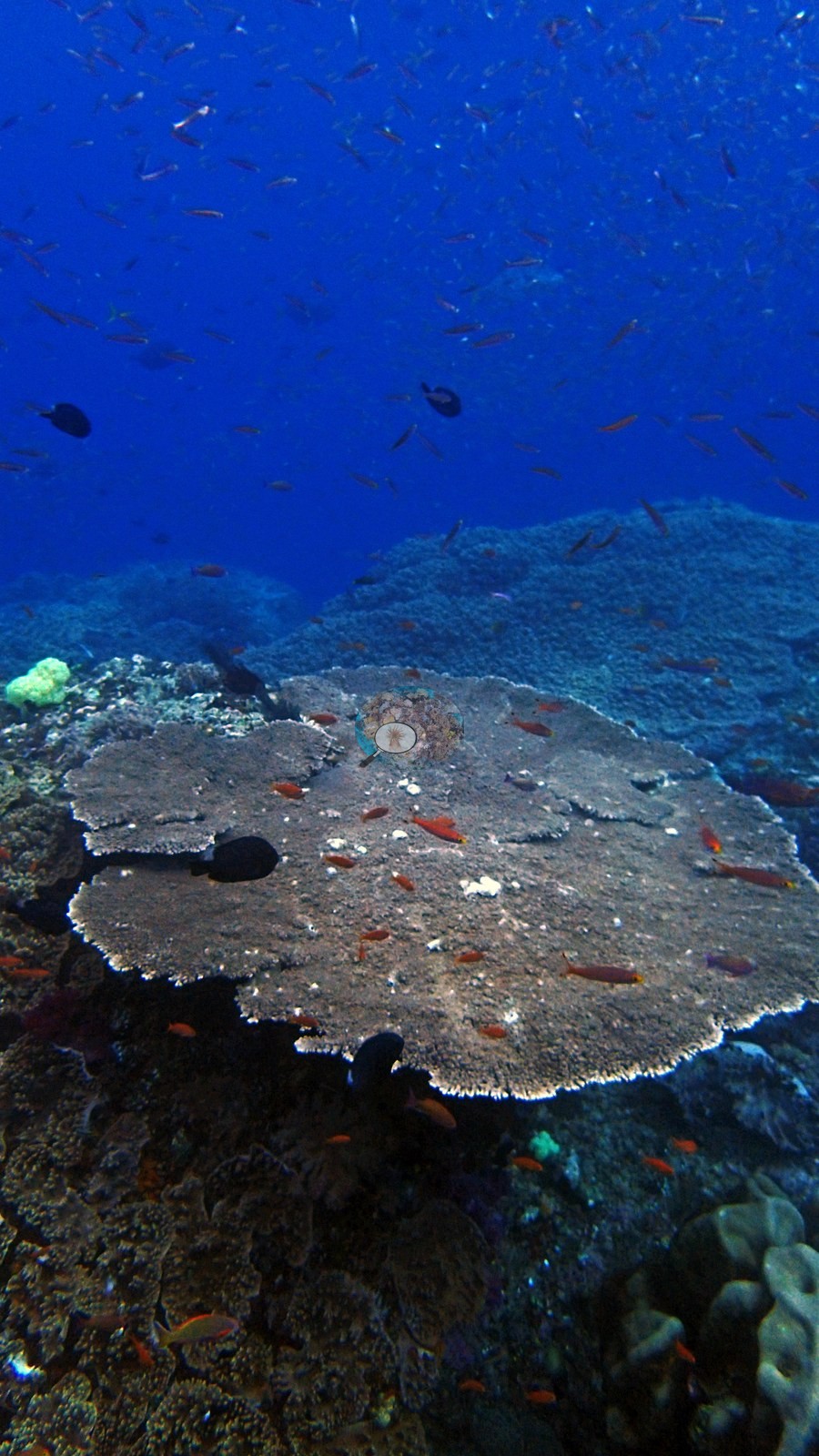 6
6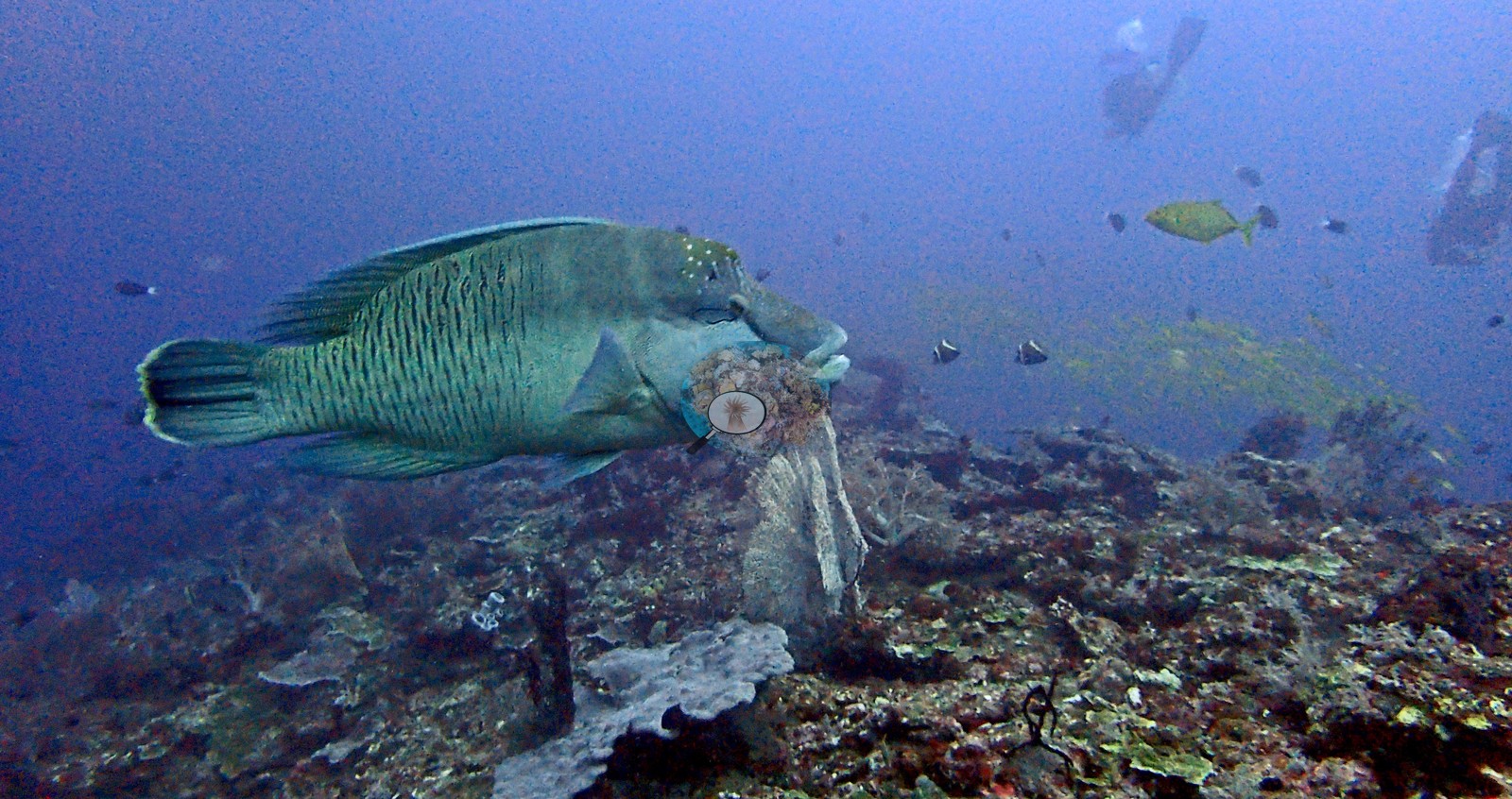 7
7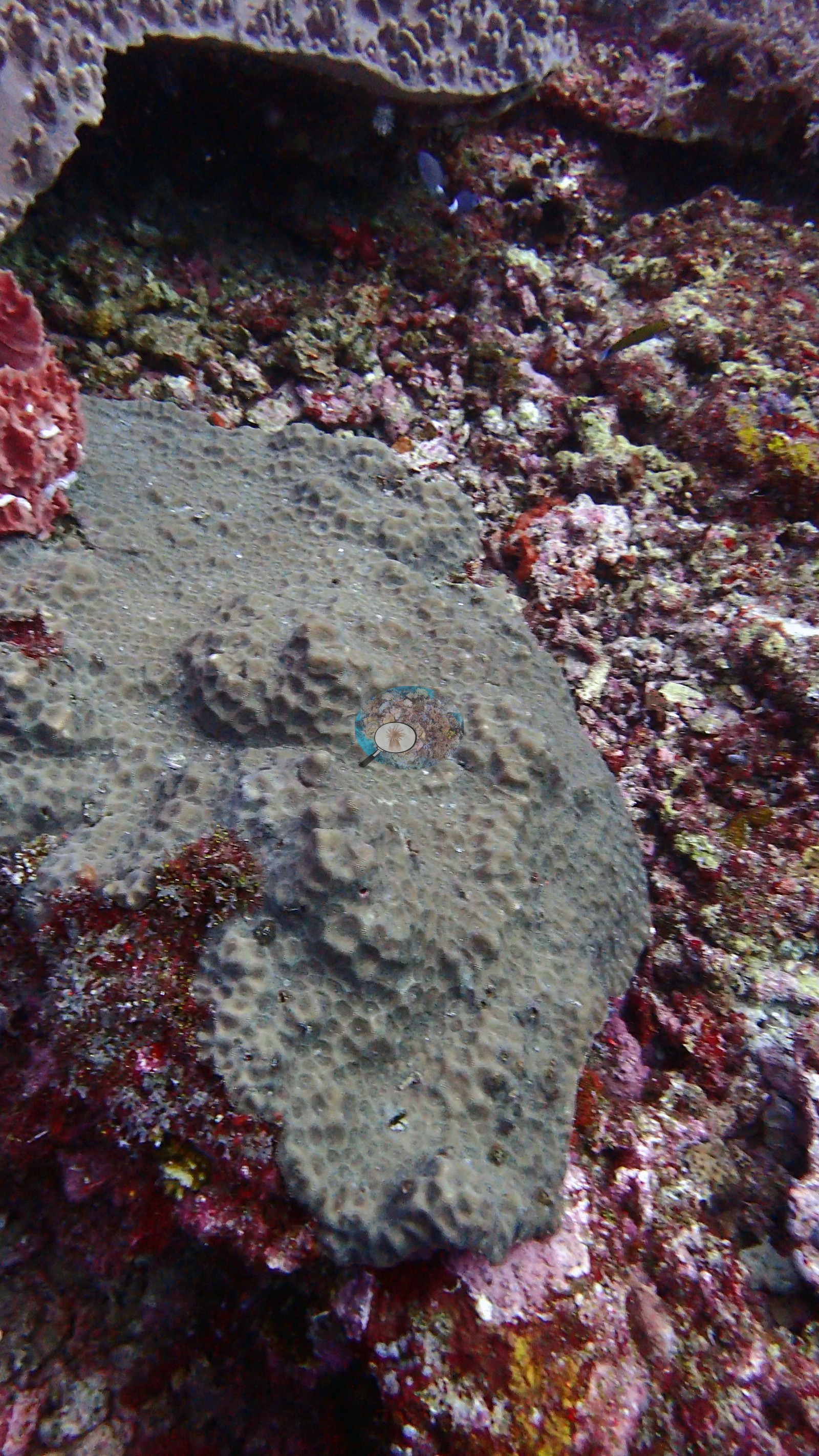 8
8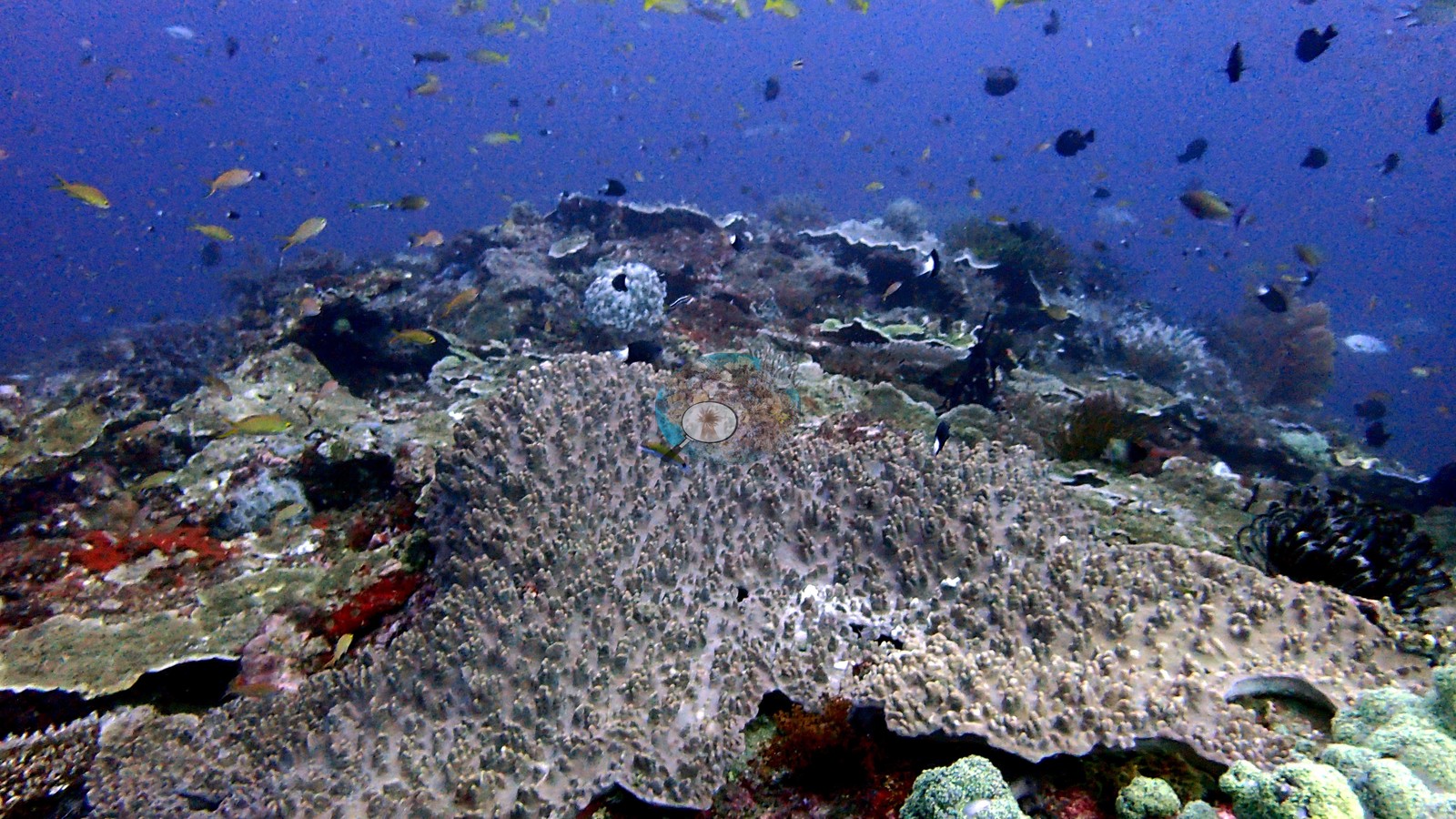 9
9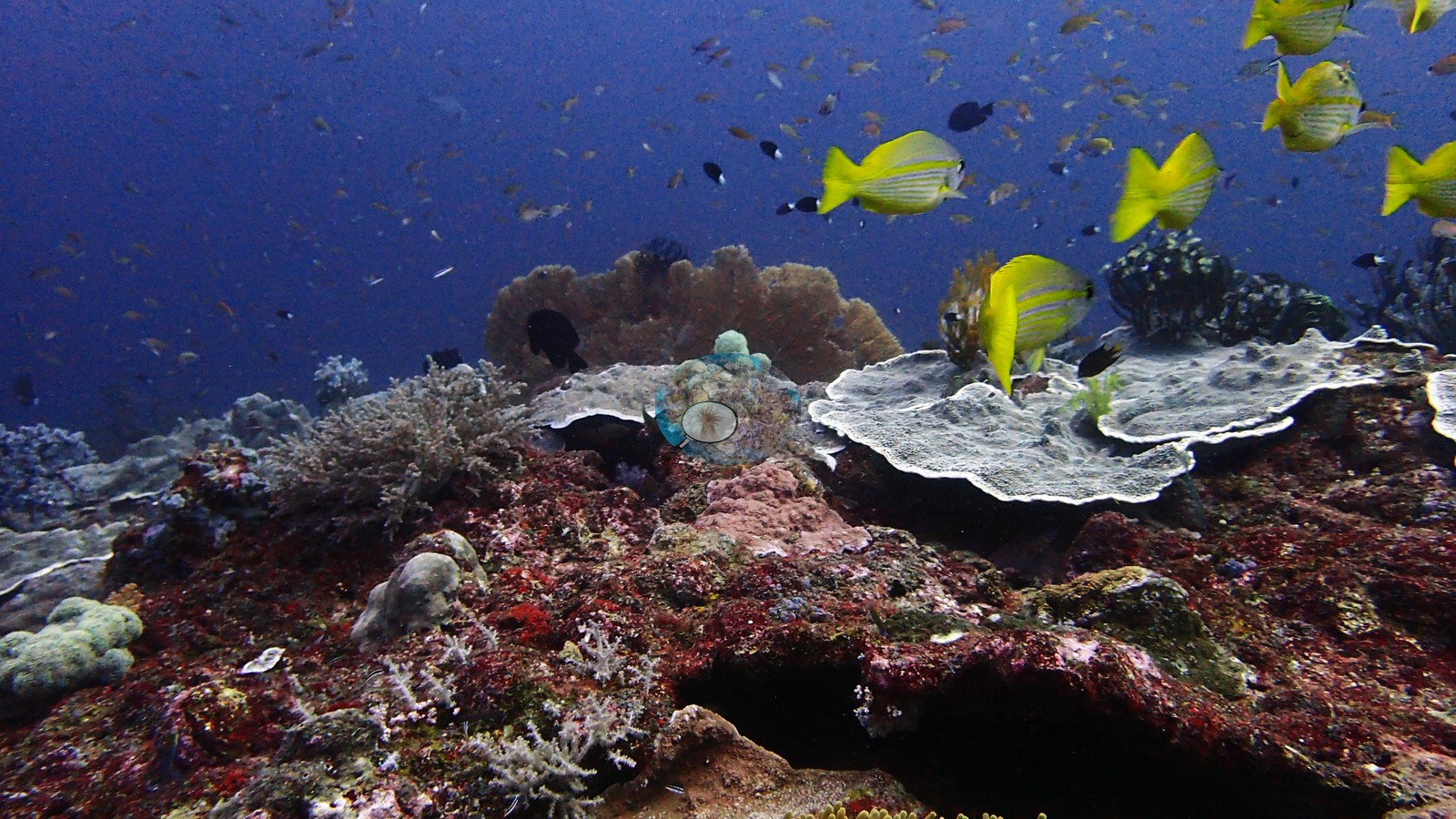 10
10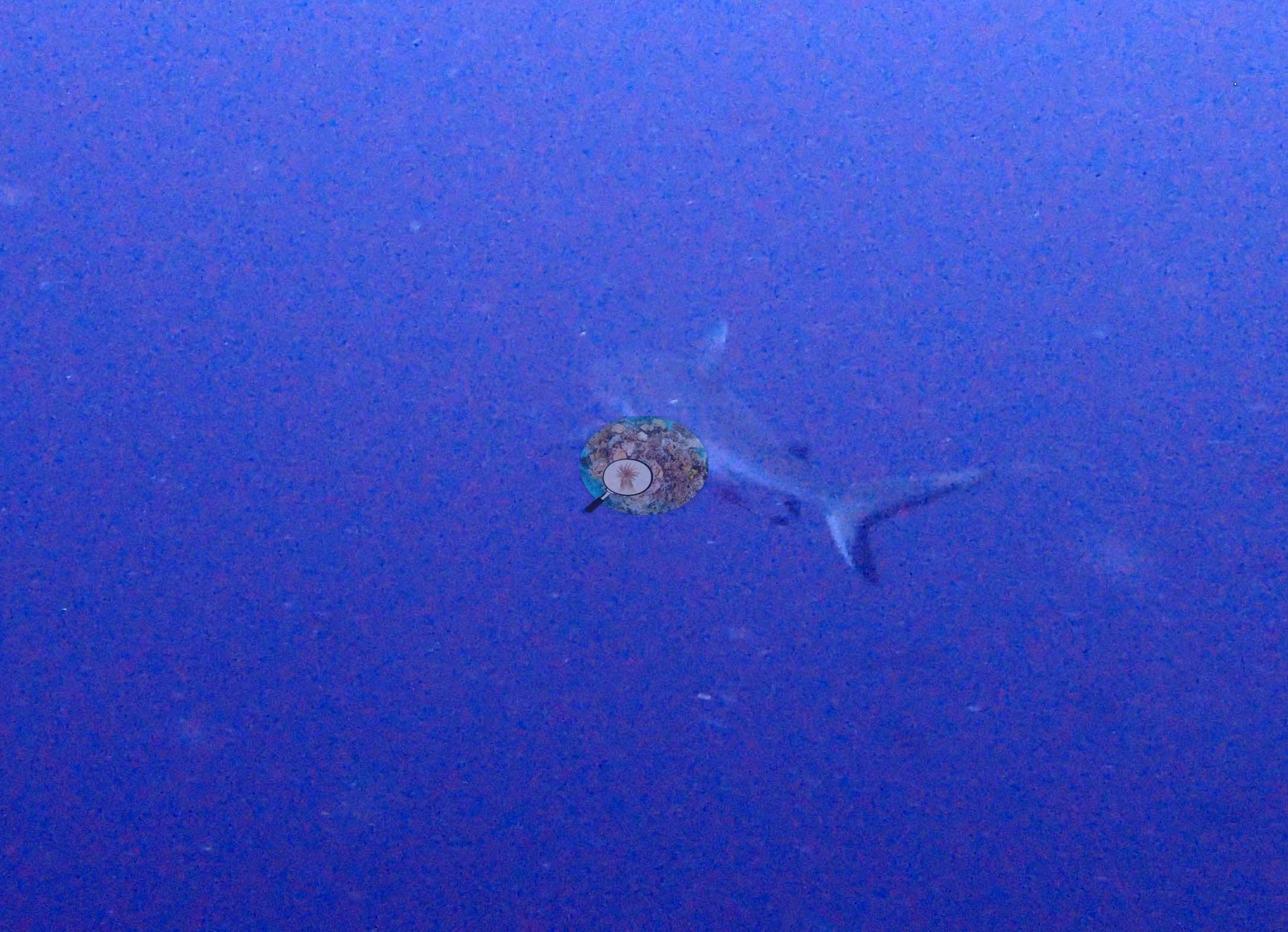 11
11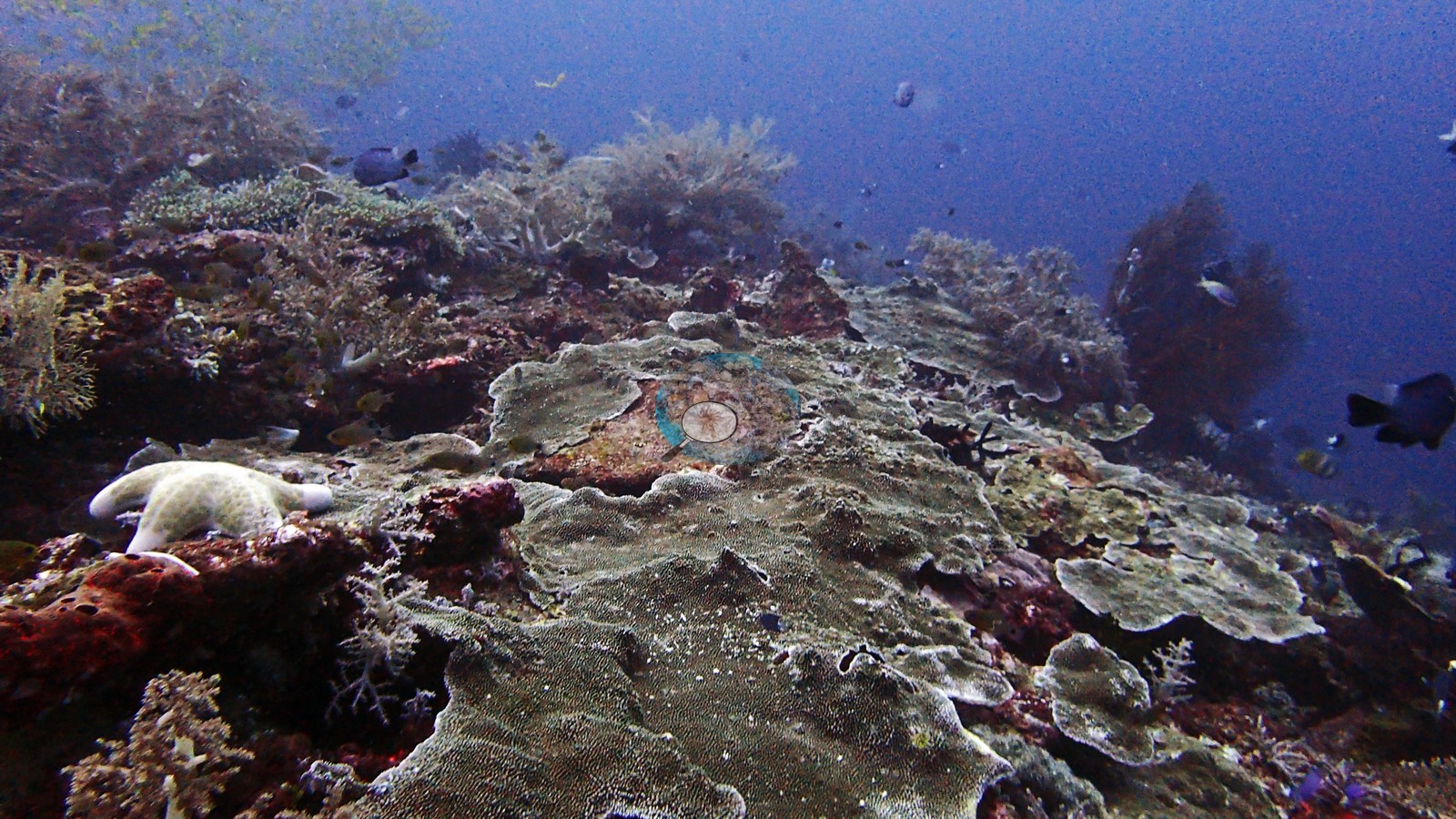 12
12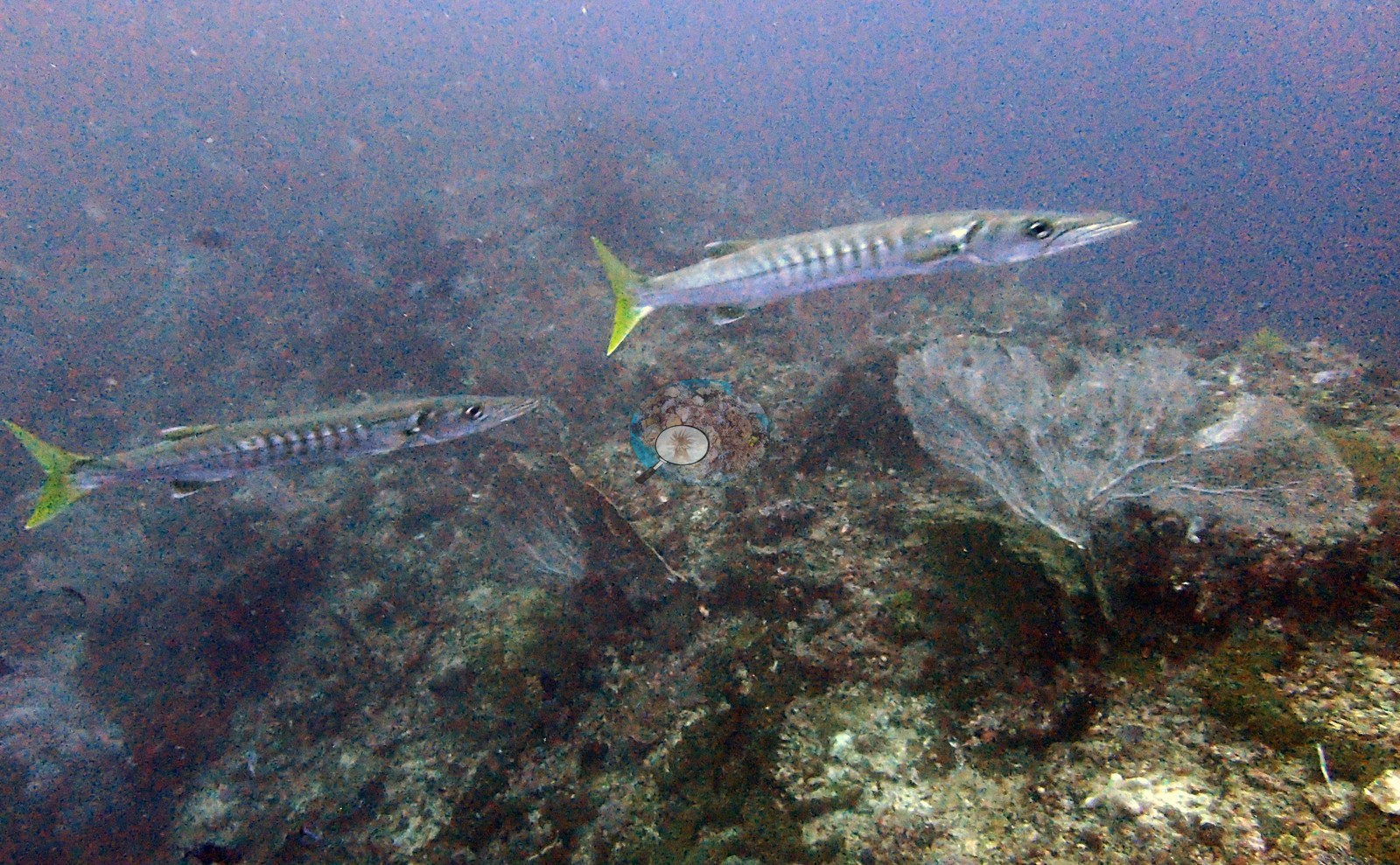 13
13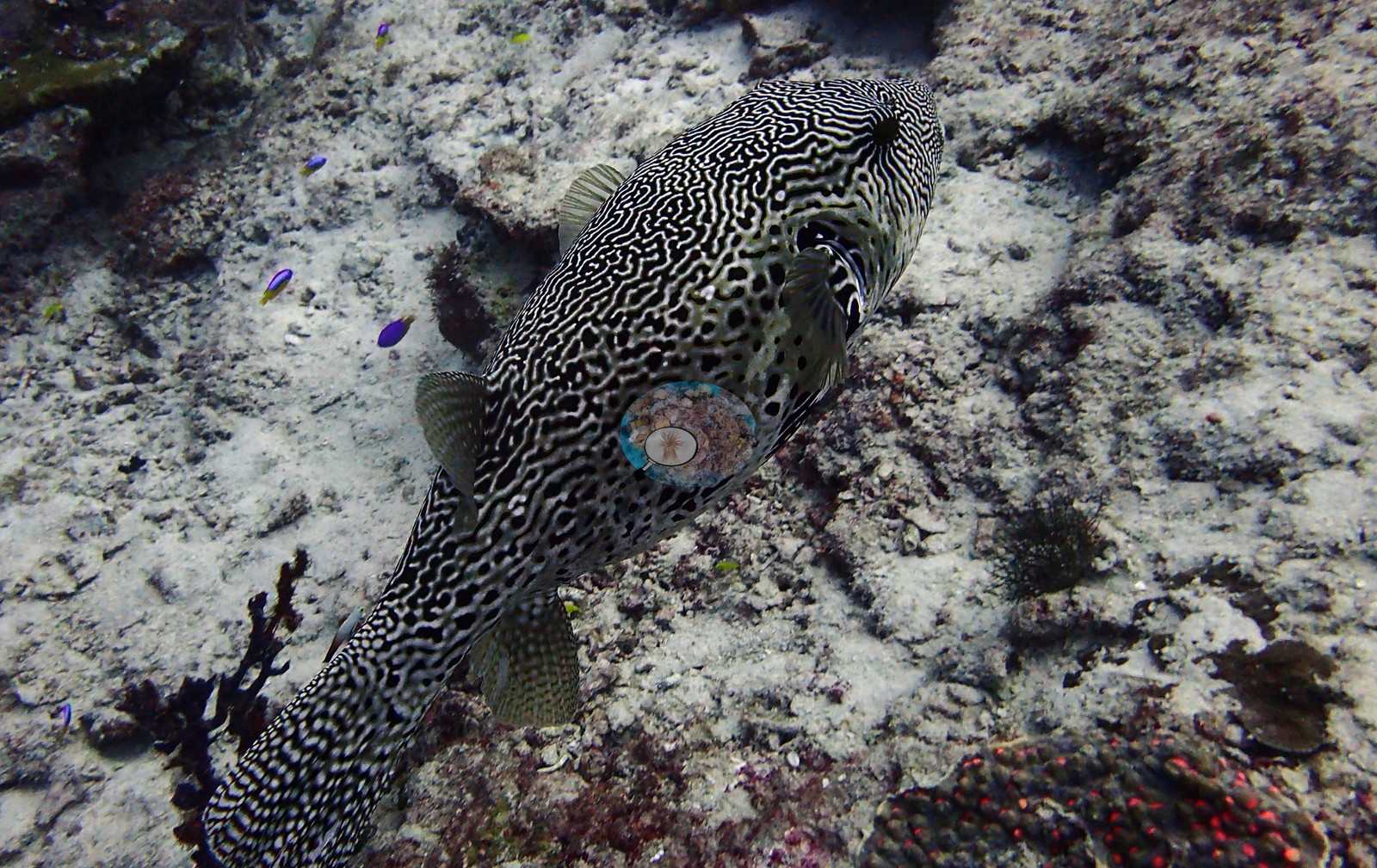 14
14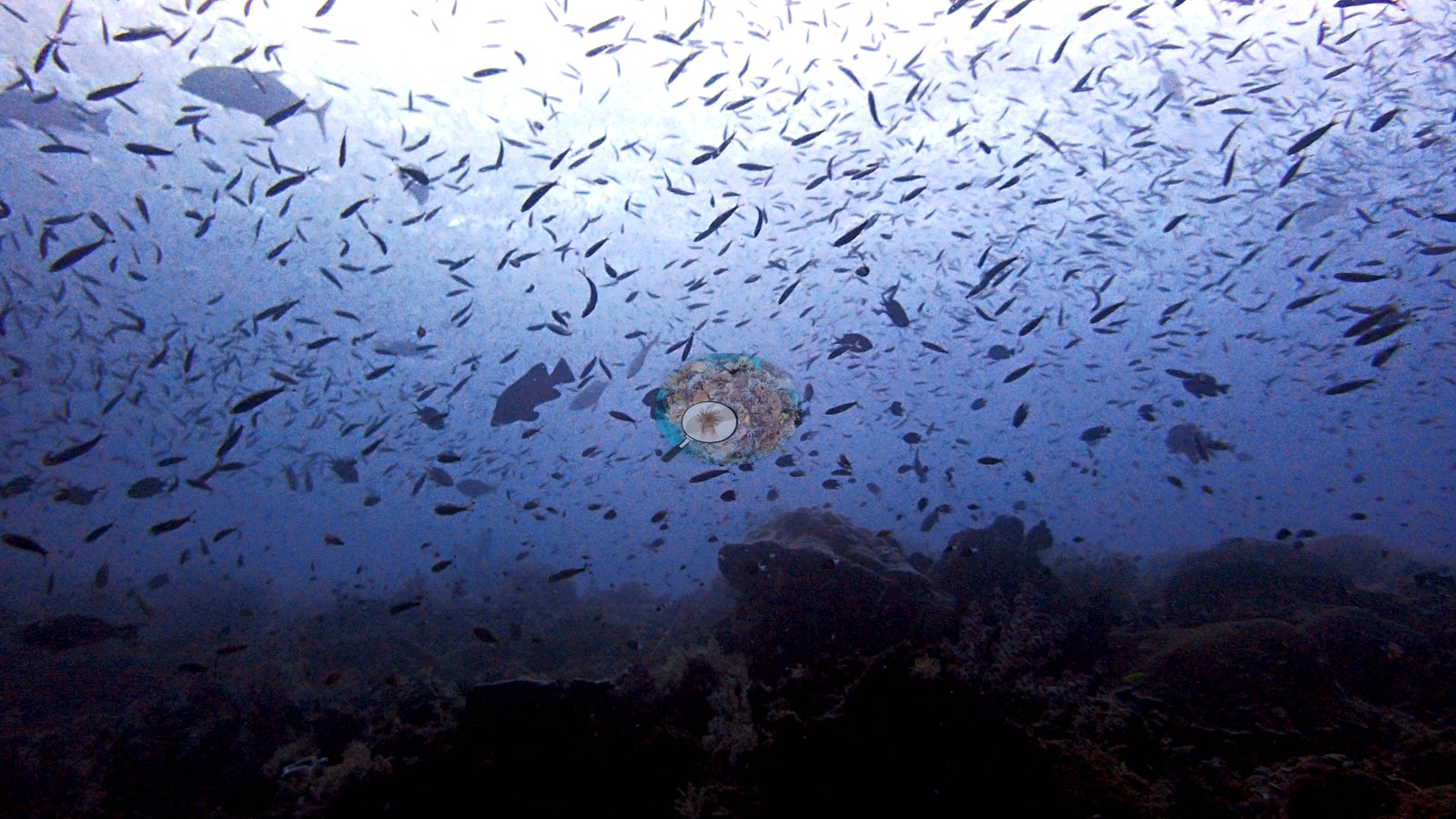 15
15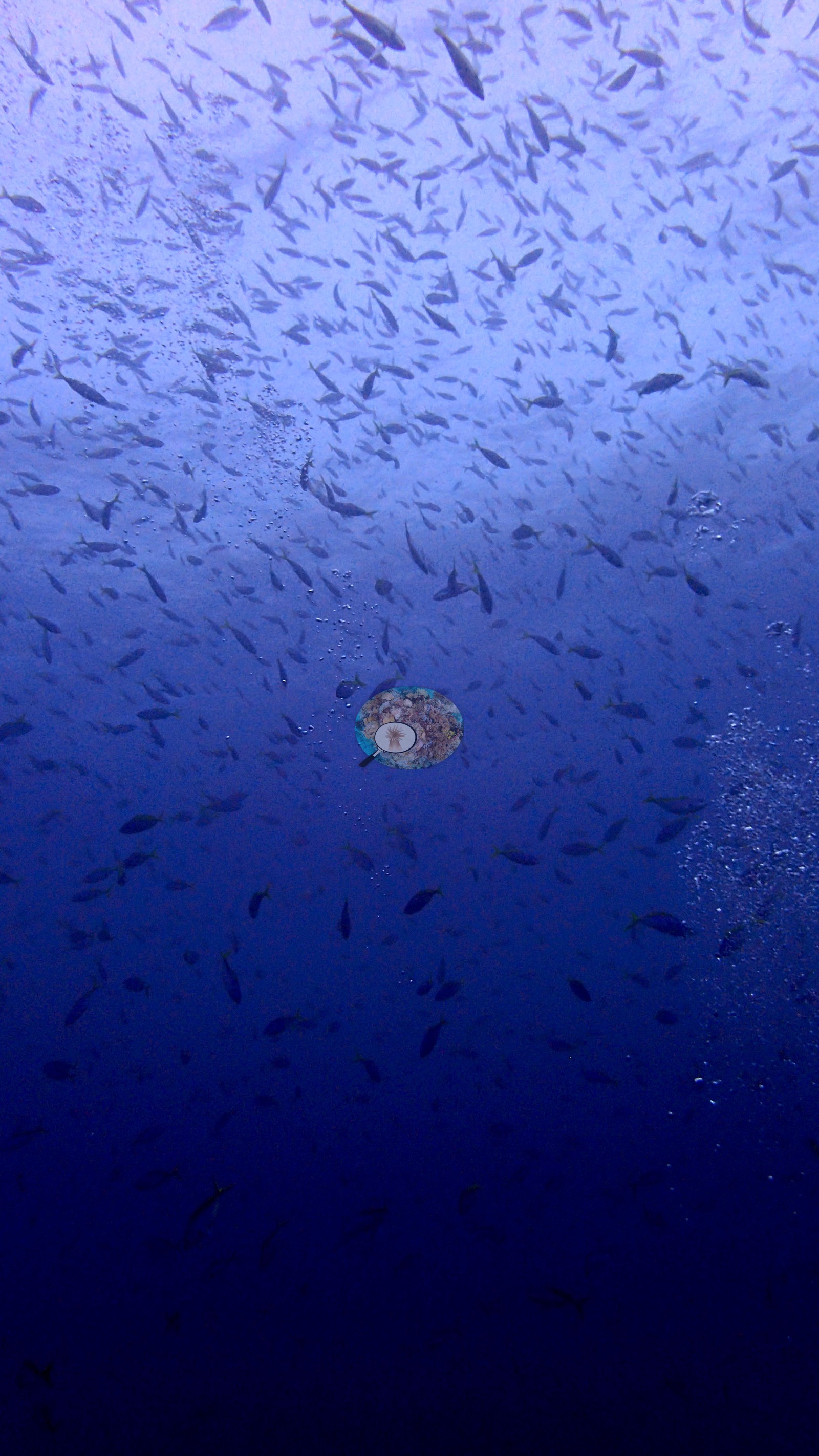 16
16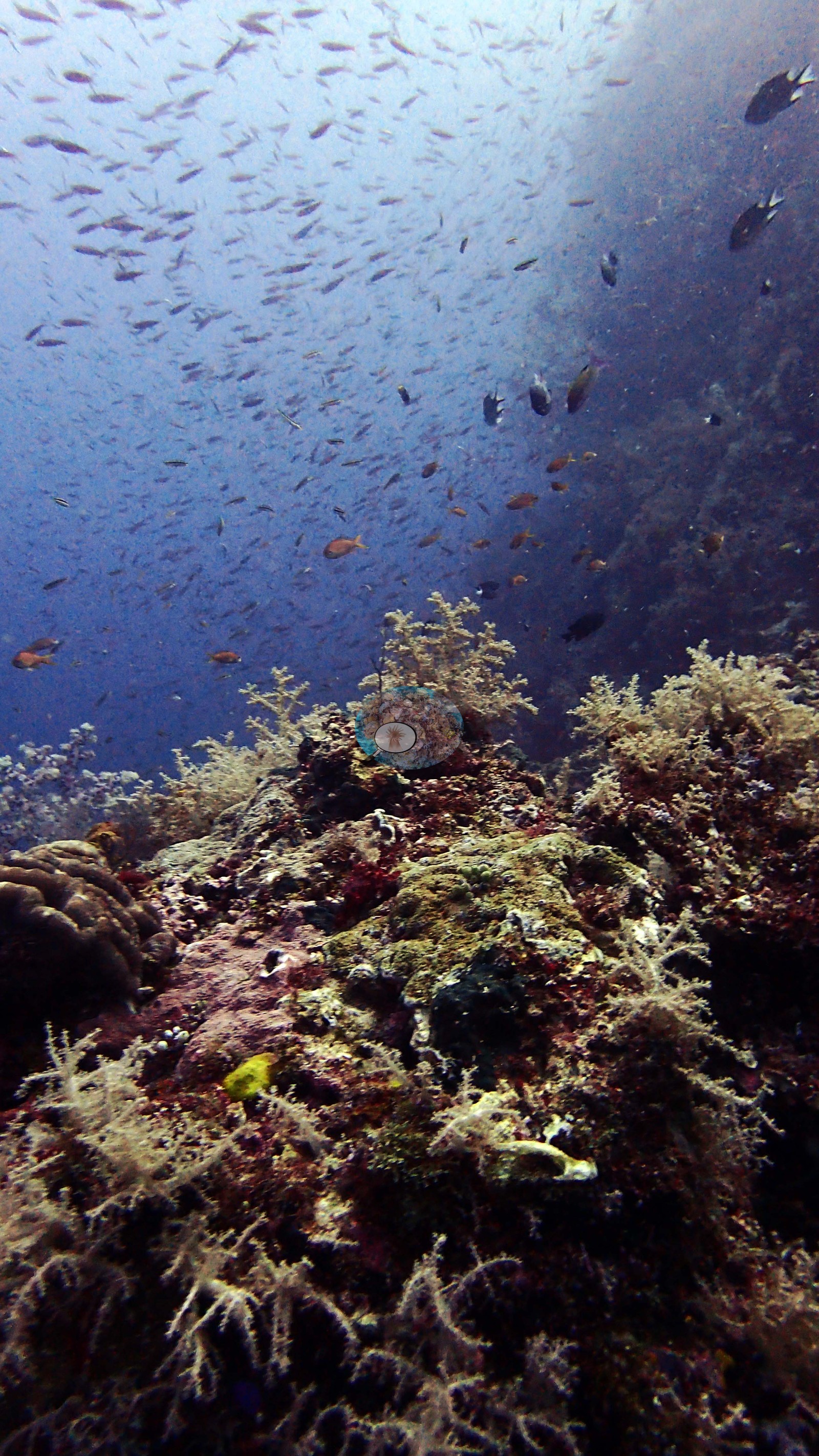 17
17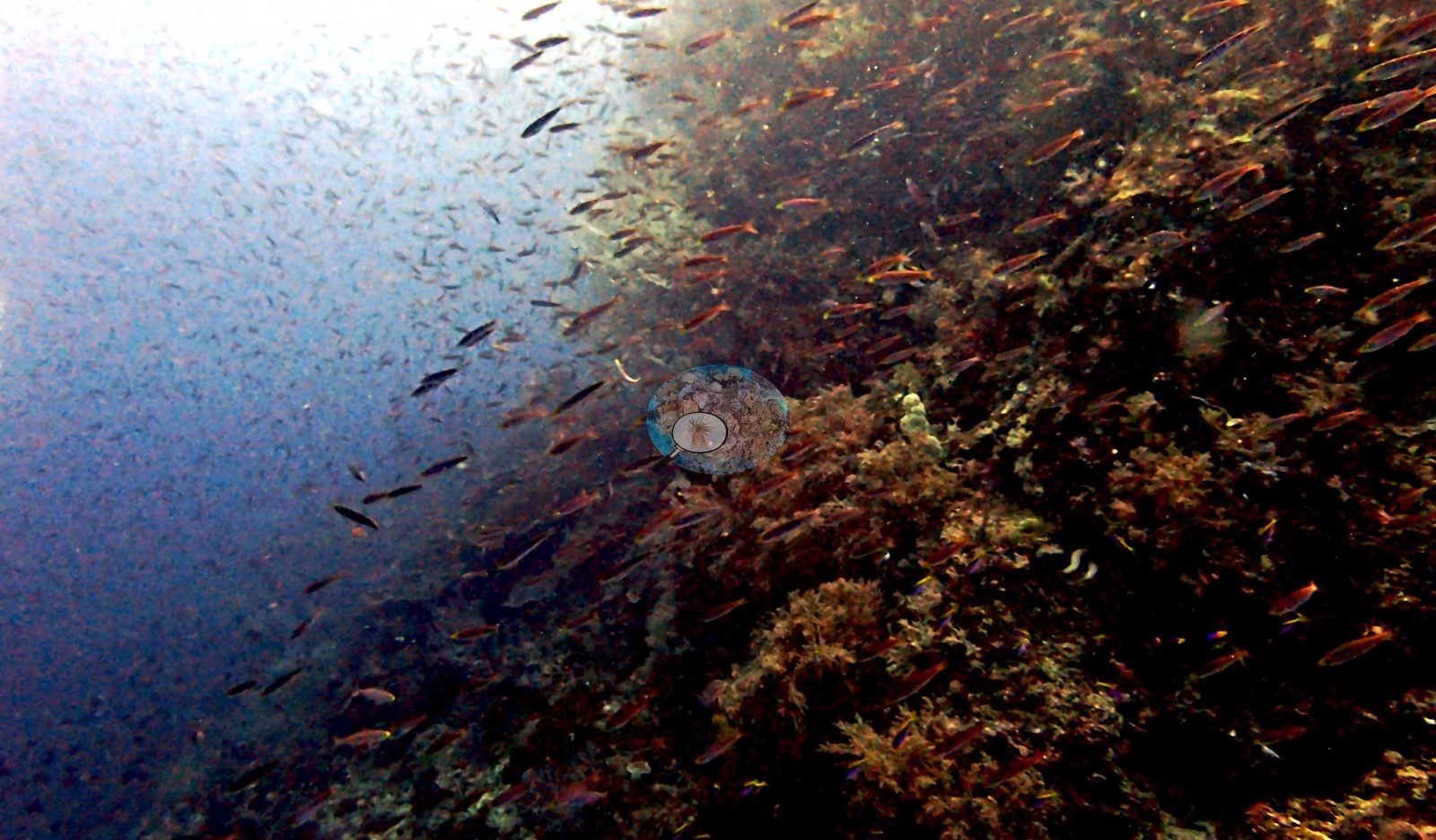 18
18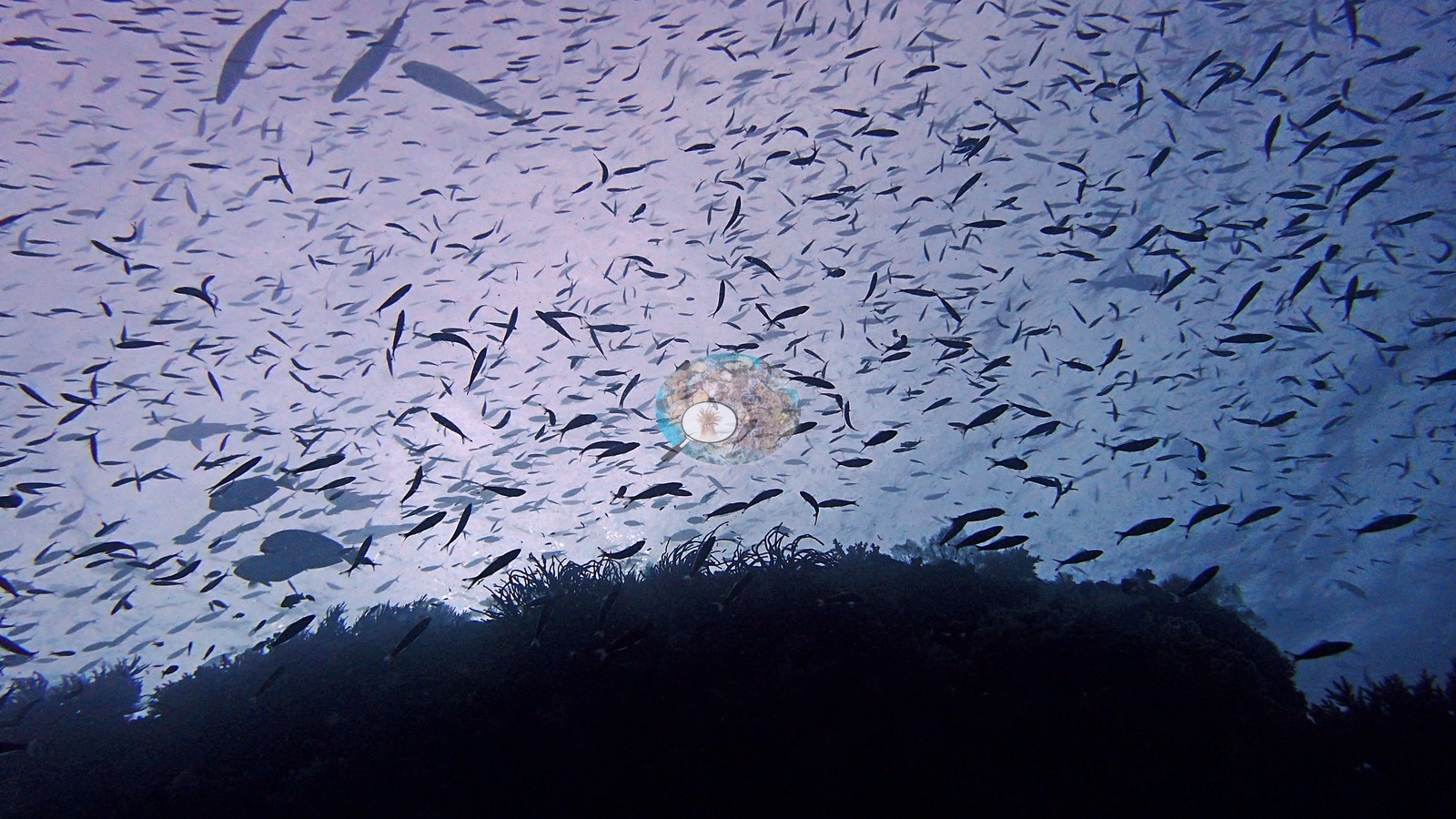 19
19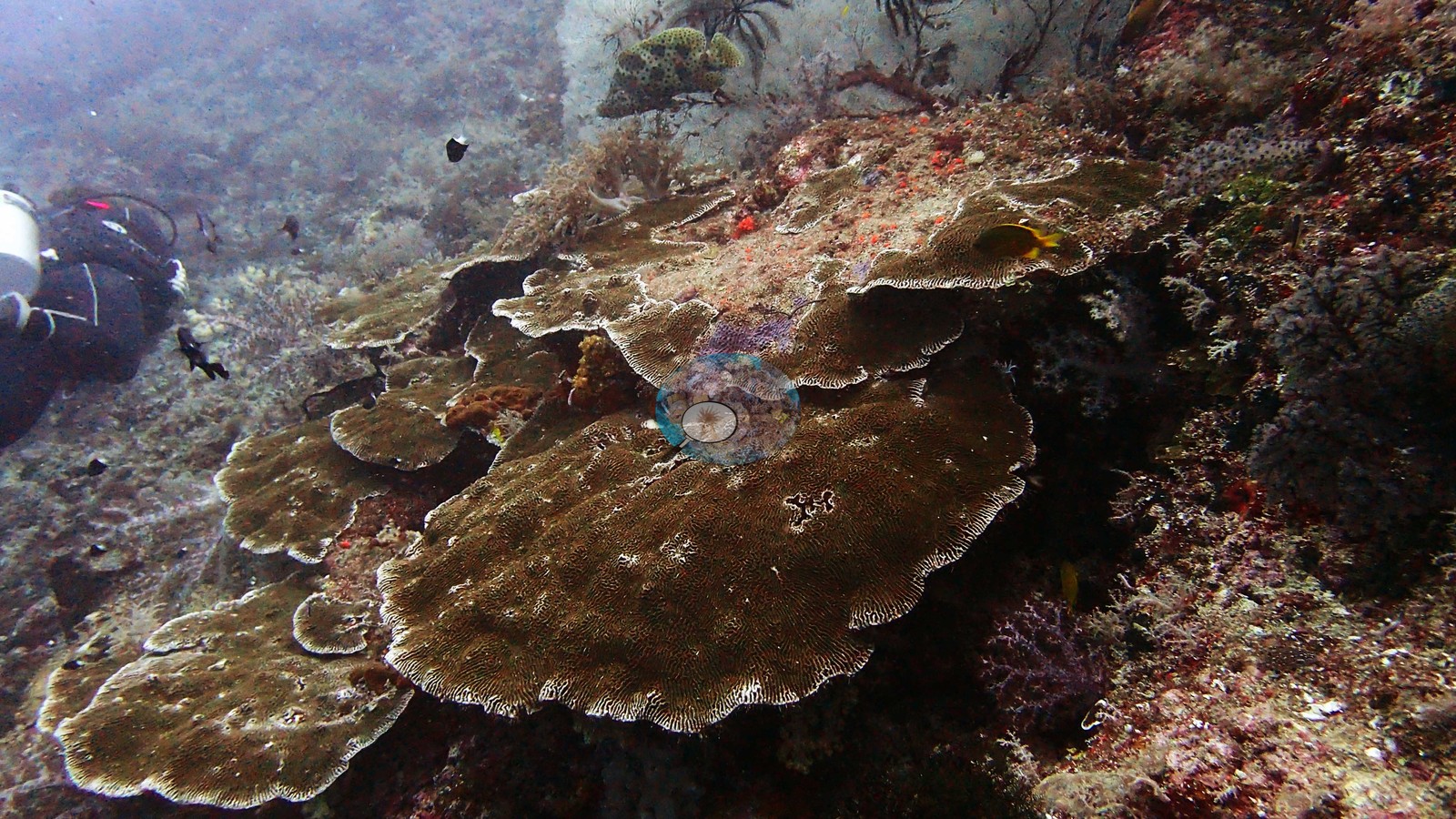 20
20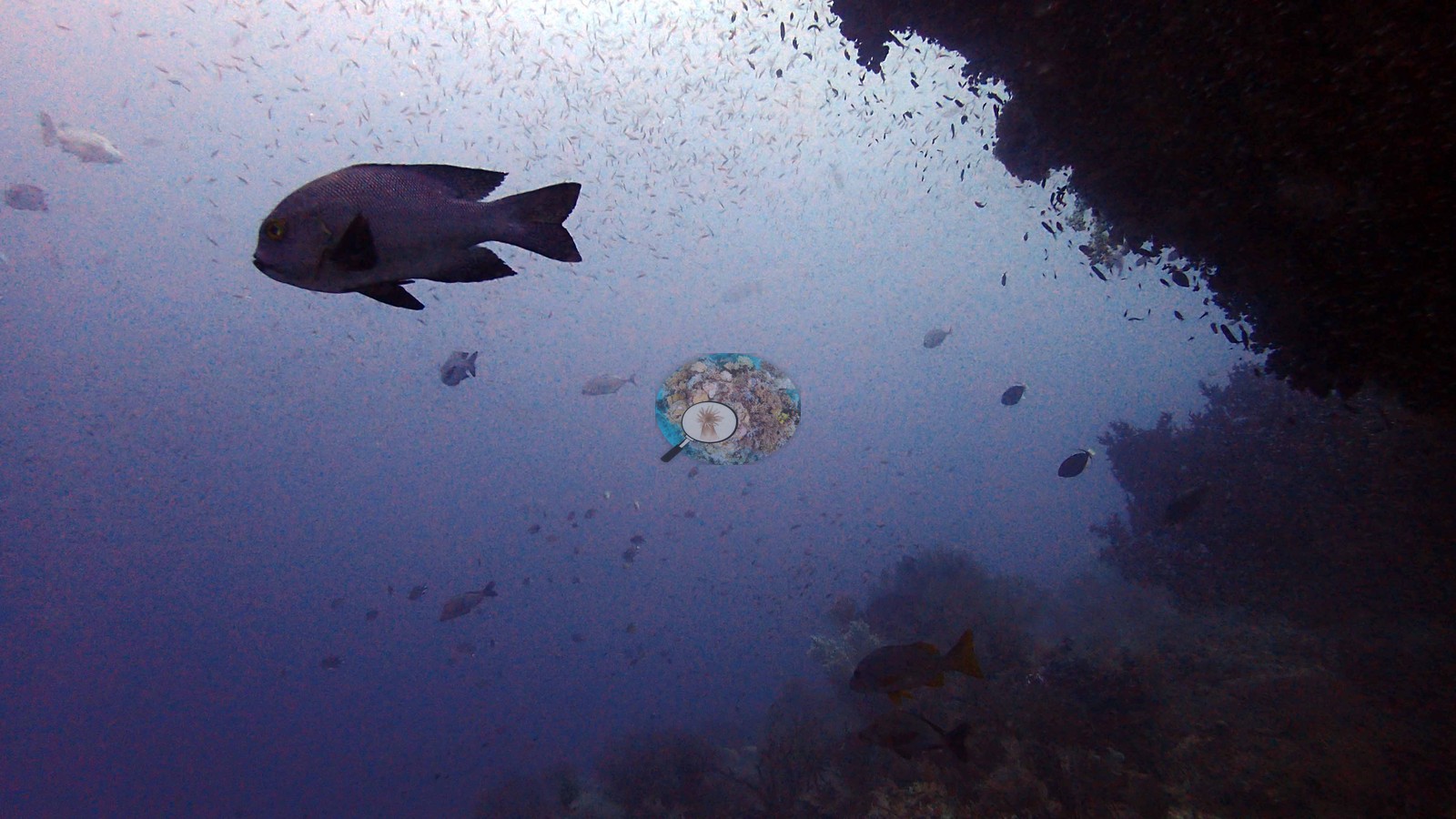 21
21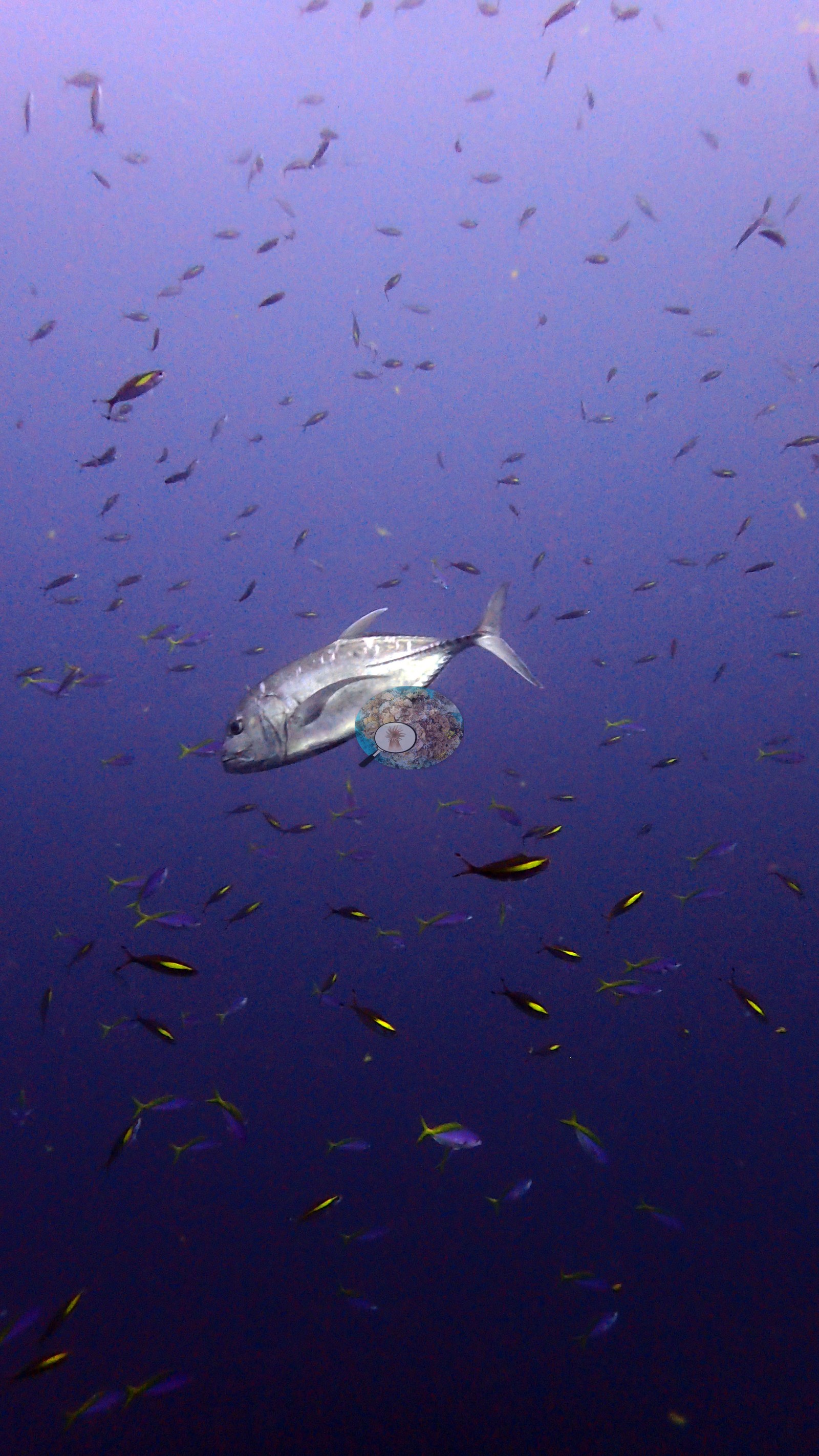 22
22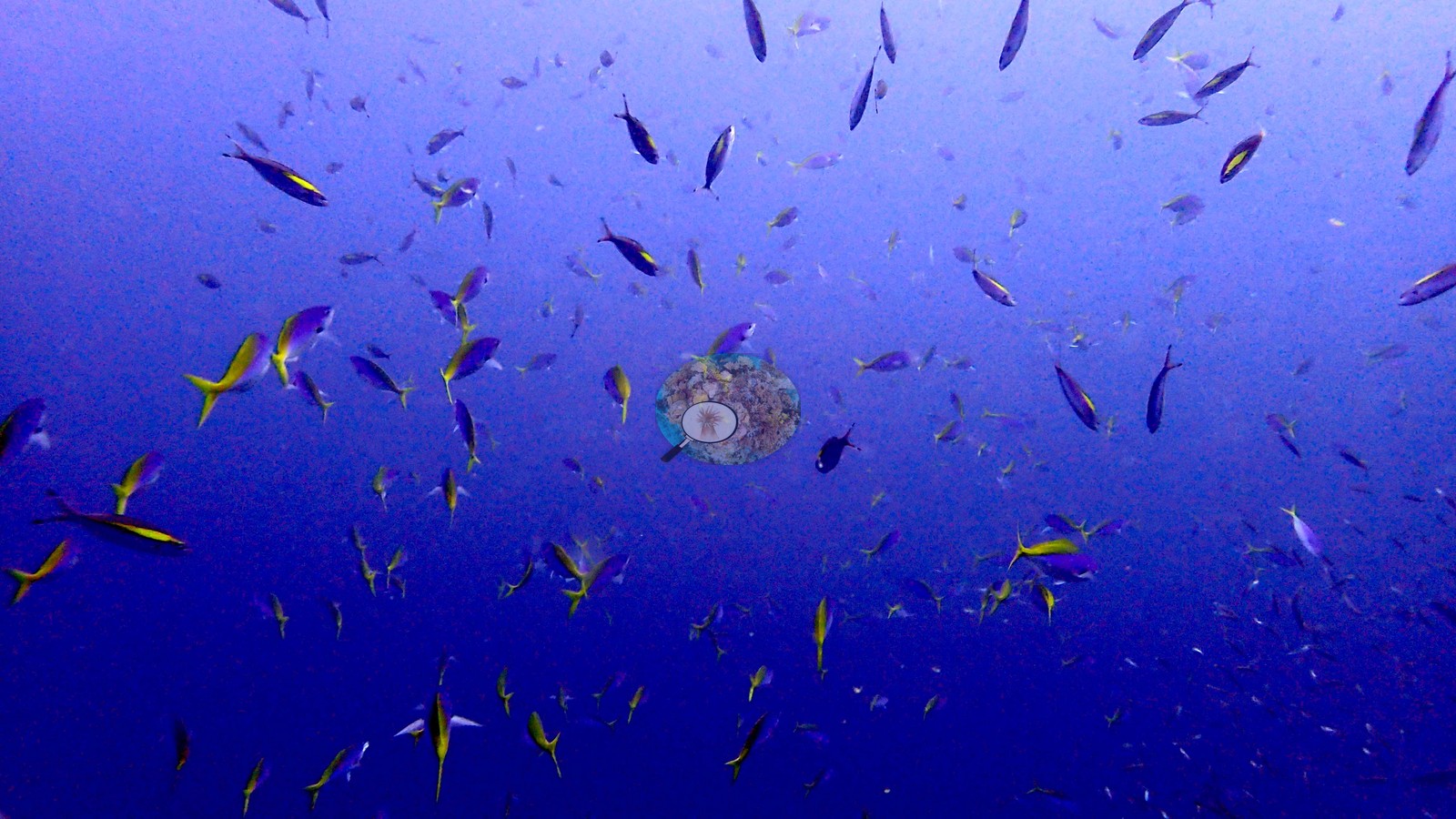 23
23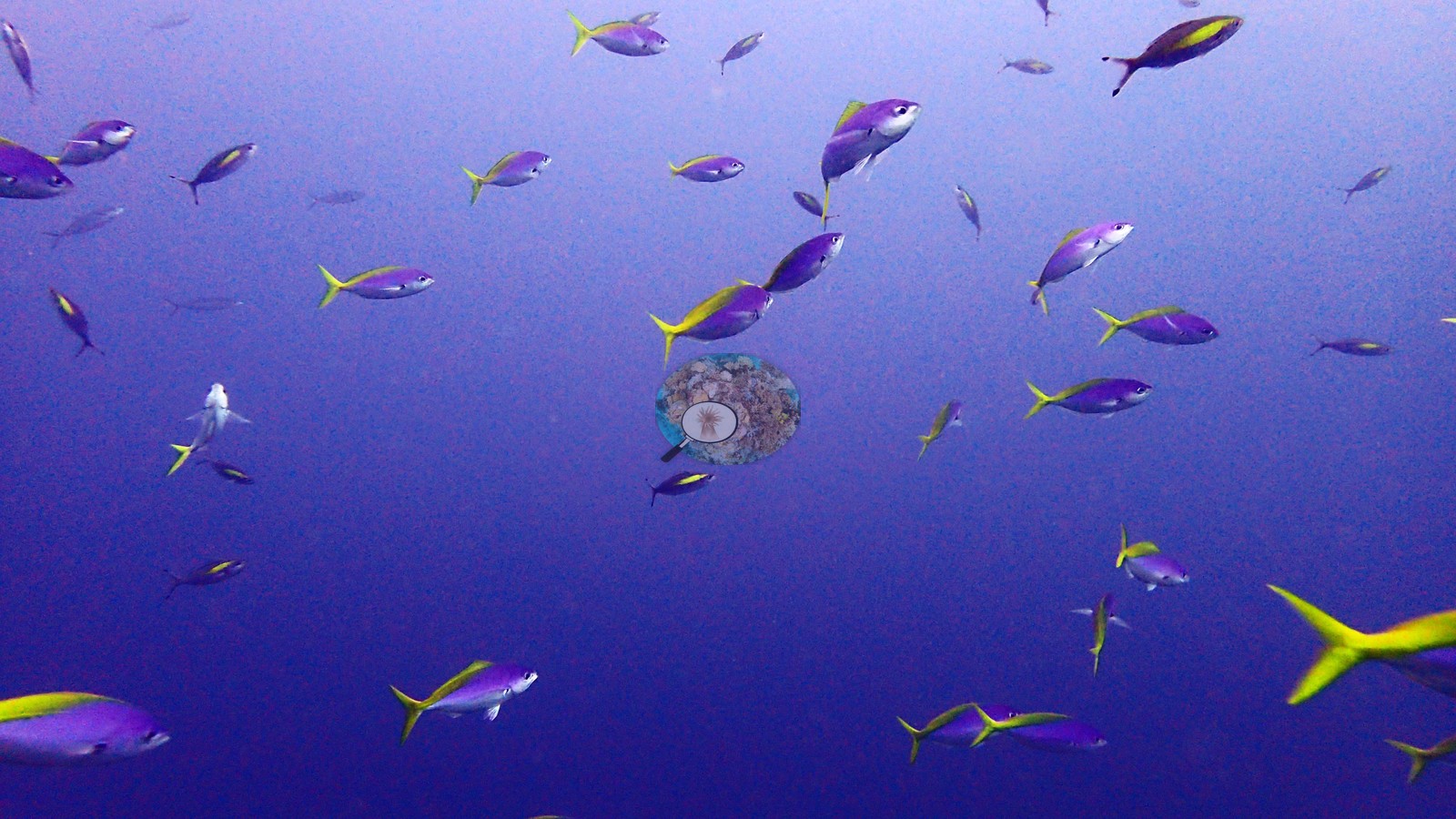 24
24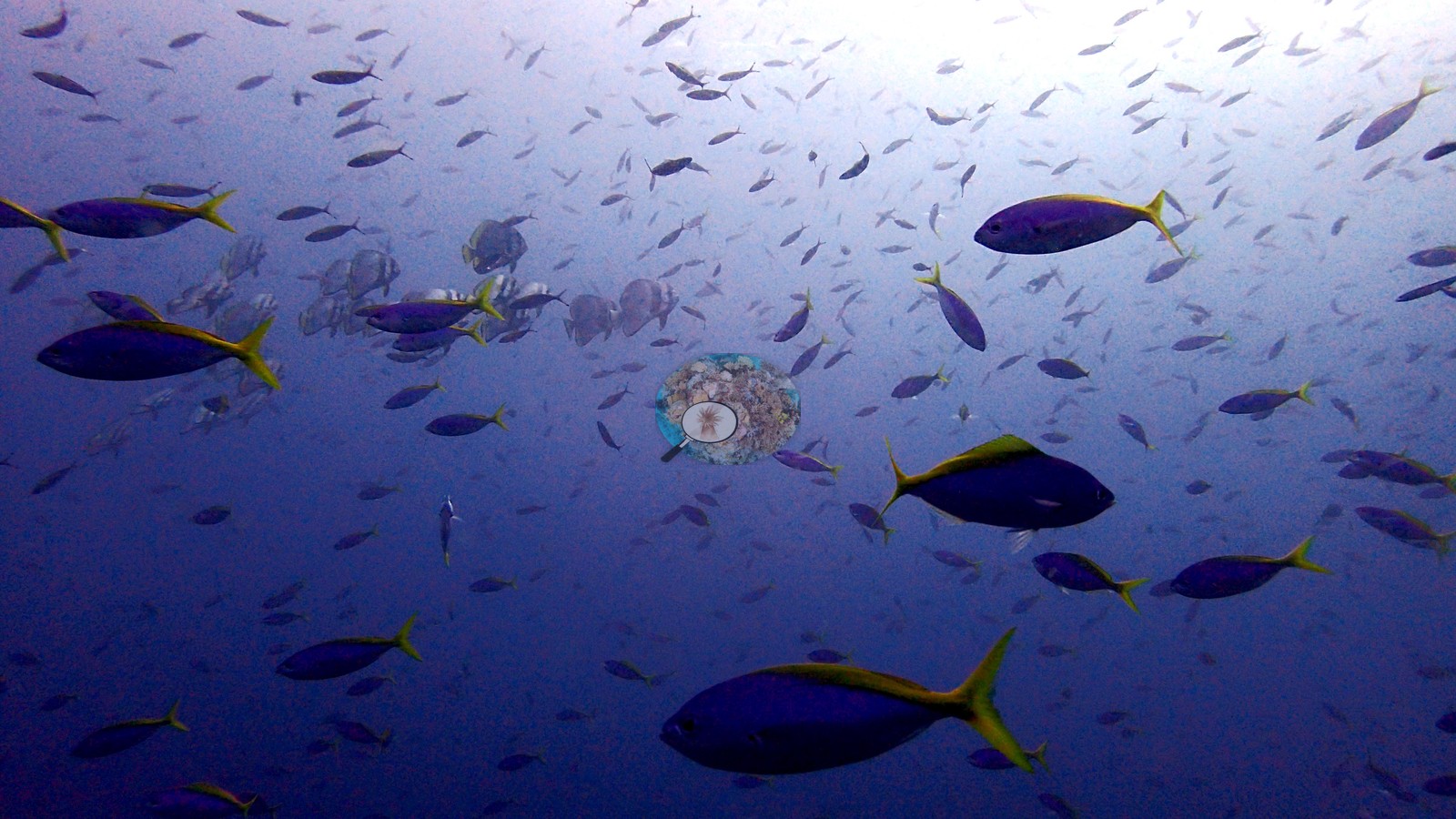 25
25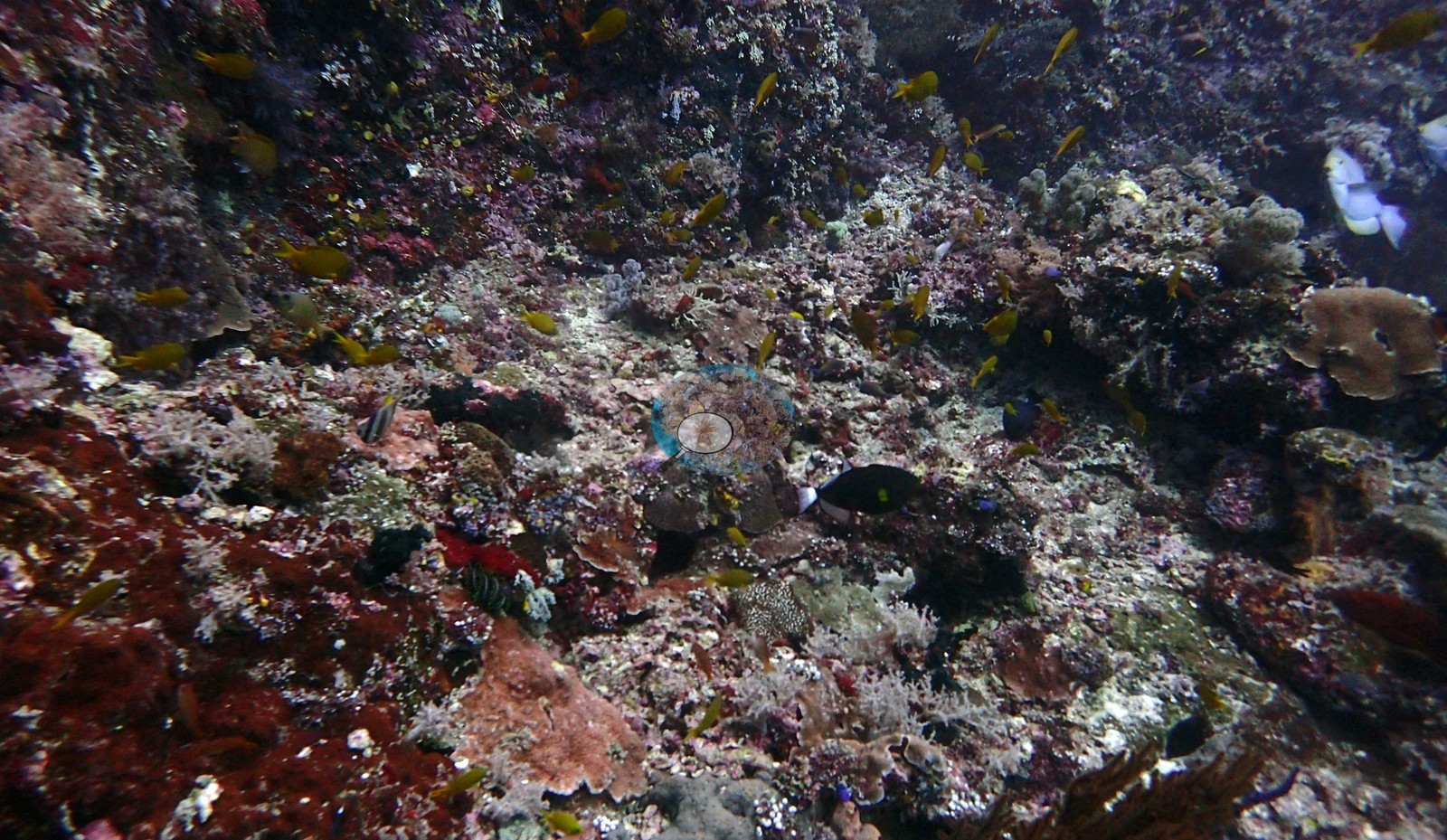 26
26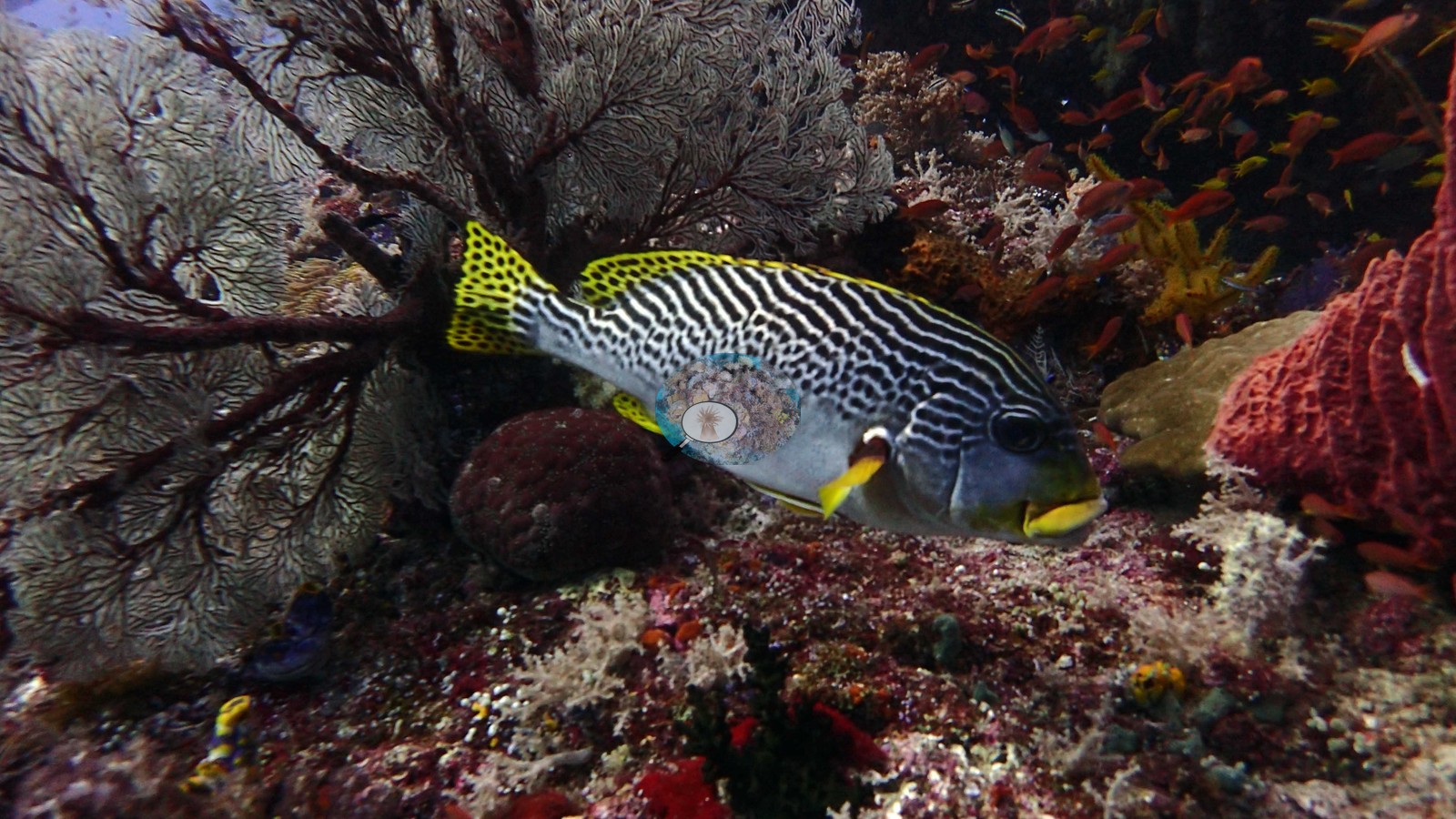 27
27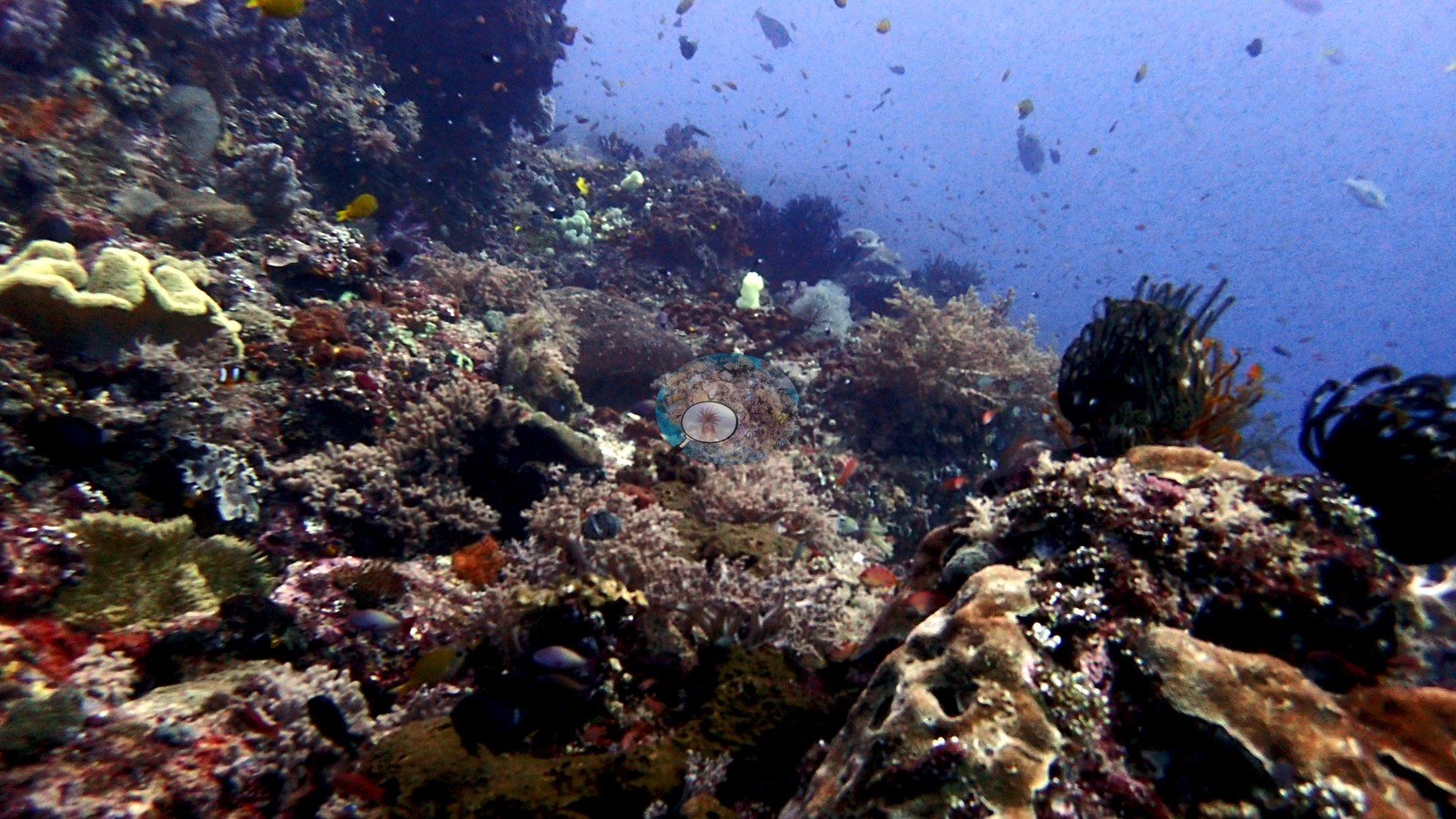 28
28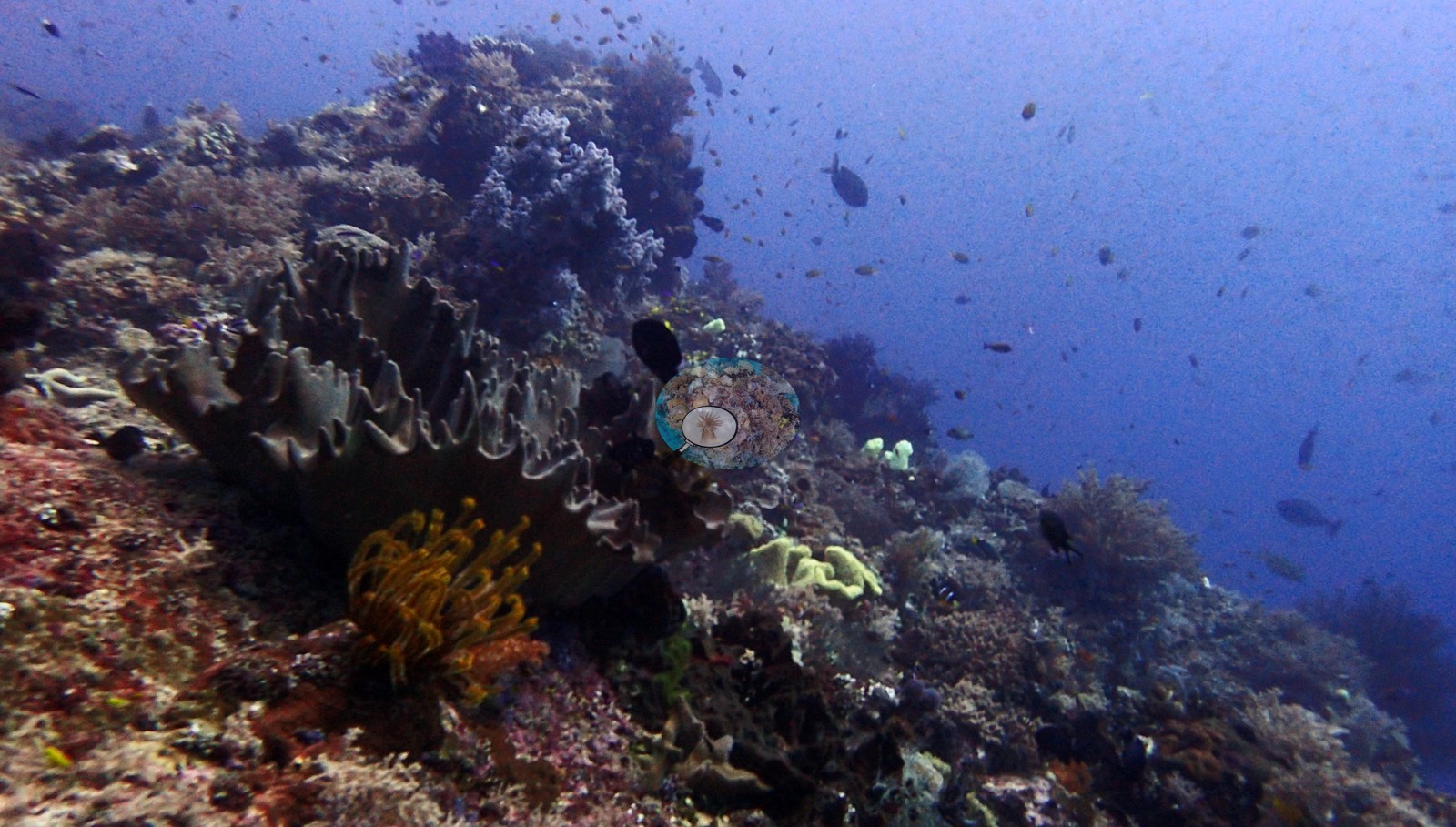 29
29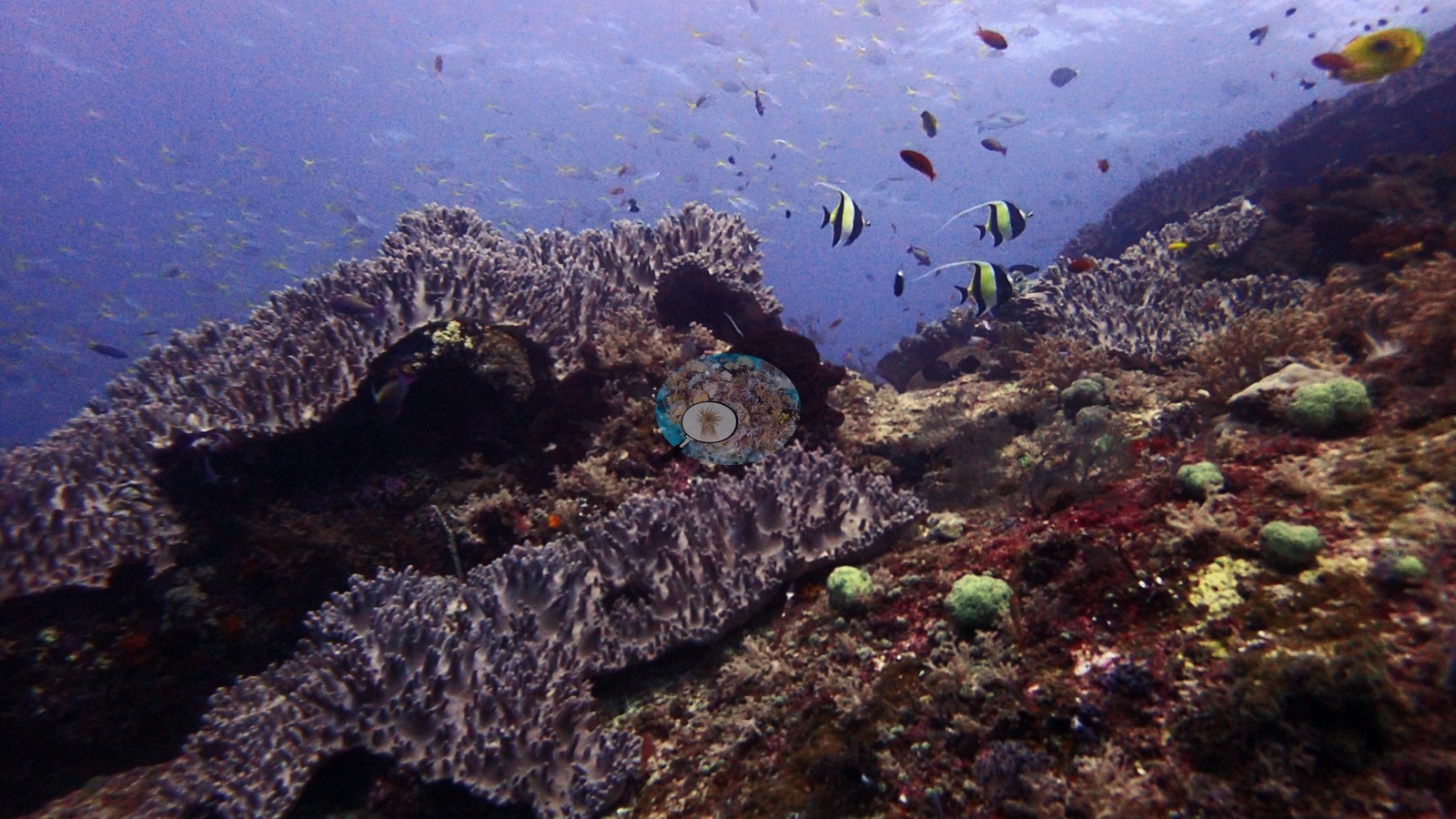 30
30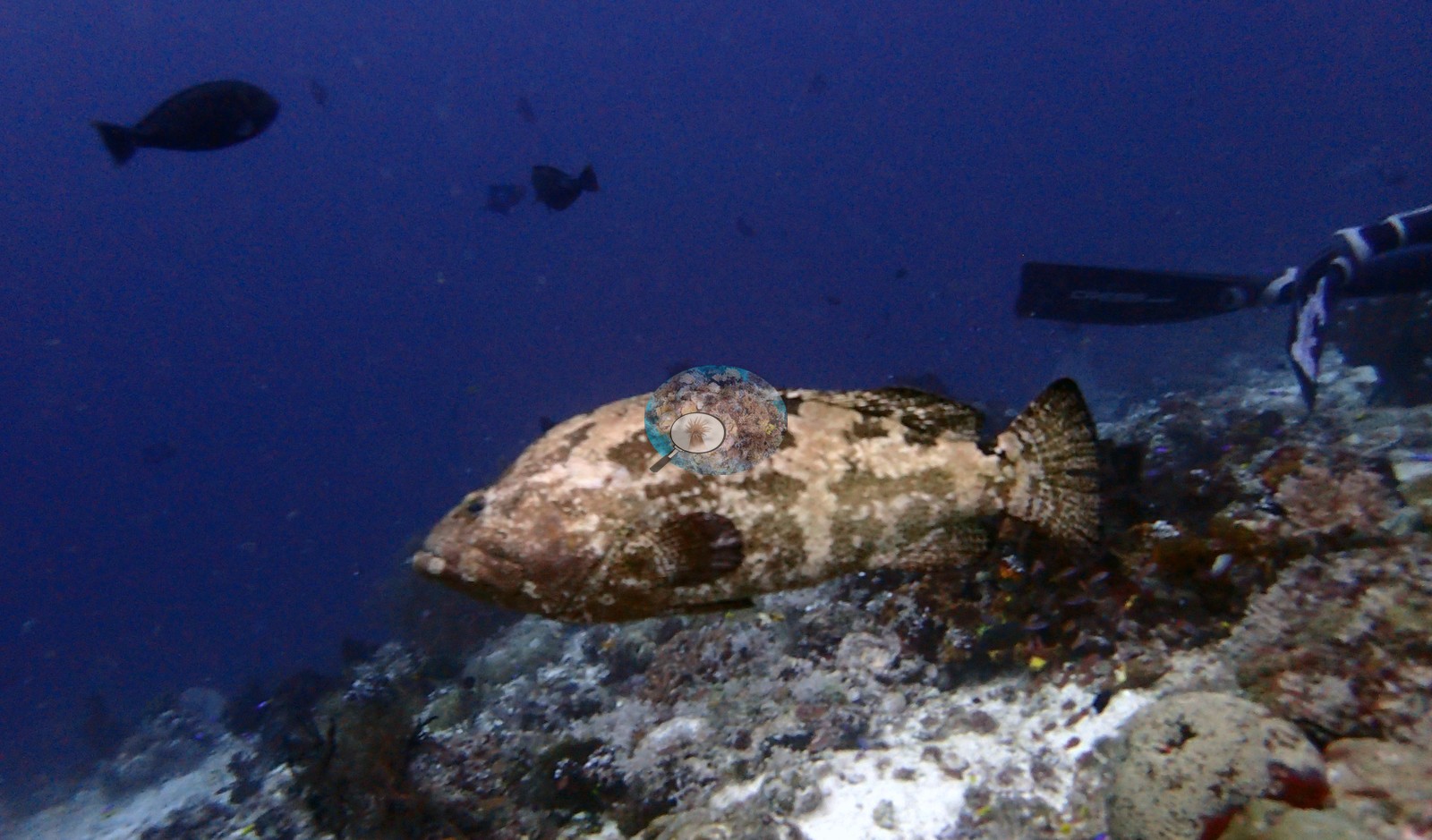 31
31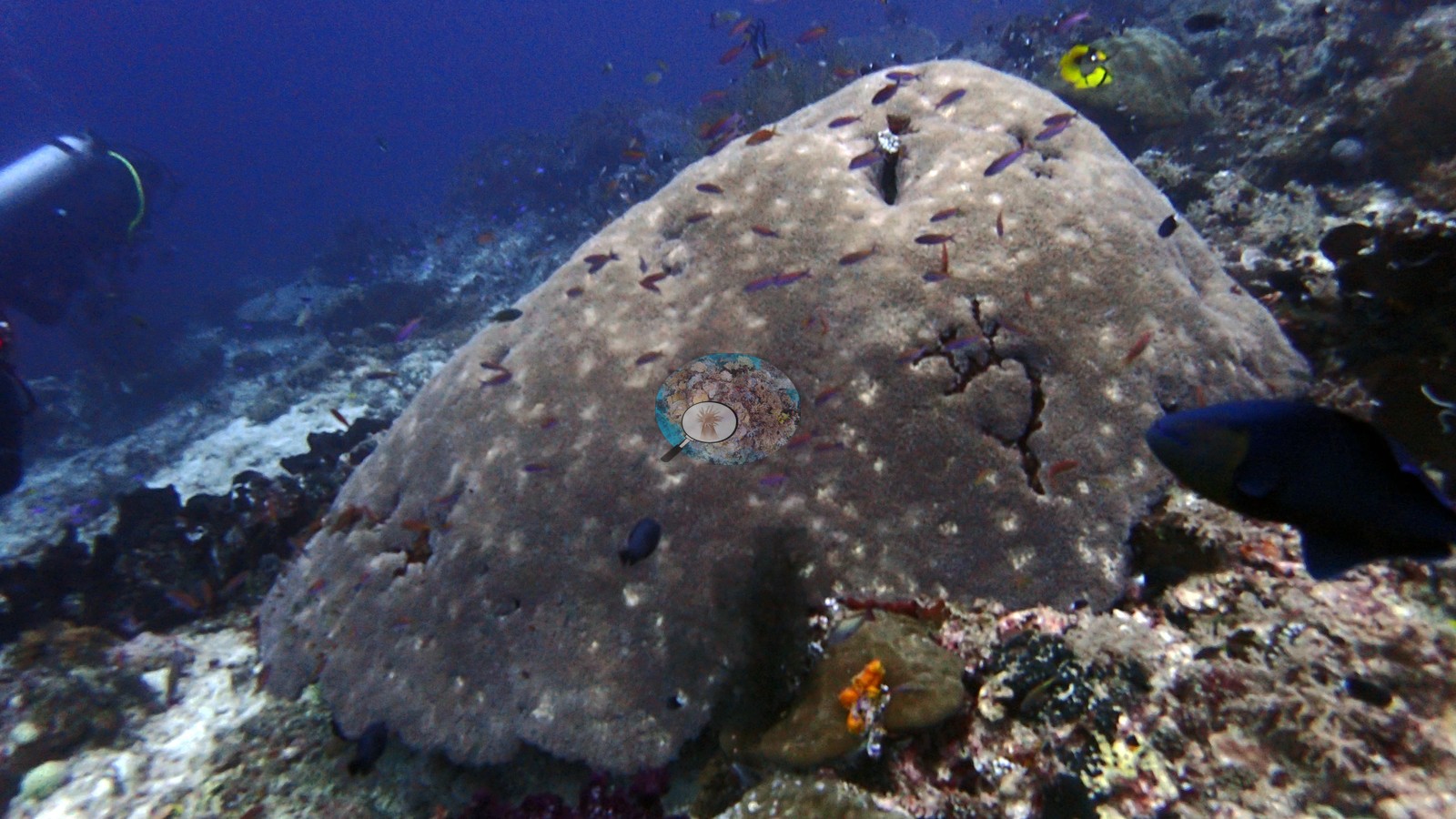 32
32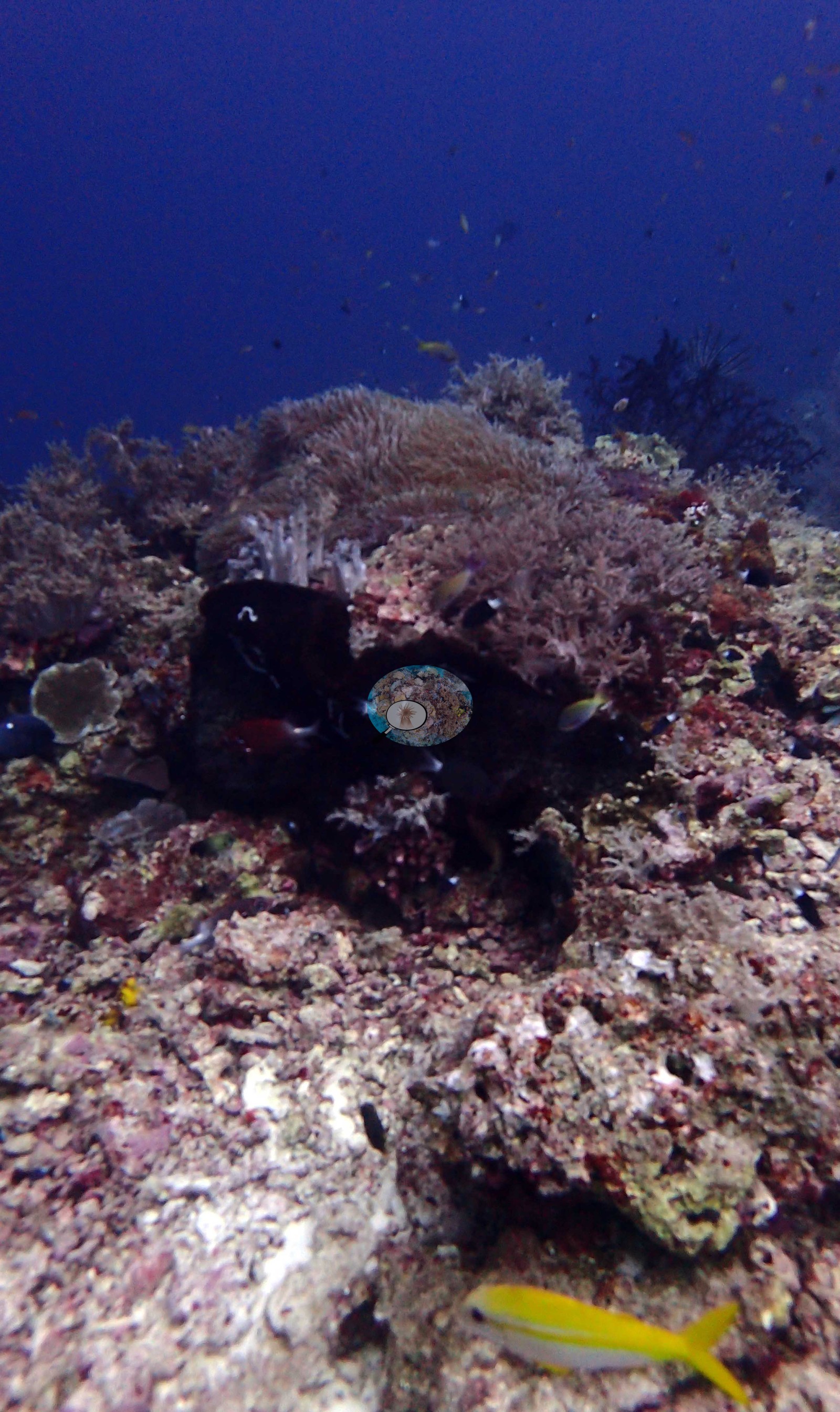 33
33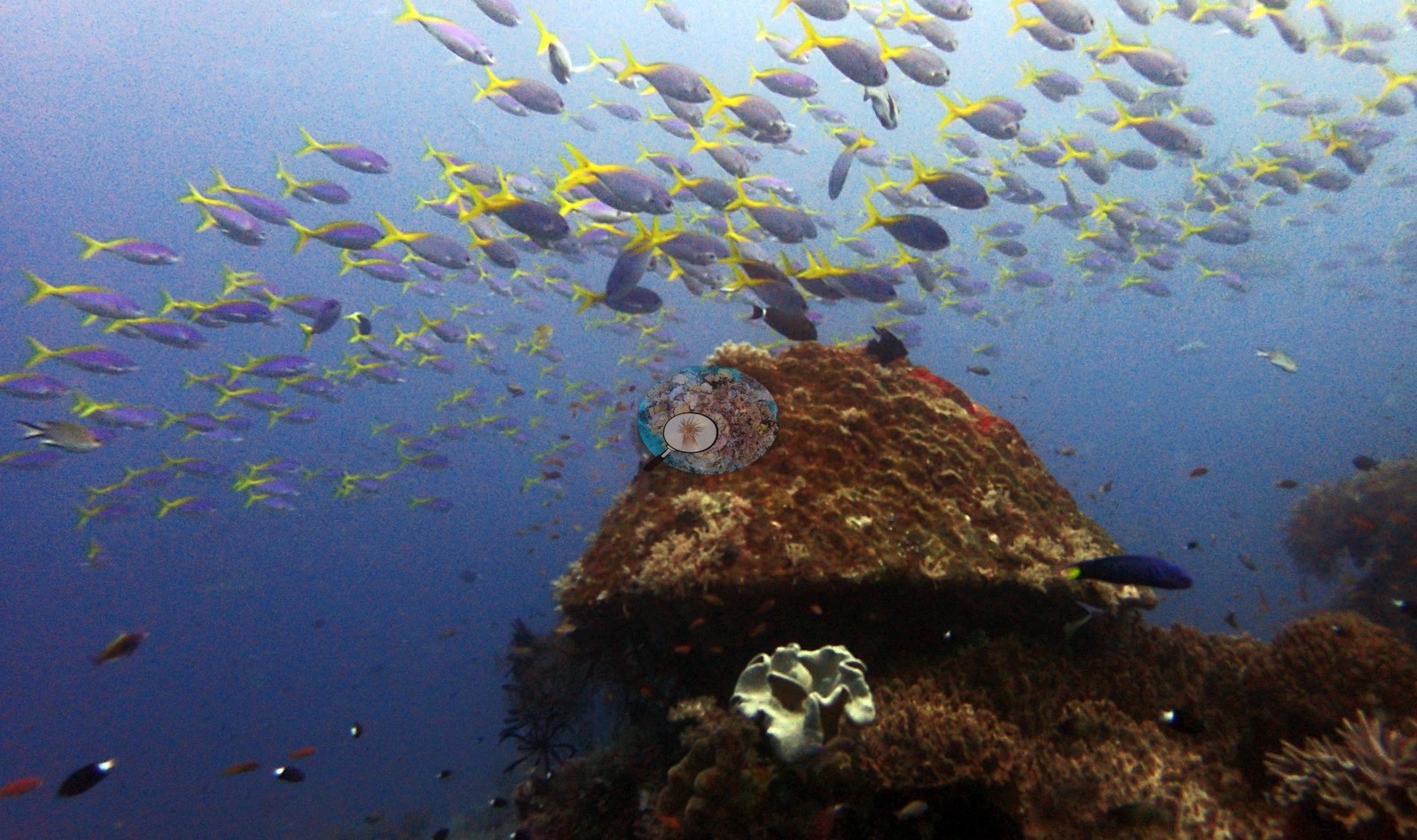 34
34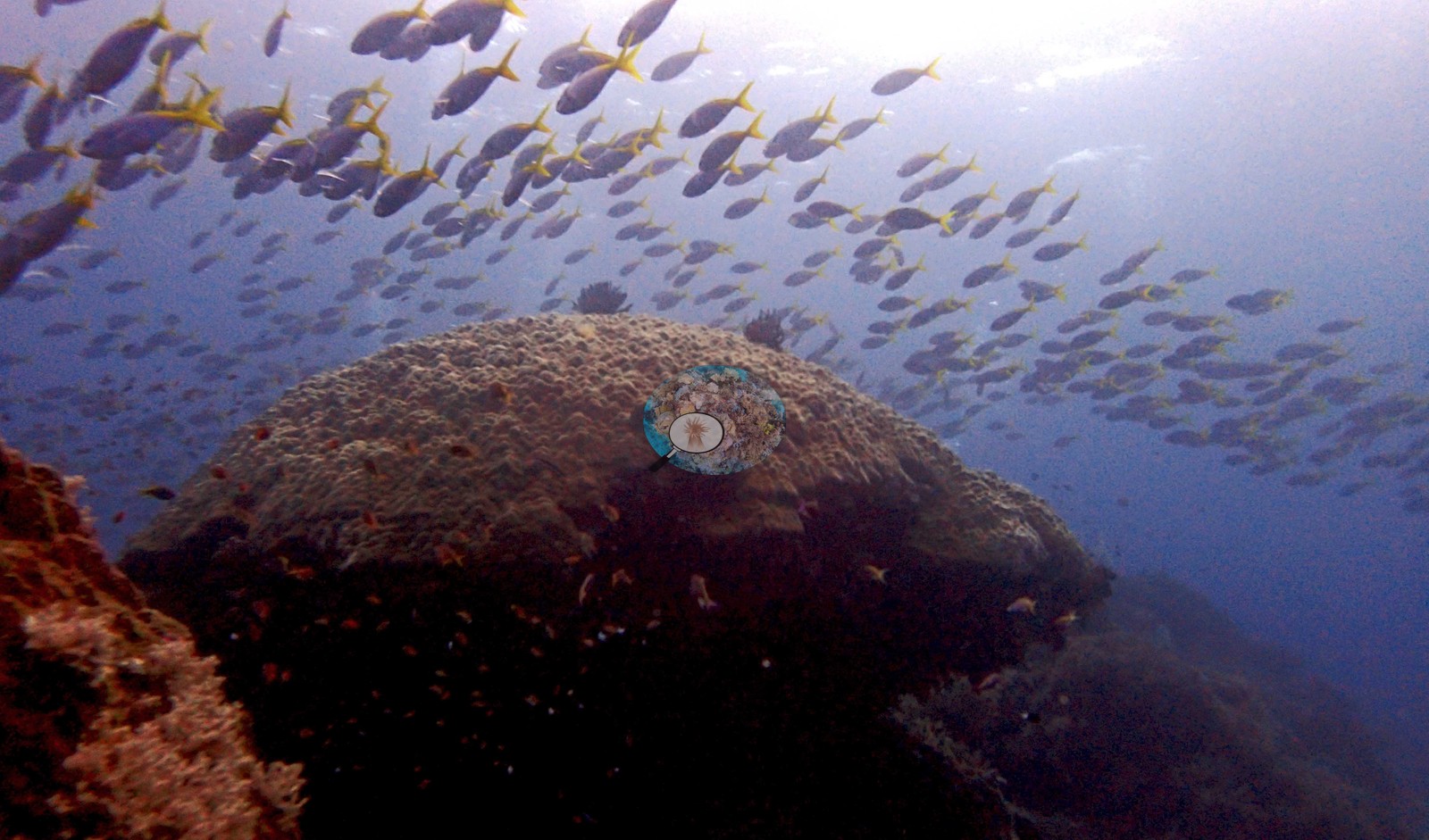 35
35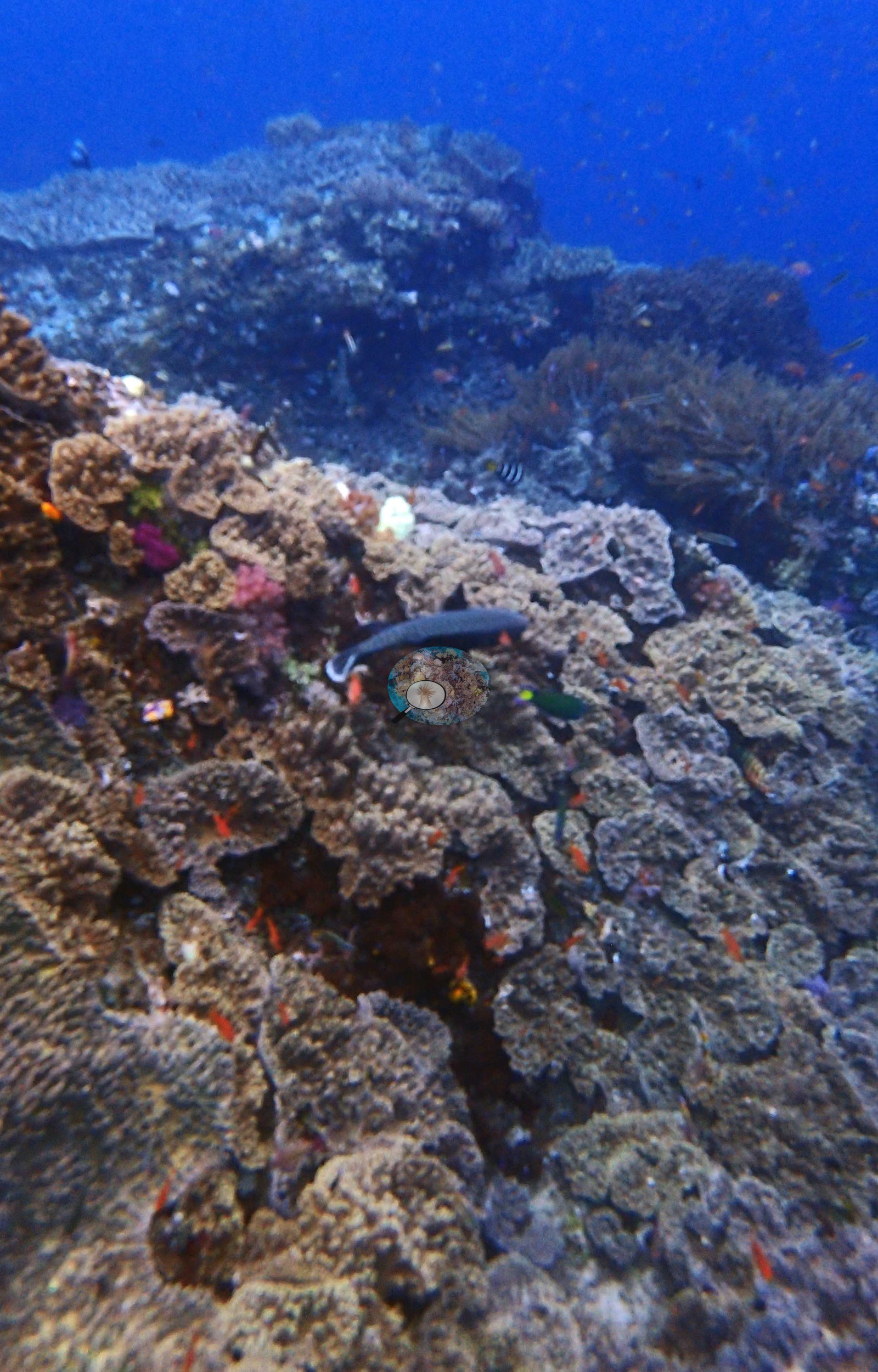 36
36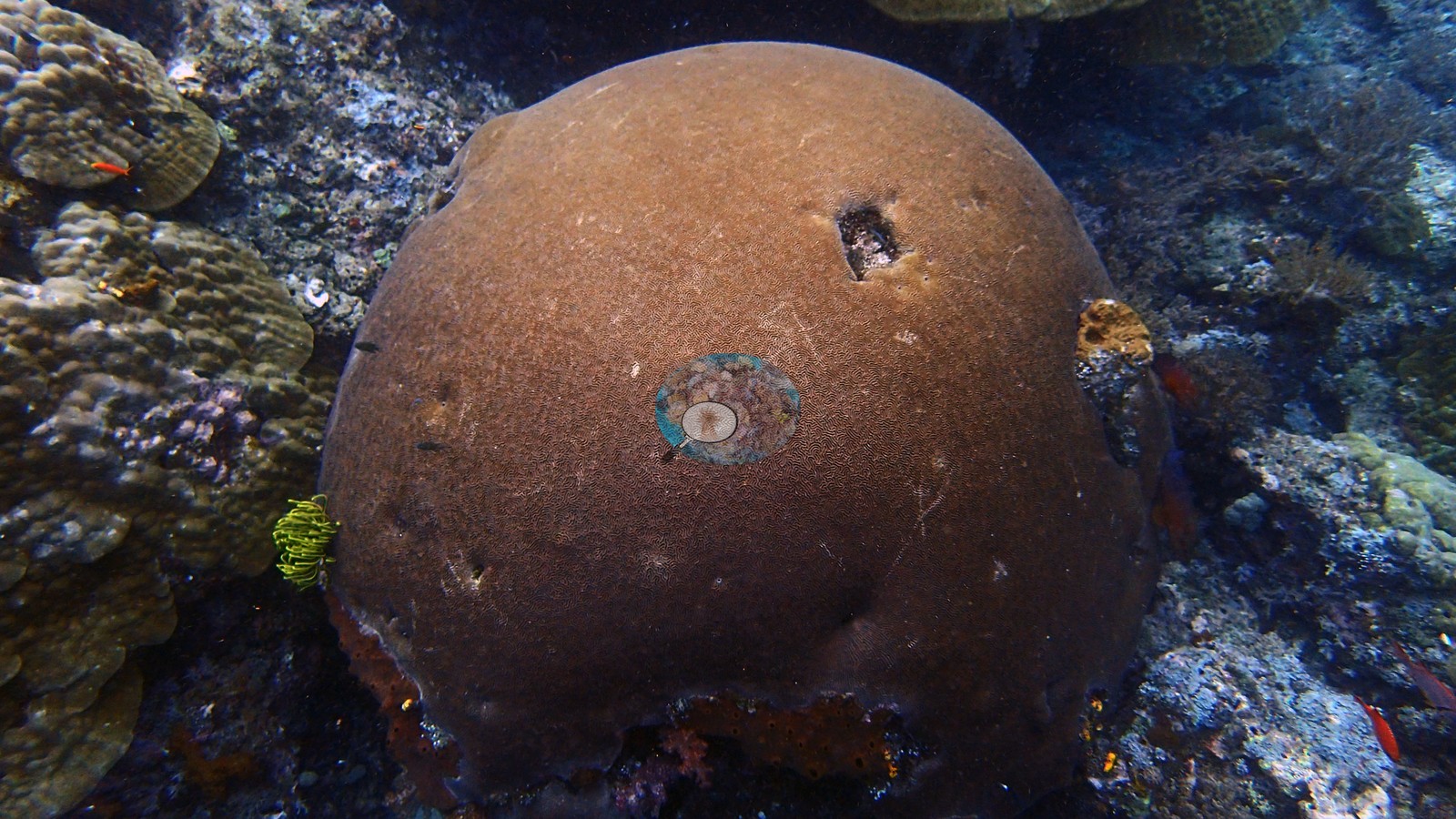 37
37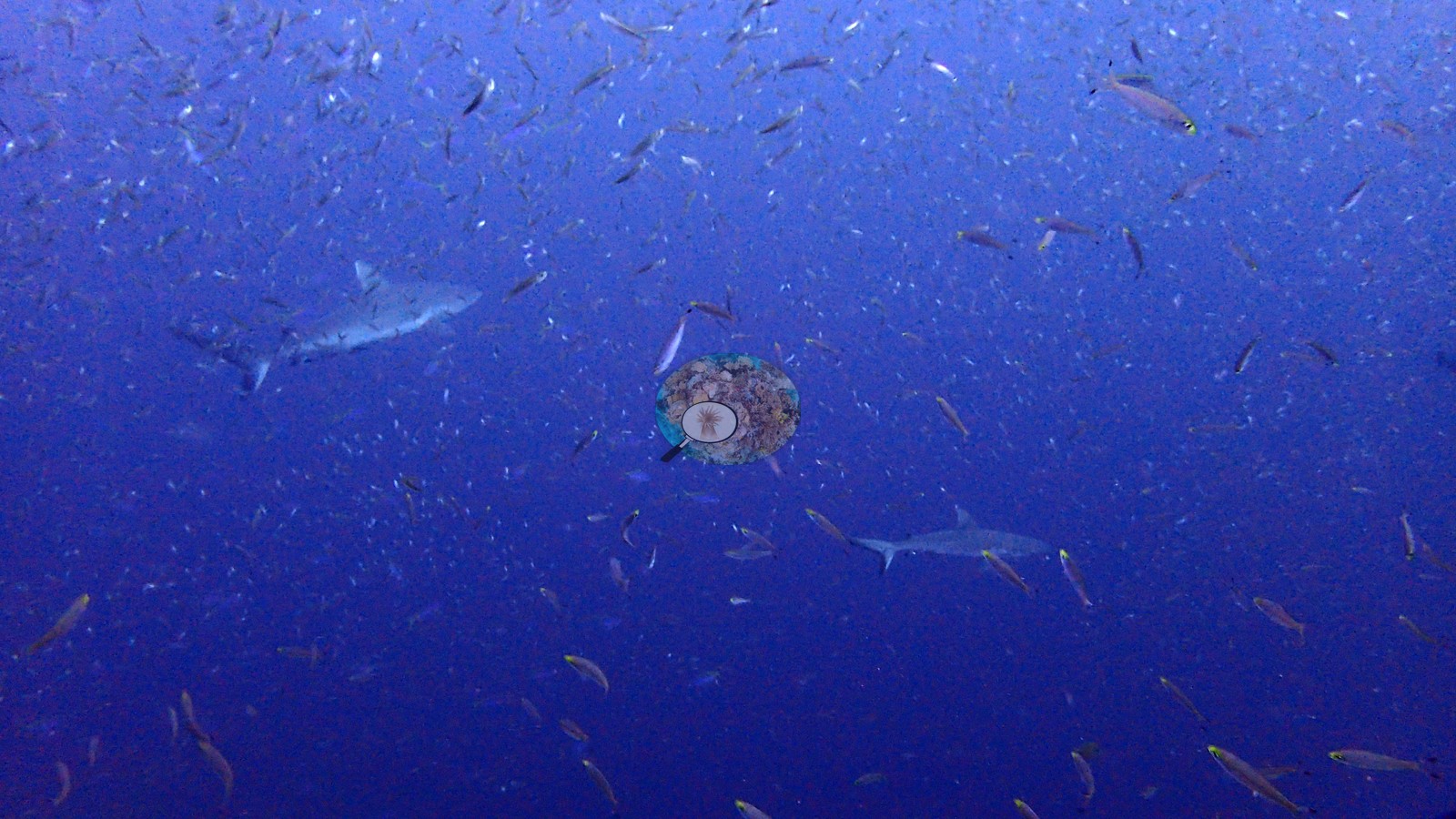 38
38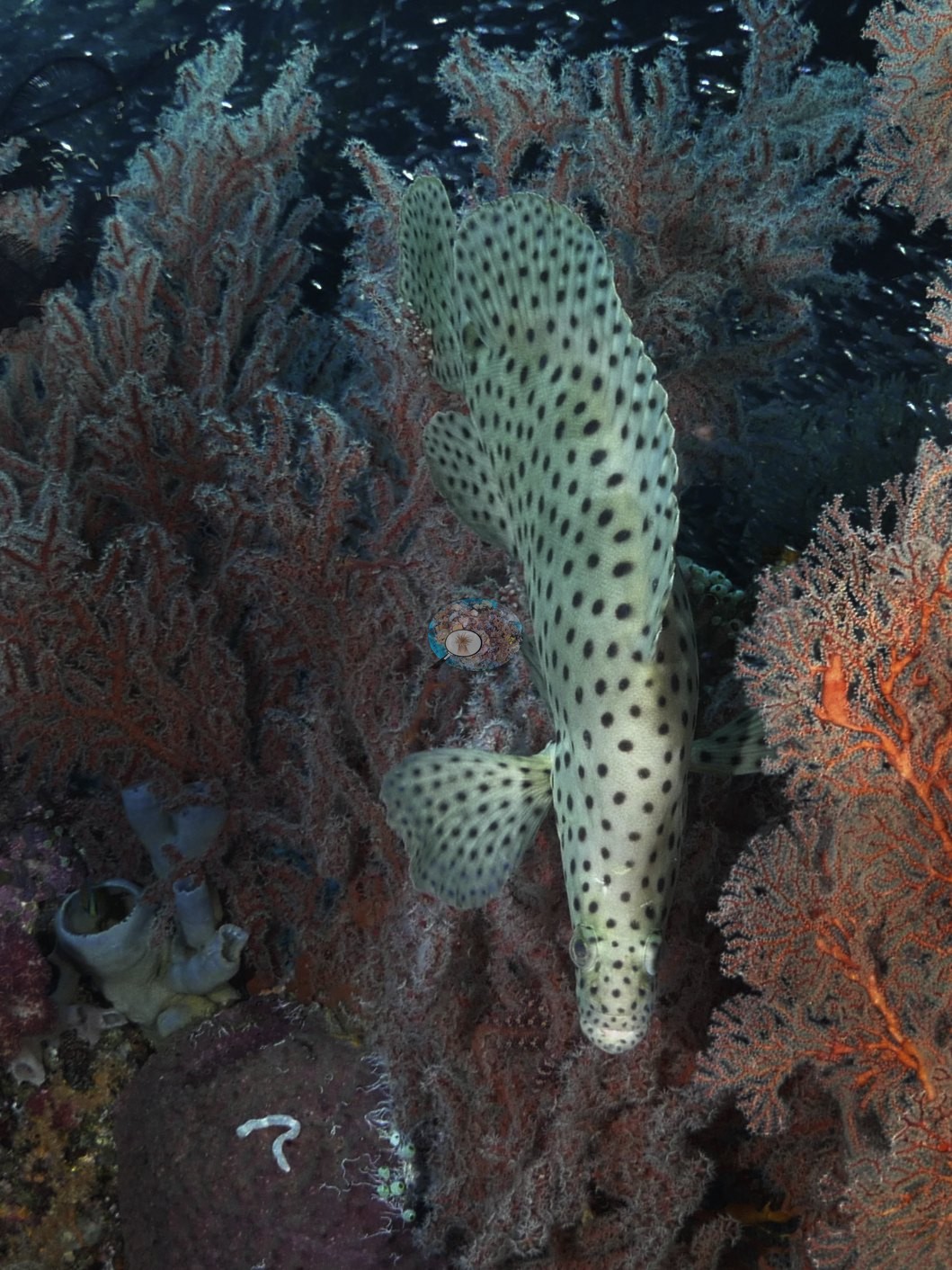 Photo: Pierre39
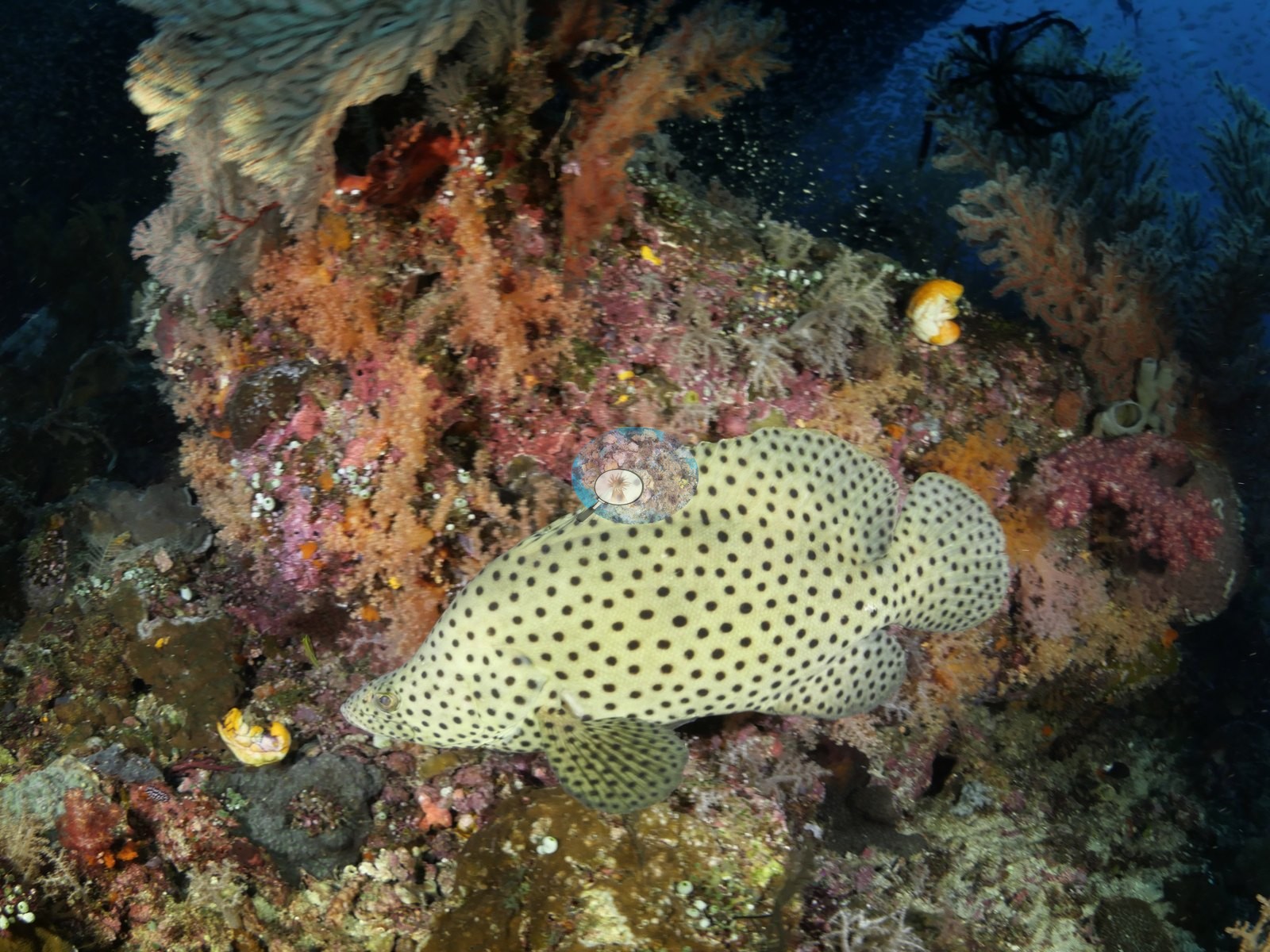 Photo: Pierre40
 Photo: Pierre41
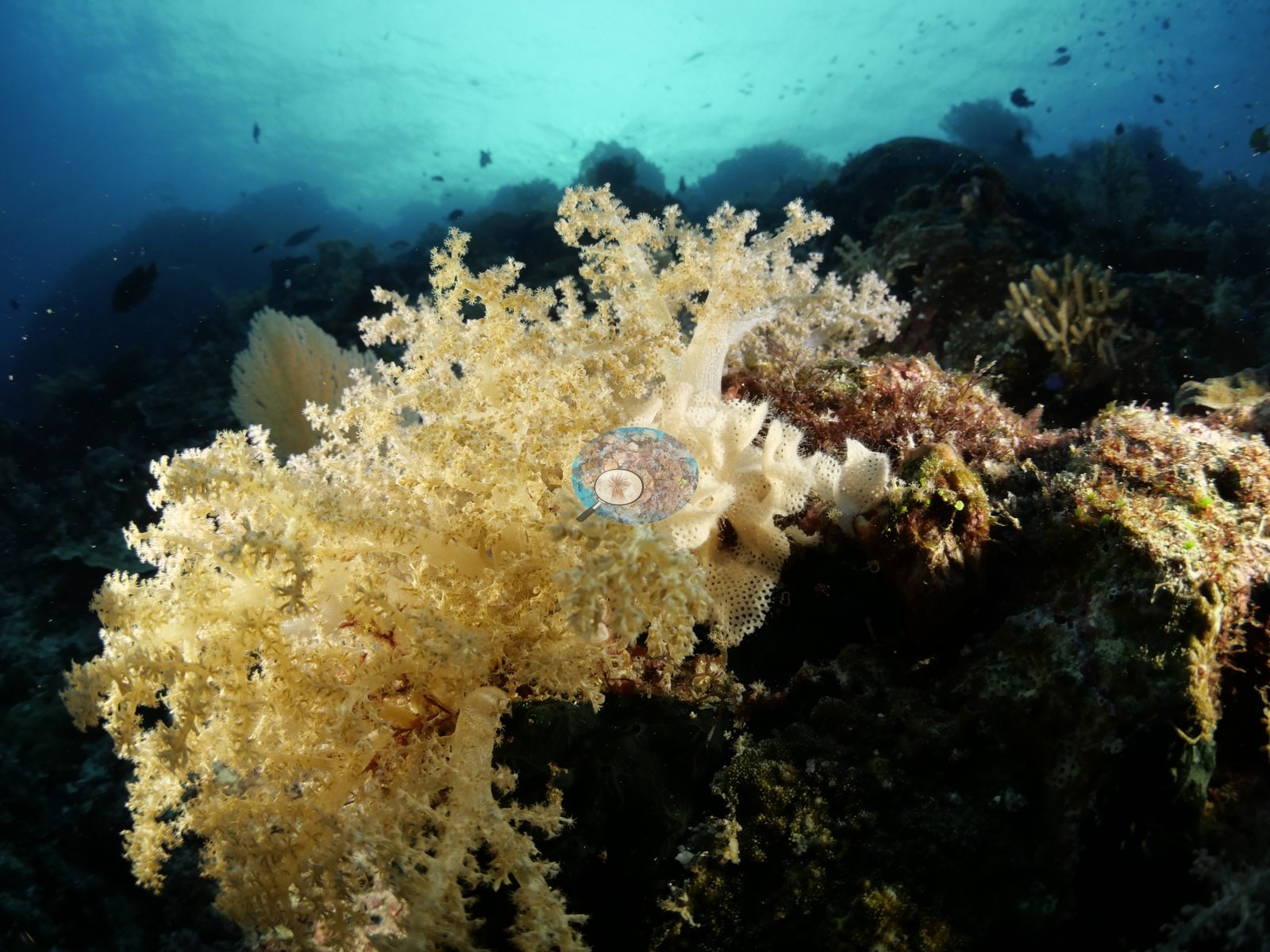 Photo: Pierre42
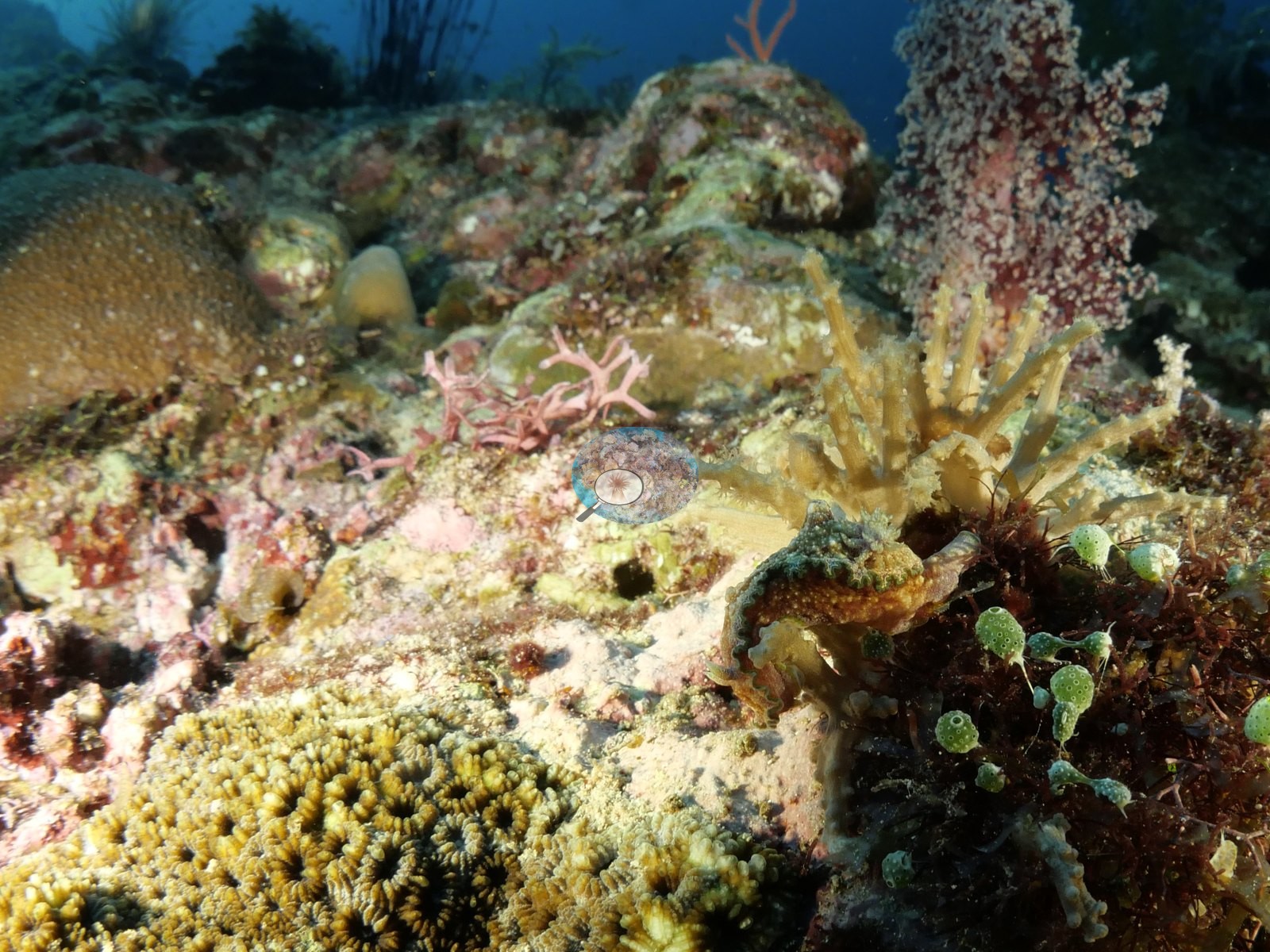 Photo: Pierre43
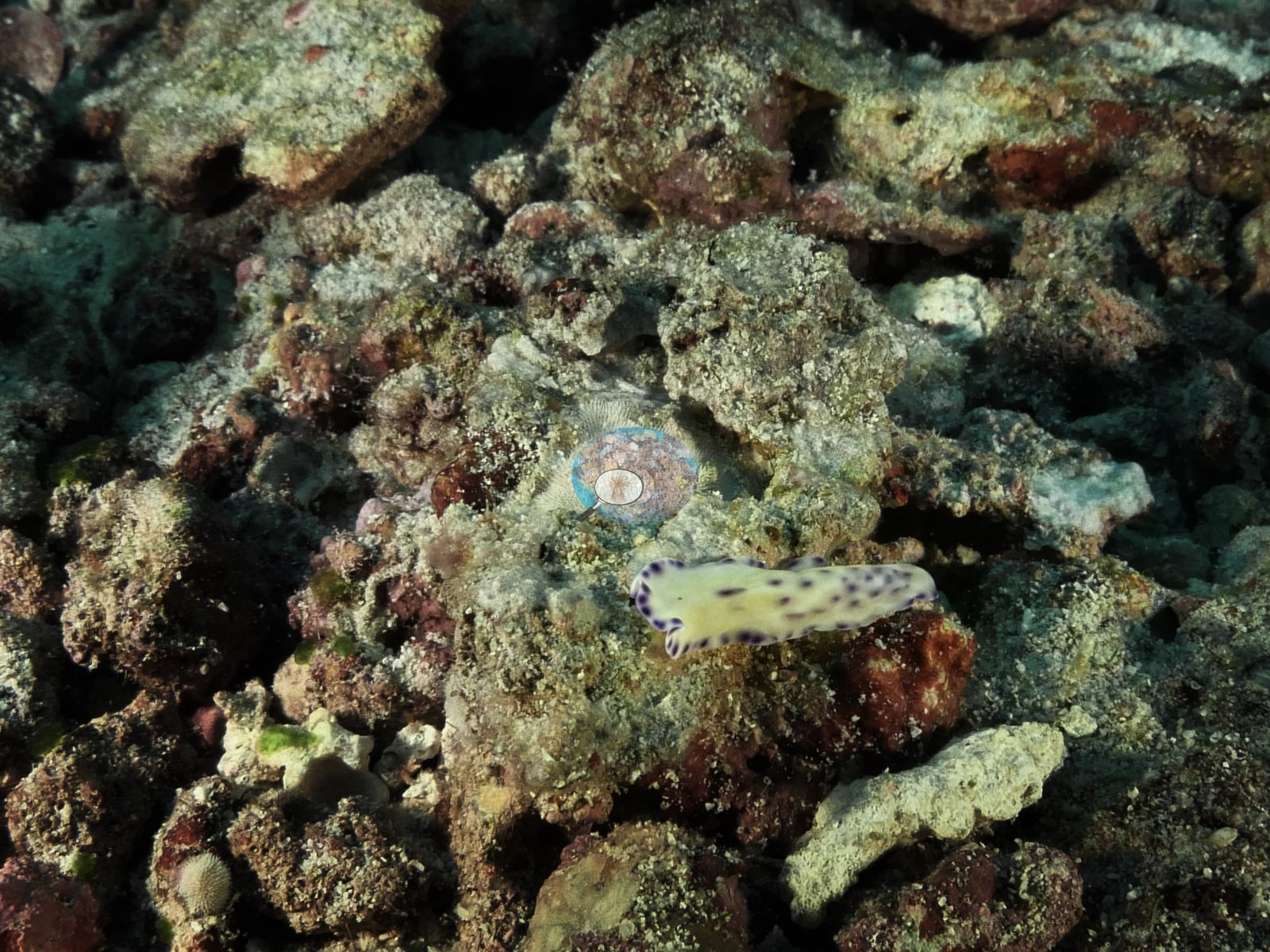 Photo: Pierre44
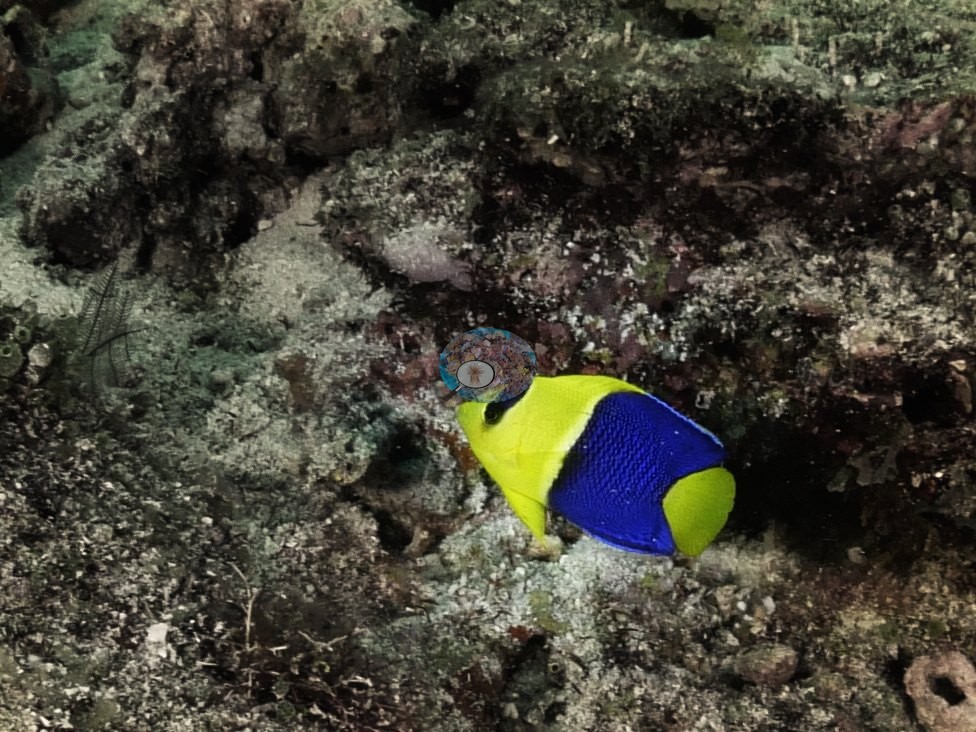 Photo: Pierre45
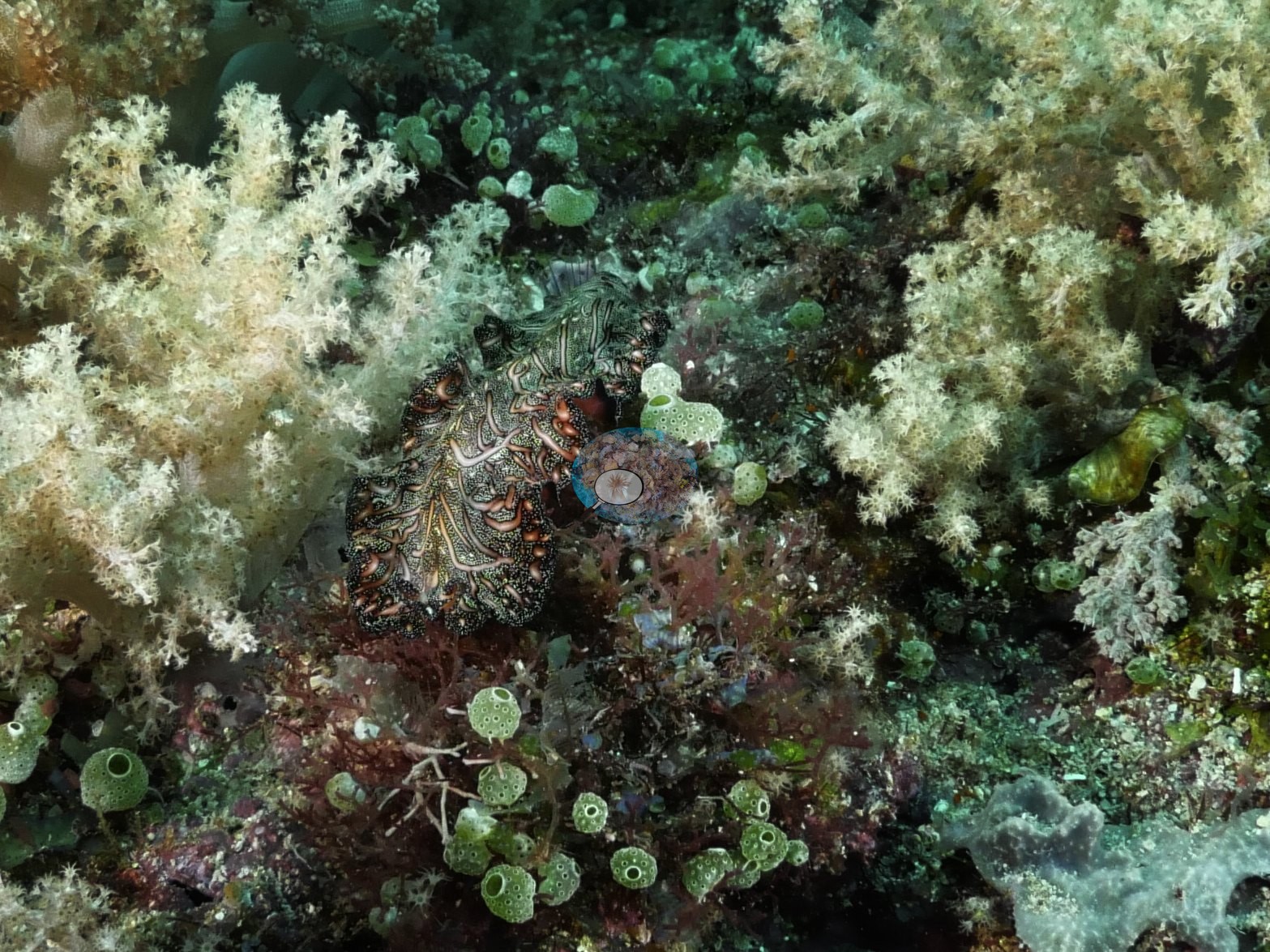 Photo: Pierre
Site description
General benthic features
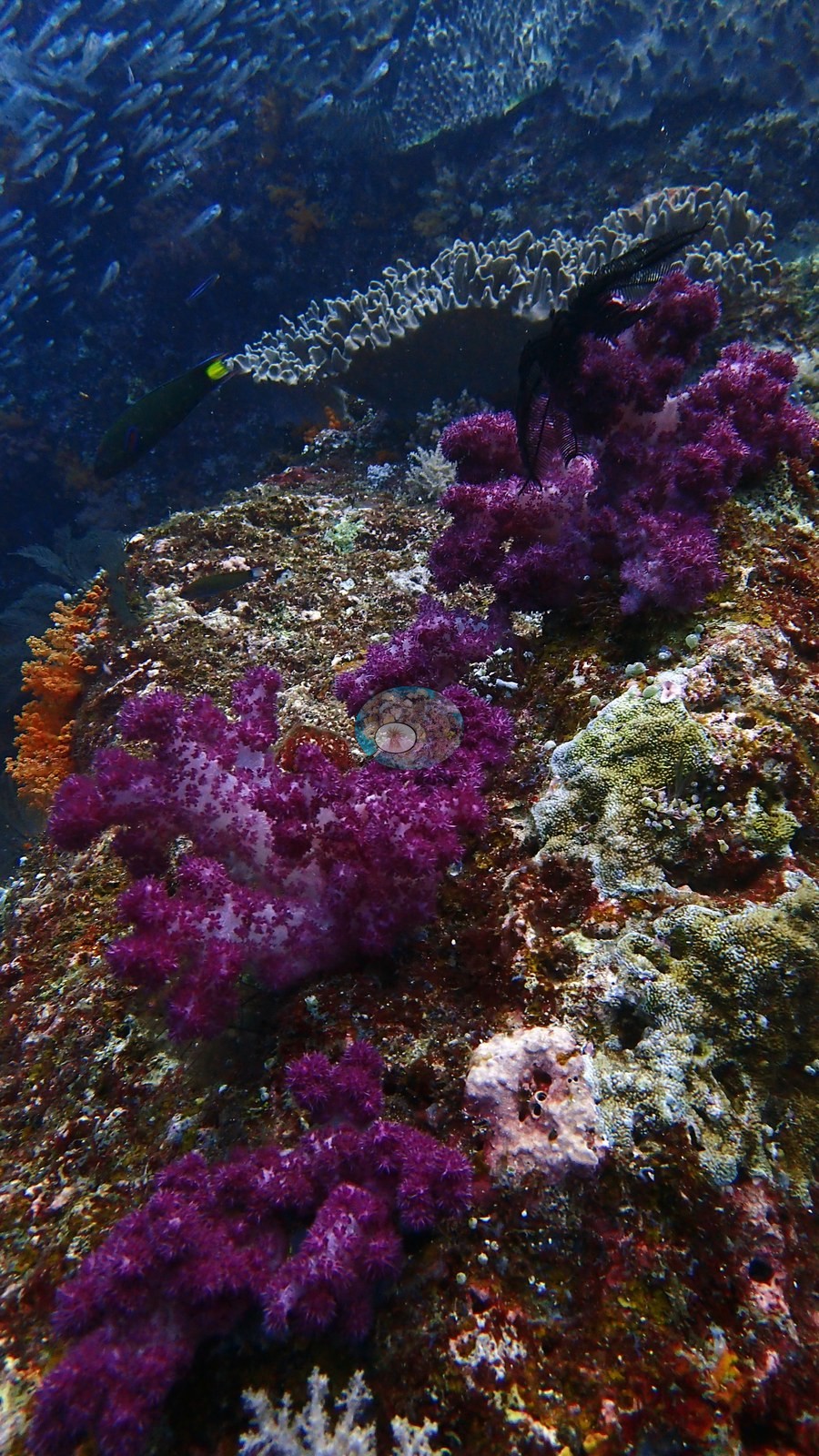
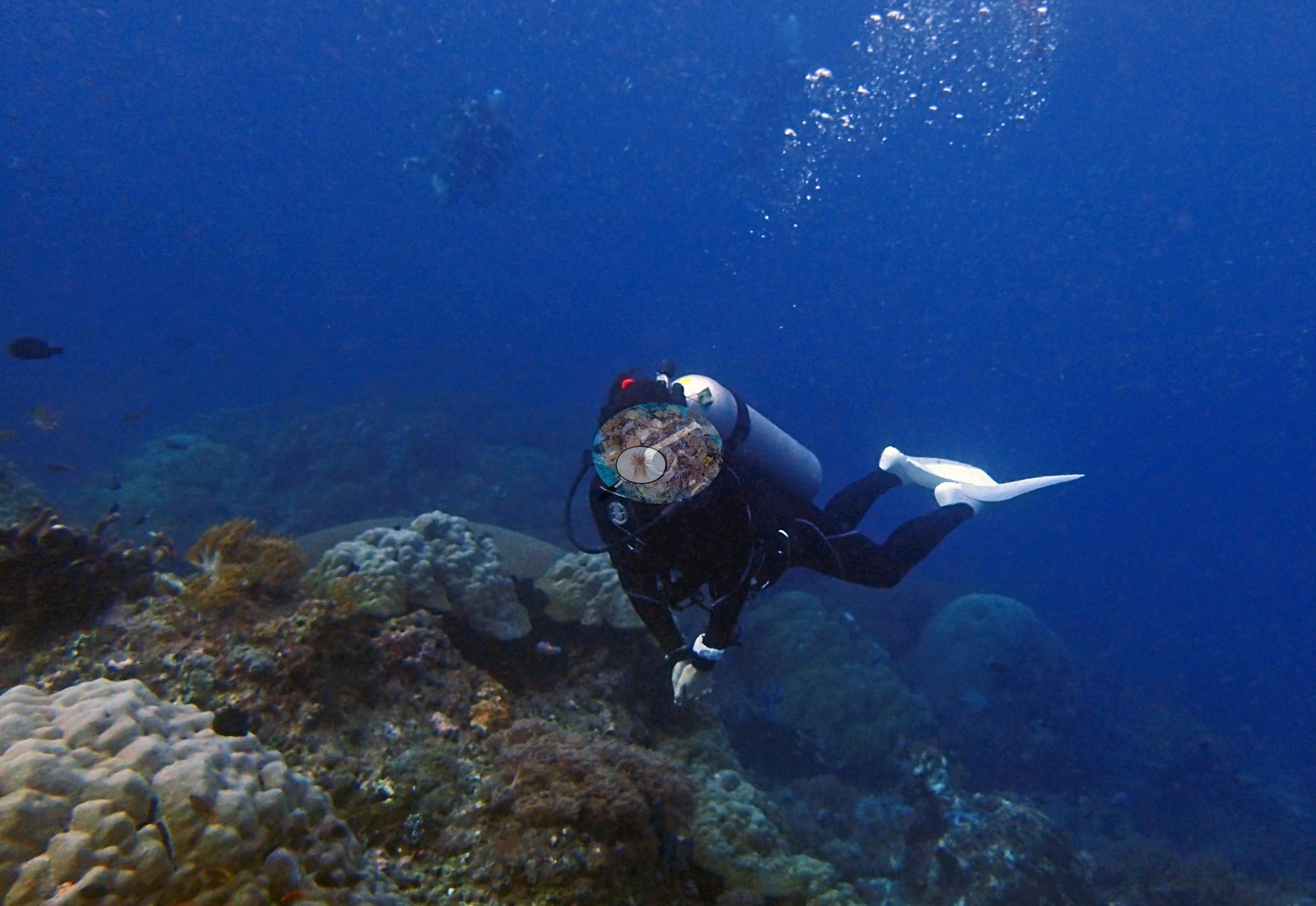
56 frames were reviewed for this write-up; the blind Claude count scored 50 frames from this dive. The set opens in the water column rather than on the reef, which is characteristic of the site. H1, his own frame 'Naoko at Shadow Reef', is a diver finning over rounded massive Porites domes and low turfed substrate with bubbles trailing behind — the establishing shot. Where the camera does come down onto the substrate, the reef is a low-relief, heavily encrusted, soft-coral-rich surface rather than a coral garden. H8 (PA181421) is a close reef-top frame of purple-brown encrusting and massive colonies interleaved with pale foliose plates over pink coralline pavement. H9 (PA181422) is the richest close-up of the dive: a white arborescent soft coral, bright red encrusting sponges, coralline crust, small plating colonies, and crinoids all in one frame. H10 (PA181423) repeats the pattern with a brown meandroid colony and foliose plates set in coralline. H18 (PA181437) is a large pale foliose plate colony sitting proud of the encrusted pavement. Gorgonians and soft corals are a recurring subject. H14 (PA181431) is a tall brown lacy sea fan shot vertically against the murk; H15 (PA181433) a pale sea fan on the reef with fusiliers behind it; H22 (PA181446) a wall face carrying a blue sea fan, crinoids and green encrusting sheets with a diver at the frame edge; H33 (PA181474) an orange-brown gorgonian on the reef crest with a diver in the blue behind. H34 (PA181475) is the standout: clusters of vivid magenta arborescent soft coral hanging off an overhang beside a delicate white lace-coral arch and an orange soft coral, over green encrusting sheets. H29 (PA181465) sets pink soft coral and crinoids against a yellow-brown massive Porites dome. H38 (PA181483) is a slope face of red and cream soft coral with anthias streaming over it. The stony-coral highlights are concentrated in the table and plating zone. H25 (PA181461) is a broad yellow-green tabular colony filling the foreground with a blue sea star at its base; H27, H28 and H48 (PA181463, PA181464, PA181495) are the same yellow-green plating/tabular form in different lights, H48 a large flat plate with damselfish and anthias over it and red sponge at the margin. H39 and H40 (PA181484, PA181486) are two views of a single large green-yellow Acropora table, in H40 shot from below with a diver above and a second table behind. H42 (PA181488) is a gray table raised on a narrow pedestal with an anthias cloud around it and a diver above. H45, H49, H51, and H53 (PA181492, PA181496, PA181498, PA181501) are further gray tables with crisp white active rims standing on rubble and encrusted pavement. H41 (PA181487) is the densest stony-coral frame of the dive: a stand of branching and digitate colonies packed together with anthias over them. H43 and H44 (PA181489, PA181490) are branching and corymbose colonies with white growing tips on the crest. H26 (PA181462) frames two big yellow-brown massive Porites bommies with fish clouds and a diver behind them. On this dive the benthos that is actually visible is low-relief encrusting and massive coral, foliose and plating colonies, scattered Acropora tables, and a great deal of soft coral, gorgonian and sponge — consistent with Anderson's own note for this site that soft-coral cover exceeds hard-coral cover.
Coral cover
Coral cover: 17% — a blind Claude computer-vision point count of 85 of Anderson's edited photographs (20 points per photo; water, fish, and obstructions excluded). Other computer-vision methods are listed in the method table. It is a useful indication of how much a single photo-derived dive index can move at one site.
Stressors
No frame shows bleaching, disease lesions, crown-of-thorns or debris.
Fish and other fauna
H2 (PA181414) puts several large disc-bodied batfish in mid-blue over an encrusting, orange-tinged reef edge. H3 through H7 (PA181415-181419) are essentially all water: clouds of small planktivores against deep blue, a pair of barracuda in H5, dim large-fish silhouettes in H4, and in H7 the whole seamount reduced to a silhouette in the haze with fish clouds over it. H11 (PA181424) is a cornetfish in open blue. Fish dominate the remainder. H13 (PA181430) is a large silver jack with two blue-finned trevally alongside; H16, H17, H19, and H20 (PA181434-181442) are schools of yellow-bodied snapper and fusiliers working over the reef edge; H21 (PA181444) two silver jacks over a pale gorgonian; H37 (PA181479) fusiliers and a trevally in open blue. H23 (PA181447) is the best single fish frame — a diagonal-banded sweetlips hanging over rubble with a shimmering wall of thousands of glassfish filling the entire background — and H24 (PA181449) is the same glassfish mass seen from below, the reef slope barely visible through it. H30, H31, H32, and H36 (PA181466-181478) are hazy reef-ridge frames with golden fish clouds and anthias. H55, his own 'Shadow Reef.jpg', is a baitfish cloud filling the frame with larger predators cruising through it, and H56, his own 'sharko.jpg', is a shark in the blue with a diver at the right edge.
Comparisons with other data
Round 1 vs round 2.
Dive record
Dive 12 — Shadow Reef, 18 October 2018. This is round 1 of two separate dives Anderson made on this same seamount; the second, dive 20, is 20 October and is written up separately. Both dives sit on the one pin, 'Raja Ampat - Shadow Reef'. The blind Claude count gives 19.4% for dive 12 (18 Oct, 50 photos) and 13.4% for dive 20 (20 Oct, 35 photos). That 6.0-point gap is variation between two dives — different depth tracks, different light, different framing on a large seamount — not a change in the reef over 48 hours.
Other notes
These frames record what the site is famous for — the fish — but they carry almost no benthos, and that matters for the cover figure below. What the frames support. The frames are not a fish survey and cannot quantify the biomass they so obviously show.
CV model comparison
More info
DINOv3 and CoralSCOP were run on the same photos and are listed for comparison. Coralscapes v2 and v1 were also run but are not shown: Anderson does not consider Coralscapes reliable for these photos. No diver transect exists for this trip, so agreement between the rows is not accuracy, and as of September 2026 no computer-vision method estimates coral cover accurately on new images; treat every row as indicative.| Method | Hard-coral cover (%) |
|---|---|
| In-house DINOv3 | 17.6 |
| CoralSCOP edited | 18.2 |
| Claude (edited photos) | 16.9 |
% coral cover by visit
Each visit is analyzed independently; these are not pooled into a single site mean.
| Date | % coral cover | Std. dev. | Frames scored |
|---|---|---|---|
| — | 19% | ±27 | 50 |
| — | 13% | ±21 | 35 |
Data & links
Images 38–45: Pierre; all other images from Coral Reef Diagnostics. Data are from Coral Reef Diagnostics.
© Coral Reef Diagnostics.