
Raja Ampat - Pulau Misool night dive
Part of the regional summary: Indonesia - Raja Ampat
More info
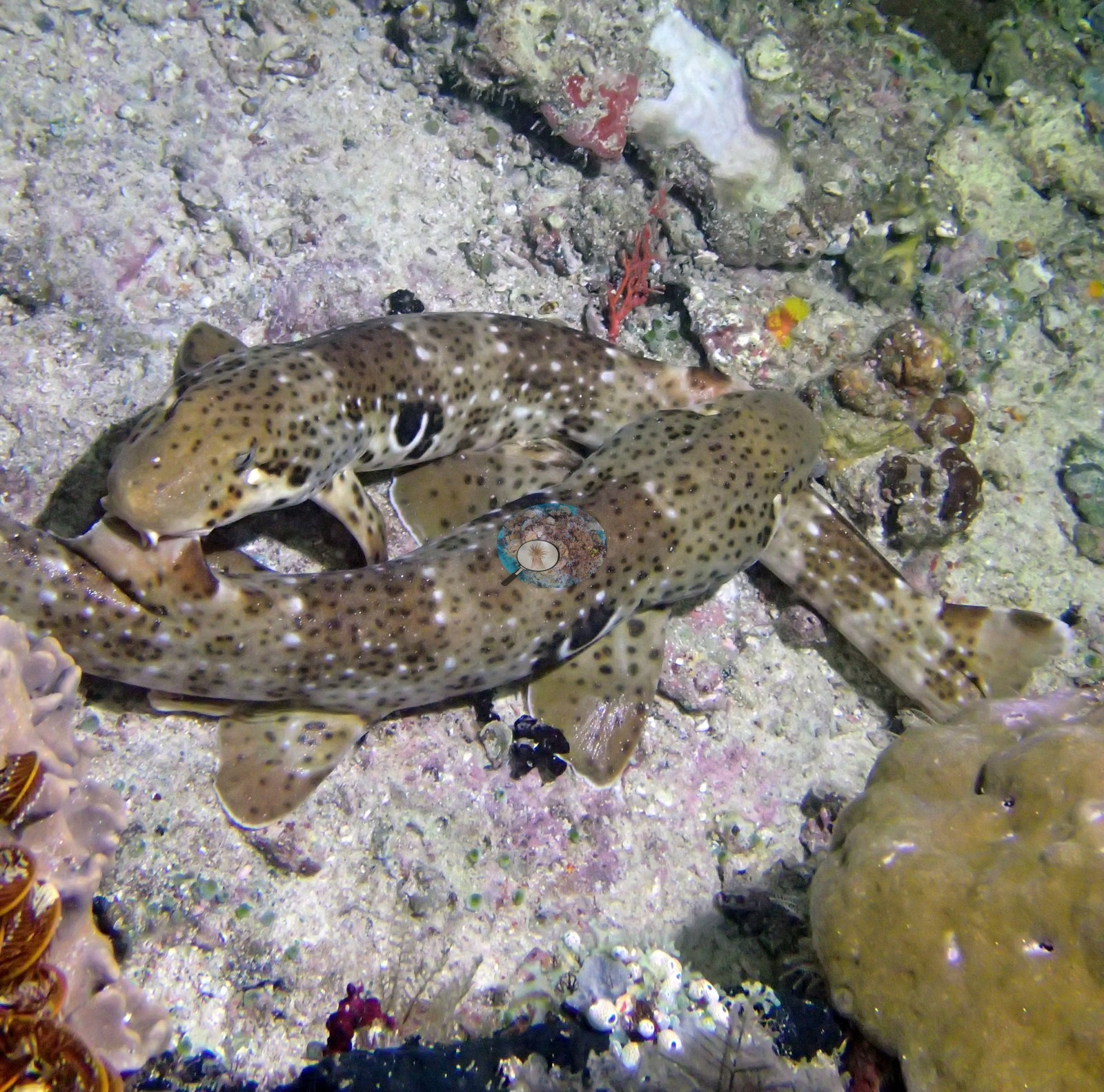
West Papua (NOAA CRW virtual station)A night dive at Pulau Misool (18 October 2018, 65 minutes, to 17.7 m): strobe-lit close-ups of a banded coral shrimp, a green-polyped laminar coral, feather stars and a sea squirt, and two walking (epaulette-type) sharks resting on rubble. No coral-cover figure is published for this site.
Penyelaman malam di Pulau Misool (18 Oktober 2018, 65 menit, hingga kedalaman 17.7 m): foto jarak dekat dengan lampu kilat dari udang karang bergaris, karang lembaran dengan polip hijau, lili laut dan seekor ascidian, serta dua hiu berjalan (tipe epaulette) yang beristirahat di atas pecahan karang. Tidak ada angka tutupan karang yang diterbitkan untuk lokasi ini.
Terjemahan ringkasan ini oleh AI; versi bahasa Inggris yang berlaku.
Two other CRD dive sites with their own pages within 5 km shown in orange — click a marker to open its page.
5 of the 25 photographs on this page are shown beside the text that discusses them under "Site description" below.
 Photo: Pierre7
 Photo: Pierre8
 Photo: Pierre9
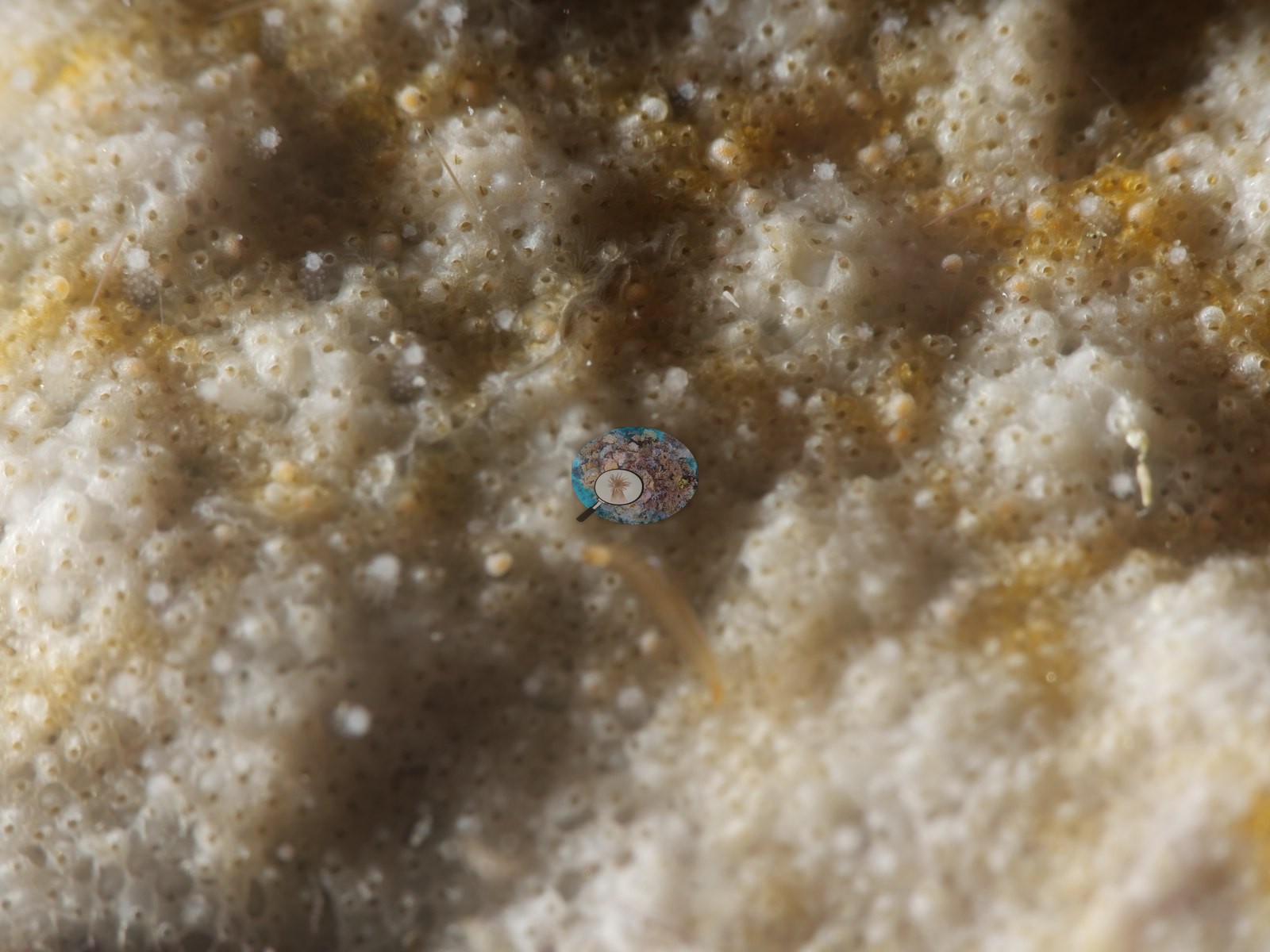 Photo: Pierre10
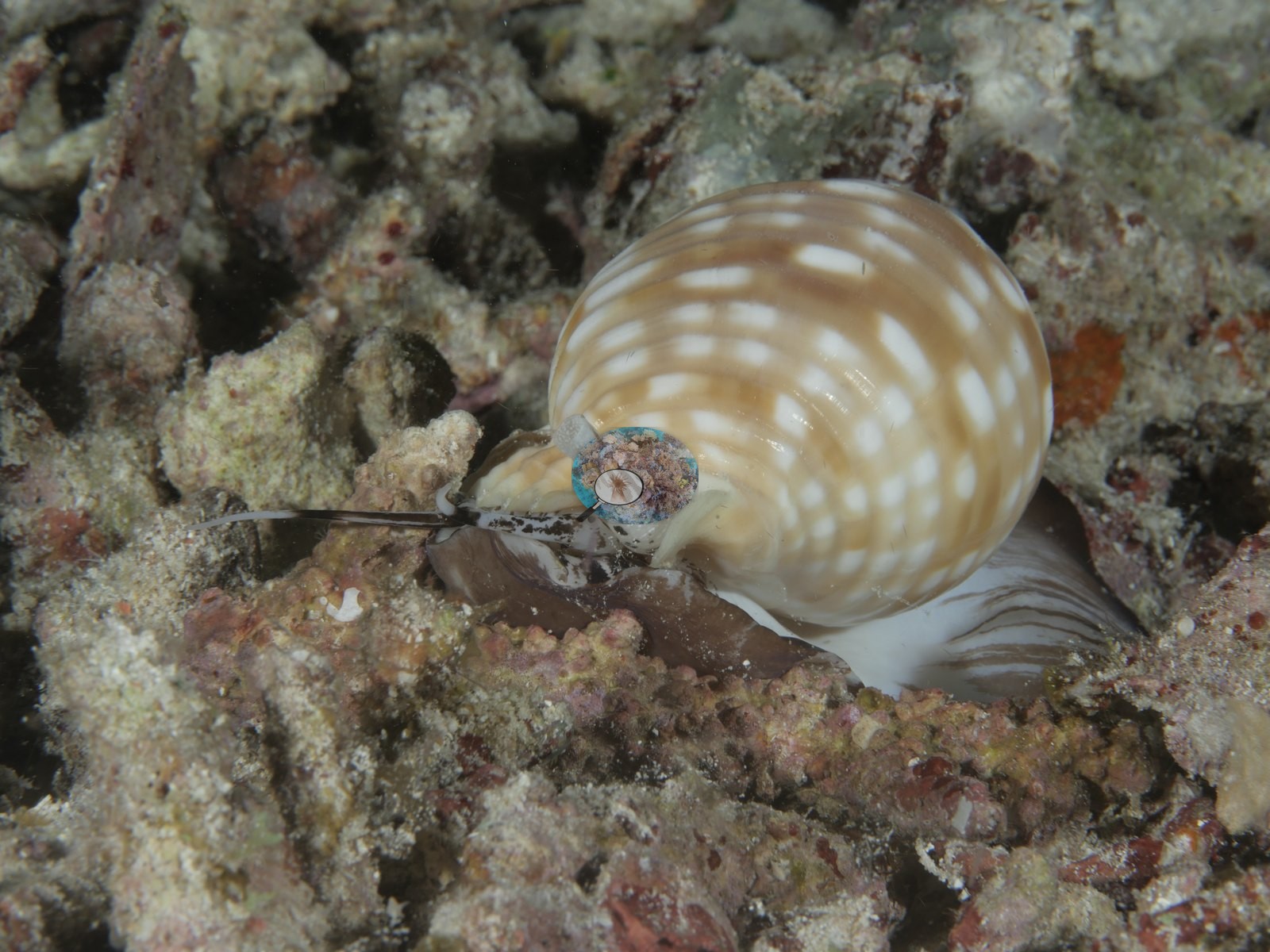 Photo: Pierre11
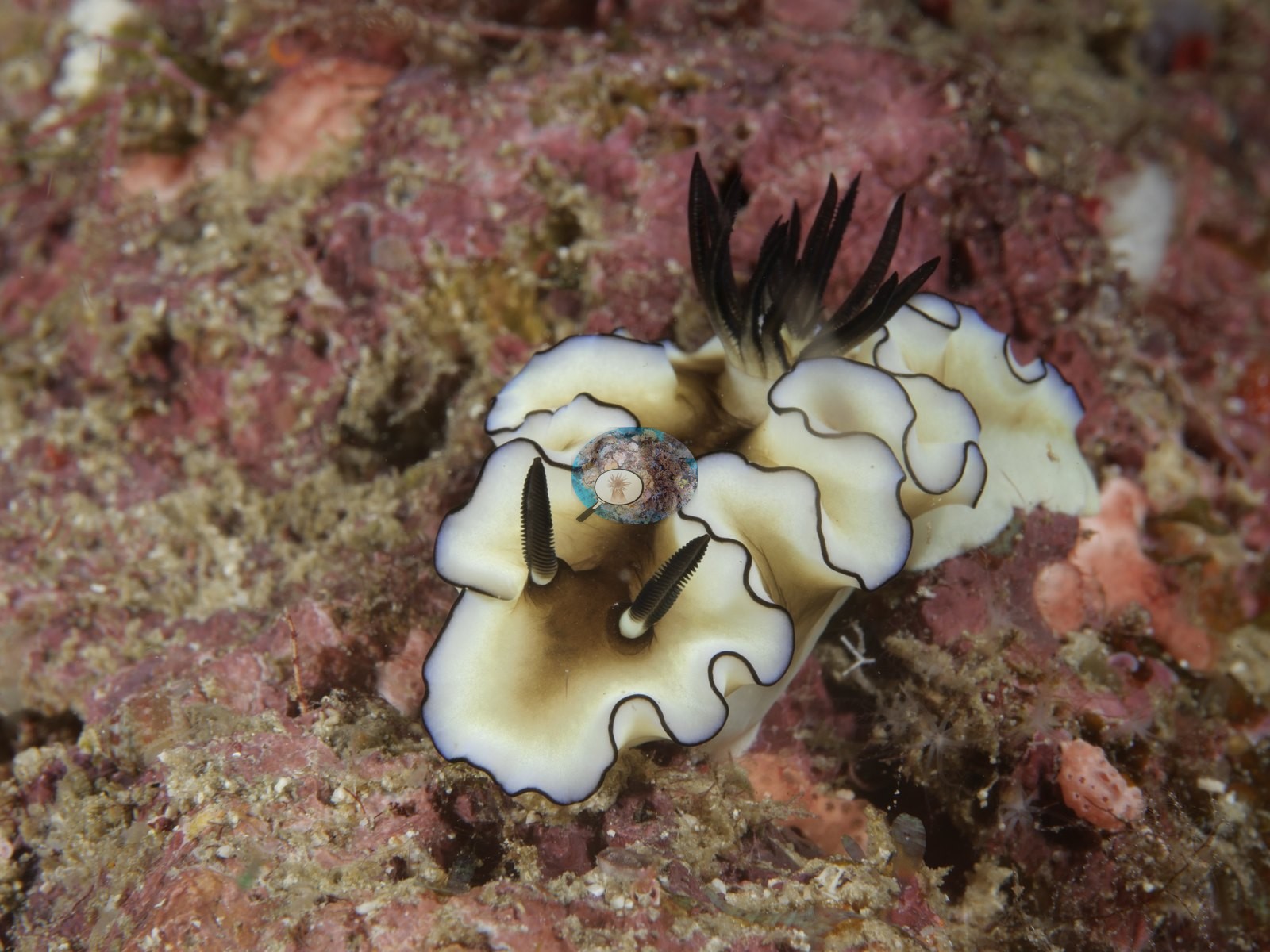 Photo: Pierre12
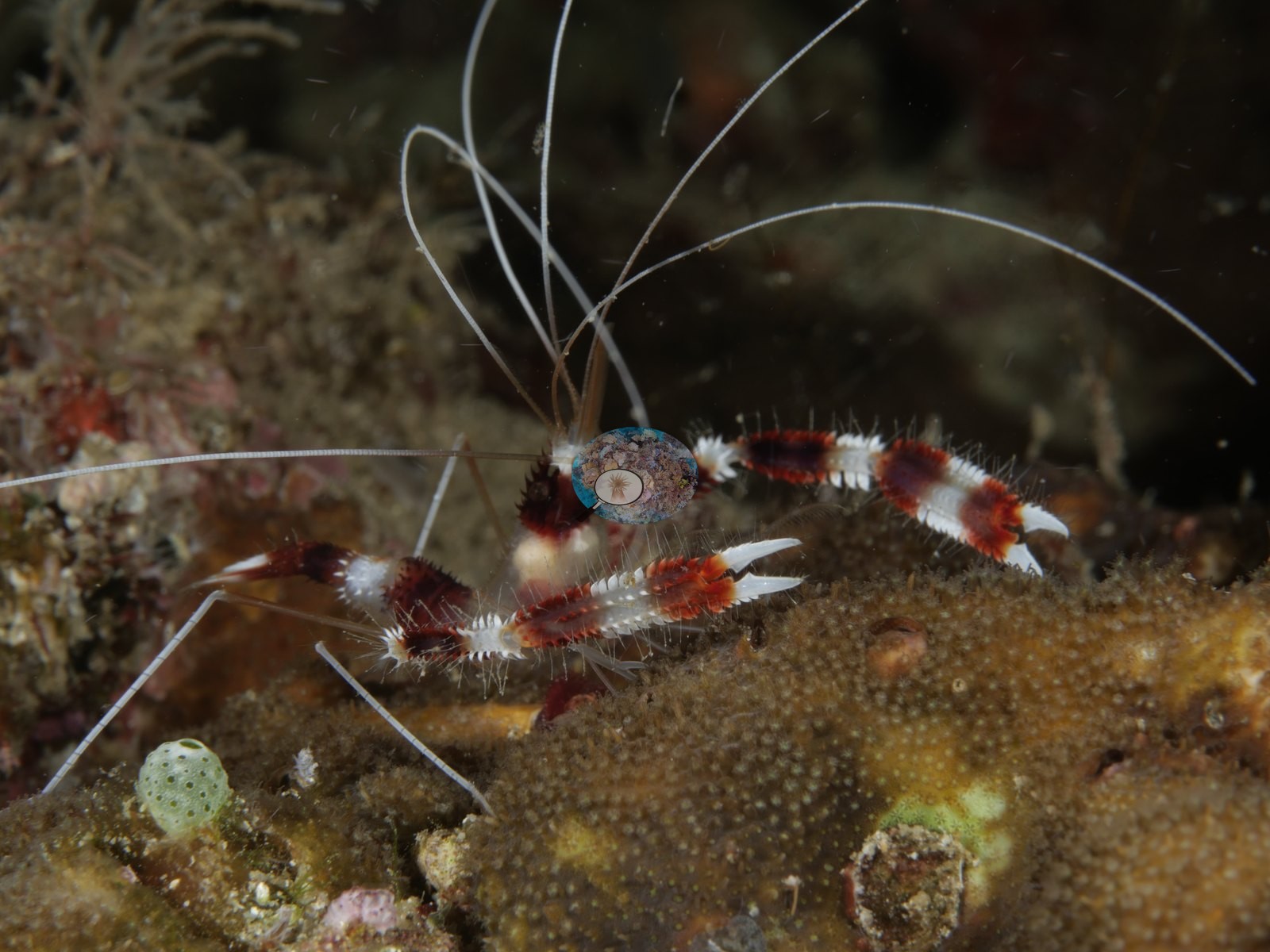 Photo: Pierre13
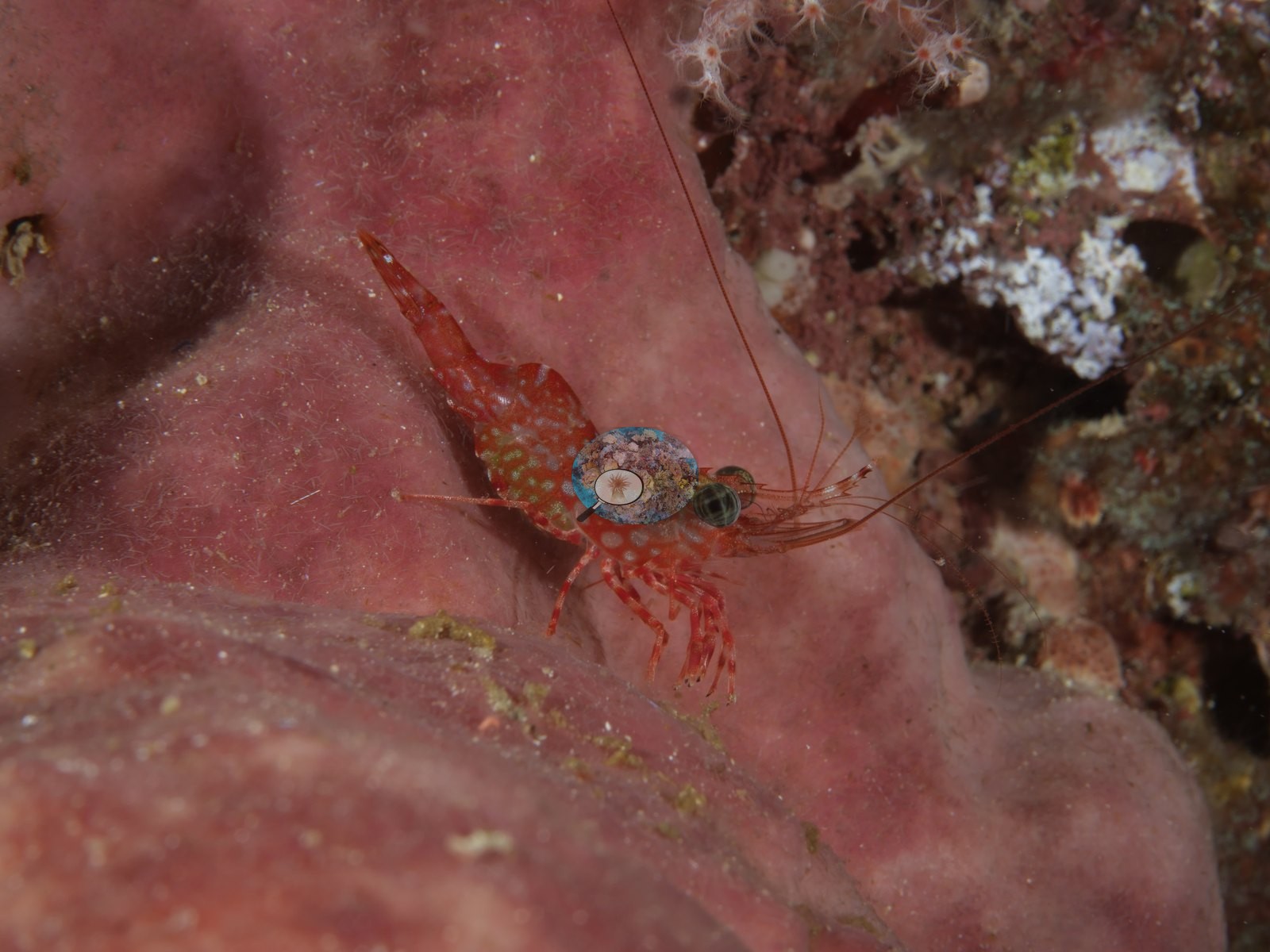 Photo: Pierre14
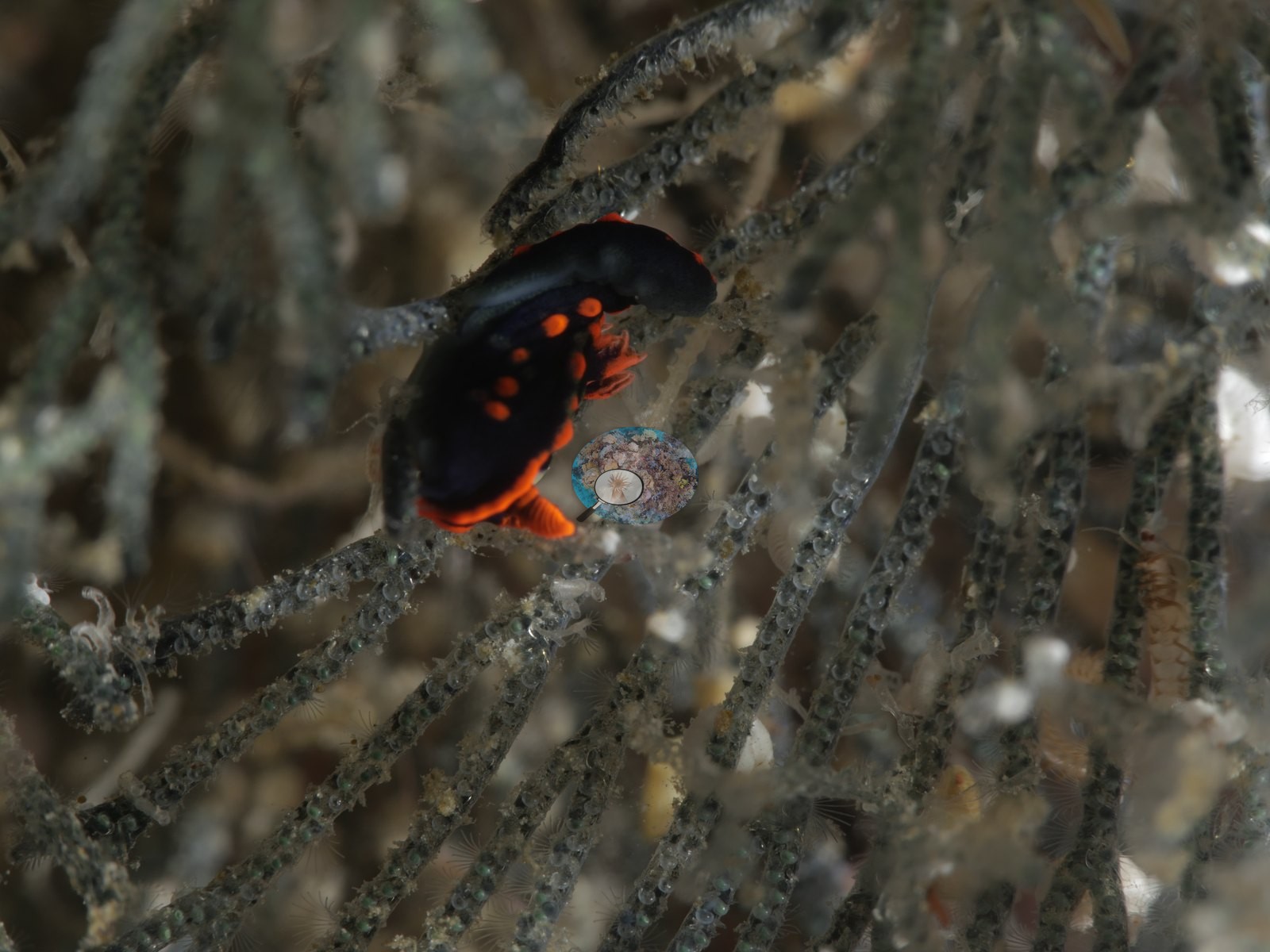 Photo: Pierre15
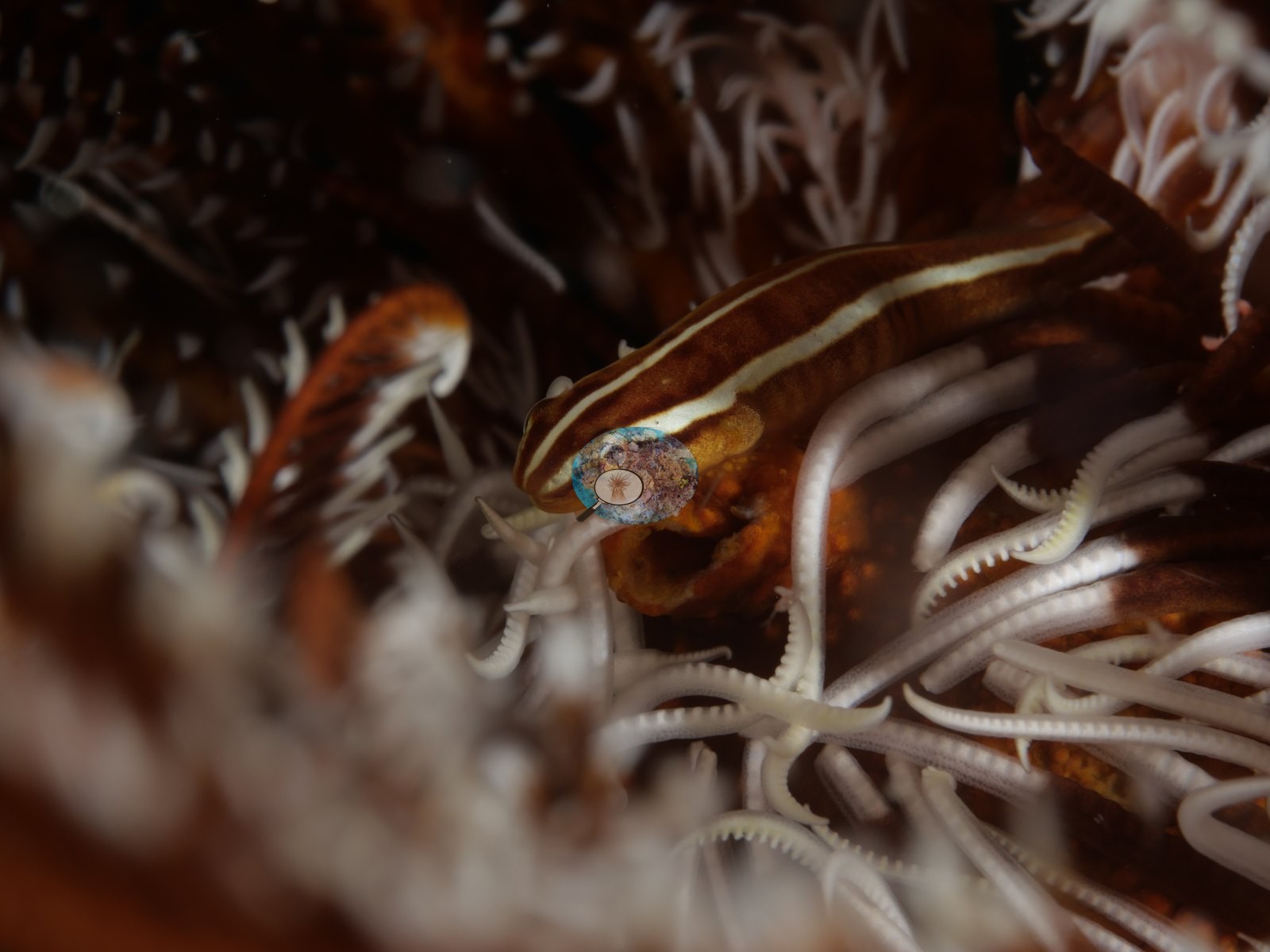 Photo: Pierre16
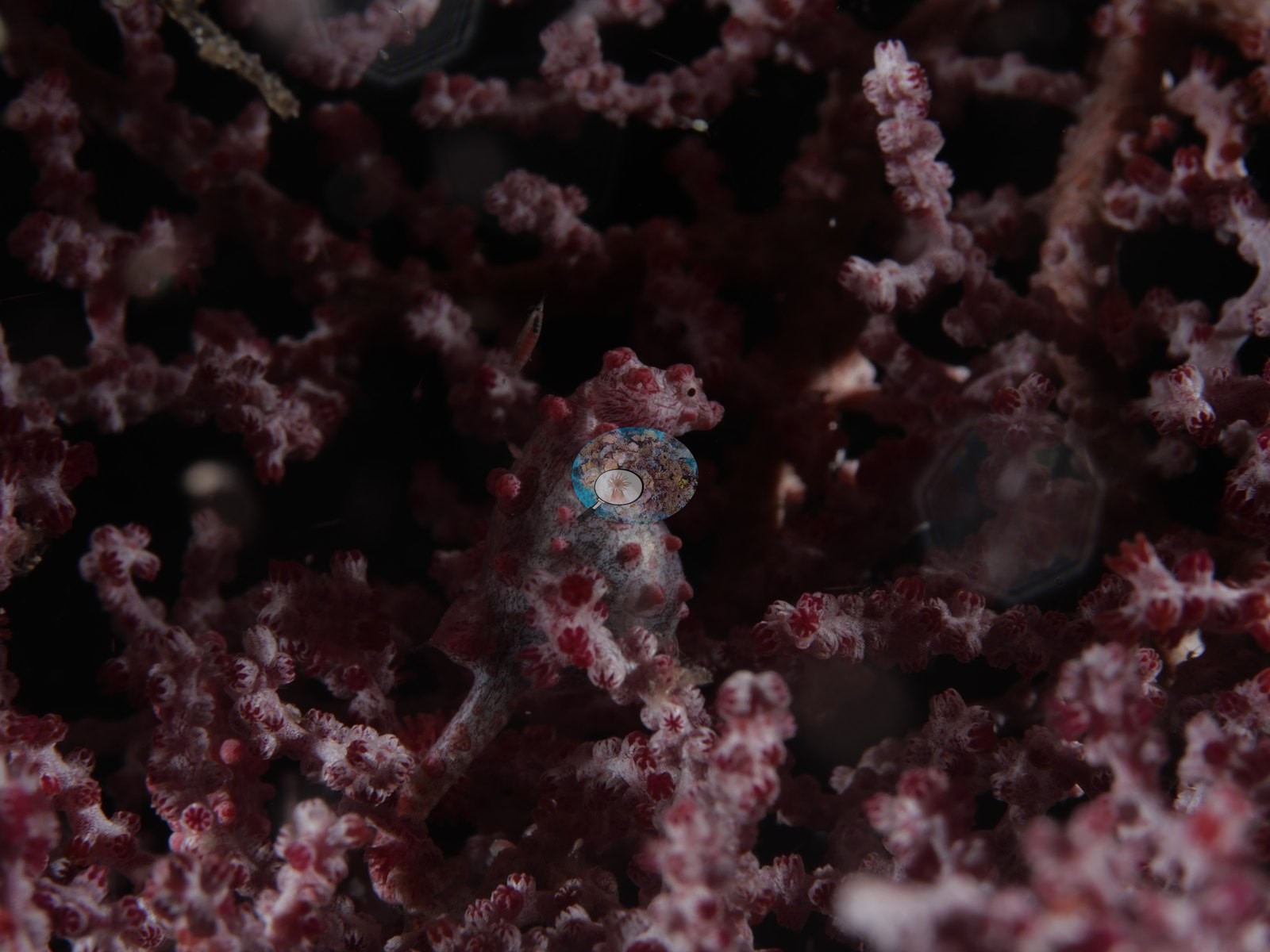 Photo: Pierre17
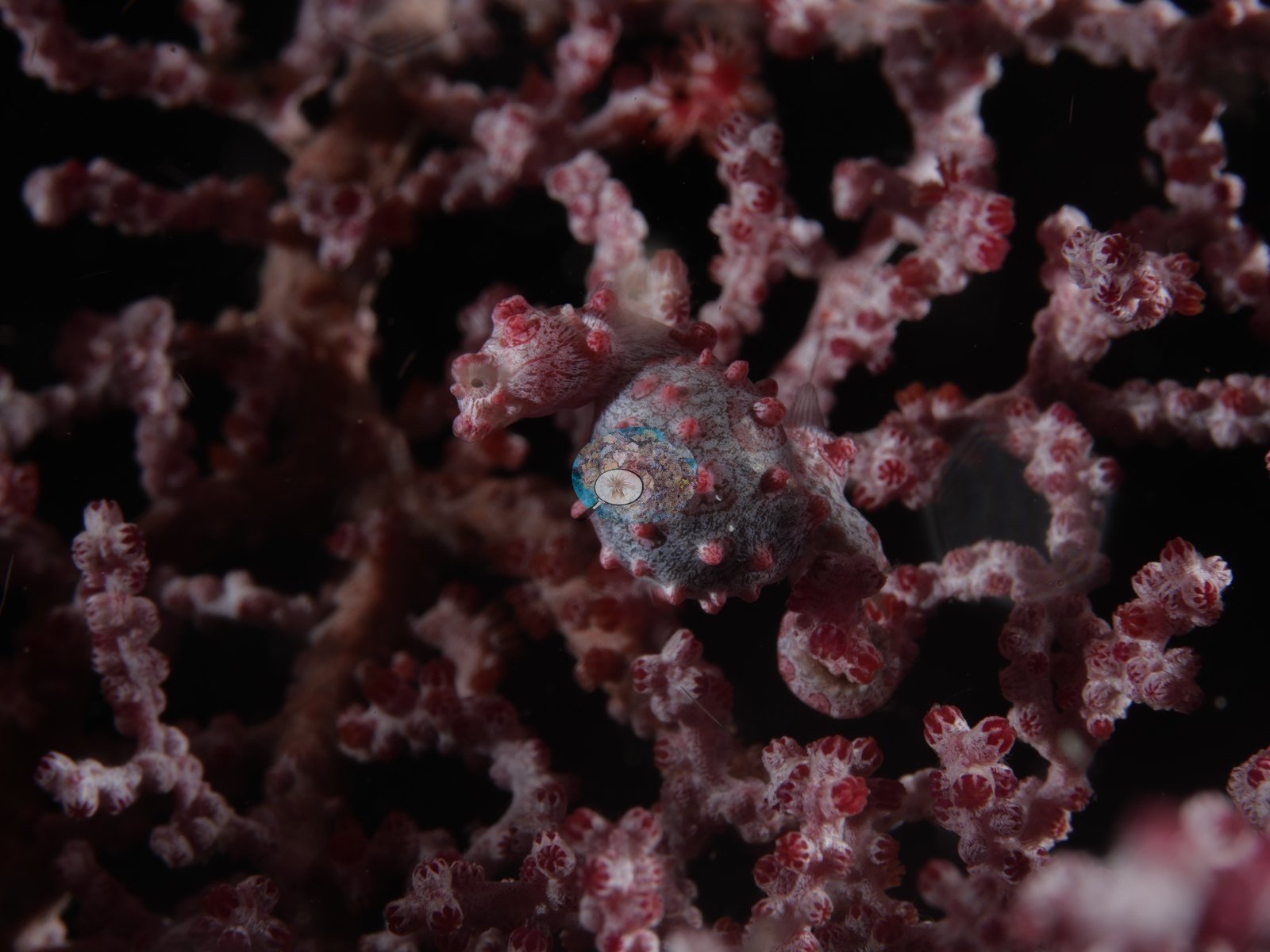 Photo: Pierre18
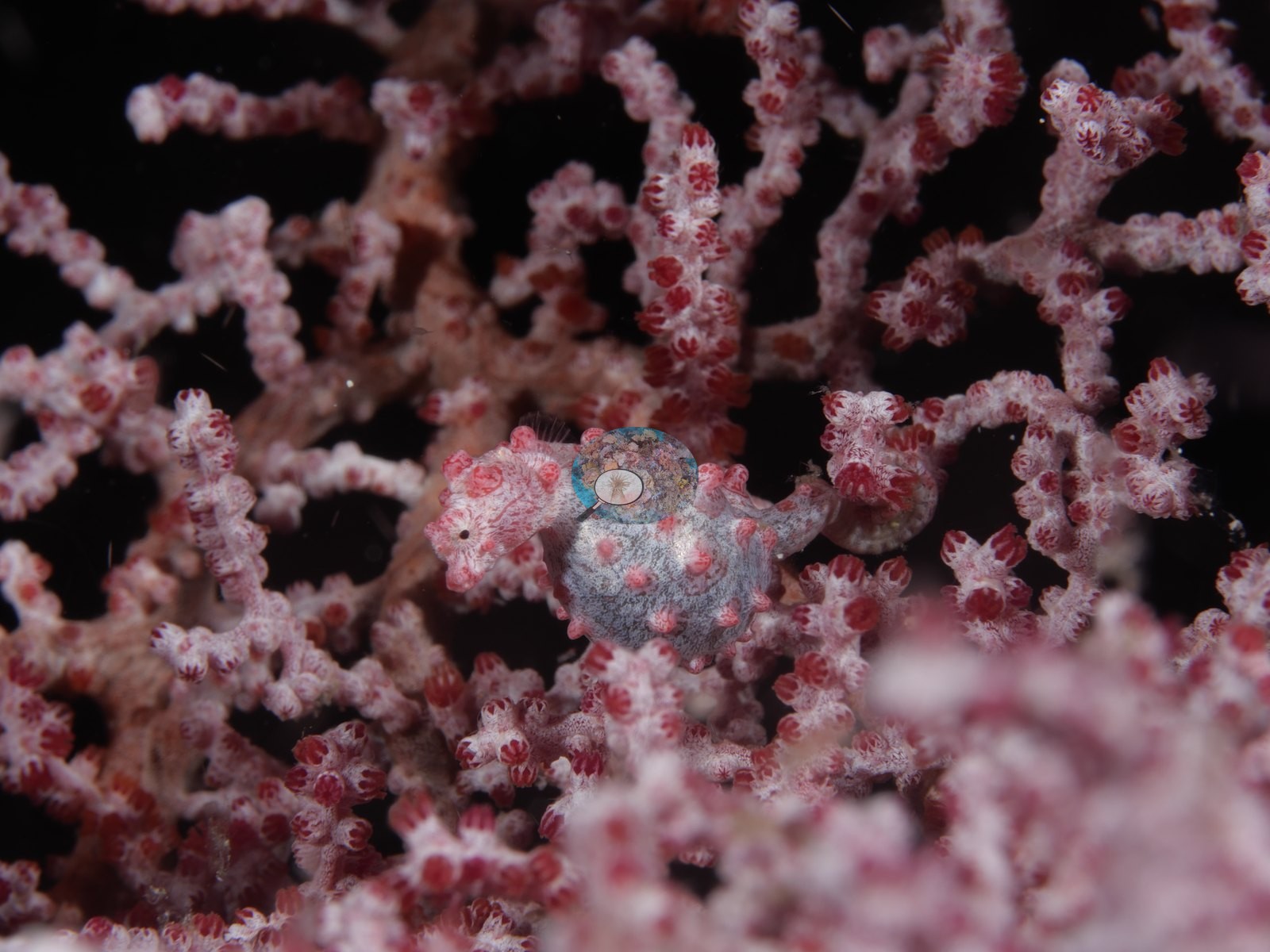 Photo: Pierre19
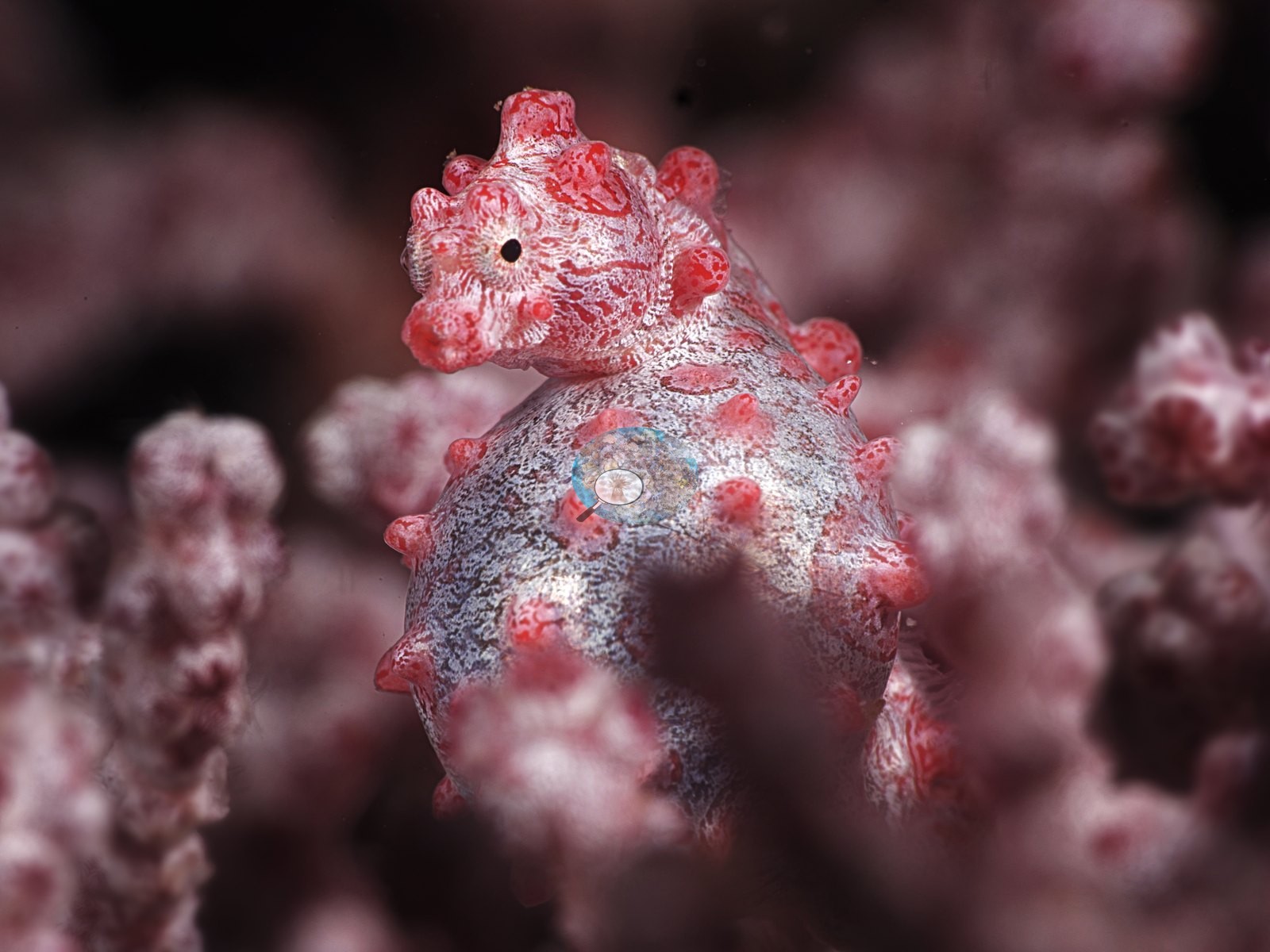 Photo: Pierre20
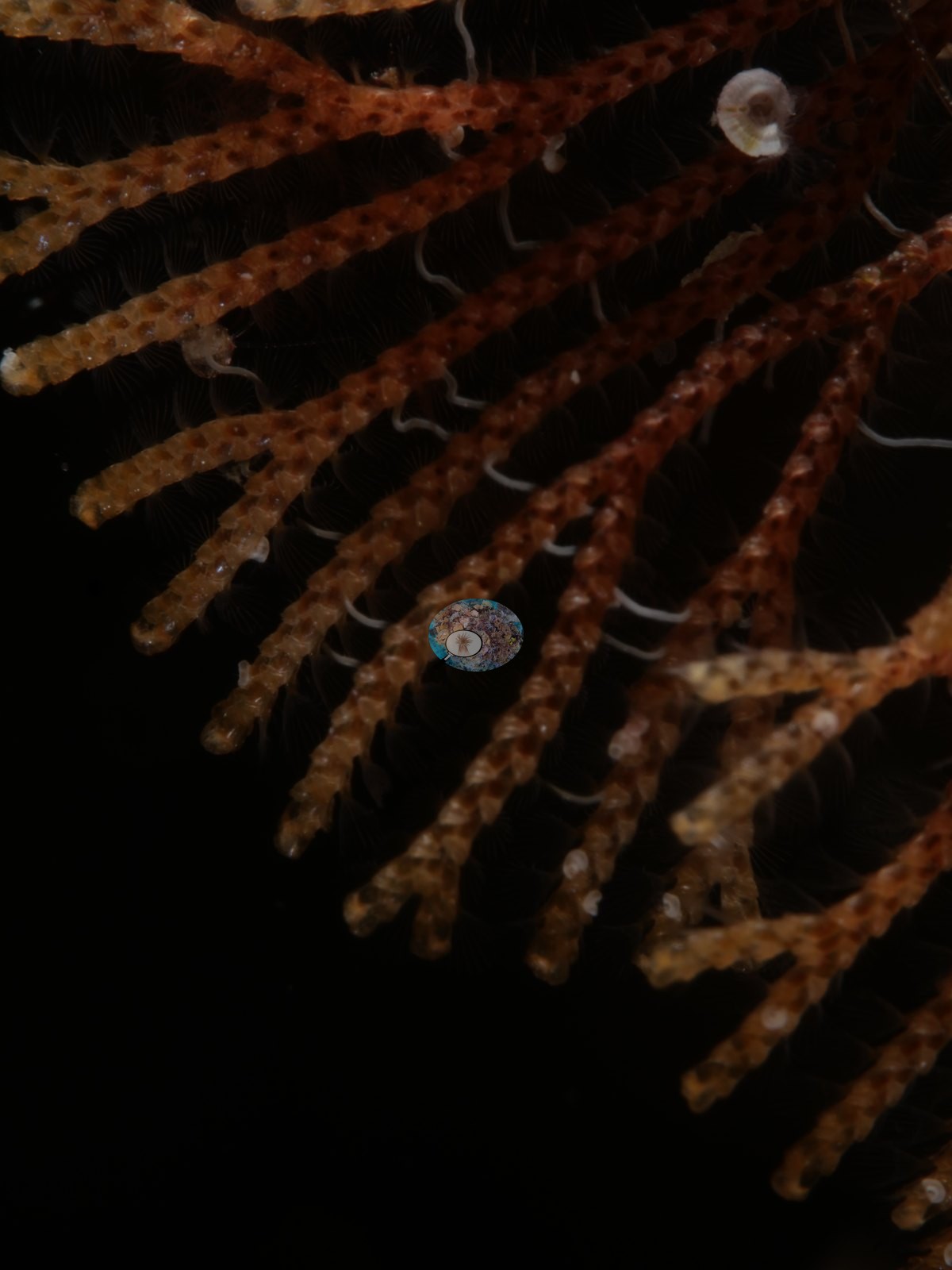 Photo: Pierre21
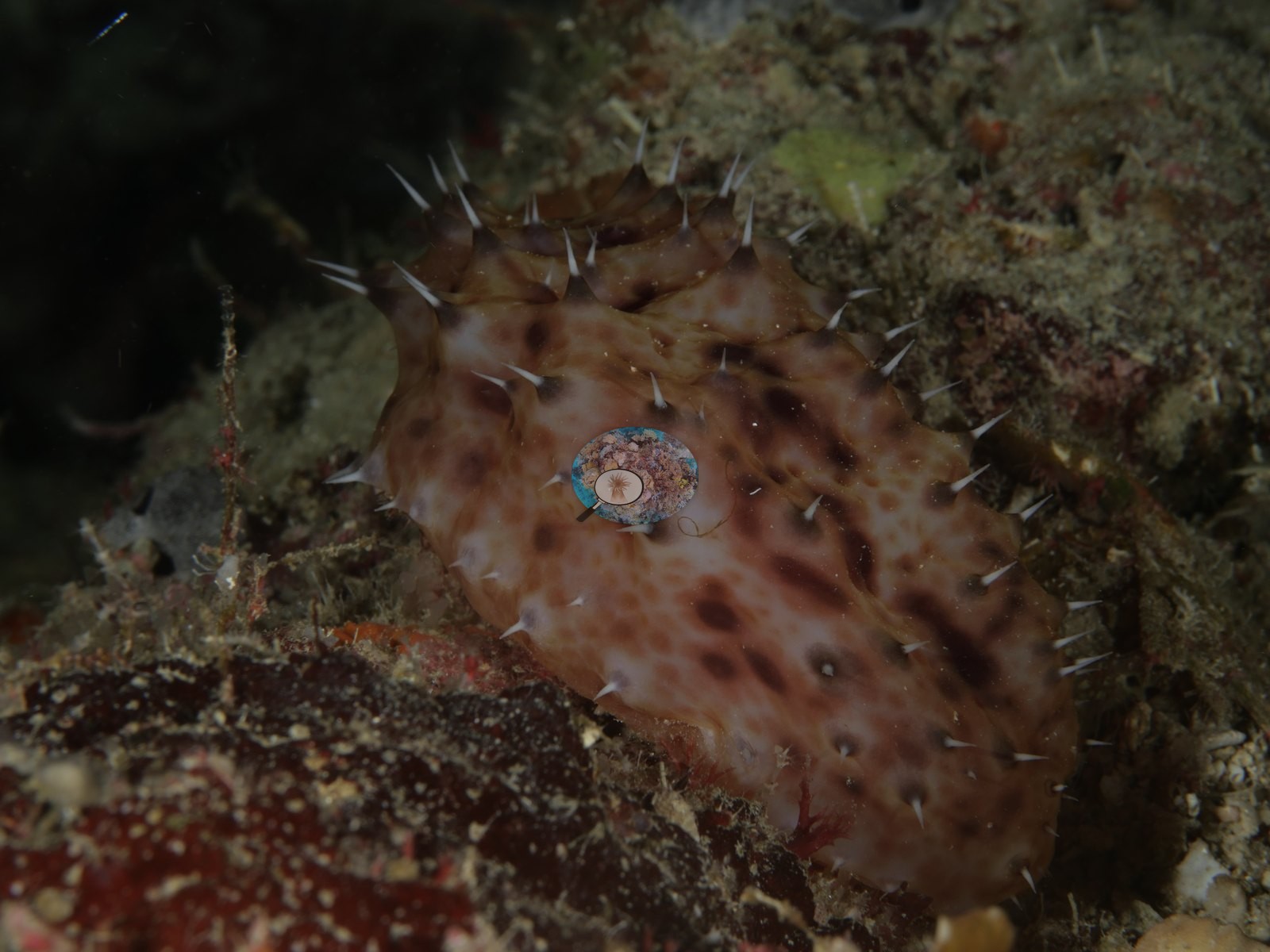 Photo: Pierre22
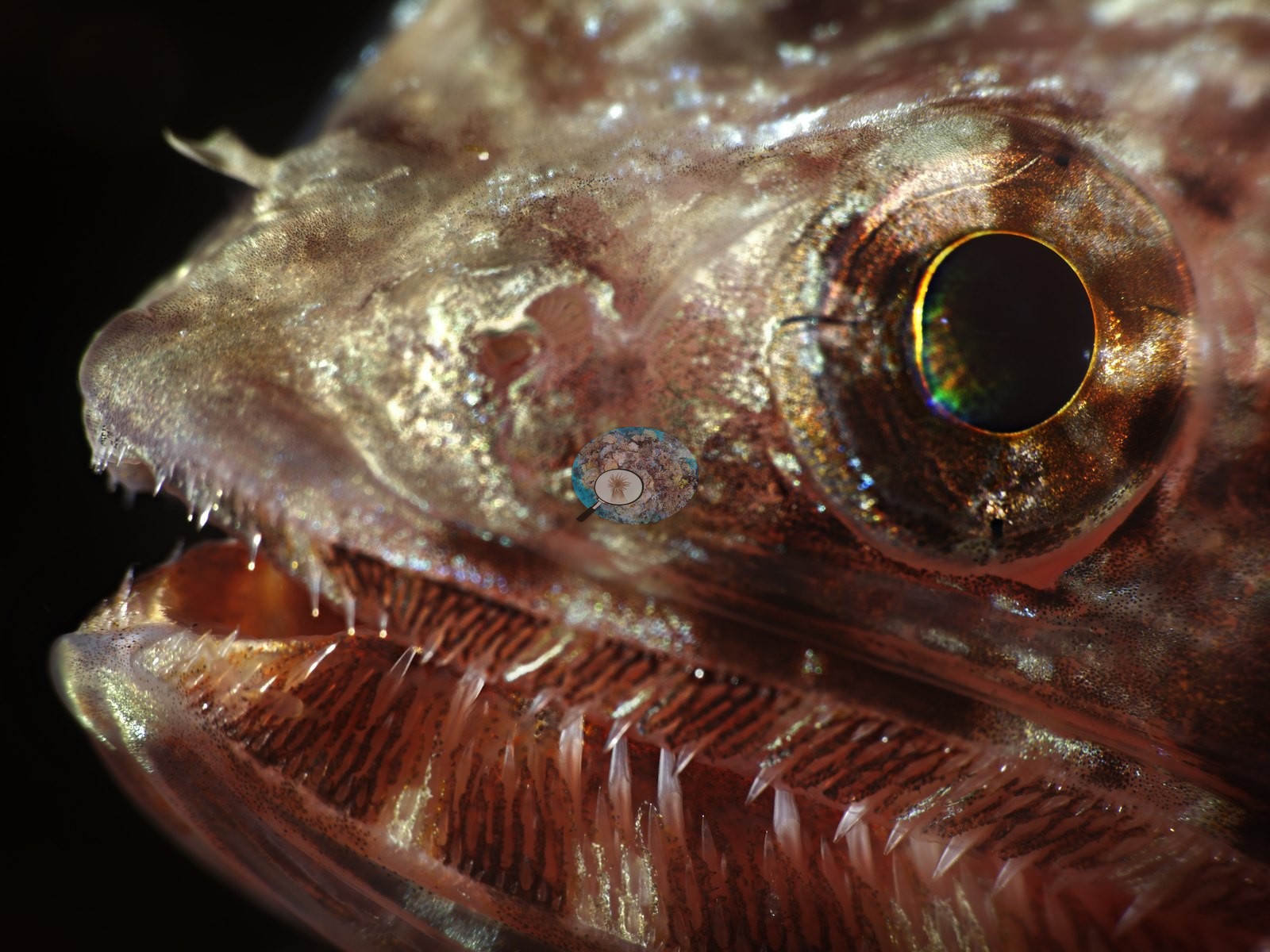 Photo: Pierre23
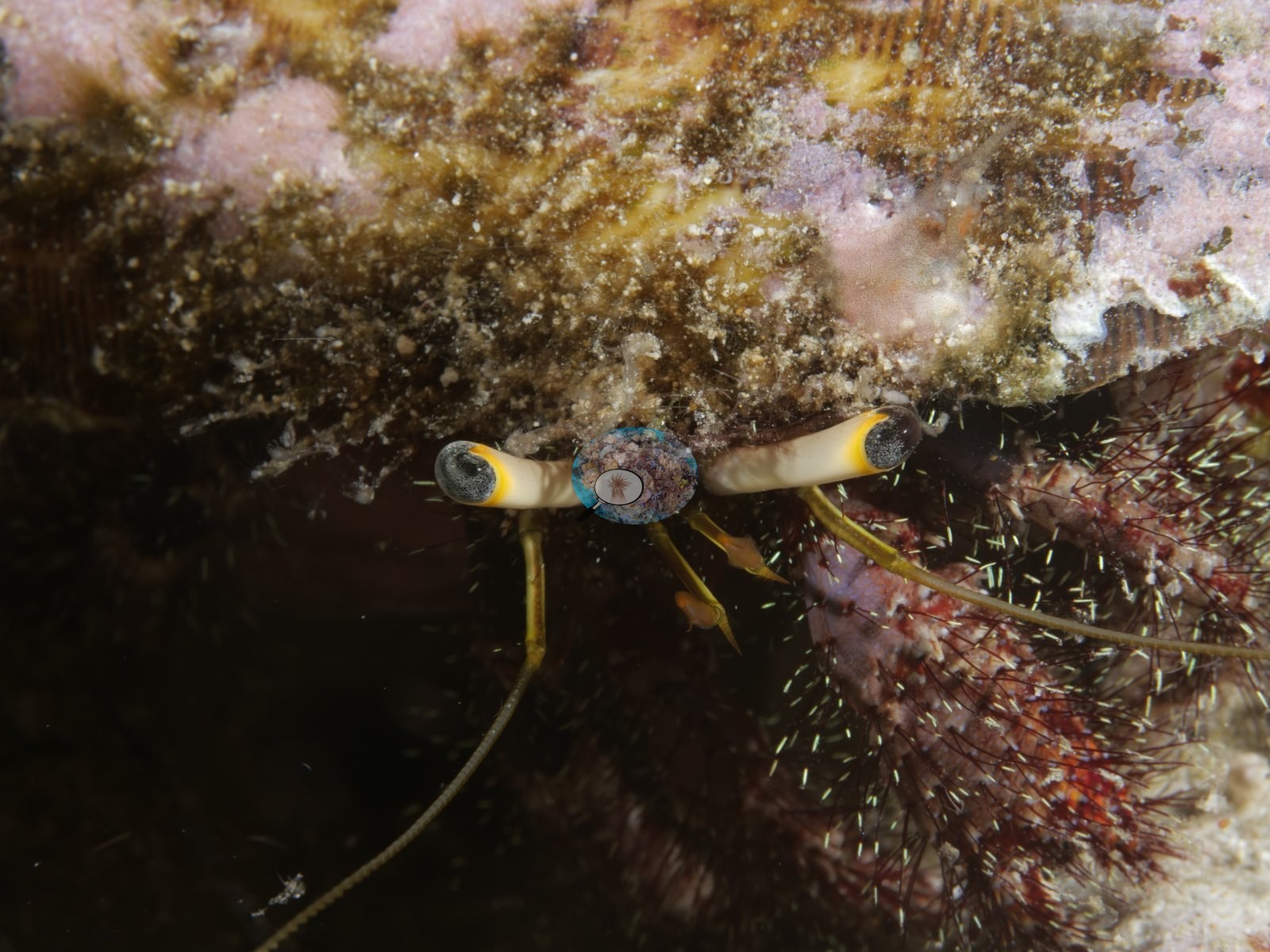 Photo: Pierre24
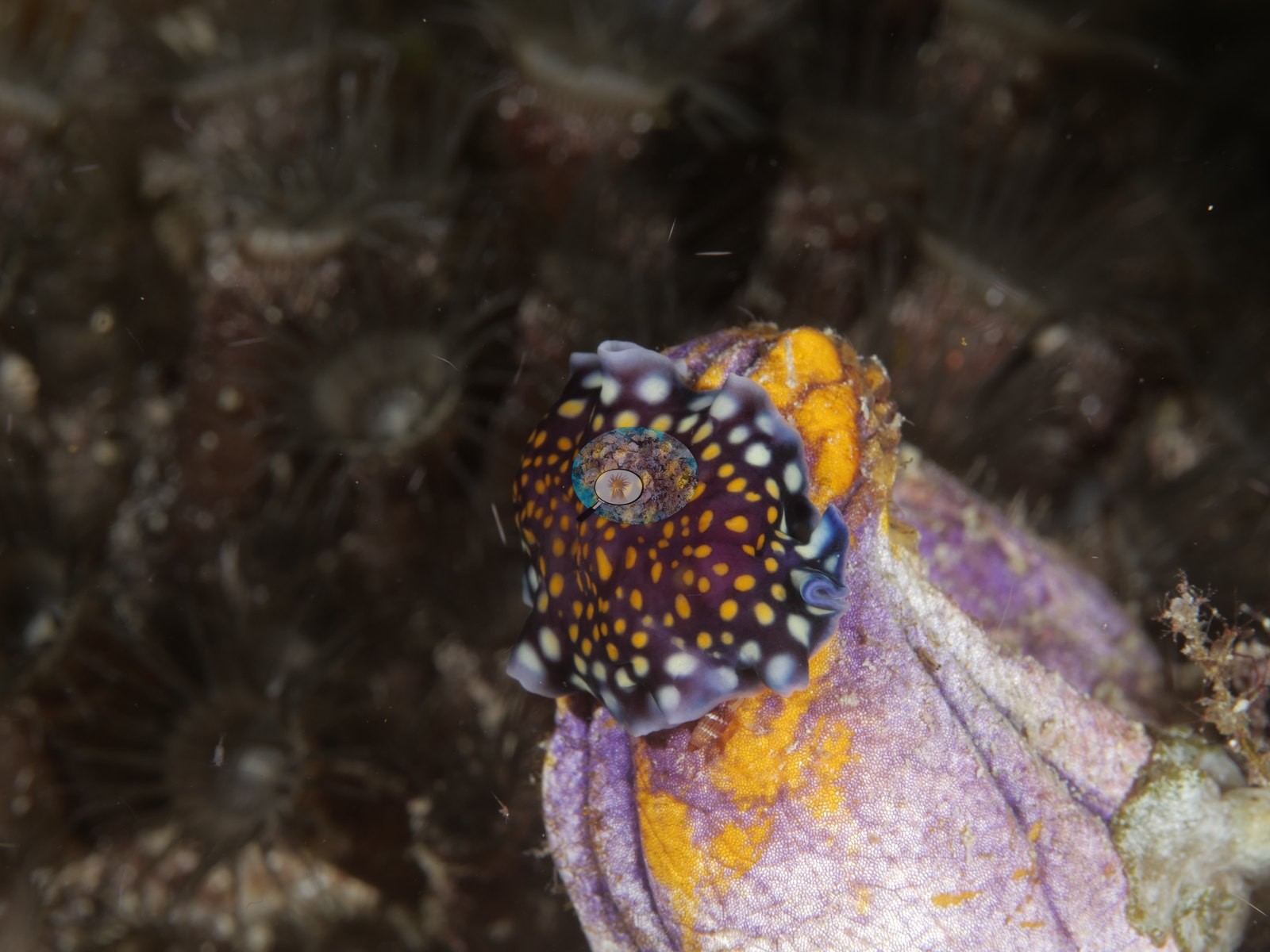 Photo: Pierre25
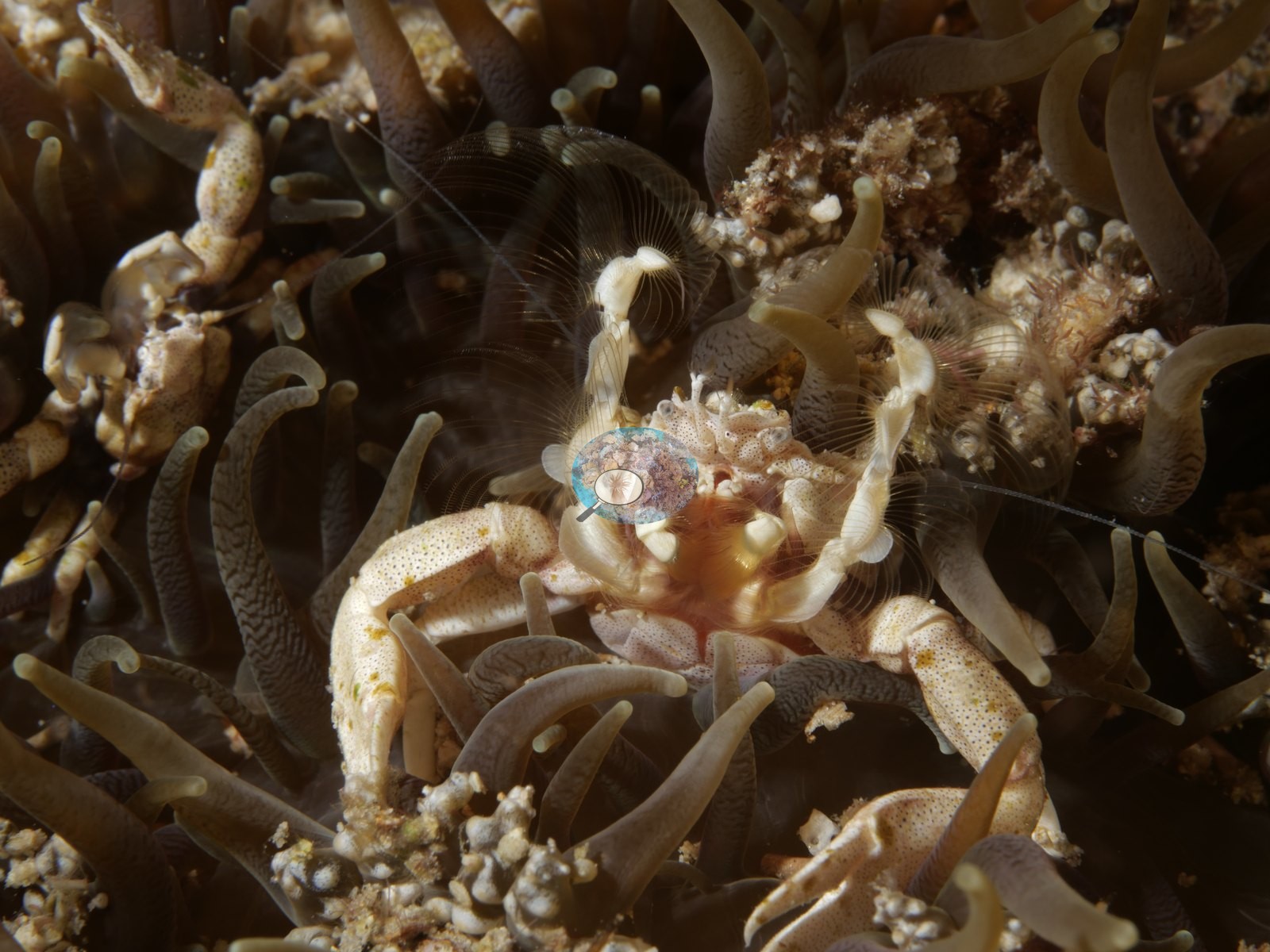 Photo: Pierre
Site description
Setting
Anderson's night dive at Pulau Misool on 18 October 2018 entered the water at 18:40 and lasted 65 minutes, to a maximum depth of 17.7 m; the dive computer recorded a single water temperature of 27.5°C. The five frames described here are close, strobe-lit night shots rather than wide reef views.
General benthic features
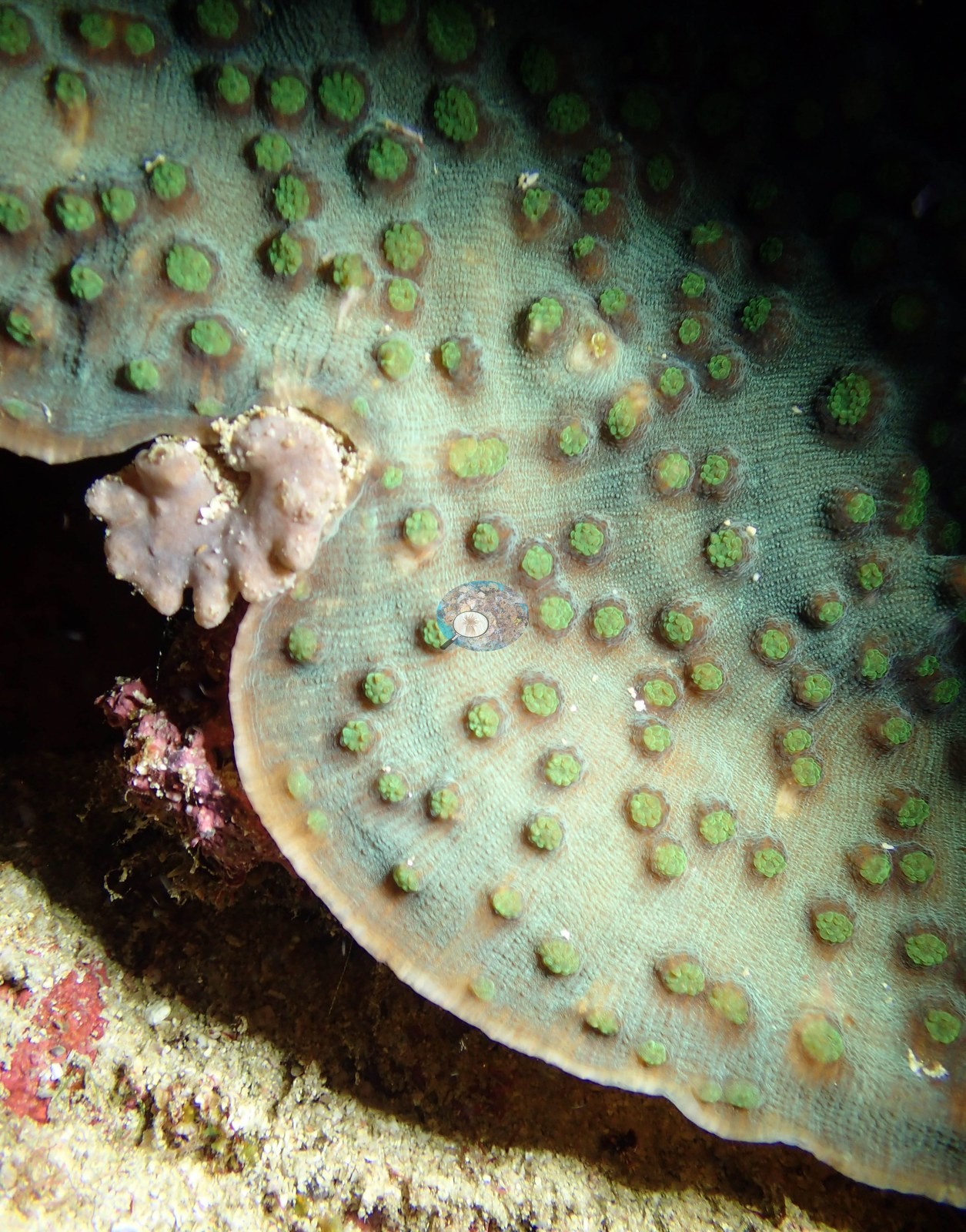
A laminar coral colony with evenly spaced green polyps, compatible with Turbinaria, overhangs a dark recess beside a lilac encrusting sponge (e.g., Image 2).
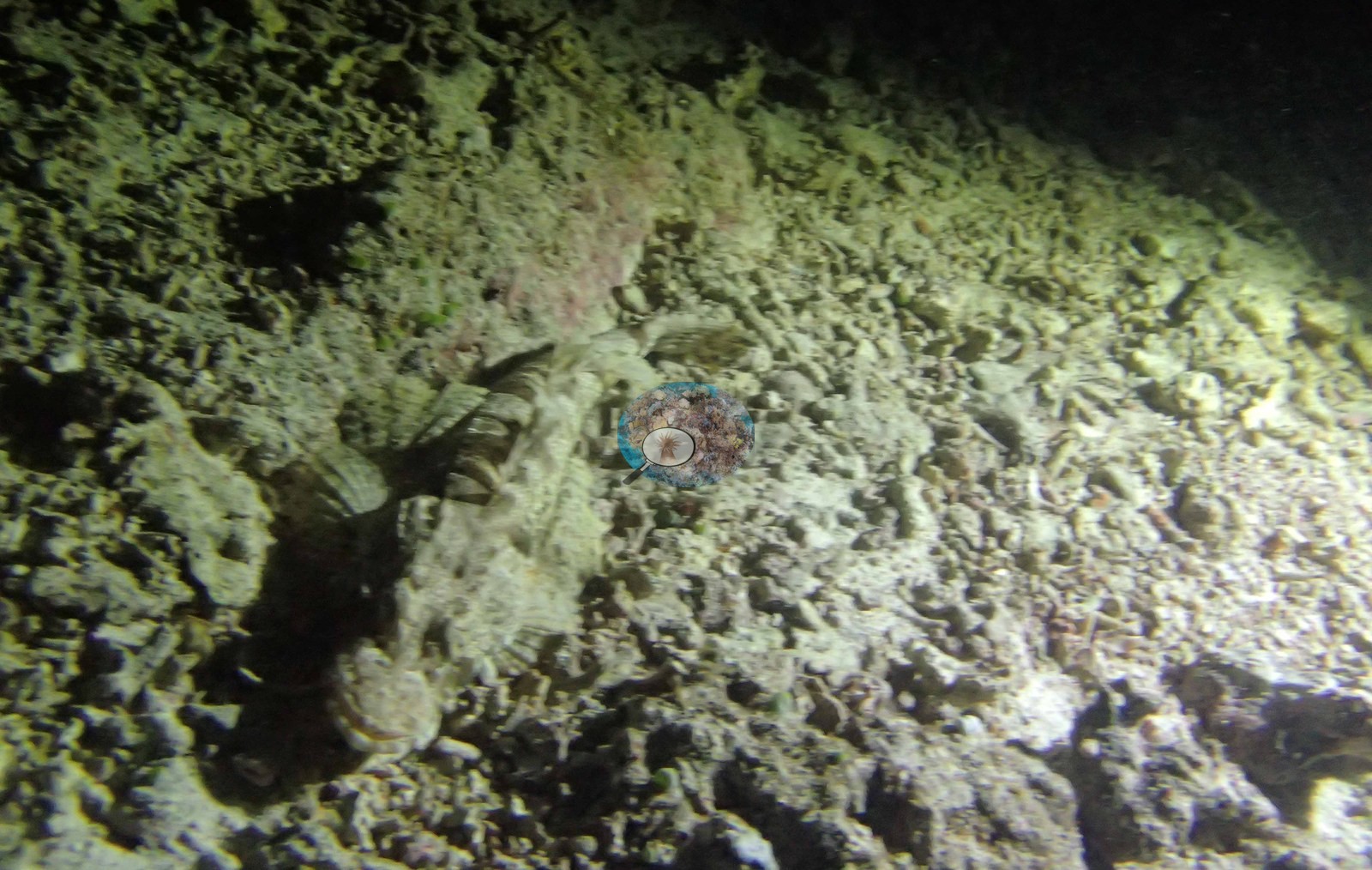
A wider frame crosses a pale slope of coral rubble and broken framework, with a mottled, well-camouflaged animal at left that the frame does not resolve (e.g., Image 3).
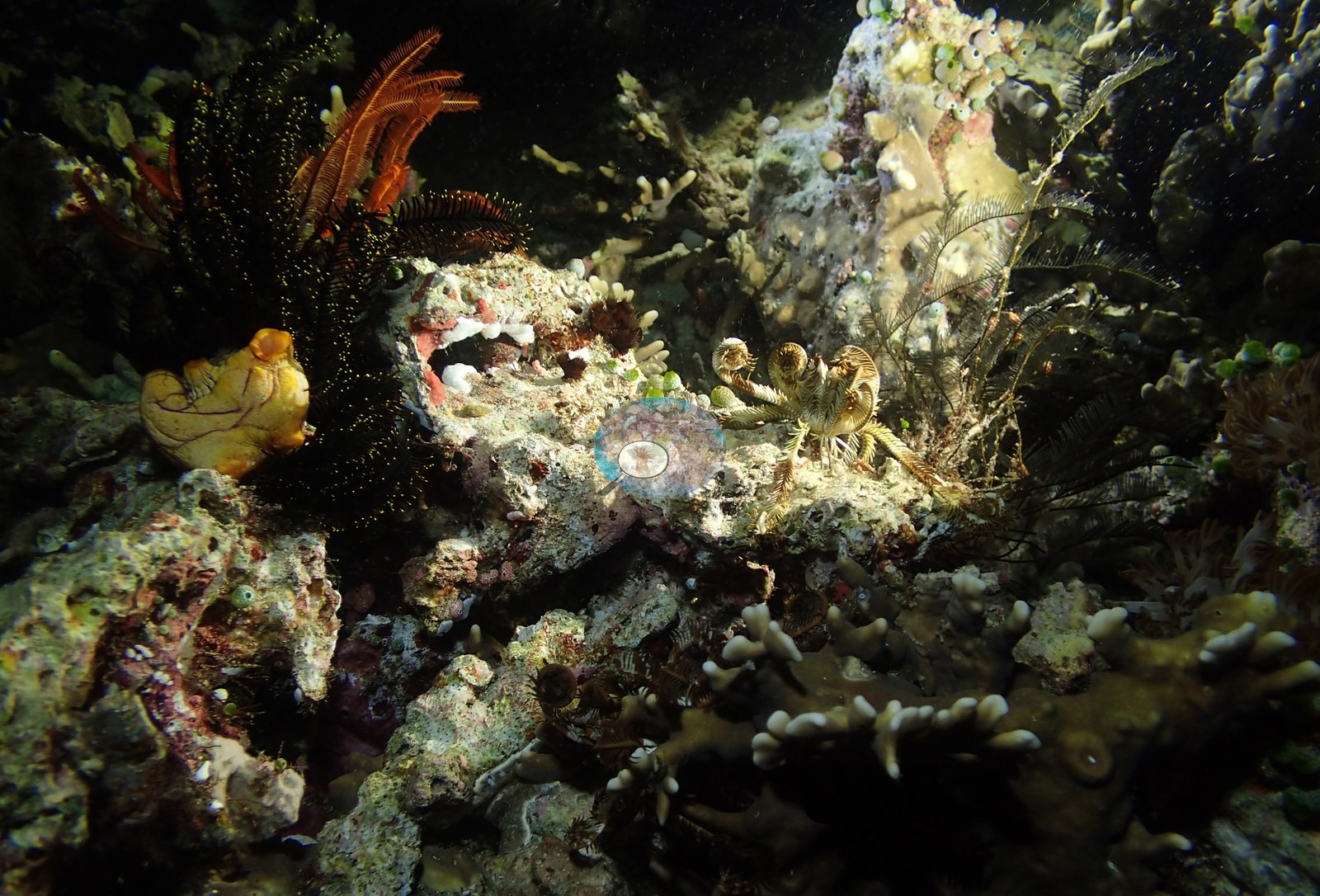
Another shows a rocky outcrop crowded with orange and black feather stars, a yellow sea squirt, small green bubble algae, finger-like branching coral, and soft corals (e.g., Image 4).
Coral cover
- Coral cover: no figure is published for this site; night close-ups like these cannot support one.
Stressors
Anderson took no notes on this night dive (18 October 2018); the log lists only fauna (mating walking sharks, shrimp, walking brittle stars, nudibranchs, and ghost pipefish), so no bleaching, disease, crown-of-thorns starfish, or other stressor is recorded.
Fish and other fauna
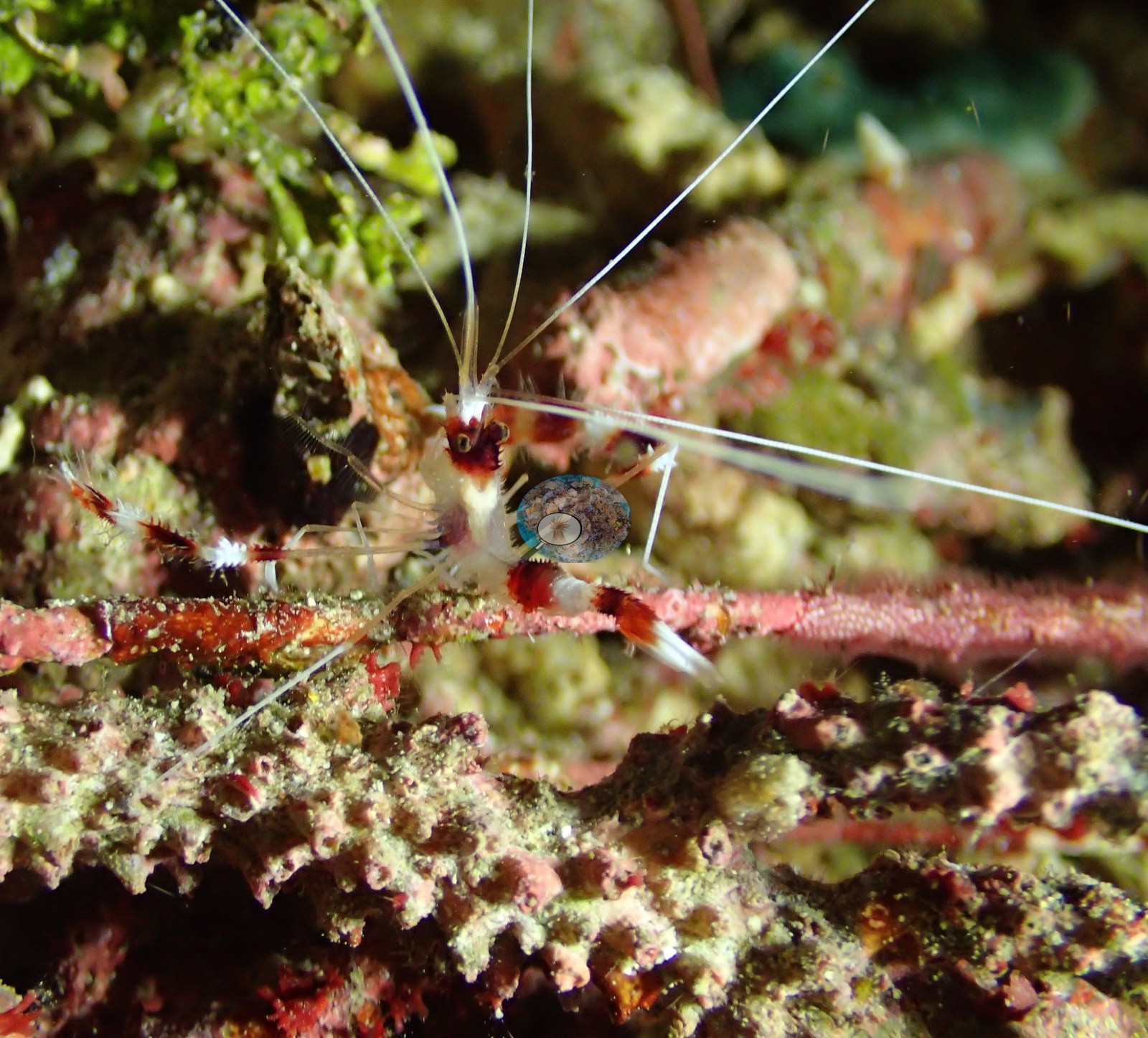
A banded coral shrimp (Stenopus hispidus) stands among red encrusting growth with its long white antennae spread (e.g., Image 1).
Two walking sharks of the epaulette type (Hemiscyllium) rest together on the rubble (e.g., Image 5).
Comparisons with other data
We found no other surveys at this site as of 2026. If you would like to share yours, please email us.
Data & links
Images 6–25: Pierre; all other images from Coral Reef Diagnostics.
© Coral Reef Diagnostics.