
Raja Ampat - Pulau Koon dive 3
Part of the regional summary: Indonesia - Raja Ampat
More info
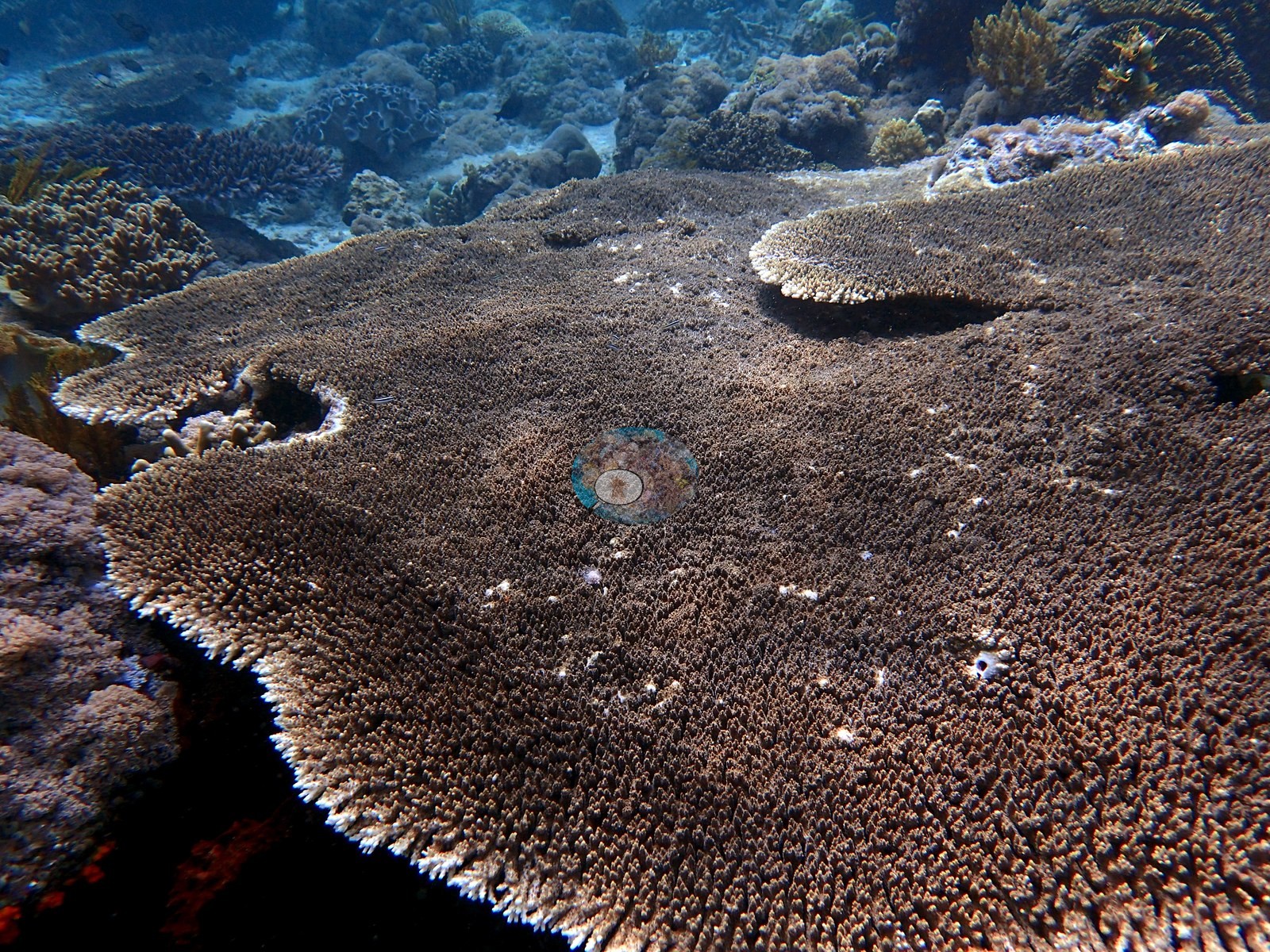
Maluku (NOAA CRW virtual station) · Banda Sea ecoregion mean=7.3°C-heating weeksPulau Koon's third dive is hard coral dominated and structurally spectacular, built on huge, vividly colored tabulate Acropora tables, shingled foliose fields, and massive Porites domes over a meter high. Several large colonies show clear partial mortality - bare or algal-filmed skeleton on table corals and a Porites dome roughly half reduced to pitted bare surface - though no whole-colony bleaching front or crown-of-thorns starfish (COTS) were seen. Coral cover at this site is about 30% (blind Claude computer-vision point count).
Penyelaman ketiga Pulau Koon didominasi karang keras dan menakjubkan secara struktur, dibangun di atas meja Acropora tabulat yang besar dan berwarna cerah, hamparan karang lembaran bersusun, serta kubah Porites masif setinggi lebih dari satu meter. Beberapa koloni besar memperlihatkan kematian sebagian yang jelas — kerangka gundul atau berselaput alga pada karang meja, dan satu kubah Porites yang kira-kira separuhnya menjadi permukaan gundul berlubang — meskipun tidak terlihat front pemutihan seluruh koloni maupun bintang laut mahkota duri.
Terjemahan ringkasan ini oleh AI; versi bahasa Inggris yang berlaku. Translated from the site’s shorter map summary.
Two other CRD dive sites within 5 km shown in orange — click a marker to open its page.
5 of these 83 photographs are shown beside the text that discusses them under "Site description" below.
 7
7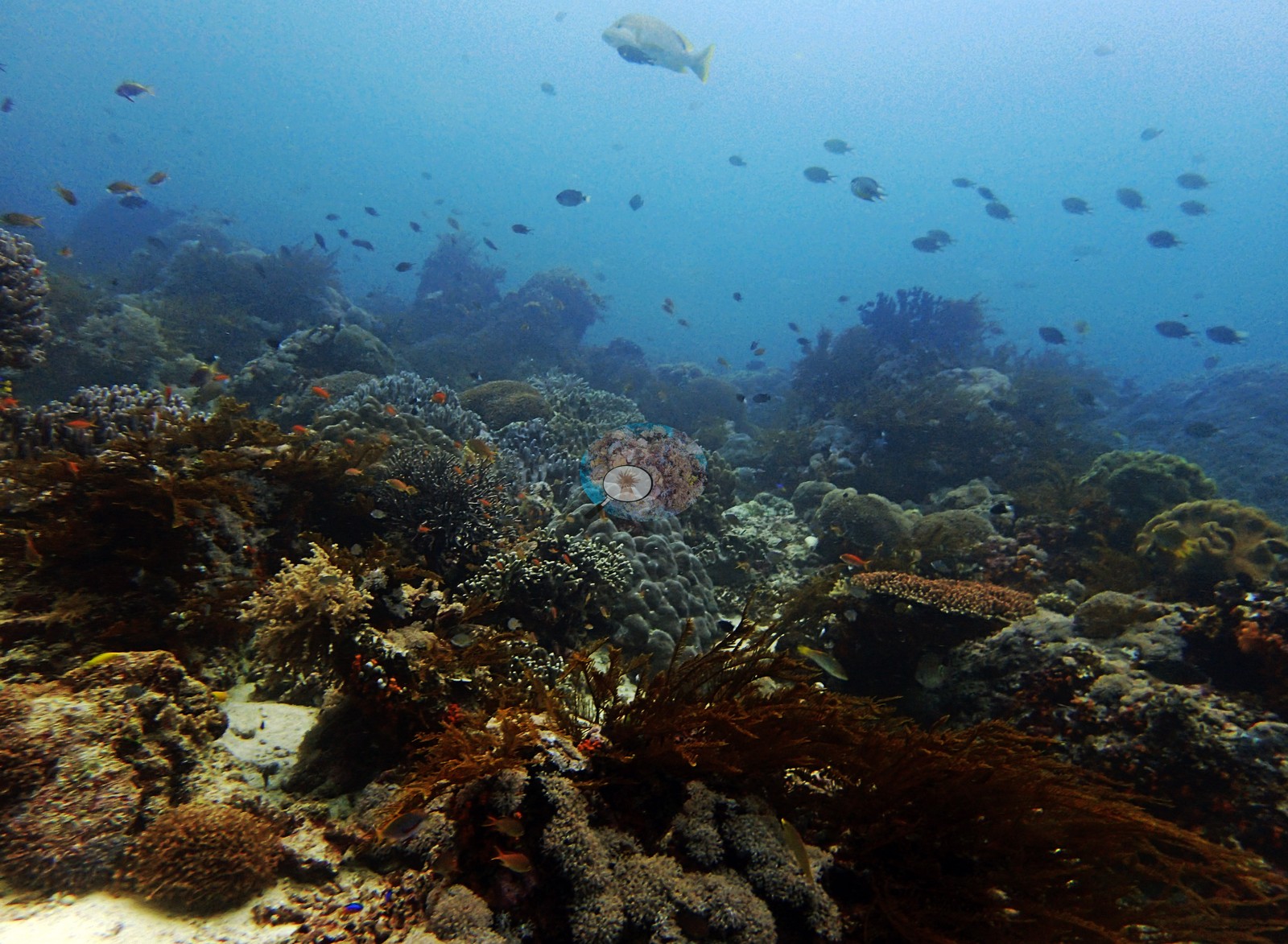 8
8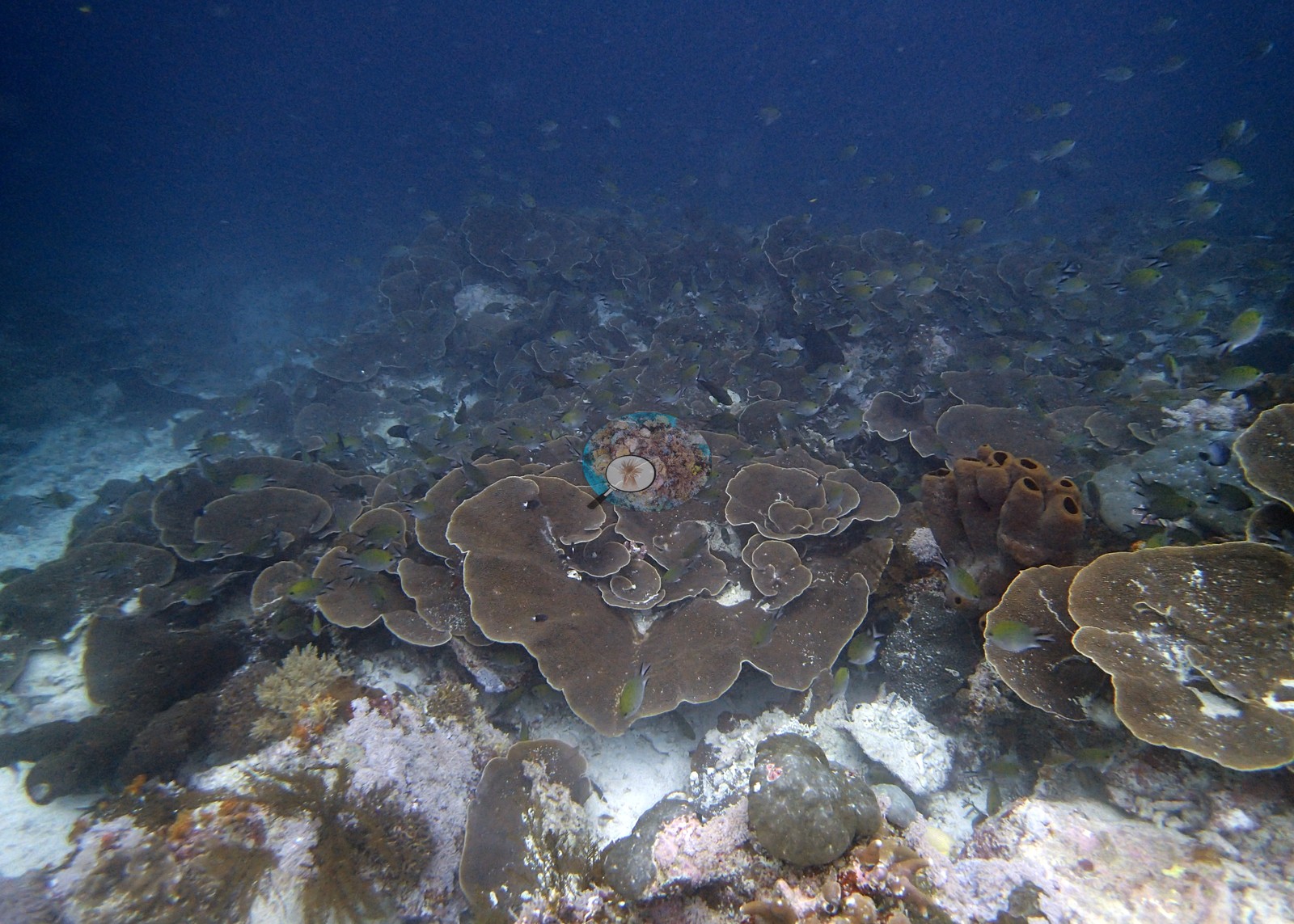 9
9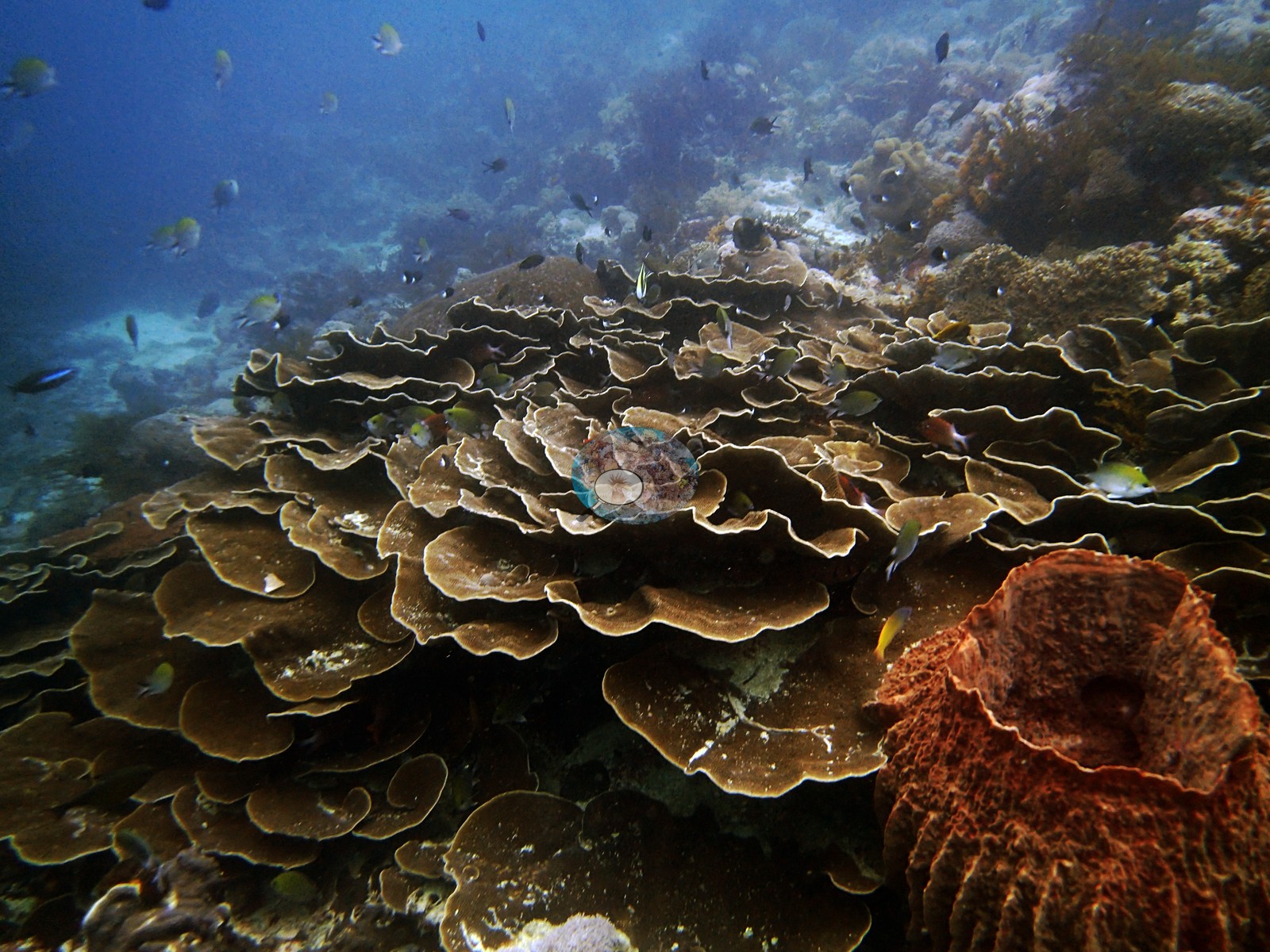 10
10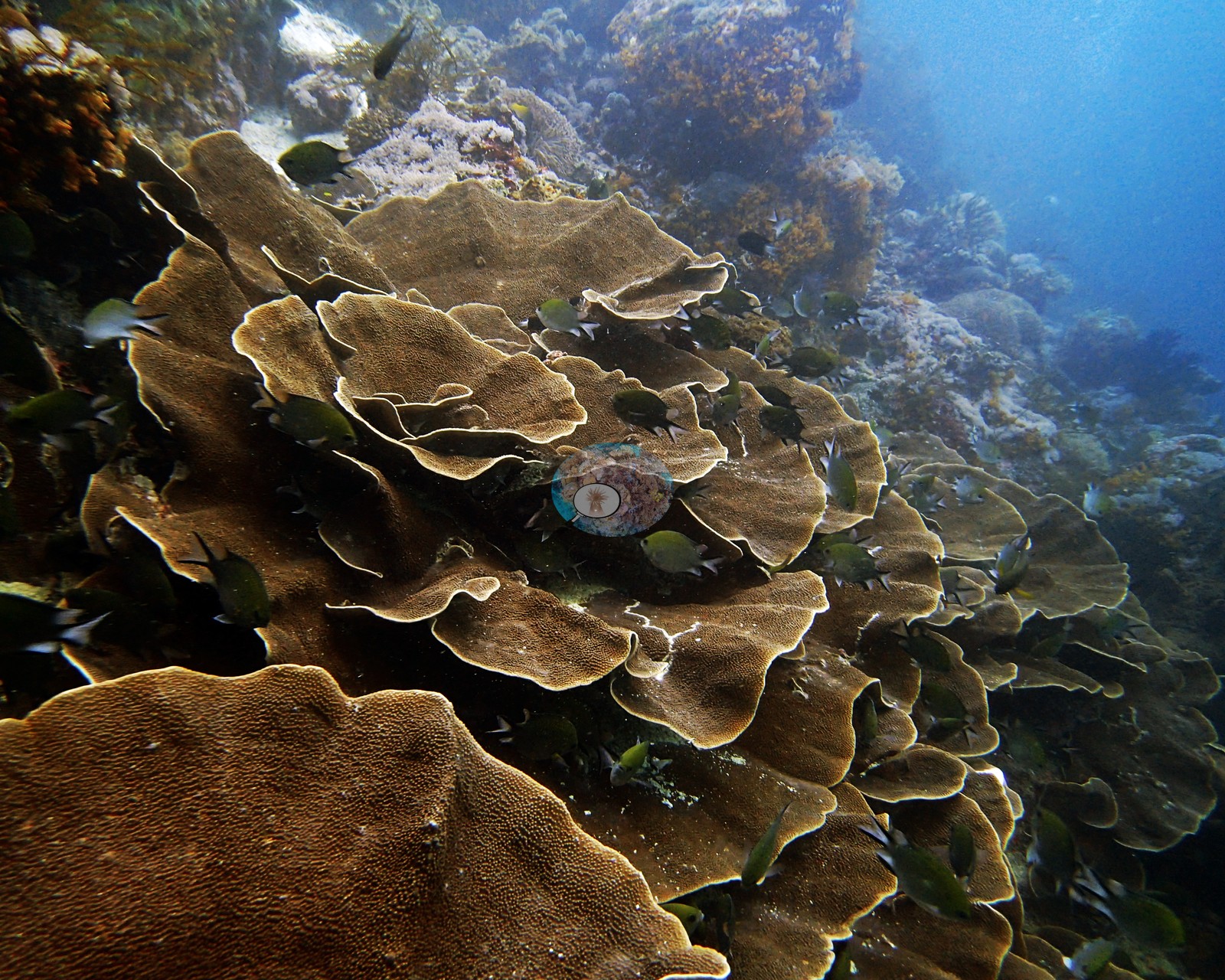 11
11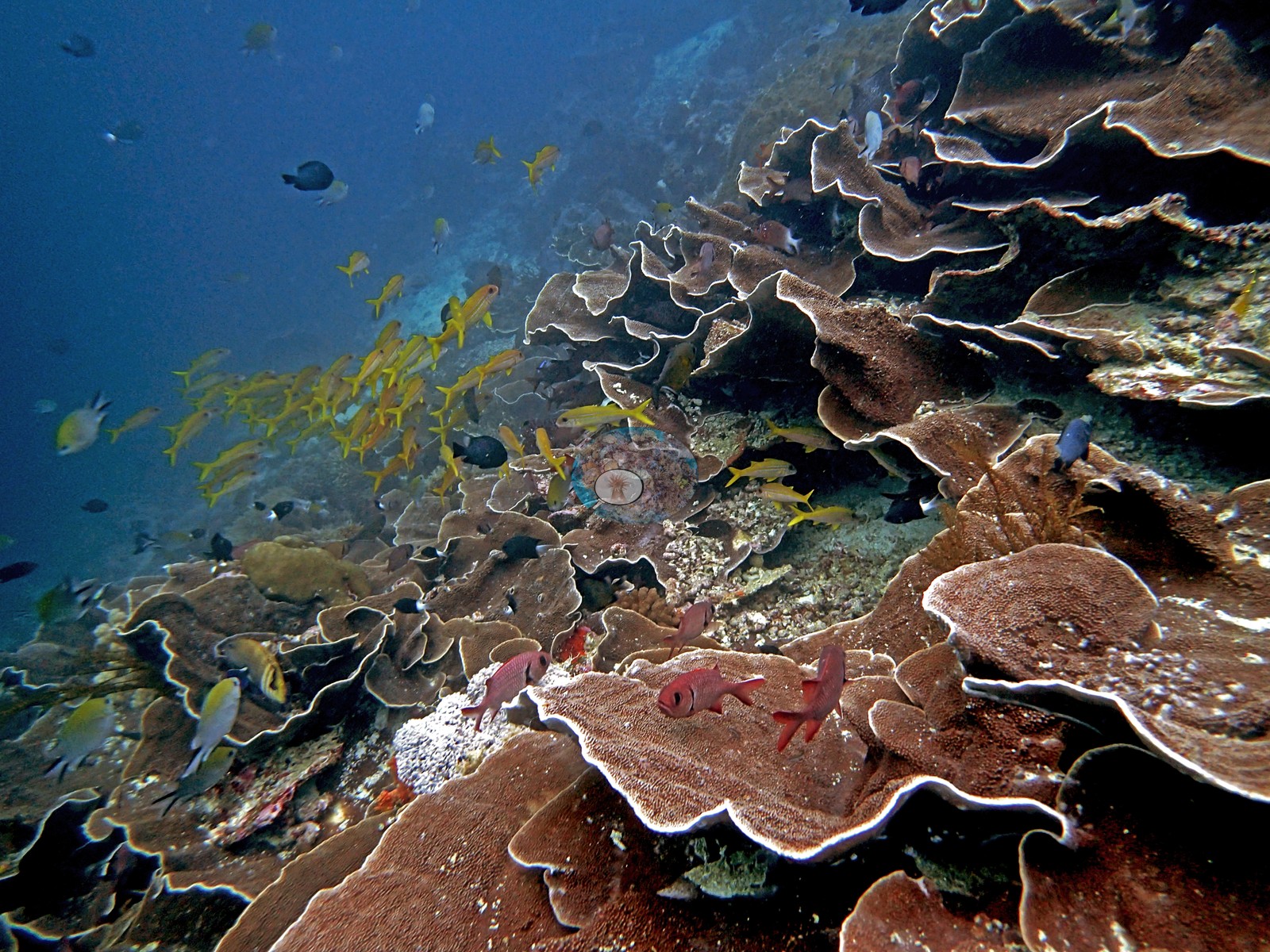 12
12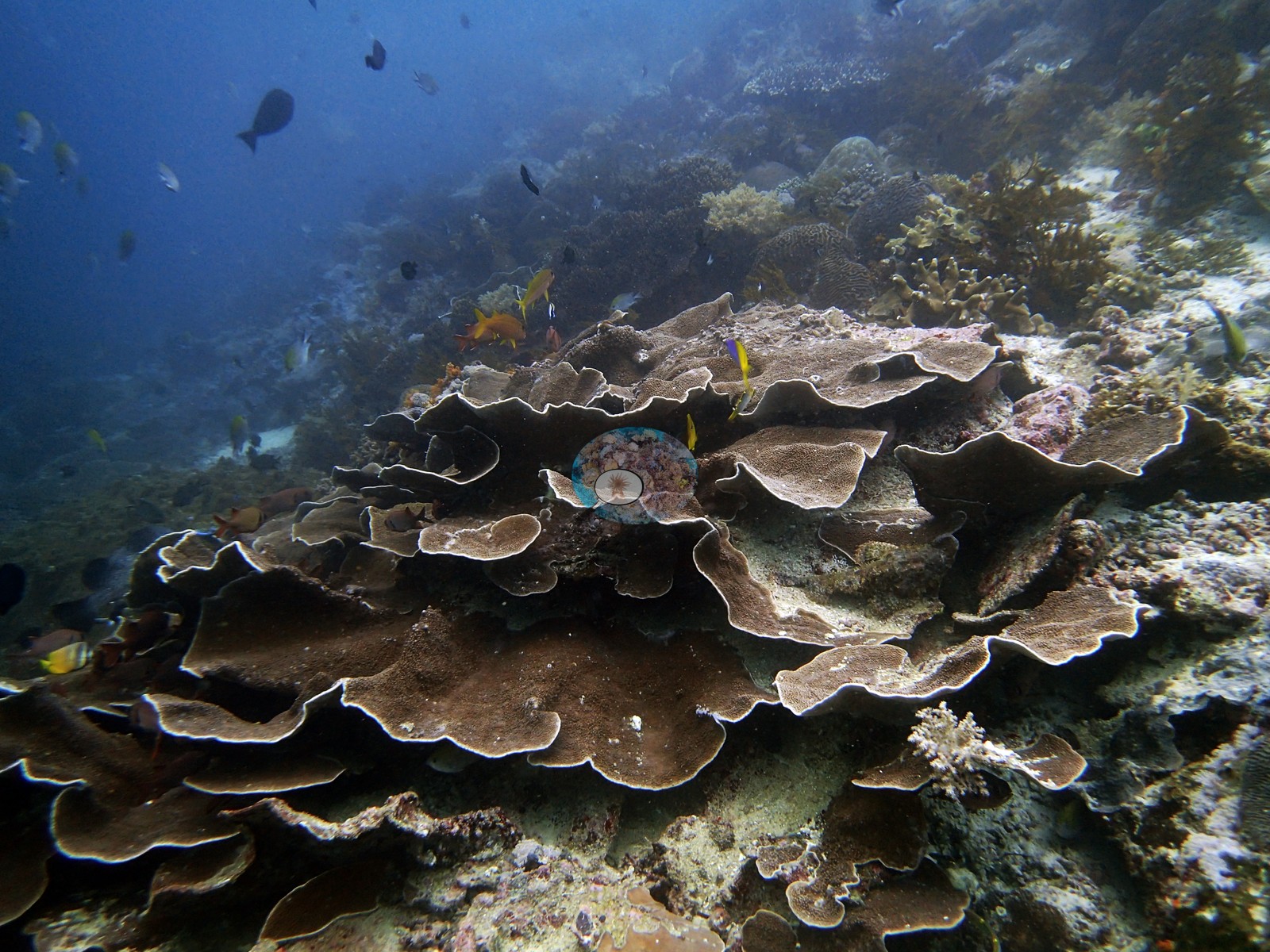 13
13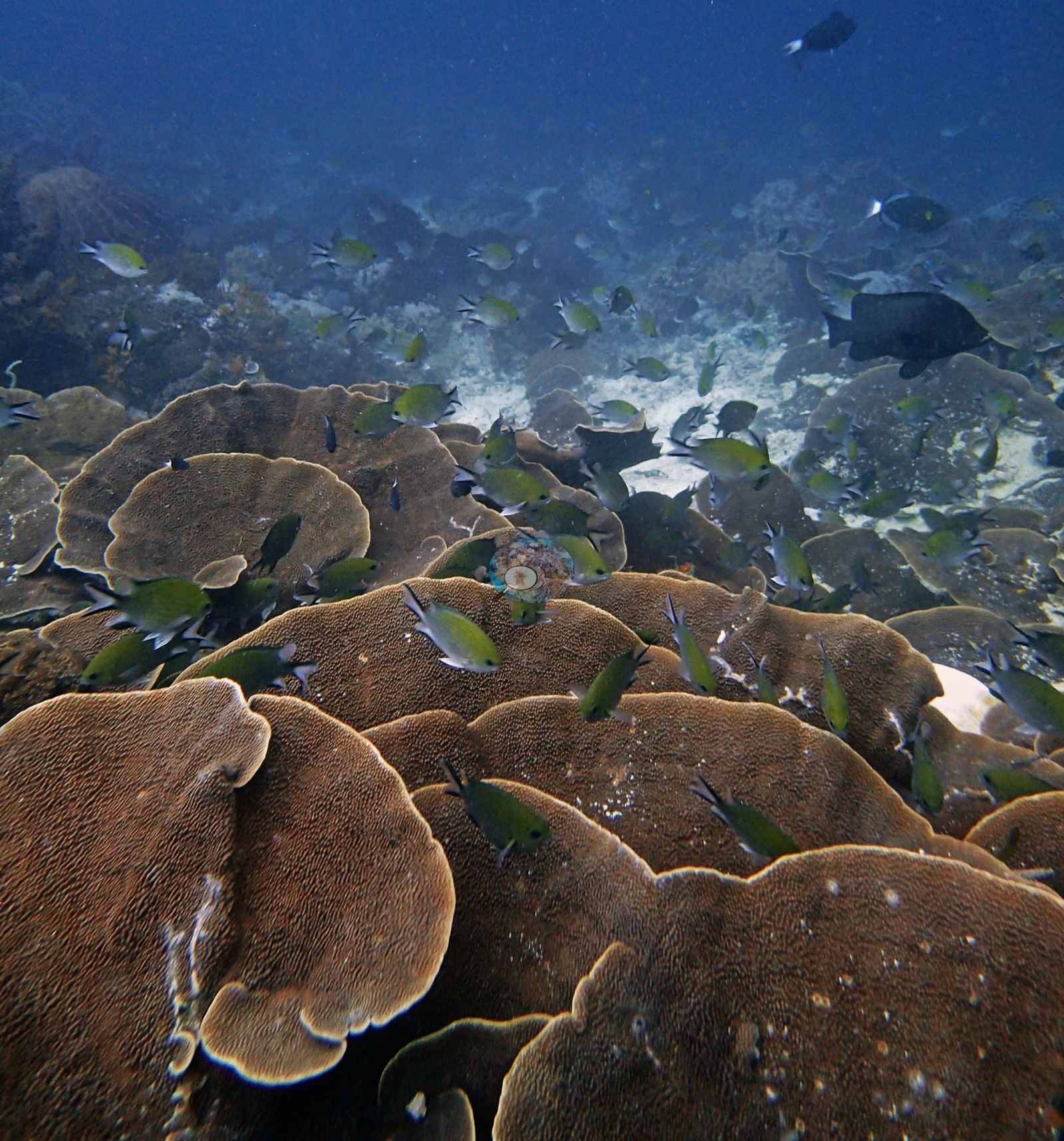 14
14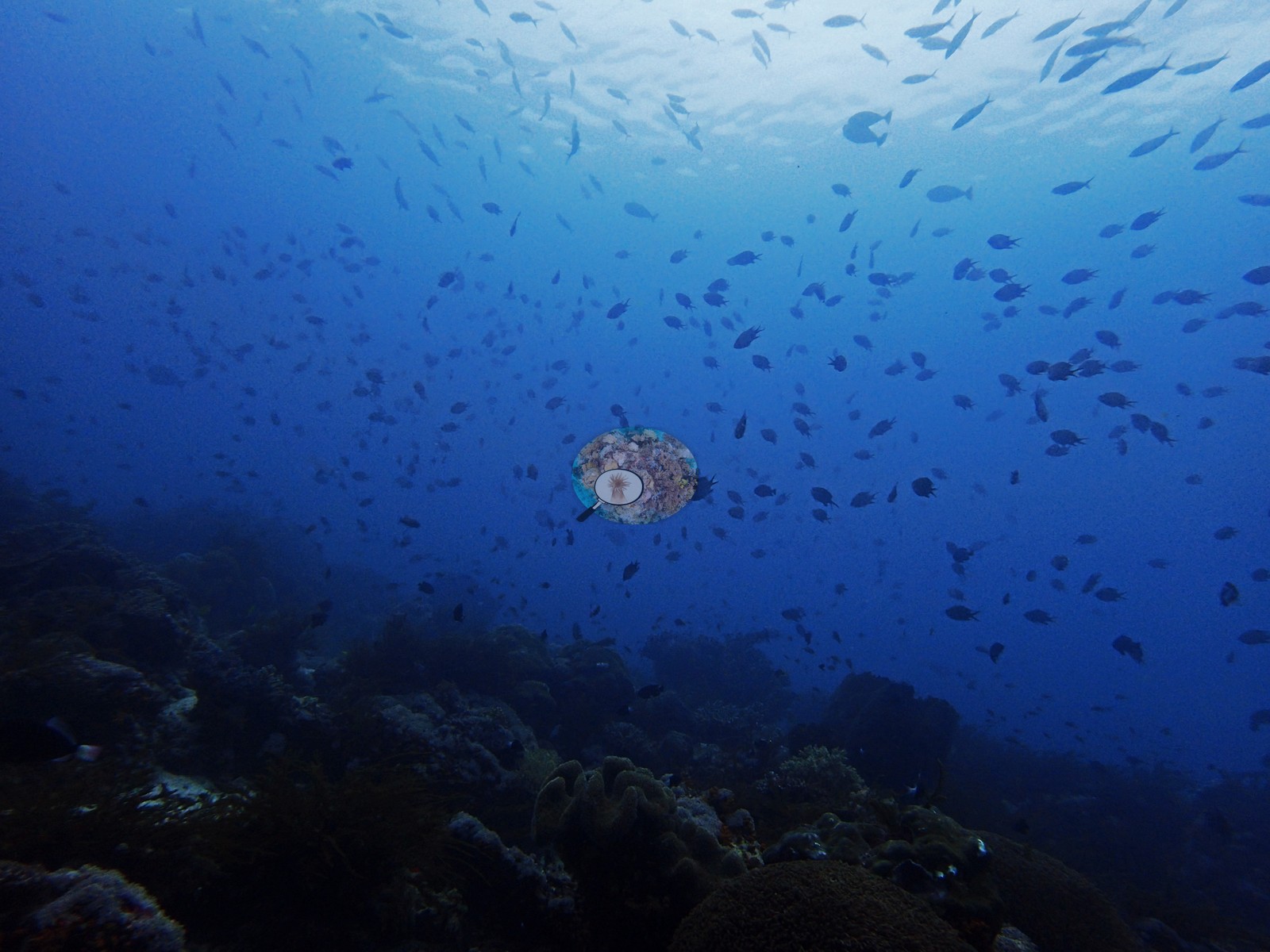 15
15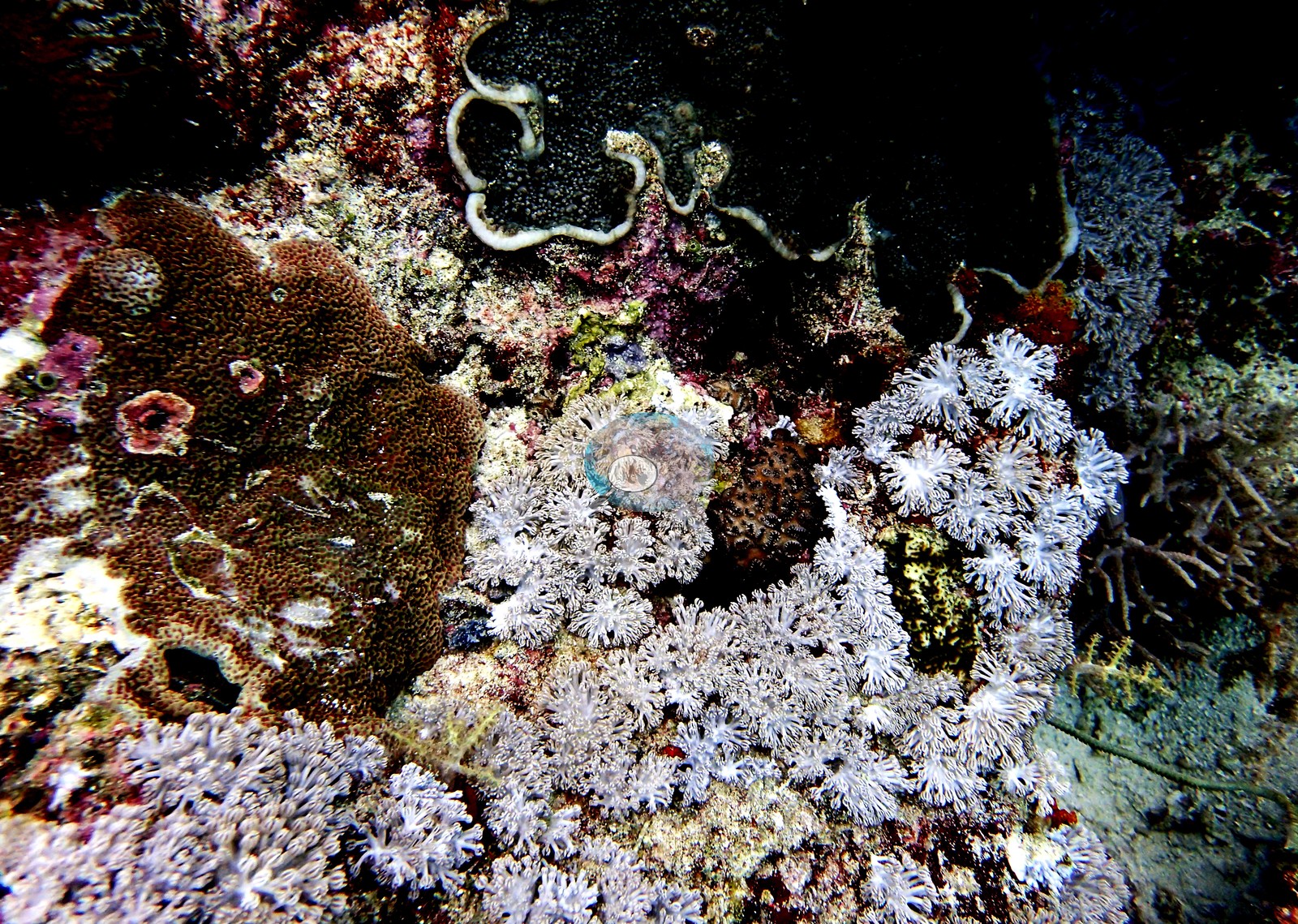 16
16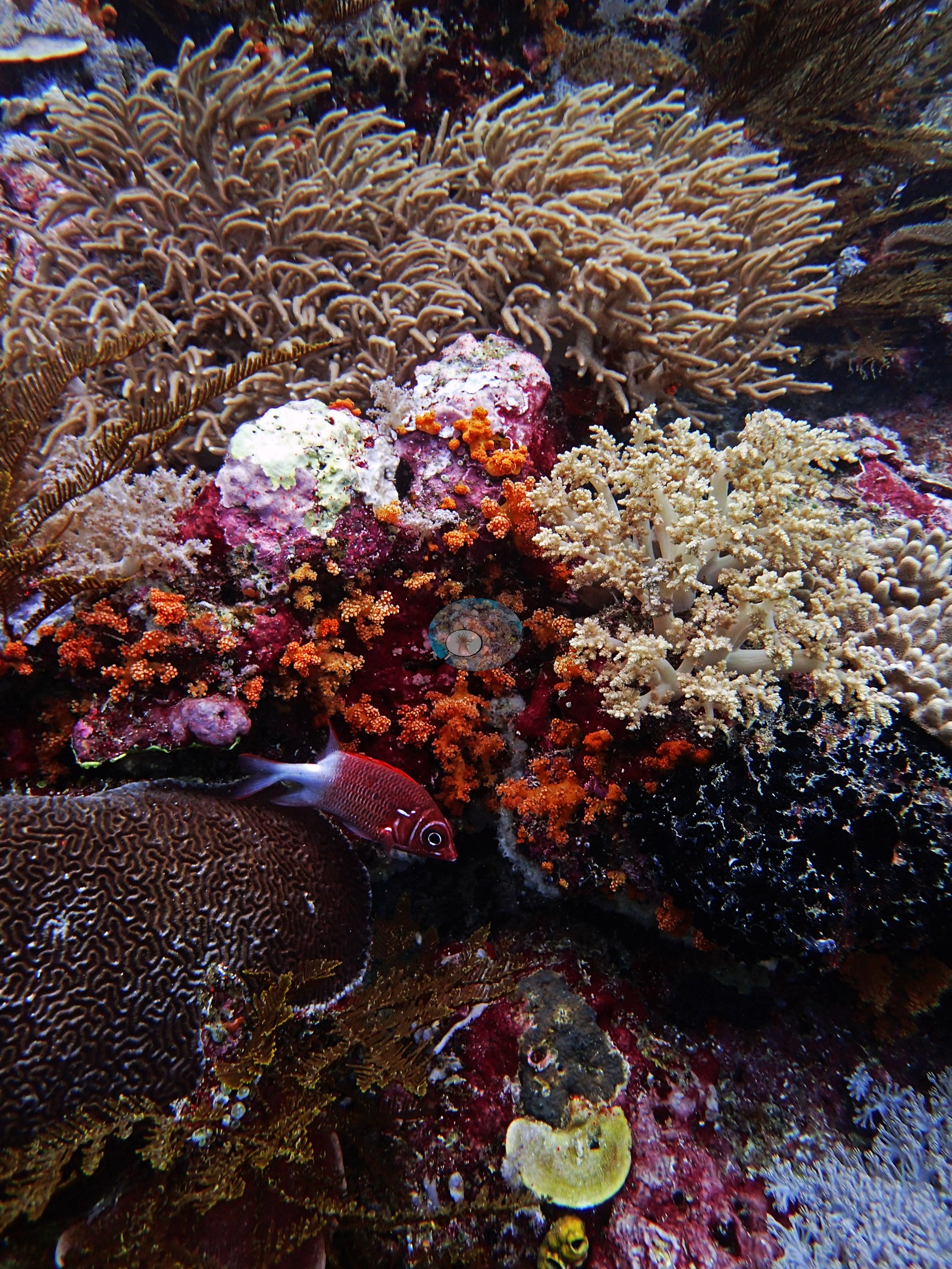 18
18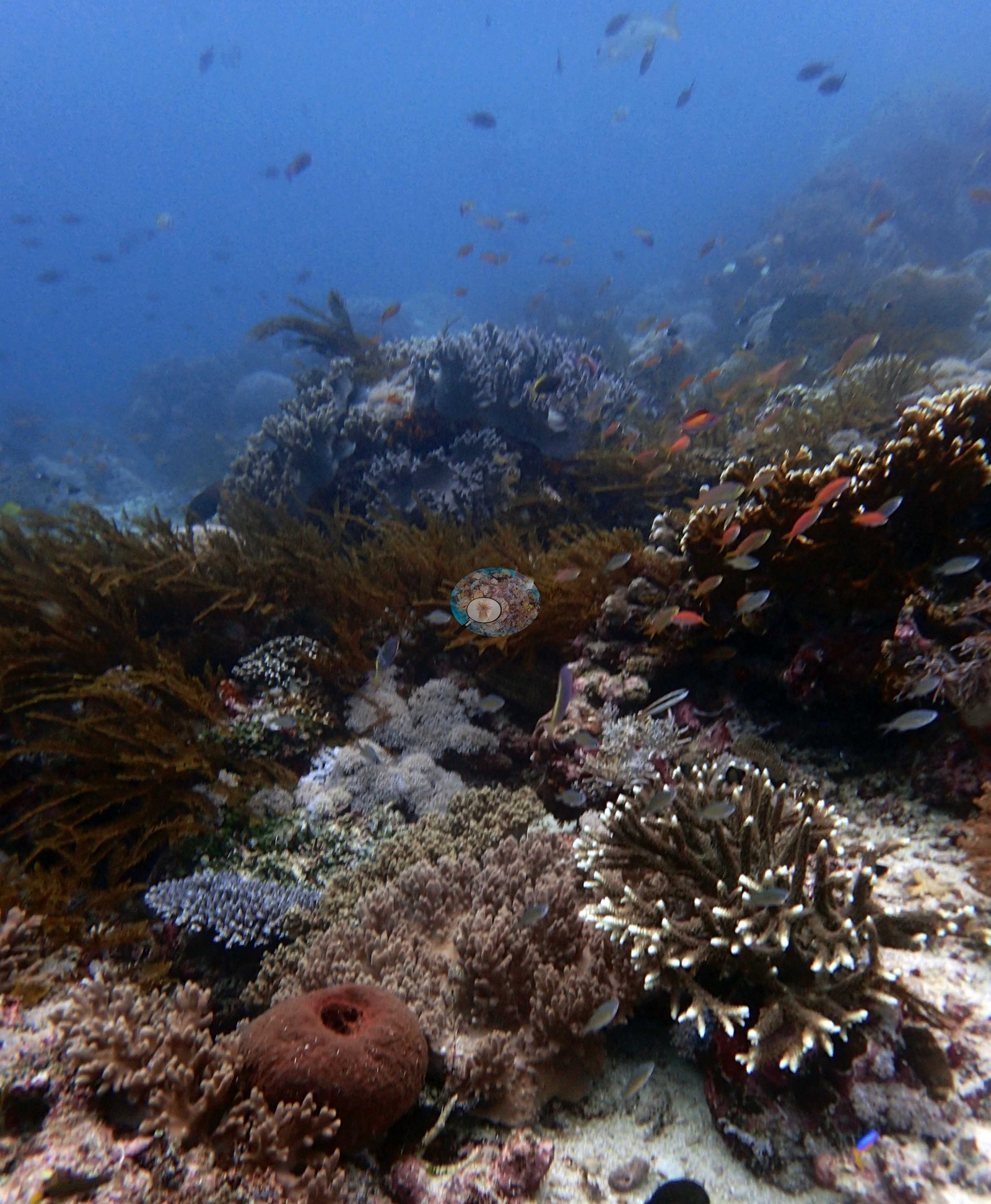 19
19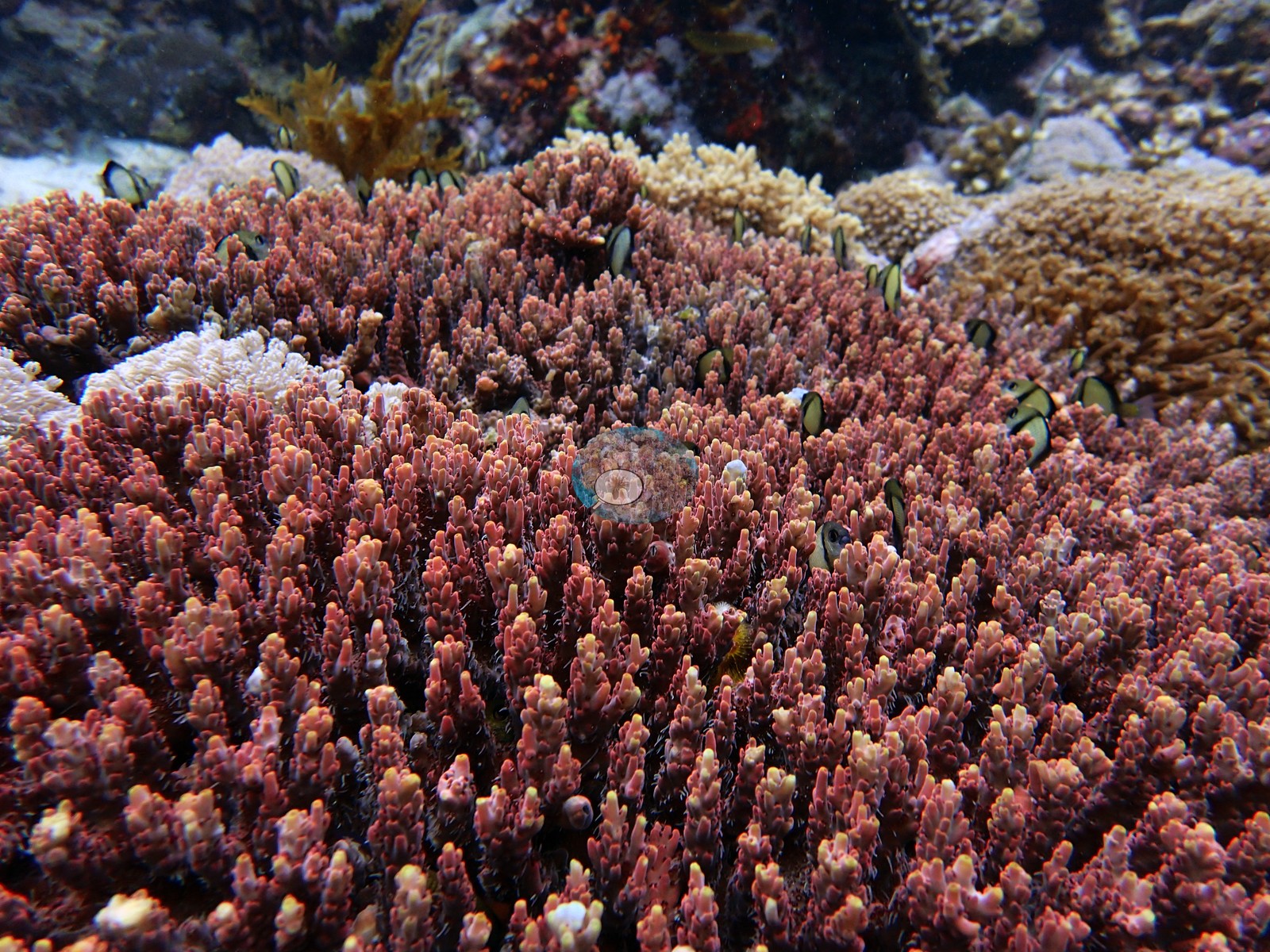 20
20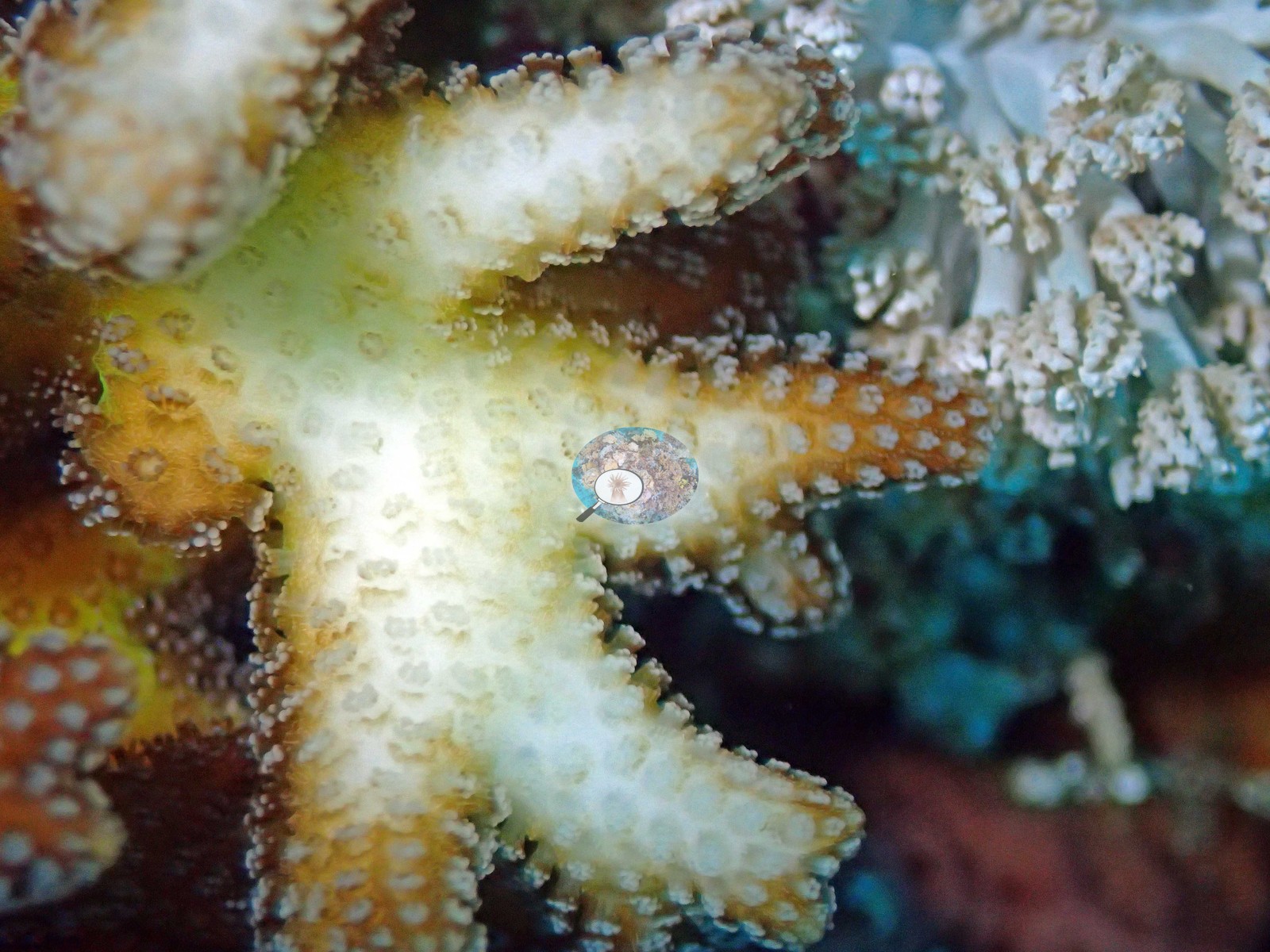 21
21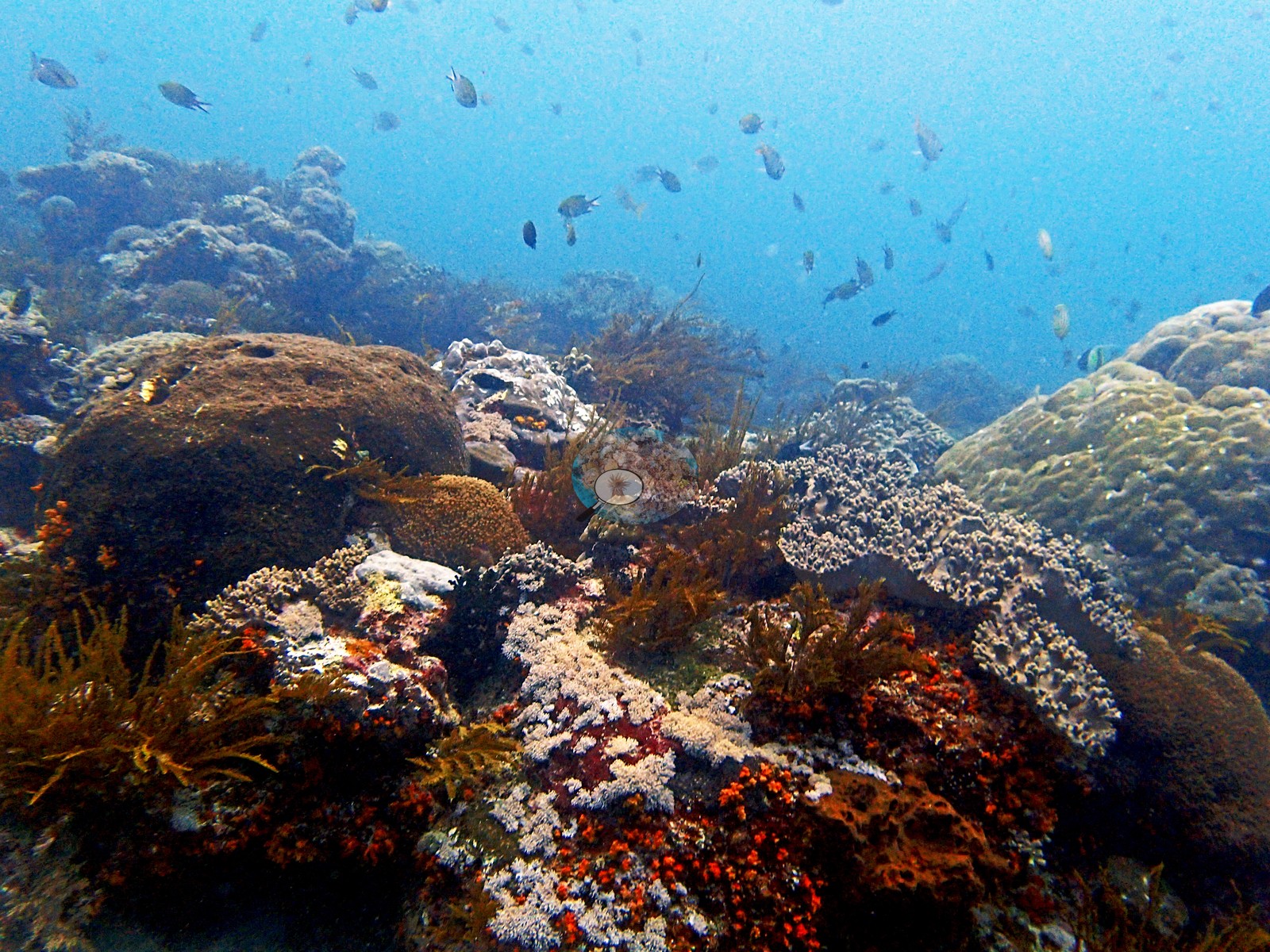 22
22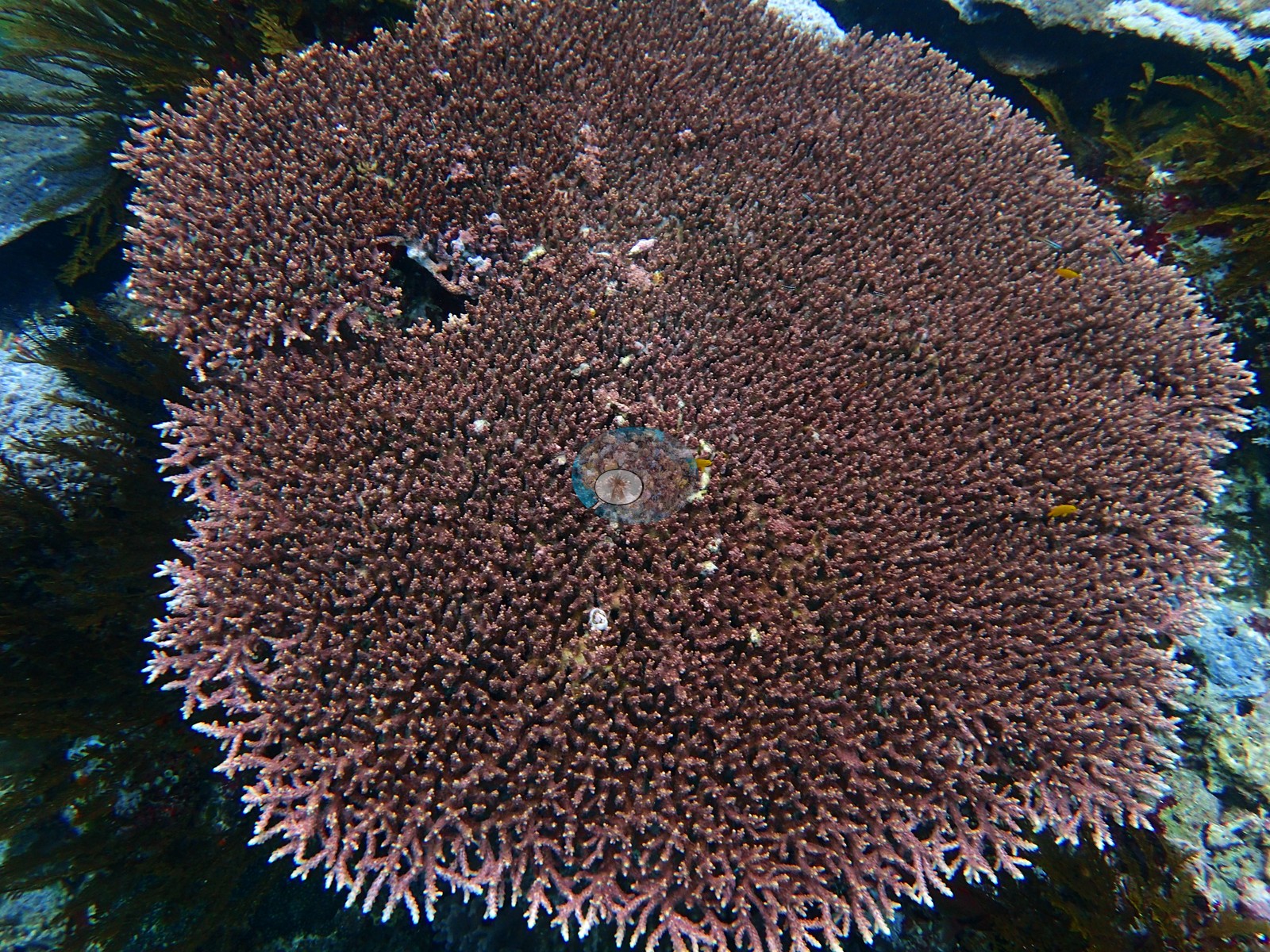 23
23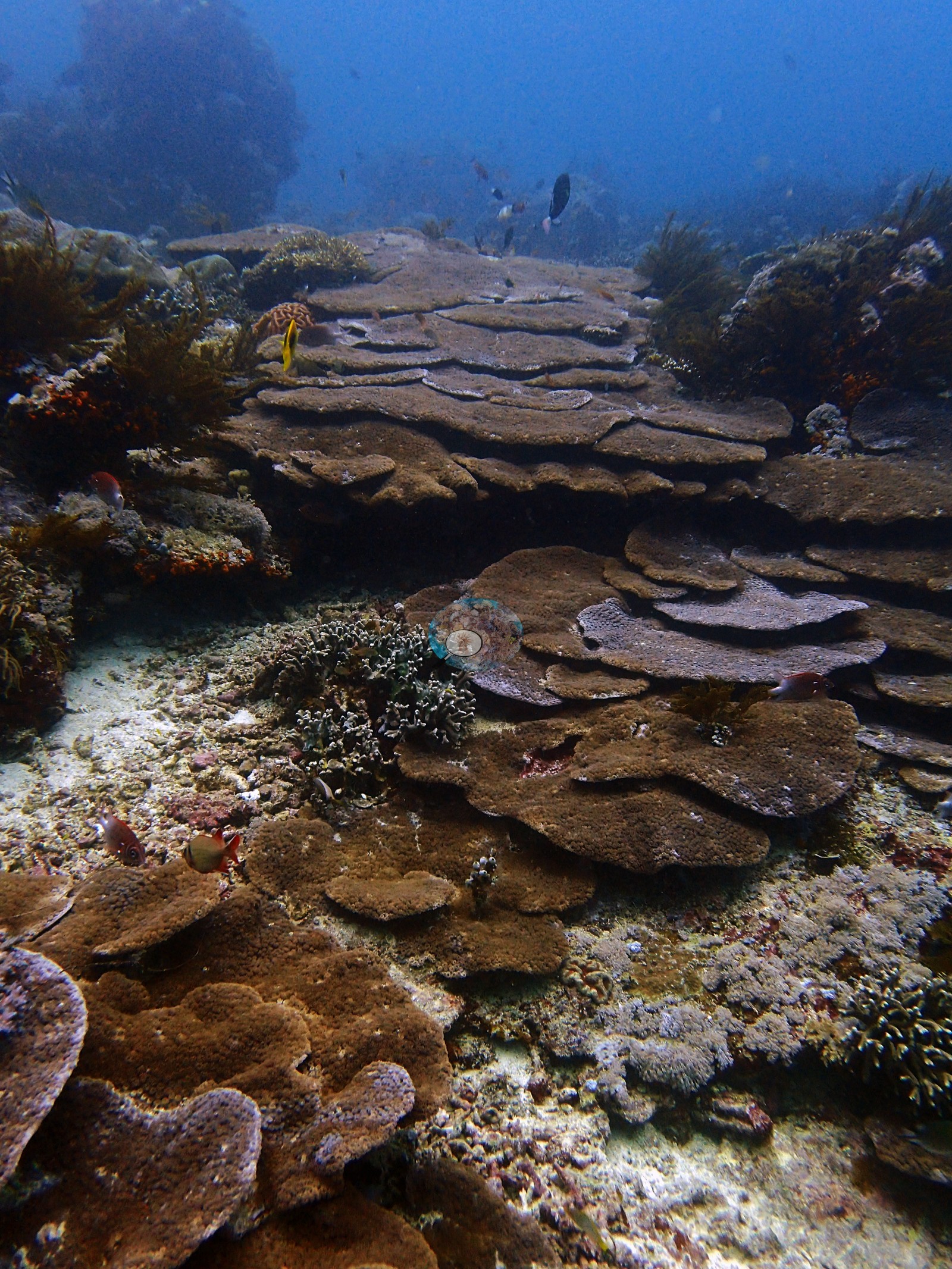 24
24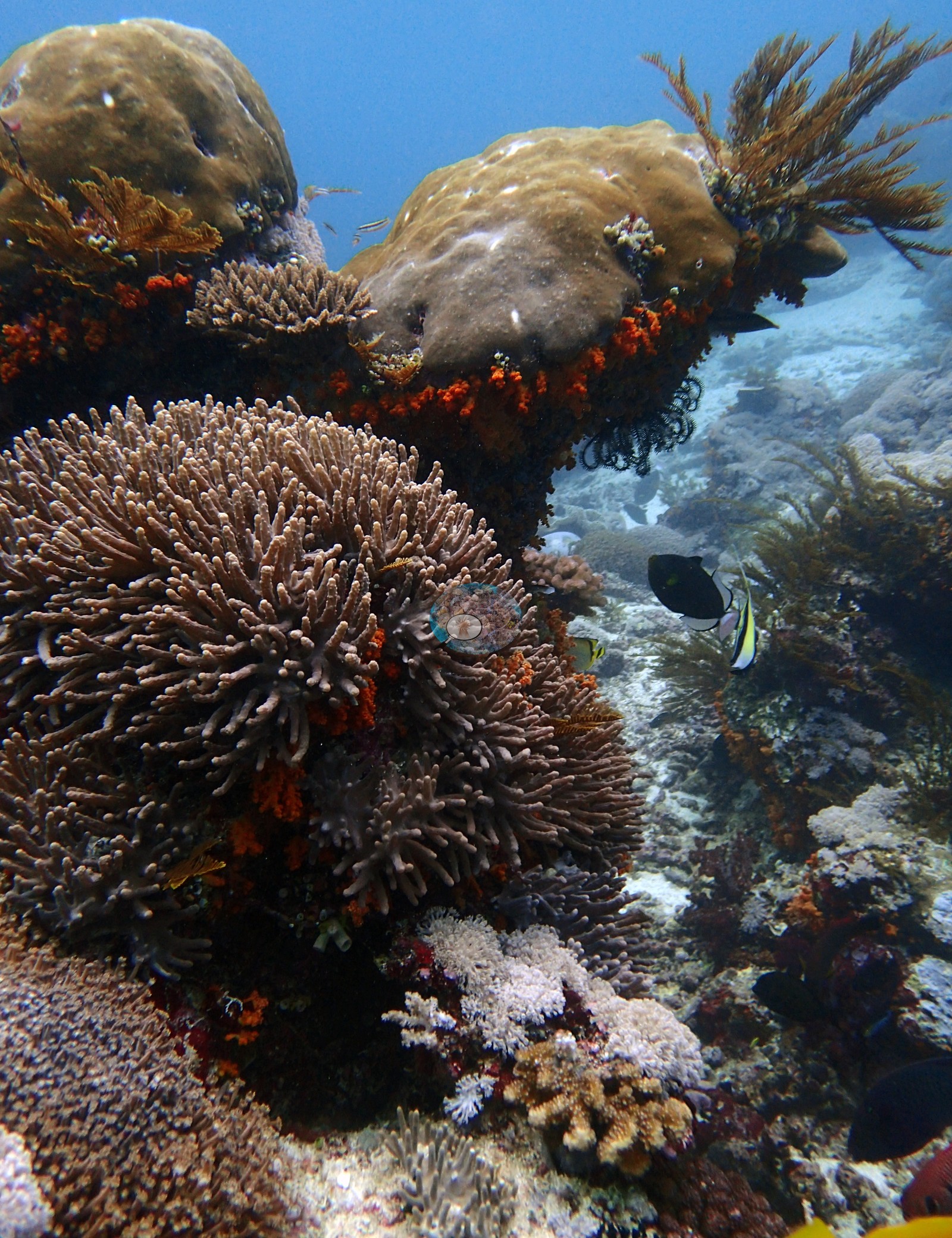 25
25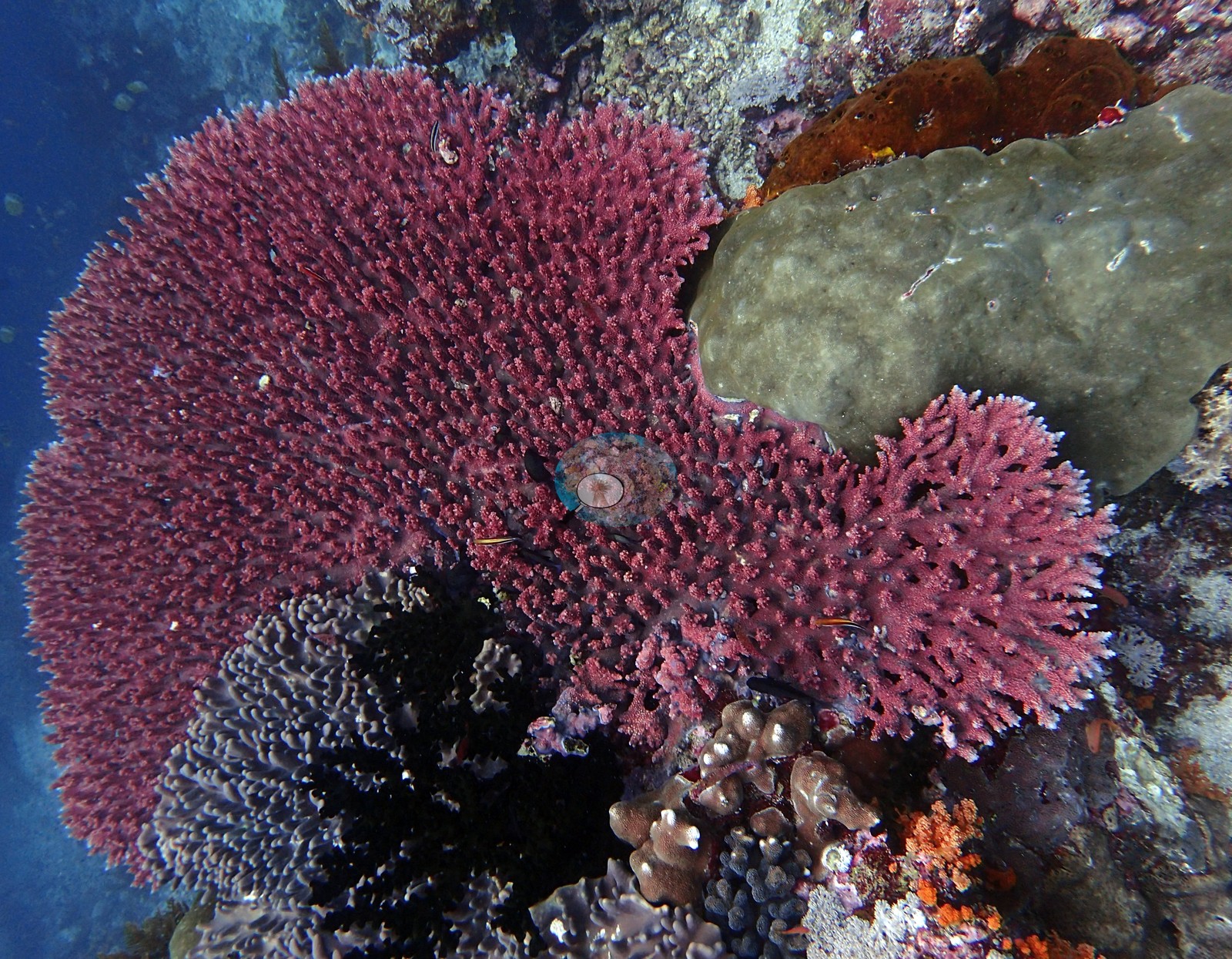 26
26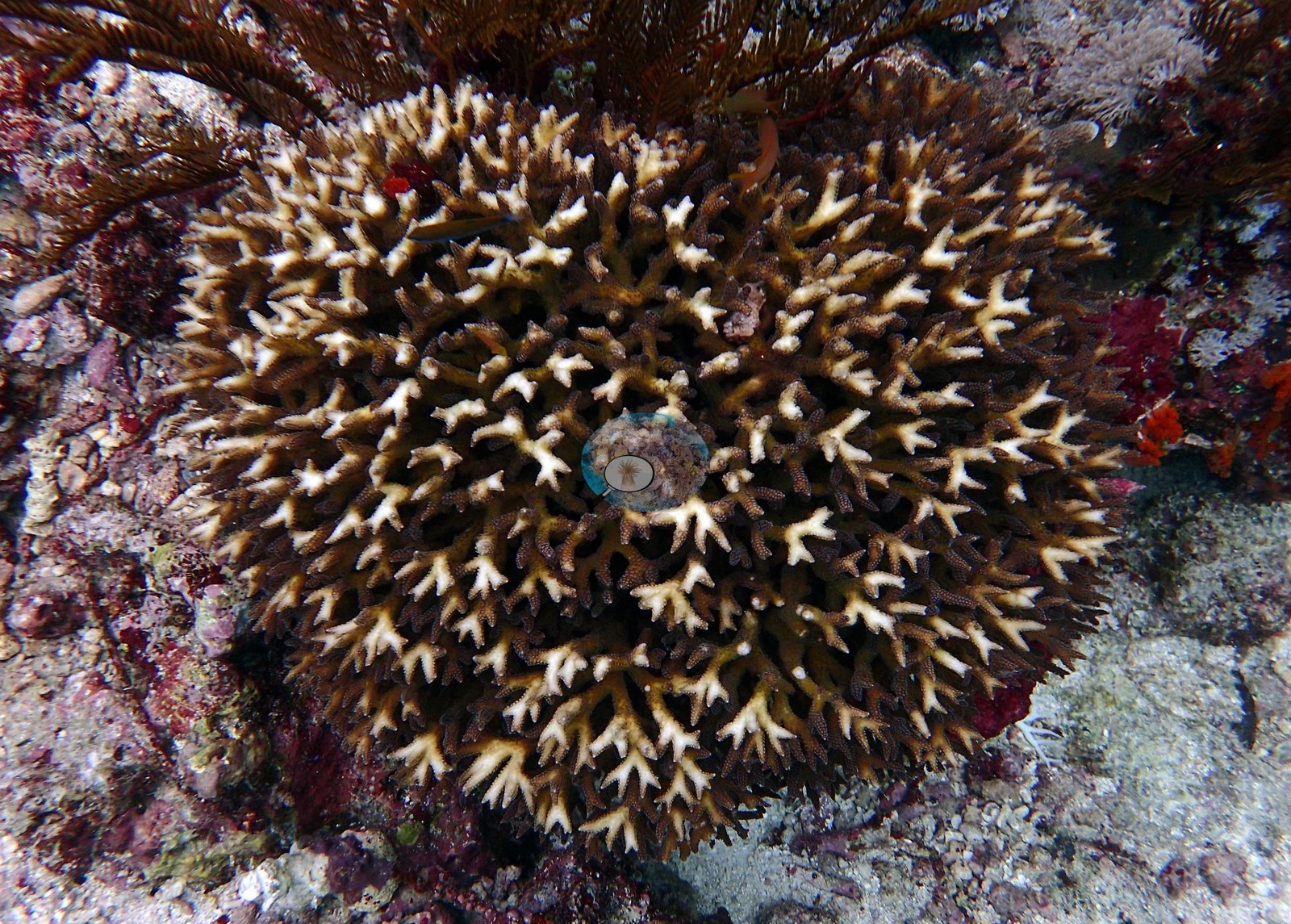 27
27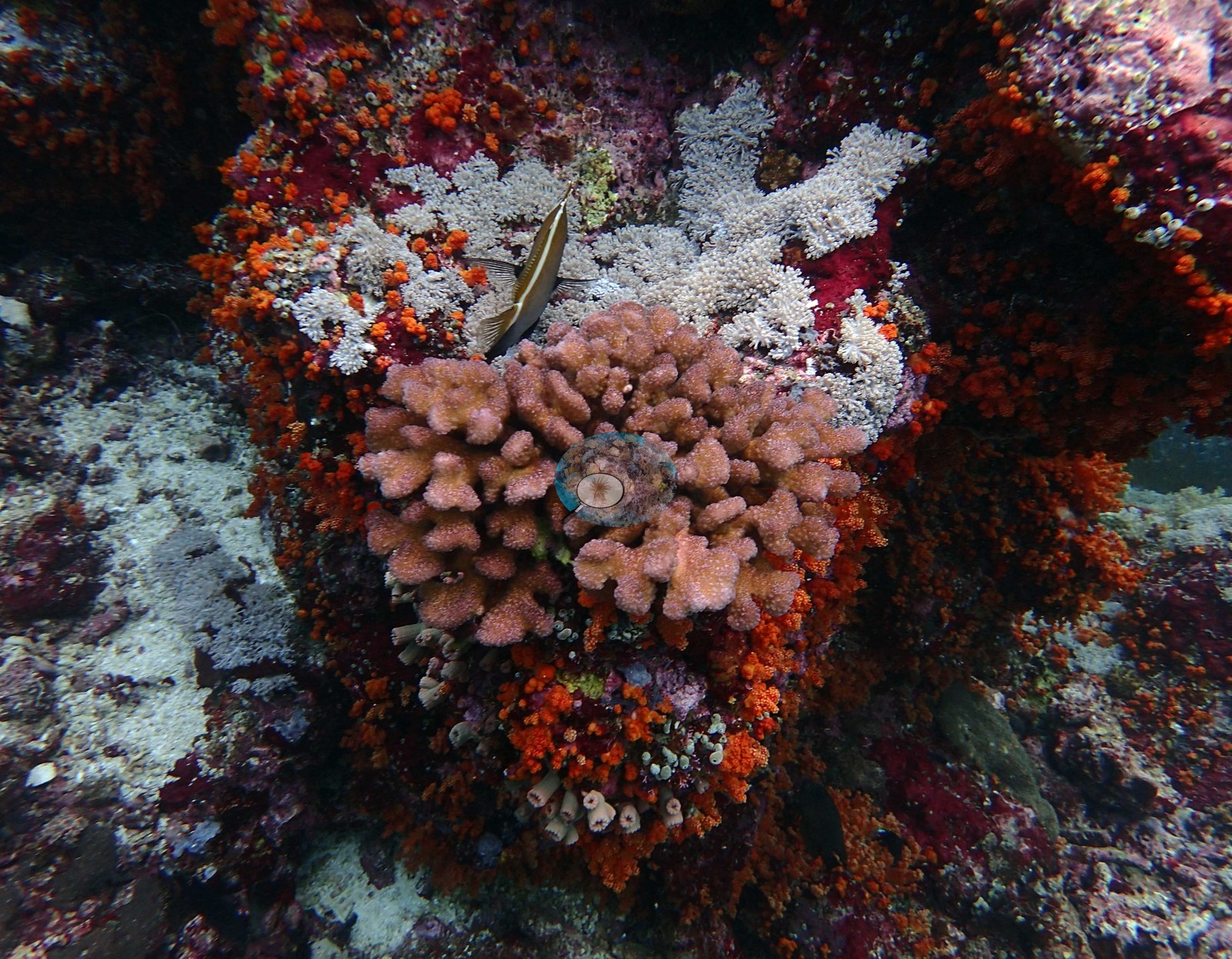 28
28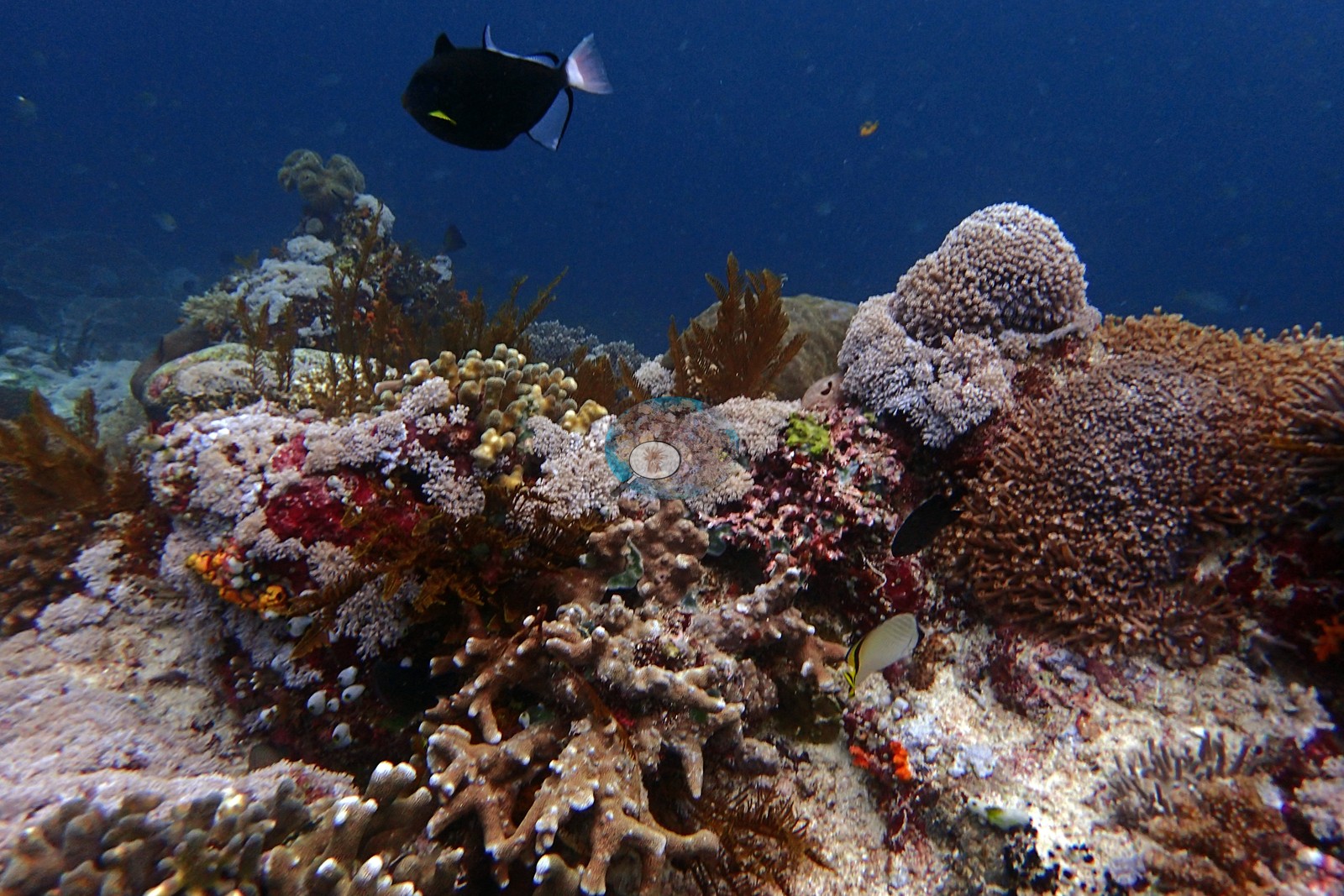 29
29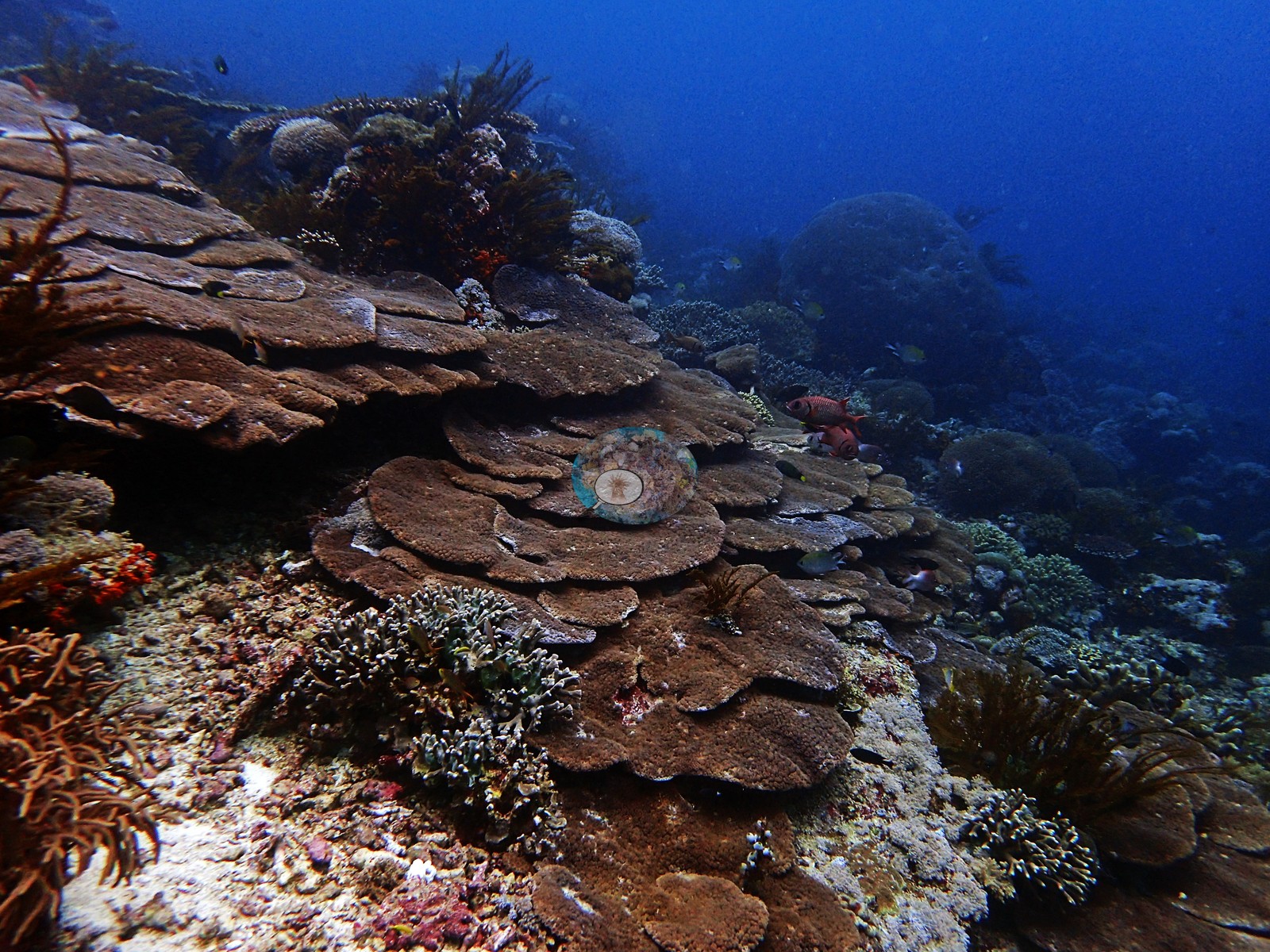 30
30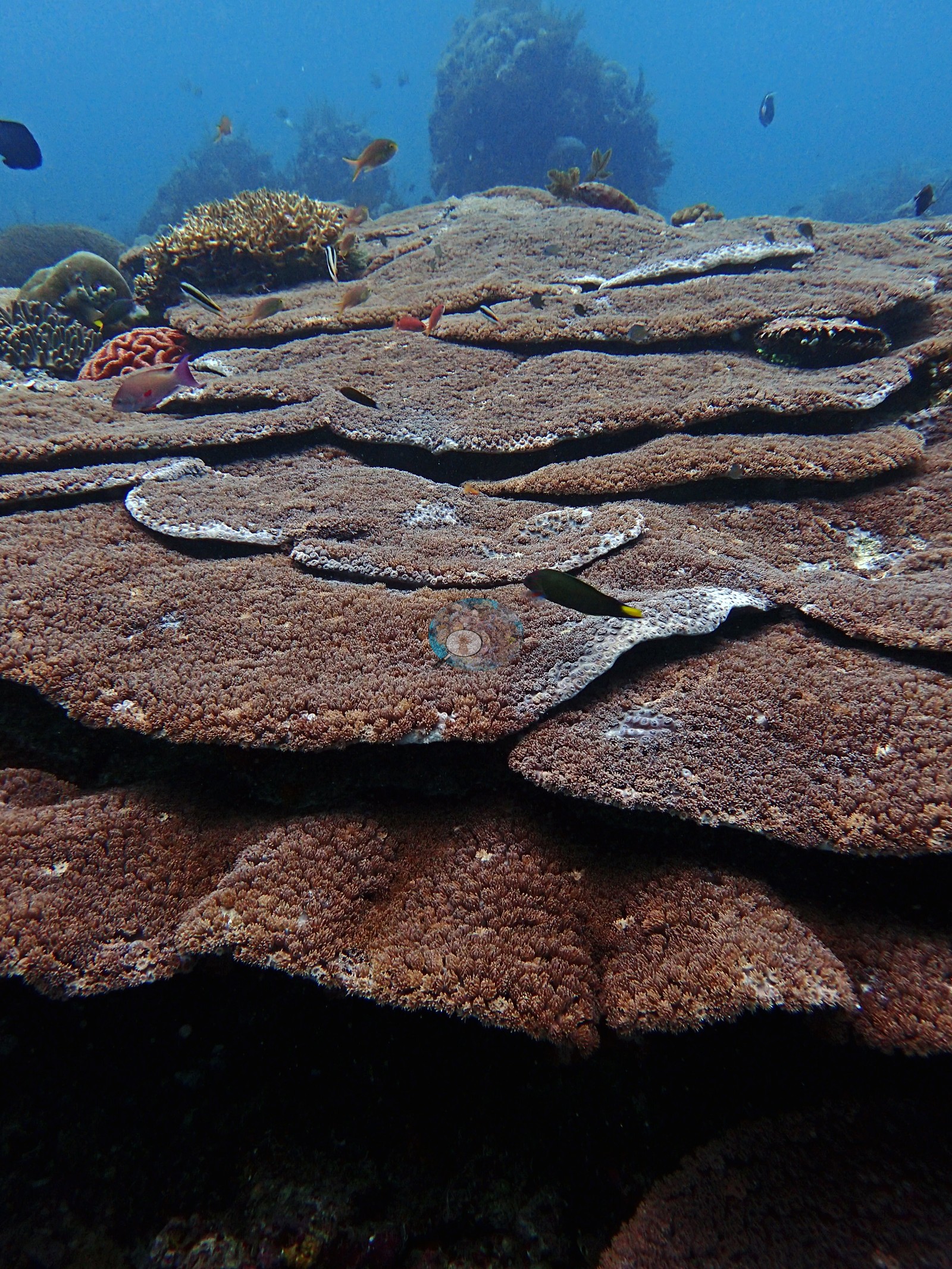 31
31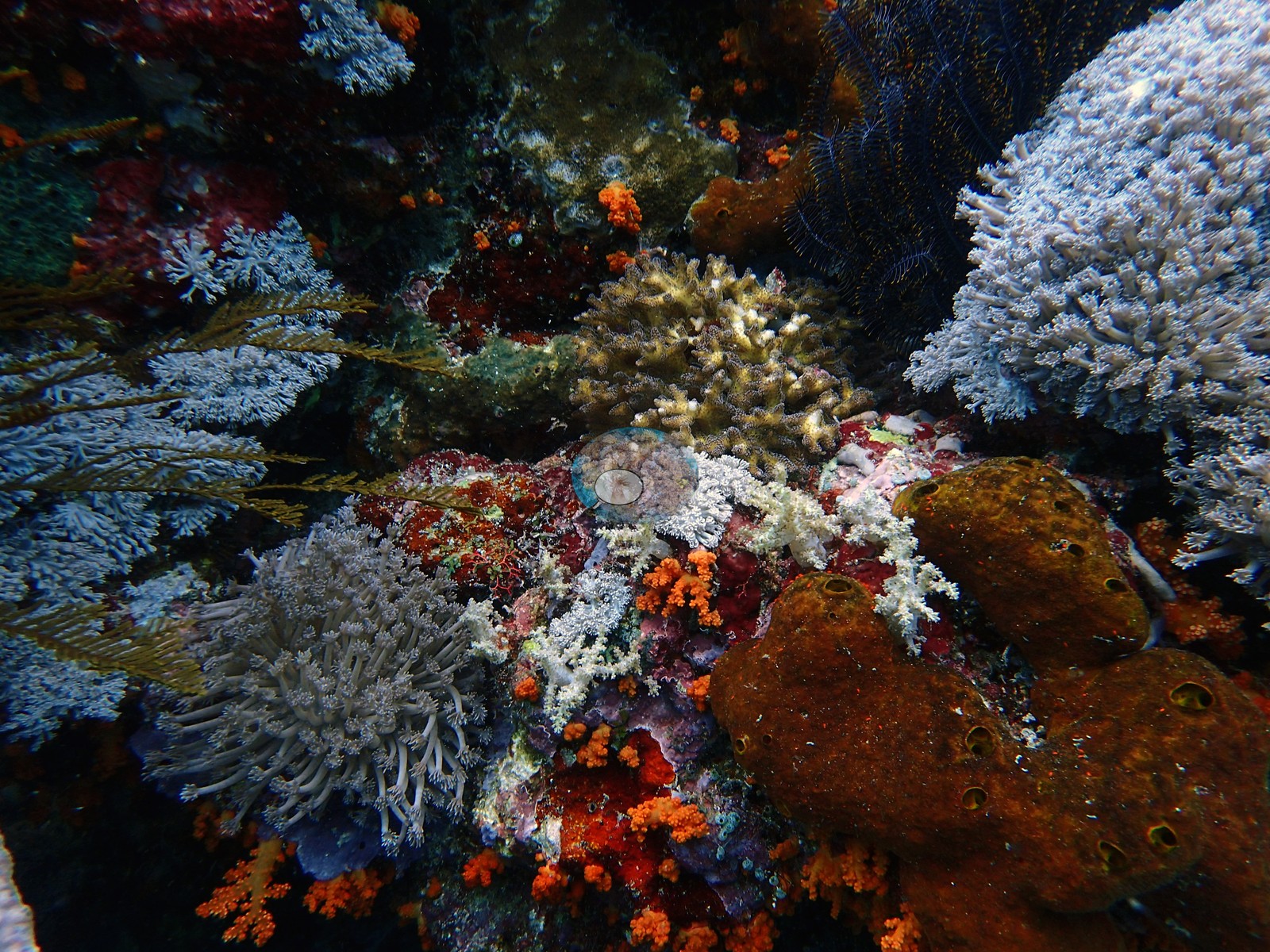 32
32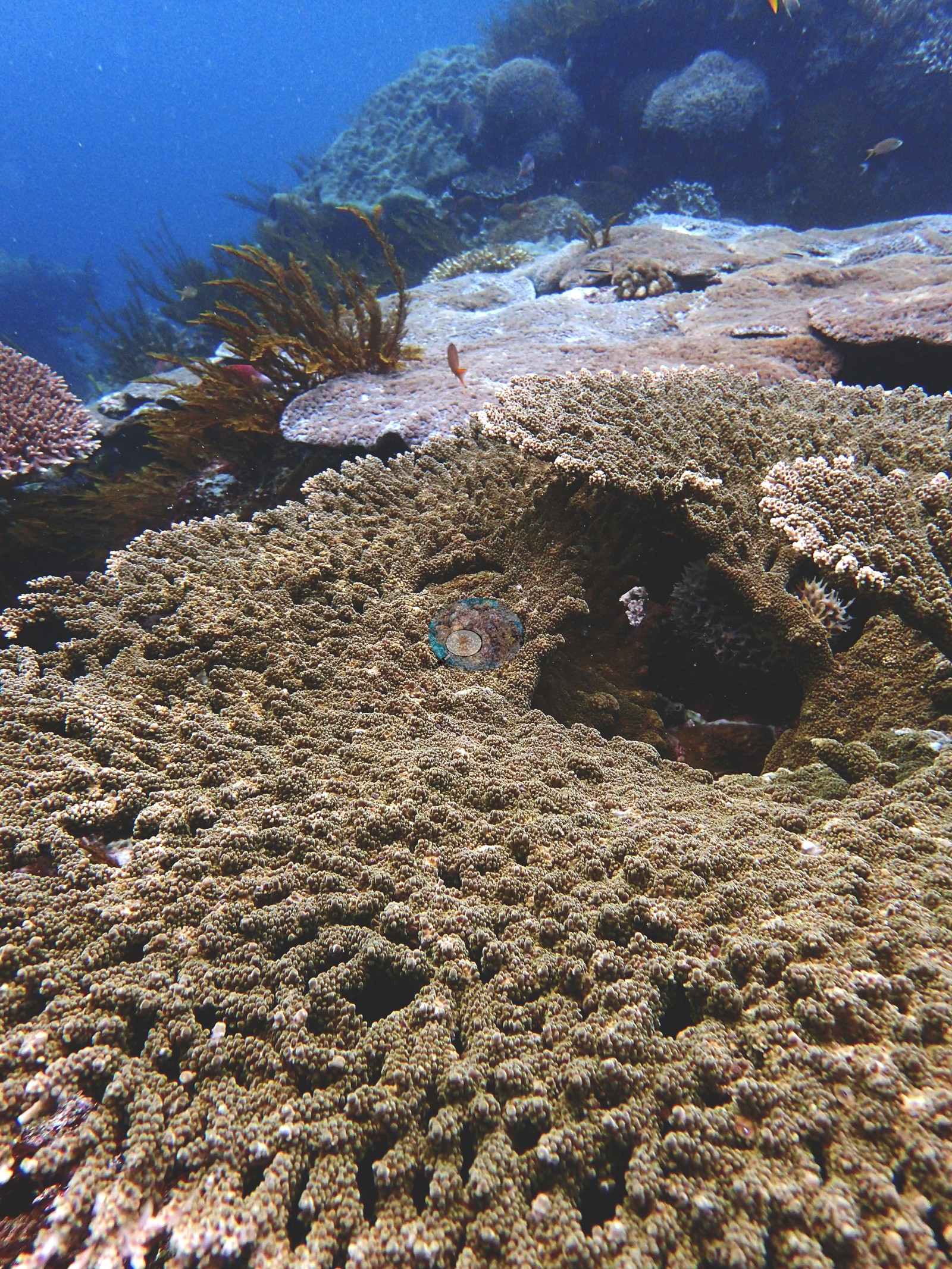 33
33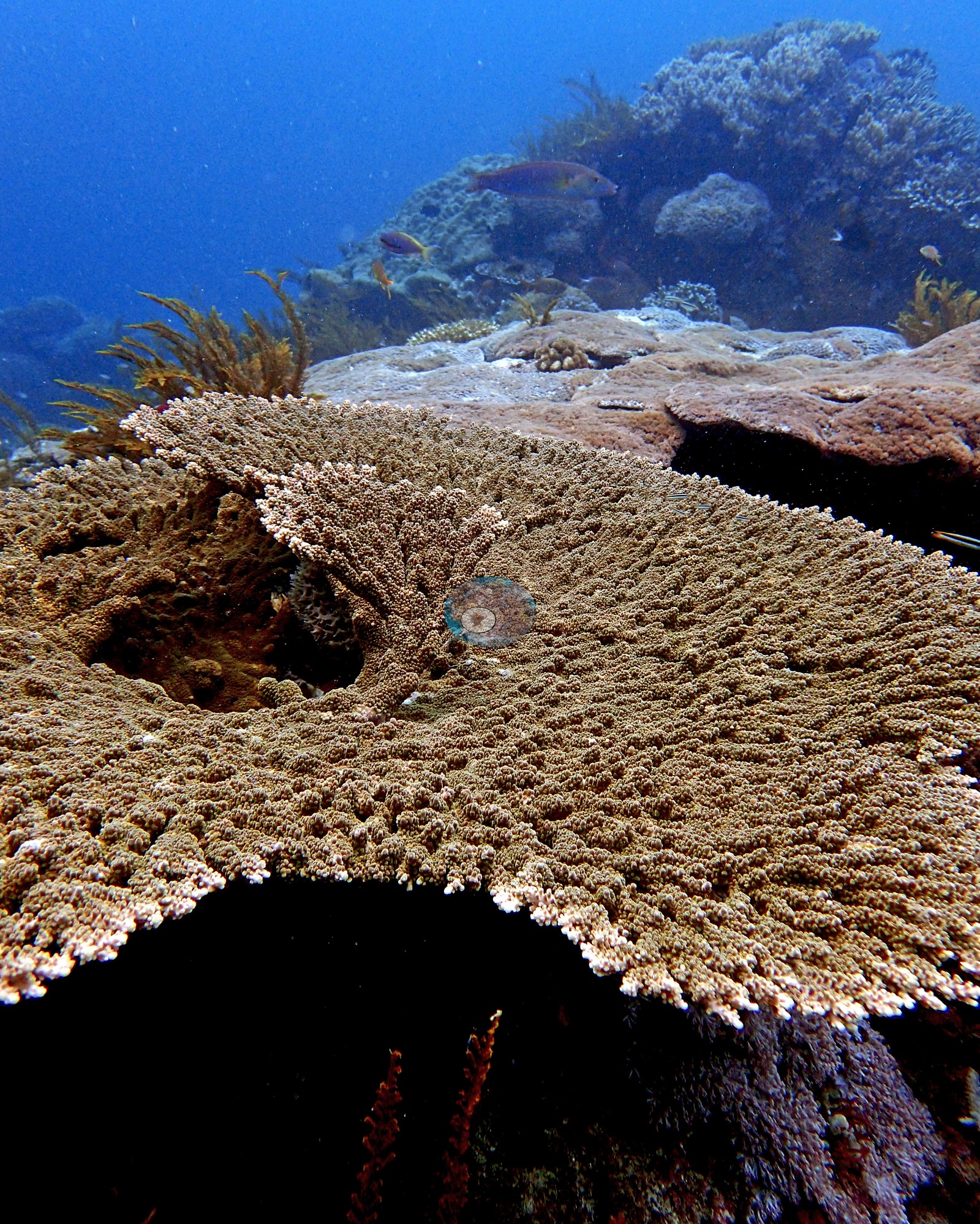 35
35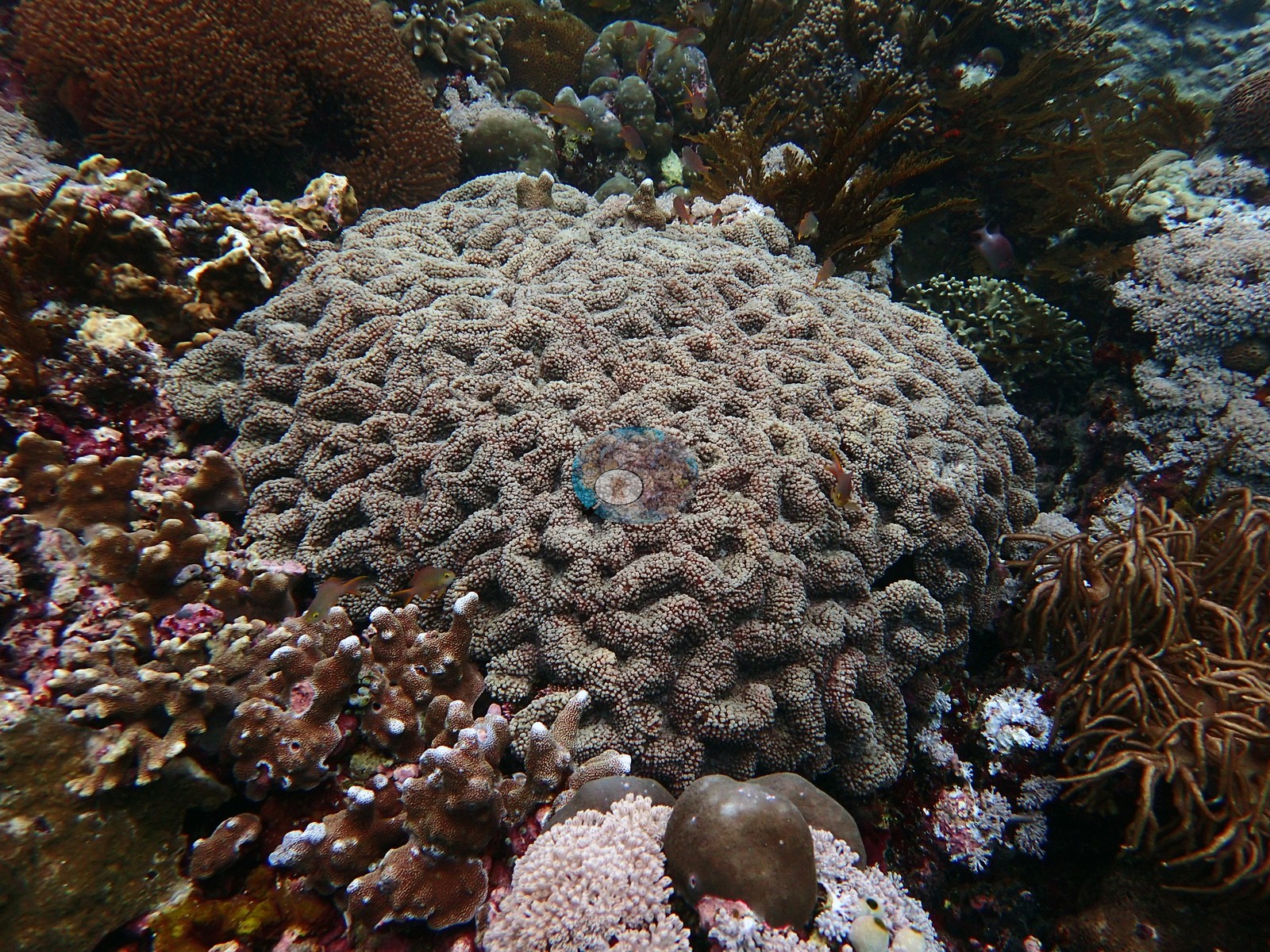 36
36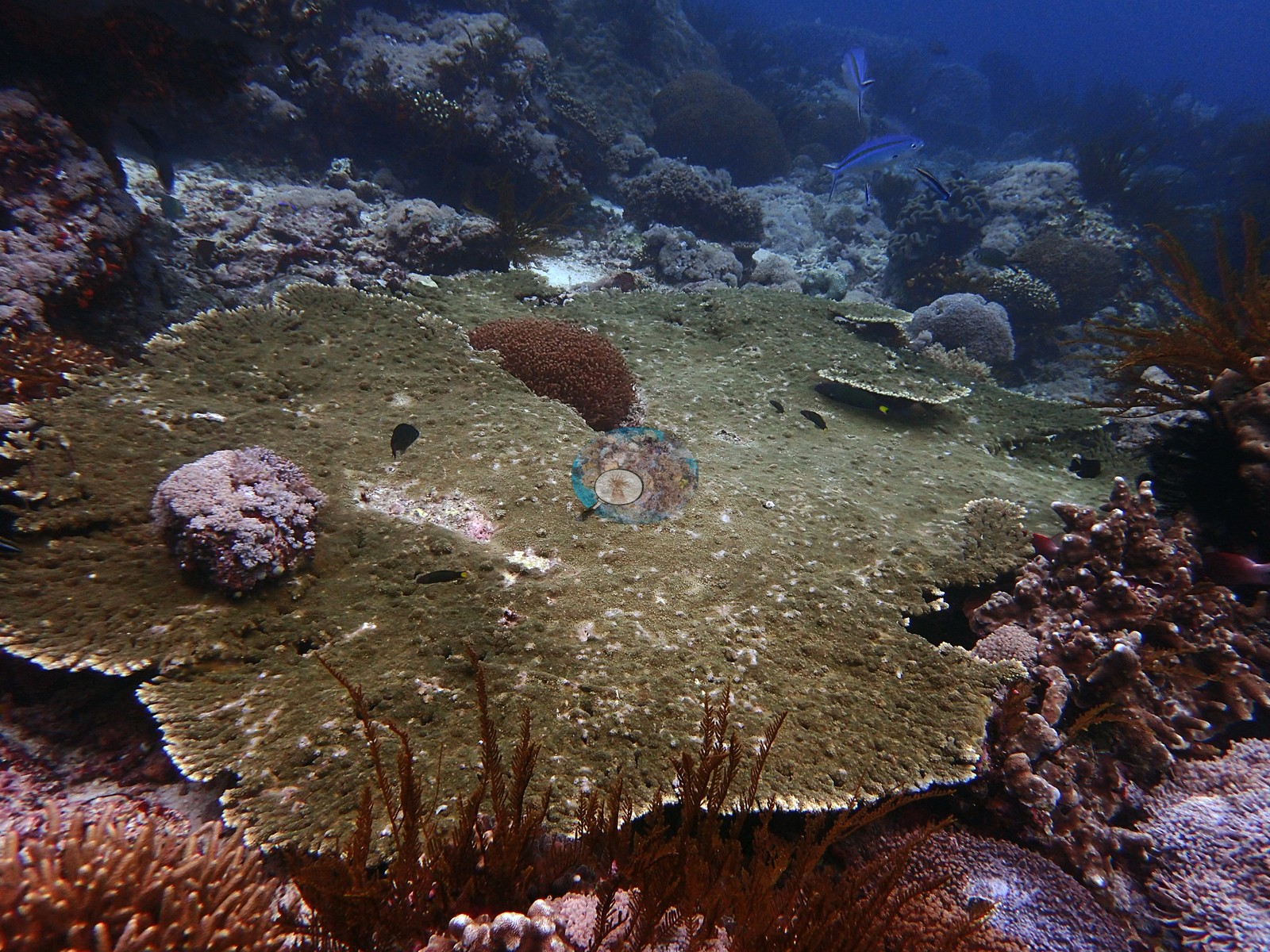 37
37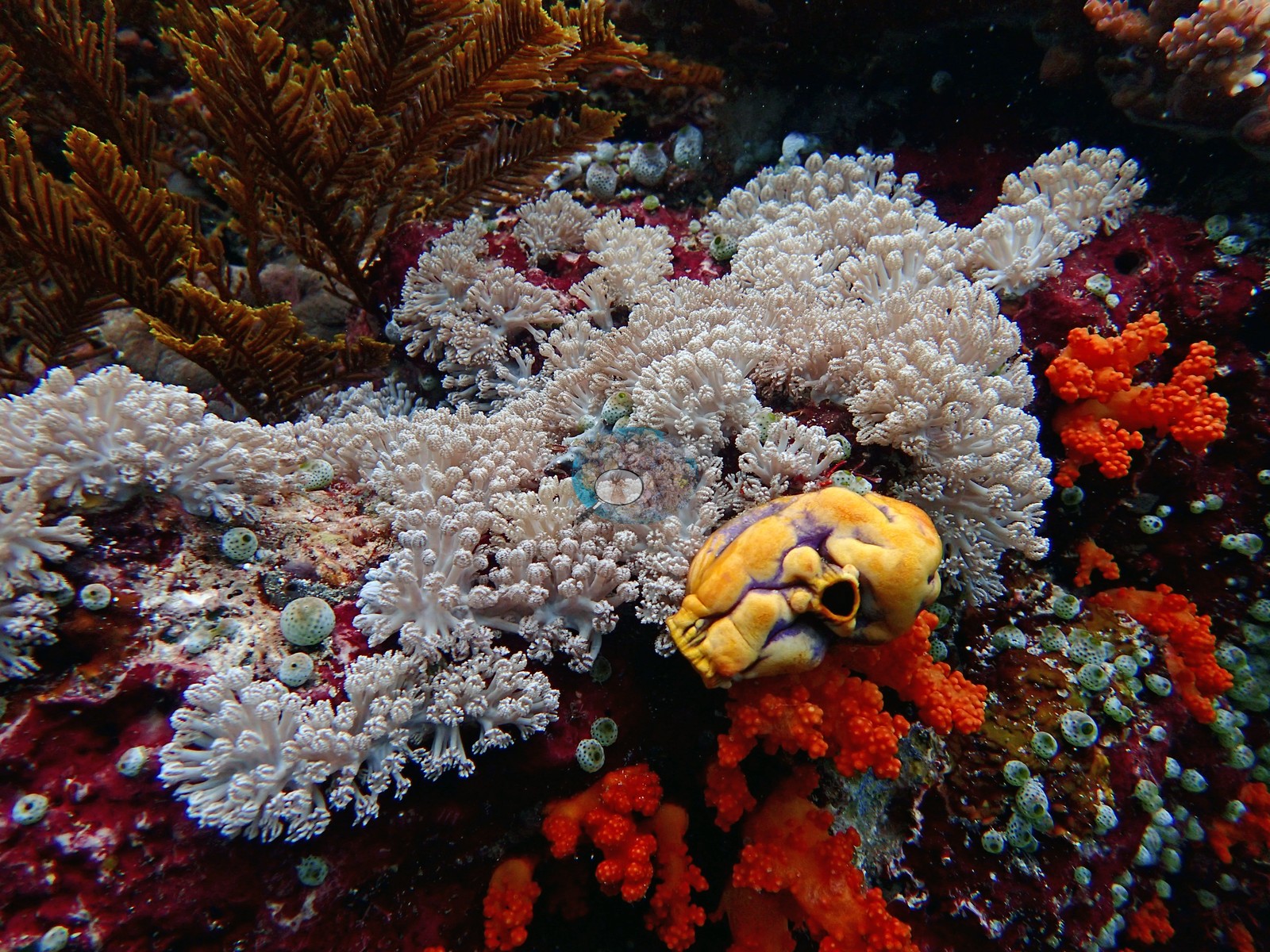 38
38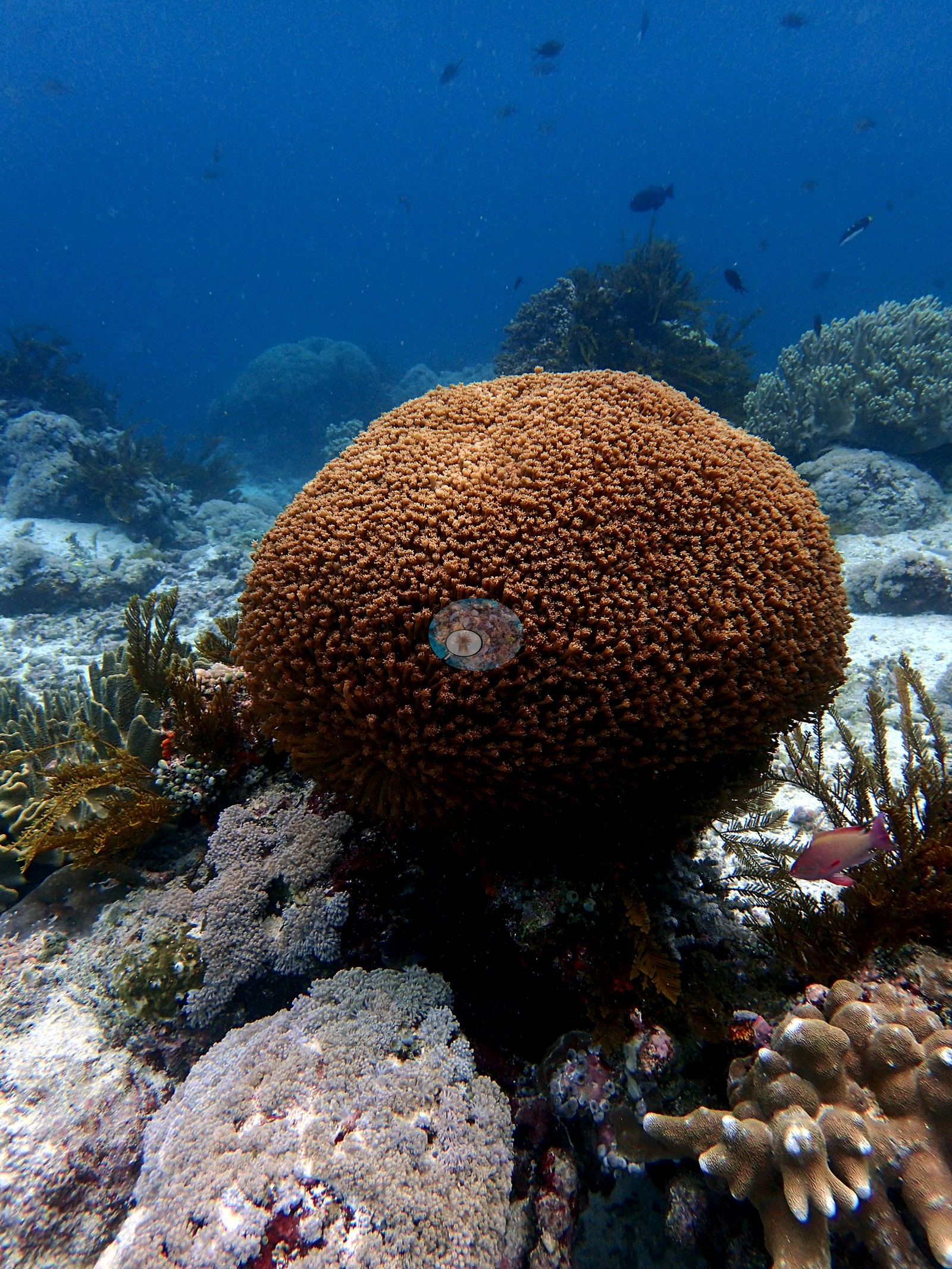 39
39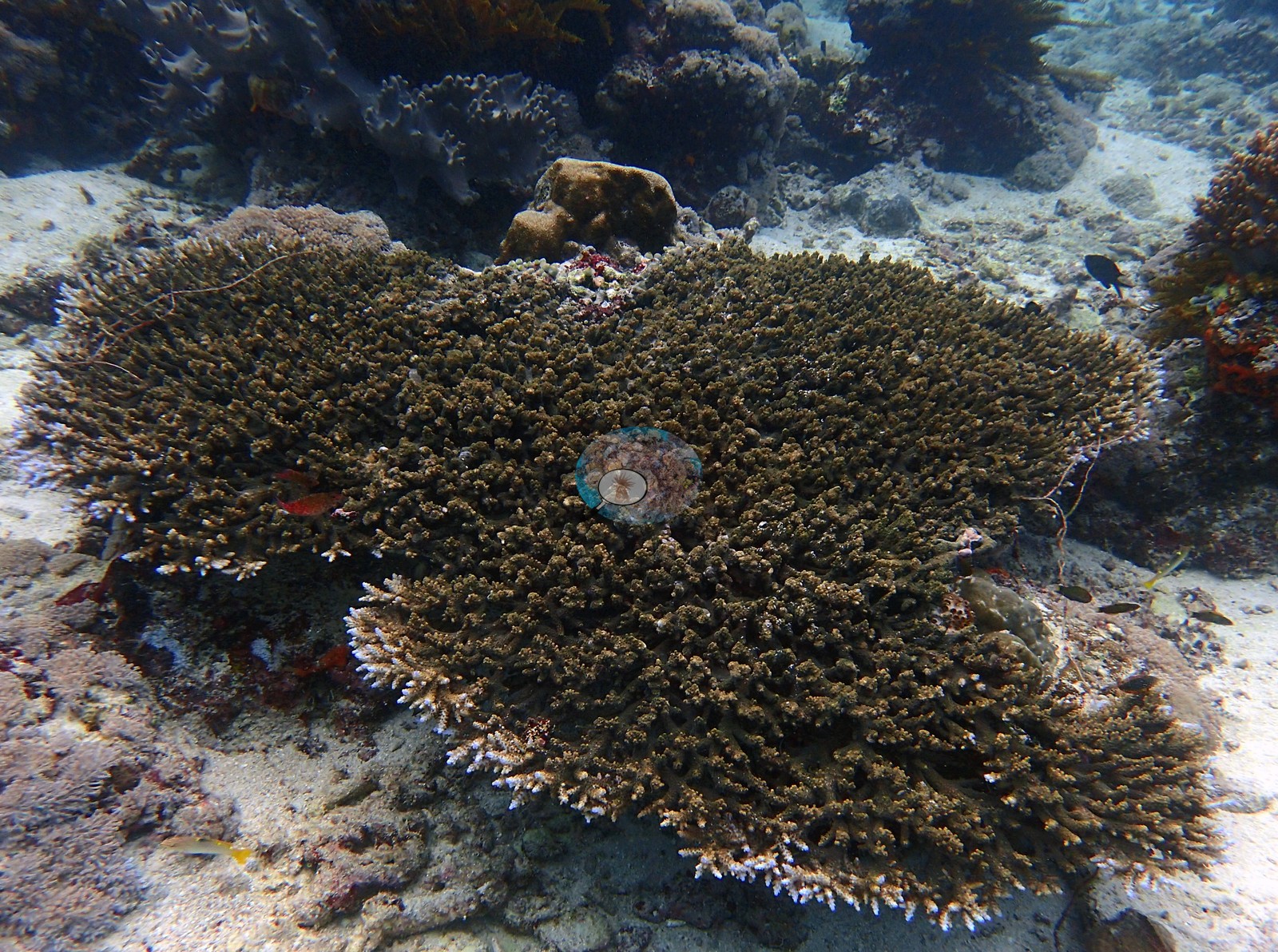 40
40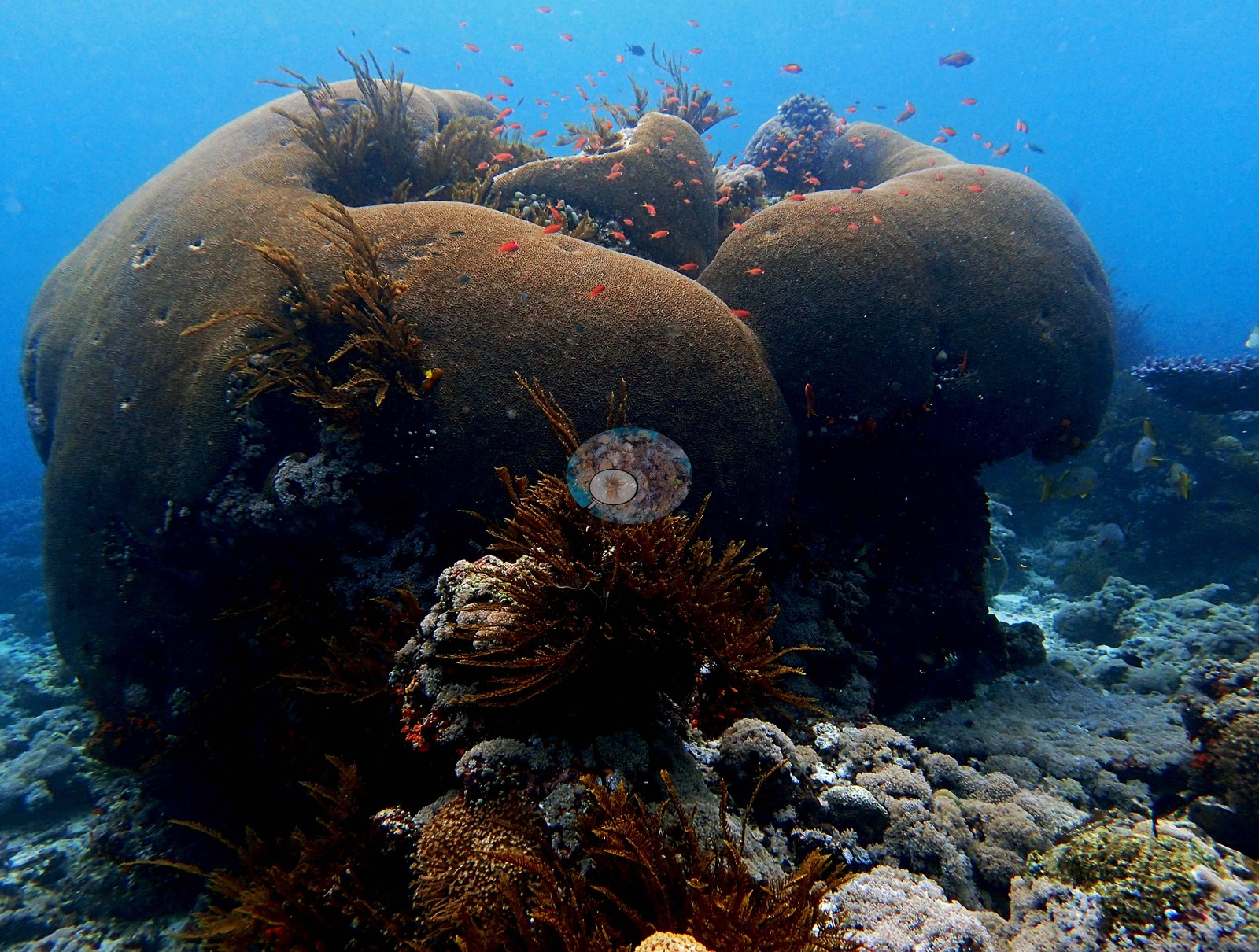 41
41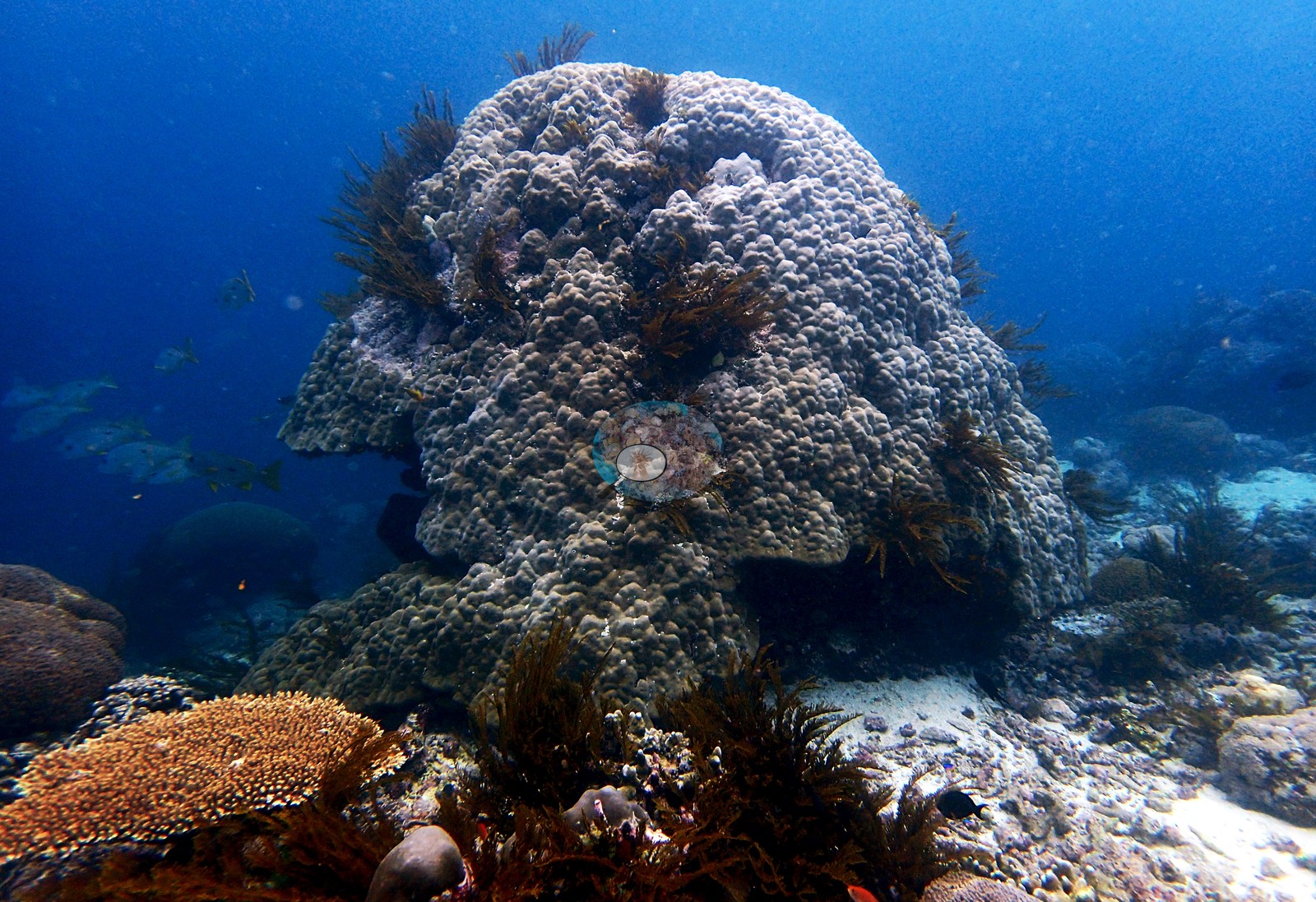 42
42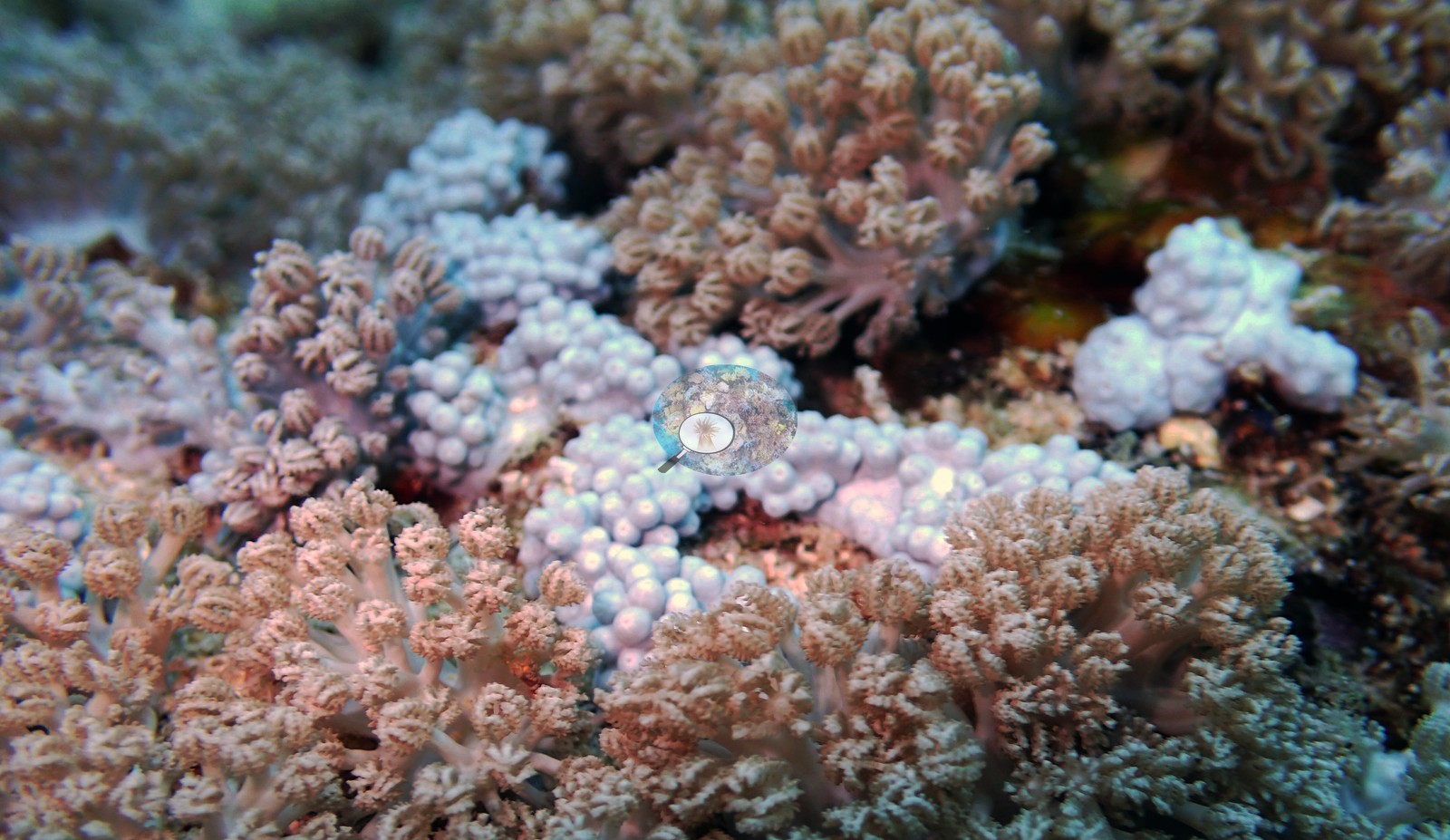 43
43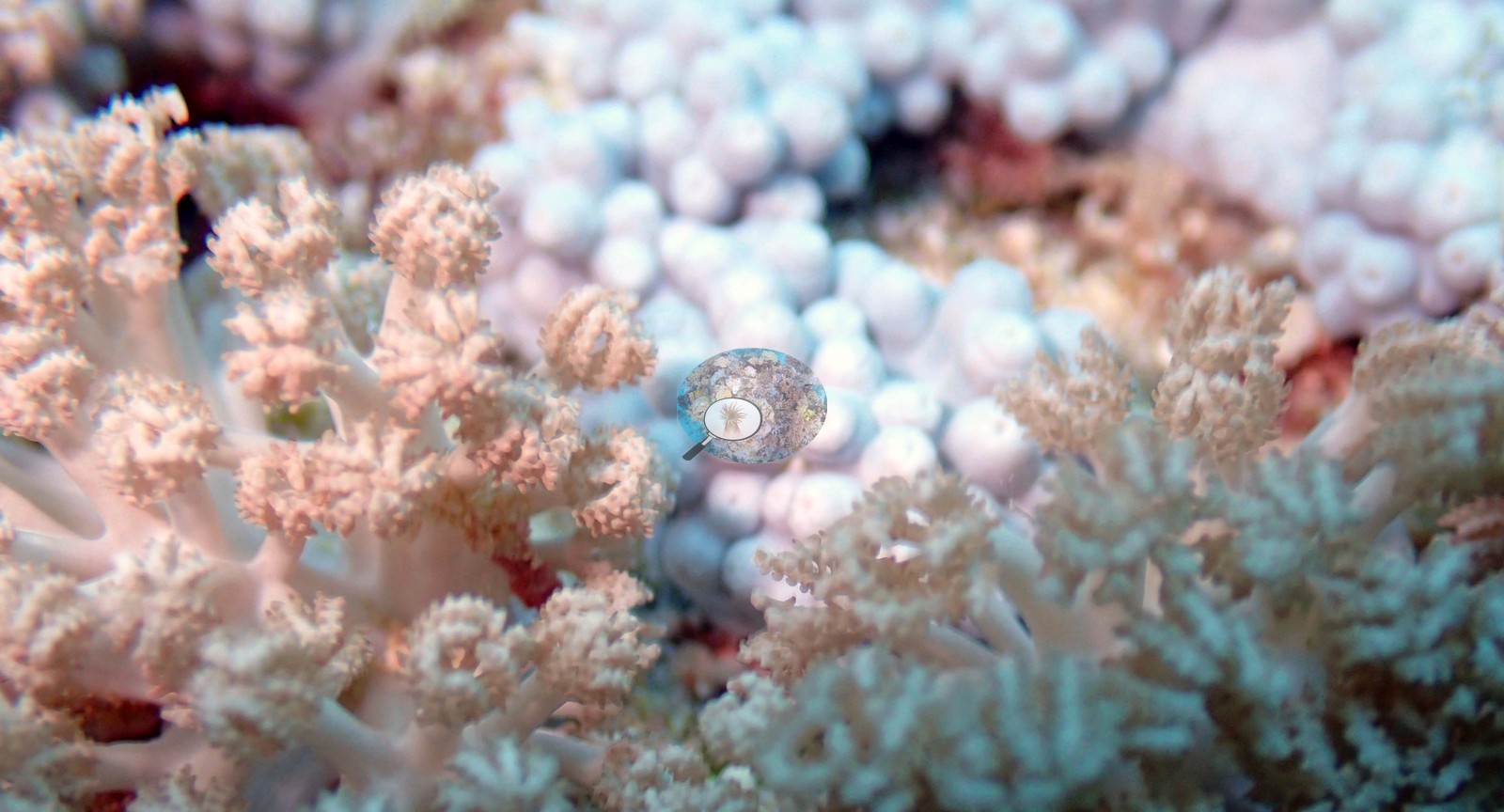 44
44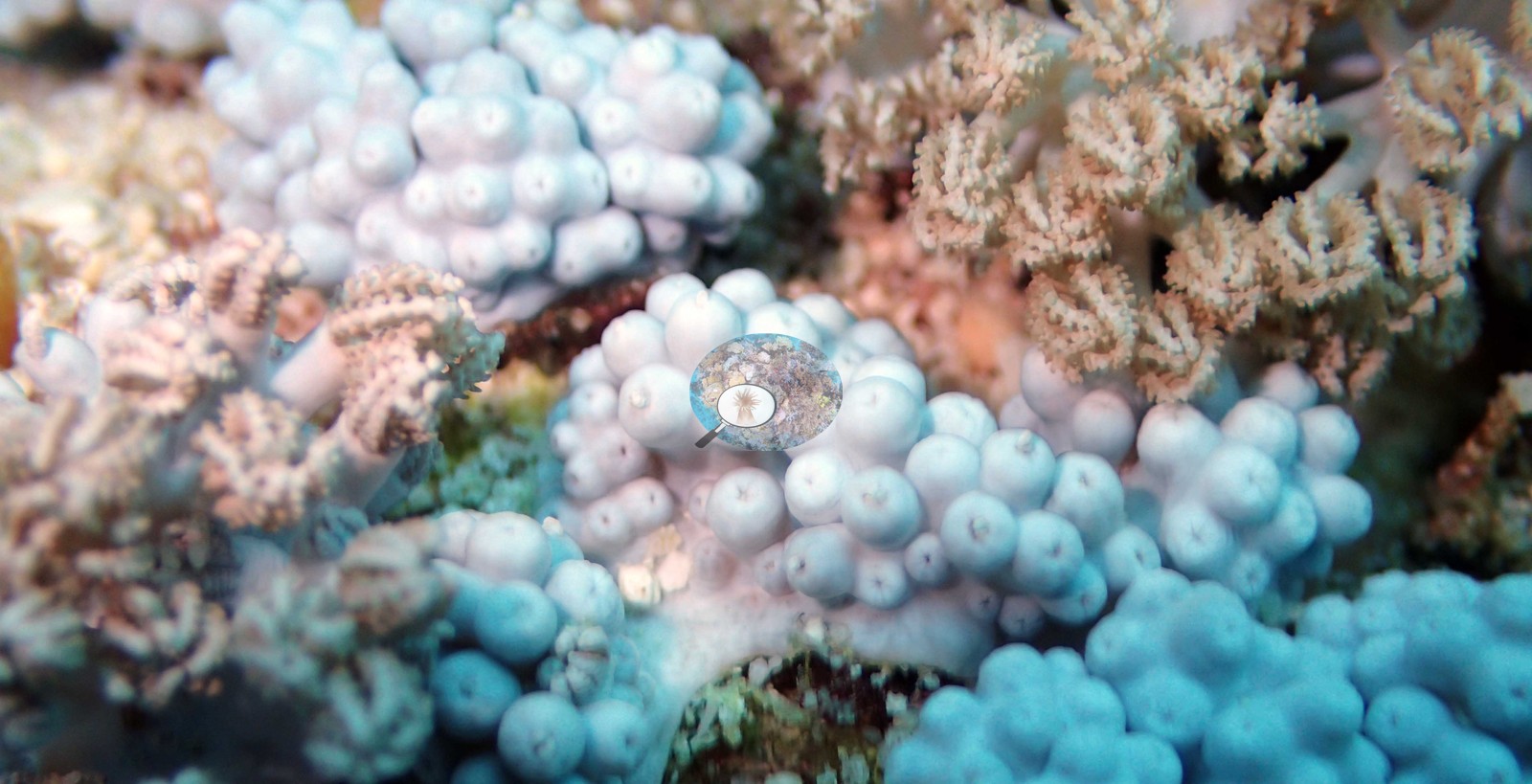 45
45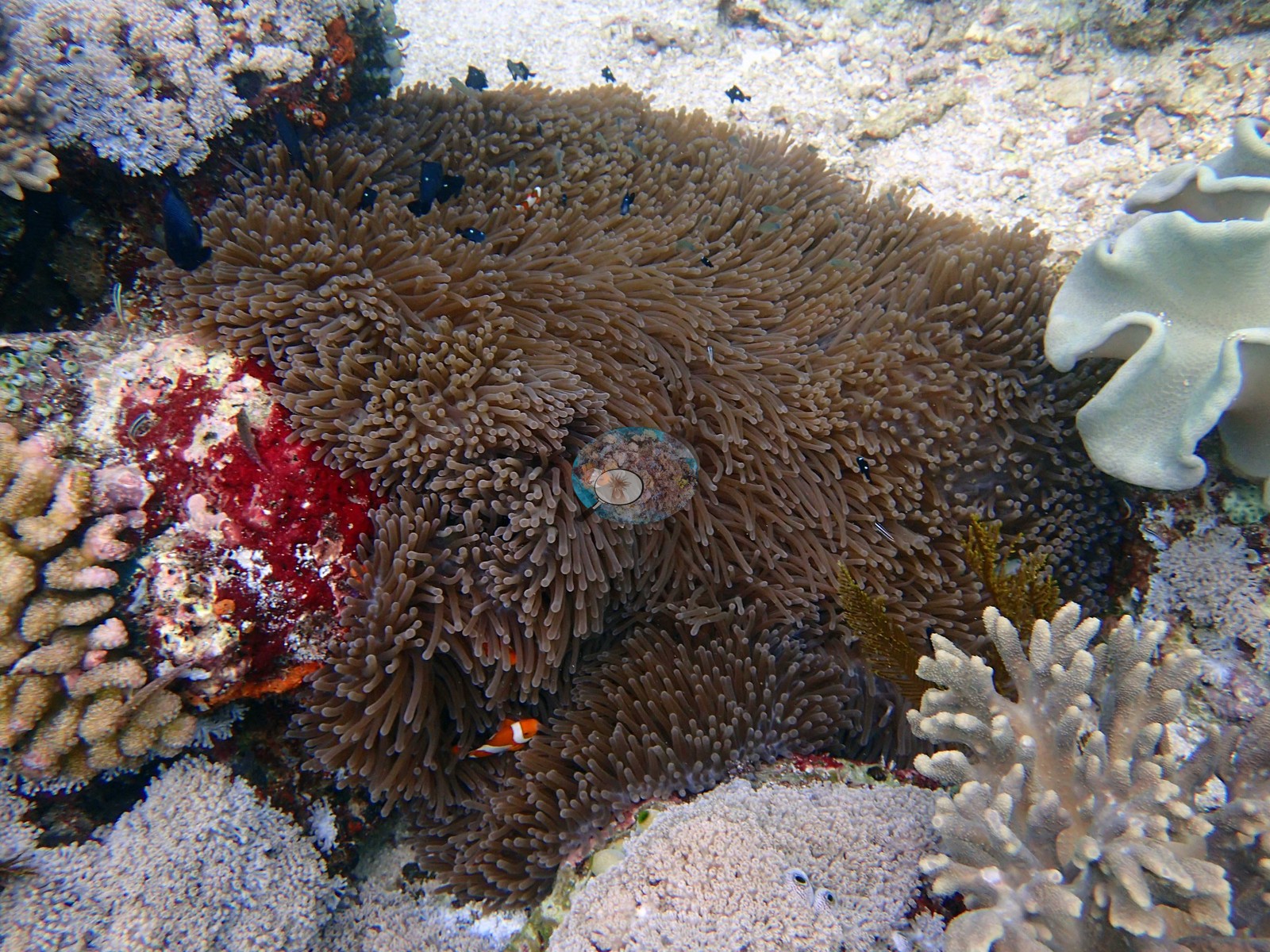 46
46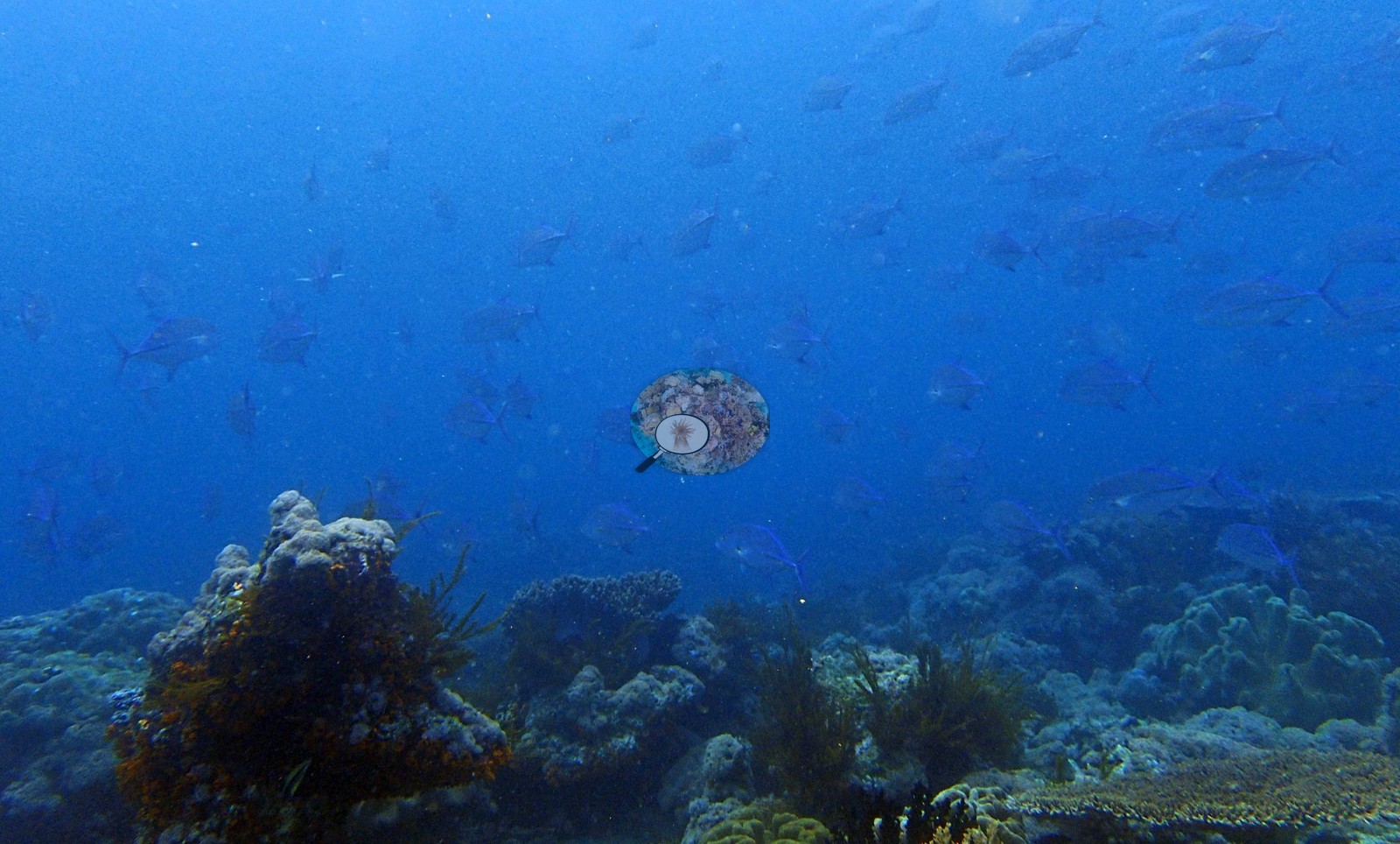 47
47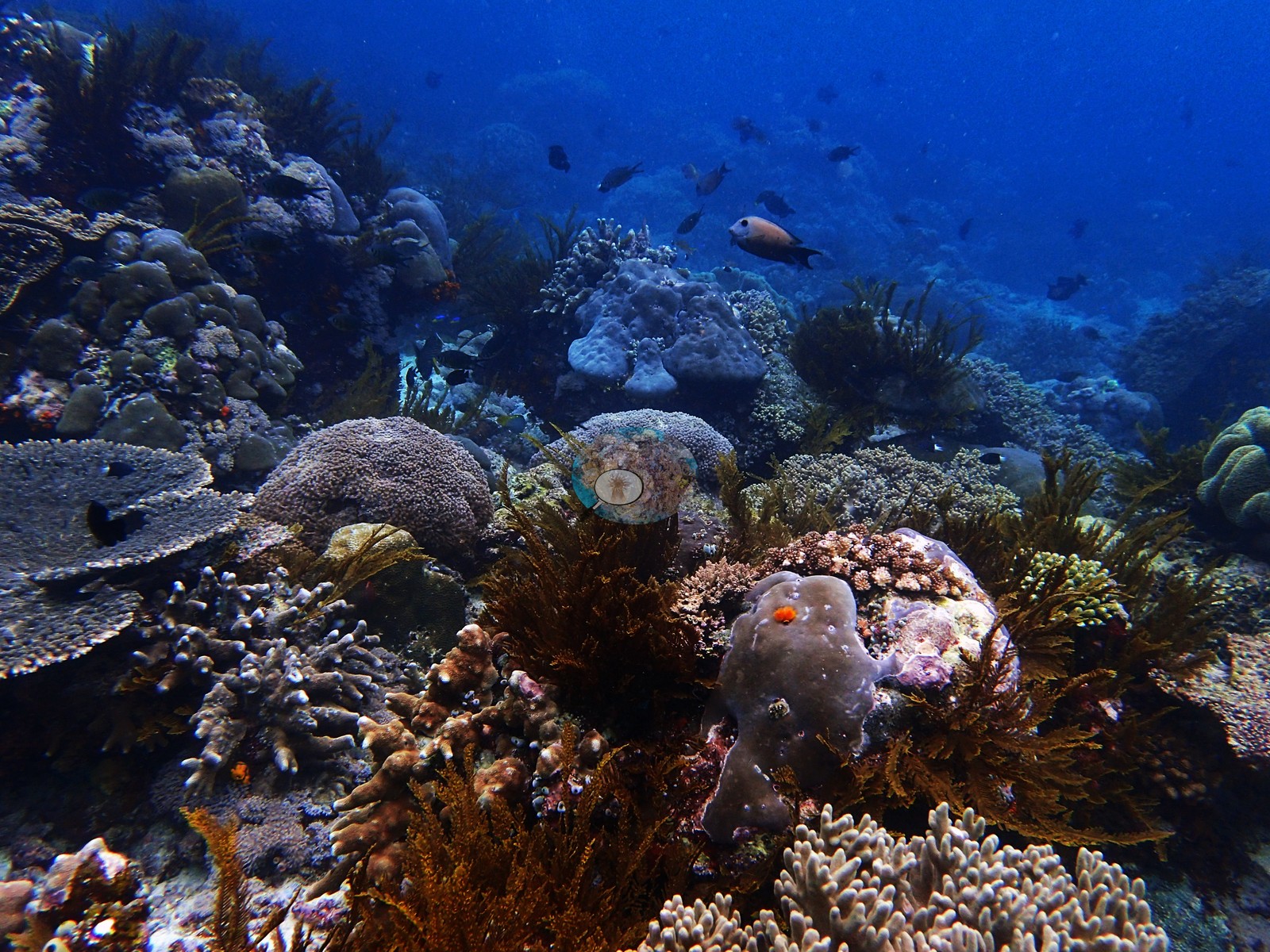 48
48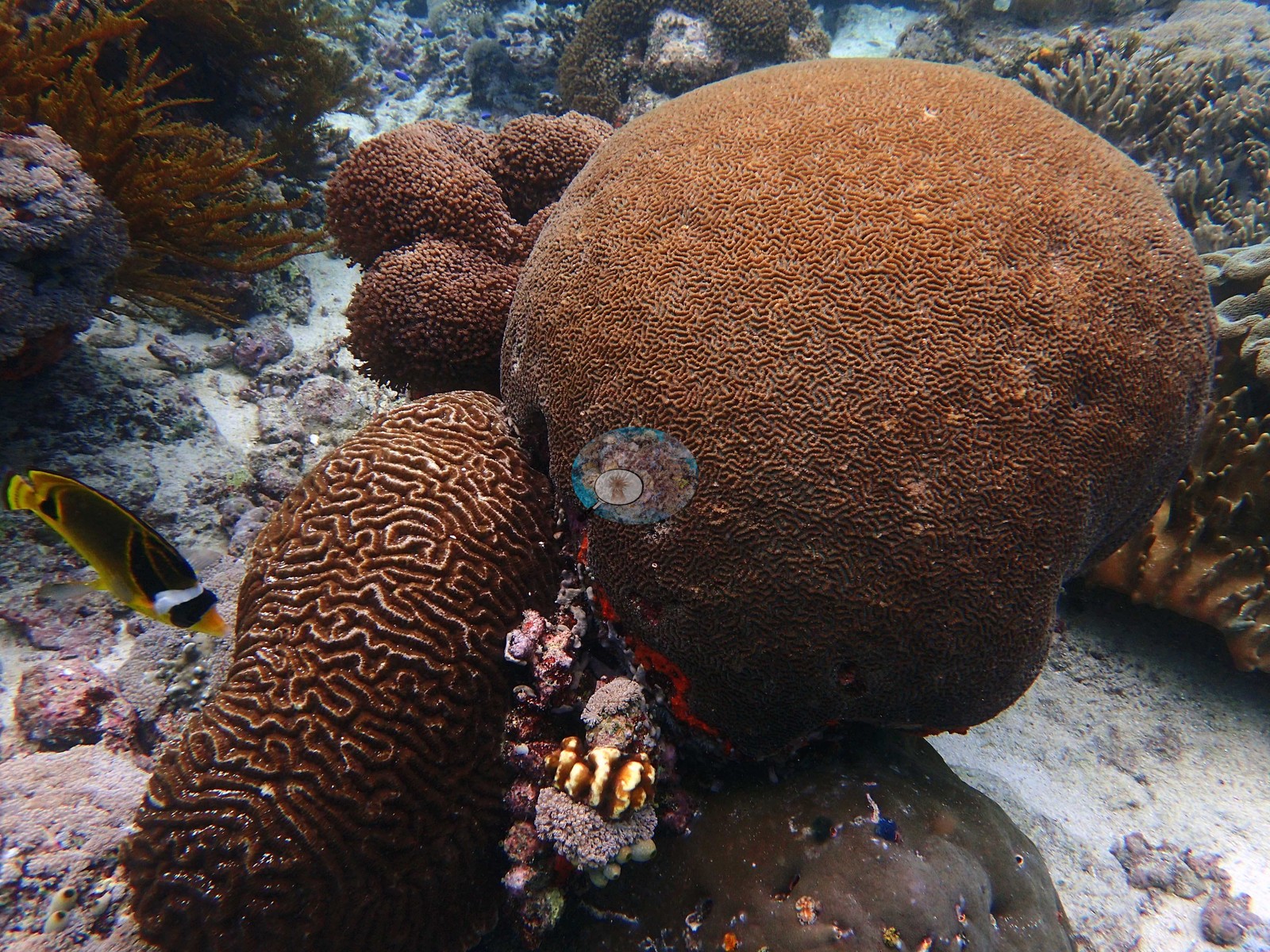 49
49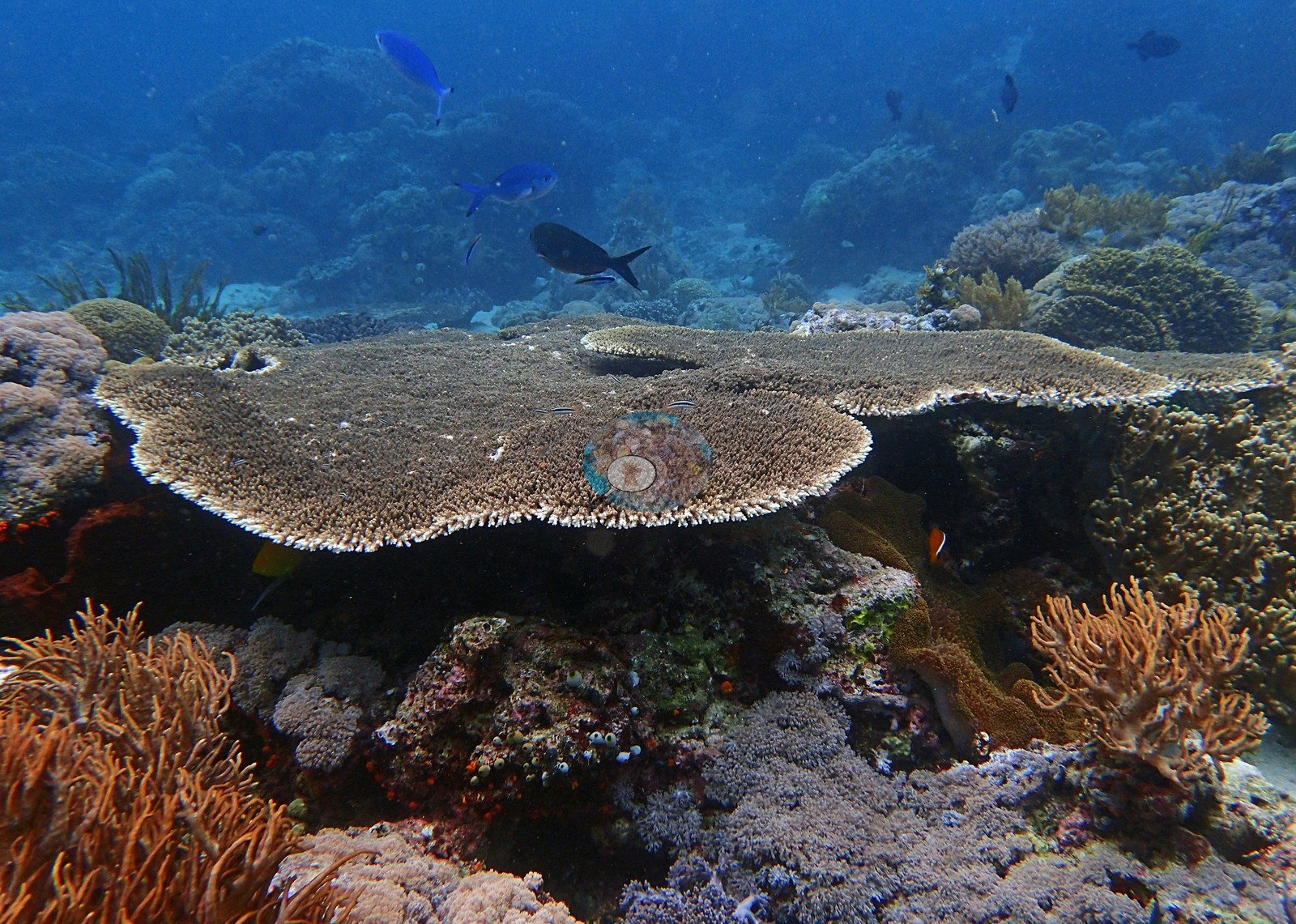 50
50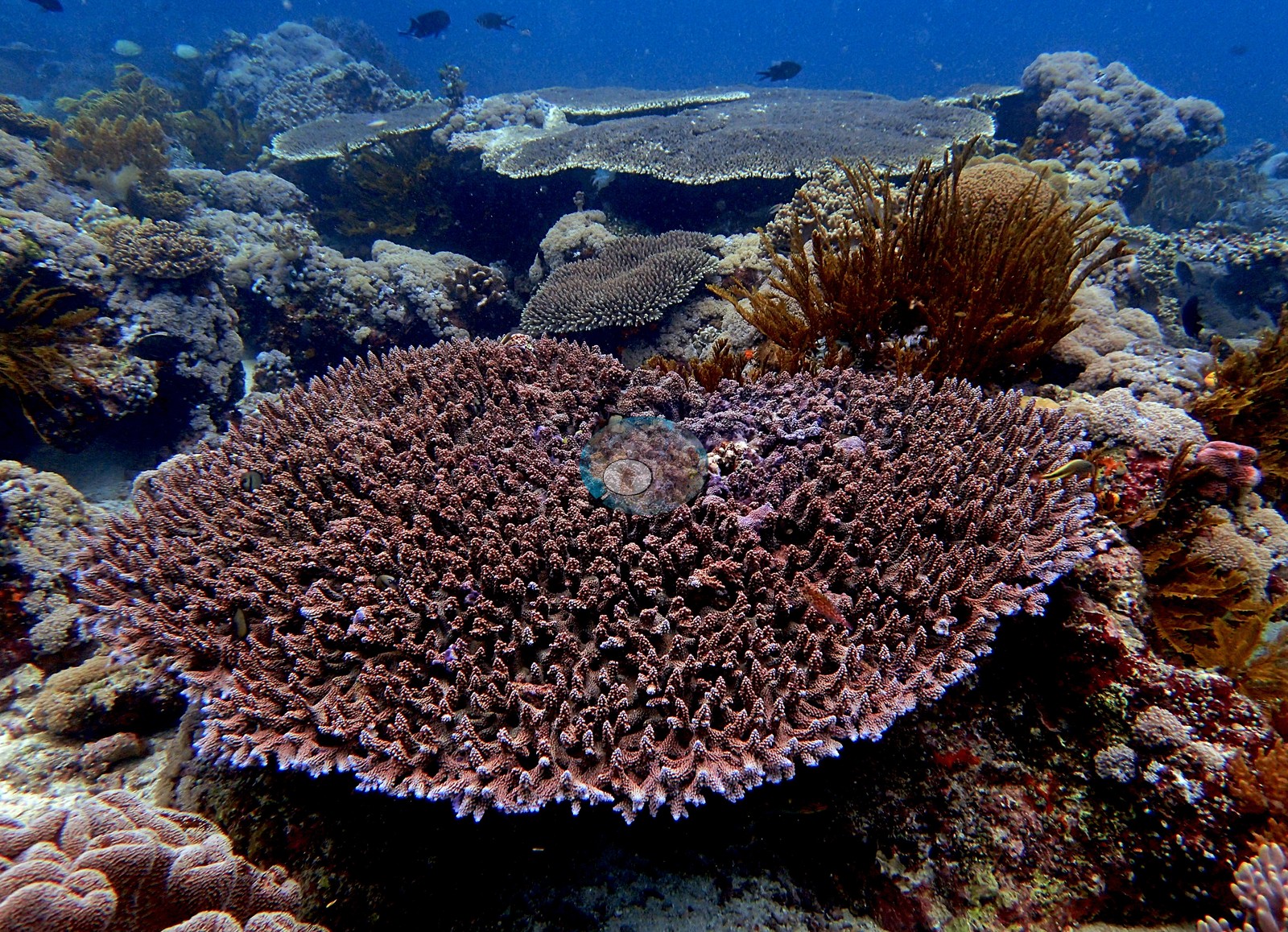 51
51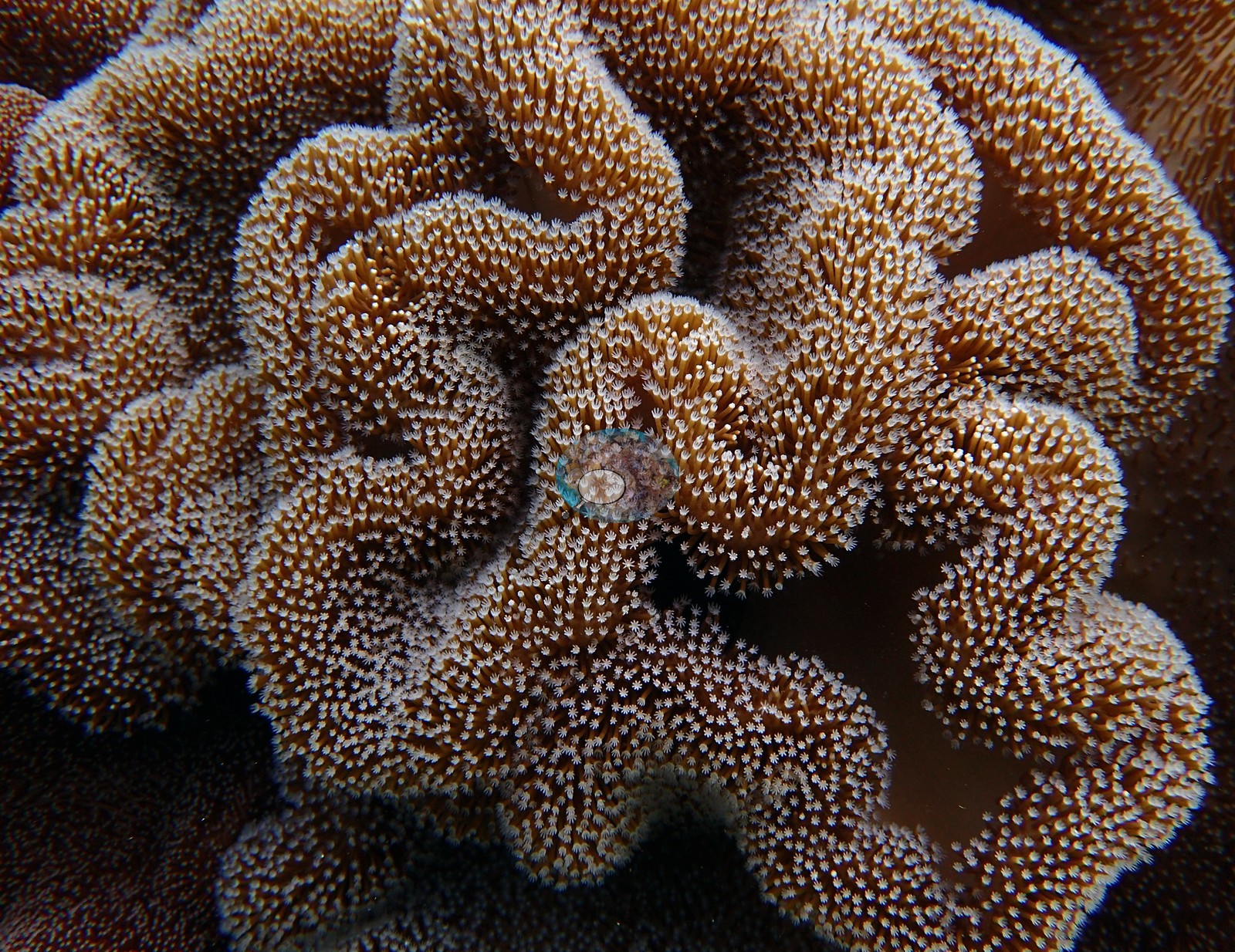 53
53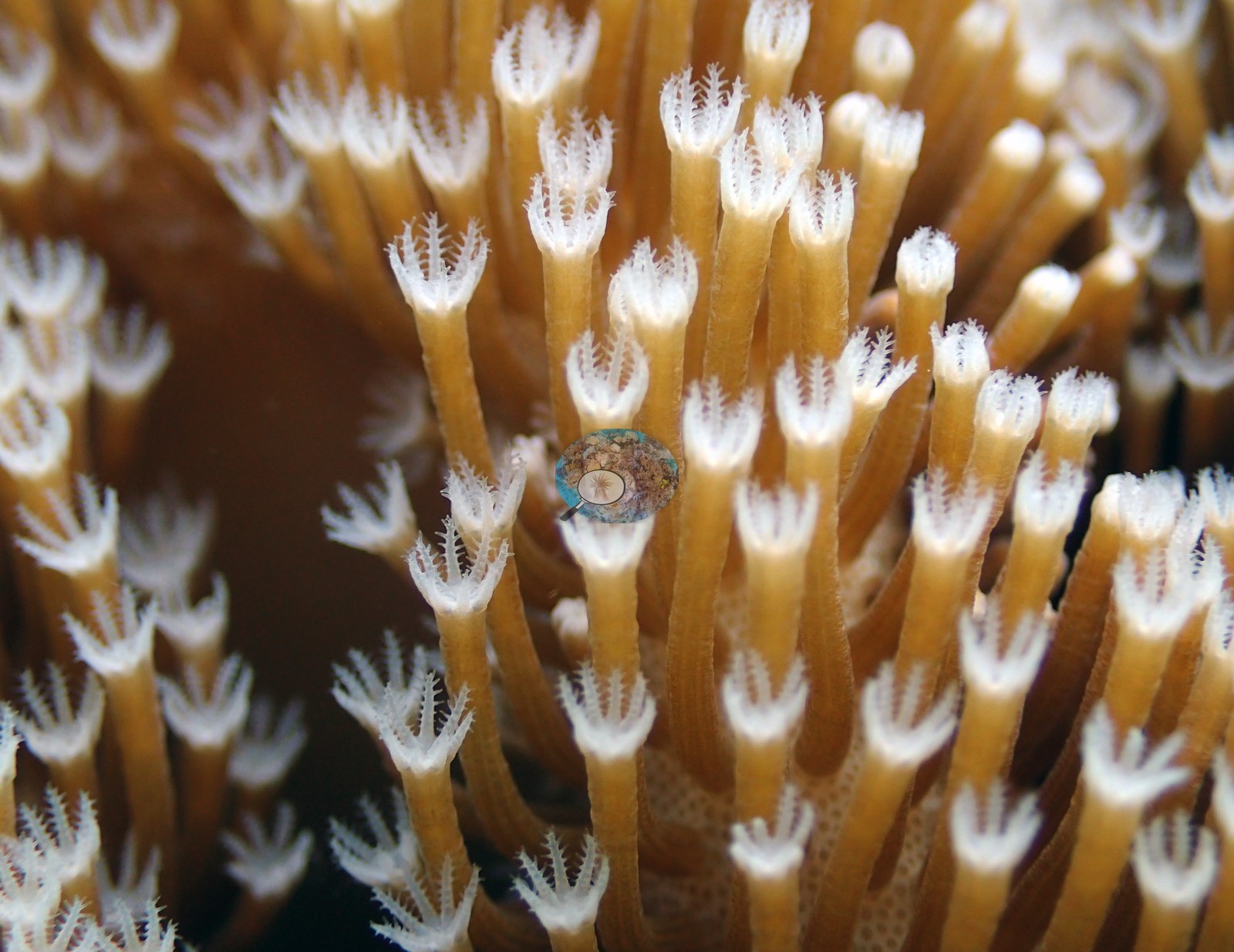 54
54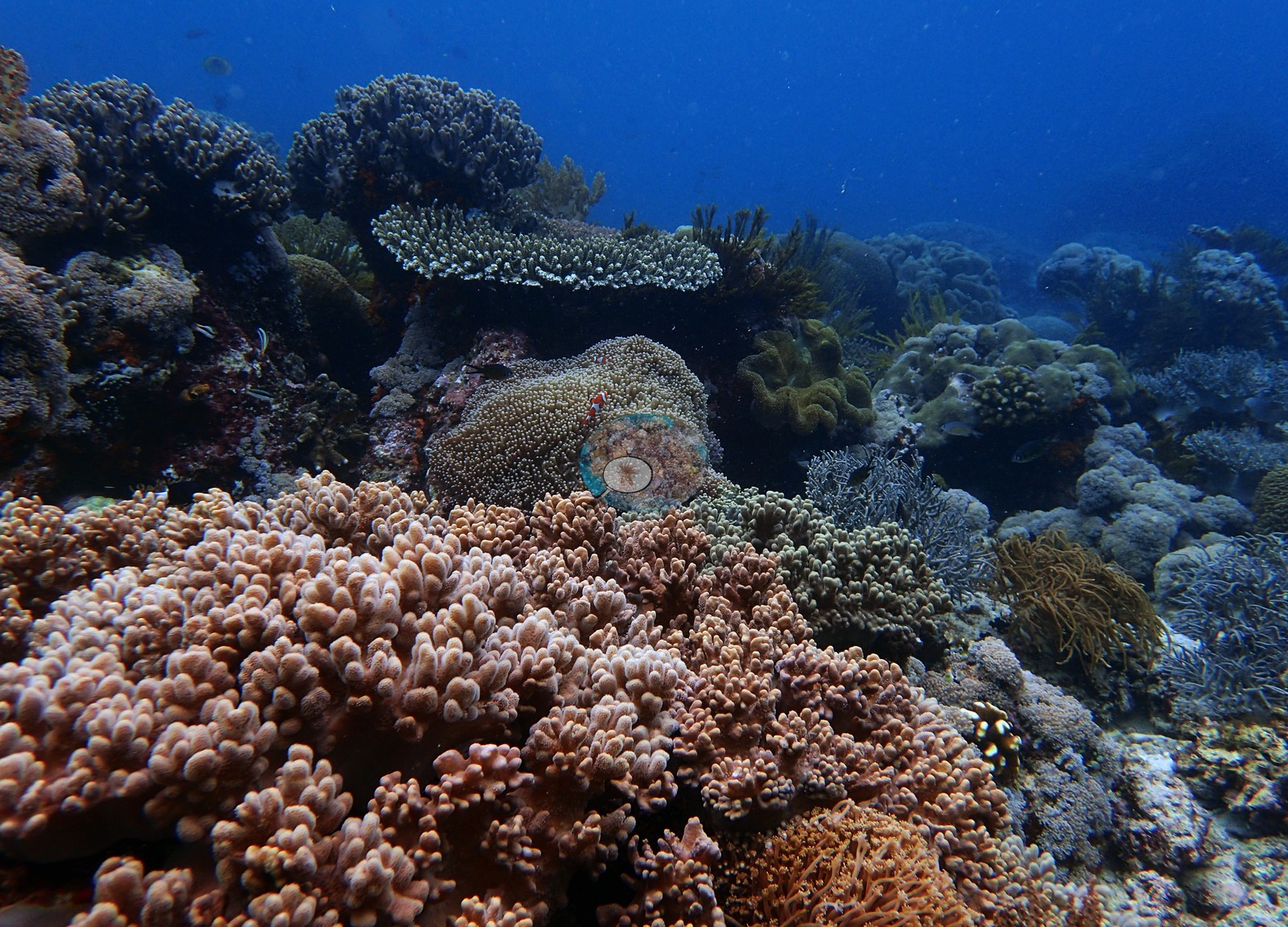 55
55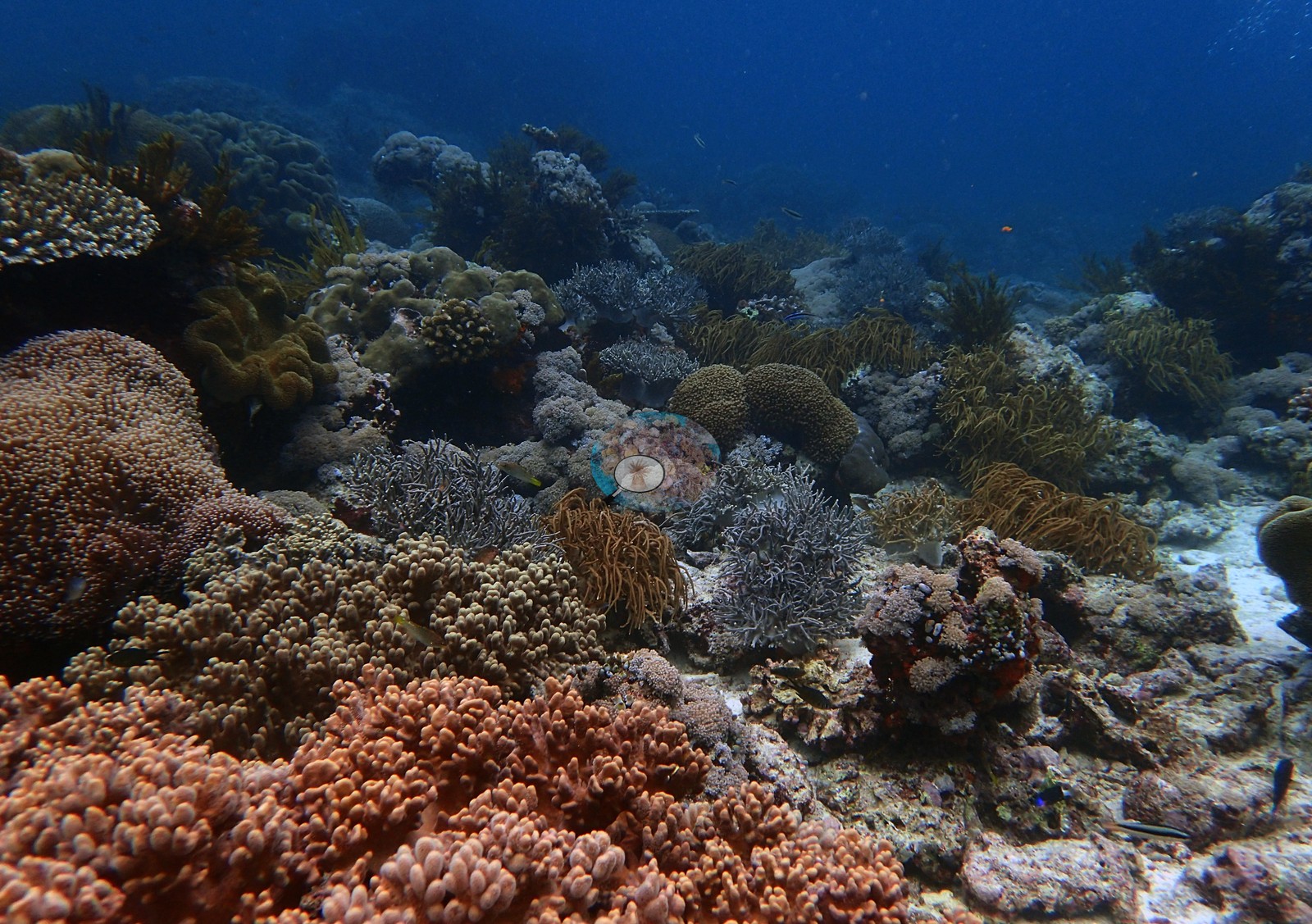 56
56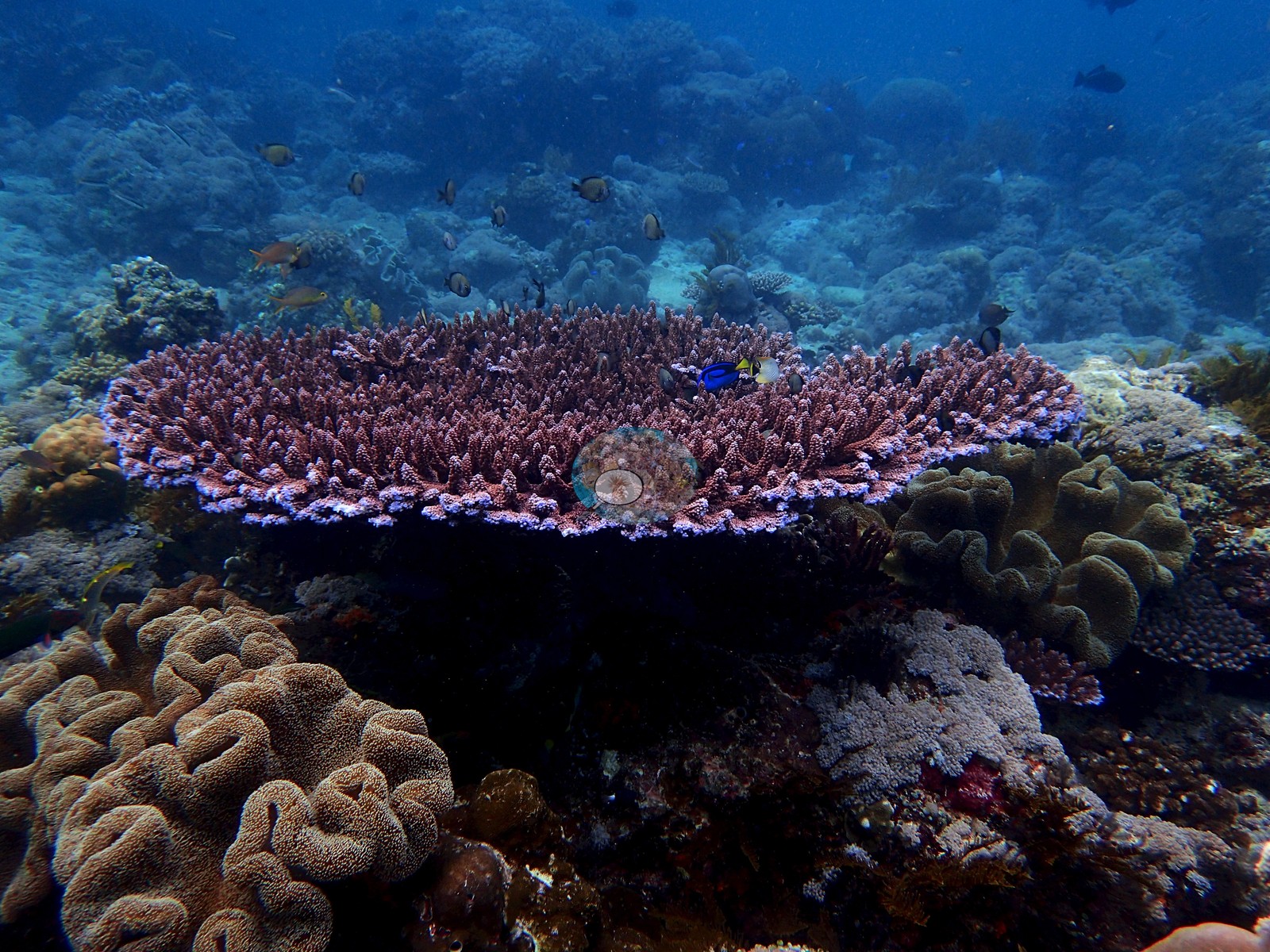 57
57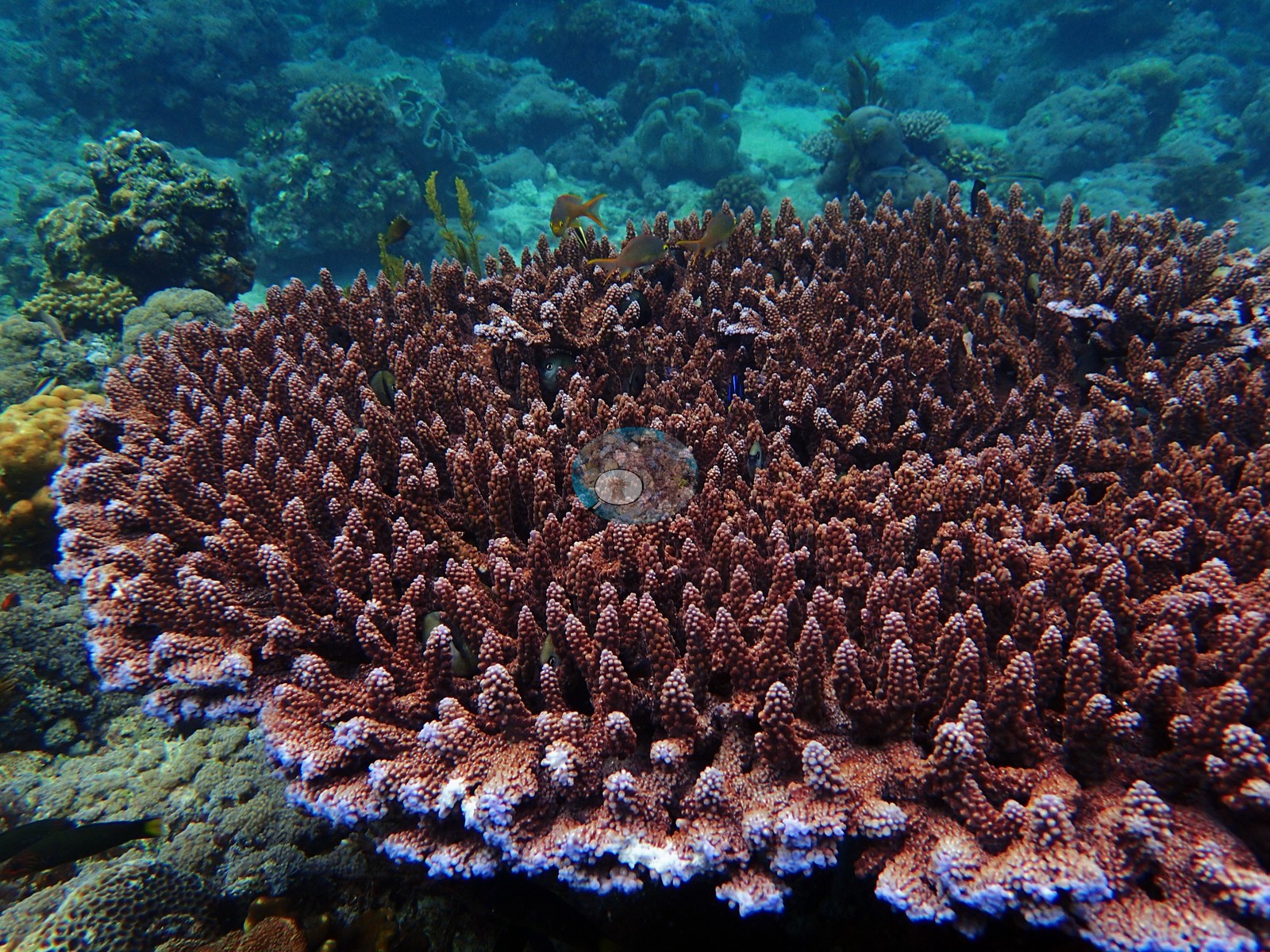 58
58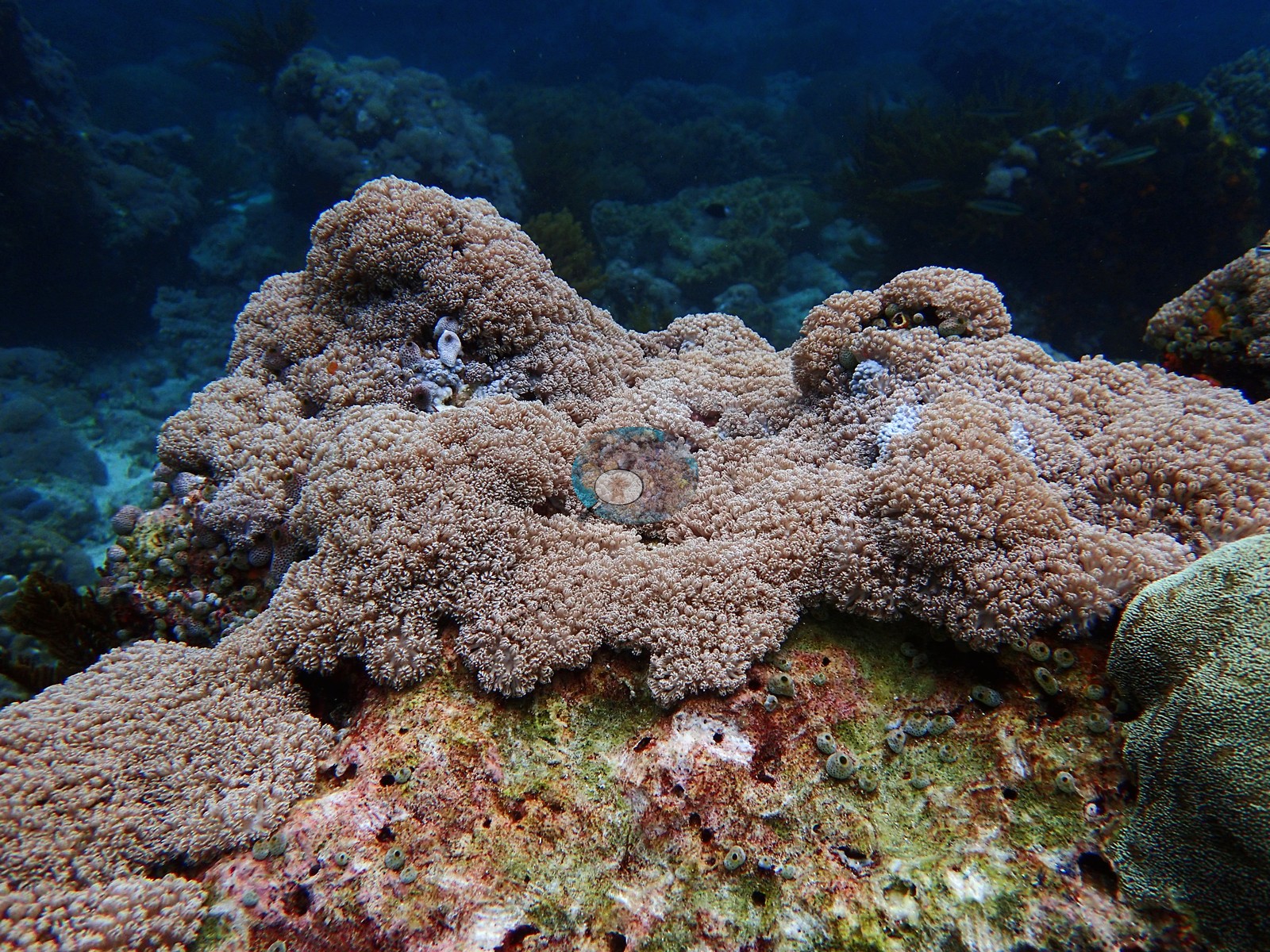 59
59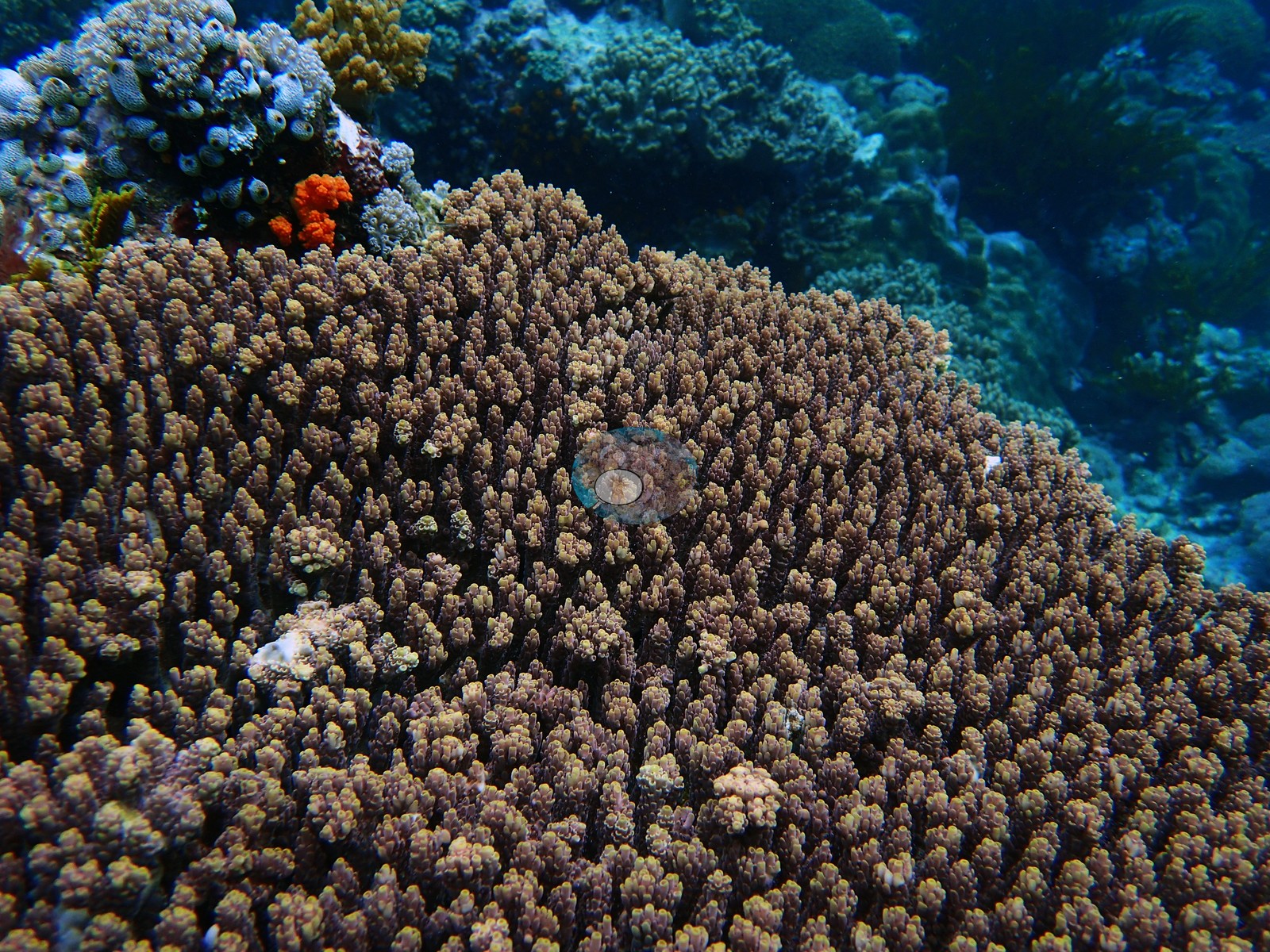 60
60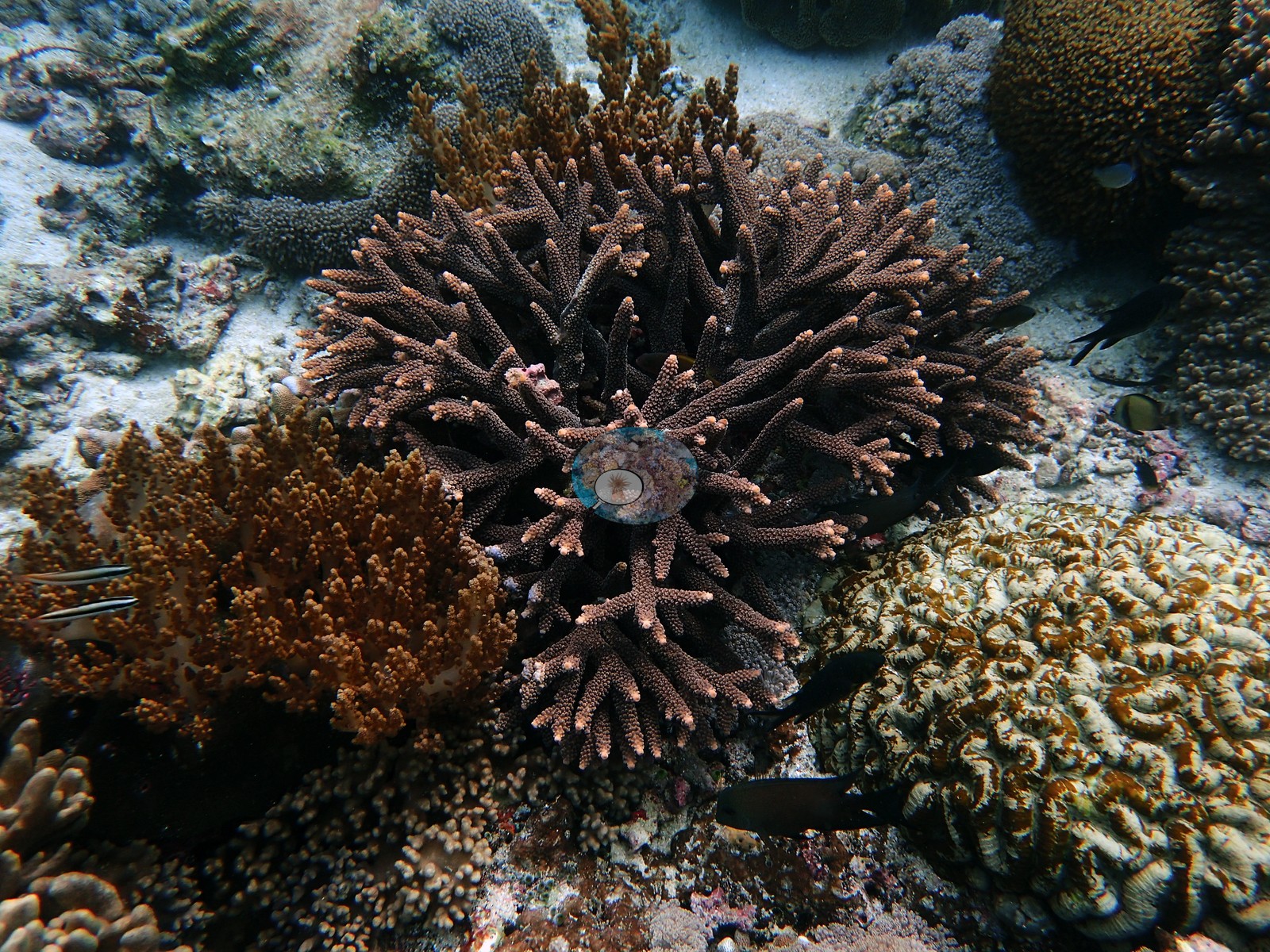 61
61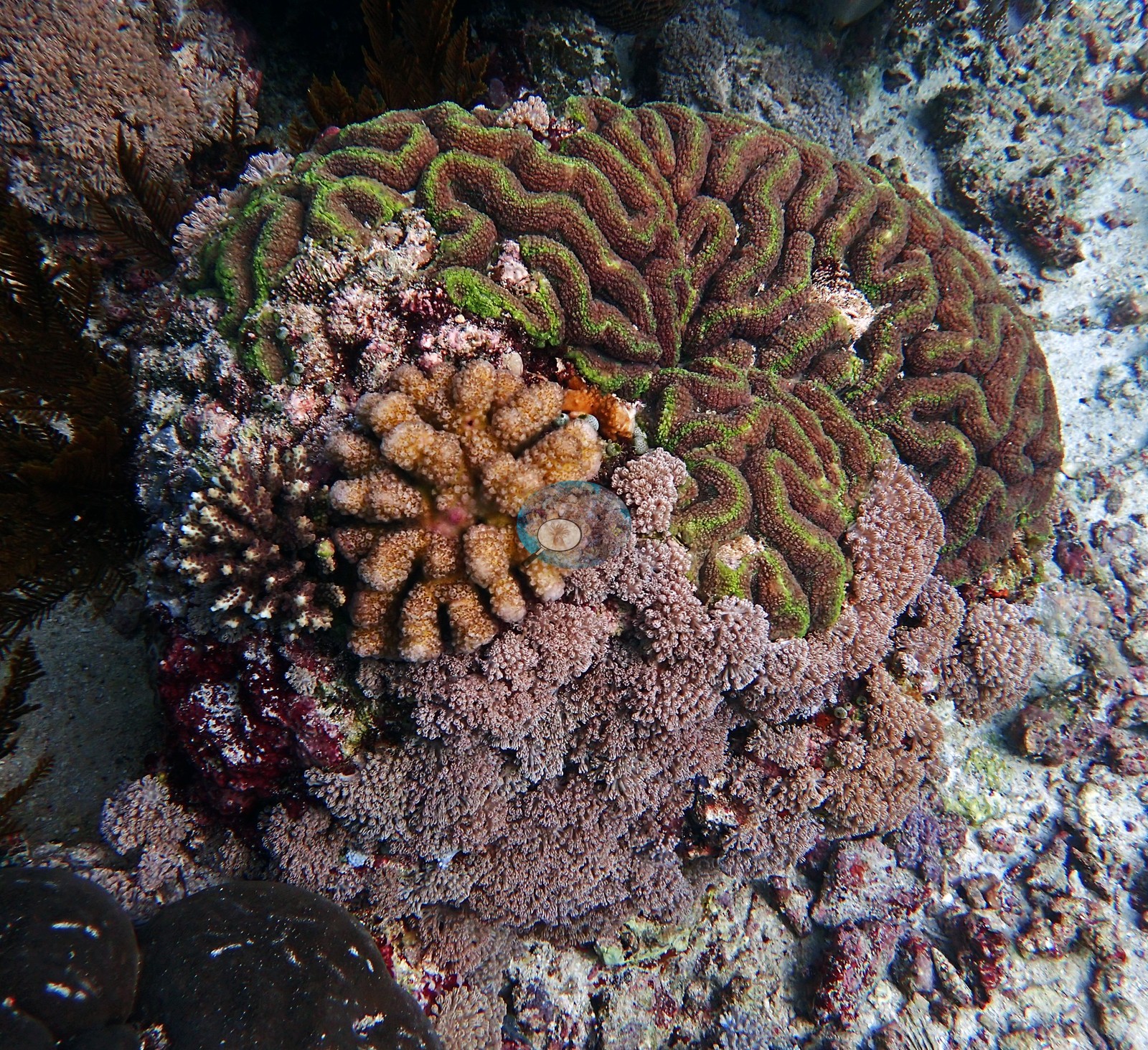 62
62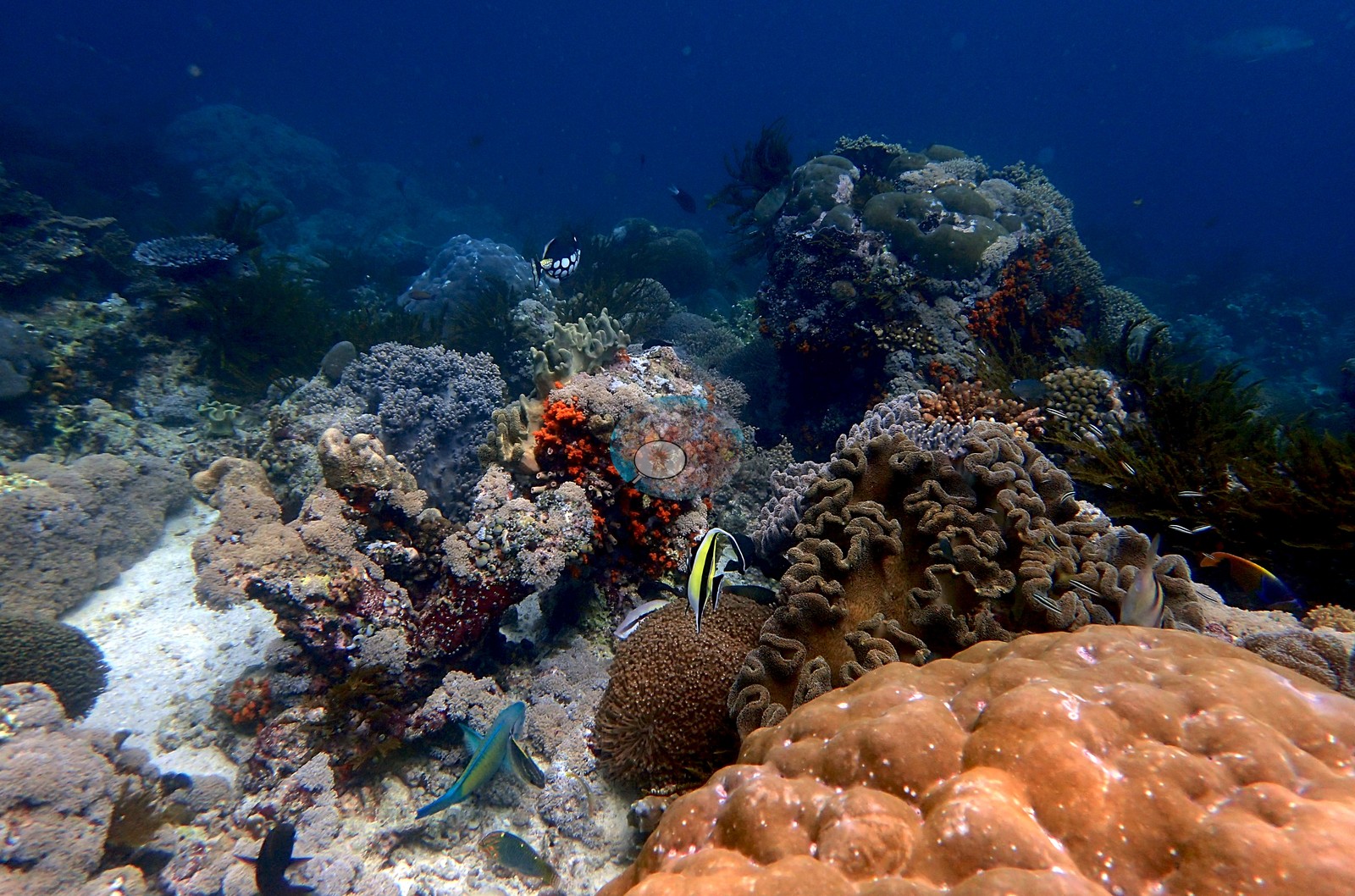 63
63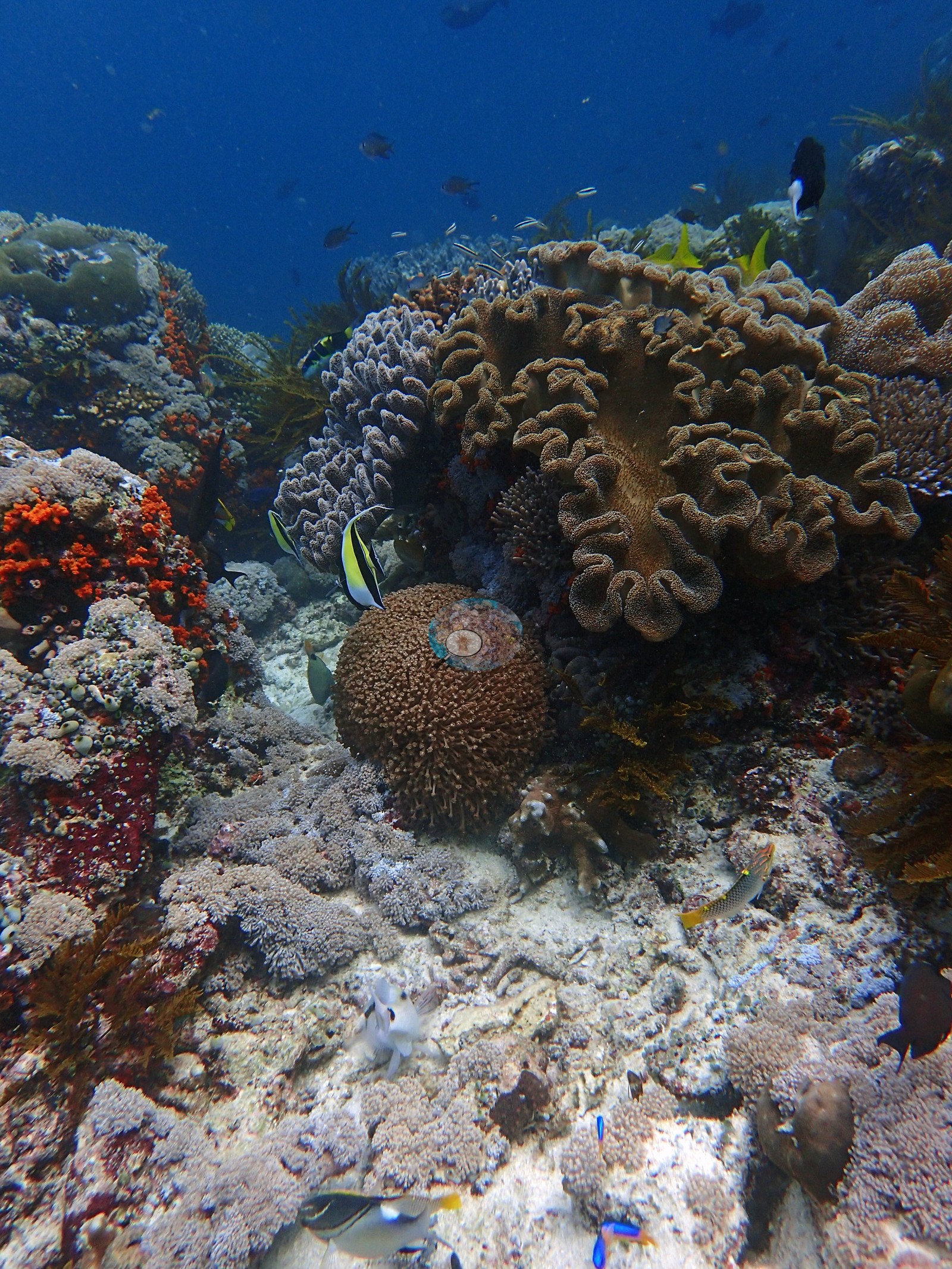 64
64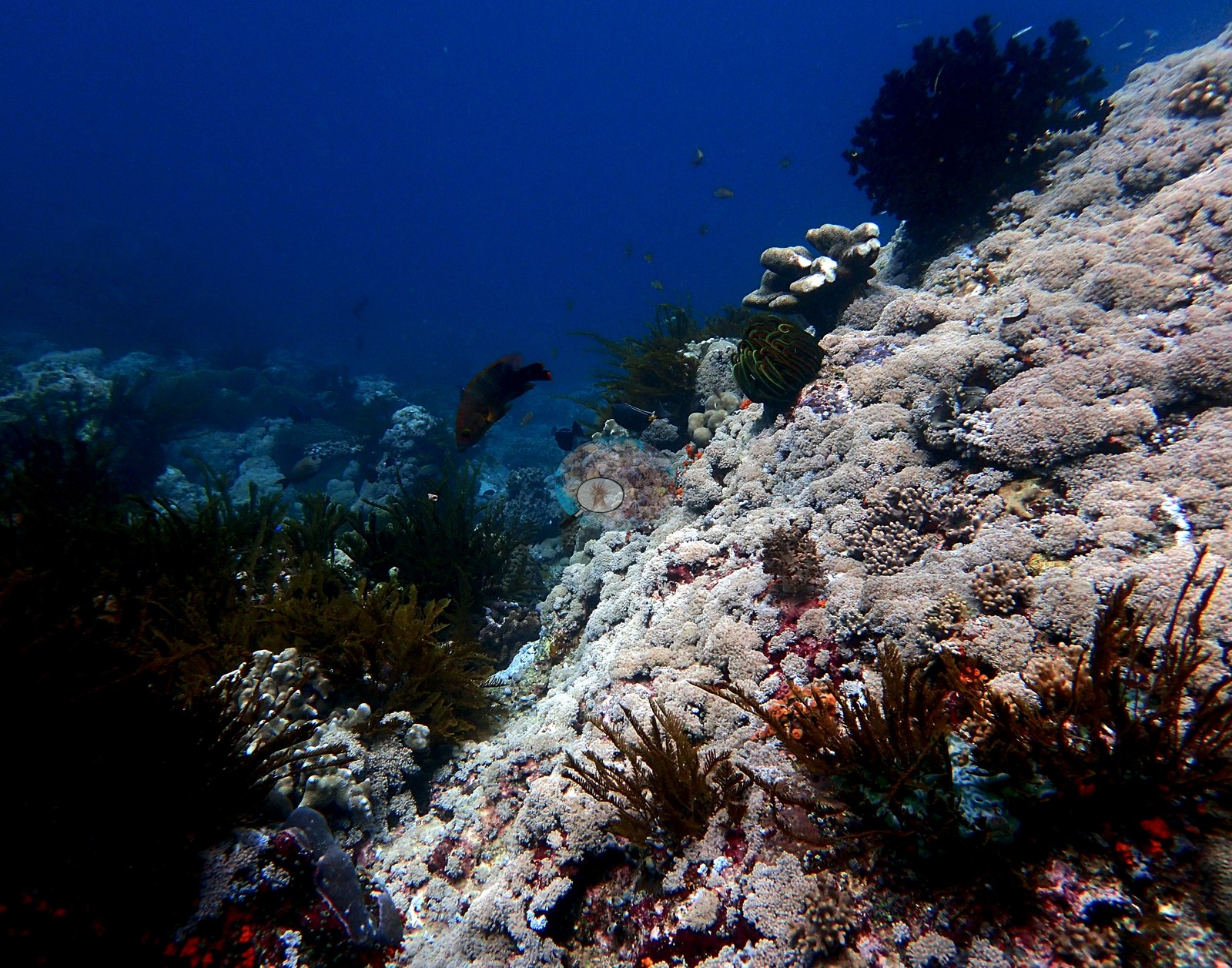 65
65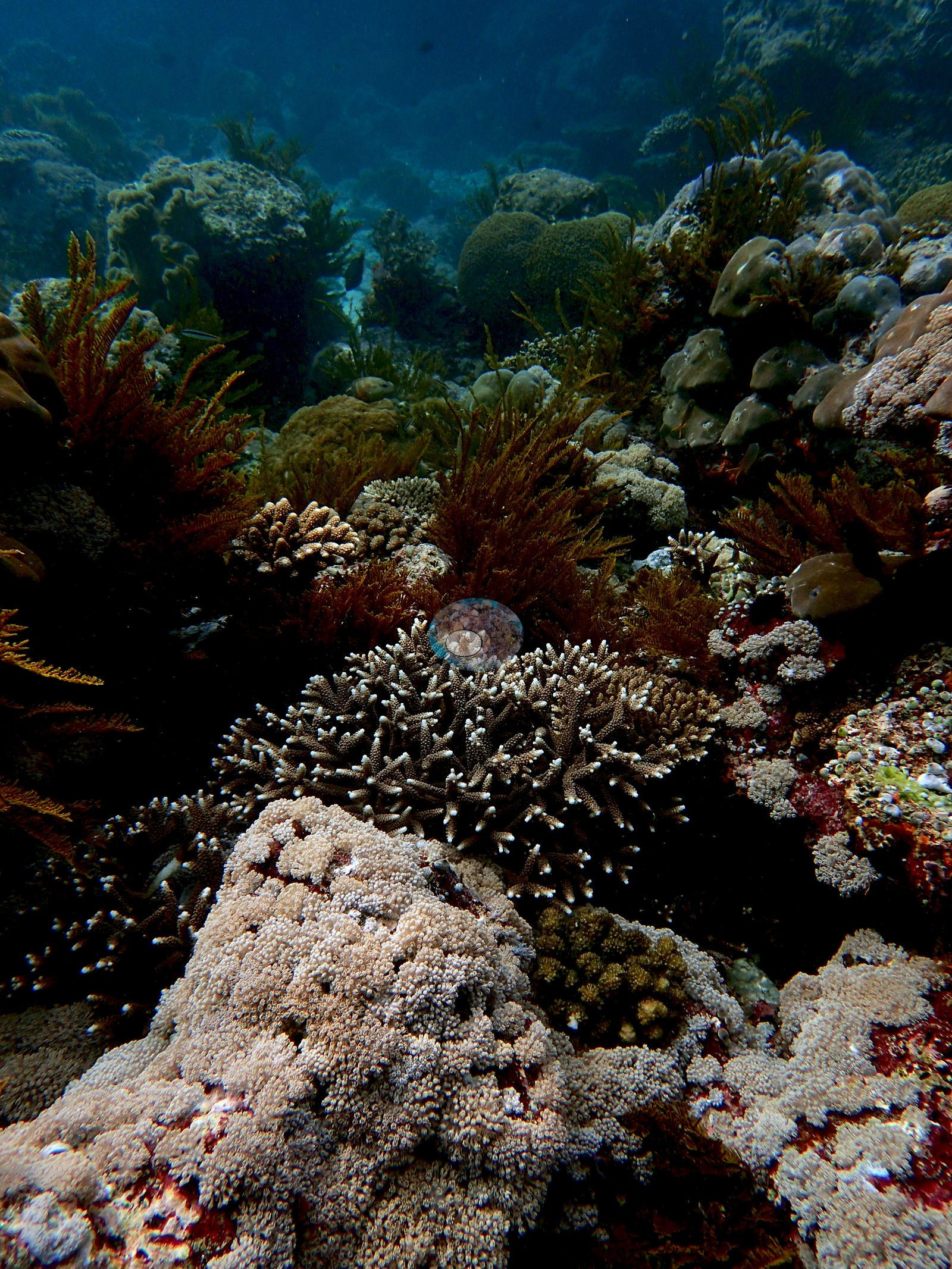 66
66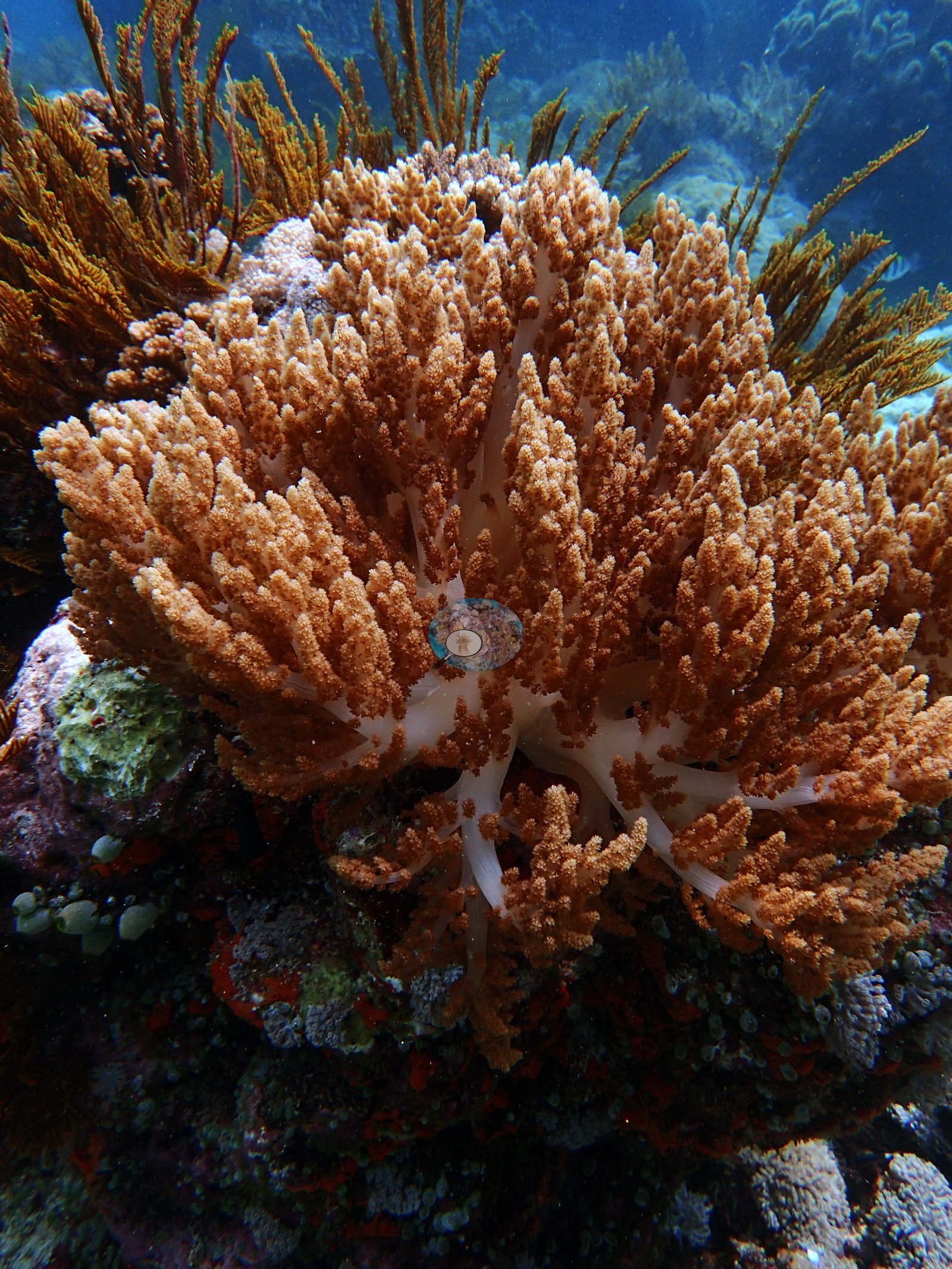 67
67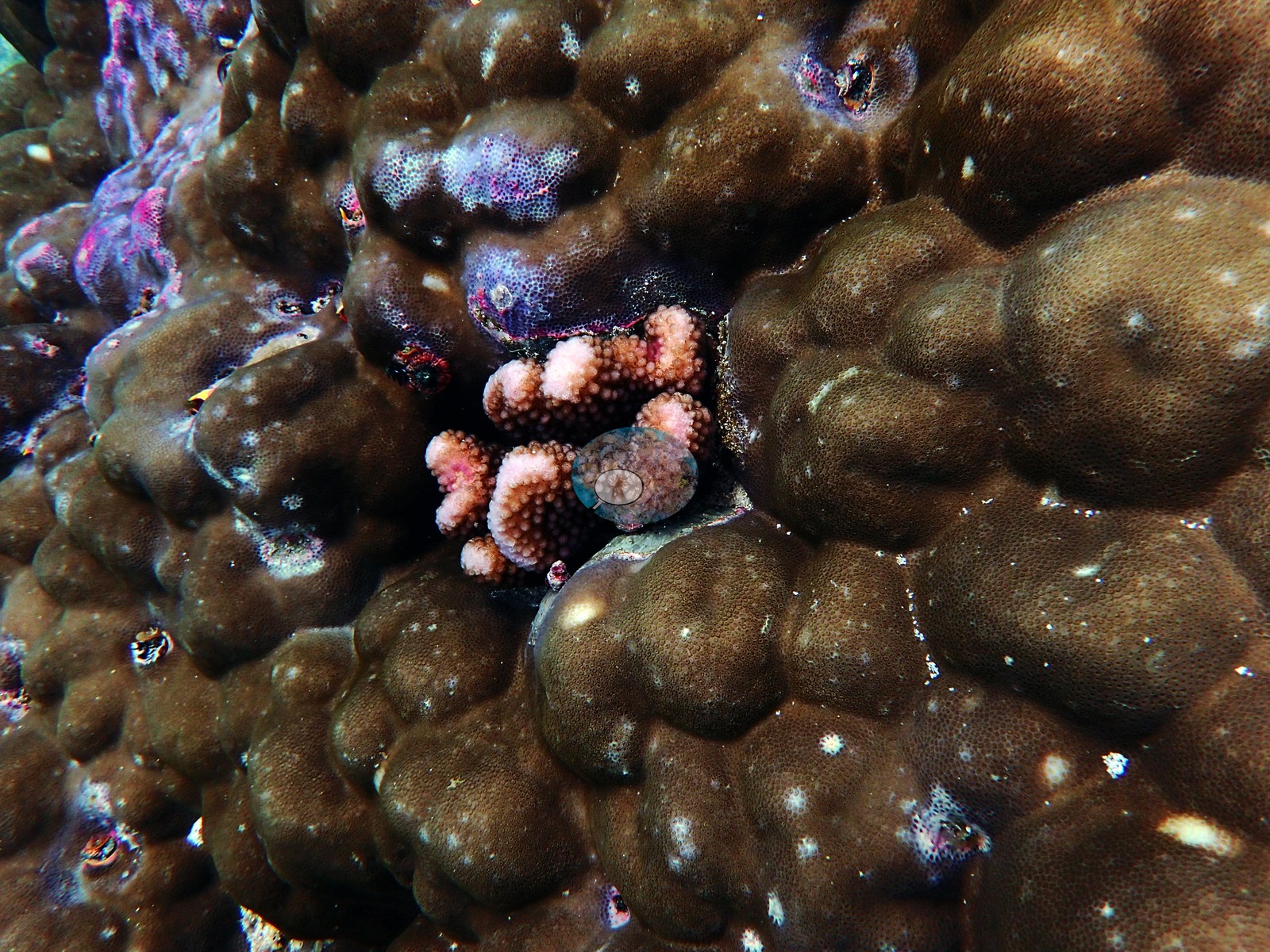 68
68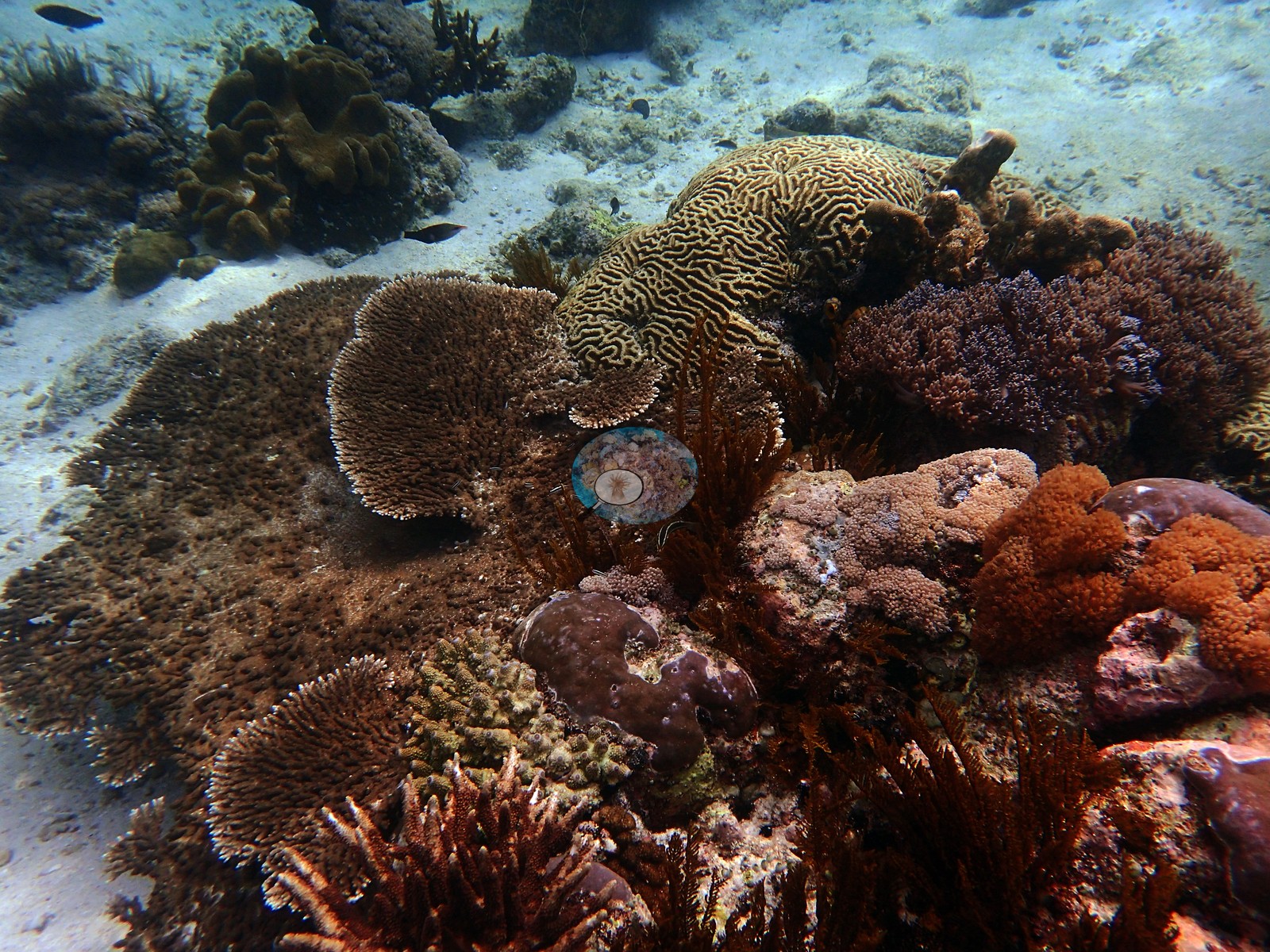 70
70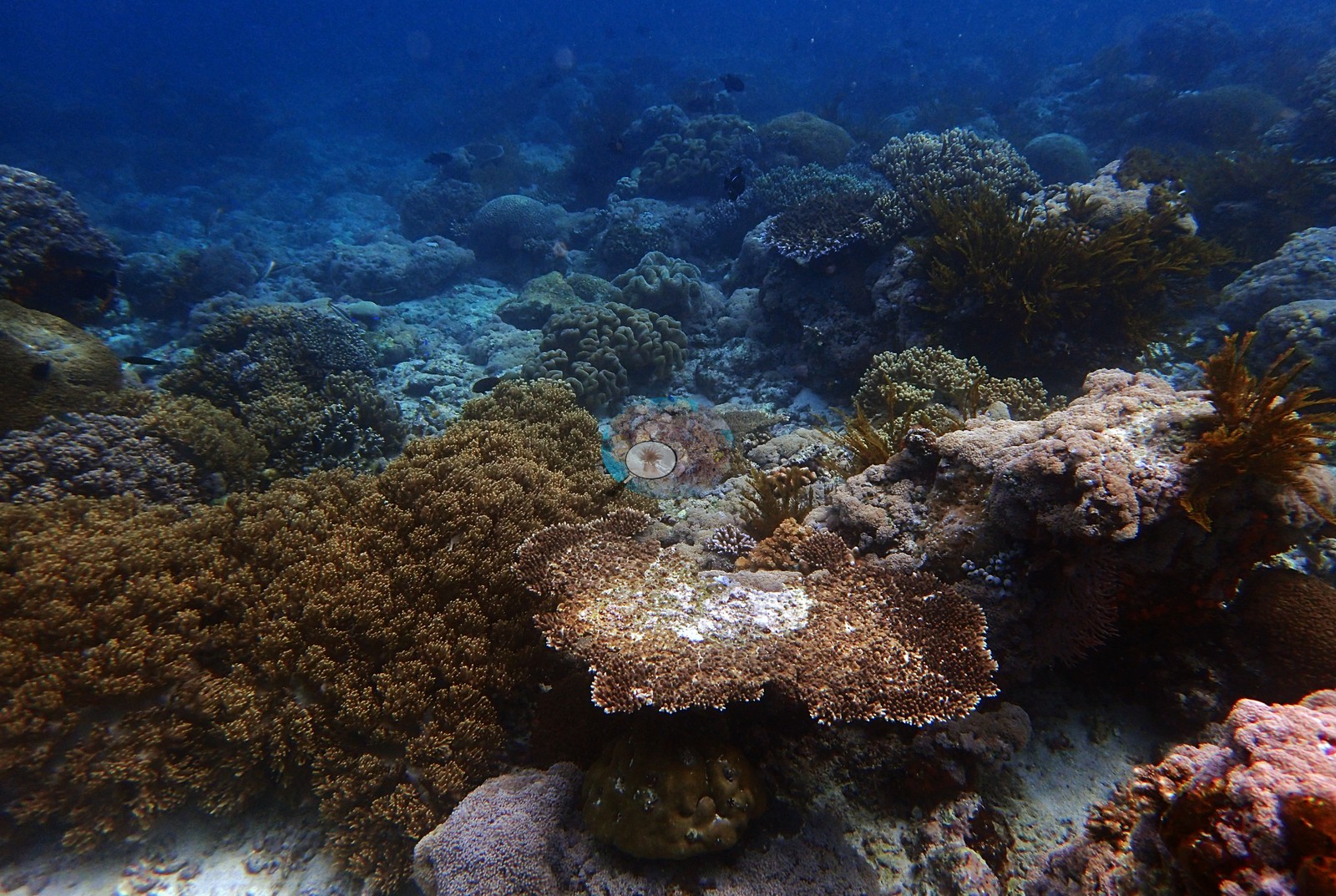 71
71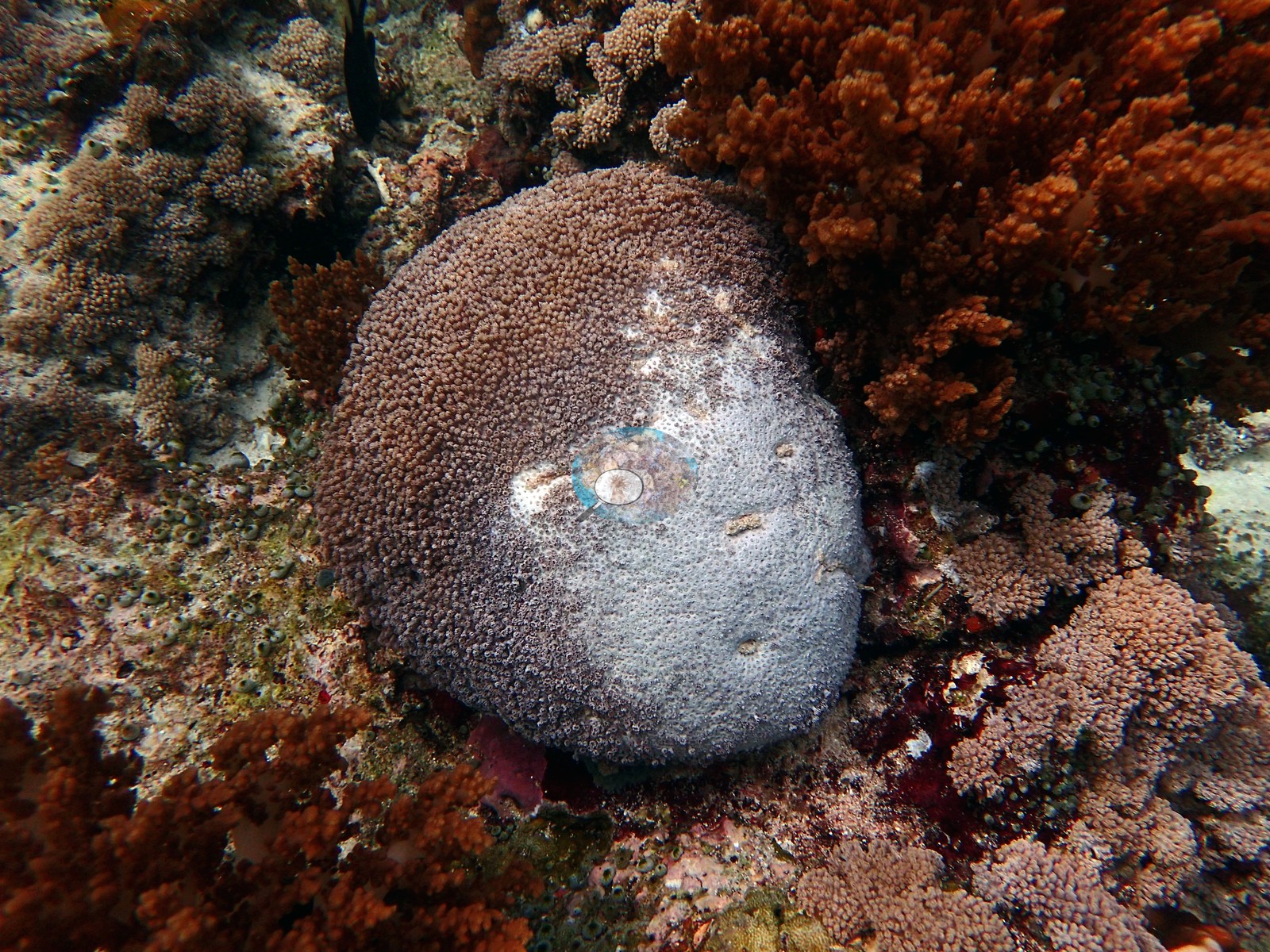 72
72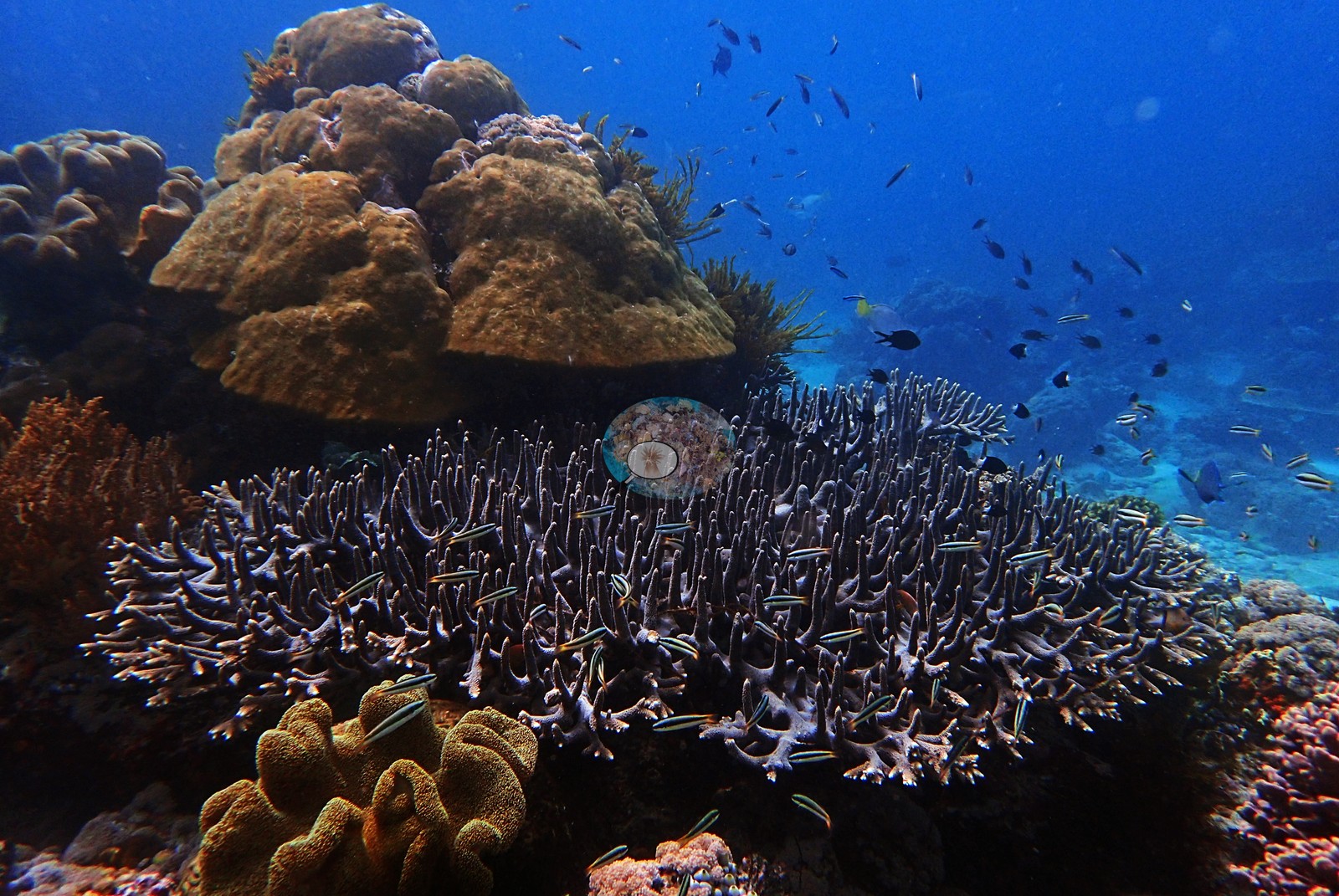 73
73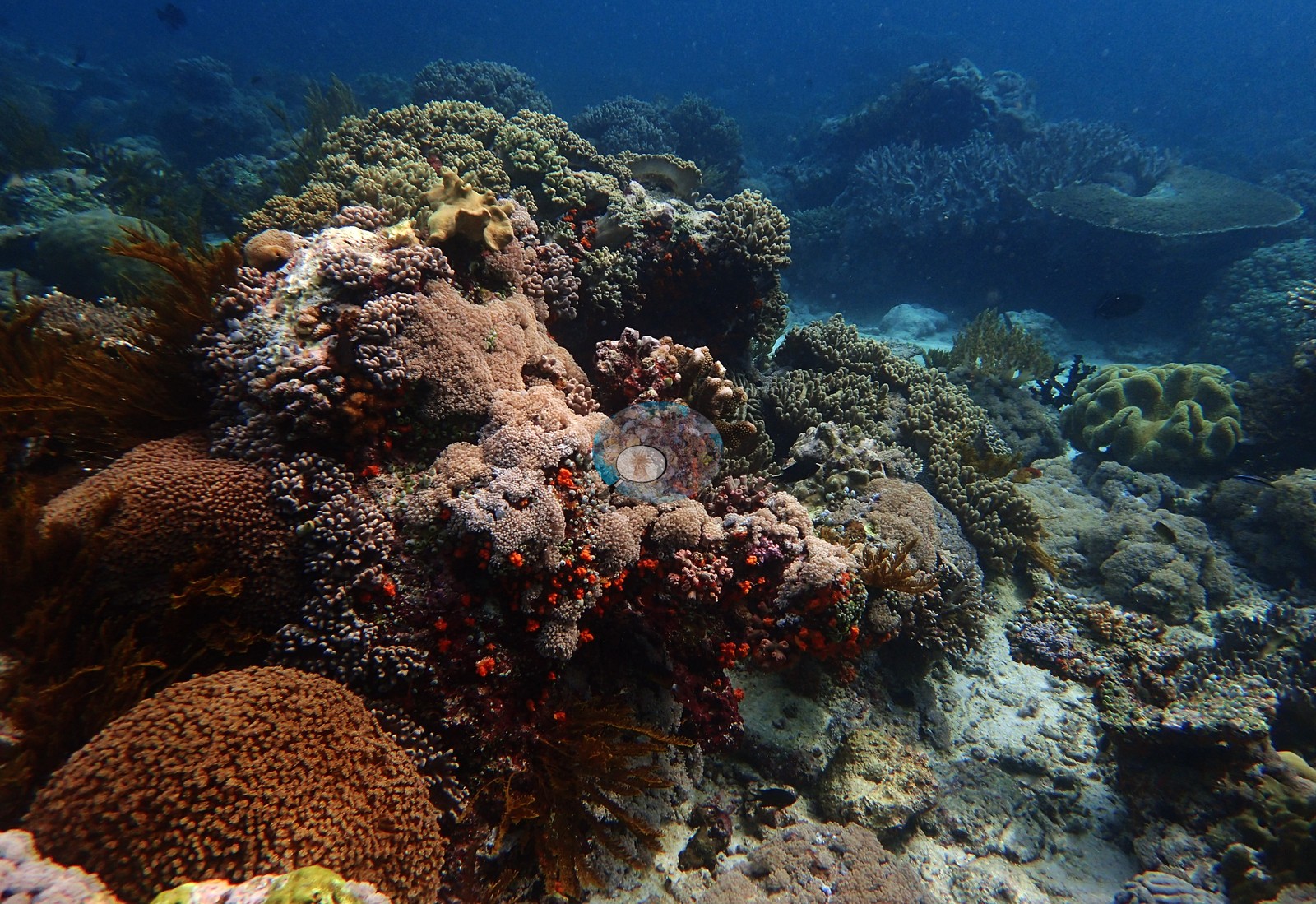 74
74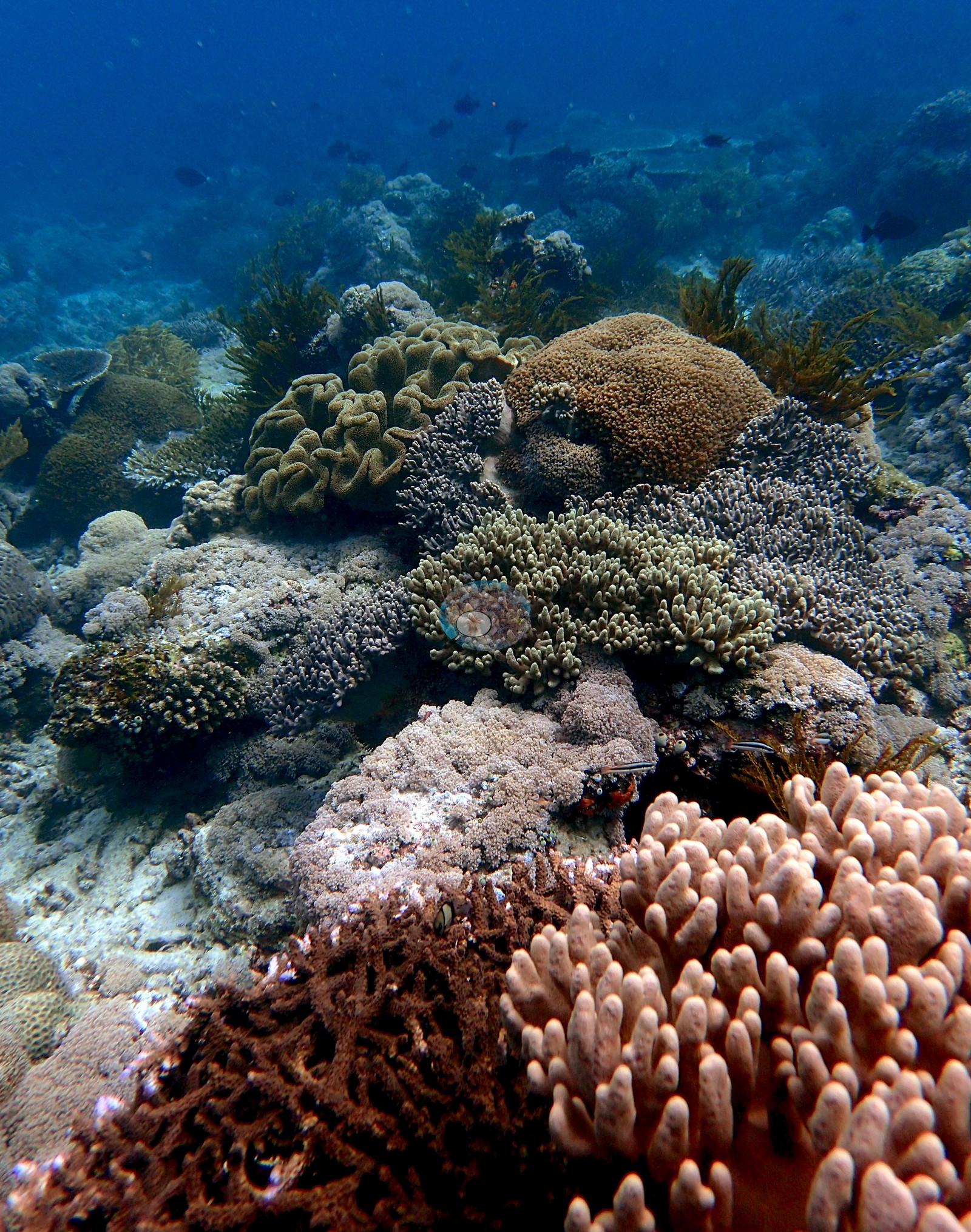 75
75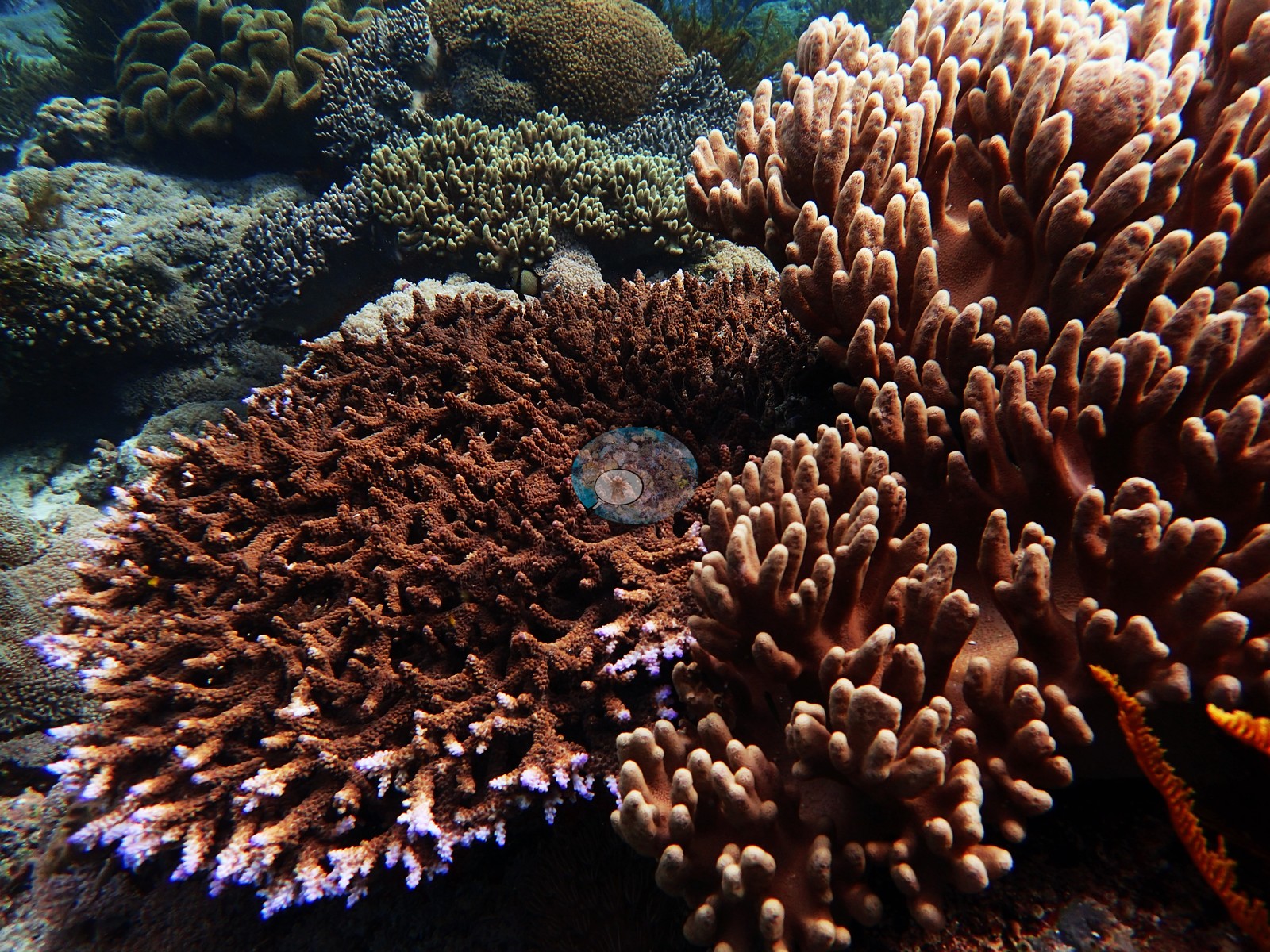 76
76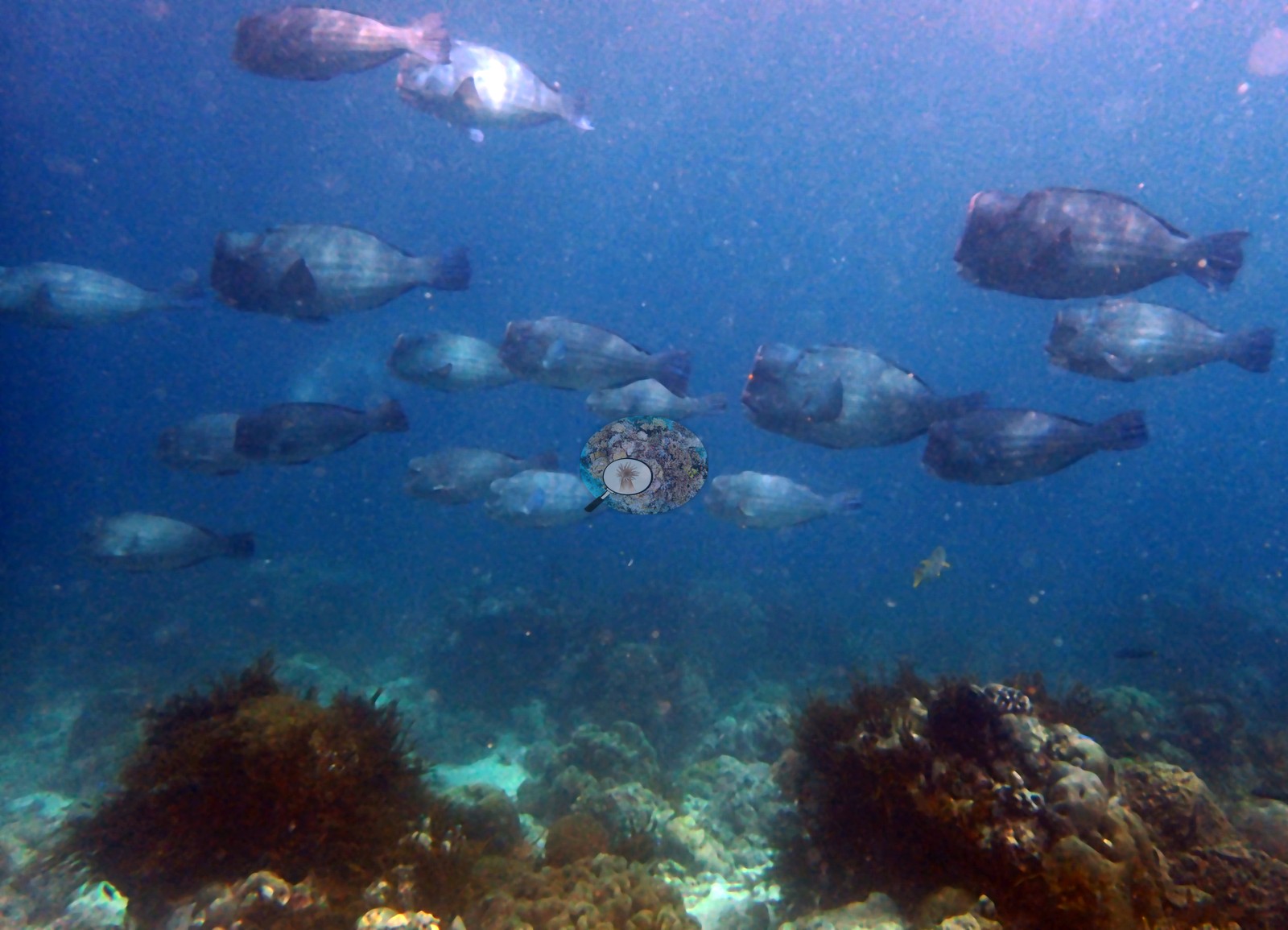 77
77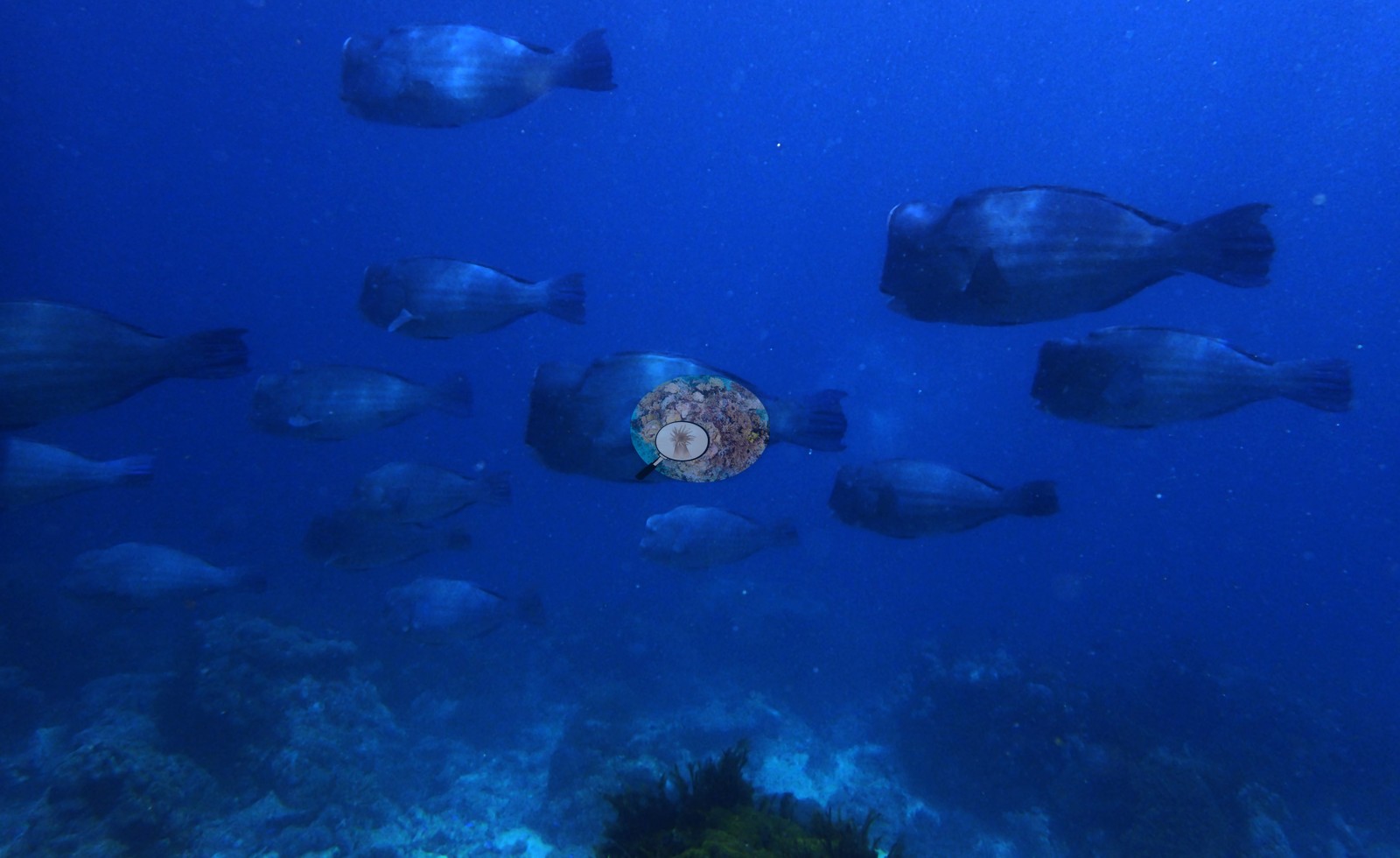 78
78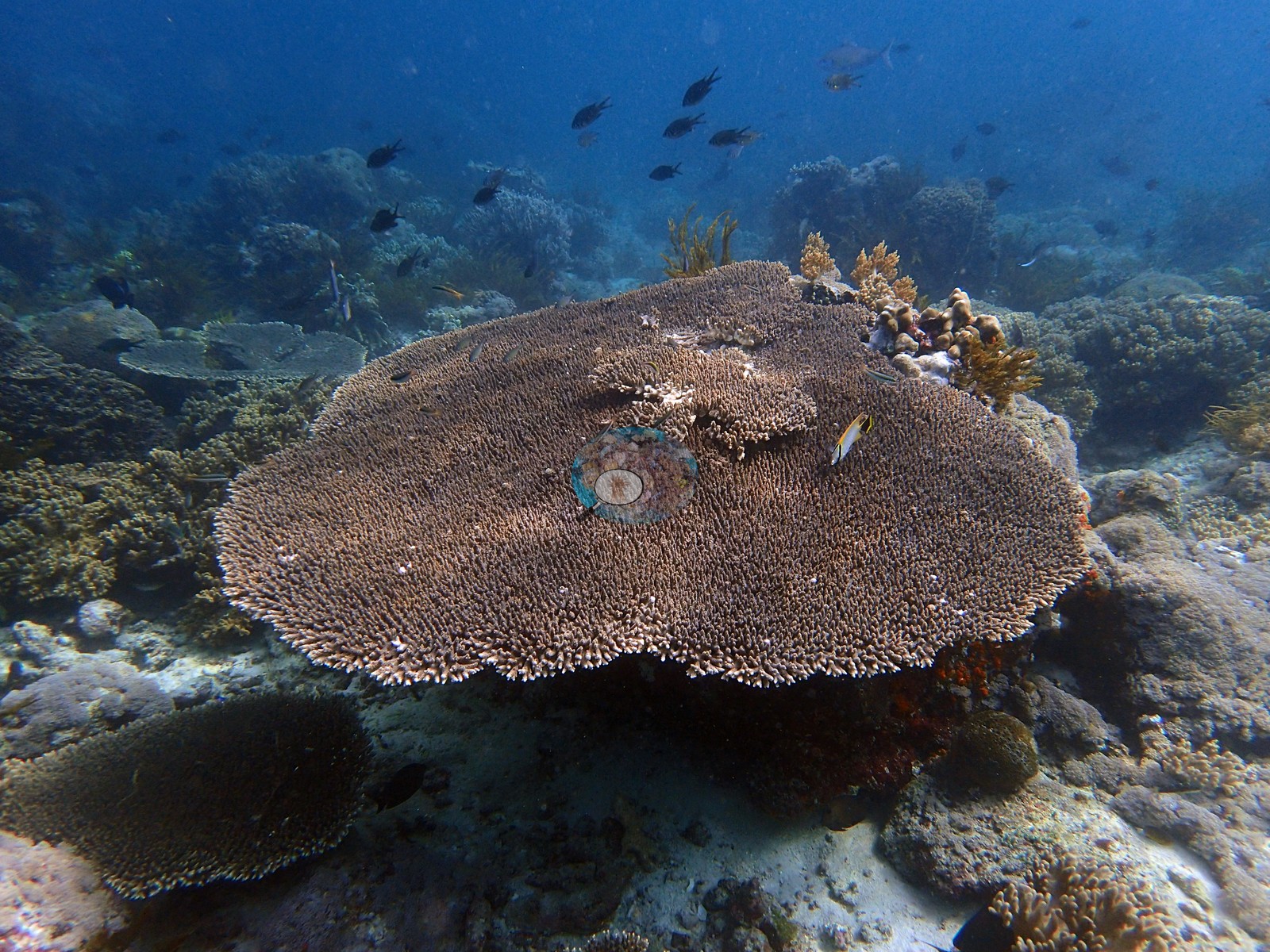 79
79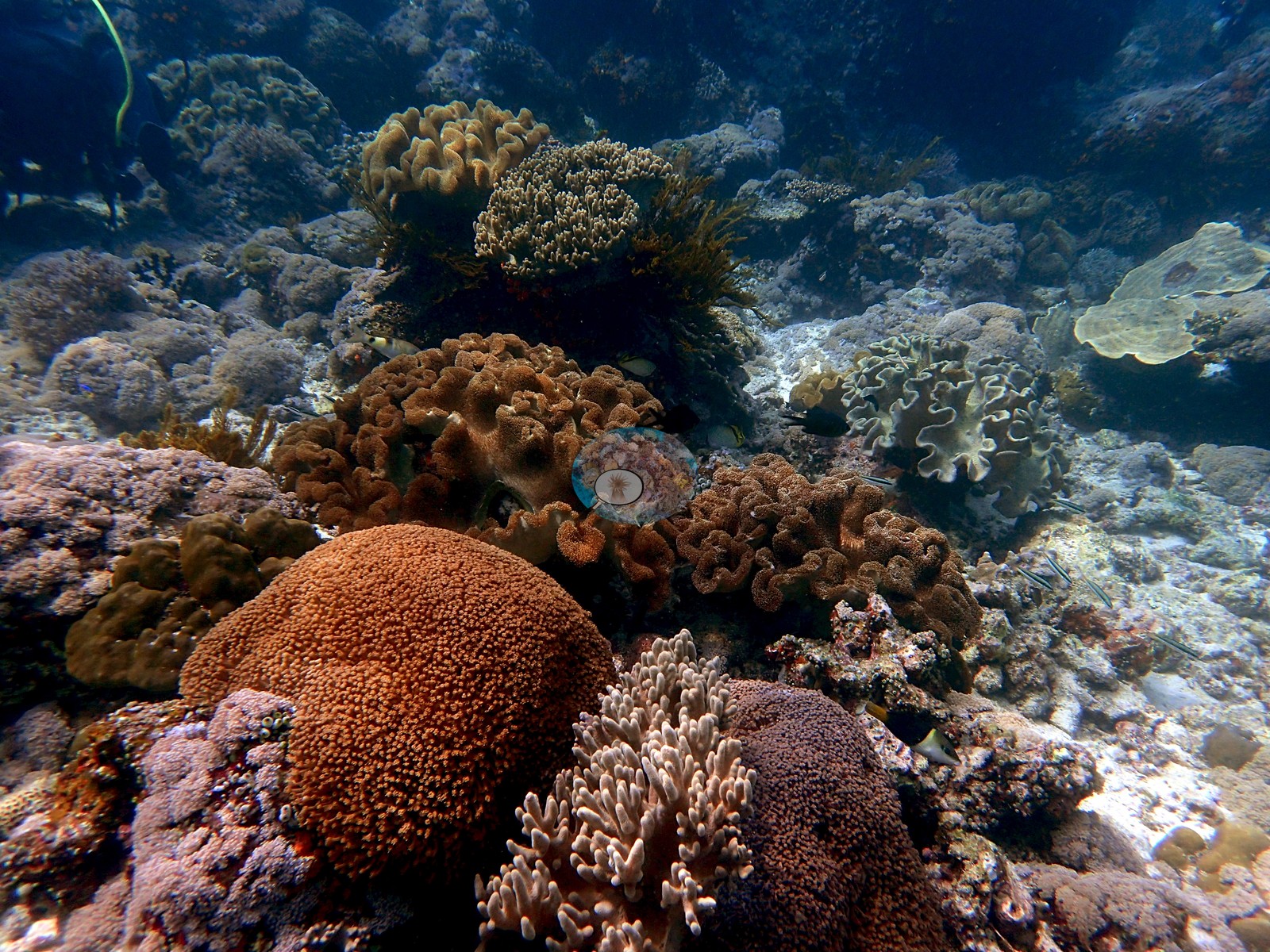 80
80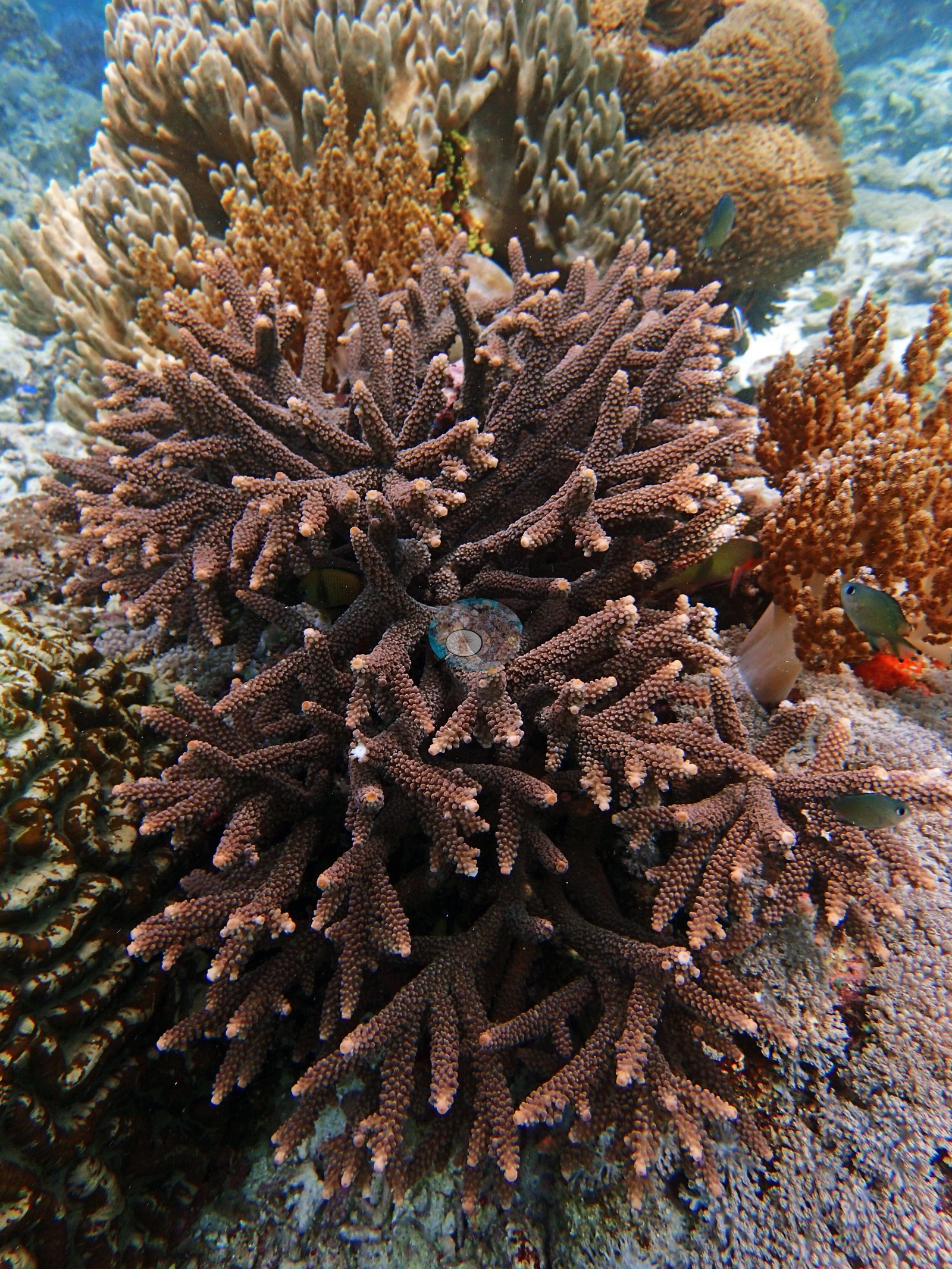 81
81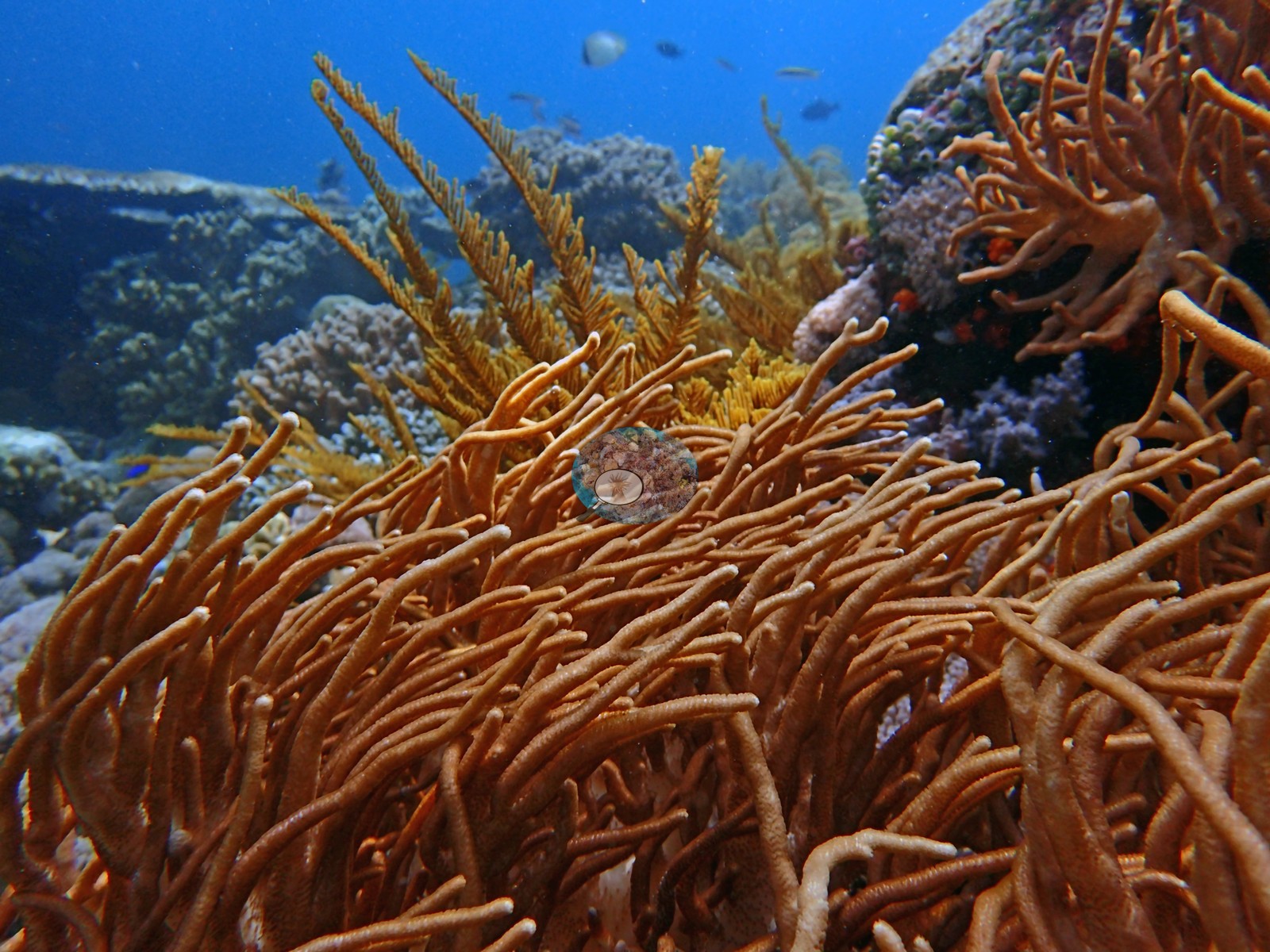 82
82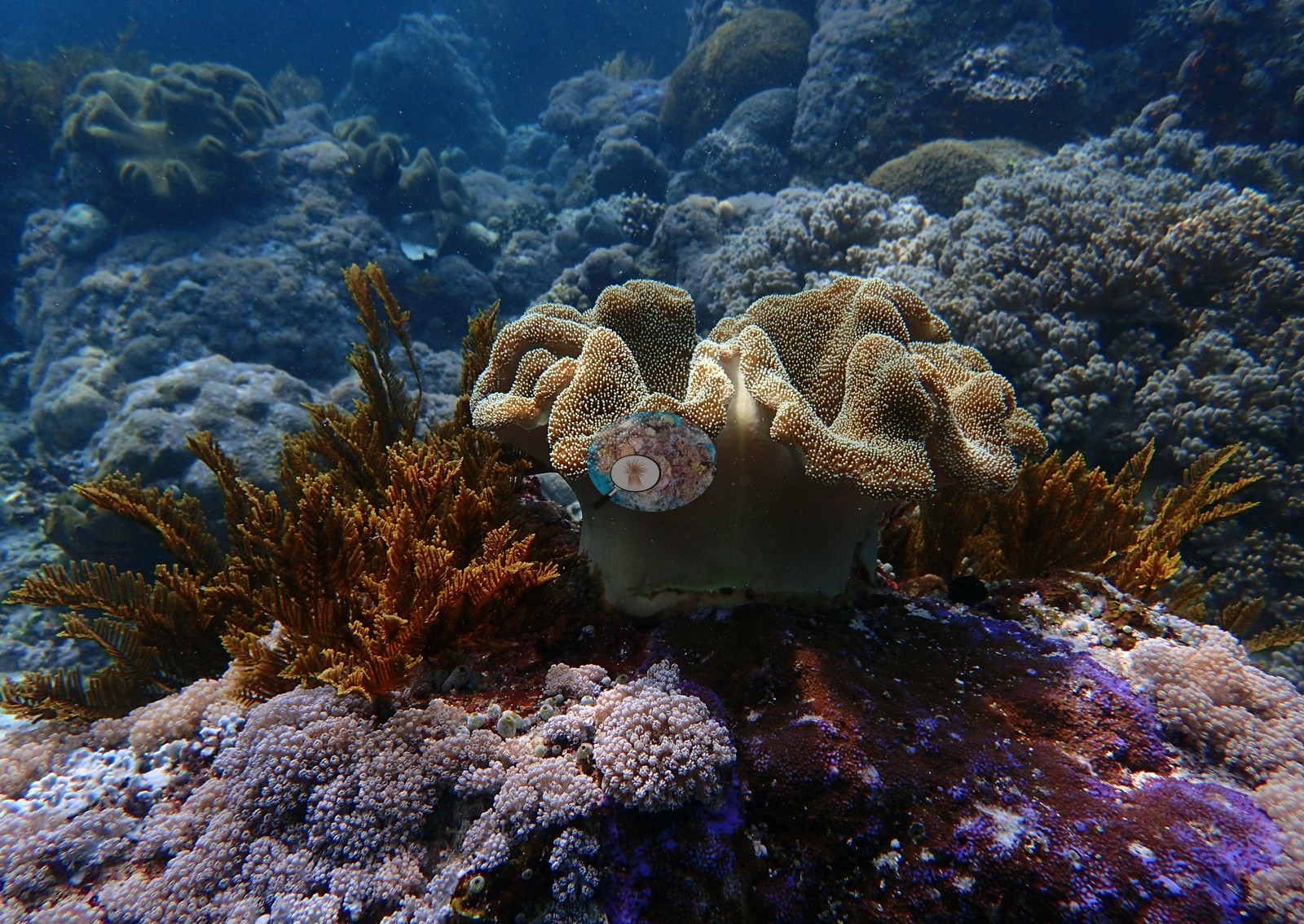 83
83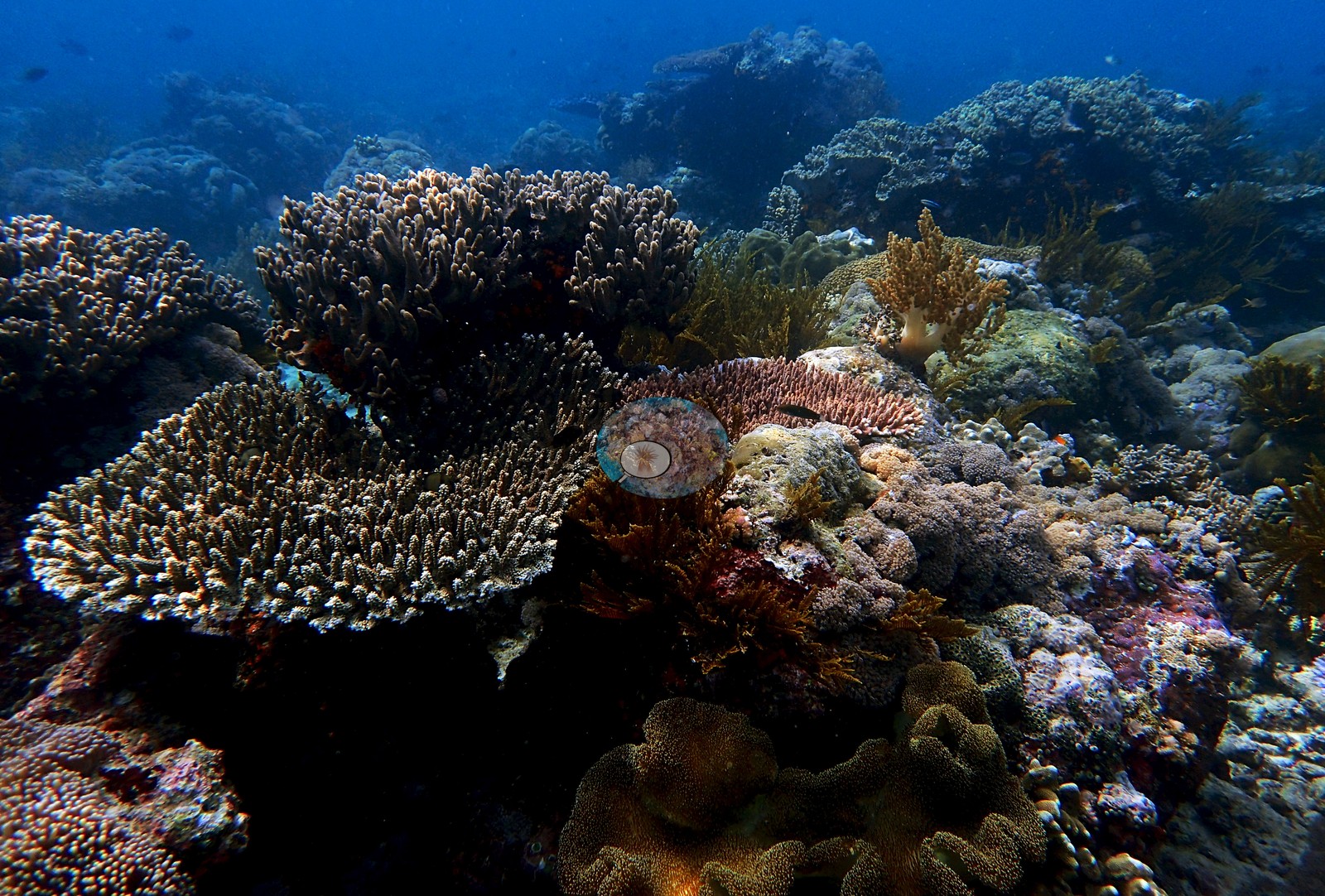 84
84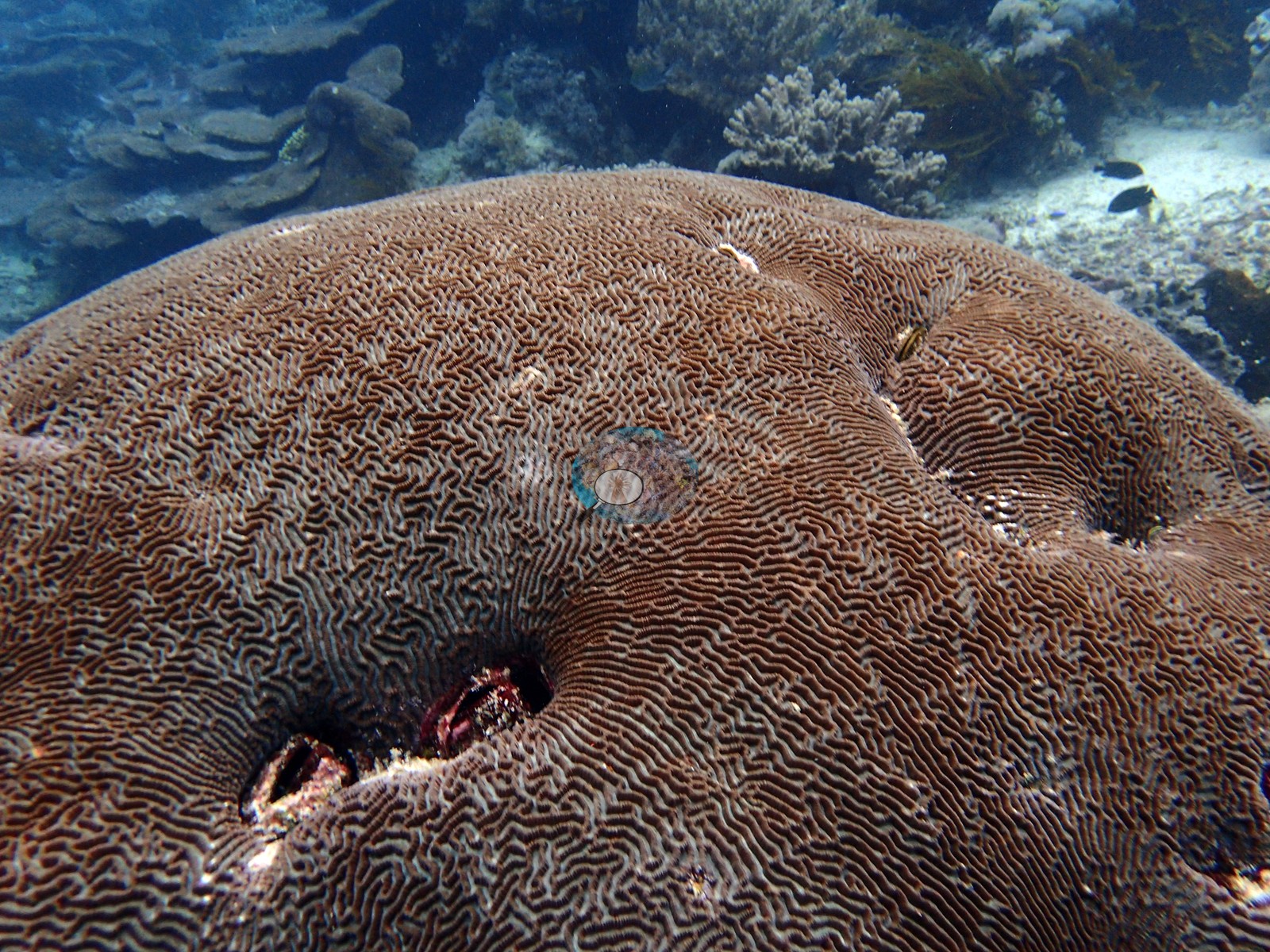 85
85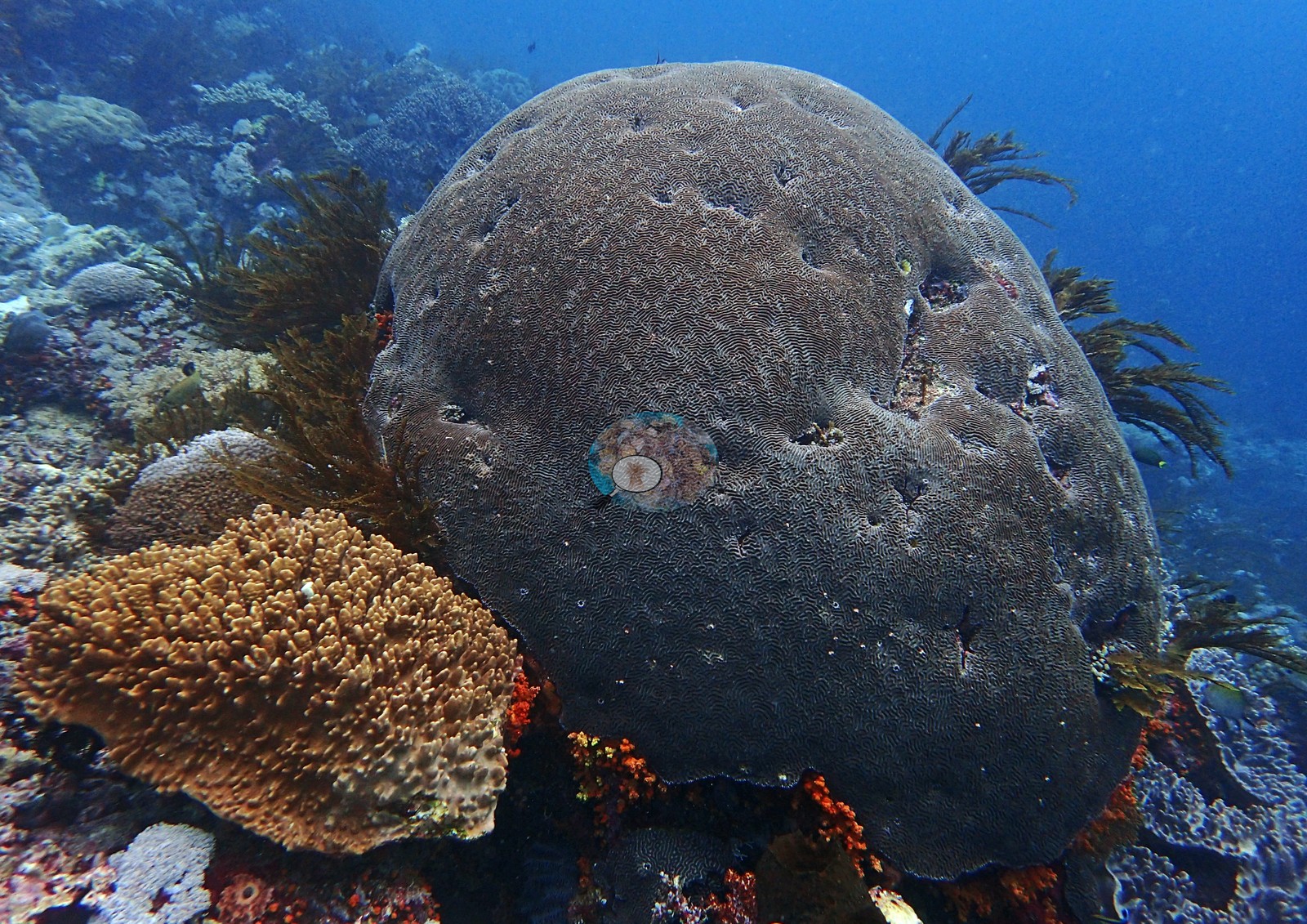 86
86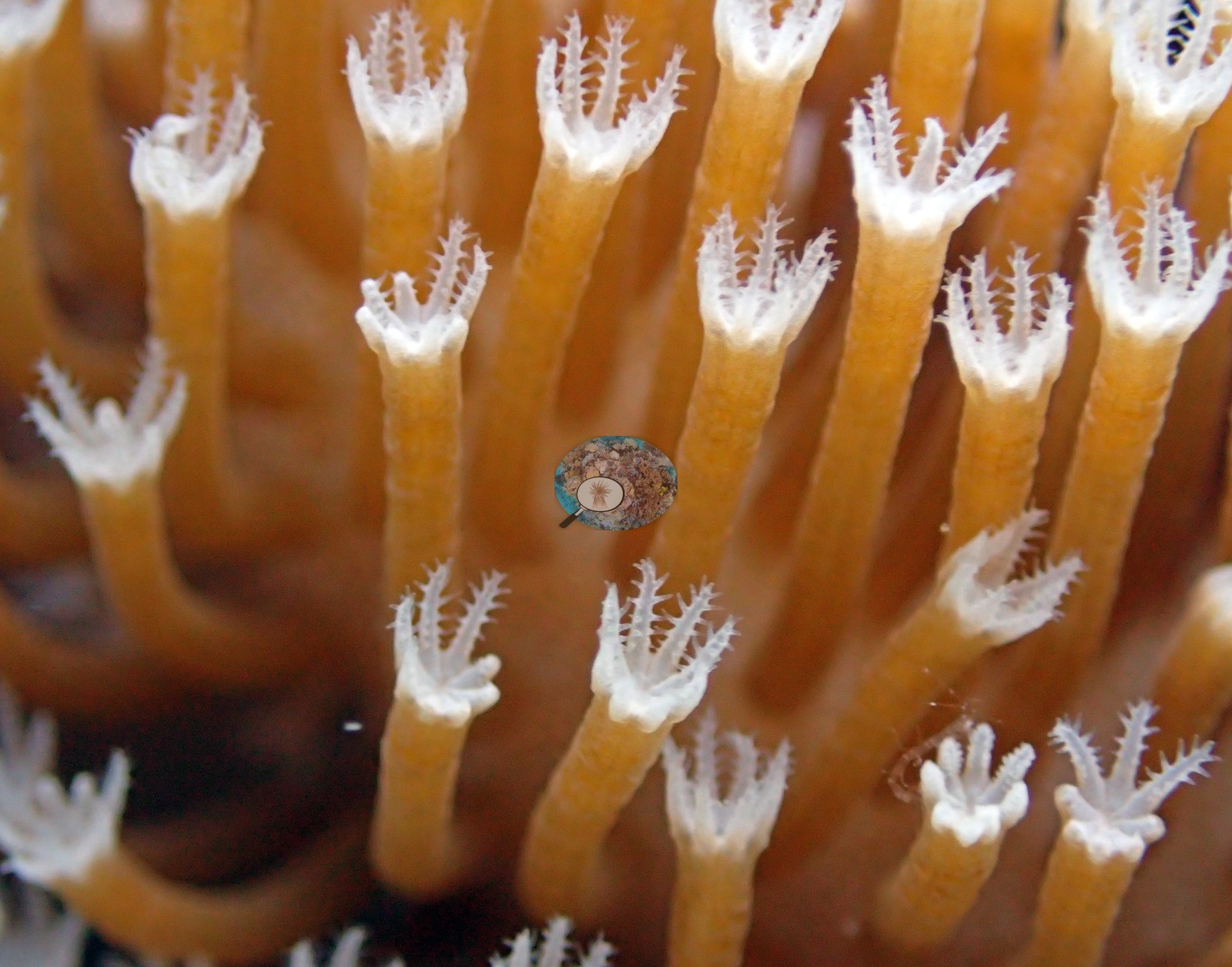 87
87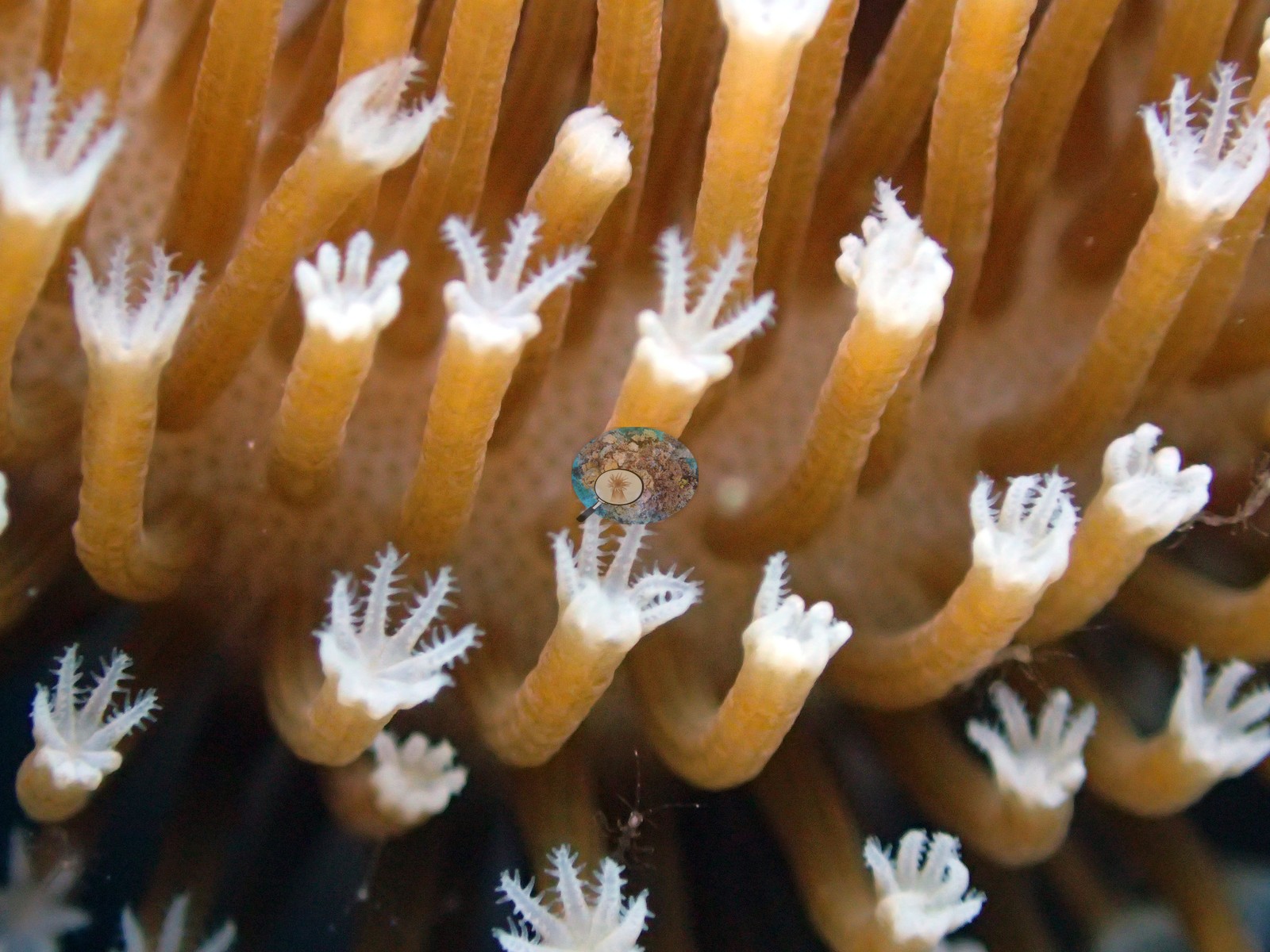
Site description
Setting
Pulau Koon, the third of the trip's dives on this island, off the eastern tip of Seram in the Banda Sea — not Raja Ampat, despite the folder tree's name. Water was clear blue with a plankton haze in the deeper frames, and the schooling planktivores and trevally imply current; the deepest frames darken to a low-light blue consistent with 25-30 m, though no depth is recorded and none should be inferred.
General benthic features
This reef is the opposite of the trip's Triton Bay sites: it is hard coral dominated, high-relief, and structurally spectacular. The dominant architecture is Acropora in every form the genus takes. Tabulate colonies are everywhere and many are very large — flat discs well over a meter across with clean white or lilac growing rims, stacked two and three deep down the slope (e.g., Image 1).
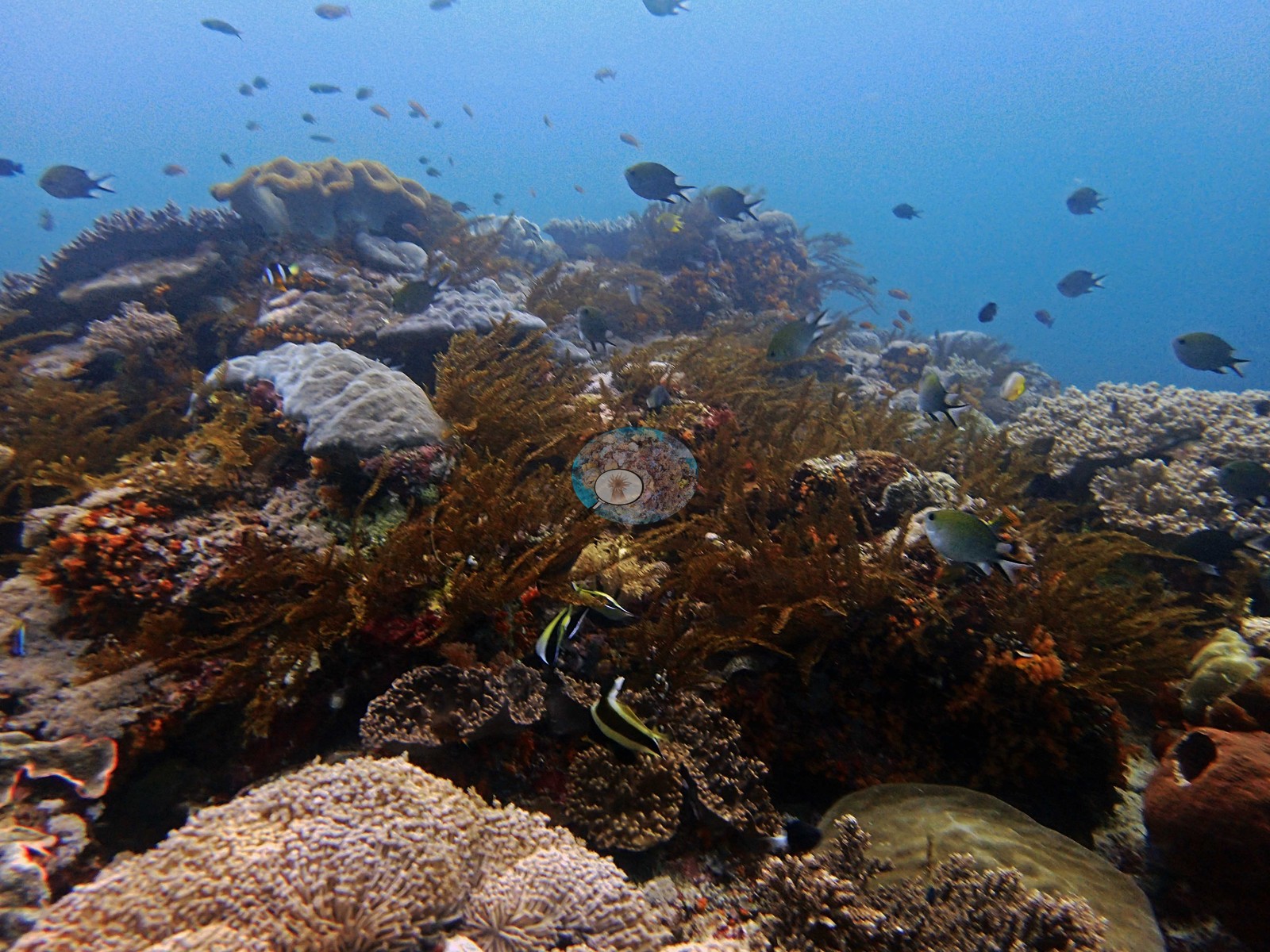
Their colors are unusually vivid: several are deep magenta-purple with pale blue-white rims, one is a rich burgundy, others gray-blue, gold, or plain brown. Corymbose and staghorn Acropora thickets fill the gaps, with crisp white axial tips indicating active growth. Alongside them, and just as abundant, are extensive shingled fields of foliose and plating coral — whorled, tiered plates consistent with Montipora and Turbinaria forming continuous rosette terraces over the deeper slope, each plate rimmed in pale living margin. Massive corals supply the reef's backbone: multi-lobed Porites domes over a meter high, several standing free of the reef like boulders; tightly meandering brain corals consistent with Platygyra and Leptoria, one of them the subject of Anderson's own captions "brains" and "good brain coral shot"; a striking brain colony with bright green valley walls against brown ridges; and knobby Pocillopora and Goniopora-type colonies scattered through (e.g., Image 2, Image 5).
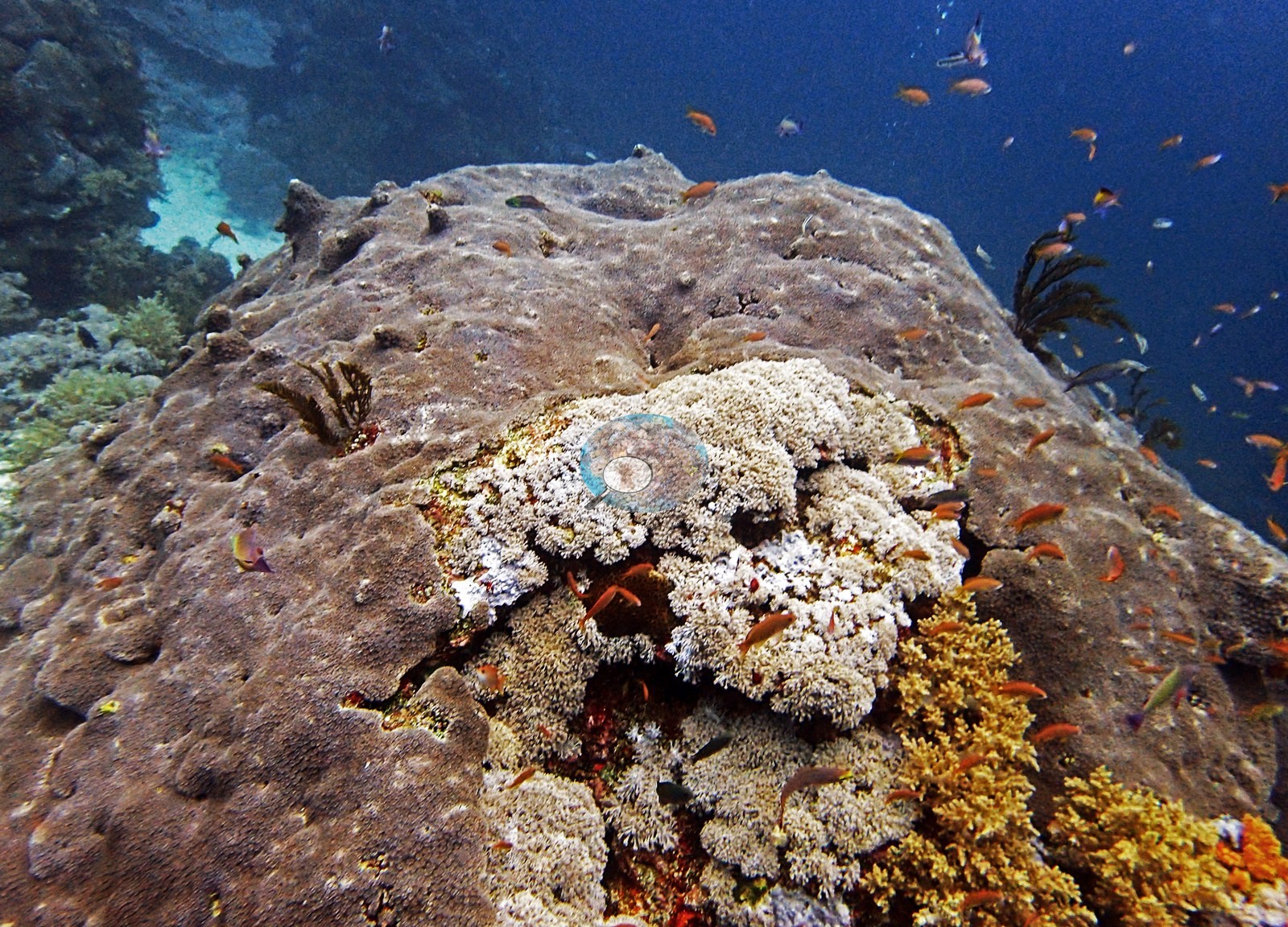
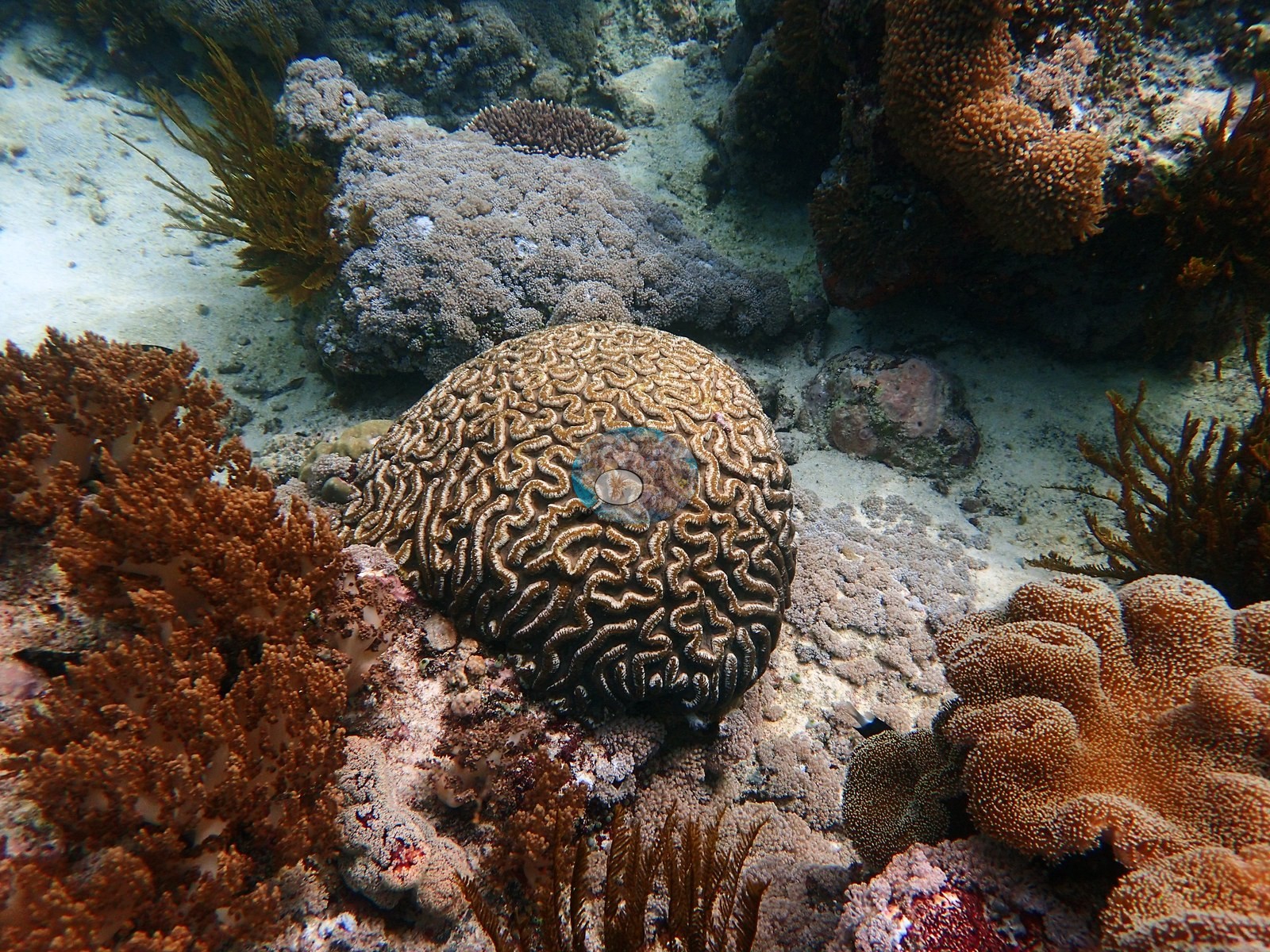
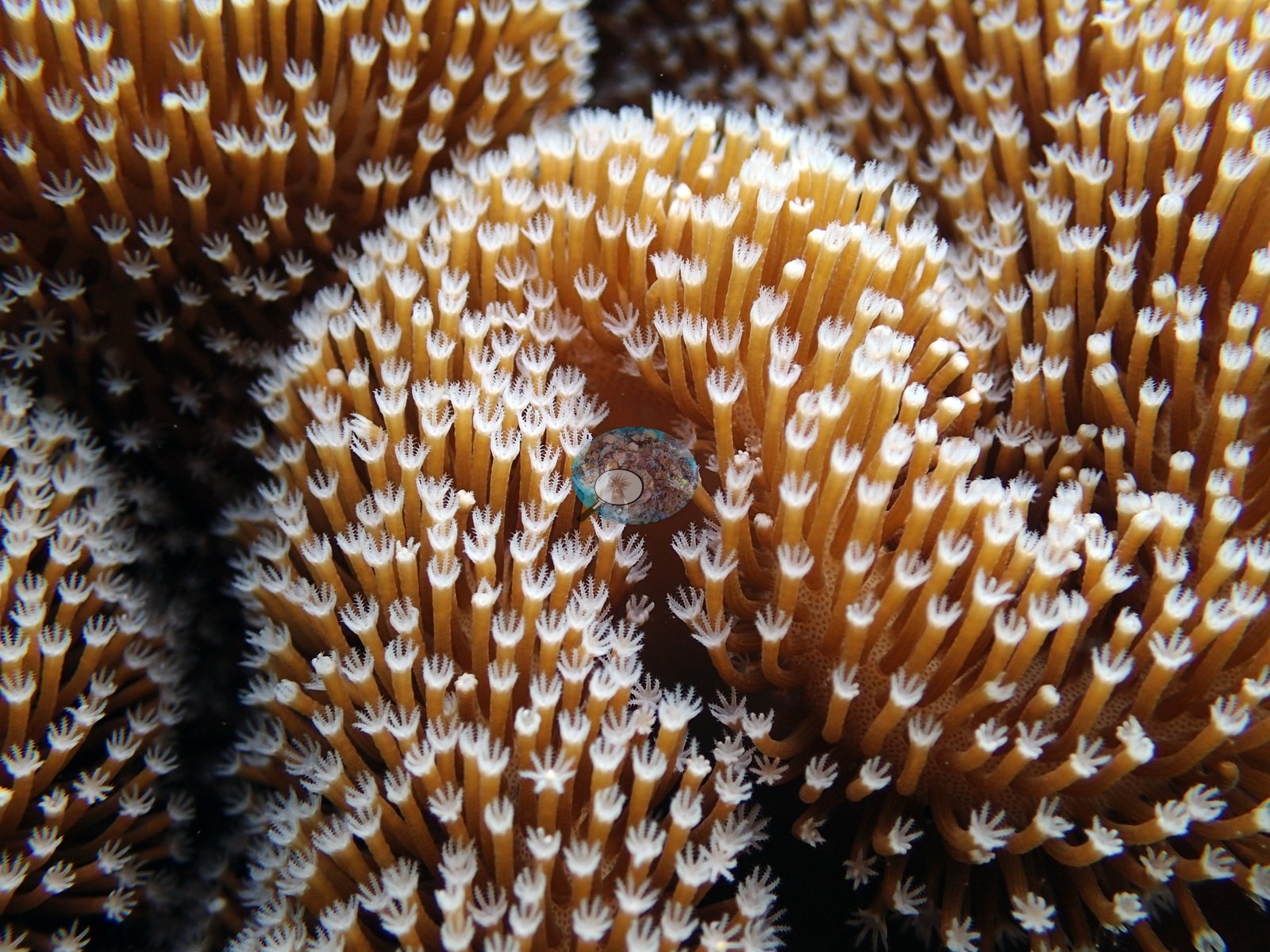
Soft corals are present in quantity but as a second layer rather than the main story: broad frilly Sarcophyton mushroom leathers, digitate and finger-form Sinularia in salmon, pink, and tan (one stand of long flaccid tan fingers is a set piece of its own), lilac and cream pulsing-polyp carpets of the Xenia/Anthelia type running over dead pavement, and Dendronephthya in orange and red on shaded faces (e.g., Image 4).
Bushy brown pinnate growths recur in a large fraction of frames — feather-shaped fronds most consistent with feather hydroids of the Aglaophenia type or brown-tissued black-coral bushes; I could not separate the two from the imagery and am not asserting either (e.g., Image 3).
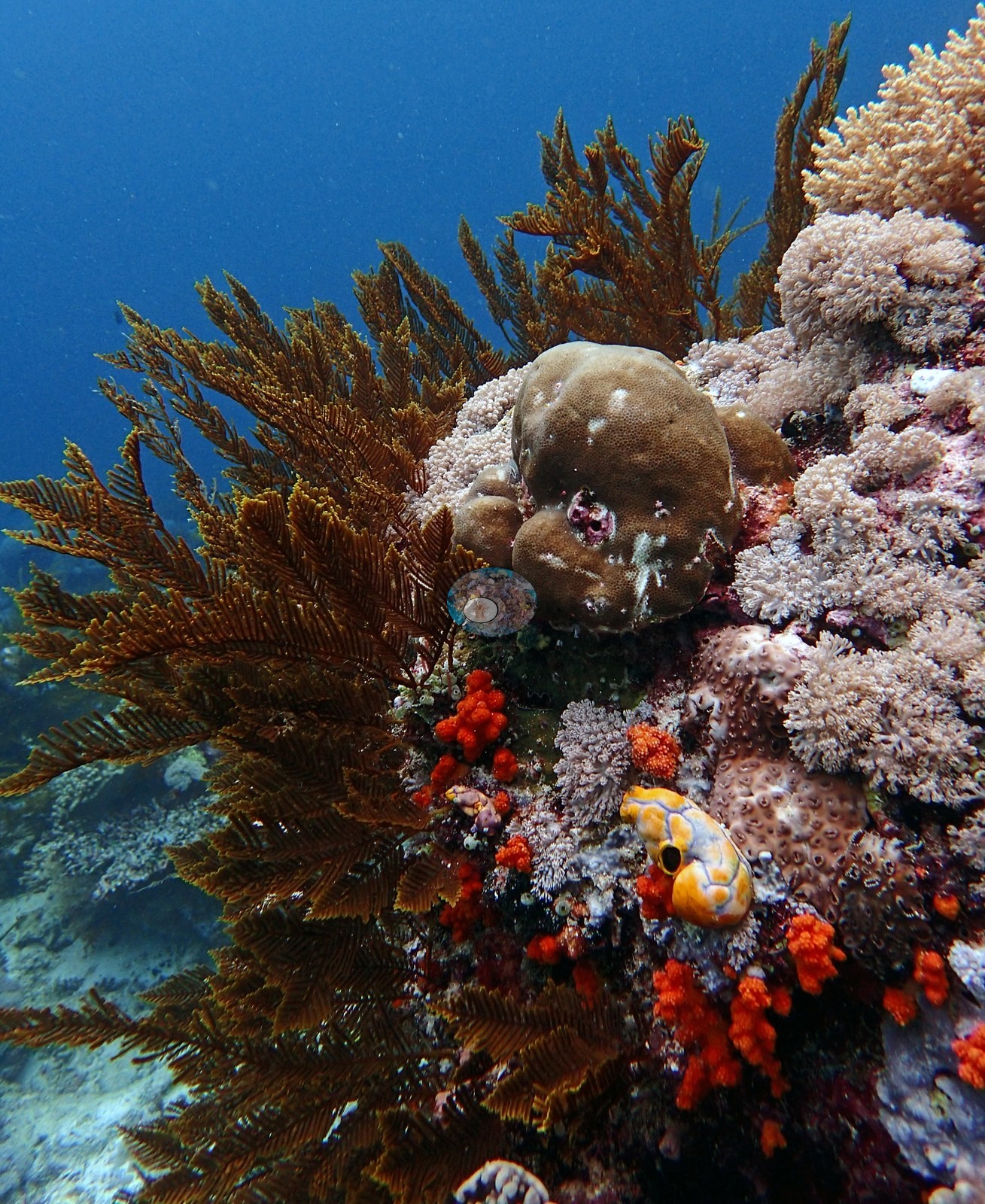
Other conspicuous invertebrates: orange Tubastraea cup corals in dense sheets on overhangs and vertical faces, large red-brown barrel sponges consistent with Xestospongia, brown and purple tube sponges, green colonial ascidians, several yellow-and-purple sea squirts unmistakably Polycarpa aurata, and free-living crinoids.
Coral cover
Coral cover: 30% — a blind Claude computer-vision point count of 98 of Anderson's edited photographs (20 points per photo; water, fish, and obstructions excluded). Other computer-vision methods are listed in the method table.
Stressors
Condition is mixed and worth Anderson's attention. Most of the reef looks vigorous, but the folder contains a clear, repeated signal of partial mortality on large colonies: at least three large table Acropora carry conspicuous patches of bare or algal-filmed skeleton on their upper surfaces; one large Porites-type dome has roughly half its visible surface reduced to pale gray bare skeleton pitted with boring-organism holes; a second massive colony shows scattered small white lesions and purple-pink pigmentation-response margins; and two large brain corals show eroded holes and pale scars. Against that, no whole-colony bleaching front, no crown-of-thorns, and no anchor or blast damage were seen. There is also a broad, greenish, algal-filmed plate colony whose upper surface reads as recently dead, and old dead pavement colonized by turf and vermetid tubes at the base of one encrusting colony. These are partial-mortality and lesion observations from photographs, not a disease diagnosis.
Fish and other fauna
The fish assemblage is what marks this out as a current-swept, well-fed site. Two frames show a school of large, blunt-headed parrotfish moving in open blue water, consistent with bumphead parrotfish (Bolbometopon muricatum) — a notable sighting if confirmed. One frame shows a passing school of bigeye trevally, another a wall of small planktivores (chromis and fusiliers) filling the whole water column. On the reef itself: dense green and black chromis over the plate fields, yellow-and-blue fusiliers, several squirrelfish, and soldierfish resting under plate margins, a red-toothed triggerfish, moorish idols, raccoon, and pyramid butterflyfish, a blue tang, humbug damsels in the staghorn, a large carpet anemone holding at least three orange-and-white anemonefish, and cleaner wrasse working two batfish that hung in front of the camera long enough for both to be photographed.
Comparisons with other data
No prior survey data from this site. If you would like to share yours, please email us.
Dive record
The camera's own file numbering (PA171272 through PA171410) puts the dive on 17 October 2018, which is consistent with the trip's dive order, though the dive log does not resolve this folder by date and that inference should be confirmed against Anderson's log rather than taken from me.
CV model comparison
More info
DINOv3 and CoralSCOP were run on the same photos and are listed for comparison. Coralscapes v2 and v1 were also run but are not shown: Anderson does not consider Coralscapes reliable for these photos. No diver transect exists for this trip, so agreement between the rows is not accuracy, and as of September 2026 no computer-vision method estimates coral cover accurately on new images; treat every row as indicative.| Method | Hard-coral cover (%) |
|---|---|
| In-house DINOv3 | 31.1 |
| CoralSCOP edited | 46.9 |
| Claude (edited photos) | 29.6 |
Data & links
All images from Coral Reef Diagnostics. Data are from Coral Reef Diagnostics.
© Coral Reef Diagnostics.