
Raja Ampat - Pulau Koon dive 2
Part of the regional summary: Indonesia - Raja Ampat
More info
Maluku (NOAA CRW virtual station) · Banda Sea ecoregion mean=7.3°C-heating weeksPulau Koon's second dive is a mound-and-channel slope of large coral bommies on open sand, headlined by a spectacular tabulate Acropora table over two meters across and a near-monospecific stand of rust-red digitate coral. A close-up series shows individual Acropora branches stark white against normally pigmented neighbors on the same colony - a likely active, patchy tissue-loss or bleaching front, the strongest health flag in this group. No crown-of-thorns starfish (COTS) or anchor damage seen; coral cover at this site is about 25% (blind Claude computer-vision point count).
Penyelaman kedua Pulau Koon berupa lereng bergundukan dan beralur berisi gundukan karang besar di atas pasir terbuka, dengan sorotan utama berupa meja Acropora tabulat yang menakjubkan selebar lebih dari dua meter dan rumpun karang berjari merah karat yang nyaris monospesifik.
Terjemahan ringkasan ini oleh AI; versi bahasa Inggris yang berlaku. Translated from the site’s shorter map summary.
Two other CRD dive sites within 5 km shown in orange — click a marker to open its page.
4 of these 48 photographs are shown beside the text that discusses them under "Site description" below.
Site description
Setting
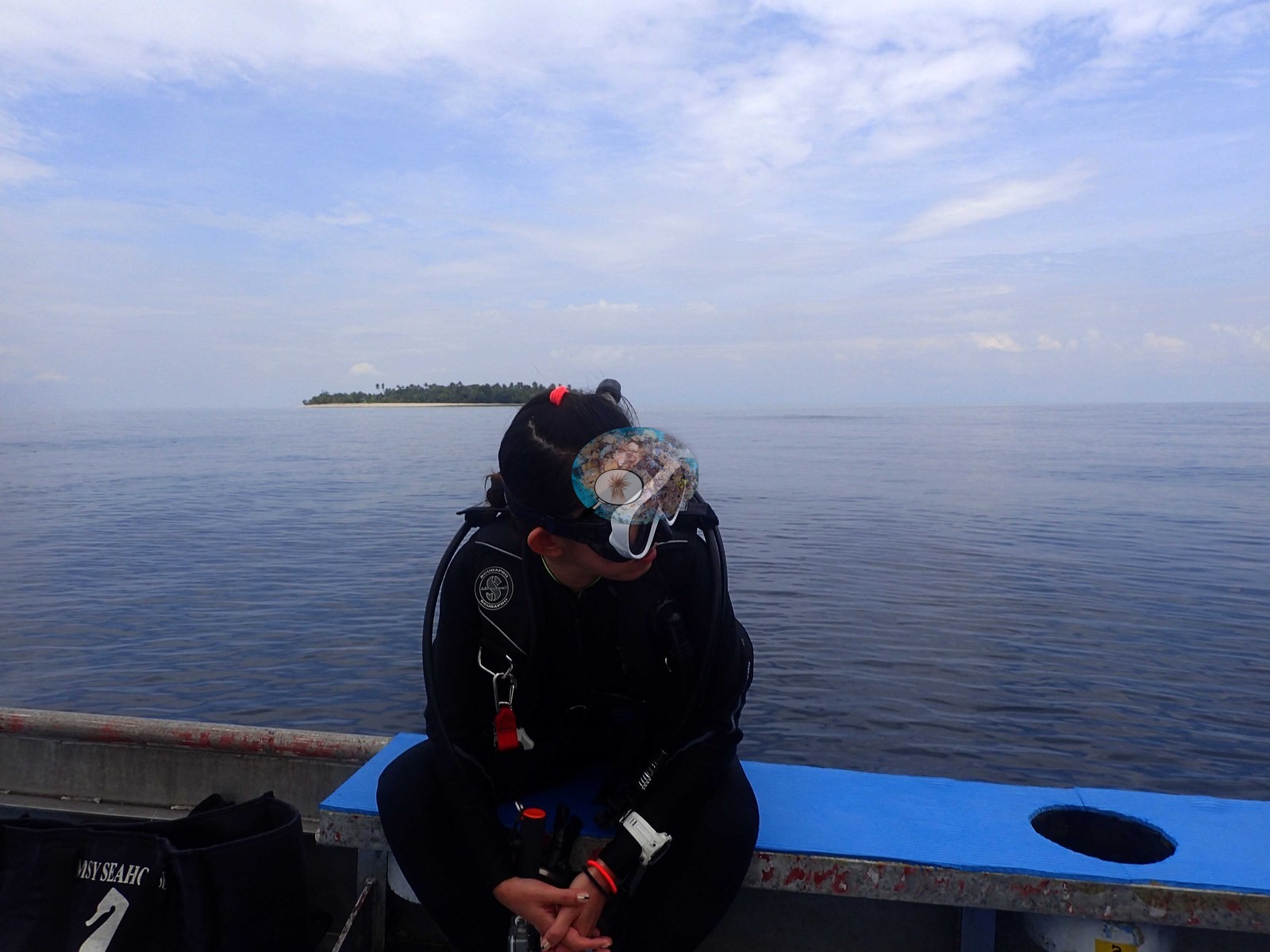
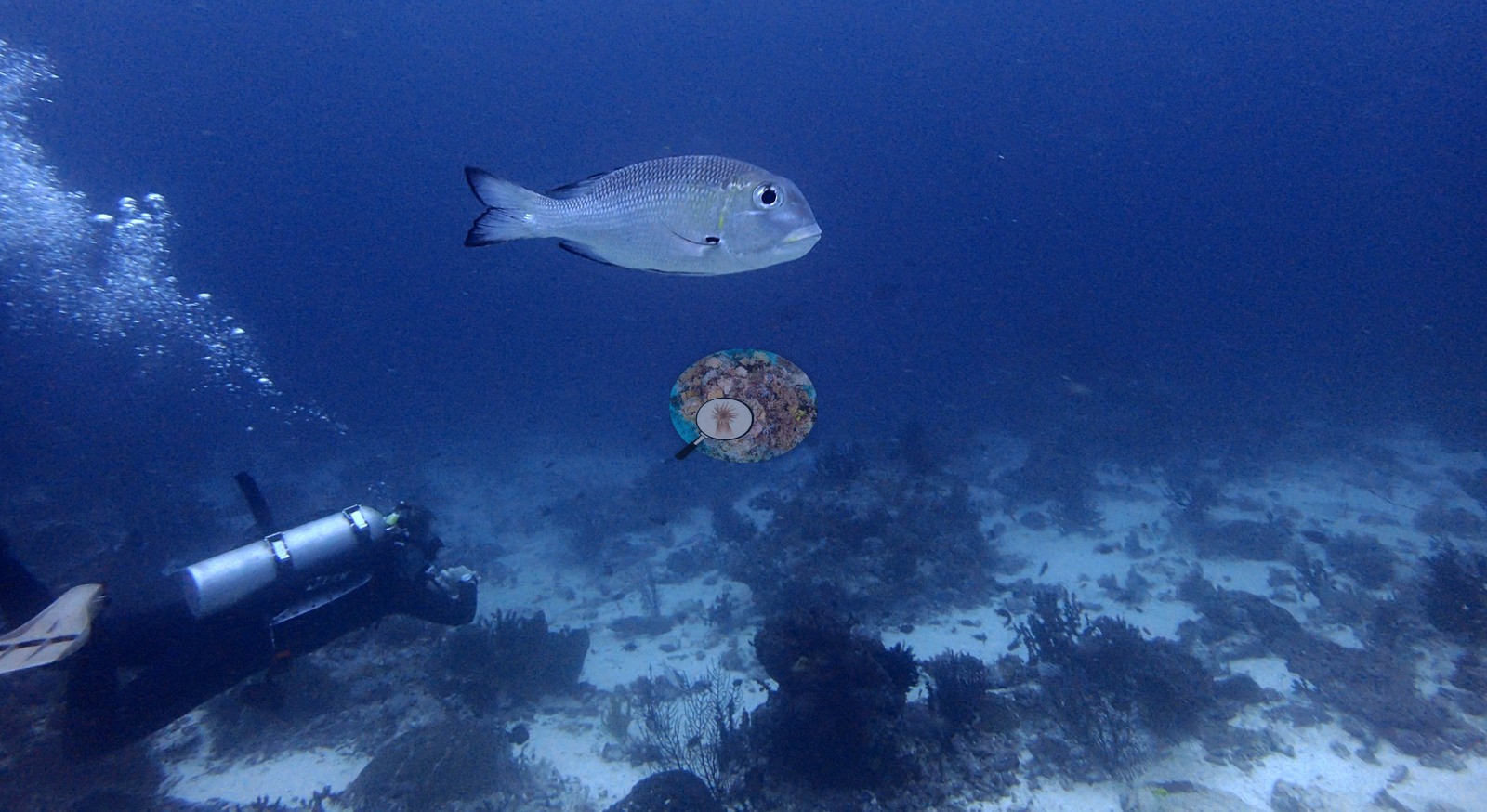
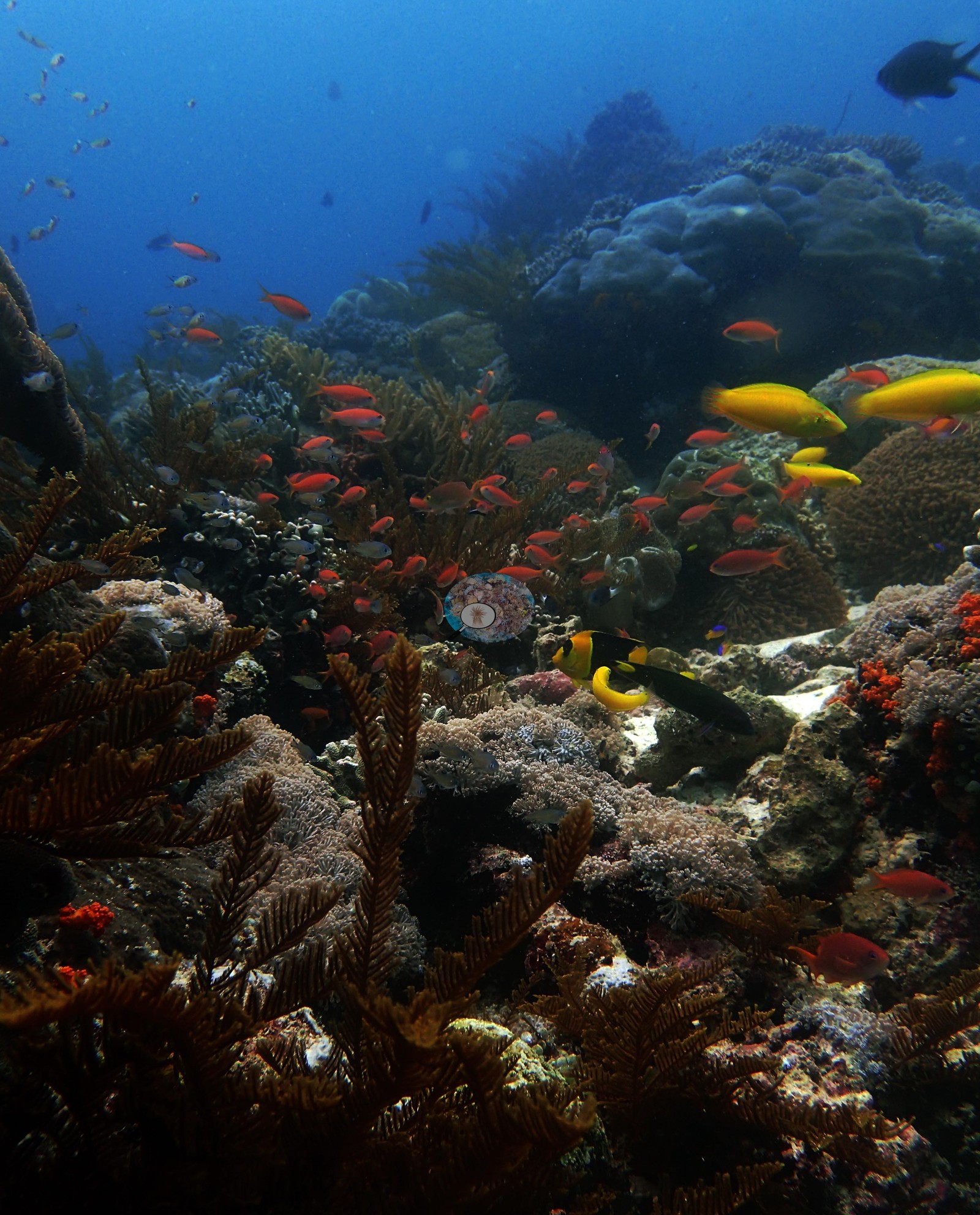
The one surface frame establishes the setting: a low, flat, palm-fringed sand cay on a calm horizon under a broken sky, with the tender and dive gear in the foreground — a very different landform from the karst towers of Raja Ampat, and consistent with Pulau Koon's position out in the Banda Sea rather than in the Papuan islands. Underwater, this is a deep, current-exposed slope with a wide white carbonate sand plain at its foot. Visibility is very good, with real color holding well into the frame under strobe and the slope readable to a soft blue distance.
General benthic features
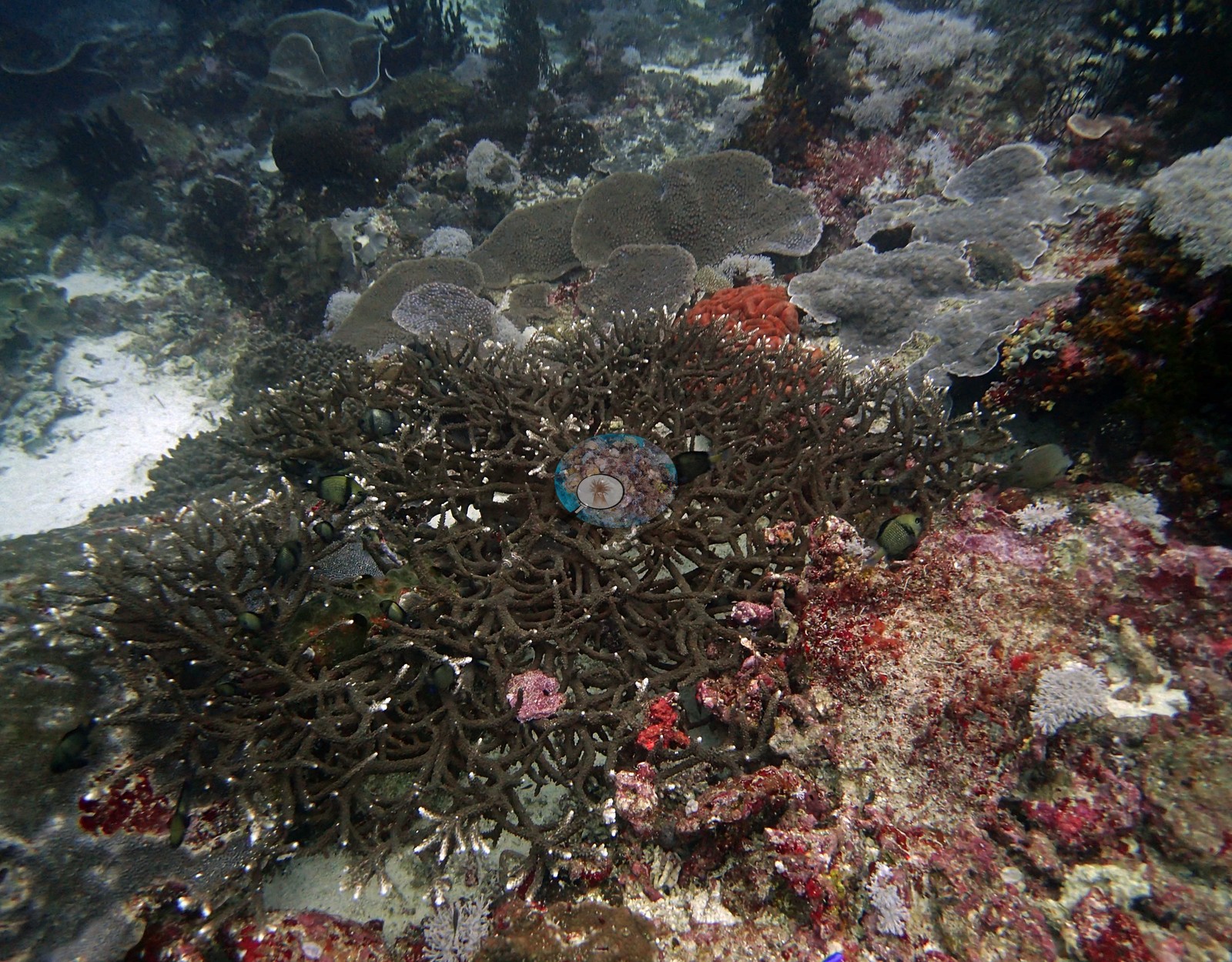
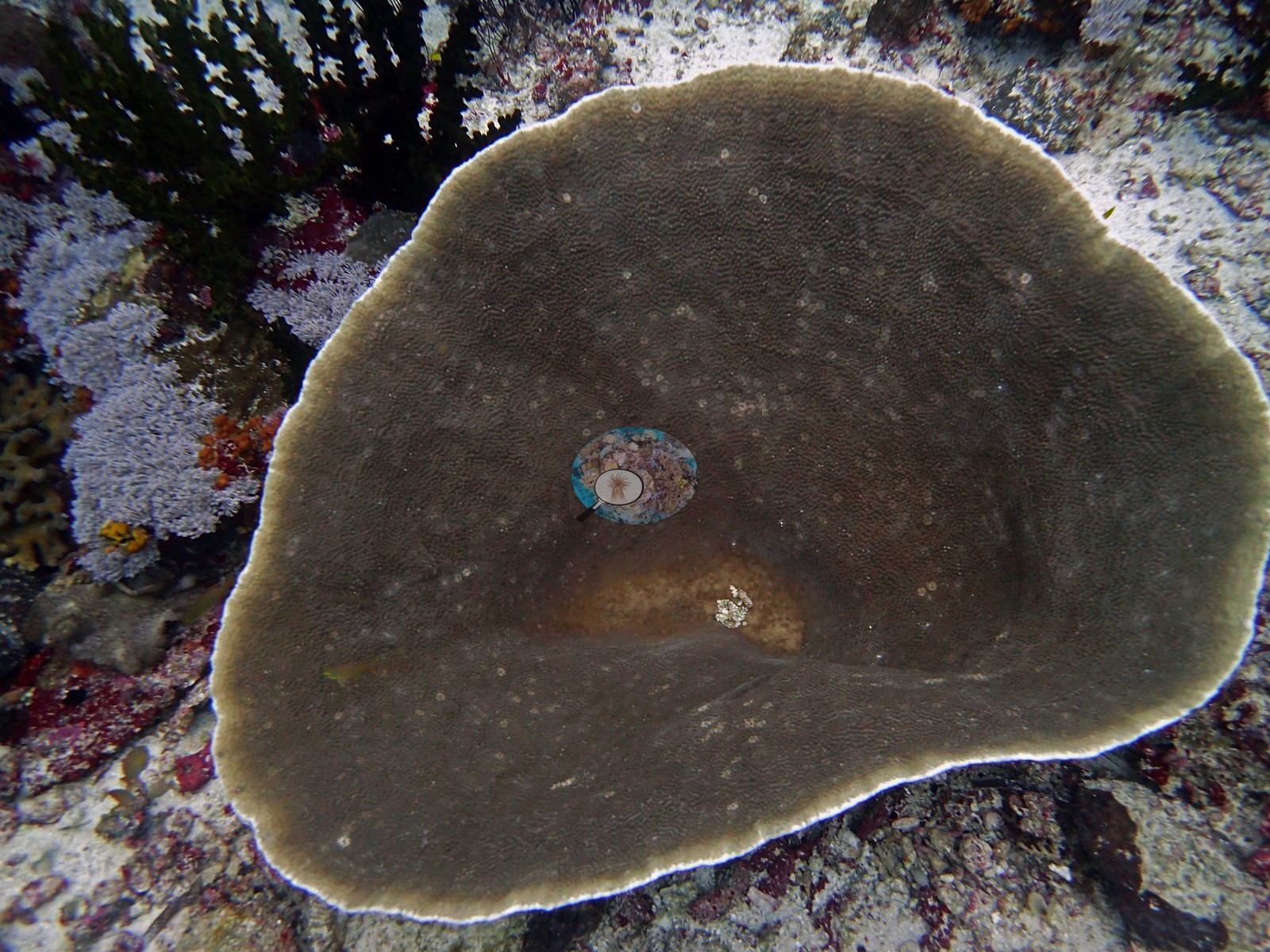
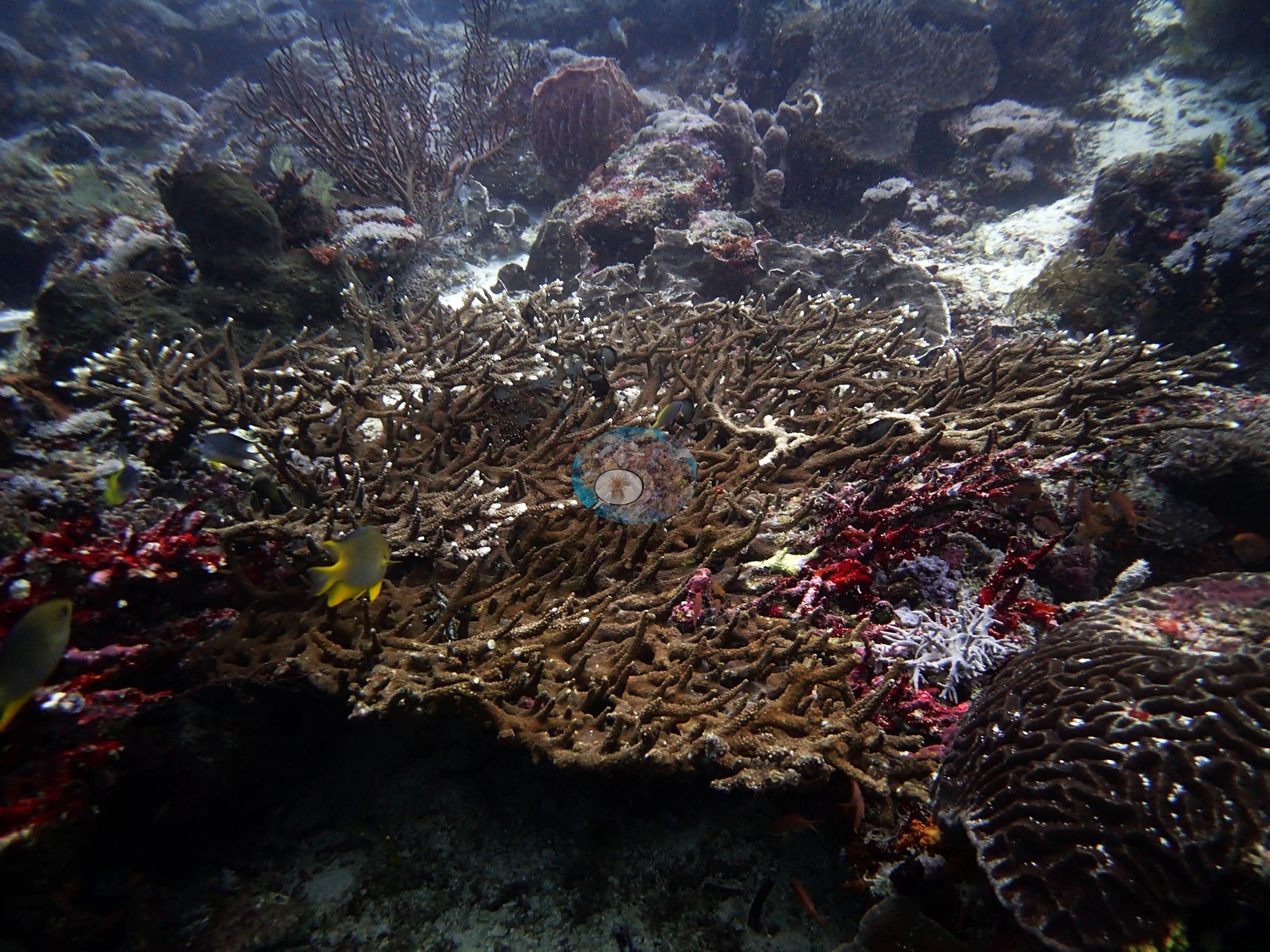
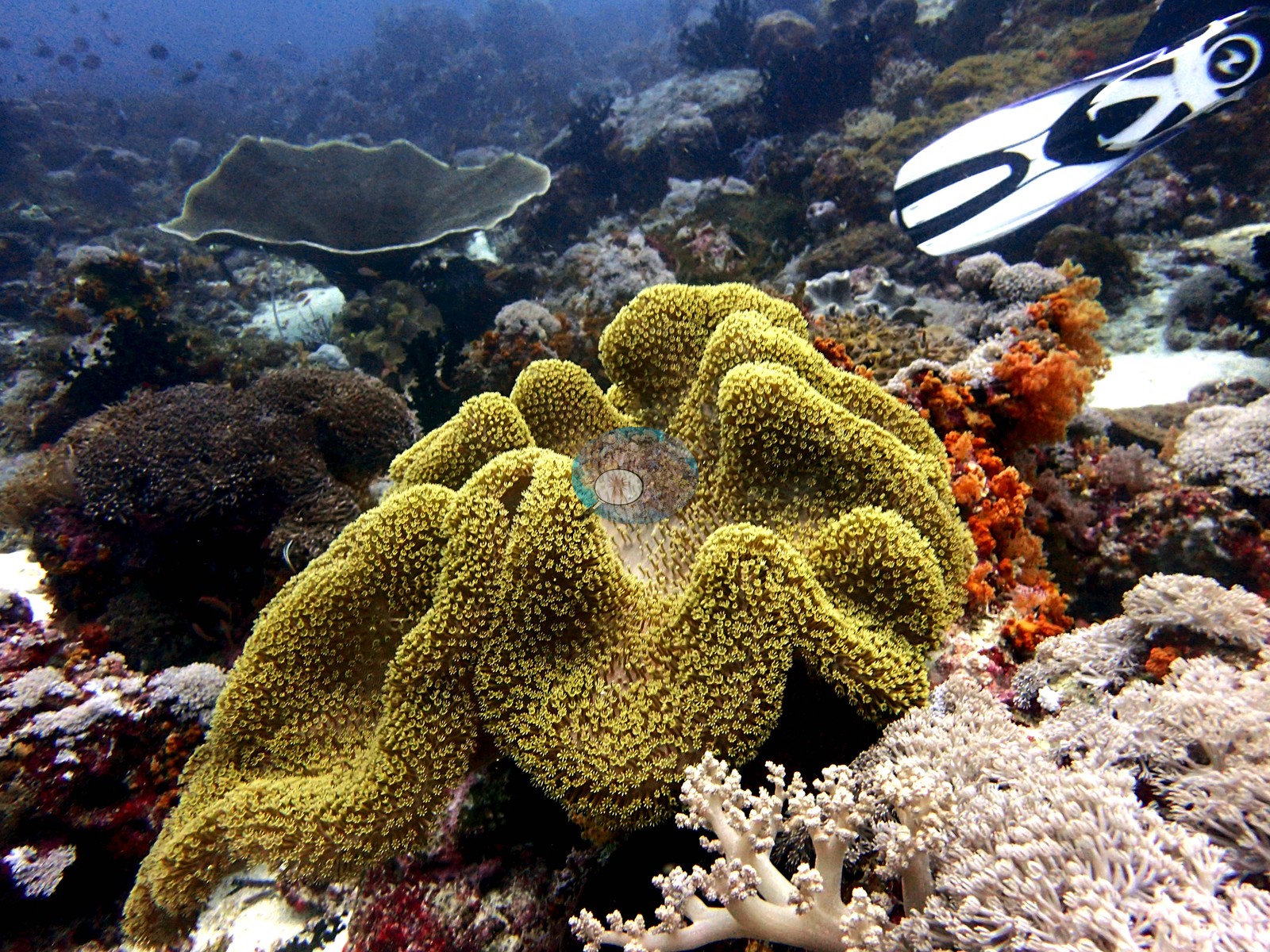
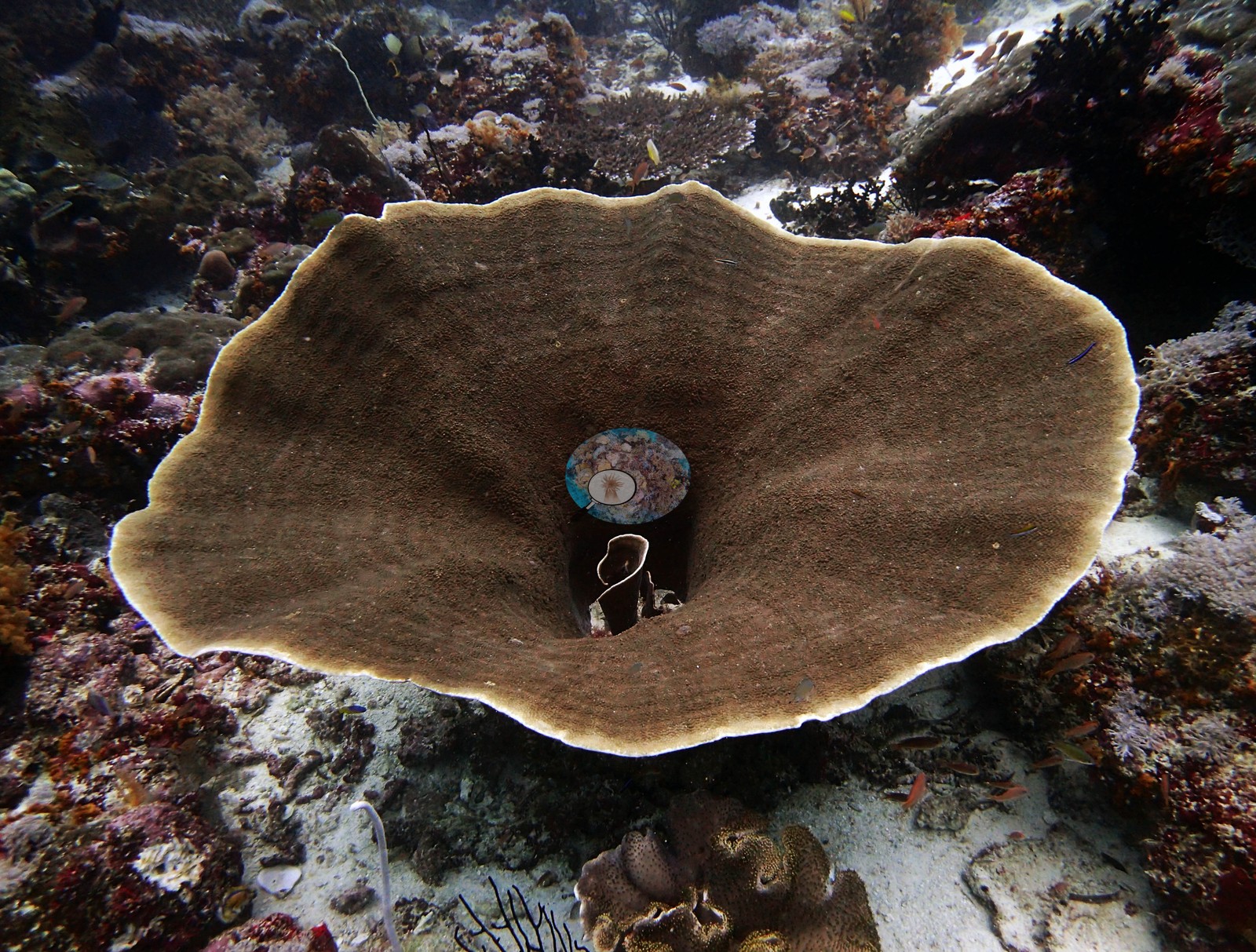
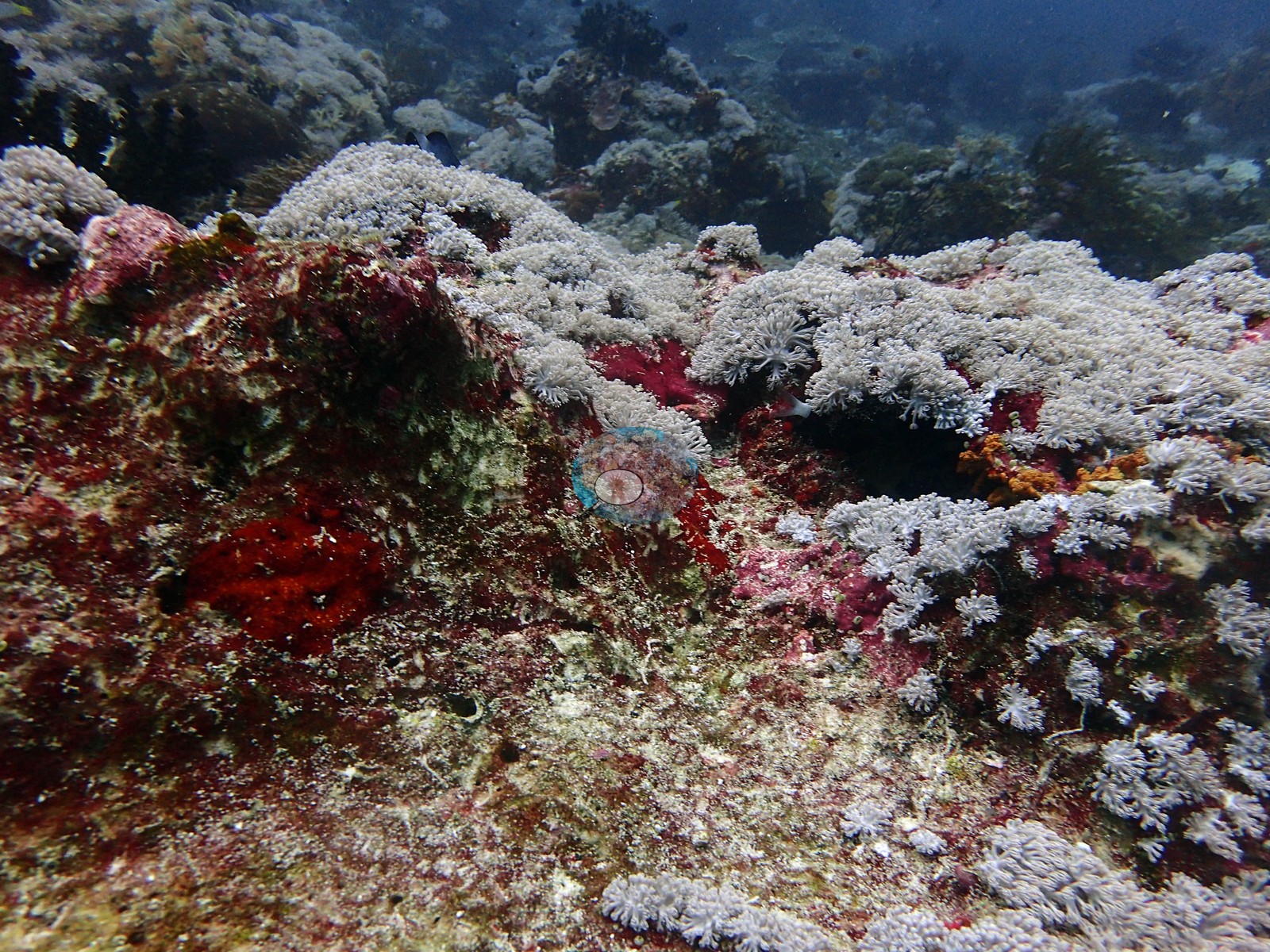
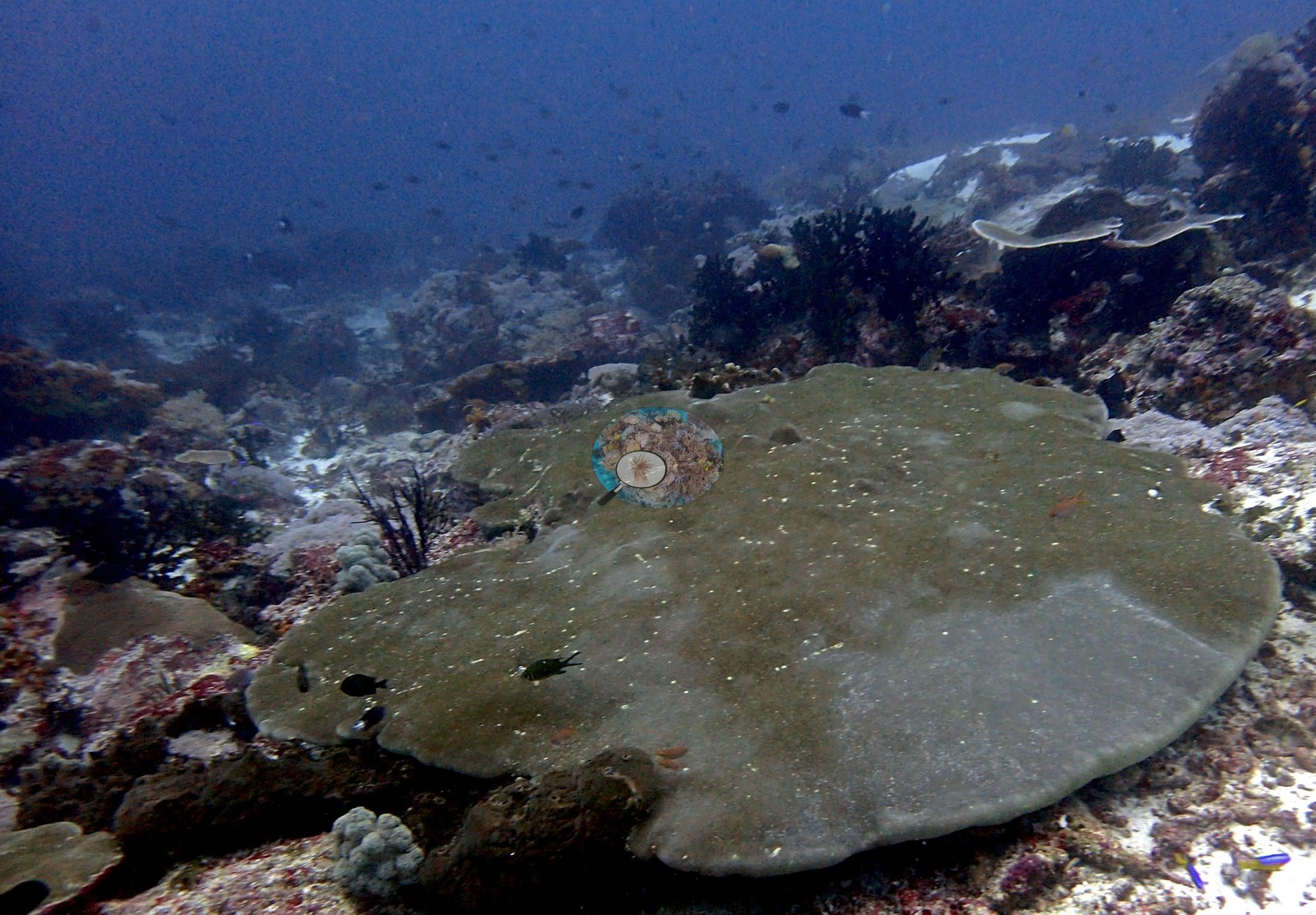
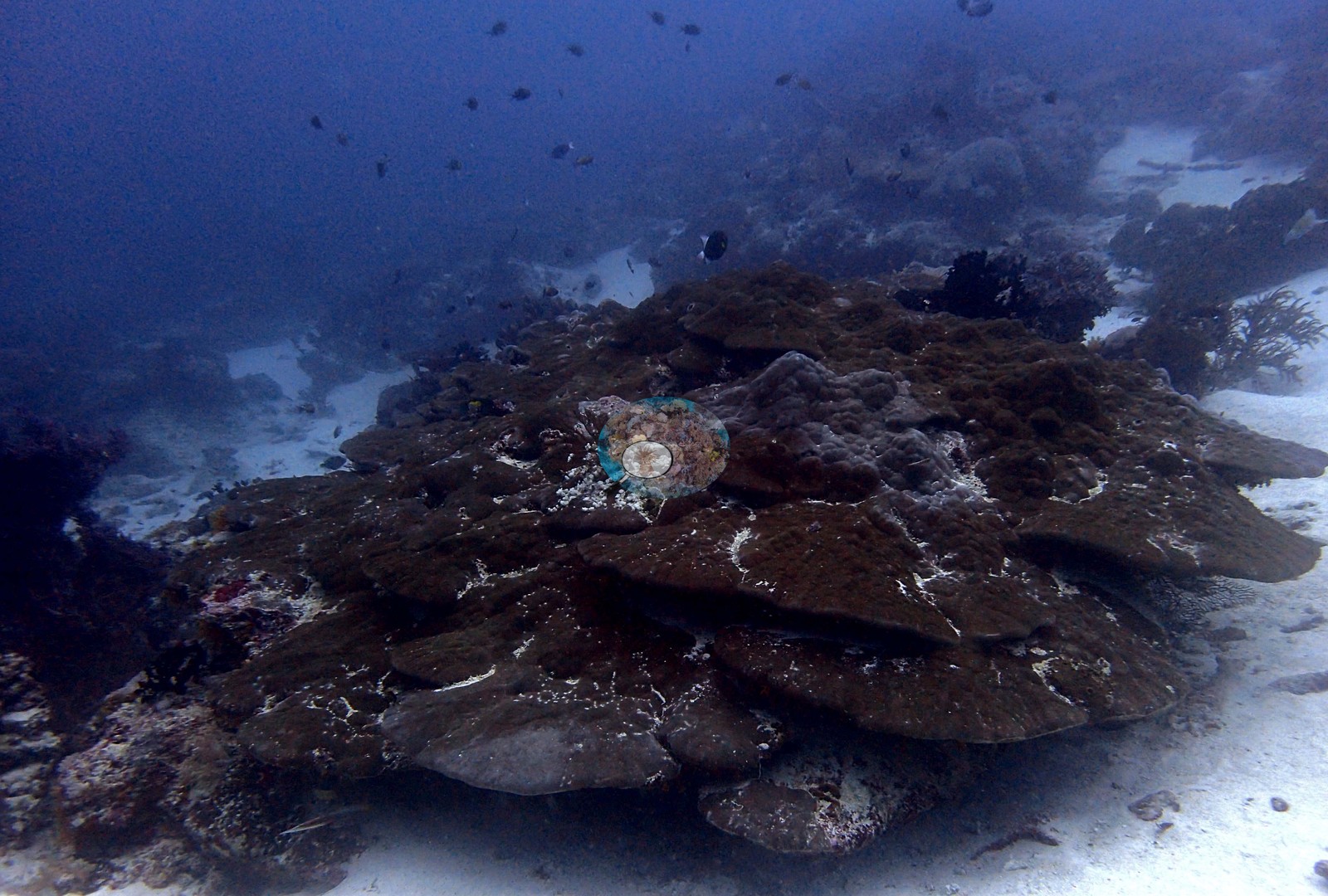
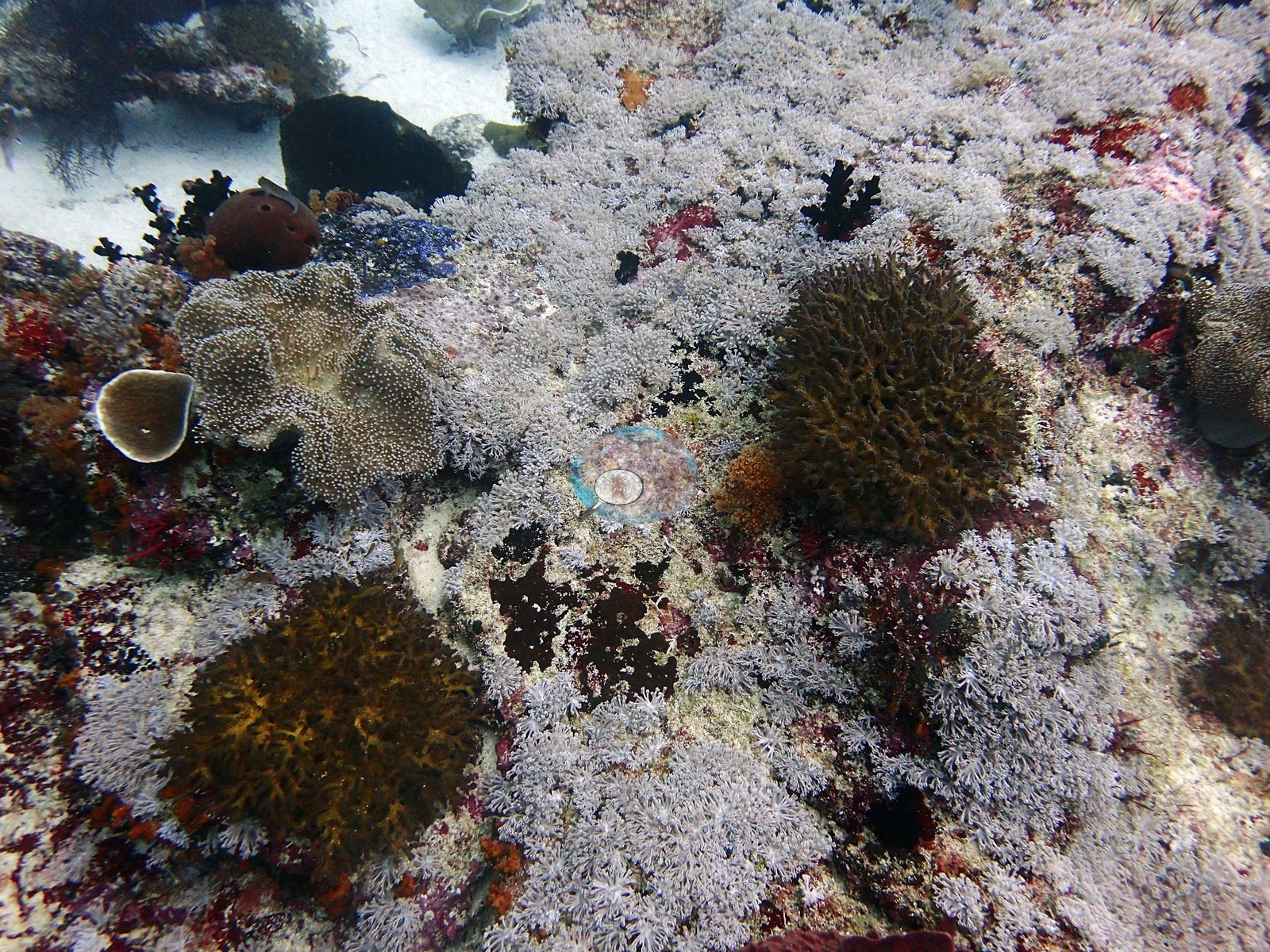
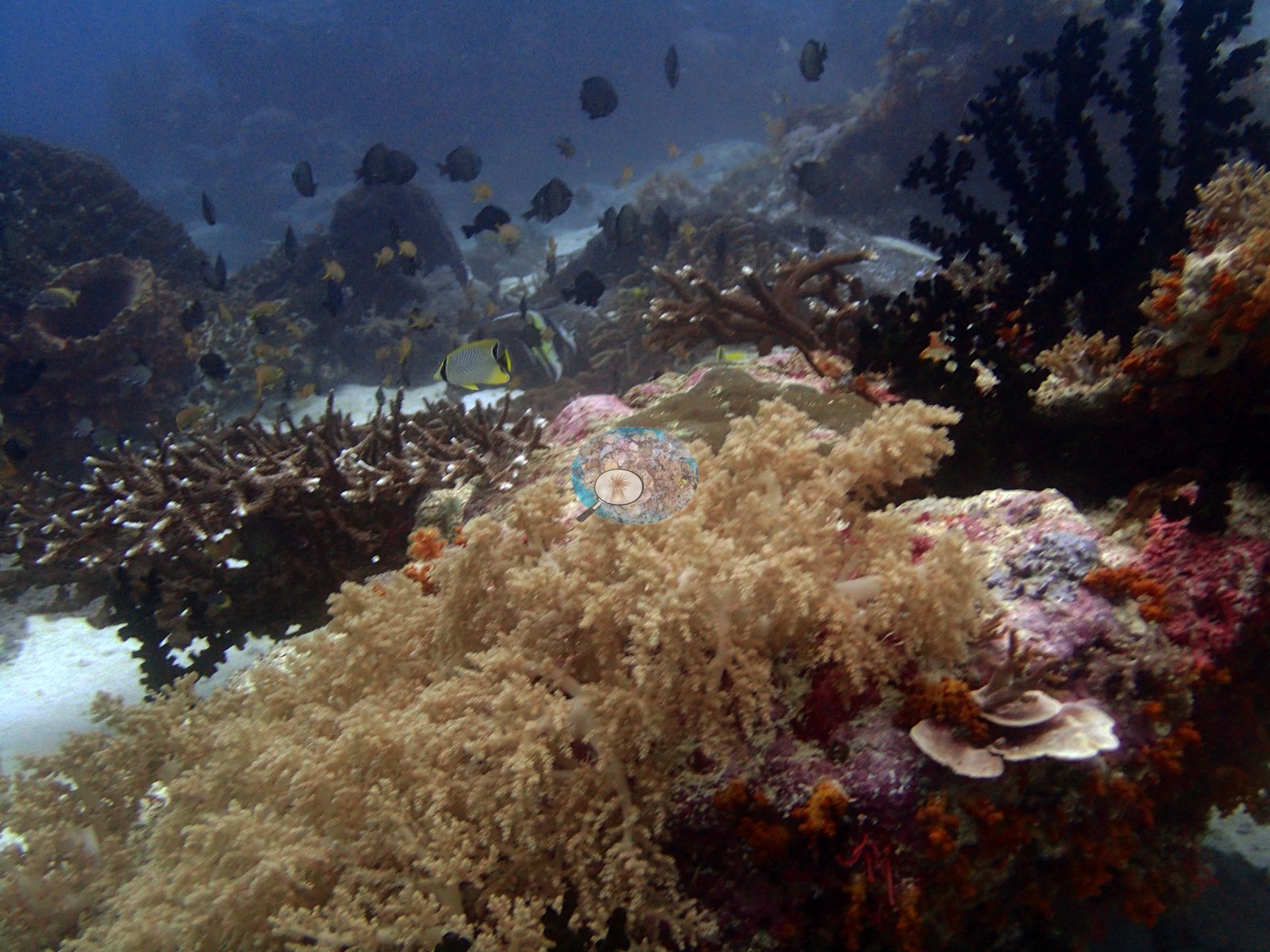
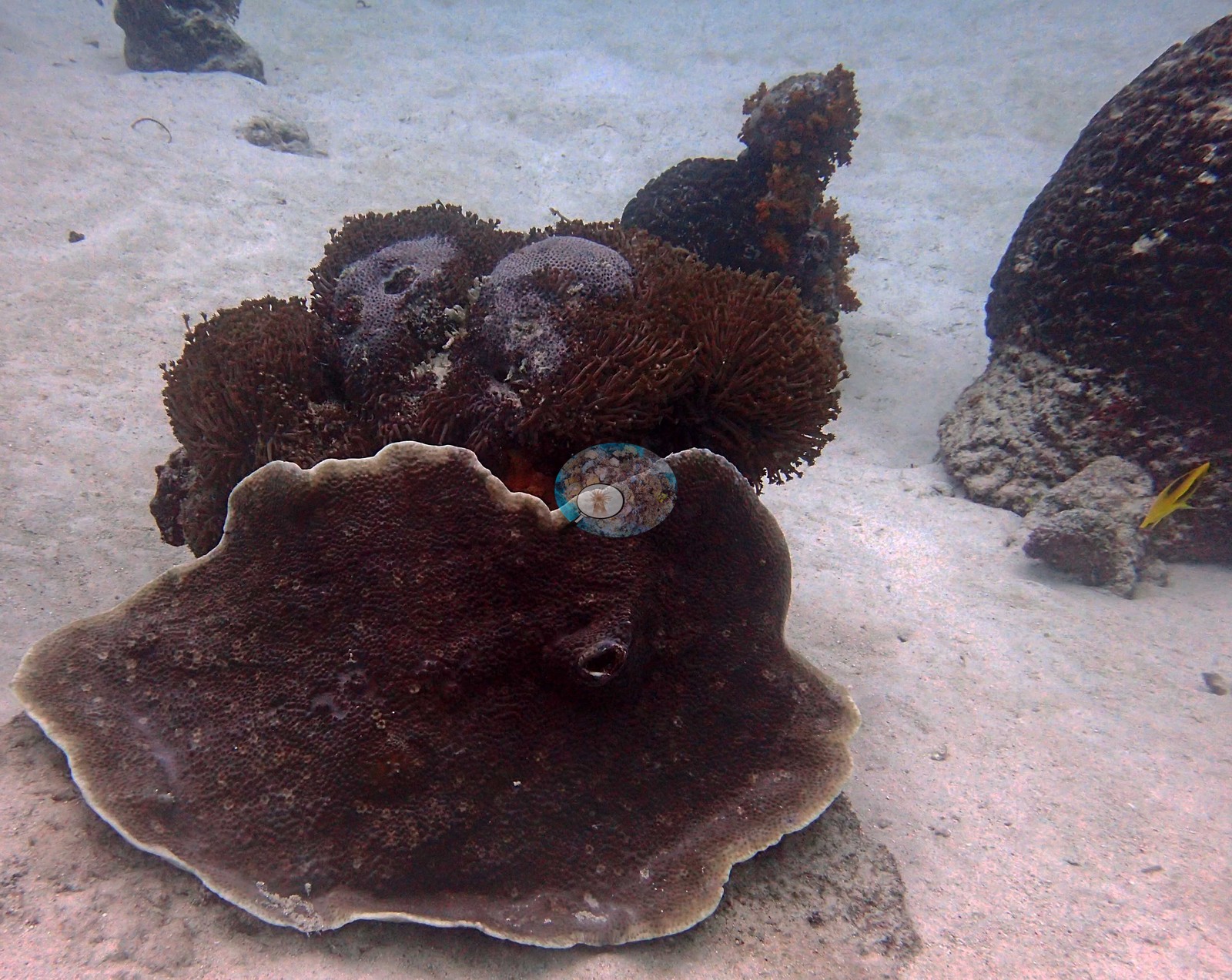
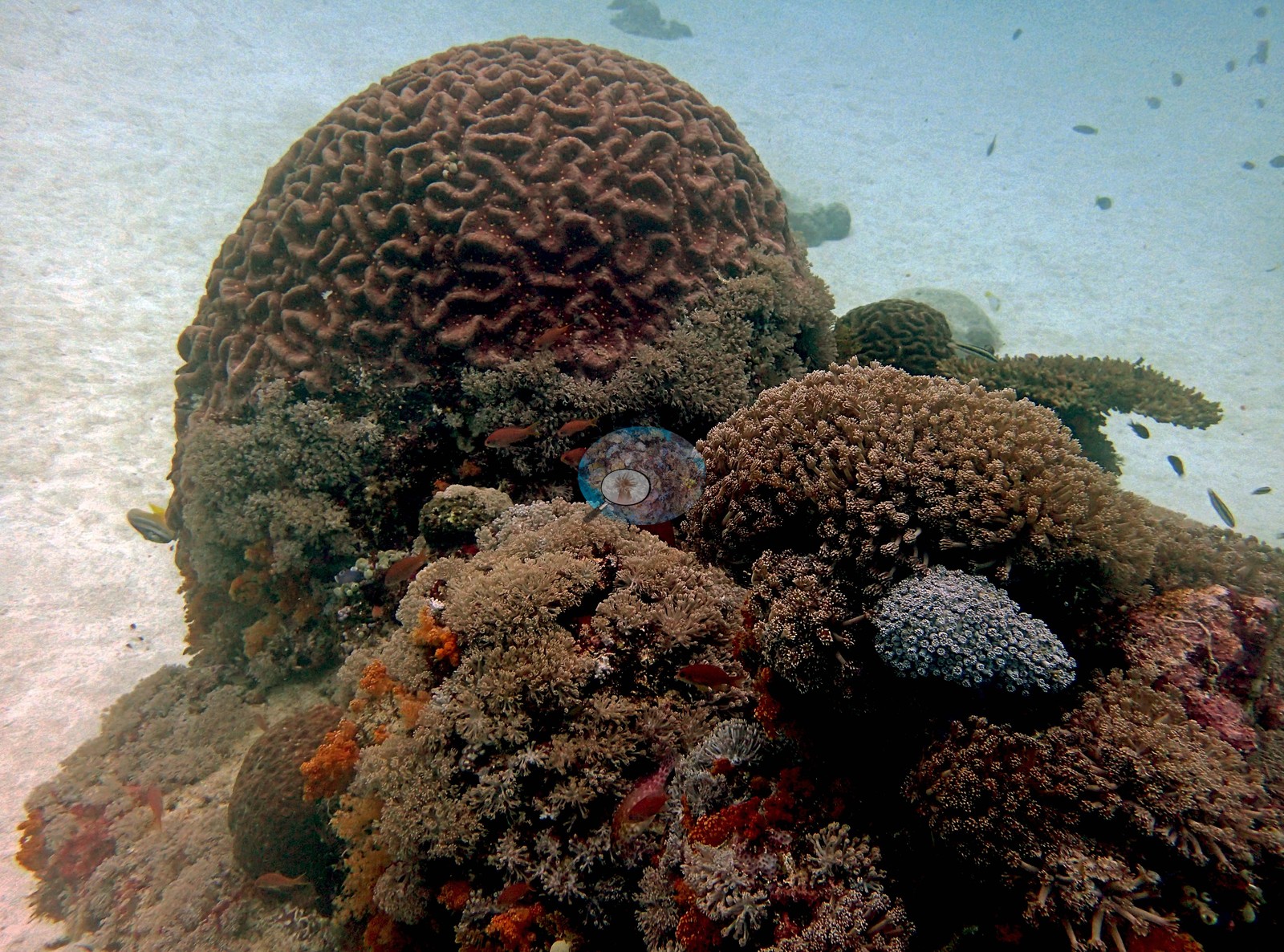
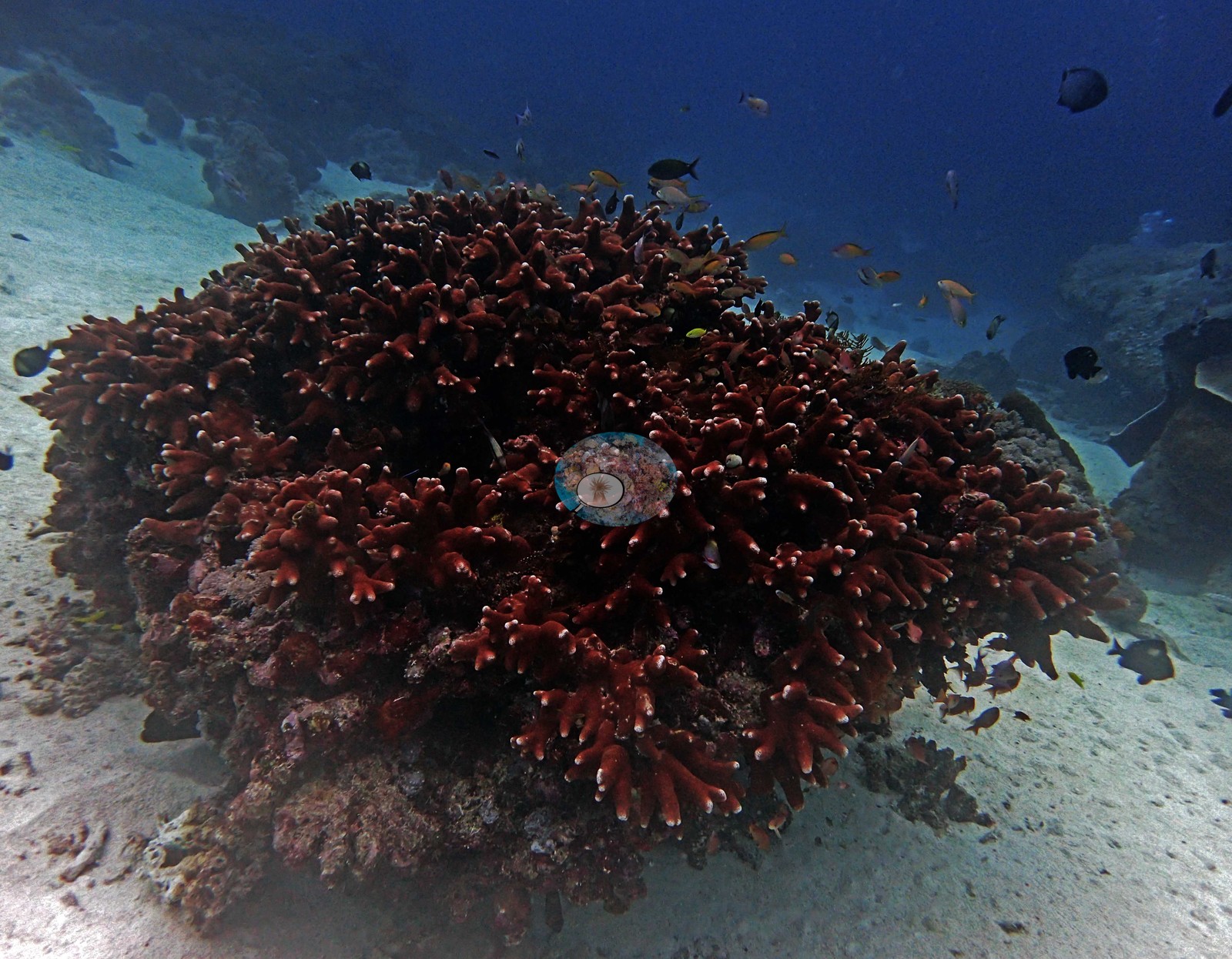
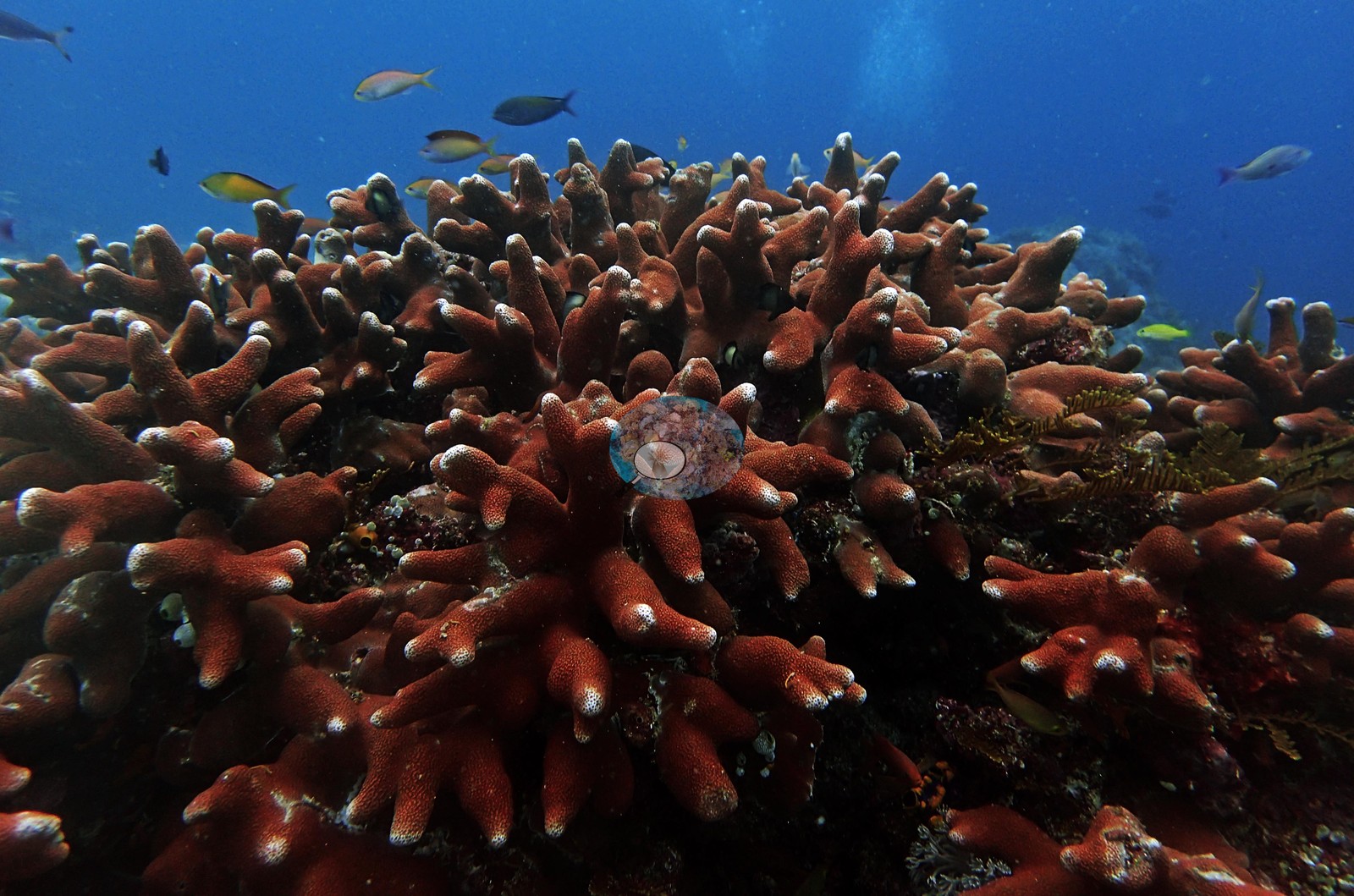
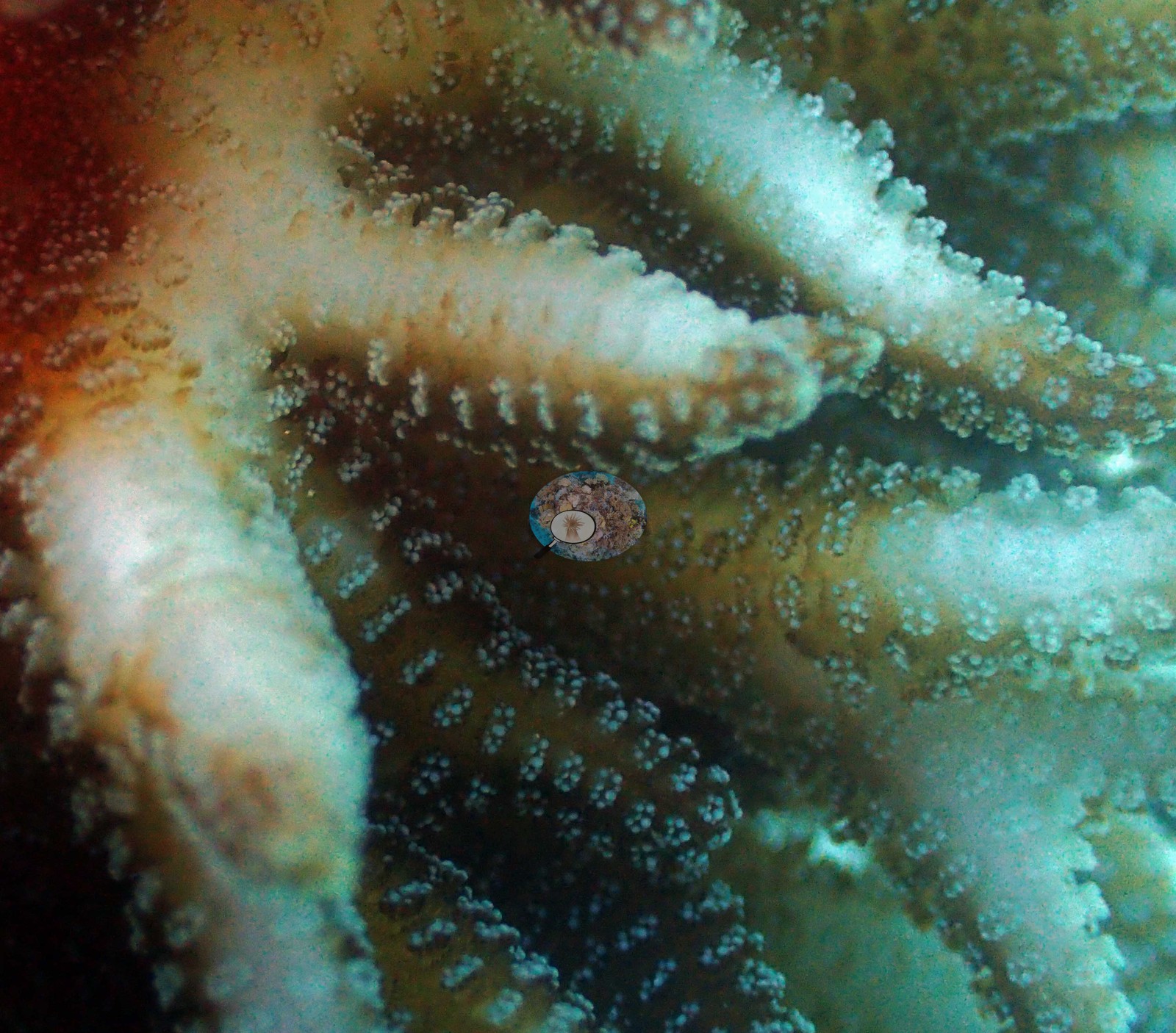
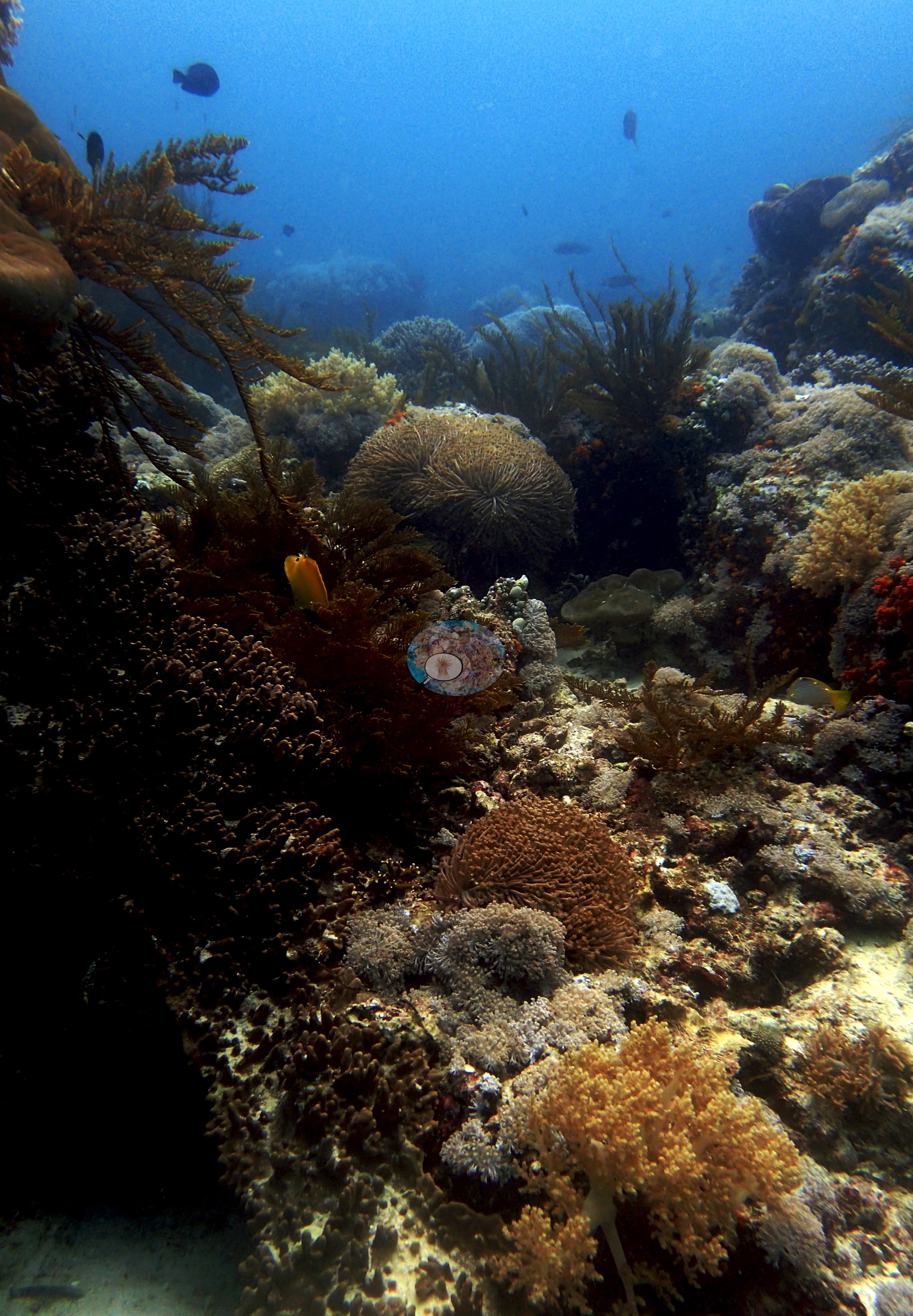
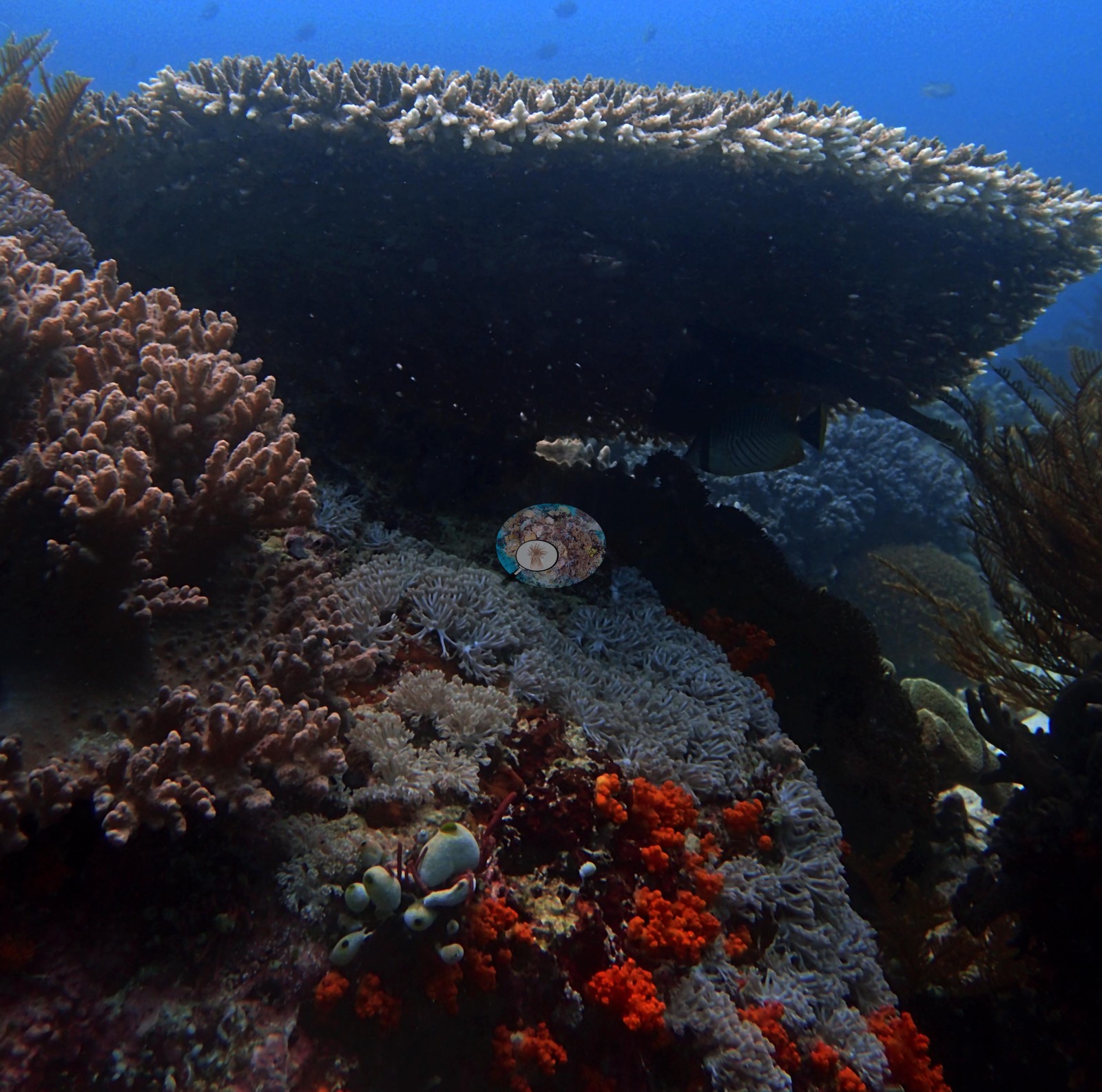
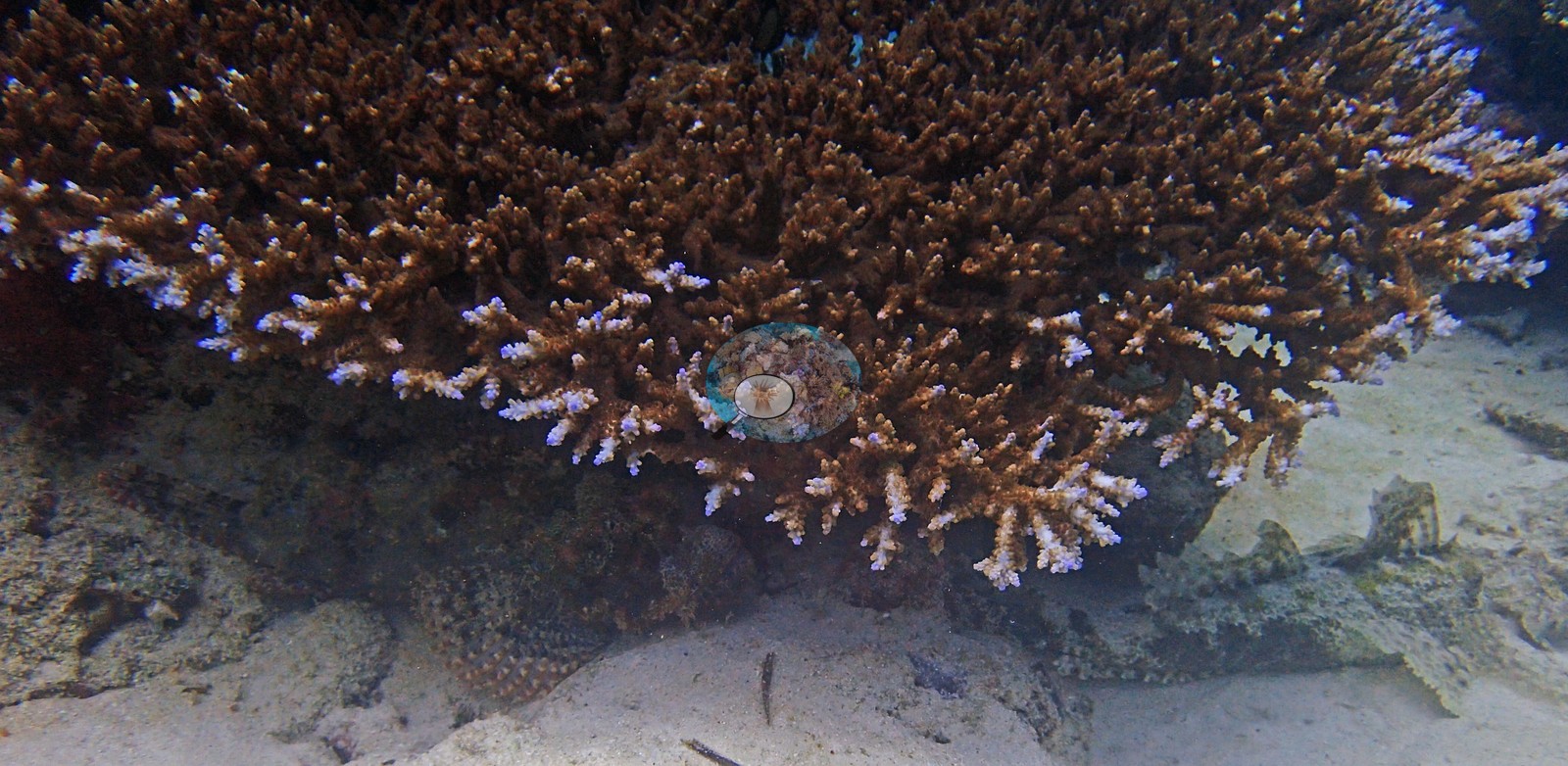
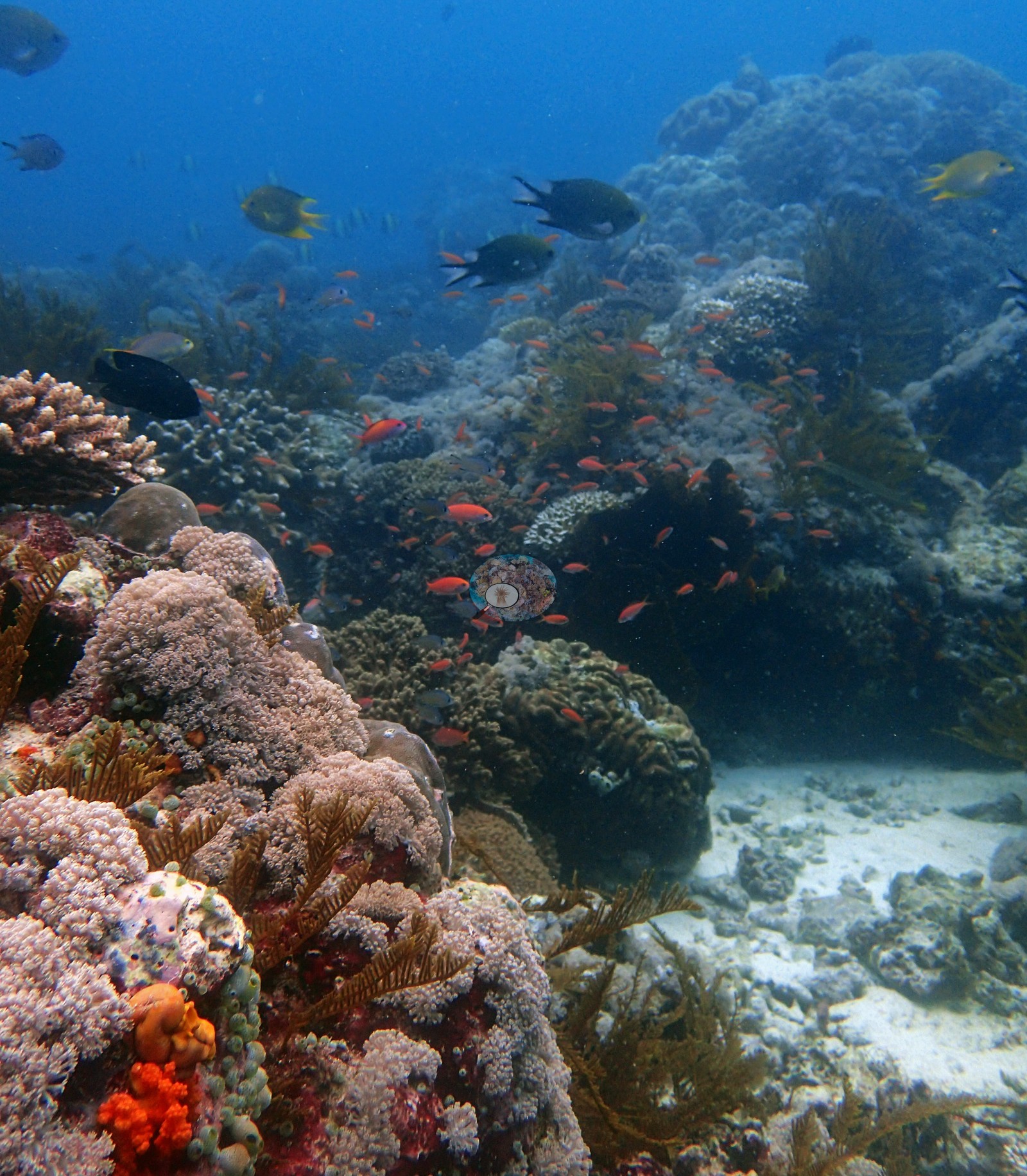
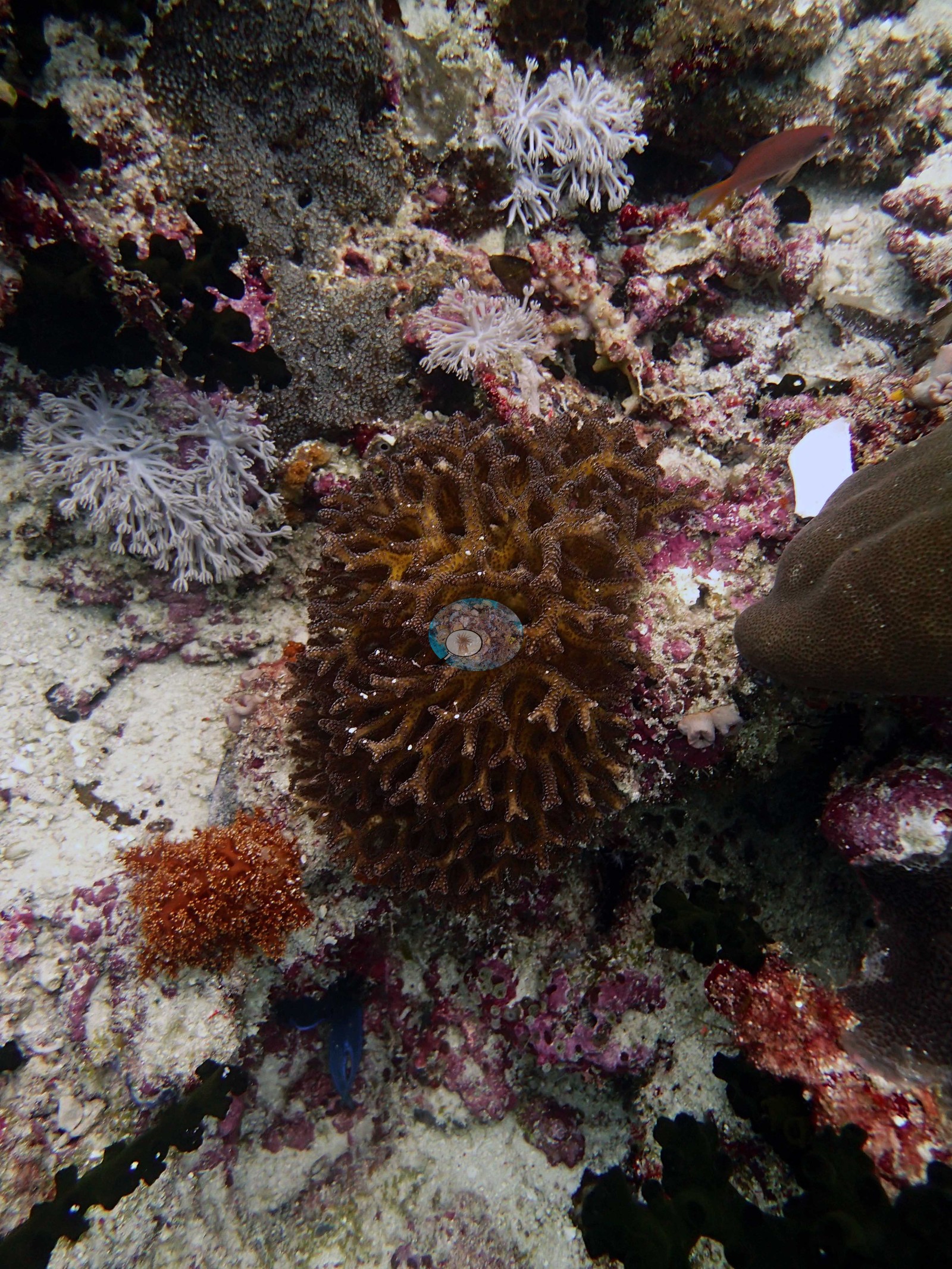
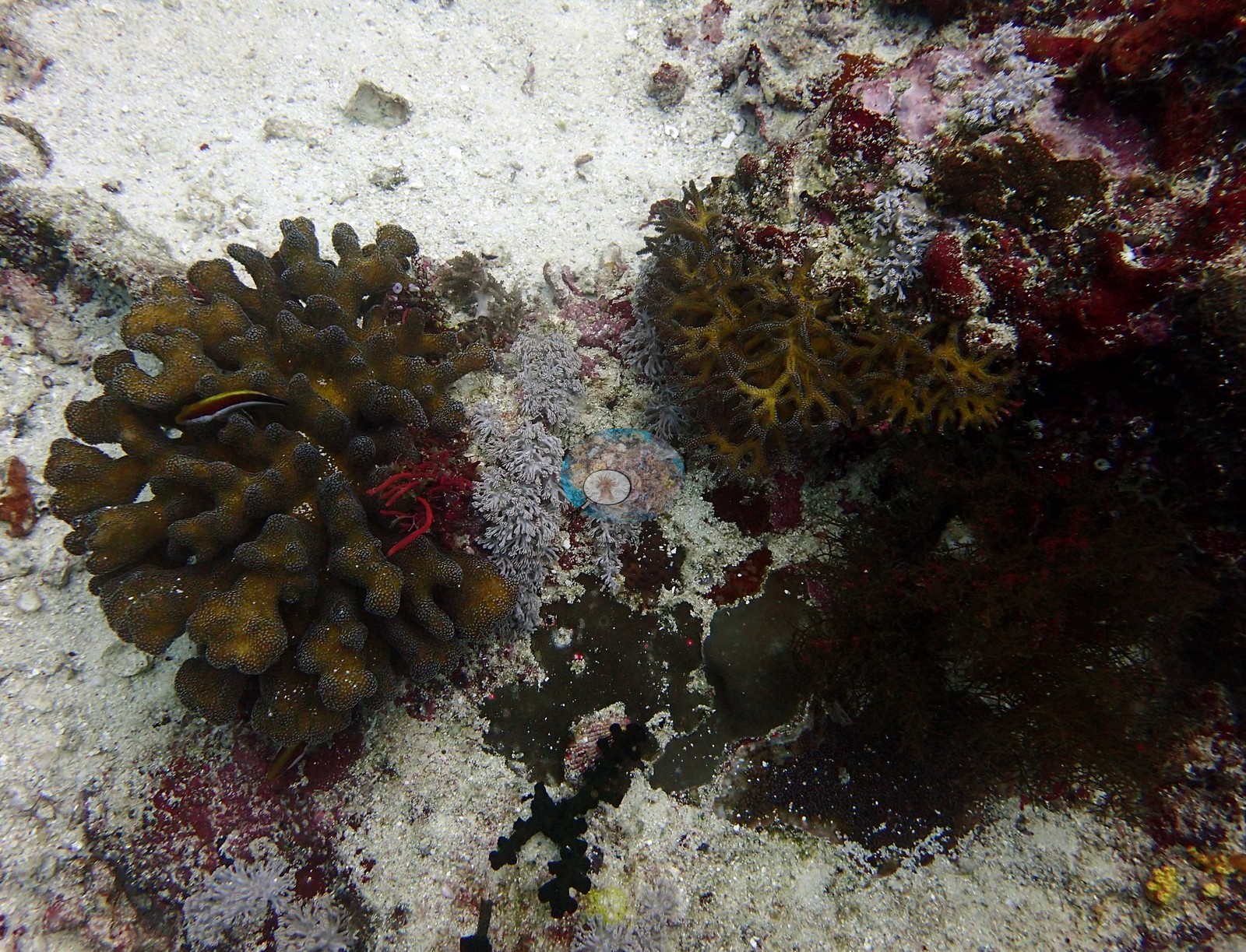
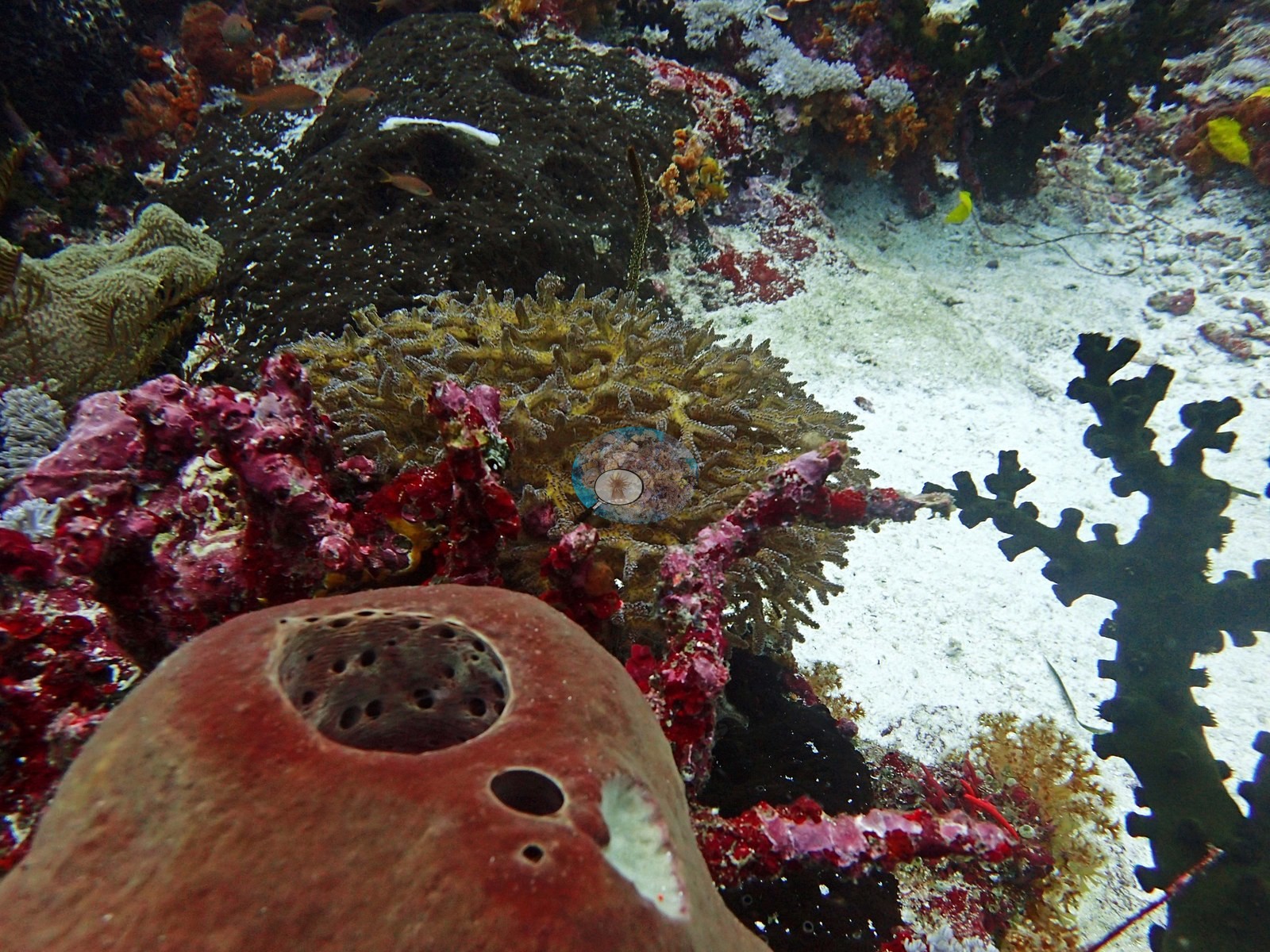
The structure is mound-and-channel: discrete coral bommies, plate stacks, and rock outcrops rising off broad open sand, with a steeper coral-covered flank running up out of frame and a hazy blue drop-off falling away on the other side. Large areas of the substrate are bare sand or coralline-crusted dead pavement — this is not a wall-to-wall coral carpet, and several frames are mostly sand with a single colony in them. Hard corals cover the full range of growth forms and several colonies are genuinely large. Tabulate Acropora is spectacular: at least one table well over two meters across, its underside a dark cavern sheltering butterflyfish, with a clean fringe of pale branch tips around the rim. Alongside it are corymbose and digitate acroporids, delicate fine-branched staghorn thickets with lilac-blue branch tips, and — the visual signature of this dive — a huge, near-monospecific stand of a thick, blunt-branched, deep rust-red digitate coral with white branch tips, filling two wide frames end to end. Massive and encrusting corals include big dome and helmet Porites-form bommies with the fine even corallites clearly resolved in macro, plating and laminar colonies with cupped margins on open sand, and coarse meandroid/knobbly heads (e.g., Image 3).
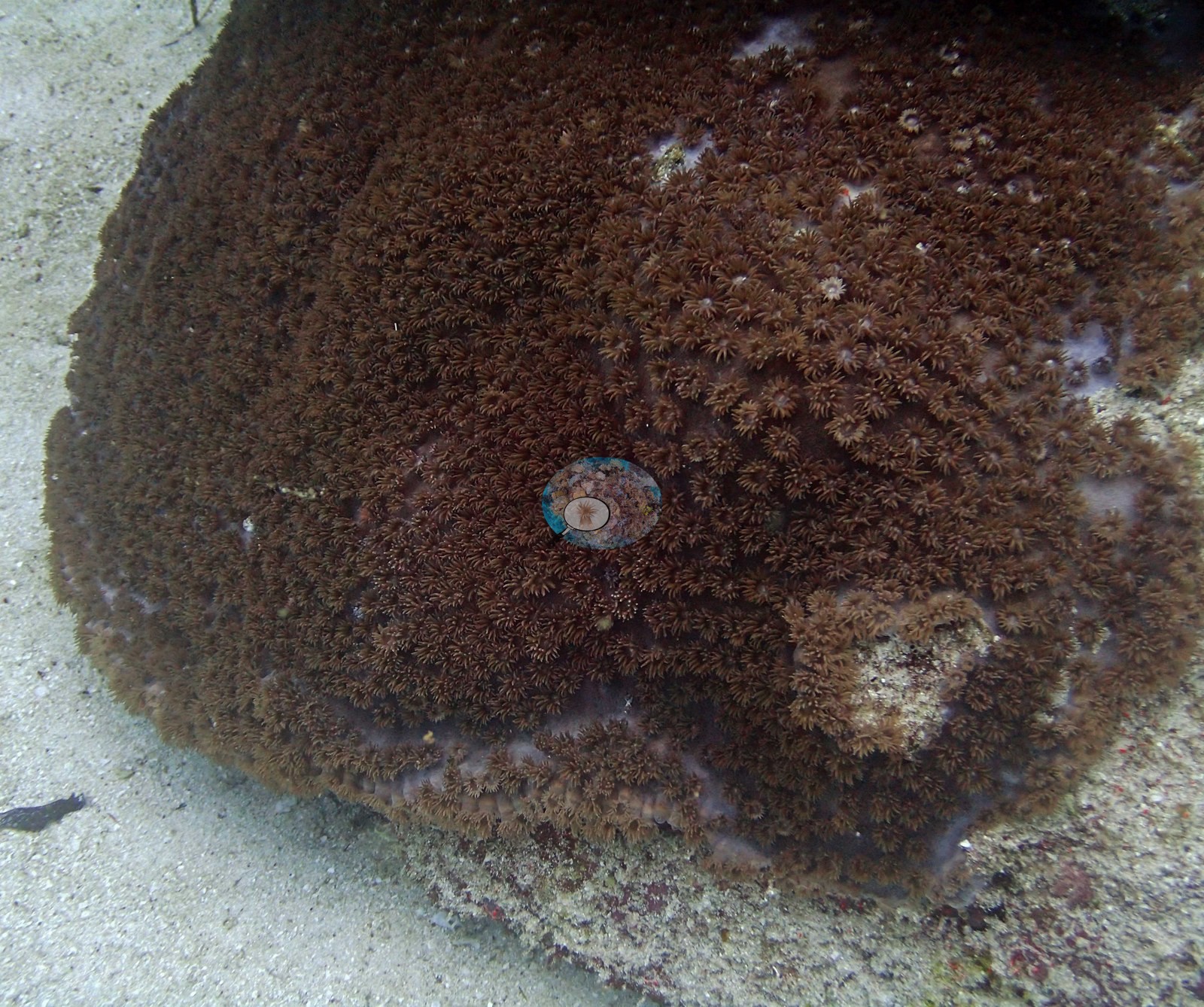
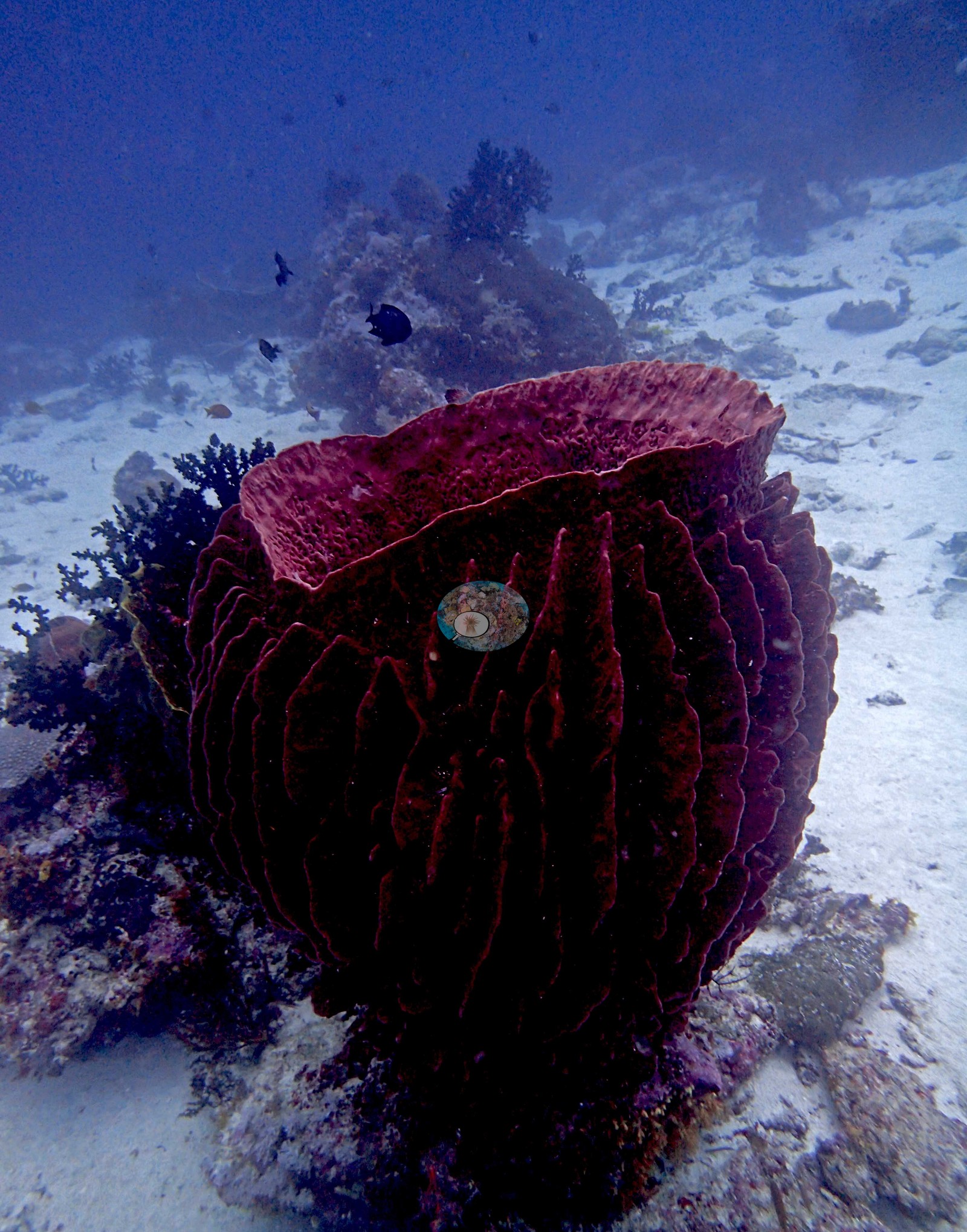
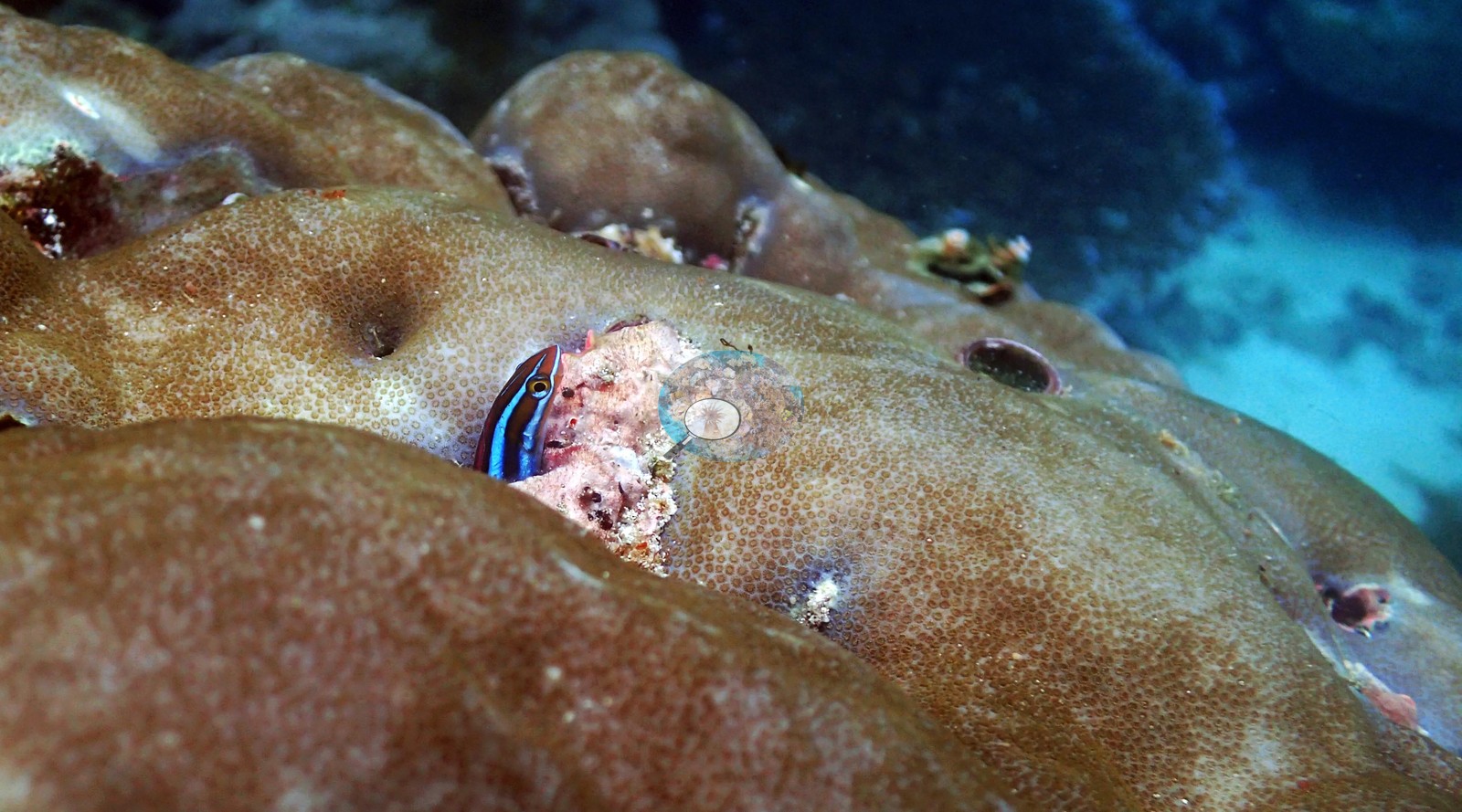
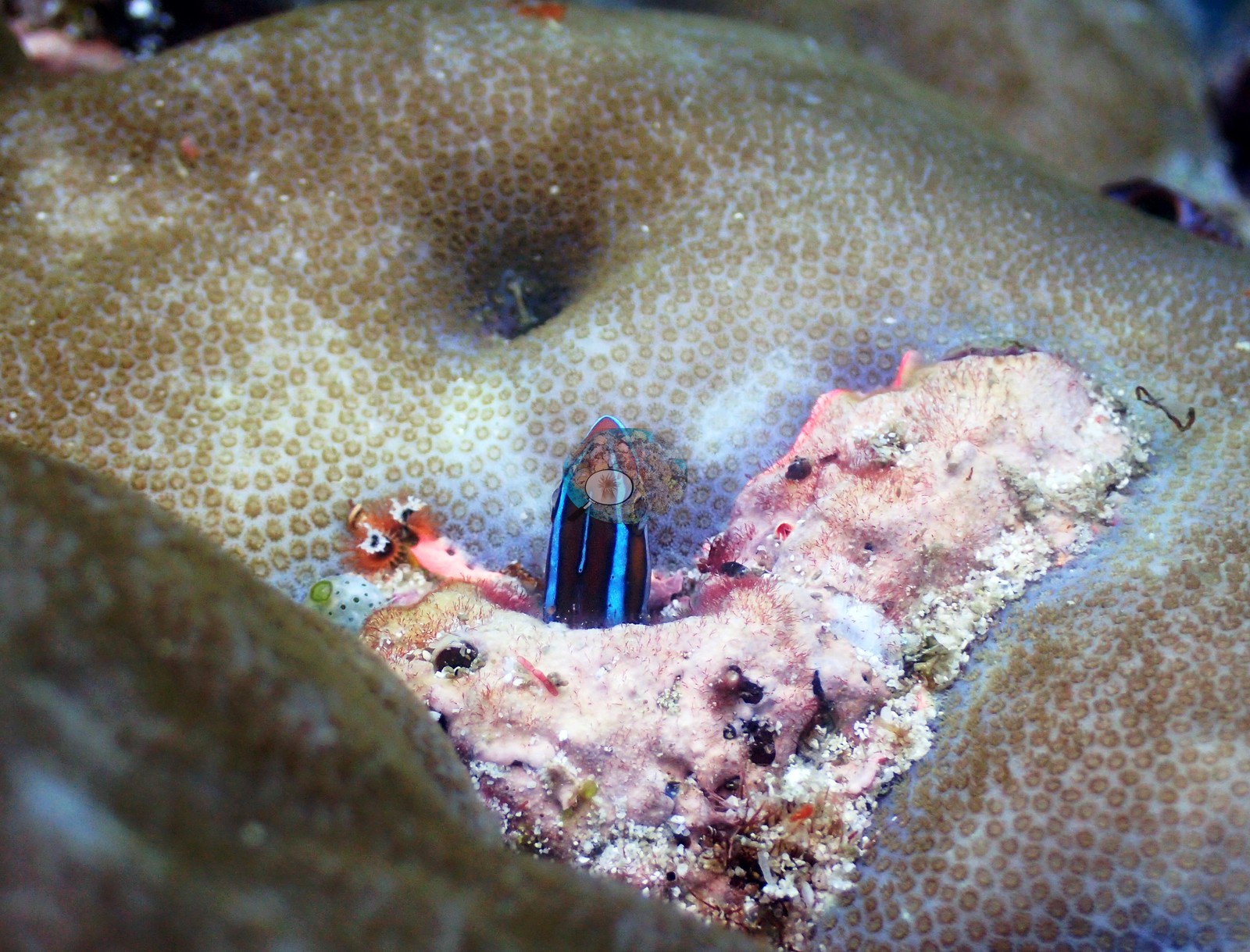
Anderson's own filenames record Seriatopora caliendrum, a seriatoporid, and Stylophora and Seriatopora together — pocilloporids are clearly a focus of this dive and appear as fine bushy colonies in cream, white, and pale pink. Octocorals and other soft-bodied cover are abundant on the bommie flanks: dense white and pale-lilac carpets of fine feathery pulsing octocoral (Xenia/Anthelia mold) blanketing whole rock faces, cream and gray leathery soft corals, tall bushy soft-coral trees, and bright red-orange Dendronephthya-type clumps. Black-coral and hydroid bushes (feathery ochre and dark brown fans) are everywhere on the deeper slope, along with fine whip corals. Non-coral benthos is unusually prominent and worth recording: extensive purple, magenta, and pink crustose coralline algae, in places forming whole encrusted overhangs; brilliant red and scarlet encrusting sponges; a large maroon barrel/vase sponge on sand; small blue, yellow, white, and translucent solitary and colonial ascidians in dense clusters; a purple-and-yellow Polycarpa-pattern ascidian; a striking pink-and-cream flabellate sponge; abundant crinoids; and Christmas-tree worms embedded in massive Porites (e.g., Image 2).
Coral cover
Coral cover: 25% — a blind Claude computer-vision point count of 52 of Anderson's edited photographs (20 points per photo; water, fish, and obstructions excluded). Other computer-vision methods are listed in the method table.
Stressors
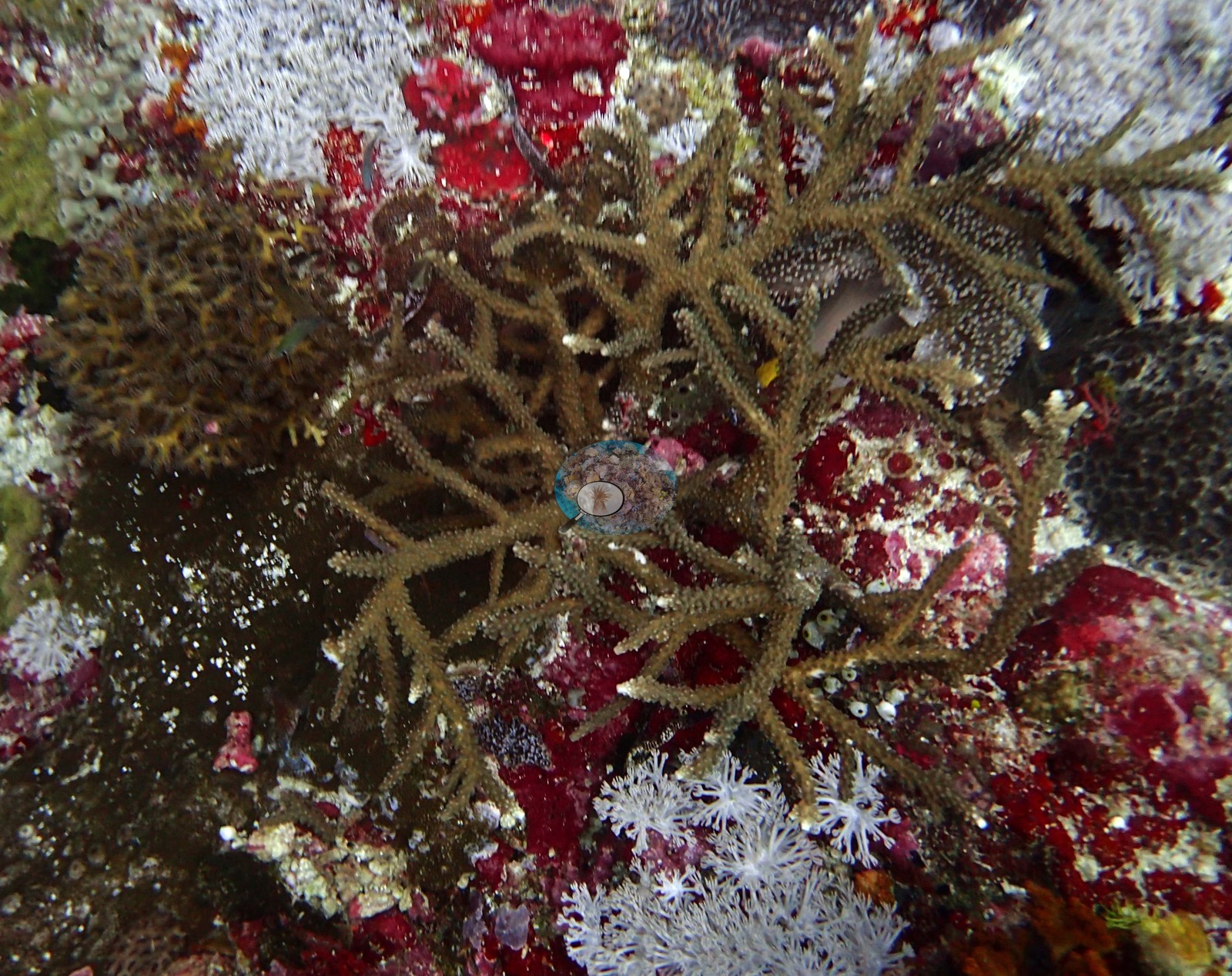
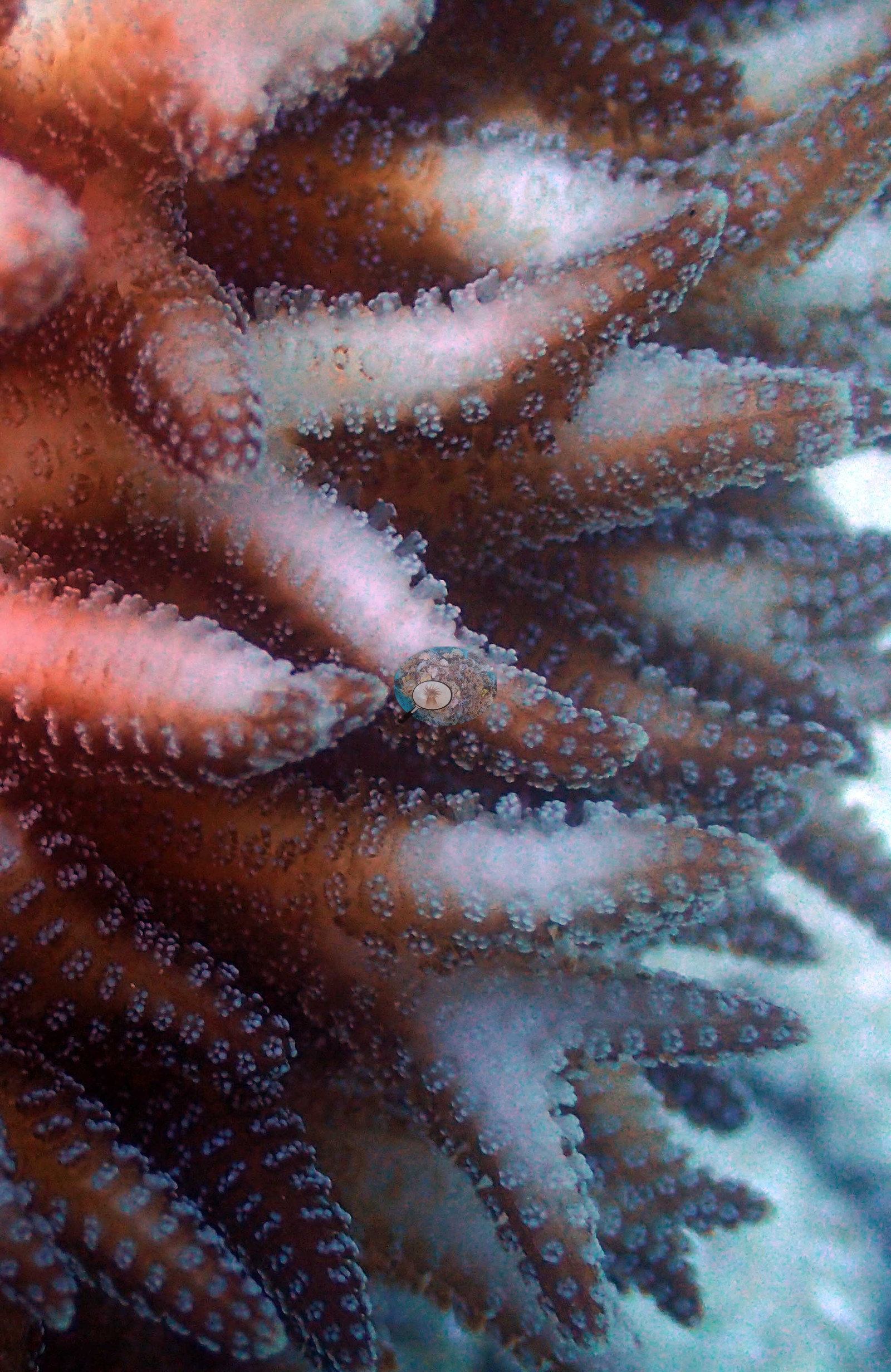
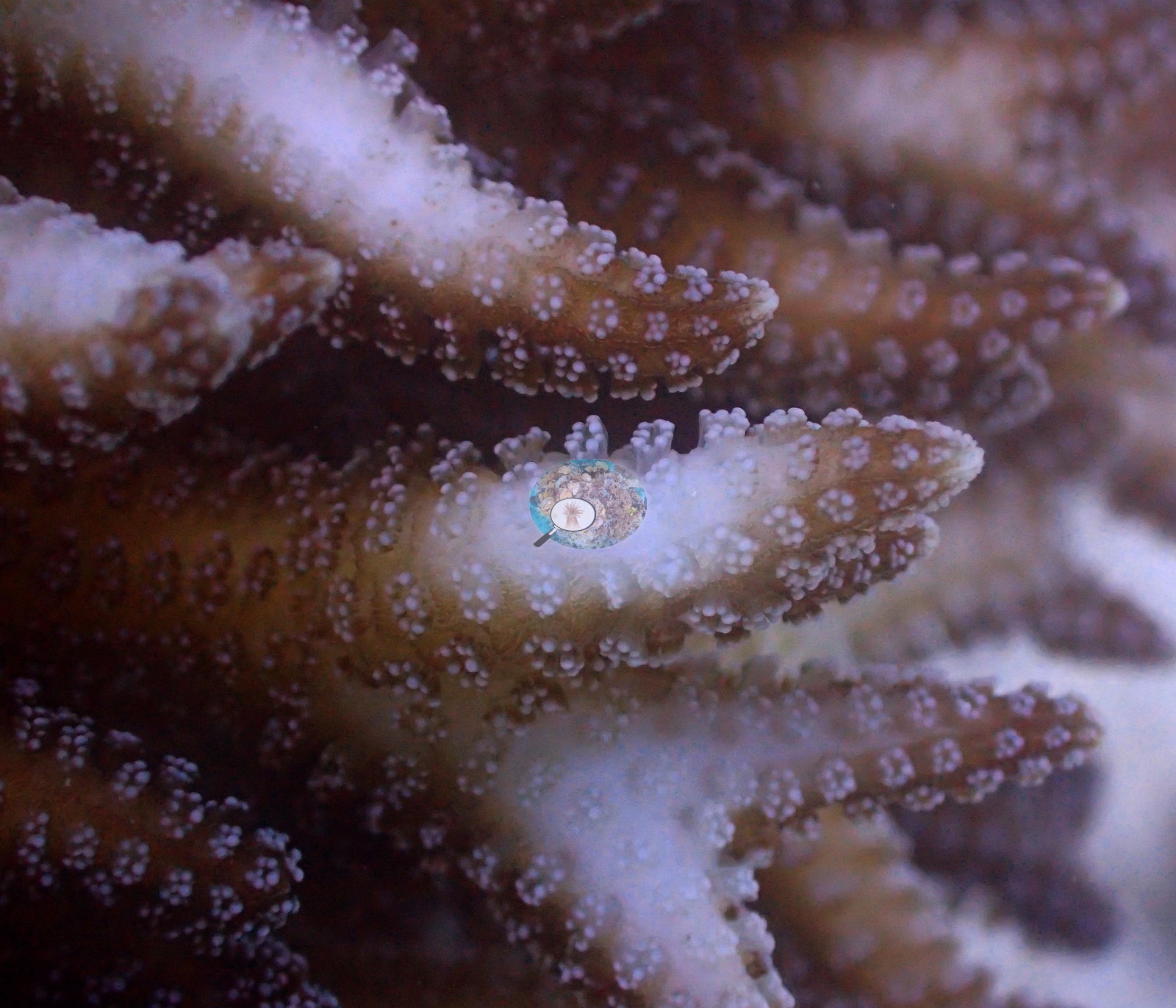
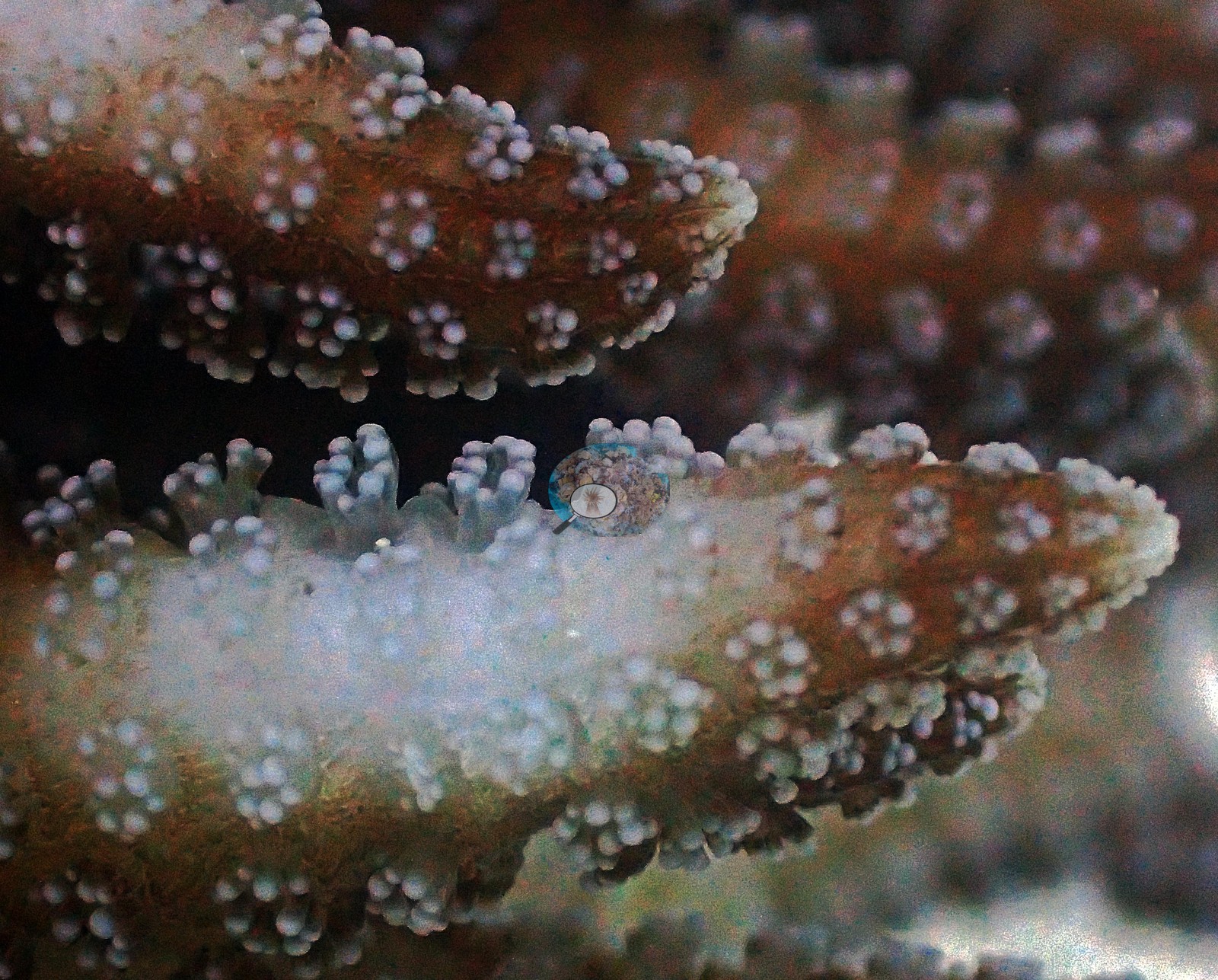
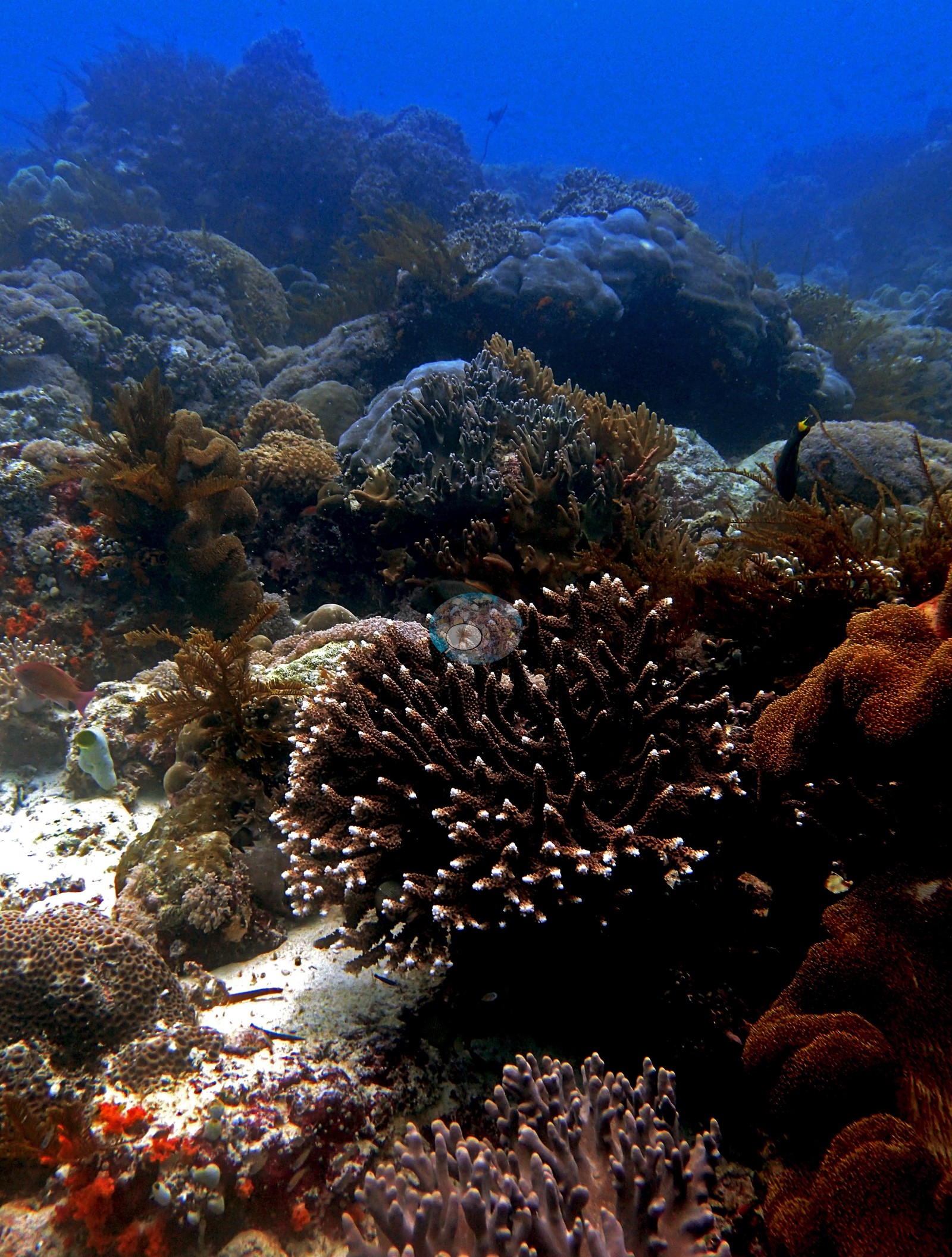
A specific health finding, and this one is the strongest in the shard group: Anderson shot a deliberate close-up series — at least five frames — of branching Acropora in which individual branches and branch segments are stark white while the immediately adjacent branches on the same colony are normally pigmented brown-gold, with polyps still visible on the white tissue and the corallite structure intact (e.g., Image 4).
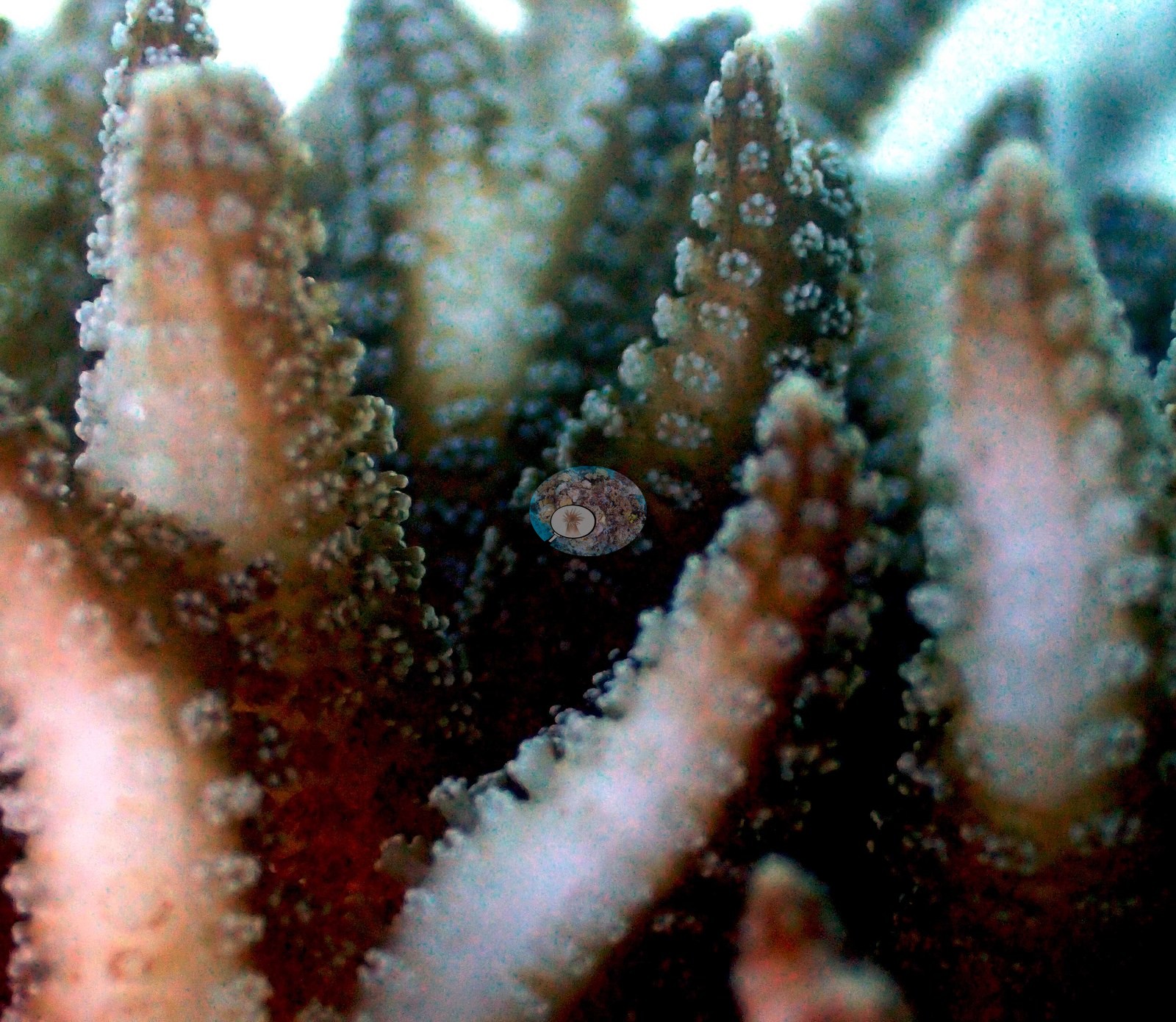
That is the appearance of active, patchy tissue bleaching or a tissue-loss front, not of long-dead skeleton. Separately, the massive Porites frames show small bare notches and pale lesion patches, some occupied by a blenny and some colonized by pink coralline algae and worm tubes — a mix of normal borer/blenny holes and genuine small tissue-loss scars. No crown-of-thorns, no obvious disease band, and no anchor or blast damage were seen.
Fish and other fauna
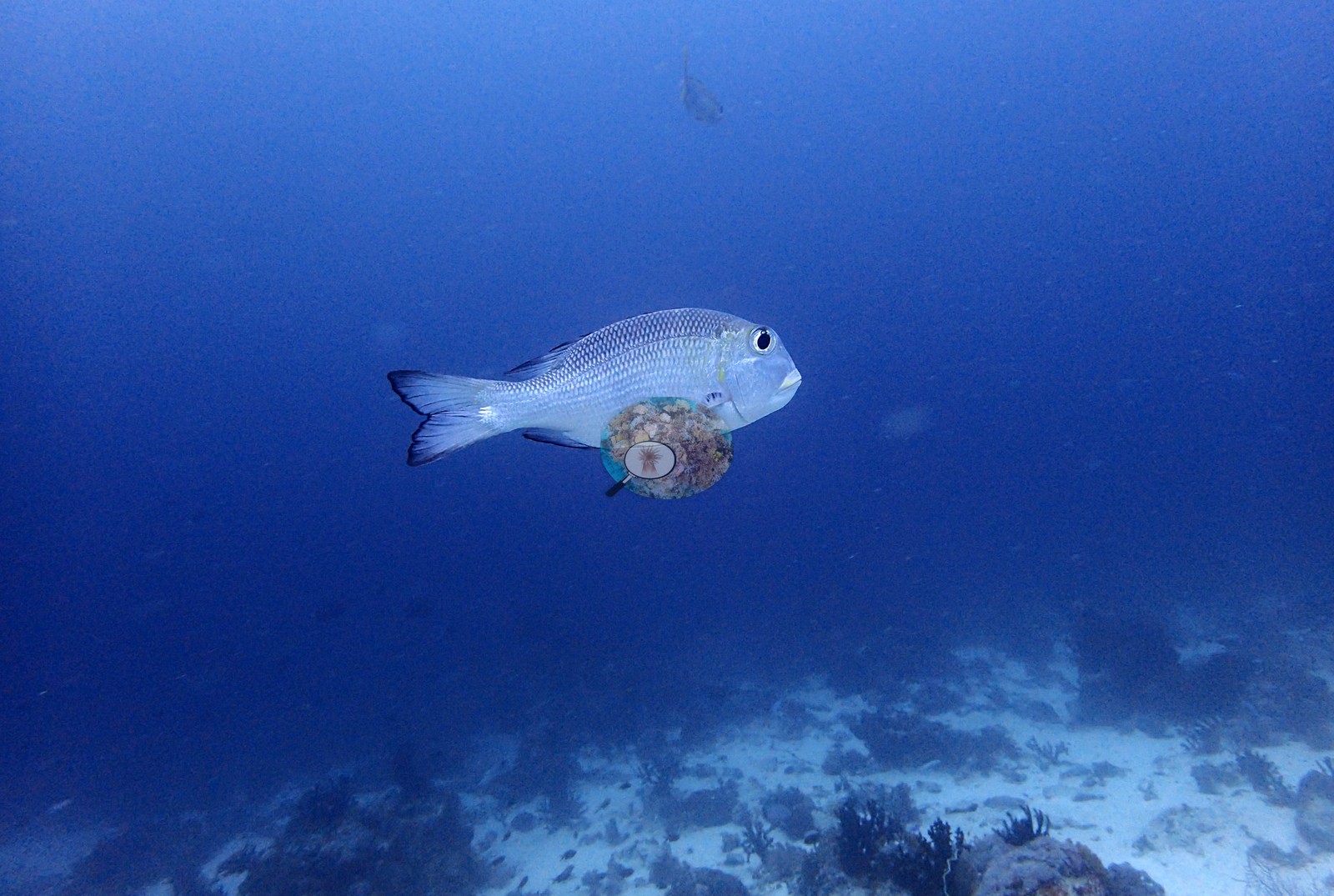
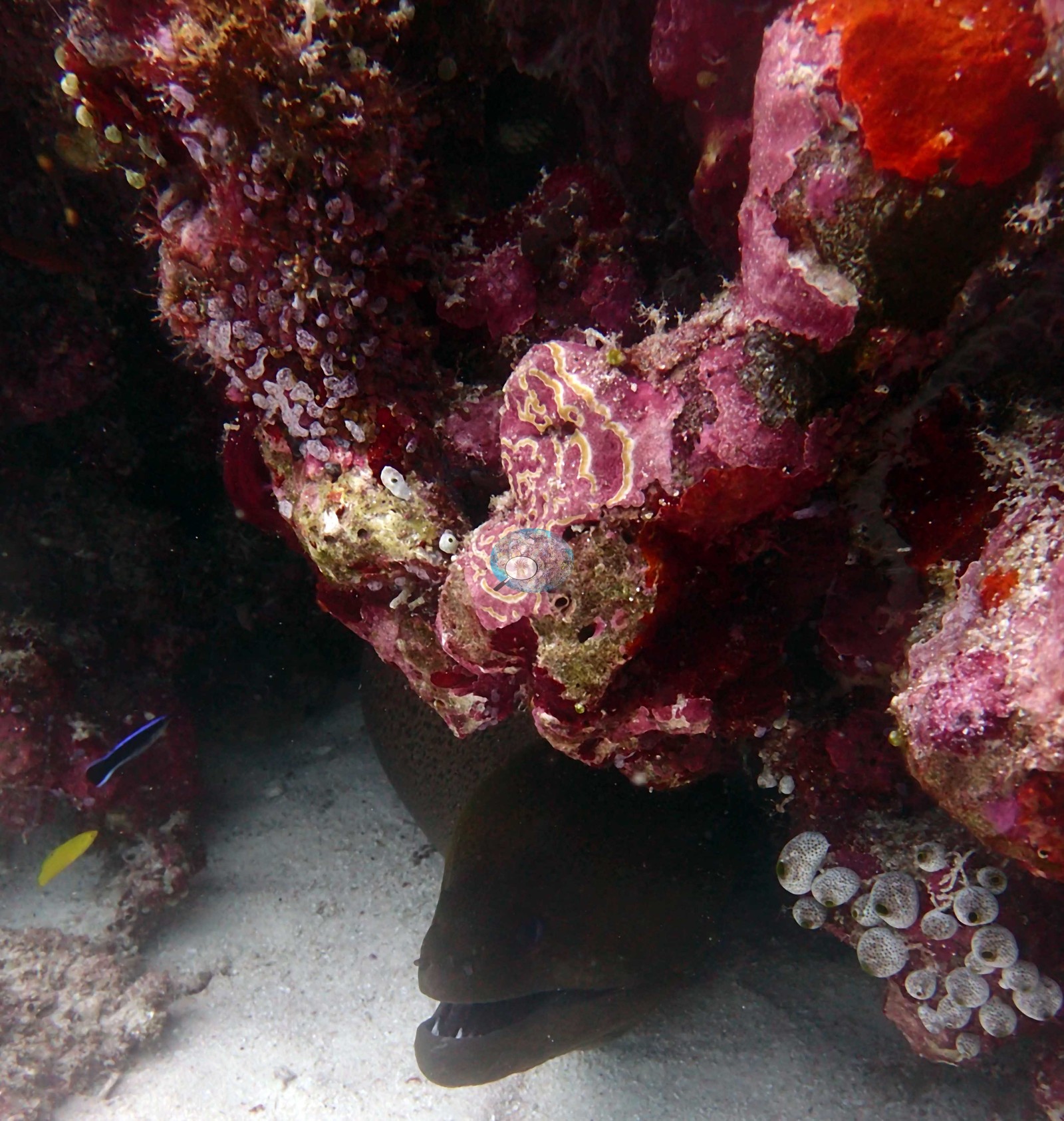
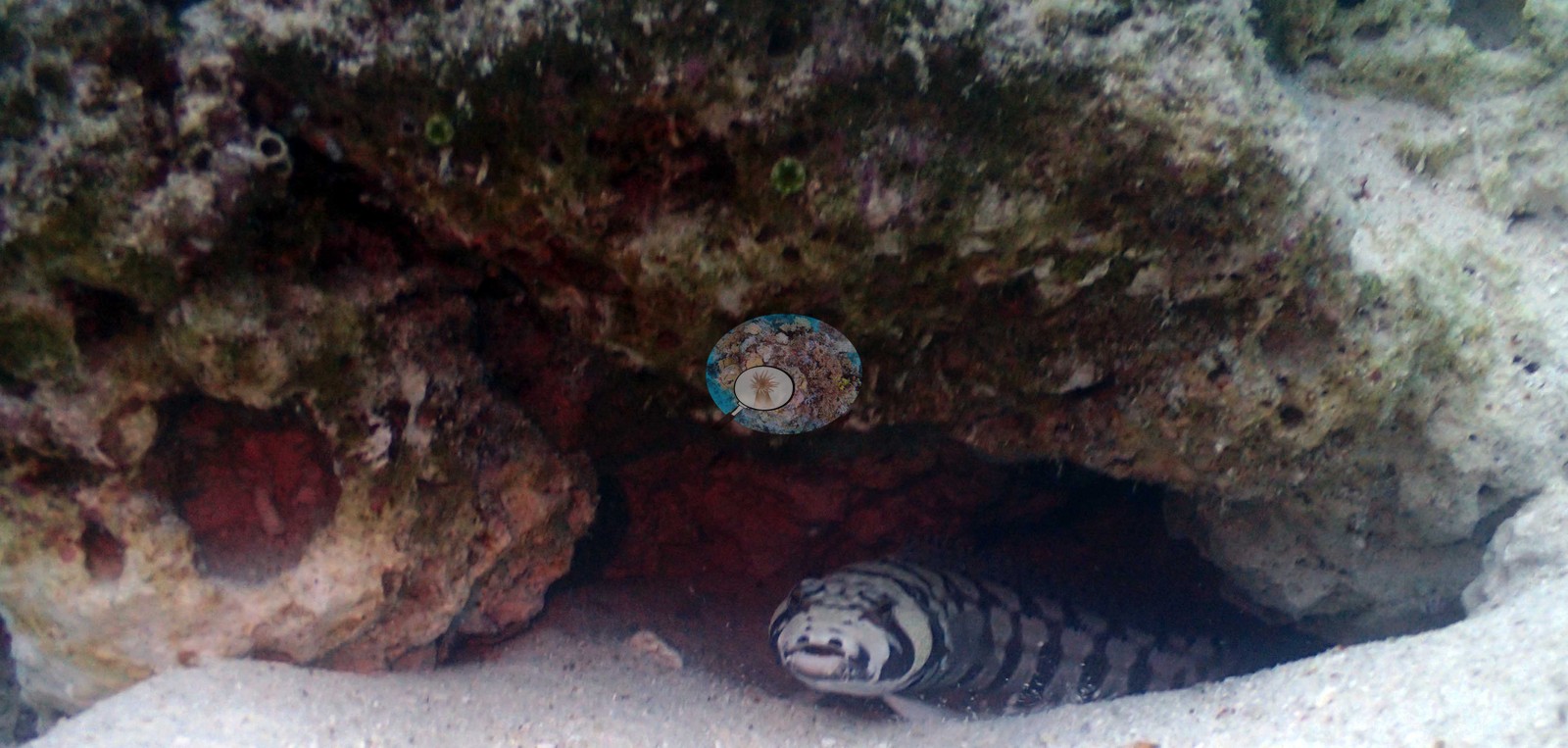
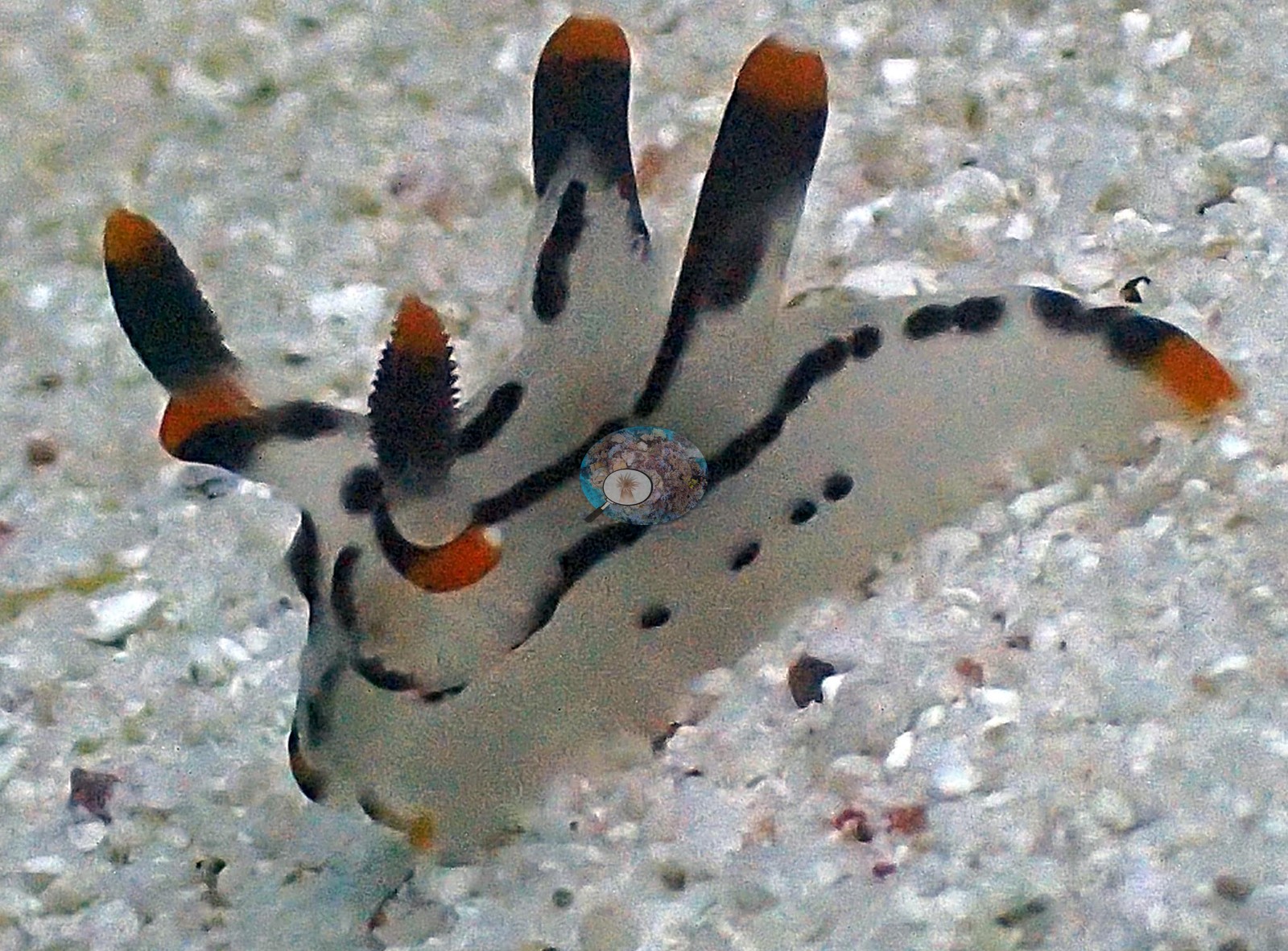
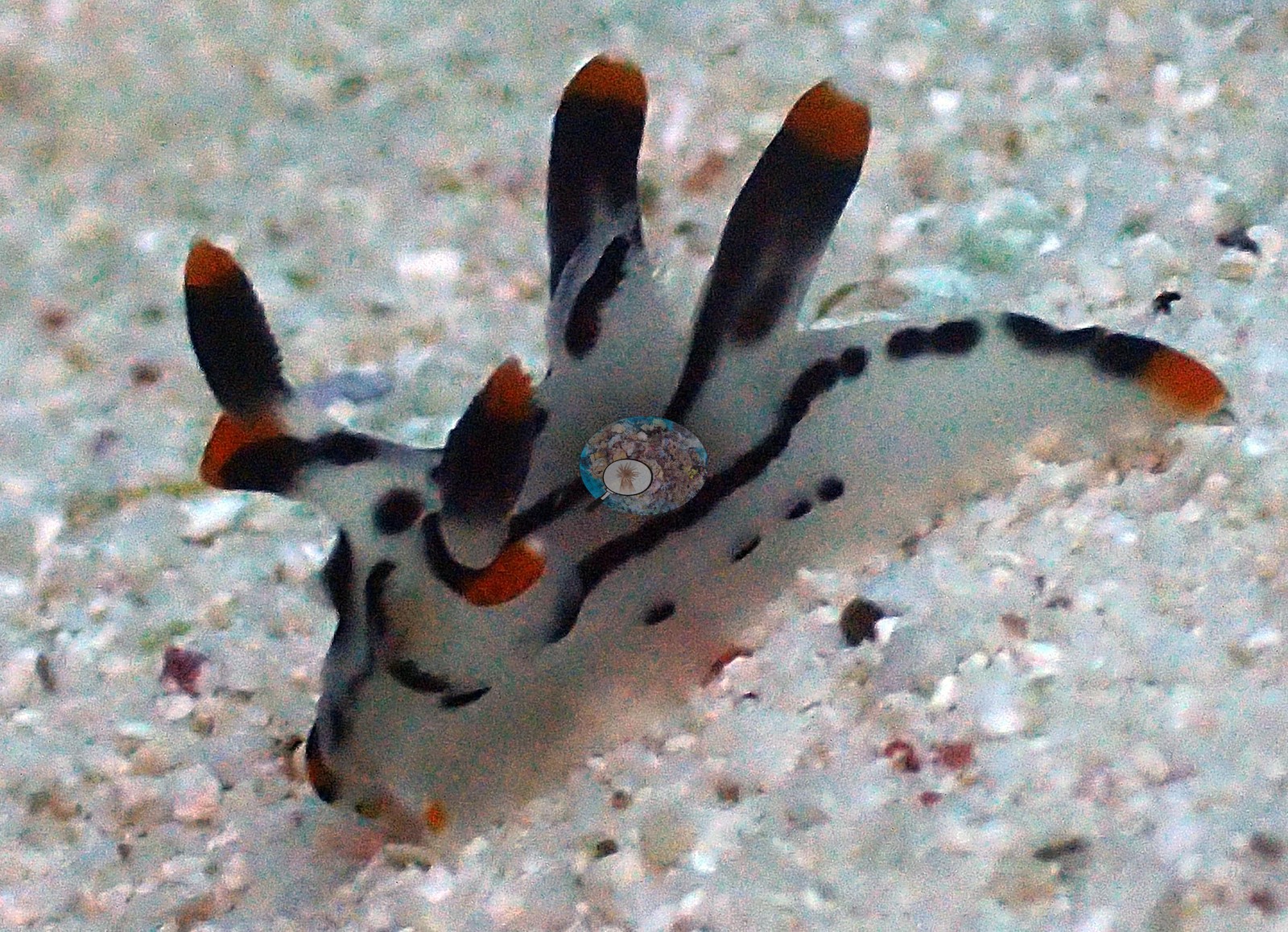
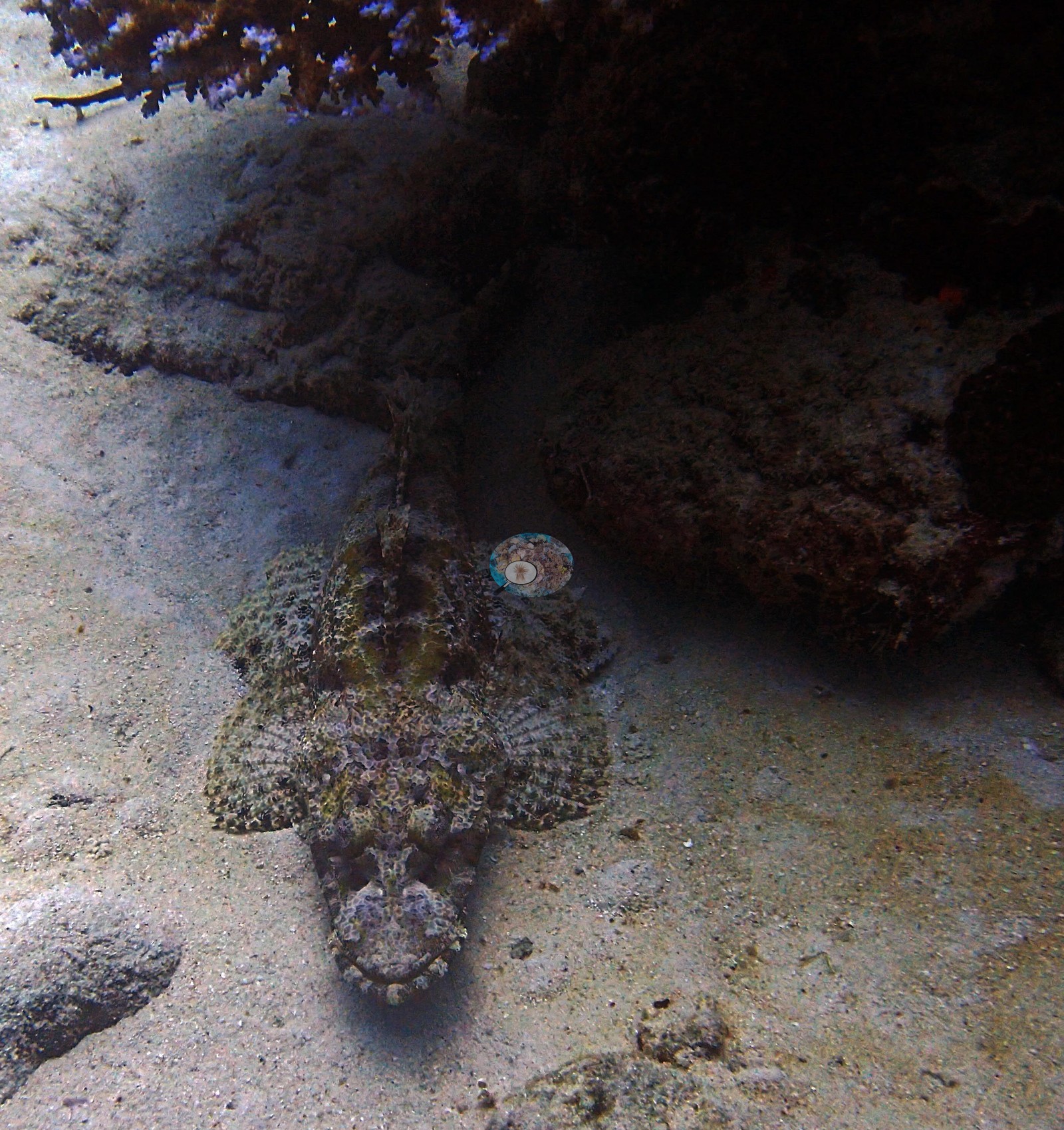
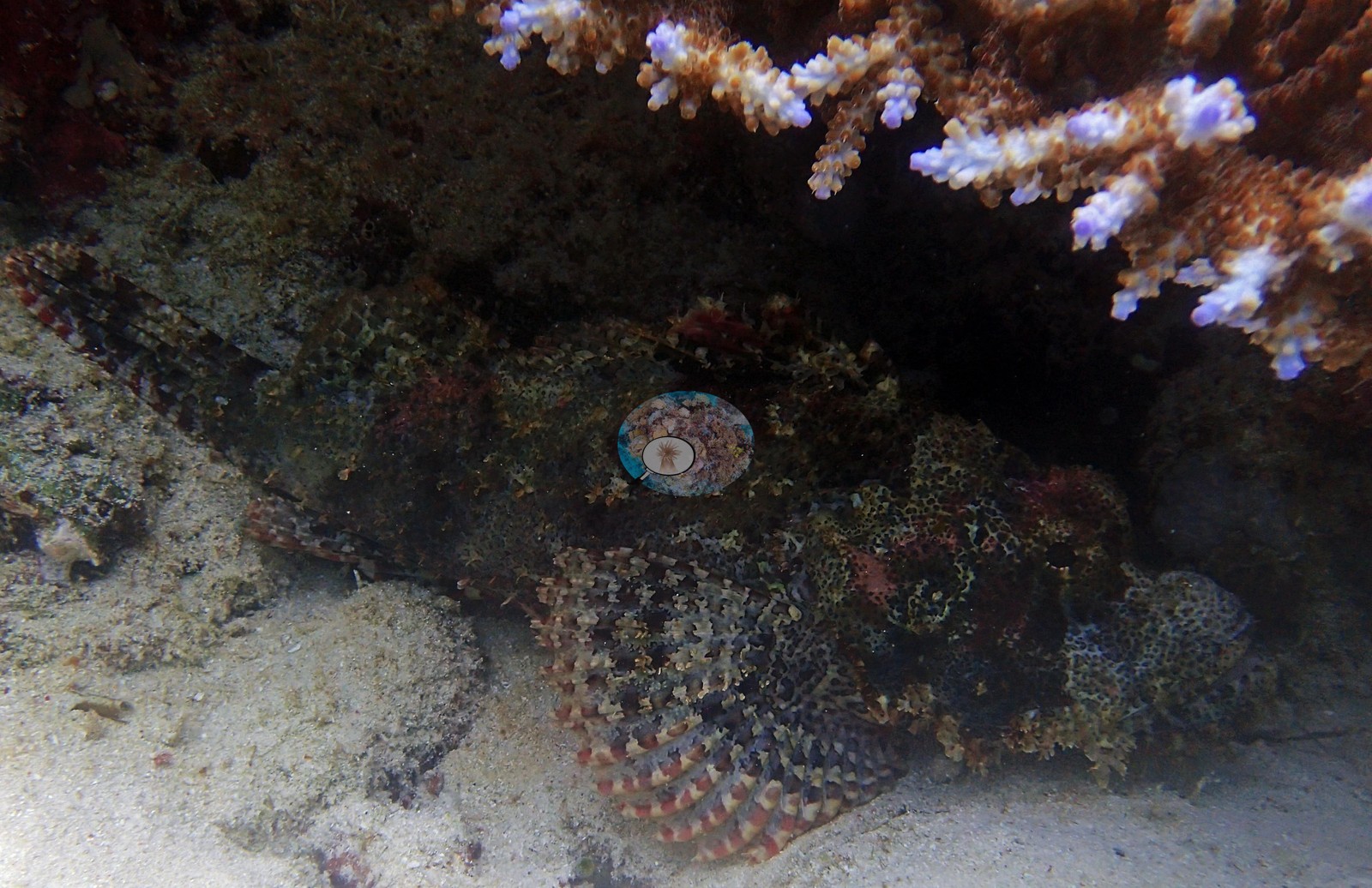
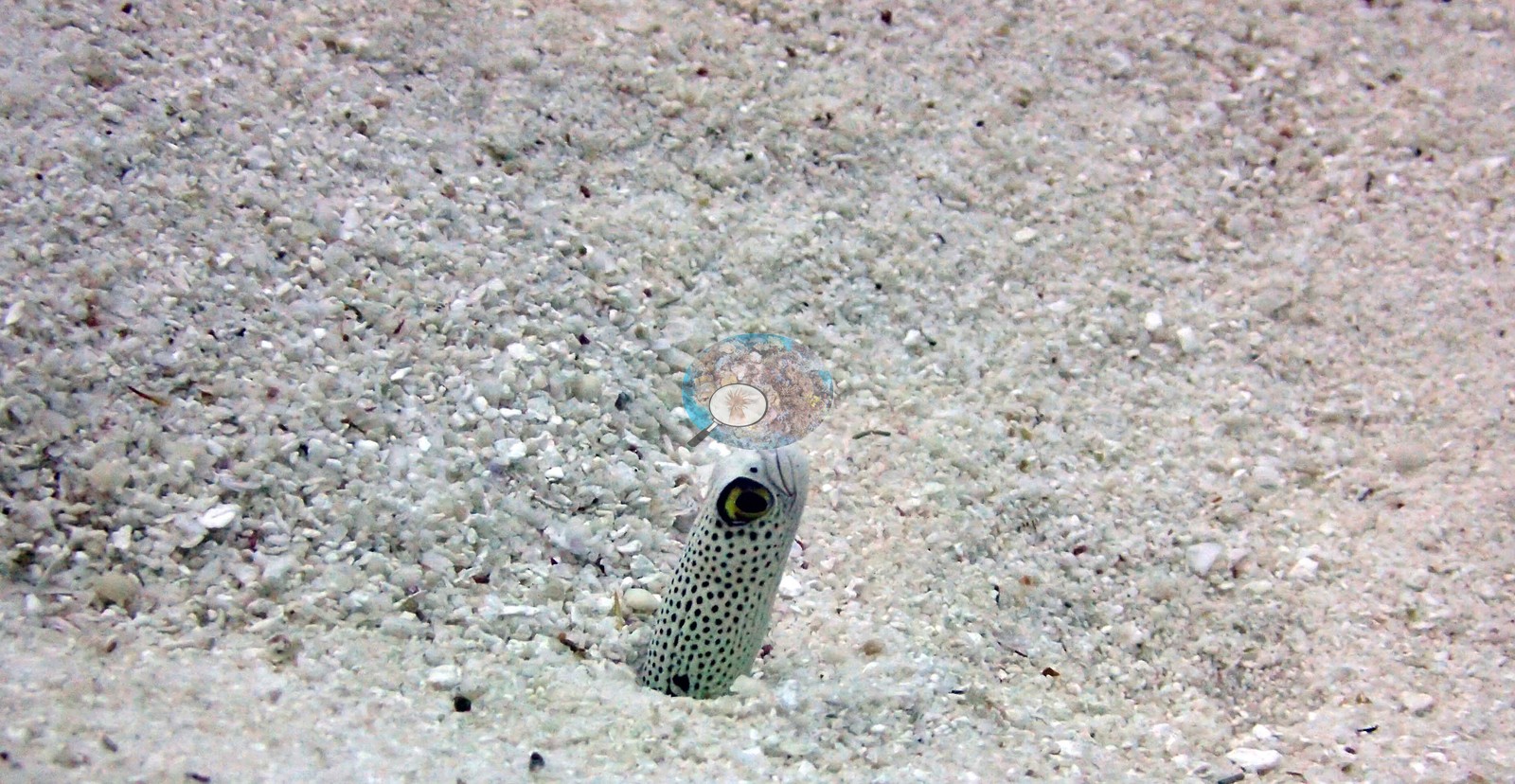
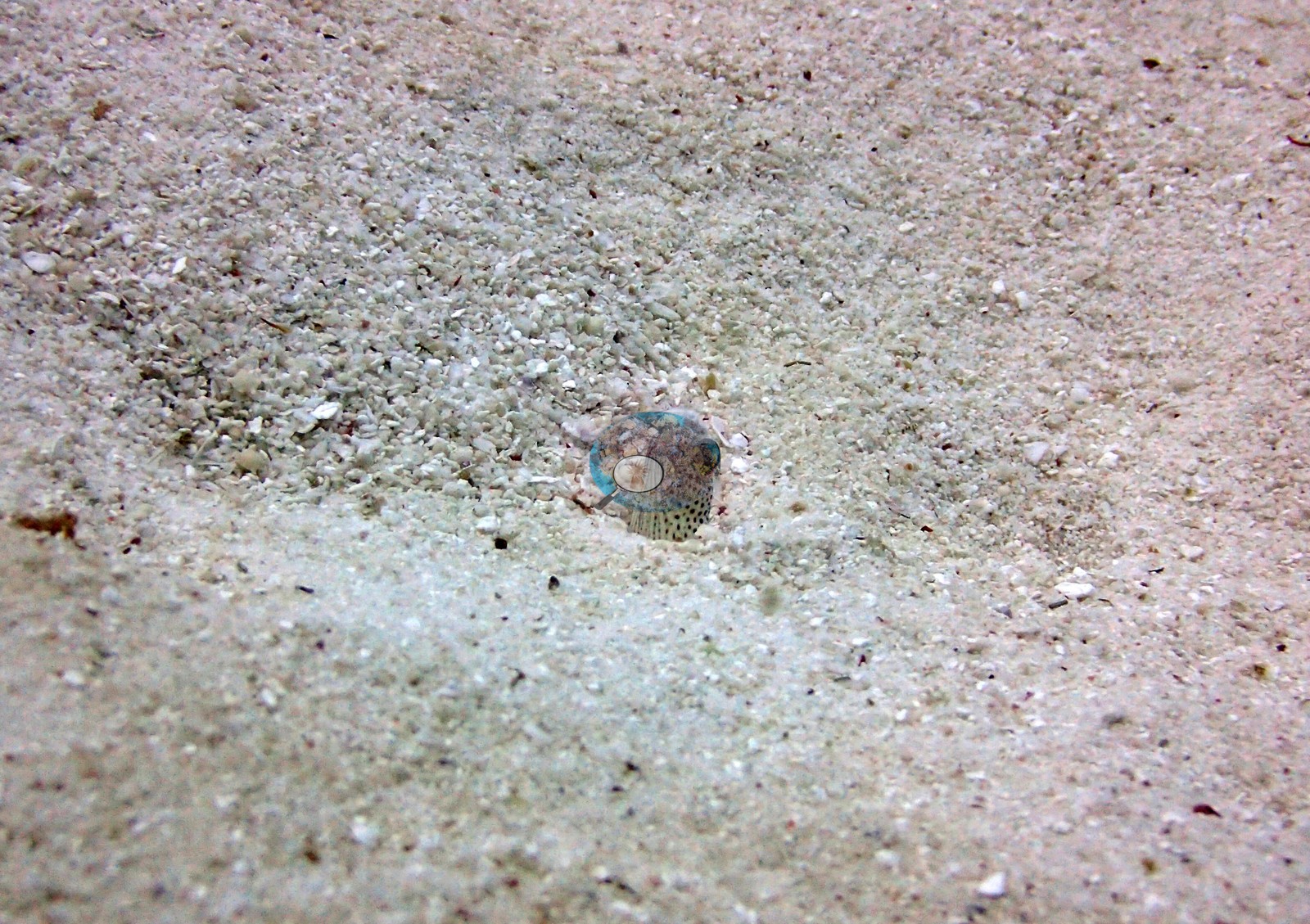
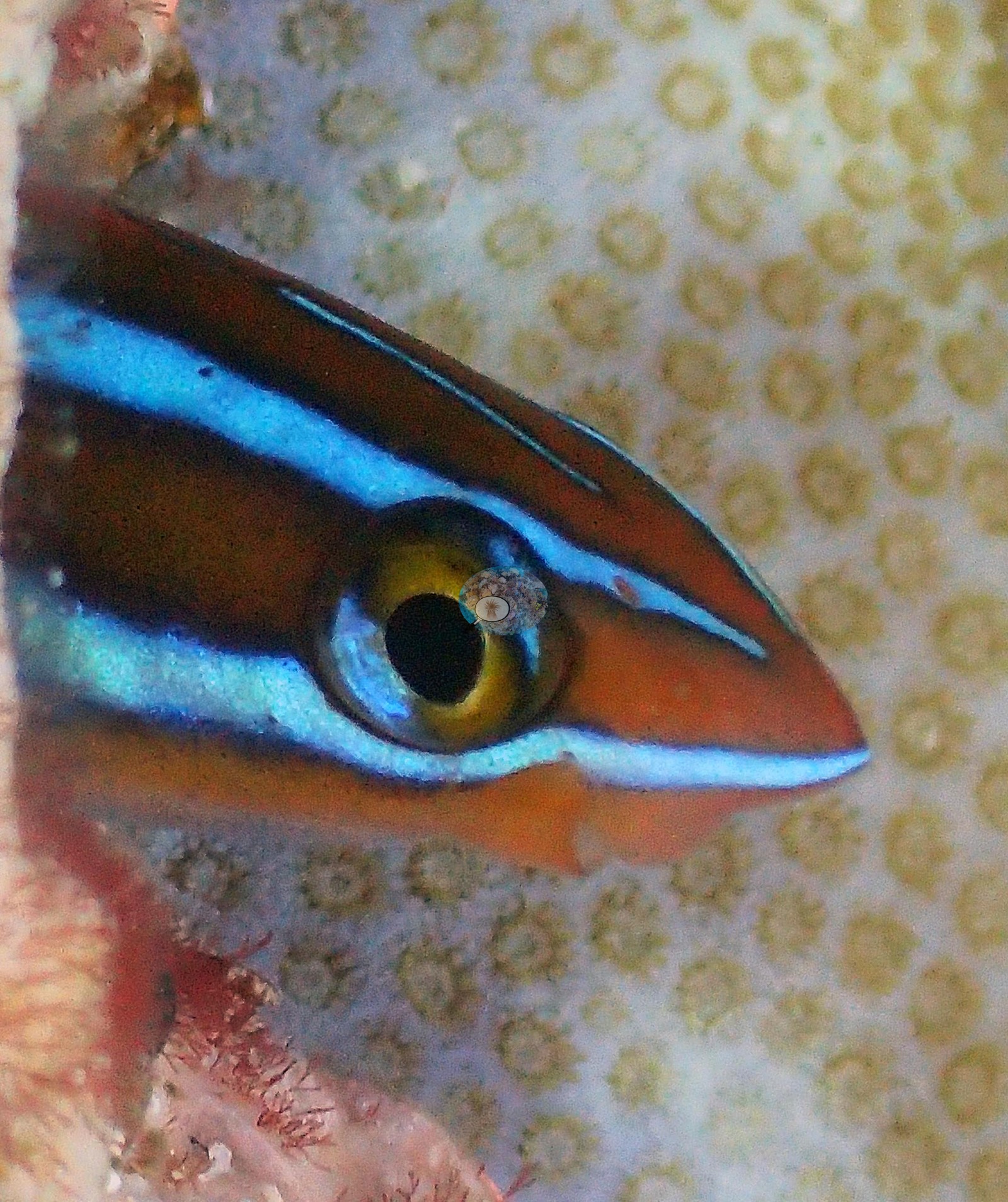
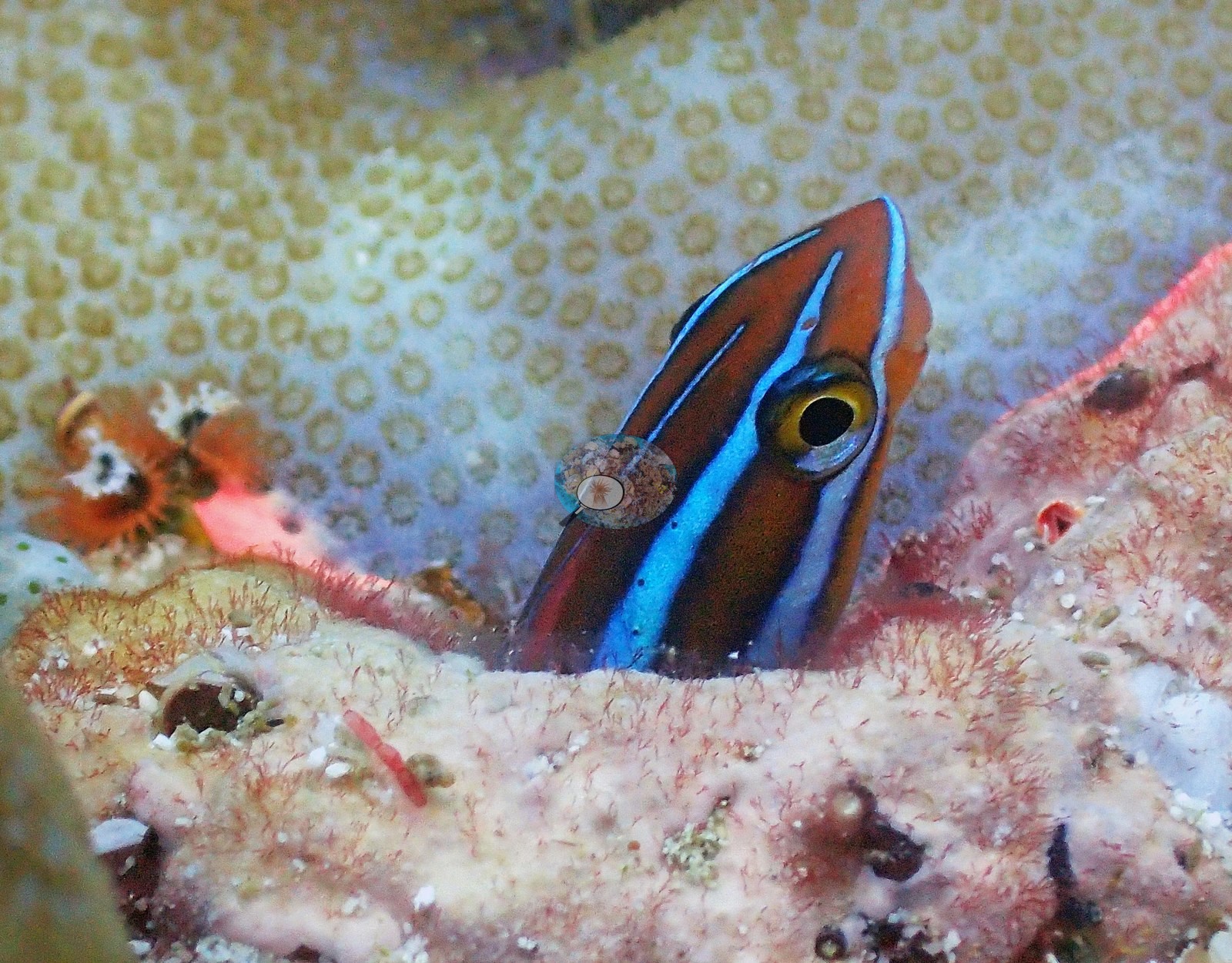
Fauna recorded directly in the frames: two moray eels — a large dark giant-moray-type under a coralline-encrusted overhang, and a boldly banded zebra/barred moray in a sand-floored cave; a crocodilefish lying flat and perfectly camouflaged on open sand; a large scorpionfish tucked under an Acropora table; a spotted garden eel standing out of the sand plain (Anderson filed two frames of it under "garden eel" and "better garden eel shot"); a black-and-orange-tipped phyllidiid nudibranch (Phyllidia-pattern) crossing coarse white sand; an emperor or large-eyed bream cruising the blue over the slope; a bicolor angelfish and yellow wrasses; dense clouds of red and orange anthias over every high point; damselfishes, chromis, butterflyfish, and a coral-dwelling blue-striped blenny that Anderson photographed twice, sitting in bare notches on a massive Porites (e.g., Image 5).
Comparisons with other data
No prior survey data from this site. If you would like to share yours, please email us.
Dive record
Pulau Koon, second dive site, 17 October 2018.
Other notes
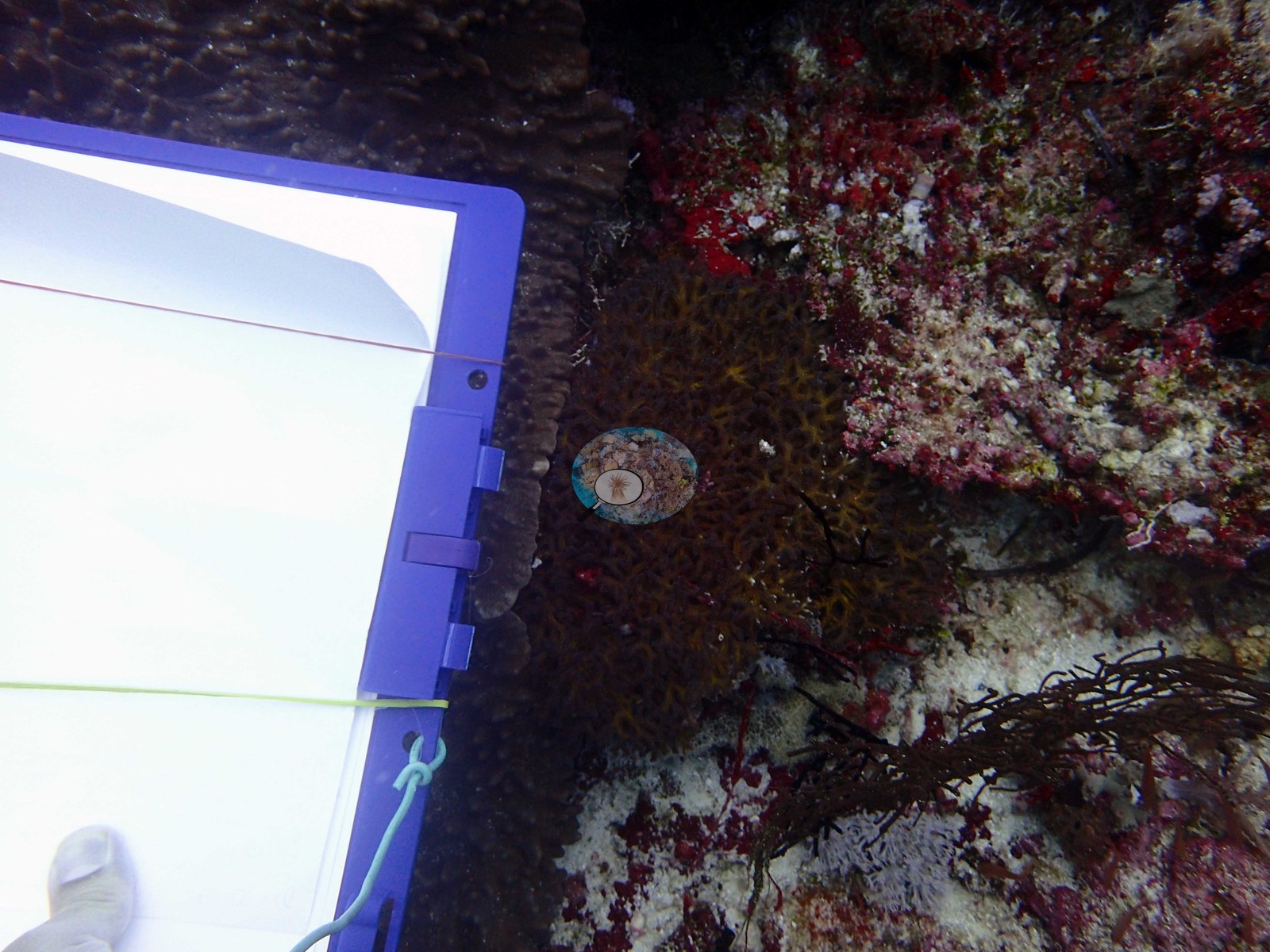
Man-made content: the tender and gear on the surface, one frame in which Anderson is holding a blue underwater slate with a written line against a coral colony (survey work in progress), and a gear bag reading "MSY SEAHO..." — the liveaboard's name — in the surface frame.
CV model comparison
More info
DINOv3 and CoralSCOP were run on the same photos and are listed for comparison. Coralscapes v2 and v1 were also run but are not shown: Anderson does not consider Coralscapes reliable for these photos. No diver transect exists for this trip, so agreement between the rows is not accuracy, and as of September 2026 no computer-vision method estimates coral cover accurately on new images; treat every row as indicative.| Method | Hard-coral cover (%) |
|---|---|
| In-house DINOv3 | 19.4 |
| CoralSCOP edited | 33.0 |
| Claude (edited photos) | 24.7 |
Data & links
All images from Coral Reef Diagnostics. Data are from Coral Reef Diagnostics.
© Coral Reef Diagnostics.