
Raja Ampat - Little Juliet
Part of the regional summary: Indonesia - Raja Ampat
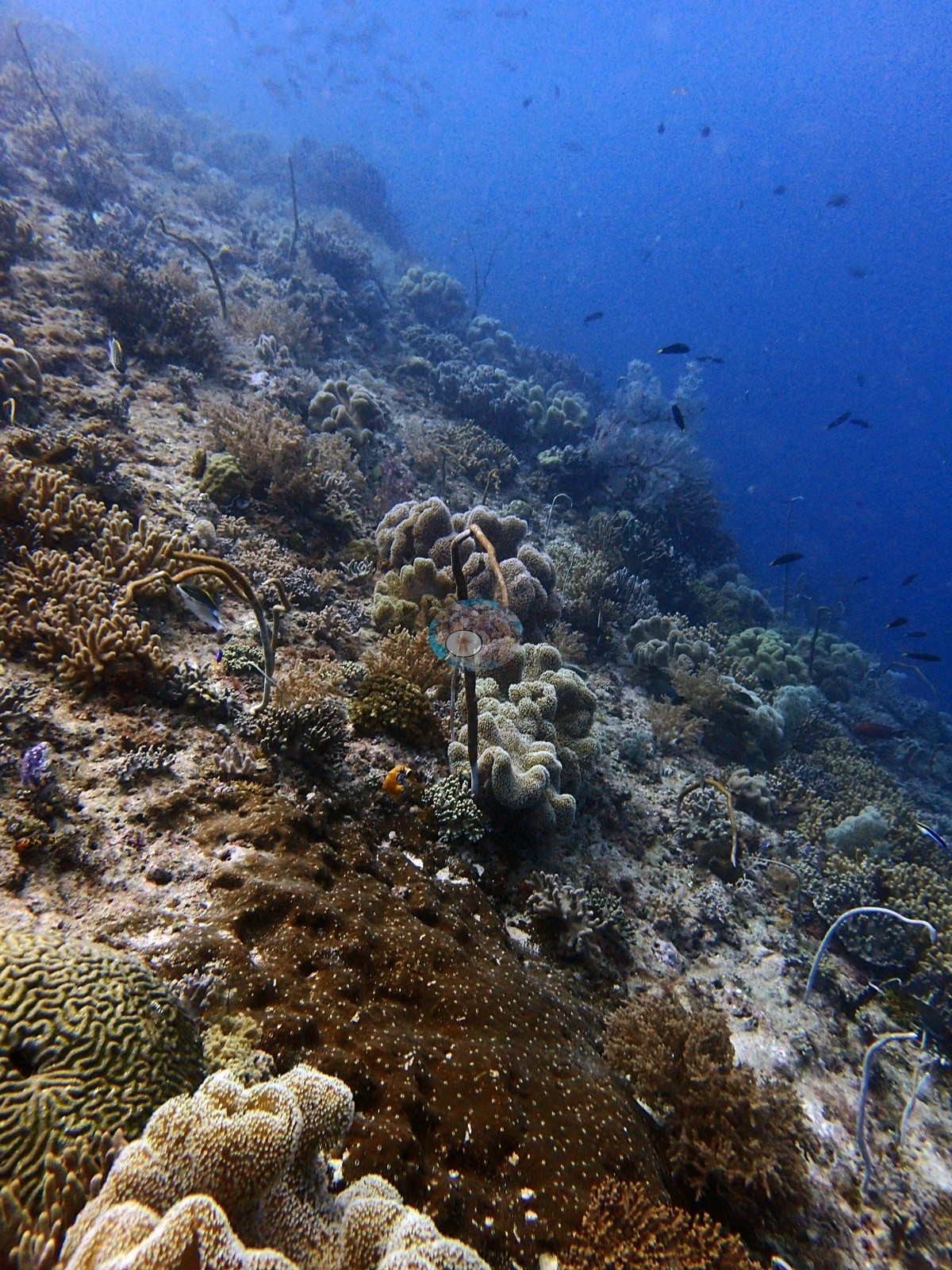
More info
West Papua (NOAA CRW virtual station)Little Juliet is a steep, high-relief slope of continuous hard coral framework - diverse tabulate and branching Acropora plus brain corals - with a striking meter-plus gorgonian sea fan and bare whip corals signaling real current. No bleaching, disease, or crown-of-thorns starfish (COTS); coral cover at this site is about 26% (blind Claude computer-vision point count).
Little Juliet adalah lereng curam berelief tinggi dengan kerangka karang keras yang menyambung — Acropora tabulat dan bercabang yang beragam ditambah karang otak — dengan kipas laut gorgonia mencolok berukuran lebih dari satu meter dan karang cambuk gundul yang menandakan arus yang nyata. Tanpa pemutihan, penyakit, maupun bintang laut mahkota duri; tutupan karang di lokasi ini sekitar 26% (penghitungan titik buta visi komputer Claude).
Terjemahan ringkasan ini oleh AI; versi bahasa Inggris yang berlaku.
One independent survey station shown with the program’s logo — click one to see how far it is from this site.
Eight other CRD dive sites within 5 km shown in orange — click a marker to open its page.
3 of these 18 photographs are shown beside the text that discusses them under "Site description" below.
 2
2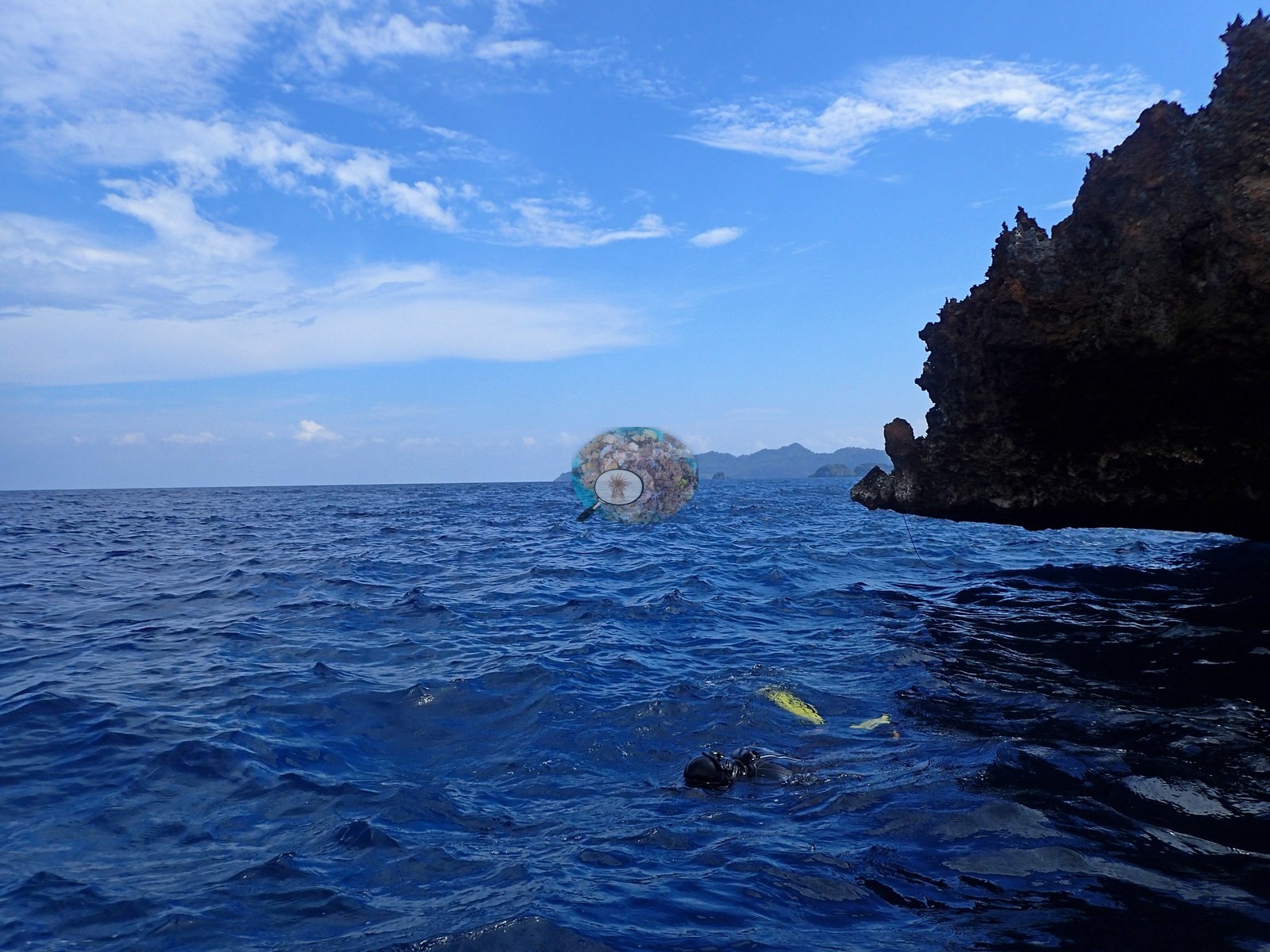 6
6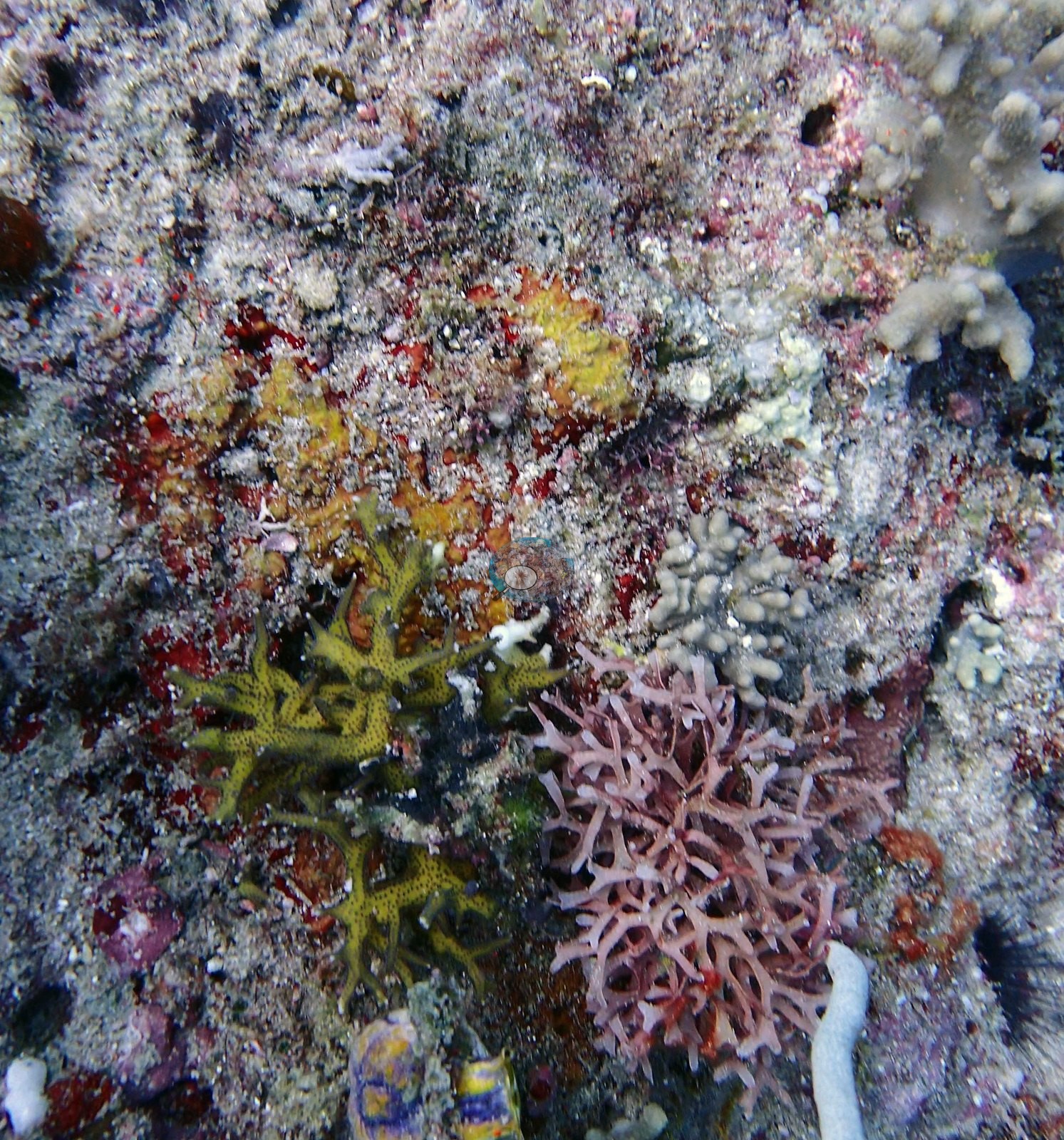 7
7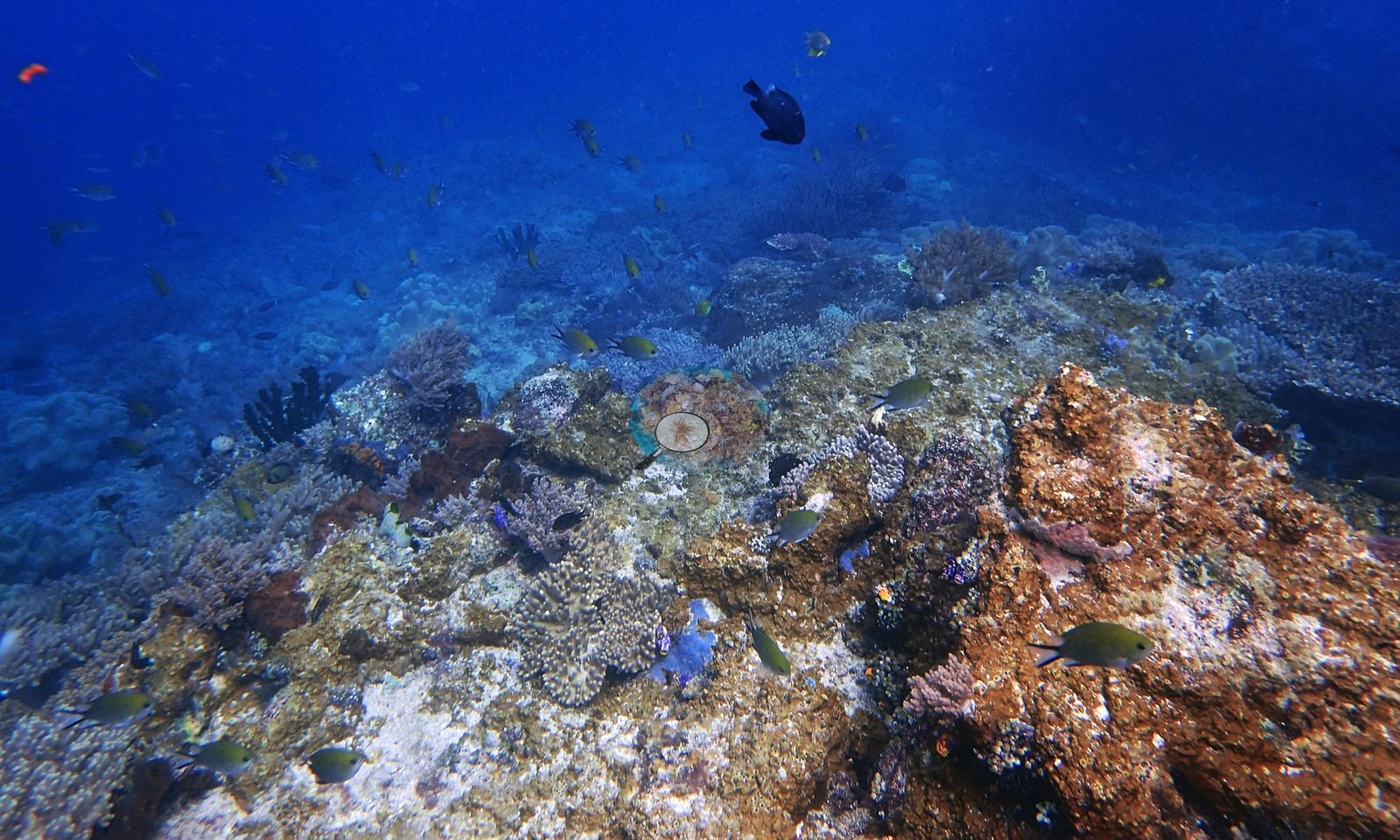 8
8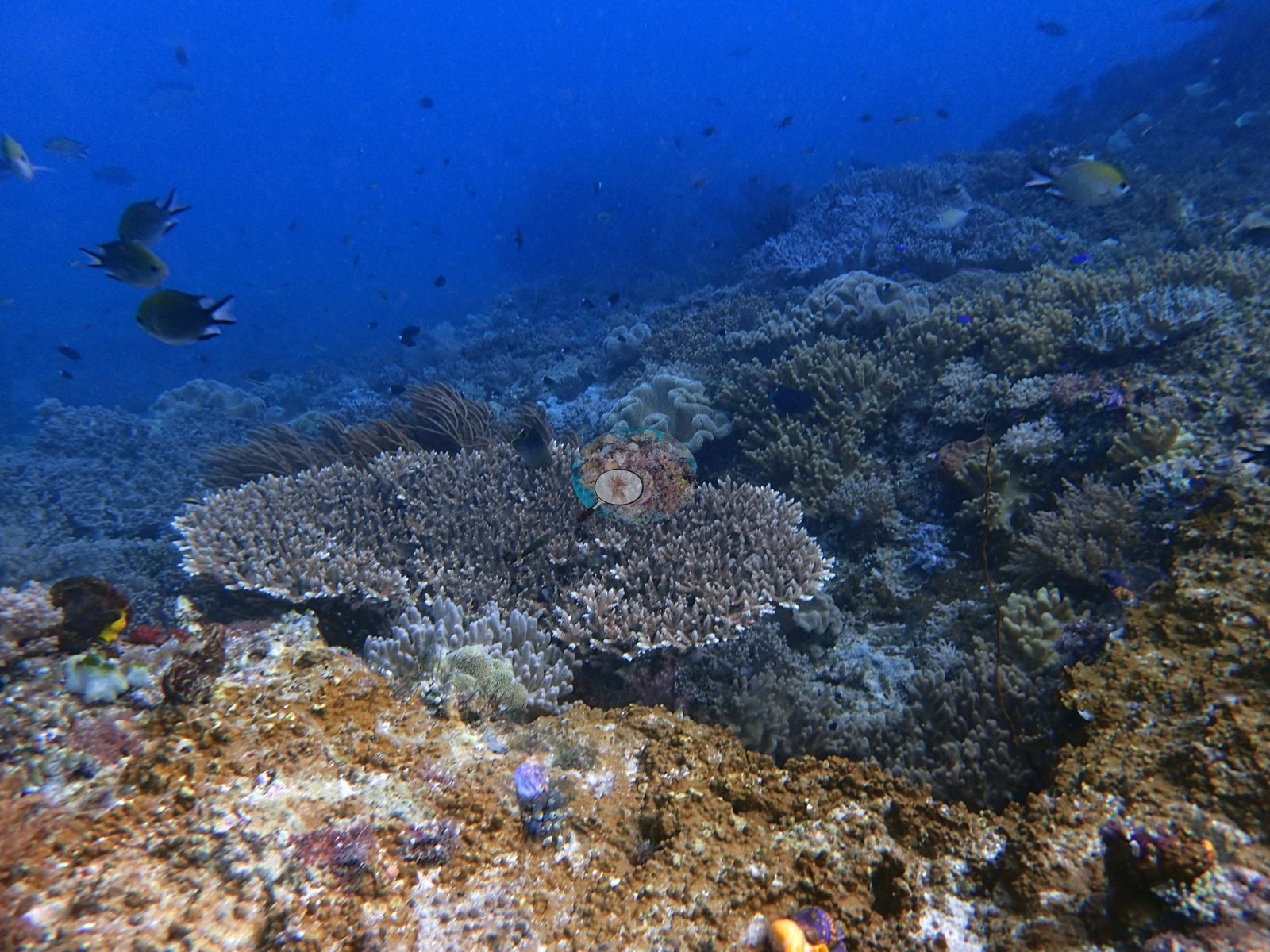 9
9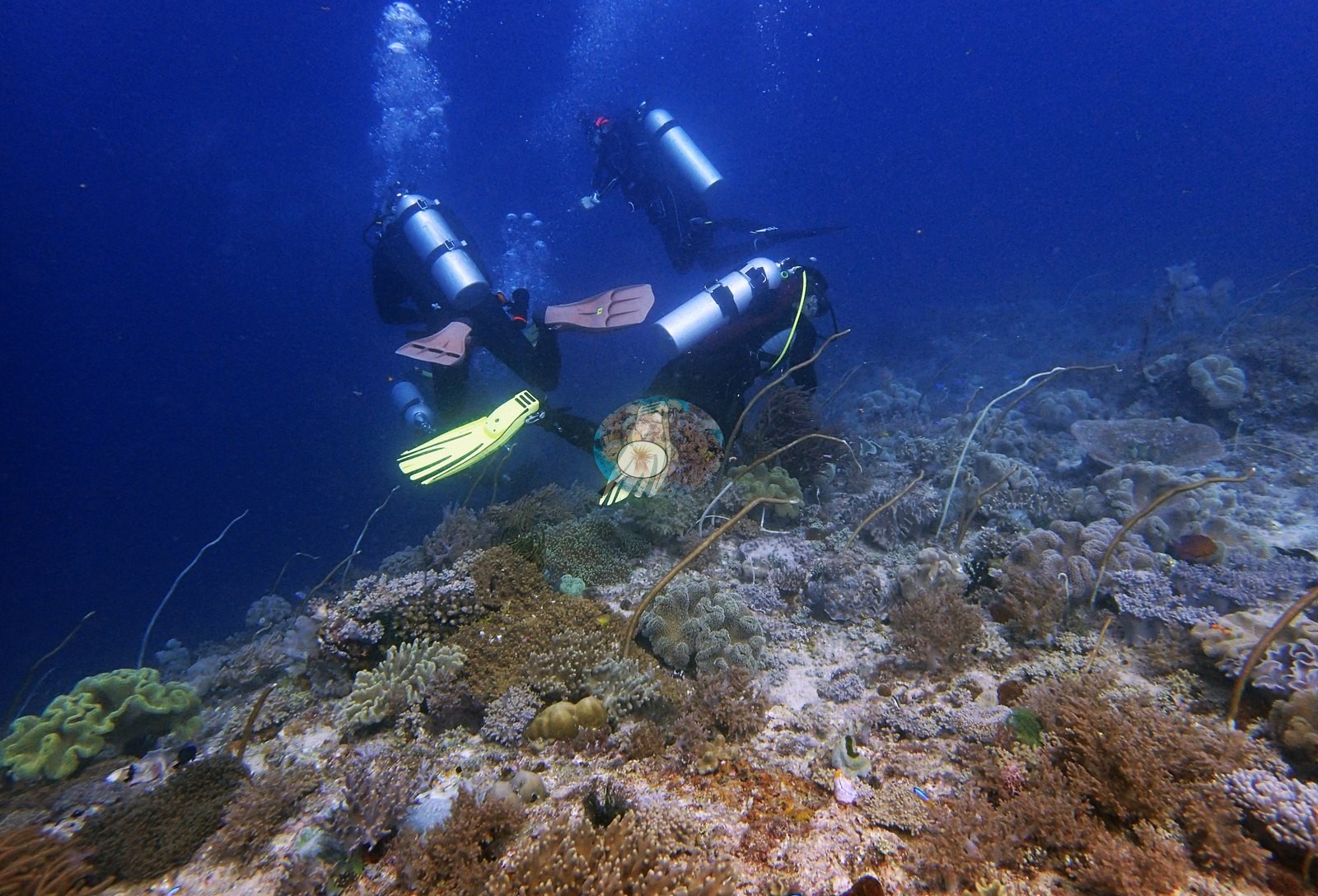 10
10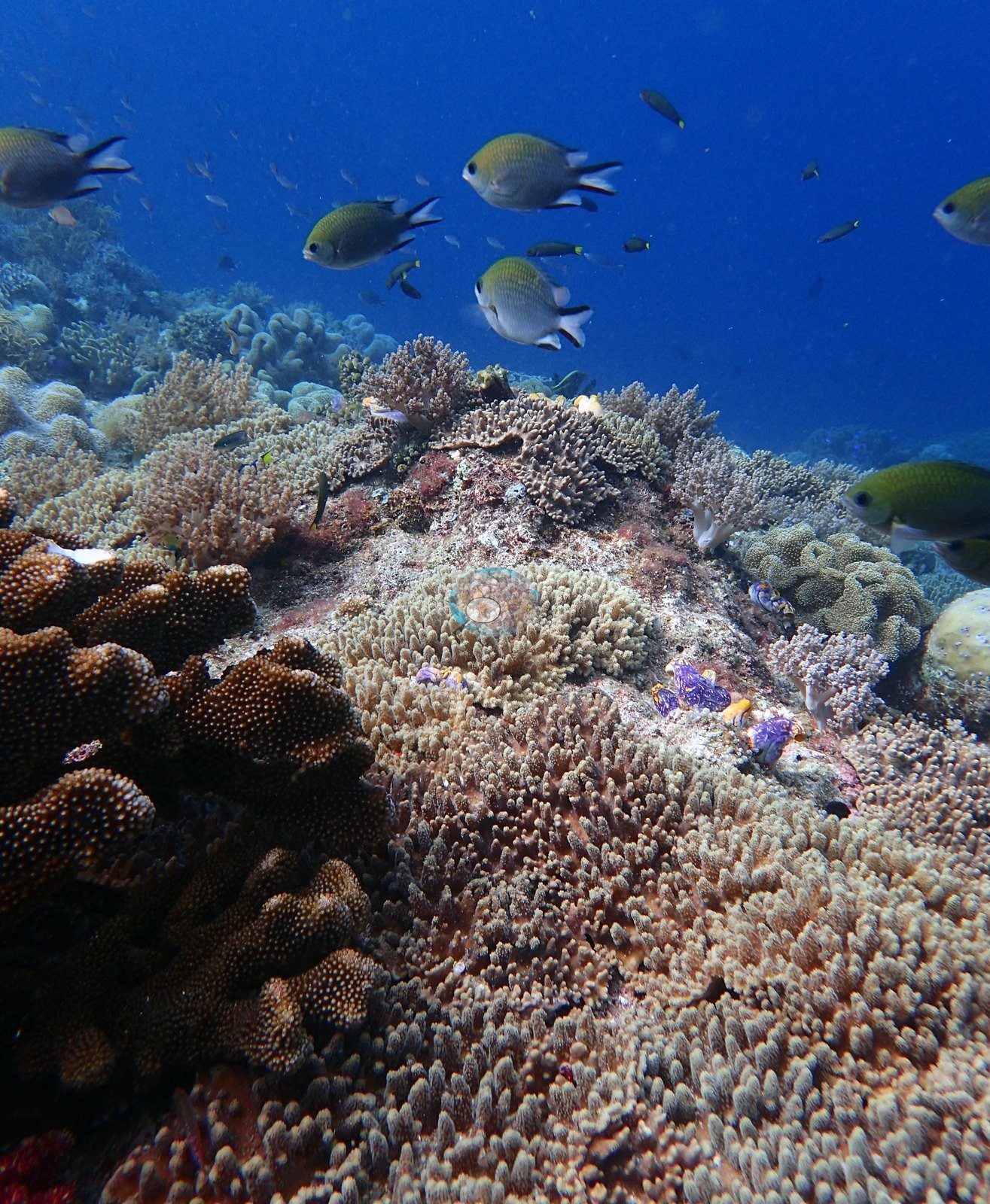 11
11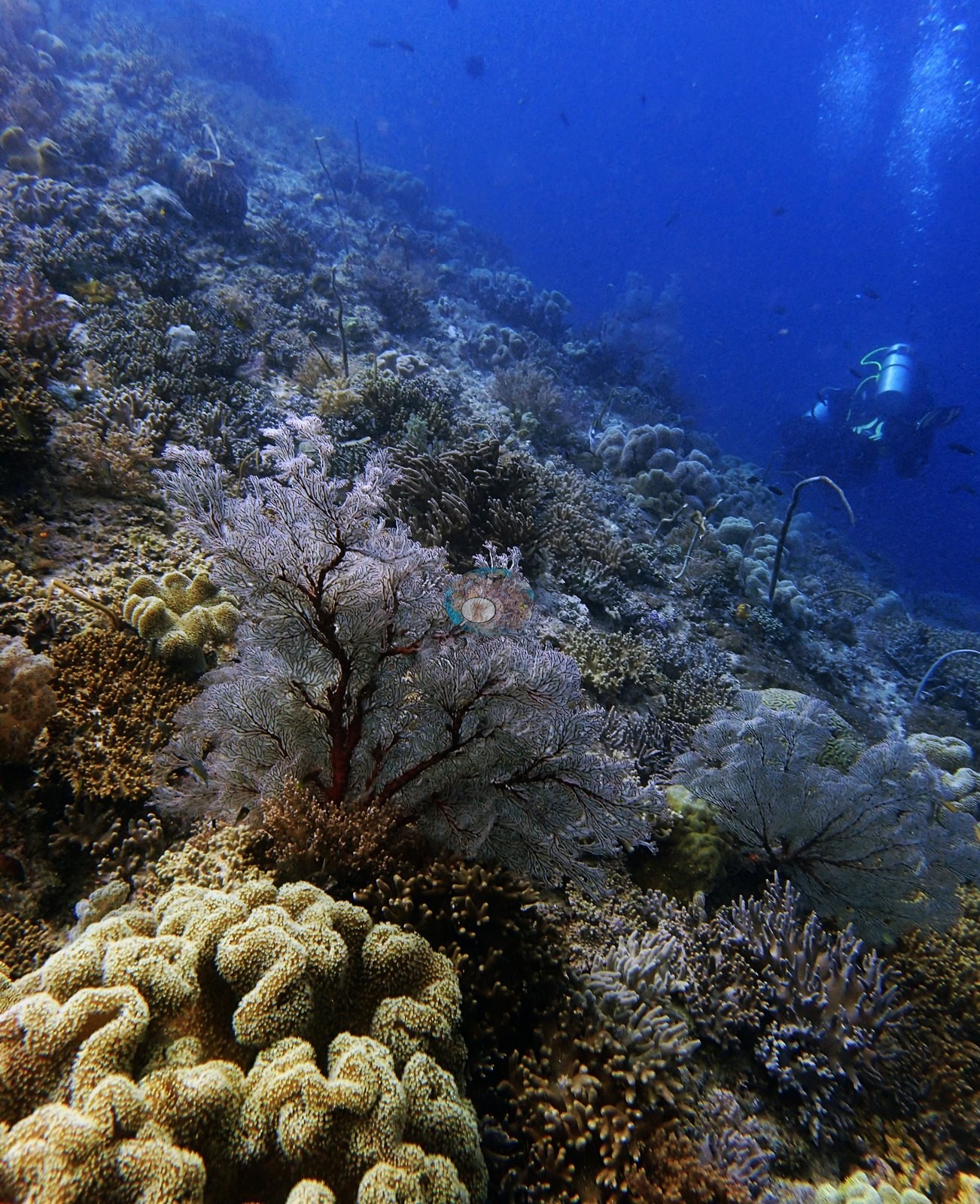 12
12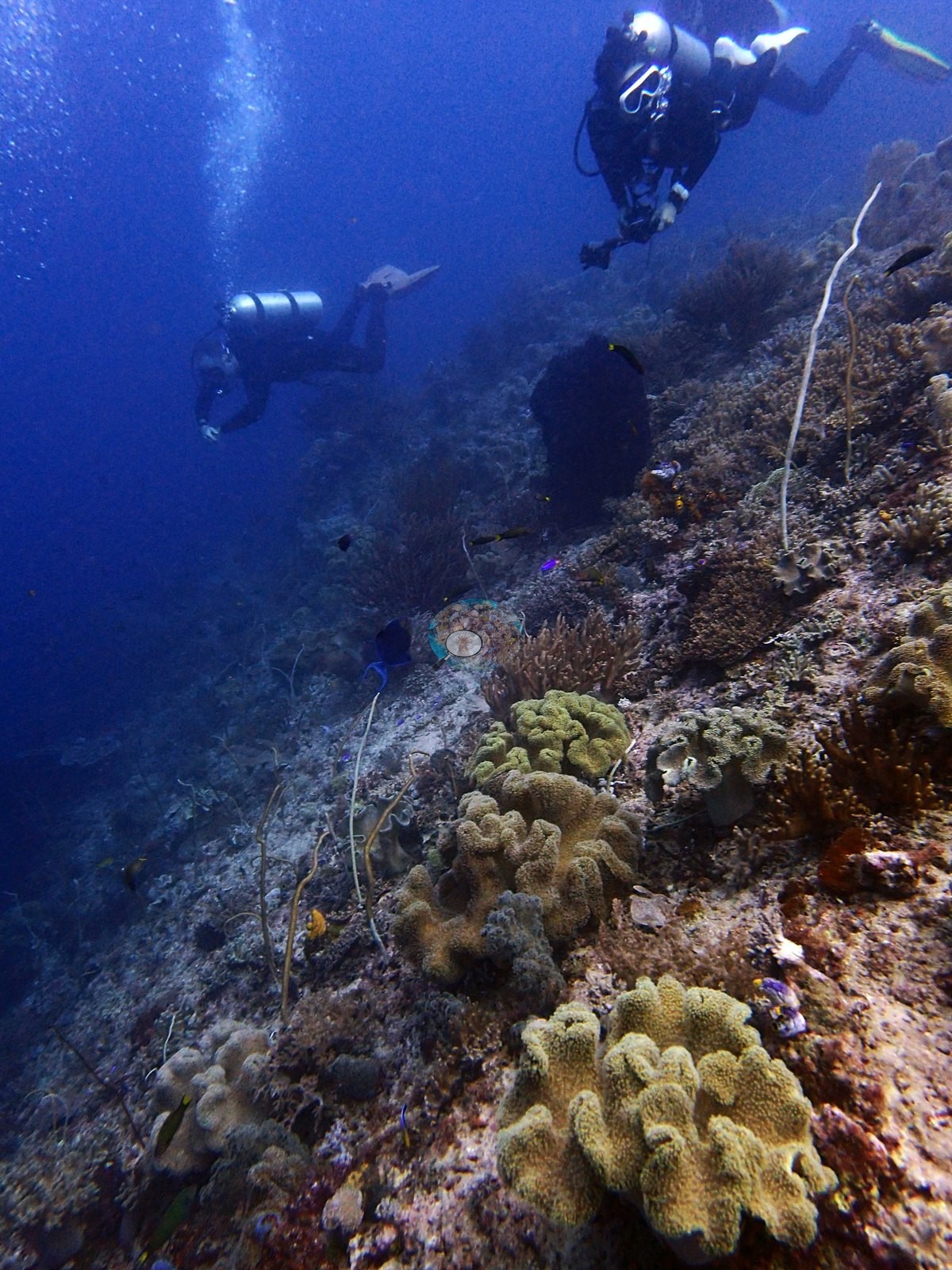 18
18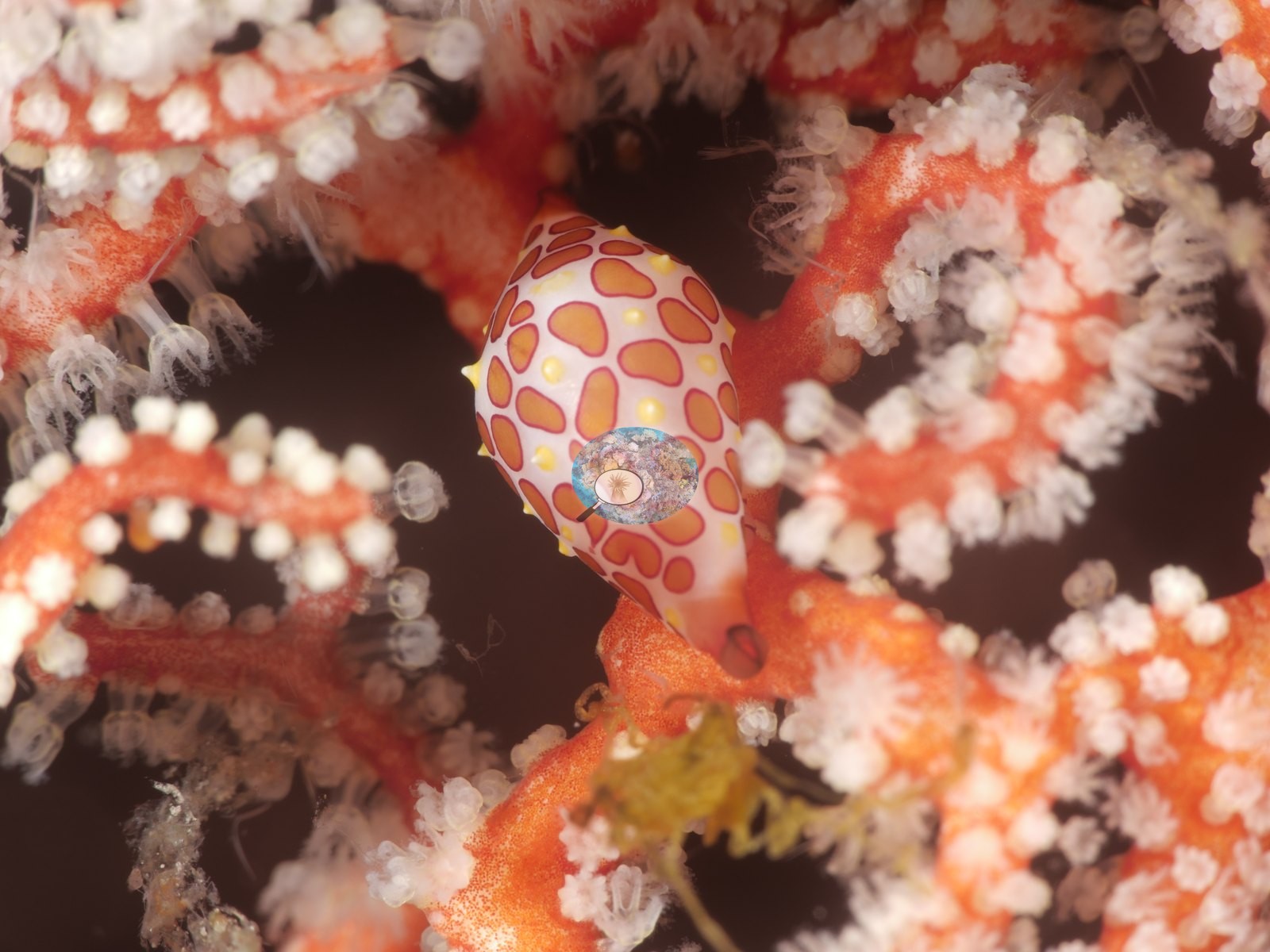 Photo: Pierre19
 Photo: Pierre20
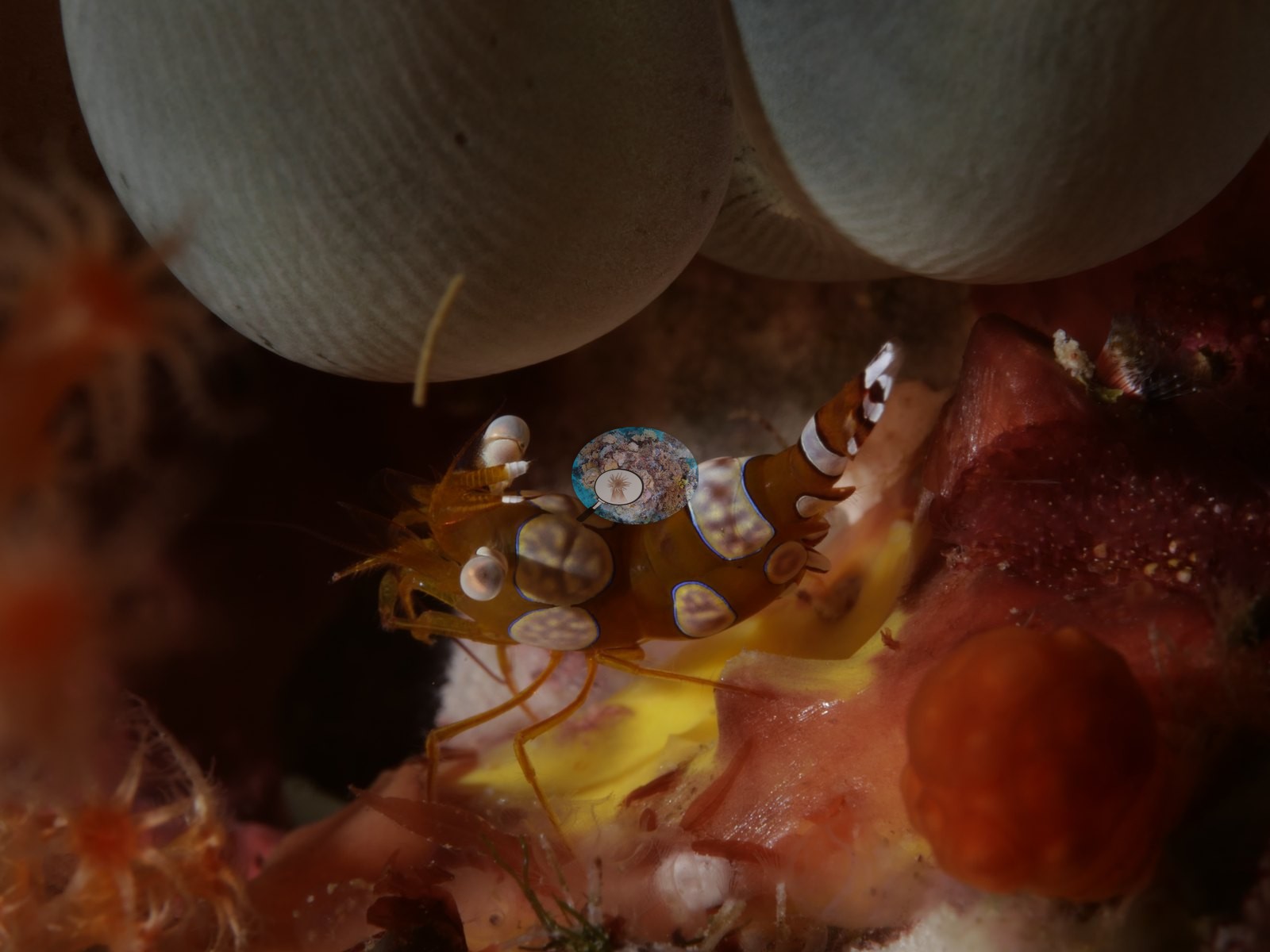 Photo: Pierre21
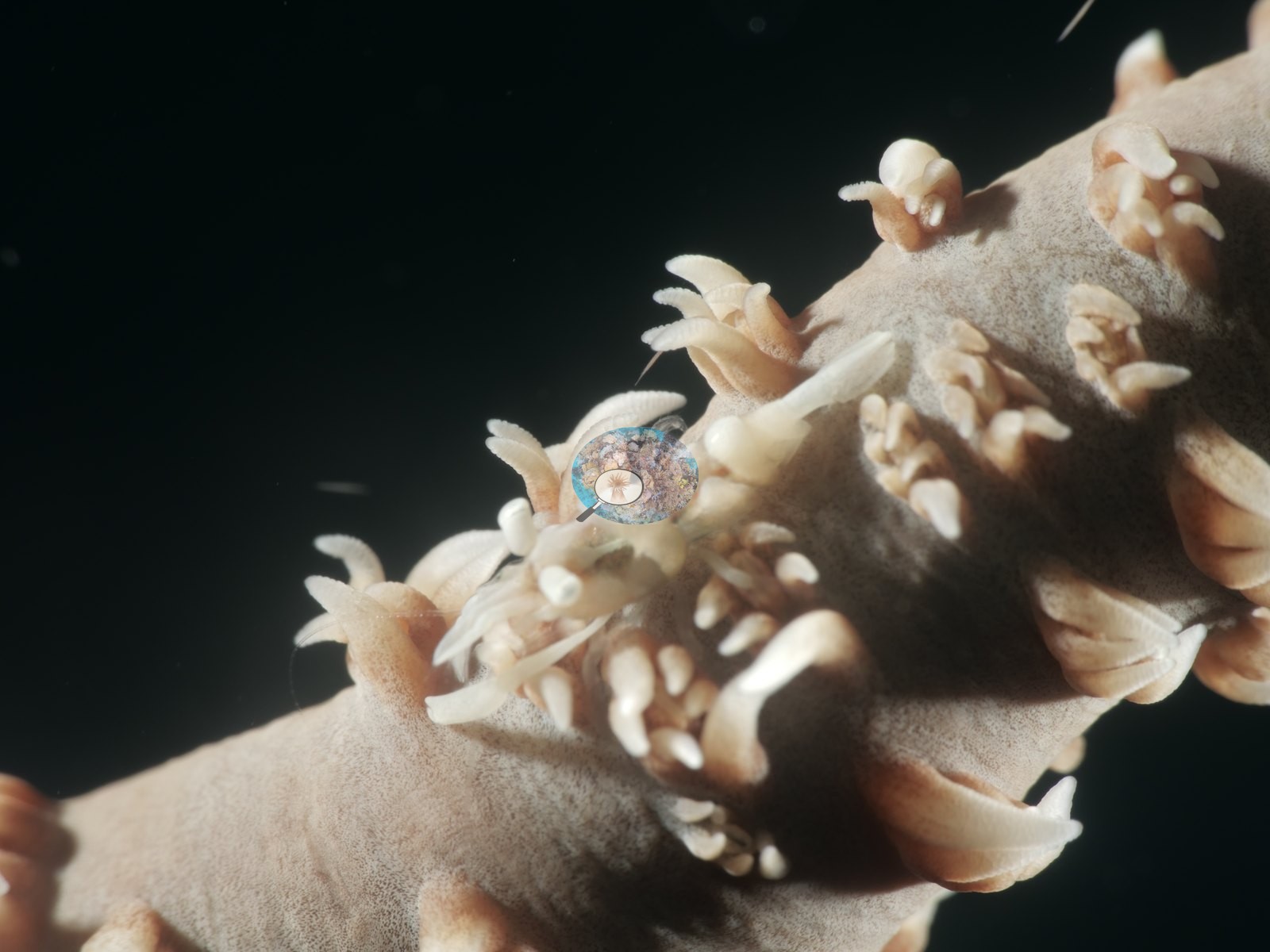 Photo: Pierre22
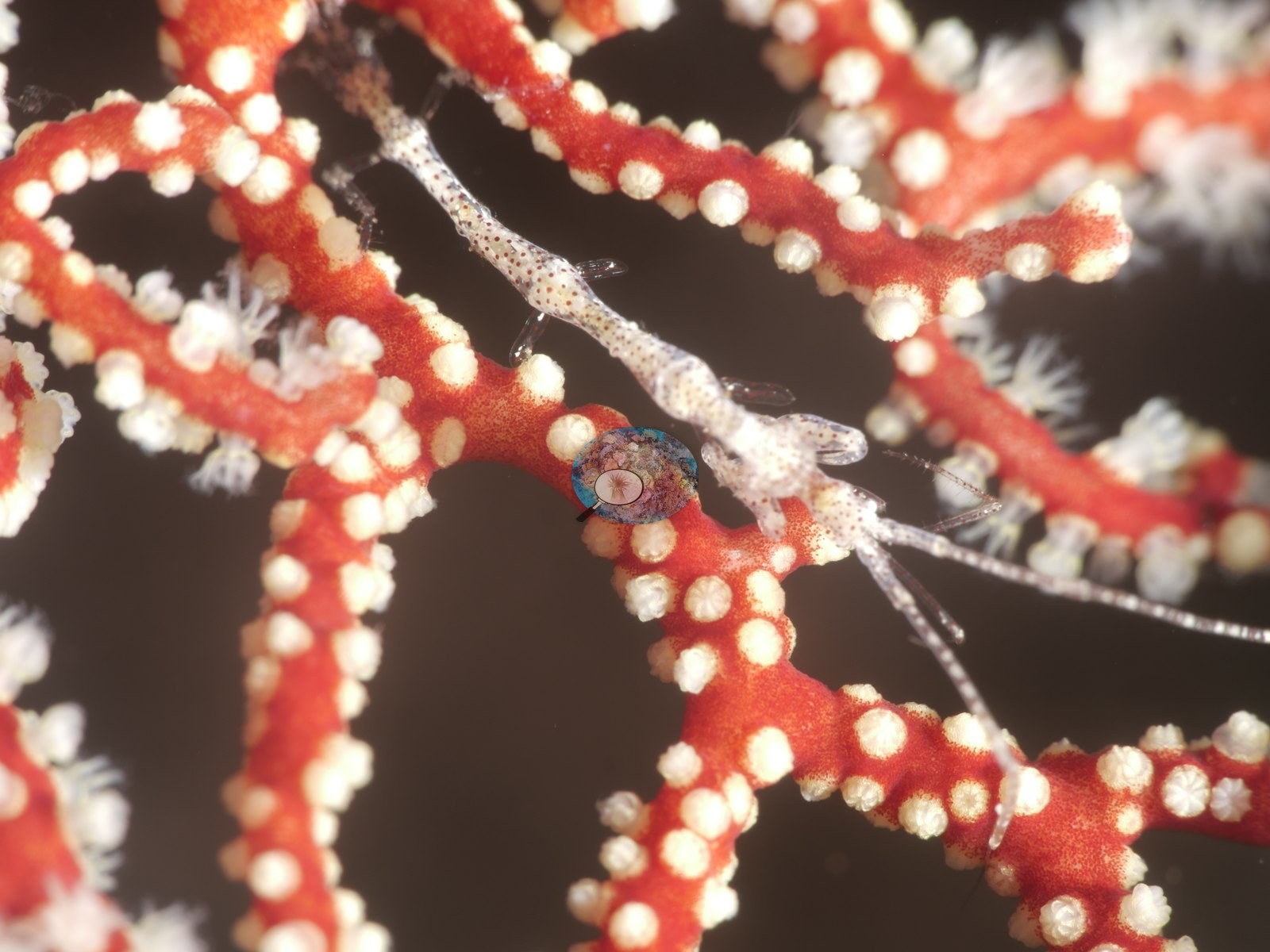 Photo: Pierre23
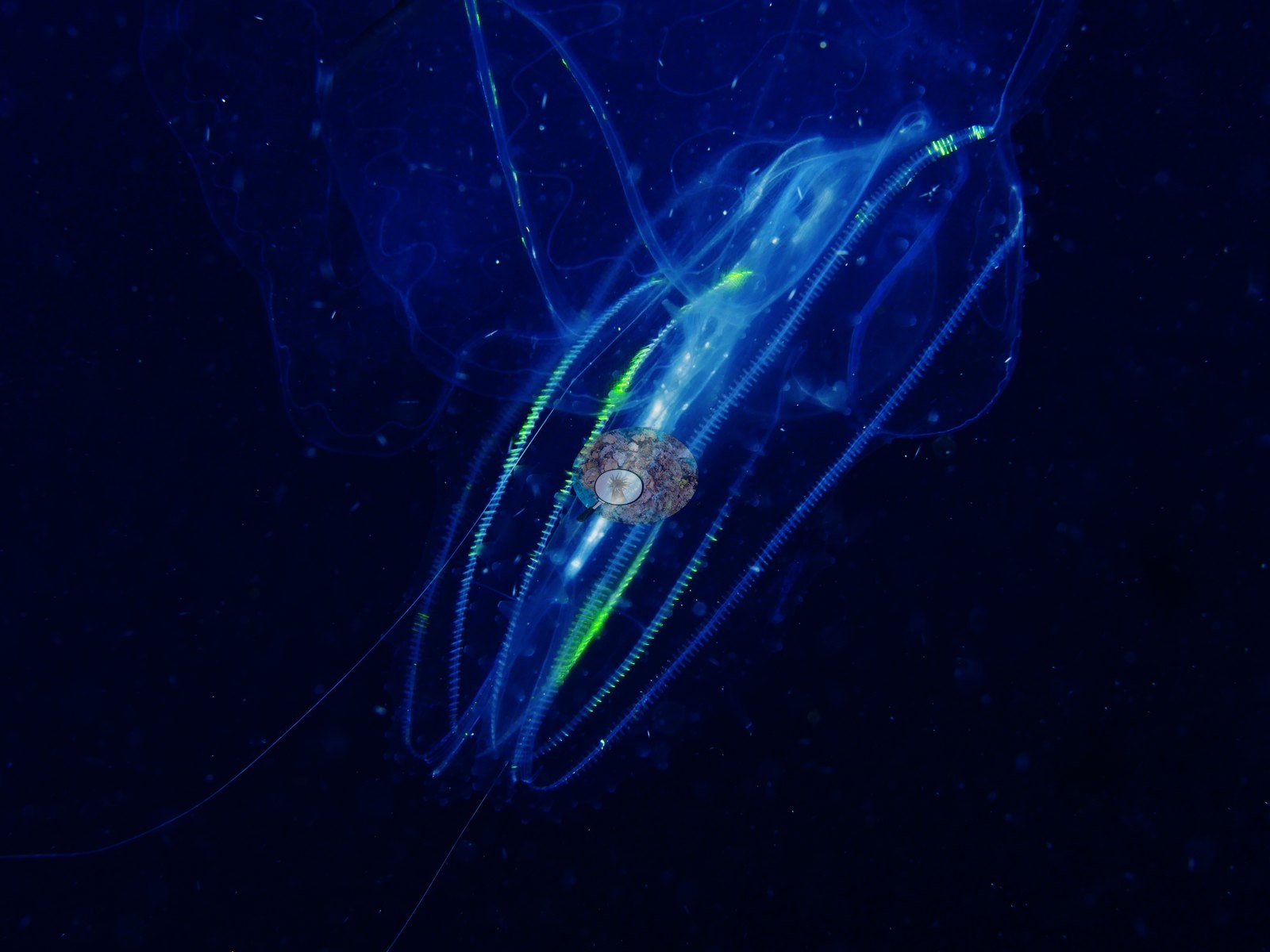 Photo: Pierre
Site description
Setting
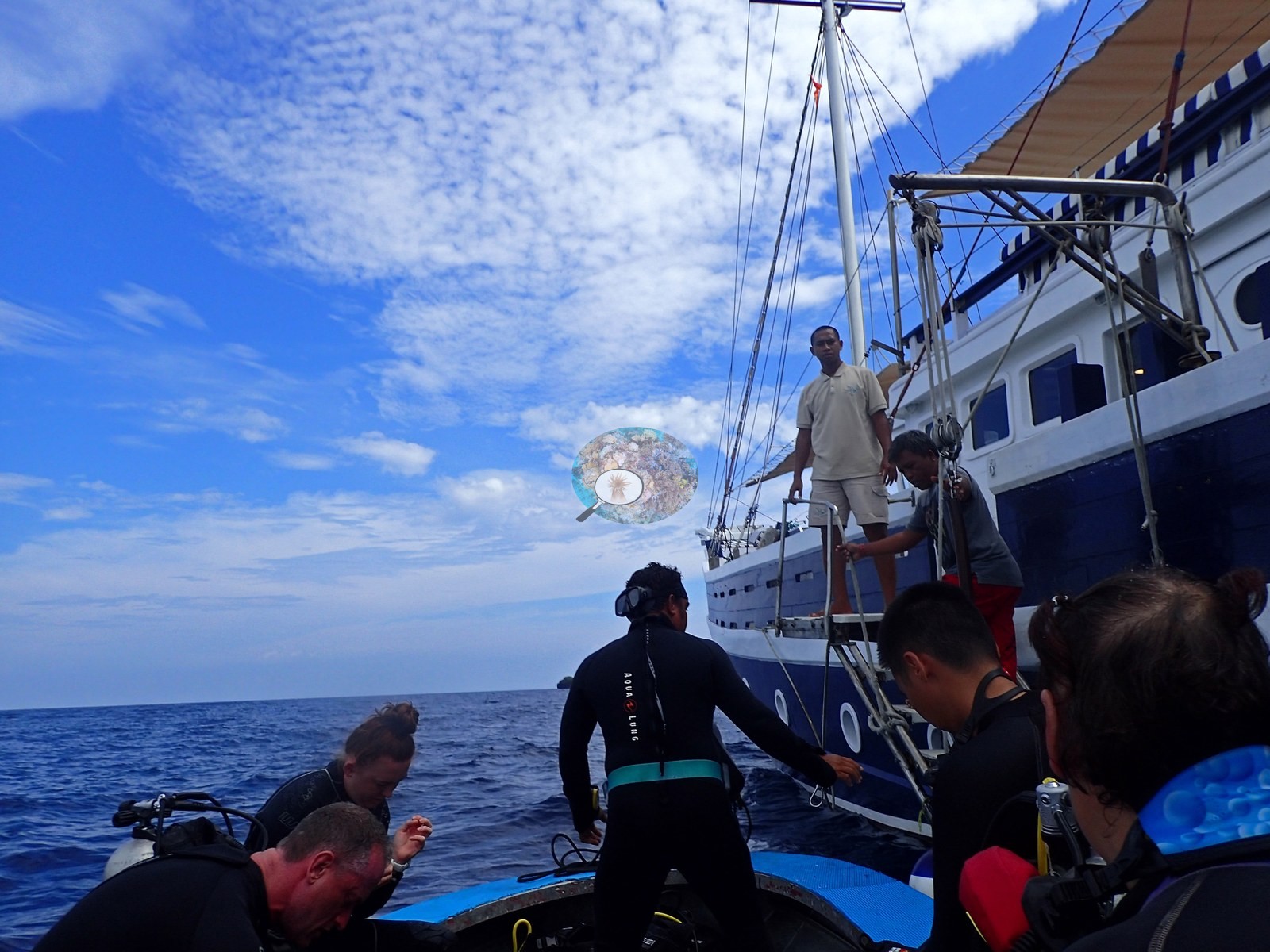
The surface frames set the scene clearly: this is a small, exposed offshore islet with a sharply eroded, jagged limestone rim and a deep undercut notch at the waterline — spiky, rust-and-gray weathered rock with only a thin scrub cap, dropping straight into deep blue water with a distinct chop and swell wrapping the point, and a larger forested landmass on the horizon several kilometers off. Divers entered from the tender with the white-and-blue liveaboard standing off. Underwater the habitat is a steep, high-relief reef slope running down into open blue with no sand plain in view — the substrate is continuous hard reef framework and consolidated rubble pavement rather than patch reef on sand, and the slope falls away into progressively darker water at the edge of every frame (e.g., Image 3).
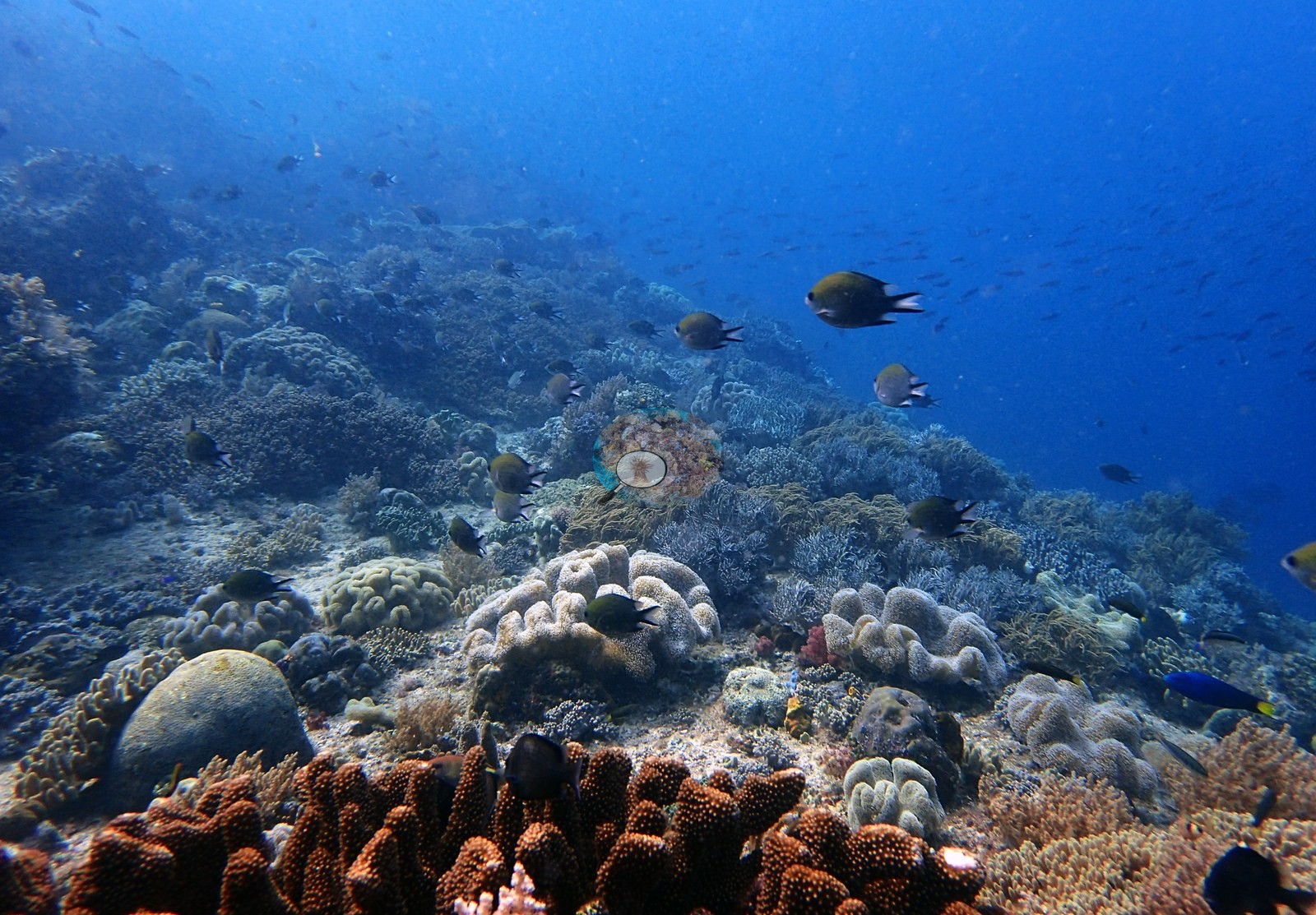
Those whips, and the fans oriented across the slope, are the clearest current indicators in the set and are consistent with a site that gets flow. Visibility is good: color holds and detail resolves well past the foreground, with the slope readable to the limit of the frame before it fades to blue. Ambient light drops noticeably across the set, consistent with a descent down a slope.
General benthic features
Hard coral assemblage is diverse and dominated by branching and tabulate Acropora: broad flat-topped tables and low corymbose plates, several a meter or more across, with fine pale-tipped branches; alongside them are thickets of digitate and bushy branching acroporids, encrusting and submassive colonies, small massive Porites-type heads, and meandroid brain corals with strongly worm-track convolutions consistent with Platygyra or a related faviid. A large brown, wavy, laminar/foliose colony with conspicuous widely-spaced raised corallites recurs in the foreground of several frames and reads as Turbinaria, though the hedge is deliberate. Octocorals are a major structural component and in places rival the stony corals for area: cream and olive leathery soft corals in mushroom and lobed forms consistent with Sarcophyton and Lobophytum, finger and cauliflower leathers consistent with Sinularia, soft feathery clumps in the Xenia/Anthelia mold, and — the most striking single feature of the set — a large pale-mauve reticulate gorgonian sea fan a meter-plus across, its dark red skeletal axis showing through the mesh, with a second fan below it and a scatter of long, bare, unbranched whip corals (Junceella-type) standing off the slope like wires (e.g., Image 5).
Non-coral cover: pink crustose coralline algae is widespread on pavement between colonies, with fine turf on dead framework, red and yellow-green fleshy macroalgal tufts and articulated pink coralline branches in the one close-up, low encrusting orange and brown sponges, and bright purple-and-yellow ascidians (the classic Polycarpa aurata color pattern) dotted repeatedly across the substrate.
Coral cover
Coral cover: 26% — a blind Claude computer-vision point count of 13 of Anderson's edited photographs (20 points per photo; water, fish, and obstructions excluded). Other computer-vision methods are listed in the method table.
Stressors
No crown-of-thorns, no obvious disease lesions, and no active bleaching were seen; the pale and white patches present are bare pavement and old dead framework now colonized by crustose coralline algae and turf, which is normal structure on a slope like this, not fresh mortality. No physical breakage or anchor damage was visible.
Fish and other fauna
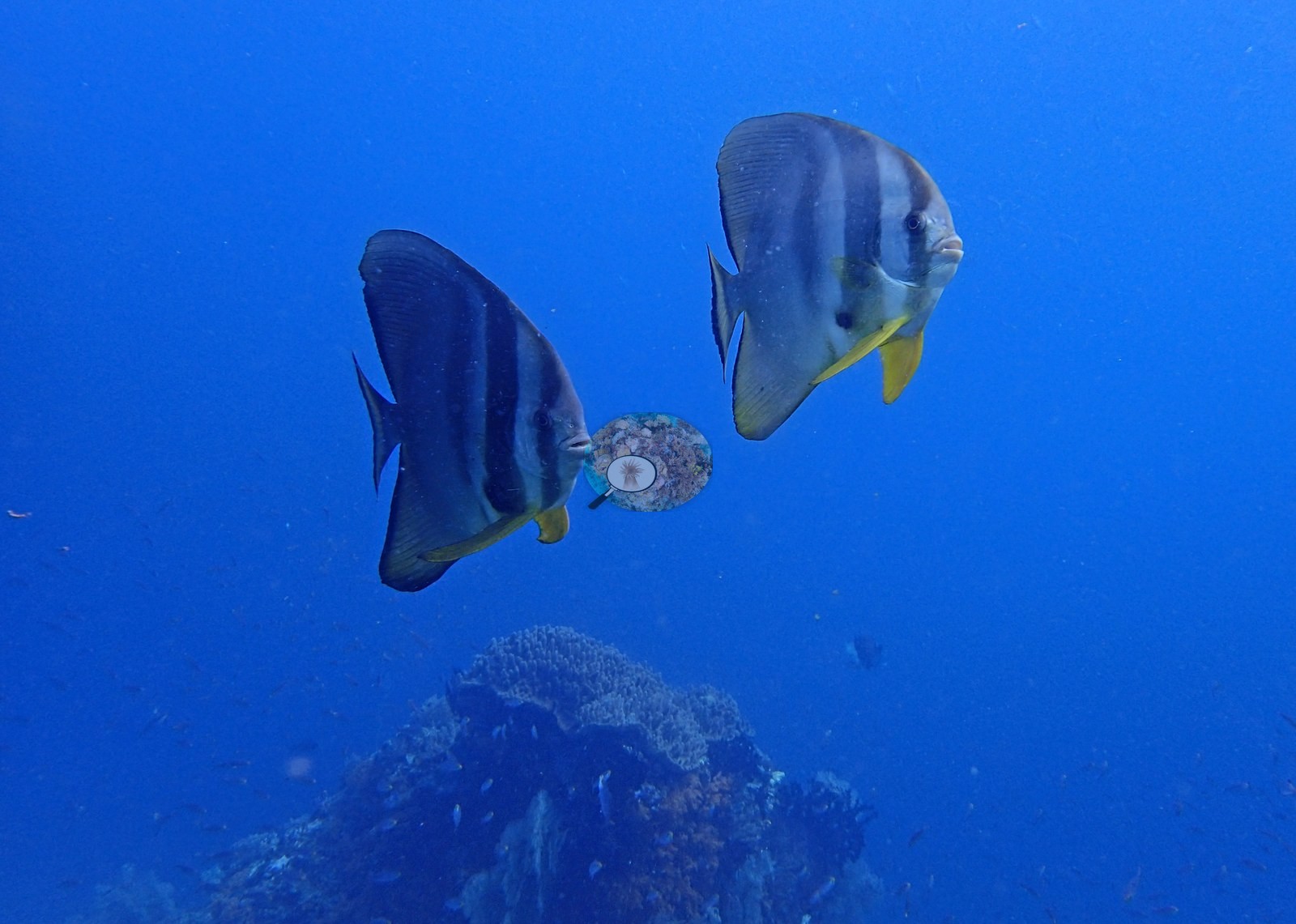
Crinoids were not obvious in these frames. Fish: dense mid-water aggregations of chromis and other planktivorous damselfishes hanging over the reef crest in every wide frame, a pair of large longfin batfish (Platax) cruising in mid-water over a coral bommie, small fusiliers and anthias streaming in the blue, a vivid blue surgeonfish or wrasse low on the slope, a dark territorial damselfish, and scattered wrasses and butterflyfish-sized fish on the framework (e.g., Image 4).
Comparisons with other data
No independent survey was made at this exact site; the nearest ones are listed in the table below.
Dive record
Little Juliet (Yuliet Kecil), dived 19 October on Anderson's 2018 Indonesian liveaboard trip.
Other notes
Man-made content is confined to the dive team (divers in mid-water, tanks, yellow, and tan fins, bubble trails) and the surface frames of the tender and liveaboard.
CV model comparison
More info
DINOv3 and CoralSCOP were run on the same photos and are listed for comparison. Coralscapes v2 and v1 were also run but are not shown: Anderson does not consider Coralscapes reliable for these photos. No diver transect exists for this trip, so agreement between the rows is not accuracy, and as of September 2026 no computer-vision method estimates coral cover accurately on new images; treat every row as indicative.| Method | Hard-coral cover (%) |
|---|---|
| In-house DINOv3 | 23.8 |
| CoralSCOP edited | 27.8 |
| Claude (edited photos) | 26.2 |
Independent surveys nearby
Within 5 km, 1 independent survey station recorded hard coral cover in 2020. The most recent nearby survey is from 2020, so these values predate recent heat stress. This site's own estimate (26%) sits 15.5 points below the range of these surveys (42%); the methods differ, so the comparison is context, not a like-for-like test.
Collected by other programs using different methods (MERMAID is a data platform: each MERMAID row names the organization that did the survey, and its method is in the row's hover text. *Conducted by citizen scientists), so these are context for the figures above, not a like-for-like comparison. Where a station was surveyed more than once the range is shown. Station names are not dive-site names.
| Agency | Site / location | Date | Hard coral cover (%) | Distance | Link |
|---|---|---|---|---|---|
| MERMAID* | 4306 | 2020 | 42% (5 surveys) | 4.77 km | MERMAID |
Data & links
Images 18–23: Pierre; all other images from Coral Reef Diagnostics. Data are from Coral Reef Diagnostics and the organizations named in the data-sources table above.
© Coral Reef Diagnostics.