
Raja Ampat - Karang Paradise
Part of the regional summary: Indonesia - Raja Ampat
More info
West Papua (NOAA CRW virtual station)Karang Paradise is a vast, open reef terrace dominated by huge uninterrupted fields of foliose plates, massive coral pavement, and staghorn Acropora thickets rather than discrete colonies. A distant hammerhead shark was confirmed in two frames. Broad tracts of consolidated dead coral and rubble suggest older mortality rather than fresh damage; coral cover at this site is about 44% (blind Claude computer-vision point count).
Karang Paradise adalah teras terumbu yang luas dan terbuka, didominasi hamparan karang lembaran yang sangat luas dan tanpa putus, hamparan karang masif, dan rumpun Acropora bercabang, alih-alih koloni yang terpisah-pisah. Seekor hiu martil di kejauhan terkonfirmasi pada dua bingkai. Bentangan luas karang mati yang telah memadat dan pecahan karang menunjukkan kematian yang sudah lama, bukan kerusakan baru; tutupan karang di lokasi ini sekitar 44% (penghitungan titik buta visi komputer Claude).
Terjemahan ringkasan ini oleh AI; versi bahasa Inggris yang berlaku.
2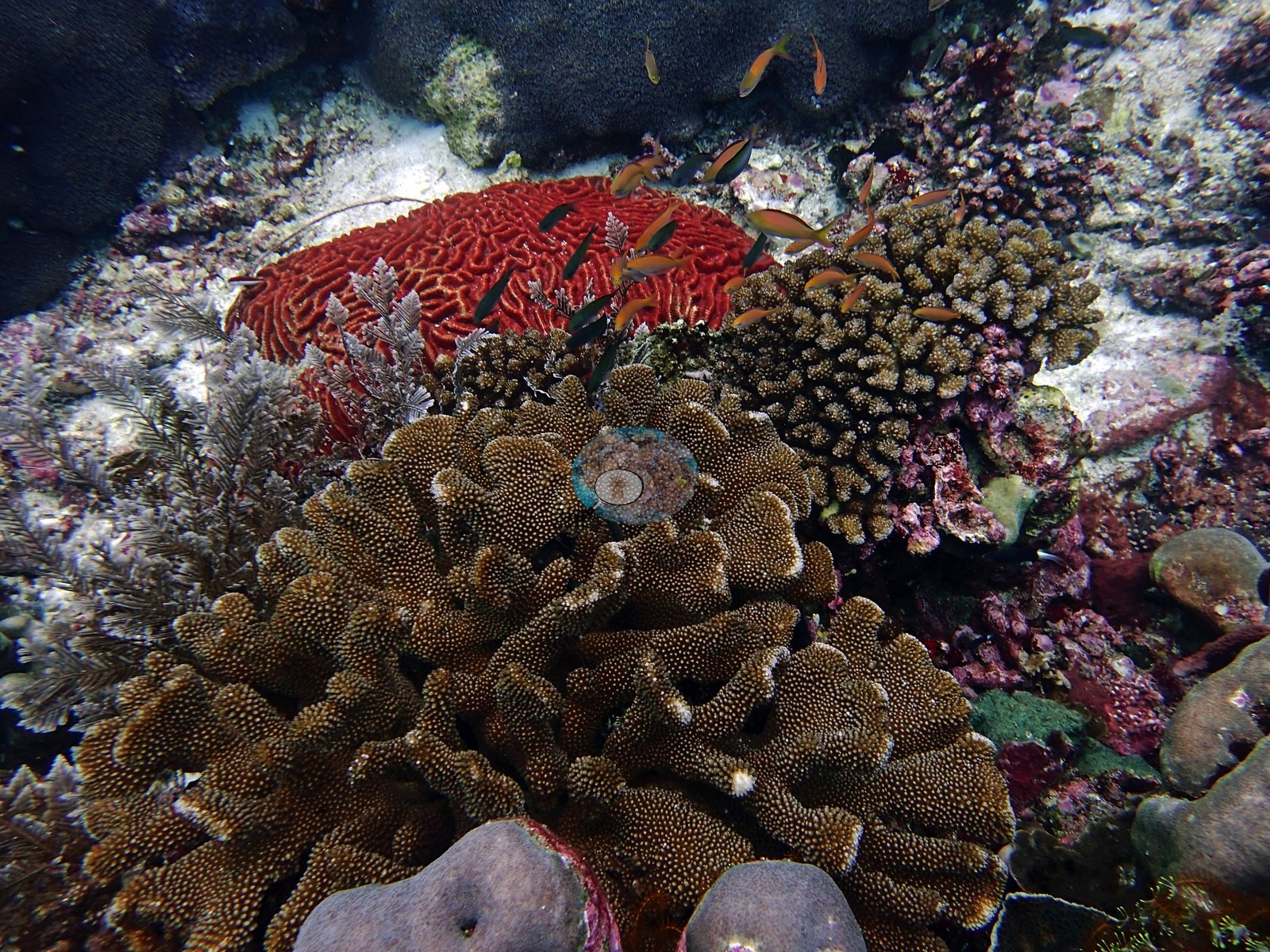 3
3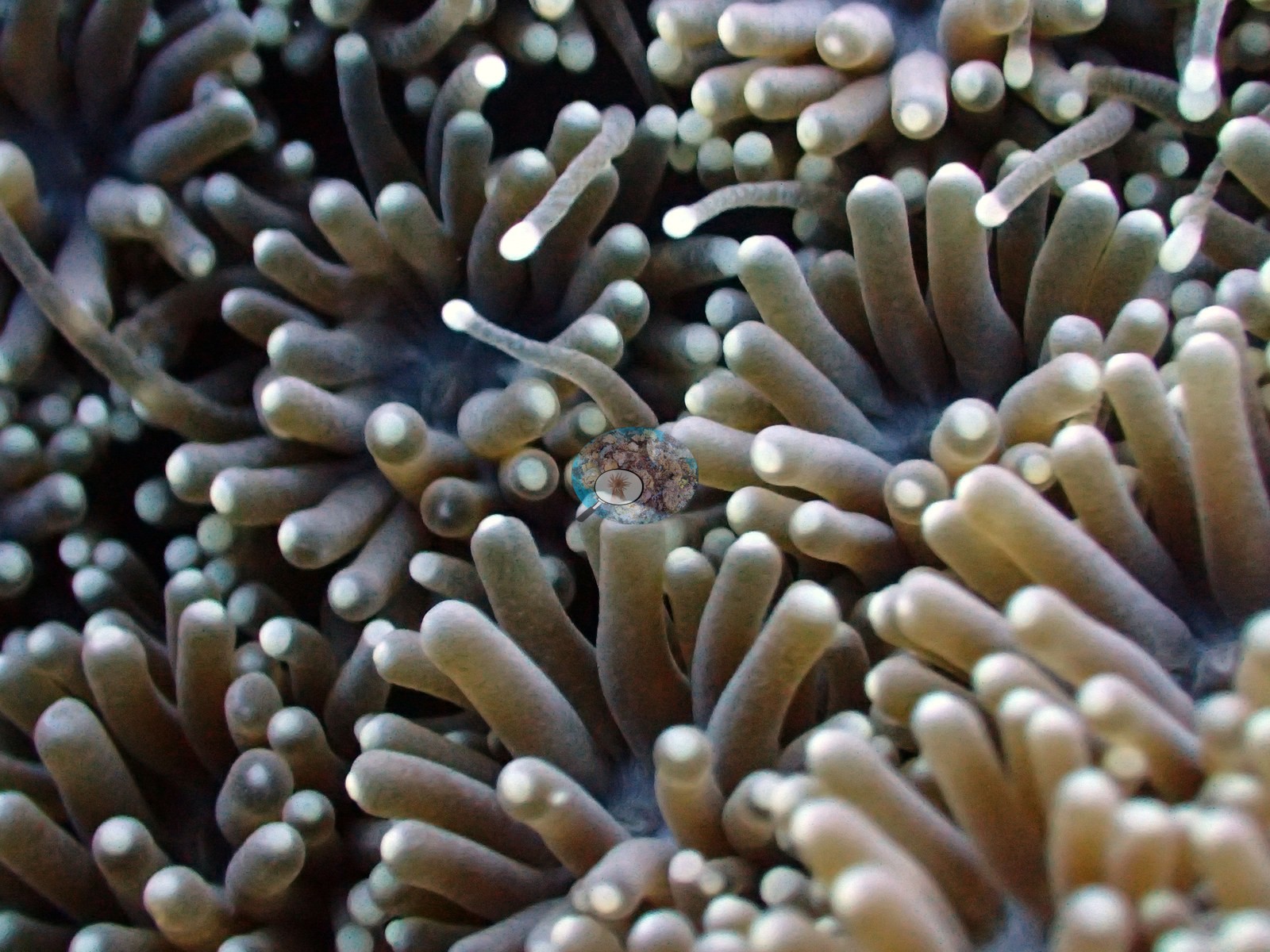 4
4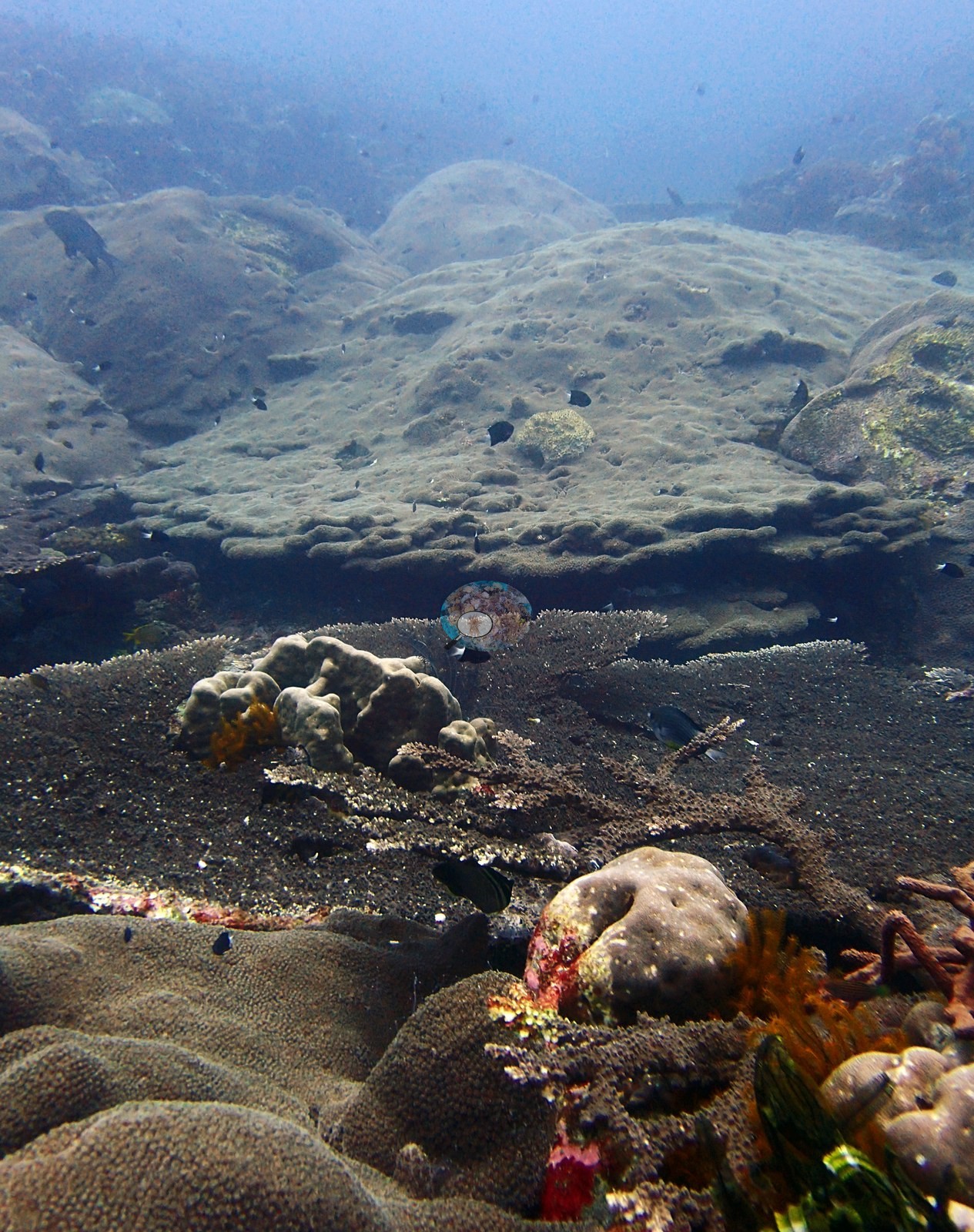 5
5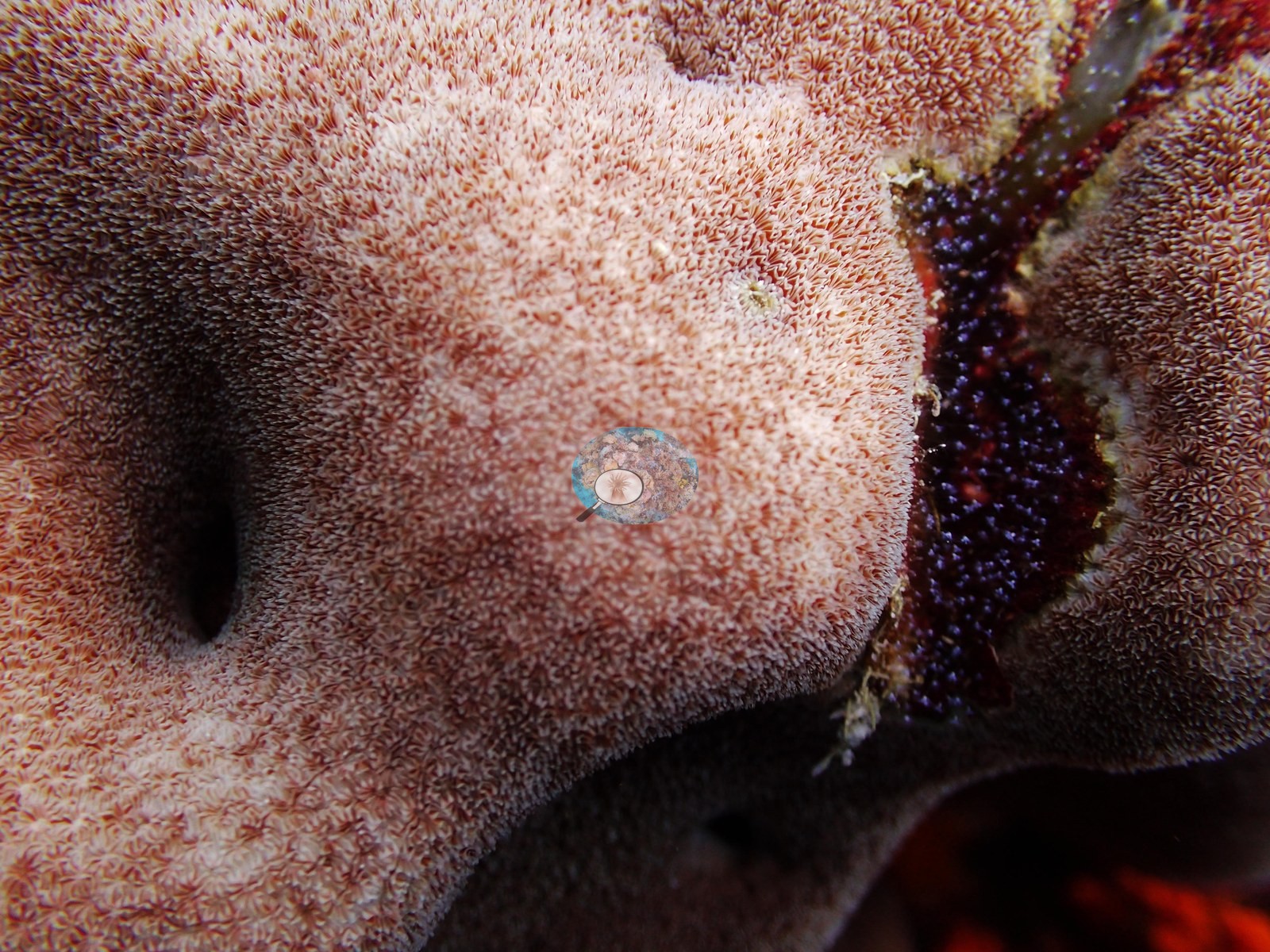 6
6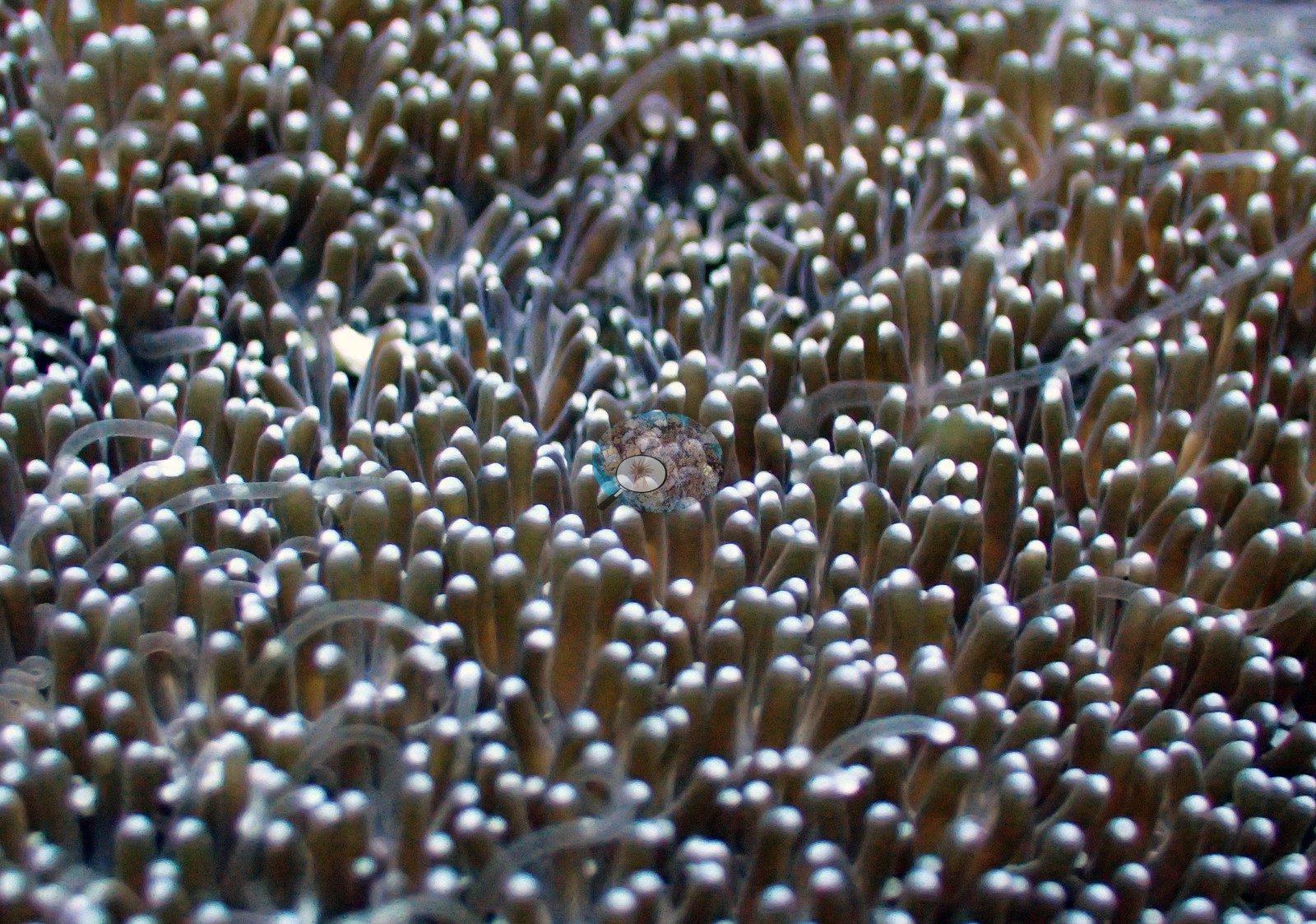 7
7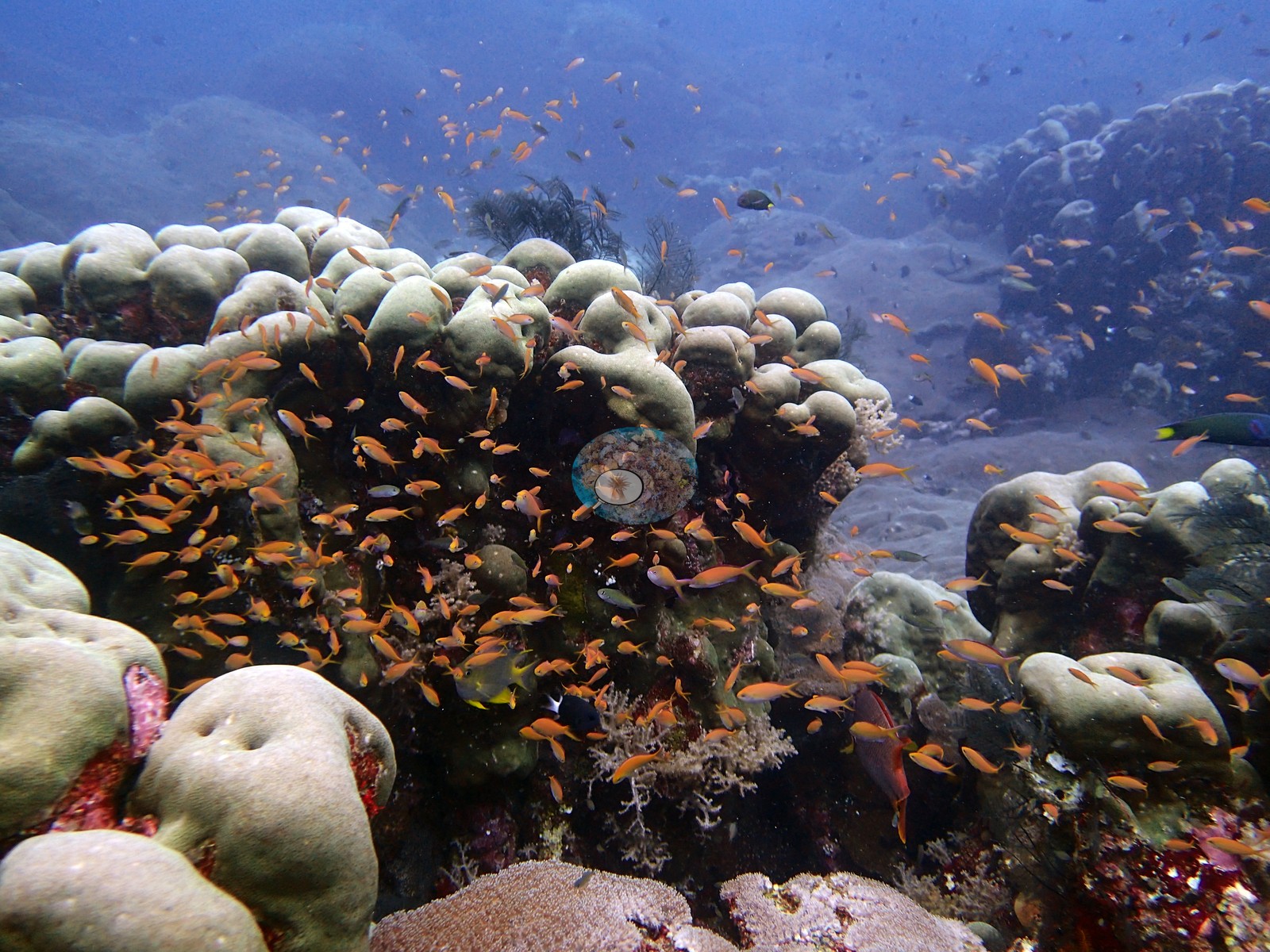 8
8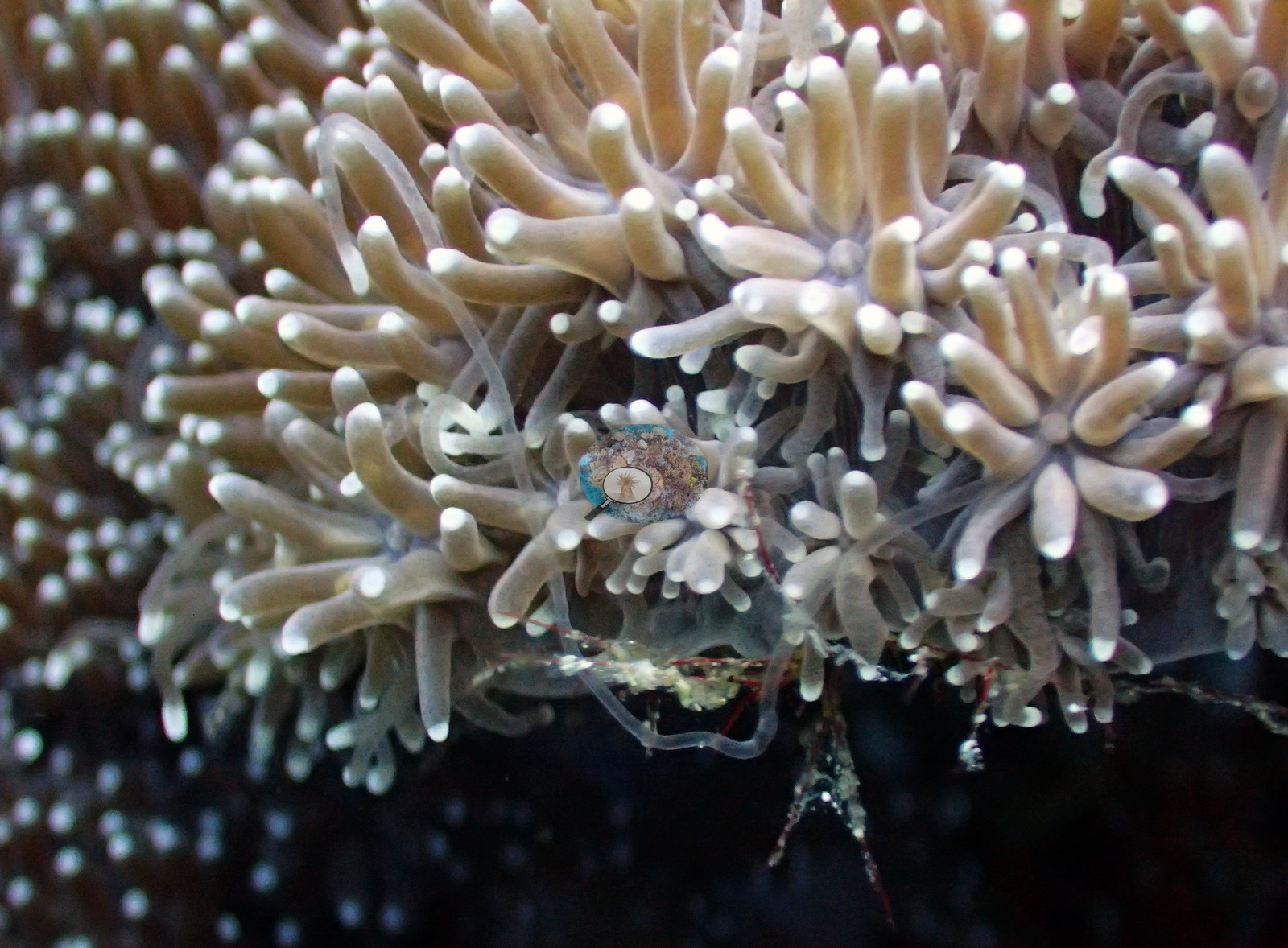 9
9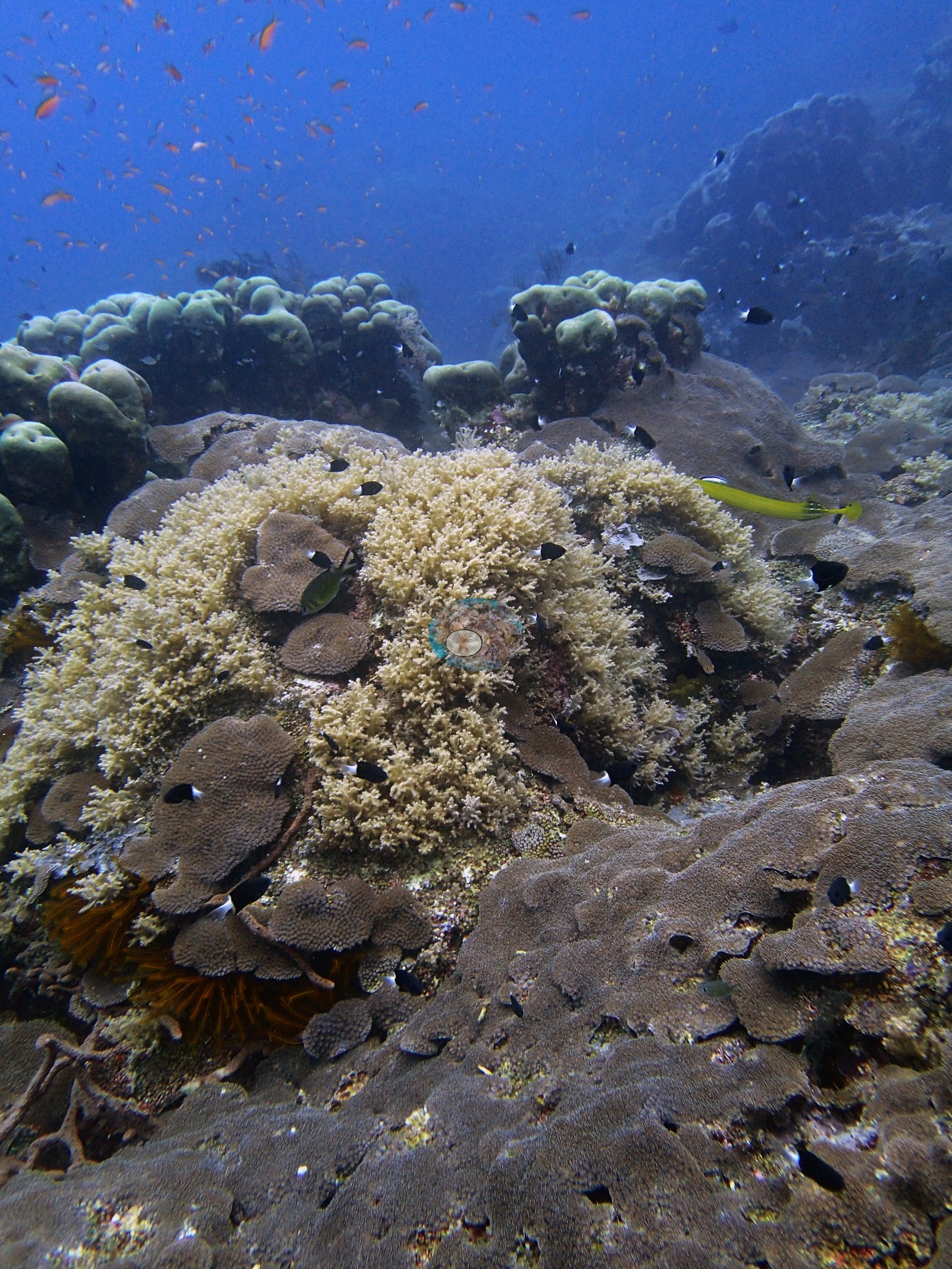 10
10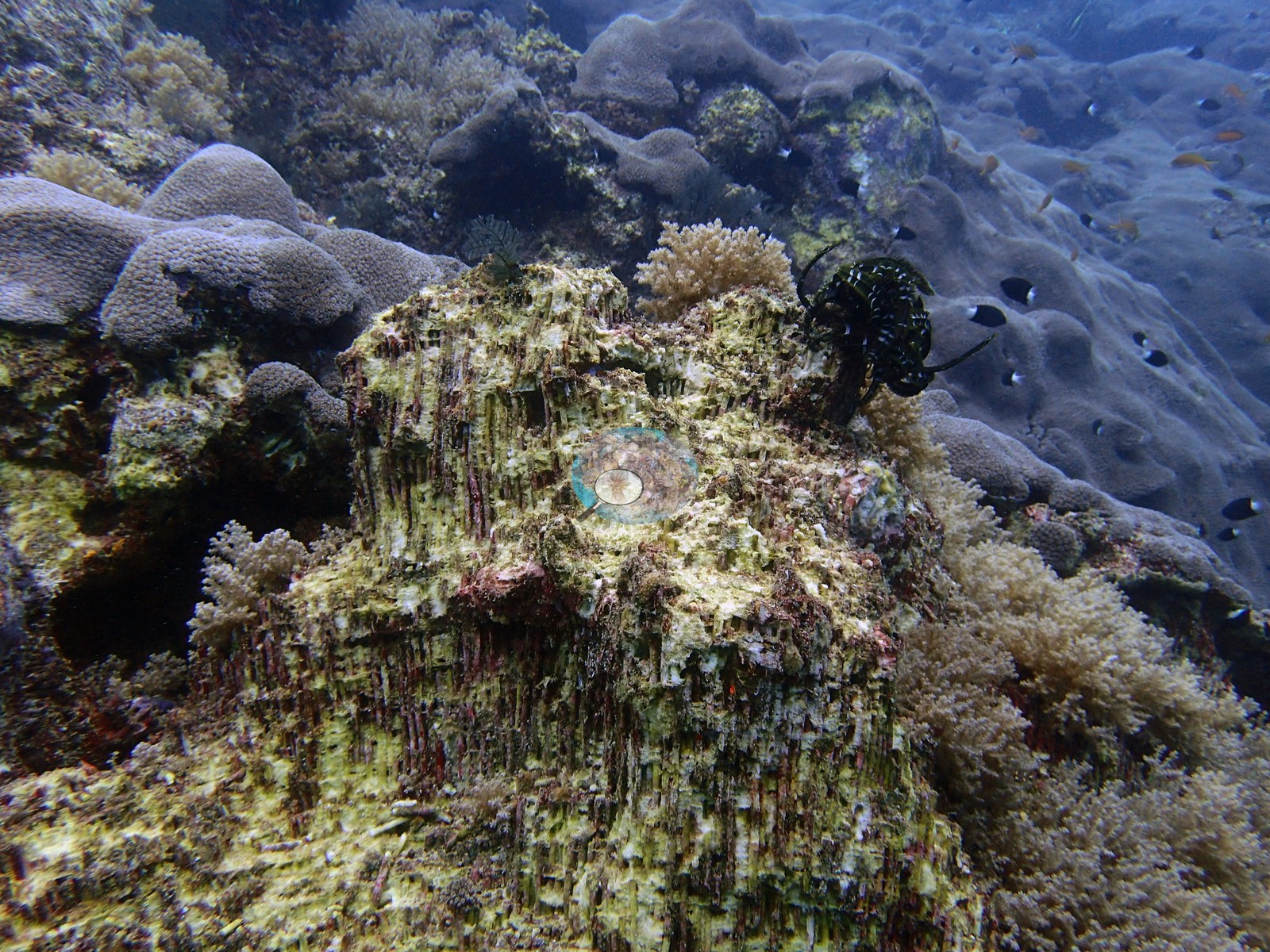 11
11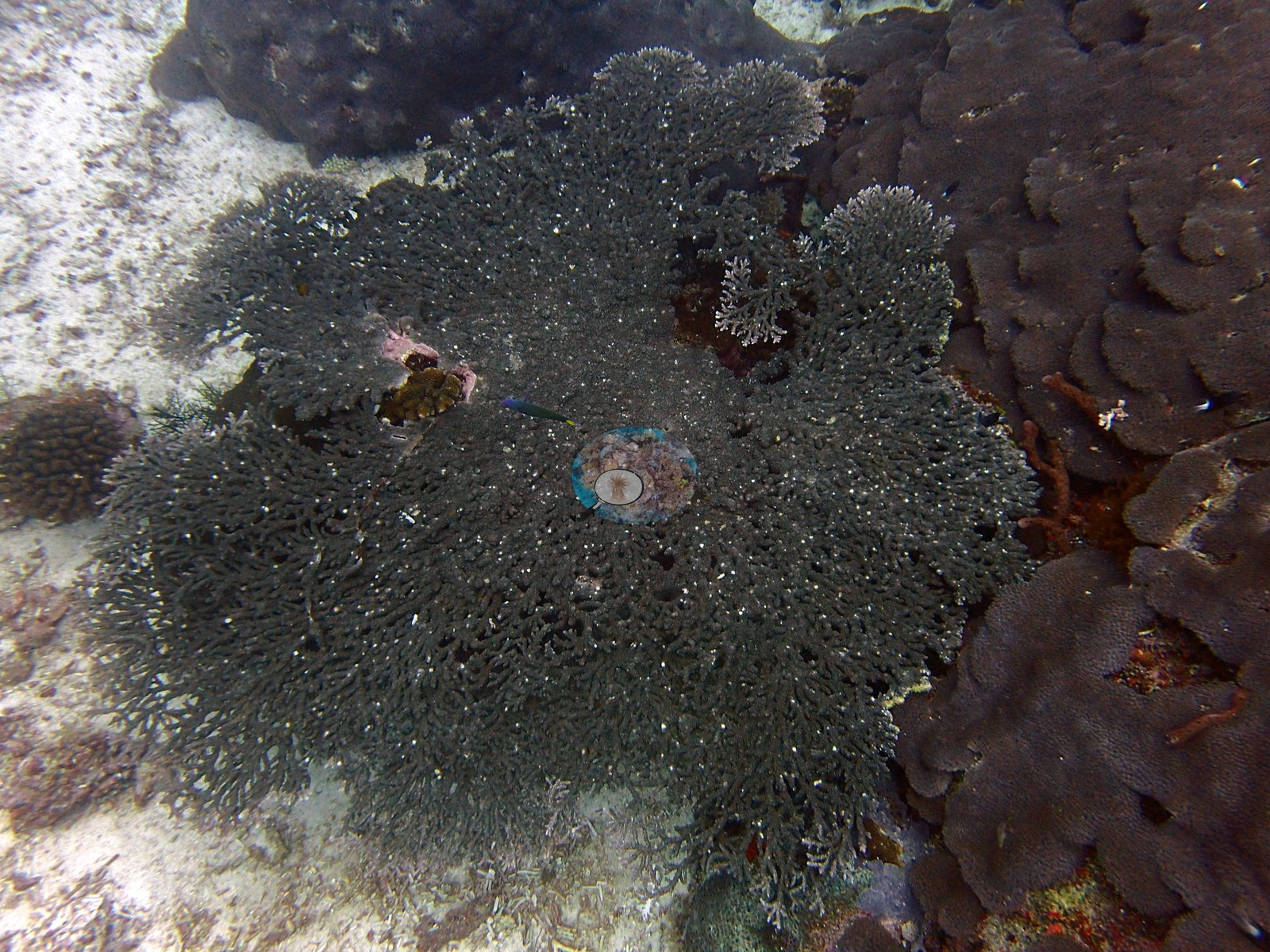 12
12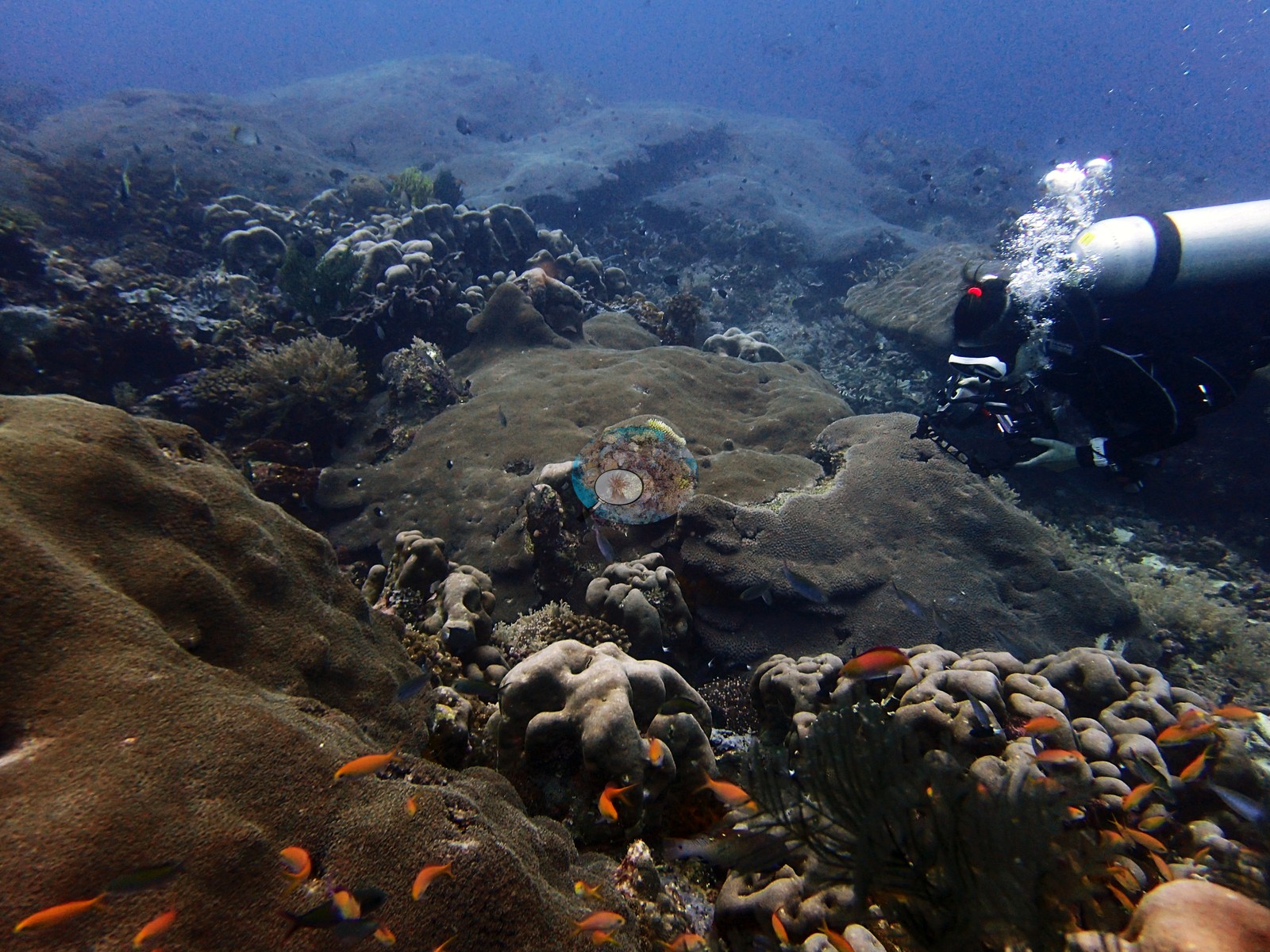 13
13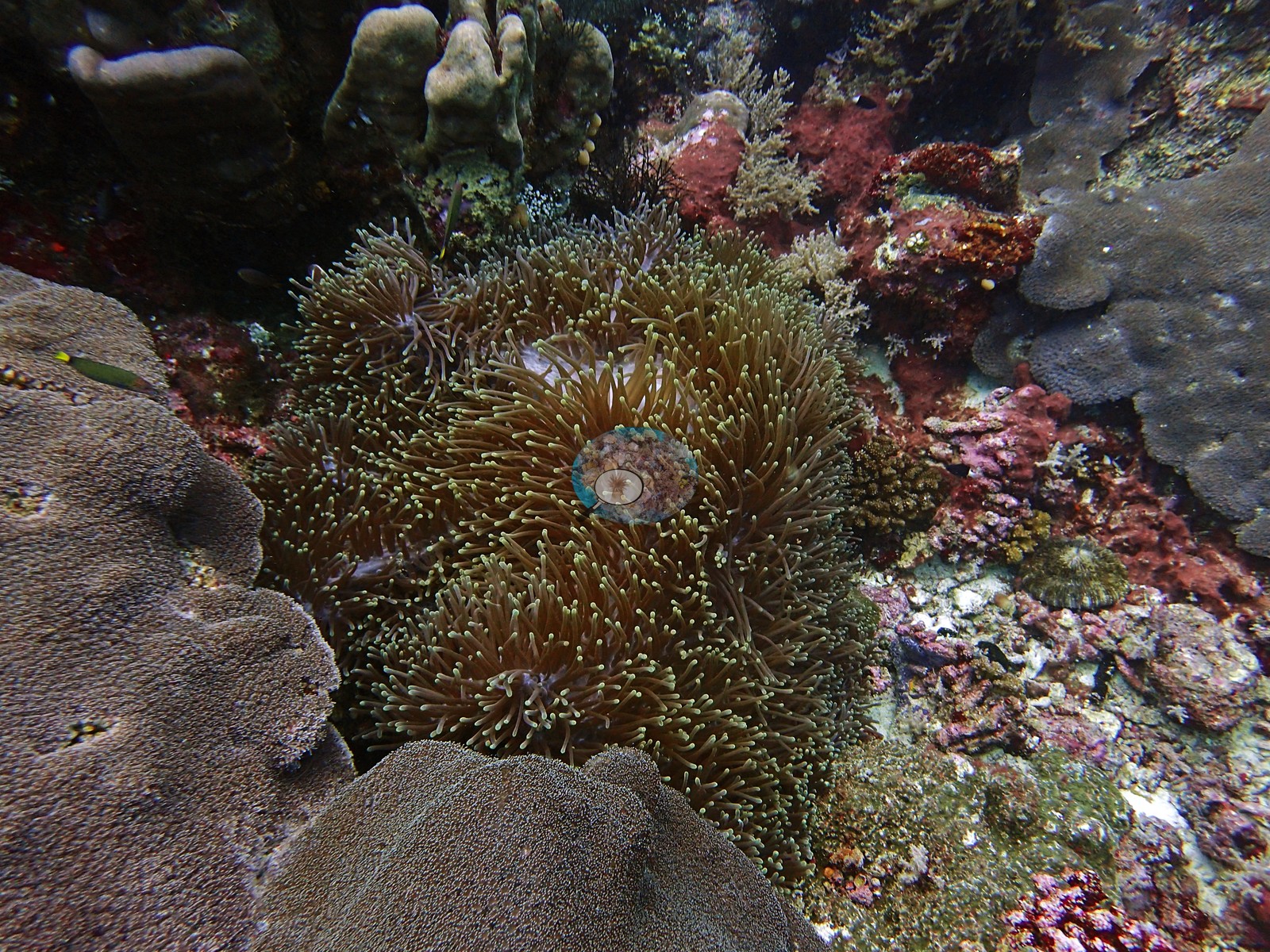 14
14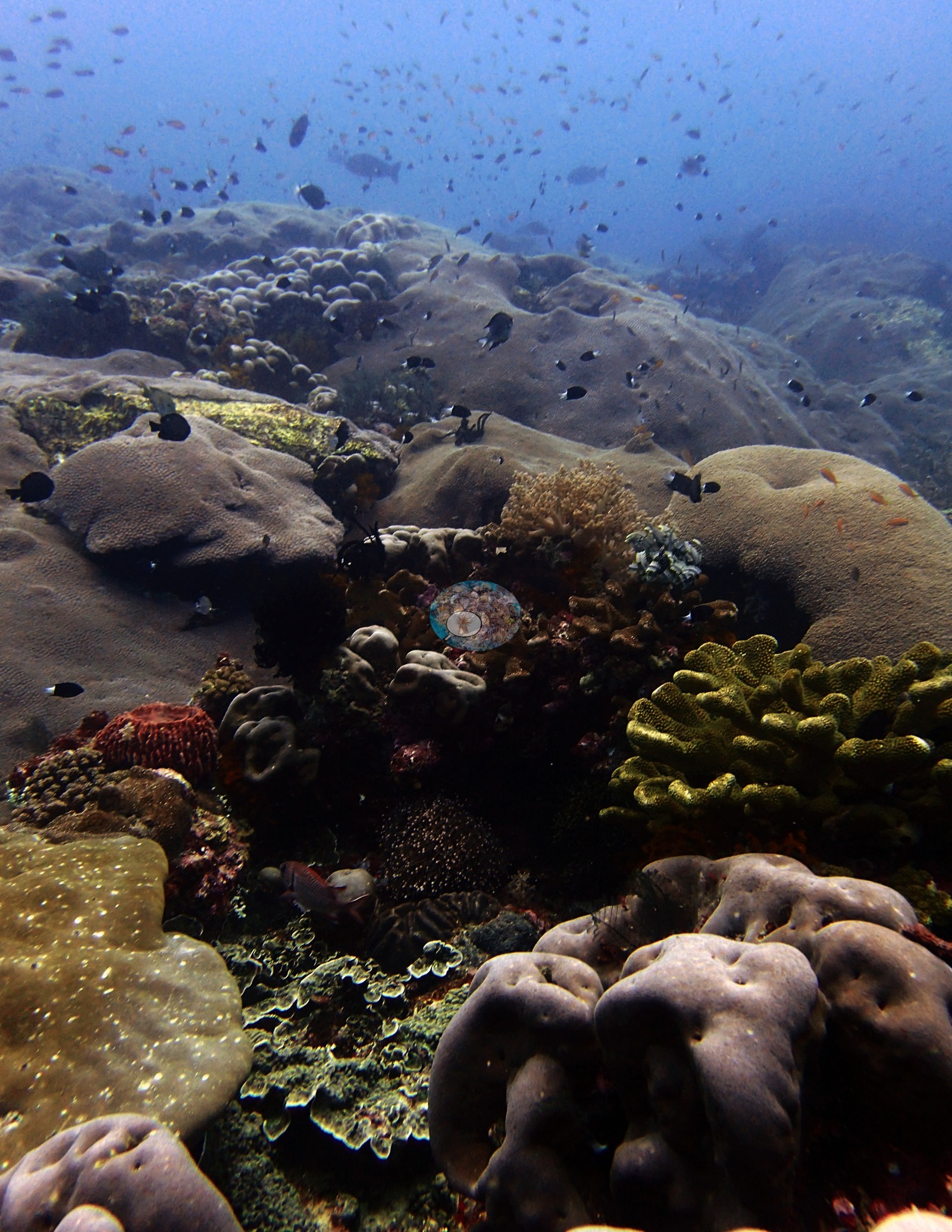 15
15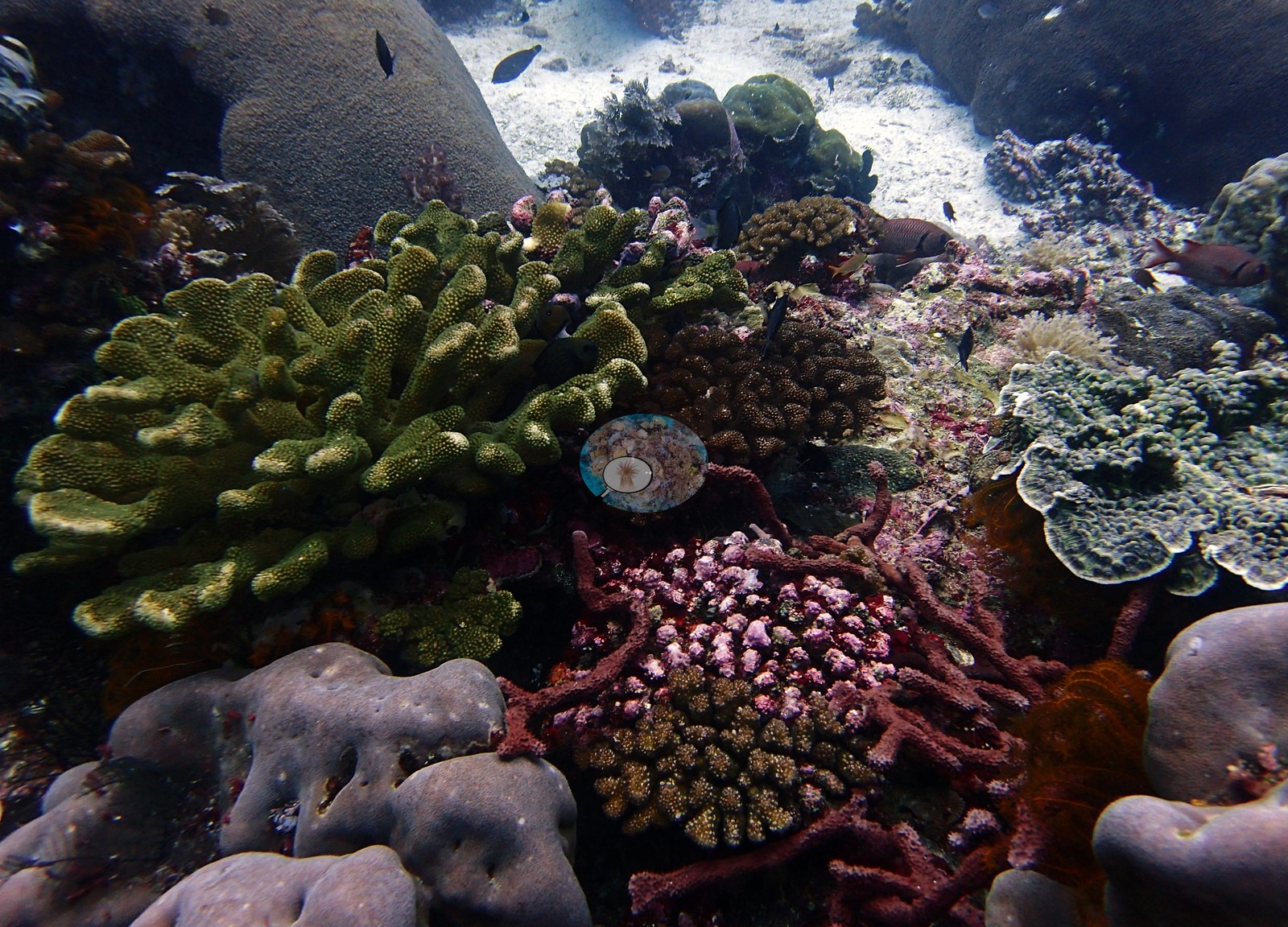 16
16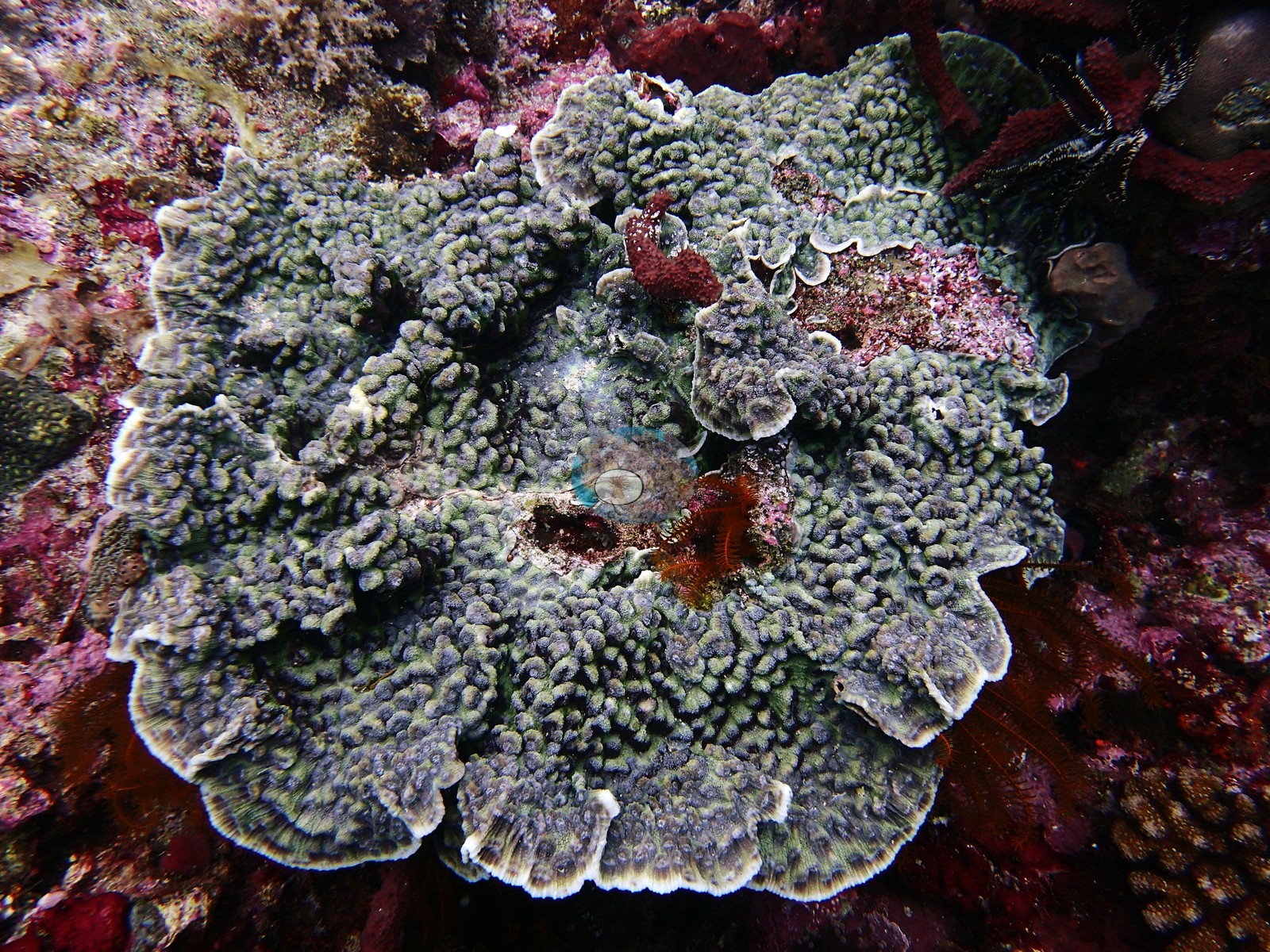 18
18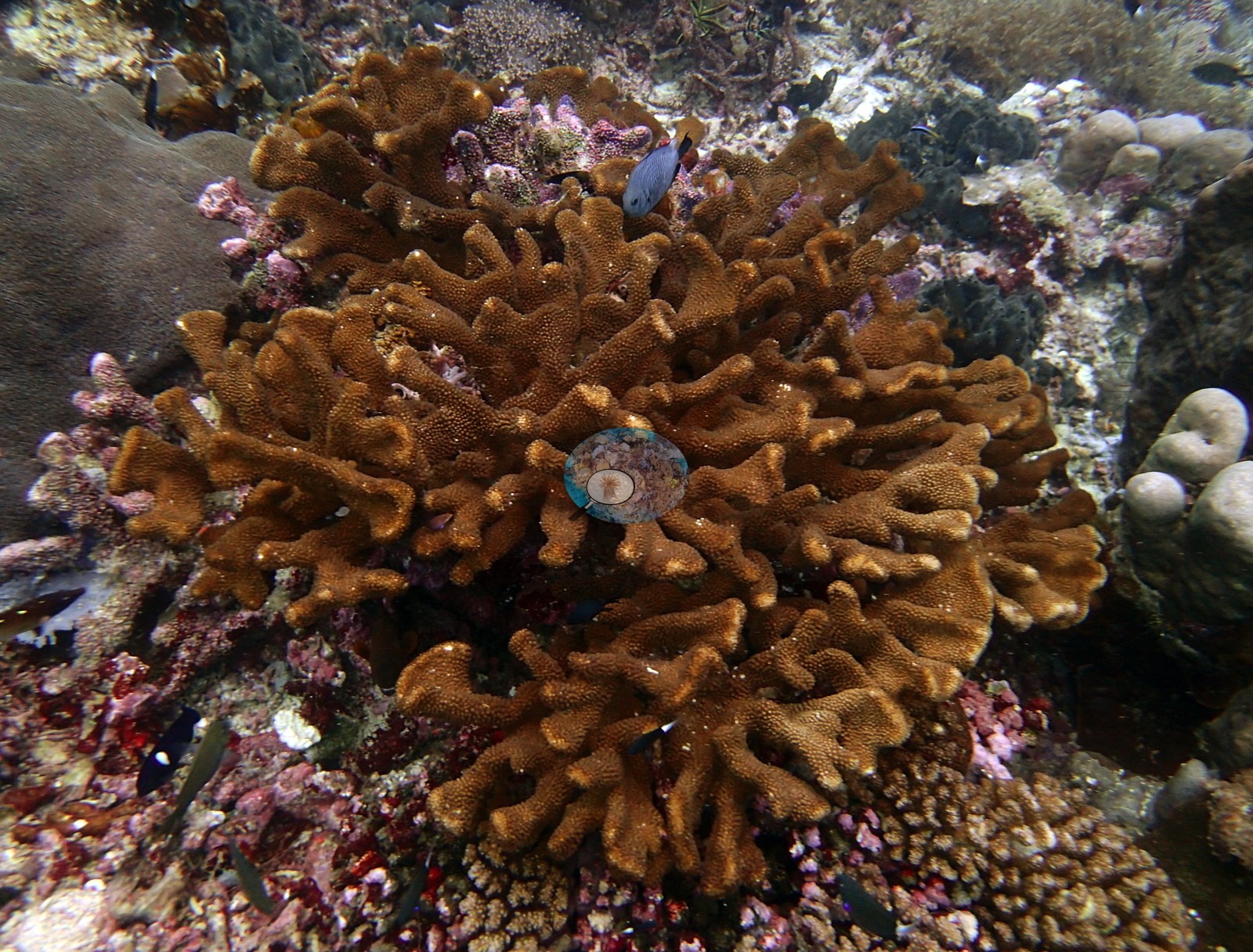 19
19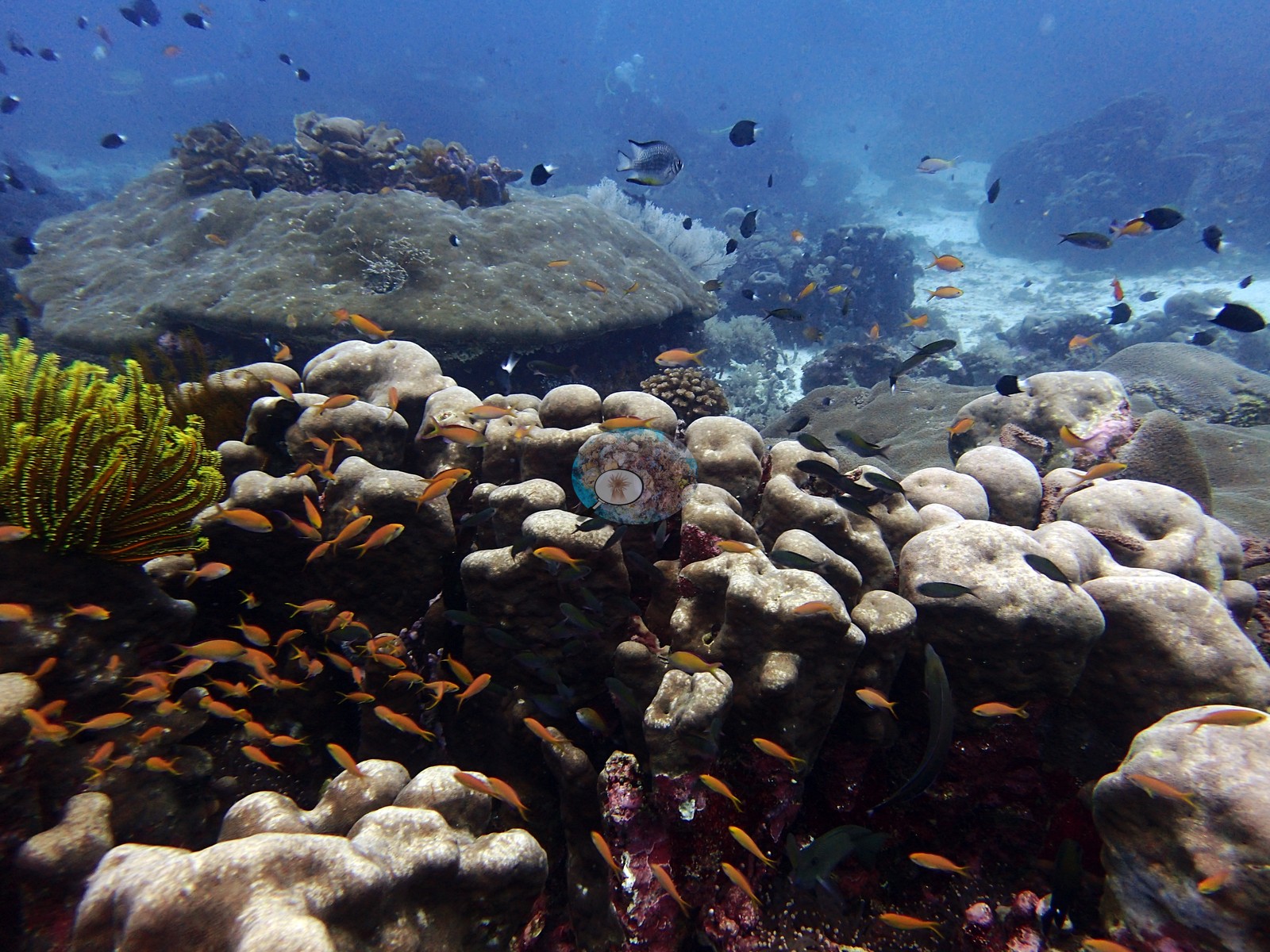 20
20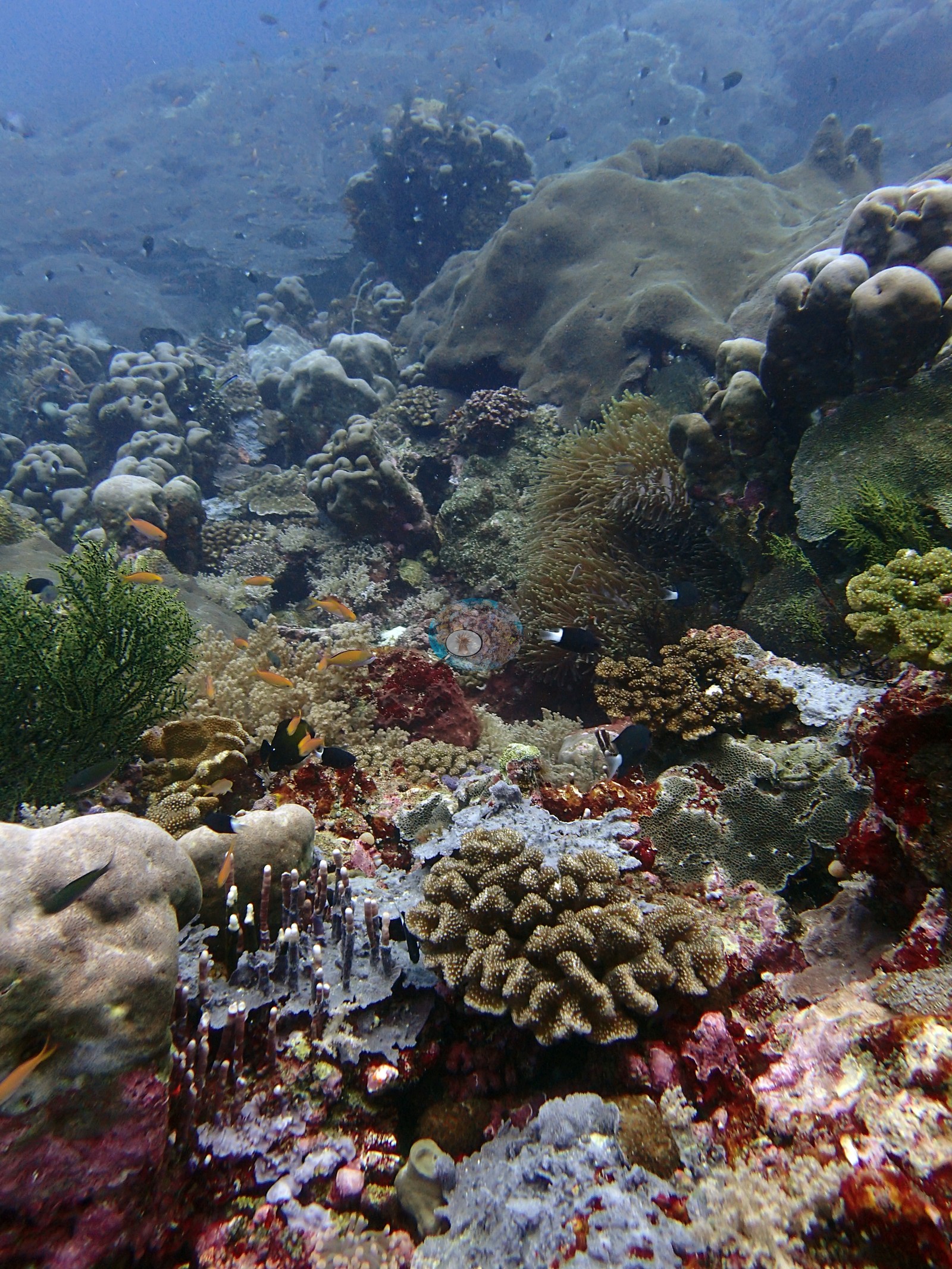 21
21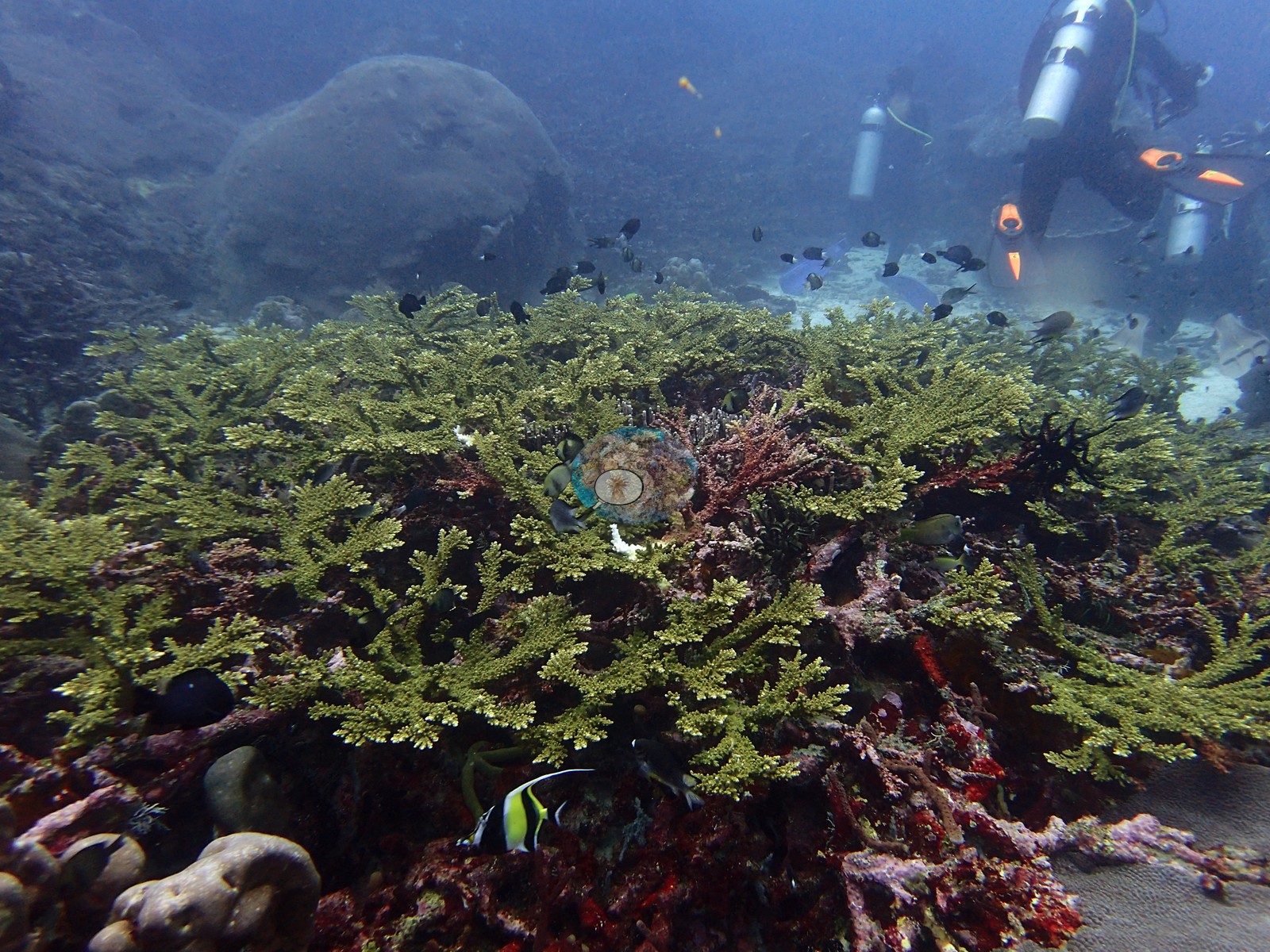 22
22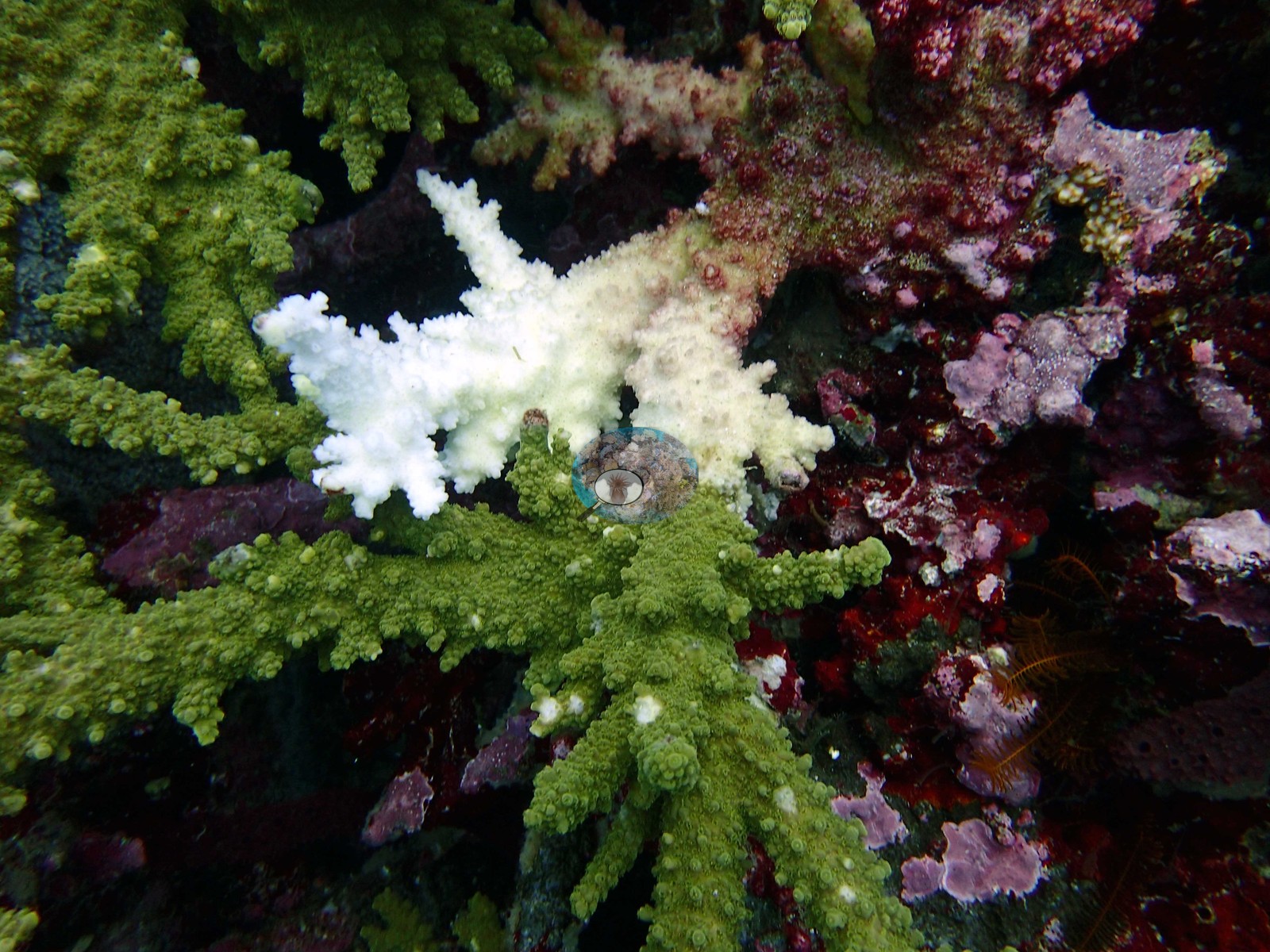 23
23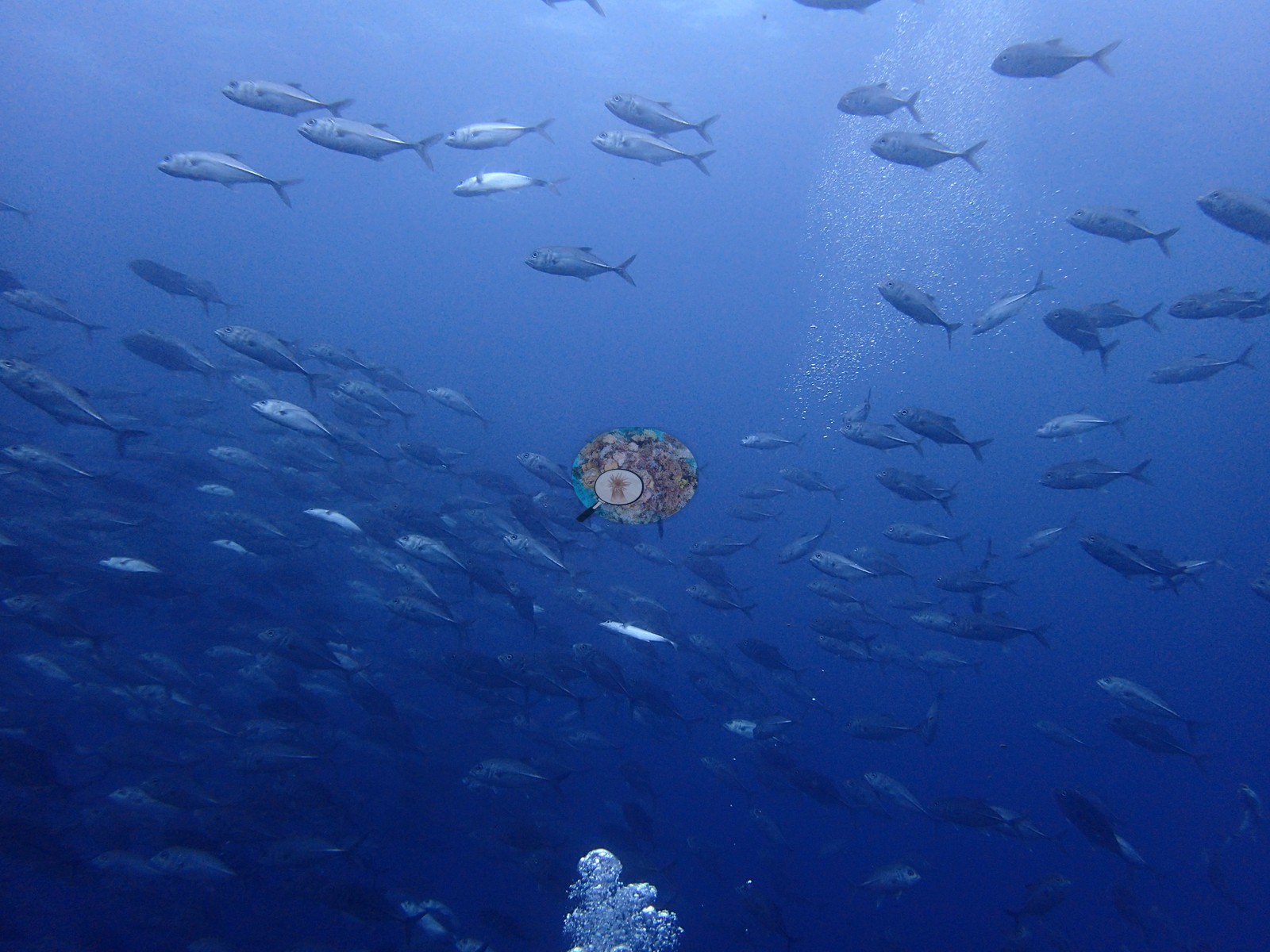 24
24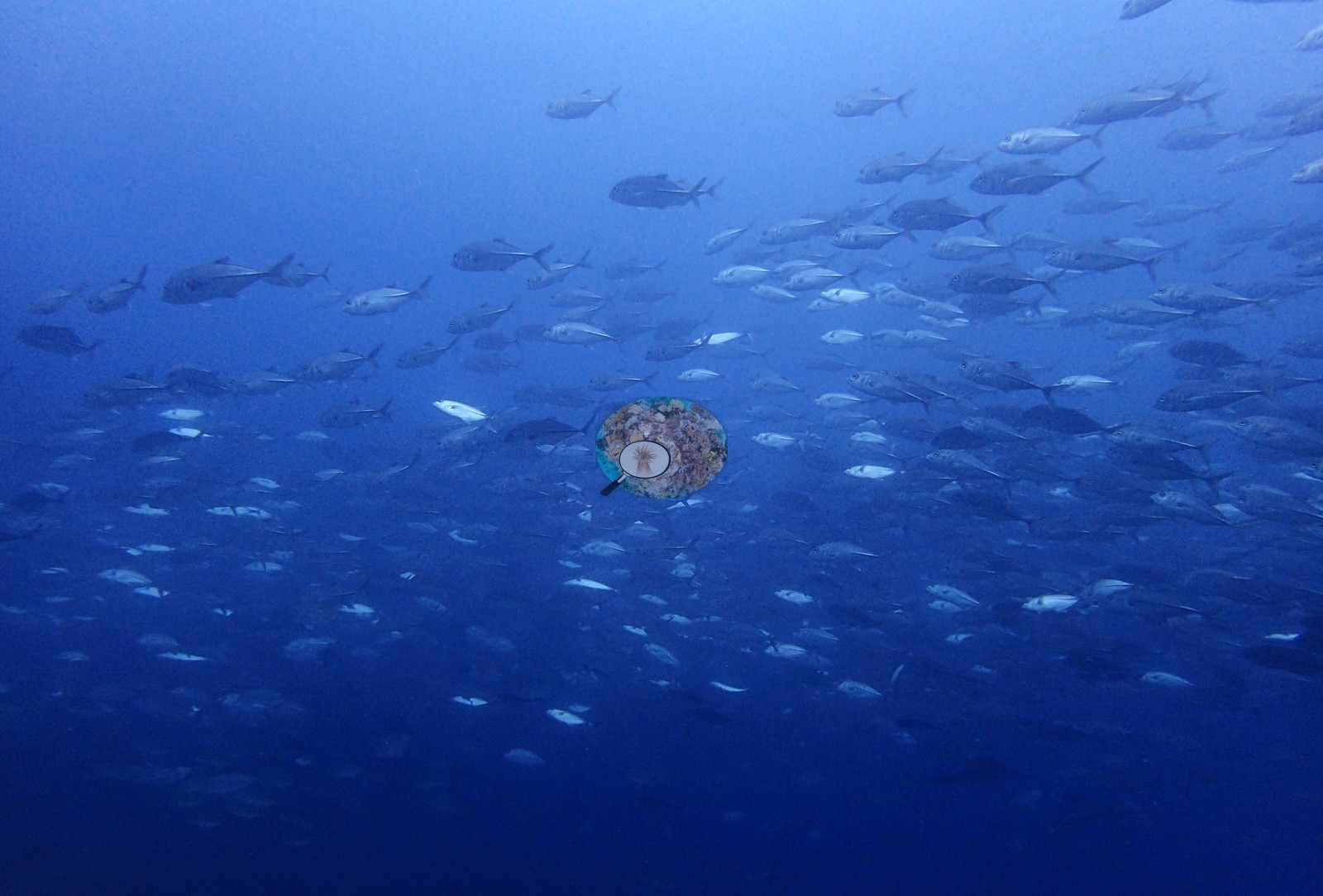 25
25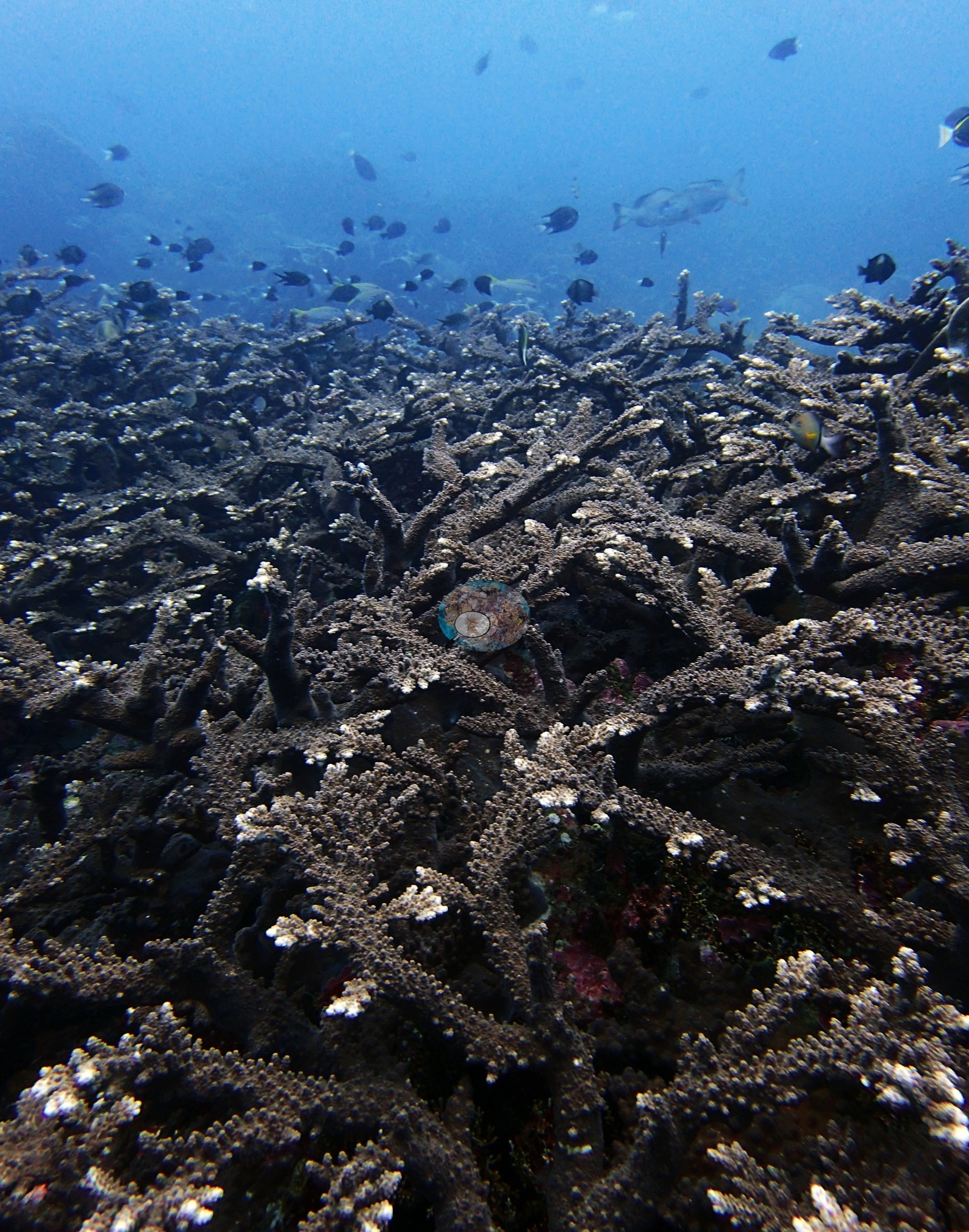 26
26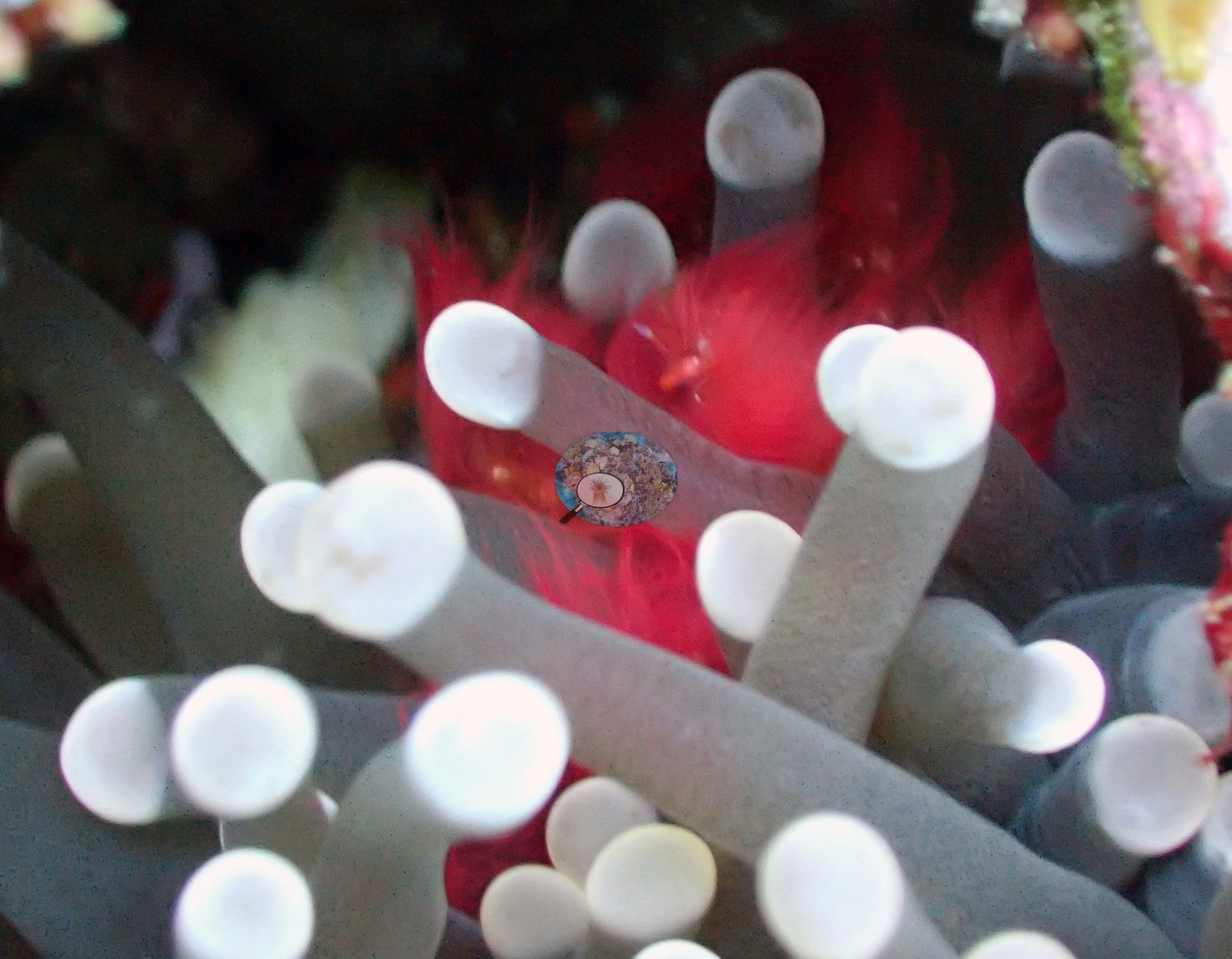 27
27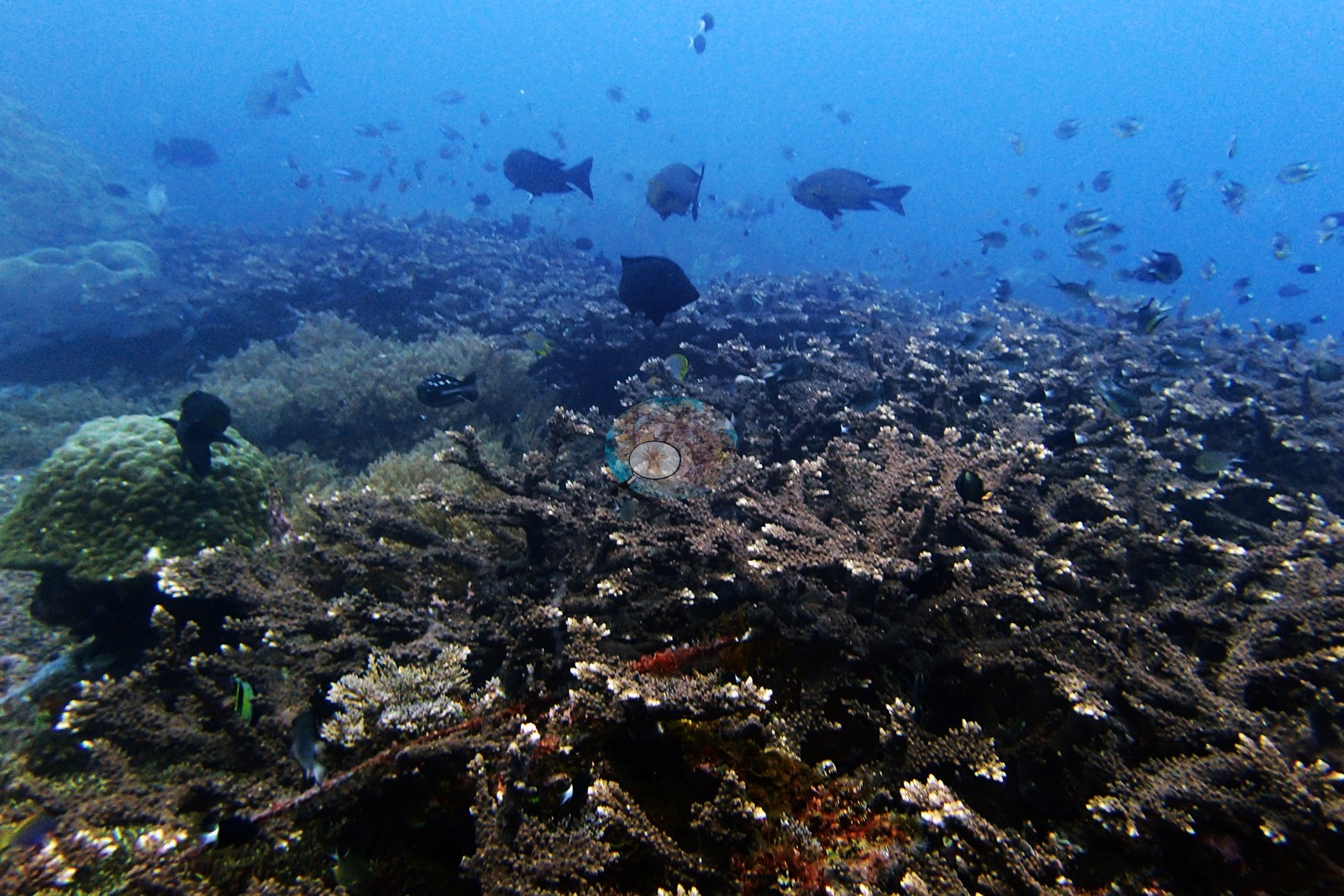 28
28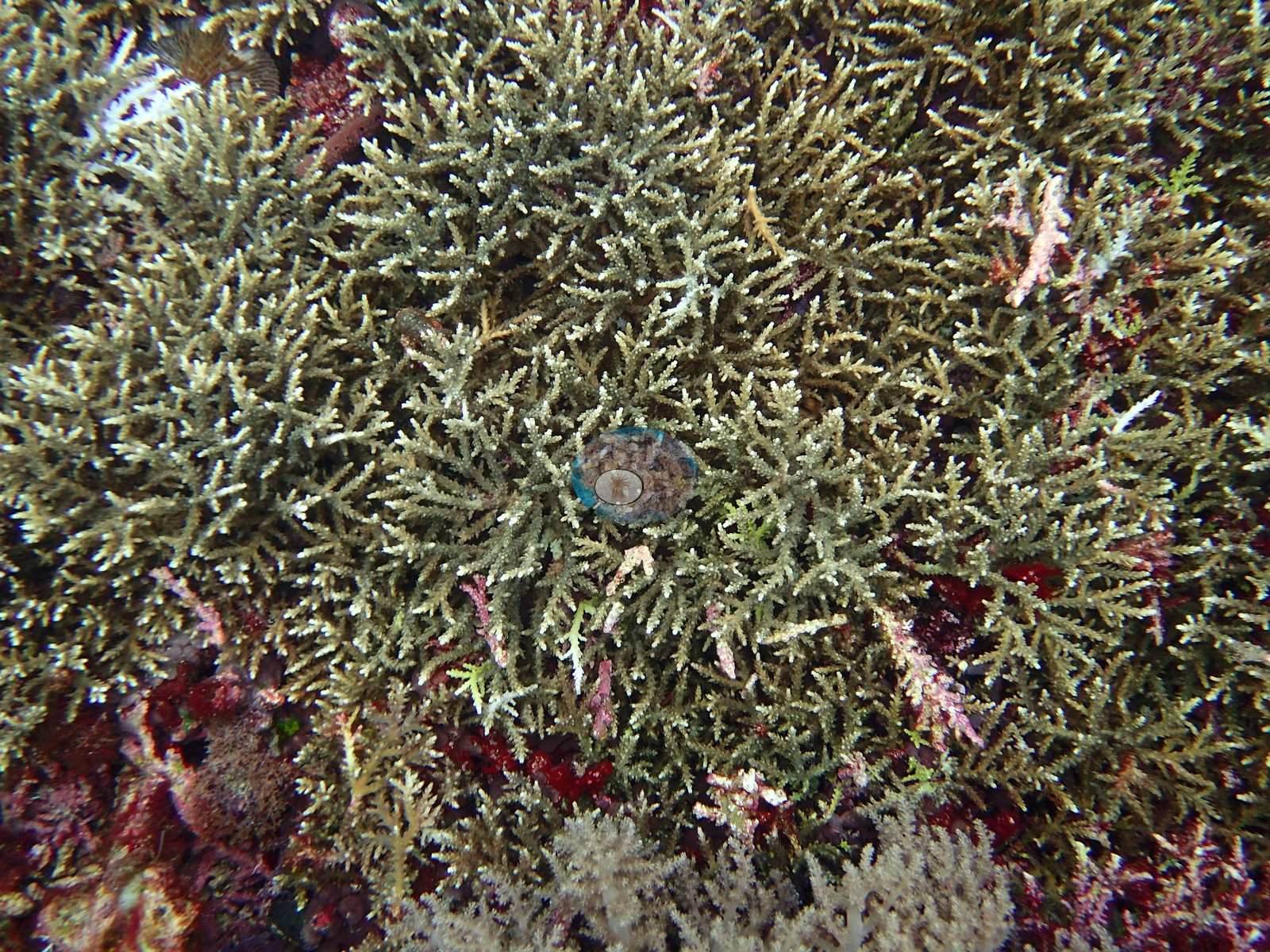 29
29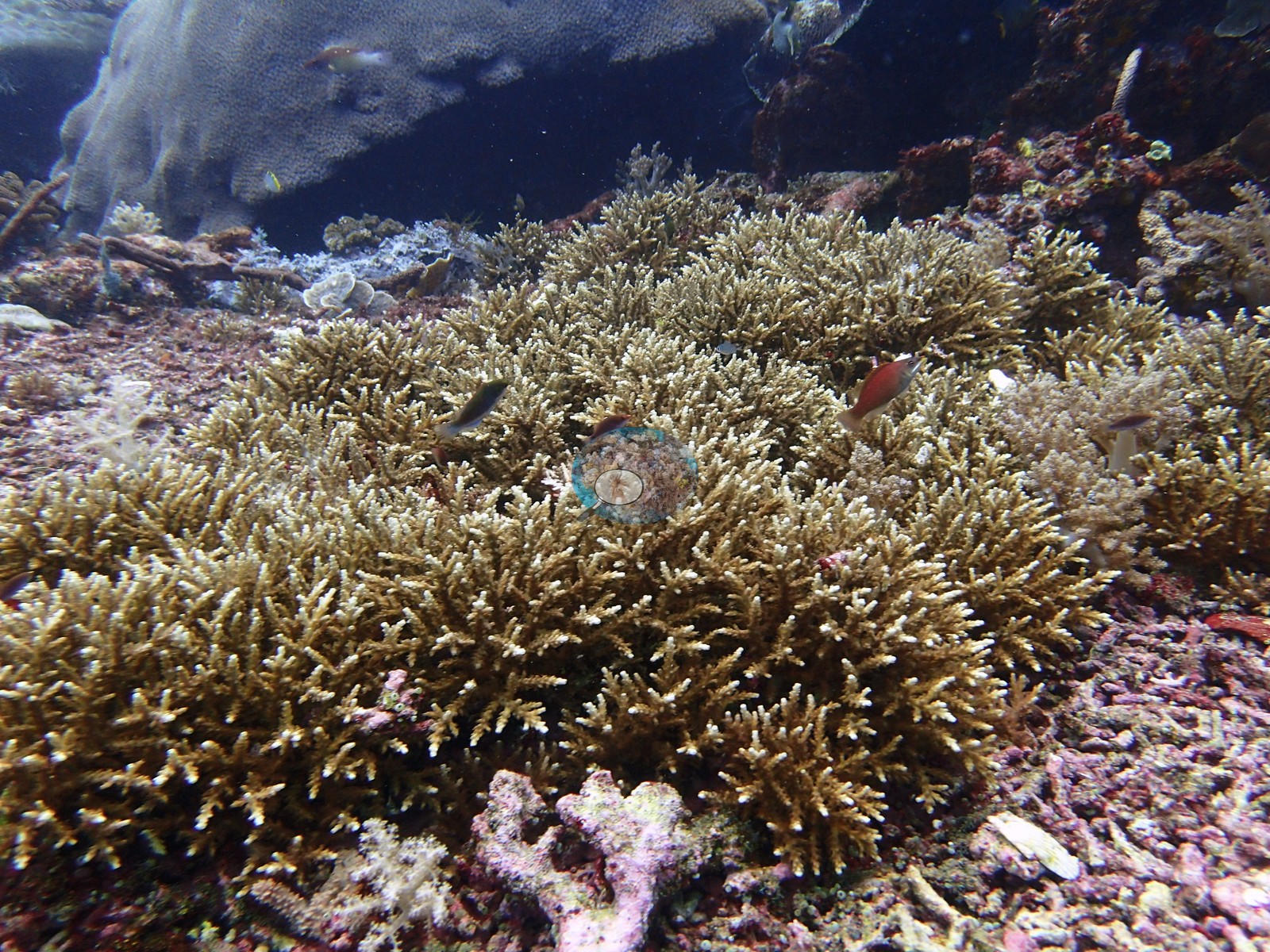 30
30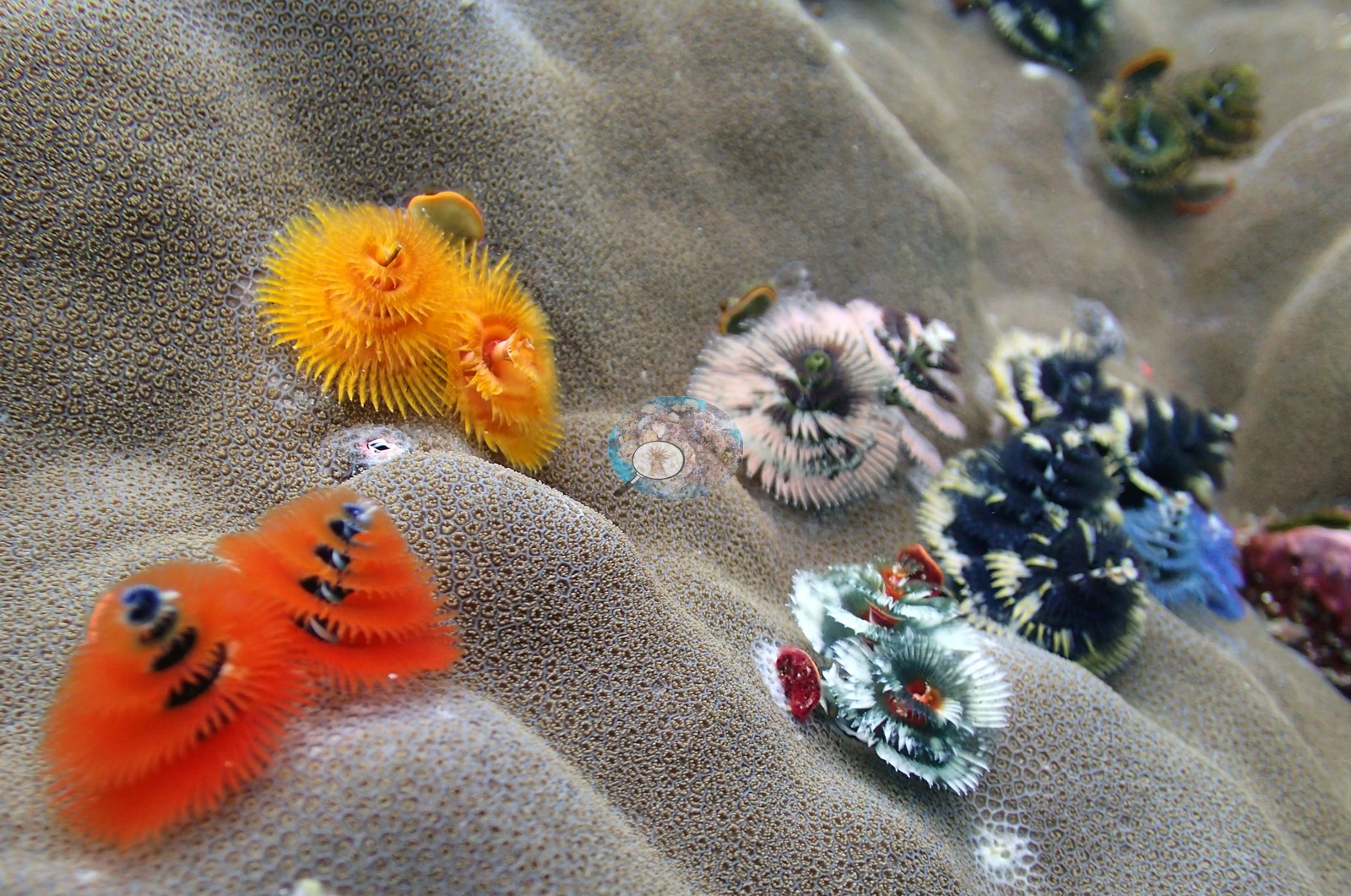 31
31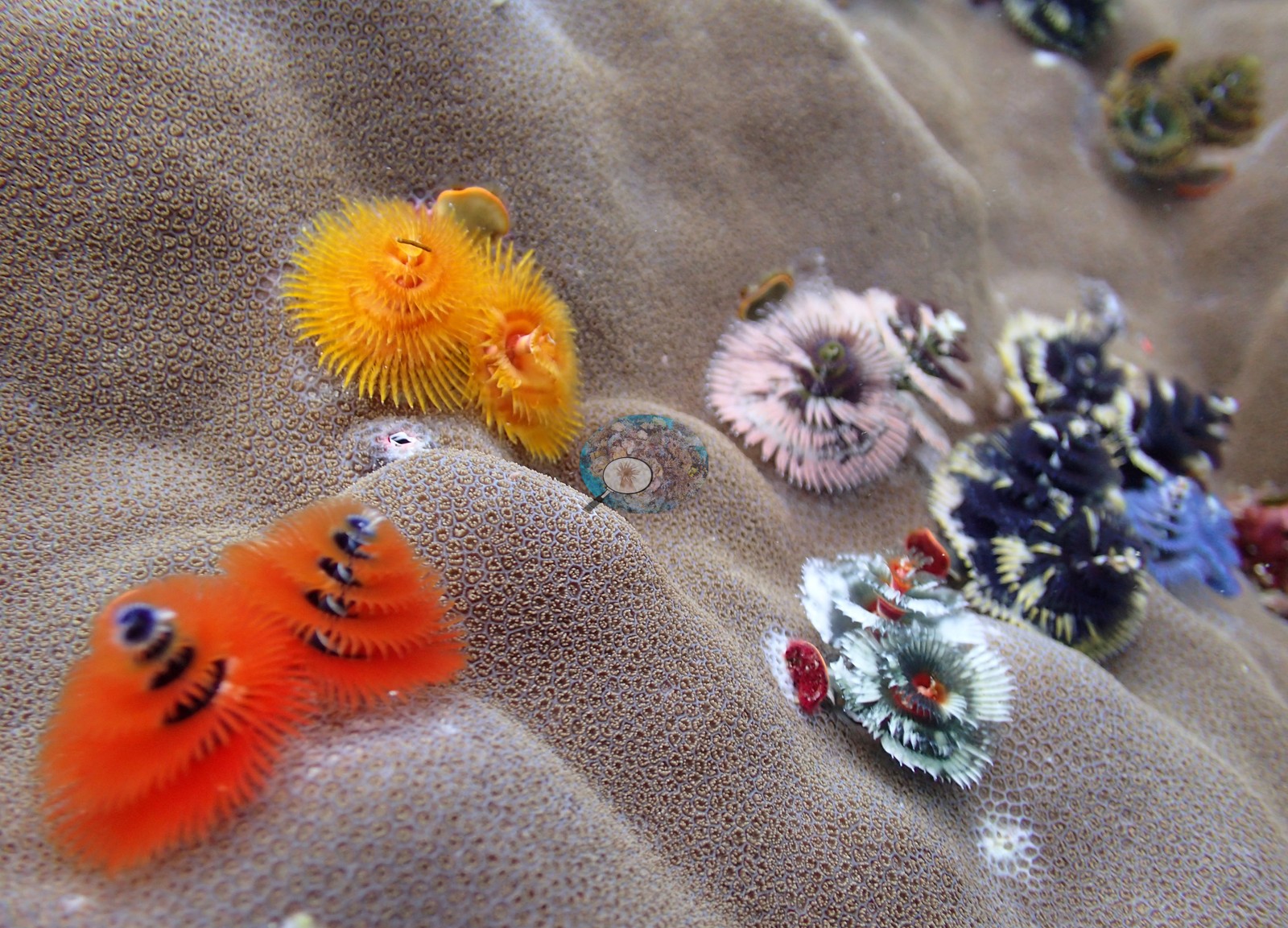 32
32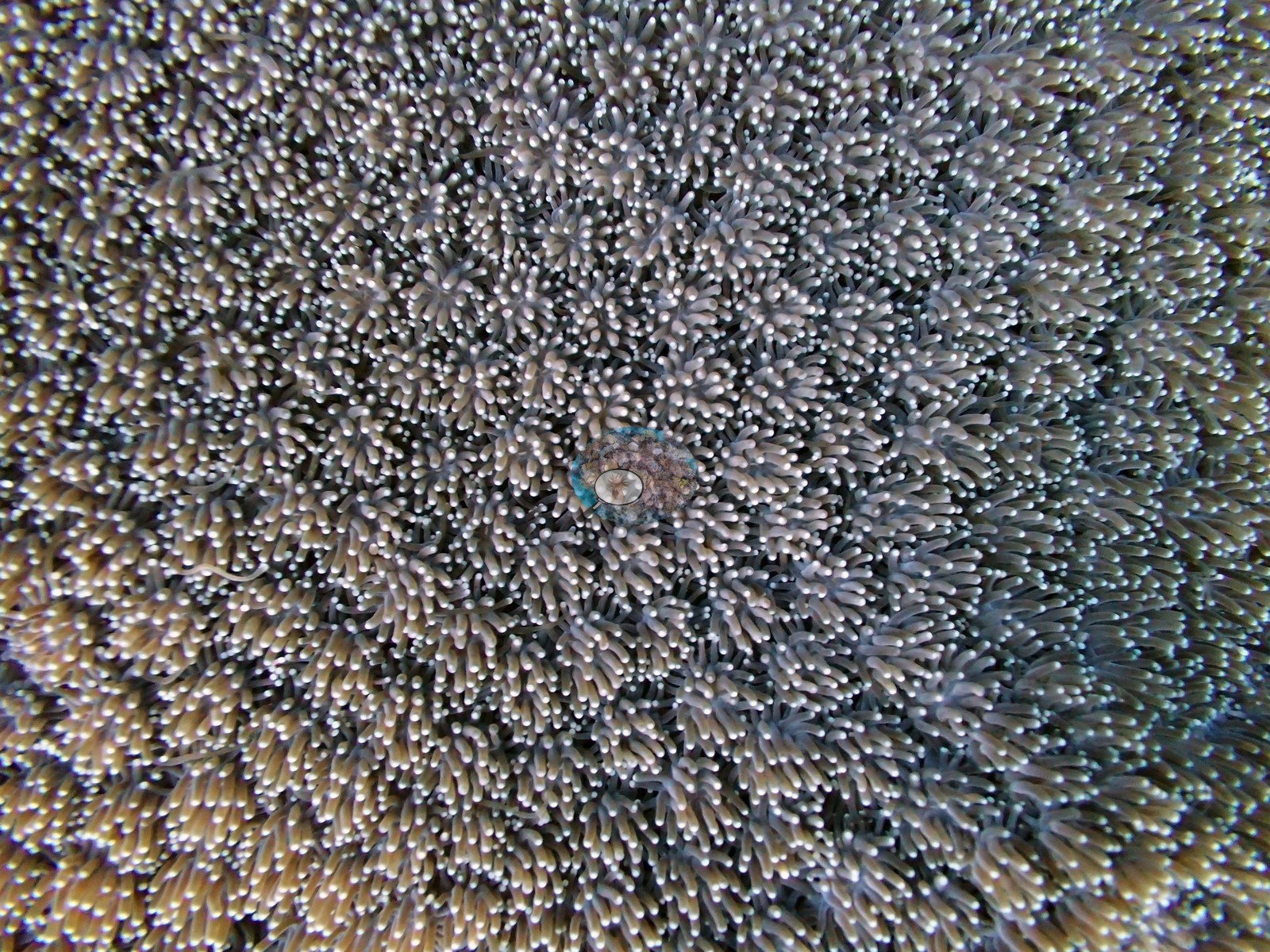 34
34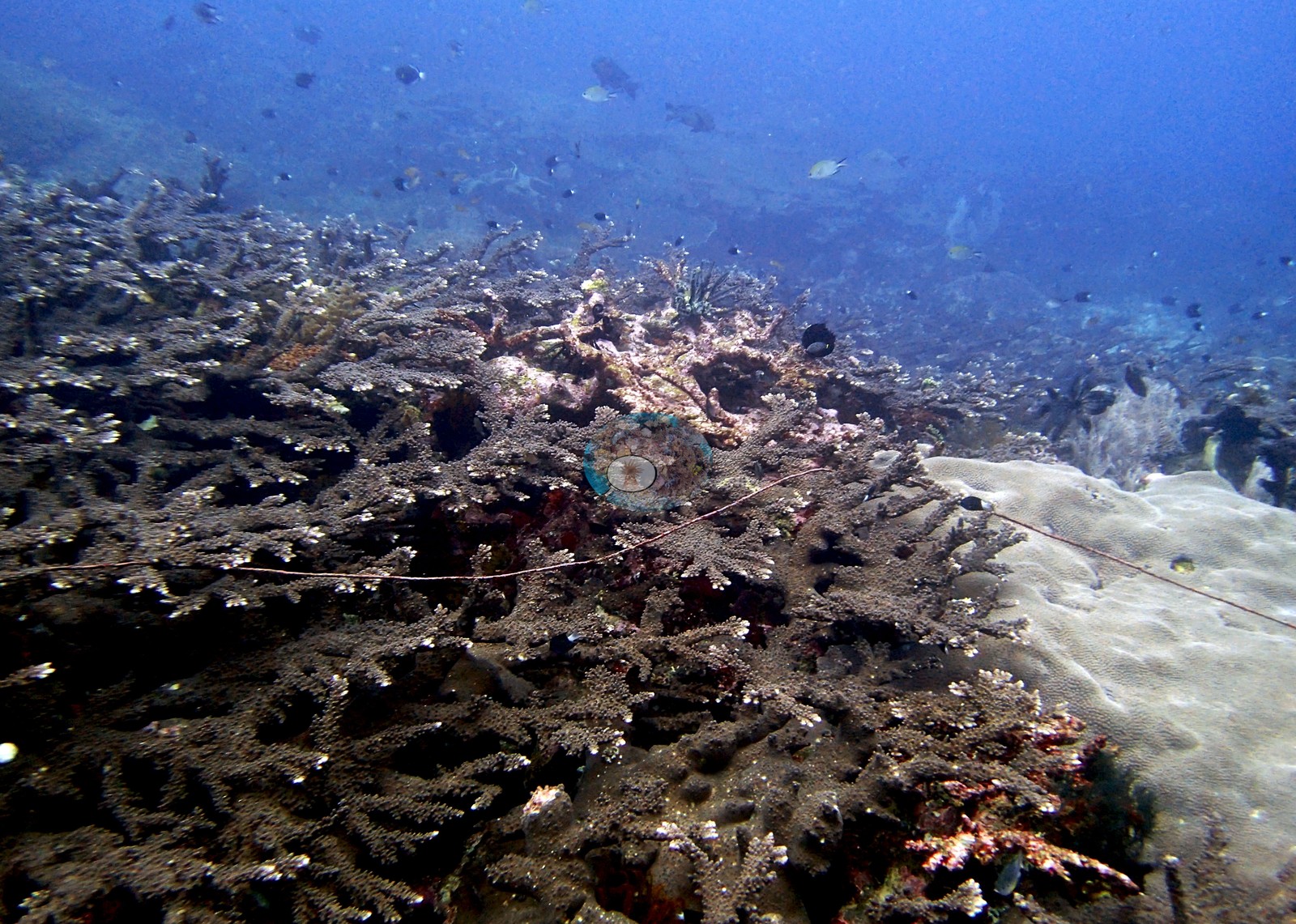 35
35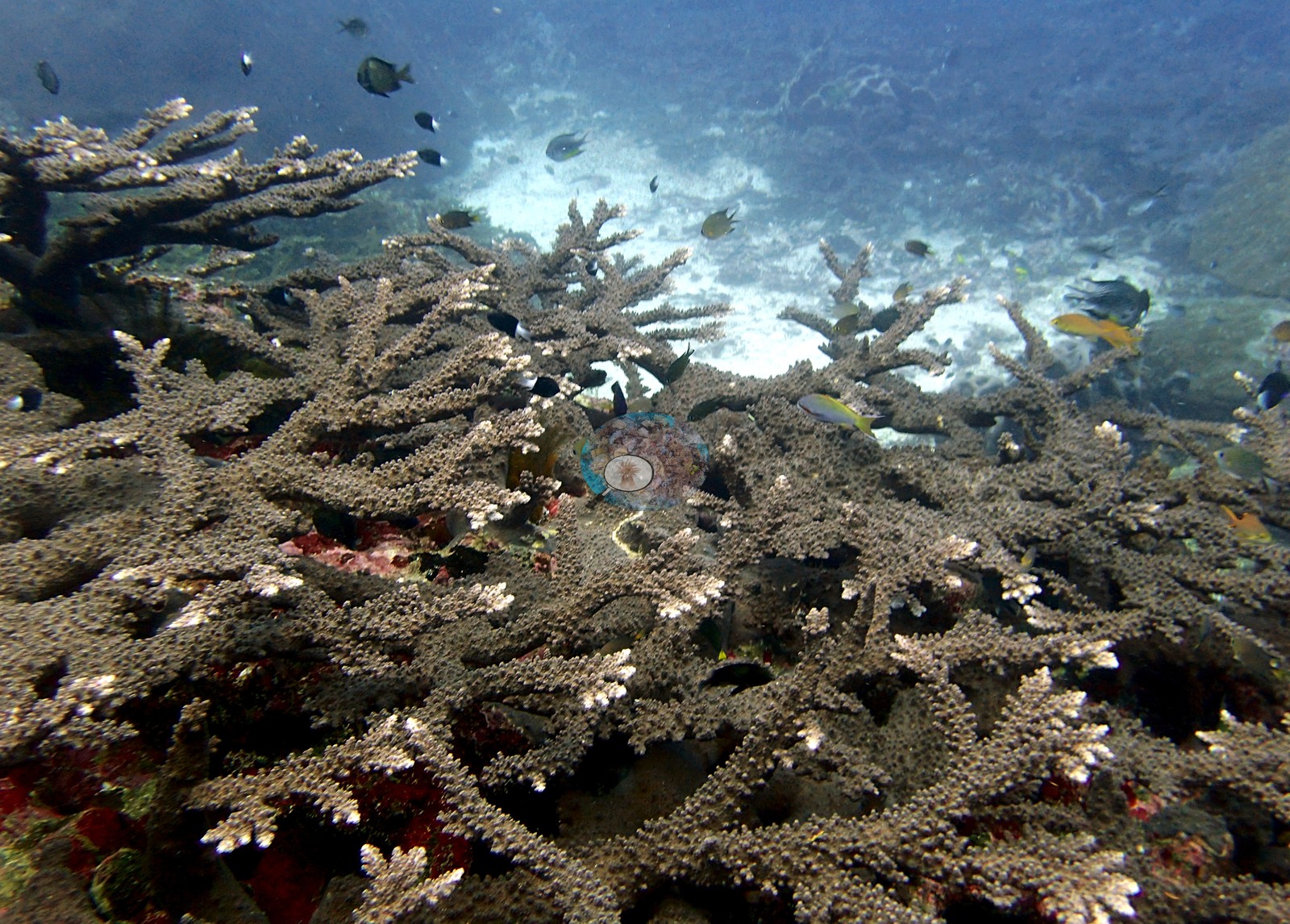 36
36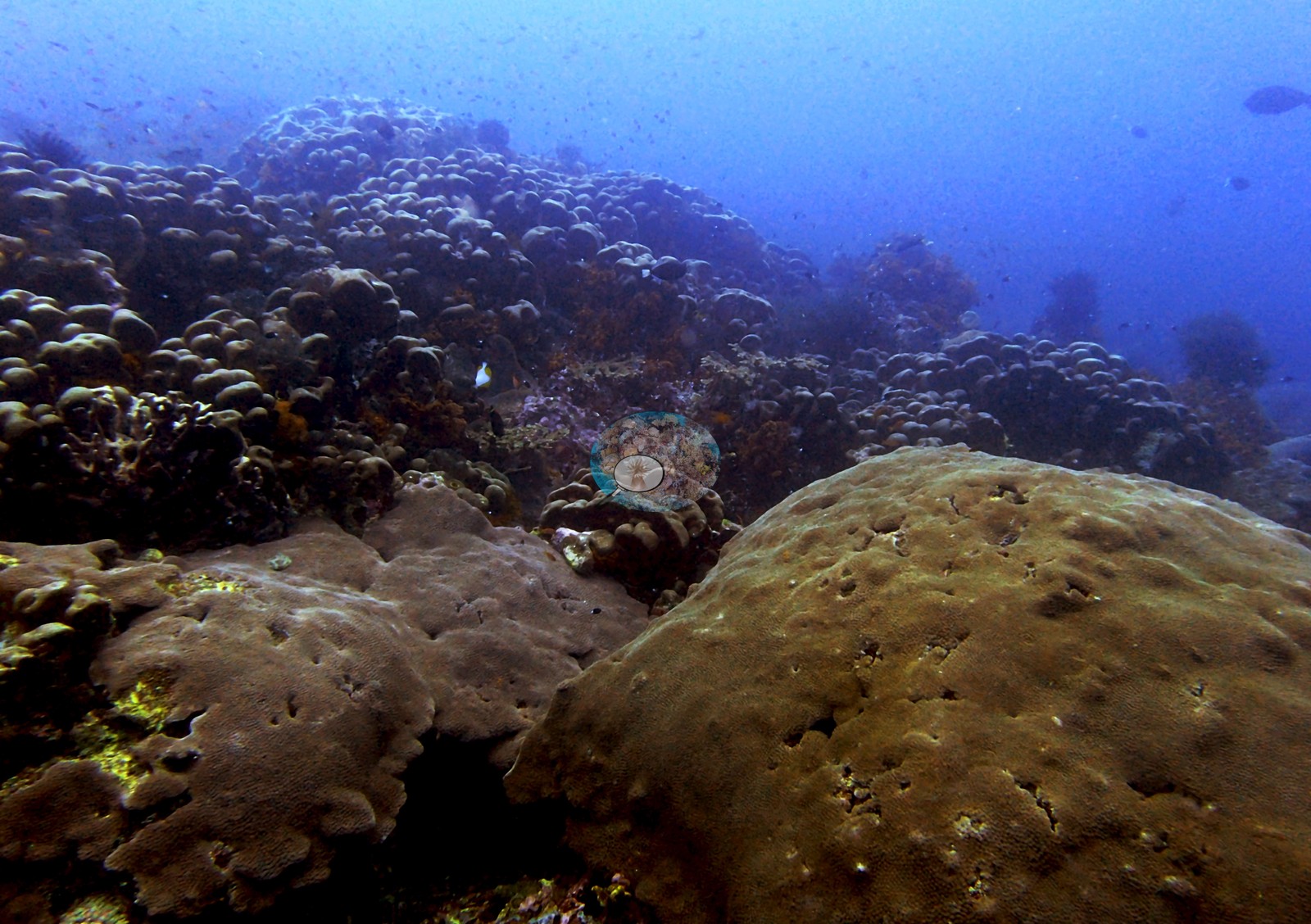 37
37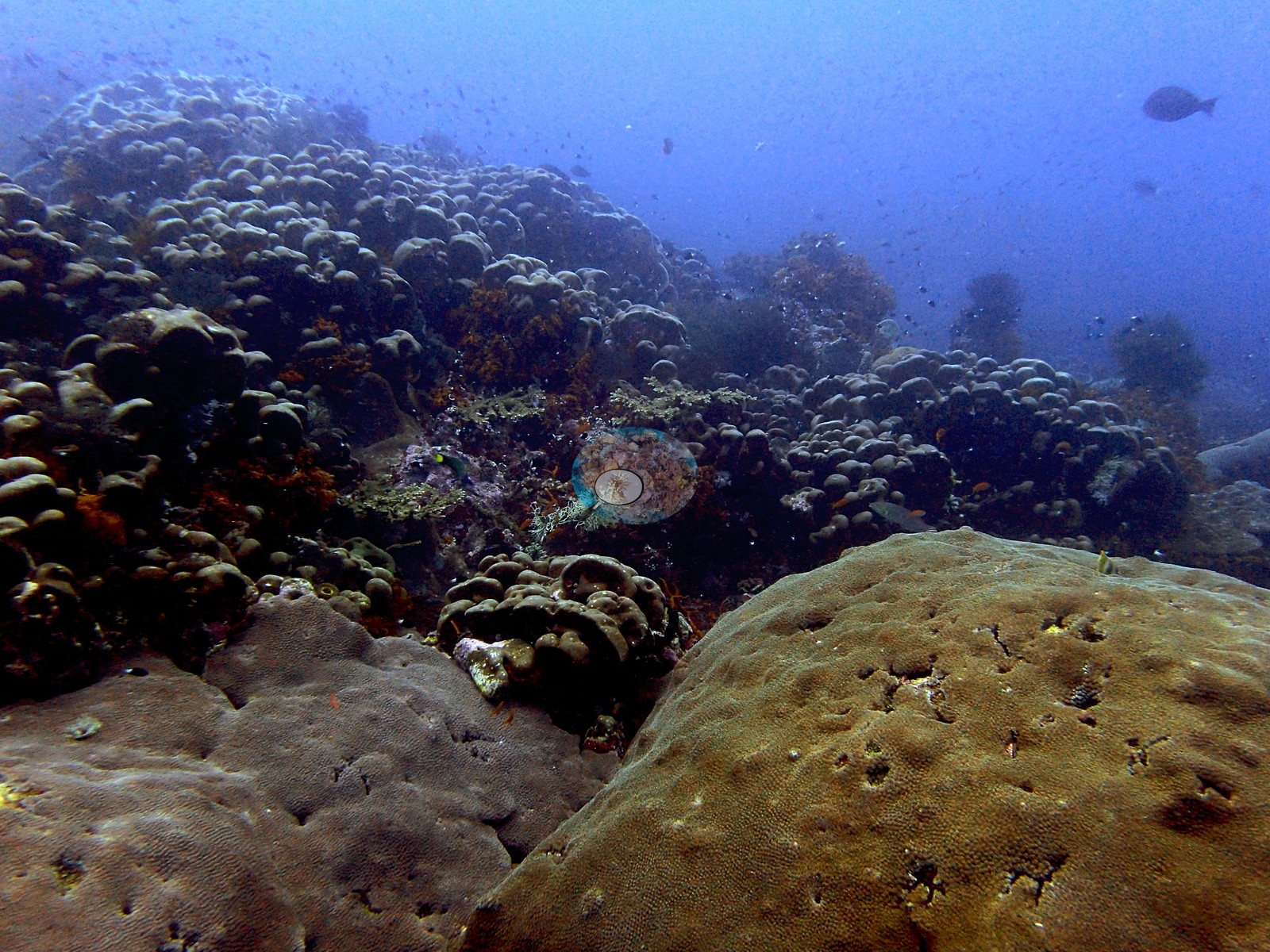 38
38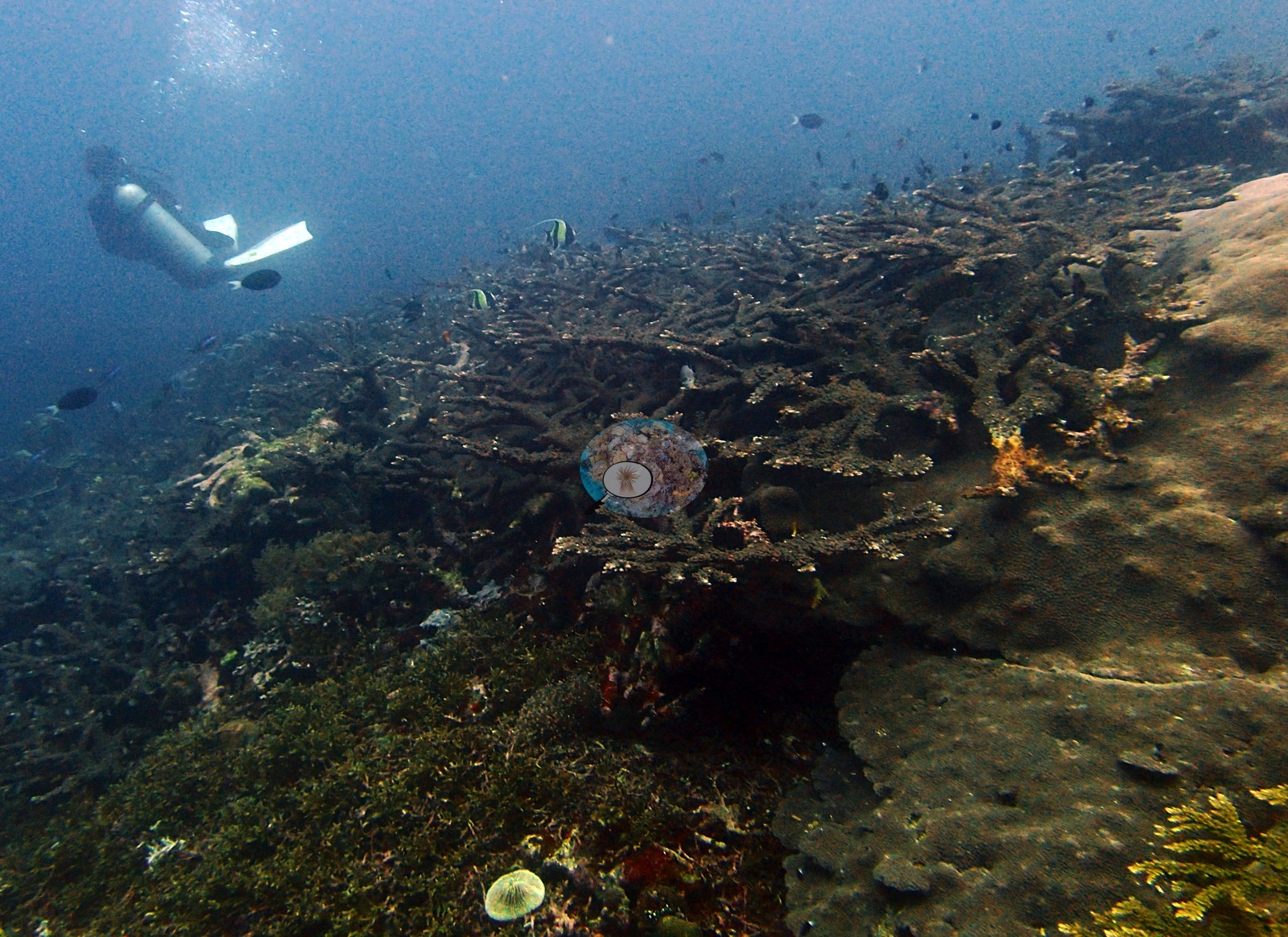 39
39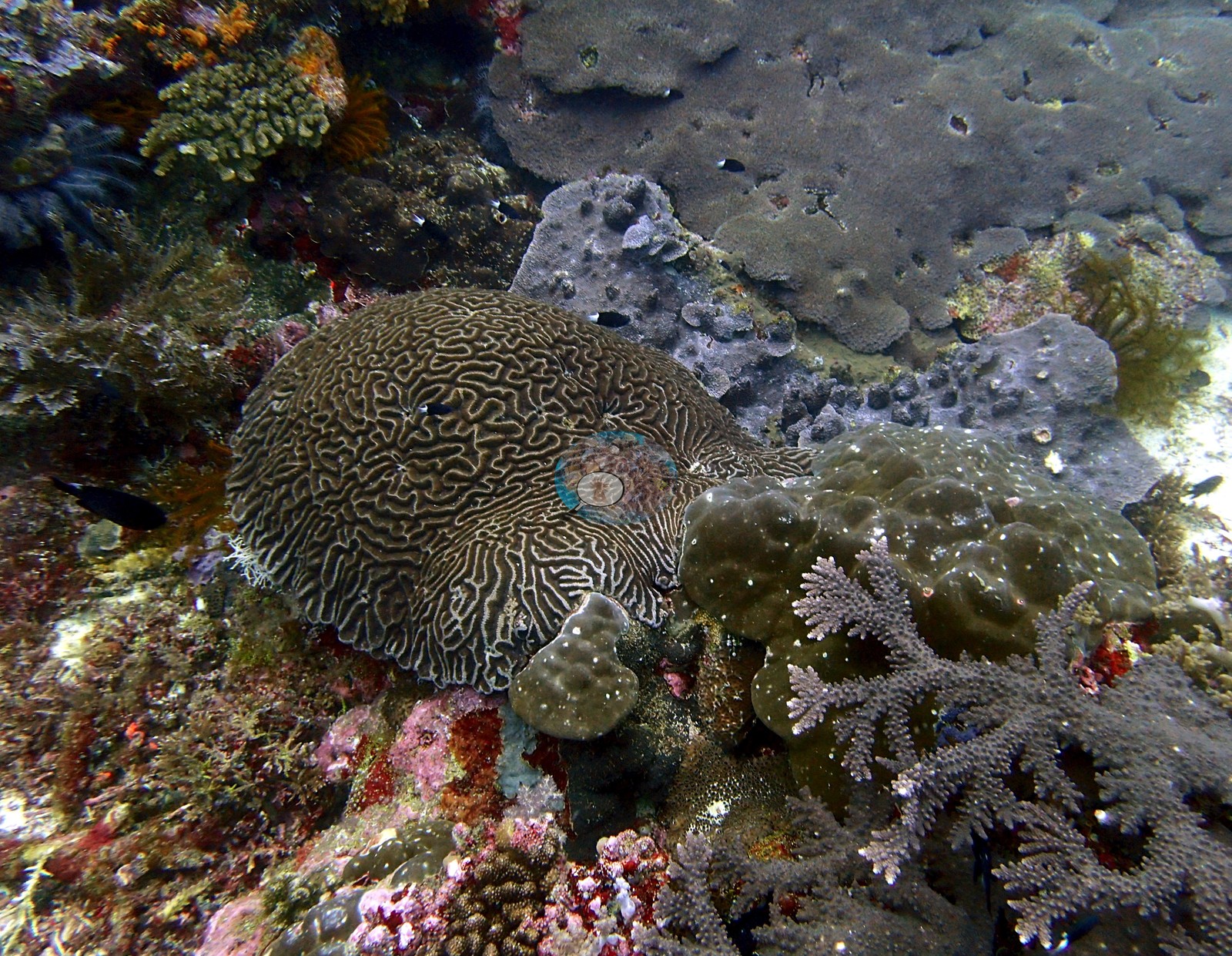 40
40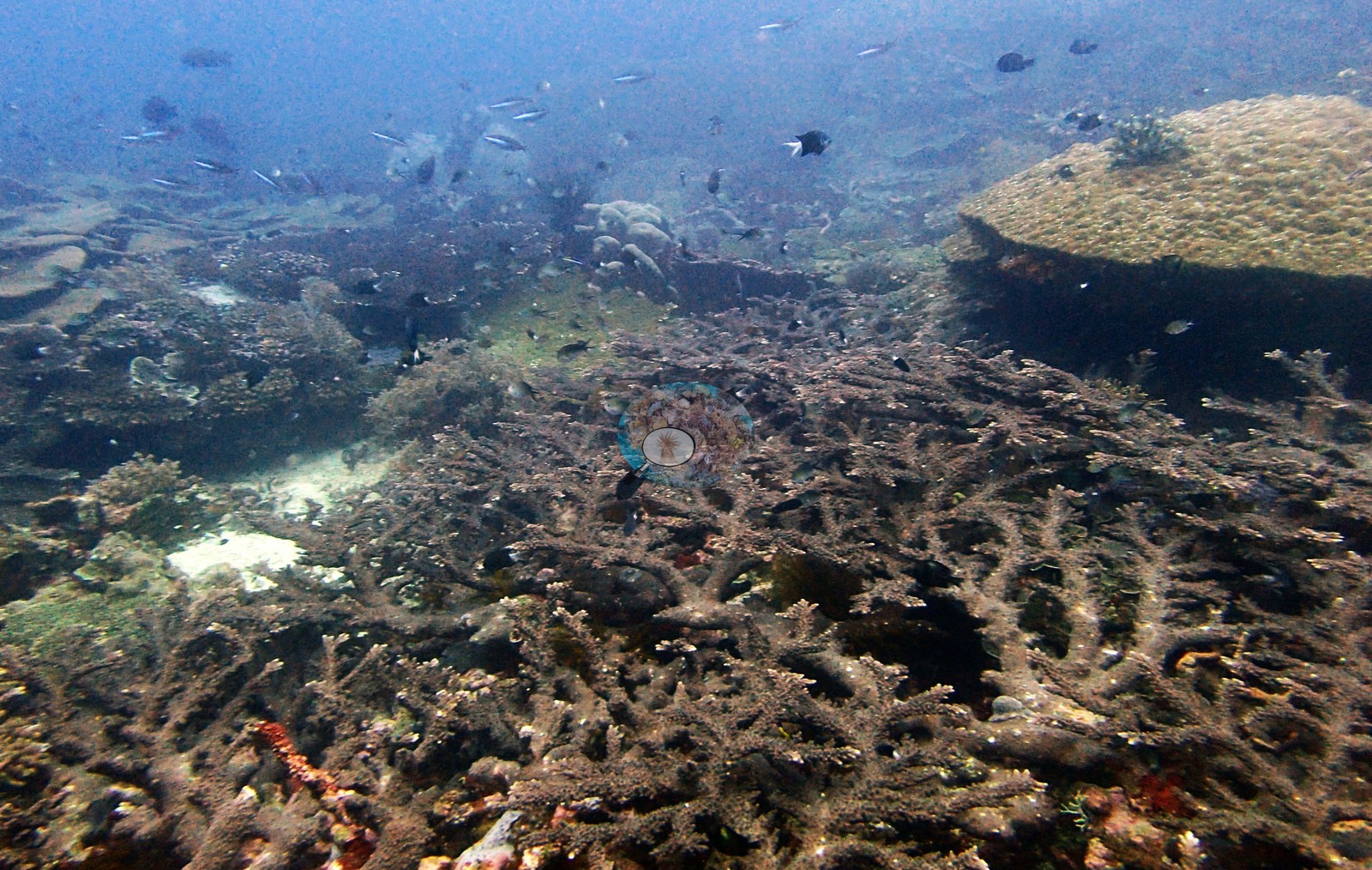 41
41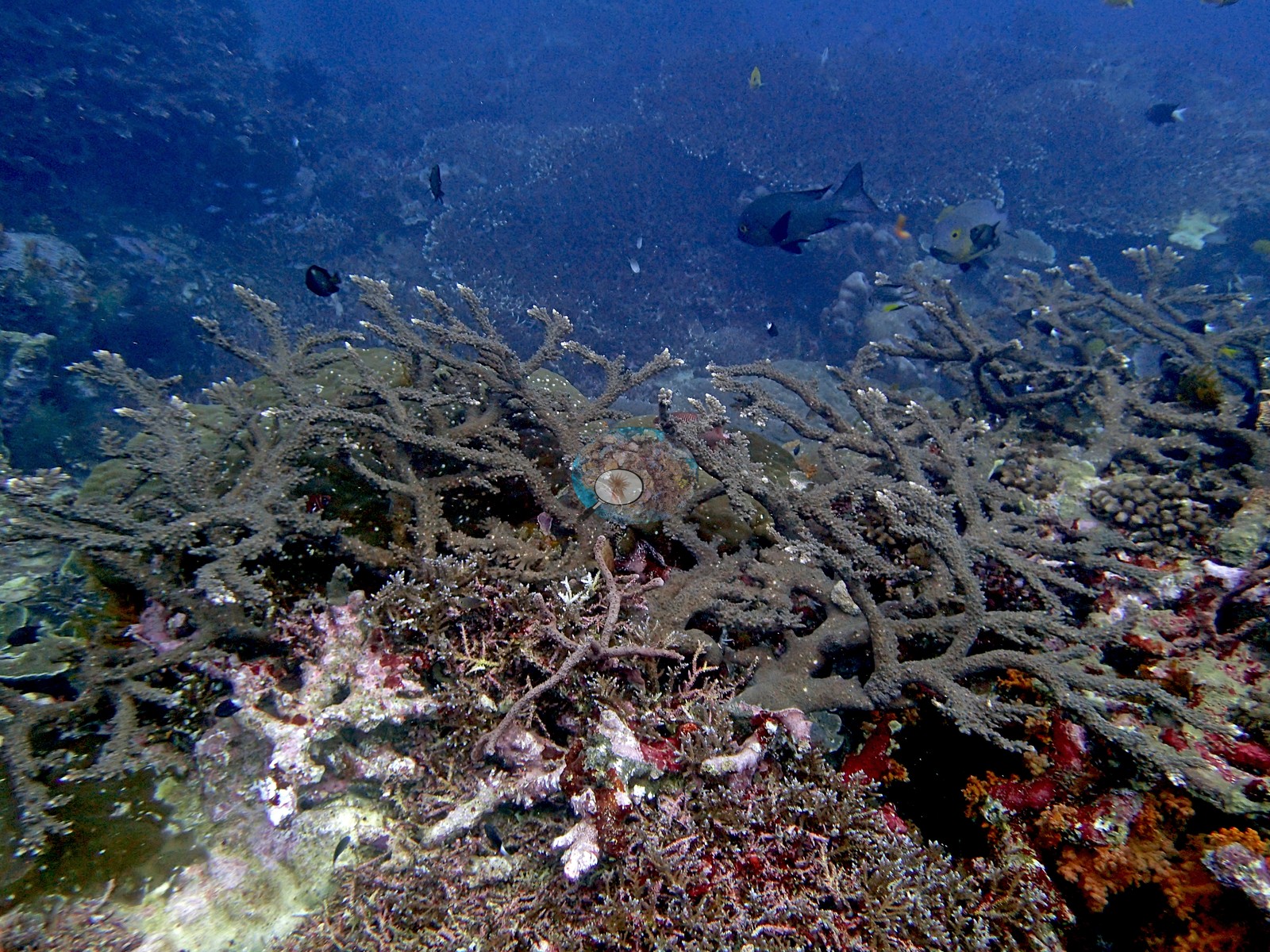 42
42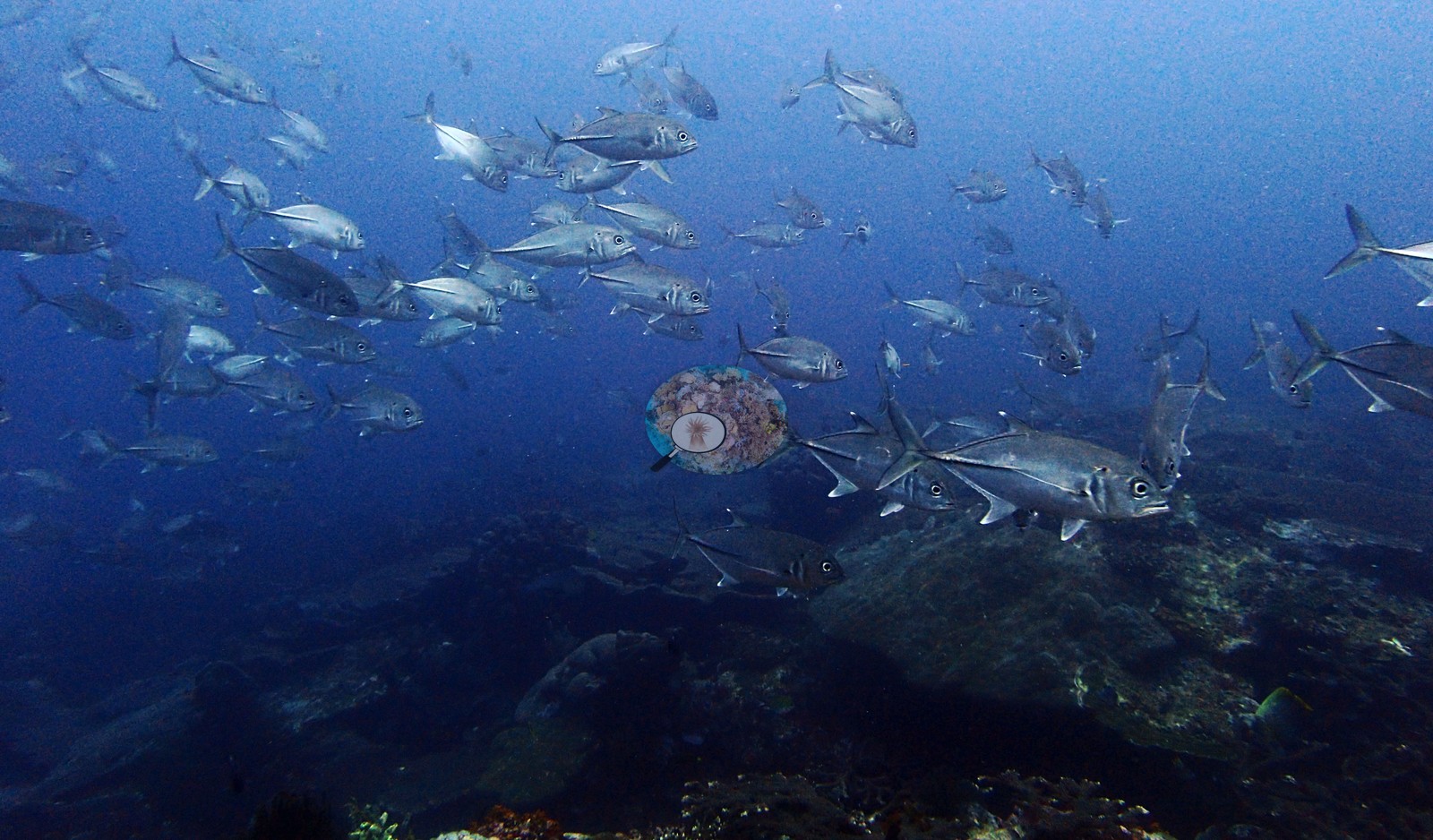 43
43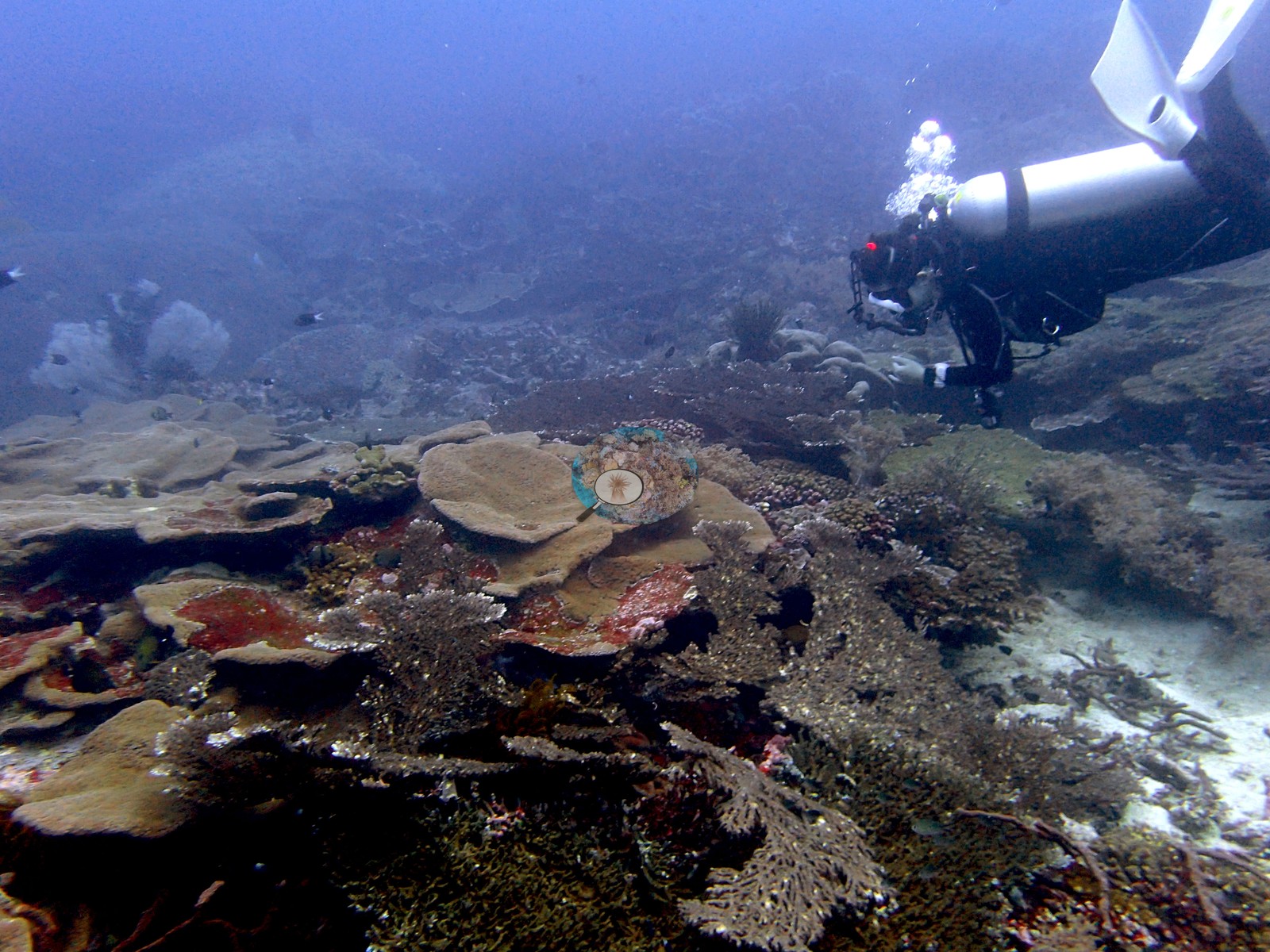 44
44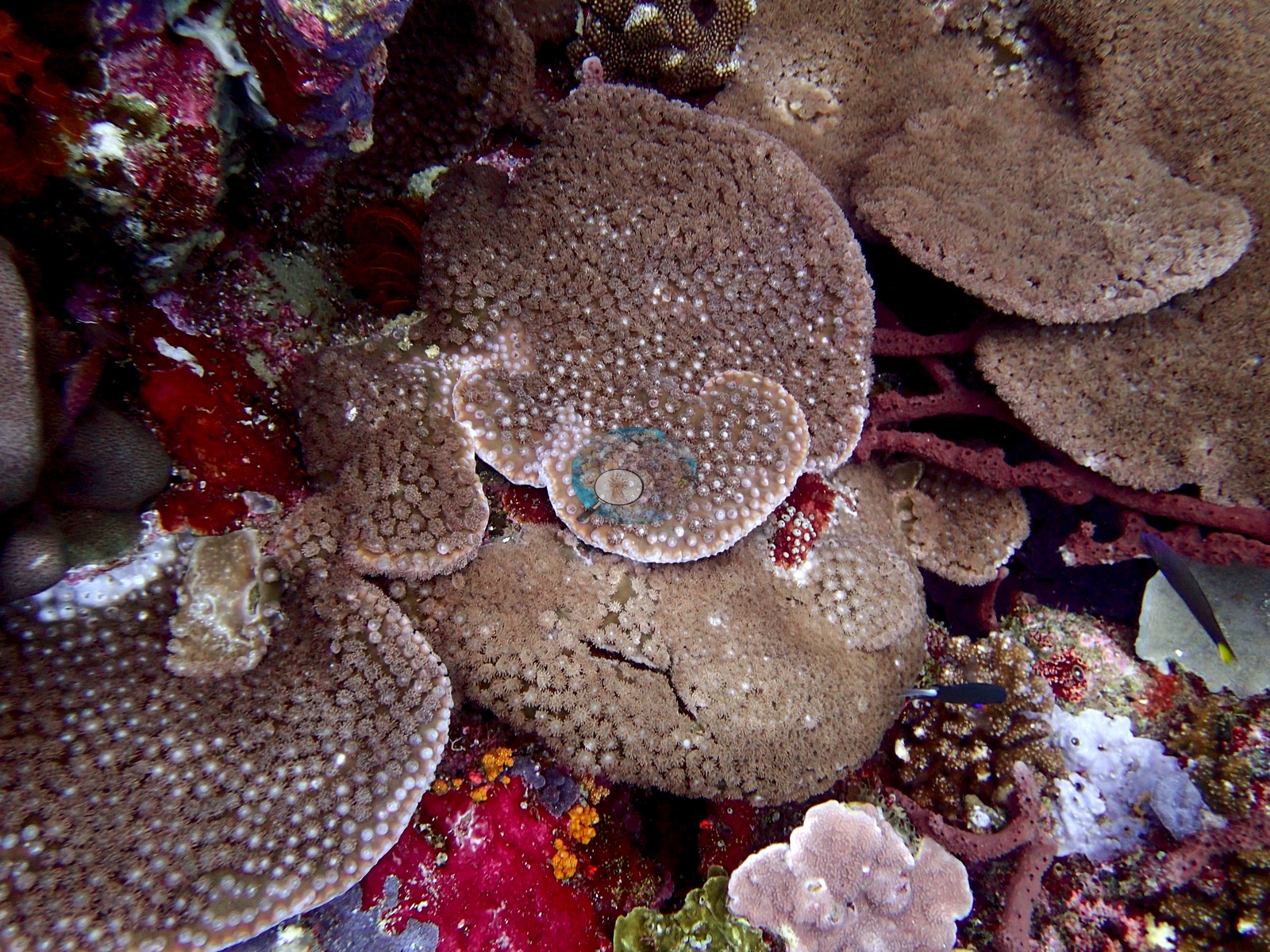 45
45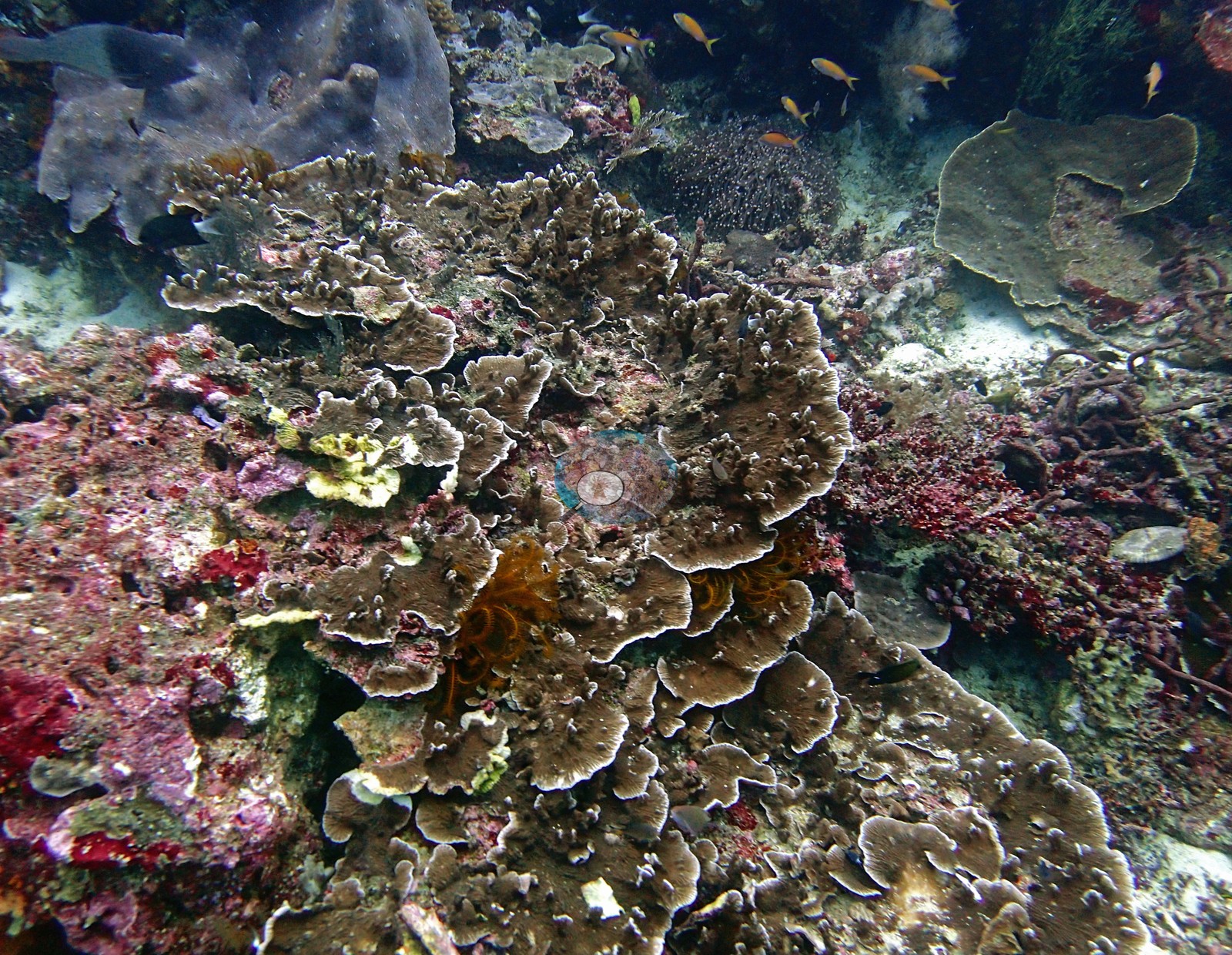 46
46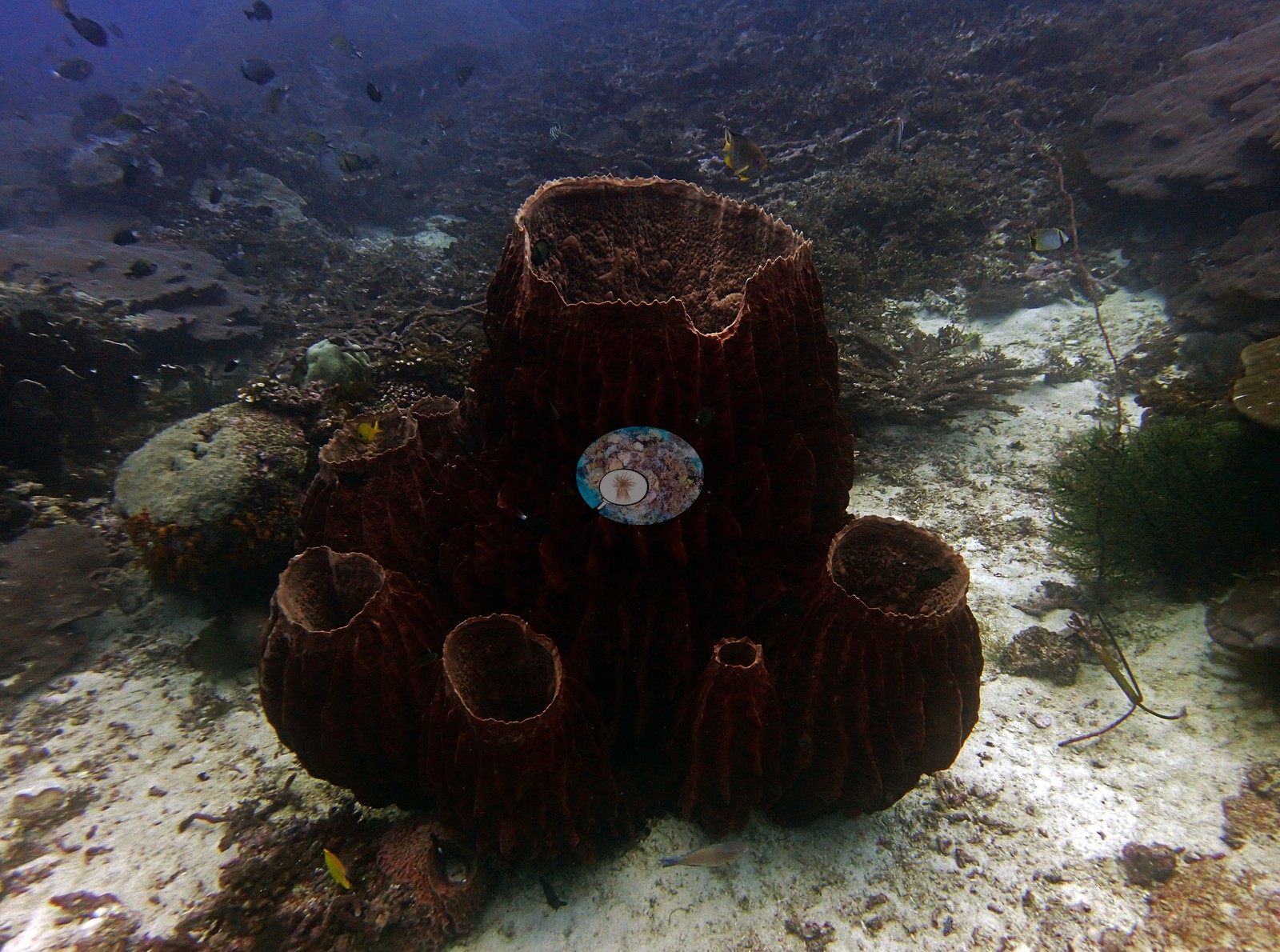 47
47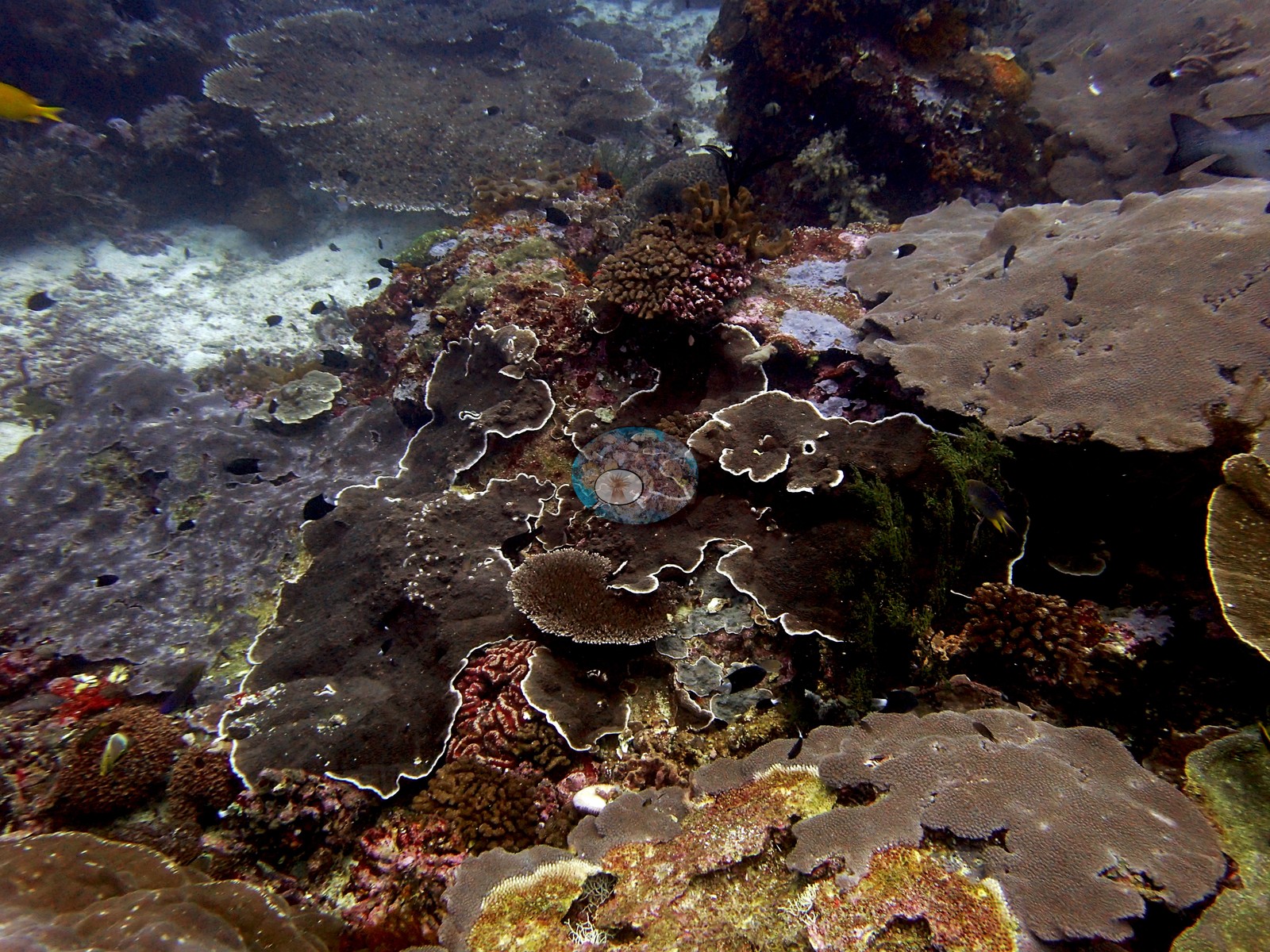 48
48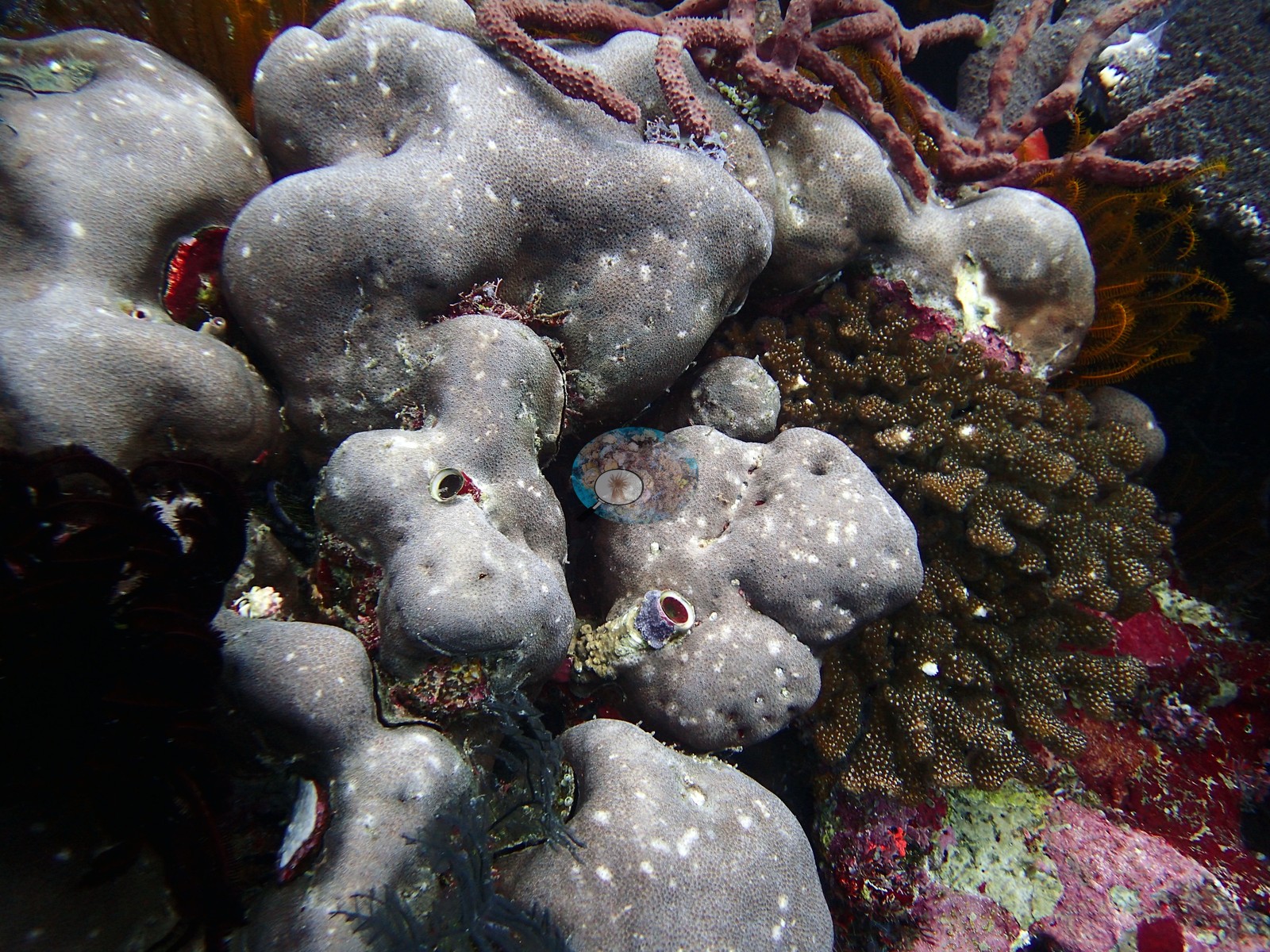 50
50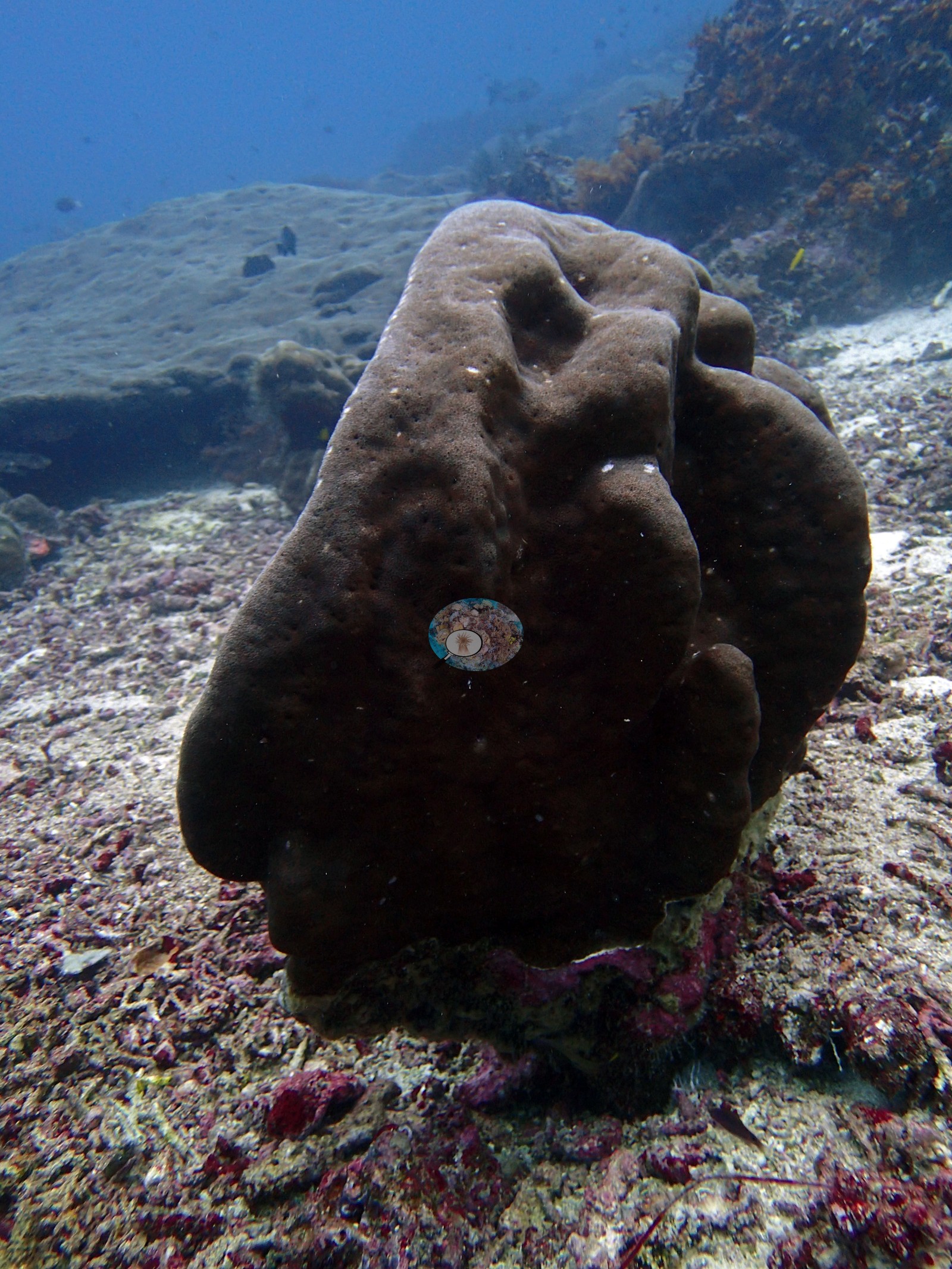 51
51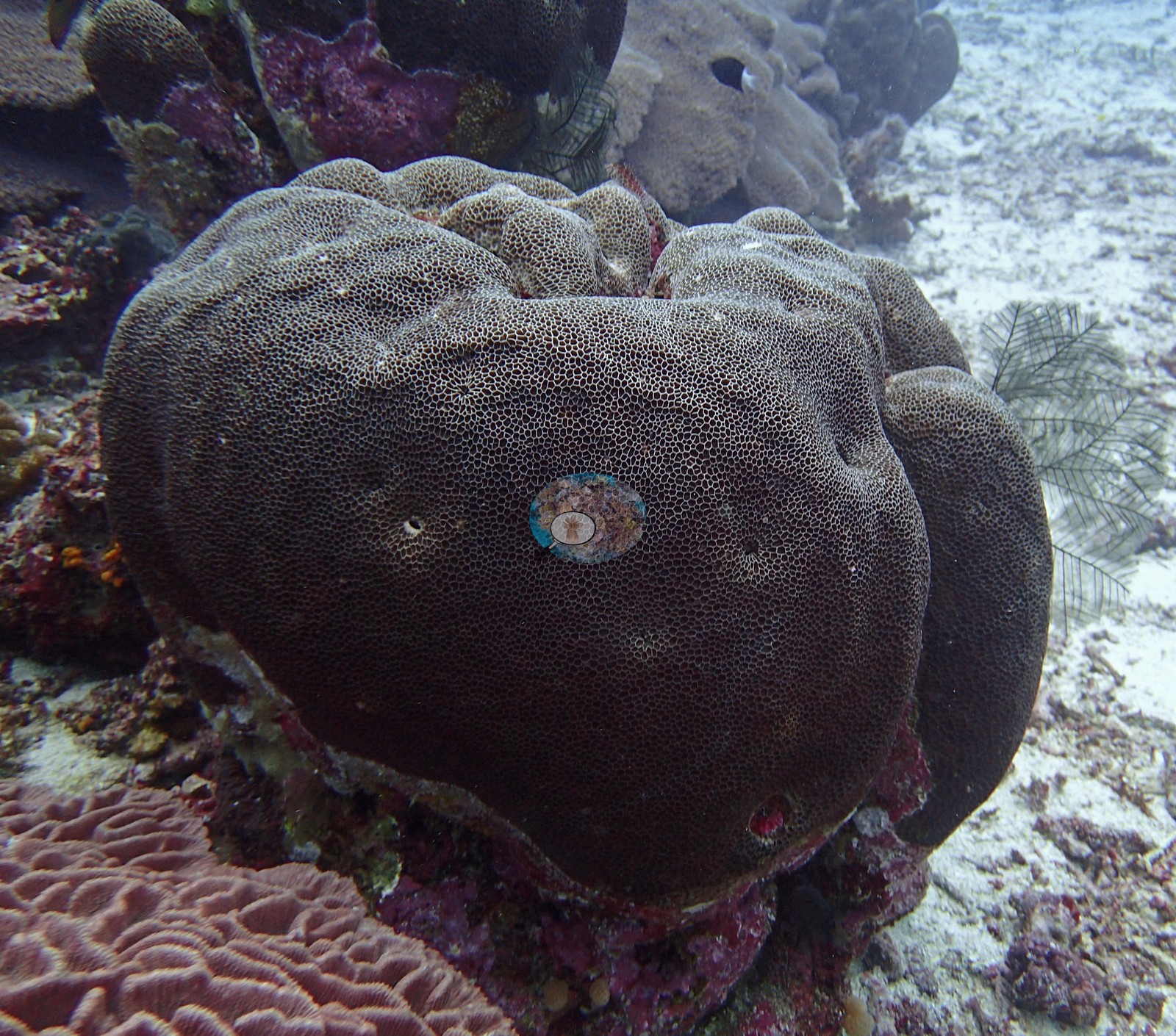 52
52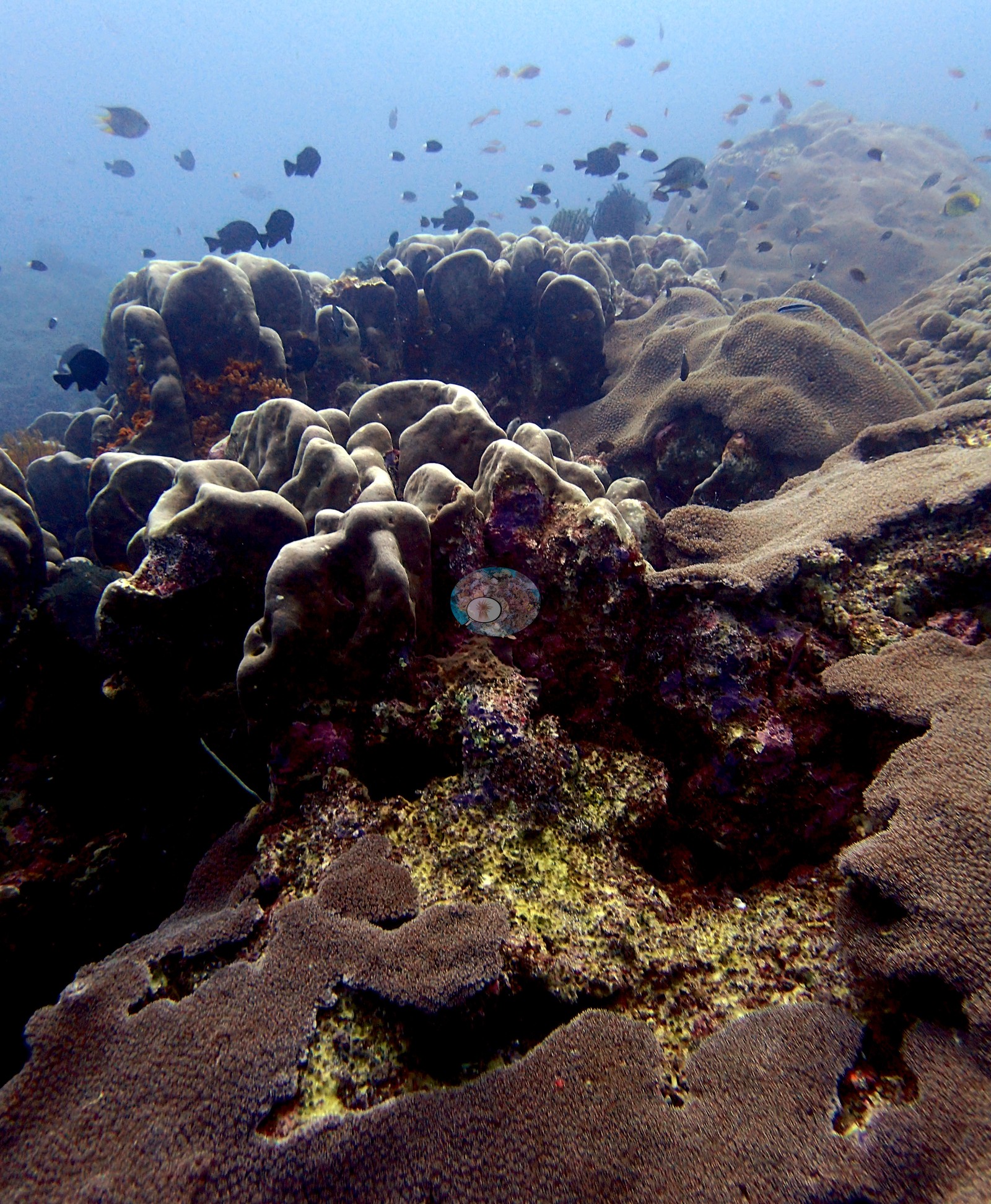 53
53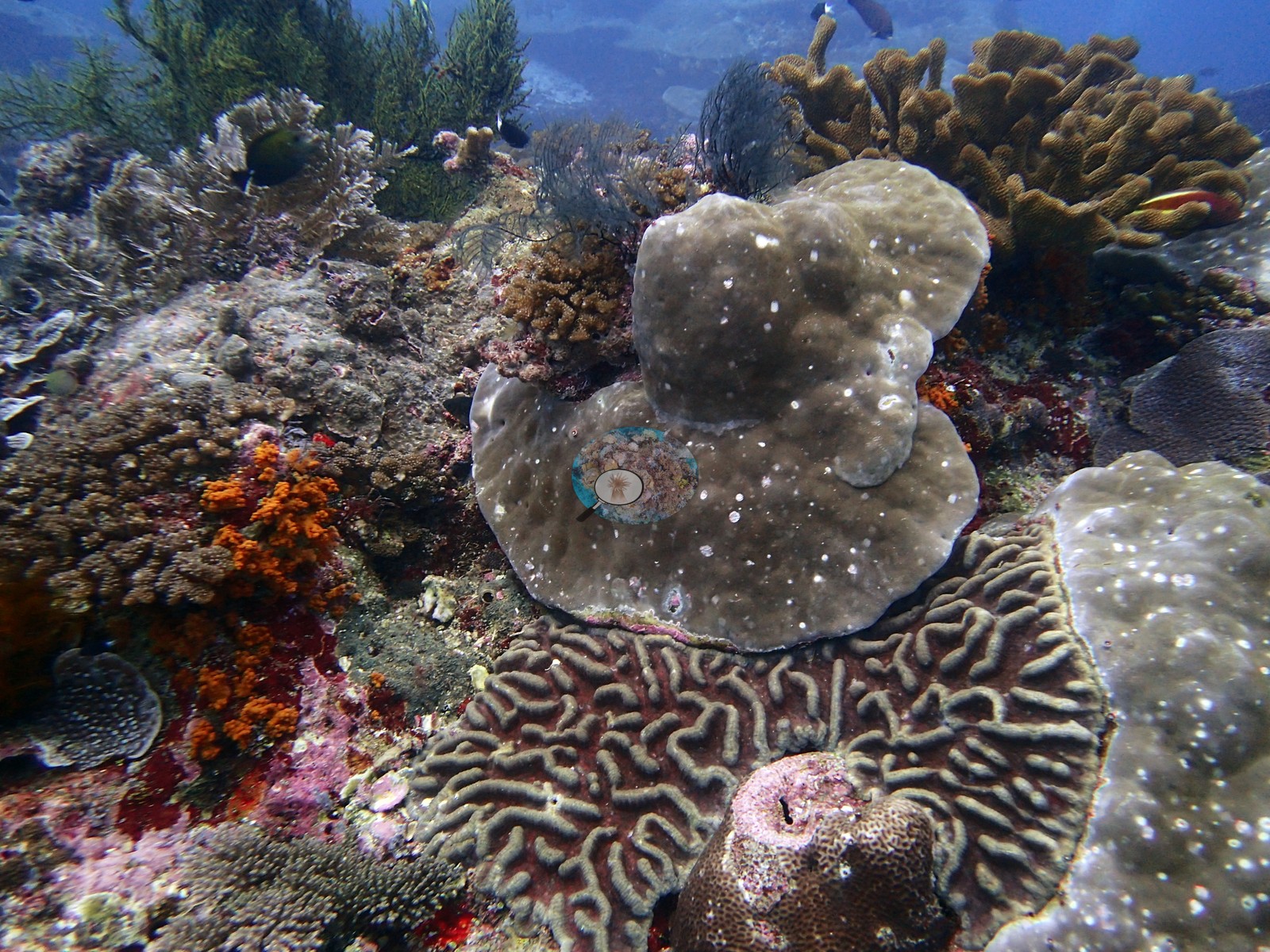 54
54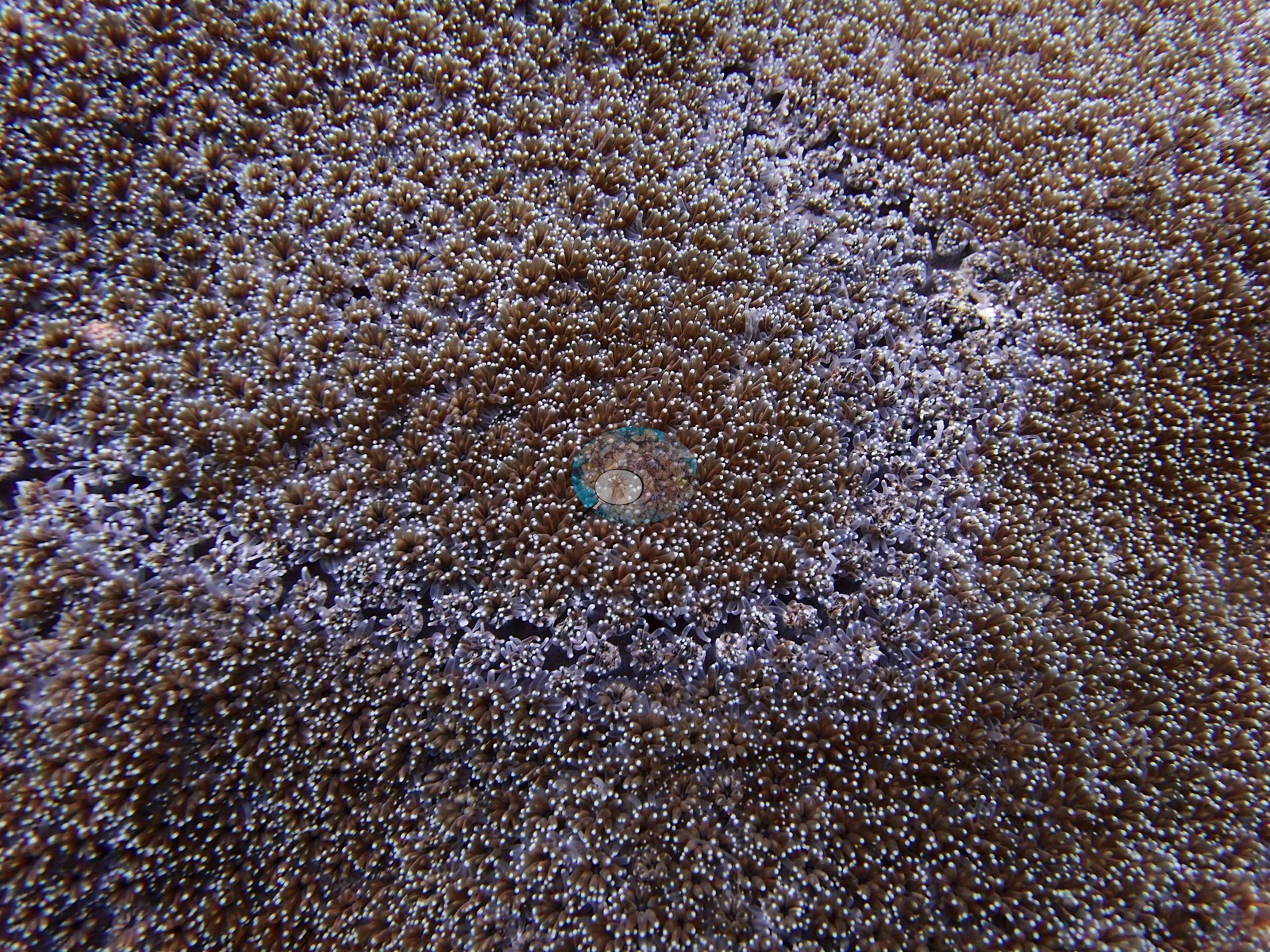 55
55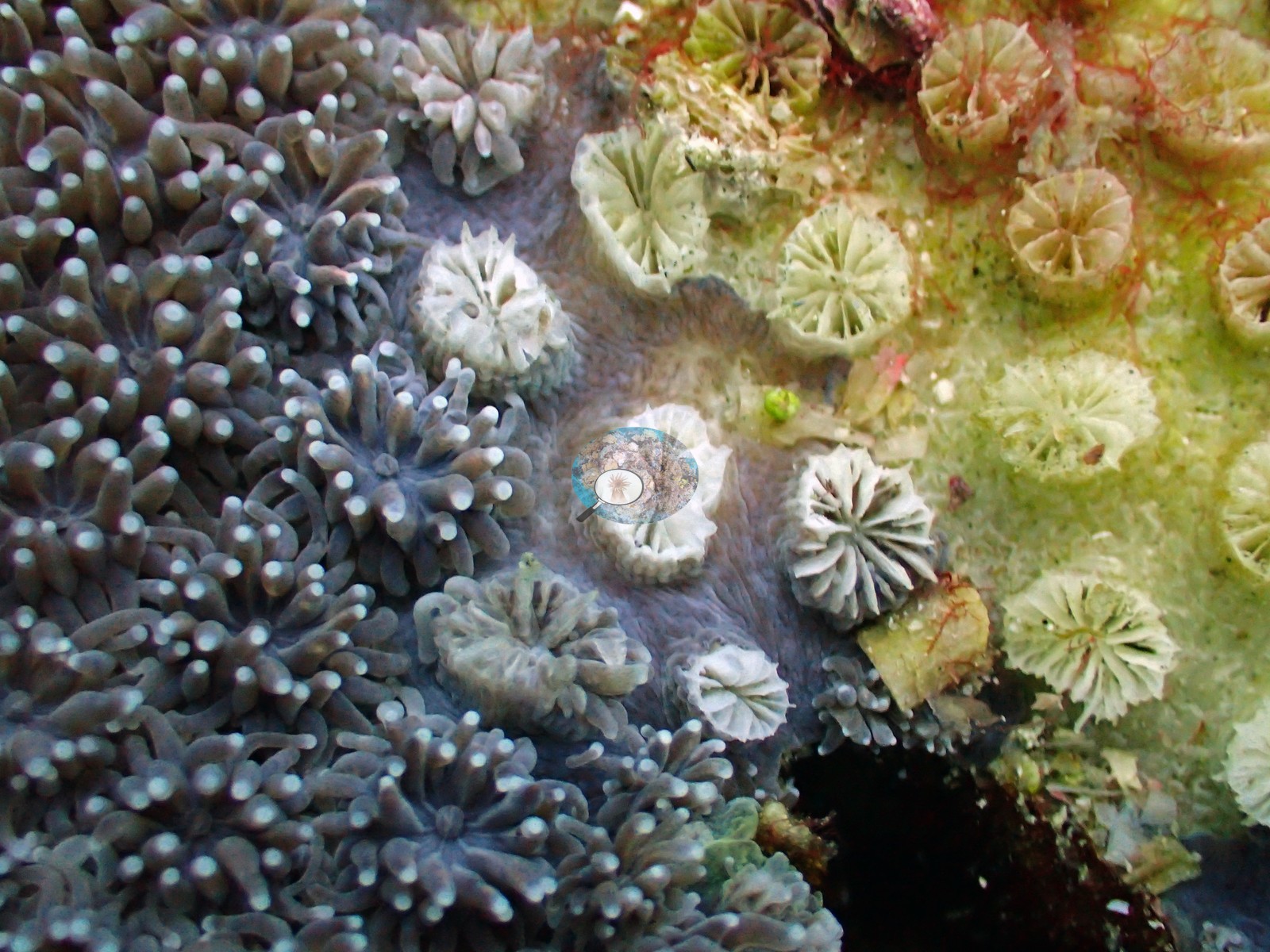 56
56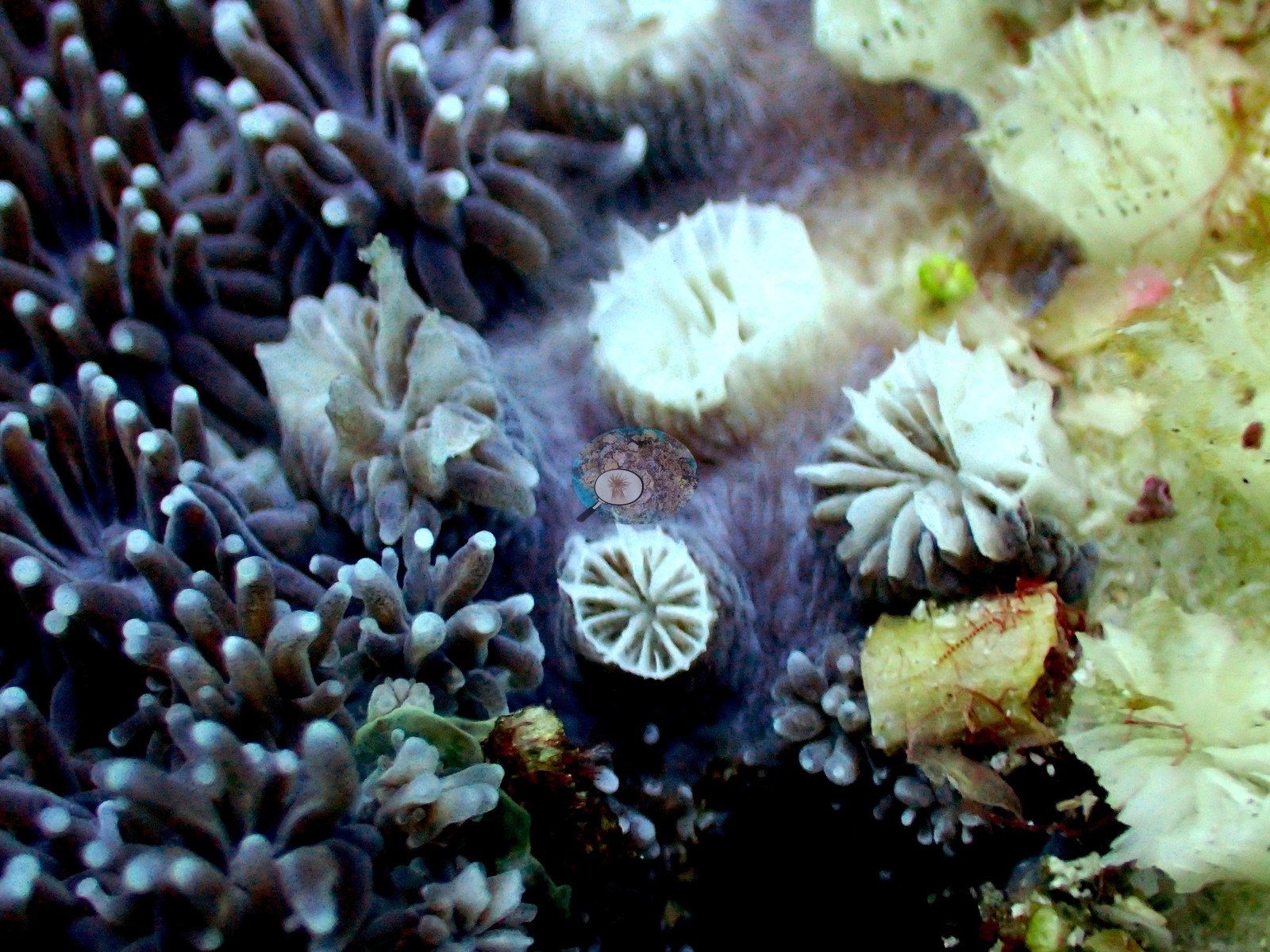 57
57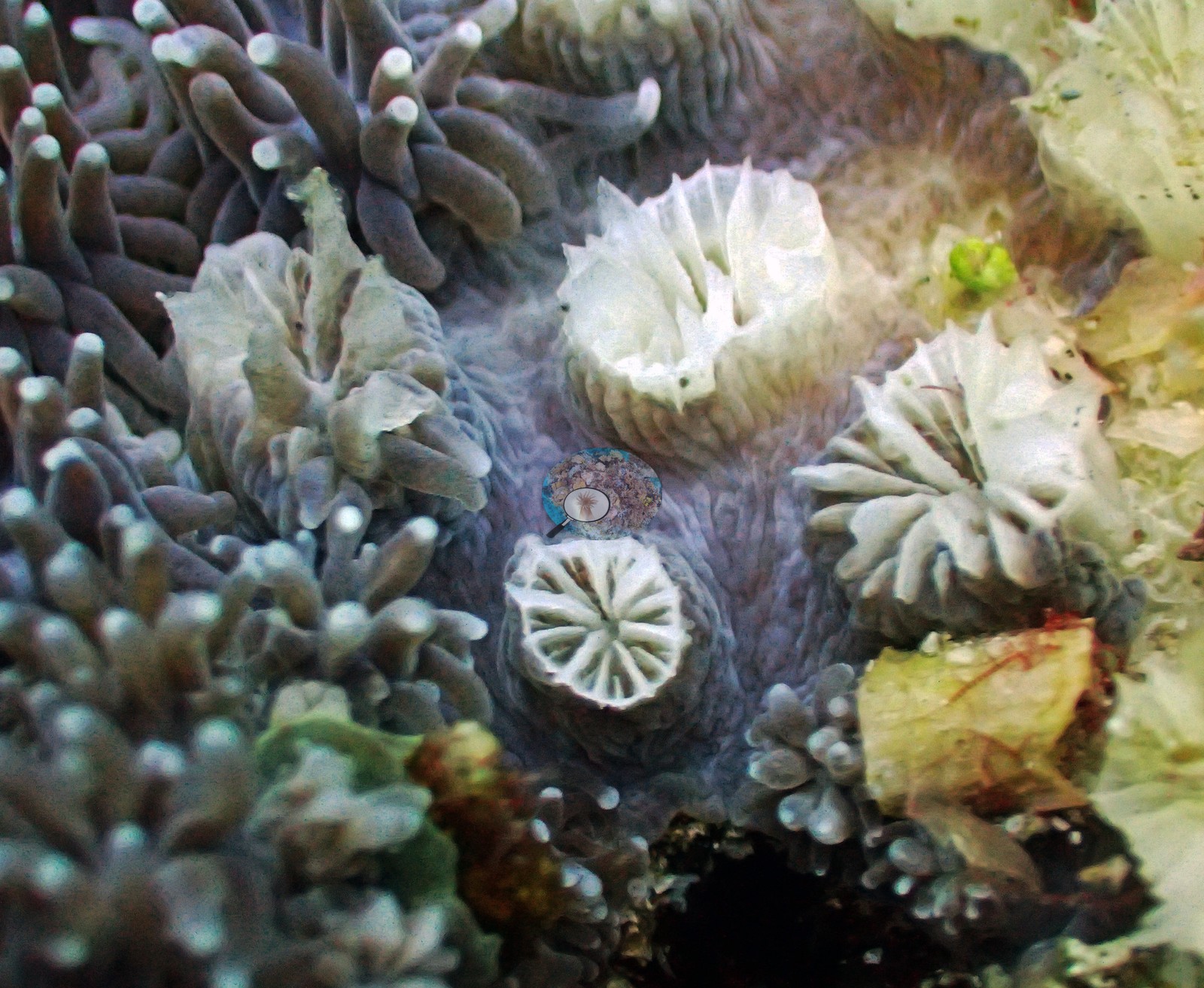 58
58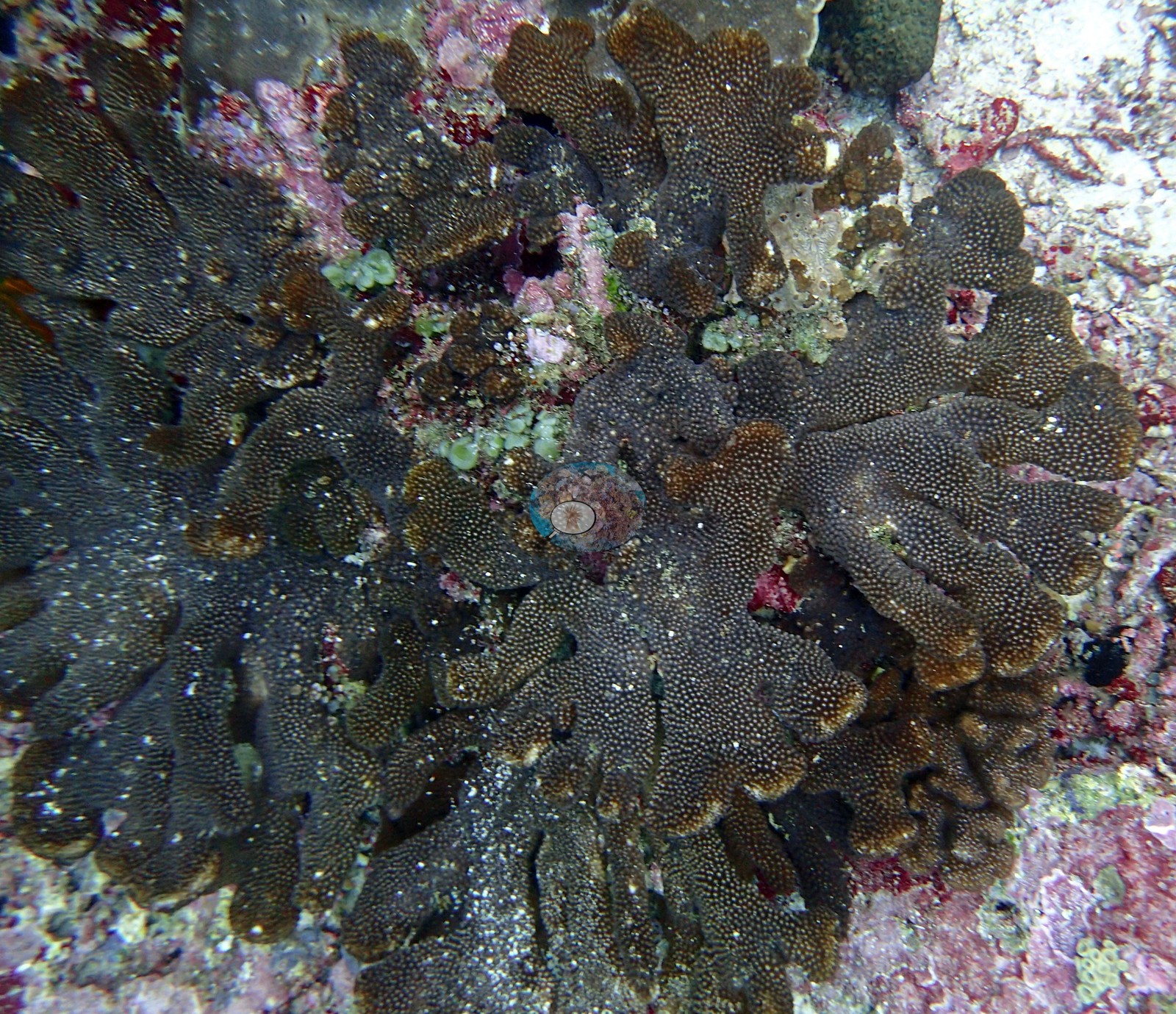 59
59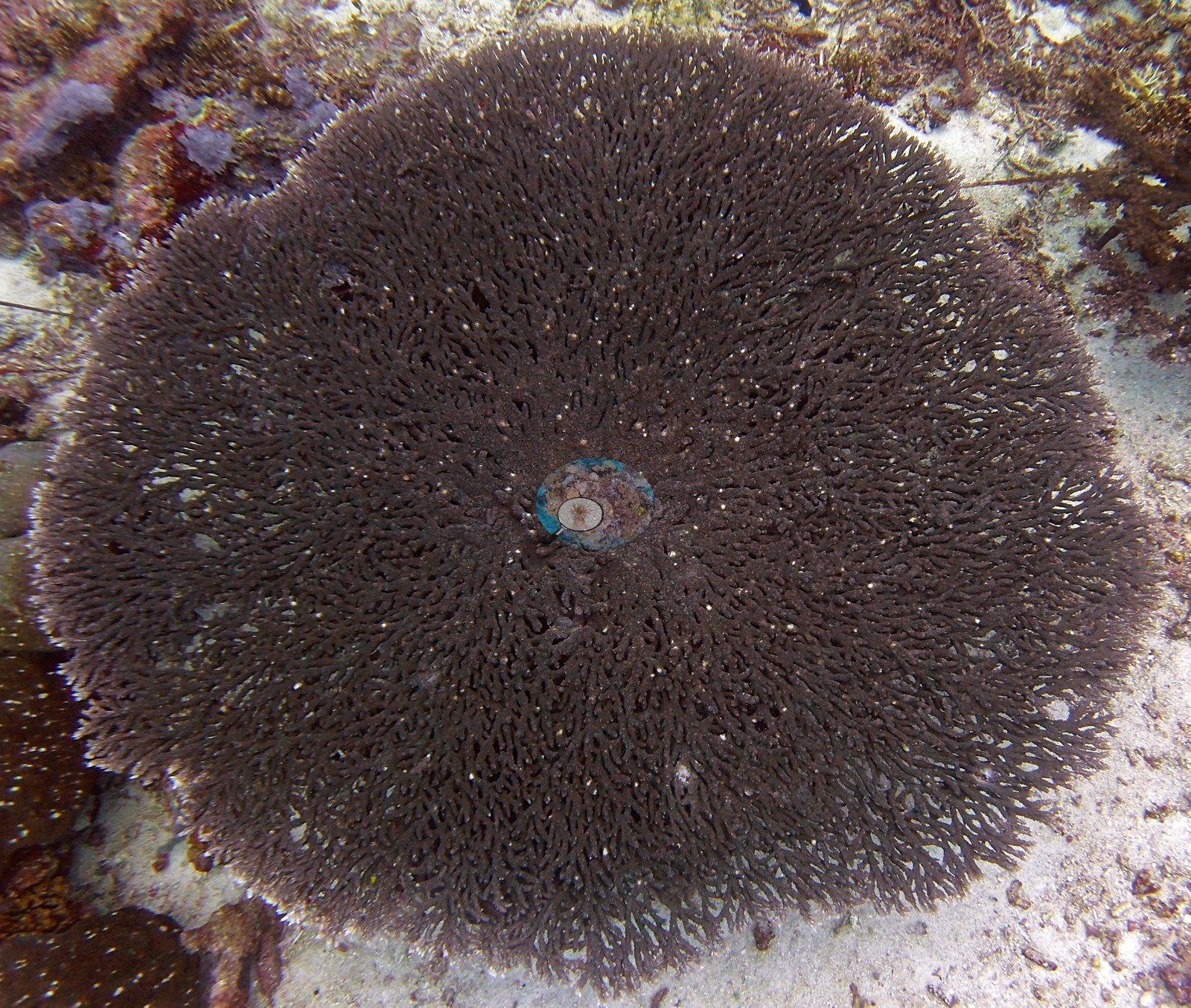 60
60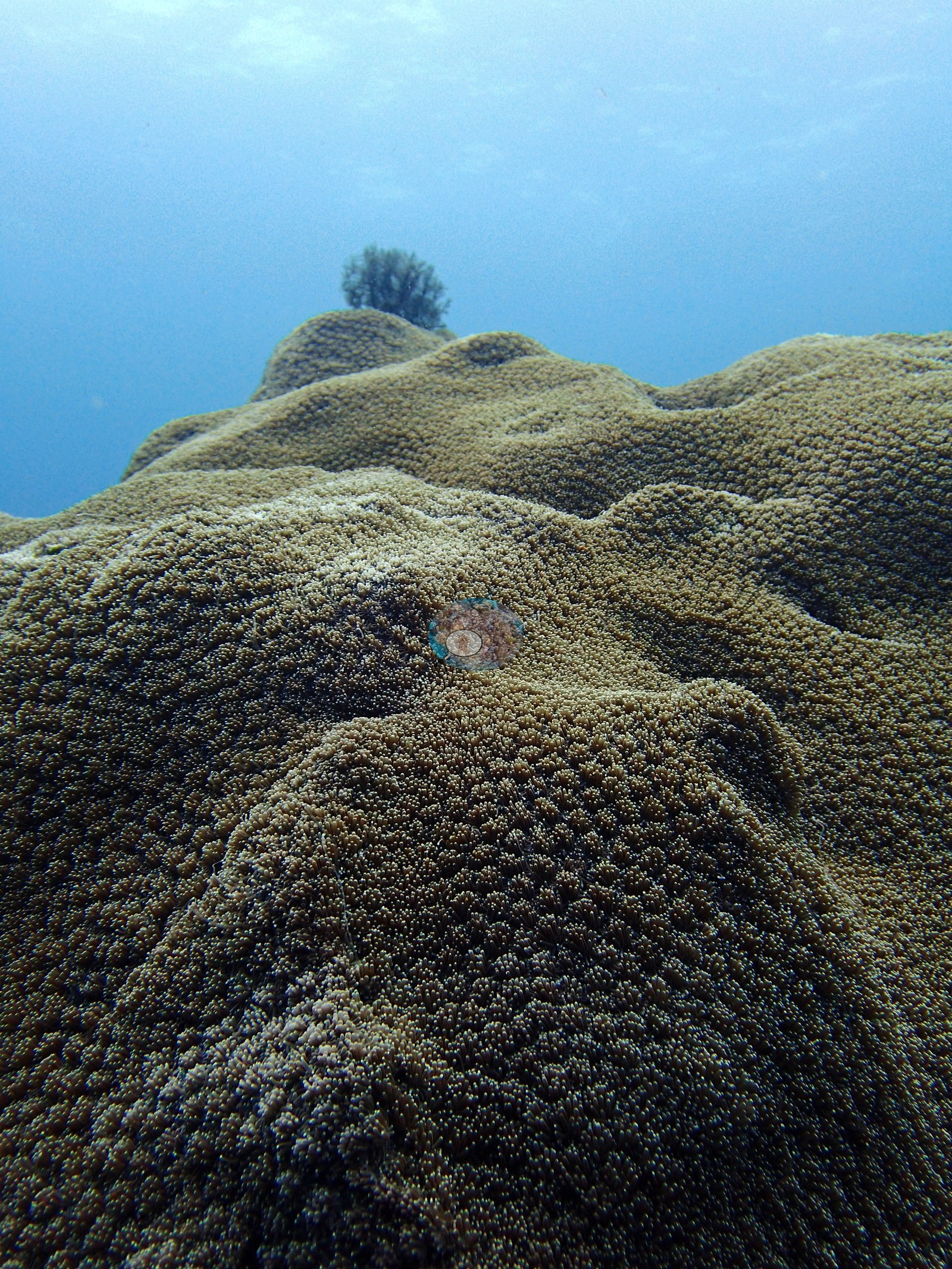 61
61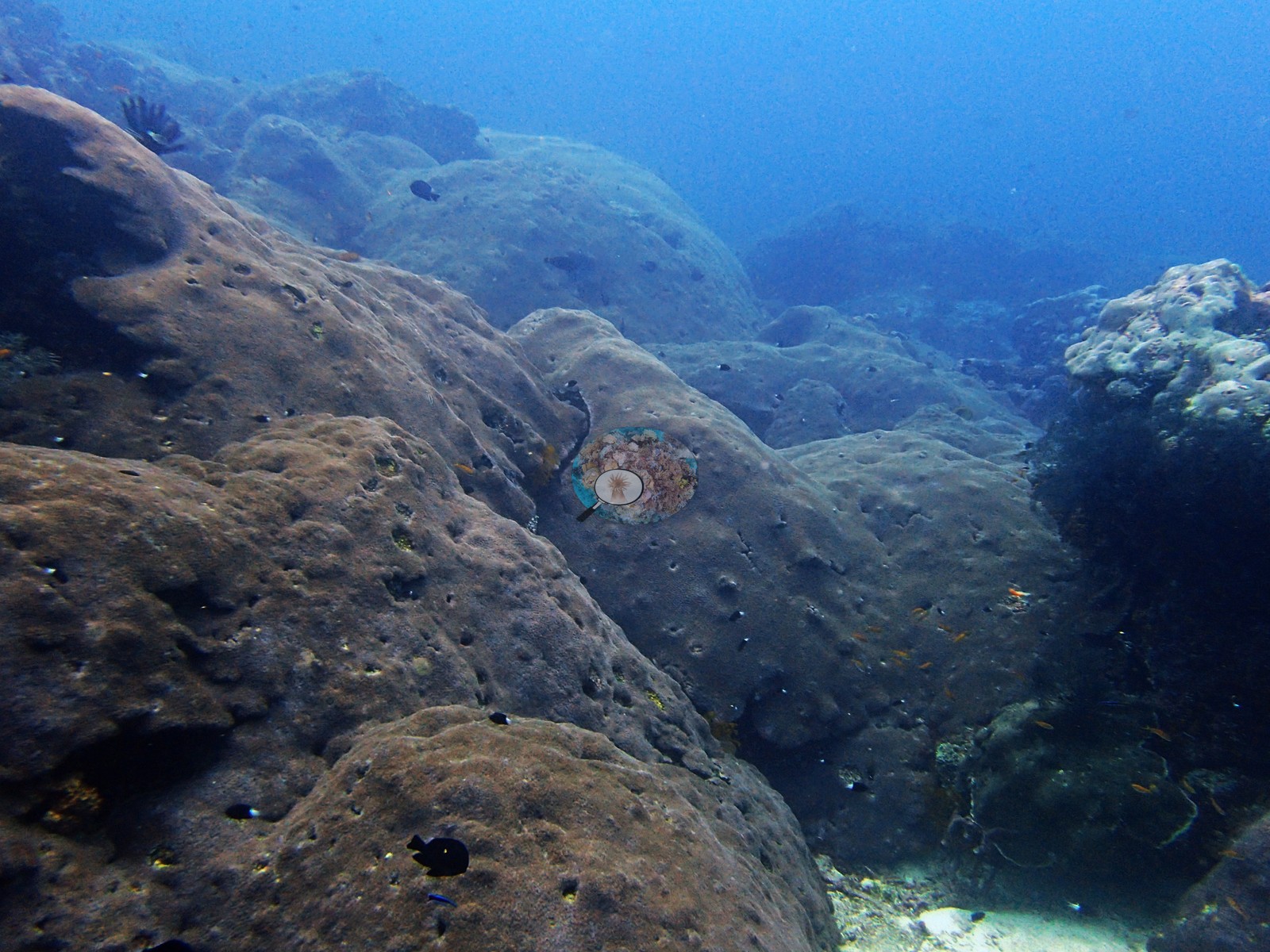 62
62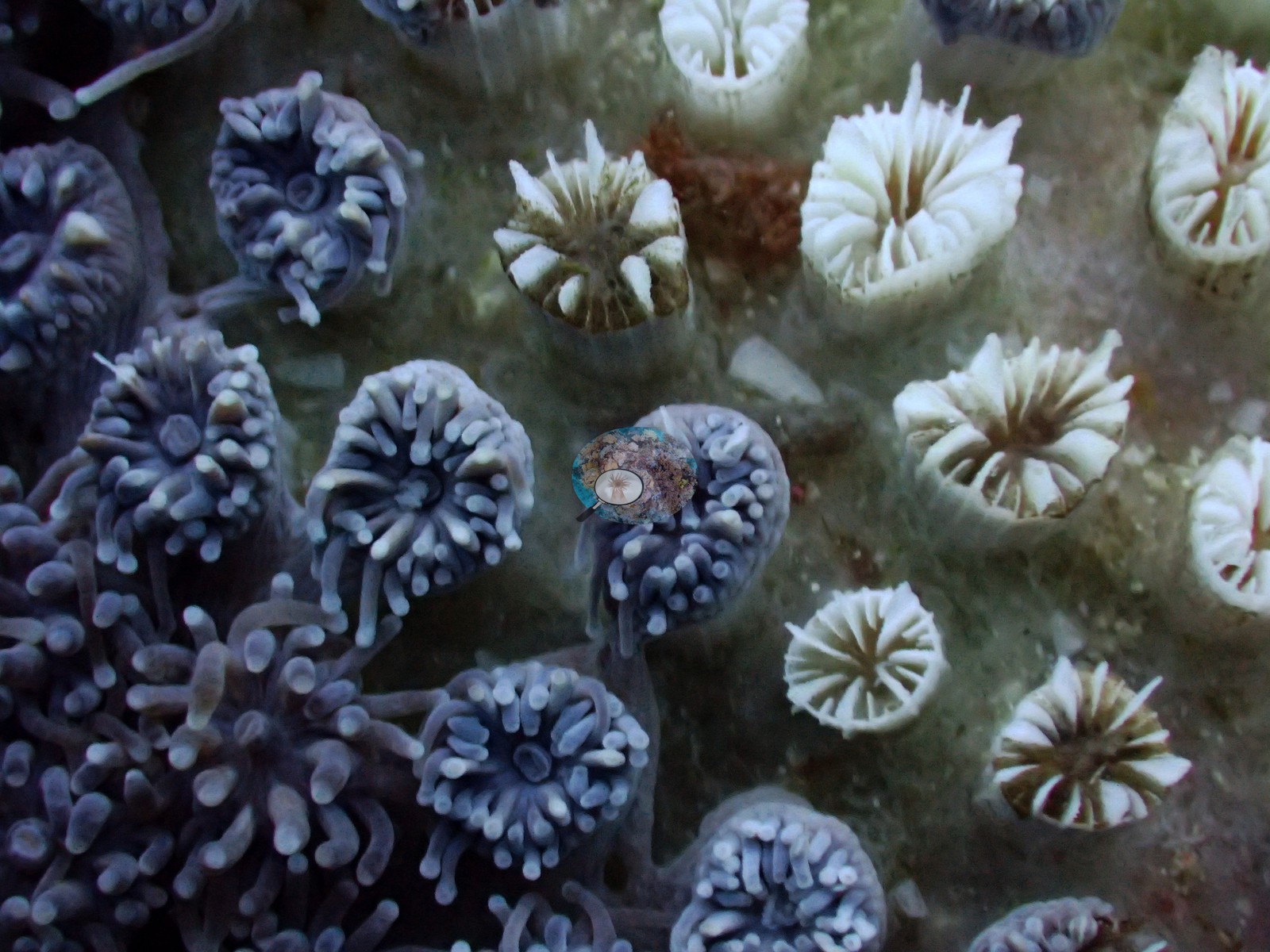 63
63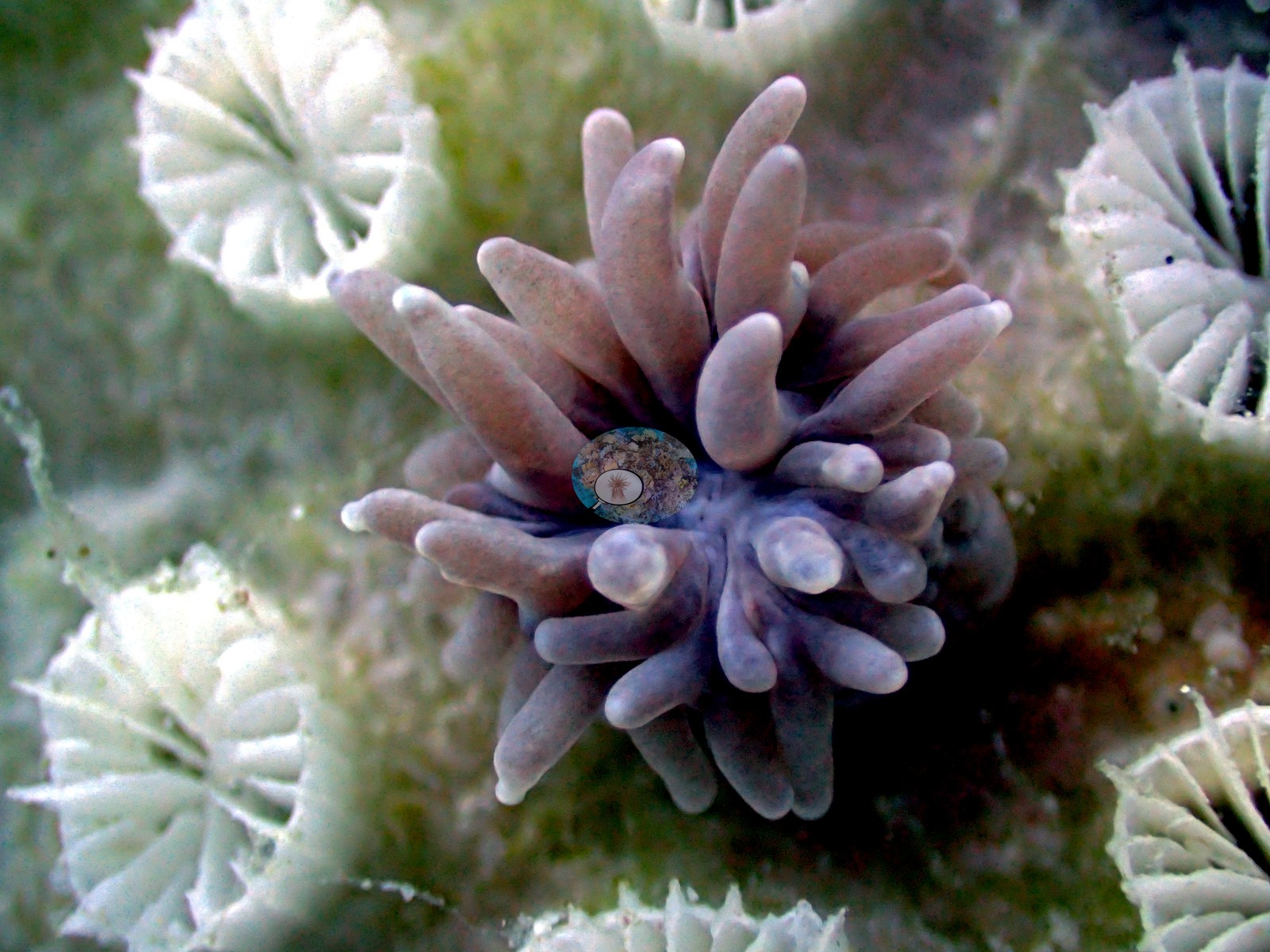 64
64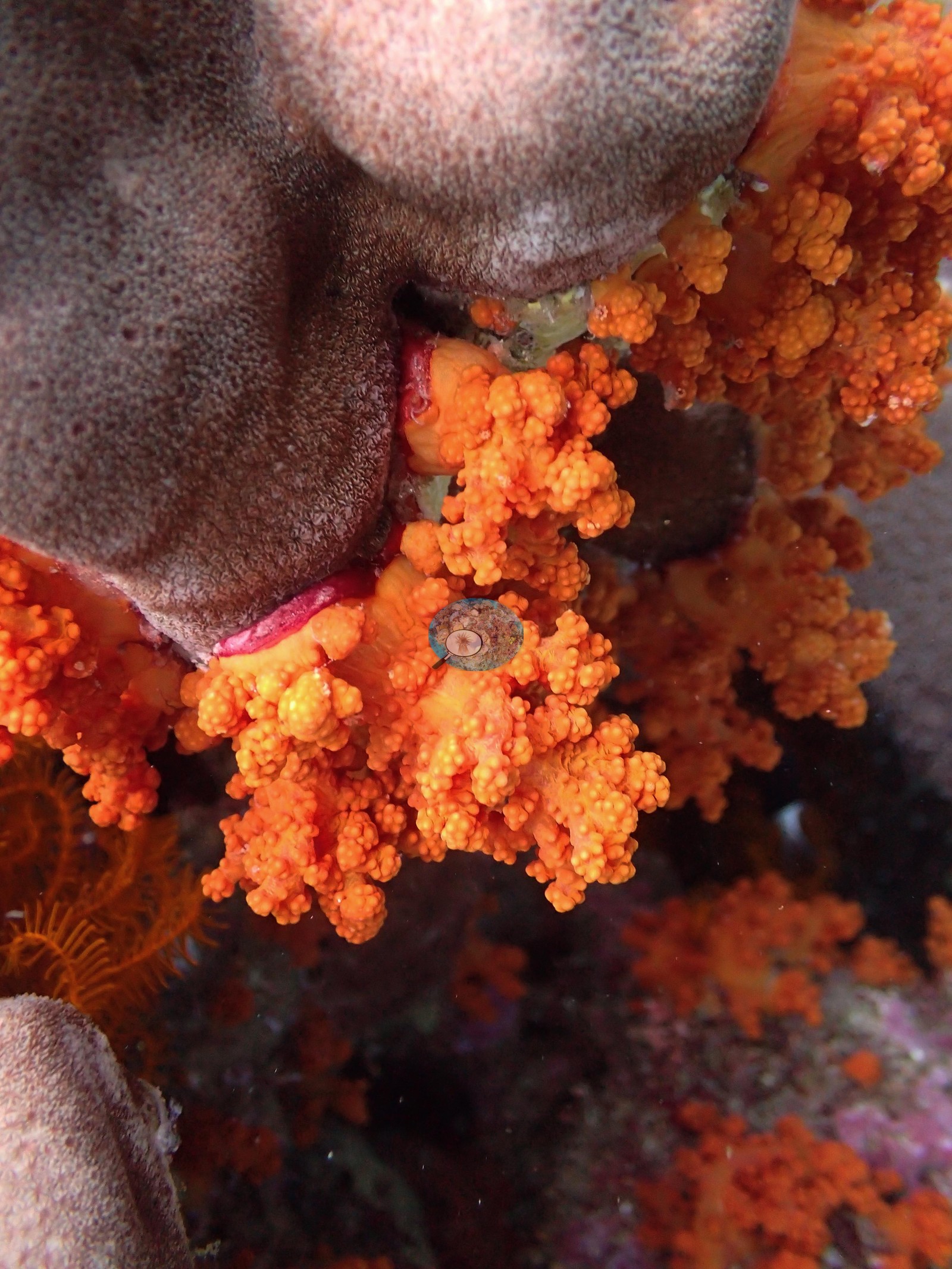 66
66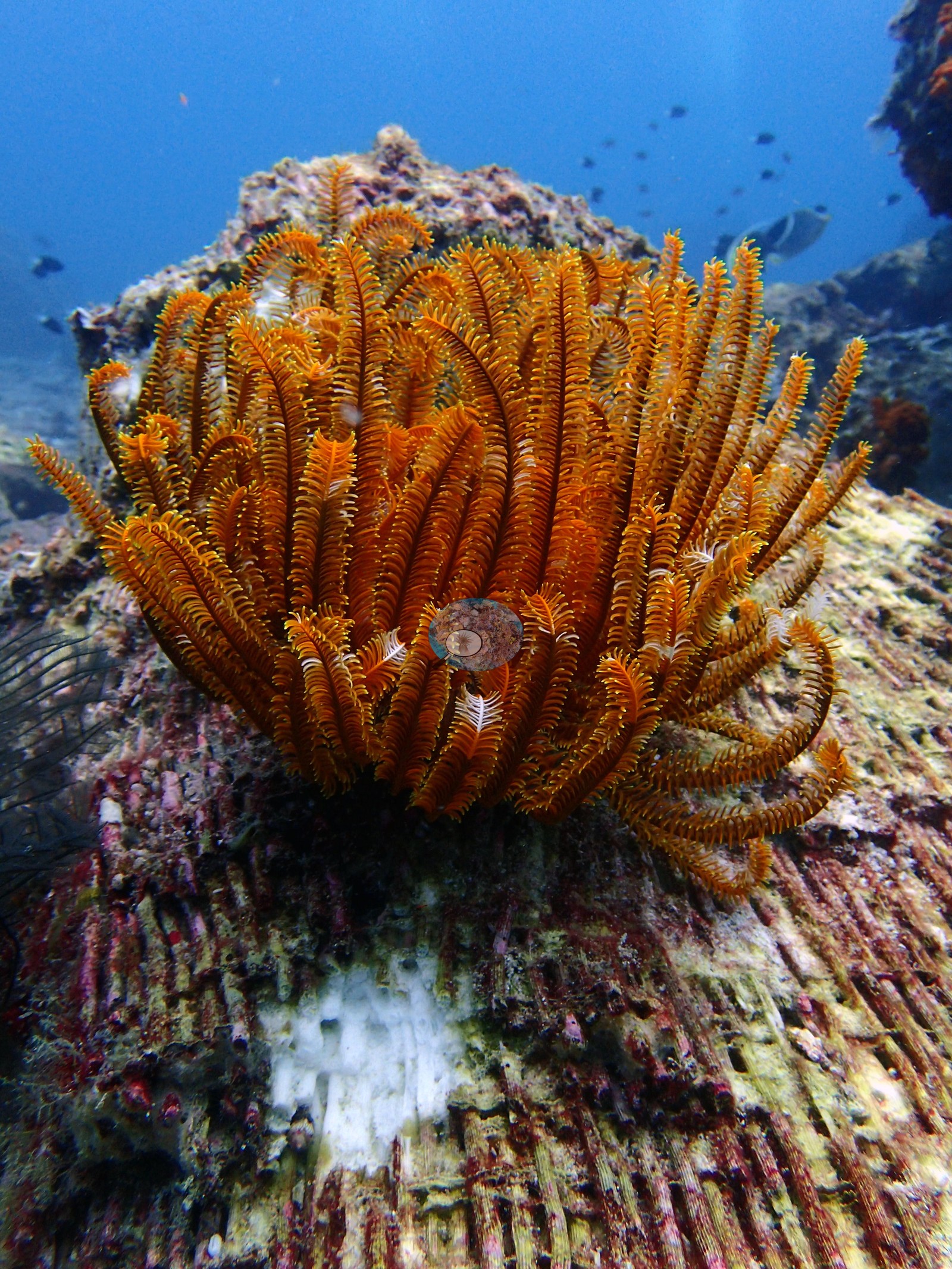 67
67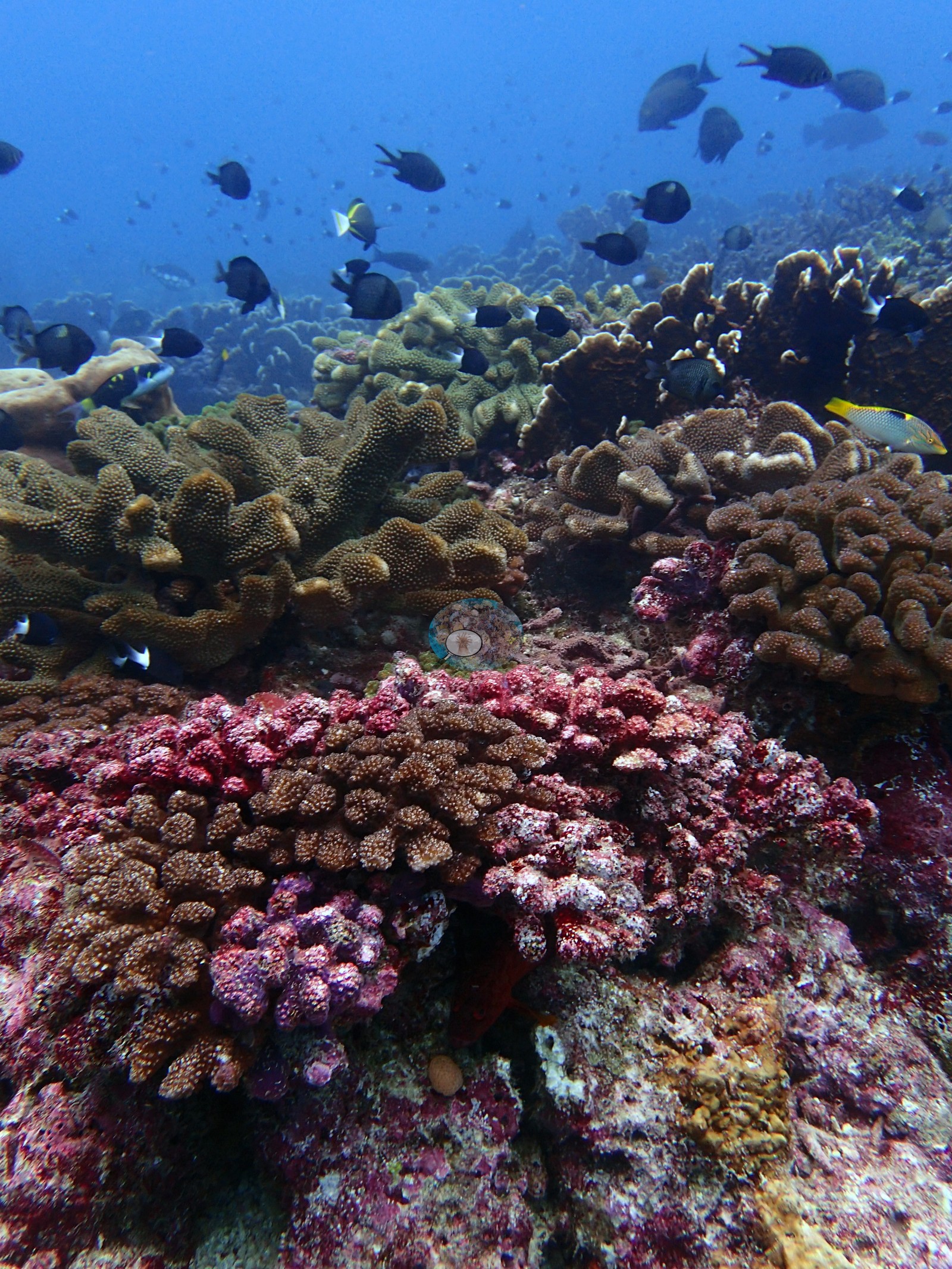 68
68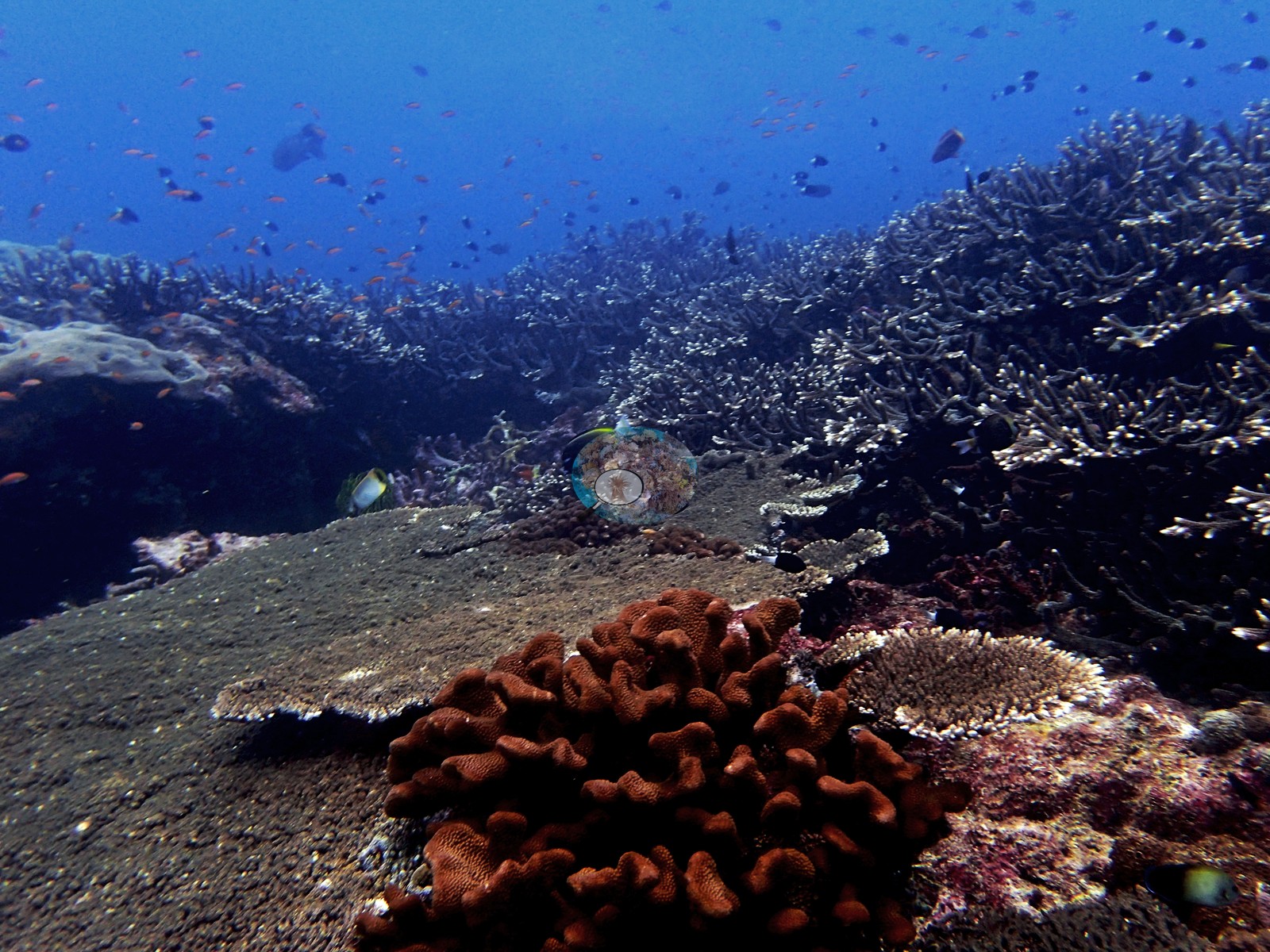 69
69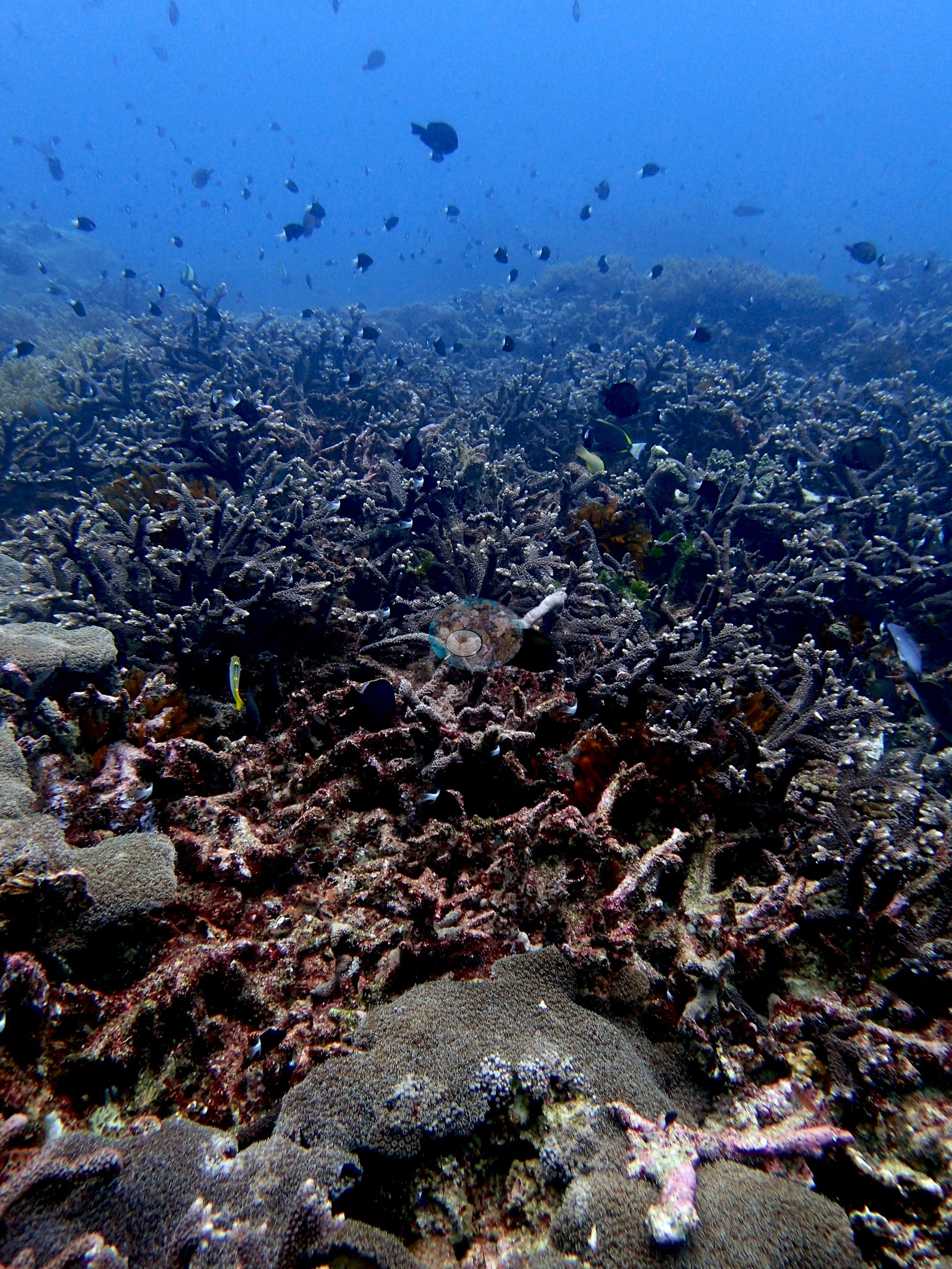 70
70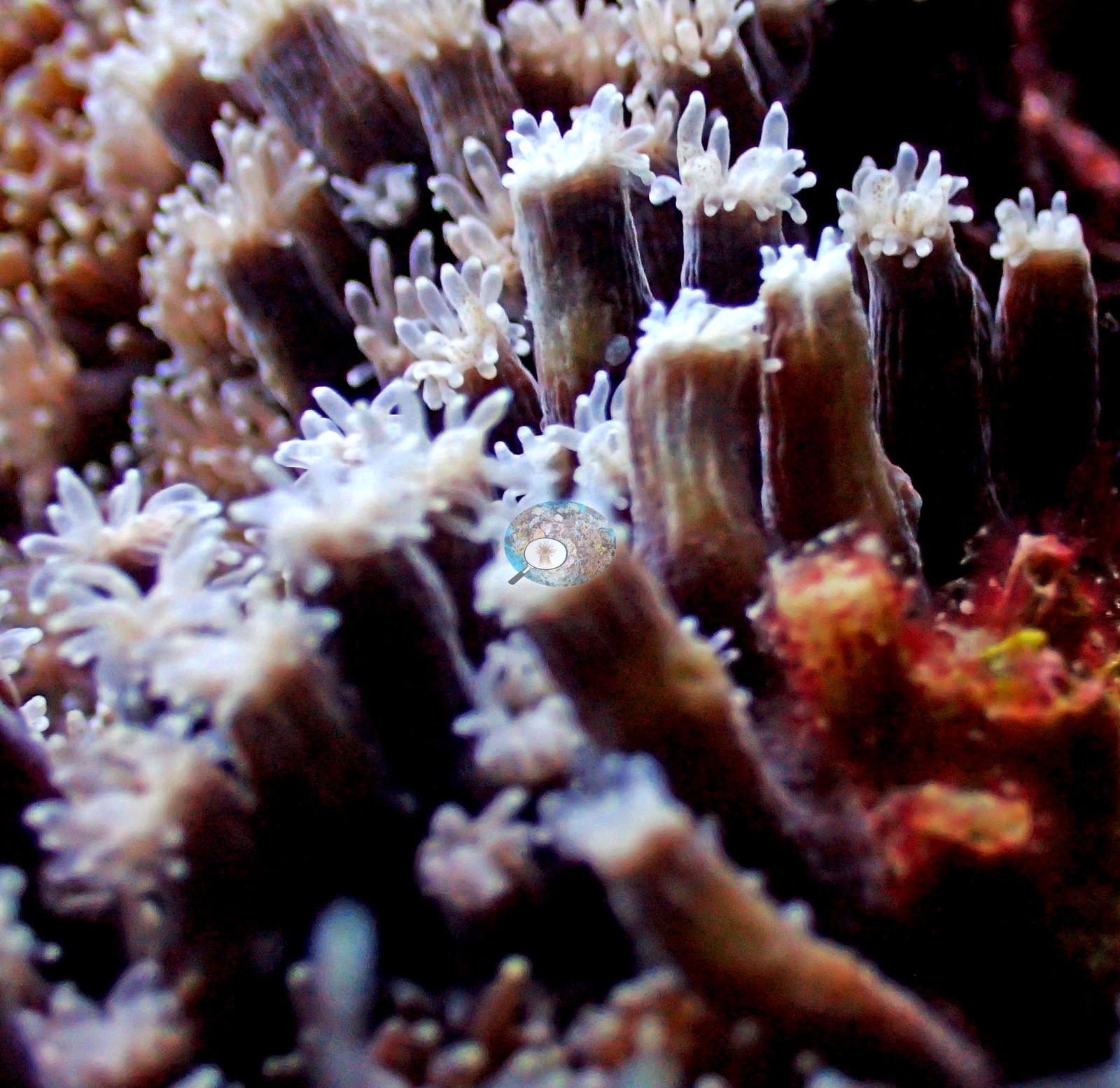 71
71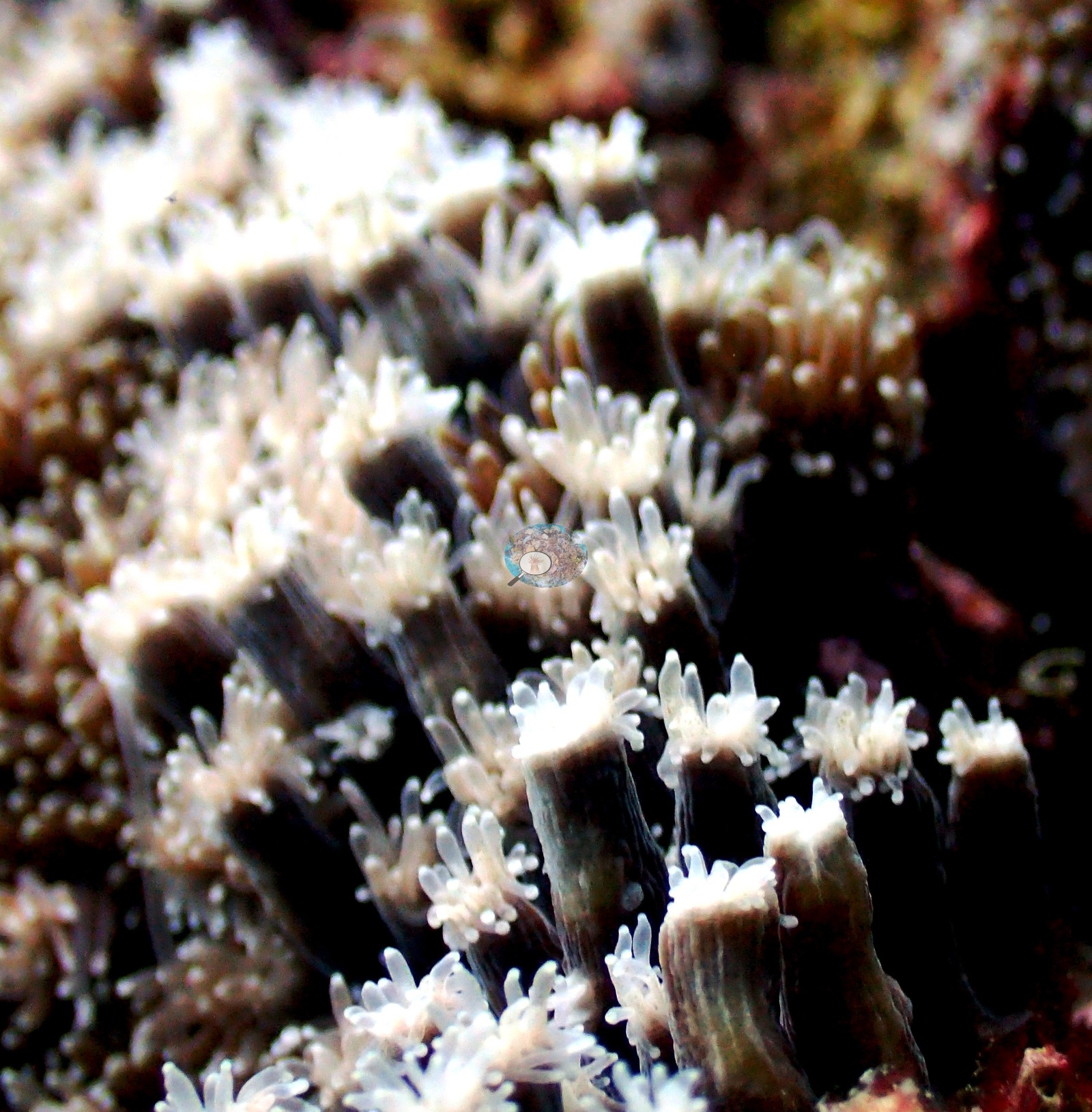 72
72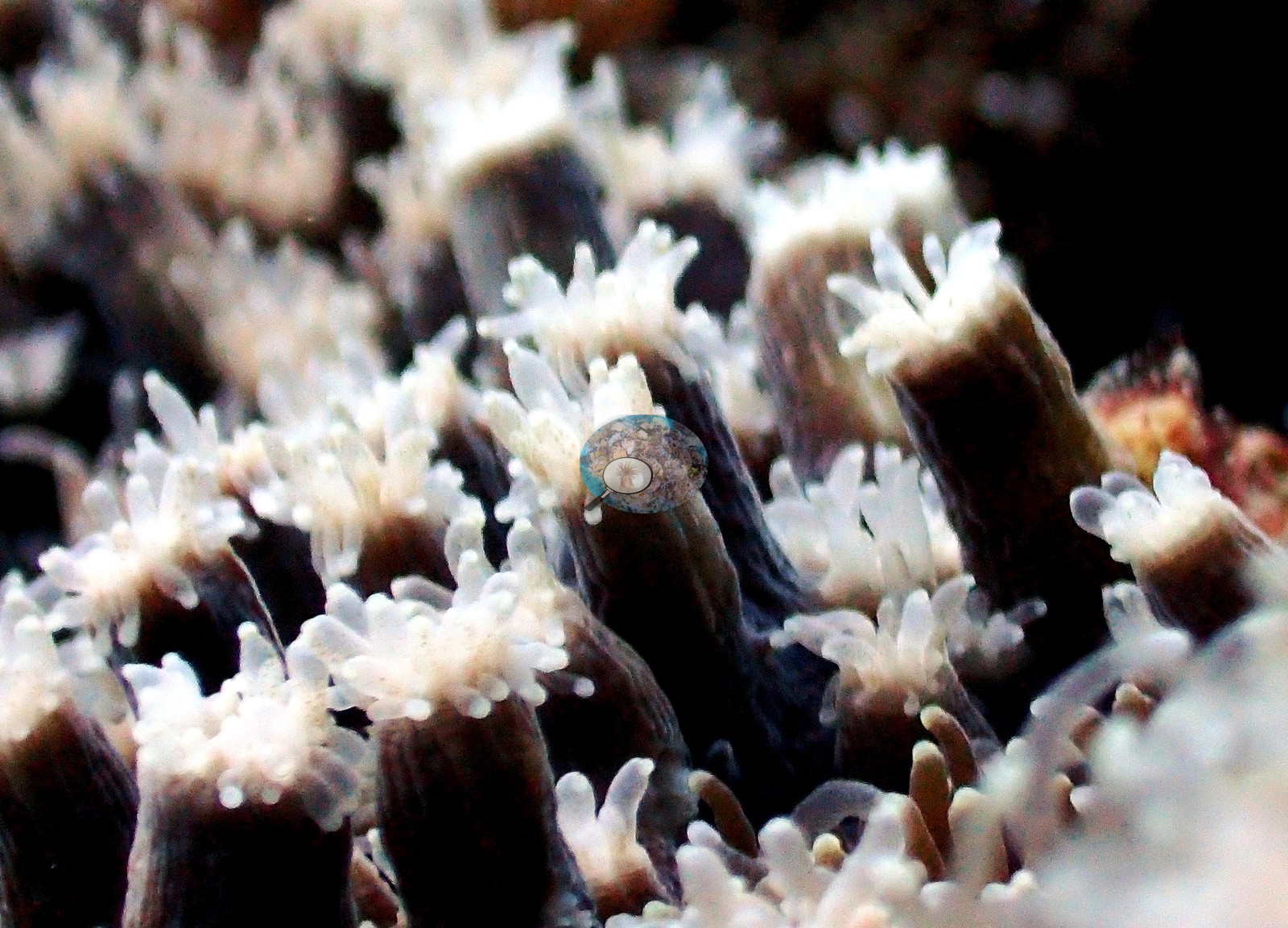 73
73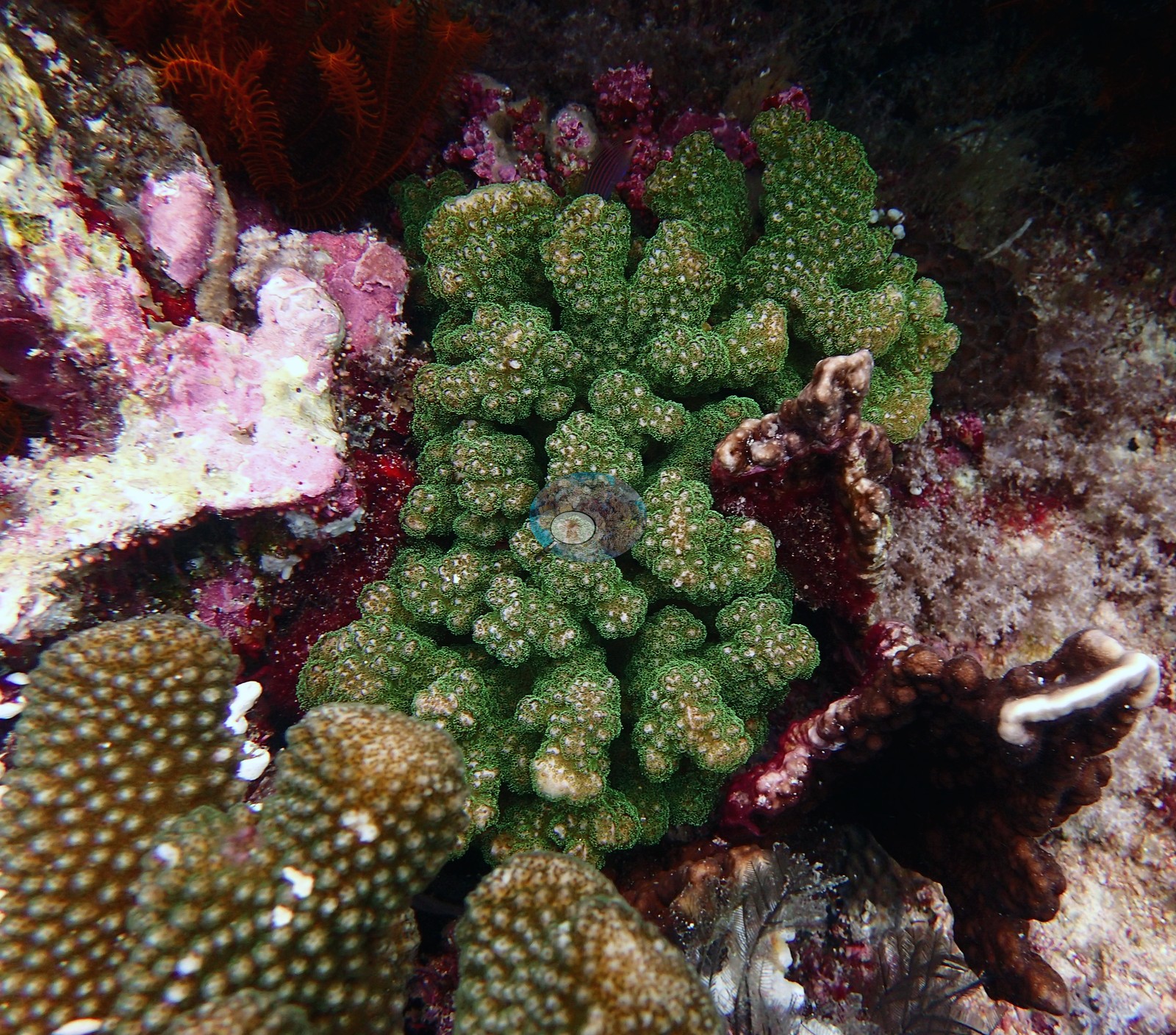 74
74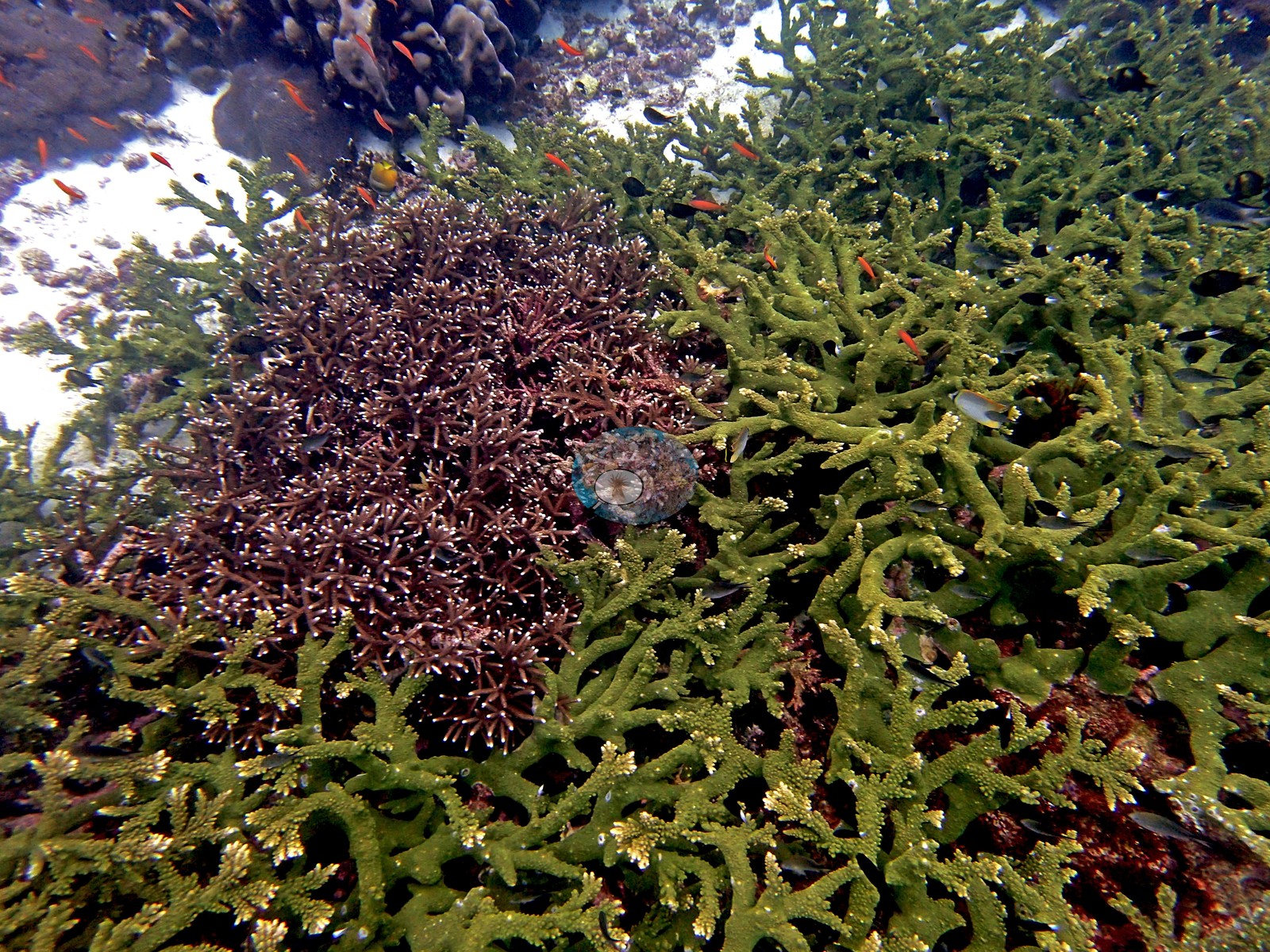 75
75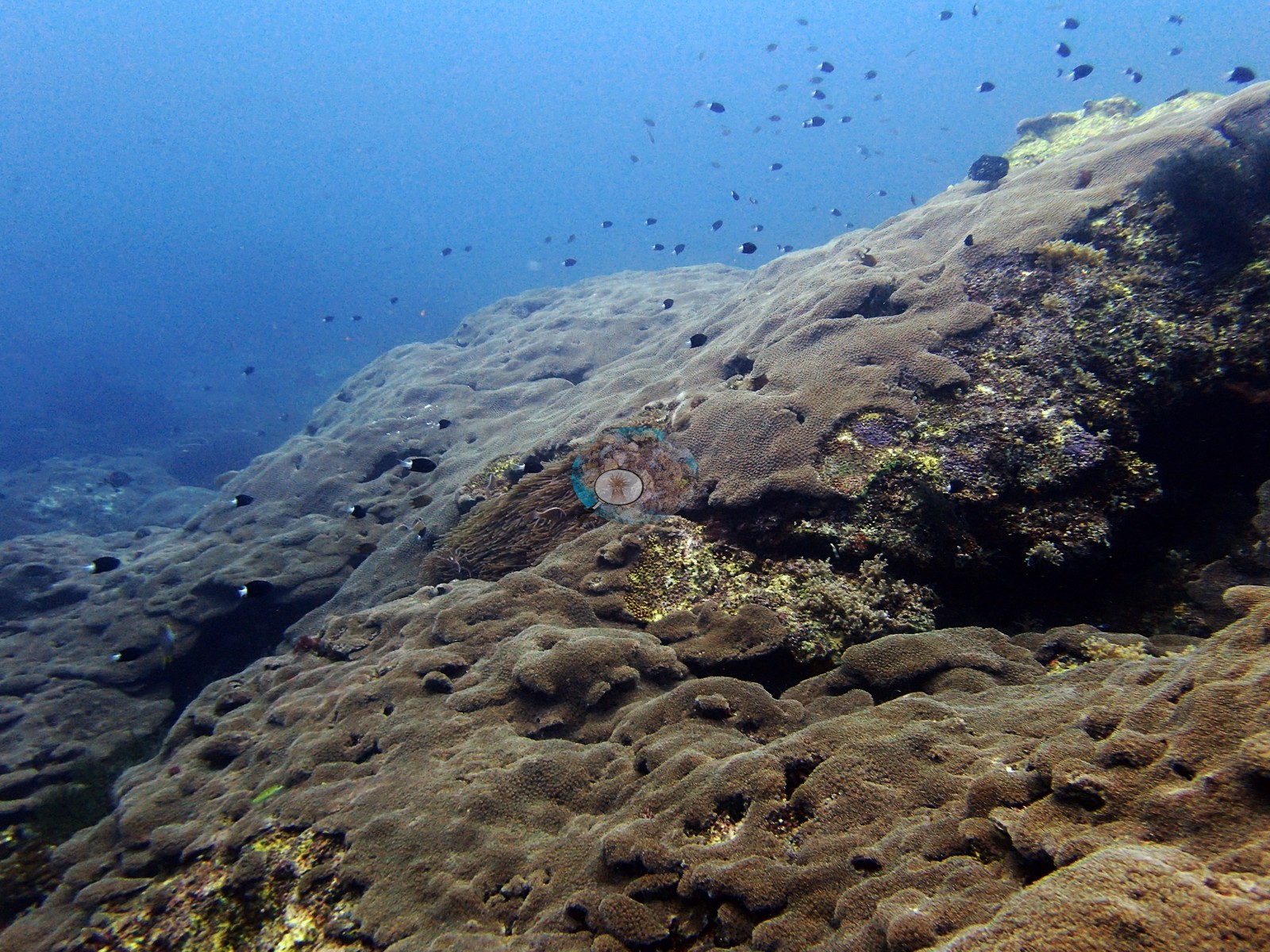 76
76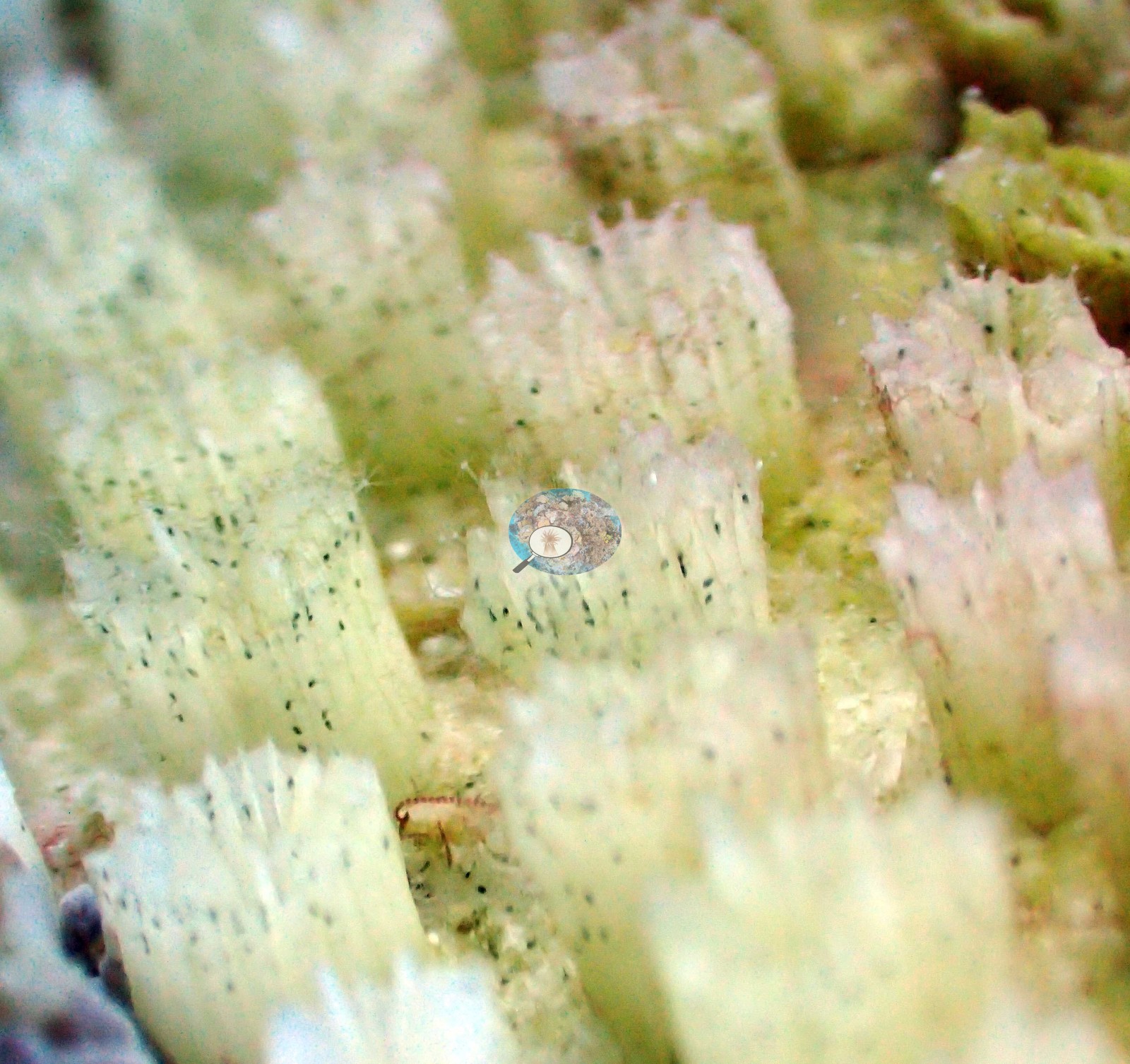 77
77 78
78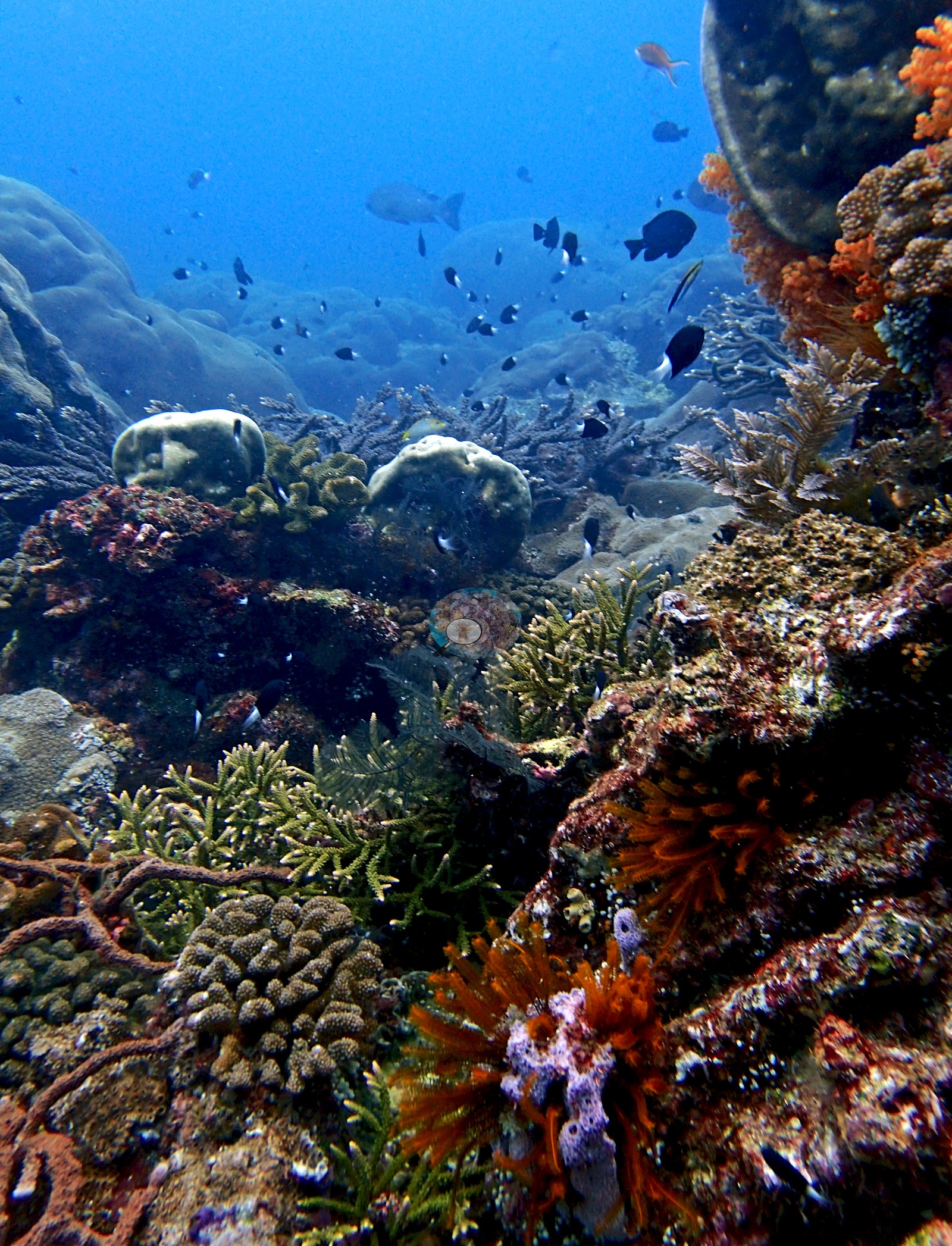 79
79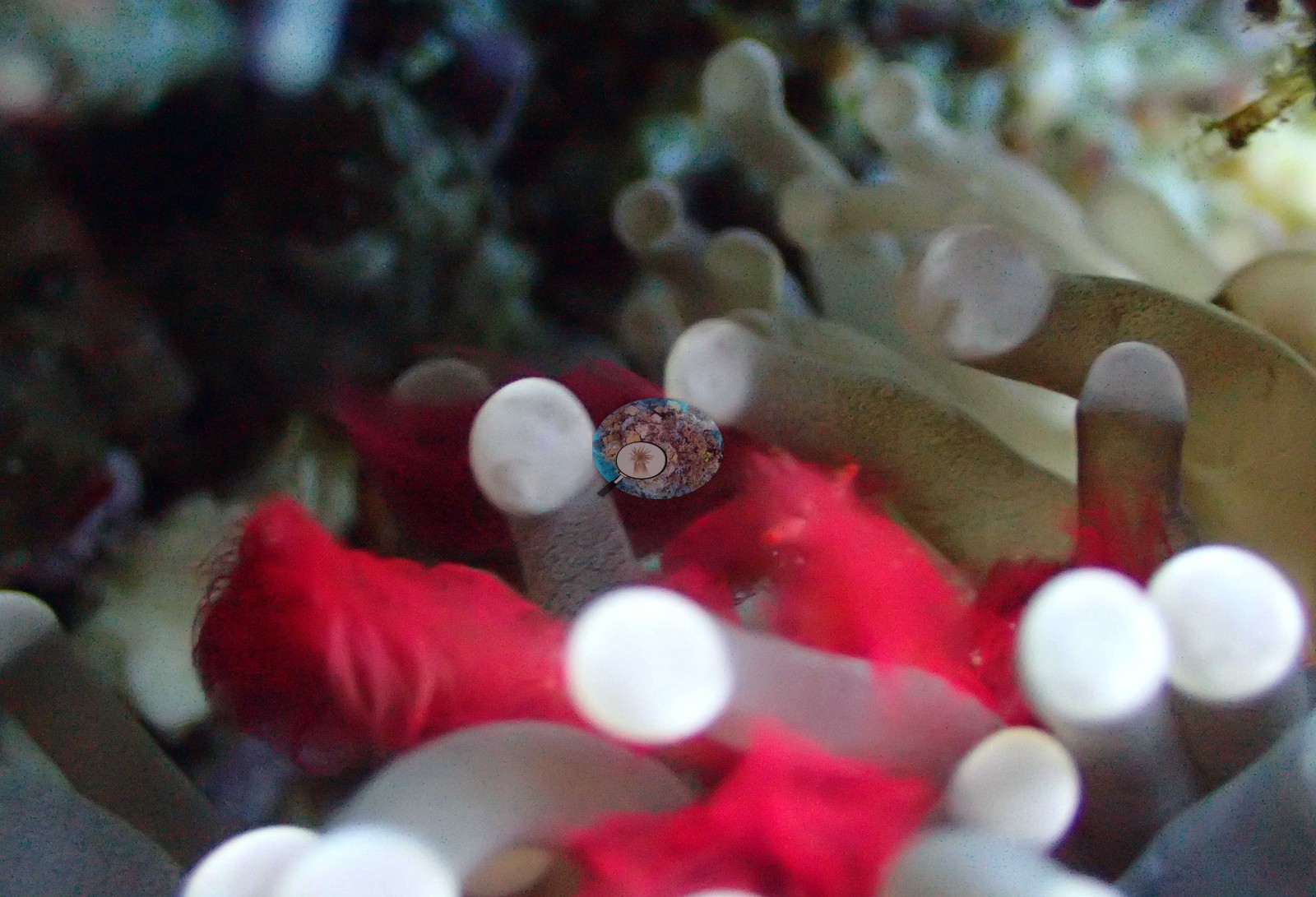 80
80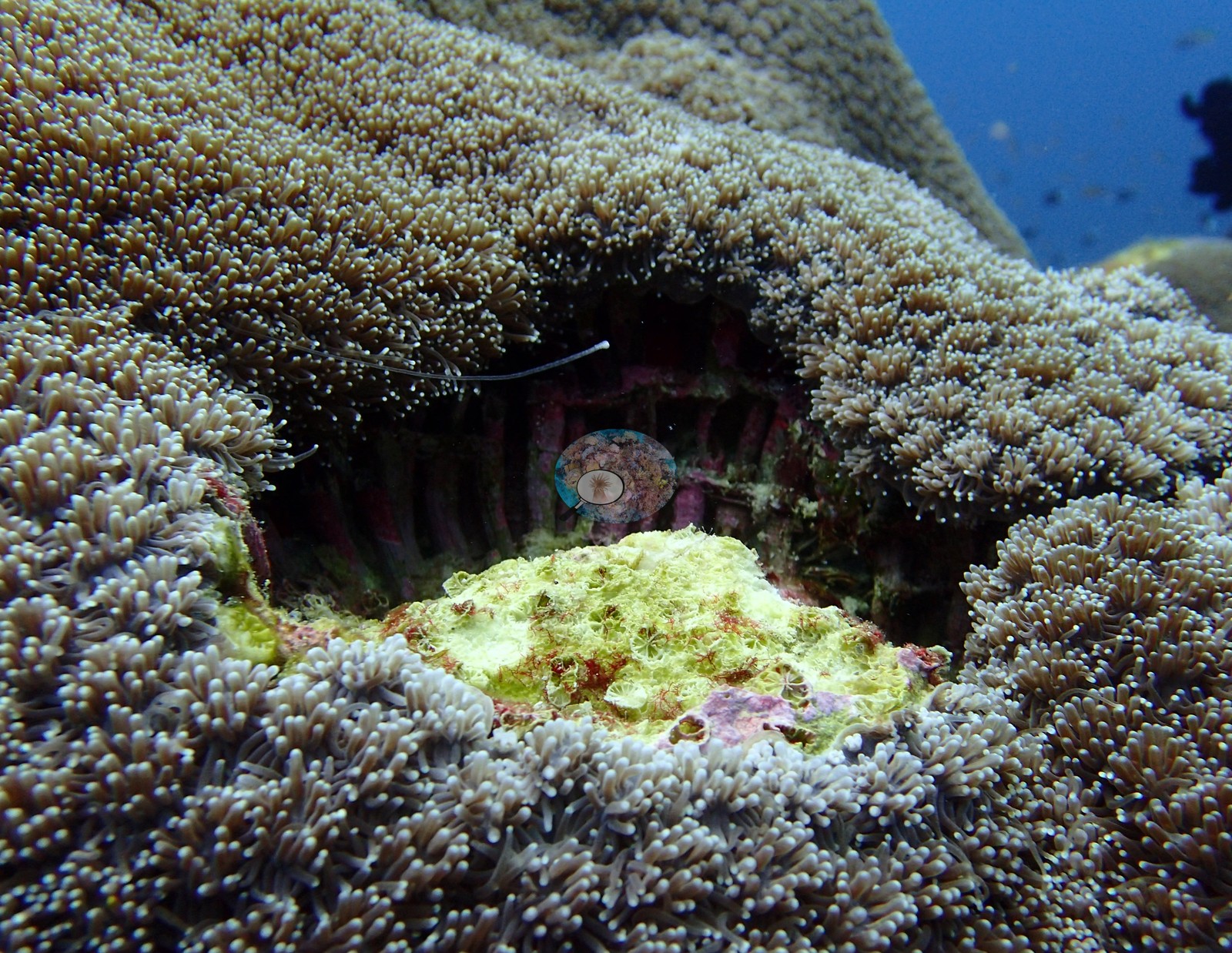 81
81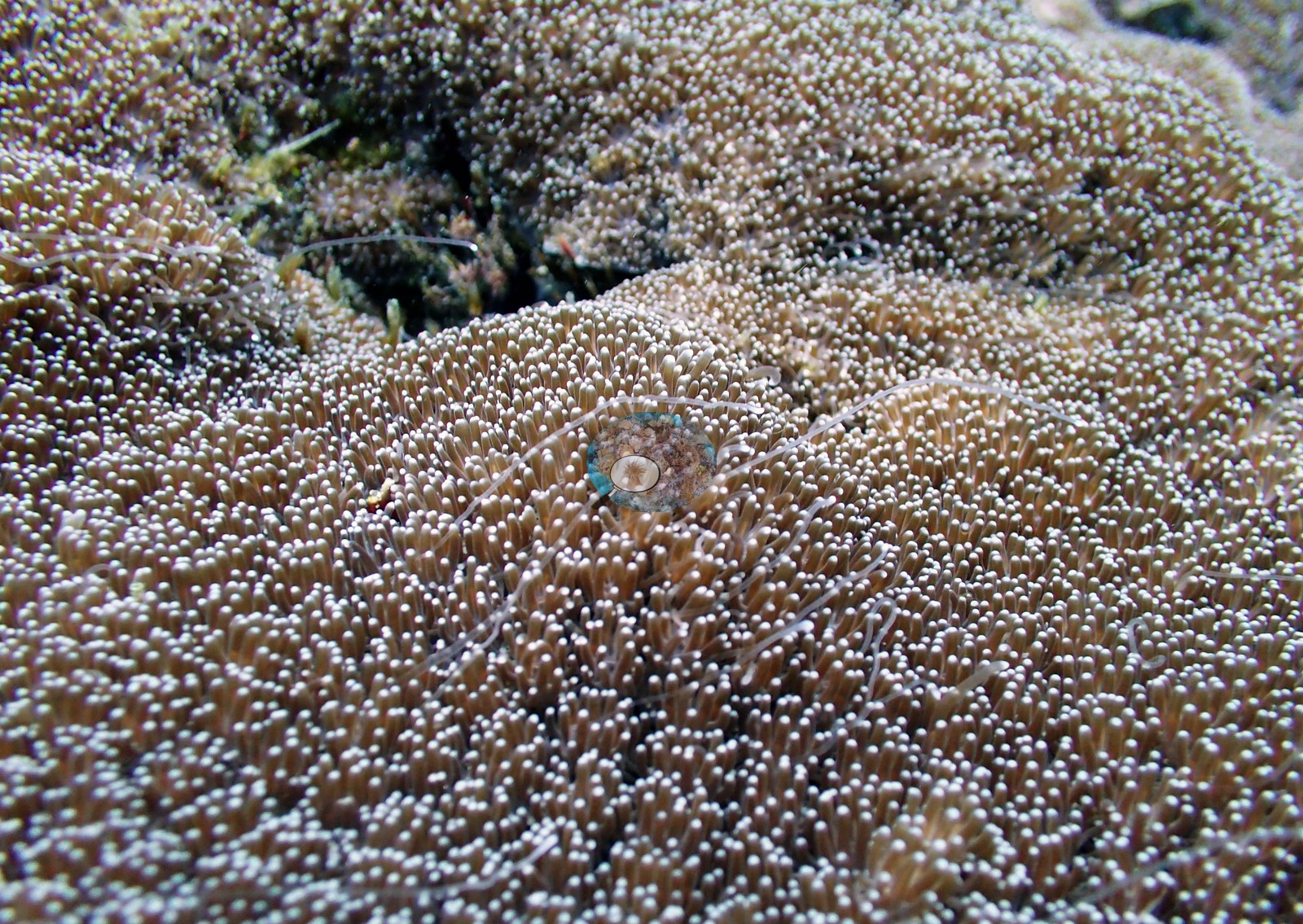
Site description
General benthic features
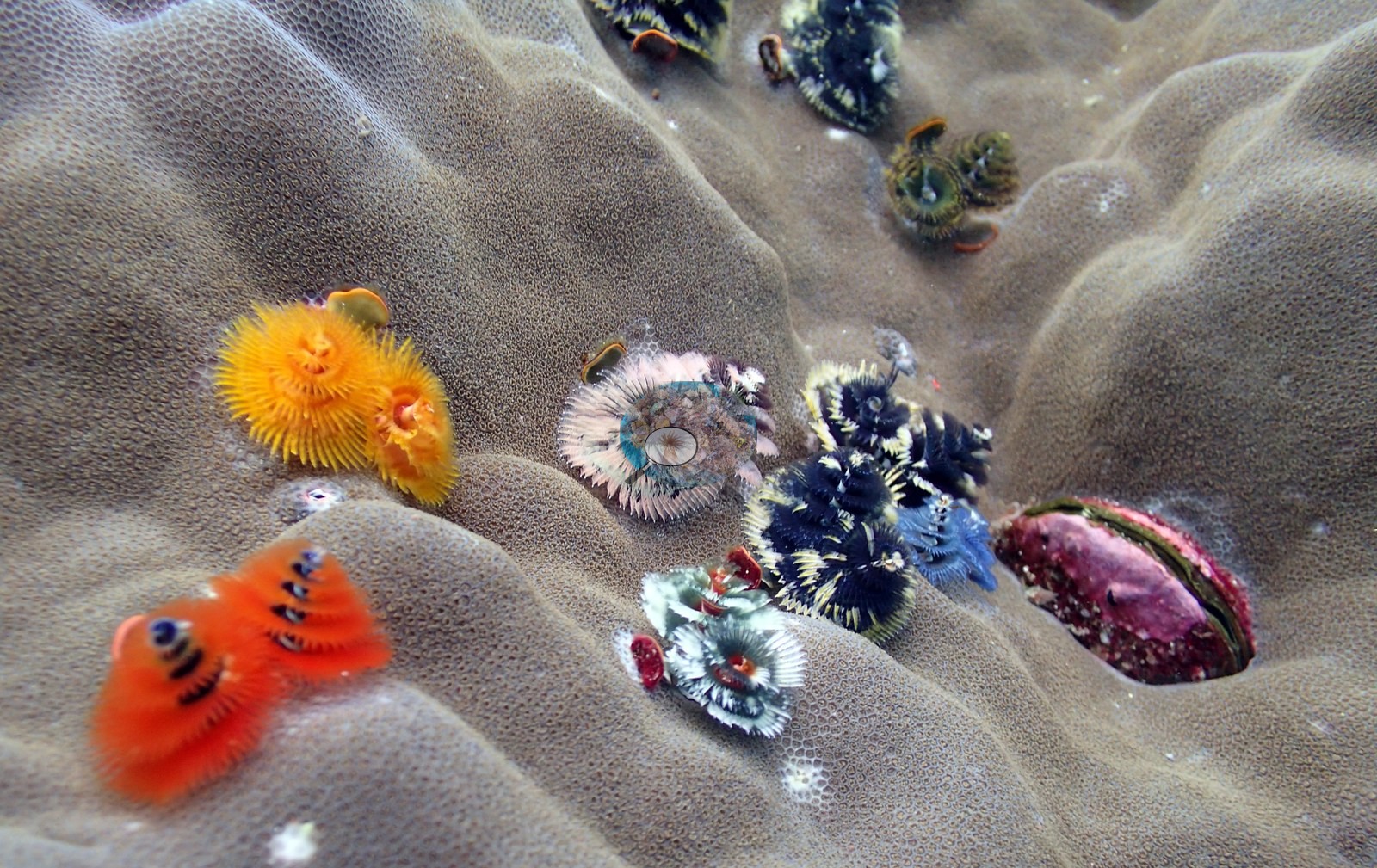
THE SITE AS THE FRAMES SHOW IT. This is a hard-coral-dominated sea mount, and the dive-8 set is overwhelmingly about coral rather than fish or soft coral. Wide frames - H2 ("Coral Paradisea-Acropora"), H27 (PA160993), H49 (PA161025), H68 (PA161075), H75 ("amazing Galaxea colony"), H77 ("good shot of dive 8") - all show the same thing: continuous reef running away into blue-gray haze in every direction, with no wall, no drop-off and no bare sand horizon in the frame. Ambient light is dim in a good half of these, and backscatter is visible, so the wide frames read structure well and color badly. THE DOMINANT CORAL, NAMED BY HIM. His dive-log note from this dive says he "still can't figure out mystery coral: long, separate corallites as tubes... Attack tentacles but only extended within colony so maybe for fishing? It was the most dominant species at site." His own later file labels on this folder answer that: H5 "Galaxea.jpg", H3 "Galaxea coralites.jpg", H4 "Galaxea polyps.jpg", H75 "amazing Galaxea colony.jpg", H76 "dead Galaxea skeleton.jpg", H80 "sweeper tentacle.jpg", H81 "weird Galaxea tentacles.jpg". Those are his calls and they stand. The imagery matches them frame for frame: H3 and H76 are macros of pale, separate, tubular corallite walls with fine dark speckling; H4, H33 (PA161005), H55-H57 (PA161034/37/38), H62 (PA161053), H63 (PA161059) and H70-H72 (PA161080/81/82) are macros of dense fields of long tentacles each ending in a distinct pale knob, growing out of dark tubular corallites, interspersed with bare white circular corallite mouths; H6 (PA160957) and H8 (PA160962) are the same polyp field at medium range. H80 catches the mechanism he was puzzling over - a gap in the polyp carpet exposing the colony's interior with longer, differently-formed tentacles reaching into it. H5 and H75 are the colonies at scale - smooth-textured mounds filling the frame and running on into the haze, which is what his log means by colonies "among biggest corals ever seen". OTHER REEF-BUILDERS. Massive corals are everywhere: H48 (PA161023) is a pale gray knobby-nodular colony with bivalves set into it, H50 (PA161026) and H51 (PA161027) are big lobate and rounded domes standing clear of the pavement, H37 (PA161009) puts a large dome with regular honeycomb dimpling in the foreground, and H60 (PA161044), H61 (PA161047), H52 (PA161028) and H36 (PA161008) are further dome-and-pavement frames. Meandroid brain corals appear in H39 (PA161011), as a broad ridged plate under a massive colony in H53 (PA161029), and again in H51. Foliose and laminar plate growth covers large areas: H16 (PA160971), H45 (PA161020), H47 (PA161022), H58 (PA161042) and H59 (PA161043), the last a near-circular plate lying on sand with fine radial texture. Branching thickets are the third element: H25 (PA160987) is a dense gray staghorn stand running into blue, H28 (PA160994) is a fine olive-green branching thicket filling the frame, H29 (PA160995), H35 (PA161007), H40 (PA161013), H41 (PA161015), H69 (PA161076) and H74 (PA161093) are further branching fields, with H74 mixing a maroon-pink branching colony into a yellow-green one. H21 (PA160977) is a bushy green-yellow field with two divers passing above and a Moorish idol at the edge. H67 (PA161069) shows pink-mauve corymbose colonies alongside yellow-green ones. H15 (PA160970) is the most mixed frame in the set - yellow-green lobate, pink-red branching, lavender lobate, and pale plate growth all in one view. H18 (PA160973) is a golden-brown lobate colony, H32 (PA161002) a macro of a fine tabular surface with white-tipped polyps, and H54 (PA161032) and H44 (PA161018) macros of pale plating colonies with separated corallites and extended polyps - the second unidentified plating species his log records. H17 (PA160972) is the striking one: a brilliant scarlet meandroid colony sitting among brown branching and lobate corals, an unusually saturated red for a stony coral. H7 (PA160959) and H19 (PA160974) are dense orange anthias over knobby coral pavement. H46 (PA161021) is a dark red barrel sponge cluster standing on sand - his log records a 2 x 2 x 2 m "monster" barrel sponge on this dive, though nothing in the frame gives scale to confirm it is that one. H64 (PA161060) and H65 (PA161061) are pink barrel-sponge surfaces, one with orange Dendronephthya against it, the other showing an oscule and a band of tiny violet ascidian-like beads along the sponge margin. H1, H30 (PA161000) and H31 (PA161001) are the Christmas-tree-worm frames - a smooth massive colony carrying Spirobranchus crowns in orange, scarlet, navy, rose, and mint, with an embedded scallop showing a crimson-and-gold mantle. H73 (PA161089) is a green nodular colony against pink coralline crust. H10 (PA160965), H11 (PA160966), H12 (PA160967, with a diver and bubbles), H14 (PA160969), H34 (PA161006), H38 (PA161010, diver above), H43 (PA161017, diver with torch) and H78 ("great shot of Coral Paradise", orange crinoids and mixed coral against blue) fill in the general reef. The frames show a structurally intact, coral-dominated reef with very large old colonies.
Coral cover
Coral cover: 44% — a blind Claude computer-vision point count of 132 of Anderson's edited photographs (20 points per photo; water, fish, and obstructions excluded). Other computer-vision methods are listed in the method table. All of these figures are computer-vision indices from photographs, not a diver survey. There was no benthic transect on this dive. Note also that his log describes 100% cover in places at 10 m and in the shingled coral at depth, which points the other way; the honest position is that no single number is a measurement of this reef.
Stressors
H76 is the dead half of the story: white bare corallite tubes with a green algal film. Past mortality is present but consolidated: H76 is bare white Galaxea skeleton under algal film, H20 has standing dead branch stubs, and coralline-encrusted rubble appears through several pavement frames - consistent with his own log note of dead Anacropora rubble at 9-10 m. One frame warrants a second look at the original: H22 (PA160978) shows a starkly white branching structure sitting inside an otherwise deeply pigmented green branching Acropora stand. In a small, low-resolution contact-sheet tile it cannot be settled whether that is bleached living tissue, recently dead skeleton, or a white soft coral growing through the thicket, and no bleaching percentage is offered here. Nothing else in the 81 frames shows a white-tissue-beside-pigmented-tissue contrast. No crown-of-thorns, no disease band and no macroalgal overgrowth were seen.
Fish and other fauna
H26 (PA160990) and H79 ("orangutan crab") both put those knob-tipped tentacles against a vivid red animal, in H79 a small crab sheltering among them. FISH AND OTHER LIFE. His log opens this dive with "a large school of small jacks", and the frames carry it: H23 (PA160981), H24 (PA160982) and H42 (PA161016) are all mid-water schools of silver jacks/trevally streaming past over the reef. H13 (PA160968) is a large tan-tentacled anemone-form animal on the reef, H20 (PA160975) a busy reef top with crinoids and another anemone, and H66 (PA161065) a big orange crinoid perched on the framework.
Comparisons with other data
No prior survey data from this site. If you would like to share yours, please email us.
Dive record
Anderson dived Karang Paradise twice on 16 October 2018. This folder is the SECOND of those two dives - his dive-8 folder, camera sequence PA160957-PA161093, entered 11:33, 62 minutes, 15.1 m max depth (his log numbers it lifetime dive 49 and calls it "dive 2" at the site).
Other notes
The first dive of the pair, the hammerhead dive, is a separate folder and is written up separately. His own frame names in THIS folder call the site "Coral Paradise", which is Karang Paradise translated. His log for this dive does record "fishing gear damage and fishing waste", but no frame in this folder resolves gear or debris.
CV model comparison
More info
DINOv3 and CoralSCOP were run on the same photos and are listed for comparison. Coralscapes v2 and v1 were also run but are not shown: Anderson does not consider Coralscapes reliable for these photos. No diver transect exists for this trip, so agreement between the rows is not accuracy, and as of September 2026 no computer-vision method estimates coral cover accurately on new images; treat every row as indicative.| Method | Hard-coral cover (%) |
|---|---|
| In-house DINOv3 | 28.7 |
| CoralSCOP edited | 31.4 |
| Claude (edited photos) | 44.4 |
% coral cover by visit
Each visit is analyzed independently; these are not pooled into a single site mean.
| Date | % coral cover | Std. dev. | Frames scored |
|---|---|---|---|
| — | 41% | ±30 | 53 |
| — | 47% | ±32 | 79 |
Data & links
All images from Coral Reef Diagnostics. Data are from Coral Reef Diagnostics.
© Coral Reef Diagnostics.