
Raja Ampat - Blue Magic
Part of the regional summary: Indonesia - Raja Ampat
2018-10-23
More info
West Papua (NOAA CRW virtual station)A classic submerged pinnacle in Raja Ampat with no island or reef flat, its domed summit falling steeply into open blue on every side. The summit is tiled with meter-wide Acropora tables, stacked foliose whorls, and person-sized Porites bommies, broken by sand, rubble, and large expanses of bare, coralline-crusted pavement.
Blue Magic, diselami dalam perjalanan kapal akomodasi selam Anderson di Indonesia pada 2018. Foto-fotonya memperlihatkan puncak batu terendam yang khas, bukan terumbu tepi: puncak dasar keras yang lebar dan sedikit membundar, yang menurun curam ke laut lepas di segala sisi, tanpa pulau, tanpa rataan terumbu, dan tanpa tubir dangkal di mana pun dalam kumpulan ini.
Terjemahan ringkasan ini oleh AI; versi bahasa Inggris yang berlaku. Translated from the site’s shorter map summary.
Six independent survey stations shown with the program’s logo — click one to see how far it is from this site.
Three other CRD dive sites within 5 km shown in orange — click a marker to open its page.
4 of these 46 photographs are shown beside the text that discusses them under "Site description" below.
 6
6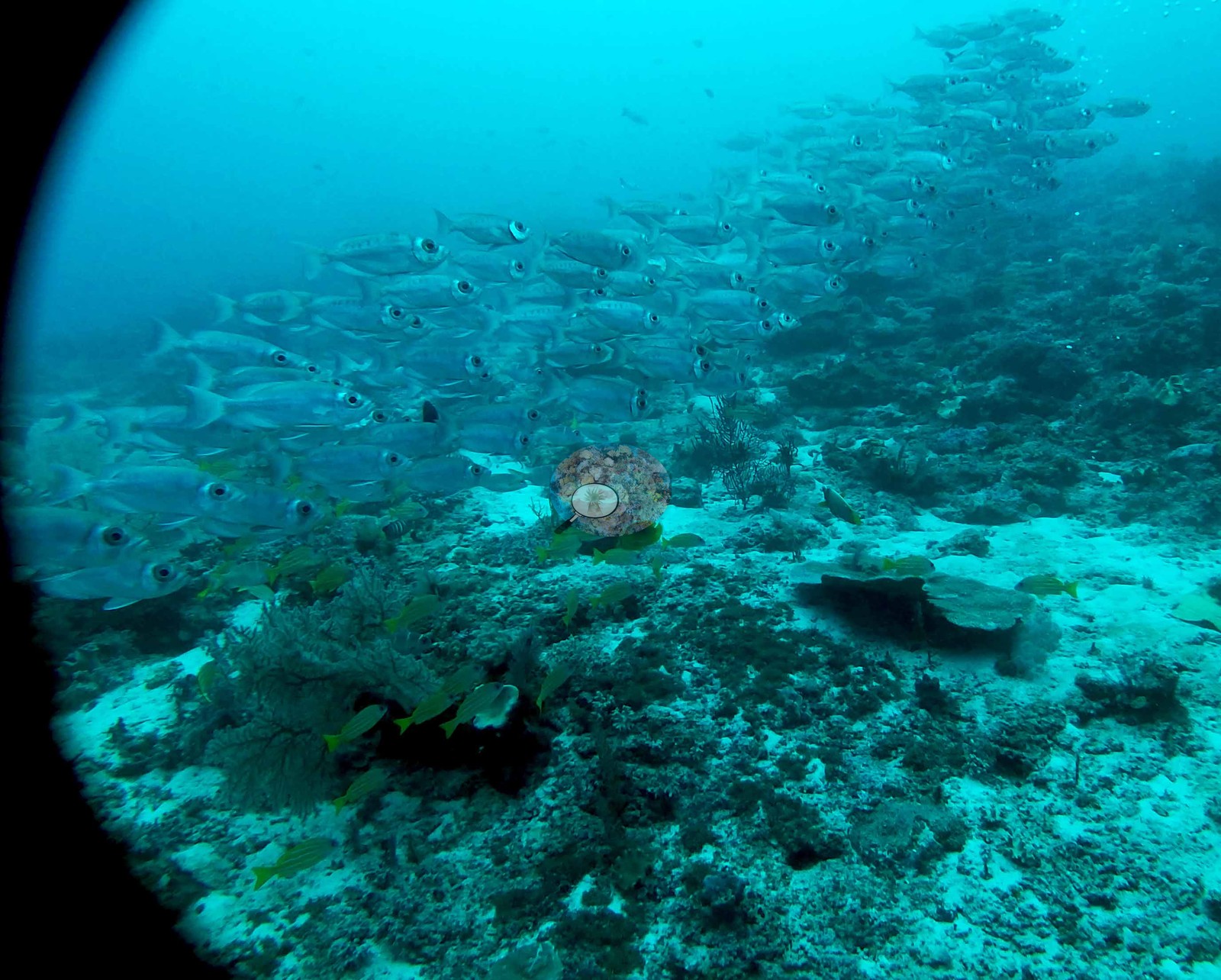 8
8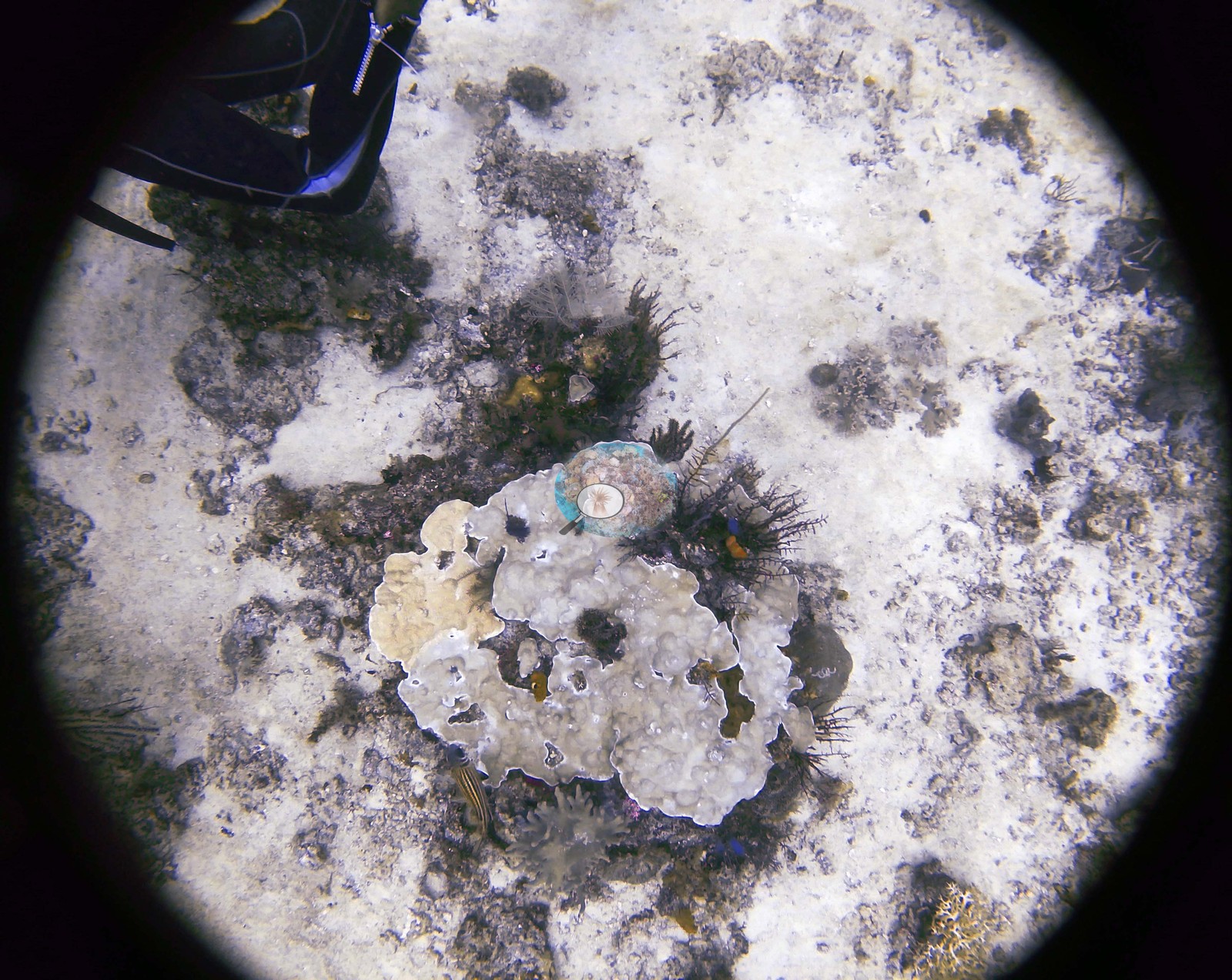 9
9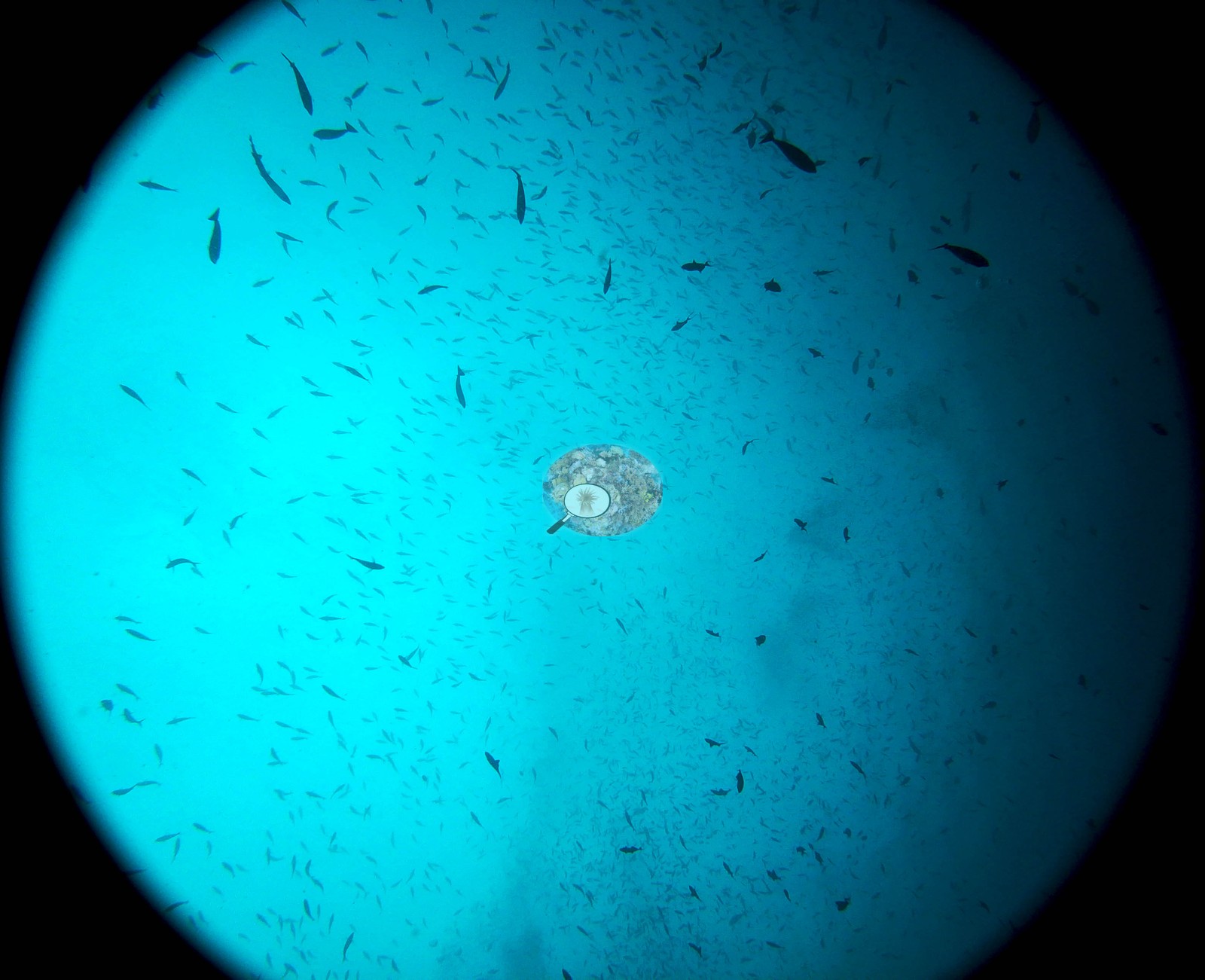 10
10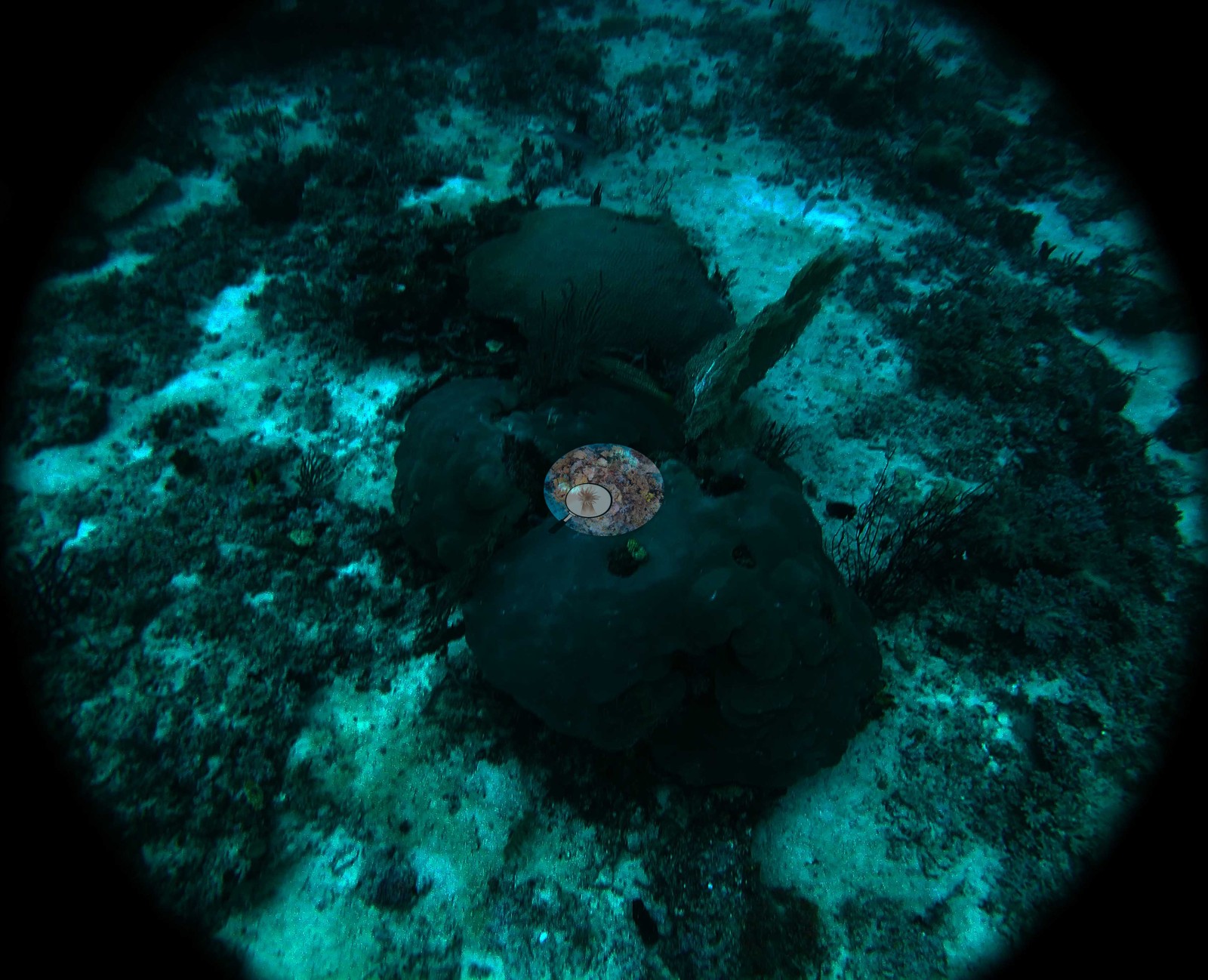 11
11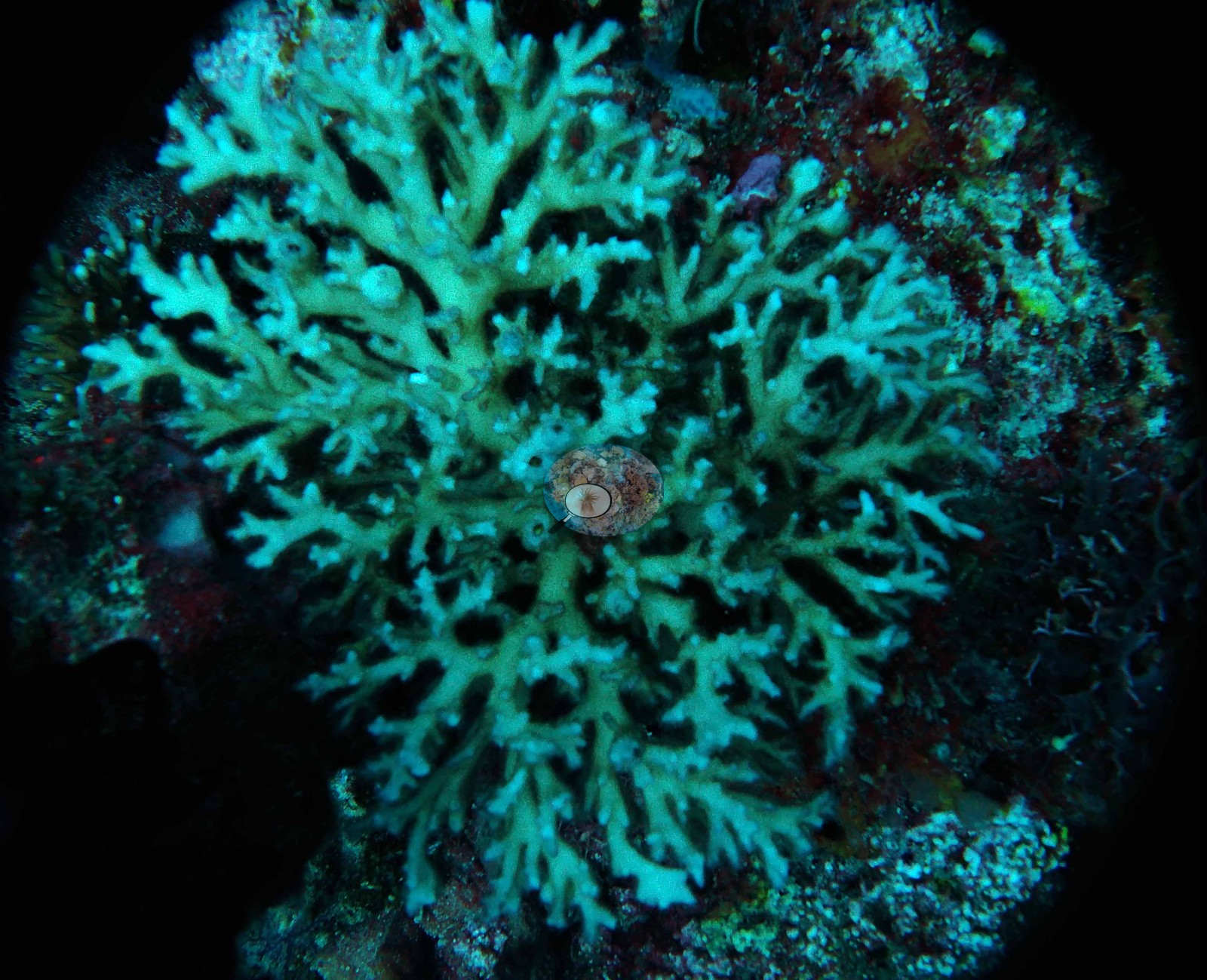 12
12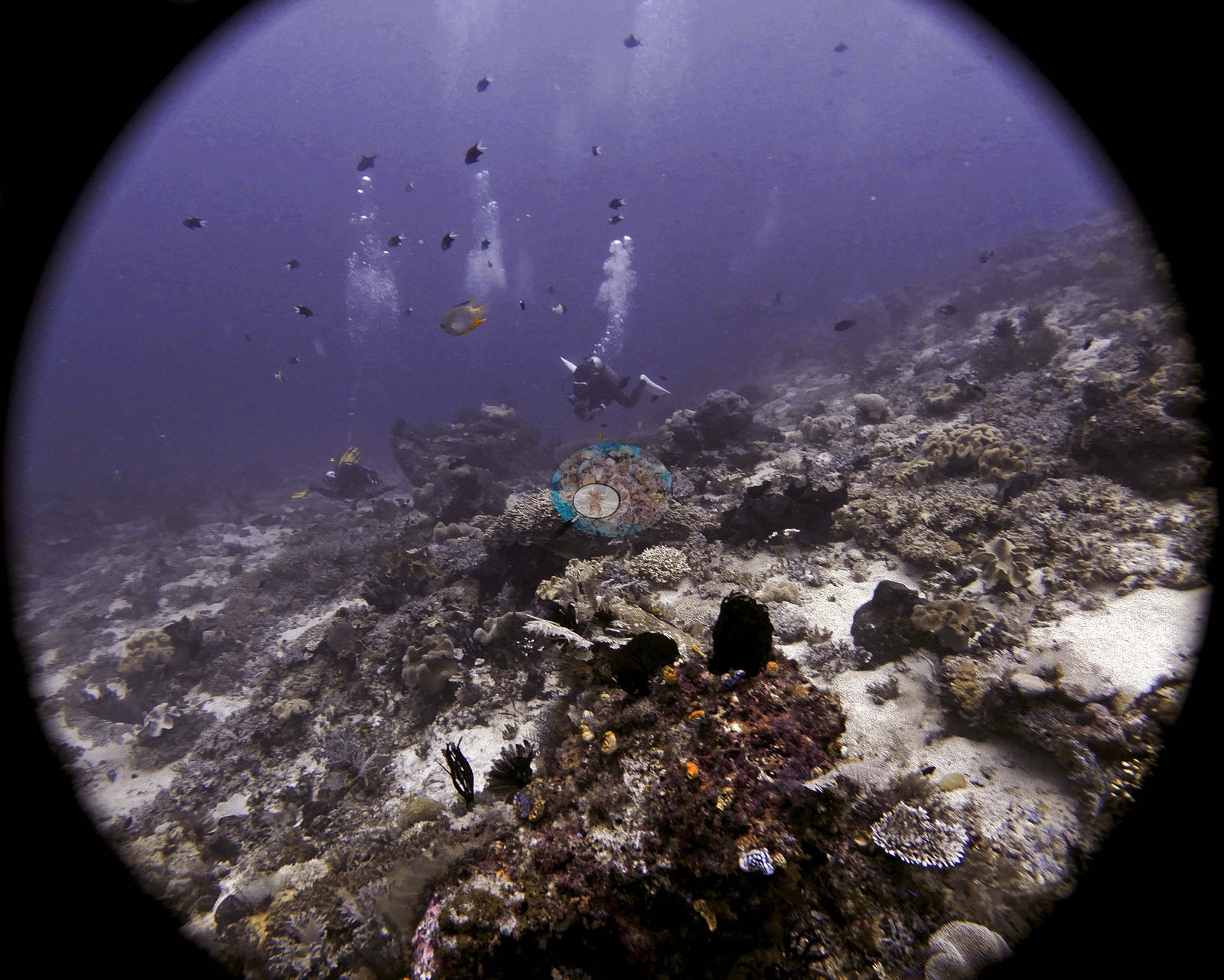 13
13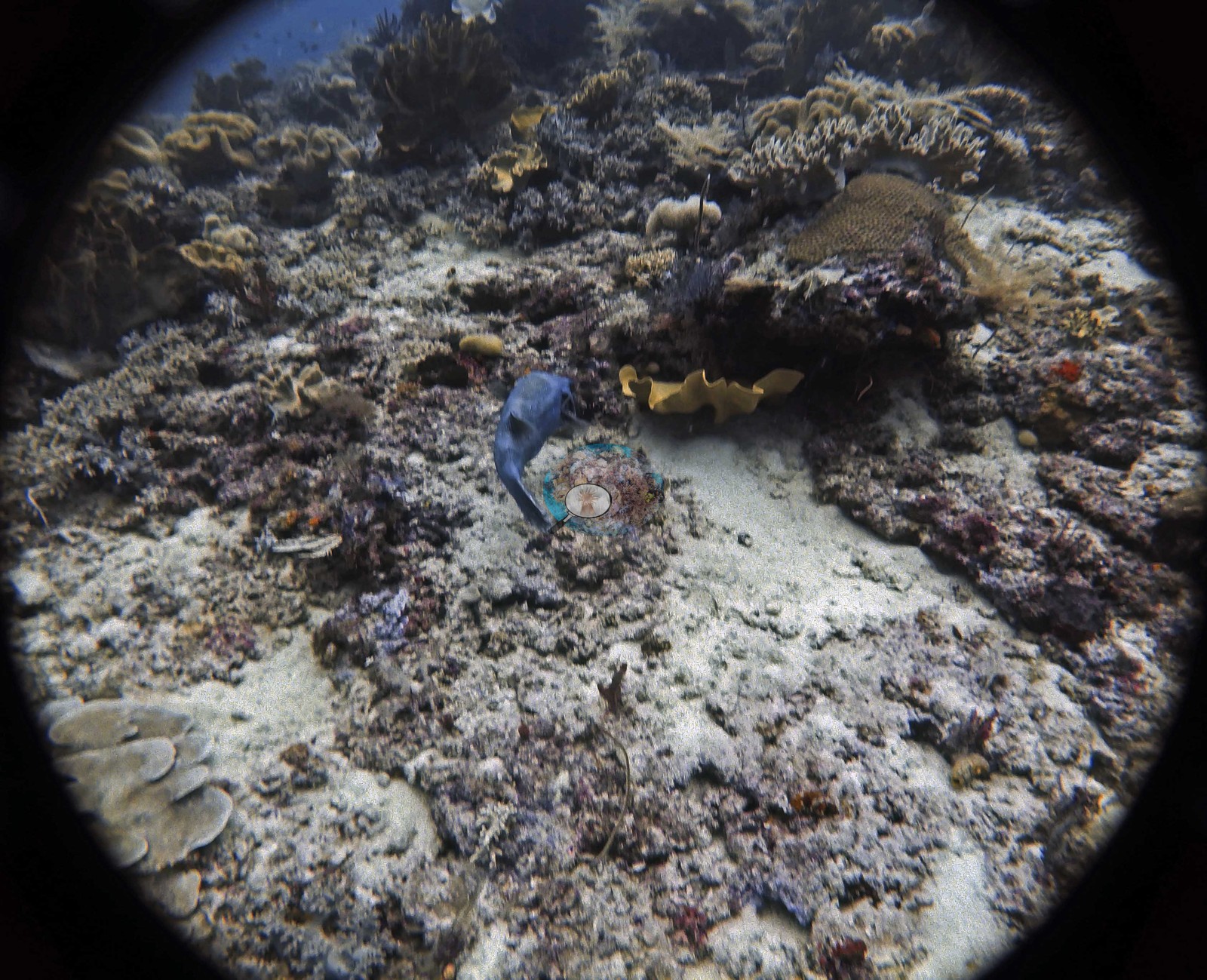 14
14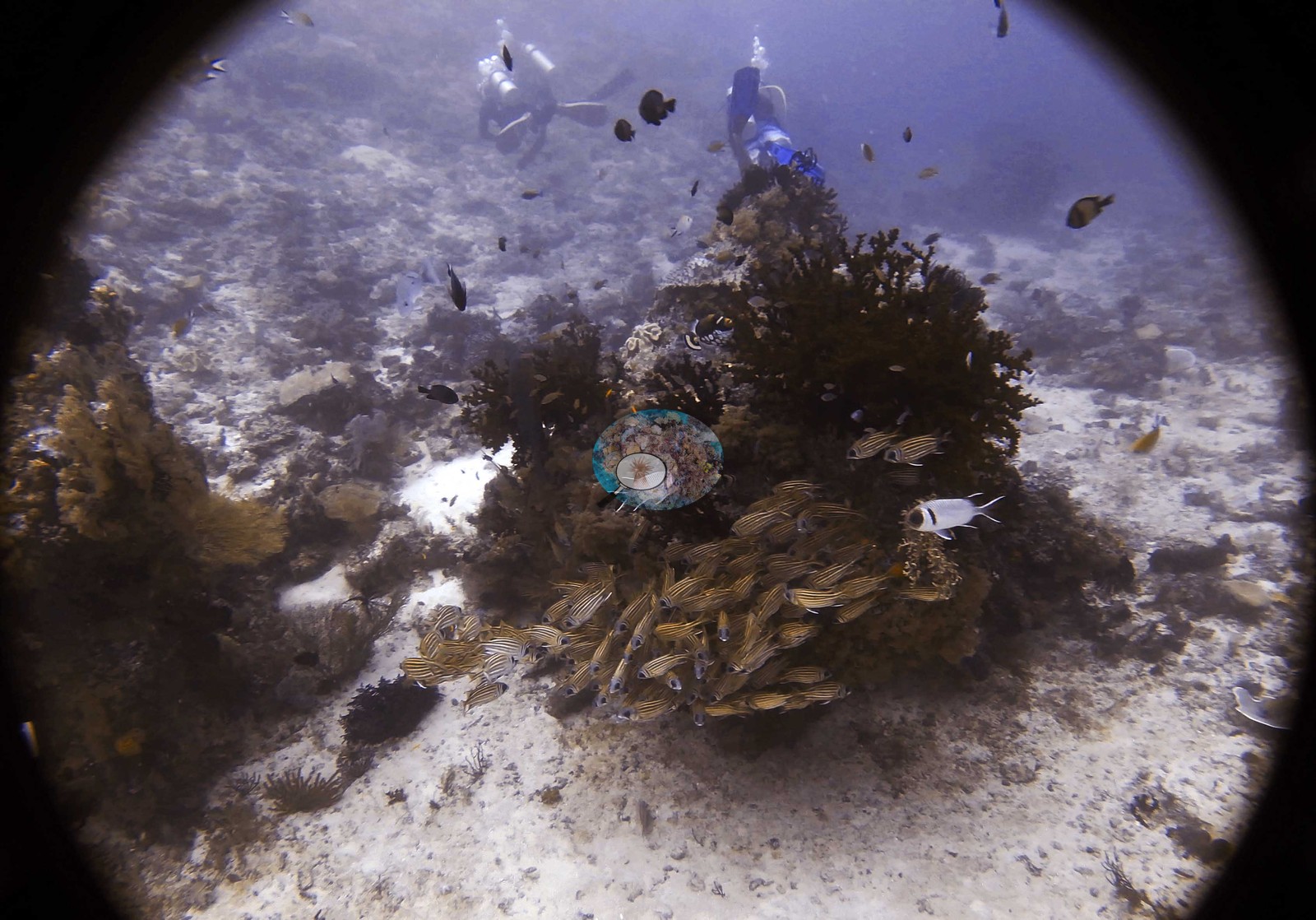 15
15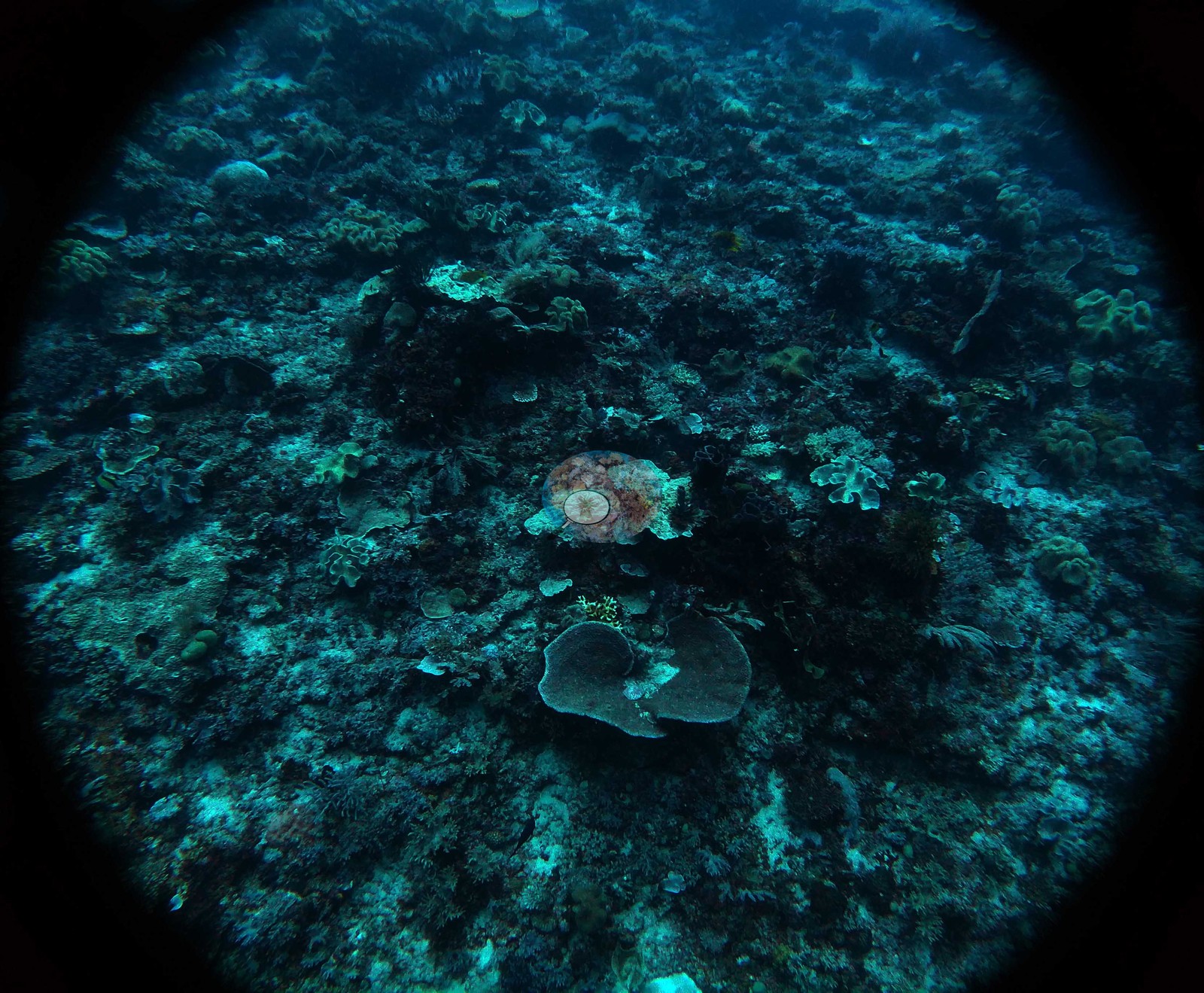 17
17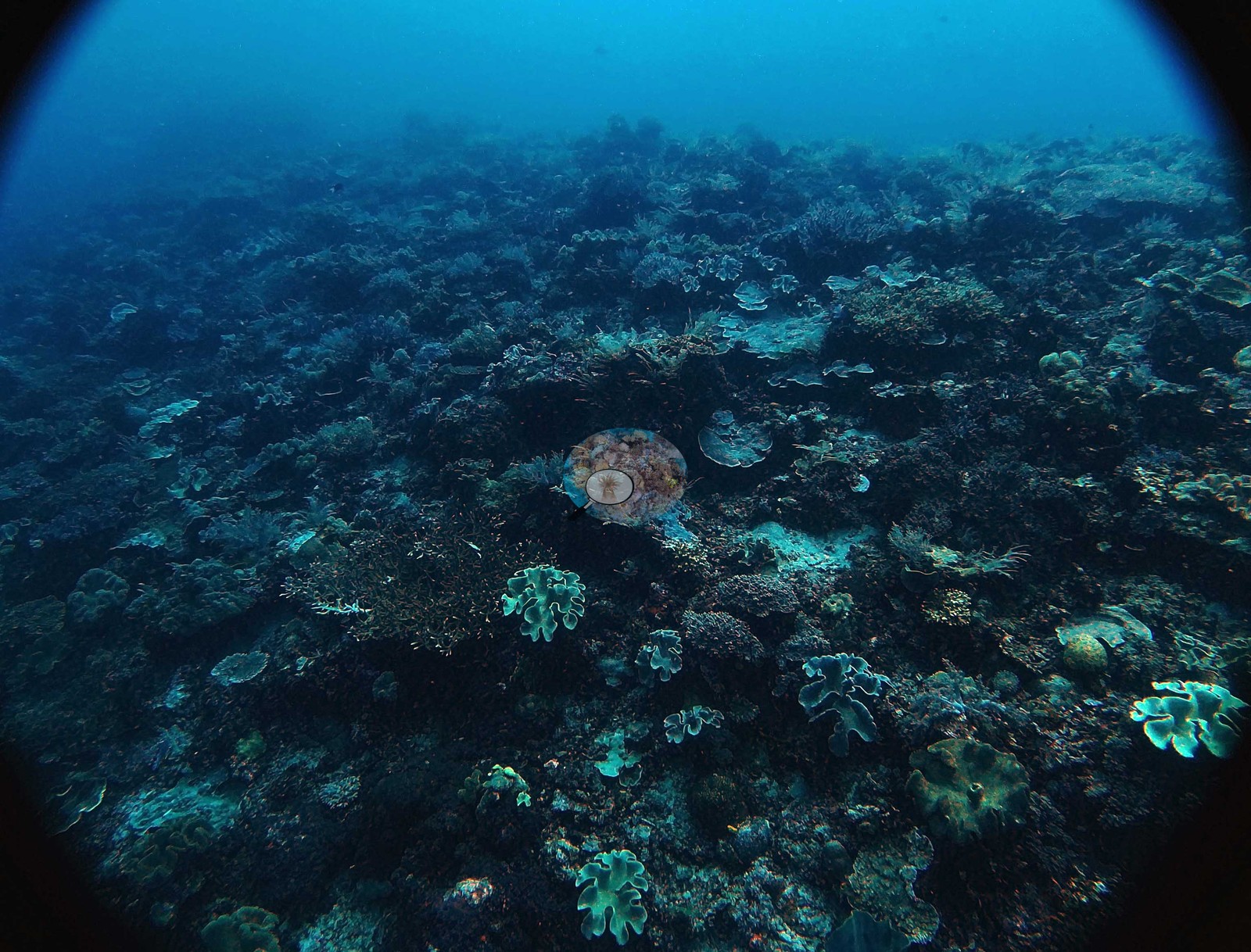 18
18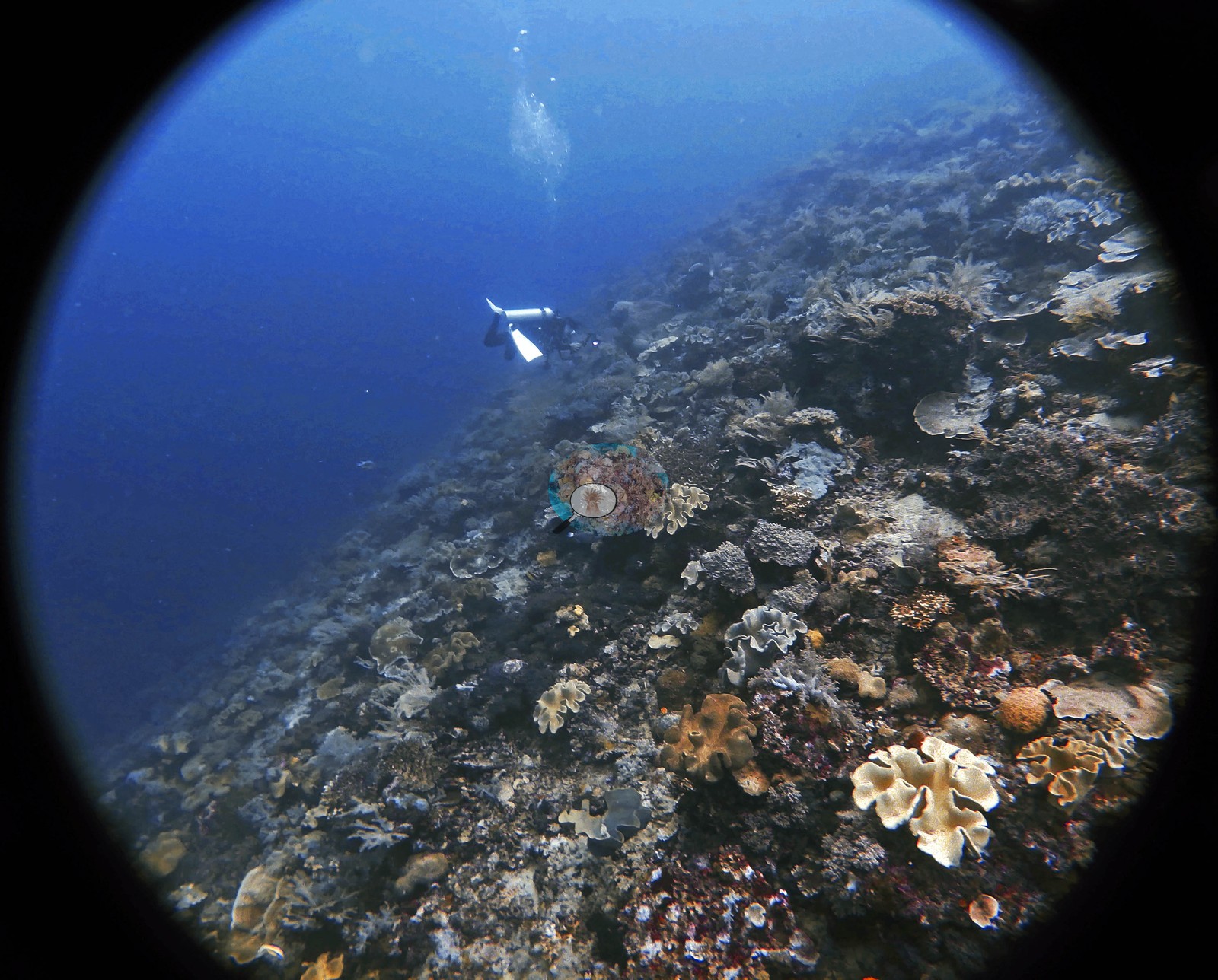 19
19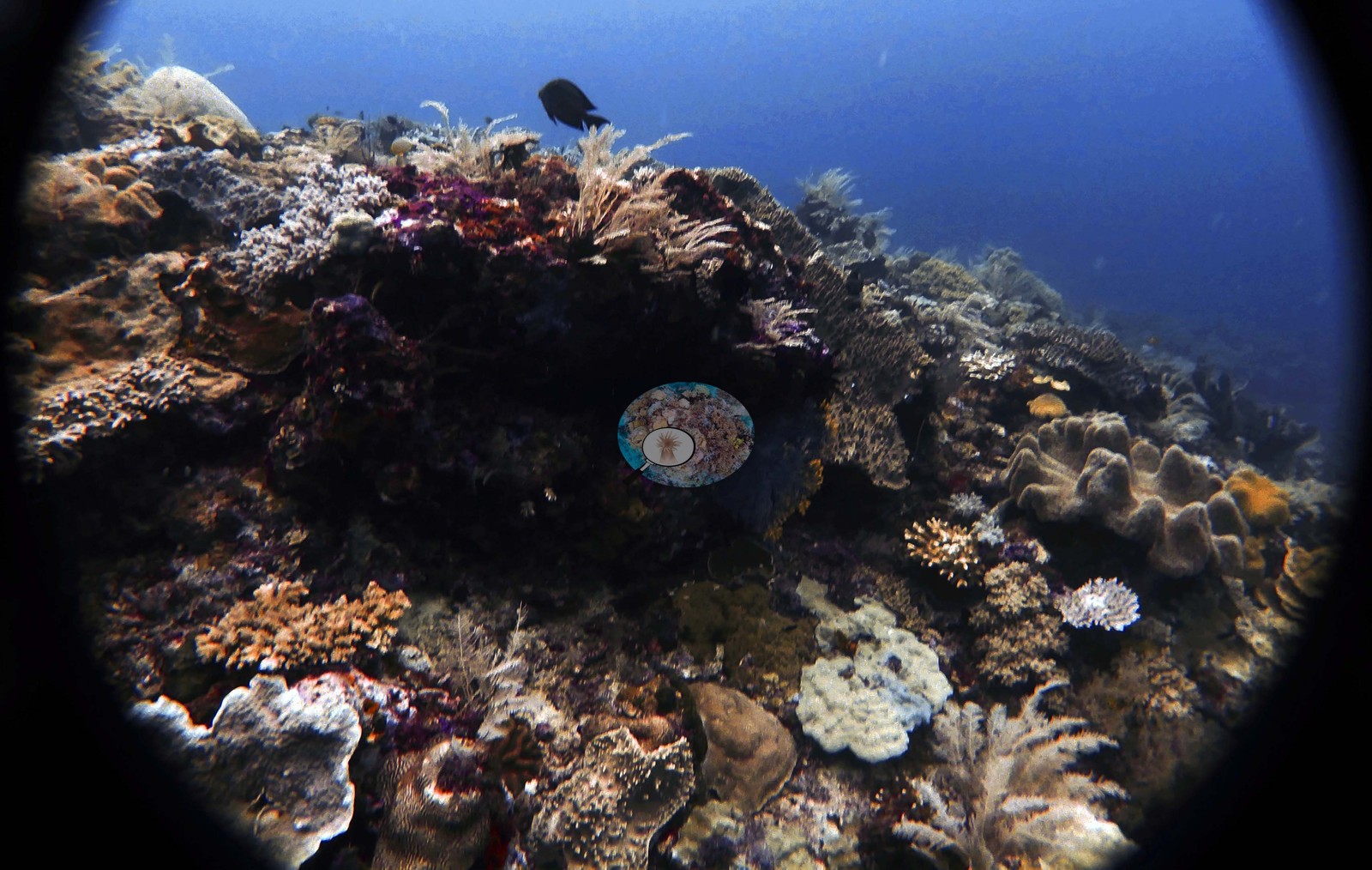 20
20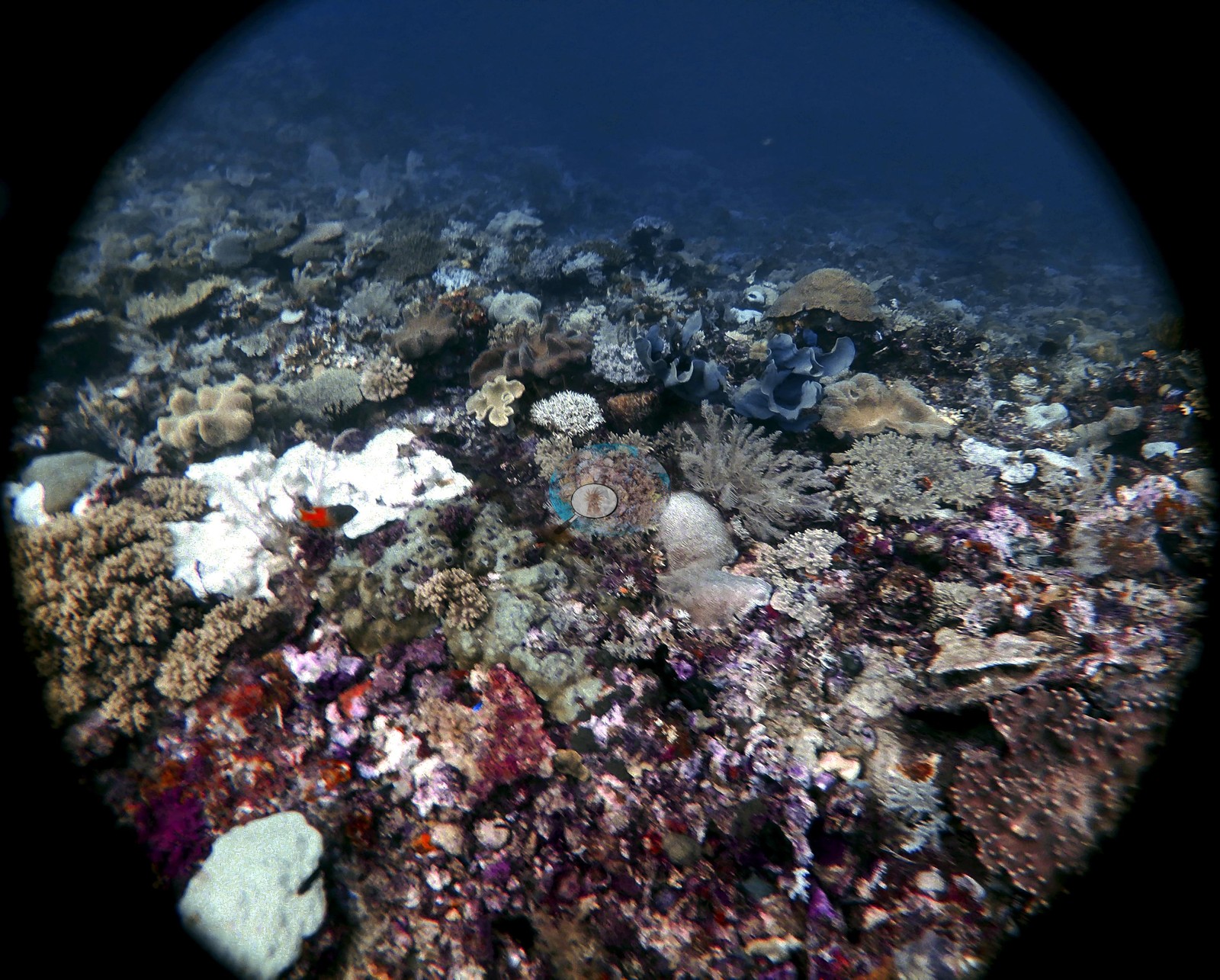 21
21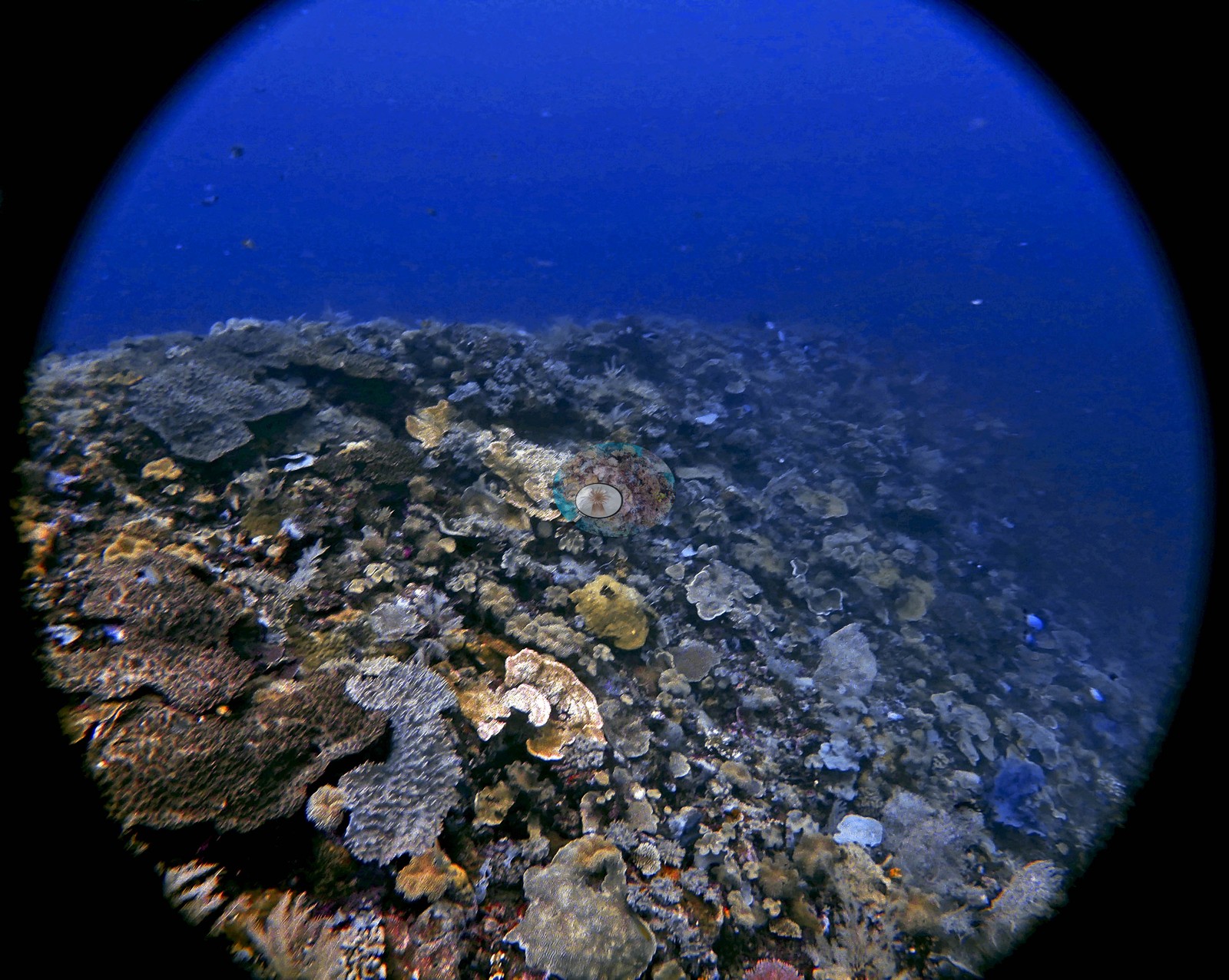 22
22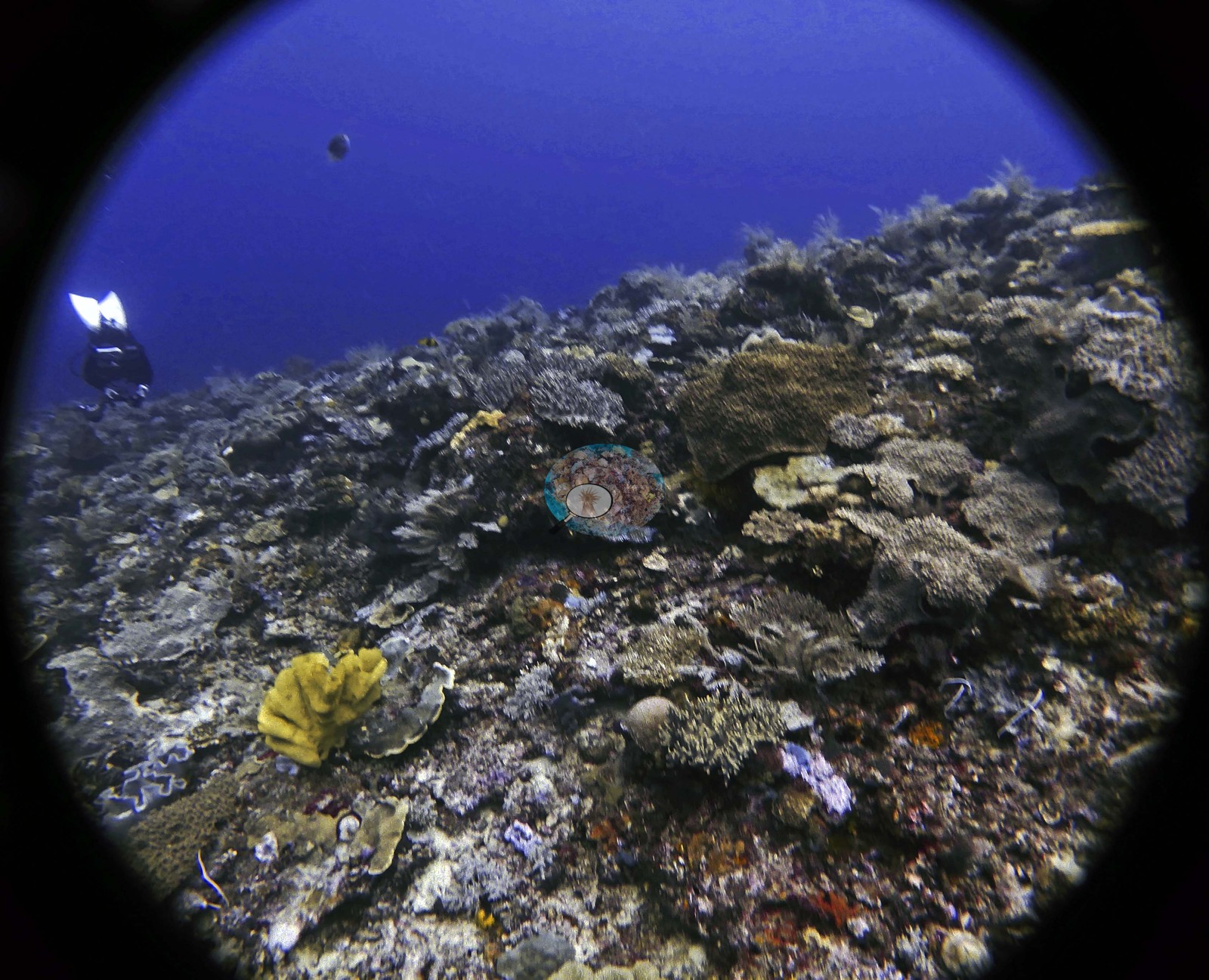 23
23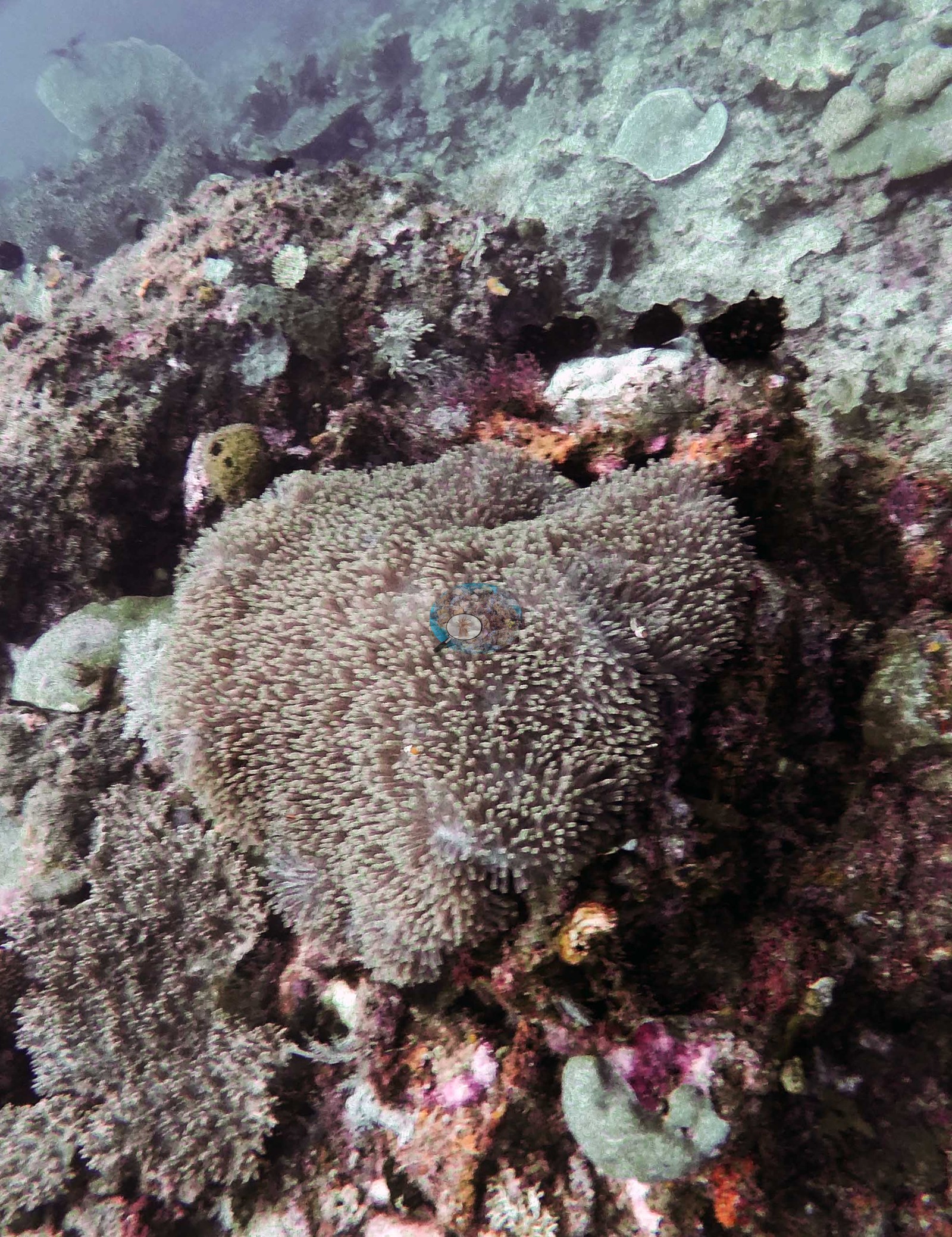 24
24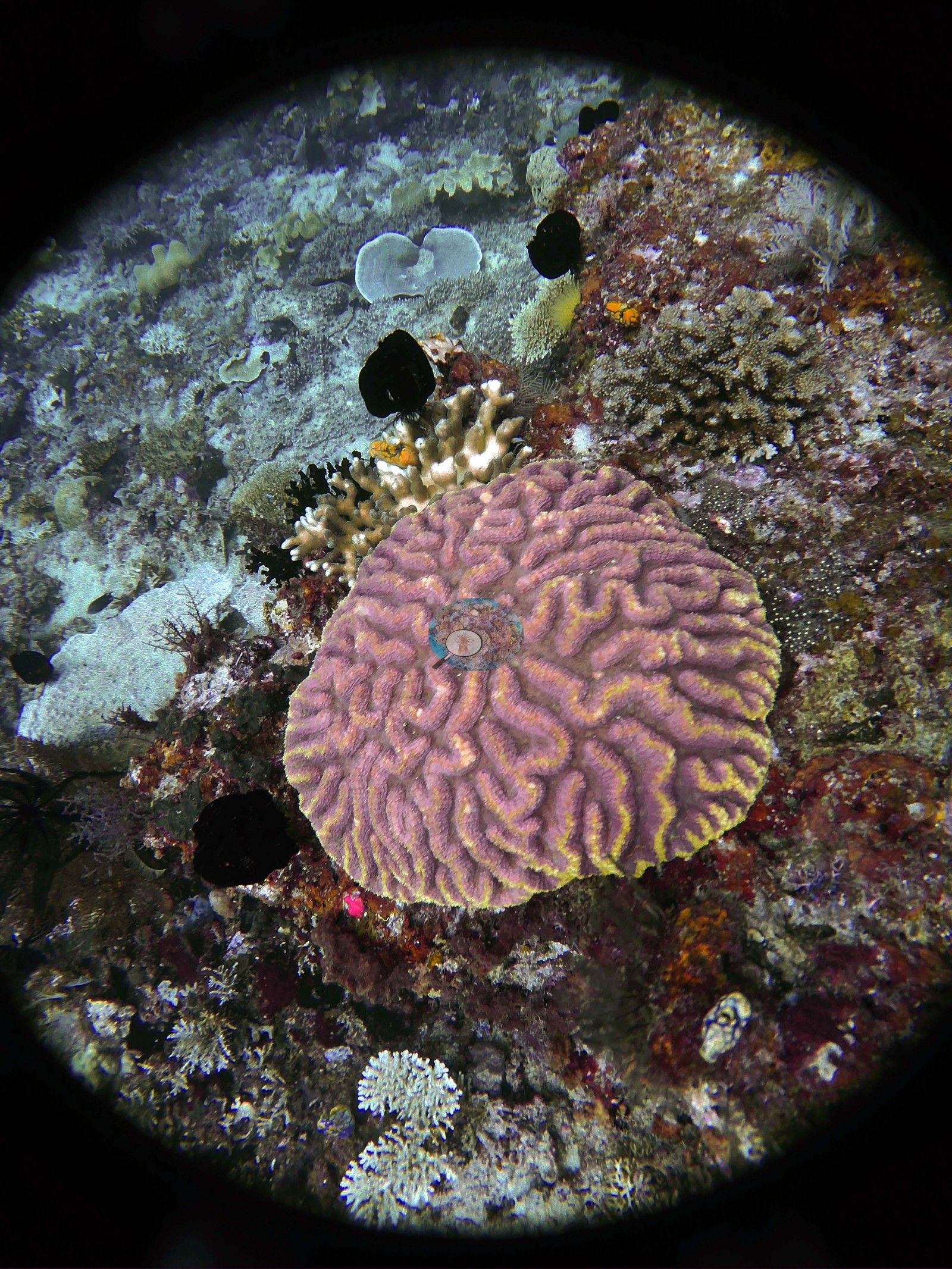 26
26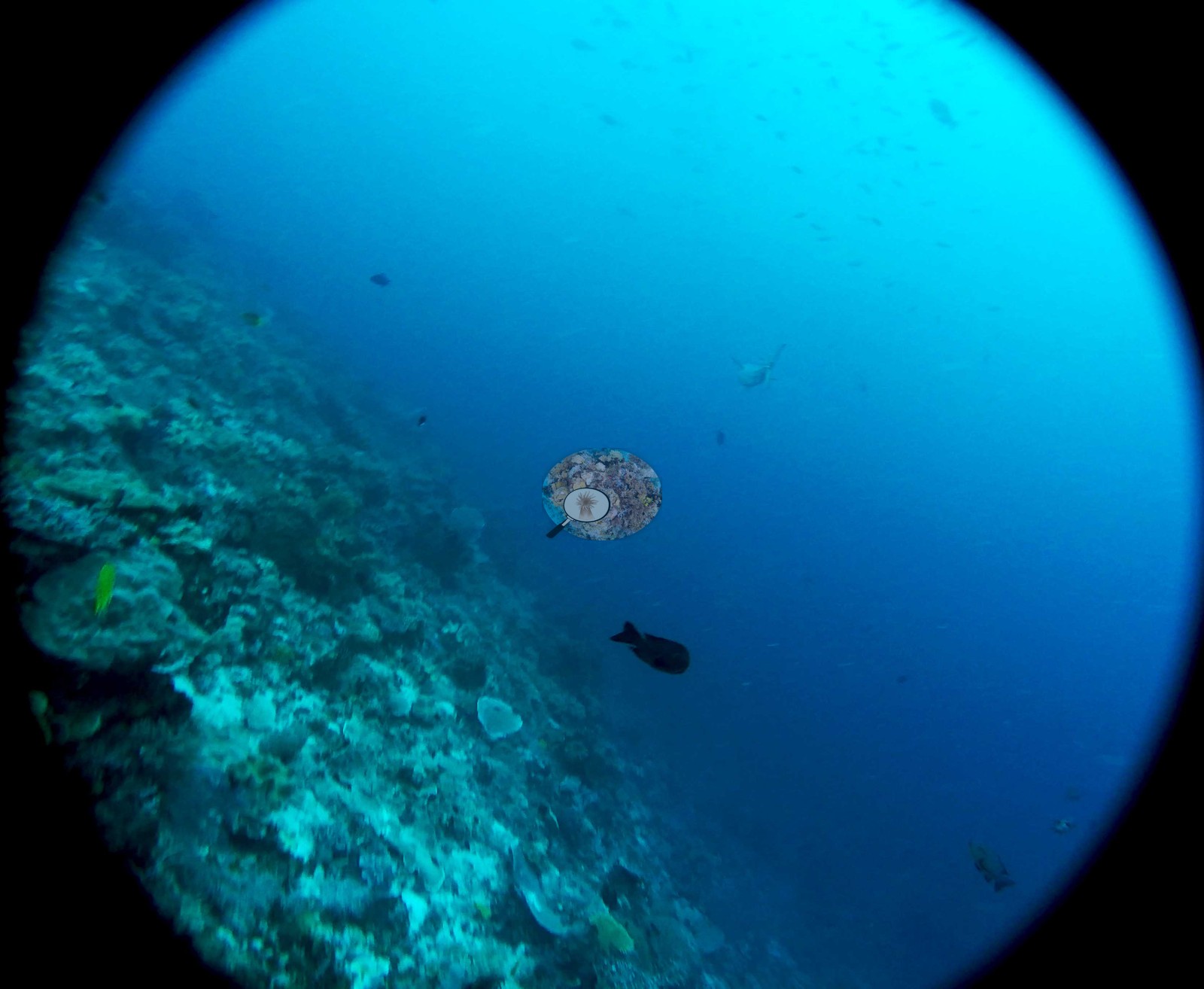 27
27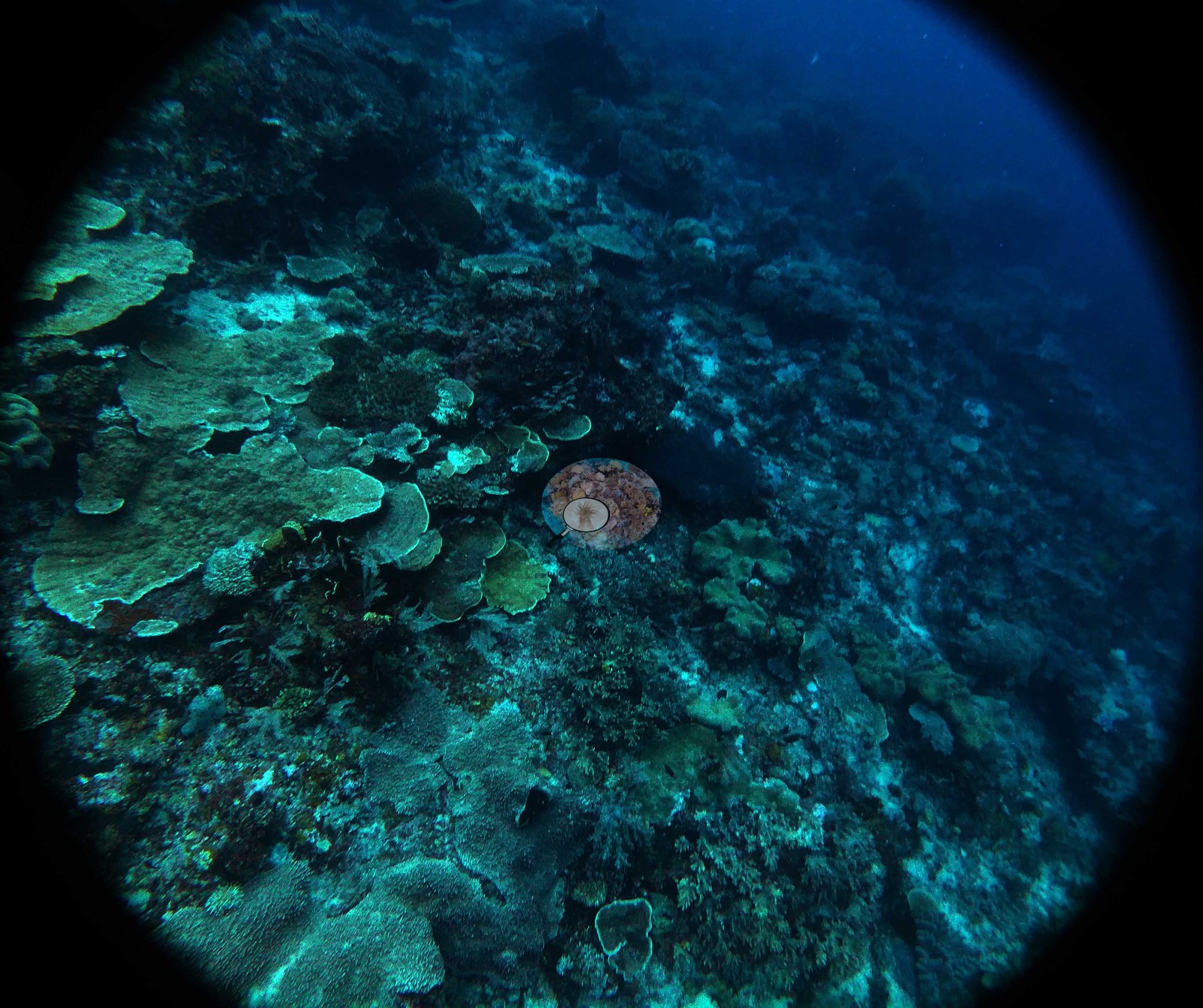 28
28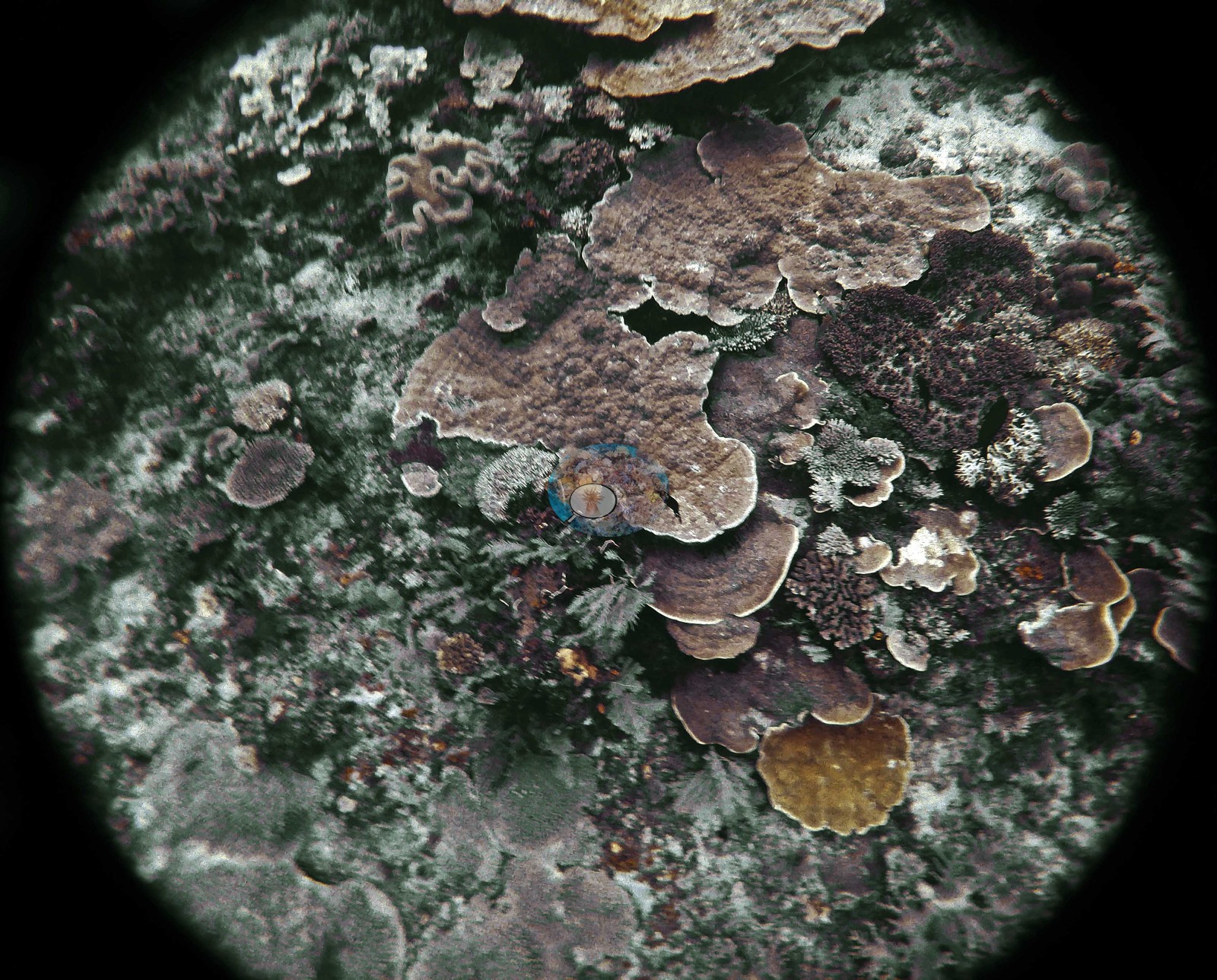 29
29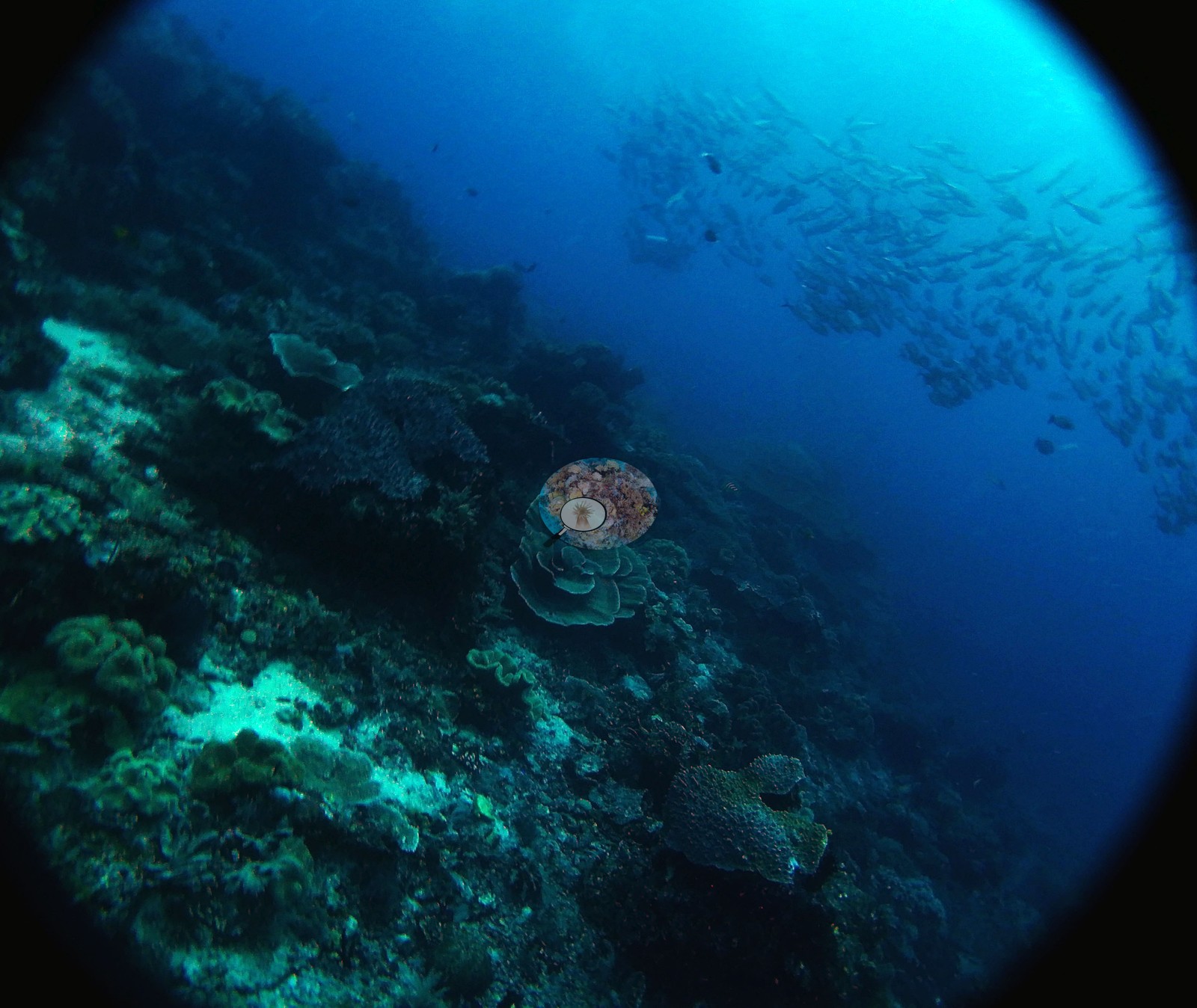 30
30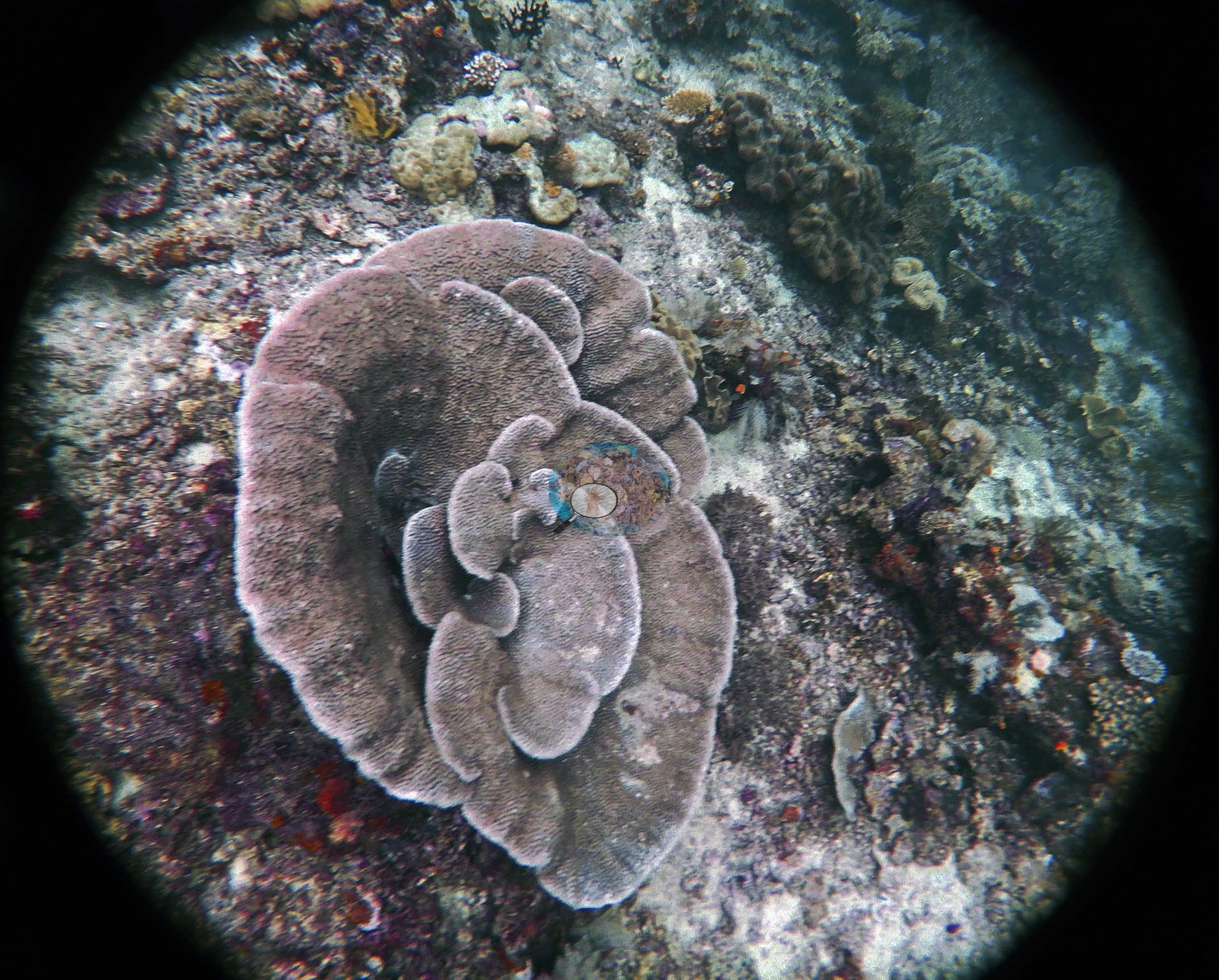 31
31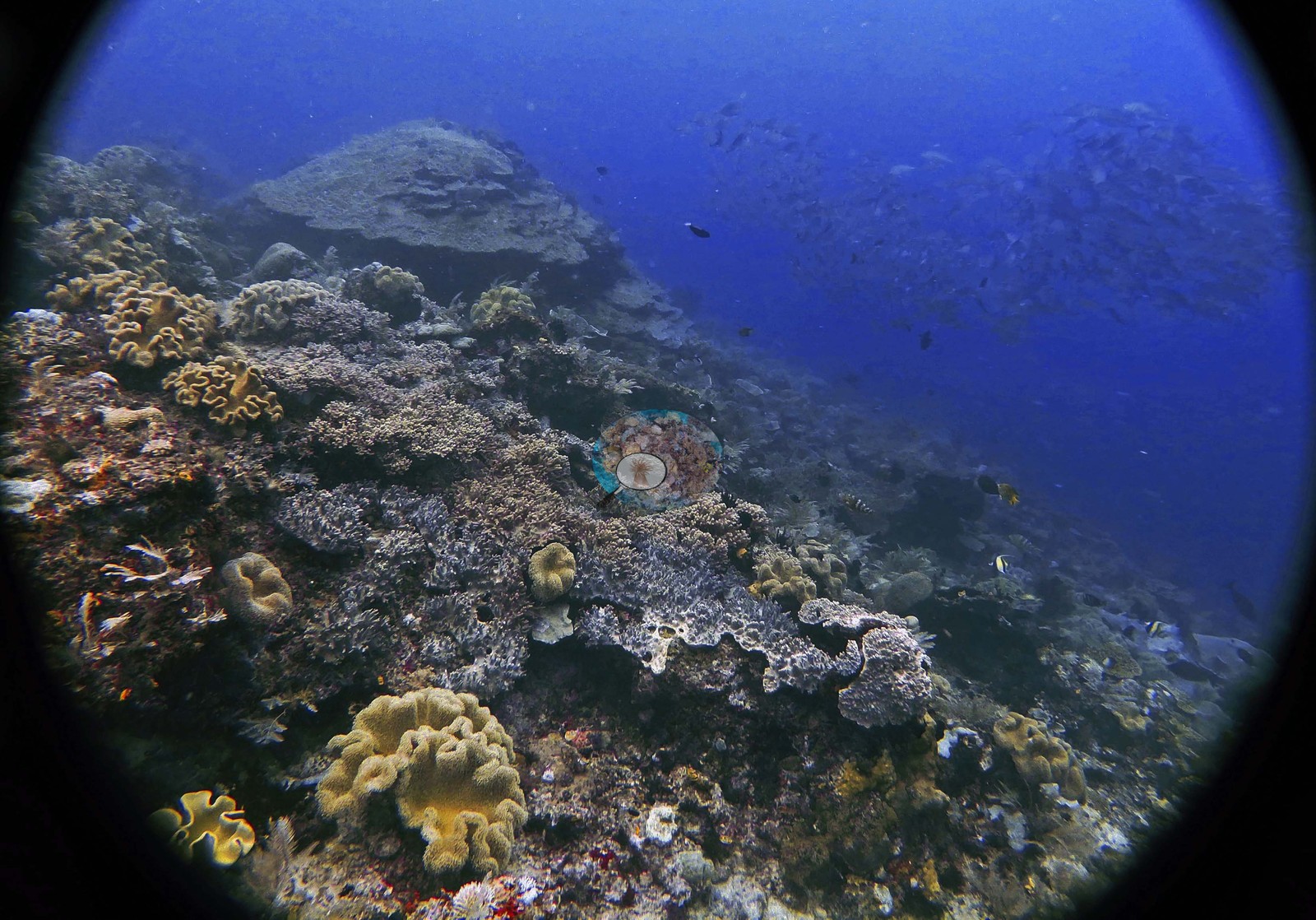 32
32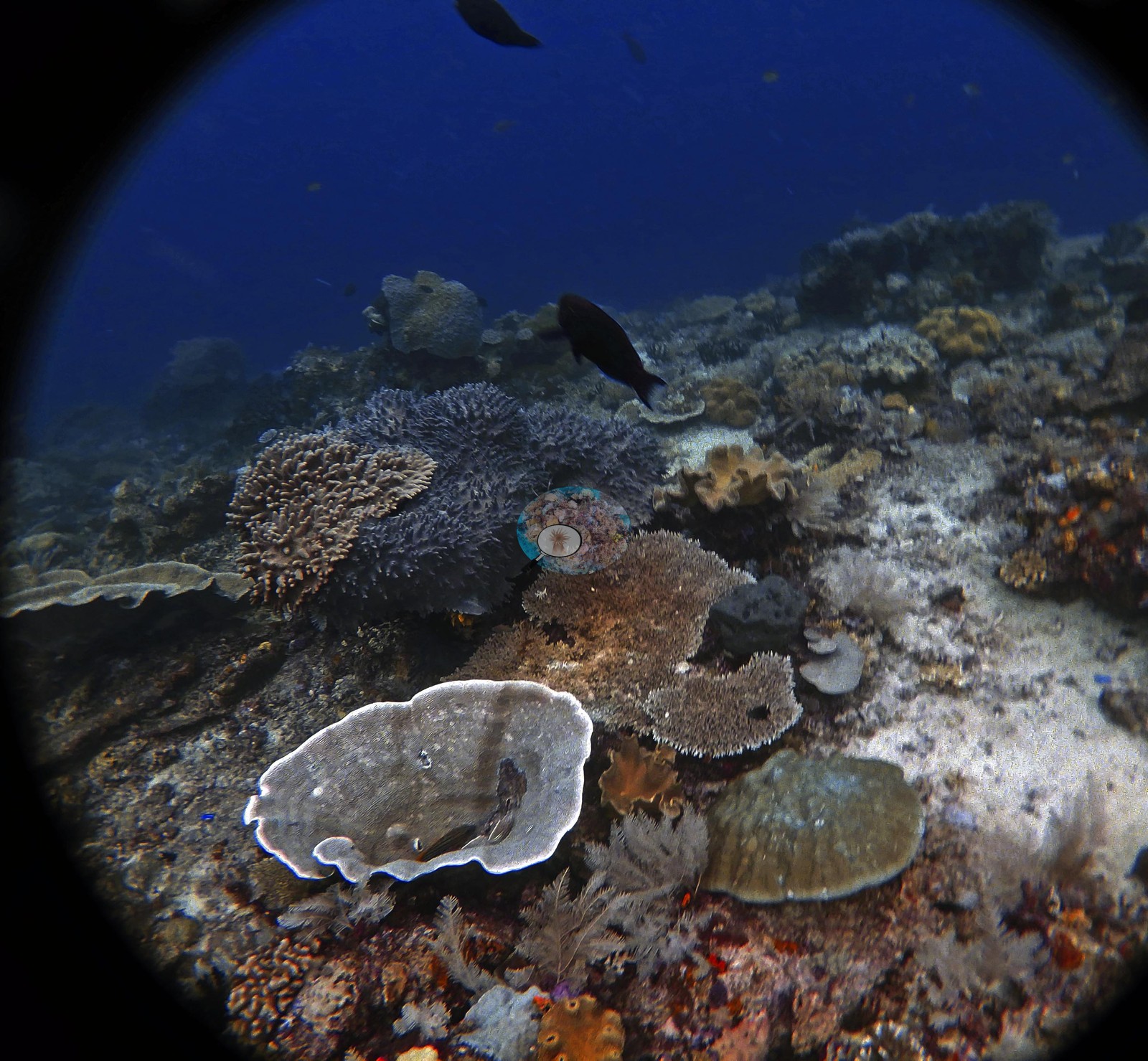 33
33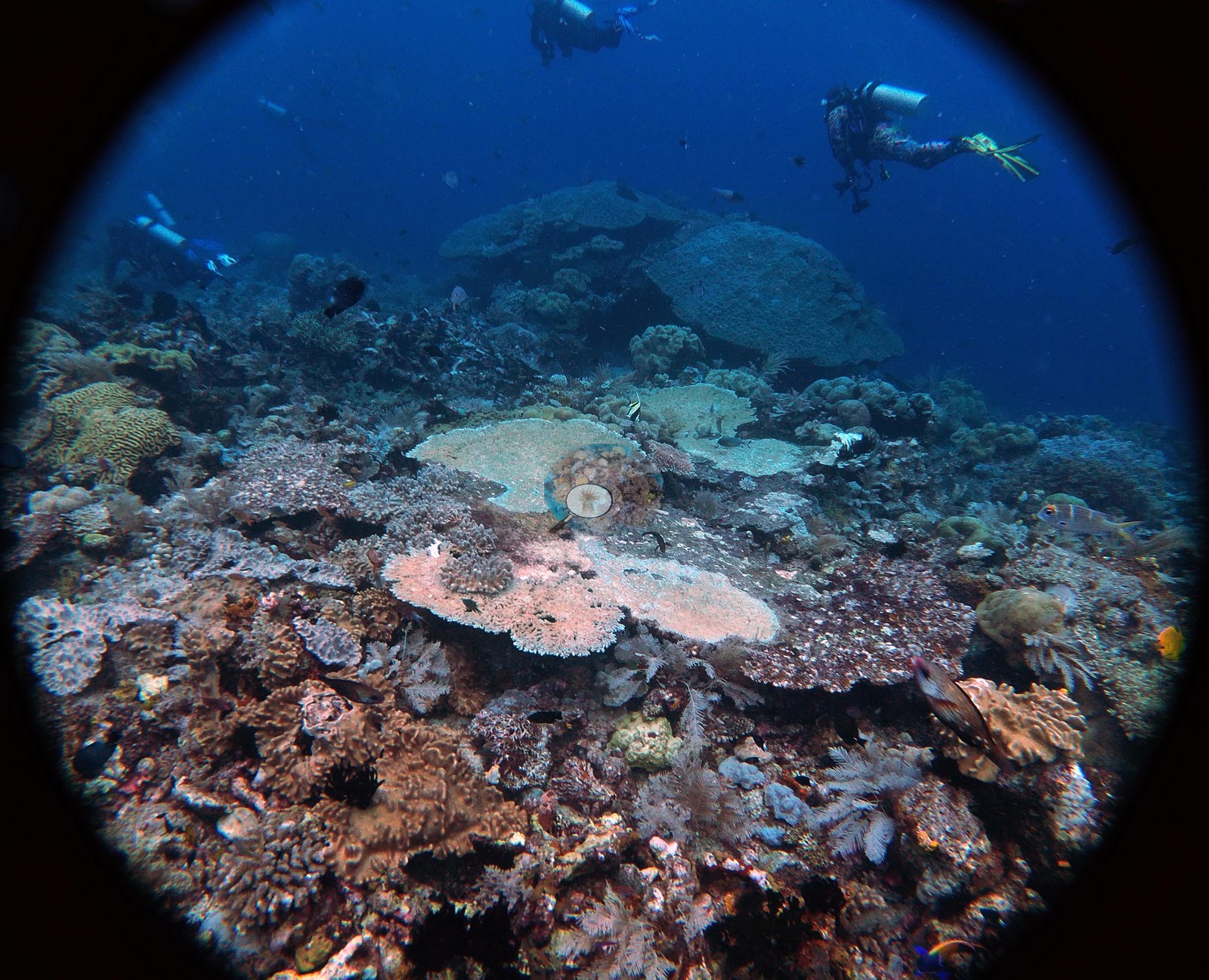 35
35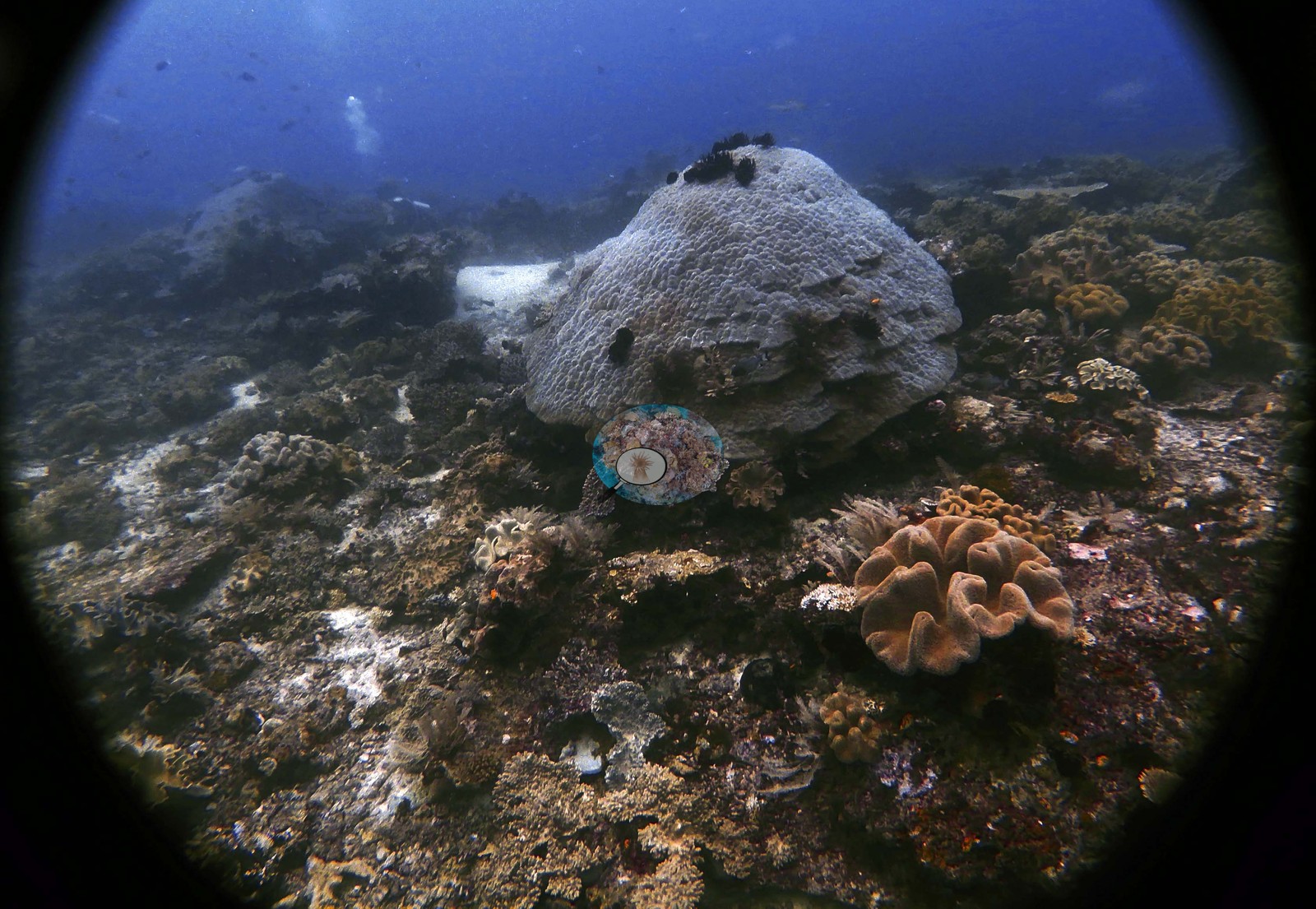 36
36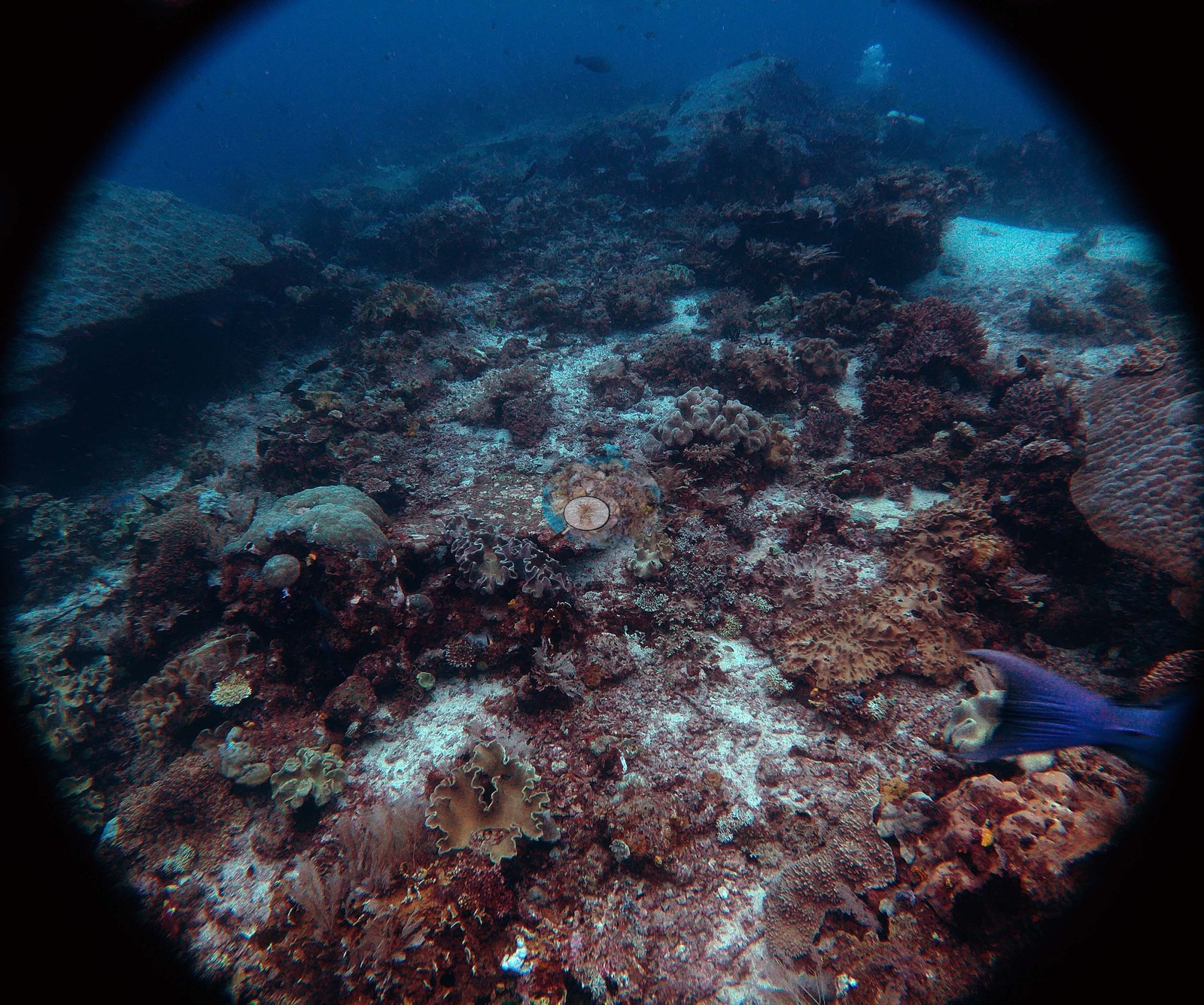 37
37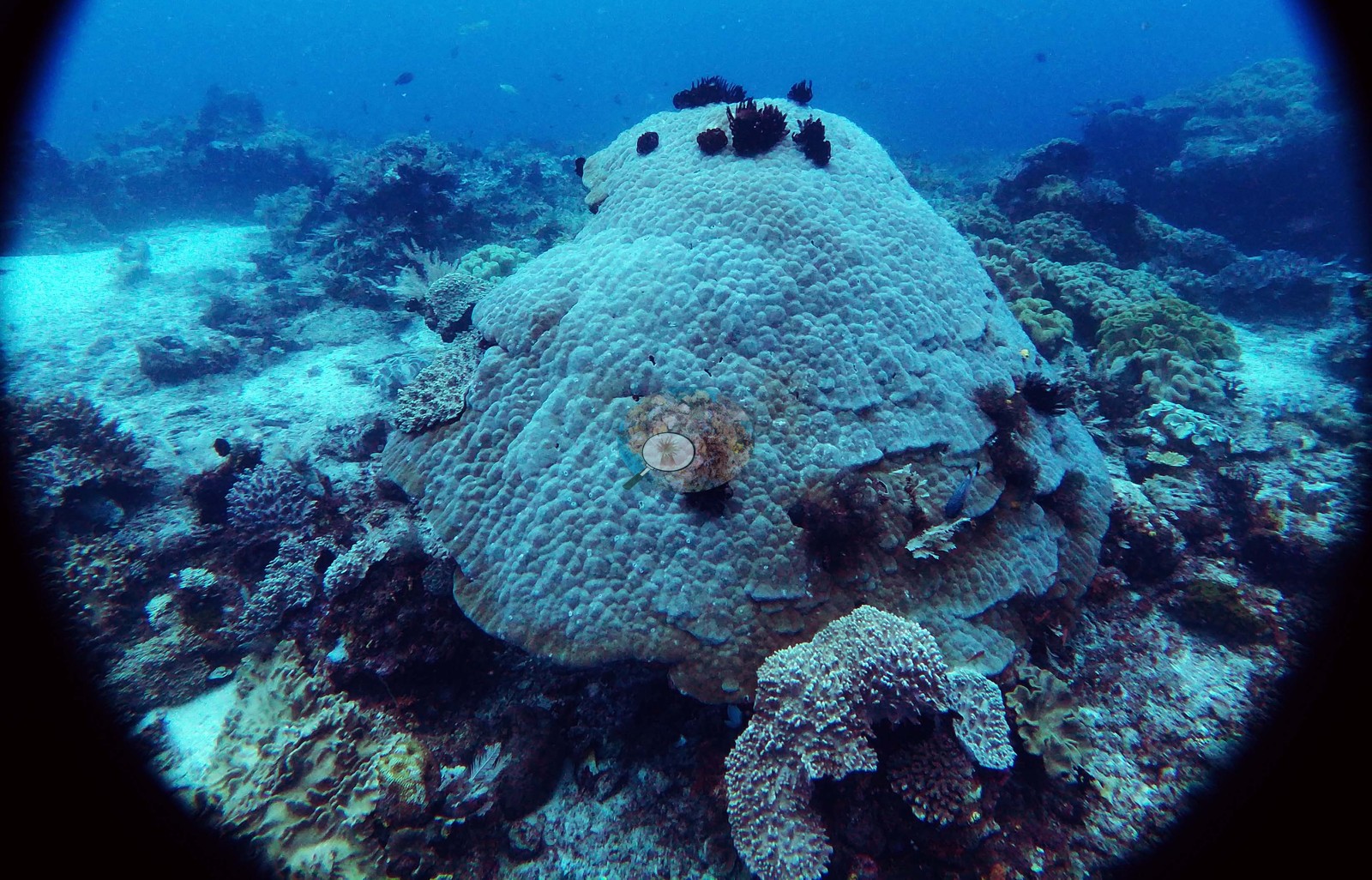 38
38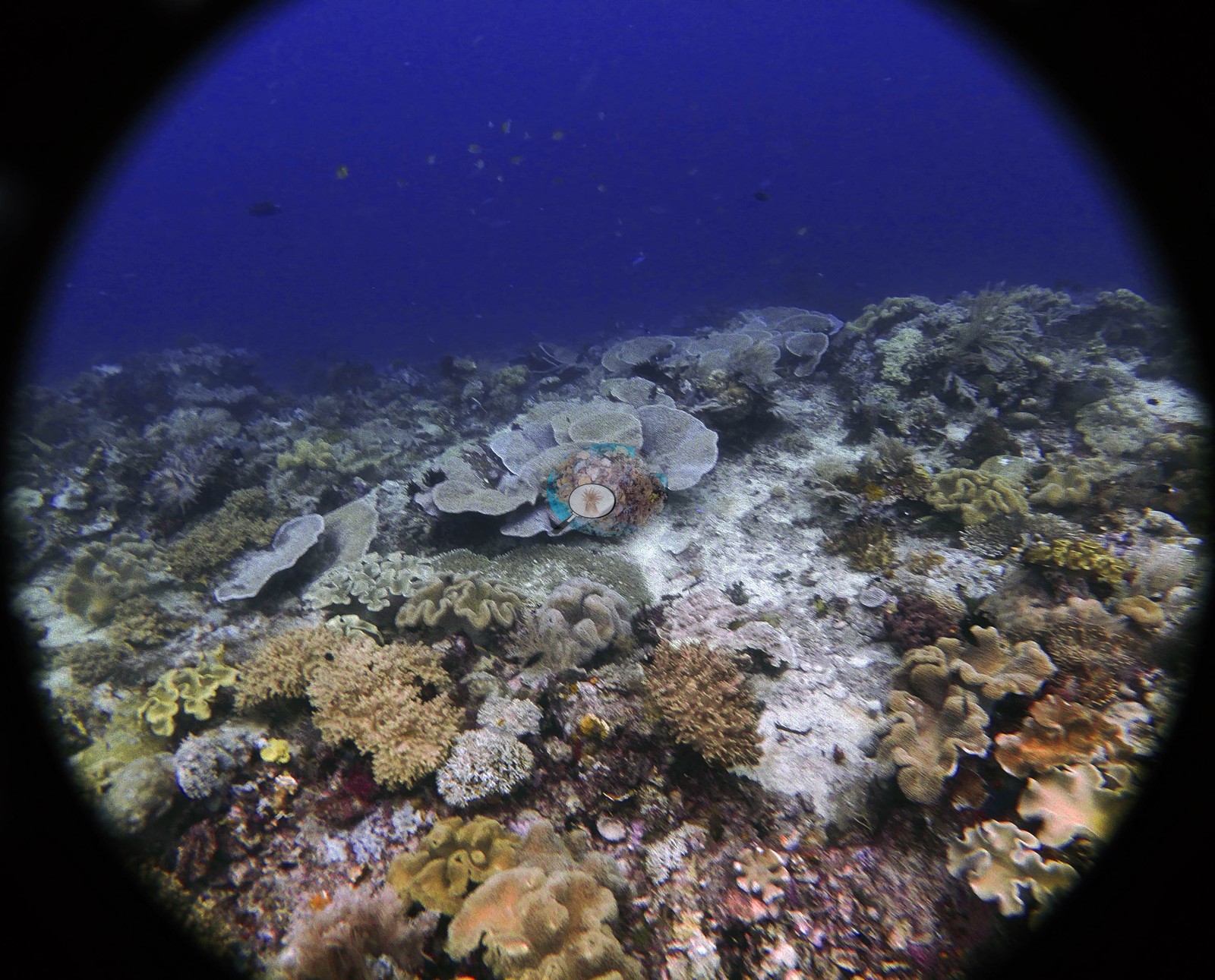 39
39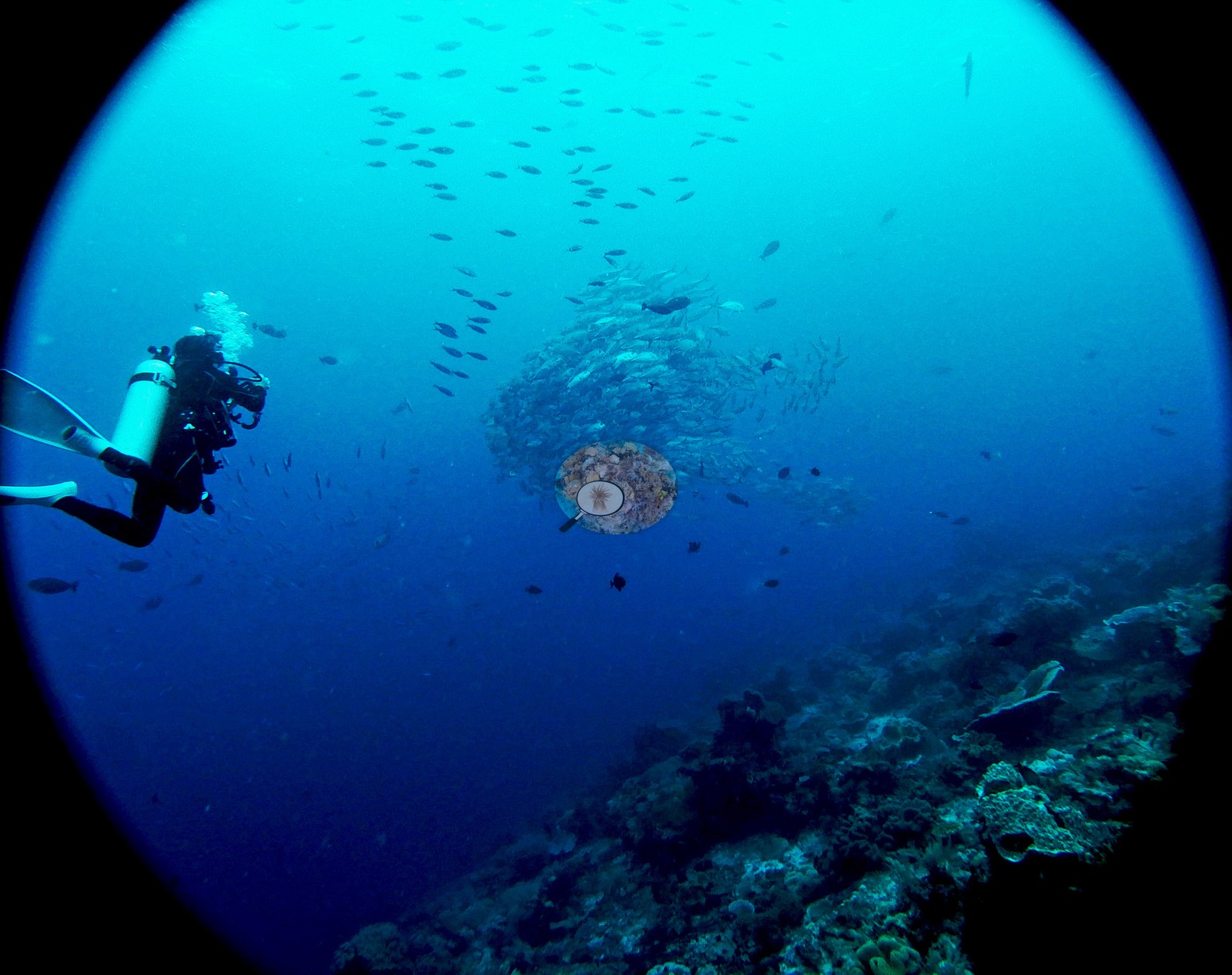 40
40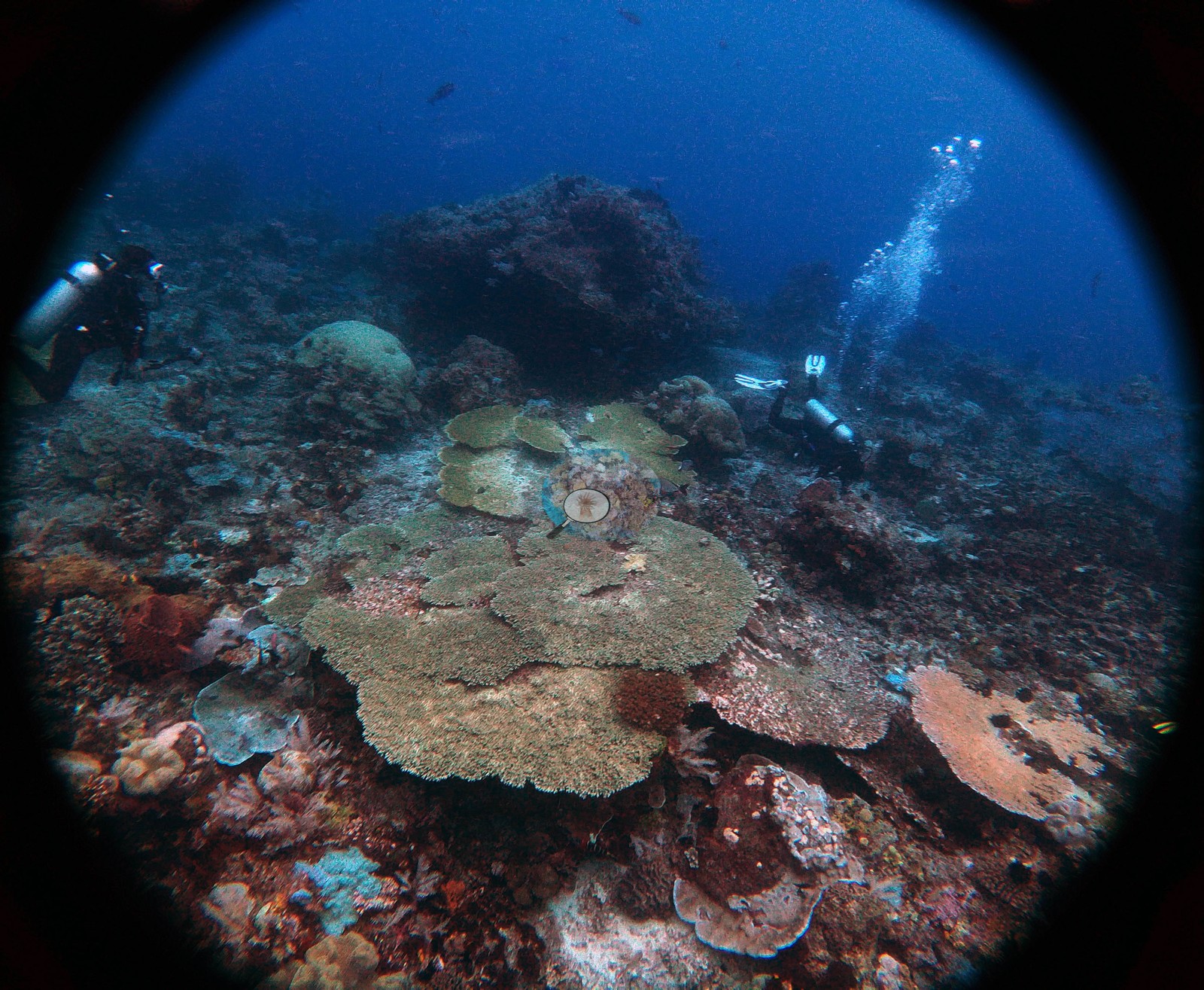 41
41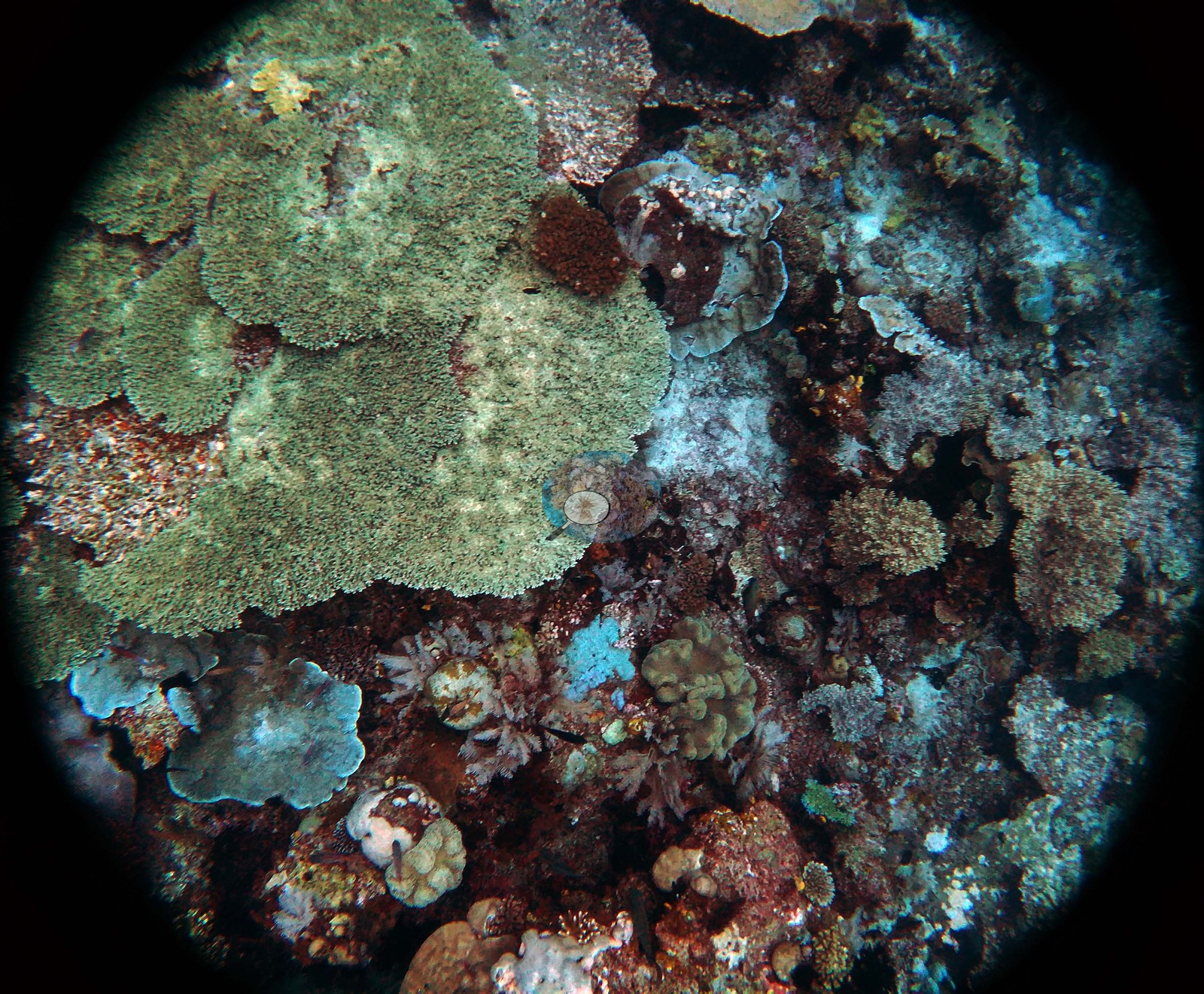 42
42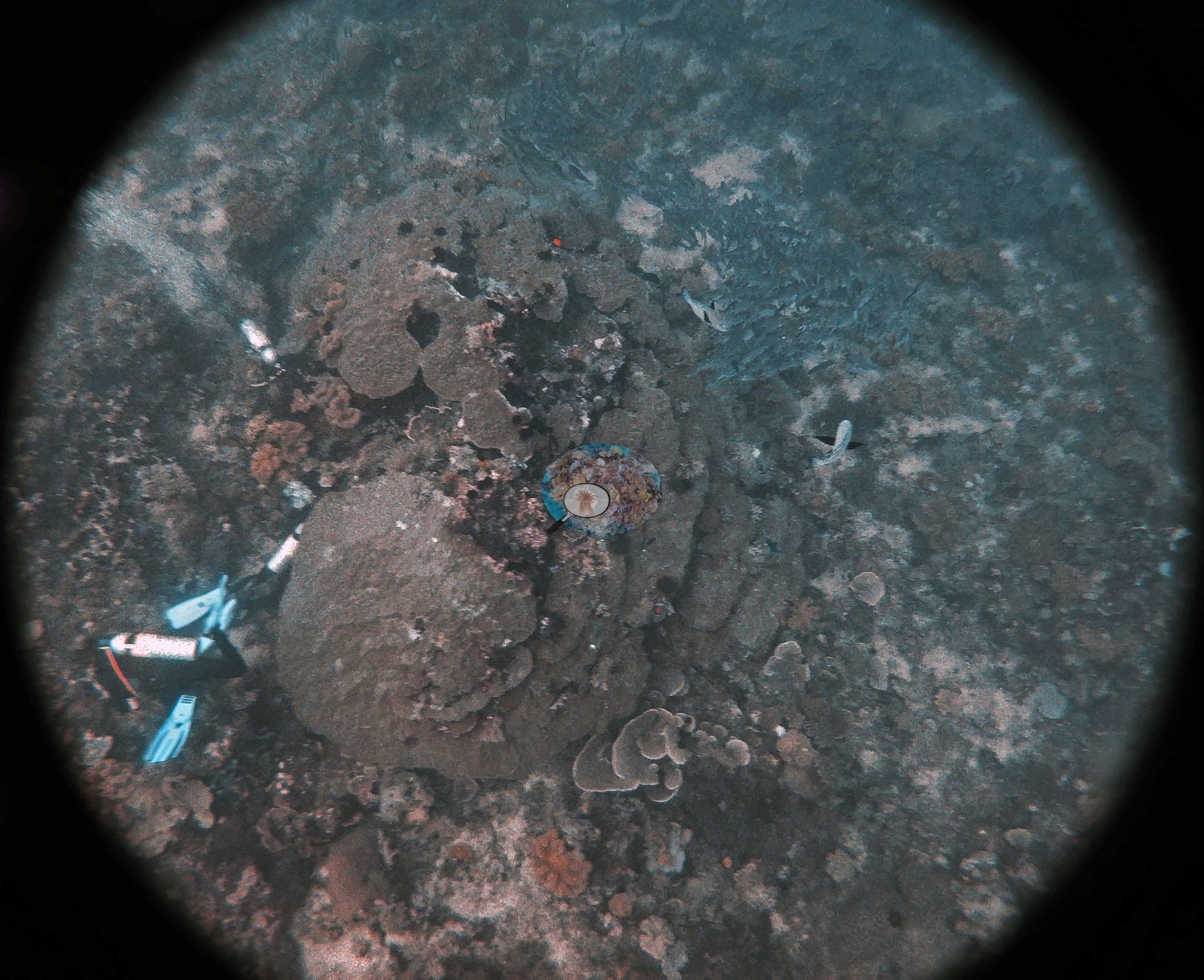 43
43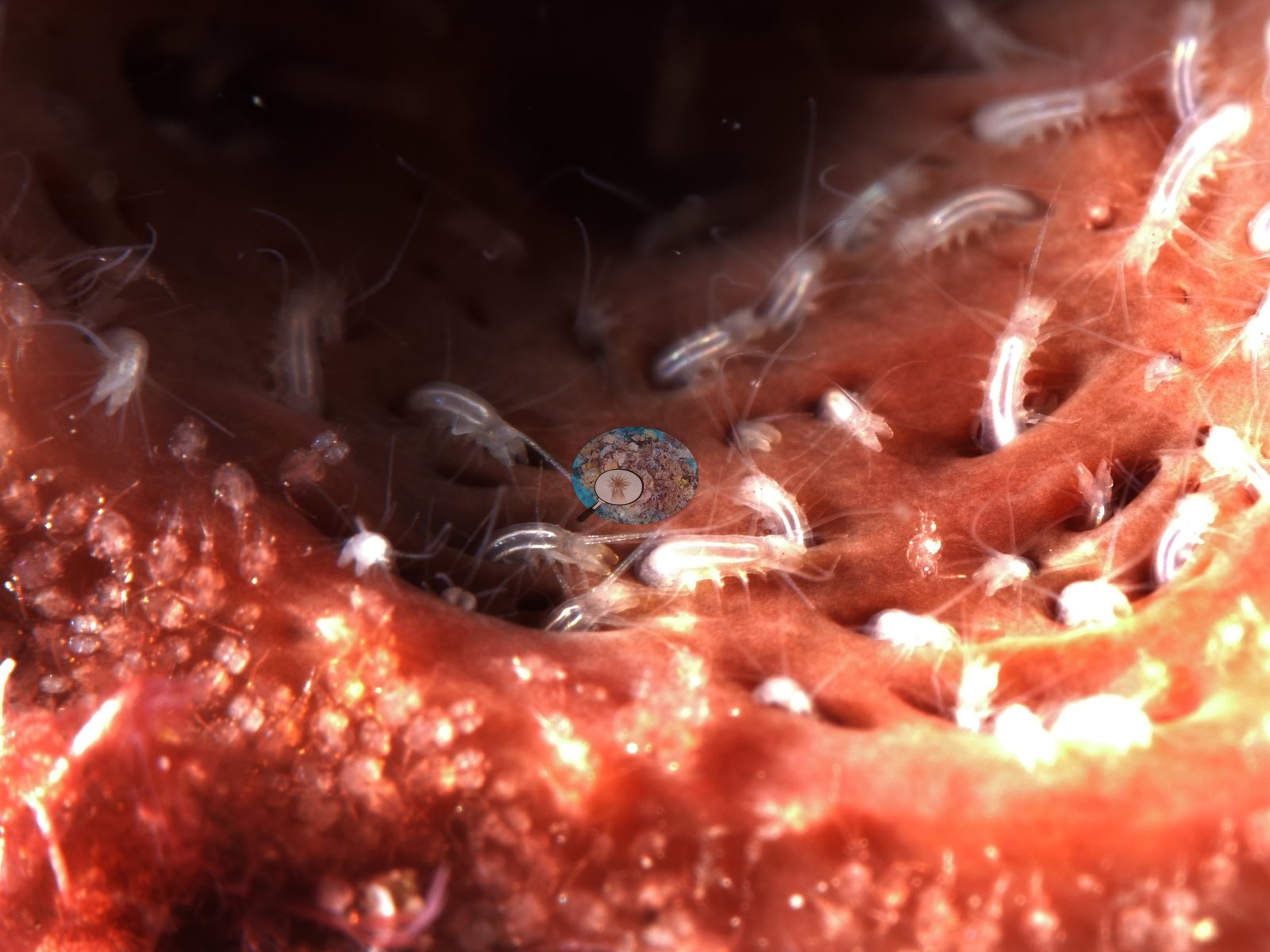 Photo: Pierre44
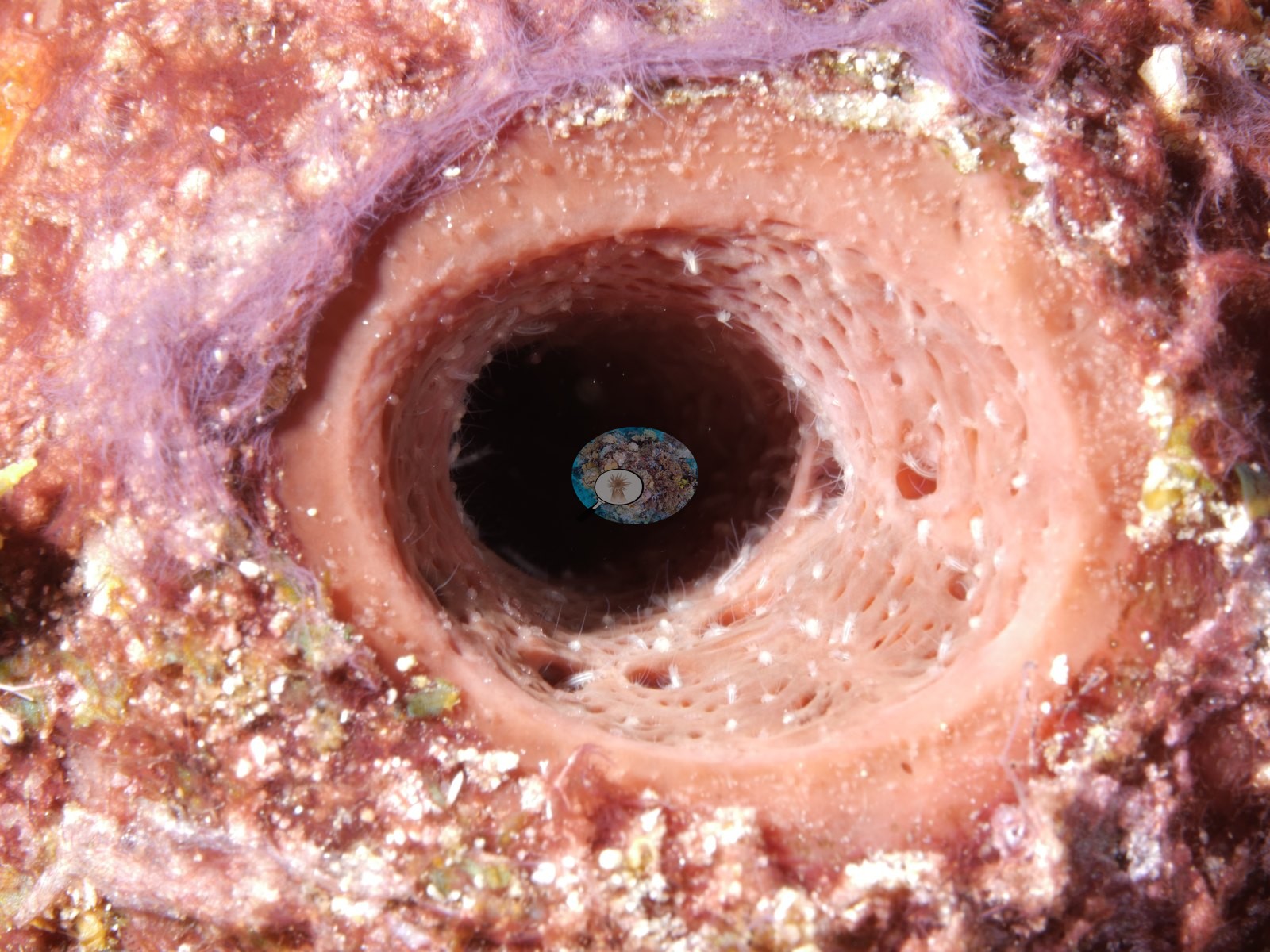 Photo: Pierre45
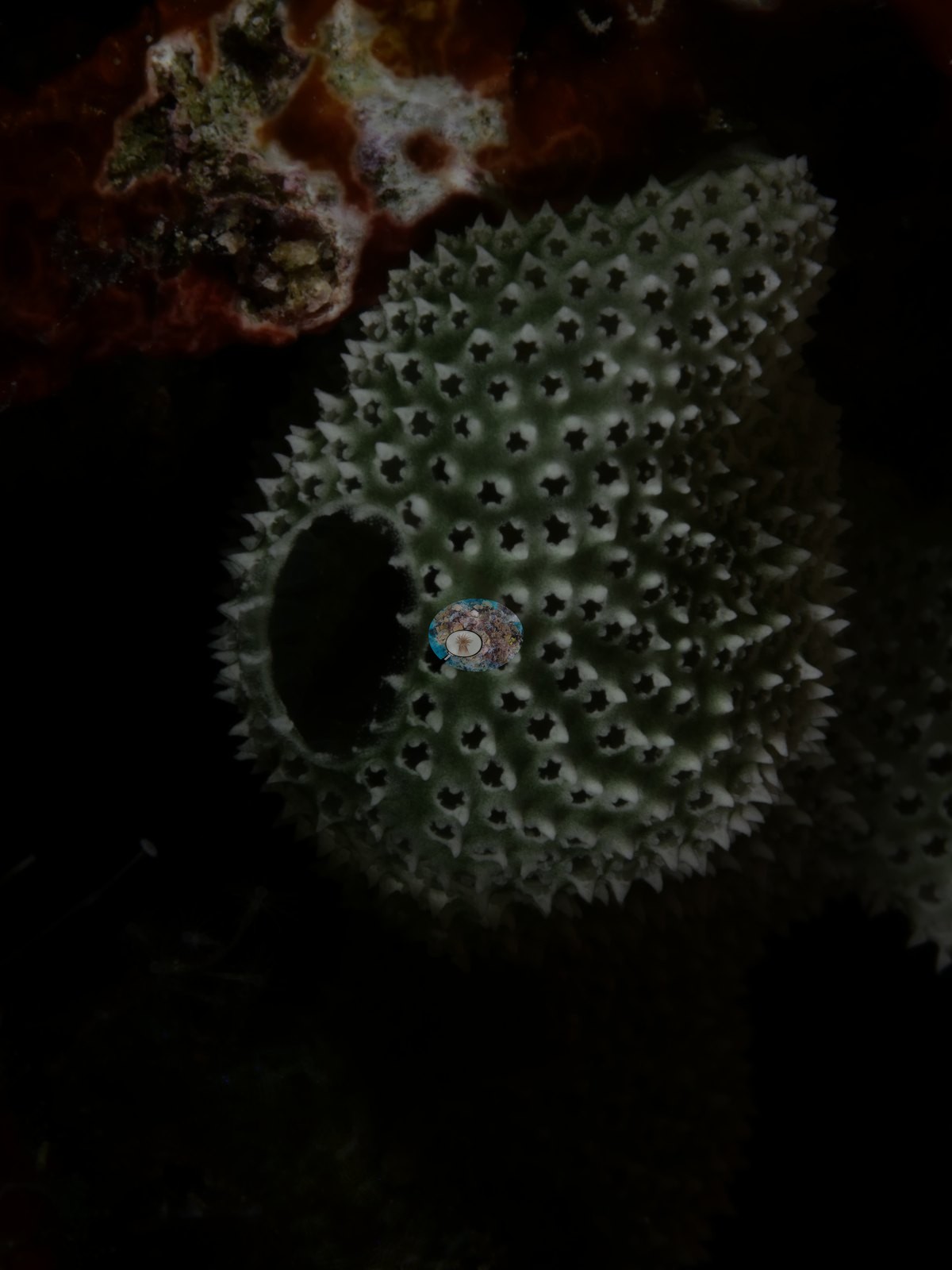 Photo: Pierre46
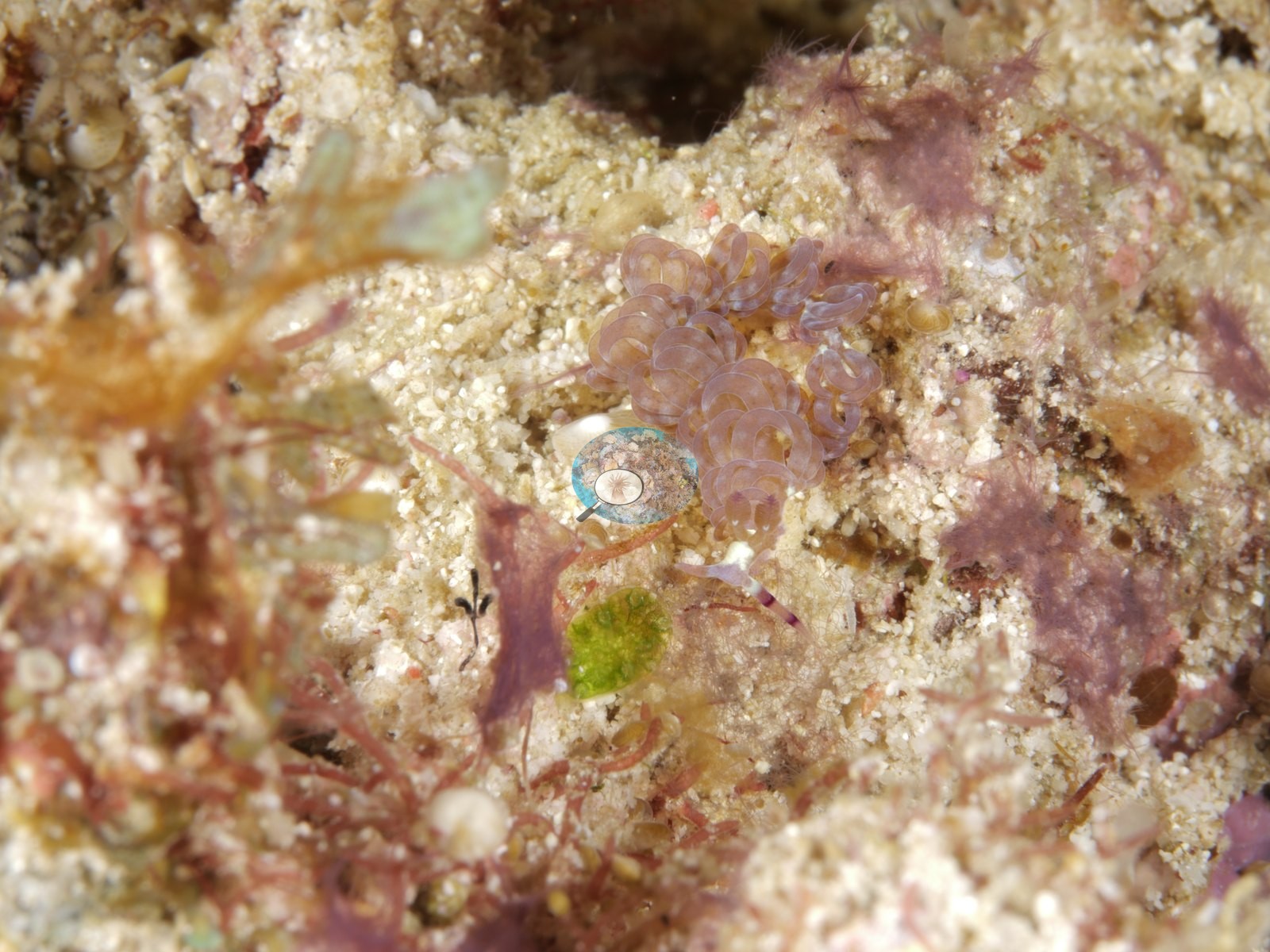 Photo: Pierre47
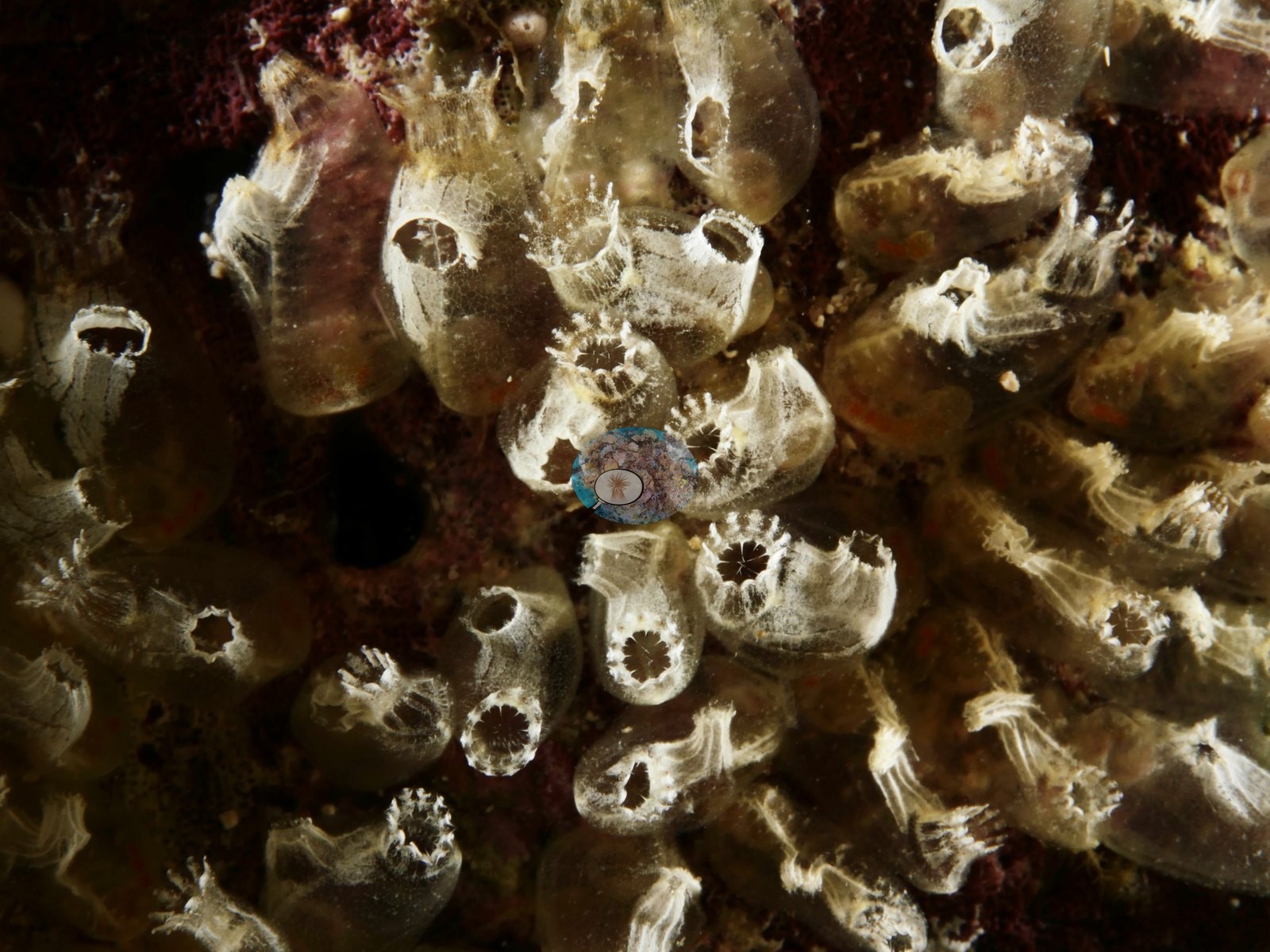 Photo: Pierre48
 Photo: Pierre49
 Photo: Pierre50
 Photo: Pierre
Site description
Setting
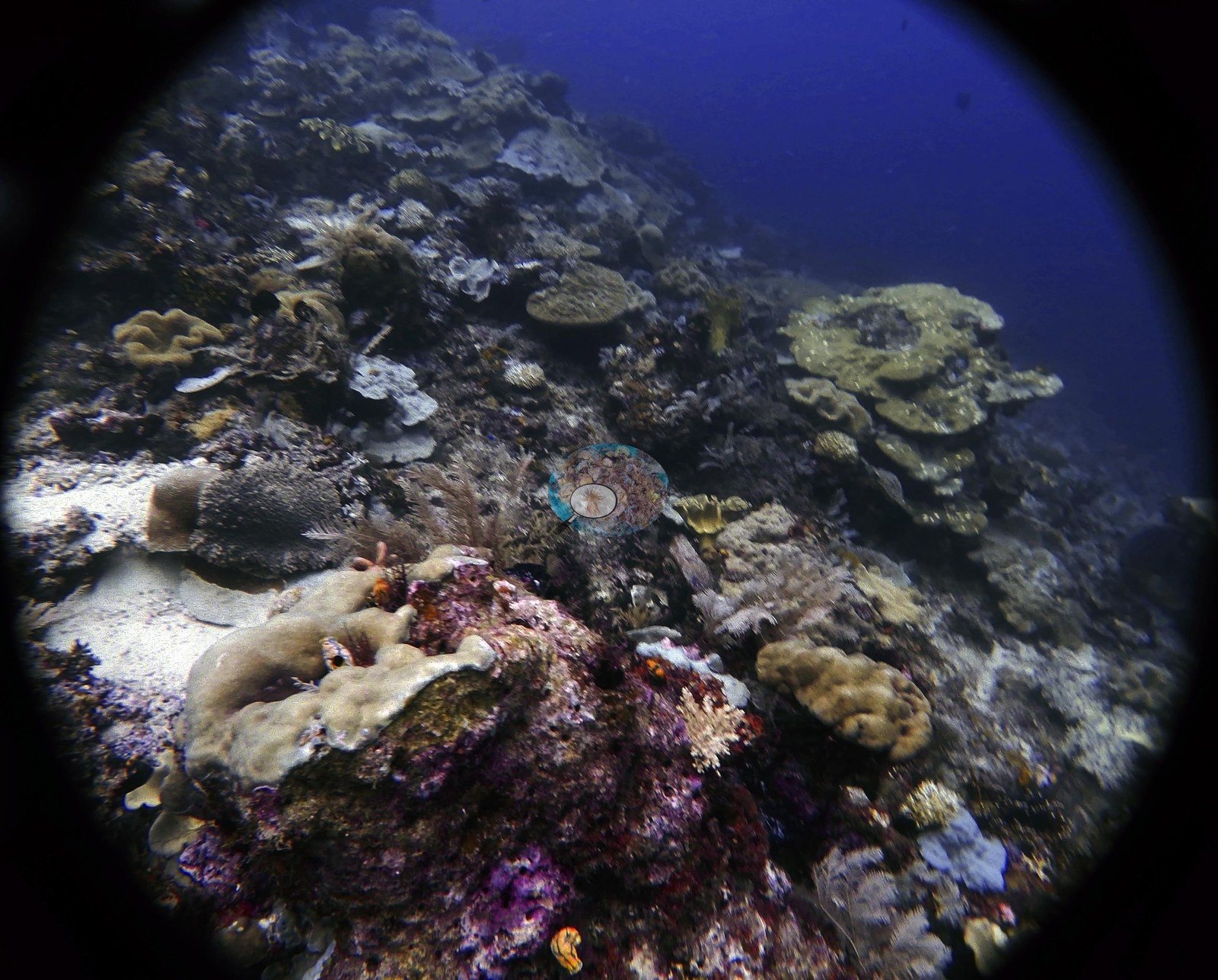
The frames show a classic submerged pinnacle rather than a fringing reef: a broad, gently domed hard-bottom summit that falls away steeply into open blue on every side, with no island, no reef flat, and no shallow crest anywhere in the set. Several frames look straight down the flank into progressively darker water; others look out from the summit across an unbroken blue field (e.g., Image 4).
Visibility is genuinely good — the pinnacle summit reads clearly across the full frame and the blue stays bright to the limit — but the ambient-only exposure means shadowed areas go dark and the deeper frames lose all detail below the summit.
General benthic features
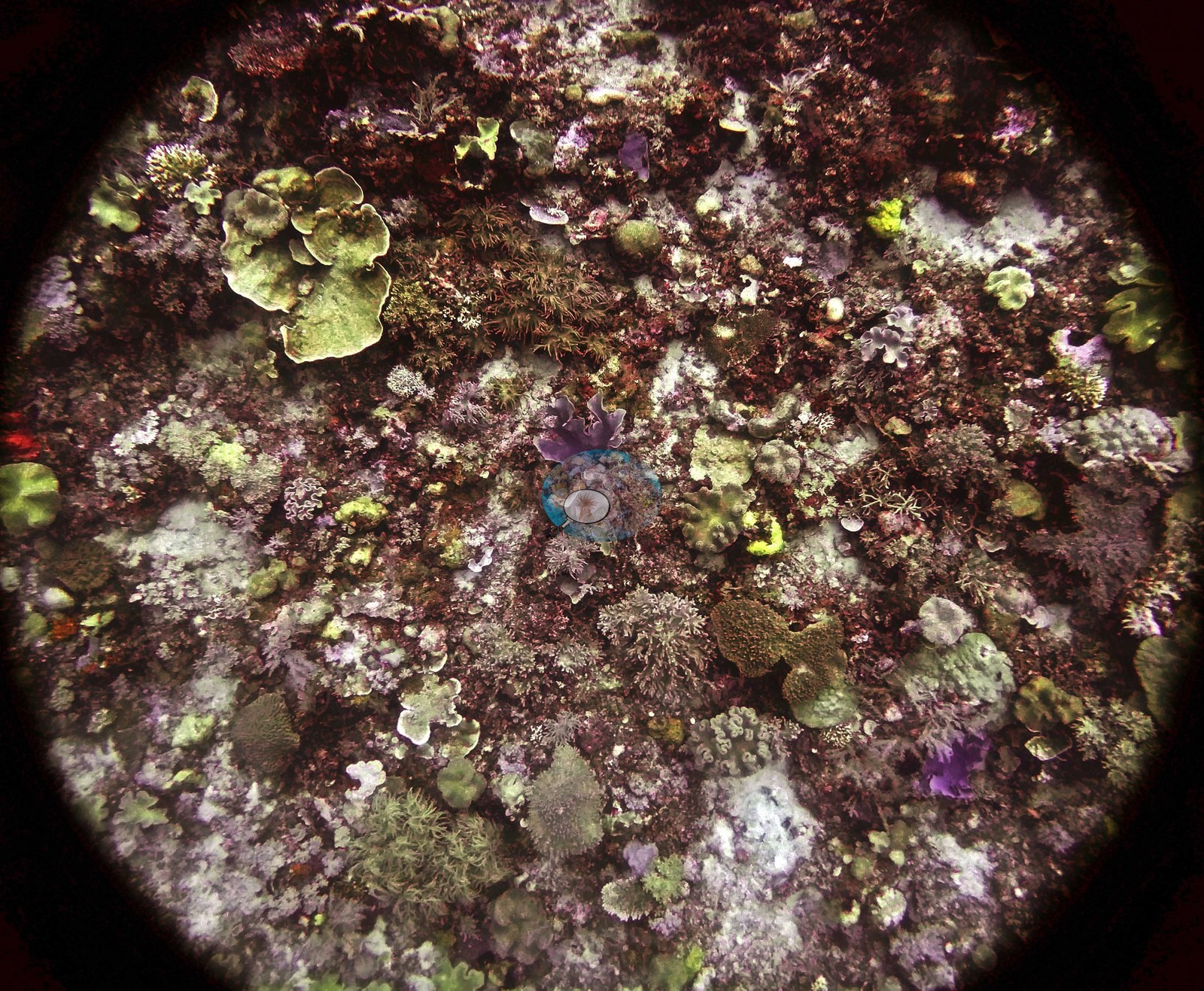
Relief on the summit is moderate and lumpy — a pavement of consolidated reef framework and cemented rubble studded with discrete bommies, broken by pale sand and rubble patches and by large expanses of bare, coralline-crusted dead pavement (e.g., Image 2).
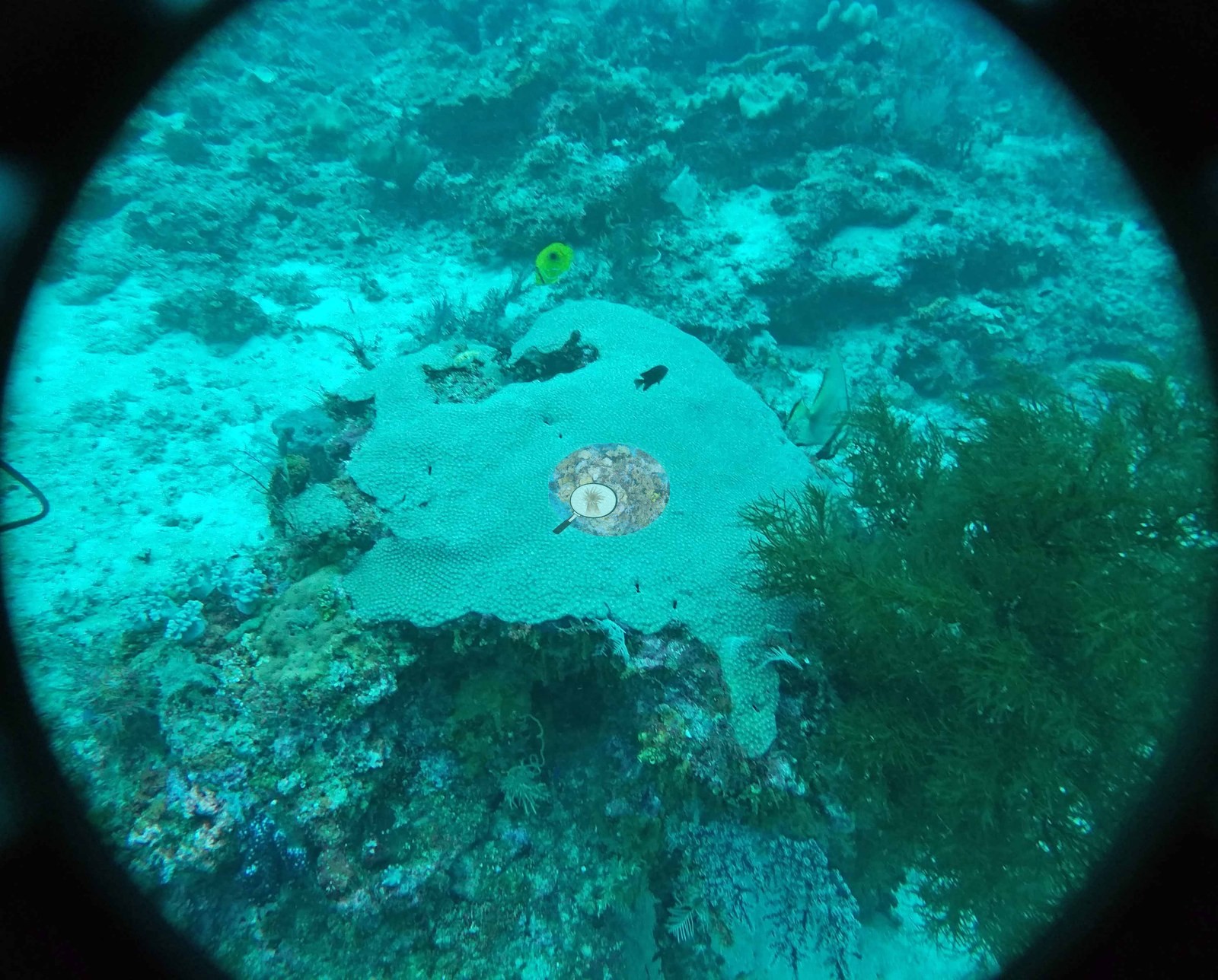
Hard corals are diverse and structurally the main habitat-builder. Tabulate and plating Acropora is the signature growth form: numerous flat-topped tables, several a meter or more across, tiled across the summit in overlapping stands, plus corymbose and digitate acroporid bushes, fine-branched thickets, and low plate-and-bracket colonies. Foliose and laminar corals are equally conspicuous — stacked whorls and shelves with fine even corallites, in the Montipora / Echinopora / Turbinaria mold, including one photogenic rosette of concentric gray-mauve laminae. Massive corals are present as several large dome-shaped Porites-type bommies, some person-sized, and there is at least one striking pink-and-yellow meandroid brain colony with deeply convoluted valleys consistent with Platygyra. Small bushy Pocillopora- and Seriatopora-type colonies, encrusting sheets, and low submassive heads fill the interstices. Octocorals are abundant and locally dominant: cream, tan, and olive leathery soft corals in mushroom, folded-cabbage and lobed forms consistent with Sarcophyton and Lobophytum, finger and cauliflower leathers consistent with Sinularia, and soft bushy trees of the Nephthea / Litophyton type (e.g., Image 5).
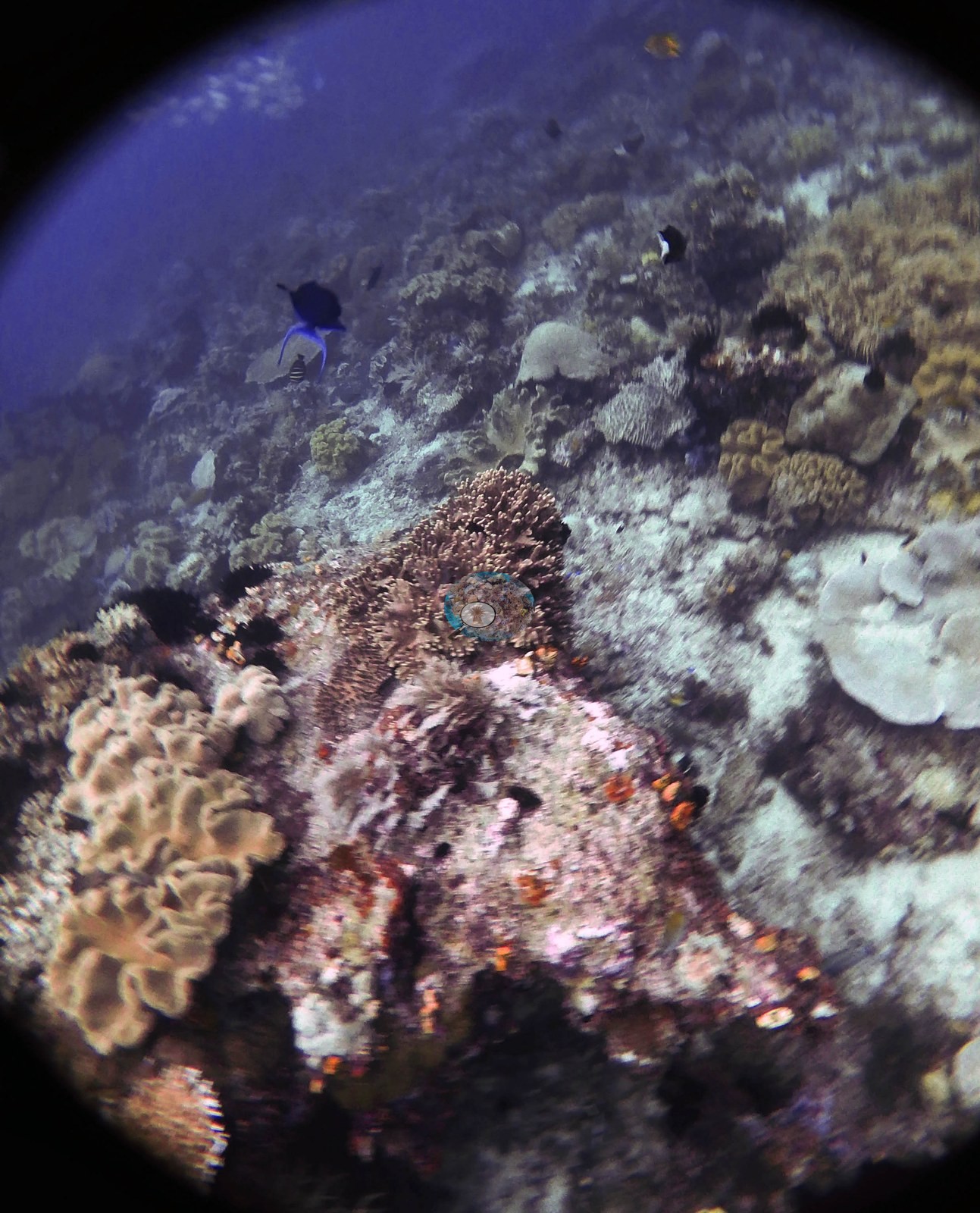
Crinoids (feather stars) are everywhere, perched on high points with arms fanned into the flow — the strongest current indicator in the set, together with the schooling behavior and the plating corals' orientation. Other benthos: extensive pink and mauve crustose coralline algae over dead framework, dense fine turf, brown, and red fleshy macroalgal tufts and a purple foliose red alga in one close substrate frame, encrusting yellow and orange sponges, a bright yellow lobed sponge, black ball sponges or dark ascidians scattered across the pavement, and one large gray-brown carpet anemone (Stichodactyla-type) with its tentacle field fully expanded (e.g., Image 3).
Coral cover
Coral cover: 11% — a blind Claude computer-vision point count of 40 of Anderson's edited photographs (20 points per photo; water, fish, and obstructions excluded). Other computer-vision methods are listed in the method table.
Stressors
A health signal worth Anderson's own eye: across at least six frames spread through the dive, a distinct minority of colonies are conspicuously white or chalk-pale while their immediate neighbors are dark and normally pigmented. These include one large dome-shaped massive Porites-type bommie that is uniformly white over its whole surface, at least two plating/foliose colonies with clean bright-white tissue and intact margins, a white branching colony, and several pale pink-to-cream tabulate Acropora. Intact skeletal texture and sharp colony margins on those colonies argue for bleached-but-living tissue rather than old dead skeleton (dead framework elsewhere in the set is unmistakably duller and coralline-crusted). This is reported as an observation, not a diagnosis, and it is flagged rather than assumed. Elsewhere there is no crown-of-thorns predation, no obvious disease lesion or band, and no anchor or blast damage in the reviewed frames.
Fish and other fauna
Long-spined black urchins (Diadema-type) sit in crevices in the shallower frames. Fish are a defining feature and the reason the site is famous: a tight, dense ball of jacks — several hundred fish, consistent with bigeye trevally — hangs in mid-water off the pinnacle in one frame, surrounded by streaming fusiliers and drifted past by a diver; other frames hold thick silver aggregations of deep-bodied, large-eyed schooling fish over the reef, yellow-tailed snappers below them, clouds of chromis and other planktivorous damselfishes over every high point, a dark surgeonfish or drummer cruising the drop-off, a longnose or pennant bannerfish (Heniochus-type), a vivid blue-and-green wrasse or parrotfish low on the substrate, a small emperor or snapper, and a possible shark-shaped silhouette far out in the blue that is too distant and too washed-out to call.
Comparisons with other data
No independent survey was made at this exact site; the nearest ones are listed in the table below.
Dive record
Blue Magic, dived on Anderson's 2018 Indonesian liveaboard trip.
Other notes
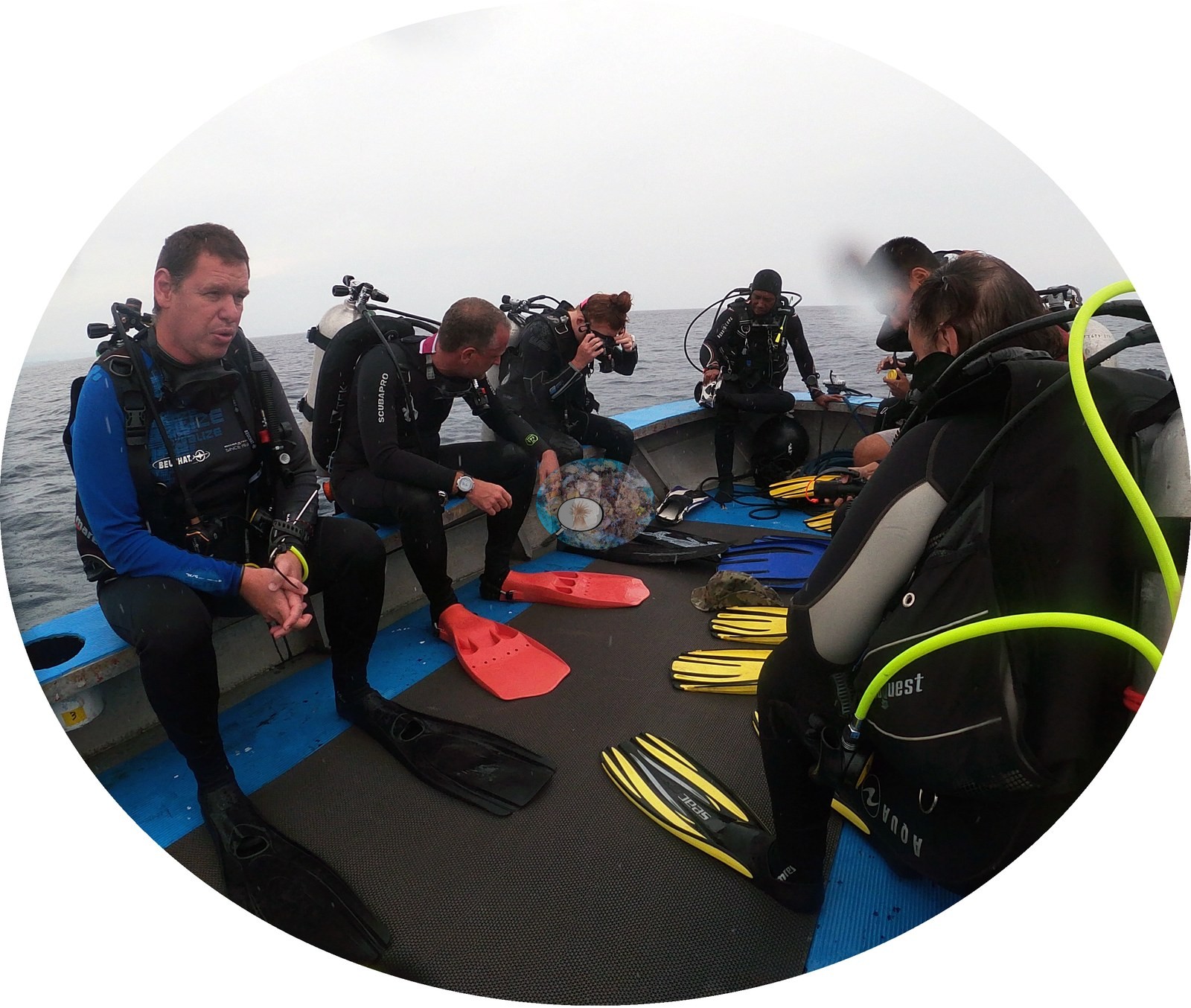
Man-made content is limited to the divers themselves — tanks, regulators, bubble columns, blue, and yellow fins — appearing in about six frames.
CV model comparison
More info
DINOv3 and CoralSCOP were run on the same photos and are listed for comparison. Coralscapes v2 and v1 were also run but are not shown: Anderson does not consider Coralscapes reliable for these photos. No diver transect exists for this trip, so agreement between the rows is not accuracy, and as of September 2026 no computer-vision method estimates coral cover accurately on new images; treat every row as indicative.| Method | Hard-coral cover (%) |
|---|---|
| In-house DINOv3 | 19.3 |
| CoralSCOP edited | 27.4 |
| Claude (edited photos) | 11.1 |
Dive history
| Date | Time in | Max depth (m) | Bottom time (min) |
|---|---|---|---|
| 2018-10-22 | 10:47 | 27.4 | 66 |
| 2018-10-23 | 07:13 | 27.8 | 55 |
Independent surveys nearby
| Agency / program | Year(s) | Stations / distance | Link |
|---|---|---|---|
| Social Ecological Research Frontiers (SERF) / University of Rhode Island (URI) / Thriving Oceans | 2018 | 5 stations, 2.85–4.99 km | Records ↓ |
| Yuanike et al. (2019) | 2016 | 1 station, 4.48 km | Records ↓ |
Within 5 km, 6 independent survey stations recorded hard coral cover in 10 surveys between 2016 and 2018. The most recent nearby survey is from 2018, so these values predate recent heat stress. This site's own estimate (11%) sits 19.1 points below the range of these surveys (30–70%); the methods differ, so the comparison is context, not a like-for-like test.
Collected by other programs using different methods, so these are context for the figures above, not a like-for-like comparison. Where a station was surveyed more than once the range is shown. Station names are not dive-site names.
Data & links
Images 43–50: Pierre; all other images from Coral Reef Diagnostics. Data are from Coral Reef Diagnostics and the organizations named in the data-sources table above.
© Coral Reef Diagnostics.