
Raja Ampat - Anchovy
Part of the regional summary: Indonesia - Raja Ampat
More info
West Papua (NOAA CRW virtual station)Anchovy is a sheer, murky wall with low fish biomass at depth but exceptional coral diversity from 30 m up to the reef top, where cover reached an estimated 60% in places; three pygmy seahorses were spotted on a single sea fan and three octopus were seen. A blind Claude computer-vision point count puts coral cover around 32%.
Anchovy adalah dinding tegak yang keruh dengan biomassa ikan rendah di bagian dalam namun keanekaragaman karang yang luar biasa dari kedalaman 30 m hingga puncak terumbu, tempat tutupannya diperkirakan mencapai 60% di beberapa bagian; tiga ekor kuda laut kerdil terlihat pada satu kipas laut dan tiga ekor gurita terjumpai. Penghitungan titik buta visi komputer Claude memperkirakan tutupan karang sekitar 32%.
Terjemahan ringkasan ini oleh AI; versi bahasa Inggris yang berlaku.
Six other CRD dive sites within 5 km shown in orange — click a marker to open its page.
2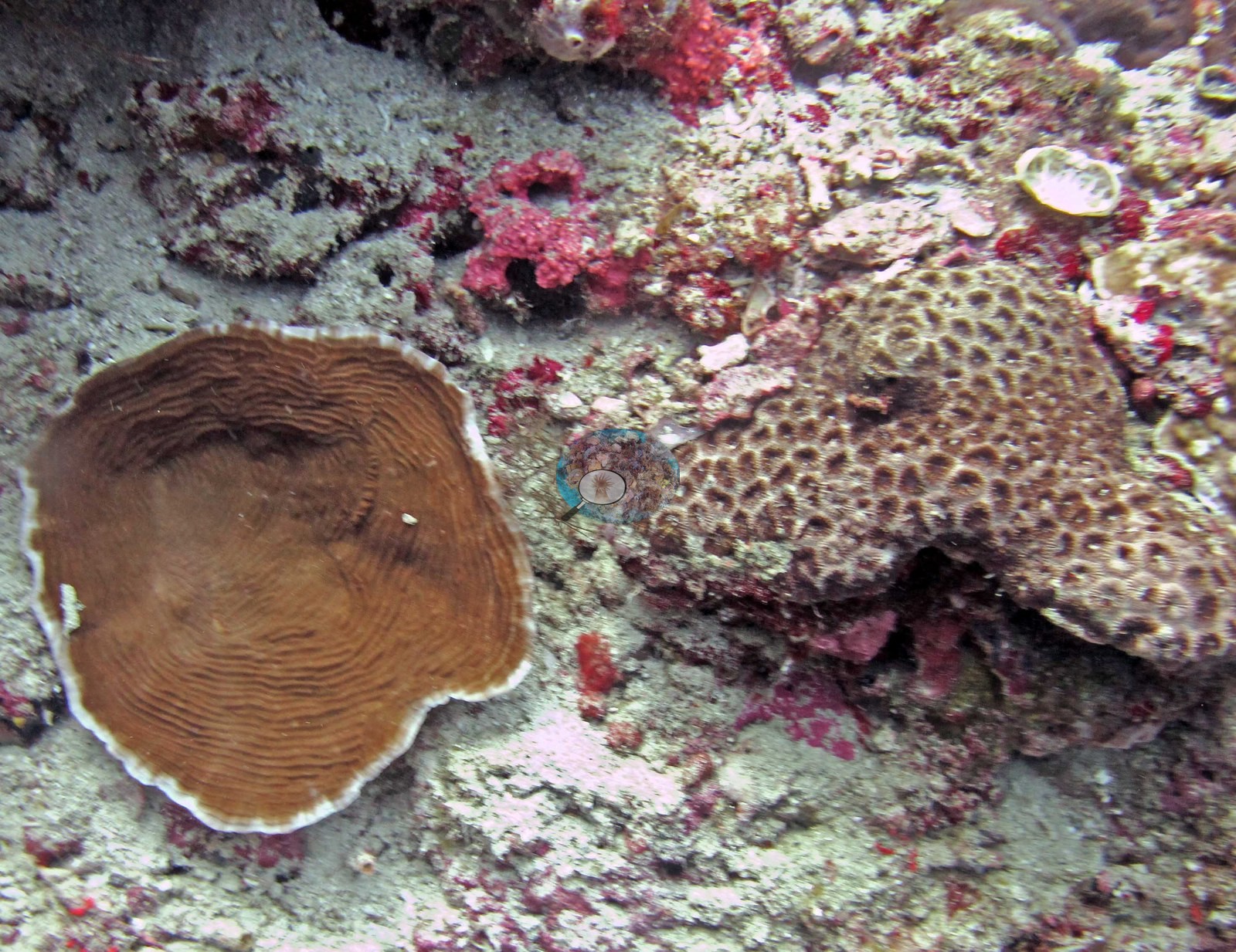 3
3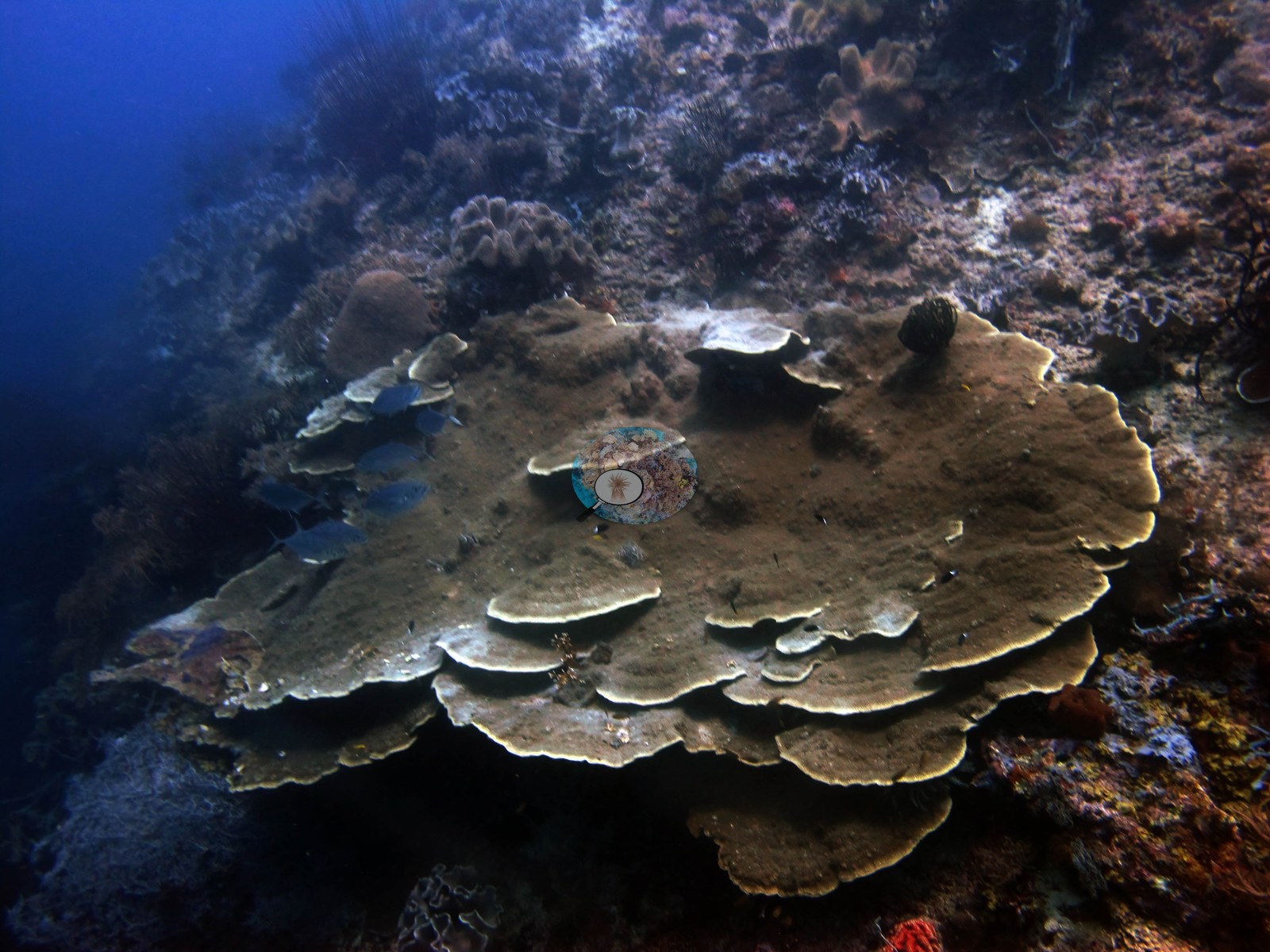 4
4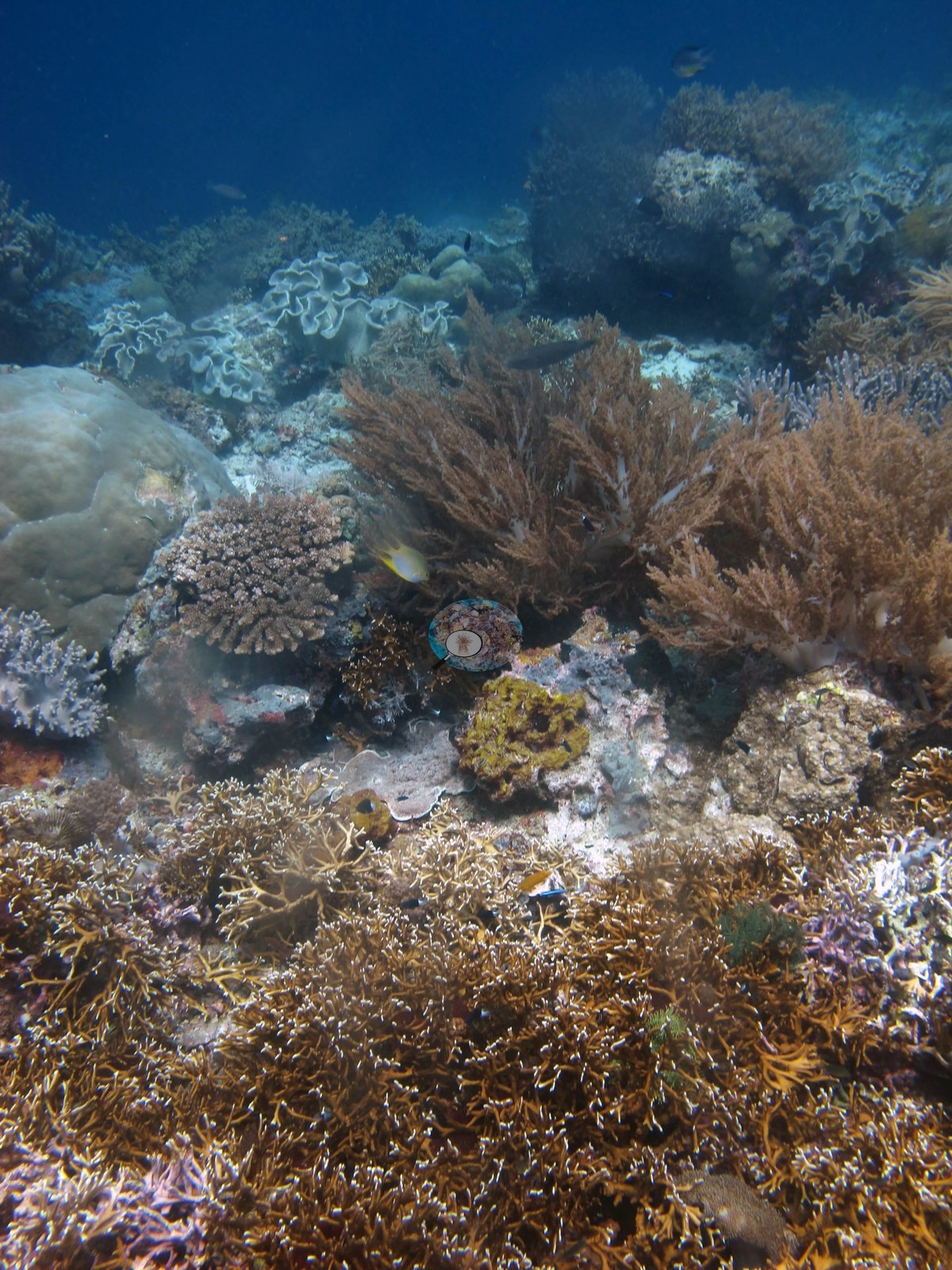 5
5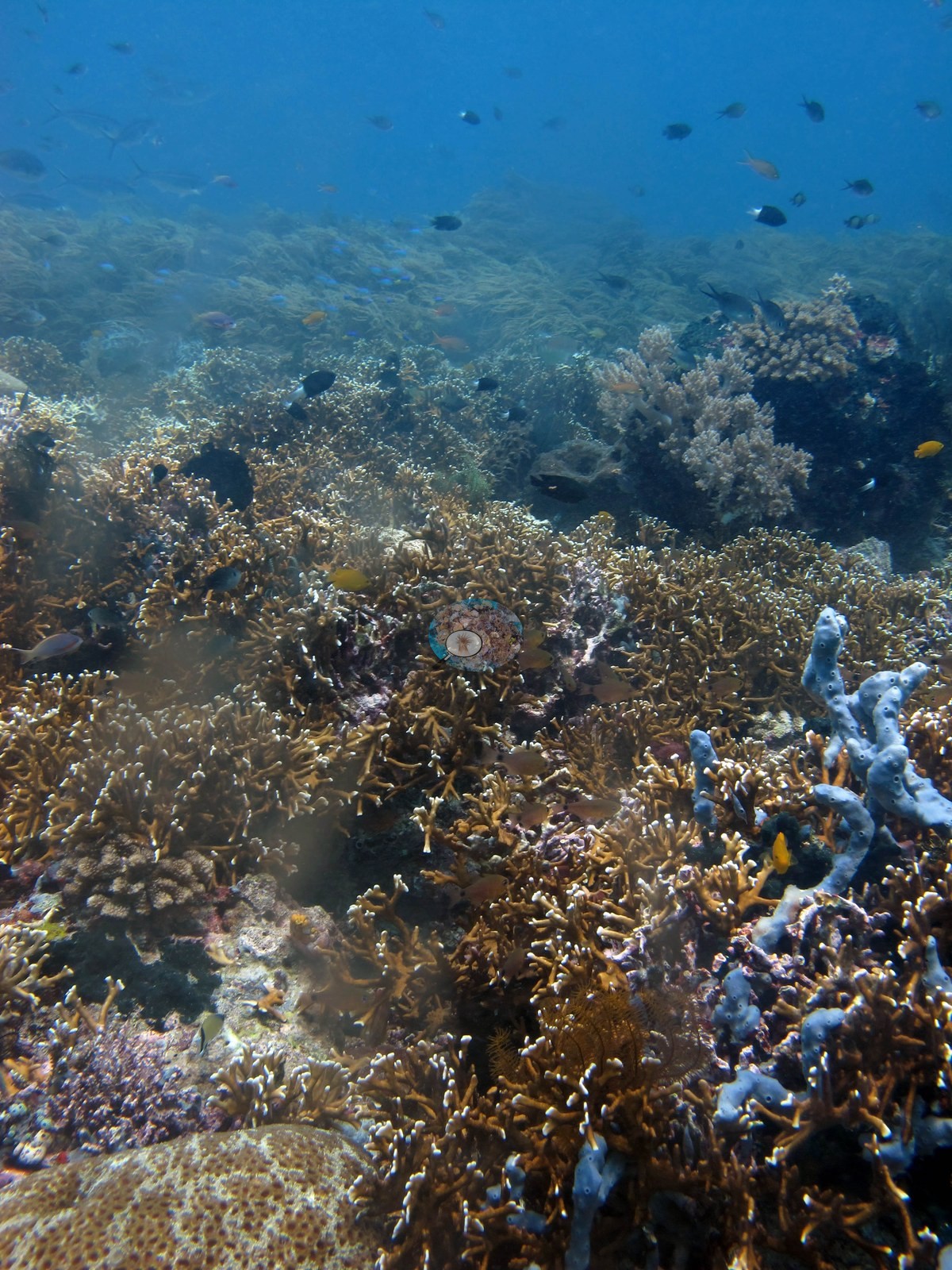 6
6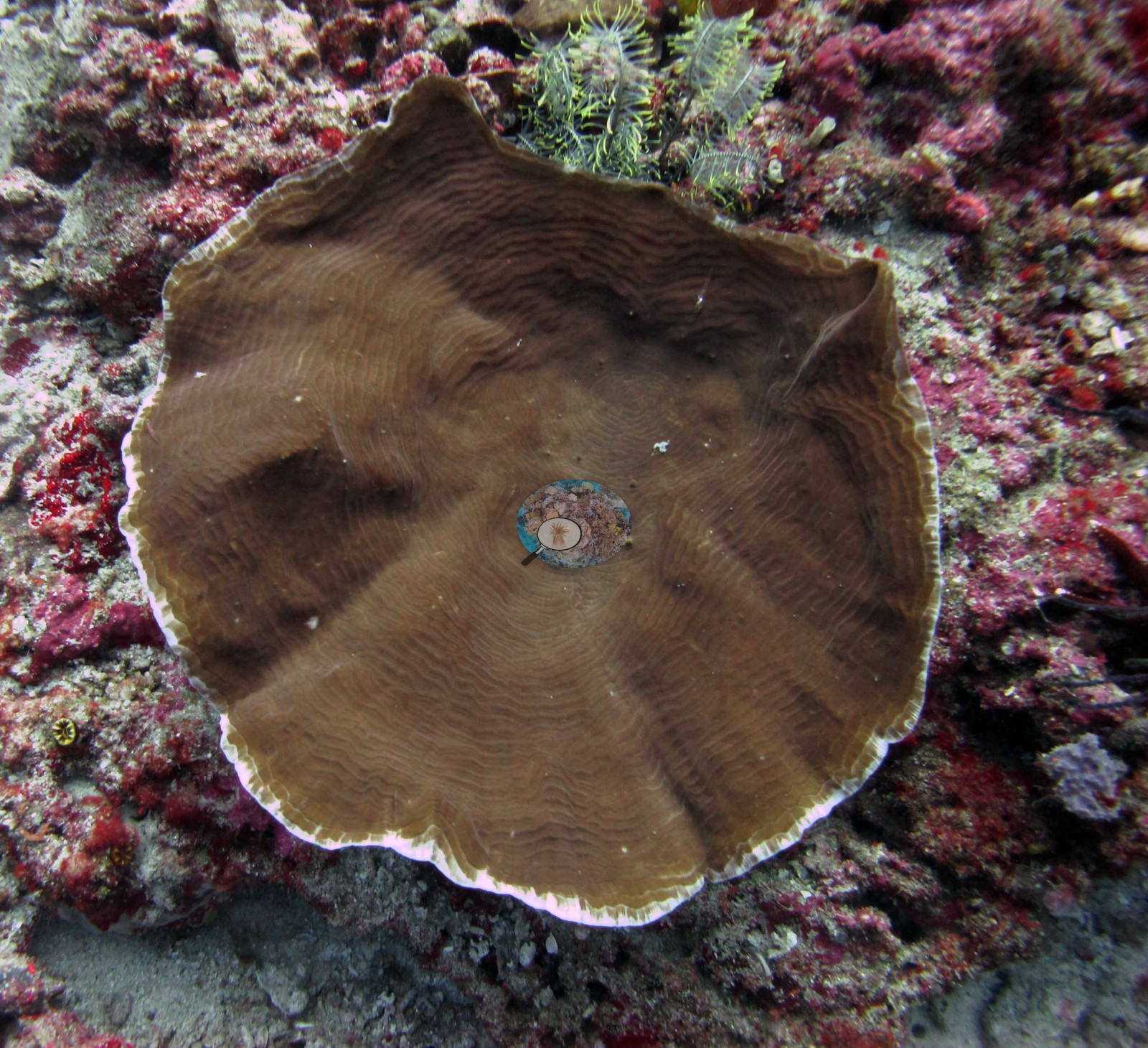 7
7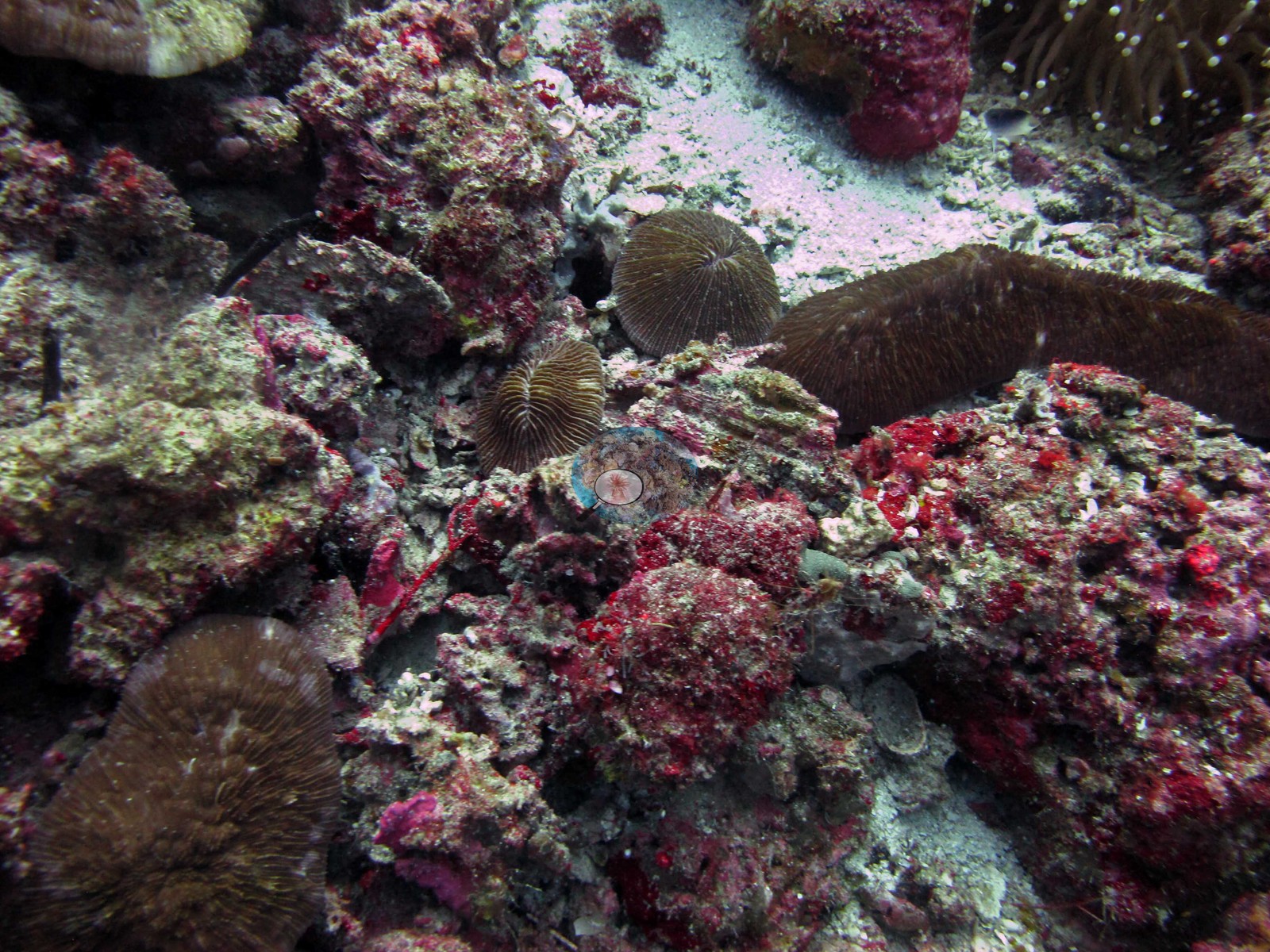 8
8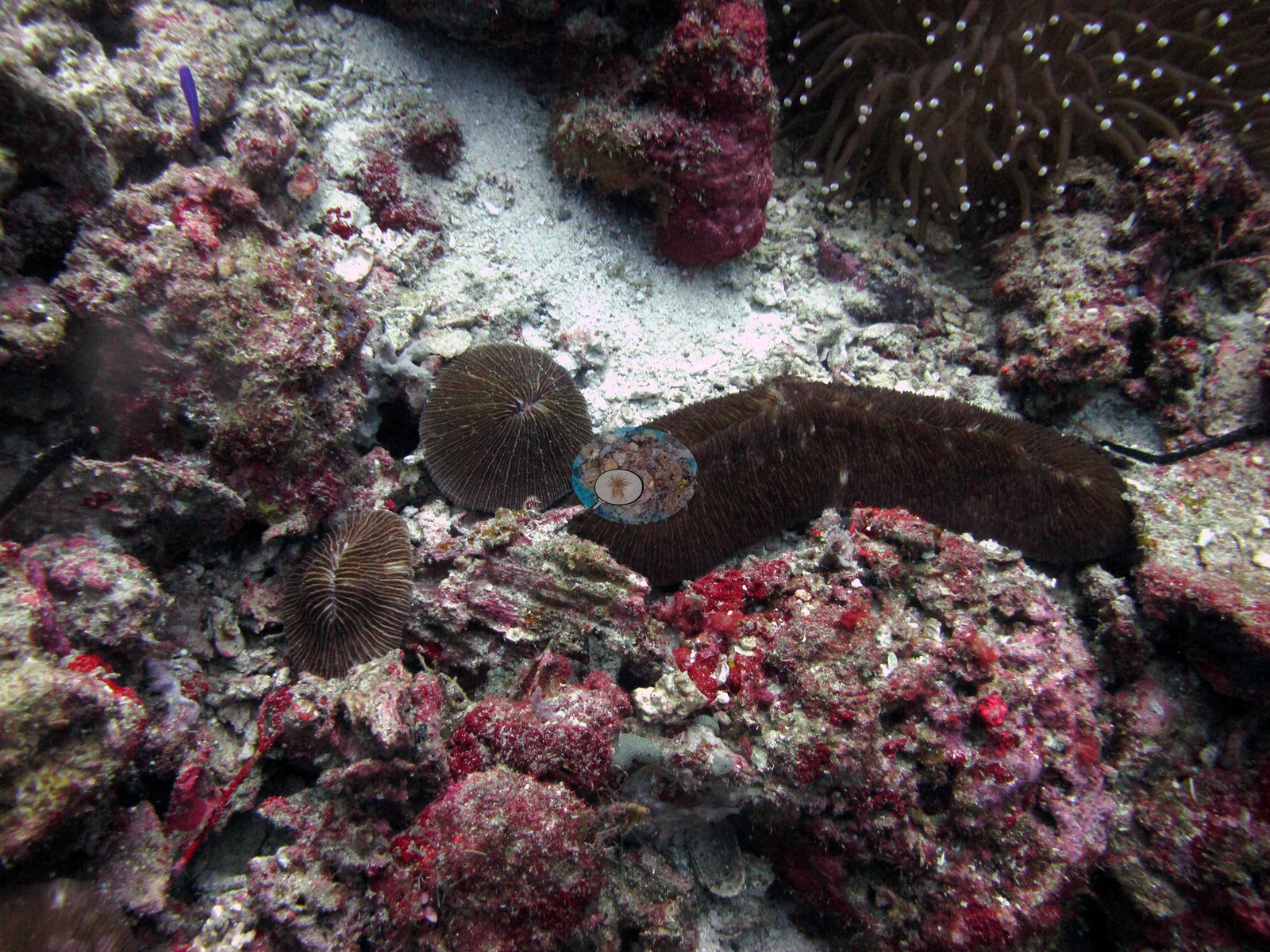 9
9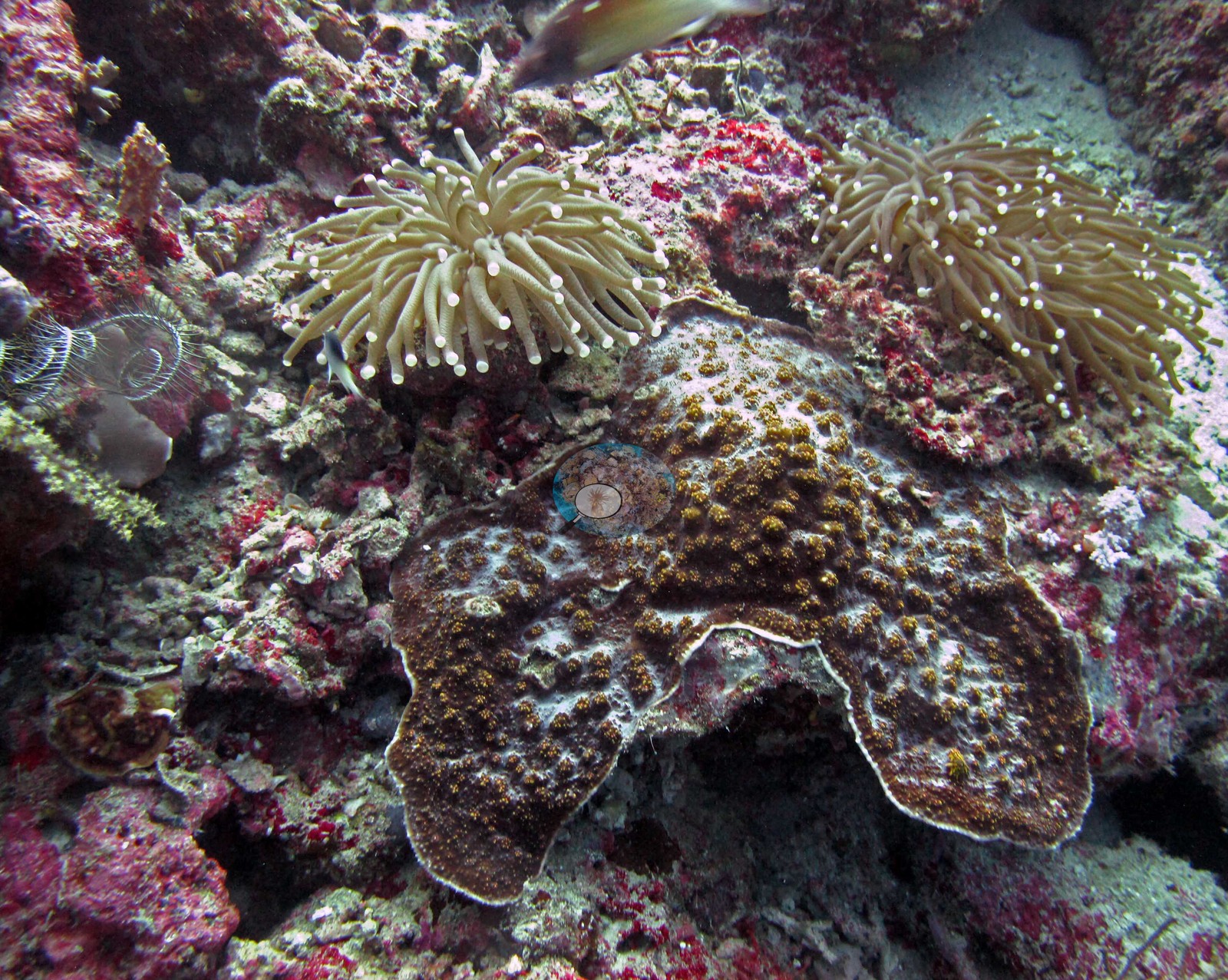 10
10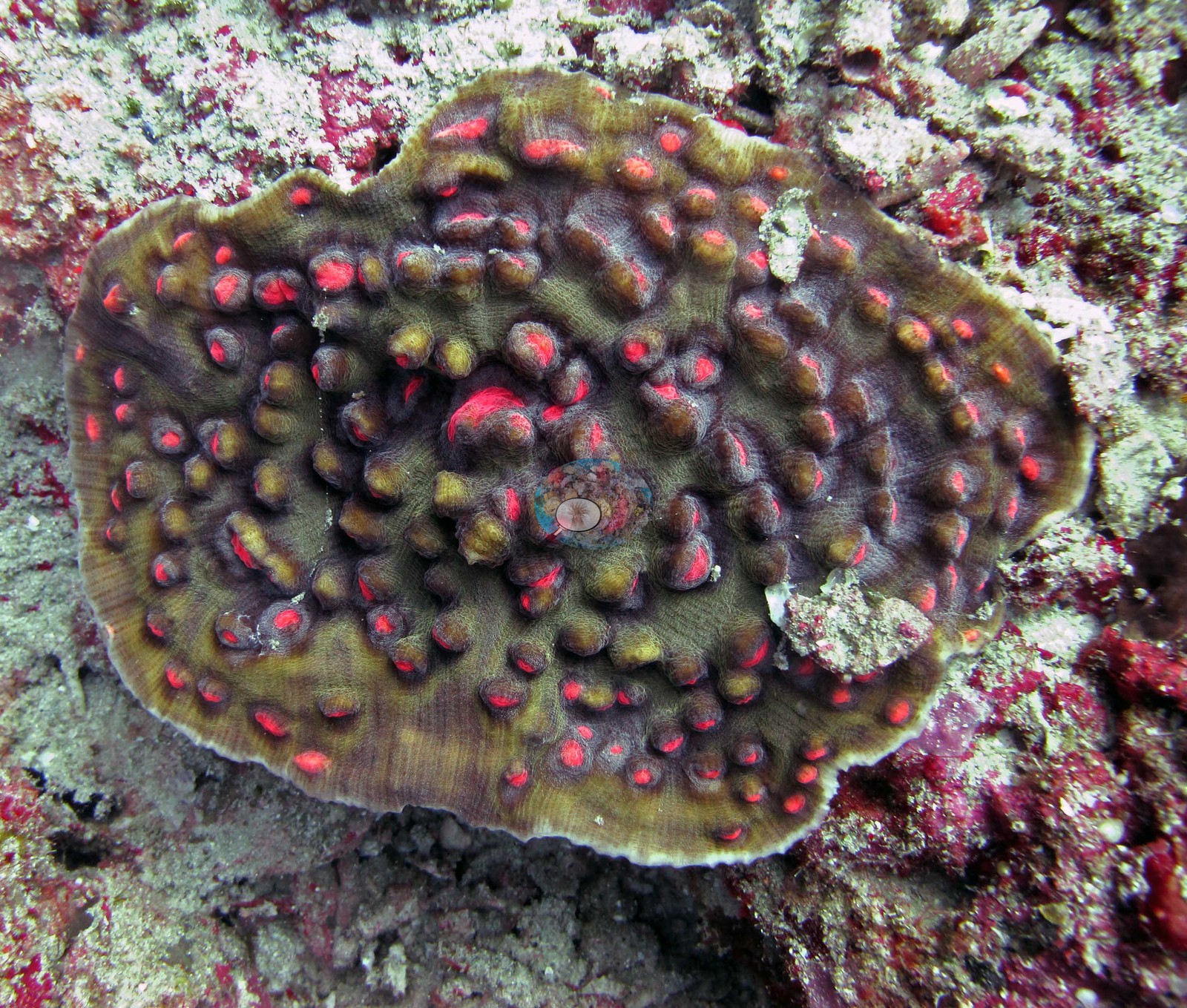 11
11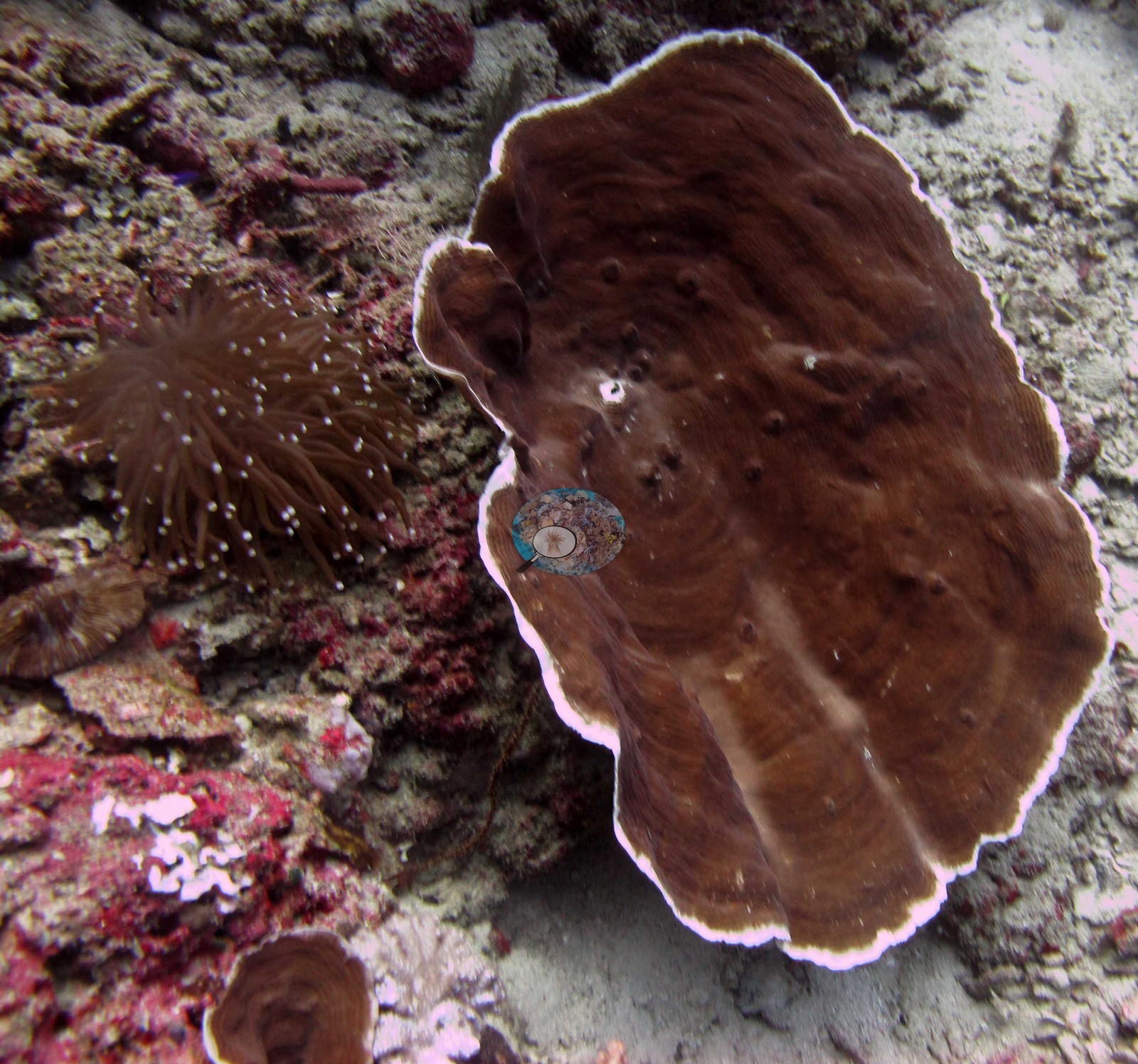 12
12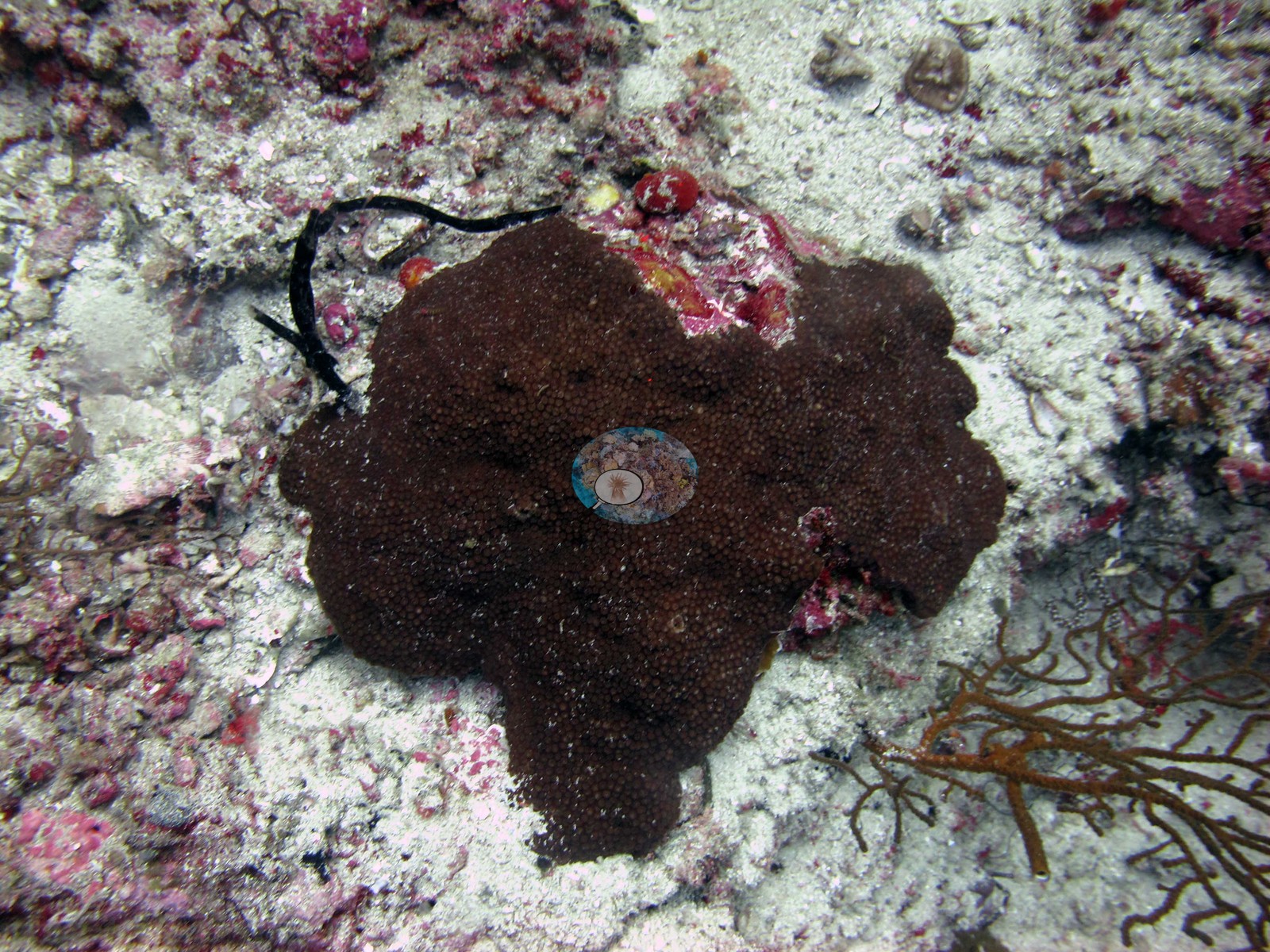 14
14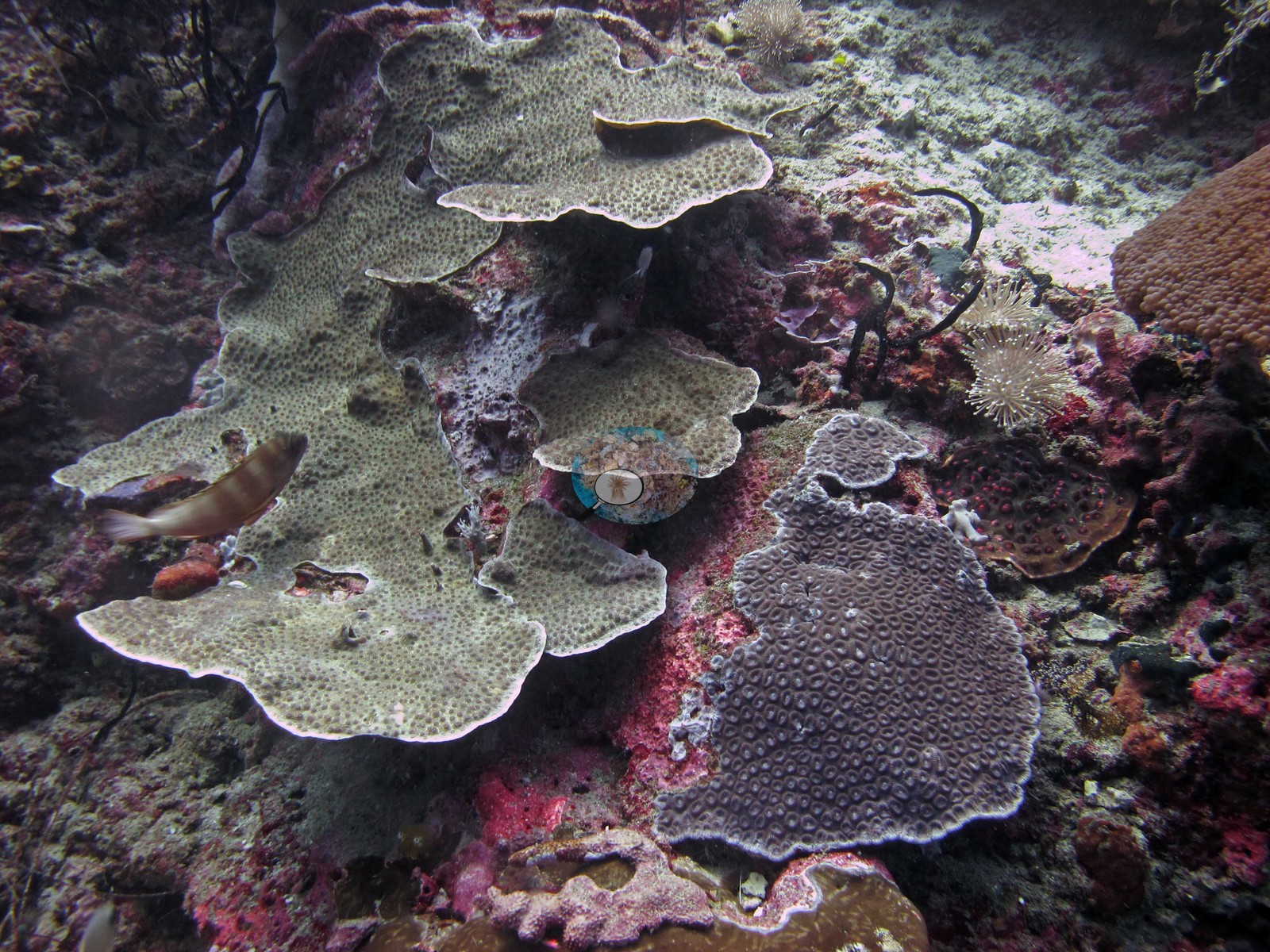 15
15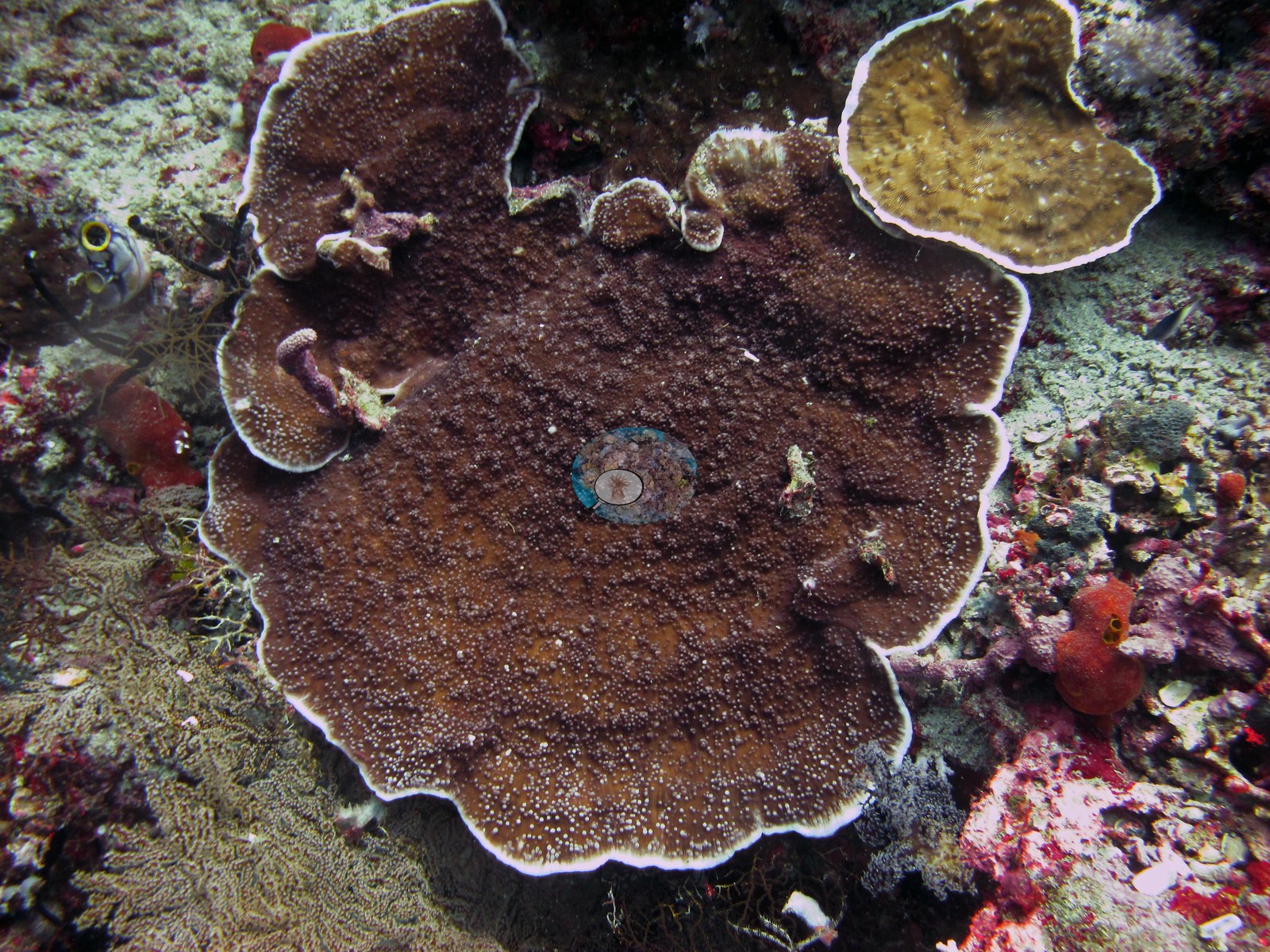 16
16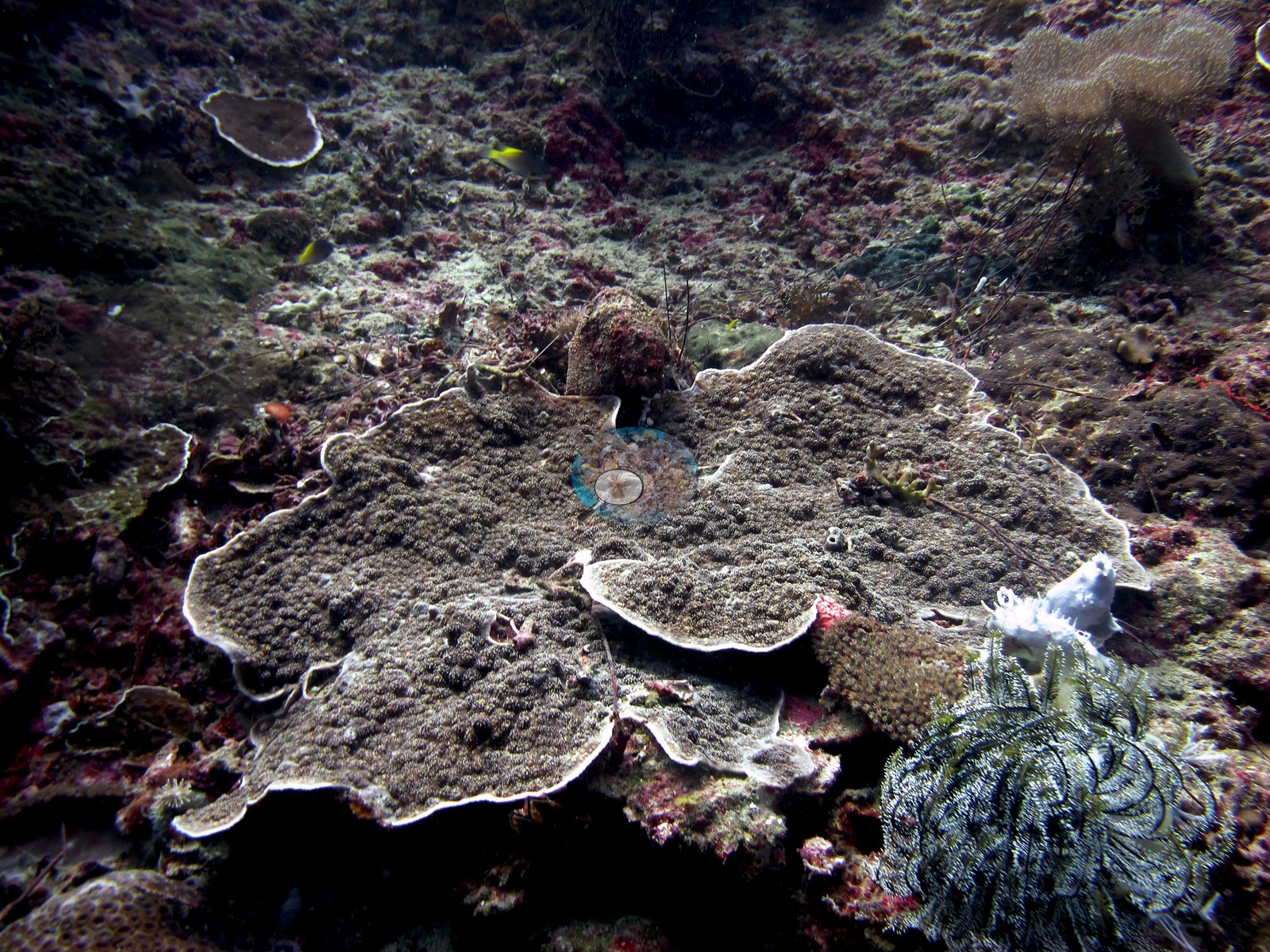 17
17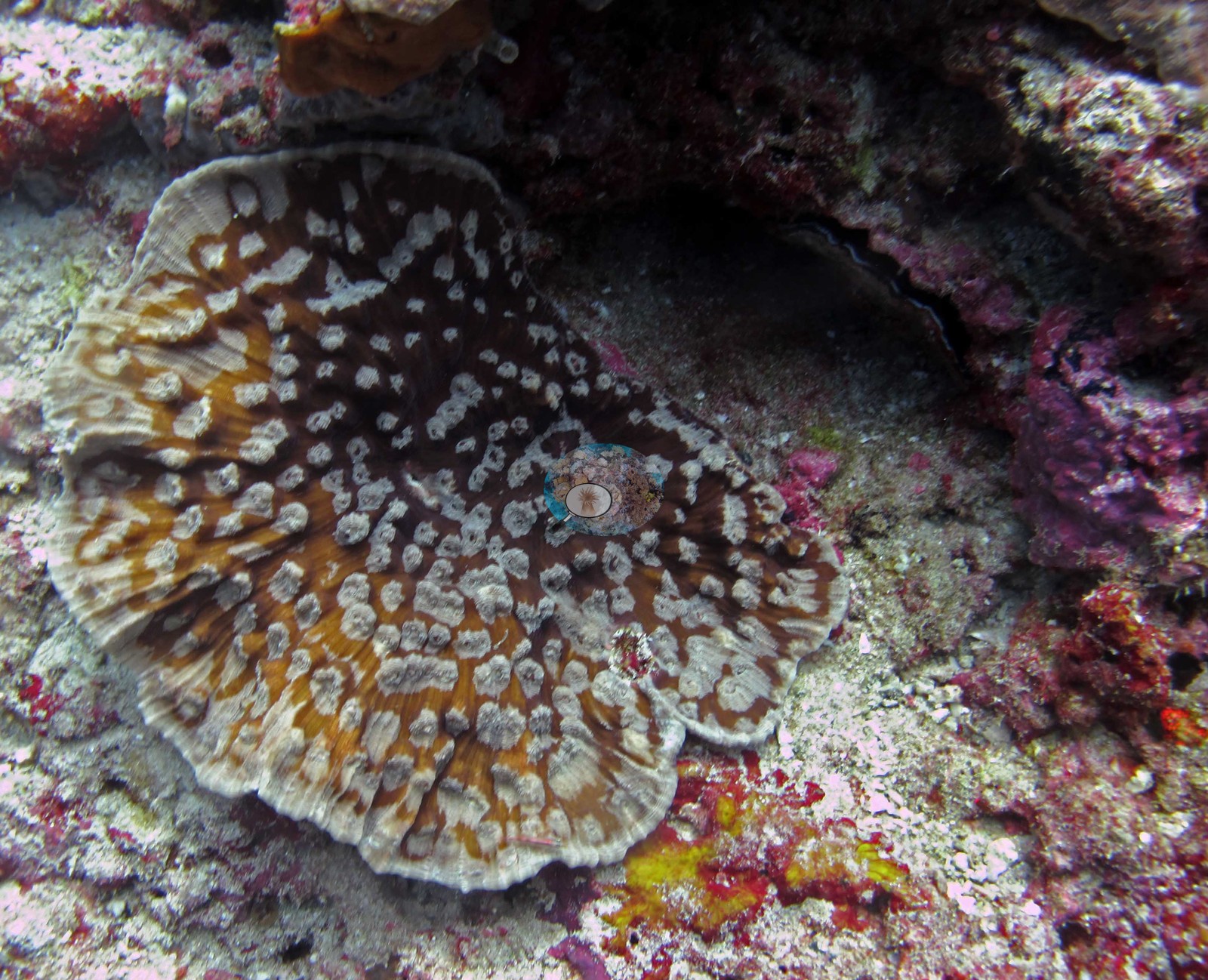 18
18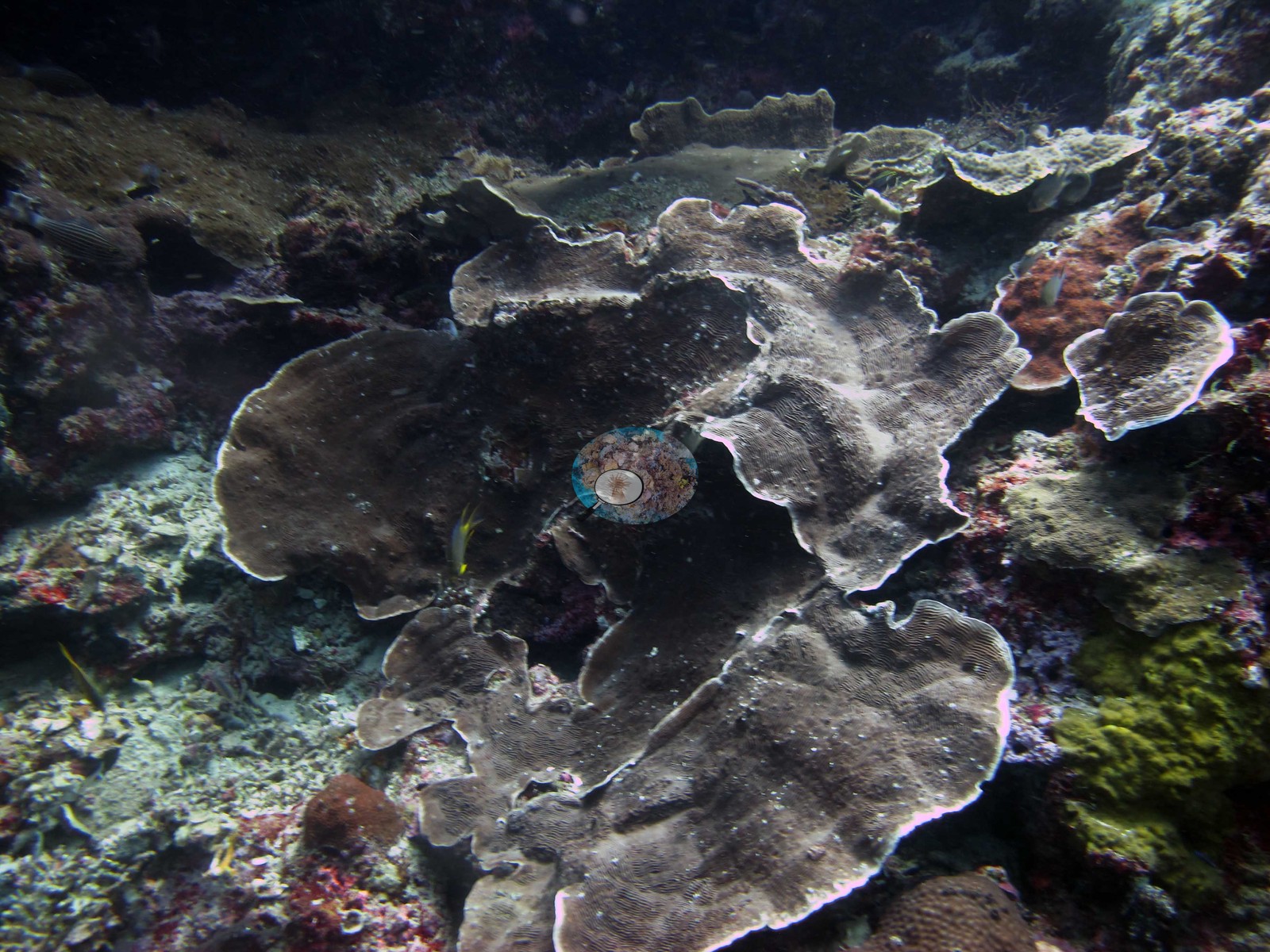 19
19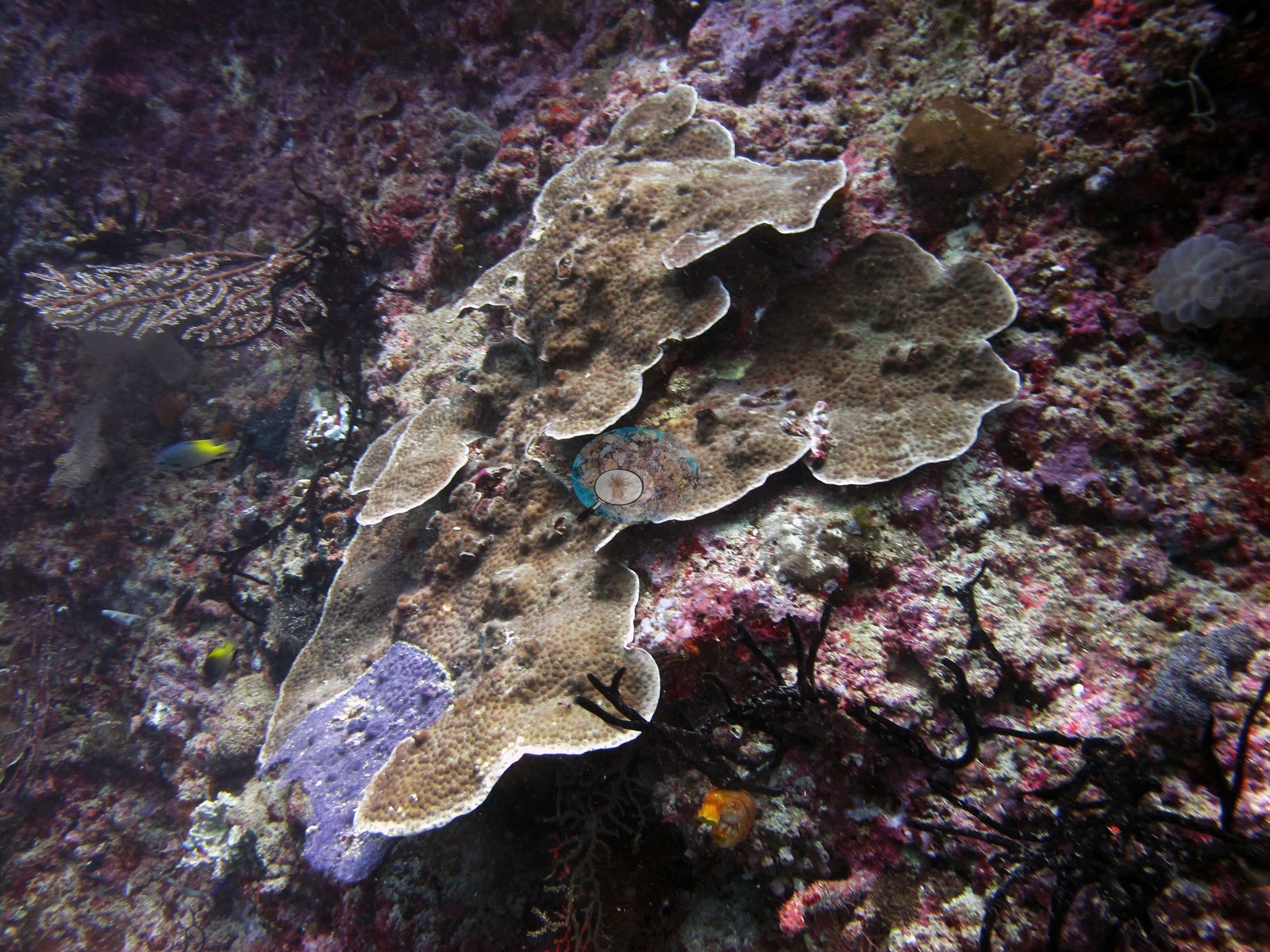 20
20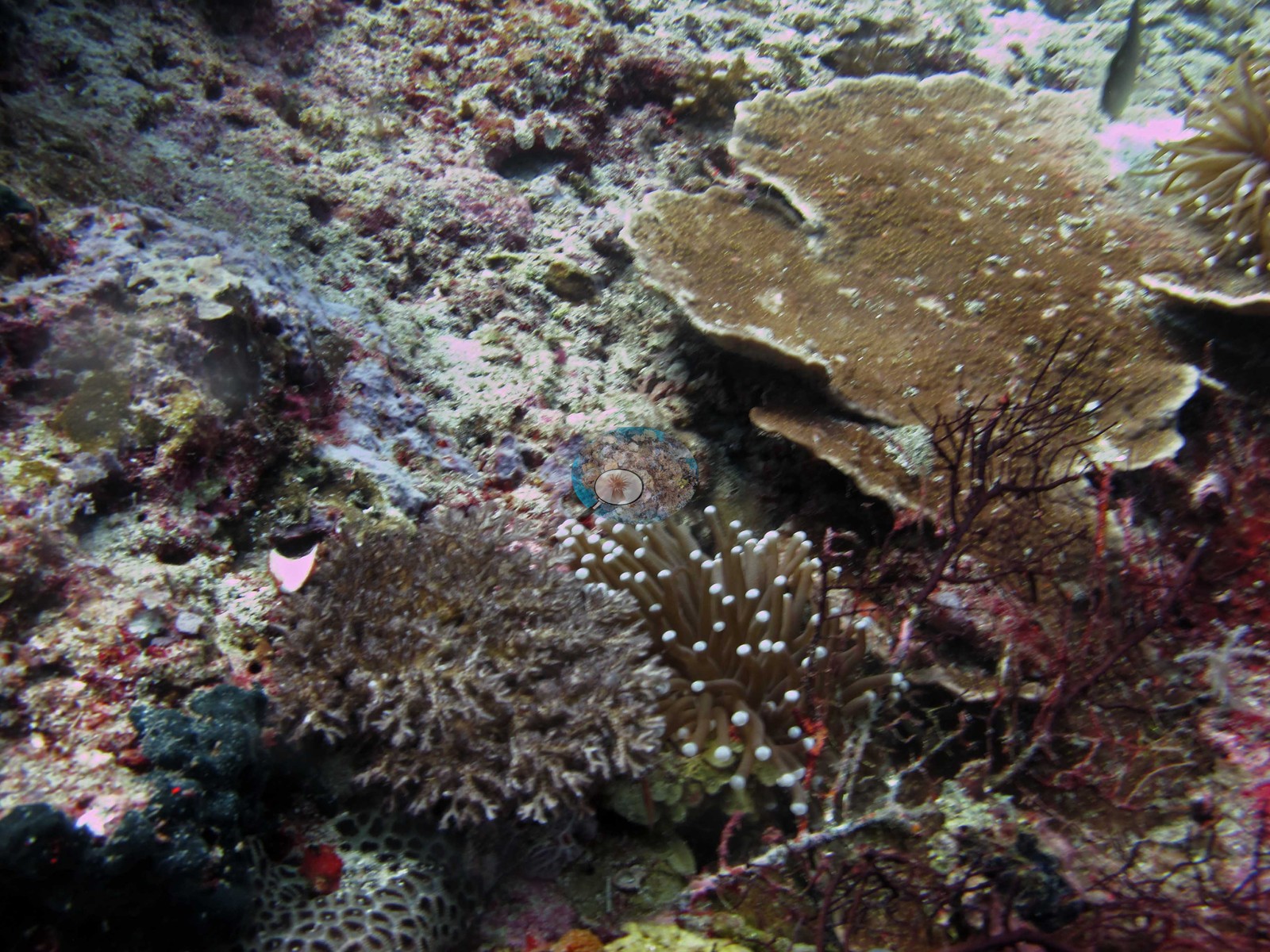 21
21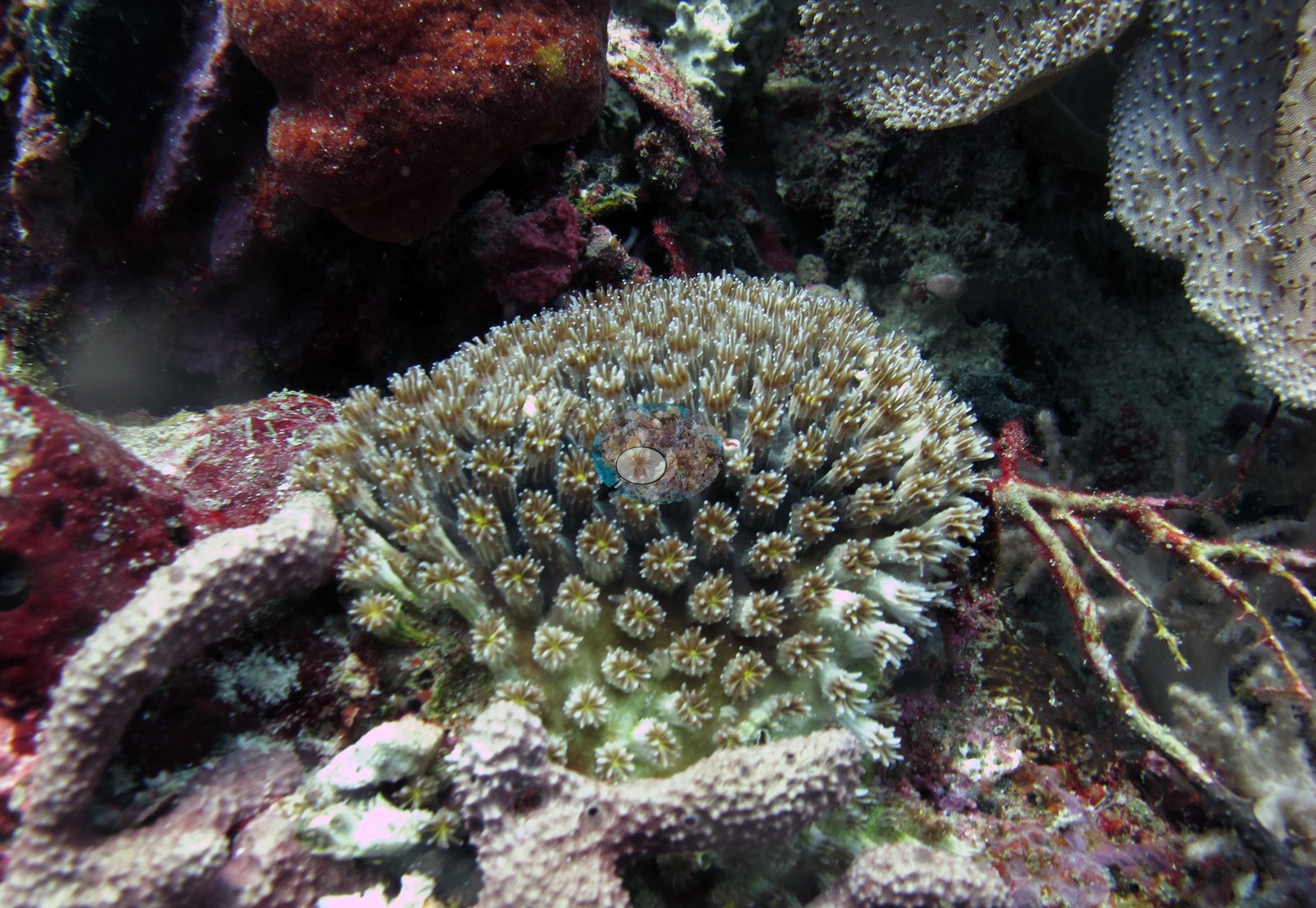 22
22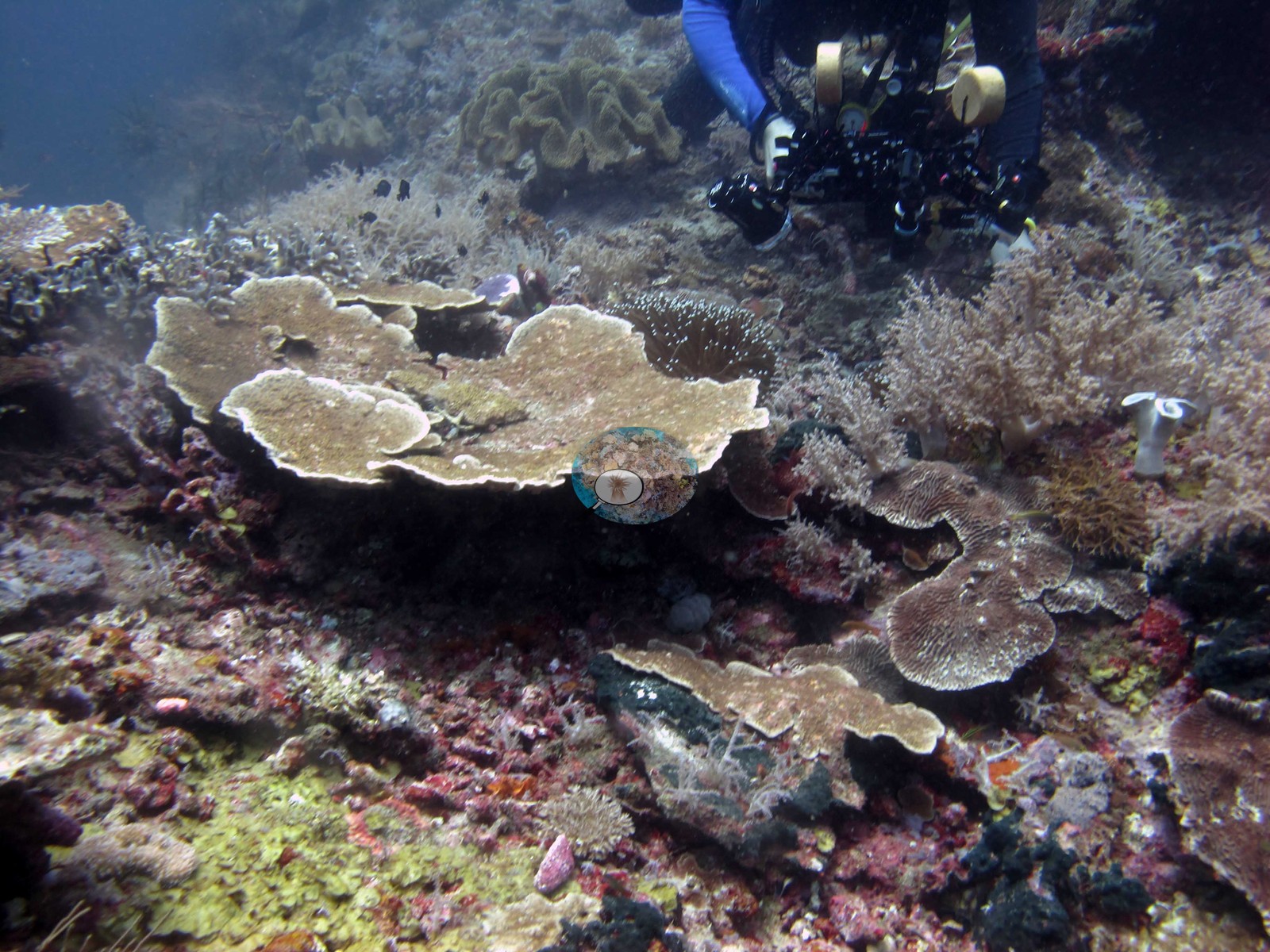 23
23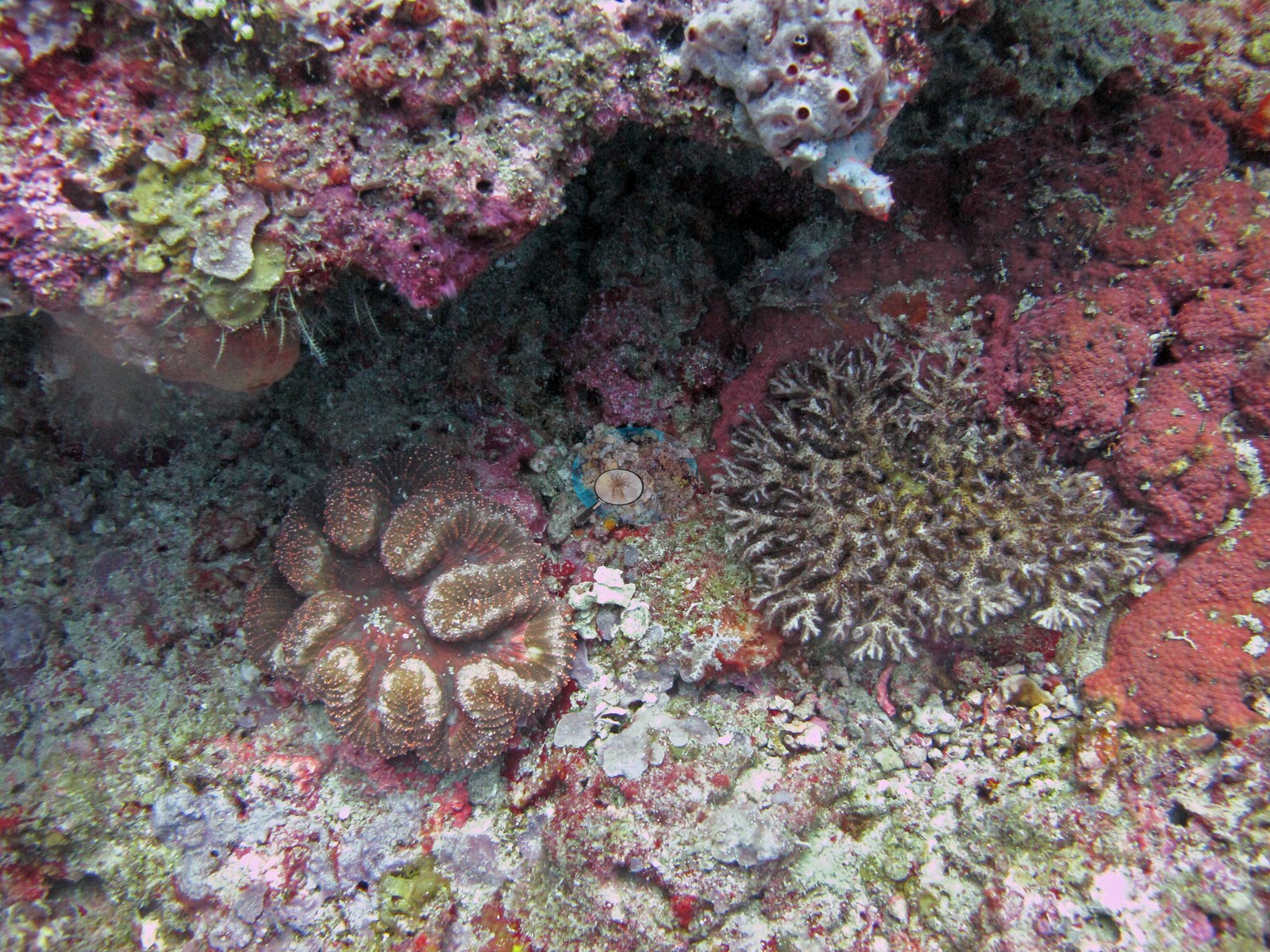 24
24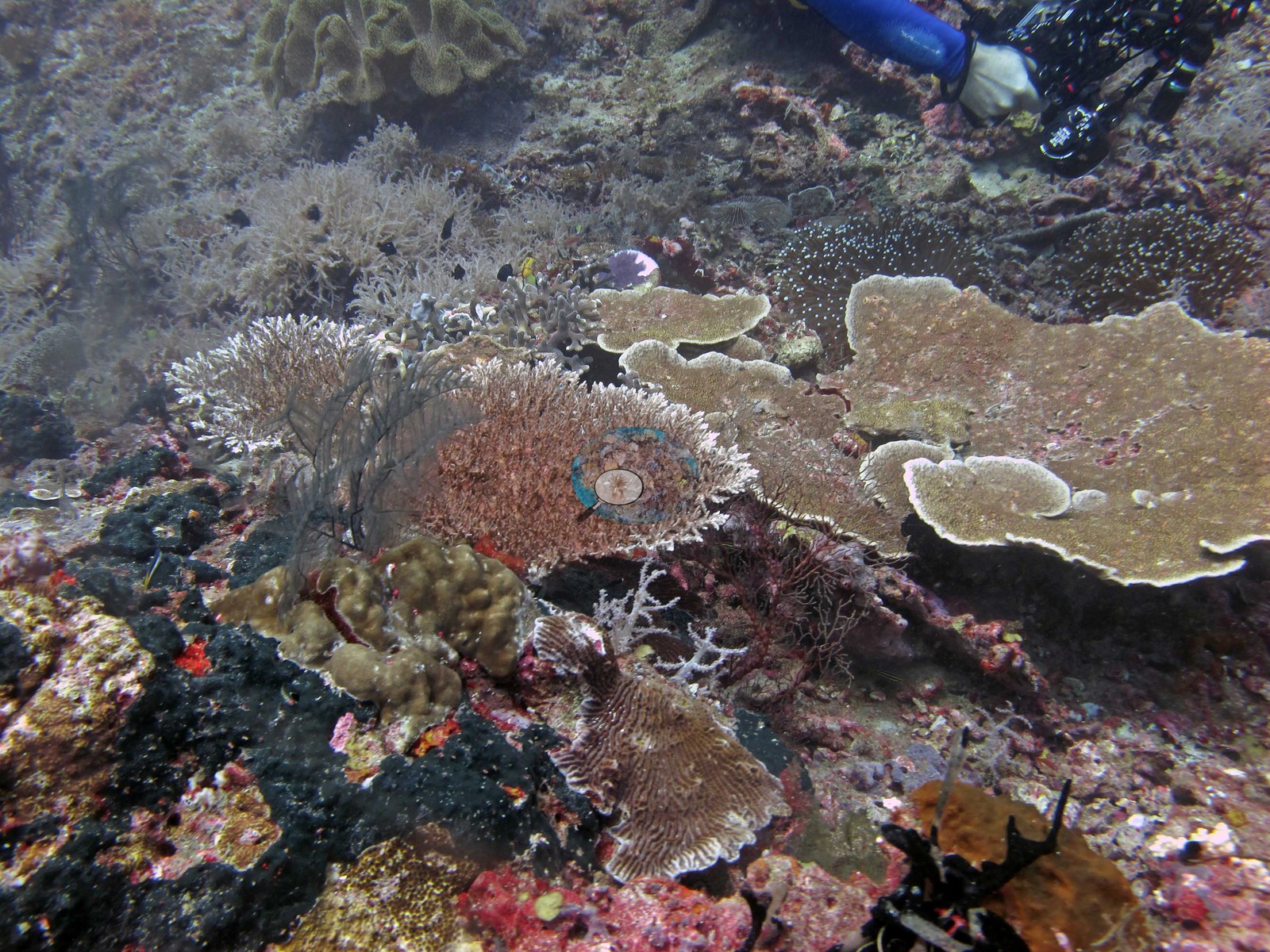 25
25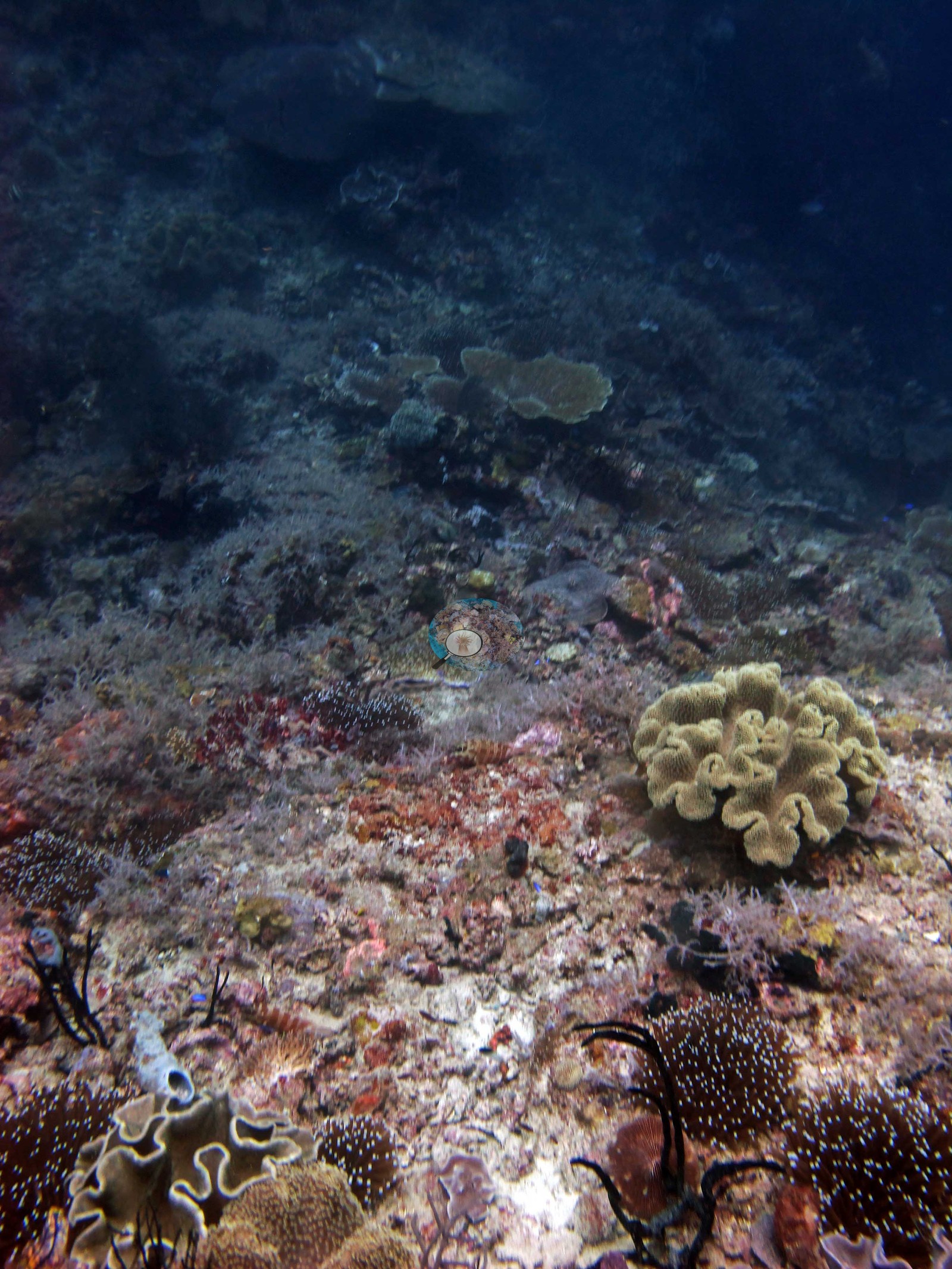 27
27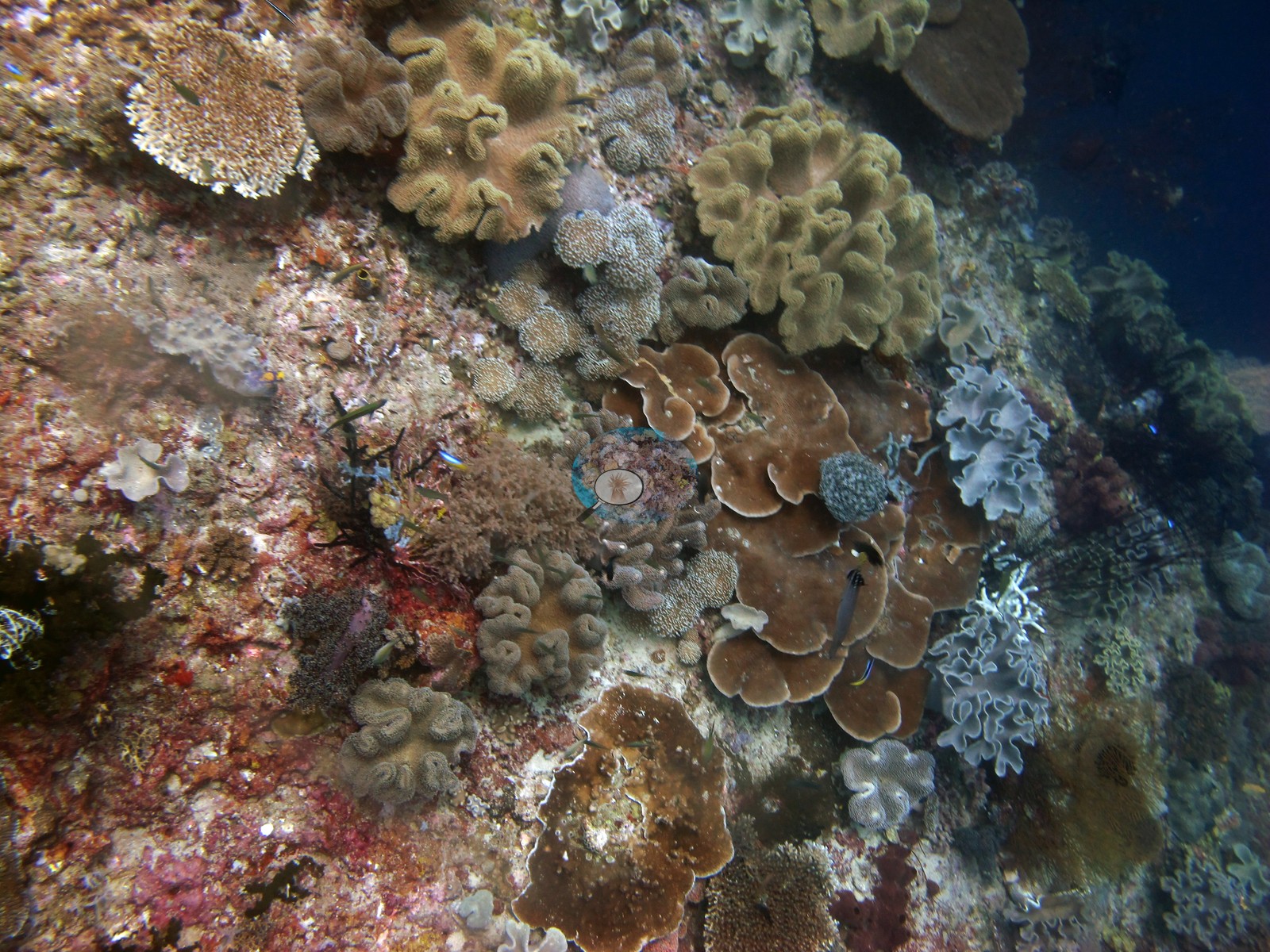 28
28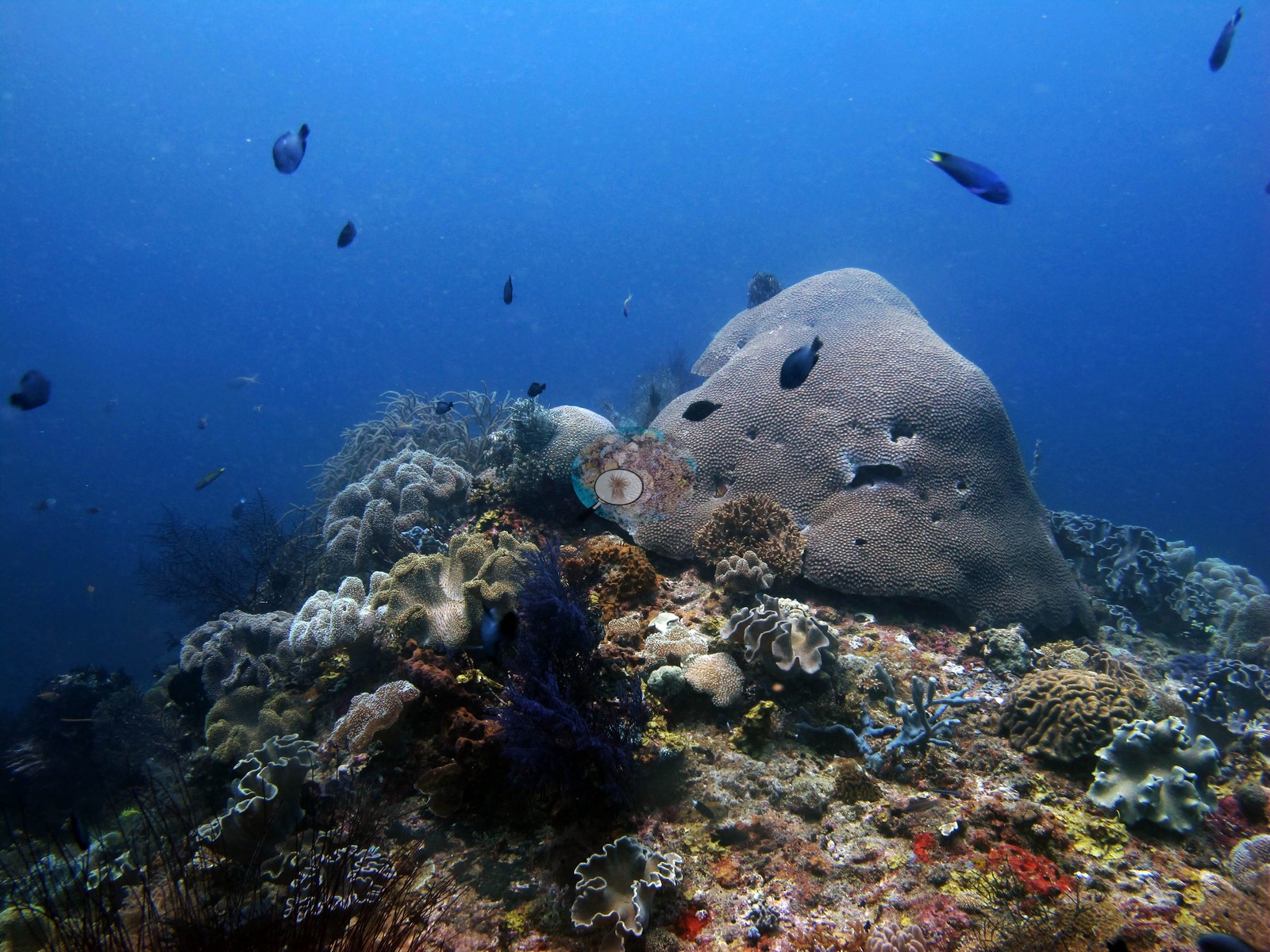 29
29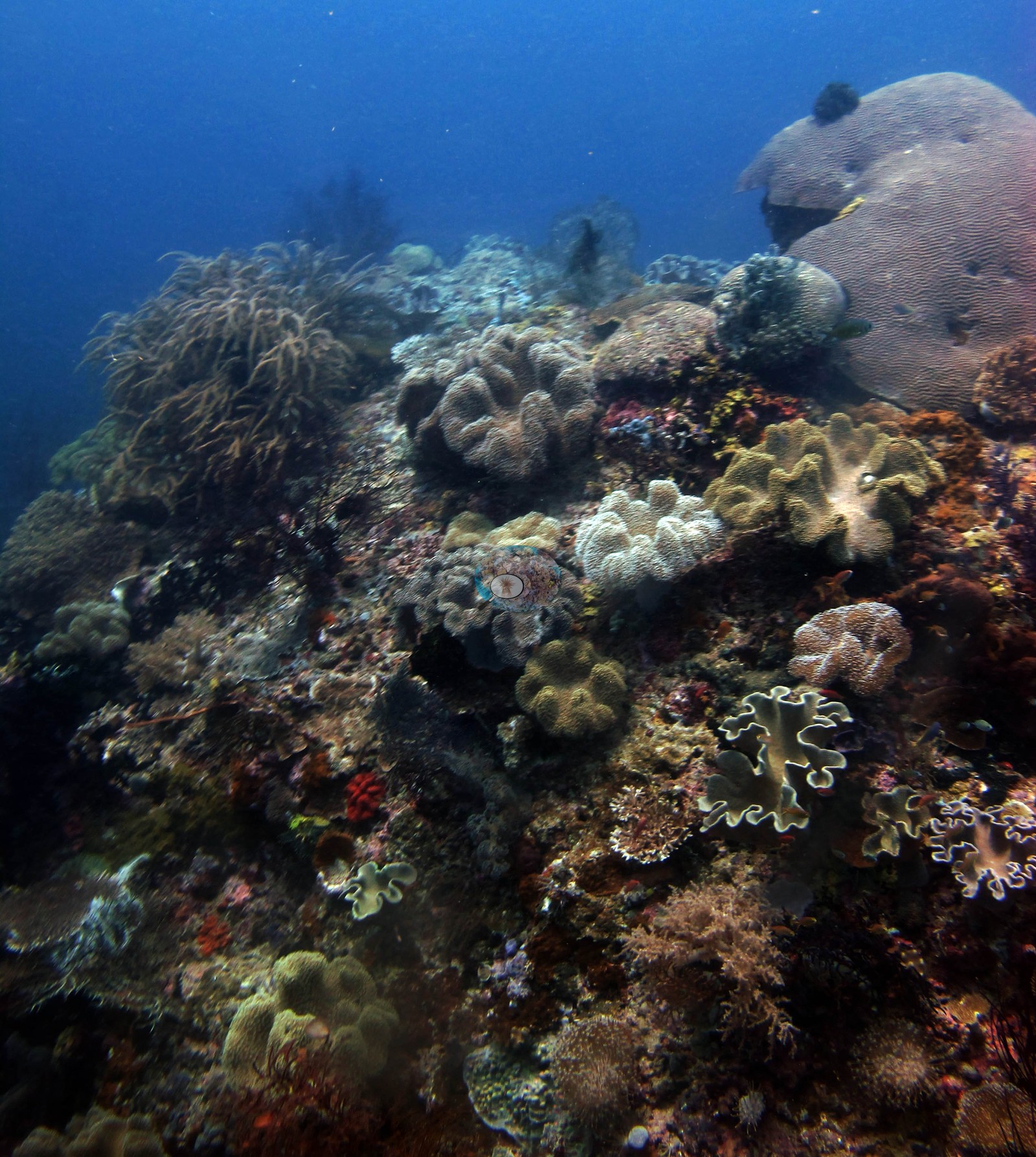 30
30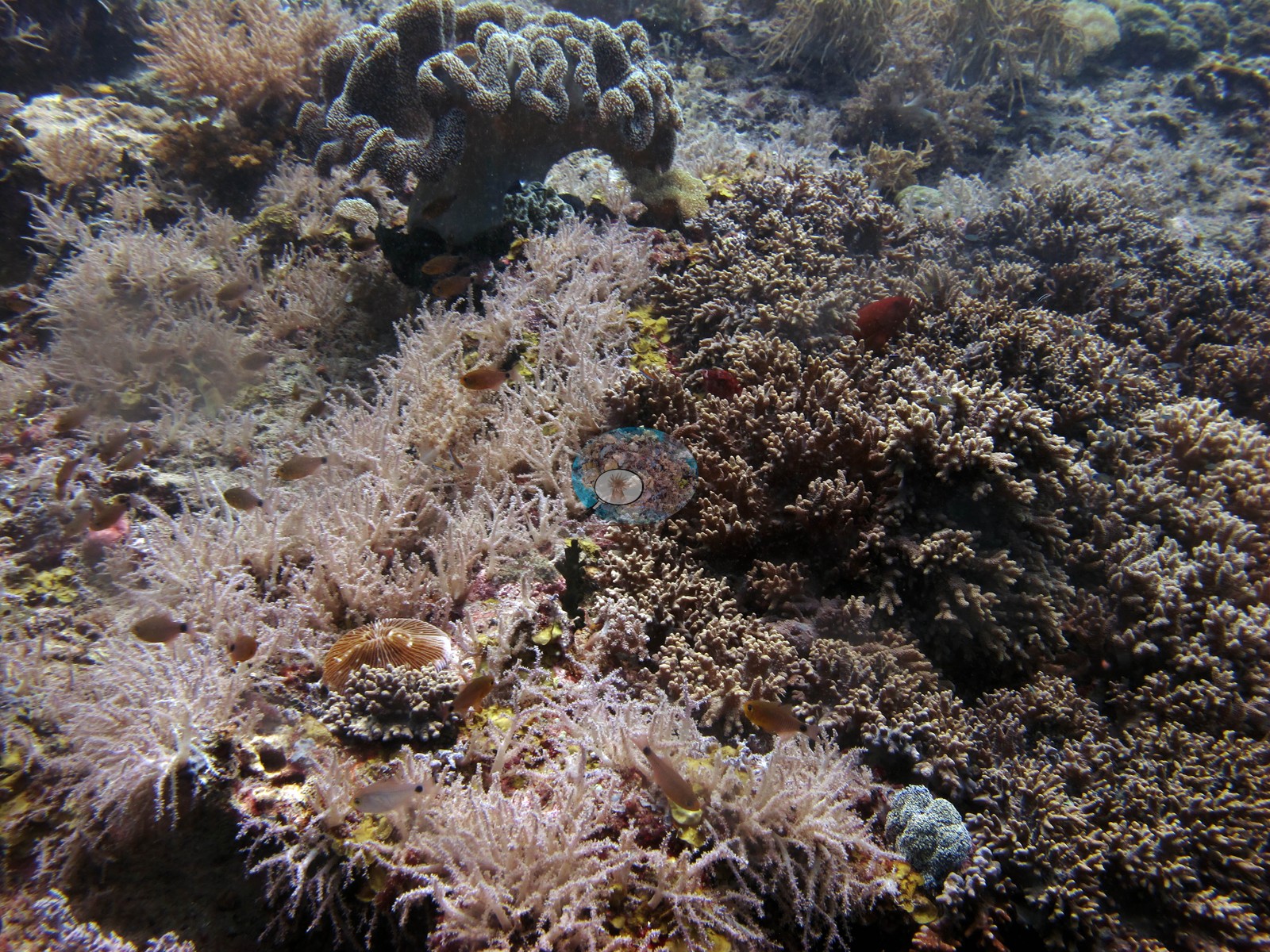 31
31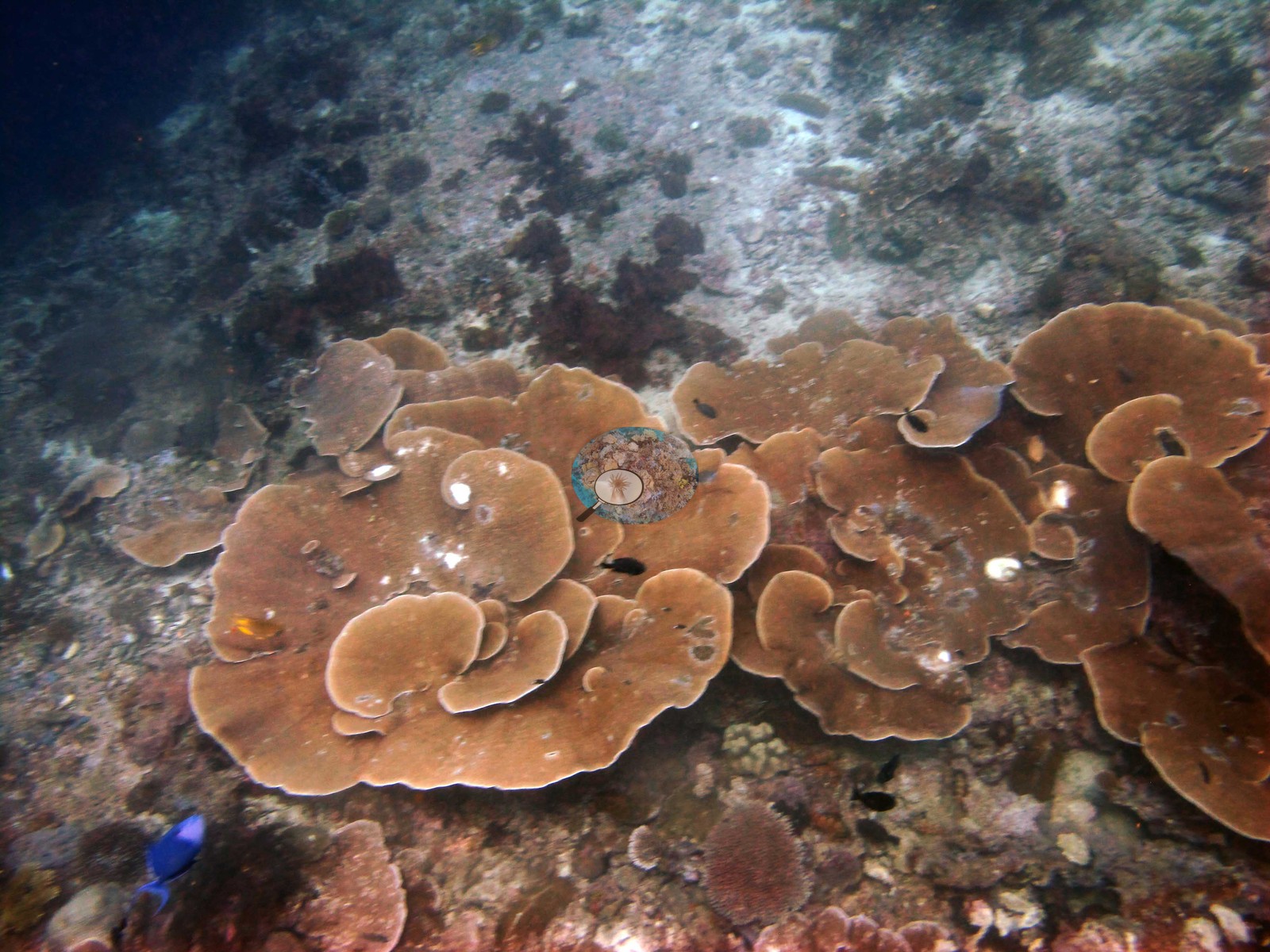 32
32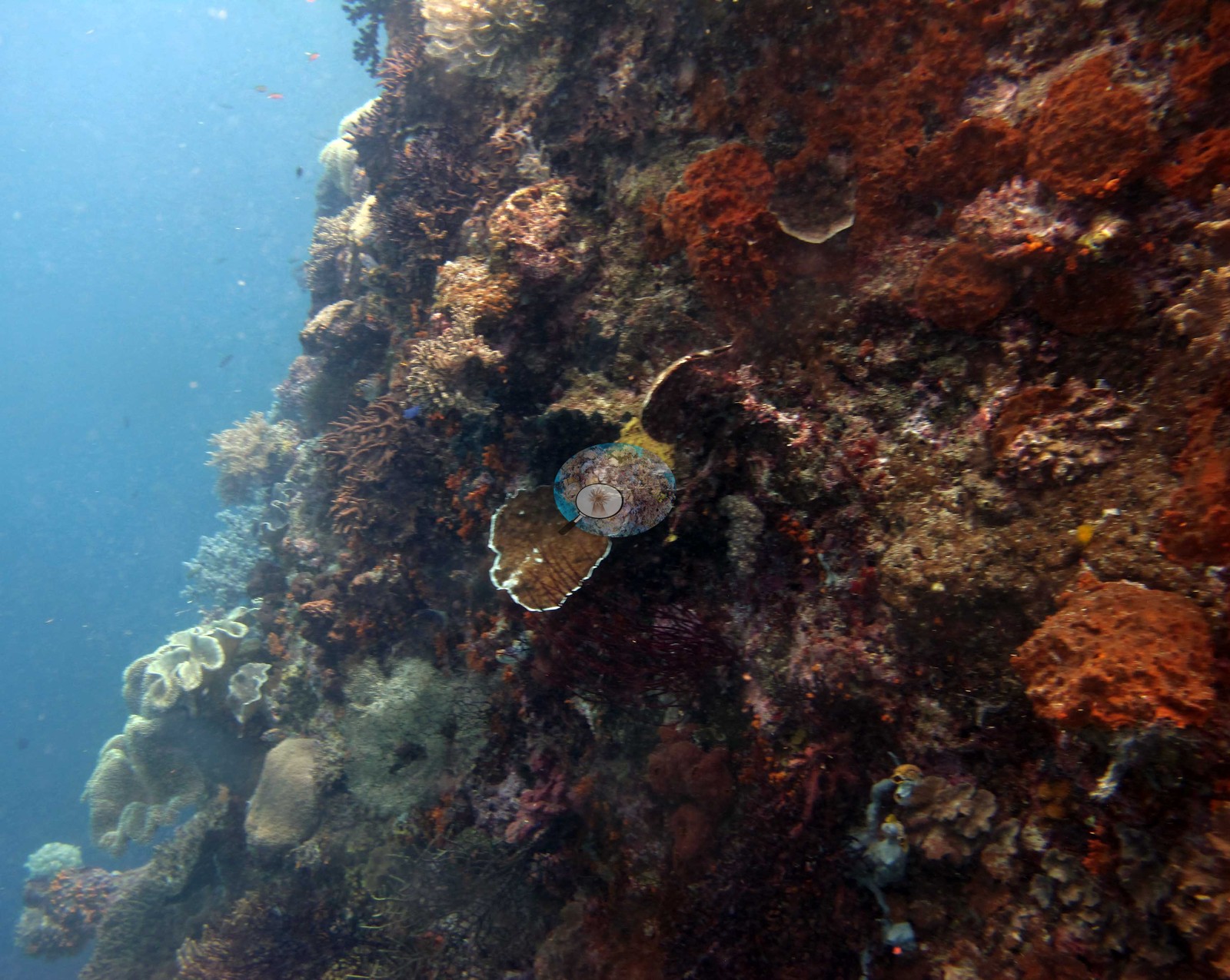 33
33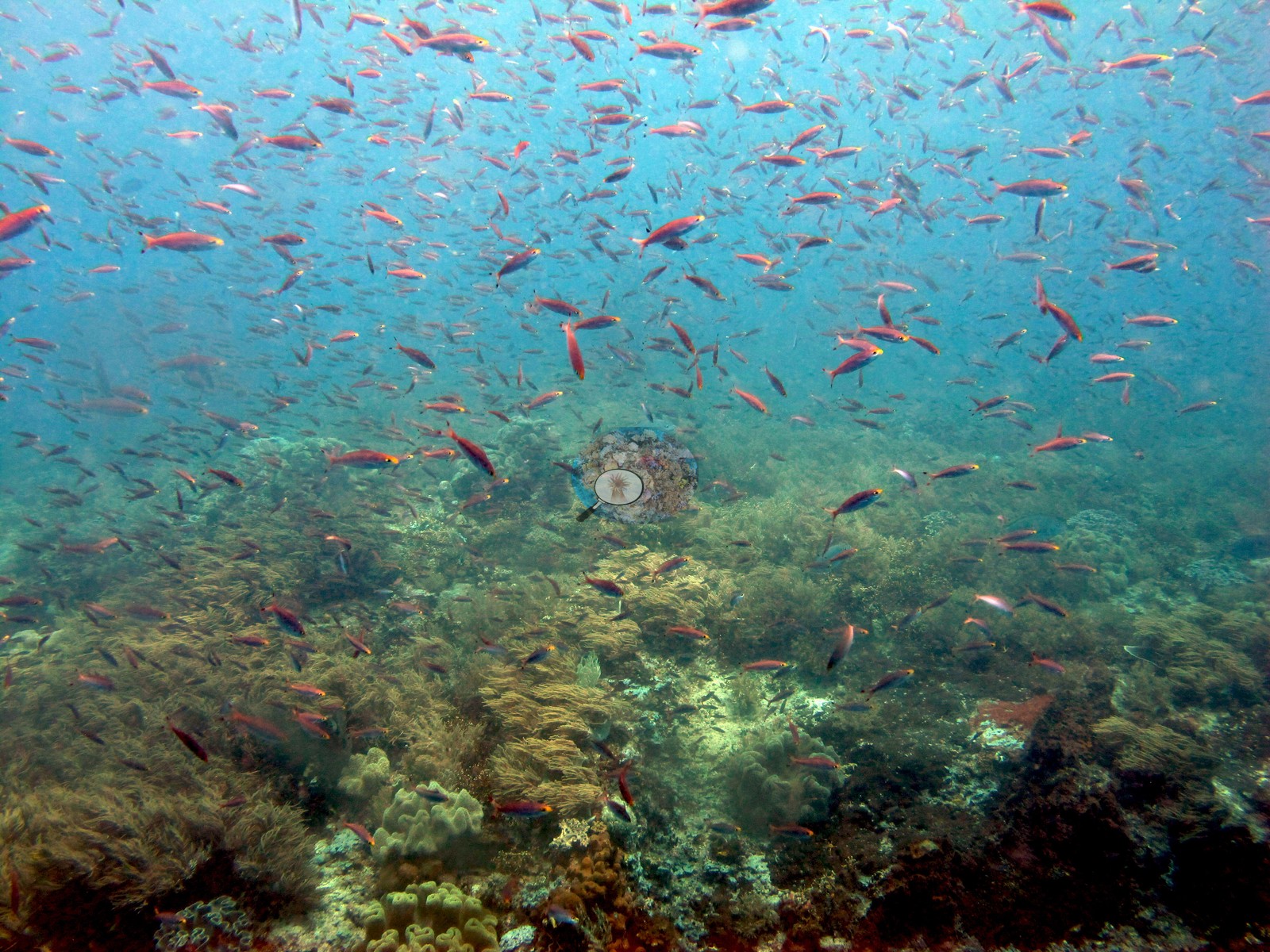 34
34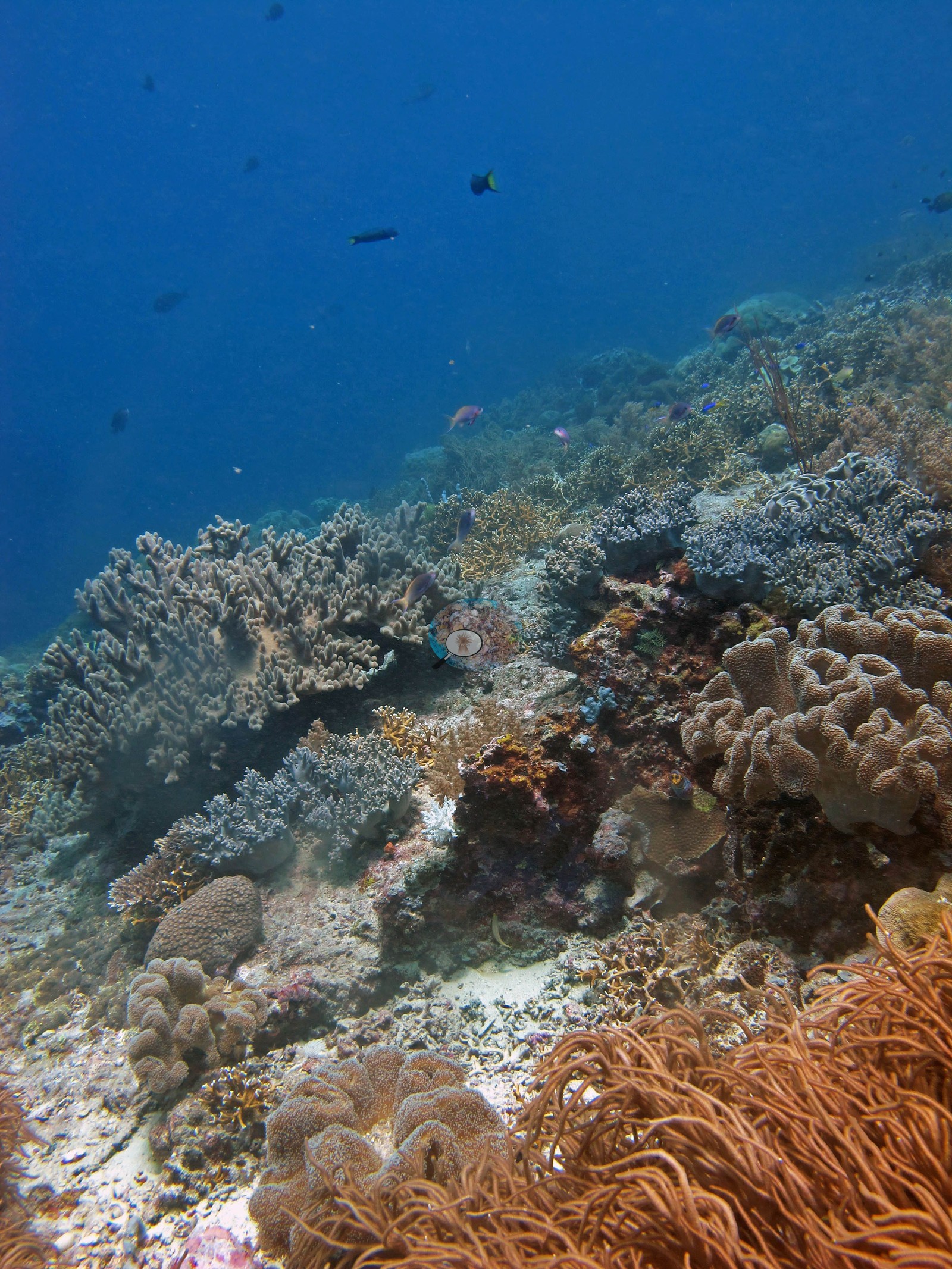 35
35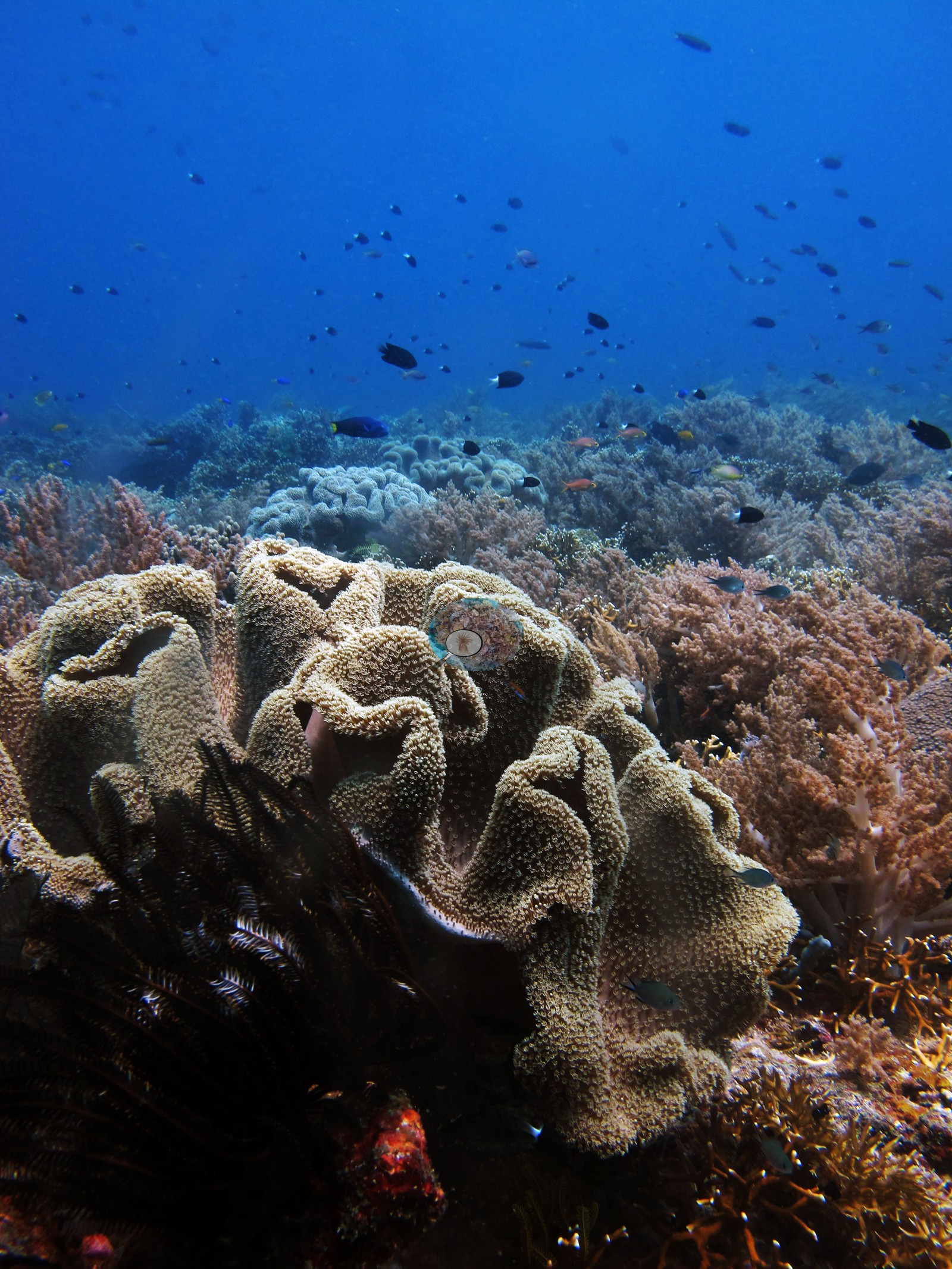 36
36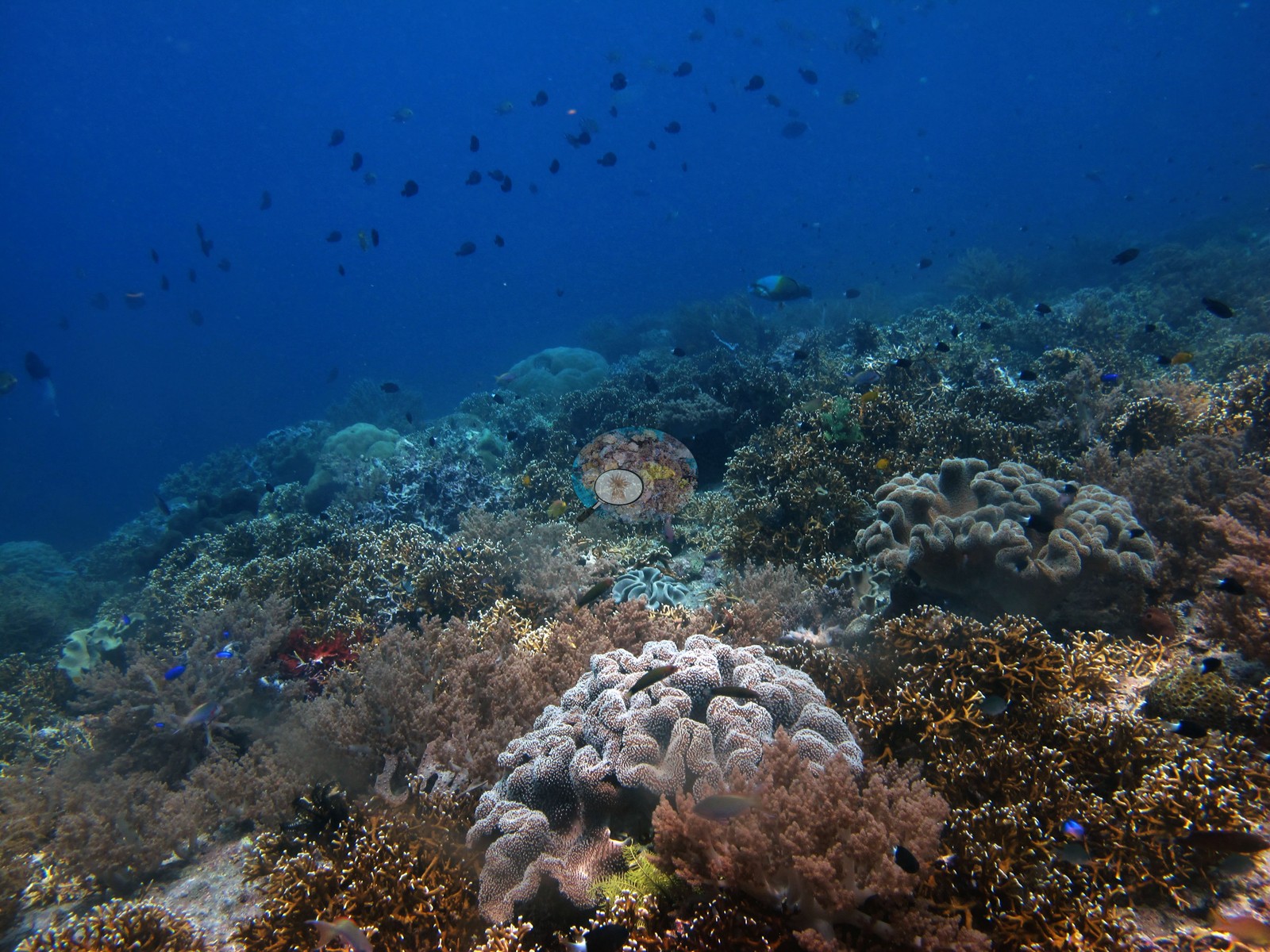 37
37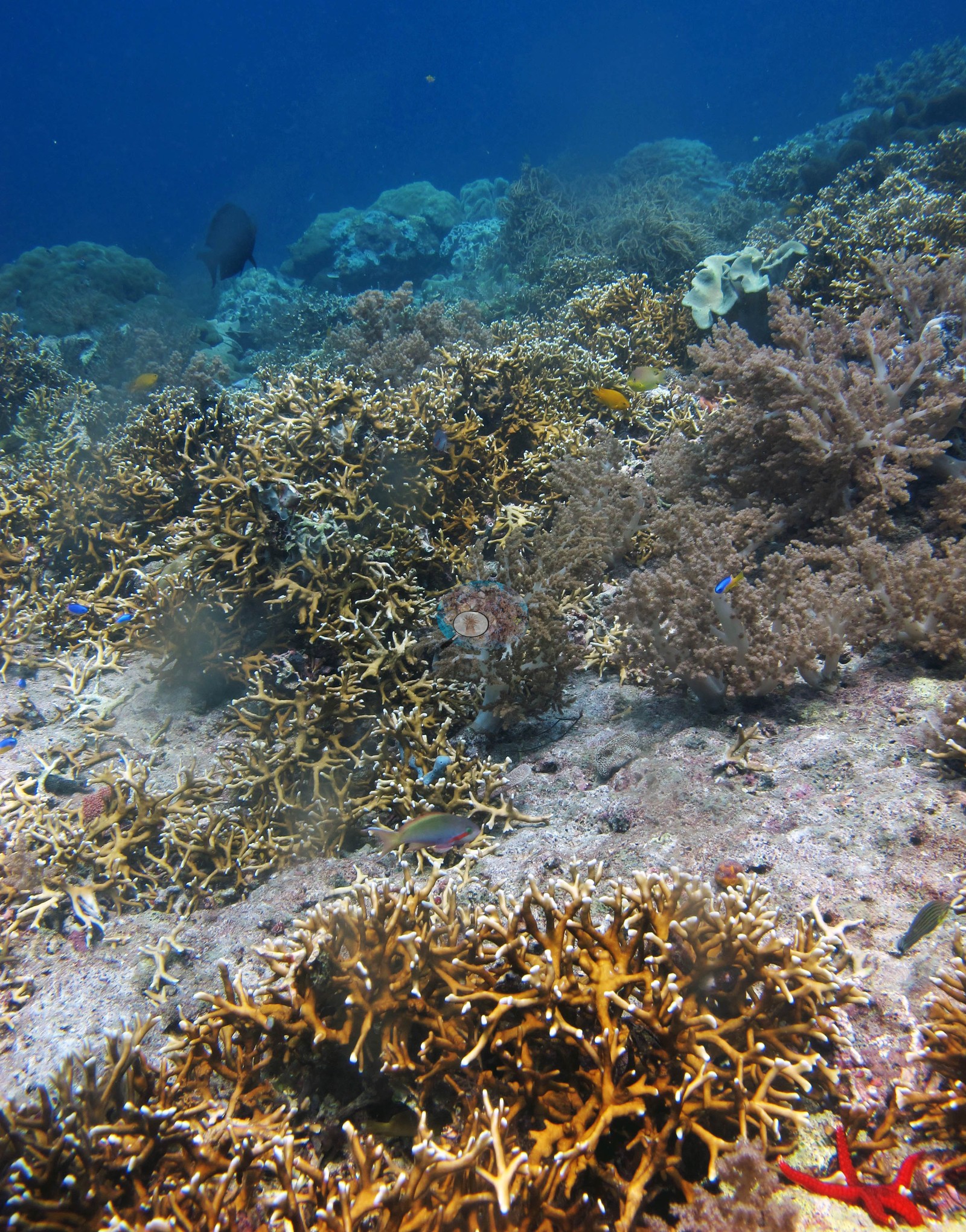 38
38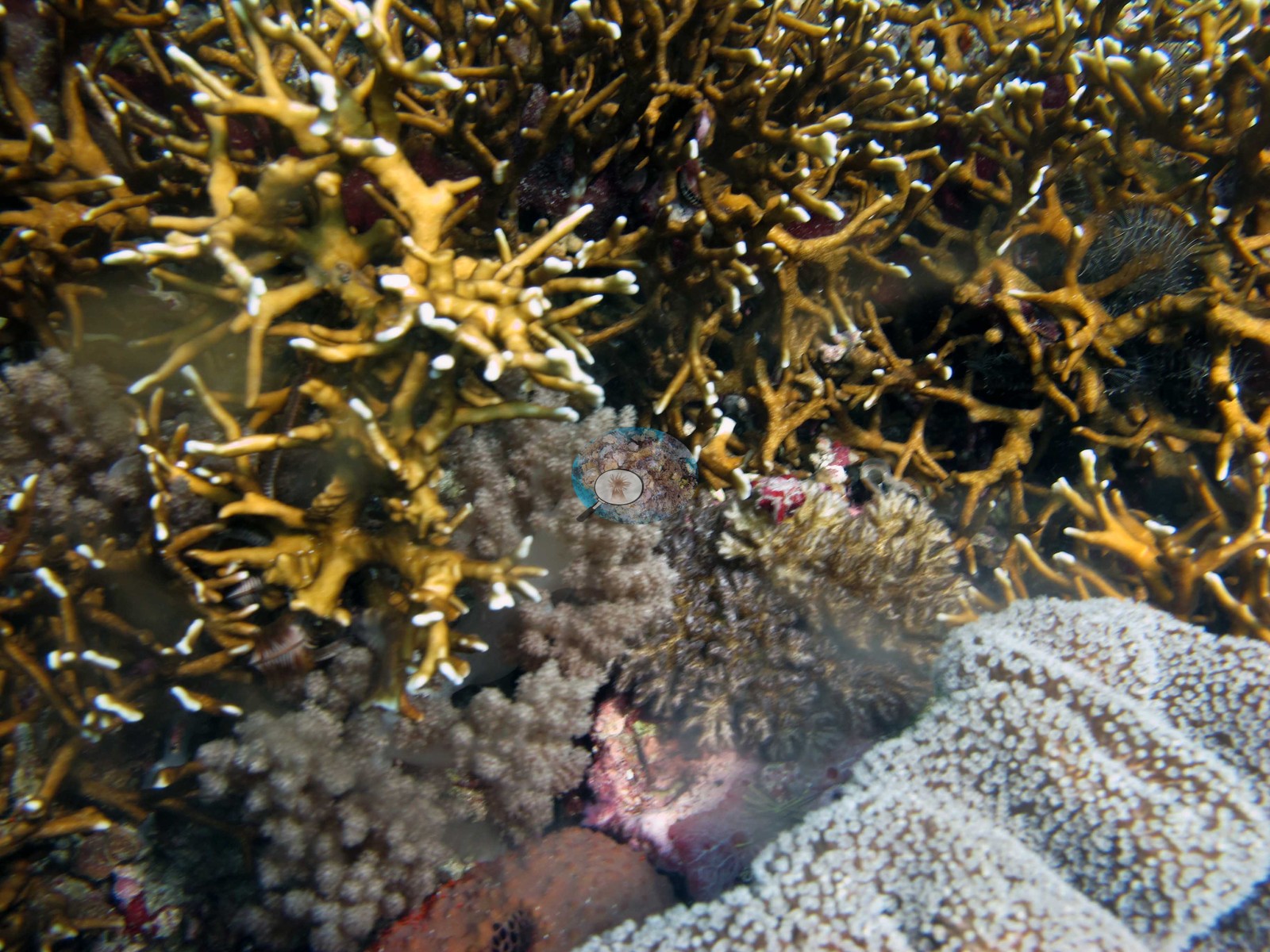 40
40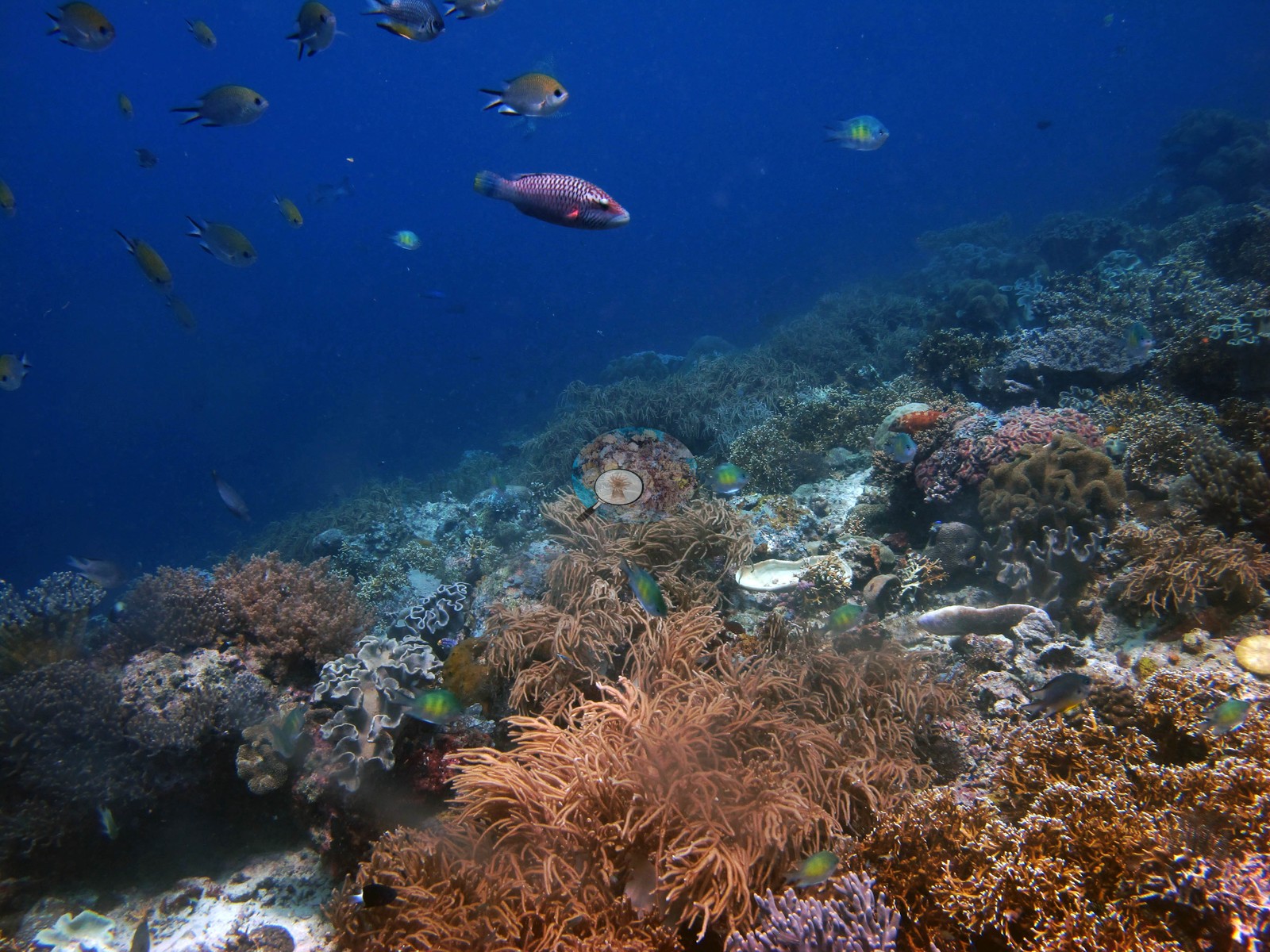 41
41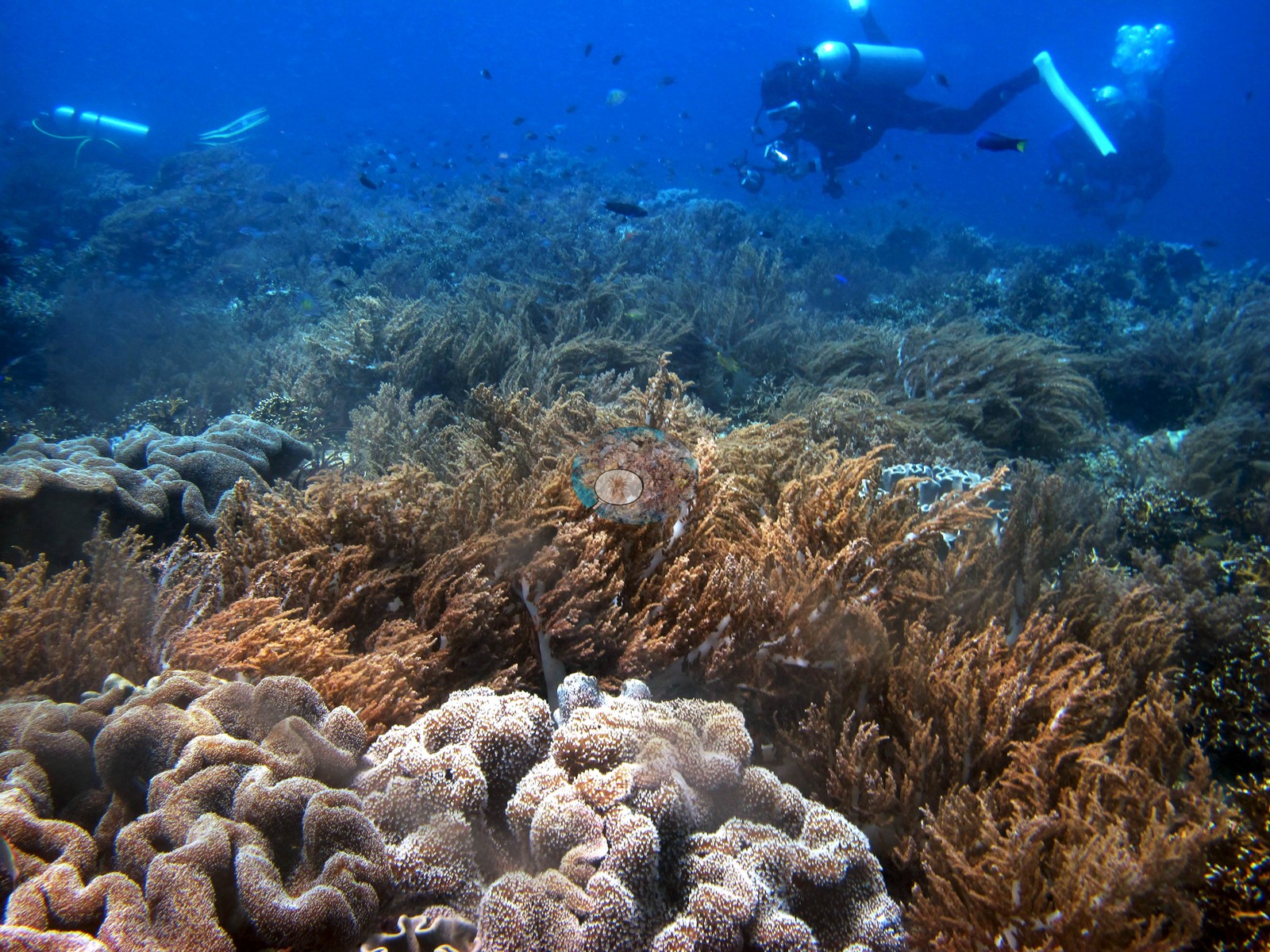 42
42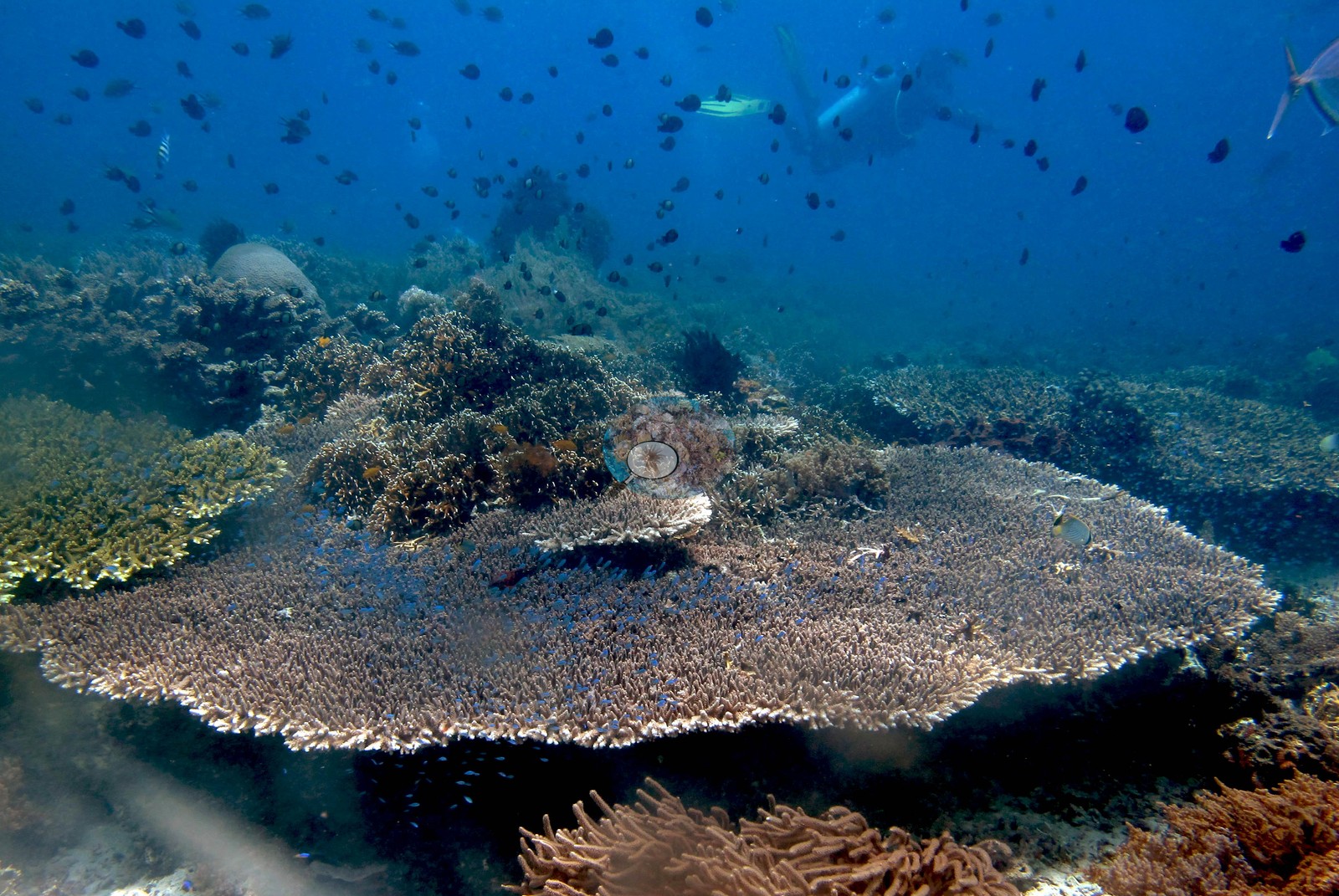 43
43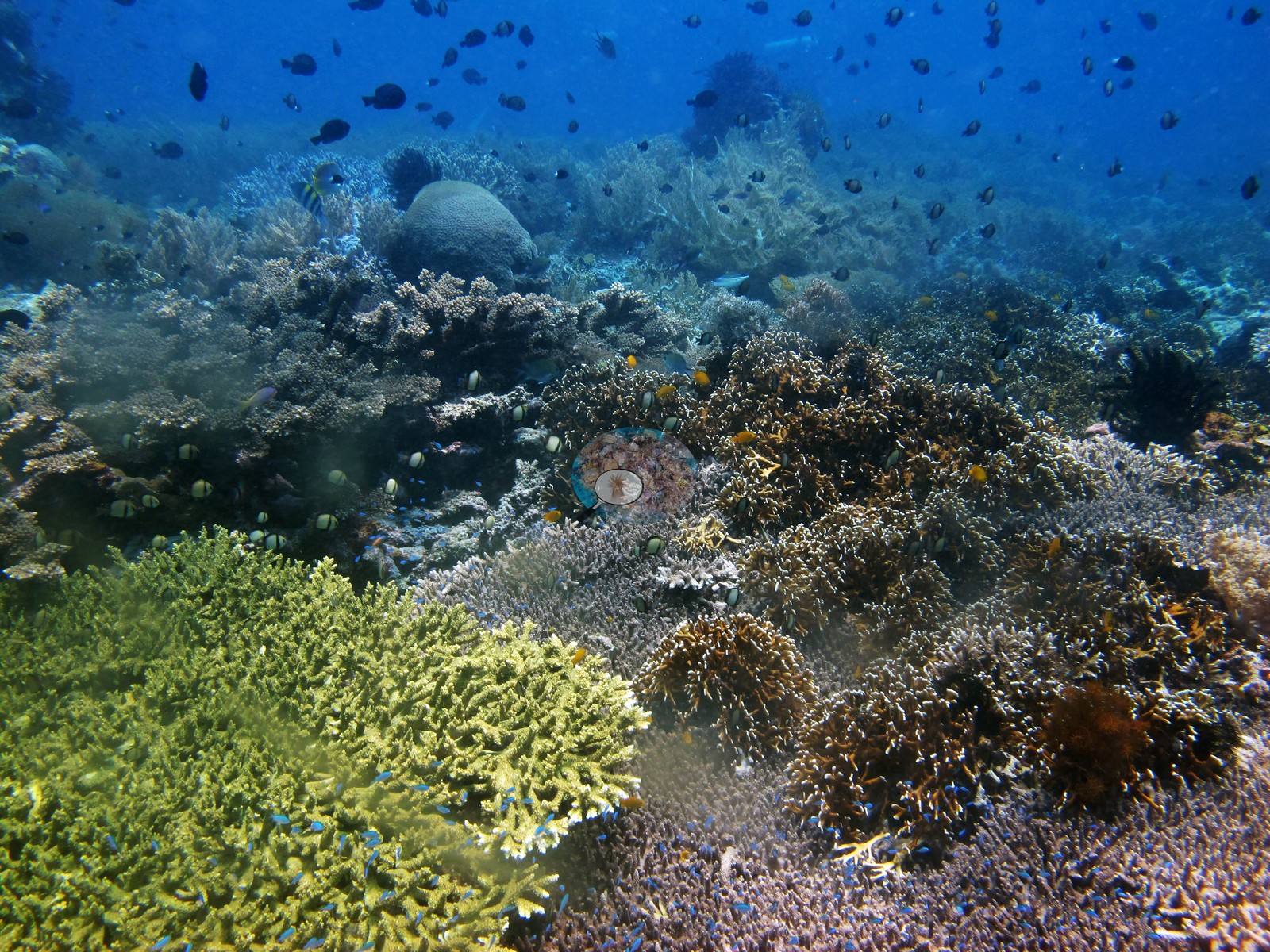 44
44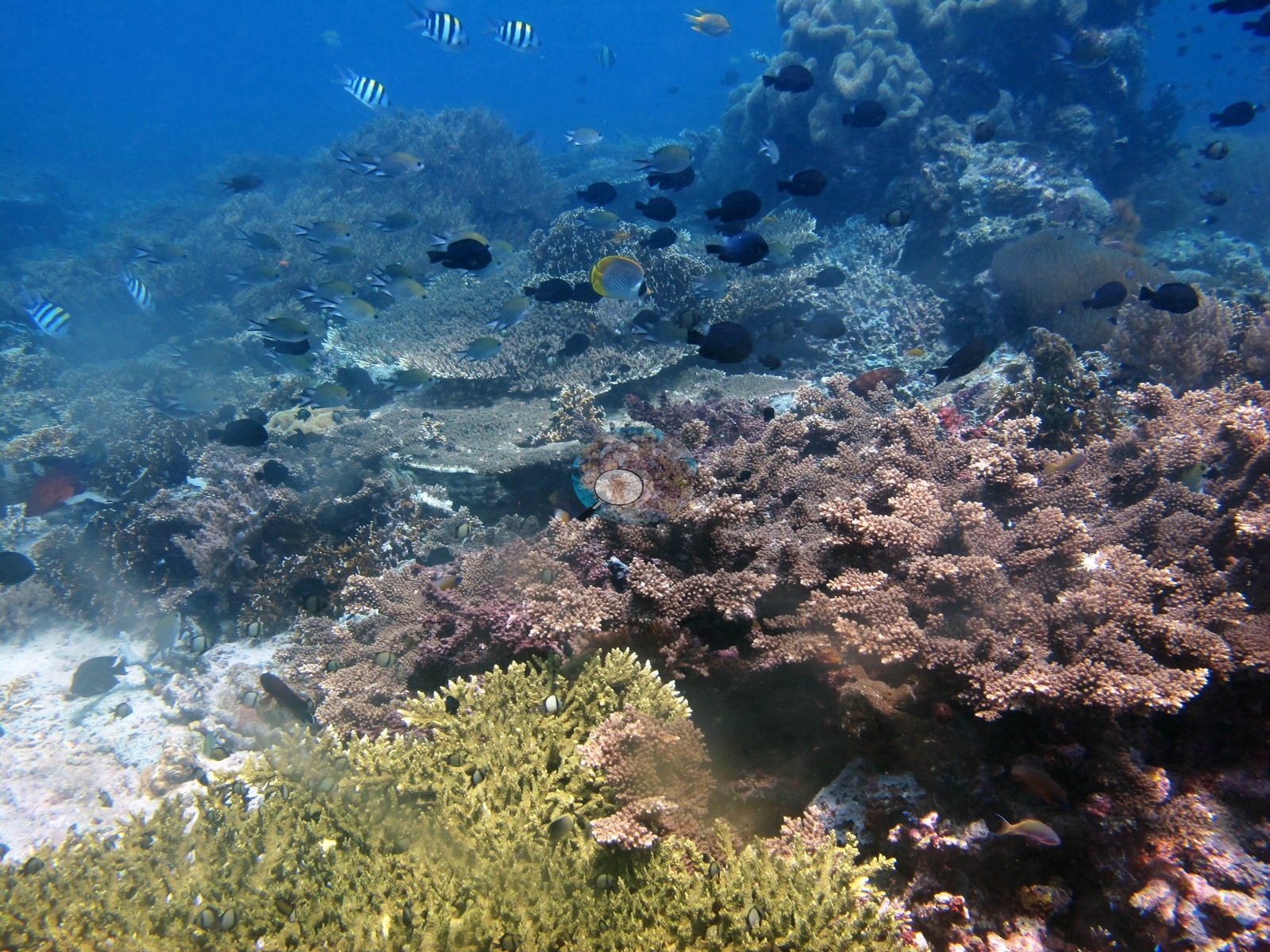 45
45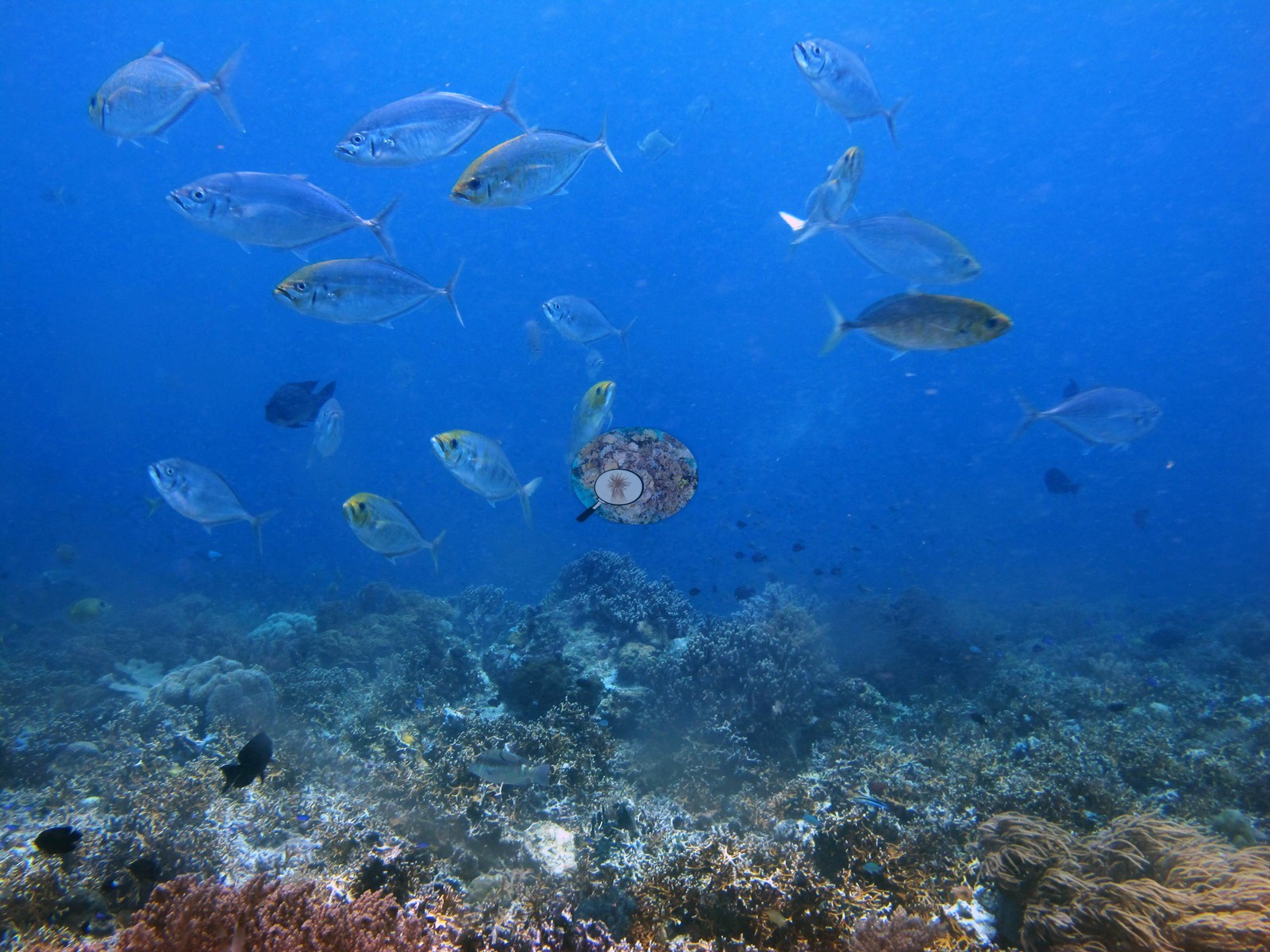 46
46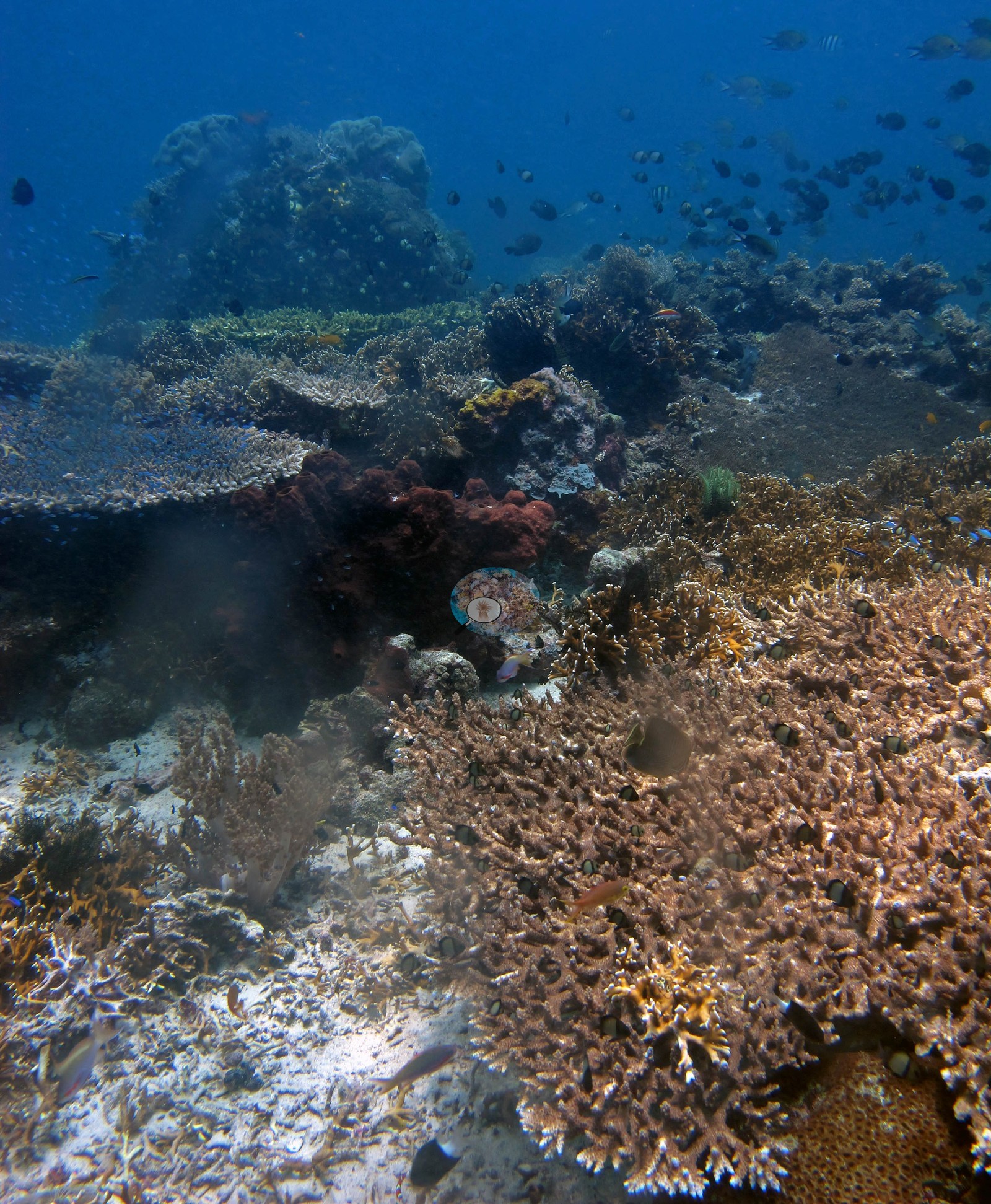 47
47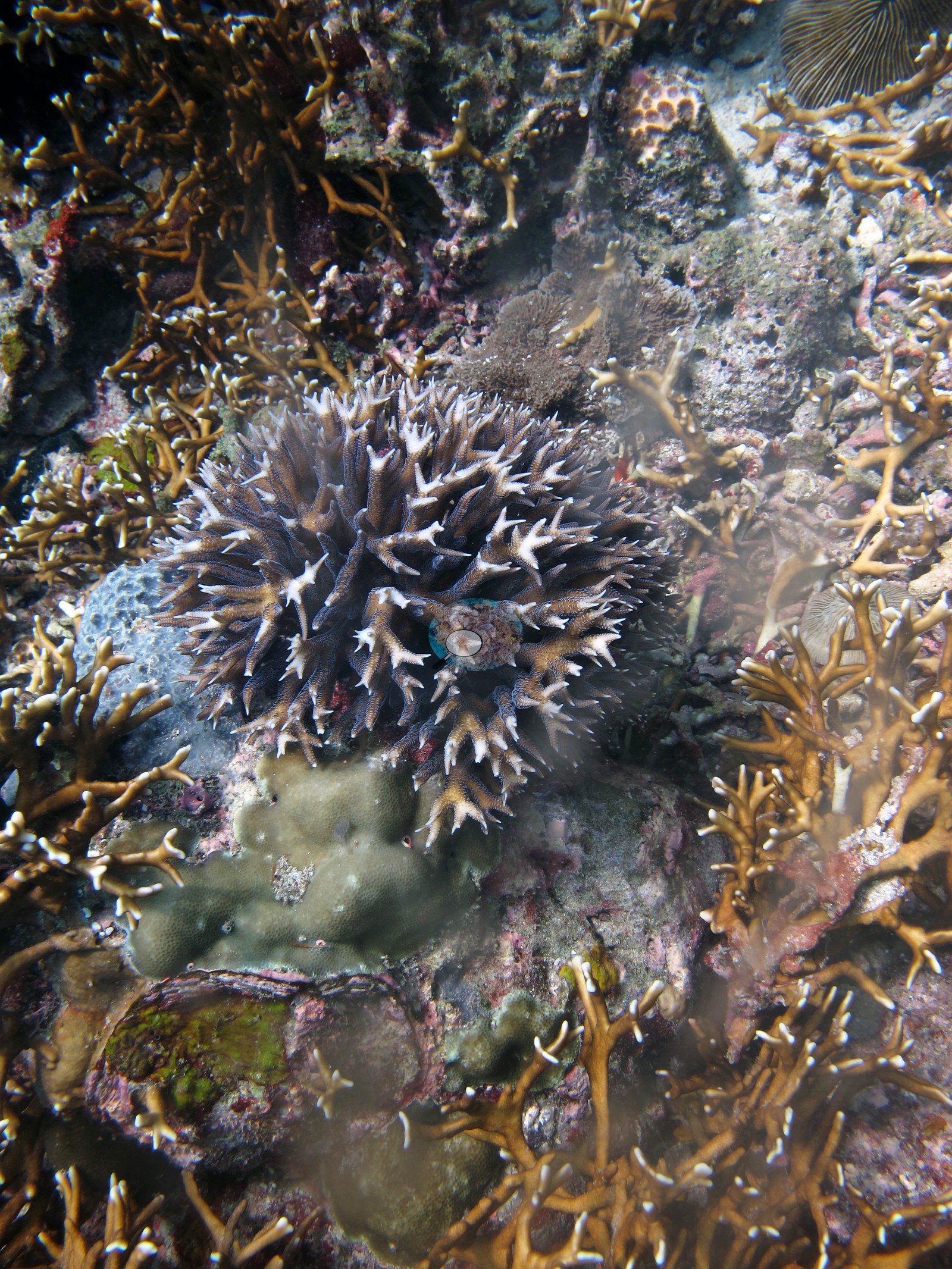 48
48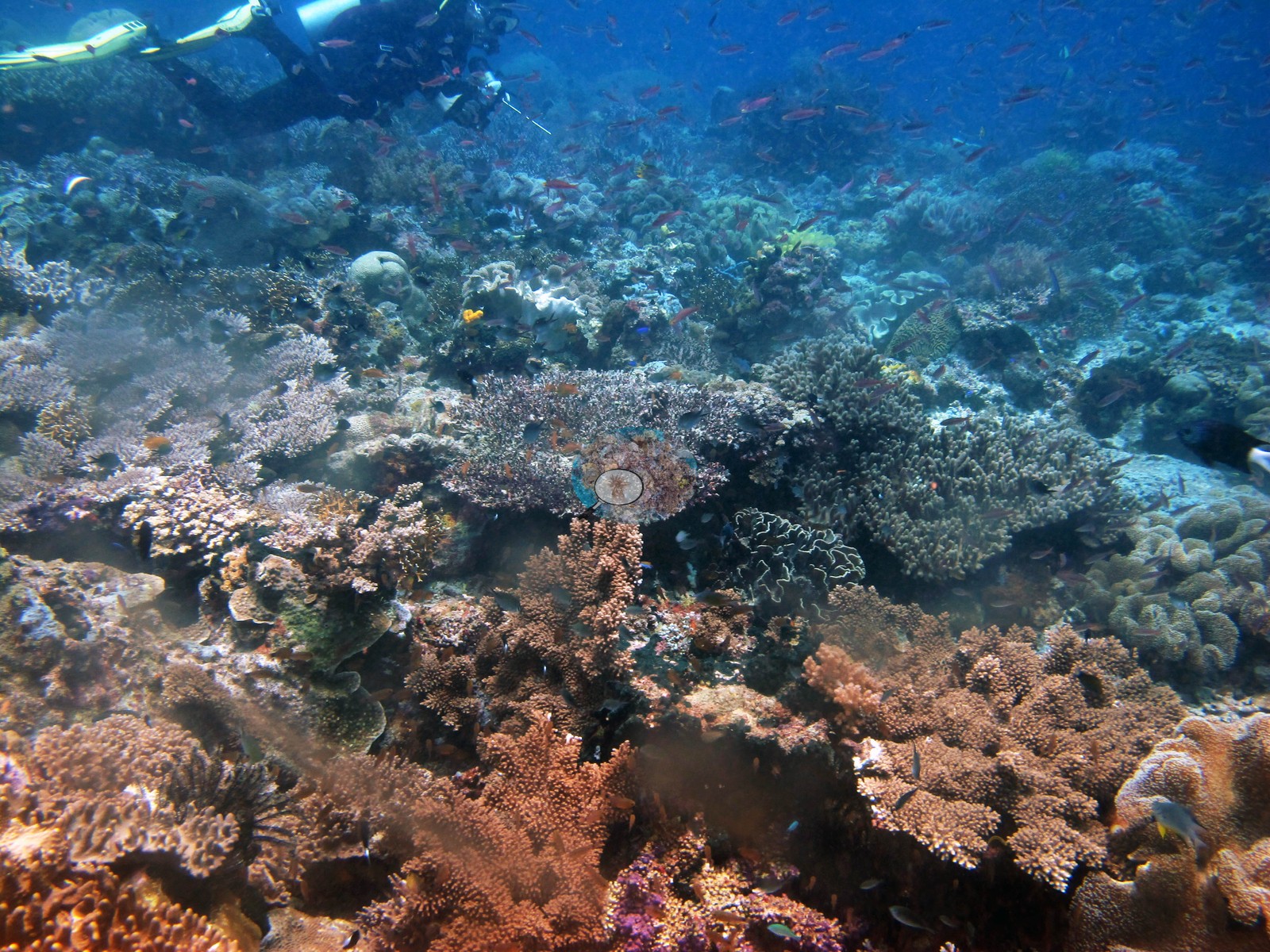 49
49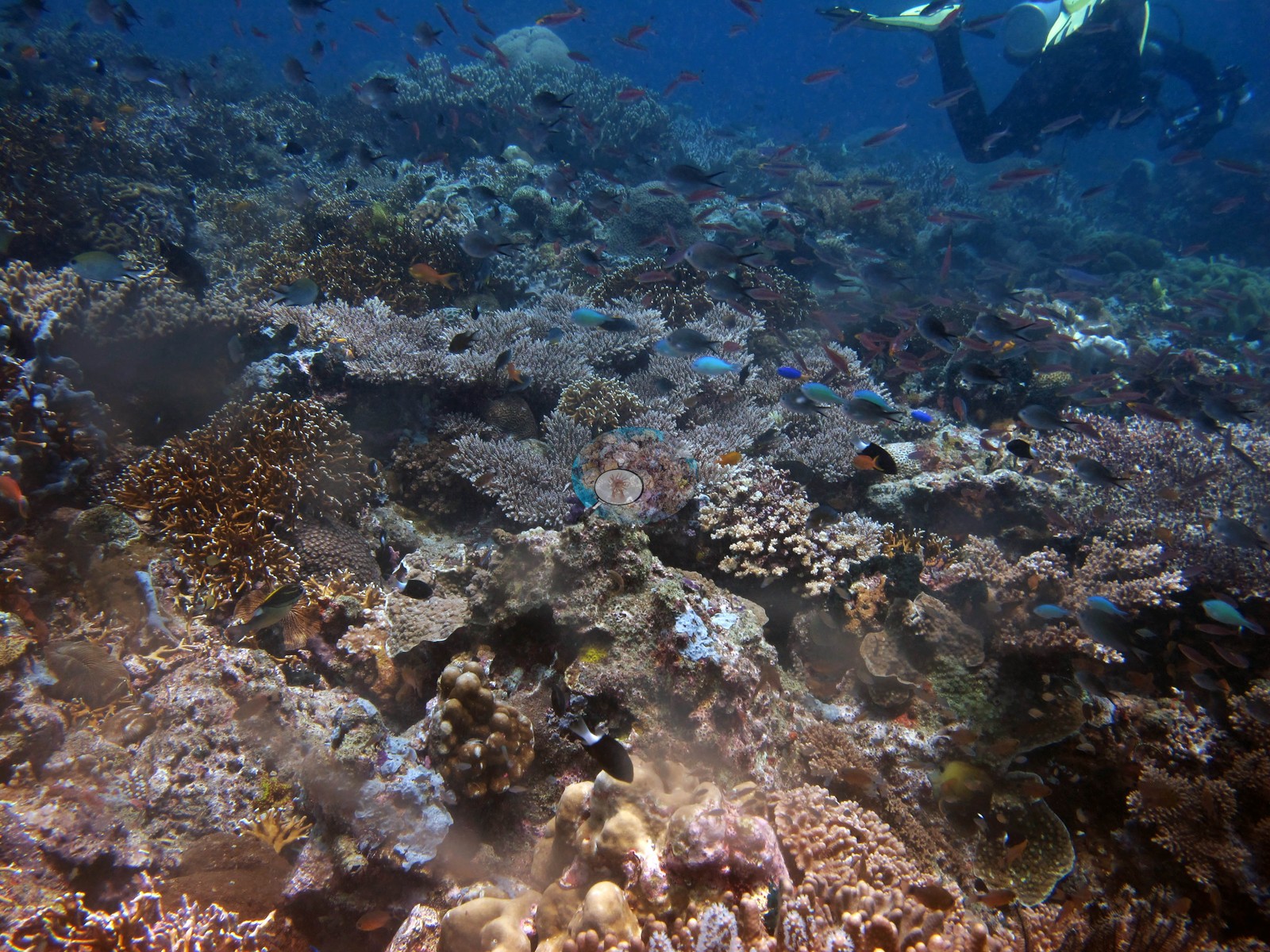 50
50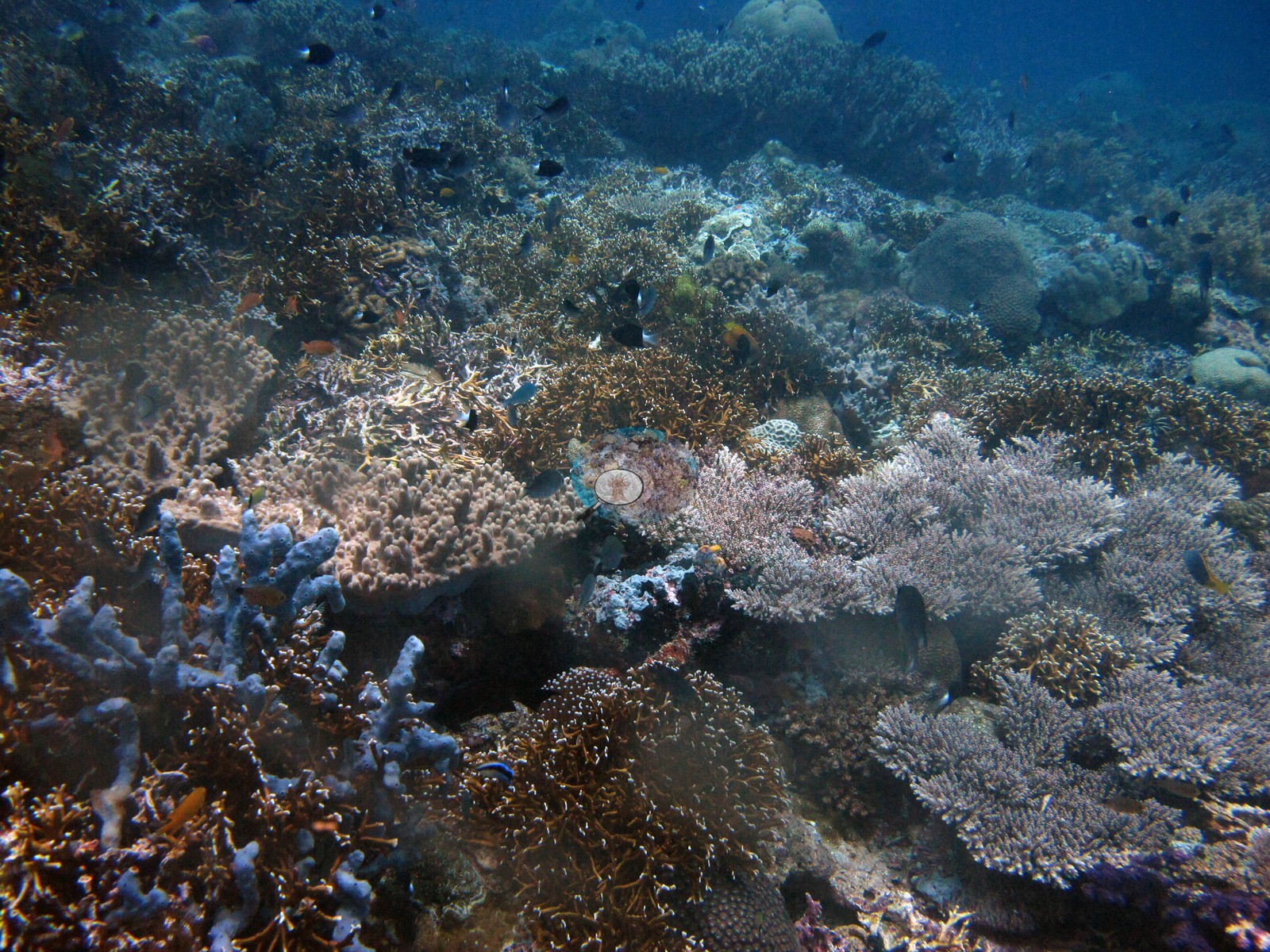 51
51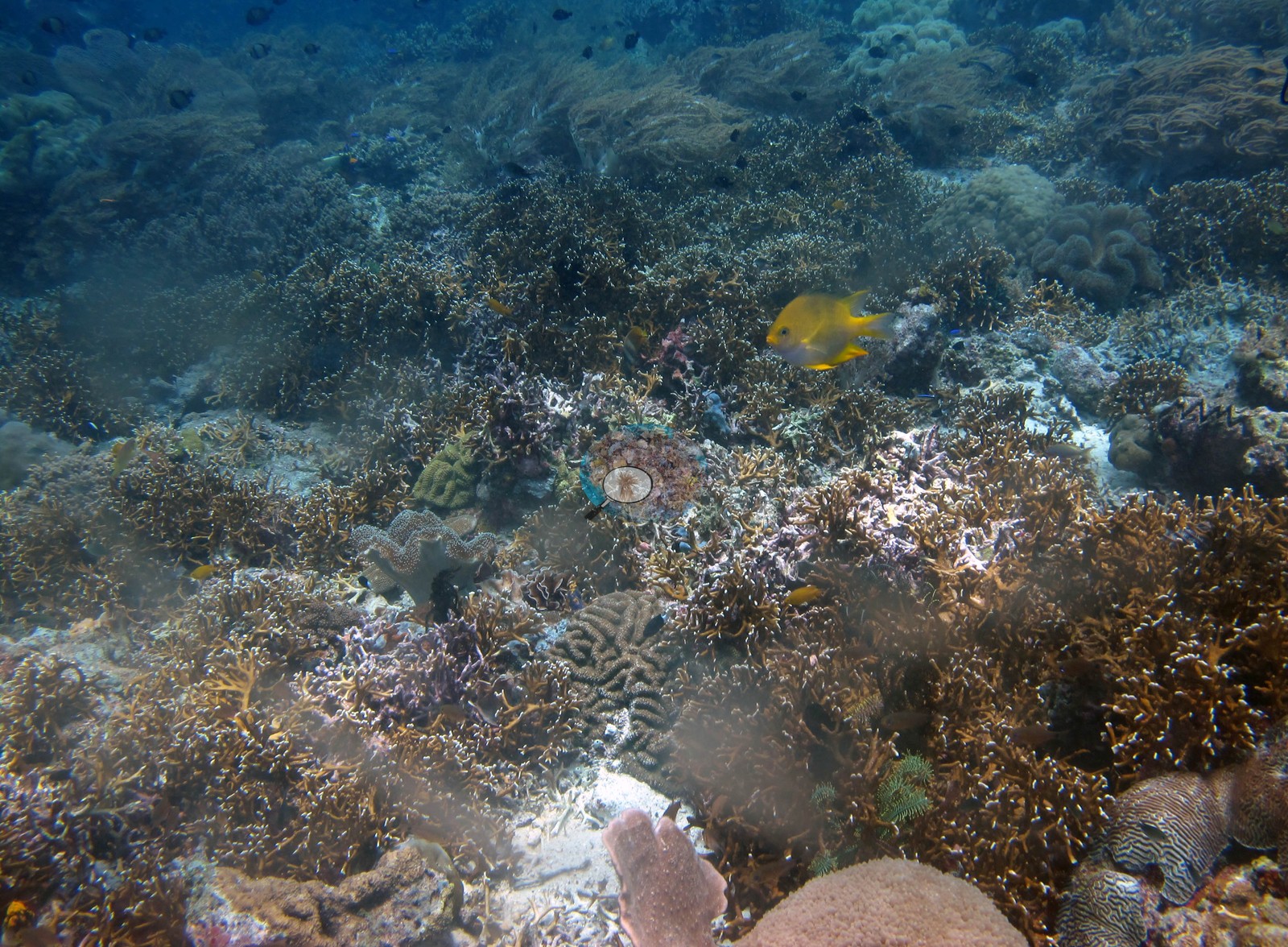 53
53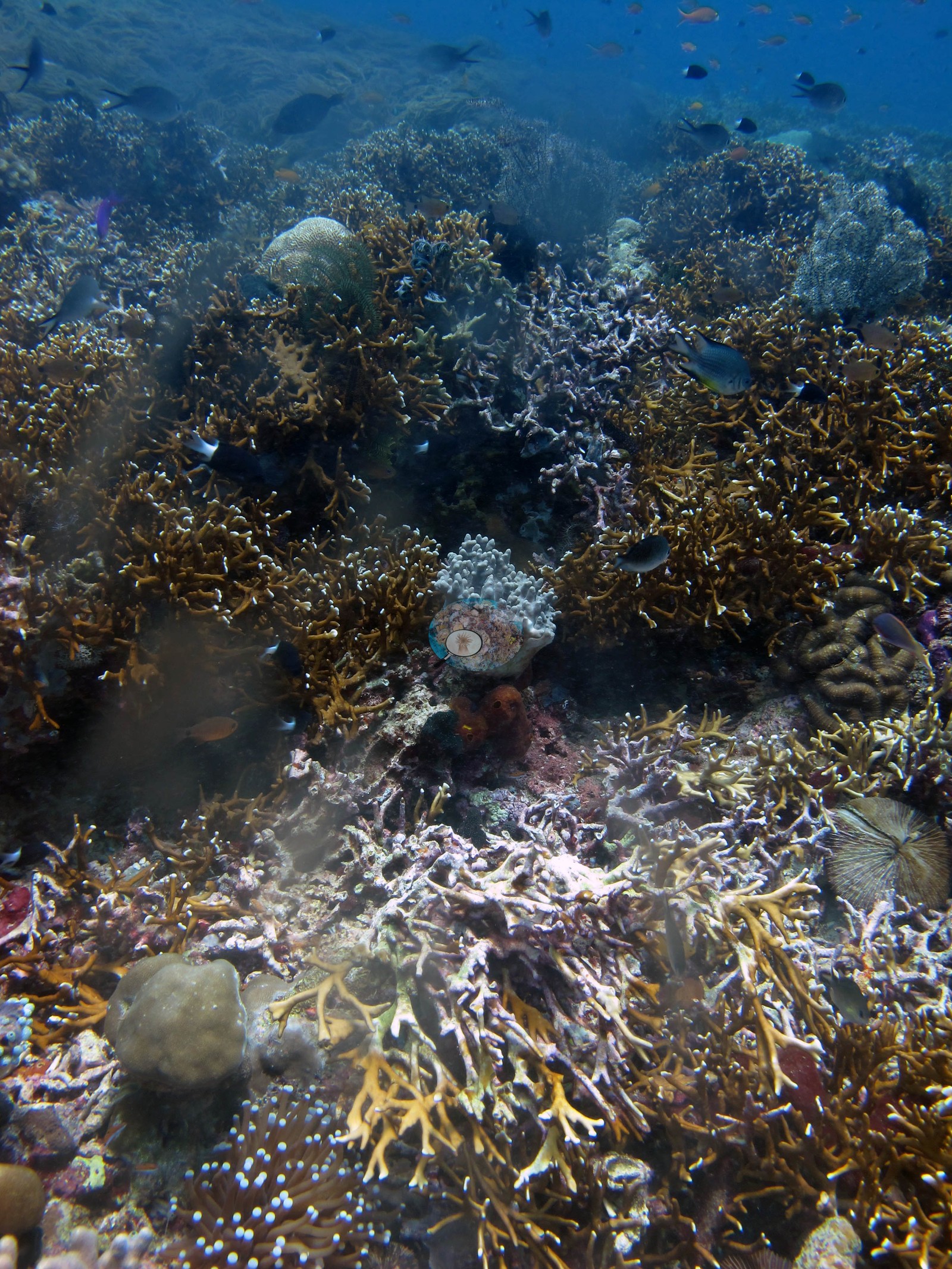 54
54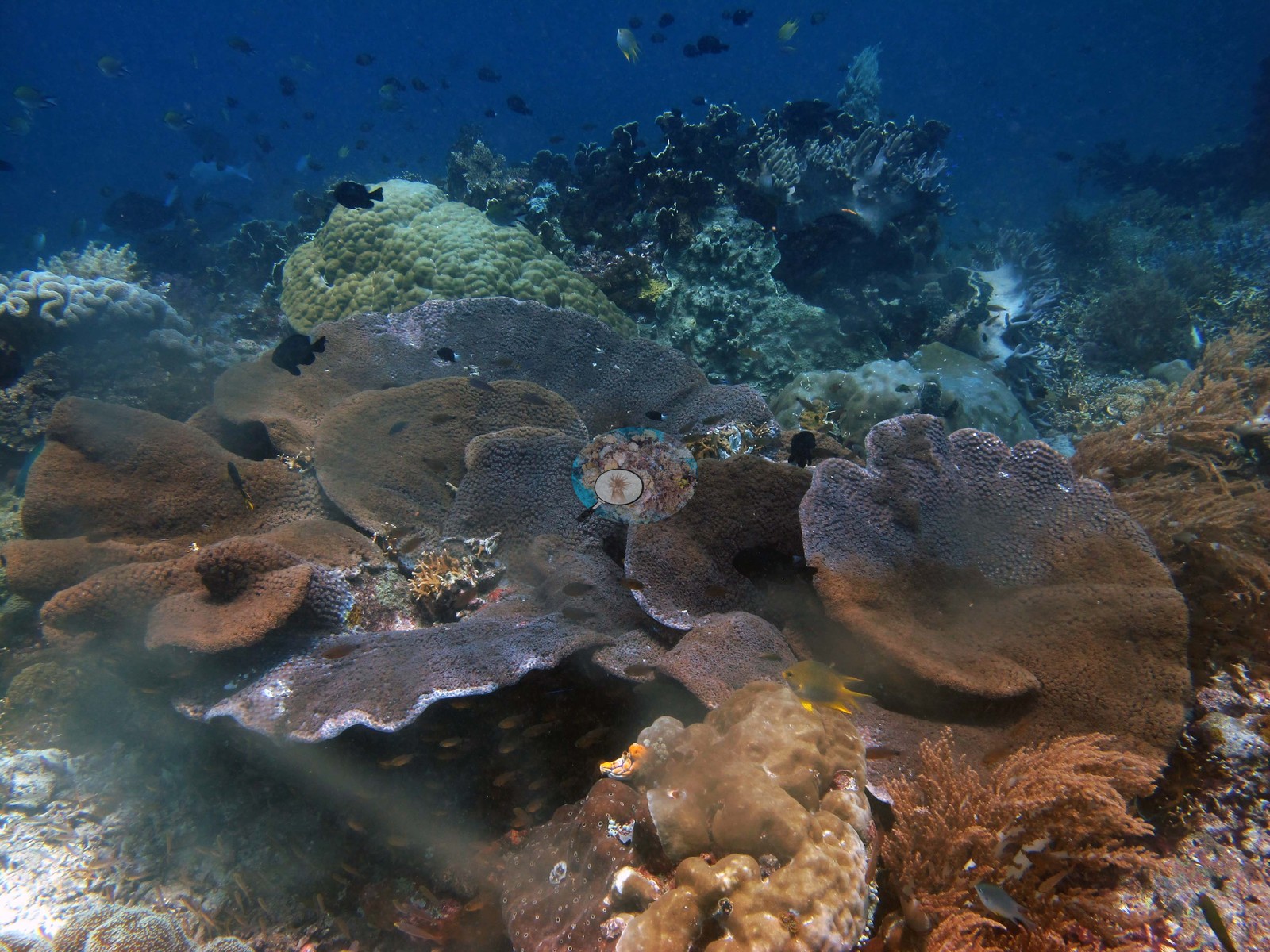 55
55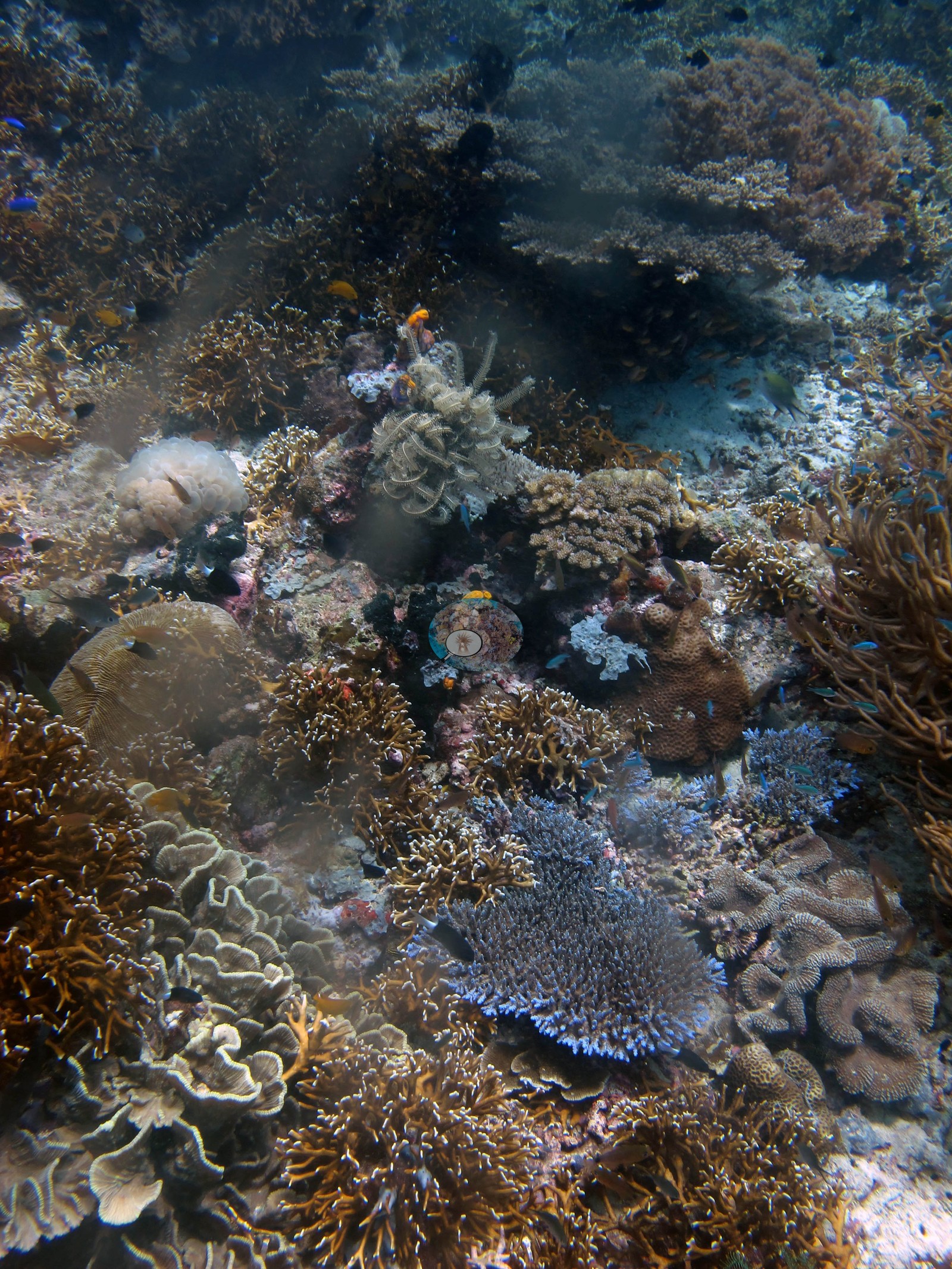 56
56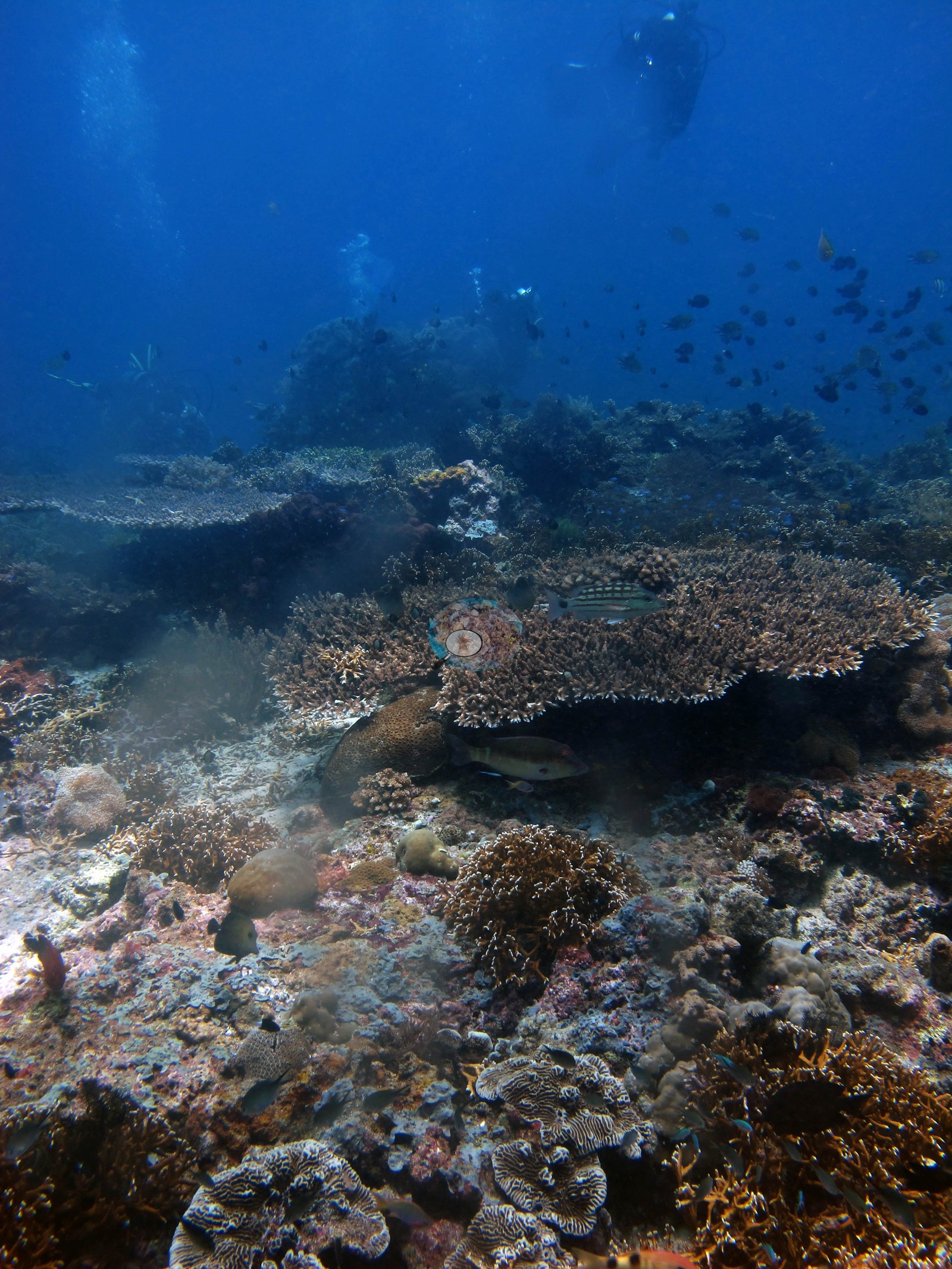 57
57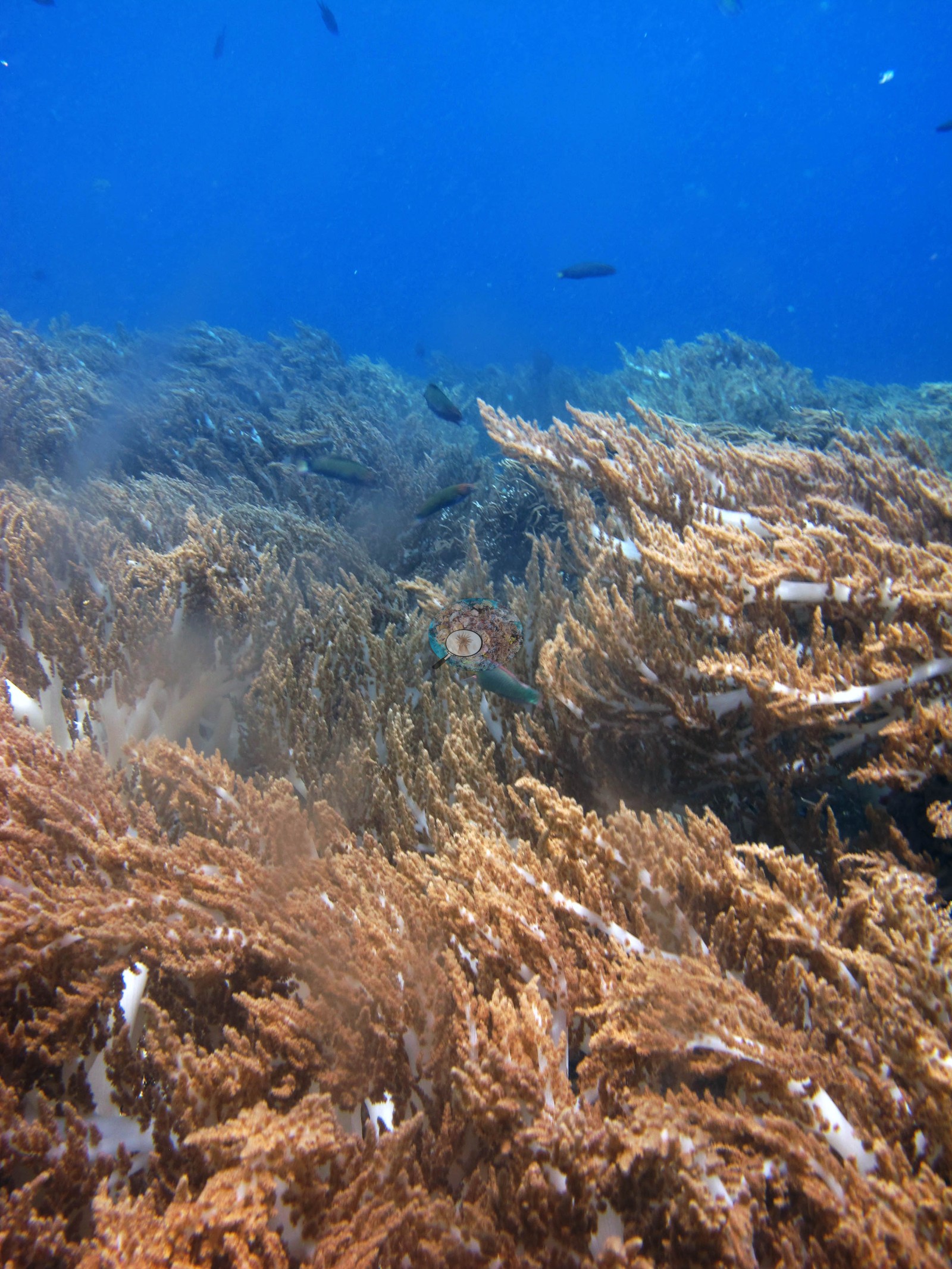 58
58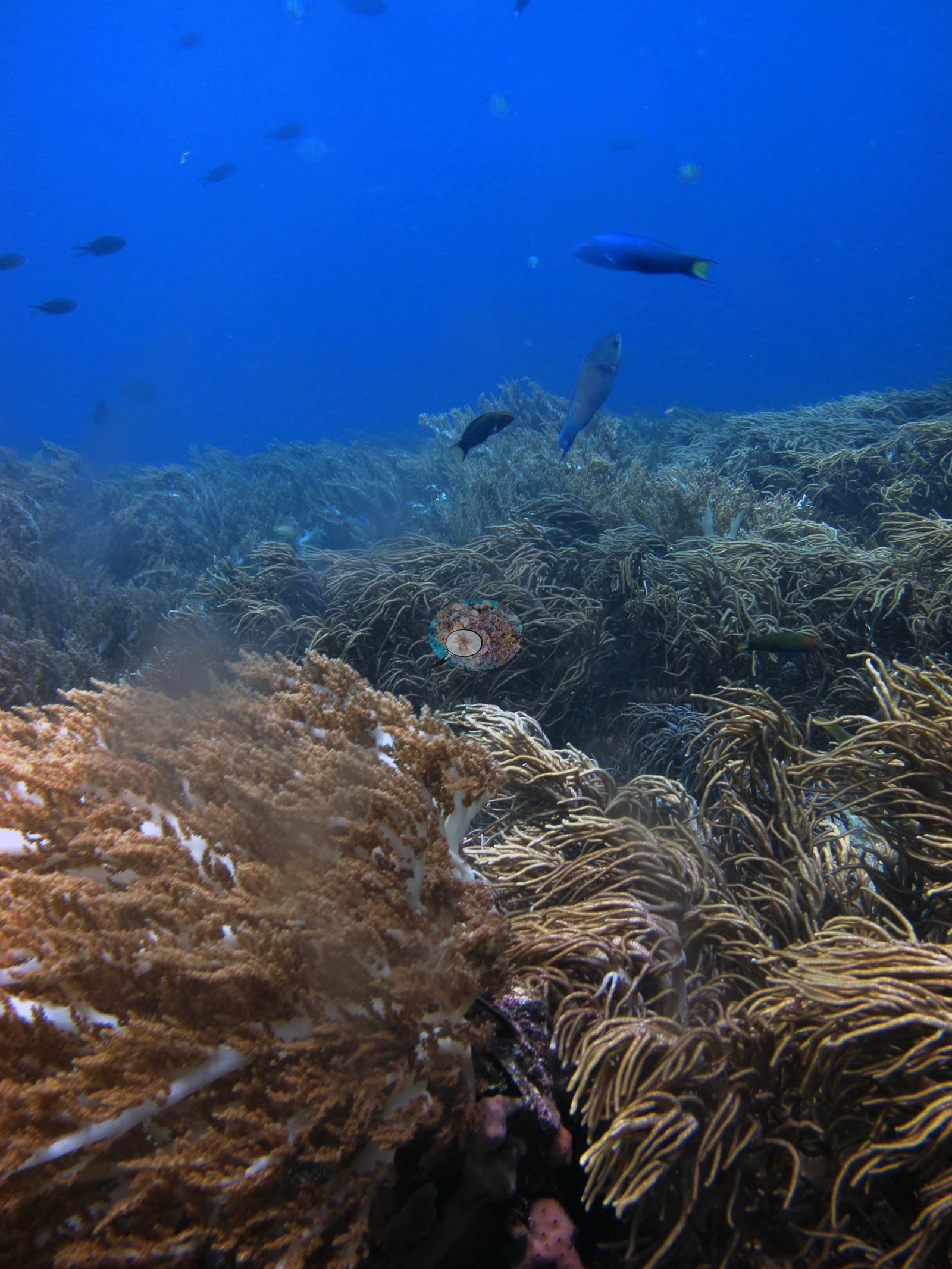 59
59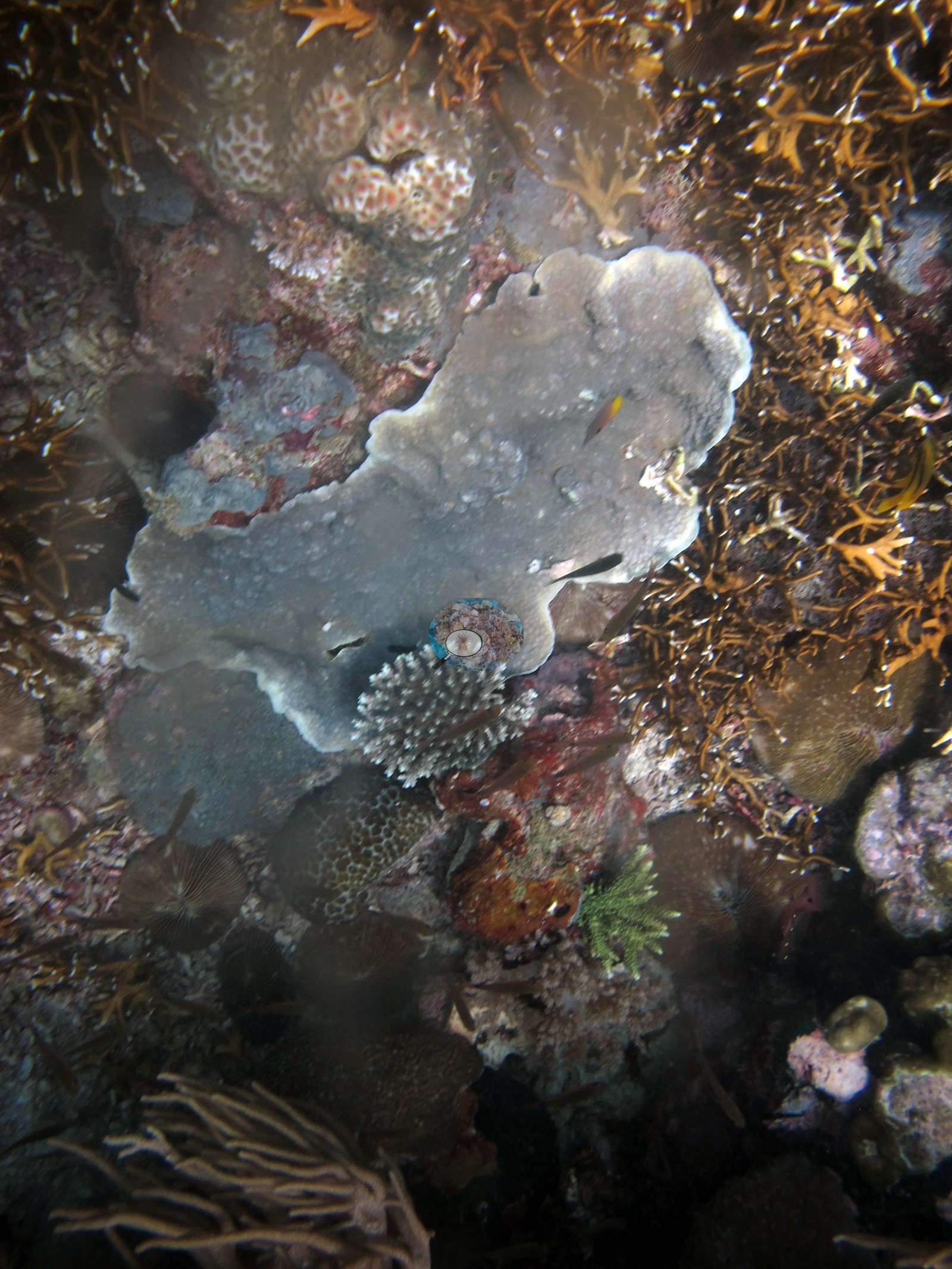 60
60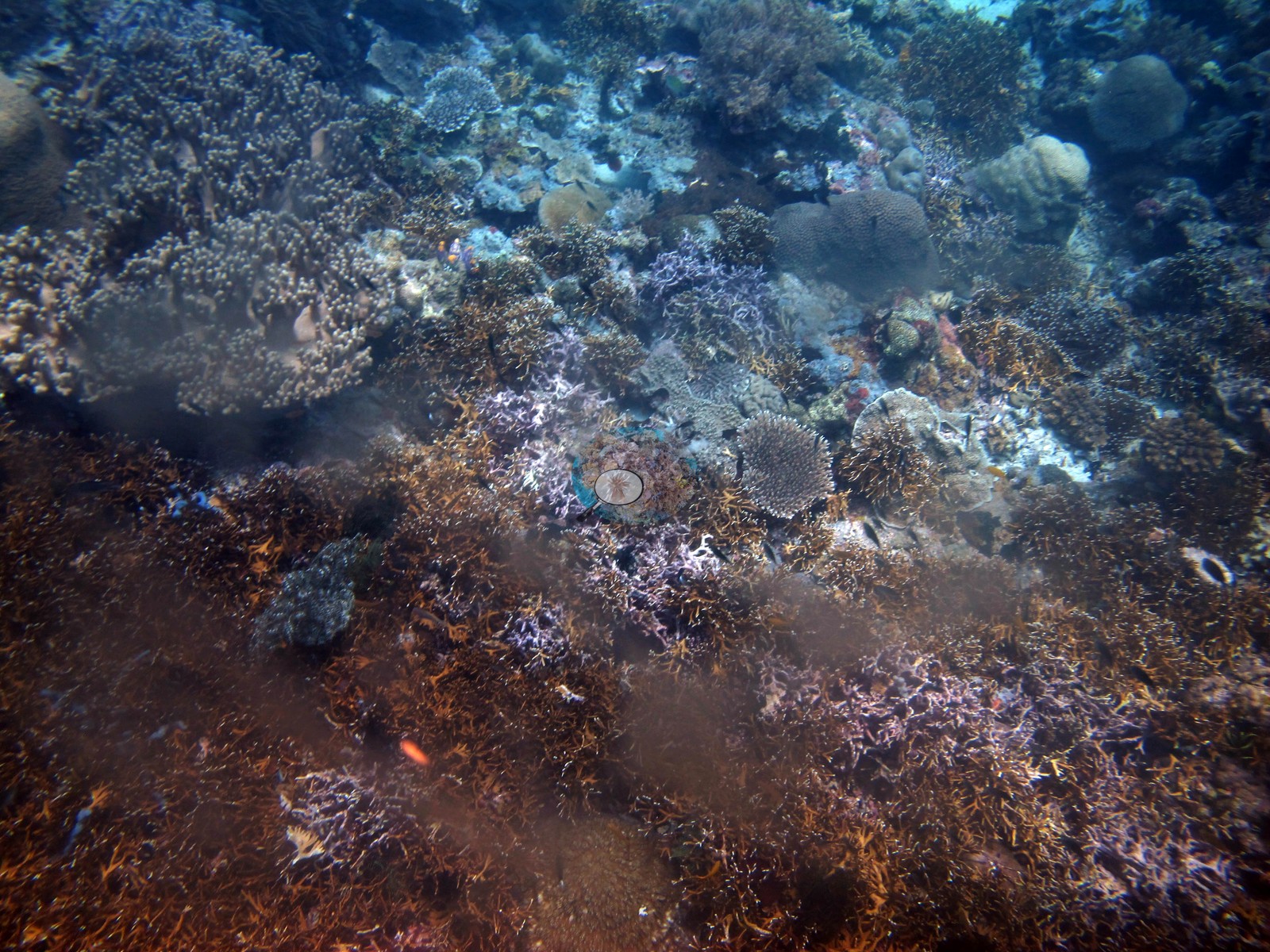 61
61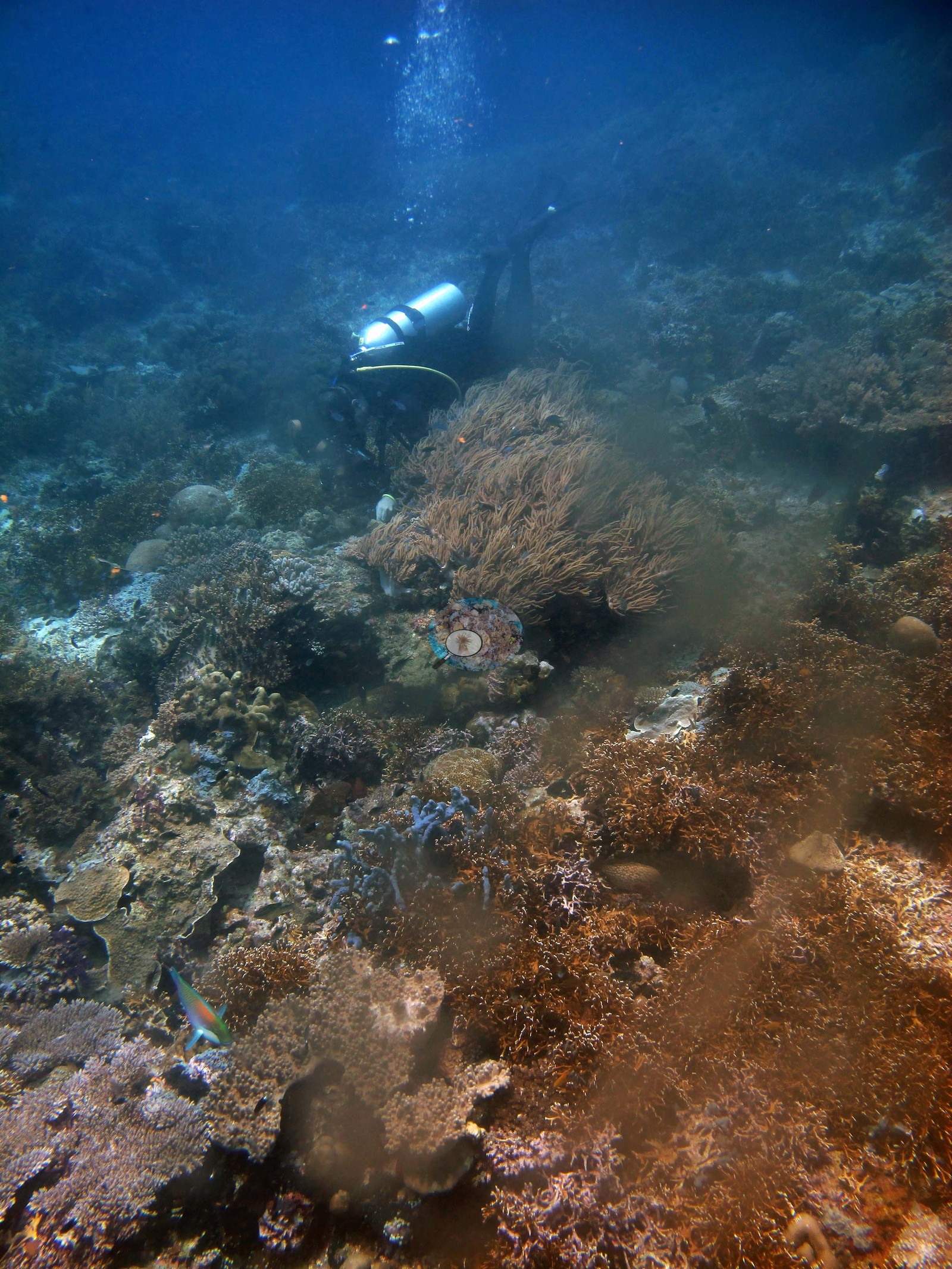 62
62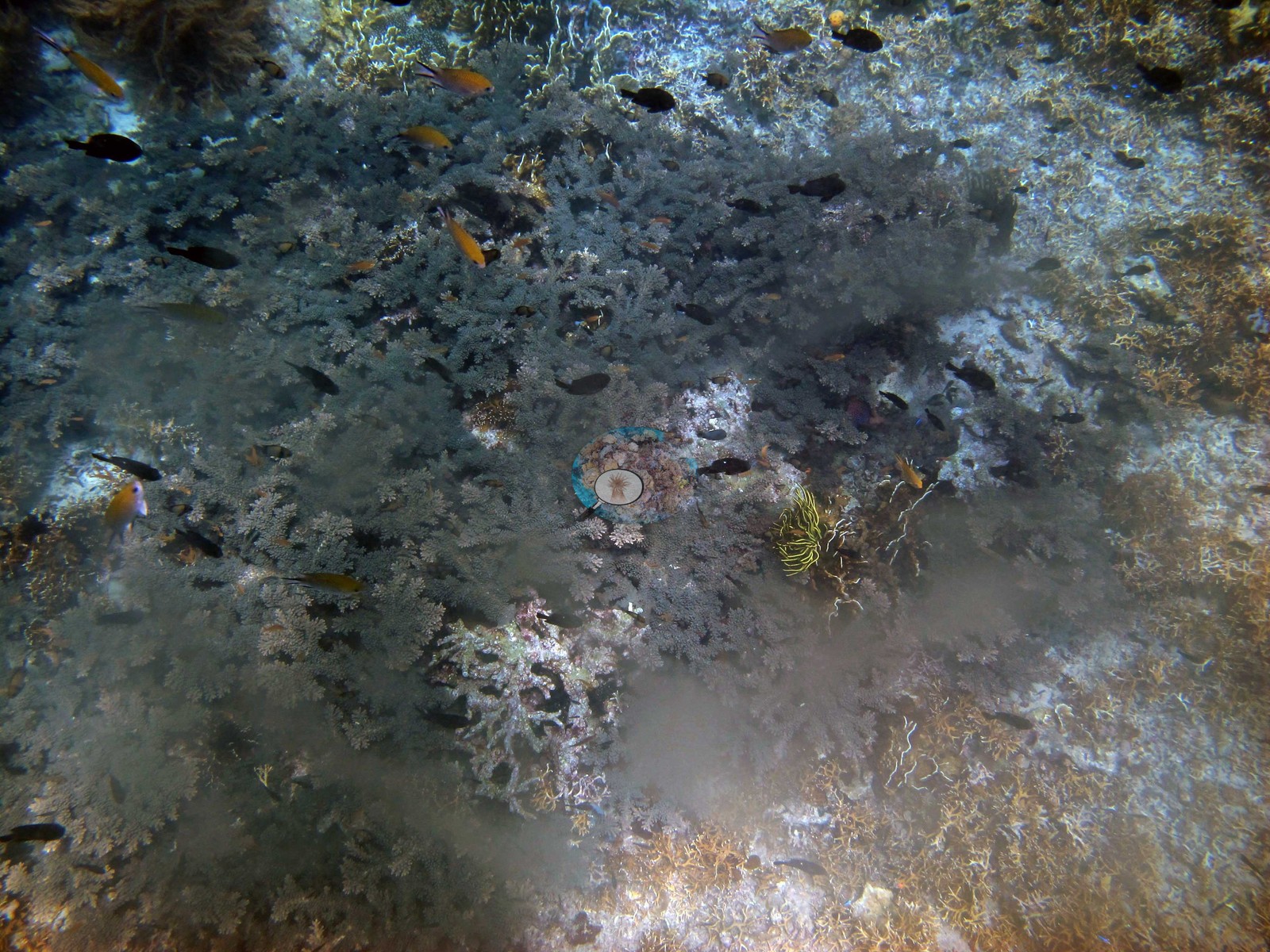 63
63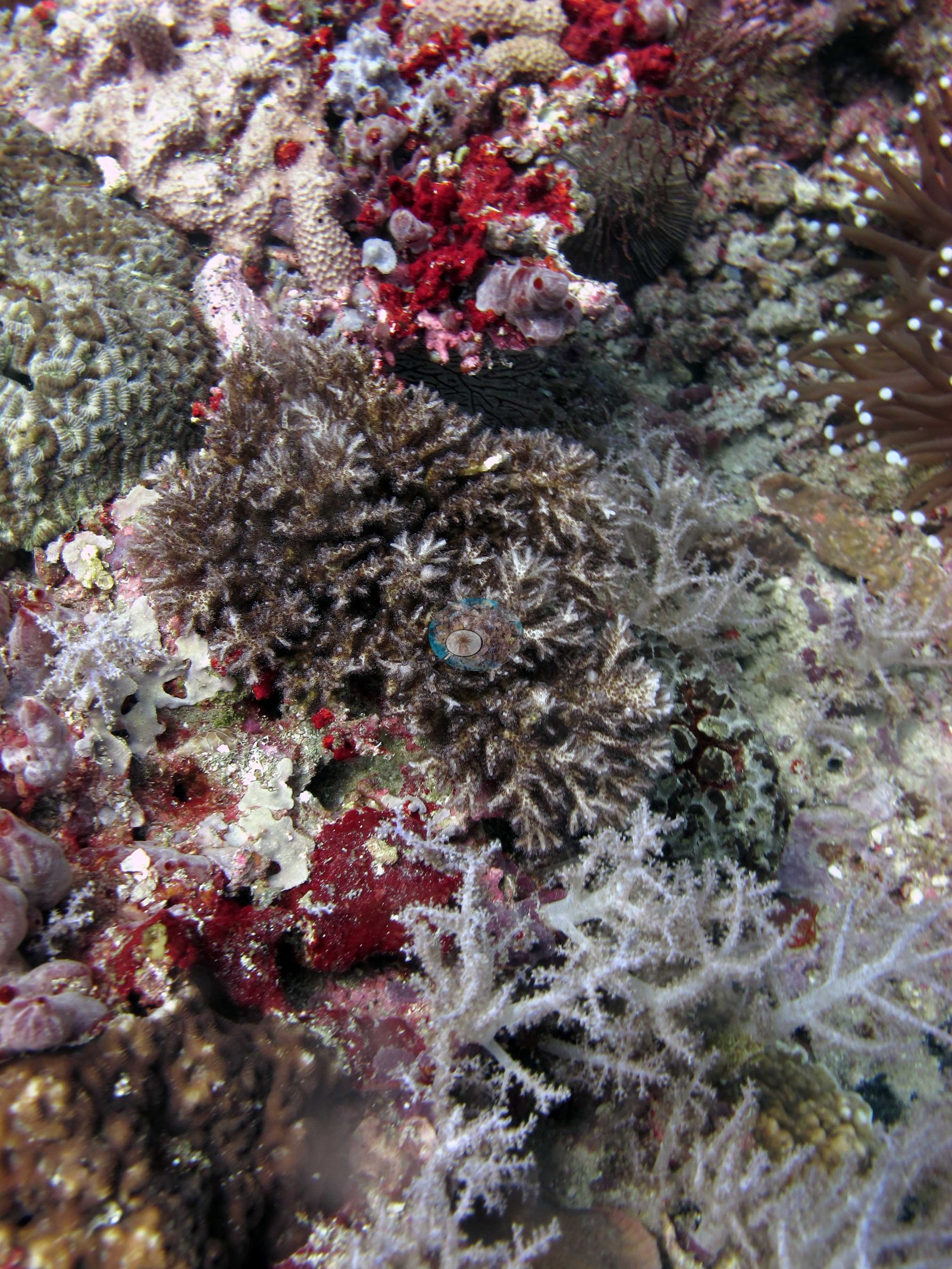 64
64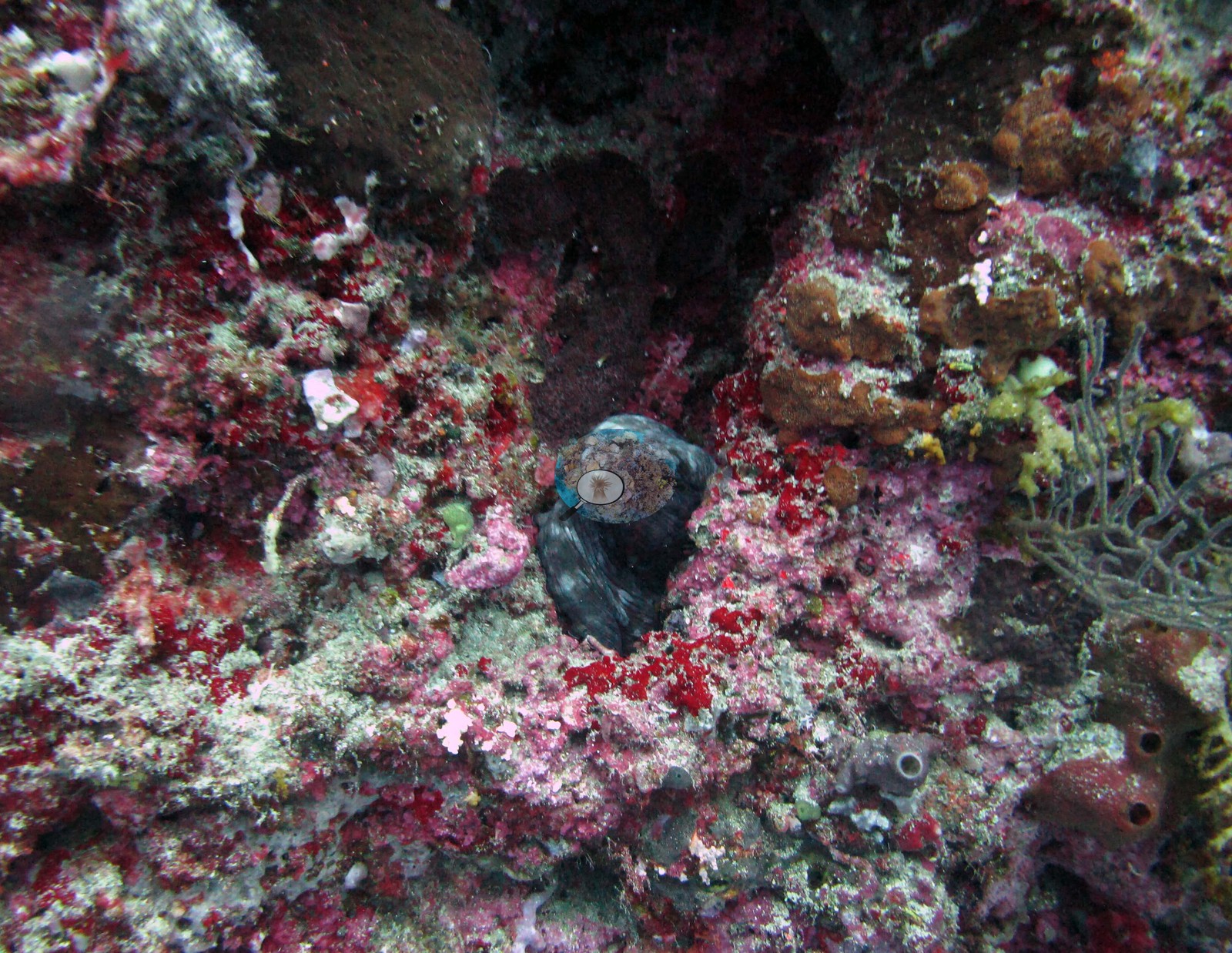
Site description
Setting
THE DEEP WALL (H1-H18).
General benthic features
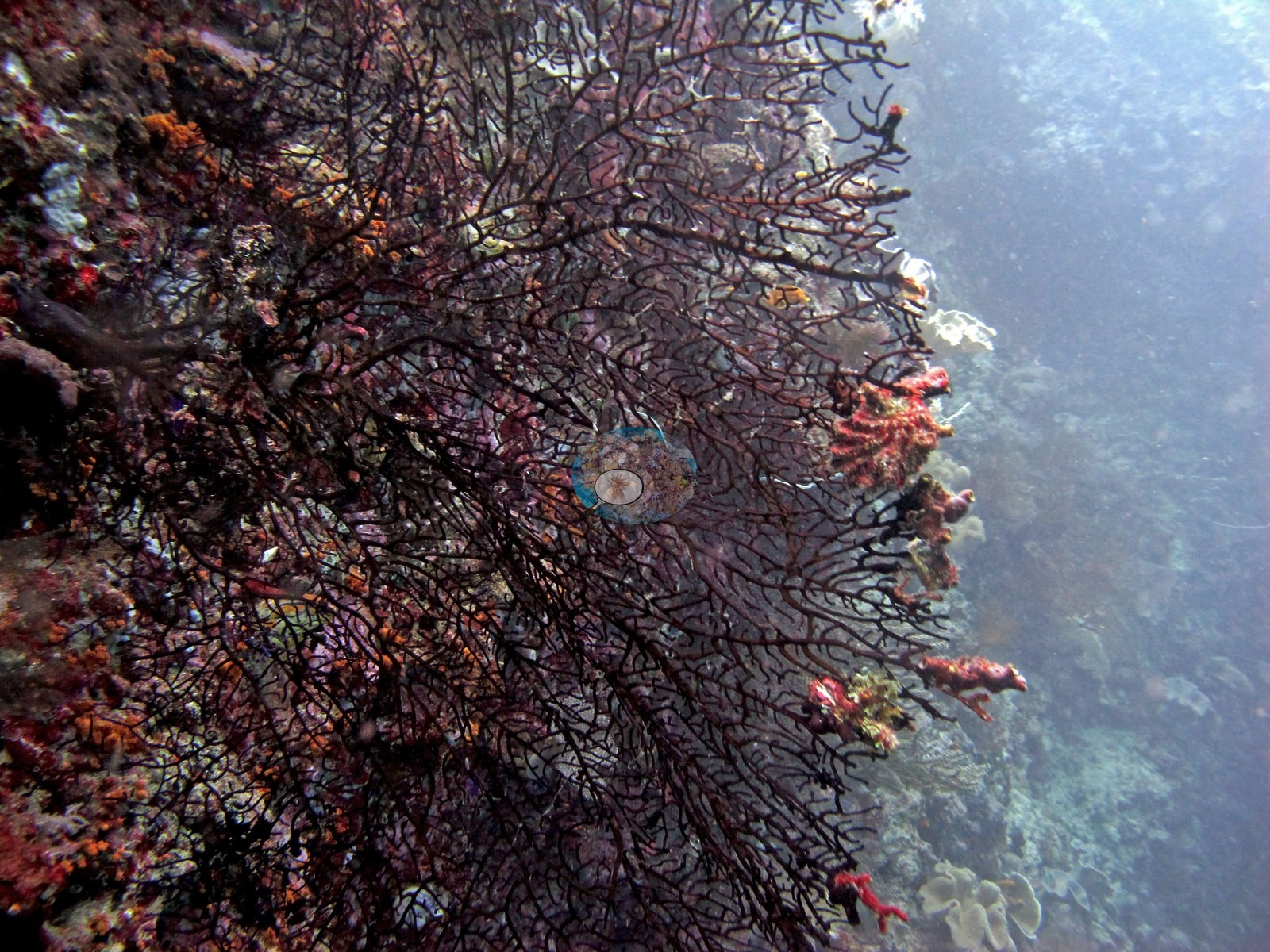
H1 (IMG_0742) is the opening frame and the one that matches his "wall dominated by sea fans, soft corals, tunicates" note - a large dark maroon-black gorgonian sea fan filling the frame, orange and scarlet soft-coral tufts scattered along its base, hanging over a coralline-crusted face that drops away into pale gray-green haze. H2 (IMG_0743) is the murkiest frame in the set: a dark encrusting wall of algal turf, small pale foliose and bifacial plates, red and orange sponge patches, and a thin white whip coral crossing the frame. From H3 onward the deep sequence becomes a portrait gallery of individual free-lying and encrusting colonies against bright pink-red coralline rubble, which is the most distinctive habitat signature in this folder. H3 (IMG_0750) is a low, flat, gray-lilac encrusting sheet with fine even corallites. H4 (IMG_0752) is a tan-brown irregular plate with lobed margins, thickened corallite ridges and a bright white living edge, sitting isolated on magenta coralline pavement. H5 (IMG_0753) is the same growth form with vivid yellow polyps studding the surface, framed by a green feather star and a large white-and-gray feather-duster worm crown. H6 (IMG_0754) is a broad, near-circular chocolate-brown plate with fine concentric ridging and a crisp white growing margin - the classic Pachyseris-type surface his log names for this depth ("Pachyseris", "hard corals at 23 m tended to be plates, crusts, or foliaceous"). H11 (IMG_0761), H13 (IMG_0763, left colony) and H10 (IMG_0760) repeat that form; H10 is the most striking single frame in the deep set, an olive-brown ridged plate studded with dozens of raised corallites whose mouths are brilliant fluorescent pink-scarlet. H7 (IMG_0755) and H8 (IMG_0756) are near-duplicate wider views of the same rubble slope, with small dark discoid free-living corals and a solitary tan-tentacled anemone or corallimorph on the upper right. H9 (IMG_0758) puts two pale cream anemone-form animals with white-tipped tentacles beside a dark, heavily verrucose brown colony with yellow-tipped projections. H12 (IMG_0762) is a dark maroon-brown lumpy encrusting colony on open sand with a small gorgonian beside it. H13 (right), H15 (IMG_0766) and H9 (lower right) are dark brown crusts and cups with coarse separated corallites. H14 (IMG_0765) is the frame that best supports his "shingling, encrusting" note - a cascade of overlapping pale cream-gray plates stepped down the slope, with a dark violet-gray finely-porous colony beside them. H16 (IMG_0769) and H18 (IMG_0771) are dim, shadowed views of overlapping gray plates and shelves running along the wall, H18 the largest single stack of them. H17 (IMG_0770) is a broad flat colony with a striking dark brown ground and a maze of pale cream tubercles and ridges - unusual enough in appearance to be worth a look at full resolution. THE TRANSITION (H19-H32). Structure opens out and mixed assemblages appear. H19 (IMG_0772) is a large pale foliose colony with a lilac-blue sponge growing across its lower plates and black-coral bushes behind. H20 (IMG_0773) is the most crowded frame yet: a broad tan plate above, a fine gray-green corymbose colony, a pale anemone with white-tipped tentacles, dark gorgonian whips, and coralline-crusted rock. H21 (IMG_0775) is a tight view of a green-and-cream branching colony with fat blunt branchlets and prominent radial corallites, wedged among gray encrusting and knobby colonies. H22 (IMG_0776) is the first true wide frame - a large tan tabular colony and two further plates stepped down the slope, a diver in a blue hood above, and open water beyond. H23 (IMG_0777) puts a rounded lobed massive colony with broad flower-like corallites beside two fine pale-gray corymbose colonies against a wall of dark red encrusting sponge. H24 (IMG_0778) is a rich mixed frame: pale corymbose Acropora, a fat leathery soft coral, a large white-edged plate, black-coral bushes and a diver above. H25 (IMG_0792) is the poorest frame in the set - dim, low-contrast and hazy, with one leathery soft coral in the foreground. H26 (IMG_0794) is the best structural photograph of the dive: a single very large tiered tabular/foliose colony, at least a meter across, stepped in overlapping plates and standing clear against deep blue water, with blue-and-yellow fish along its edge. H27 (IMG_0796) is a dense bank of pale cream and gray leathery soft corals (Sarcophyton-type, which his log names at 17 m) mixed with tan lobate hard coral. H28 (IMG_0797) is a large smooth gray massive dome with a few dark fish, soft corals and blue sponge around its base against blue water. H29 (IMG_0798) is a wide soft-coral-and-hard-coral mosaic - cream leathery colonies, pale bushy soft corals, a large gray dome behind, red and orange encrusting patches. H30 (IMG_0799) is almost wall-to-wall pale pink-mauve bushy soft coral. H31 (IMG_0802) is a bank of large overlapping brown foliose plates, individual leaves the size of dinner plates. H32 (IMG_0803) looks along a steep dark face with orange-red sponge, cream leathery soft corals and a small pale plate coral bracketed against blue. THE SHALLOW GARDEN (H33-H62). This is where the folder is at its densest and matches his log's "very high hard coral diversity at 8 m" and "60% average live coral cover in places @ 7-8 m". H33 (IMG_0806) is a cloud of orange-red anthias over an olive-green reef top. H34-H36 (IMG_0807/0808/0809) are wide reef-top frames with big cream leathery soft corals in the foreground, branching and corymbose hard coral behind, and blue water above; H34 also carries an orange-tentacled anemone-form animal filling the lower right. H37 (IMG_0810) and H38 (IMG_0811) are the pair to look at for growth form: both are dominated by golden-yellow, white-tipped, coarsely branching colonies, H38 a tight macro of them against pale bushy soft coral and a cream grooved massive colony. H39 (IMG_0812) and H40 (IMG_0813) are wide shallow gardens of orange-brown branching and bushy colonies with pale corymbose and massive corals mixed in. H41 (IMG_0814) shows a large cream leathery soft-coral cluster with an extensive bed of orange-brown branching coral behind it and divers silhouetted at the surface. H42 (IMG_0815) is a big flat tabular Acropora, close to a meter across, seen from above with orange soft coral beneath. H43 (IMG_0816) and H44 (IMG_0817) are wide shallow frames with yellow-green branching thickets in the foreground, sergeant-majors and damselfish throughout. H46 (IMG_0819) is a wide reef top with a tabular colony left and dense pale branching coral right. H47 (IMG_0820) is a close-focused frame of a shallow yellow-branching thicket with a dark, thick-armed spiny animal sitting in the middle of it - see flags; it is not resolvable at contact-sheet scale and no interpretation is offered. H48 (IMG_0821) is a wide slope with salmon-orange bushy soft corals and pale branching coral, divers above. H49-H53 (IMG_0822/0823/0824/0825/0826) are the core of the shallow set: five wide frames of an almost continuously coral-covered reef top, mixing pale blue-gray and white corymbose Acropora, orange-brown branching thickets, gray-green digitate colonies, and scattered massive domes, with no bare sand horizon in frame. H54 (IMG_0828) is a bank of very large pale gray-brown leathery soft corals. H55 (IMG_0829) is a dense mixed garden with a fine blue-gray corymbose colony center and pale foliose and lobate colonies around it. H56 (IMG_0830) is a broad pale table on a rubble slope against blue. H57 (IMG_0831) and H58 (IMG_0832) are near-monospecific stands of tall orange-brown branching or bushy colonies running away from the camera. H59 (IMG_0833) is a large pale gray plate with an irregular margin among orange-brown branching colonies and pink encrusting patches. H60 (IMG_0835) and H62 (IMG_0837) are the two softest, haziest wide frames in the folder - dense low pale-mauve and gray branching cover with poor definition. H61 (IMG_0836) has a diver in the mid-ground above a brown branching thicket. H63 is his own named frame "P. acuta.jpg", a close view of white and pale branching colonies with blunt verrucose branchlets against red and pink encrusting sponge - his identification, filed by him, and it stands; his log independently records P. acuta as common in the shallows here. The set documents a steep, deep-based reef with three distinct zones: a dark, sea-fan-and-soft-coral wall with an unusually plate-, crust- and foliose-dominated hard coral assemblage on coralline rubble (H1-H18); a transitional slope with large tabular and tiered colonies and leathery soft corals (H19-H32); and a bright, structurally complex shallow reef top with high hard-coral cover and high apparent diversity (H33-H62). Coral in the shallow frames is intact and closely packed, with no bare pavement or rubble field in view. Fish are conspicuously sparse across the whole set apart from H33, H43, H44, and H45, which is consistent with his own note.
Coral cover
Coral cover: 32% — a blind Claude computer-vision point count of 64 of Anderson's edited photographs (20 points per photo; water, fish, and obstructions excluded). Other computer-vision methods are listed in the method table. There was no benthic transect on this dive. His own in-water note of "60% average live coral cover in places @ 7-8 m" is a local peak on the reef top, not a site mean, and points the other way; neither the published nor the recomputed number is a measurement of this reef.
Stressors
No bleaching is visible in any frame: the white margins on the plate corals in H4, H6, H11, H13, H15, and H19 are living growing edges, not bleached tissue, and the pale corymbose and branching colonies in H49-H53 are pigmented, not white. No bleaching percentage is offered. No disease bands and no macroalgal overgrowth were seen. No crown-of-thorns starfish (COTS) or other corallivores evident.
Fish and other fauna
H45 (IMG_0818) is a mid-water frame - a loose school of silver jacks/trevally over a hazy reef, one of the few frames that speaks to his "bait ball schools" and "some large fish" note; fish are otherwise sparse in these images, consistent with his "fish biomass @ 20 m = very low". H64 is his "octopus.jpg": a dark ledge in coralline-crusted rock with a smooth gray-black animal tucked against it.
Comparisons with other data
No prior survey data from this site. If you would like to share yours, please email us.
Dive record
Anderson dived Anchovy once, on 20 October 2018 - his dive-21 folder, camera sequence IMG_0742-IMG_0837 plus two frames he named himself, entry 10:15, 59 minutes, 32.9 m maximum depth, 28.0 C. His own log describes the site as "a shear wall in the middle of nowhere: patch reef or sea mount?", dropped into deep blue with very few fish, and the photographs follow exactly that profile: they start deep, dark and close-focused on individual colonies, and end shallow, bright, and wide over a dense coral garden.
Other notes
That is his call and it stands - his log for this dive records three octopus - though the animal is not clearly resolvable at contact-sheet scale. WHAT THE FRAMES SUPPORT, AND WHAT THEY DO NOT. The frames cannot settle depth per frame, cannot confirm the several "never-before-seen" corals, corallimorph and anemone that his log records at 30 m and 17 m, and cannot confirm the pygmy seahorses or the 33 m grouper - none of those are resolvable in this folder.
CV model comparison
More info
DINOv3 and CoralSCOP were run on the same photos and are listed for comparison. Coralscapes v2 and v1 were also run but are not shown: Anderson does not consider Coralscapes reliable for these photos. No diver transect exists for this trip, so agreement between the rows is not accuracy, and as of September 2026 no computer-vision method estimates coral cover accurately on new images; treat every row as indicative.| Method | Hard-coral cover (%) |
|---|---|
| In-house DINOv3 | 25.8 |
| CoralSCOP edited | 38.0 |
| Claude (edited photos) | 32.4 |
Data & links
All images from Coral Reef Diagnostics. Data are from Coral Reef Diagnostics.
© Coral Reef Diagnostics.