
Maldives - Kashidhoo Faru
Part of the regional summaries: Maldives - North (Haa Alif to Baa / Lhaviyani) and Maldives
More info
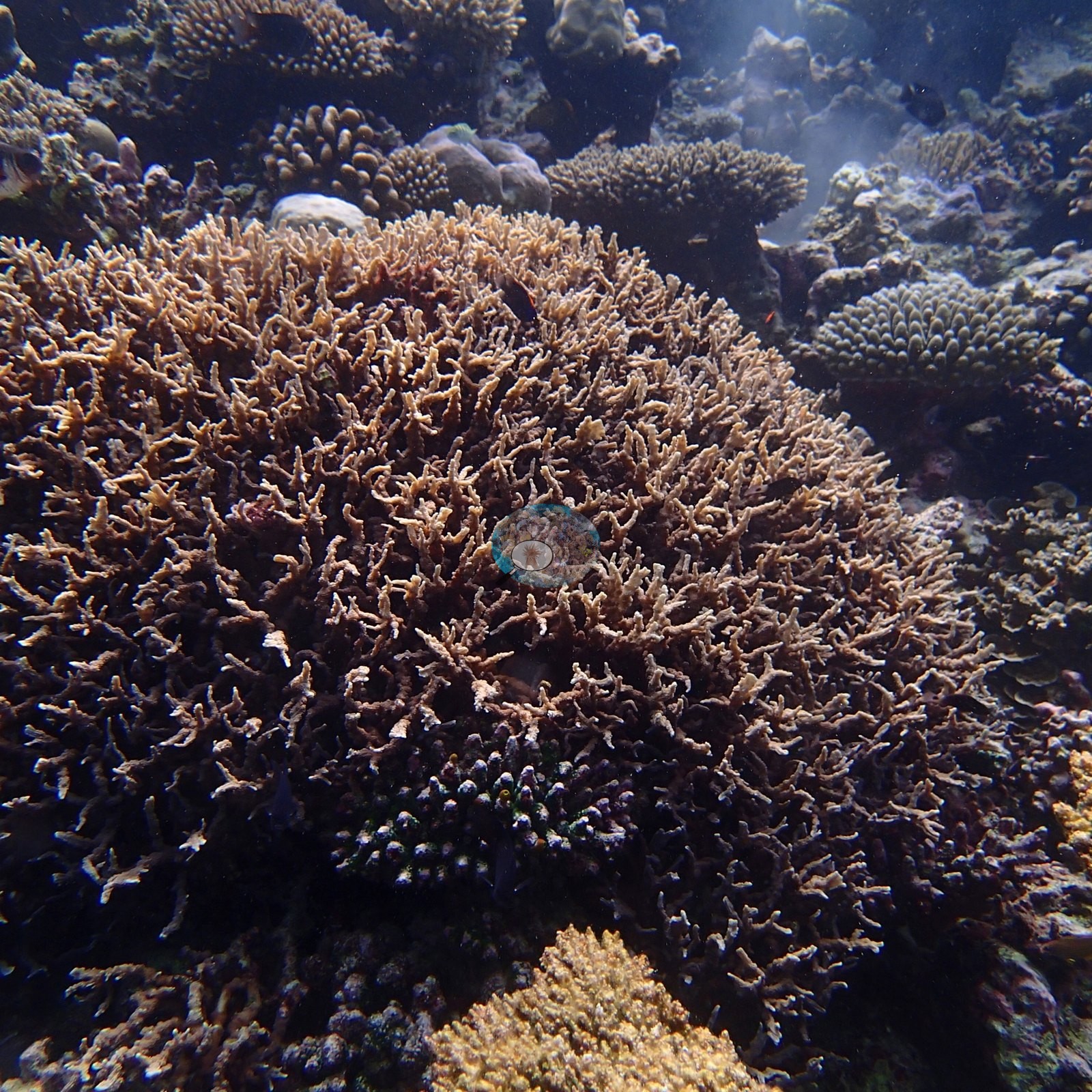
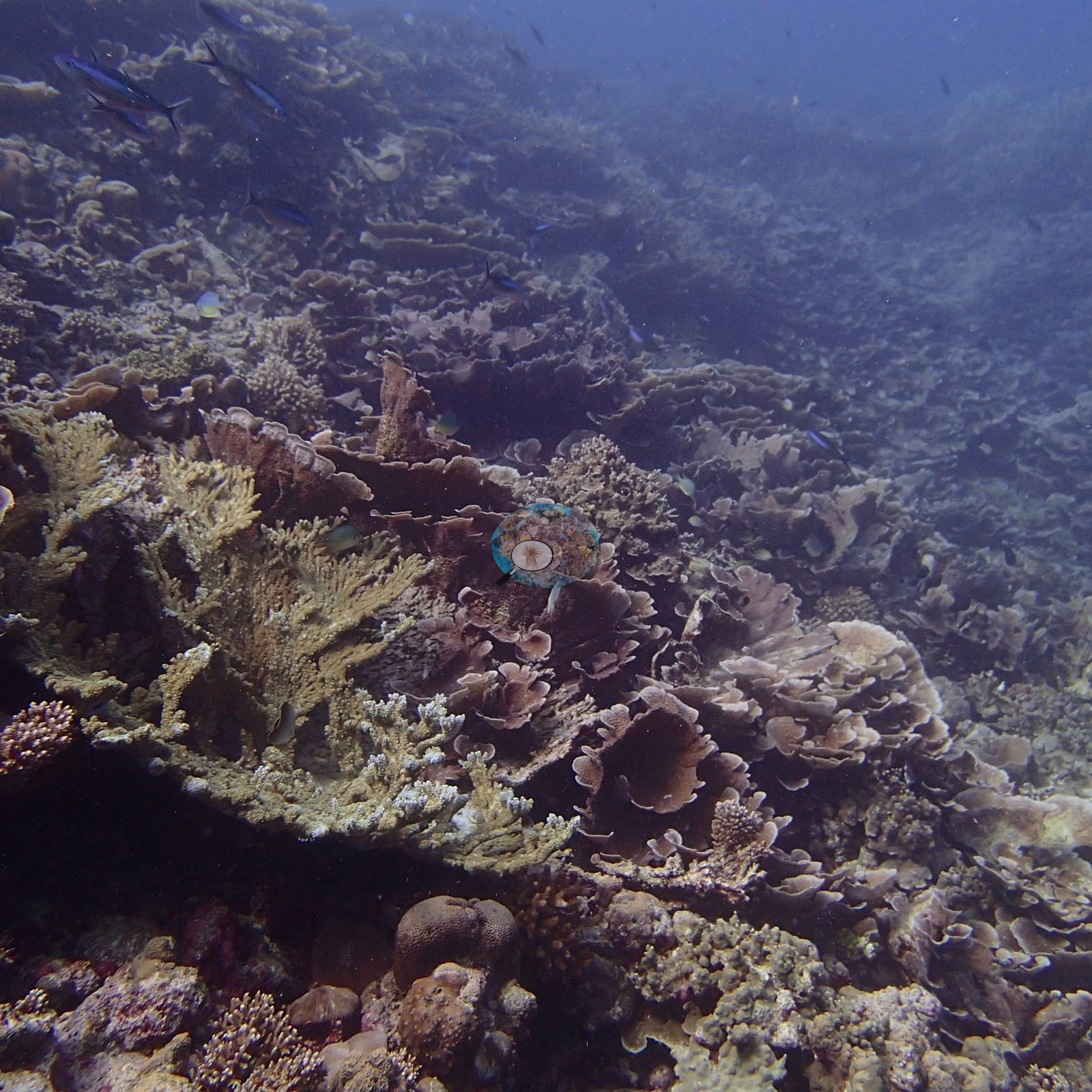
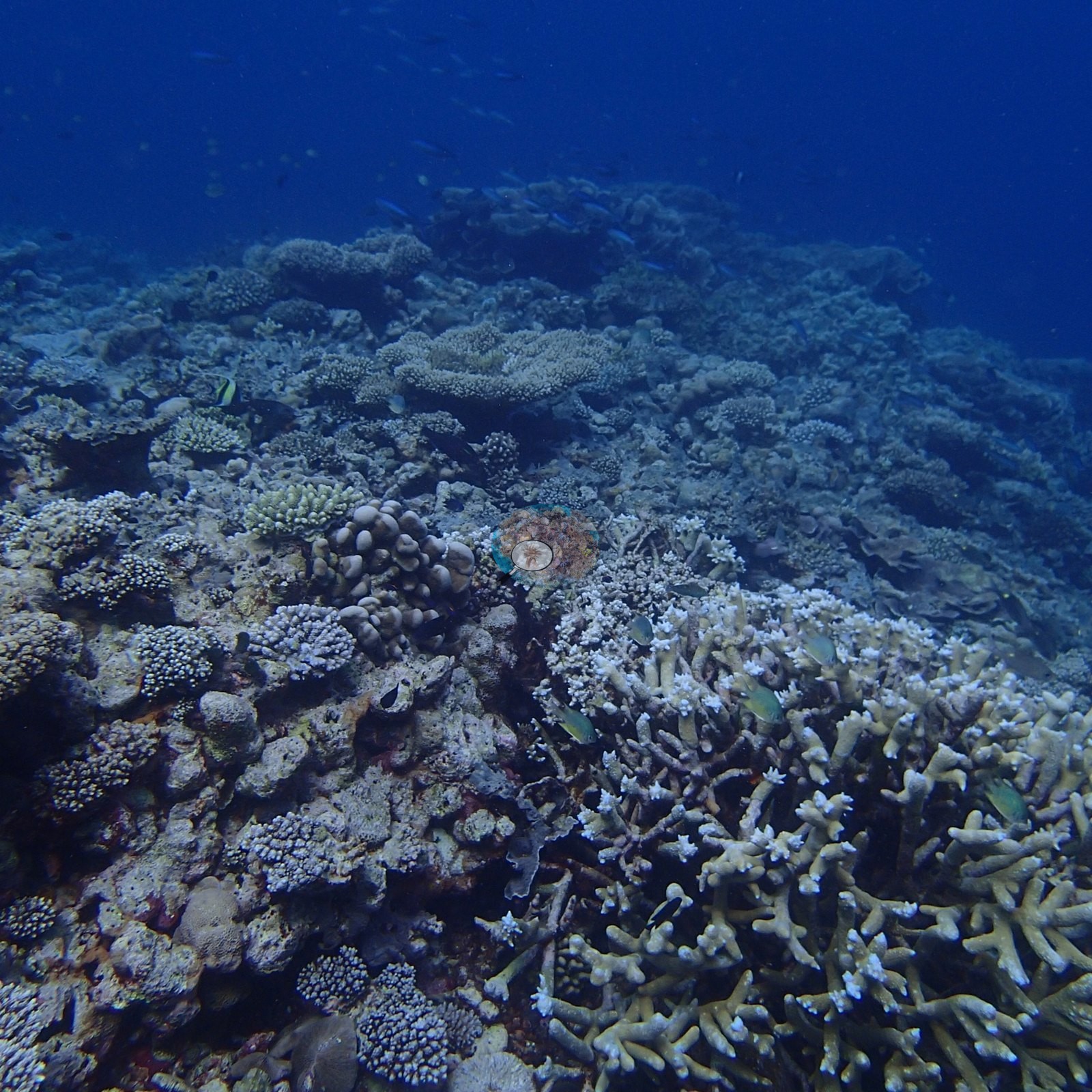
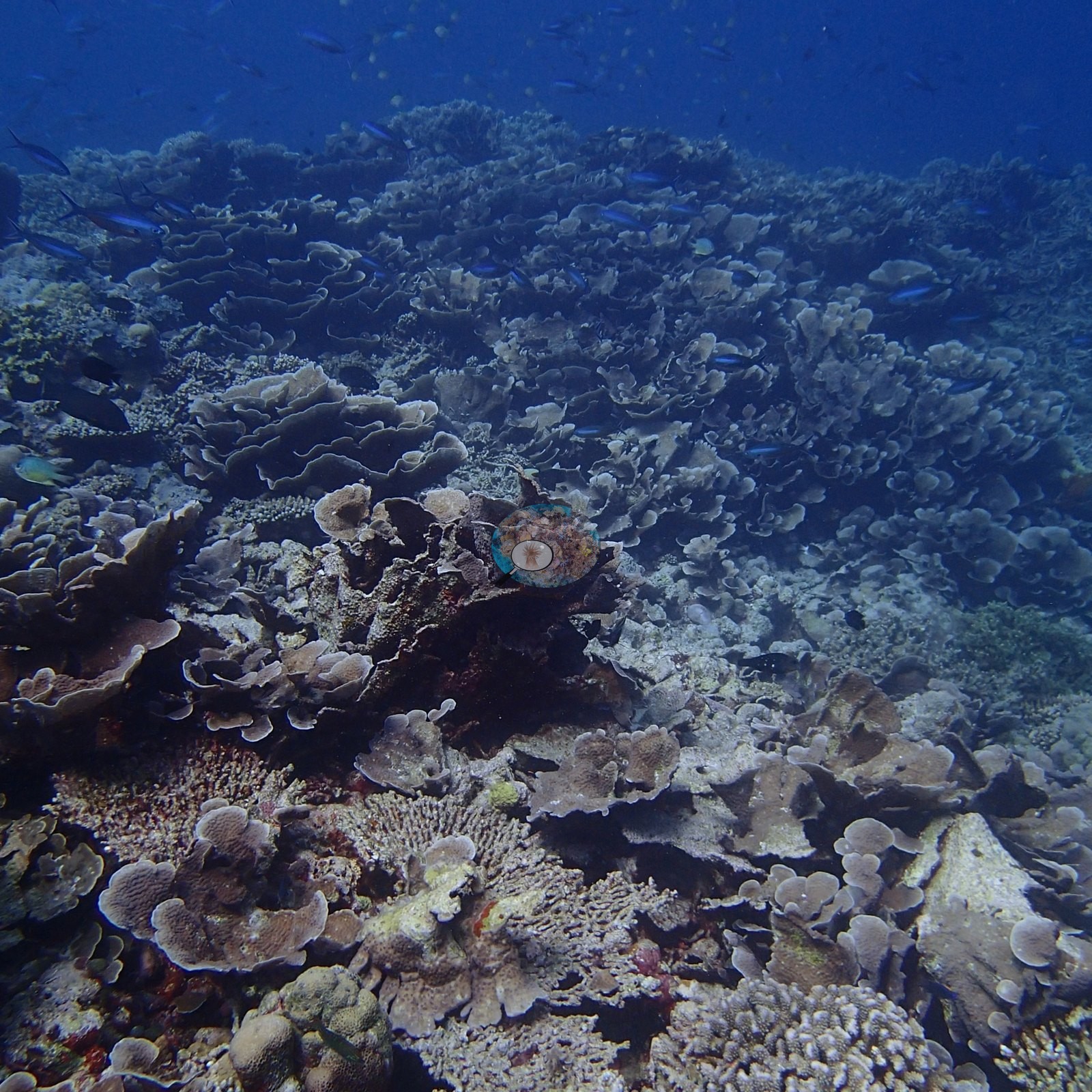
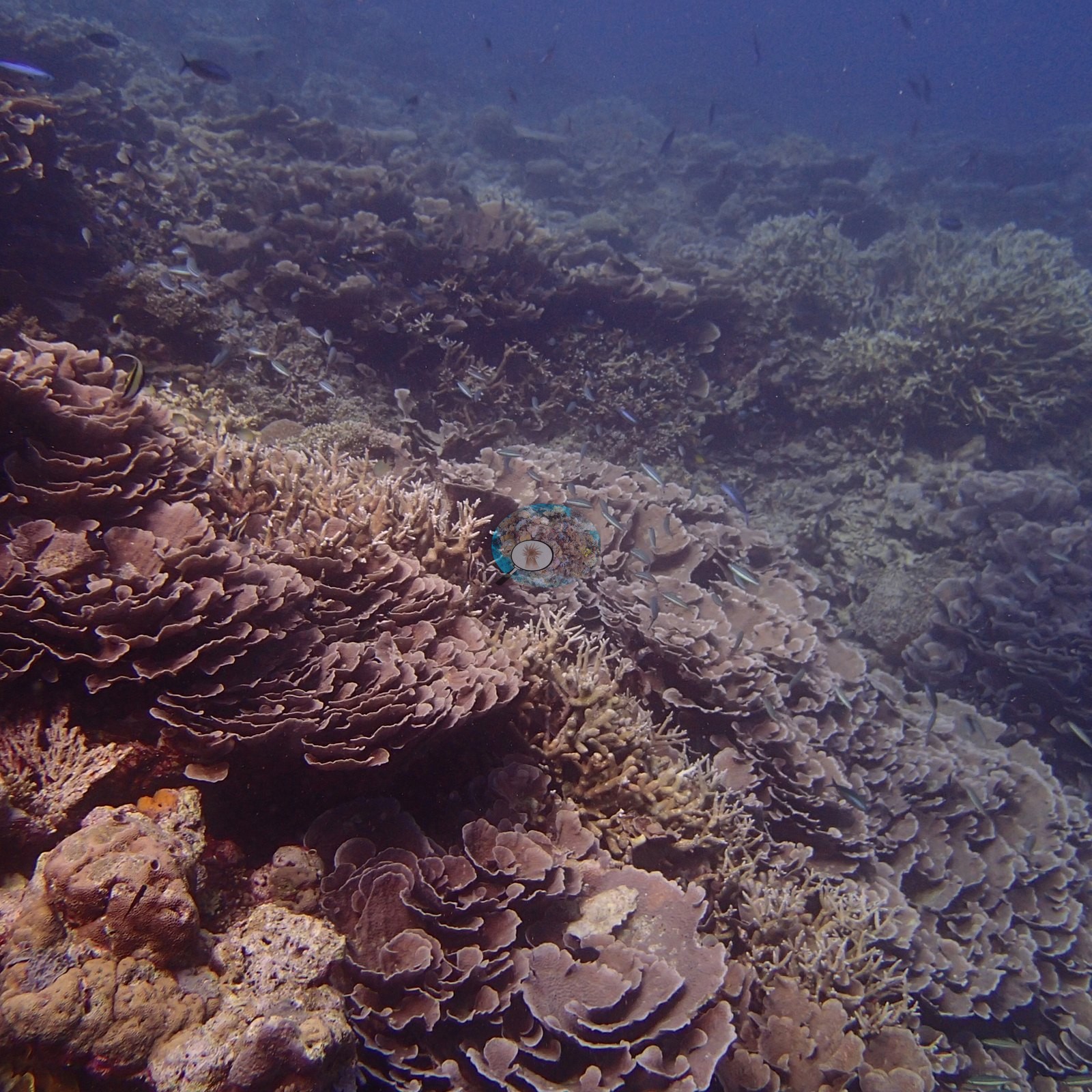
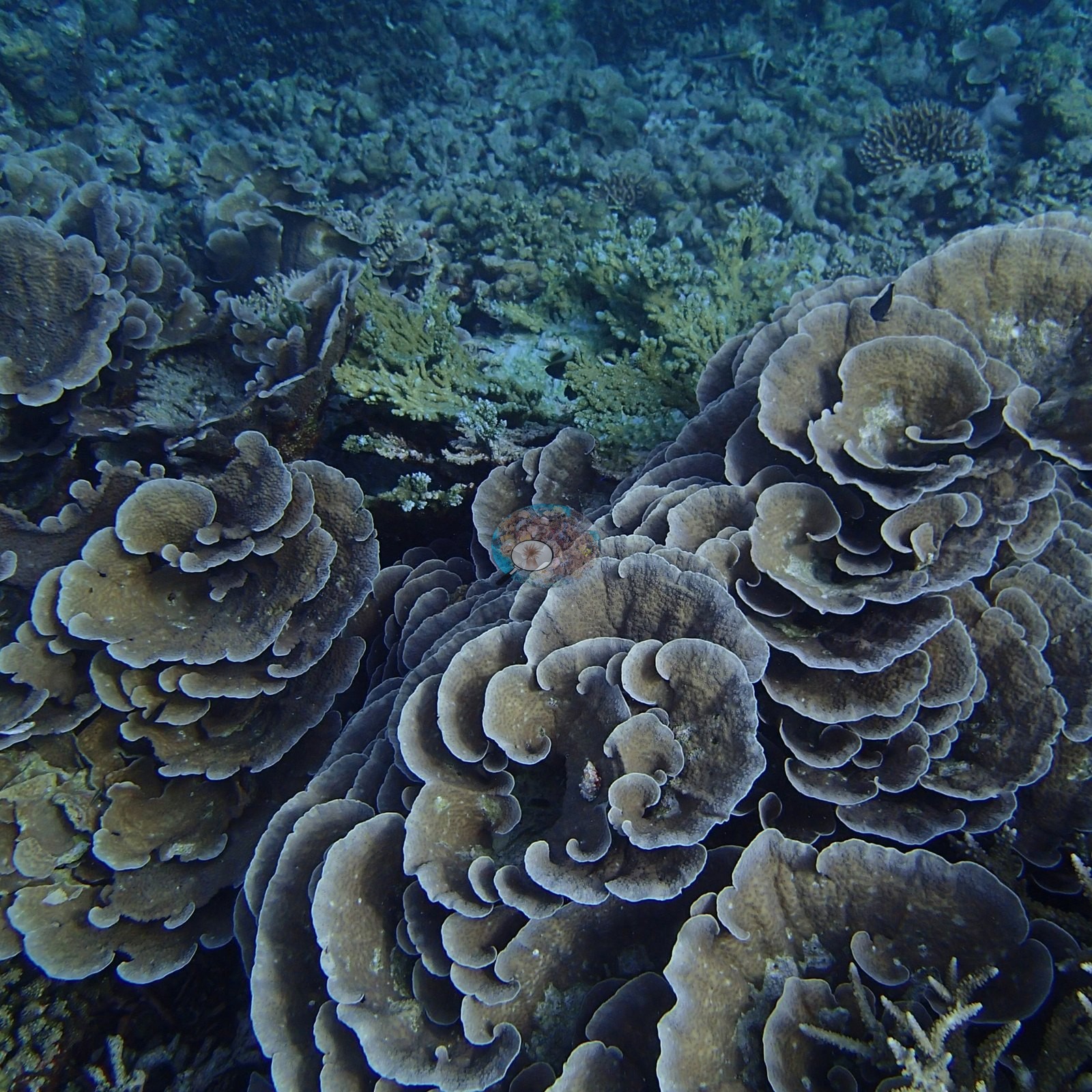
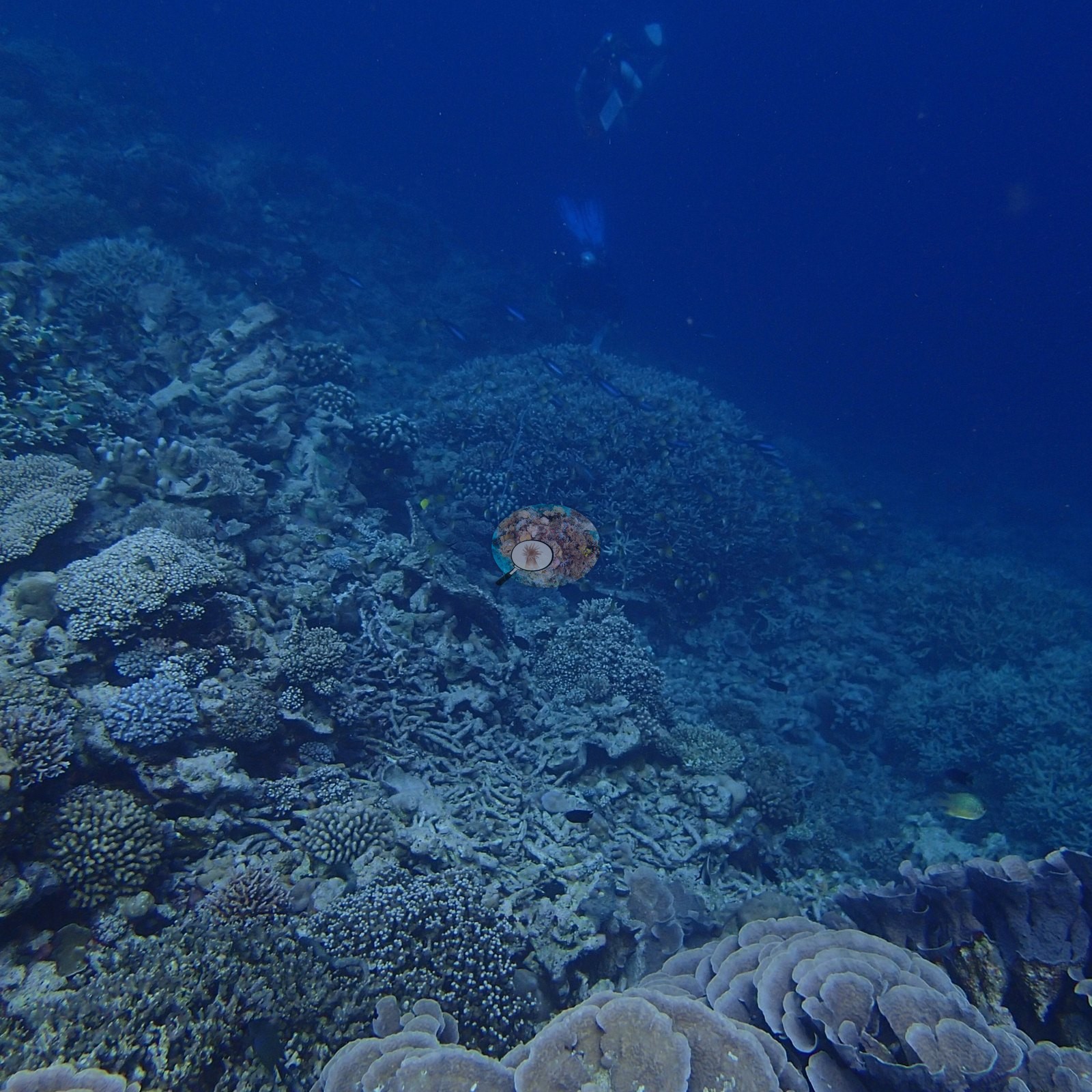
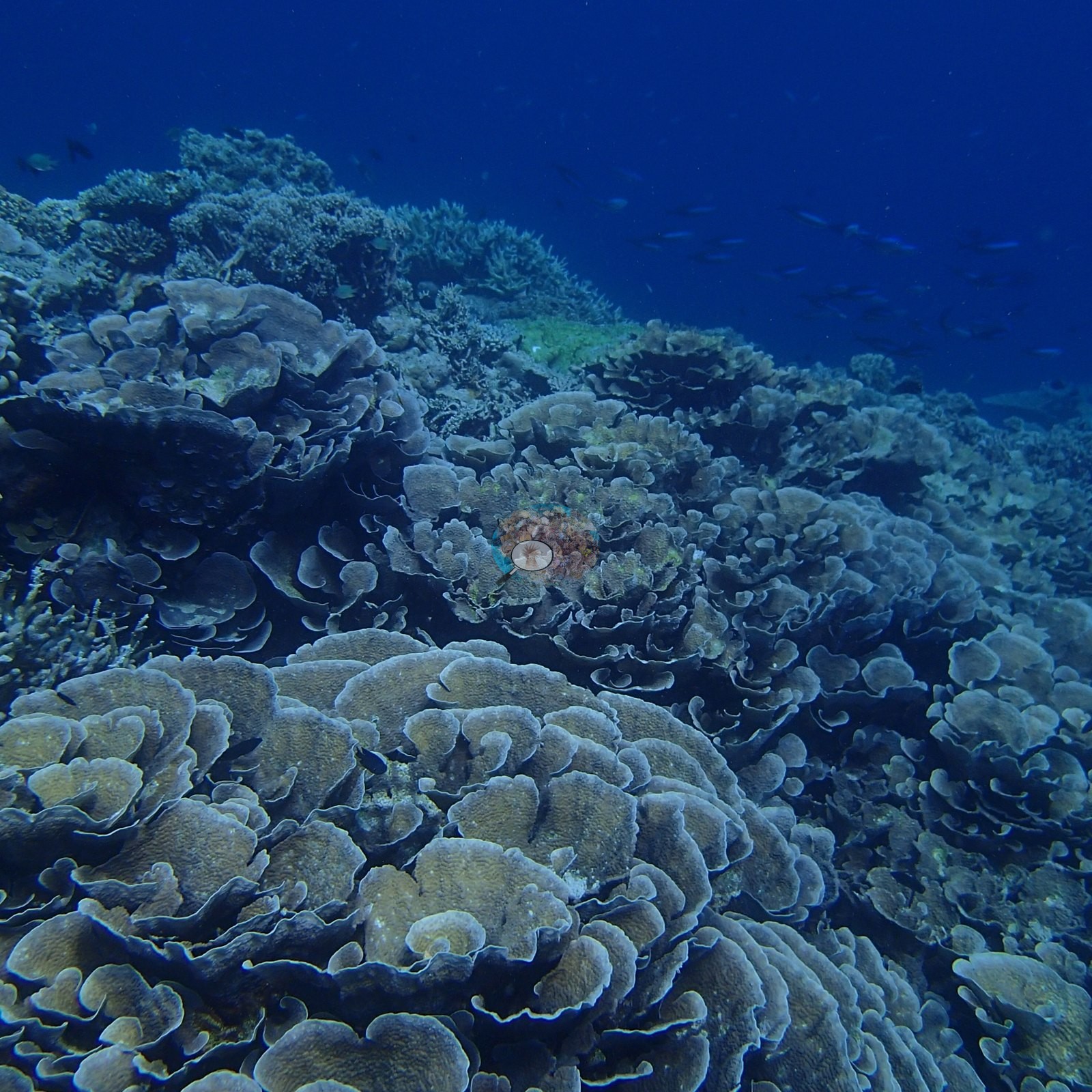
Maldives (NOAA CRW virtual station)A Baa Atoll reef that Anderson's January 2016 field notes describe as having very high coral cover and diversity, with whorled plate corals and lilac-tipped staghorn thickets — photographed just before the 2016 El Niño bleached most of the atoll's reefs. Coral Reef CPR point-intercept transects put cover at 27% in July 2016, after the bleaching, down from 74% in April 2016.
ބ. އަތޮޅުގެ ފަރެކެވެ. Anderson ގެ 2016 ގެ ޖަނަވަރީގެ ފީލްޑް ނޯޓްސްގައި މި ފަރު ބަޔާންކޮށްފައިވަނީ ހިރިގާ ނިވާކުރާ މިންވަރާއި ހިރިގާގެ ތަފާތު ބާވަތްތައް ވަރަށް ގިނަ ފަރެއްގެ ގޮތުގައެވެ. އެތަނުގައި ބުރަށް އެނބުރިފައިވާ ތަށި ފަދަ ހިރިގާއާއި، ކޮޅުތައް ވައިލެޓް (lilac) ކުލައިގެ ސްޓެގްހޯން ހިރިގާ ގަދަކޮށް ހުރެއެވެ. މި ފޮޓޯތައް ނެގީ 2016 ގެ El Niño އިން އަތޮޅުގެ ފަރުތަކުގެ ގިނަ ބައެއް ހުދުކޮށްލުމުގެ ކުރިން ކައިރިއަކުންނެވެ. Coral Reef CPR ގެ point-intercept ޓްރާންސެކްޓްތަކުން ދައްކާގޮތުގައި، ހިރިގާ ނިވާކުރާ މިންވަރު 2016 ގެ އޭޕްރީލްގައި 74% އިން، ހުދުވުމަށް ފަހު 2016 ގެ ޖުލައިގައި 27% އަށް ދަށްވިއެވެ.
AI translation of this summary; the English is authoritative. (low confidence)
One other CRD dive site with its own page within 5 km shown in orange — click a marker to open its page.
10 of the 43 photographs on this page are shown beside the text that discusses them under "Site description" below.
Site description
General benthic features
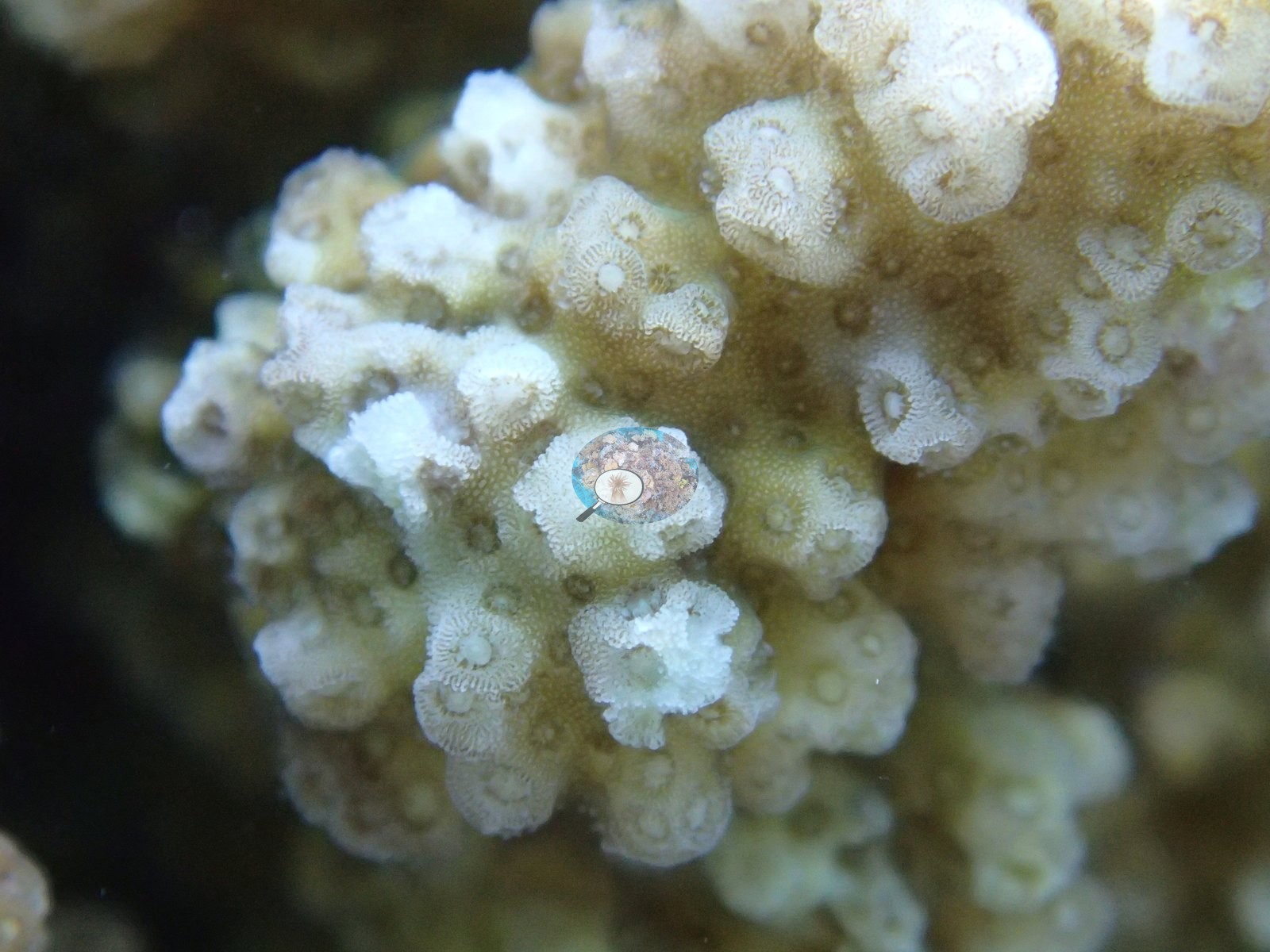
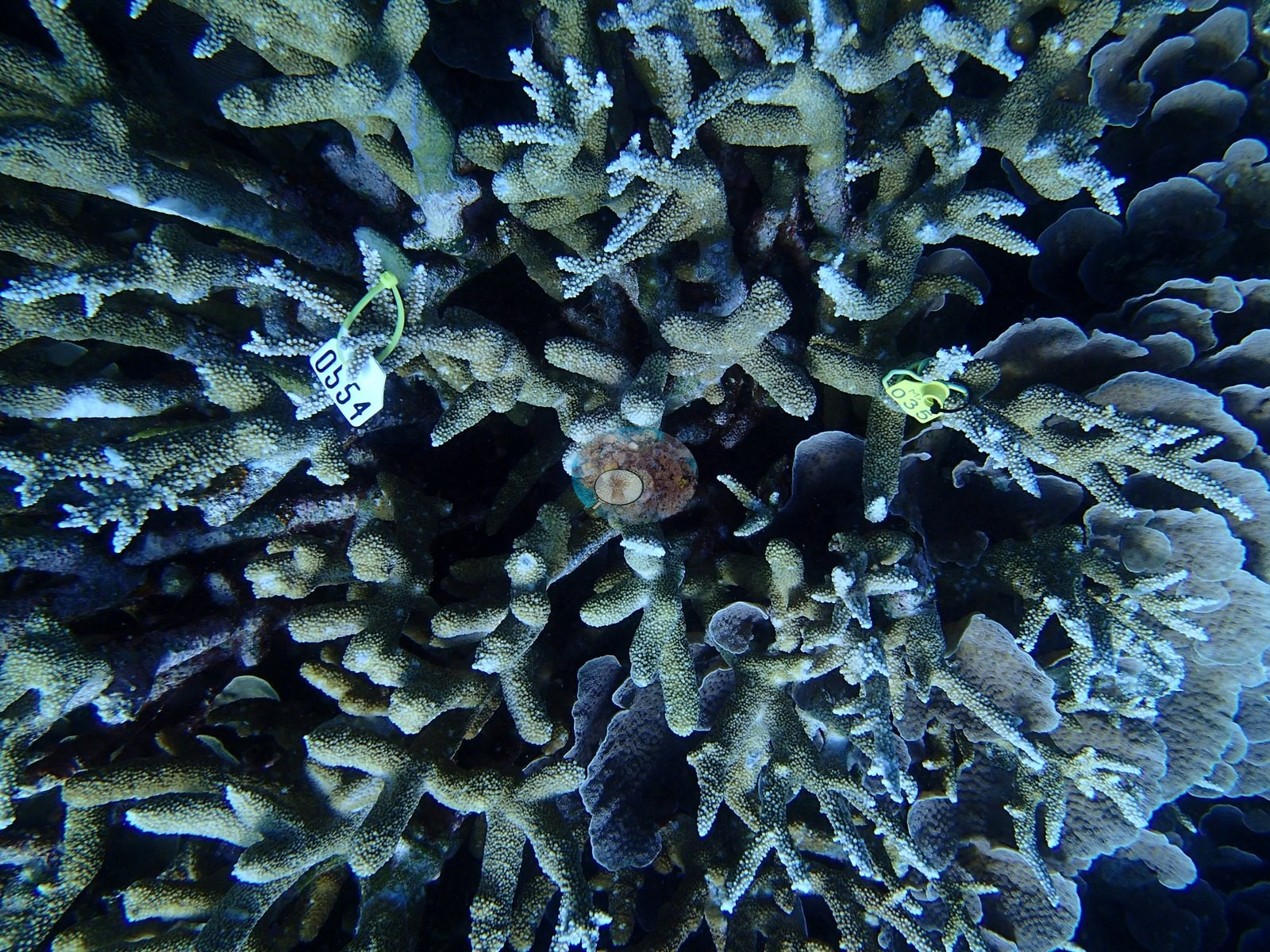
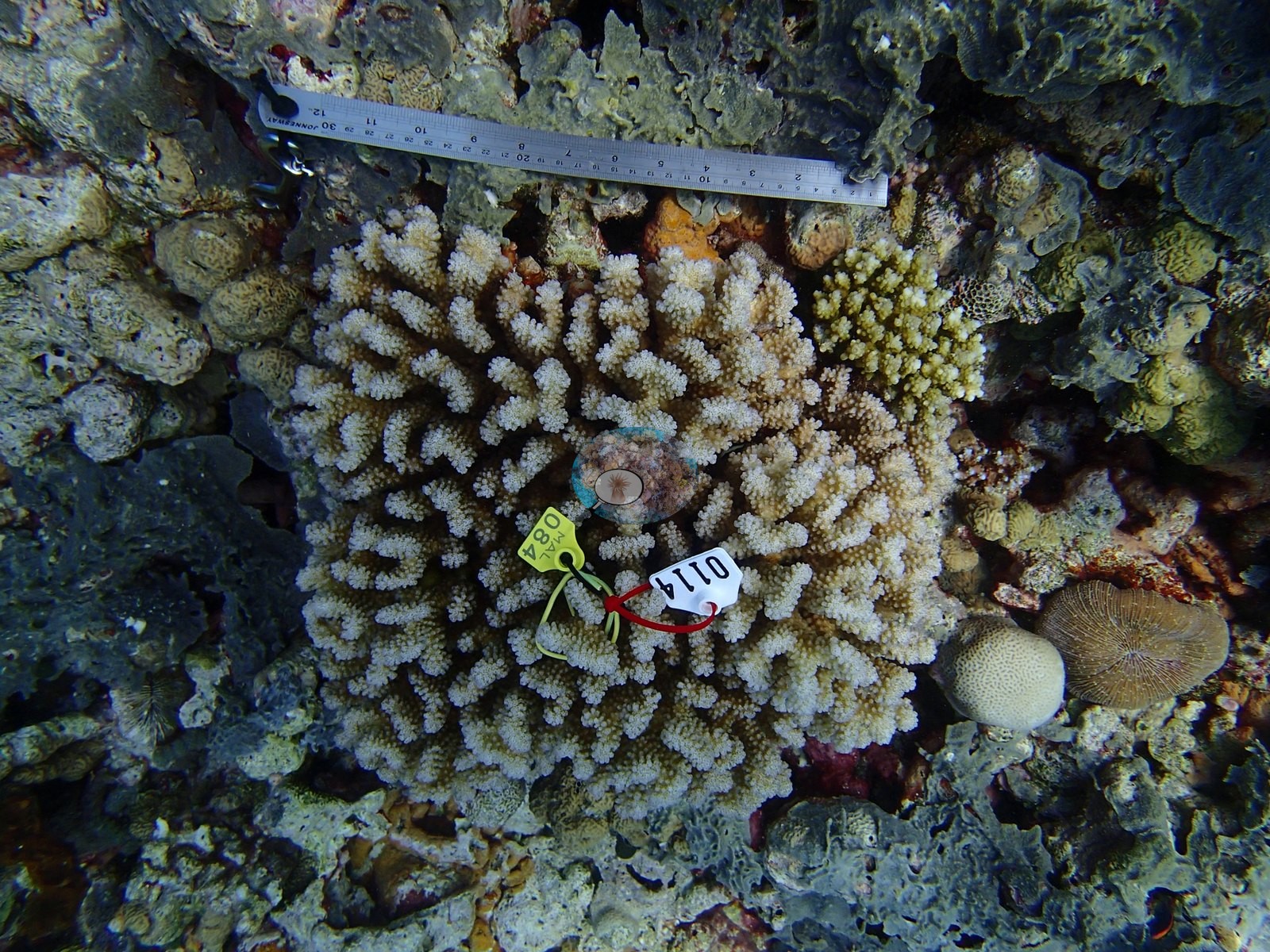
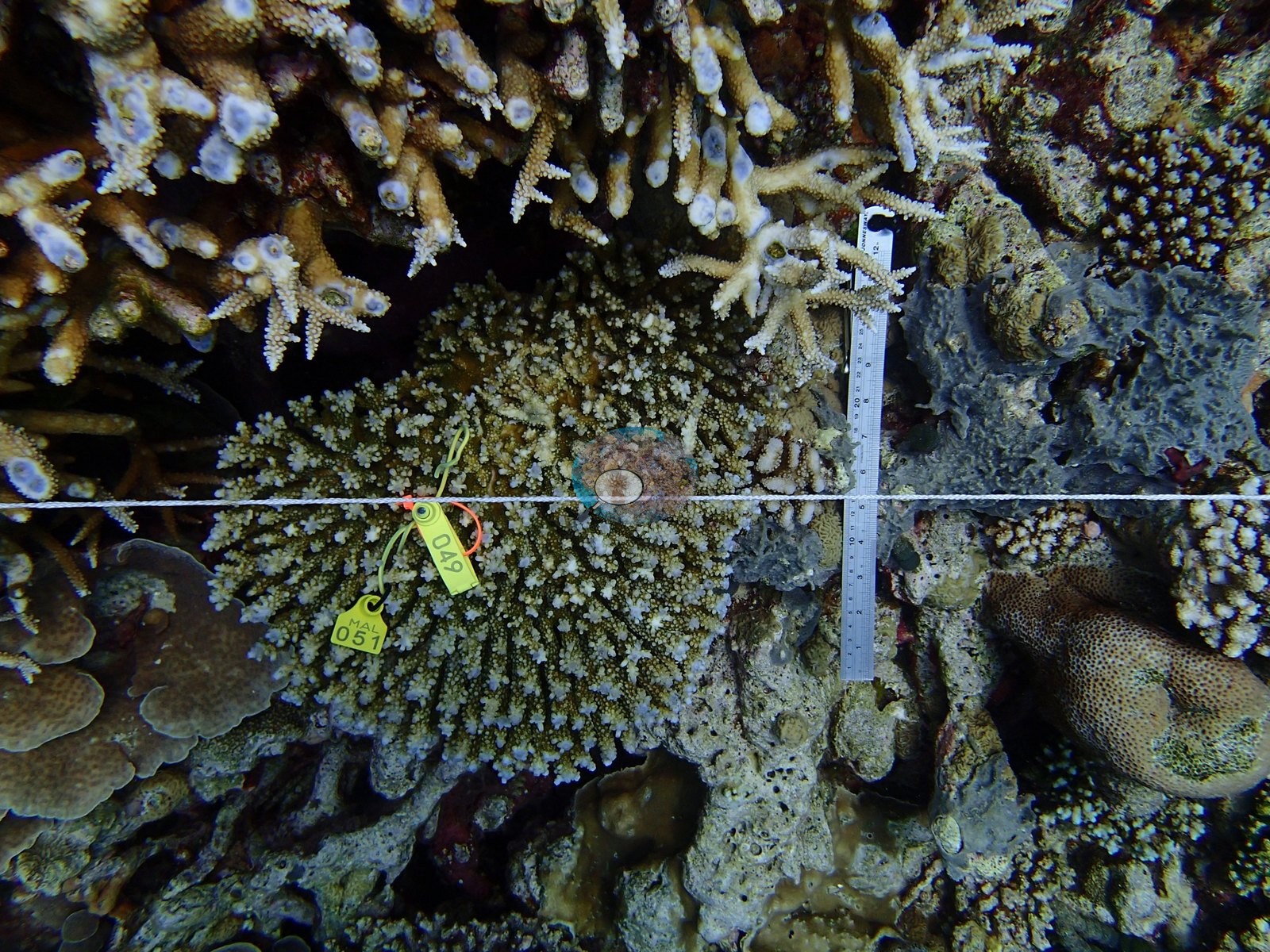
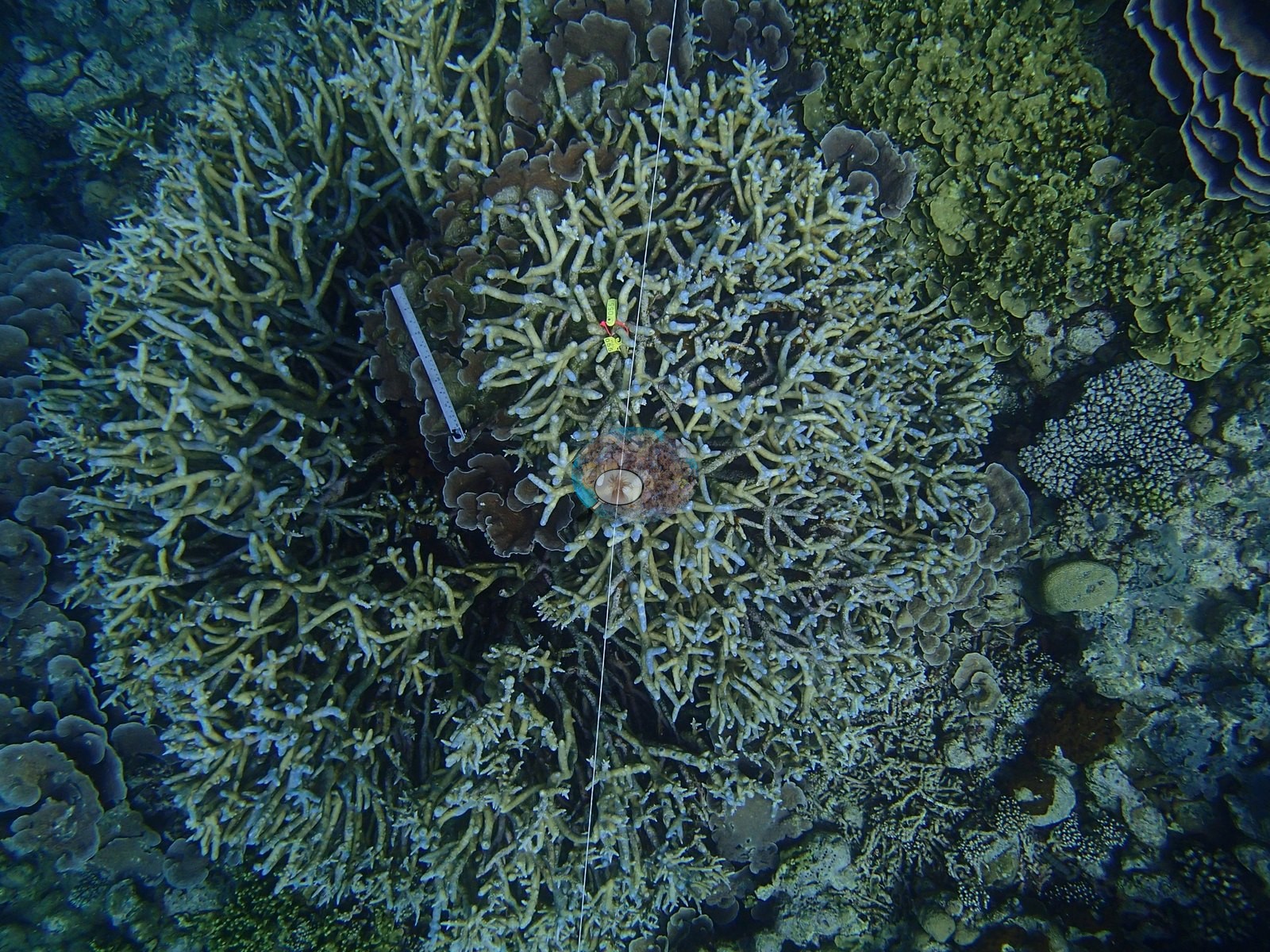
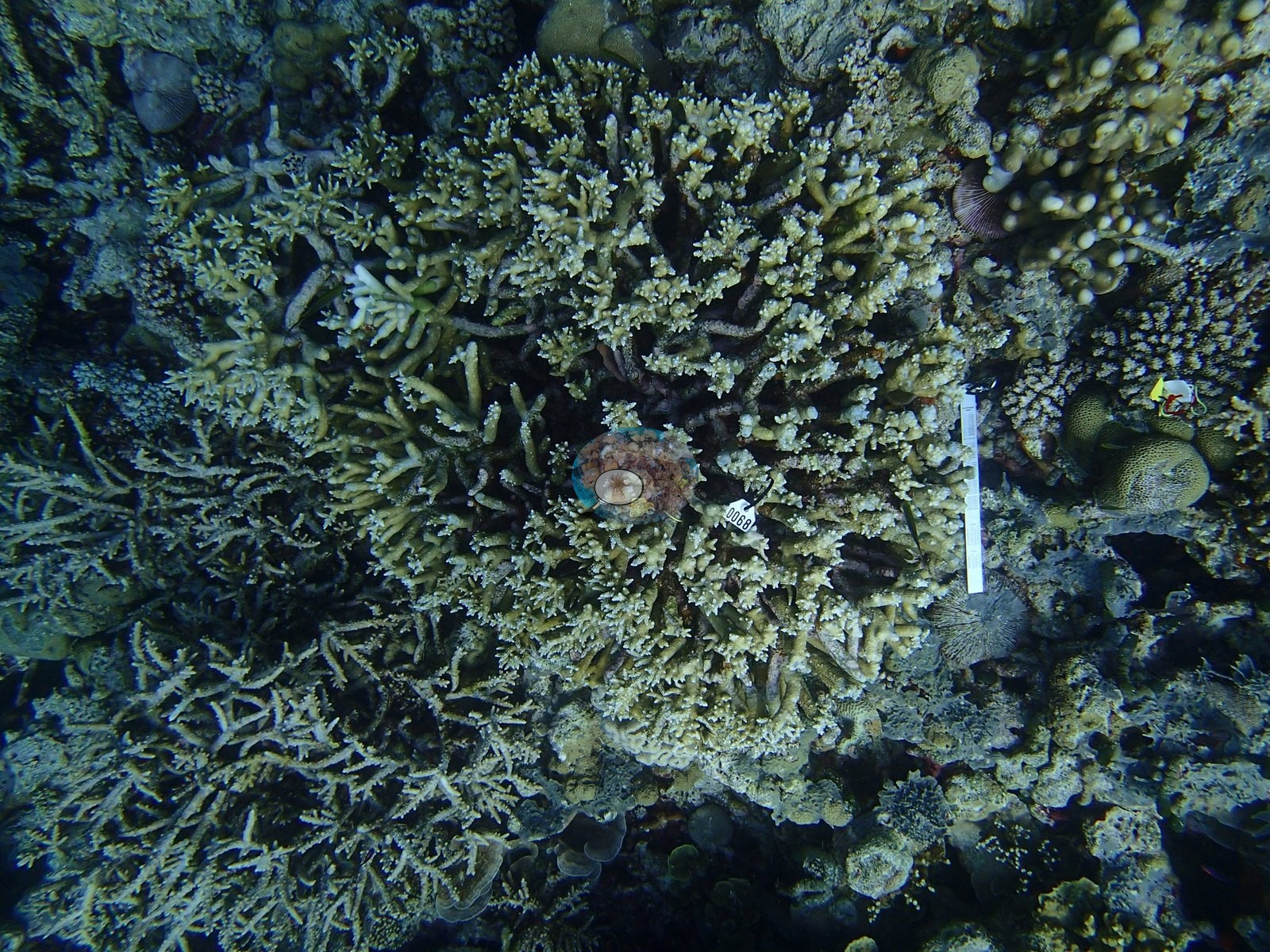
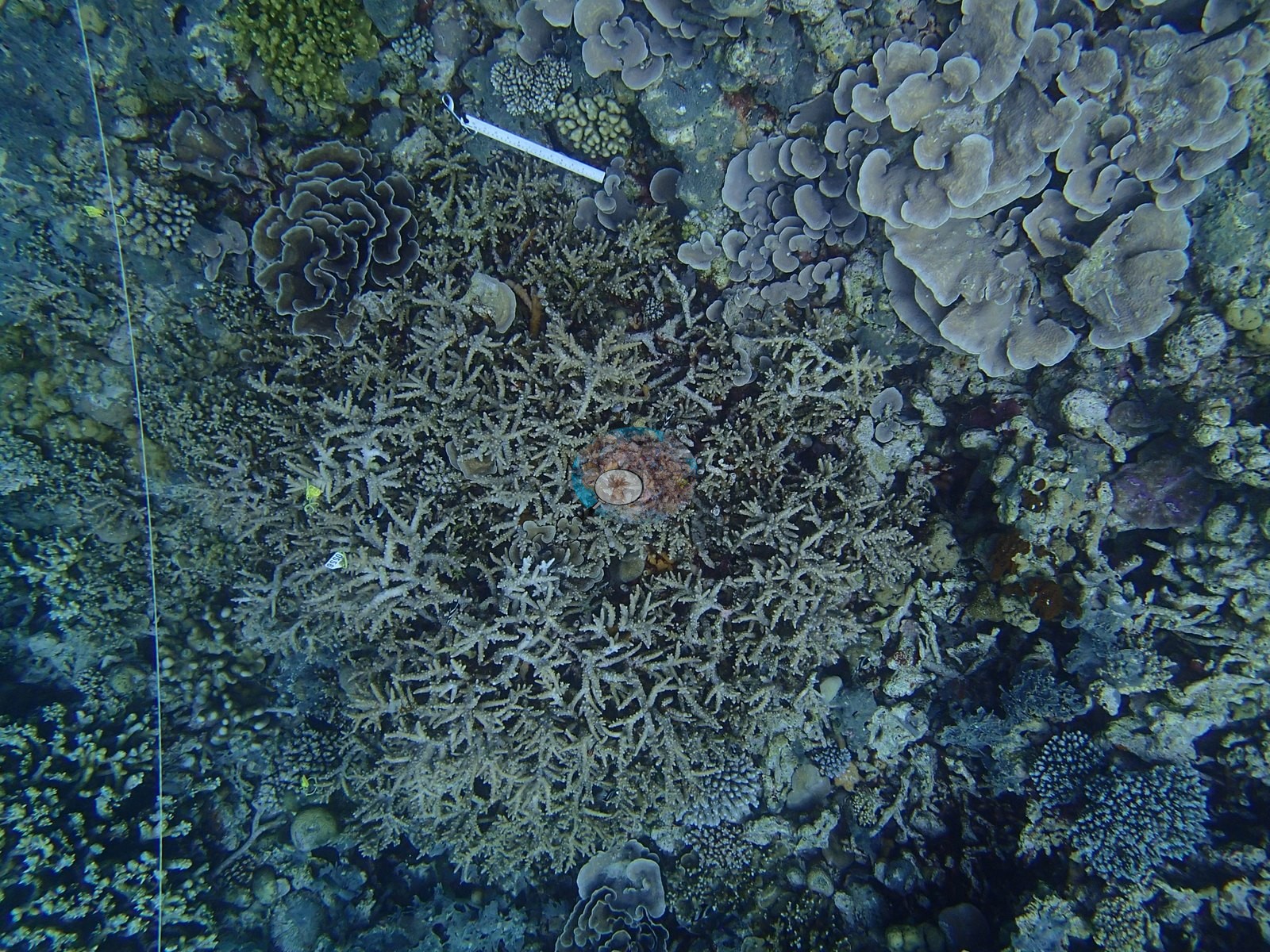
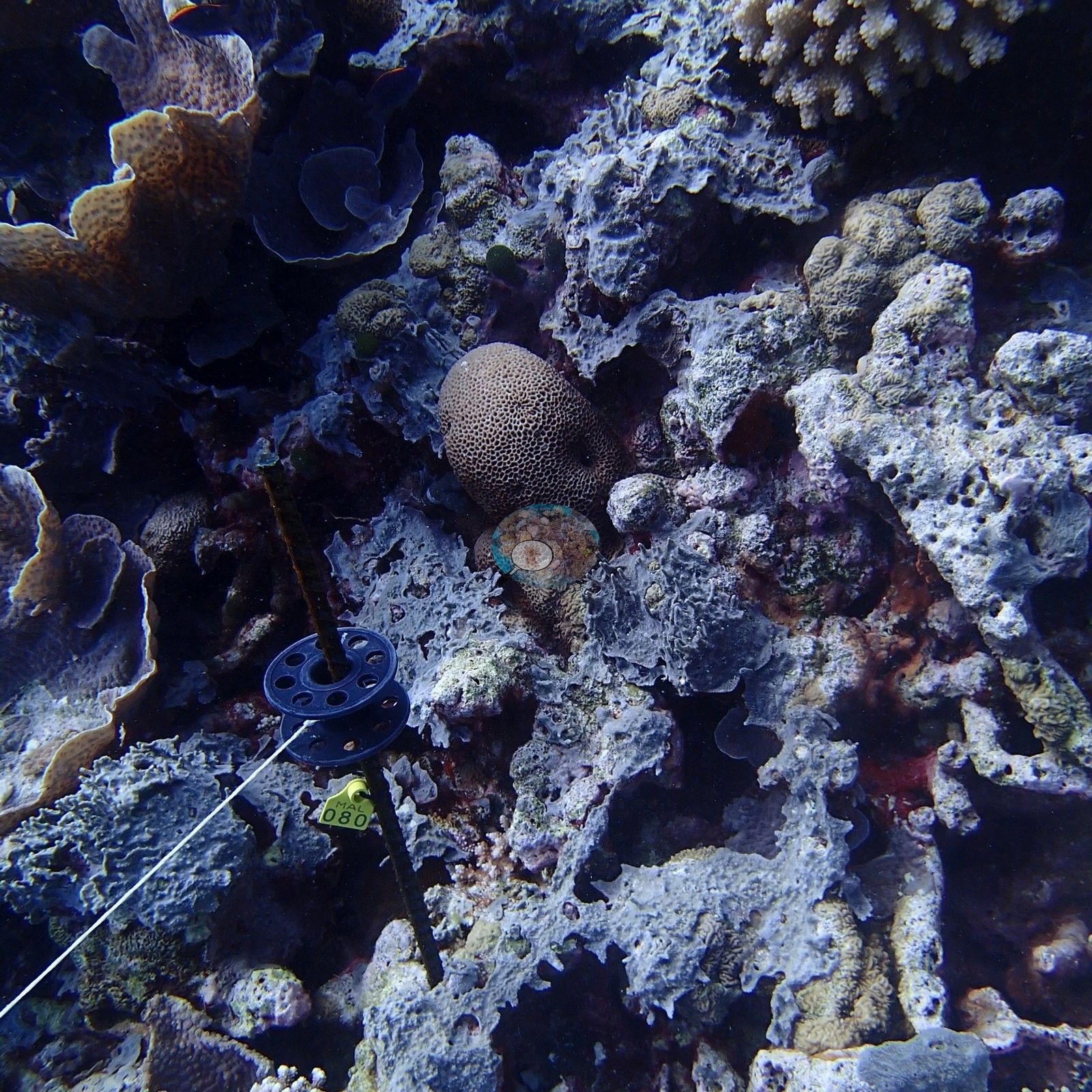
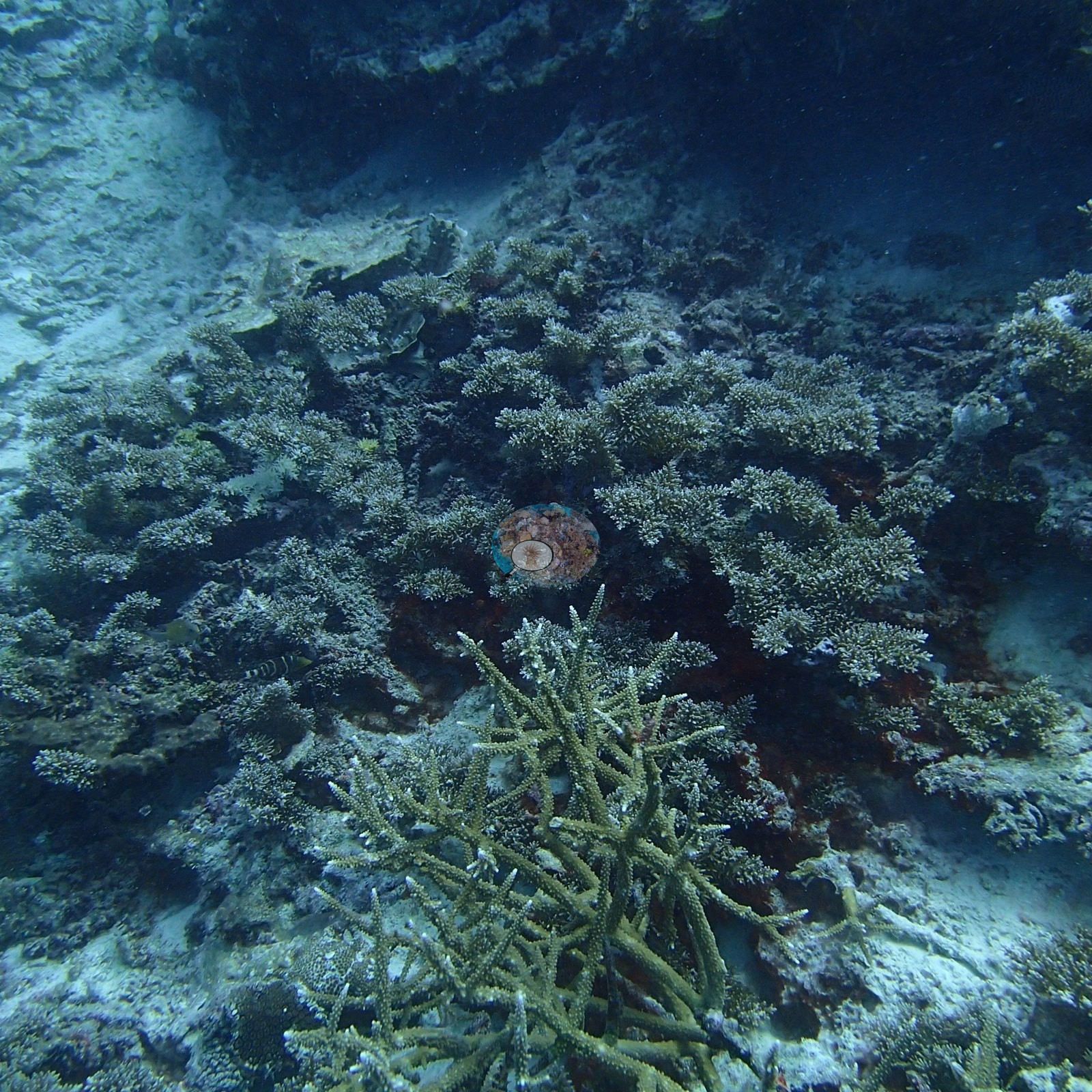
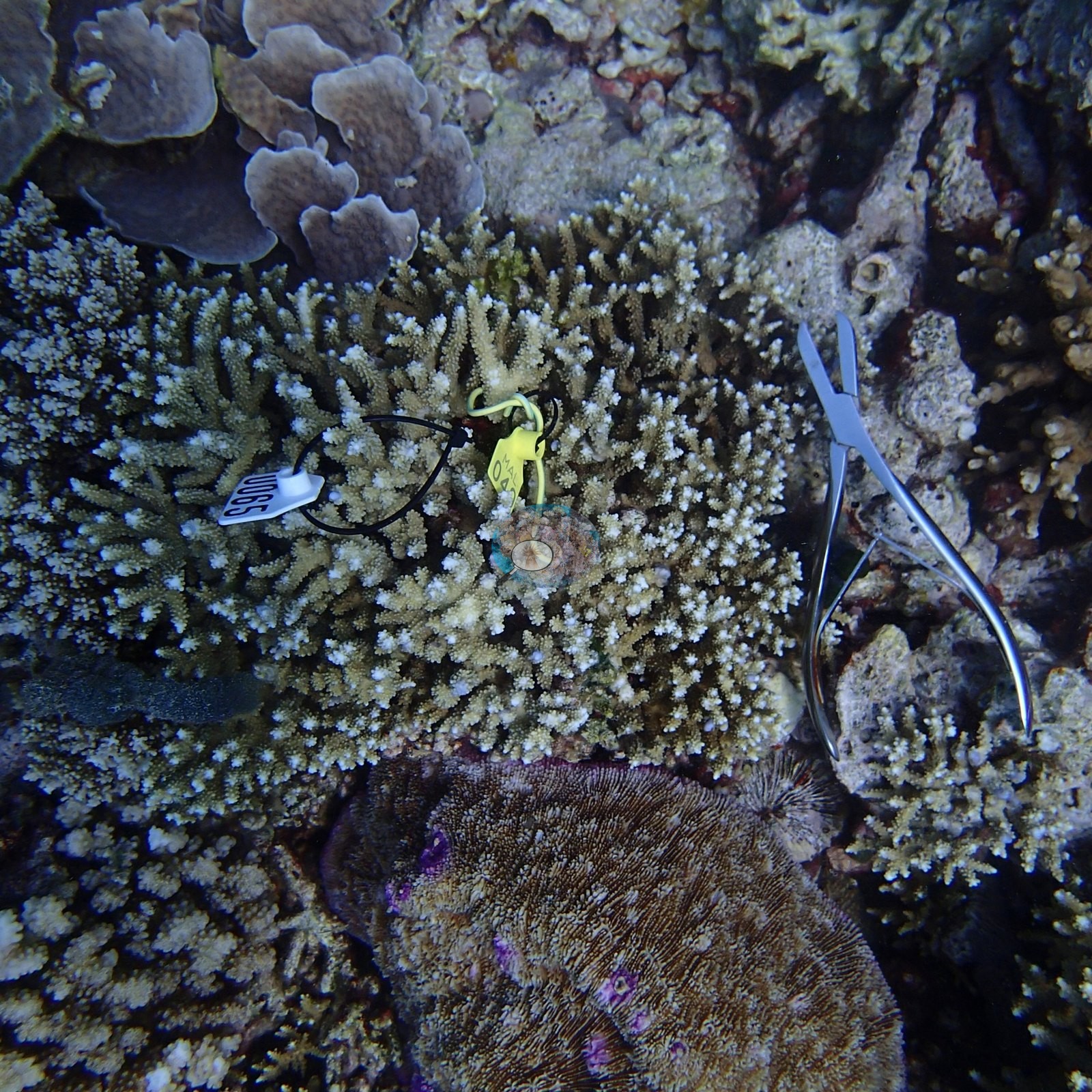
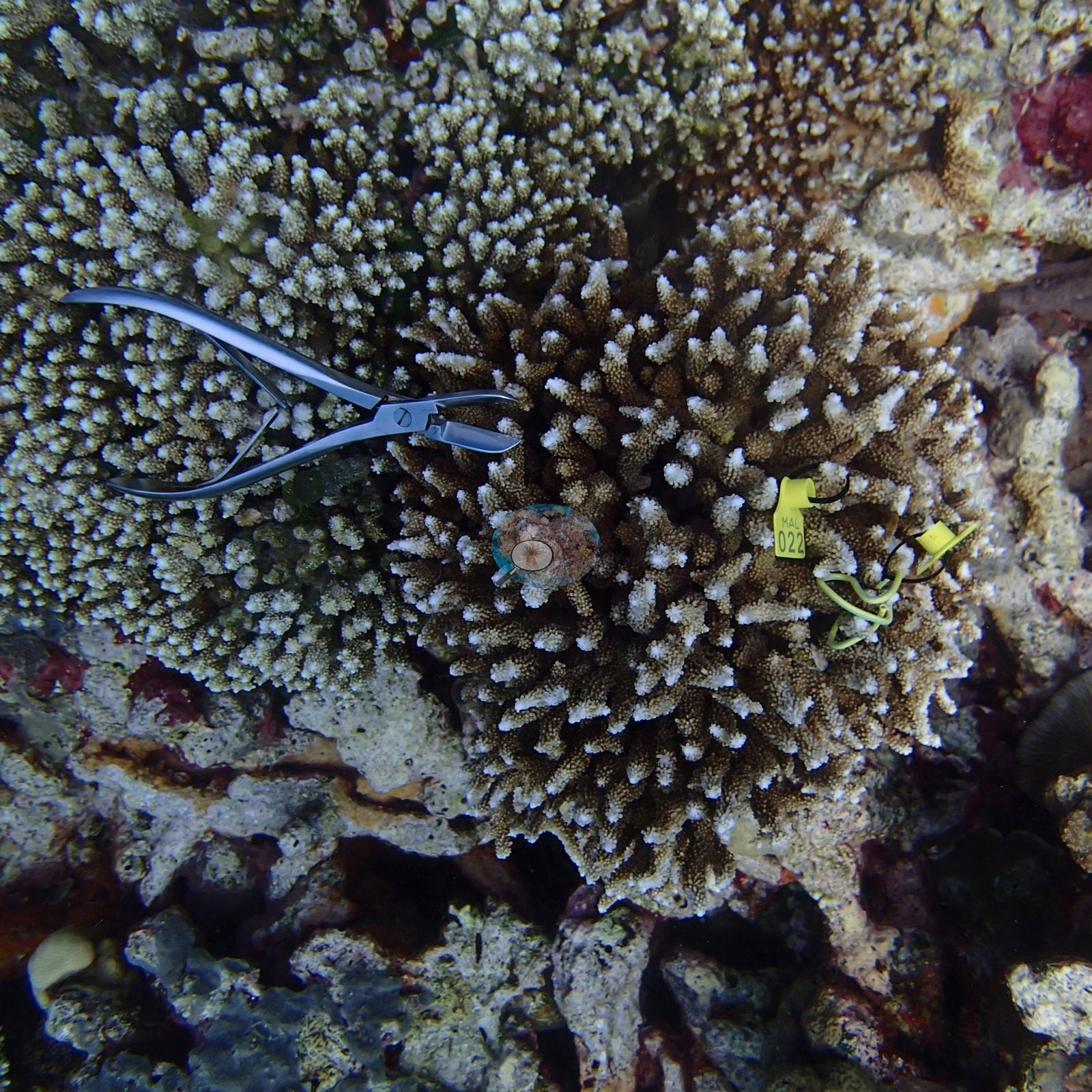
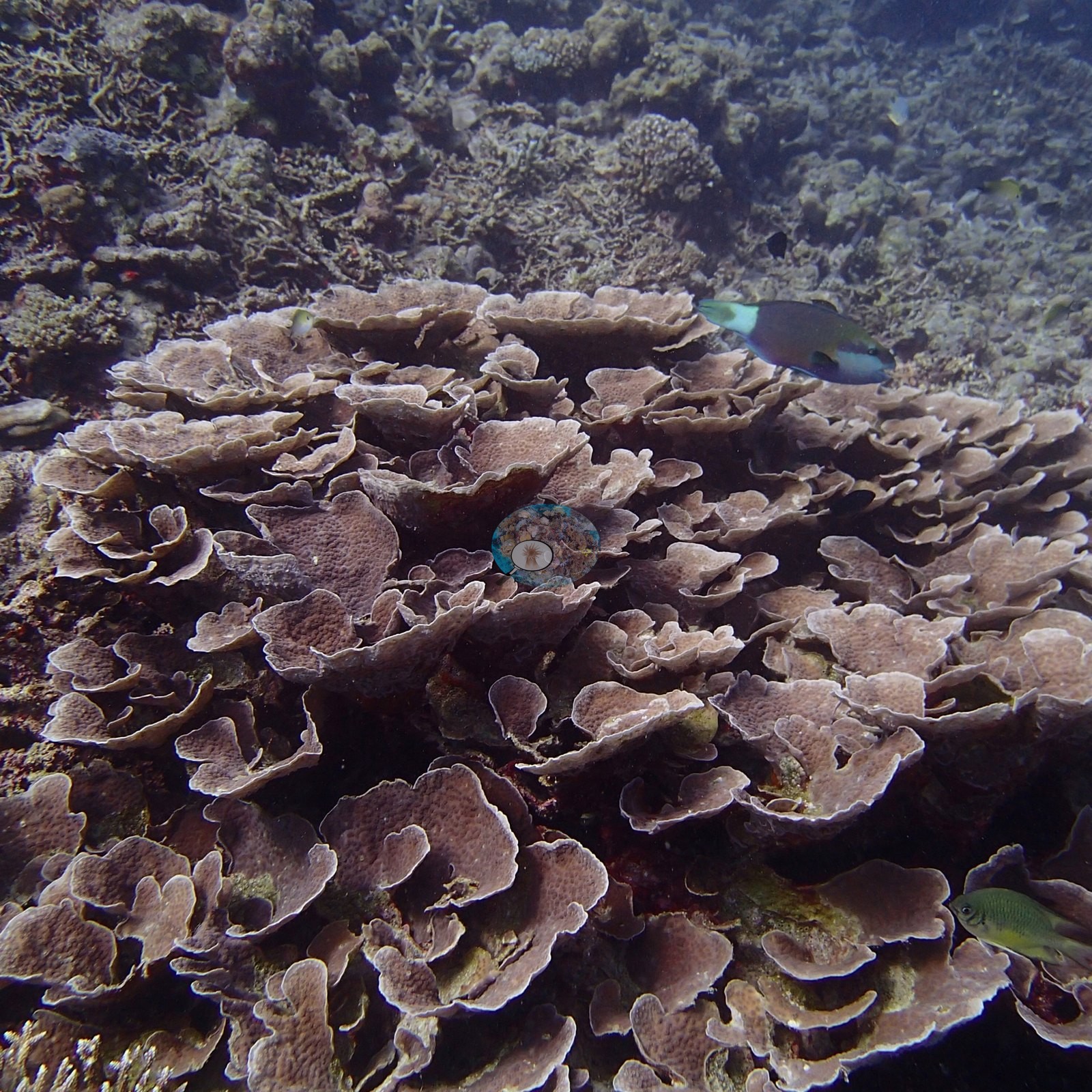
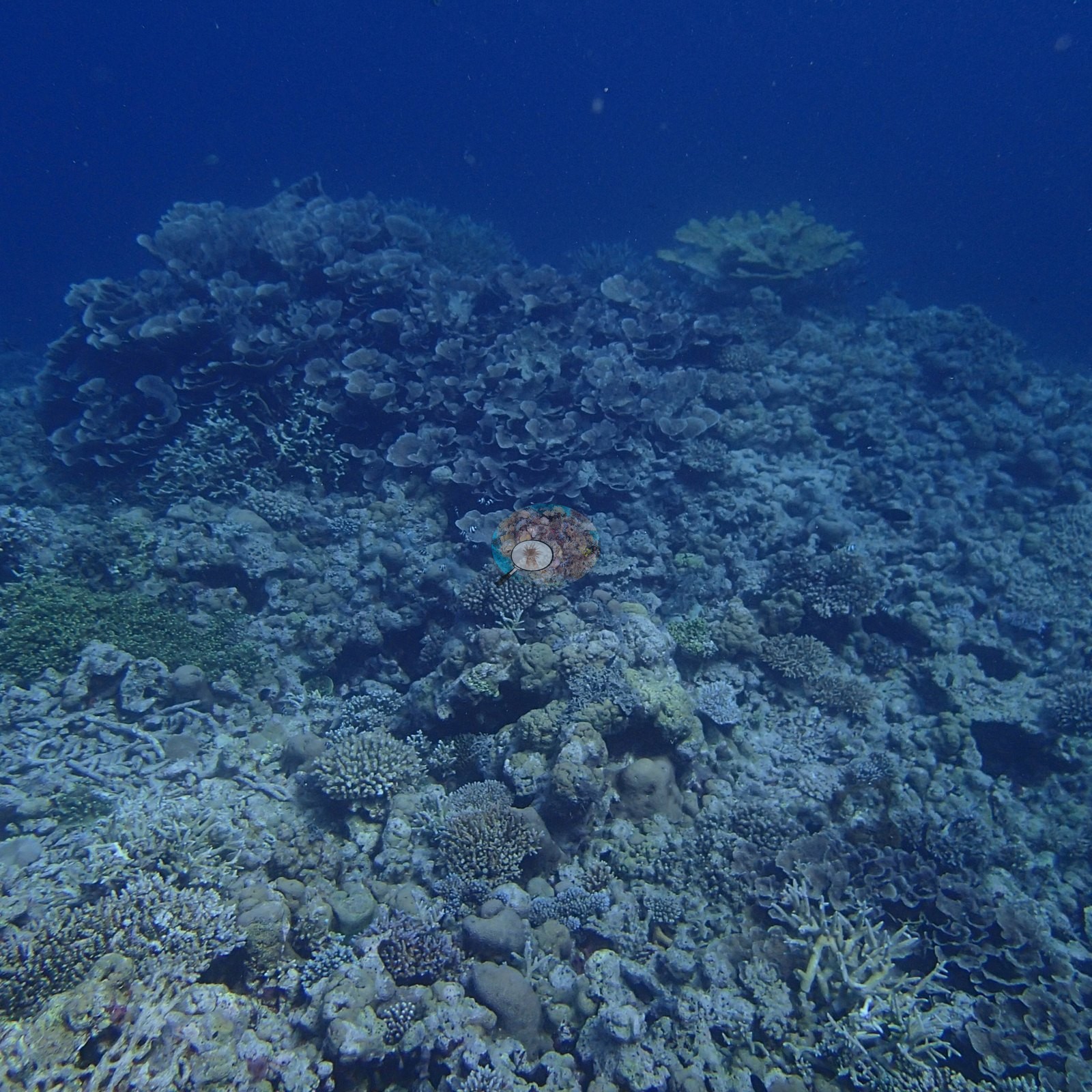
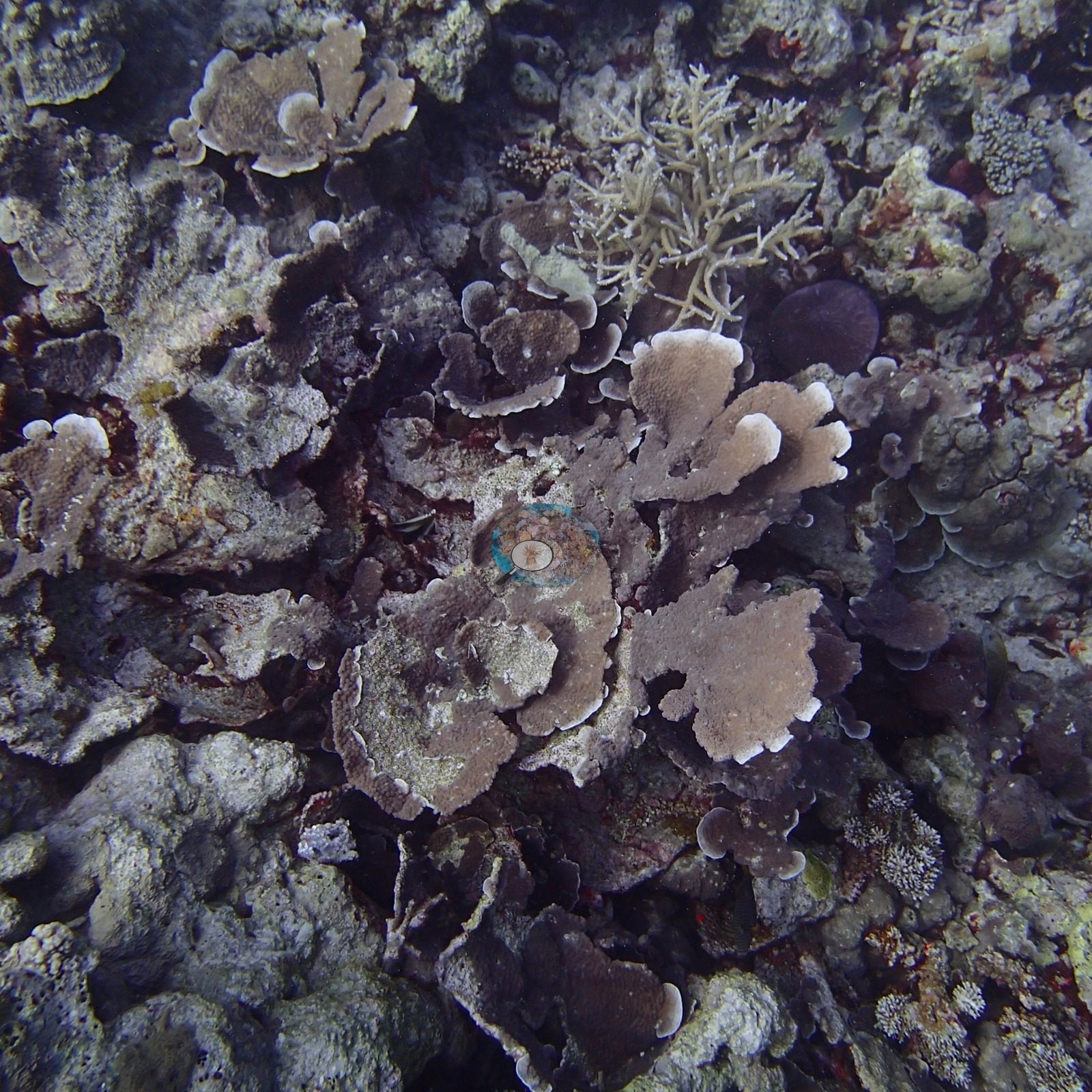
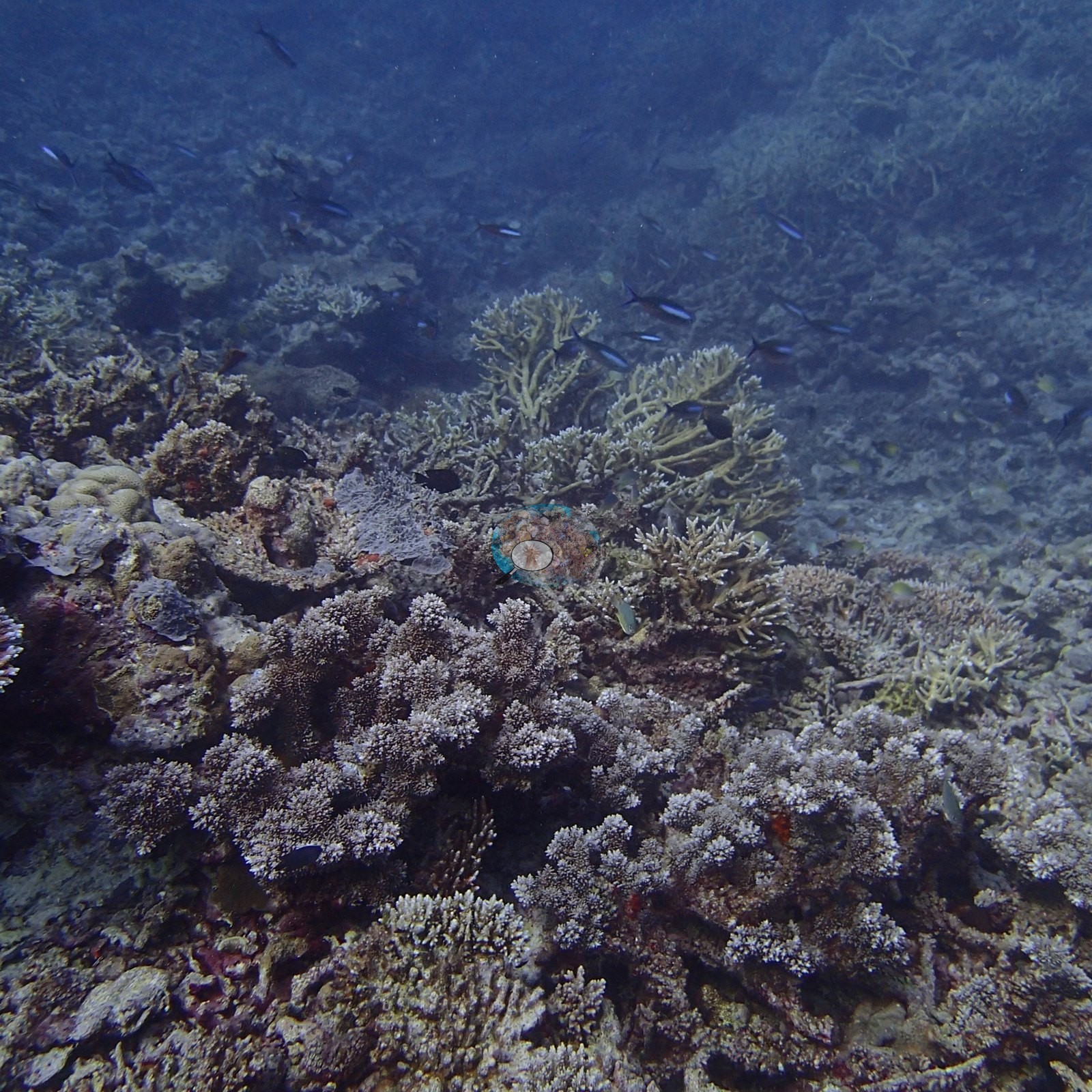
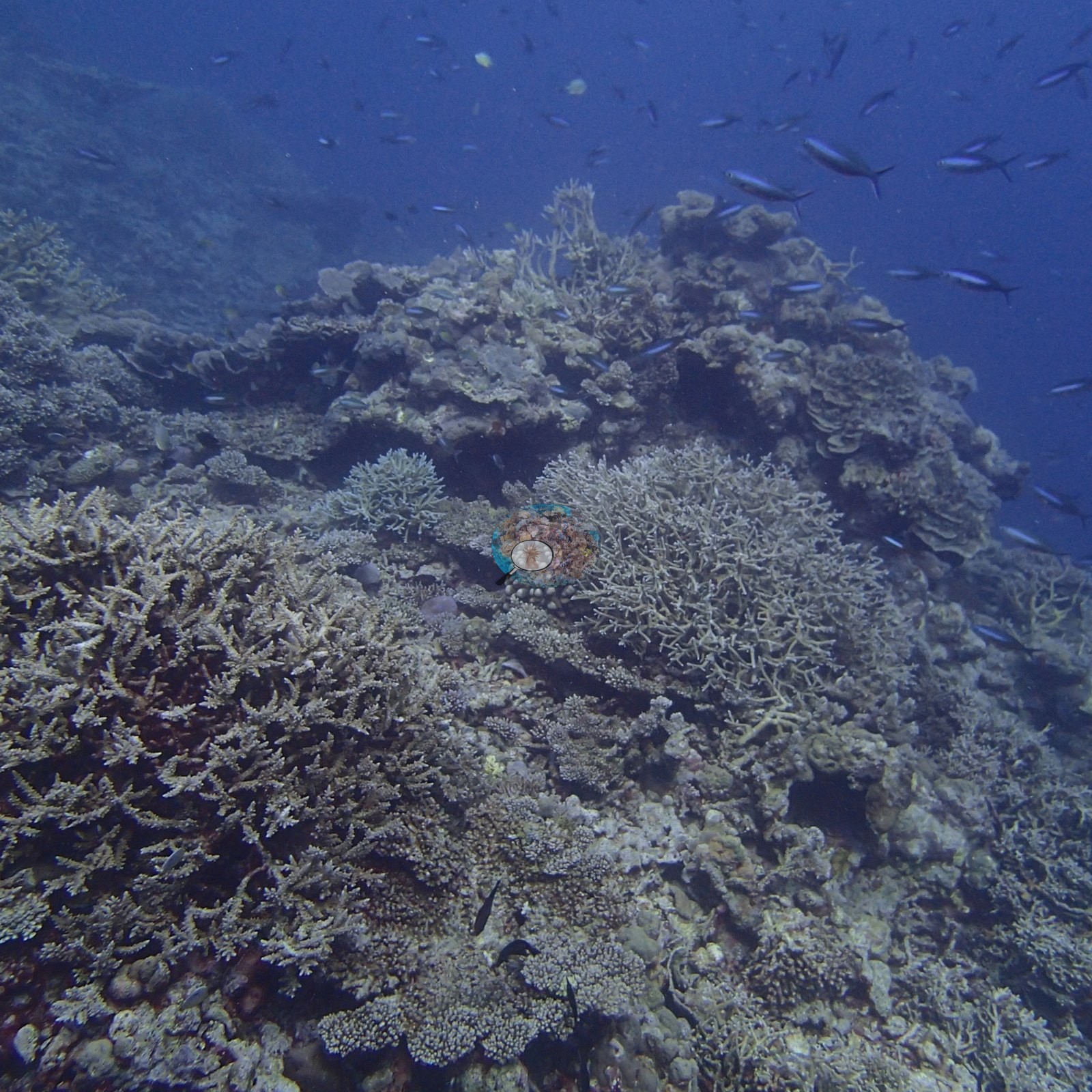
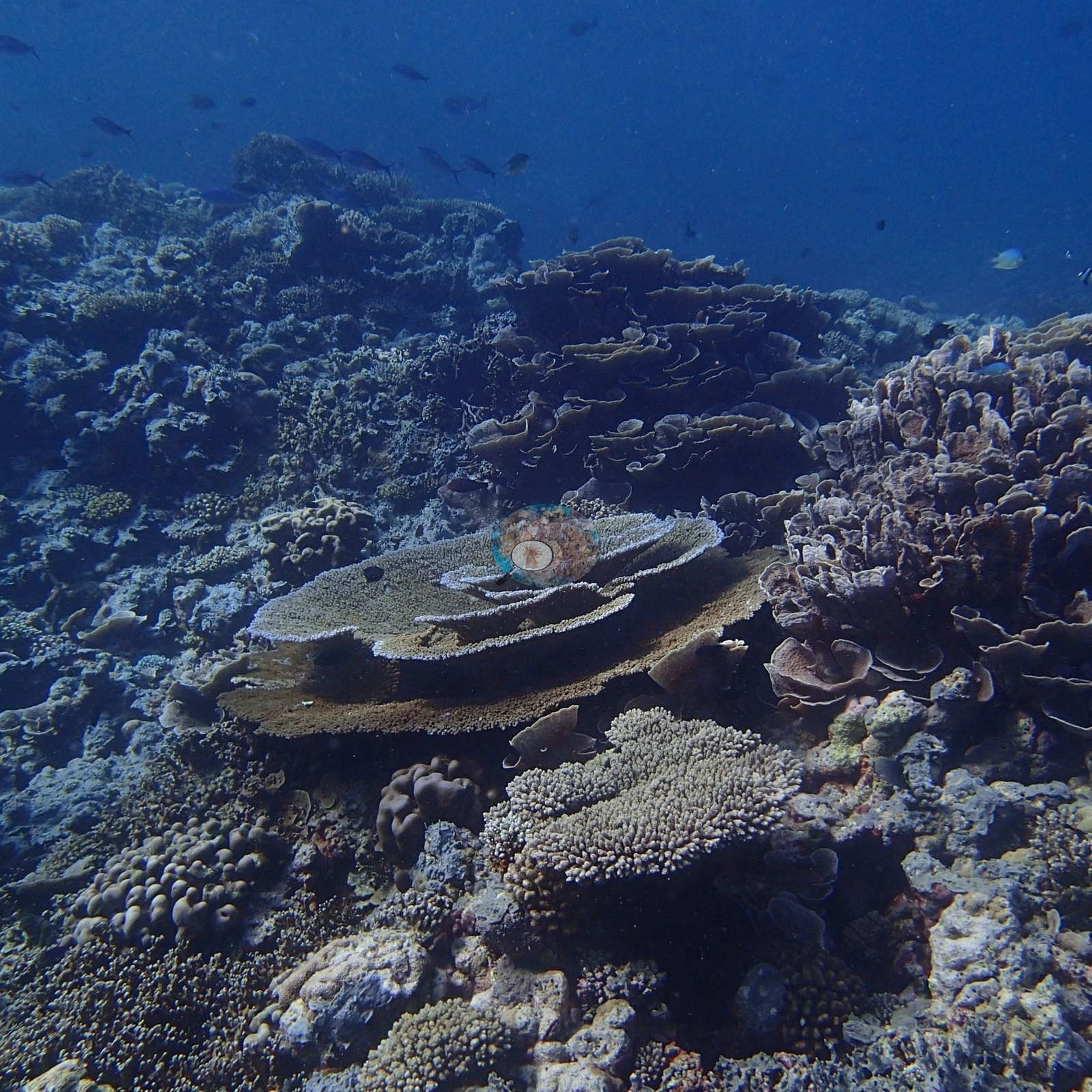
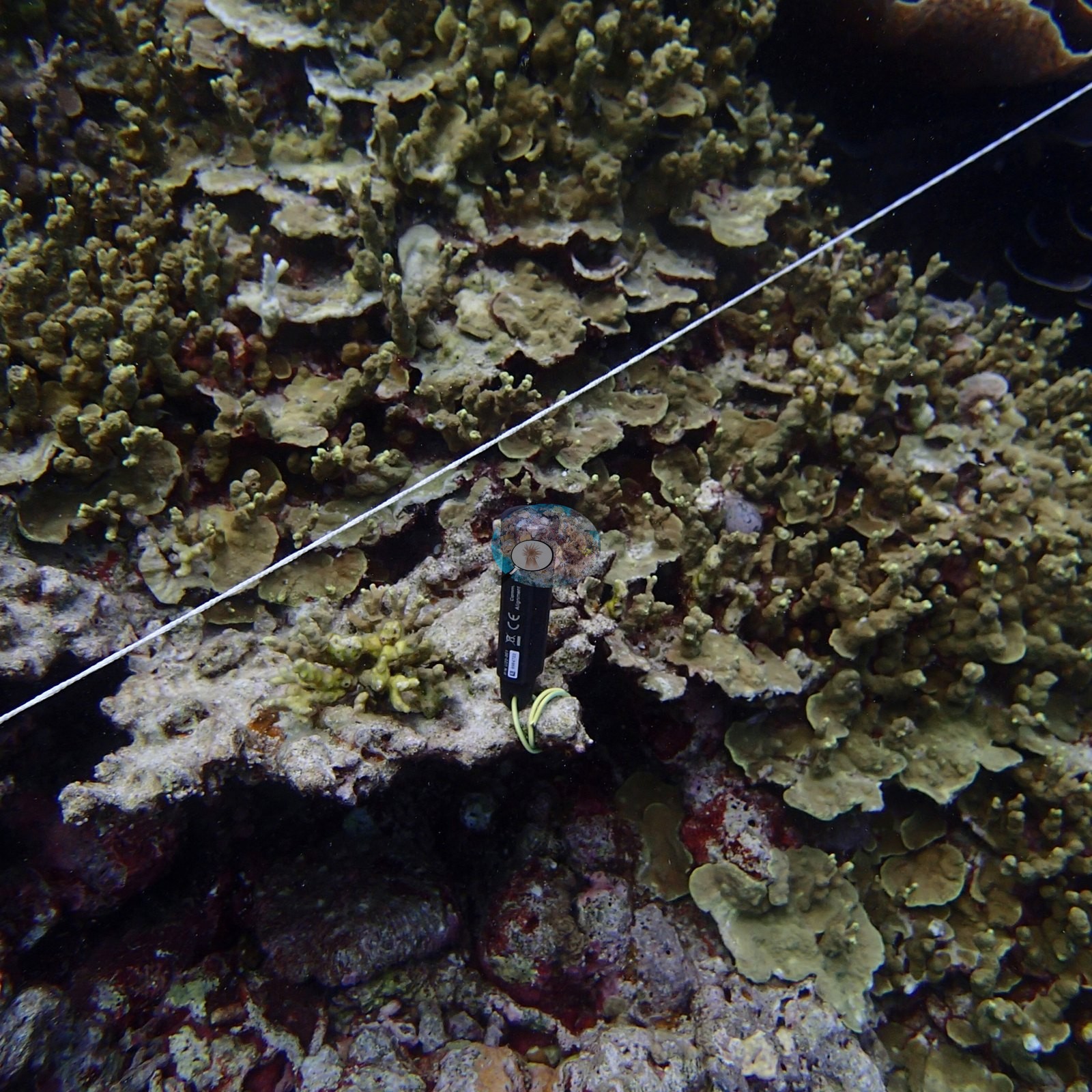
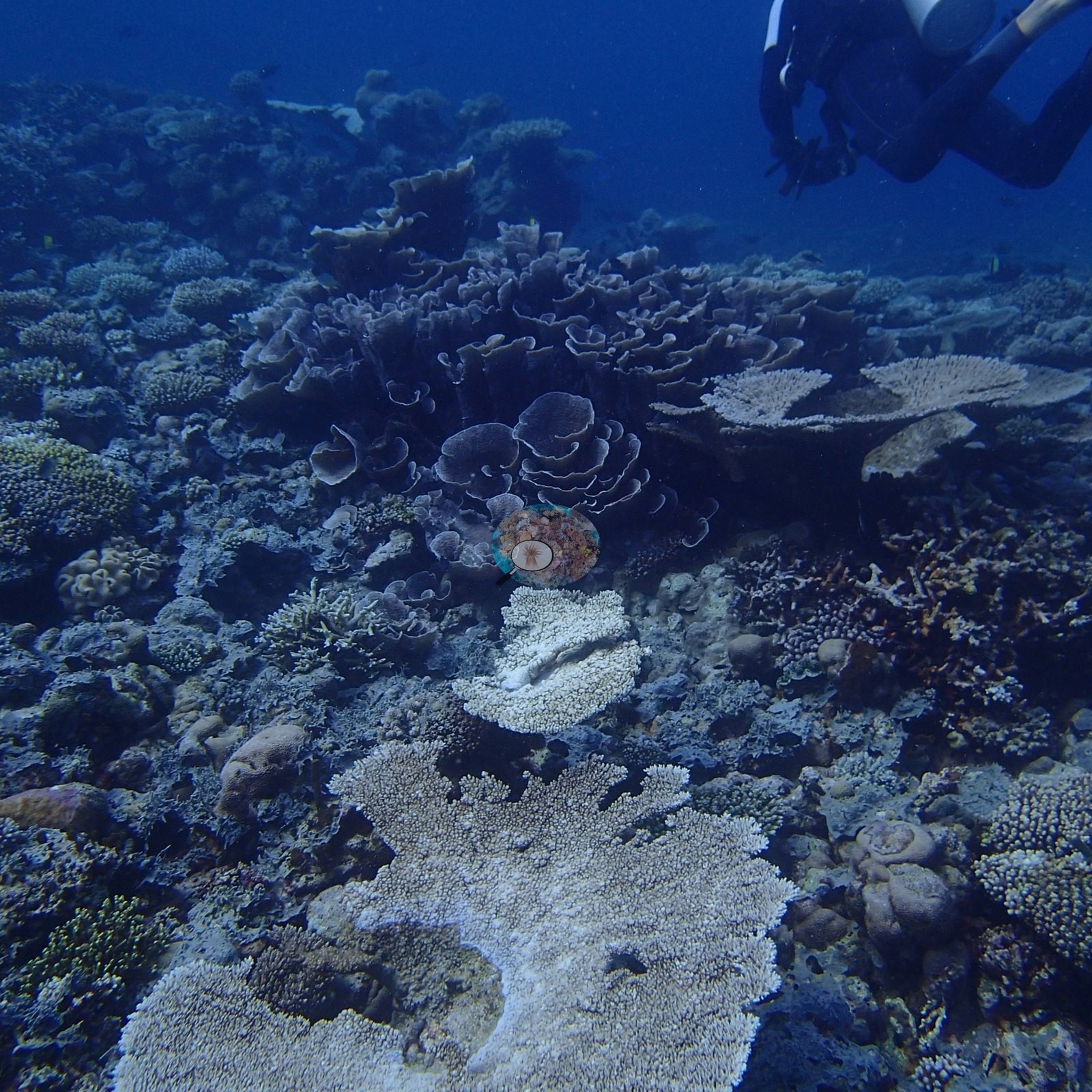
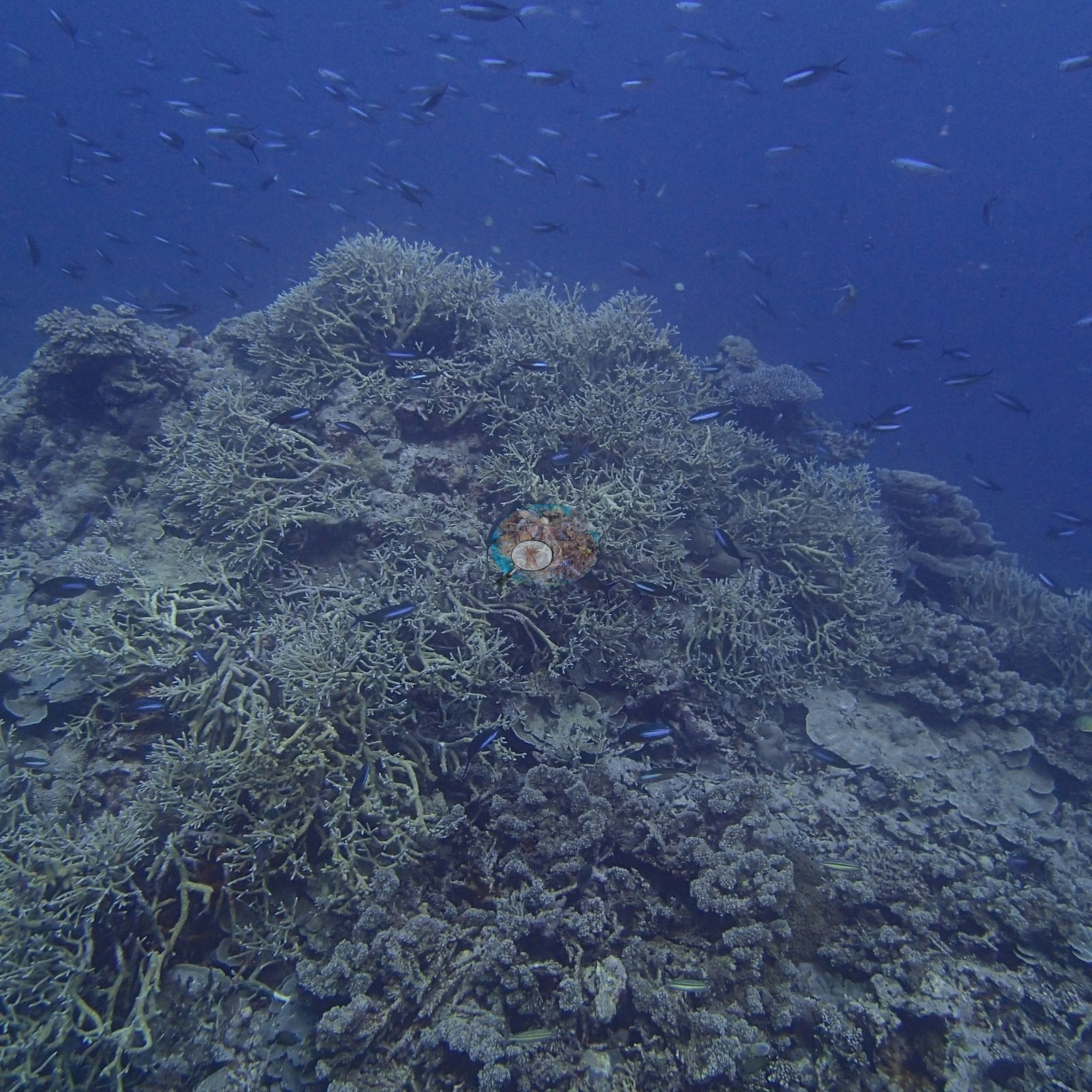
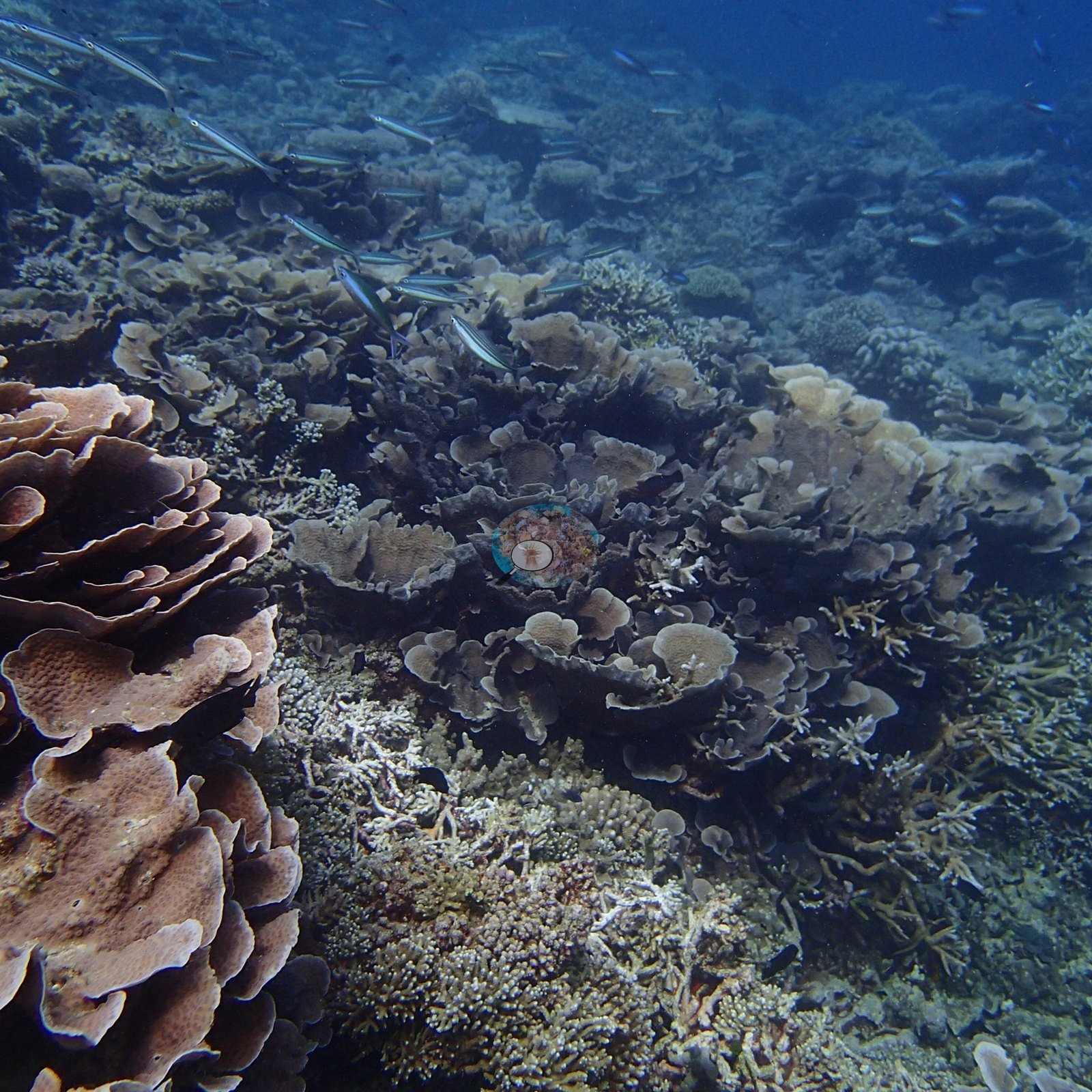
A reef Anderson's field notes describe as having "very high coral cover and diversity" — a rolling slope smothered in coral, where giant rosettes of thin, whorled plates stack like heads of ancient roses beside dense staghorn thickets with lilac-blue branch tips (e.g., Image 6, Image 18, Image 23, Image 24).
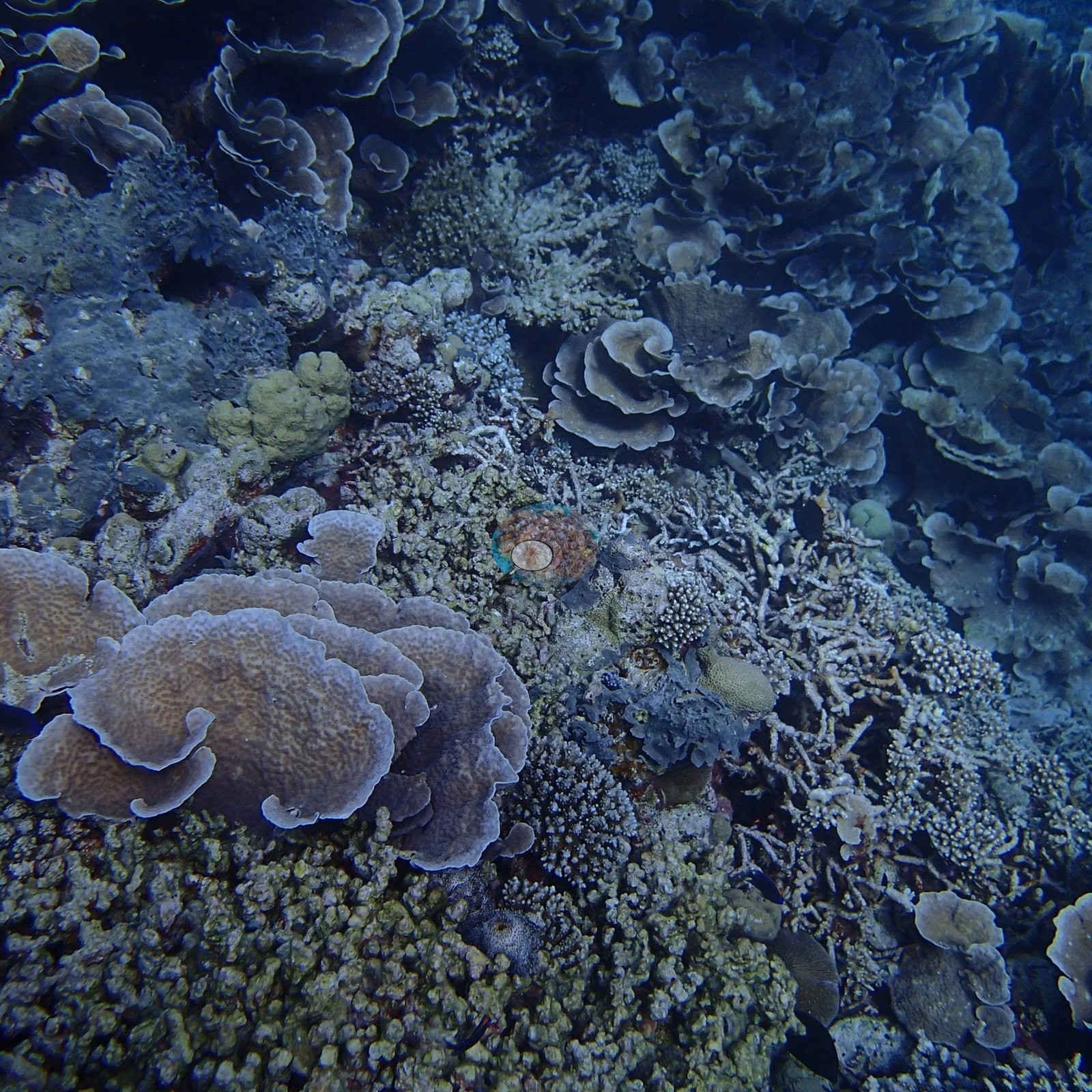
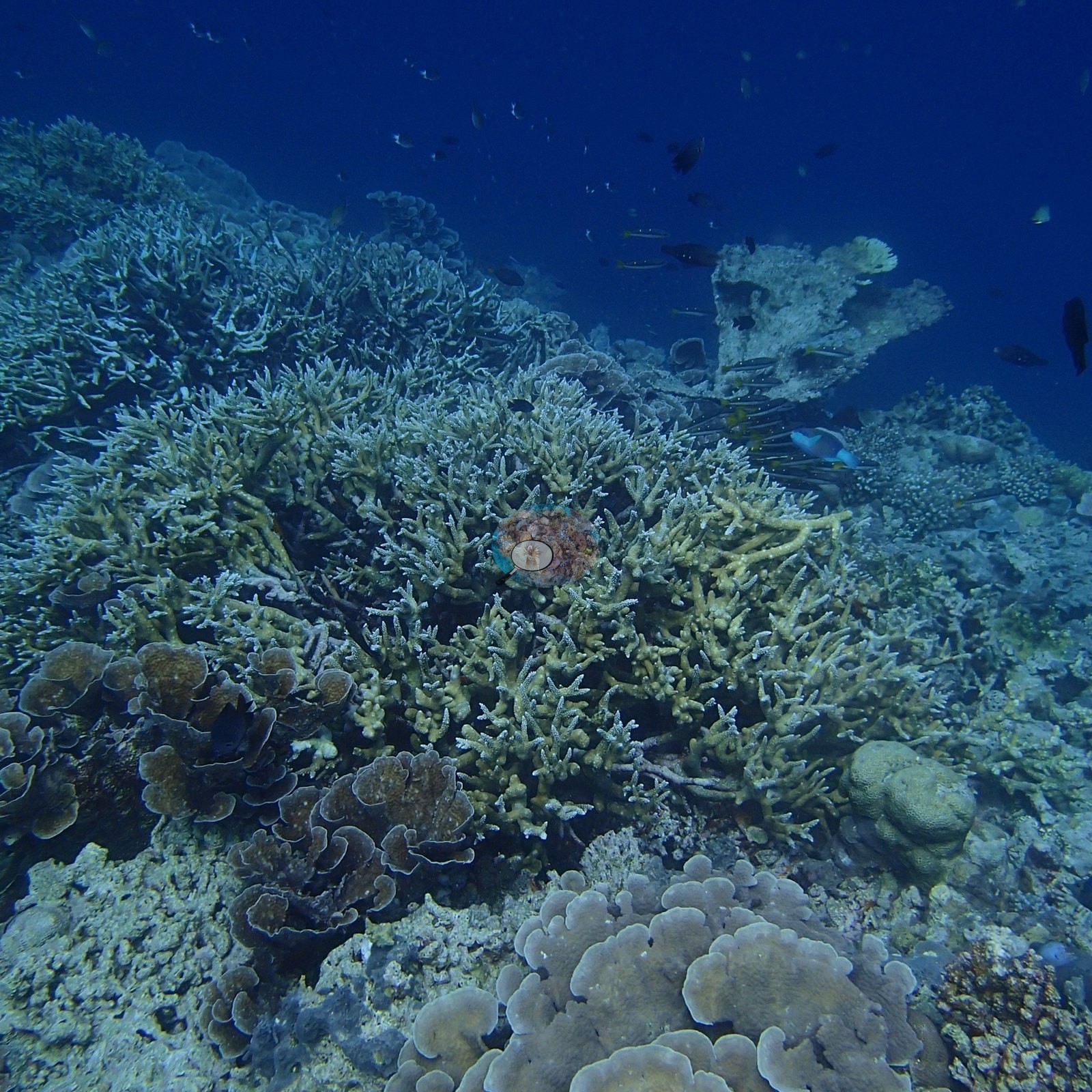
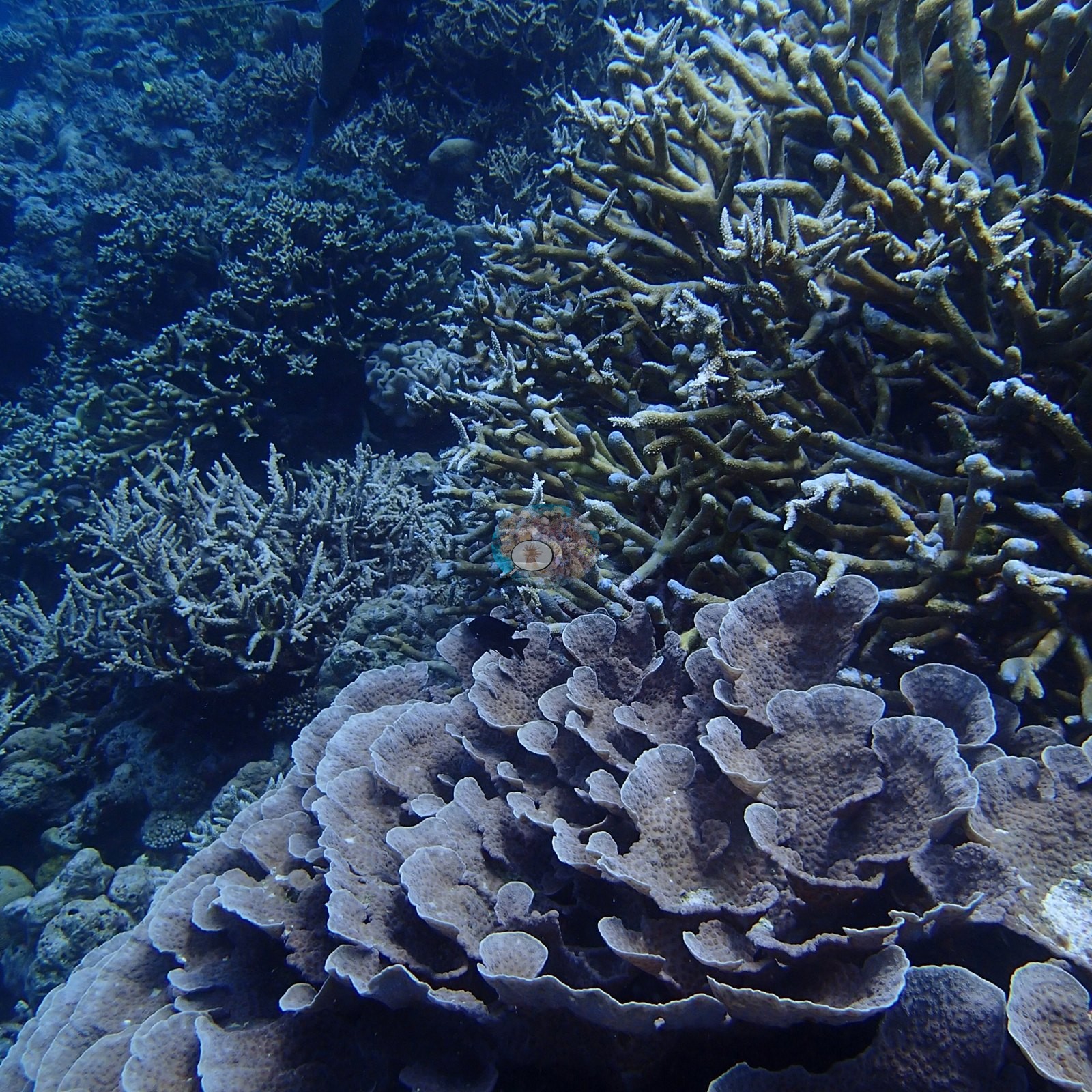
A vivid yellow-green table coral crowns one rise, and deeper down the reef turns into a waving green meadow of long-polyped colonies (e.g., Image 37).
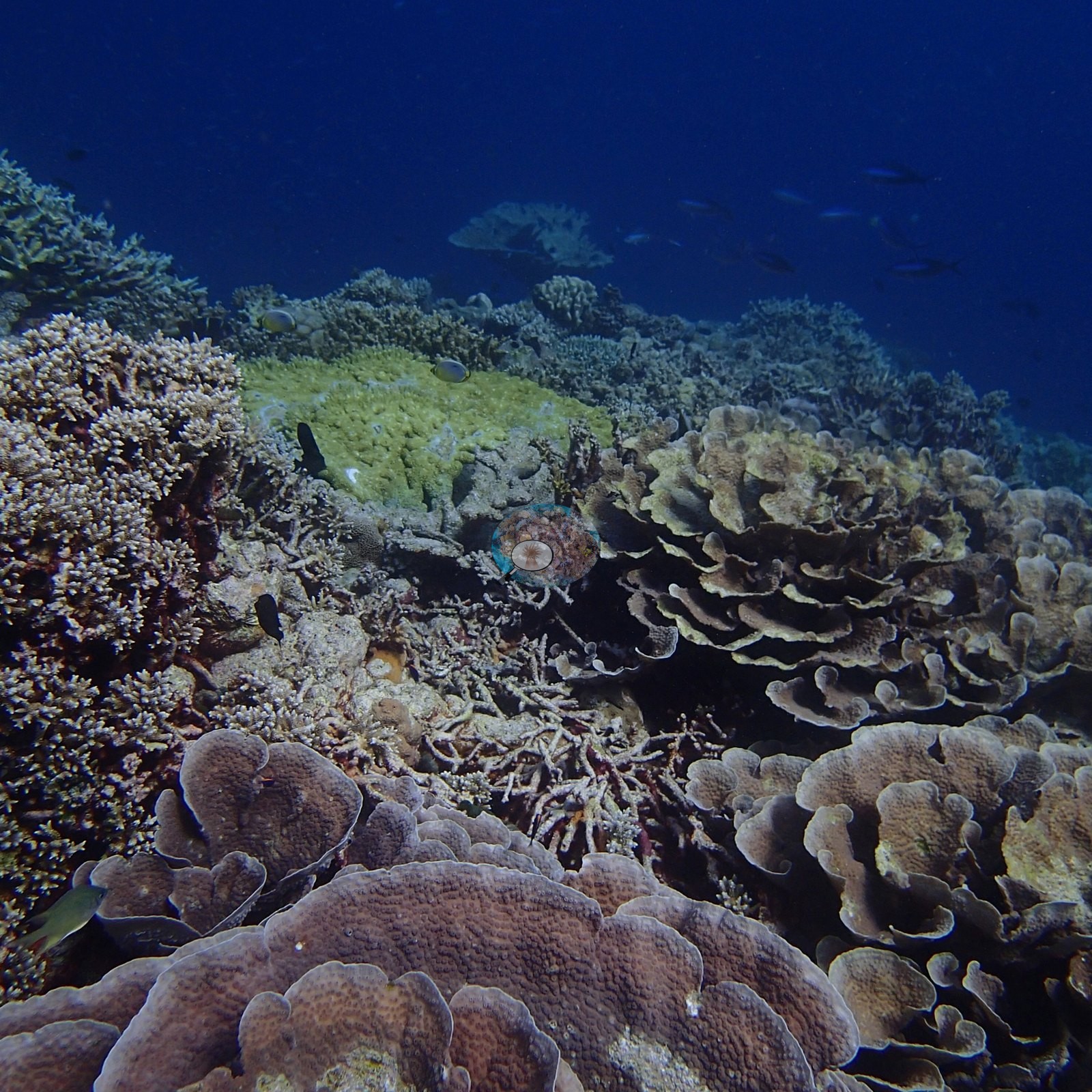
Coral cover
- Coral cover: 27% (SD 20%, n=13 transects, median 20%) in July 2016 — Coral Reef CPR point-intercept transects on Kashidhoo Faru, after the 2016 bleaching; we were part of the CPR team.
- The April 2016 survey, during the bleaching, read 74% (n=10 transects). A single computer vision estimate (CoralSCOP mask-sum) over 19 of Anderson's January 2016 photographs is listed in the method table for comparison only; mask-sum tends to read high where colonies overlap or fill the frame.
Stressors
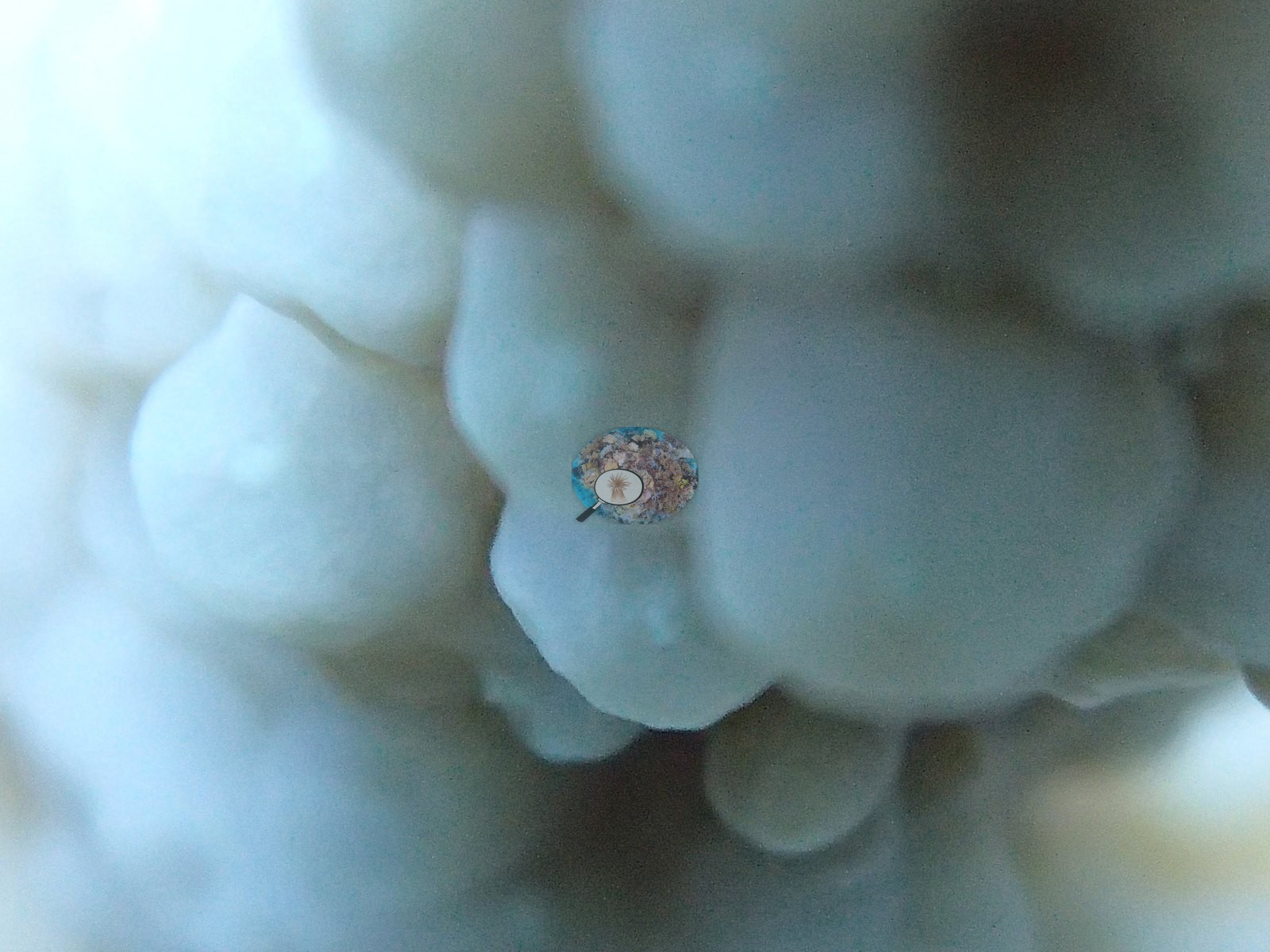
In January 2016 Anderson's sample sheet already noted "some partial mortality" on three of the large branching colonies sampled (one also with "some new mortality") and "some paler sections" on another sampled colony. The frames from that dive also show stark-white sections on branching colonies, recent mortality, cause not stated (e.g., Image 46).
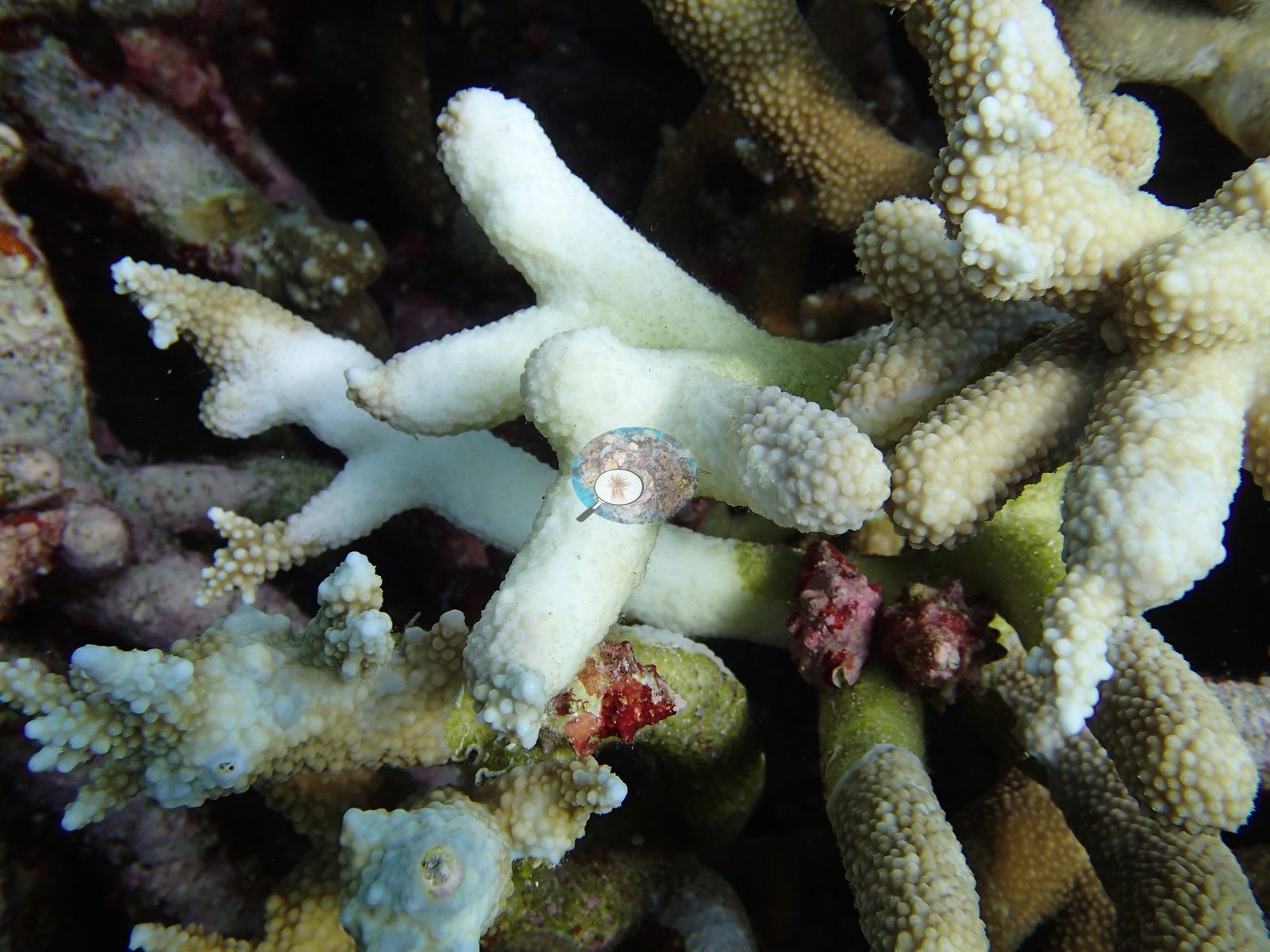
Months later, the 2016 El Niño bleached the vast majority of corals on Baa's reefs. No crown-of-thorns starfish (COTS) or other corallivores were evident.
Fish and other fauna
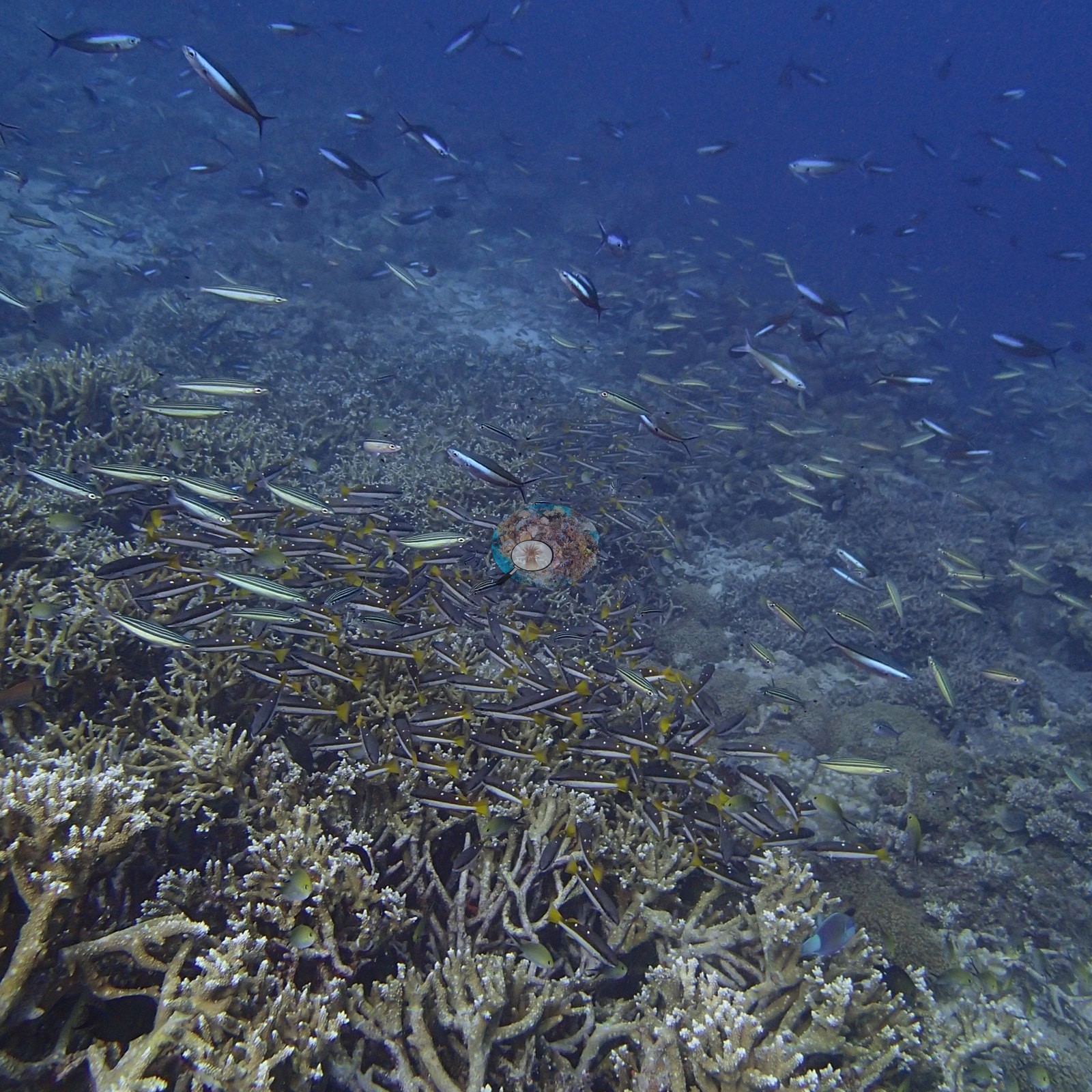
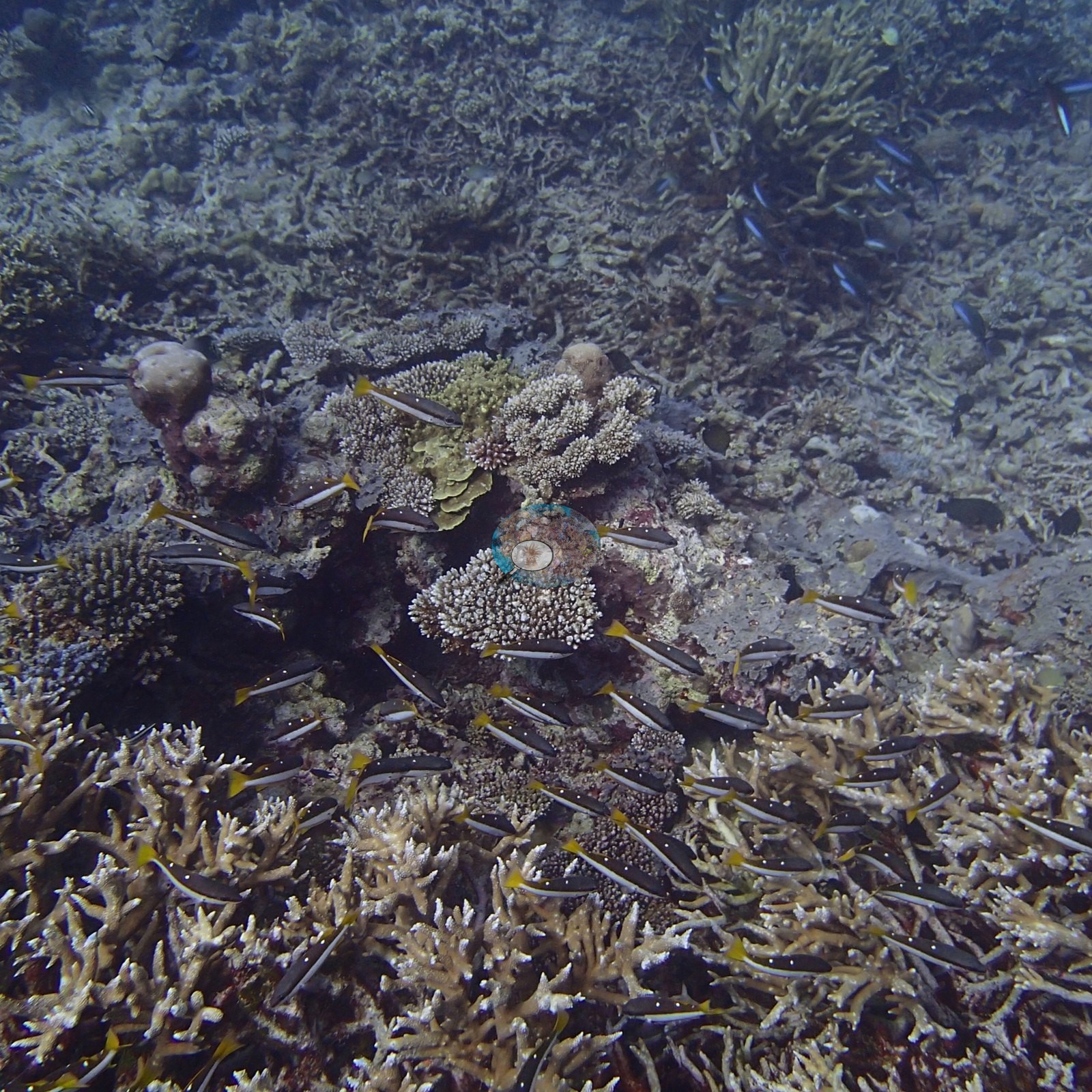
Clouds of slender silver fish stream over the thickets (e.g., Image 17), damselfish hold territories among the plates, and a scarlet feather star hides in the branches.
Comparisons with other data
Apart from the Coral Reef CPR surveys shown here, we found no other surveys at this site as of 2026. If you would like to share yours, please email us.
Other notes
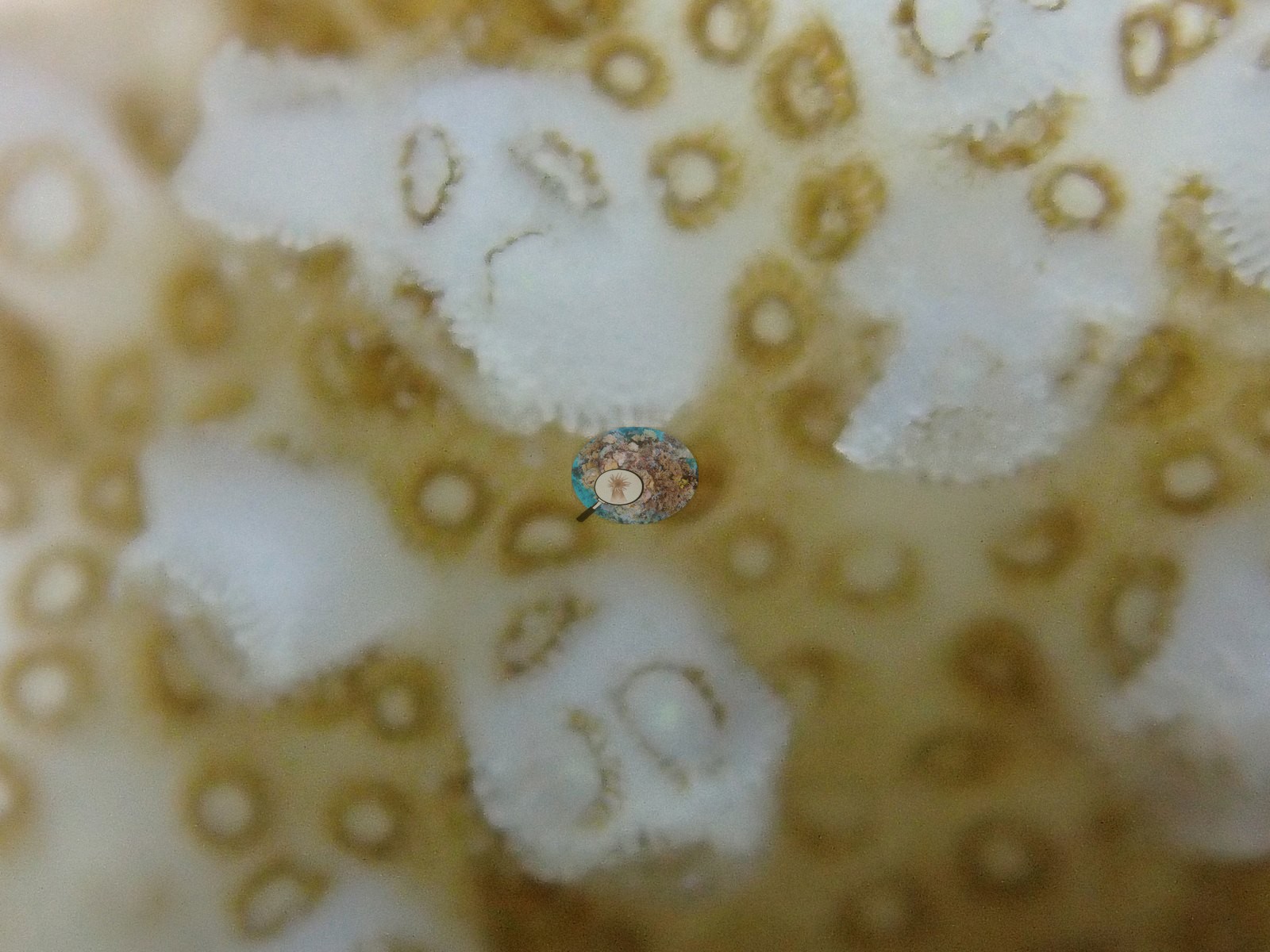
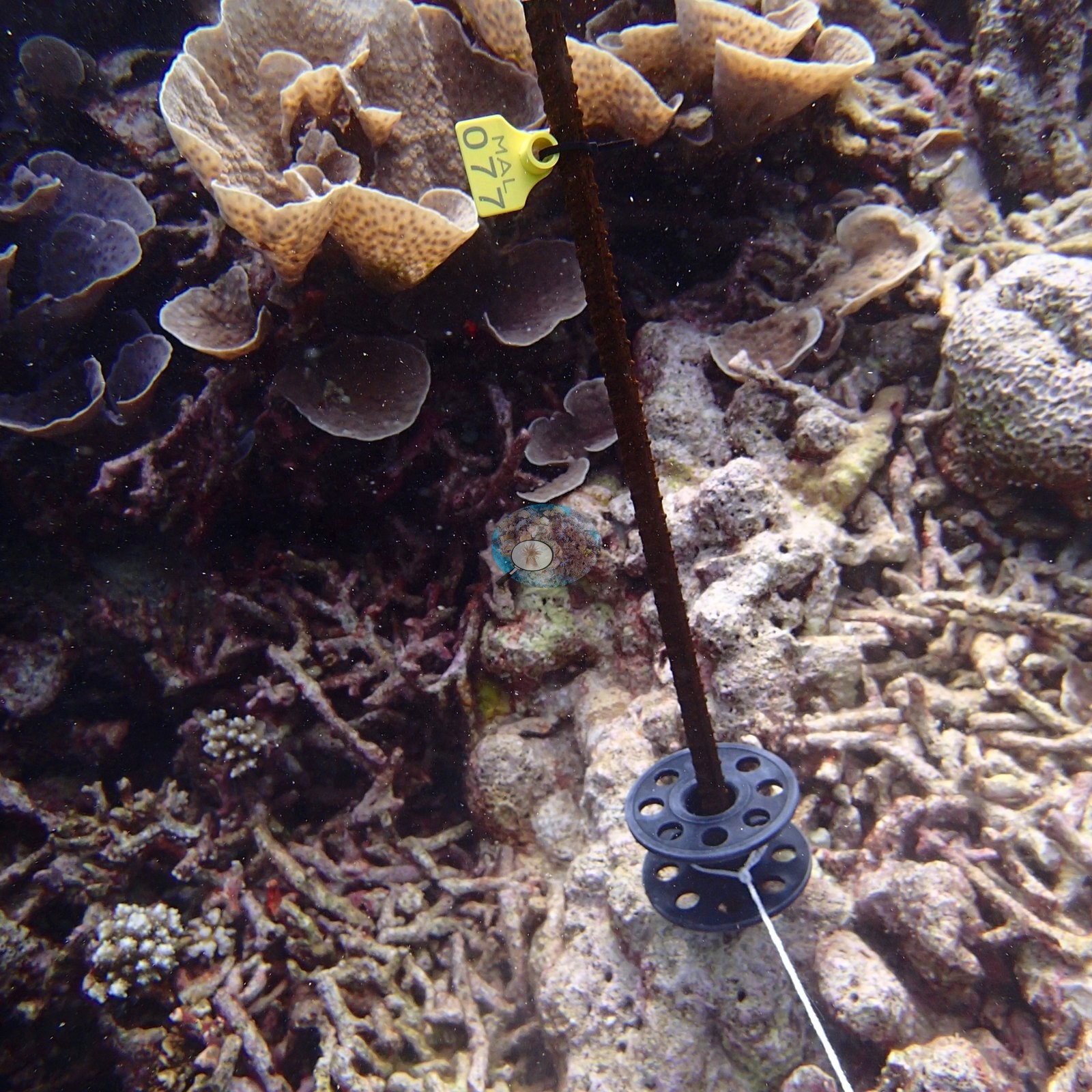
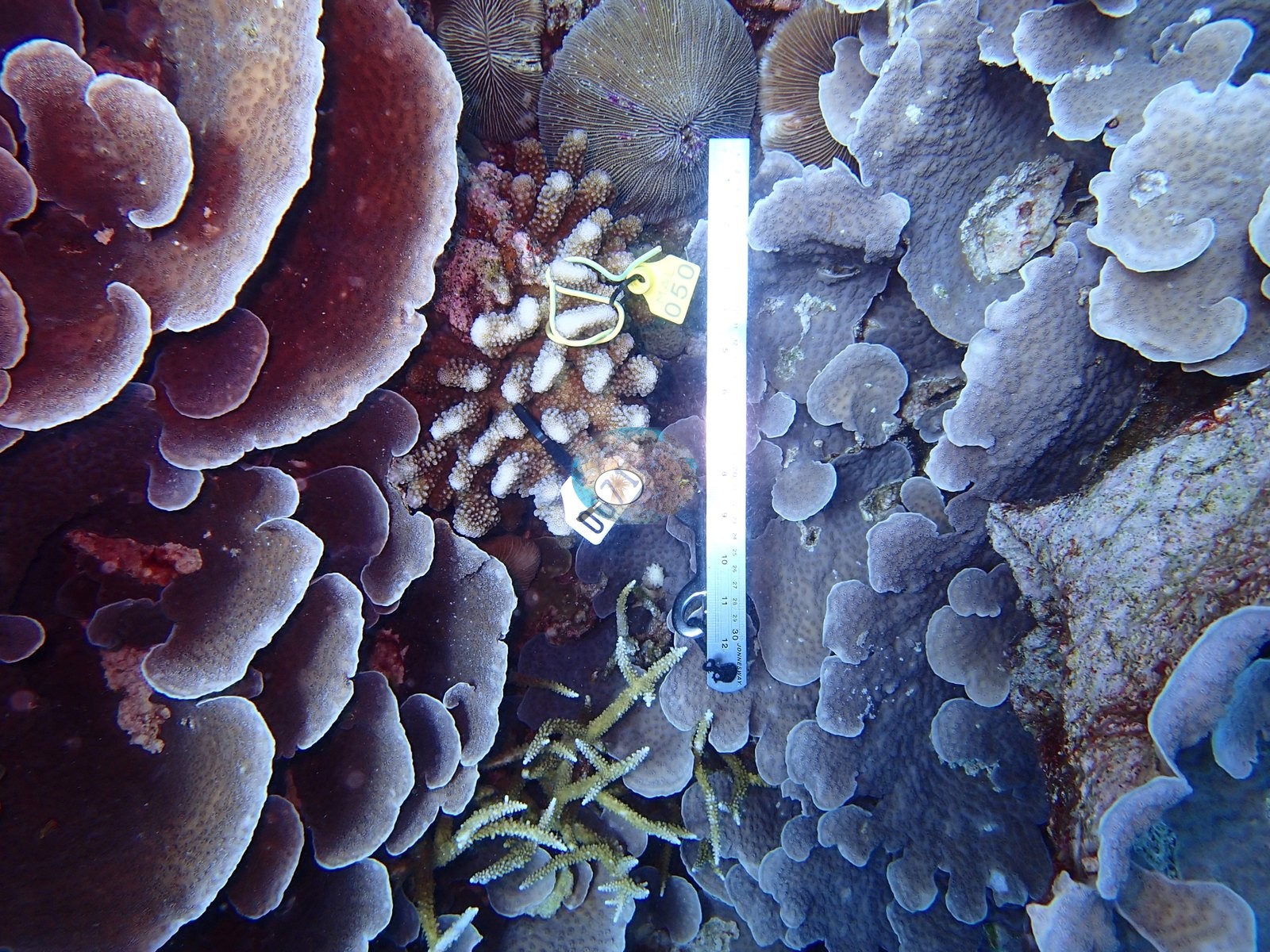
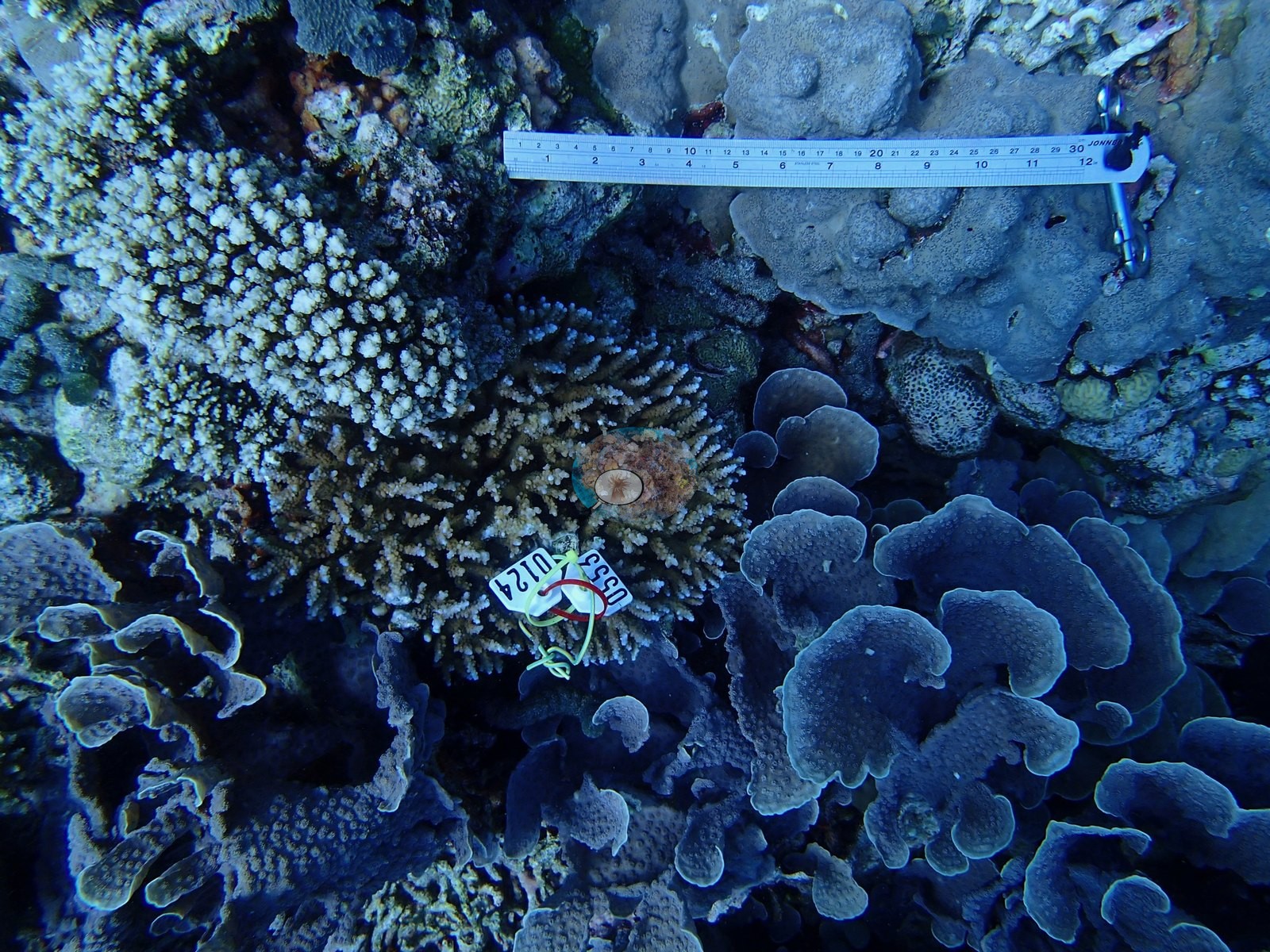
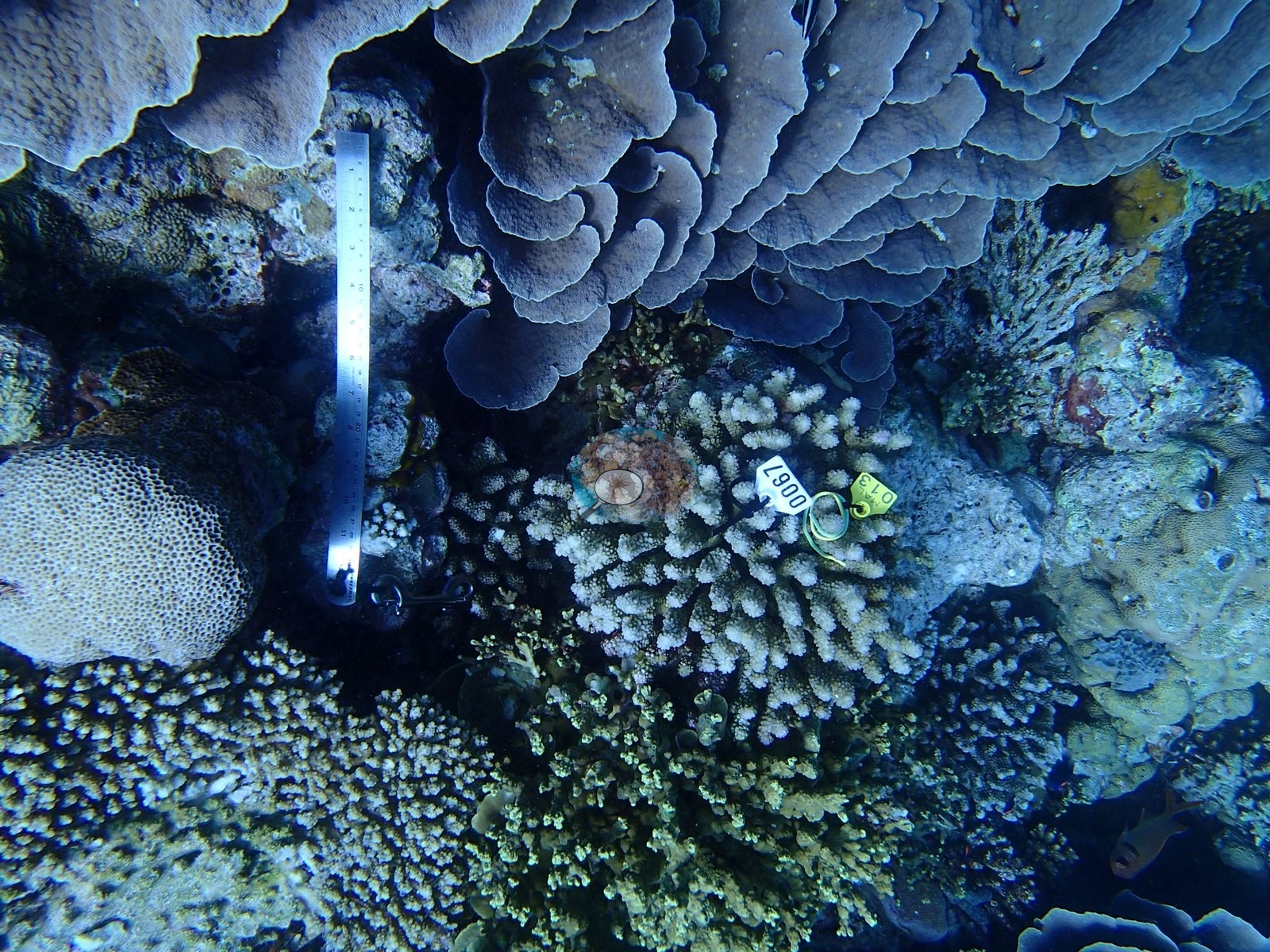
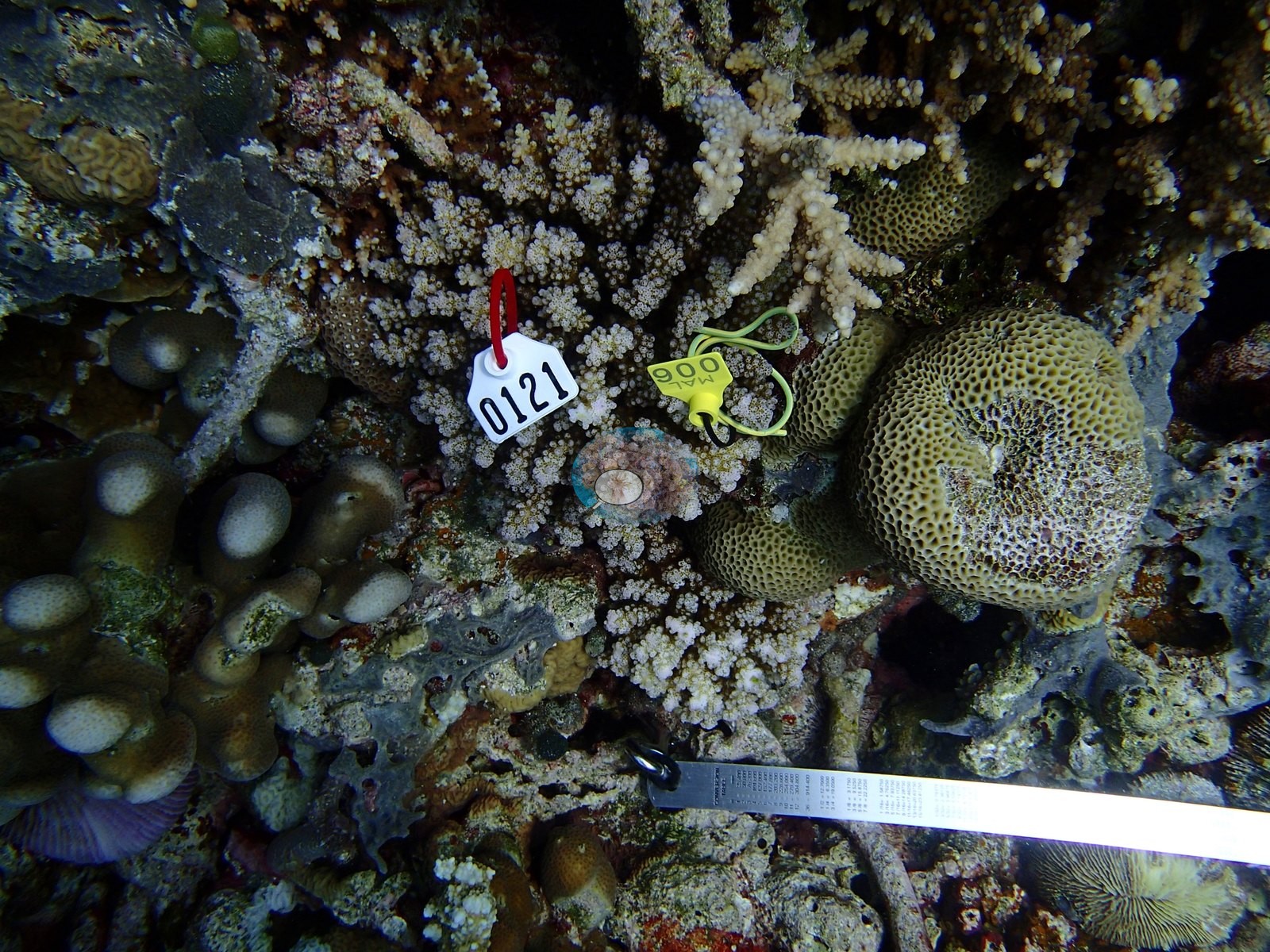
Look for the field marks of working science: numbered tags zip-tied to corals, a ruler laid against each tagged colony (e.g., Image 1, Image 2, Image 14), and a researcher's wrist computer reading 13.2 meters.
CV model comparison
More info
CoralSCOP on the January 2016 photos predates the bleaching and is a comparison only; rows are never averaged.| Method | Hard coral cover (%) | Photos (n) ± SE |
|---|---|---|
| Transect, July 2016 (headline) | 26.6 | |
| Transect, April 2016 (during the bleaching) | 74.0 | |
| CoralSCOP edited | 26.2* | n = 19 · SE 5.3 |
CoralSCOP (edited photos) reads 26.2%, within 0.4 pp of the in-water transect (26.6%).
*Based on only 19 reef-habitat photos; this estimate is less certain.
See a more detailed, stand-alone version of this table.
Data & links
All images from Coral Reef Diagnostics. Data are from Coral Reef Diagnostics and Coral Reef CPR.
© Coral Reef Diagnostics.