
Maldives - Gaagandufaruhuraa
Part of the regional summaries: Maldives - North (Haa Alif to Baa / Lhaviyani) and Maldives
More info
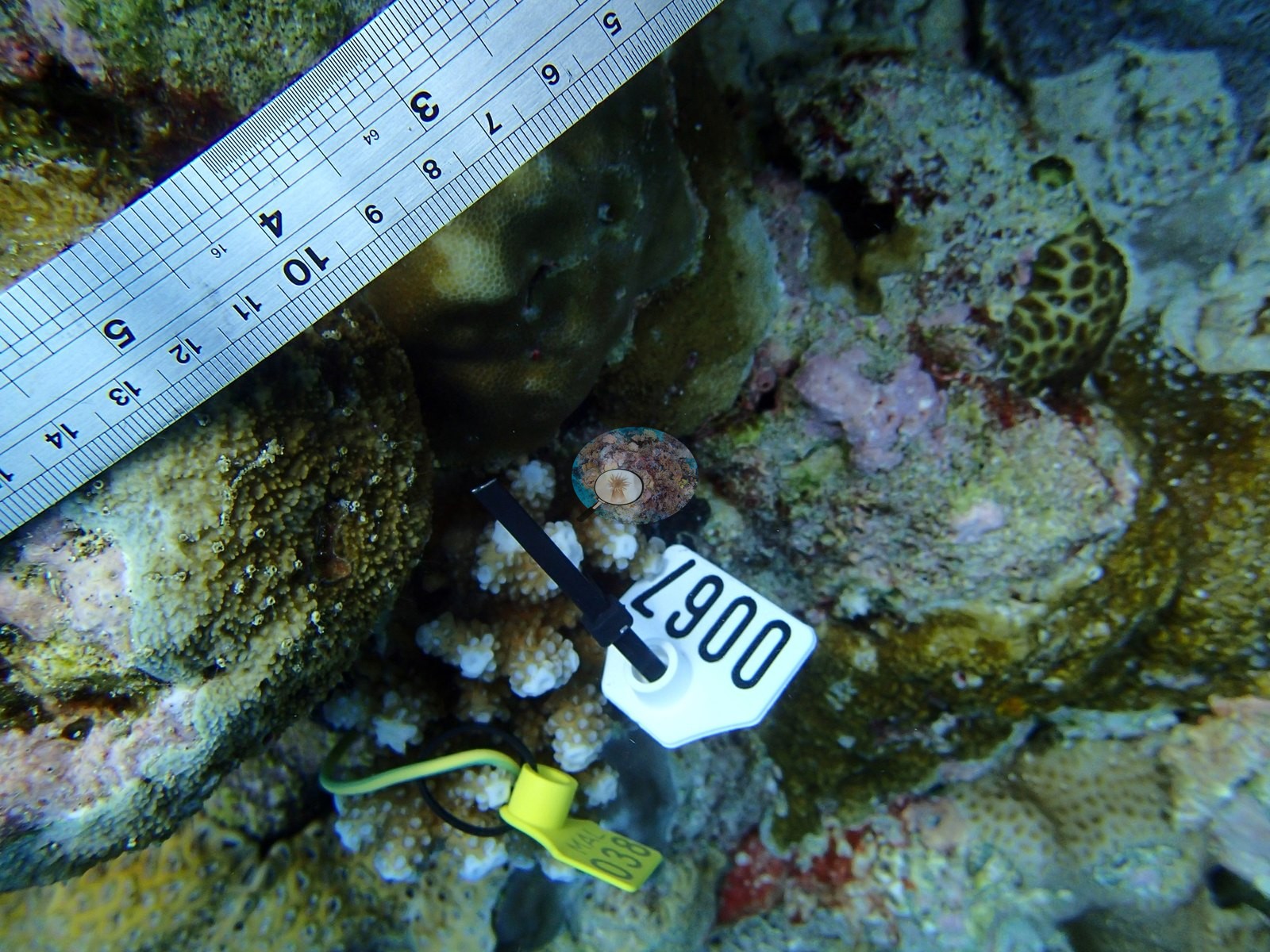
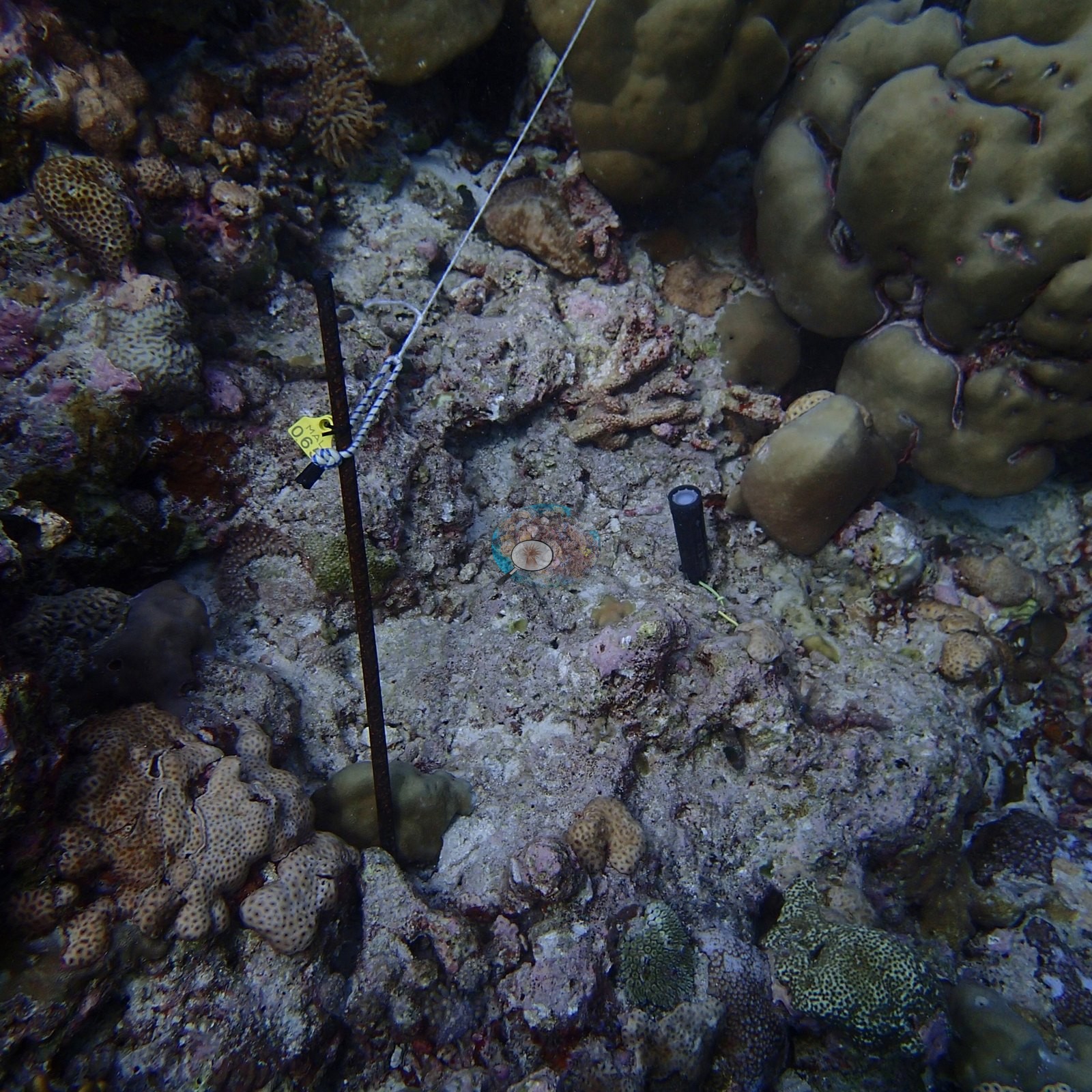
Maldives (NOAA CRW virtual station)A Baa Atoll monitoring site where tagged, ruler-measured cauliflower and staghorn corals were being tracked just before the 2016 El Niño bleached the vast majority of Baa's reefs, making these January 2016 photos the reef's last healthy portrait. Coral Reef CPR point-intercept transects put cover at 38% in July 2016, after the bleaching, down from 61% in April 2016.
ބ. އަތޮޅުގެ މޮނިޓަރިންގ ސައިޓެކެވެ. 2016 ގެ El Niño އިން ބ. އަތޮޅުގެ ފަރުތަކުގެ ގިނަ ބައެއް ހުދުކޮށްލުމުގެ ކުރިން ކައިރިއަކު، މިތާގައި ޓެގްކޮށް ރޫލަރުން މިނުން ނެގި ކޮލީފްލާވަރ އާއި ސްޓެގްހޯން ހިރިގާ ފޮލޯކުރަމުން ދިޔައެވެ. އެހެންކަމުން 2016 ގެ ޖަނަވަރީގެ މި ފޮޓޯތަކަކީ ފަރު ސިއްޙަތު ރަނގަޅުކޮށް ހުރި އެންމެ ފަހުގެ ފޮޓޯތަކެވެ. Coral Reef CPR ގެ point-intercept ޓްރާންސެކްޓްތަކުން ދައްކާގޮތުގައި، ހިރިގާ ނިވާކުރާ މިންވަރު 2016 ގެ އޭޕްރީލްގައި 61% އިން، ހުދުވުމަށް ފަހު 2016 ގެ ޖުލައިގައި 38% އަށް ދަށްވިއެވެ.
AI translation of this summary; the English is authoritative. (low confidence)
One other CRD dive site with its own page within 5 km shown in orange — click a marker to open its page.
9 of the 40 photographs on this page are shown beside the text that discusses them under "Site description" below.
Site description
Setting
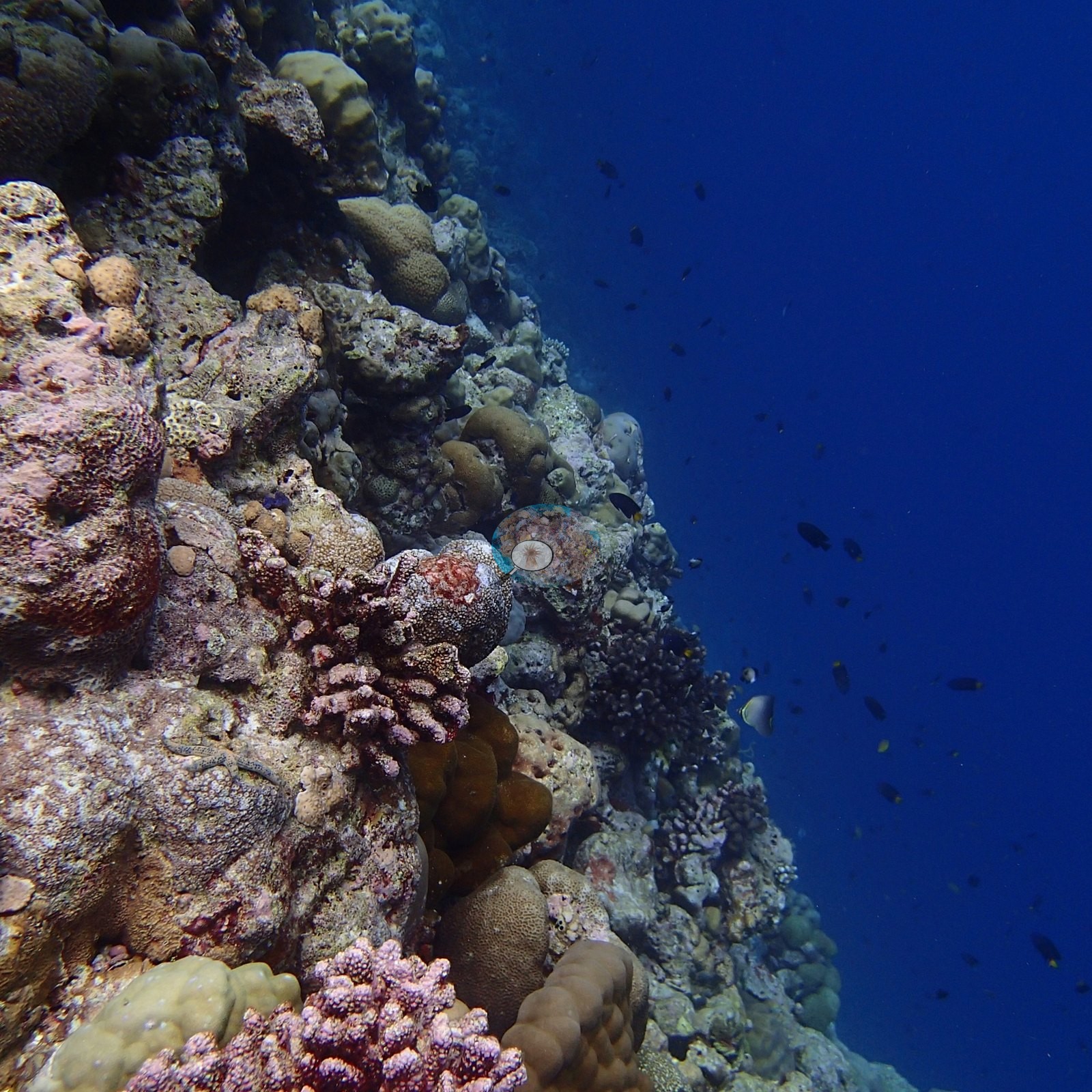
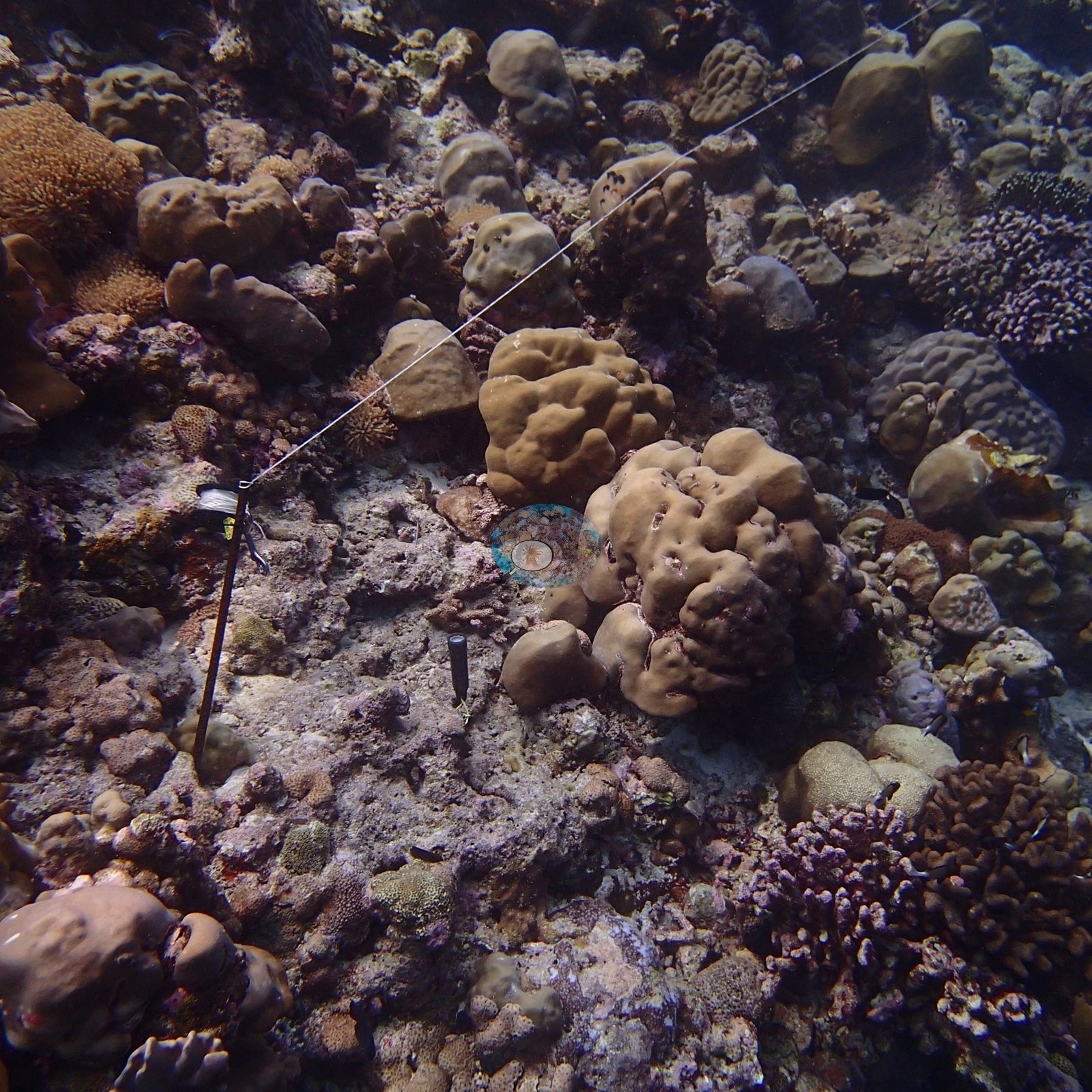
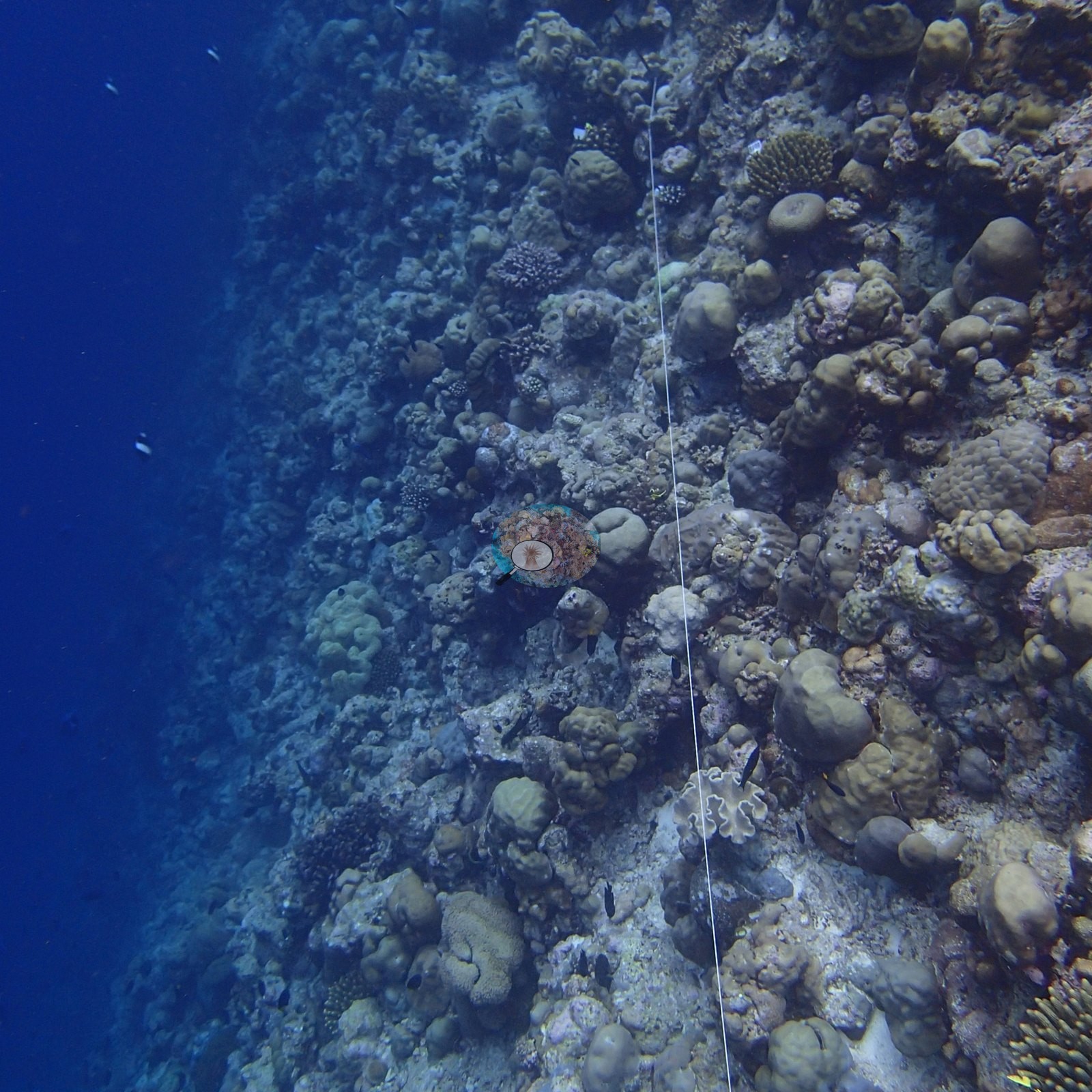
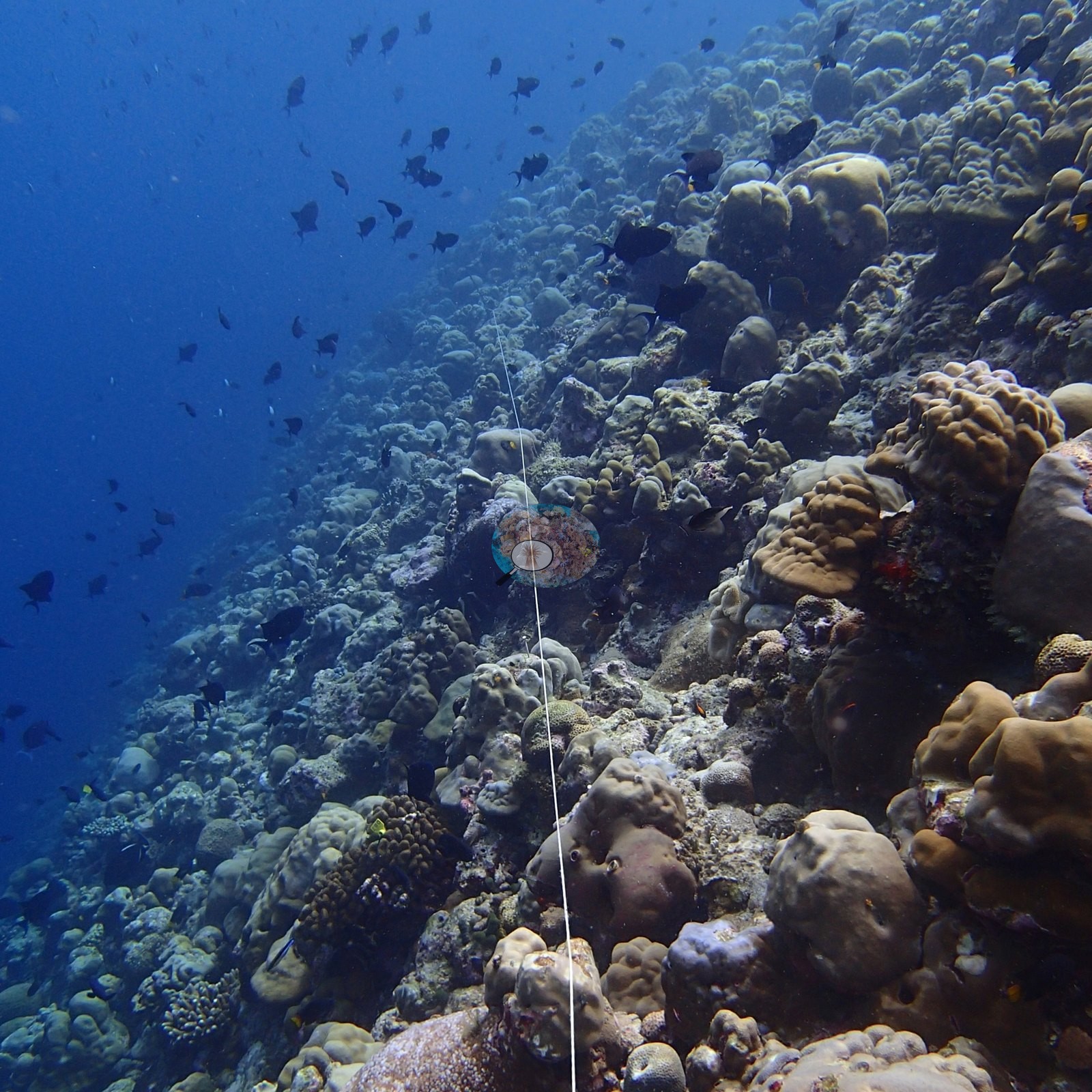
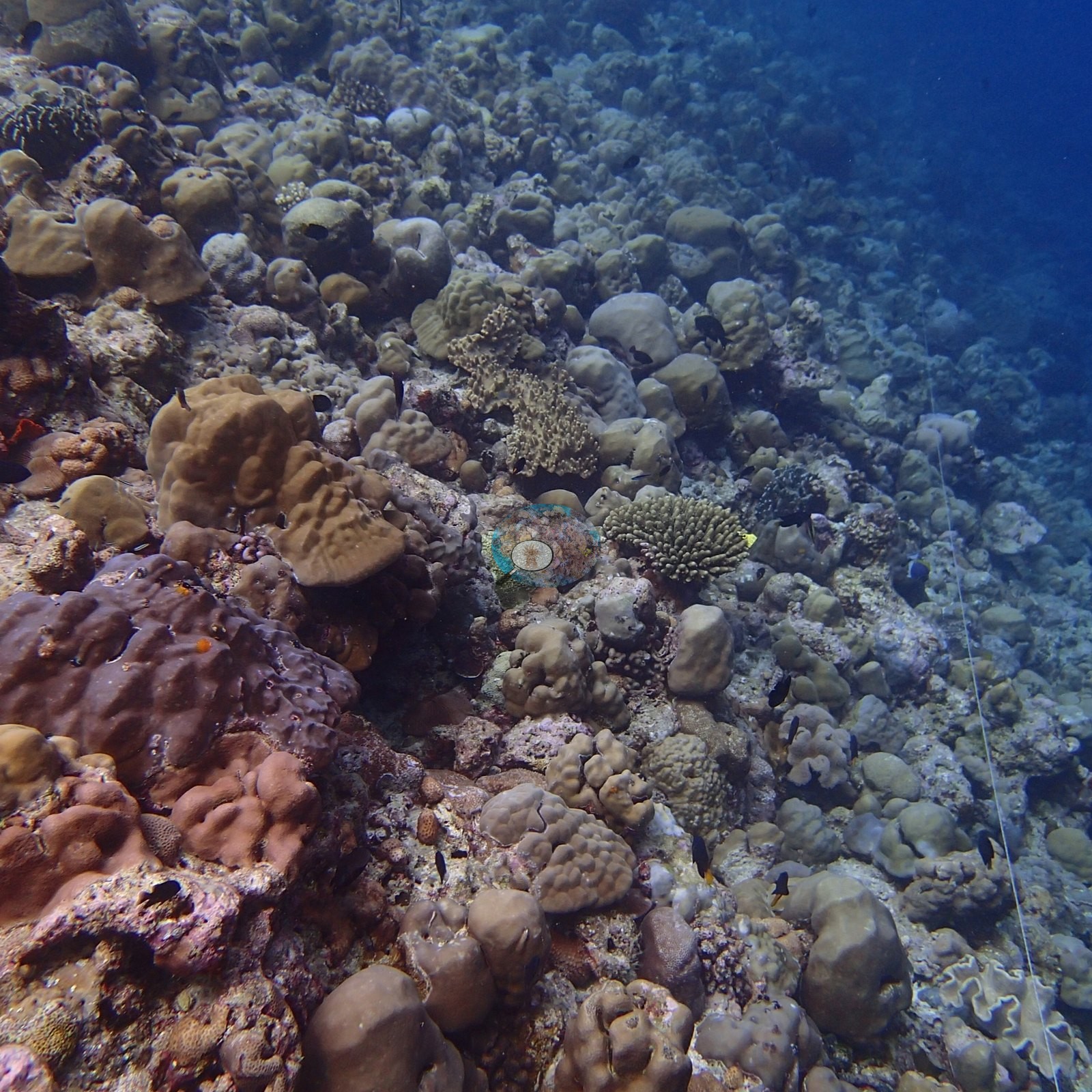
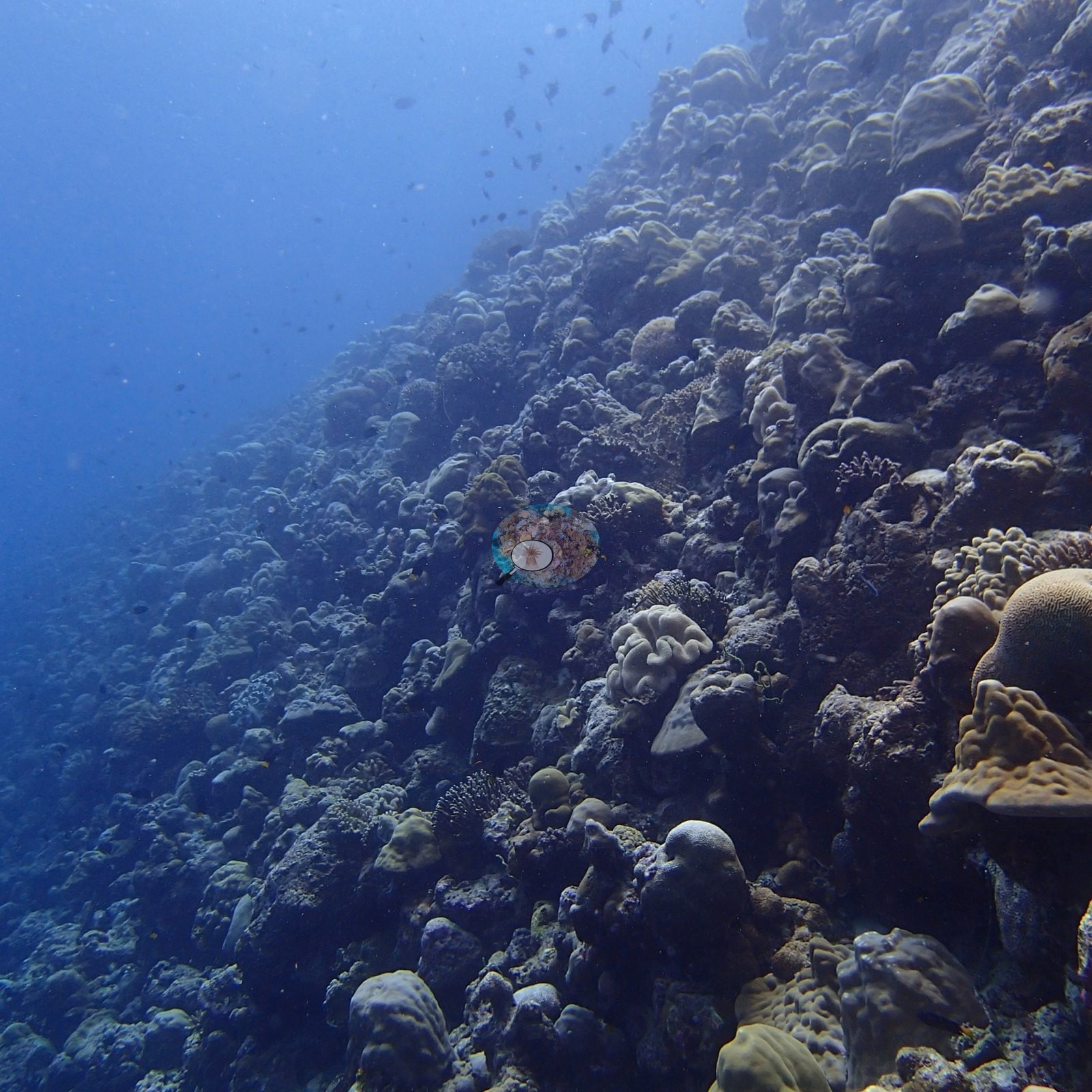
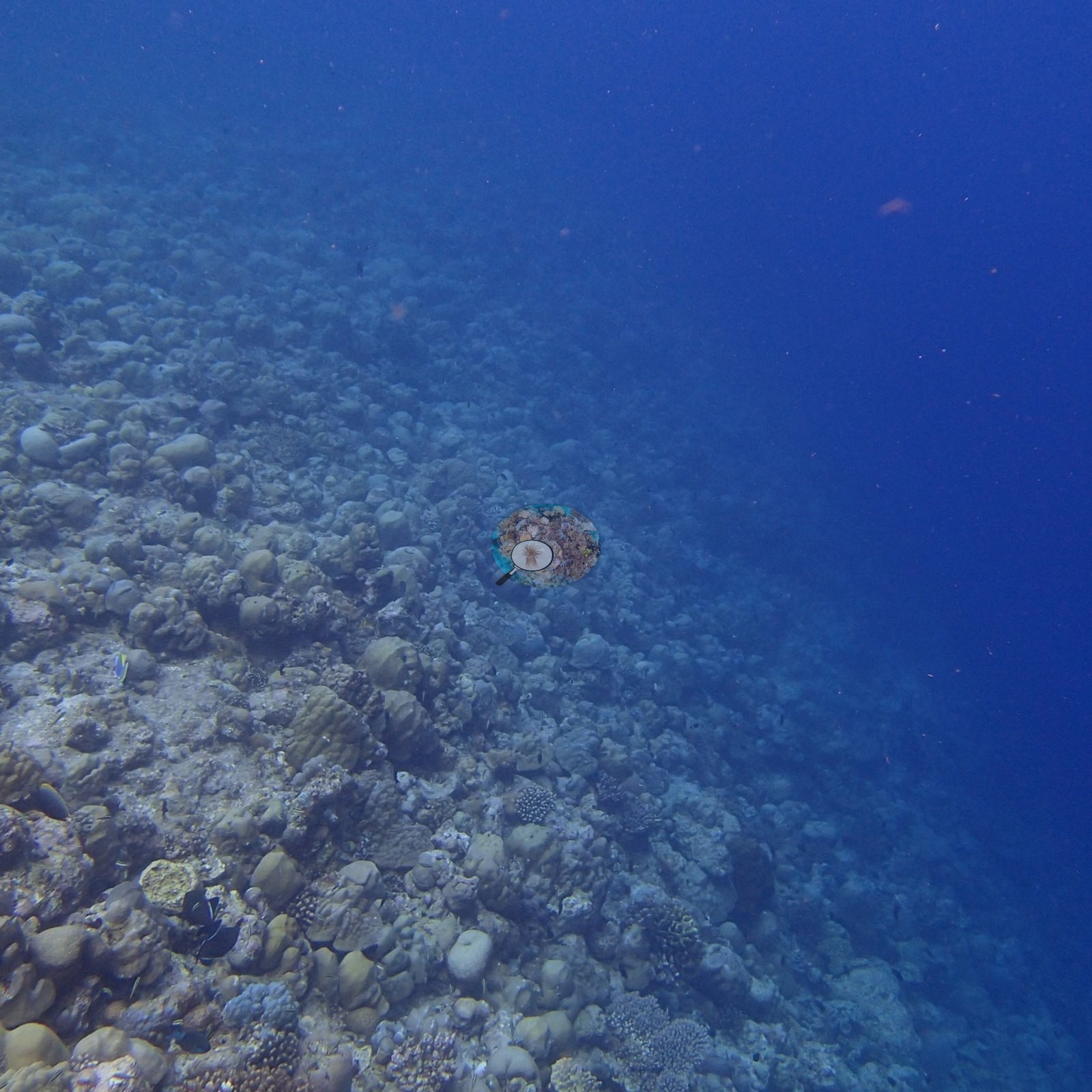
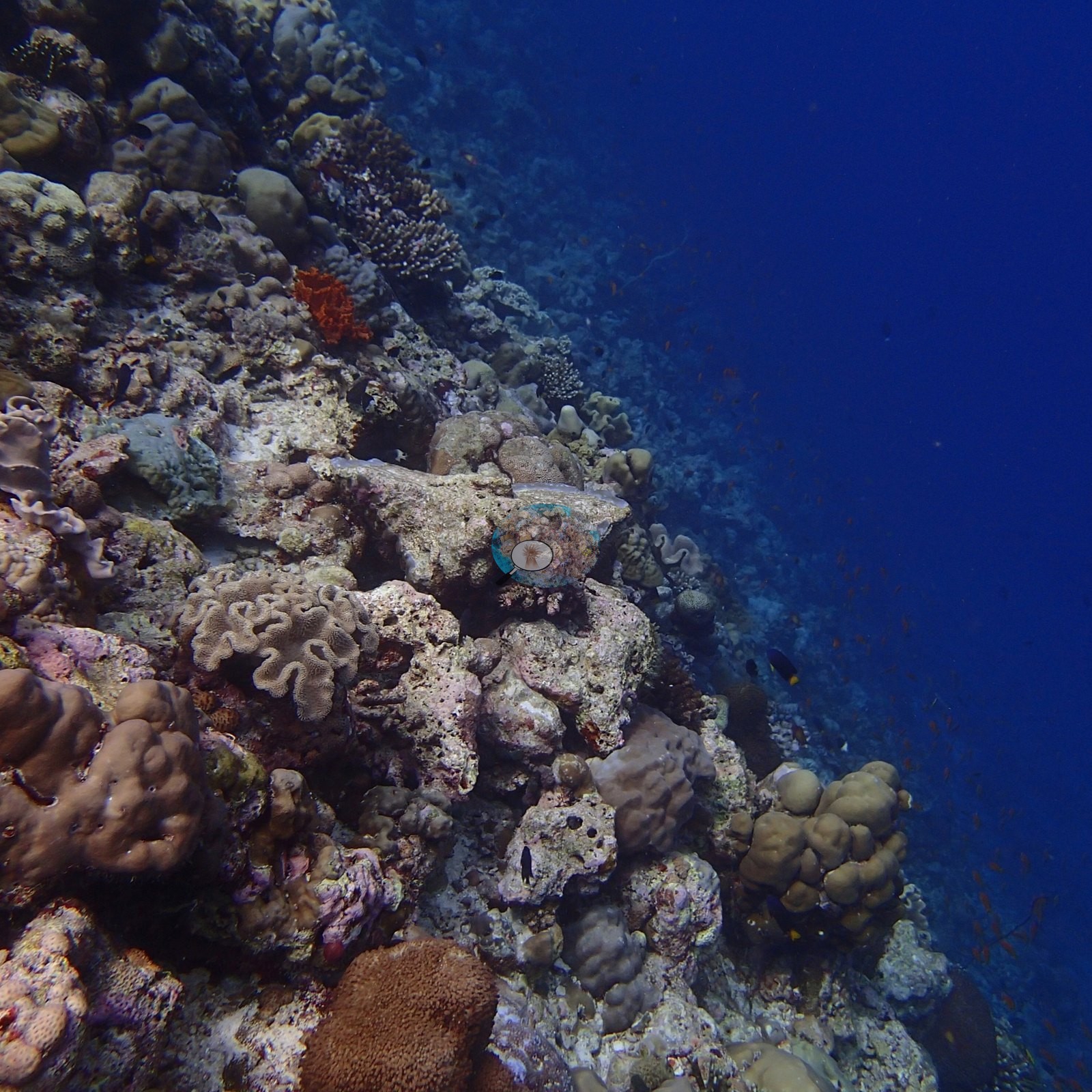
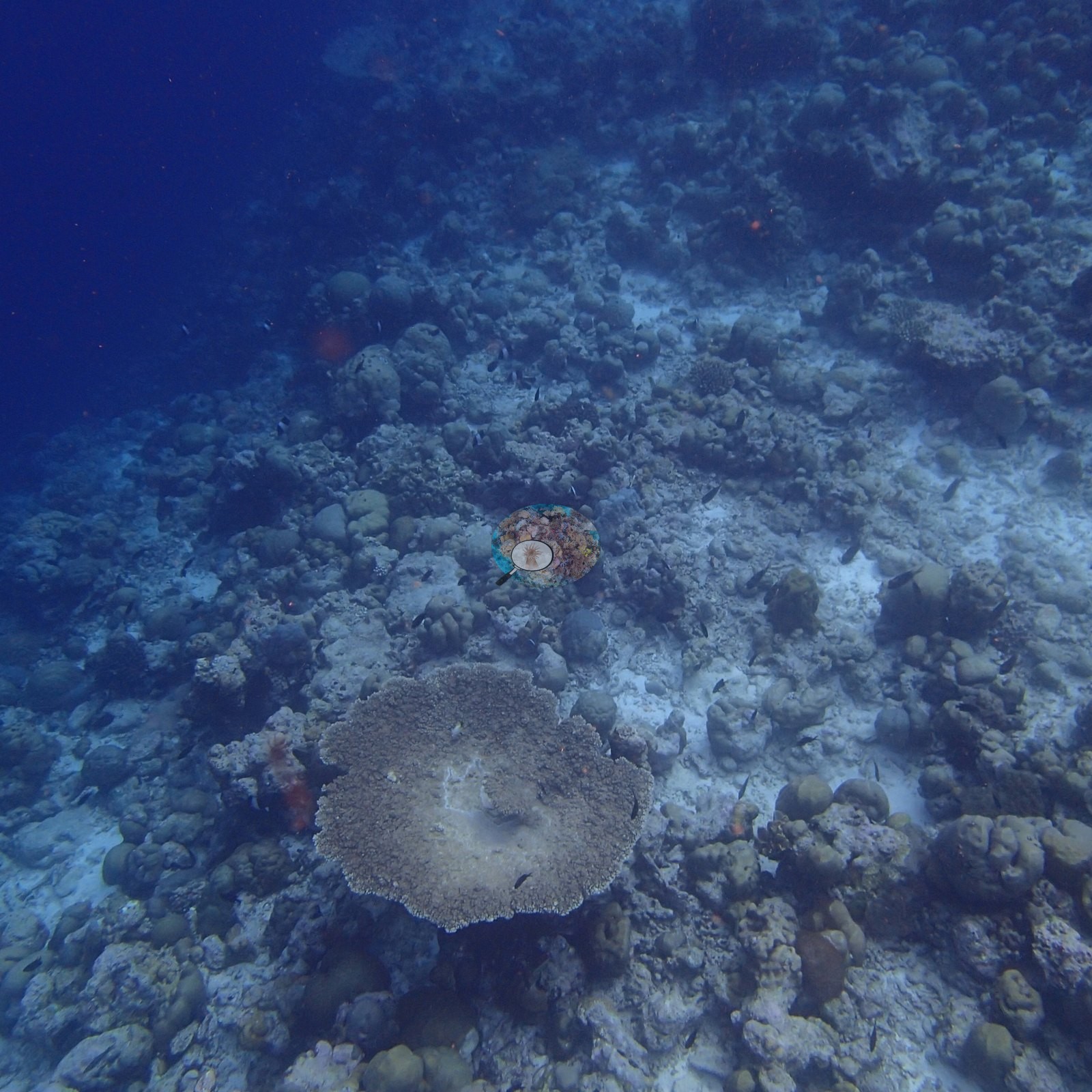
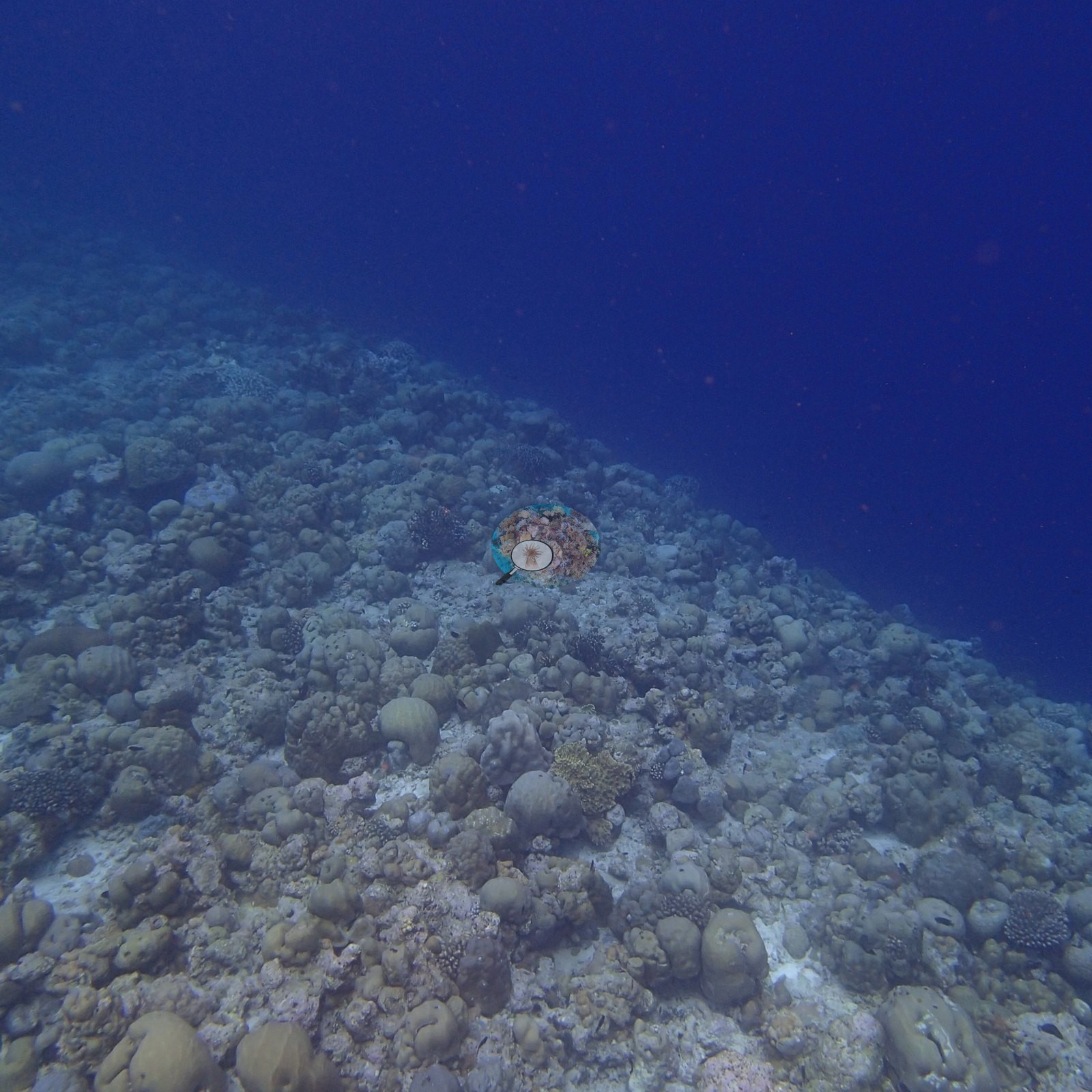
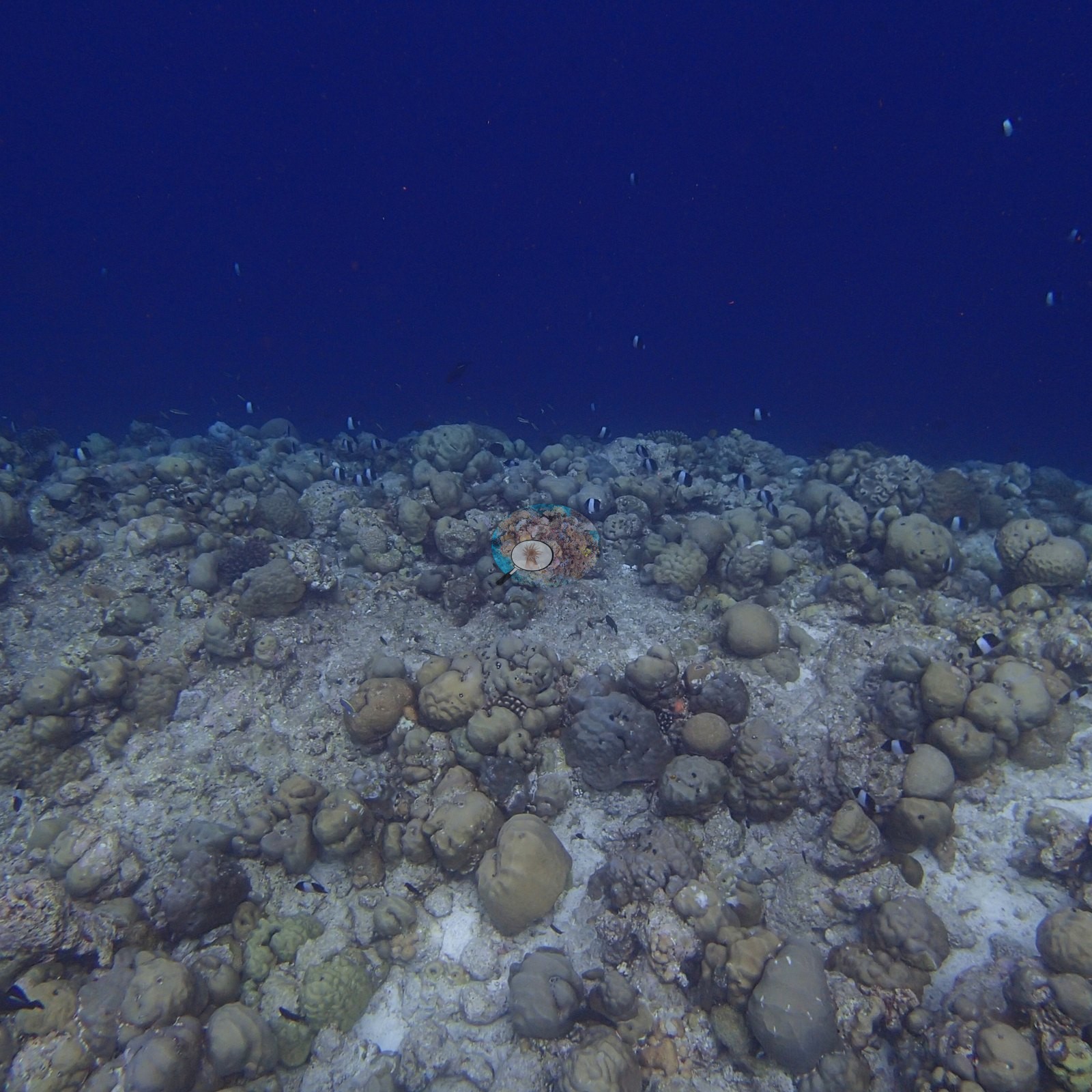
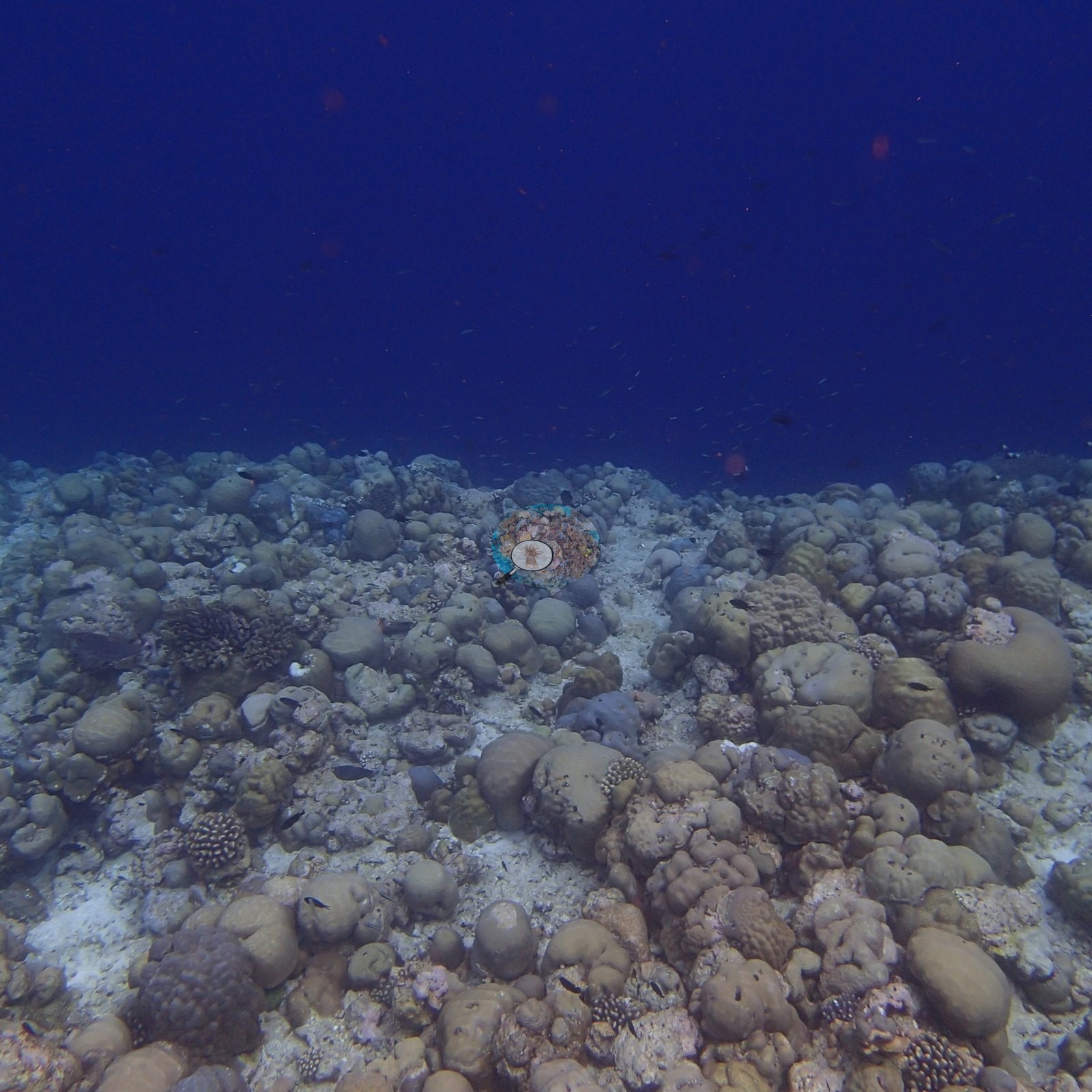
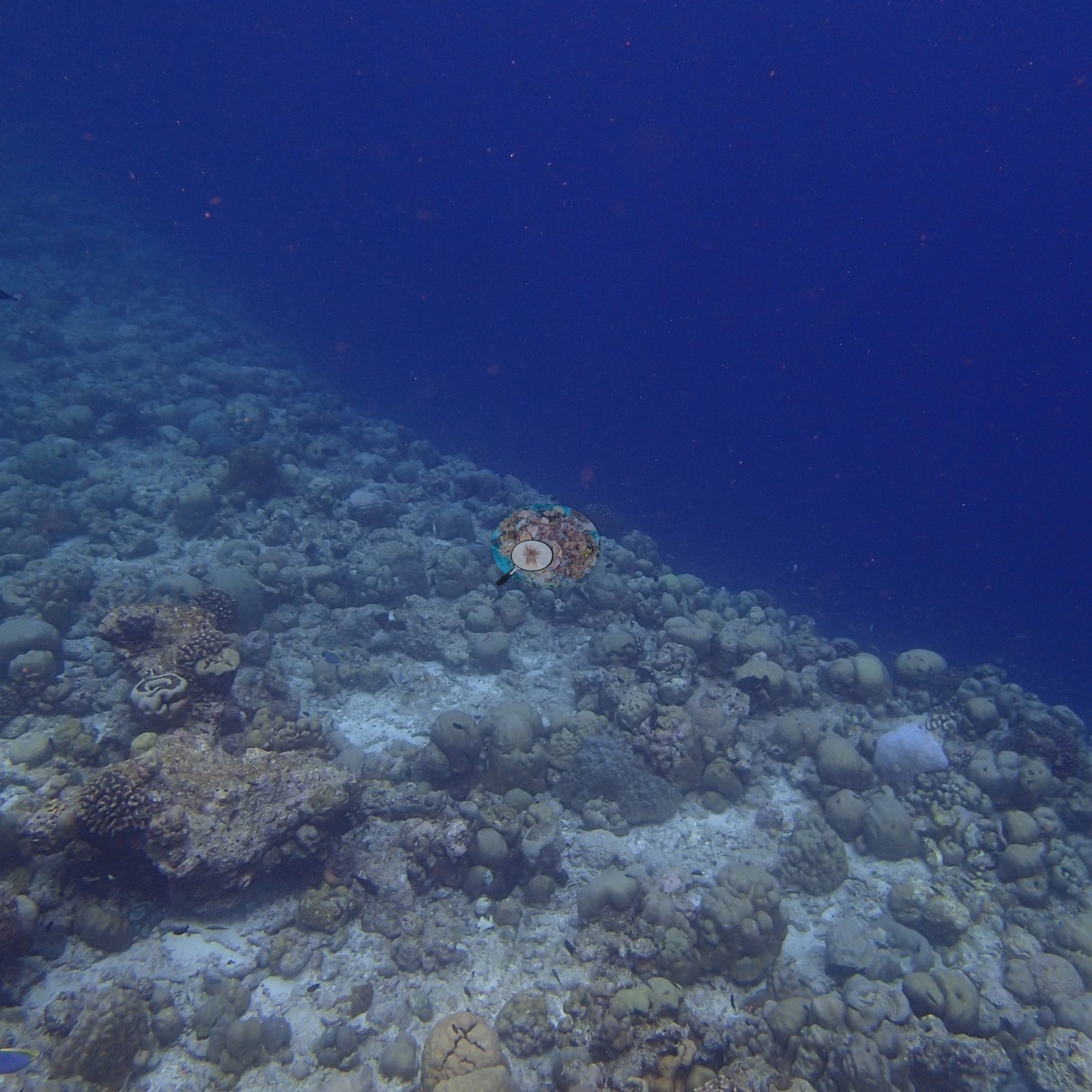
A shallow reef terrace off a little snorkel island in Baa Atoll, where a rubble-strewn flat tips suddenly over a steep slope into deep blue water (e.g., Image 23).
General benthic features
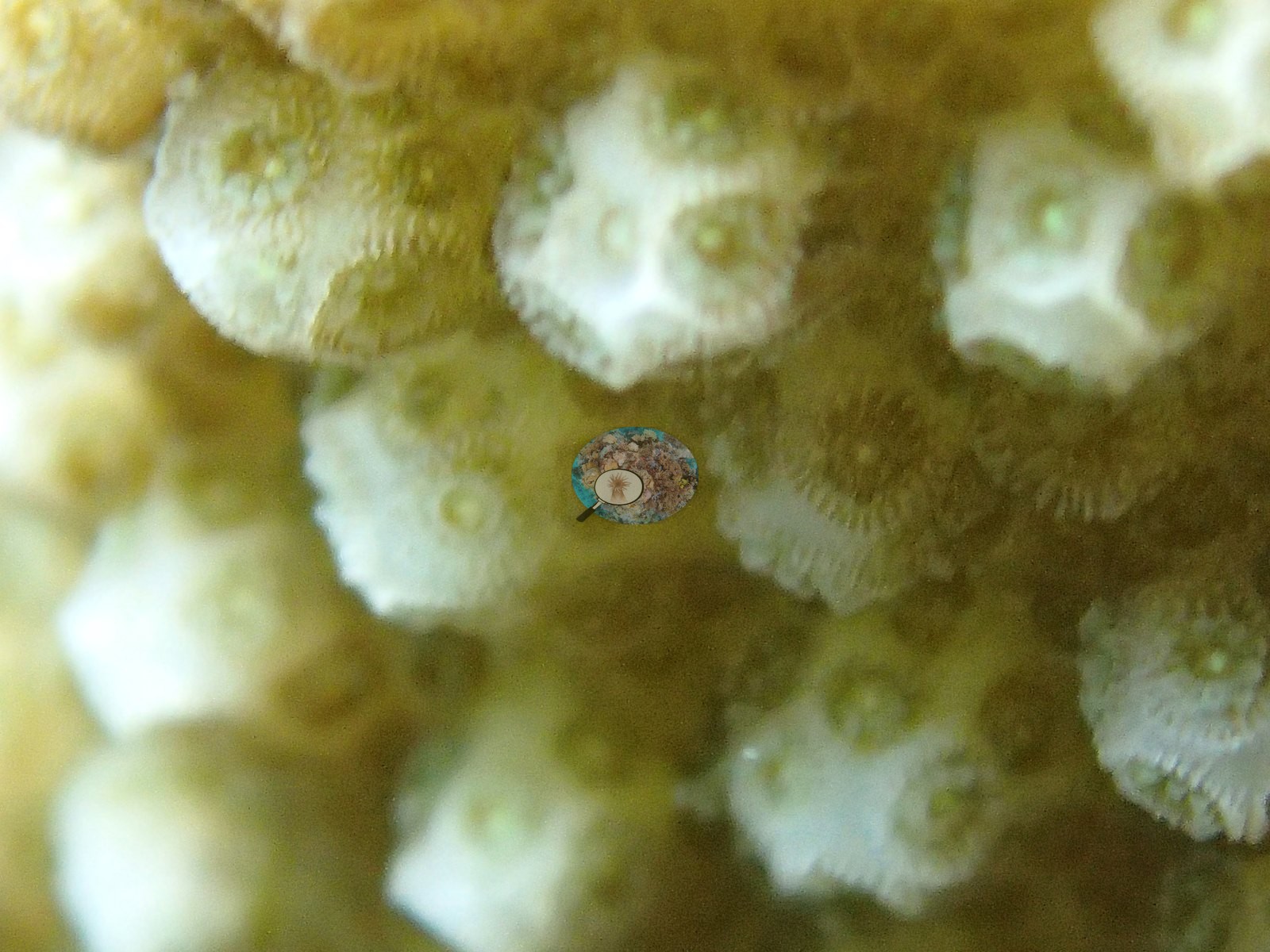
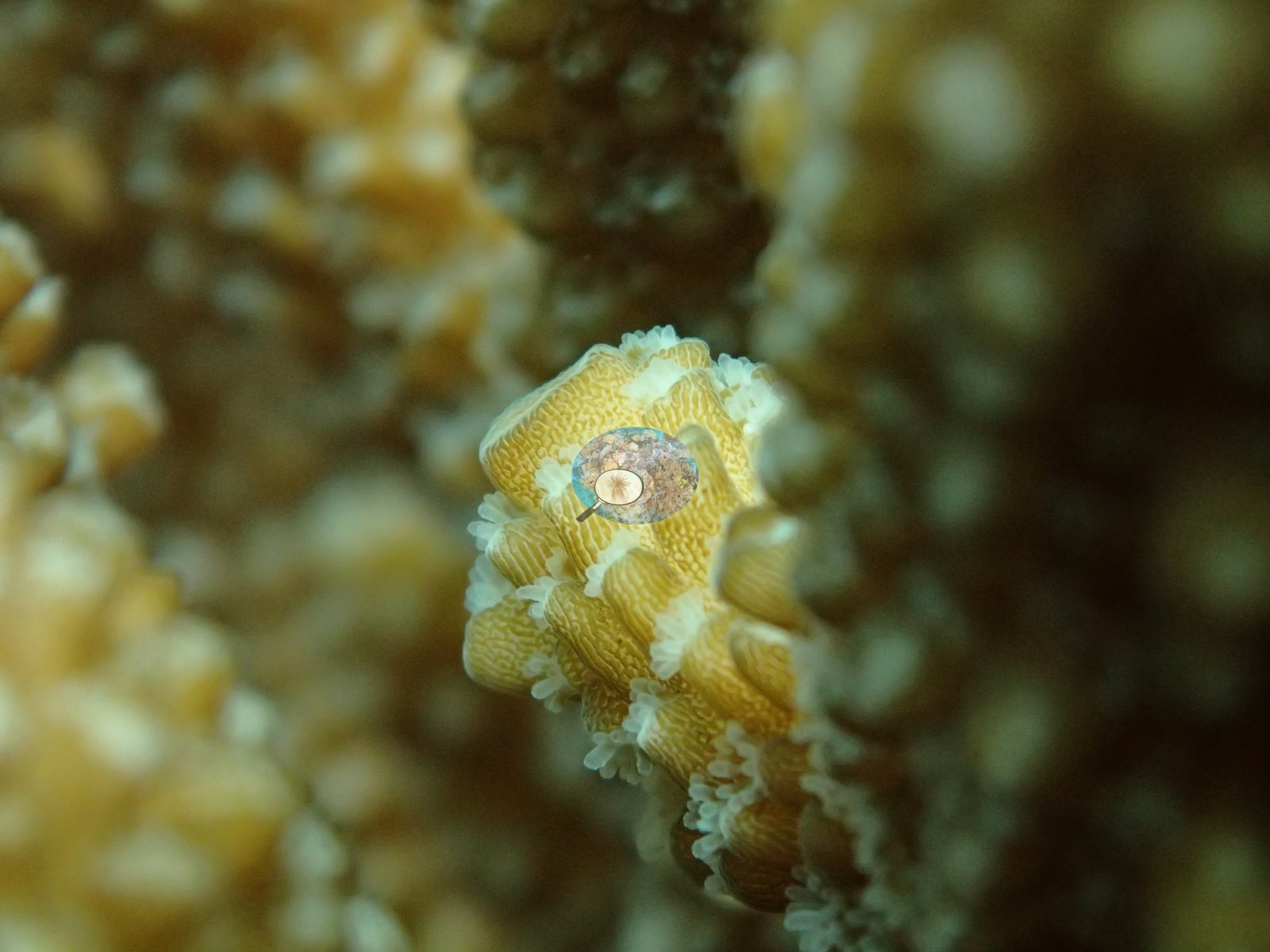
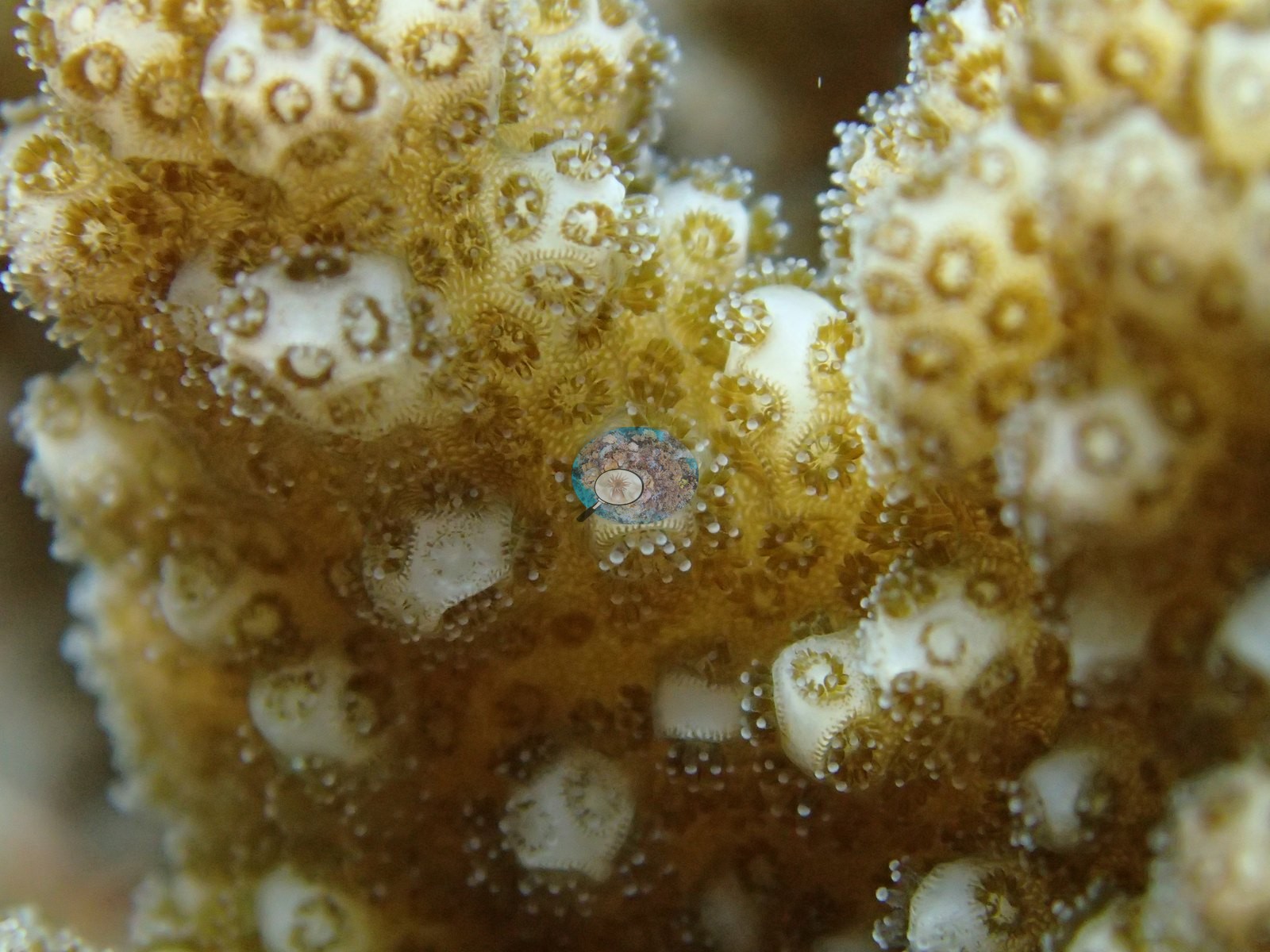
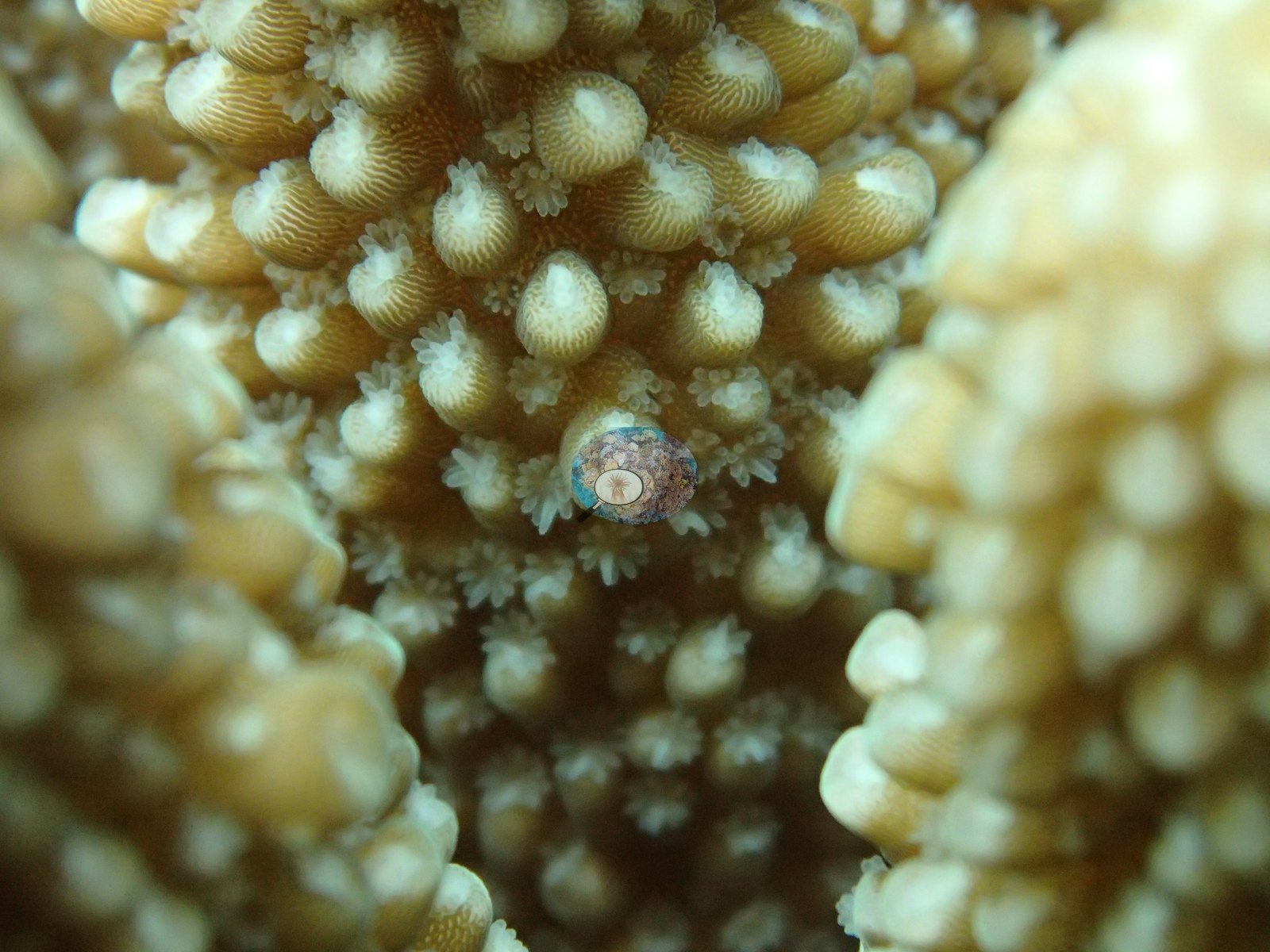
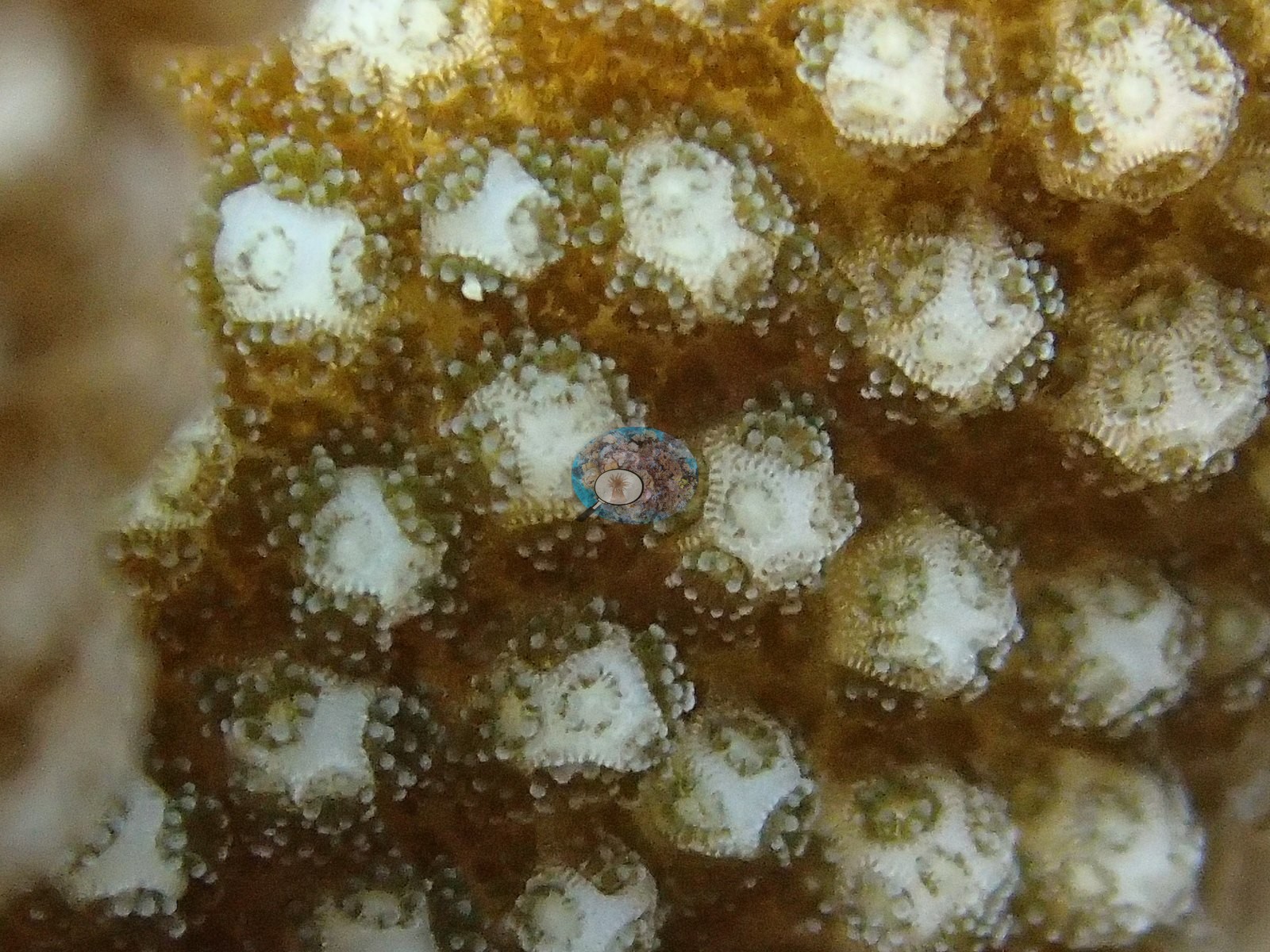
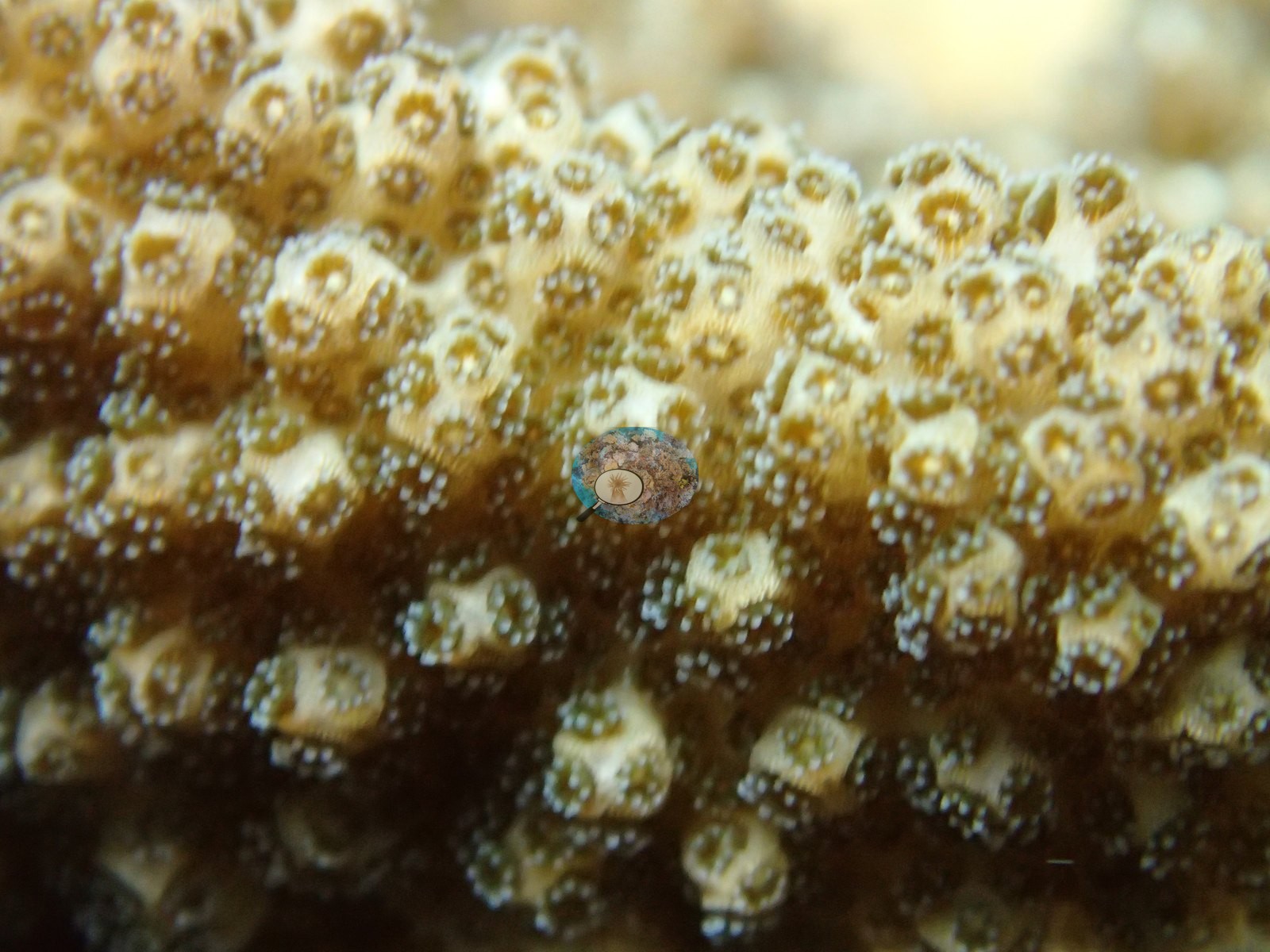
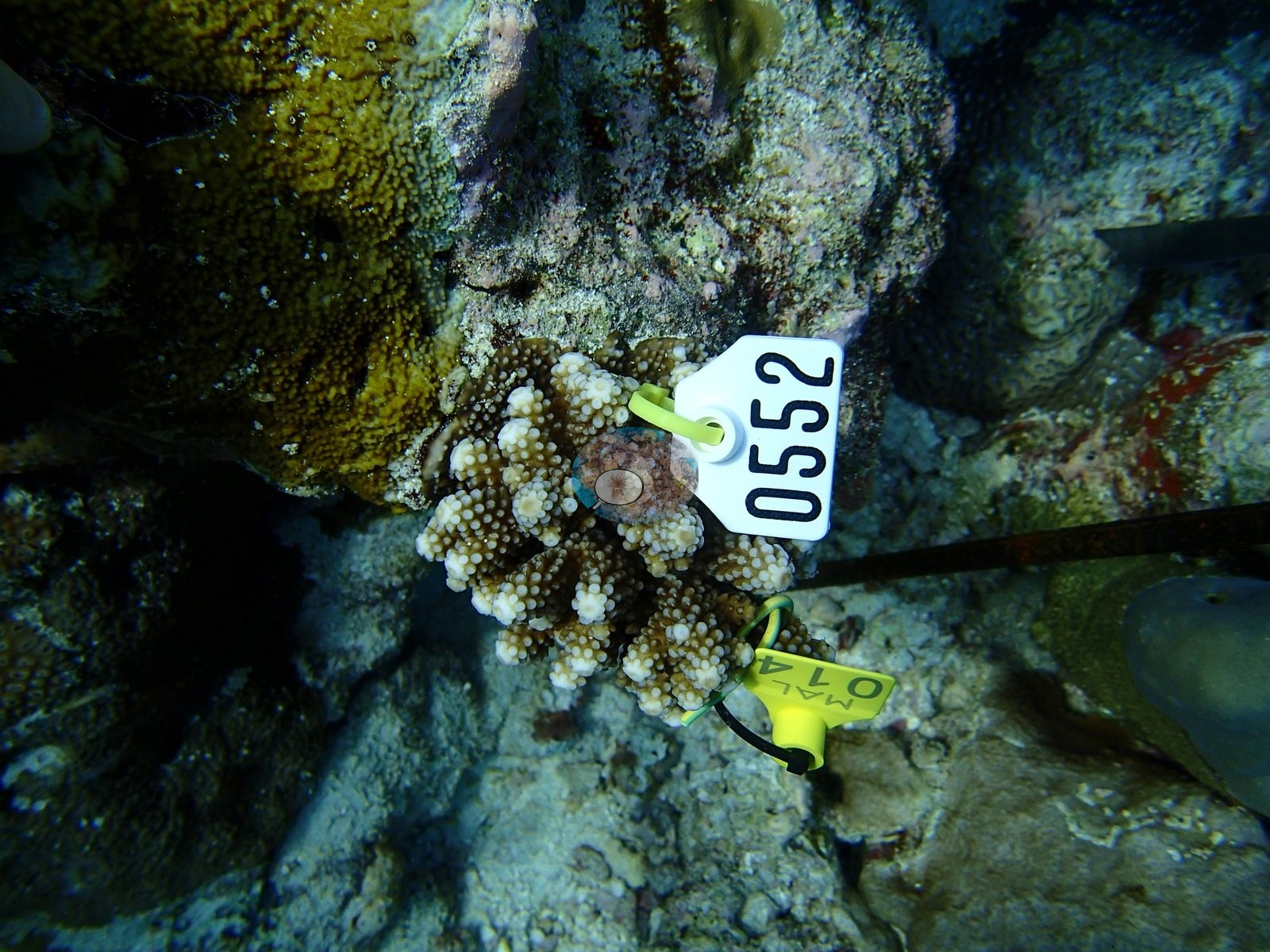
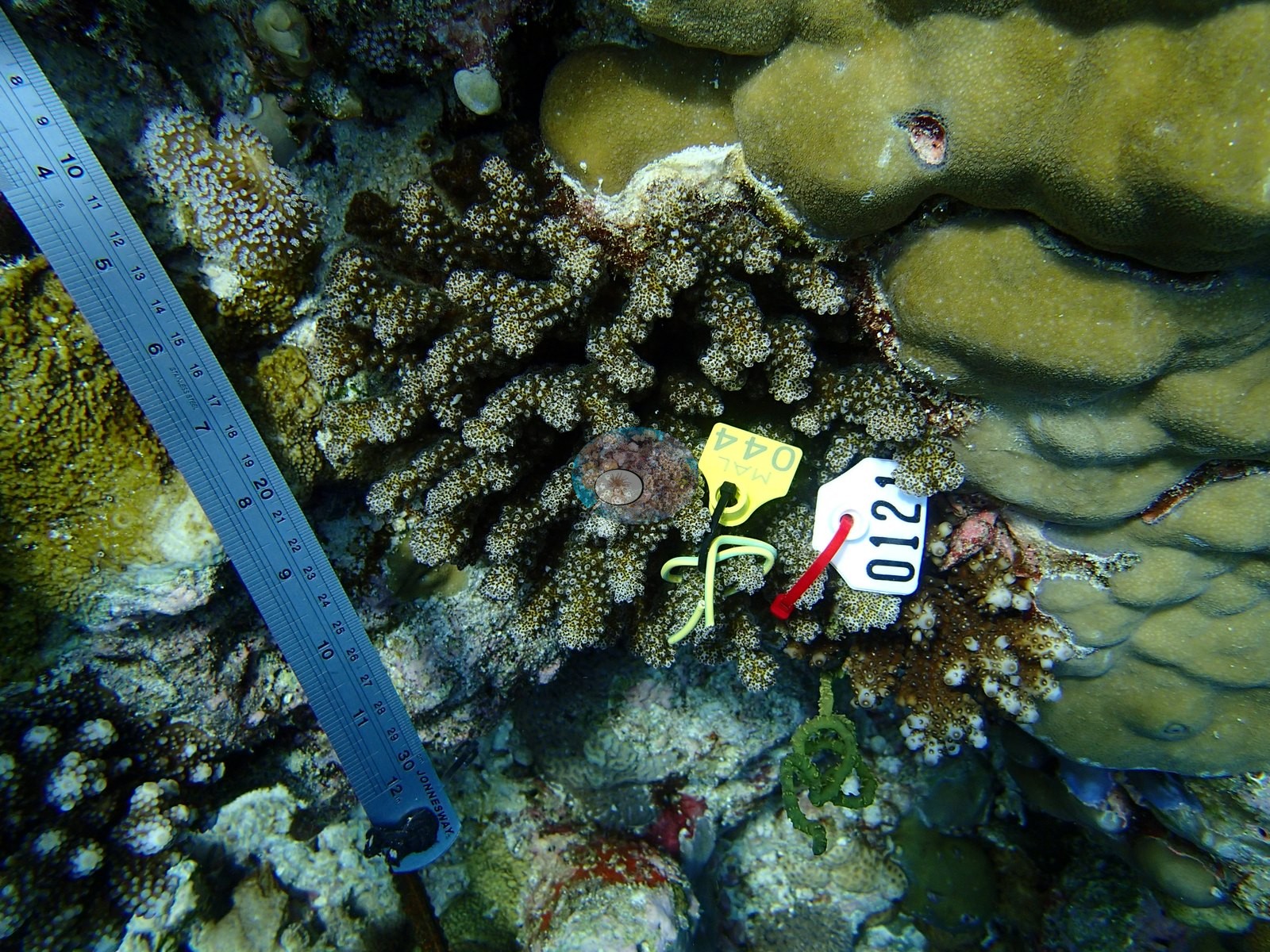
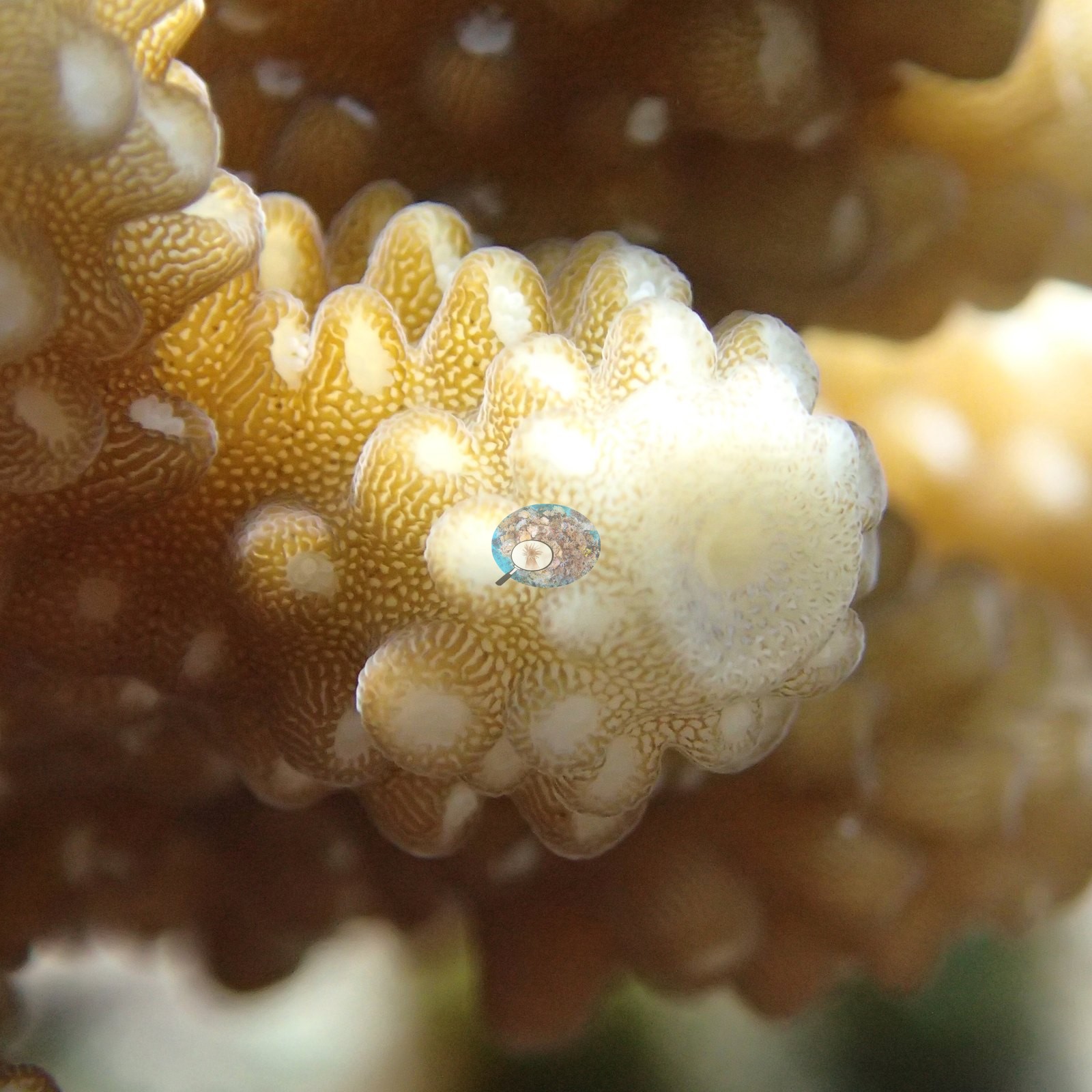
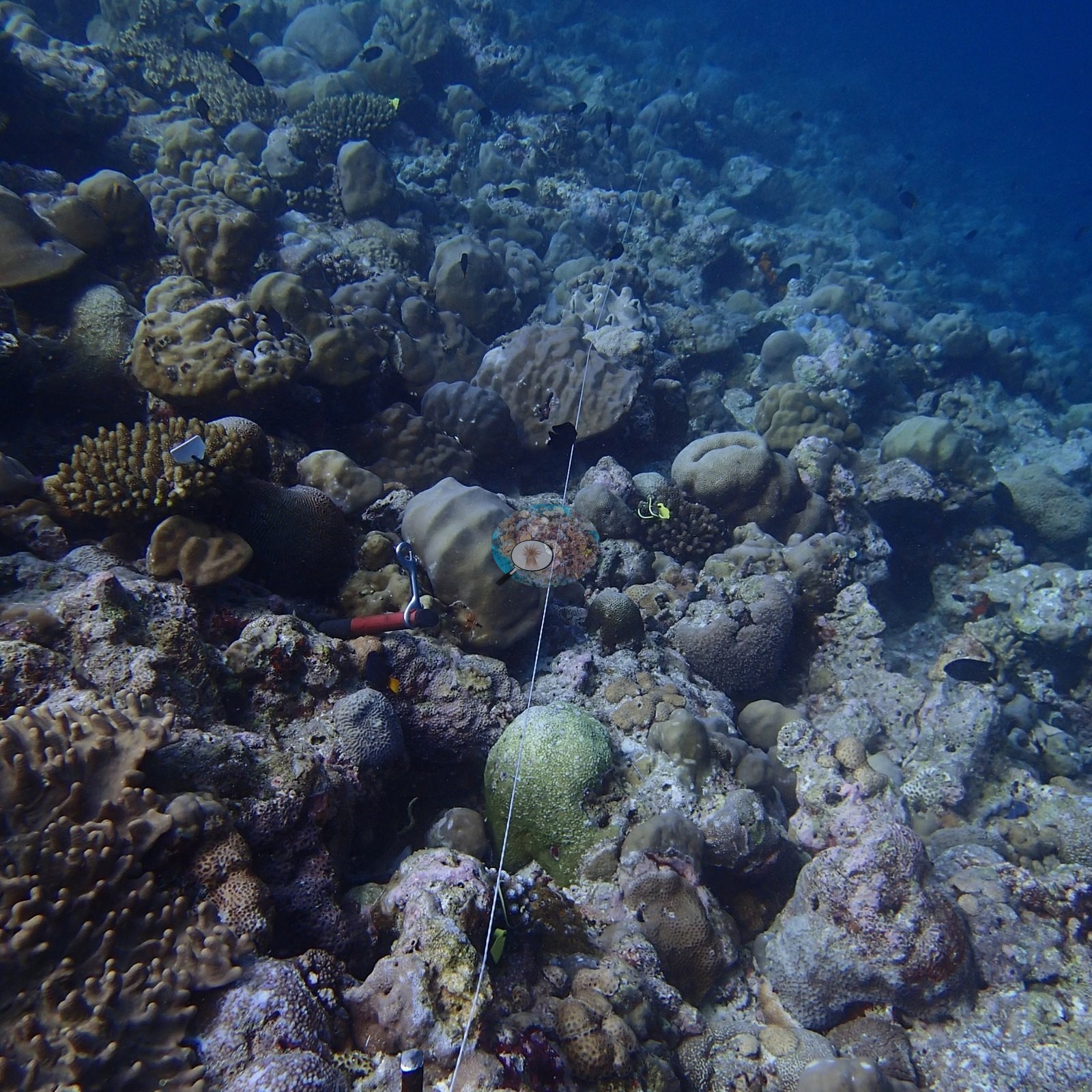
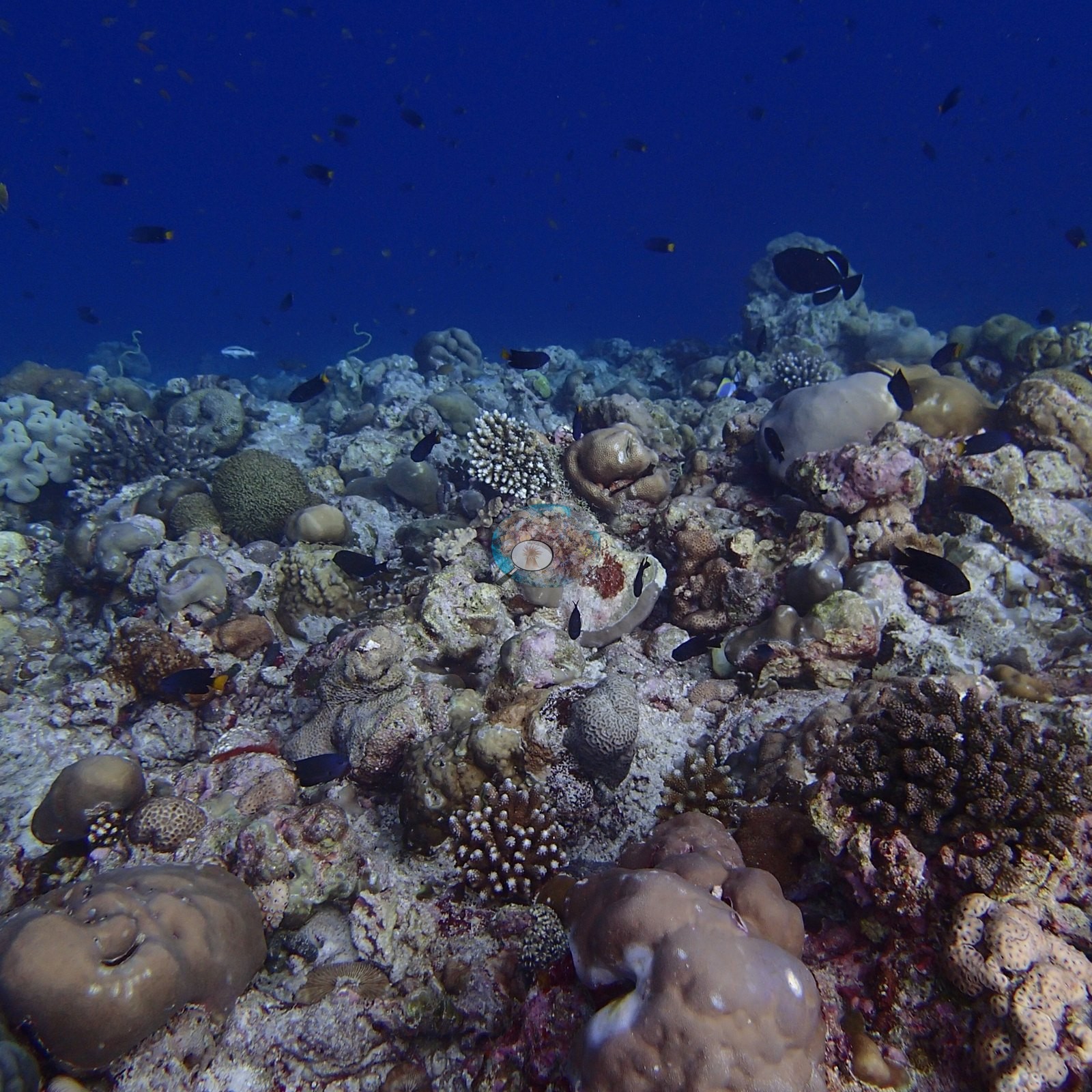
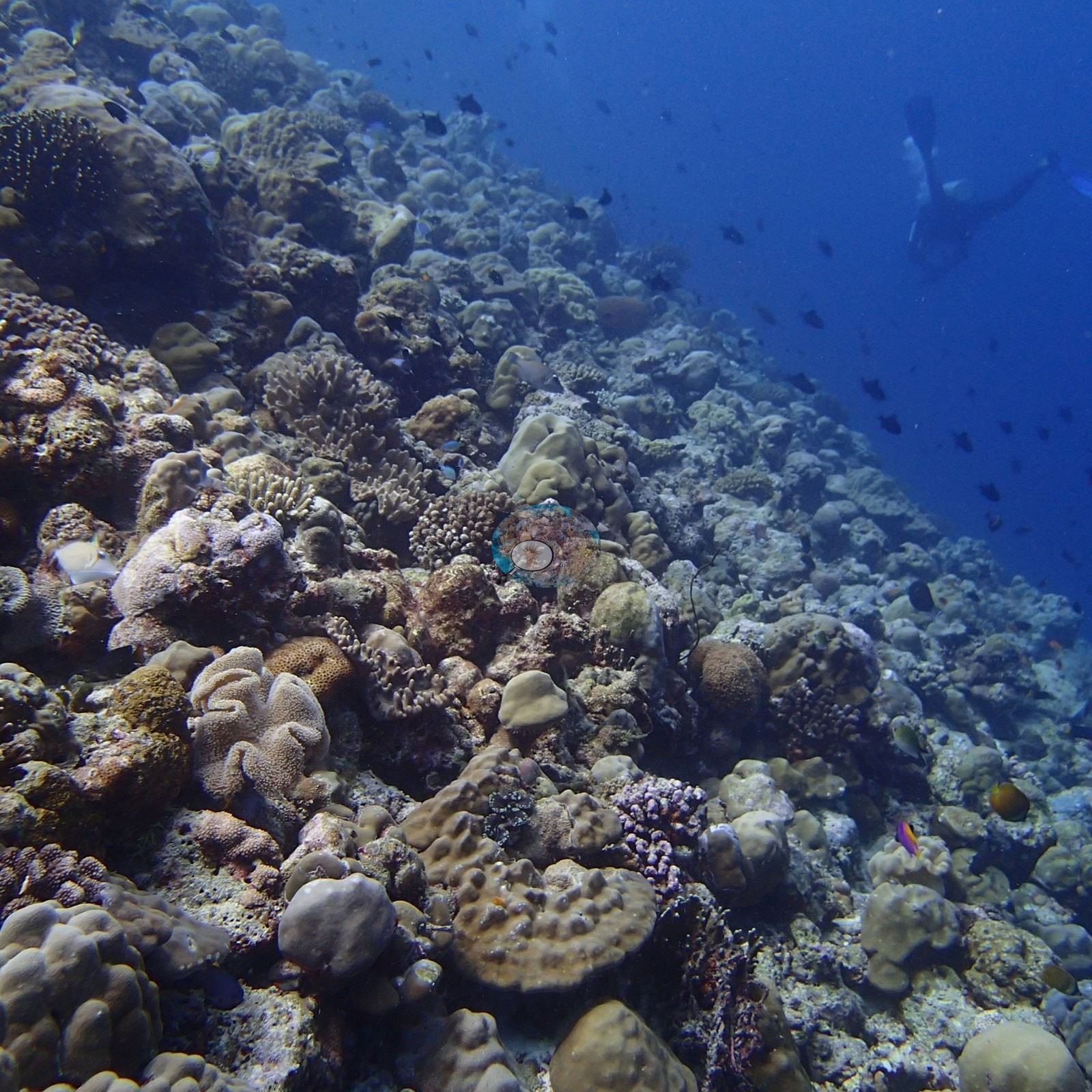
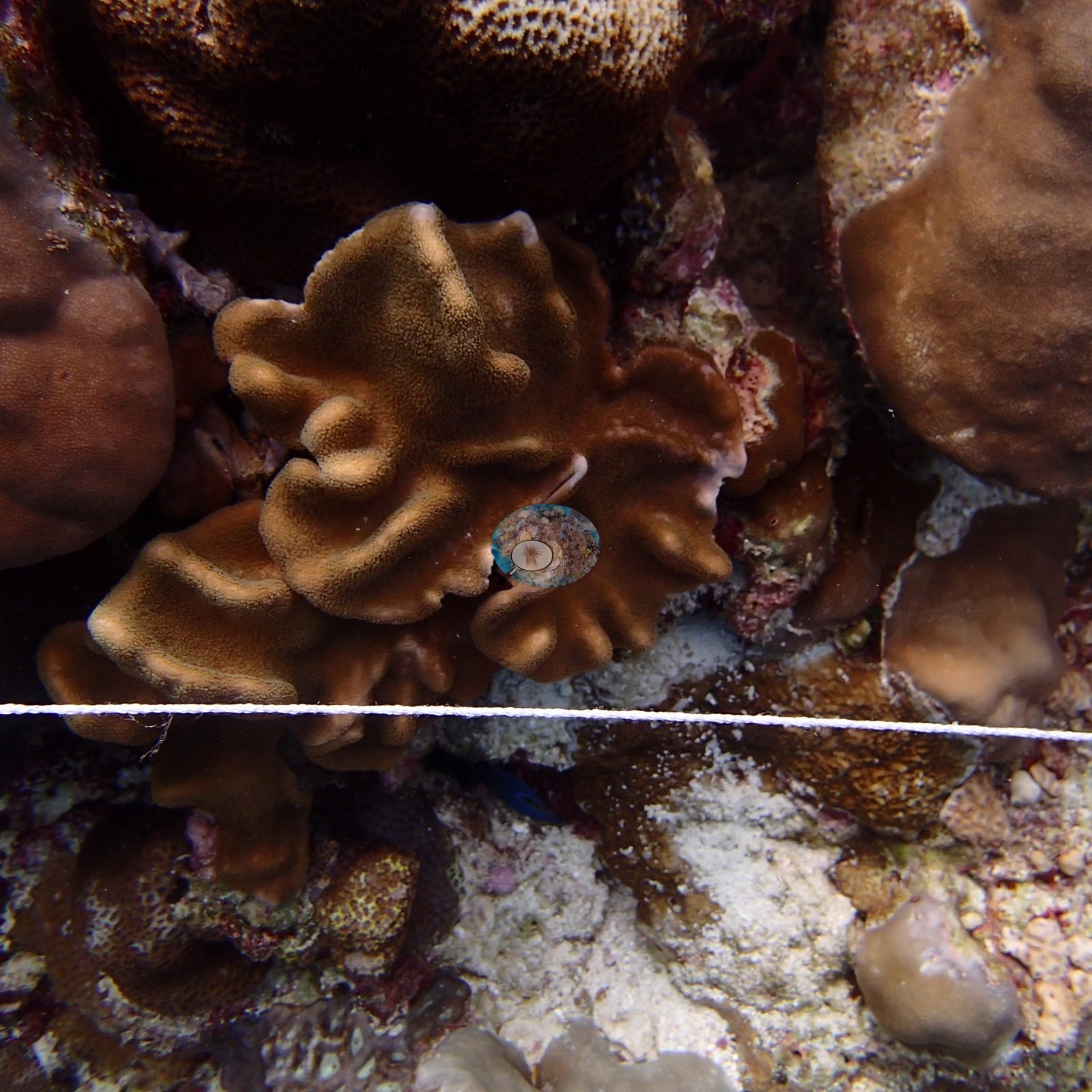
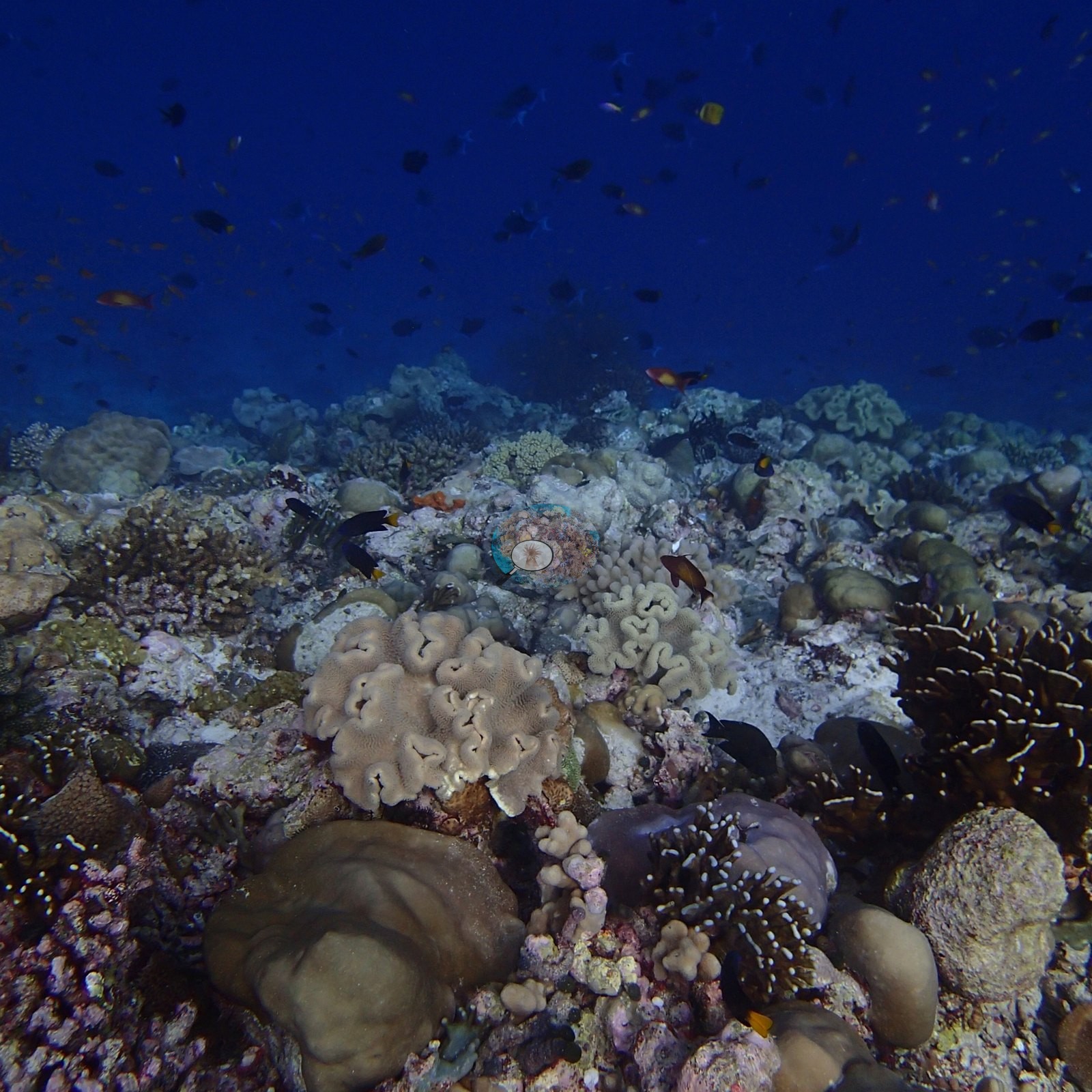
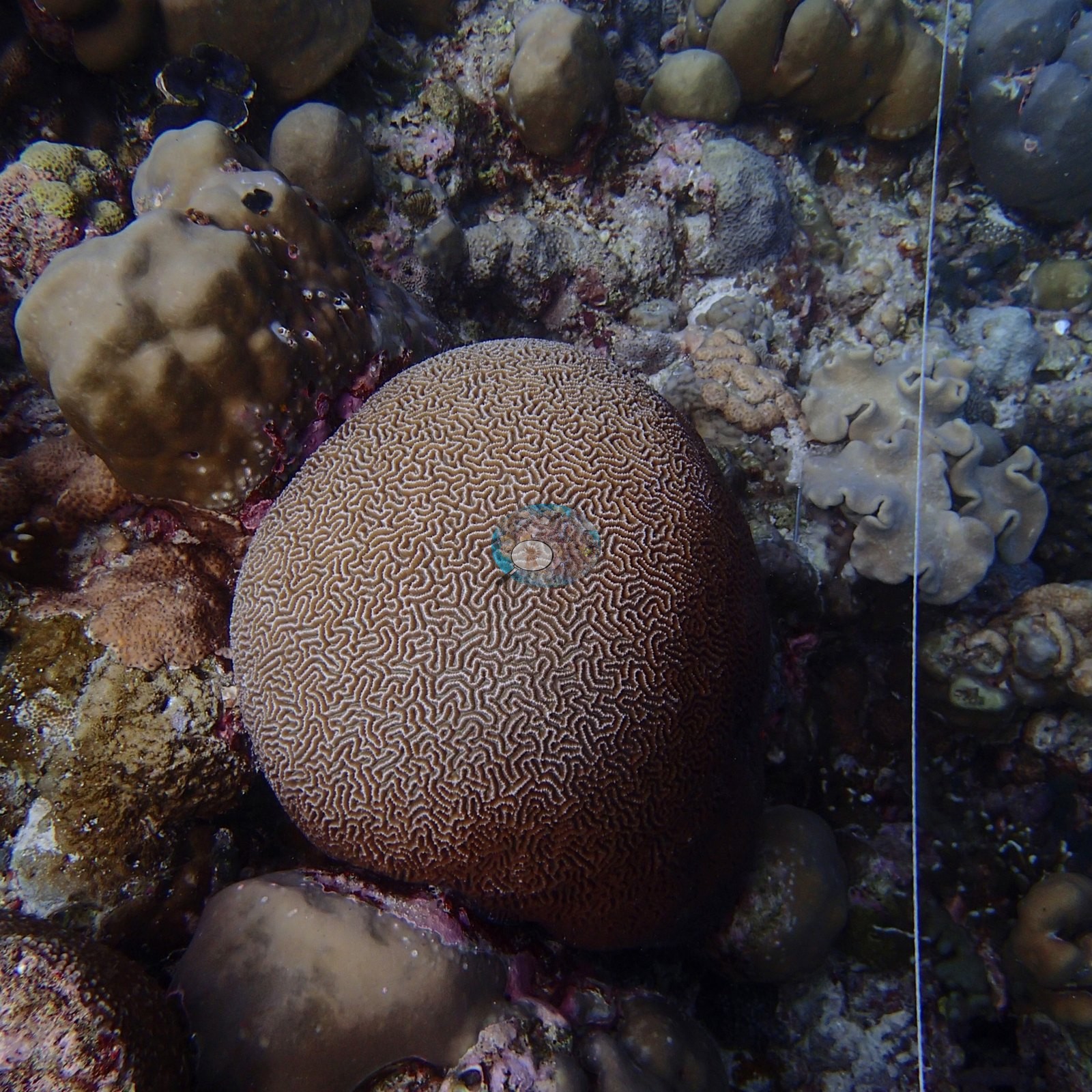
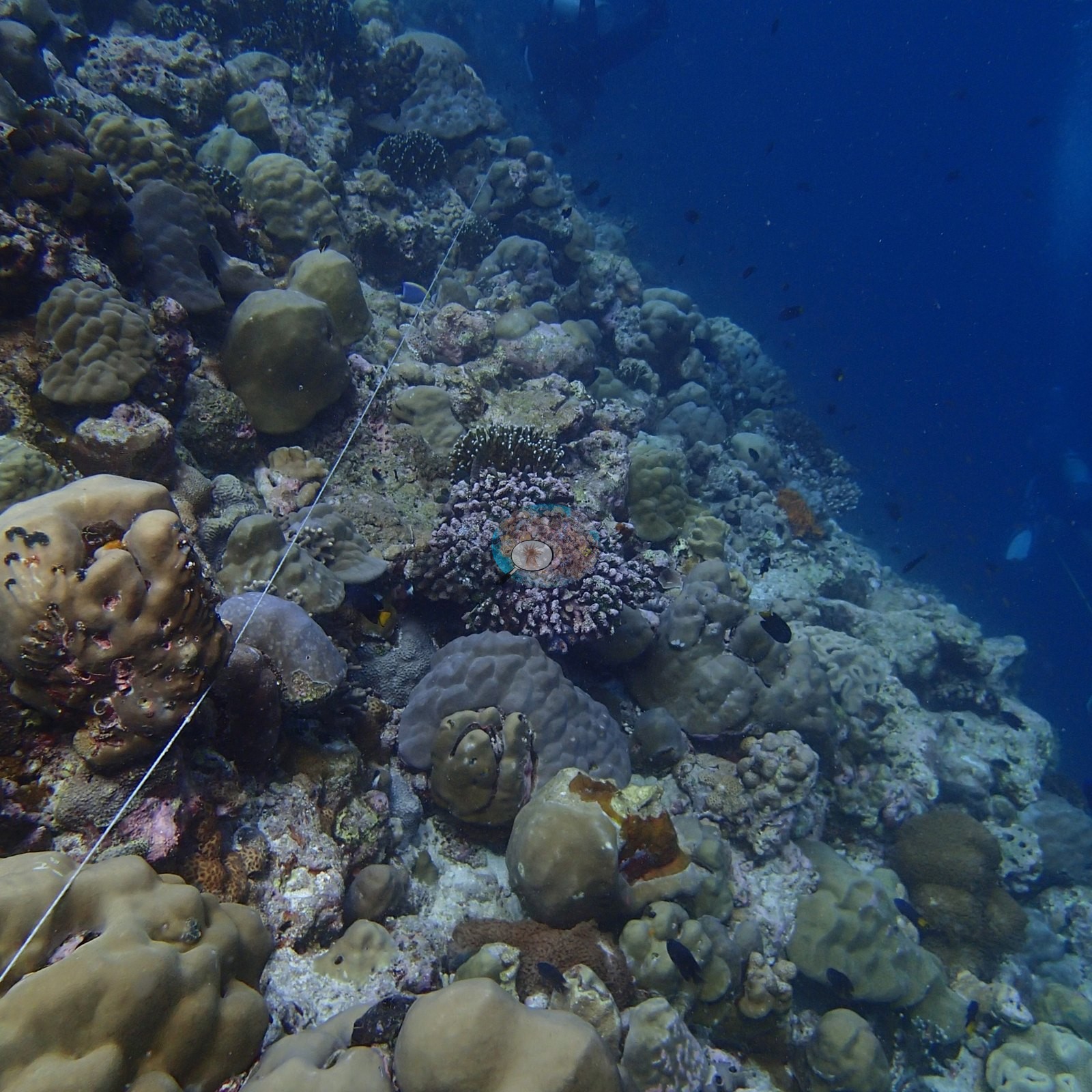
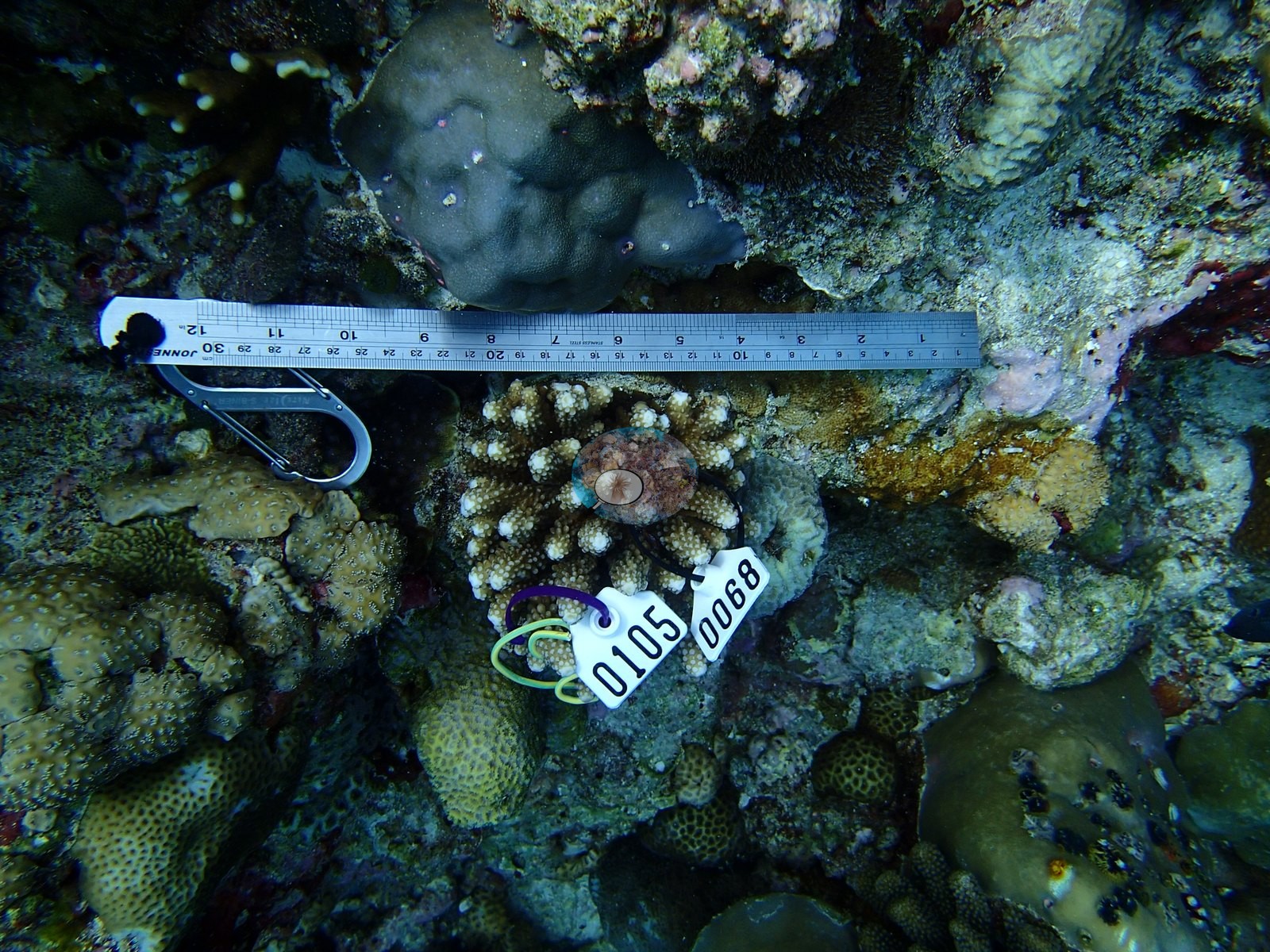
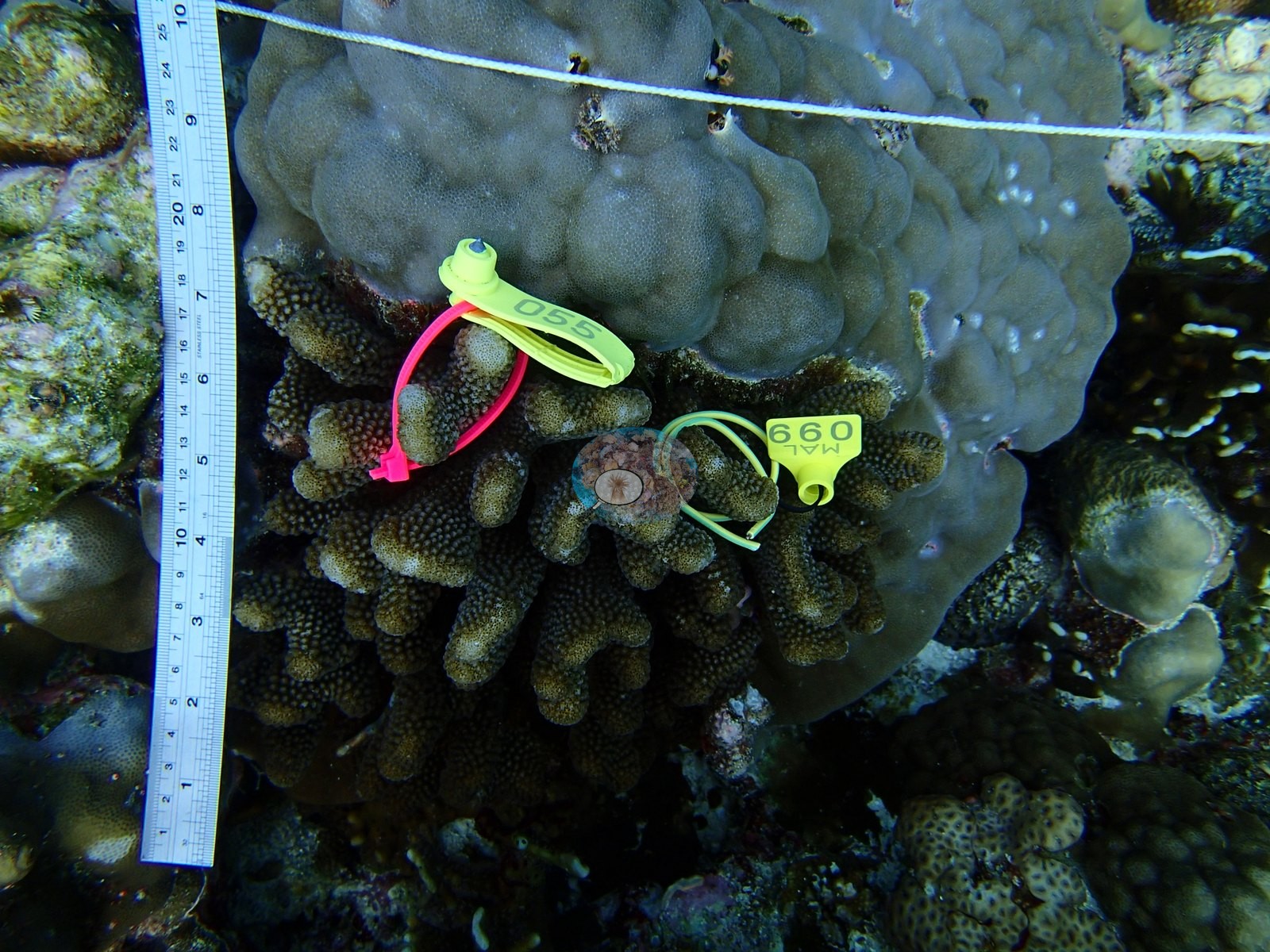
The stars are cauliflower-shaped pocilloporid corals — some tan, some a striking dark olive-green — alongside stubby-fingered staghorn relatives, lobed boulder corals, and a maze-patterned brain coral, with soft leather corals sprawled near the measuring ruler (e.g., Image 5, Image 11, Image 16, Image 22).
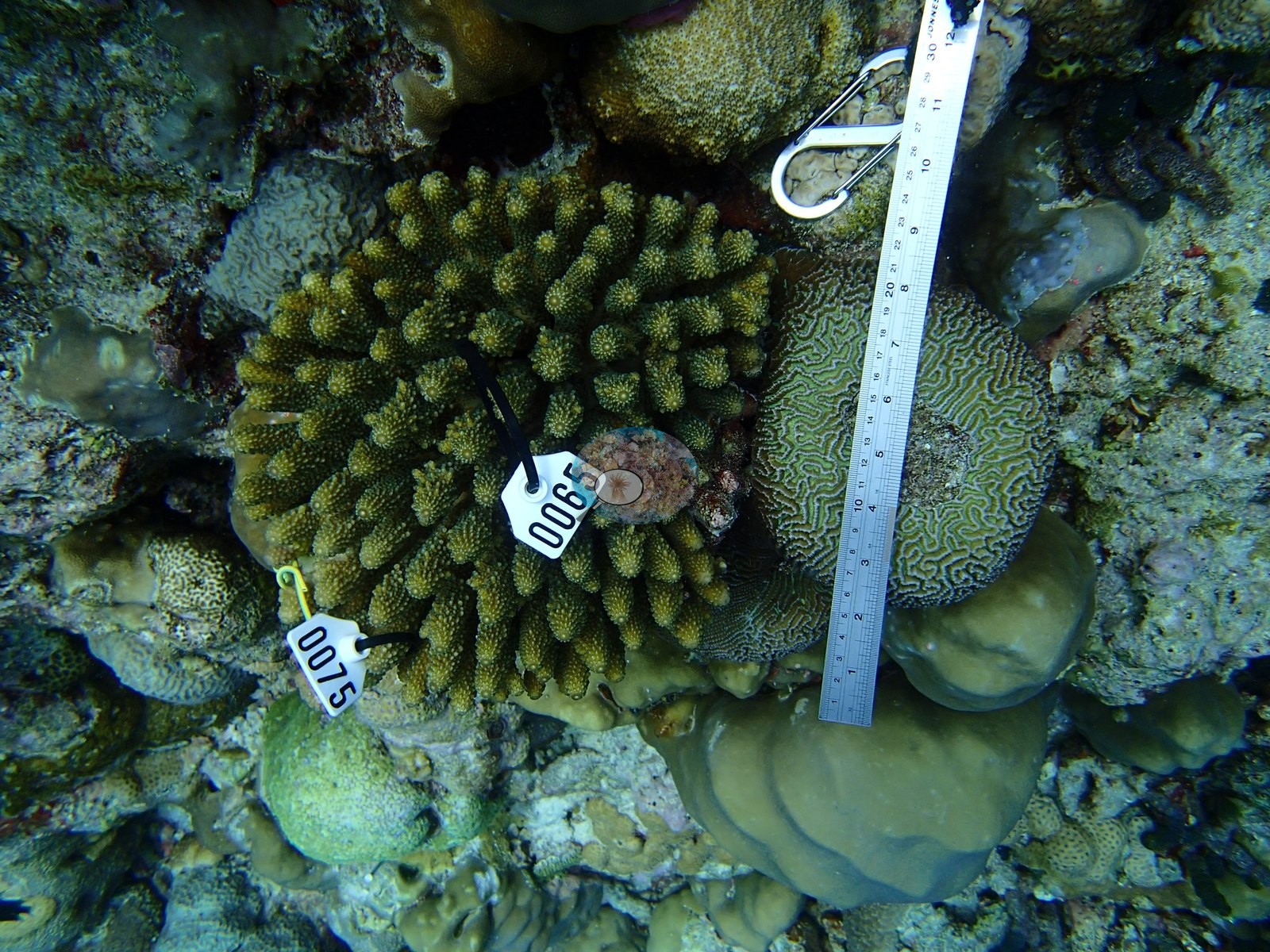
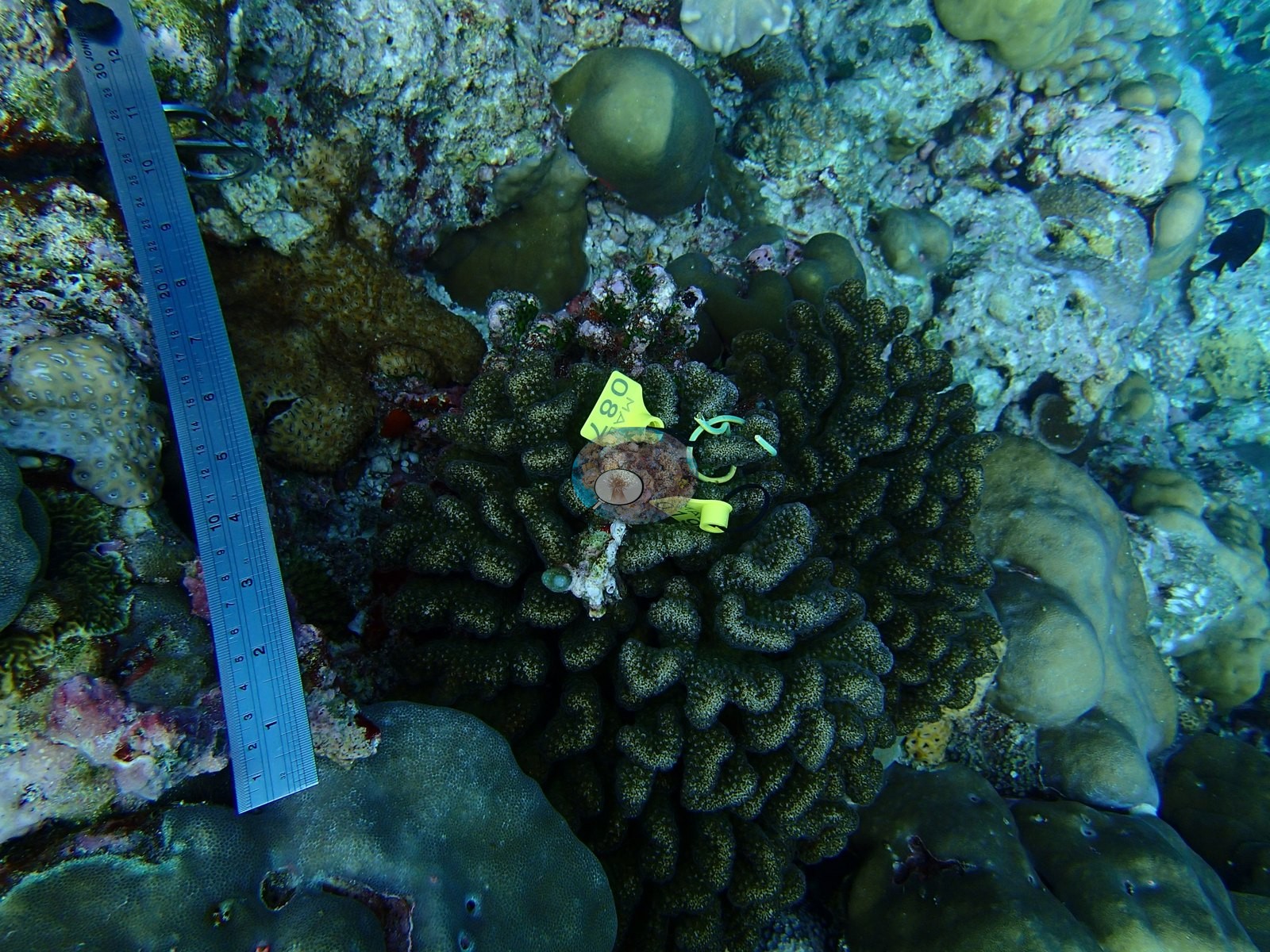
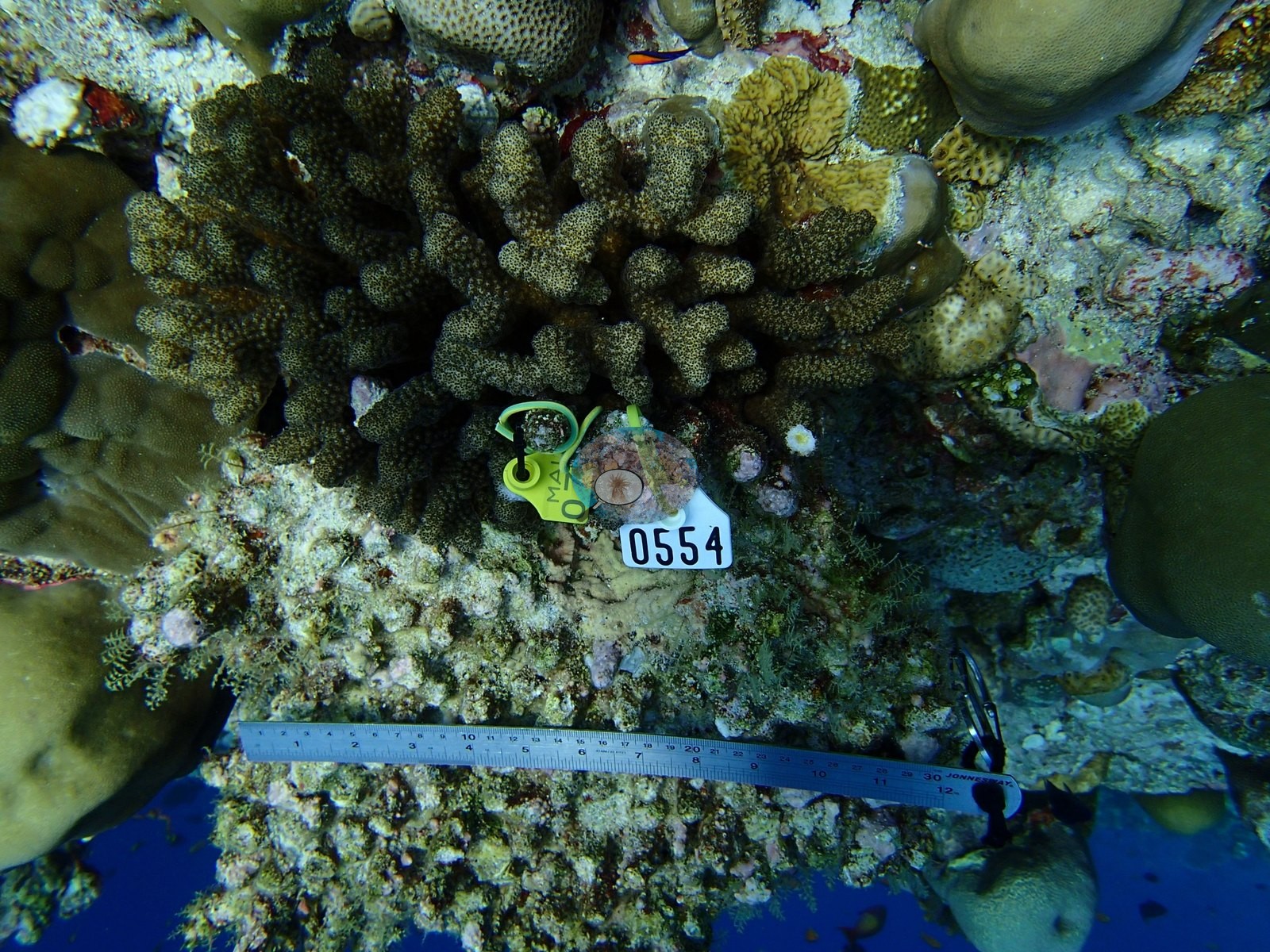
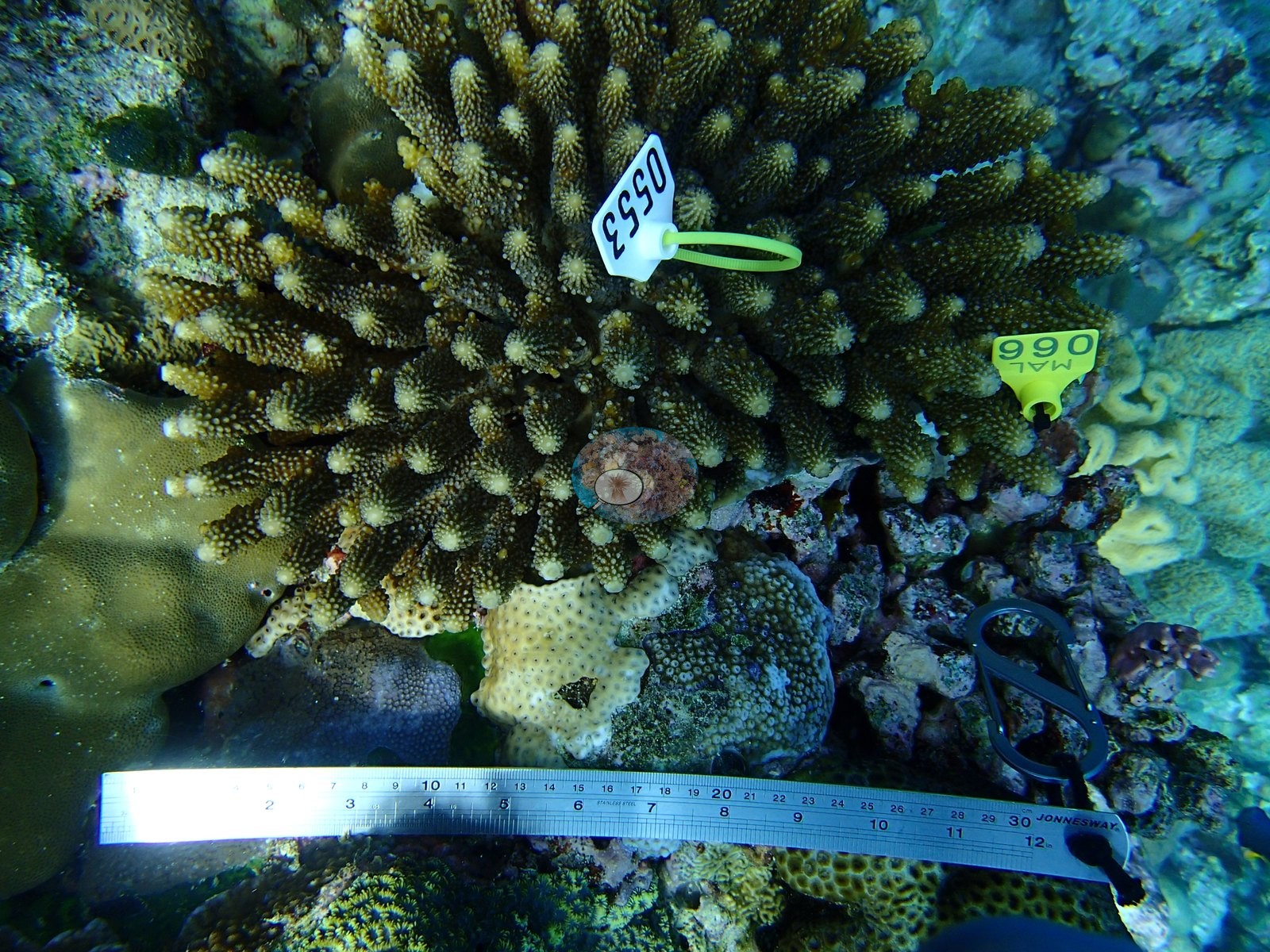
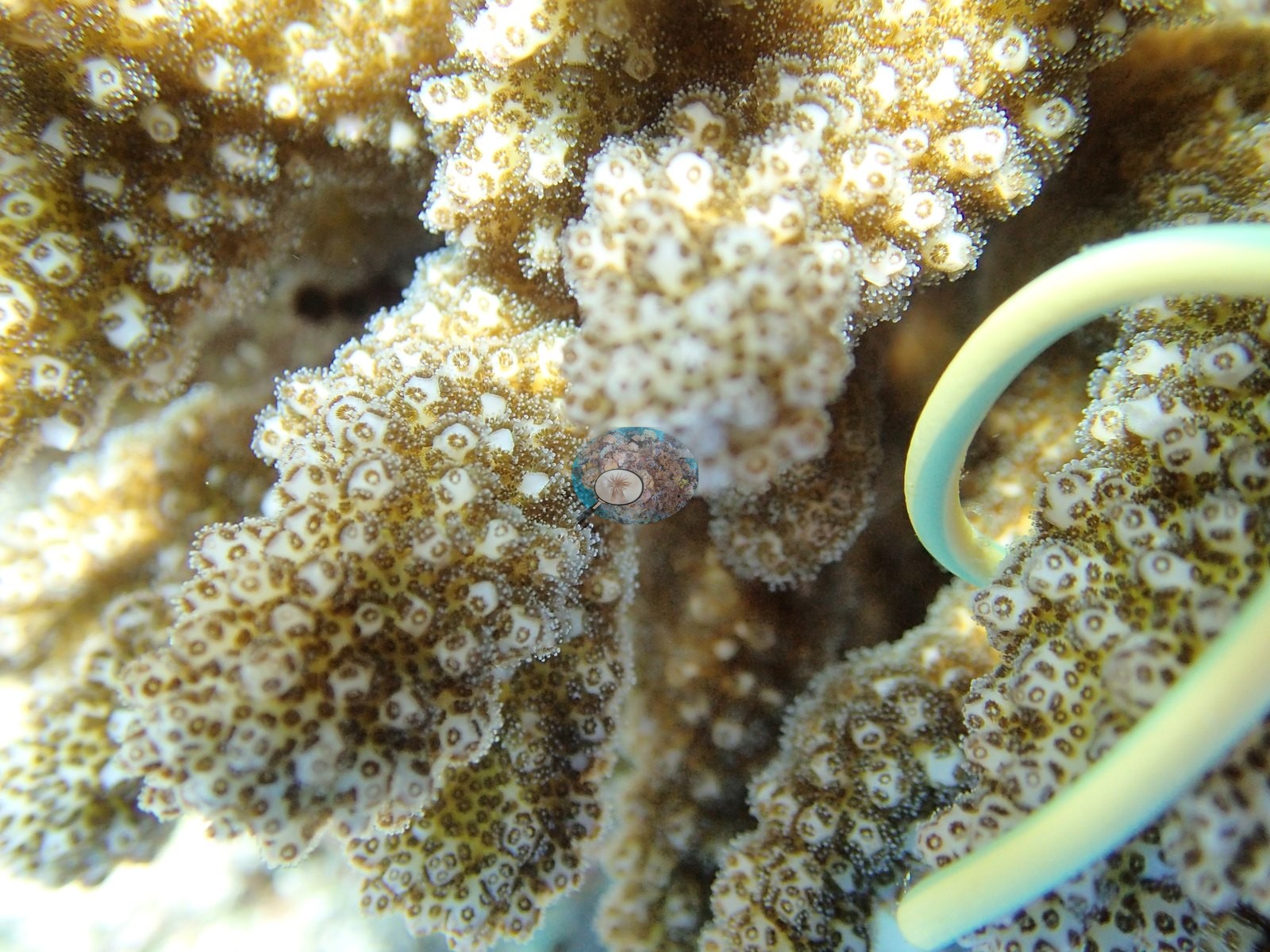
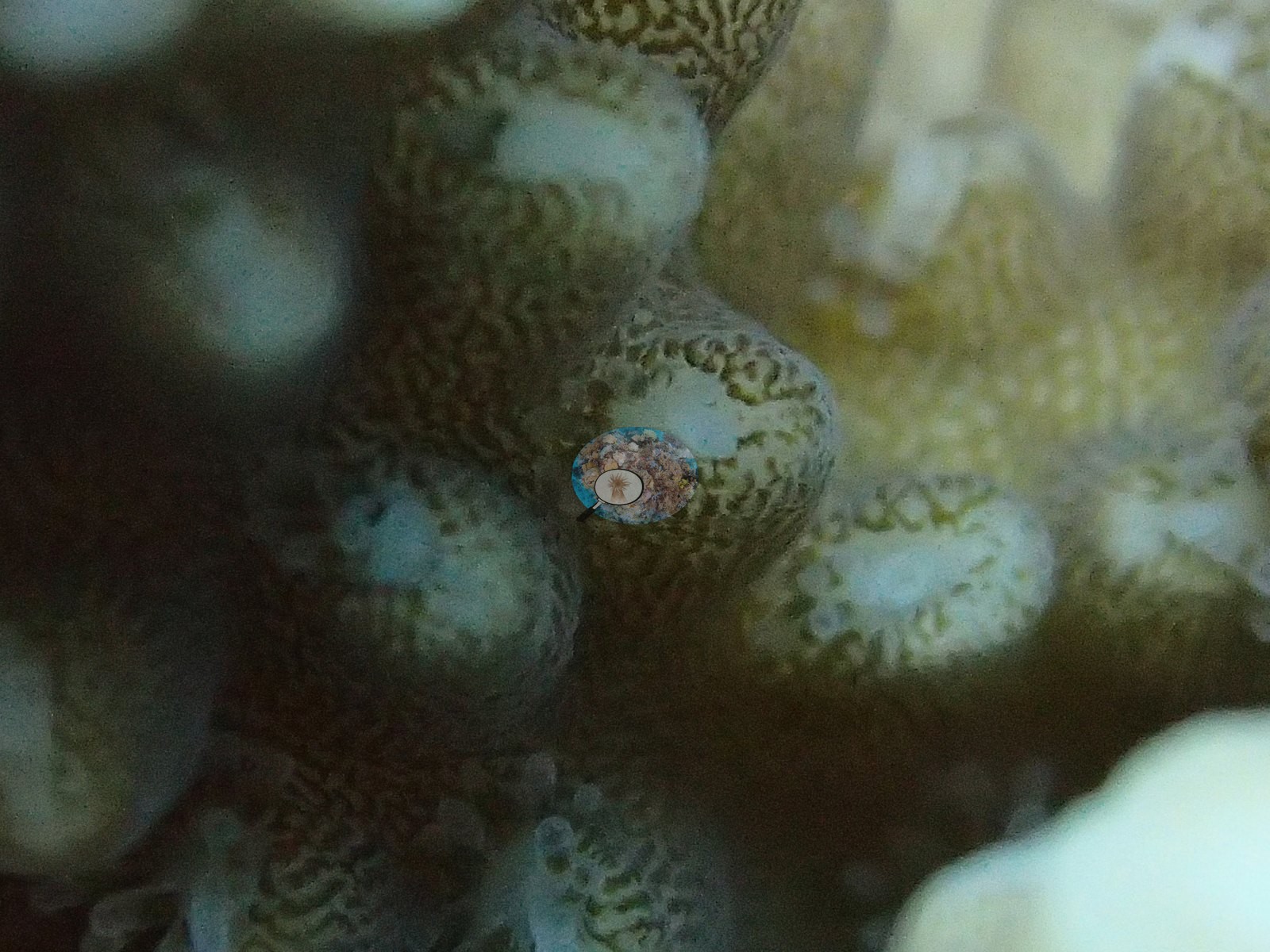
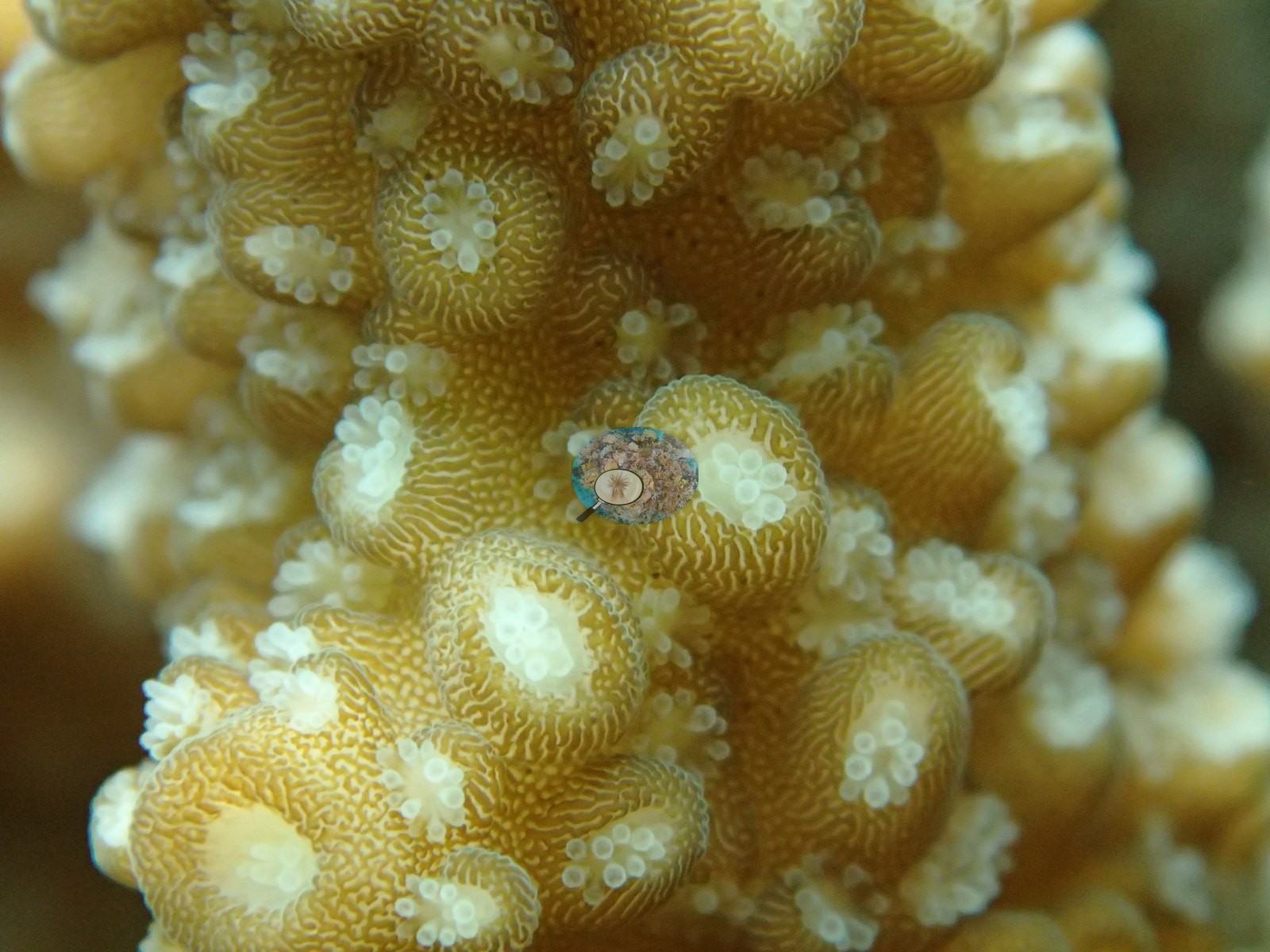
Macro frames dive right down to the polyps, tentacles out and feeding (e.g., Image 2, Image 7).
Coral cover
- Coral cover: 38% (SD 9.9%, n=17 transects, median 38%) in July 2016 — Coral Reef CPR point-intercept transects recorded under two reef names, Gaagan’dufaruhuraa (9 transects) and Gaagandu Faru (8), after the 2016 bleaching; we were part of the CPR team.
- The April 2016 survey, during the bleaching, read 61% (n=13 transects: 5 and 8 under the same two names). A single computer vision estimate (CoralSCOP mask-sum) over 19 of Anderson's January 2016 photographs is listed in the method table for comparison only; mask-sum tends to read high where colonies overlap or fill the frame.
Stressors
Months later the 2016 El Niño bleached the vast majority of corals on Baa's reefs, making these photos a portrait of the reef in its final healthy season. No crown-of-thorns starfish (COTS) or other corallivores were evident.
Comparisons with other data
Apart from the Coral Reef CPR surveys shown here, we found no other surveys at this site as of 2026. If you would like to share yours, please email us.
Dive record
This was a working research site: look closely at the wide shots and you'll spot numbered plastic tags zip-tied to individual corals, each colony measured against a steel ruler as part of a January 2016 monitoring baseline (e.g., Image 1, Image 13).
CV model comparison
More info
CoralSCOP on the January 2016 photos predates the bleaching and is a comparison only; rows are never averaged.| Method | Hard coral cover (%) | Photos (n) ± SE |
|---|---|---|
| Transect, July 2016 (headline) | 38.2 | |
| Transect, April 2016 (during the bleaching) | 61.3 | |
| CoralSCOP edited | 44.5* | n = 19 · SE 7.5 |
CoralSCOP (edited photos) reads 44.5%, within 6.3 pp of the in-water transect (38.2%).
*Based on only 19 reef-habitat photos; this estimate is less certain.
See a more detailed, stand-alone version of this table.
Data & links
All images from Coral Reef Diagnostics. Data are from Coral Reef Diagnostics and Coral Reef CPR.
© Coral Reef Diagnostics.