
Maldives - Feydoo Wall
Part of the regional summaries: Maldives - Central (Male Atolls / Ari / Vaavu) and Maldives
More info
Maldives (NOAA CRW virtual station) · Maldives ecoregion mean=2.9°C-heating weeksA short, colorful wall dive built around crevice life rather than coral gardens - scarlet sponge and orange cup corals lit by dive lights, a giant moray being cleaned, and a shift-change cast of lionfish, coral shrimp, and a thorny oyster. Computer vision cover estimate is around 22.1%.
One independent survey station shown with the program’s logo — click one to see how far it is from this site.
4 of these 13 photographs are shown beside the text that discusses them under "Site description" below.
Site description
Setting
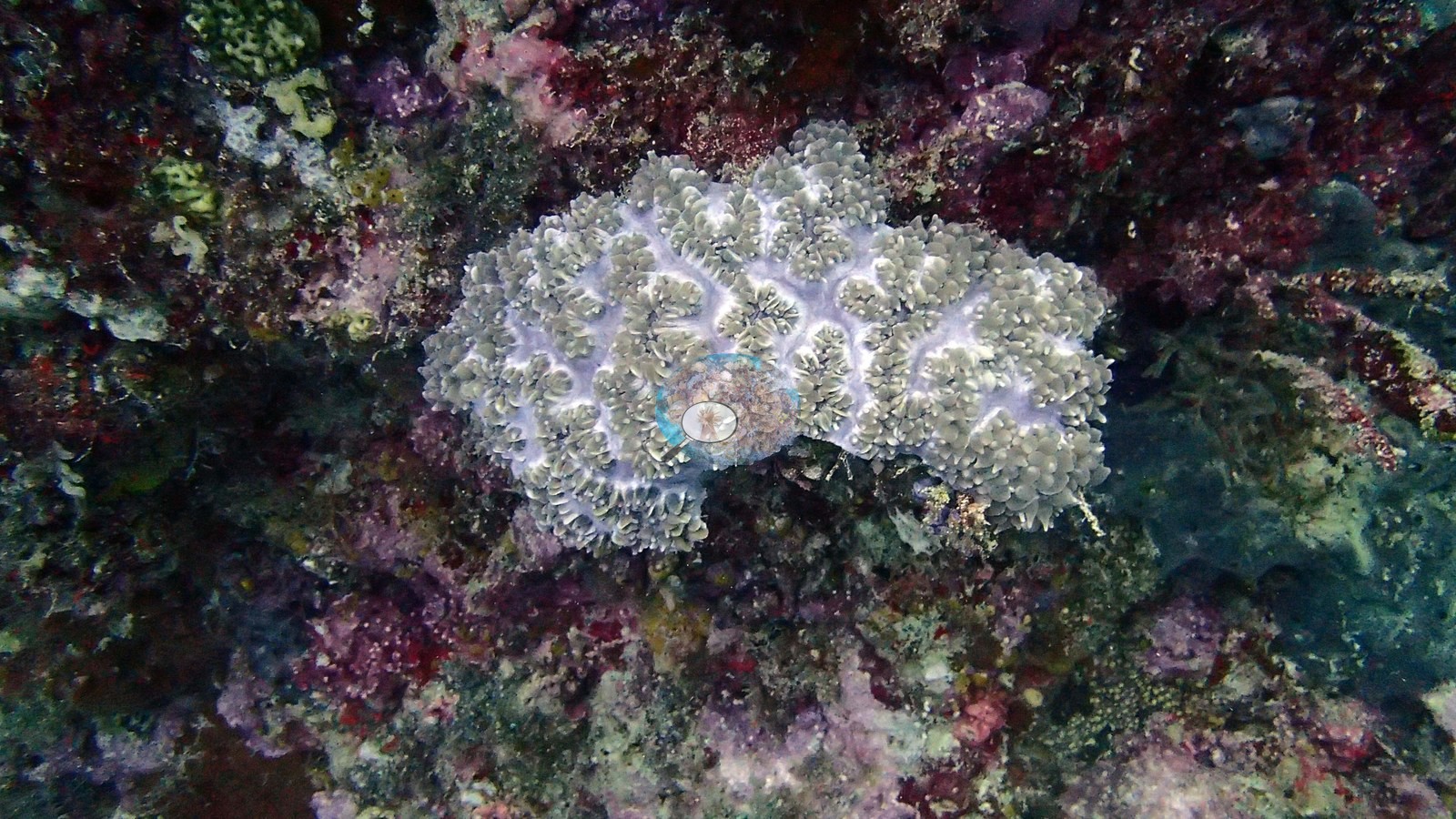
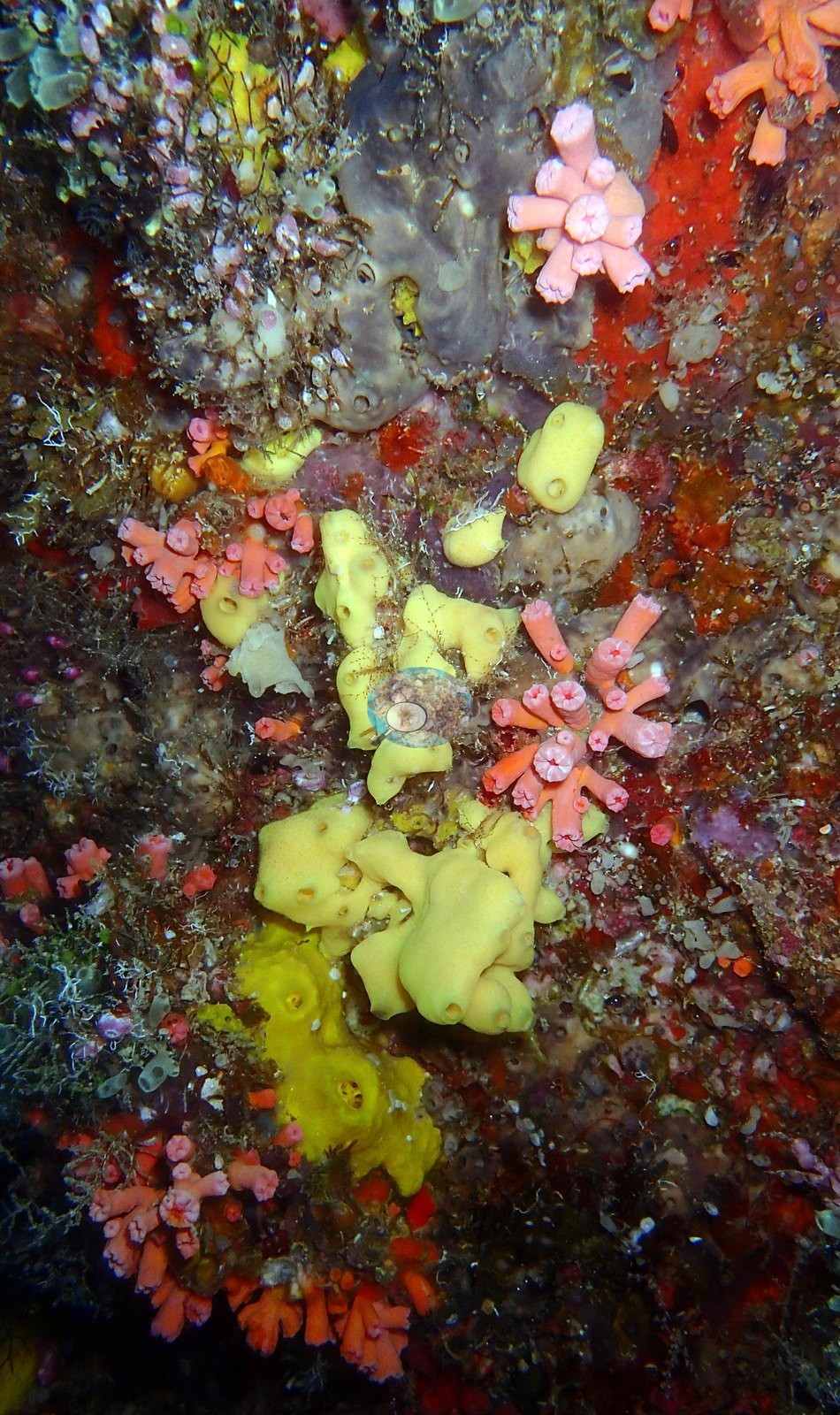
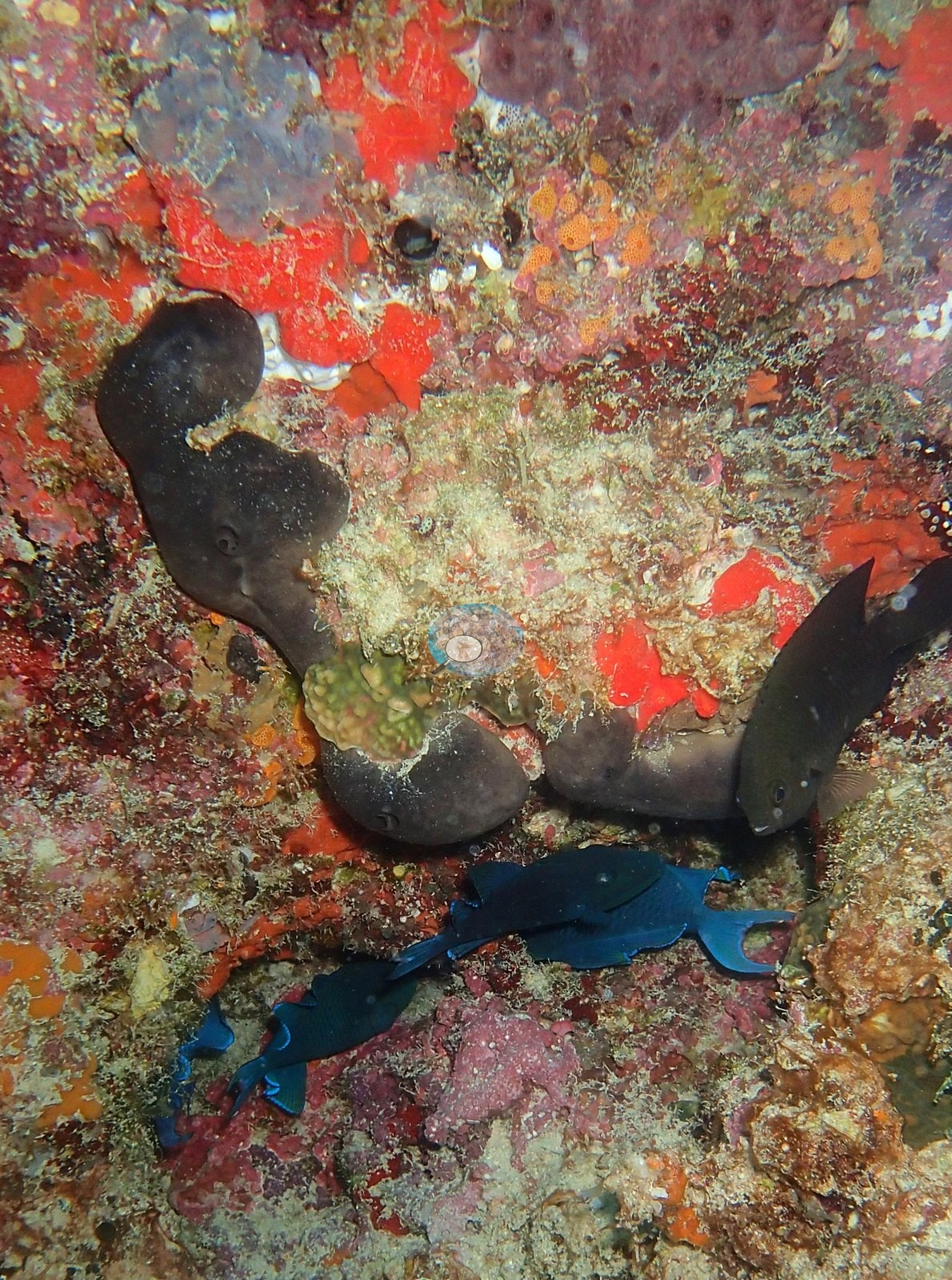
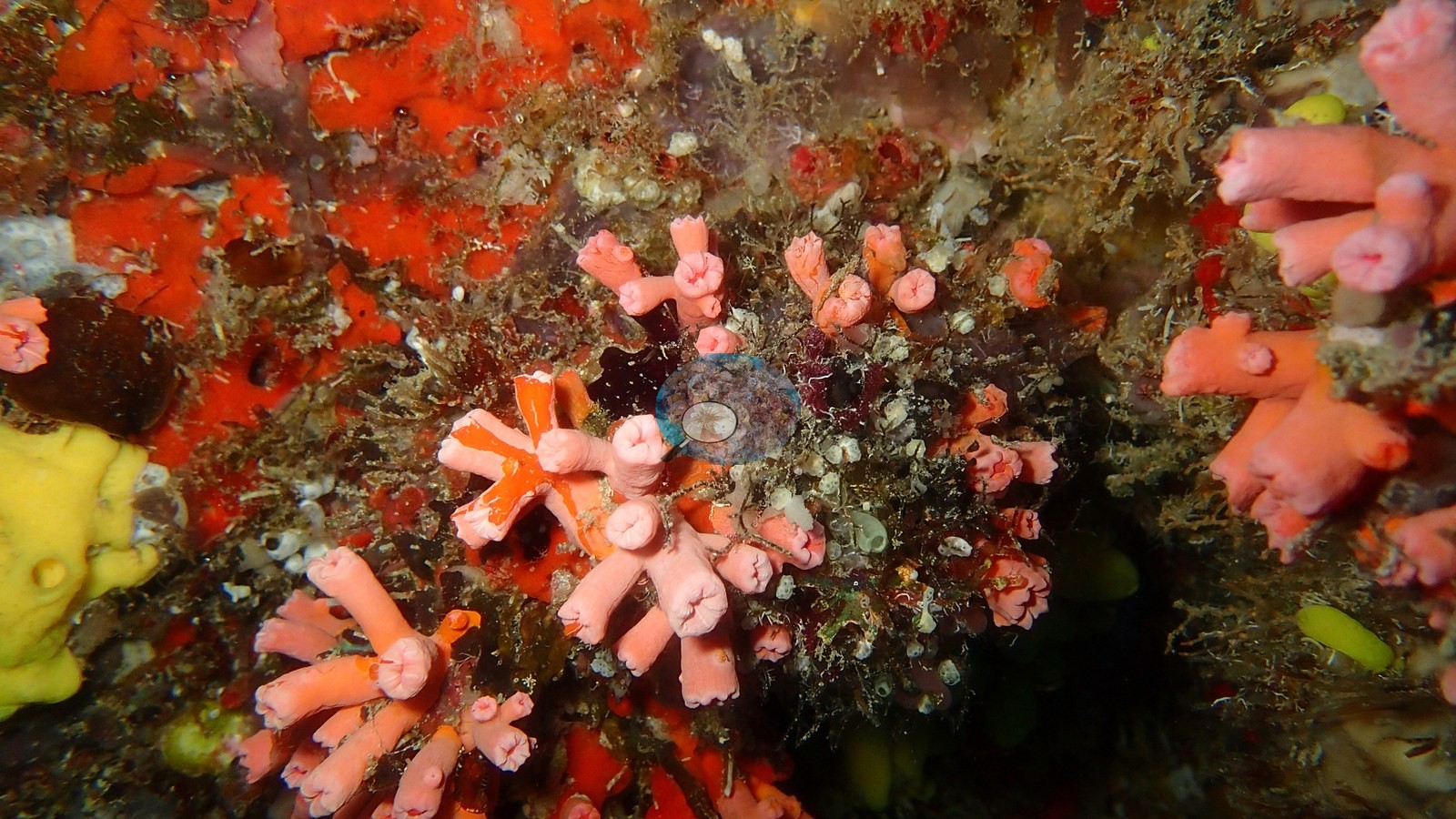
A short, late-day wall dive that trades coral gardens for pure color: panels of scarlet sponge, yellow crusts, and orange cup corals compatible with Tubastraea that ignite under a dive light as the sun drops (e.g., Image 3).
Feydoo Wall is a crevice-hunter's dive.
Coral cover
Coral cover: 22% — photo-derived, and the two methods broadly agree (24% vs 21%). This site's figure is the mean of two independent computer vision passes over Anderson's own frames: a DINOv3 calibrated point classifier reads 23.6% and a CoralSCOP computer vision reads 20.5%, a spread of 3.1 percentage points. The map publishes the mean so sites can be sorted against one another, but the honest statement of what is known here is the 21–24% range: the two products have different denominators and should not be treated as one measurement.
Stressors
No crown-of-thorns starfish (COTS) or other corallivores evident.
Fish and other fauna
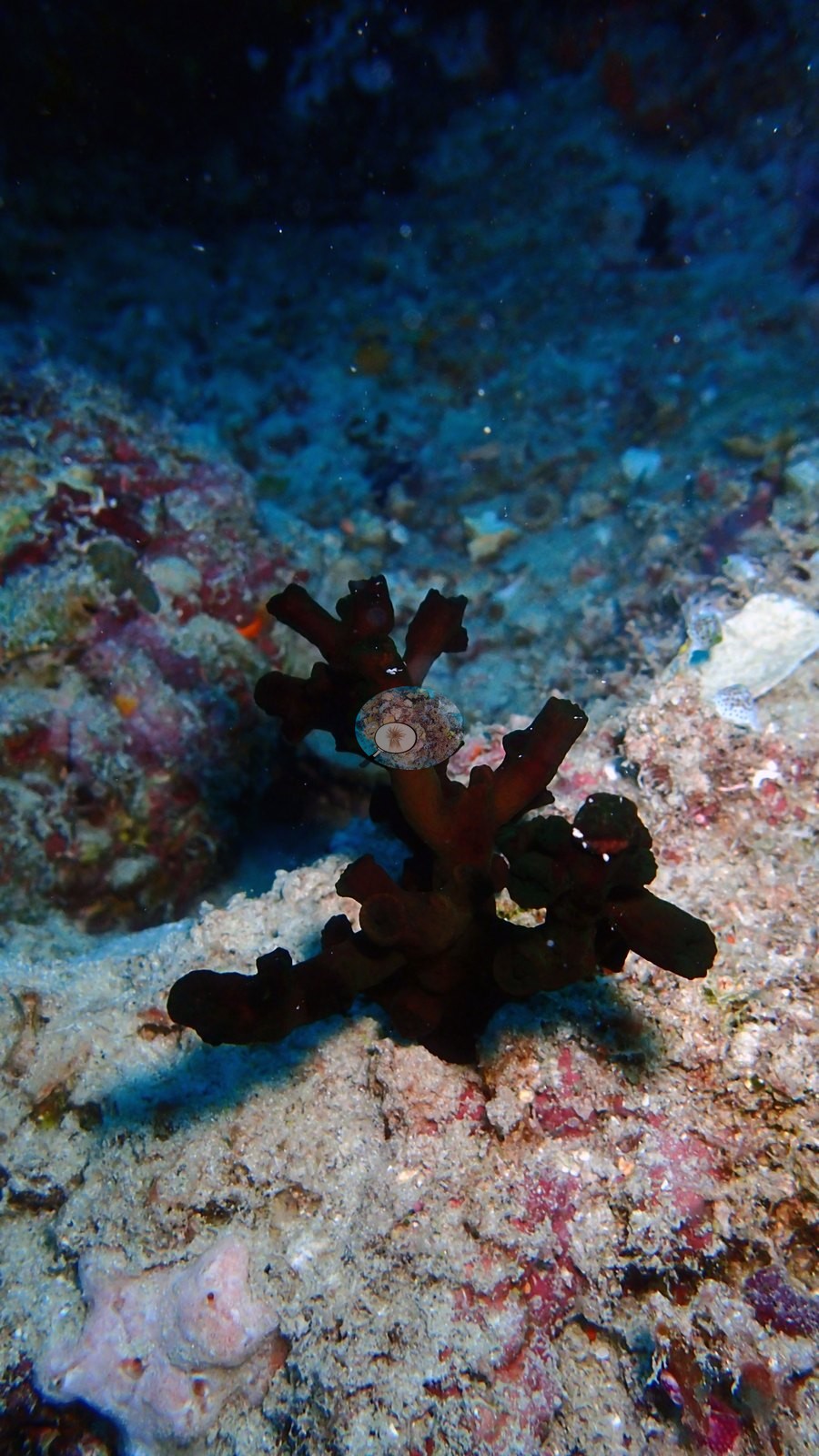
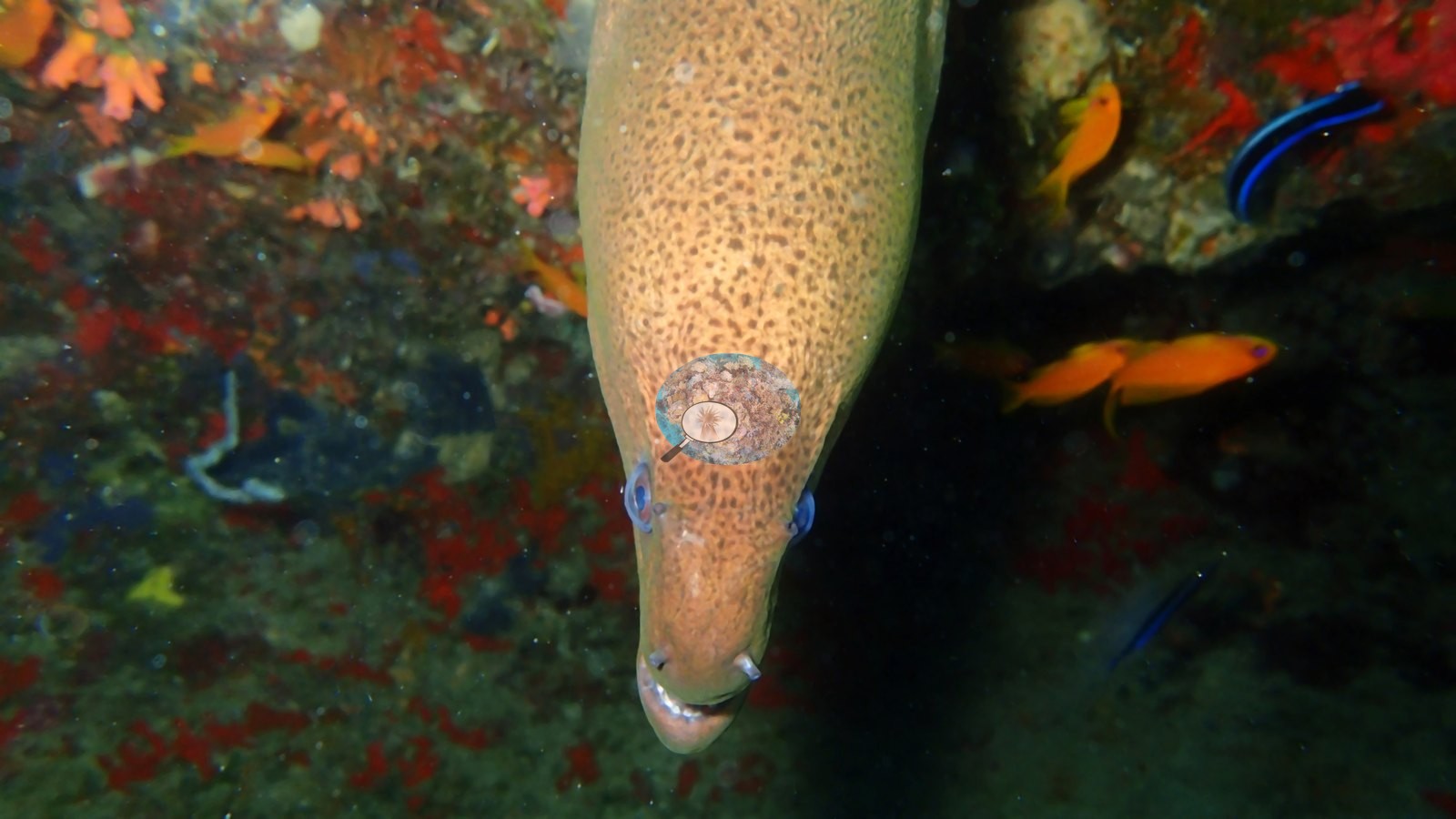
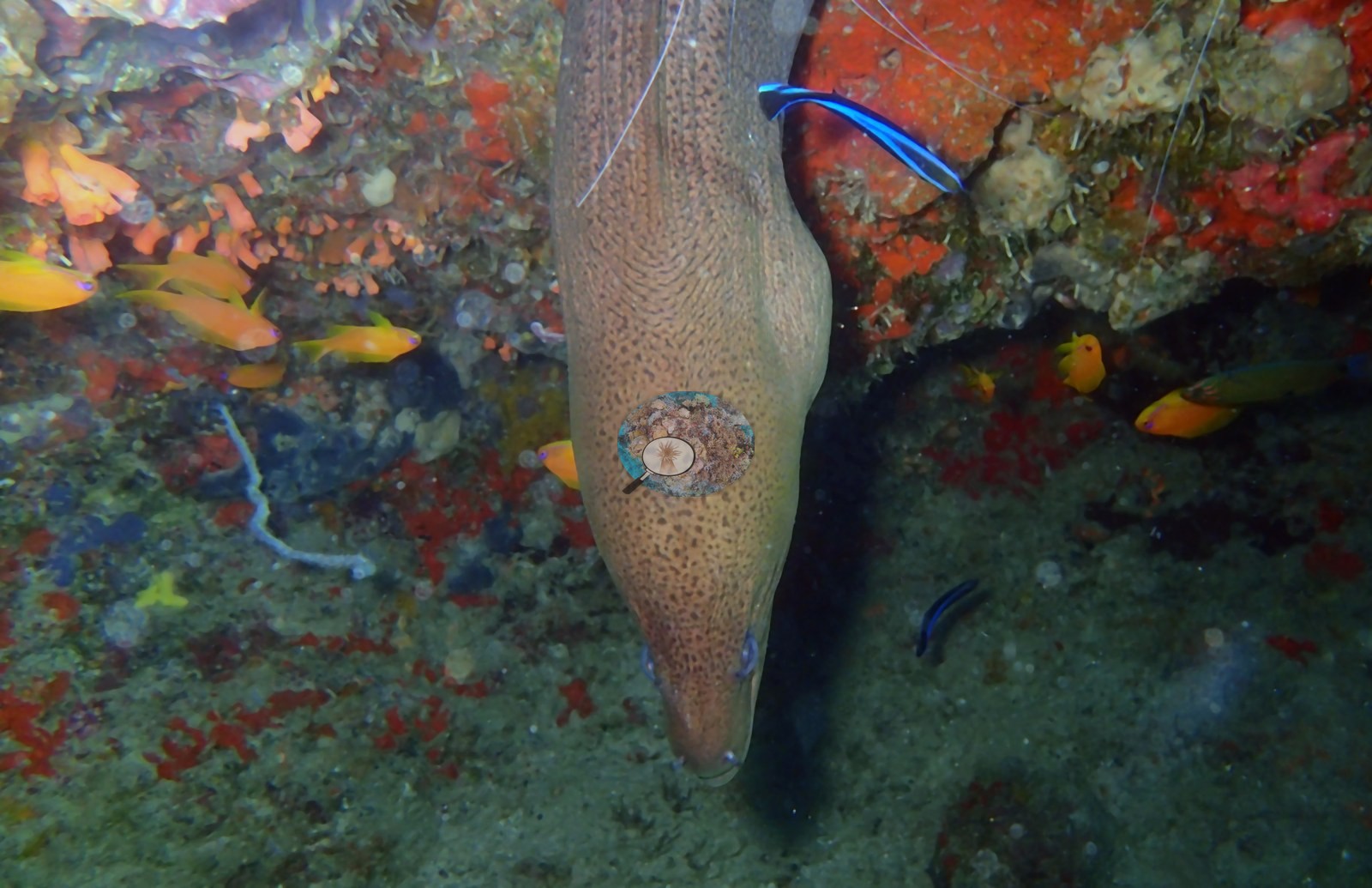
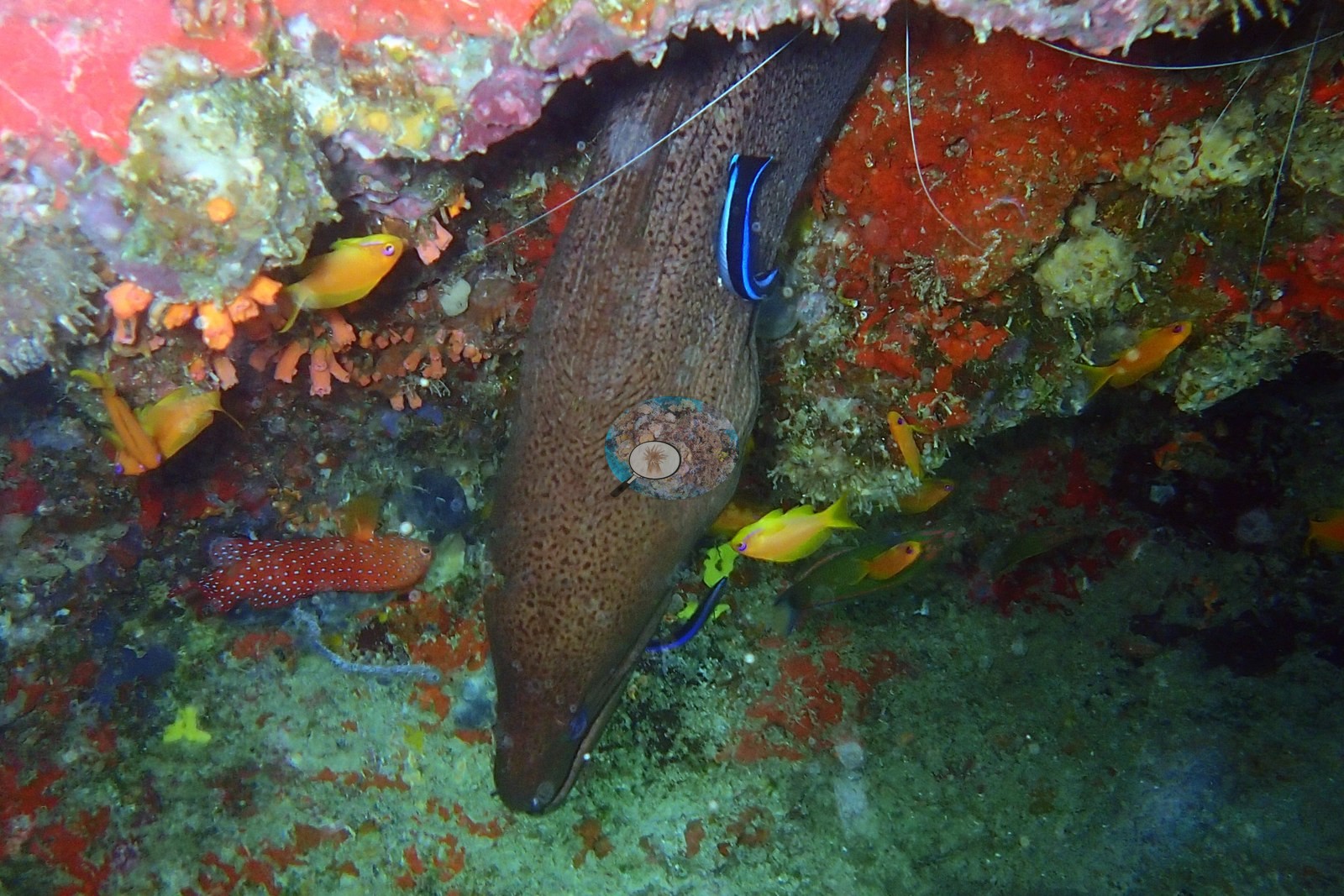
Its headline act is a big speckled moray — compatible with a giant moray — hanging head-down from its hole while bluestreak cleaner wrasses groom its jaws, orange basslets crowding the salon (e.g., Image 2, Image 5).
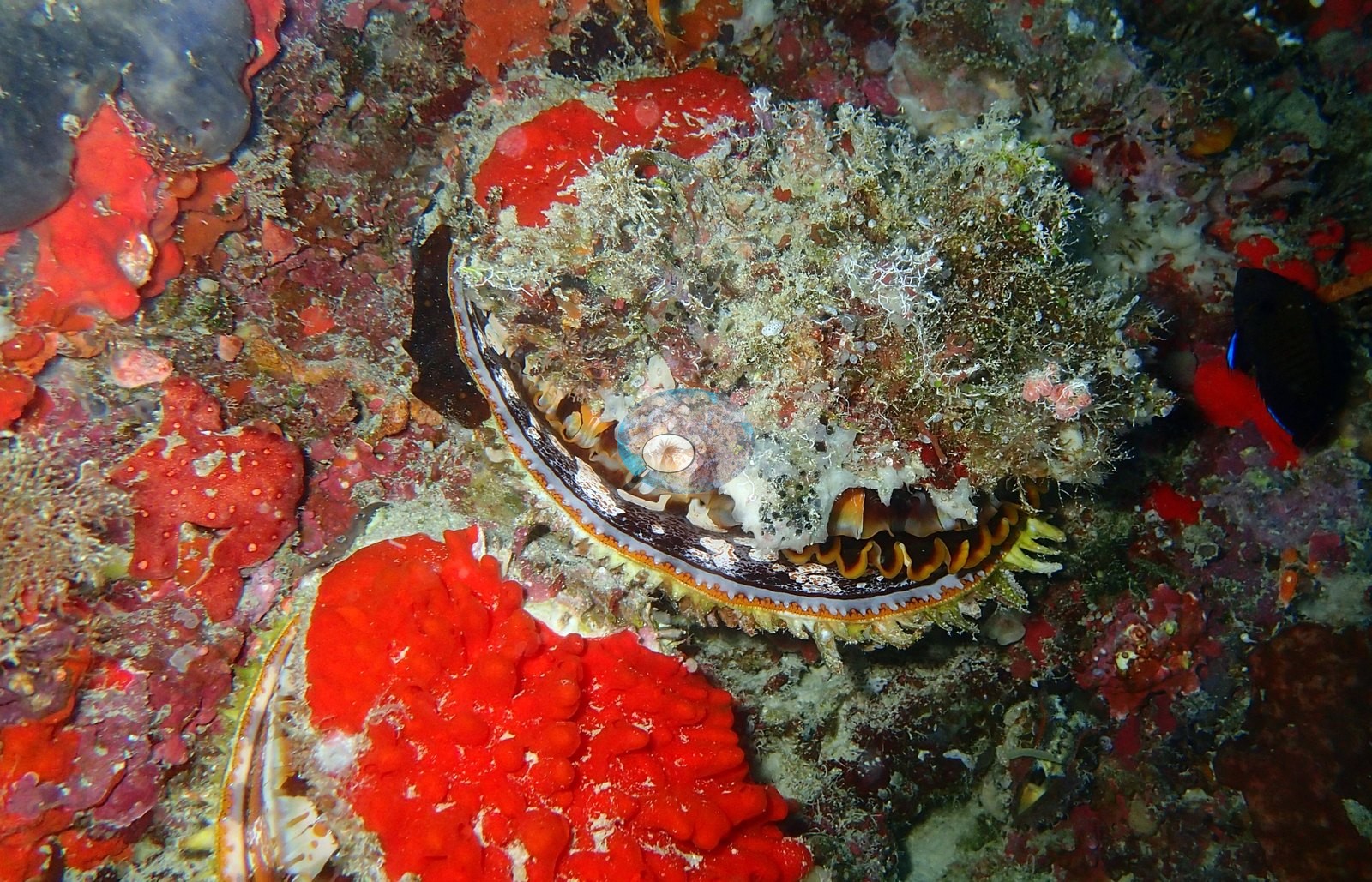
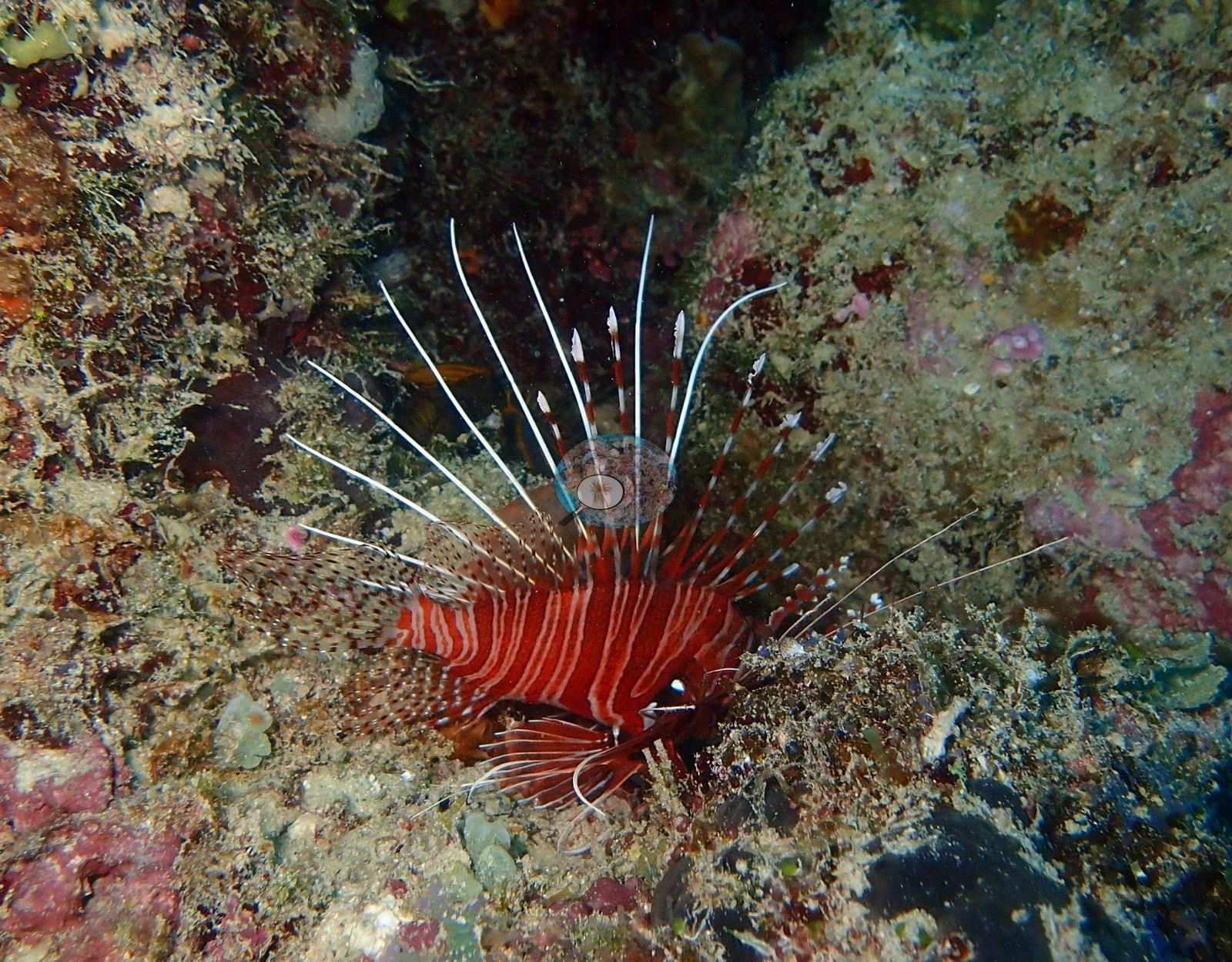
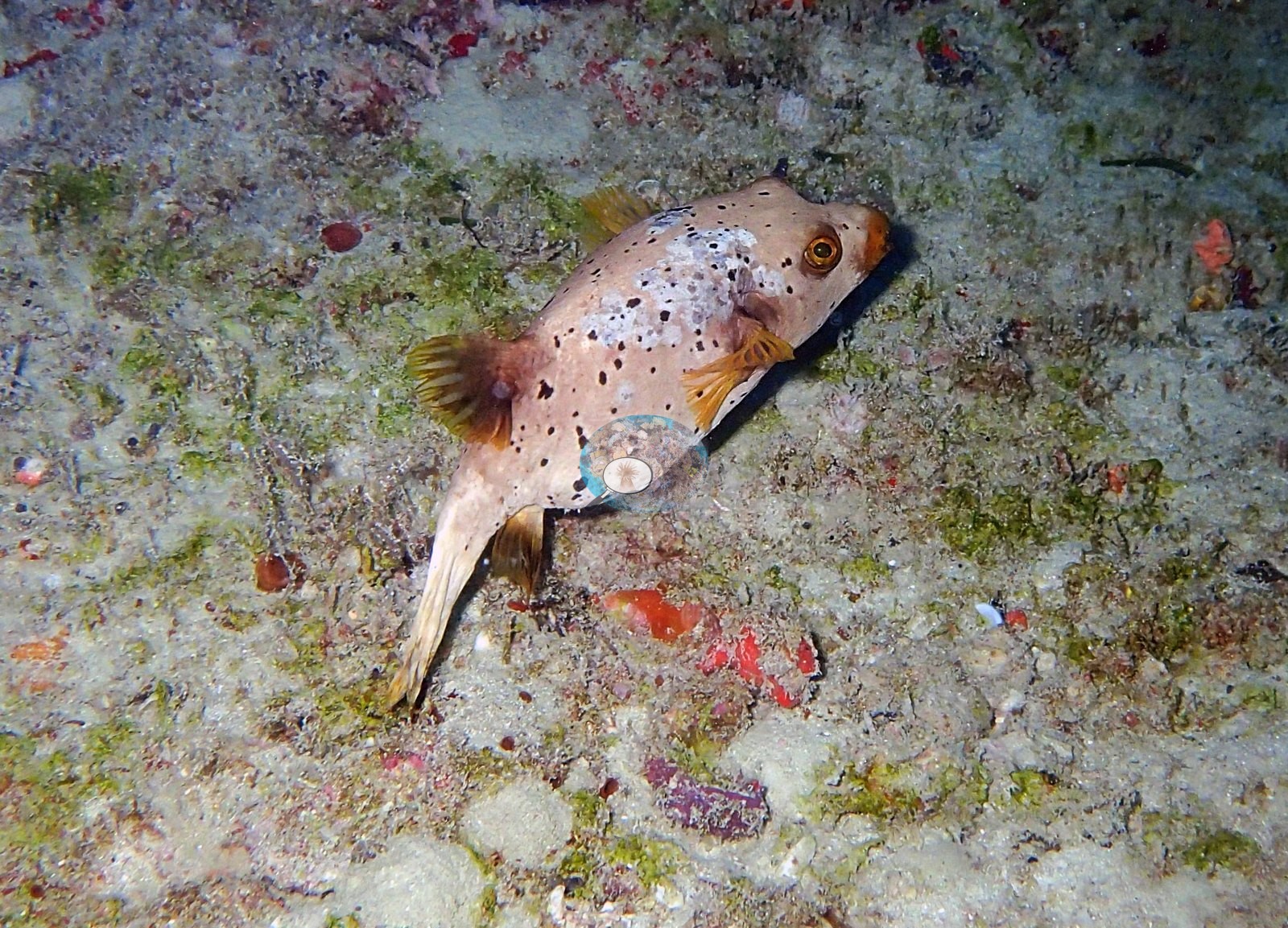
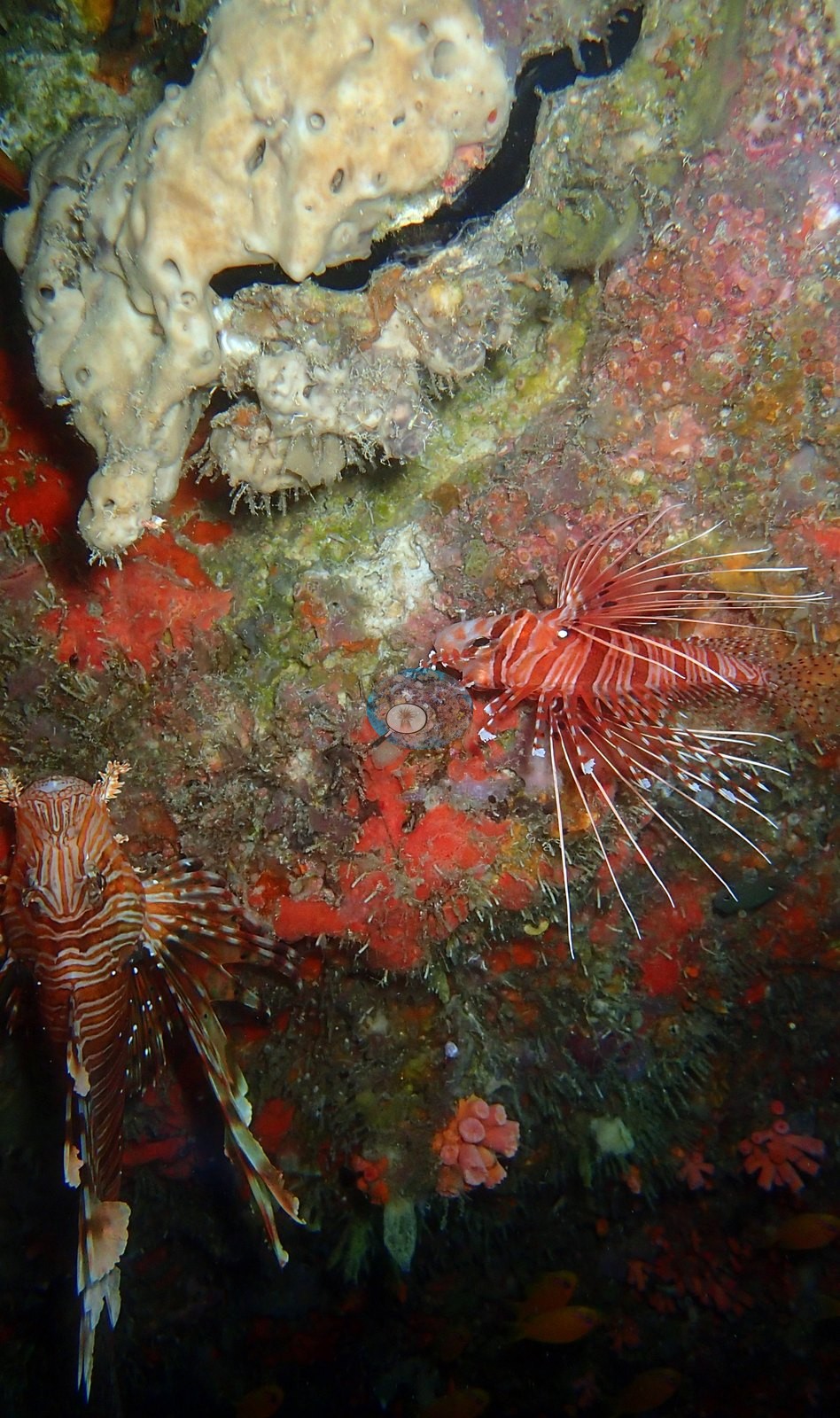
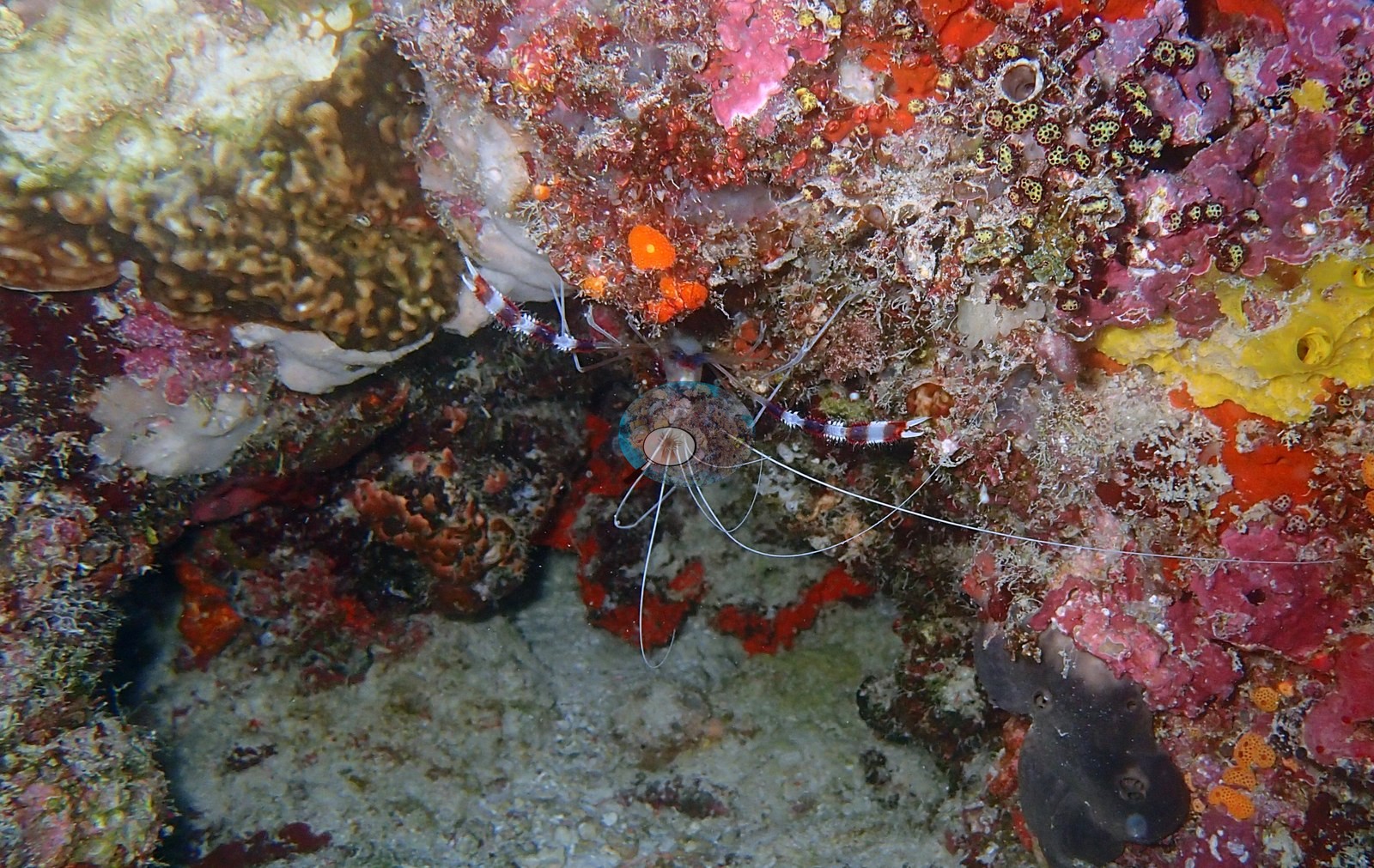
Look under the ledges for banded lionfish dangling upside-down, a coral shrimp waving long white antennae, a thorny oyster gaping its zigzag smile from a sponge-red wall, a spotted little puffer parked on a shelf, and a triggerfish already tucked into its bedroom crack for the night — the whole reef caught mid-shift-change between day and night crews (e.g., Image 4).
Comparisons with other data
No independent survey was made at this exact site; the nearest ones are listed in the table below.
CV model comparison
More info
As of September 2026 no computer-vision method estimates coral cover accurately on new images, so treat this as indicative rather than a measurement; it is revised as the methods improve.More info
The published figure is the mean of the two methods.| Method | Hard-coral cover (%) |
|---|---|
| In-house DINOv3 | 23.6 |
| CoralSCOP | 20.5 |
| Mean (± SD) | 22.1 ± 2.2 |
| Range | 20.5–23.6 |
Mean ± SD and range are across the computer-vision methods shown.
Independent surveys nearby
Within 5 km, 1 independent survey station recorded hard coral cover in 2016. The most recent nearby survey is from 2016, so these values predate recent heat stress. This site's own estimate (22%) sits 13.3 points above the range of these surveys (8.8%); the methods differ, so the comparison is context, not a like-for-like test.
Collected by other programs using different methods, so these are context for the figures above, not a like-for-like comparison. Where a station was surveyed more than once the range is shown. Station names are not dive-site names.
| Agency | Site / location | Date | Hard coral cover (%) | Distance | Link |
|---|---|---|---|---|---|
| Original collectors (compiled by McClanahan et al. 2016) | Villingilli (Maldives) | 2016 | 8.8% | 4.36 km | — |
Data & links
All images from Coral Reef Diagnostics. Data are from Coral Reef Diagnostics.
© Coral Reef Diagnostics.