
Part of the regional summaries: Tonga - Vava'u and Tonga

More info
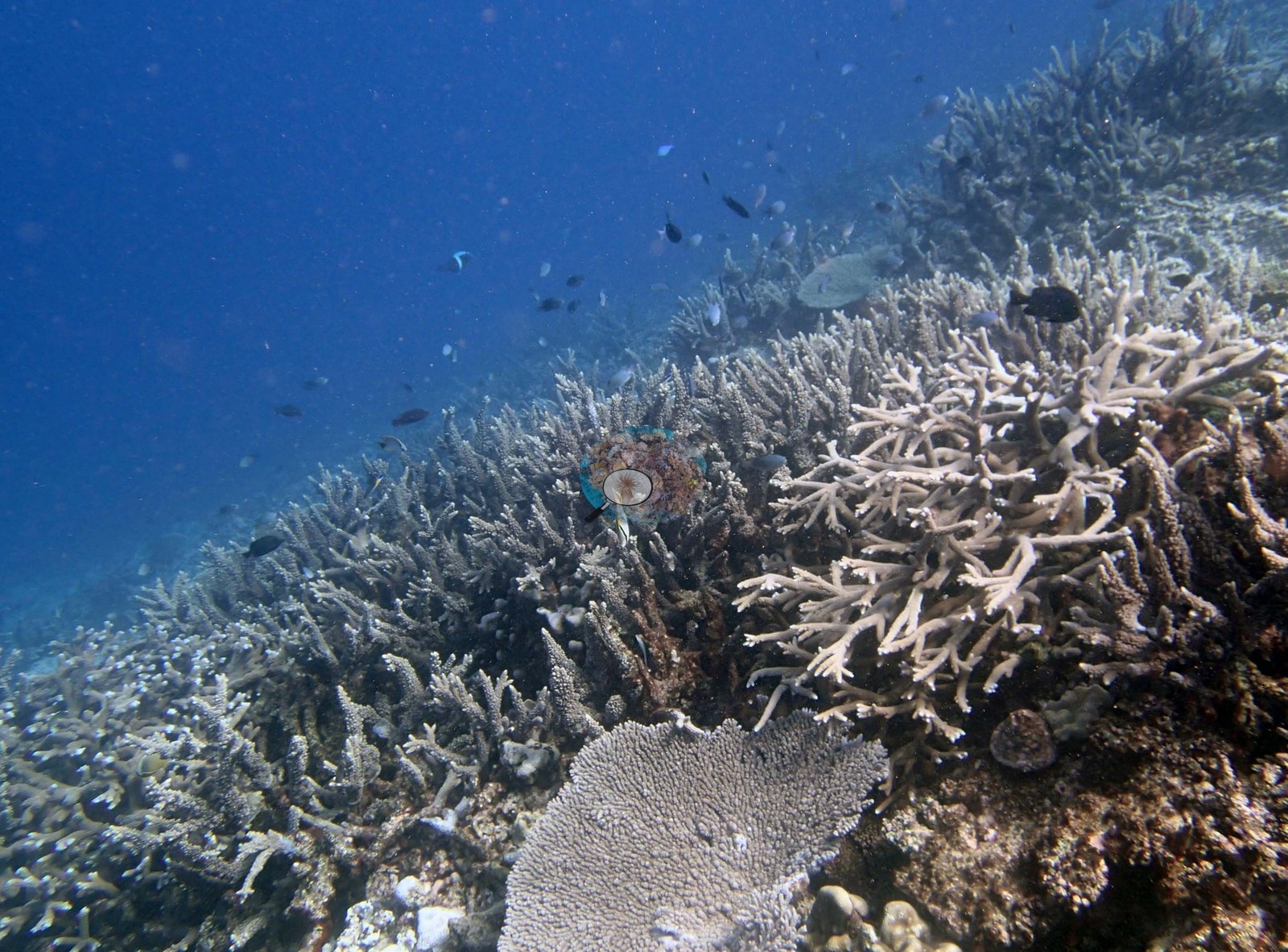
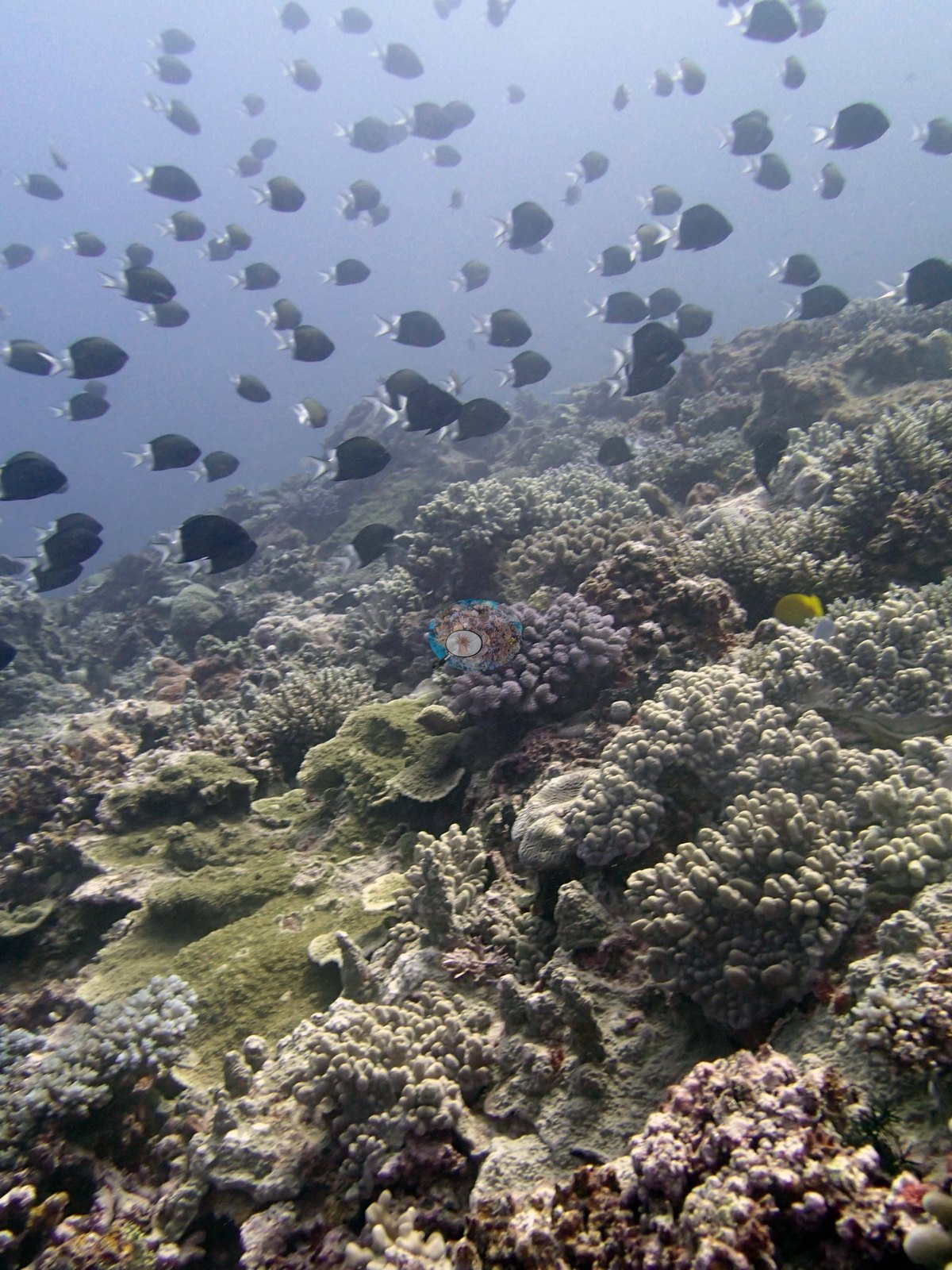
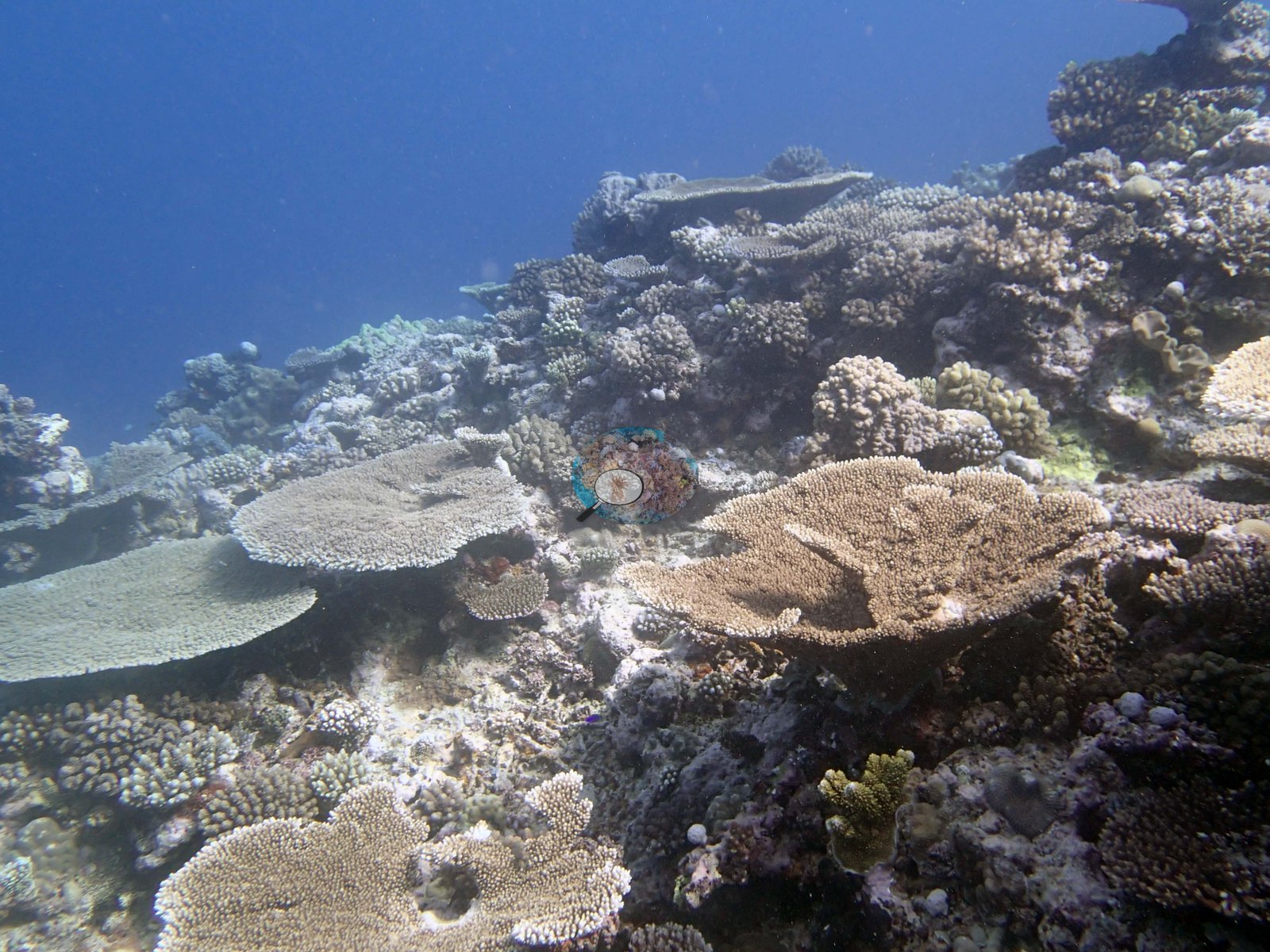
Southern Tonga (NOAA CRW virtual station)A structurally three-dimensional Vava'u slope dived to 29 m, where Acropora tables stand clear of dark undercut bases and staghorn clumps grow among them. Cushion stars and a dense school of damselfish add life to the scene. Surveyed on the Living Oceans Foundation's Global Reef Expedition.
Ko ha tafaʻaki ʻi Vavaʻu ʻoku moʻoni hono fōtunga fakatuʻunga tolu (three-dimensional), naʻe uku ki he 29 m, ʻa ia ʻoku tuʻu mahuʻi hake ai ʻa e ngaahi tēpile Acropora mei honau ngaahi tefito ʻuliʻuli kuo keli ʻi lalo (undercut), pea ʻoku tupu ʻa e ngaahi pupunga staghorn ʻi honau vahaʻa. ʻOku tānaki ki he moʻui ʻo e feituʻu ʻa e ngaahi fetuʻu tahi (cushion stars) mo ha ʻao matolu ʻo e damselfish.
AI translation of this summary; the English is authoritative. (low confidence)
CTD-cast midpoint; the cast read 26.2°C throughout
Three other CRD dive sites with their own pages within 5 km shown in orange — click a marker to open its page.
🗺 Detailed map of the Global Reef Expedition dive sites, Vava'u, Tonga (Khaled bin Sultan Living Oceans Foundation; opens in a new window)
4 of the 16 photographs on this page are shown beside the text that discusses them under "Site description" below.
Site description
Setting
The 2013 survey notes name this site Coral Pinnacles off Ofu Reef South, a submerged seamount in the Vava'u group.
General benthic features
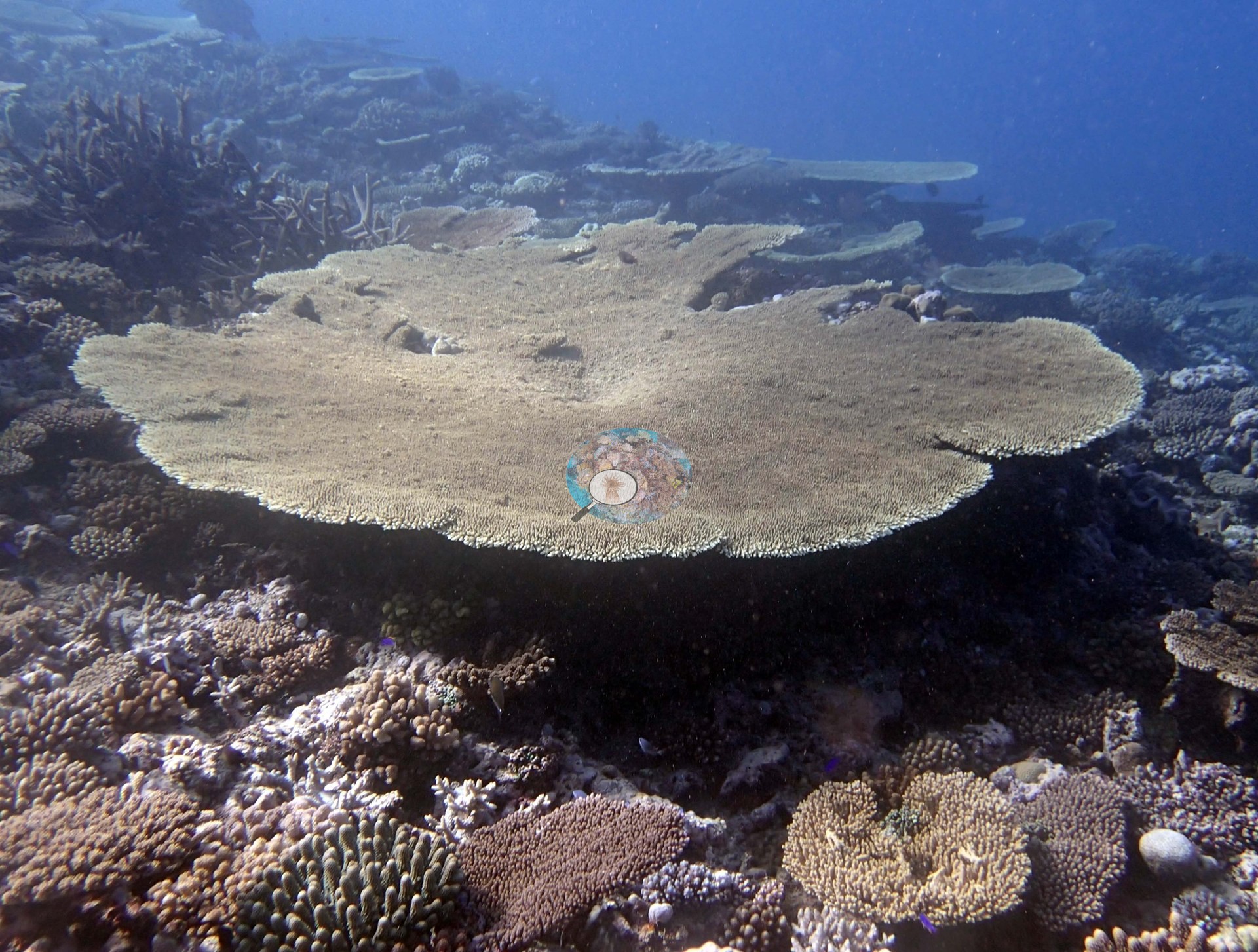
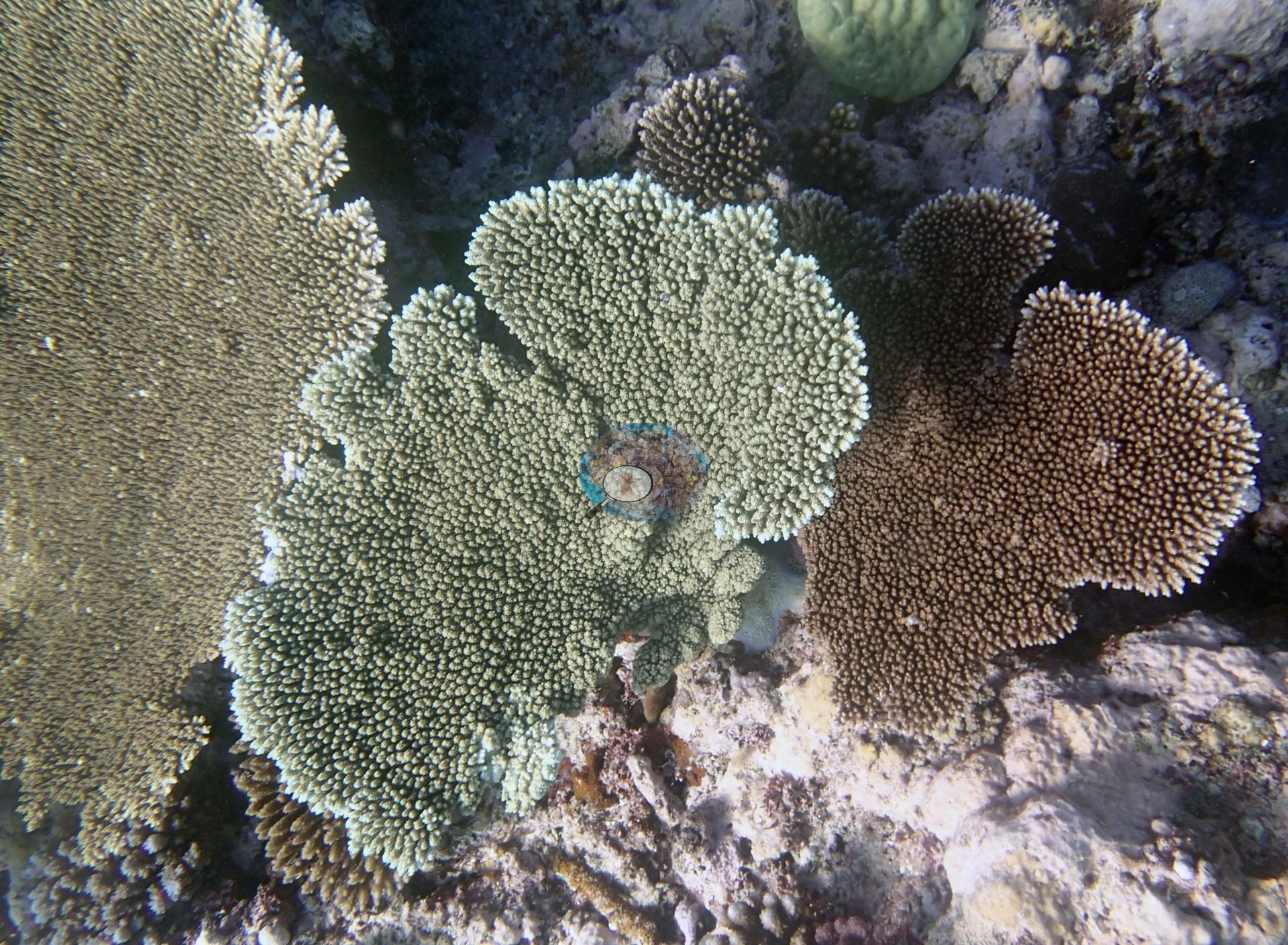
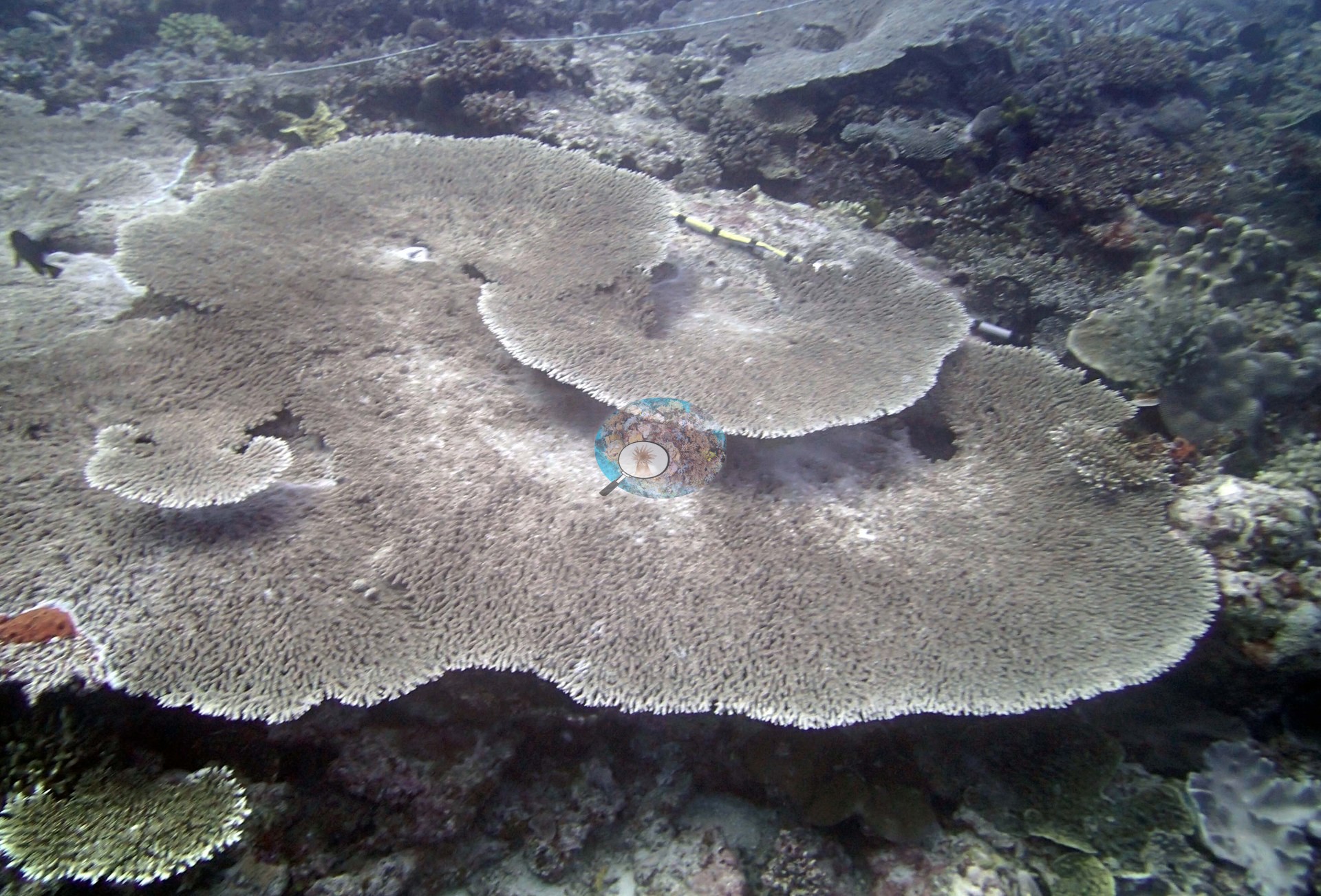
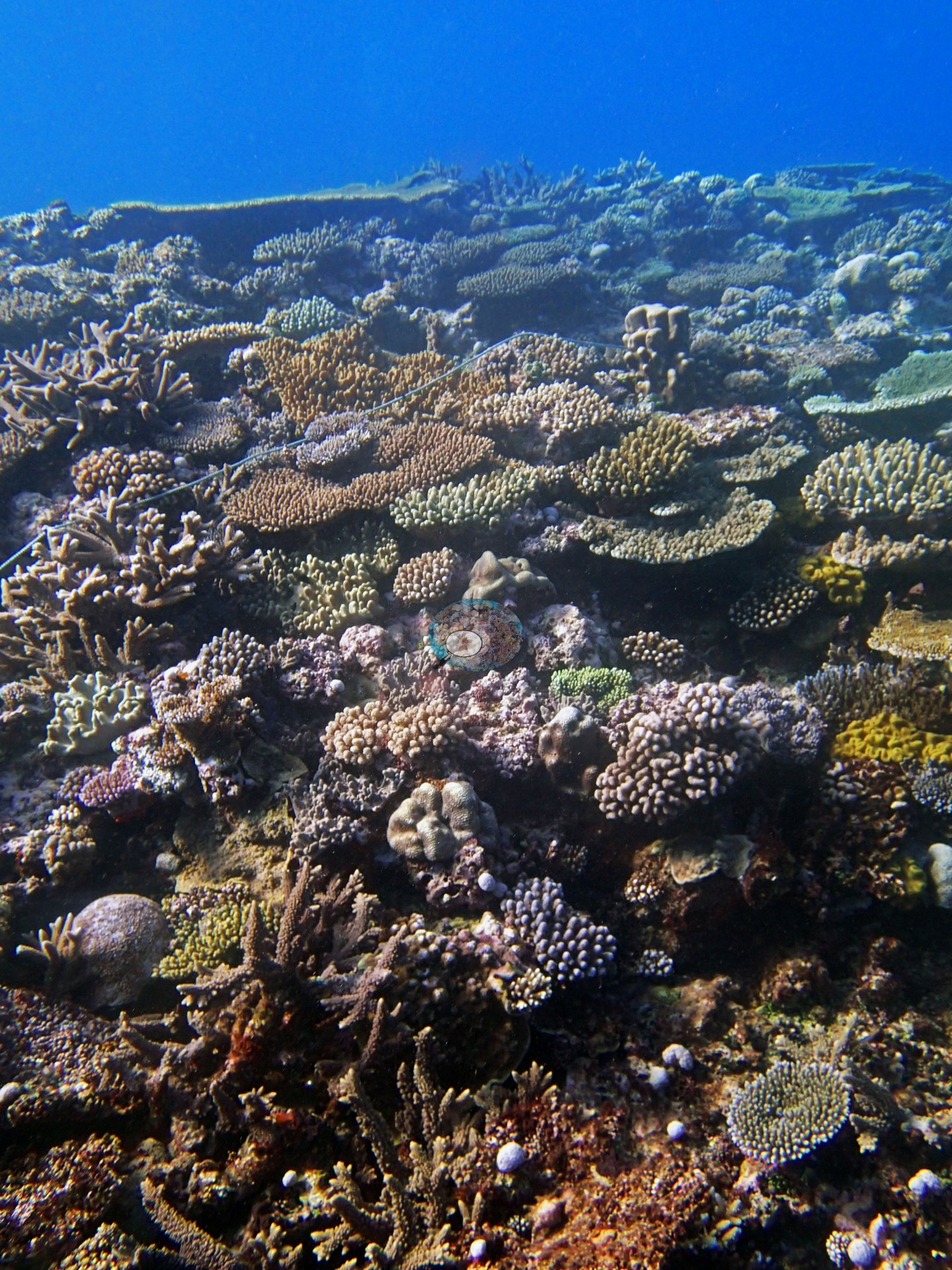
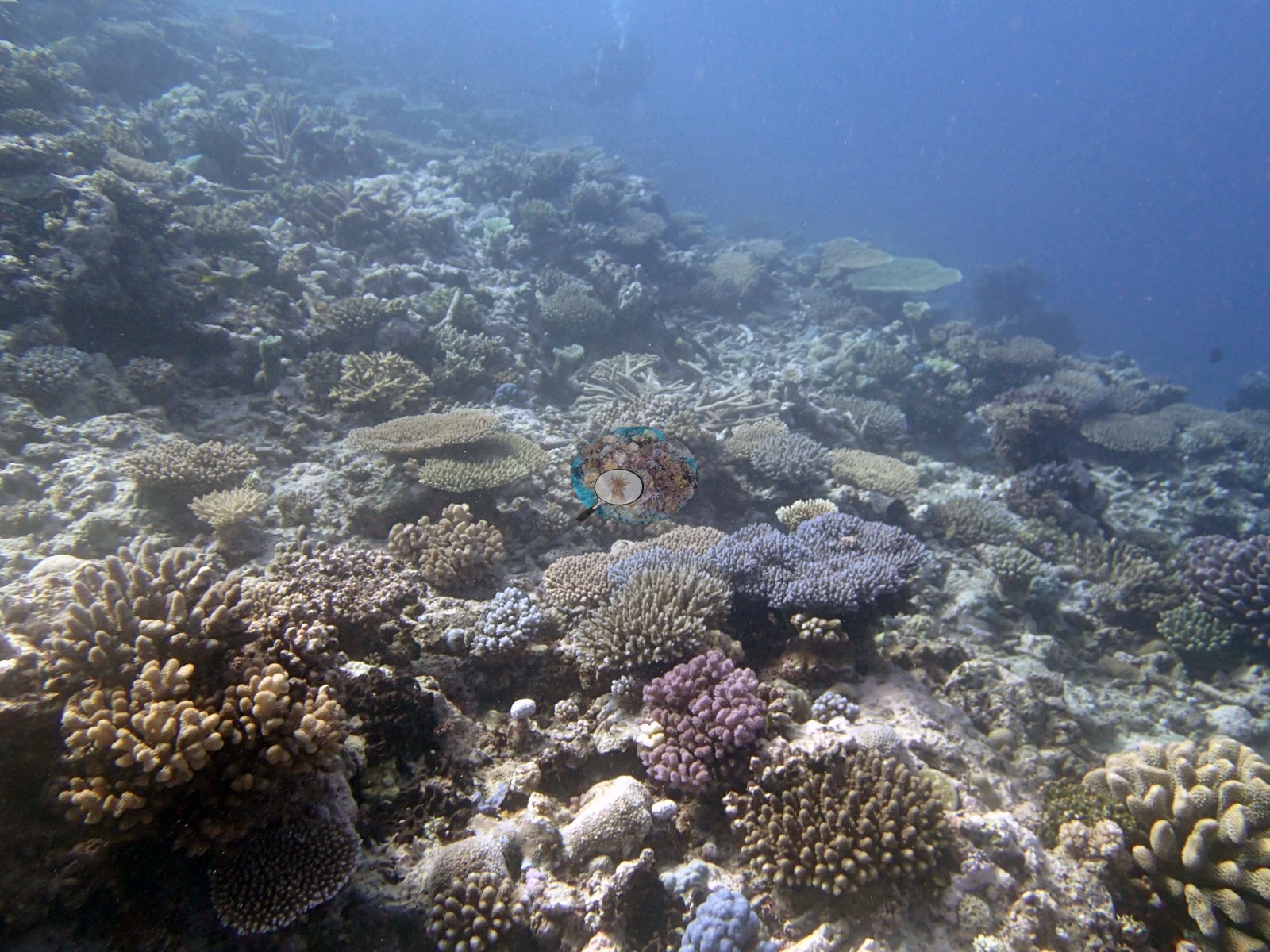
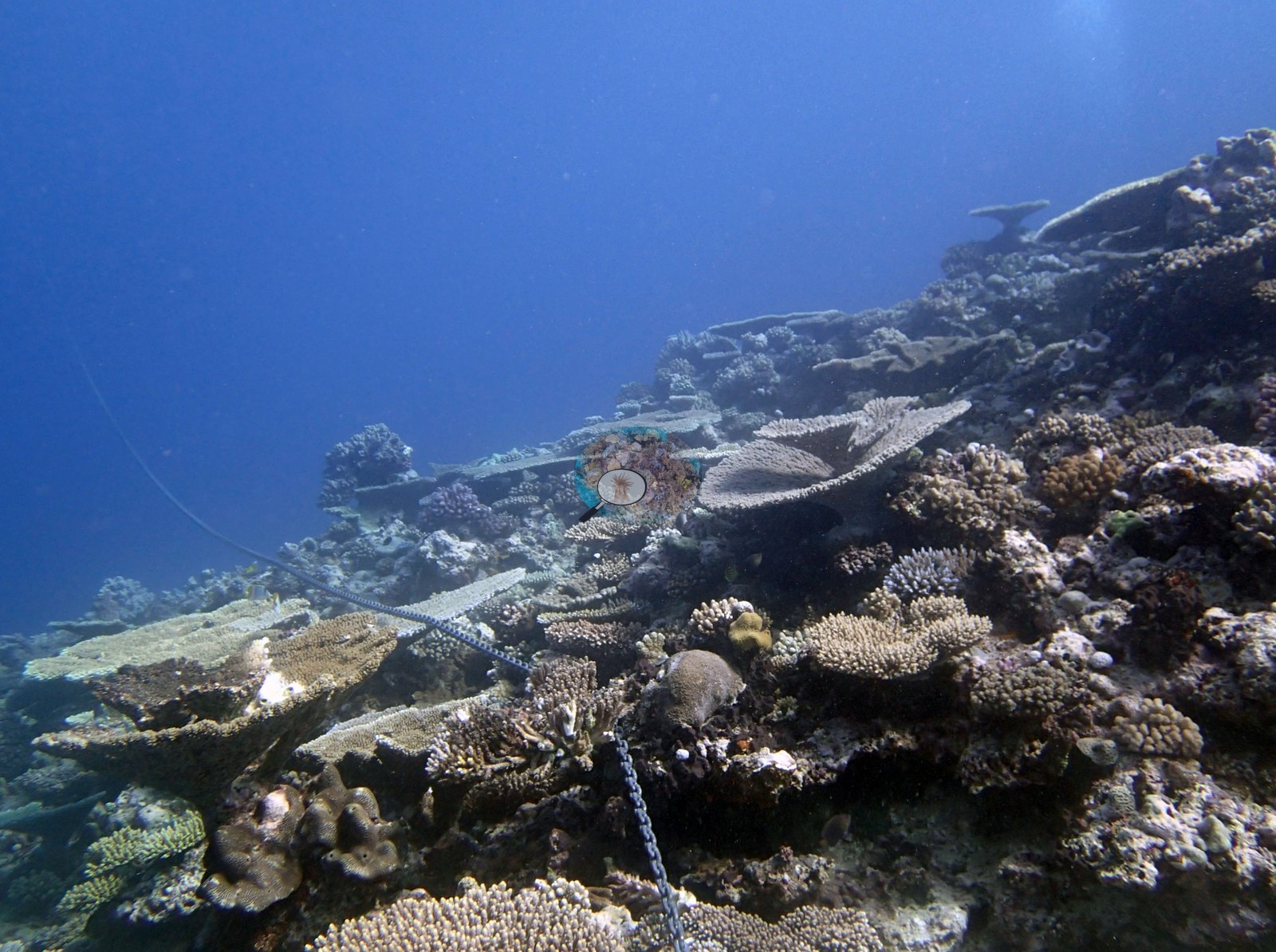
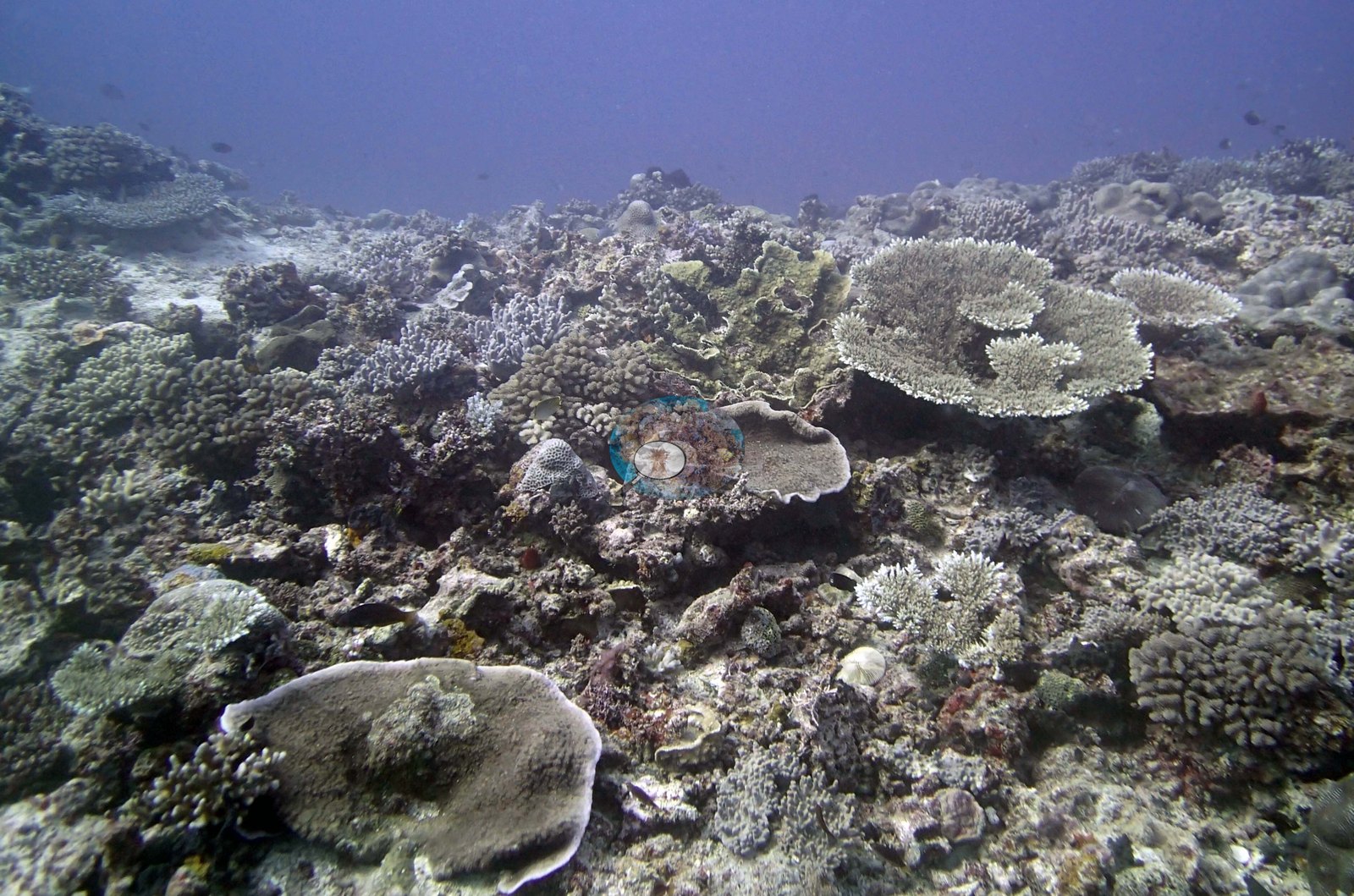
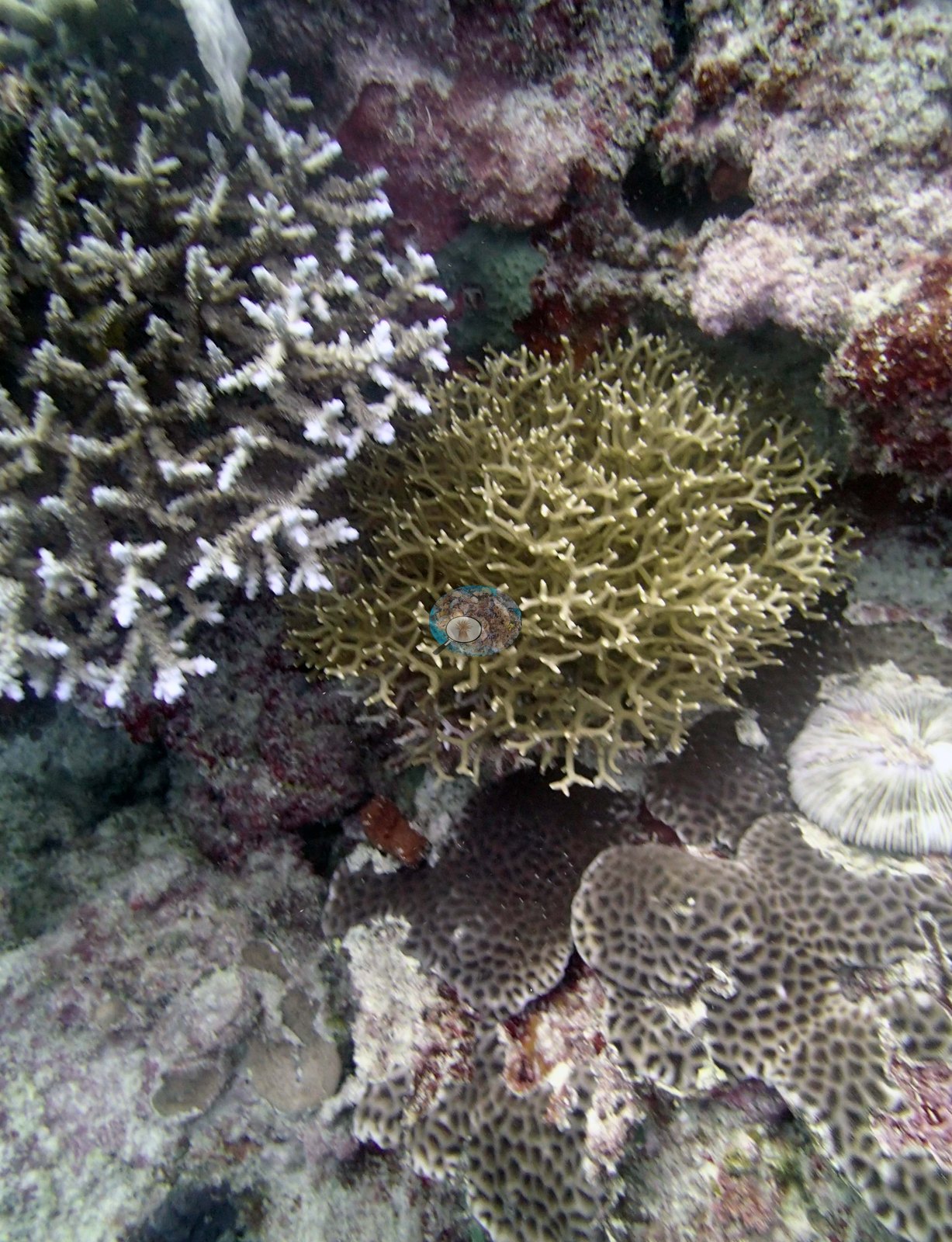
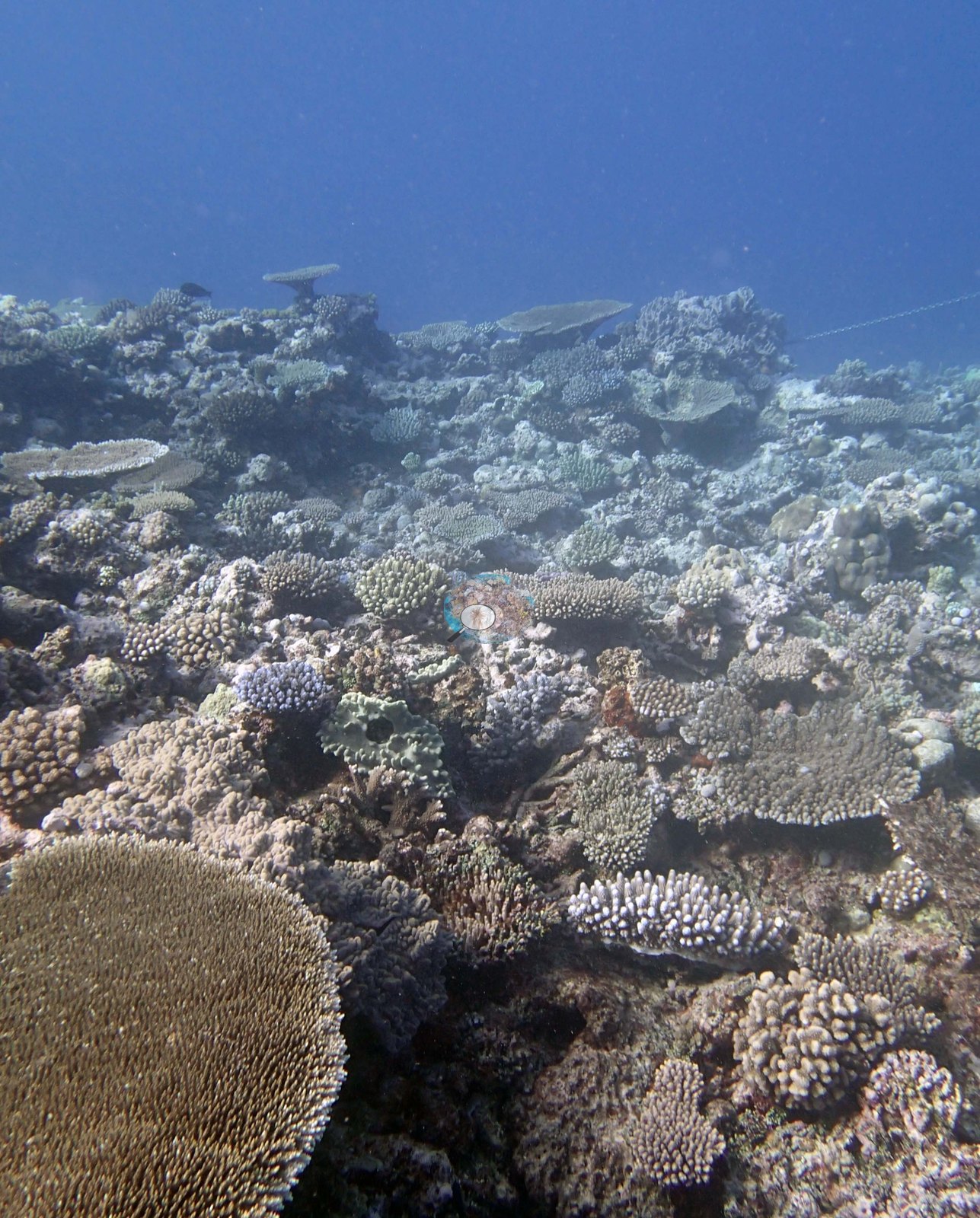
Table Acropora is the recurring element — single large plates standing clear of dark undercut bases, pairs of overlapping tables, and smaller plates scattered across the slope behind them — set among corymbose and digitate Acropora, branching staghorn clumps, knobby pocilloporid colonies in mauve and pink, encrusting and foliose sheets, and meandering massive heads. Coral form and color vary noticeably from frame to frame across the site: some views are close-packed with almost no visible substratum between colonies, while others show colonies well spaced over pale hardground and rubble, so the slope is patchy rather than uniform. One small patch reads as a community portrait: a fine-branched colony Anderson identified as Seriatopora hystrix growing beside a mustard-yellow branching colony, a brown encrusting plate coral, and a solitary mushroom coral, all over red-maroon coralline crusts.
Coral cover
- Reference: Khaled bin Sultan Living Oceans Foundation, Global Reef Expedition (in situ transect)
- 47%, from the Khaled bin Sultan Living Oceans Foundation's in situ transect survey (Global Reef Expedition site data); the photographs illustrate the site. Algal cover is 45% of the benthos.
- Transect mean 47 ± 11% SE (n = 5 transects; Living Oceans Foundation per-transect benthic data); the headline above is this all-transect mean.
Stressors
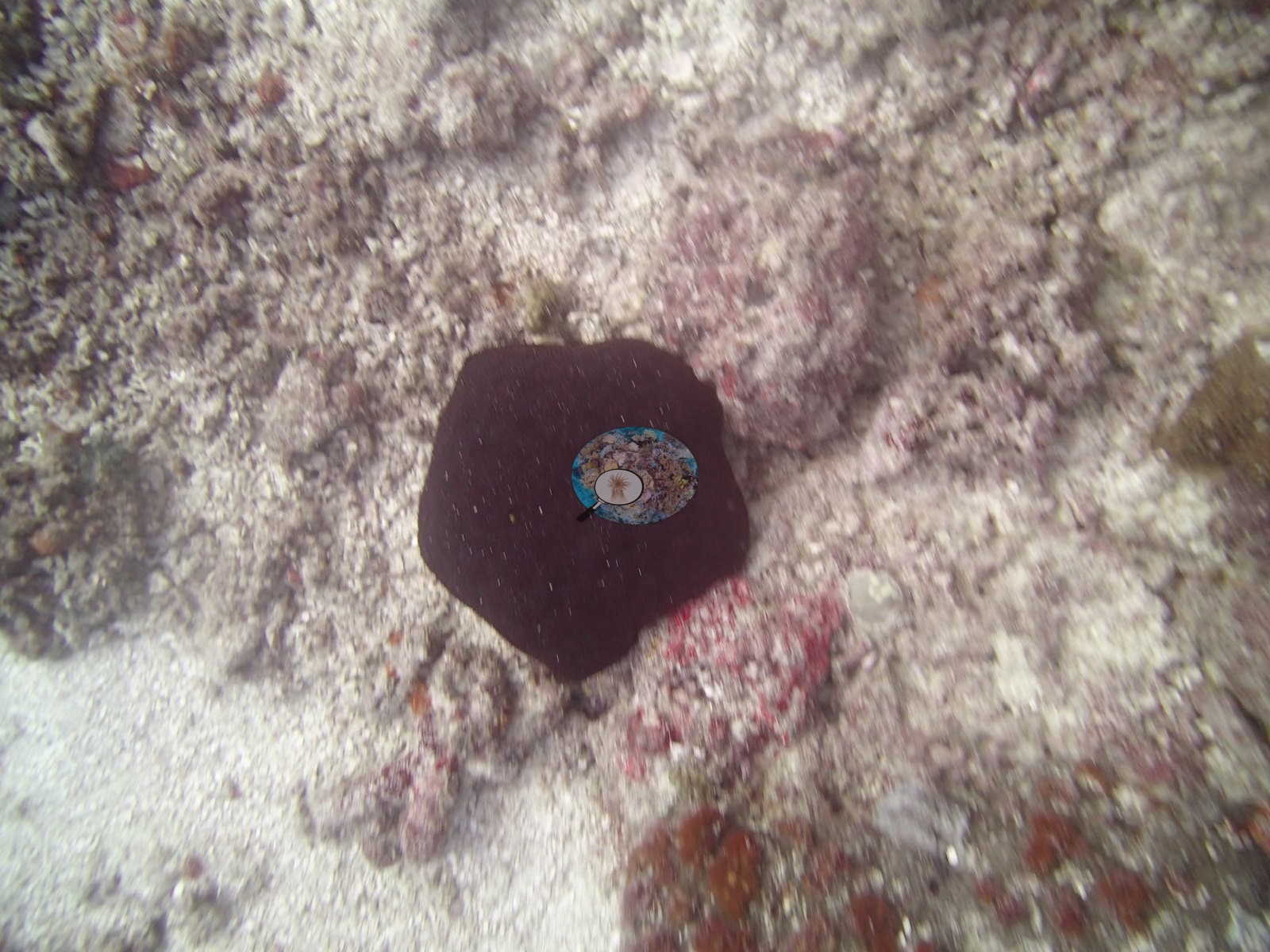
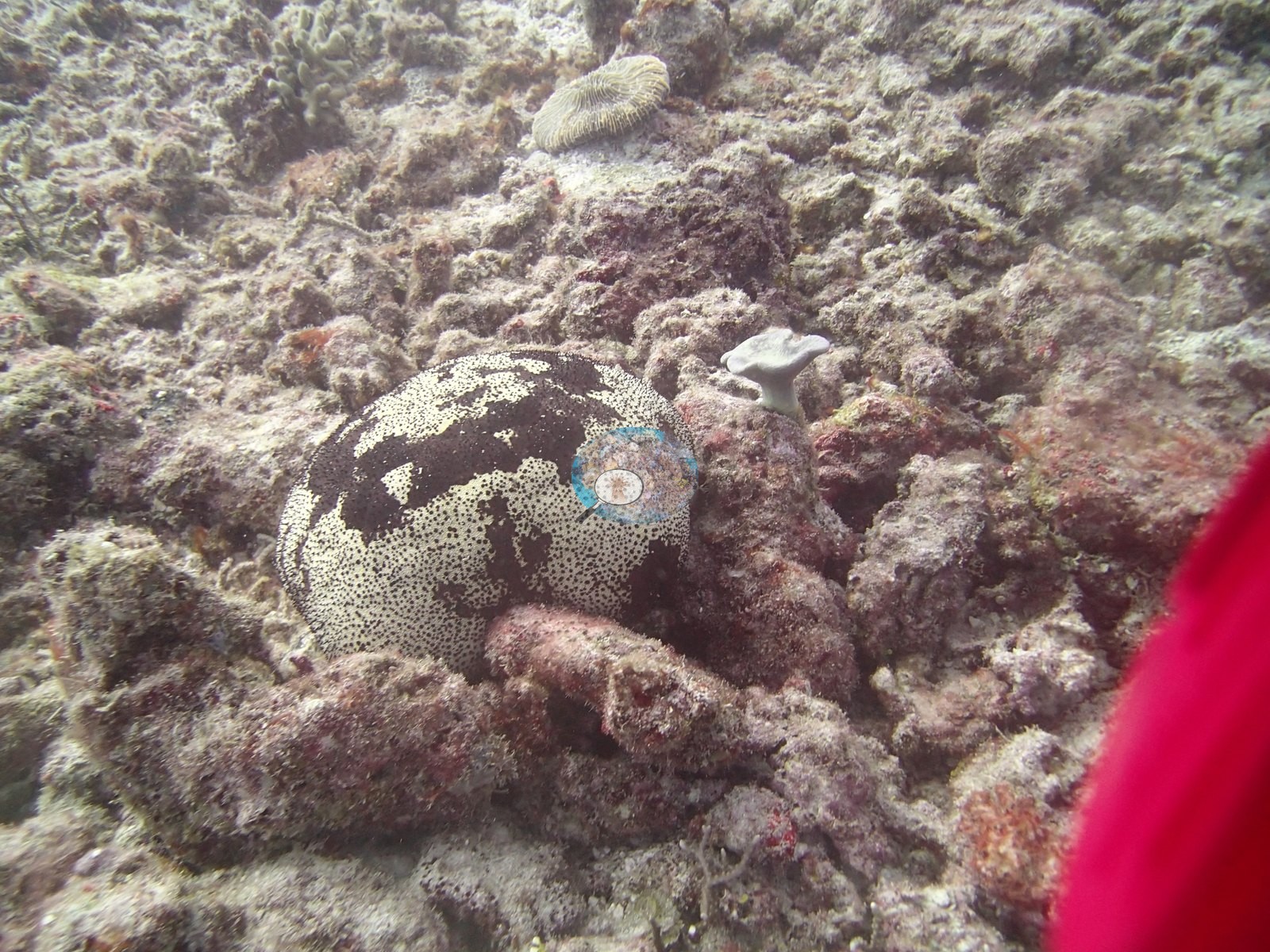
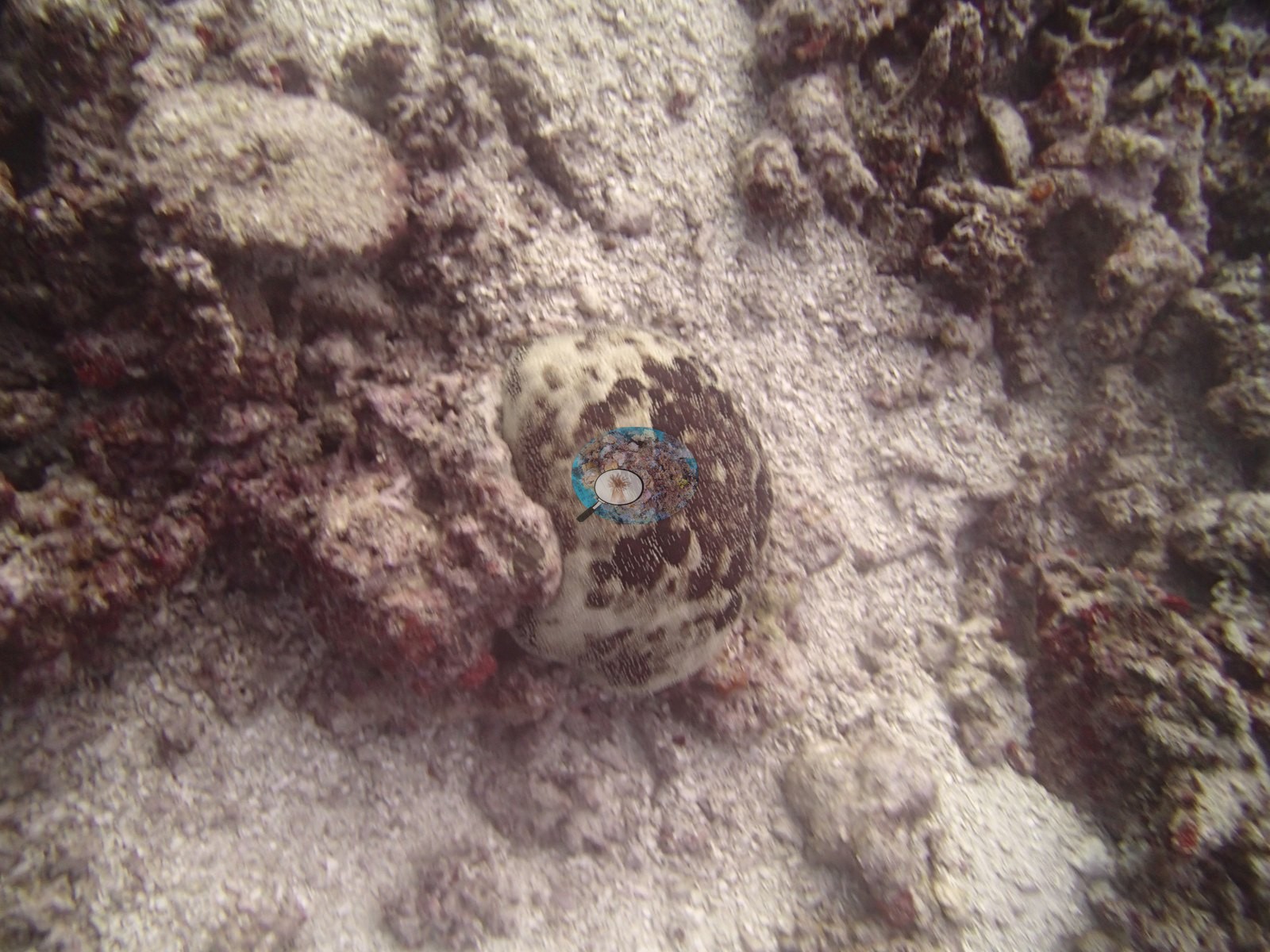
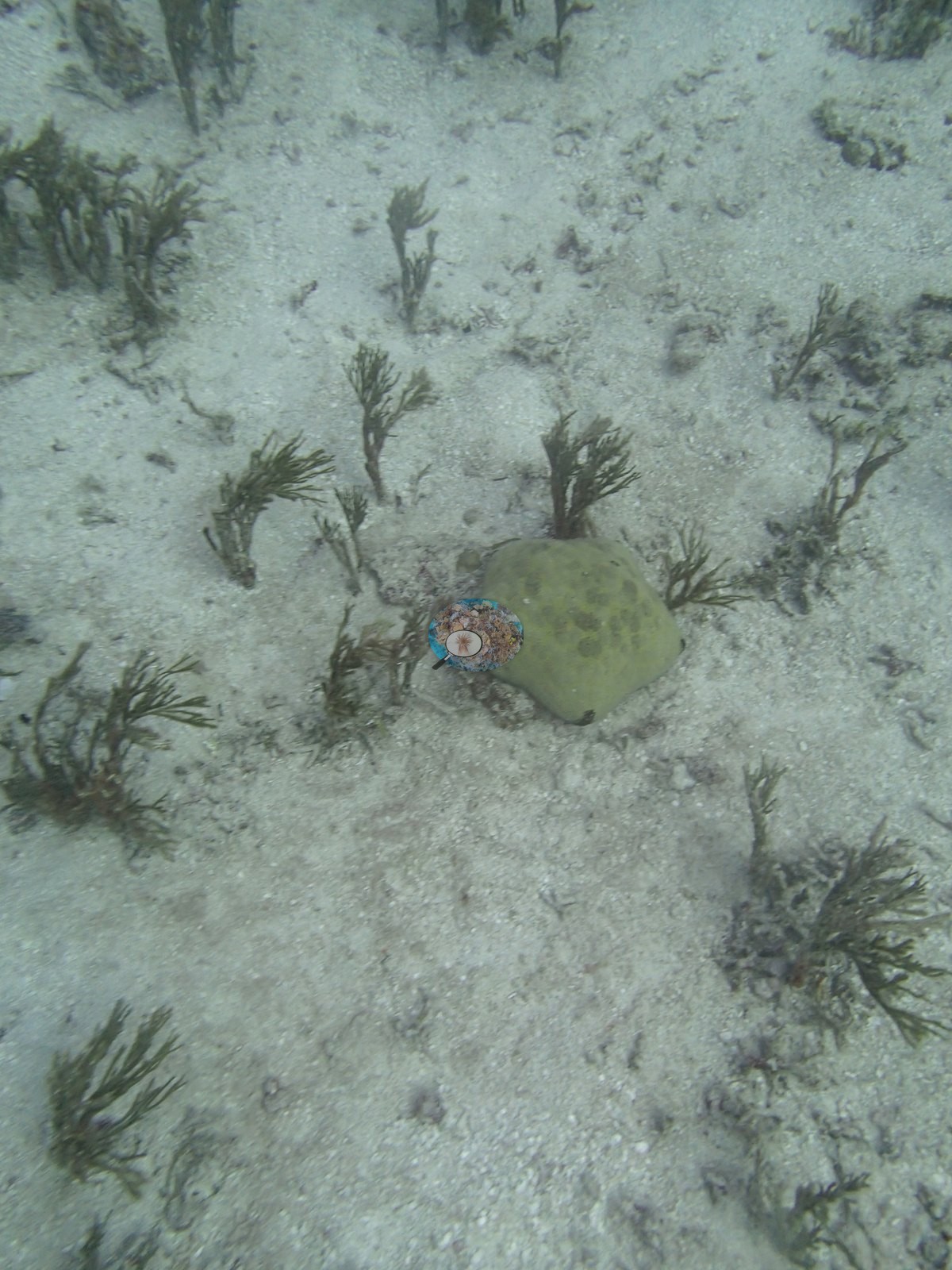
The cushion stars (Culcita) in Image 5, Image 6, Image 7, and Image 8 are coral predators, and they are the site's most concrete condition observation from the imagery; the frames cannot establish how many were present overall.
Beyond that, the photographs cannot settle the site's condition: the wide frames are ambient-light shots with blue-green casts at ~29 m, no bleaching, lesion or predation scar resolves reliably at these ranges, and pale-looking tissue in them is a light artifact rather than evidence. Anderson's sampling sheet for this dive does record bleaching in the colonies sampled at 10-17 m: two of the six 50% bleached and possibly unhealthy, and three more about 20% bleached. The Living Oceans Foundation transects here recorded 0.5% cyanobacteria and no recently dead coral.
Fish and other fauna
Fish are conspicuous here: a dense school of dark damselfish and chromis hangs in the water column above the reef, with a small yellow-bodied fish among them, and planktivores work over the slope. Four frames form a separate set of animals Anderson identified as pincushion stars: close views of cushion stars (Culcita) resting on pale reef rock, rubble, and sand — a dark maroon individual, a mottled cream-and-brown individual on coralline-crusted pavement, another mottled individual among rubble, and a small olive one out on open sand among green algal tufts (e.g., Image 5, Image 6, Image 7, Image 8). At least three and probably four separate animals are recorded.
Comparisons with other data
James Cook University and the Ministry of Fisheries Tonga surveyed a nearby station (Taunga Outer Reef 1), 0.47 km from the pin; we could not confirm that it is the same reef. If you have survey data from this site to share, please email us.
Other notes
Photo review of 21 habitat frames plus 33 sampled-colony close-ups (Vava'u, 28 Sep 2013). The account on this page is written from the habitat frames only; the colony images are treated purely as a record of what was sampled. Sixteen of the twenty-one are wide or oblique views of the reef slope at or near survey depth, and they agree with one another: a gently to moderately inclined bottom carrying a structurally three-dimensional, tabular-dominated community. Several frames carry a survey tape or line running across the bottom, and one has a tape laid directly over a large table — these are frames shot on the transect itself, which is a useful reminder that the quantitative record for this site comes from that tape and not from the pictures. Six Pocillopora colonies were sampled here (colonies 106-111), four of them identified as P. acuta in Anderson's own field records; two (colonies 107 and 108) were not genotyped (107 was never extracted, and DNA extraction failed for 108); the sample sheet identifies 107 as P. damicornis and leaves 108 unidentified. The 33 close-ups are repeat polyp-scale macro, tag, and setting shots of only those six colonies — numbered tags appear in frame, most held by a gloved hand — and describe the colonies, not the reef.
CV model comparison
More info
The photo row below is a methods comparison only: it is never averaged with the transect and never used as the headline. It compares site means only: the photos come from the same survey dive as the transect but not from the same points.| Method | Hard coral cover (%) | Photos (n) ± SE |
|---|---|---|
| Transect mean (all transects) | 46.7 | |
| CoralSCOP unedited | 43.0* | n = 17 · SE 4.4 |
| Claude | 43.2* | n = 17 · SE 2.9 |
The two computer-vision methods agree within 0.2 pp (43.0–43.2%) and read within 3.7 pp of the in-water transect (46.7%).
*Based on only 17 reef-habitat photos; this estimate is less certain.
See a more detailed, stand-alone version of this table.
Data & links
- Download benthic survey data (CSV) ↗
- Download all LOF-GRE data (933 sites) ↗
- Photo portfolio ↗
- Coral Reef Diagnostics region page ↗
All images from Coral Reef Diagnostics. Data are from the Khaled bin Sultan Living Oceans Foundation Global Reef Expedition and Coral Reef Diagnostics.
© Coral Reef Diagnostics.