
Part of the regional summaries: Tonga - Vava'u and Tonga

More info
Southern Tonga (NOAA CRW virtual station)A soft-bottom lagoon reef in Vava'u built on a framework of massive Porites up to 2 m across, their exposed skeleton colonized by other corals, with spindly staghorn stands and a high diversity of other species. Two crown-of-thorns starfish were found, one having eaten a large table coral, and a gray encrusting sponge was overgrowing corals. Surveyed on the Living Oceans Foundation's Global Reef Expedition.
Ko ha hakau ʻi he namo ʻi he takele molū (soft-bottom lagoon reef) ʻi Vavaʻu kuo langa ʻi ha fakavaʻe ʻo e Porites lalahi (massive) ʻoku aʻu ki he 2 m hono fālahi, ʻa ia kuo nofoʻi ʻe he ngaahi feo kehe honau ivi ʻoku hā mai, mo e ngaahi vao staghorn vaʻa manifi pea mo ha kehekehe lahi ʻo e ngaahi faʻahinga kehe. Naʻe ʻilo ha ʻalamea (crown-of-thorns starfish) ʻe ua, ko e taha naʻe kai ha feo fakatēpile (table coral) lahi, pea naʻe tupu ha sponge pipiki lanu efuefu (gray encrusting sponge) ʻi ʻolunga ʻi he ngaahi feo.
AI translation of this summary; the English is authoritative. (low confidence)
CTD-cast midpoint of 25.7–25.9°C
More info
Anderson's dive computer read 24.4°C (a single reading, probably a dive mean).Three other CRD dive sites with their own pages within 5 km shown in orange — click a marker to open its page.
🗺 Detailed map of the Global Reef Expedition dive sites, Vava'u, Tonga (Khaled bin Sultan Living Oceans Foundation; opens in a new window)
Site description
Setting
Lagoonal fringing reef. Reef sloped very gradually from 15-25 m then dropped more steeply.
General benthic features
Soft bottom community with a Porites framework. Massive Porites, 0.5-2 m by 1 m tall were the dominant corals, with cover ranging from 20-40%. In most cases other massive and branching corals had colonized exposed skeletal surfaces. Scattered through the reef were large table acroporids and erect thin branched spindly staghorn colonies, some 1-2 m wide and 1 m tall. Second most abundant coral was Lobata, with colonies up to 1 m diameter and many with partial mortality. A high diversity of other corals, including massive and branching Galaxea, several Favia, Goniastrea, Platygyra, Coscinaraea, Astreopora, Pachyseris rugosa, and Pachyseris plates, Merulina, Leptoseris, bottlebrush Acropora, P. damicornis, Seriatopora, Stylophora, and many other species were found.
Coral cover
- Reference: Khaled bin Sultan Living Oceans Foundation, Global Reef Expedition (in situ transect)
- Coral cover 21% (the expedition's in situ transects).
- Transect mean 21 ± 4.8% SE (n = 5 transects; Living Oceans Foundation per-transect benthic data); the headline above is this all-transect mean.
Stressors
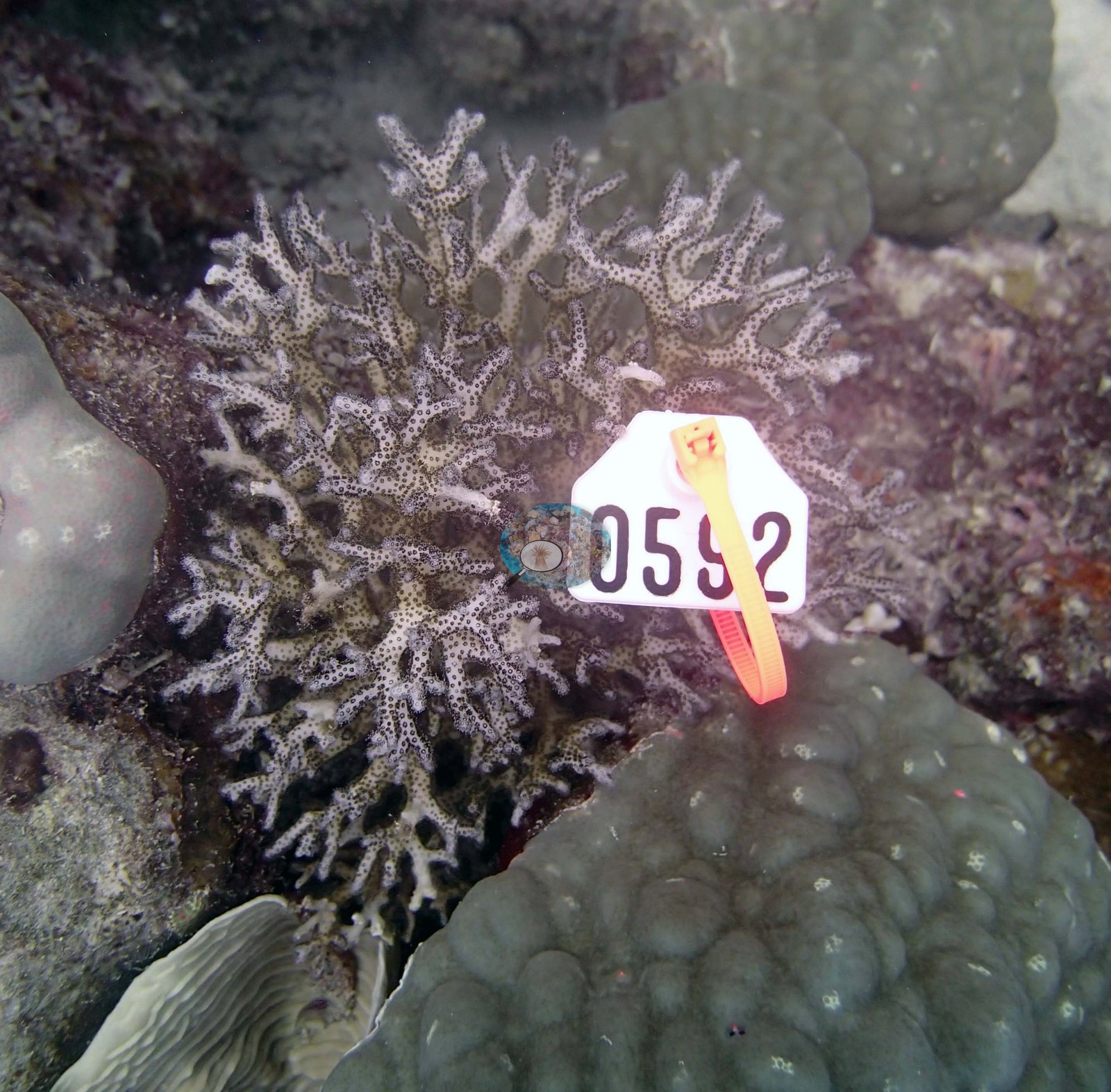
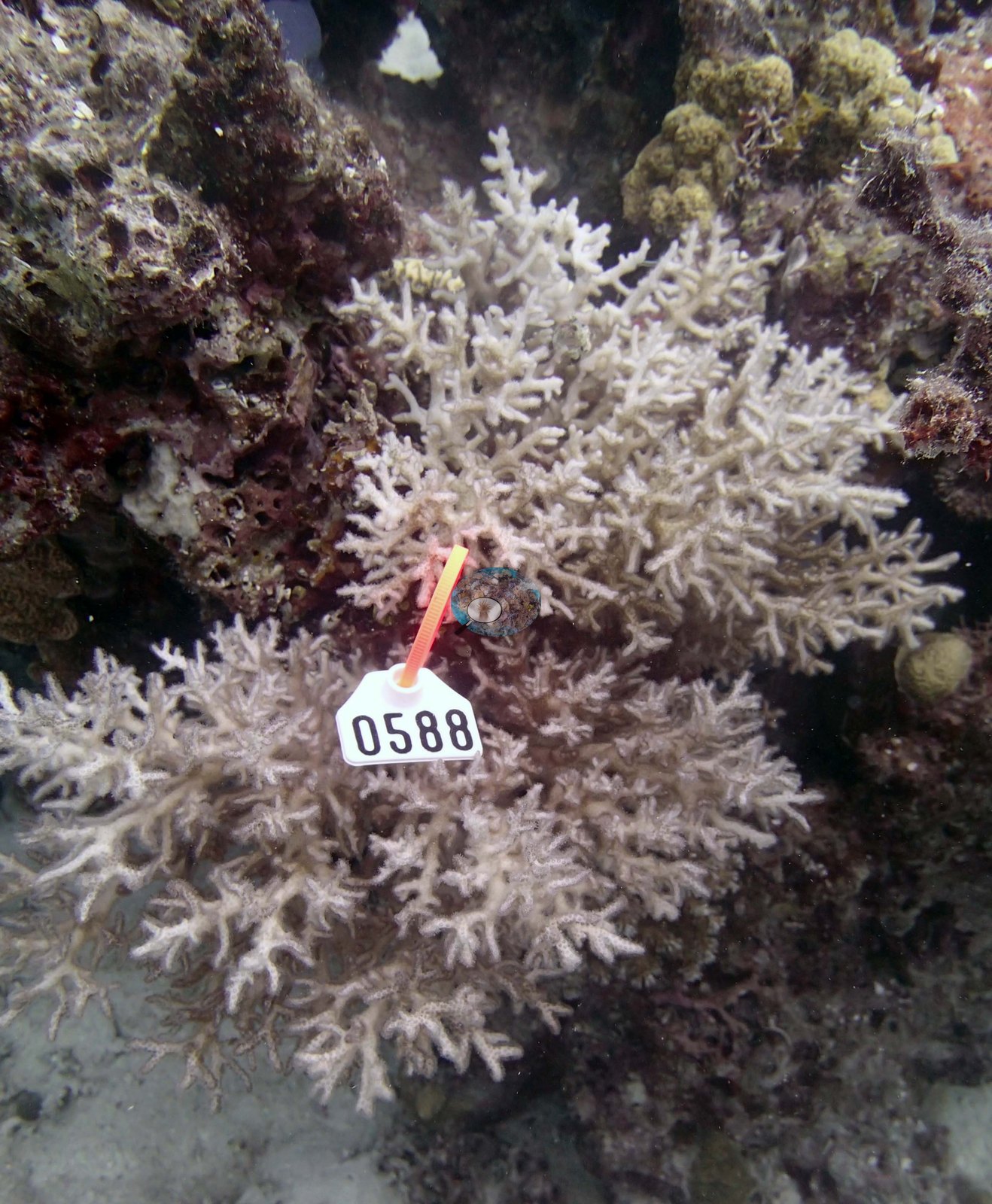
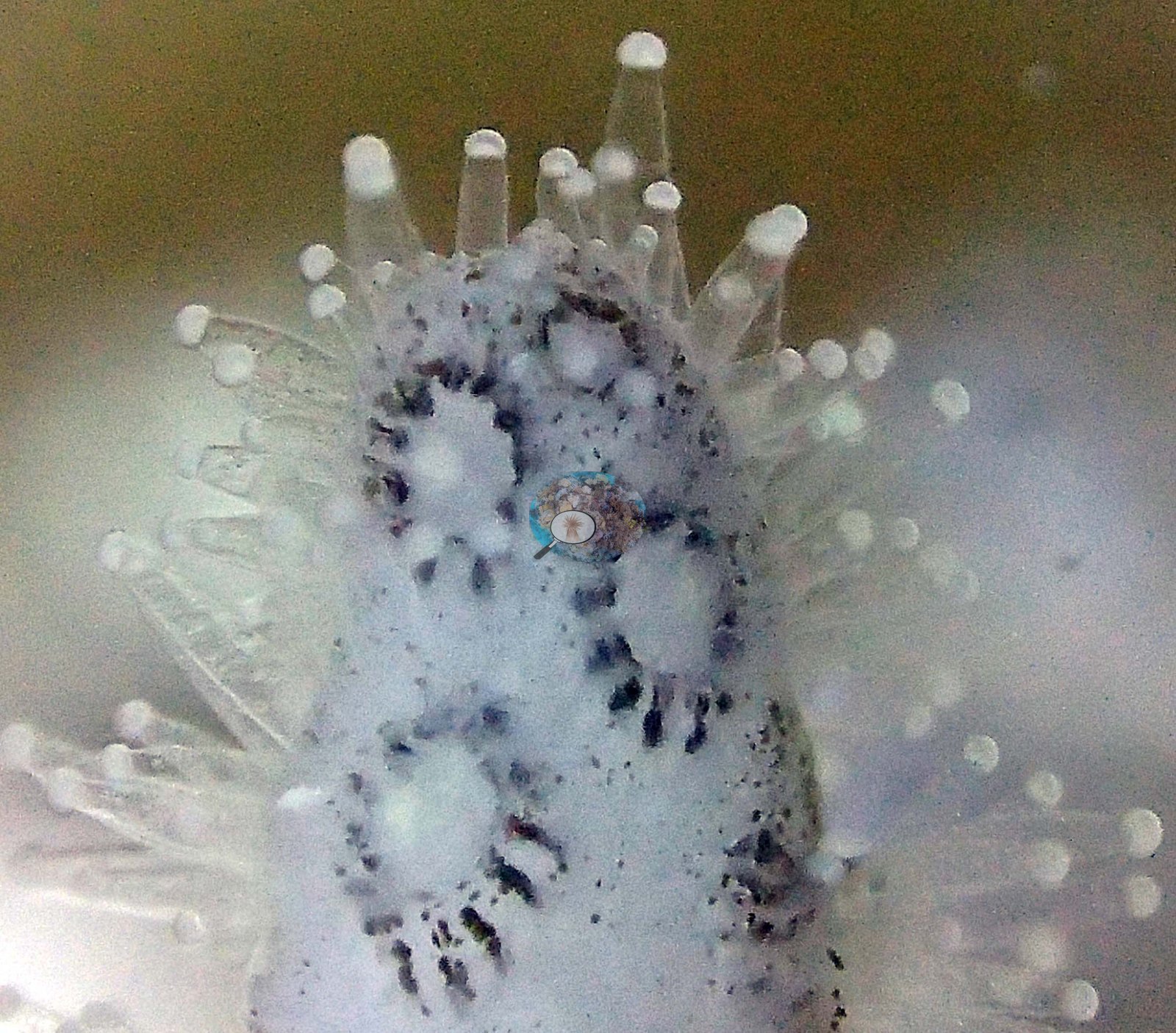
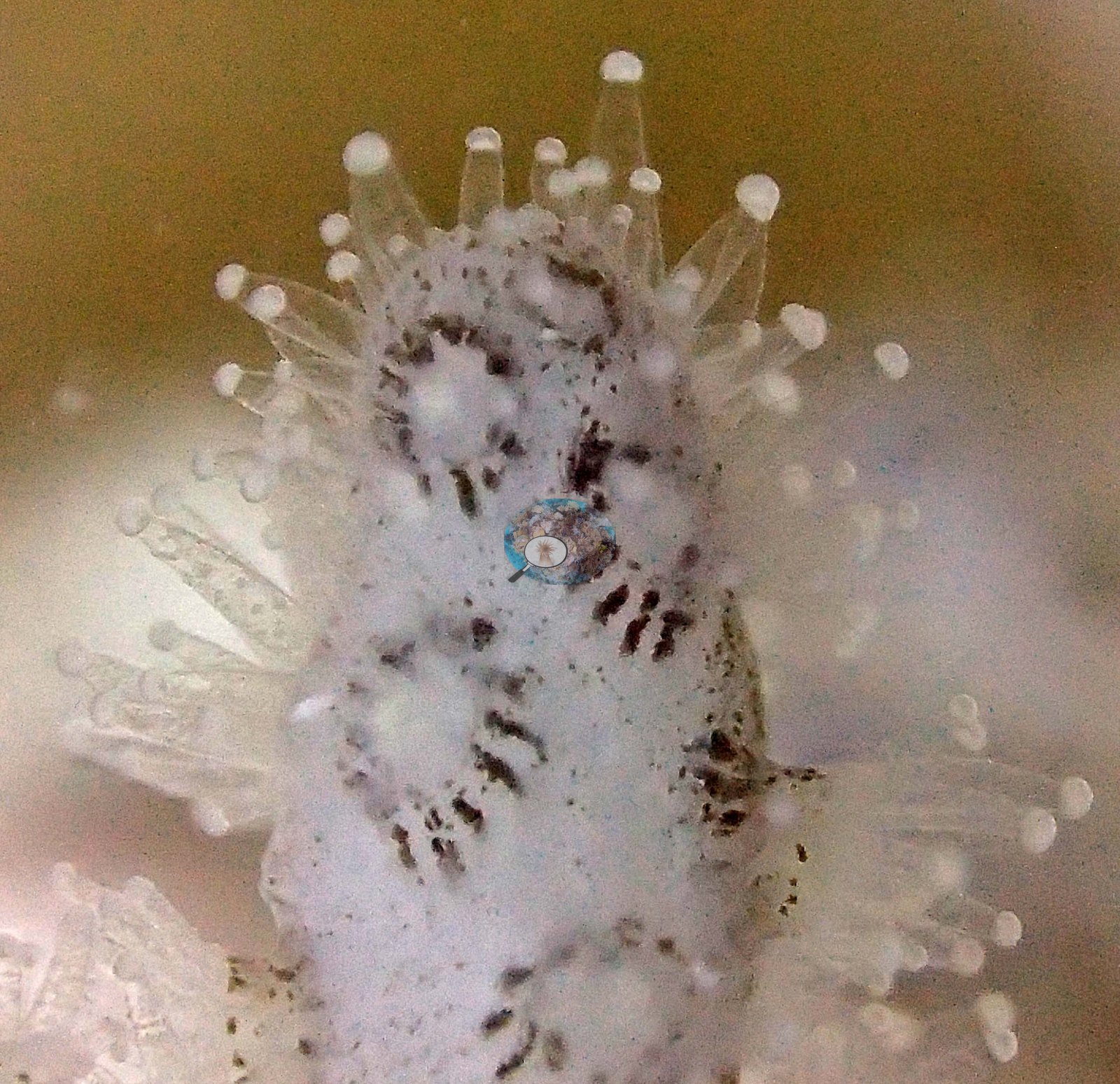
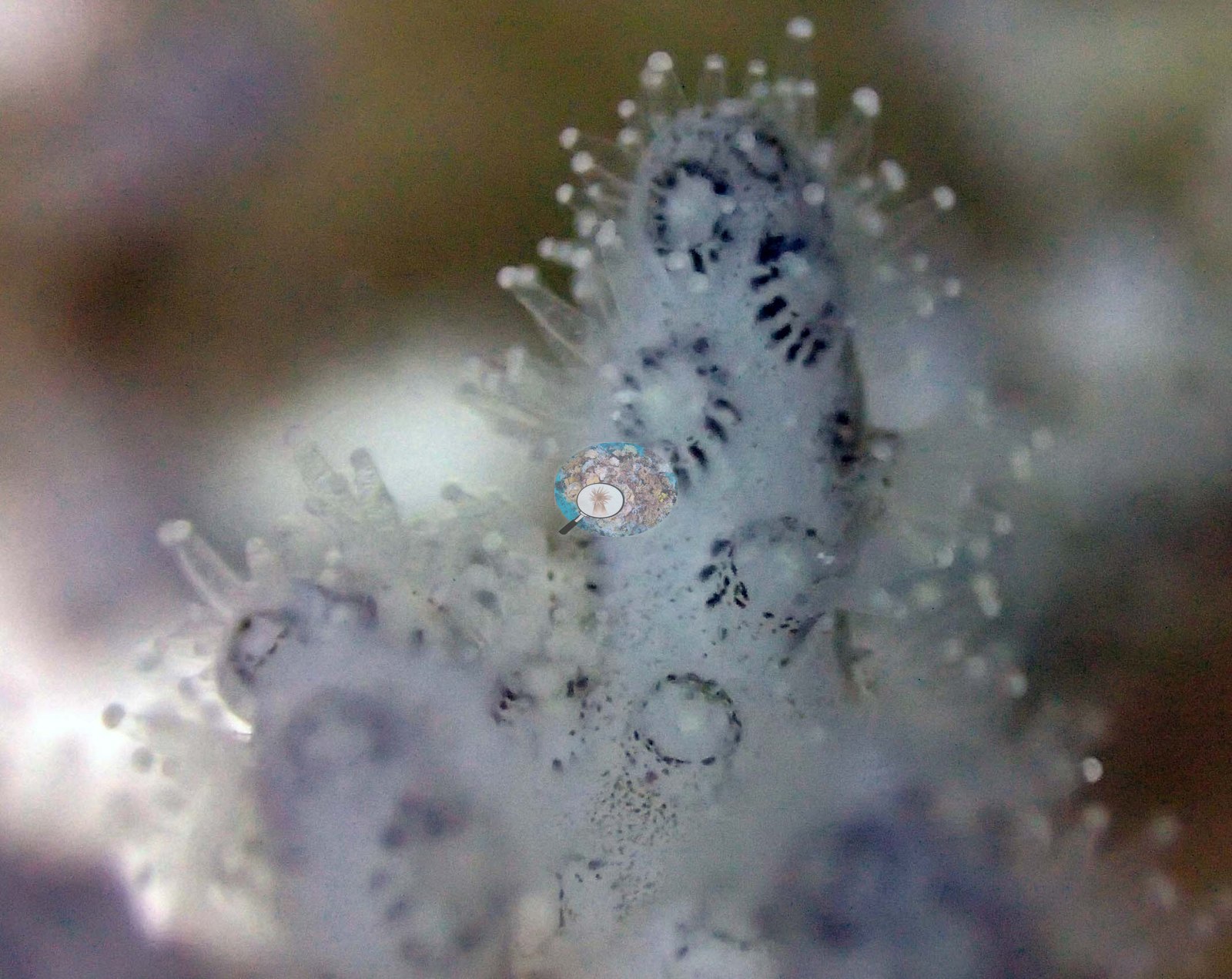
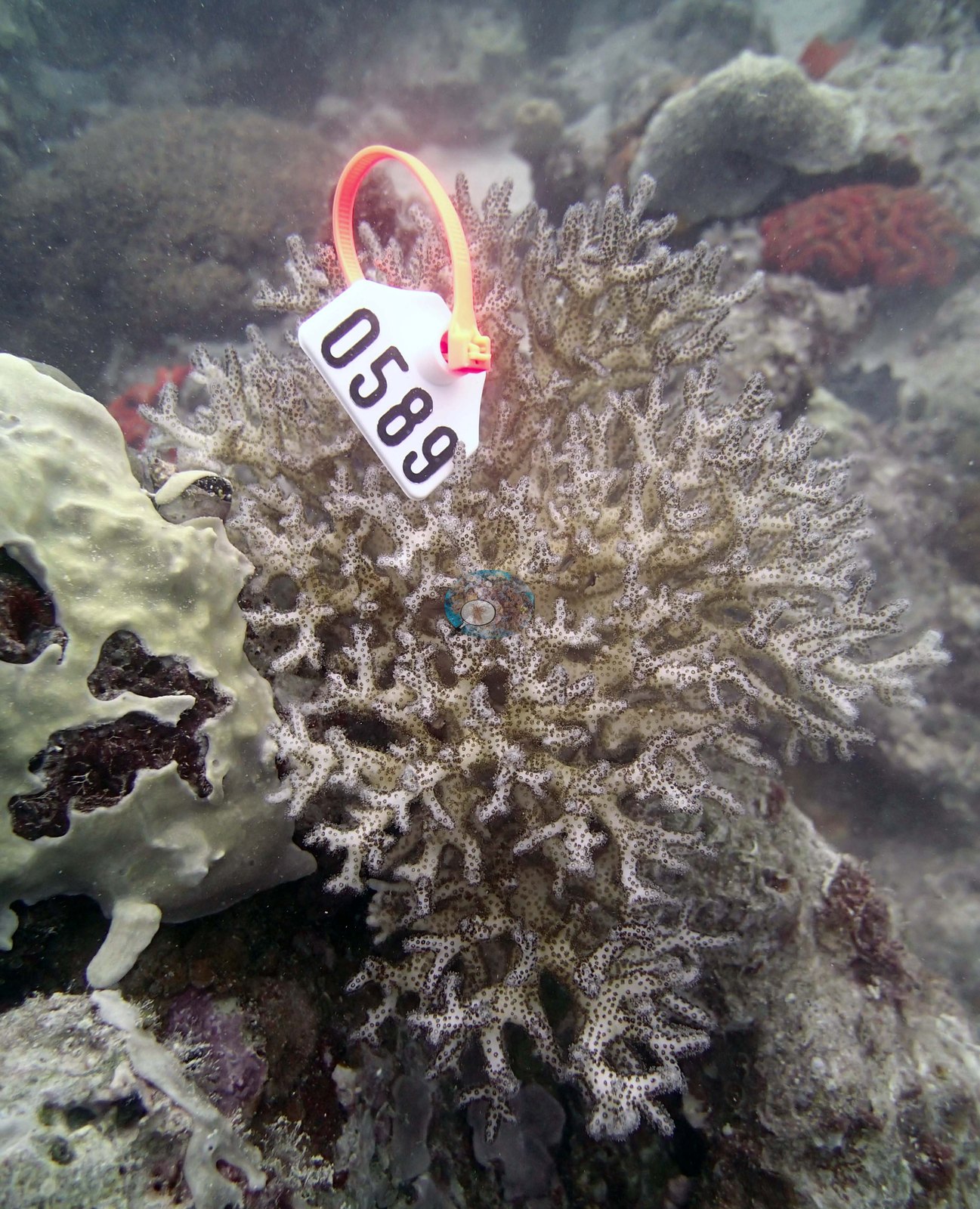
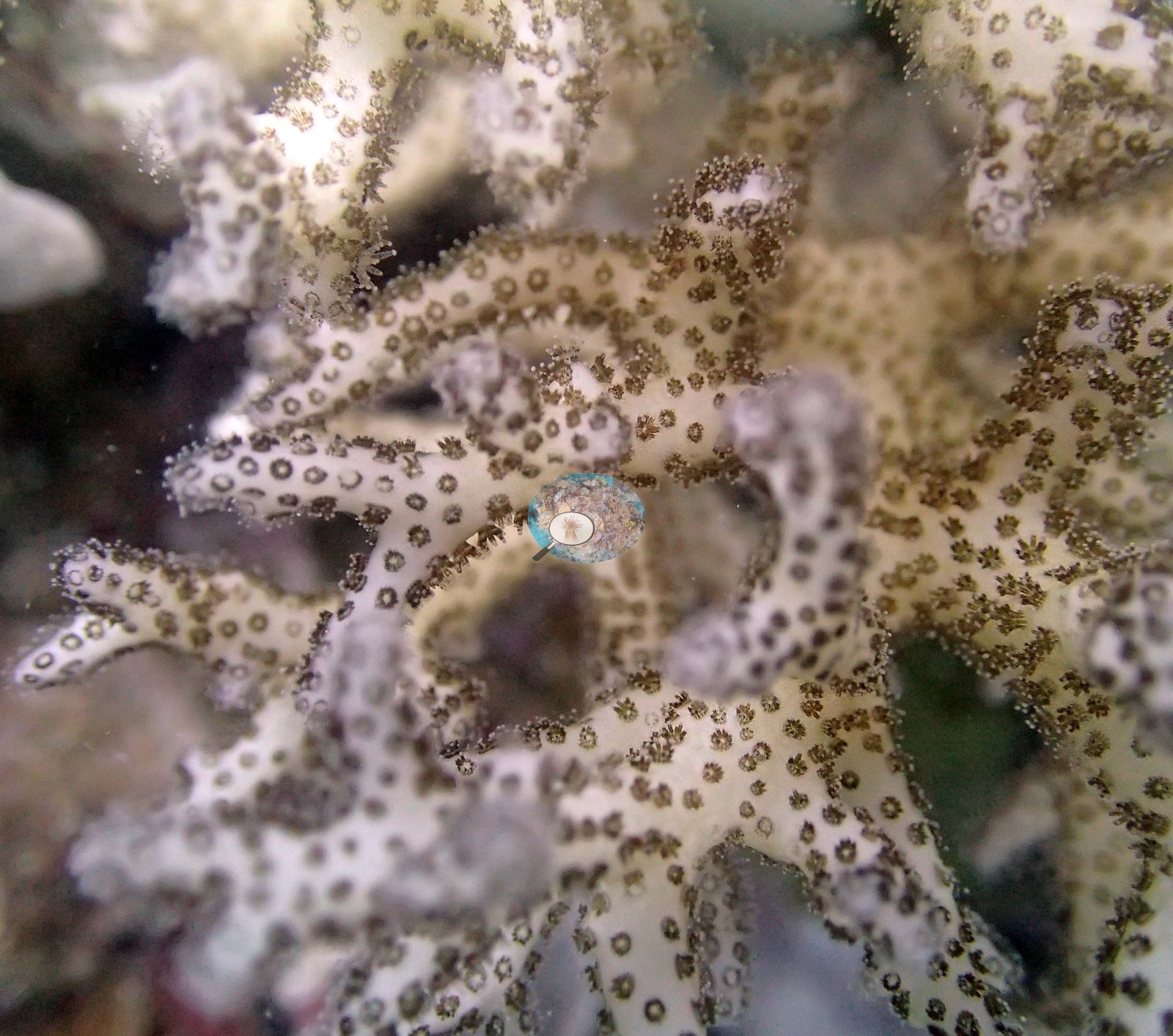
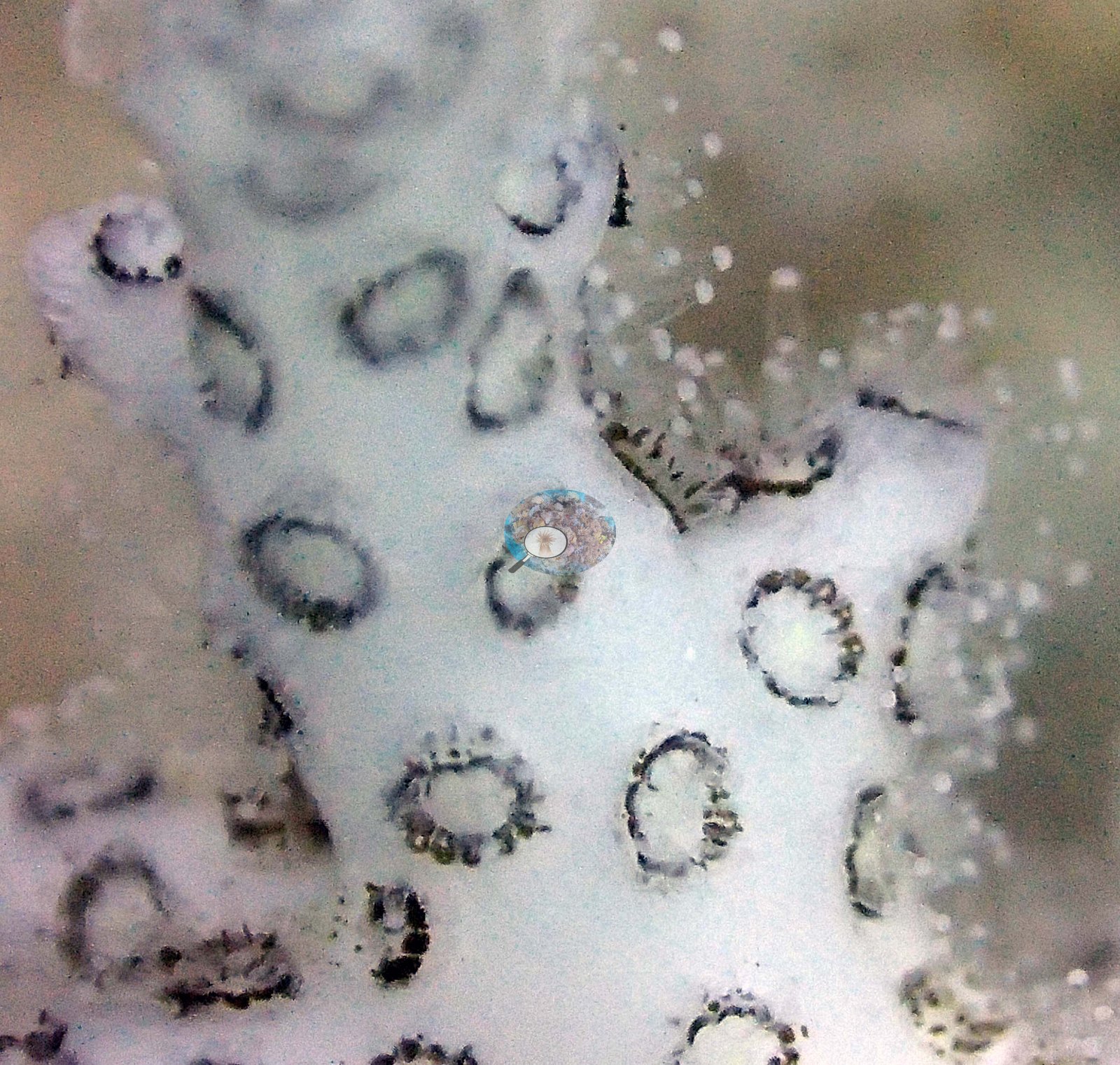
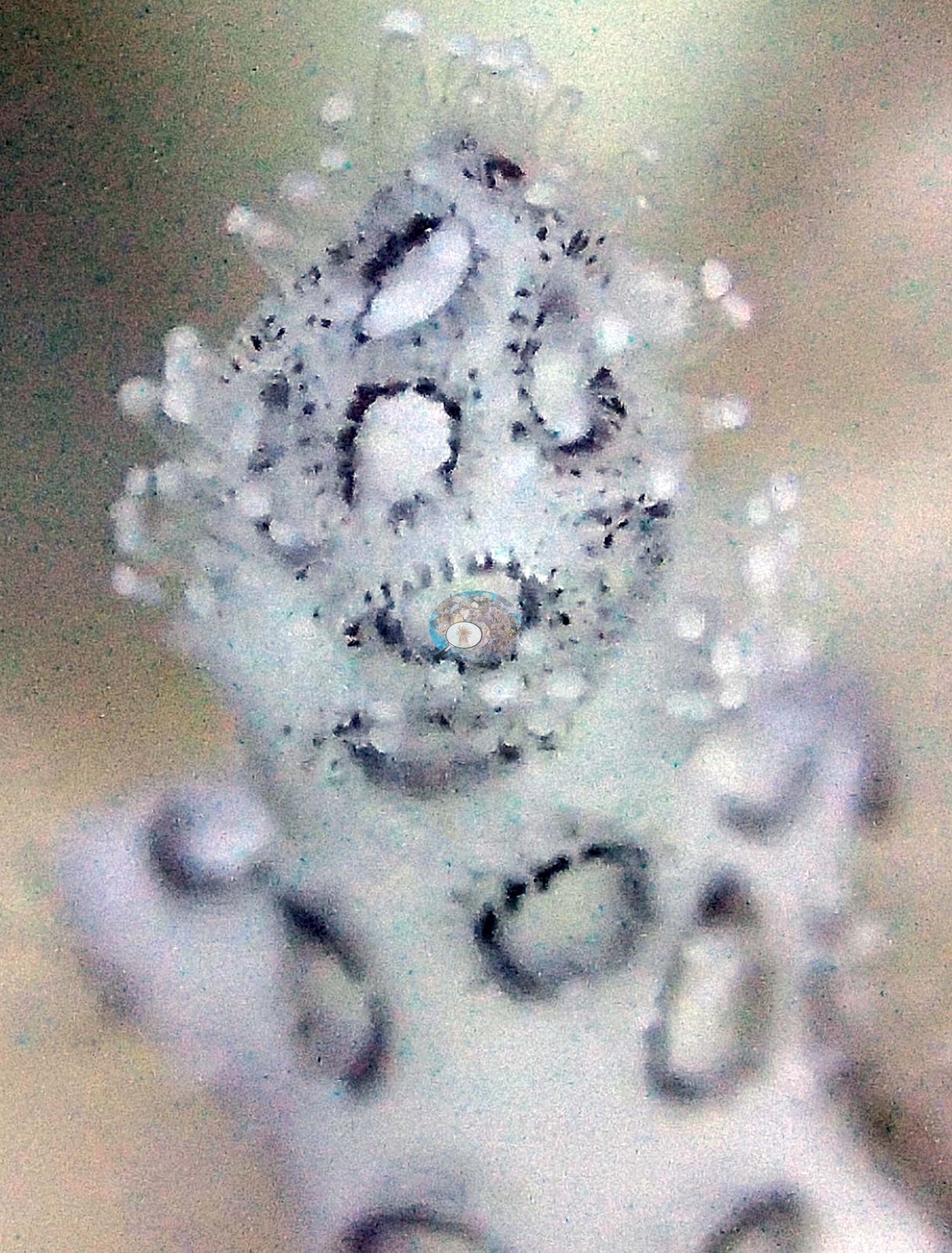
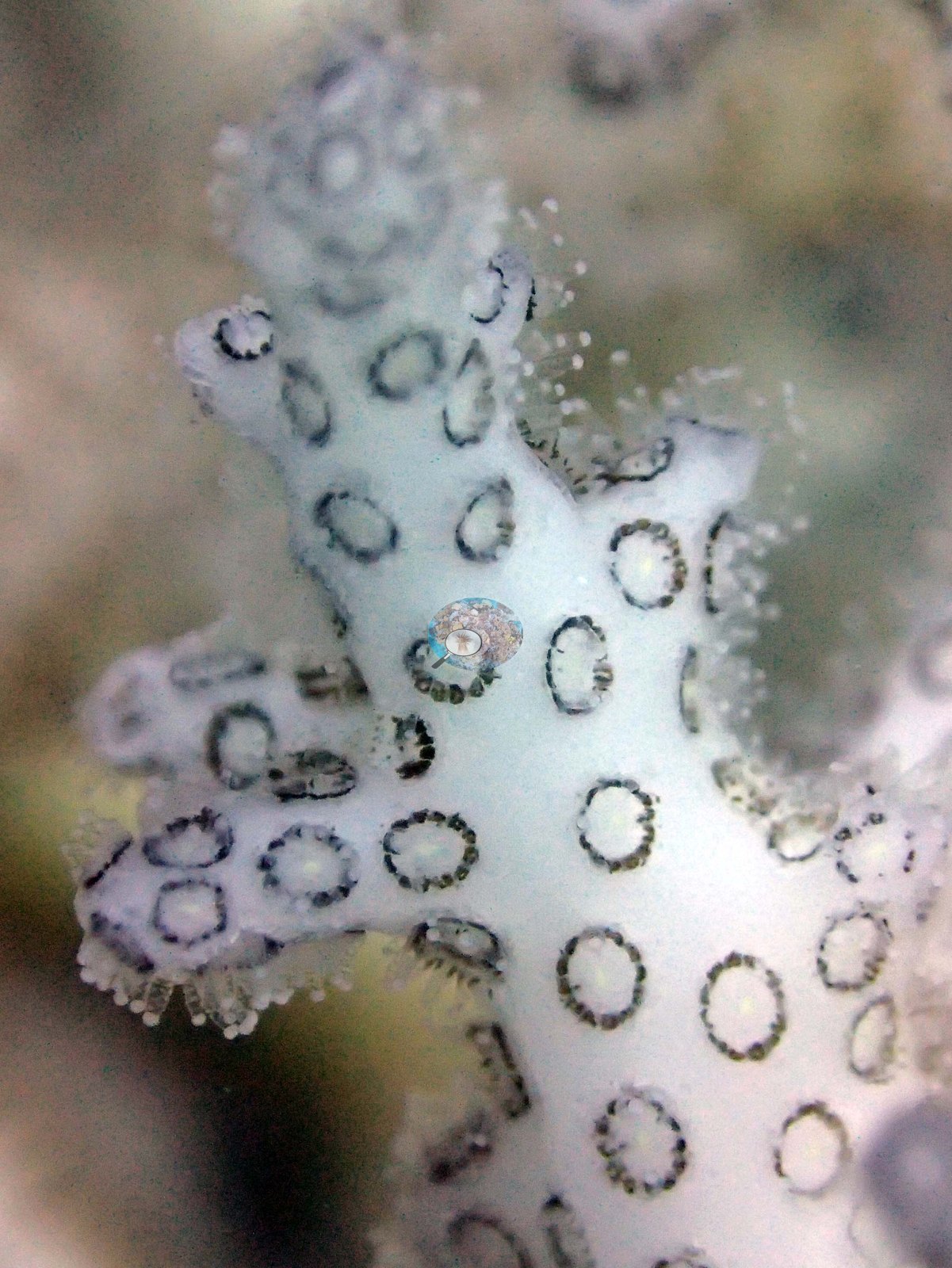
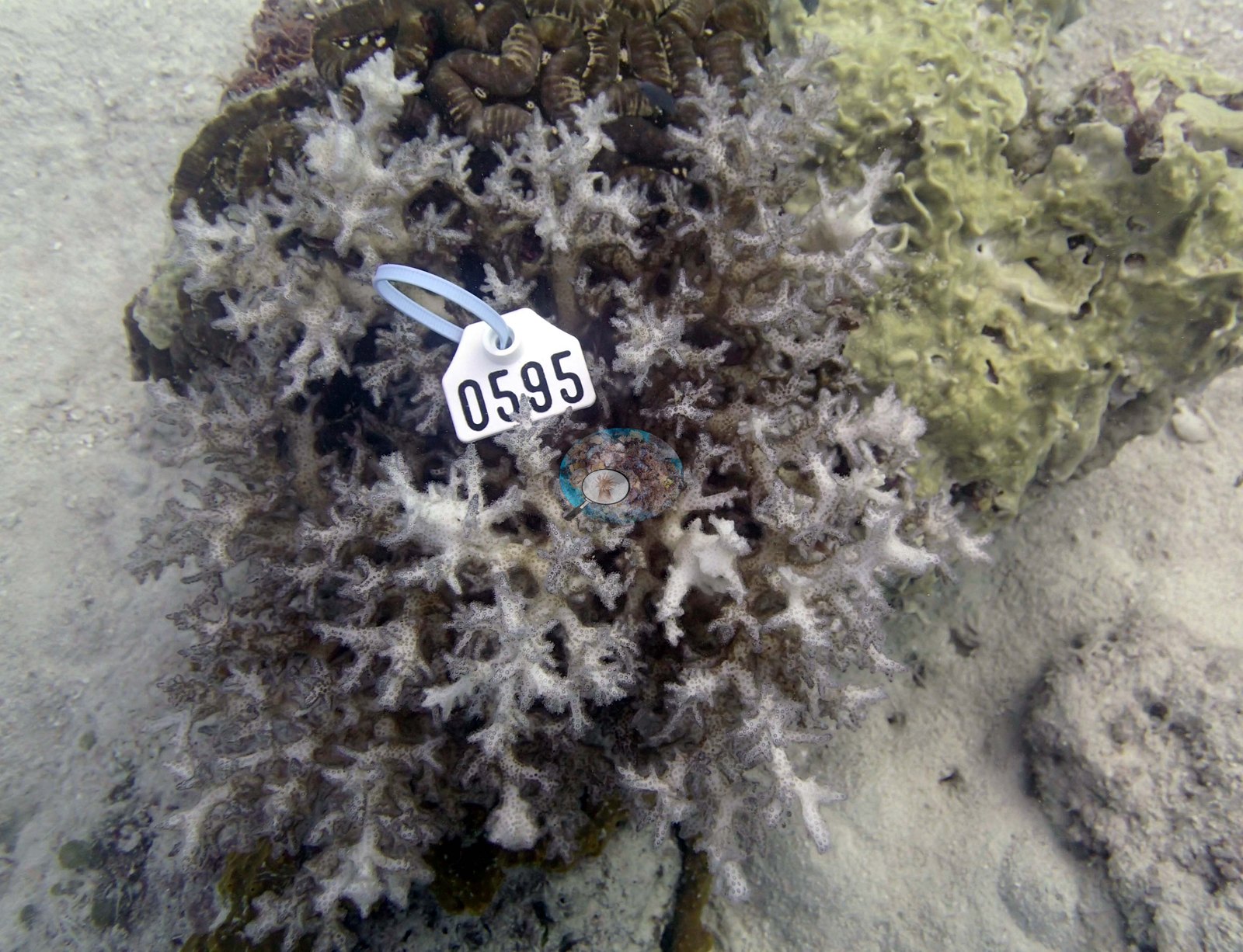
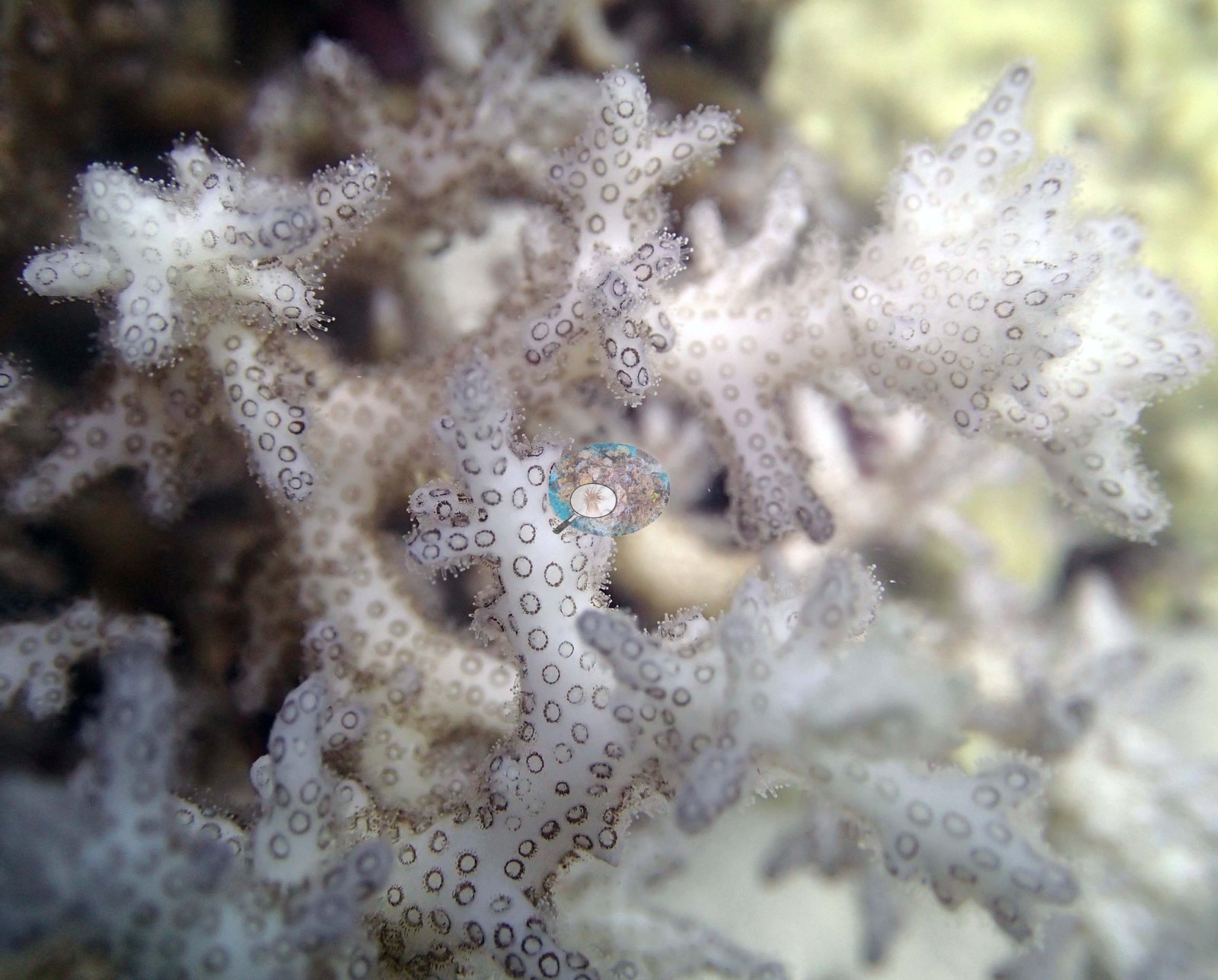
About 40% of the massive Porites had some partial mortality, but little recent mortality. The 2013 survey notes for this site record two crown-of-thorns starfish, one of which had eaten a large table coral; no corallivorous snails were seen (Khaled bin Sultan Living Oceans Foundation expedition site notes, 2013; regional summary in Bruckner 2014). Anderson's sampling sheet records five of the eight Pocillopora colonies sampled here (colonies 69, 72, 73, 75, and 76) as 10-30% bleached, two of those (72 and 75) as possibly or likely unhealthy. There were also several large round sponges, branching sponges, and a very common gray encrusting sponge that was overgrowing corals and had thin upright branches. The sediment in places had patches of cyanobacteria. The Living Oceans Foundation transects here recorded 6.8% cyanobacteria and no recently dead coral.
Fish and other fauna
Three species of sea cucumbers were moderately common (pinkfish, spotted, and another Bohadschia).
Comparisons with other data
Coral Health Index 2.20/5 (Mayfield et al. 2021, Platax).
Dive record
TOVA40 (Vava'u): surveyed 24 Sep 2013 during the Khaled bin Sultan Living Oceans Foundation Global Reef Expedition.
Other notes
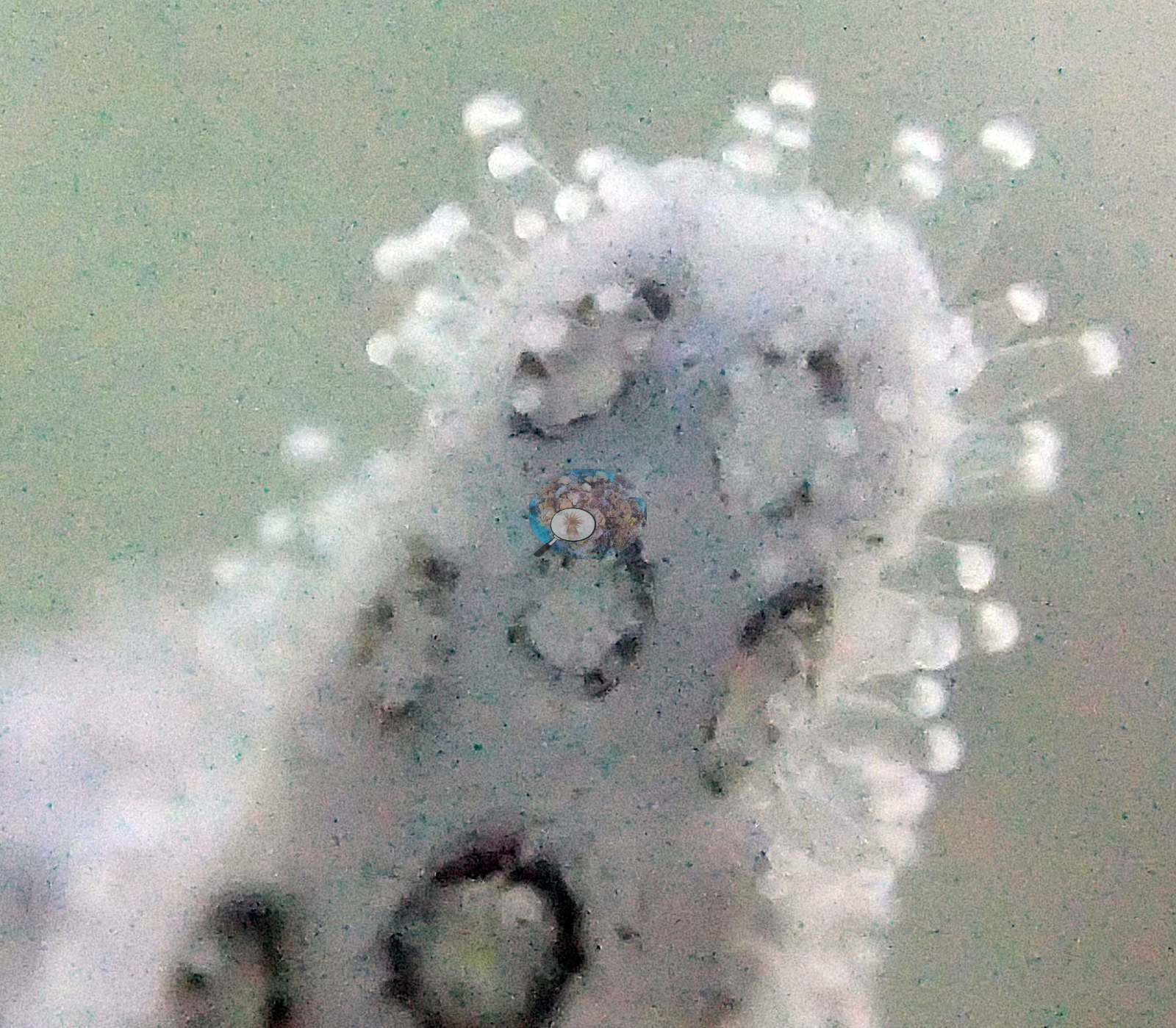
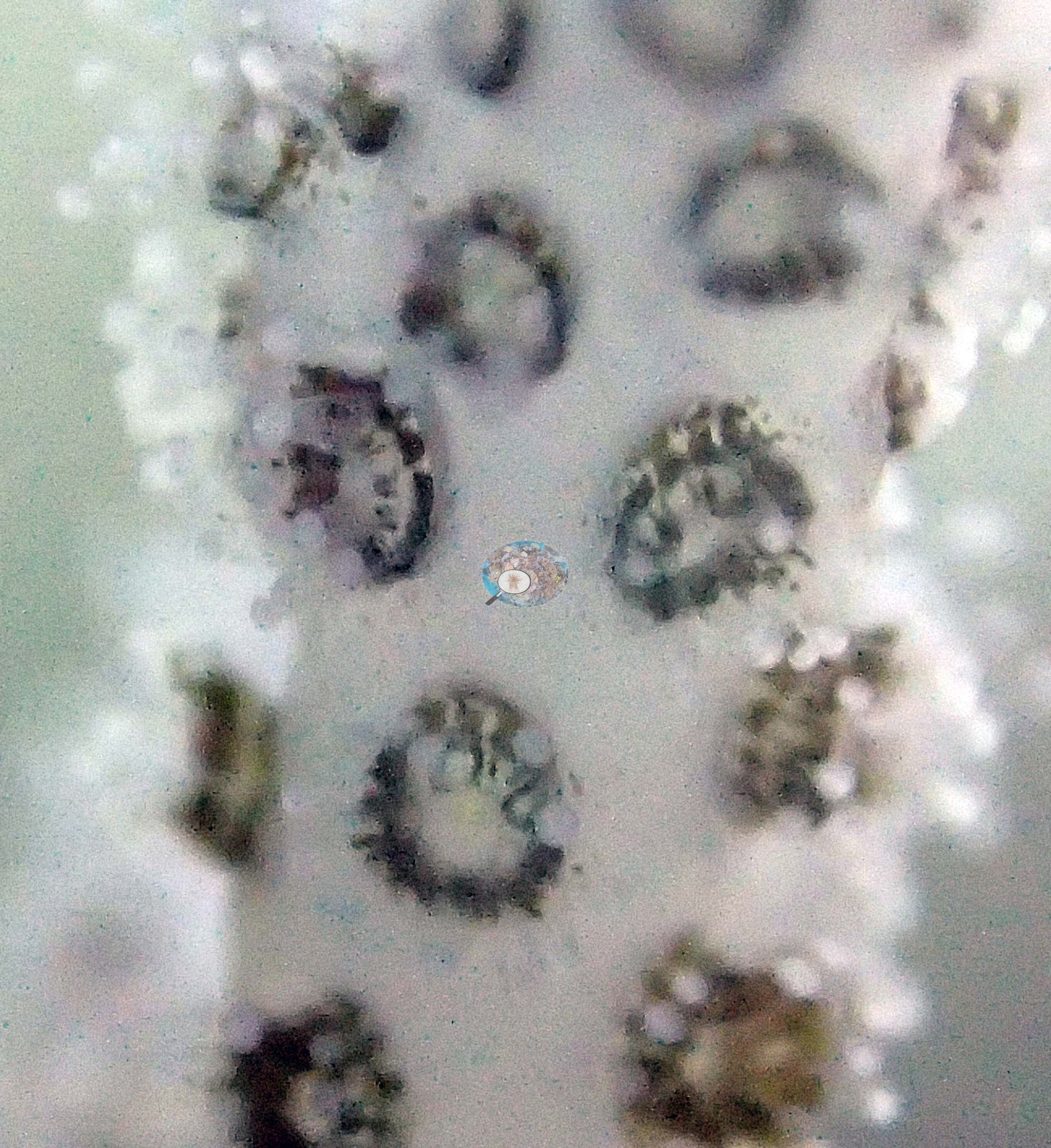
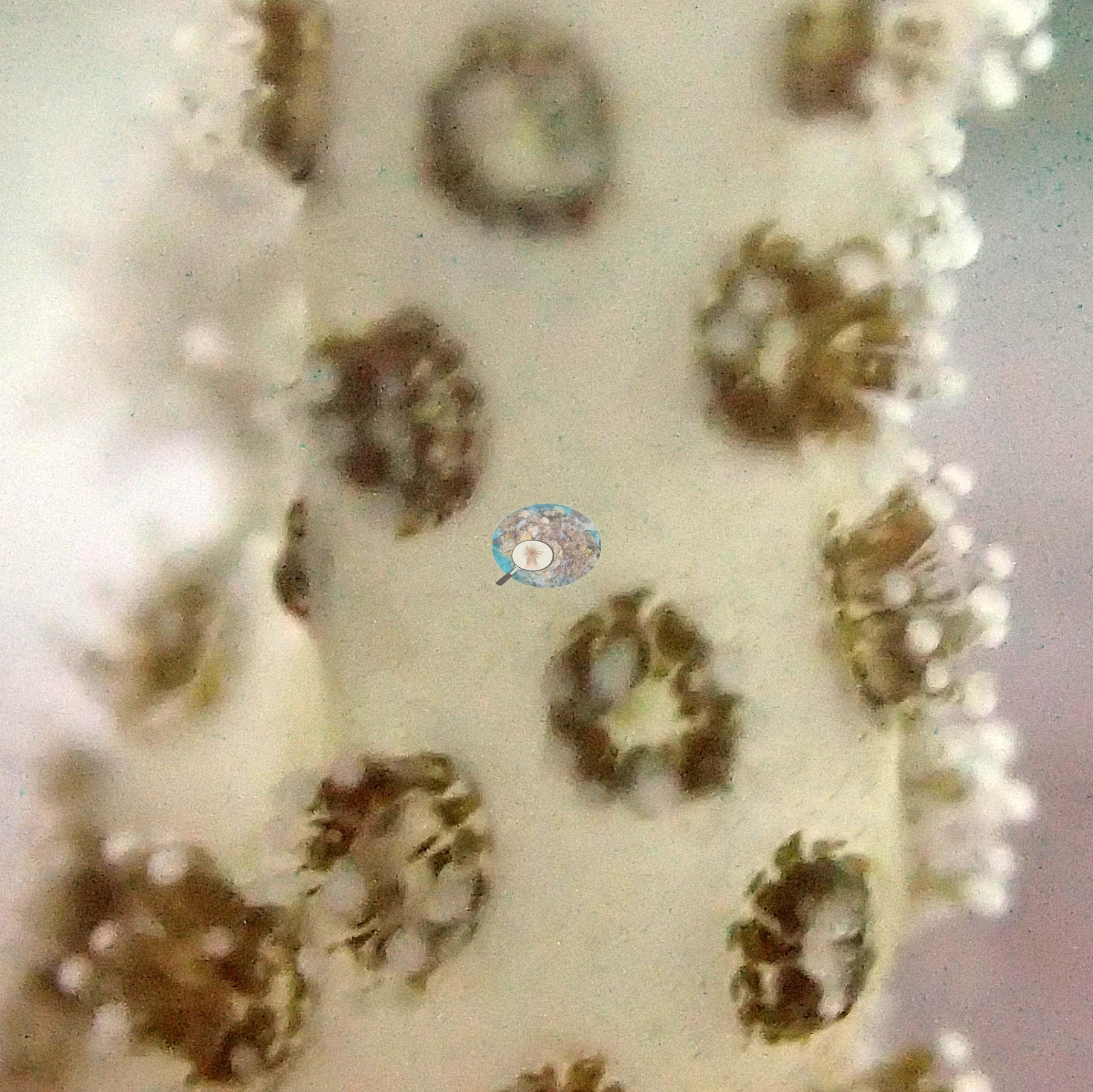
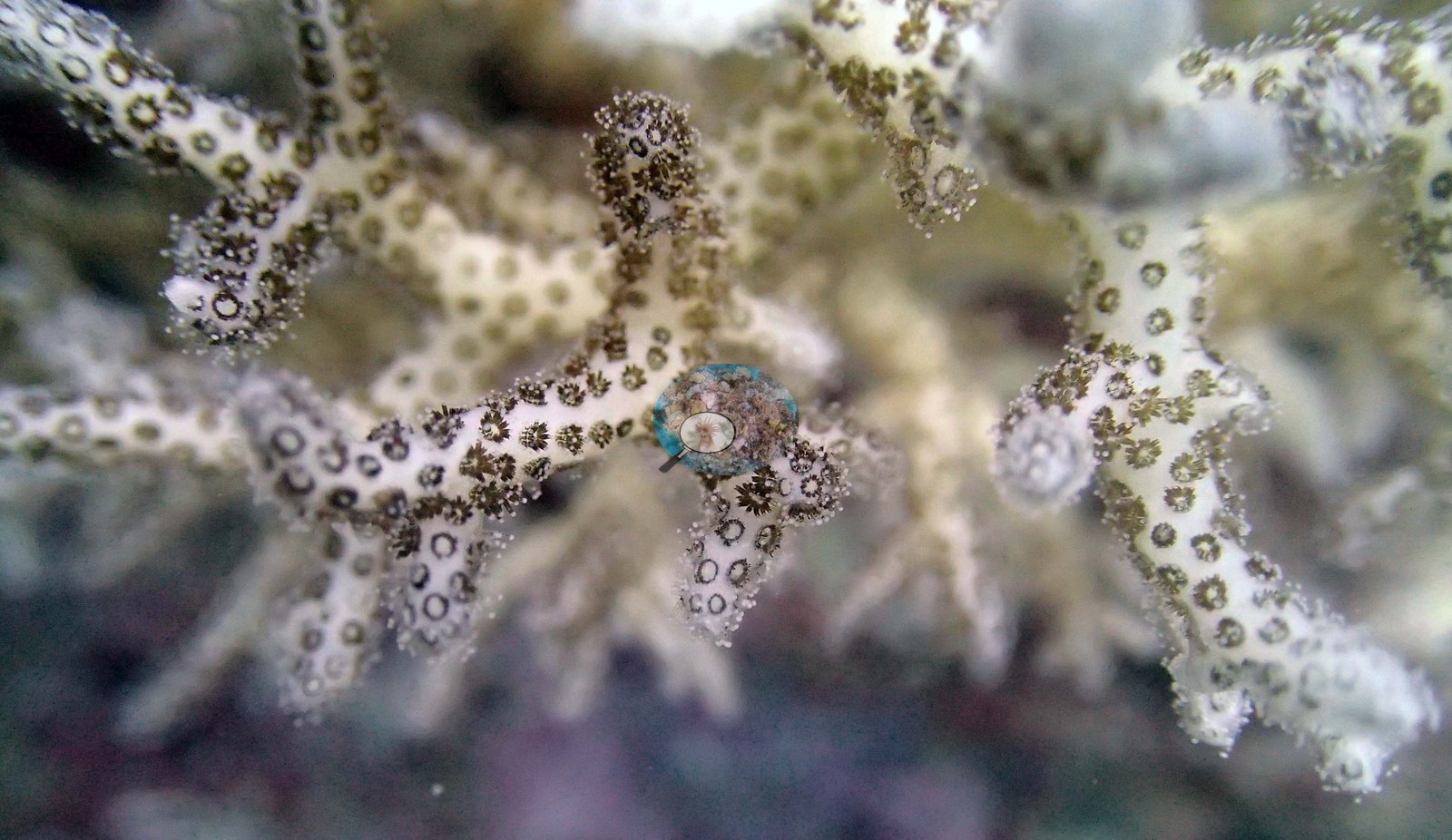
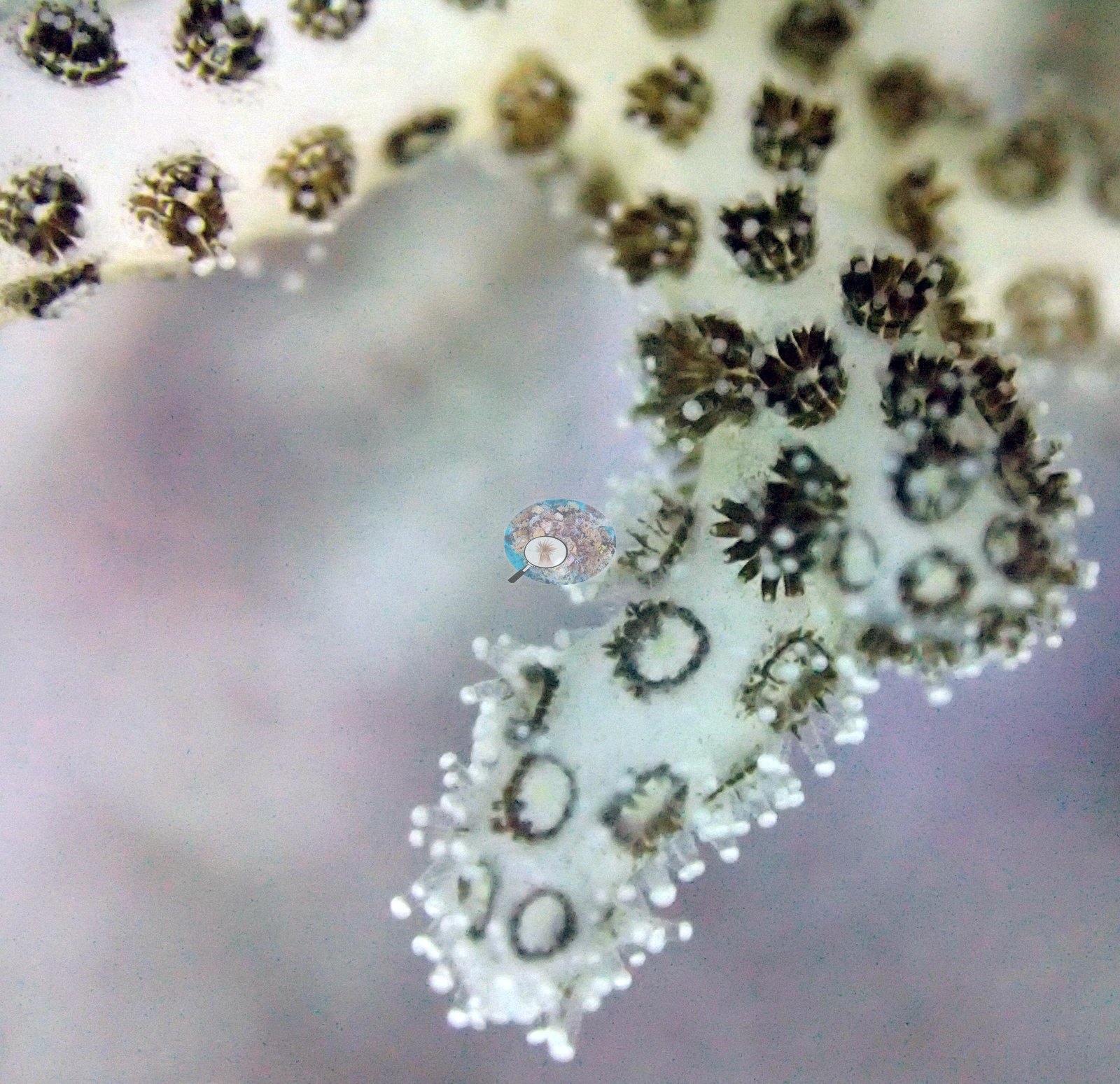
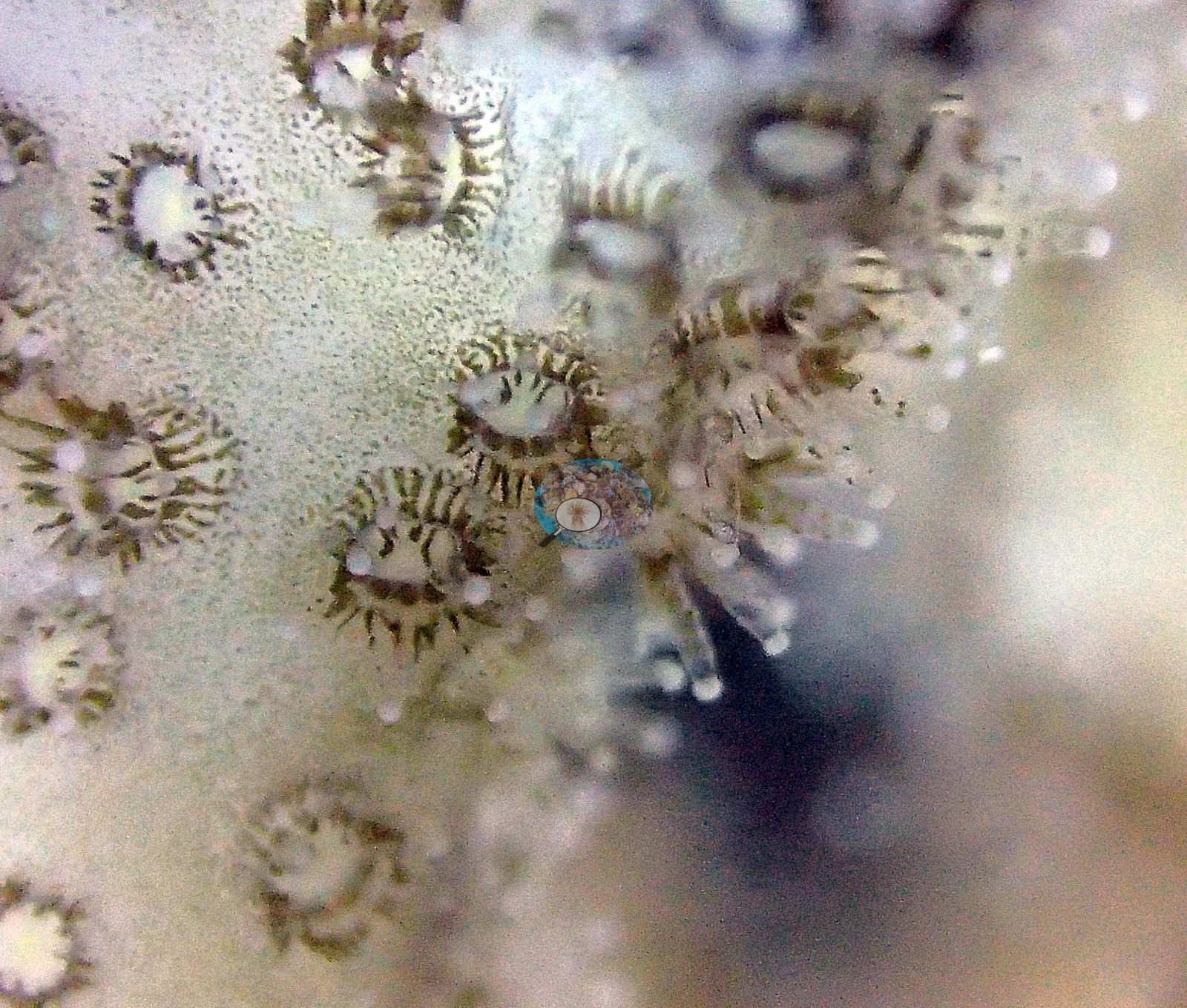
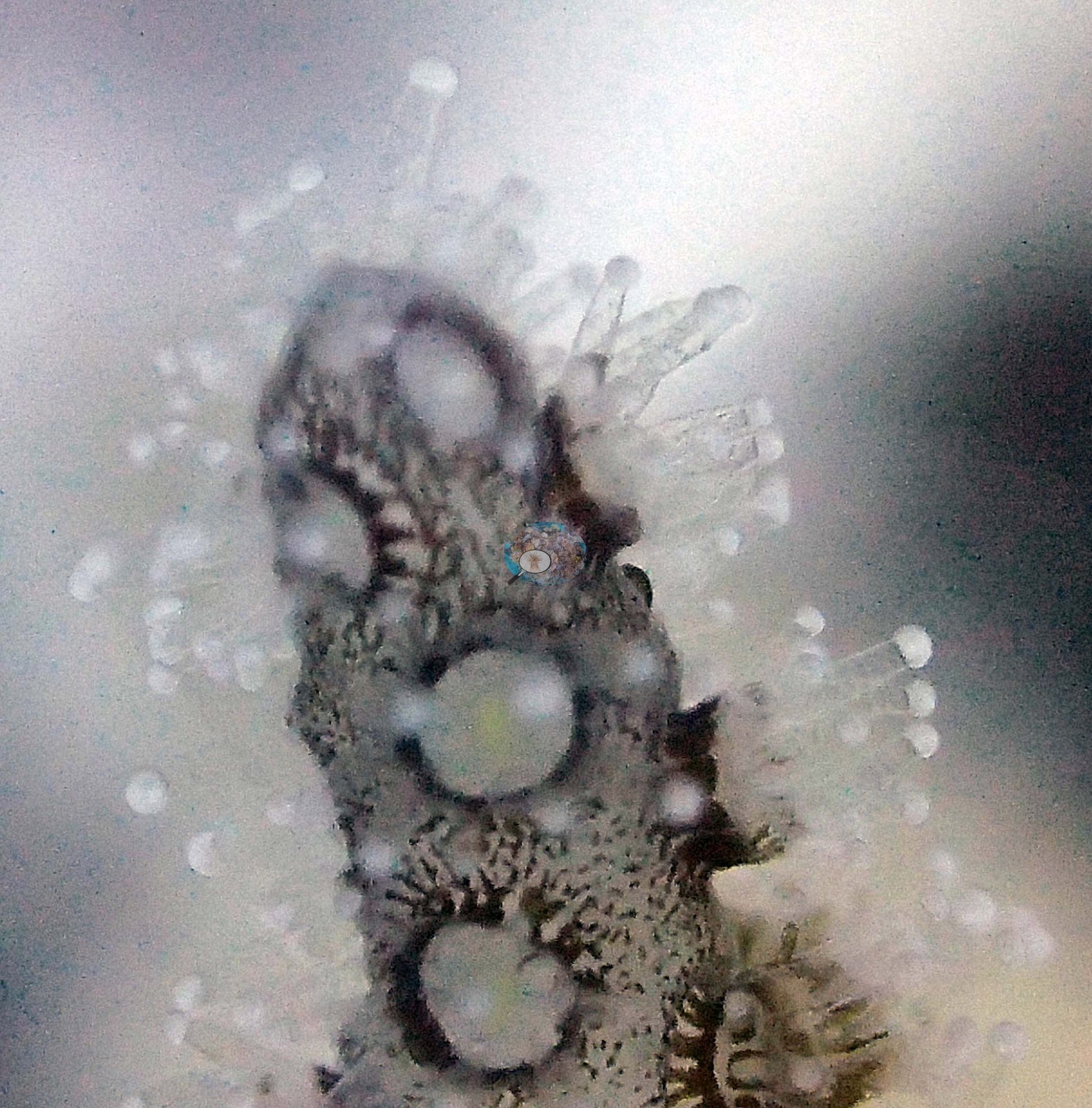
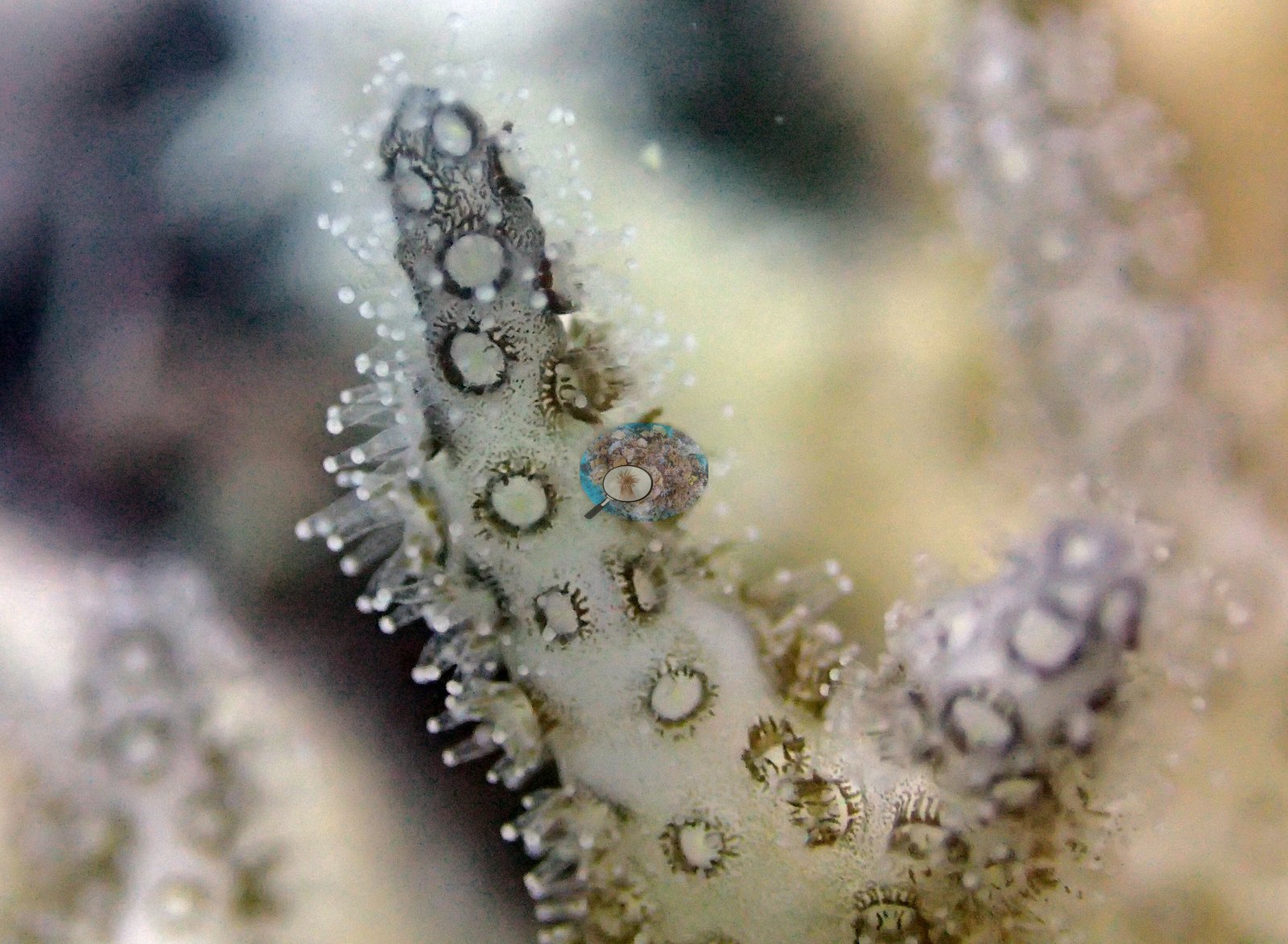
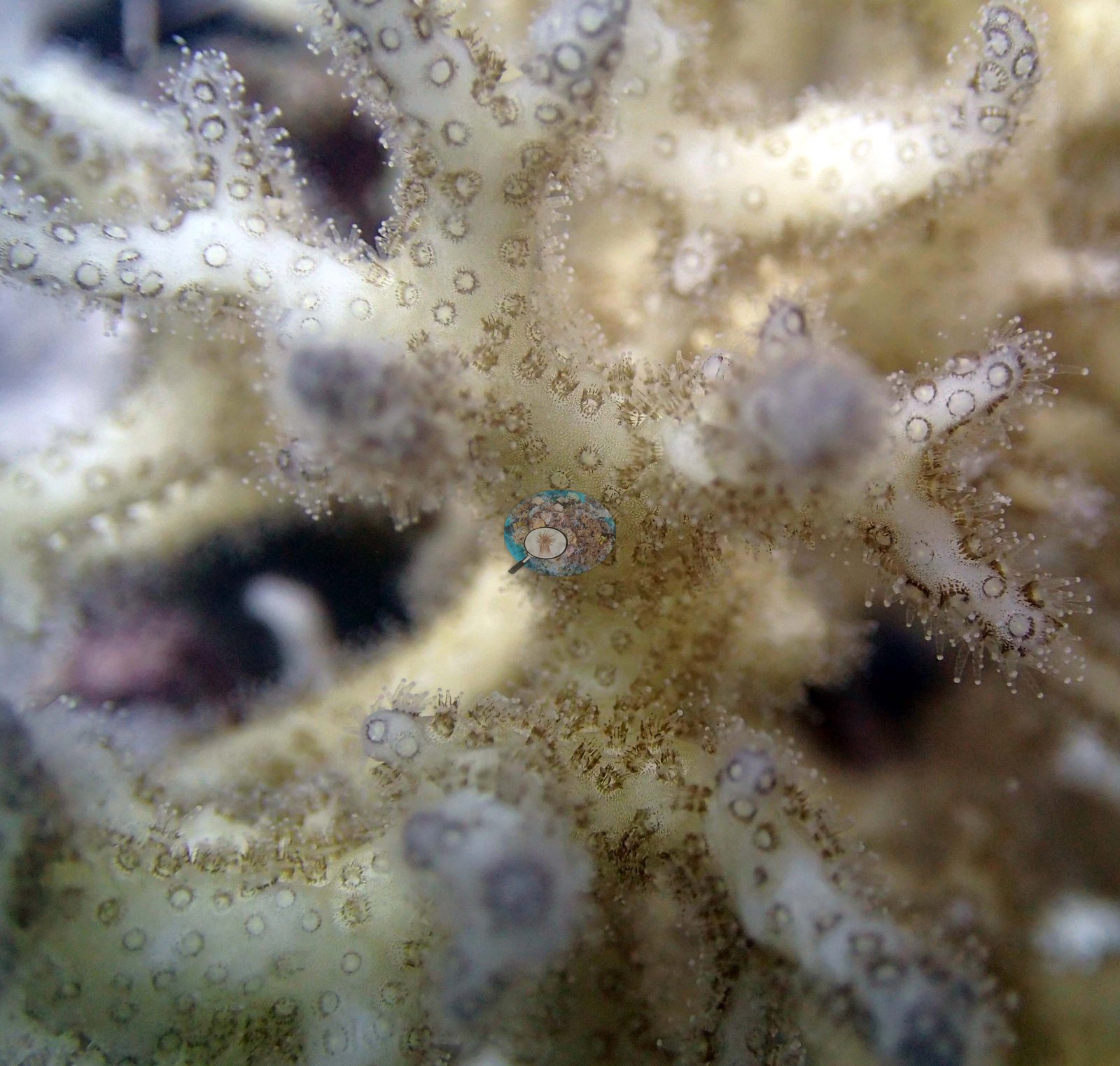
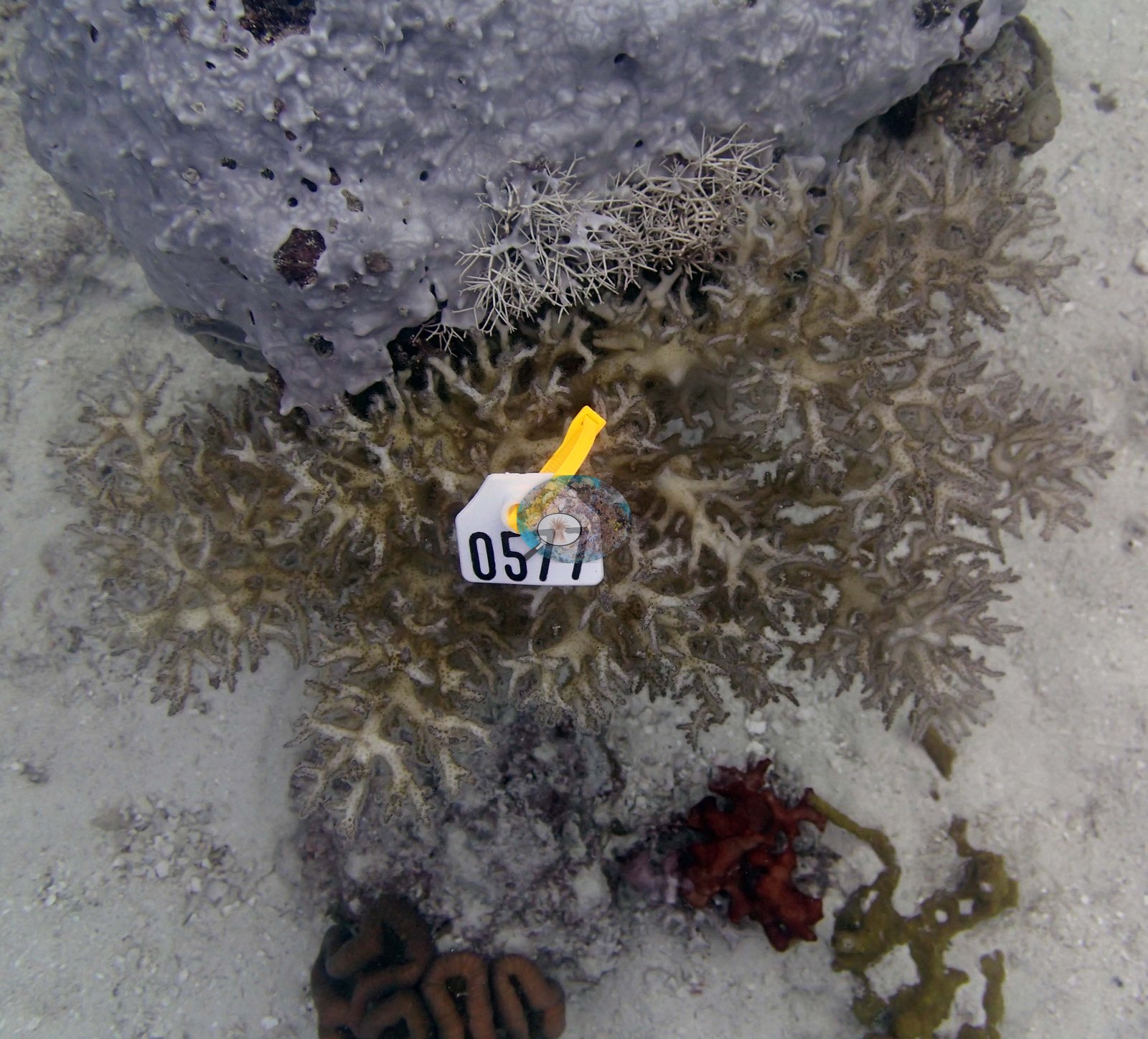
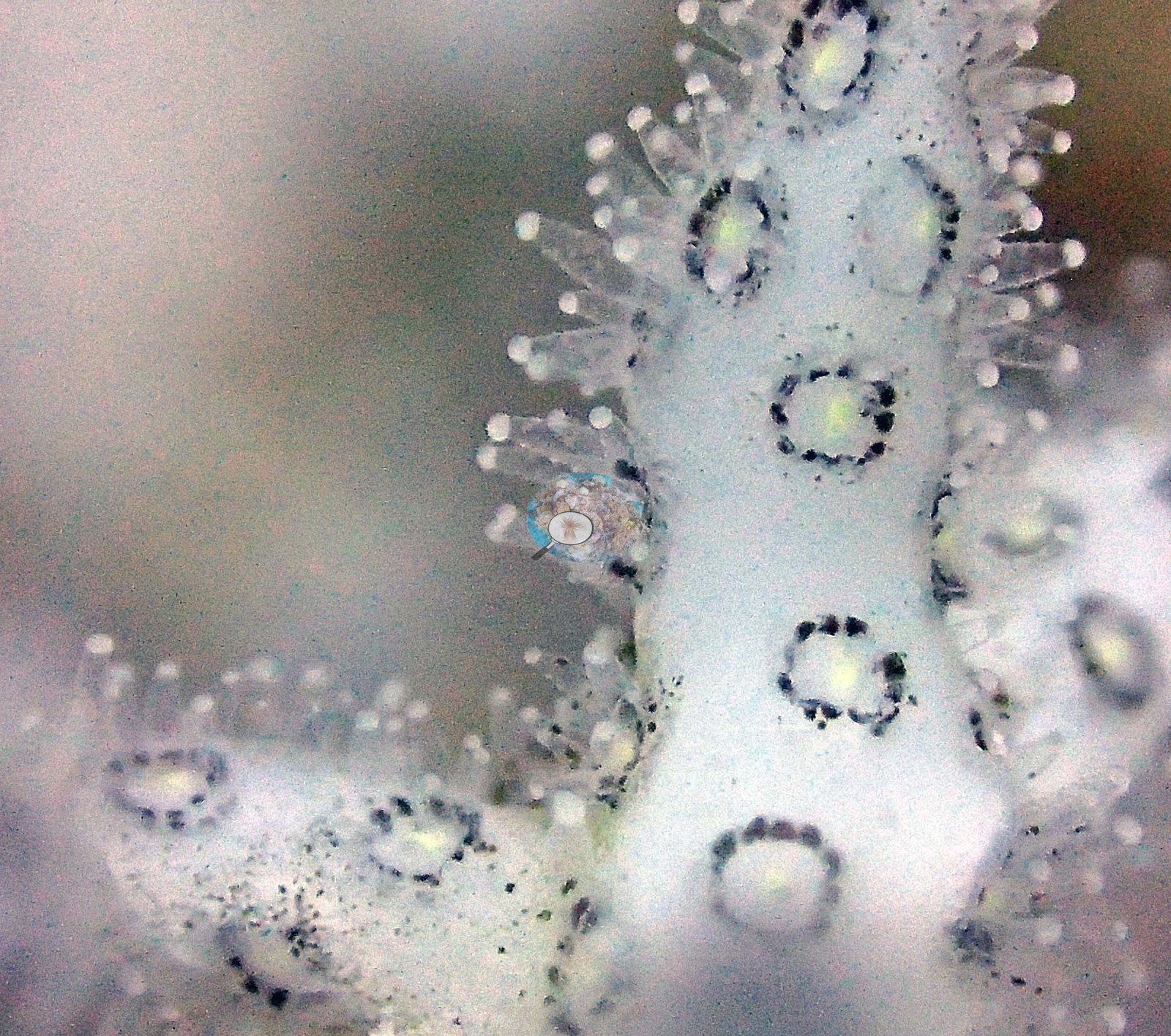
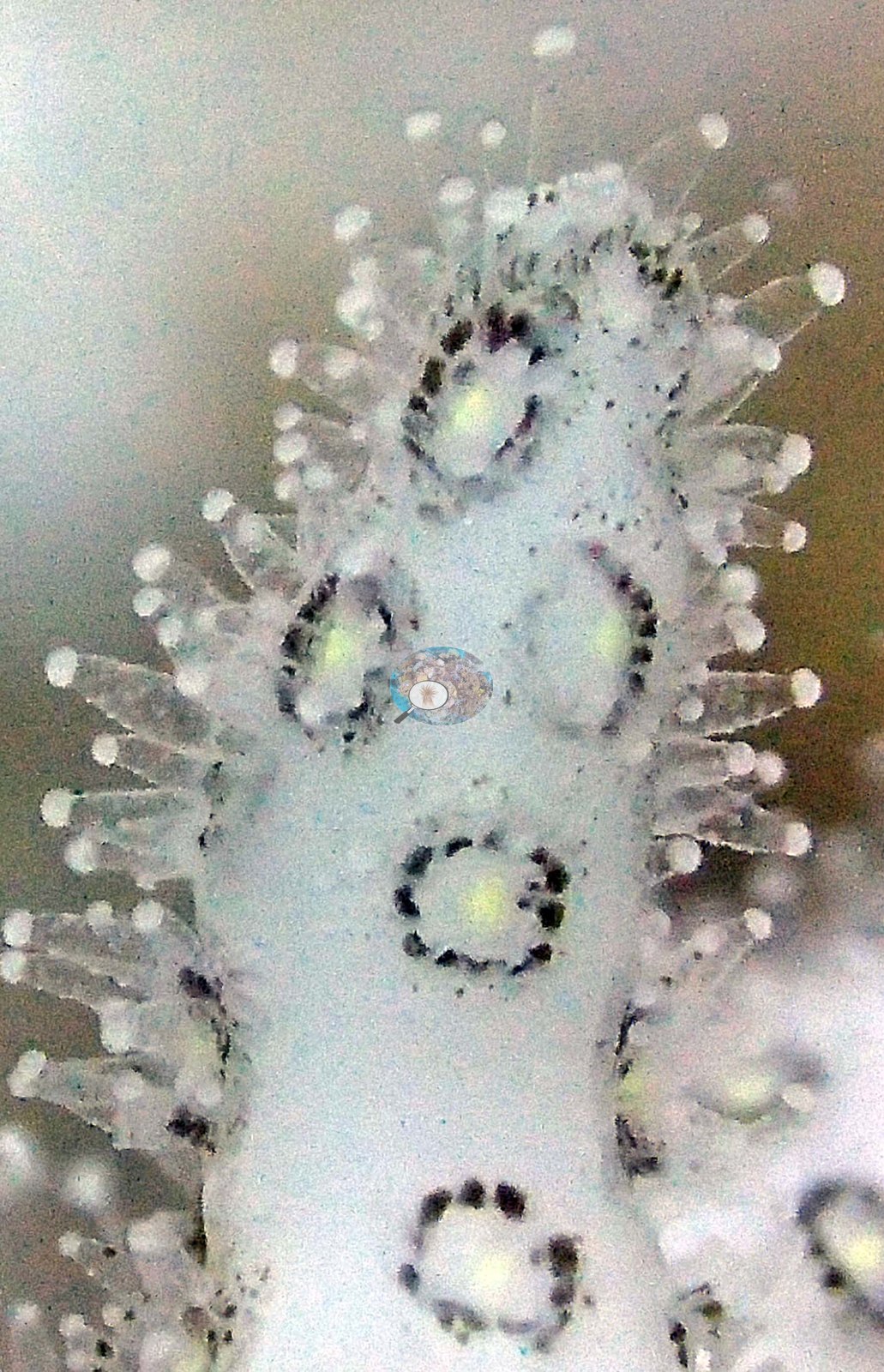
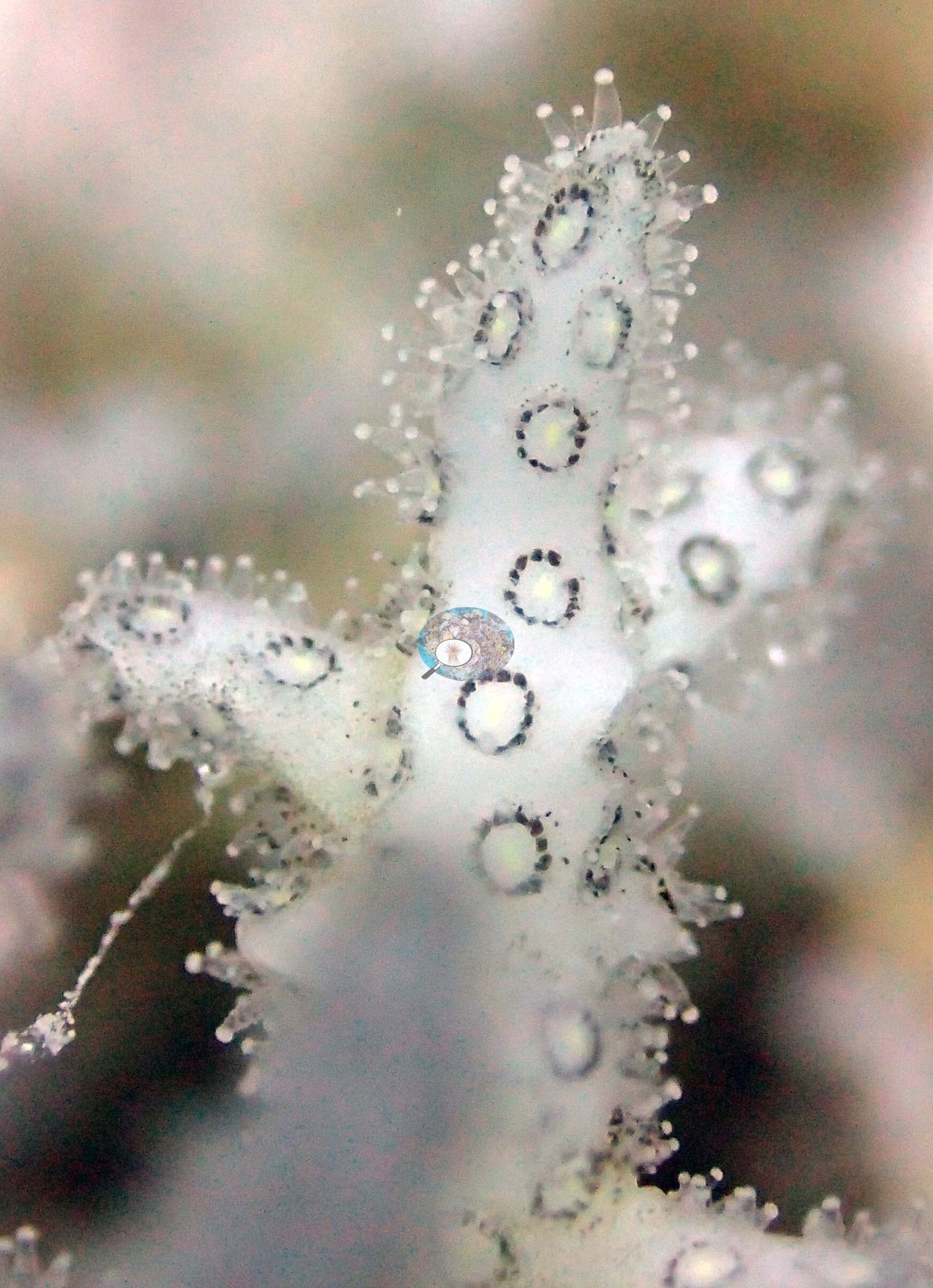
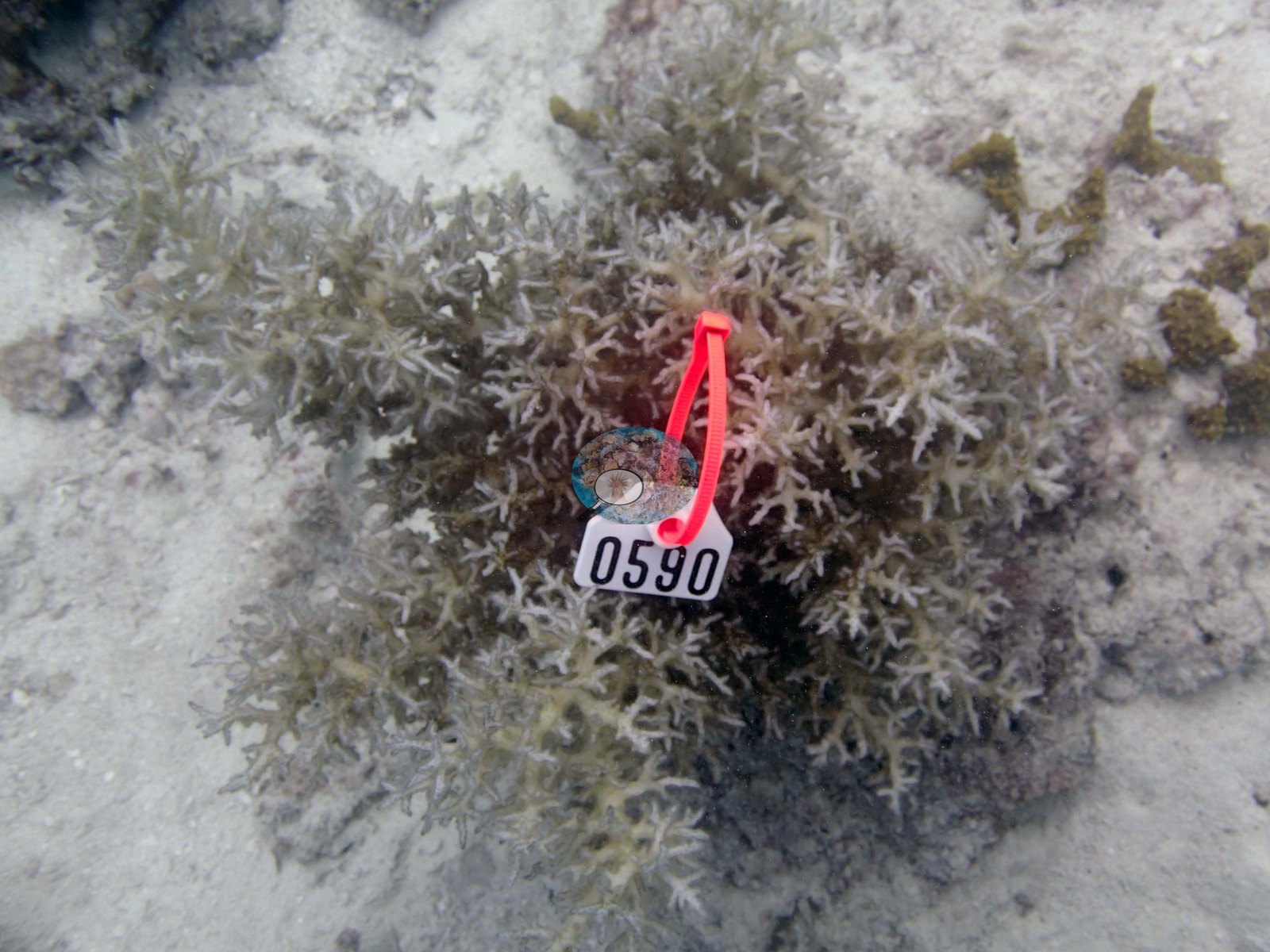
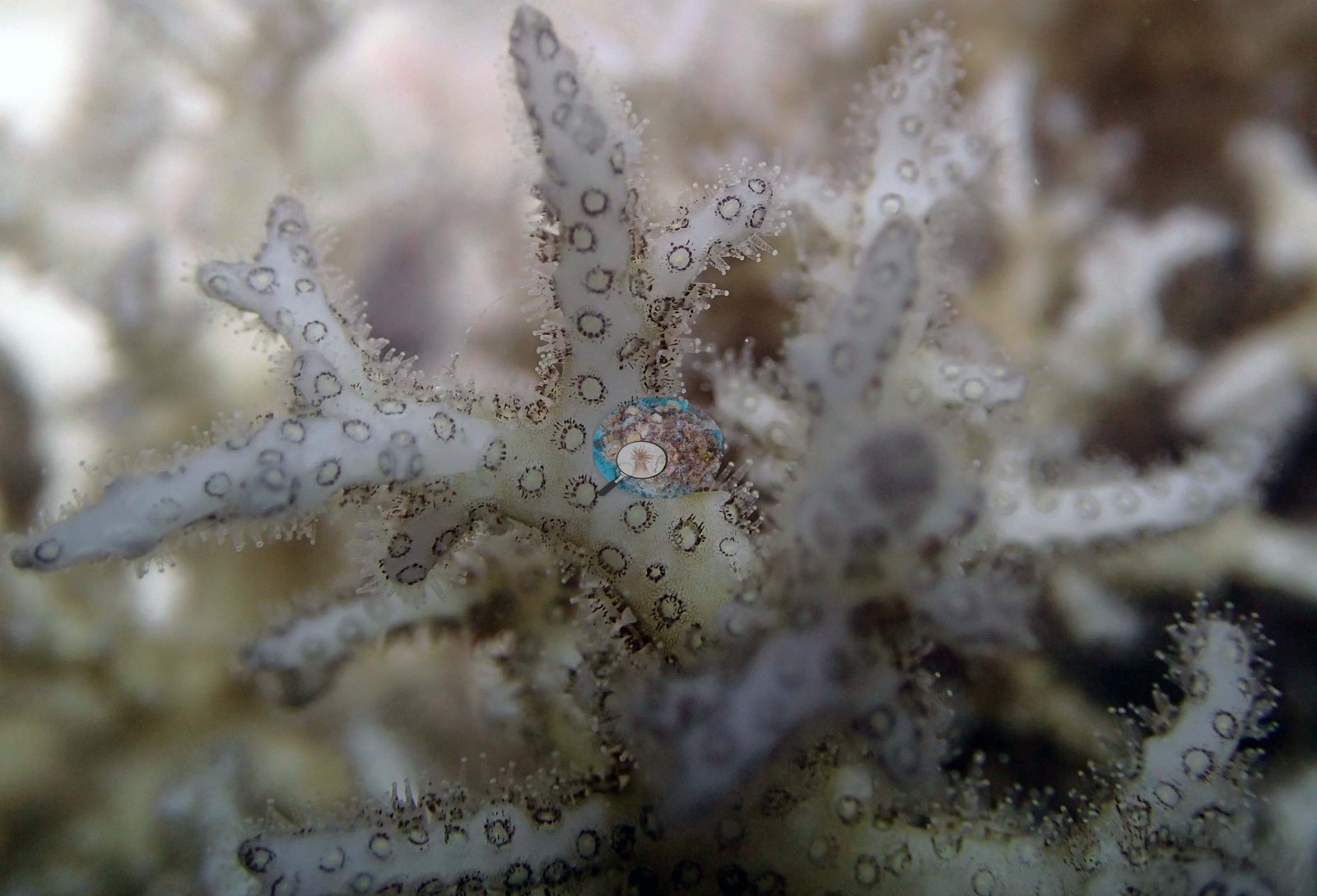
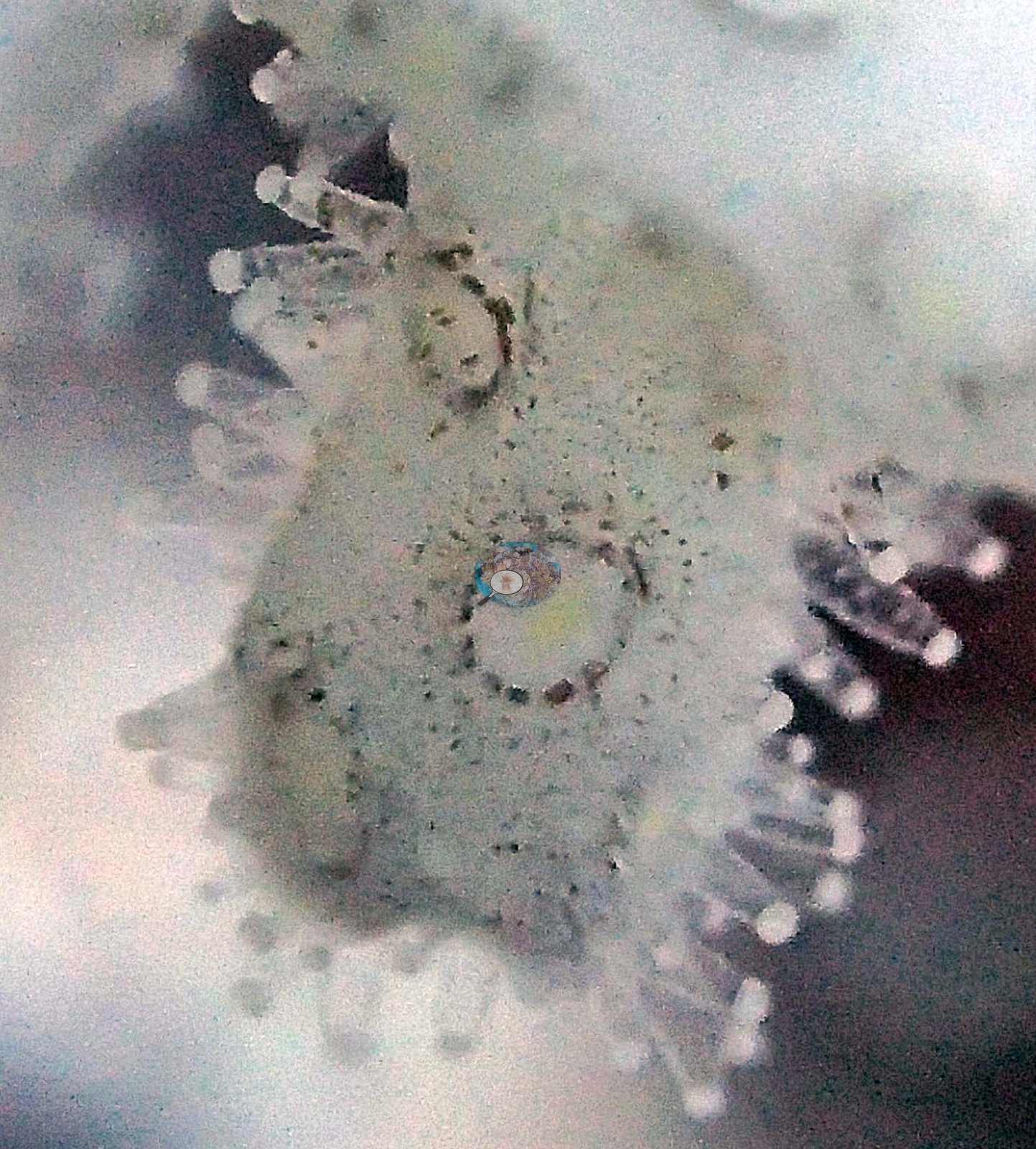
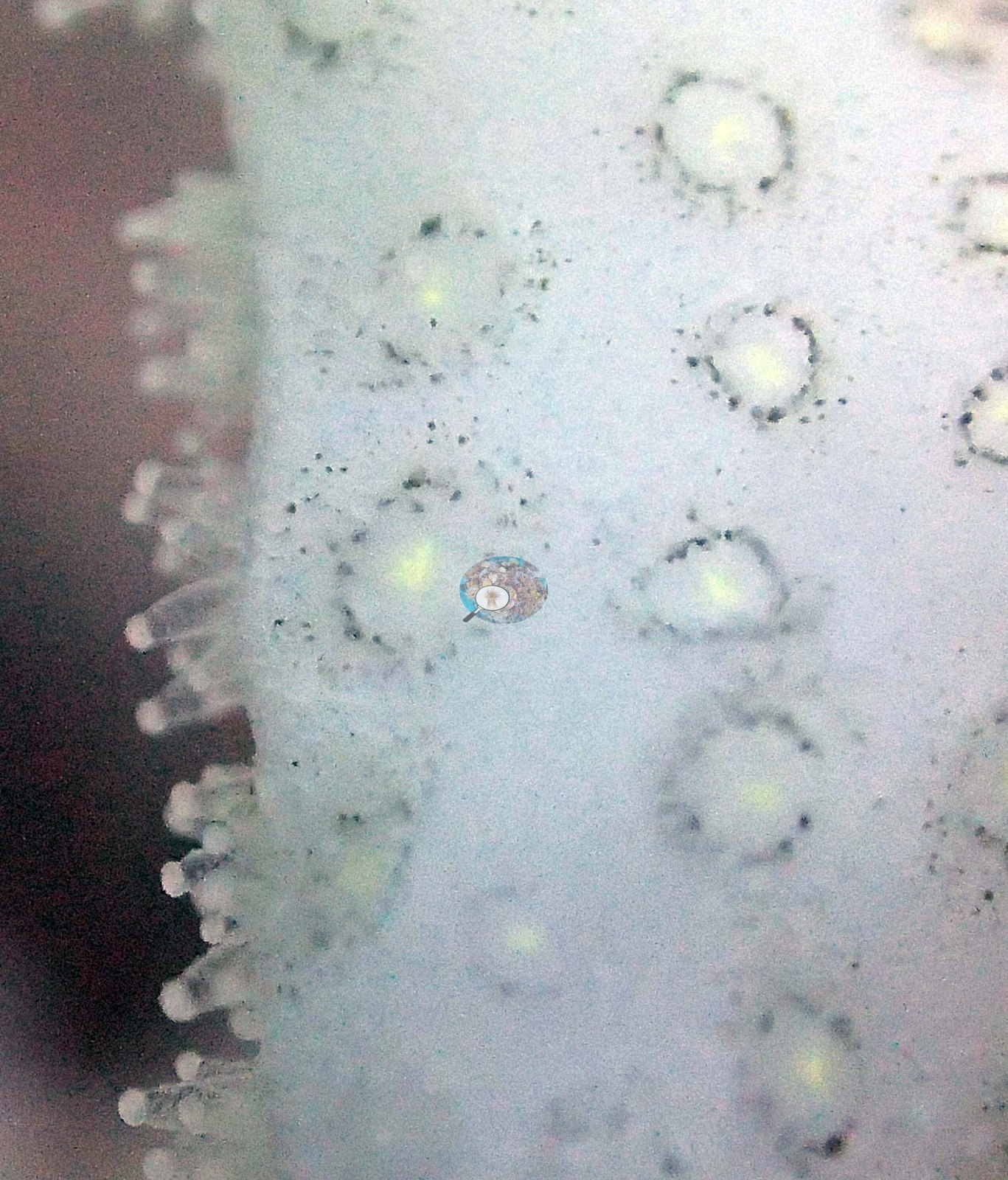
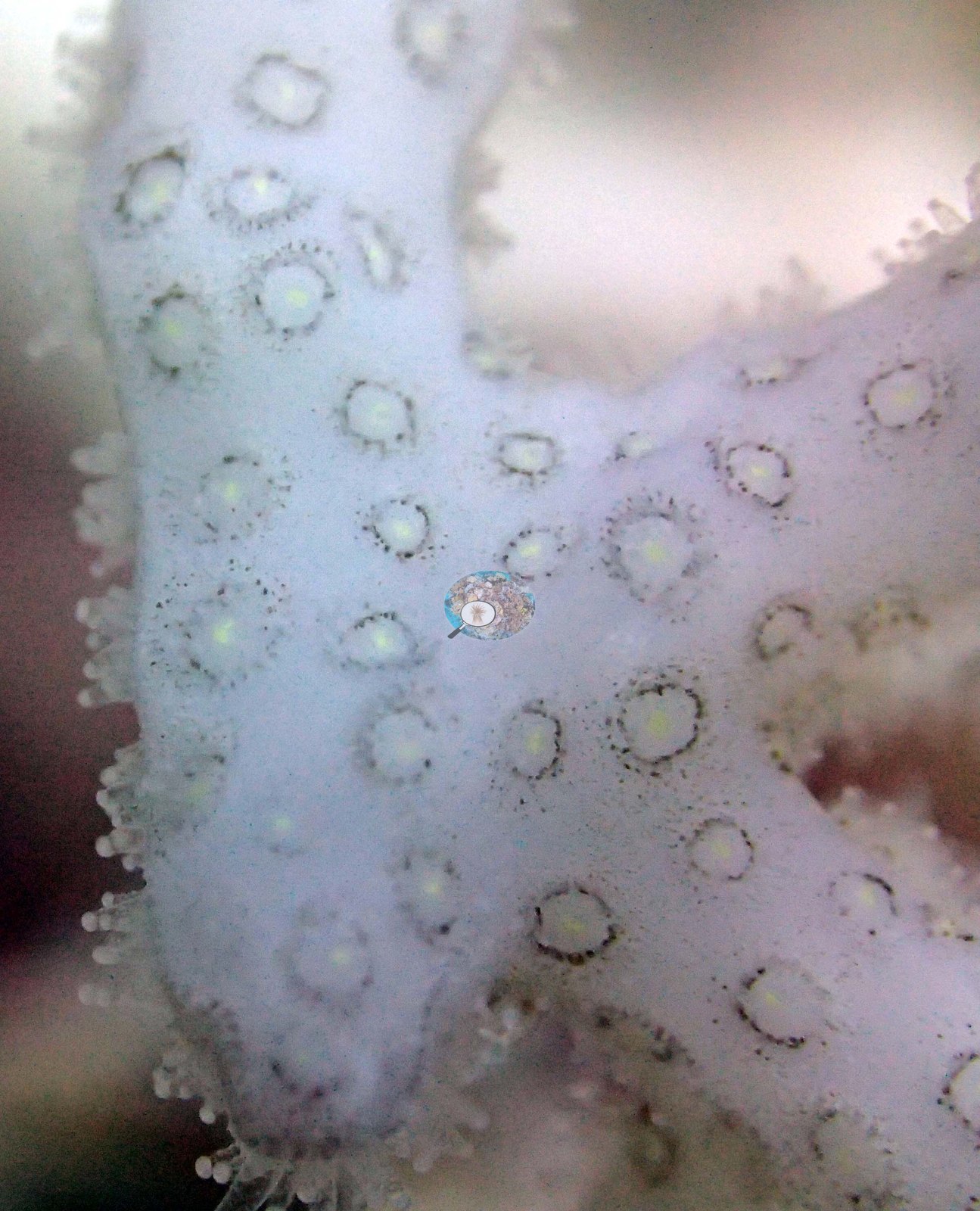
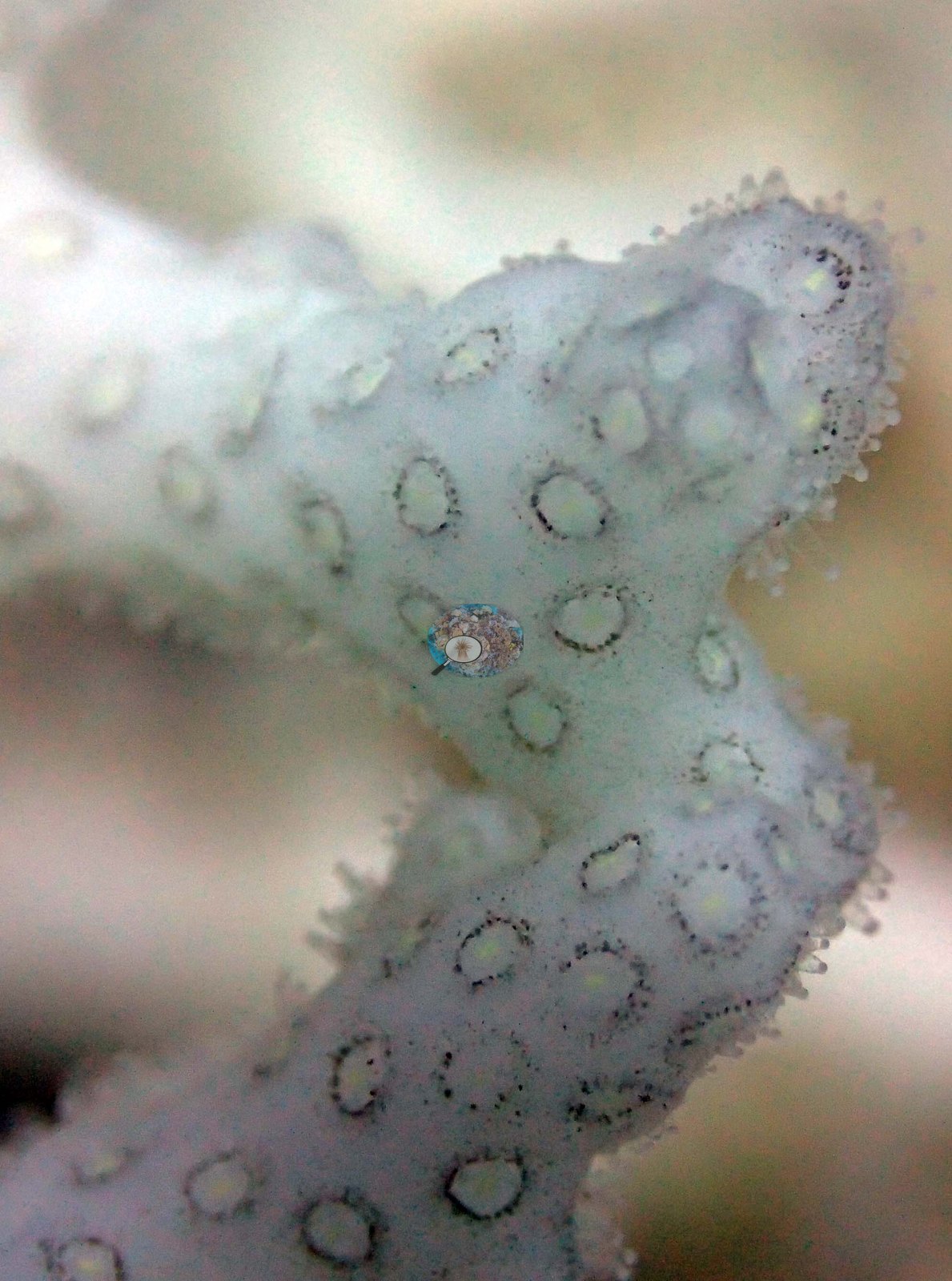
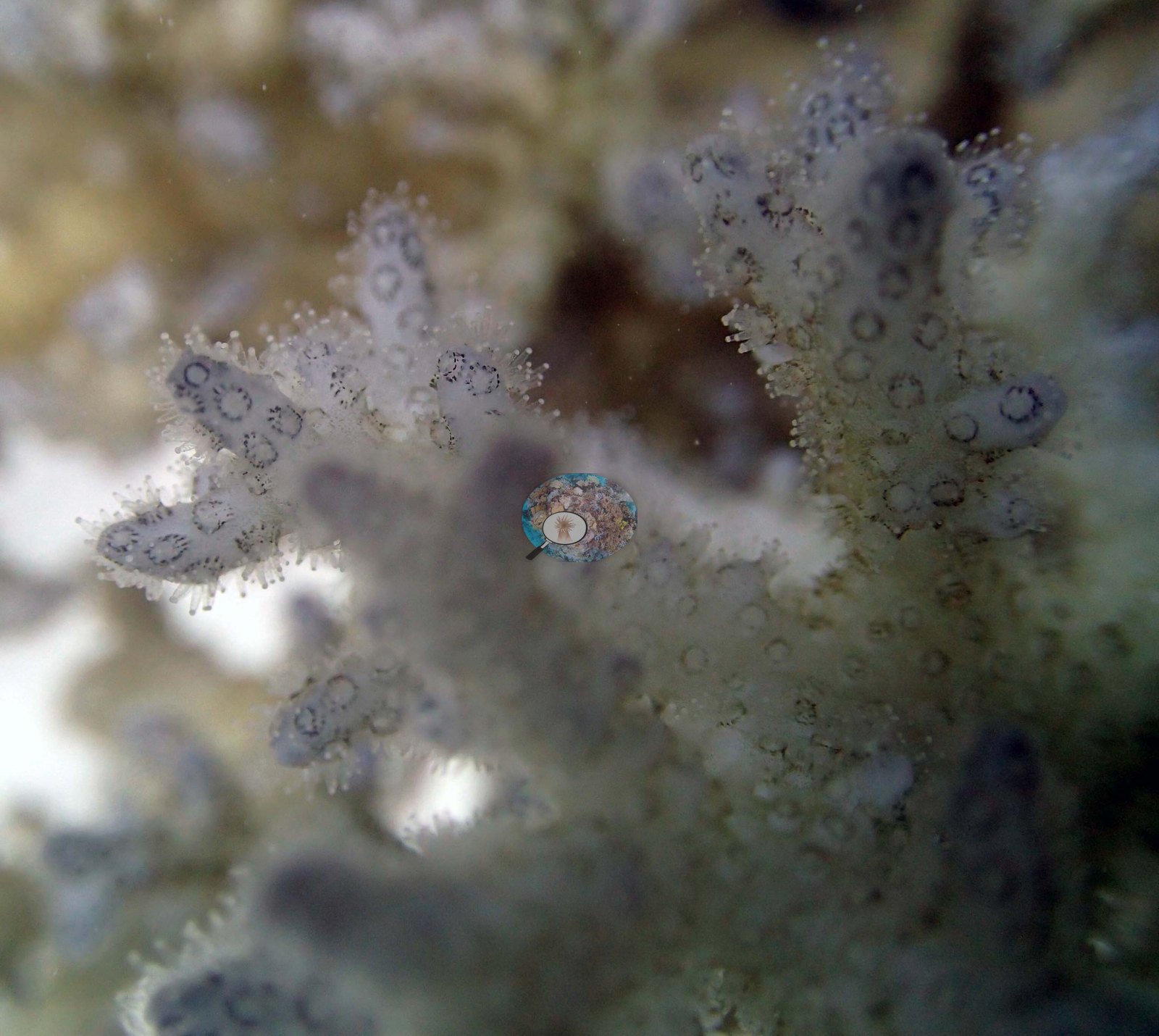
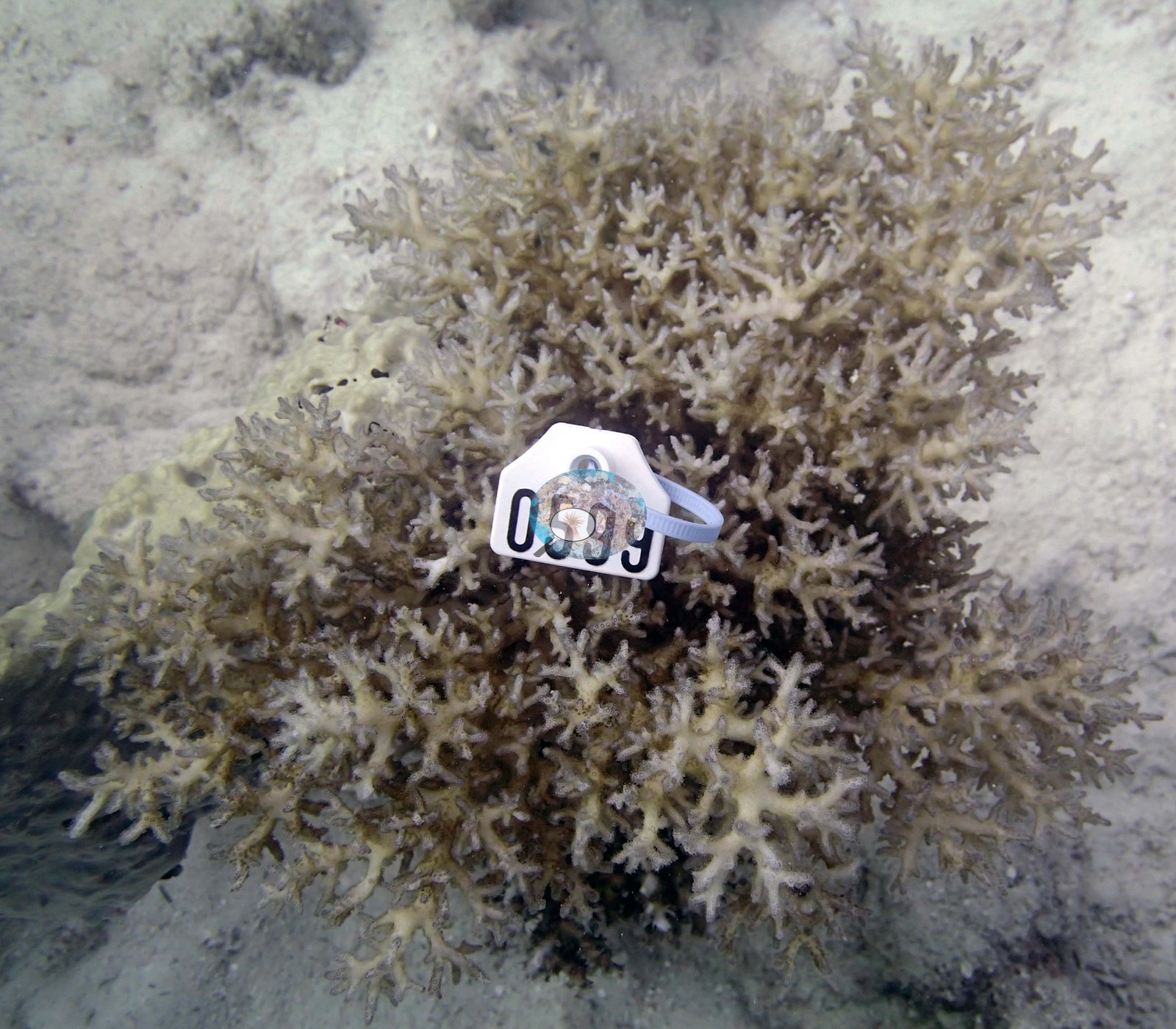
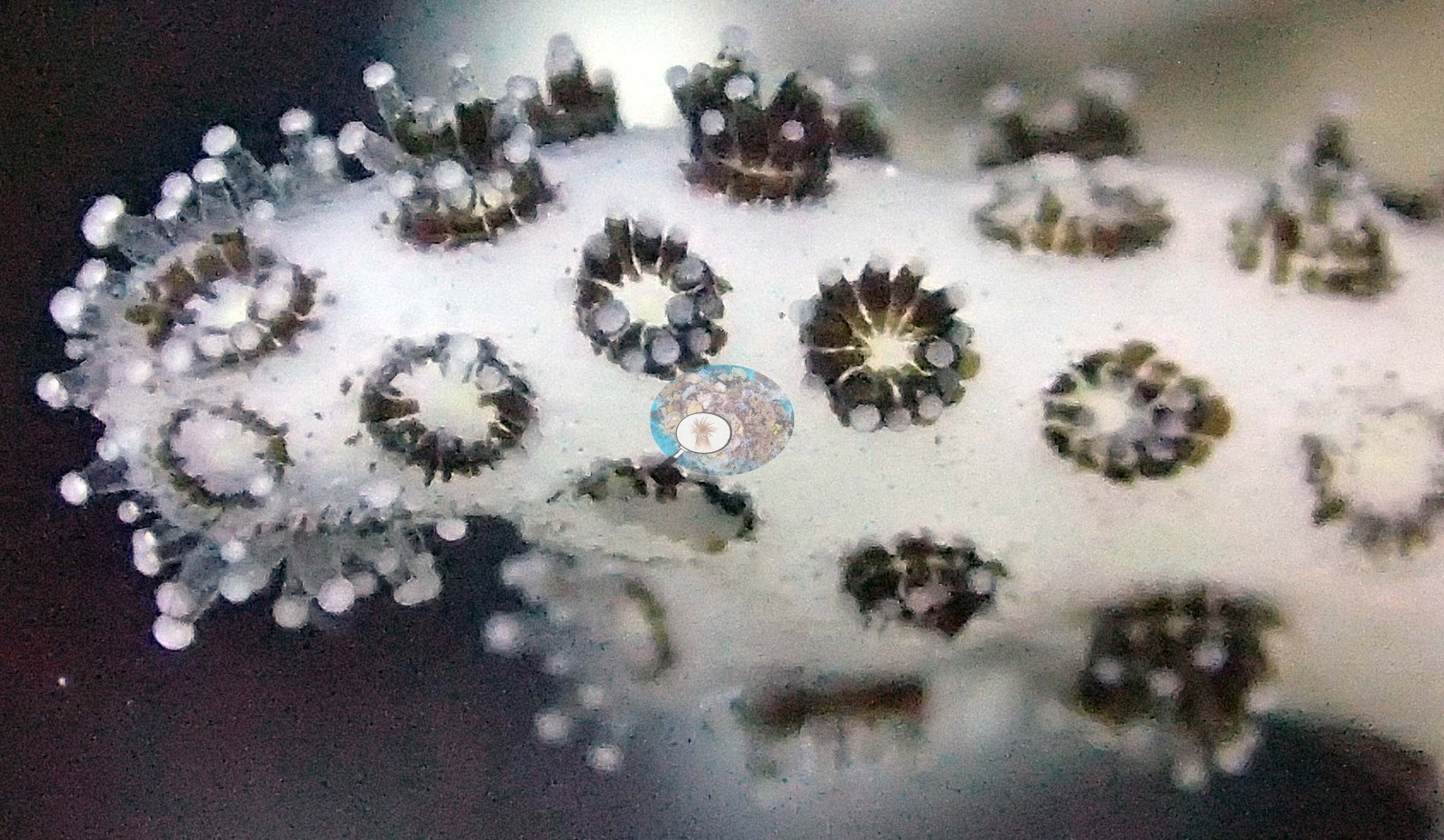
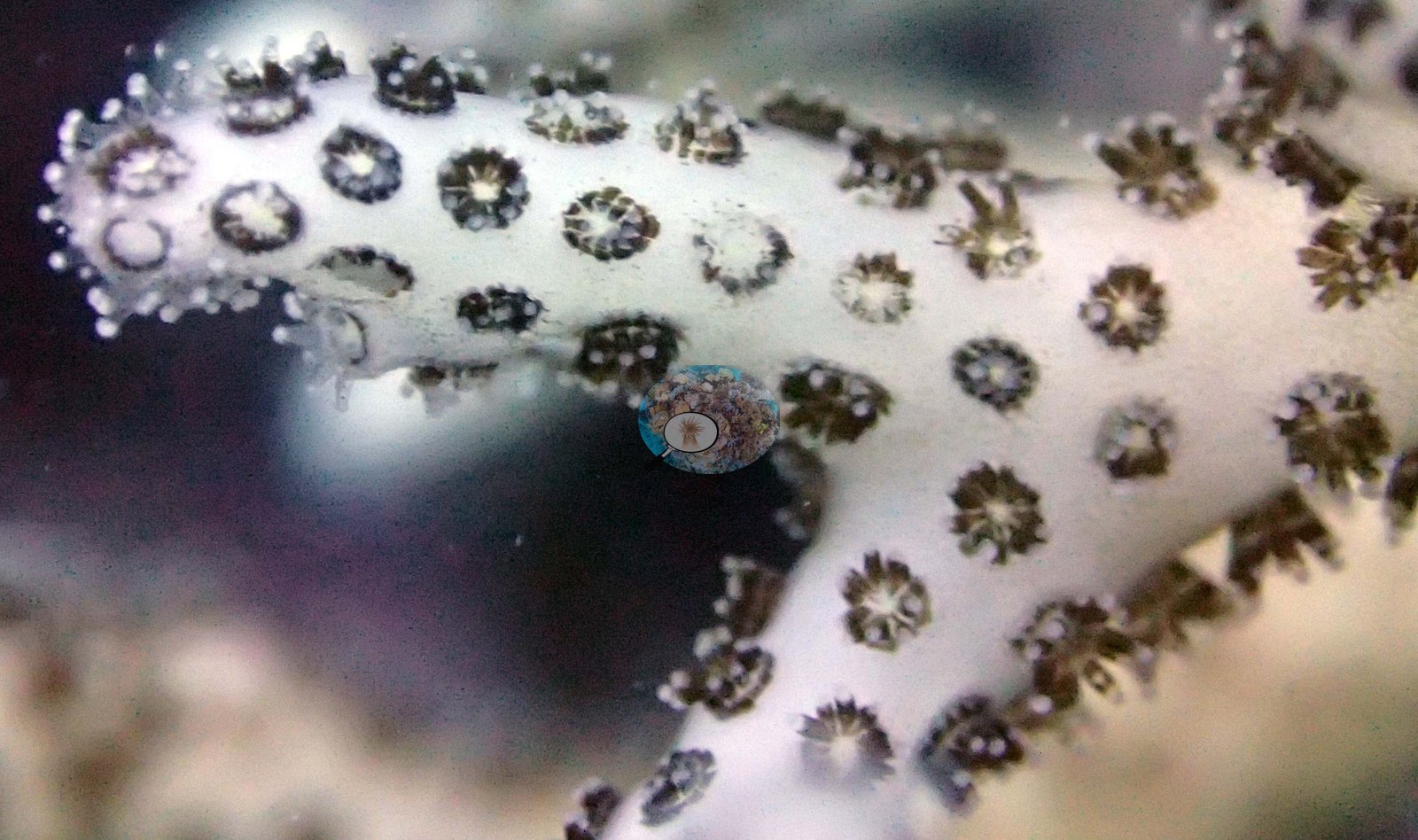
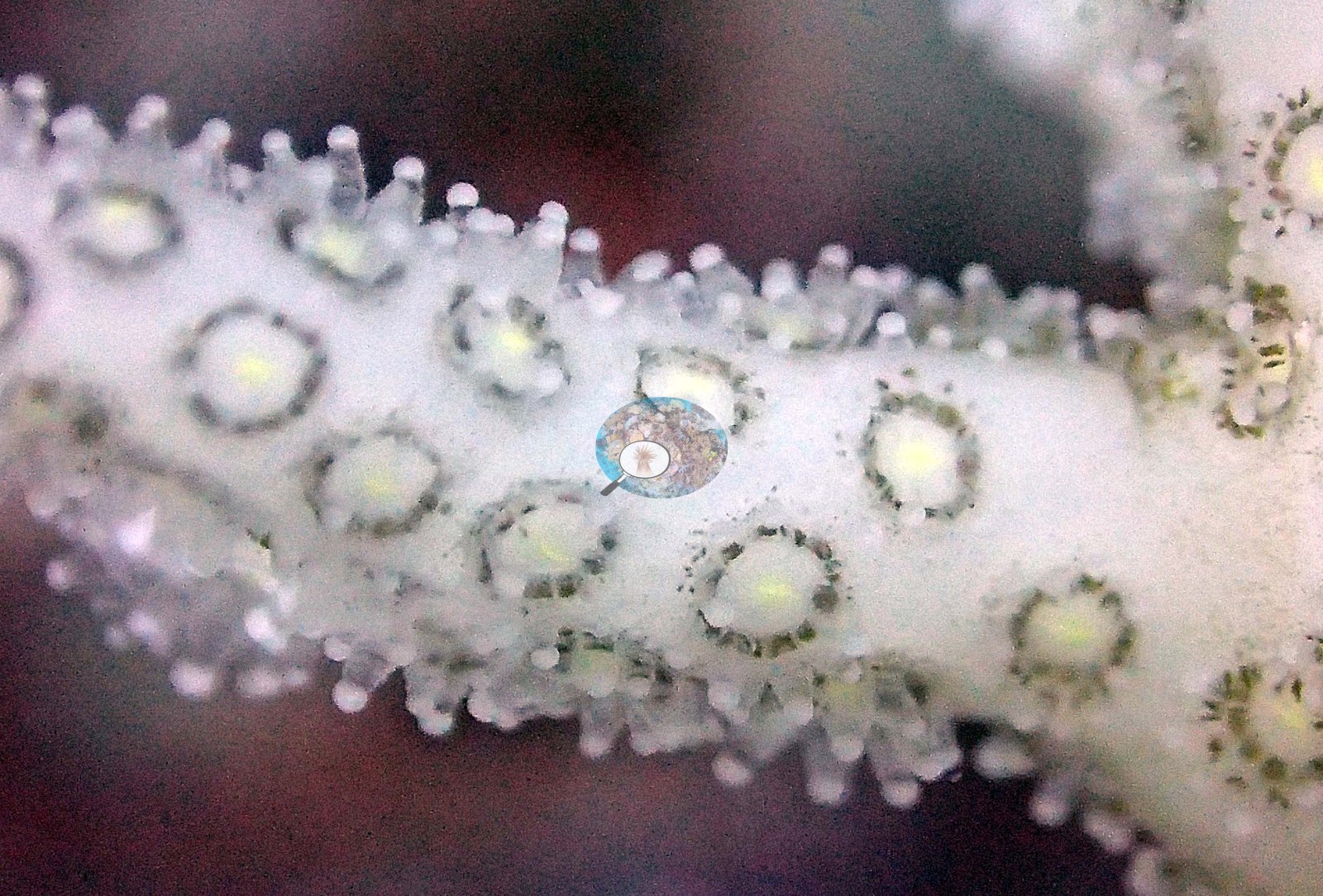
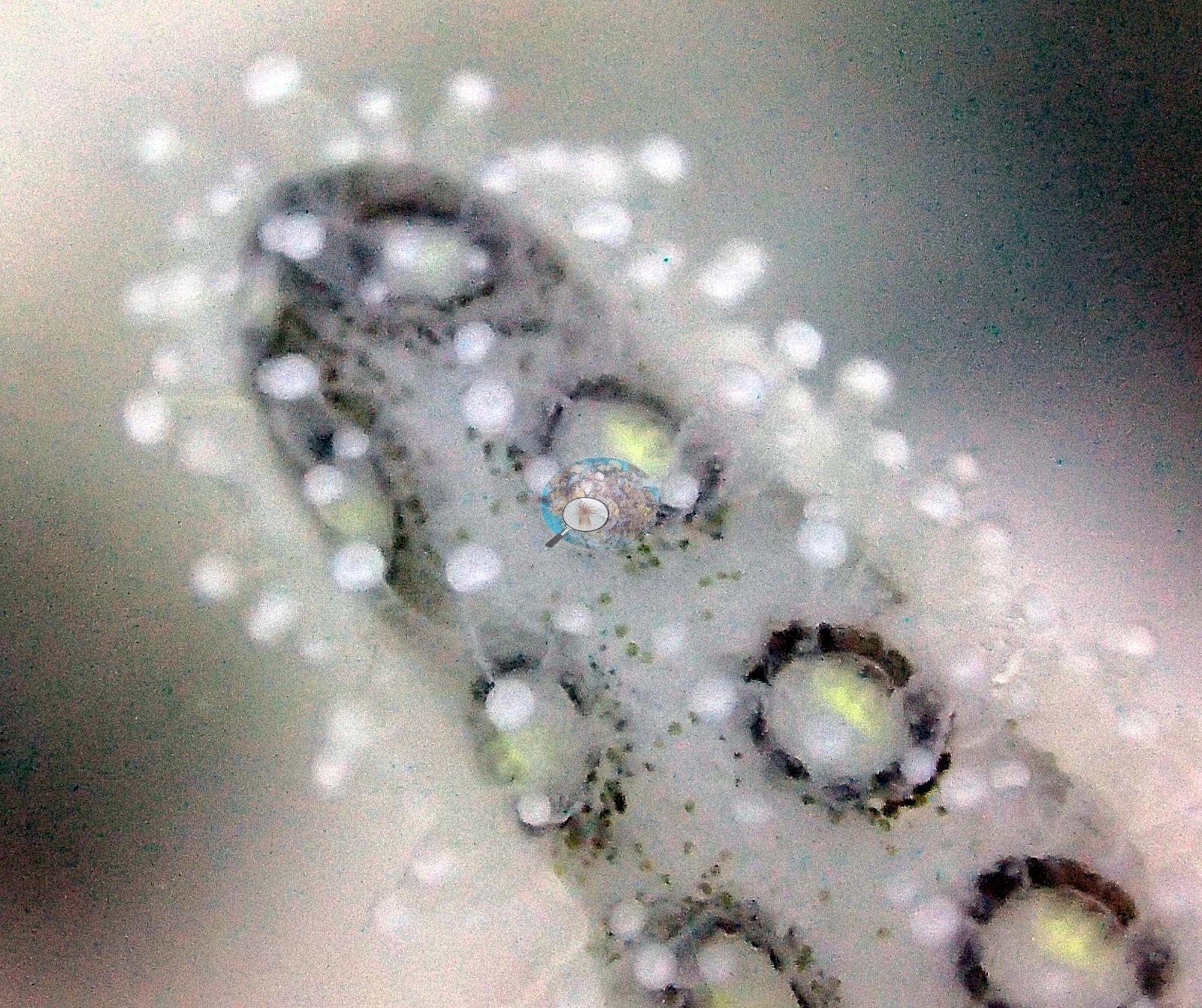
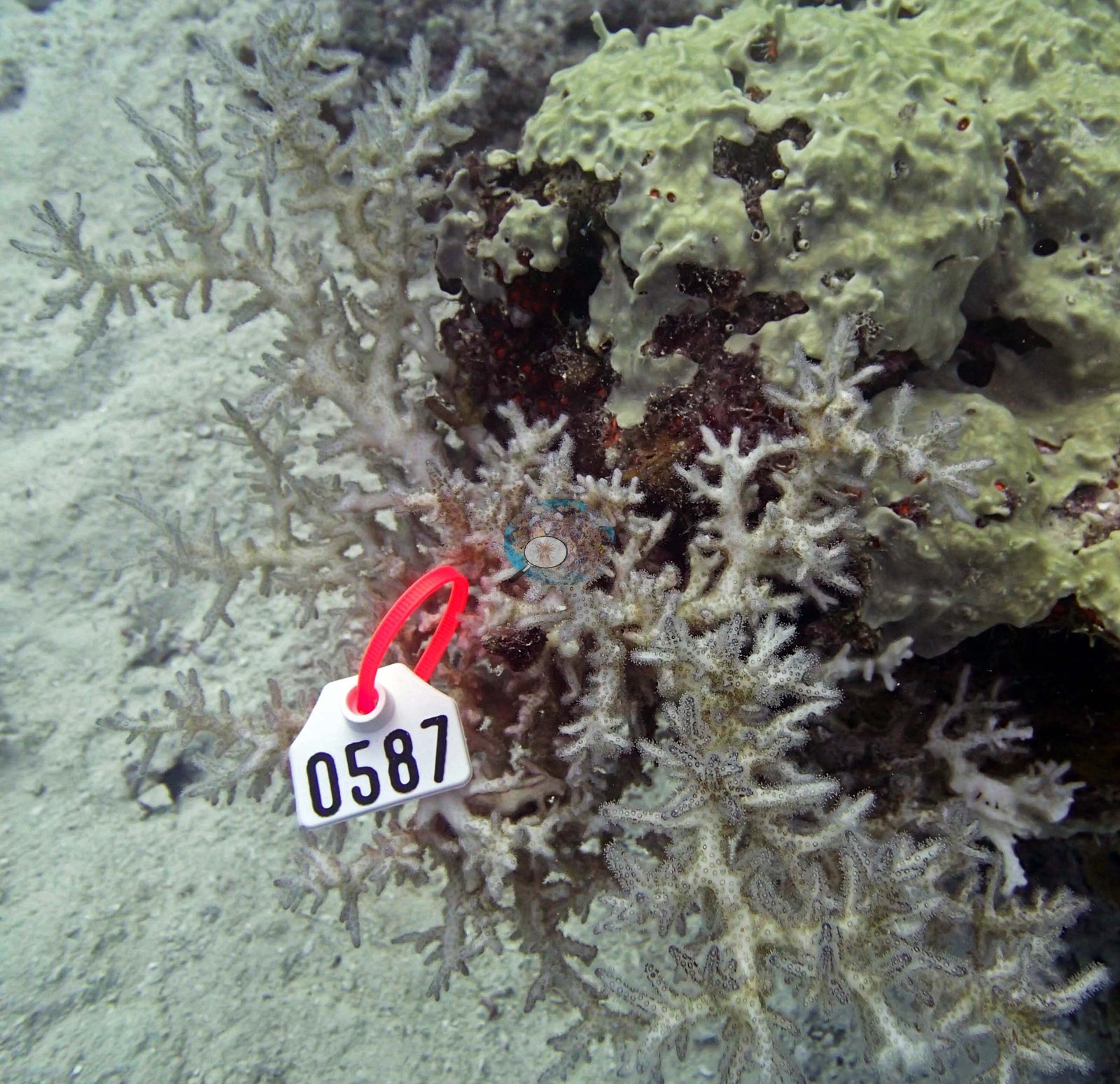
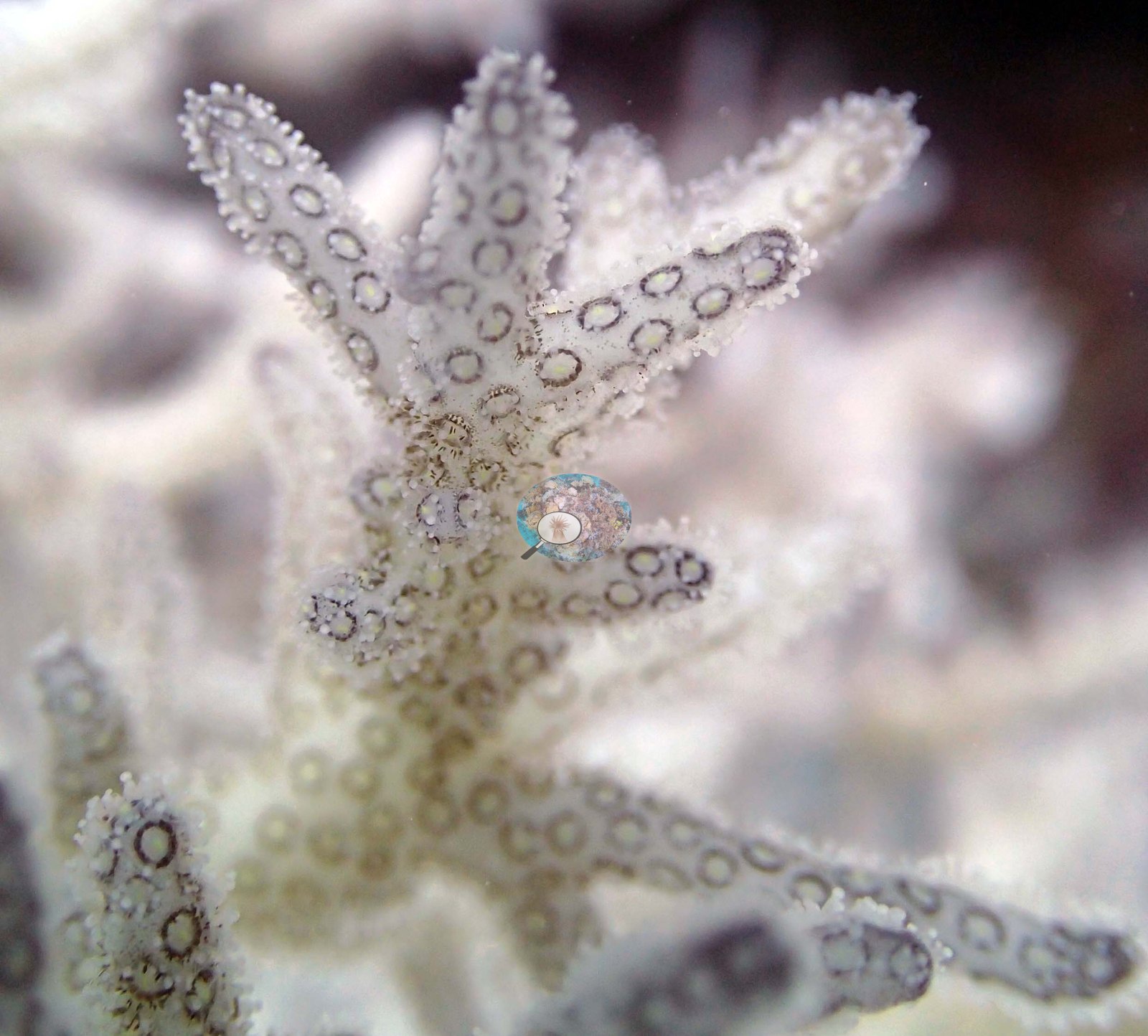
Anderson was busy sampling corals at this site, so the site description is derived from the Living Oceans Foundation survey team's site notes and benthic transect data. Those transects recorded 21% hard coral cover. Anderson sampled 8 Pocillopora colonies here (all labeled Pocillopora acuta), numbered 69 to 76 in the expedition series; the sampling sheet records five of them (colonies 69, 72, 73, 75, and 76) as 10-30% bleached, two of those as possibly or likely unhealthy. The photographs shown for this site are close-ups of the colonies Anderson sampled, so nothing here describes the reef's habitat, structure, or condition from imagery.
Data & links
- Download benthic survey data (CSV) ↗
- Download all LOF-GRE data (933 sites) ↗
- Photo portfolio ↗
- Coral Reef Diagnostics region page ↗
All images from Coral Reef Diagnostics. Data are from the Khaled bin Sultan Living Oceans Foundation Global Reef Expedition and Coral Reef Diagnostics.
© Coral Reef Diagnostics.
References
- Bruckner AW (2014). Global Reef Expedition: Kingdom of Tonga. Field Report. Khaled bin Sultan Living Oceans Foundation, Landover, MD. 28 pp. PDF
- Mayfield AB, Dempsey AC, Chen CS (2021). Assessing coral health in the Kingdom of Tonga with a coral health index. Platax 18:53-78. DOI