
Part of the regional summaries: Fiji - Northern Lau (Vanua Balavu / Cicia / Nayau) and Fiji - Lau

More info
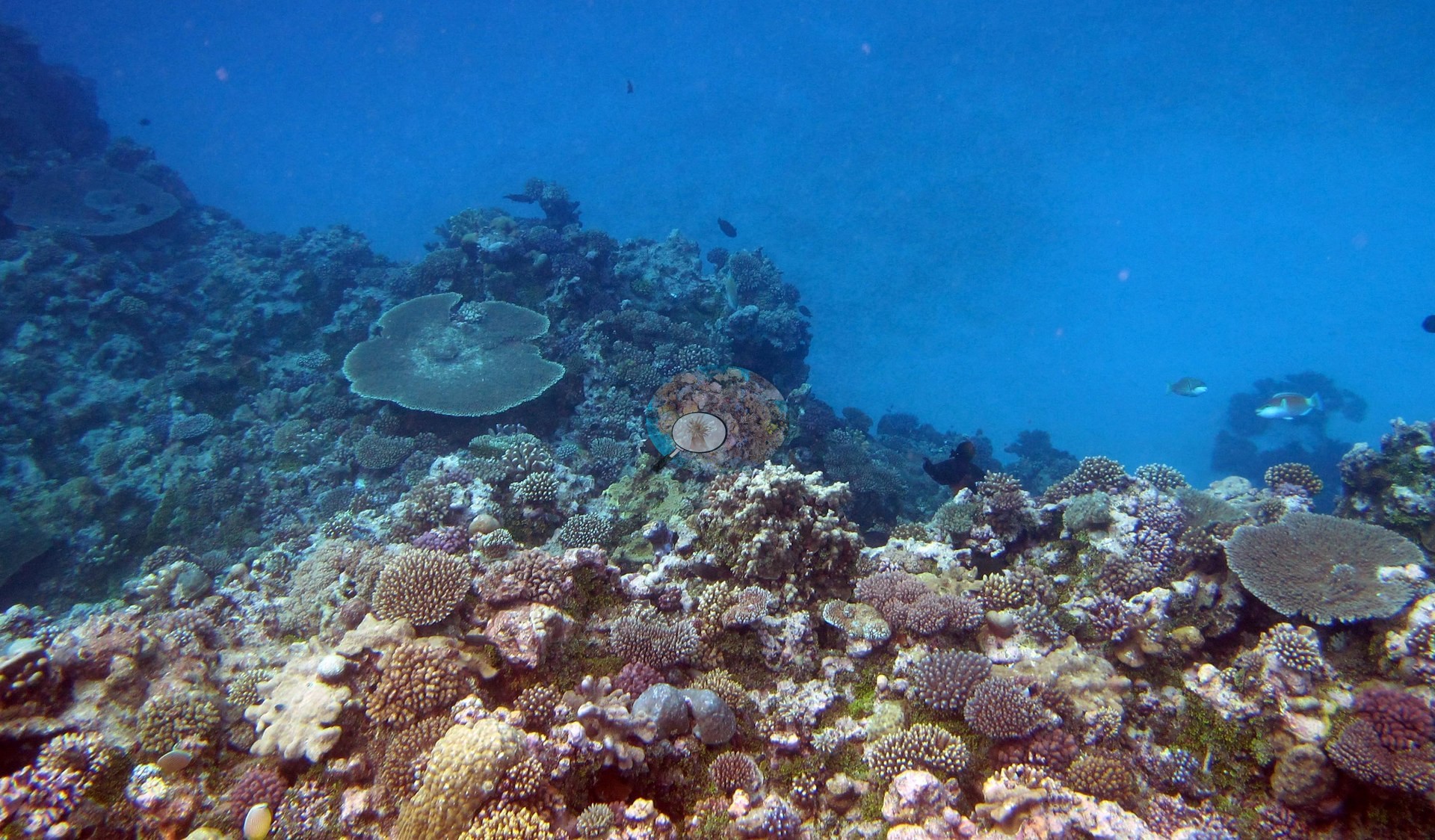
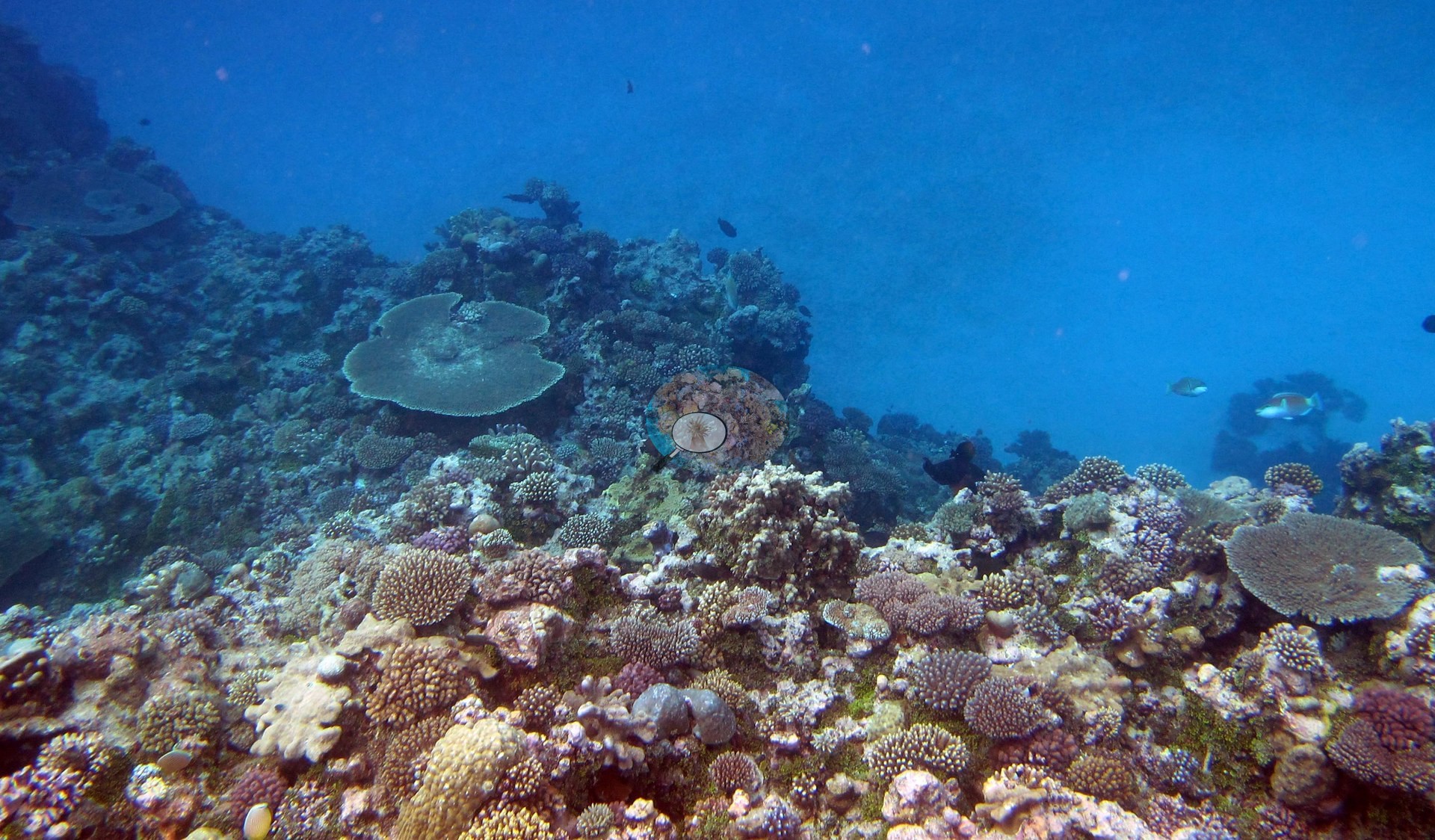
Fiji (NOAA CRW virtual station)A photogenic spur-and-groove edge on Vanua Vatu (dived to 12.8 m) where gray-green Acropora tables jut over the drop, a giant clam is cemented into a Porites boulder, and a whitetip reef shark cruises a coral-walled canyon. Visibility was excellent, cover is 42%, and the reef looked in genuinely good order. Surveyed on the Living Oceans Foundation's Global Reef Expedition.
E dua na bati ni spur-and-groove e totoka me taba e Vanua Vatu (a nunu kina ki na 12.8 m), e dremo tu kina na lase tepeli ni Acropora e roka (gray-green) ena dela ni titobu, e dua na vasua e vakadeitaki ena dua na vatu ni Porites, ka qalo voli e dua na qio (whitetip reef shark) ena dua na qara balavu e bati ni lase. E vinaka sara na rairai ni wai, 42% na ubi ni lase (coral cover), ka rairai tiko vinaka vakaidina na cakau.
AI translation of this summary; the English is authoritative. (low confidence)
CTD-cast midpoint of 26.6–26.8°C
Two other CRD dive sites with their own pages within 5 km shown in orange — click a marker to open its page.
🗺 Detailed map of the Global Reef Expedition dive sites, Vanua Vatu, Fiji (Khaled bin Sultan Living Oceans Foundation; opens in a new window)
Site description
General benthic features
The wide shot runs along a spur-and-groove edge where broad gray-green Acropora tables cantilever out over the drop into blue water, backed by ranks of corymbose and digitate colonies in lilac, rose, cream, and olive (e.g., Image 1).
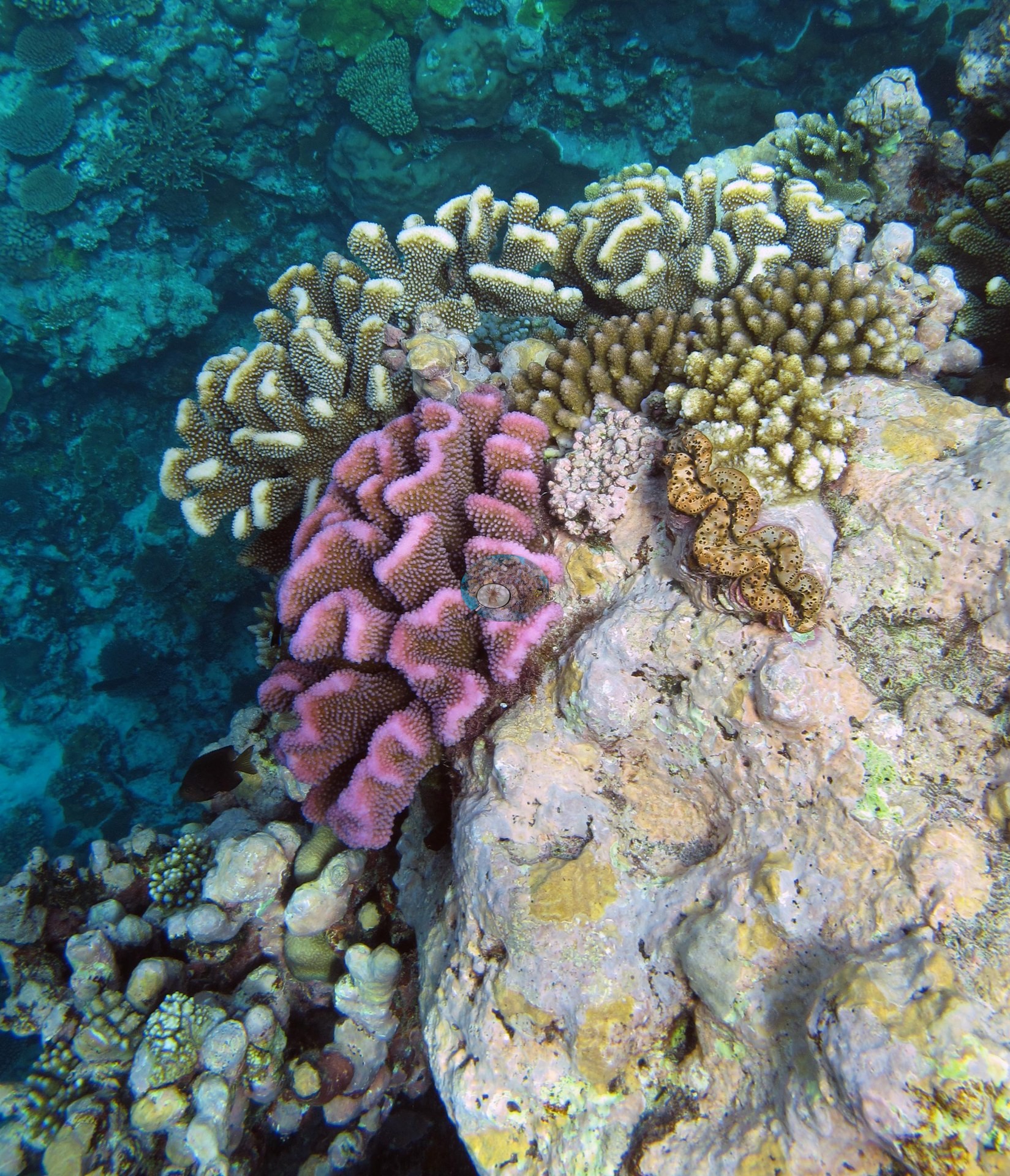
A closer frame climbs a coral-crowded spur: convoluted pink-and-white foliose colonies with papillate ridge crests, khaki columnar corals, thickets of stubby Acropora, all set against a bare Porites boulder into which a giant clam, Tridacna, is cemented, mantle frilled and speckled tan and black (e.g., Image 2).
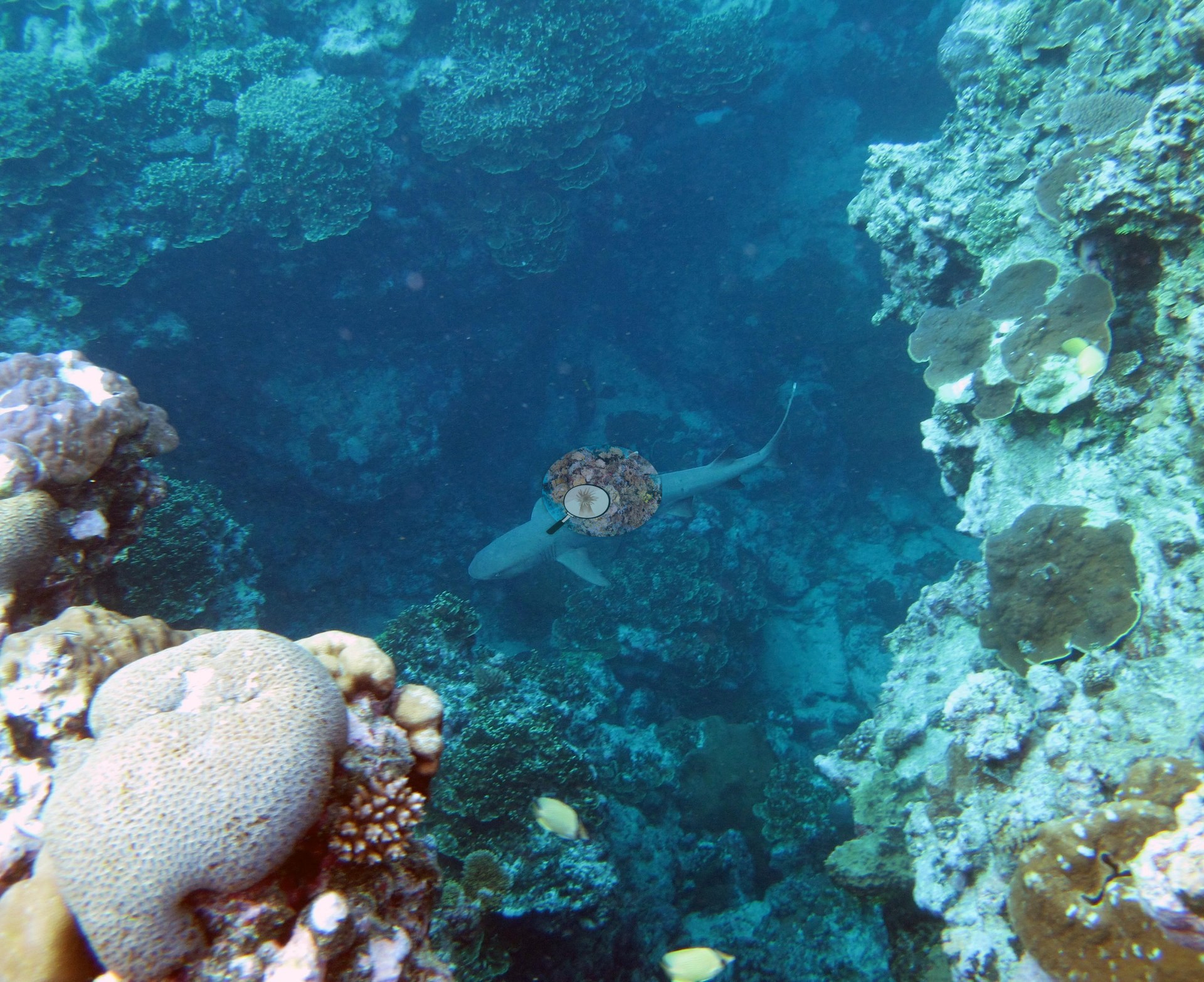
Another looks into a canyon between coral walls, its faces plated with foliose and encrusting colonies and smooth Porites domes, a whitetip reef shark cruising through the middle at mid-water (e.g., Image 3).
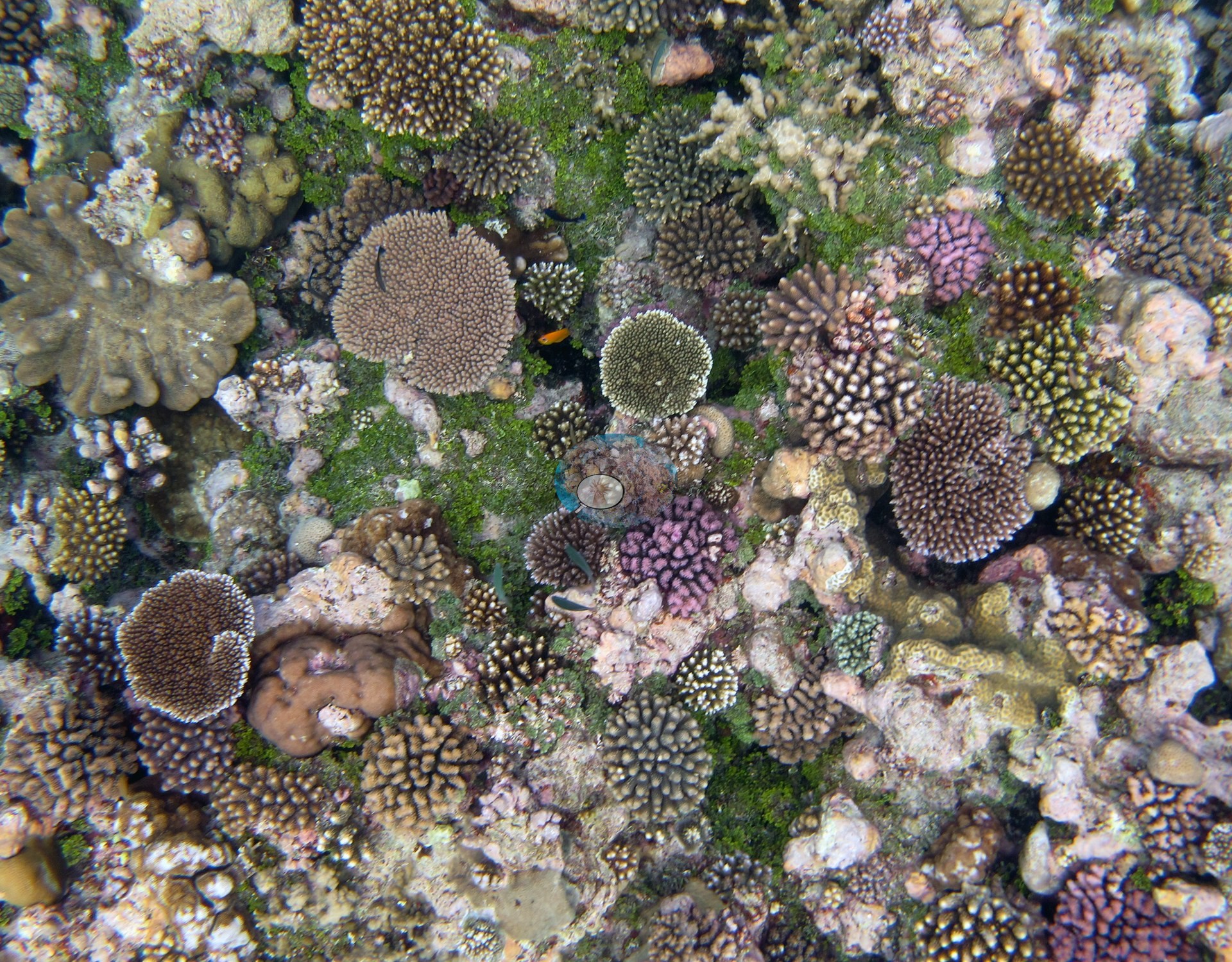
The overhead mosaic is dense with dozens of colonies — plates, cushions, purple and mauve Pocillopora-like heads, and small tables — separated only by strips of green turf and coralline pavement, with a small orange dottyback tucked in a crevice (e.g., Image 4).
Coral cover
- Reference: Khaled bin Sultan Living Oceans Foundation, Global Reef Expedition (in situ transect)
- FJVV37, on Vanua Vatu's west side (dived to 12.8 m), has 42% living coral by point-count survey, and the frames show a reef in genuinely good order.
- Transect mean 42 ± 7.2% SE (n = 4 transects; Living Oceans Foundation per-transect benthic data); the headline above is this all-transect mean.
Stressors
Visibility was excellent, and no bleaching, disease, or crown-of-thorns damage is in view. The Living Oceans Foundation transects here recorded 4.5% cyanobacteria and no recently dead coral; they carry no bleaching, disease, or crown-of-thorns field.
Comparisons with other data
Apart from the Living Oceans Foundation survey shown here, we found no other surveys at this site as of 2026. If you would like to share yours, please email us.
Other notes
Survey team's site notes: Sites FJVV36, FJVV37, FJVV35 were all located on the west side of the island. Large colonies of massive Porites were intermixed with Halimeda clumps. Up around 15 m typical spur and groove morphology. CCA and smaller acroporids were common in the shallows. Peyssonnelia was common throughout all depths. Specifically at site FJVV37, large plates of Pachyseris, Merulina were common.
Data & links
- Download benthic survey data (CSV) ↗
- Download all LOF-GRE data (933 sites) ↗
- Photo portfolio ↗
- Coral Reef Diagnostics page for this area ↗
All images from Coral Reef Diagnostics. Data are from the Khaled bin Sultan Living Oceans Foundation Global Reef Expedition and Coral Reef Diagnostics.
© Coral Reef Diagnostics.