
Part of the regional summaries: Fiji - Northern Lau (Vanua Balavu / Cicia / Nayau) and Fiji - Lau

More info
Fiji (NOAA CRW virtual station)A pinnacle on Vanua Vatu's west side whose crown and flanks are carpeted in small cream, olive, lime, lilac, and purple-brown colonies, with one overhead frame showing a dozen colonies wedged together and almost no bare rock. Shallower ground has more rubble and a meter-wide mustard-yellow mounding coral, and cover is 33%. Surveyed on the Living Oceans Foundation's Global Reef Expedition.
E dua na vatu ni lase e tubu cake (pinnacle) ena yasana i ra i Vanua Vatu, ka na kena dakuna kei na yasana e ubi ena lase lalai e roka (cream, olive, lime, lilac, purple-brown), ka dua na itaba taba mai cake (overhead) e vakaraitaka e tinikarua na lase e veisemati vata ka voleka ni sega na vatu lala. Na vanua e sega ni titobu e levu cake kina na tikitiki ni lase mate (rubble) kei na dua na lase vakaulu (mounding) e roka dromodromo (mustard-yellow) e dua na mita na kena raba, ka 33% na ubi ni lase (coral cover).
AI translation of this summary; the English is authoritative. (low confidence)
CTD-cast midpoint of 26.6–26.7°C
Two other CRD dive sites with their own pages within 5 km shown in orange — click a marker to open its page.
🗺 Detailed map of the Global Reef Expedition dive sites, Vanua Vatu, Fiji (Khaled bin Sultan Living Oceans Foundation; opens in a new window)
13 of the 18 photographs on this page are shown beside the text that discusses them under "Site description" below.
Site description
Setting
The site has real vertical structure: Anderson noted one frame as the top of the pinnacle (e.g., Image 16), and the wide frames read as the crown and flanks of a rise rather than a flat terrace (e.g., Image 11, Image 14, Image 15, Image 16).
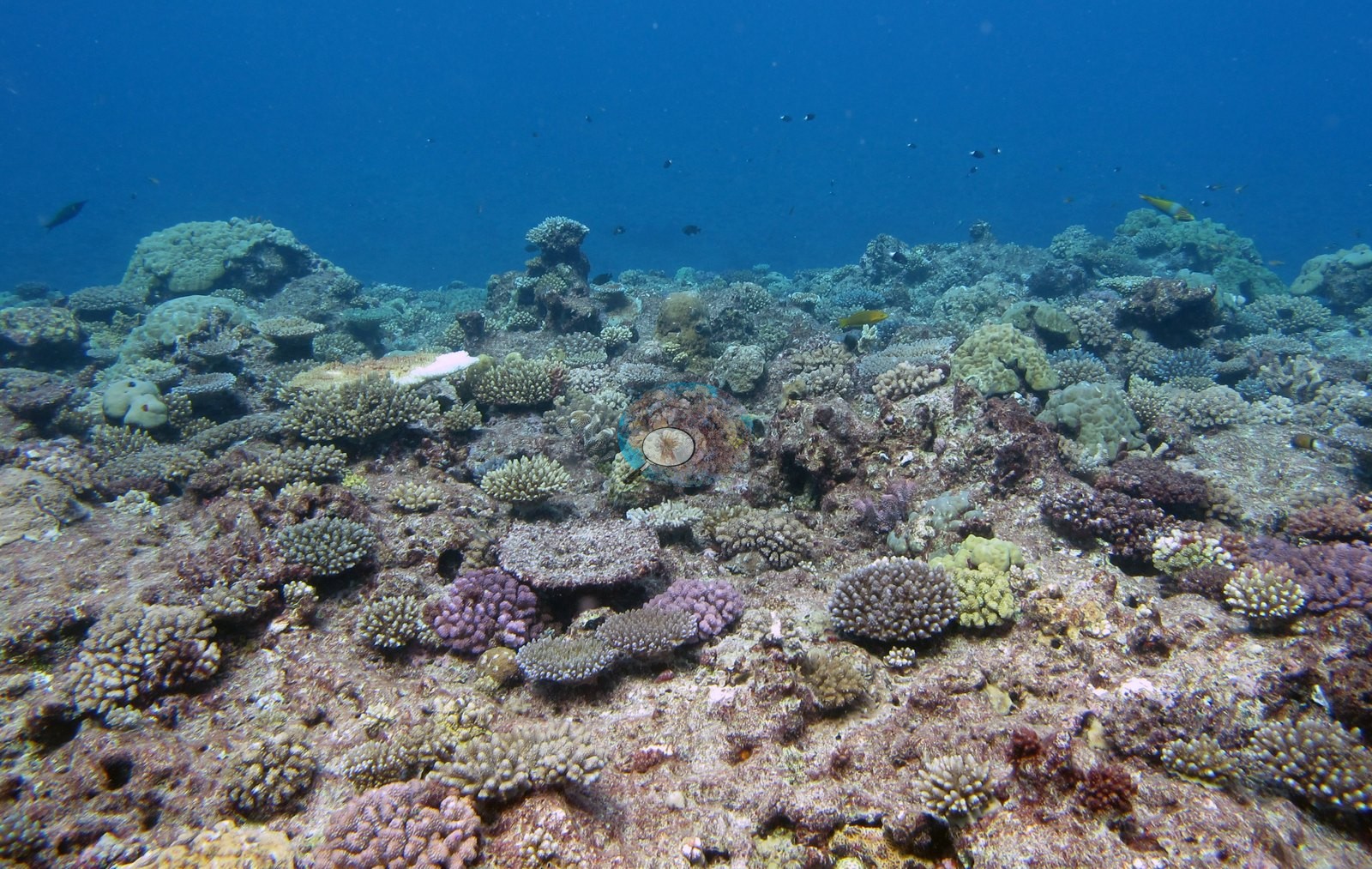
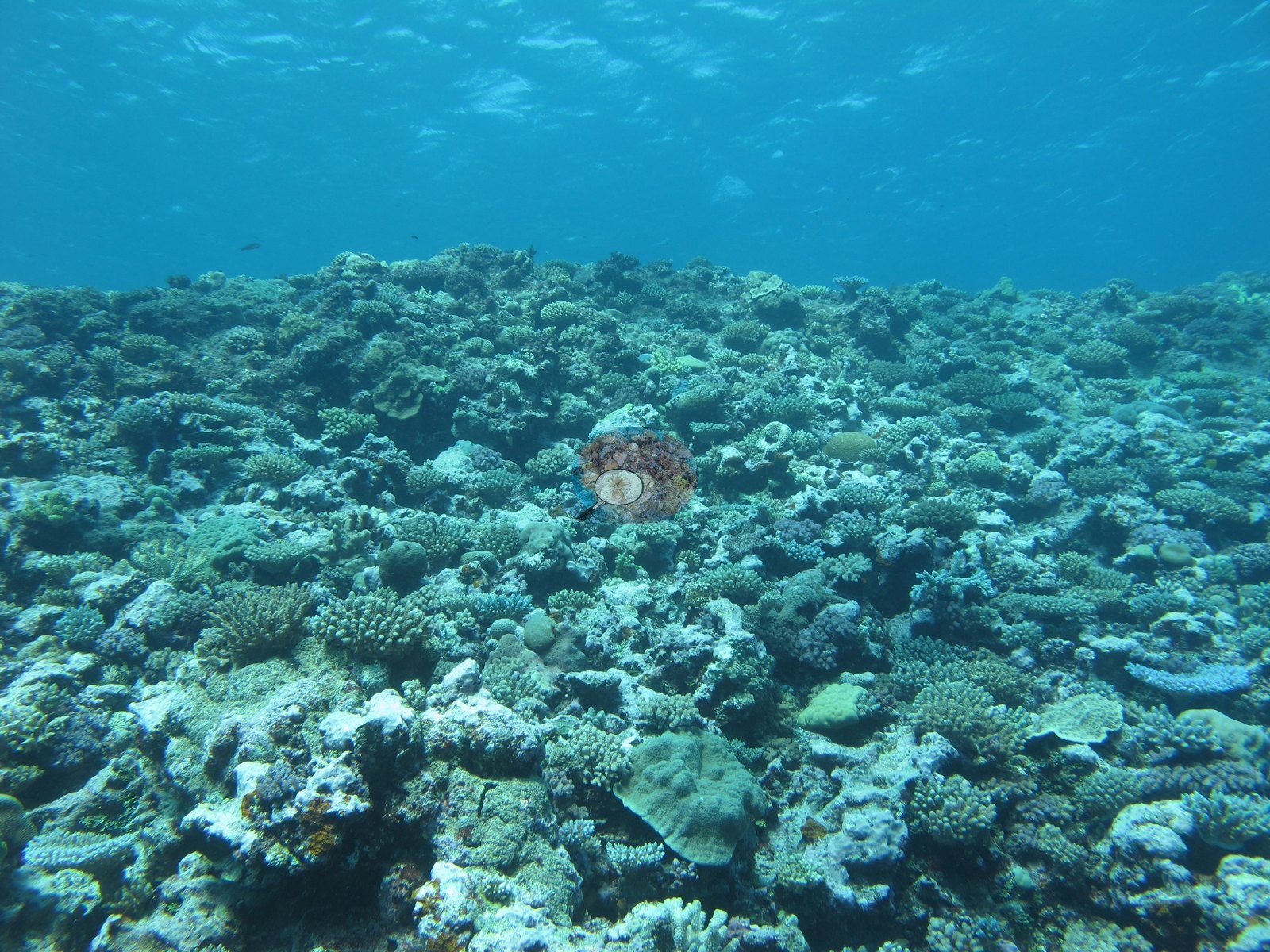
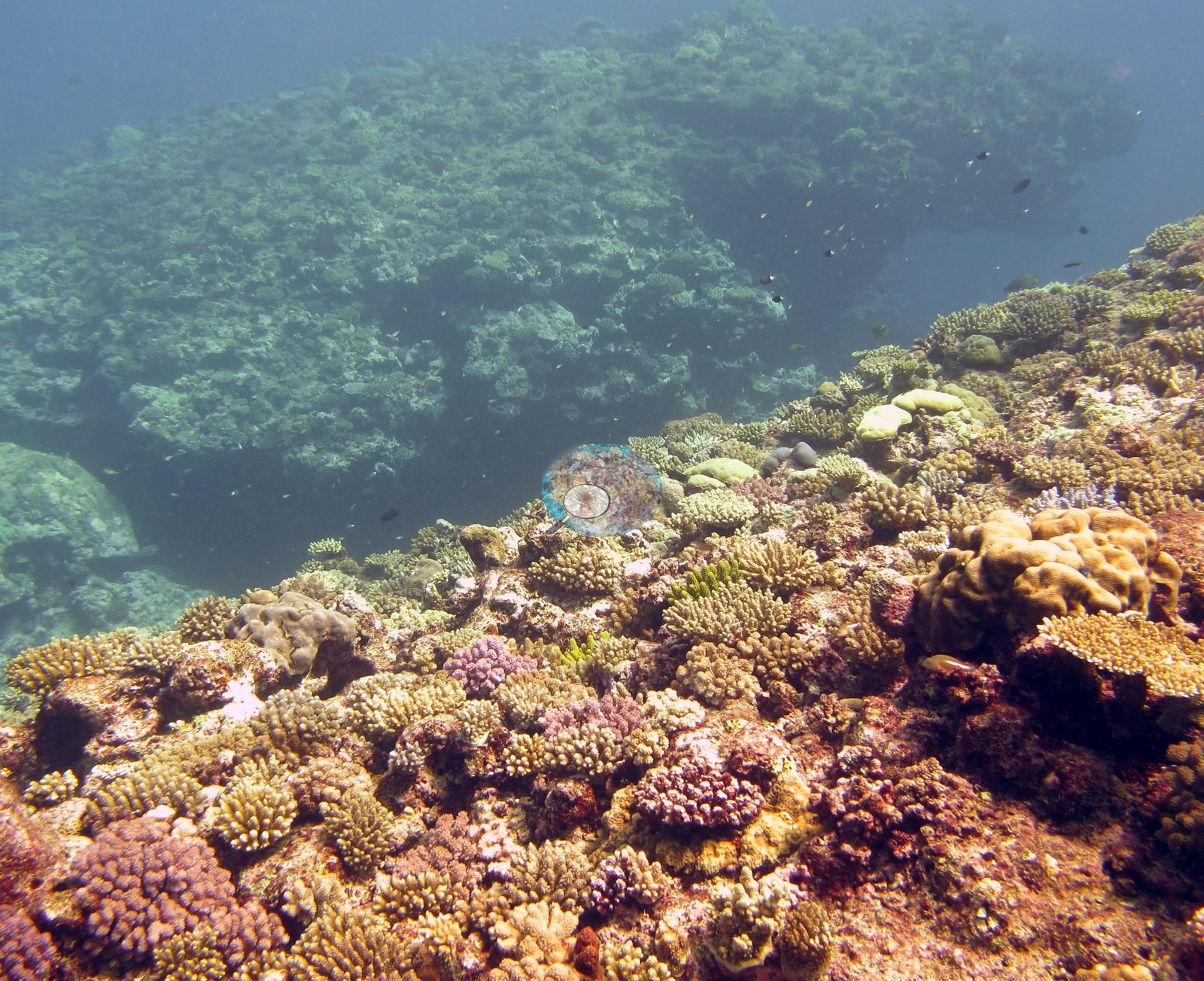
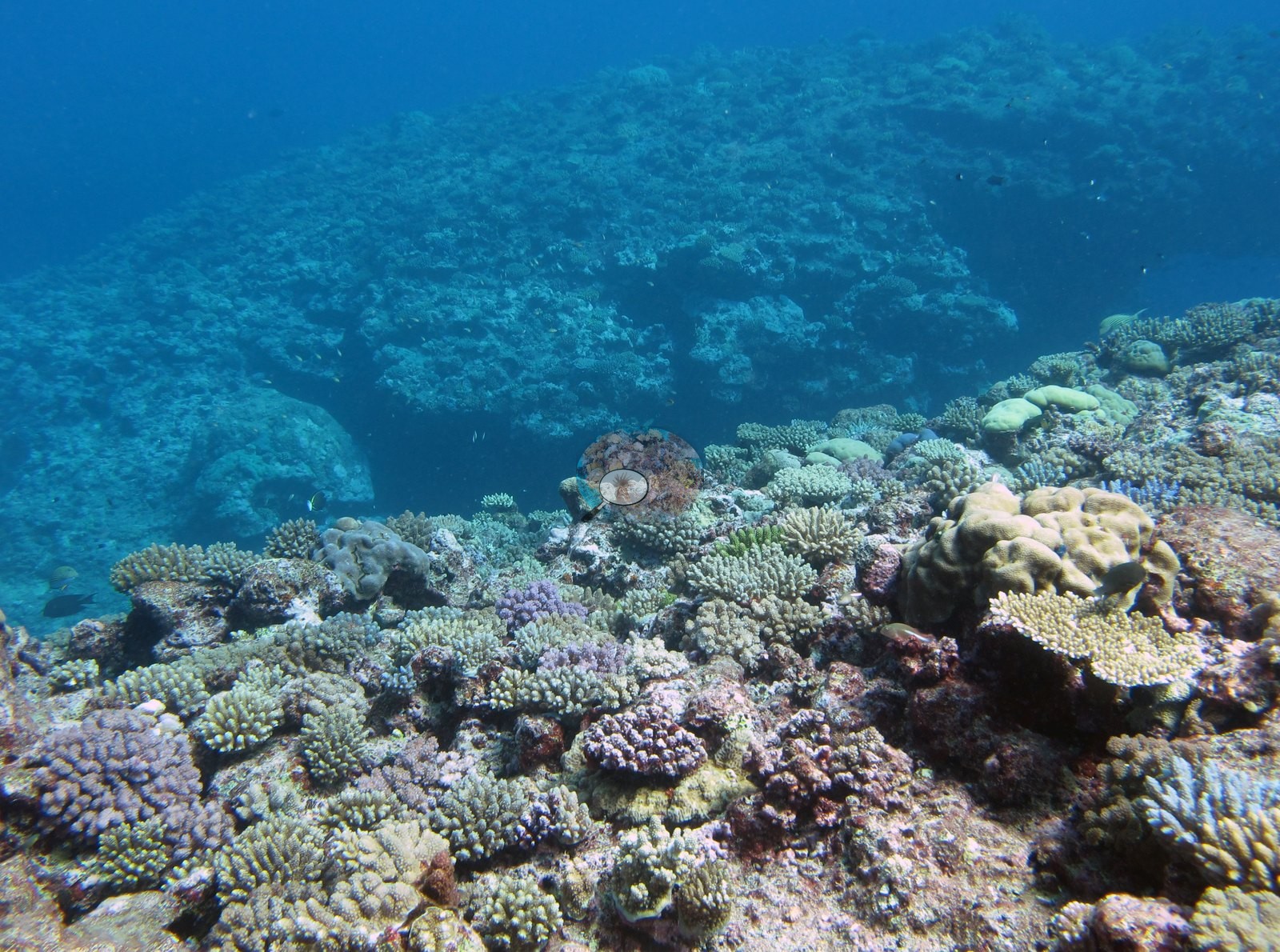
Visibility was good in the crown frames and poorer in the shallow and diver frames.
General benthic features
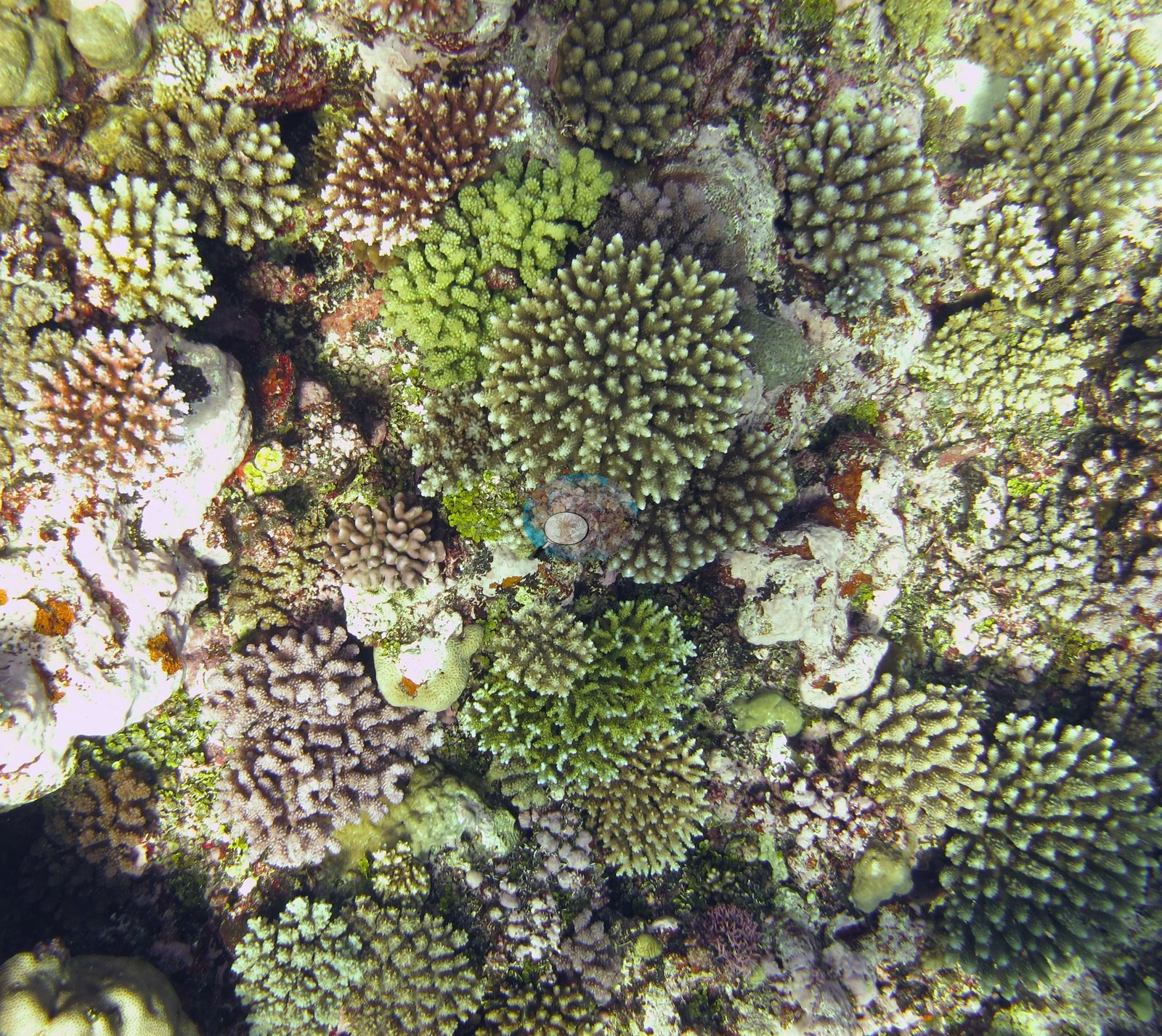
Across those wide frames the surface is a dense, even carpet of small colonies — corymbose cushions, stubby digitate clumps, low tables, knobby Pocillopora-type heads, and smooth mounding domes — in cream, olive, lime, lilac, and deep purple-brown, with pale chalky coralline-crusted pavement and rubble tracts running between them (e.g., Image 11, Image 14, Image 15, Image 16). The close overhead frame of what Anderson called a coral garden is a mosaic of a dozen or more lime and olive colonies wedged together with almost no bare rock in view (e.g., Image 12).
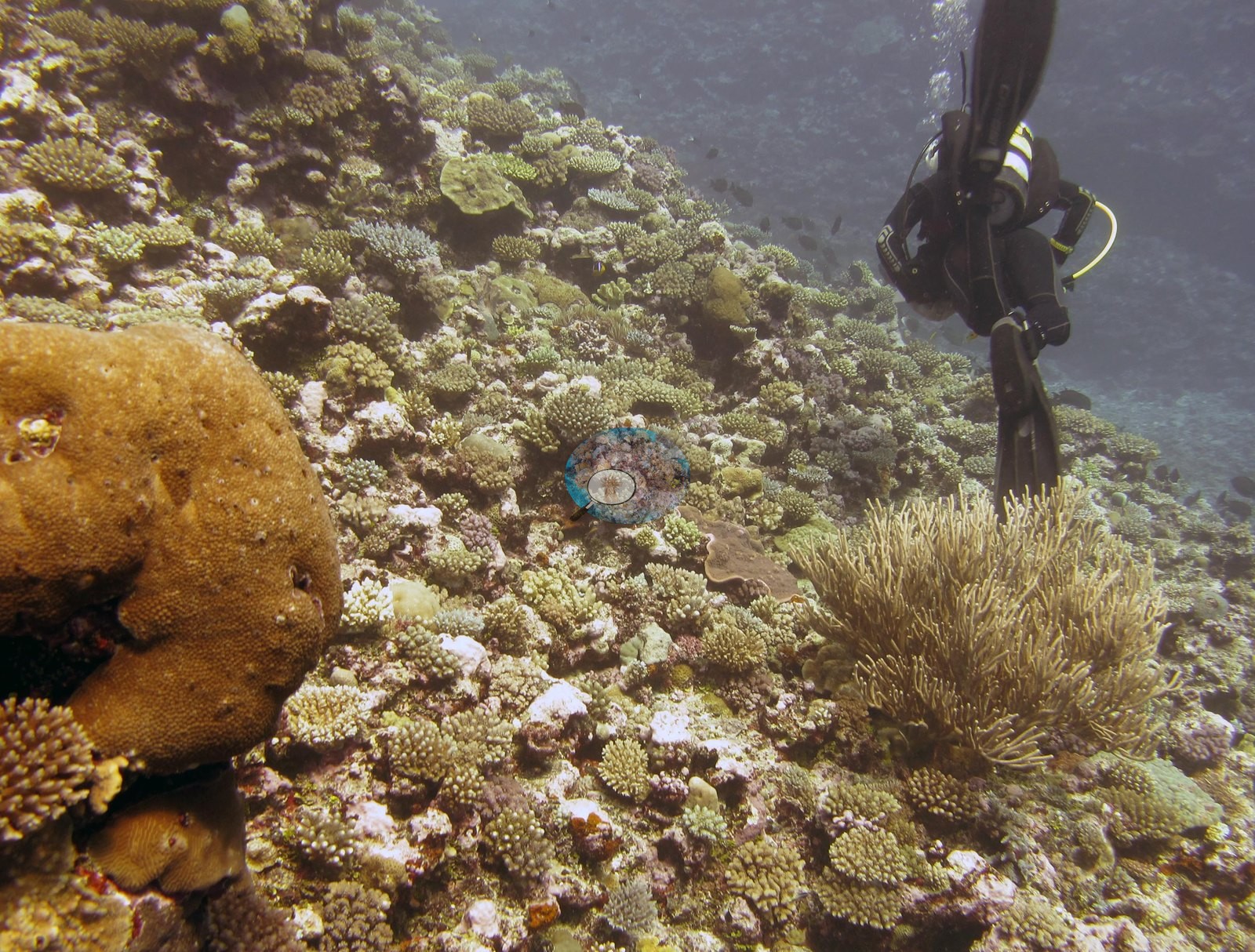
A shallower frame taken in flat light shows a different face: a large mustard-yellow mounding colony a meter or so across at the edge of frame, an olive branching thicket beside it, a survey diver working above, and noticeably more rubble and bare pavement than the crown frames carry (e.g., Image 9).
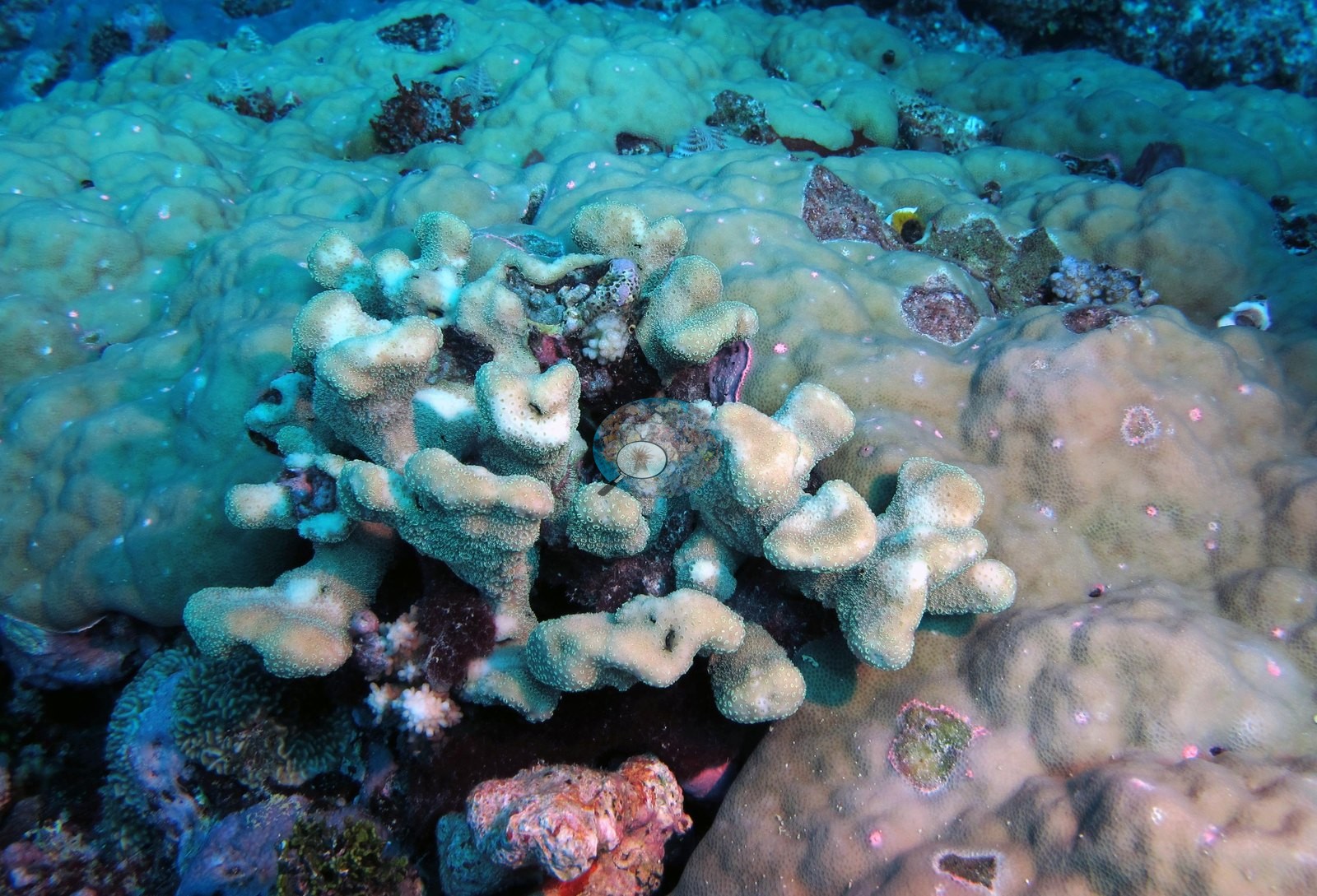
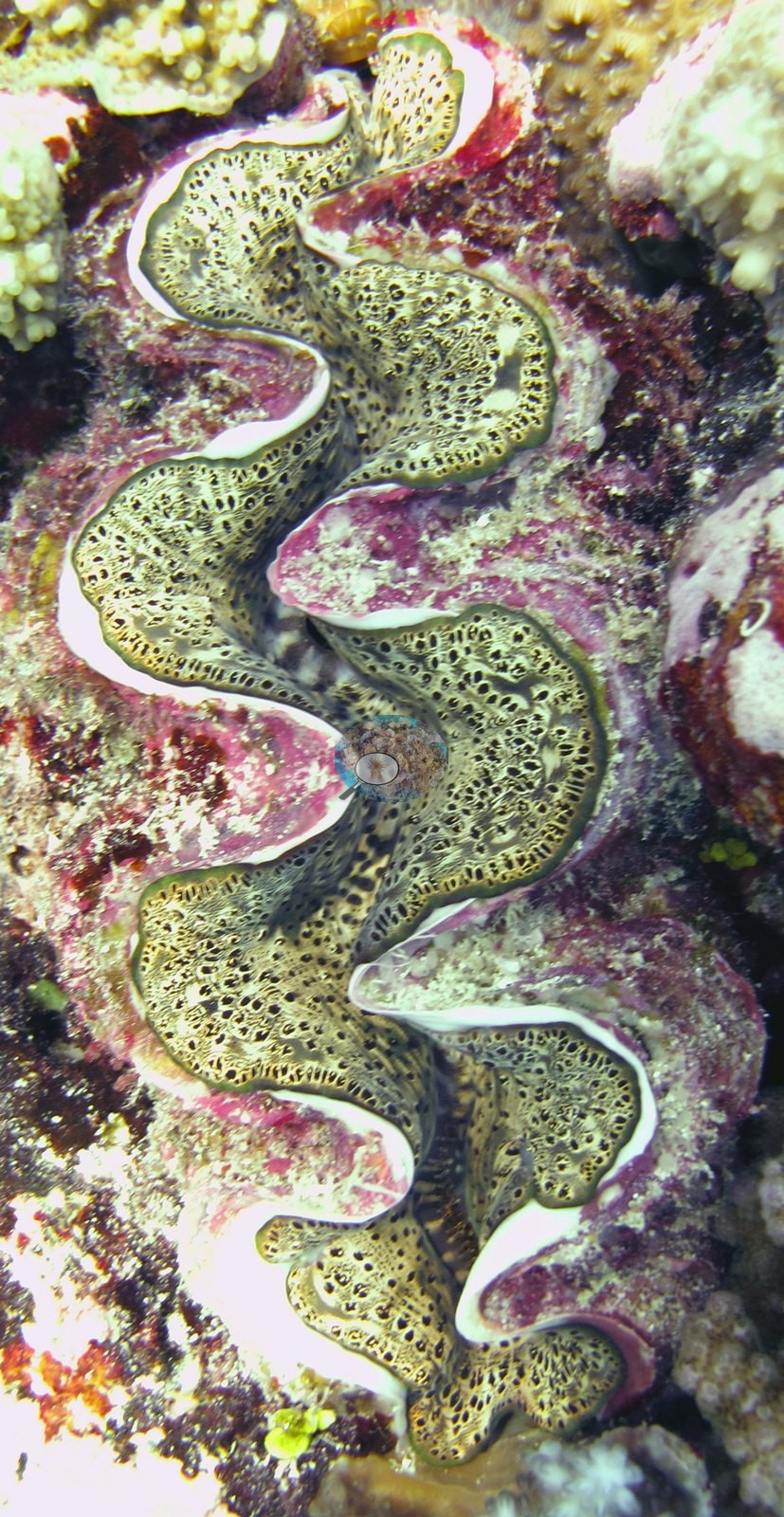
Two frames are close colony work on the same subject — a mint-green and cream colony of thick, blunt, club-tipped lobes with fine evenly spaced polyp cups, growing directly on top of large tan and mint mounding colonies with knobby, finely porous surfaces, with dark red coralline crust and small pink-rimmed encrusting patches around them (e.g., Image 6, Image 7).
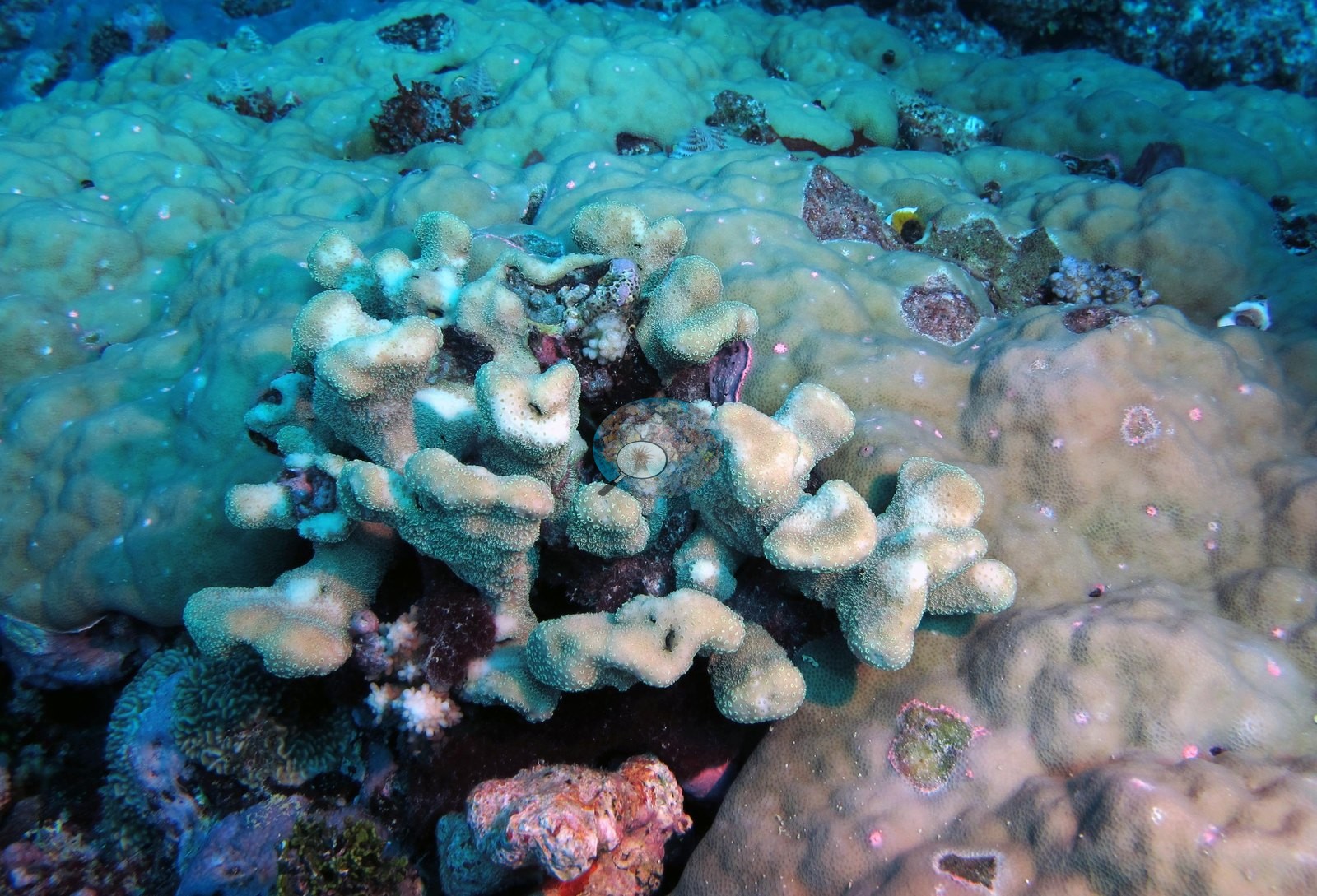
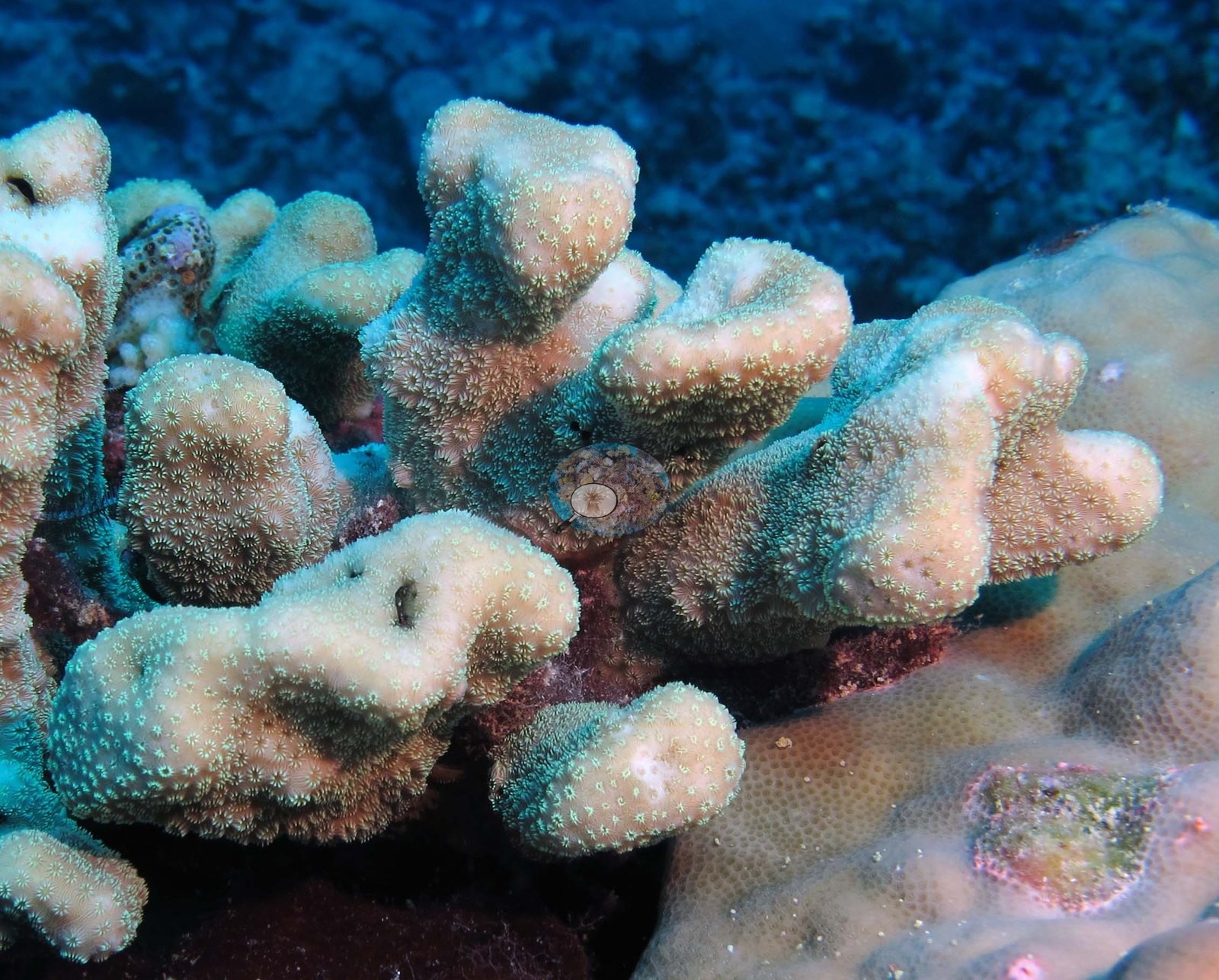
Anderson recorded the colonies in the first of those (e.g., Image 6) as fluorescent corals; the exposure is ordinary strobe-and-ambient light, not a blue-light fluorescence frame, so the vivid mint-cyan is the colonies' own color rendered cool by the water.
Coral cover
- Reference: Khaled bin Sultan Living Oceans Foundation, Global Reef Expedition (in situ transect)
- Transect mean 33 ± 8.3% SE (n = 4 transects; Living Oceans Foundation per-transect benthic data); the headline above is this all-transect mean.
Stressors
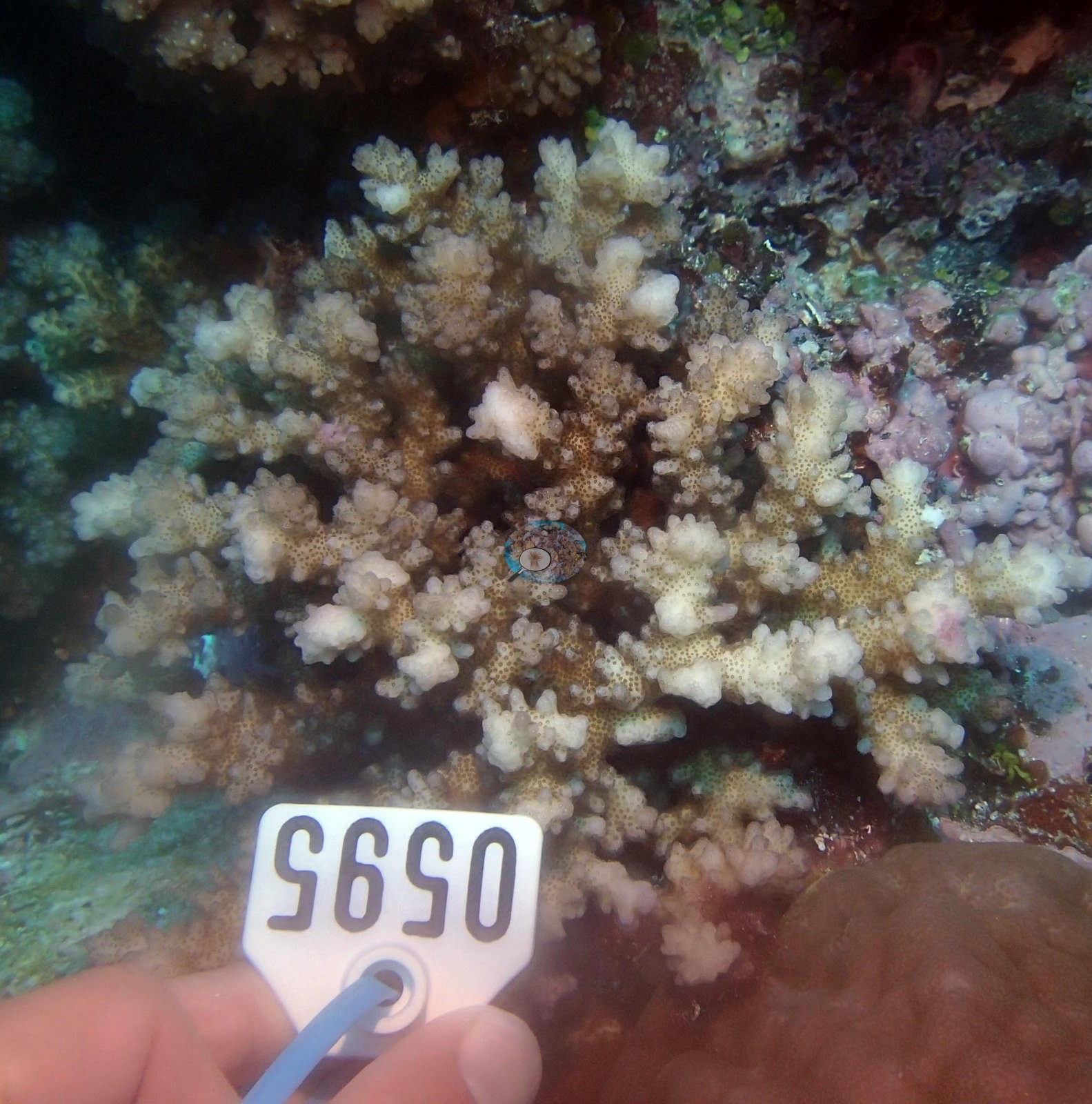
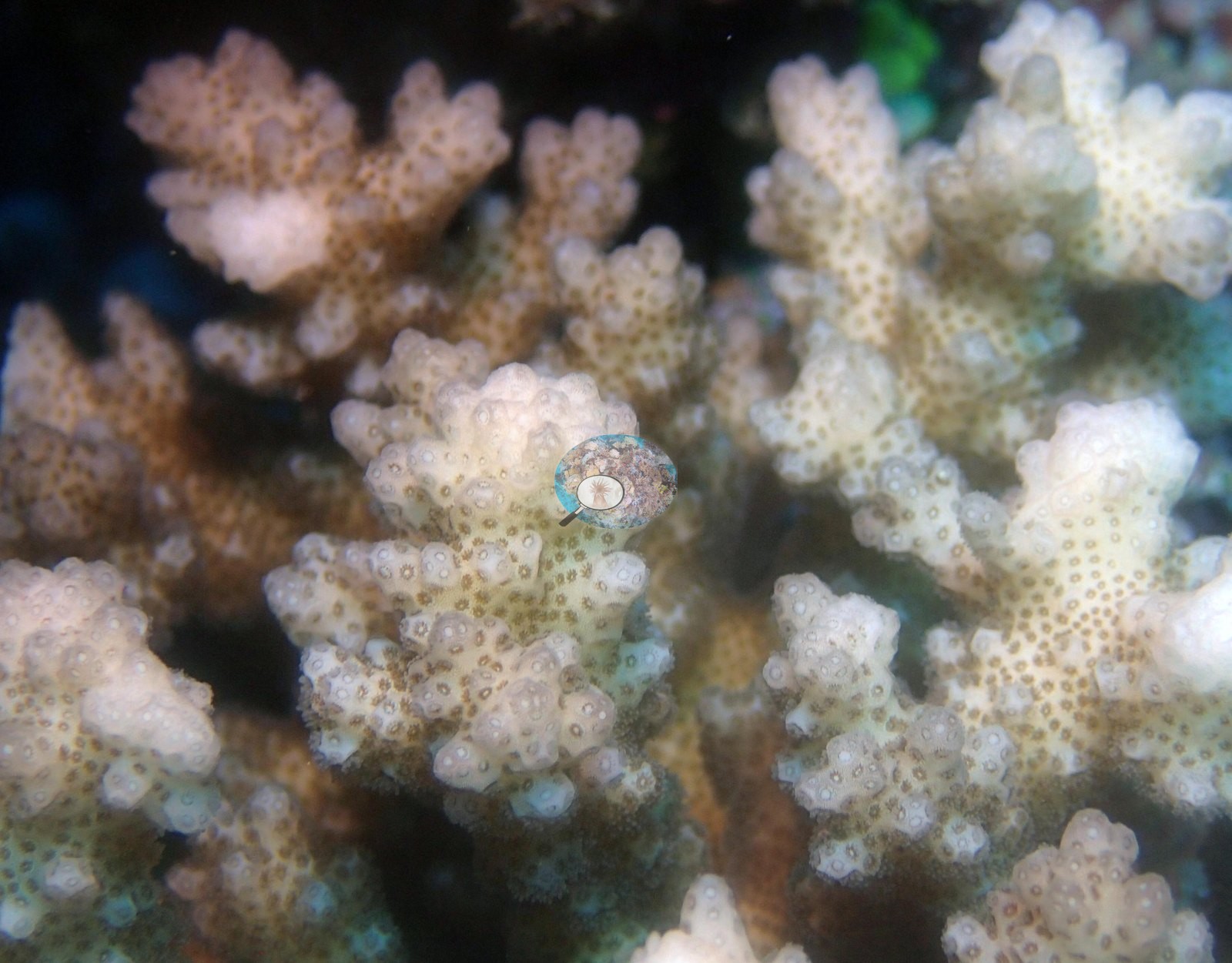
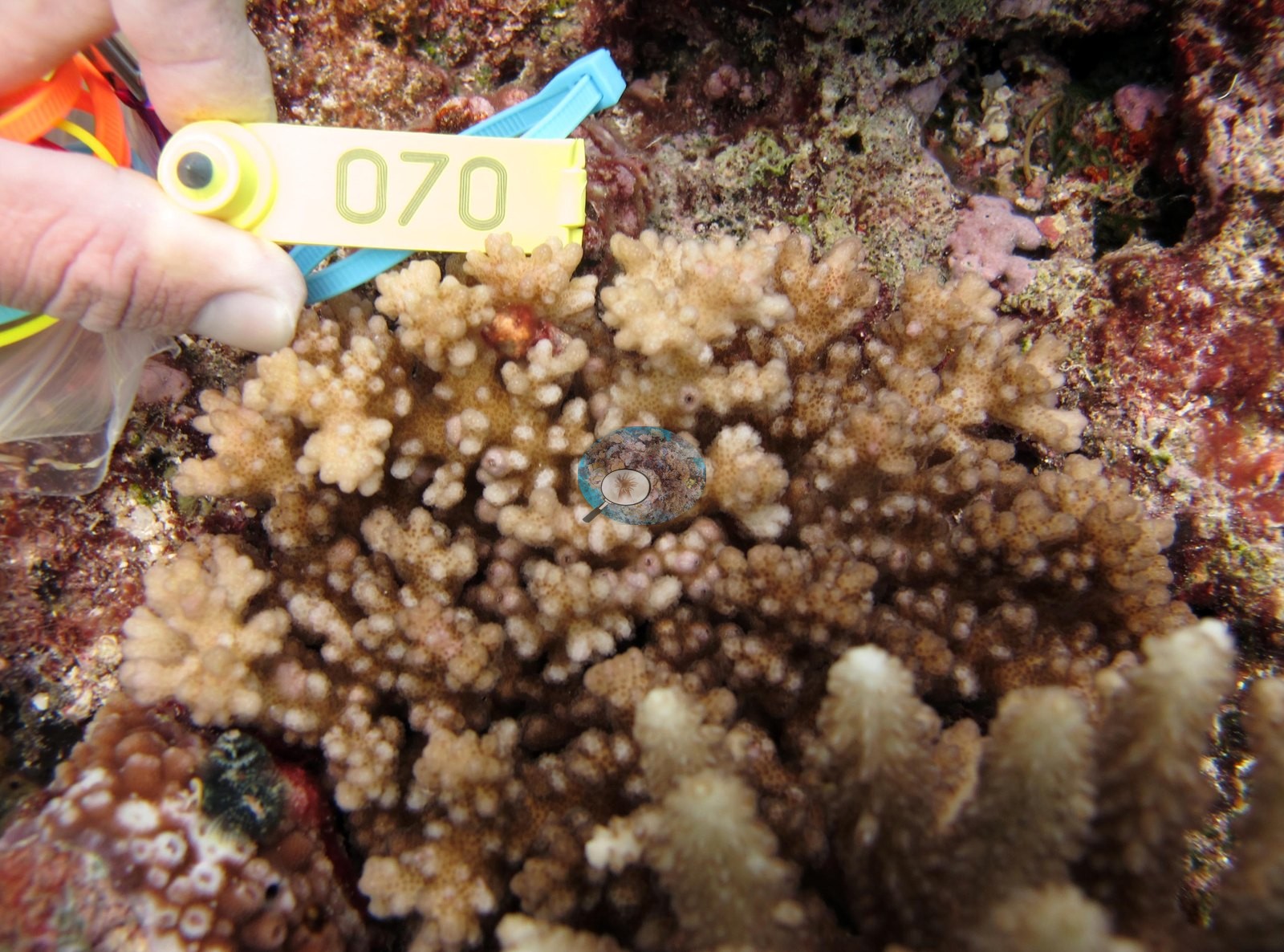
Tissue in both is intact, continuous, and evenly pigmented, with no exposed skeleton. Apart from the sampled colonies, no bleaching, disease lesions, crown-of-thorns feeding scars, or fresh mortality are visible in the reef frames. Anderson's sample sheet records two of the four colonies sampled here as 95% and 90% bleached and 'likely unhealthy' (F72; F73, 'on top of pinnacle'), and the frames of them show that bleaching, cream-white over nearly the whole colony (e.g., Image 3, Image 4, Image 5, Image 17).
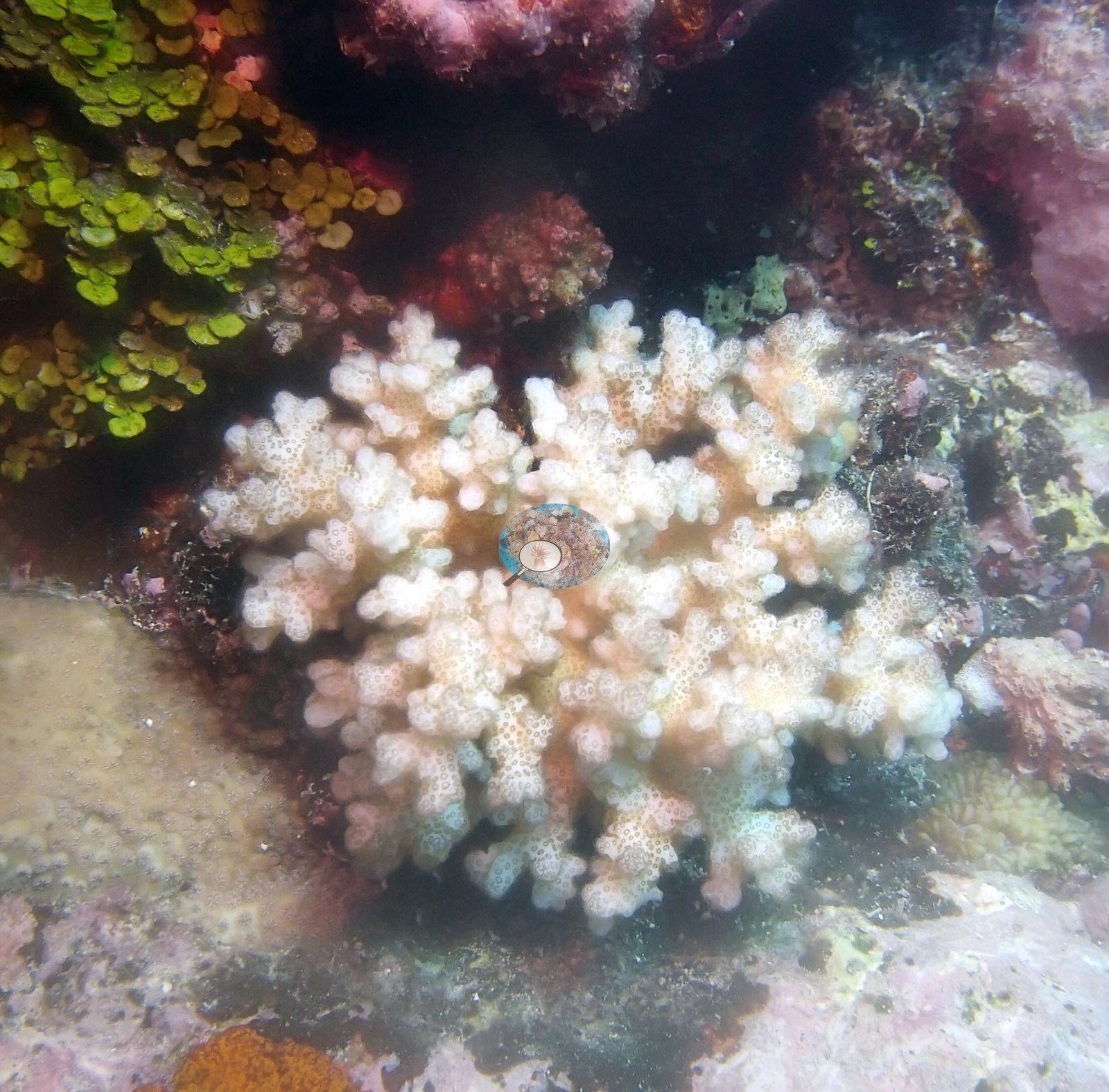
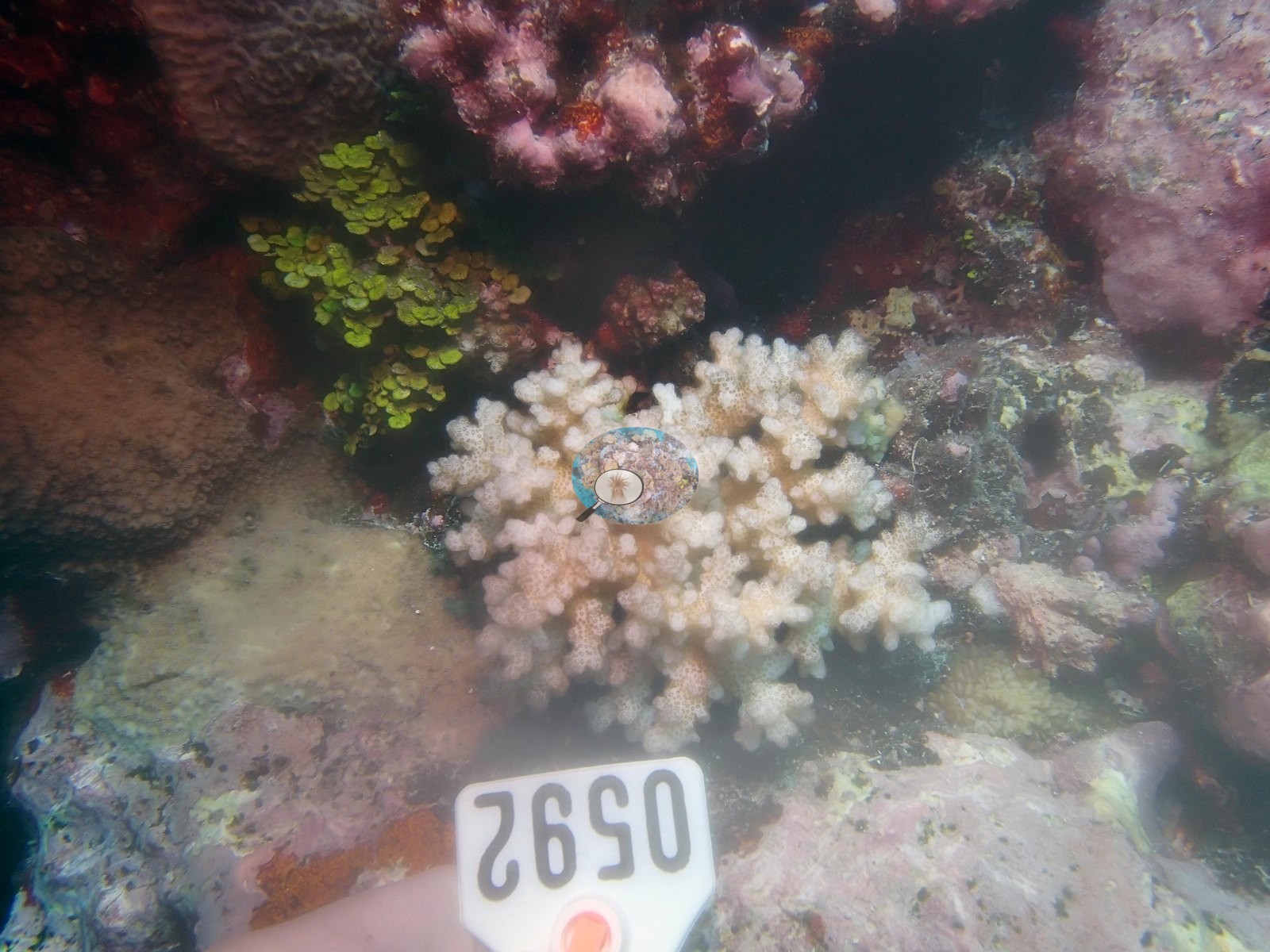
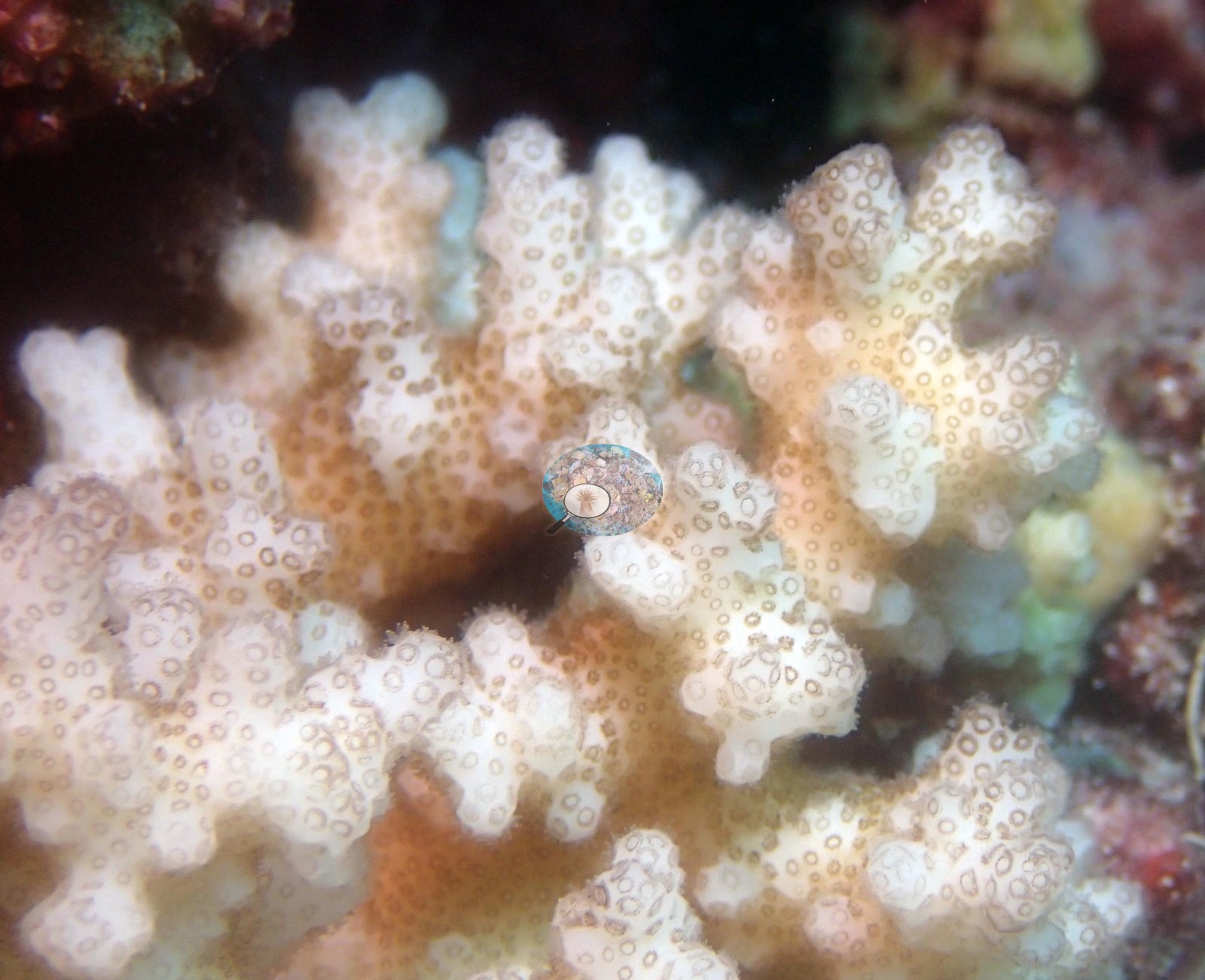
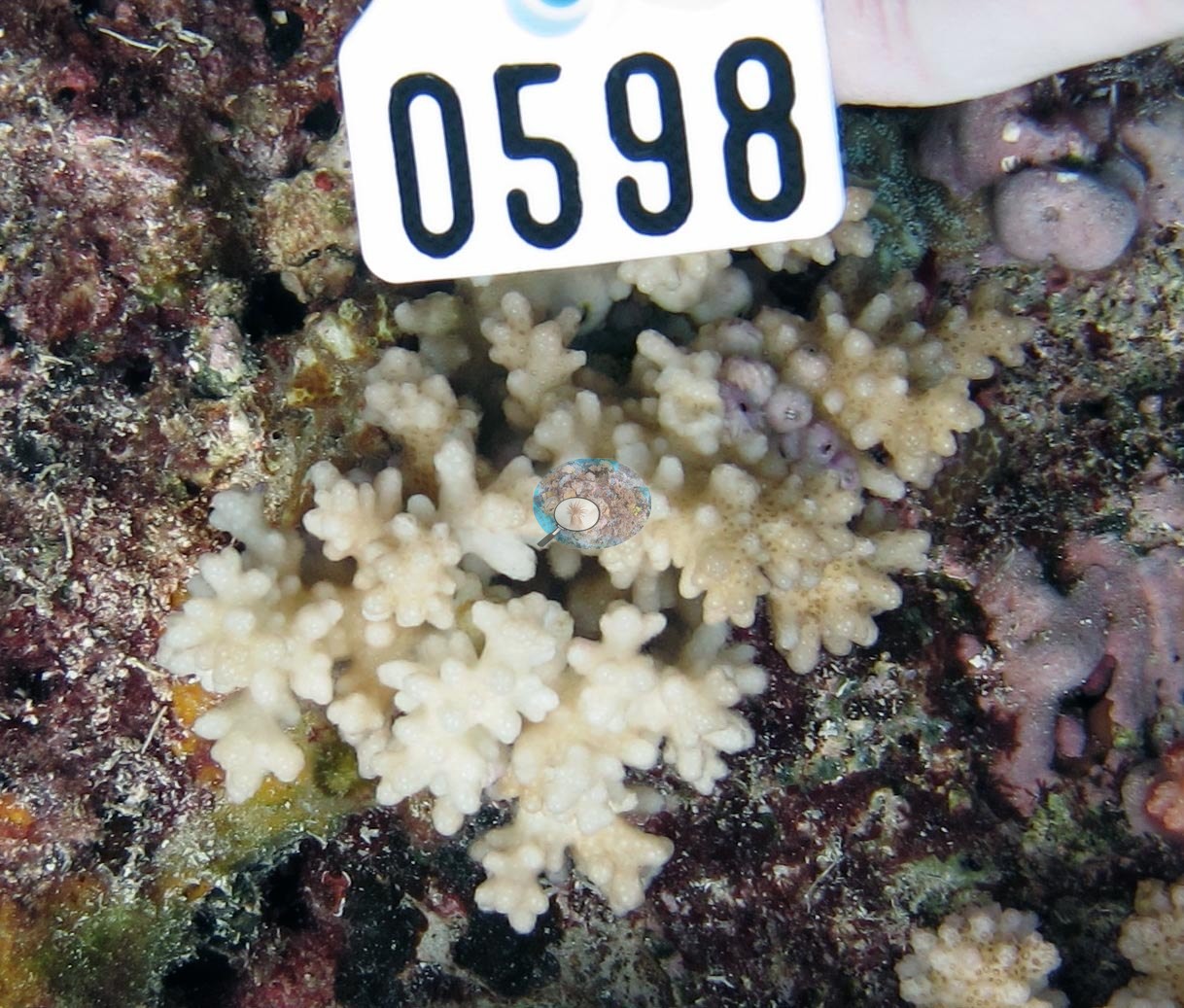
The Living Oceans Foundation transects here recorded 0.3% cyanobacteria and no recently dead coral.
Fish and other fauna
Small wrasses and damselfishes work above the crown; the reef edge falls away into clear deep blue behind it in several frames.
Comparisons with other data
Apart from the Living Oceans Foundation survey shown here, we found no other surveys at this site as of 2026. If you would like to share yours, please email us.
Other notes
One frame (e.g., Image 10) renders blue-green with a diver in mid-frame, and the shallow frame (Image 9) is hazy and flat; structure is readable in both but color identification is not safe.
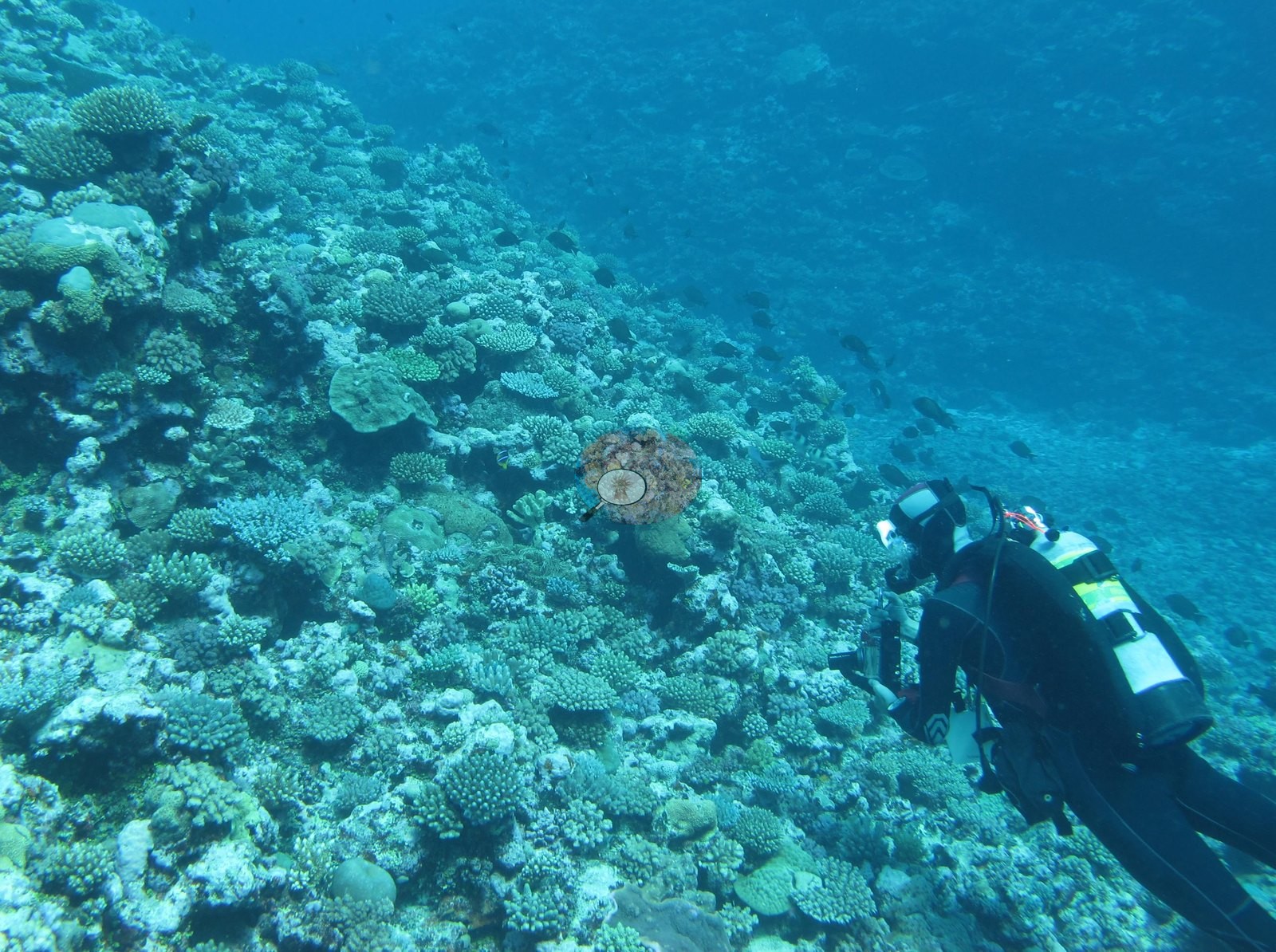
Survey team's site notes: Sites FJVV36, FJVV37, FJVV35 were all located on the west side of the island. Up around 15 m typical spur and groove morphology. CCA and smaller acroporids were common in the shallows. Peyssonnelia was common throughout all depths. Overall coral cover was high around the island, mainly because of large colonies of Porites and plating corals.
Data & links
- Download benthic survey data (CSV) ↗
- Download all LOF-GRE data (933 sites) ↗
- Photo portfolio ↗
- Coral Reef Diagnostics page for this area ↗
All images from Coral Reef Diagnostics. Data are from the Khaled bin Sultan Living Oceans Foundation Global Reef Expedition and Coral Reef Diagnostics.
© Coral Reef Diagnostics.