
Part of the regional summaries: Fiji - Northern Lau (Vanua Balavu / Cicia / Nayau) and Fiji - Lau
More info
Fiji (NOAA CRW virtual station)A deep, steep, current-swept wall off Tuvuca dominated not by stony coral but by a forest of gorgonians: huge golden, green, magenta, and orange-red sea fans and bushy pink soft-coral trees. The stony corals are mostly ruffled plates stacked in tiers, with some staghorn, at 28% cover. Surveyed on the Living Oceans Foundation's Global Reef Expedition.
E dua na bati ni cakau e titobu ka tu dodonu mai Tuvuca, ka kaukauwa kina na ia ni wasawasa (current-swept), e sega ni liu kina na lase dina ia na veikau ni gorgonian (forest of gorgonians): na iri ni wasawasa (sea fans) levu sara e roka koula, drokadroka, magenta, kei na damudamu-oranse, kei na lase malumu (soft-coral) e vaka na kau e roka (pink). Na lase dina e levu ga na lase vakaiteba vakaimumu (ruffled) ka veitabaki vakaikabakaba, kei na vica na staghorn, ka 28% na ubi ni lase (coral cover).
AI translation of this summary; the English is authoritative. (low confidence)
CTD-cast midpoint; the cast read 26.8°C throughout
One other CRD dive site with its own page within 5 km shown in orange — click a marker to open its page.
🗺 Detailed map of the Global Reef Expedition dive sites, Tuvuca, Fiji (Khaled bin Sultan Living Oceans Foundation; opens in a new window)
This page shows 50 of the 56 photographs from this site, including every one the text cites.
33 of the 50 photographs on this page are shown beside the text that discusses them under "Site description" below.
Site description
Setting
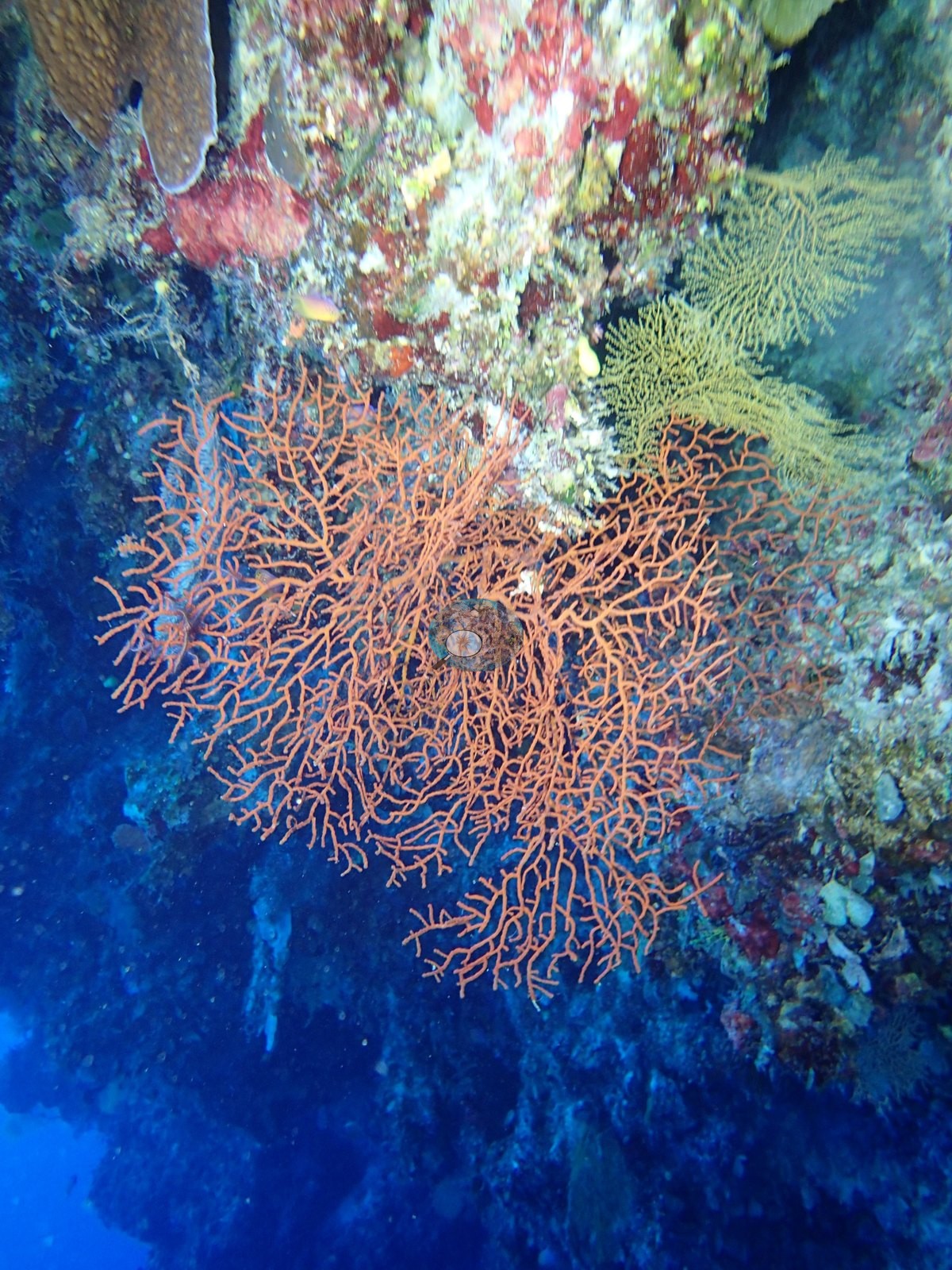
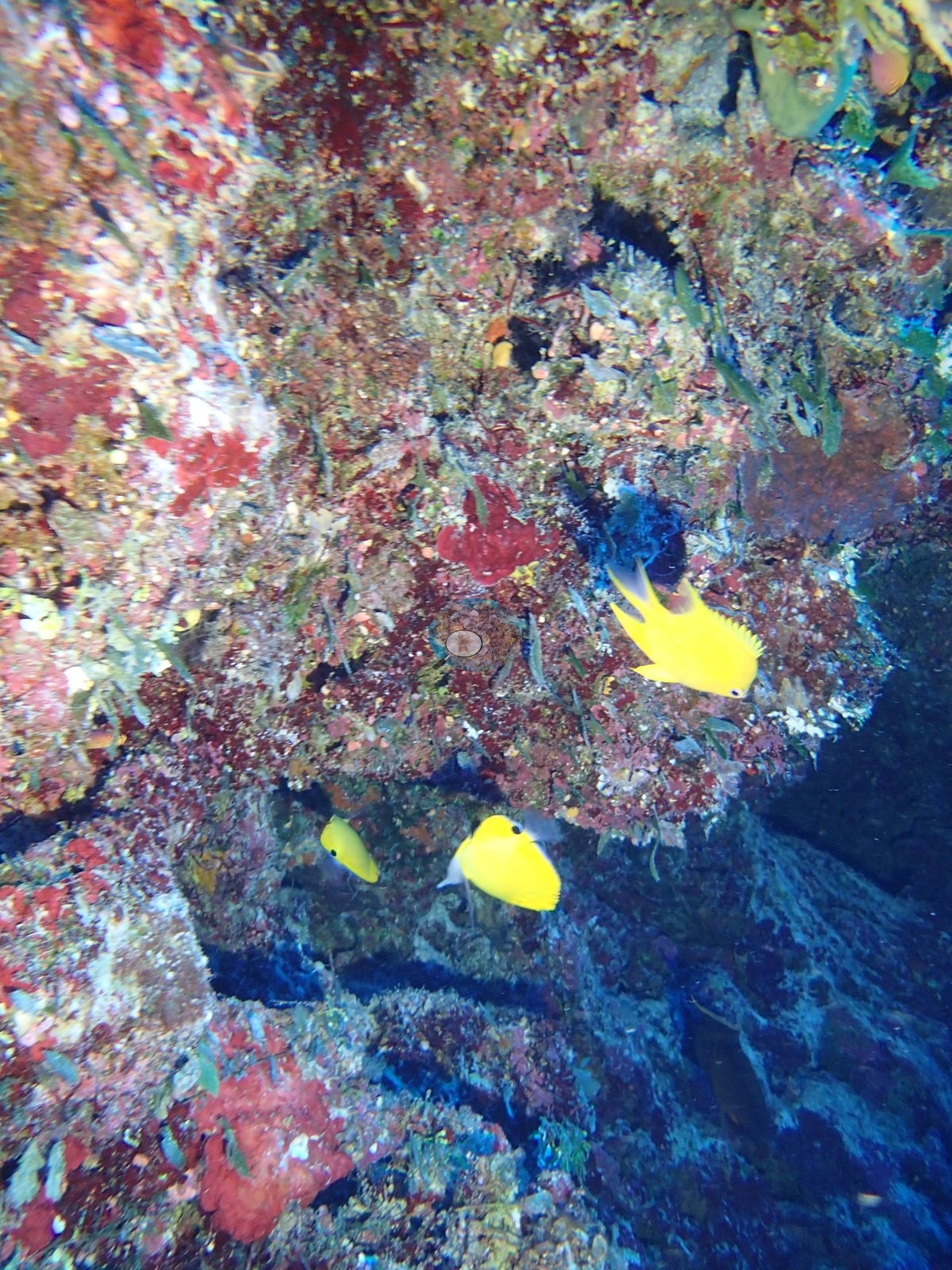
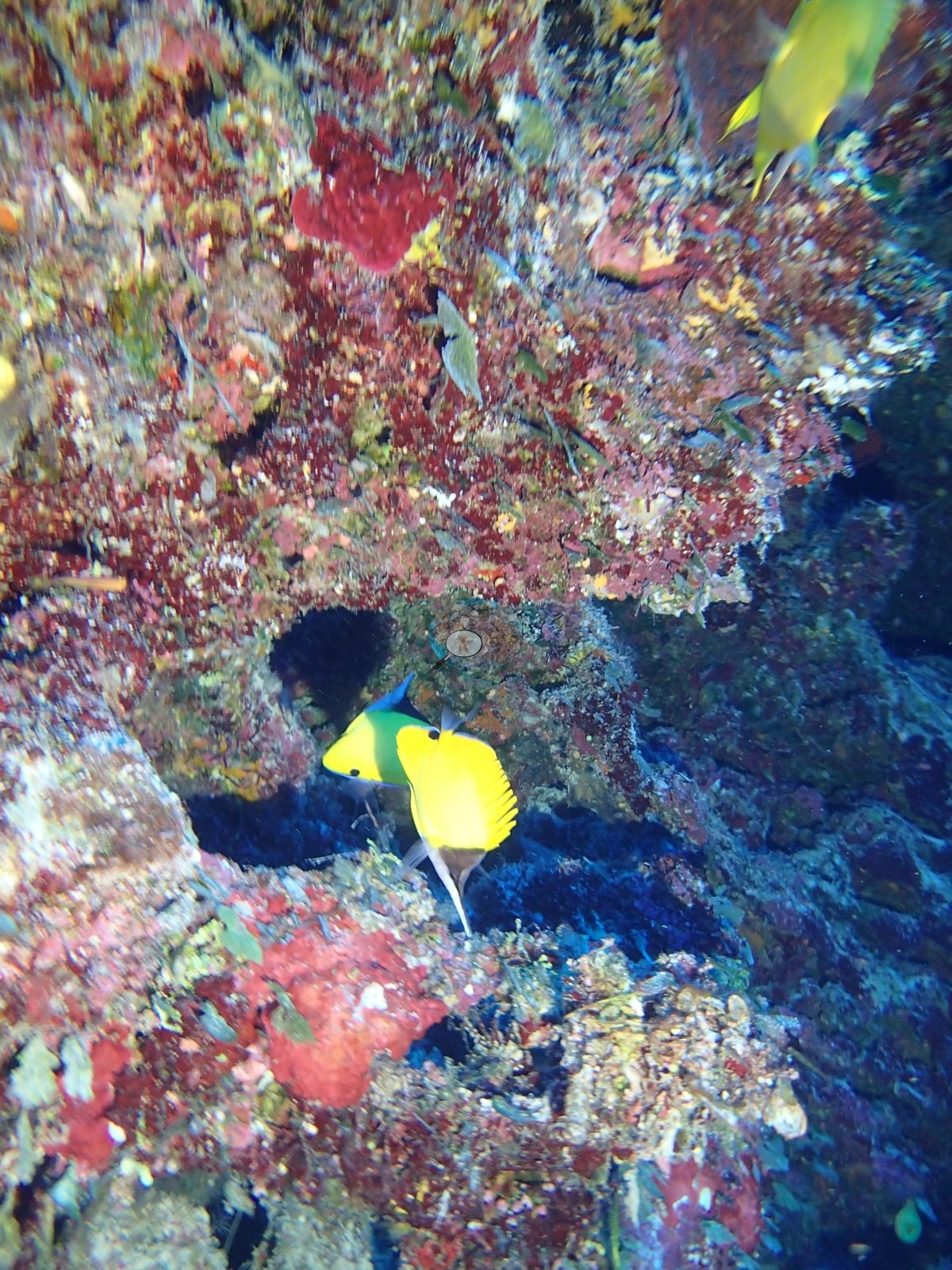
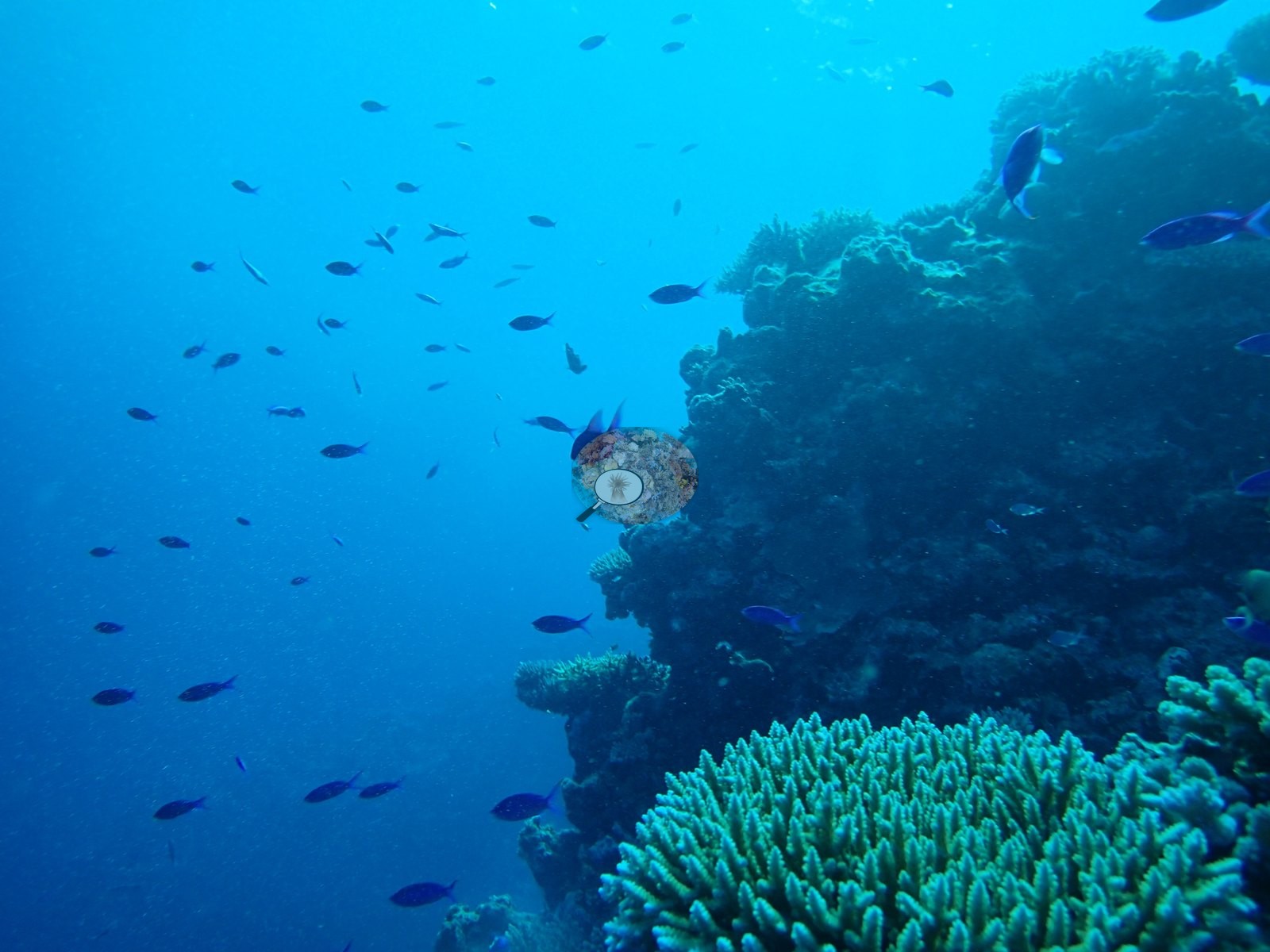
Tuvuca is a deep, steep, current-swept wall, and the single most consistent feature across the set is not stony coral at all but octocoral. Structure matters here: Image 12, Image 14, Image 16, and Image 2 all look out from inside overhangs, cuts, and archways toward bright blue, with fans silhouetted in the openings, and Image 47 looks straight up a near-vertical face to the surface.
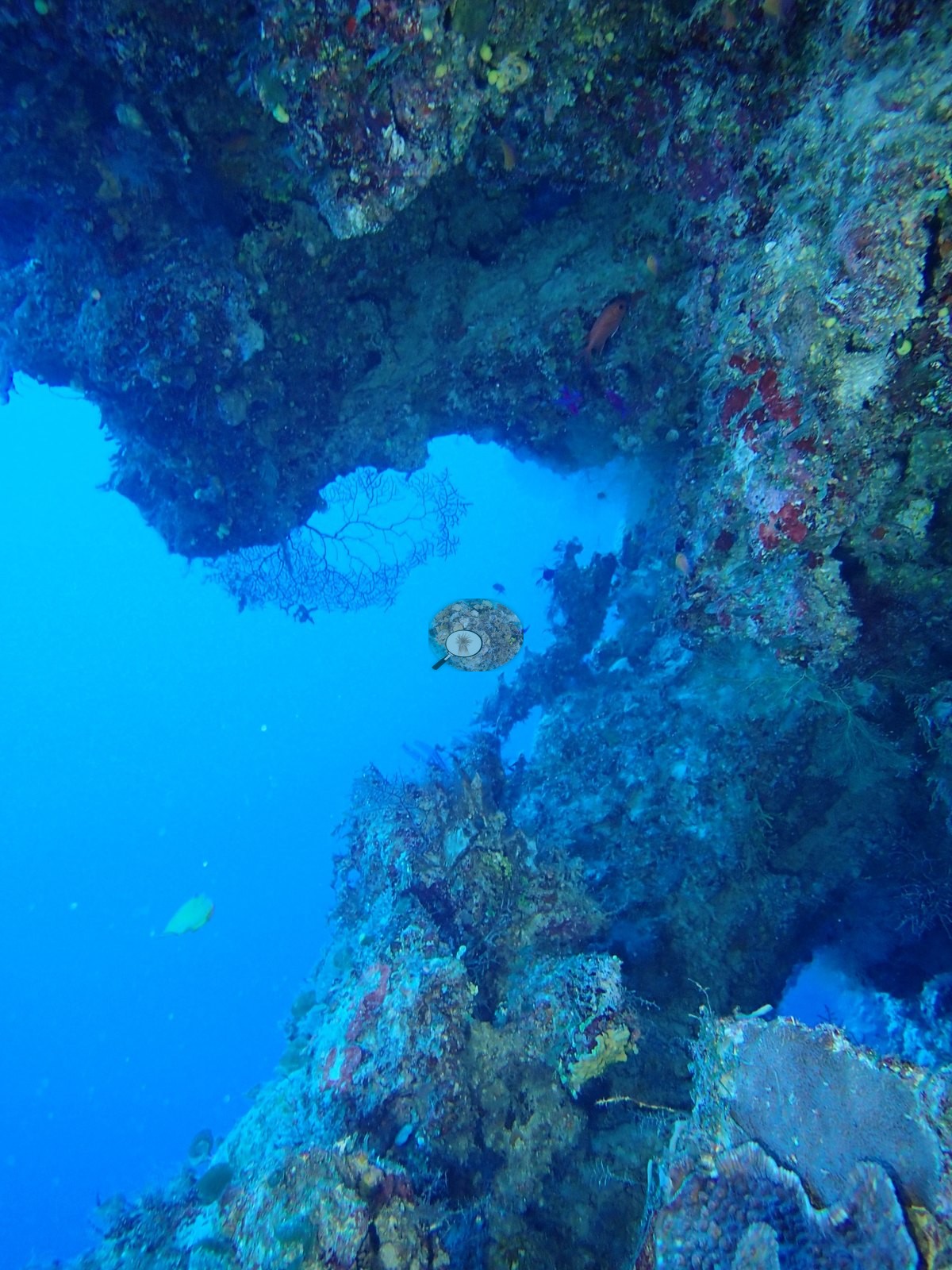
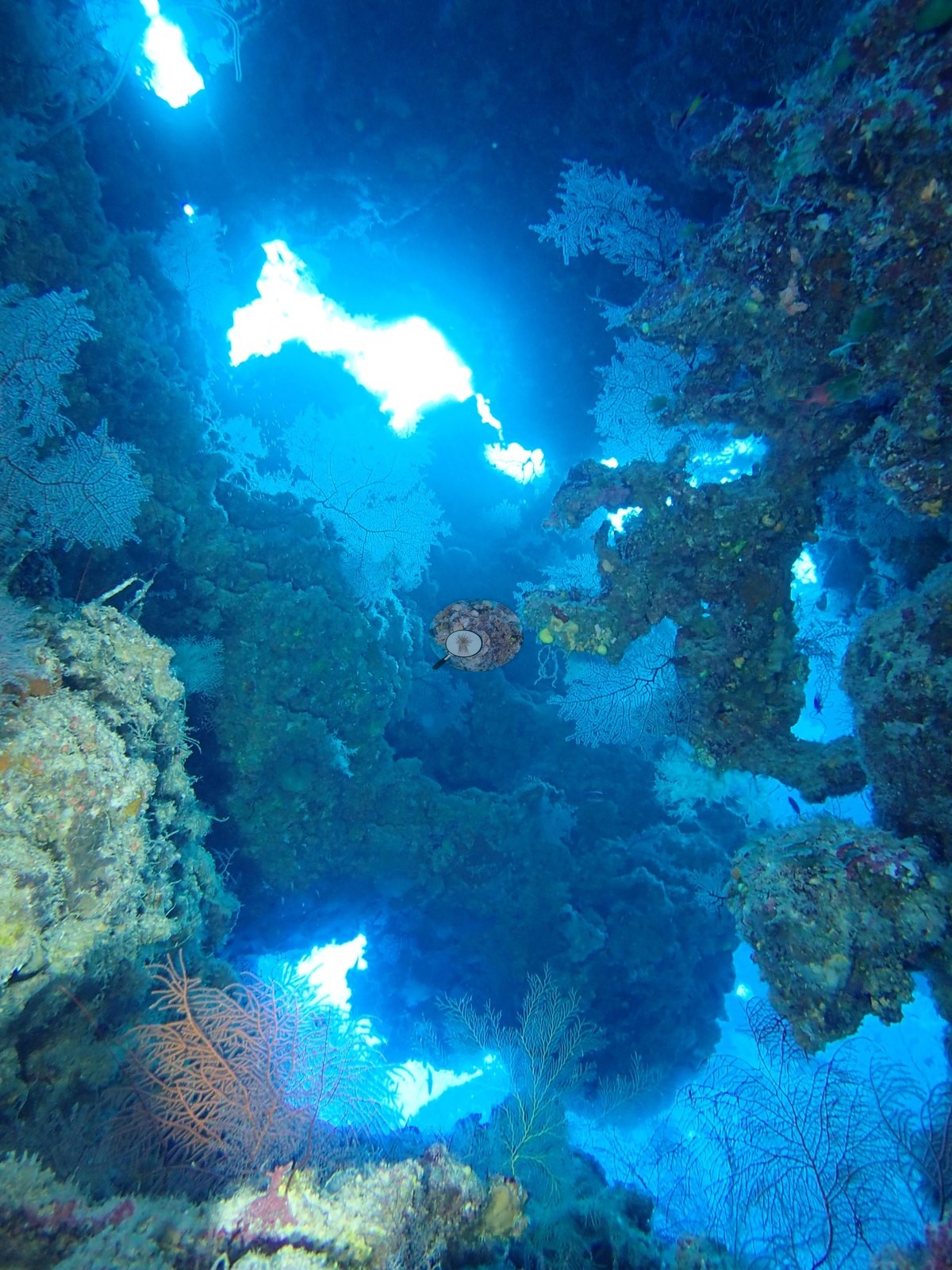
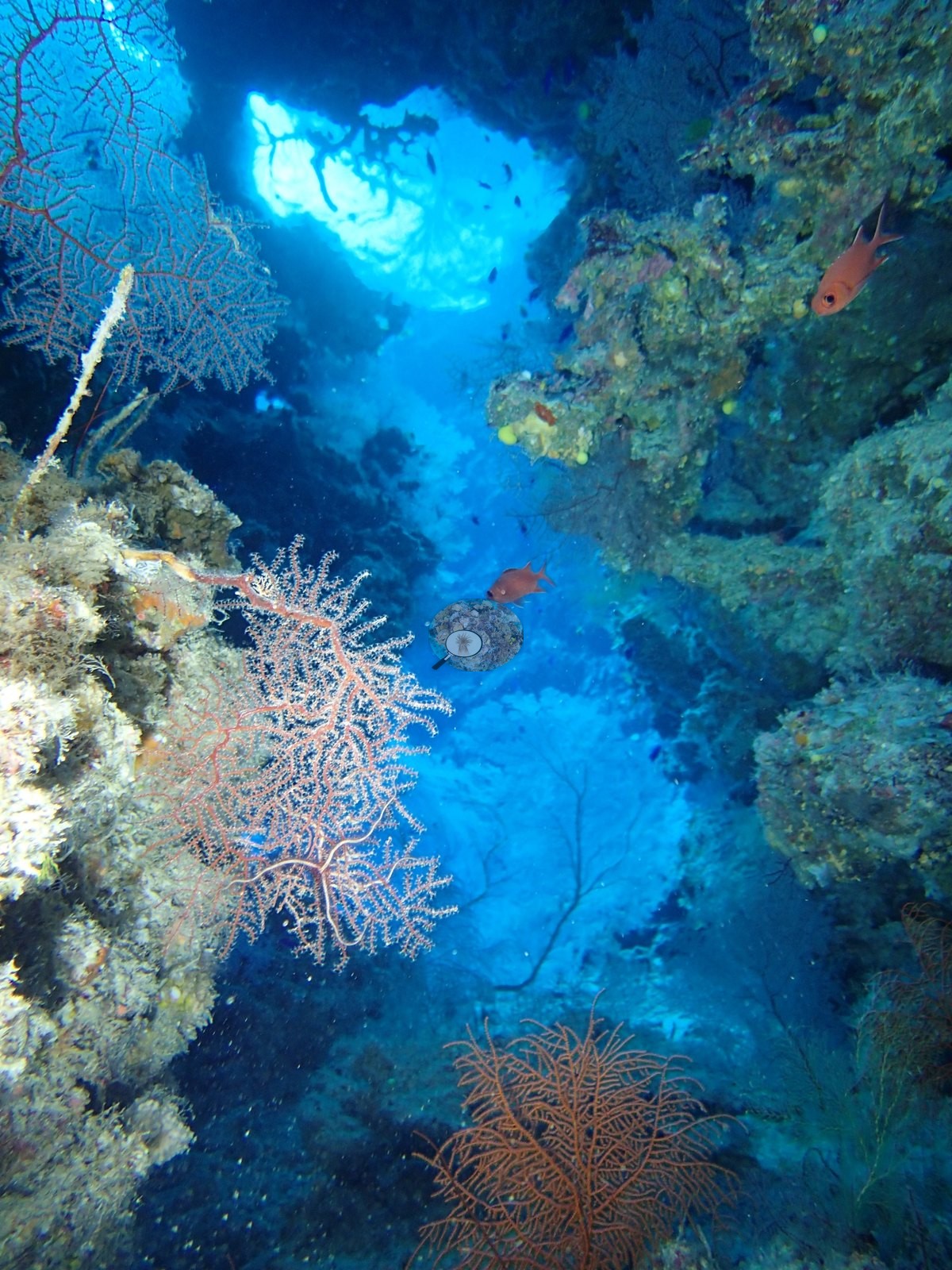
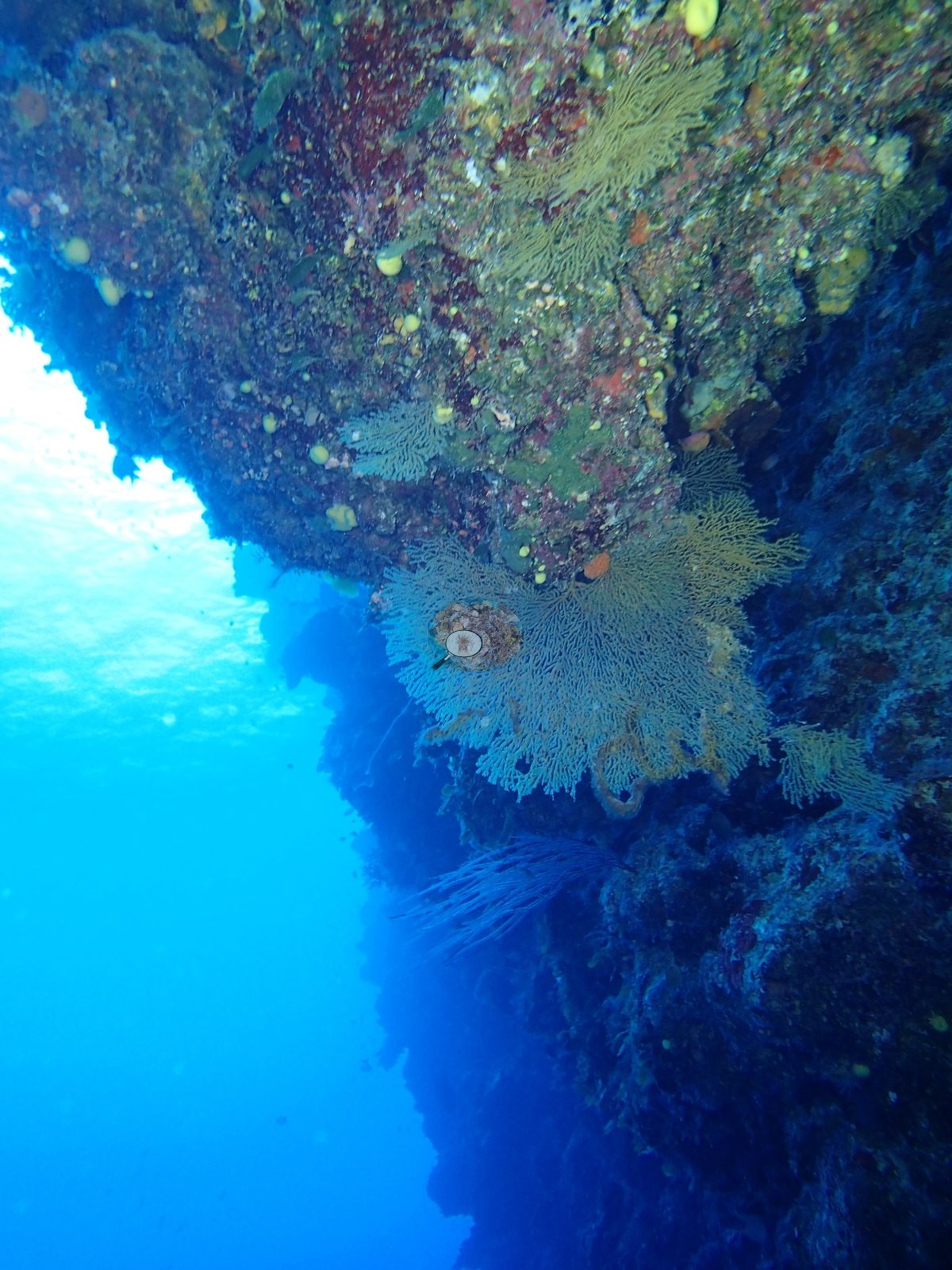
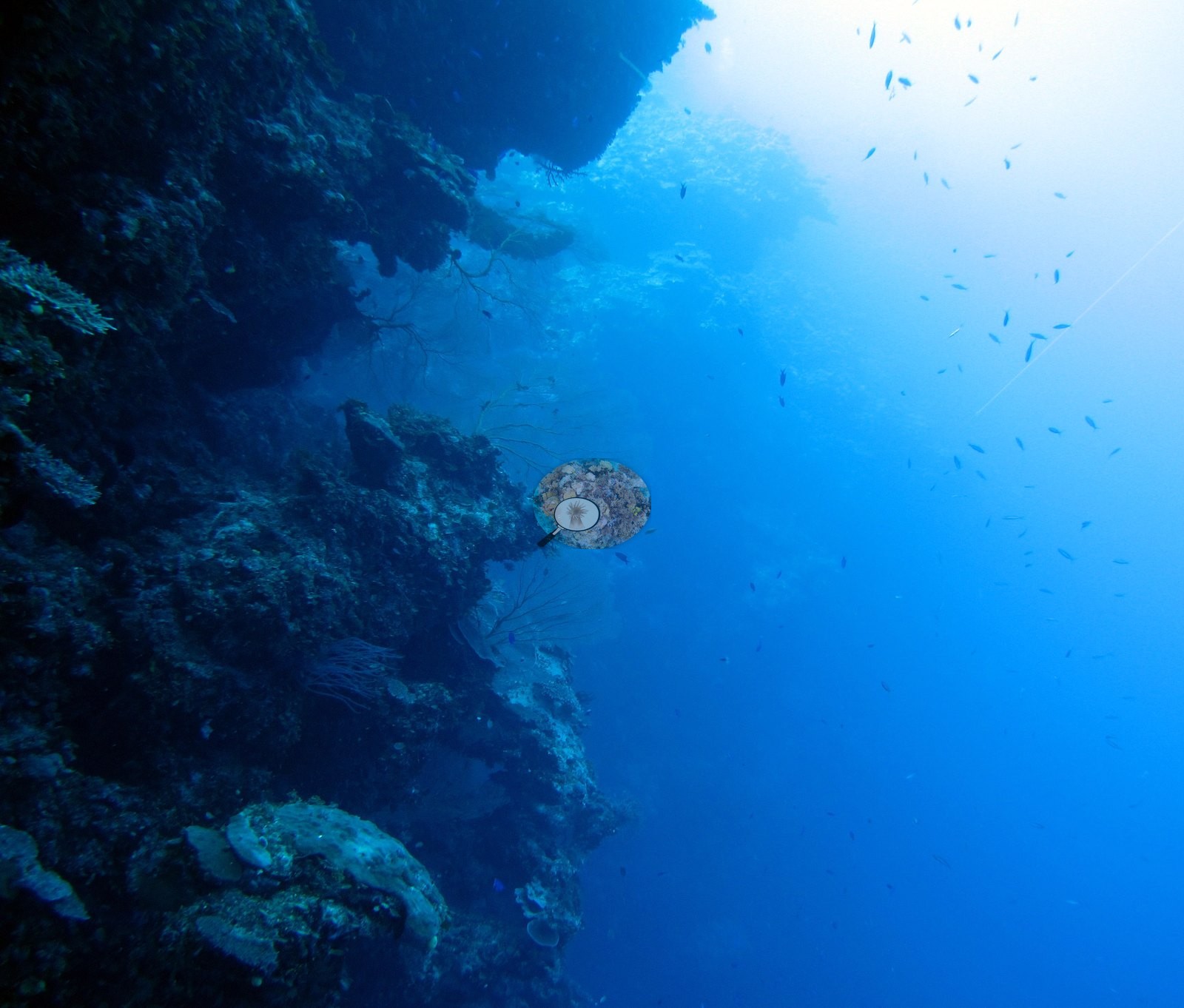
This is a wall with real three-dimensional relief, not a slope.
General benthic features
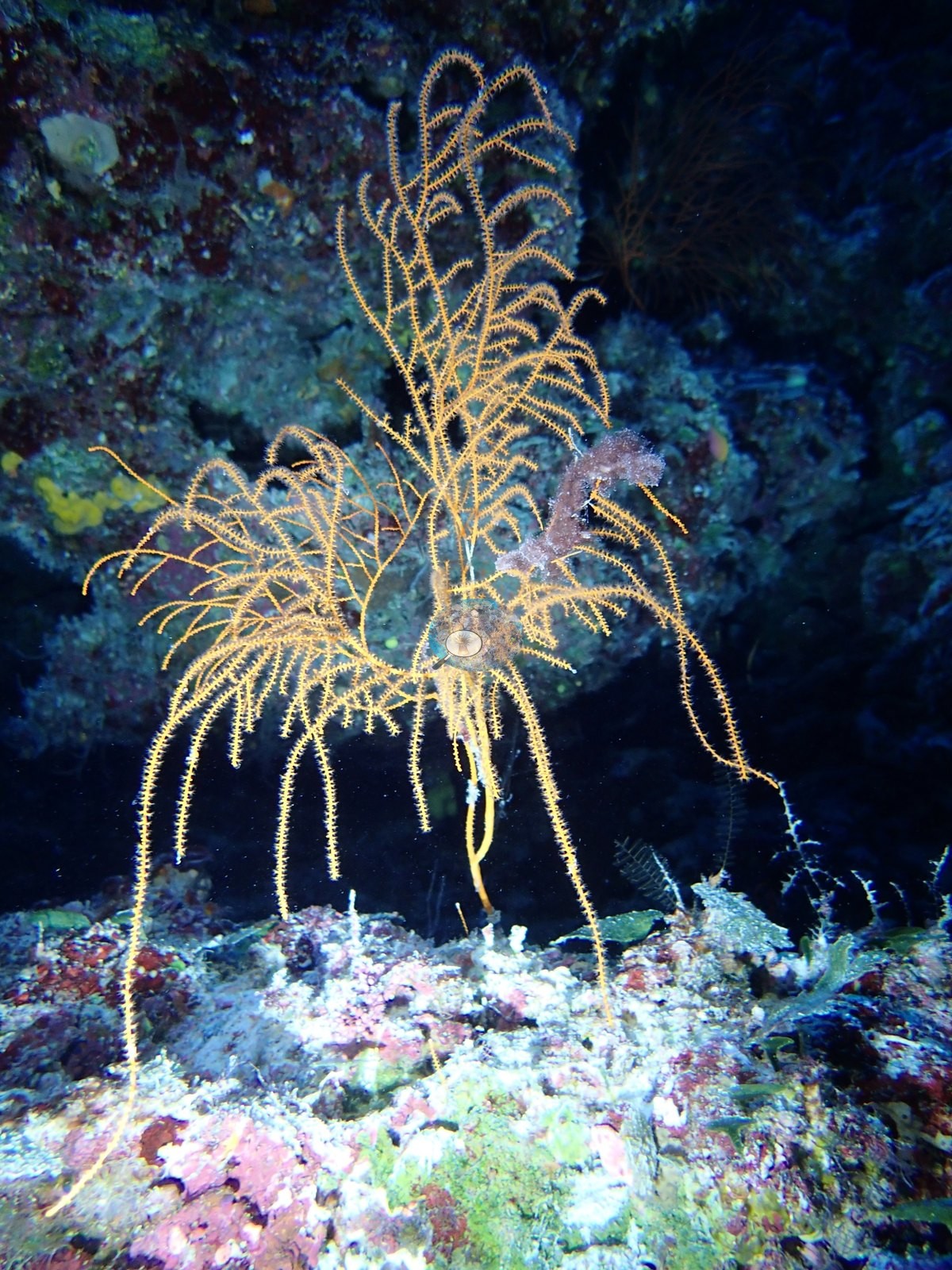
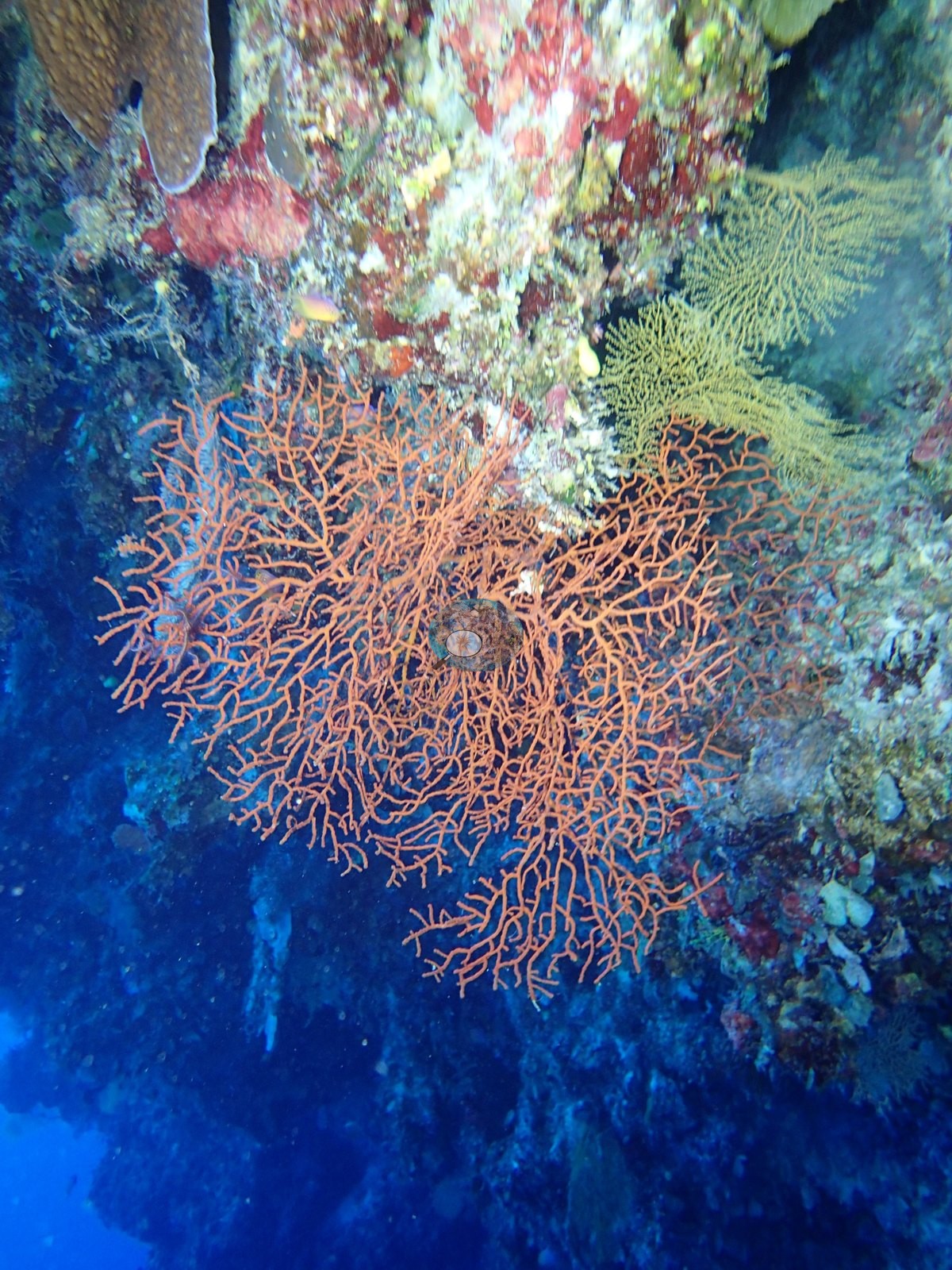
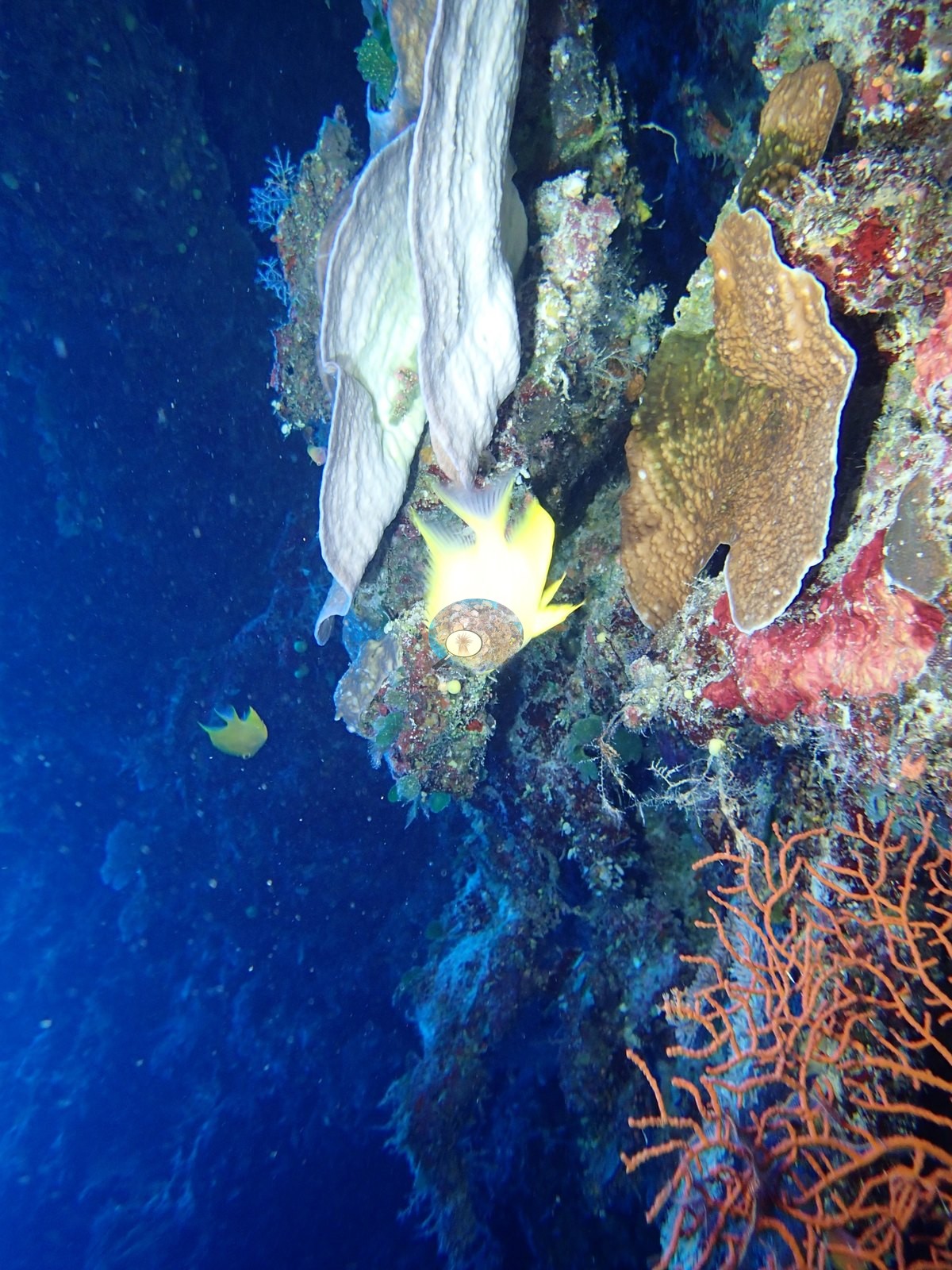
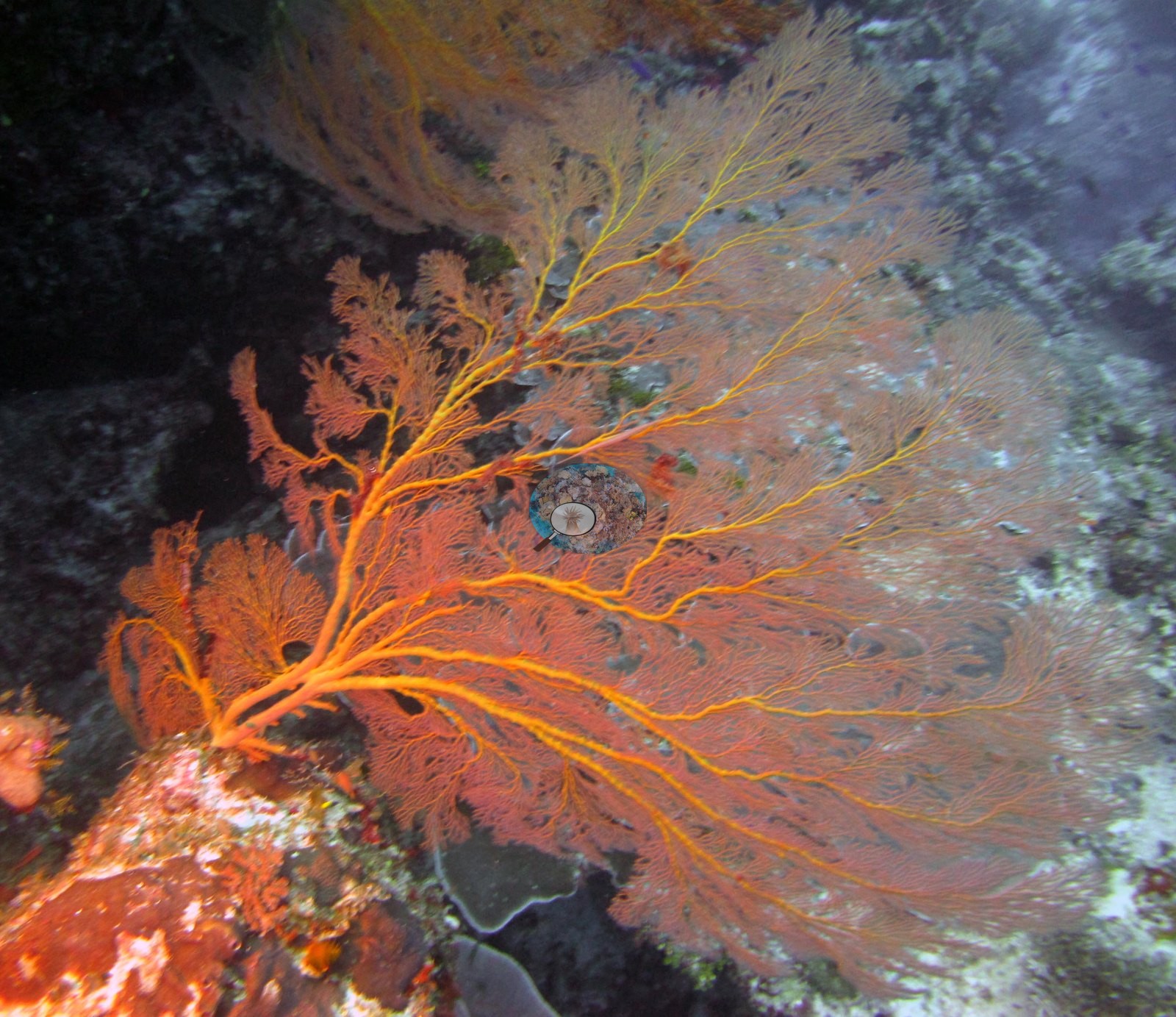
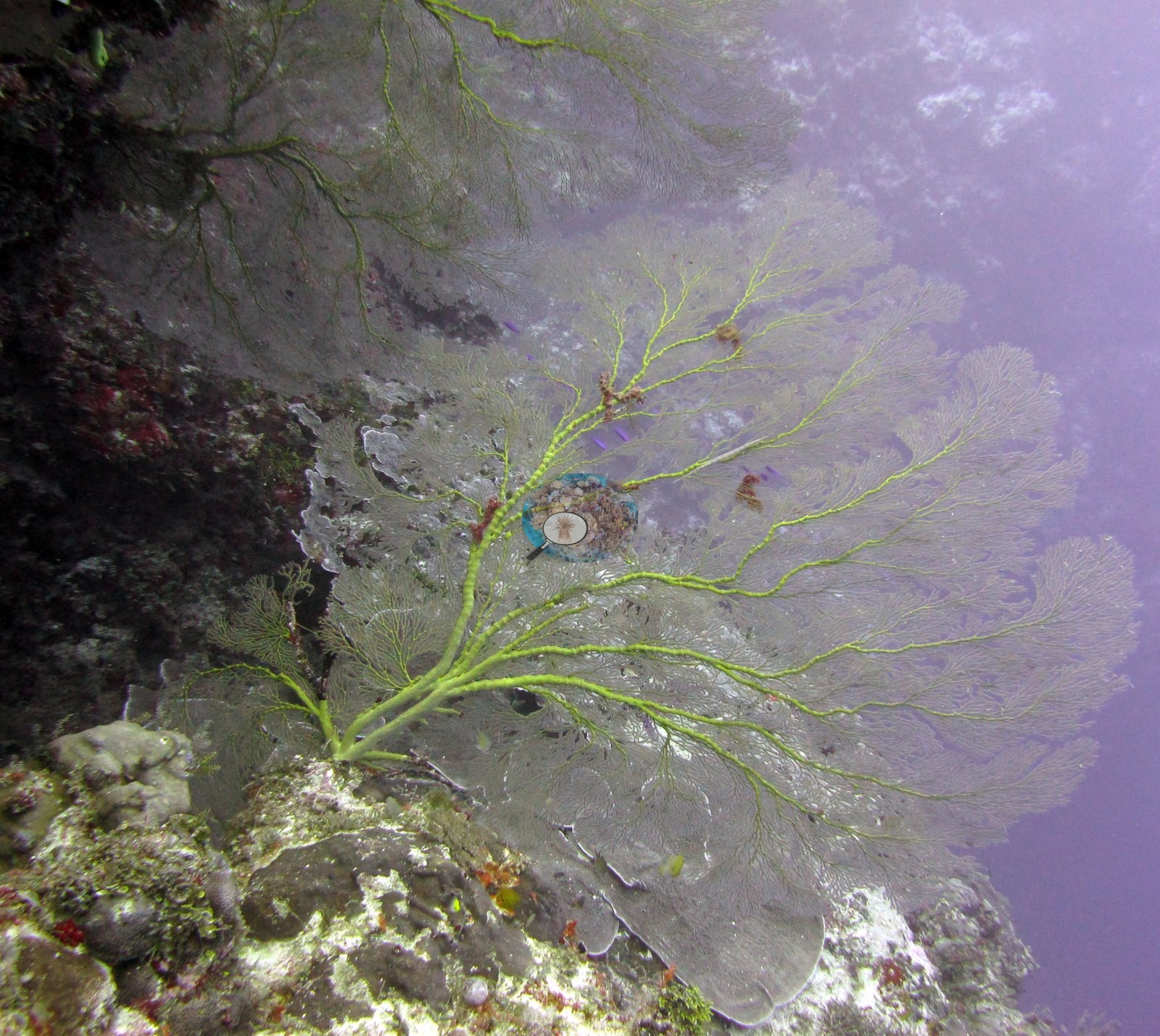
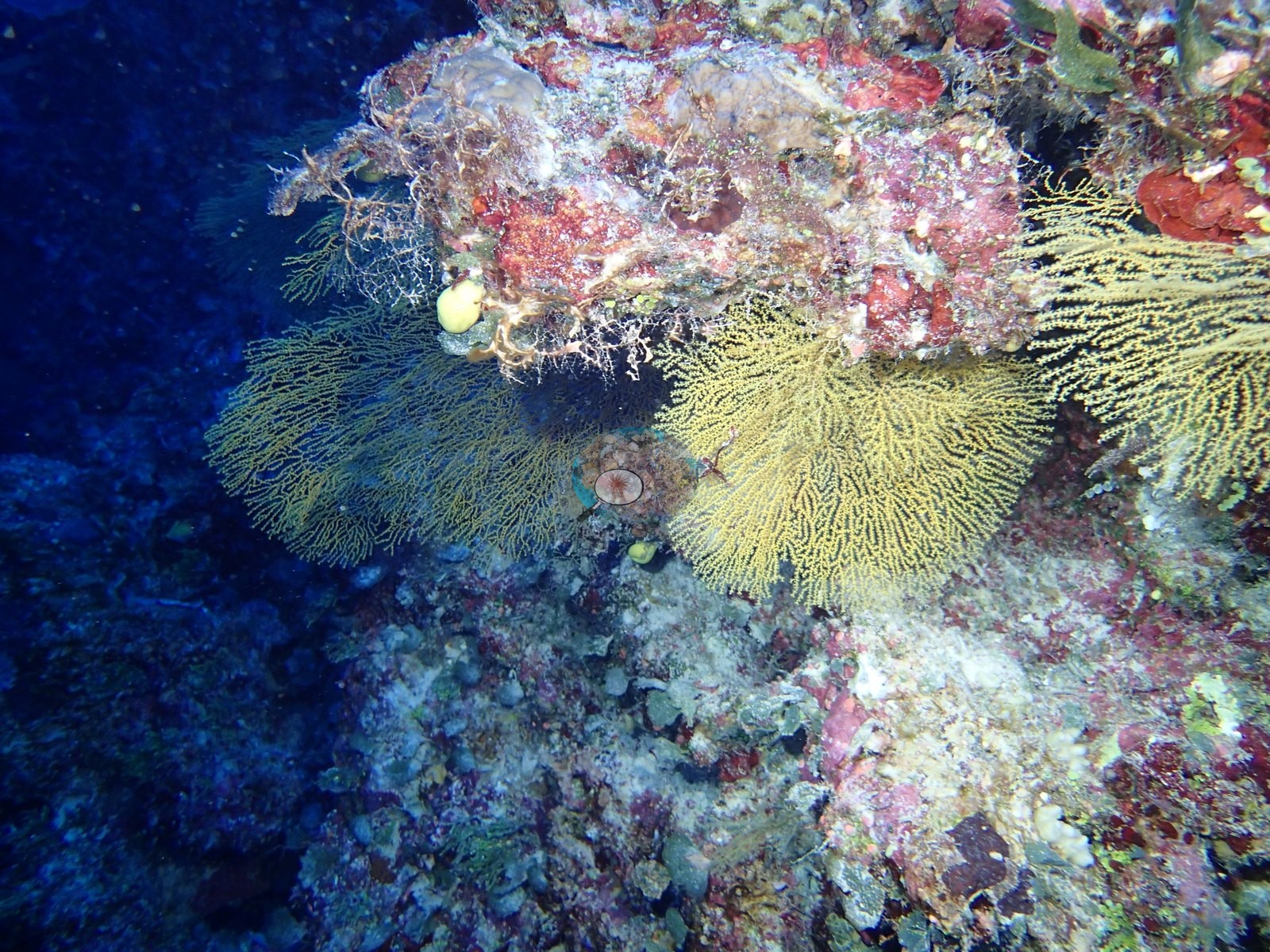
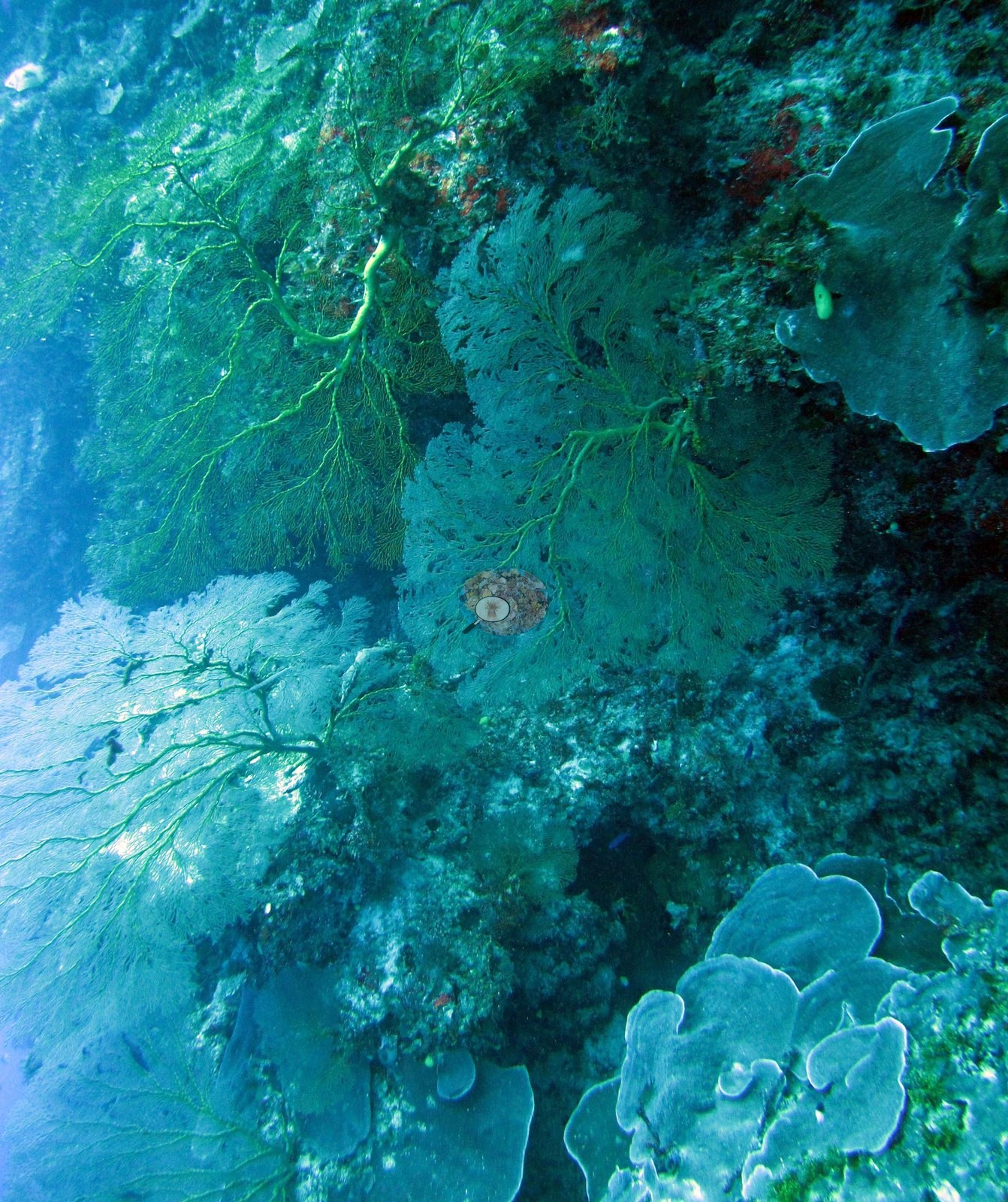
Gorgonians appear in at least ten frames and in every form: a huge golden-yellow sea fan filling the frame against black water (e.g., Image 25, Image 26), slender green-gold branching fans standing out into open blue (e.g., Image 23, Image 24), a magenta-purple fan tucked under a sponge-crusted overhang (e.g., Image 8), salmon-pink fans on the wall face (e.g., Image 4, Image 5), and a vivid orange-red fan with a much larger pale fan behind it (e.g., Image 49).
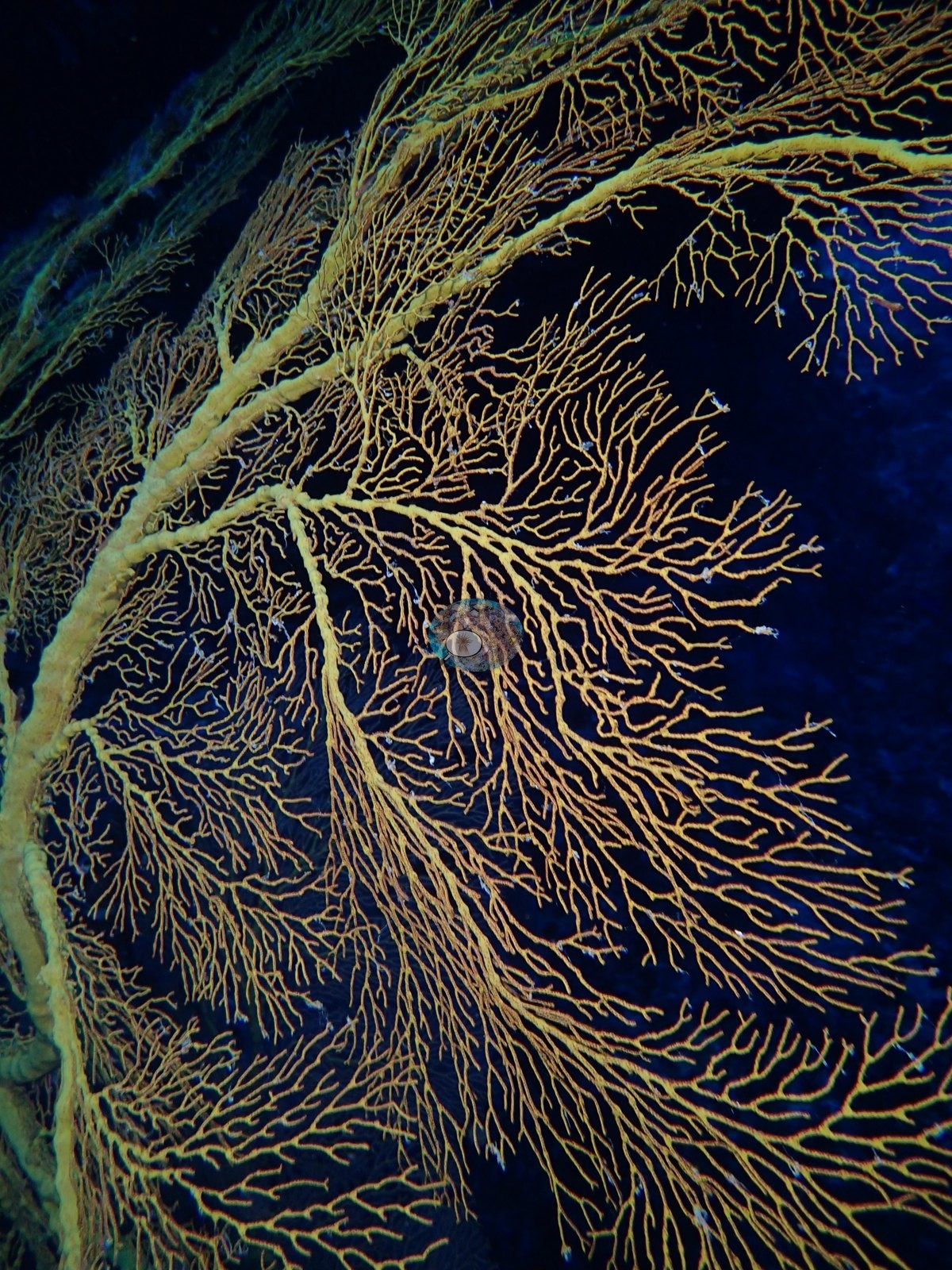
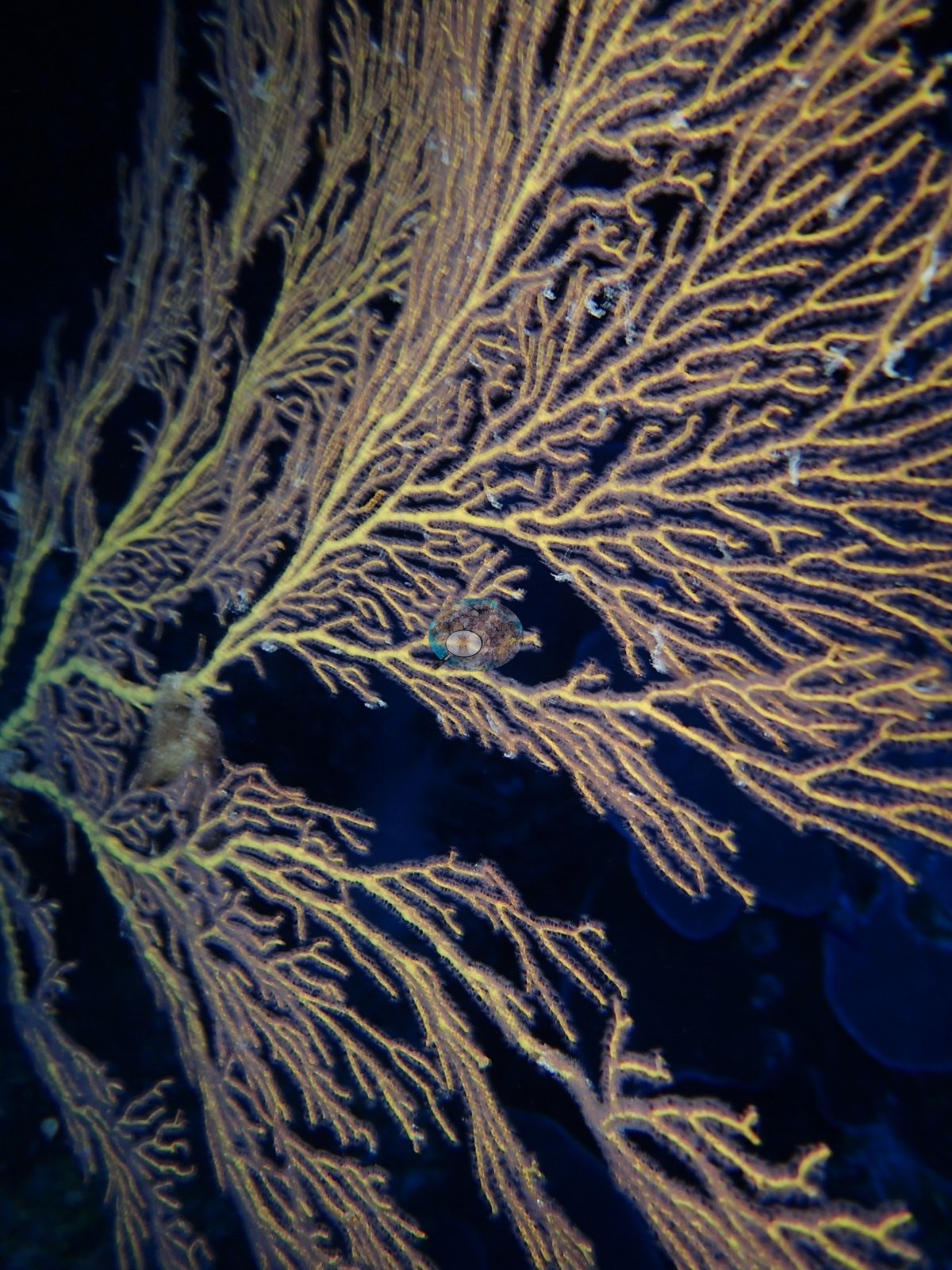
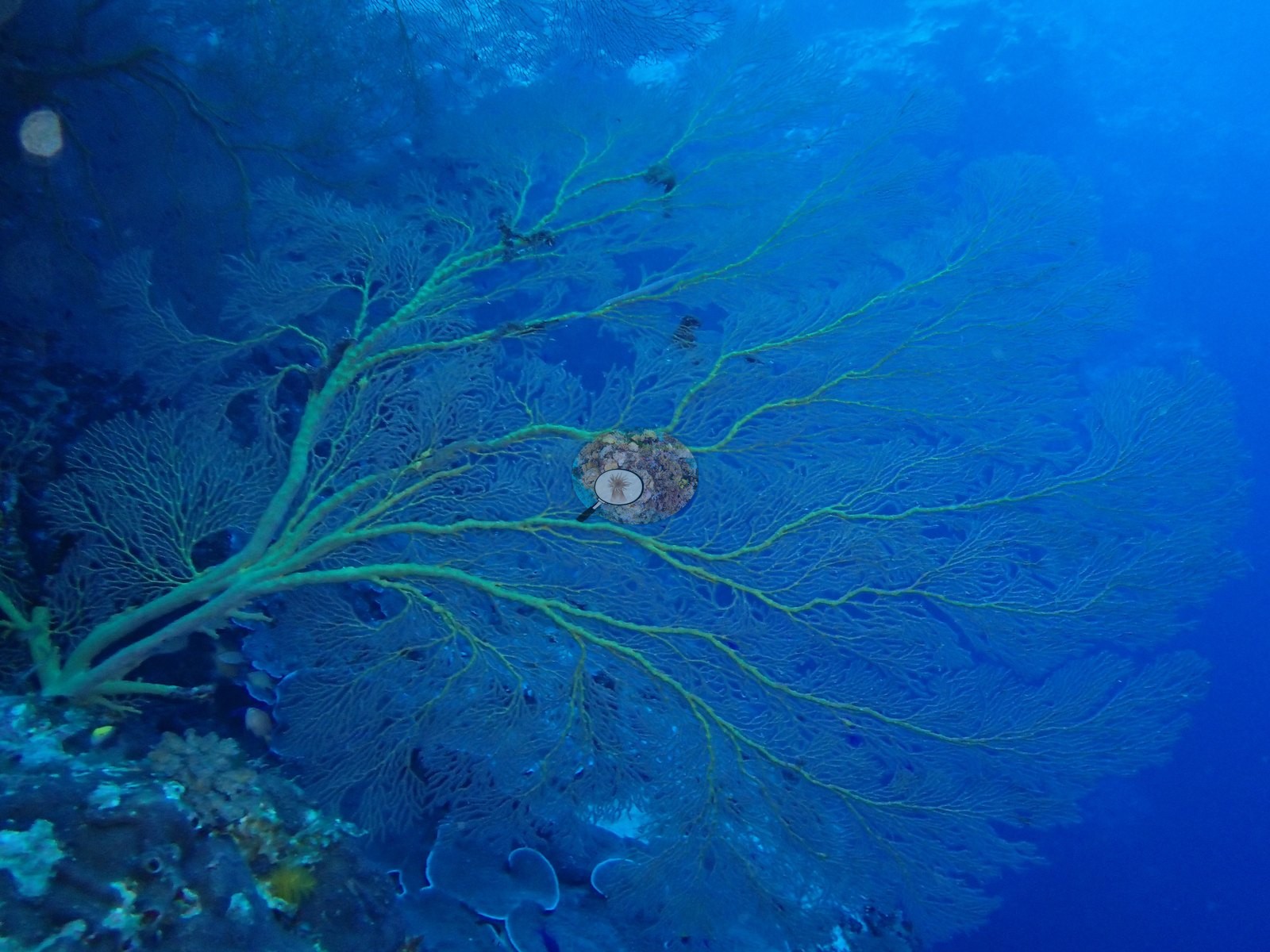
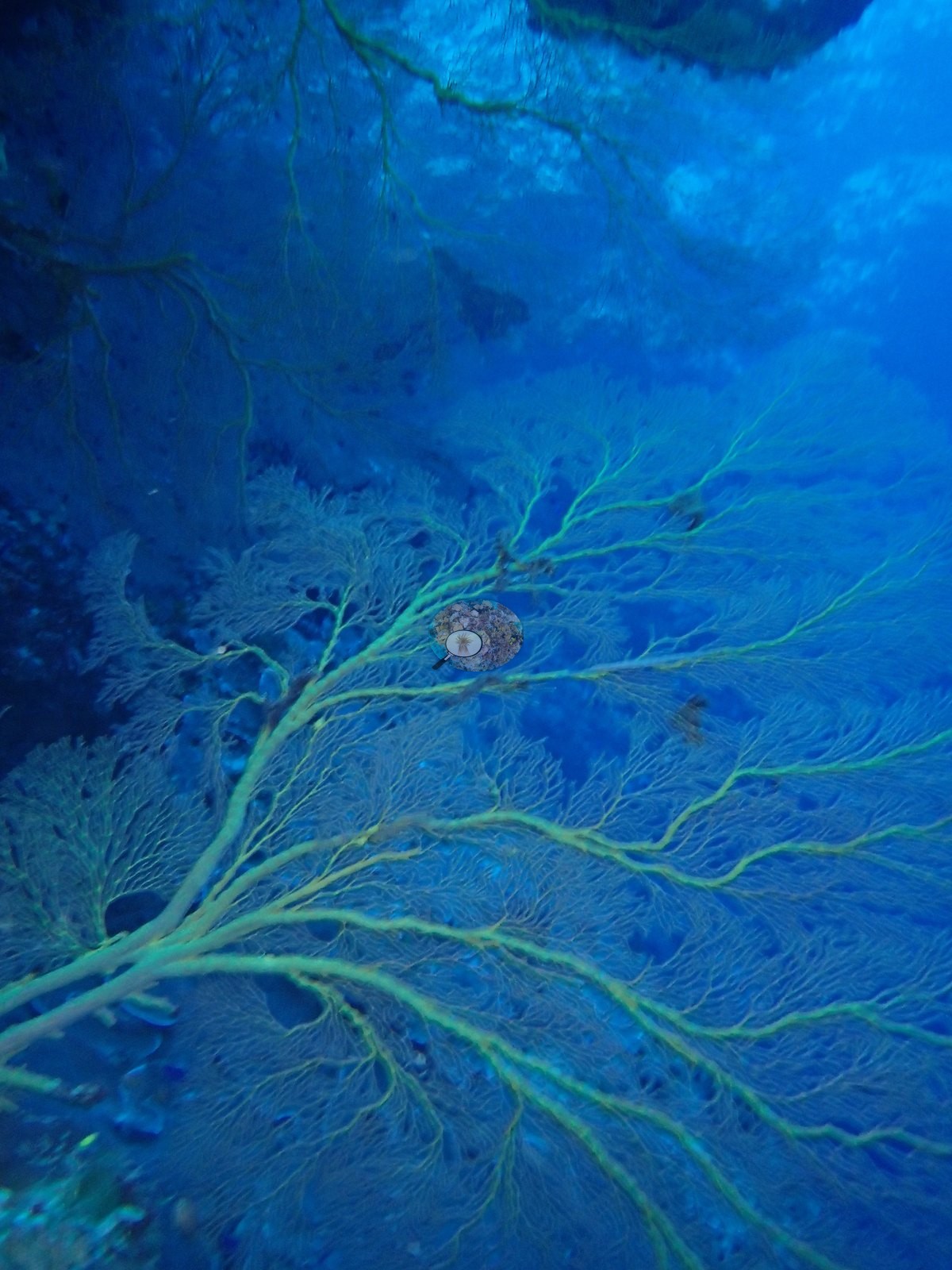
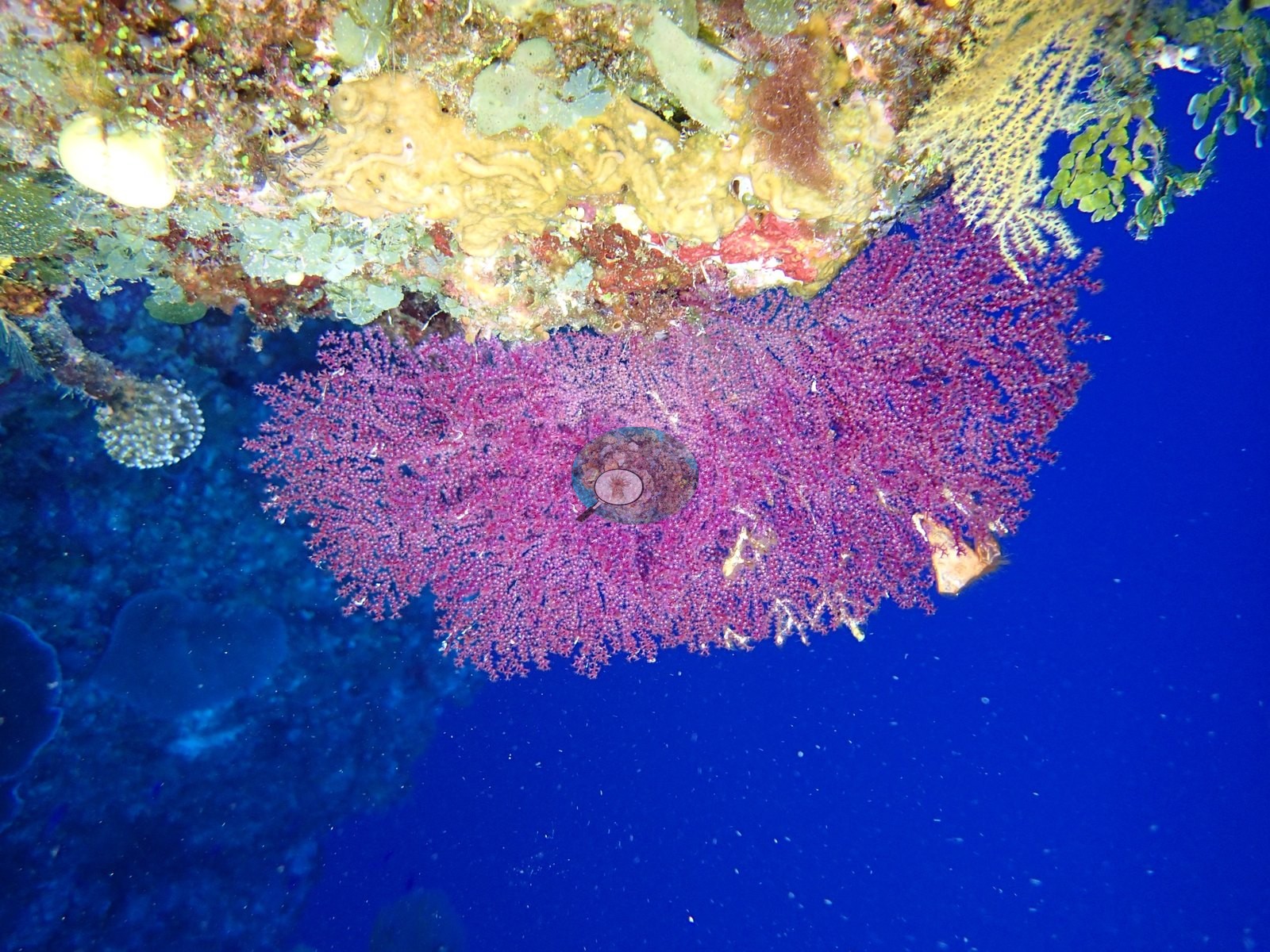
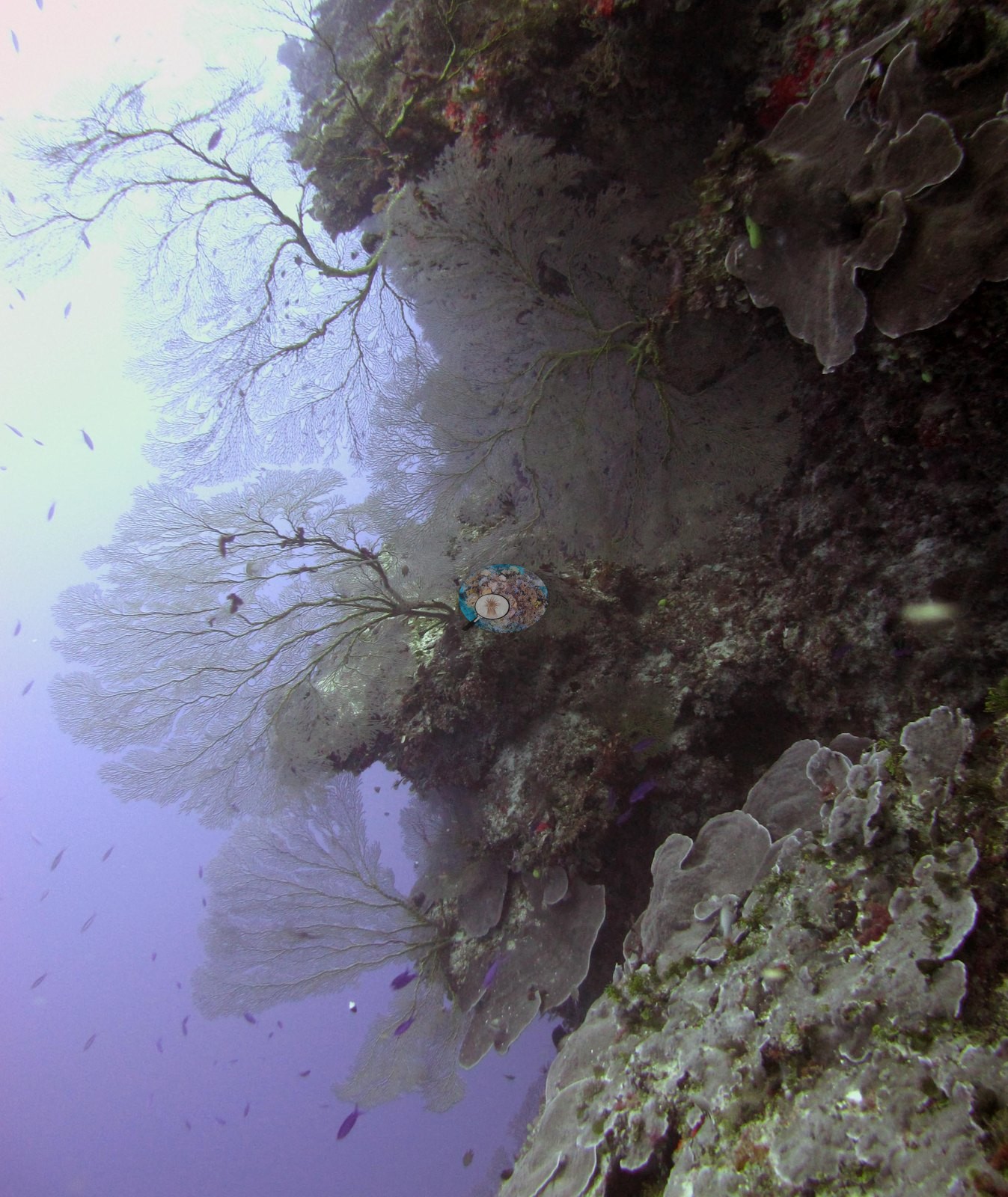
Anderson's notes name the habitat directly as a gorgonian forest (e.g., Image 51, Image 48), and both frames show fans stacked in depth against a dim, color-drained background.
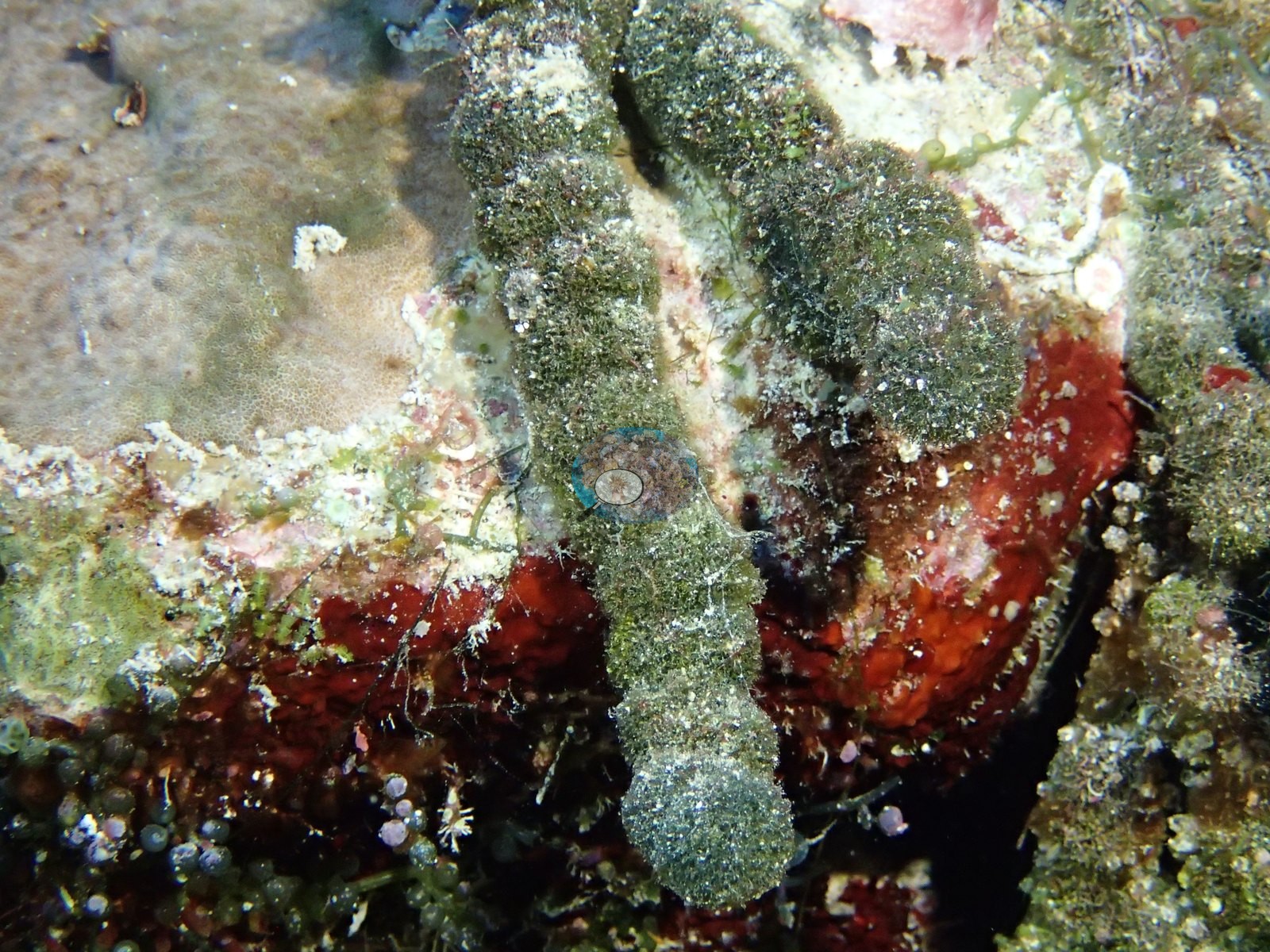
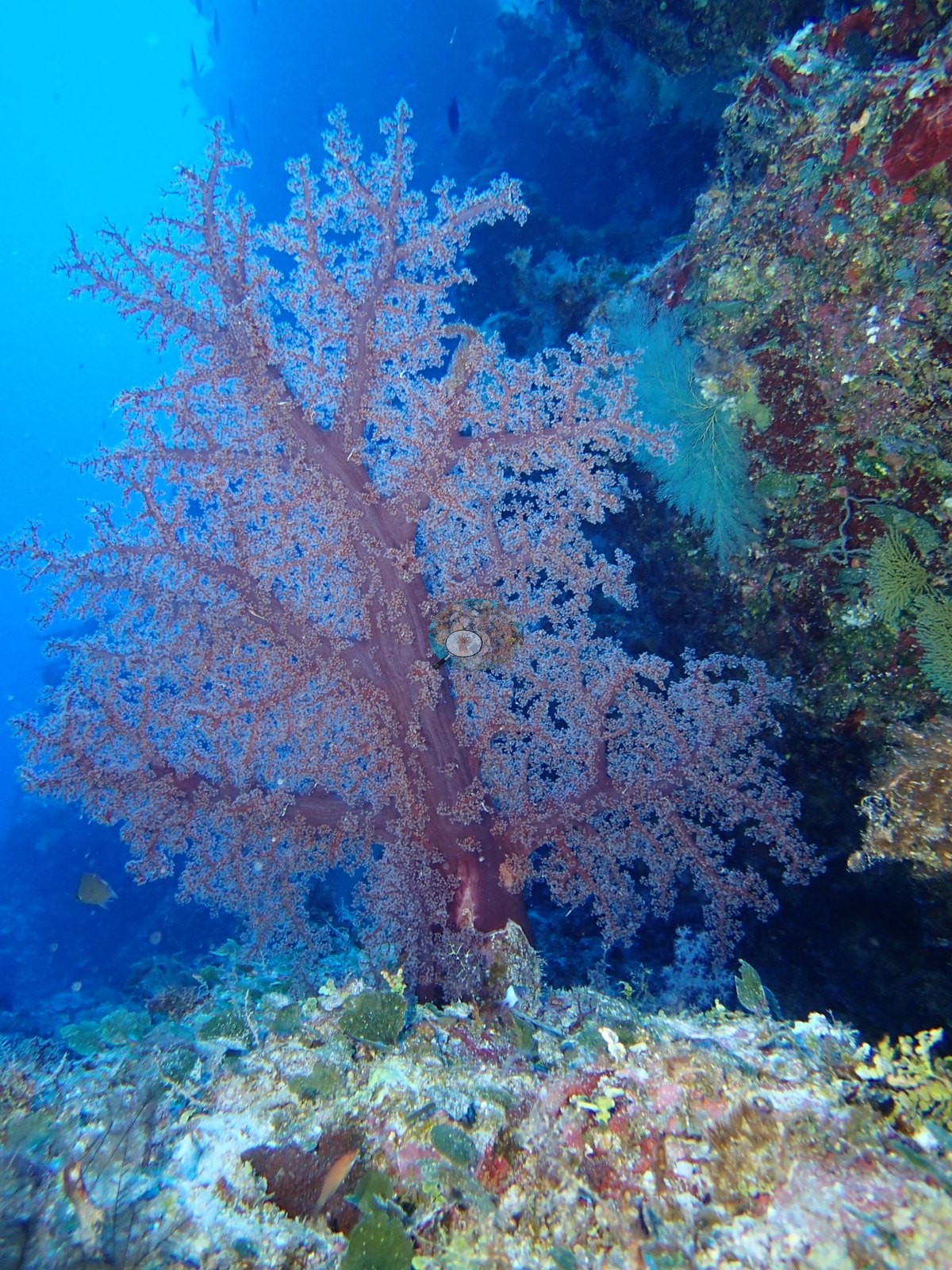
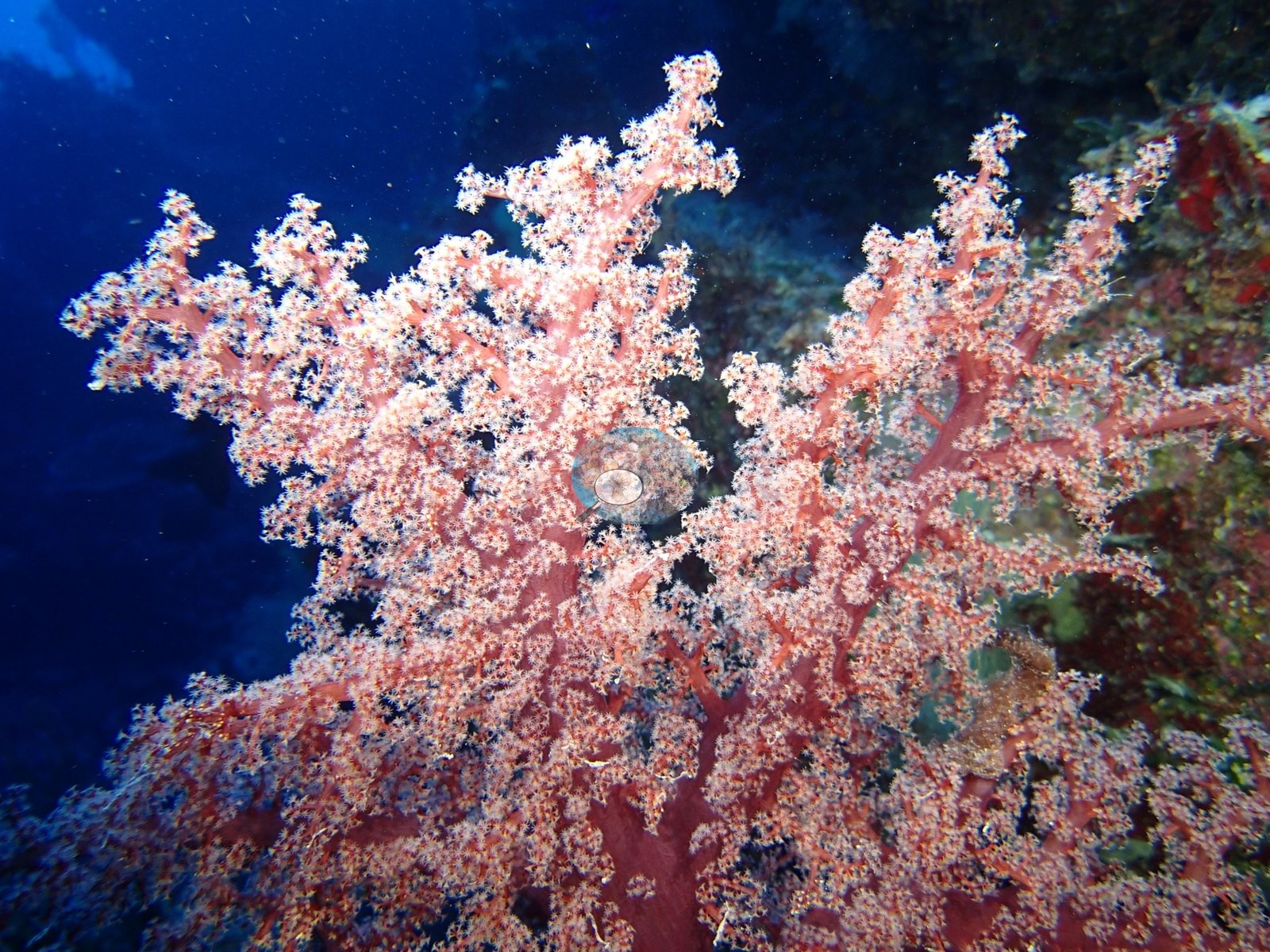
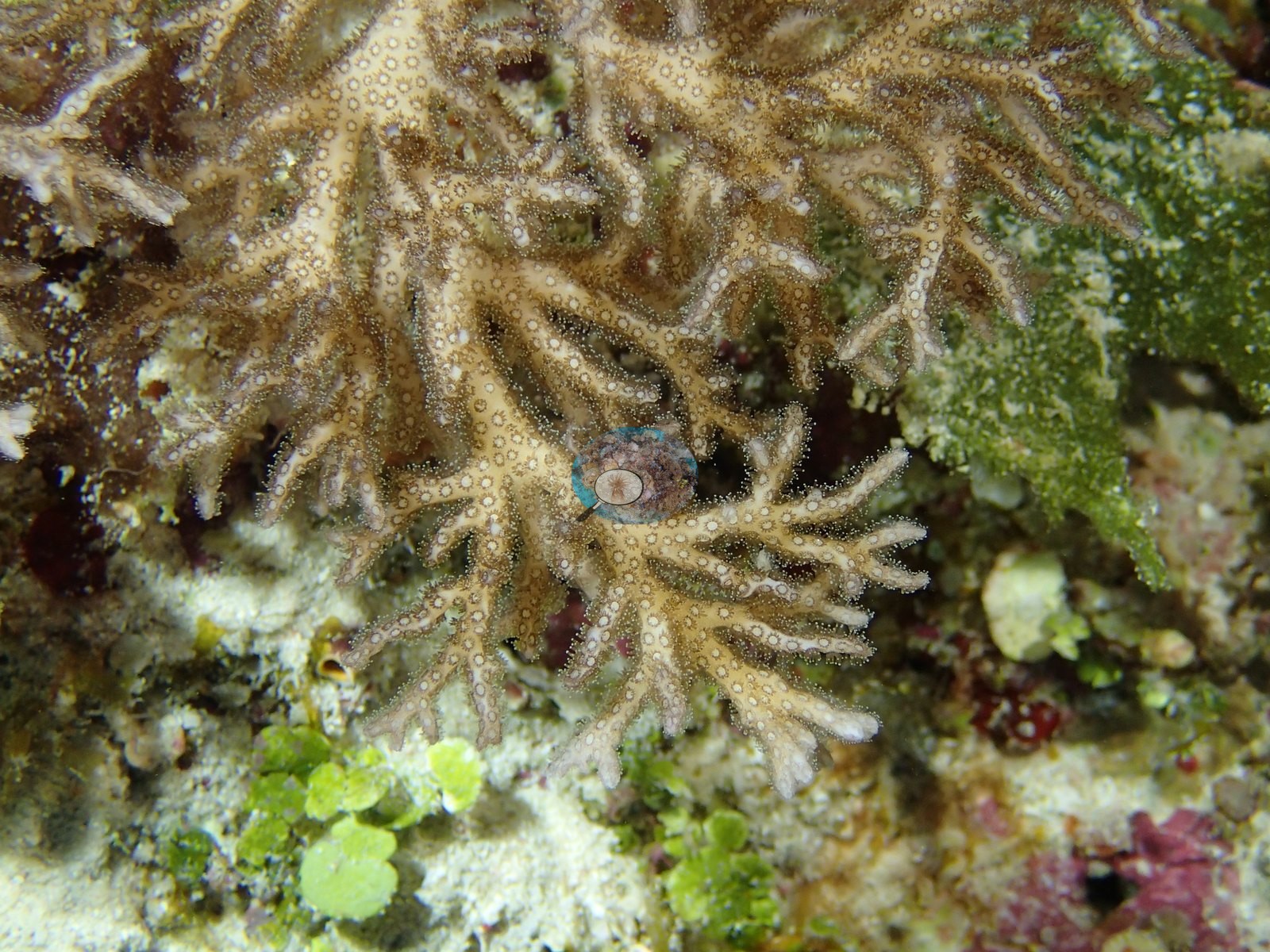
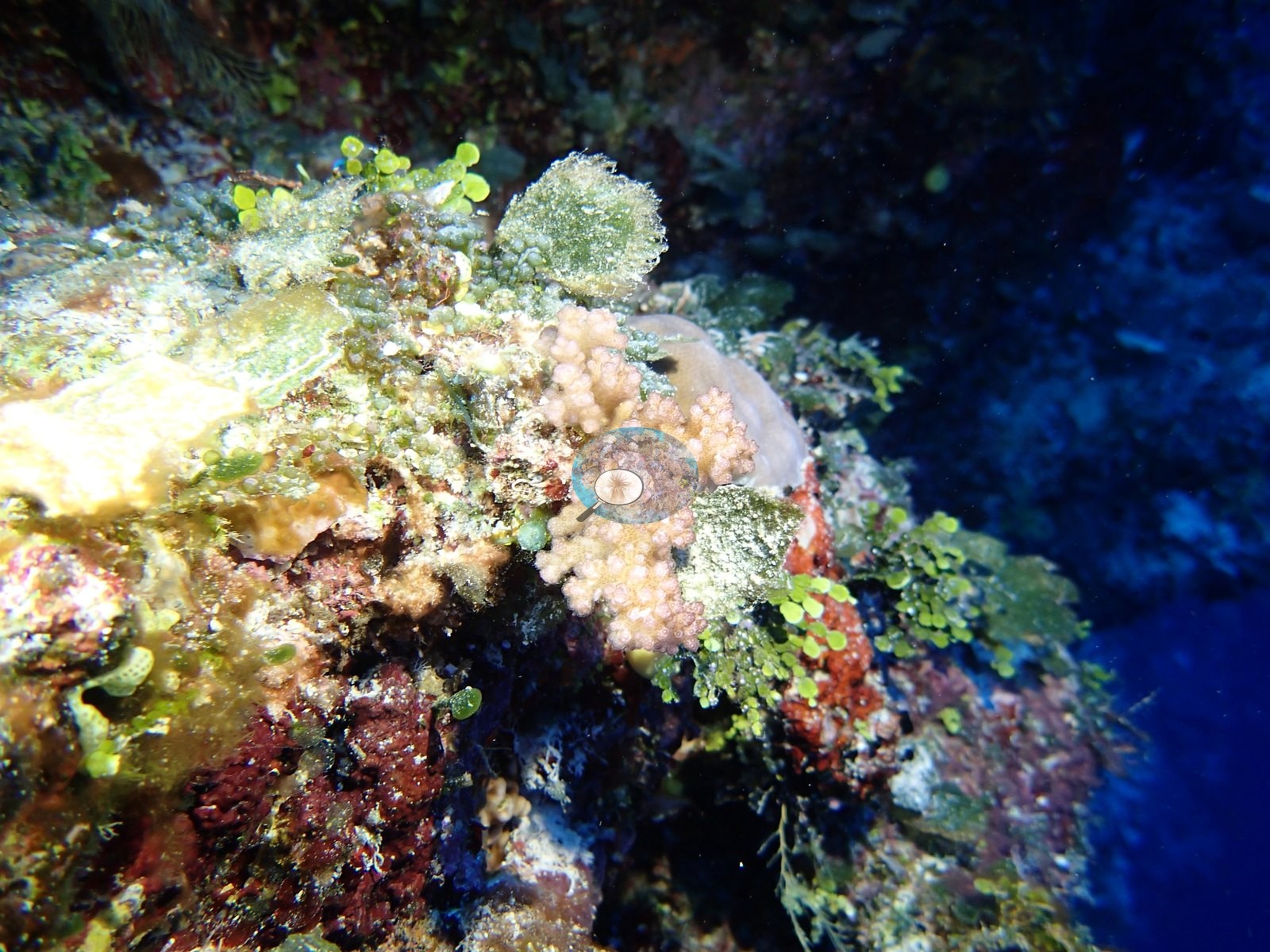
Soft corals are the other half of that story: bushy salmon and pink soft-coral trees on rock outcrops (e.g., Image 6, Image 7), a tan bushy colony among bright green algal fronds (e.g., Image 10), and a cream nephtheid with the polyps fully open (e.g., Image 11).
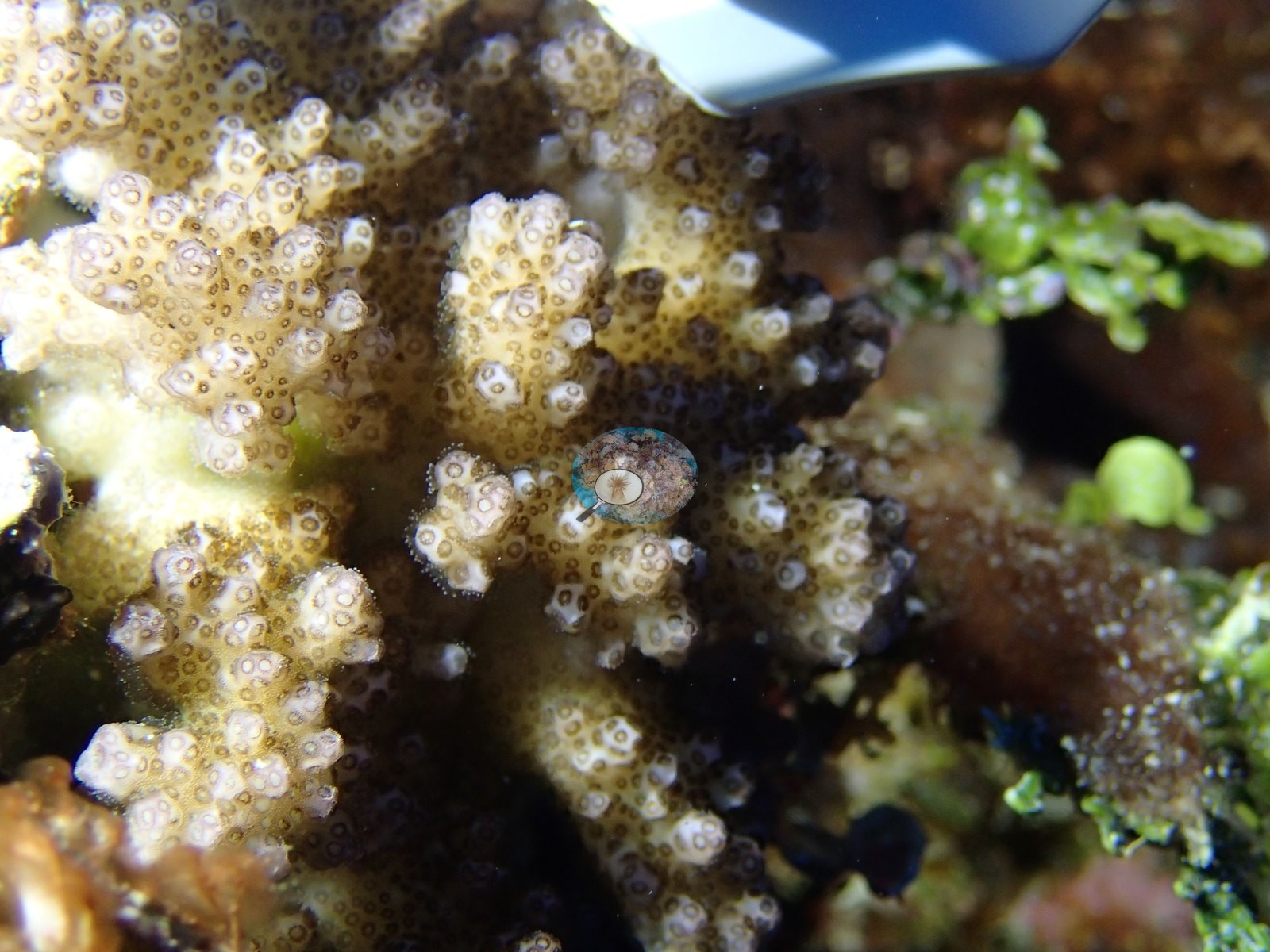
The stony community the frames do show is dominated by plating and foliose growth. Image 27 and Image 28 are the clearest: broad, ruffled, overlapping sheets of pale coral stacked in shingle-like tiers, with staghorn Acropora branches rising above them in Image 28; Image 53 shows the same tiered plates in dim blue-violet light further down the wall.
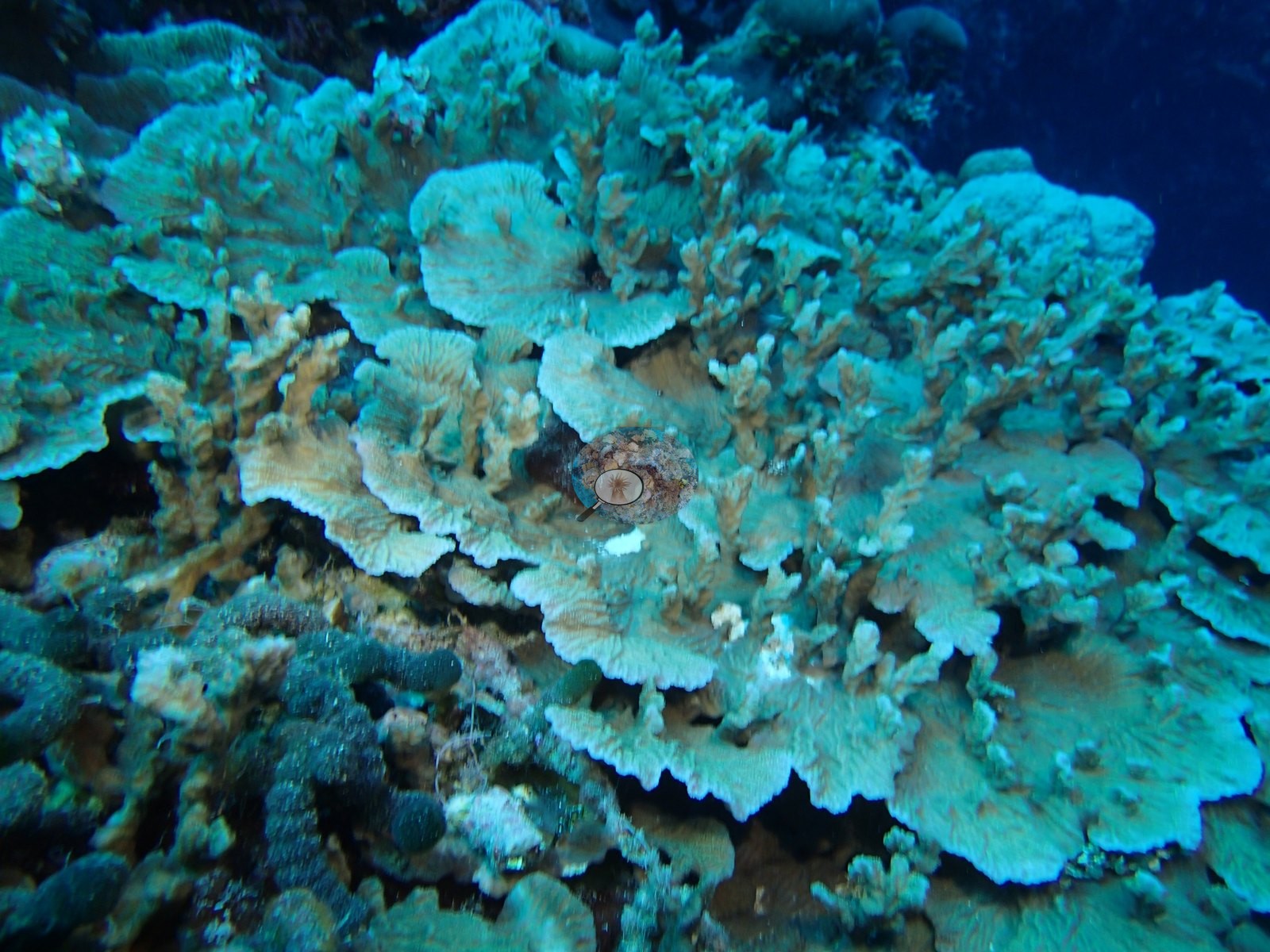
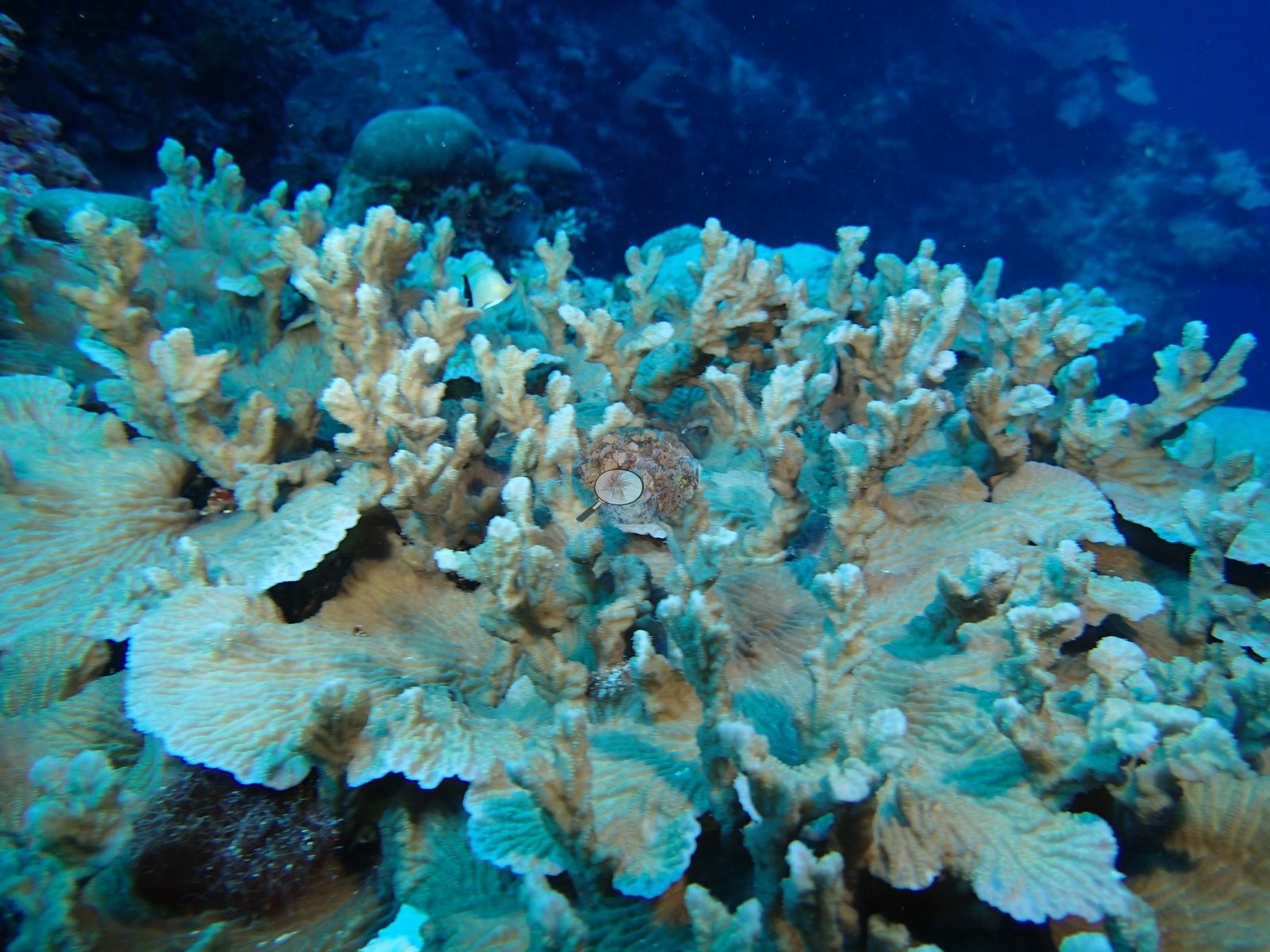
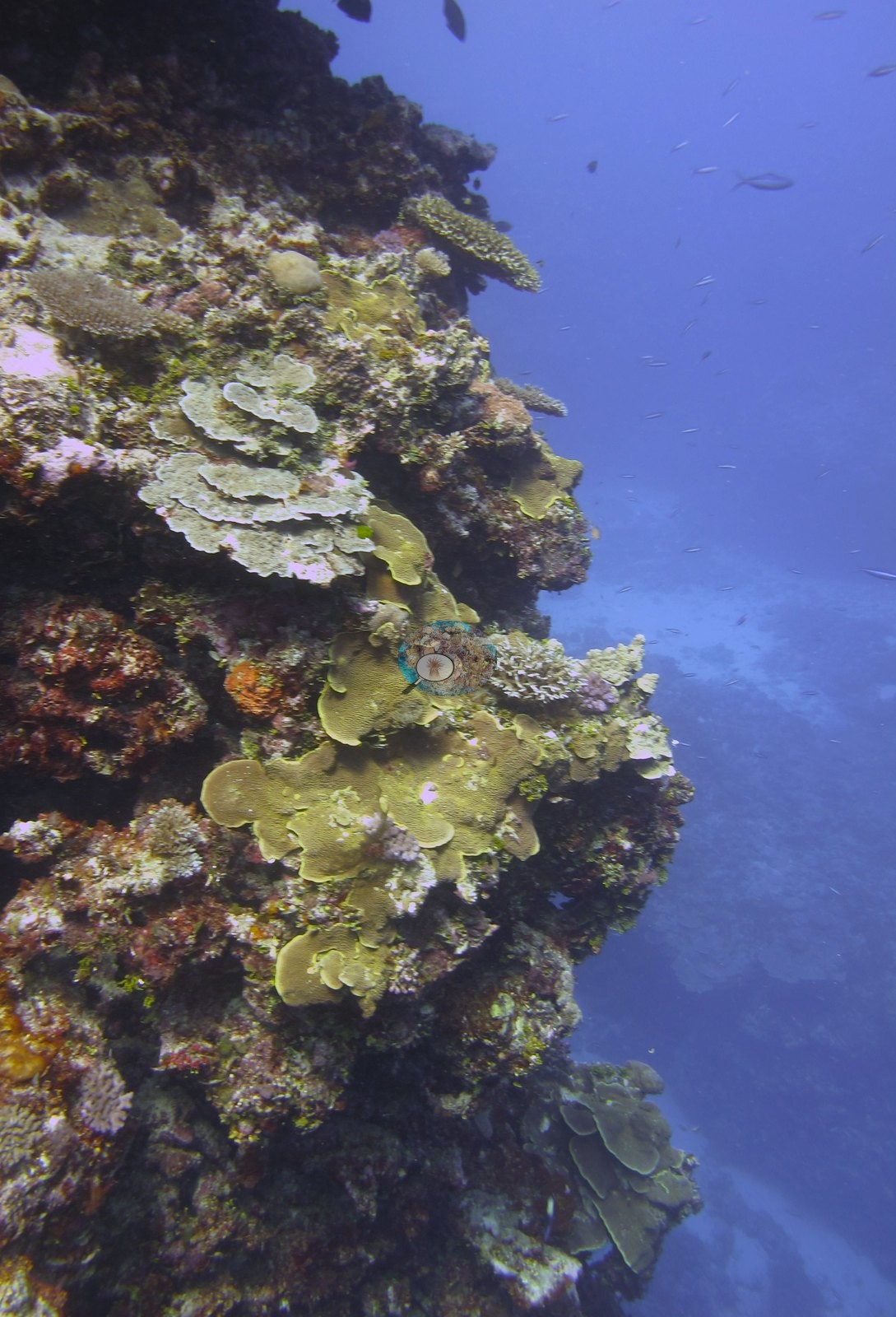
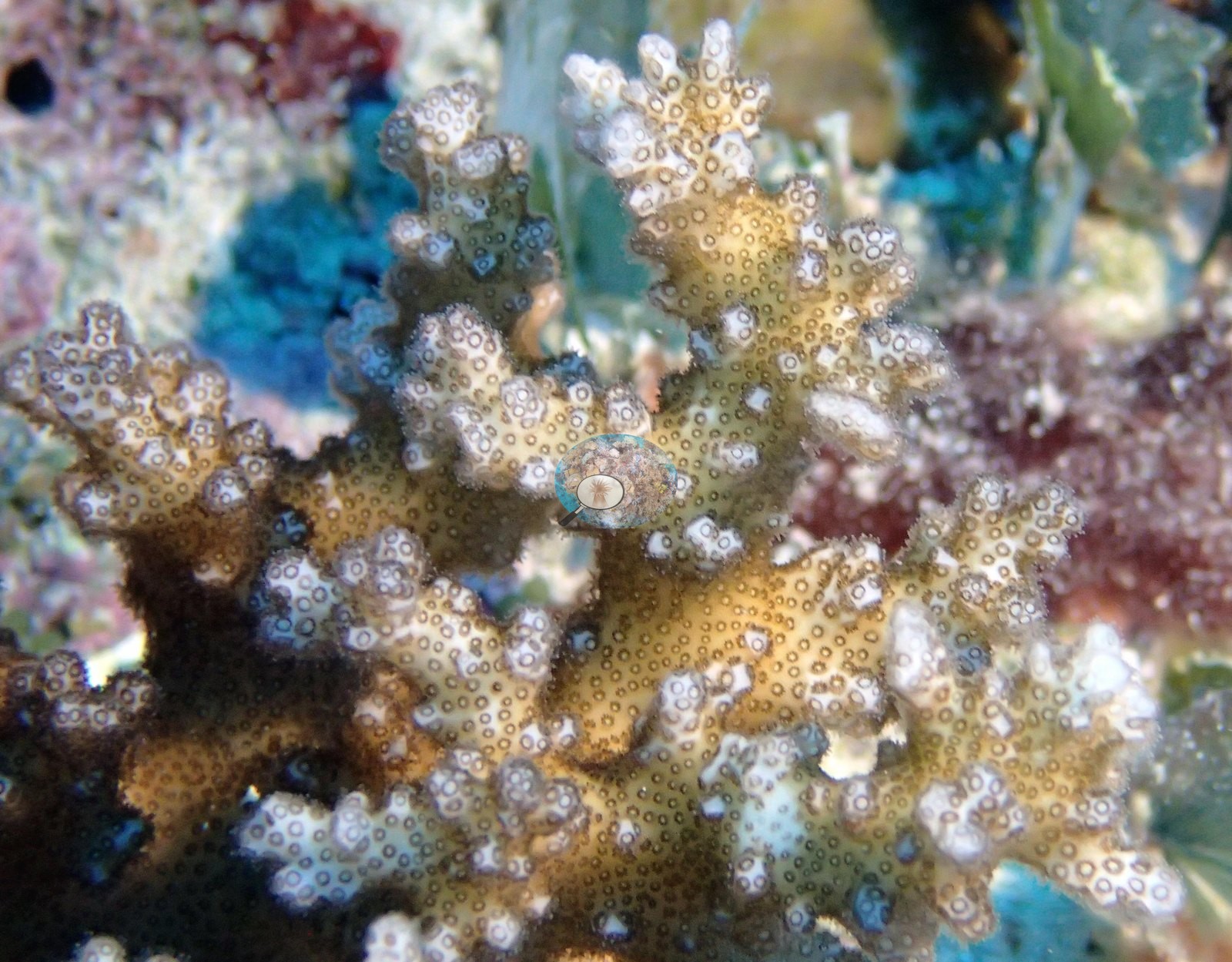
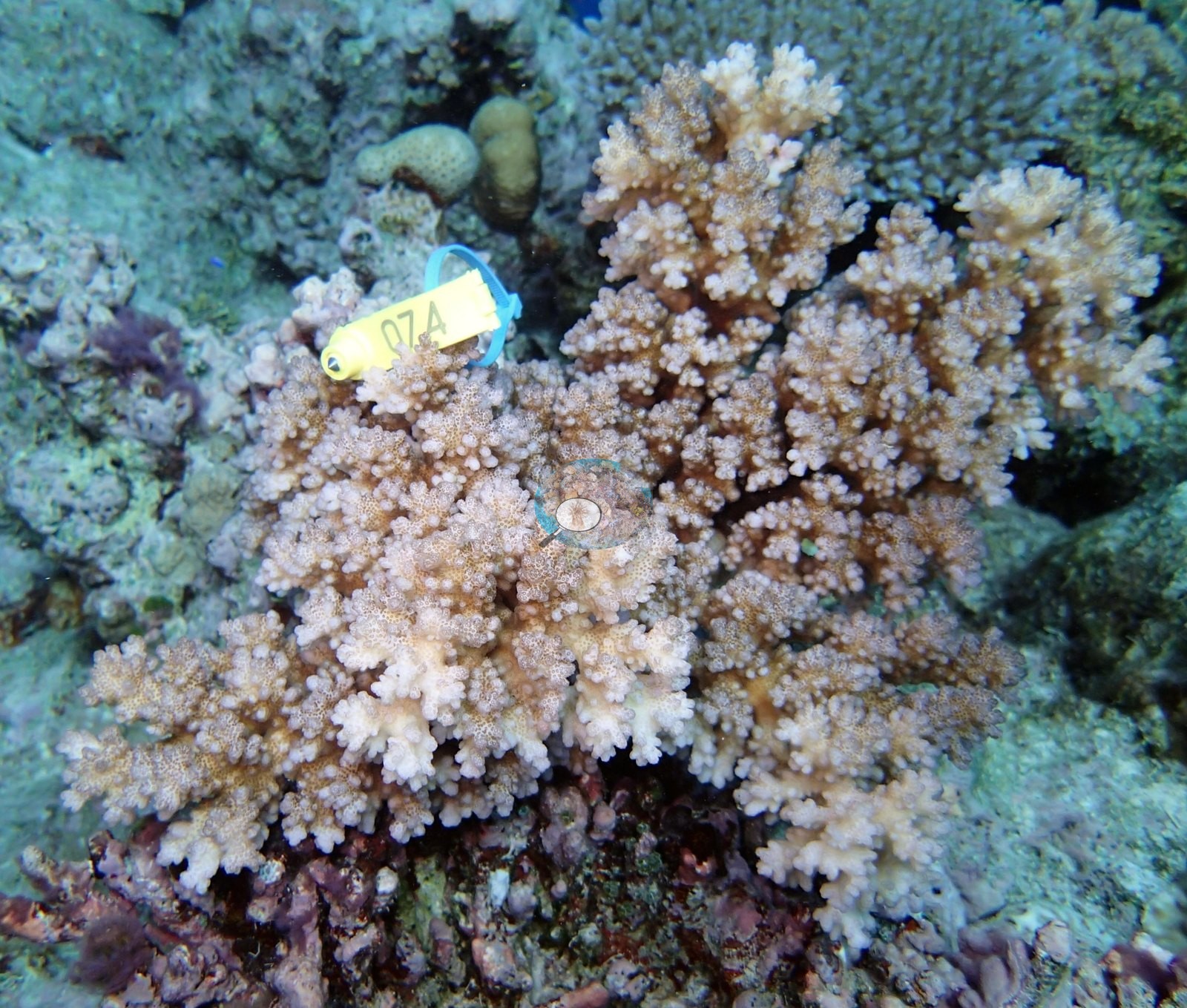
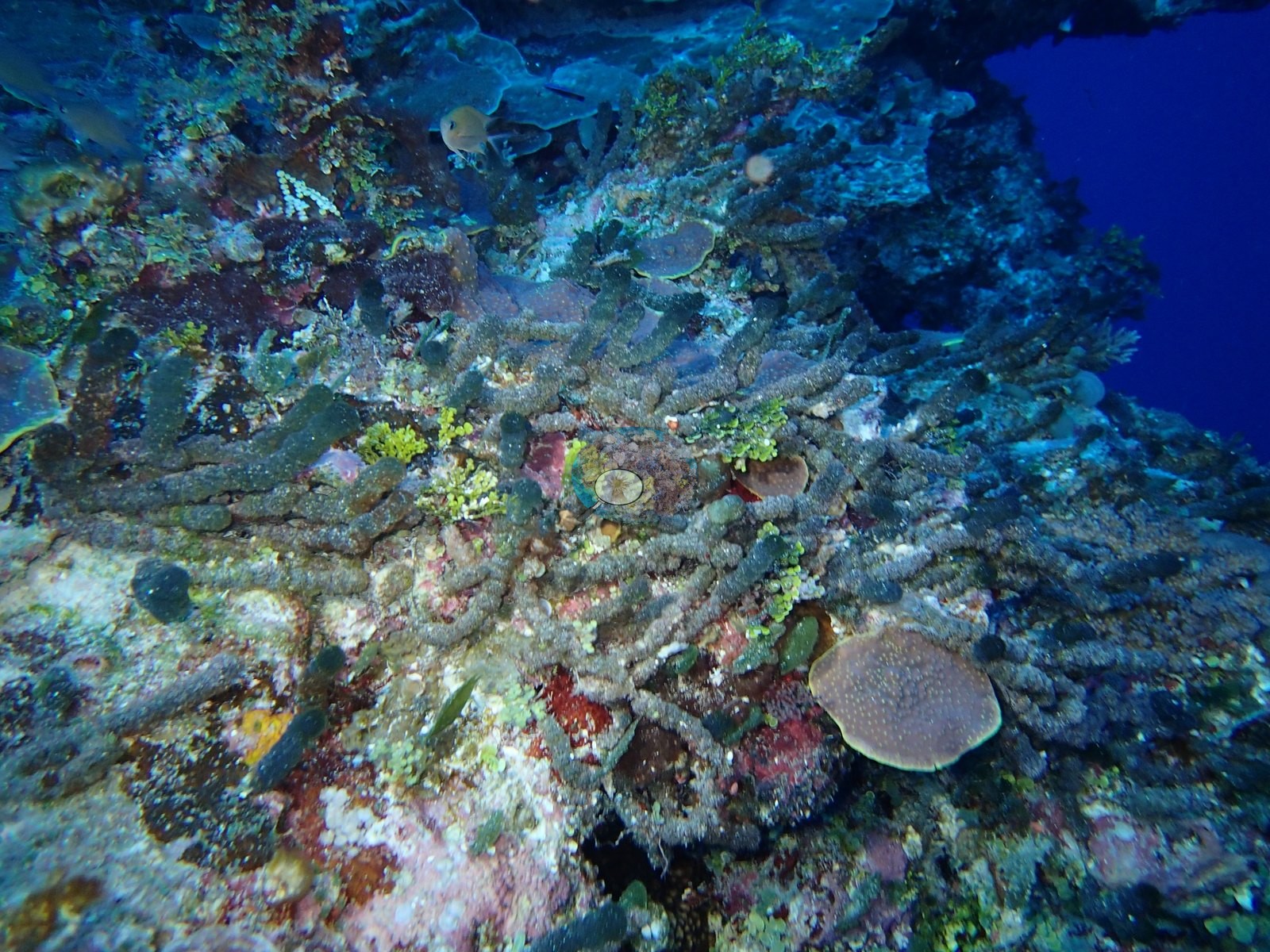
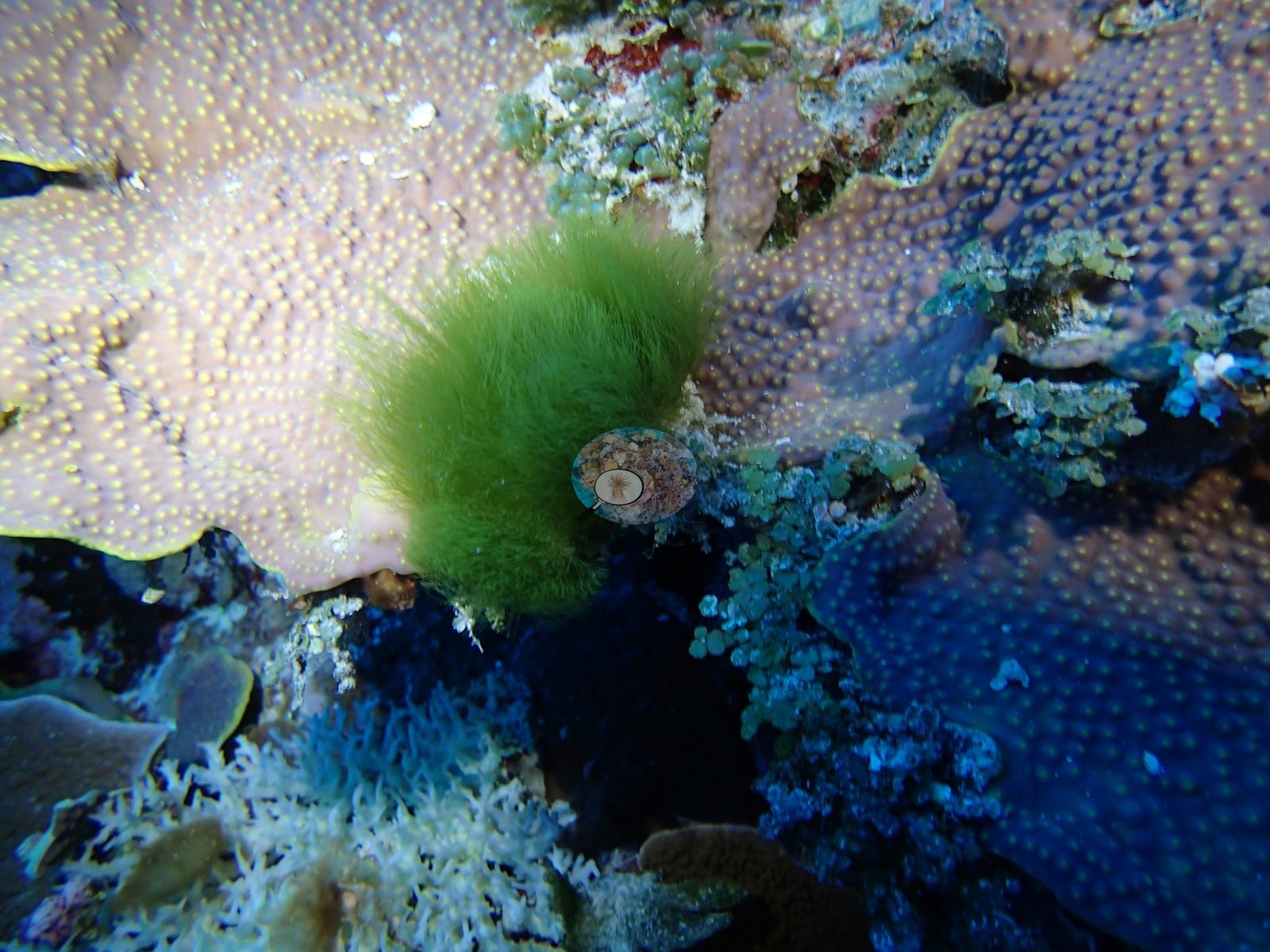
Elsewhere the framework is mixed and patchy — pale coralline-crusted pavement and turf-covered rock carrying small massives, low corymbose colonies, green algal tufts, and red and orange encrusting sponges (e.g., Image 3, Image 17, Image 20) — and a large fine-corallite massive dome with a bright green algal tuft wedged against it (e.g., Image 19). Image 30 is a set-piece: a partially bleached pocilloporid (Anderson's ID) crowning a mound of old, coralline-crusted dead coral, with staghorn behind it and orange sponge at the base.
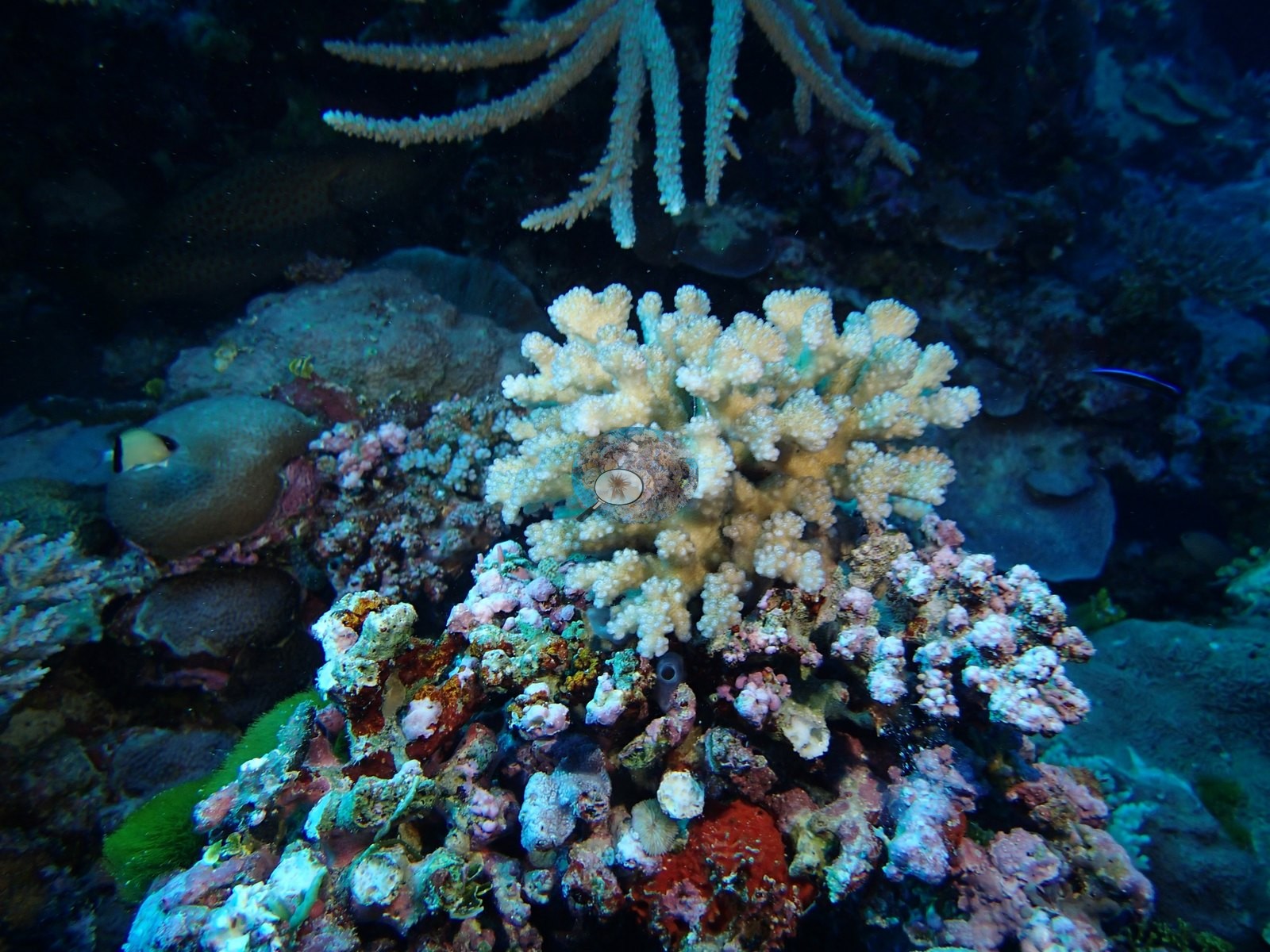
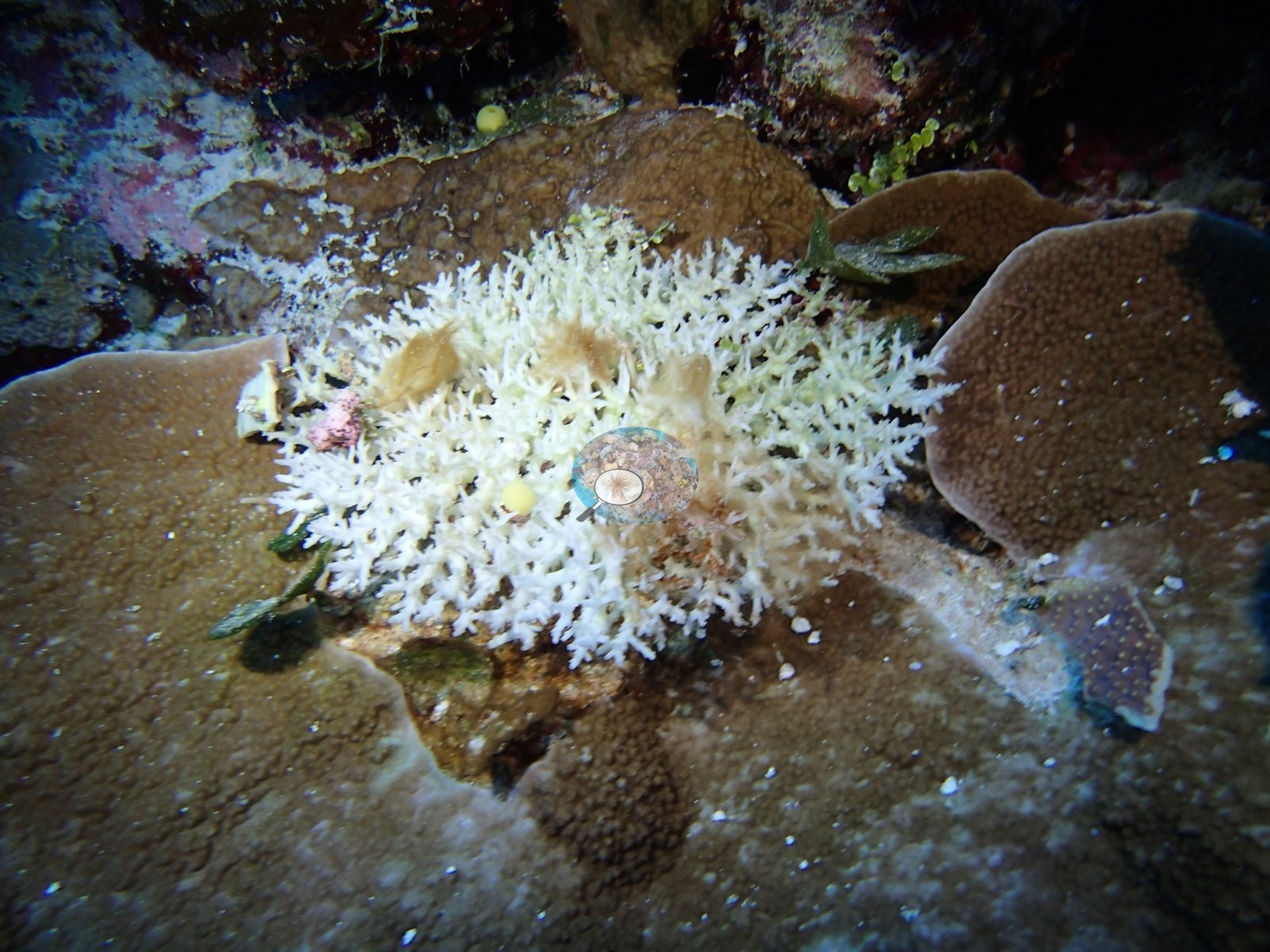
A fine-branching colony among brown plates in Image 18 is badly bleached and being overgrown by algae (Anderson).
Coral cover
- Reference: Khaled bin Sultan Living Oceans Foundation, Global Reef Expedition (in situ transect)
- Coral cover 28%, from the LOF-GRE in situ benthic transect (the mean of all of this station's own transects in the expedition's per-transect benthic data) — a diver transect, and the authoritative figure for this site.
- Transect mean 28 ± 7.0% SE (n = 5 transects; Living Oceans Foundation per-transect benthic data); the headline above is this all-transect mean.
Stressors
Two colonies are bleached: a badly bleached fine-branching colony being overgrown by algae (e.g., Image 18) and a partially bleached pocilloporid (e.g., Image 30); no disease lesions or crown-of-thorns feeding scars are discernible, though low light and color loss on the deeper frames limit how far that can be pushed. Anderson's sampling sheet records the six colonies sampled here as healthy, three of them pale or partly pale (up to 20%). None of the three coral colonies from this site with an outlier score was flagged as a physiological outlier (Mayfield et al. 2017, PLoS ONE). The Living Oceans Foundation transects here recorded 15% cyanobacteria and no recently dead coral.
Fish and other fauna
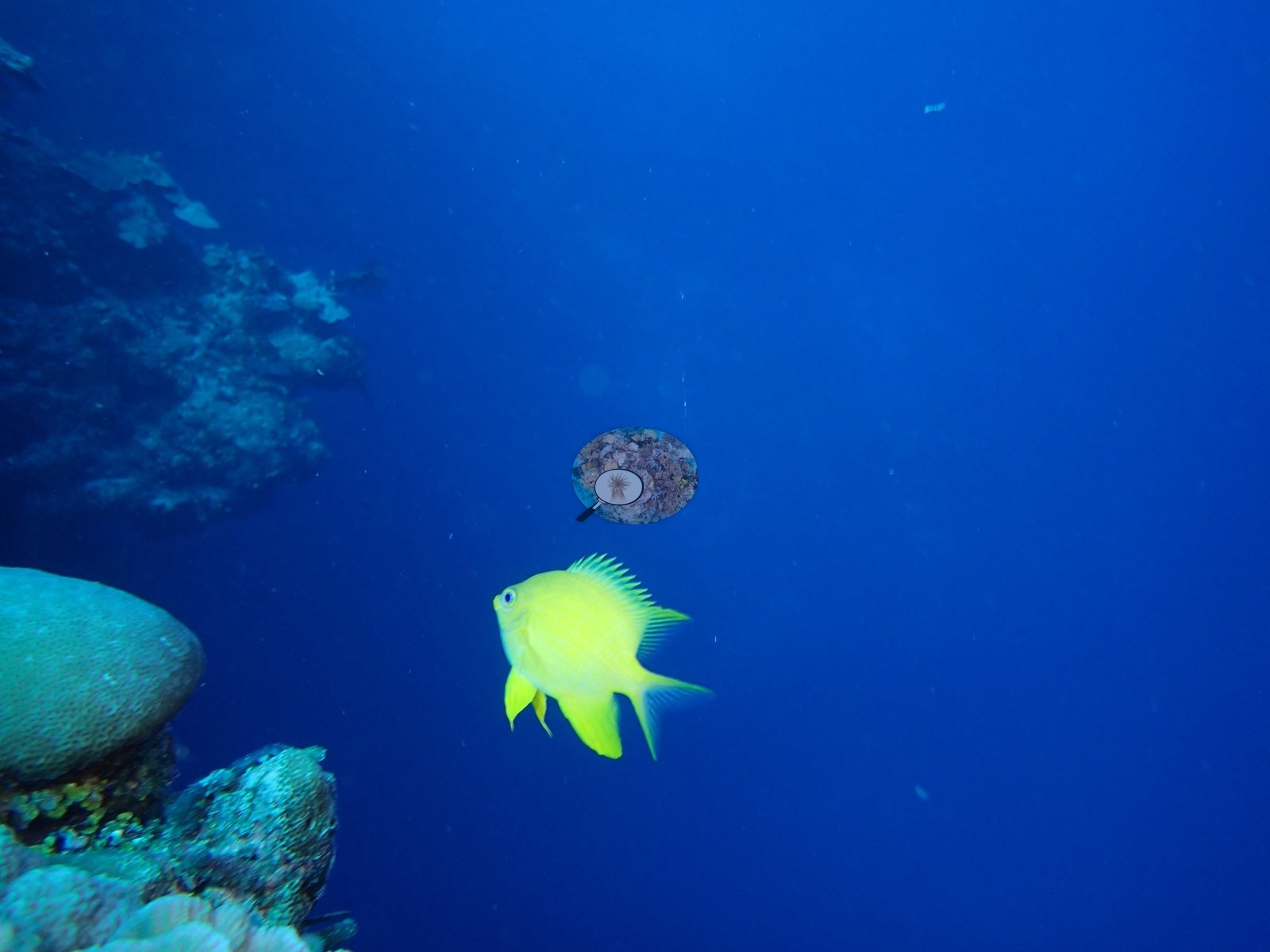
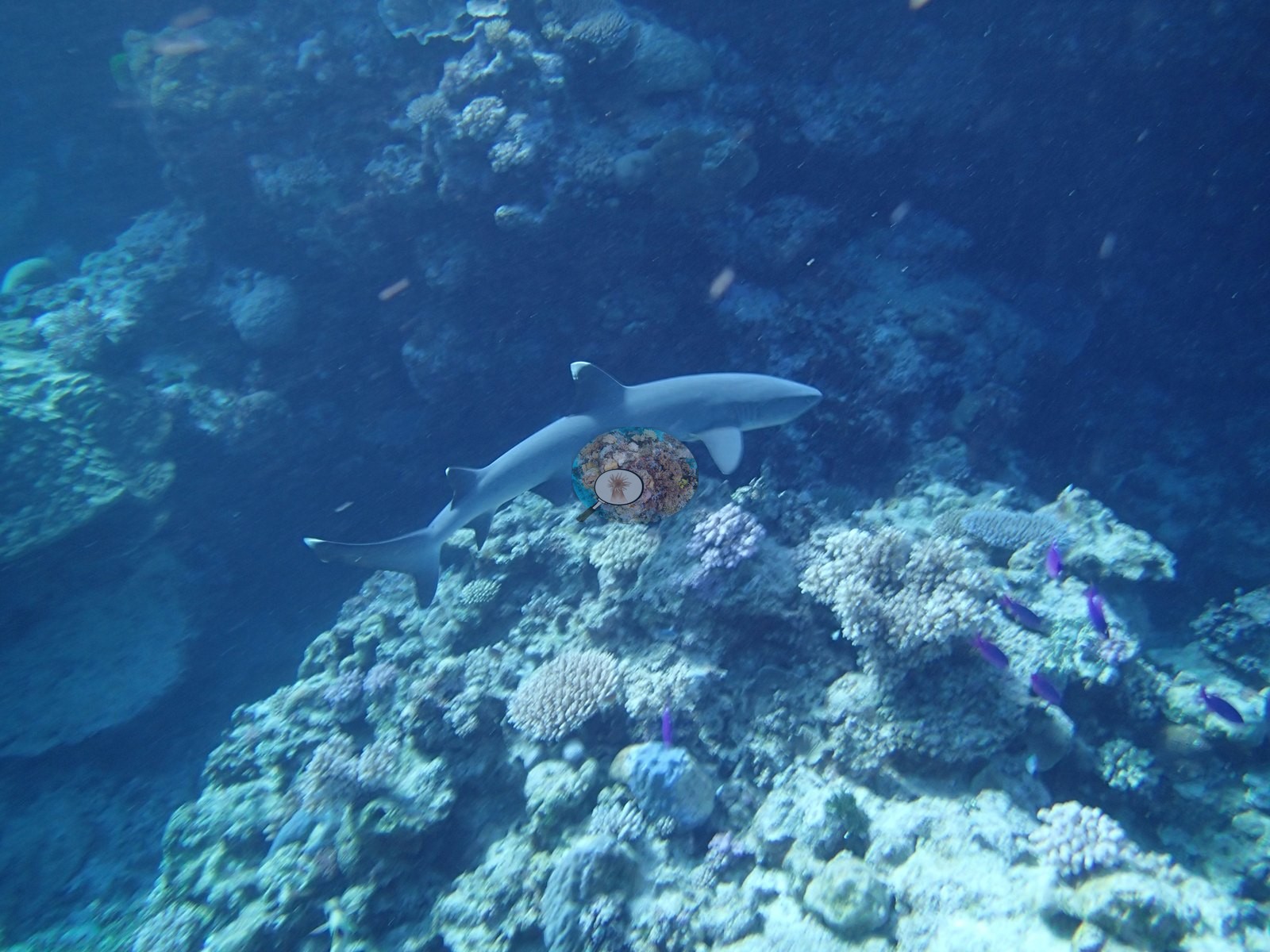
Fauna is well represented. Anderson's field notes also record an aggressive shark and a dogtooth tuna (field calls, reported as such).
Comparisons with other data
Apart from the Living Oceans Foundation survey shown here, we found no other surveys at this site as of 2026. If you would like to share yours, please email us.
Other notes
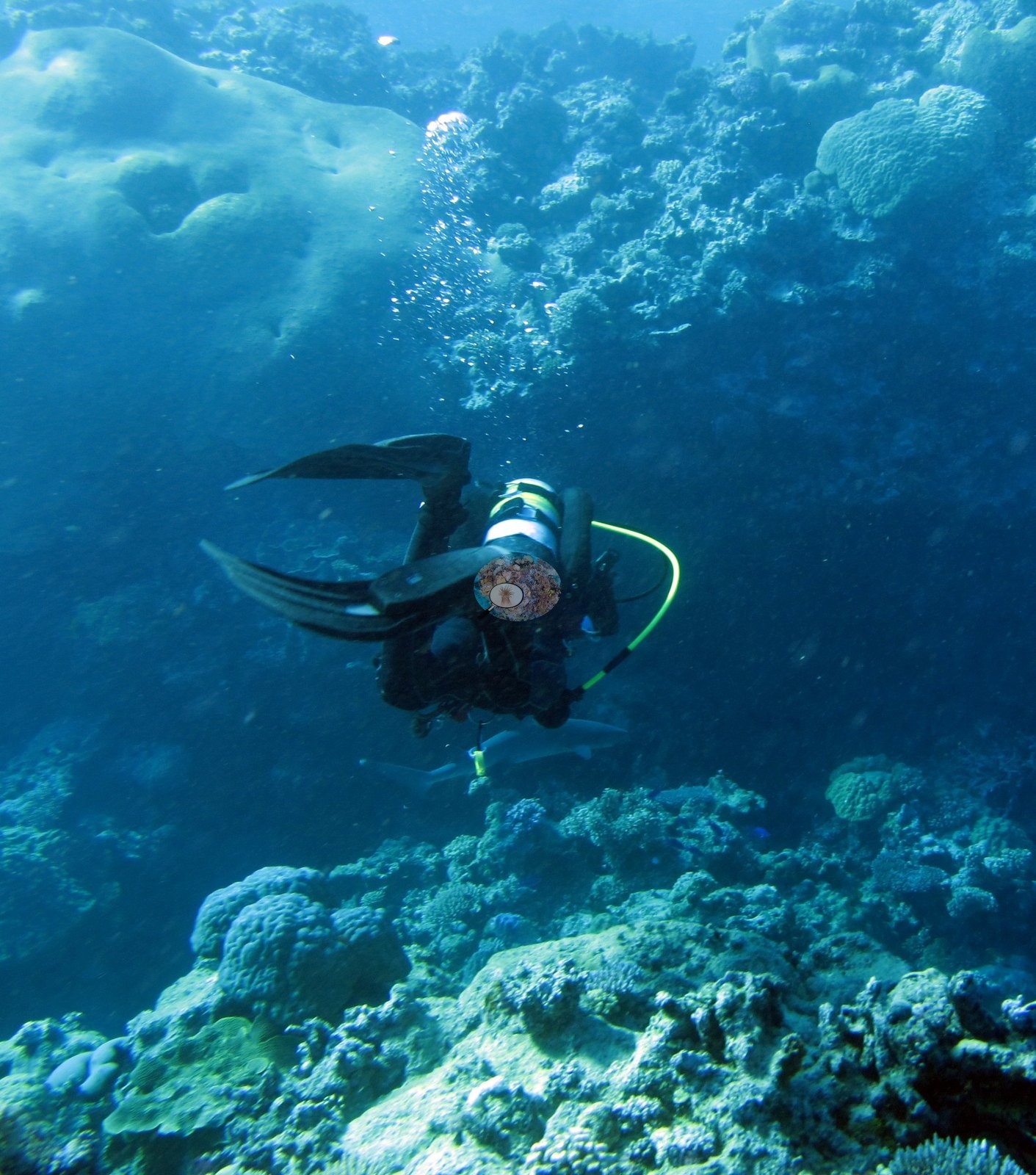
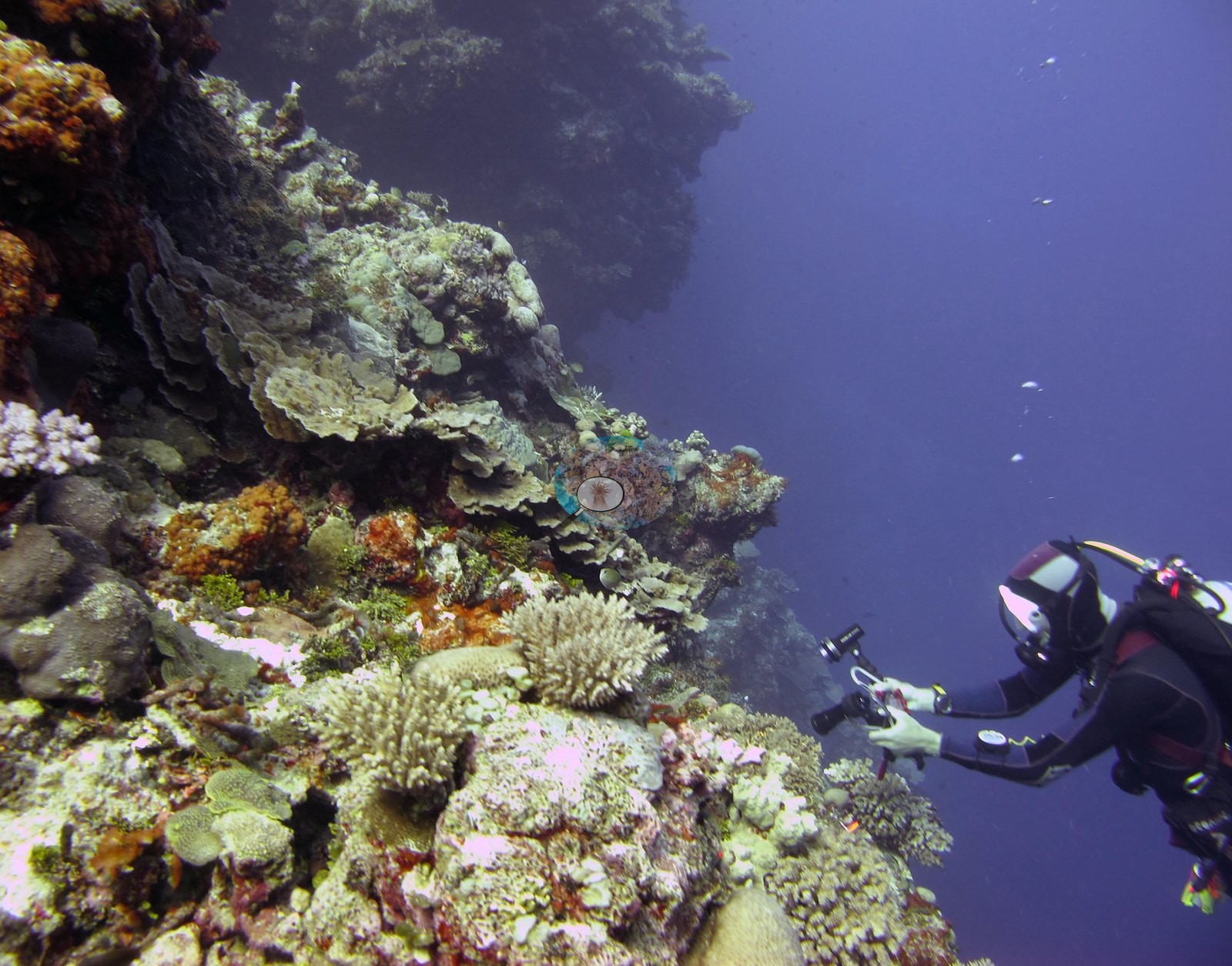
Divers appear in Image 55 and Image 52, one of them working the wall with a camera rig — useful for scale on those plates.
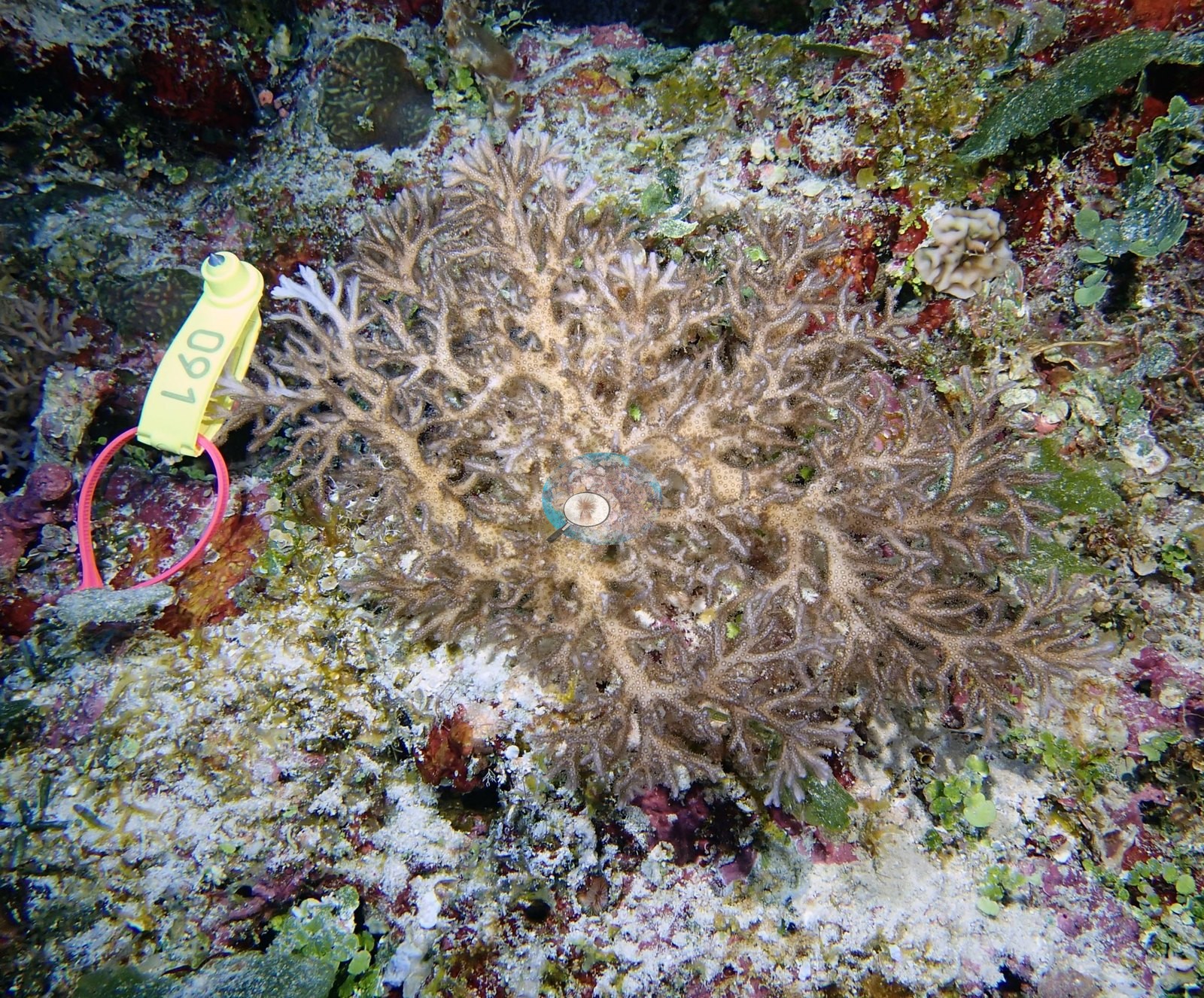
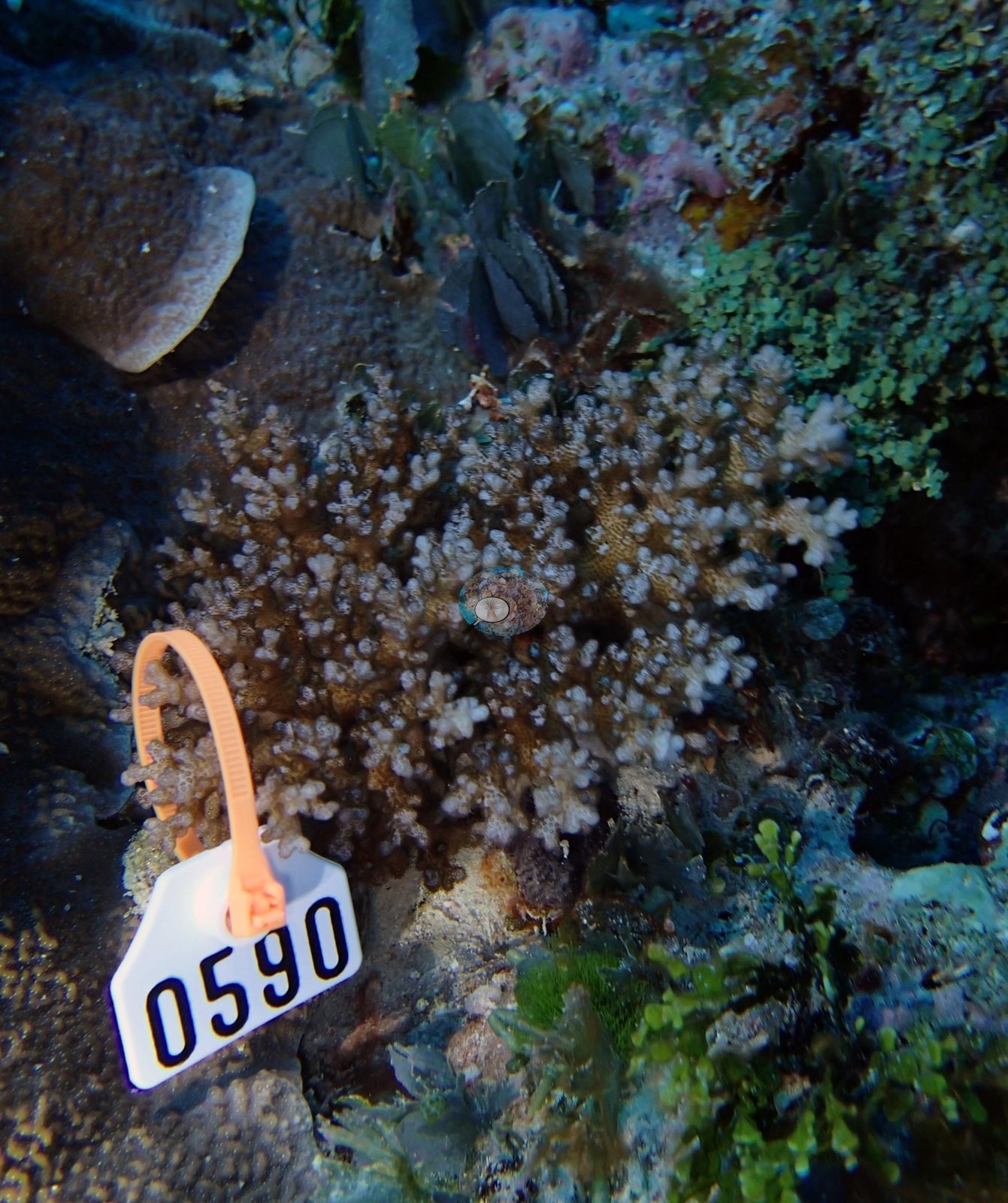
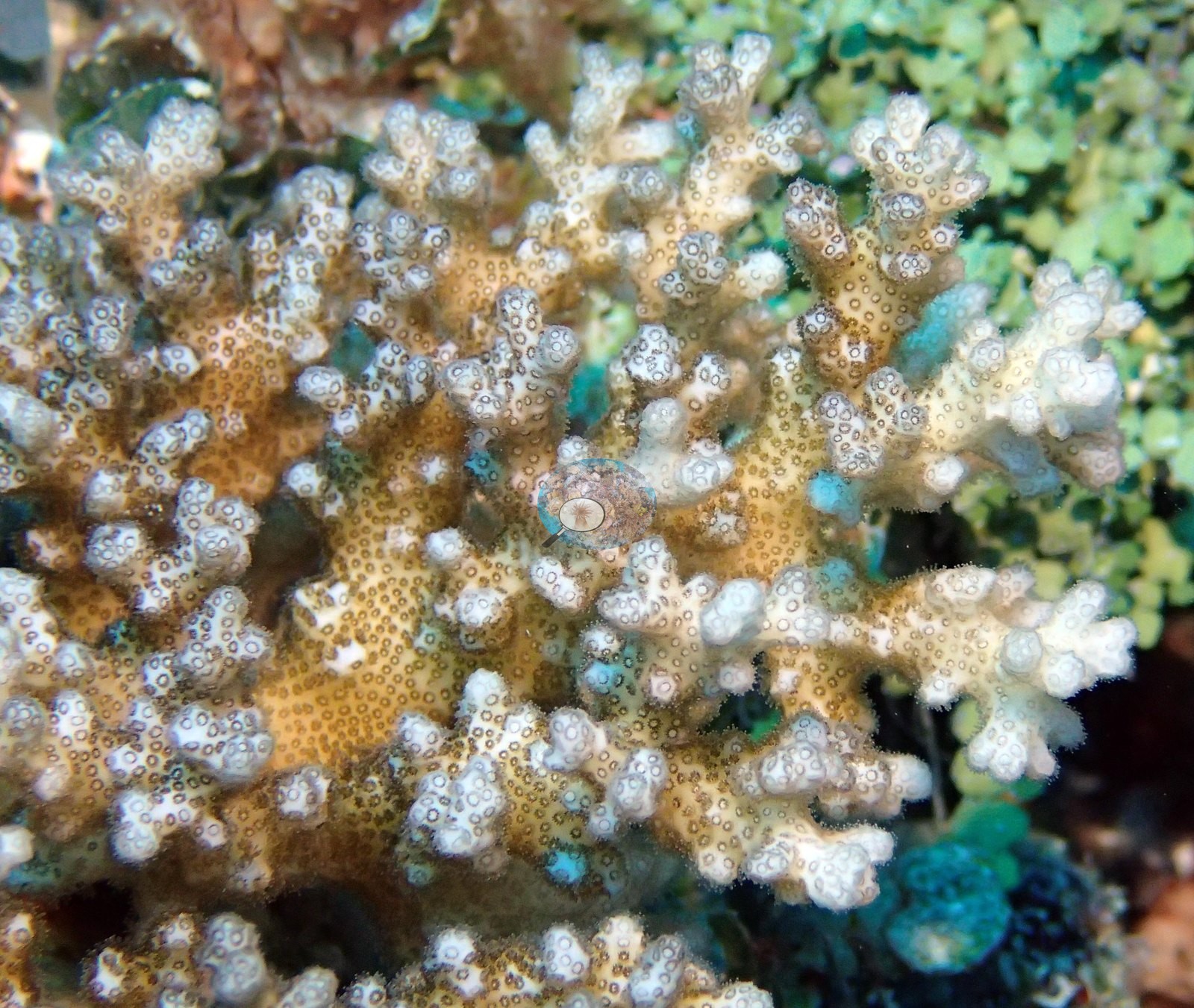
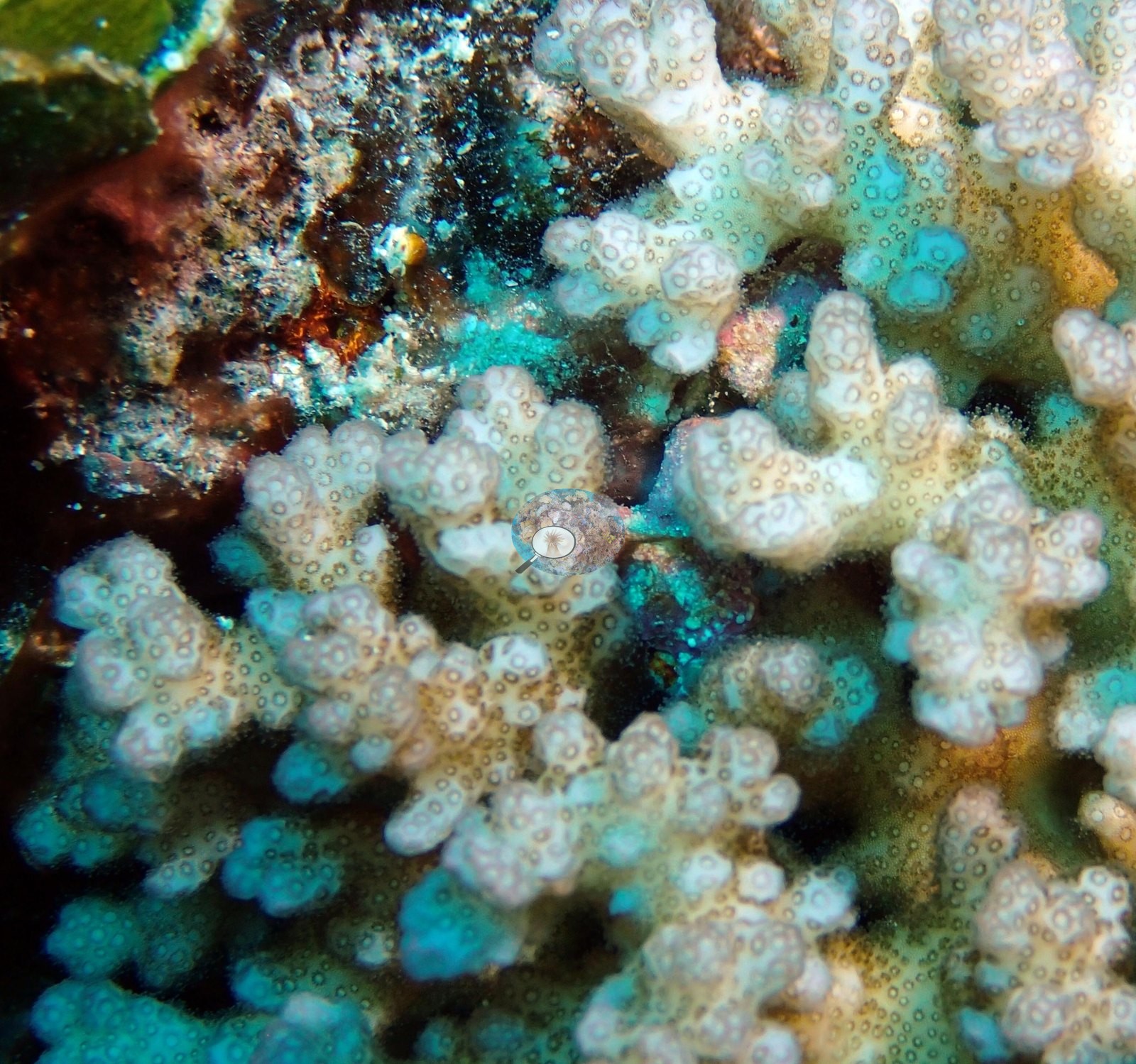
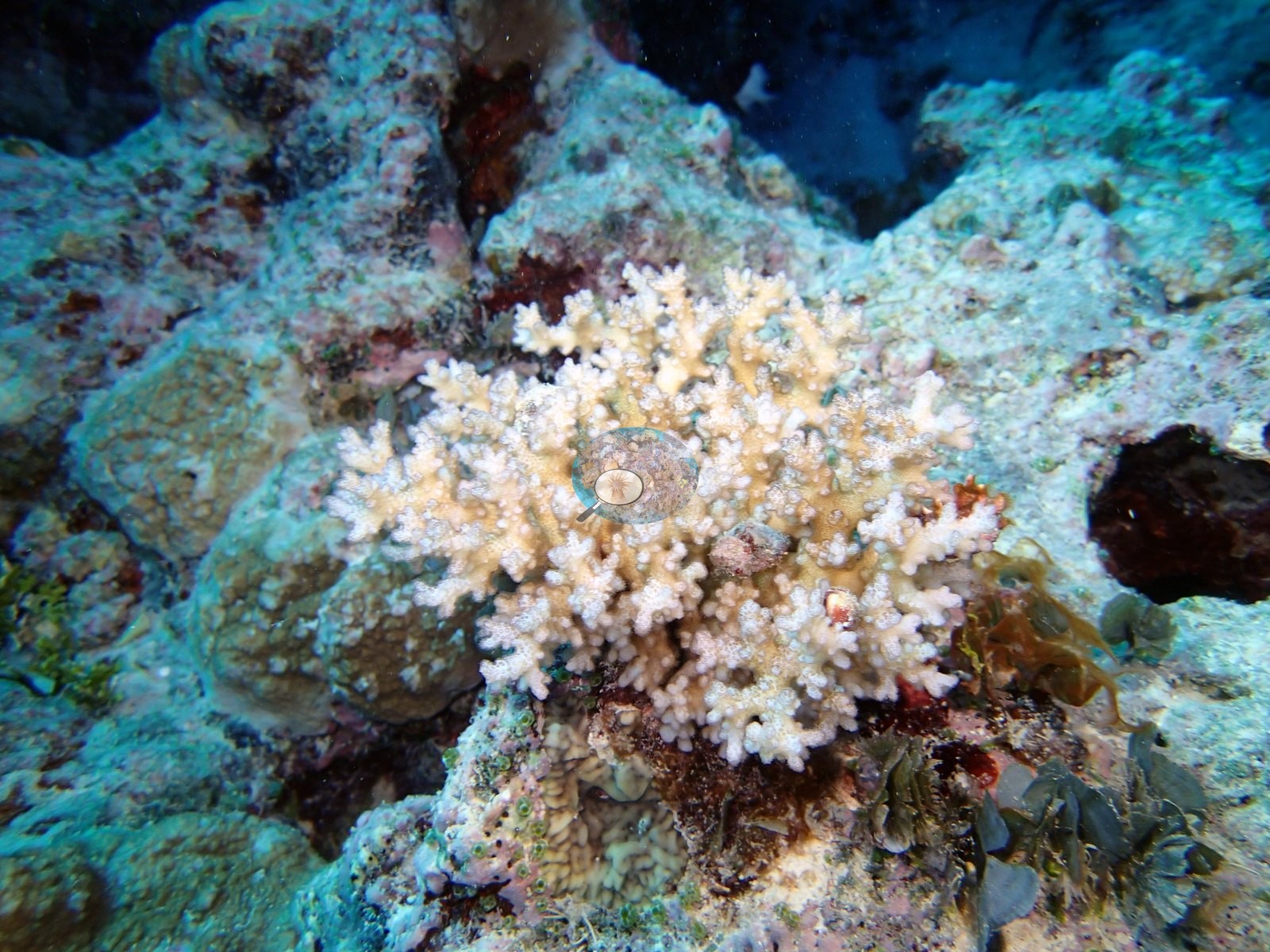
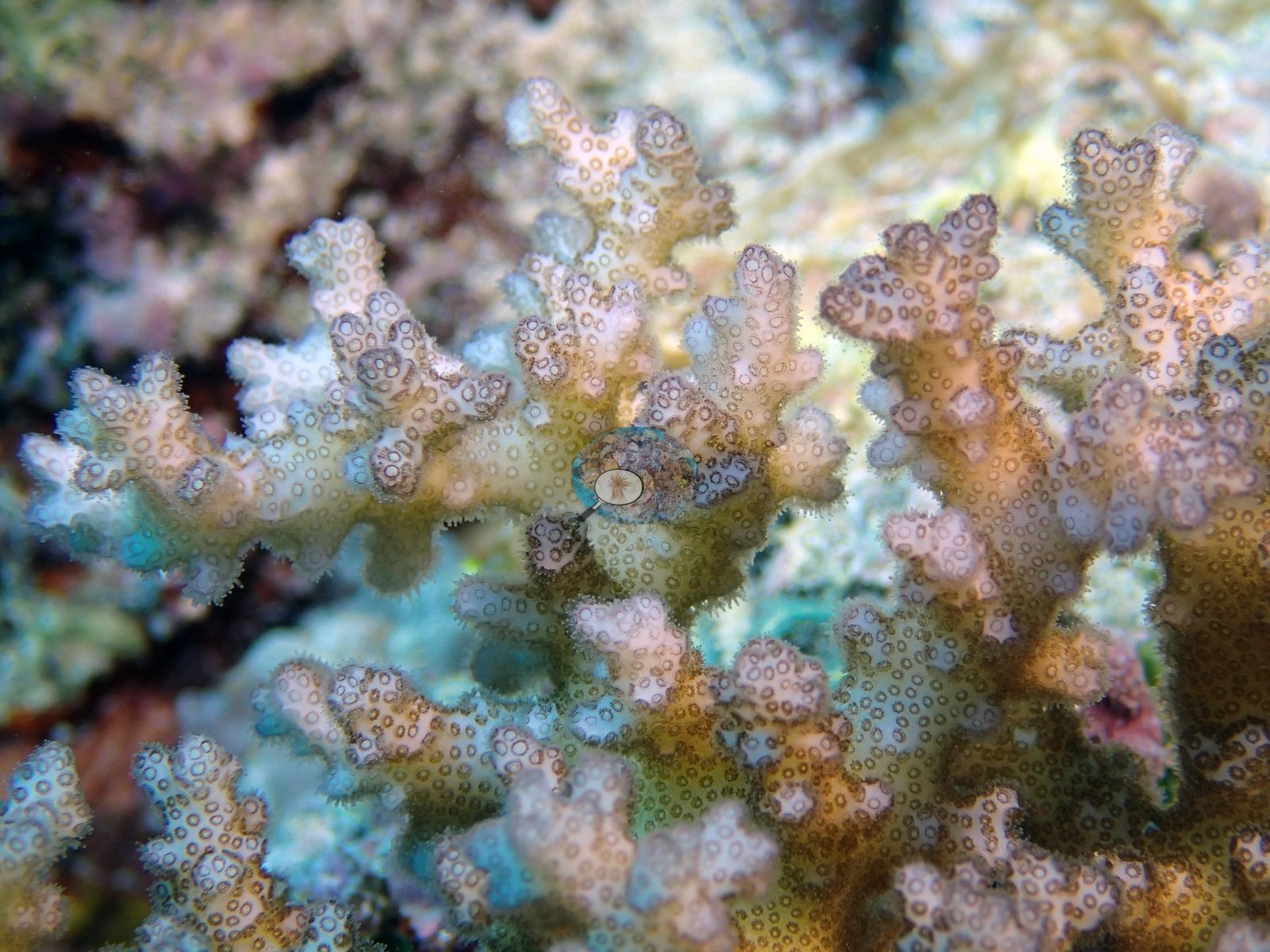
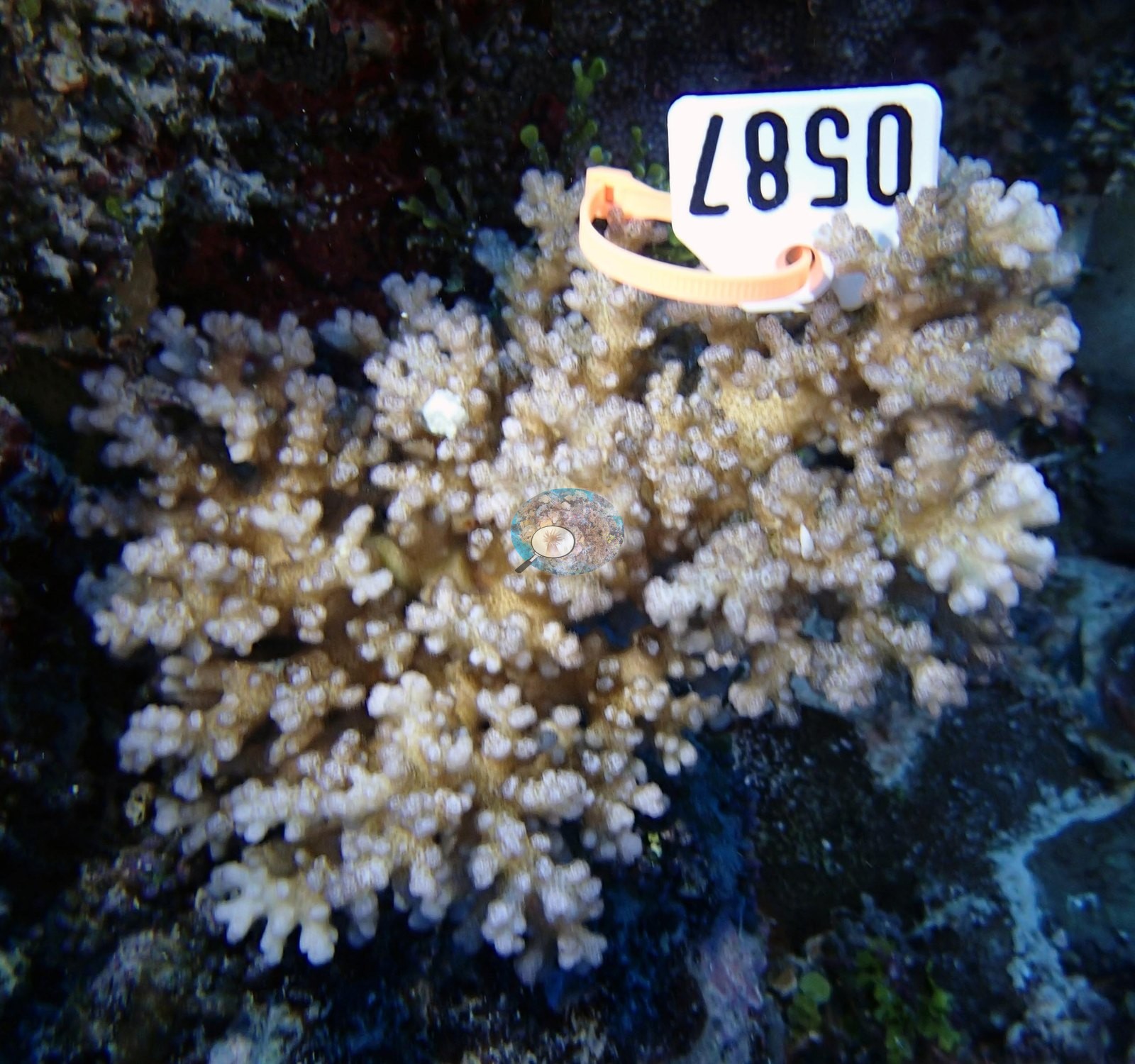
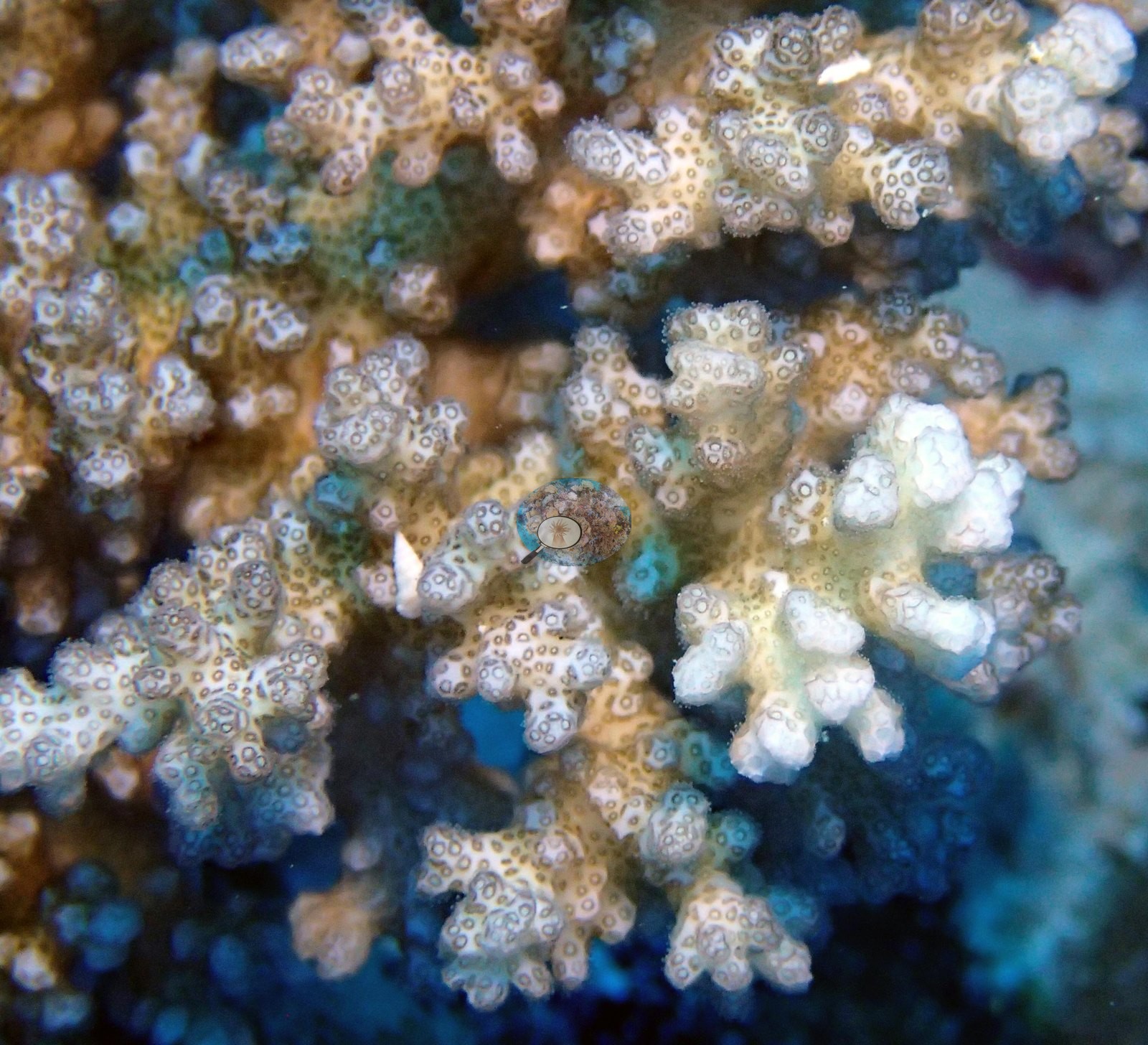
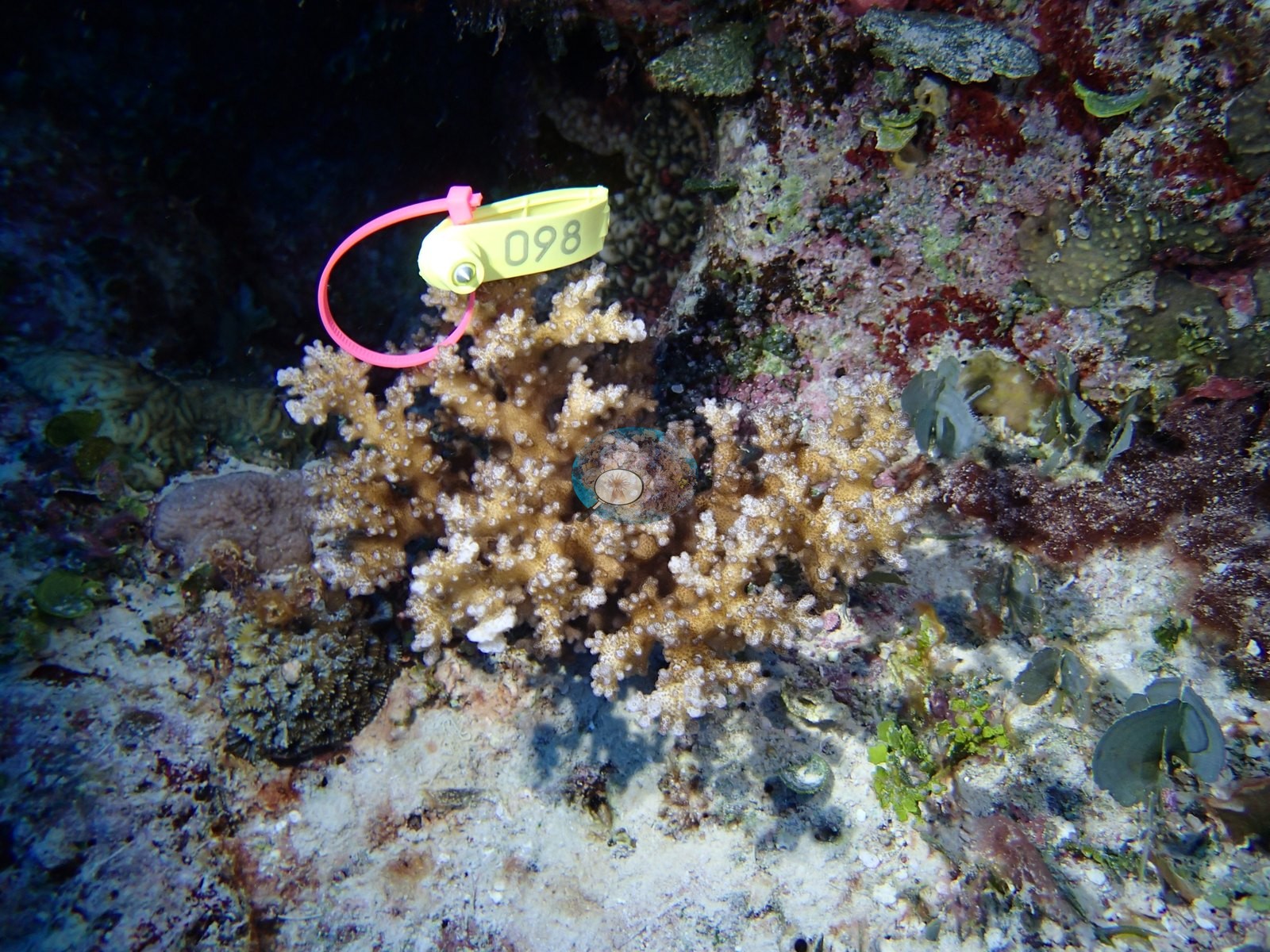
The set also records the survey itself: Image 39 shows a branching colony carrying a plastic tag on a colored tie, one of the tagged colonies sampled at this station (Anderson's sample sheet lists only Pocillopora here: P. acuta and P. verrucosa).
Several frames are deep and unlit (e.g., Image 50, Image 54, Image 51, Image 48) with heavy blue-green or magenta color casts, so color and fine texture cannot be read from them and no growth form should be assigned there with confidence.
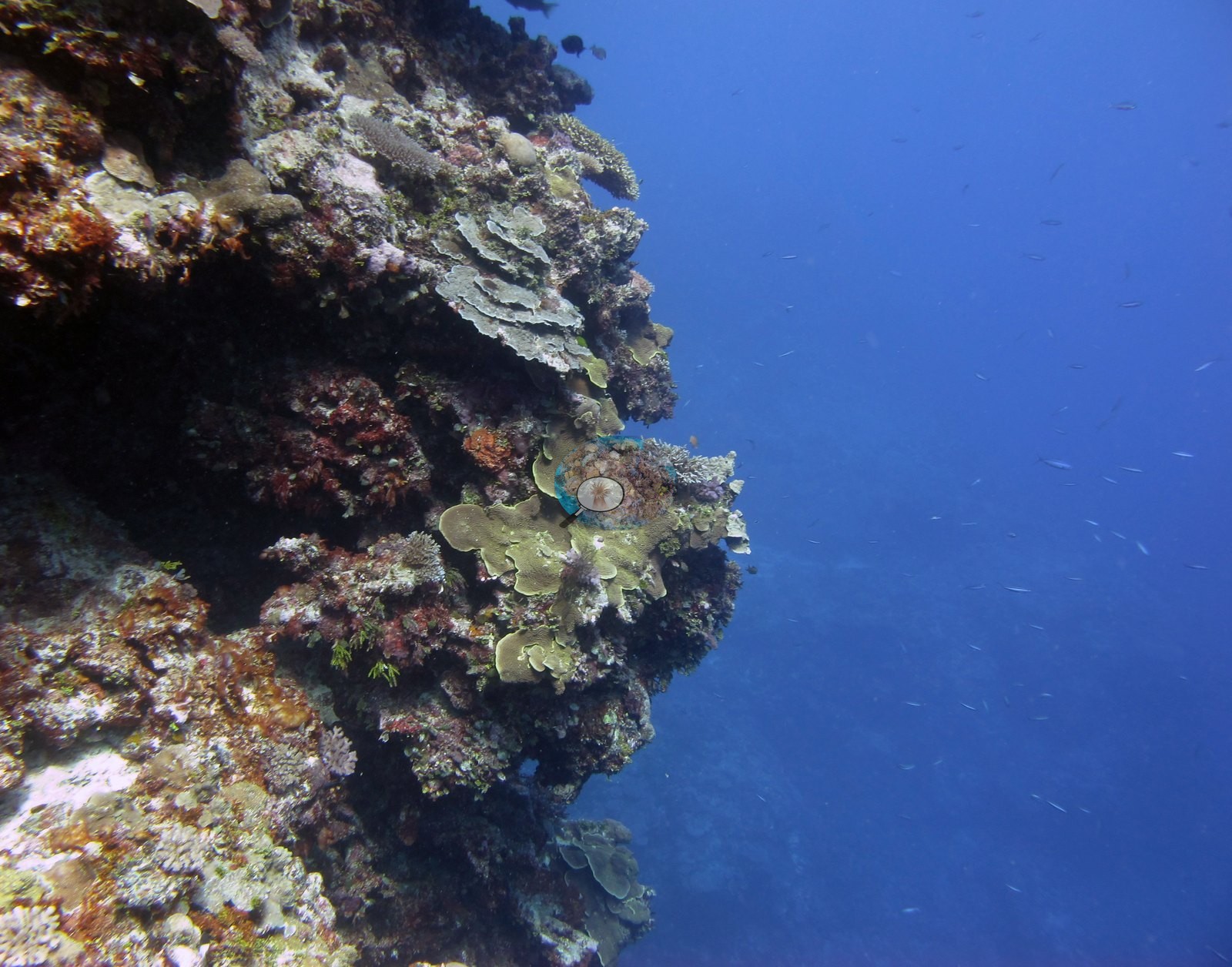
Survey team's site notes: FJTV41 was located on the North West side of the island. Isolated monospecific Isopora stands were found around 16 m. Again like other sites, shallow fore reef slope had coral assemblages of Pocillopora, Stylophora, and Acropora.
Data & links
- Download benthic survey data (CSV) ↗
- Download all LOF-GRE data (933 sites) ↗
- Photo portfolio ↗
- Coral Reef Diagnostics page for this area ↗
All images from Coral Reef Diagnostics. Data are from the Khaled bin Sultan Living Oceans Foundation Global Reef Expedition and Coral Reef Diagnostics.
 © Coral Reef Diagnostics.