
Part of the regional summaries: Fiji - Northern Lau (Vanua Balavu / Cicia / Nayau) and Fiji - Lau
More info
Fiji (NOAA CRW virtual station)A Mago reef with a cavern swim-through and plenty of Pocillopora damicornis, including one colony Anderson recorded as bleached, stark white beside pigmented neighbors. A giant clam overgrown by Porites and whitetip reef sharks over bare sand flats round out the dive, and survey notes mention crown-of-thorns predation around Mago. Surveyed on the Living Oceans Foundation's Global Reef Expedition.
E dua na cakau e Mago e tiko kina e dua na qara e rawa ni qalo curu kina (swim-through) kei na levu ni Pocillopora damicornis, okati kina e dua na lase e vakaiyacataka ko Anderson me vulavula (bleached), e vulavula vakadua ena yasana ni lase e roka tu ena veiyakavi. E dua na vasua e ubia na Porites kei na qio (whitetip reef sharks) ena dela ni nuku savasava e vakaotia na nunu, ka cavuta na ivola ni vakadidike na kana ni bula (crown-of-thorns) e wavokita o Mago.
AI translation of this summary; the English is authoritative. (low confidence)
CTD-cast midpoint of 27.1–27.7°C
One other CRD dive site with its own page within 5 km shown in orange — click a marker to open its page.
🗺 Detailed map of the Global Reef Expedition dive sites, Mago, Fiji (Khaled bin Sultan Living Oceans Foundation; opens in a new window)
17 of the 23 photographs on this page are shown beside the text that discusses them under "Site description" below.
Site description
Setting
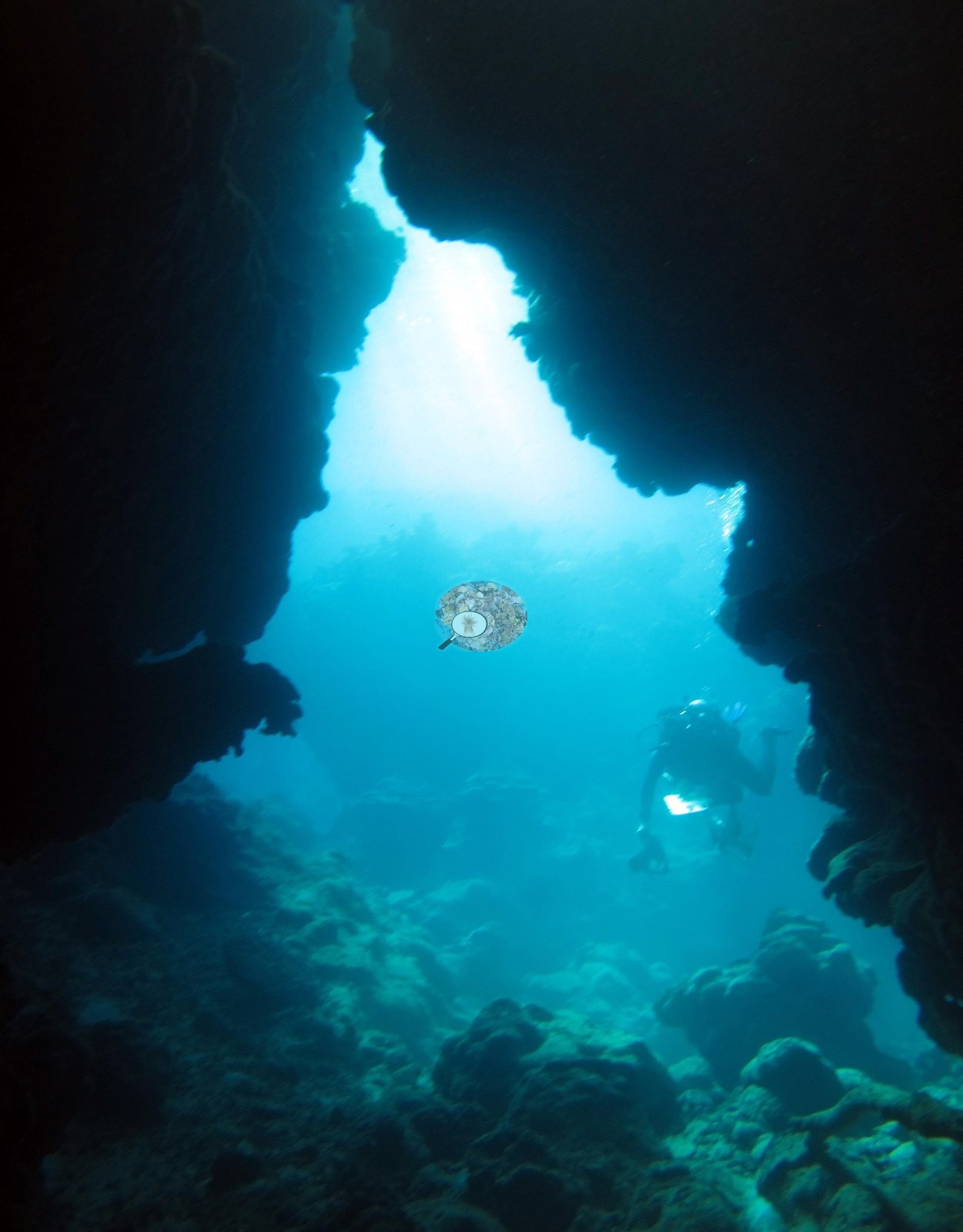
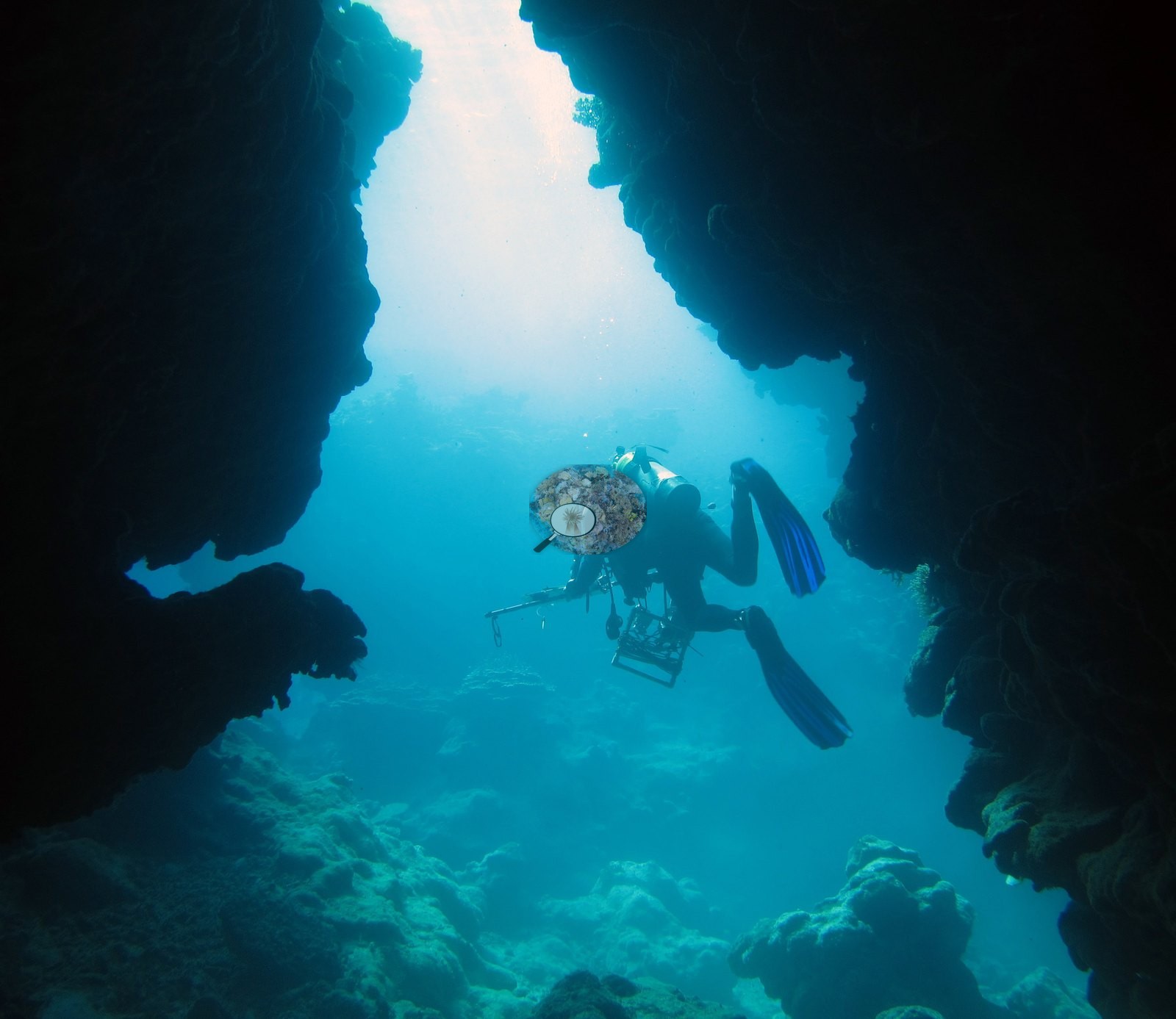
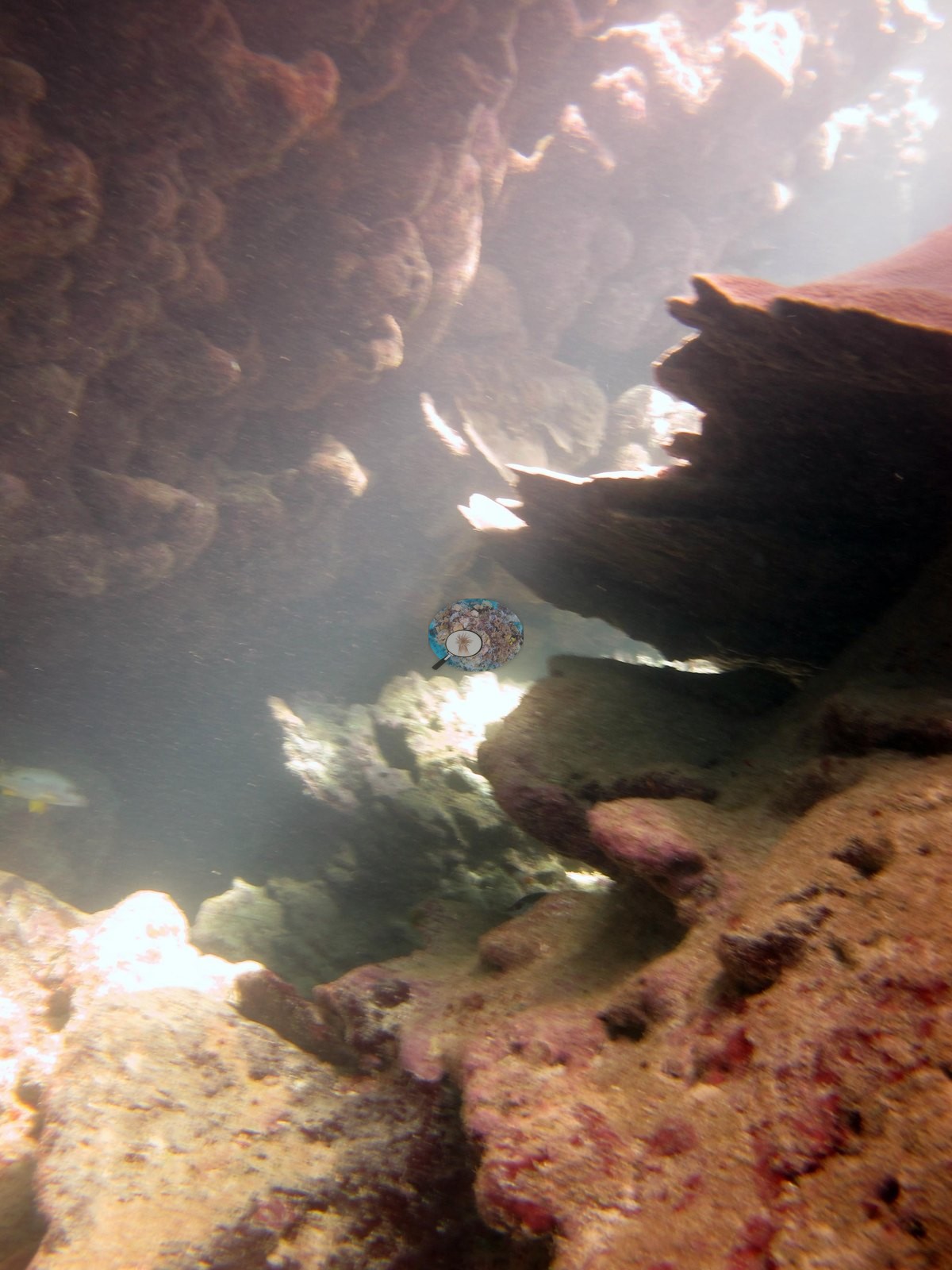
Three frames show the cavern: a diver silhouetted in a bright cavern mouth (e.g., Image 22, Image 23) and a dark, hazy interior looking out through a slot in massive coral framework (e.g., Image 11), the swim-through structure.
General benthic features
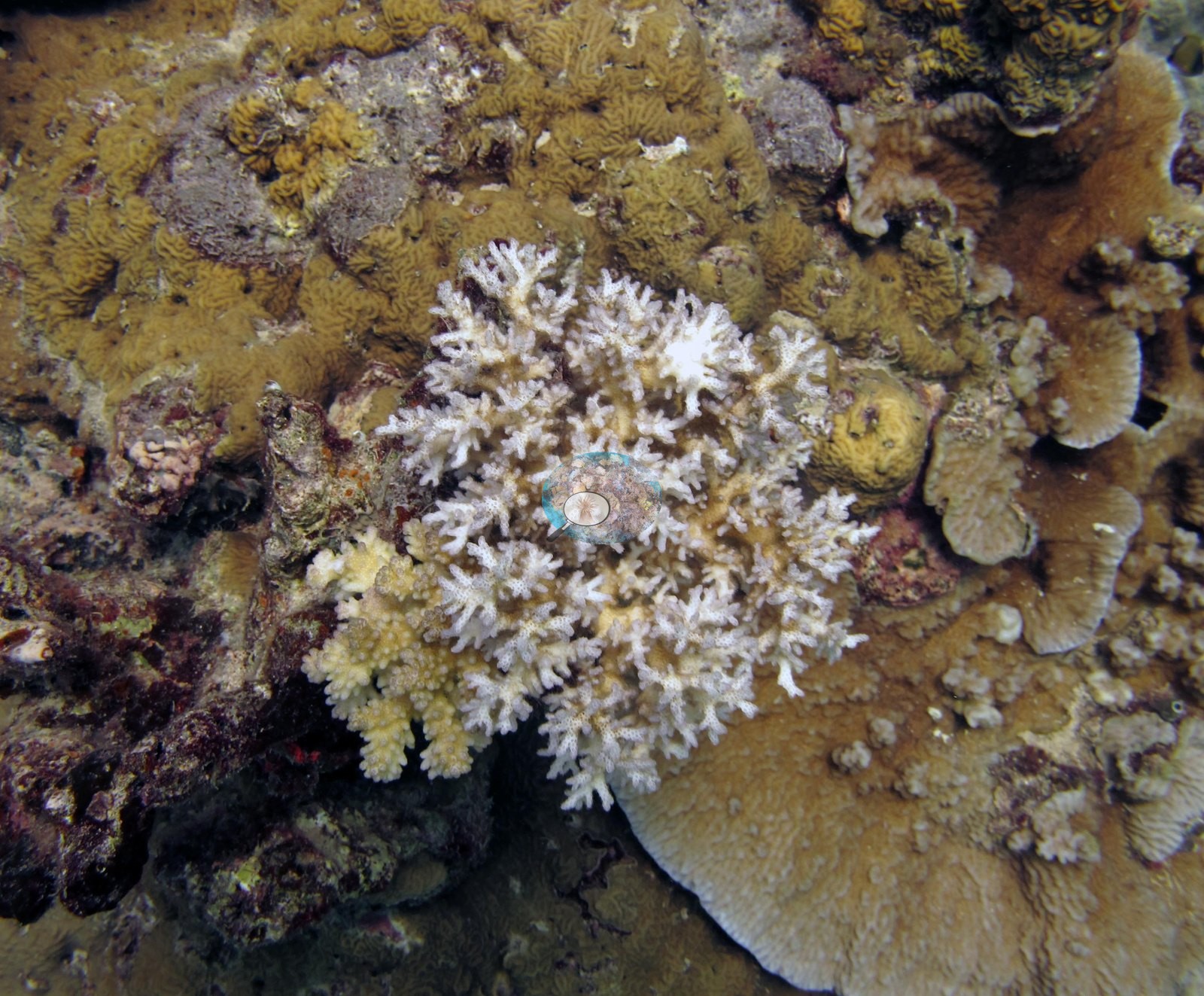
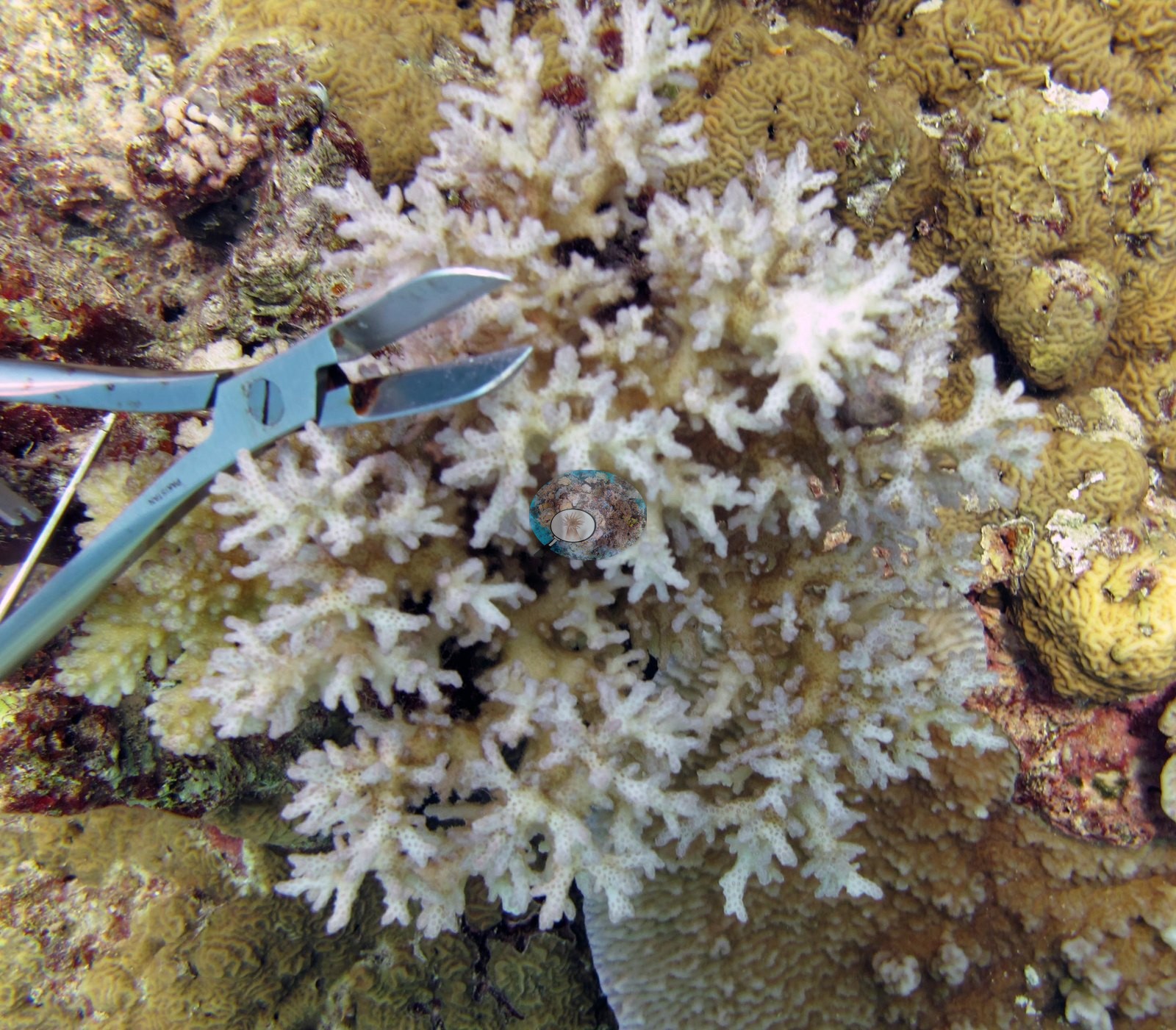
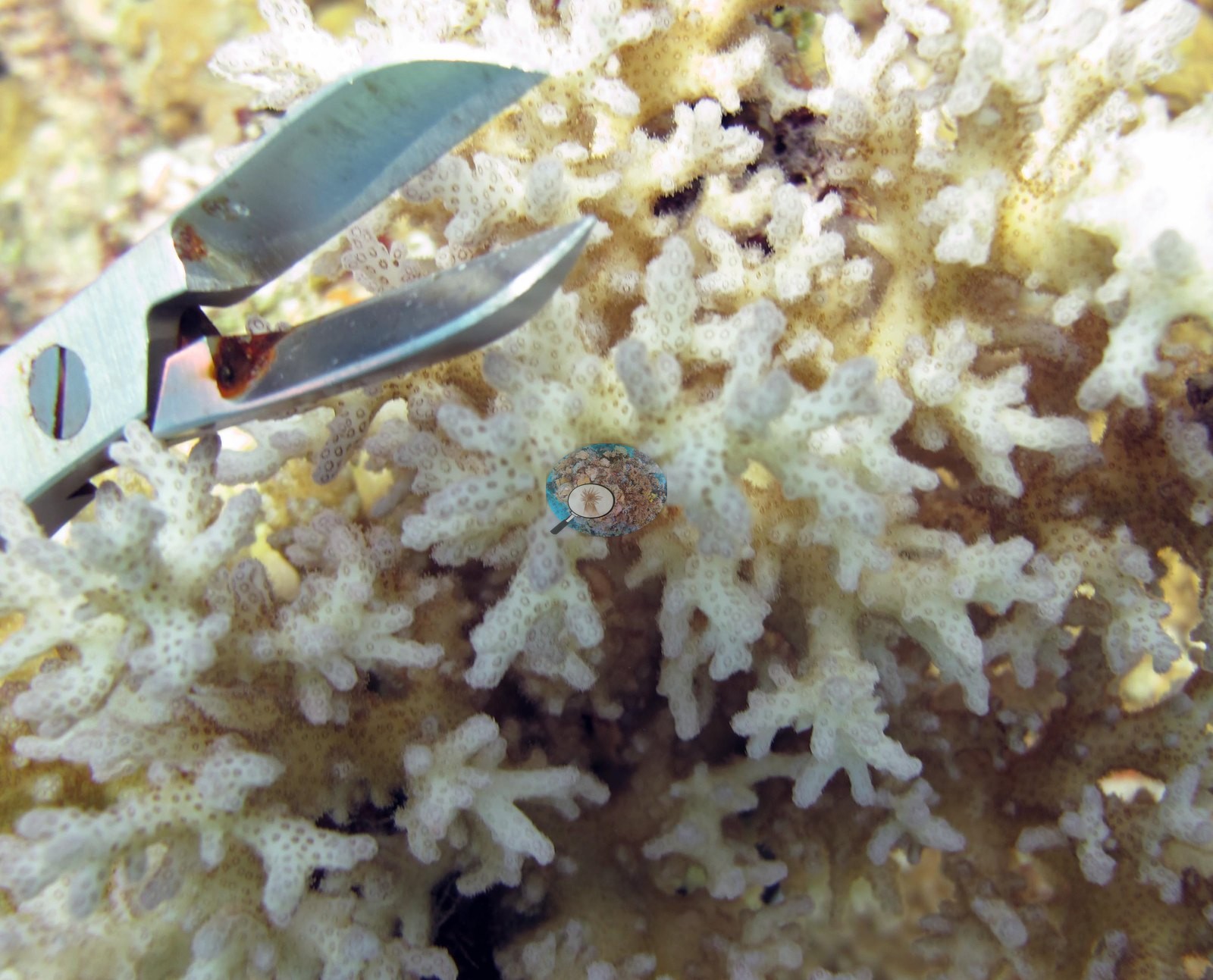
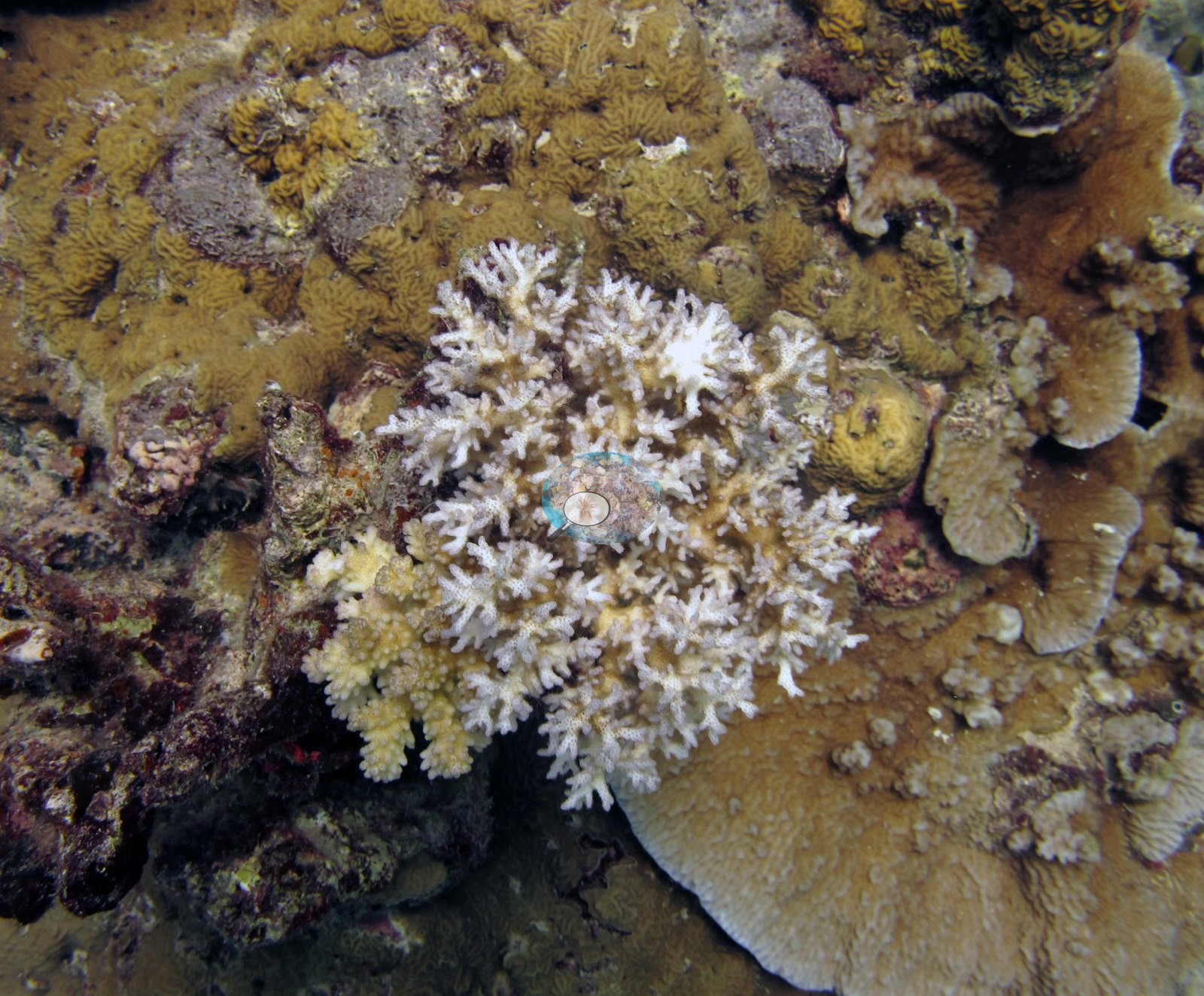
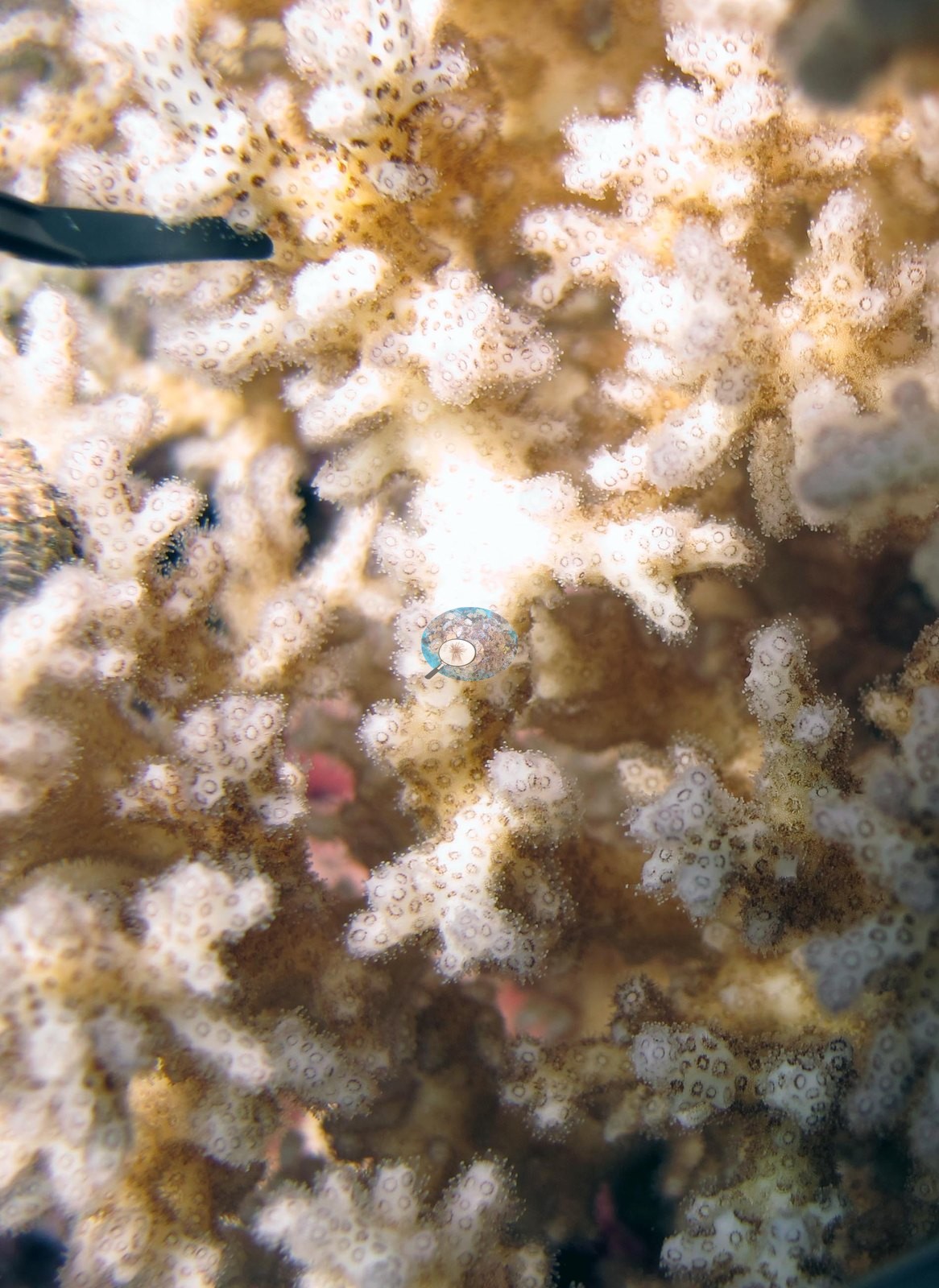
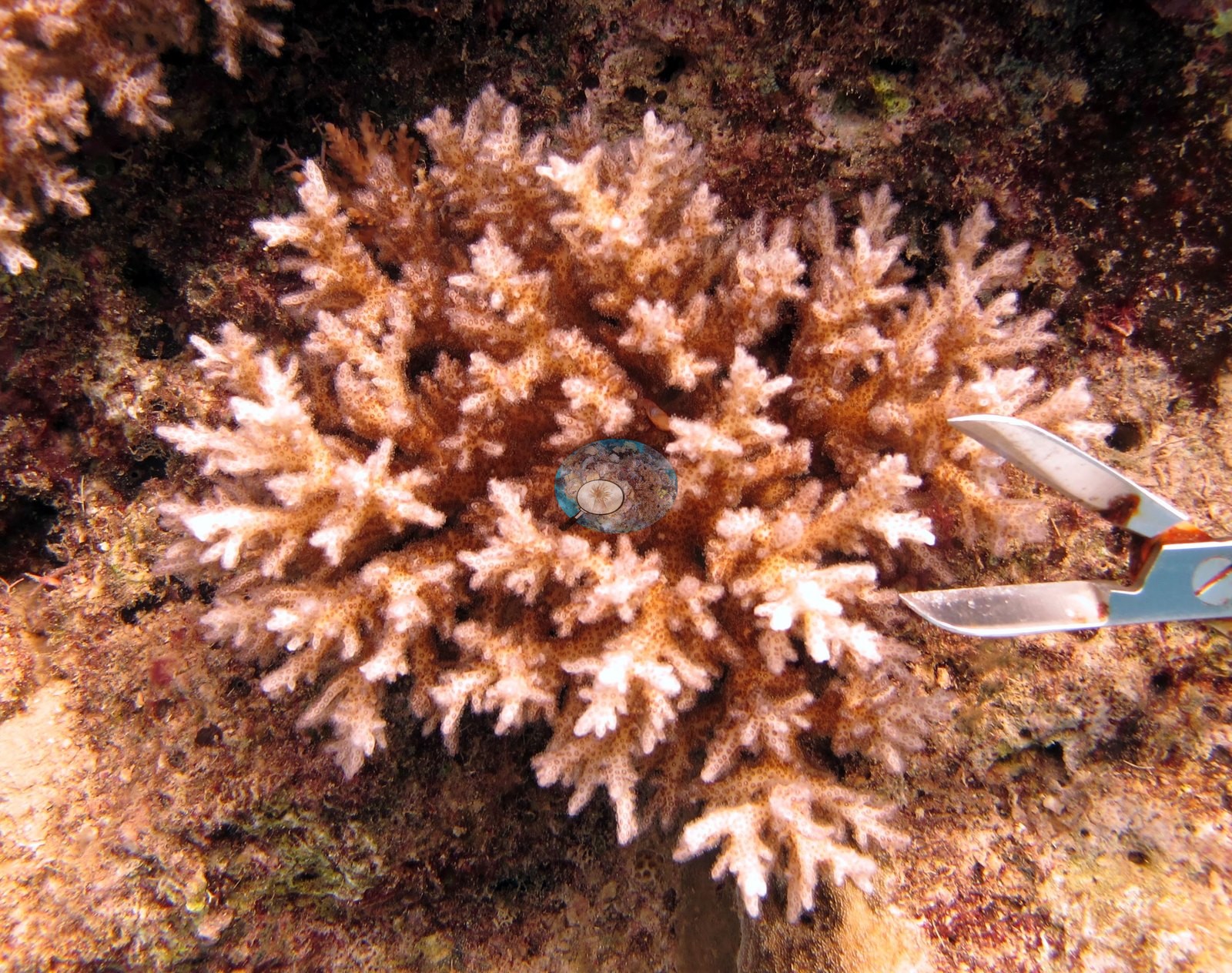
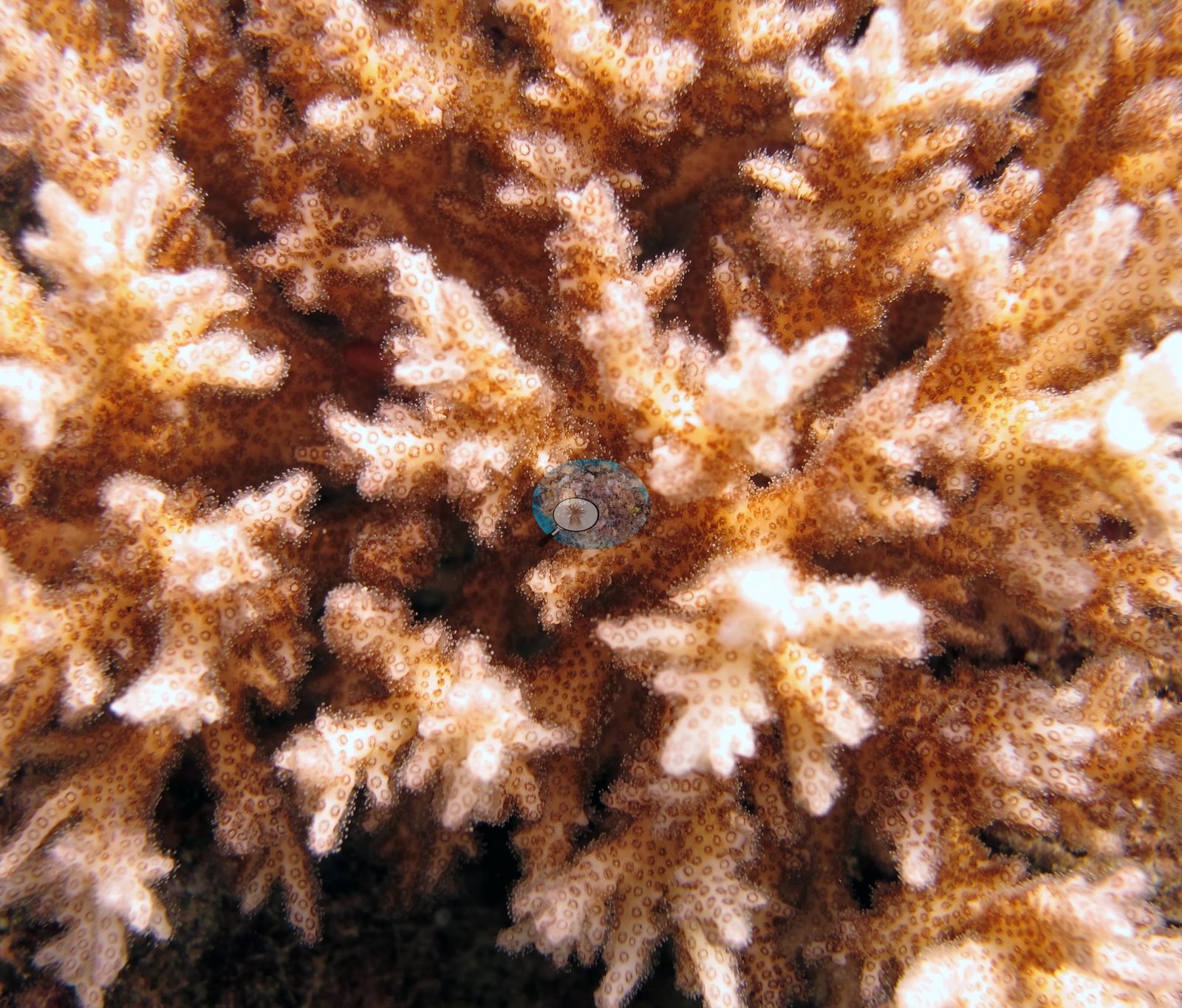
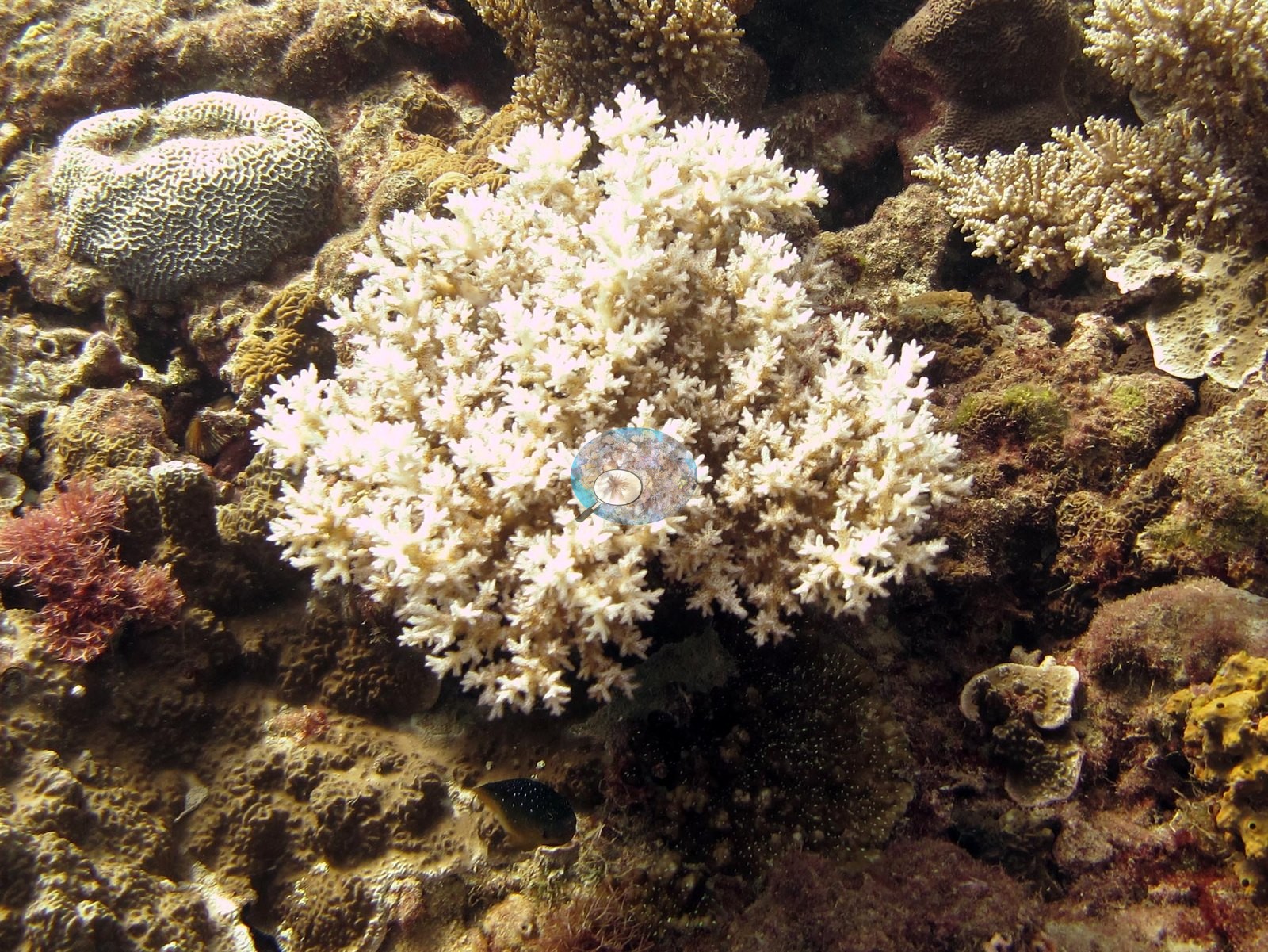
The full set is dominated by two subjects: a cavern system and Pocillopora damicornis. Anderson identified P. damicornis in four separate frames, noting reef dominated by it (e.g., Image 15), healthy colonies (e.g., Image 12), its abundance (e.g., Image 7), and, importantly, a bleached colony (e.g., Image 21).
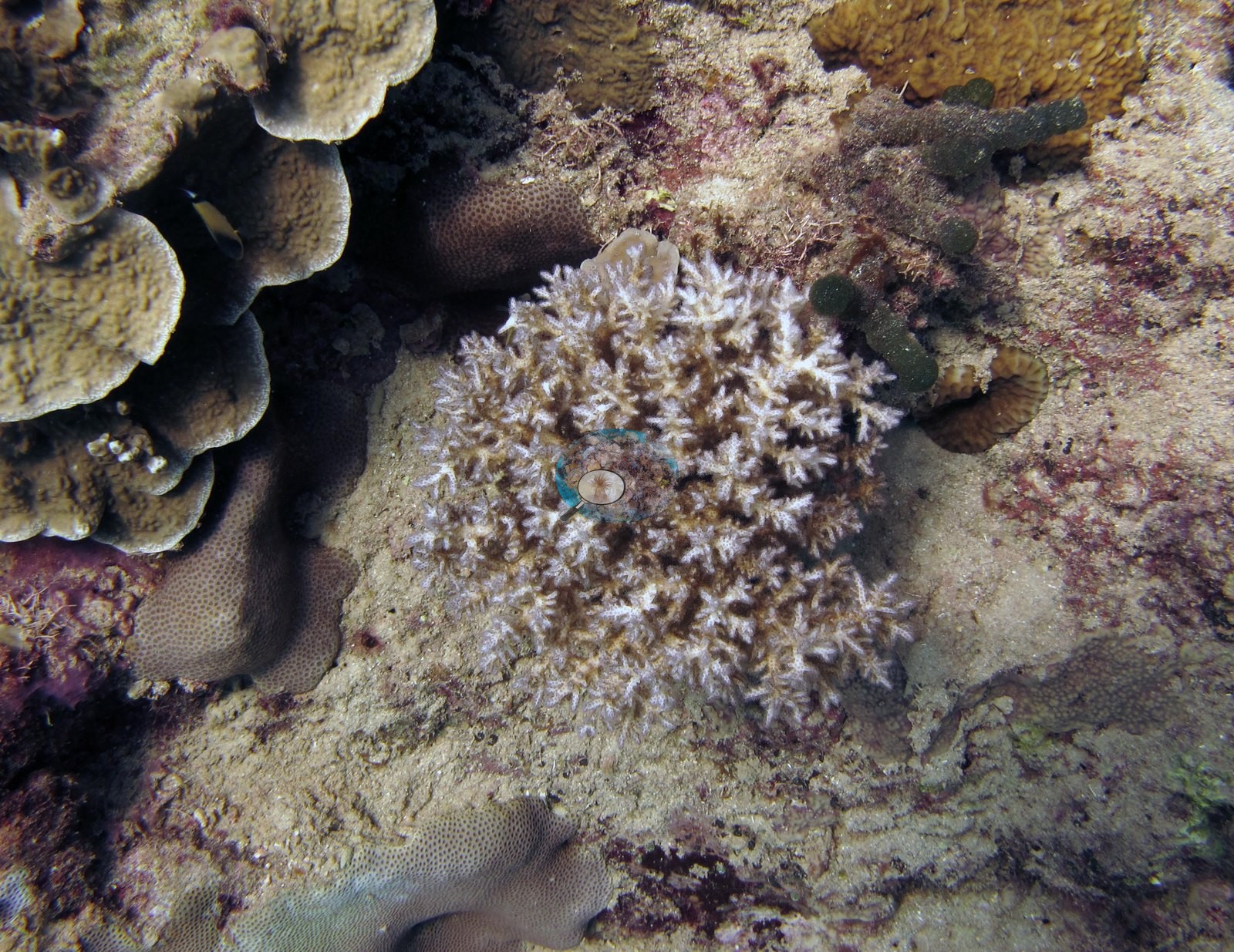
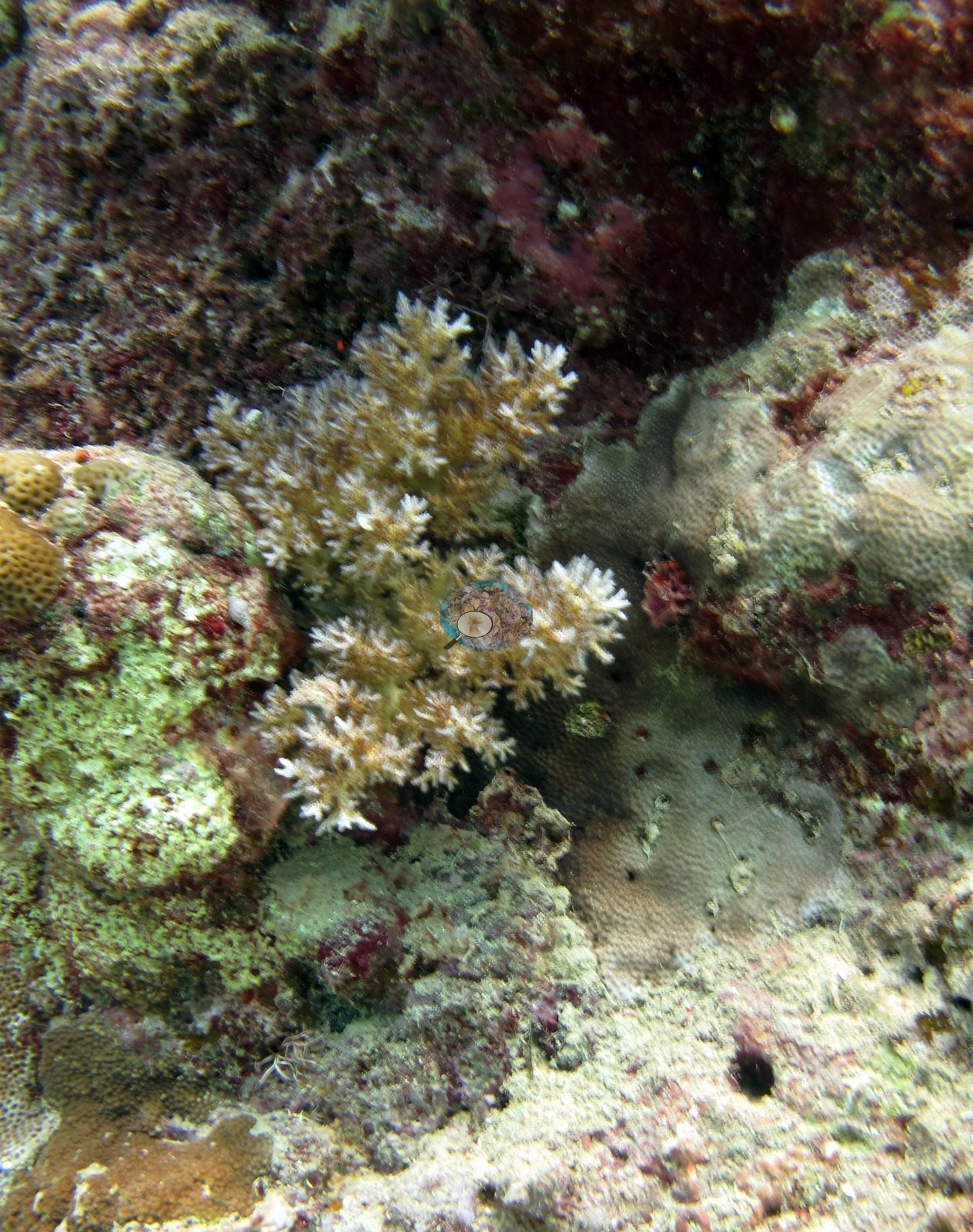
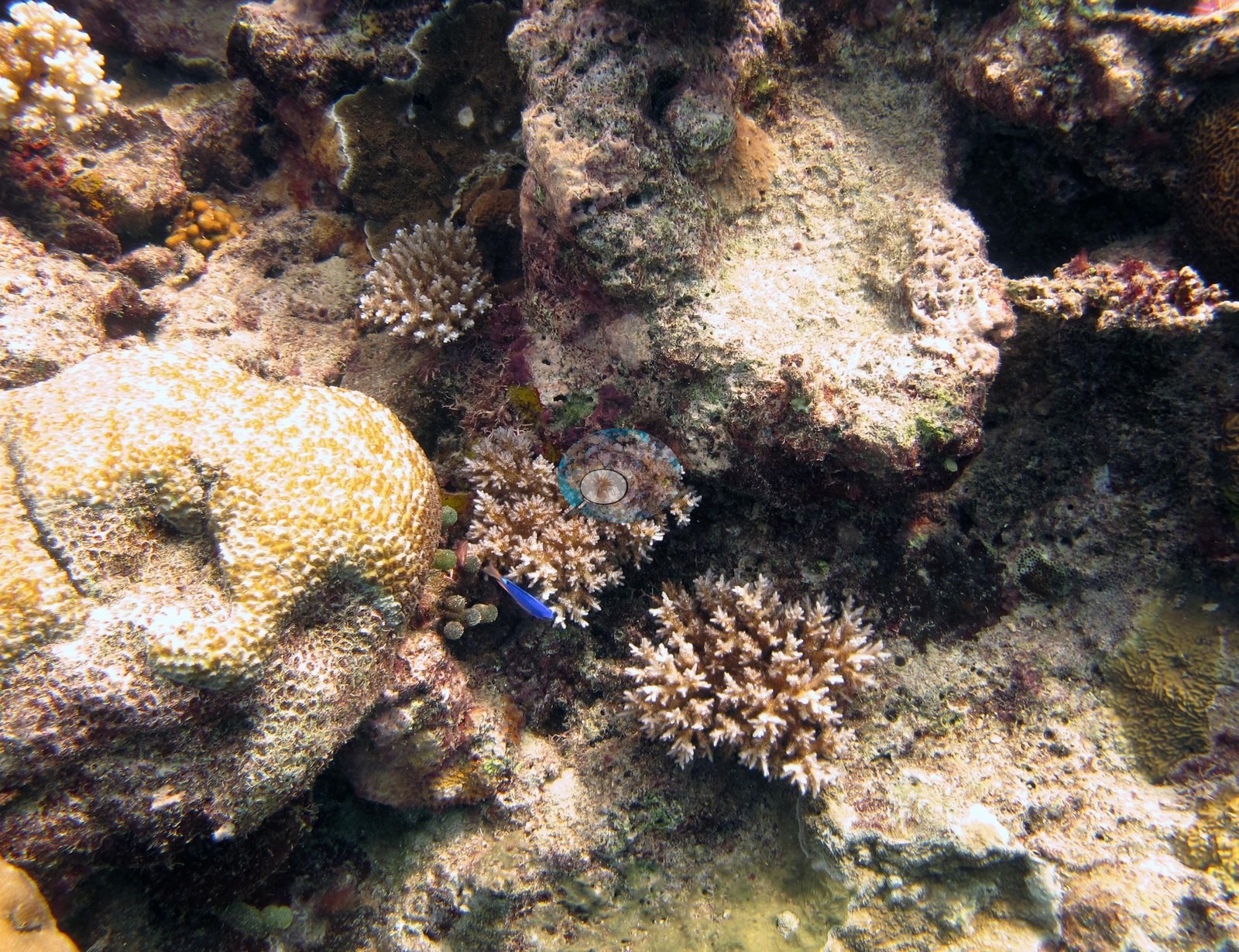
Reef-scale habitat frames show corymbose and small tabulate Acropora, mustard-yellow massive Porites, cream branching colonies, and encrusting patches over coralline-crusted framework (e.g., Image 7), a large bommie standing in green, low-visibility water (e.g., Image 20), and a dense stand of knobby tan colonies Anderson recorded simply as "unknown coral" (e.g., Image 14) — left unnamed here, as the frame cannot settle it.
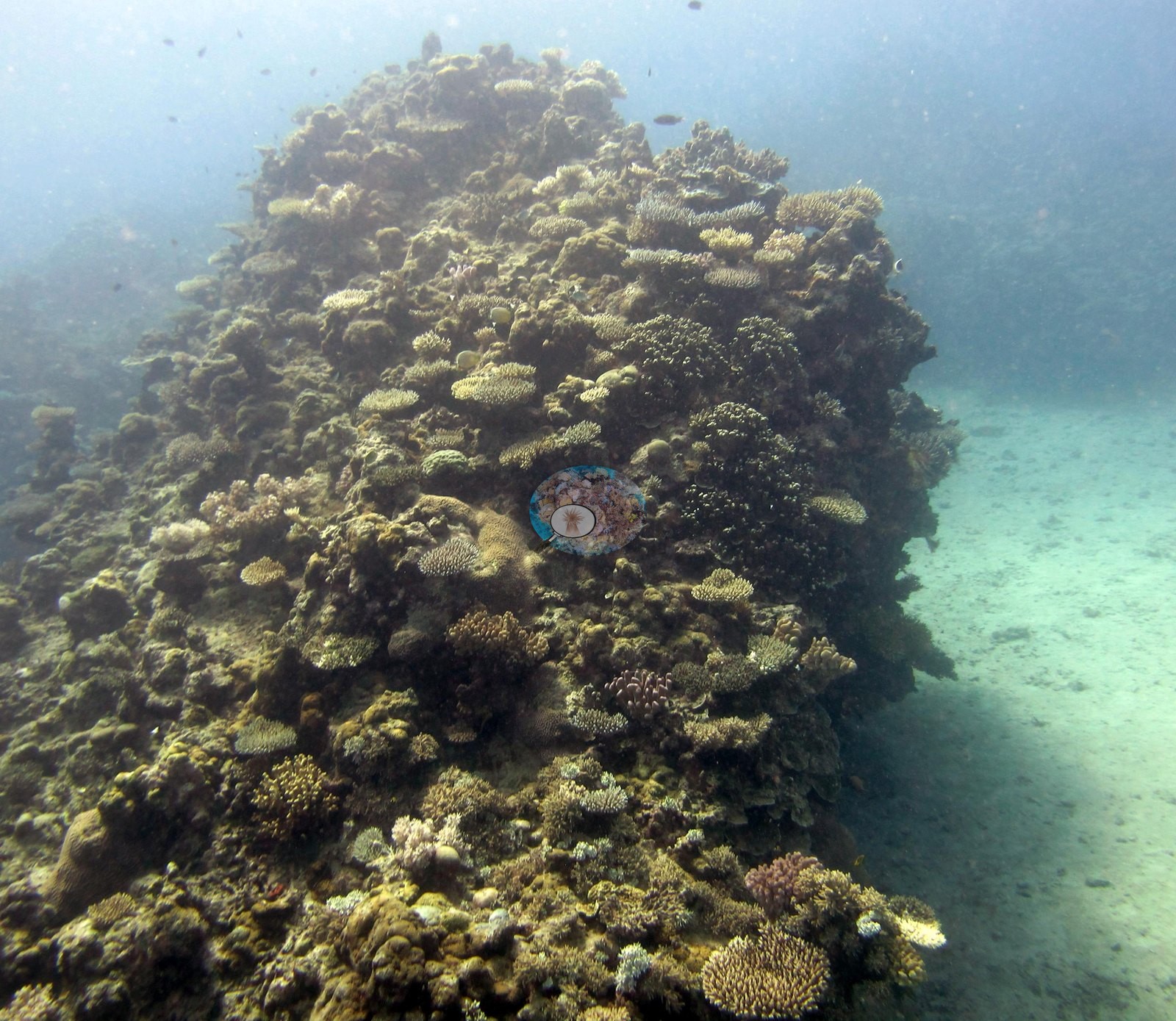
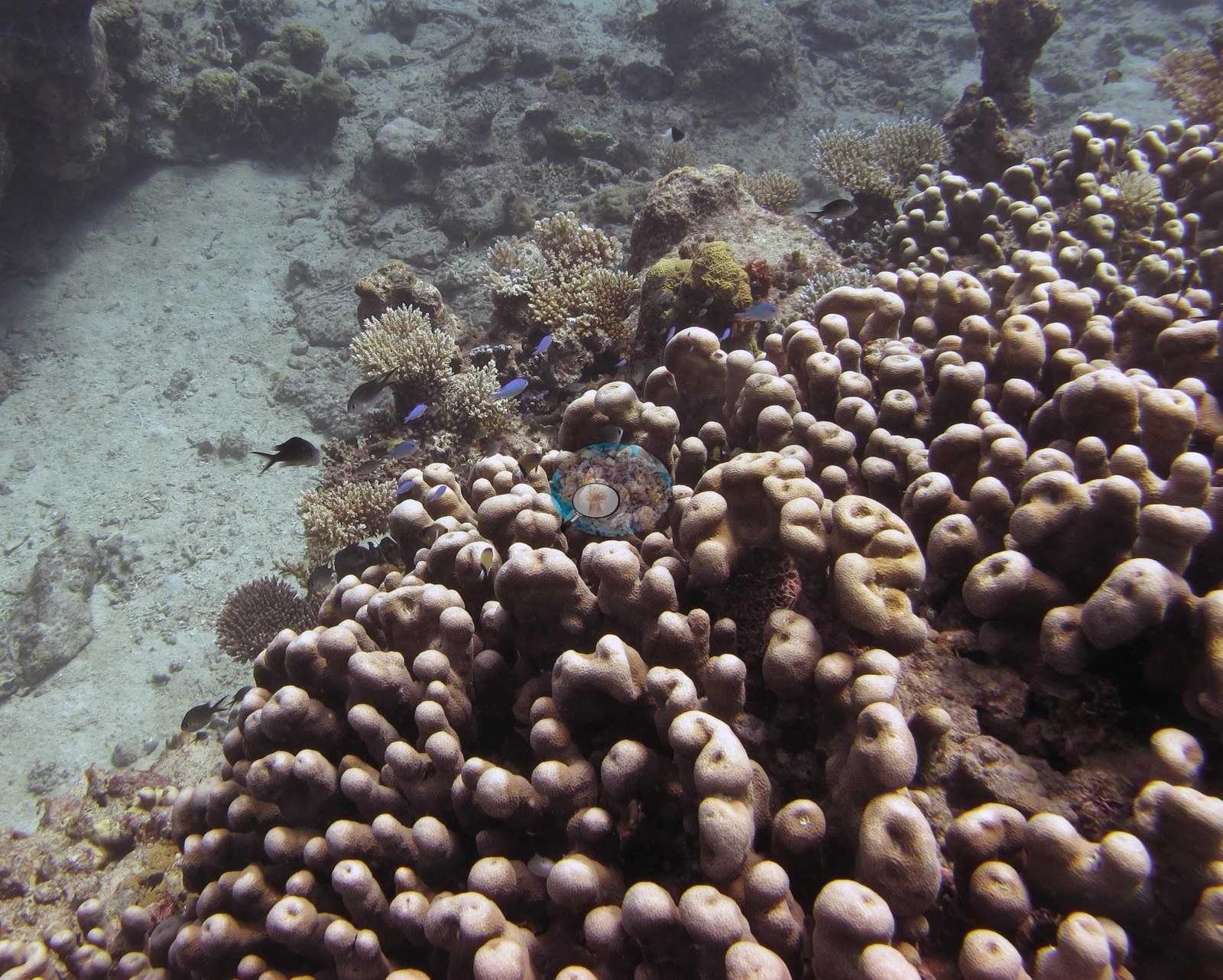
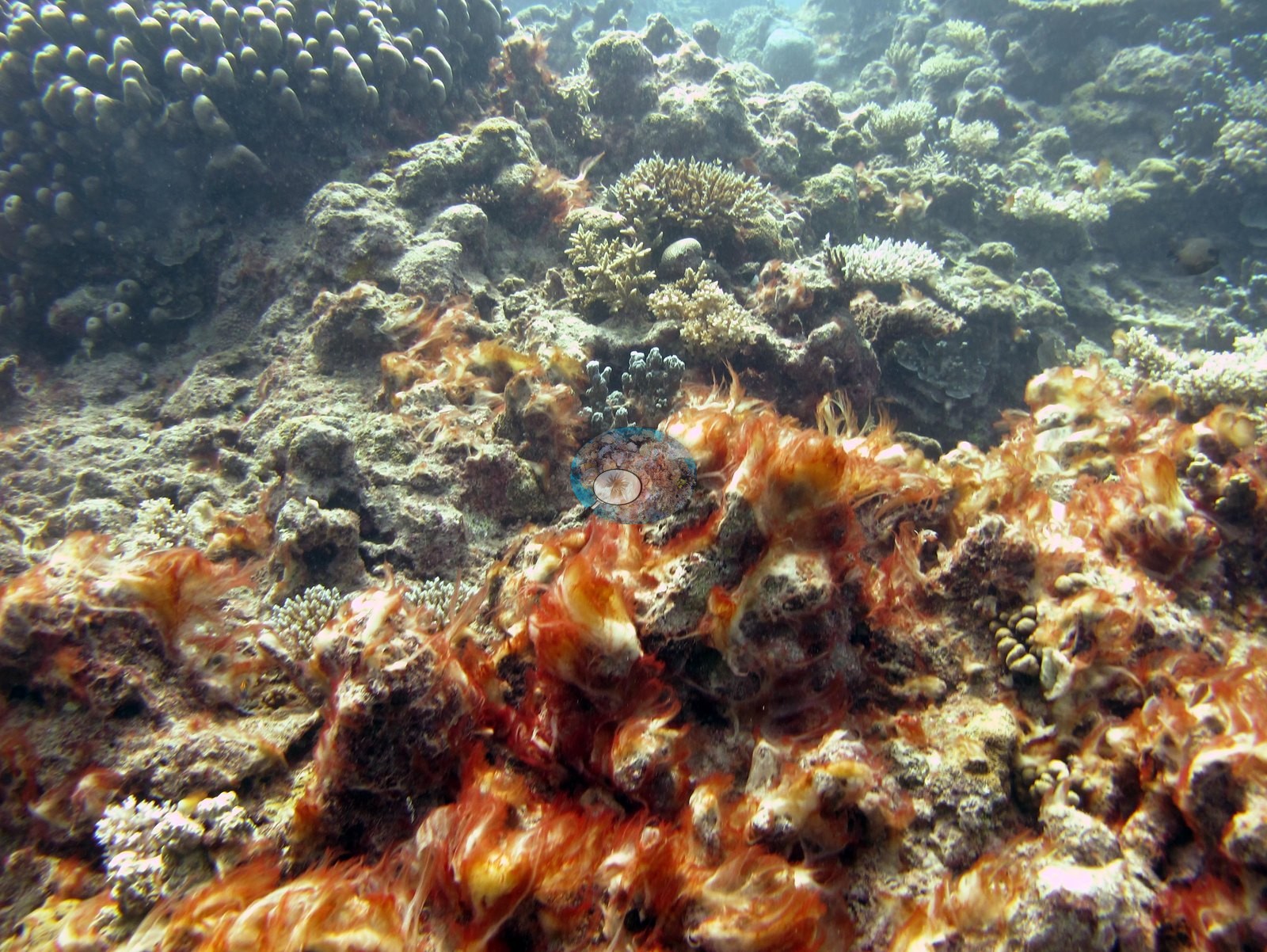
Image 13 shows a rust-orange fleshy growth, which Anderson noted as an unusual fleshy alga, spread across the reef surface.
Coral cover
- Reference: Khaled bin Sultan Living Oceans Foundation, Global Reef Expedition (in situ transect)
- Coral cover 47%, from the LOF-GRE in situ benthic transect (the mean of all of this station's own transects in the expedition's per-transect benthic data) — a diver transect, and the authoritative value here; note that several frames are largely bare substrate, so cover is patchy at this site.
- Transect mean 47 ± 3.0% SE (n = 5 transects; Living Oceans Foundation per-transect benthic data); the headline above is this all-transect mean.
Stressors
Image 21 shows a large branching colony gone stark chalk-white against normally pigmented tan massive and cream branching neighbors: Anderson recorded this as a bleached colony, and the sample records from the dive add two more: of the three colonies sampled, two were 80–95% bleached, though still with live tissue. No extent, count, or percentage of the reef is inferred from the photographs. No disease lesions and no crown-of-thorns seastars are visible in any frame. Of the two coral colonies from this site with an outlier score, one (50%) was flagged as a physiological outlier (Mayfield et al. 2017, PLoS ONE). The Living Oceans Foundation transects here recorded 9.0% cyanobacteria and no recently dead coral.
Fish and other fauna
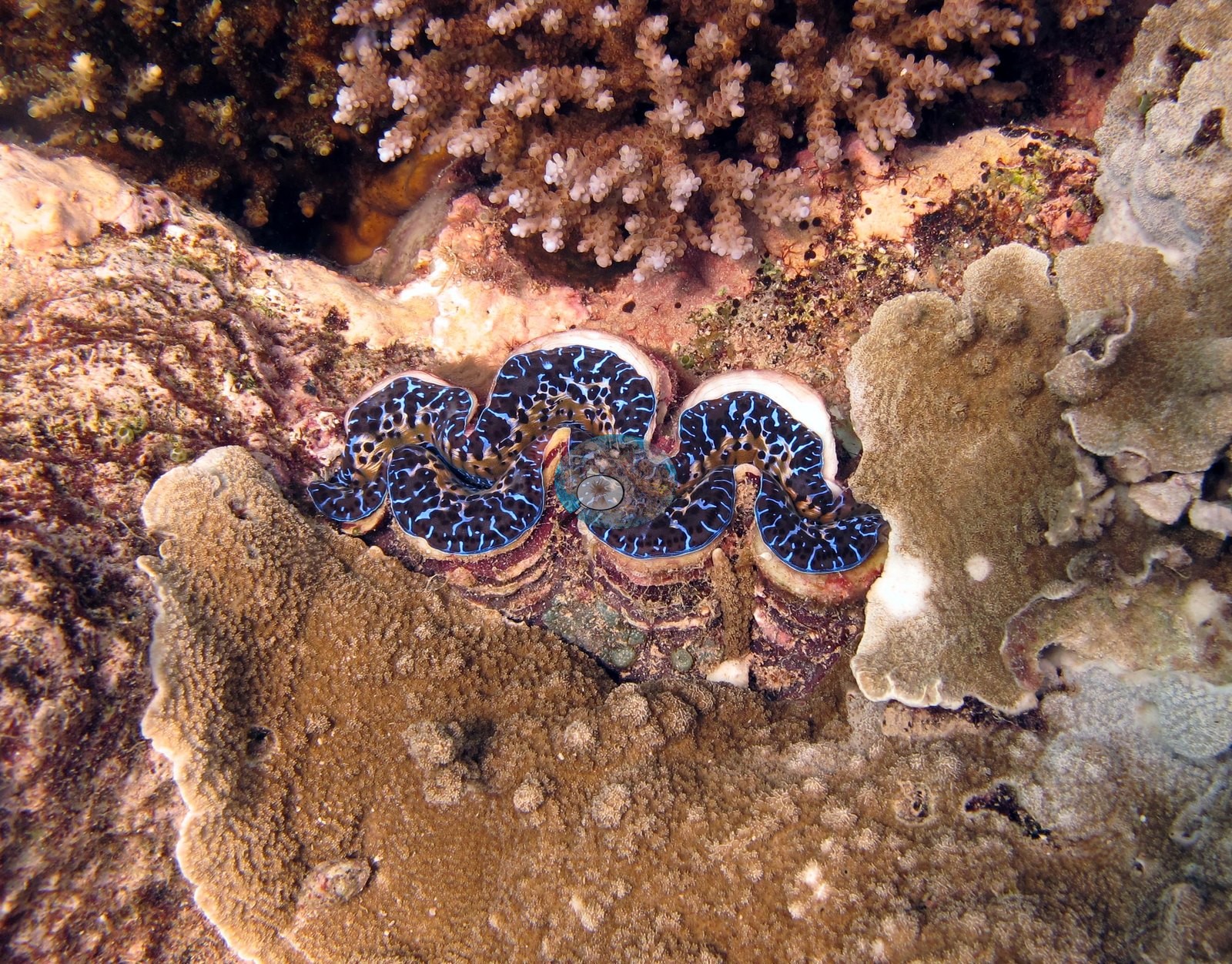
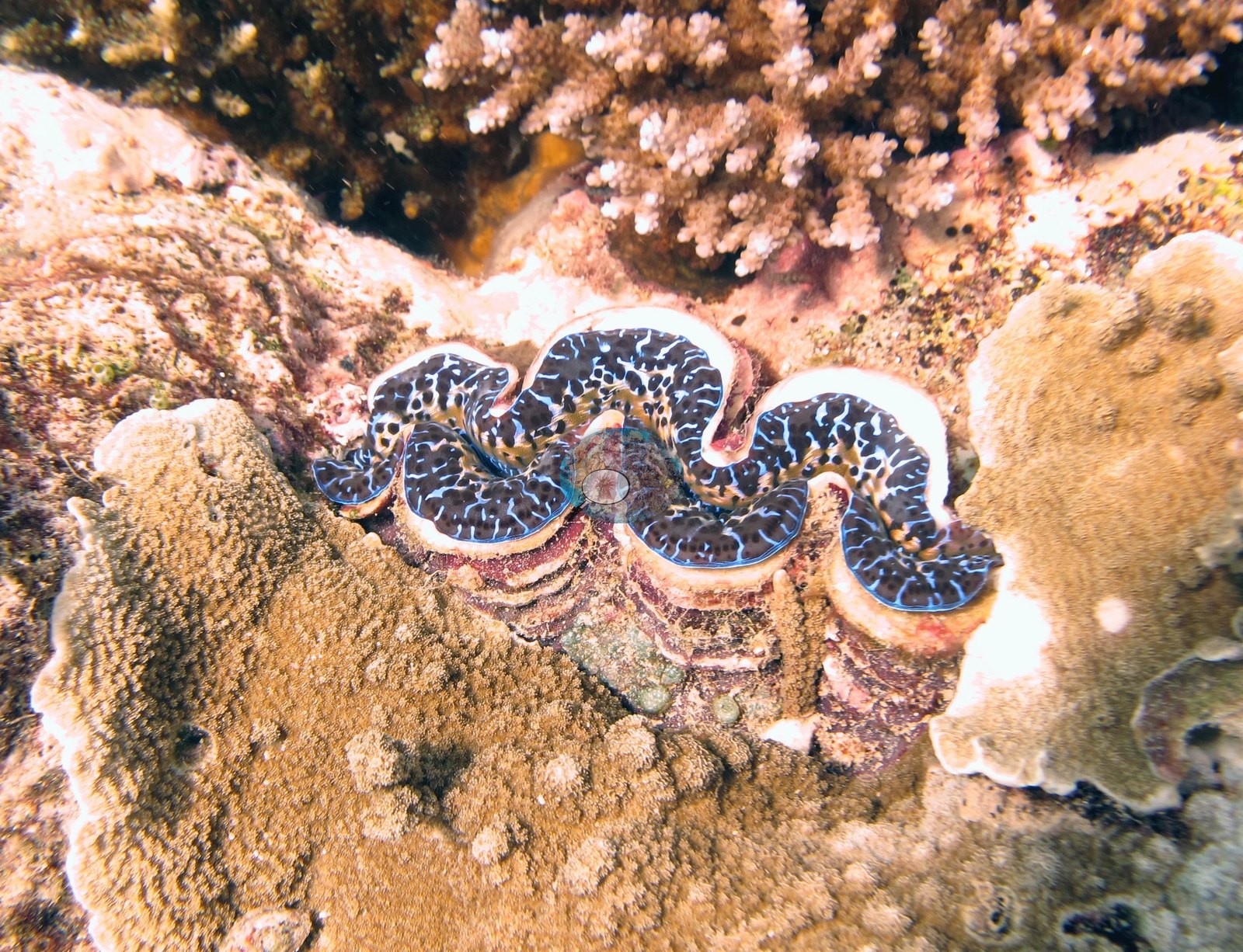
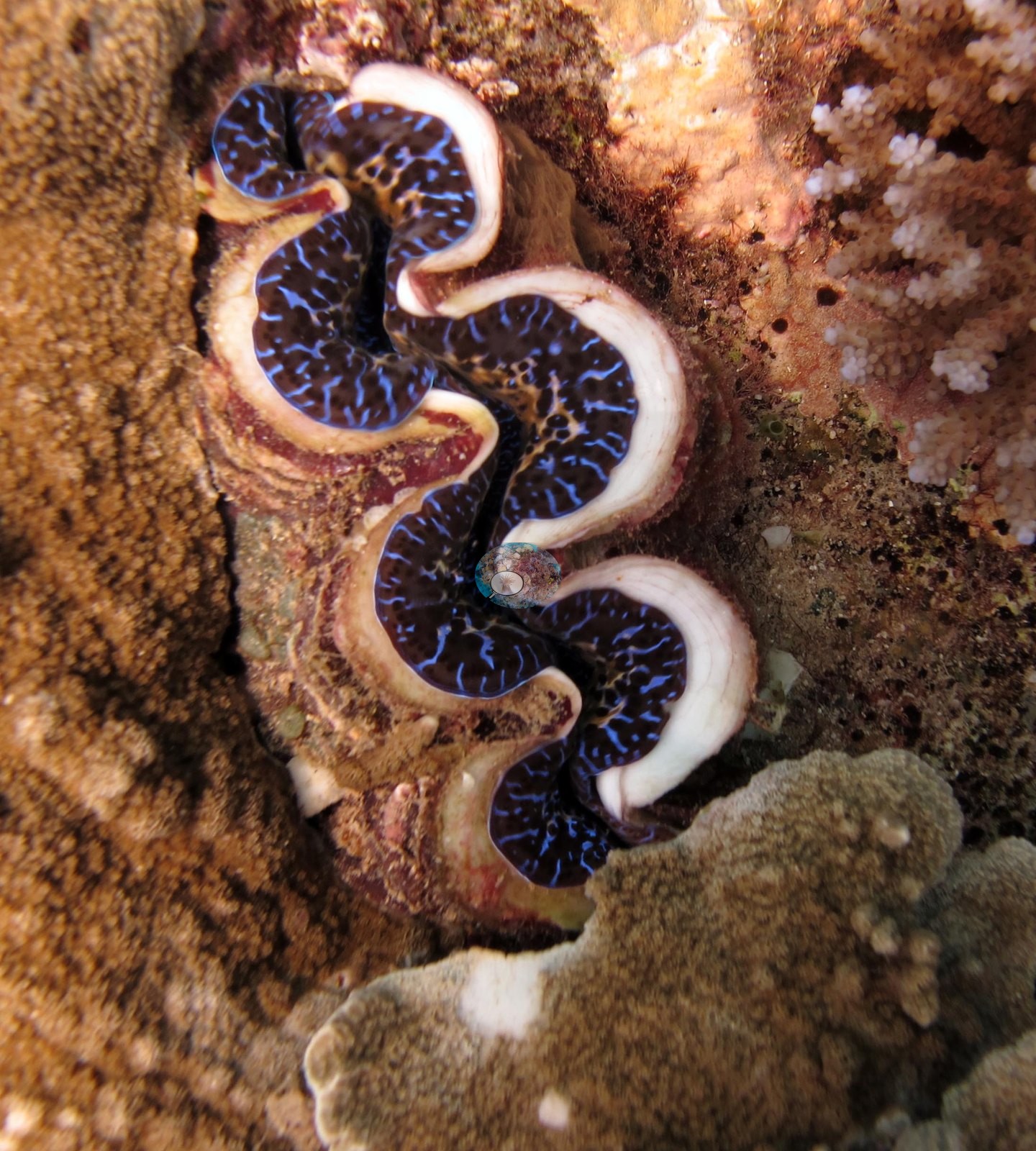
The giant clam is photographed three times, wide and macro (e.g., Image 8, Image 9, Image 10): a Tridacna with a blue-purple reticulated mantle and white lip, its shell set into and overgrown by knobby massive Porites-type coral, with corymbose Acropora and pink crustose coralline algae above it.
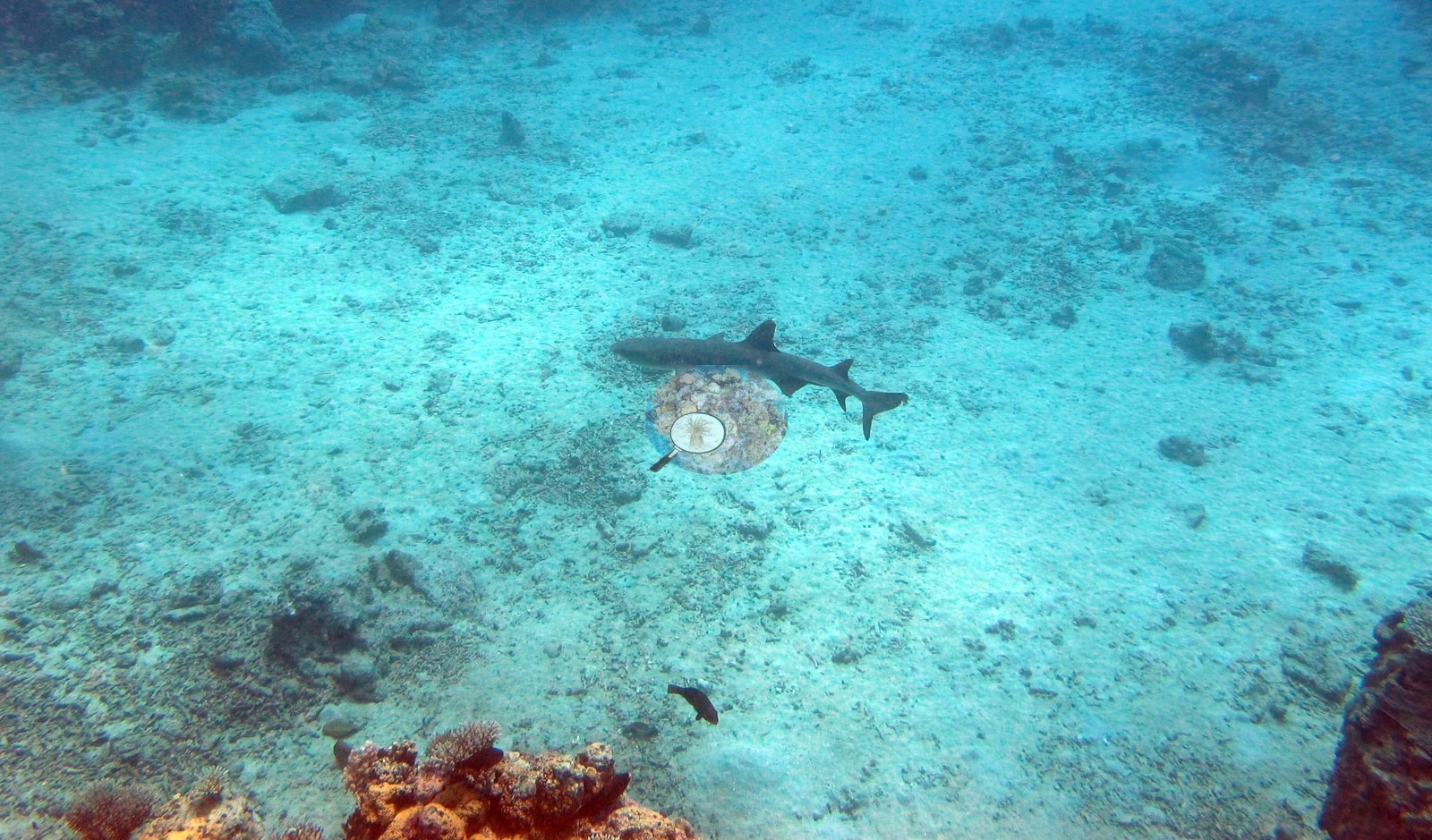
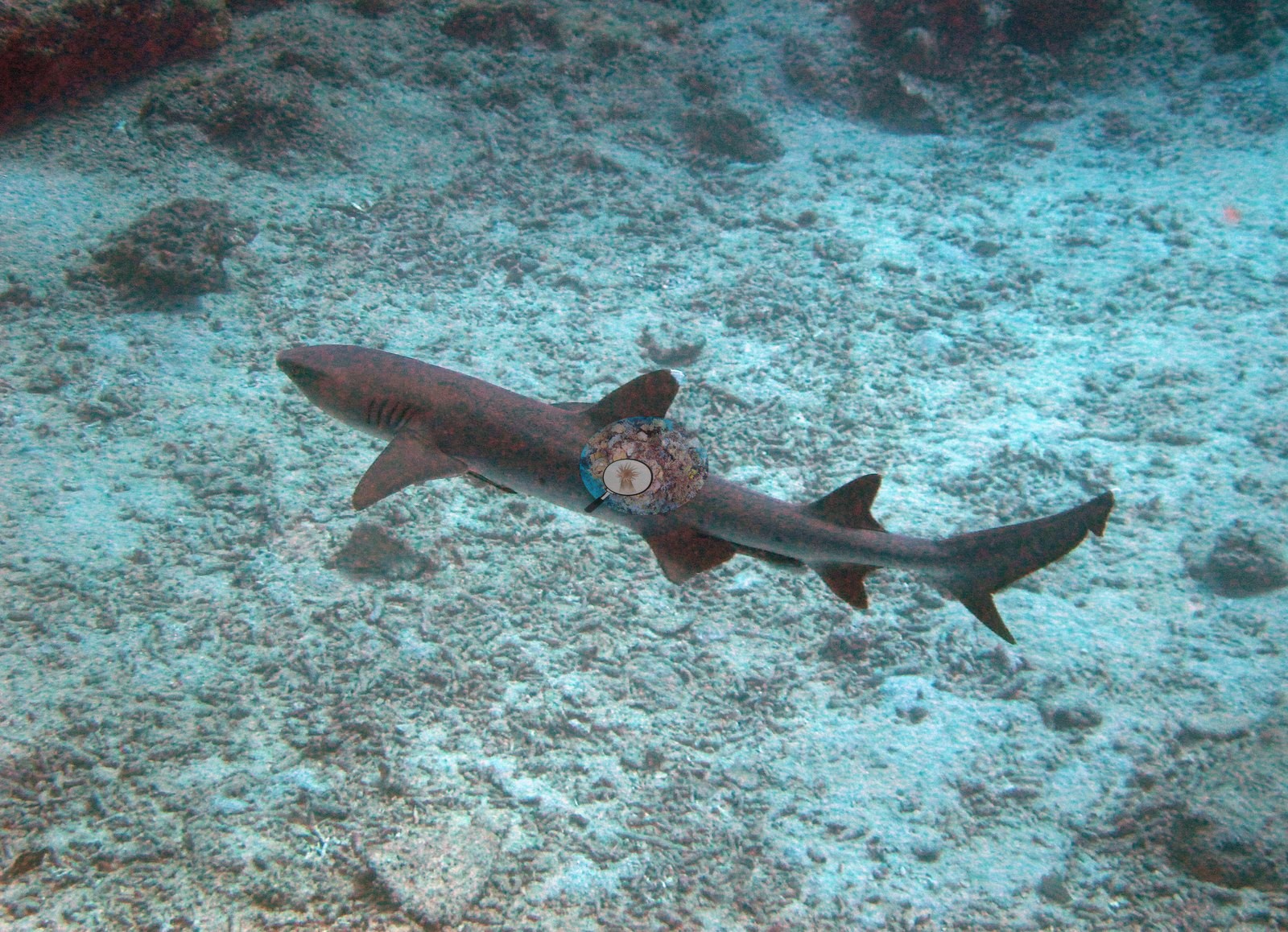
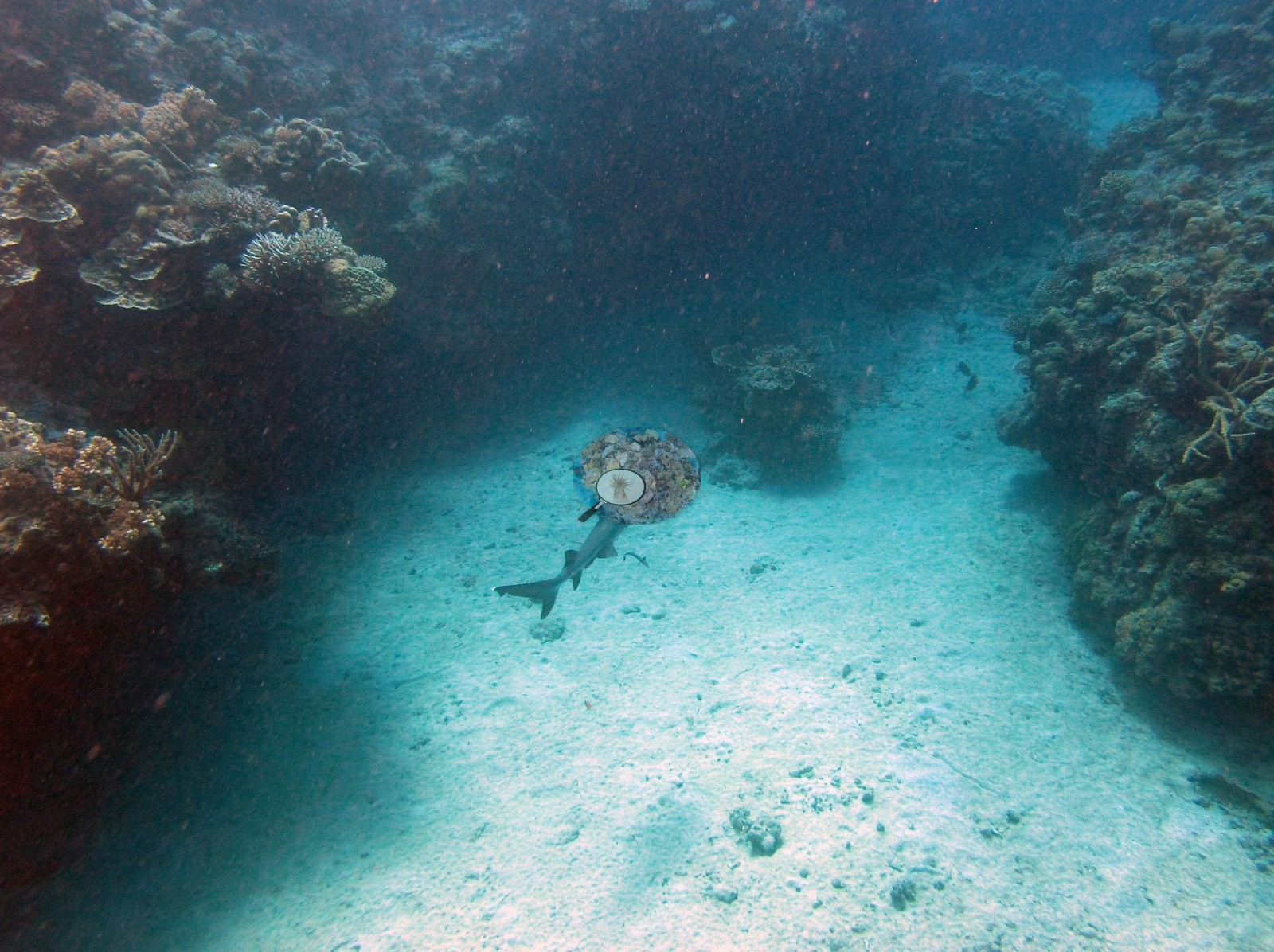
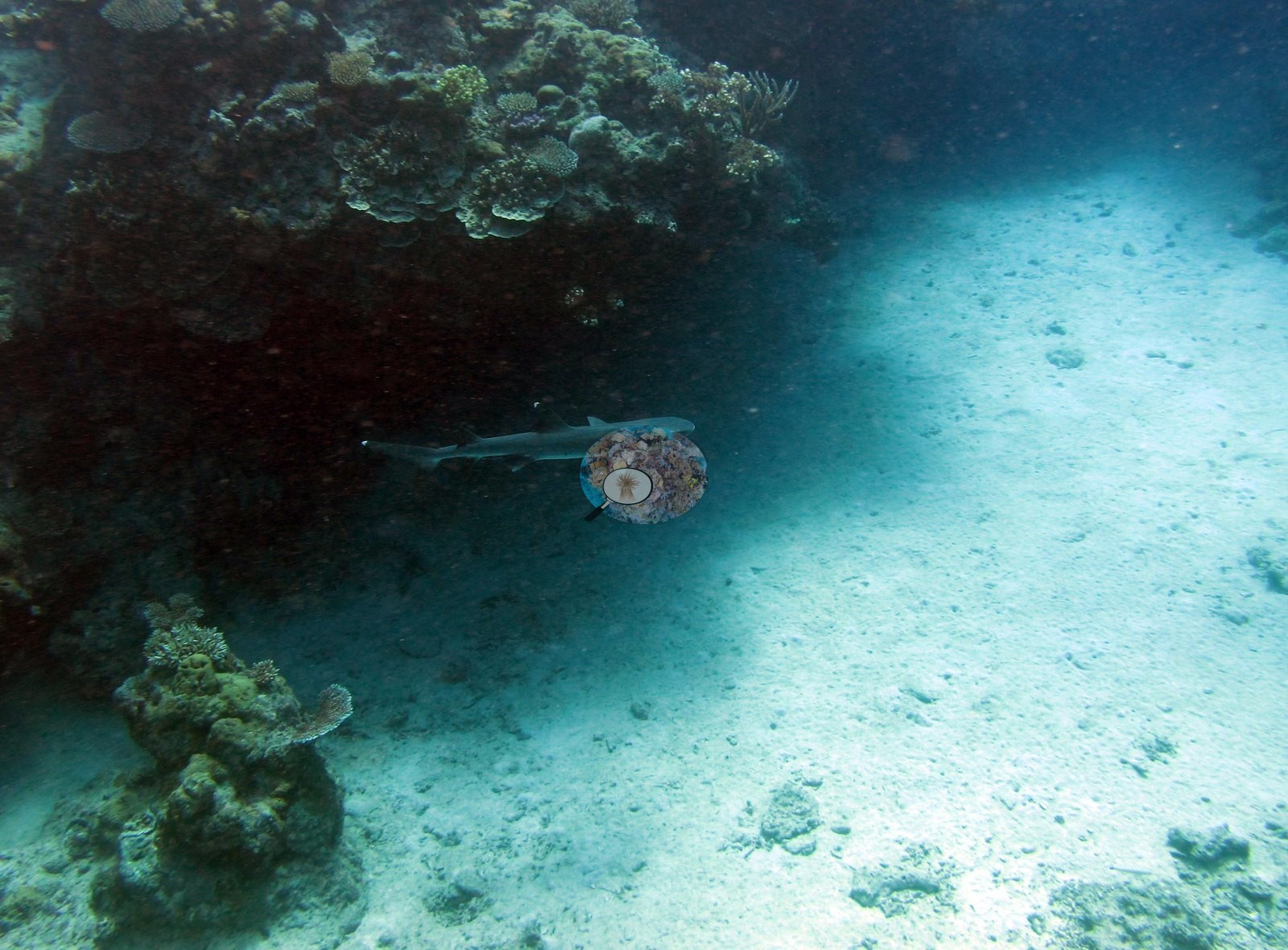
Three frames are whitetip reef shark (Triaenodon obesus) cruising extensive pale sand and rubble flats with very little coral on them (e.g., Image 16, Image 17, Image 19), and one wide frame looks across the same low-cover ground (e.g., Image 18) — the frames back up the picture of a coral-built margin abutting large bare sand and rubble ground.
Comparisons with other data
Apart from the Living Oceans Foundation survey shown here, we found no other surveys at this site as of 2026. If you would like to share yours, please email us.
Other notes
Survey team's site notes: Spur and groove assemblages with steep slope with large isolated colonies of Porites lobata and tabular acroporids. Some evidence of COTS predations with large areas of white corals were present. Halimeda algae clumping were found interspersed among branching corals. Large sheeting colonies and plating corals were common on the steep slopes. Several large table acroporids had been turned over from possible storm damage. CCA was common and covered most of the old dead corals on the reef terrace.
Data & links
- Download benthic survey data (CSV) ↗
- Download all LOF-GRE data (933 sites) ↗
- Photo portfolio ↗
- Coral Reef Diagnostics page for this area ↗
All images from Coral Reef Diagnostics. Data are from the Khaled bin Sultan Living Oceans Foundation Global Reef Expedition and Coral Reef Diagnostics.
 © Coral Reef Diagnostics.