
Part of the regional summaries: Fiji - Northern Lau (Vanua Balavu / Cicia / Nayau) and Fiji - Lau
More info
Fiji (NOAA CRW virtual station)A Mago reef with 53% coral cover. Most of its photographs are close work on single subjects (a day octopus wedged into a crevice among purple and cream Acropora and bright green sea squirts, and portraits of individual acroporid colonies); the two reef-scale frames show an acroporid-dense slope and little more about the wider site. Surveyed on the Living Oceans Foundation's Global Reef Expedition.
E dua na cakau e Mago ka 53% na ubi ni lase (coral cover). E levu na itaba e taba voleka ga e dua na ka (e dua na kuita ni siga (day octopus) e curu tu ena qara ni vatu ena maliwa ni Acropora e roka (purple, cream) kei na sea squirt e drokadroka, kei na itaba ni veimataqali lase acroporid yadudua); na rua na itaba ni cakau raraba e vakaraitaka e dua na baba e vonu ena acroporid ka sega tale ni vakaraitaka vakalevu na vanua taucoko.
AI translation of this summary; the English is authoritative. (low confidence)
CTD-cast midpoint of 27.0–27.1°C
One other CRD dive site with its own page within 5 km shown in orange — click a marker to open its page.
🗺 Detailed map of the Global Reef Expedition dive sites, Mago, Fiji (Khaled bin Sultan Living Oceans Foundation; opens in a new window)
15 of the 17 photographs on this page are shown beside the text that discusses them under "Site description" below.
Site description
General benthic features
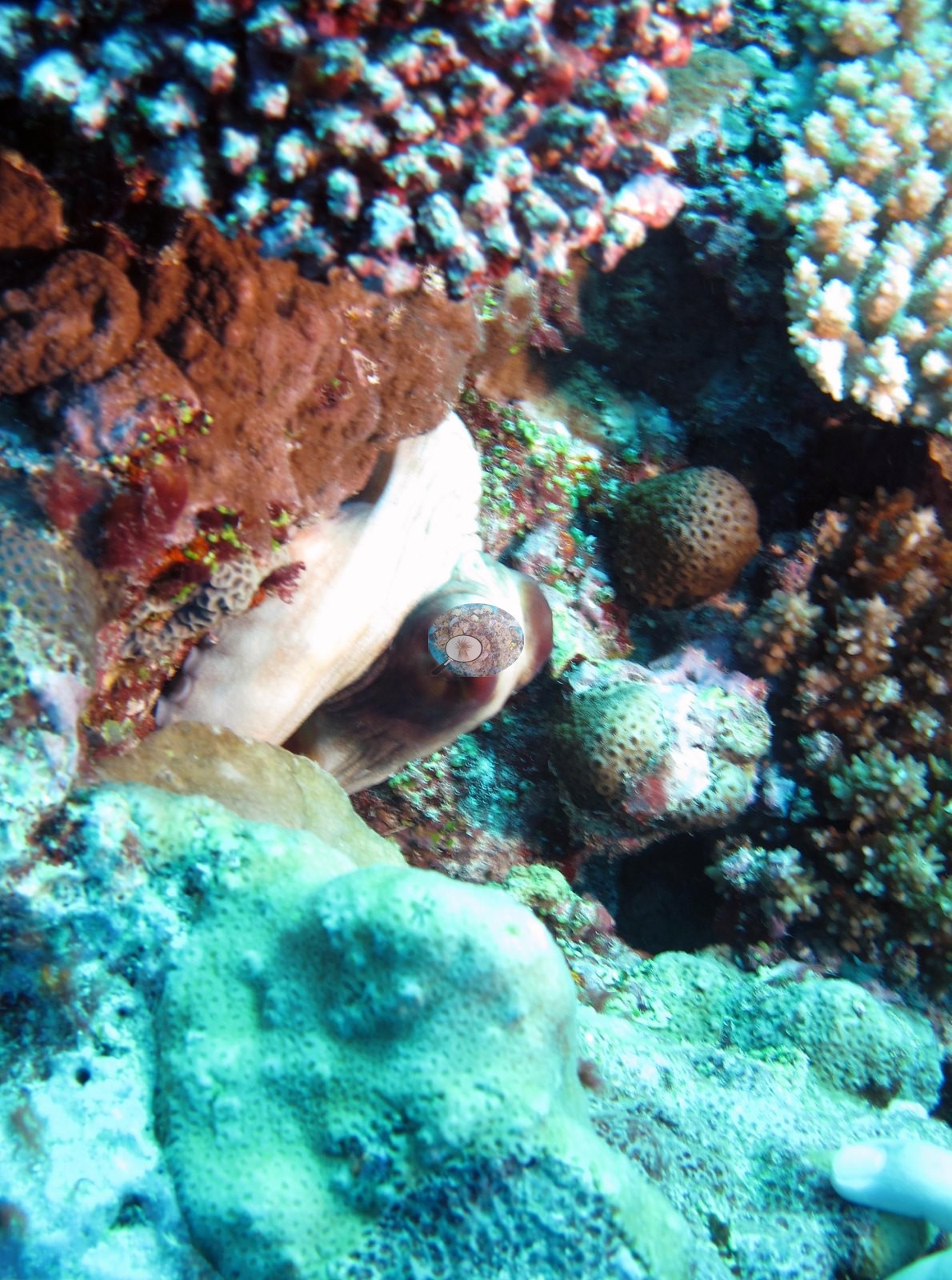
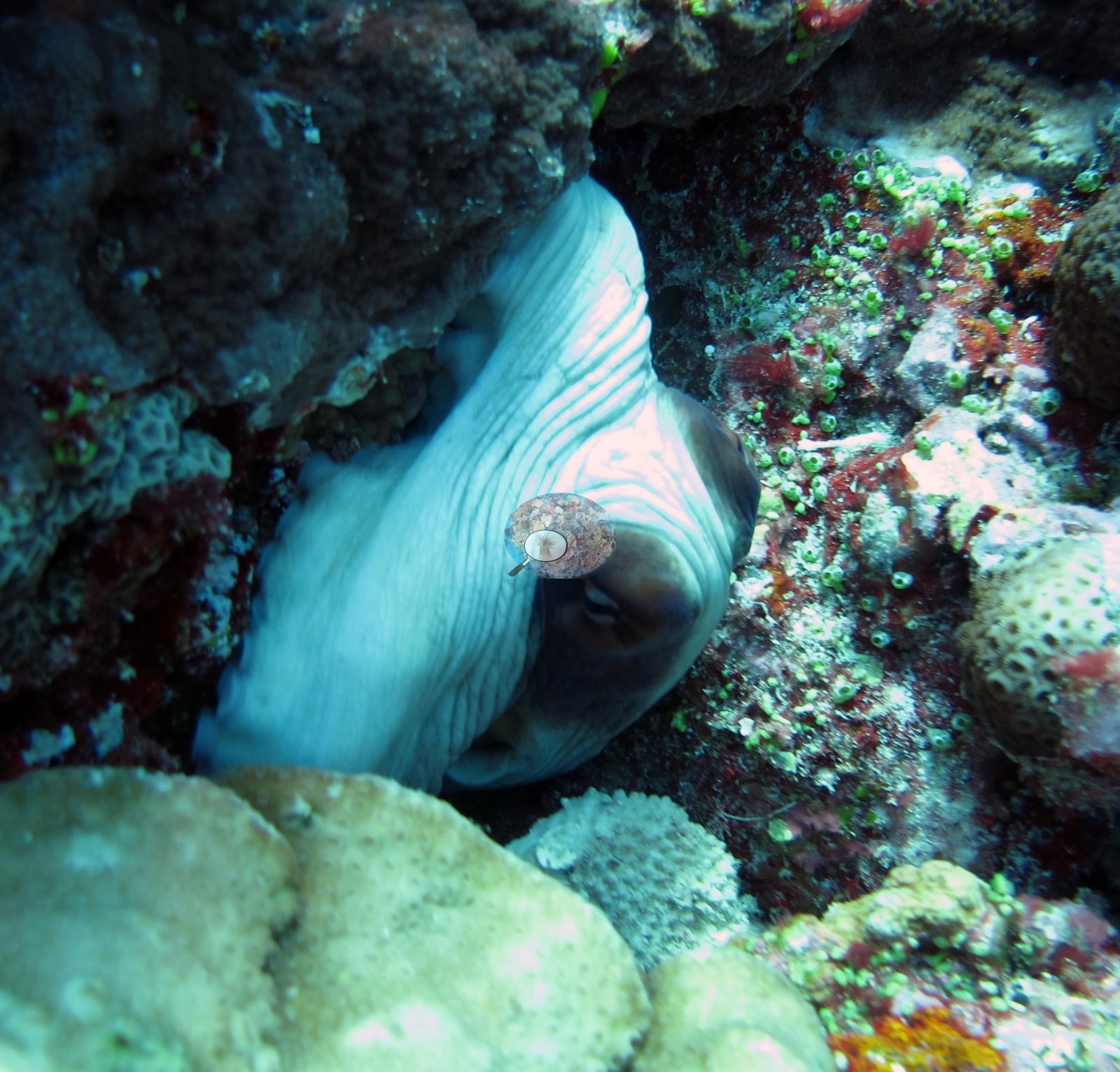
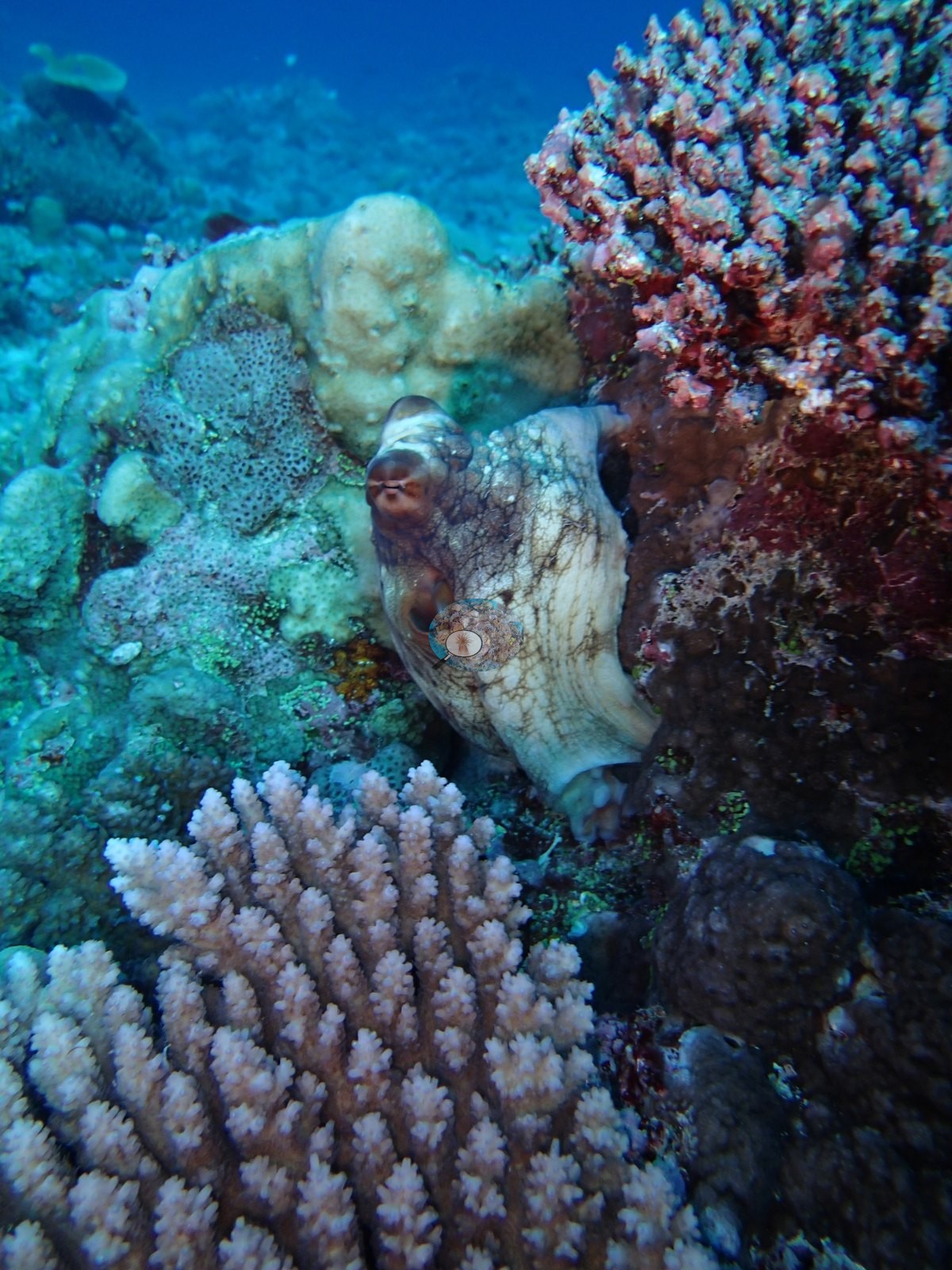
Six frames (e.g., Image 12, Image 13, Image 14, Image 15, Image 16, Image 17) are the one day-octopus encounter already on record, worked from wide to macro, and they document a single crevice rather than the site — though the widest of them (e.g., Image 15, Image 16) do usefully show the surrounding benthos: mauve-pink and cream corymbose Acropora pressing in from both sides, pale knobby massives, framework crusted with red coralline algae and green algal tufts.
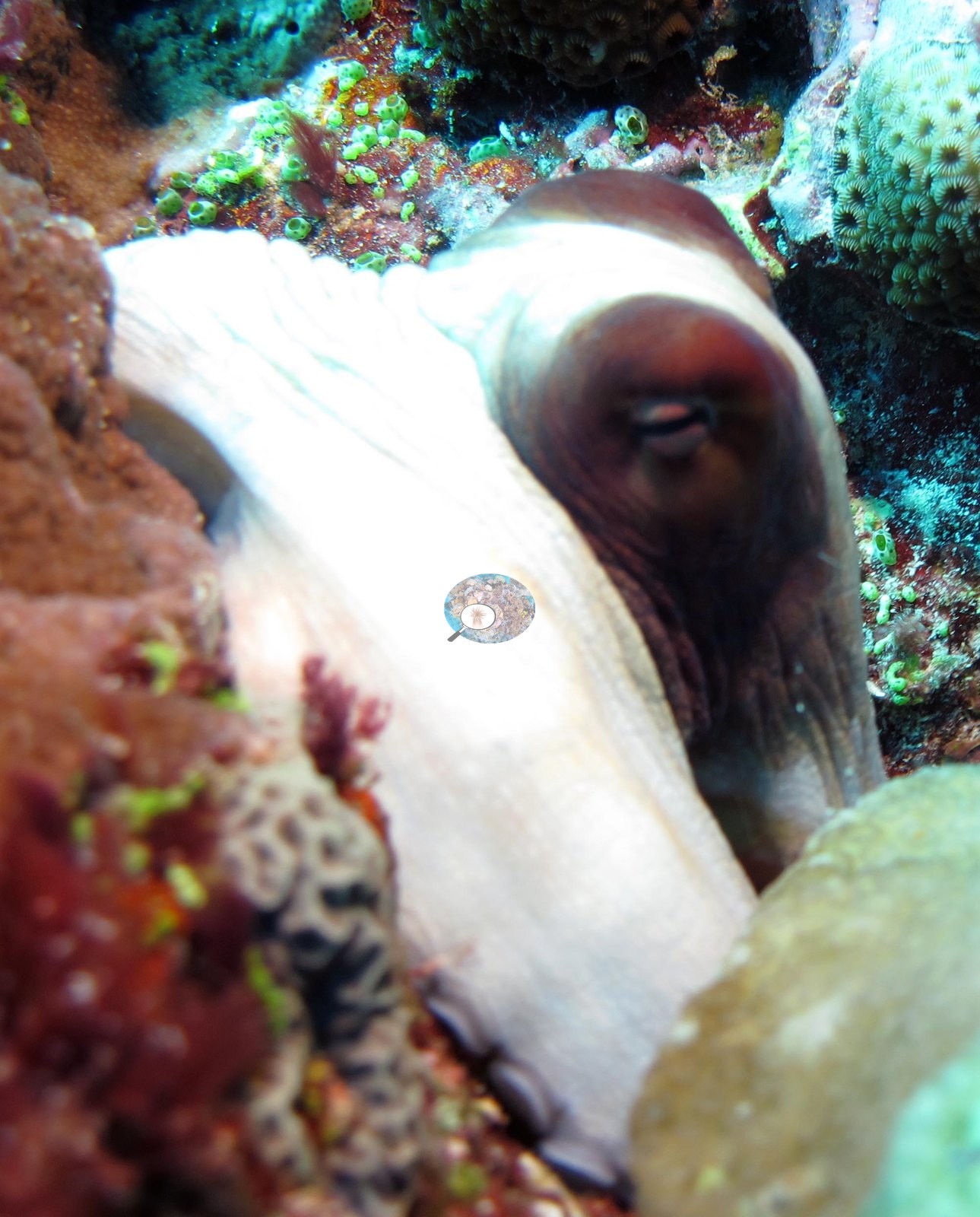
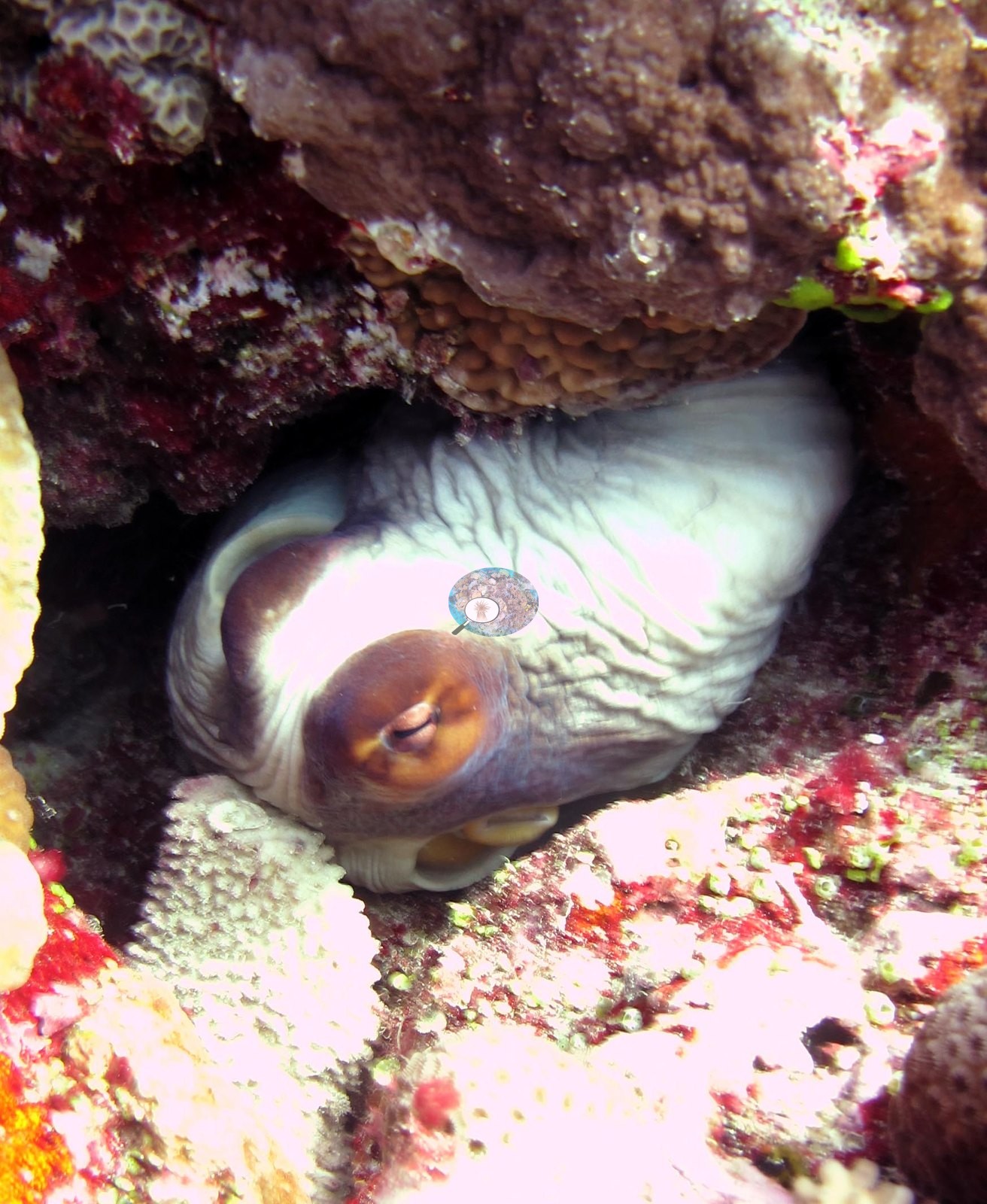
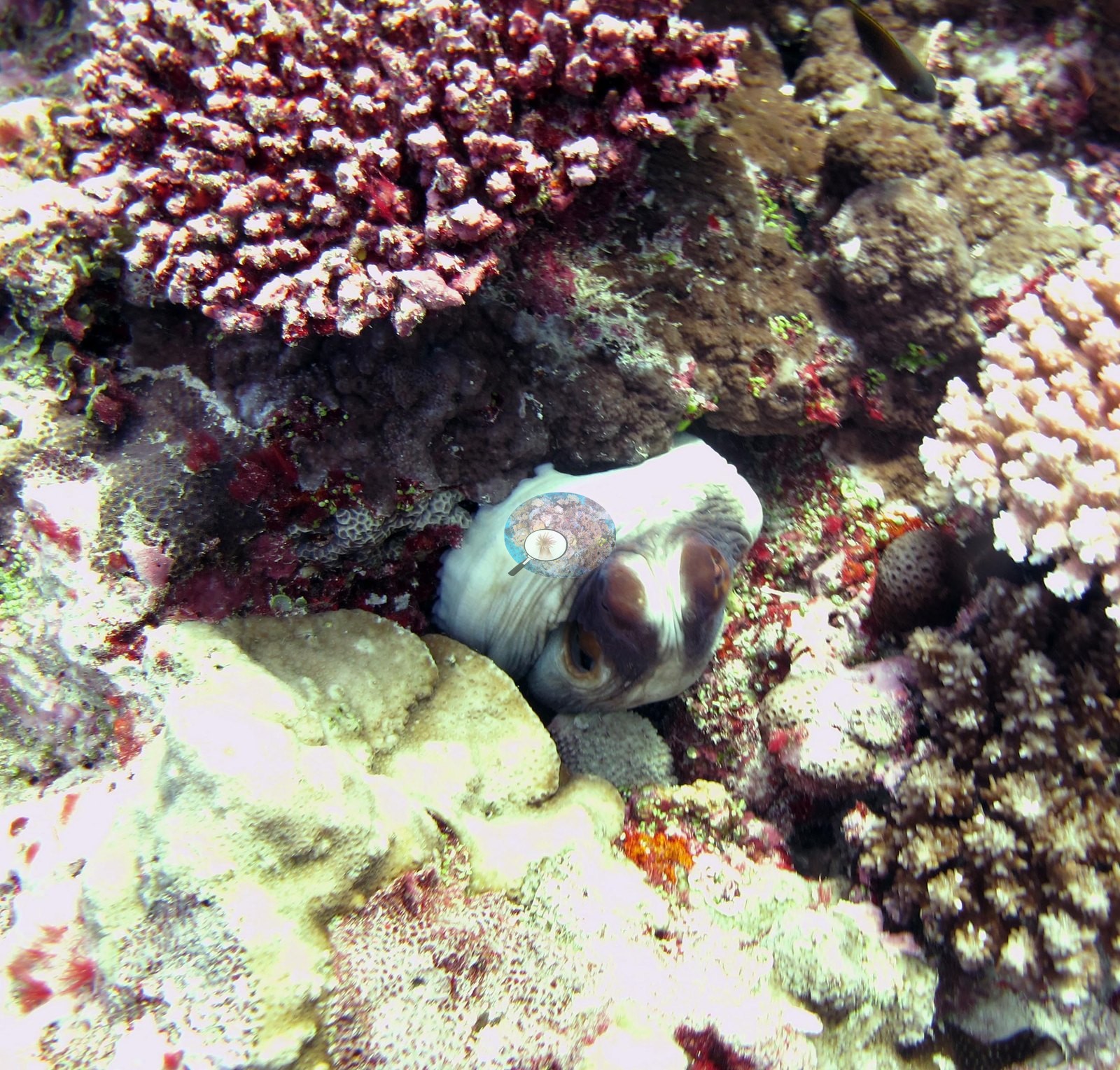
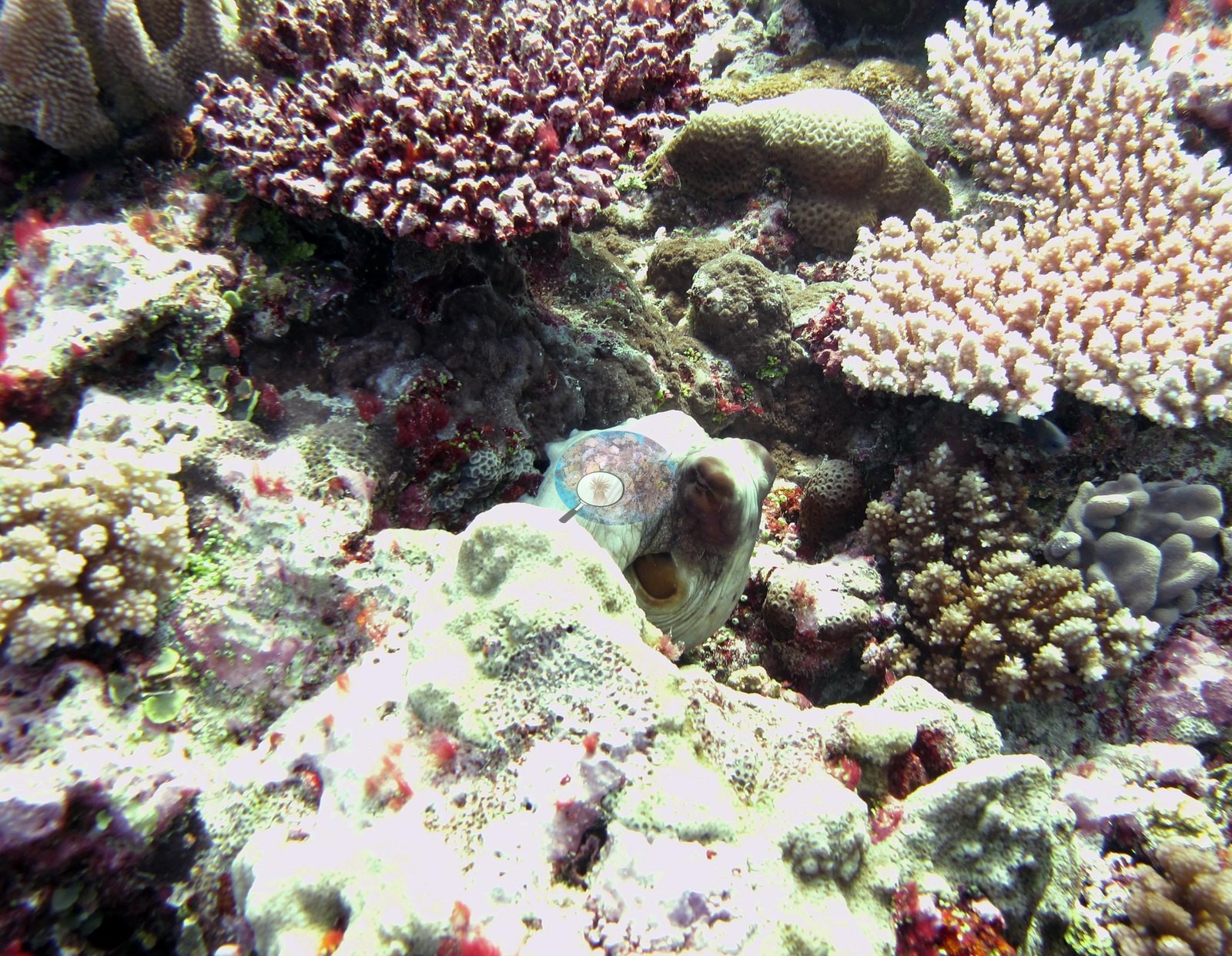
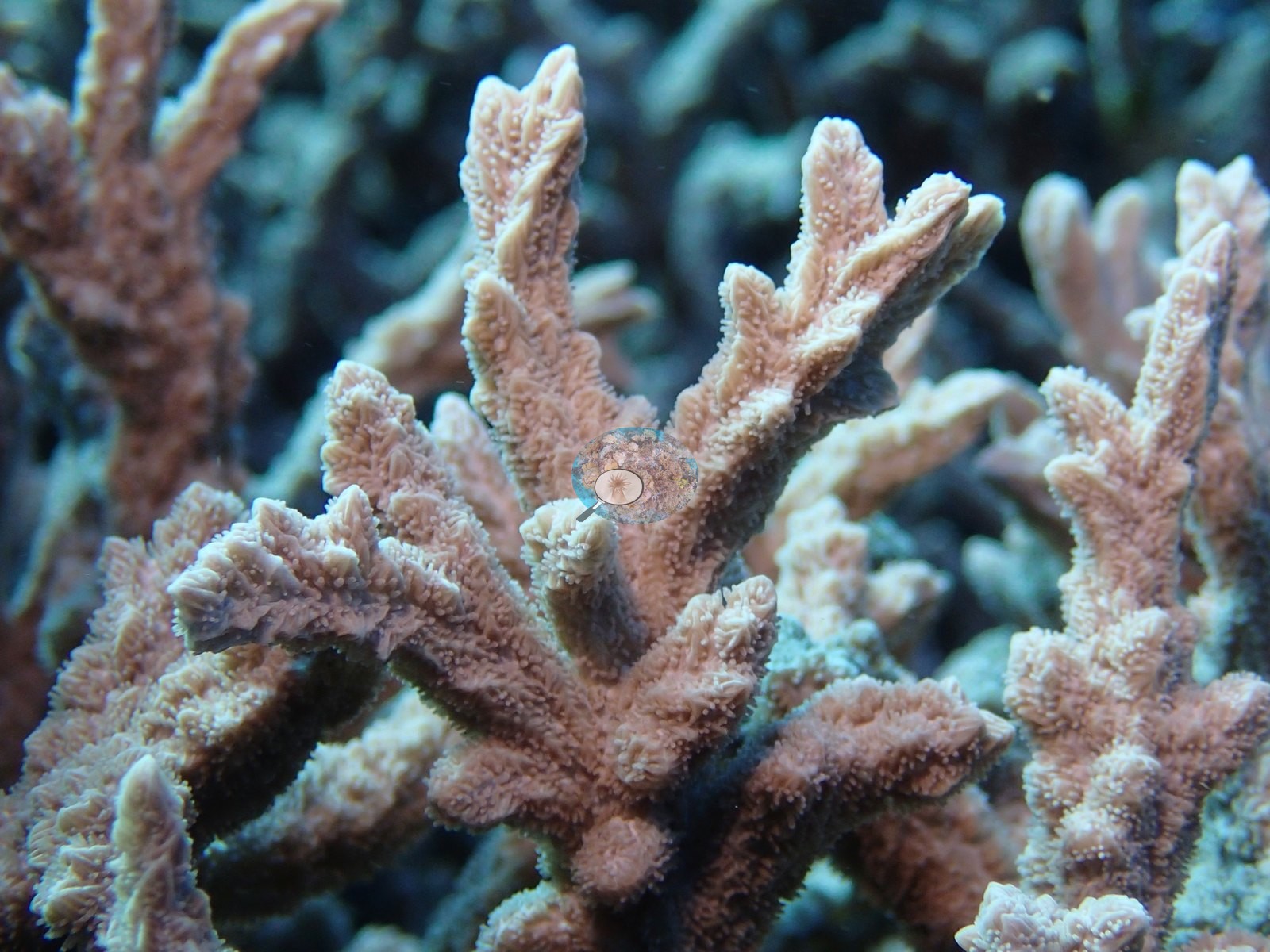
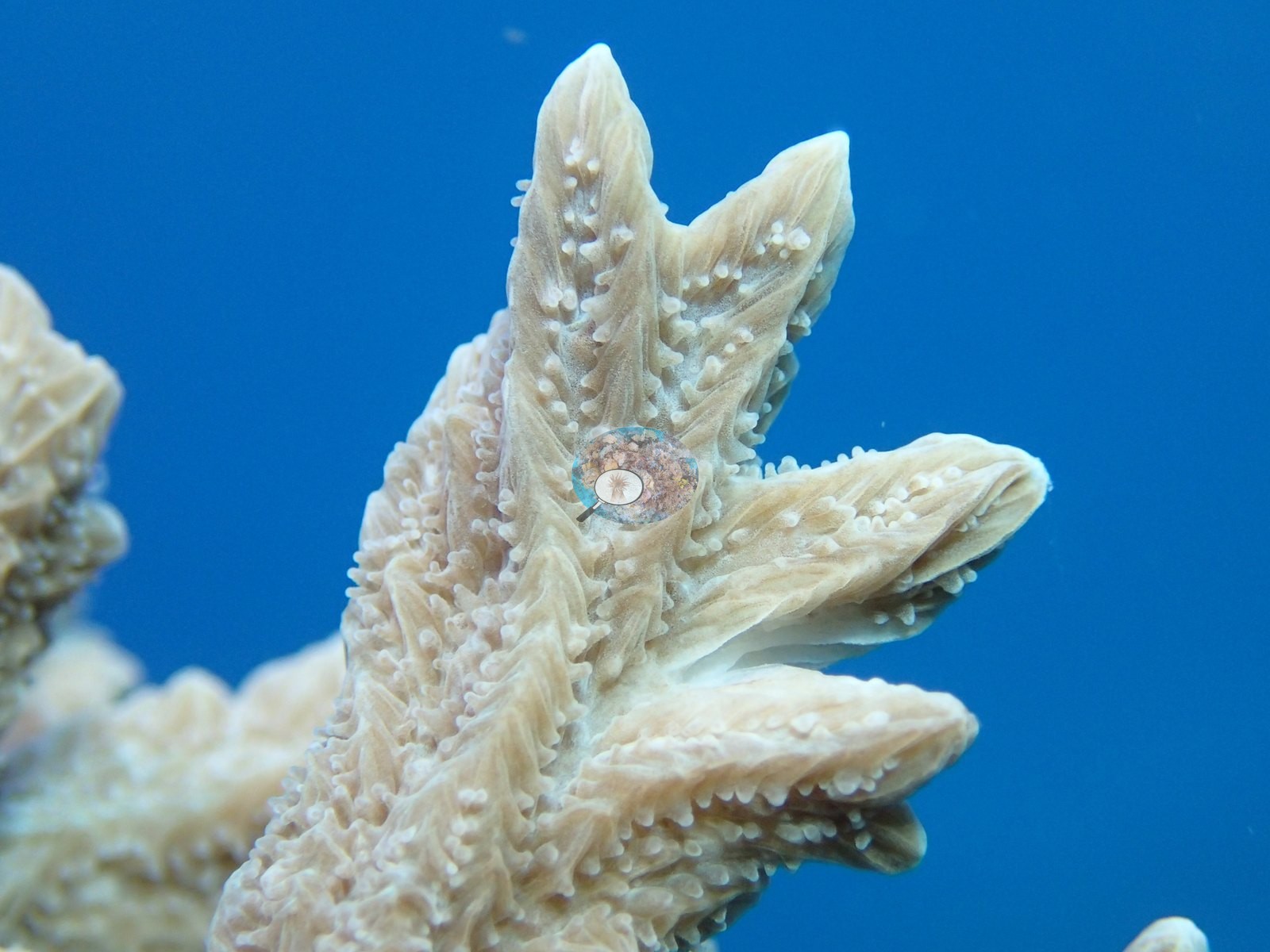
Six more (e.g., Image 3, Image 4, Image 5, Image 6, Image 7, Image 9) are close portraits of individual branching, digitate, and corymbose acroporid colonies shot upward against open blue water; they show polyp and branch detail and healthy, intact tissue, but they carry no information about what surrounds them and cannot be read as cover.
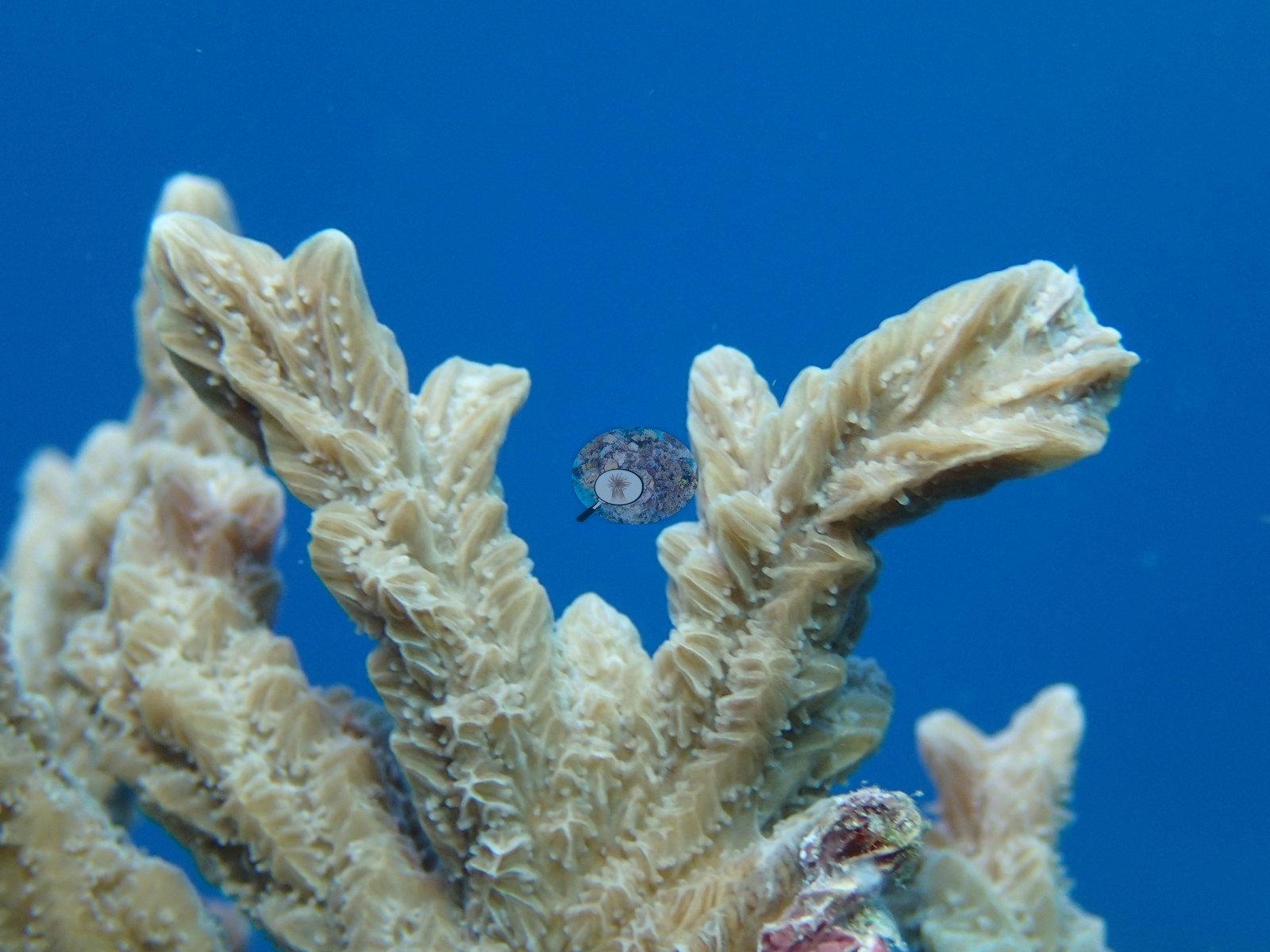
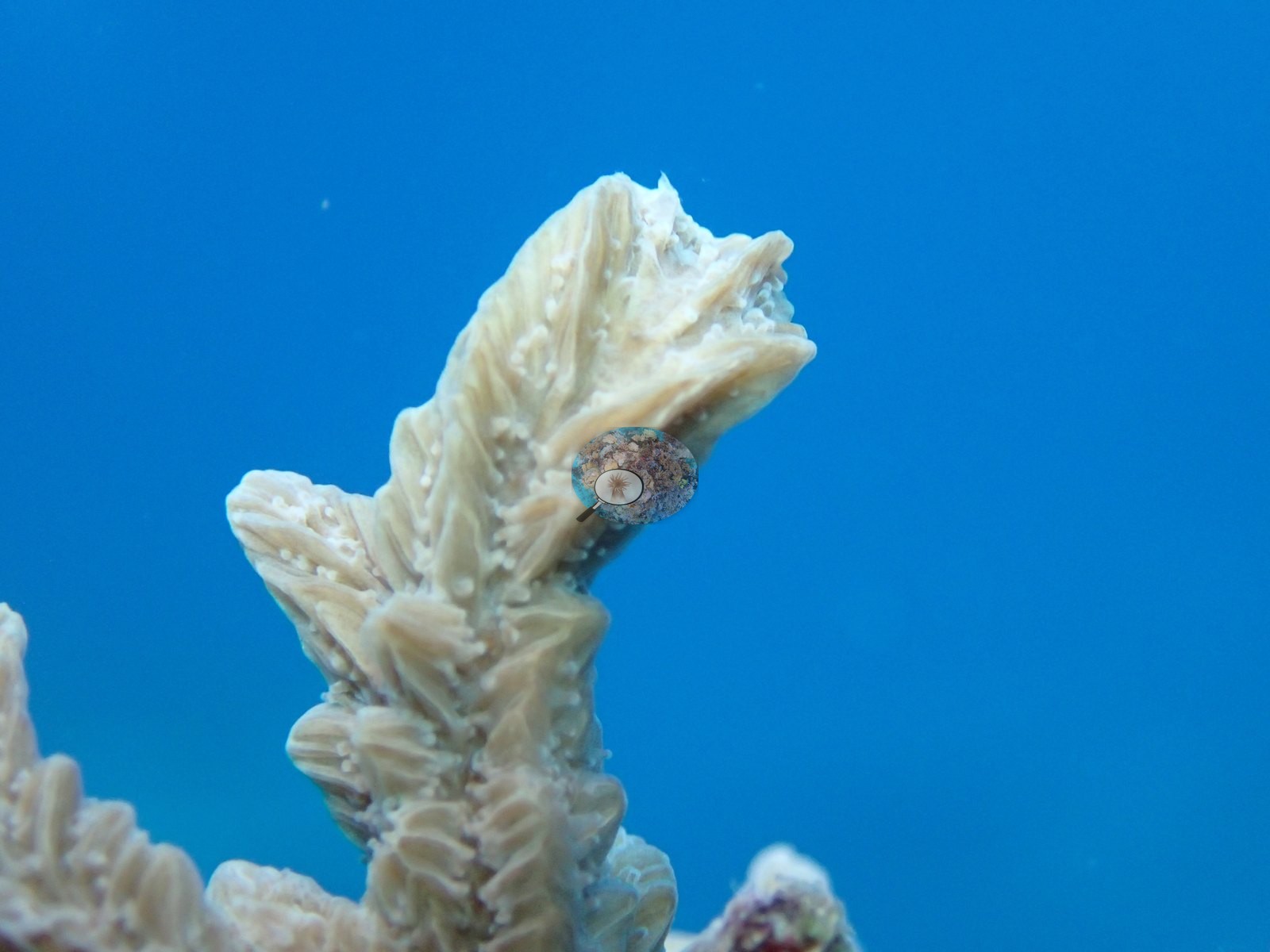
Only two frames are reef-scale. Image 2 looks down a broad, gently sloping reef with a diver mid-frame and coral running away into the distance — branching and tabulate colonies in the foreground, low framework and scattered massives beyond, blue water above.
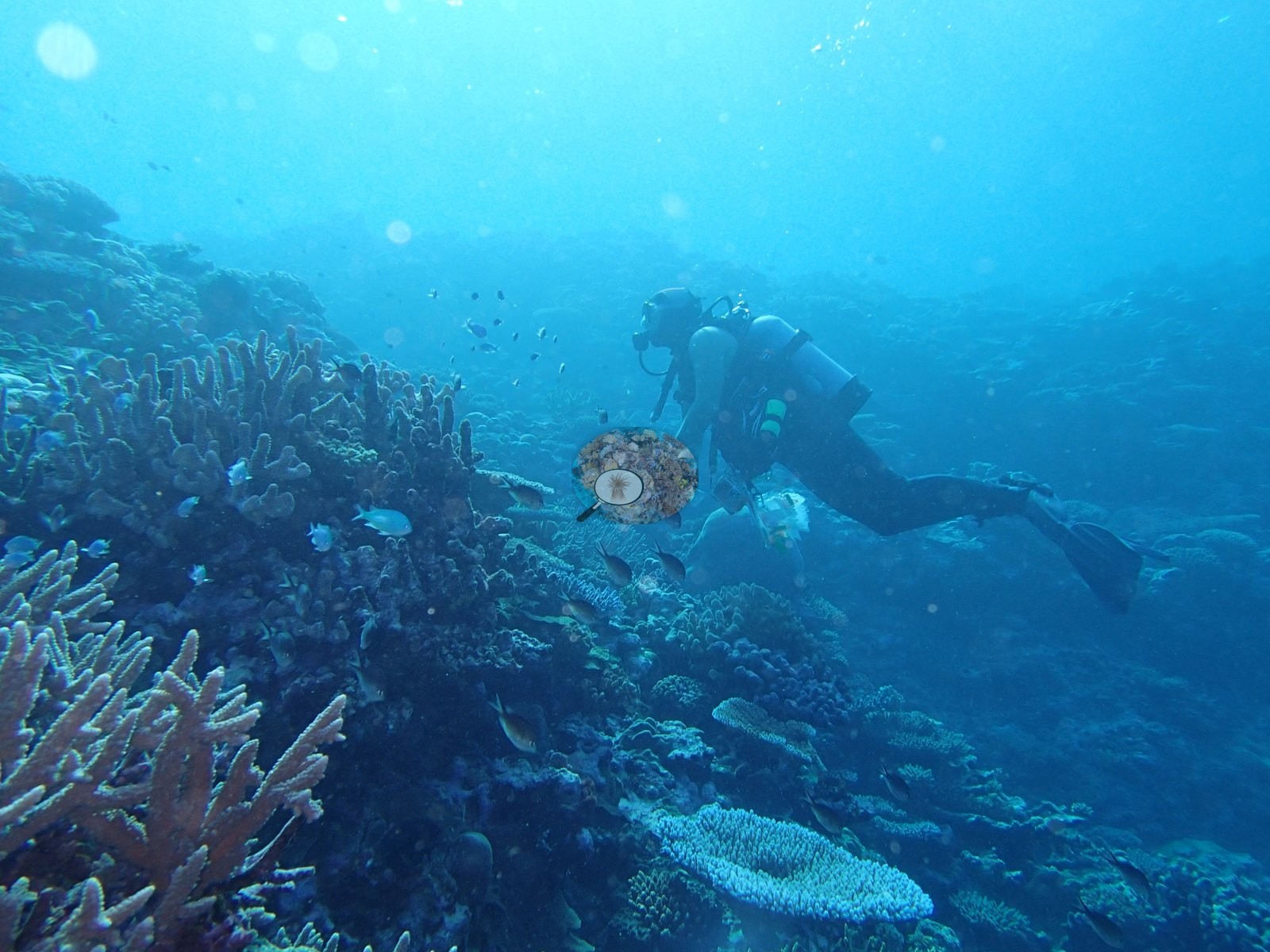
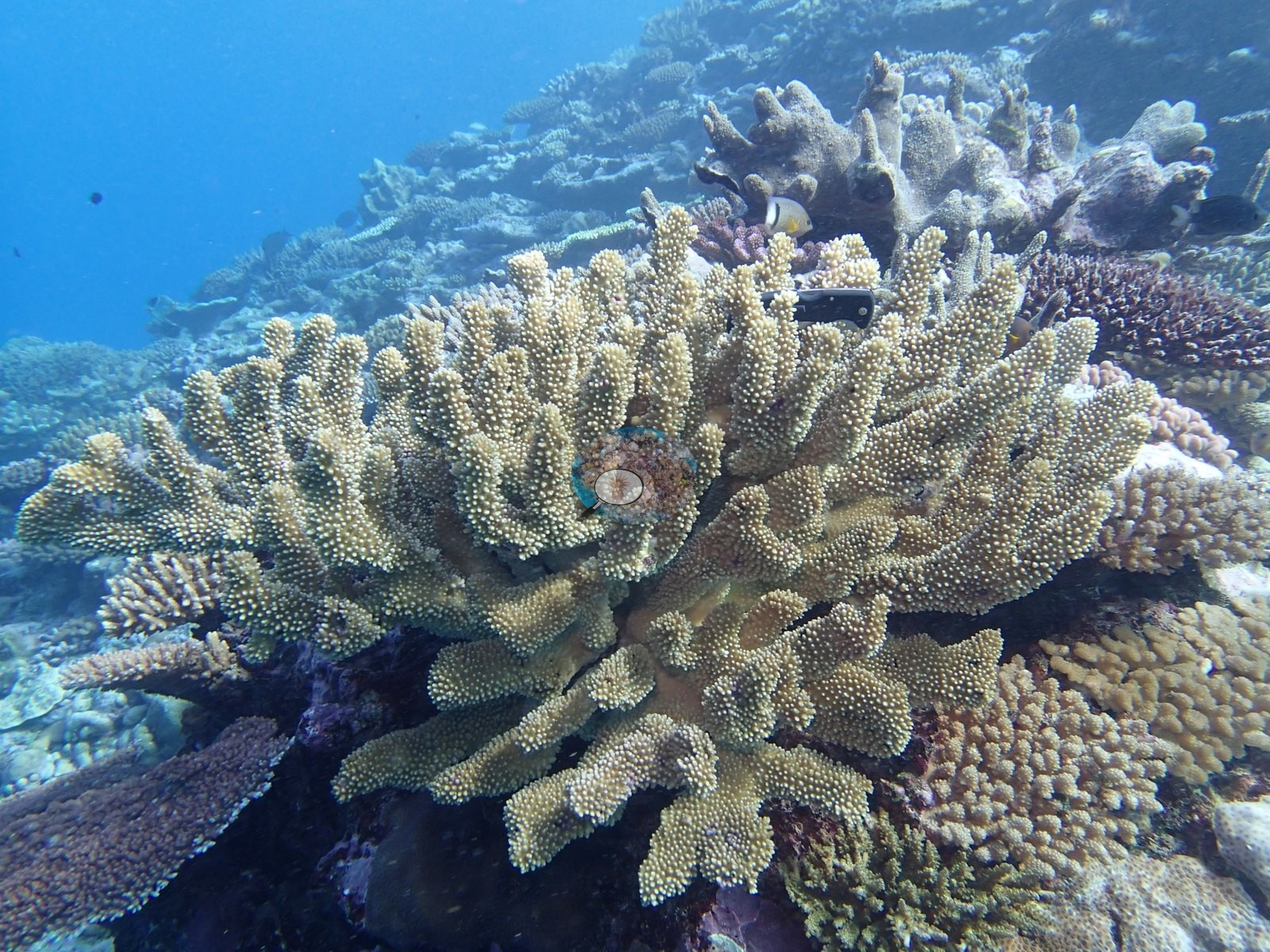
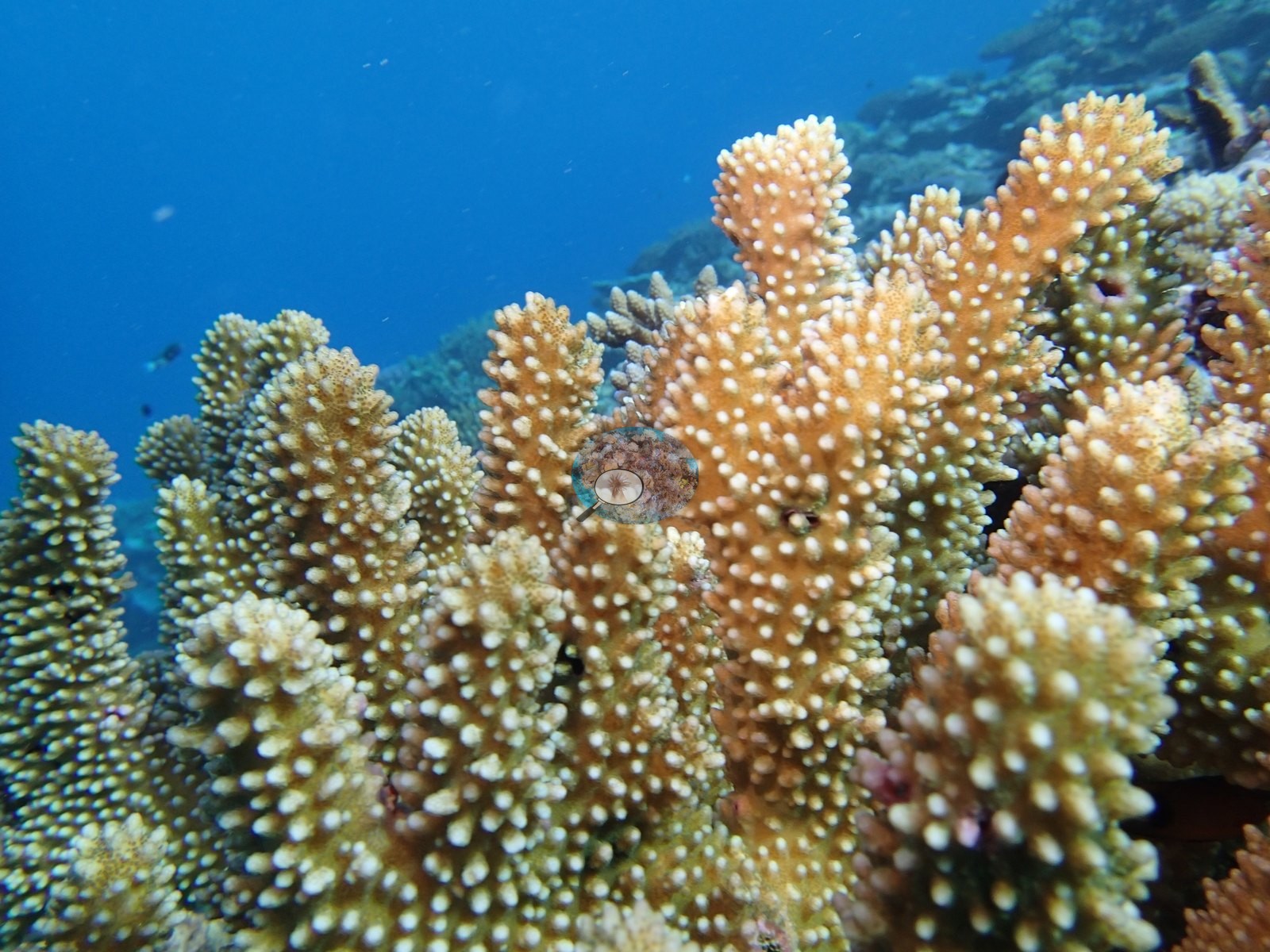
Image 8 is the best benthic frame in the set: a large tan branching-to-corymbose Acropora colony perhaps a meter across sitting on the reef with a dense field of smaller acroporids running back behind it and a shaded overhang beneath.
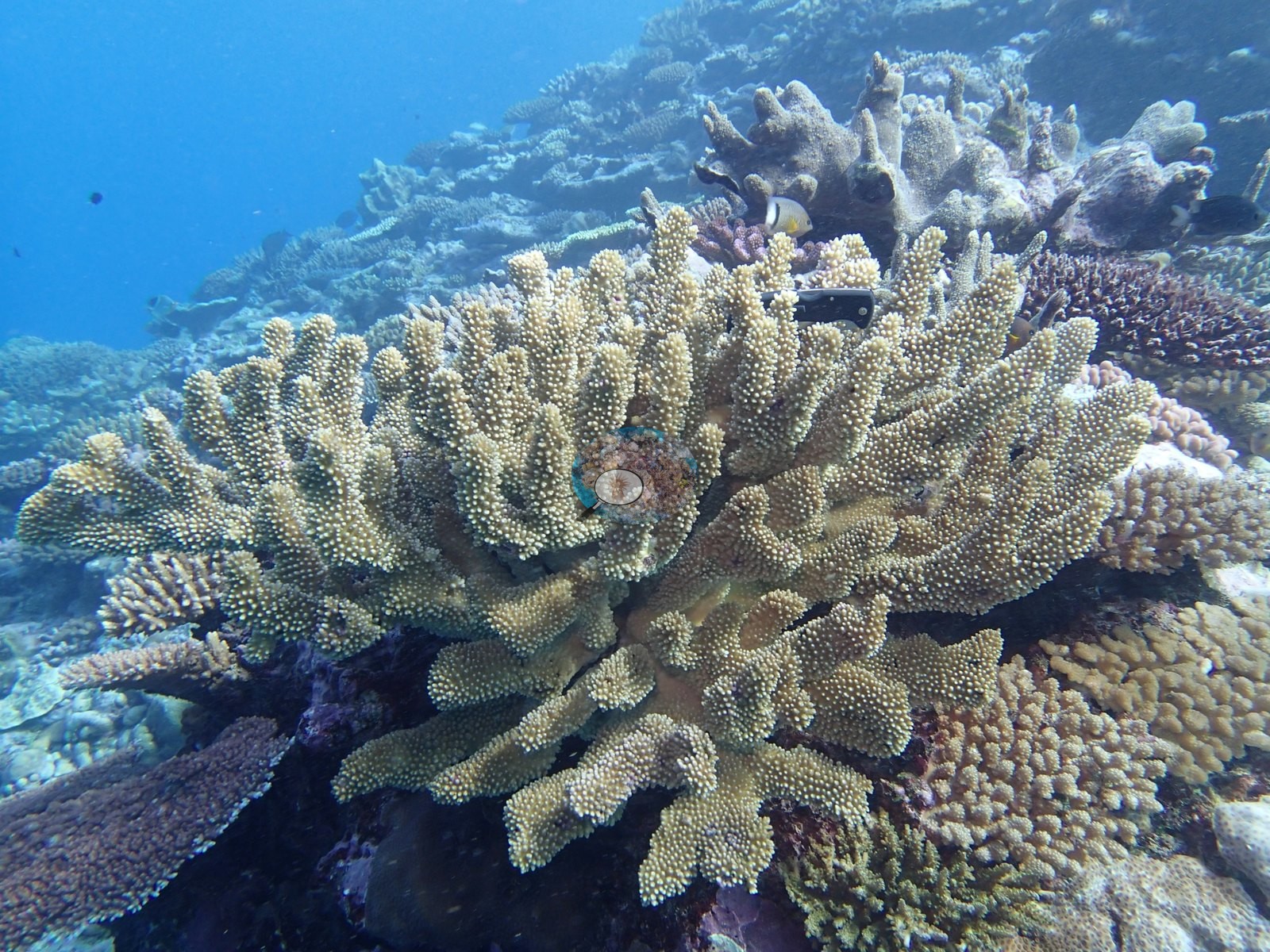
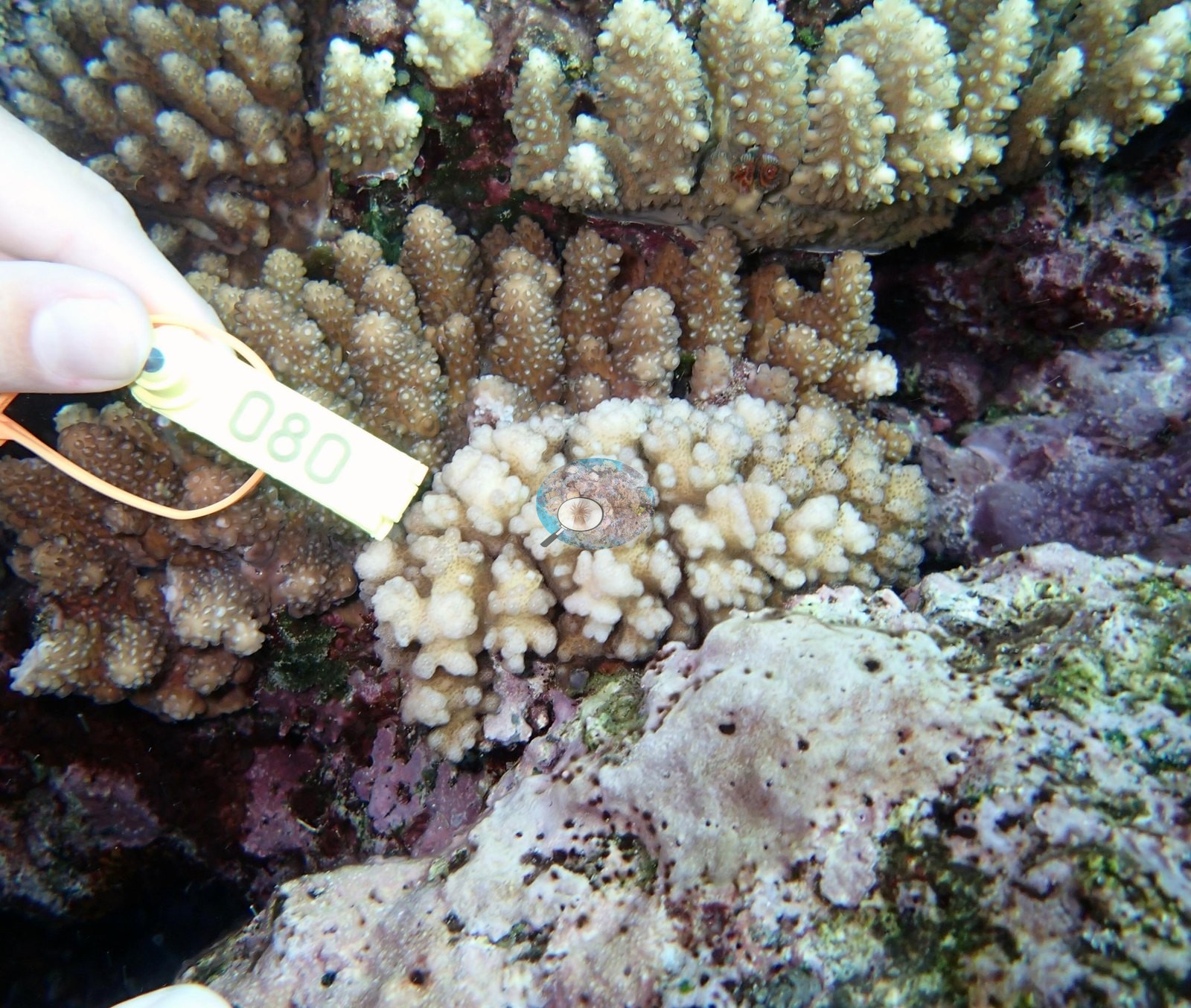
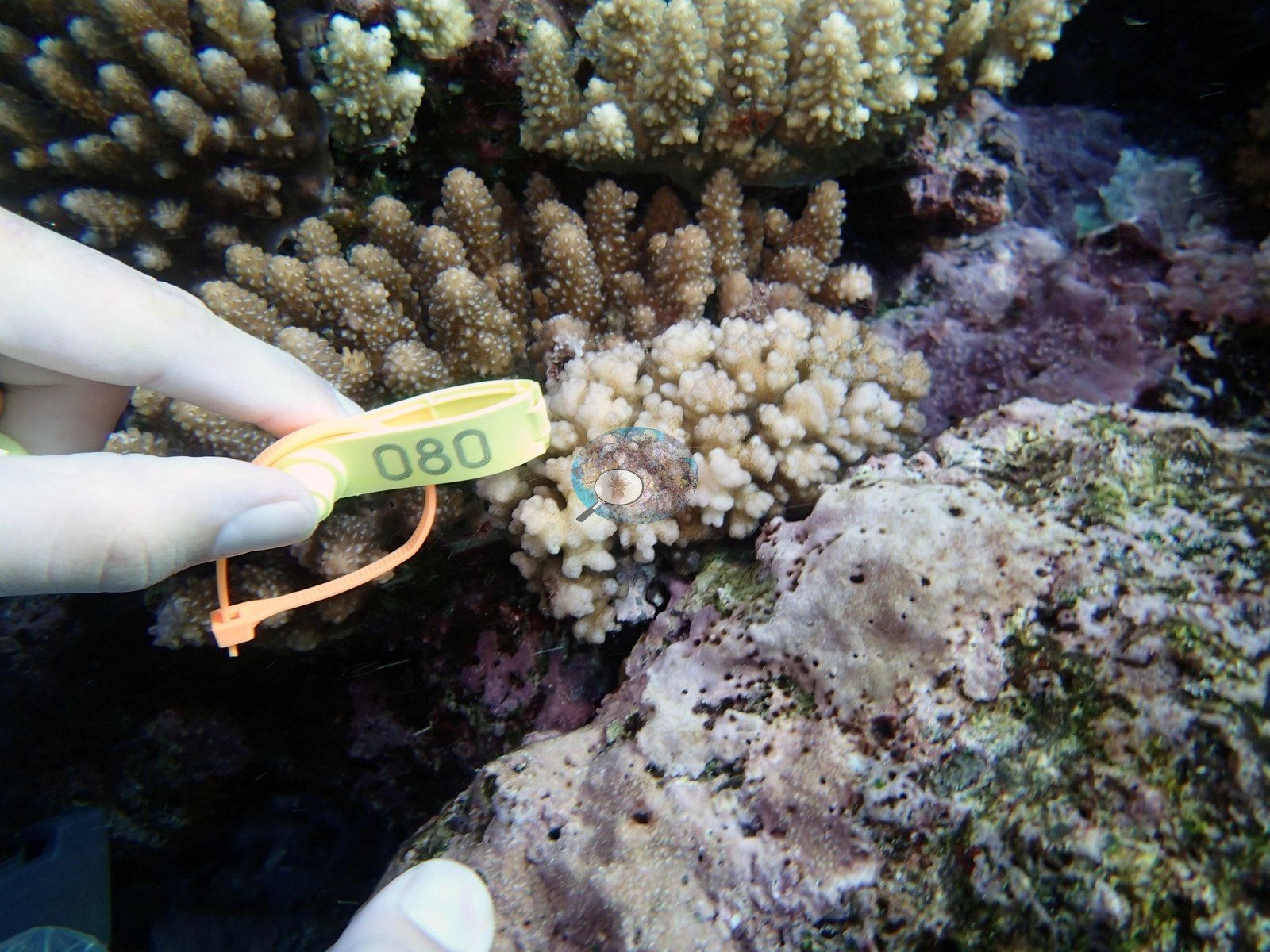
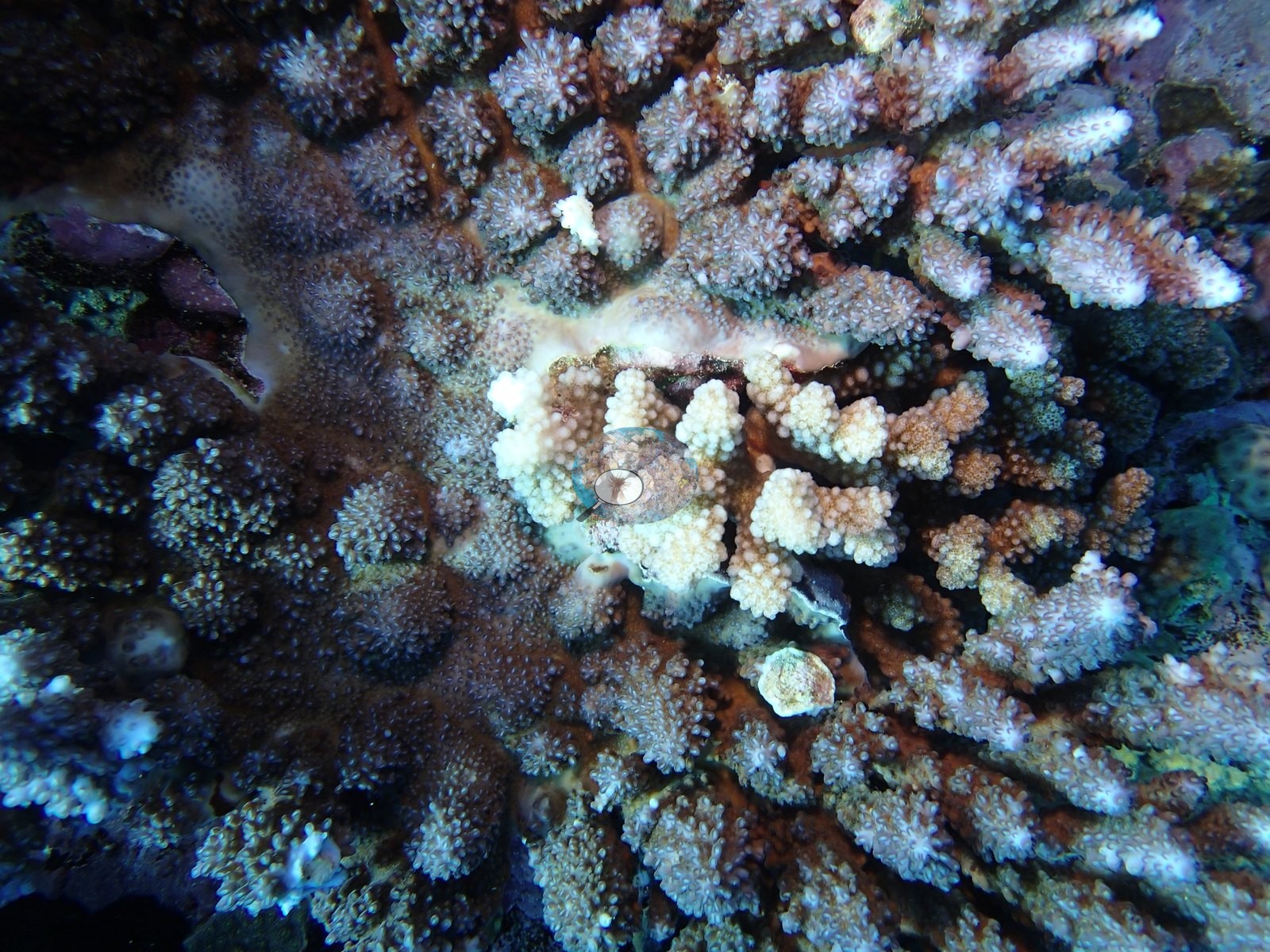
Image 1 is an intermediate frame showing a small stand of pink-brown corymbose Acropora and pale digitate colonies over a crusted, shaded base.
Together these three support the general picture of an acroporid-dense Mago reef, and nothing more specific than that.
Coral cover
- Reference: Khaled bin Sultan Living Oceans Foundation, Global Reef Expedition (in situ transect)
- Coral cover 53%, from the LOF-GRE in situ benthic transect (the mean of all of this station's own transects in the expedition's per-transect benthic data) — a diver transect, and the authoritative figure for this site; it is not derived from these photographs.
- Transect mean 53 ± 5.3% SE (n = 5 transects; Living Oceans Foundation per-transect benthic data); the headline above is this all-transect mean.
Stressors
No bleaching, disease lesions, or crown-of-thorns feeding scars are visible in any of this station's frames; several of the close acroporid portraits (e.g., Image 4, Image 5, Image 6) read pale cream, but strobe-lit close work against blue water is not a safe basis for a color judgment and no paling is asserted from the photographs; Anderson's sampling sheet records the one colony sampled here (F103, P. brevicornis) as 20% pale. The one coral colony from this site with an outlier score was not flagged as a physiological outlier (Mayfield et al. 2017, PLoS ONE). The Living Oceans Foundation transects here recorded 14% cyanobacteria and no recently dead coral.
Fish and other fauna
Image 13 is a soft-focus portrait of the octopus's eye and mantle with a green faviid colony at the upper edge.
Comparisons with other data
Apart from the Living Oceans Foundation survey shown here, we found no other surveys at this site as of 2026. If you would like to share yours, please email us.
Other notes
Beyond the octopus set, these photographs support no statement about this site's relief, depth zonation, dominant growth forms, or coral cover, and the reader should not read the general Mago account as something these frames confirm. The full photo set is not a survey set: two thirds of it is close work on single subjects. What these photographs cannot support: this site's relief and depth zonation, the spur-and-groove and steep-slope structure in the general Mago account below, the presence of the large Porites lobata and tabular acroporids that account describes, or any statement about crown-of-thorns damage.
Survey team's site notes: Spur and groove assemblages with steep slope with large isolated colonies of Porites lobata and tabular acroporids. Some evidence of COTS predations with large areas of white corals were present. Halimeda algae clumping were found interspersed among branching corals. Large sheeting colonies and plating corals were common on the steep slopes. Several large table acroporids had been turned over from possible storm damage. CCA was common and covered most of the old dead corals on the reef terrace. Colonies were common around 30m at the base of the steep slope.
Data & links
- Download benthic survey data (CSV) ↗
- Download all LOF-GRE data (933 sites) ↗
- Photo portfolio ↗
- Coral Reef Diagnostics page for this area ↗
All images from Coral Reef Diagnostics. Data are from the Khaled bin Sultan Living Oceans Foundation Global Reef Expedition and Coral Reef Diagnostics.
 © Coral Reef Diagnostics.