
Egypt Red Sea - Salah (Wadi Lahami)
Part of the regional summaries: Egypt and Red Sea
More info
Egypt (NOAA CRW virtual station) · Northern and Central Red Sea ecoregion mean=12.2°C-heating weeksSalah is the most densely built reef of the Egypt leg - a spectacular Porites-and-Acropora slope with warm cream, gold, and deep maroon-red Acropora thickets under bright surface light, the highest published cover of any Egyptian pin at 28.1%. But the same reef is deeply stressed: 62.9% of coral tissue was bleached, with branching, massive, and fire-coral taxa all affected together in single frames - brilliant white staghorn Acropora beside a bleached massive dome and pale yellow-green Millepora.
صلاح هي الشعبة الأكثف بناءً في مرحلة مصر — منحدر مذهل من Porites وAcropora بأجَمات Acropora بألوان كريمية دافئة وذهبية وحمراء عنابية عميقة تحت ضوء سطحي ساطع، وأعلى غطاء منشور بين المواقع المصرية عند 28.1%.
ترجمة هذا الملخص بالذكاء الاصطناعي؛ النص الإنجليزي هو المعتمد. Translated from the site’s shorter map summary.
One other CRD dive site within 5 km shown in orange — click a marker to open its page.
4 of these 50 photographs are shown beside the text that discusses them under "Site description" below.
Site description
General benthic features
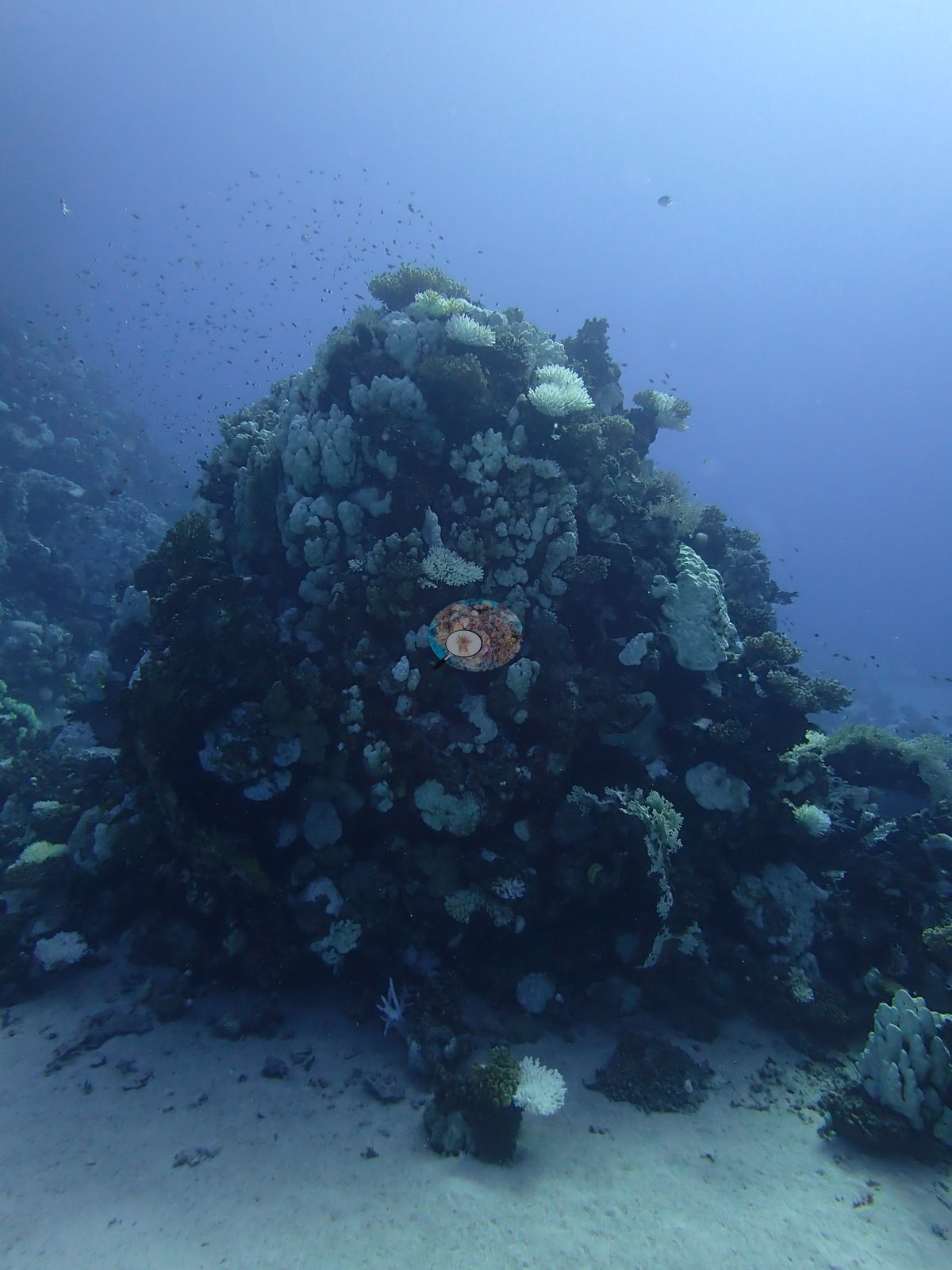
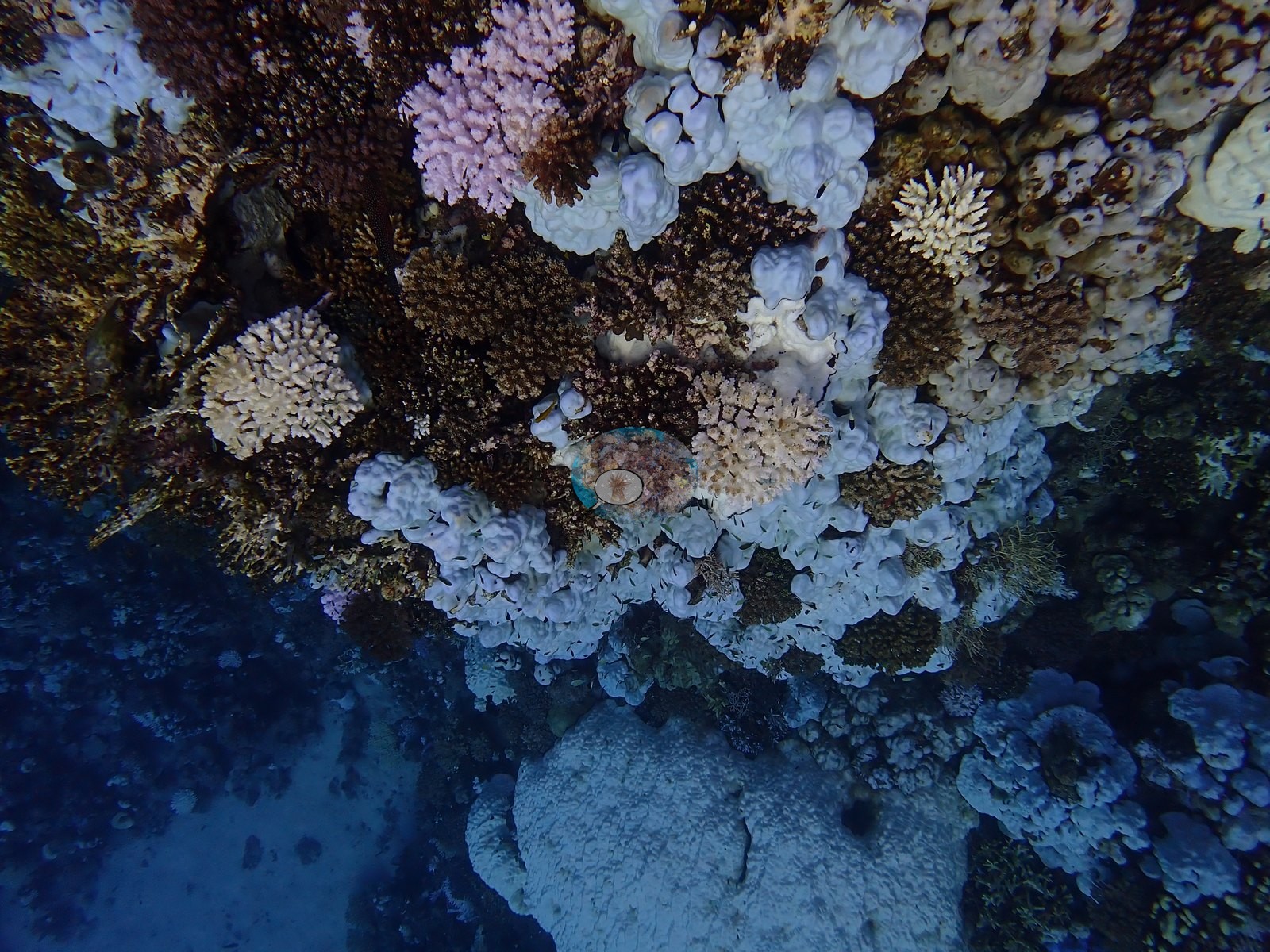
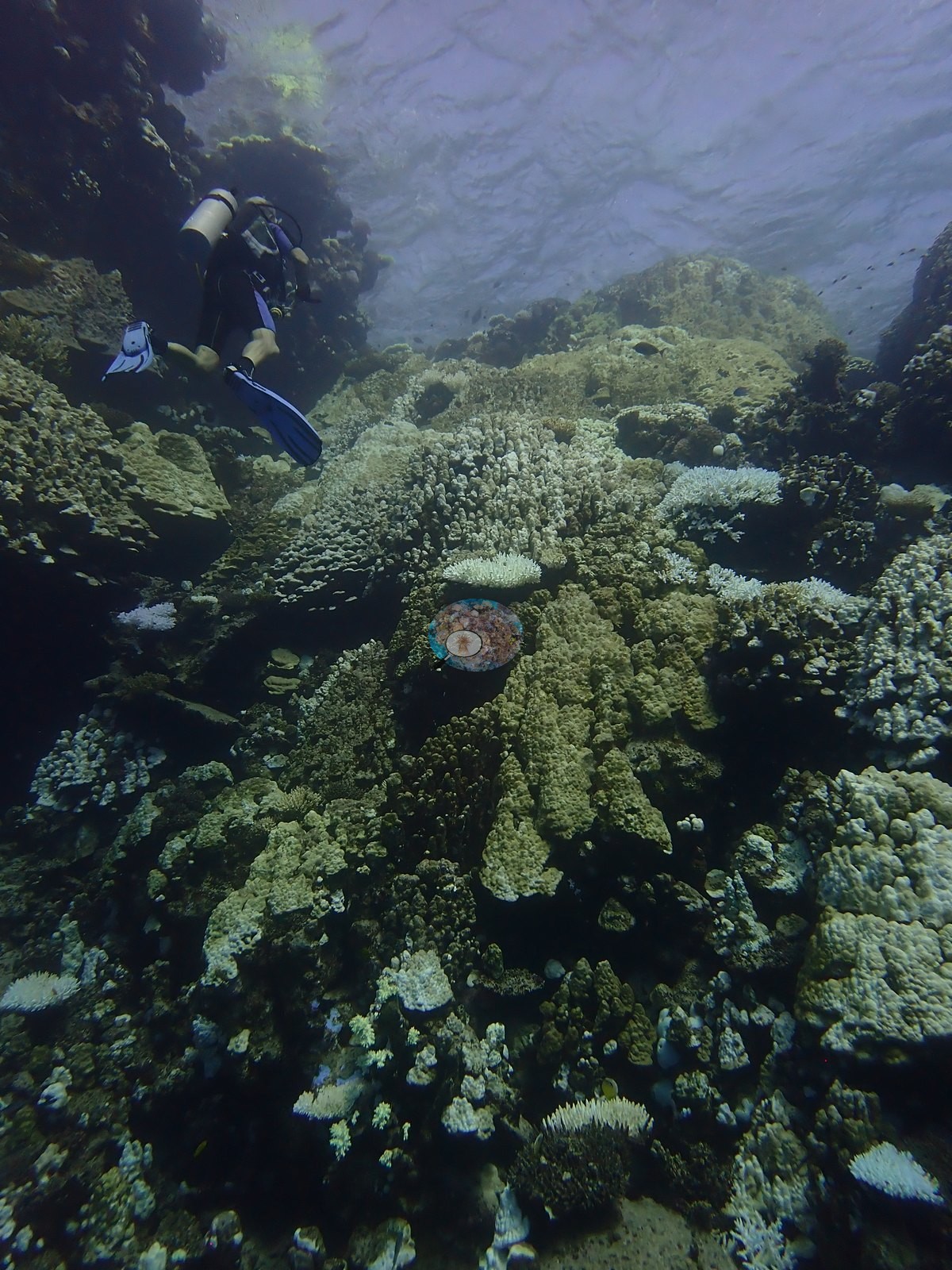
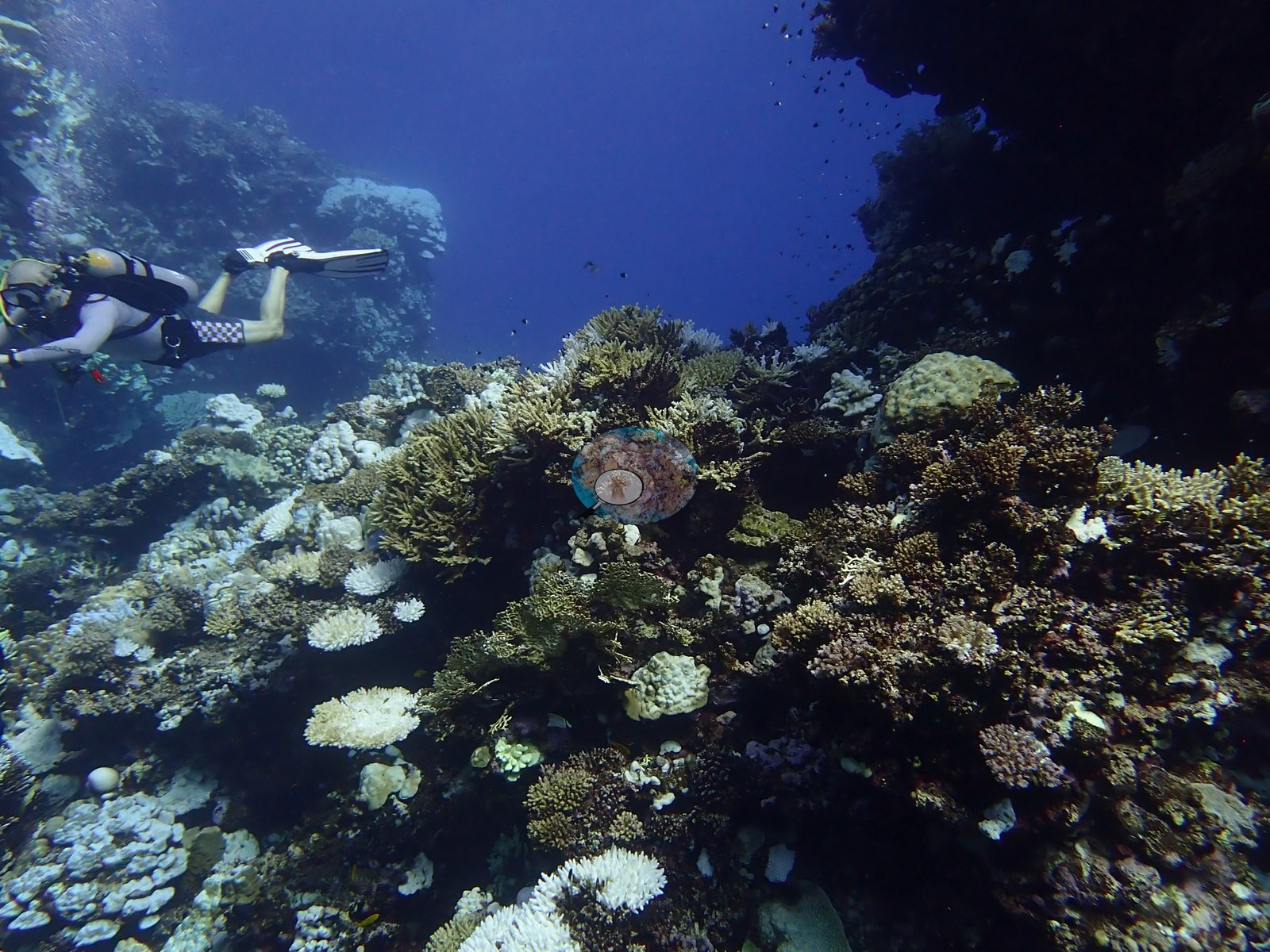
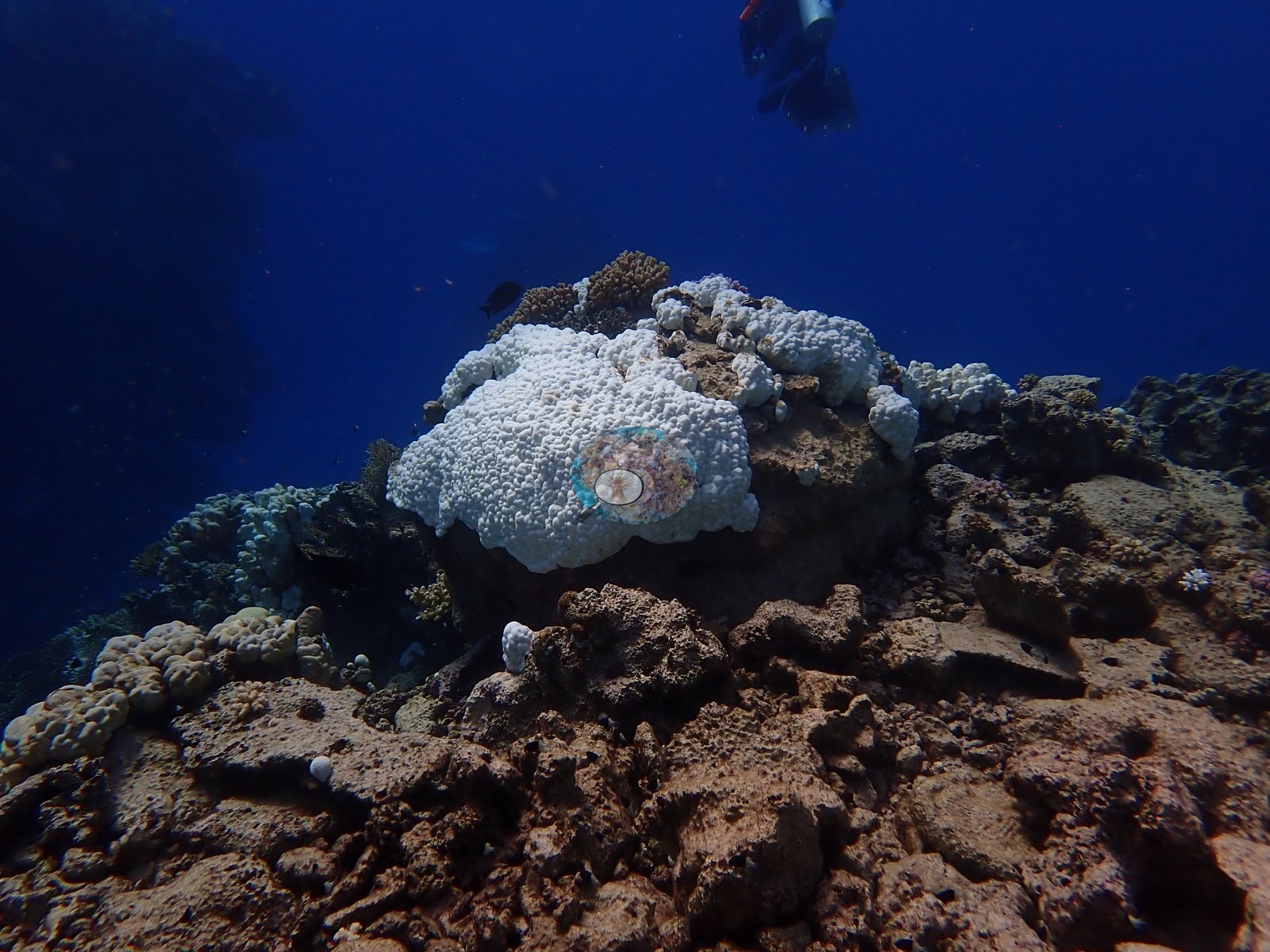
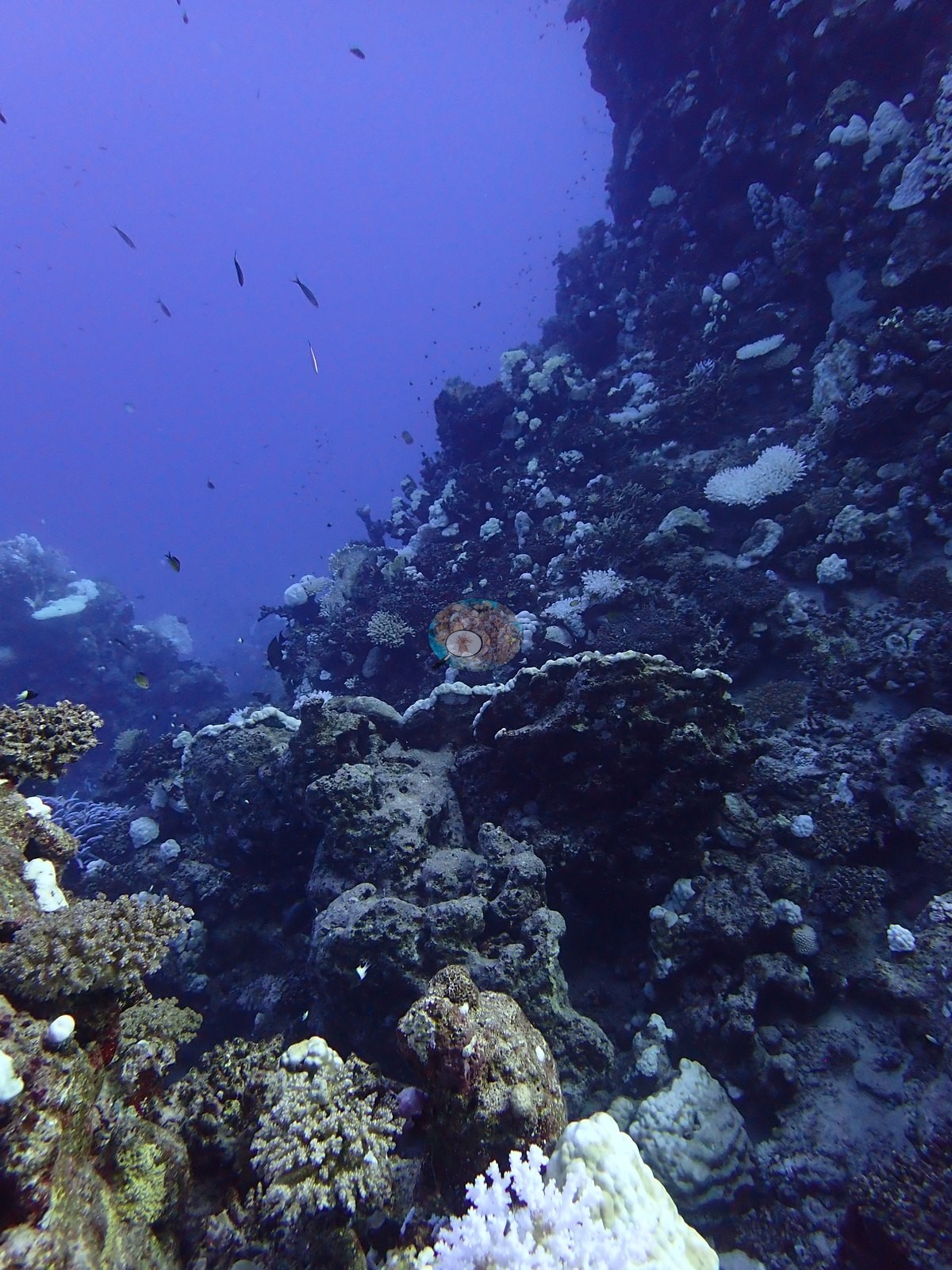
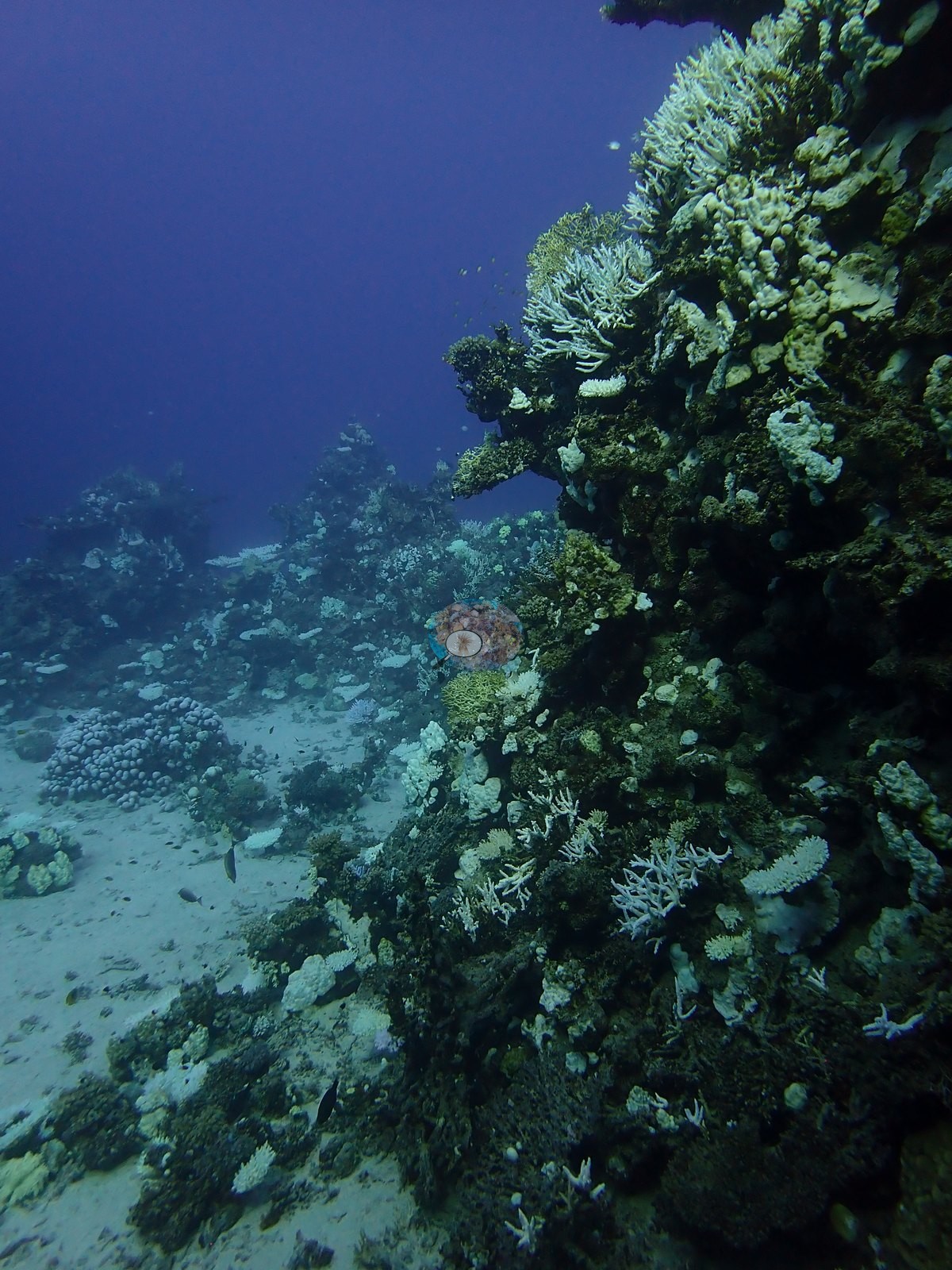
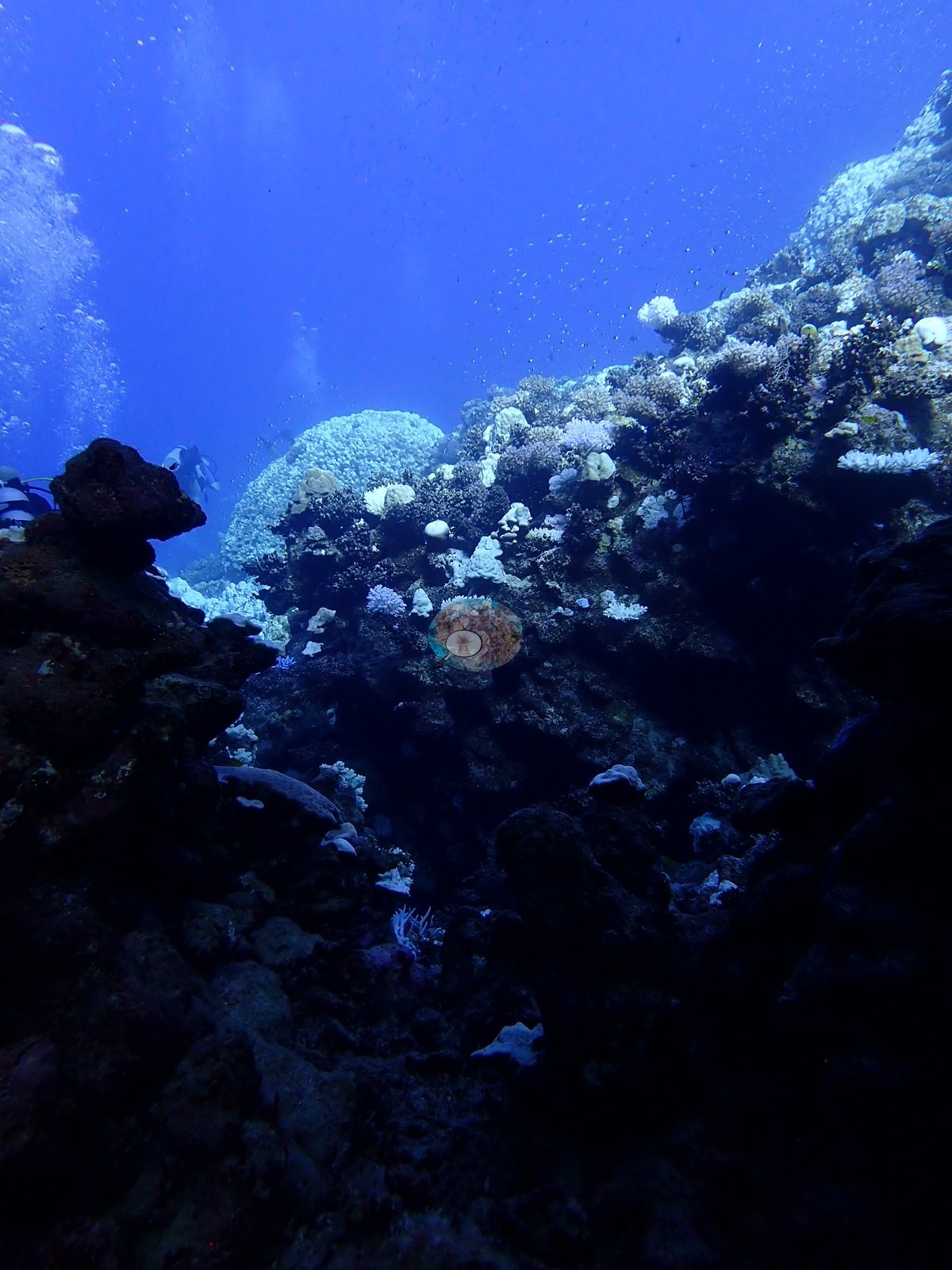
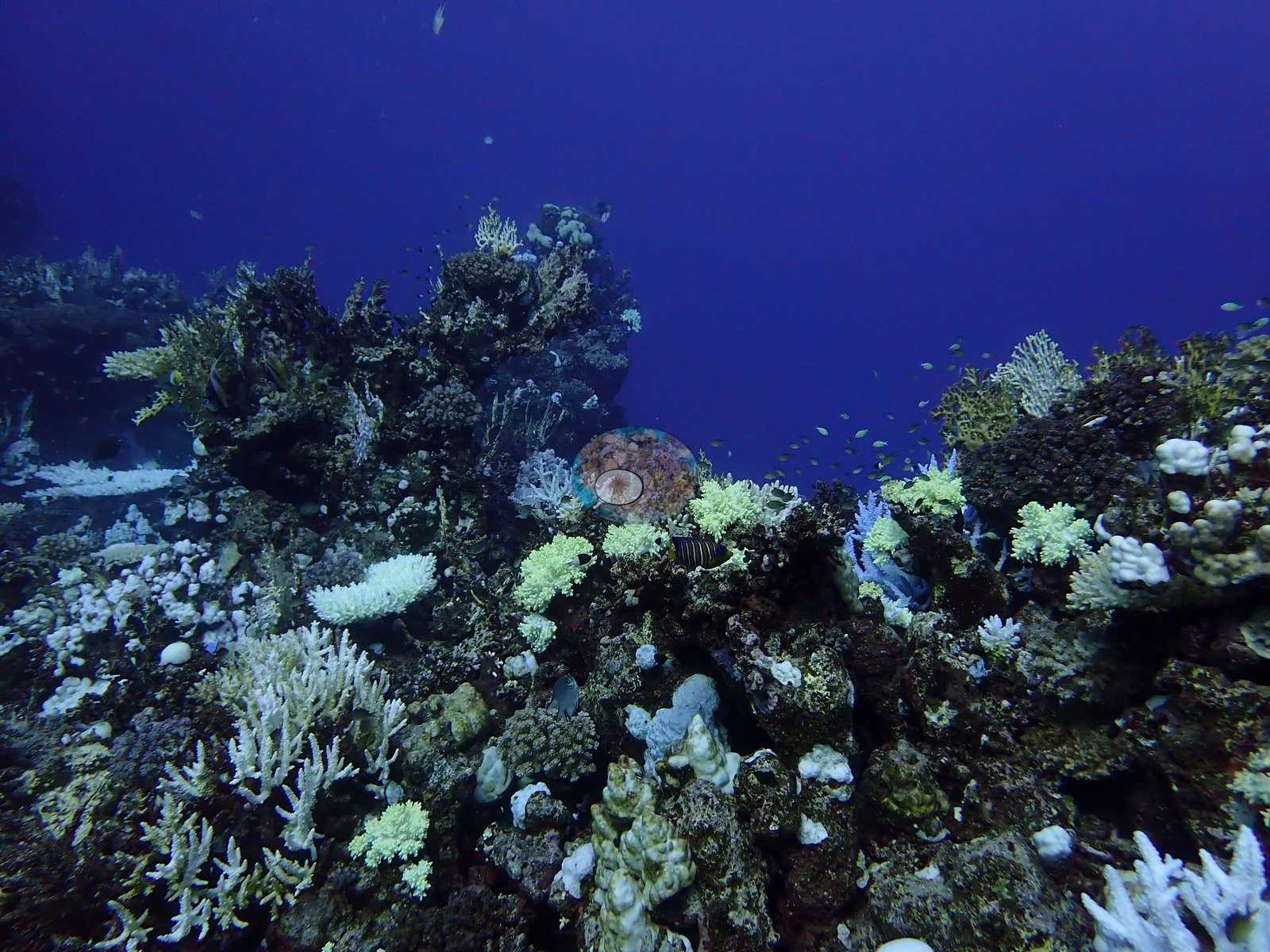
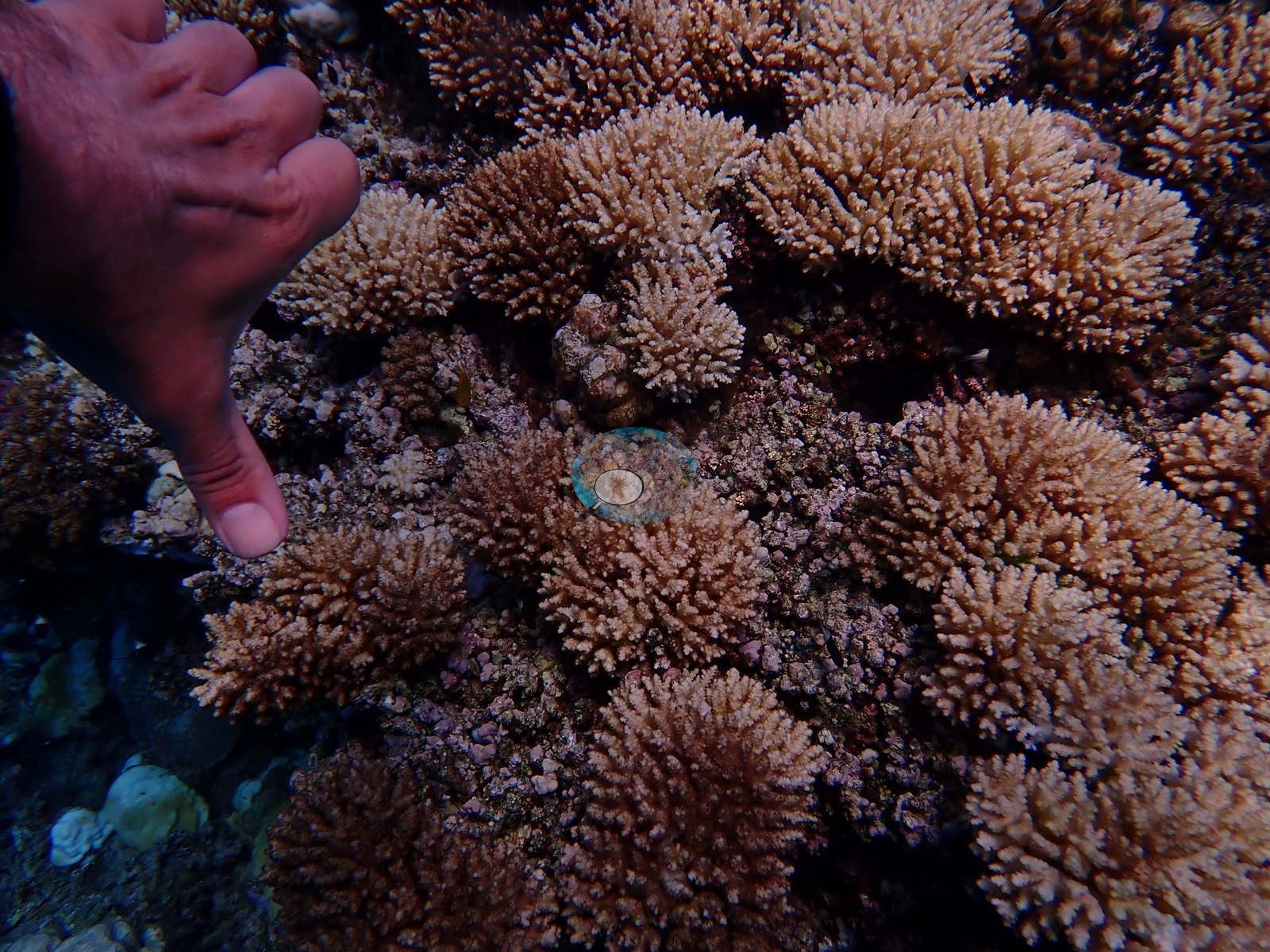
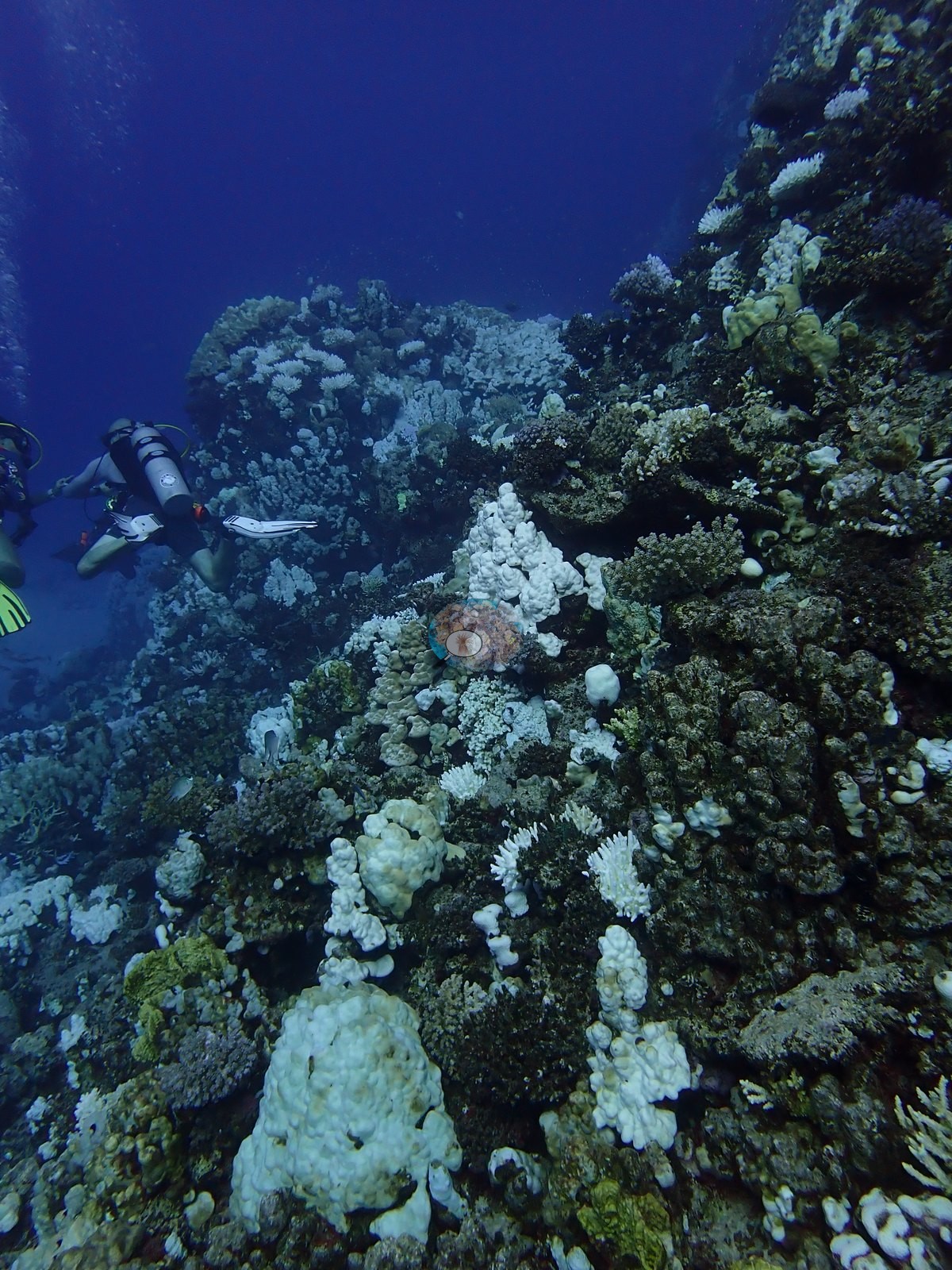
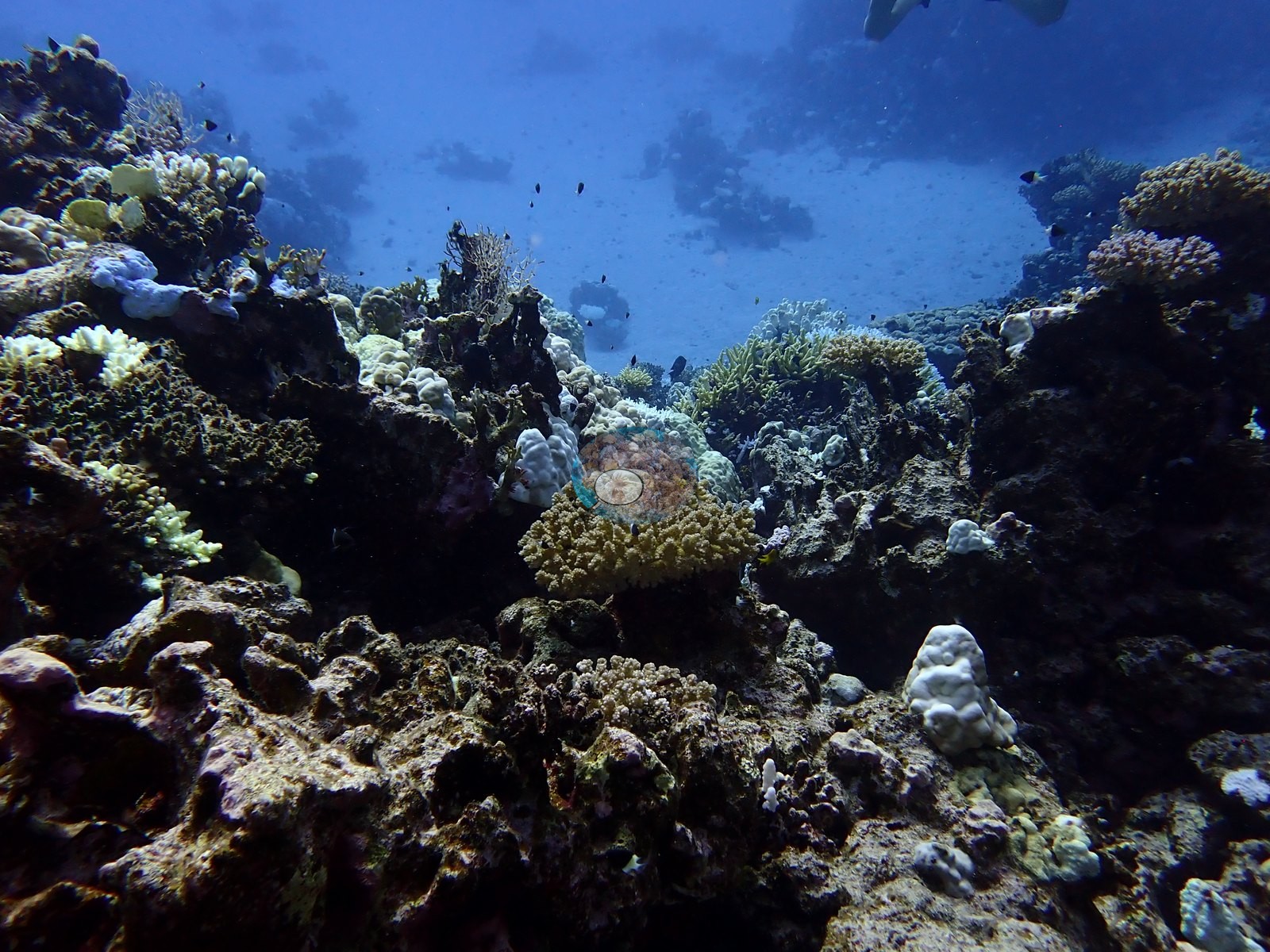
The reef is genuinely spectacular and genuinely in trouble at the same time, and the photographs make both halves of that plain (e.g., Image 4).
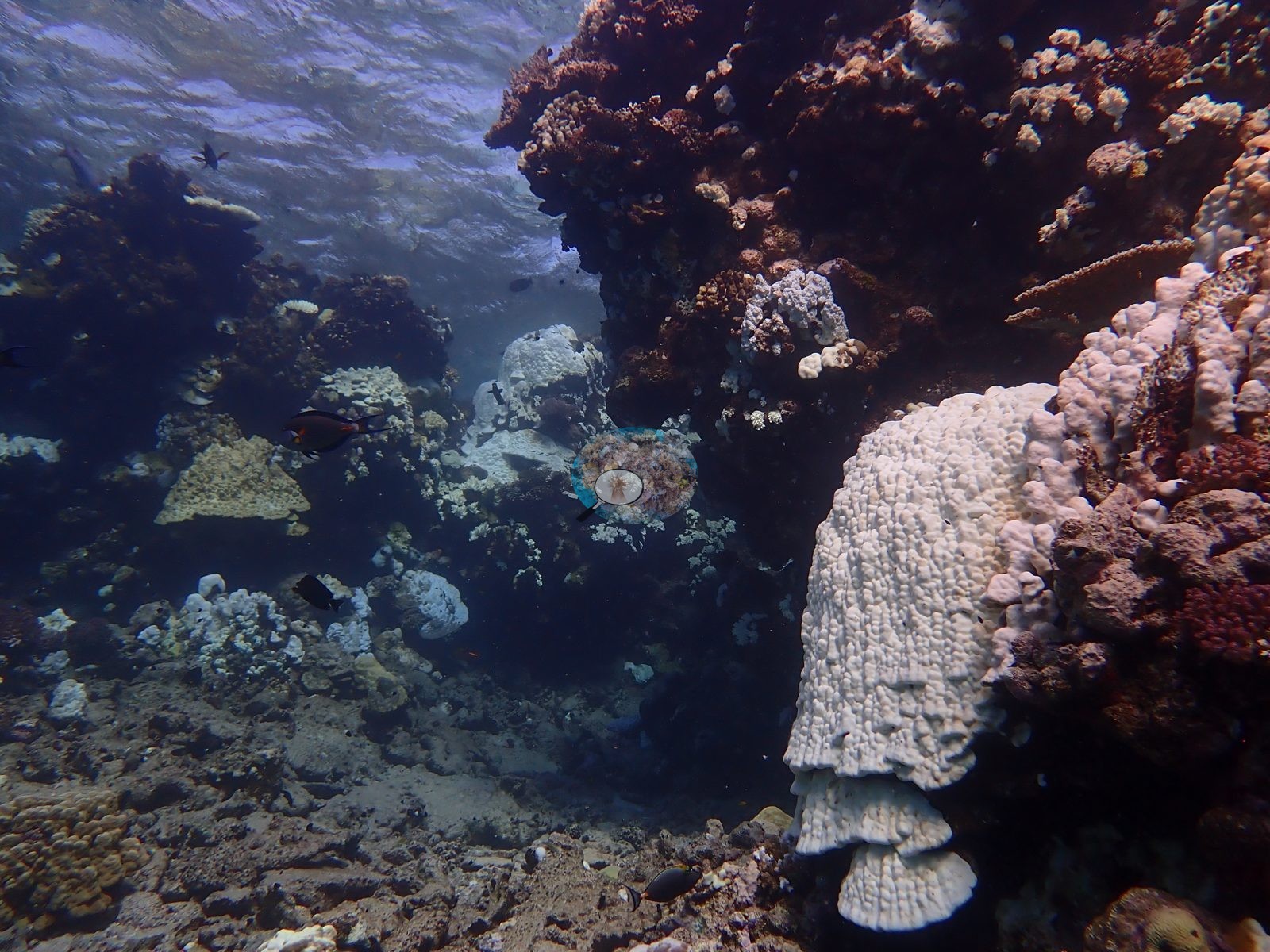
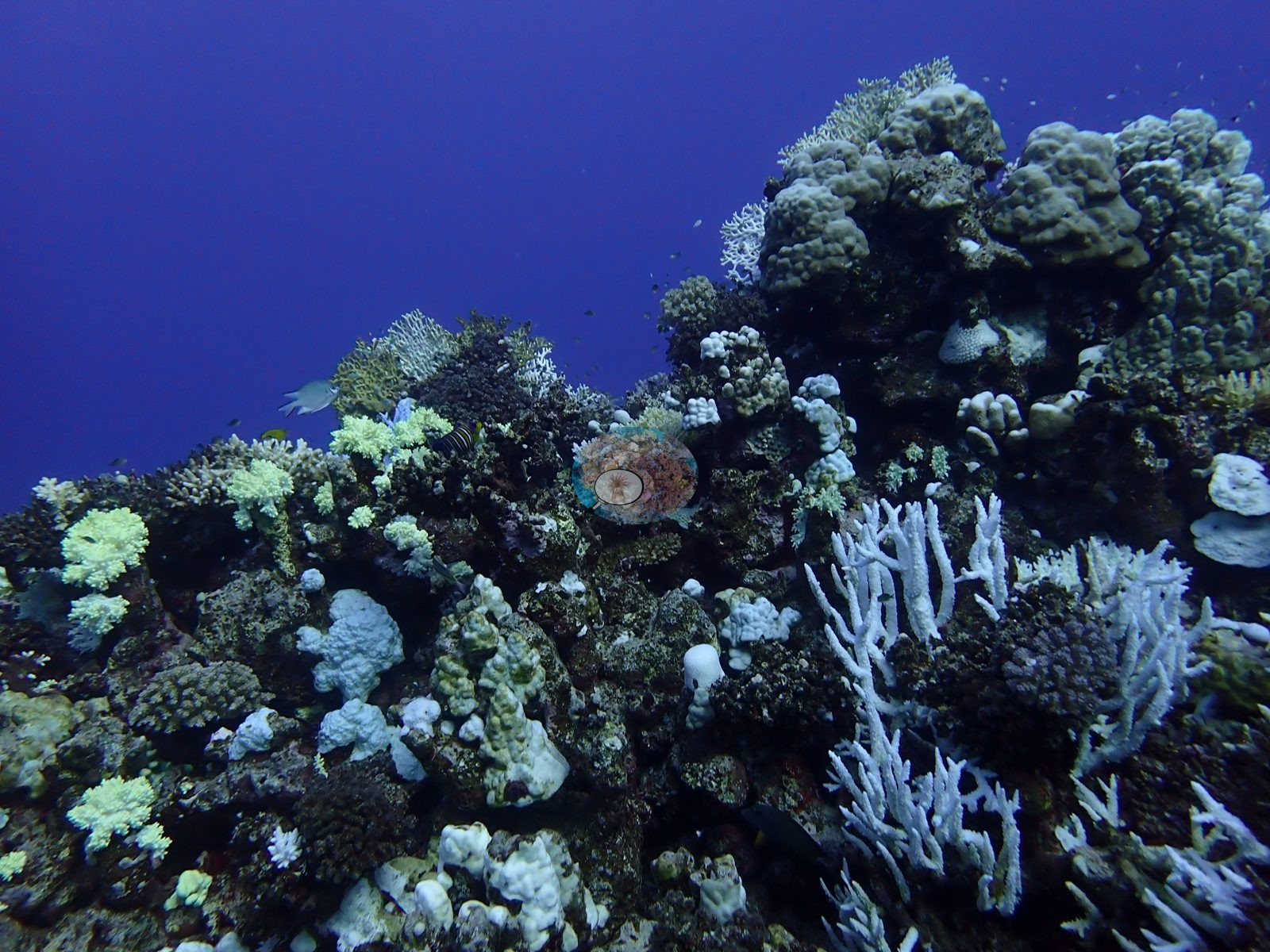
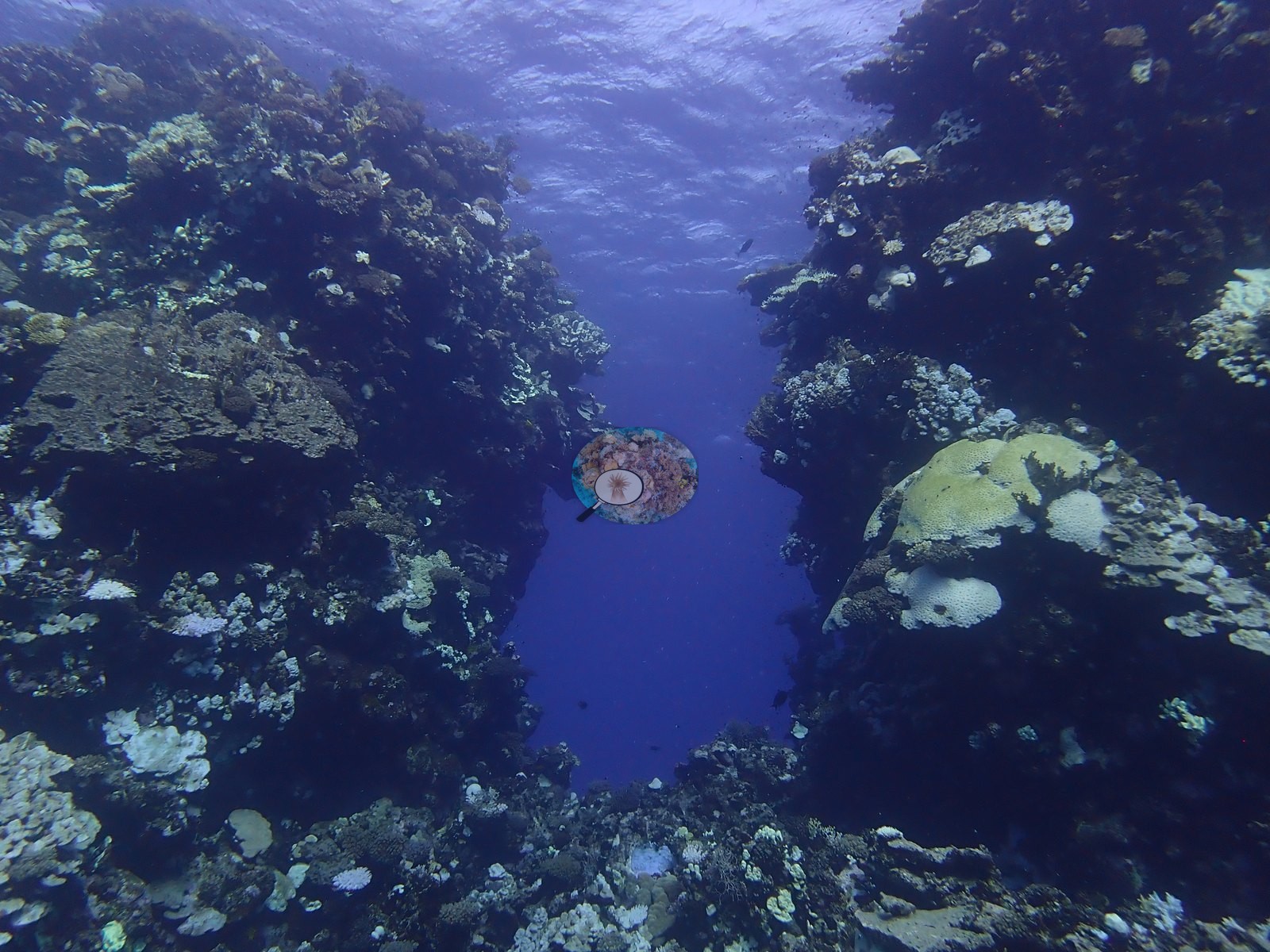
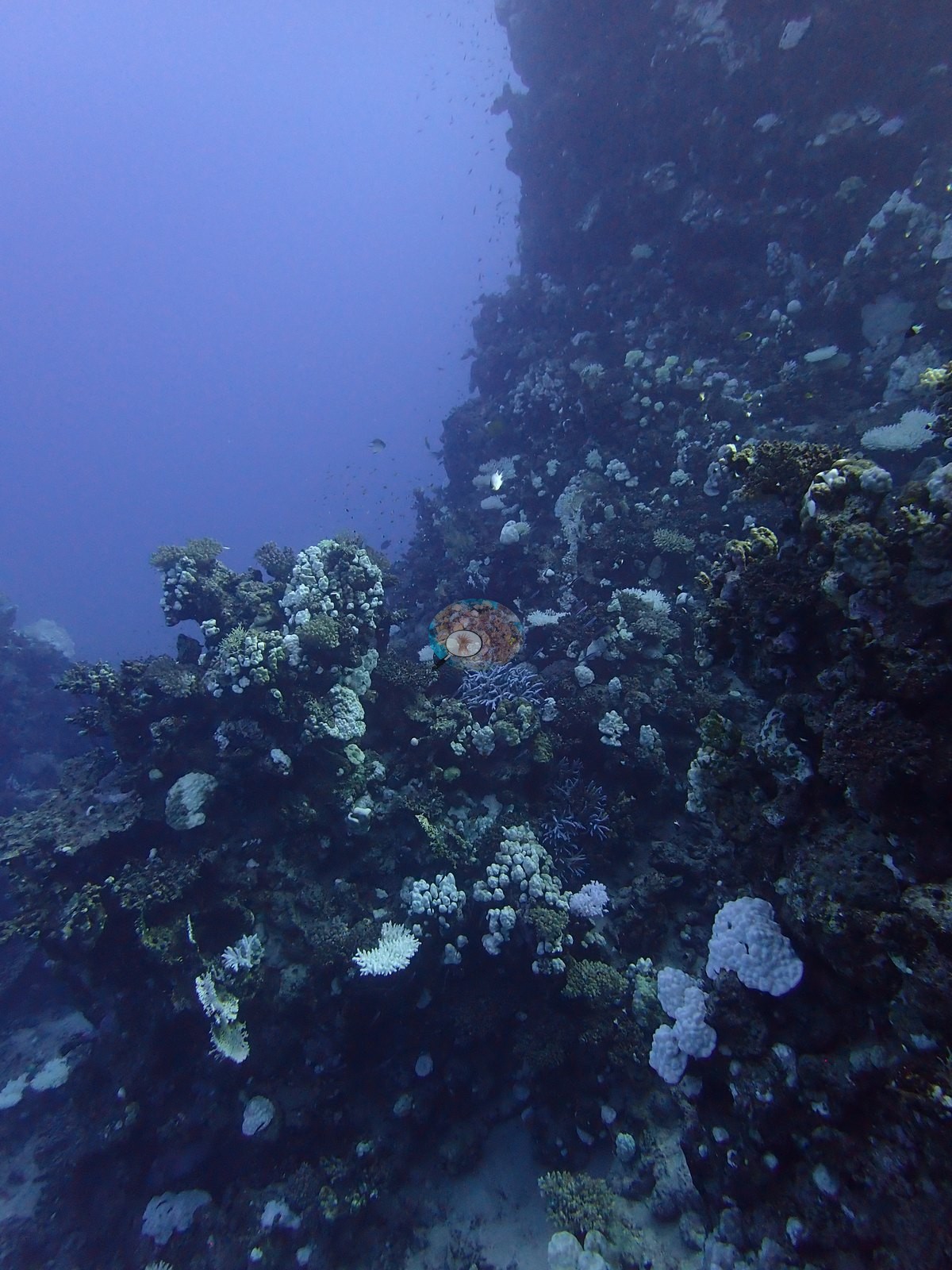
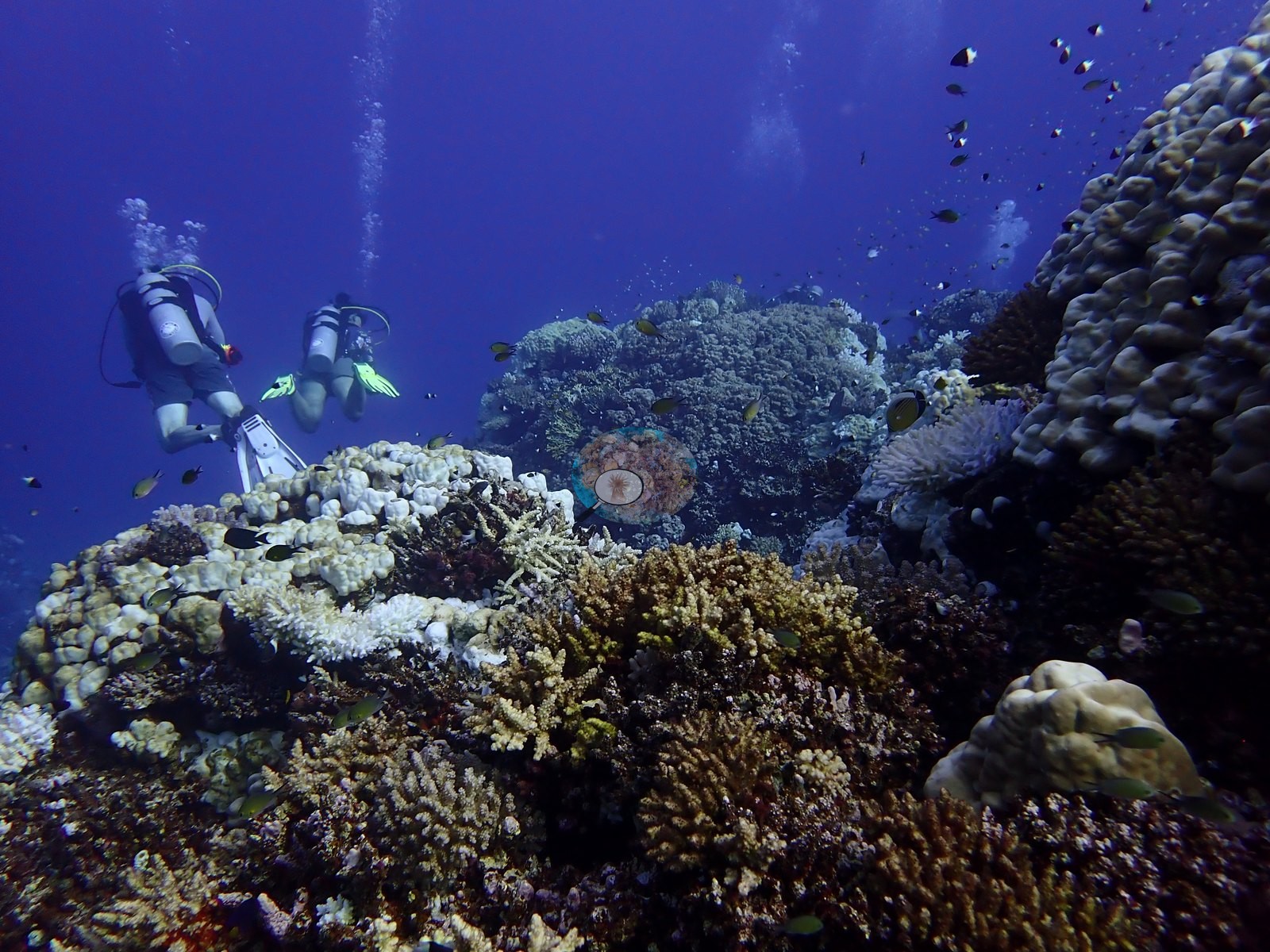
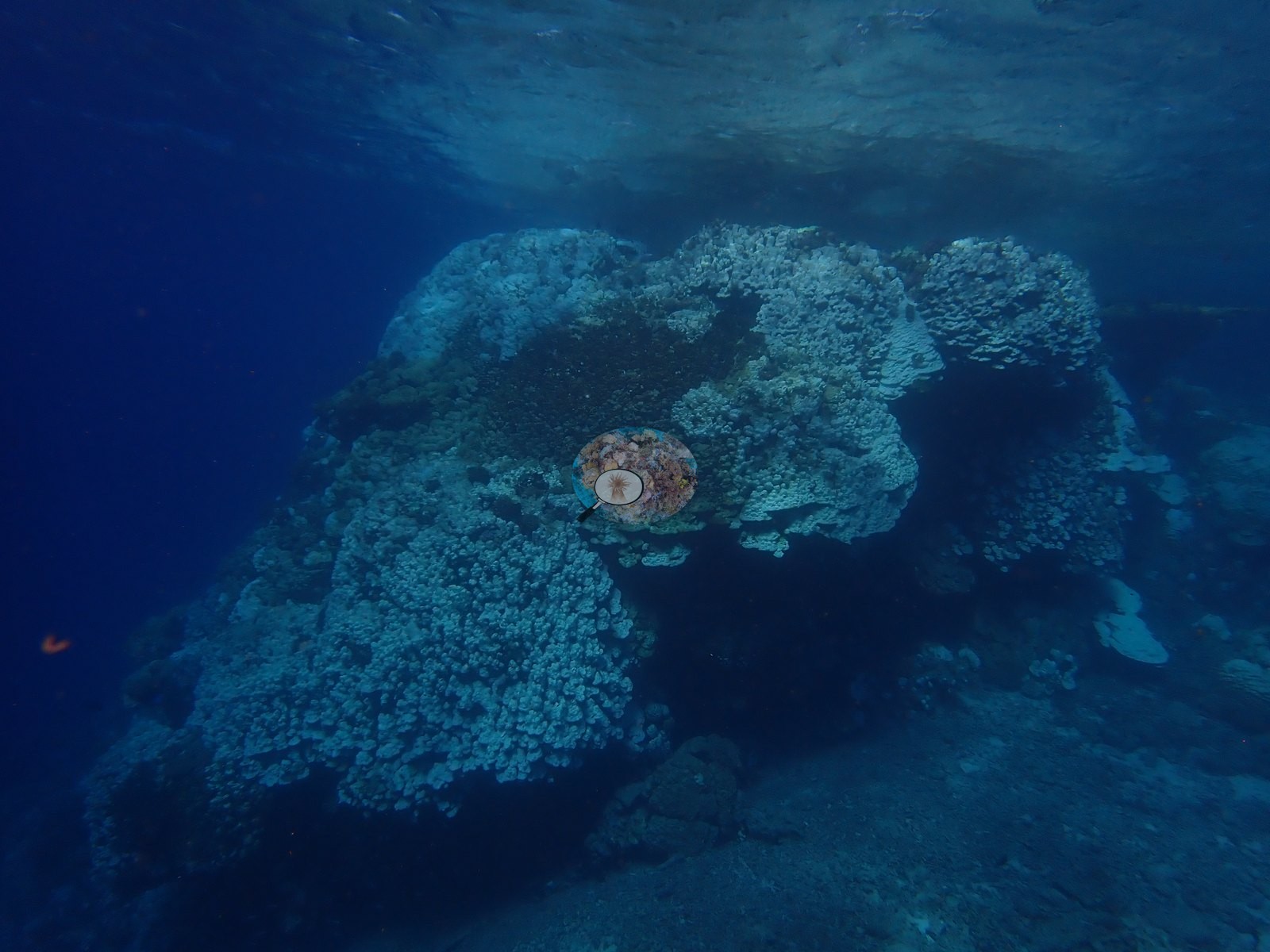
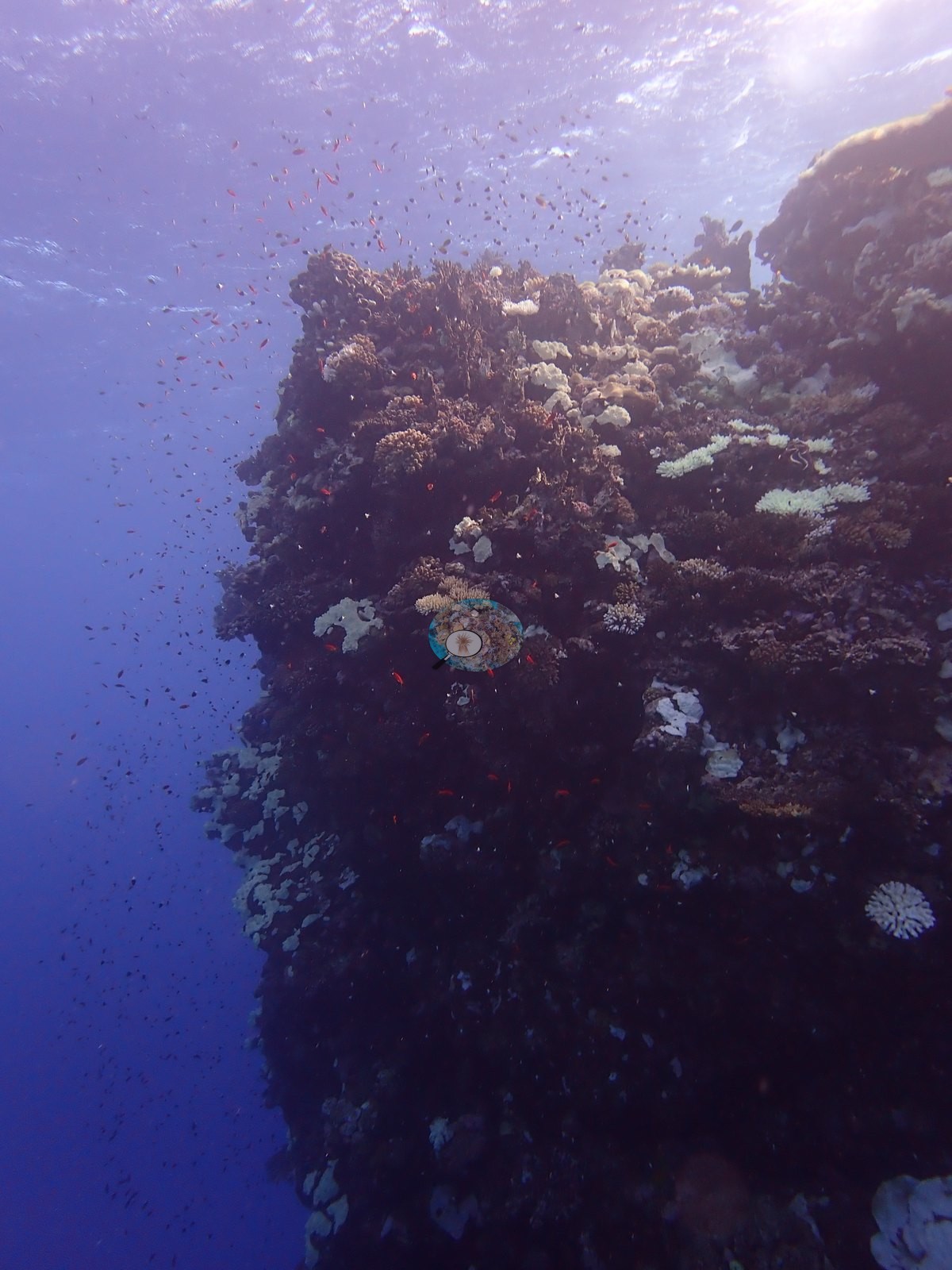
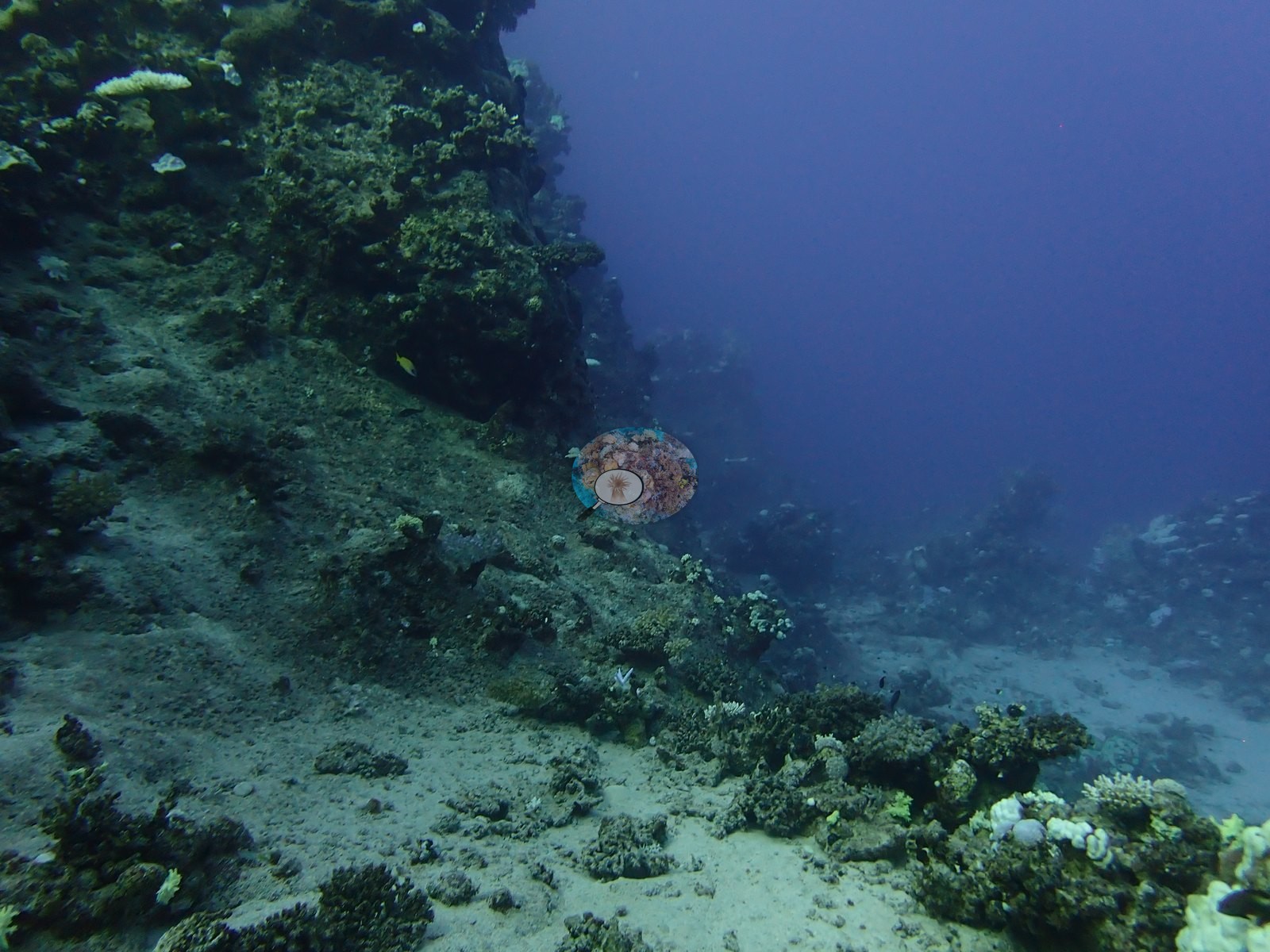
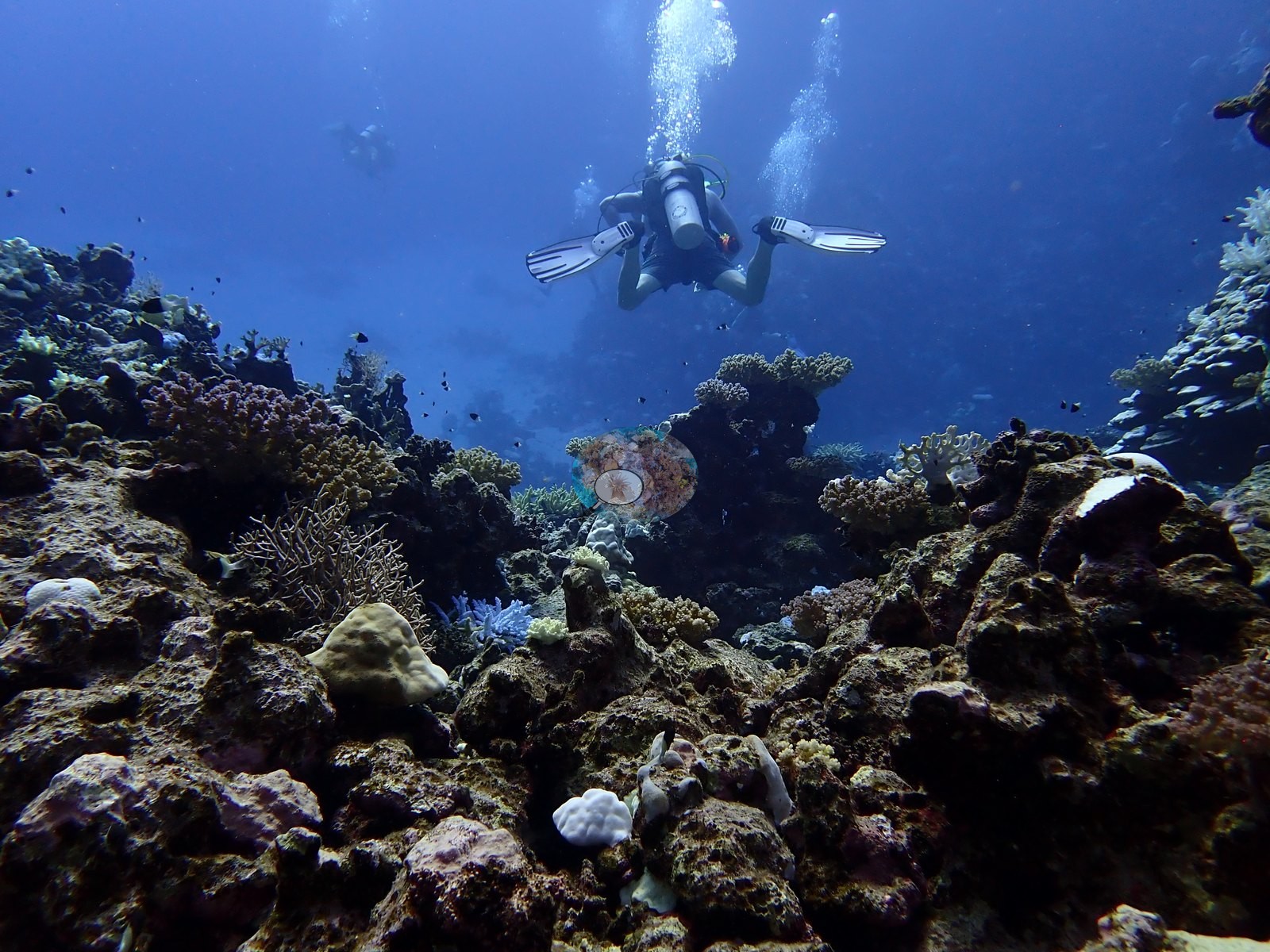
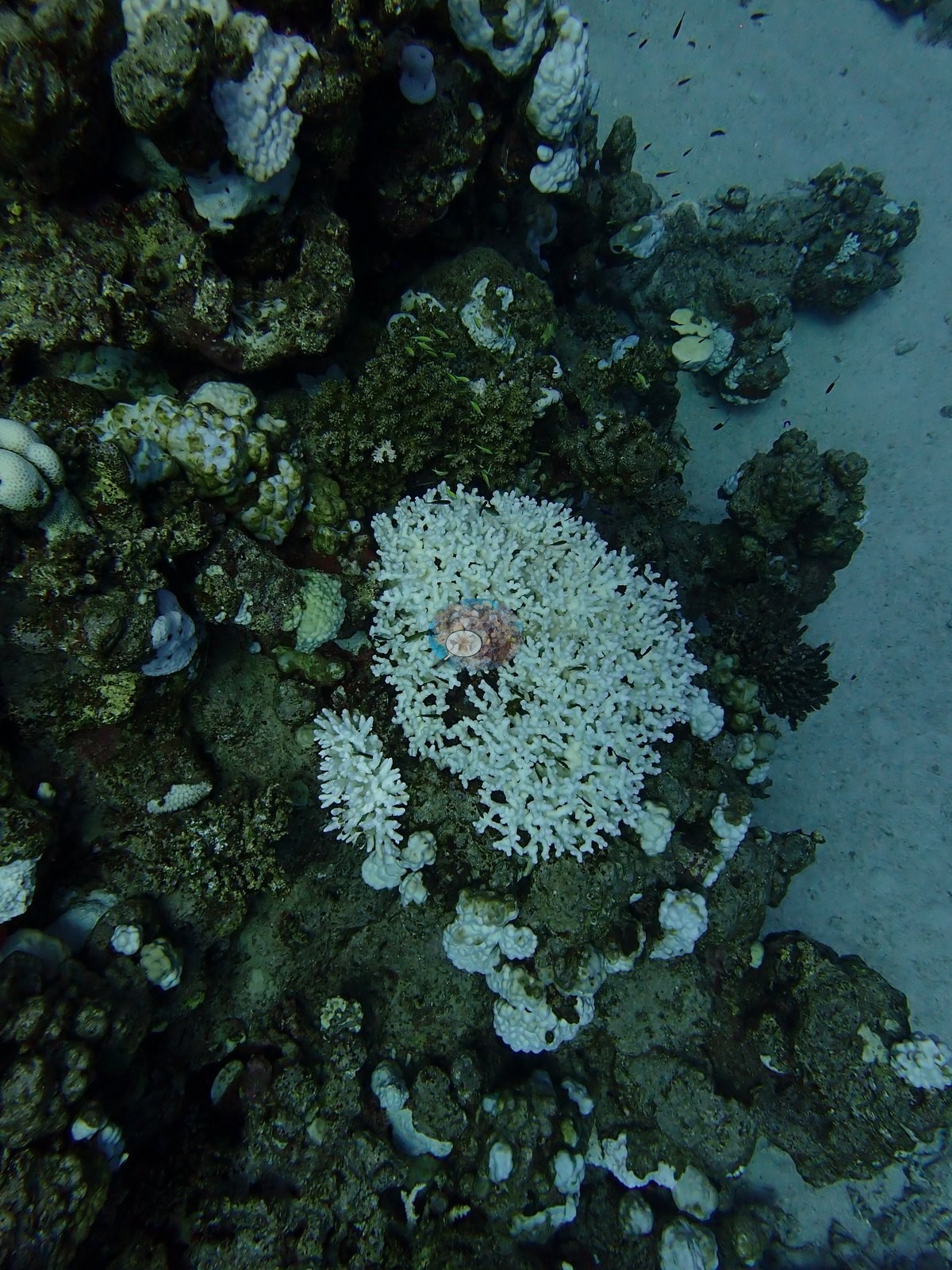
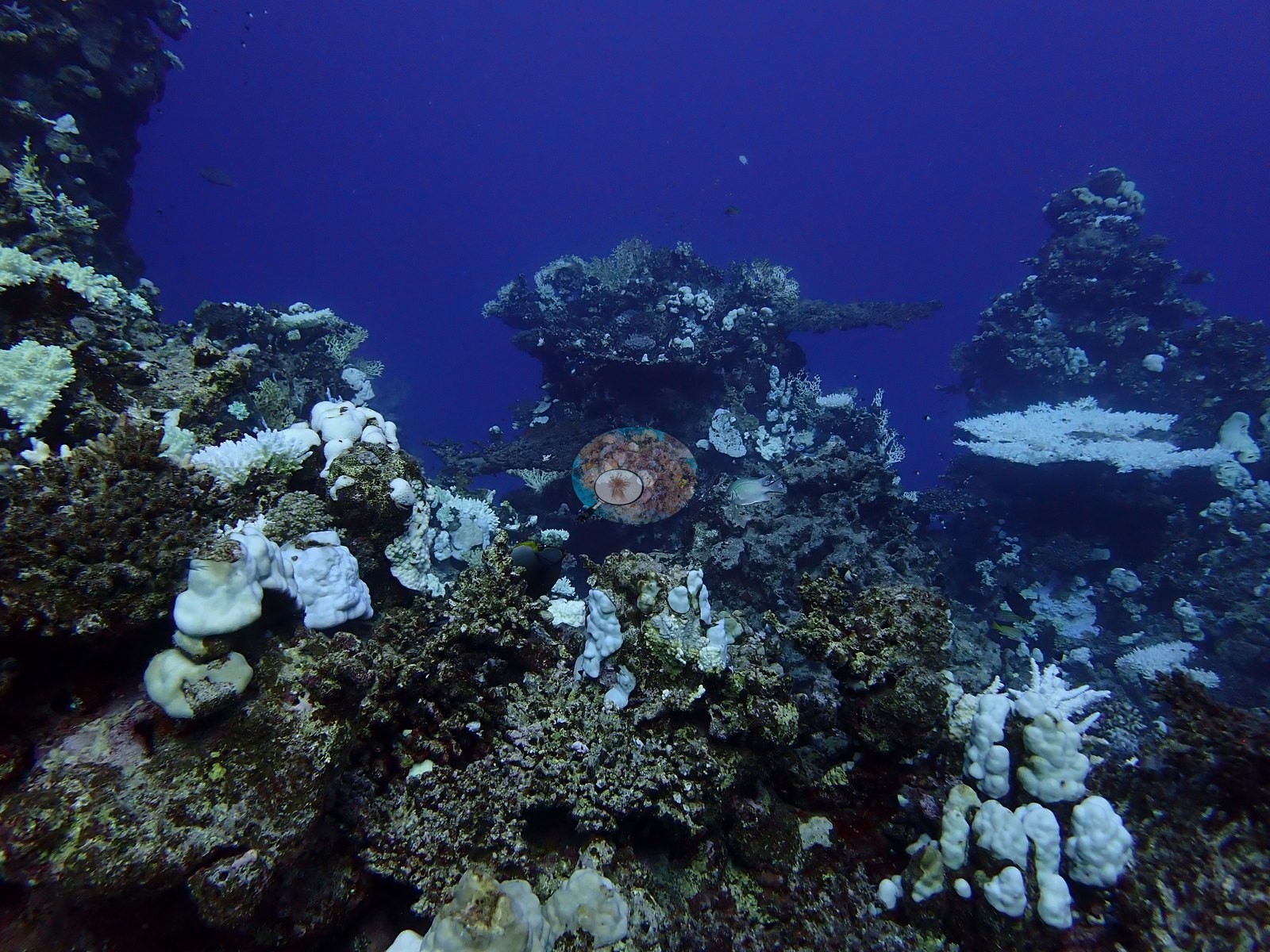
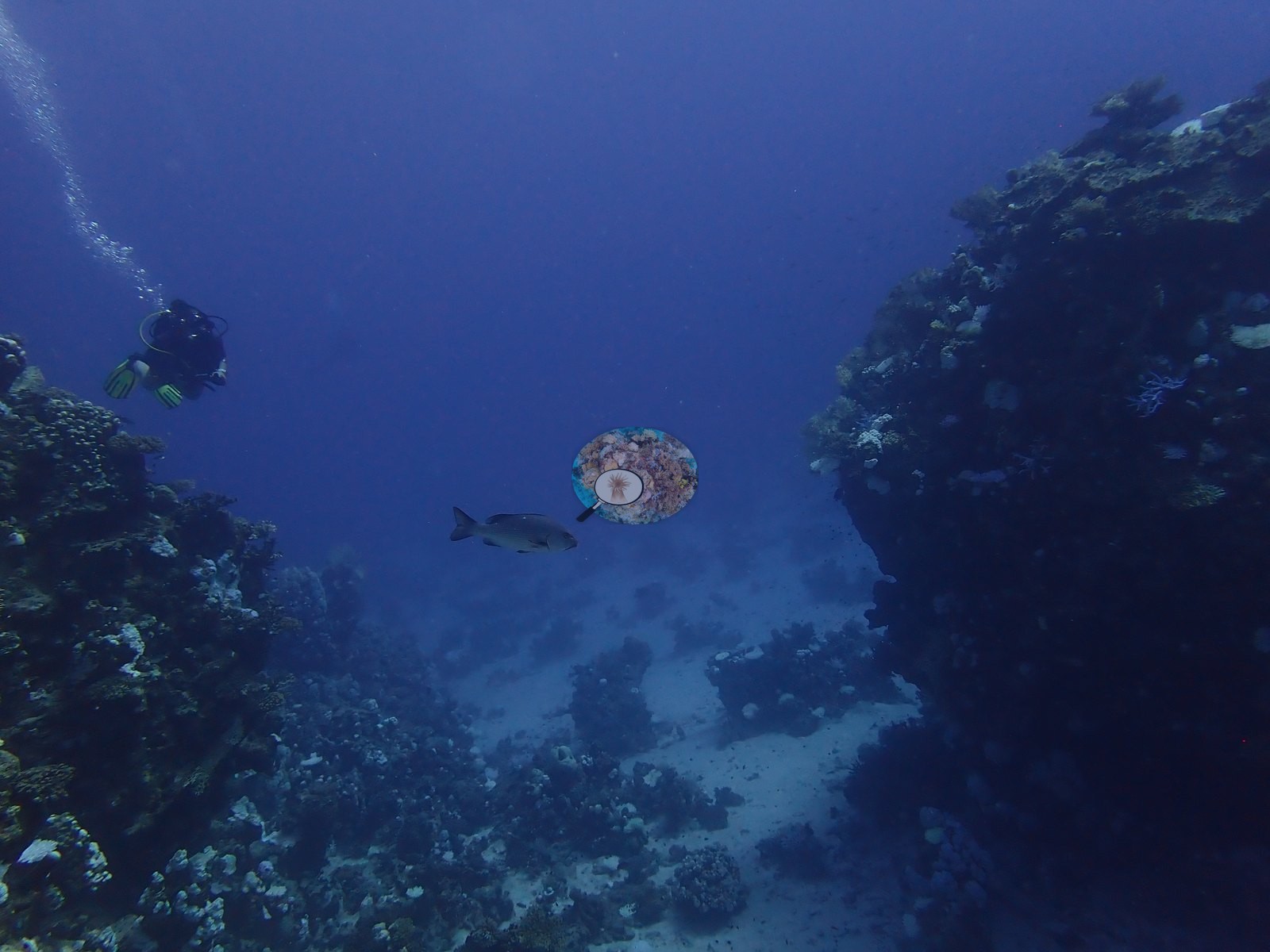
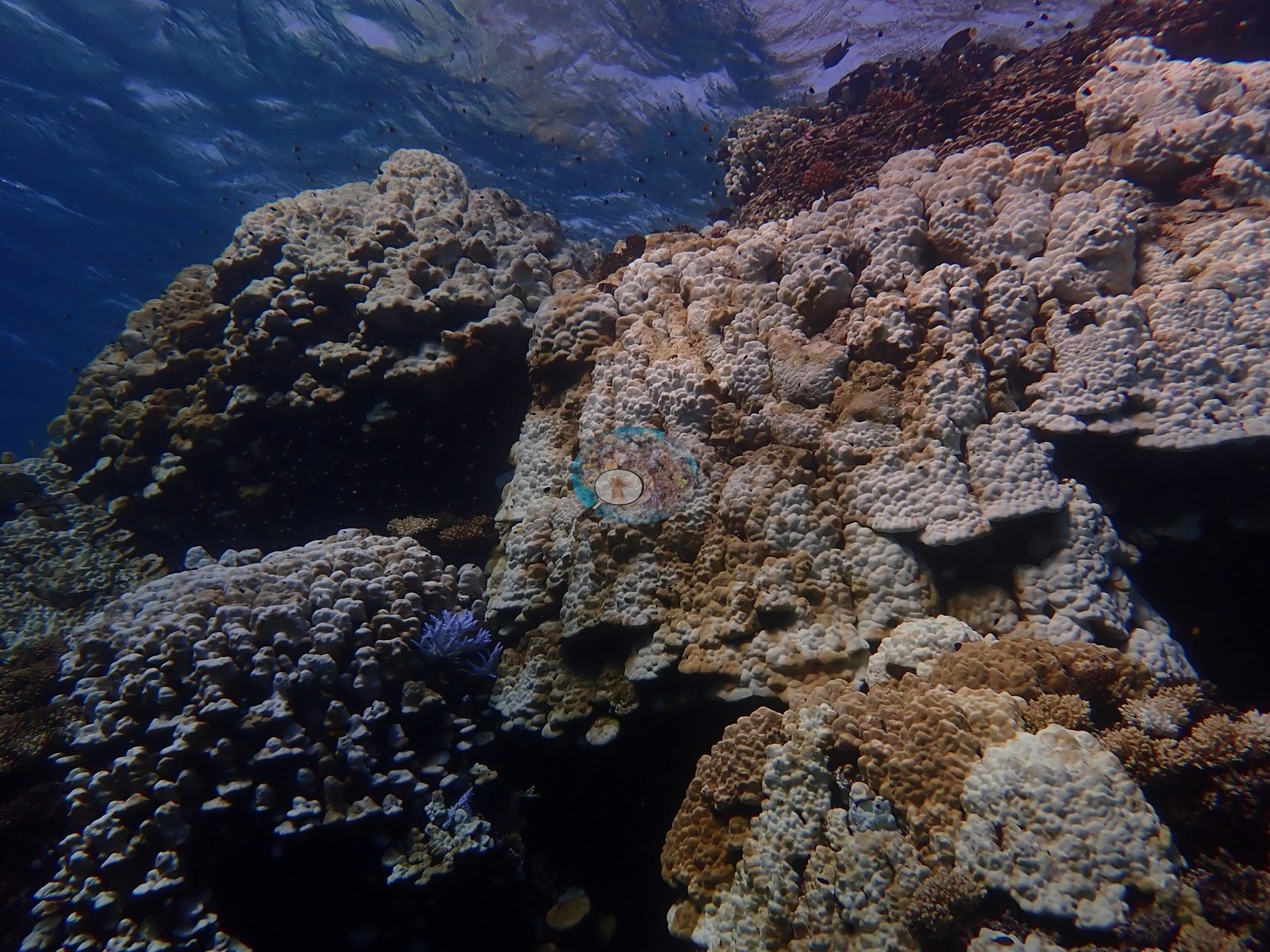
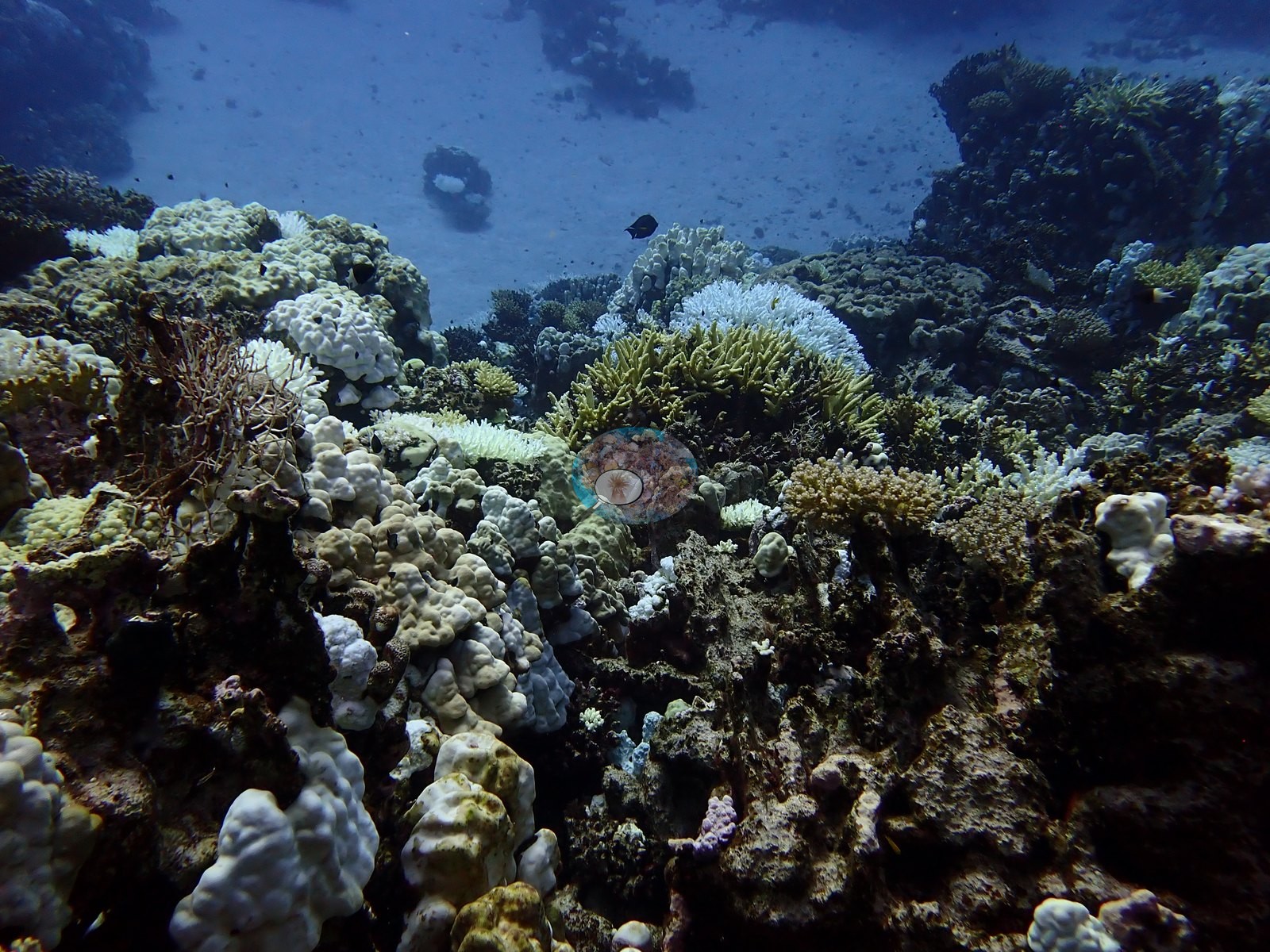
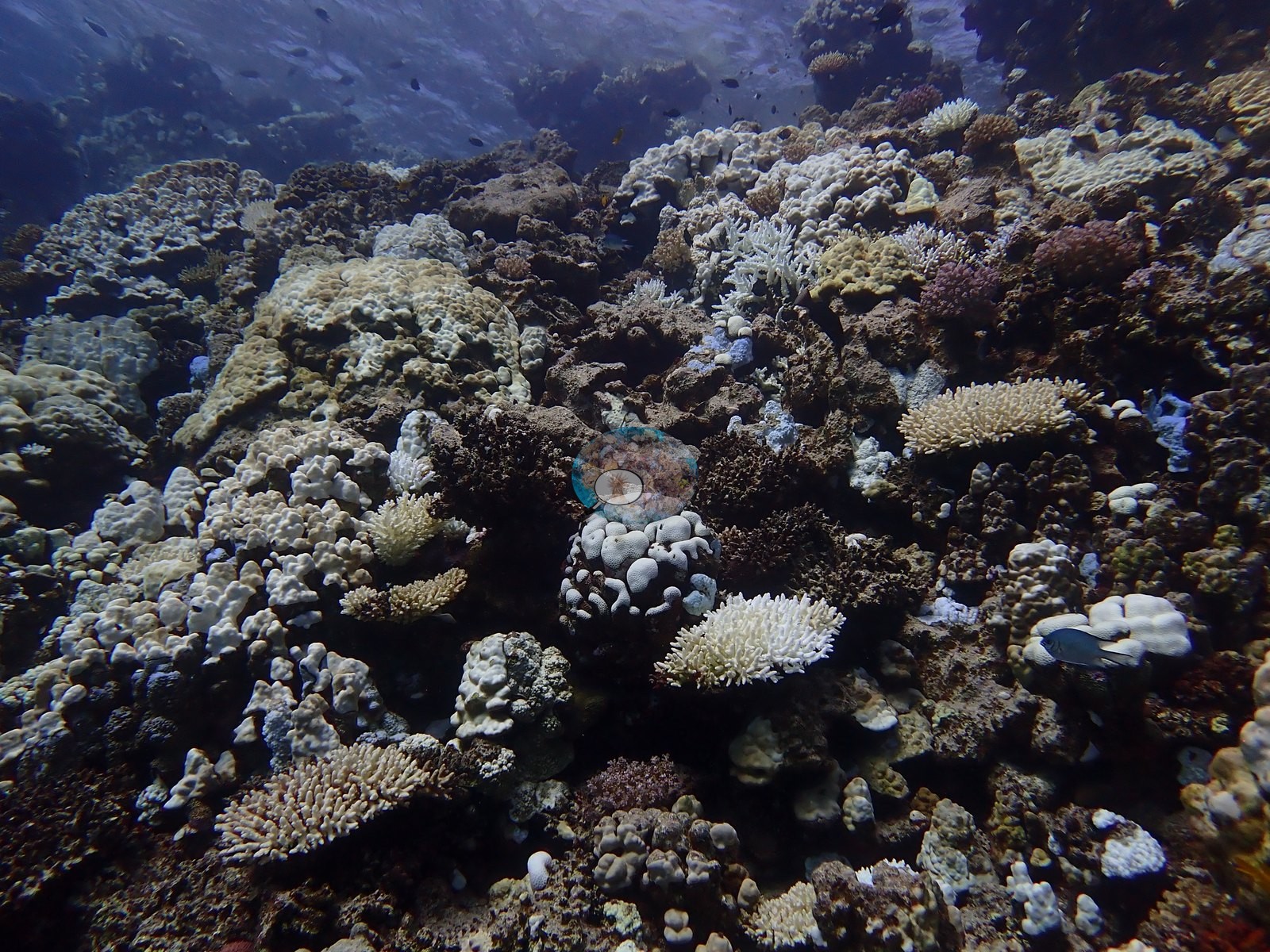
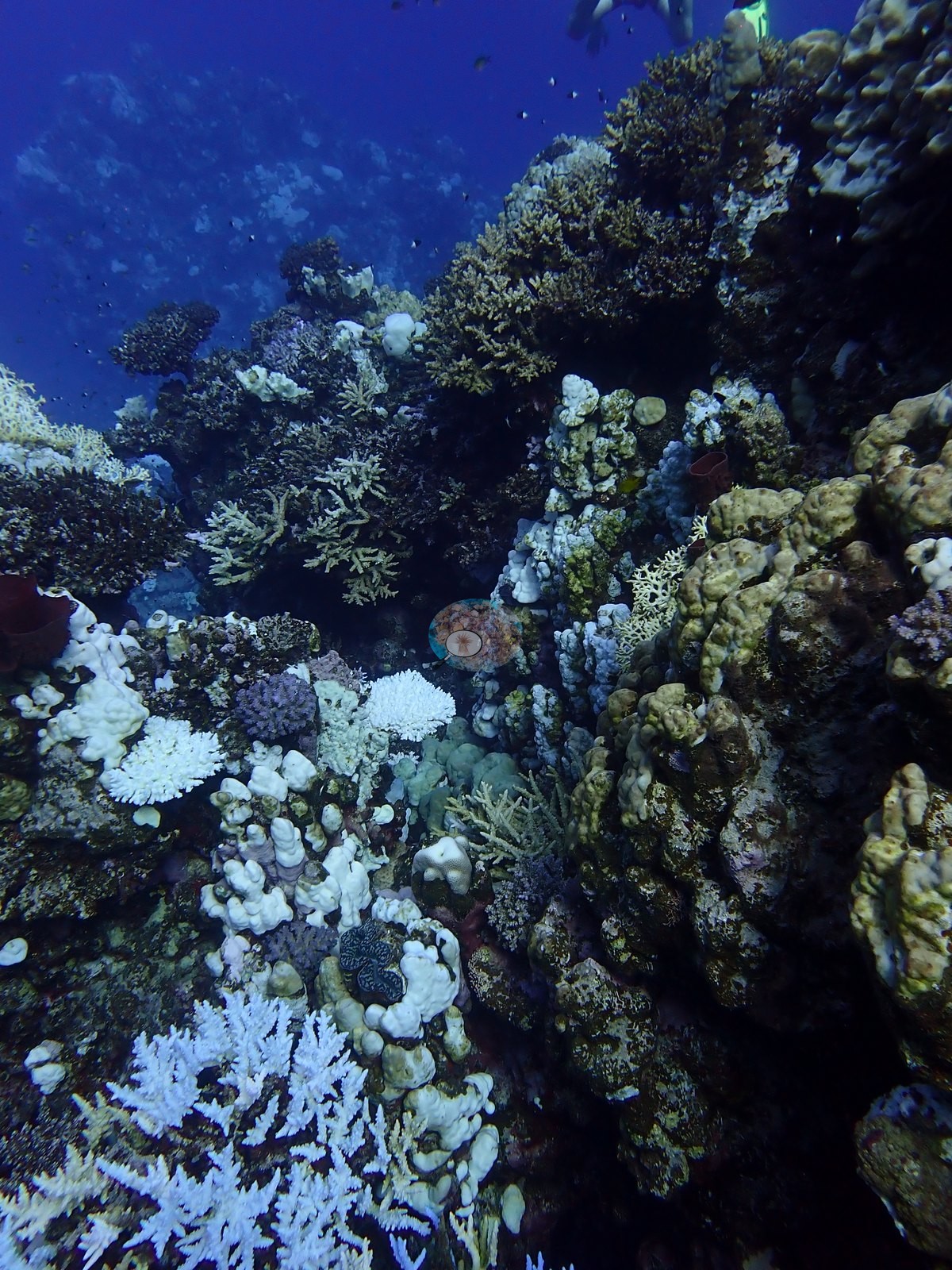
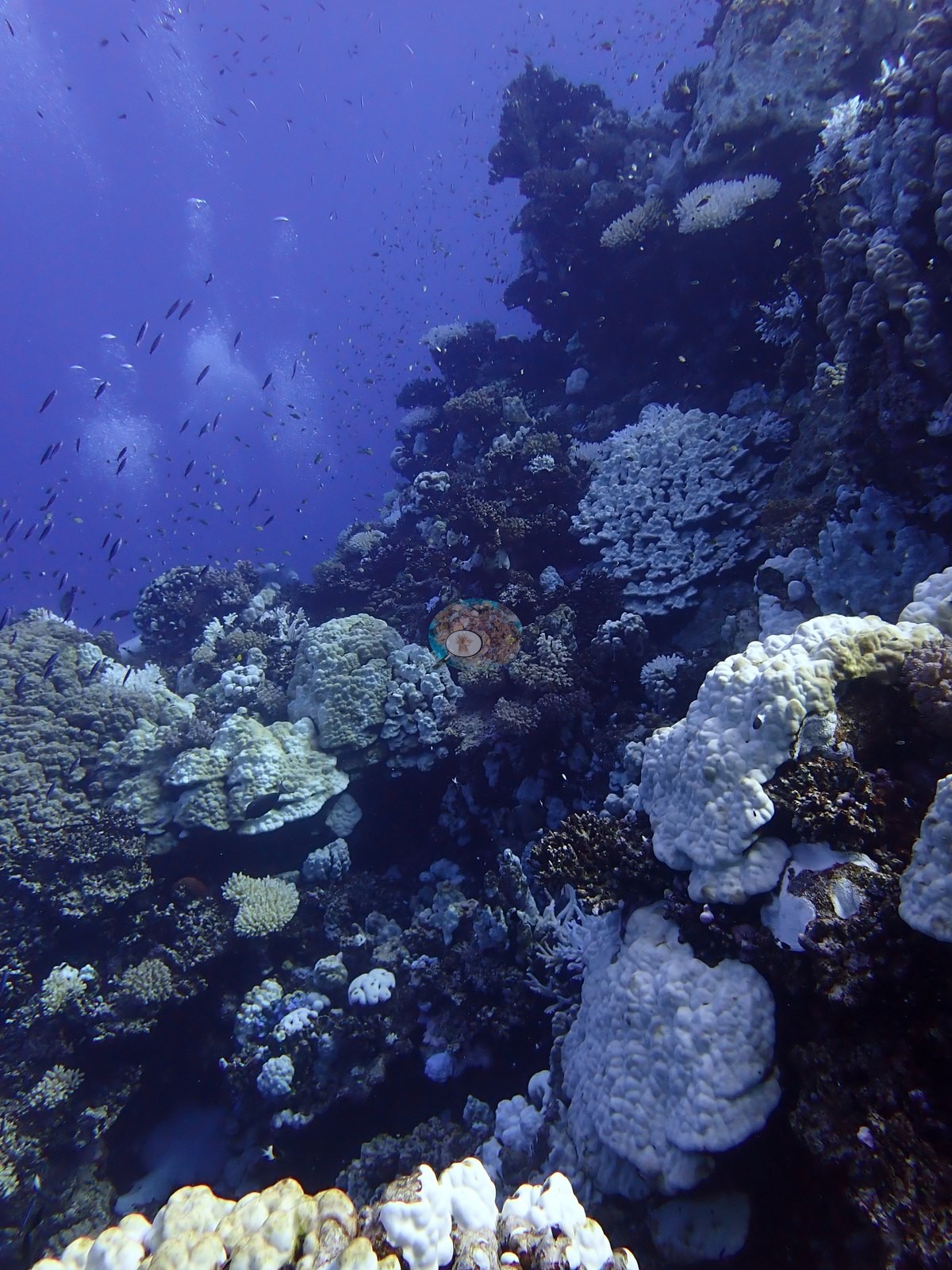
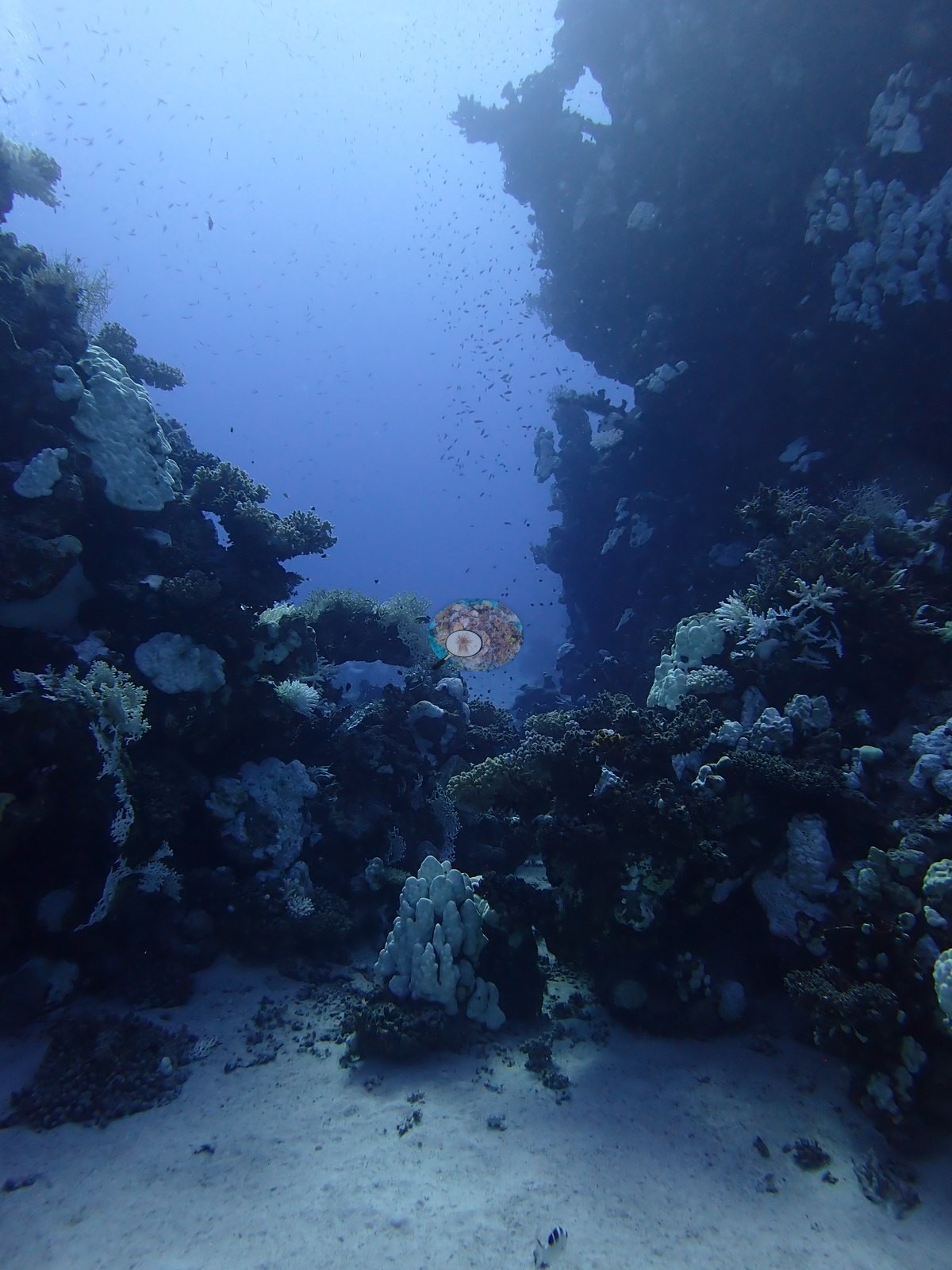
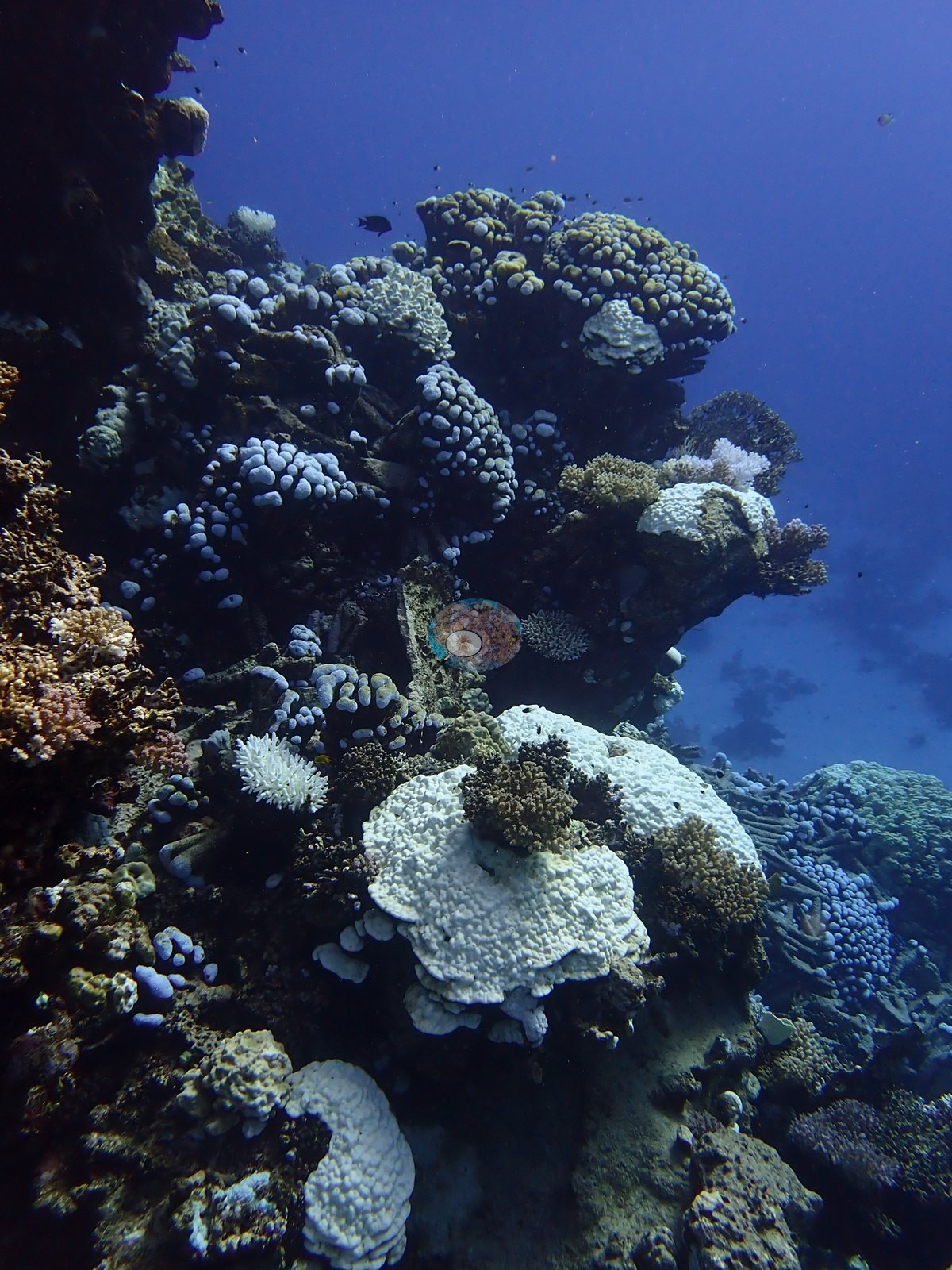
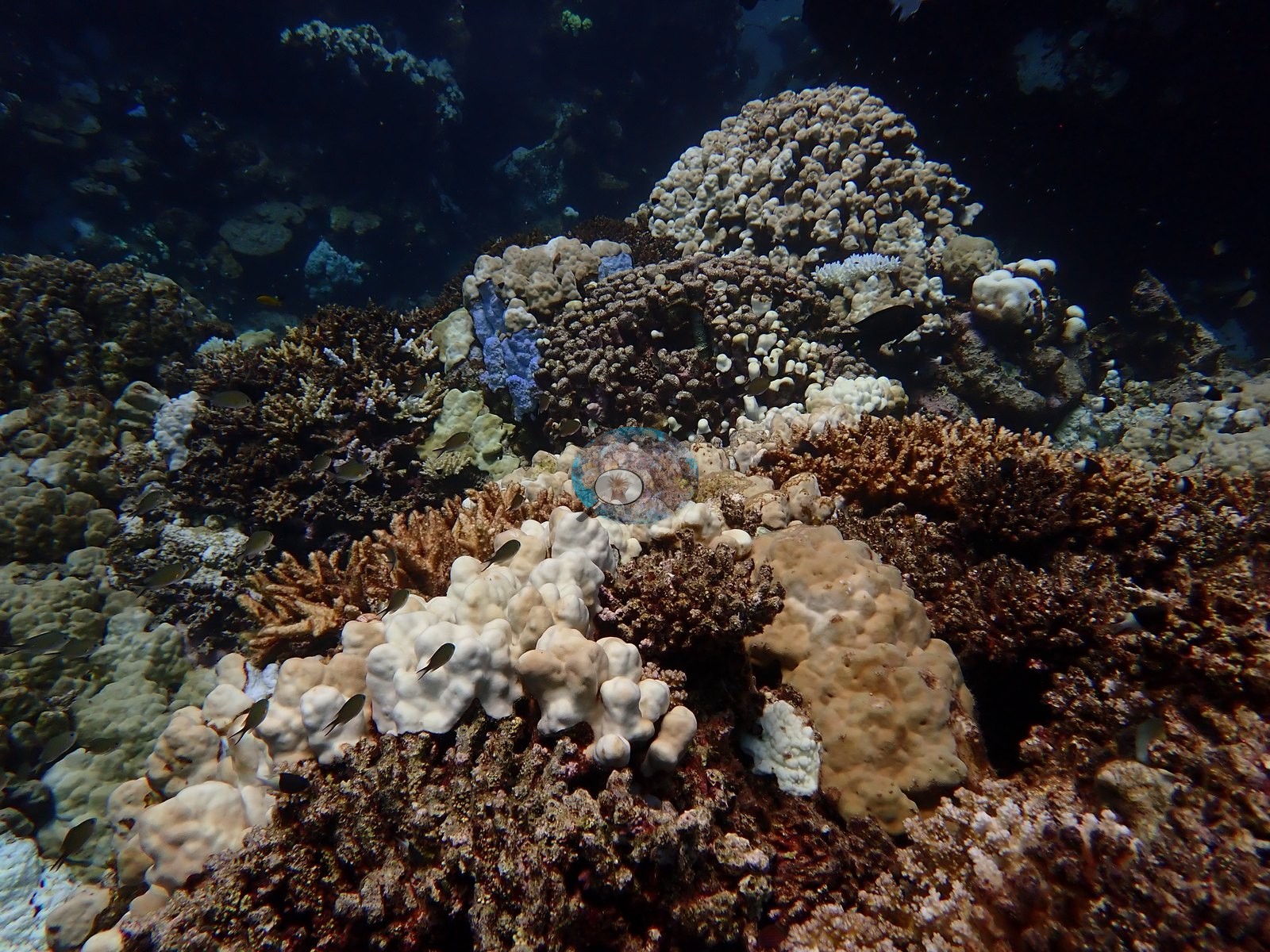
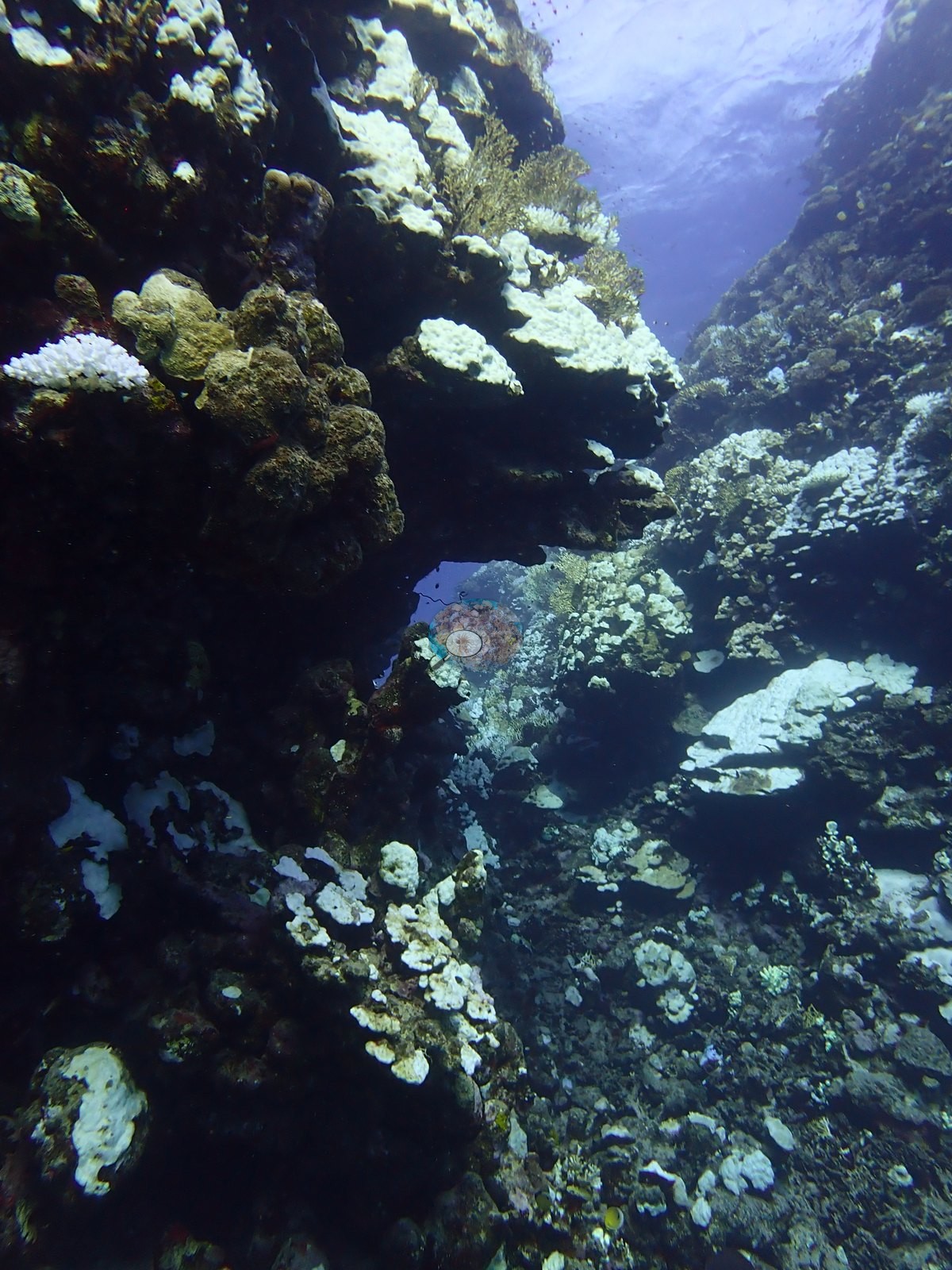
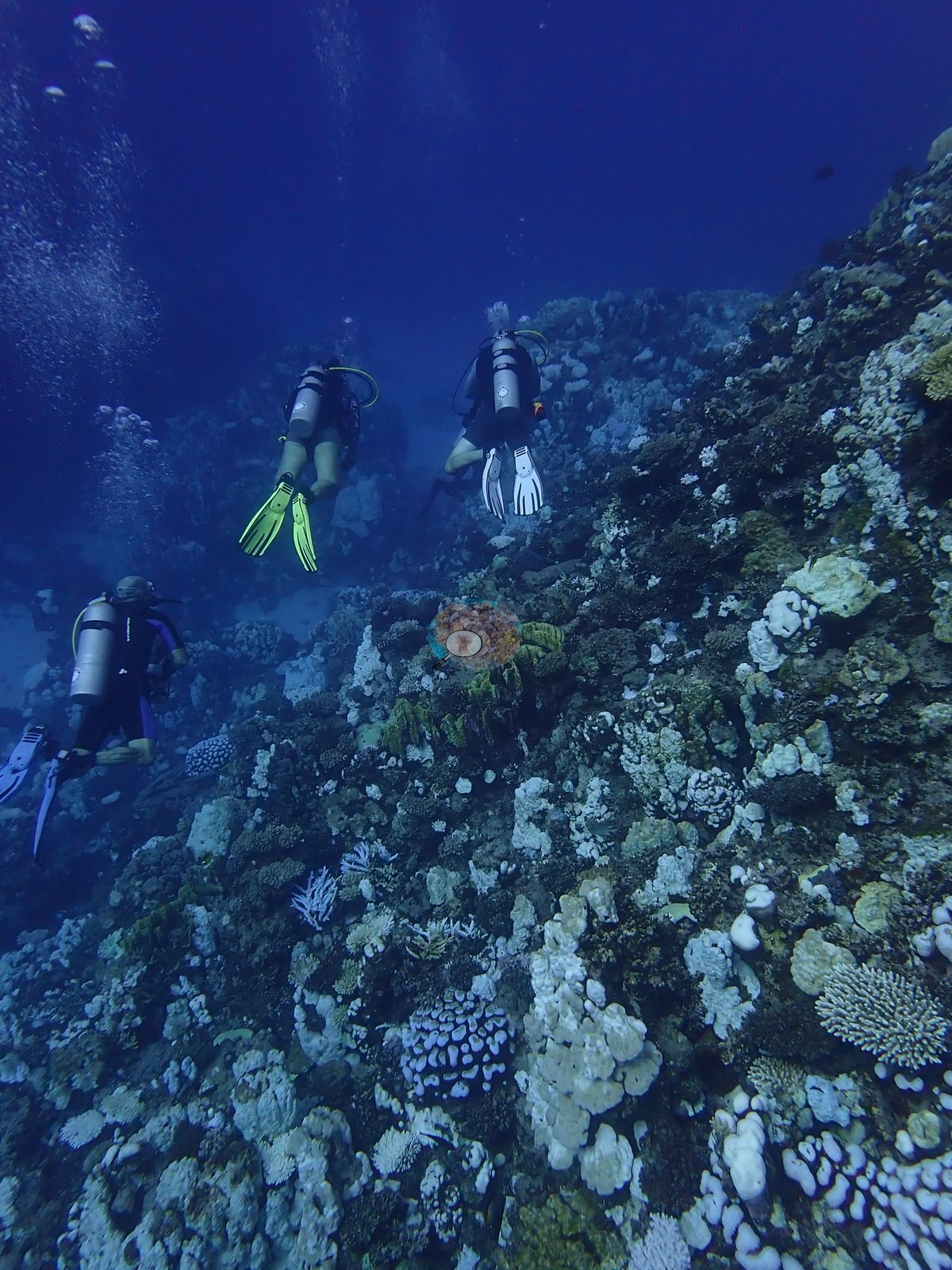
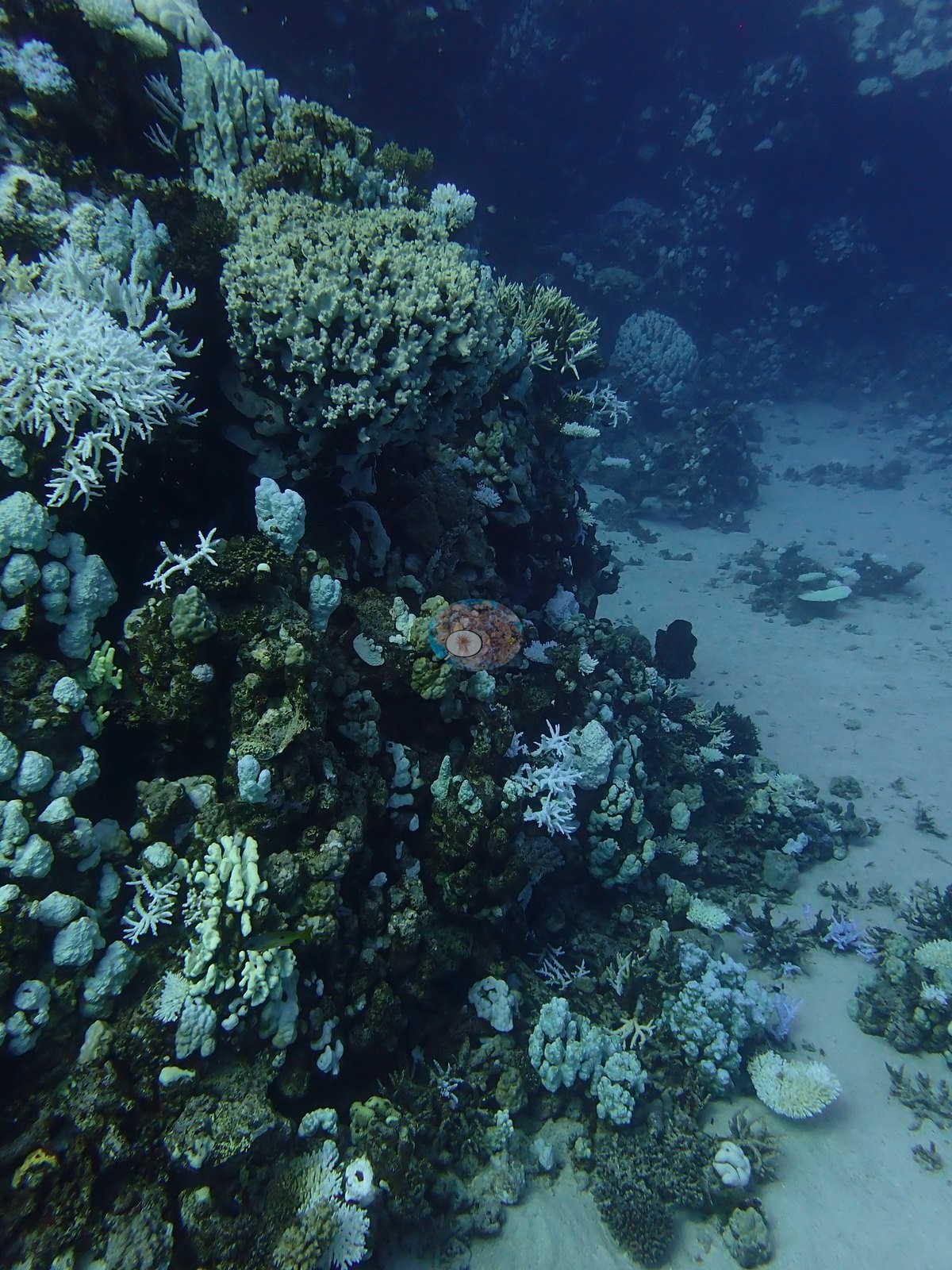
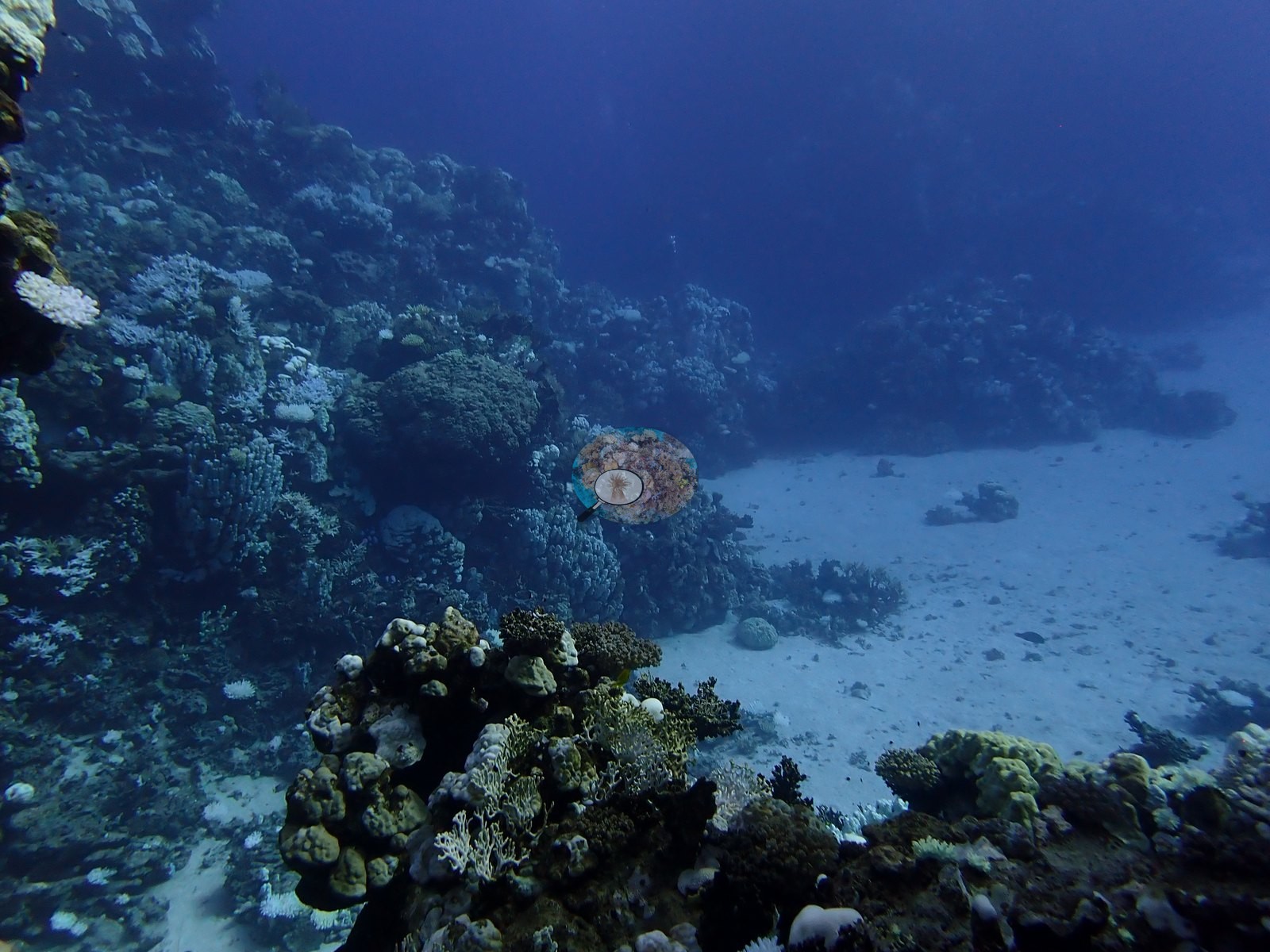
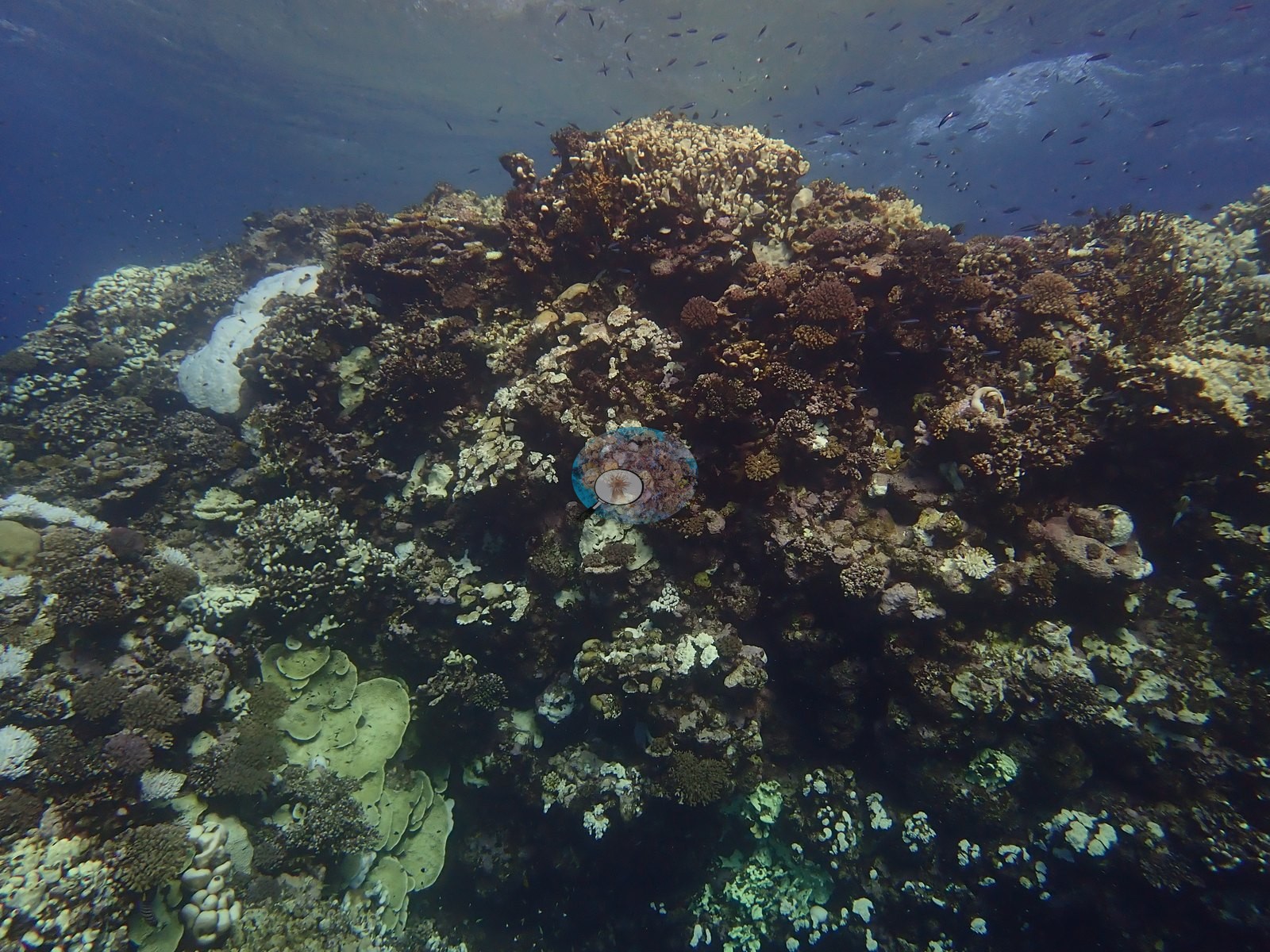
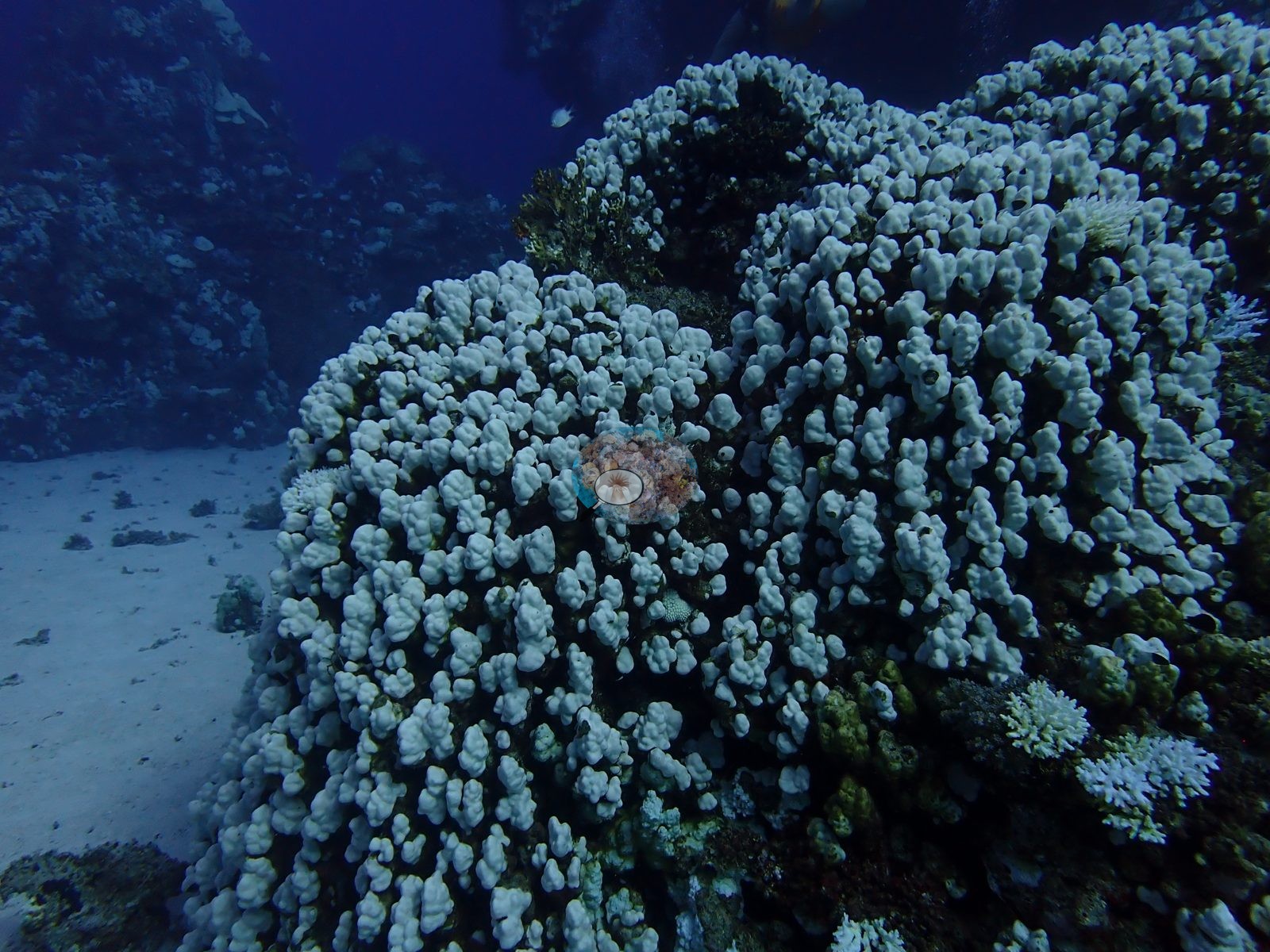
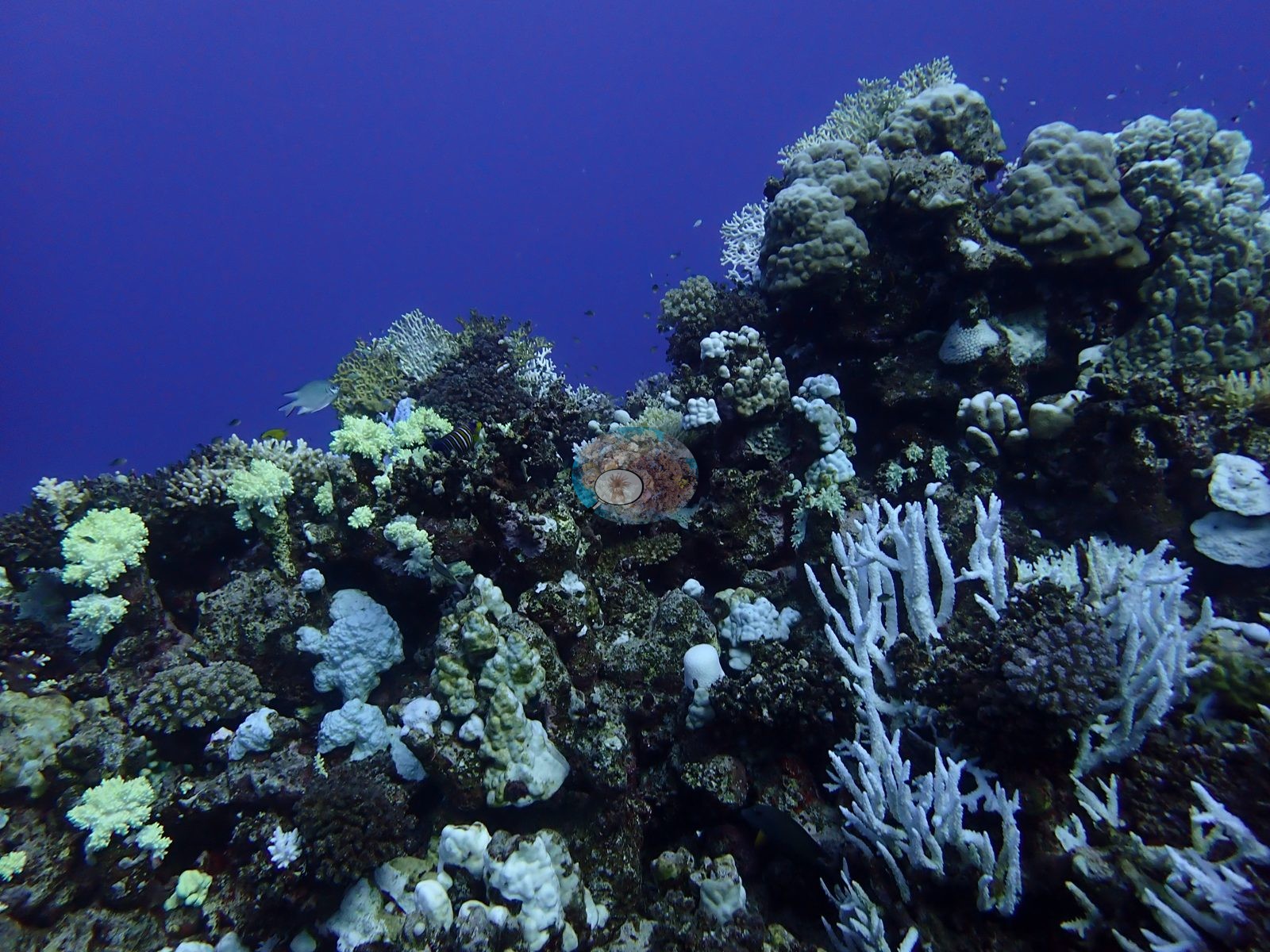
One crest frame is as good as reef photography from this leg gets: warm cream and gold corymbose Acropora in the foreground, a deep maroon-red Acropora thicket behind, a stark white Acropora between them, banded butterflyfish and a bannerfish crossing the top of the frame, all lit from a bright surface. Structurally the site is a well-built slope with a dense Porites-and-Acropora framework, dropping onto sand (e.g., Image 1, Image 3).
Coral cover
Coral cover is 28.1% ± 18.3 across 218 photographs — the highest published cover of any Egyptian site in this set, and second only to Alrass Alakhdar across the whole Red Sea set — quoted verbatim from Mayfield, A.B. (2025) Environments 12:248 — Red Sea 2023-24 bleaching; CoralNet point annotation, Appendix A, a manual, diver-annotated CoralNet point count from Anderson's own published work, not a computer vision output and not recomputed here.
Stressors
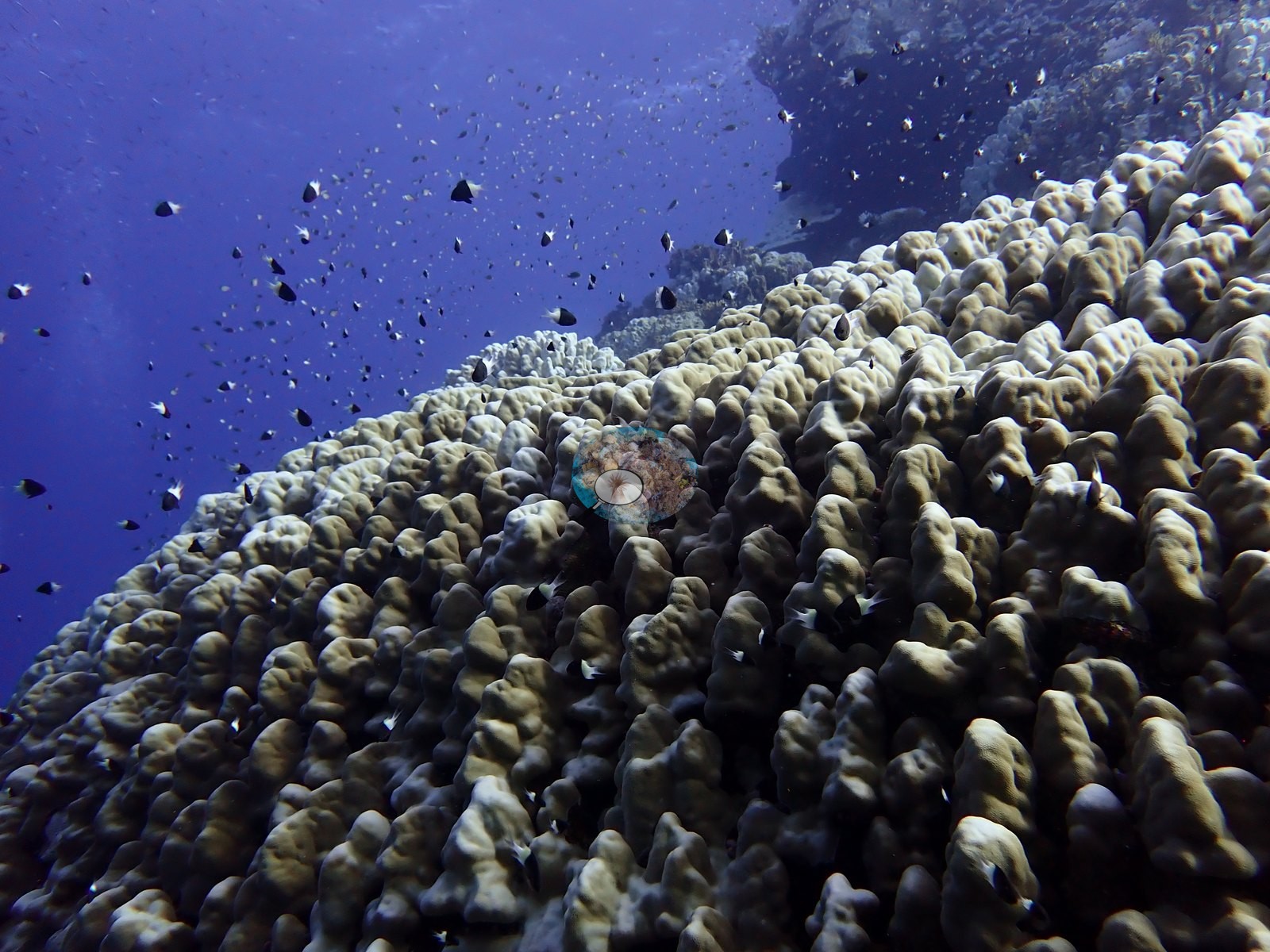
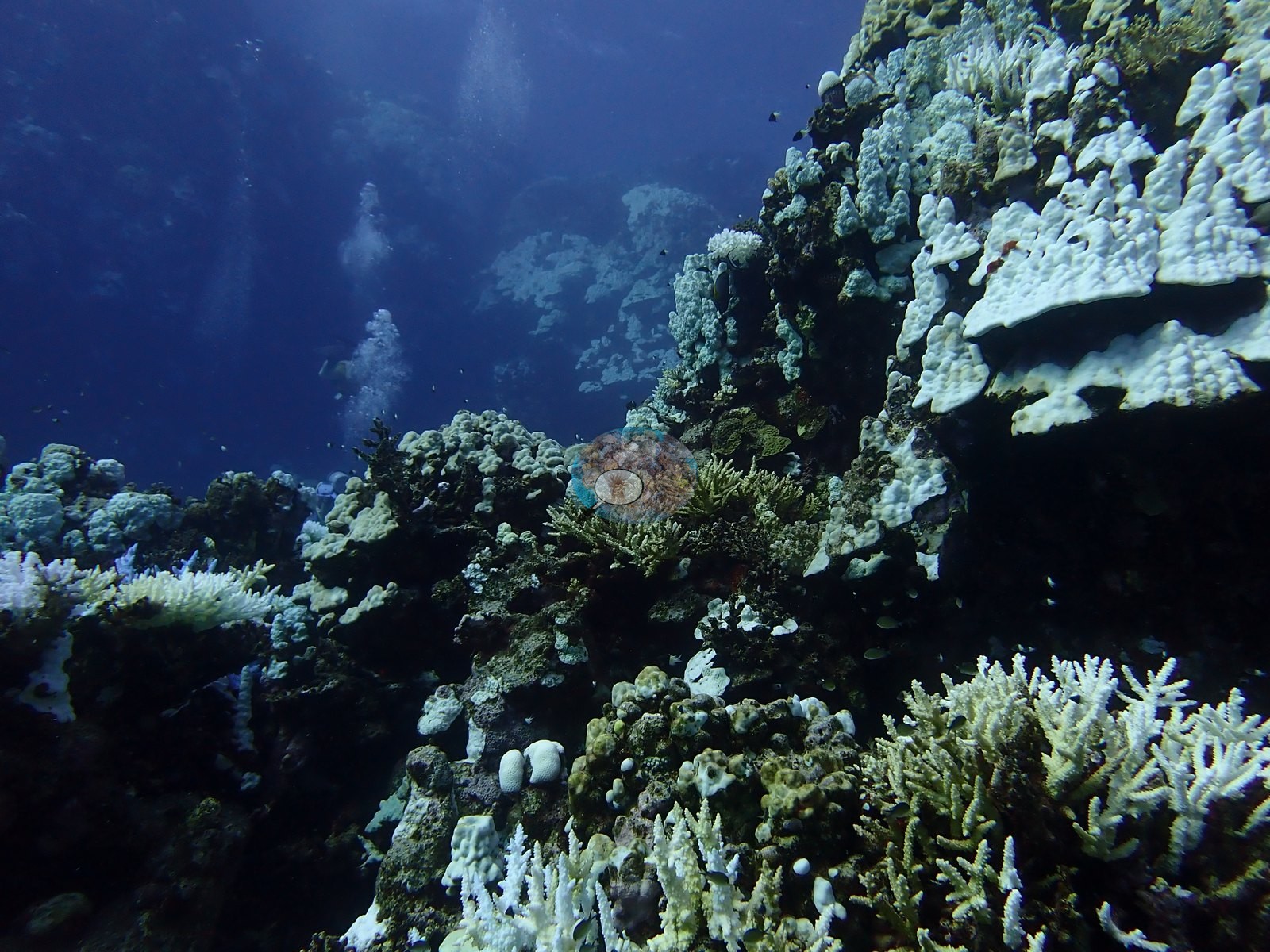
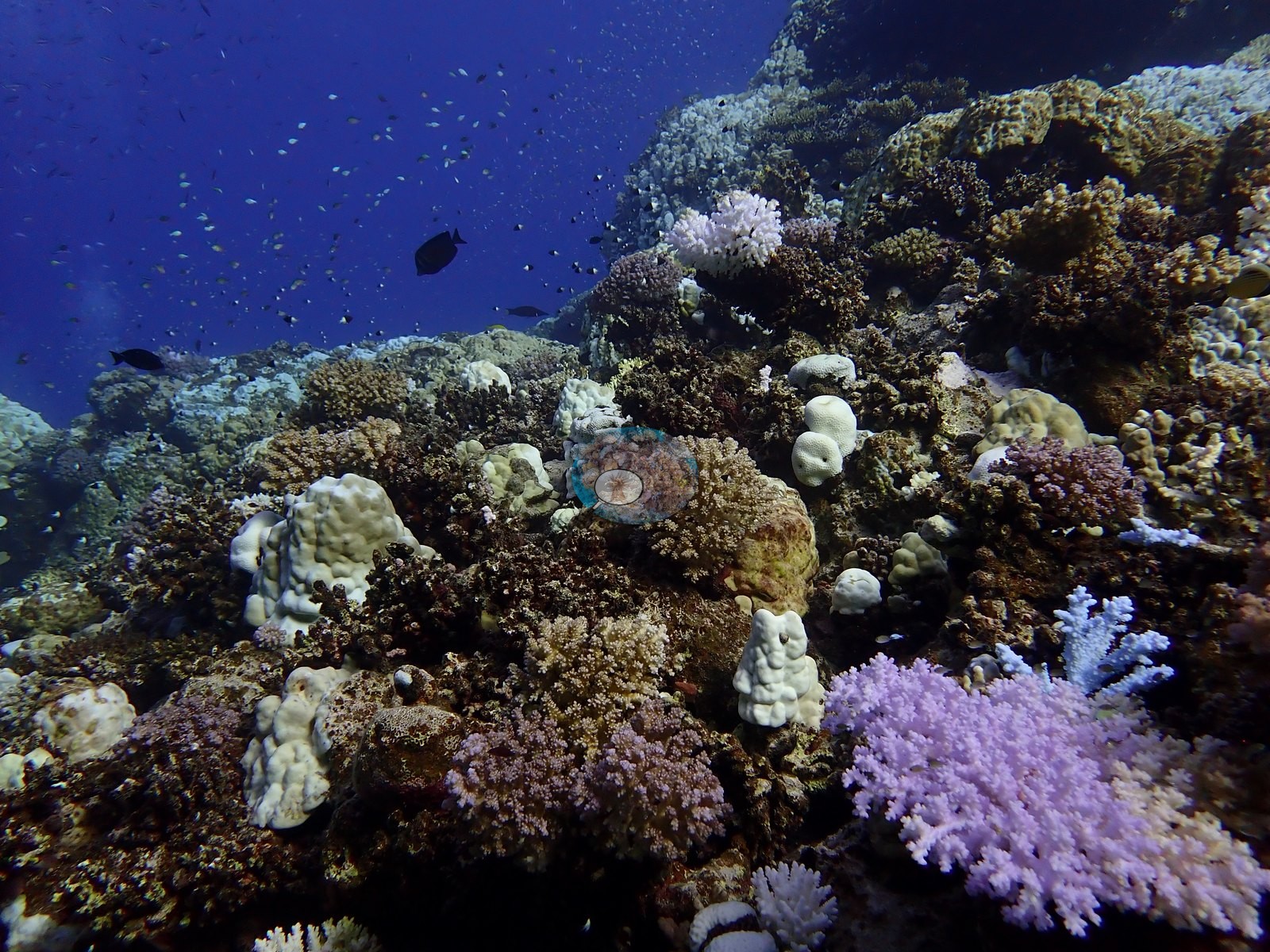
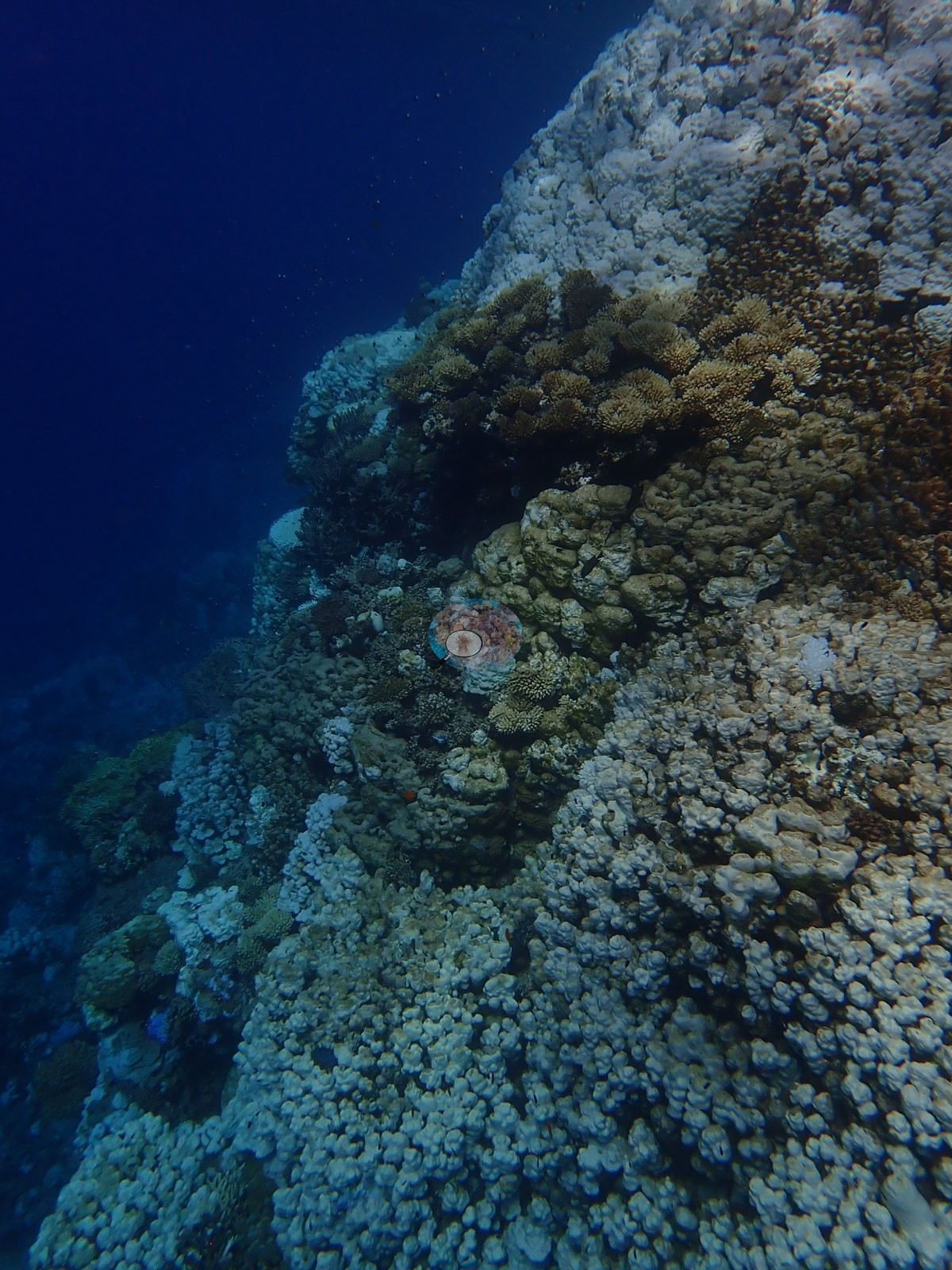
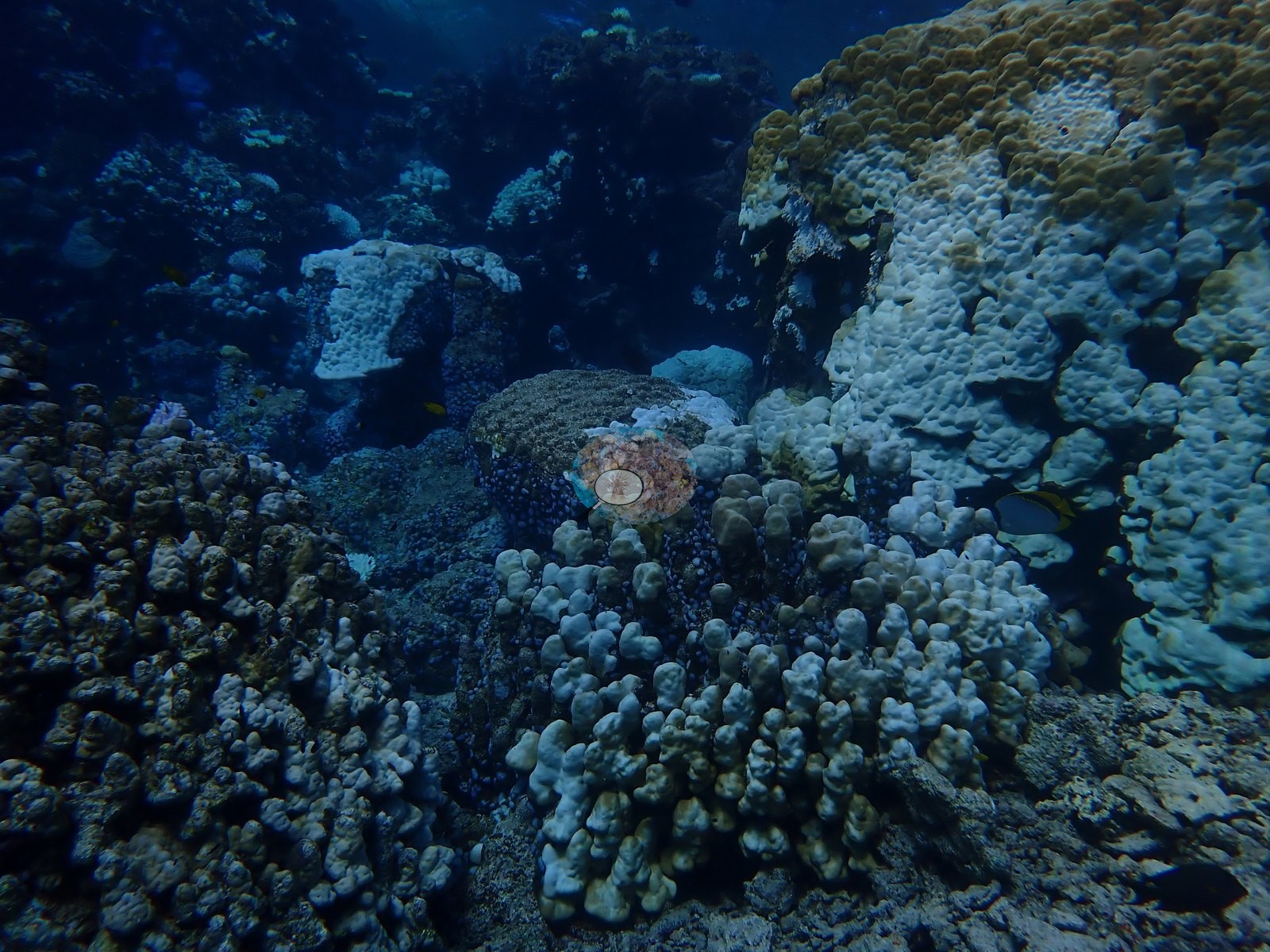
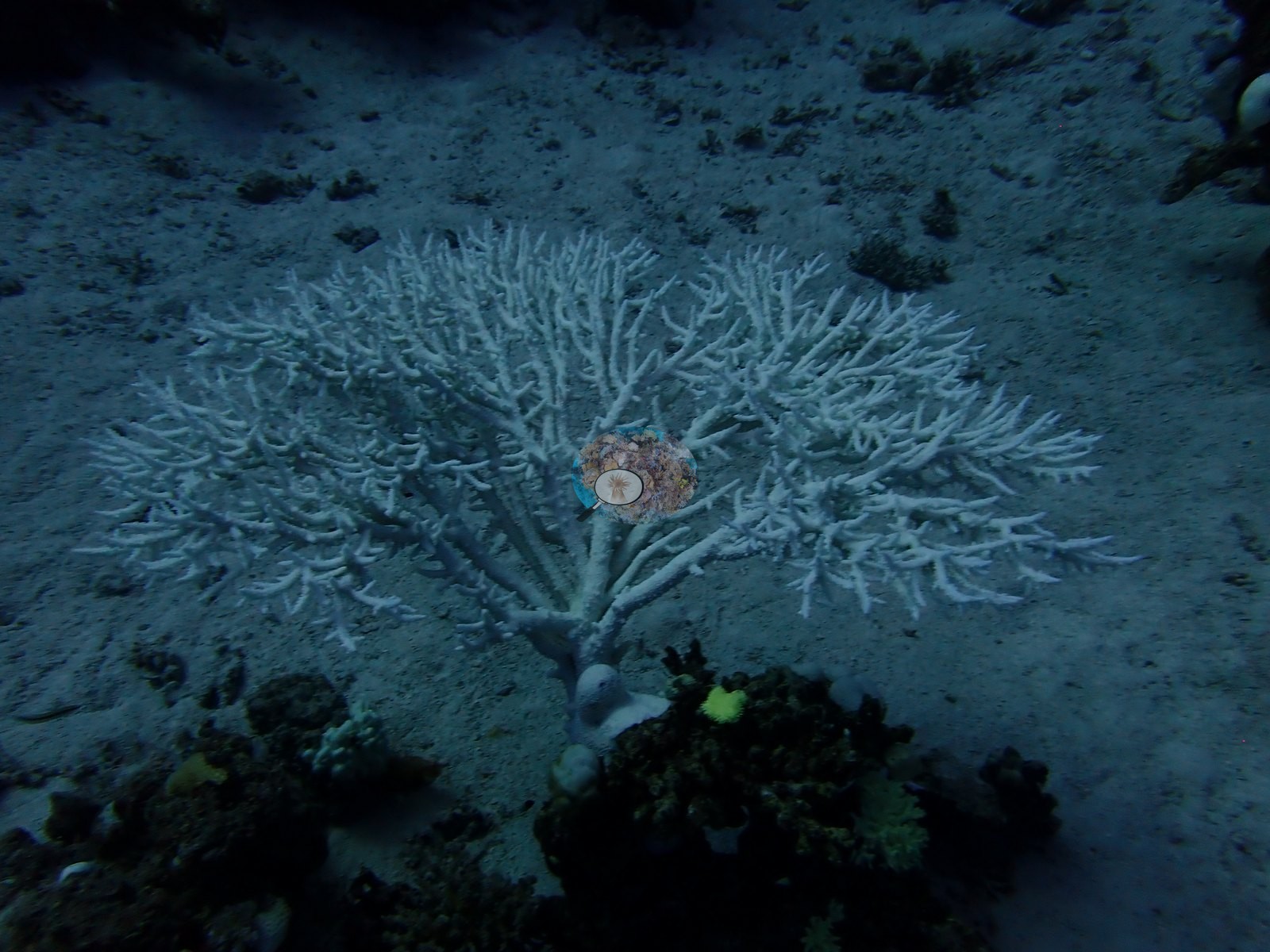
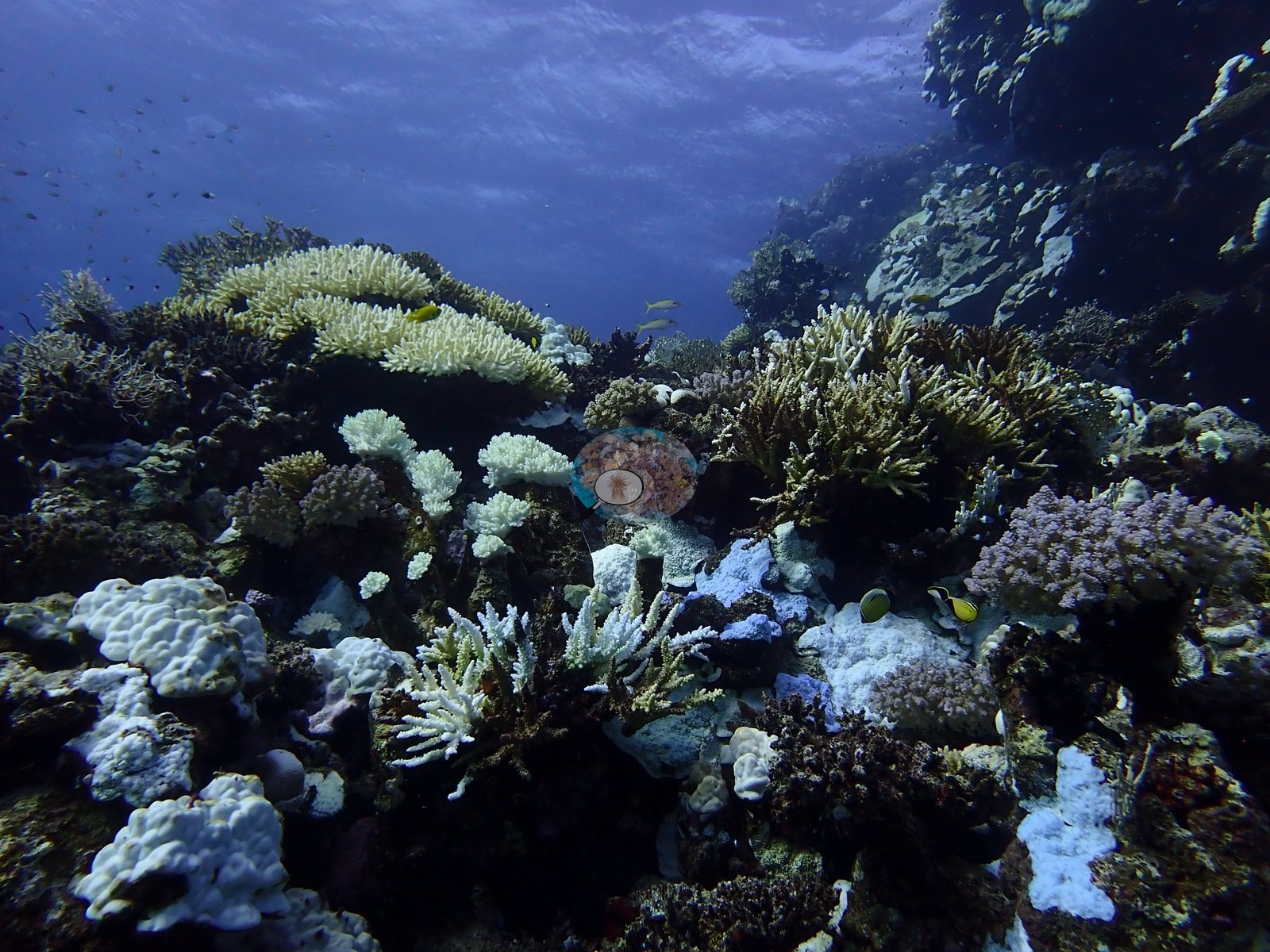
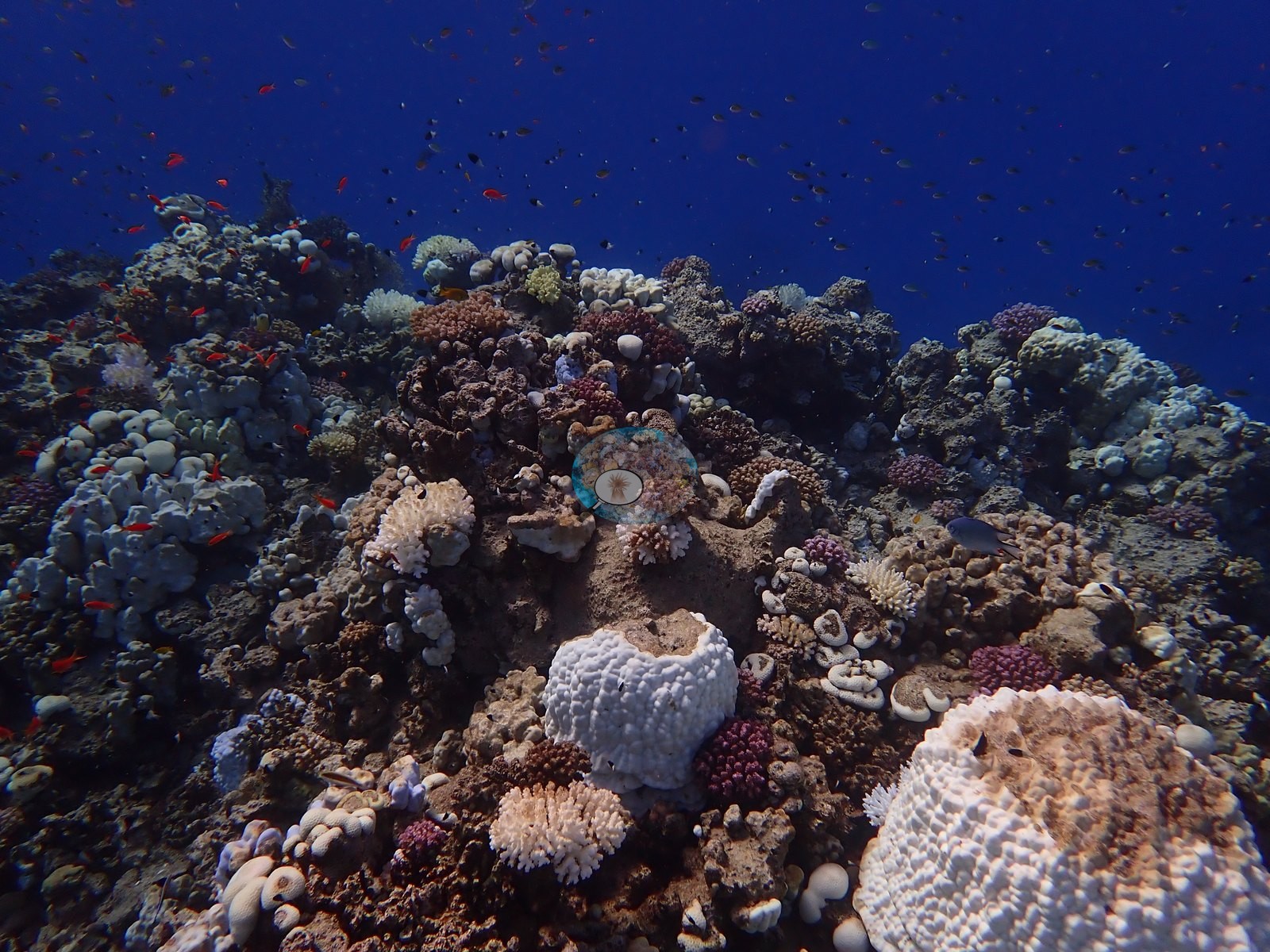
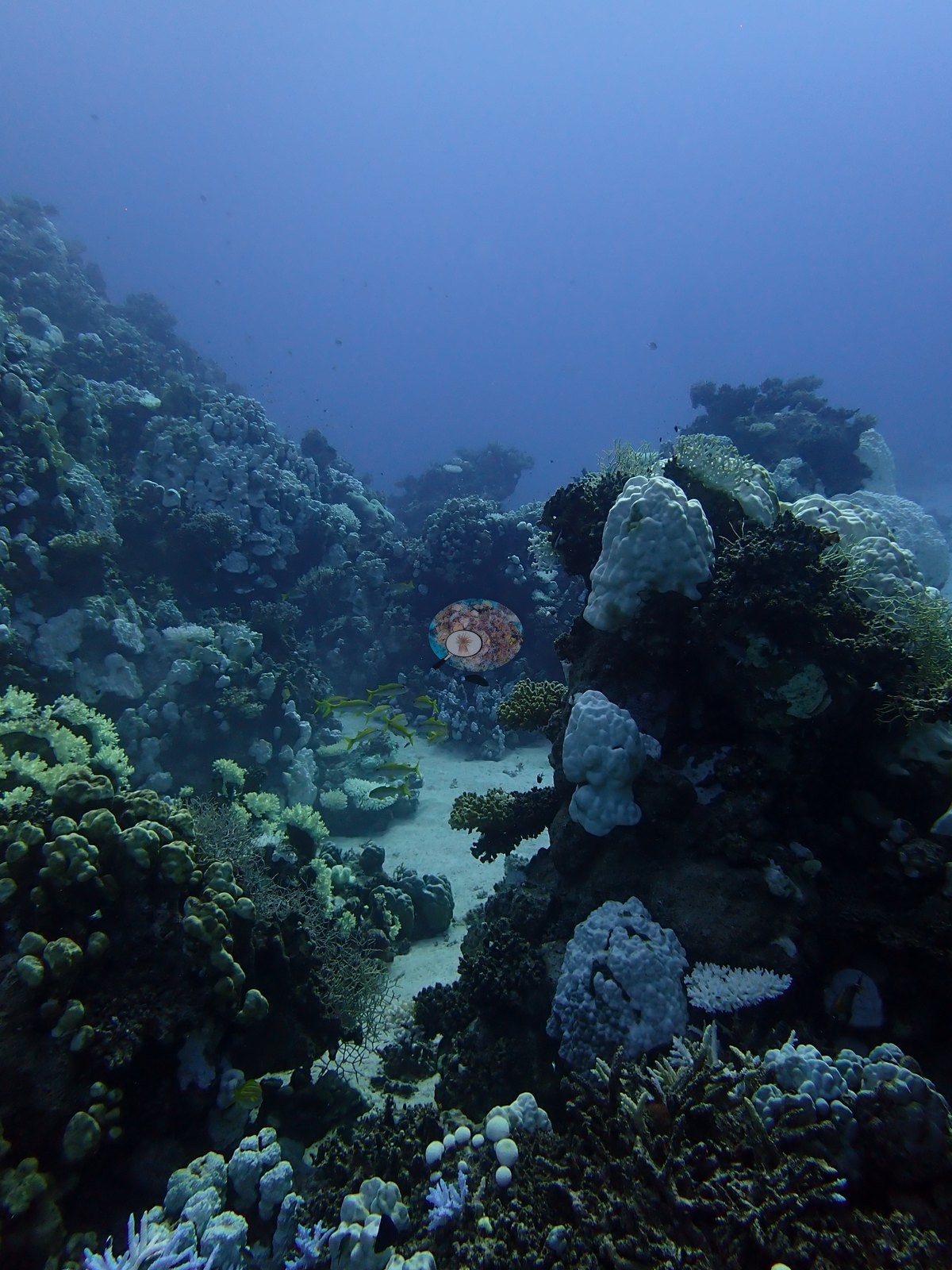
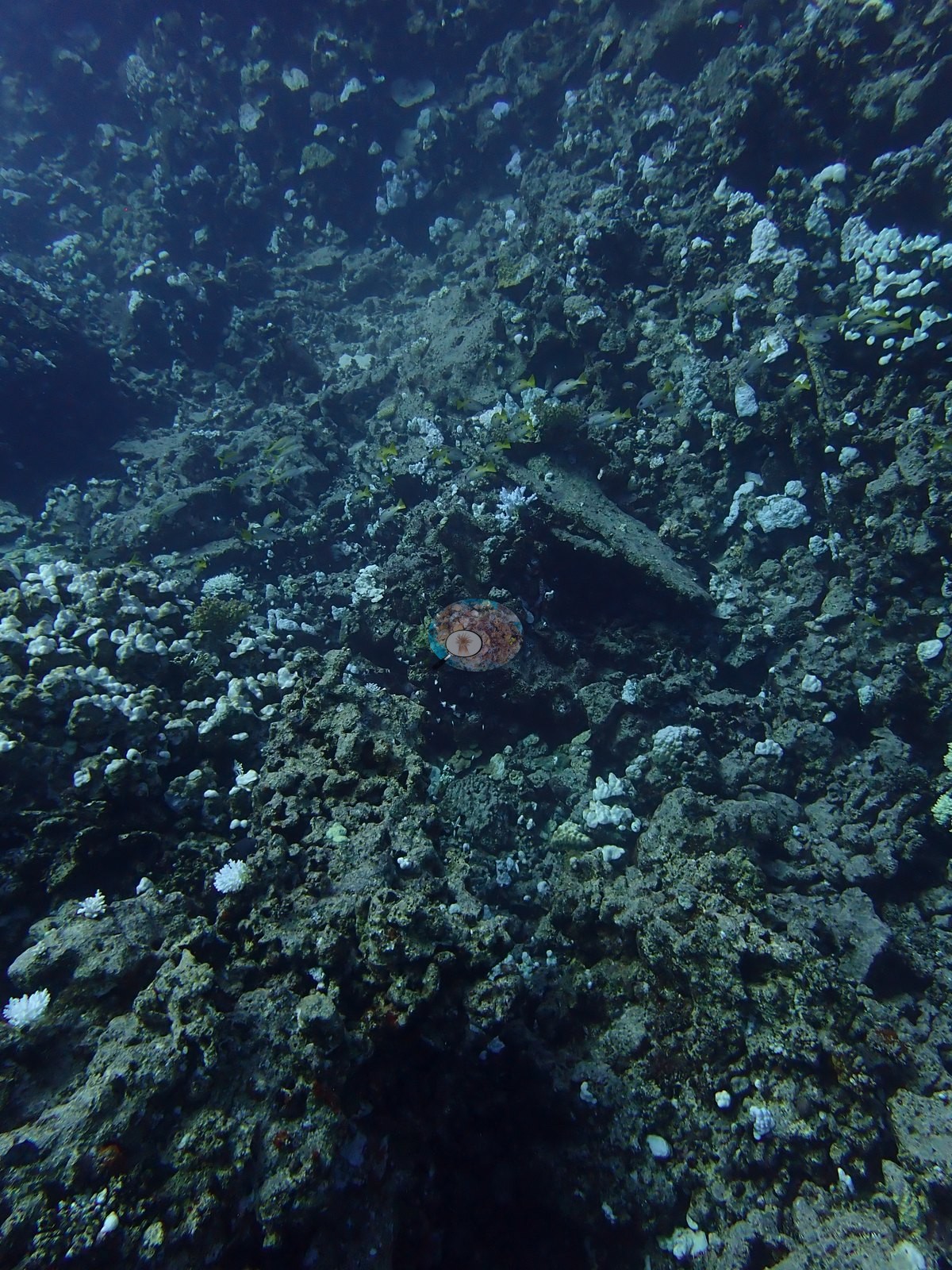
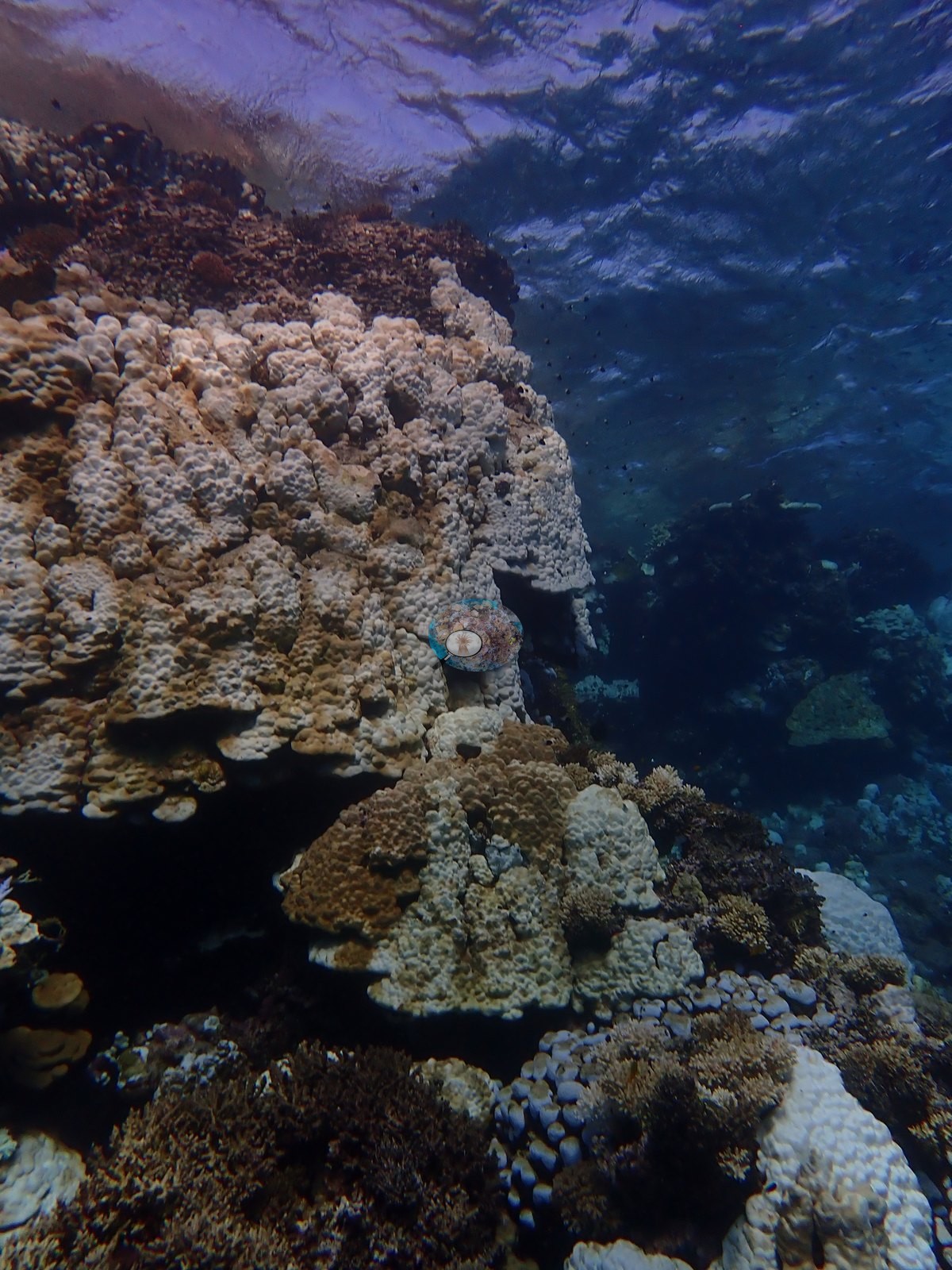
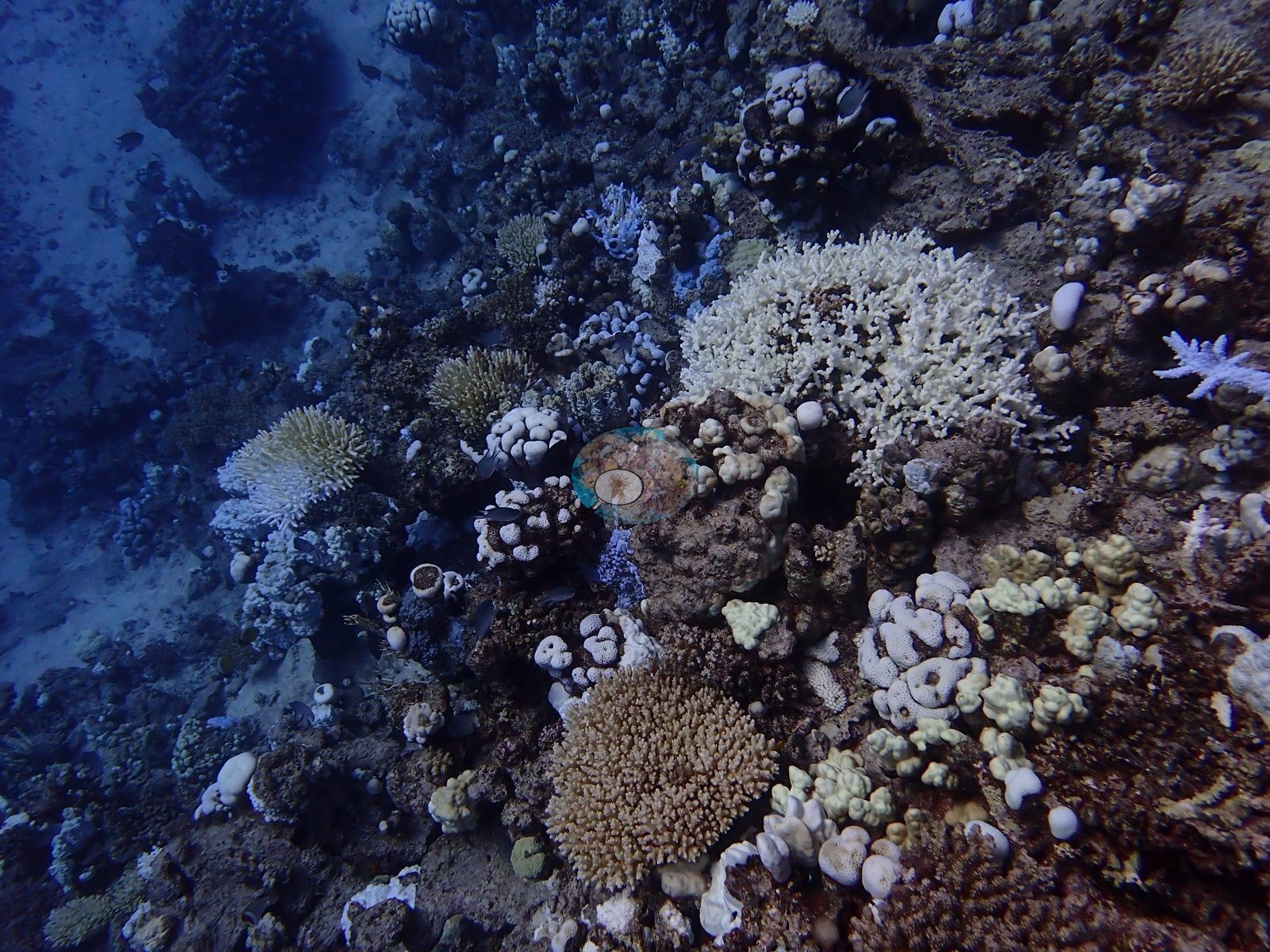
The site record reports 62.9% of coral tissue bleached at about 21.8°C-weeks DHW. Another frame is the same reef's other face: two large brilliant-white staghorn Acropora colonies, a bleached knobby massive above them, a bleached lobate coral below, and bleached yellow-green Millepora-type fire coral filling the background (e.g., Image 2).
Comparisons with other data
No prior survey data from this site. If you would like to share yours, please email us.
Dive record
The first dive of 23 September 2024, the last day of the Egypt leg, with Red Sea Diving Safari.
Other notes
See flags.
CV model comparison
More info
The reference row is this dive site's own published value (Mayfield 2025, Appendix A, 218 photos); the other rows are AREA-level (Wadi Lahami) comparisons, not run on this site's frames. ⚠ The comparison rows are REGIONS, not dive sites: the paper's main tables report cover by region, and this site's own value comes from its Appendix A. ⚠ The manual column and the CV columns are on DIFFERENT FRAME SETS: the published cover spans 674–1,180 frames, the CV arms ran on the 30- and 129-frame hand-scored reference subsets. CoralNet is n/a by design: the reference set IS the hand-scored set. DINOv3 is restricted to frames it never saw. CoralNet automated point classifier: n/a — the reference set IS the hand-scored set; these frames carry no independent CoralNet robot label to compare against CoralSCOP (SAM-based mask-sum), unedited photos: pending — CoralSCOP run: 370/747 images scored at build time CoralSCOP (SAM-based mask-sum), edited photos: pending — CoralSCOP run: 370/747 images scored at build time| Method | Hard-coral cover (%) |
|---|---|
| Manual (published) | 28.1 |
| In-house DINOv3 | 40.6 |
| Claude | 28.0 |
Data & links
All images from Coral Reef Diagnostics. Data are from Coral Reef Diagnostics.
© Coral Reef Diagnostics.