
Egypt Red Sea - Abu Galawa-small (Wadi Lahami)
Part of the regional summaries: Egypt and Red Sea
More info
Egypt (NOAA CRW virtual station) · Northern and Central Red Sea ecoregion mean=12.2°C-heating weeksAbu Galawa-small centers on a heavily coral-colonized shipwreck - far more densely settled than either Saudi wreck in this set - whose Acropora and encrusting corals were found almost entirely bleached brilliant white against the rust-brown steel hull, with the adjacent natural Porites-and-Acropora slope also extensively pale. Published cover was 22% with 61.3% of coral tissue bleached; notably, the wreck itself is not mentioned anywhere in the site's existing description despite being its defining feature.
يتمحور موقع أبو جلاوة الصغير حول حطام سفينة استوطنه المرجان بكثافة — أكثف بكثير من أي من الحطامين السعوديين في هذه المجموعة — وقد وُجدت مرجانيات Acropora والمرجانيات المتقشرة عليه مُبيَّضة بالكامل تقريباً ببياض ساطع في مواجهة الهيكل الفولاذي البني الصدئ، كما كان المنحدر الطبيعي المجاور من Porites وAcropora شاحباً على نطاق واسع.
ترجمة هذا الملخص بالذكاء الاصطناعي؛ النص الإنجليزي هو المعتمد. Translated from the site’s shorter map summary.
One other CRD dive site within 5 km shown in orange — click a marker to open its page.
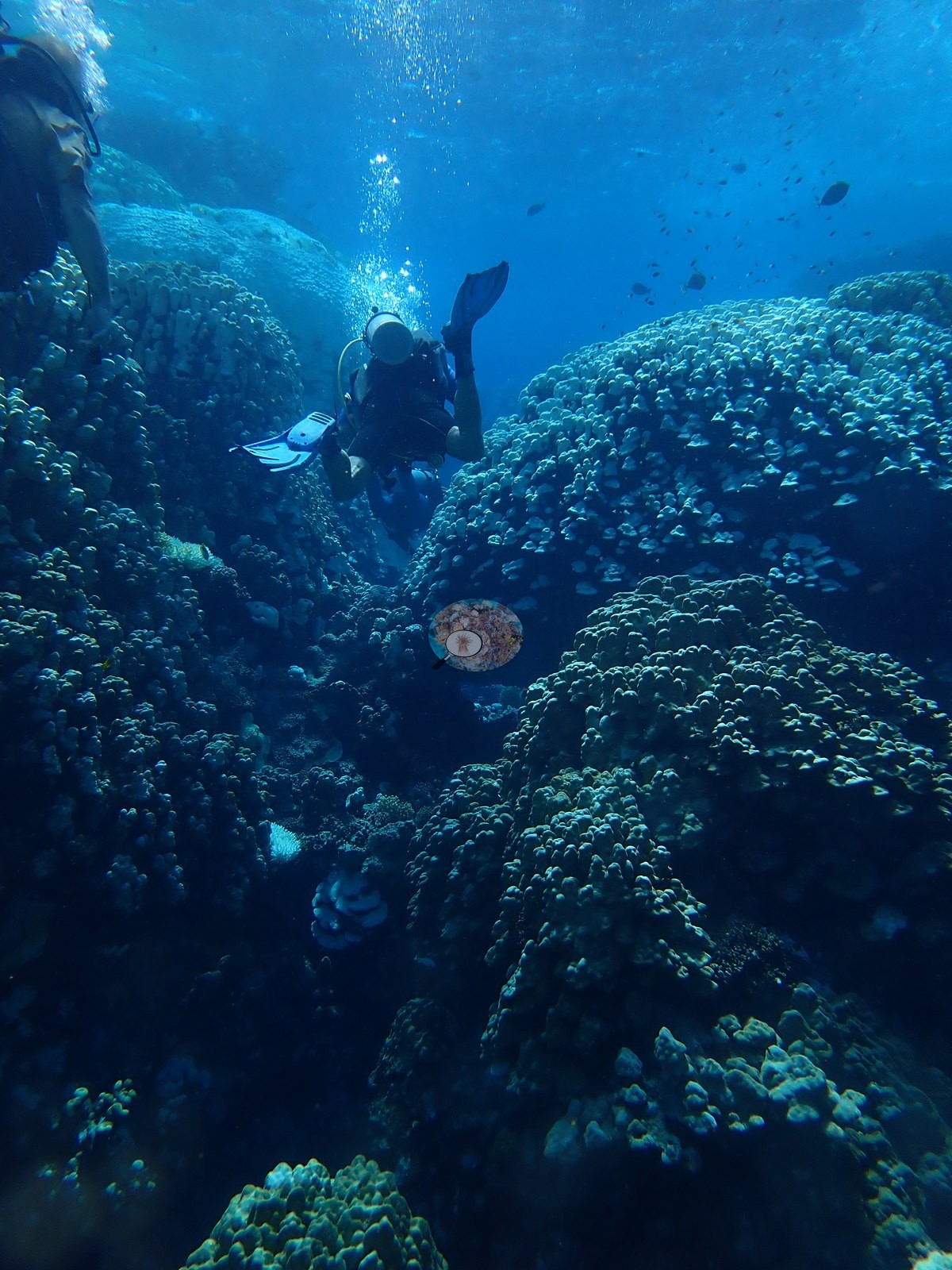
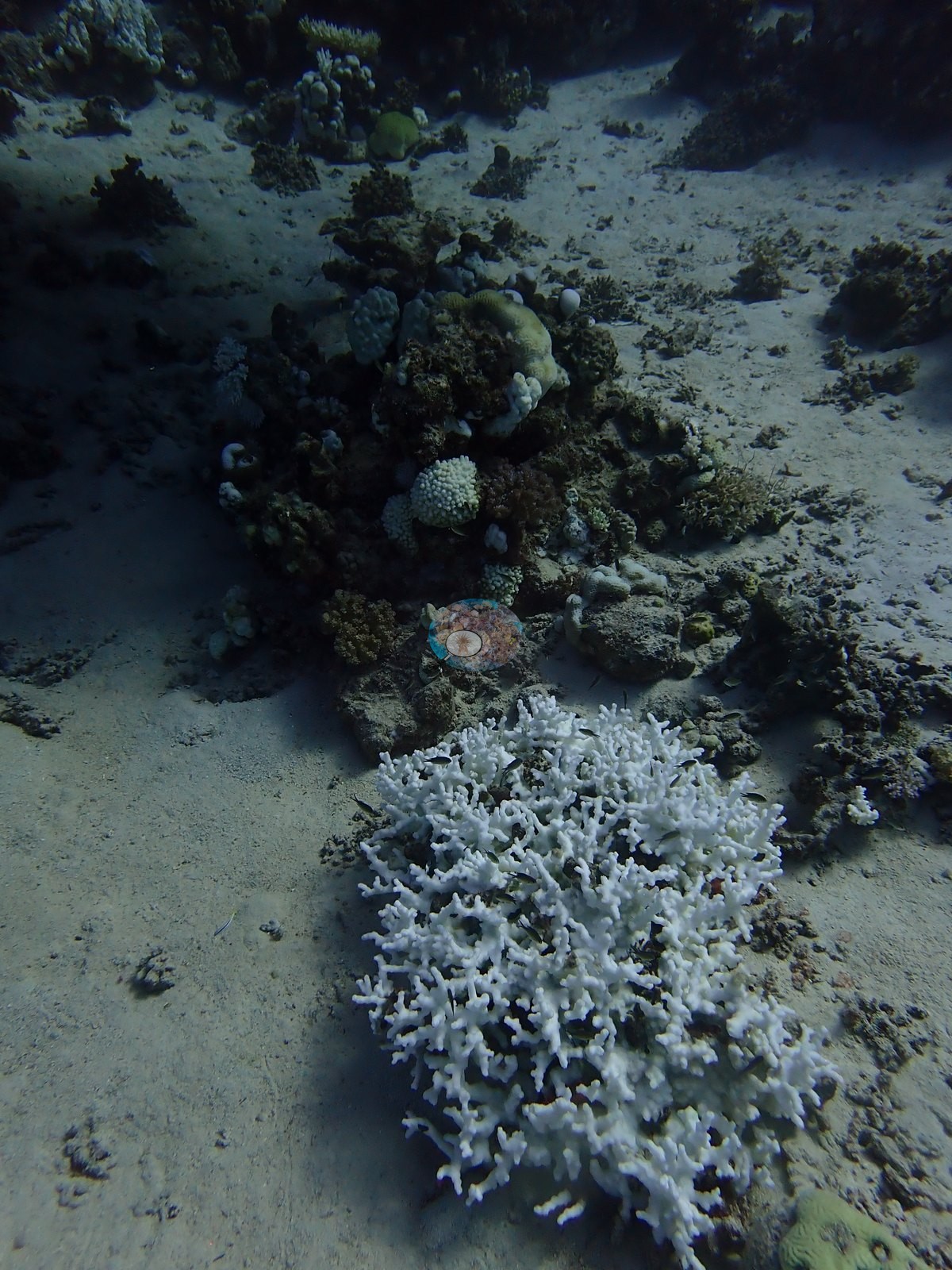
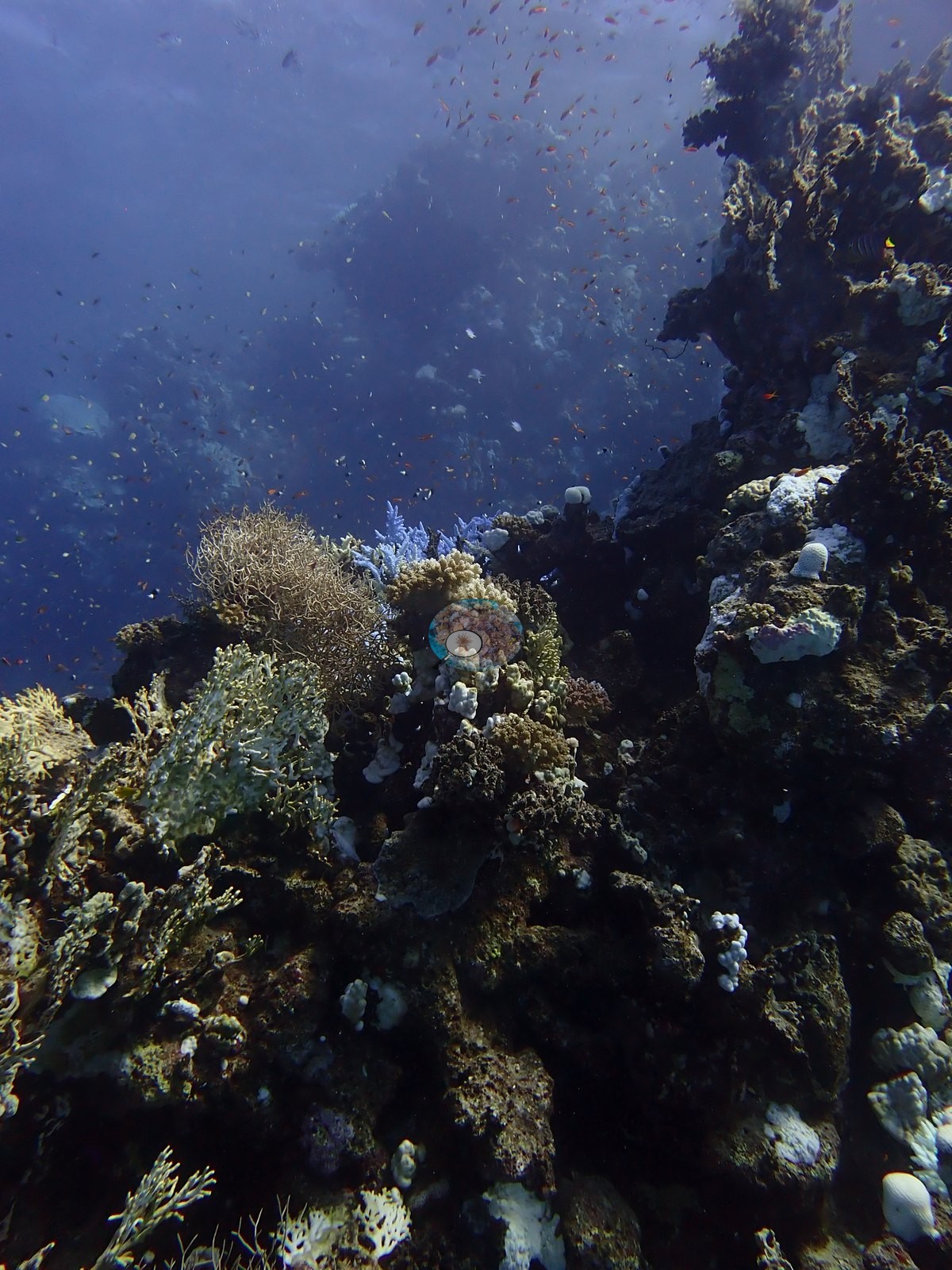
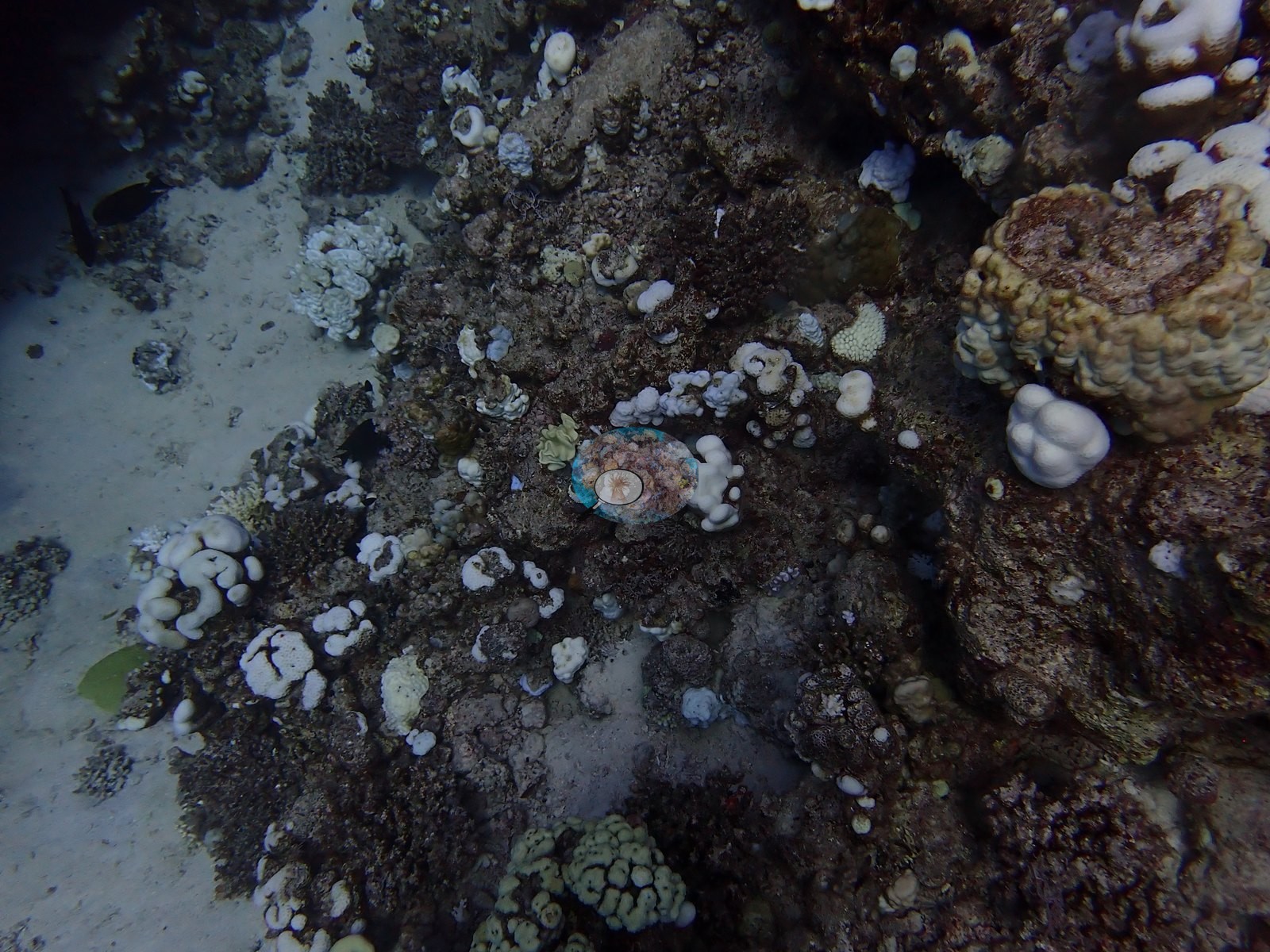
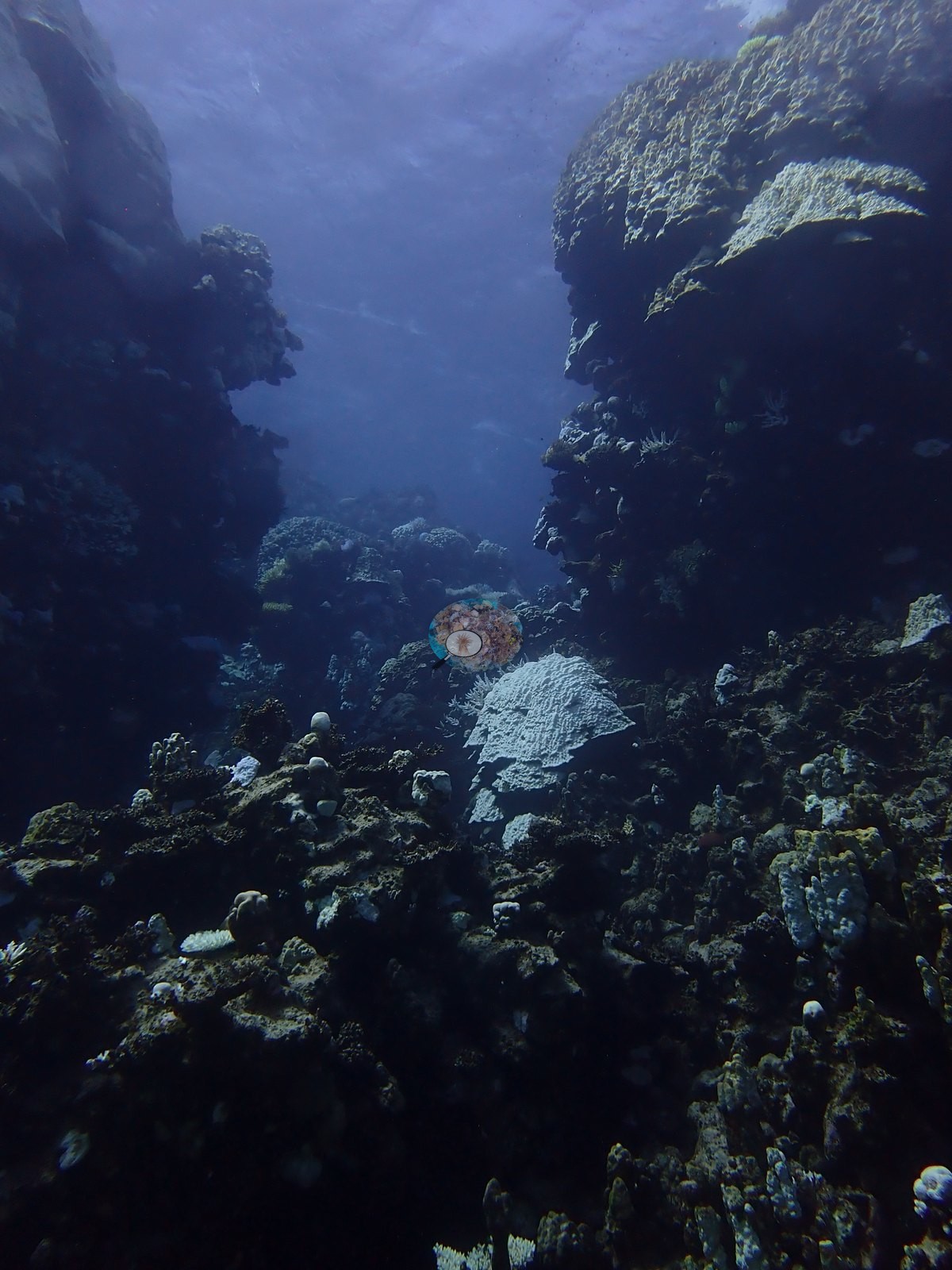
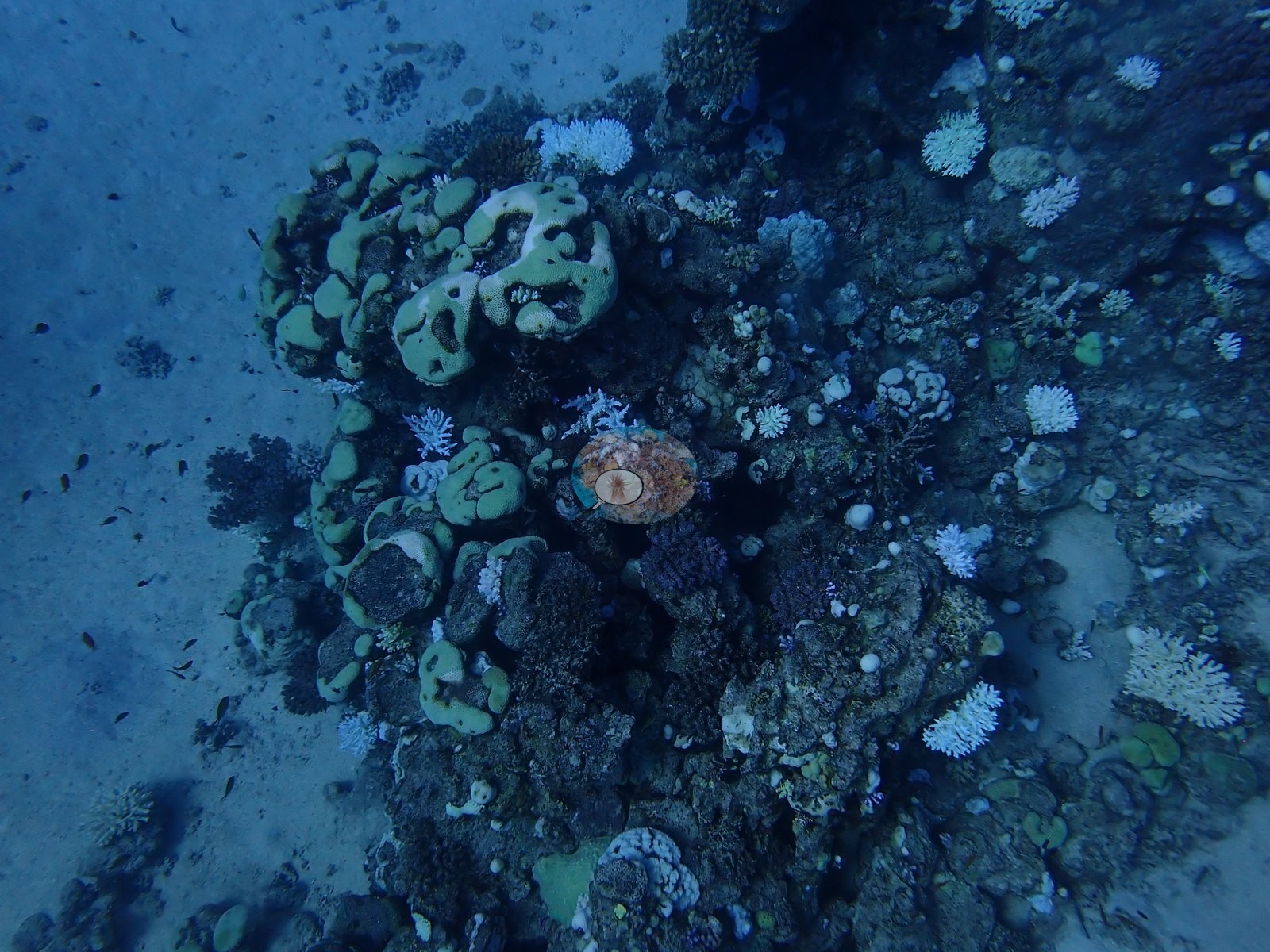
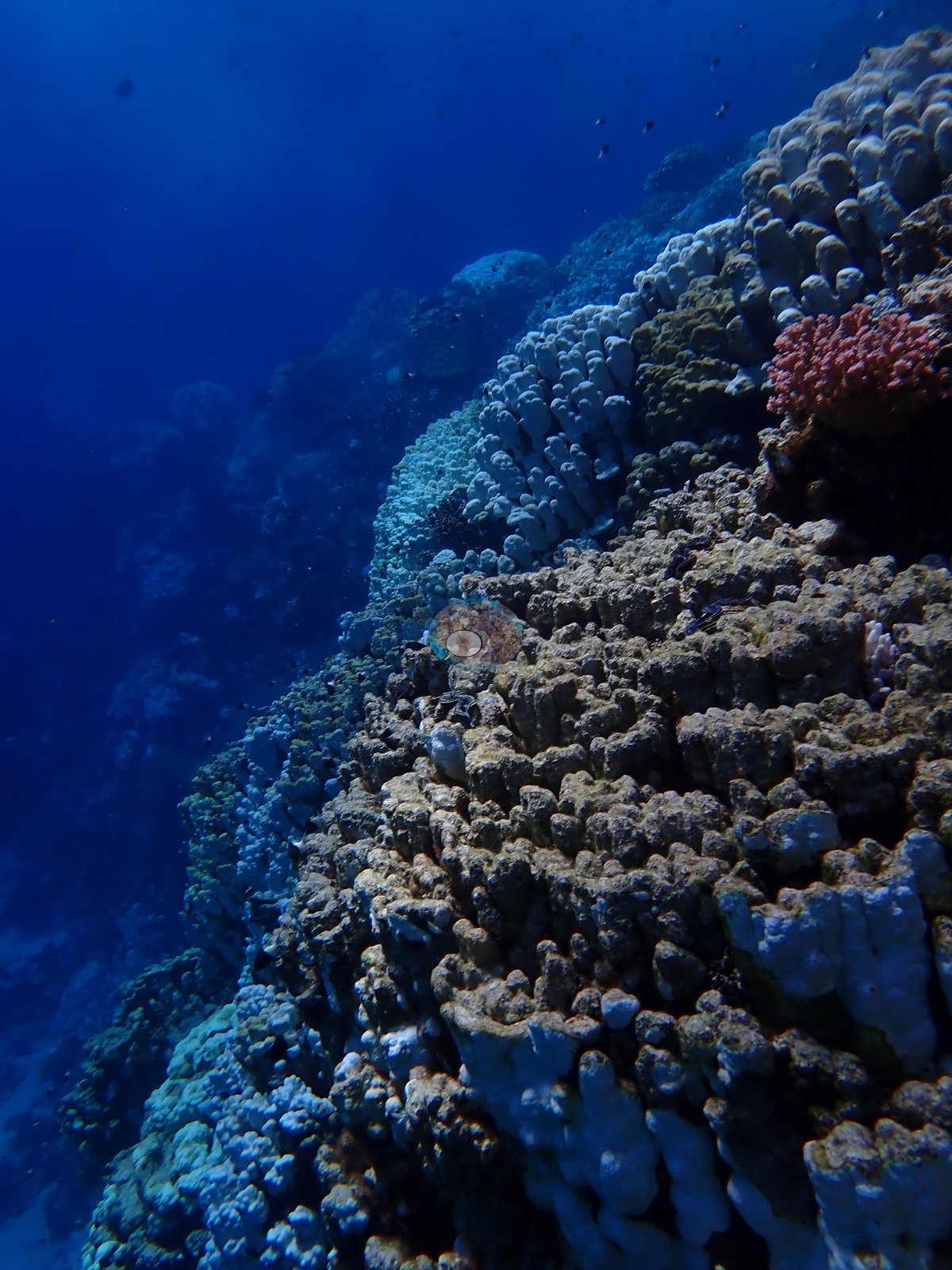
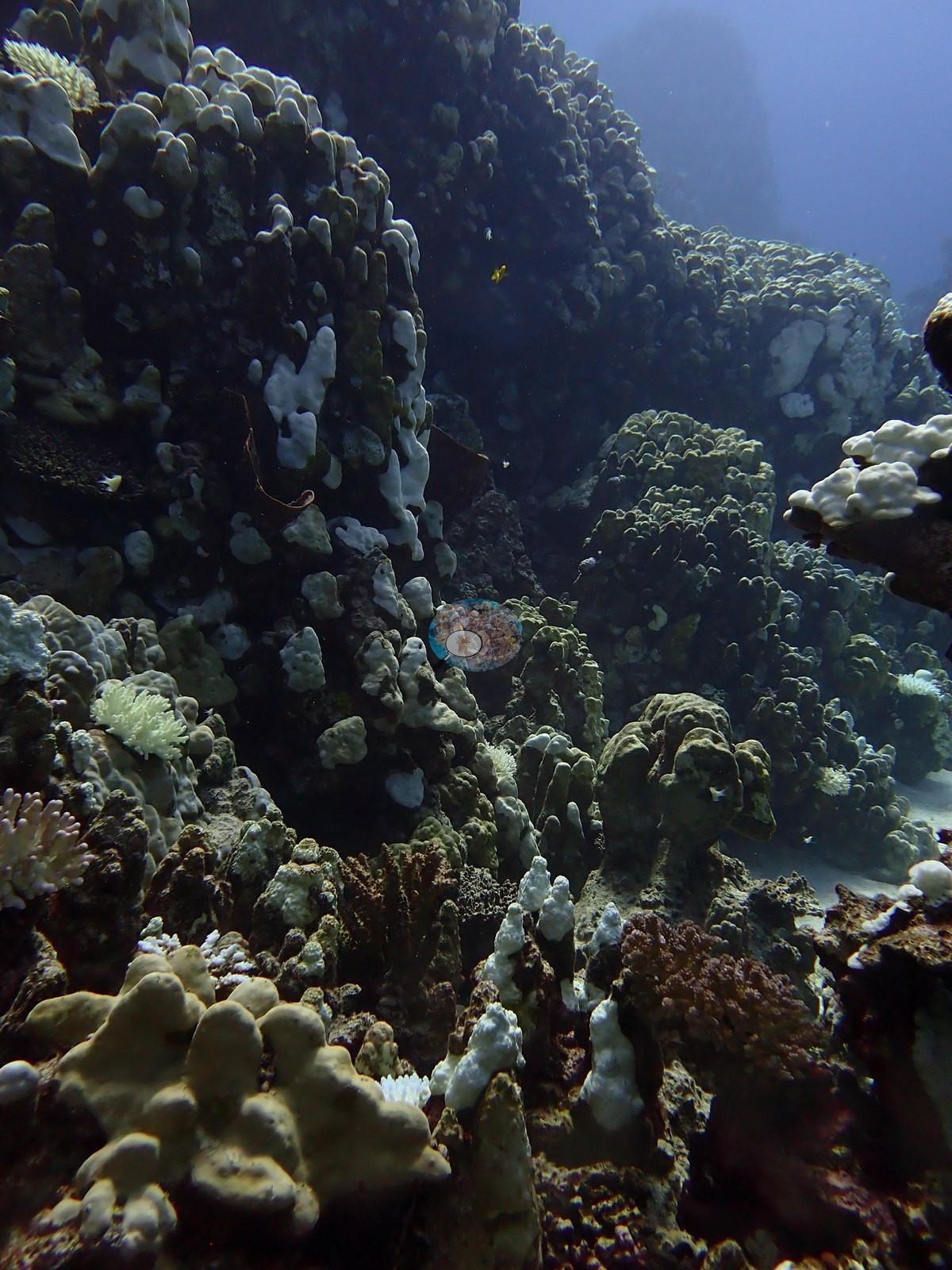
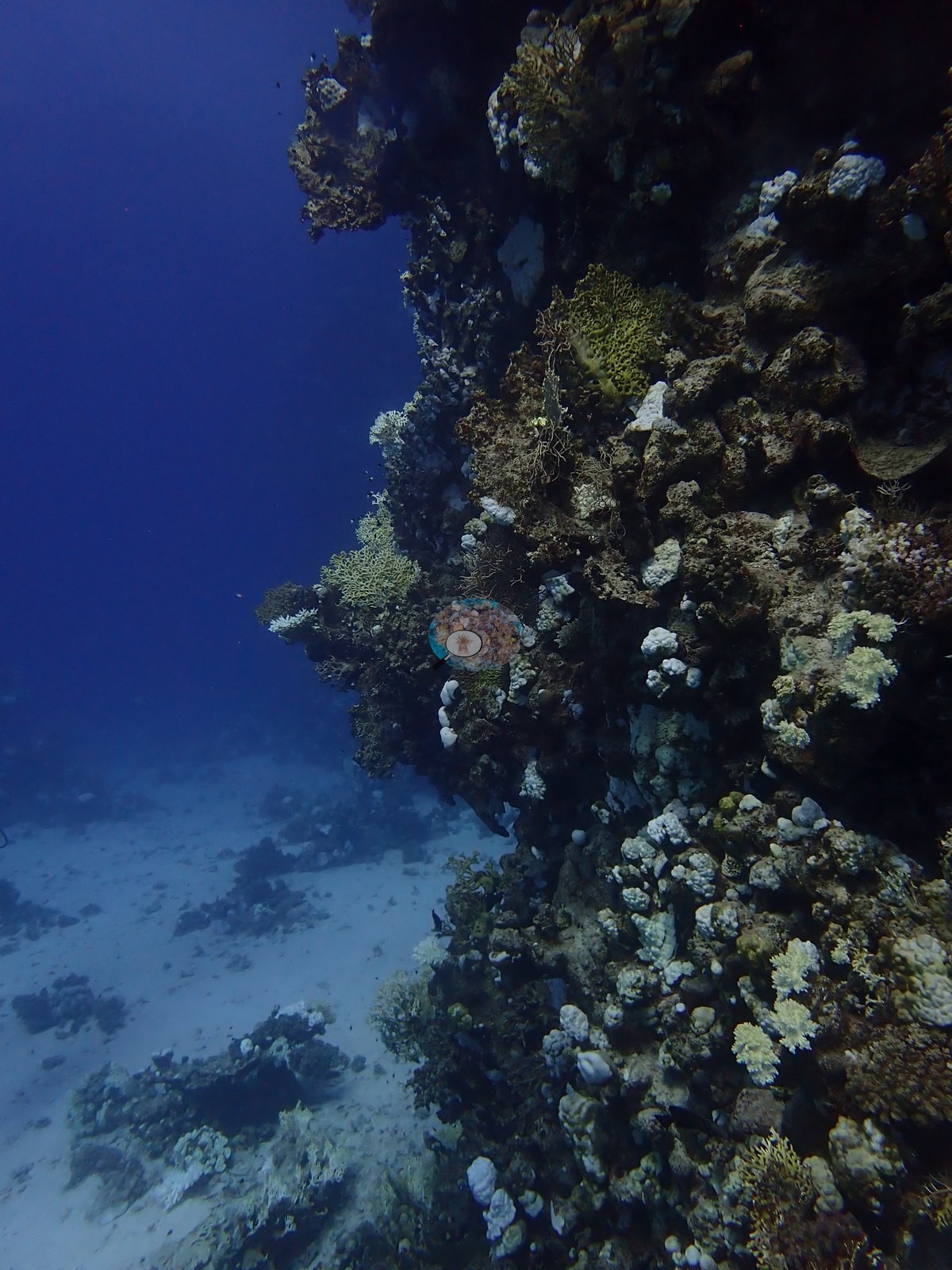
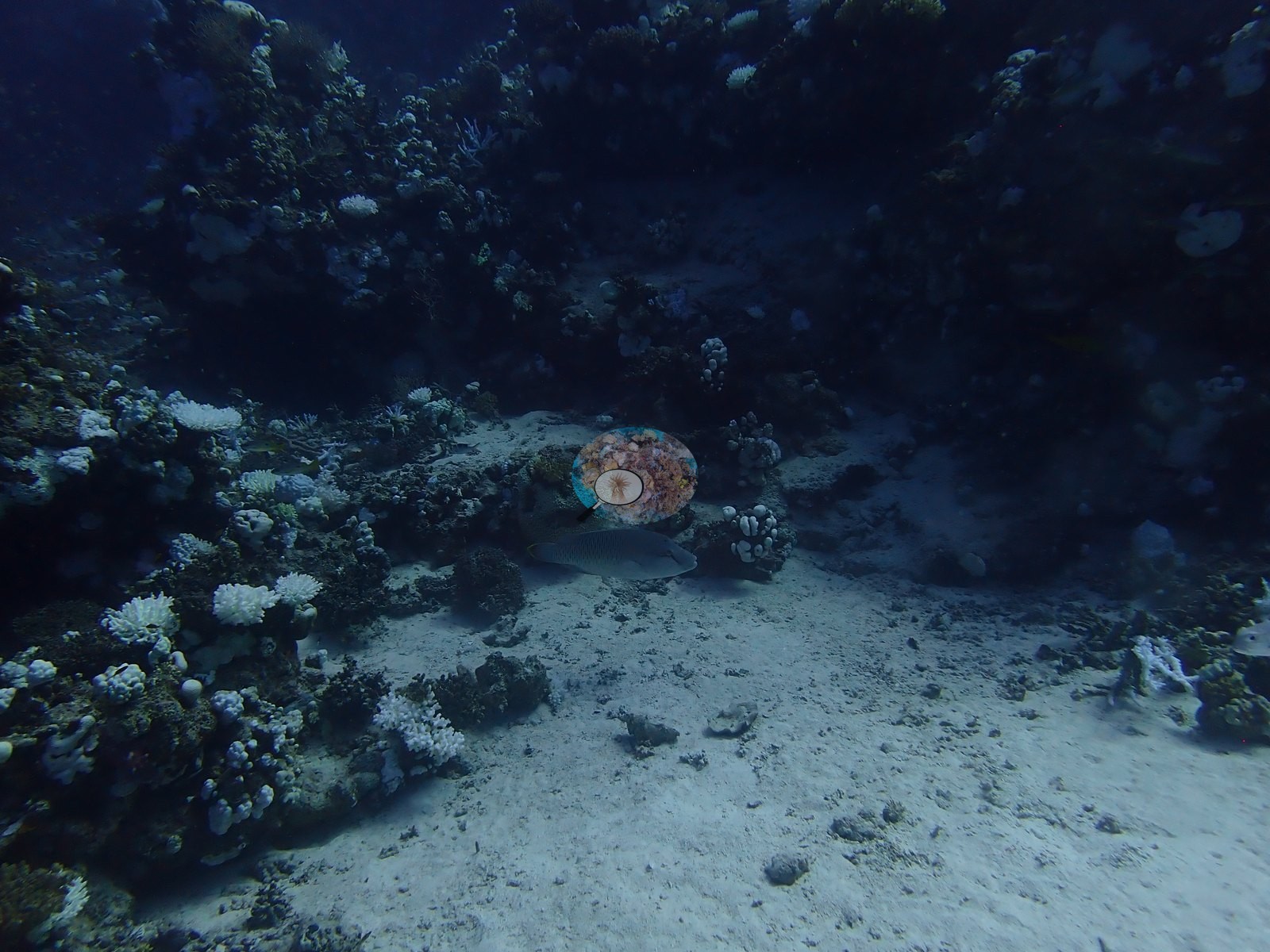
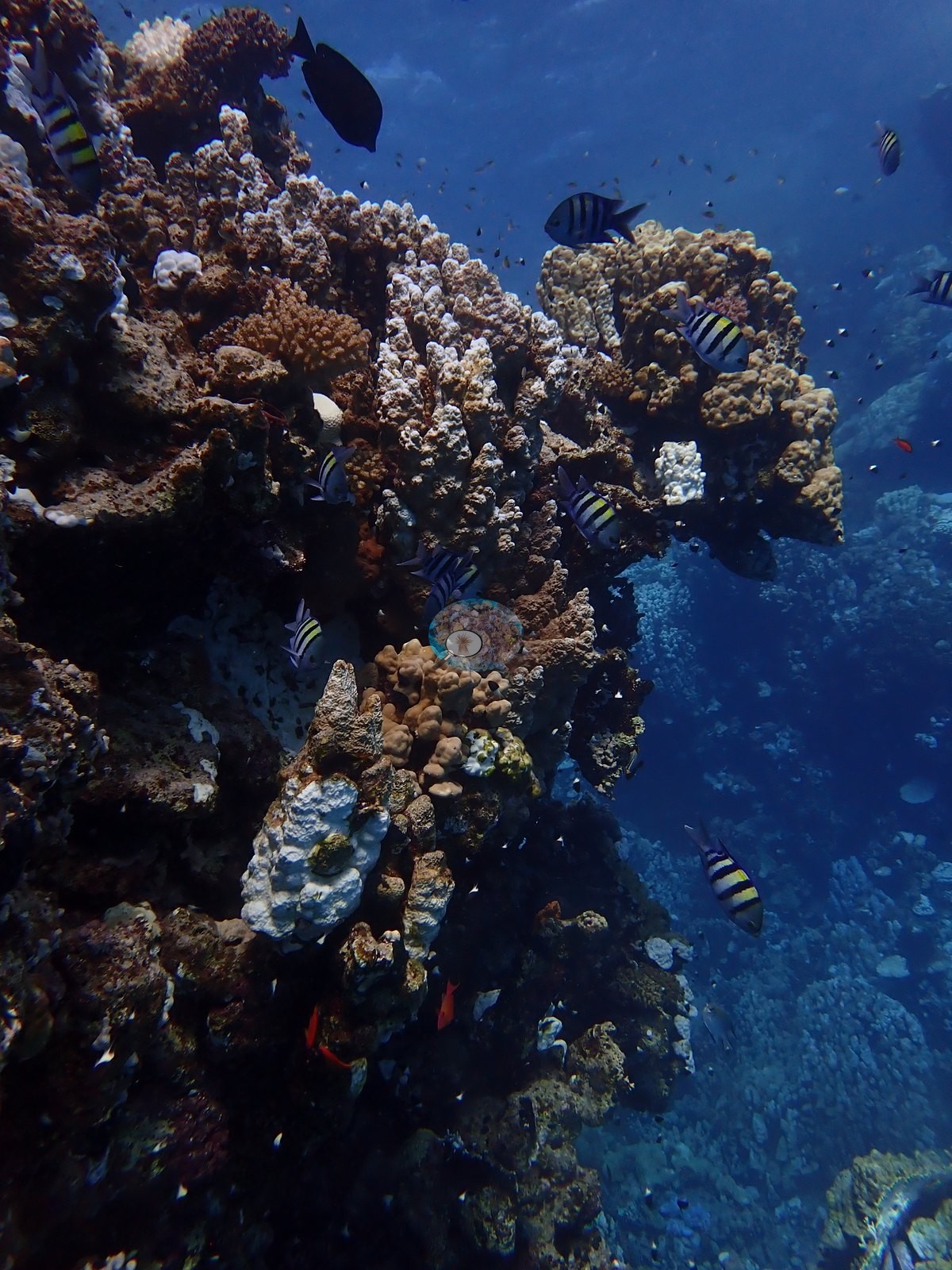
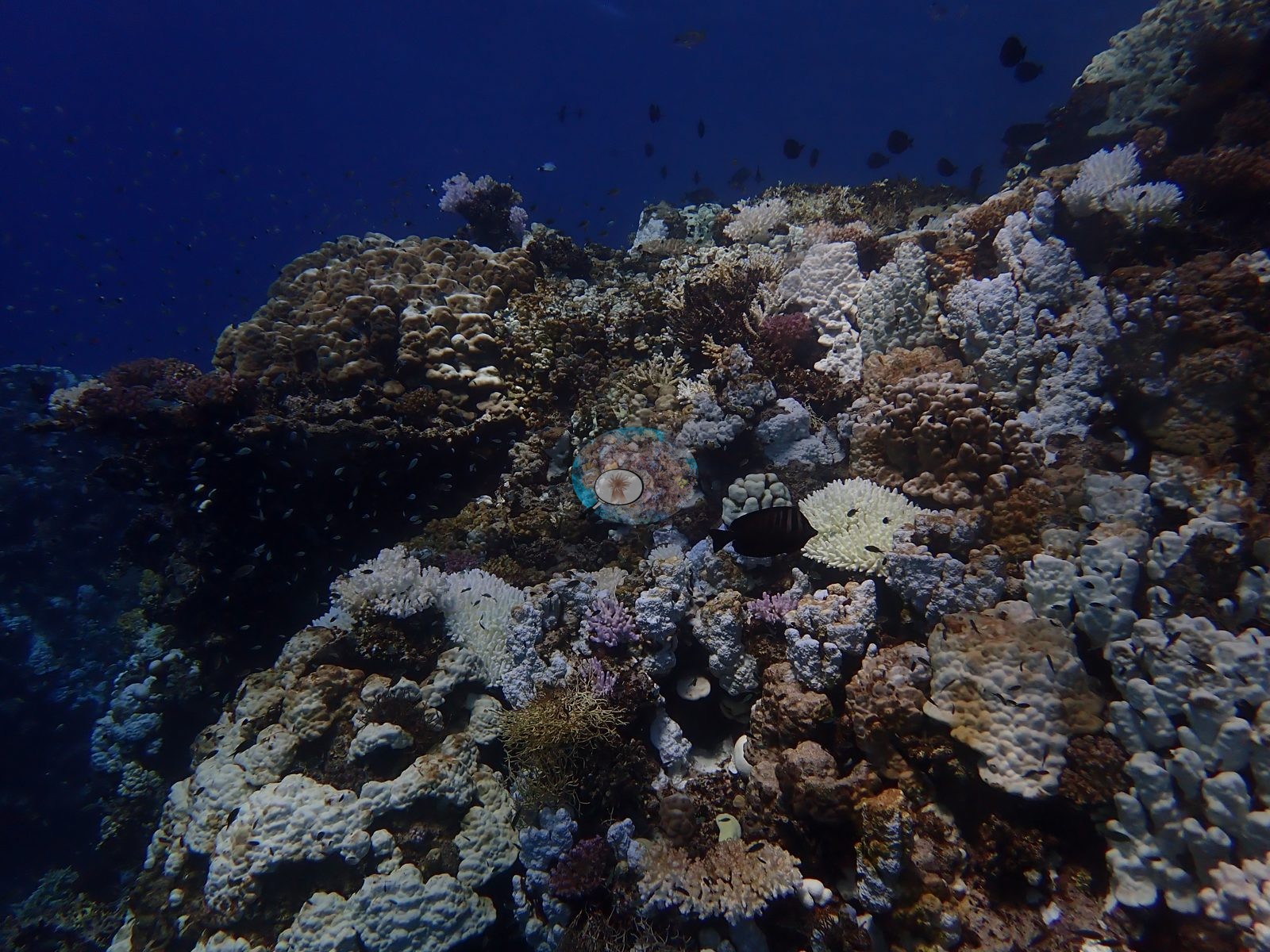
4 of these 50 photographs are shown beside the text that discusses them under "Site description" below.
Site description
Setting
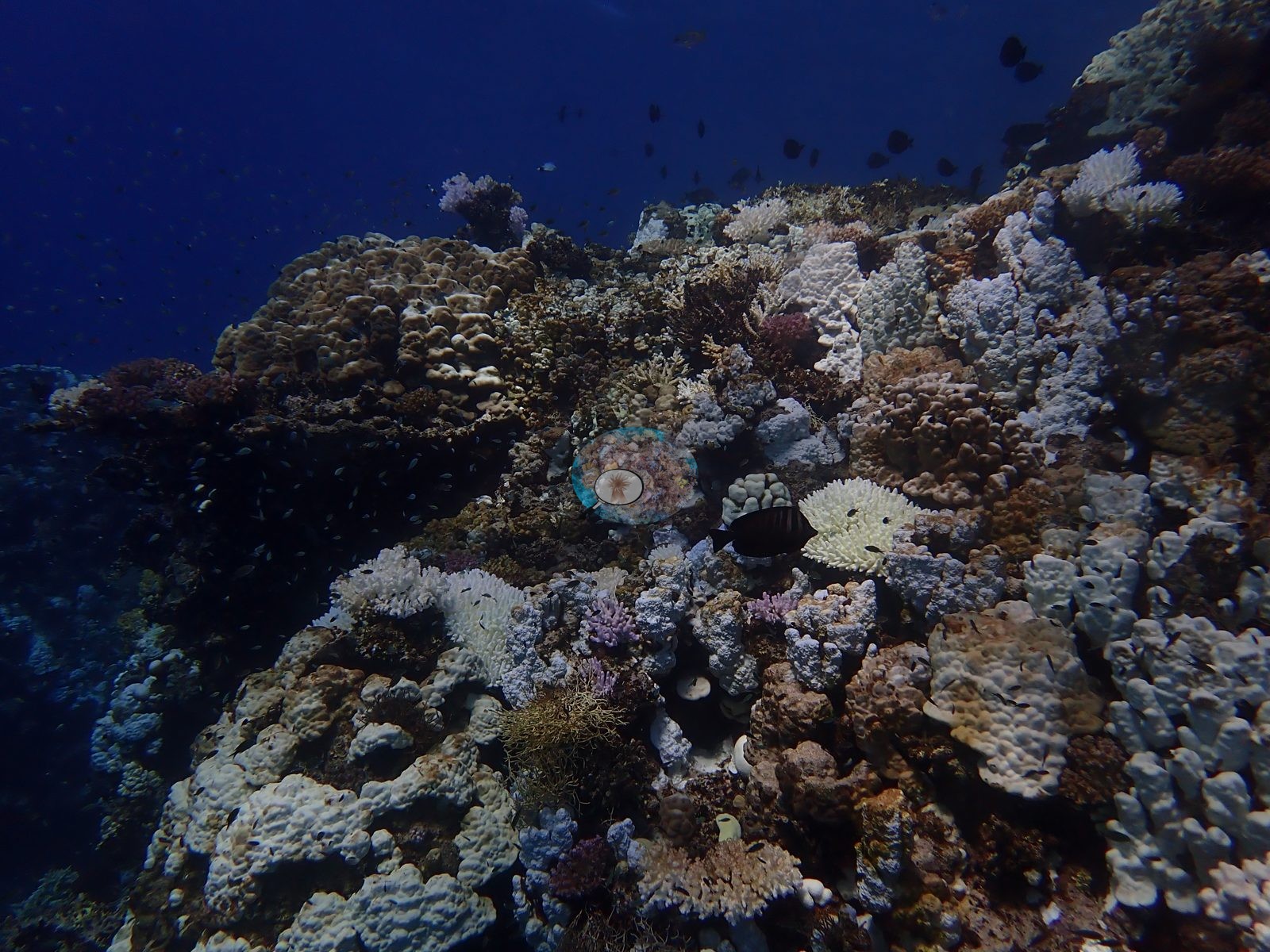
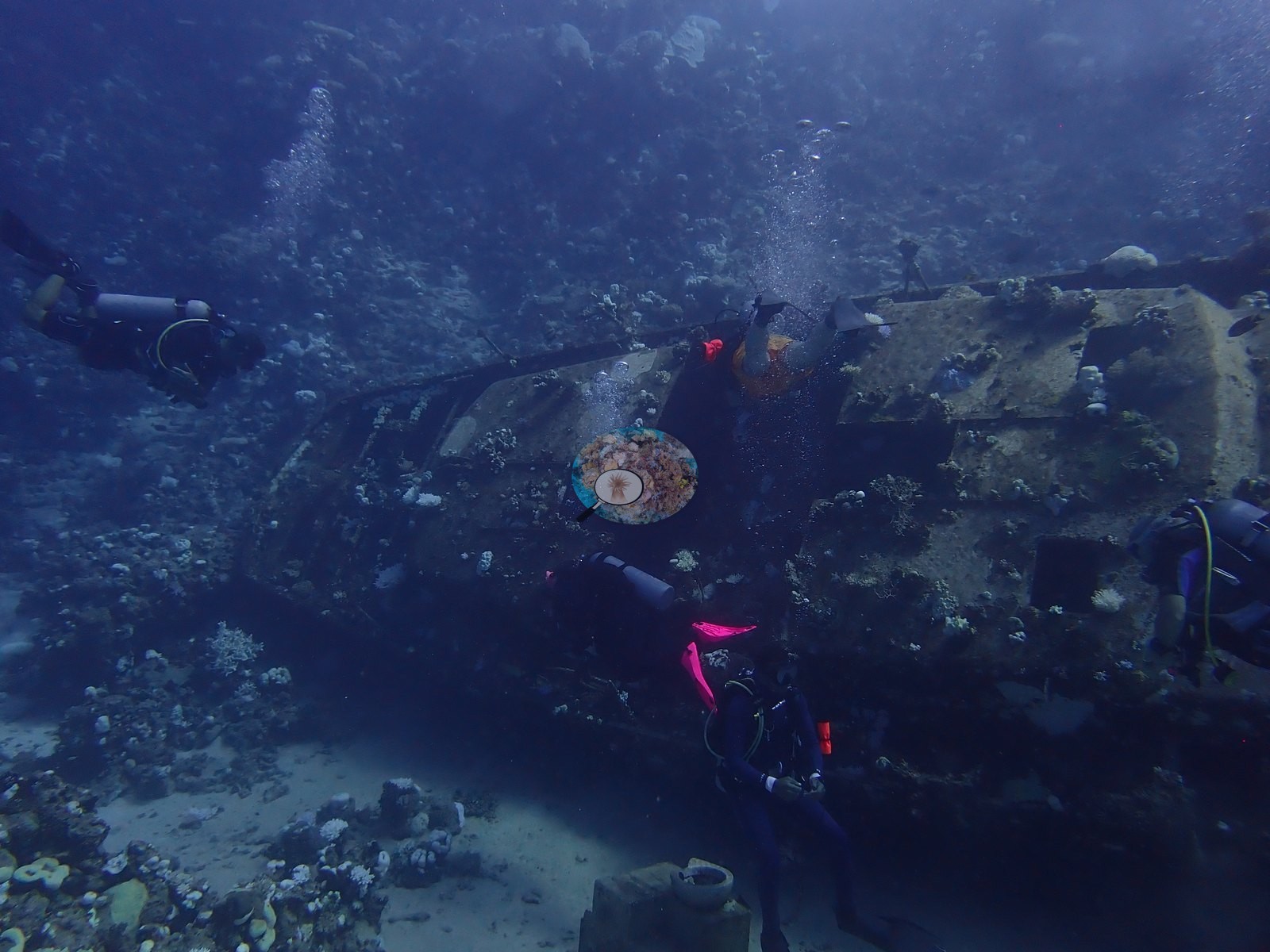
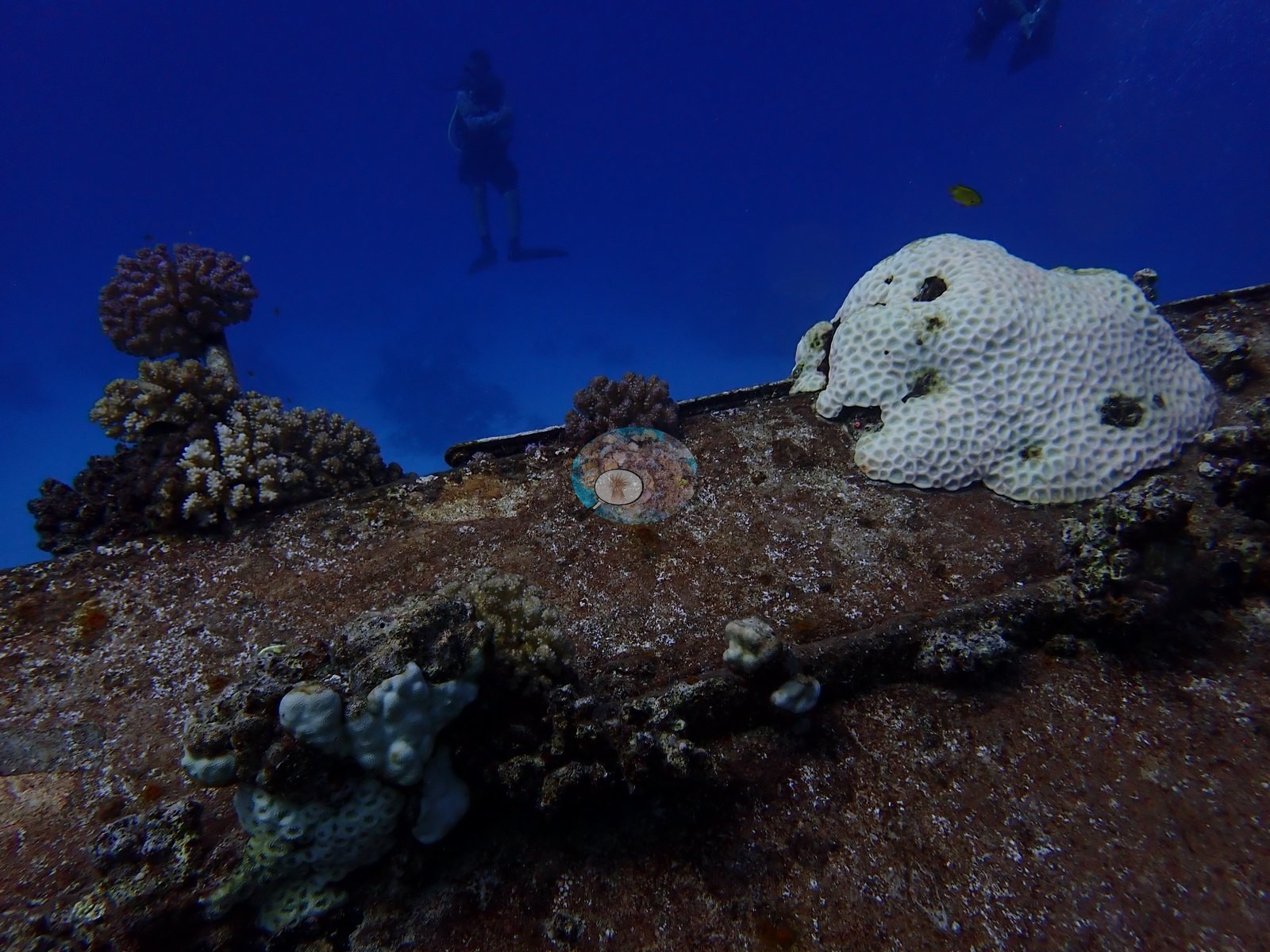
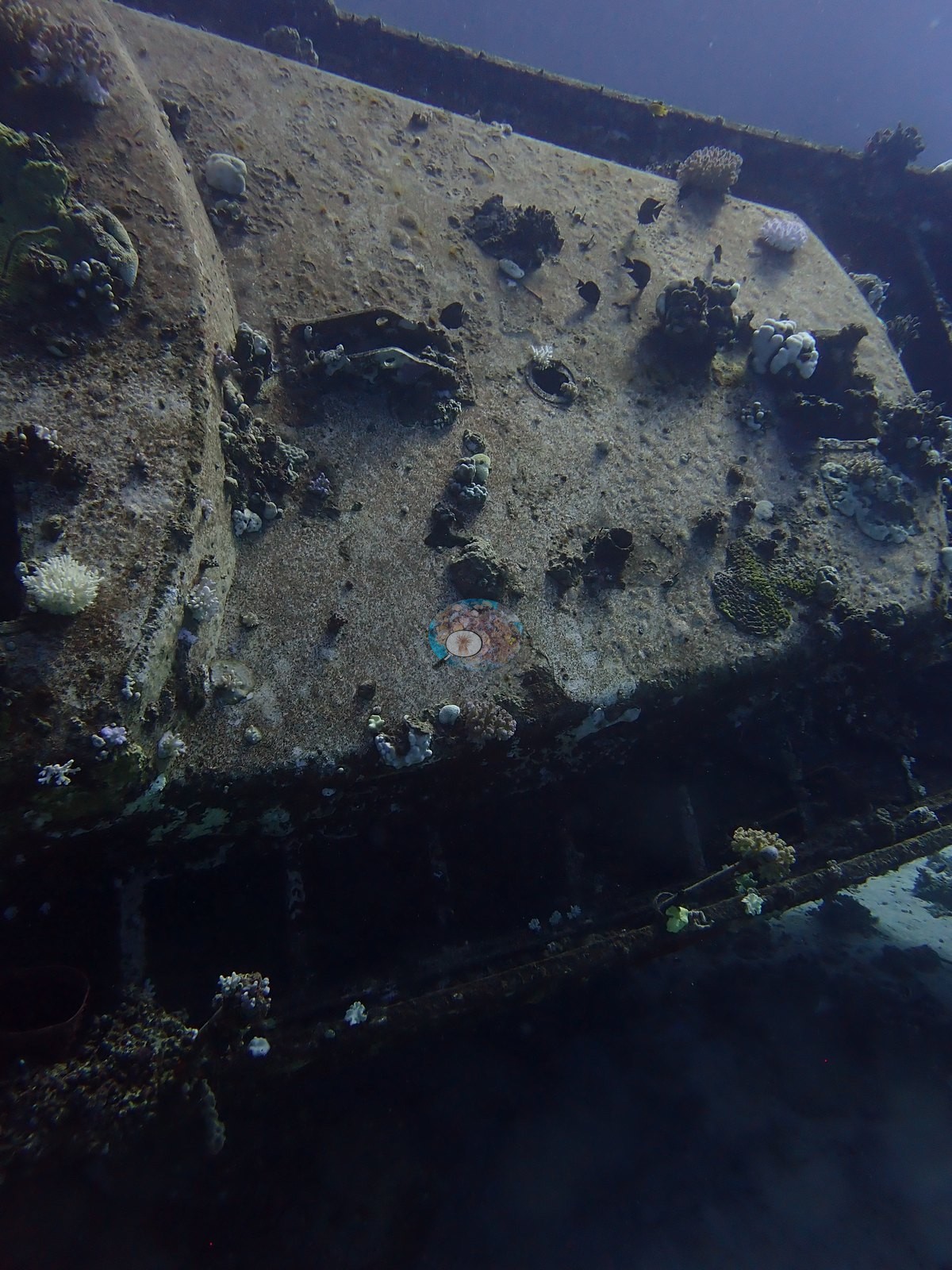
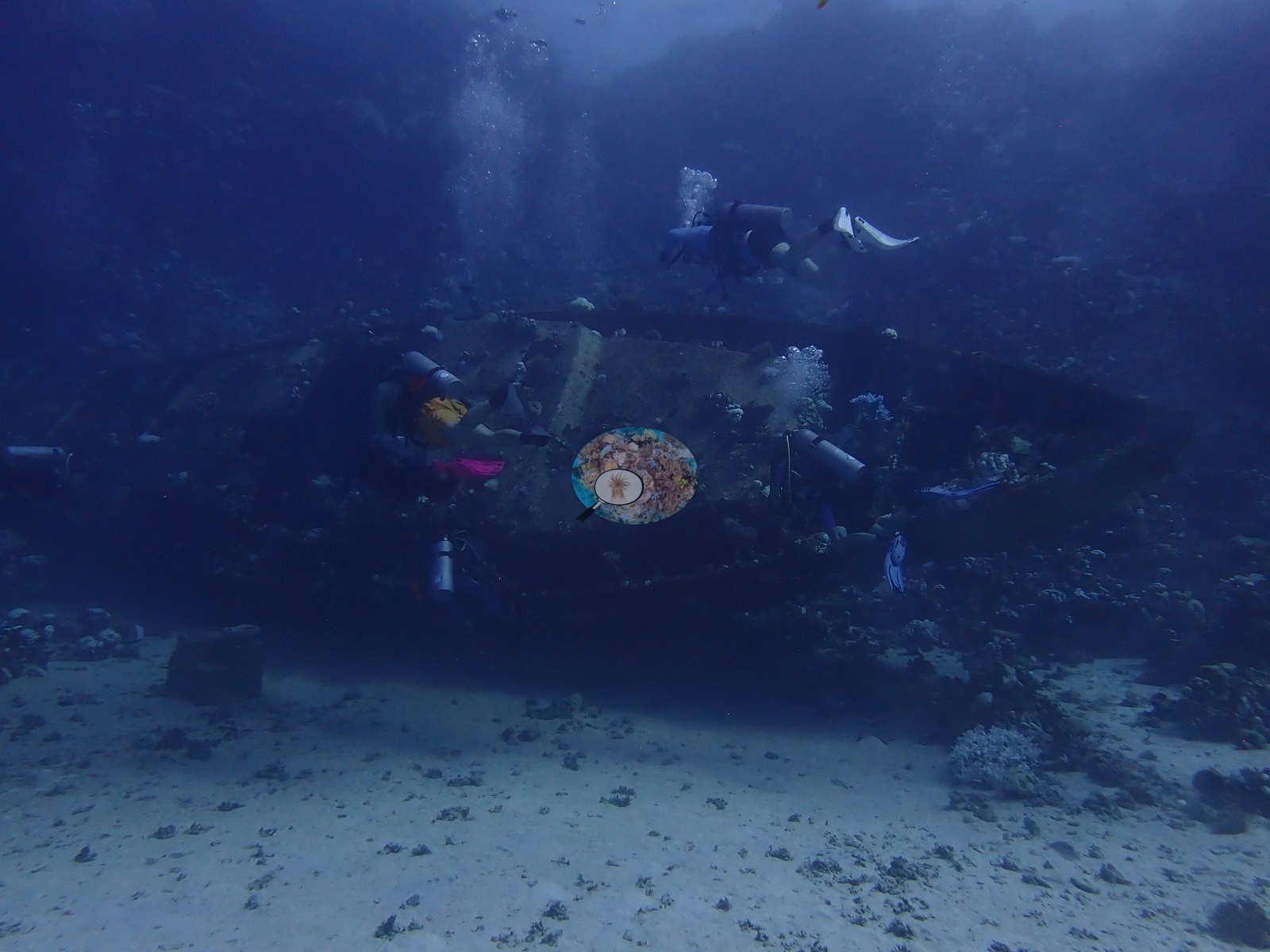
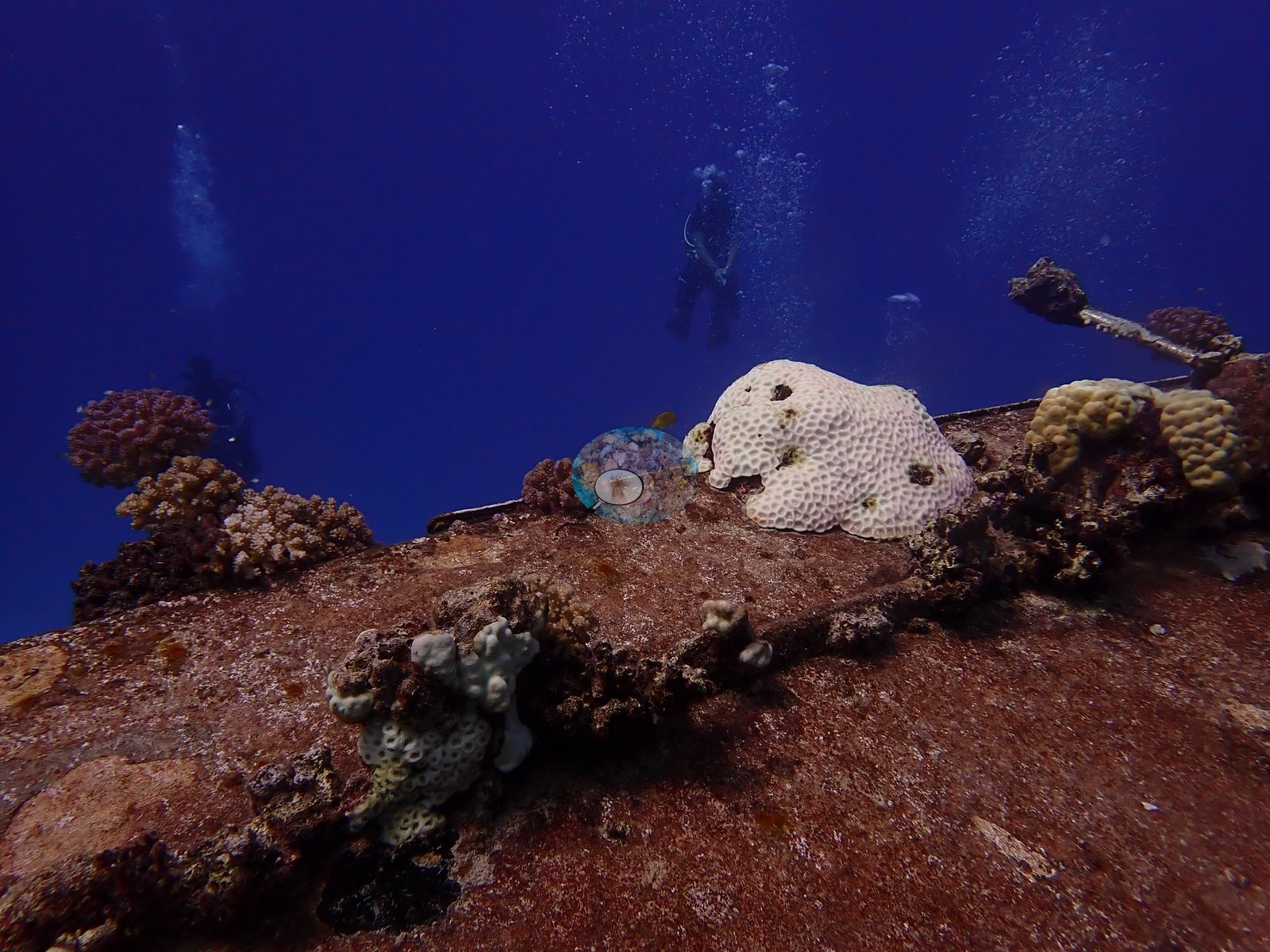
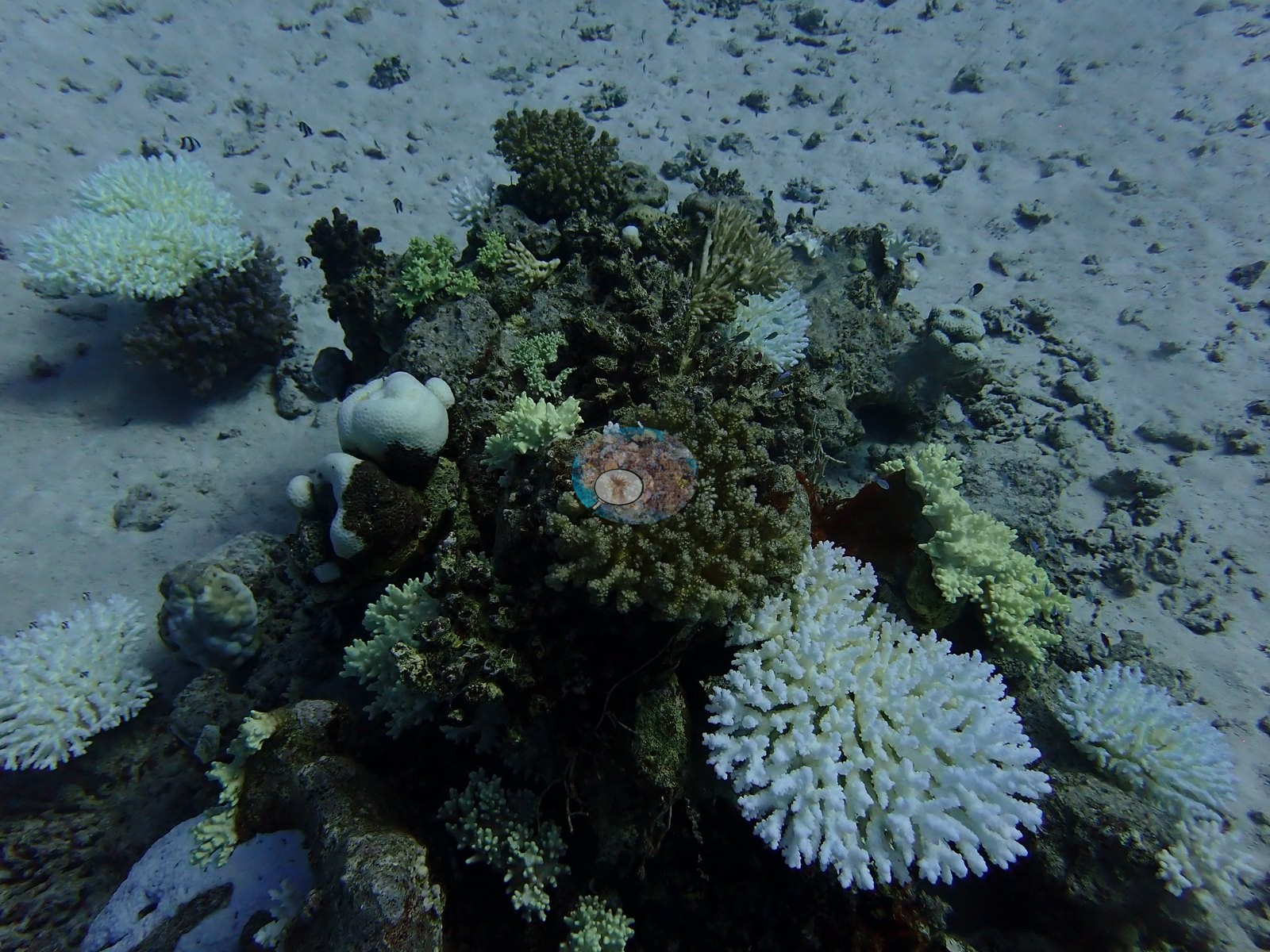
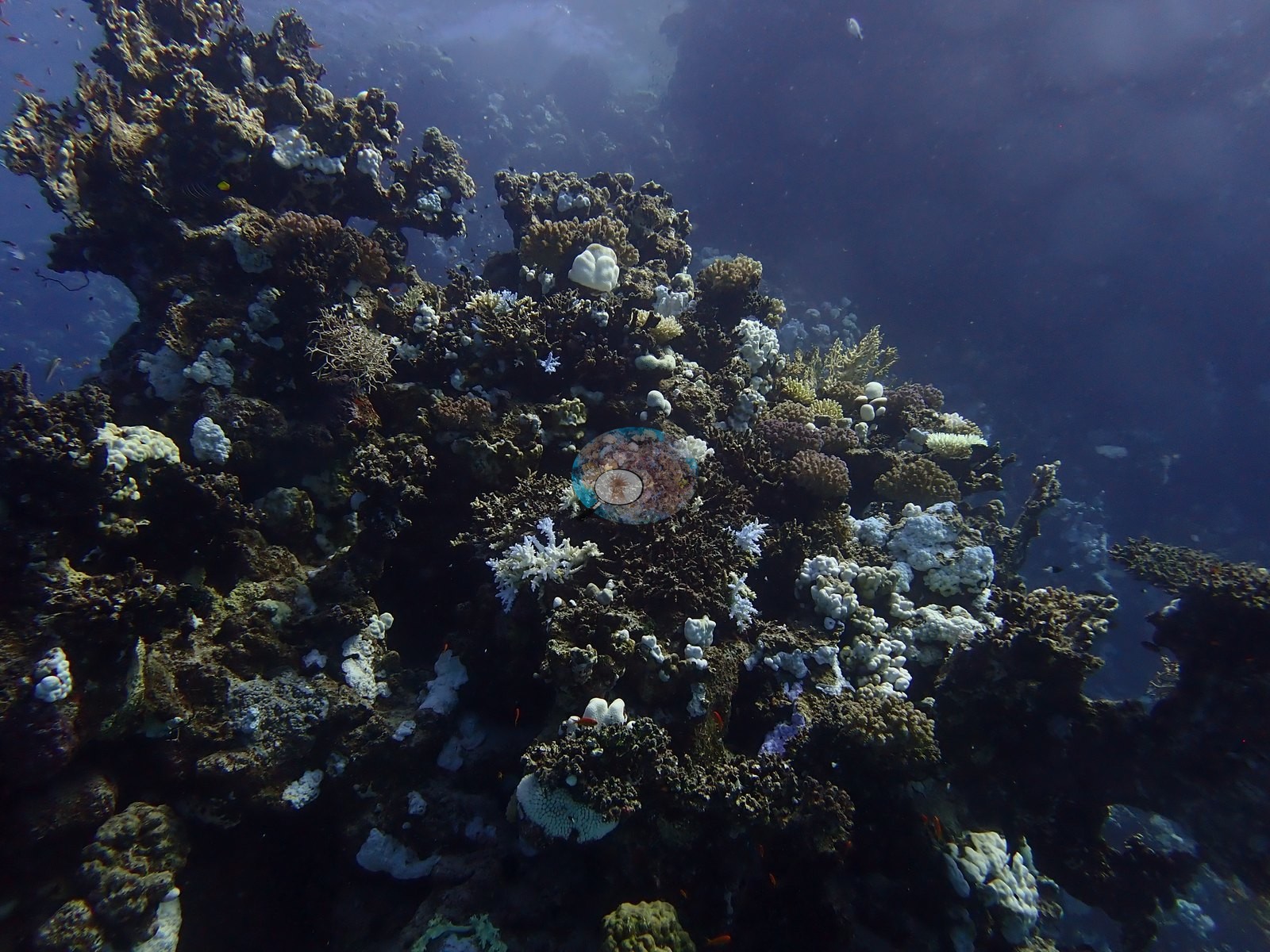
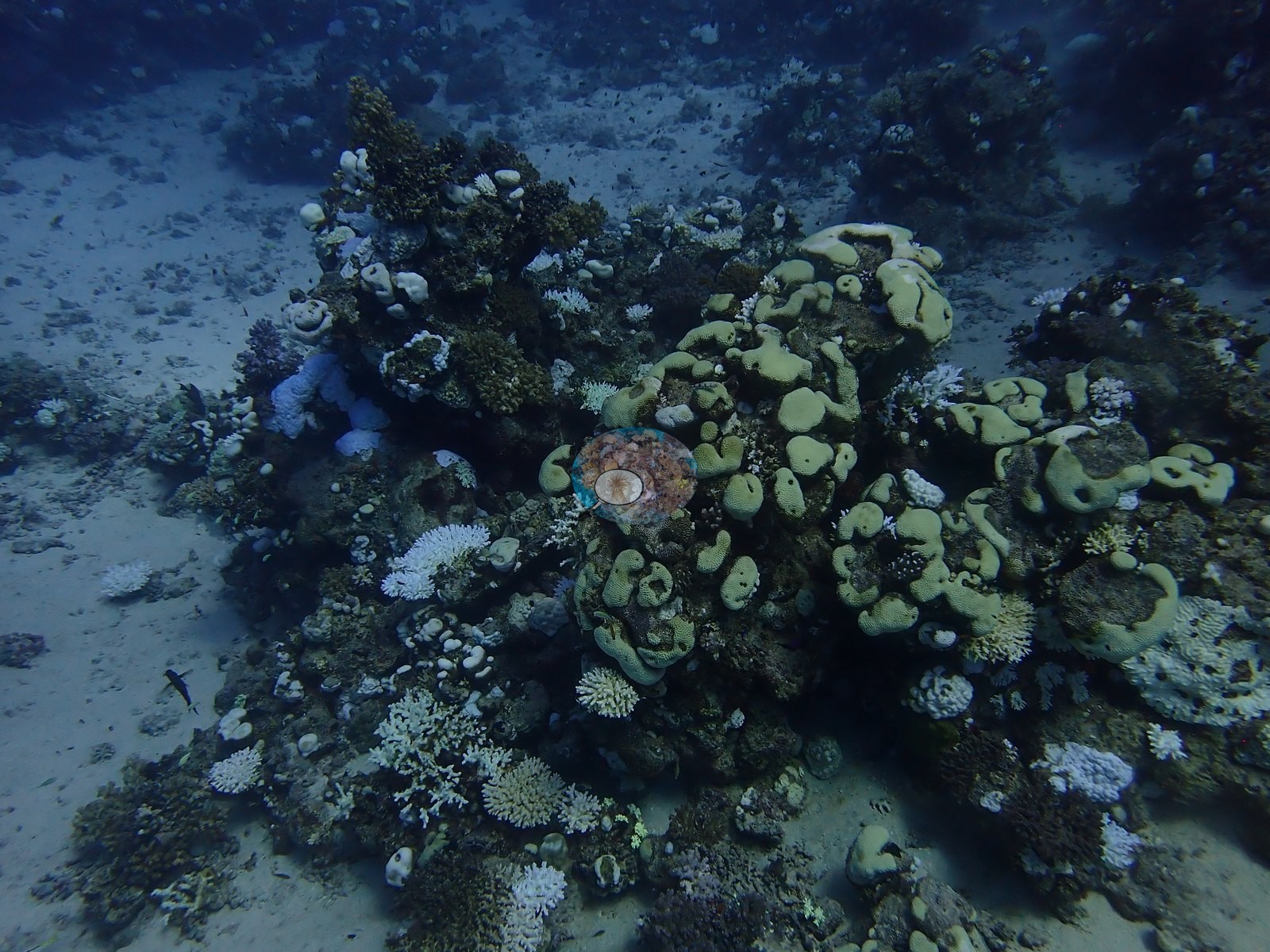
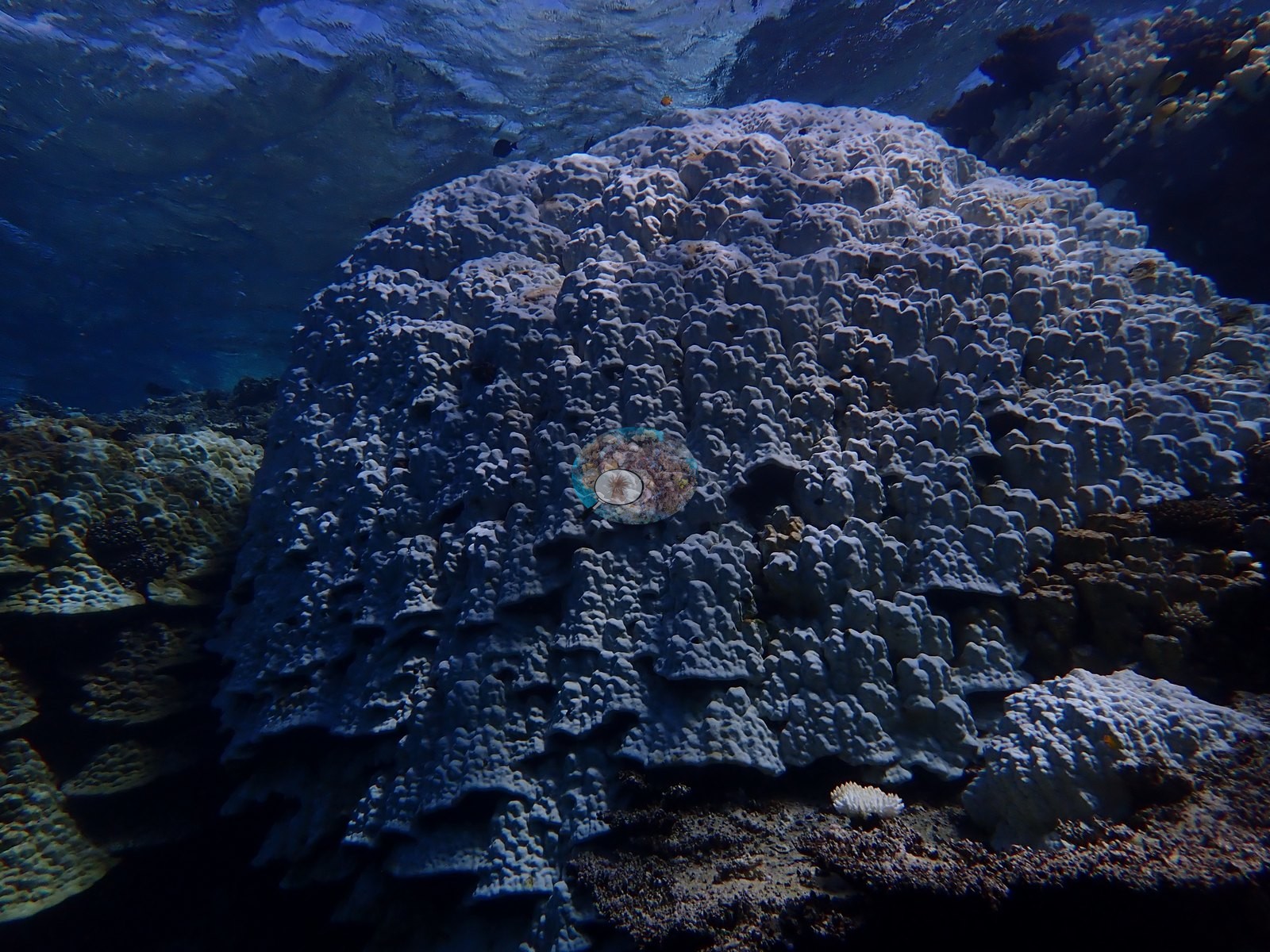
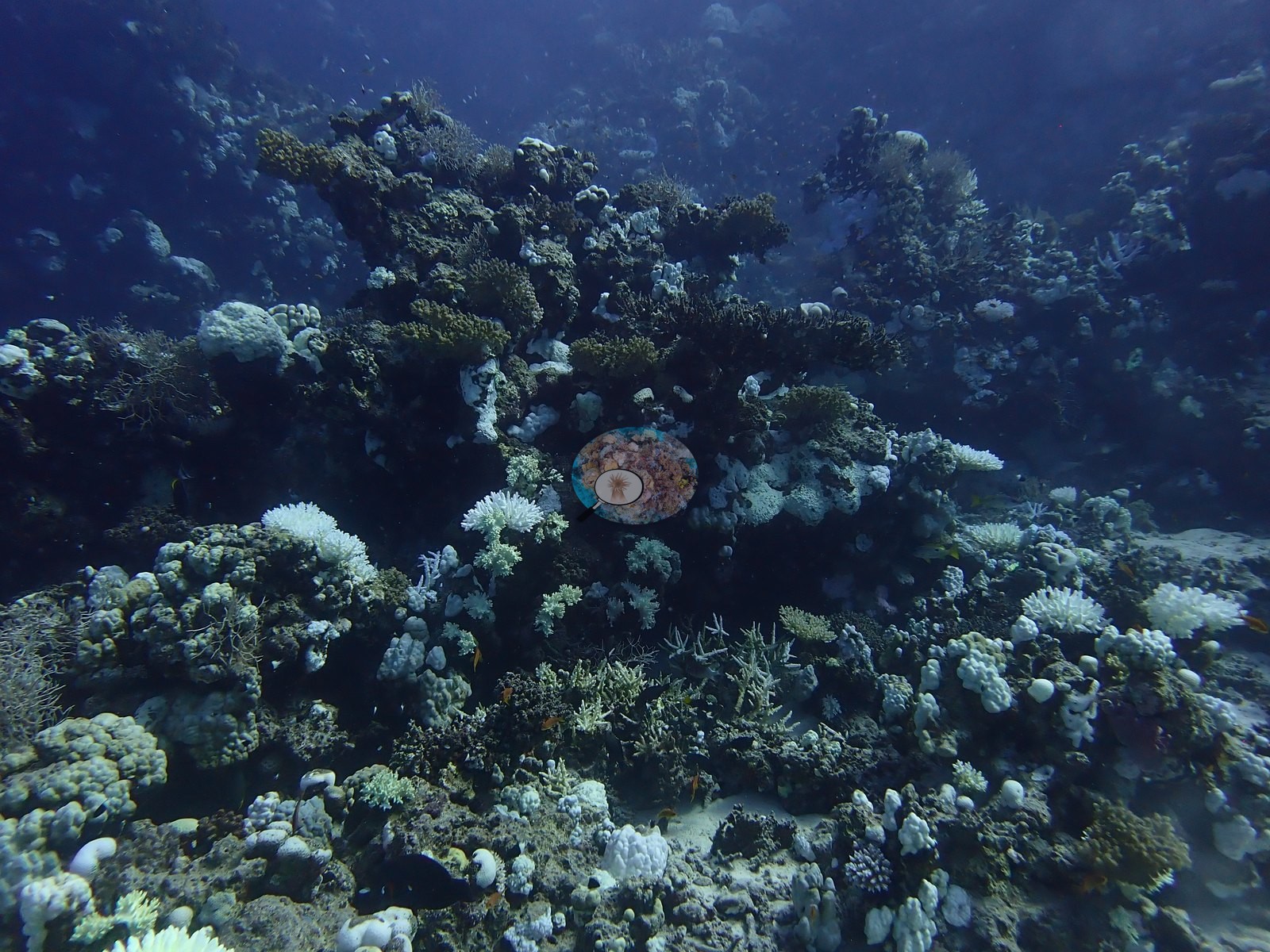
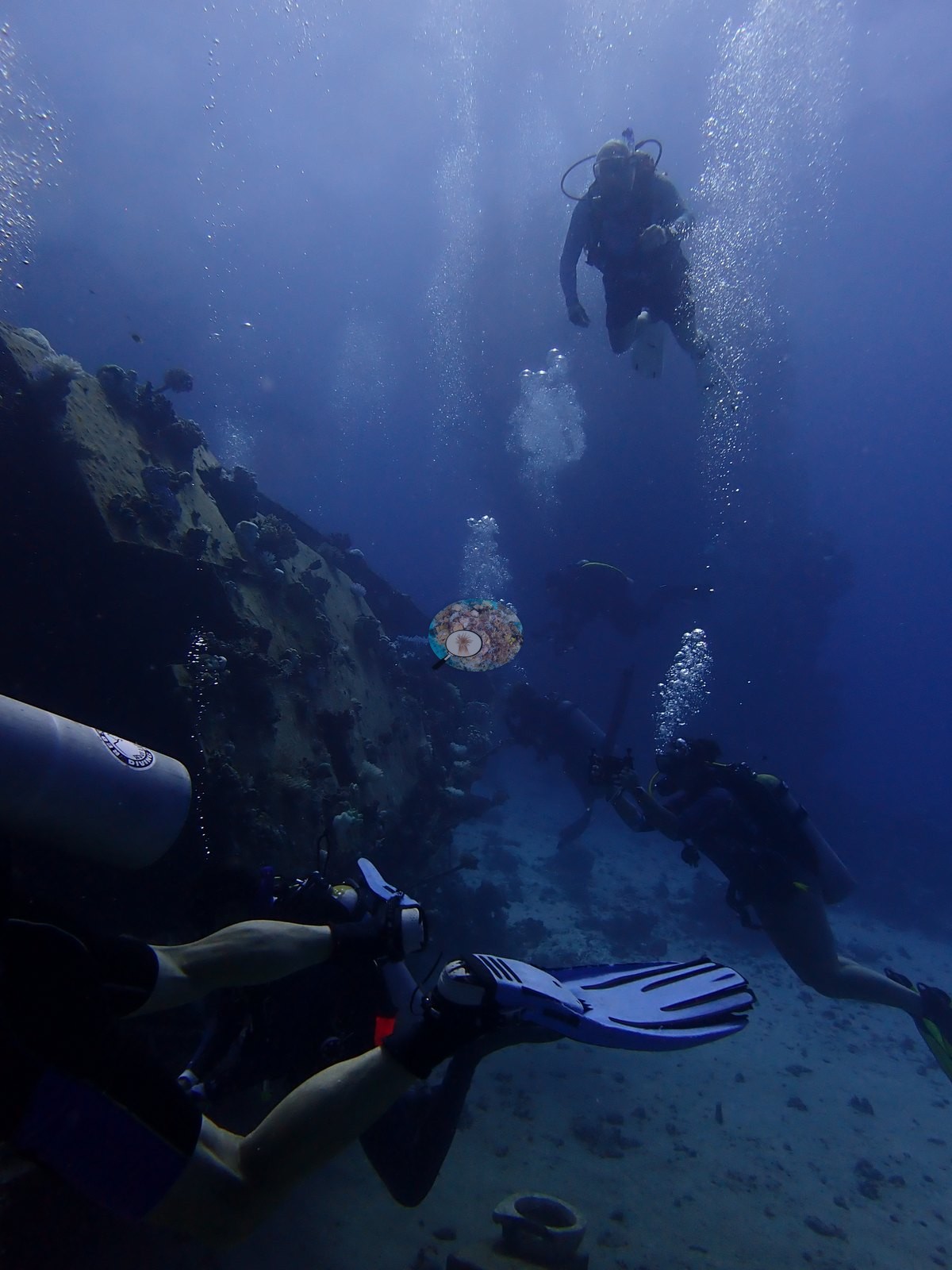
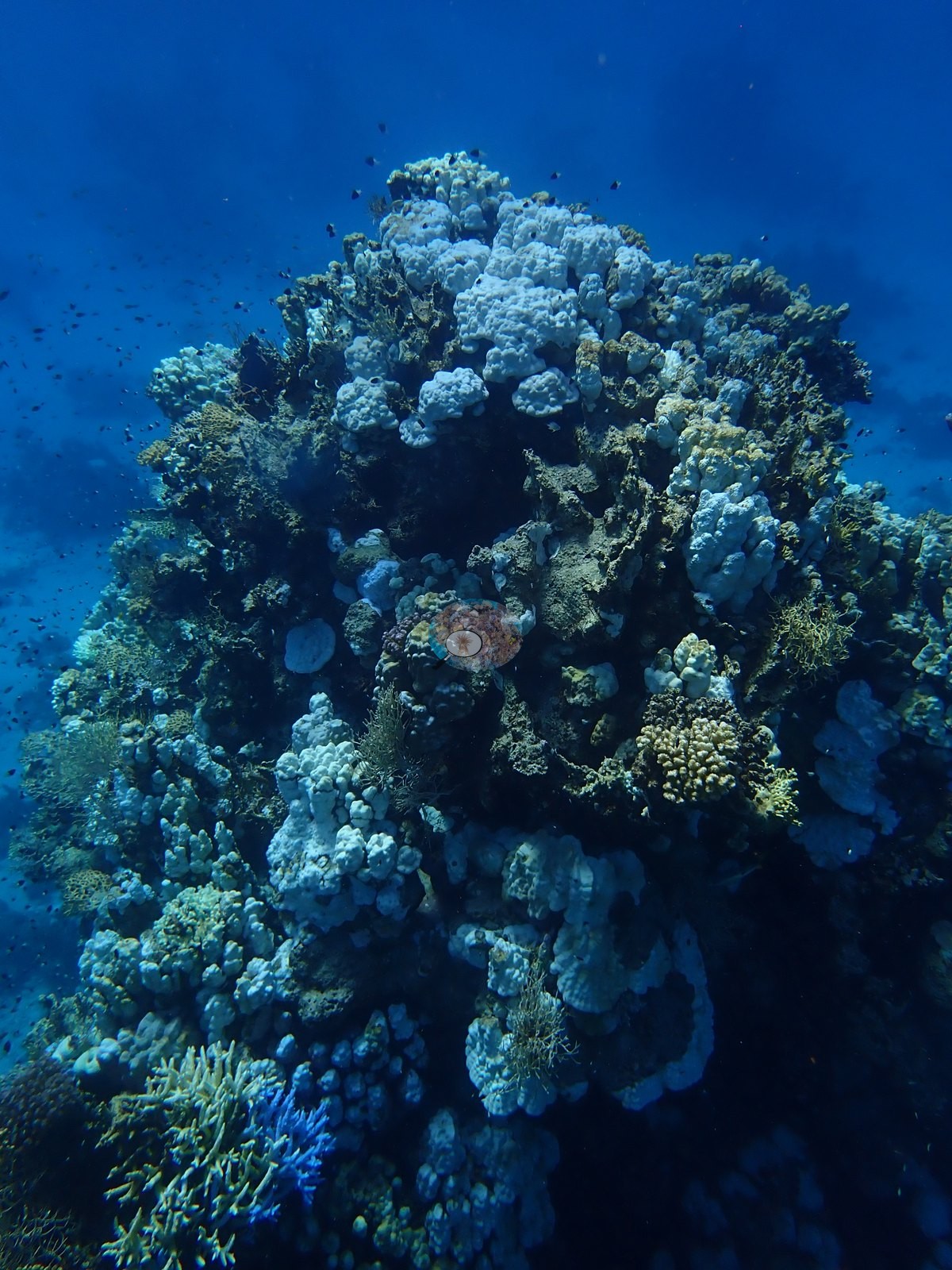
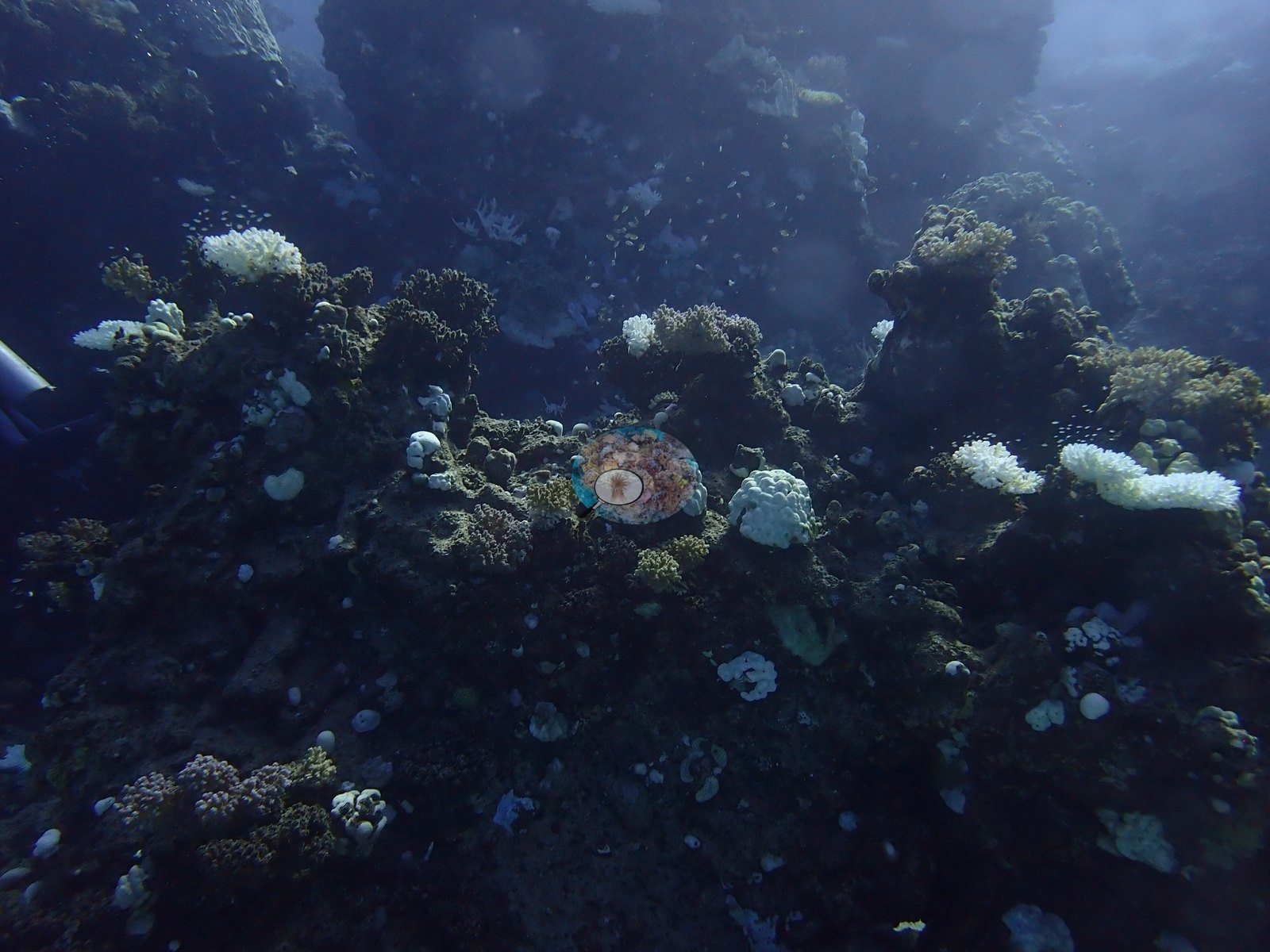
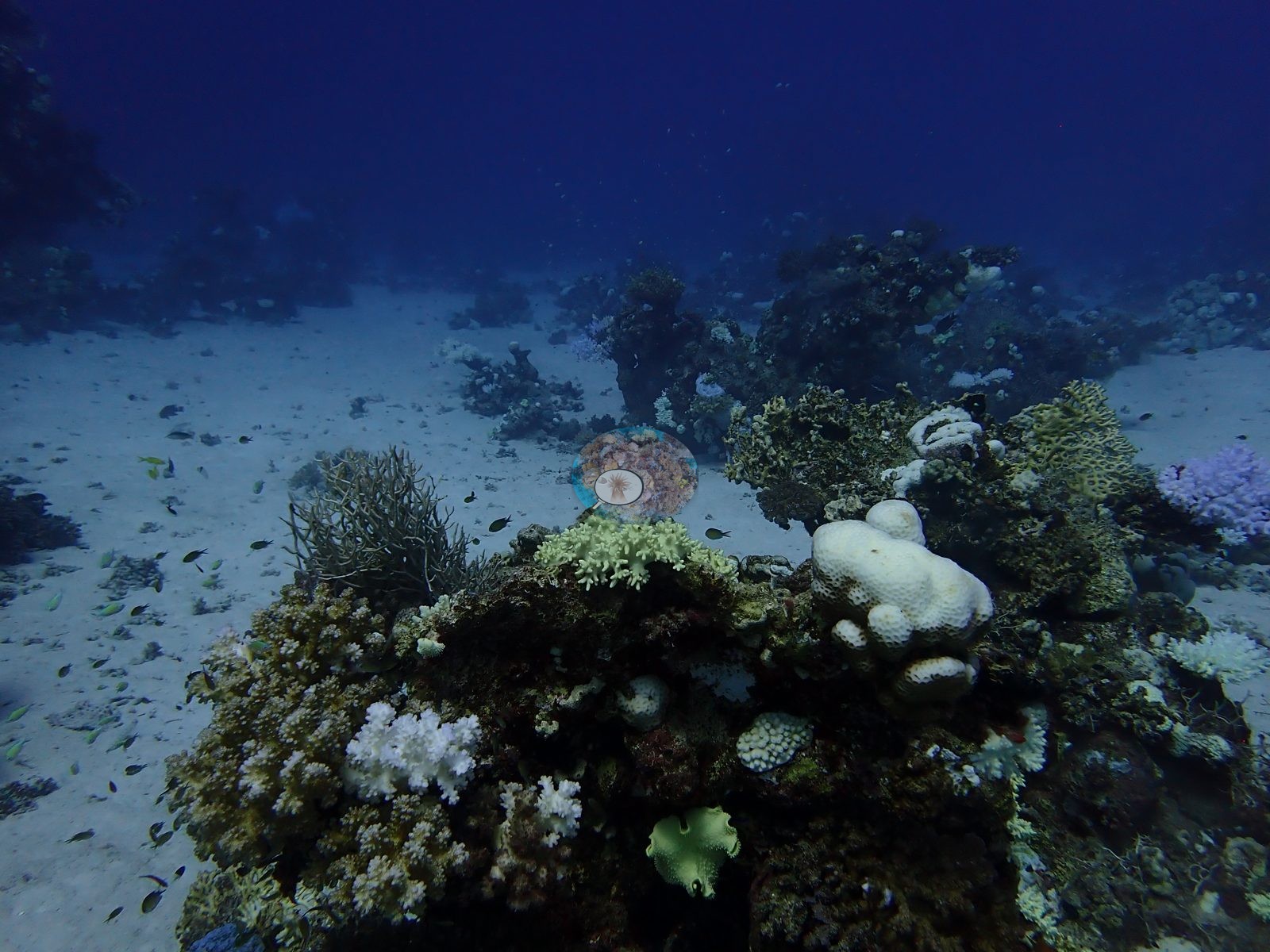
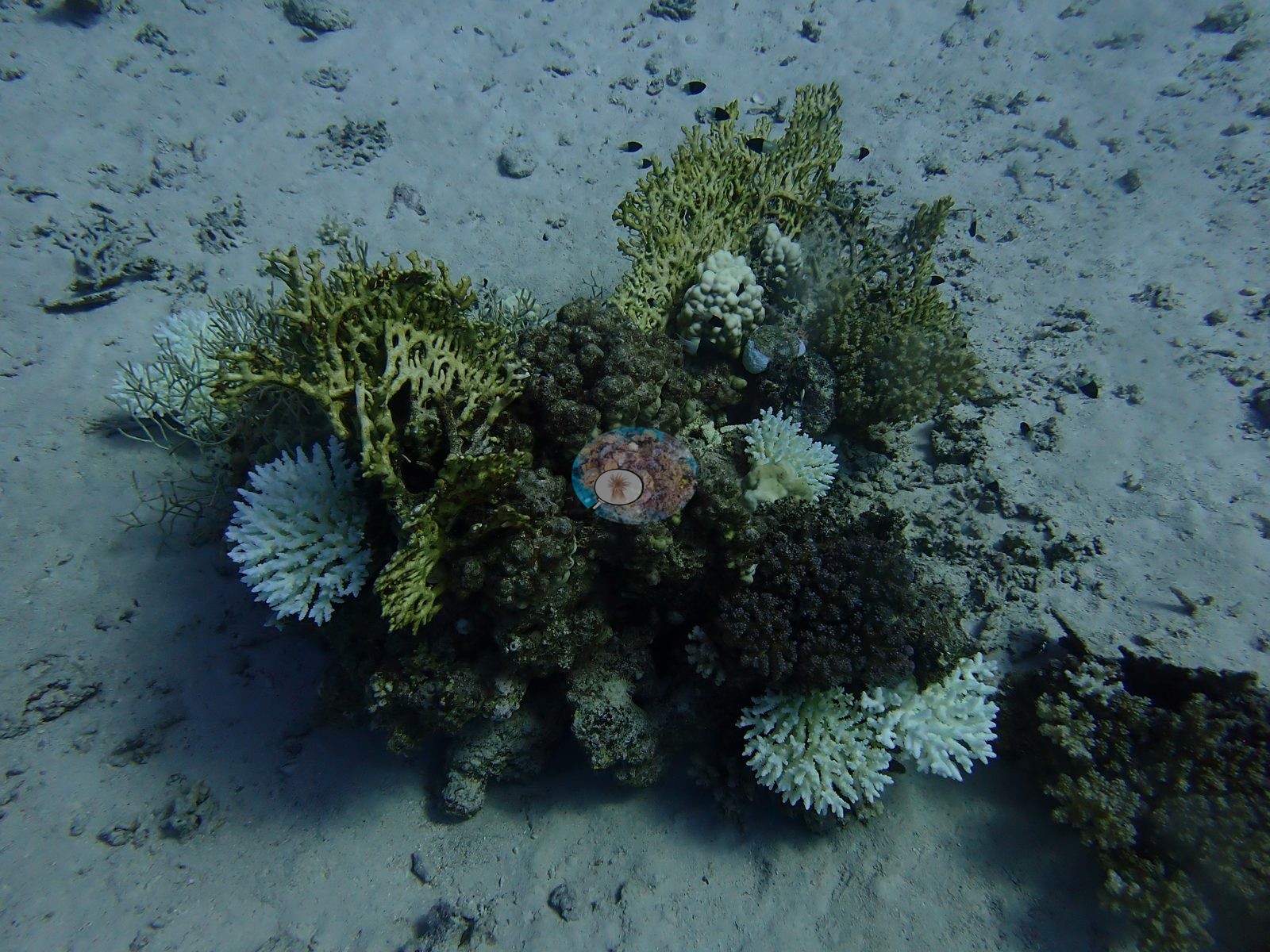
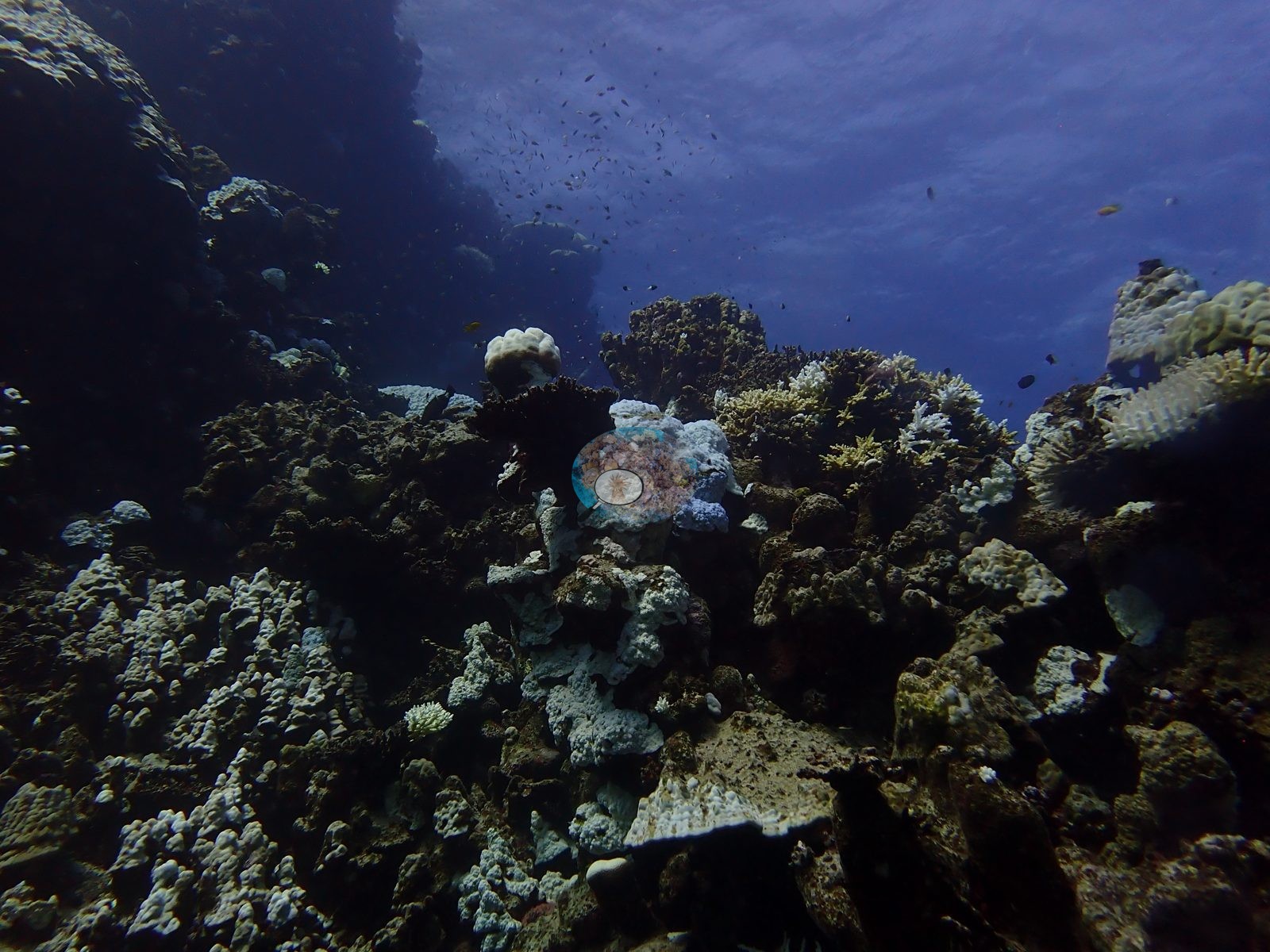
The wreck is the site's defining feature and it is not mentioned anywhere in the site record. The frames show a substantial steel vessel lying over on the reef, its hull ribs and deck framing standing open like a cage, plating rusted to deep red-brown and orange, with the reef itself visible through the gaps.
General benthic features
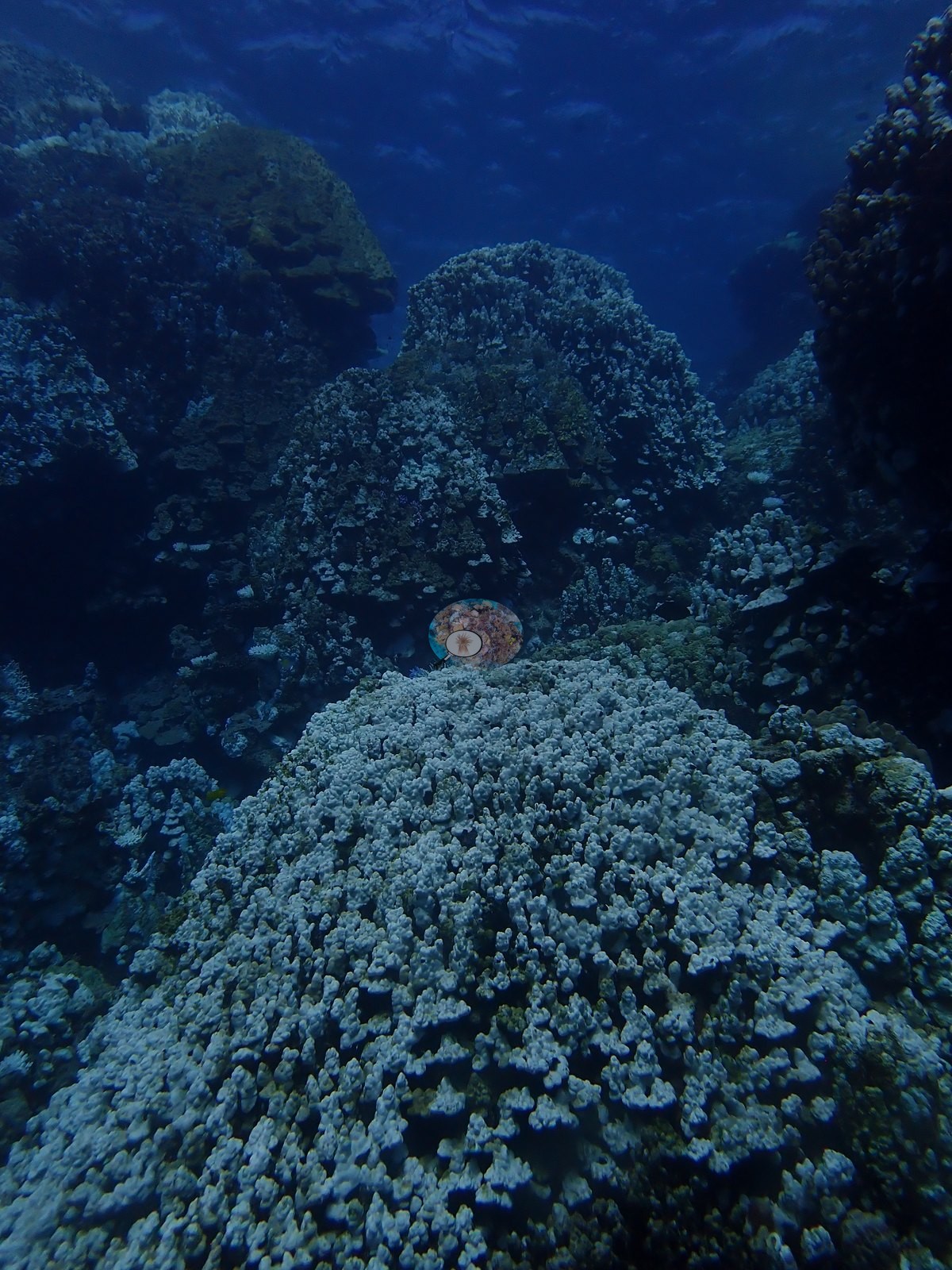
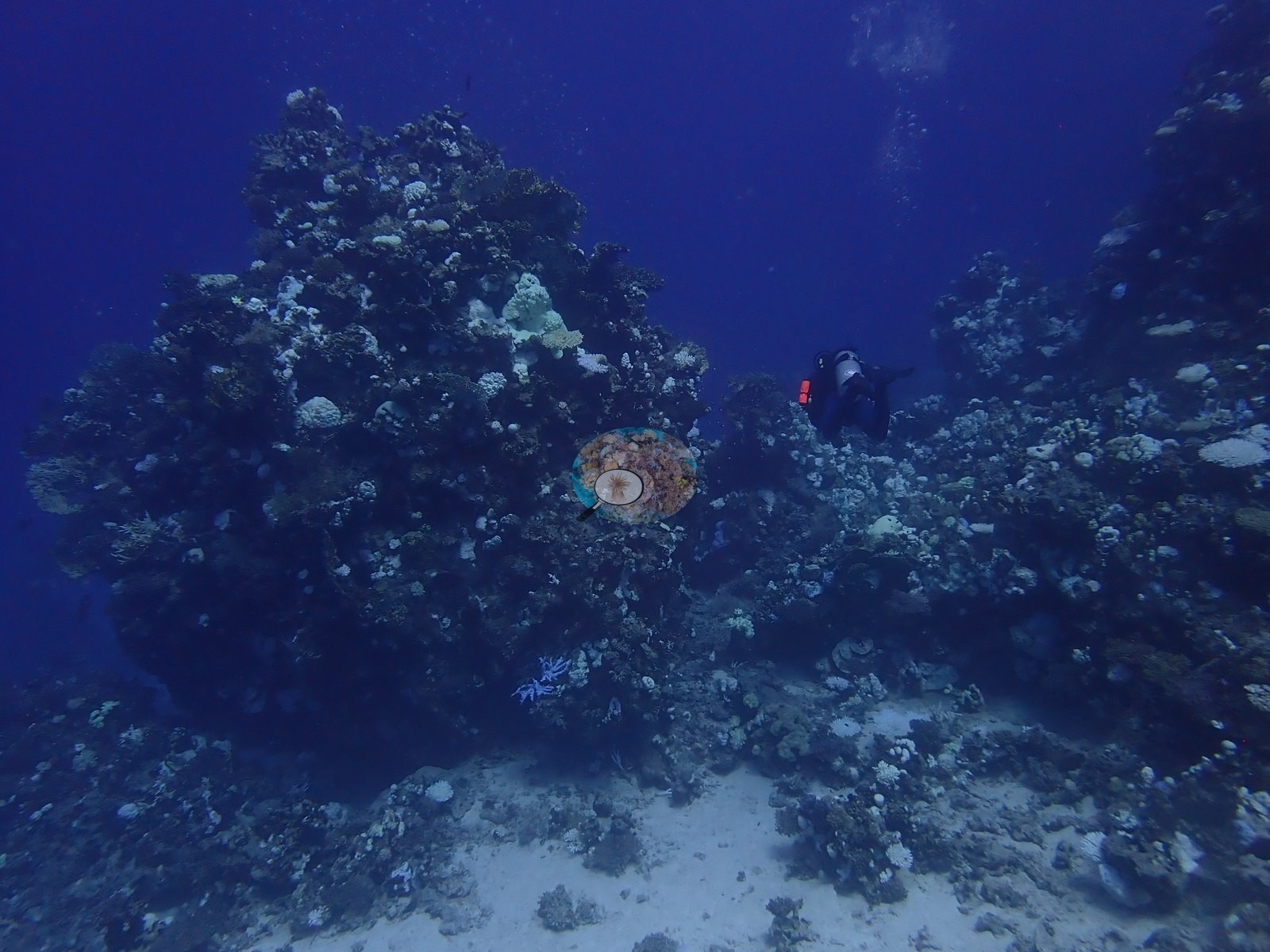
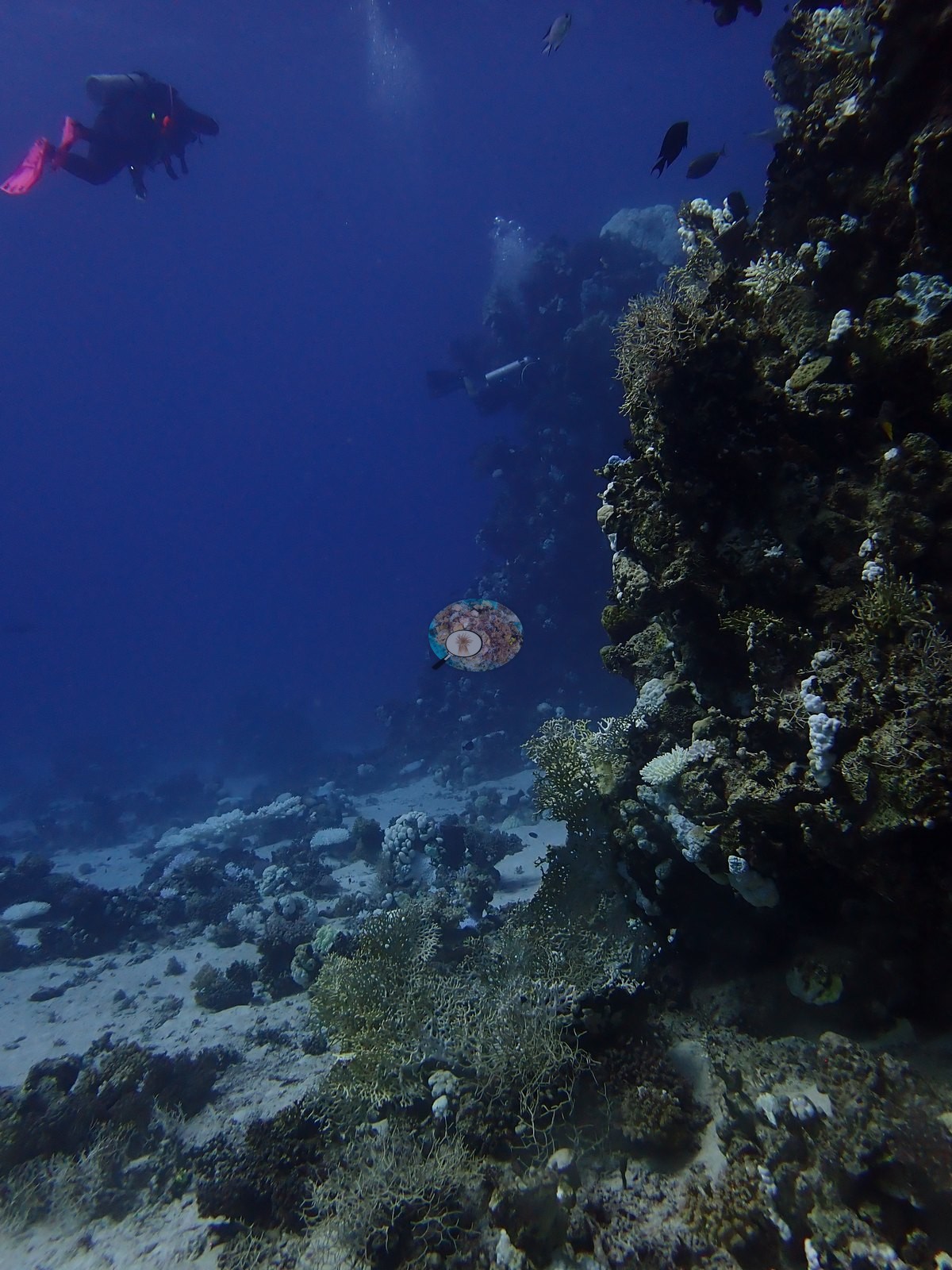
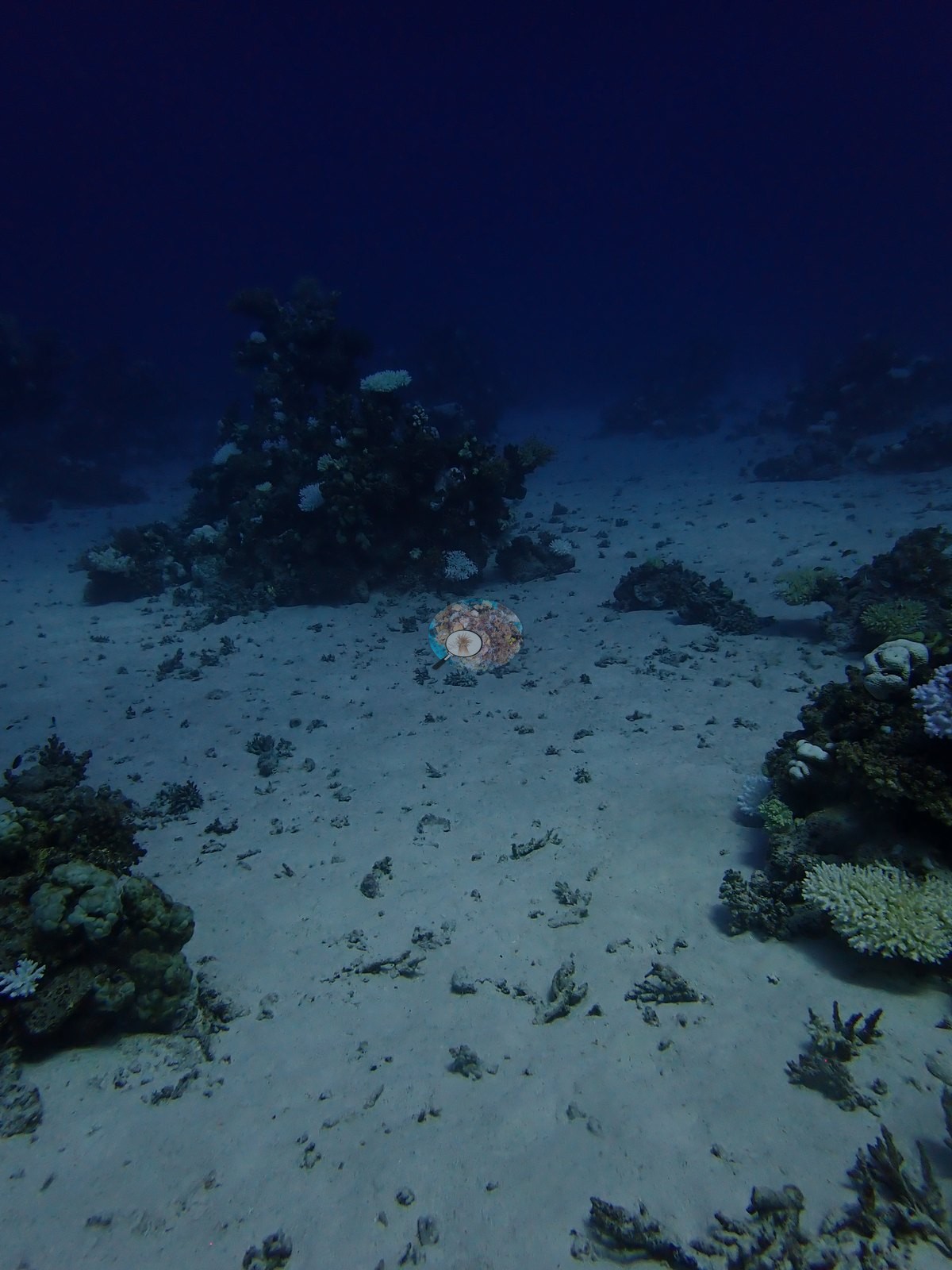
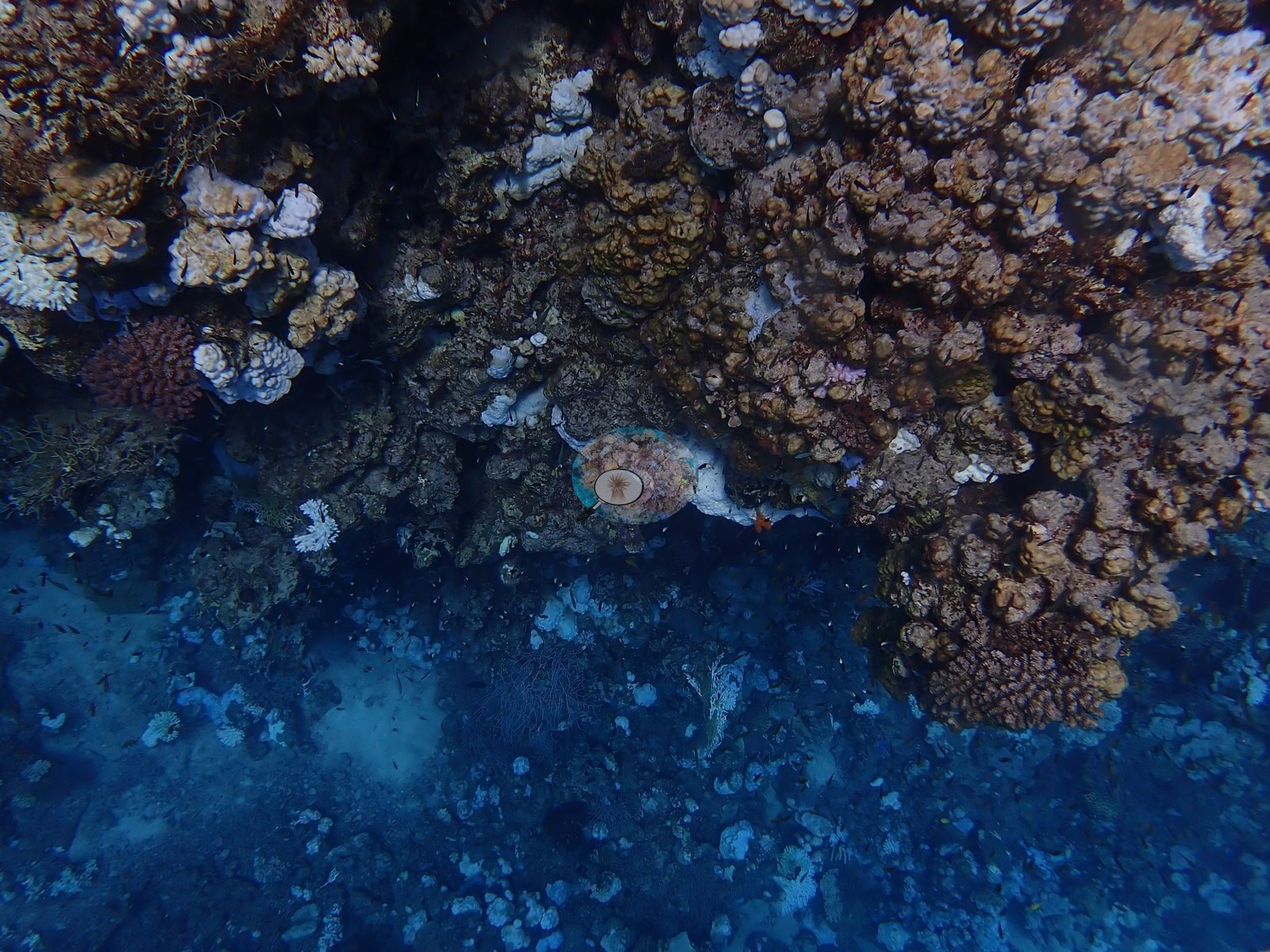
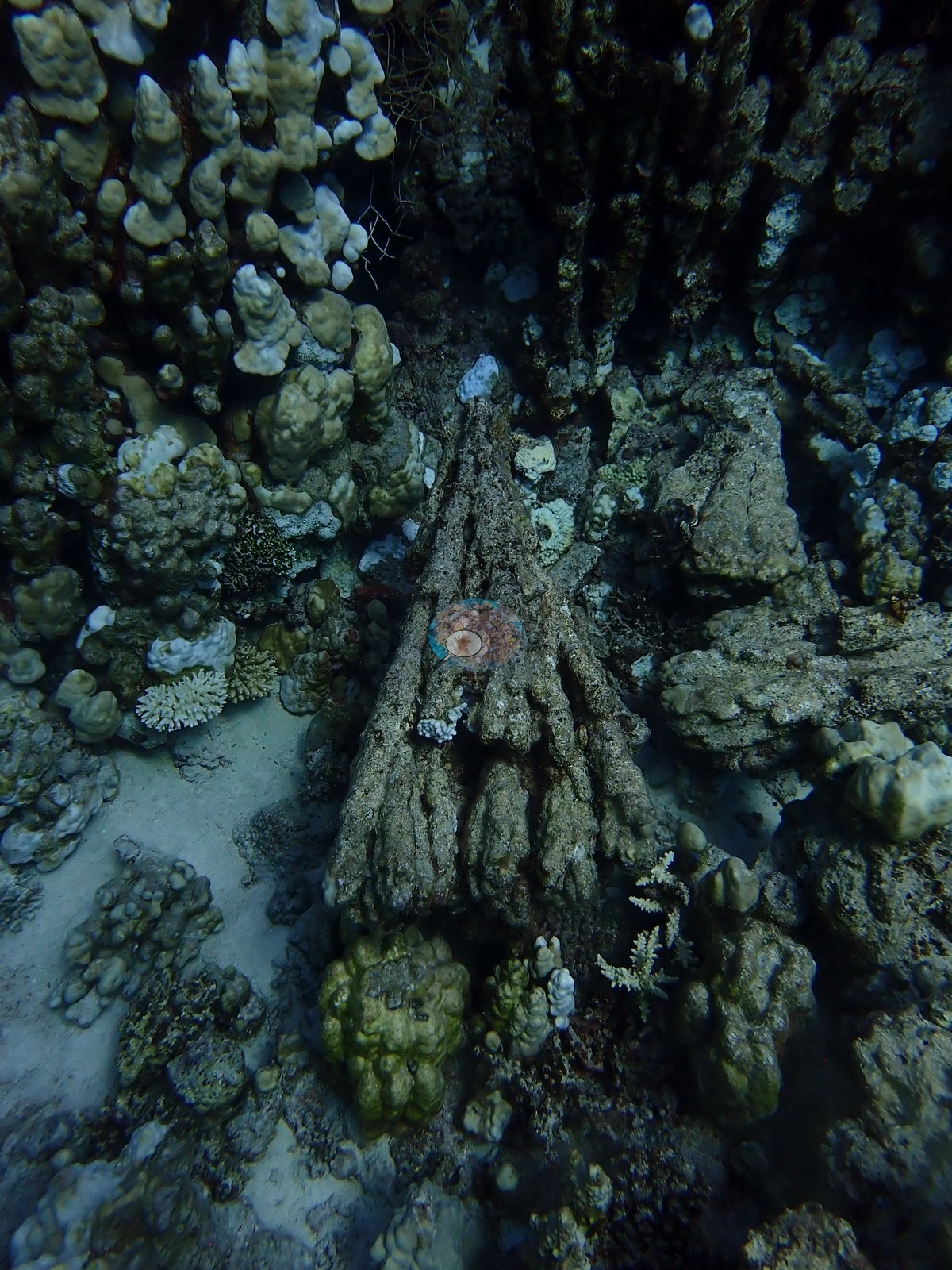
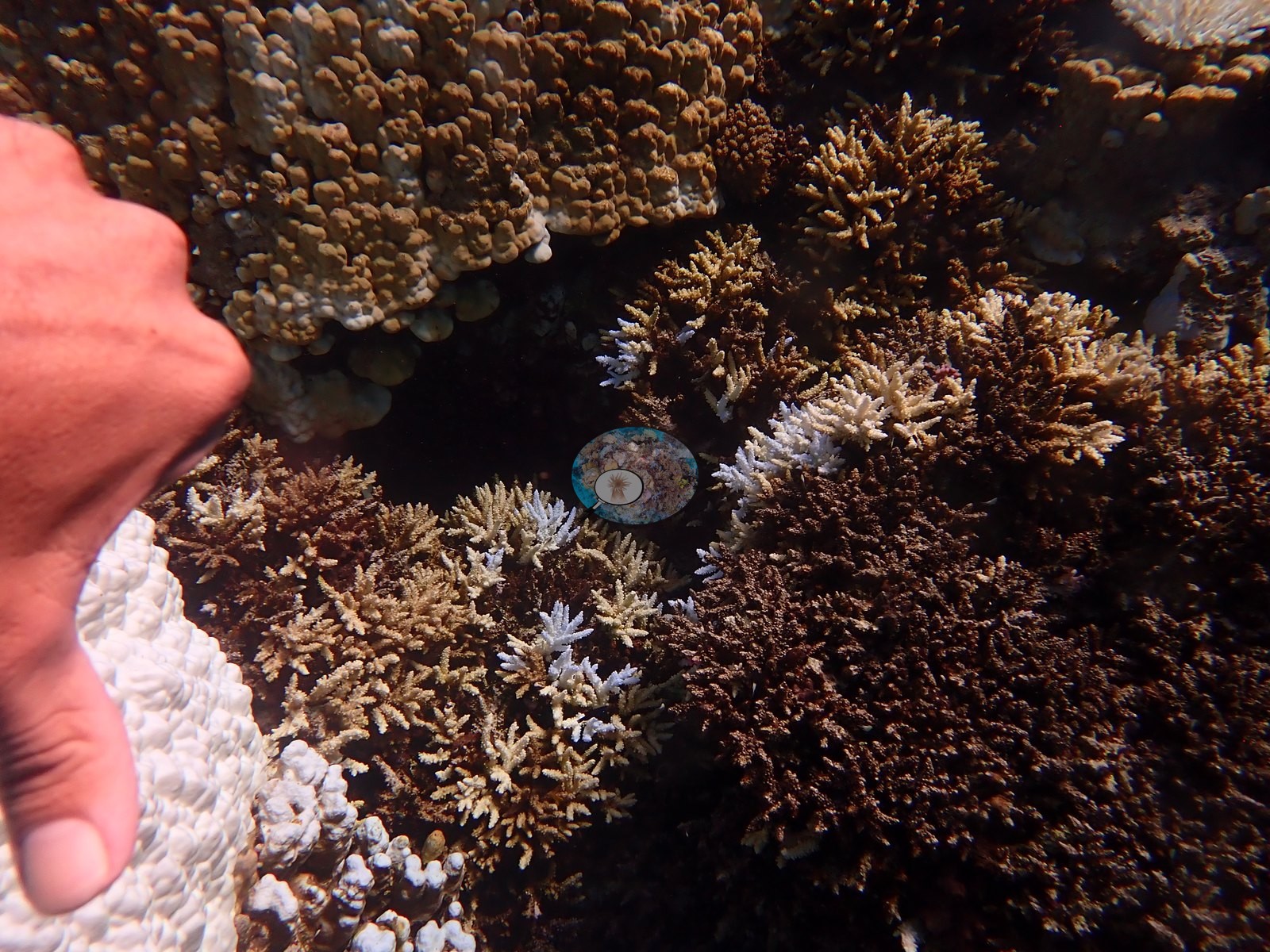
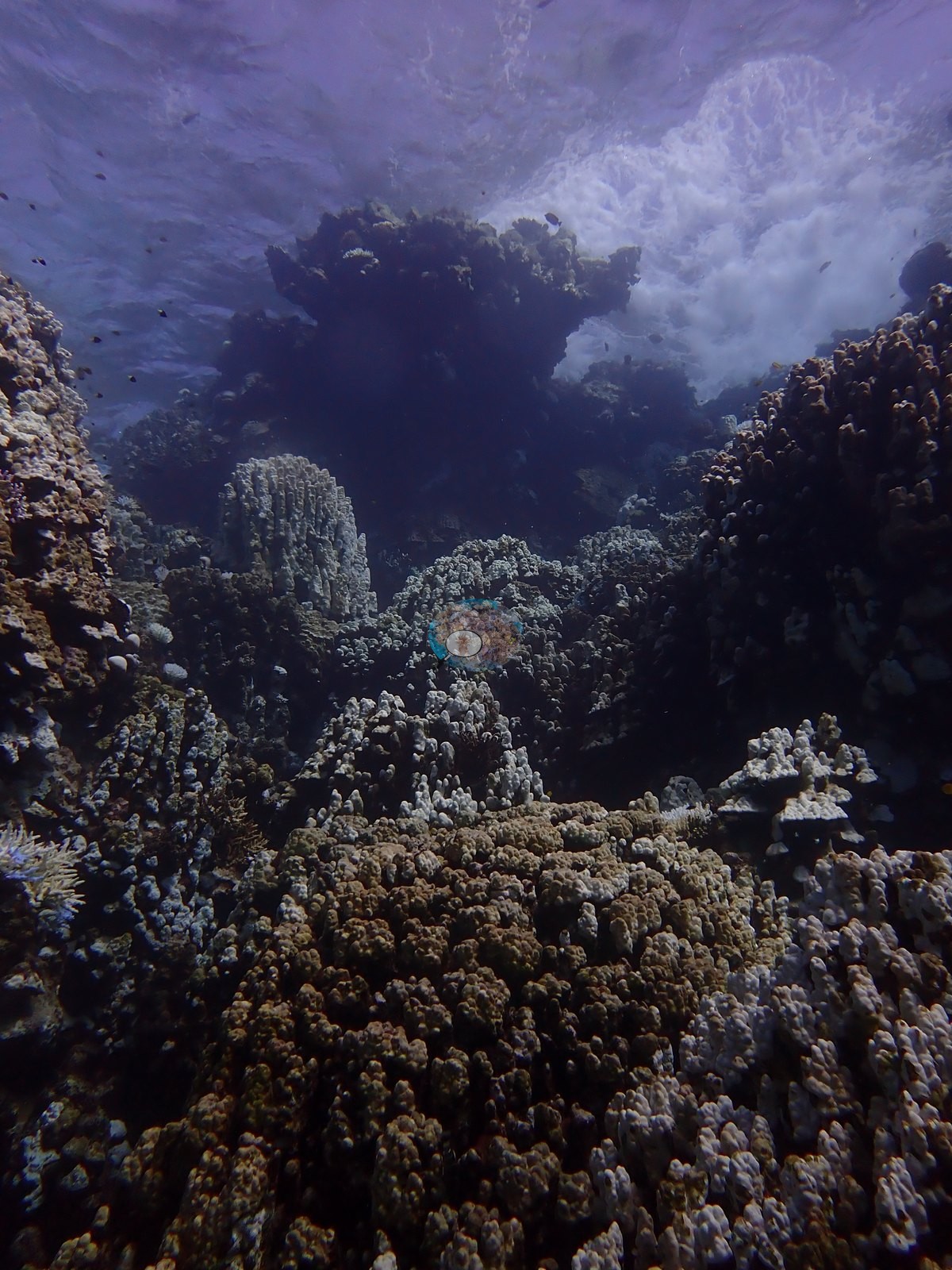
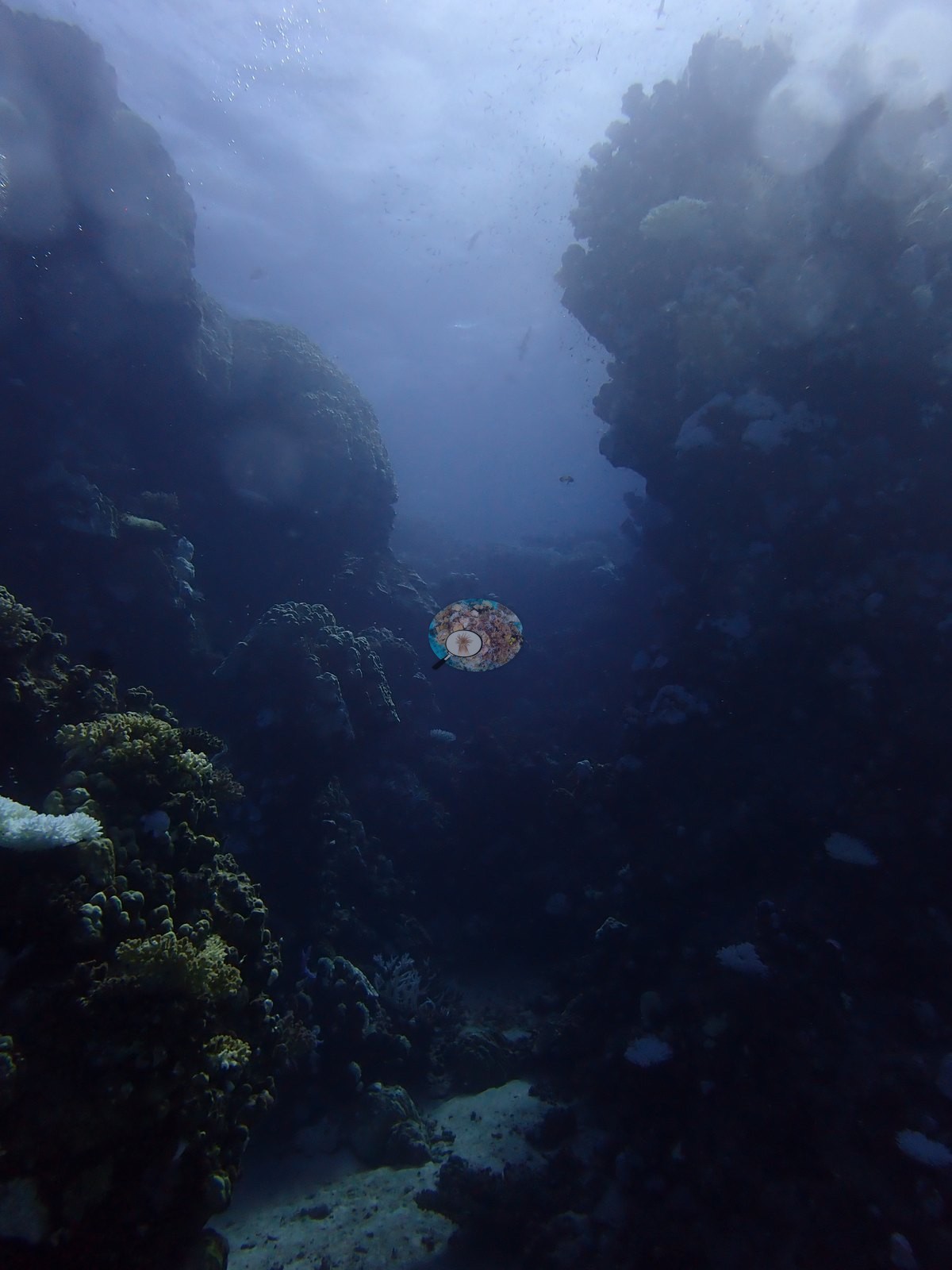
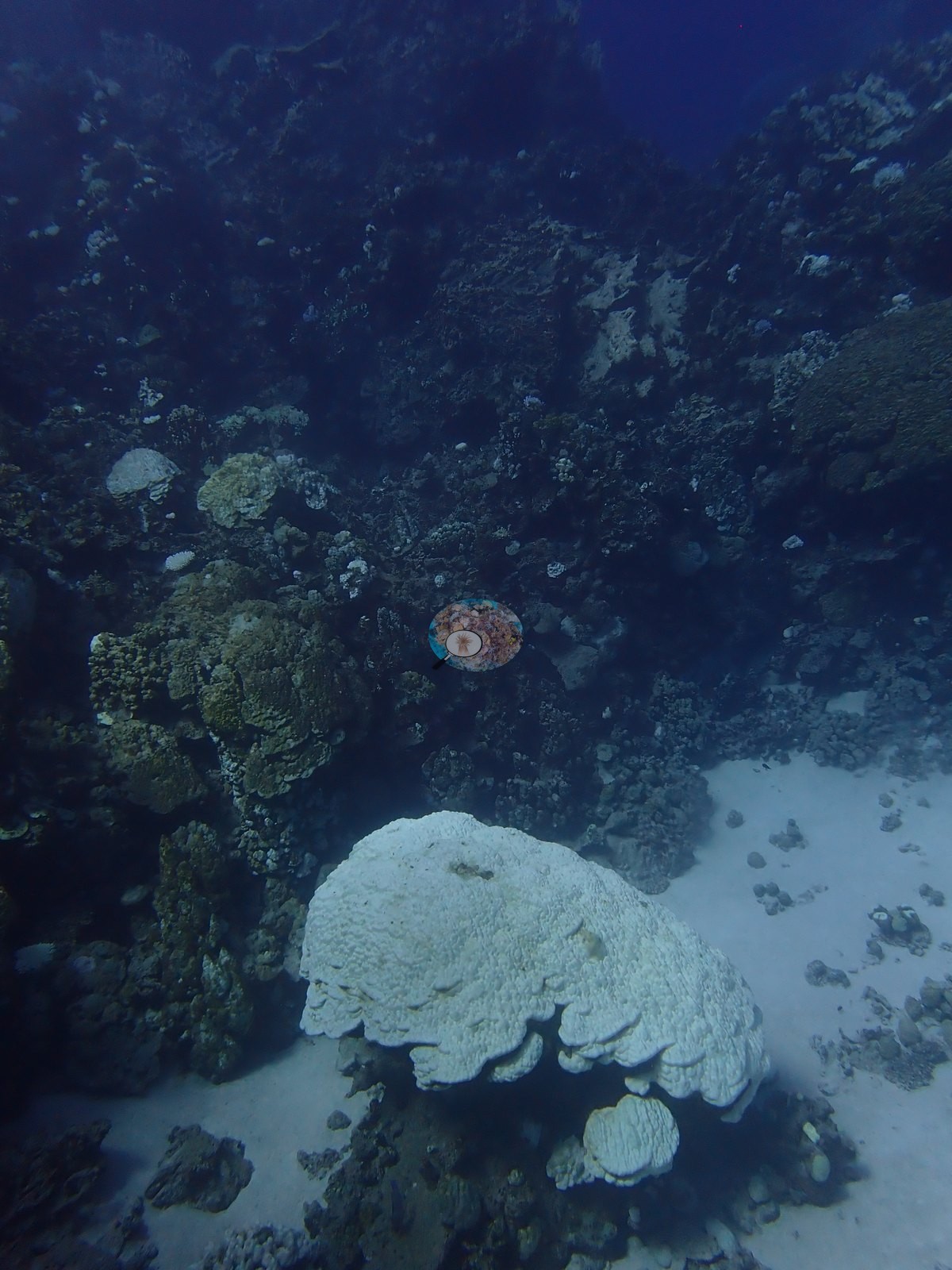
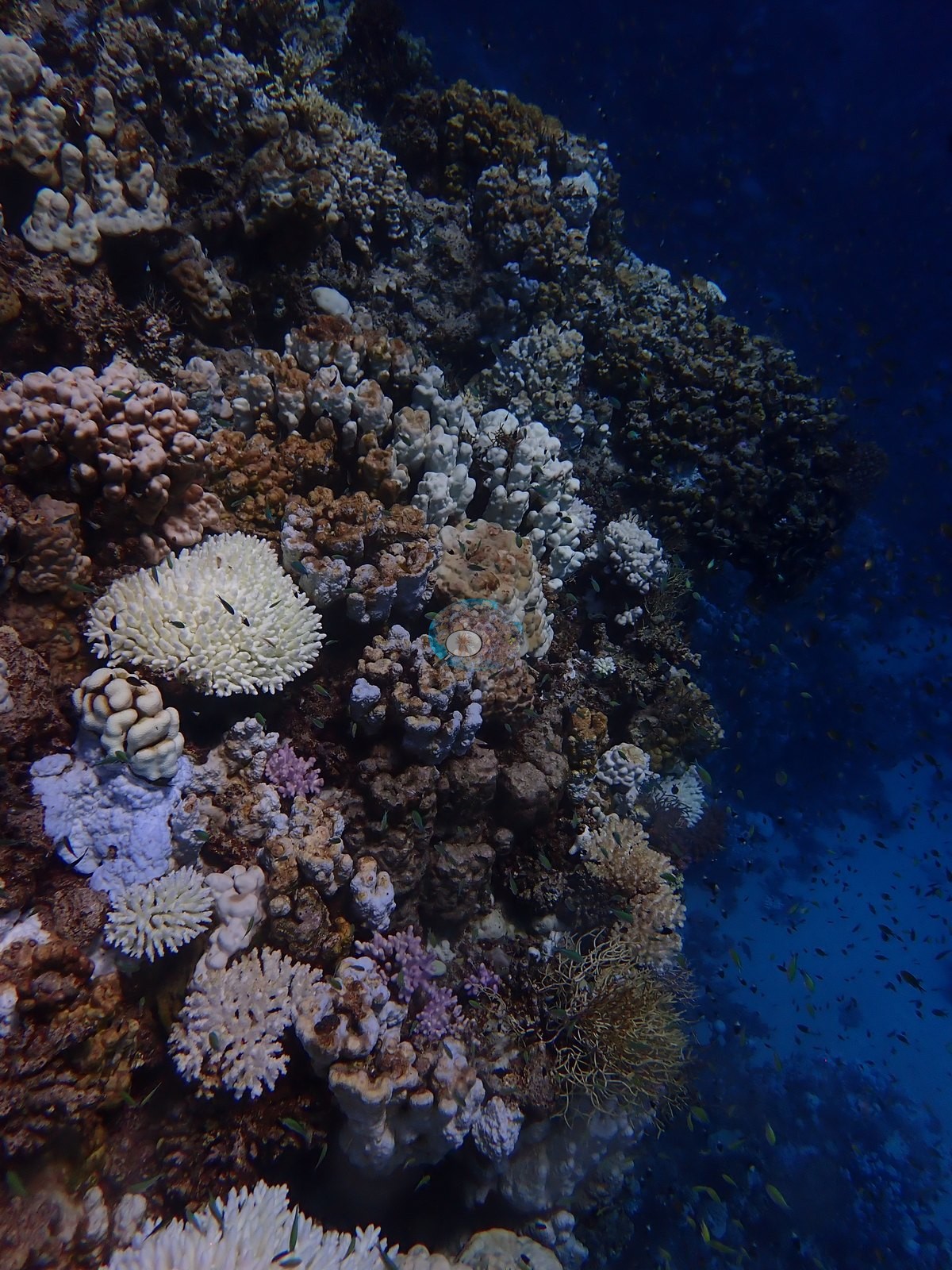
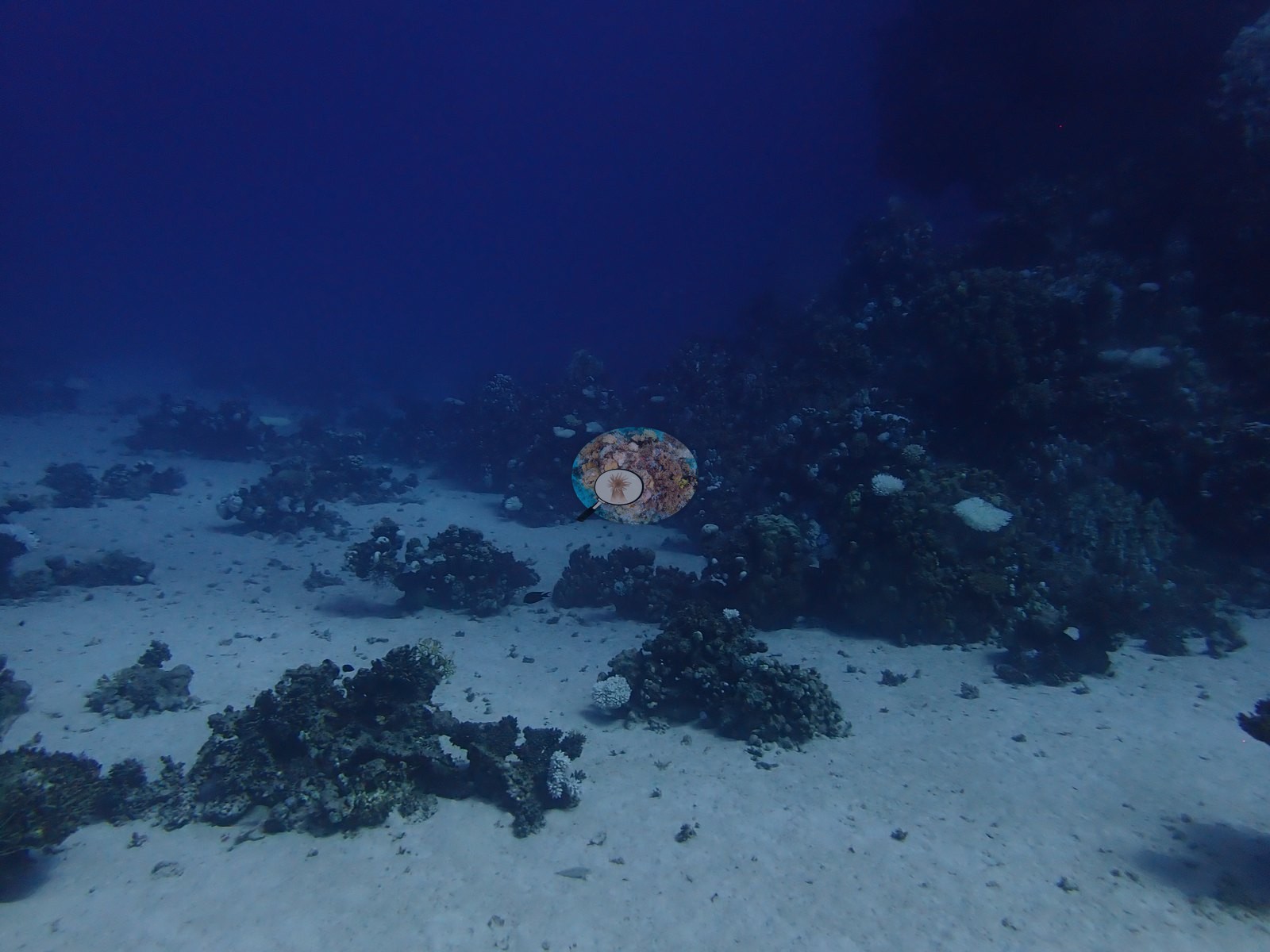
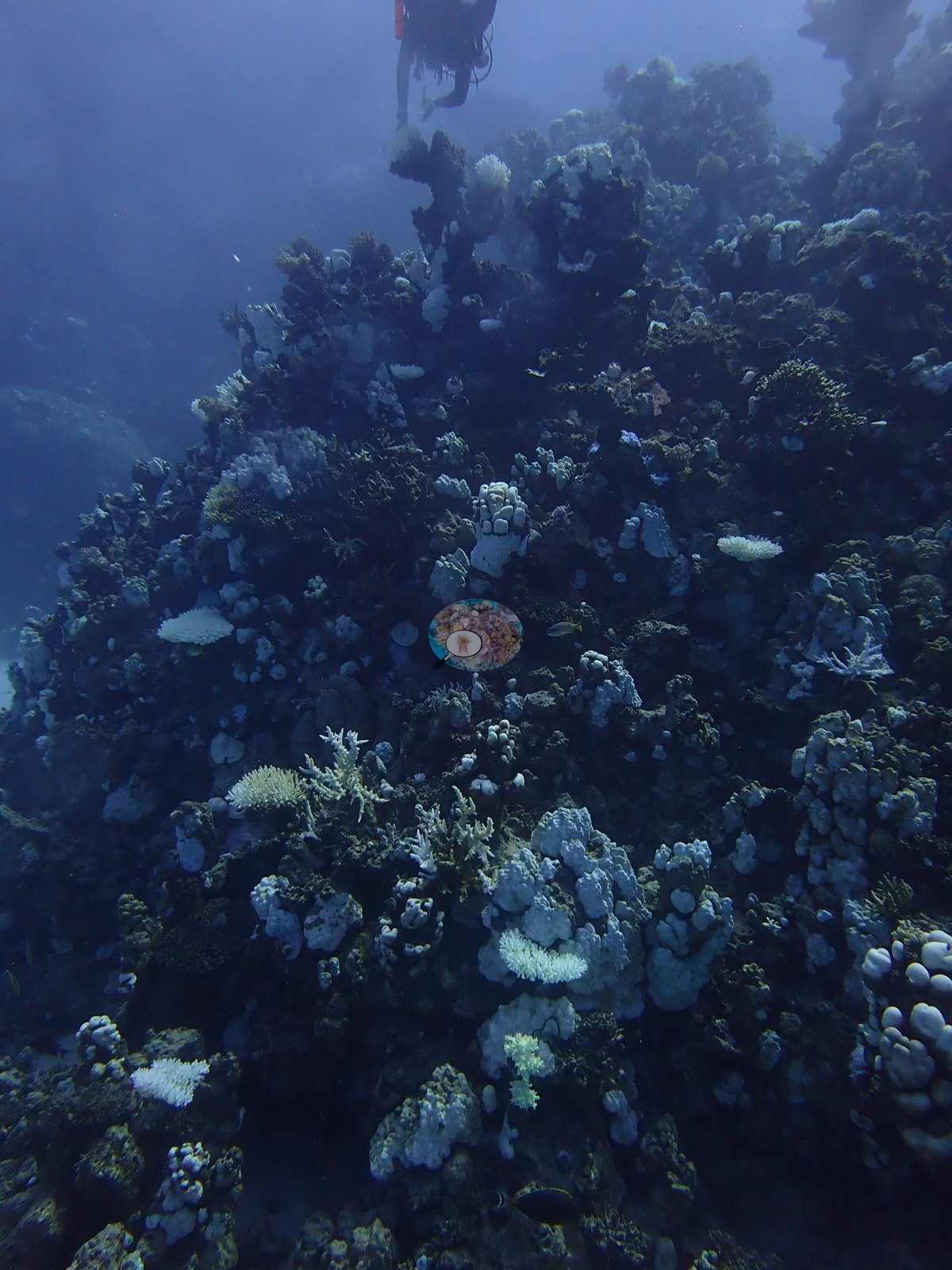
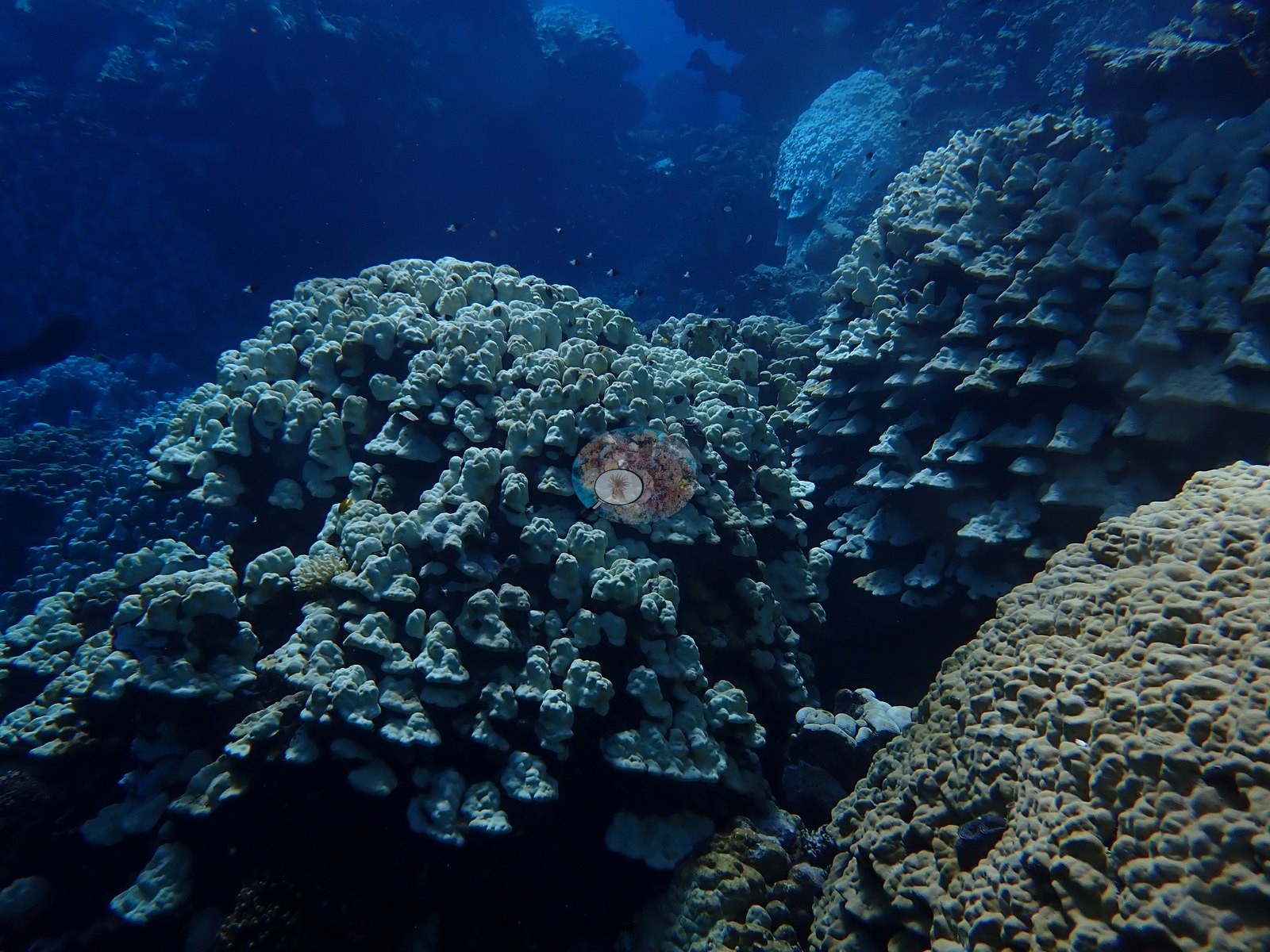
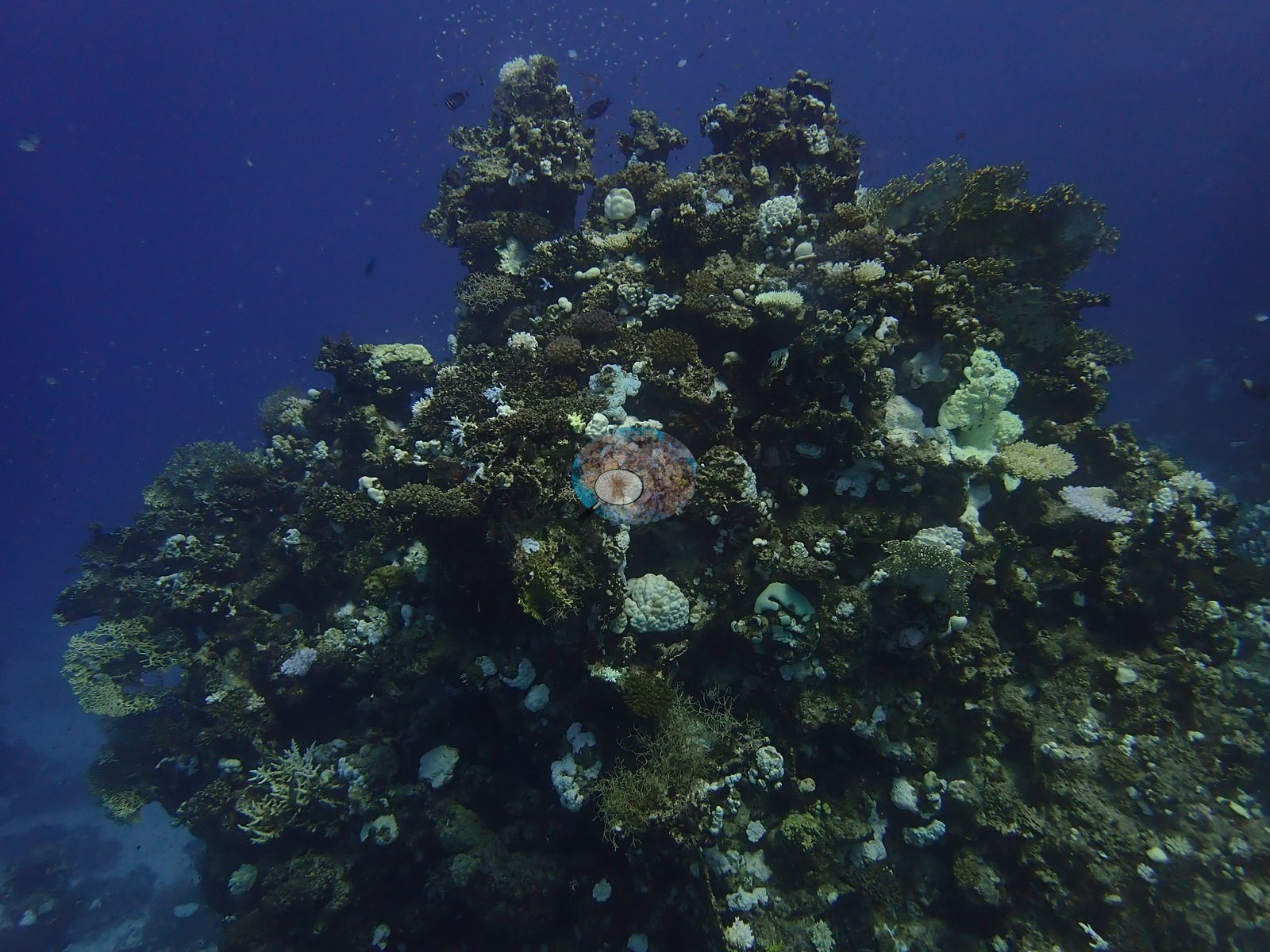
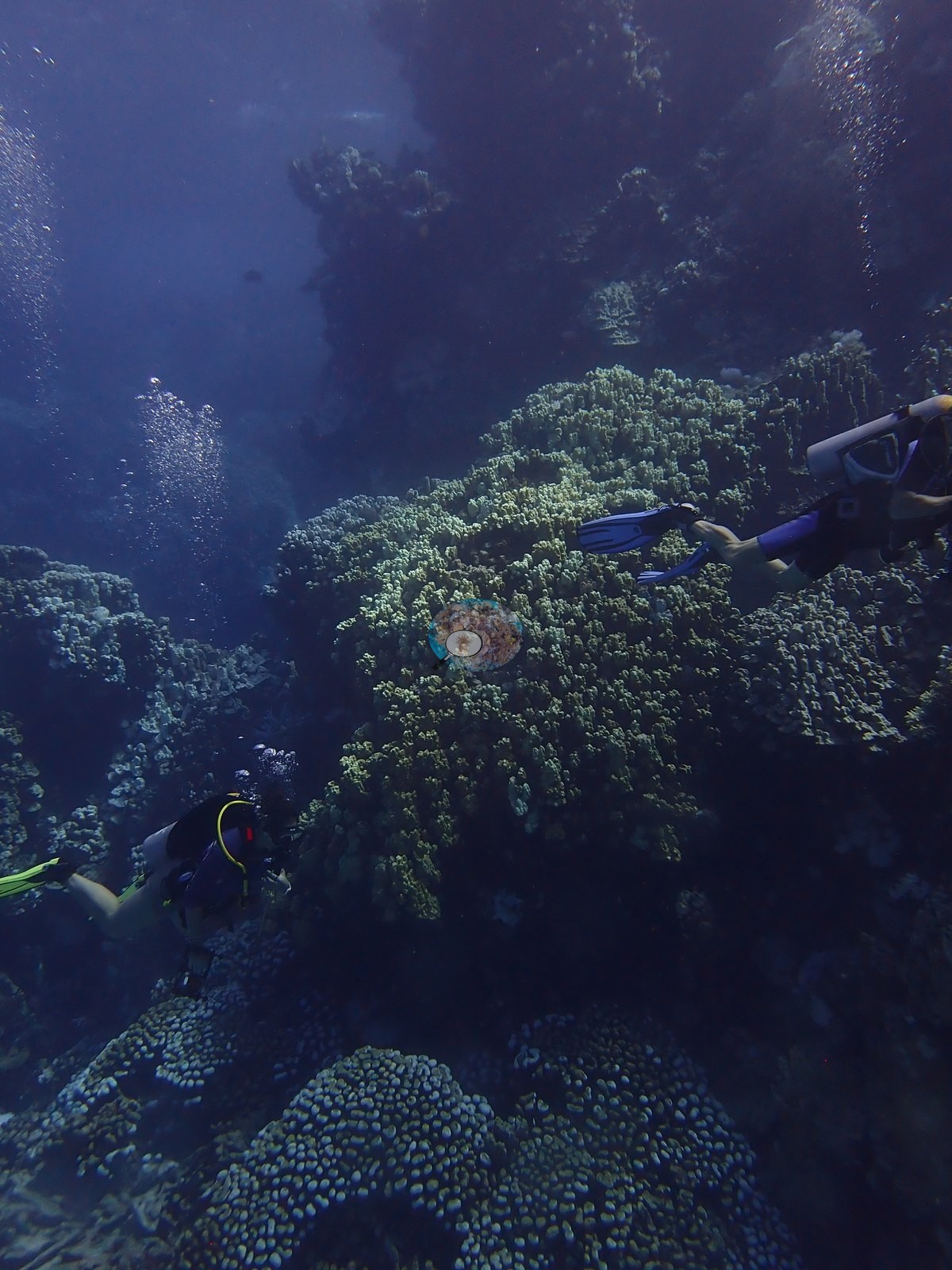
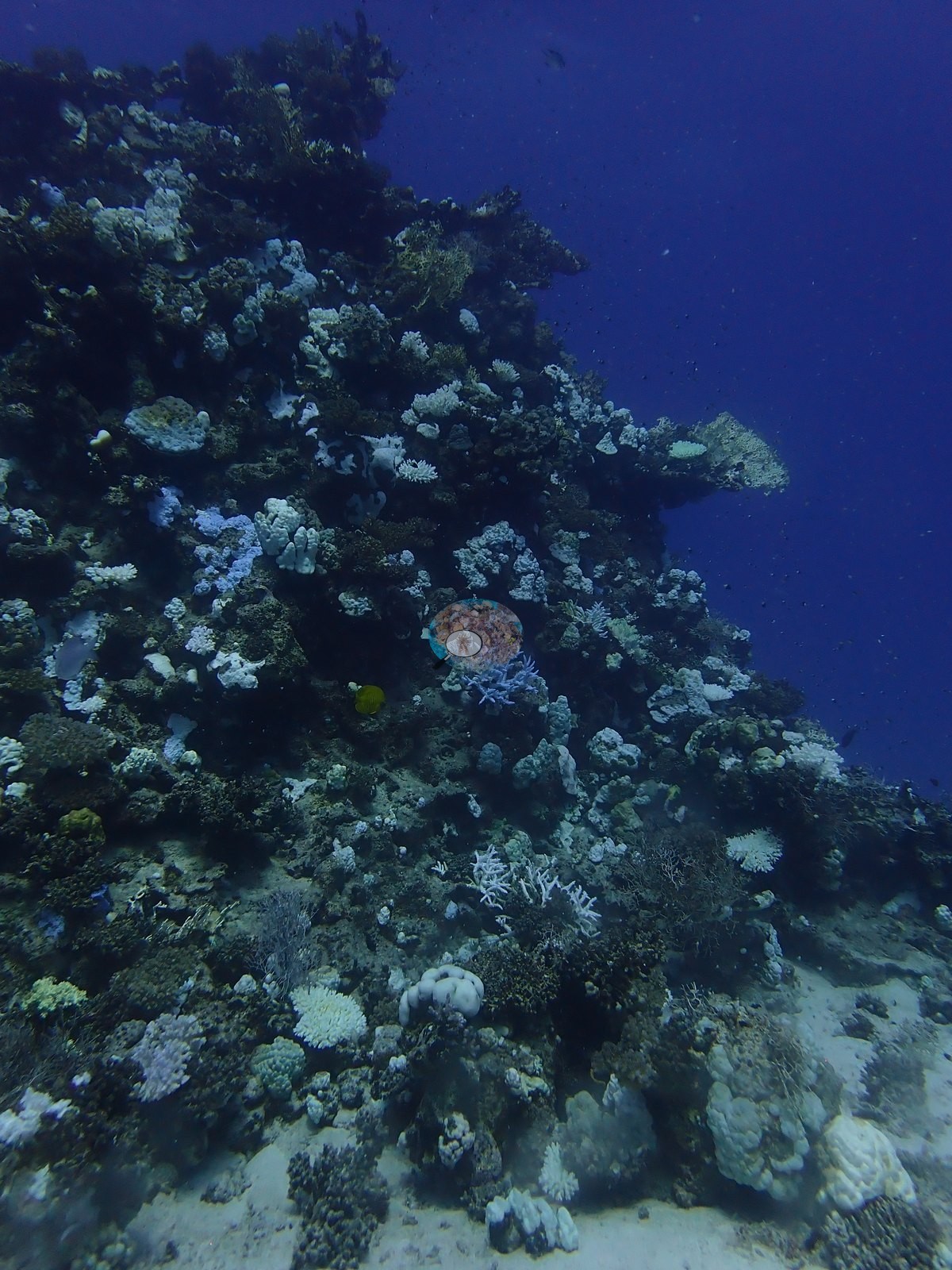
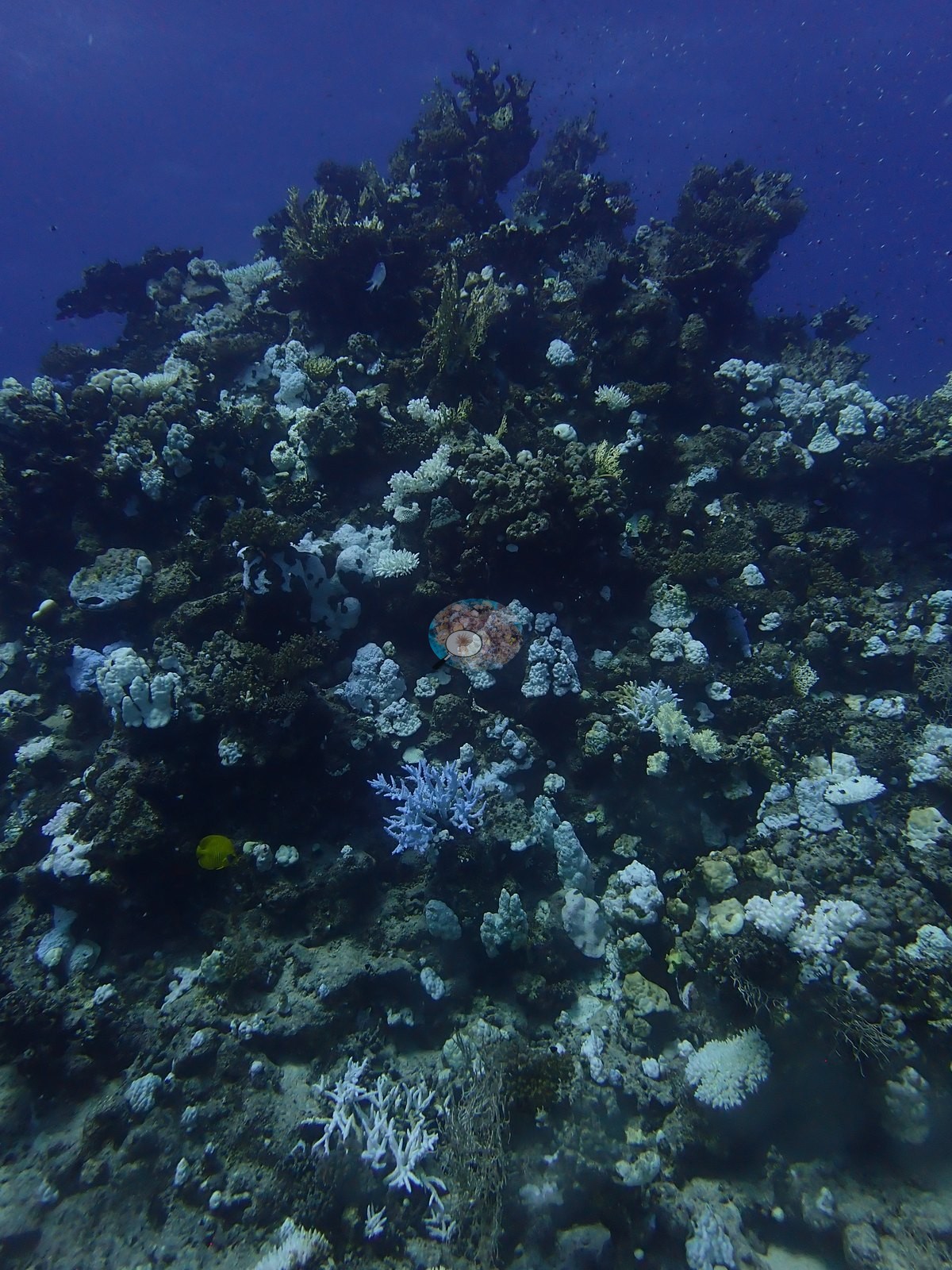
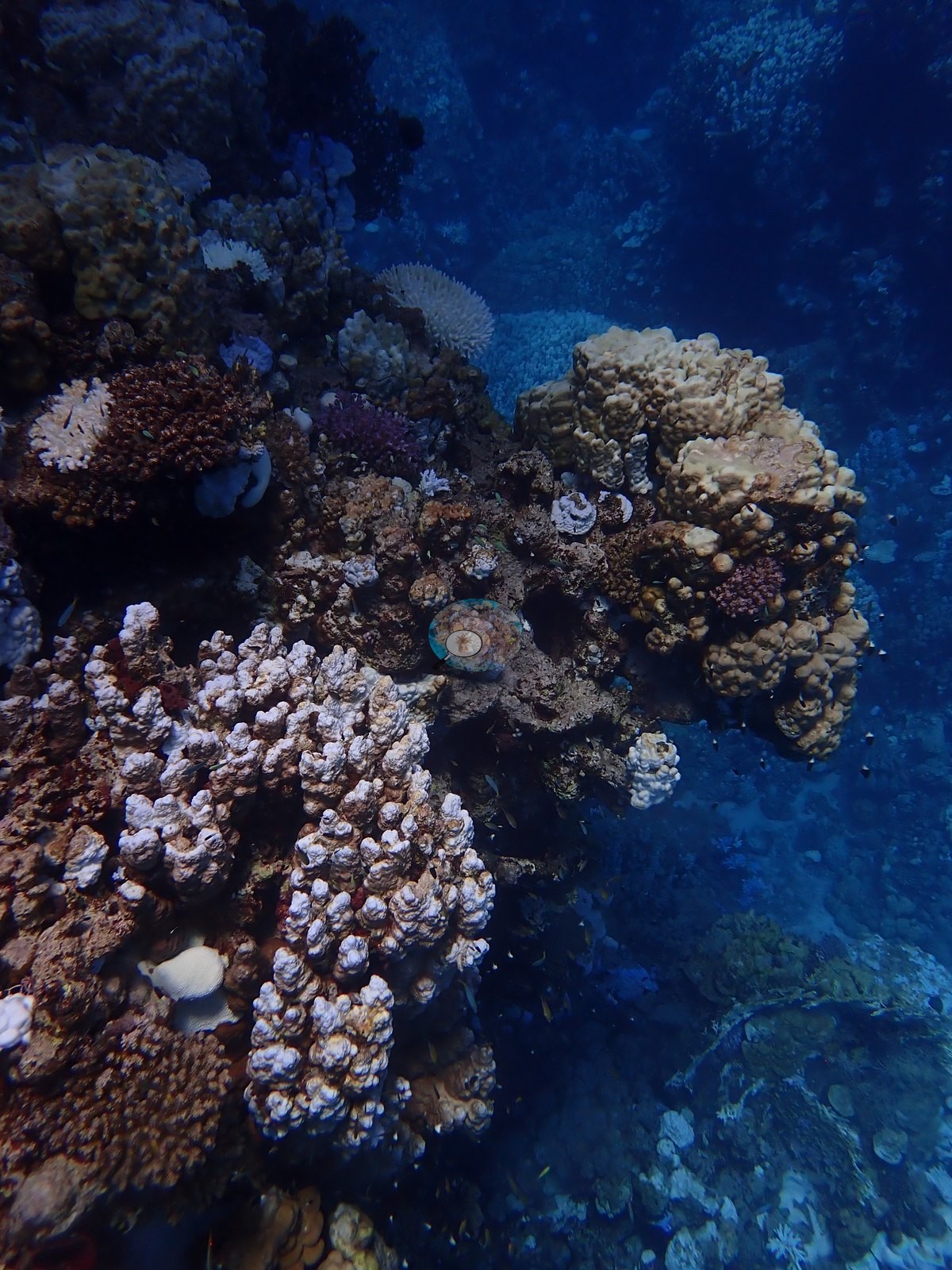
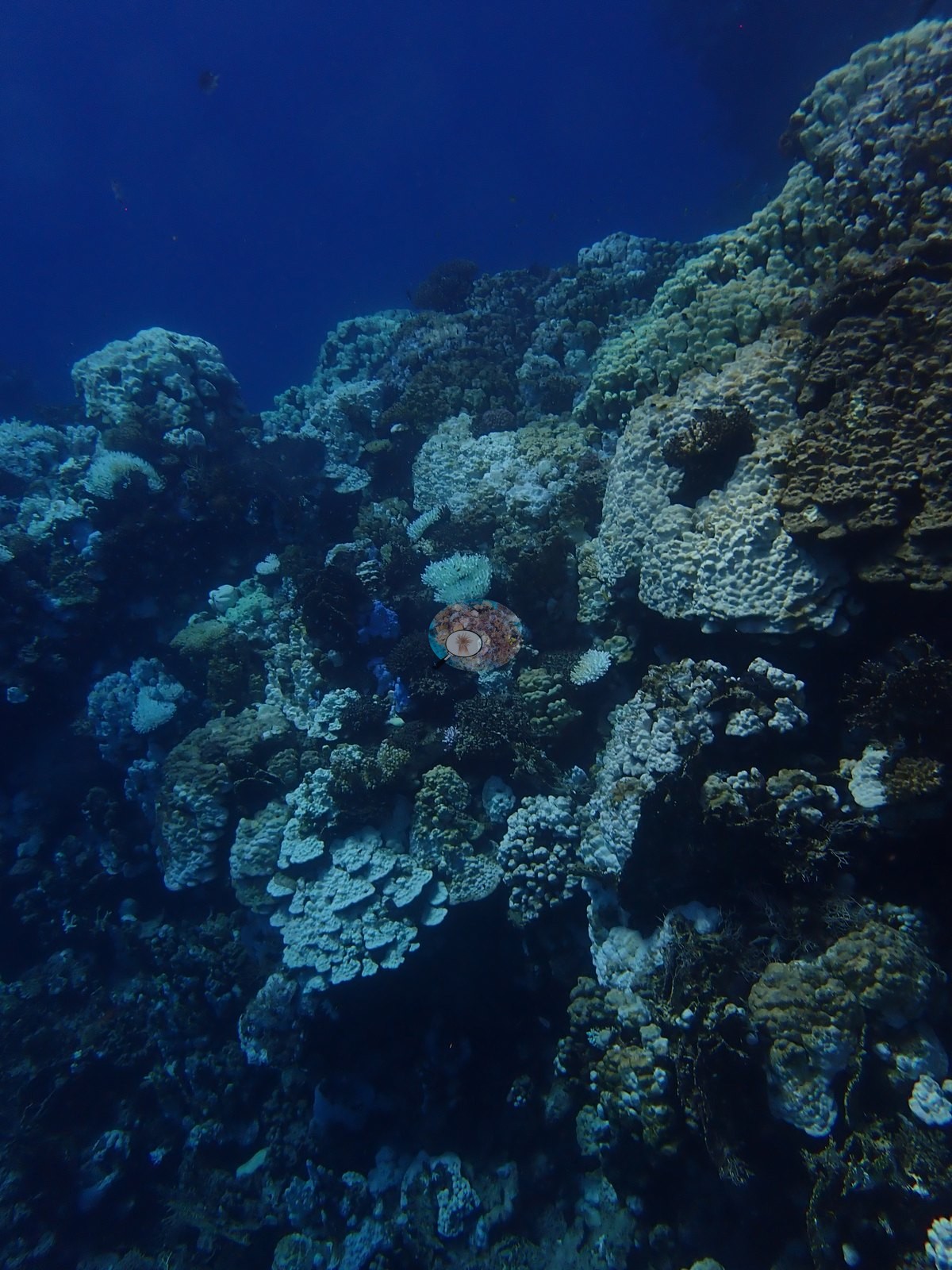
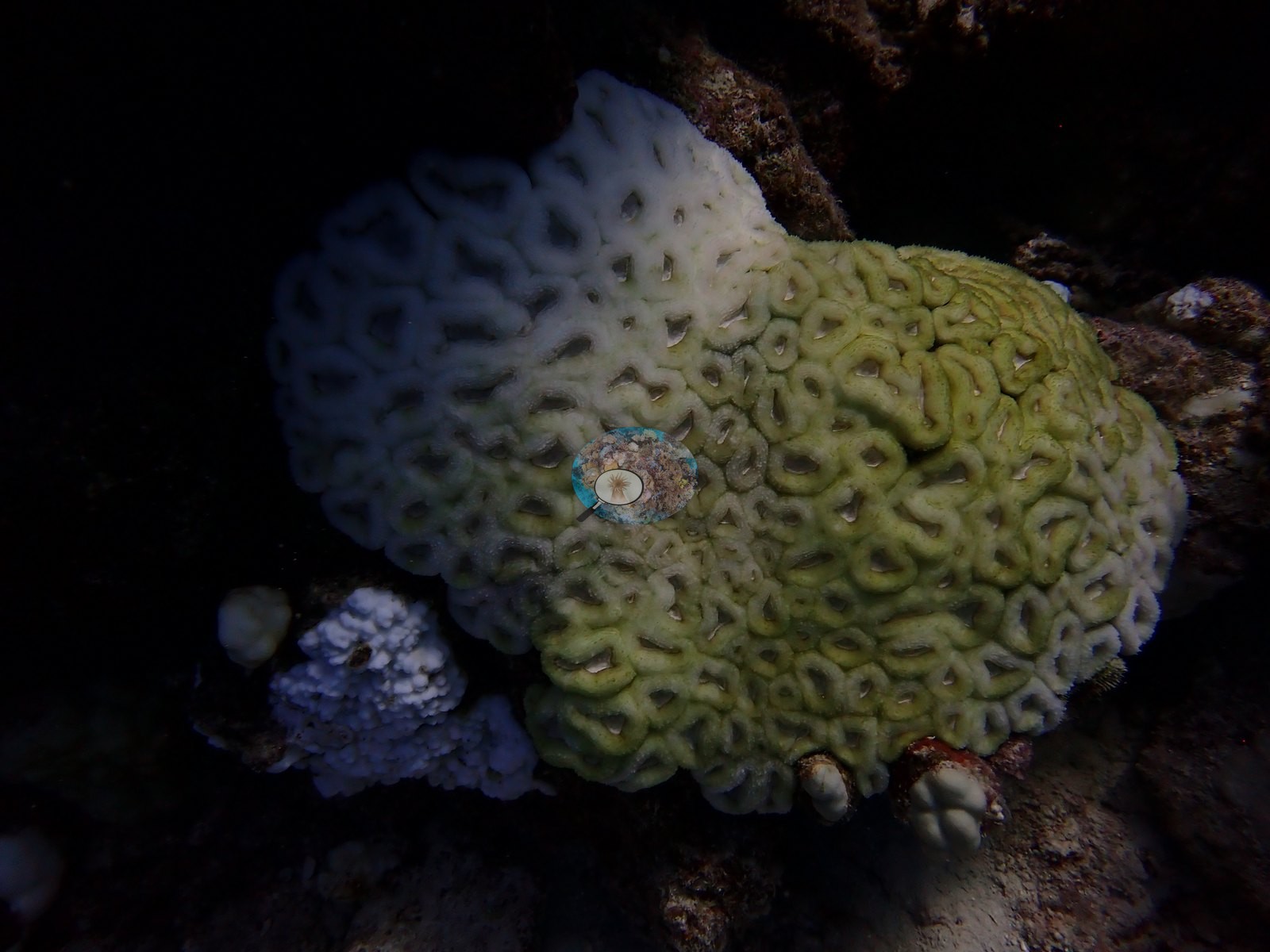
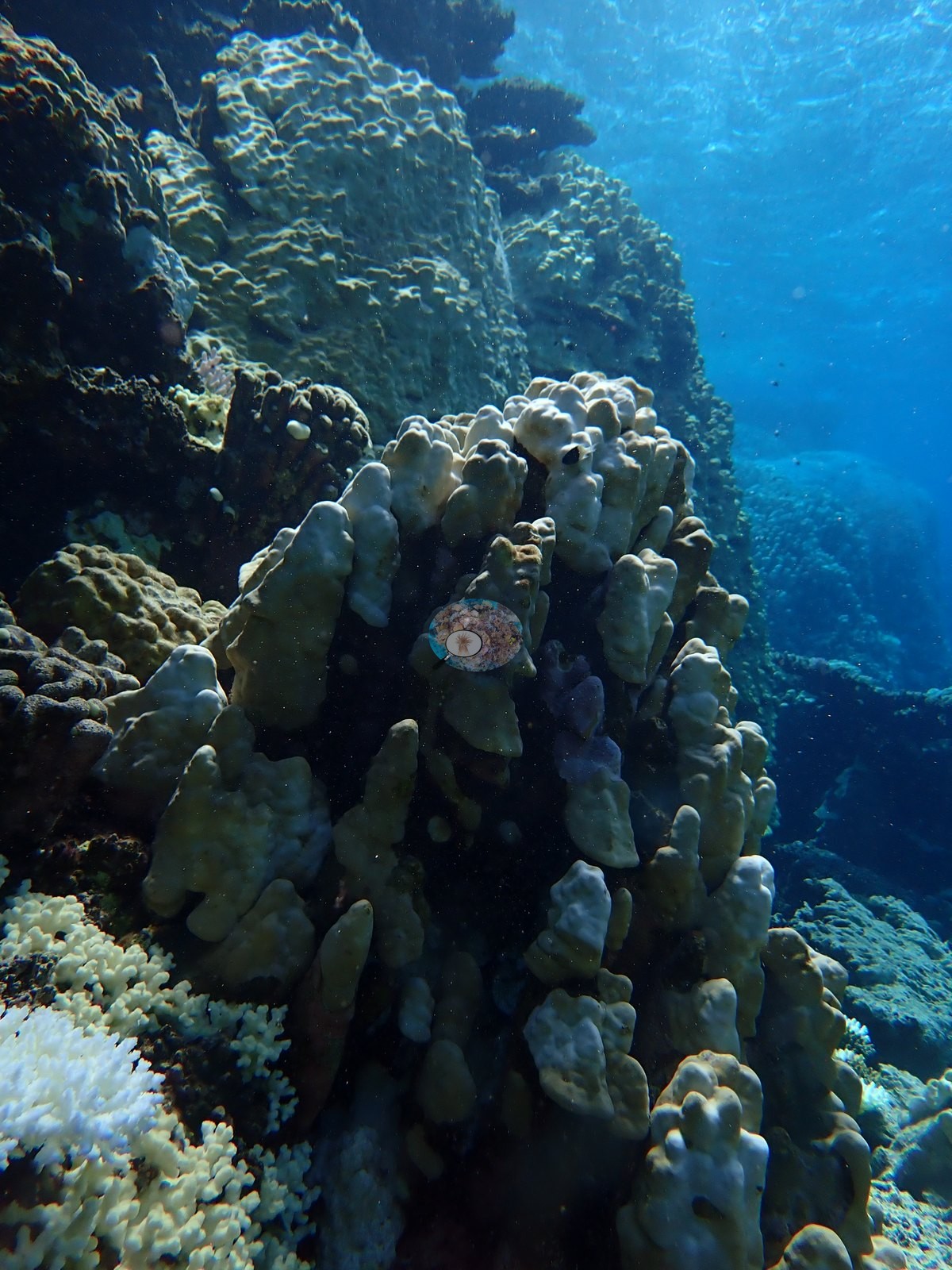
It is far more heavily colonized than either of the Saudi wrecks in this set — coral has settled across the frames, the ribs, and the plating, in real density rather than as a scatter. Off the wreck, the natural reef is a slope of massive Porites and mixed Acropora over pavement, also extensively pale, running down onto sand (e.g., Image 1, Image 2, Image 3, Image 4).
Coral cover
Coral cover is 21.5% ± 17.5 across 192 photographs, quoted verbatim from Mayfield, A.B. (2025) Environments 12:248 — Red Sea 2023-24 bleaching; CoralNet point annotation, Appendix A — a manual, diver-annotated CoralNet point count from Anderson's own published work, not a computer vision output and not recomputed here.
Stressors
The site record reports 61.3% of coral tissue bleached at about 21.8°C-weeks DHW. And nearly all of the coral on it is white. Half a dozen table and corymbose Acropora colonies growing directly on the wreck structure are bleached brilliant, uniform white, standing out against the rust-brown steel; the smaller encrusting and knobby colonies between them are pale blue-white.
Comparisons with other data
No prior survey data from this site. If you would like to share yours, please email us.
Dive record
The second dive of 23 September 2024 with Red Sea Diving Safari, and the one site on the Egypt leg with a shipwreck on it.
Other notes
See flags.
CV model comparison
More info
The reference row is this dive site's own published value (Mayfield 2025, Appendix A, 192 photos); the other rows are AREA-level (Wadi Lahami) comparisons, not run on this site's frames. ⚠ The comparison rows are REGIONS, not dive sites: the paper's main tables report cover by region, and this site's own value comes from its Appendix A. ⚠ The manual column and the CV columns are on DIFFERENT FRAME SETS: the published cover spans 674–1,180 frames, the CV arms ran on the 30- and 129-frame hand-scored reference subsets. CoralNet is n/a by design: the reference set IS the hand-scored set. DINOv3 is restricted to frames it never saw. CoralNet automated point classifier: n/a — the reference set IS the hand-scored set; these frames carry no independent CoralNet robot label to compare against CoralSCOP (SAM-based mask-sum), unedited photos: pending — CoralSCOP run: 370/747 images scored at build time CoralSCOP (SAM-based mask-sum), edited photos: pending — CoralSCOP run: 370/747 images scored at build time| Method | Hard-coral cover (%) |
|---|---|
| Manual (published) | 21.5 |
| In-house DINOv3 | 40.6 |
| Claude | 28.0 |
Data & links
All images from Coral Reef Diagnostics. Data are from Coral Reef Diagnostics.
© Coral Reef Diagnostics.