
Turtle Beach

More about this place: Necker Island (Virgin Limited Edition)
2026-07-02
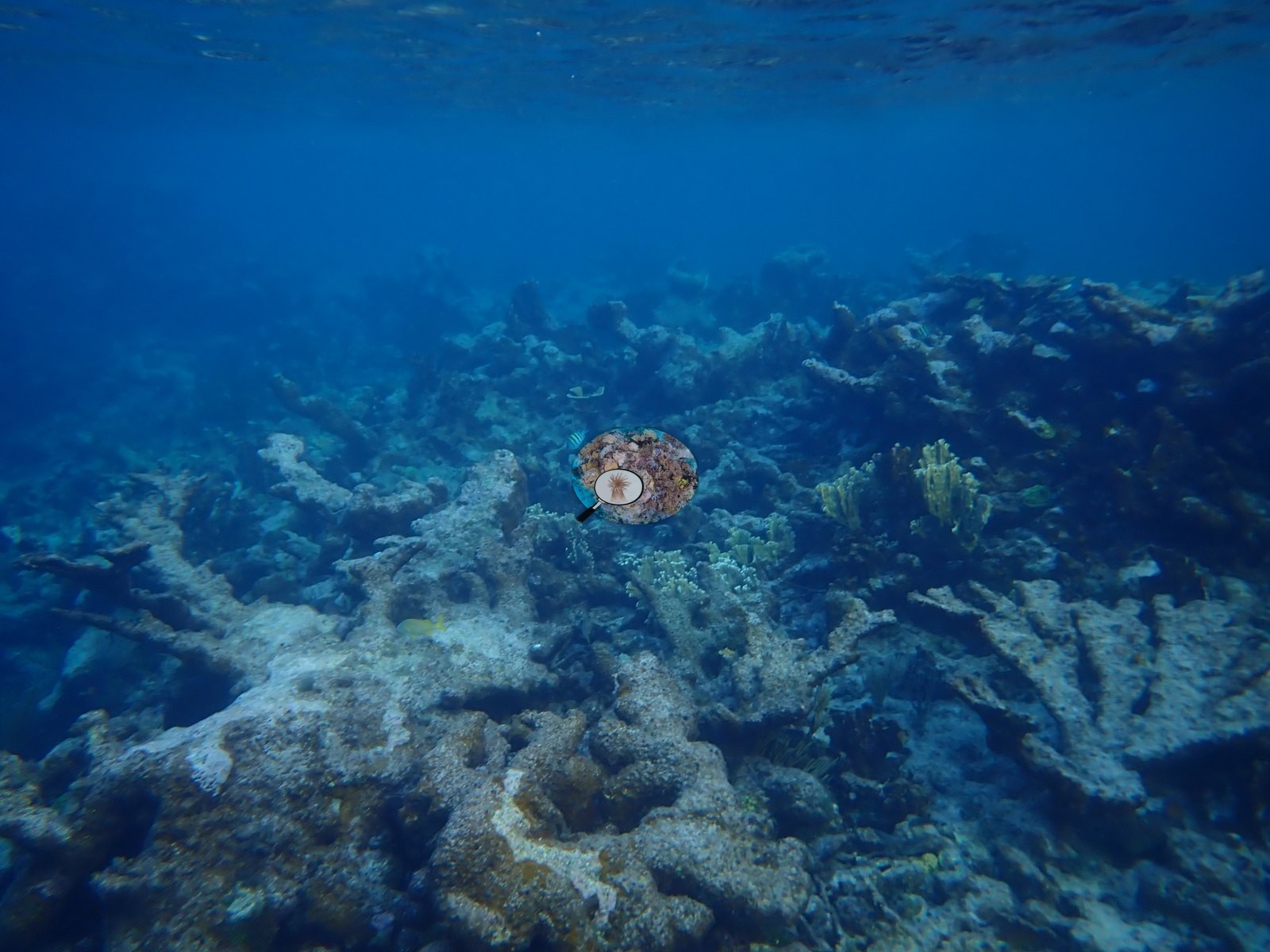
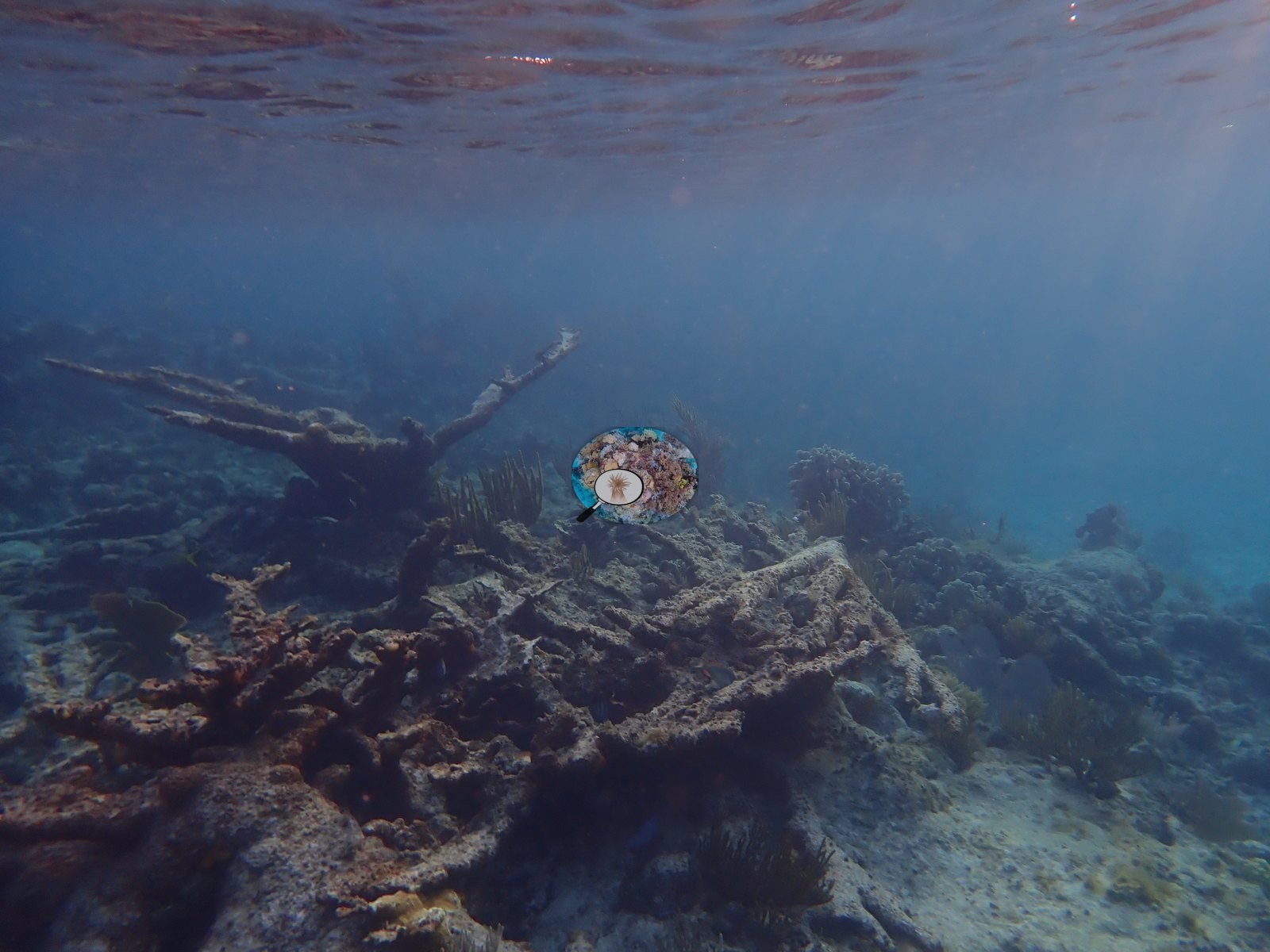
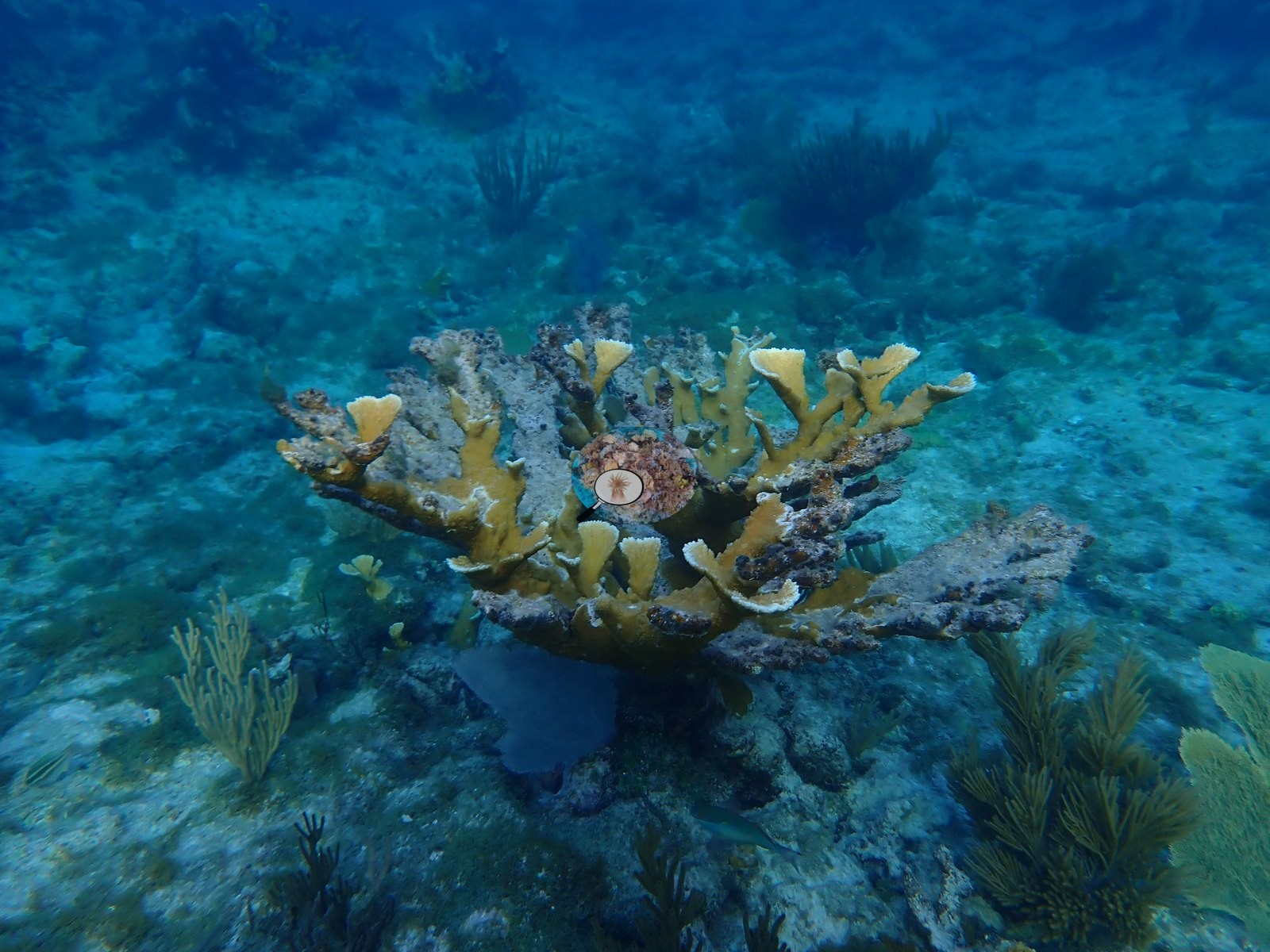
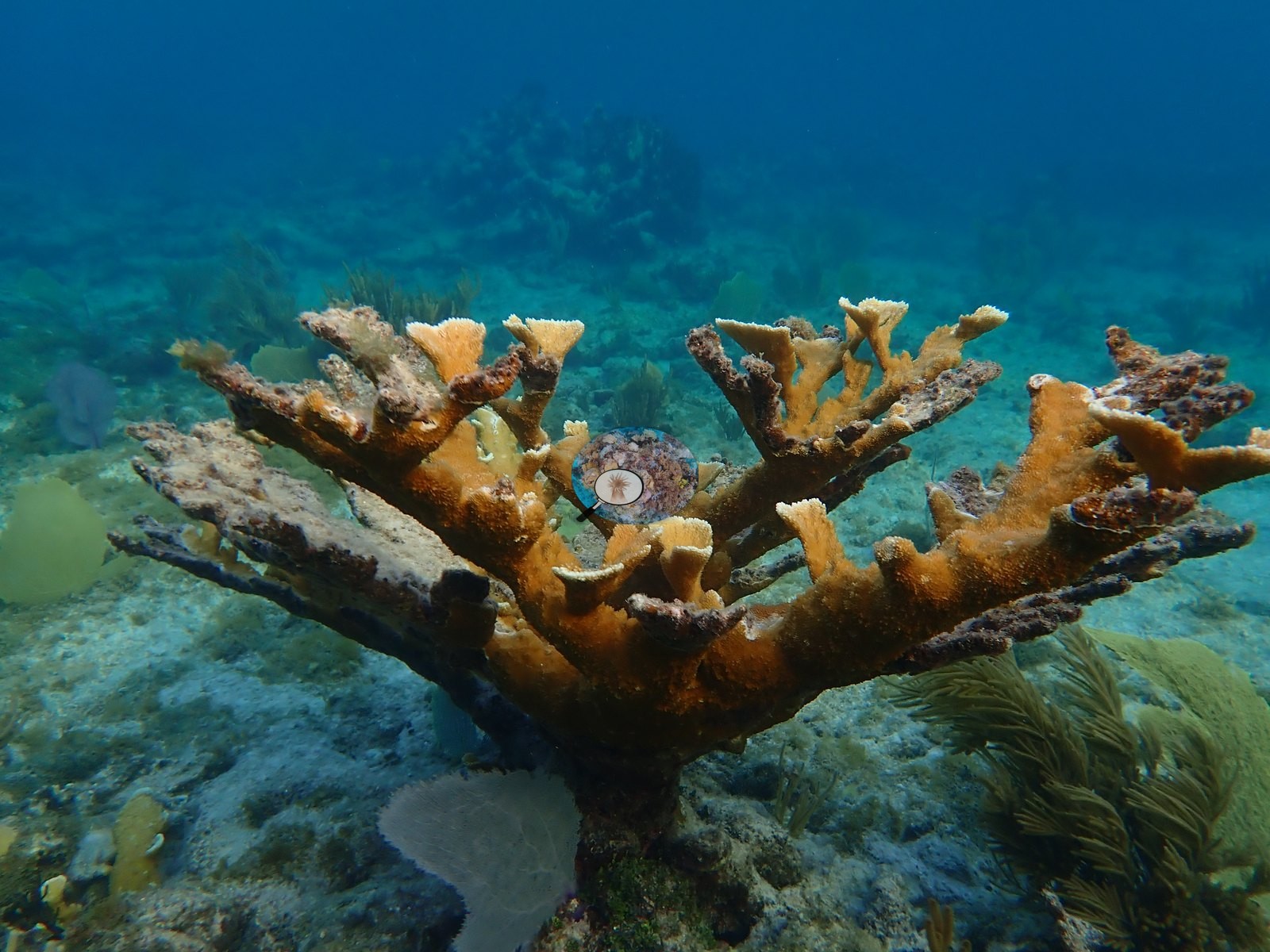
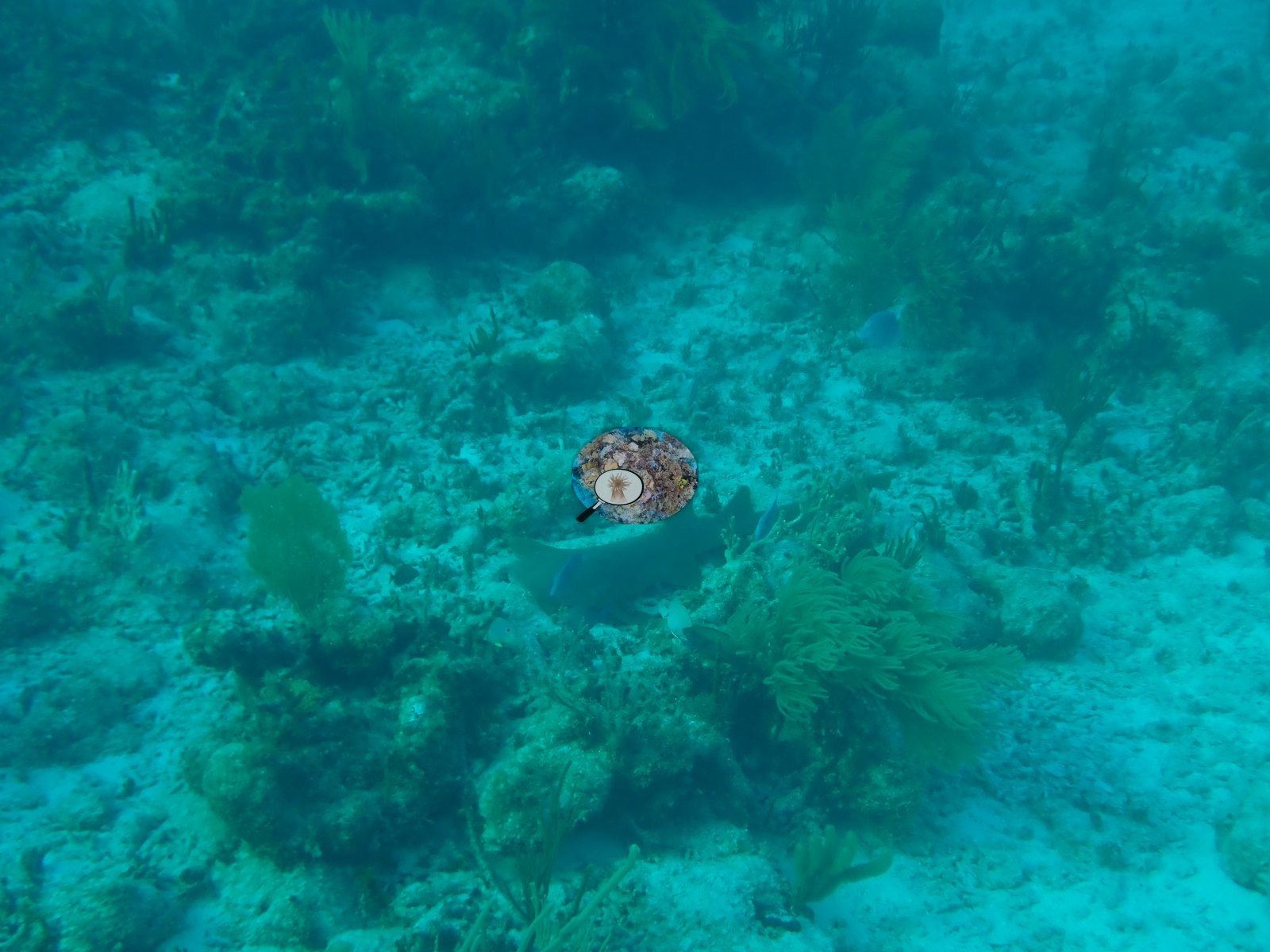
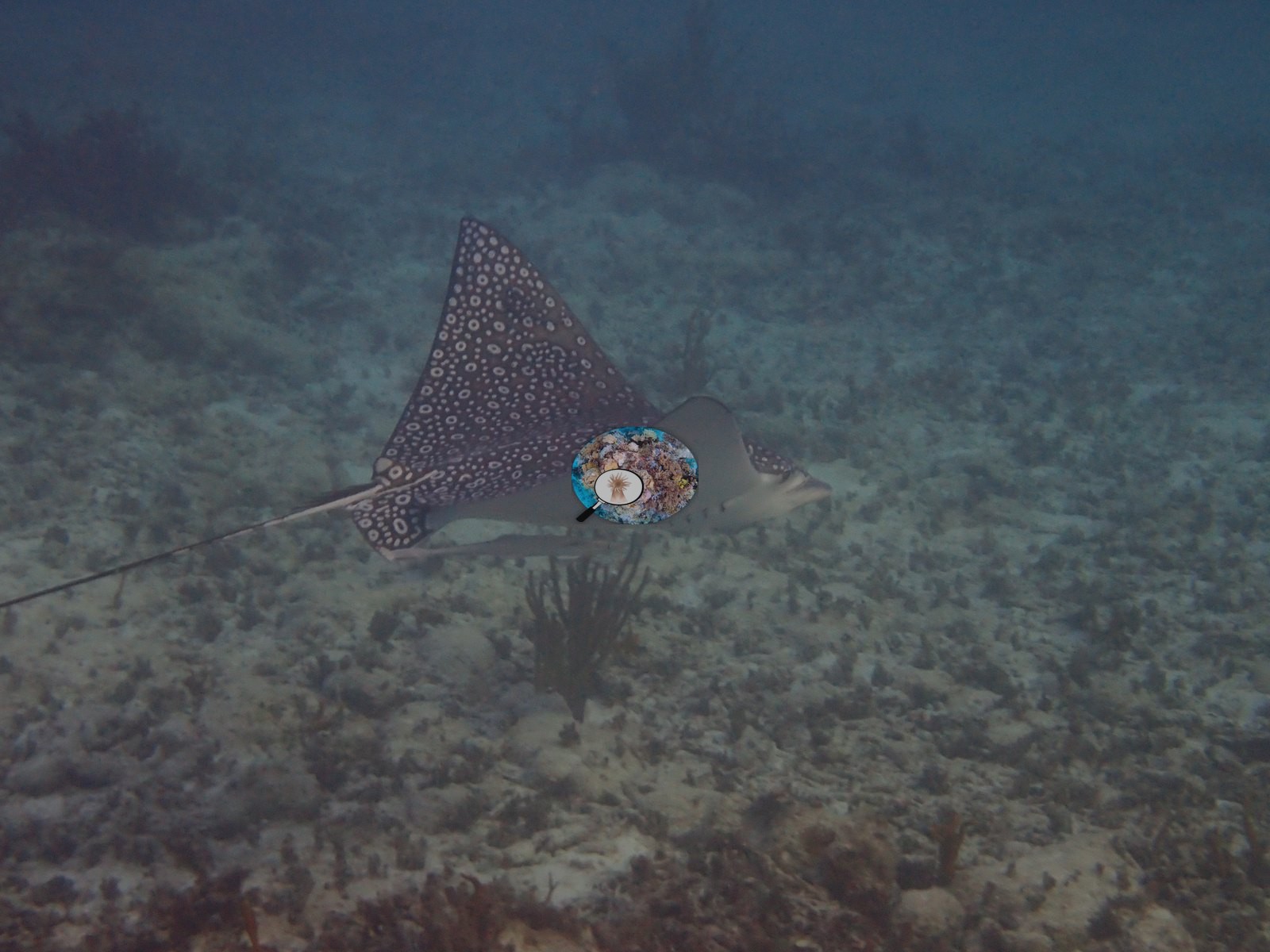
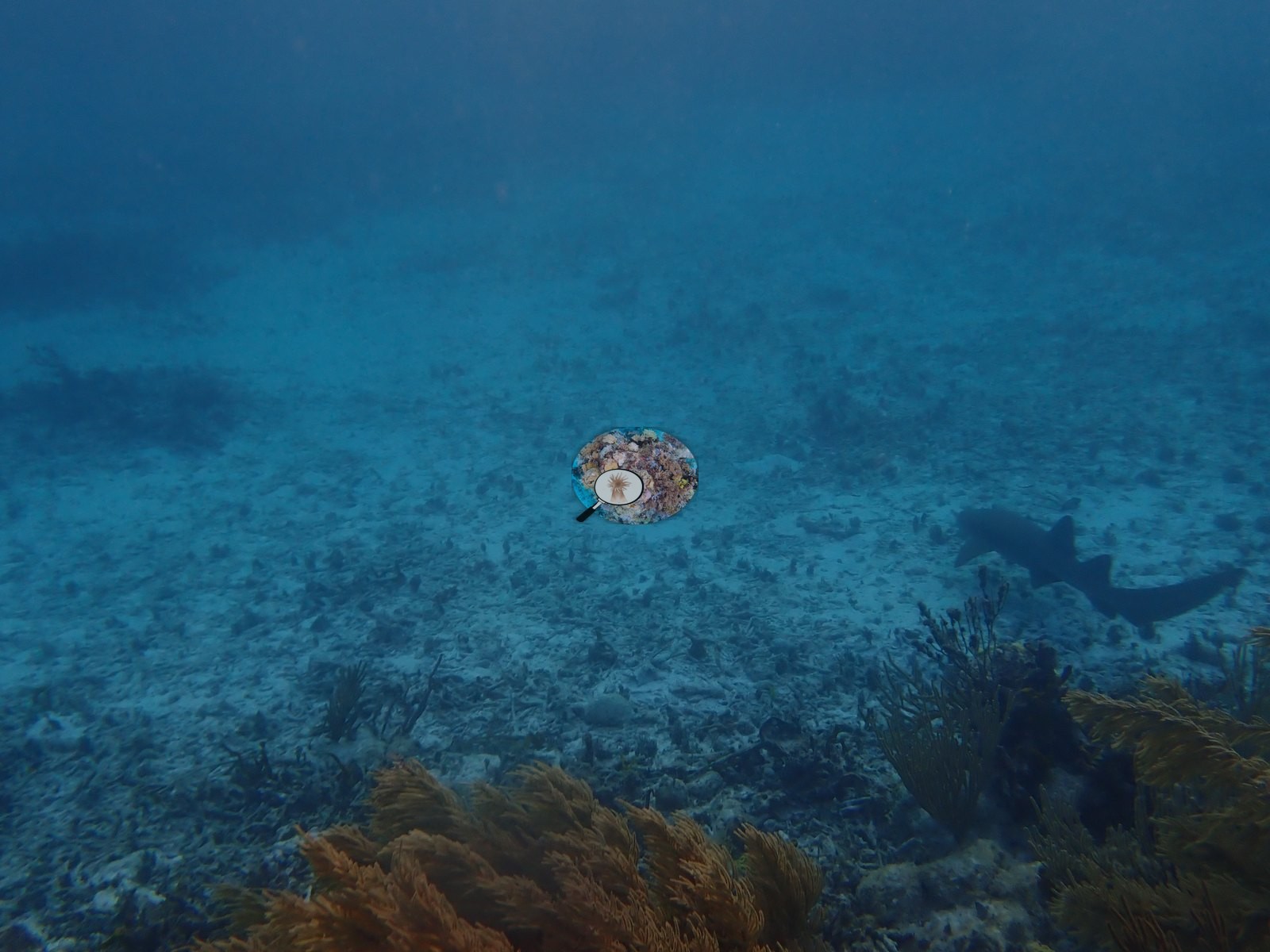
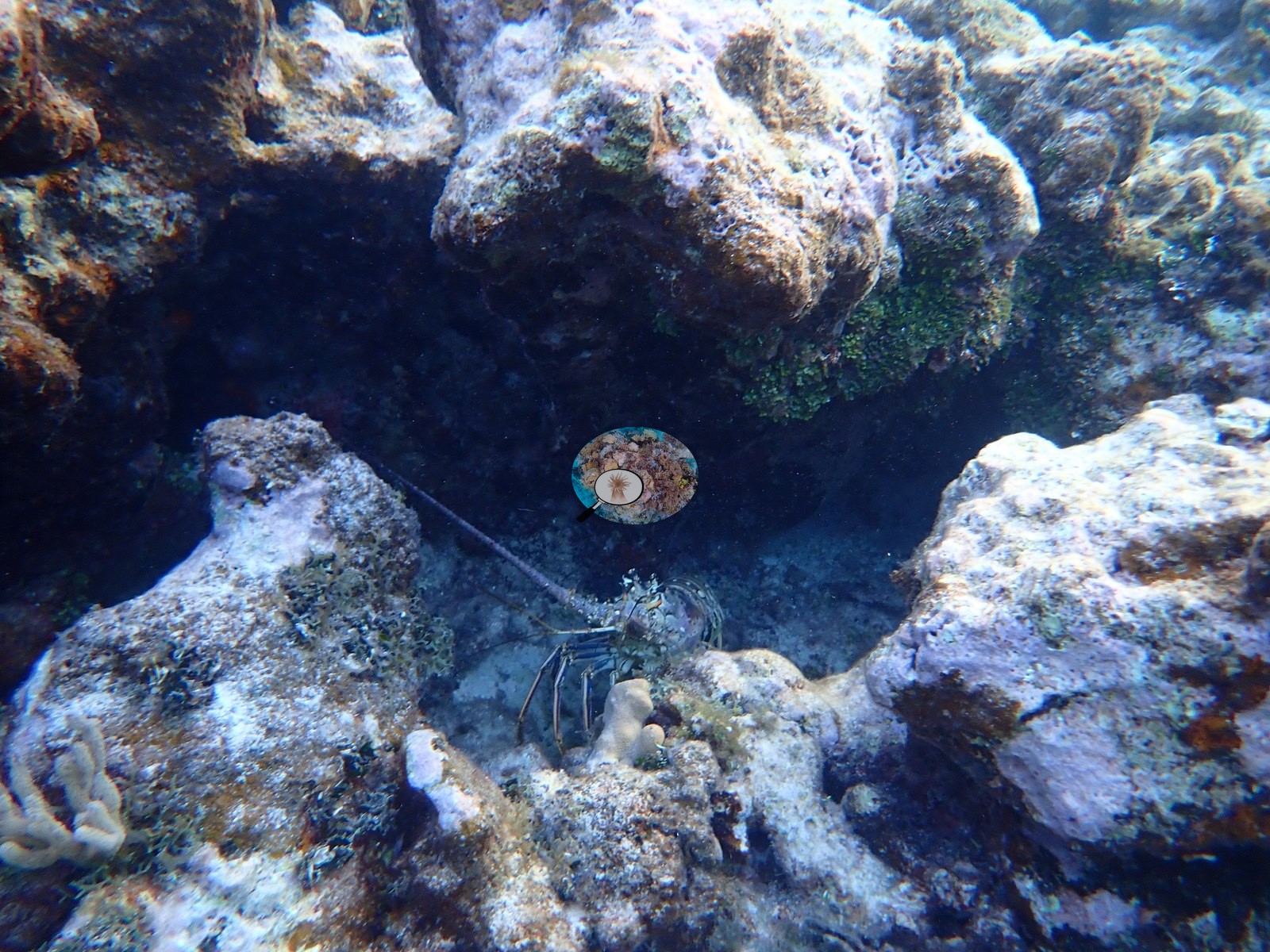
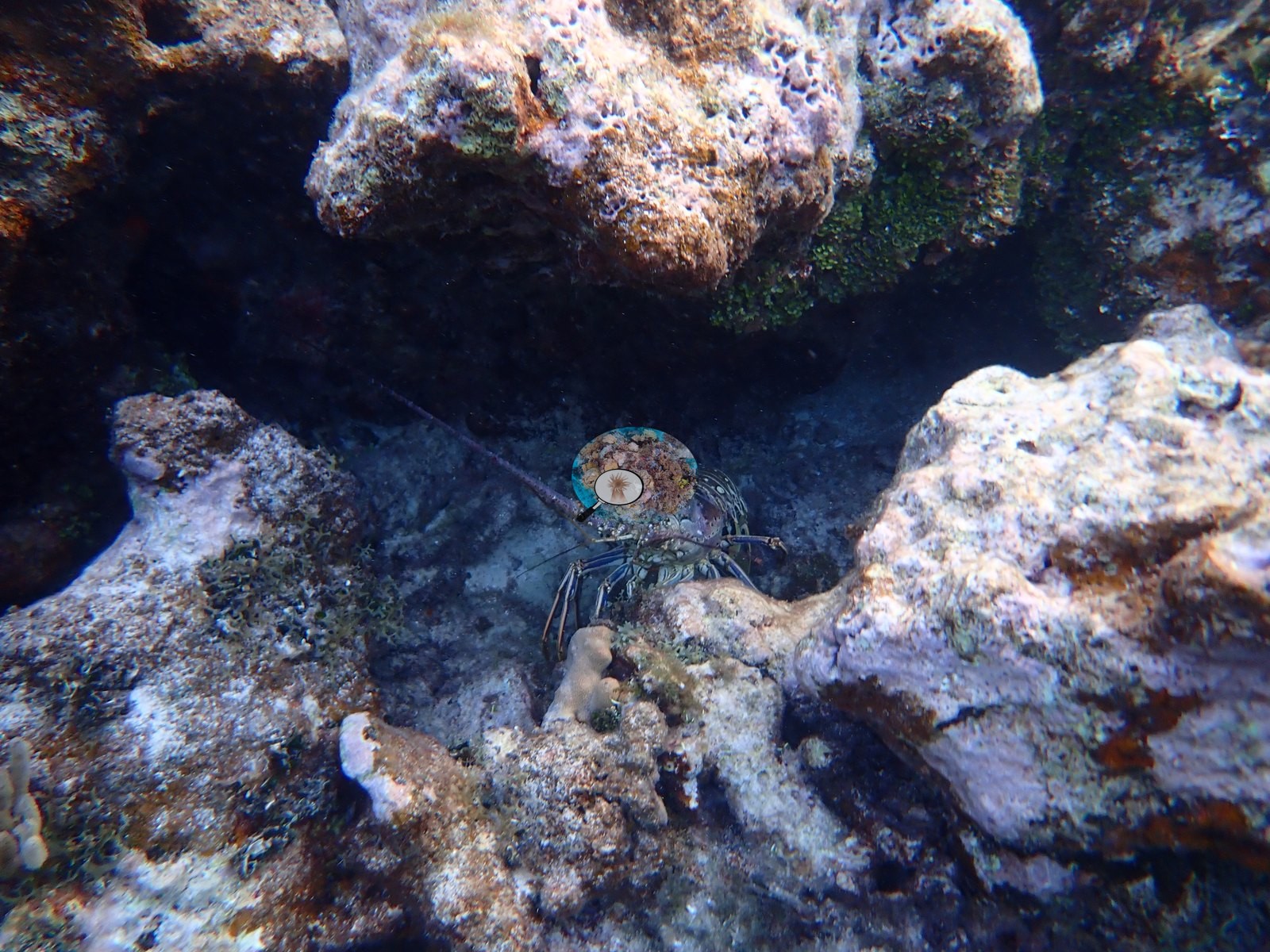
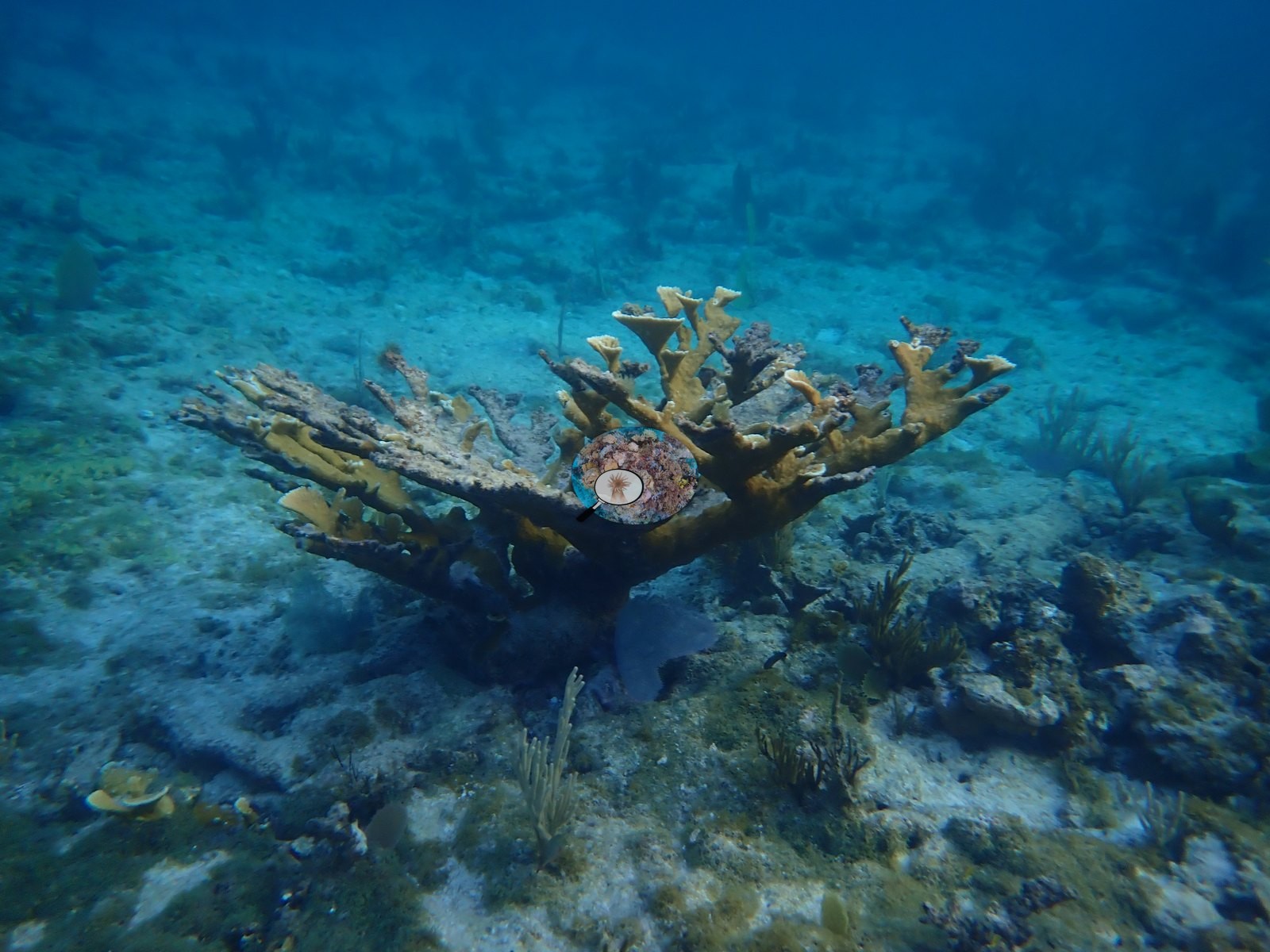
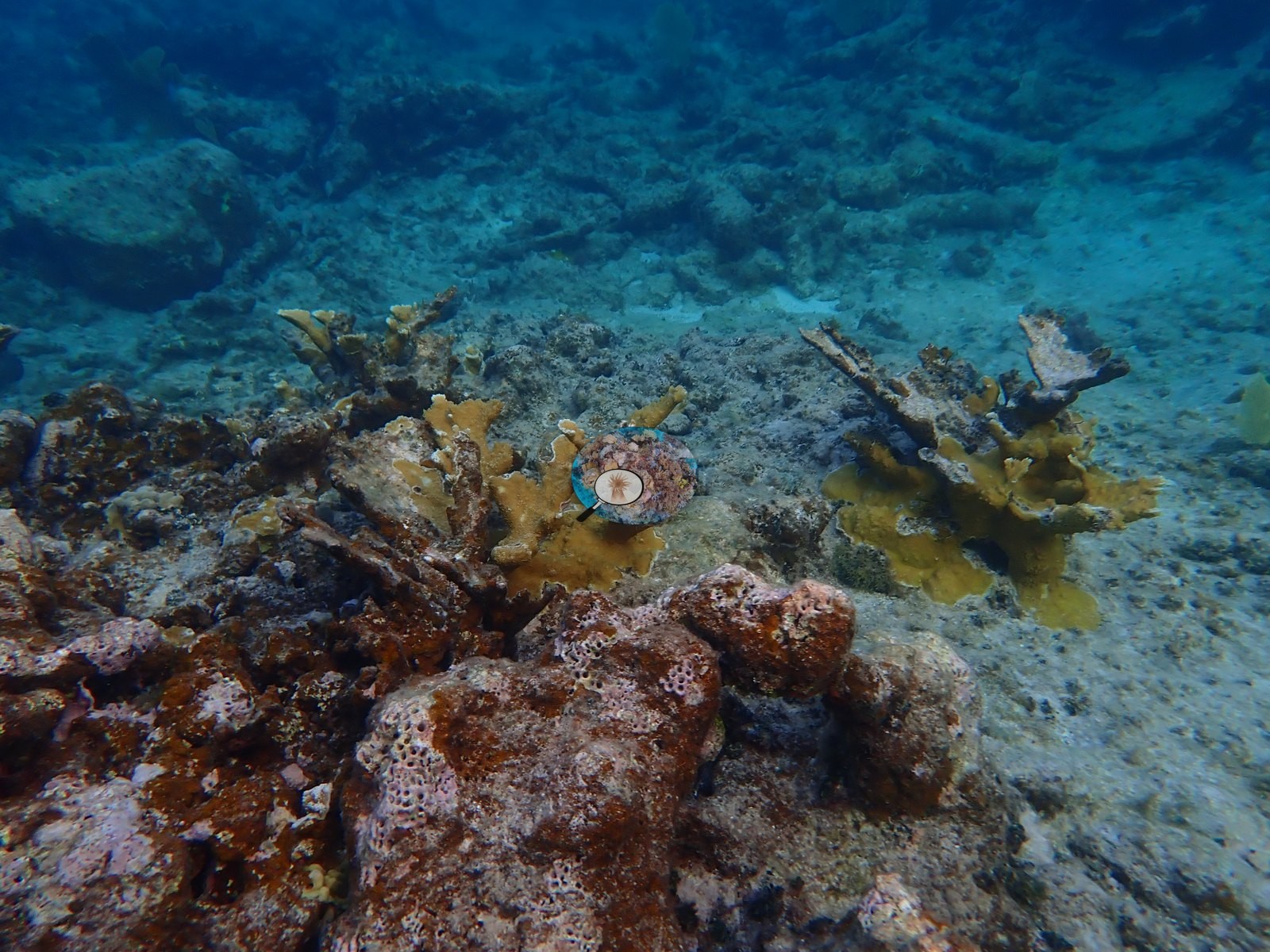
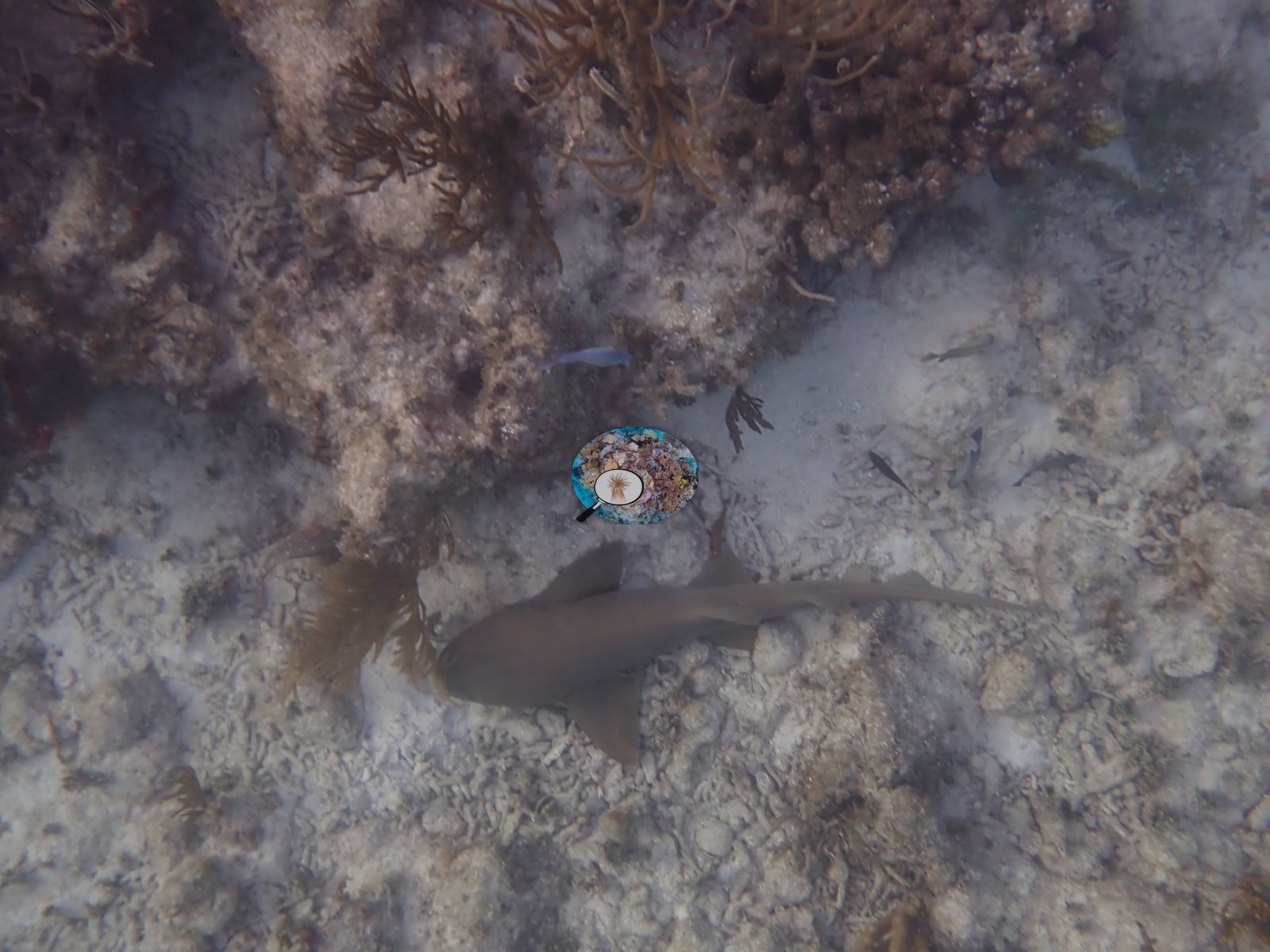
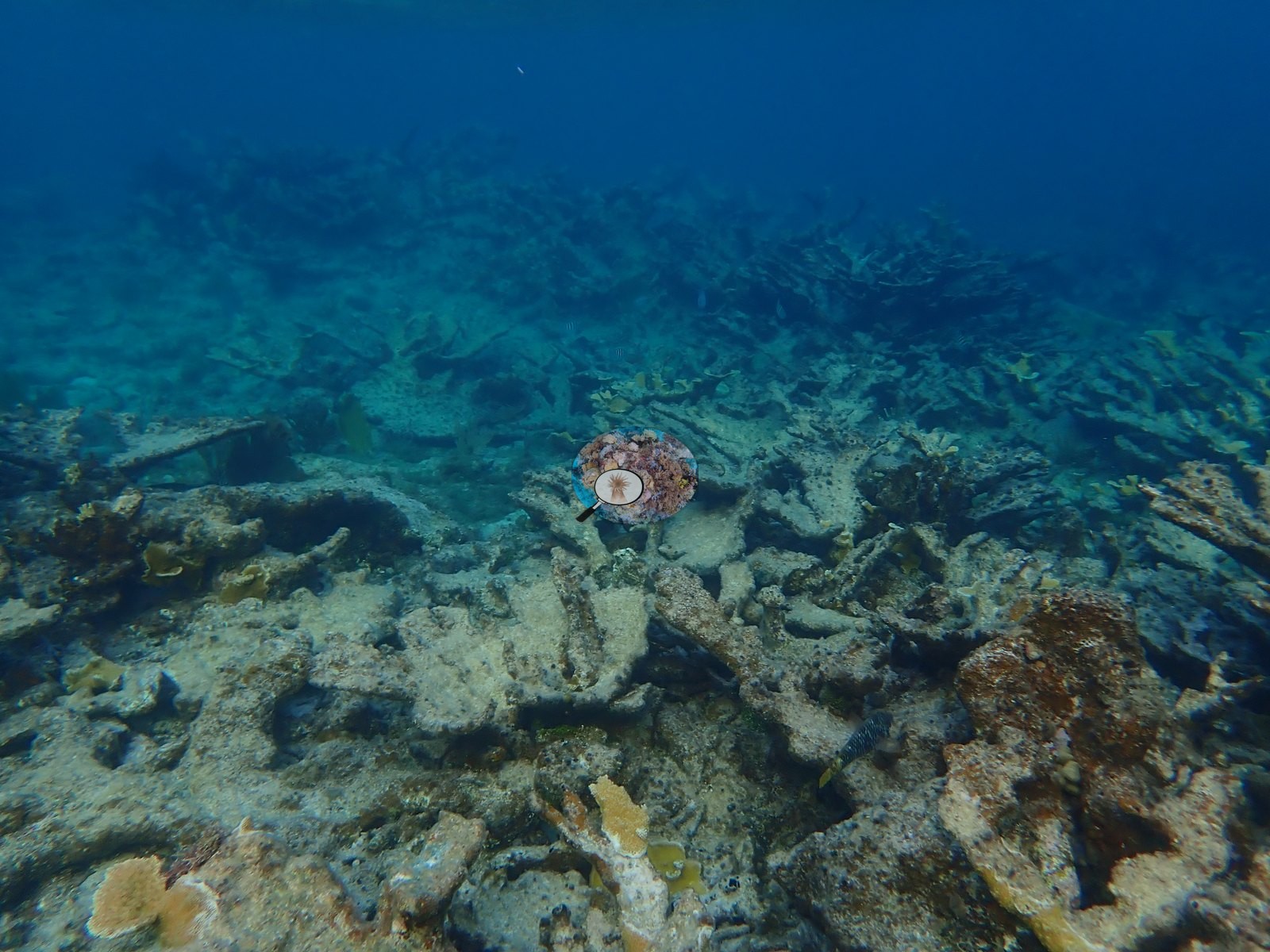
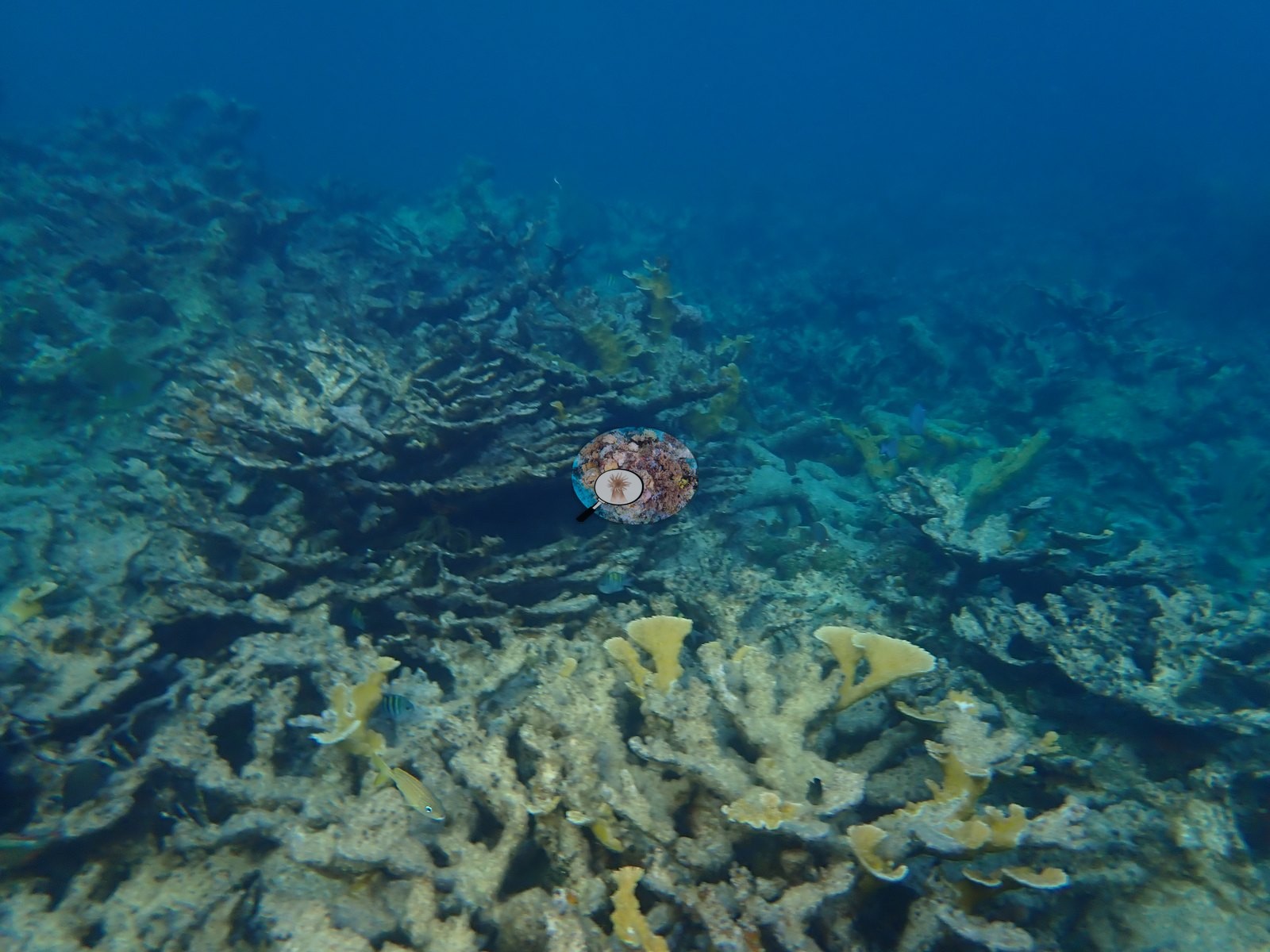
Turtle Beach is a shallow reef where broad fields of dead elkhorn coral are being recolonized by young branching corals, and several large living elkhorn colonies still stand. Brain corals, sea fans, and sea plumes add color, and snorkelers here met a spotted eagle ray, two sharks, and spiny lobsters.
The white line is this site’s dive track — the white dot marks where it started and the red “End” marker where it ended.
Three other CRD dive sites within 5 km shown in orange — click a marker to open its page.
59 of these 70 photographs are shown beside the text that discusses them under "Site description" below.
Site description
Setting
- Turtle Beach is a shallow snorkel transect on the fringing reef off Necker Island in the British Virgin Islands, covered here in 63 usable reef frames out of 70 total (seven early- and mid-transect frames are topside surface, sunset, or beach shots and are excluded from this description).
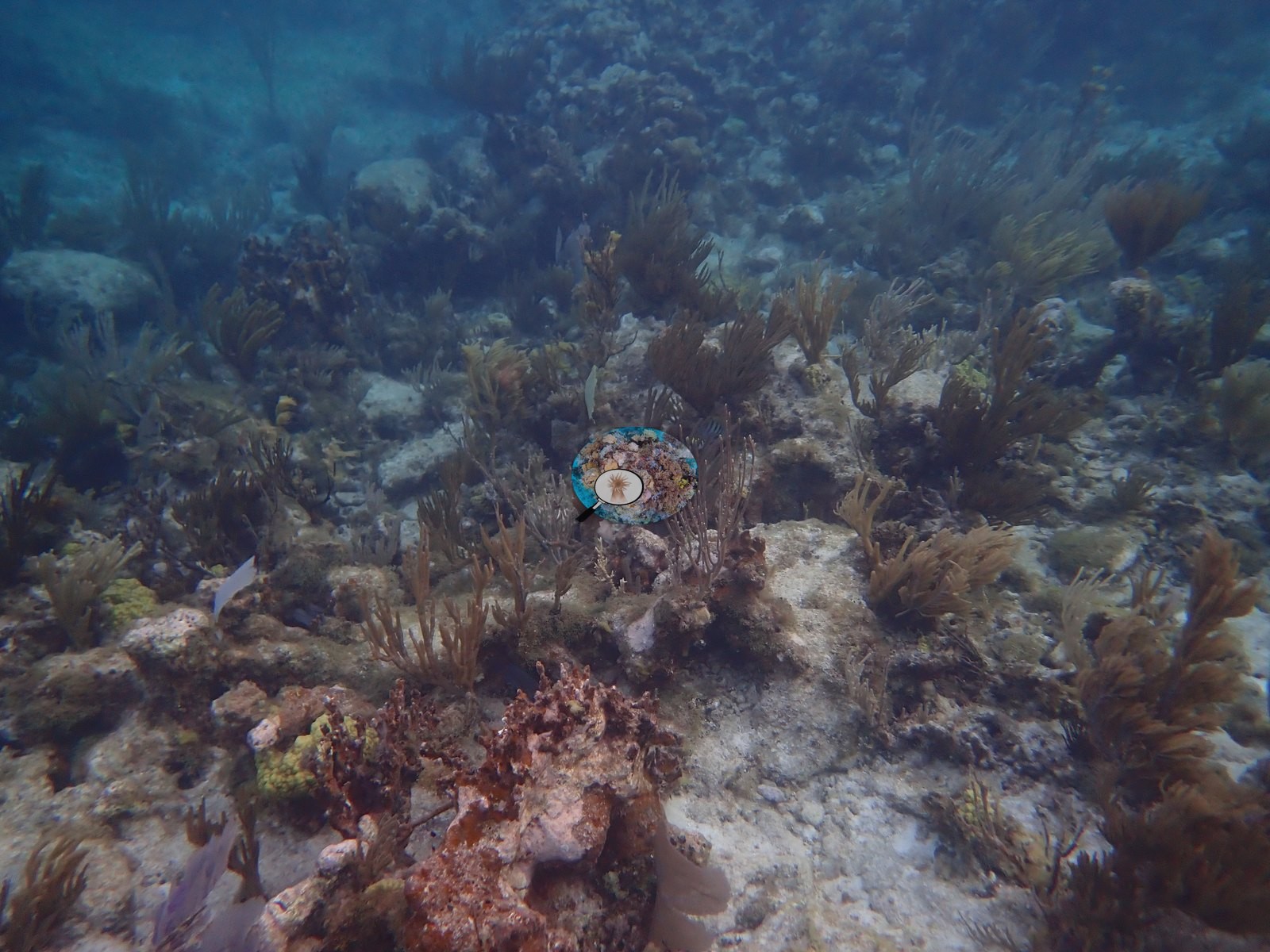
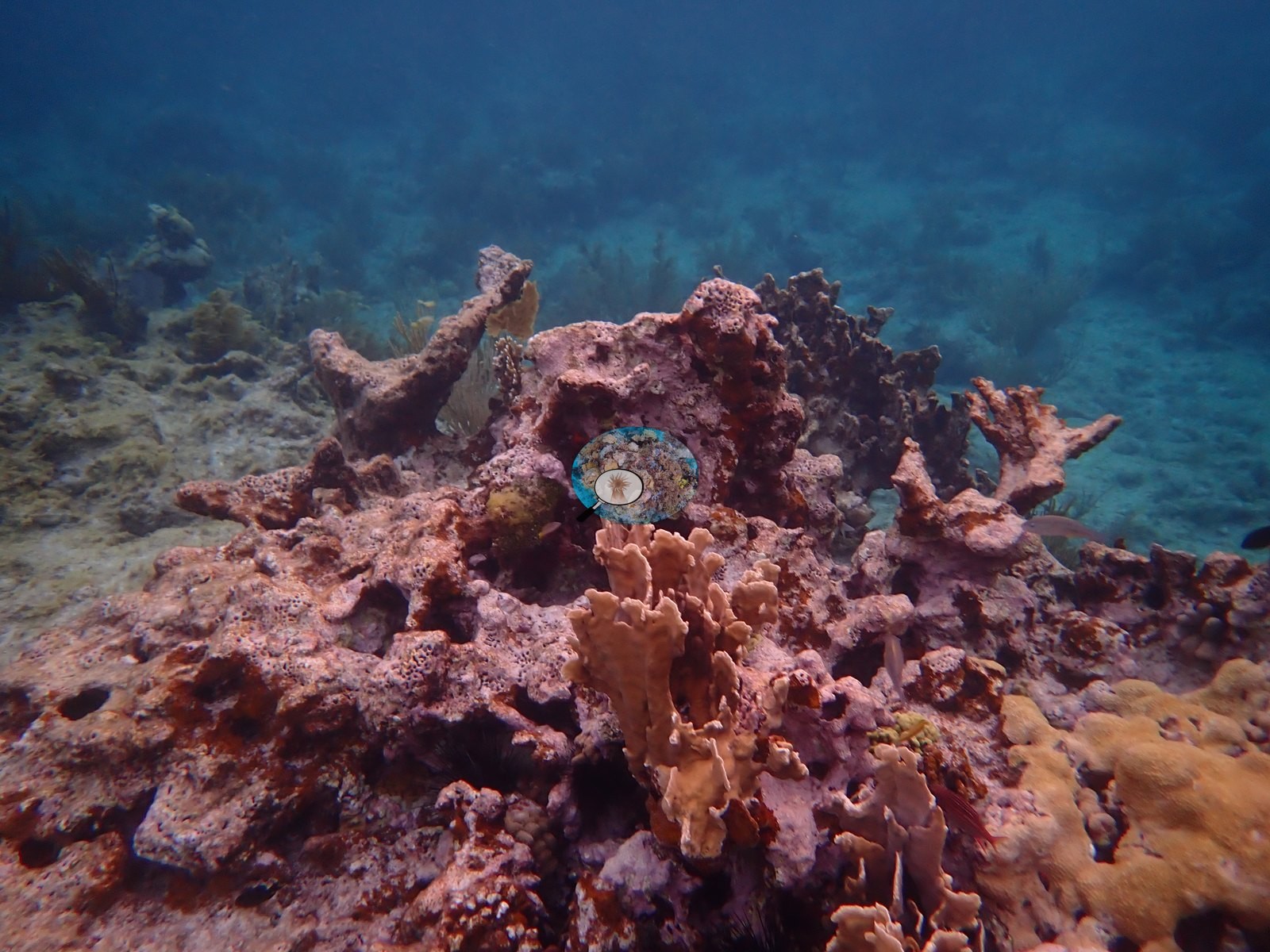
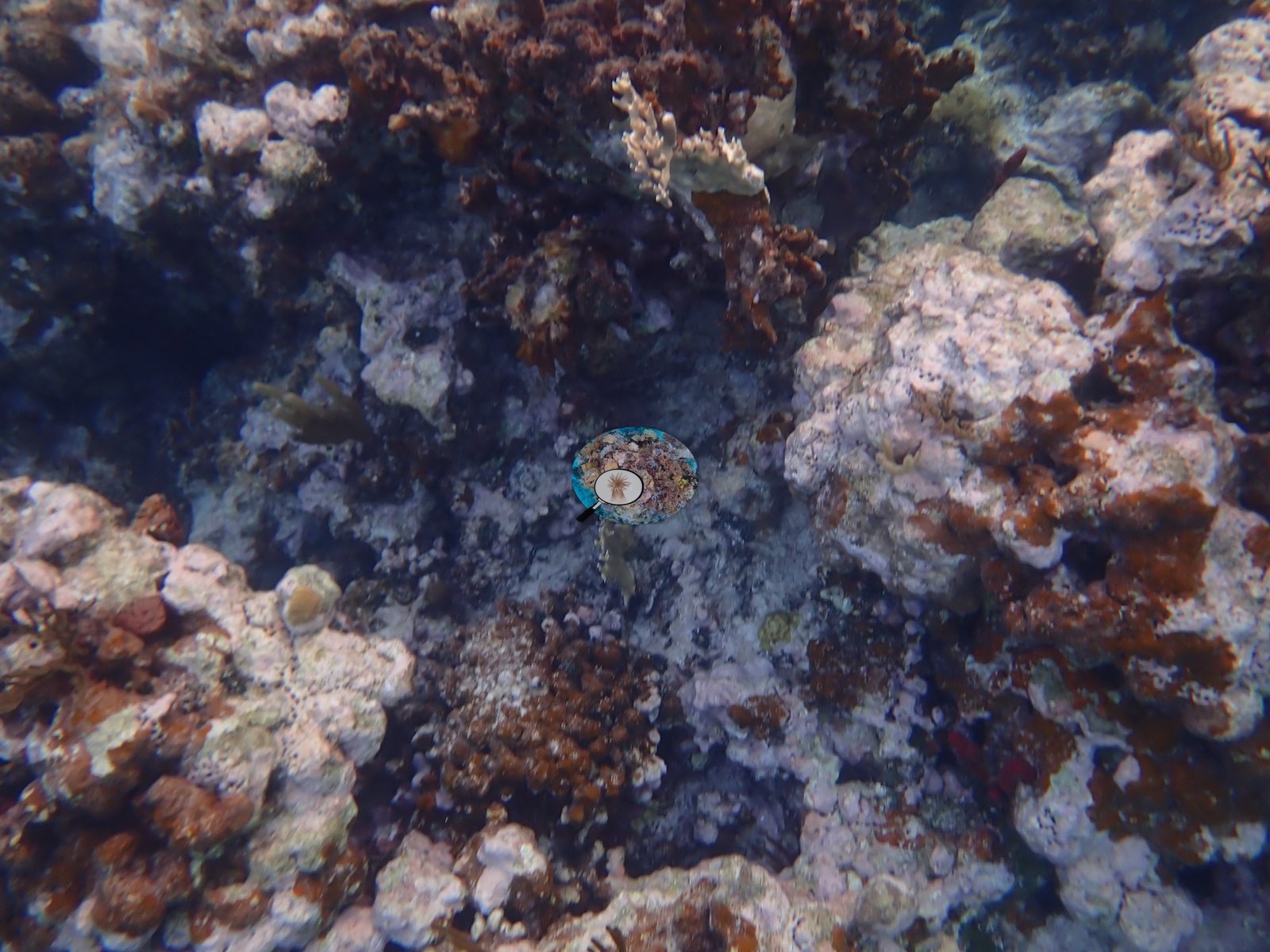
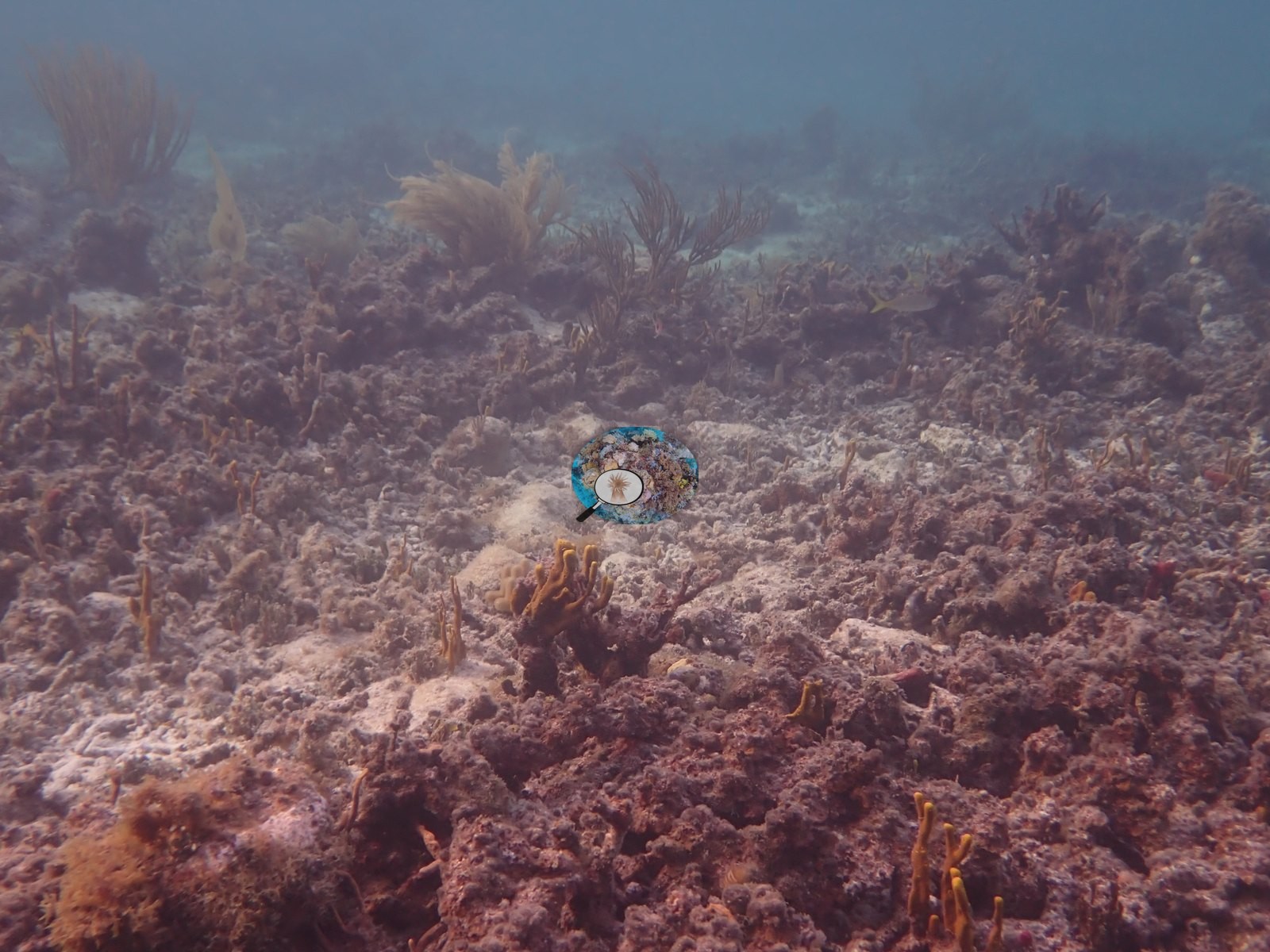
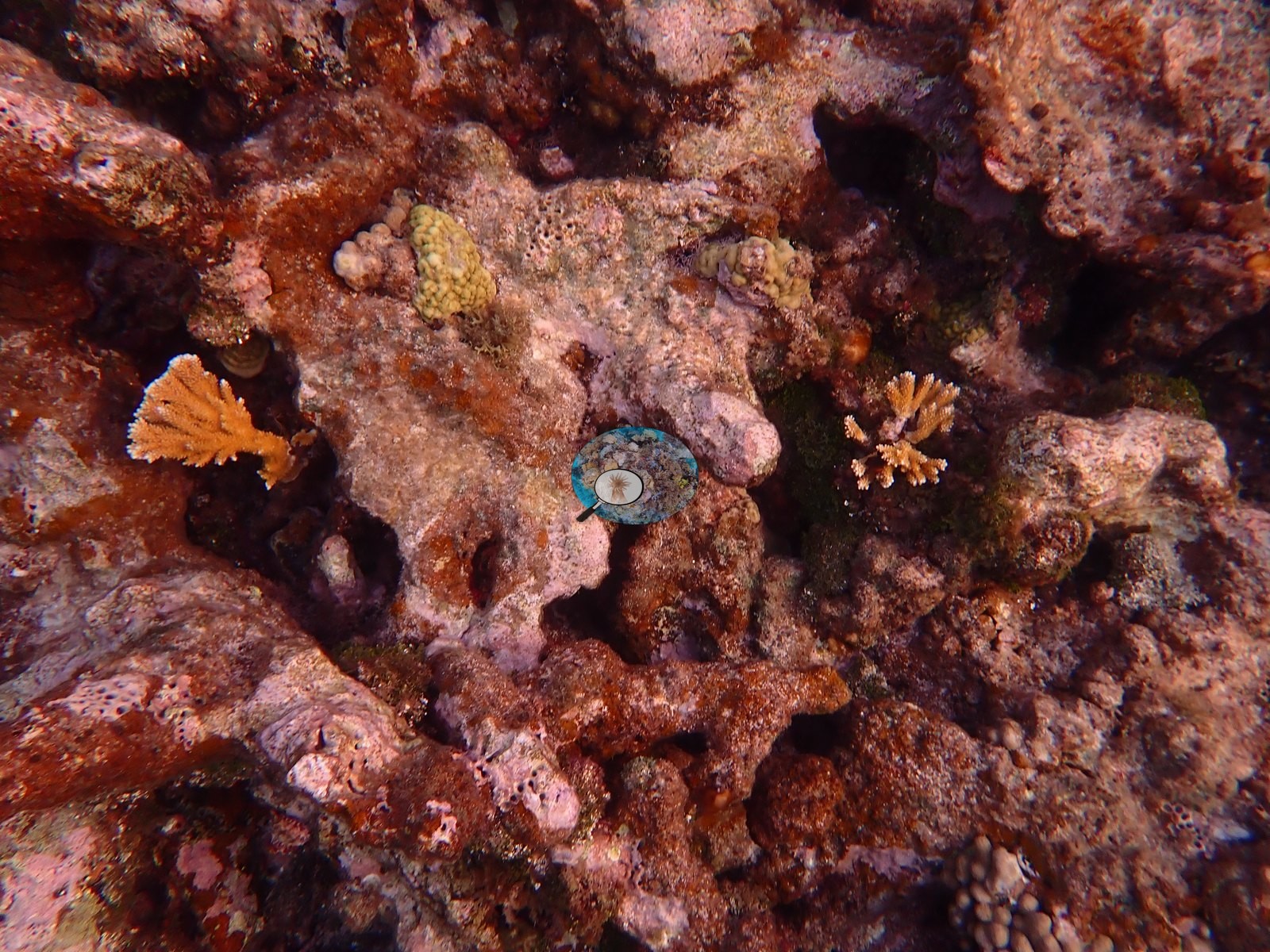
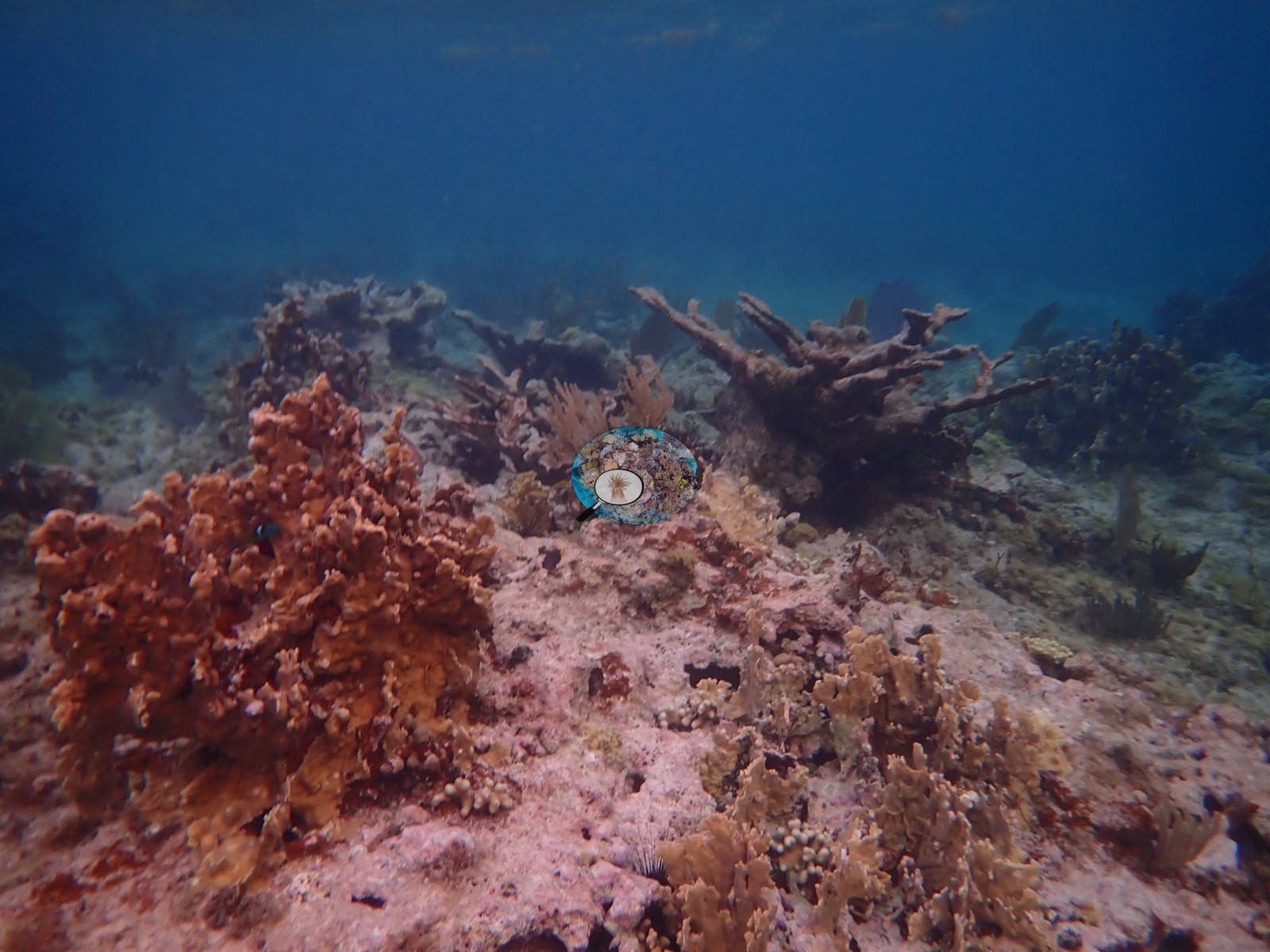
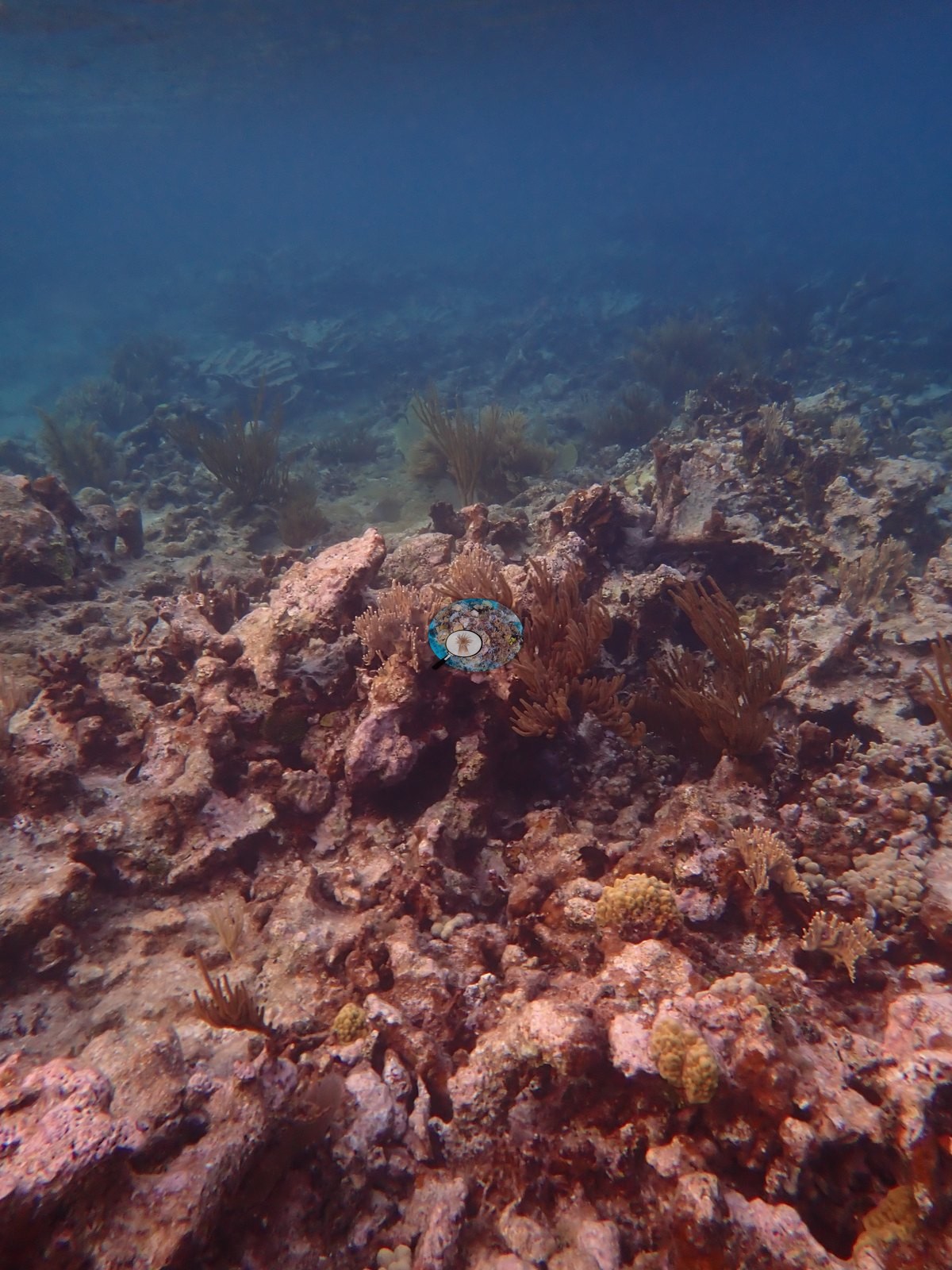
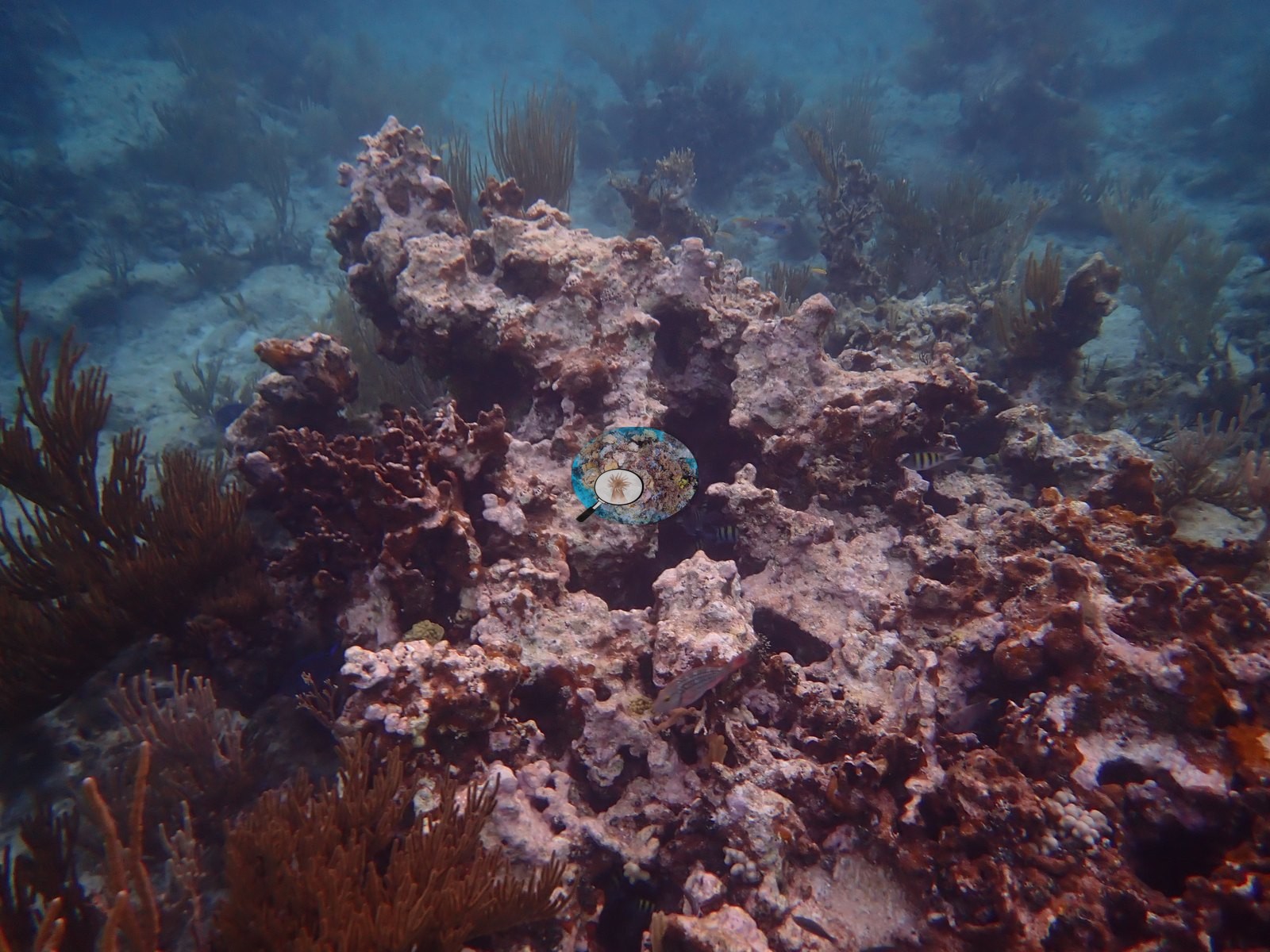
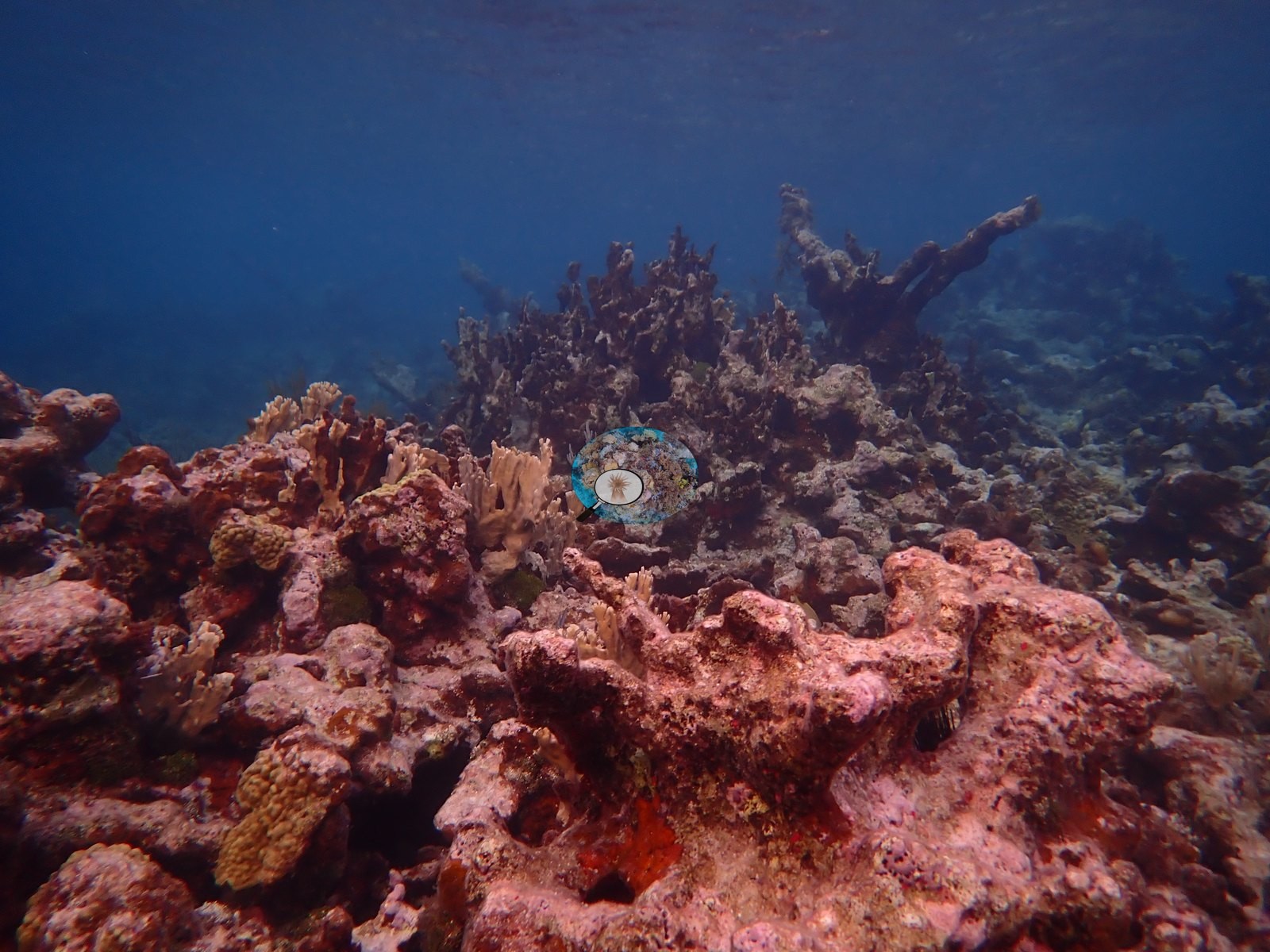
- The substrate throughout is a low-relief limestone hardground and coral-rubble pavement, alternating between patches of standing dead branching-coral skeleton, pink crustose-coralline rock, sand channels, and denser live patch-reef structure.
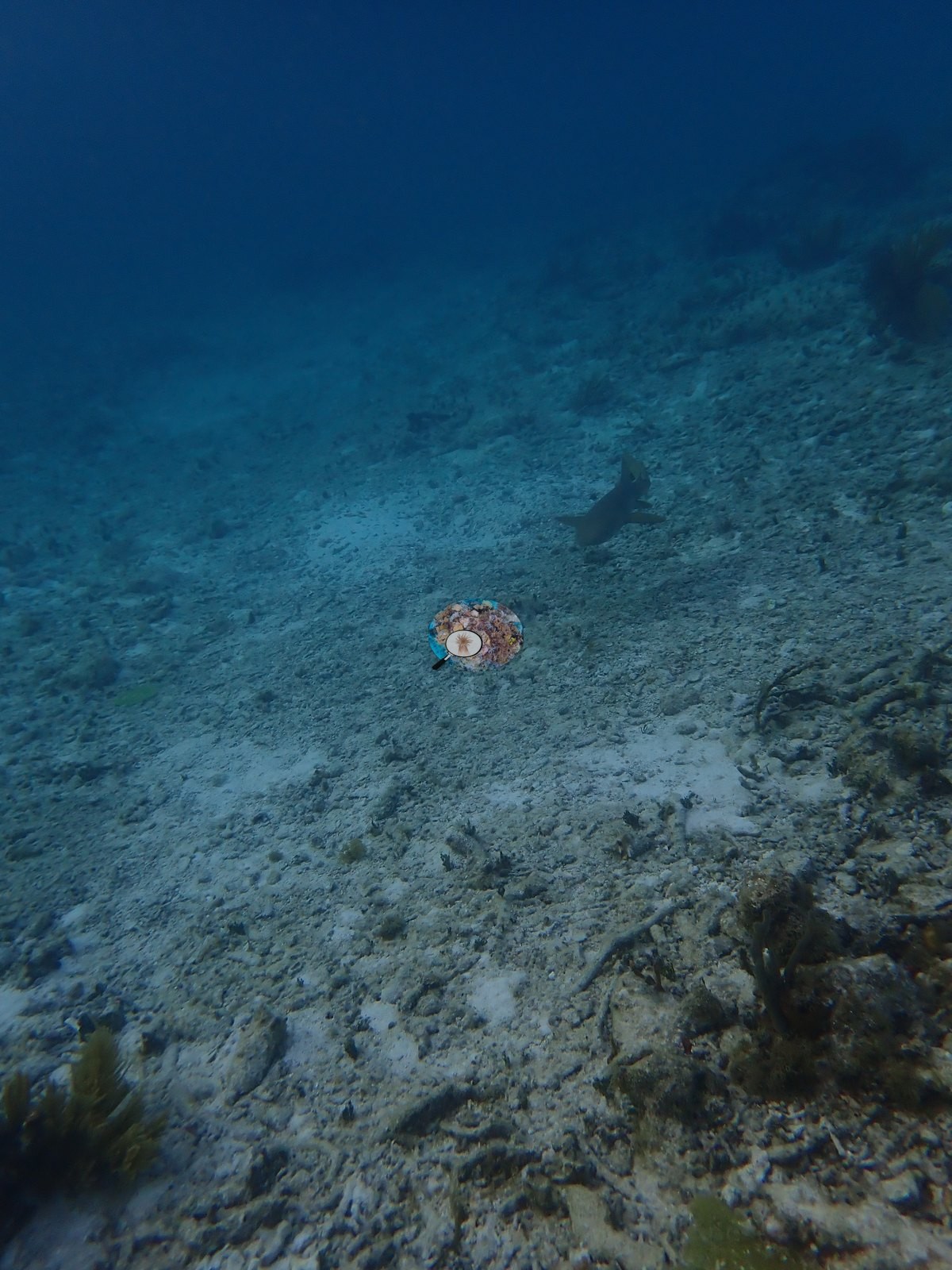
- Water clarity varies substantially along the route, from clear blue water in places (e.g., Image 47, Image 55, Image 56) to markedly turbid, greenish conditions through a mid-transect sand-and-rubble stretch (e.g., Image 35, Image 37, Image 38, Image 39, Image 40, Image 41, Image 42).
Benthos
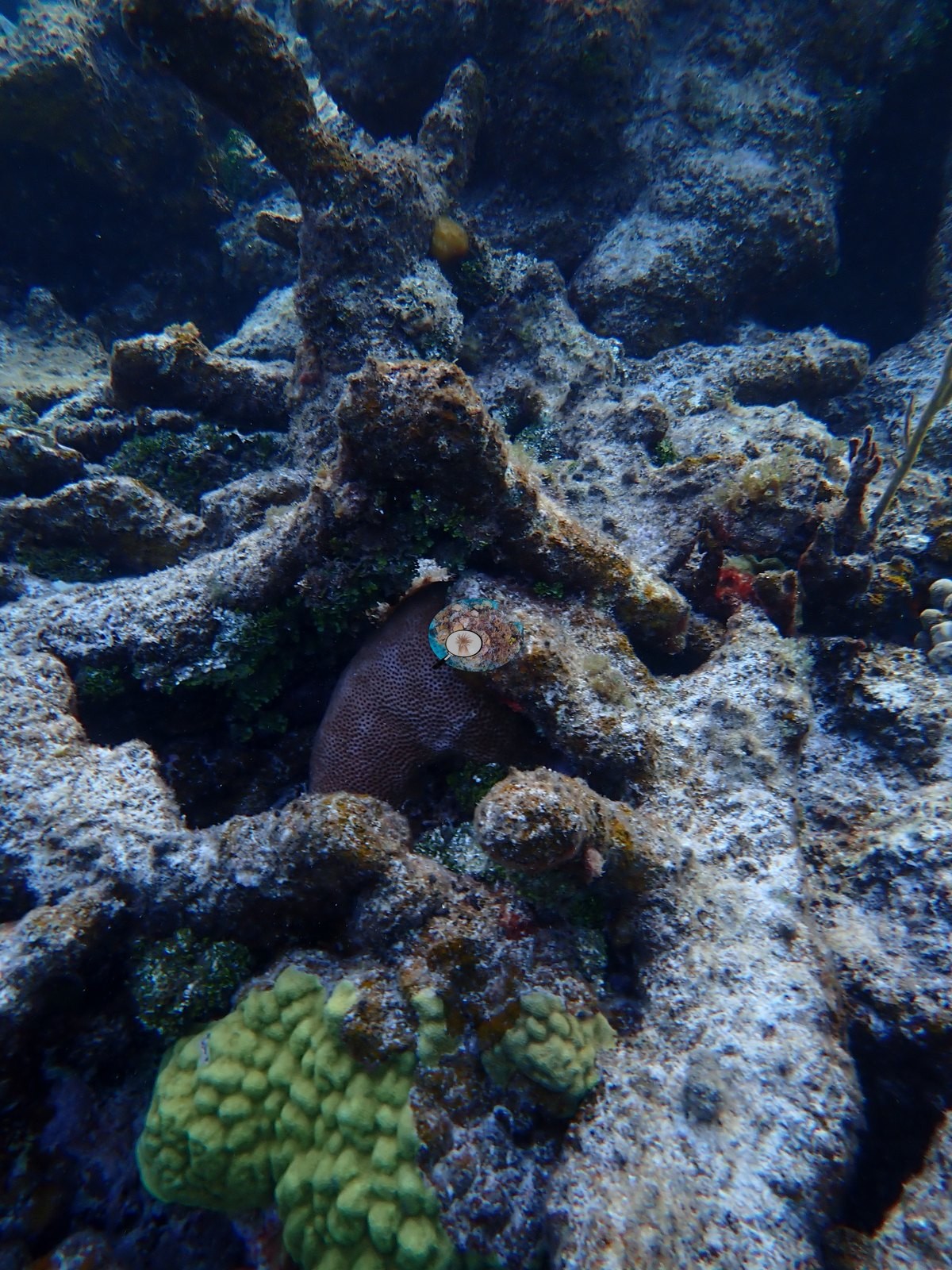
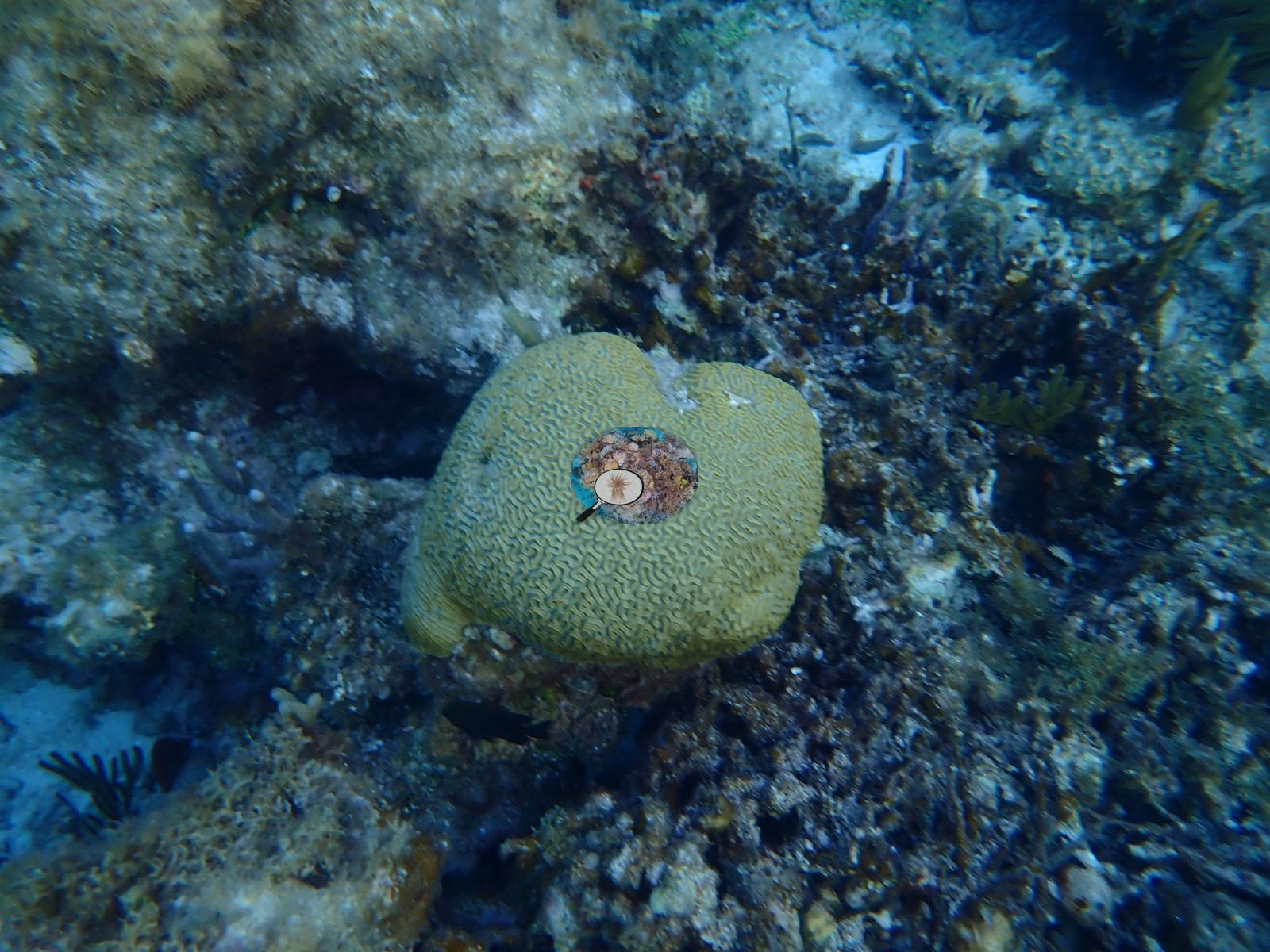
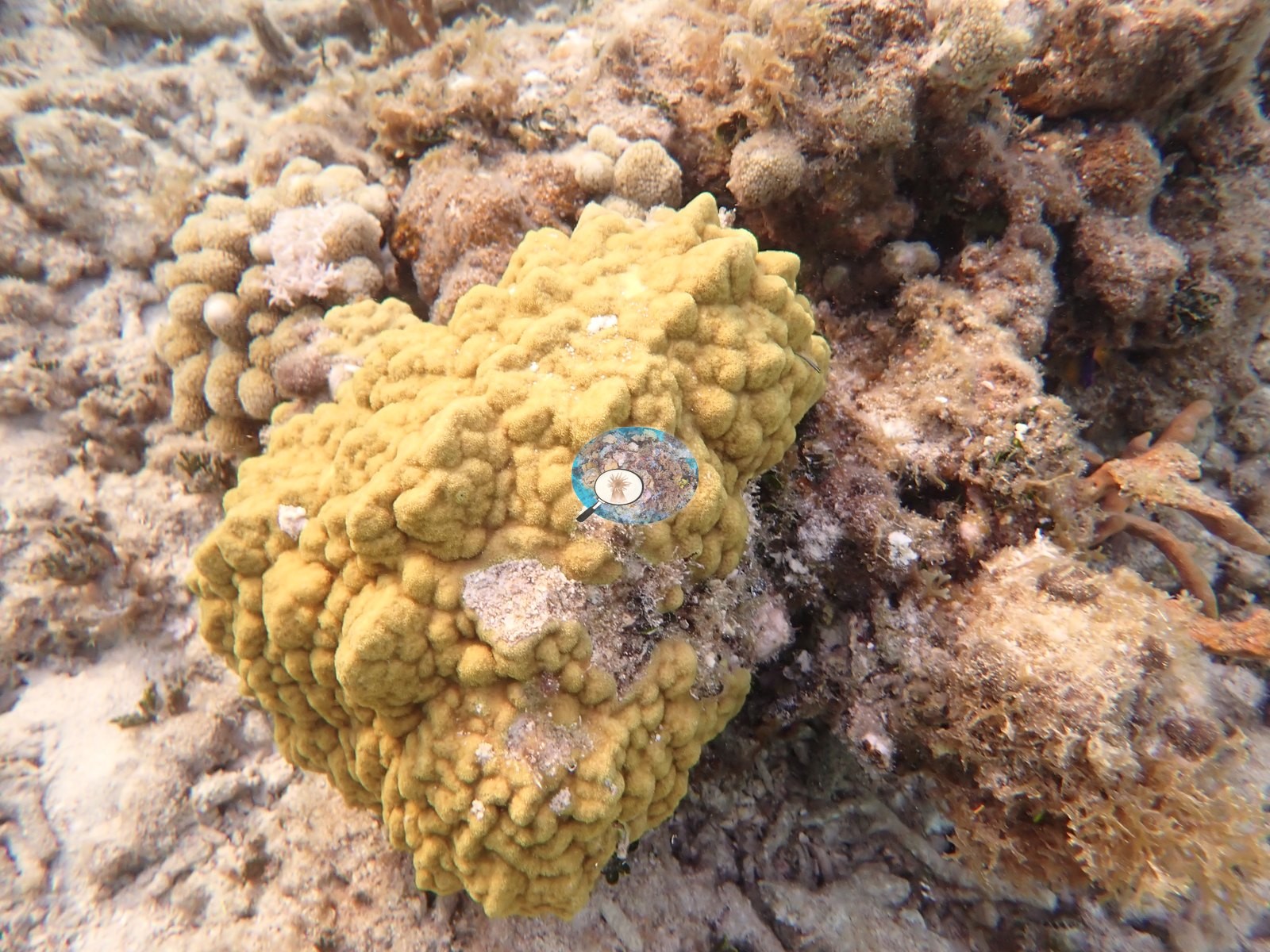
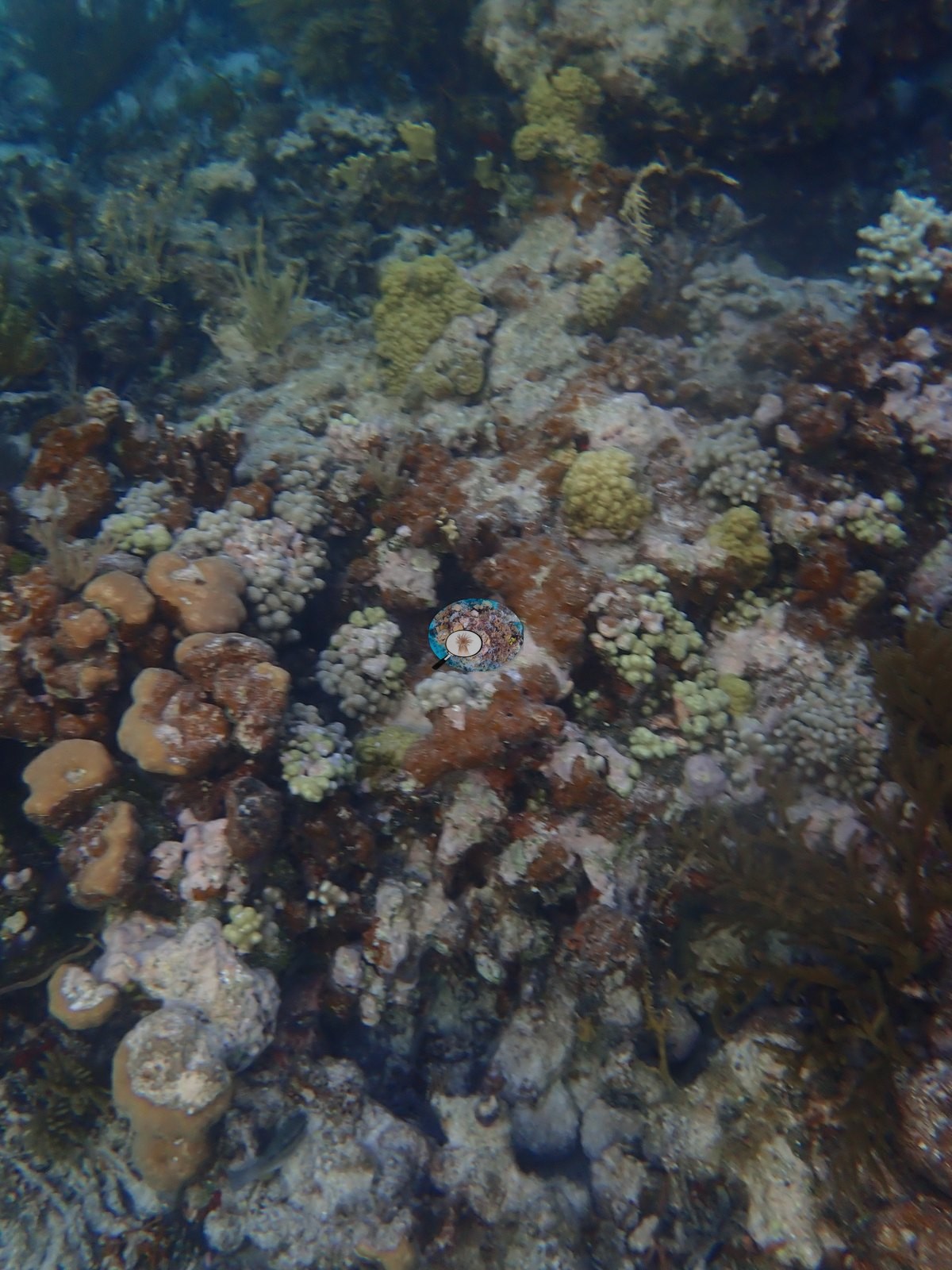
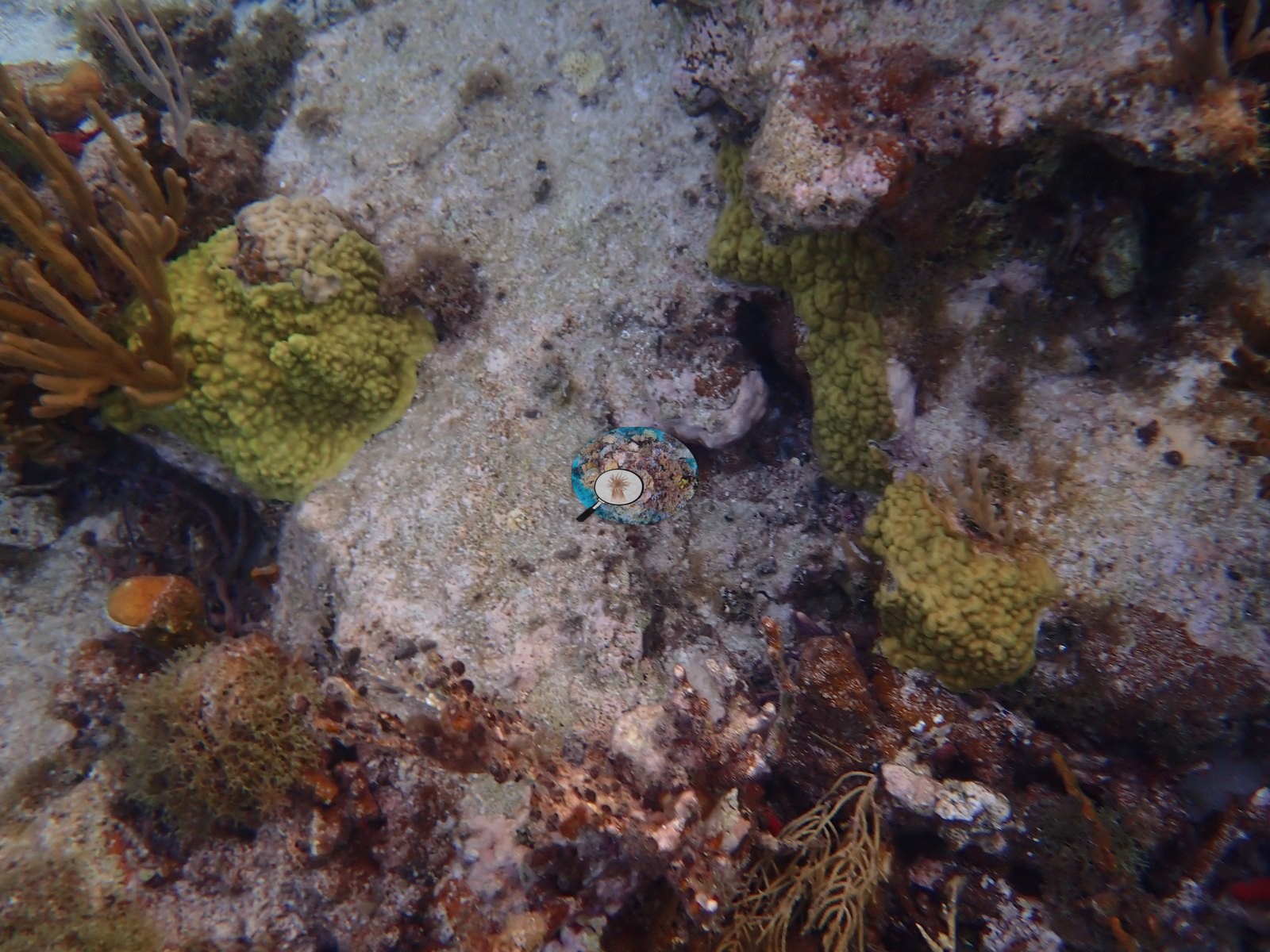
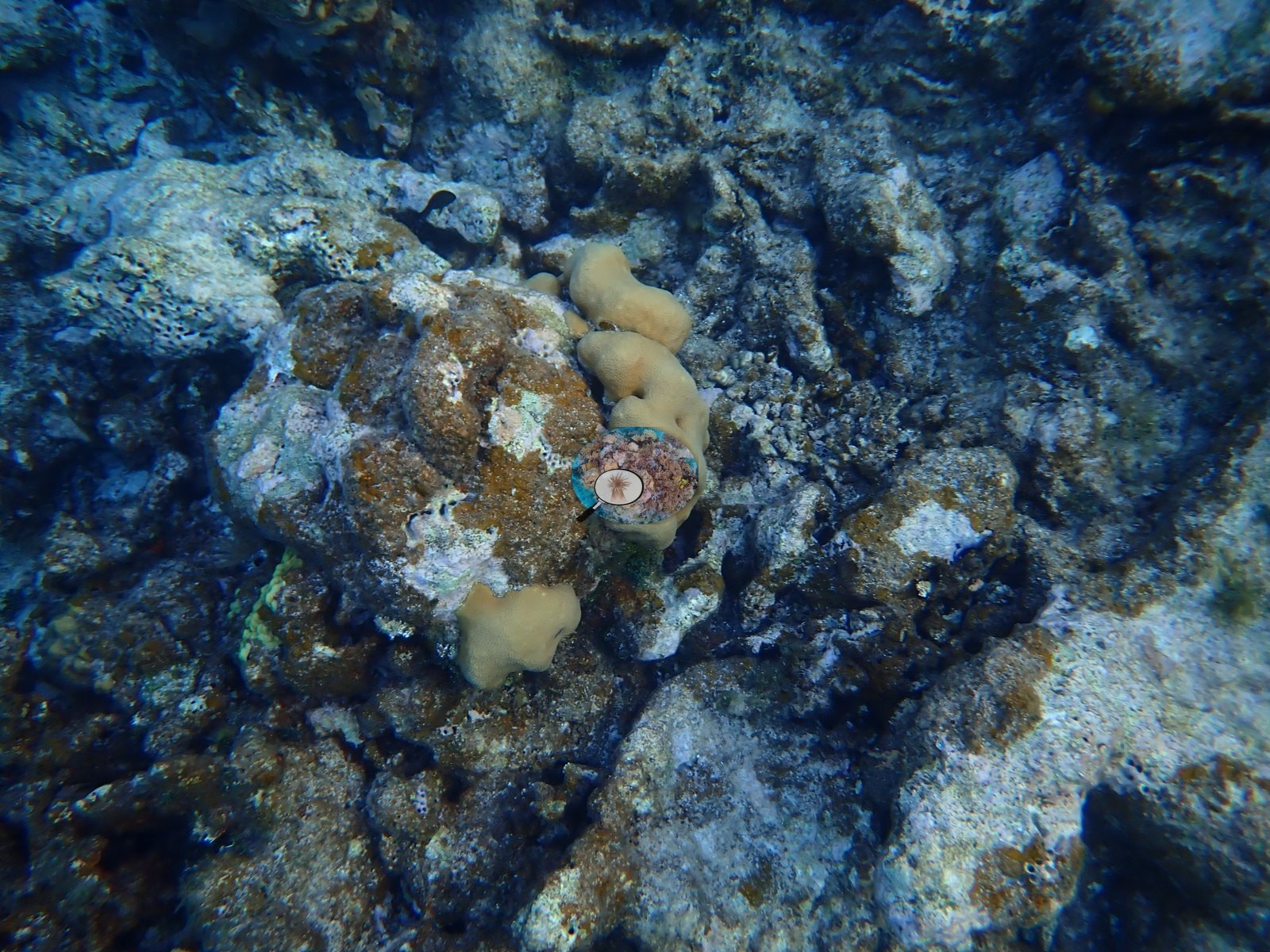
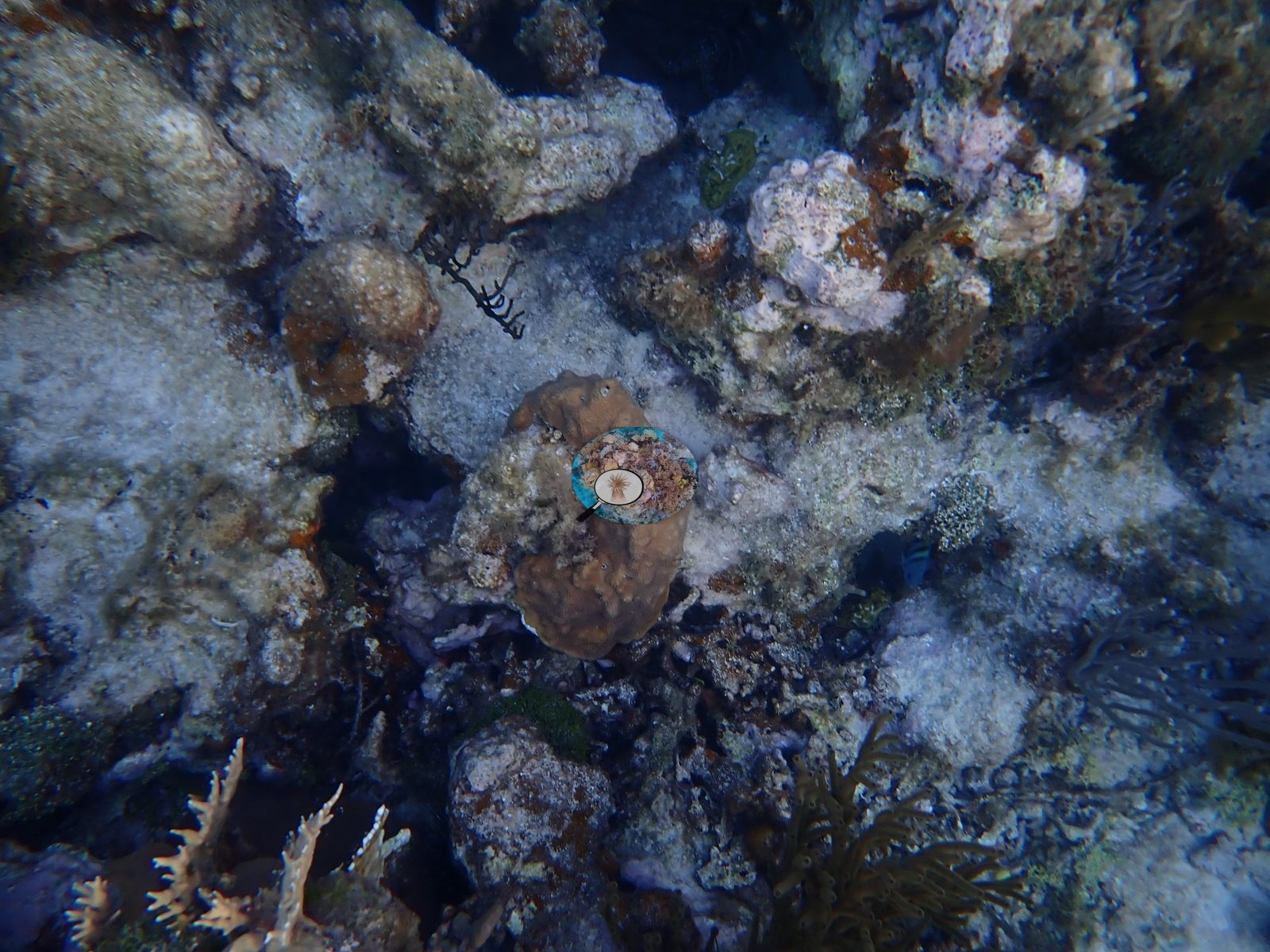
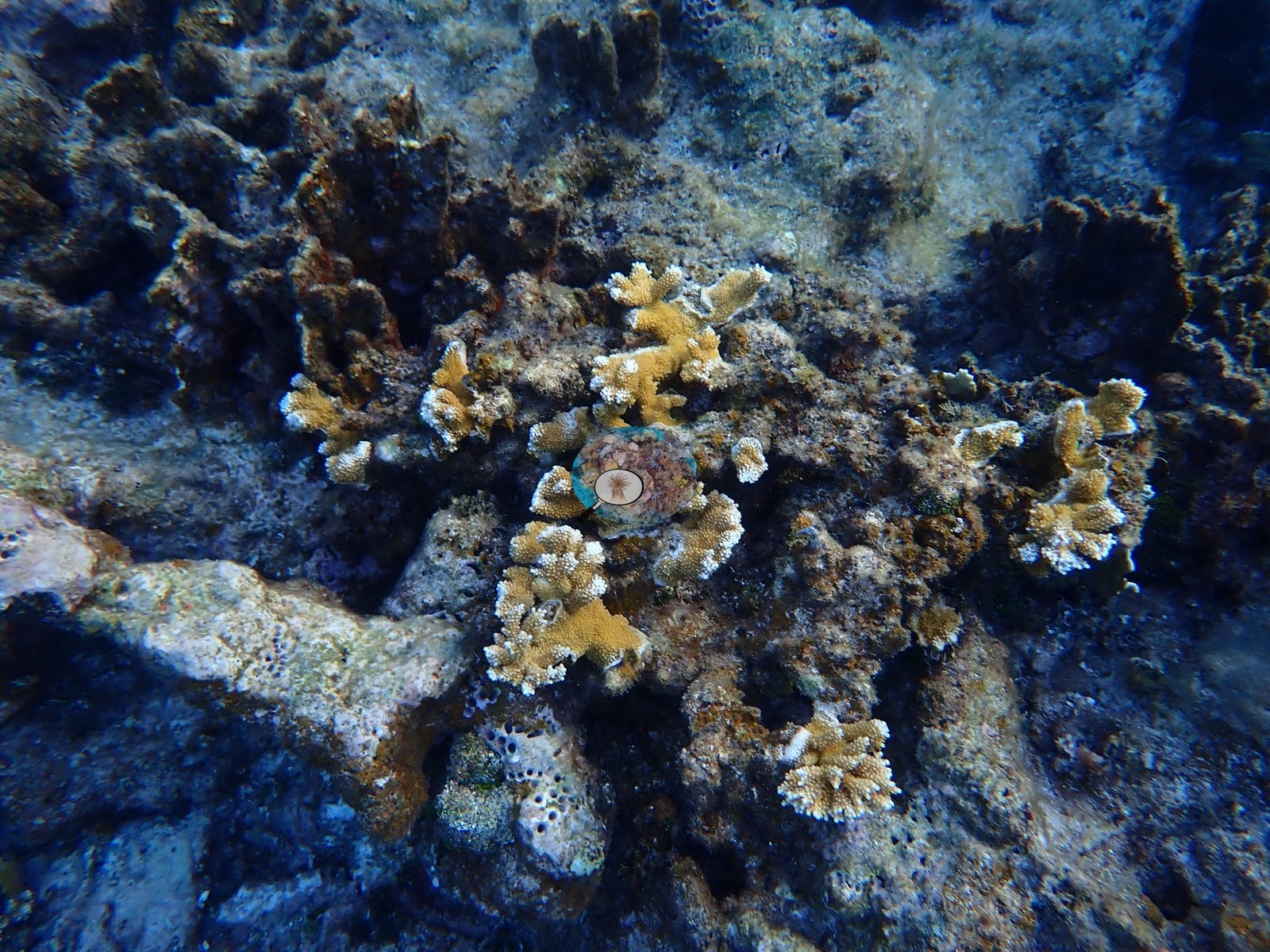
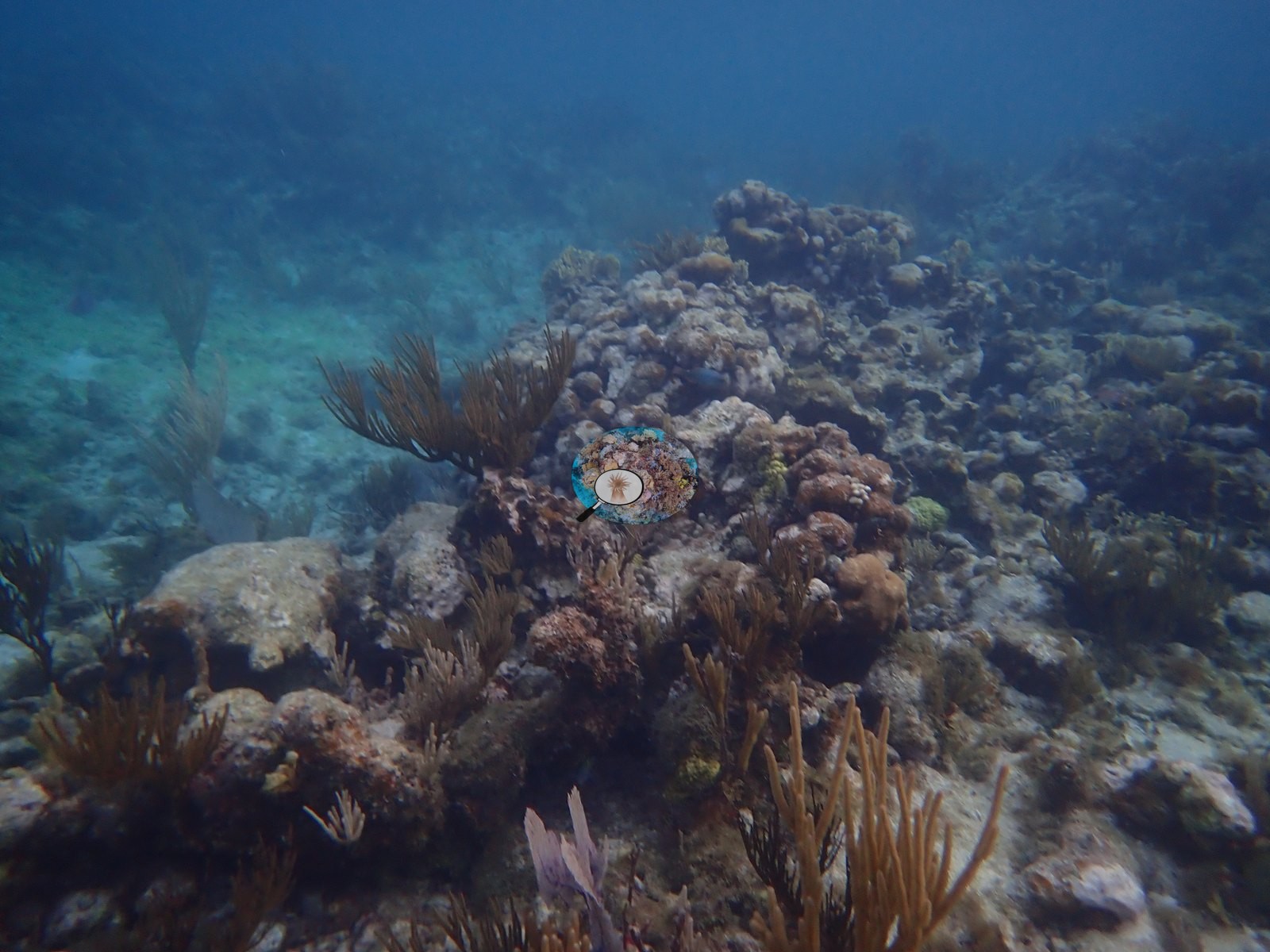
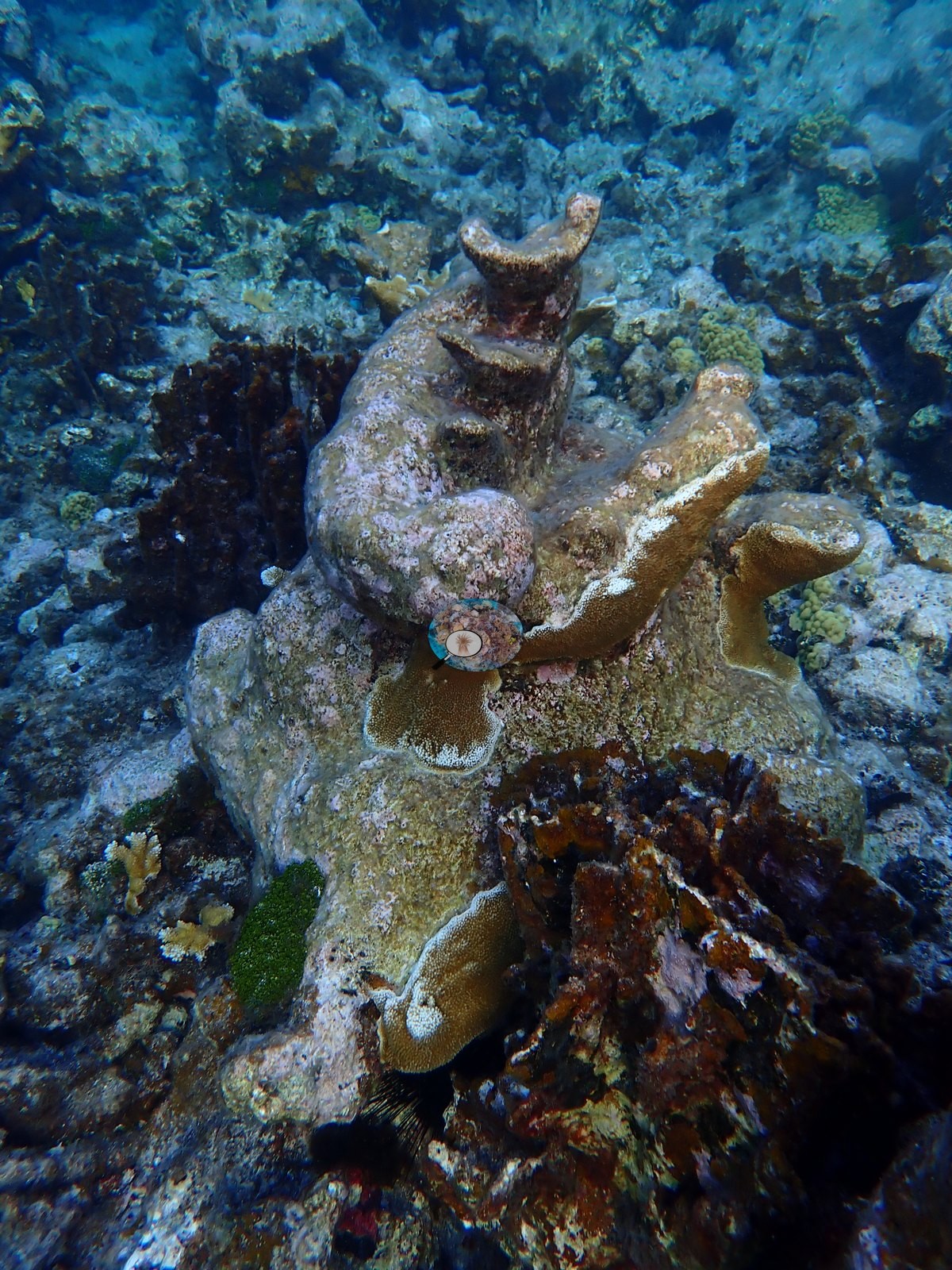
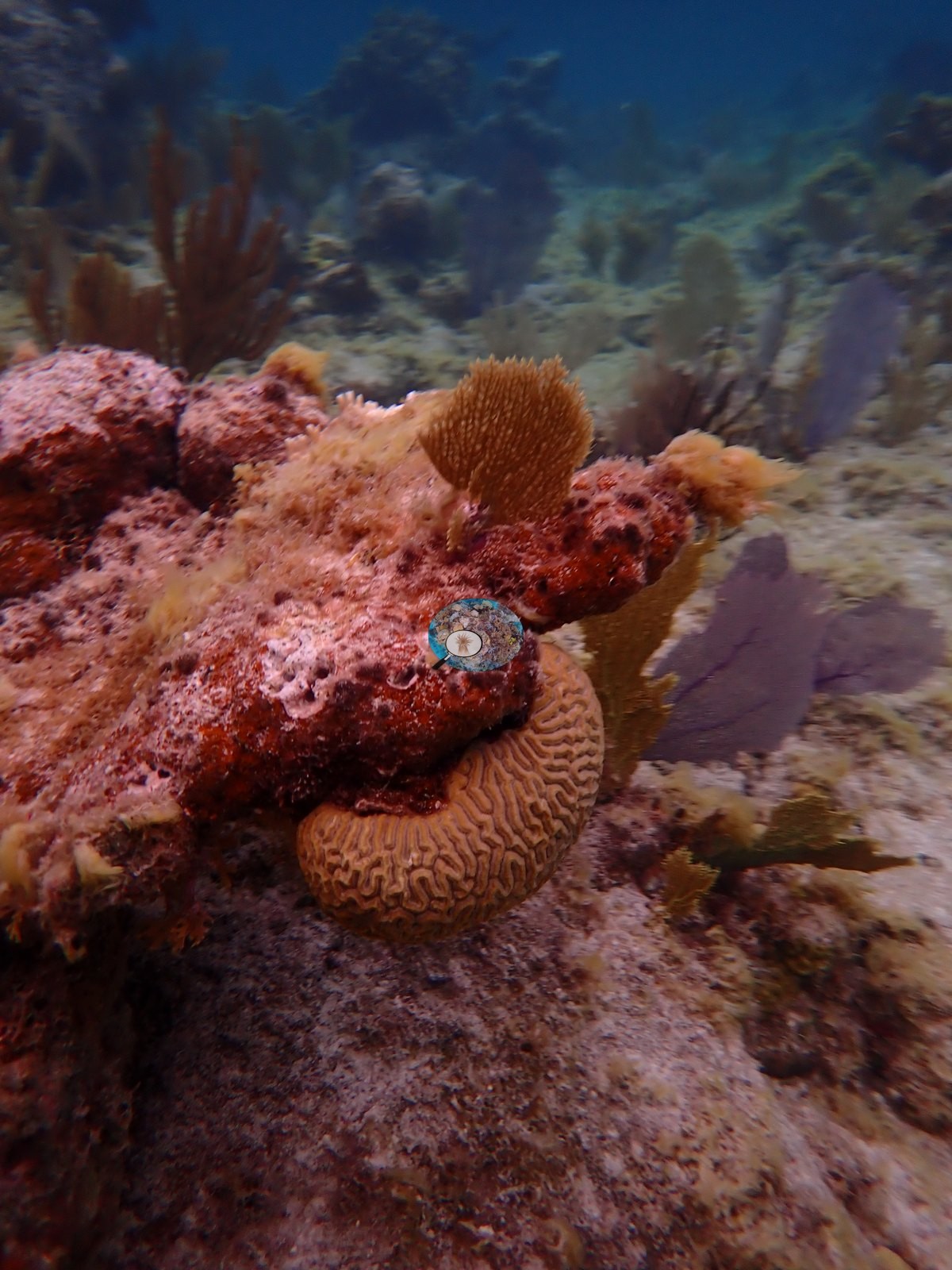
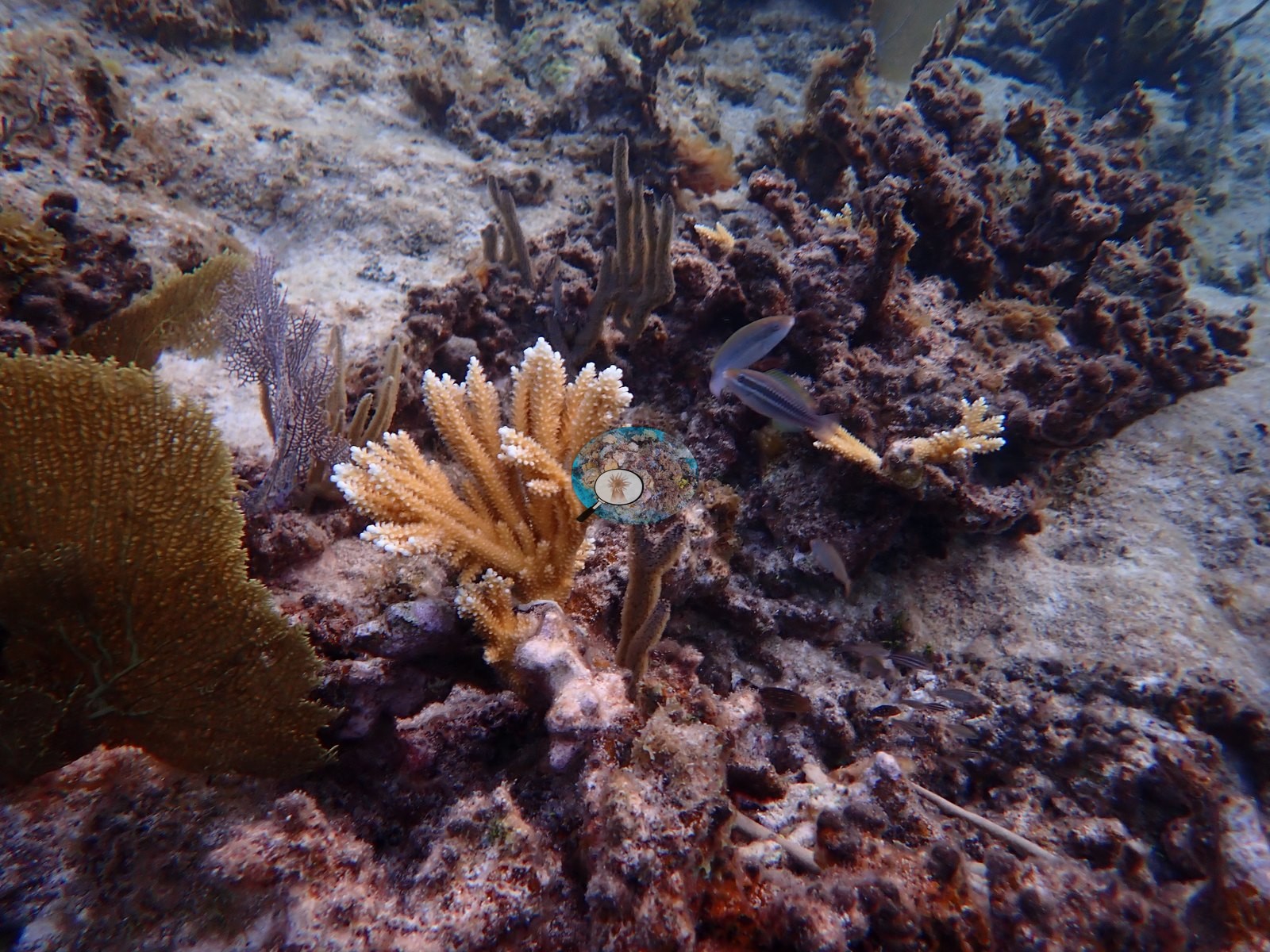
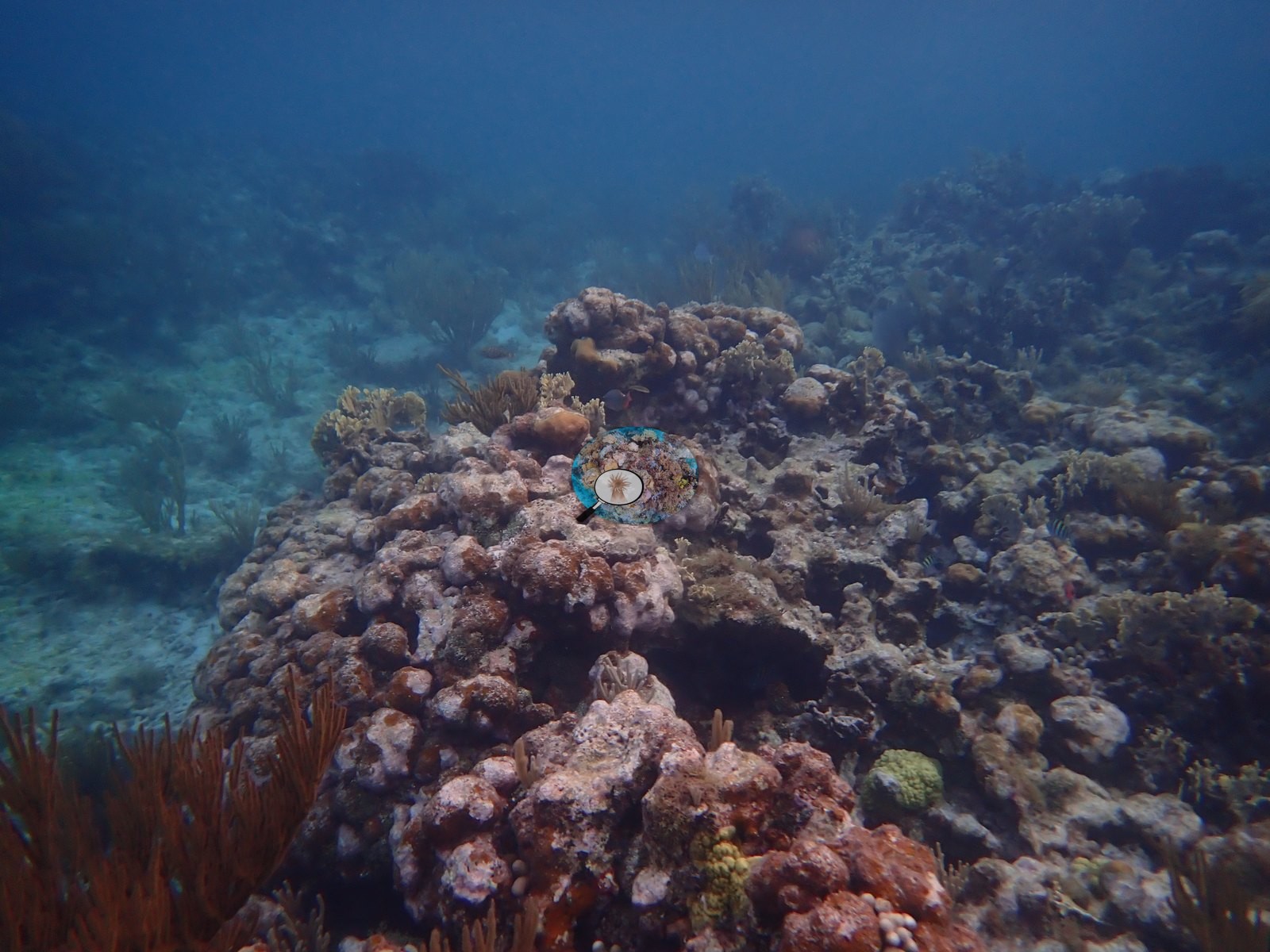
- Where live coral occurs, it is dominated by small mounding colonies of Porites astreoides-type coral and scattered brain-type heads (cf. Pseudodiploria/Diploria-complex) (e.g., Image 2, Image 9, Image 34, Image 44, Image 46), with occasional small finger or branching colonies (cf. Porites porites, or small-polyp branching recruits resembling juvenile Acropora cervicornis) clustered on dead rock (e.g., Image 3, Image 10, Image 49, Image 50, Image 51, Image 52).
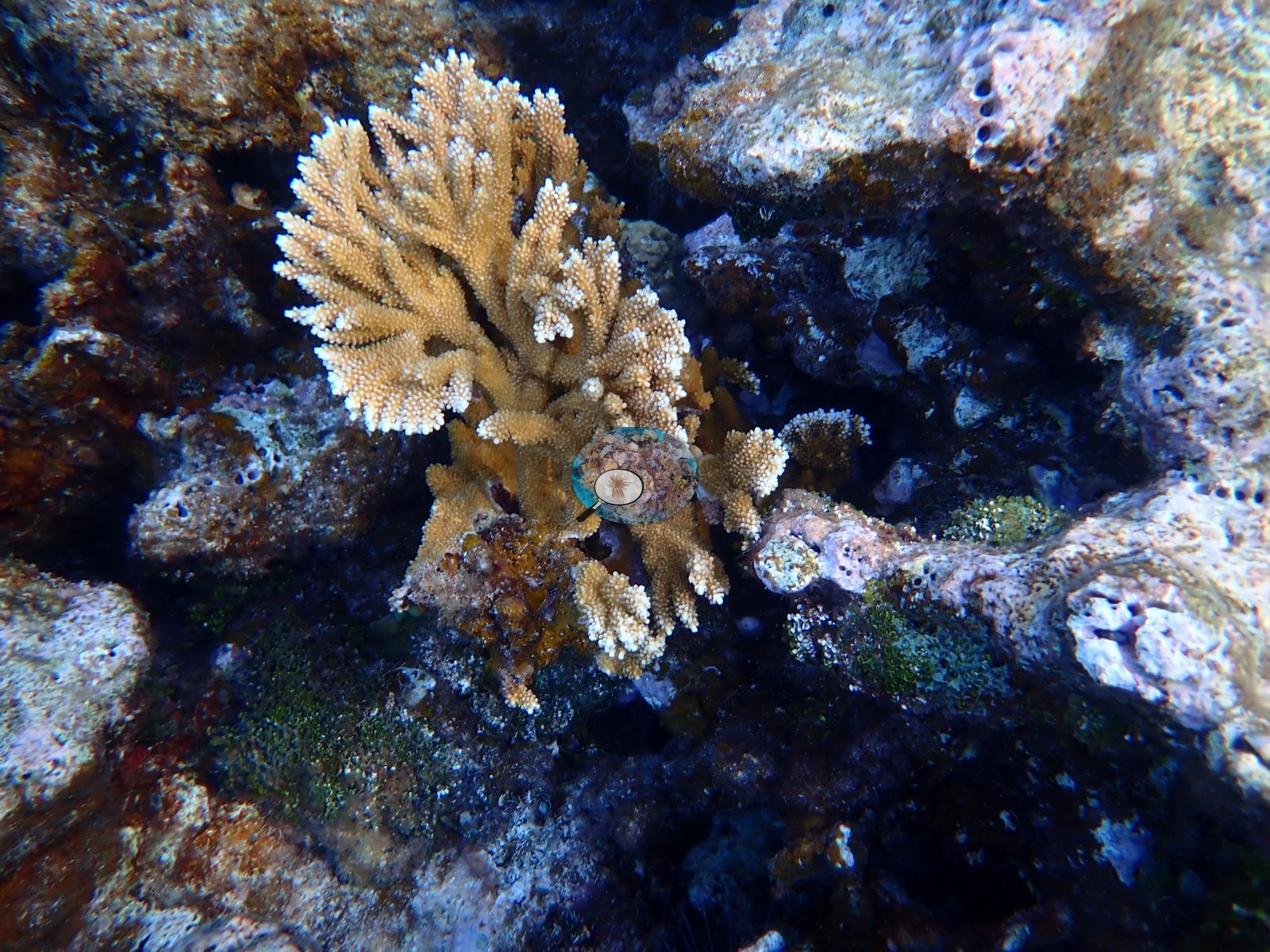
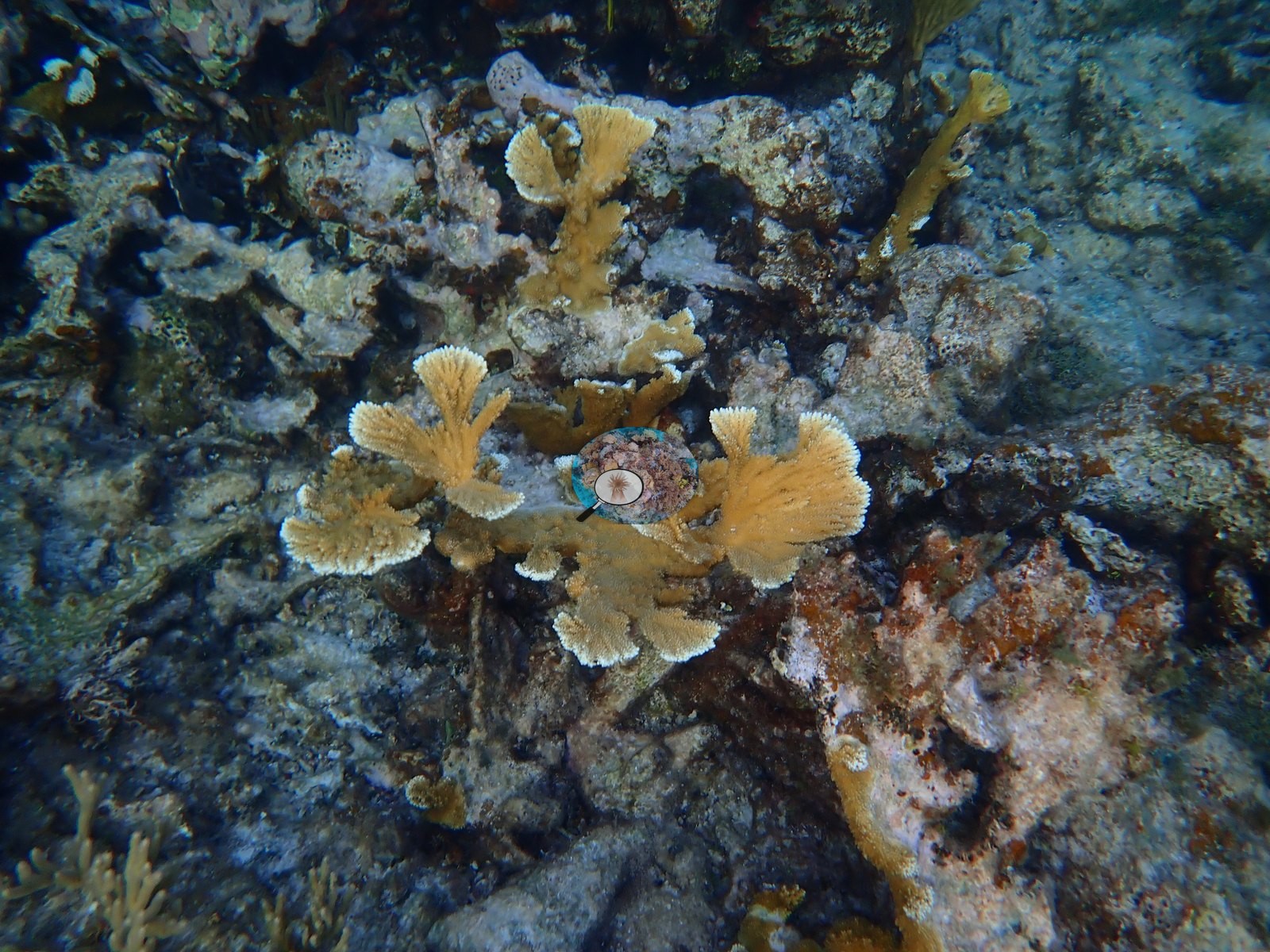
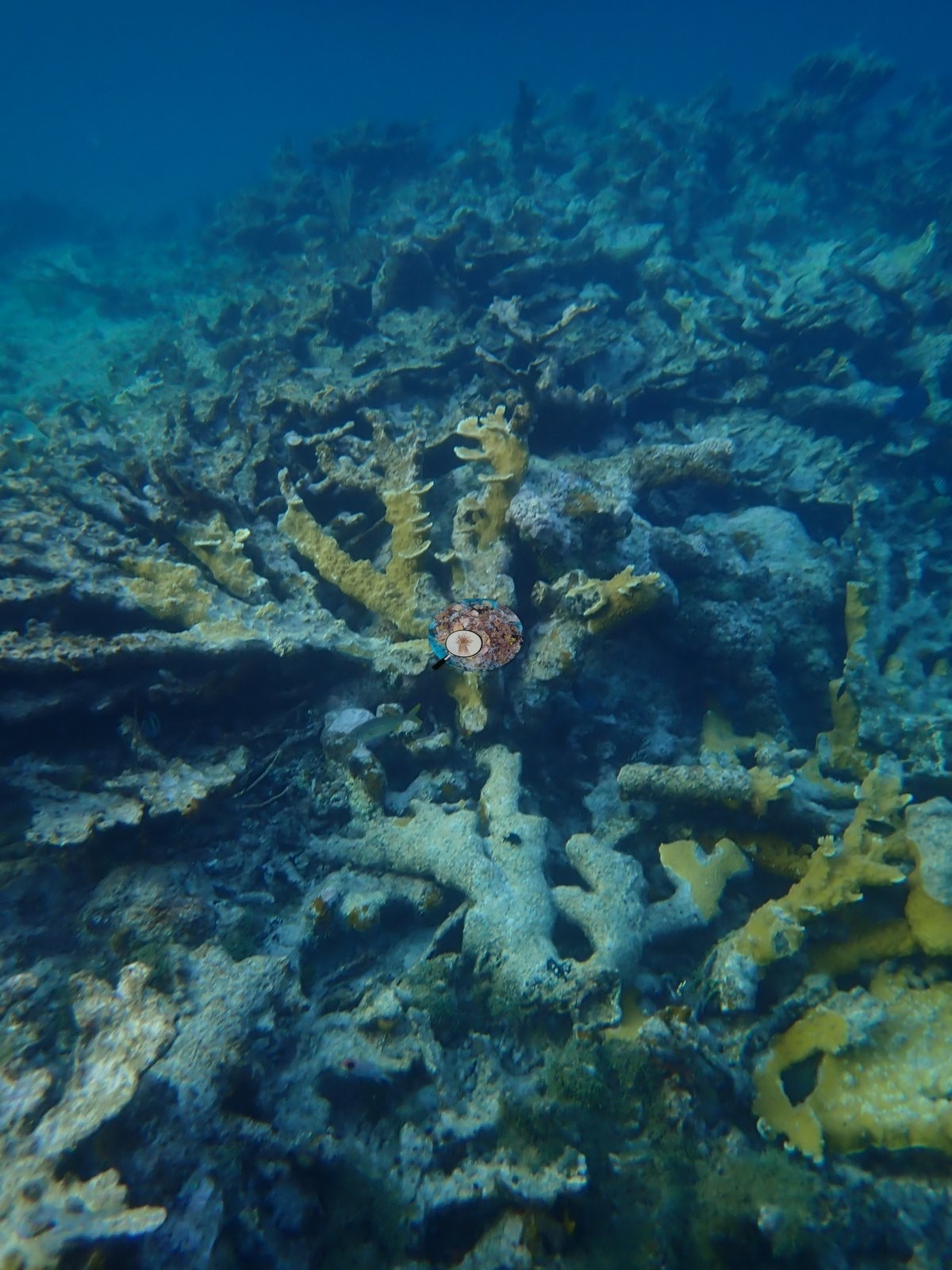
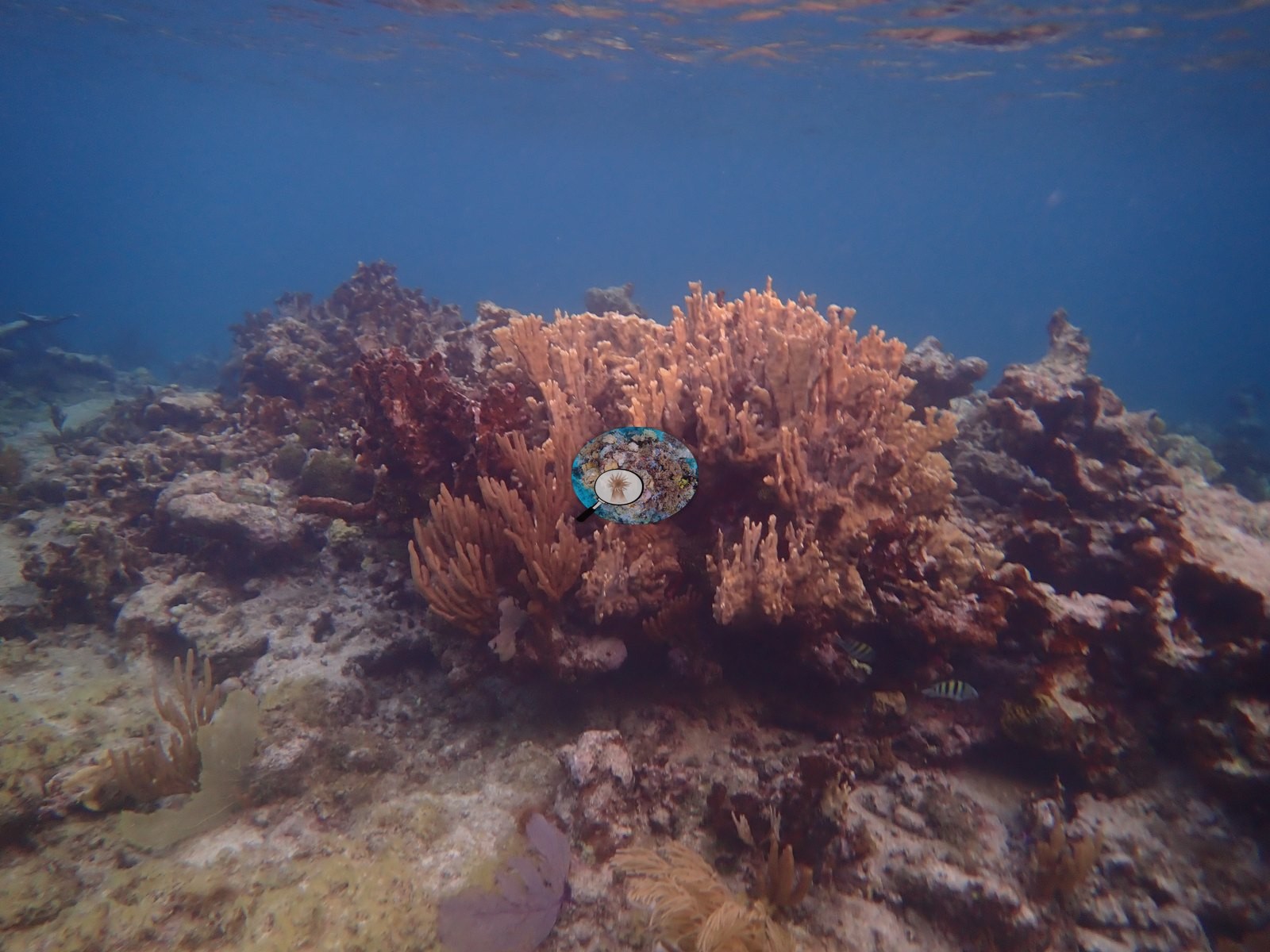
- Two substantial live elkhorn coral (Acropora palmata) colonies appear mid-transect, both showing extensive golden-tan branching tissue with white growing tips and no obvious partial mortality (e.g., Image 55, Image 56), in contrast to the standing-dead elkhorn skeletons that dominate elsewhere on the transect.
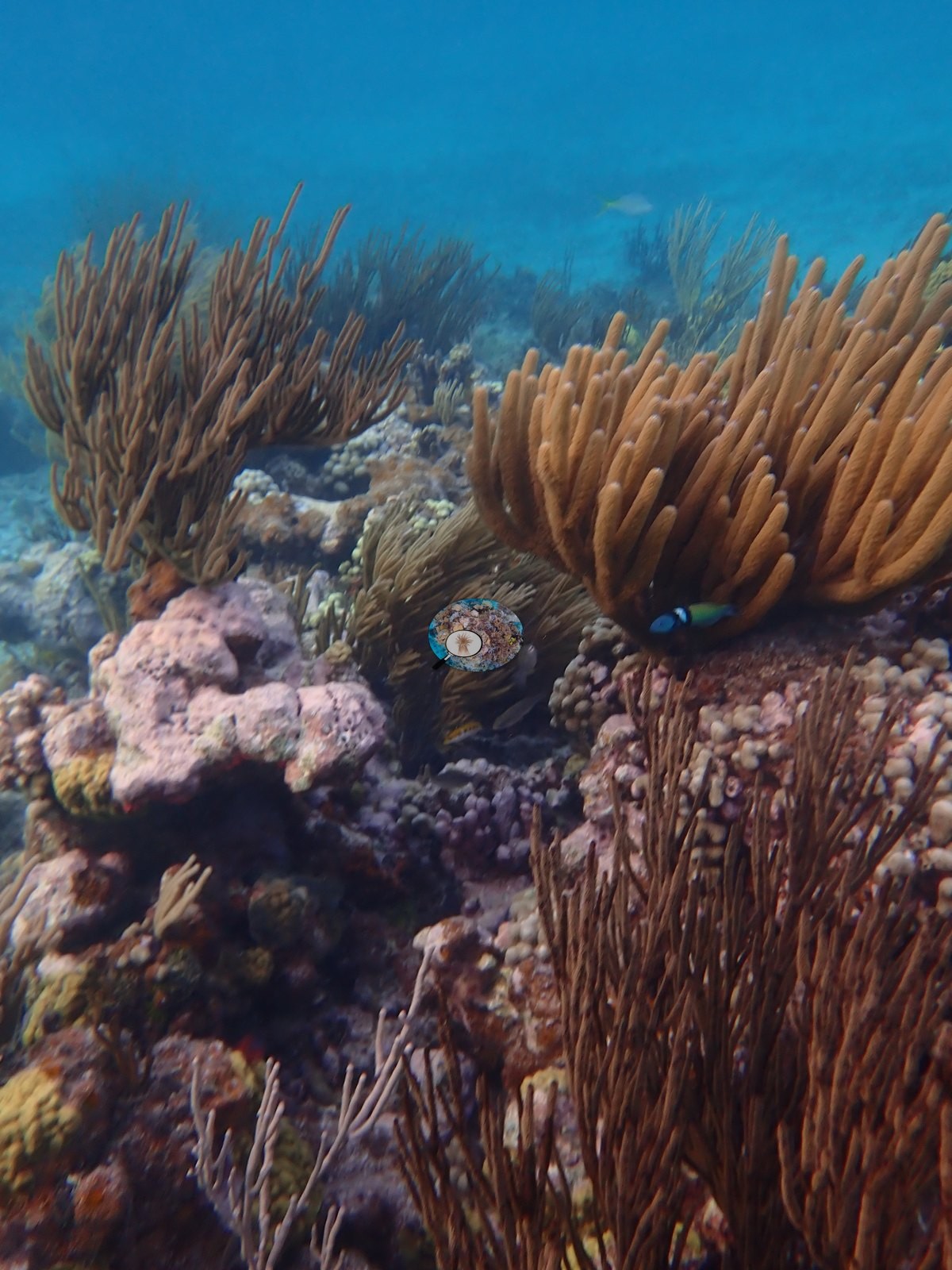
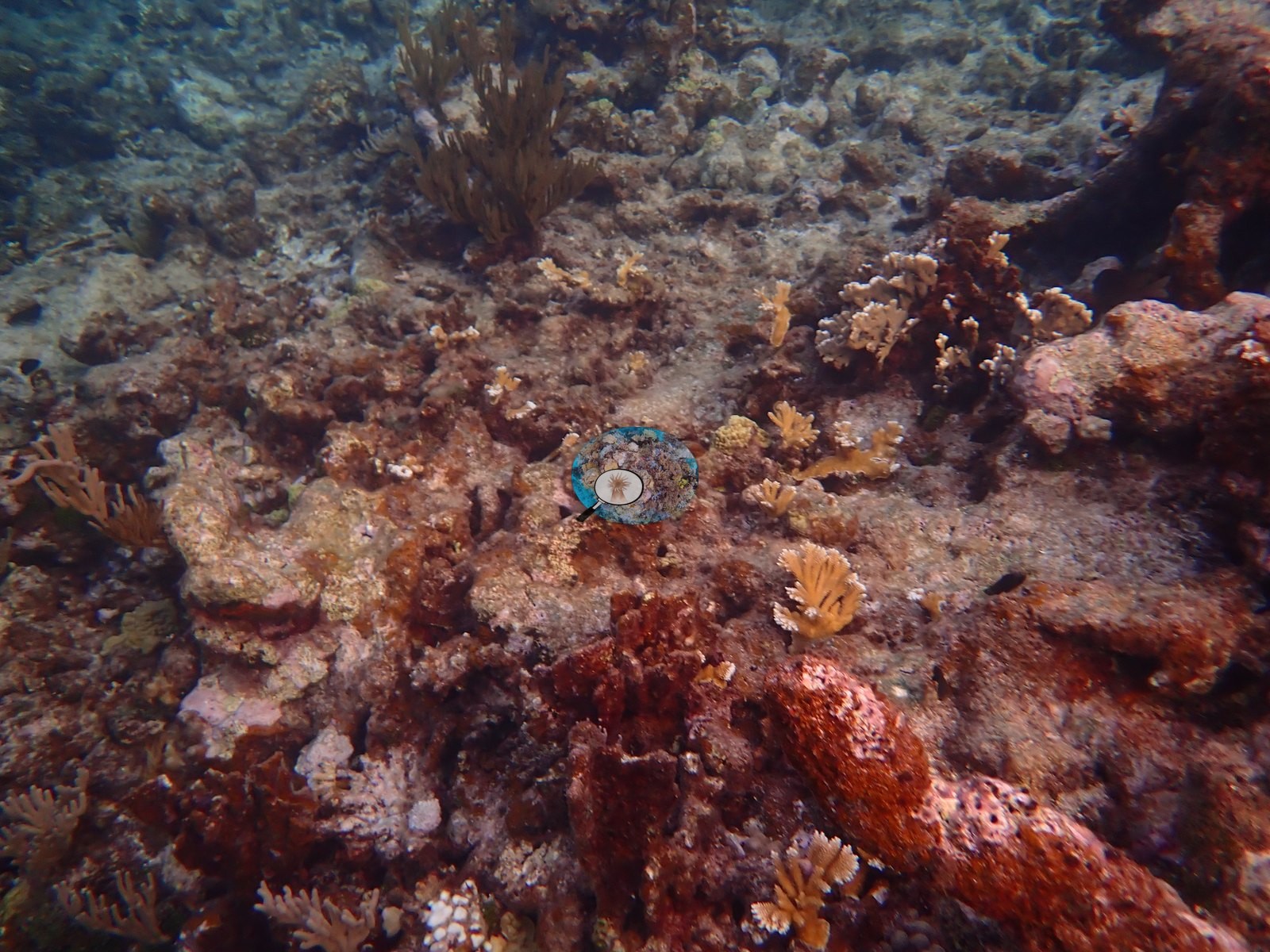
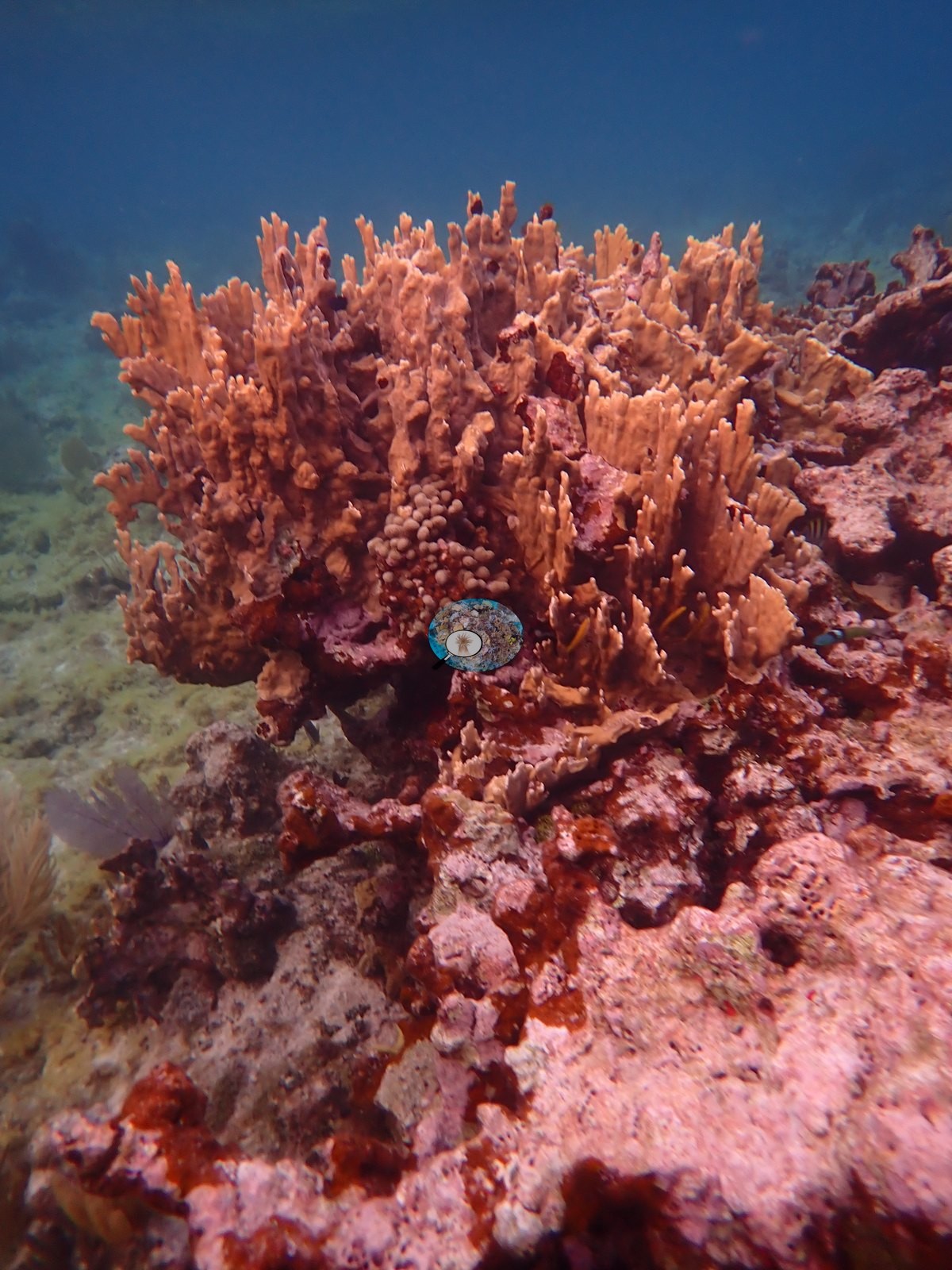
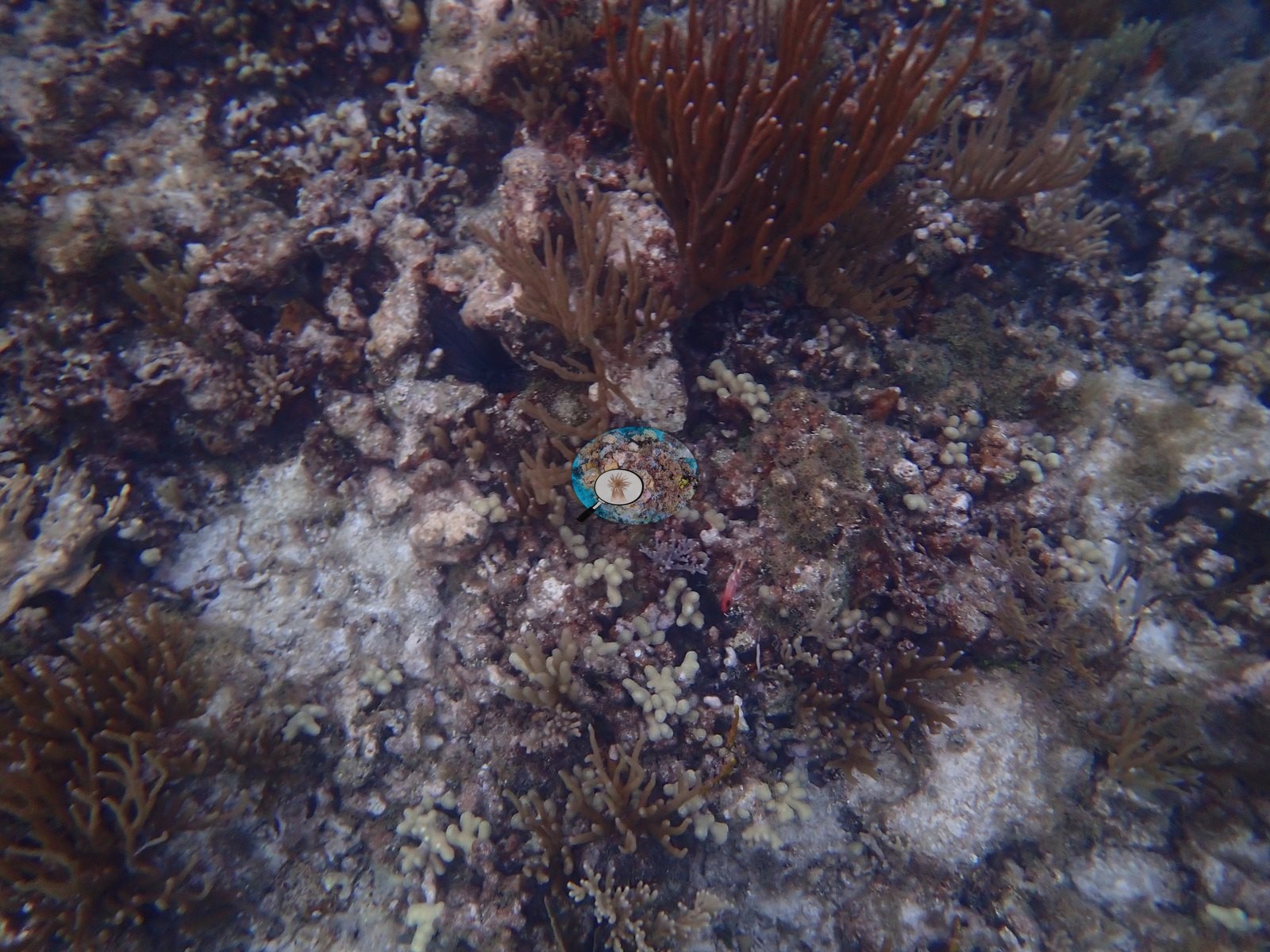
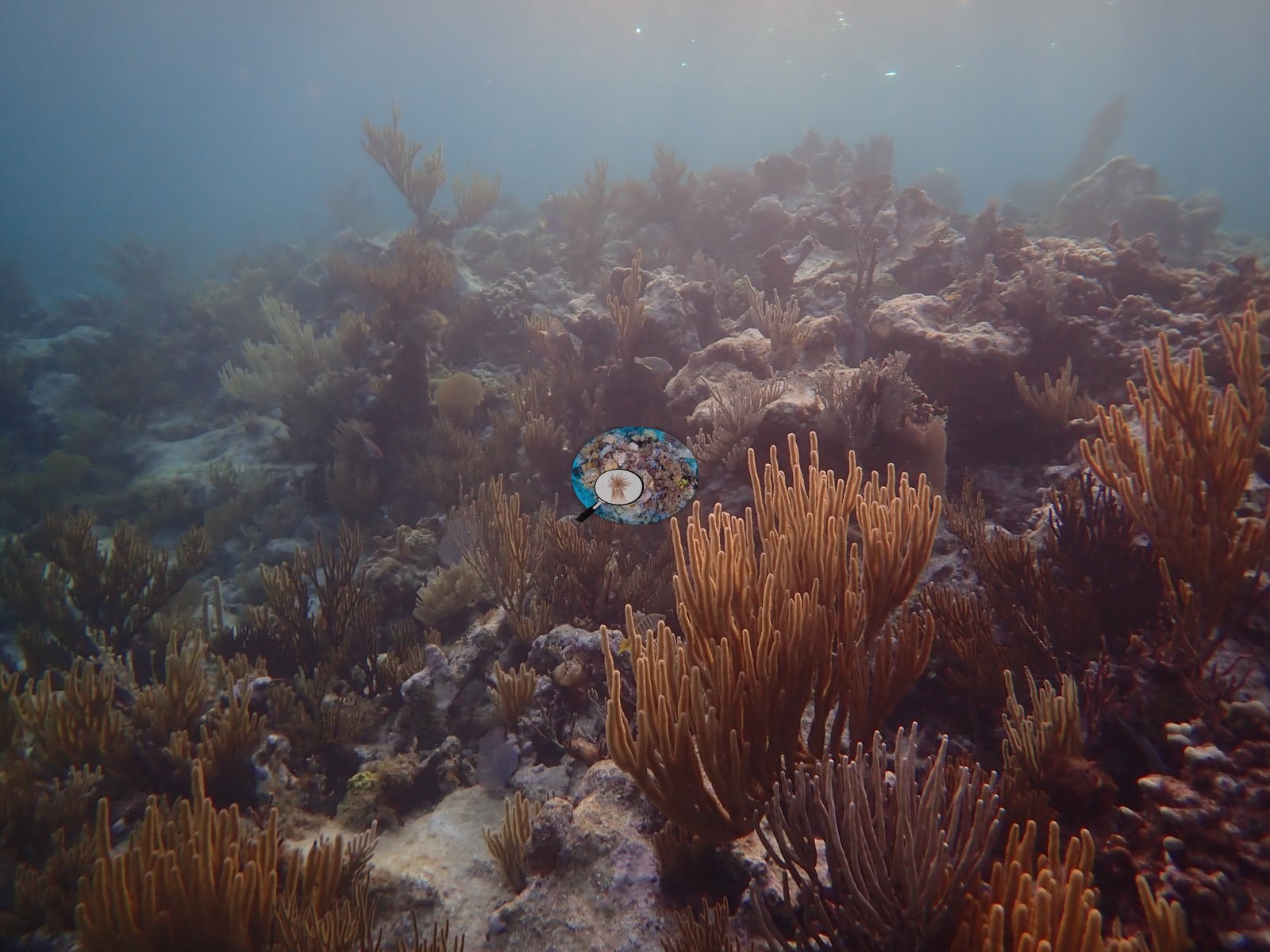
- A probable fire coral (cf. Millepora complanata) blade colony appears early in the transect (e.g., Image 8), and gorgonians -- sea rods and sea fans -- are consistently present and in several frames form the dominant living cover on otherwise bare hardground (e.g., Image 15, Image 25, Image 61, Image 62, Image 63).
- A larger mounding coral head, its bioeroded pink-white crust ringed by sea rods, rises off the bottom early in the transect (e.g., Image 17), and elsewhere a live plating or lobed colony (cf. Orbicella-complex) sits low on the reef rock with pale growing margins around otherwise even tan tissue -- a normal growth-edge appearance, with no sign of disease or recent mortality (e.g., Image 53).
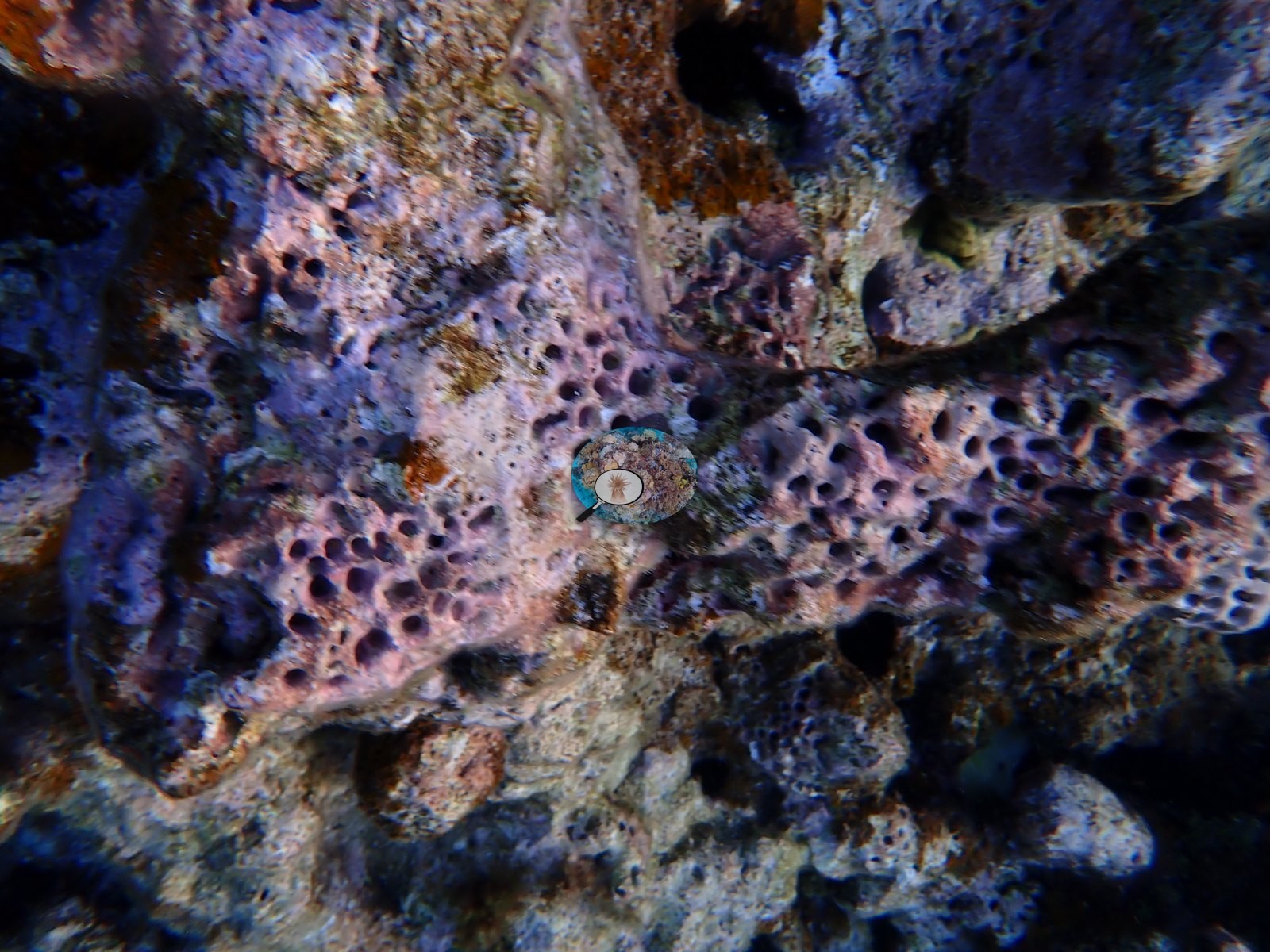
- Sponges, including a red-orange encrusting form and a pink boring sponge riddling dead coral rock, are present but not counted as coral cover (e.g., Image 23, Image 24, Image 54).
Along the transect
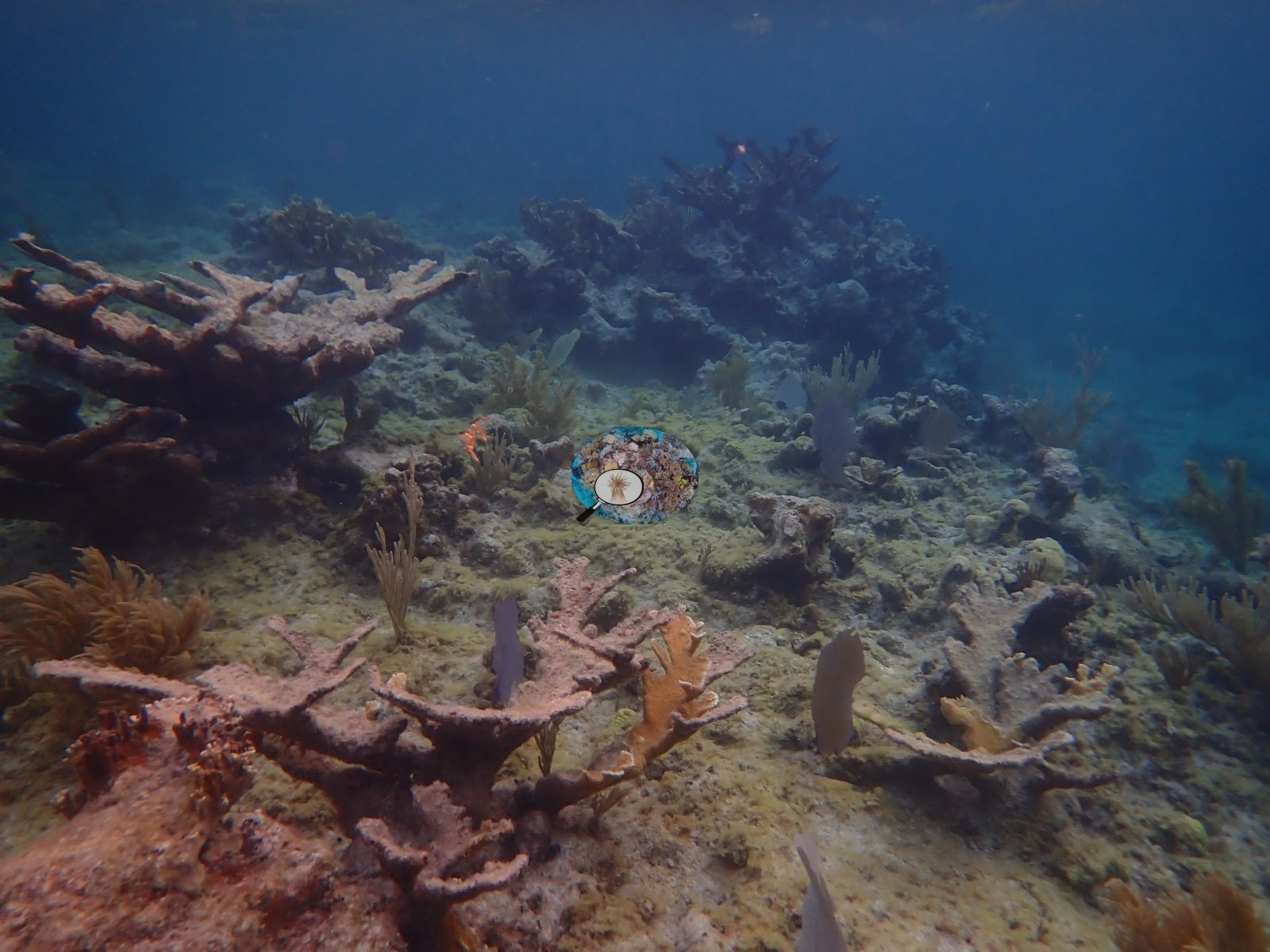
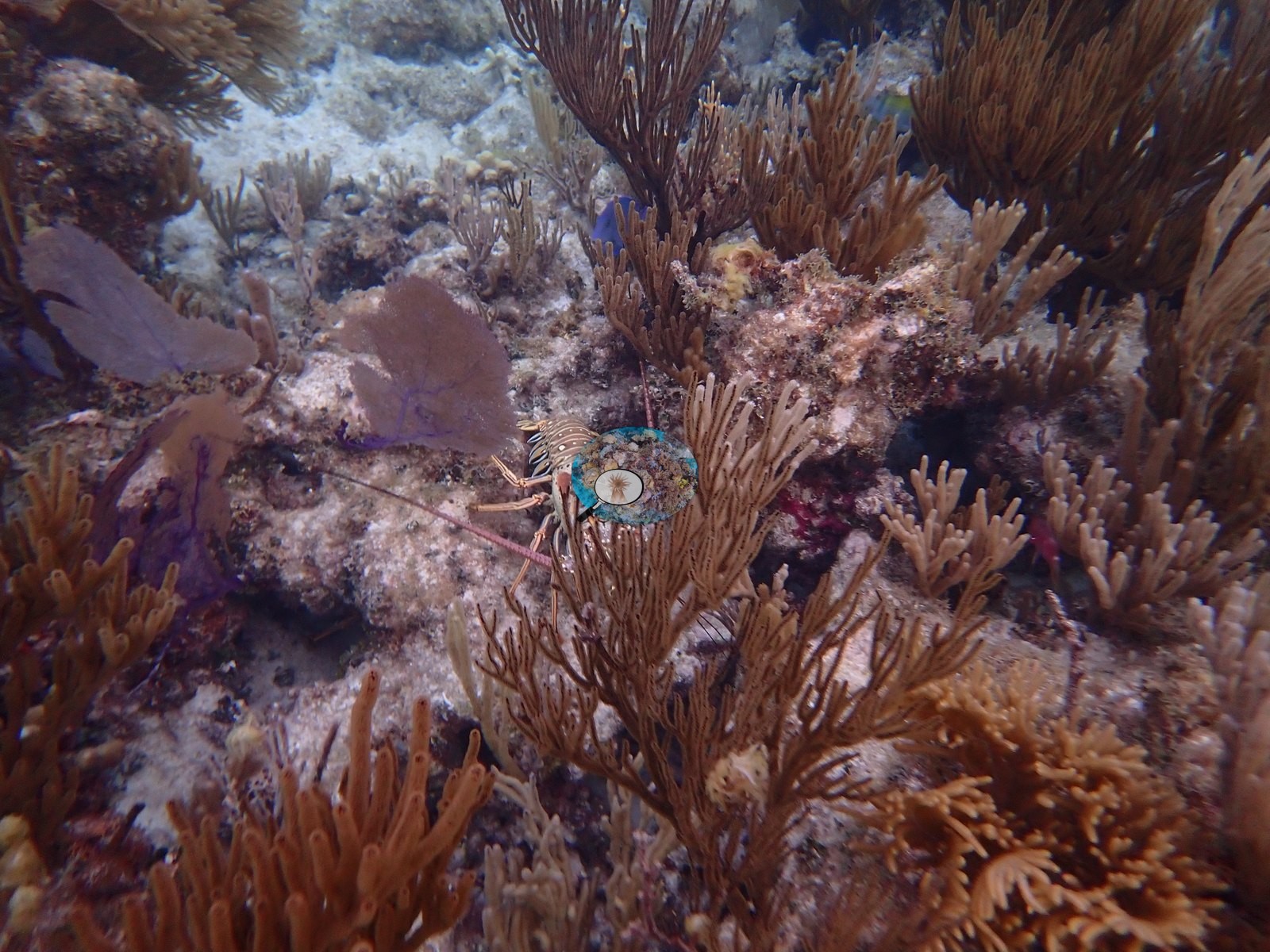
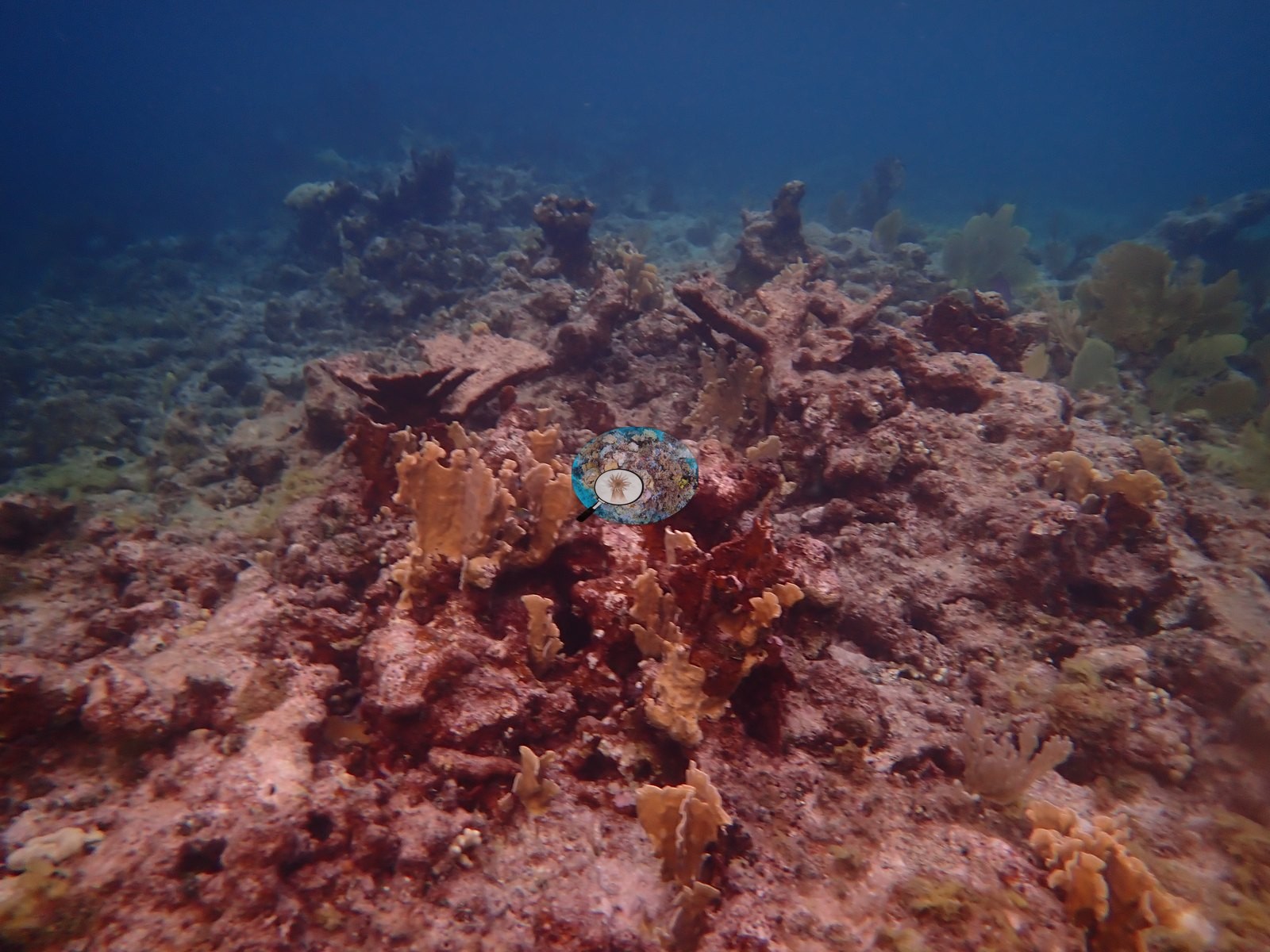
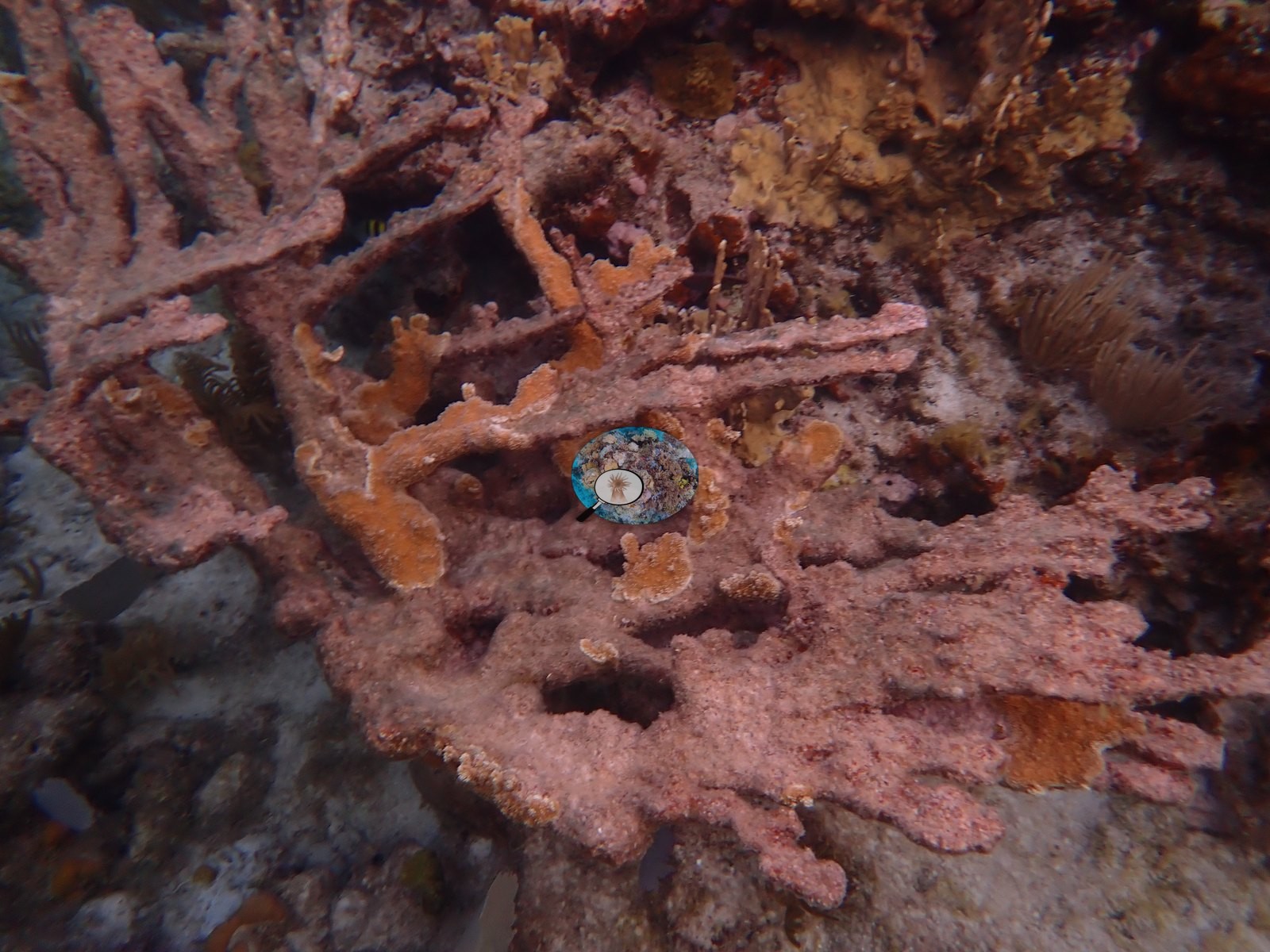
- The transect opens on a shallow, heavily bioeroded standing-dead elkhorn (Acropora palmata) ridge with scattered small live encrusting corals and turf-filled crevices (e.g., Image 1, Image 2, Image 3), continuing through habitat frames of a spiny lobster (e.g., Image 4, Image 5) before reaching one of the better-condition patches of the whole transect: a large live elkhorn colony standing over a sea fan (e.g., Image 6, Image 7).
- Through the first third the reef alternates between dead-rubble ridges, sparse live patches, and gorgonian-dominated low-relief hardground, with a brief richer mixed patch of gorgonians, branching coral, and reef fish partway through this stretch (e.g., Image 11). A dead-elkhorn ridge partway through this stretch also hosts an orange cushion sea star (cf. Oreaster reticulatus) moving among small live elkhorn-type recruits on the rubble (e.g., Image 21), and a second spiny lobster shelters among sea rods and a purple sea fan a little further along (e.g., Image 26).
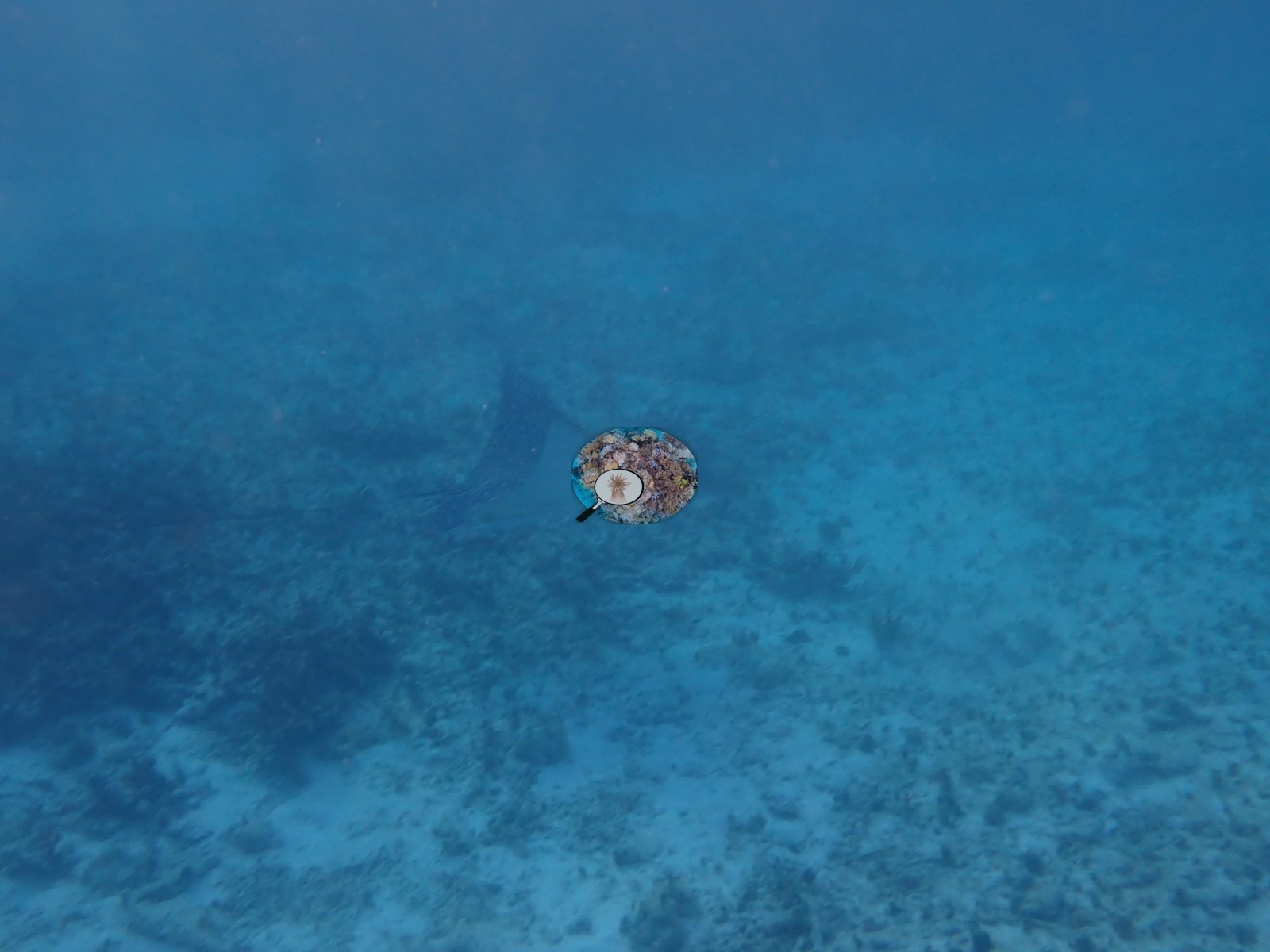
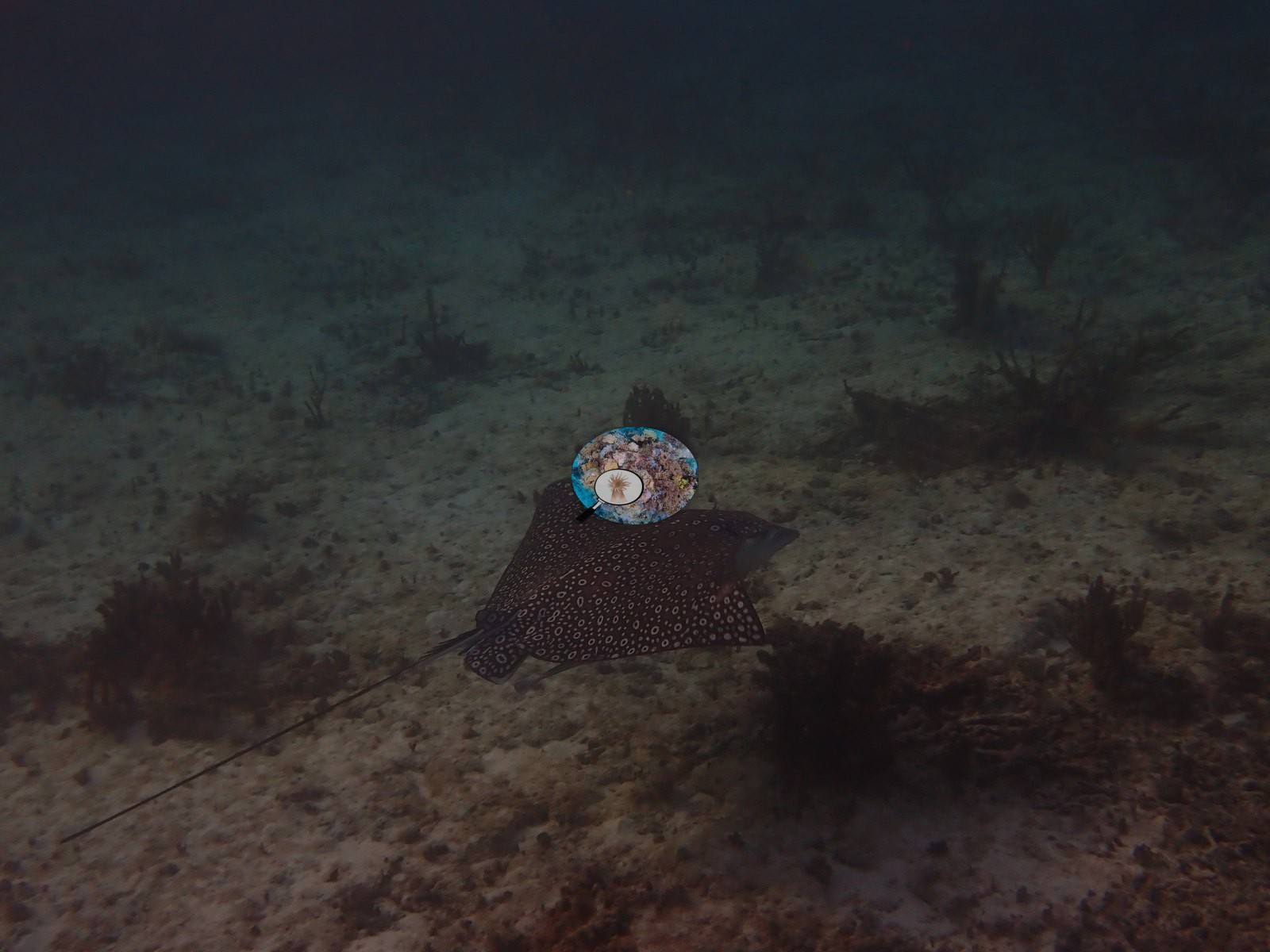
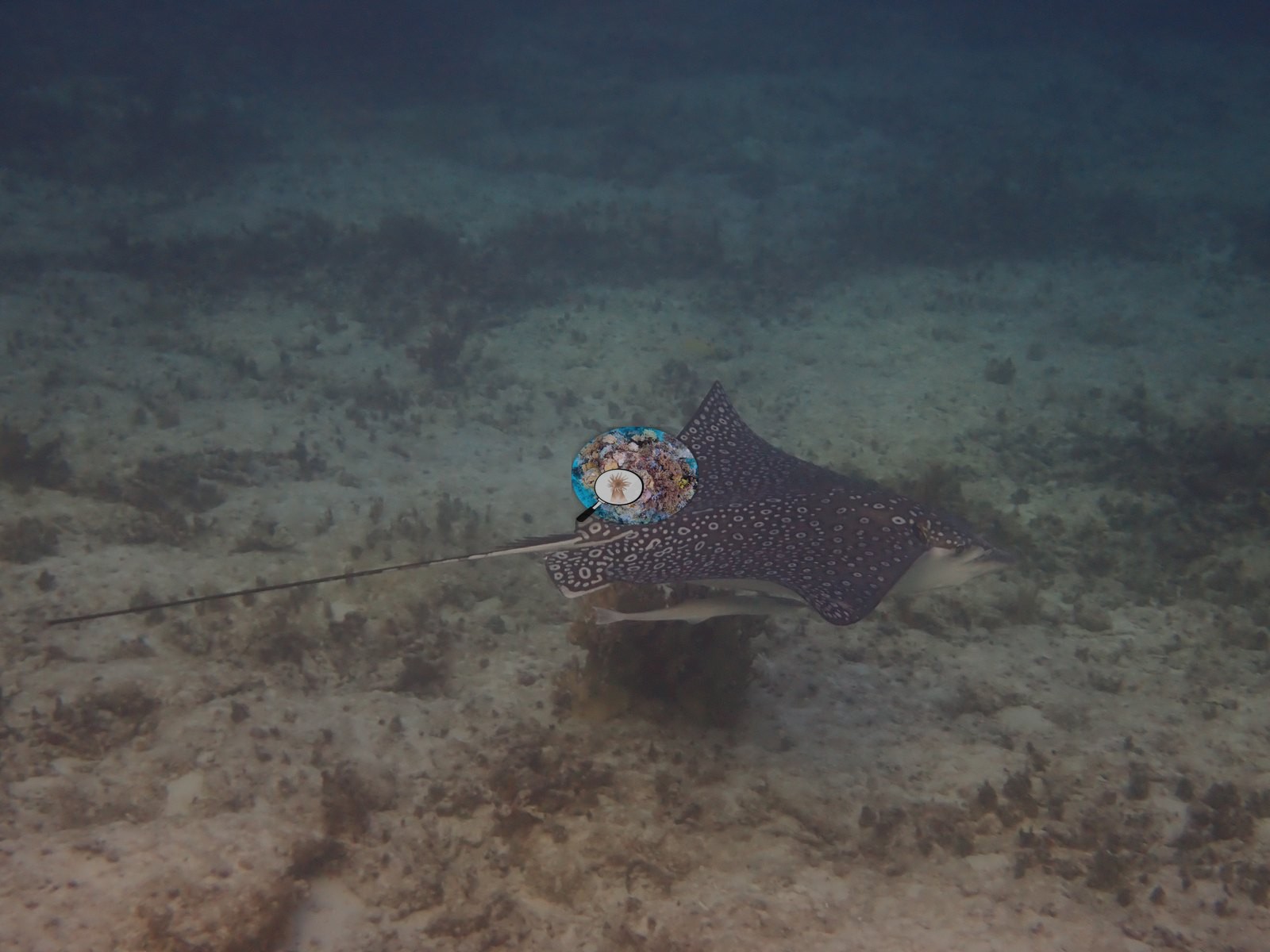
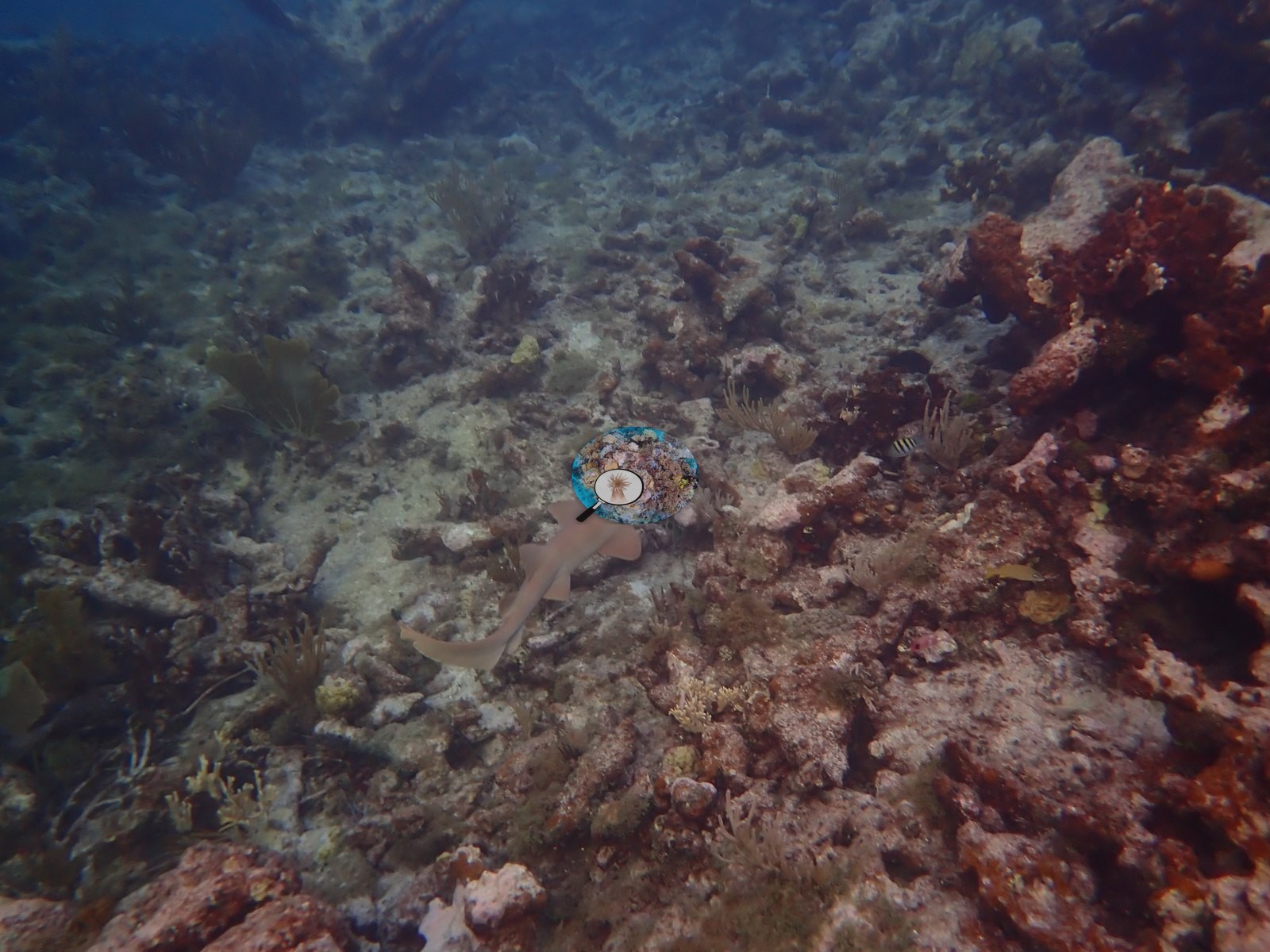
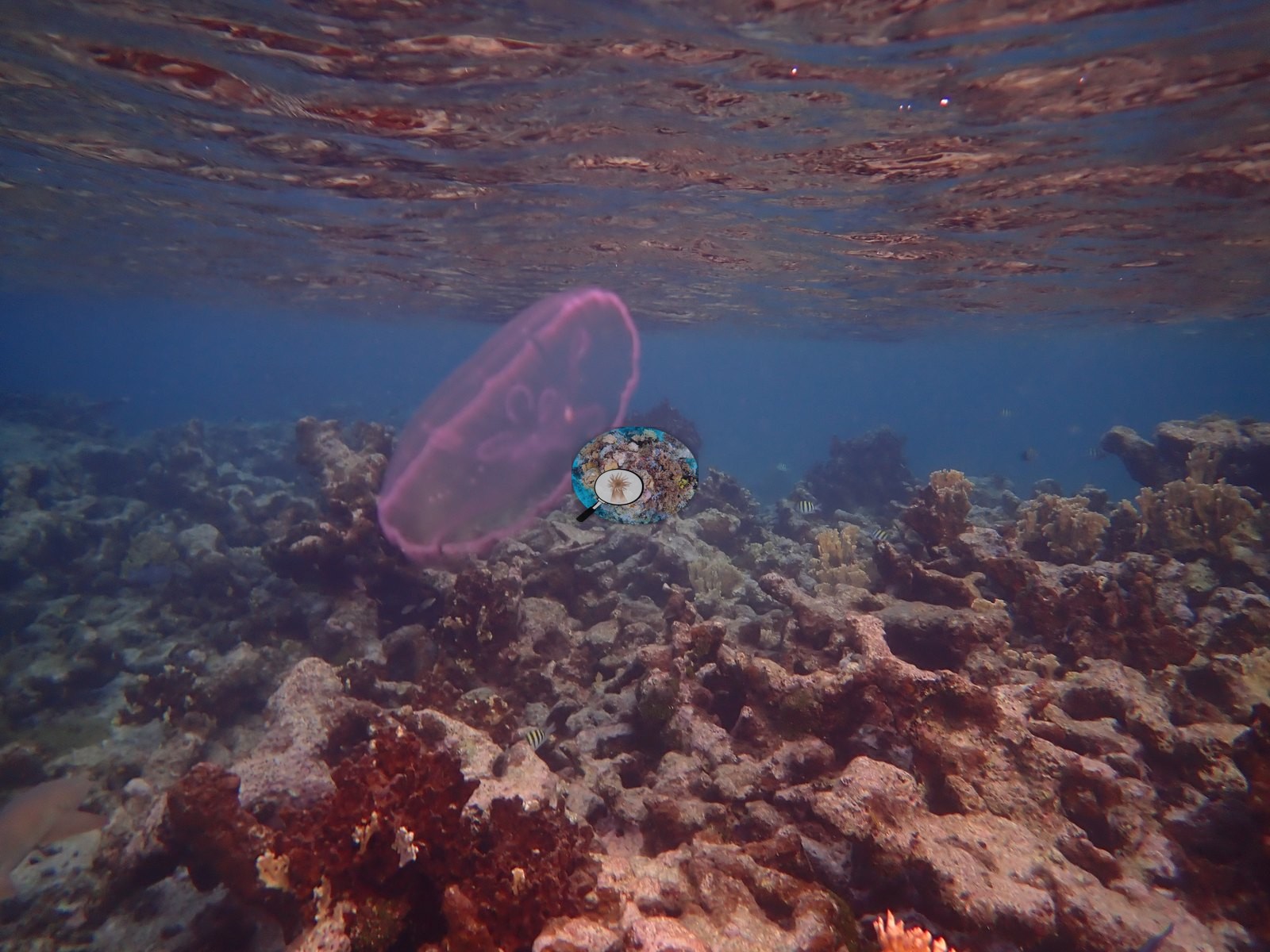
- The transect resumes over a turbid, low-relief sand-and-rubble zone where wildlife dominates the frames -- a nurse shark and a spotted eagle ray -- and coral cover is minimal (e.g., Image 35, Image 36, Image 37, Image 38, Image 39, Image 40, Image 41).
- Visibility and structure improve through the middle of this second segment, with small mounding and finger-coral colonies becoming more frequent, including a cluster resembling coral recruits (e.g., Image 49, Image 50, Image 51, Image 52), before culminating in the transect's two healthiest live elkhorn colonies (e.g., Image 55, Image 56).
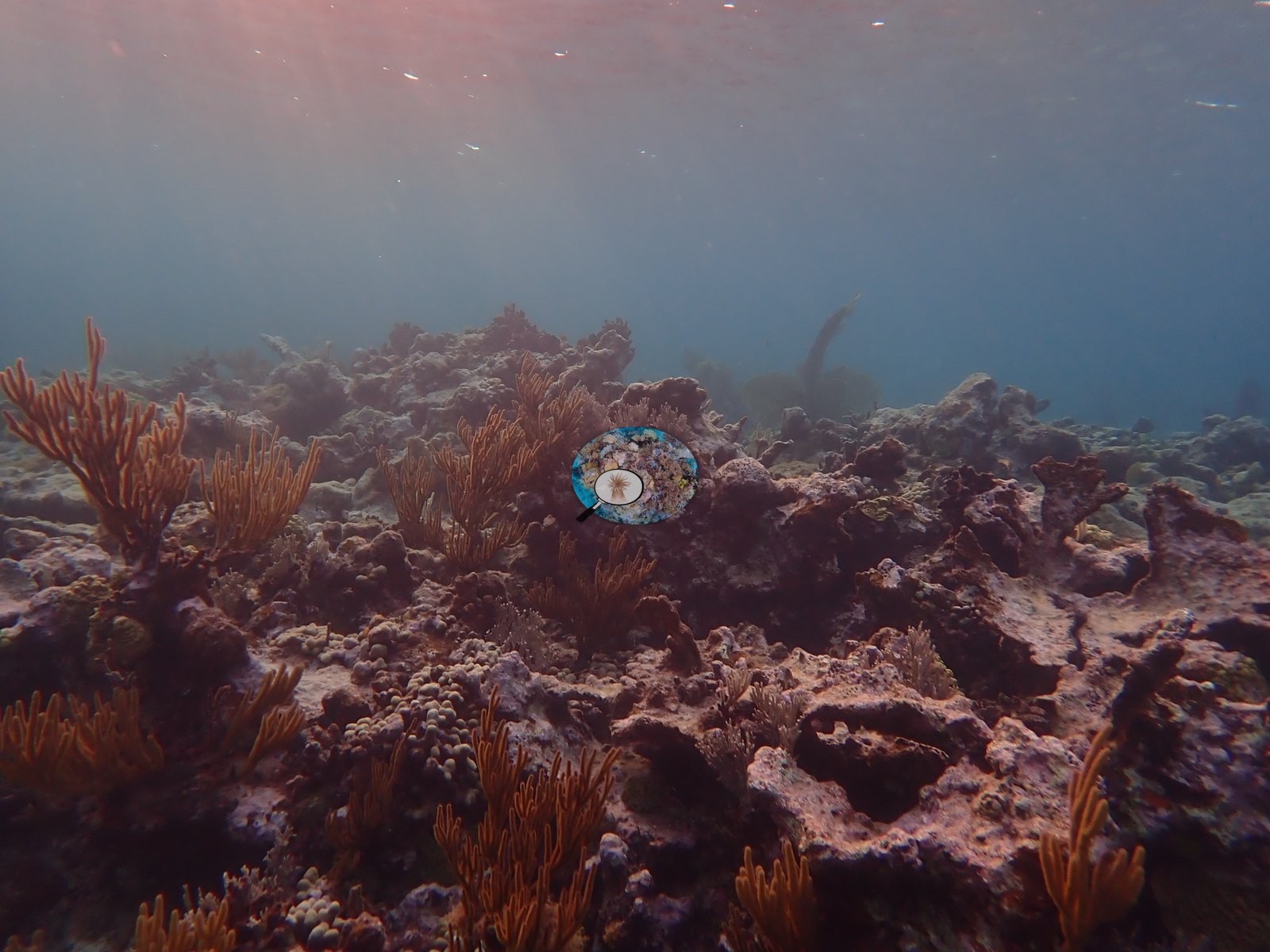
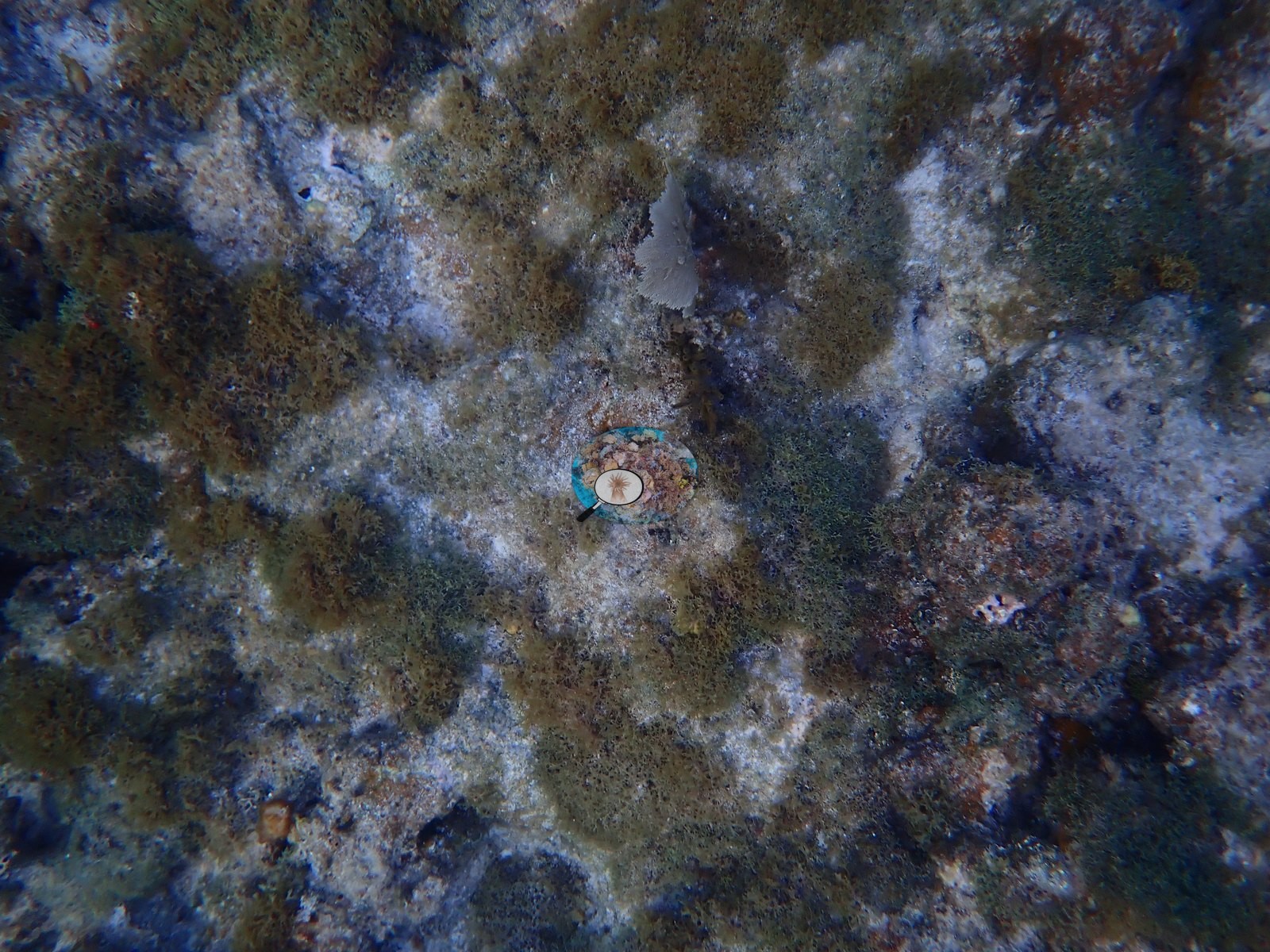
- The final third returns to eroded, pink-coralline-crusted dead coral boulders and gorgonian-dominated hardground with low hard coral cover, and the last frame is a close view of bare, turf-covered dead rock with no live coral visible (e.g., Image 63, Image 64, Image 65, Image 66, Image 67, Image 68, Image 69, Image 70).
Condition
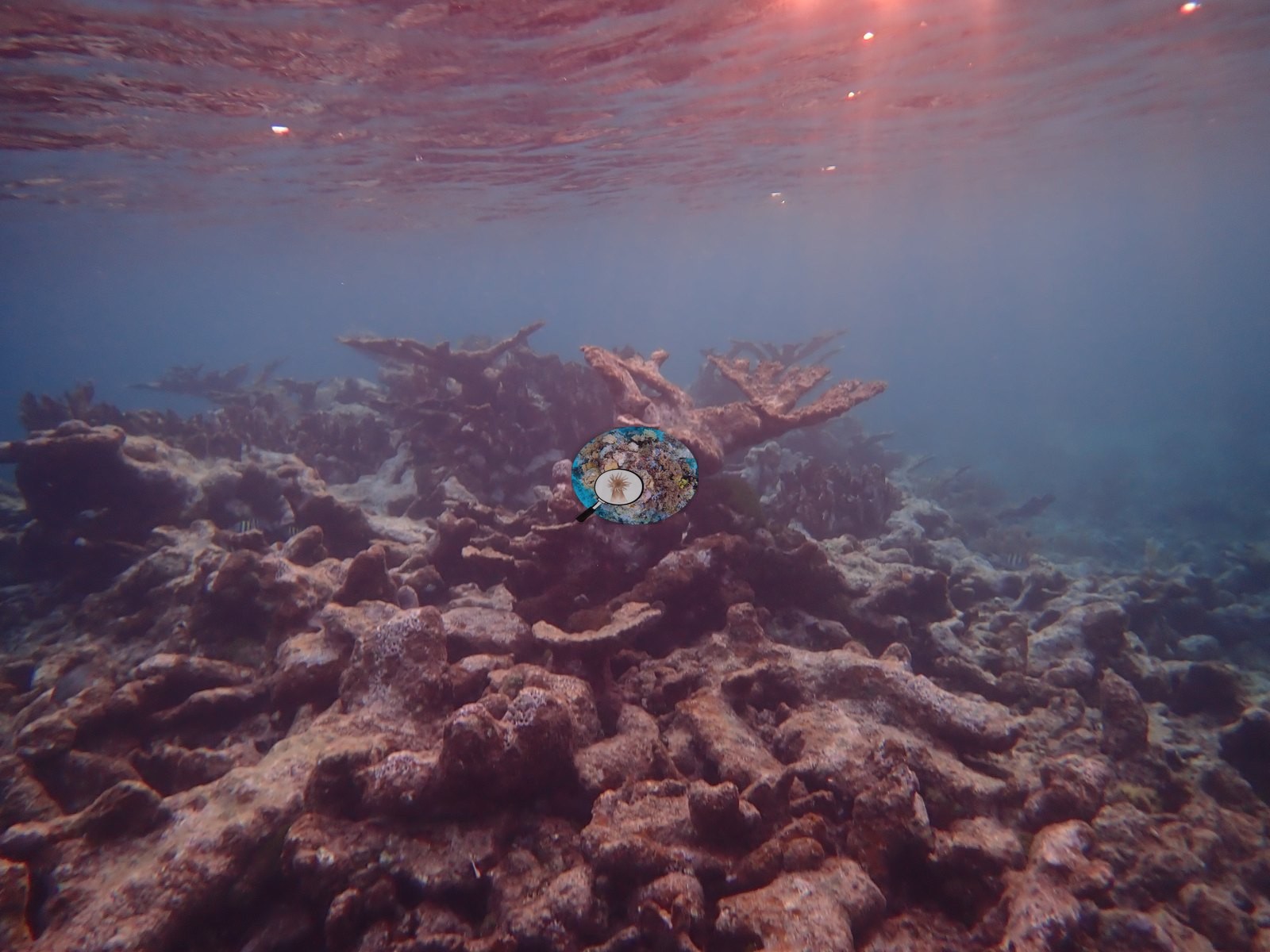
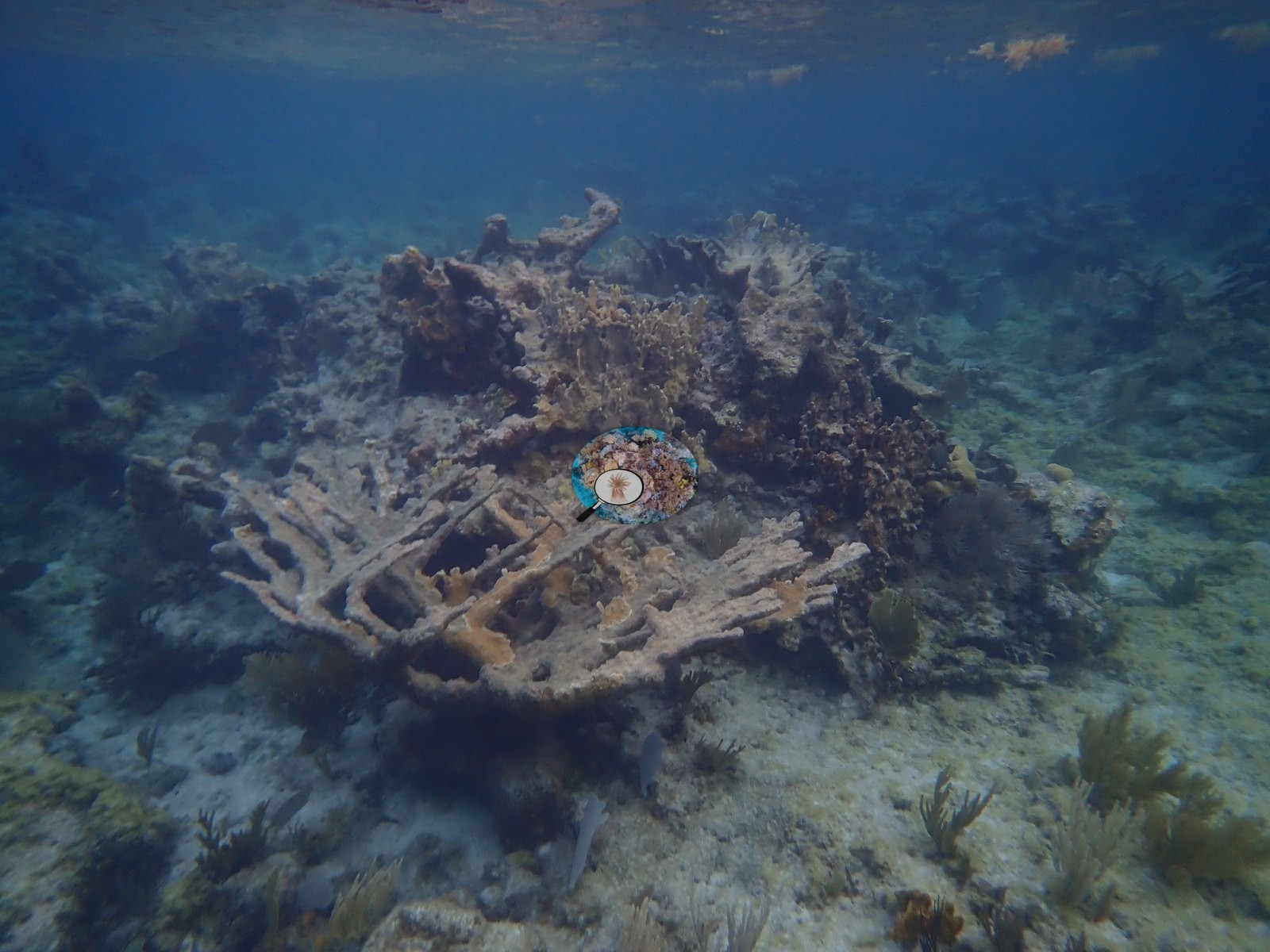
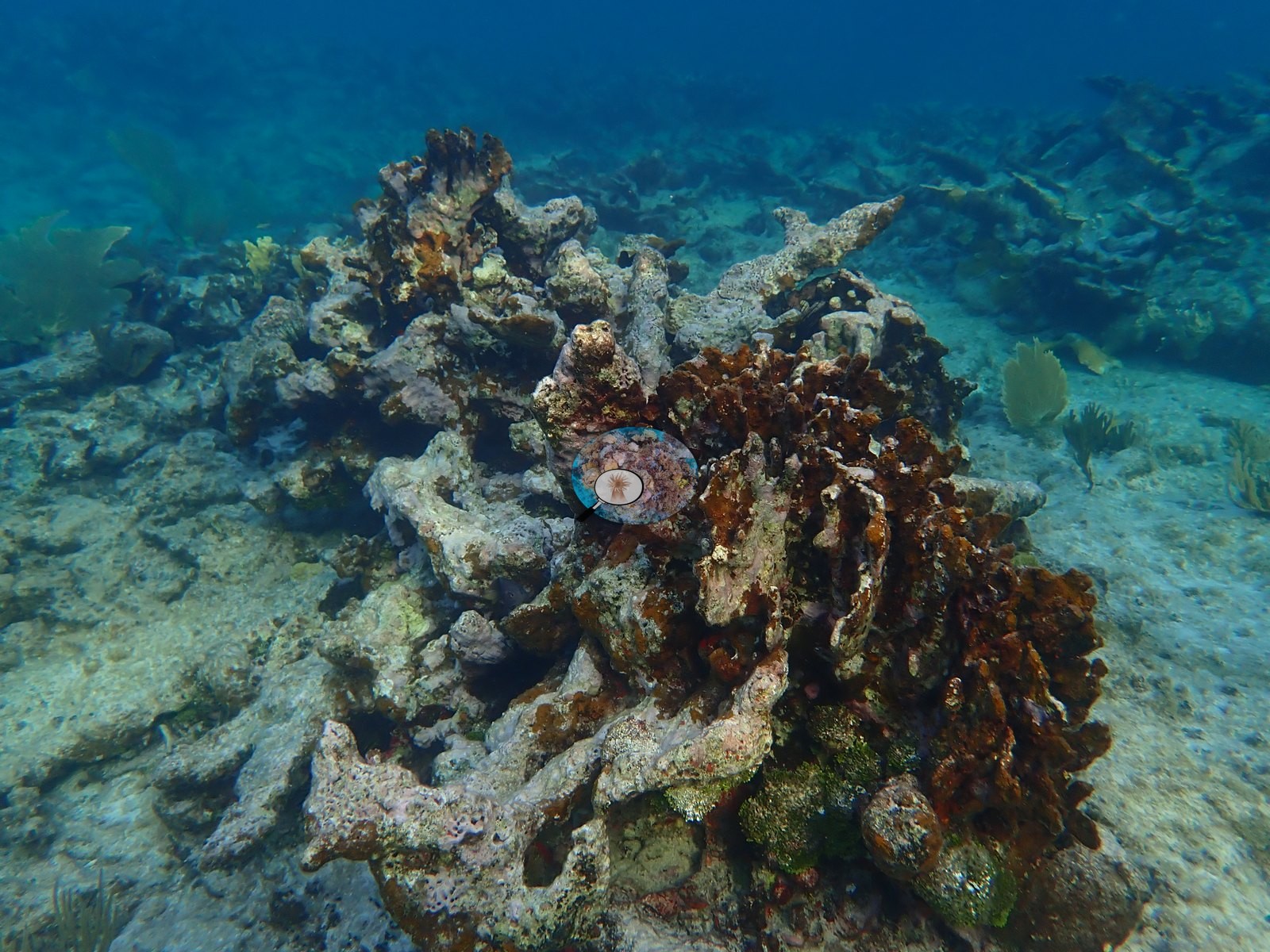
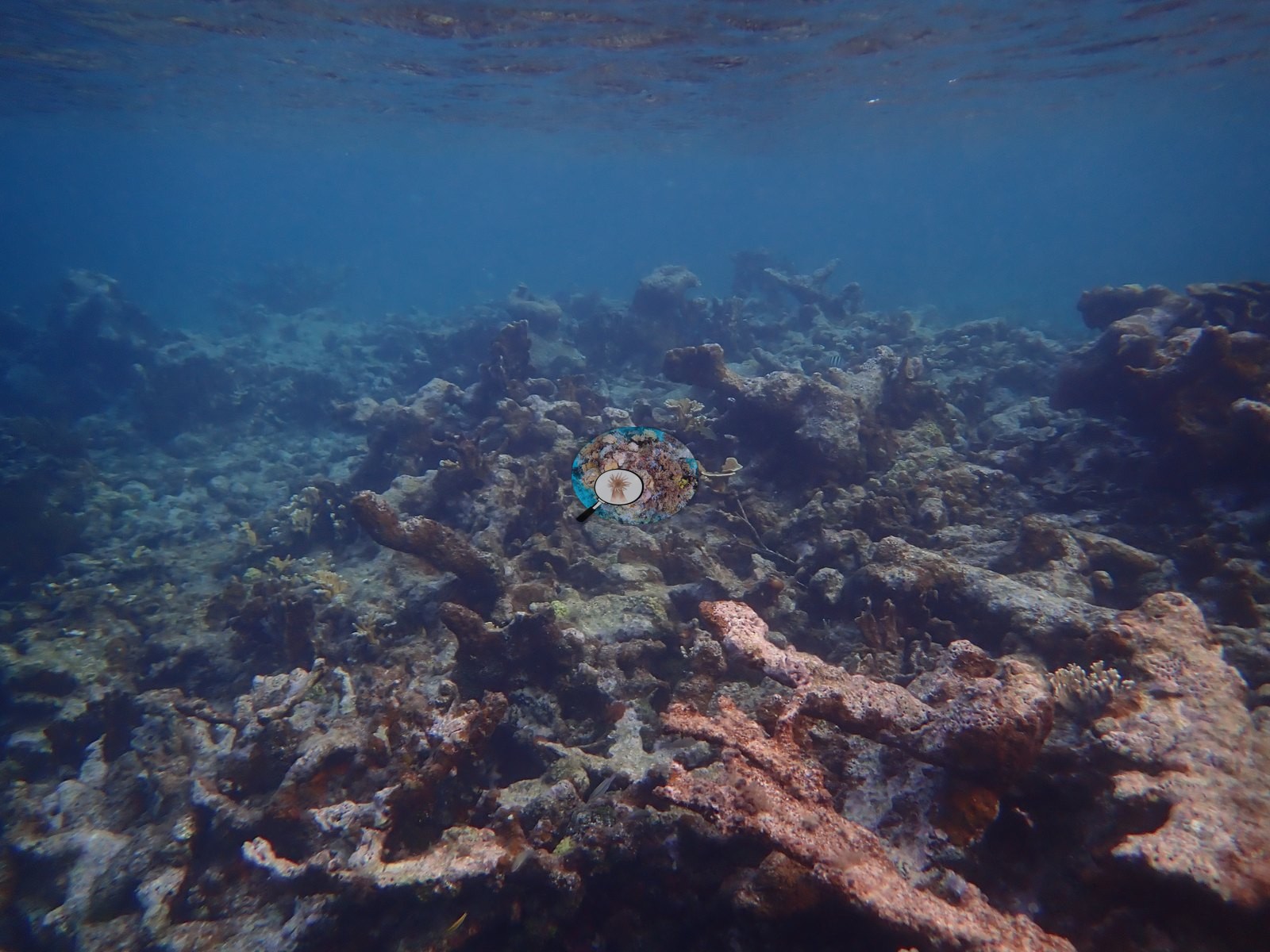
- Standing dead coral skeleton -- overwhelmingly elkhorn-form -- is a dominant feature of this transect, appearing repeatedly as heavily eroded, algae-covered framework with little to no living tissue (e.g., Image 1, Image 12, Image 13, Image 14, Image 18, Image 19, Image 20, Image 57, Image 65), and a wide view near the surface confirms the same dead-elkhorn field extends well into the shallows (e.g., Image 48).
- No active bleaching or disease signs were noted on any live colony; the two large elkhorn colonies mid-transect appeared fully pigmented with no visible tissue loss (e.g., Image 55, Image 56).
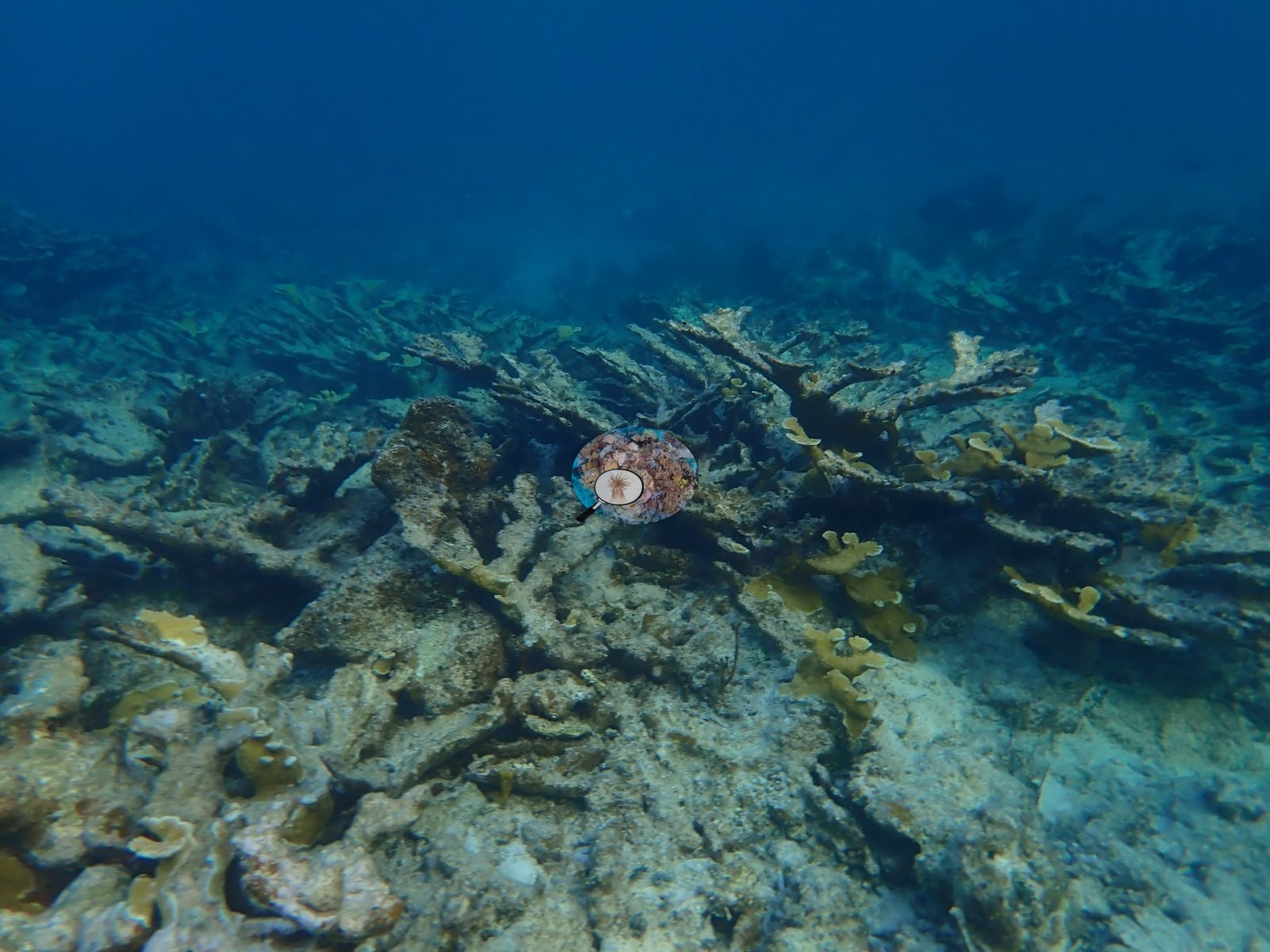
- A later stretch of dead-elkhorn rubble carries numerous small tan elkhorn-type recruits growing directly on the standing-dead framework, passed over by schools of grunts and sergeant majors (e.g., Image 58, Image 59, Image 60) -- the clearest recruitment signal on this transect.
- The overall pattern is a reef with substantial standing-dead structure and low background live cover, interrupted by isolated better-condition patches -- the large elkhorn colony near the start, the mid-transect finger-coral cluster, the two large live elkhorn colonies, and the late recruit patch -- rather than uniform decline or uniform recovery.
- No corallivores evident.
% cover
- CoralSCOP's photographic mask-sum estimate for this site is 17.7% coral cover across the 70 frames (sd 13.0).
- This index runs high against manual point counts: Anderson's own same-image comparisons ranged from -4.1 to +27.8 percentage points (mean +7.5), and at Necker's Red Dock, 31 manually annotated frames gave 7.8% hard coral against CoralSCOP's 16.8% on the same images -- roughly double.
- Applying that same pattern here, true hard coral cover at Turtle Beach is more plausibly in the high single digits to low teens, not the raw 17.7% figure.
All images from Coral Reef Diagnostics. Data are from Coral Reef Diagnostics.
© Coral Reef Diagnostics.