
Alor - Monaseli (Munaseli)

Part of the regional summary: Indonesia - Alor
More info
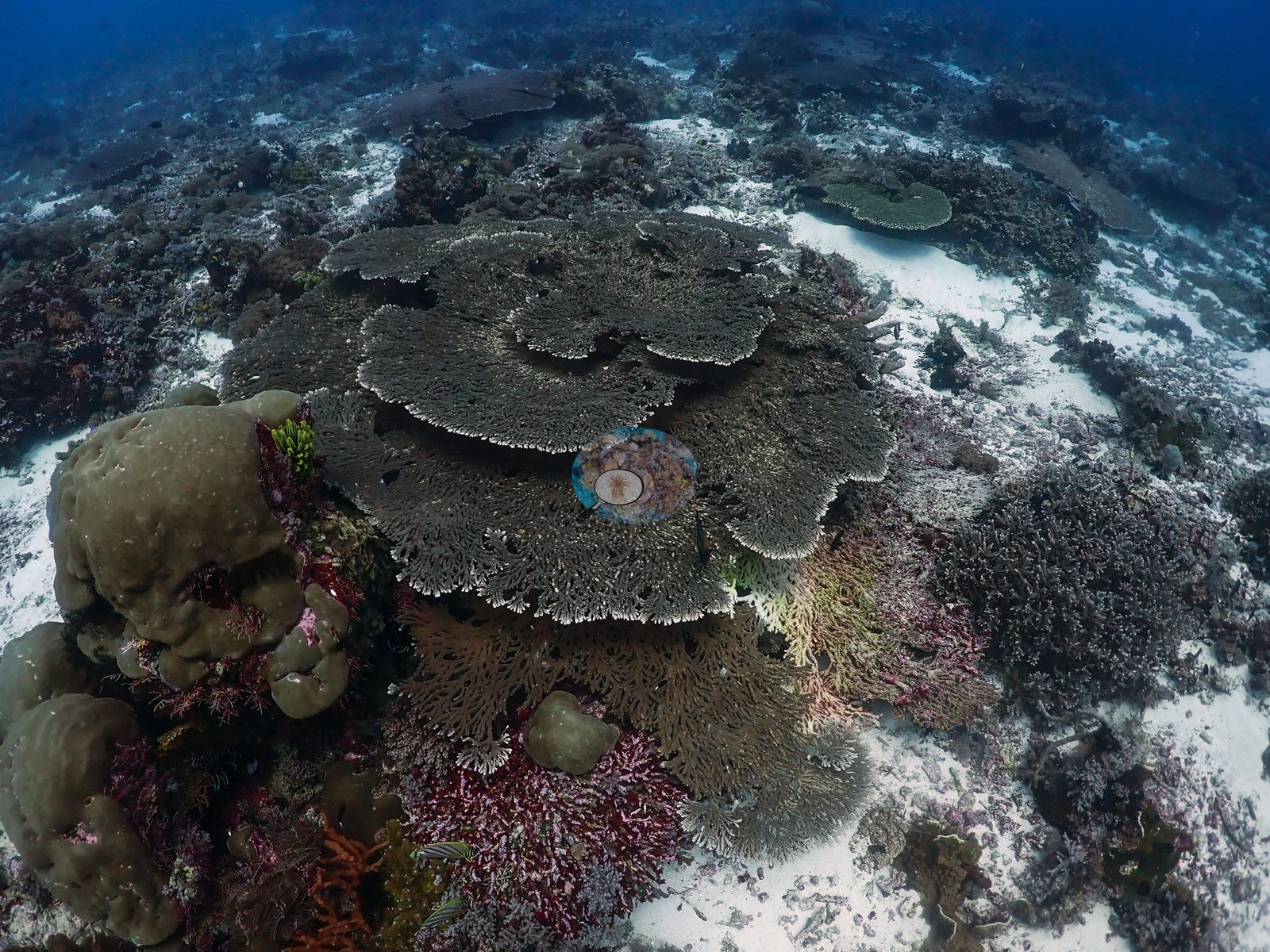
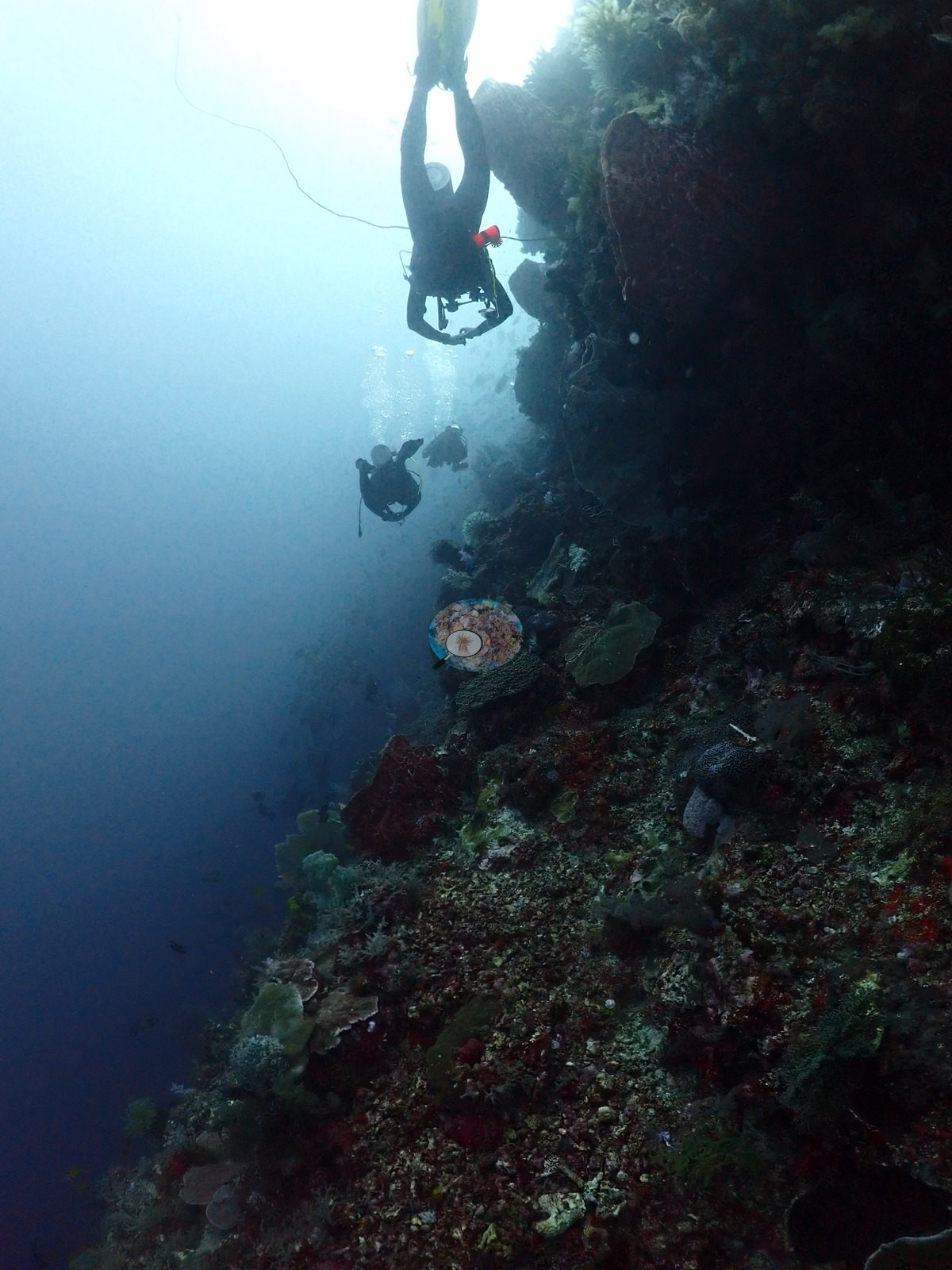
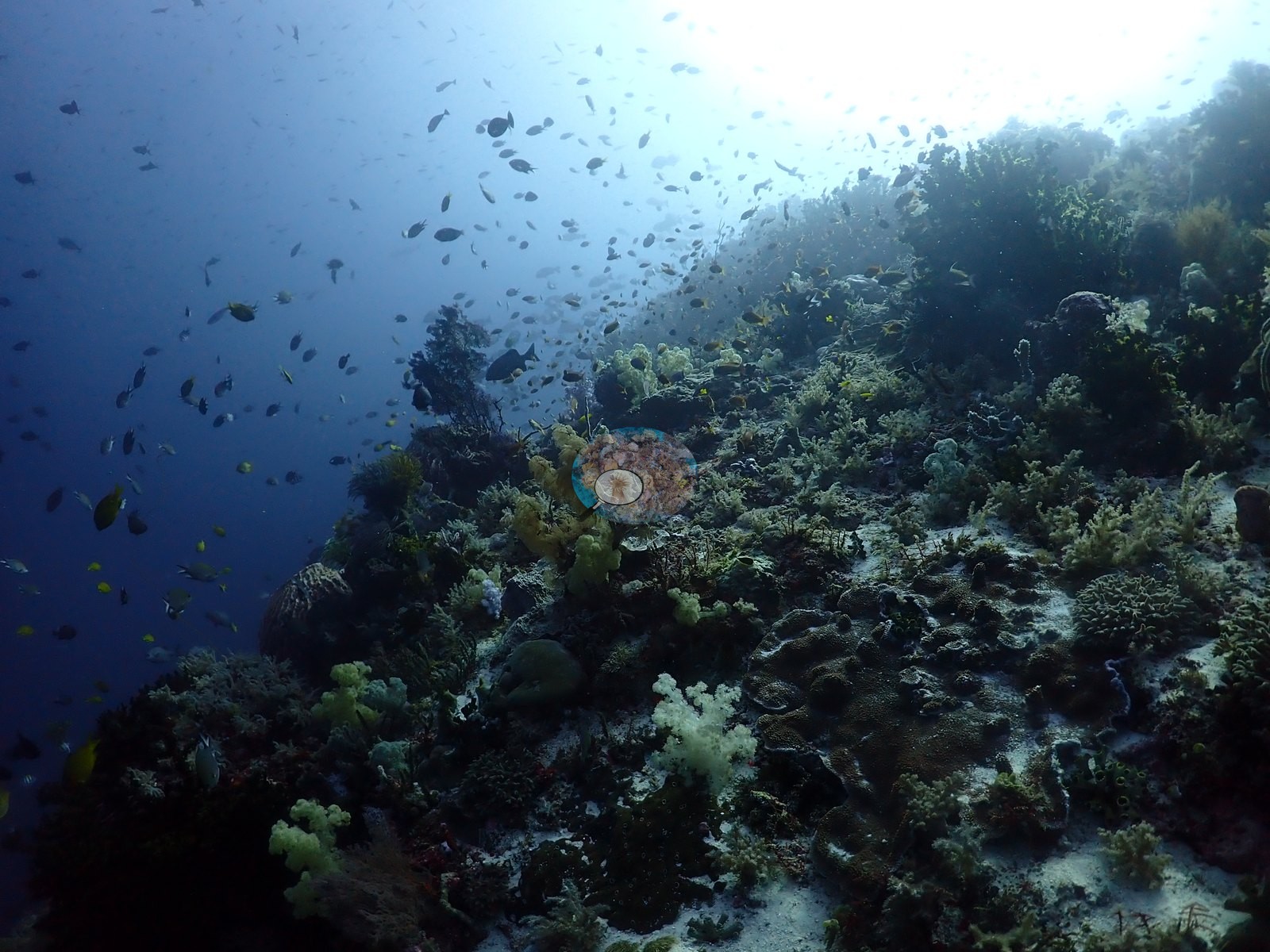
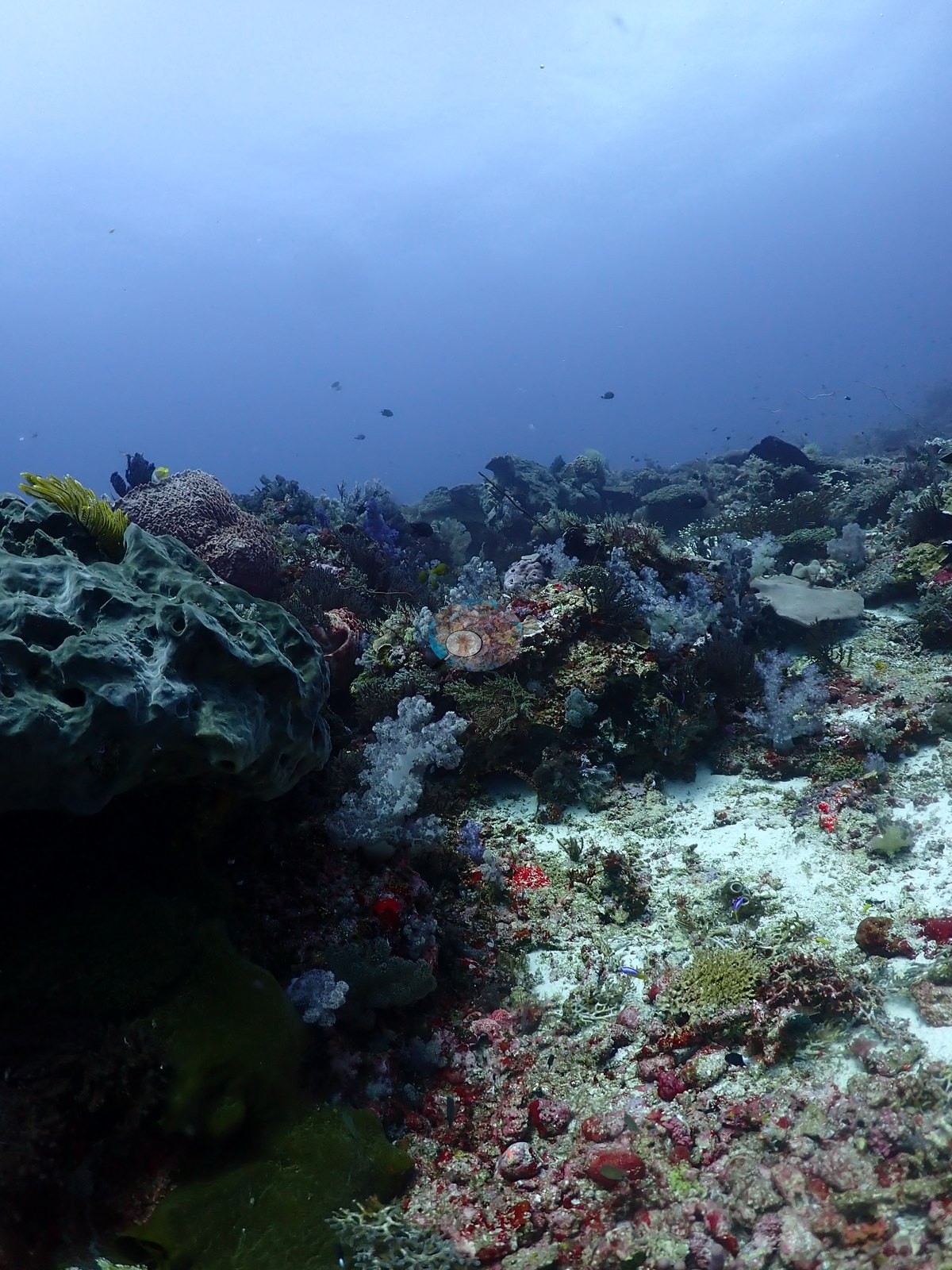
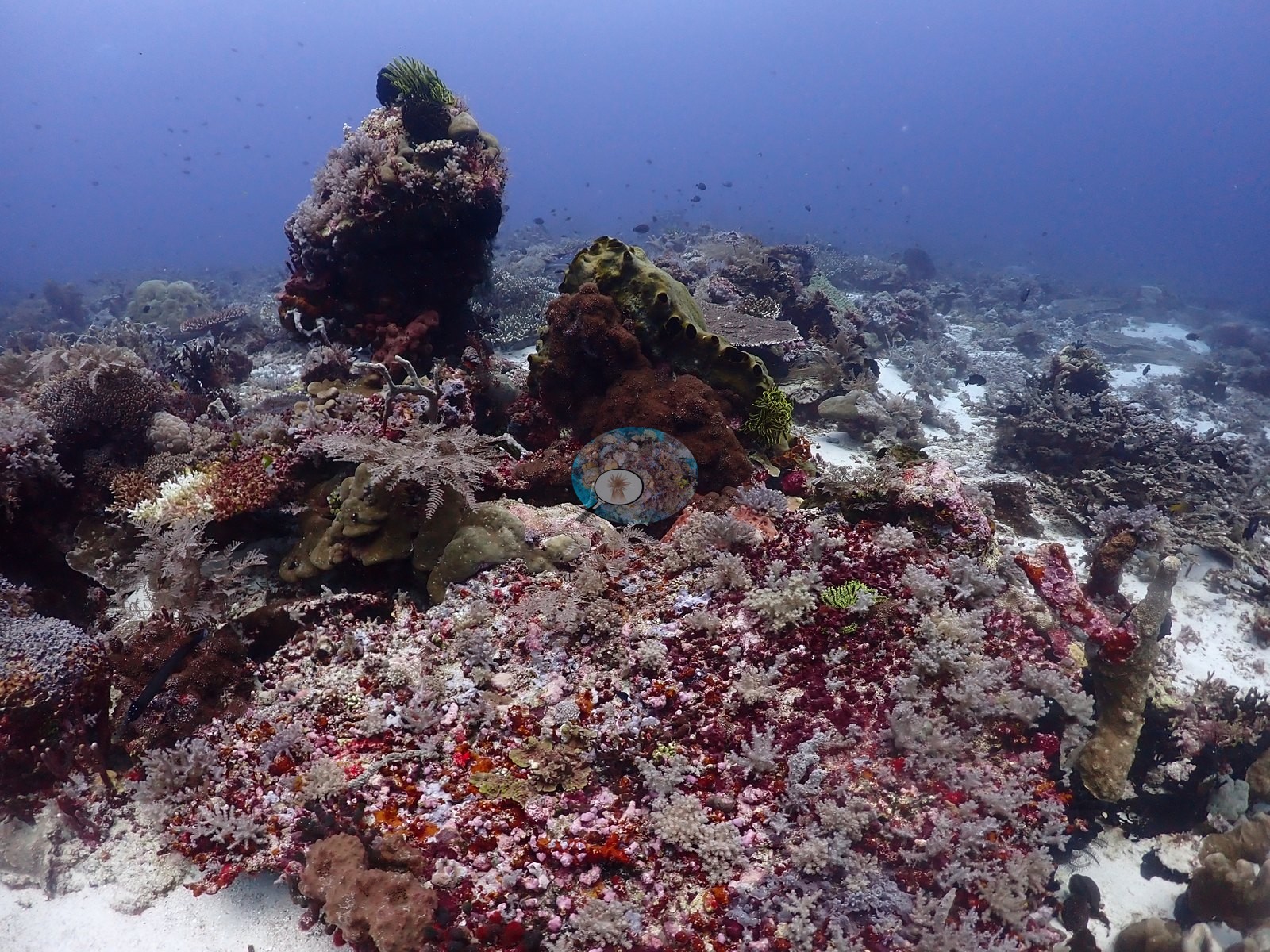
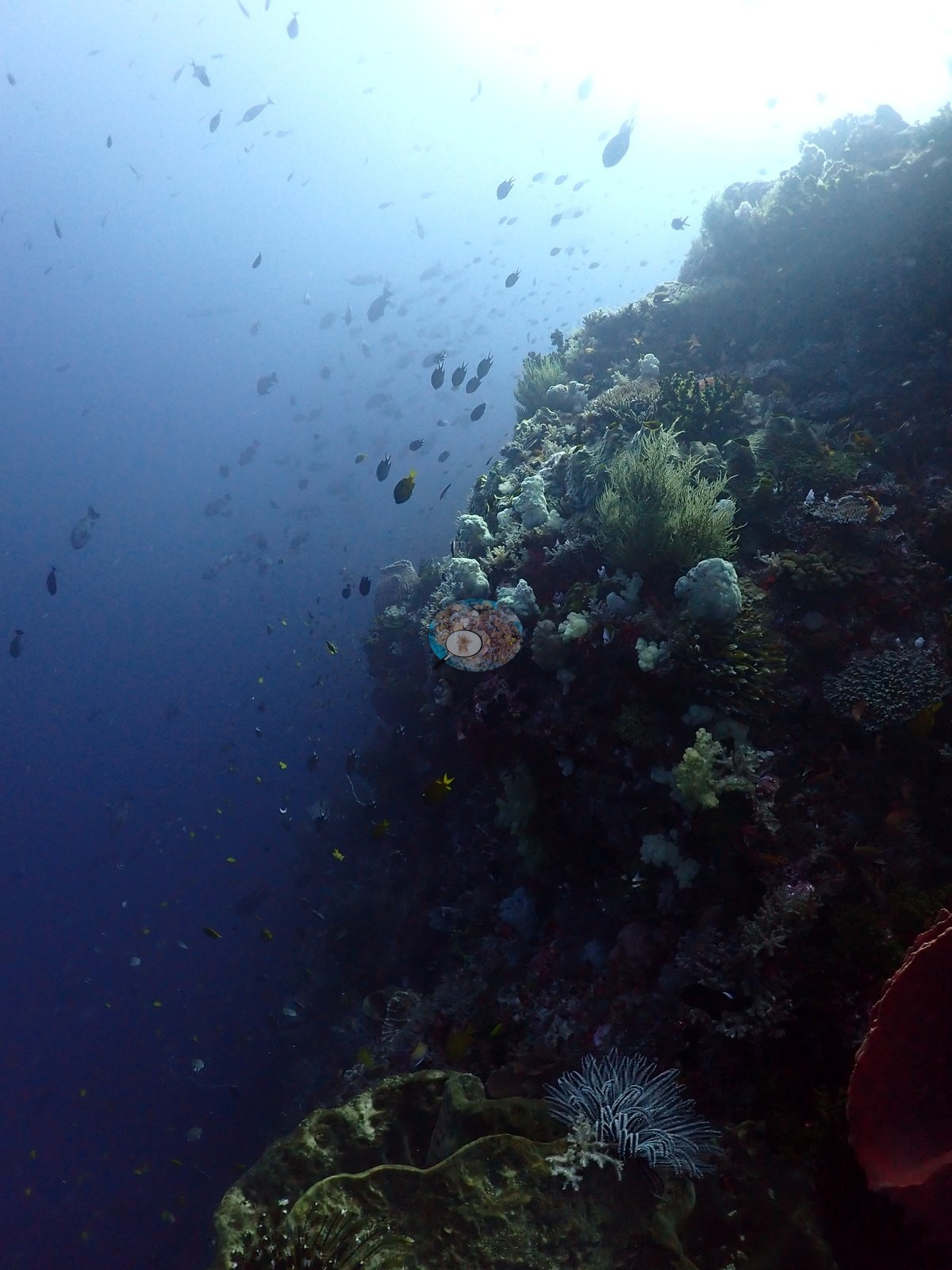
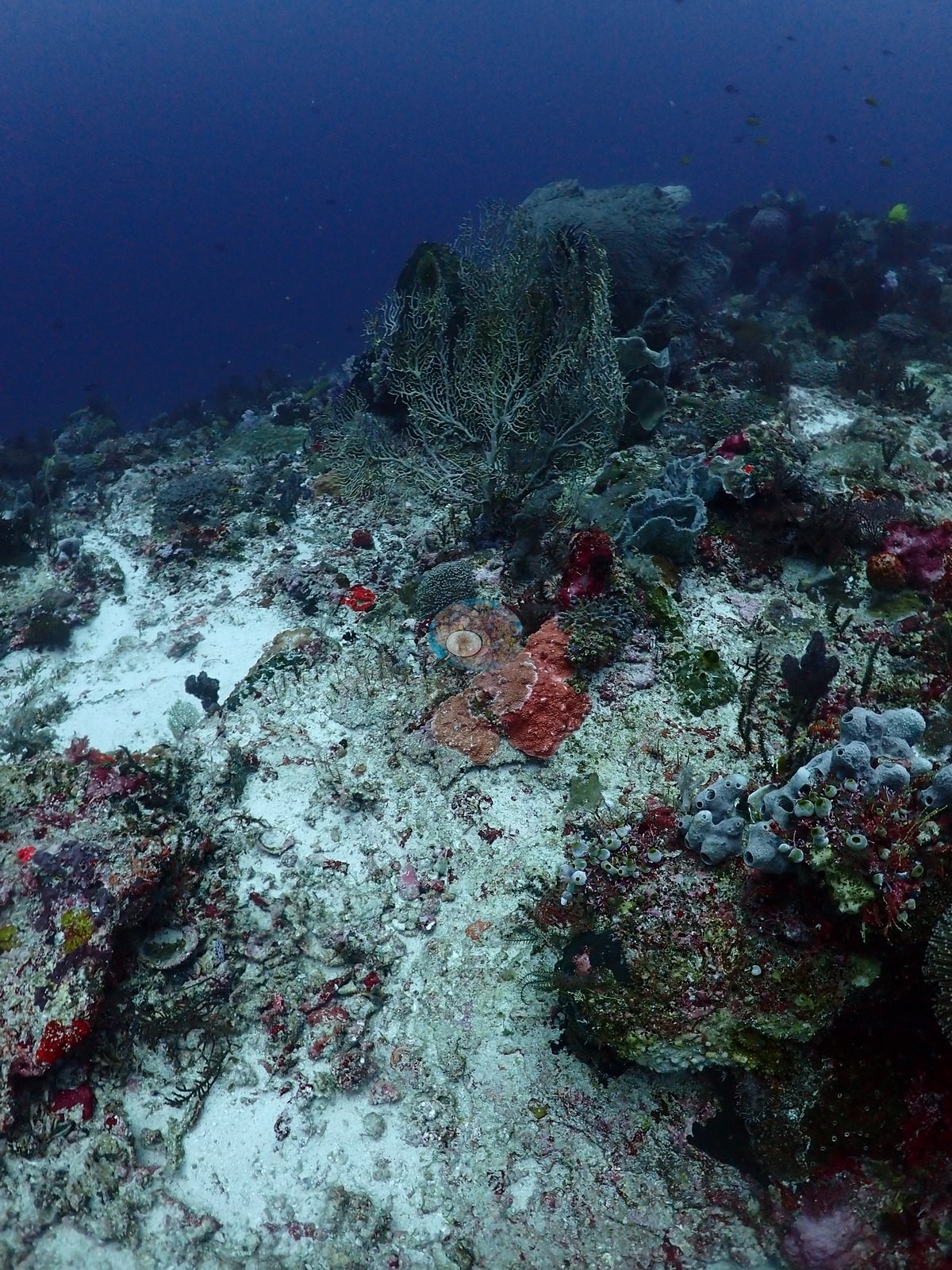
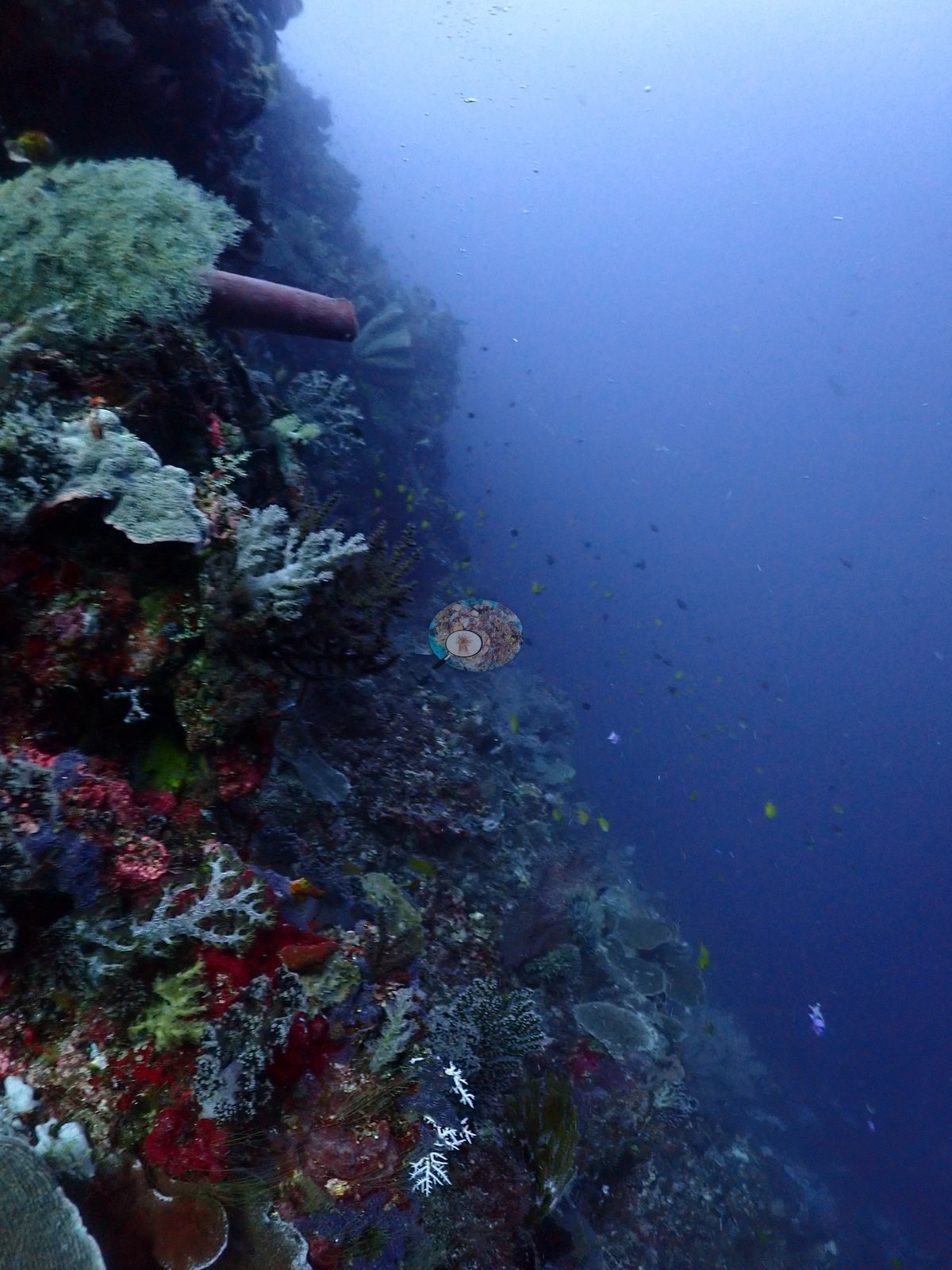
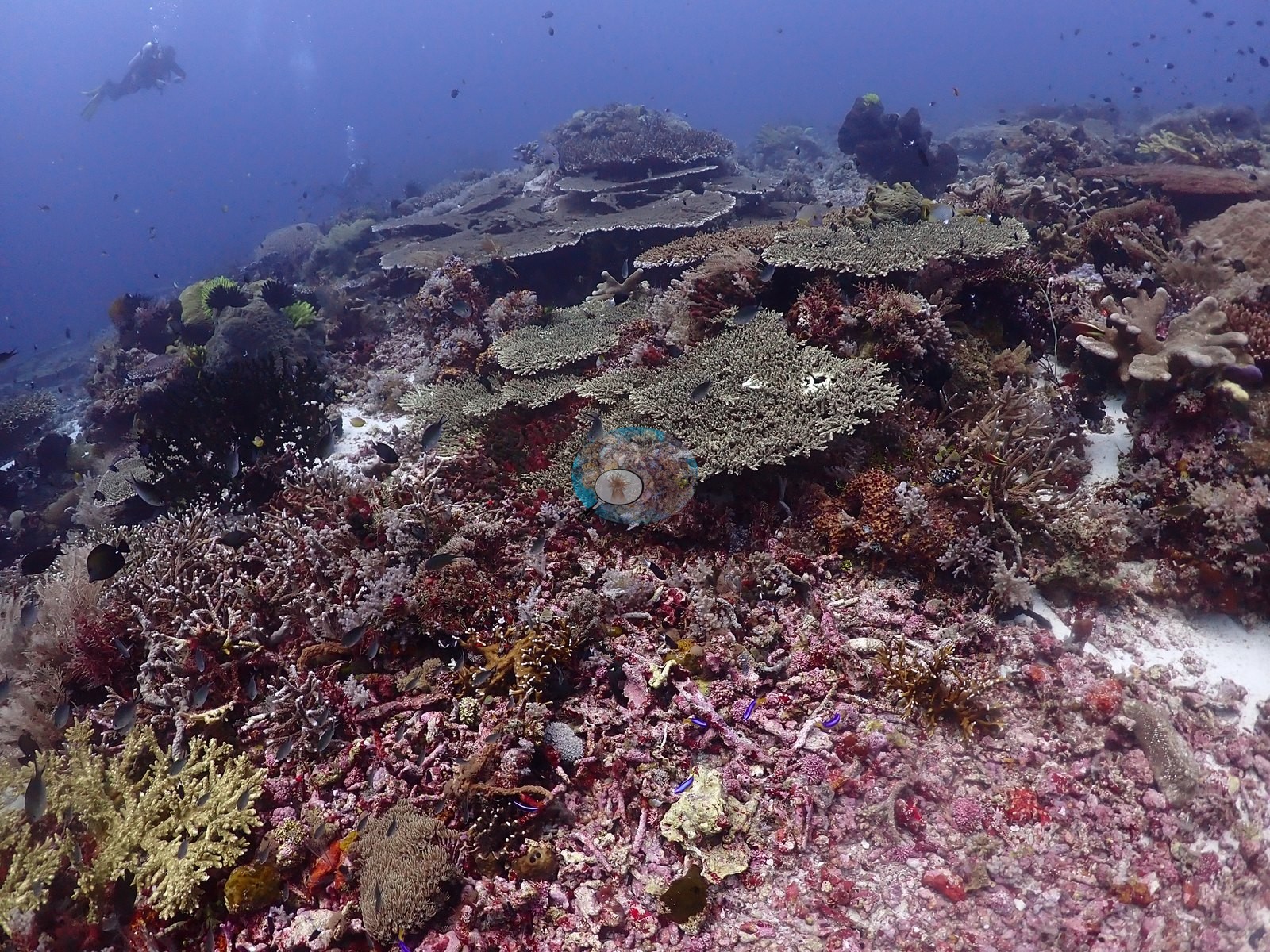
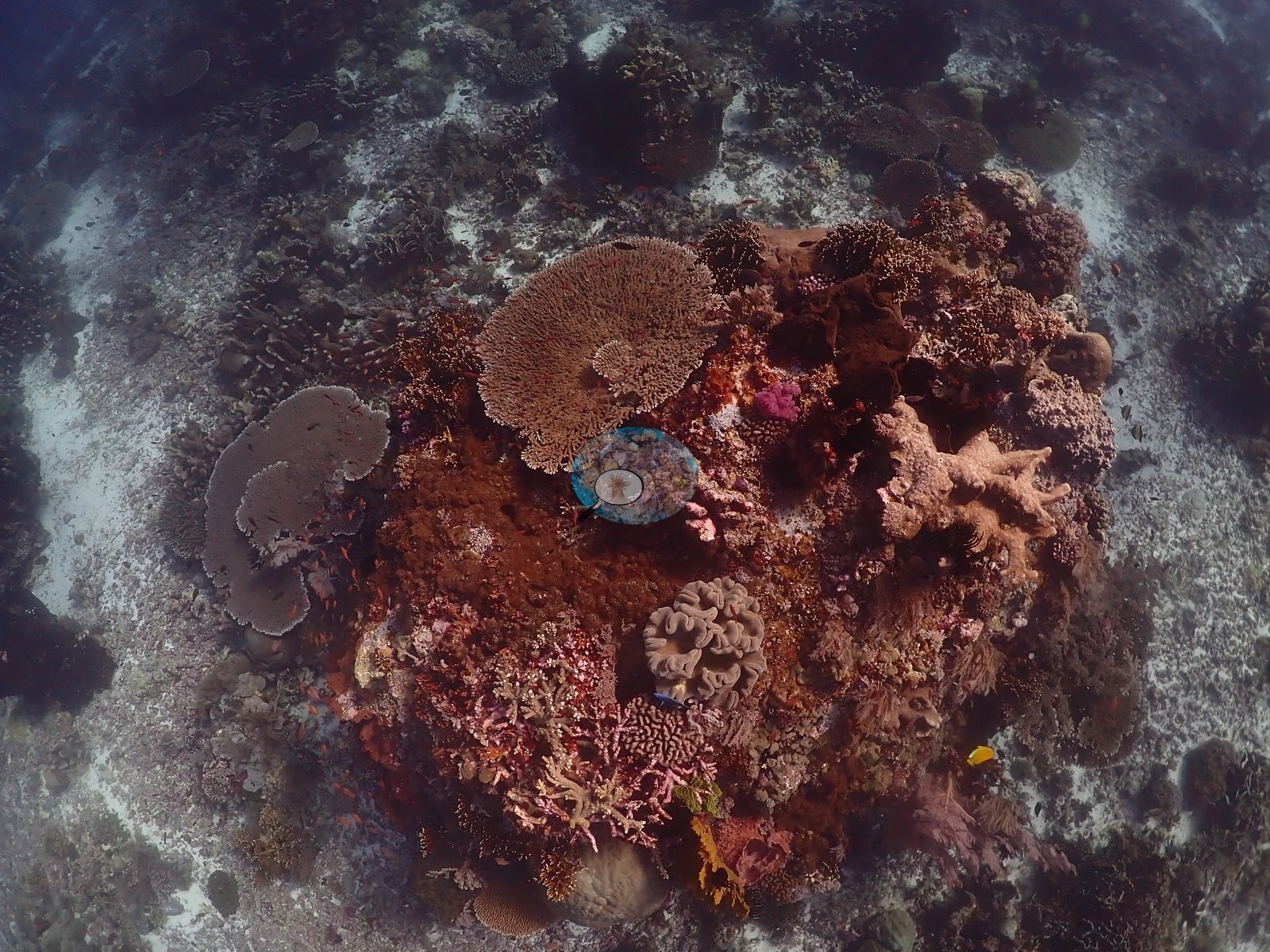
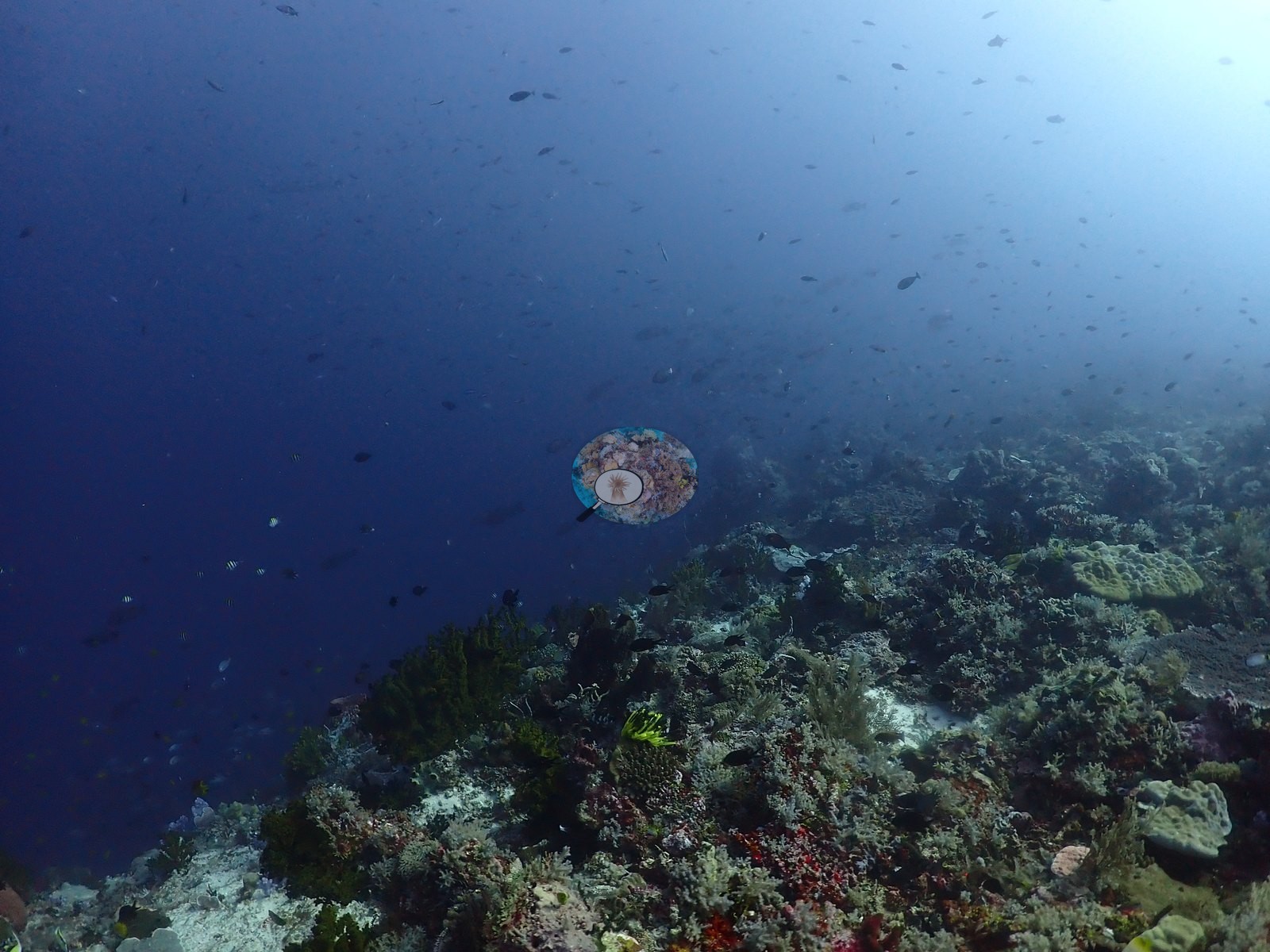
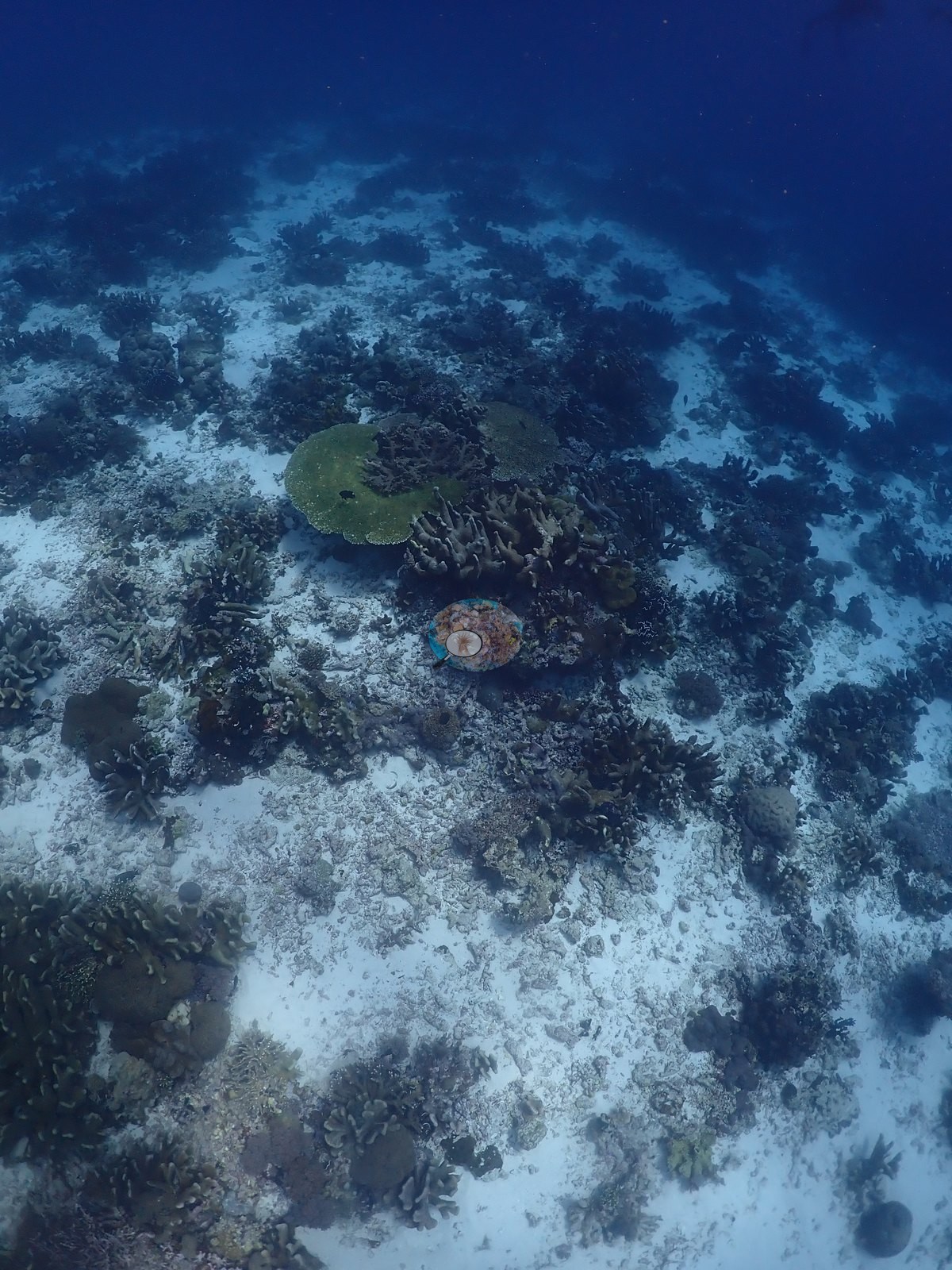
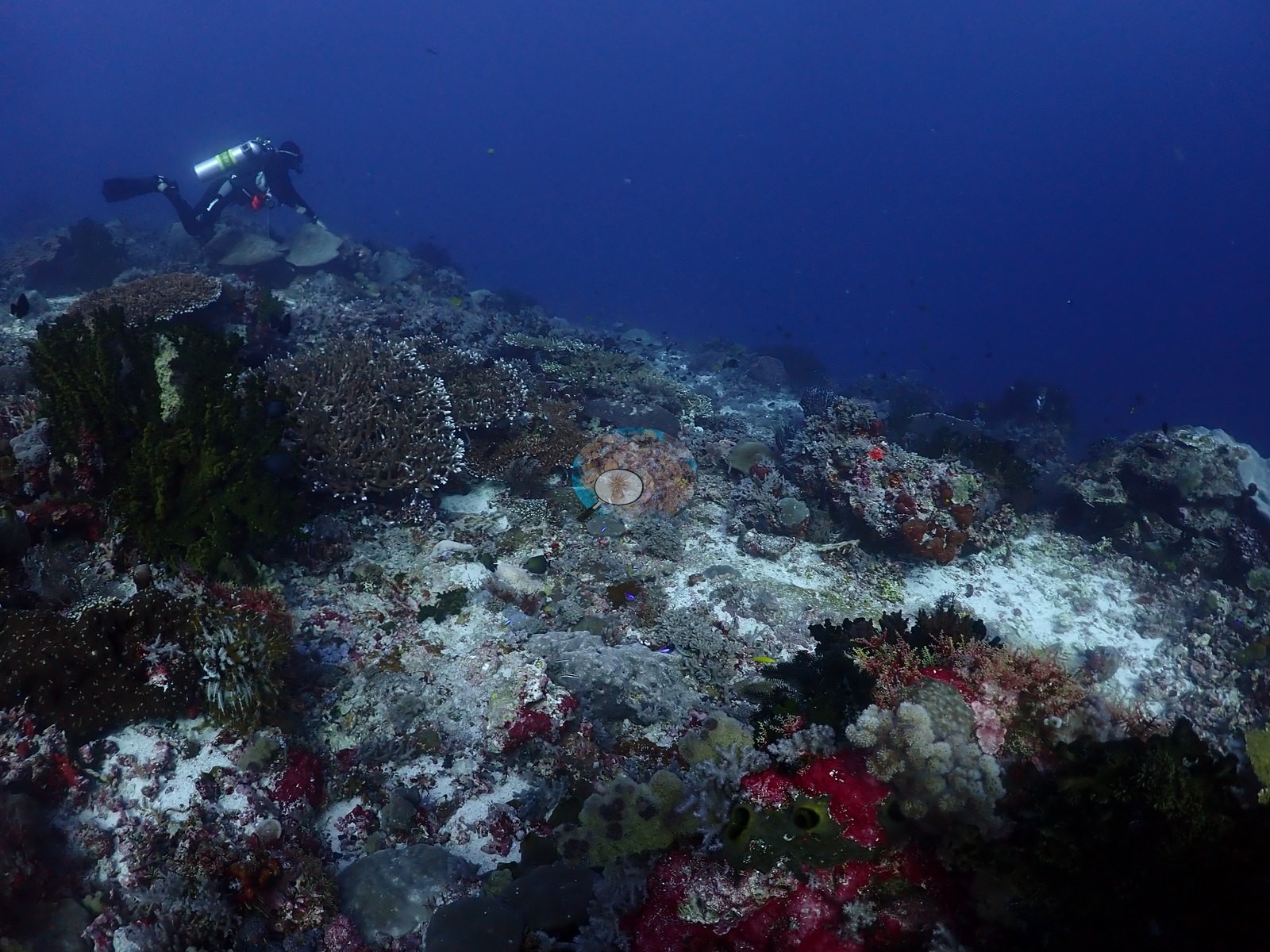
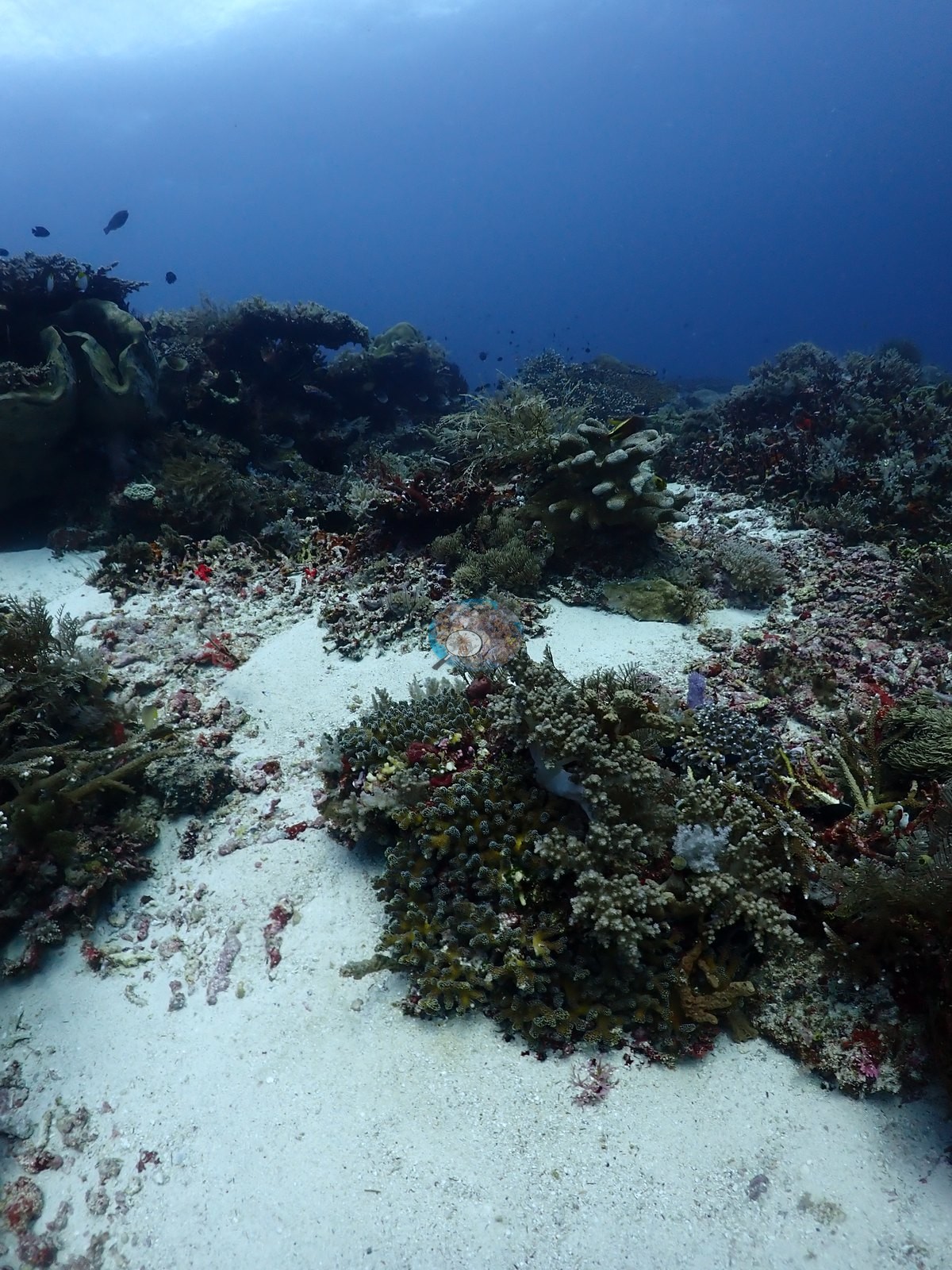
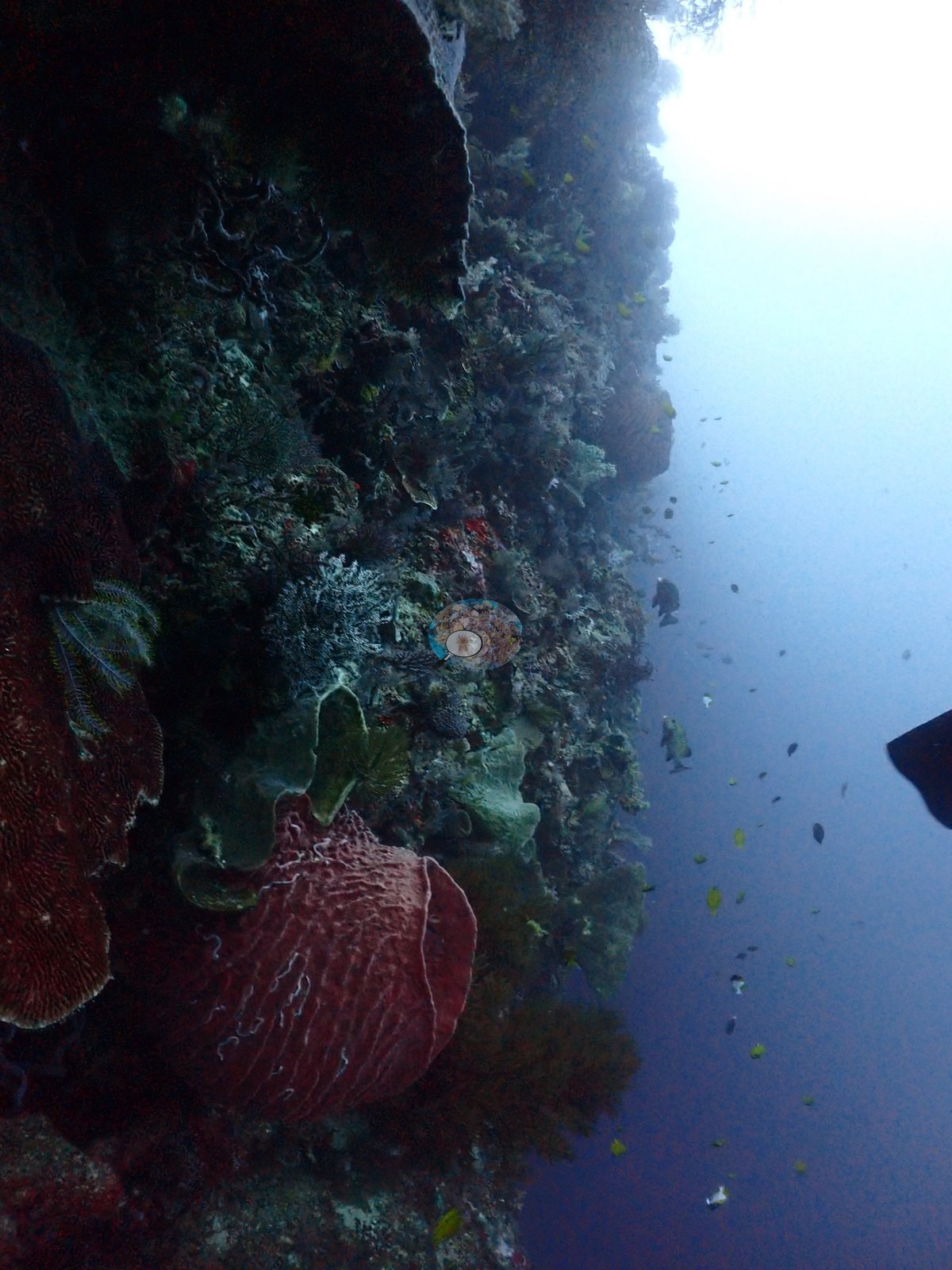
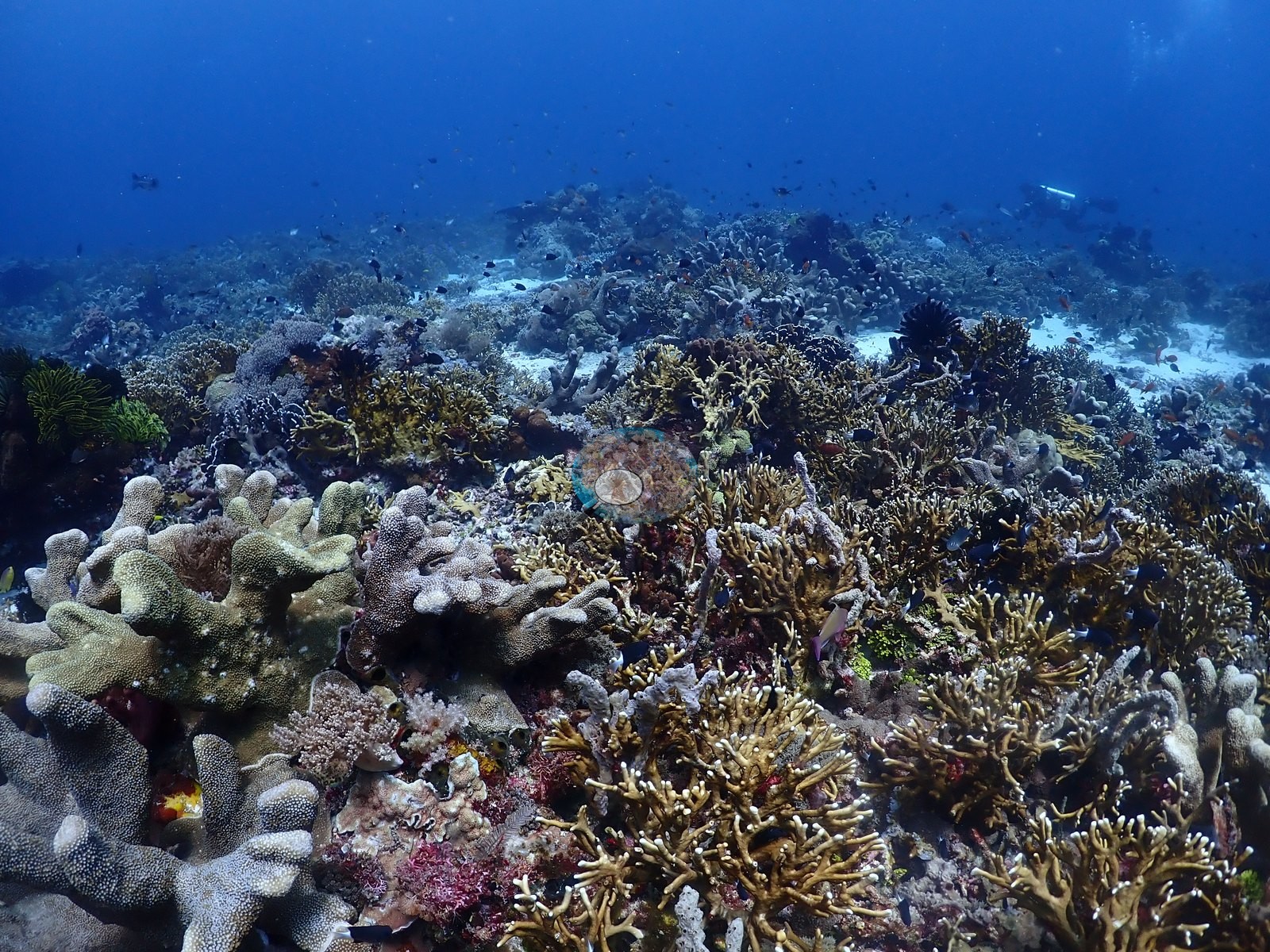
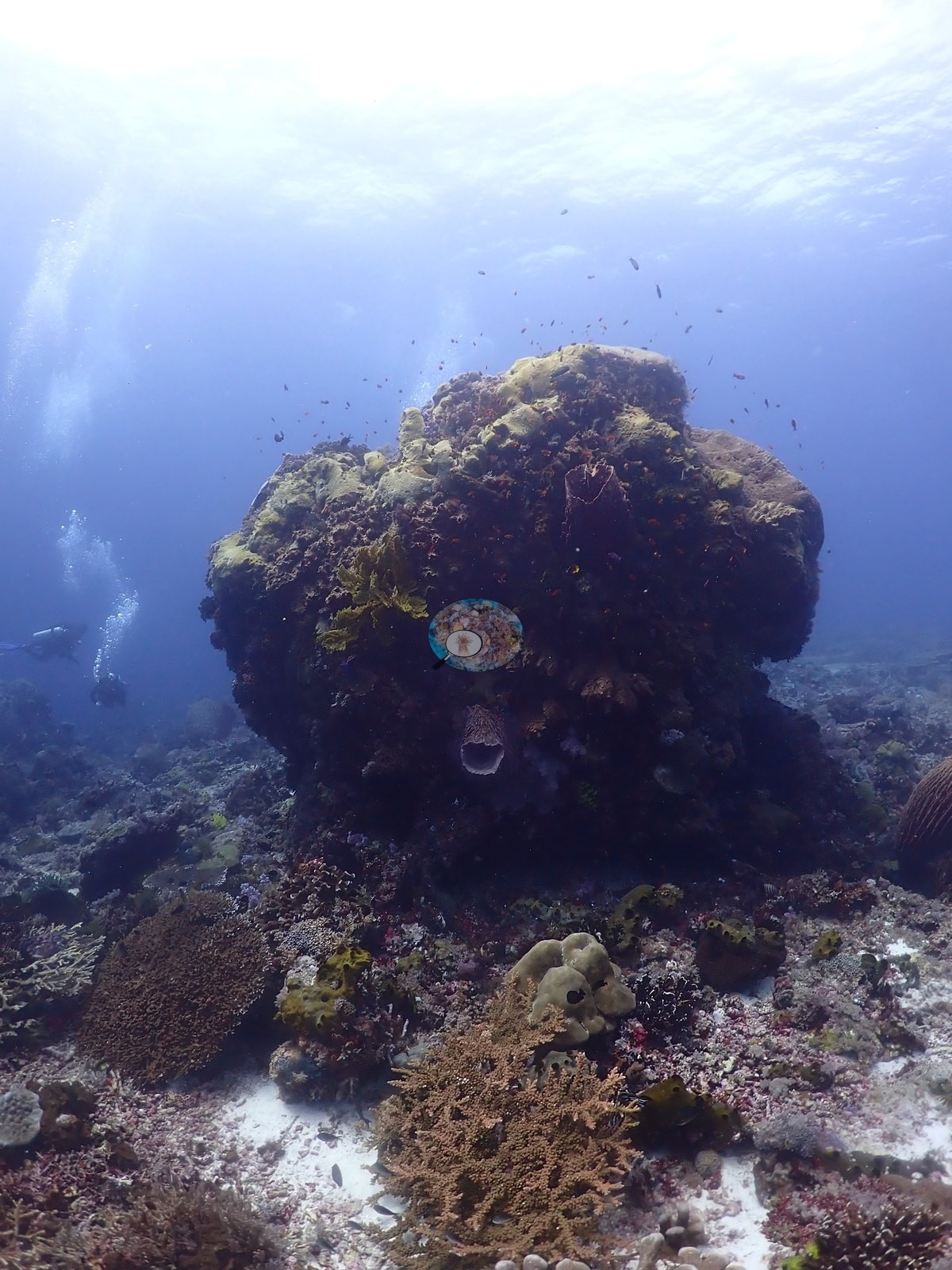
East Nusa Tenggara (NOAA CRW virtual station) · Lesser Sunda ecoregion mean=6.9°C-heating weeks Alor and the Pantar Strait sit in a zone of exceptionally strong upwelling, which holds these reefs several degrees cooler than NOAA’s satellite-derived figures imply. Read the heat-stress numbers here as a regional-scale indication, not as this reef’s own temperature history.Monaseli is a current-swept corner of Alor where a steep wall of giant barrel sponges, sea fans, and feather stars drops into open blue water, with gentler bommies and sand channels close by. Live coral is patchy, a mix of plate, boulder, and branching forms between sand and rubble, and computer analysis of the photos puts it at roughly 16–21% of the seafloor. The strong current is what makes the site exceptional, bringing the chance of big open-water fish, though none appeared on these two dives.
Monaseli adalah sudut Alor yang tersapu arus, tempat dinding curam berisi spons tong raksasa, kipas laut, dan lili laut menurun ke perairan biru terbuka, dengan gundukan karang yang lebih landai dan alur pasir di dekatnya. Karang hidupnya berbercak, campuran bentuk lembaran, bongkahan, dan bercabang di antara pasir dan pecahan karang, dan analisis komputer atas foto-fotonya memperkirakannya sekitar 16–21% dari dasar laut.
Terjemahan ringkasan ini oleh AI; versi bahasa Inggris yang berlaku. Translated from the site’s shorter map summary.
Site description
Setting
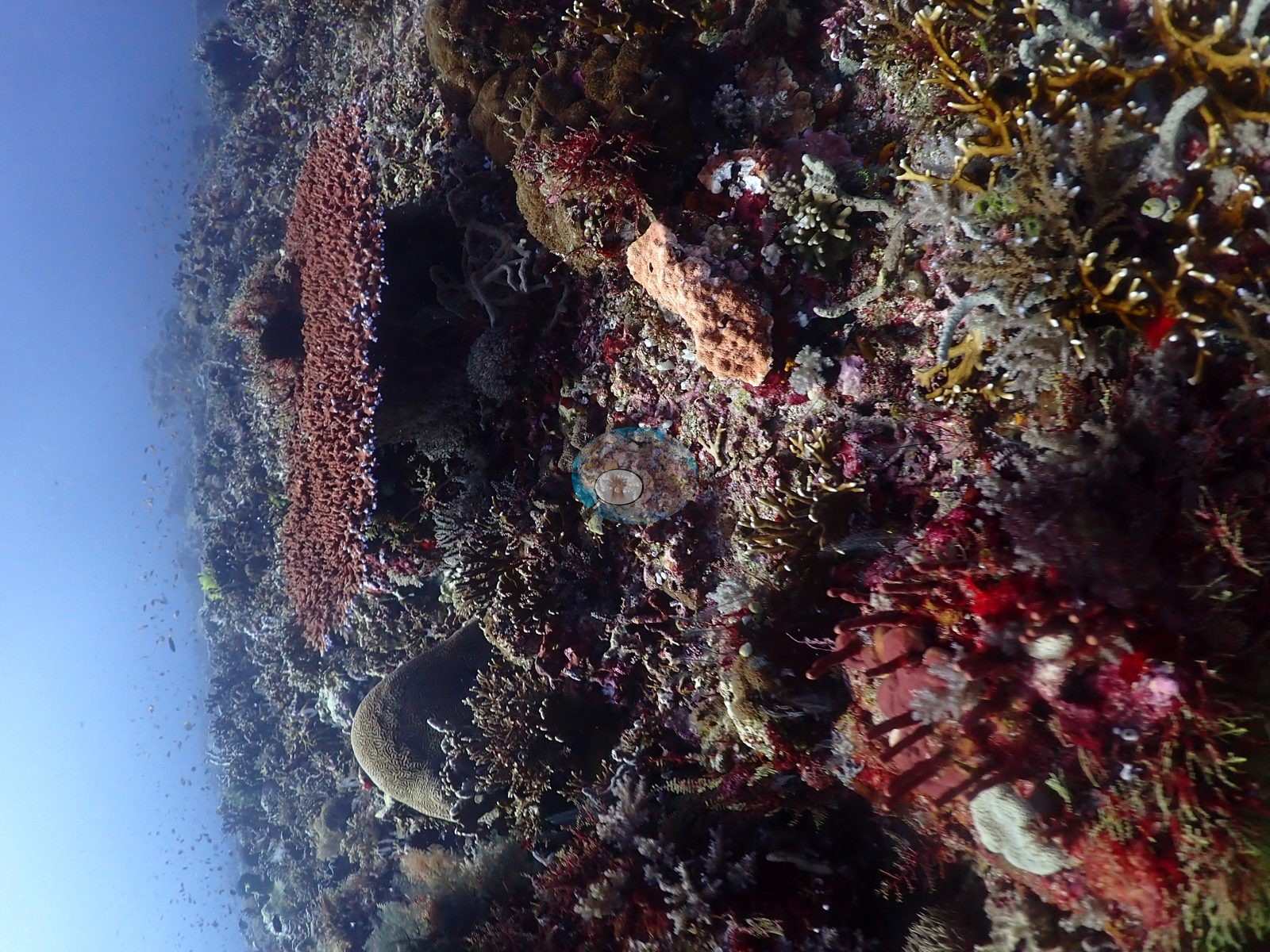
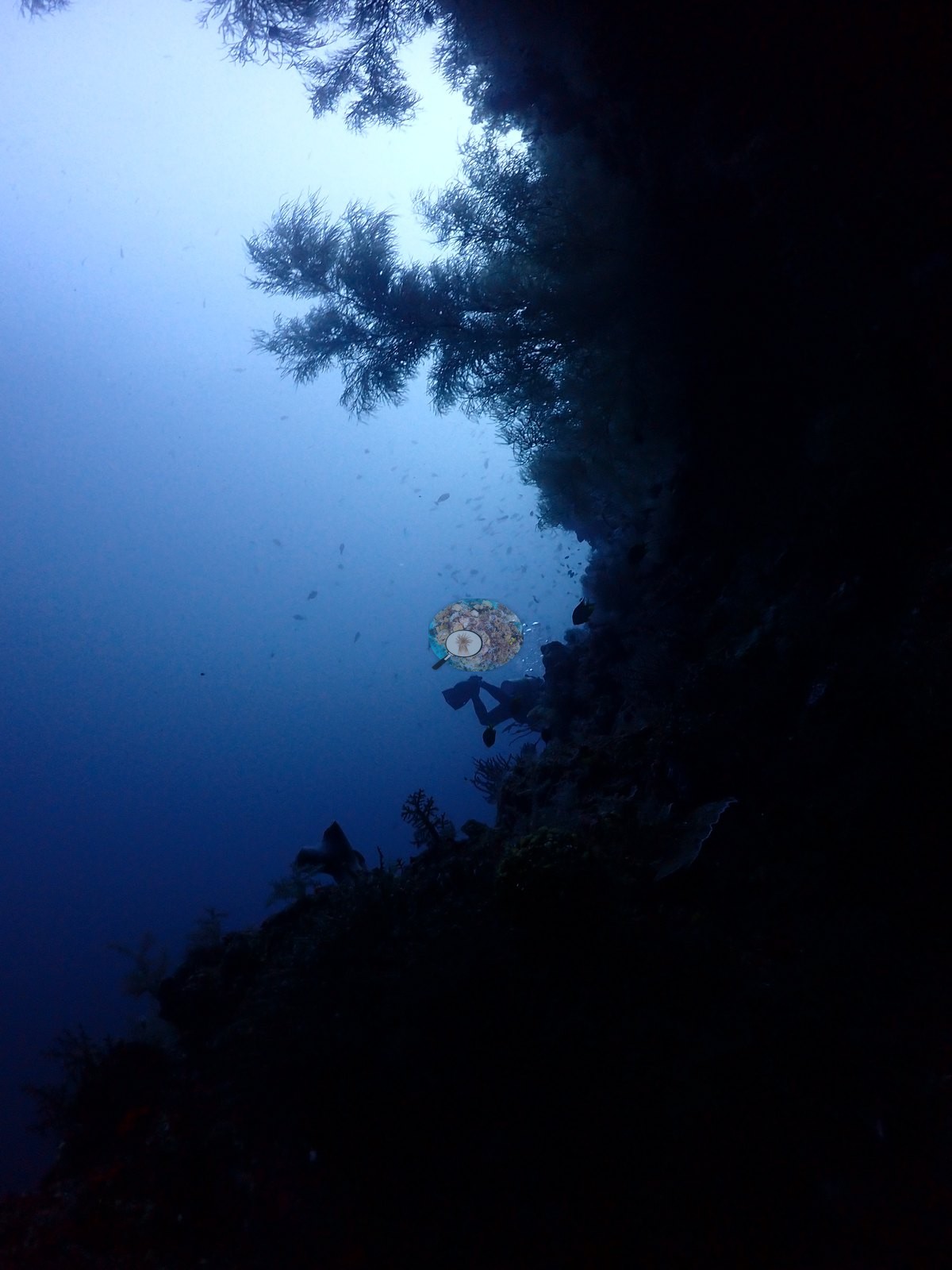
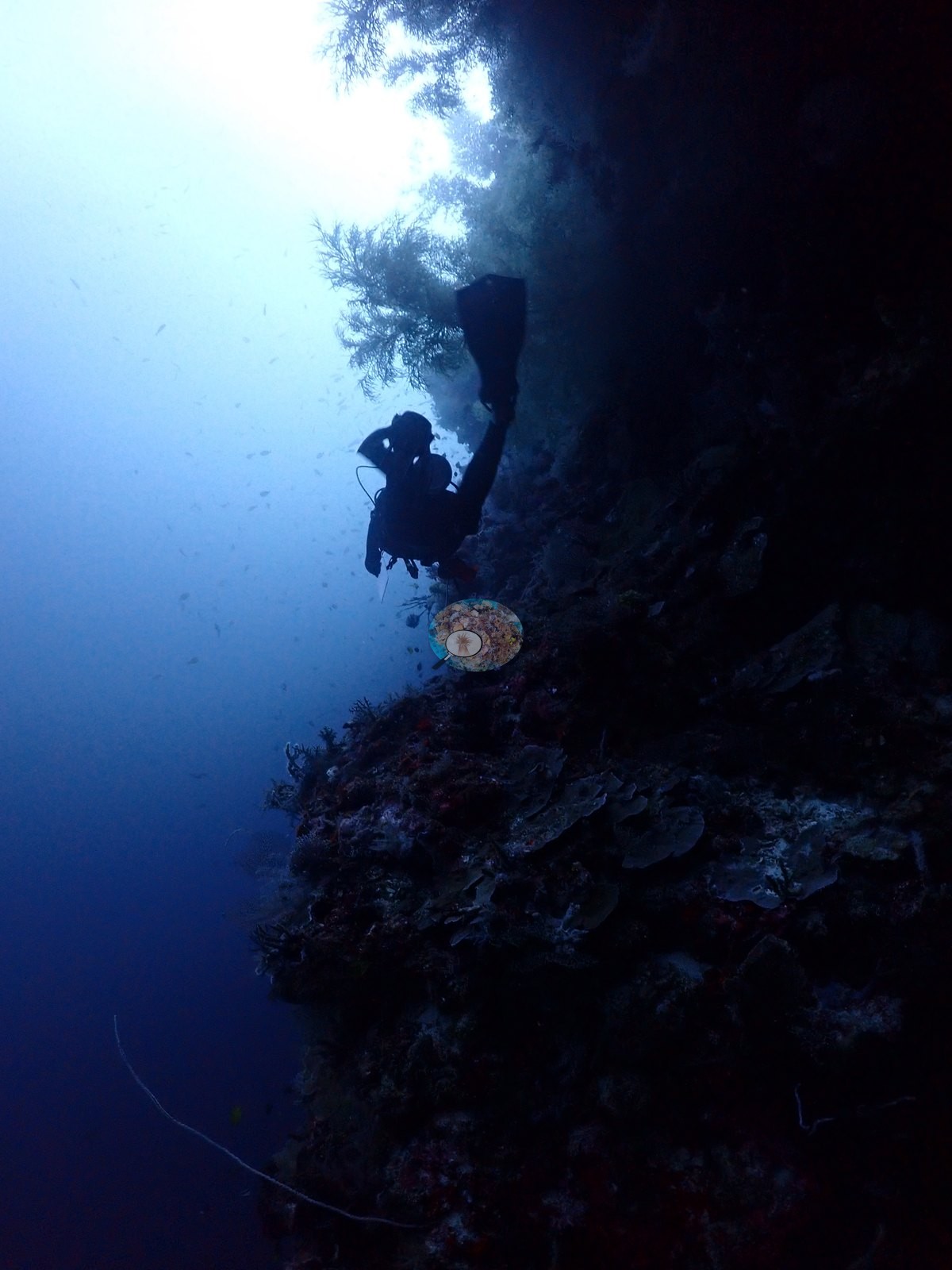
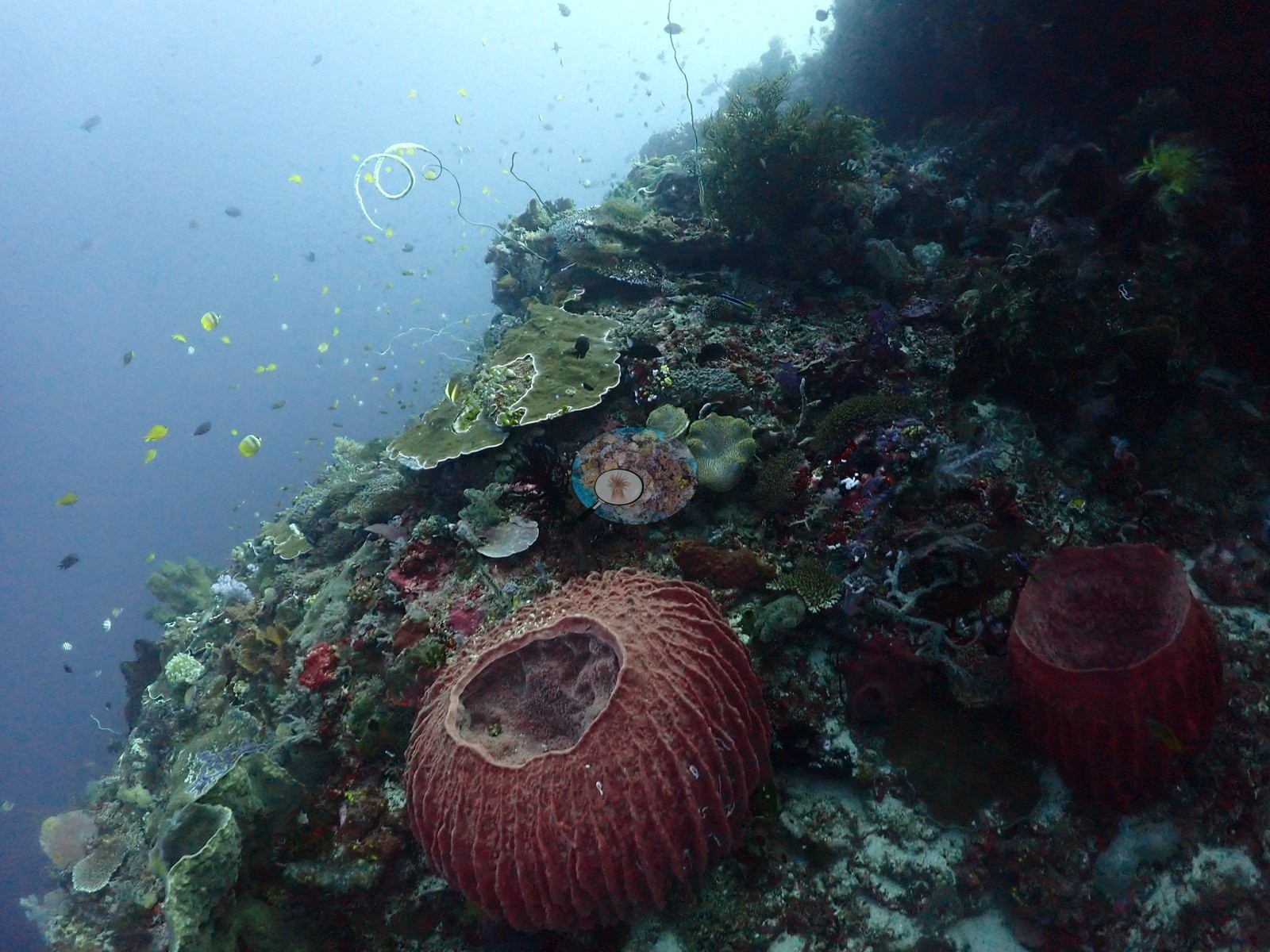
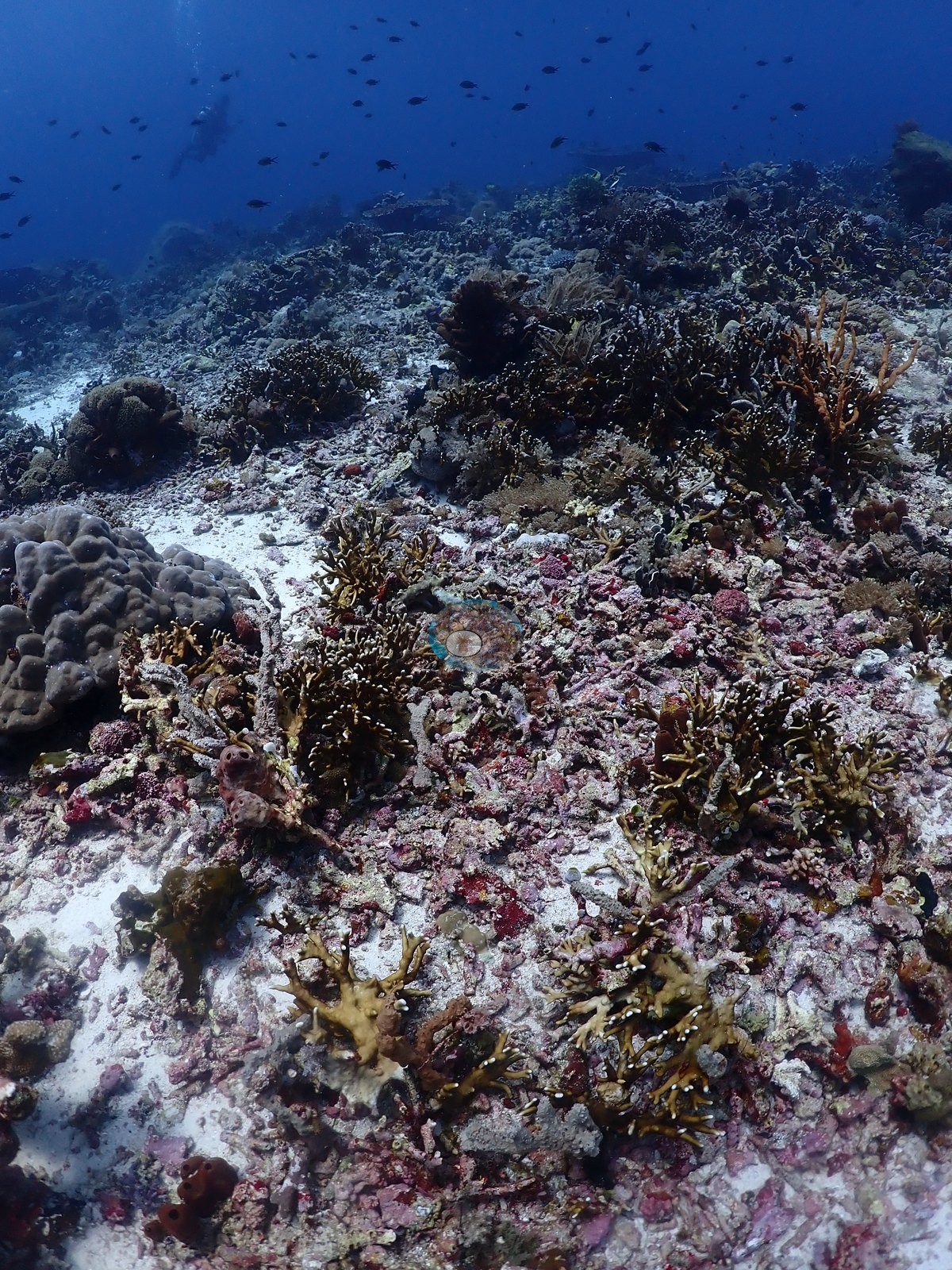
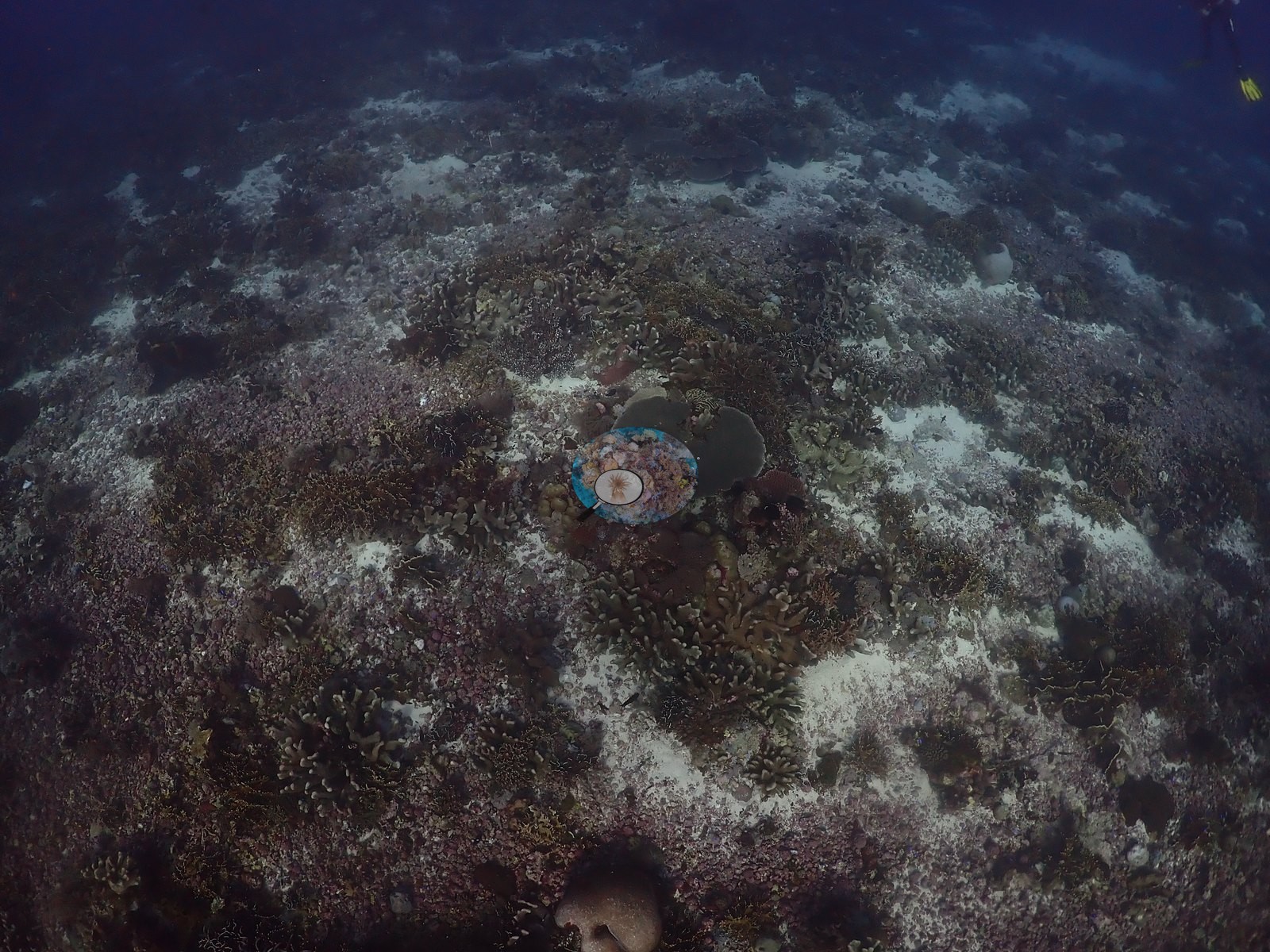
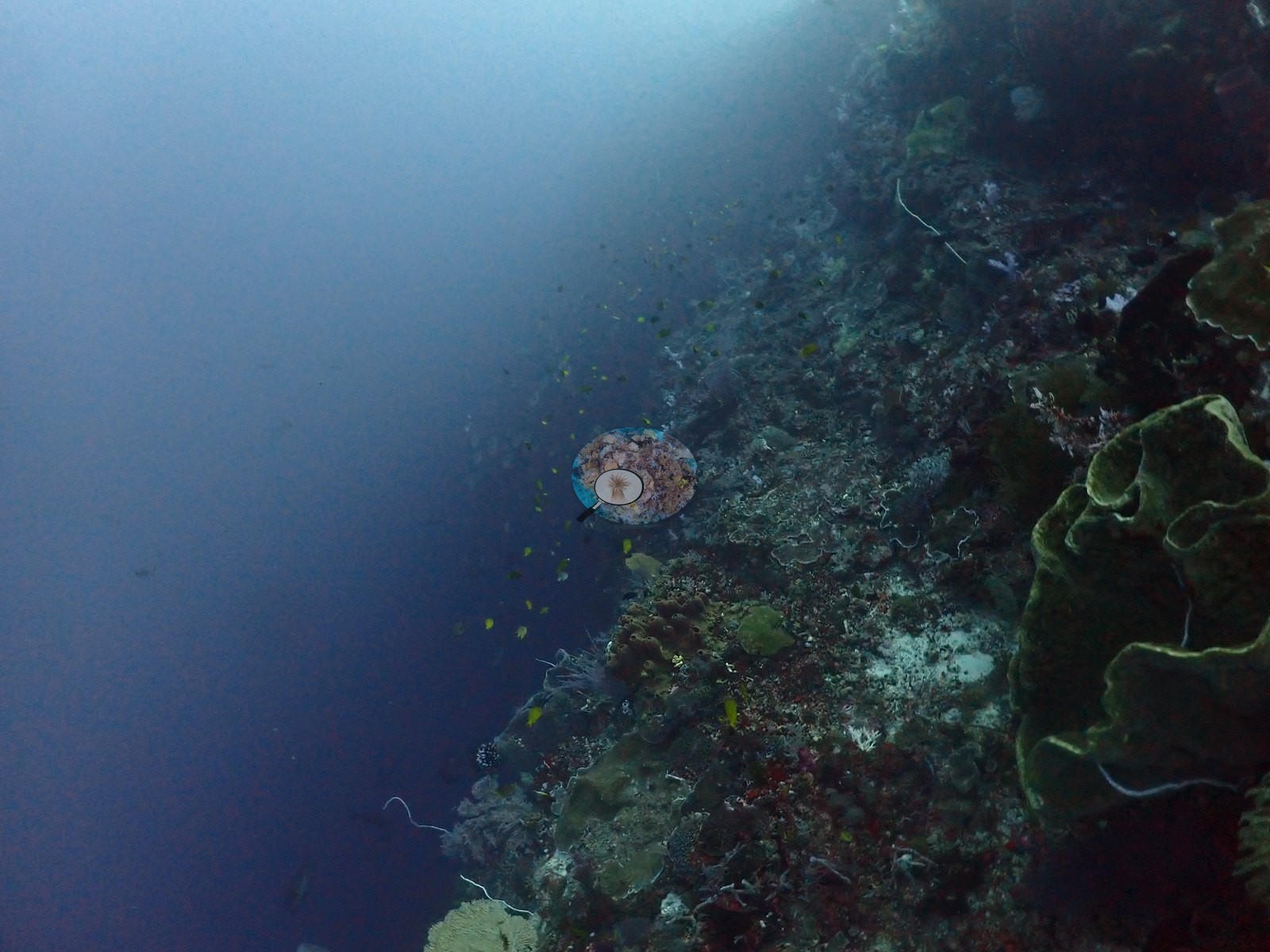
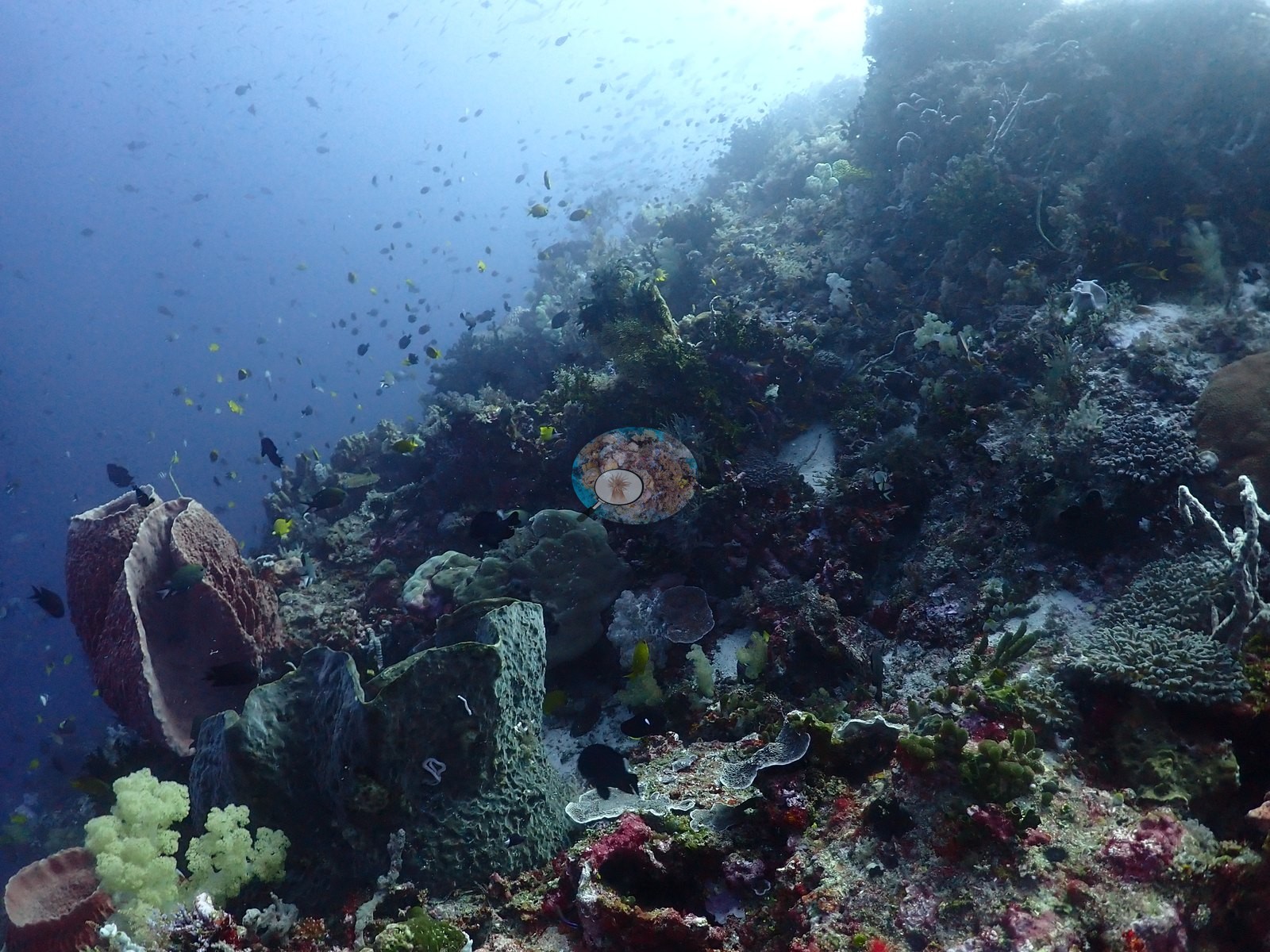
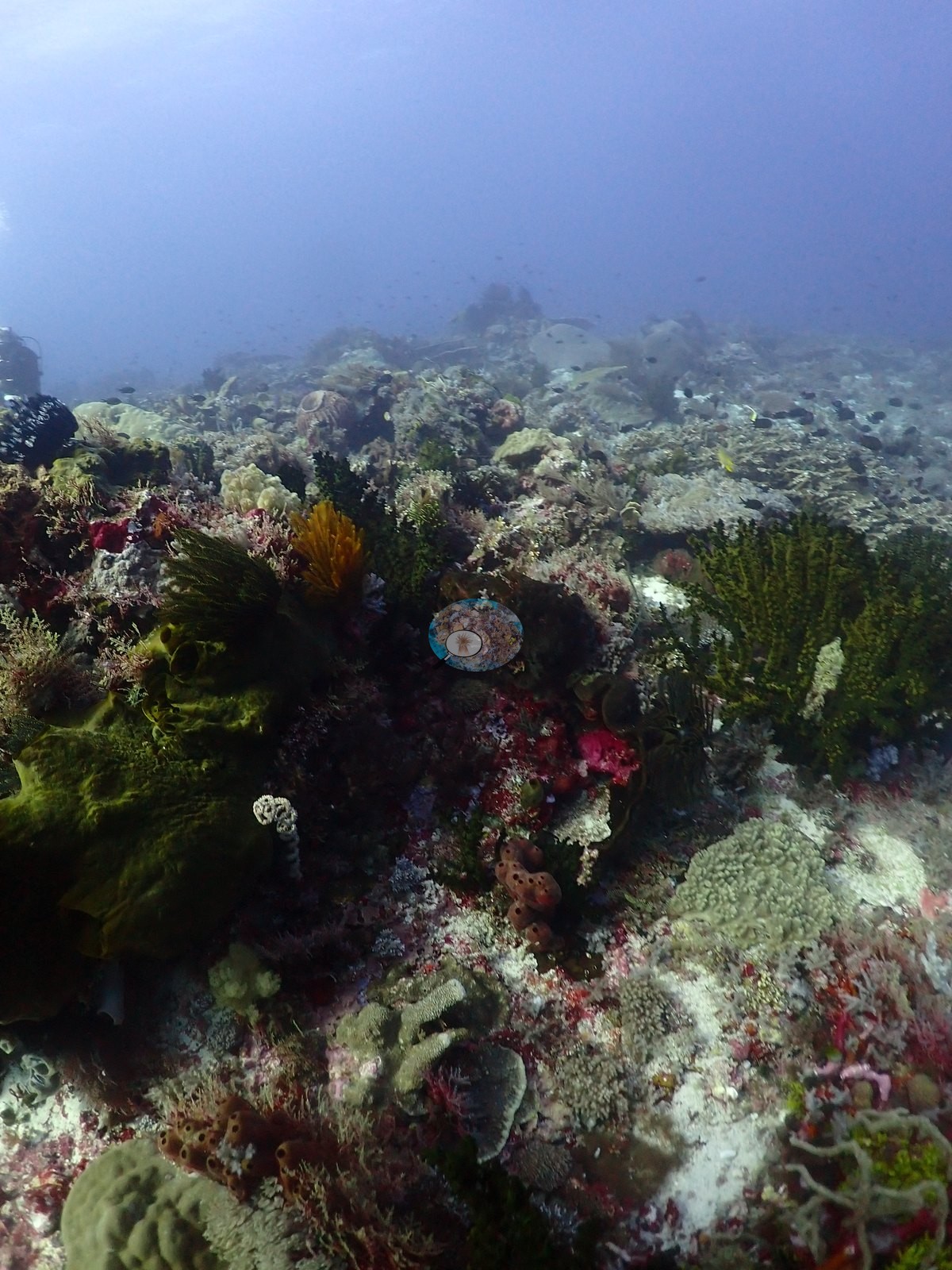
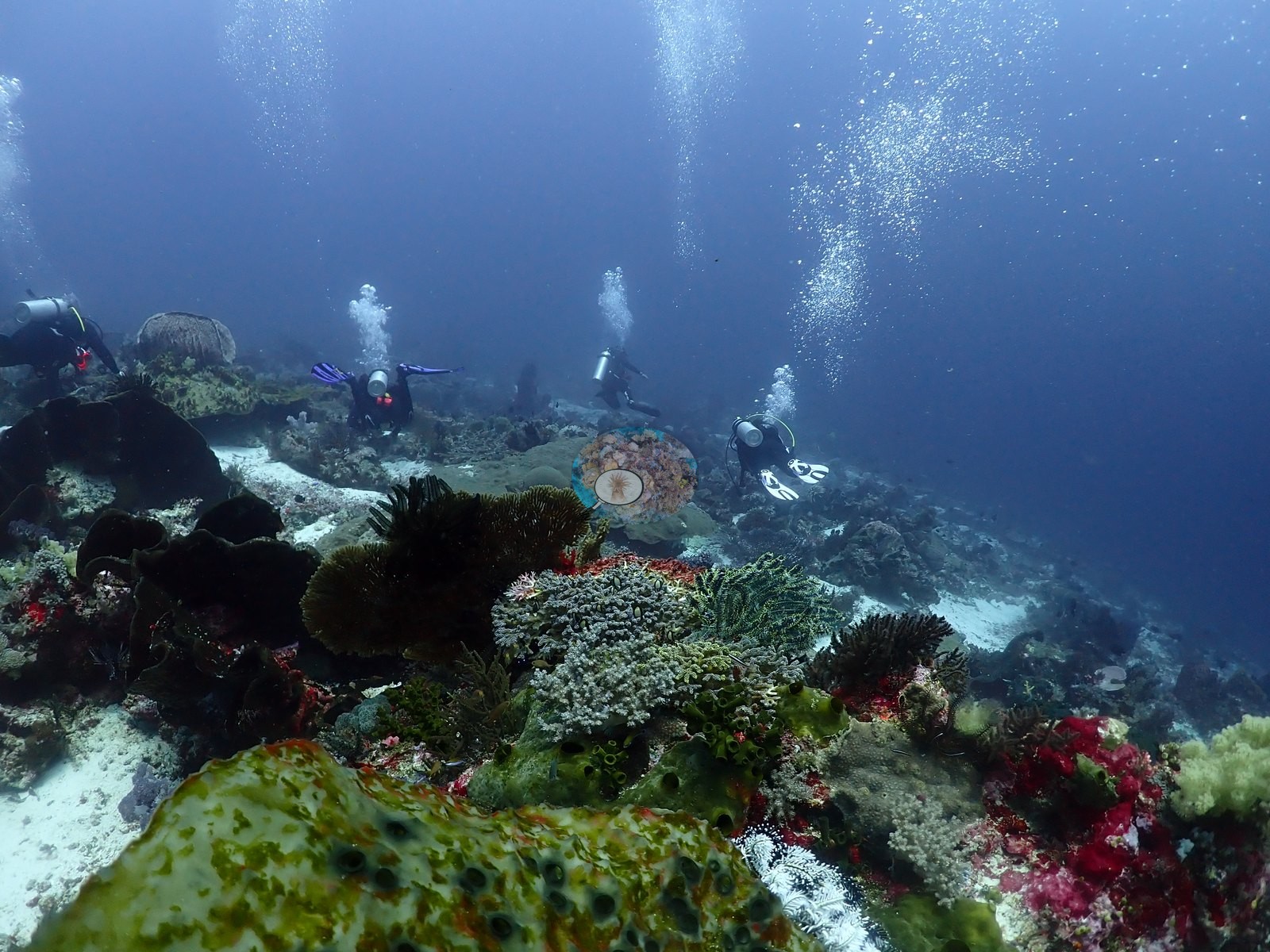
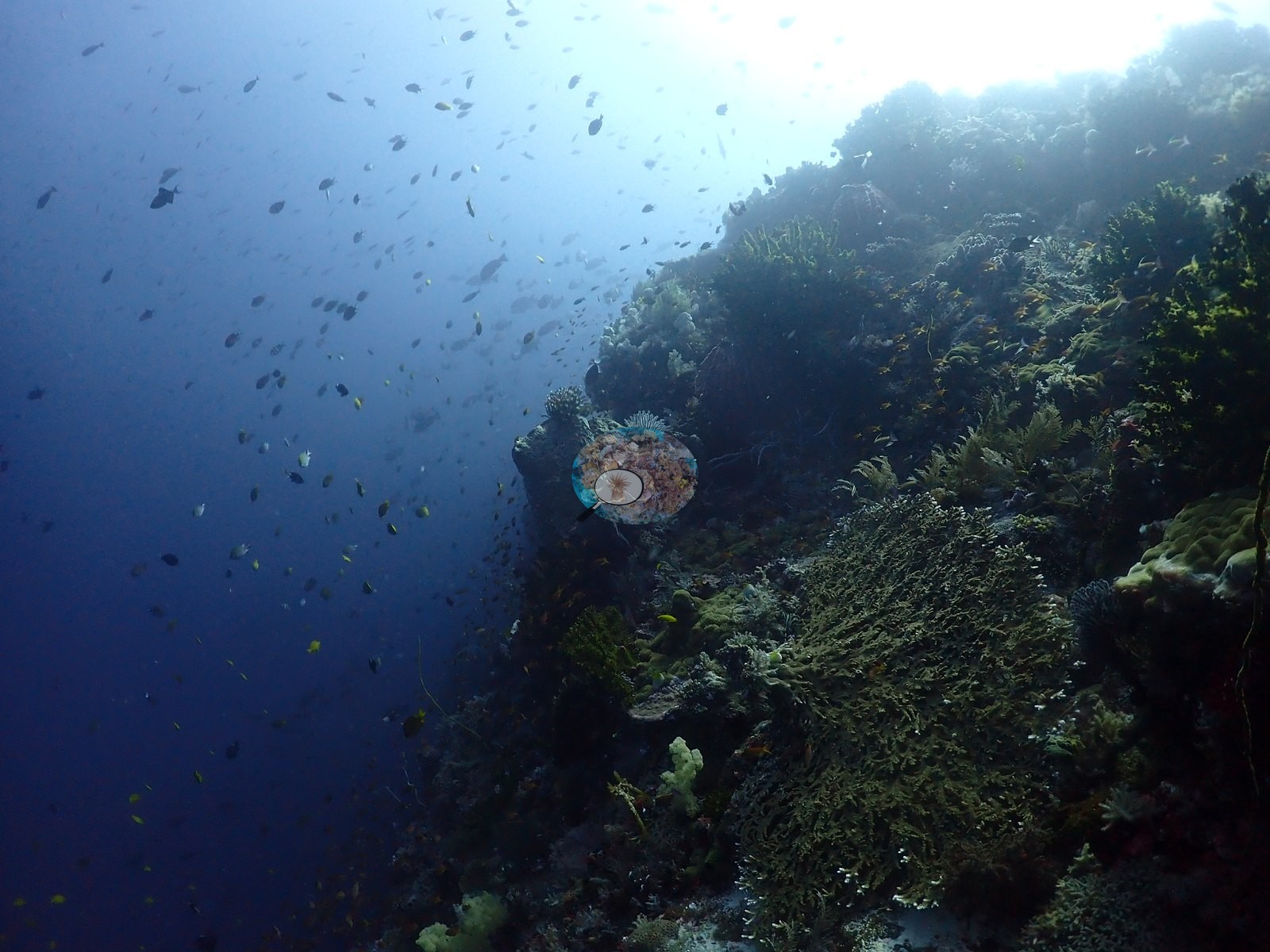
Monaseli (Munaseli), northern Pantar — two dives on the same day, and the photographs show two genuinely different habitats, which is why they are described apart. Dive 1 (54 frames) opens on the vertical face. Above about the mid-point the wall rolls over into a broad deep terrace, and the character changes completely.
General benthic features
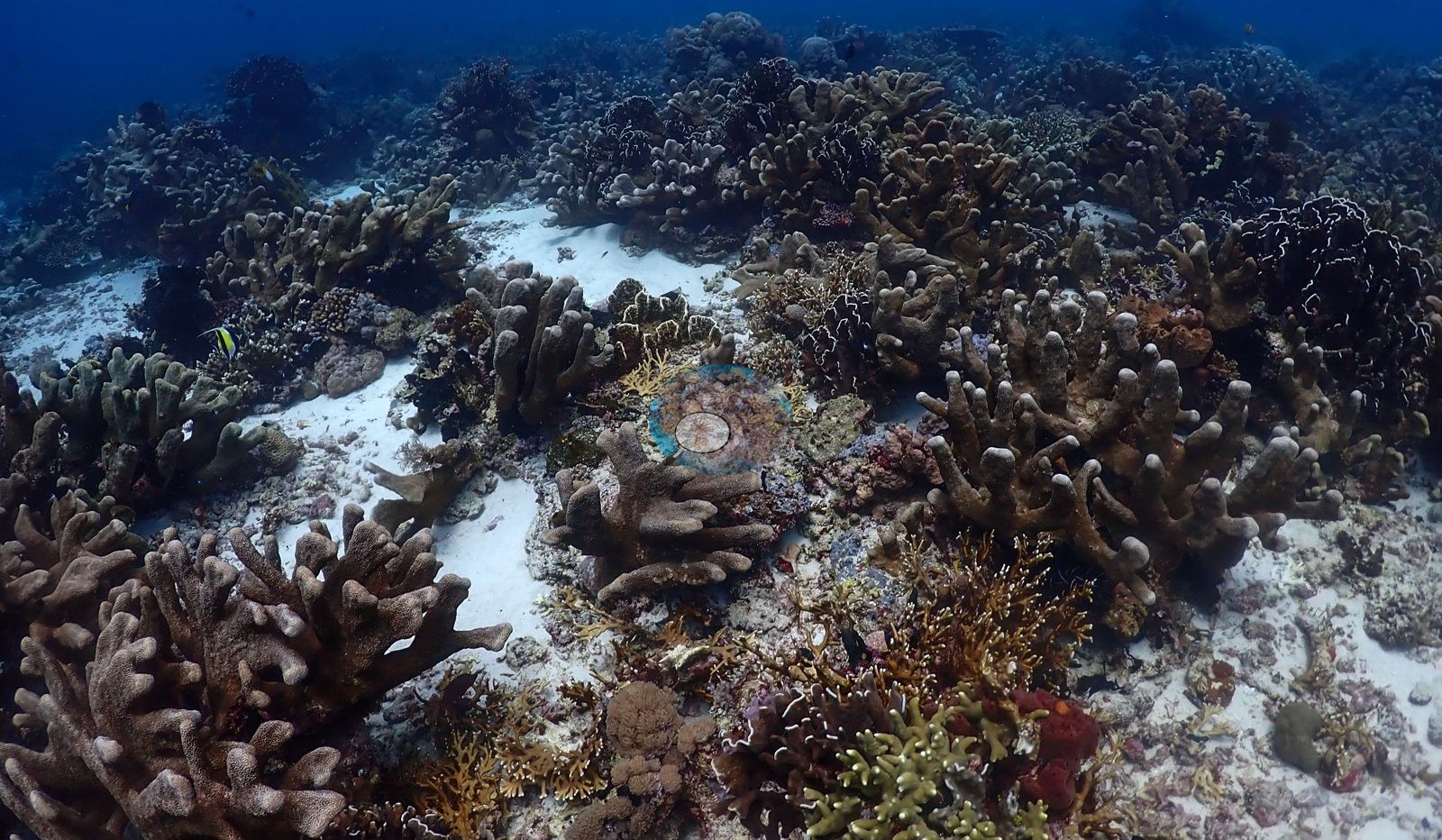
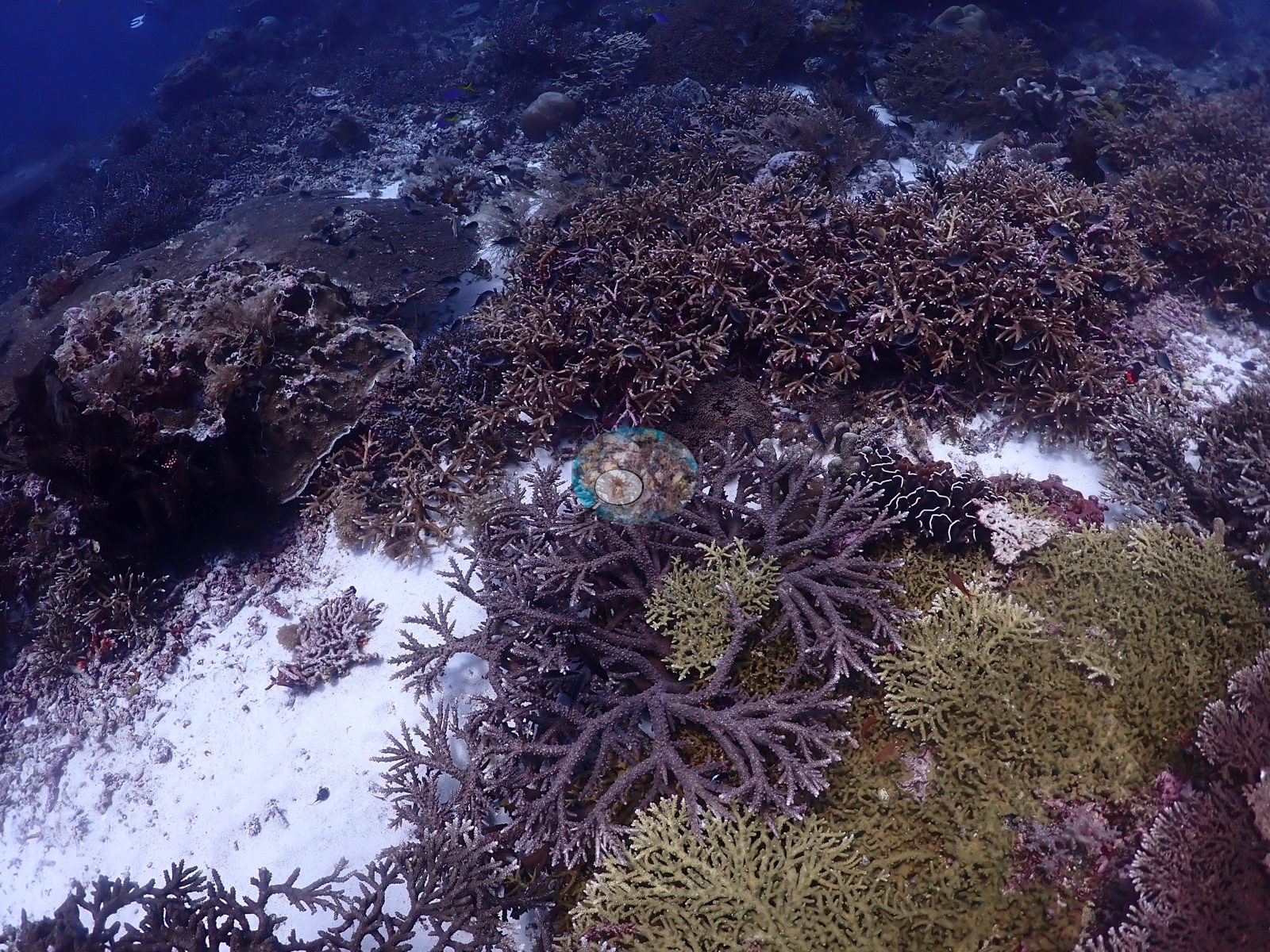
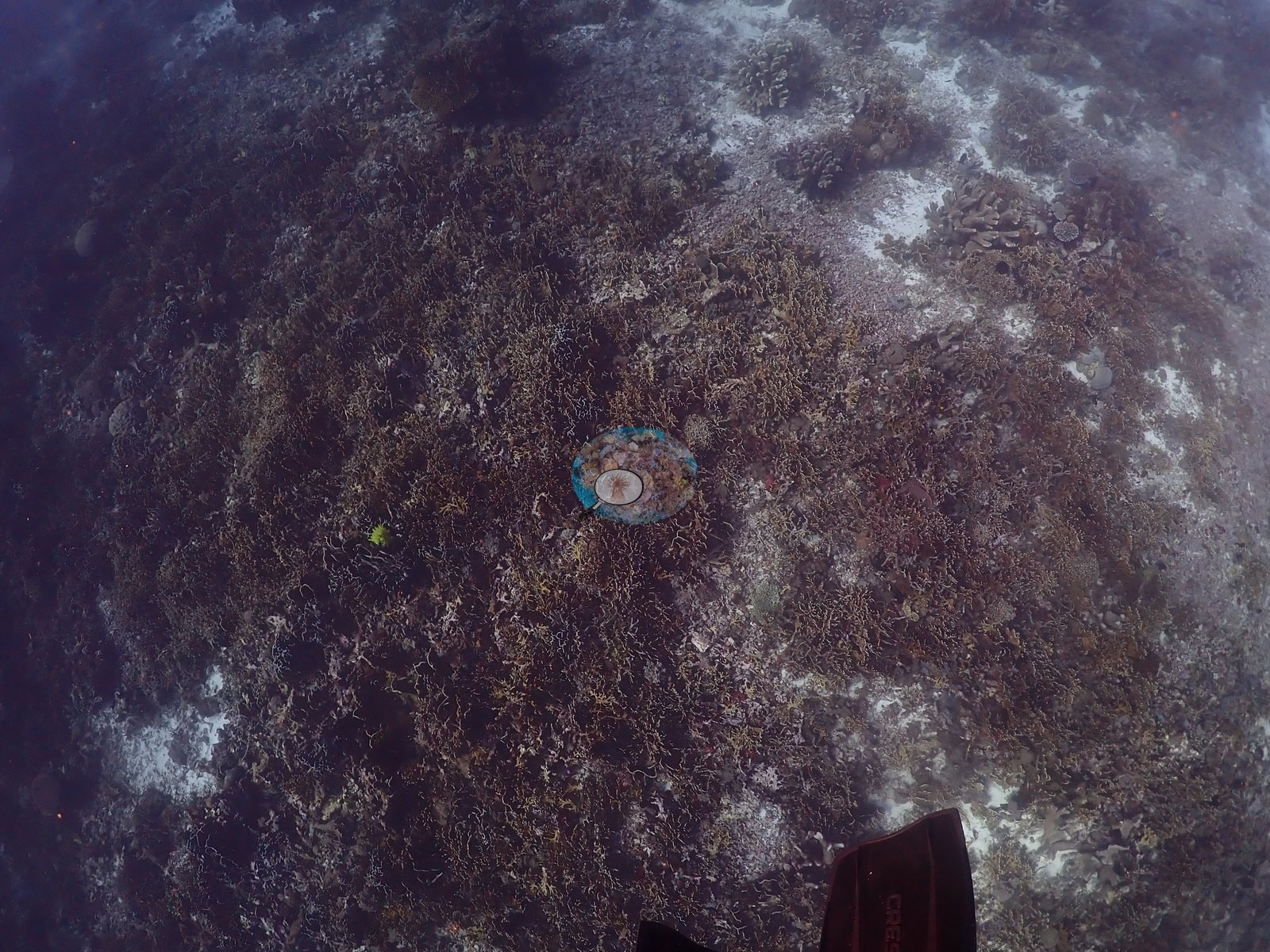
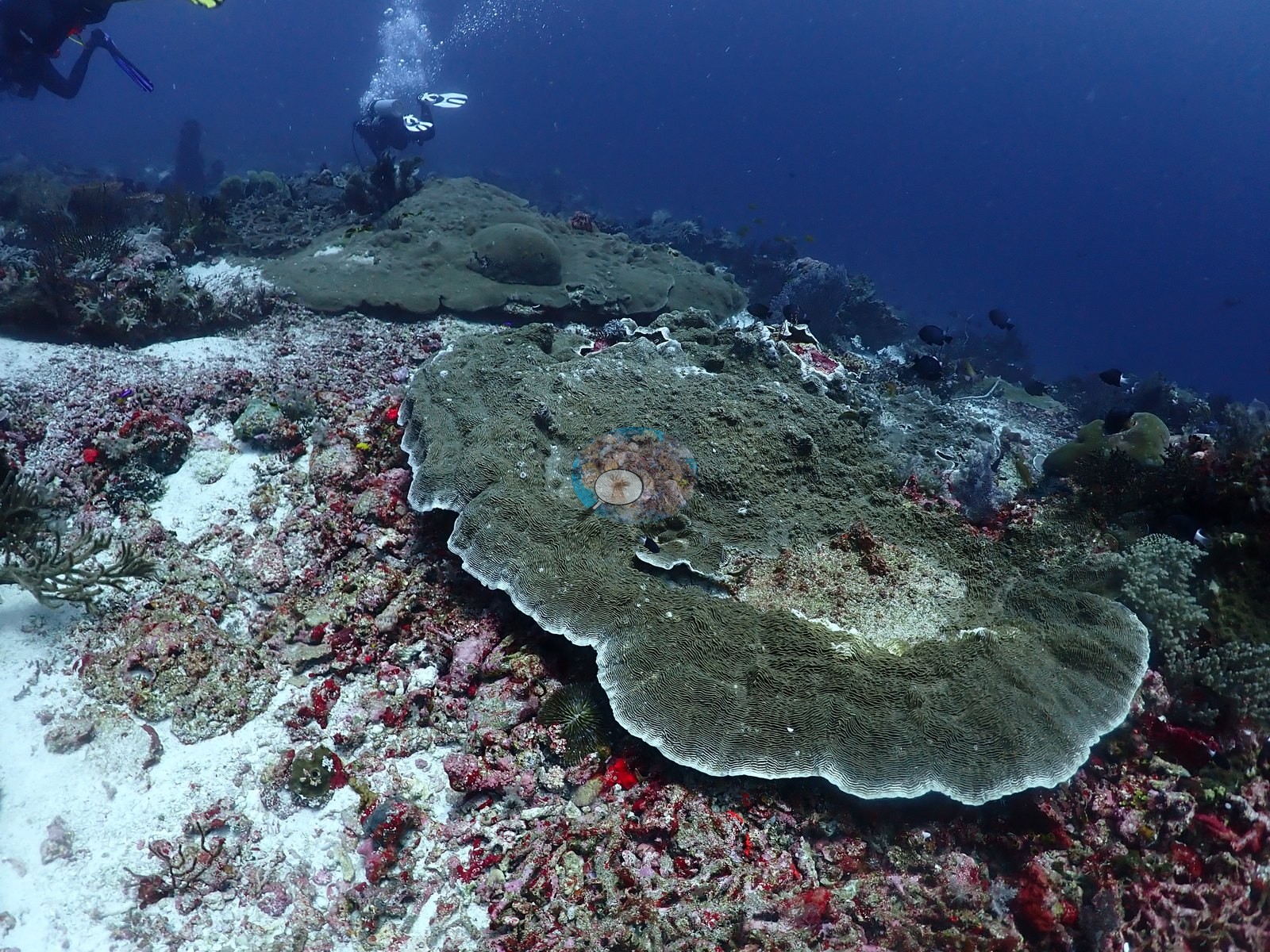
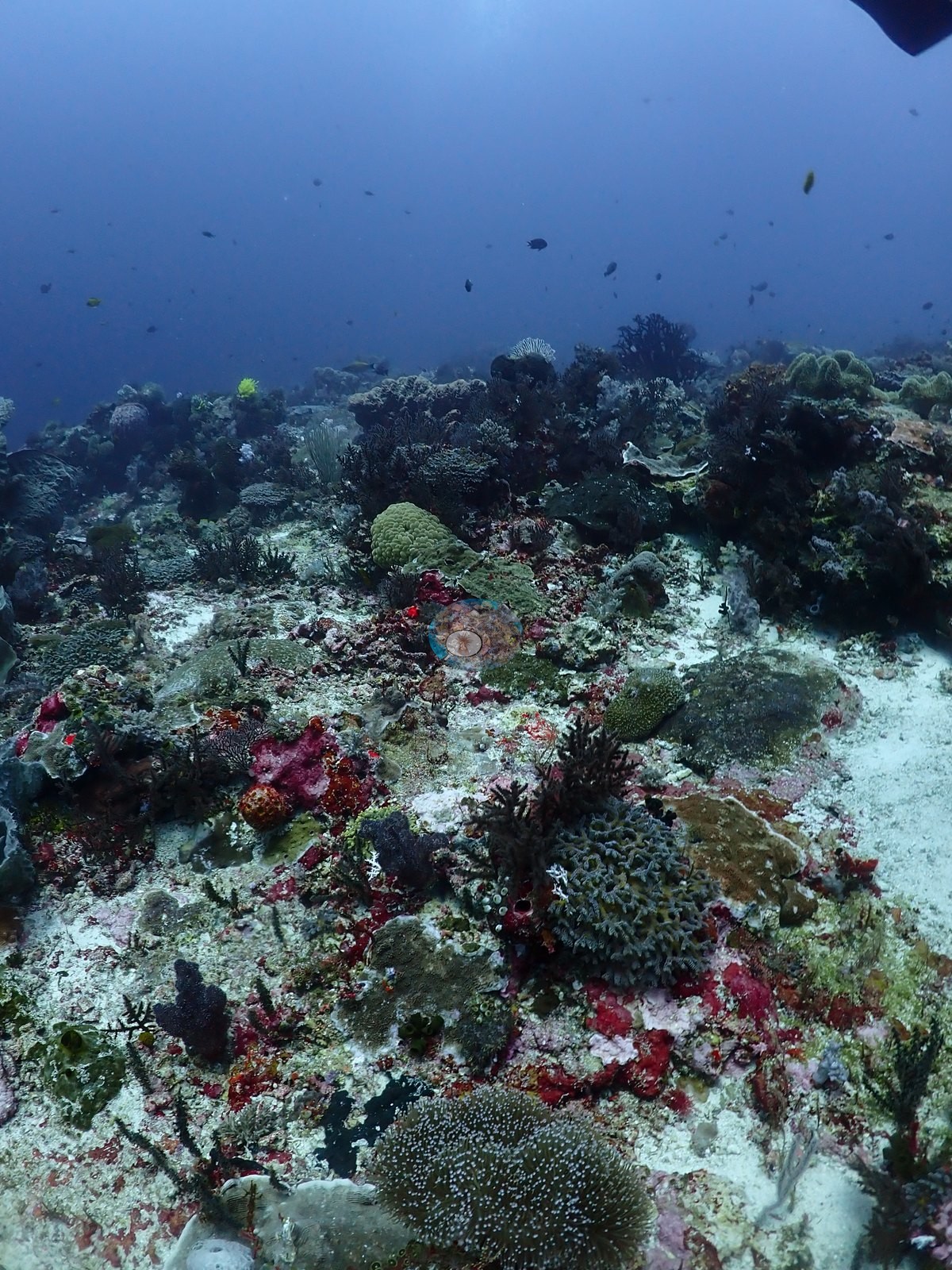
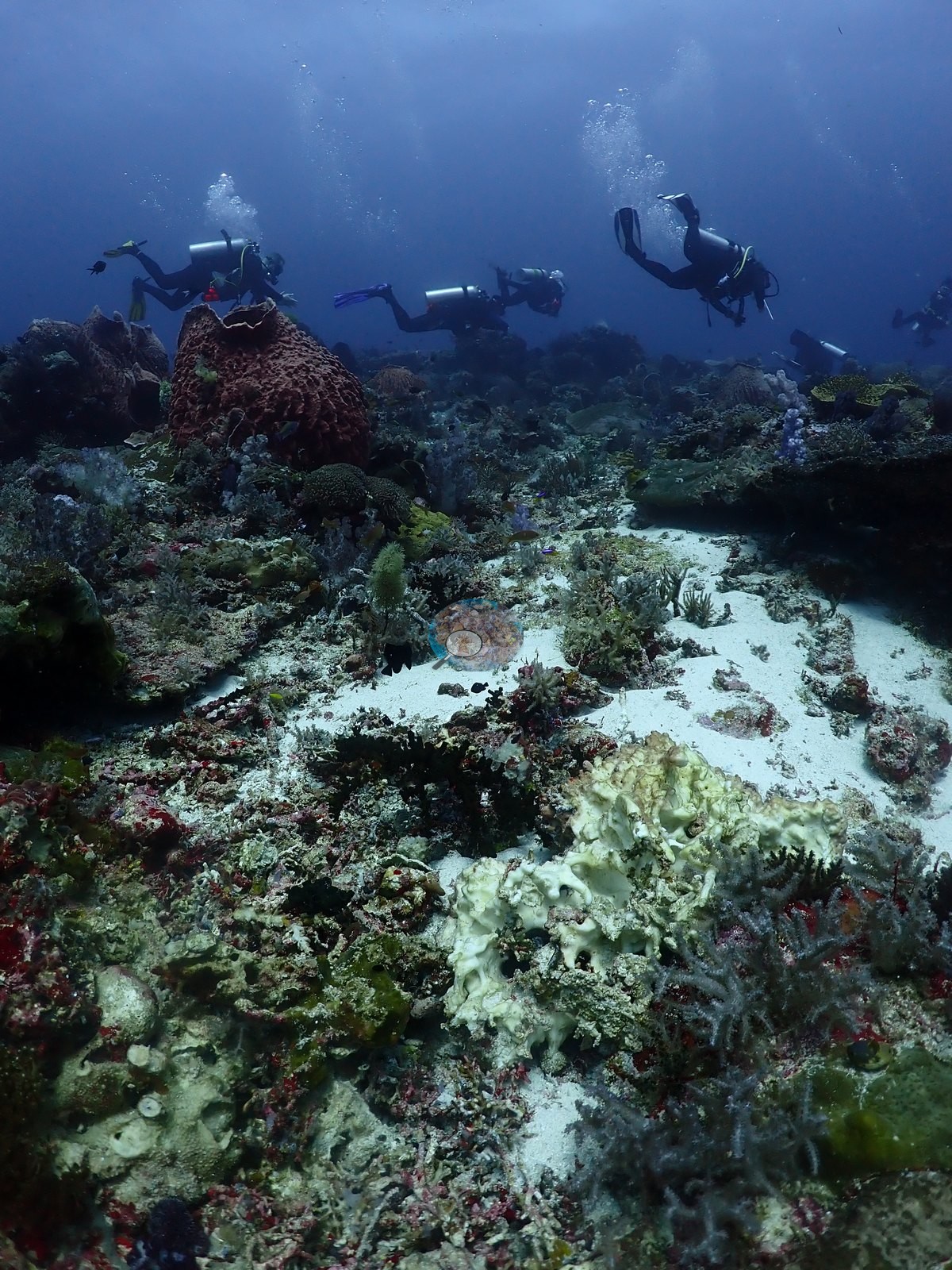
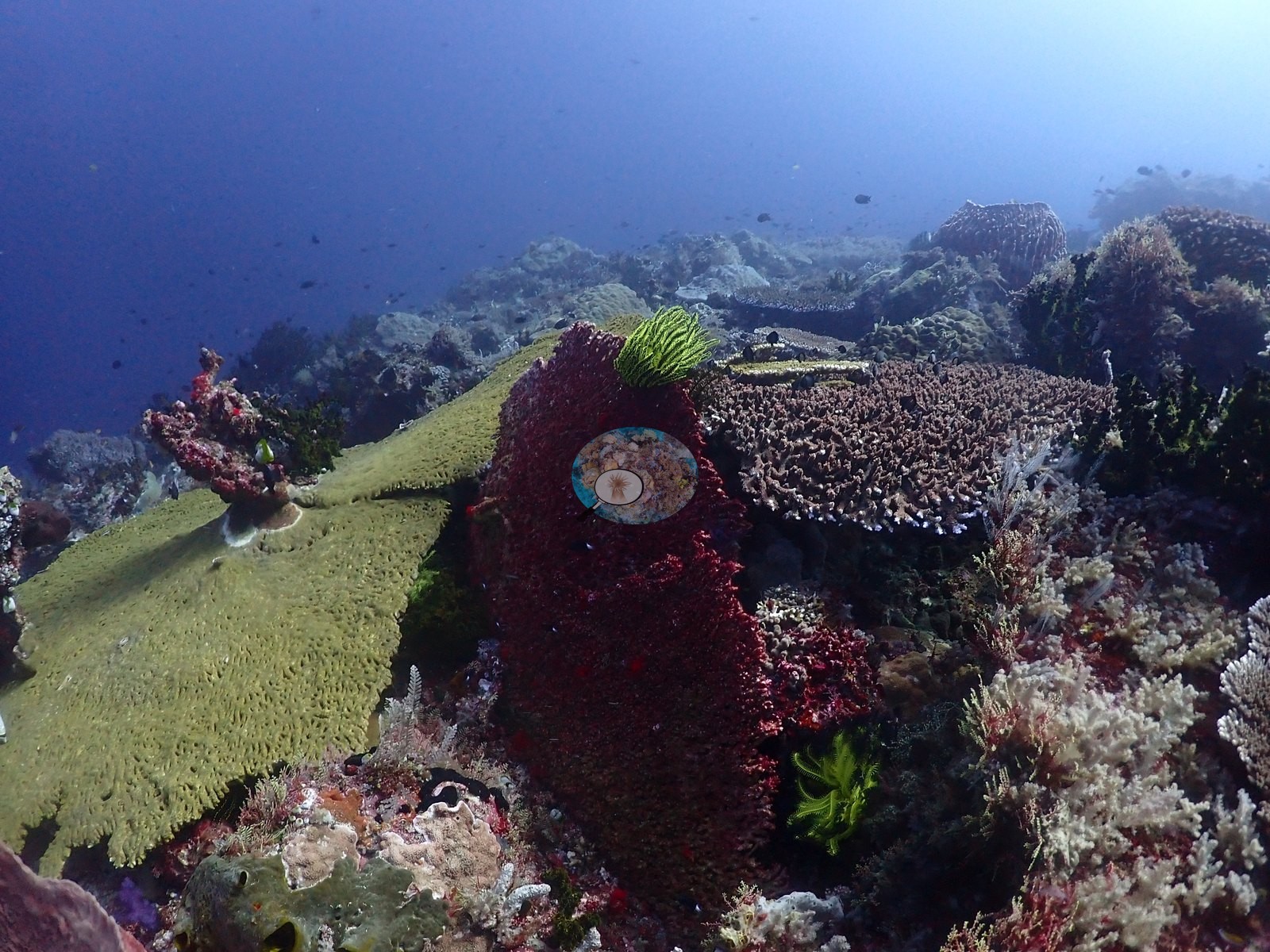
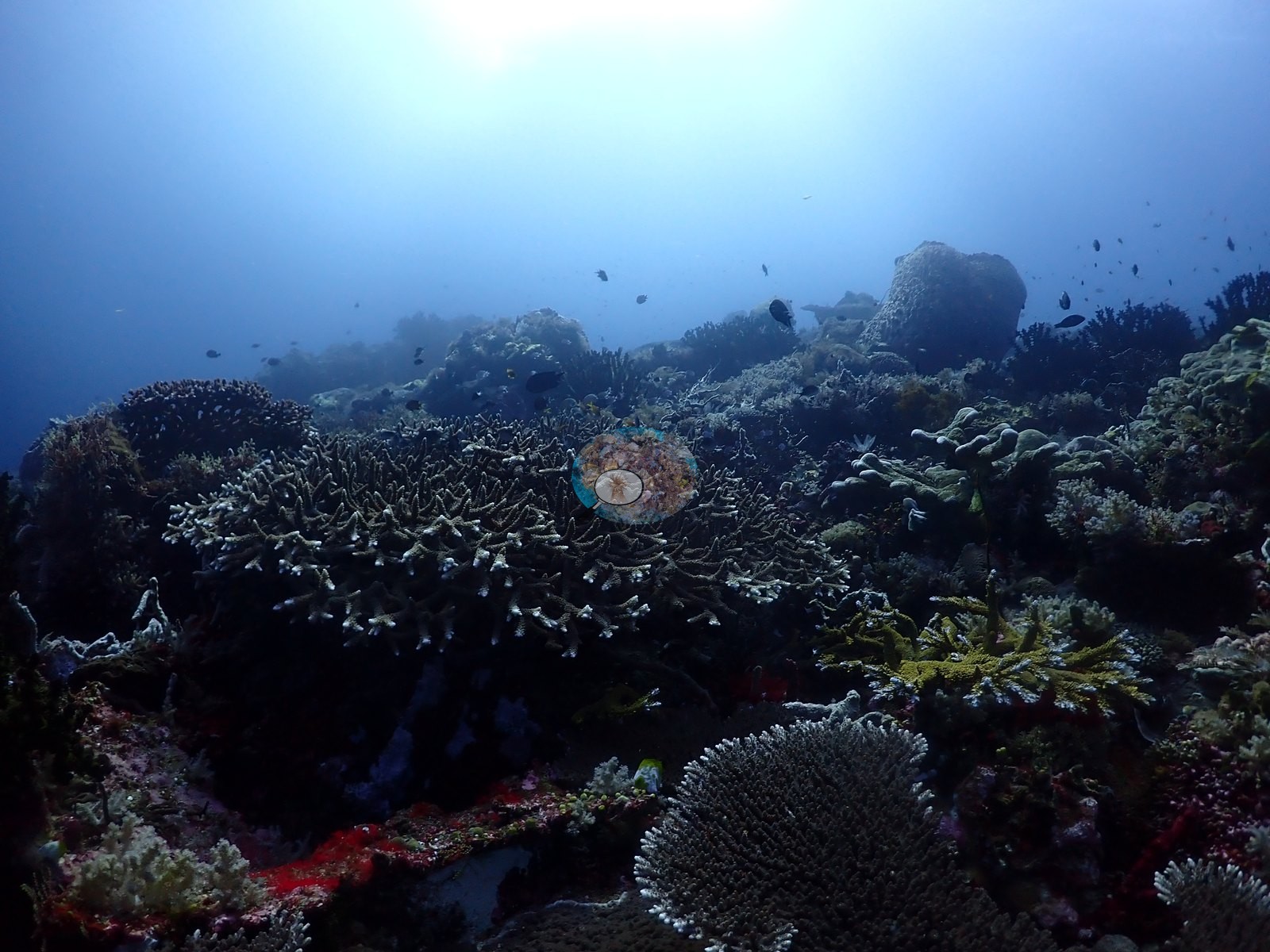
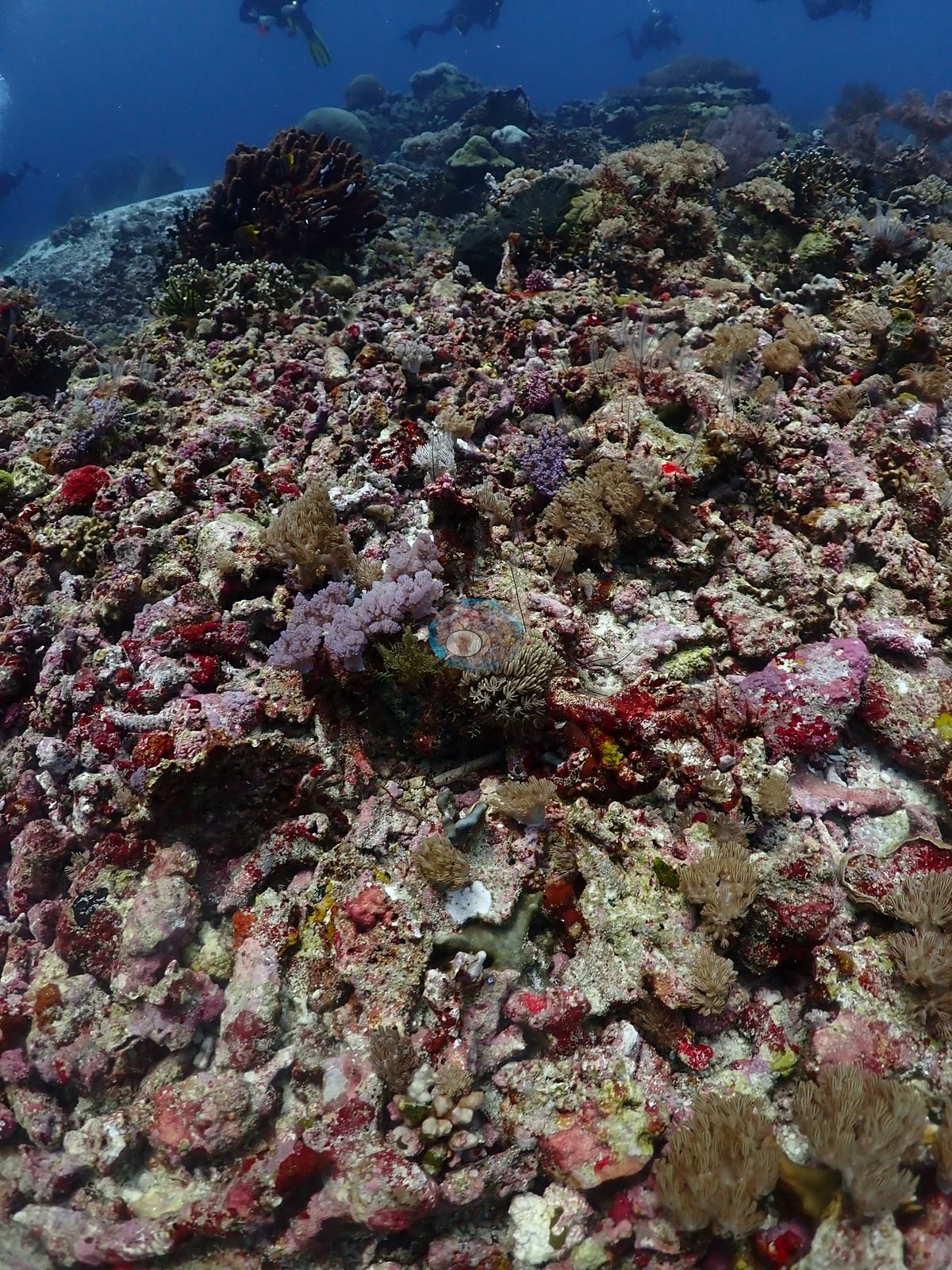
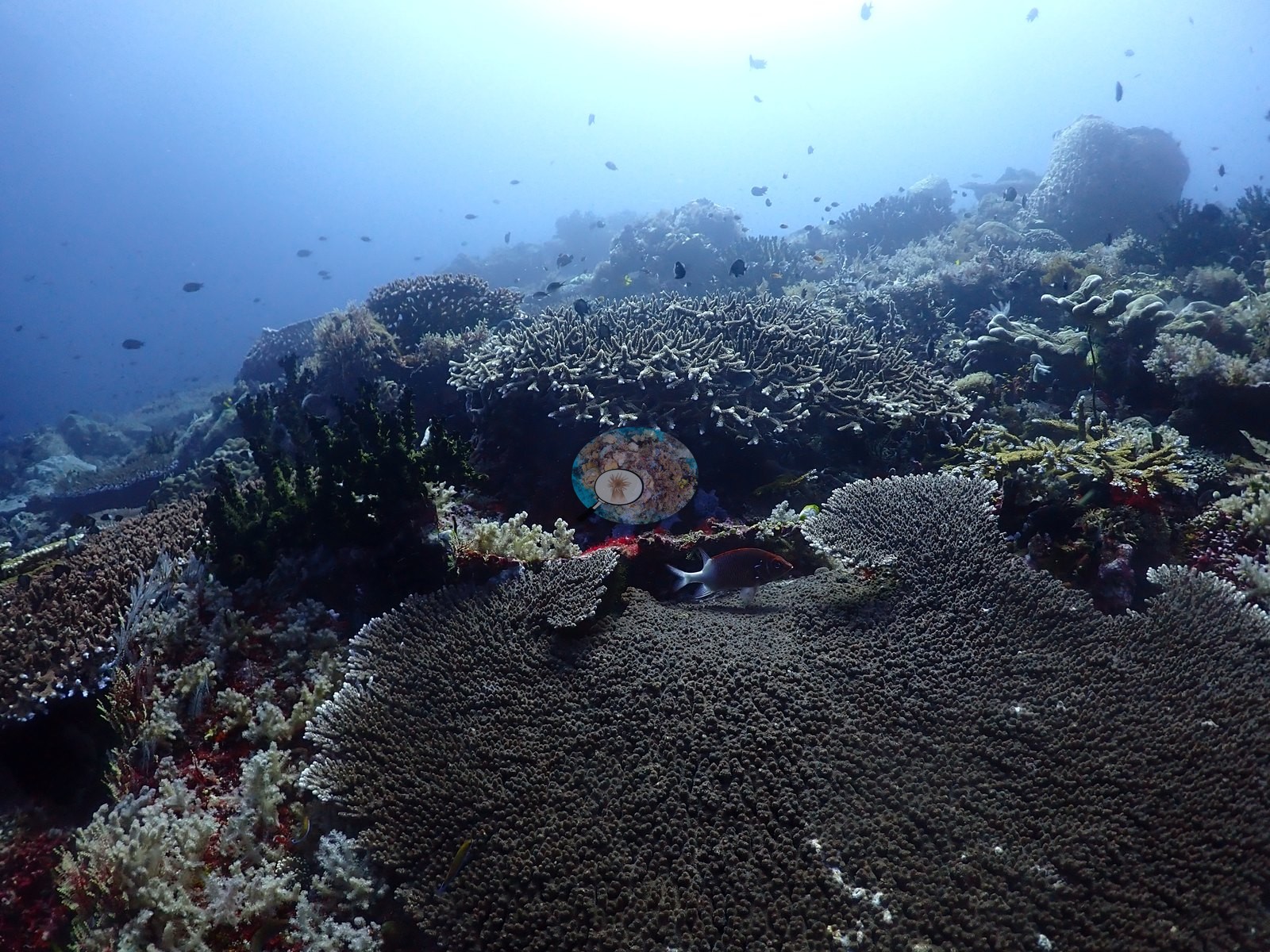
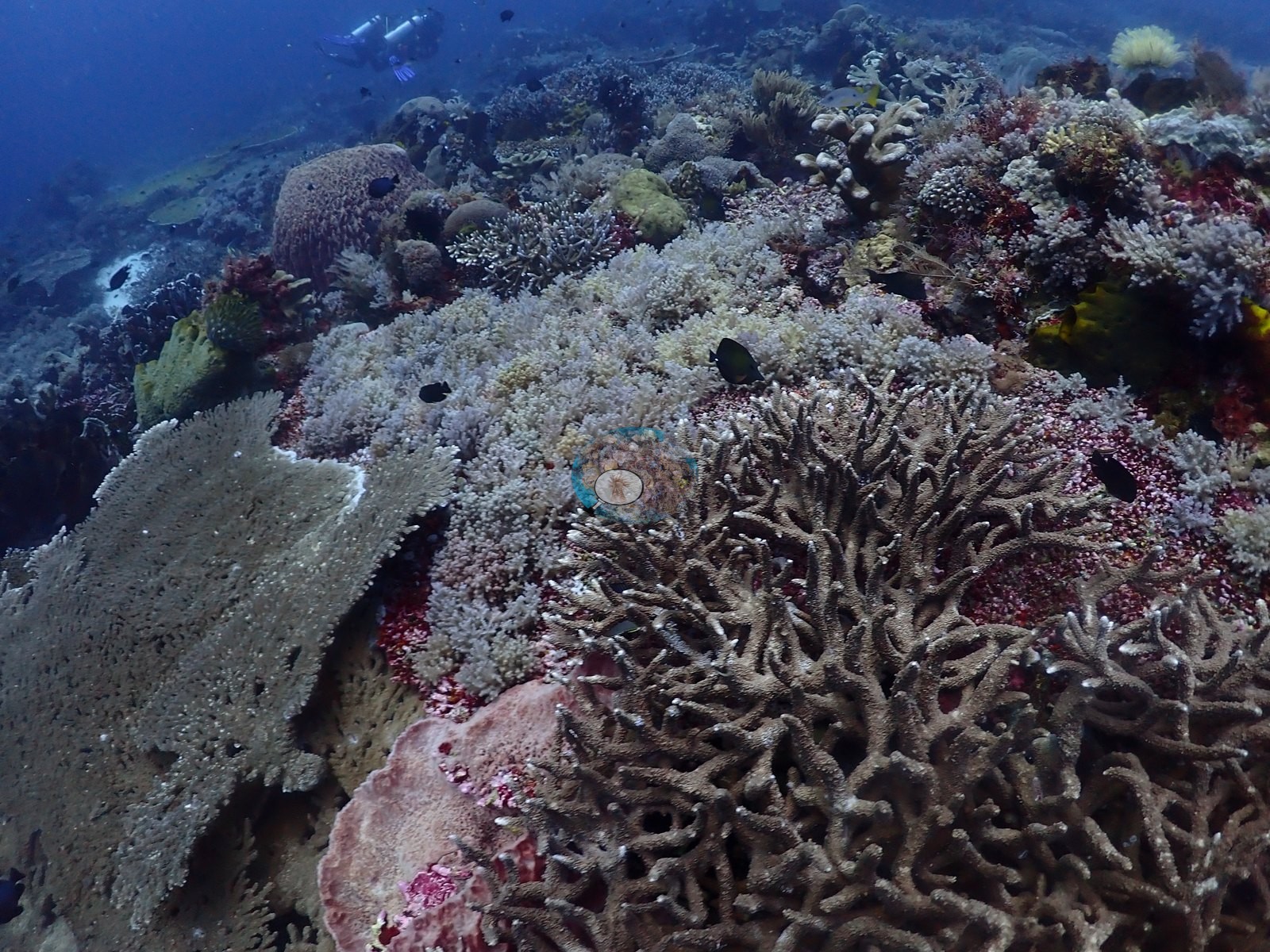
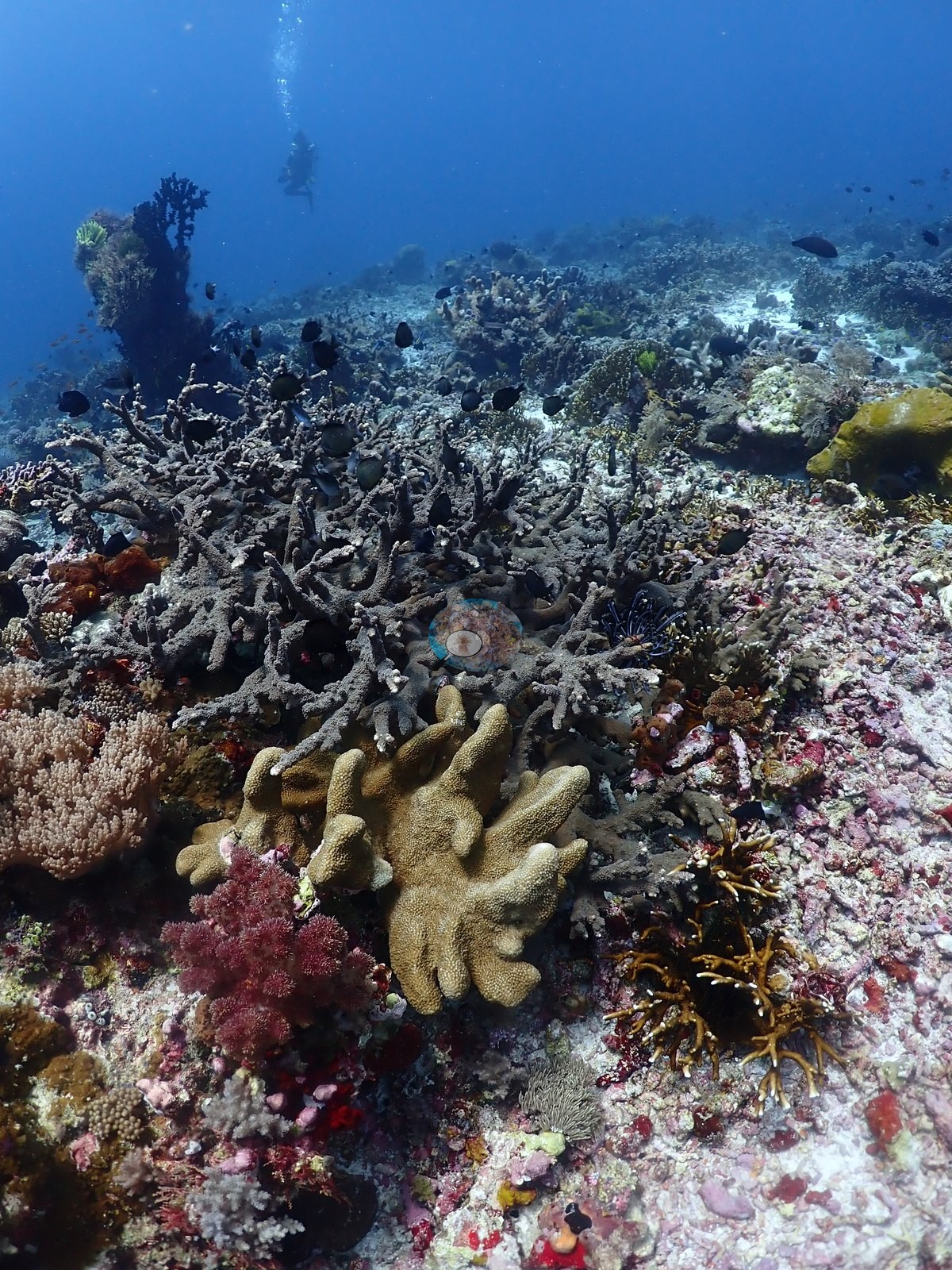
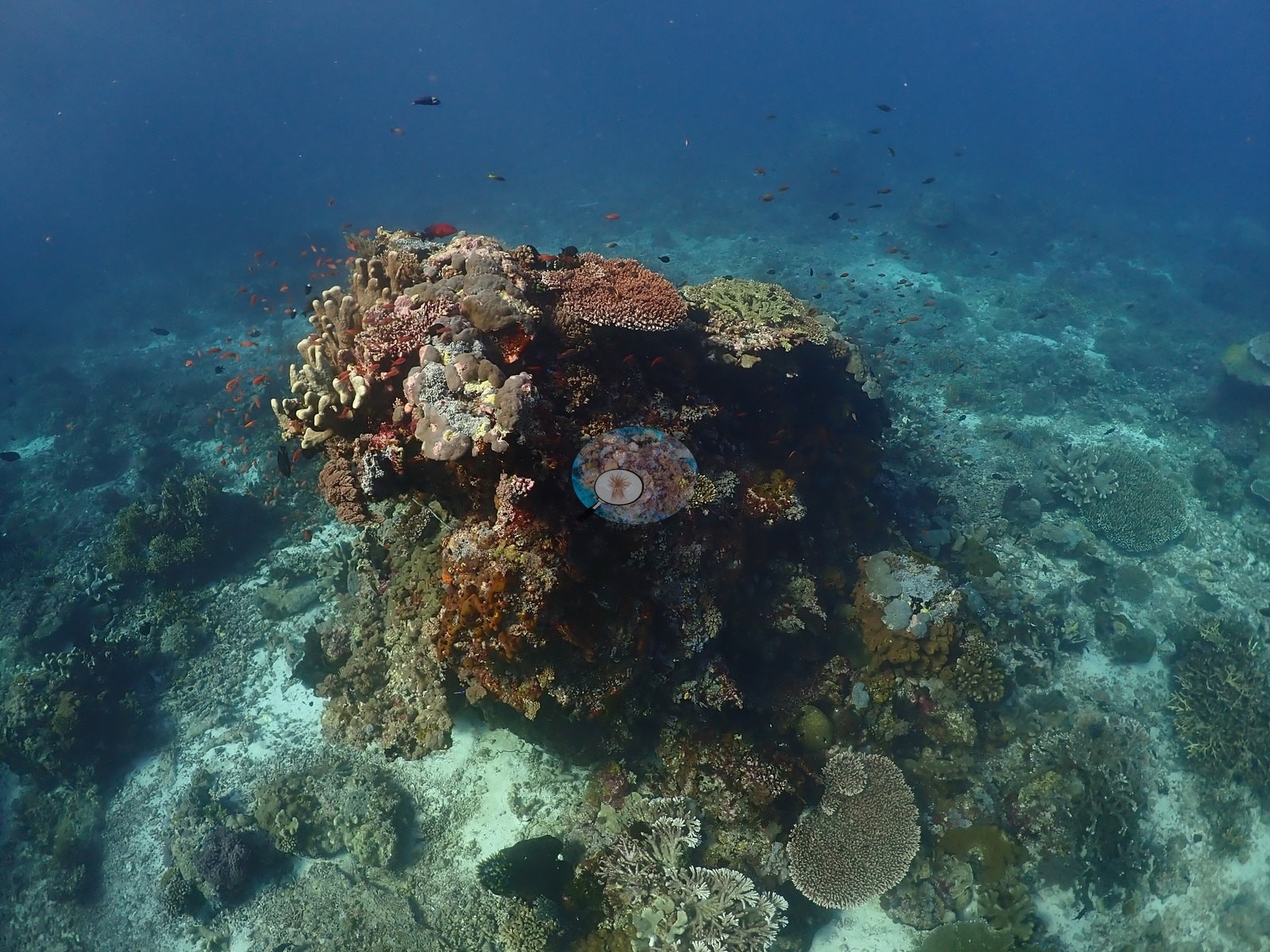
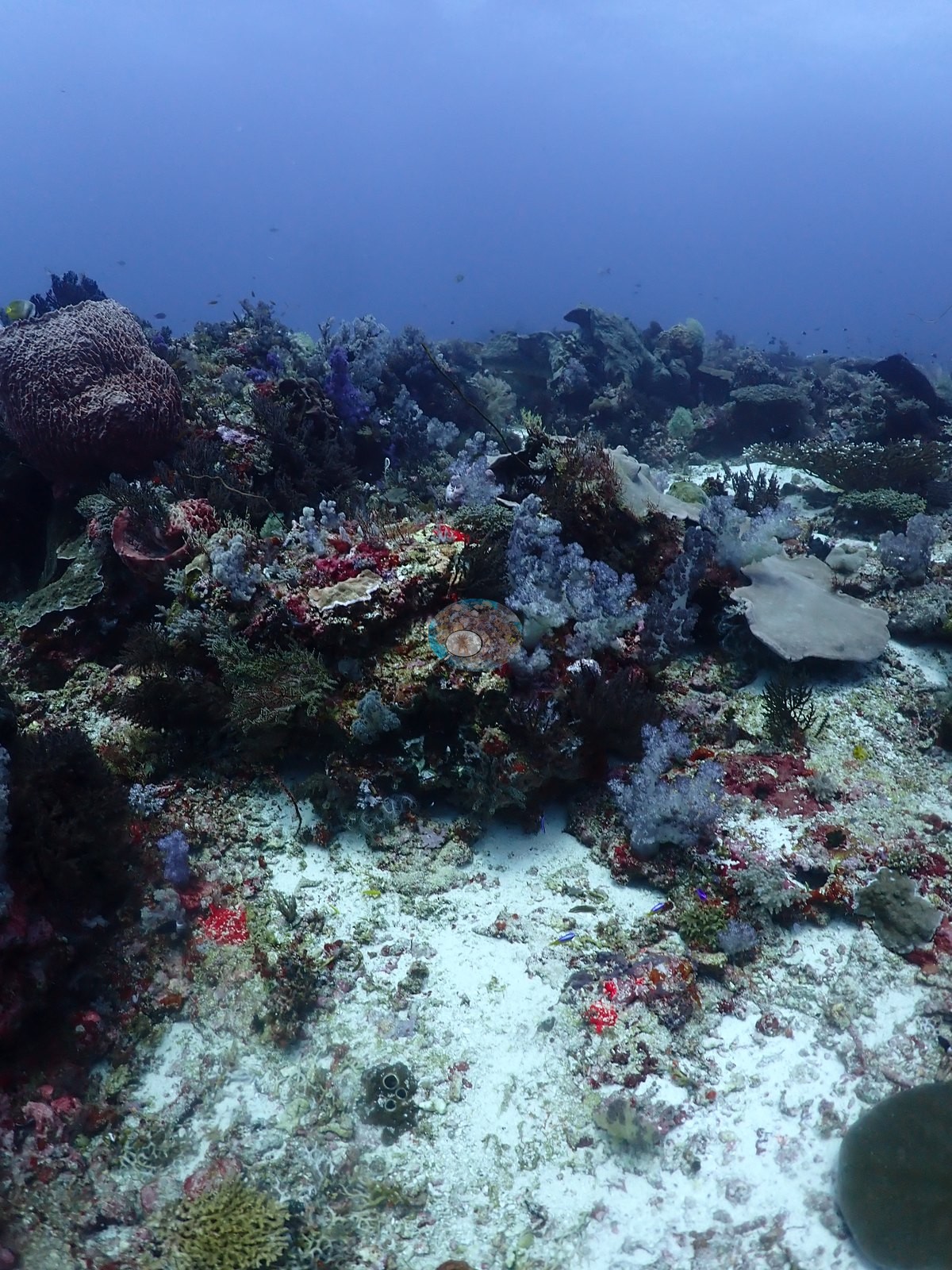
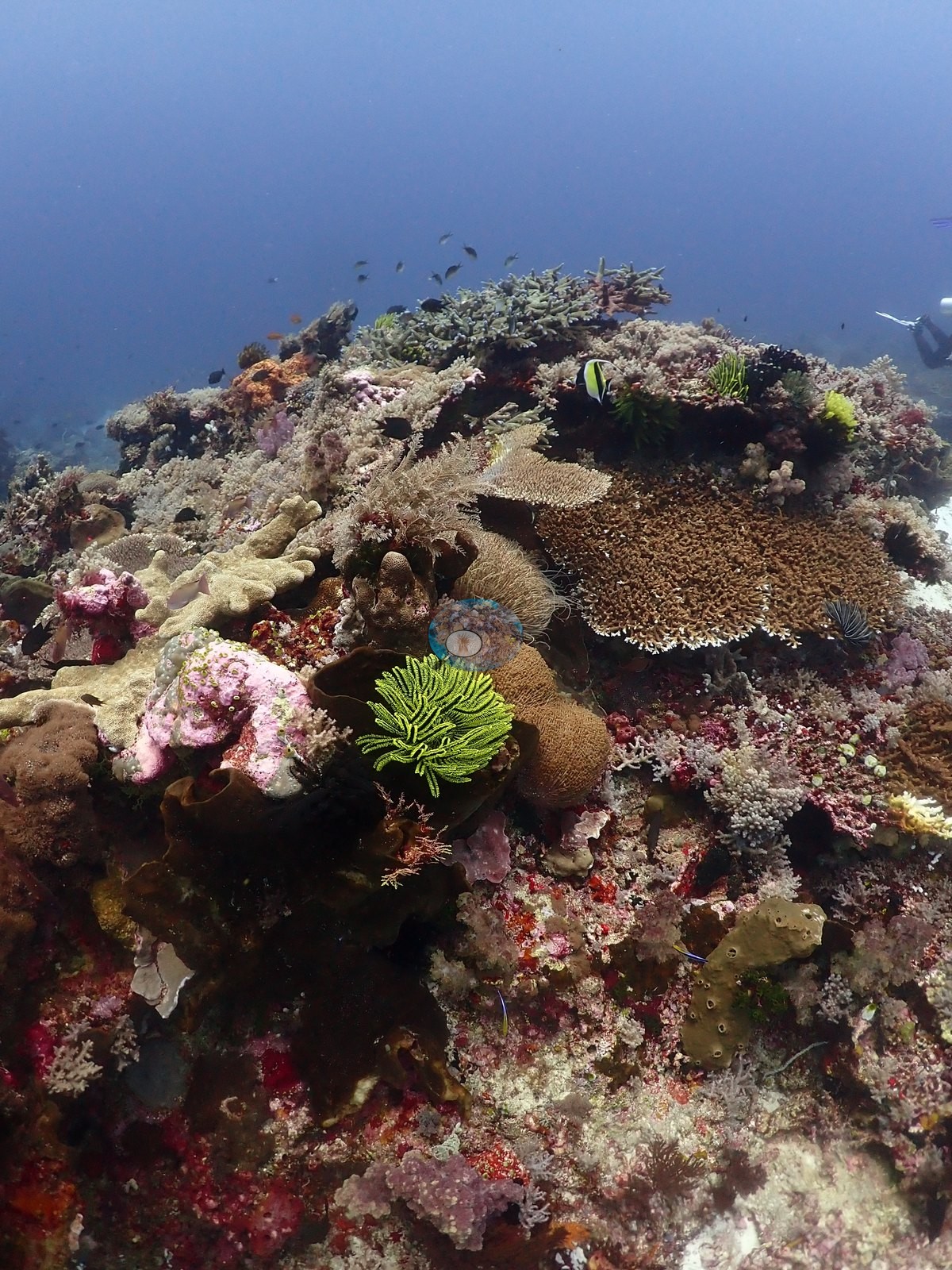
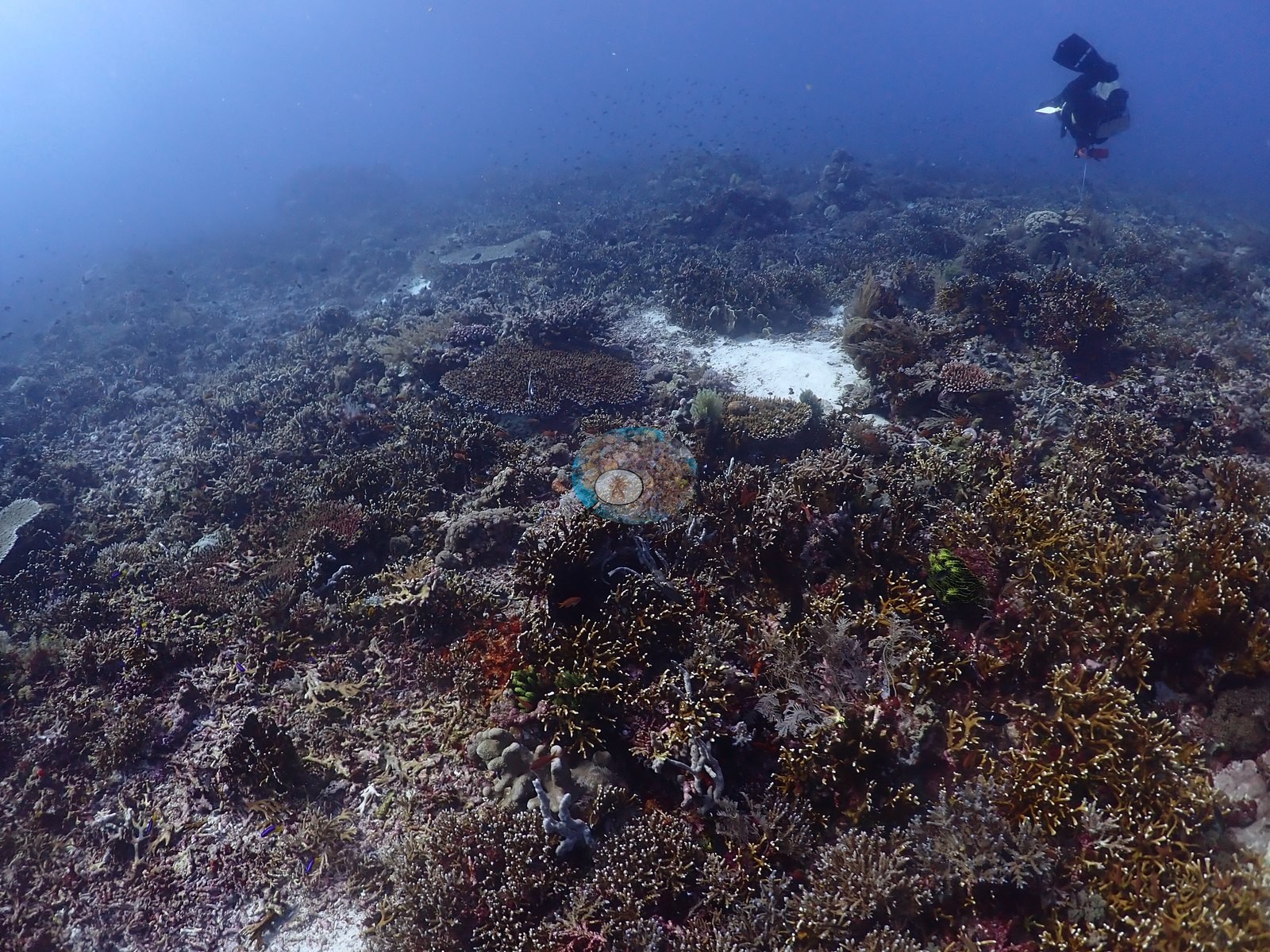
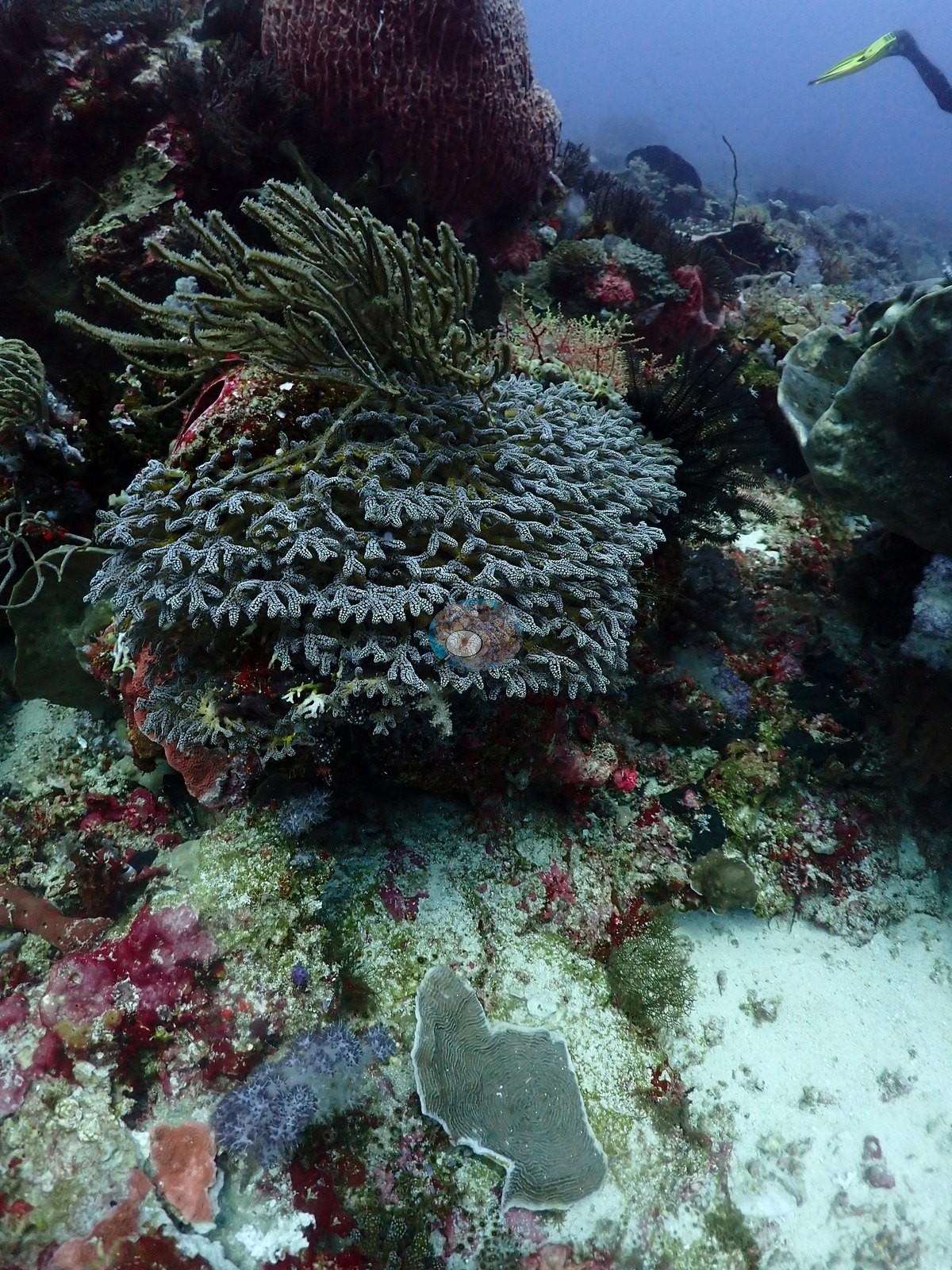
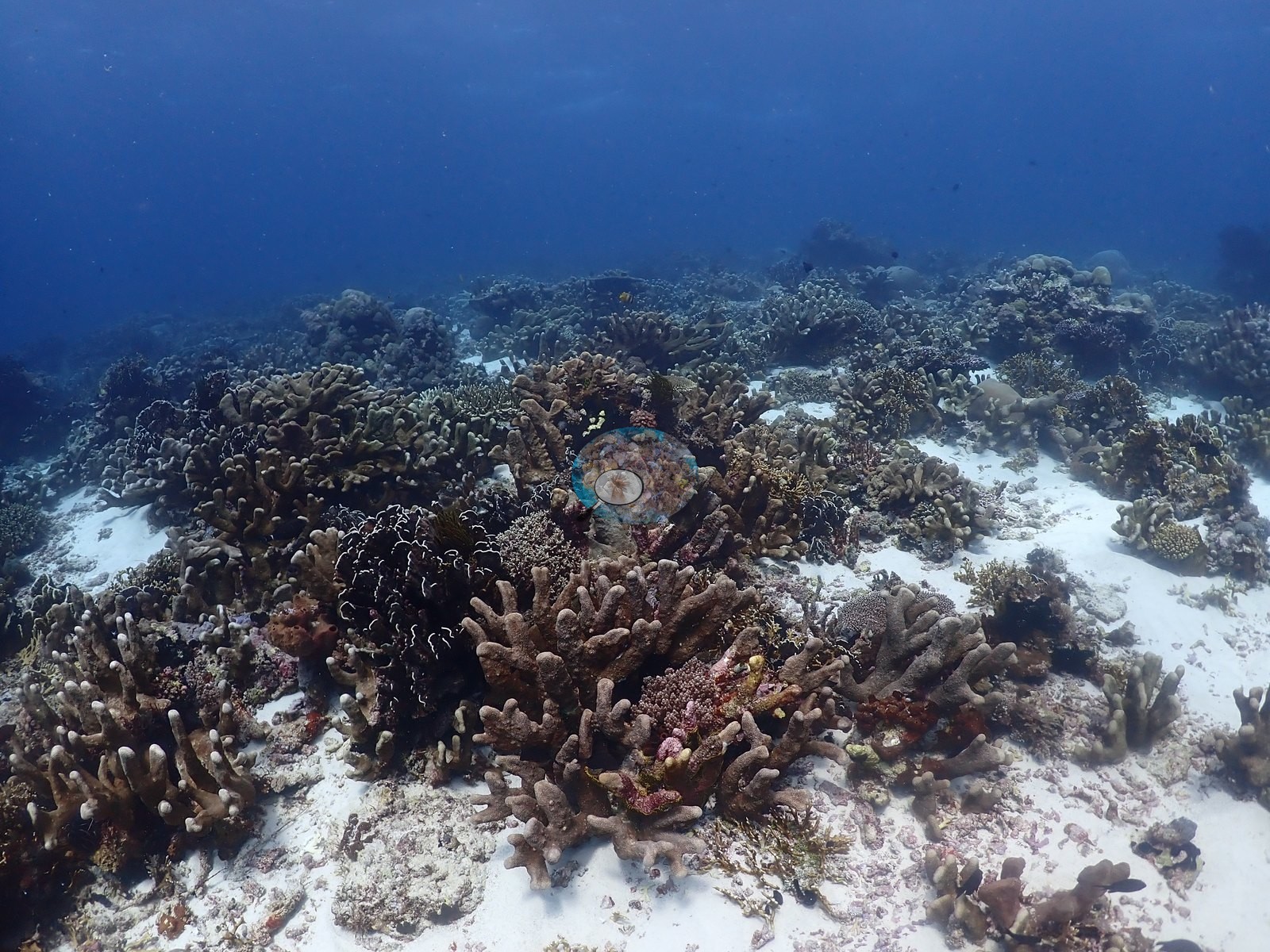
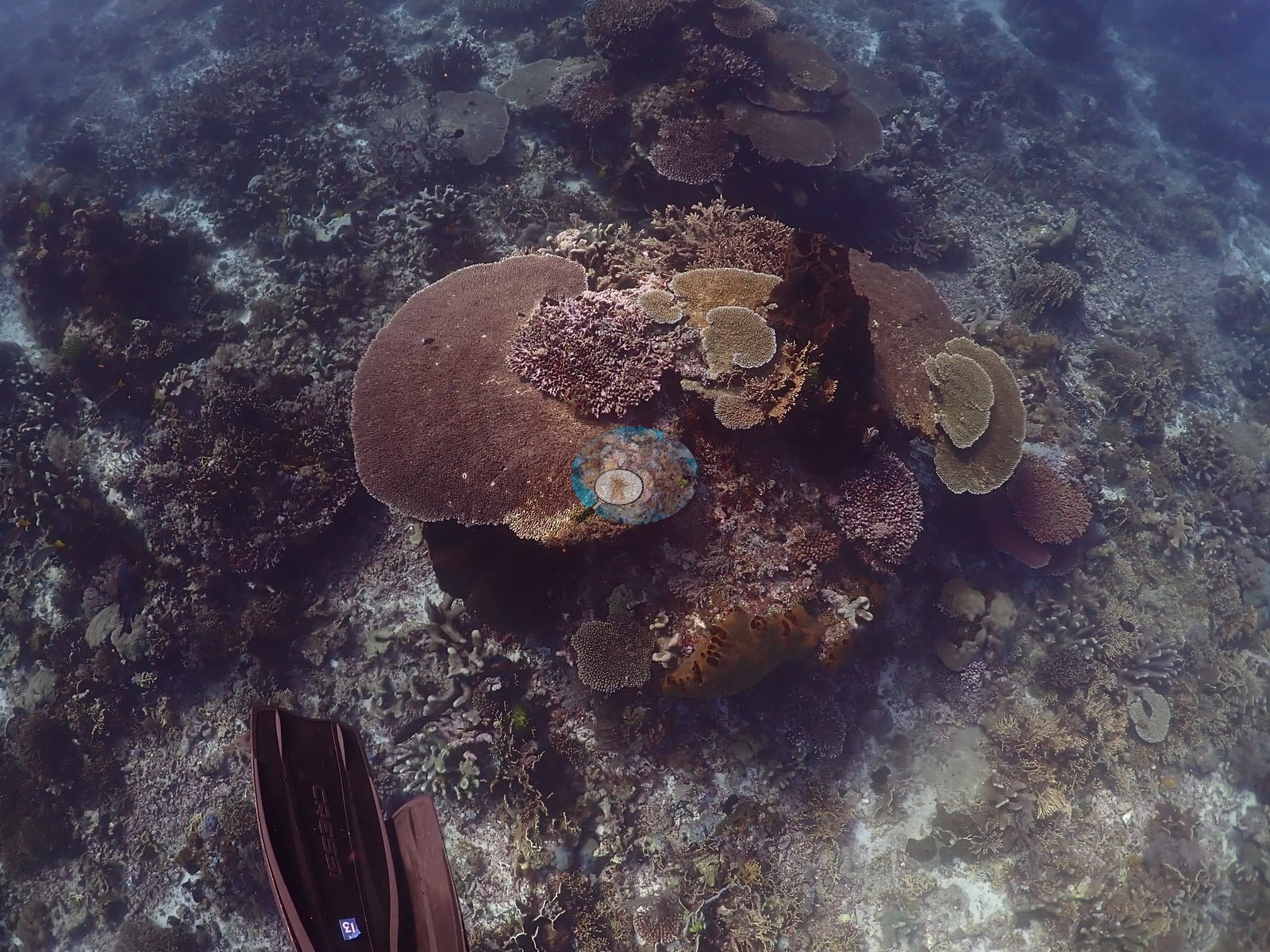
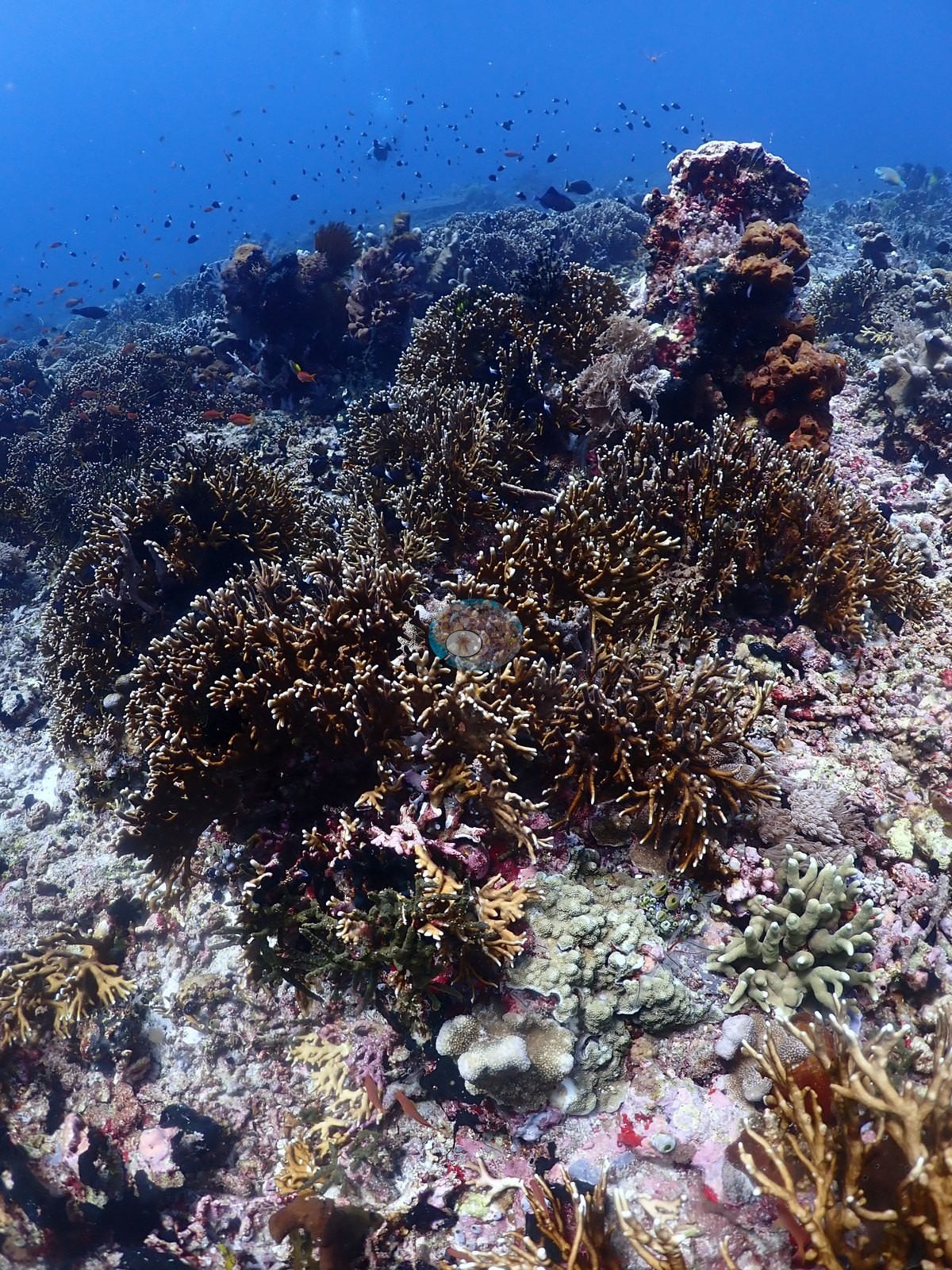
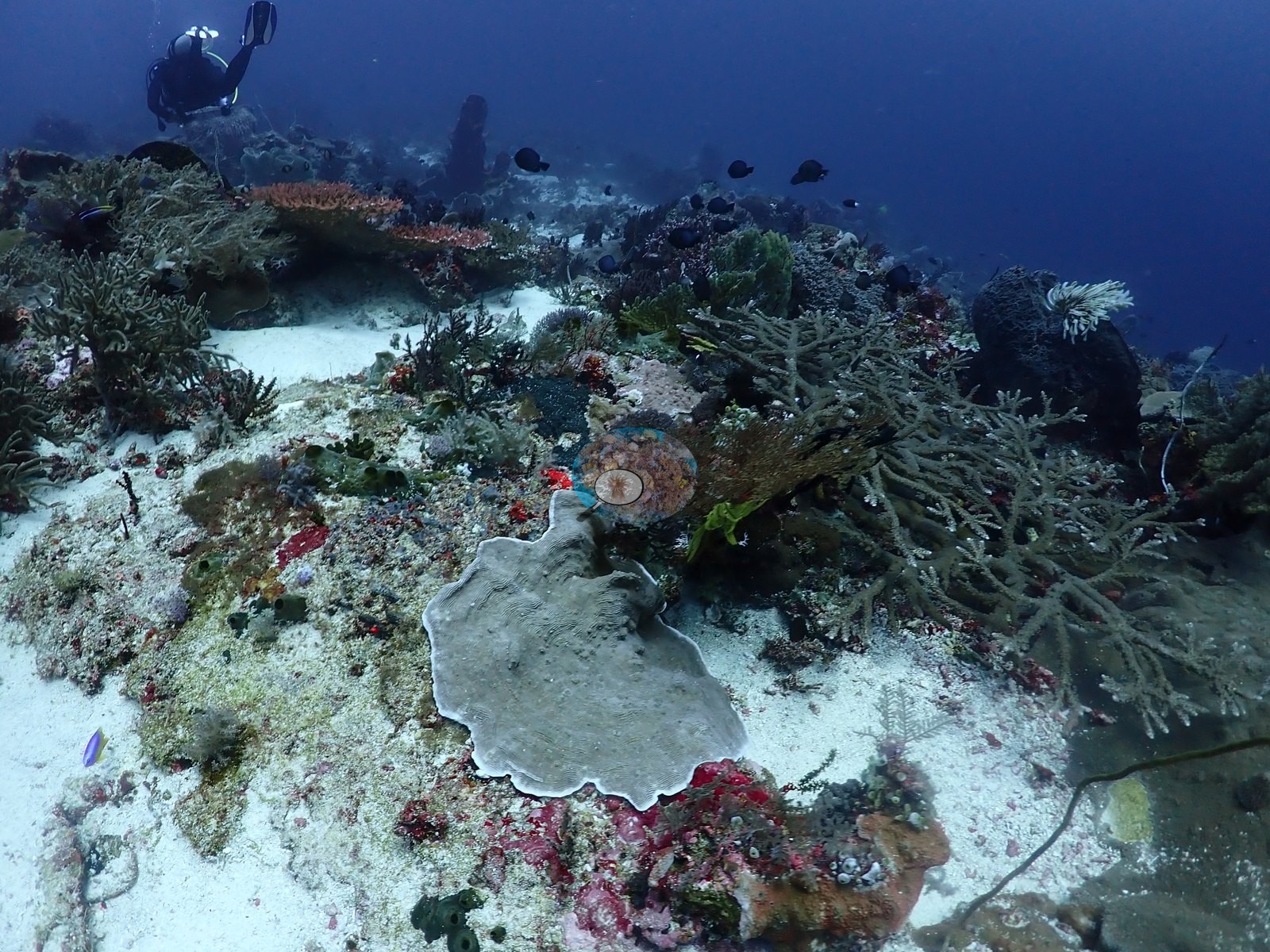
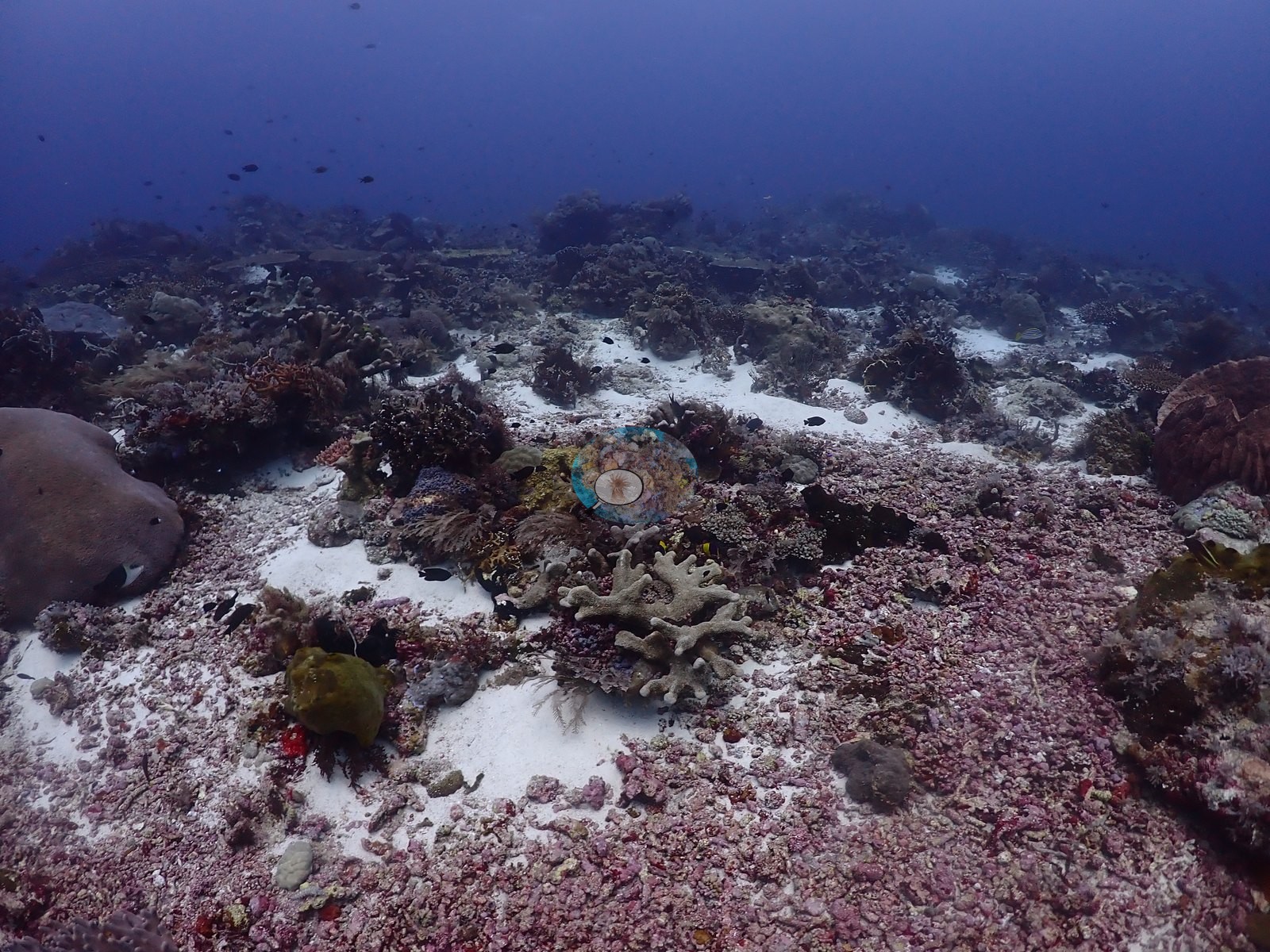
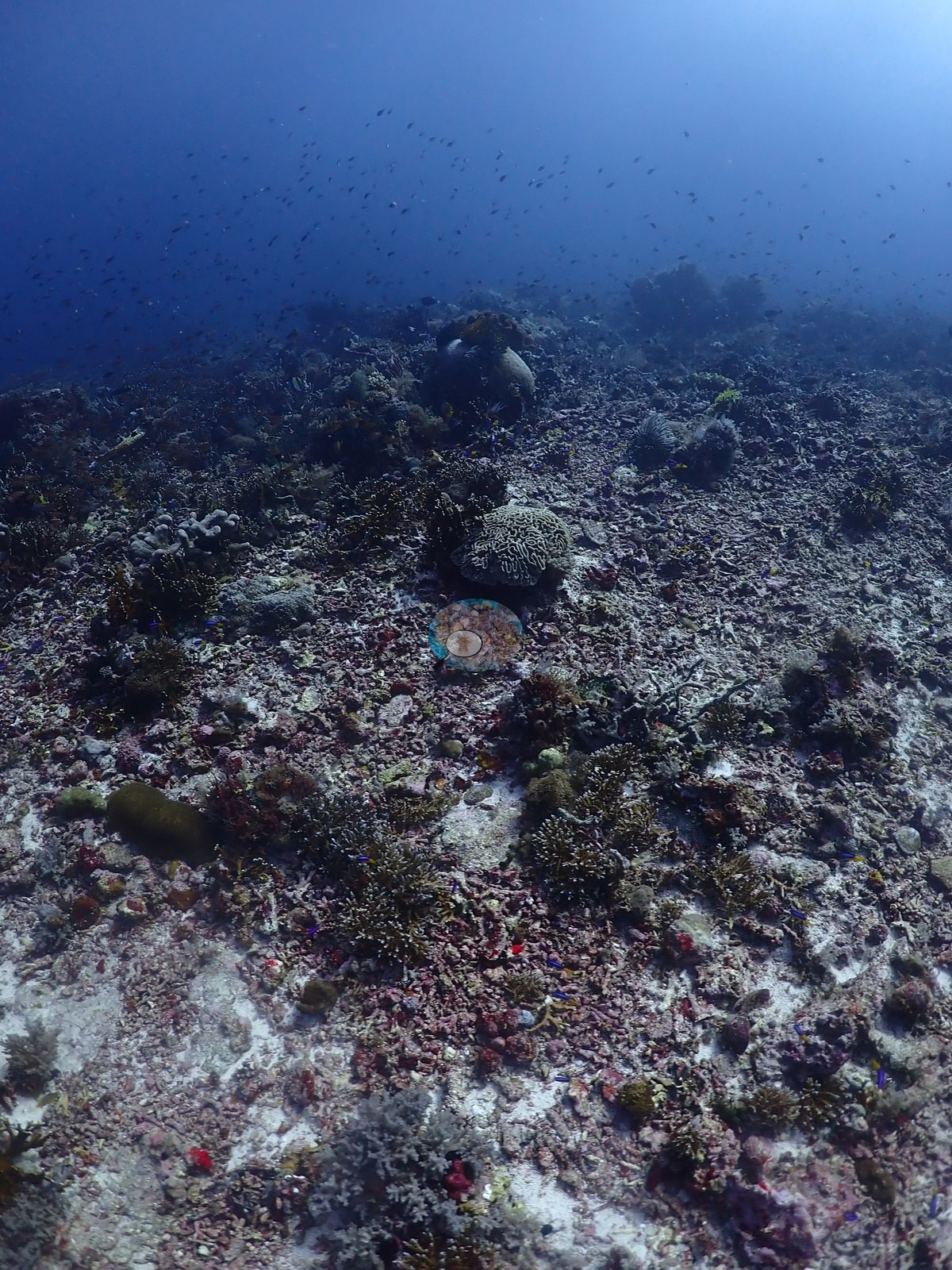
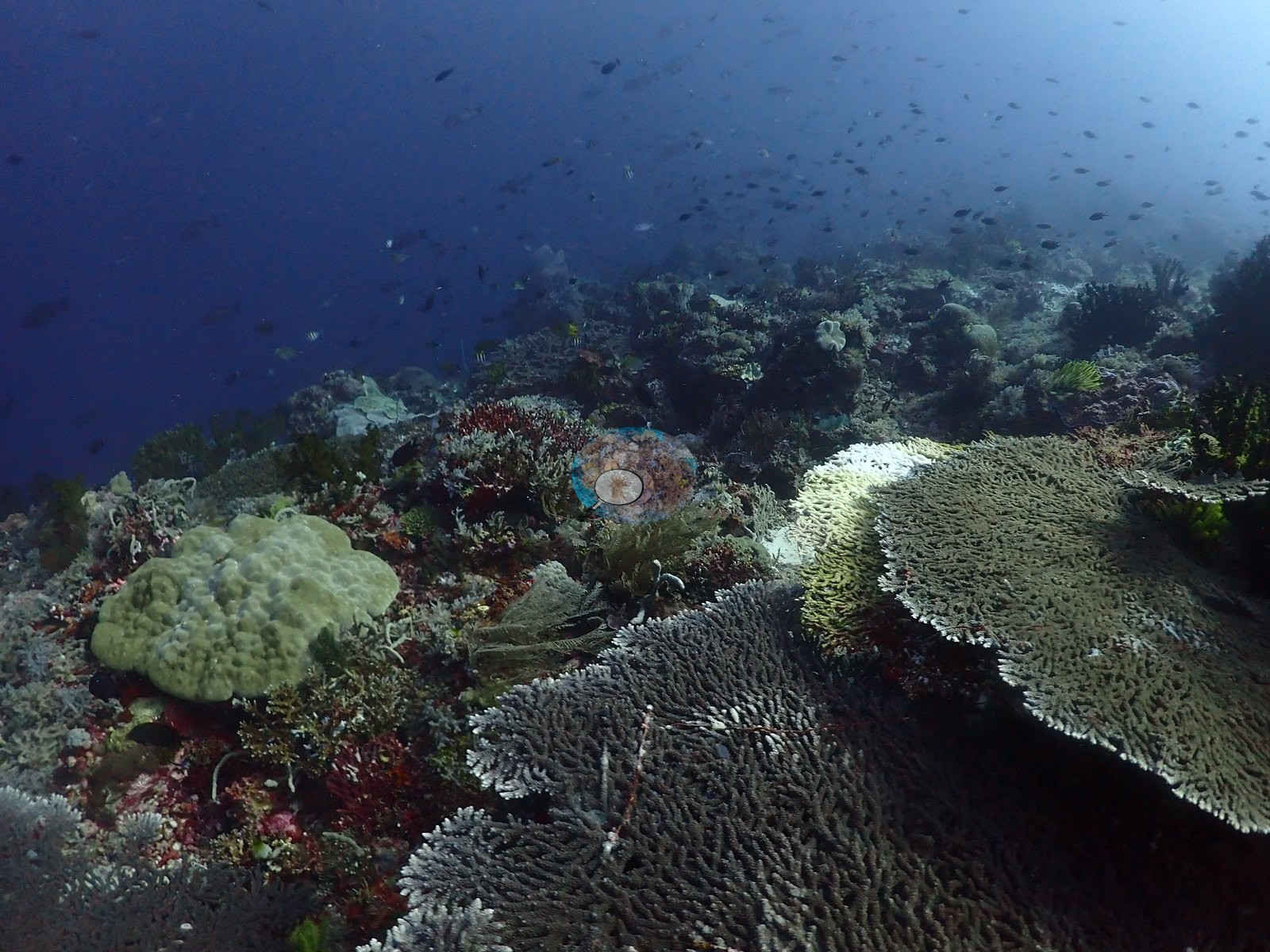
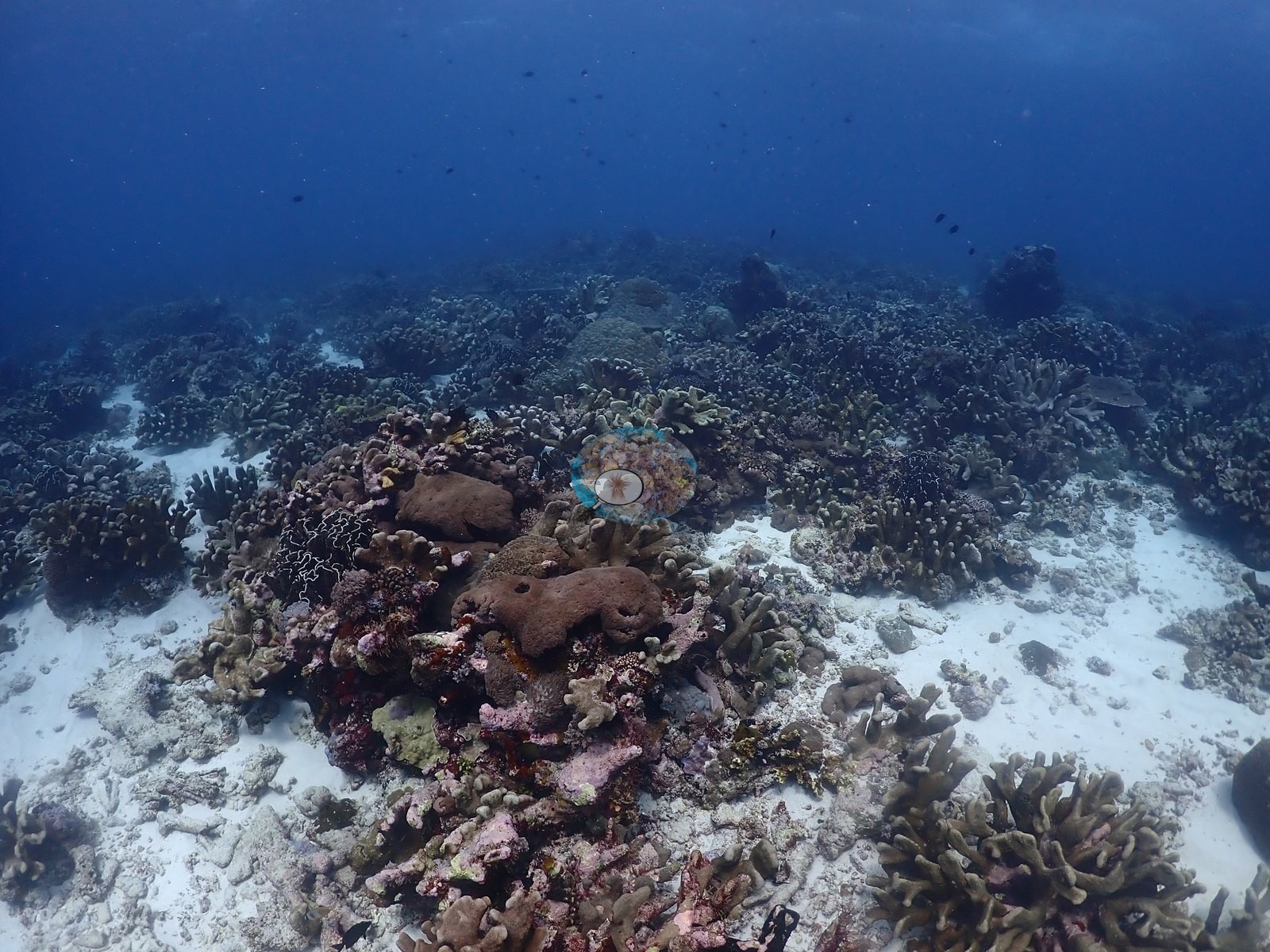
The first twenty frames are wall: near-black rock in ambient blue, hung with a large pale elephant-ear sponge, deep-red and pink barrel sponges (Xestospongia form) sitting on ledges, gray-green tube and vase sponges, yellow and white gorgonian fans, bushy black-coral colonies, and mauve, white, and cream soft corals of Dendronephthya form. Crinoids in yellow, green and black perch on every projection. Hard coral on the face itself is mostly encrusting and thin-plating — laminar plates with pale growing margins compatible with Montipora, Echinopora and Pachyseris — and a green foliose colony with a bright white edge recurs. Here the ground is pink crustose coralline pavement, white carbonate sand and dead branching framework, with live coral in discrete patches: fields of gray and cream tabulate Acropora tables stacked shingle-fashion, one large yellow-green tabular plate, a salmon-pink table, corymbose thickets, and isolated bommies carrying stacked tables above massive bases. Dive 2 (126 frames) covers lower-relief terraces, isolated bommies and white sand channels, and carries visibly more living coral. Tabulate and corymbose Acropora are the dominant architecture — pale gray tables, a salmon-pink table with a white growing rim, mauve and purple corymbose colonies — with large arborescent staghorn stands, deep-red branching thickets, golden-brown bushy colonies, thick-fingered digitate Porites, and gray lobed leather corals of Sarcophyton/Sinularia form. A domed meandroid massive coral photographed close-up sits in a mosaic of red encrusting sponge, purple soft coral and an urchin. Sponges are again conspicuous: paired red barrel sponges with scarlet interiors, orange tube-sponge clusters, a broad gray sea fan, and pale blue-gray ropy sponges. Between the coral patches, however, are broad expanses of pink coralline pavement, dead branching rubble and open sand — the site is patchy, not a continuous carpet.
Coral cover
Coral cover: 20% — a blind Claude computer-vision point count of 178 of Anderson's unedited photographs (20 points per photo; water, fish, and obstructions excluded). Other computer-vision methods are listed in the method table.
Stressors
Several frames are largely pavement and rubble with only scattered colonies, and two show a stark white tabular colony that reads as recently dead or bleached rather than as living tissue. No crown-of-thorns and no clear disease lesions were seen in the 120 frames; a small number of white colonies are the only bleaching-like signal.
Fish and other fauna
The water column carries constant fish: clouds of anthias and chromis, yellow pyramid- and other butterflyfishes streaming along the face, fusiliers further out, and divers silhouetted against the surface with reels and camera rigs. Fauna in frame includes a giant clam (Tridacna sp.) with a blue-gray mantle, a parrotfish, a Moorish idol, damselfishes and anthias over the coral, blue damselfishes over the sand, and abundant crinoids.
Comparisons with other data
No prior survey data from this site. If you would like to share yours, please email us.
Other notes
Man-made objects are divers, tanks, reels, and cameras, plus the photographer's own fin edge in two frames.
CV model comparison
More info
DINOv3 and CoralSCOP were run on the same photos and are listed for comparison. Coralscapes v2 and v1 were also run but are not shown: Anderson does not consider Coralscapes reliable for these photos. No diver transect exists for this trip, so agreement between the rows is not accuracy, and as of September 2026 no computer-vision method estimates coral cover accurately on new images; treat every row as indicative.| Method | Hard-coral cover (%) |
|---|---|
| In-house DINOv3 | 21.0 |
| CoralSCOP unedited | 15.9 |
| Claude | 19.9 |
Dive history
| Date | Time in | Max depth (m) | Bottom time (min) |
|---|---|---|---|
| 2026-08-01 | 07:41 | 29.6 | 32 |
| 2026-08-01 | 10:53 | 29.1 | 44 |
Data & links
All images from Coral Reef Diagnostics. Data are from Coral Reef Diagnostics.
© Coral Reef Diagnostics.