
Alor - Masjid Ampera (Mucky Mosque)

Part of the regional summary: Indonesia - Alor
More info
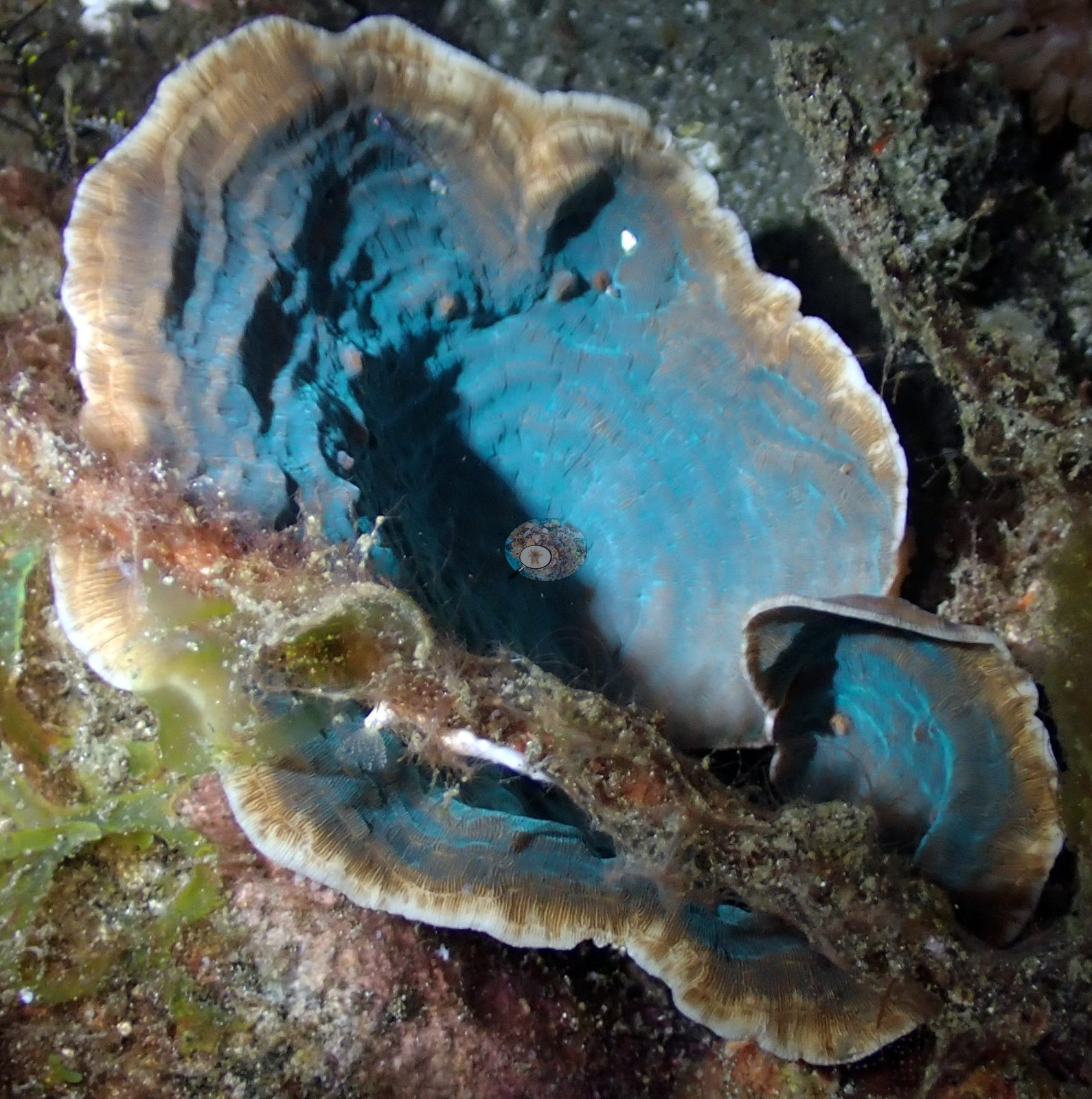
East Nusa Tenggara (NOAA CRW virtual station) · Lesser Sunda ecoregion mean=6.9°C-heating weeks Alor and the Pantar Strait sit in a zone of exceptionally strong upwelling, which holds these reefs several degrees cooler than NOAA’s satellite-derived figures imply. Read the heat-stress numbers here as a regional-scale indication, not as this reef’s own temperature history.A night muck dive near Kalabahi over a silty, sandy slope where the stars are invertebrates rather than coral: many anemones, including one photographed holding a small crab among its tentacles, a frogfish, and an electric-blue mushroom coral. Hard coral was sparse, so no cover figure is given.
Penyelaman muck malam hari dekat Kalabahi di atas lereng berlumpur dan berpasir, tempat bintang utamanya adalah avertebrata alih-alih karang: banyak anemon, termasuk satu yang terfoto sedang memegang kepiting kecil di antara tentakelnya, seekor ikan kodok, dan karang jamur berwarna biru listrik. Karang keras sangat jarang, sehingga tidak ada angka tutupan yang diberikan.
Terjemahan ringkasan ini oleh AI; versi bahasa Inggris yang berlaku.
Two other CRD dive sites within 5 km shown in orange — click a marker to open its page.
19 of these 28 photographs are shown beside the text that discusses them under "Site description" below.
Site description
Setting
A night muck dive whose photographed subjects are overwhelmingly invertebrate macro life rather than a reef framework, consistent with a "muck" site (e.g., Image 15).
General benthic features
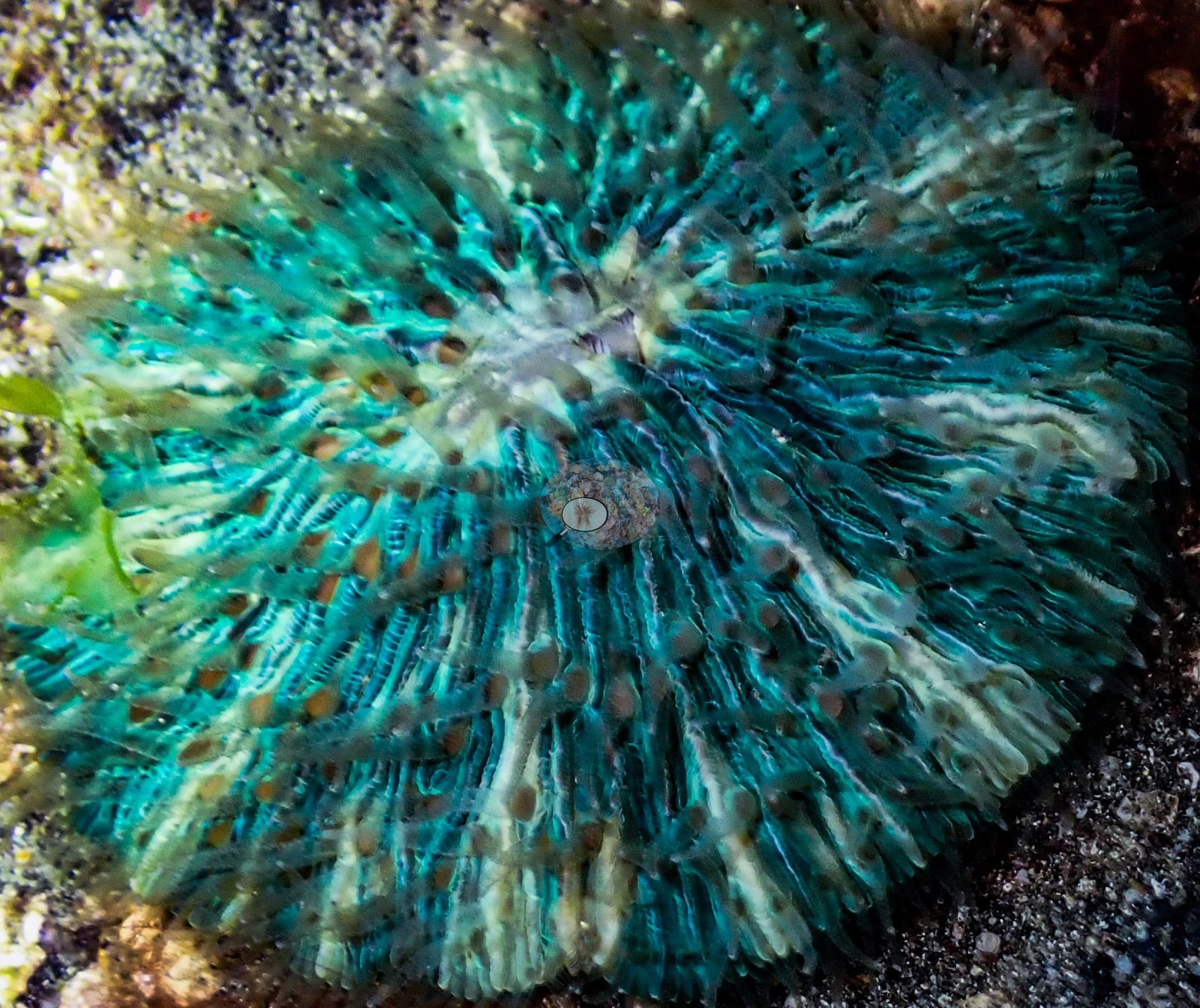
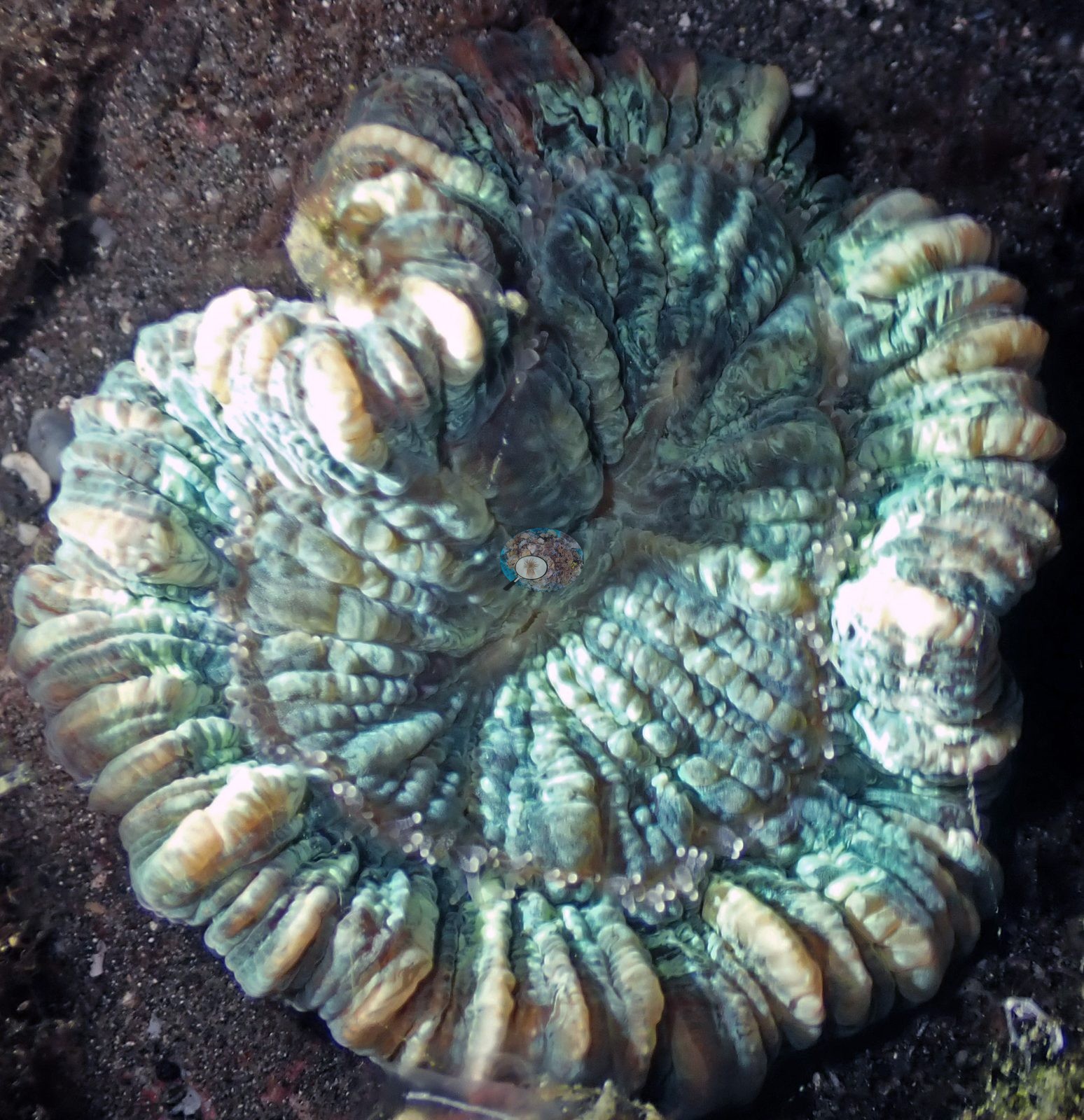
One frame labeled "Fungia at Mucky Mosque" shows a solitary mushroom coral with an unusually saturated electric-blue coloration in its polyp centers -- an intense hue not typical of daylight Fungia and possibly a strobe/color artifact rather than true tissue color (e.g., Image 6).
No hard coral framework, algae turf, or fish schools are represented in this sample; visibility and lighting are typical close-focus night-macro strobe work.
Fish and other fauna
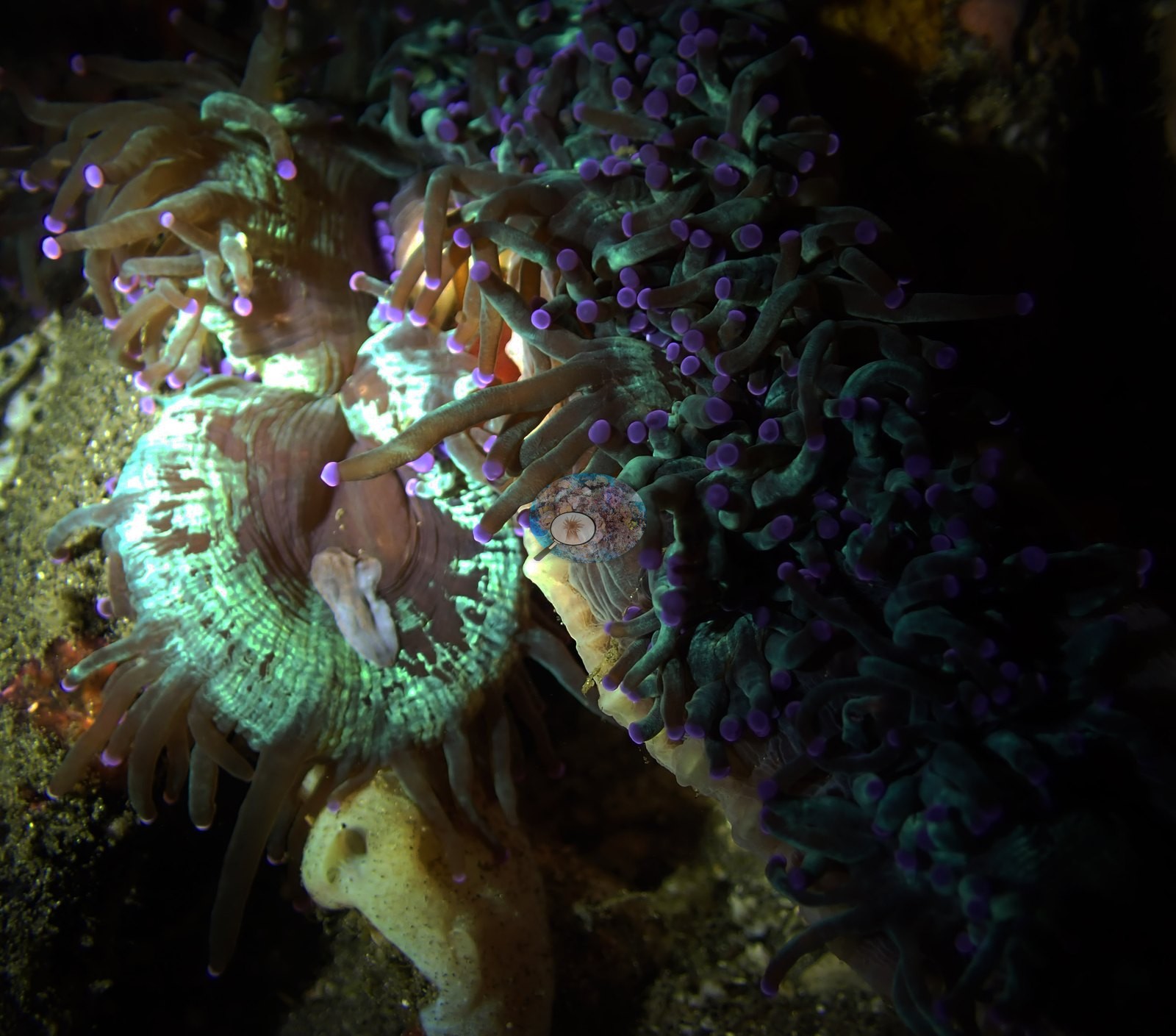
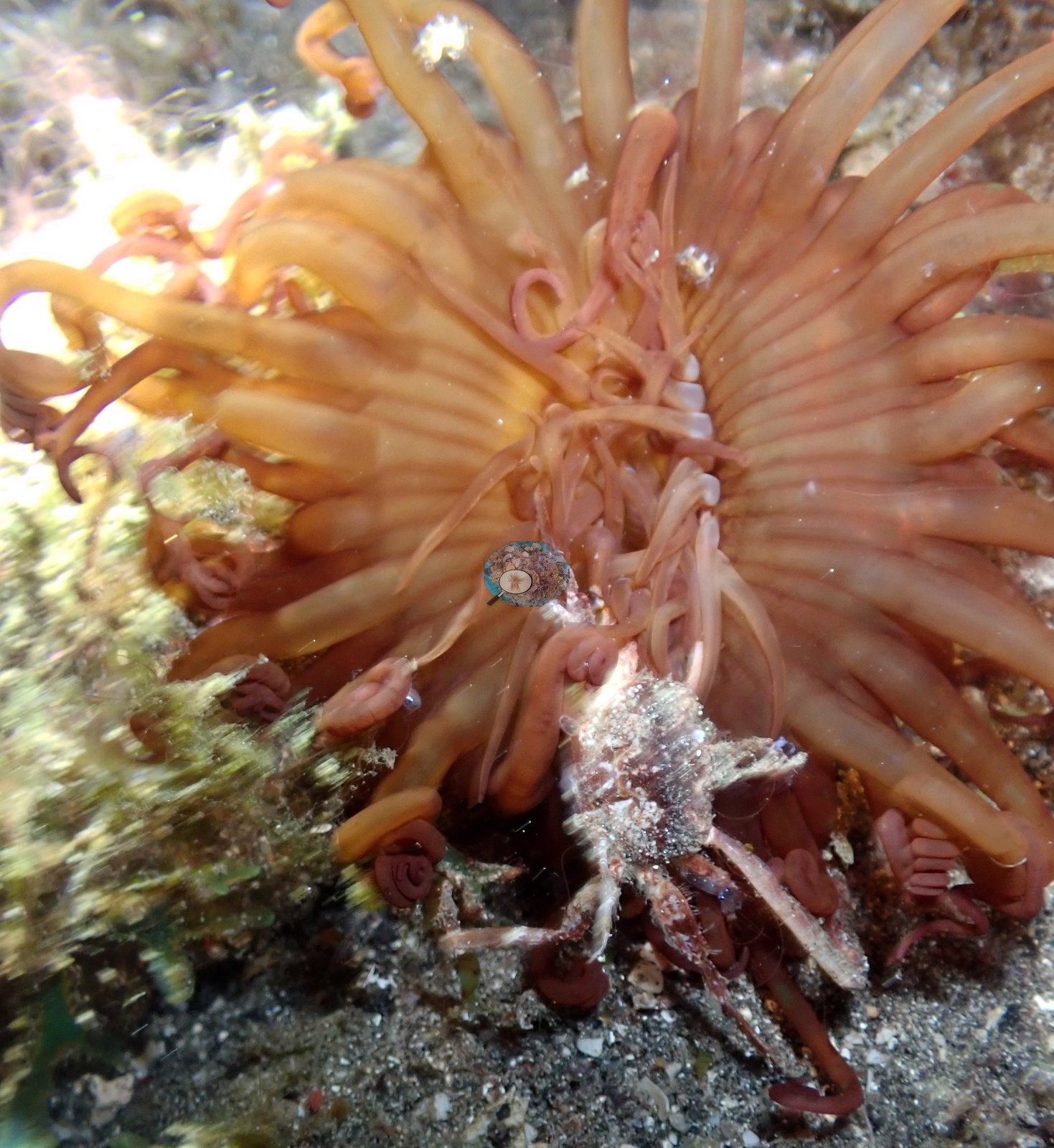
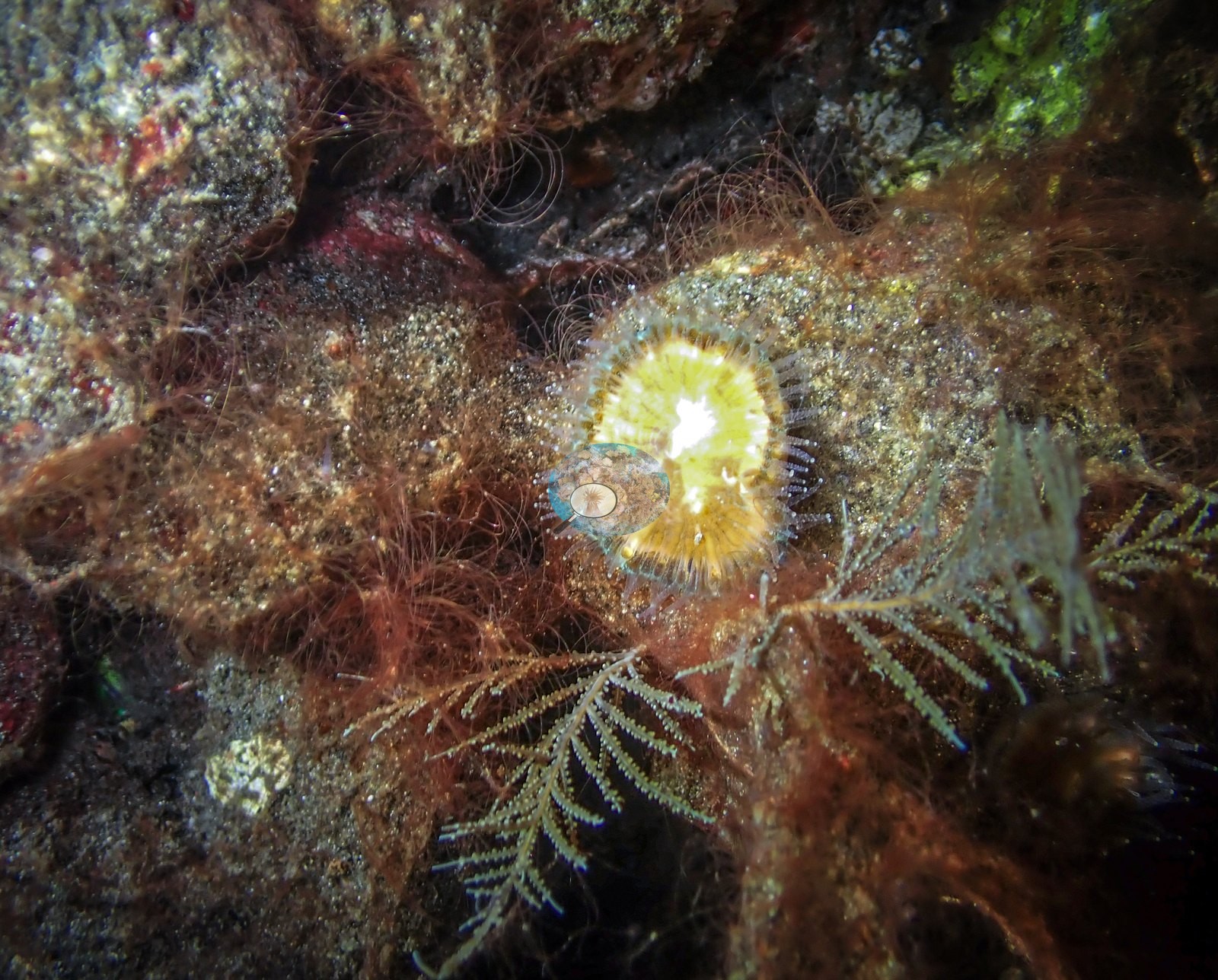
Anemones dominate: a large bubble/carpet-type anemone with short olive-gold tentacles hosts what the photographer's own filename records as "anemone eating crab" -- a small crab is indeed visible gripped among the tentacle bases, plausibly captured prey (e.g., Image 10).
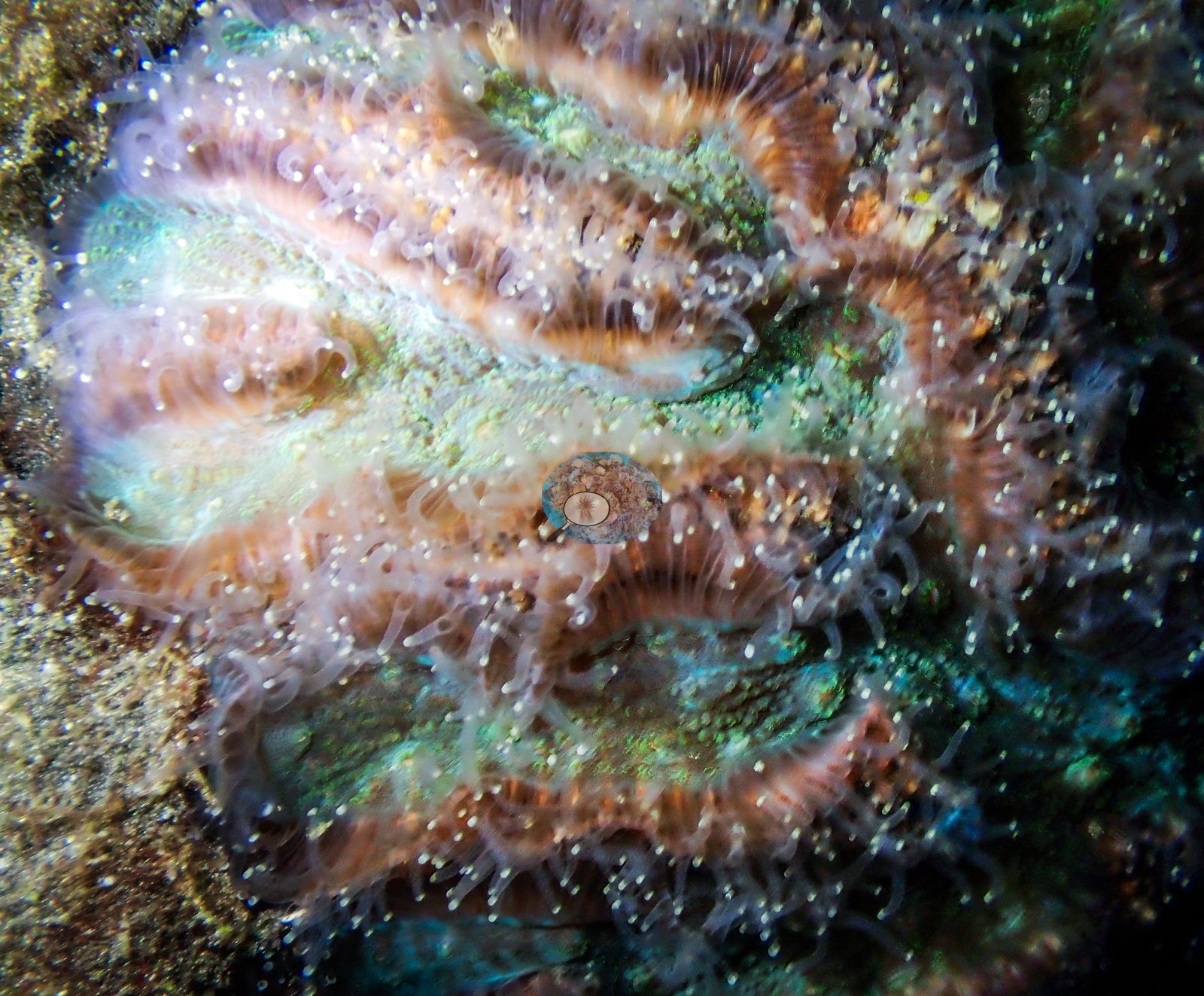
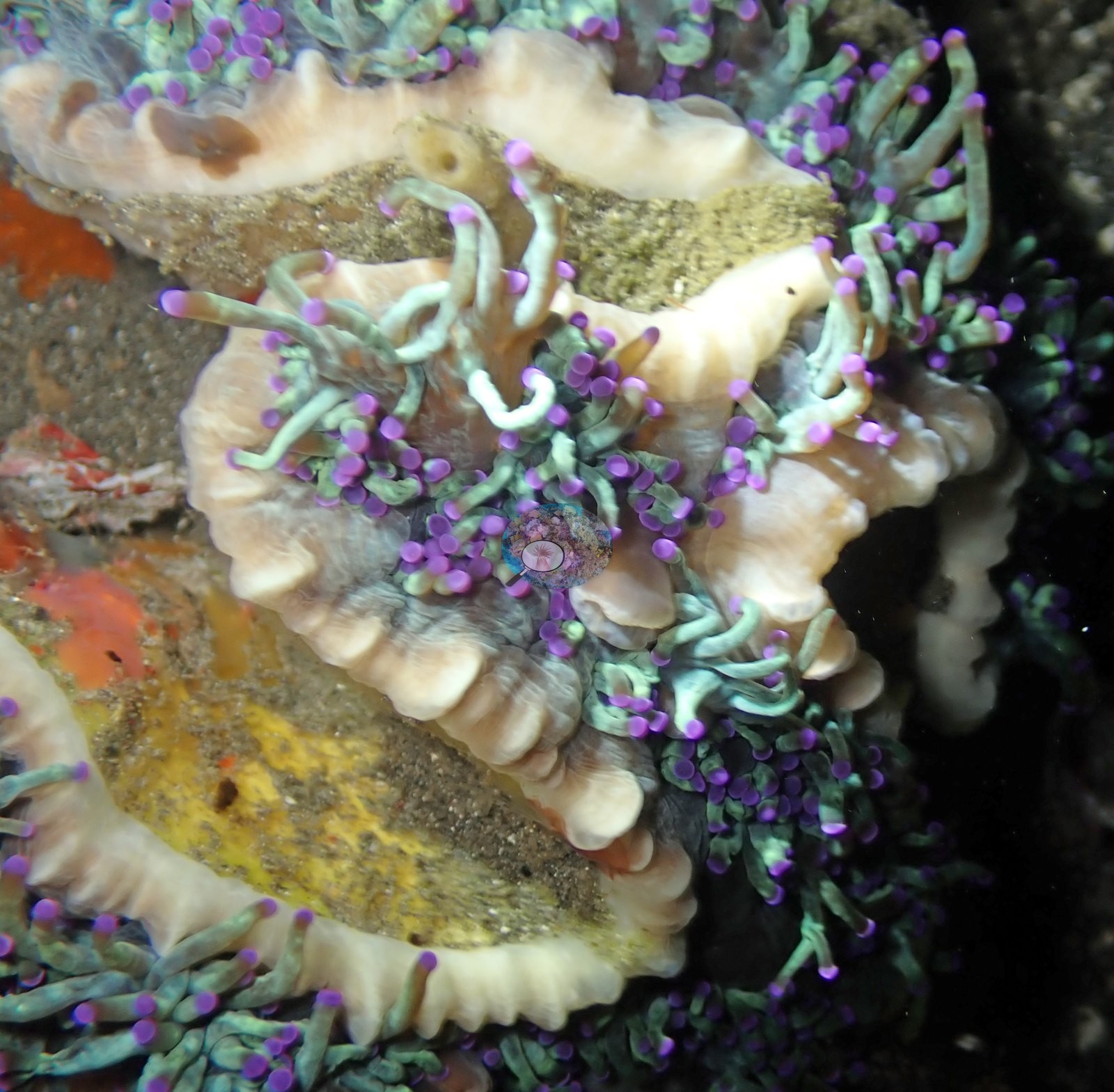
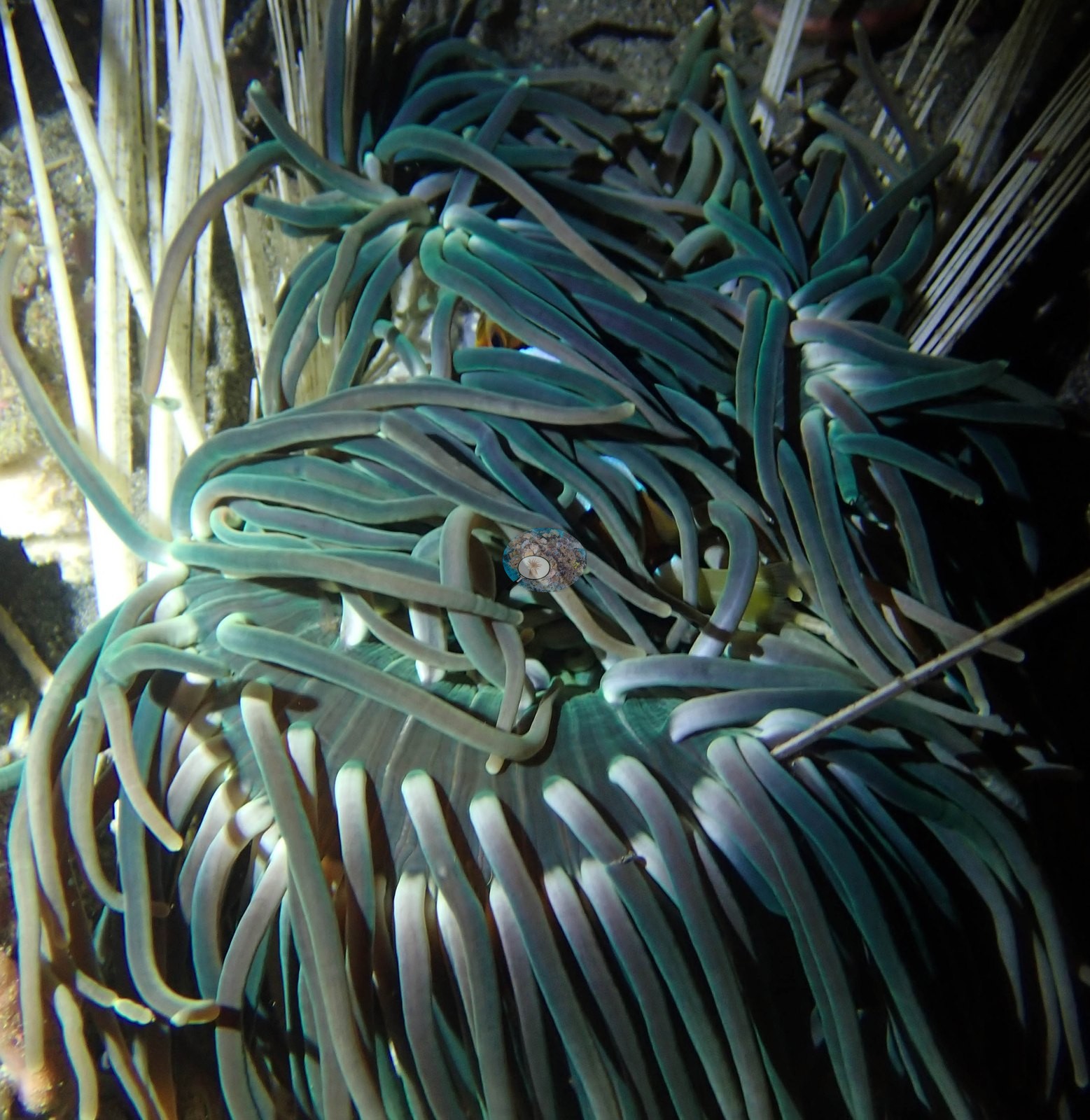
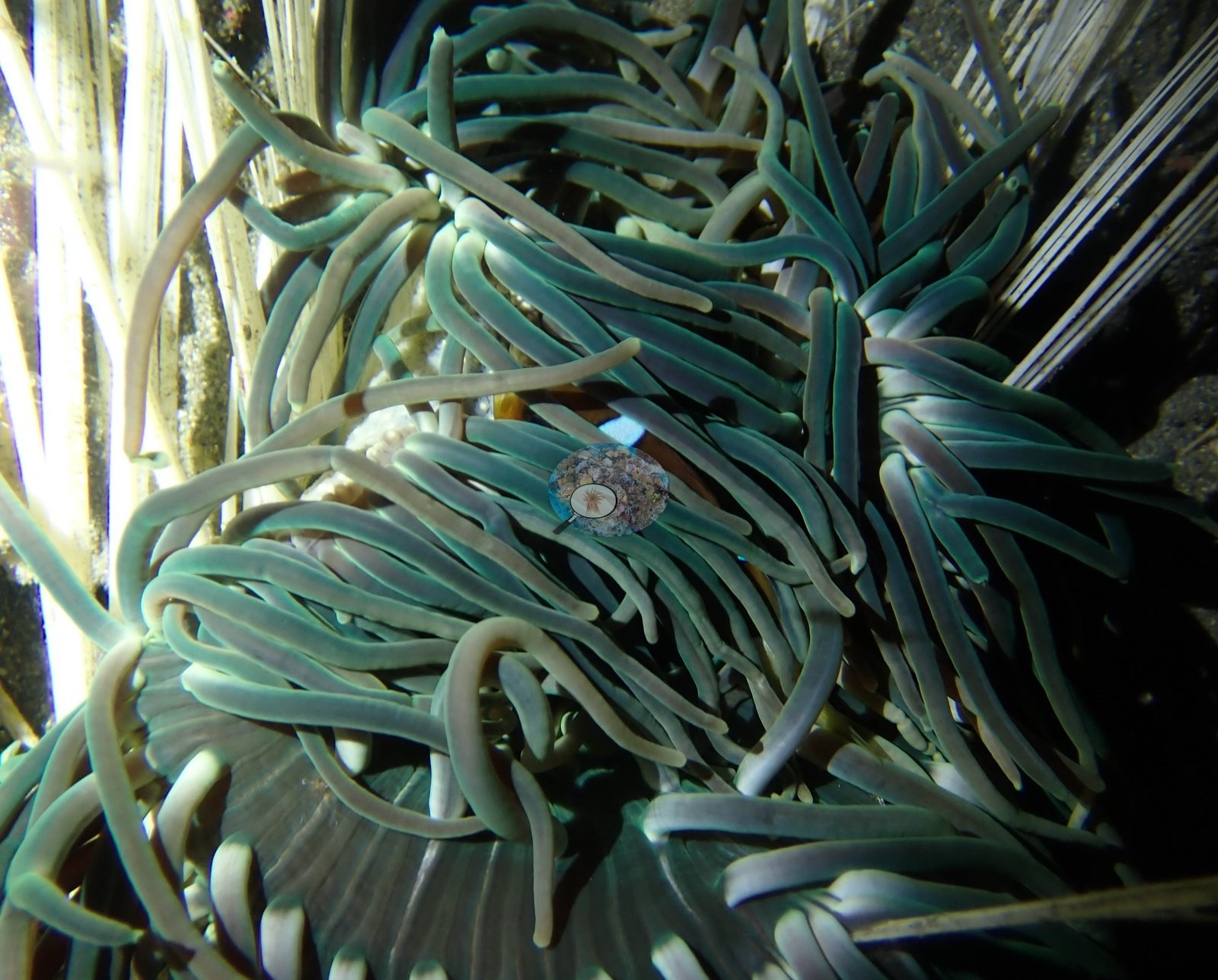
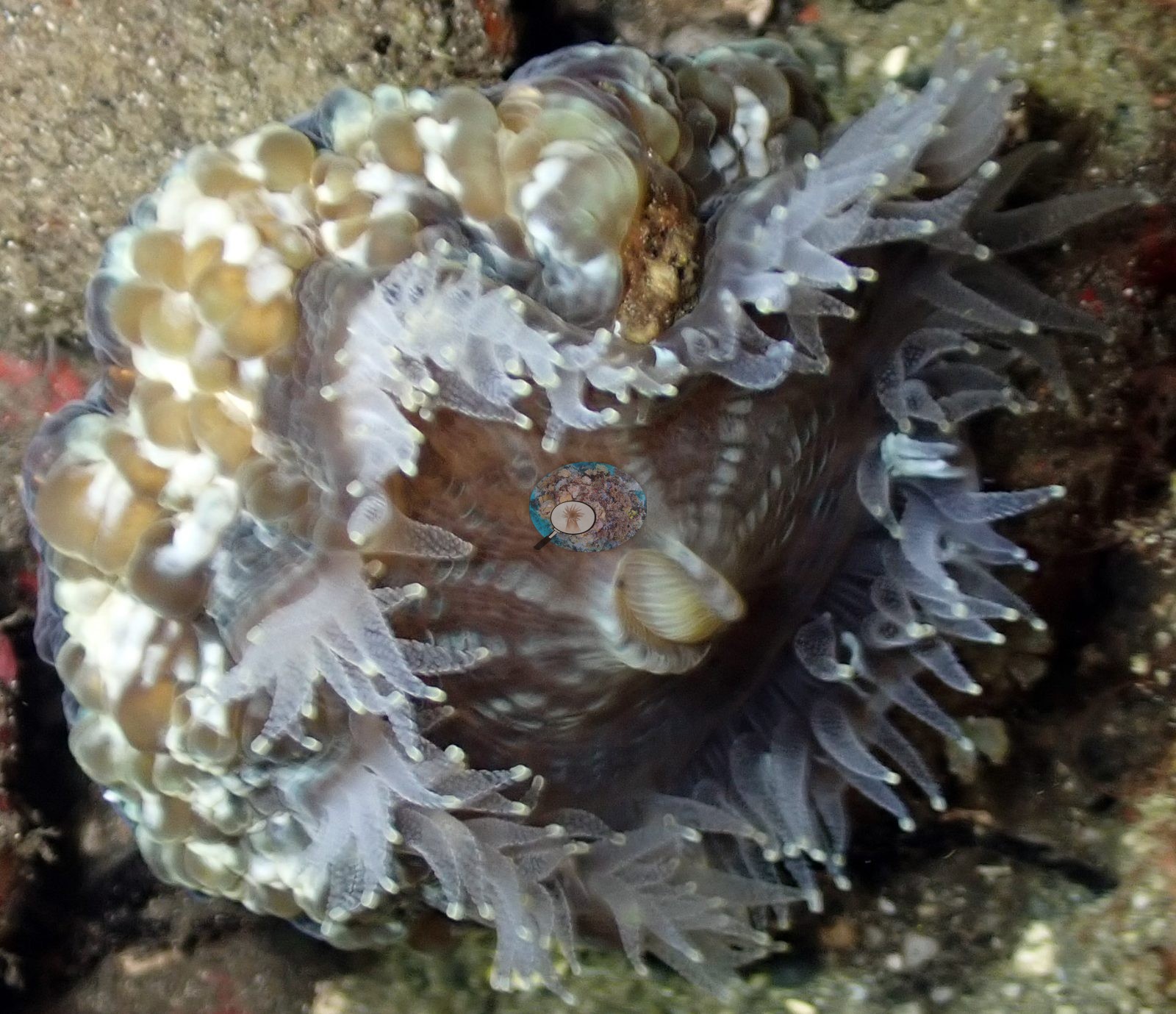
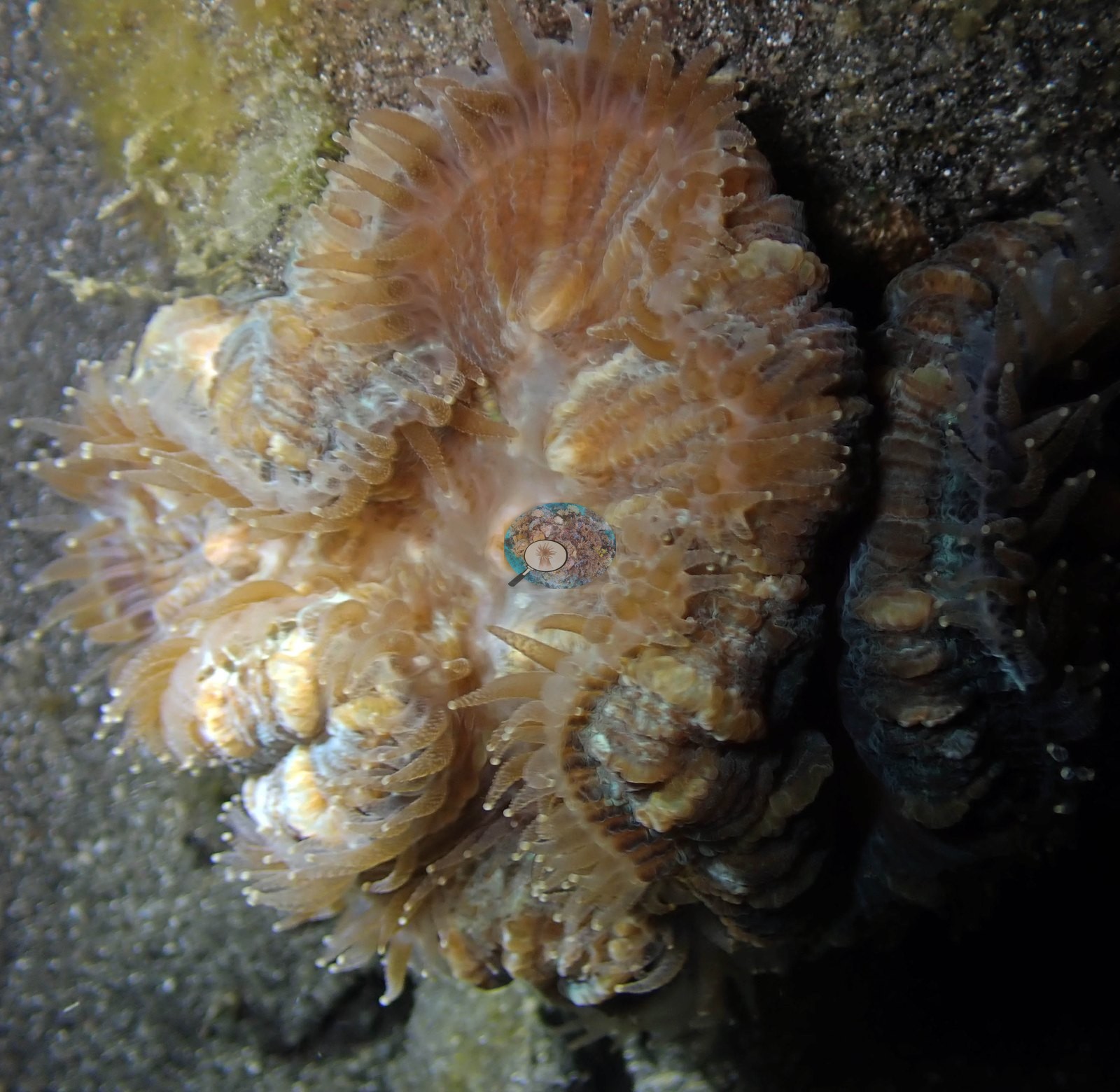
A separate anemone (filed "mystery anemone") shows dense pink-and-white banded tentacles around a bright magenta-pink oral disc/mouth; another ("white anemone at Mucky Mosque" and a second similar frame) is a mass of pale cream, ribbon-like tentacles filling the frame; and a further frame ("anemone Kalabahi Bay") shows pale tan tentacles tipped purple over a rock crevice, feeding tube-worm-like structures visible beneath (e.g., Image 5, Image 19, Image 25, Image 28).
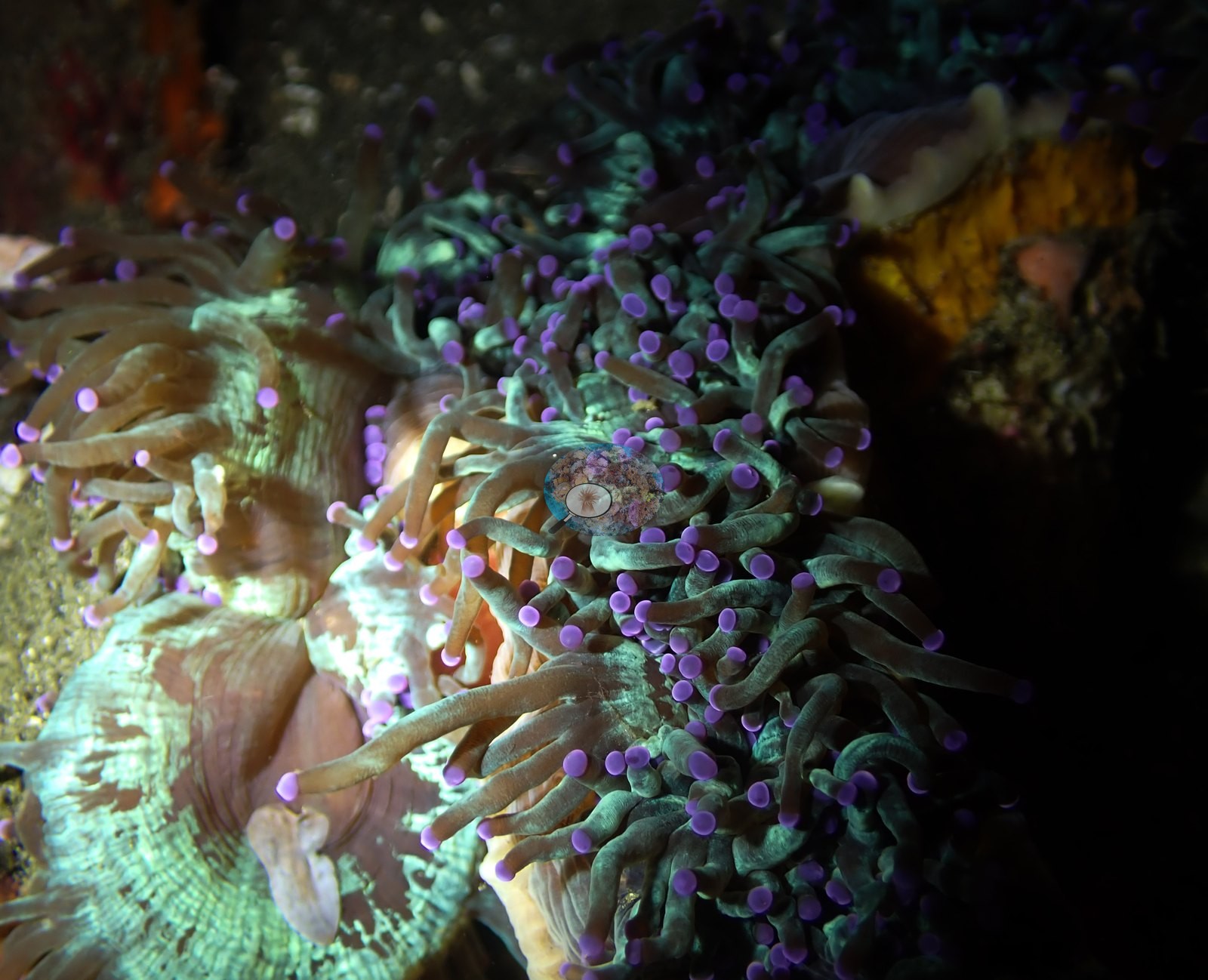
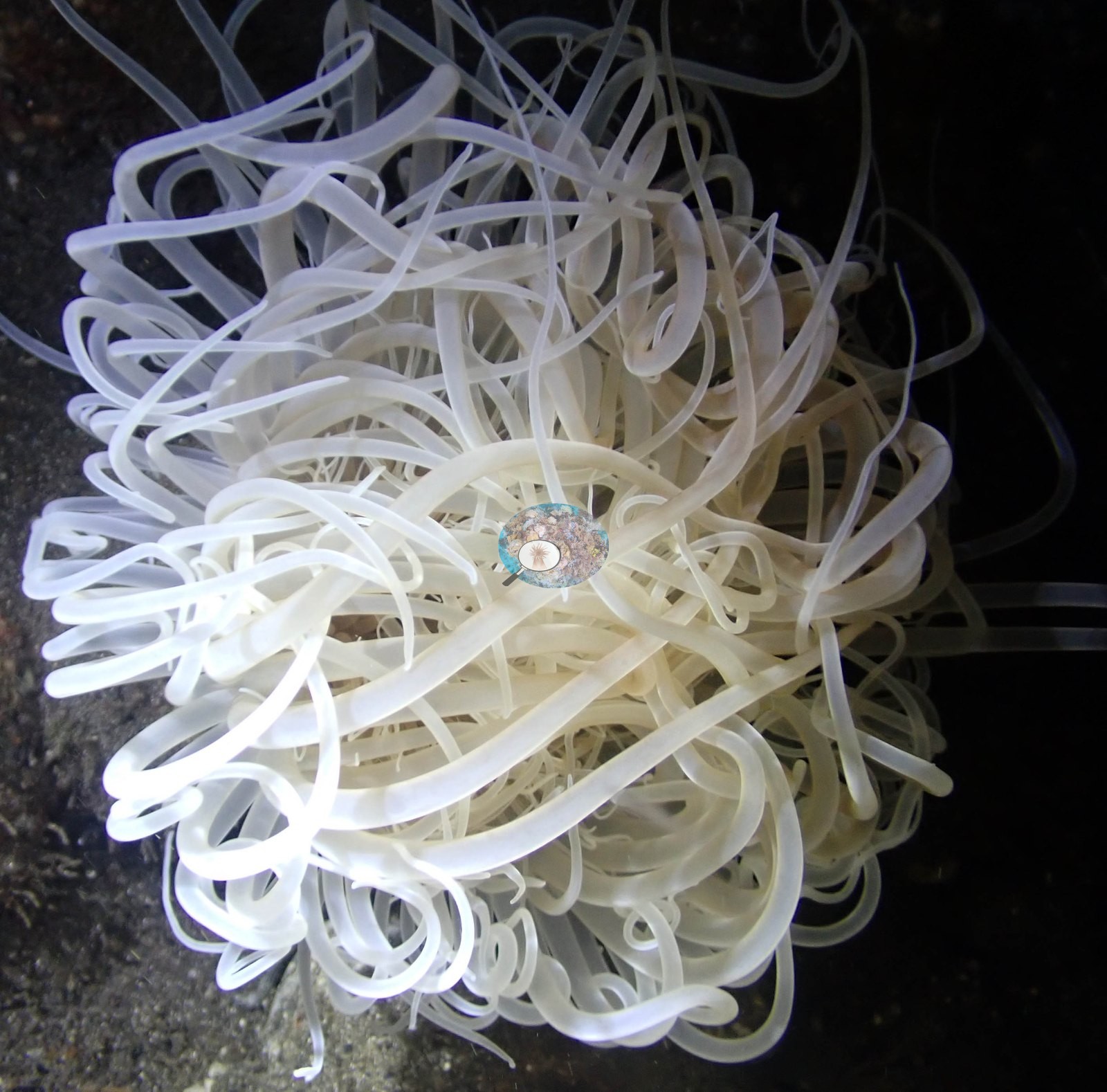
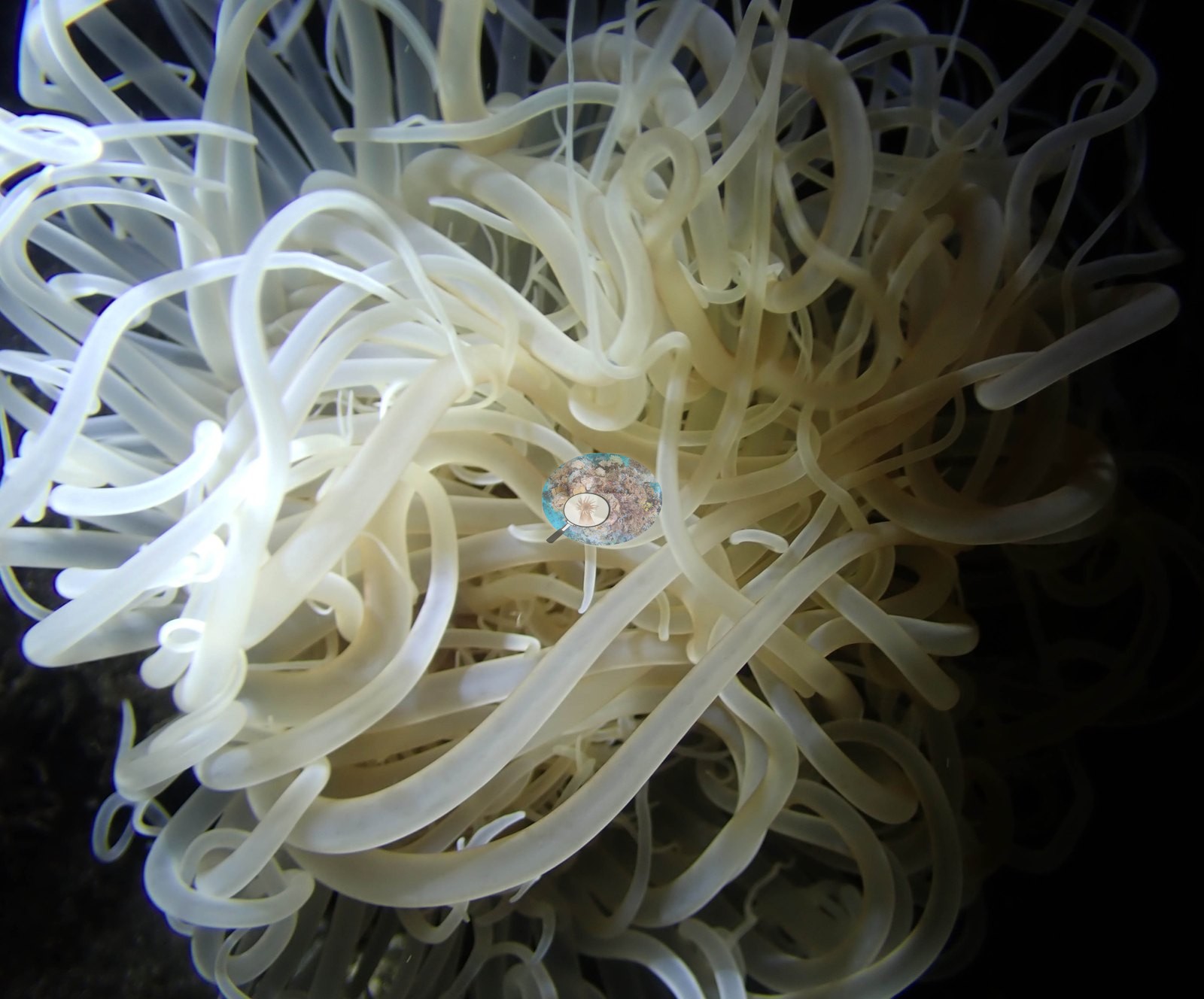
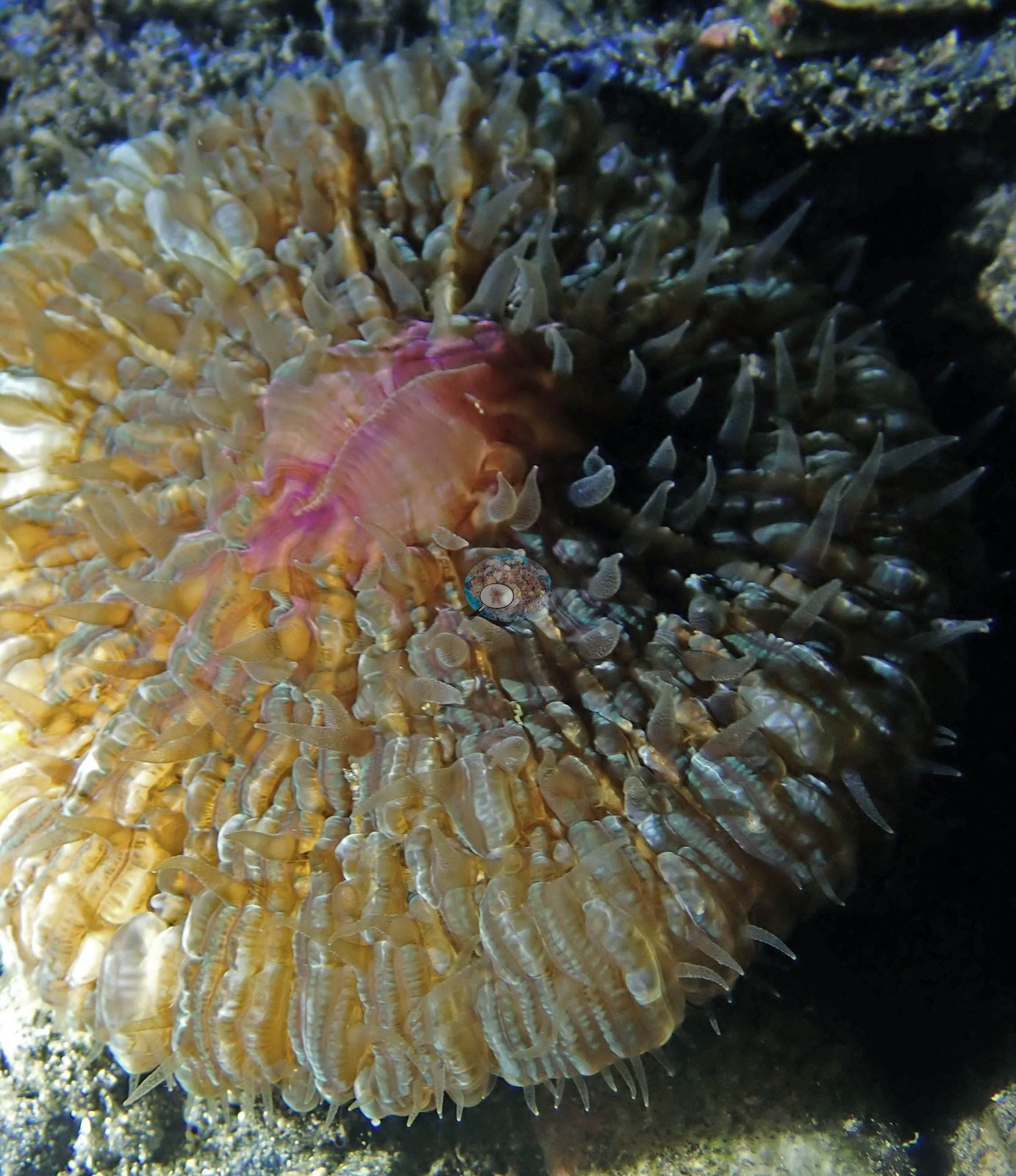
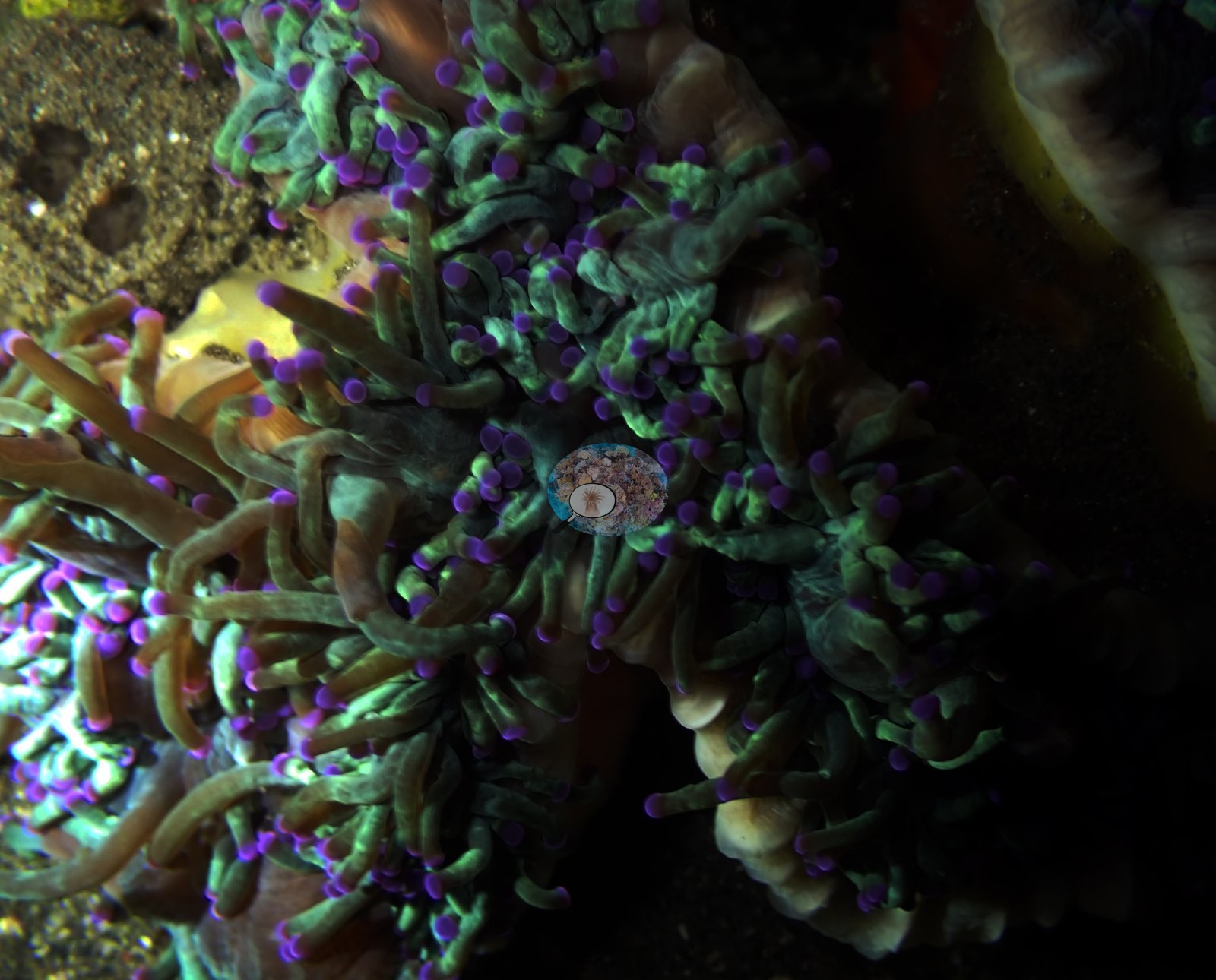
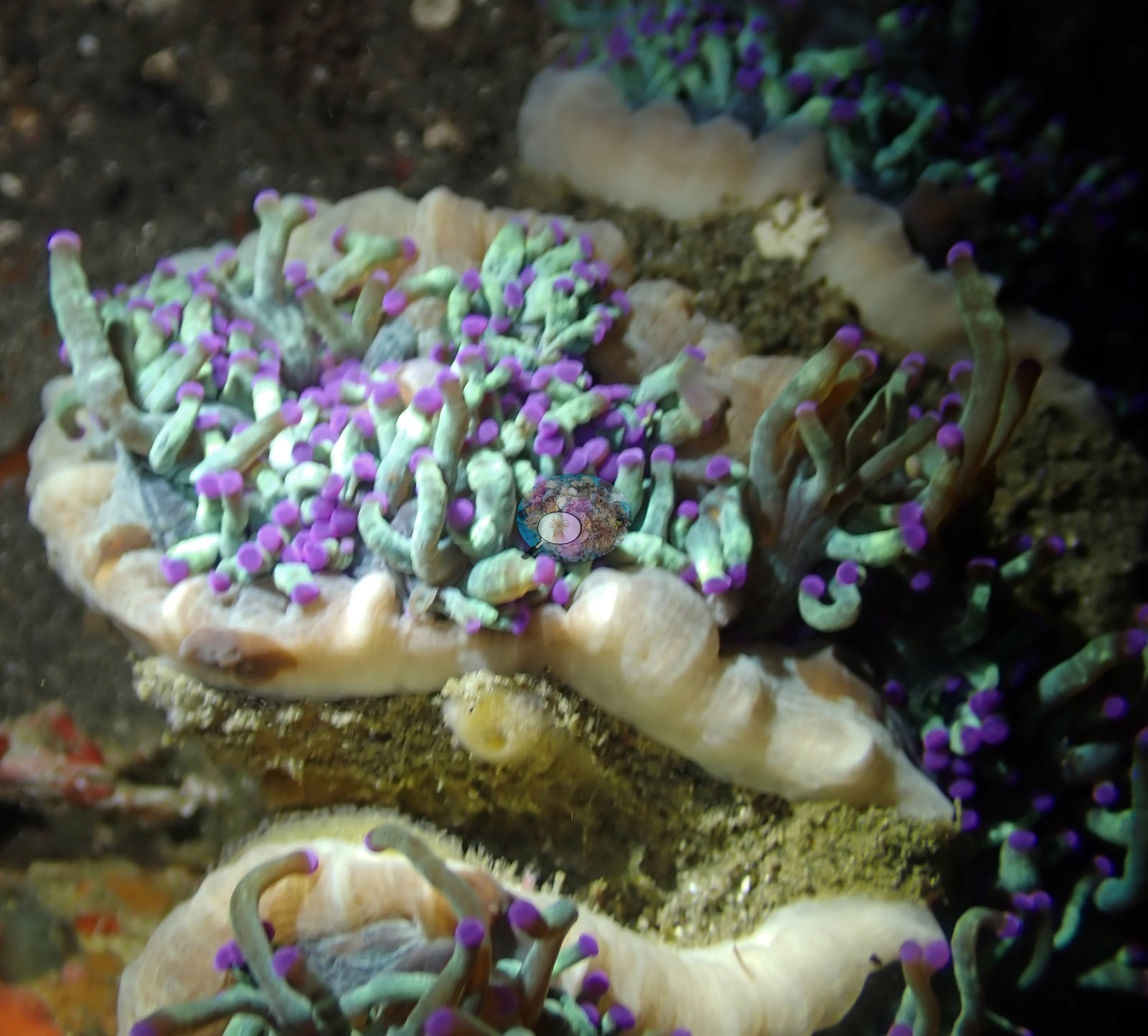
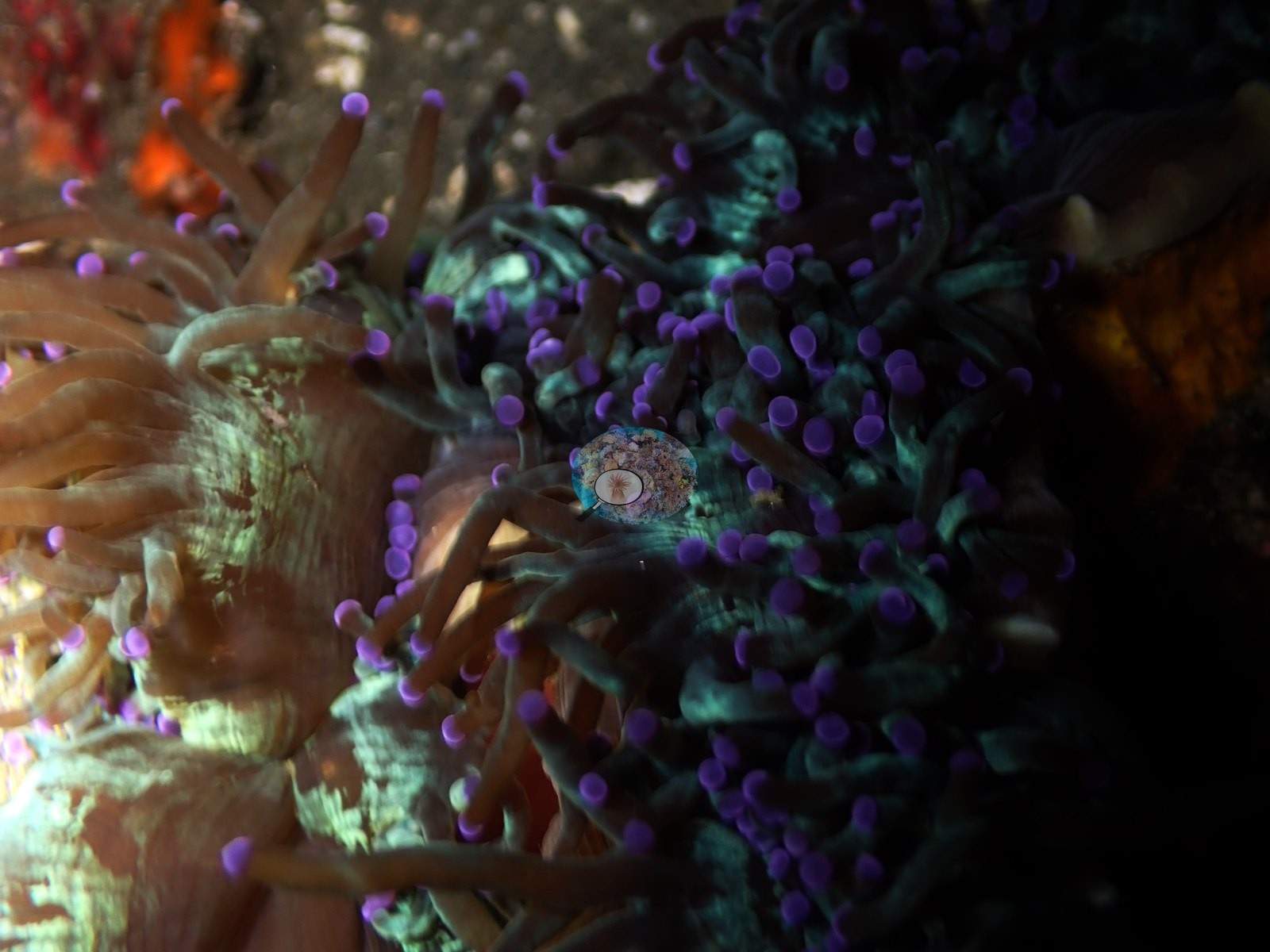
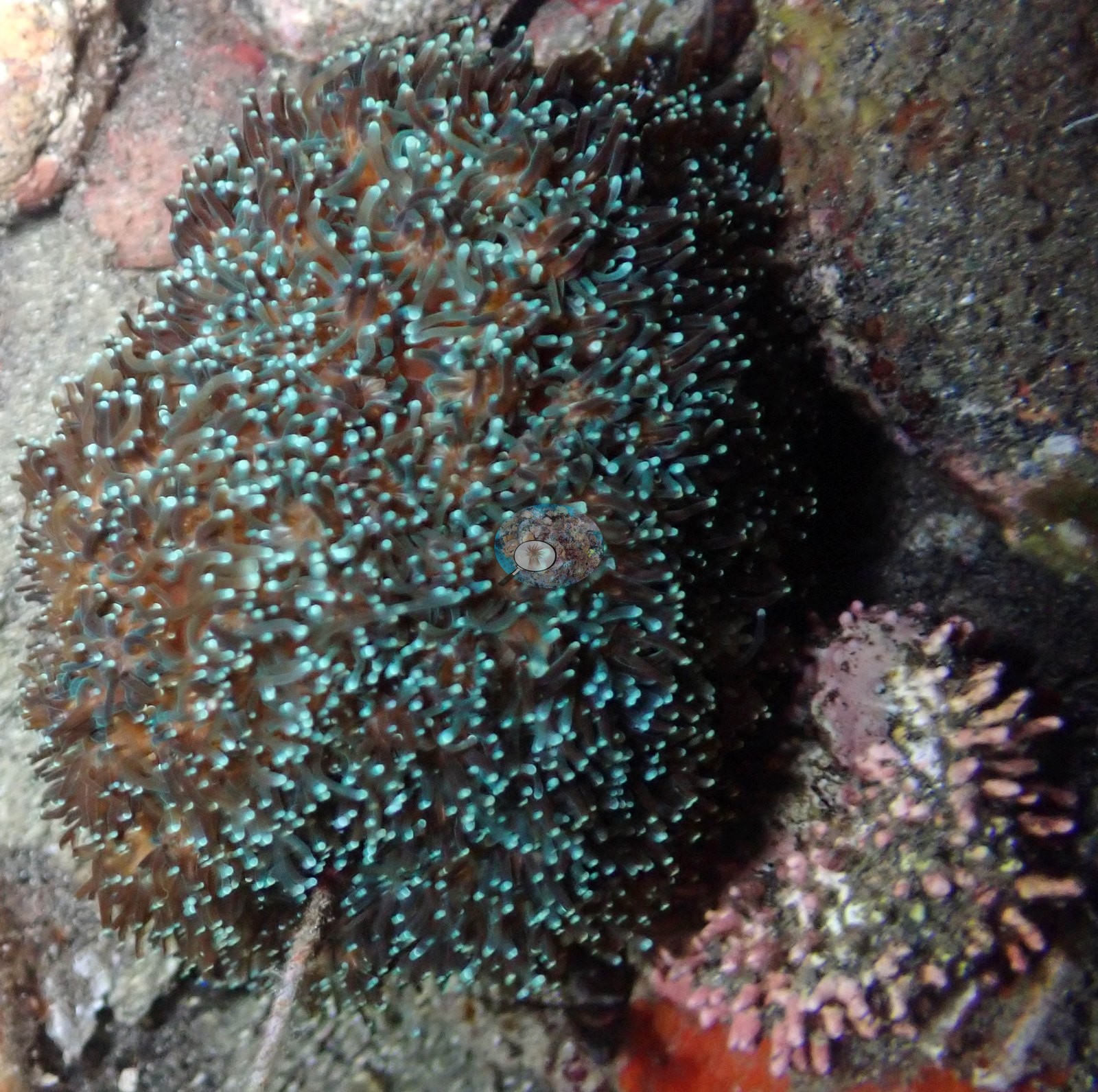
A frame labeled "Leptoseris" instead shows what reads as a fluorescent purple-and-green anemone or corallimorph disc studded with tipped tentacles, not a Leptoseris coral's typical laminar growth form -- the filename and subject appear mismatched (e.g., Image 31, Image 32).
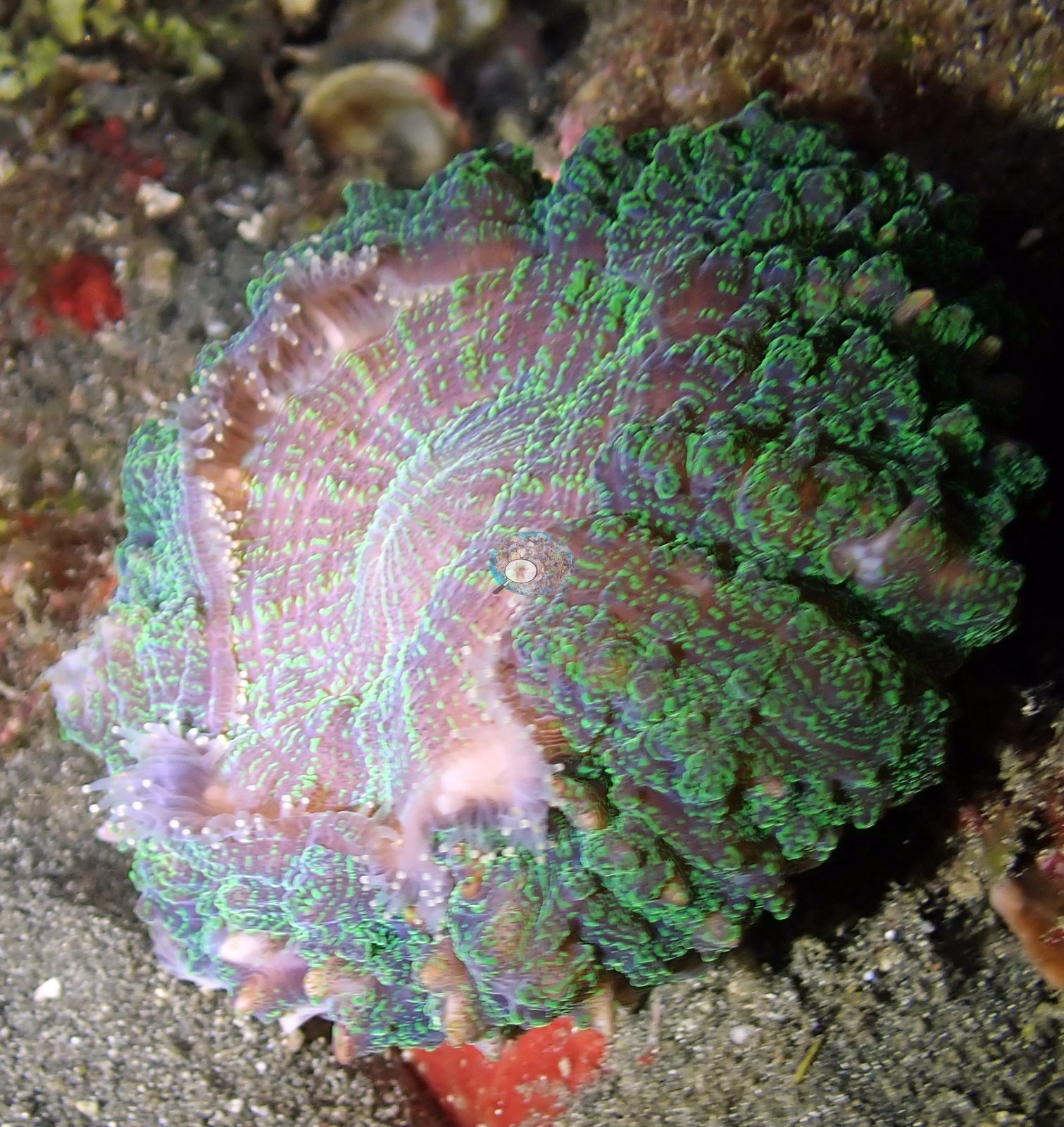
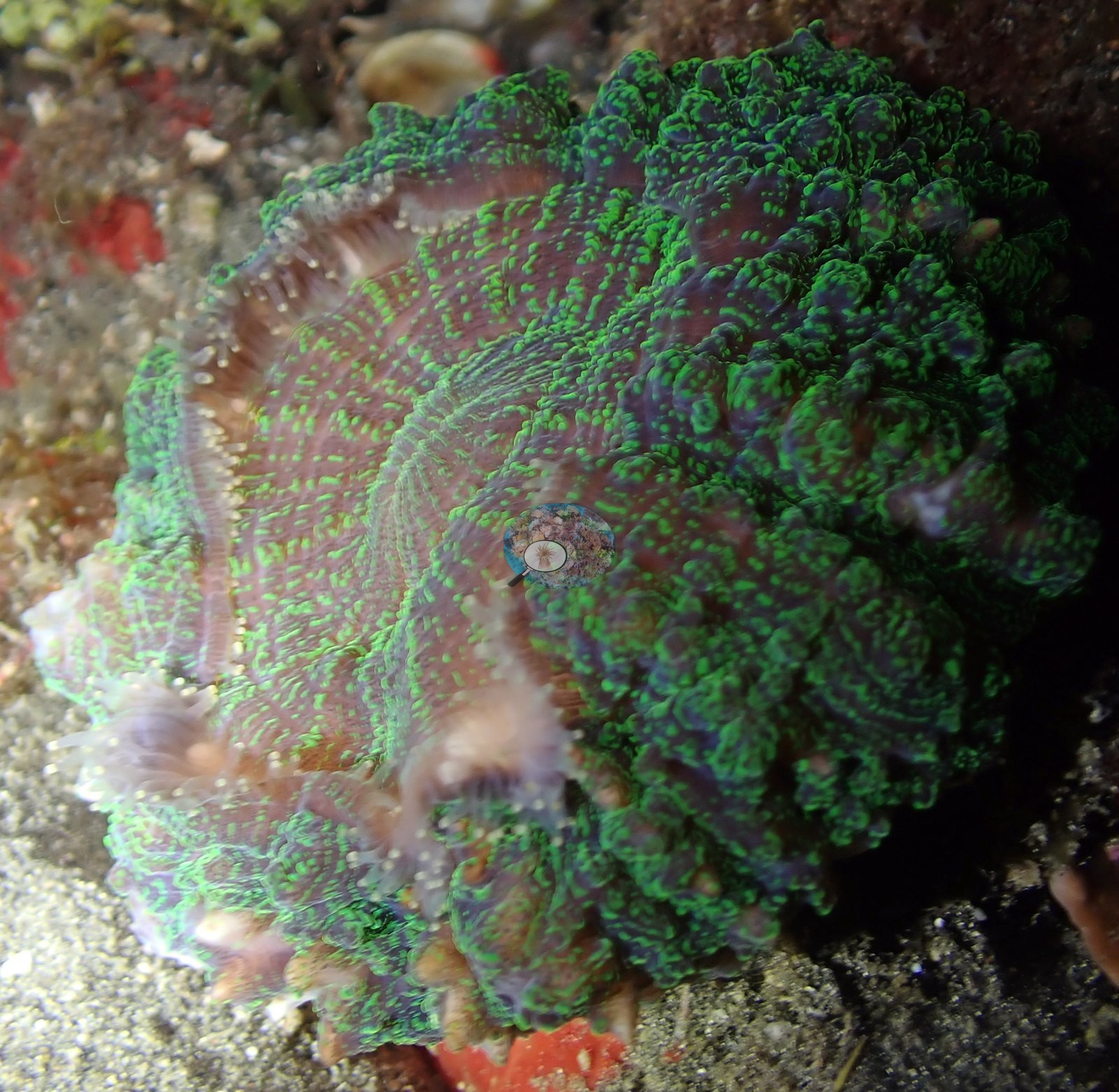
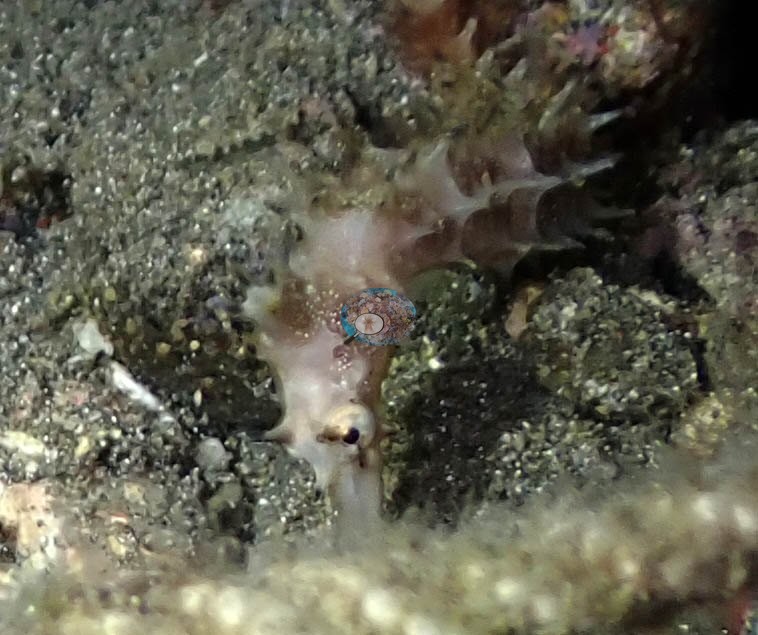
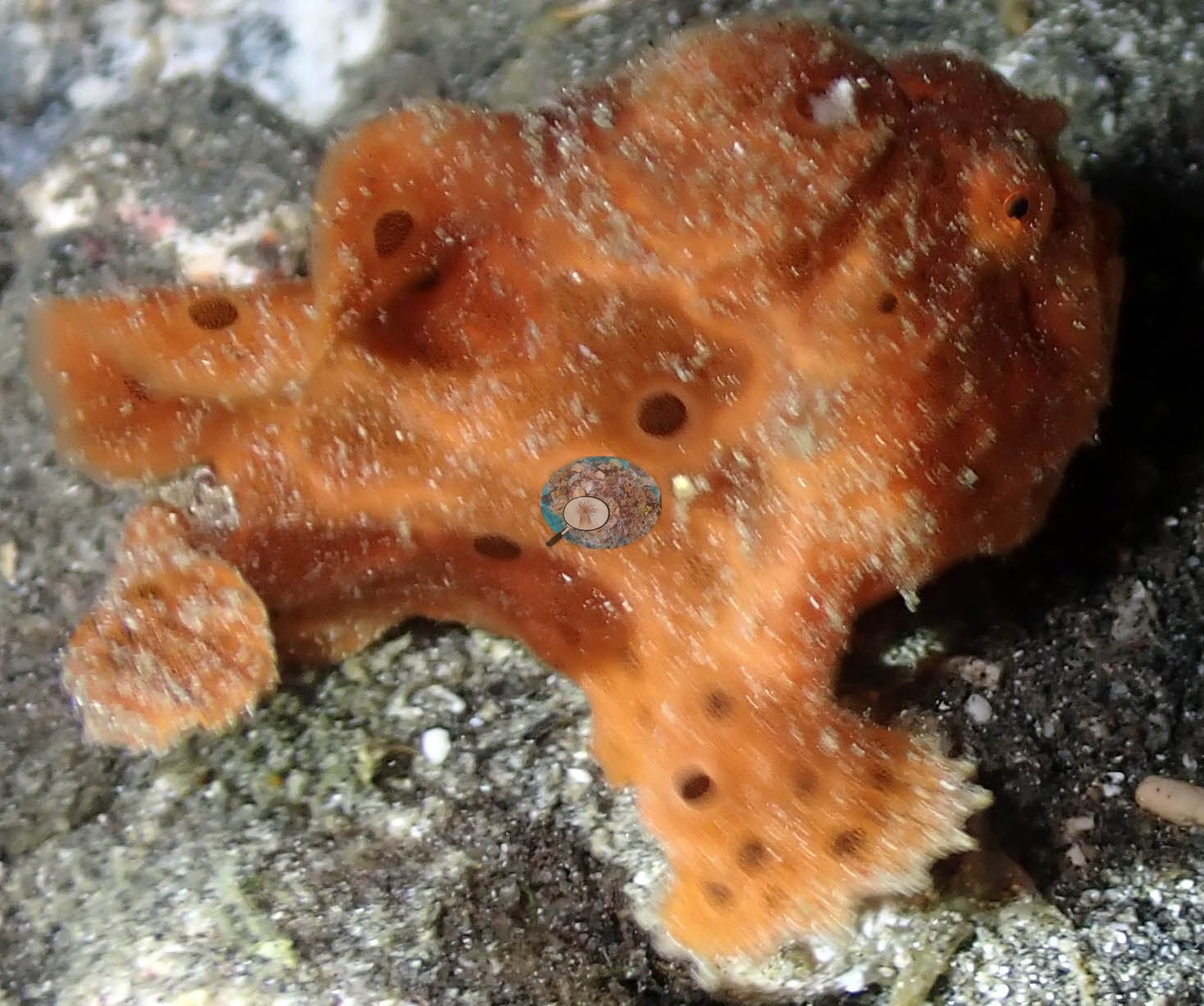
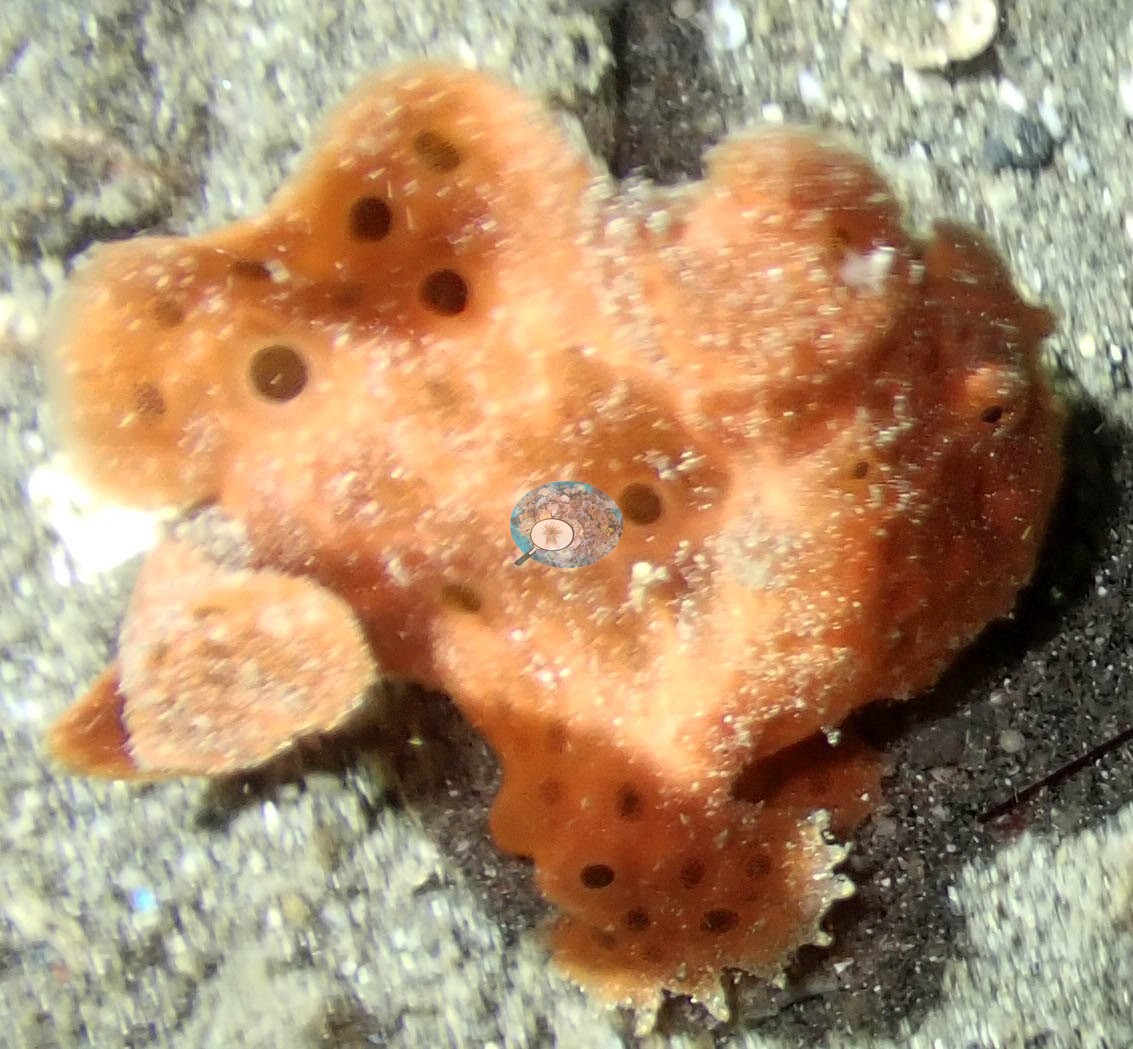
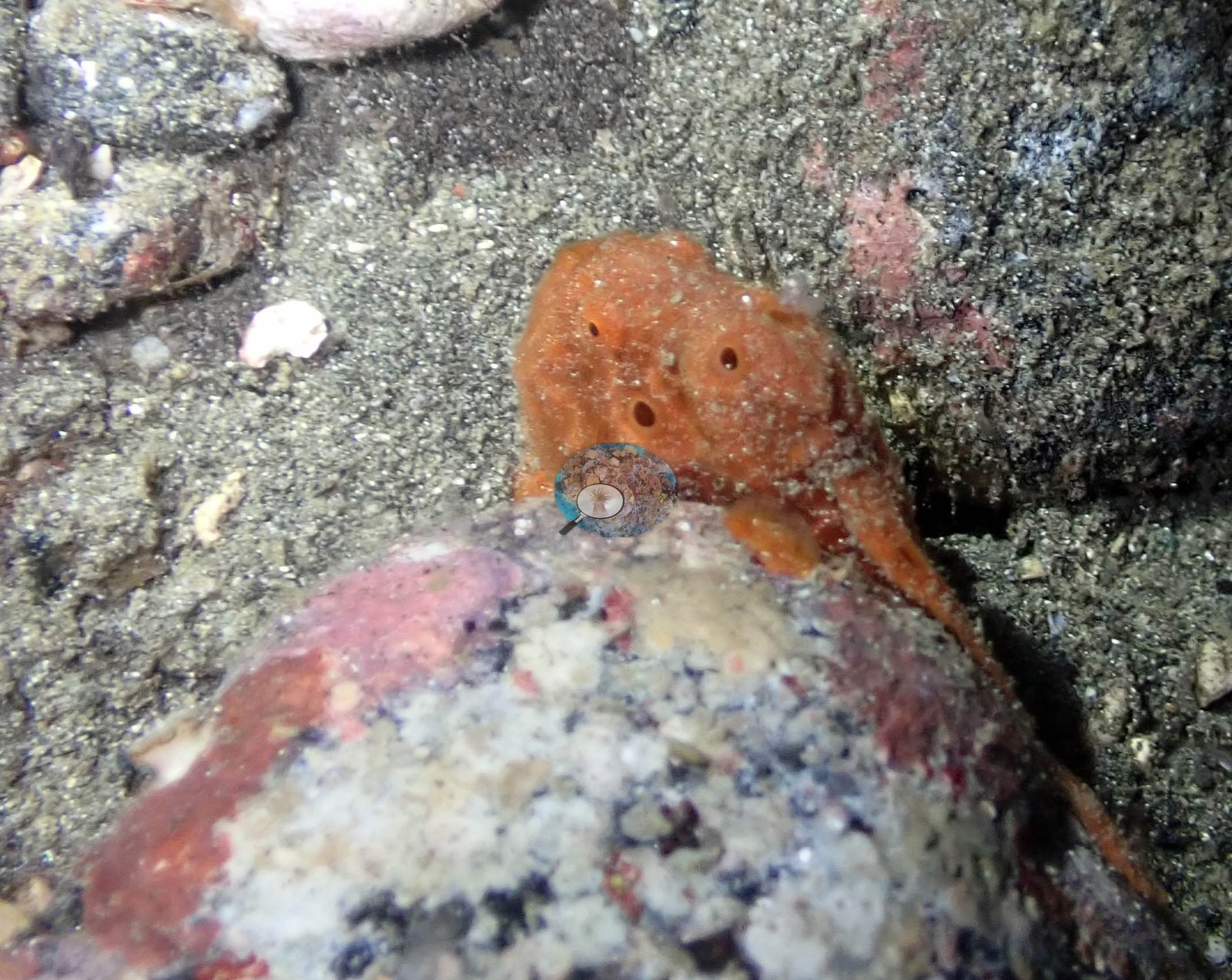
Other frames: a small orange frogfish with dark eye-spots sits on sand beside encrusted rock (e.g., Image 22); a mottled brown-and-cream cowrie or gastropod shell is visible tucked at the base of a large anemone (e.g., Image 4, Image 11, Image 24).
Comparisons with other data
Also on record for this site: A night dive on a low-relief silty and sandy slope with scattered rock, rubble, and isolated growth rather than a coral-dominated reef. Hard coral was sparse, mostly free-living fungiids and small massive or encrusting colonies; sponges, hydroids, soft corals, and anemones supplied most of the attached structure (e.g., Image 3, Image 13, Image 14, Image 18, Image 21).
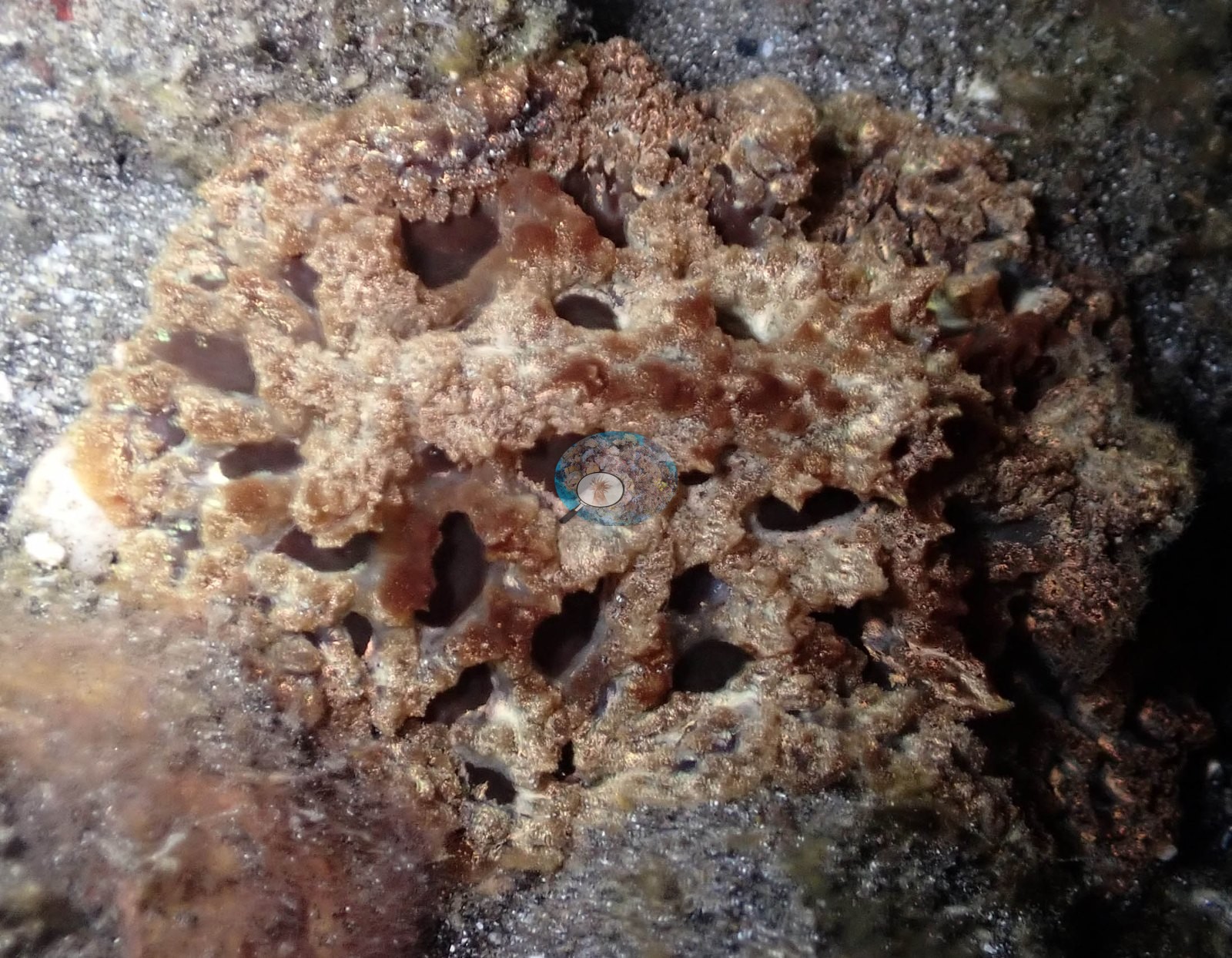
The photographed nocturnal fauna included long-spined Diadema-type urchins, sea stars and brittle stars, crinoids, cerianthid-type anemones, gastropods, nudibranchs, and small crustaceans (e.g., Image 23).
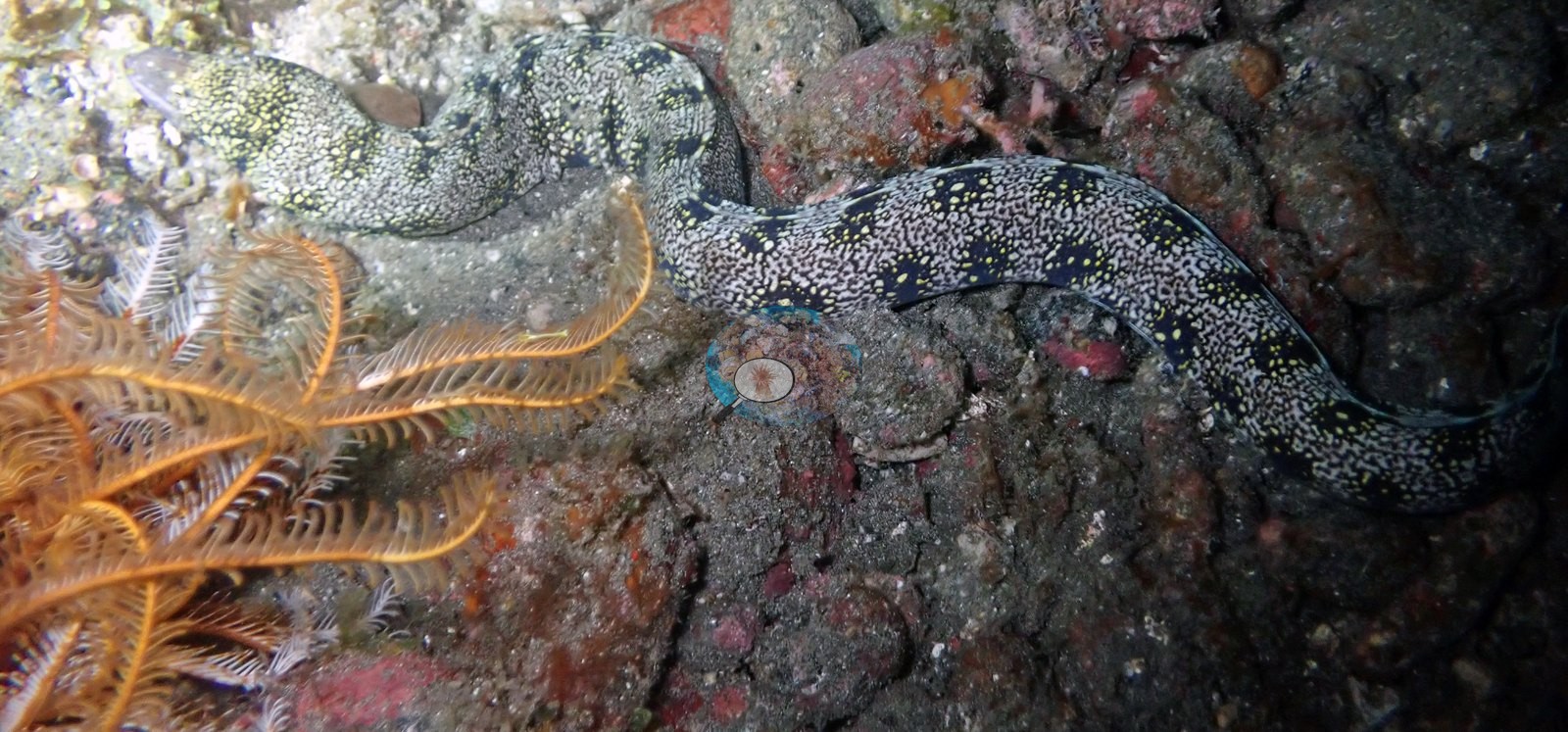
A sediment-associated macro site of camouflage-dependent and nocturnally emergent animals.
Data & links
All images from Coral Reef Diagnostics.
© Coral Reef Diagnostics.