
Alor - Goat Fence

Part of the regional summary: Indonesia - Alor
More info
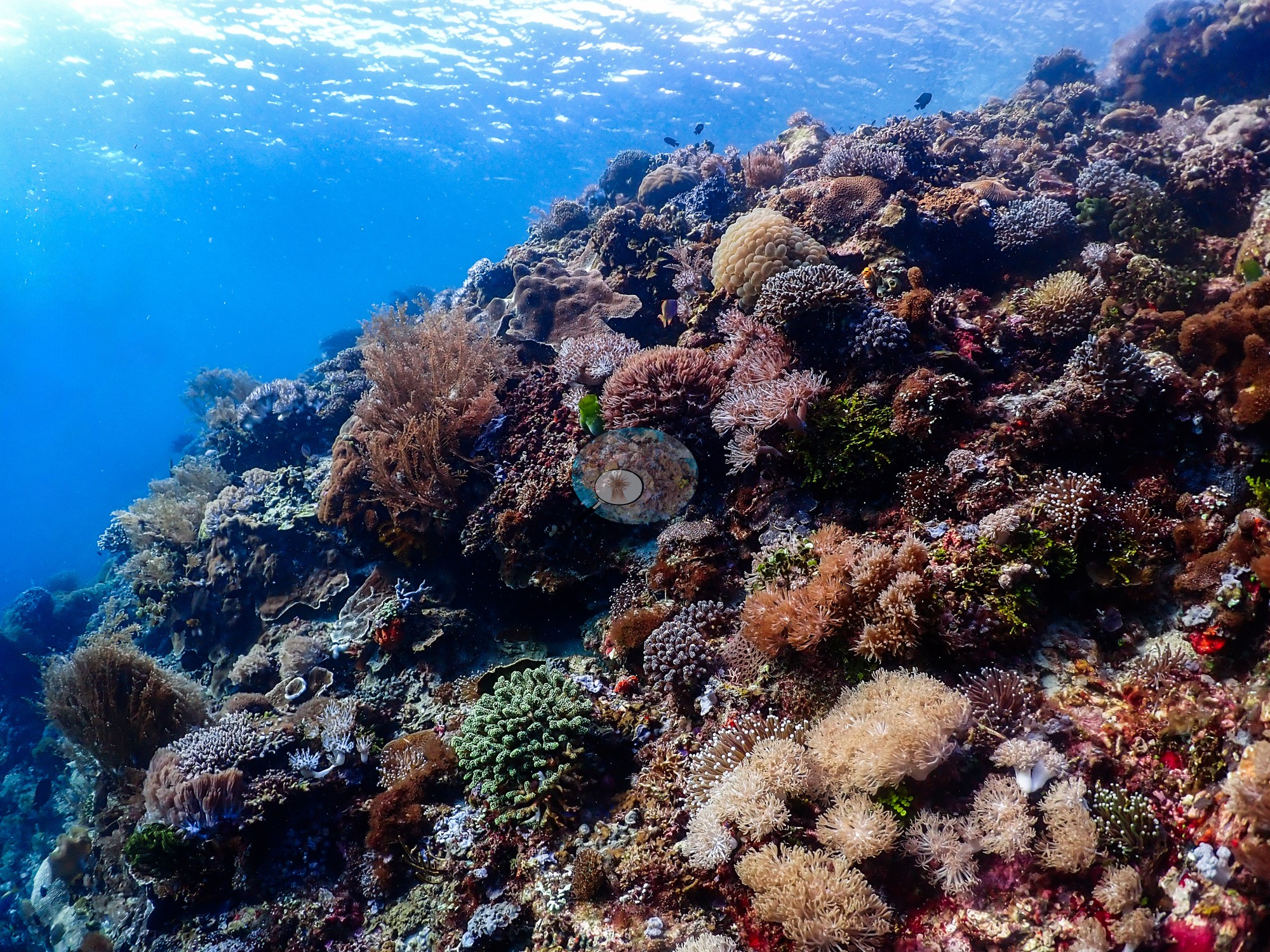
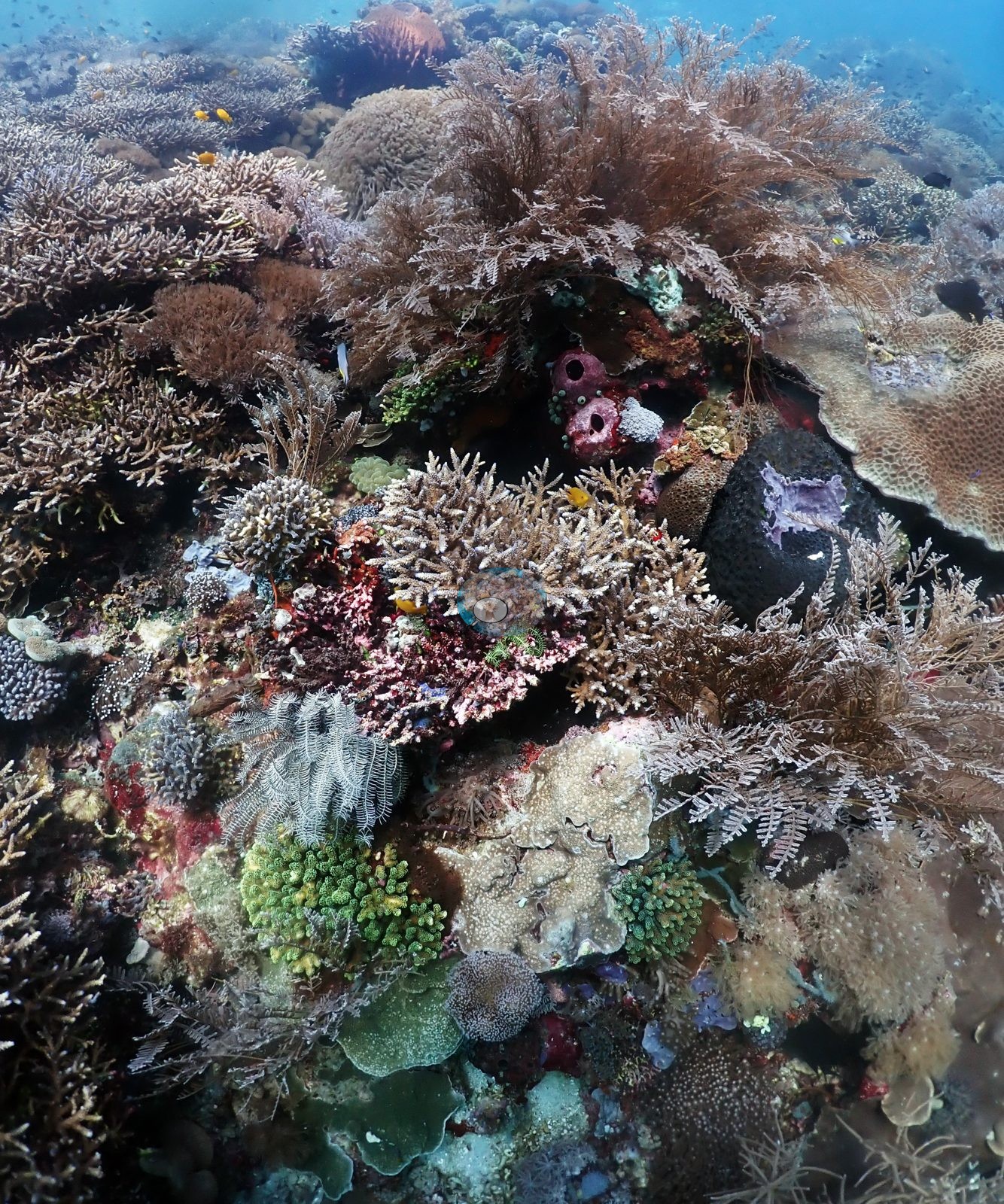
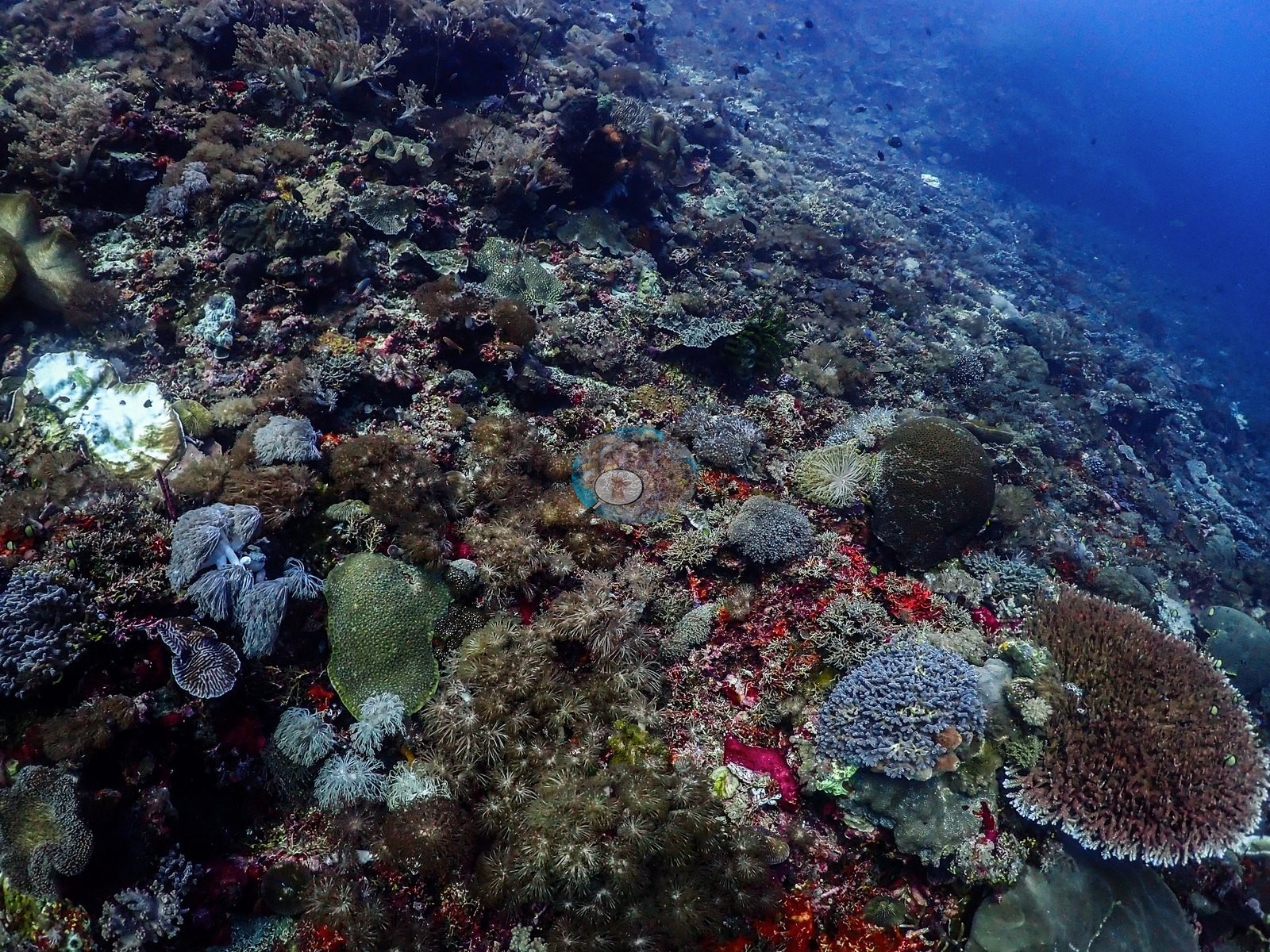
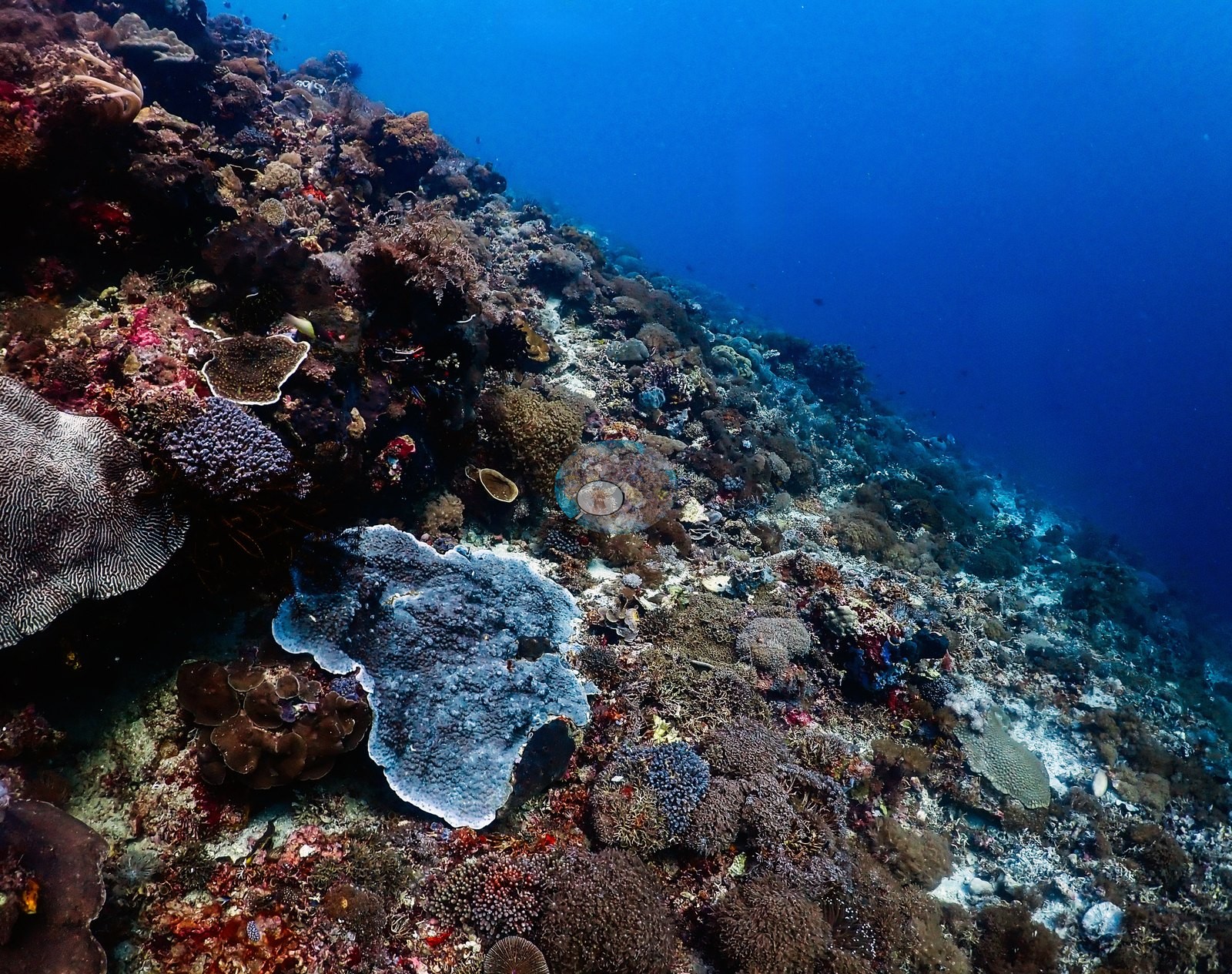
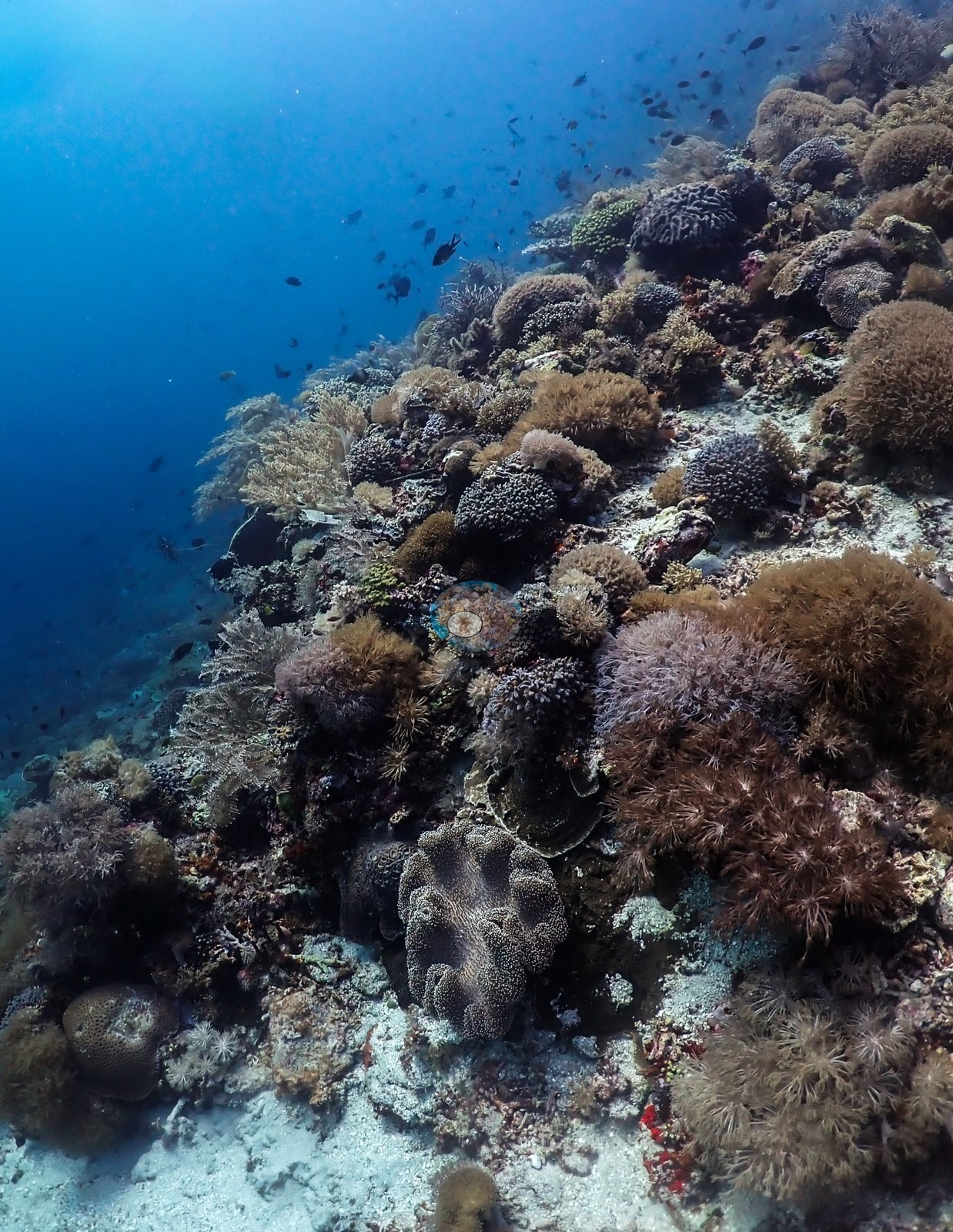
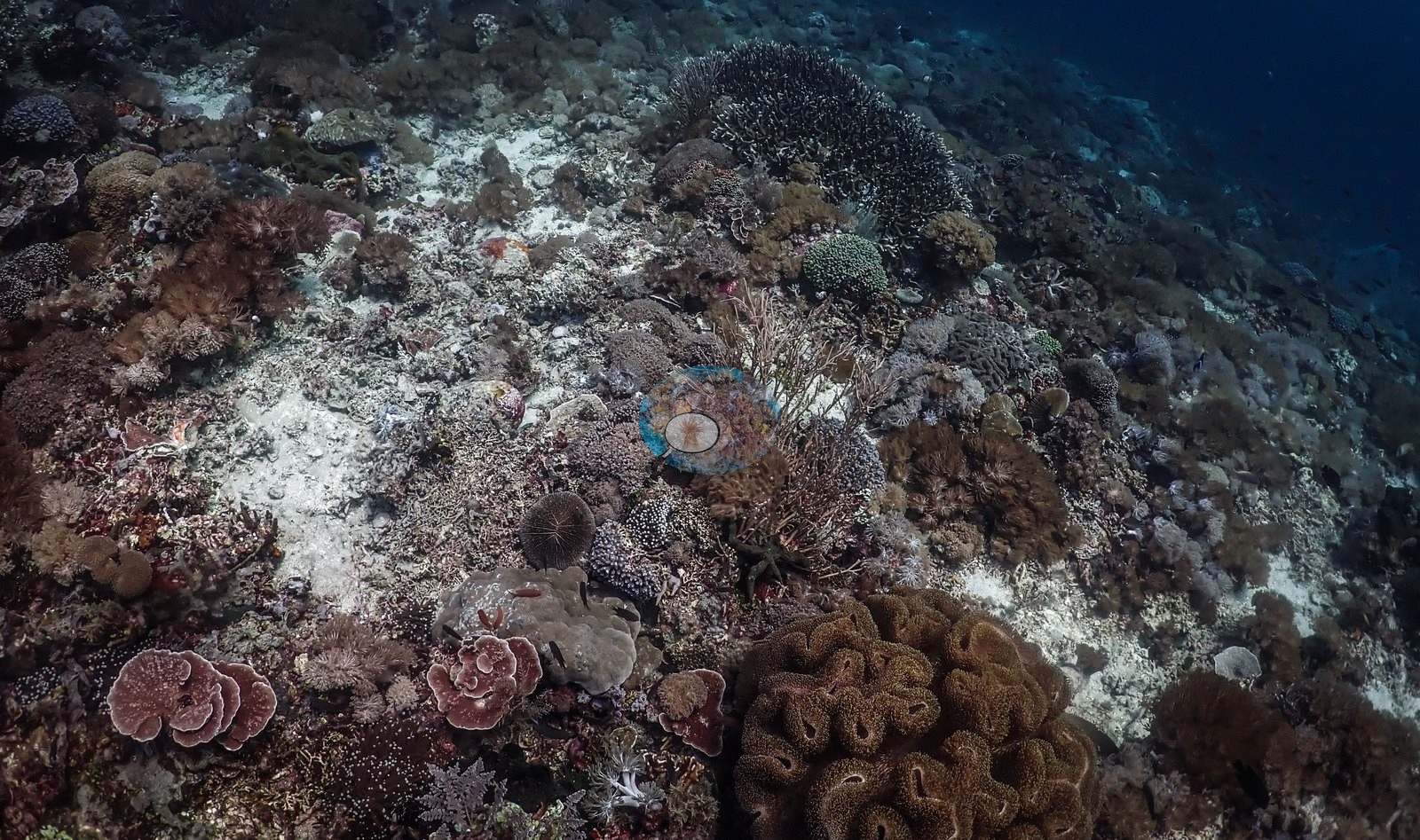
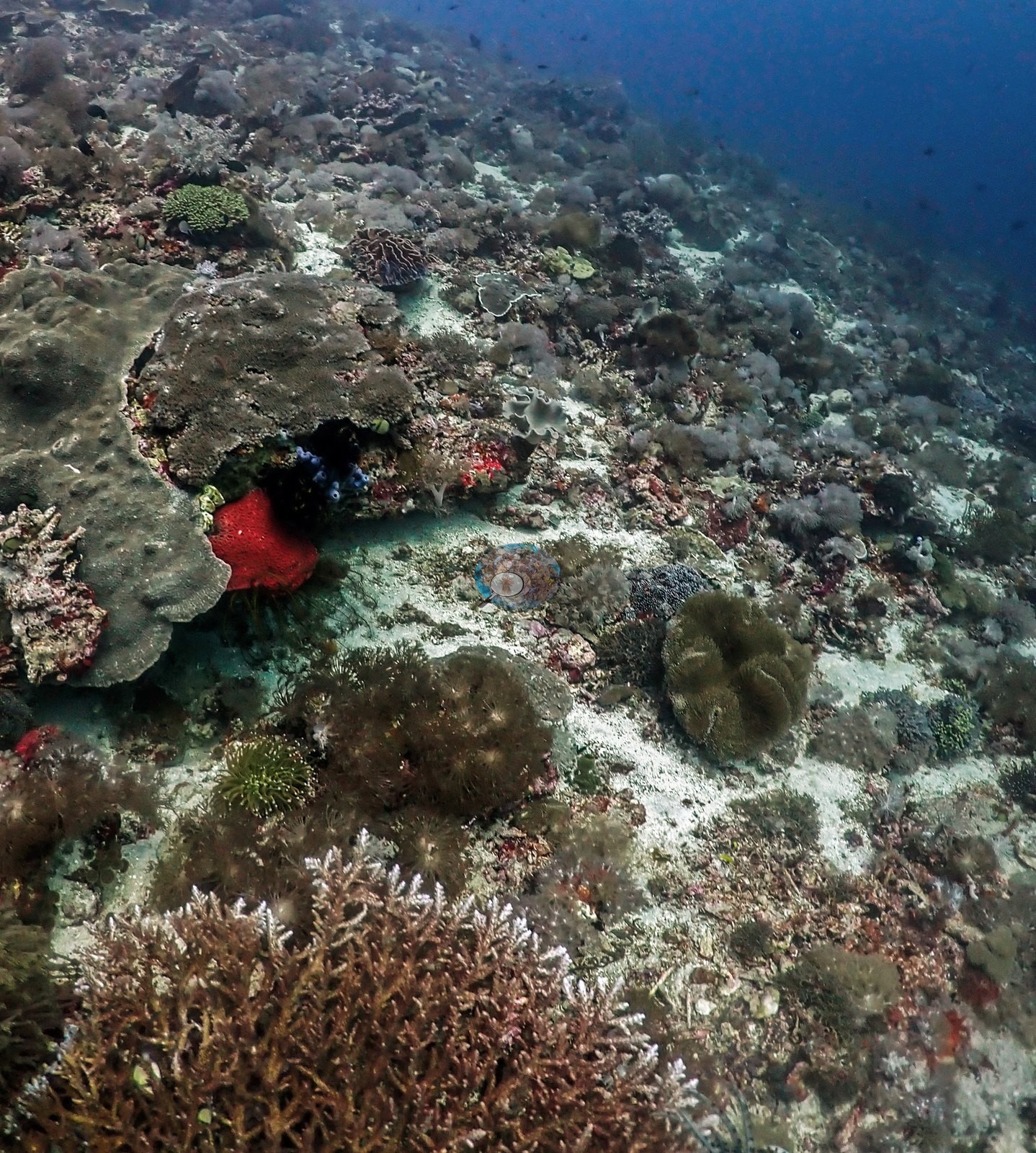
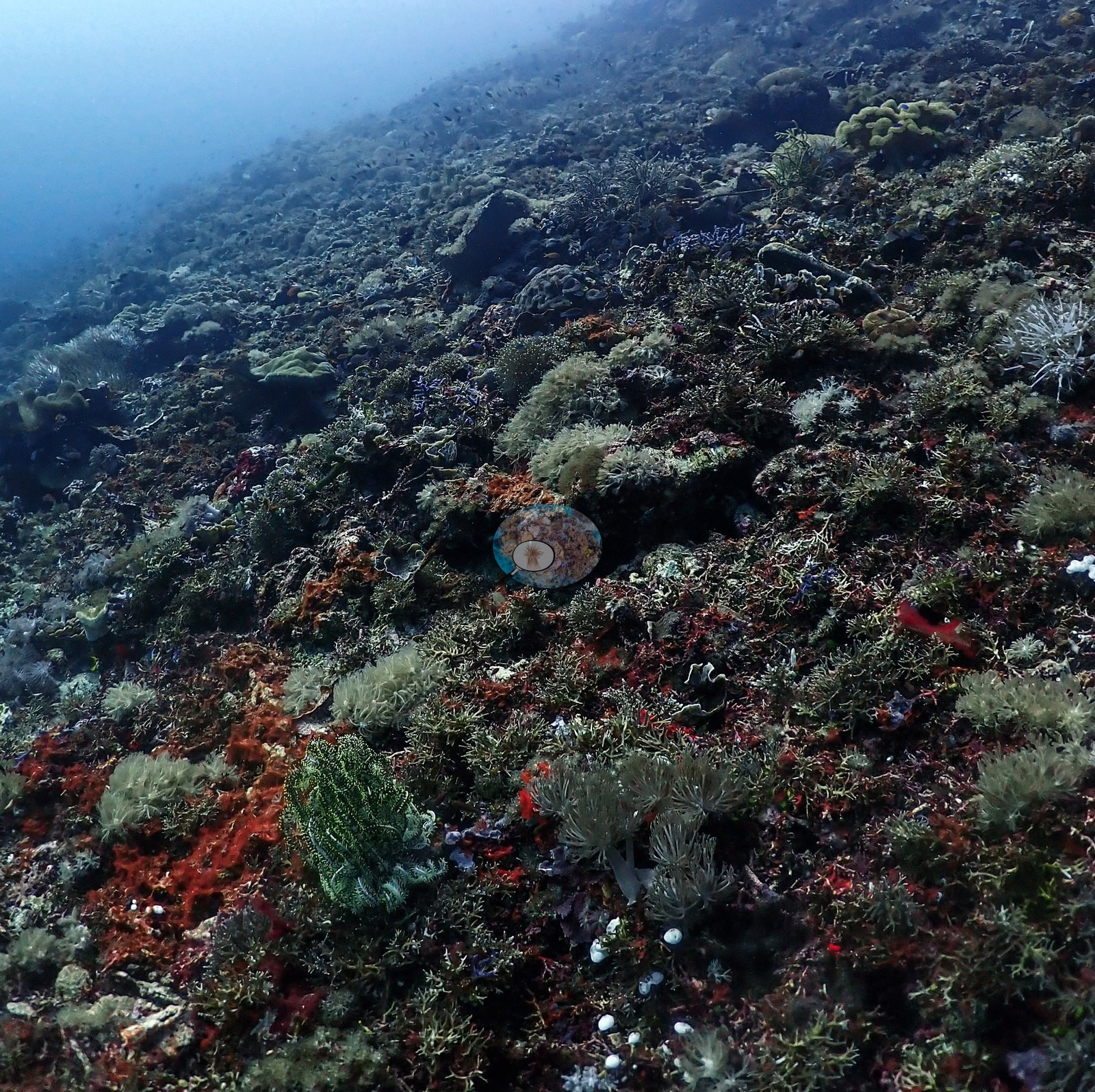
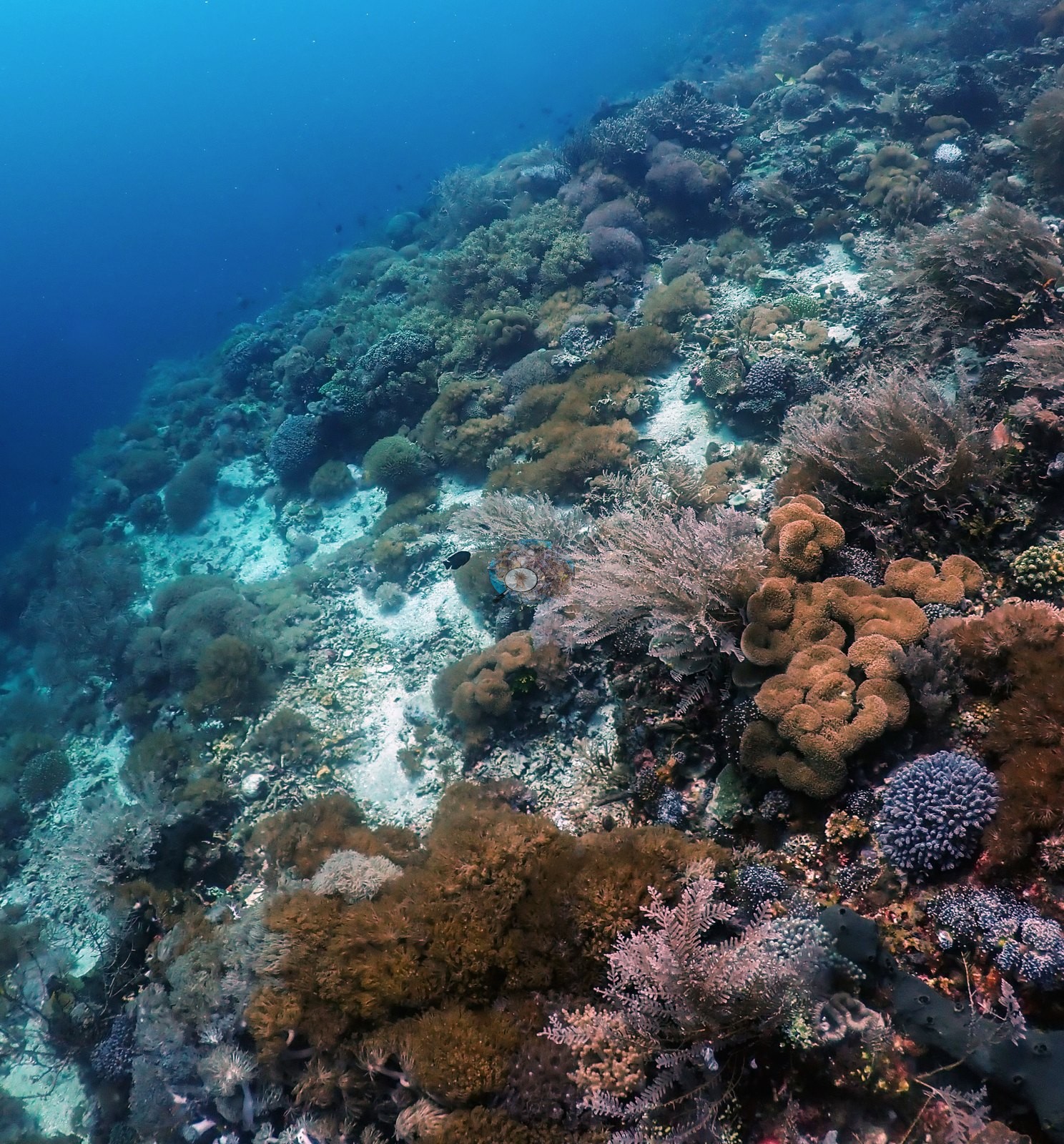
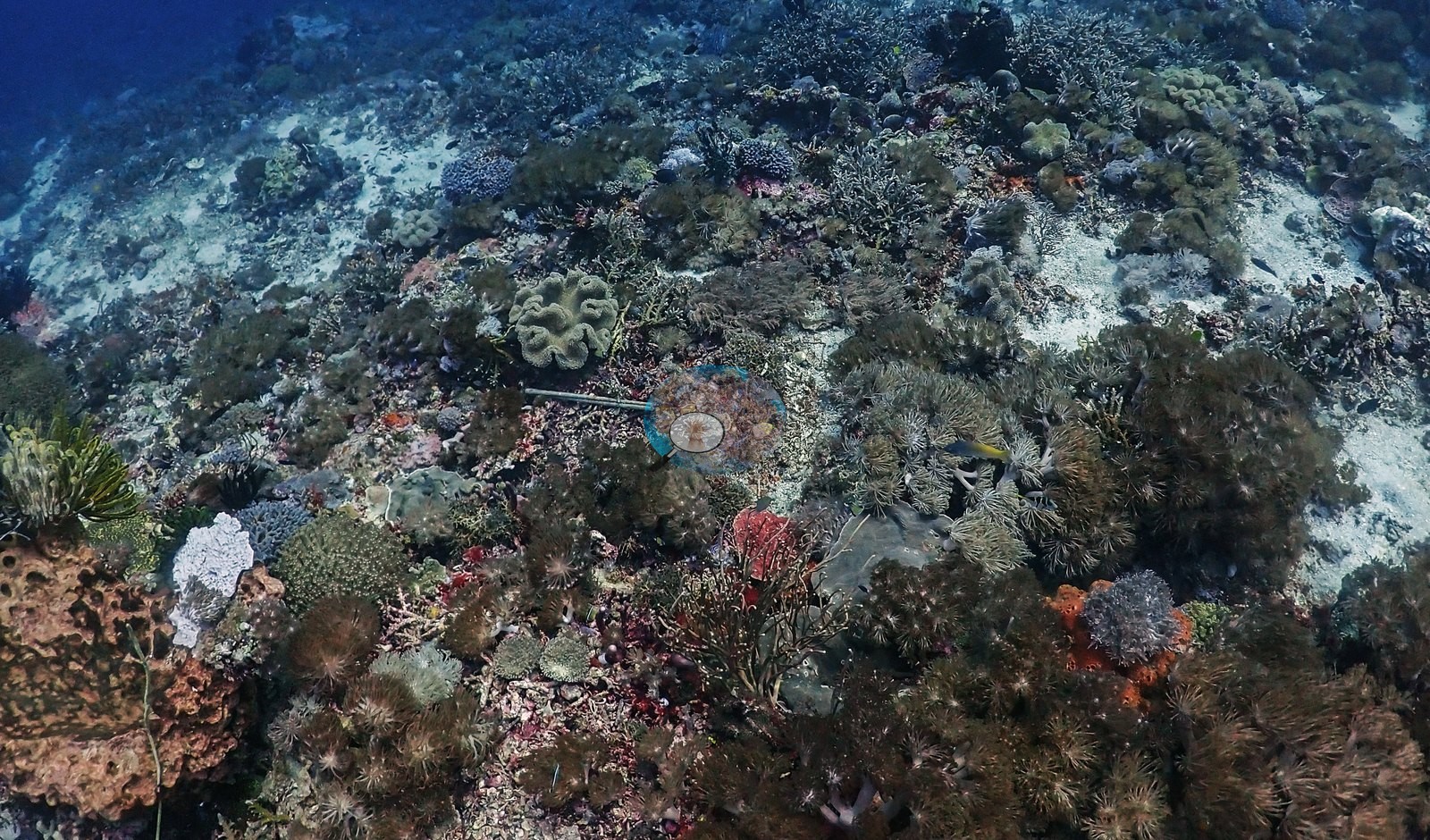
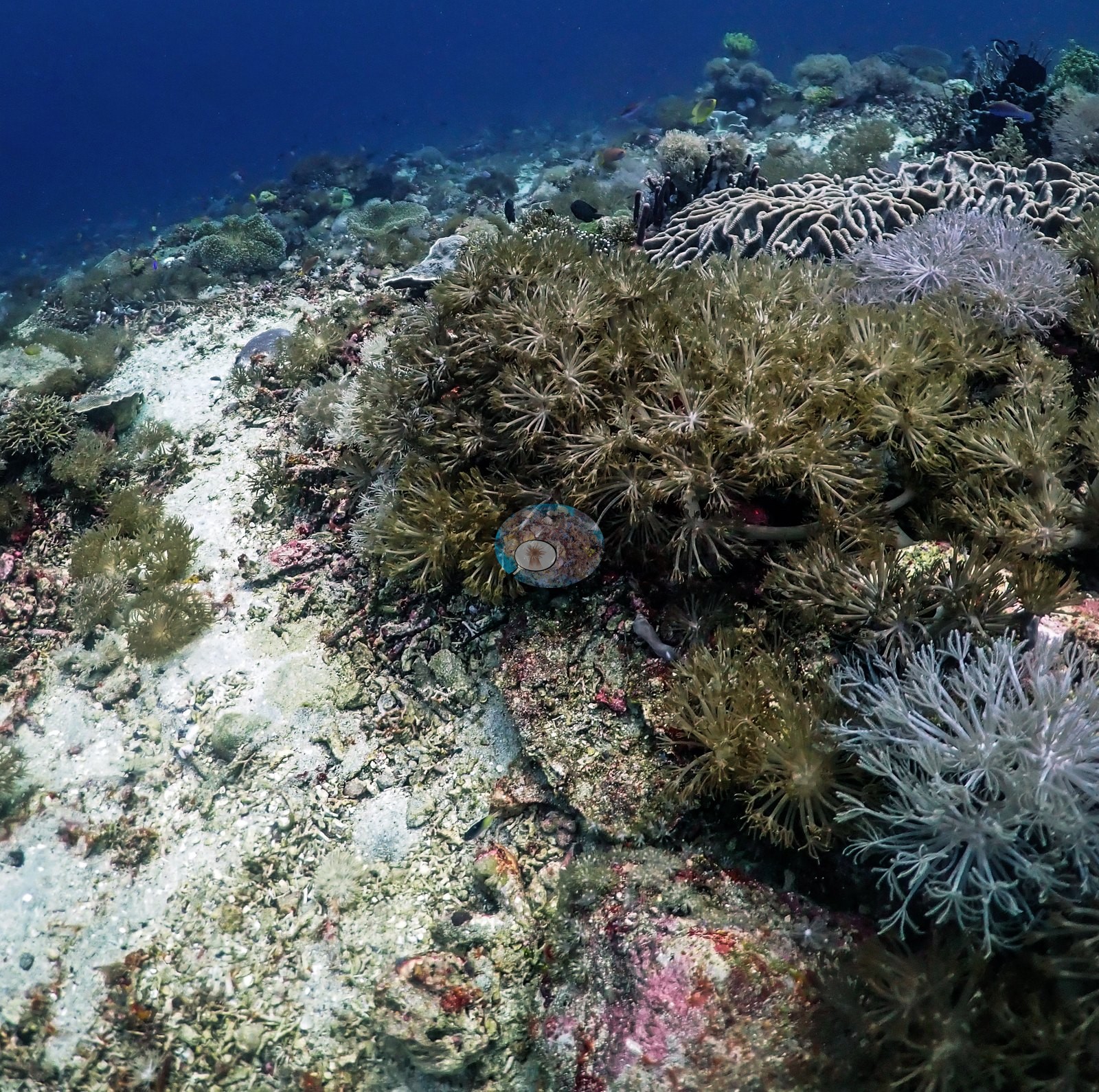
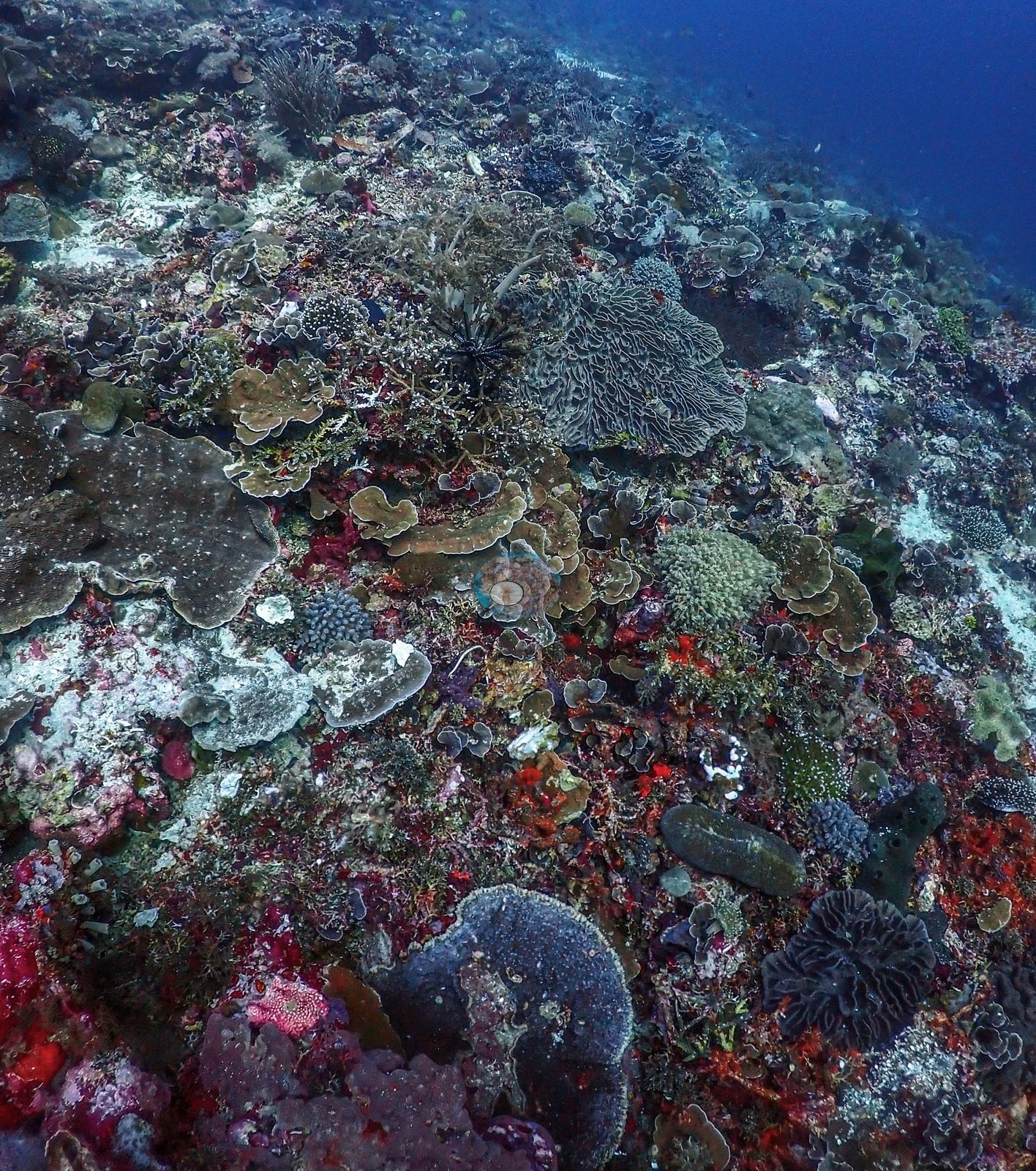
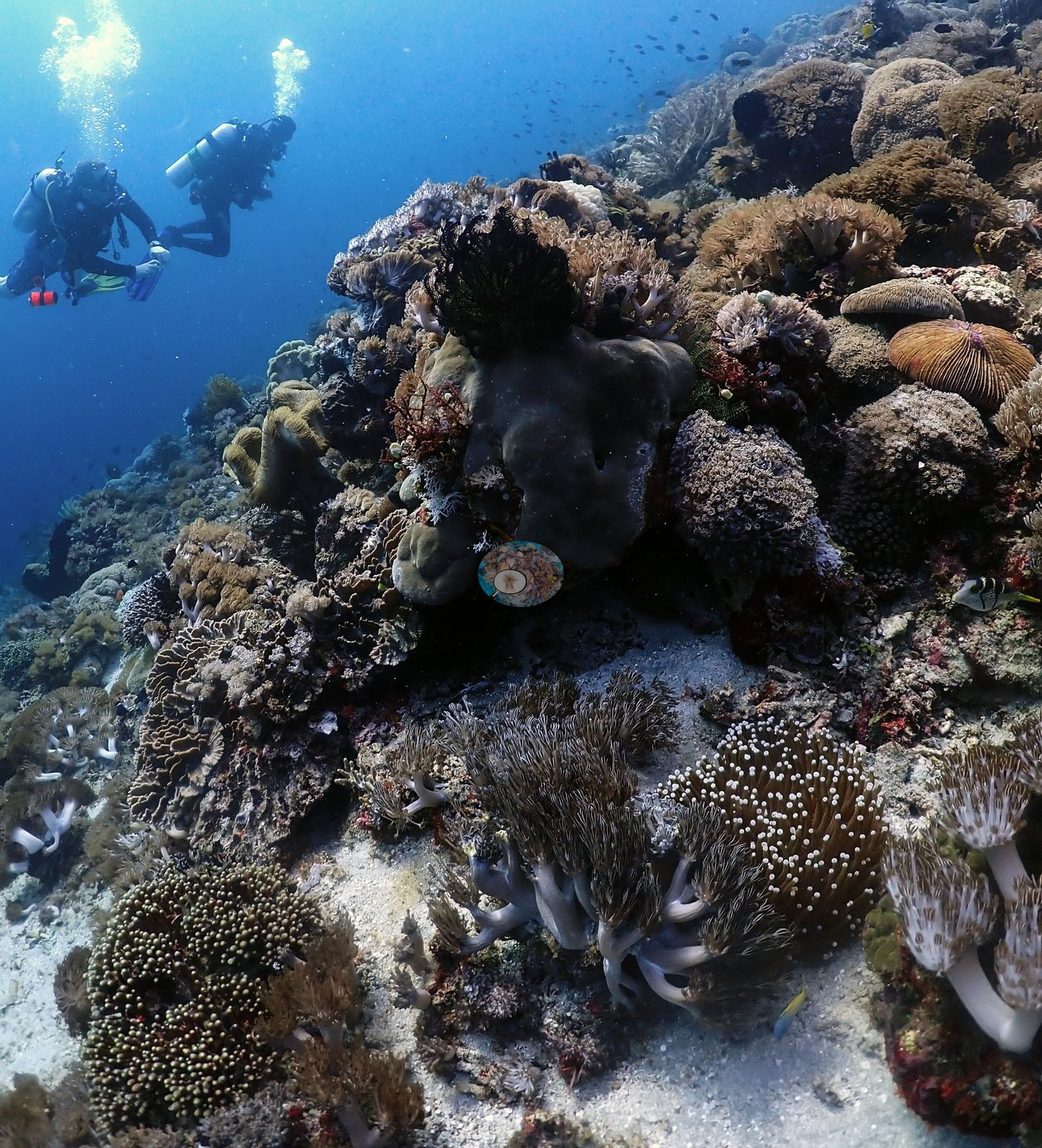
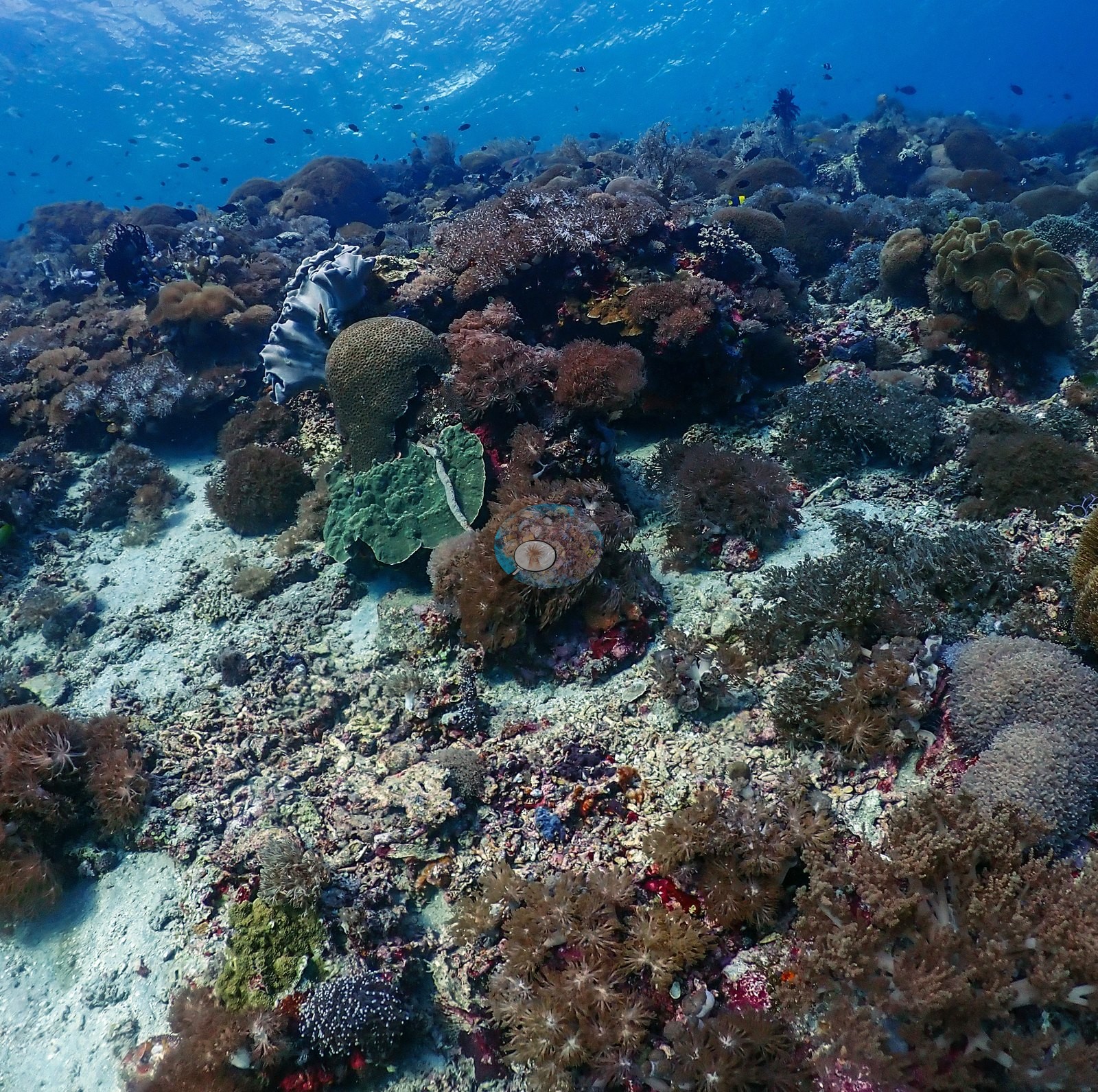
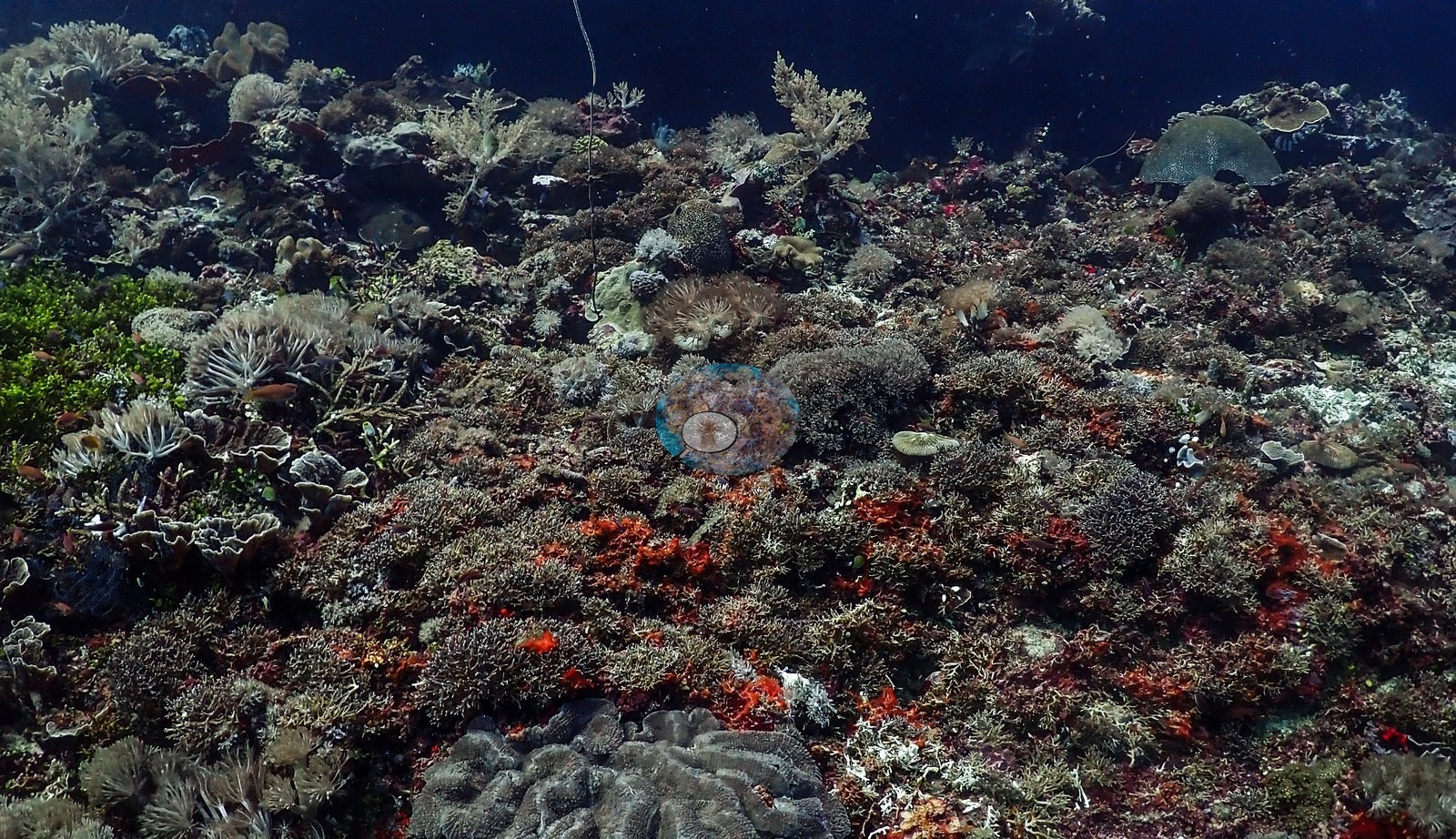
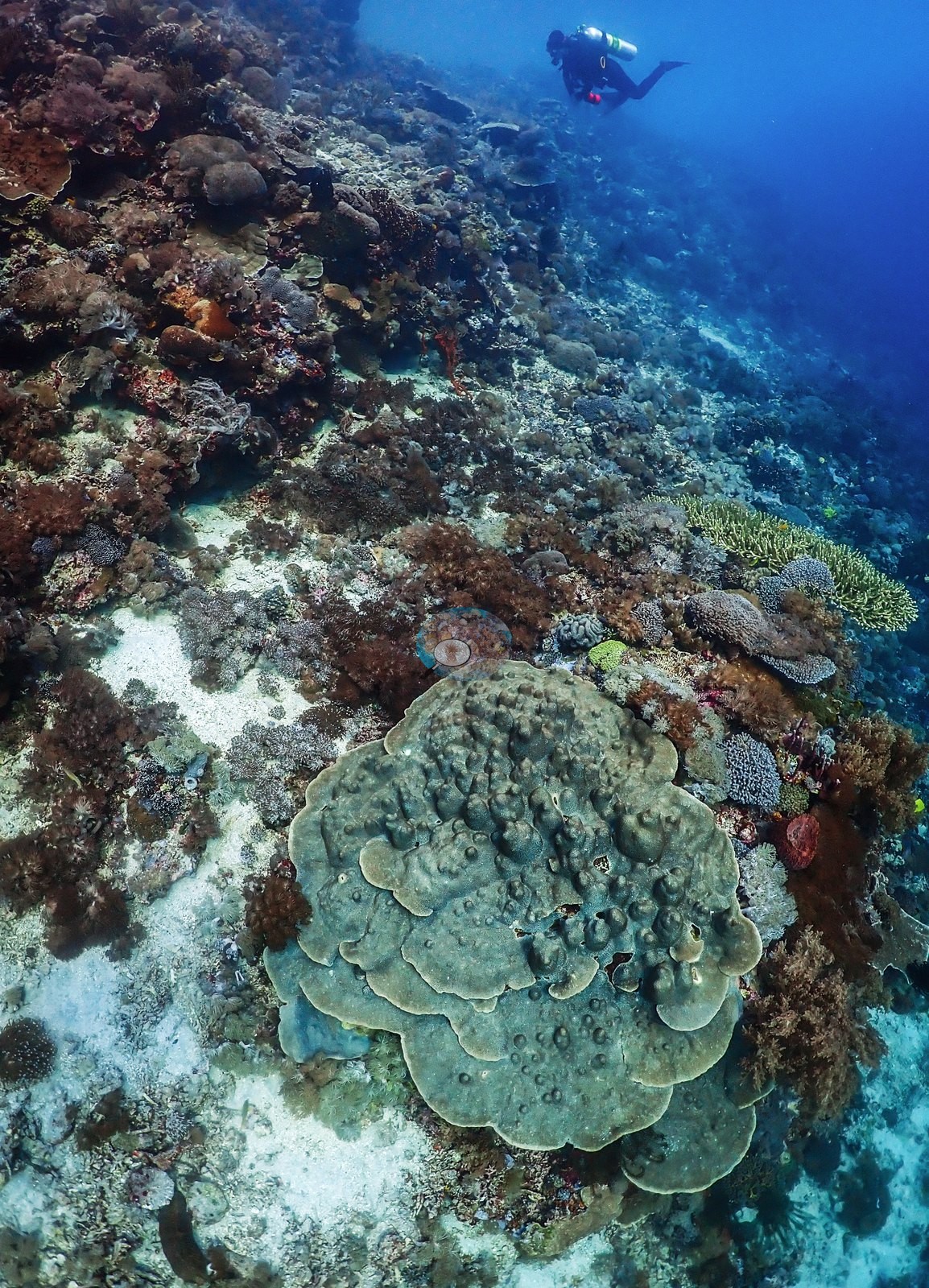
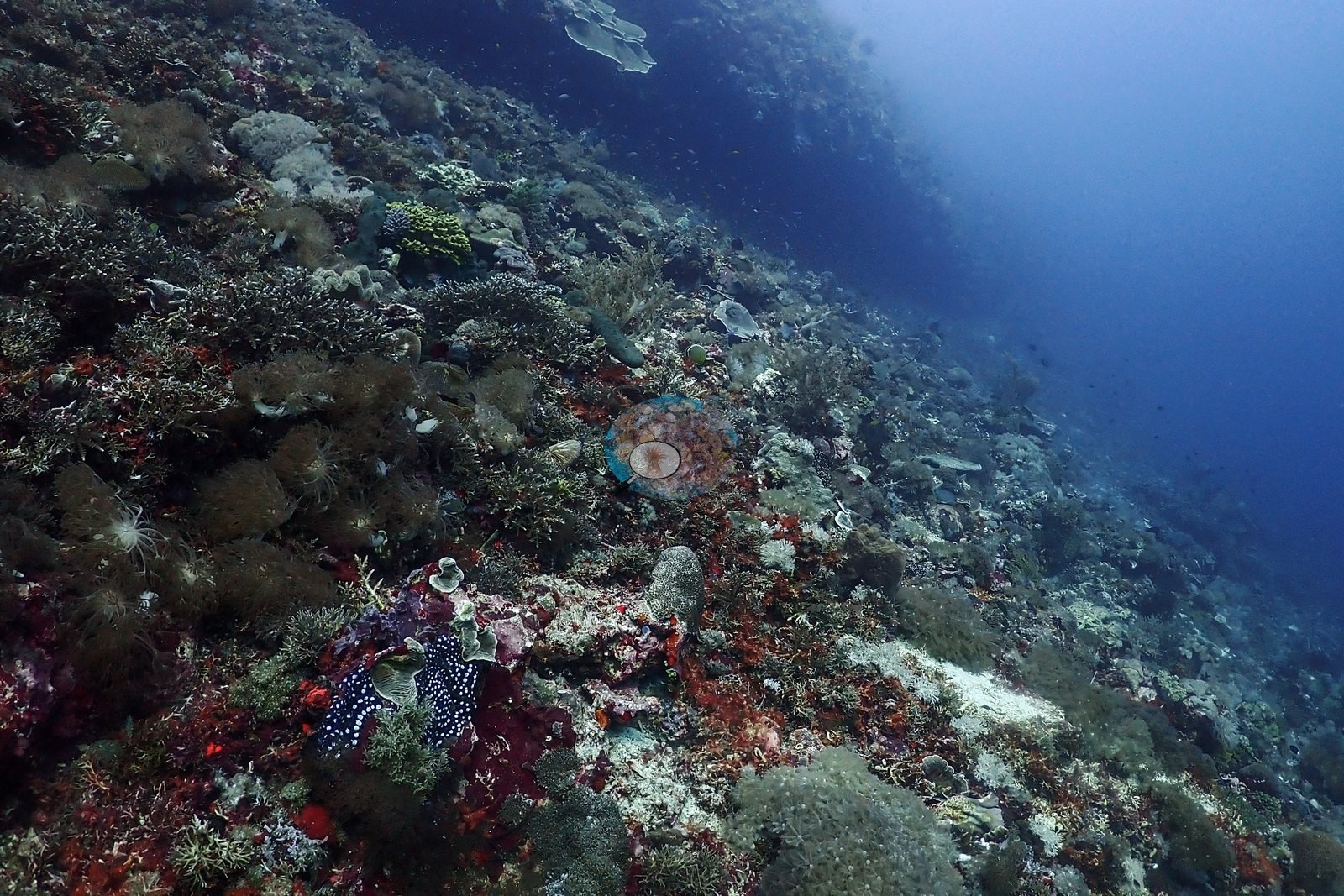
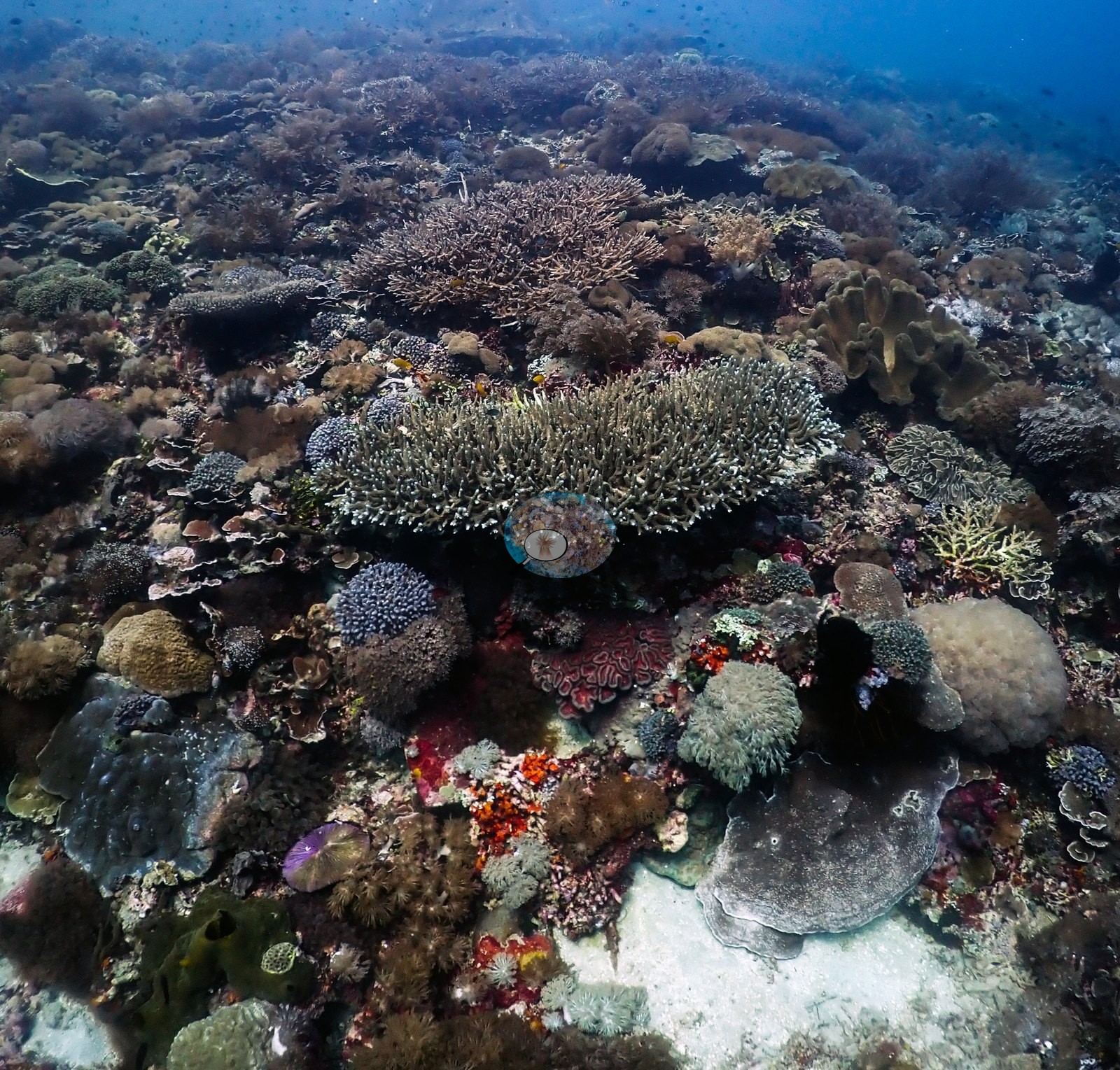
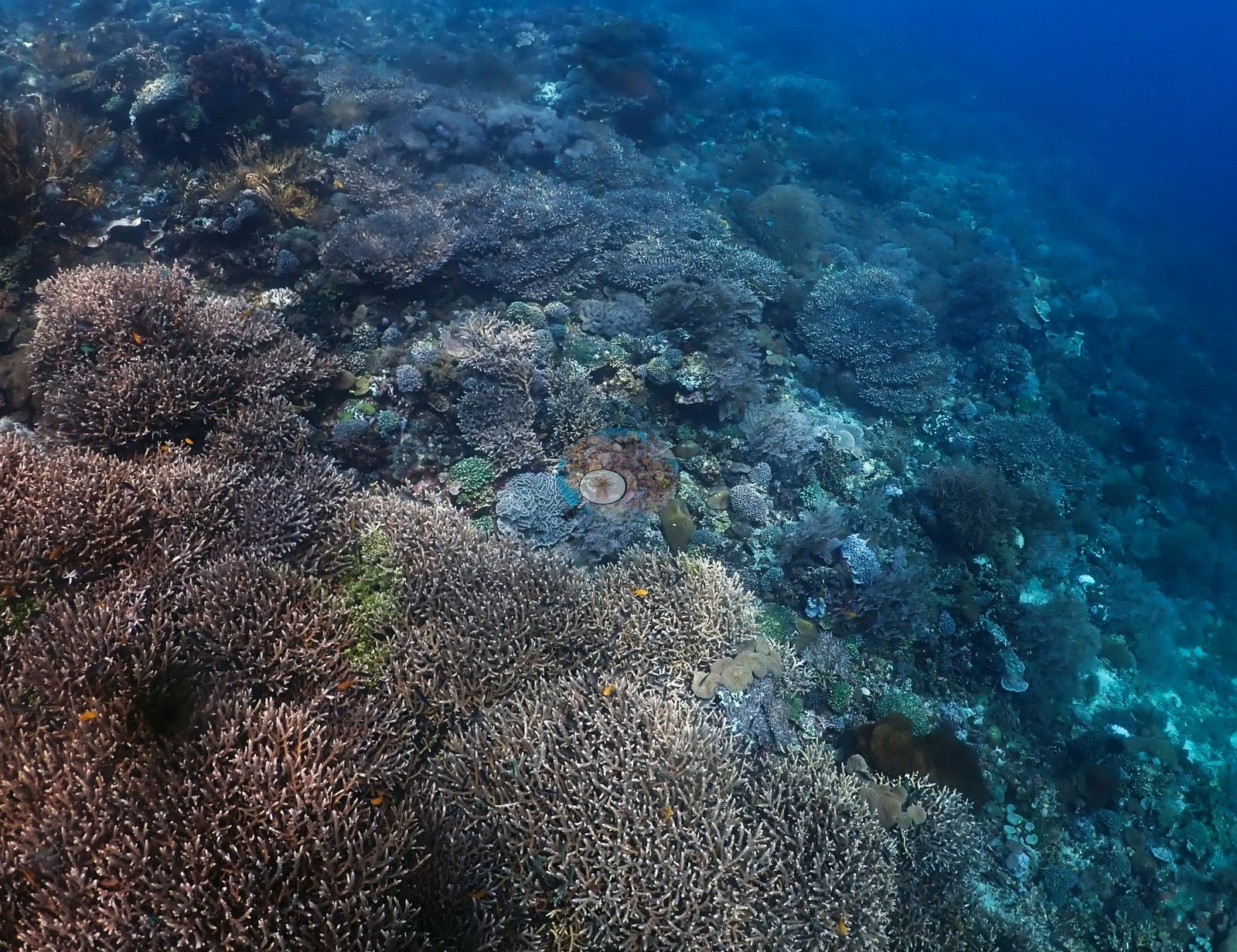
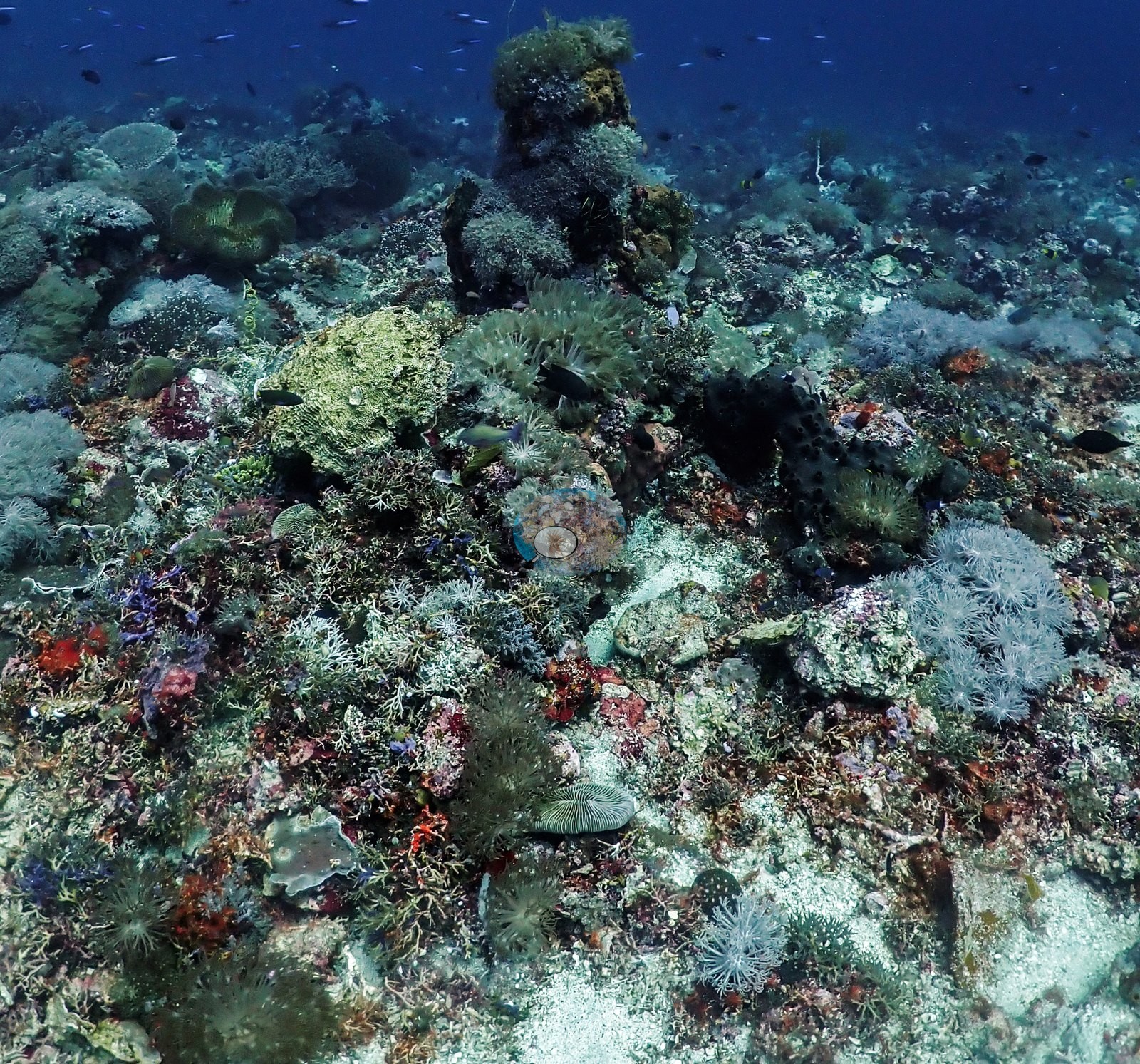
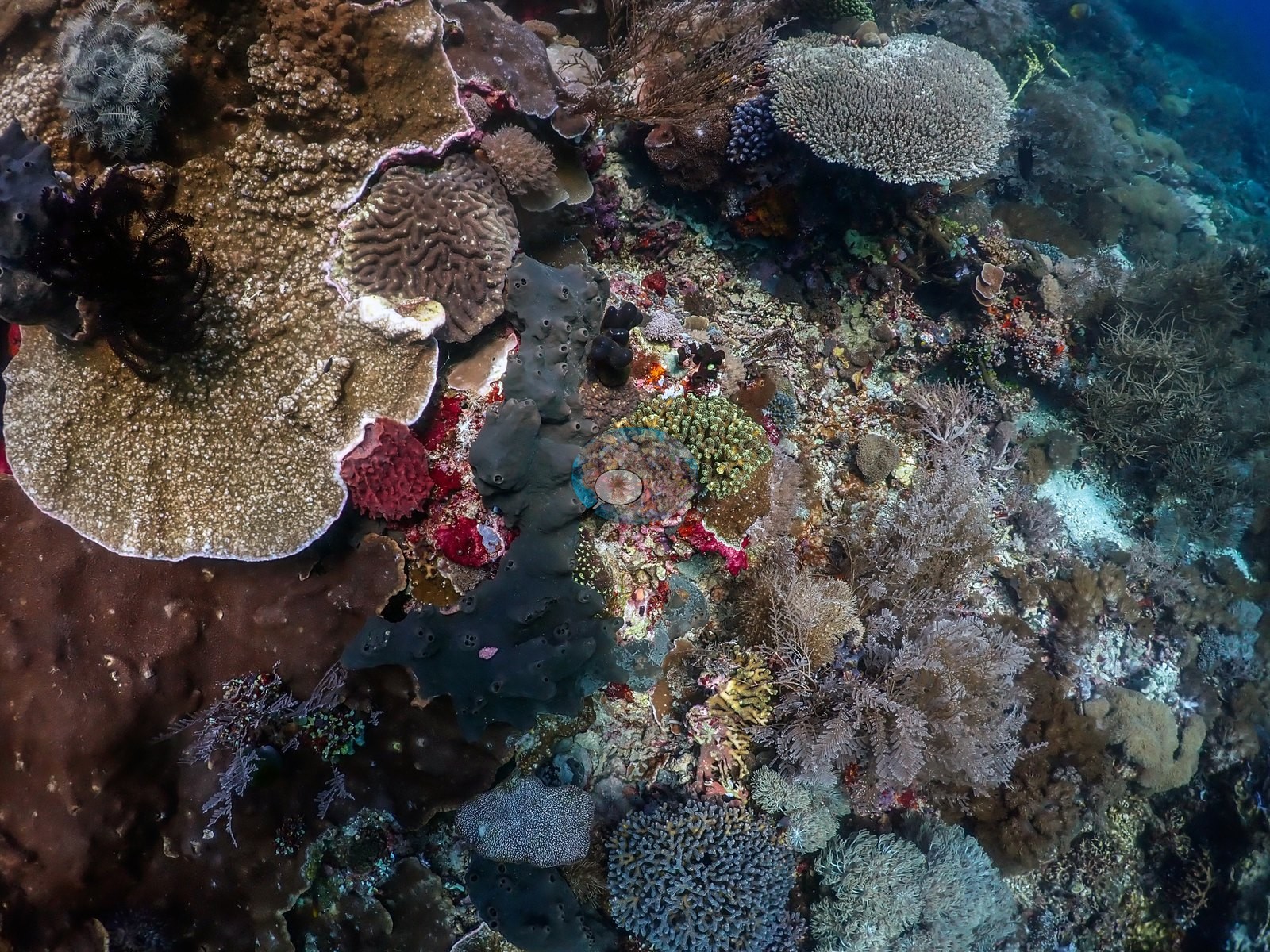
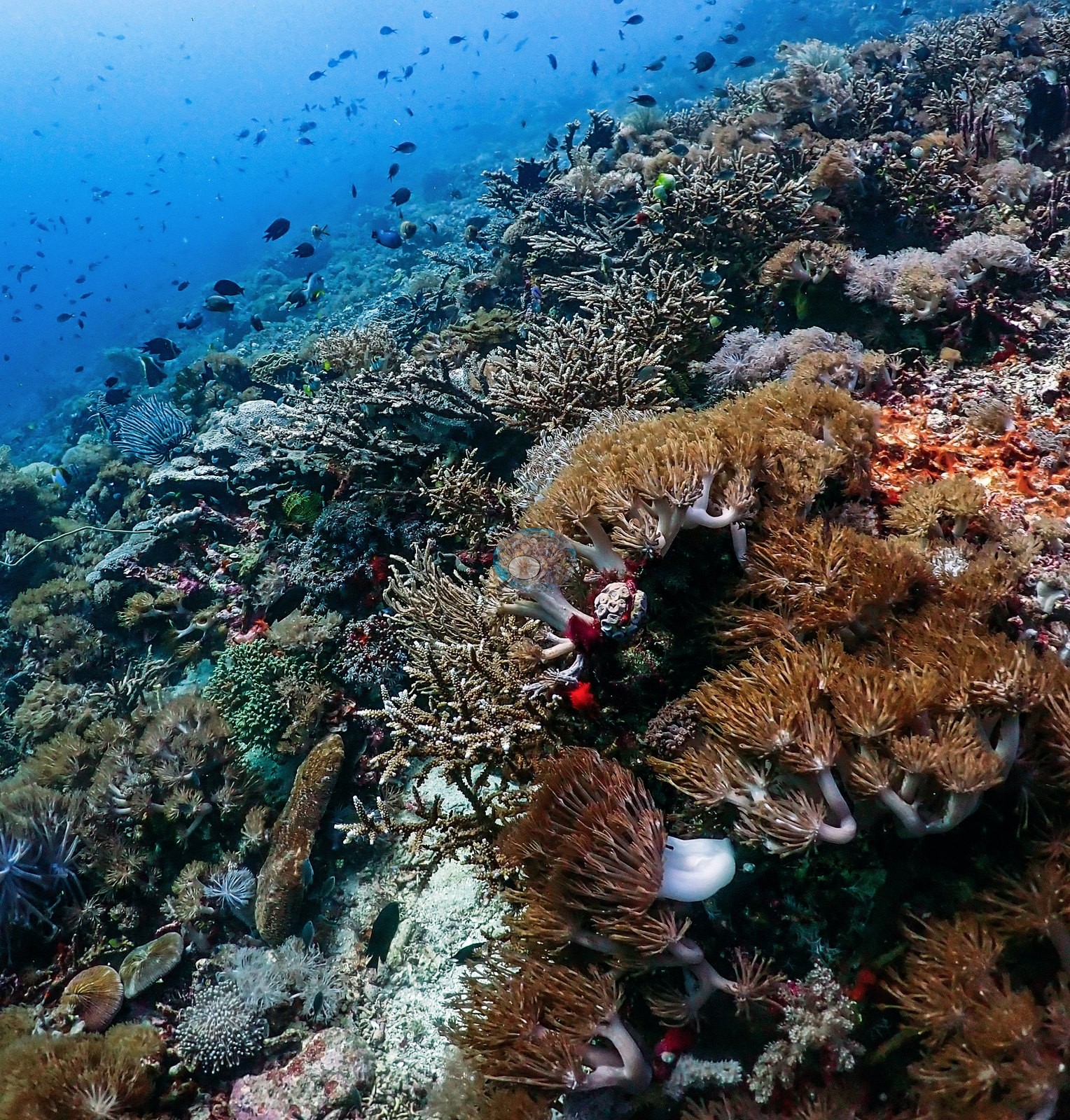
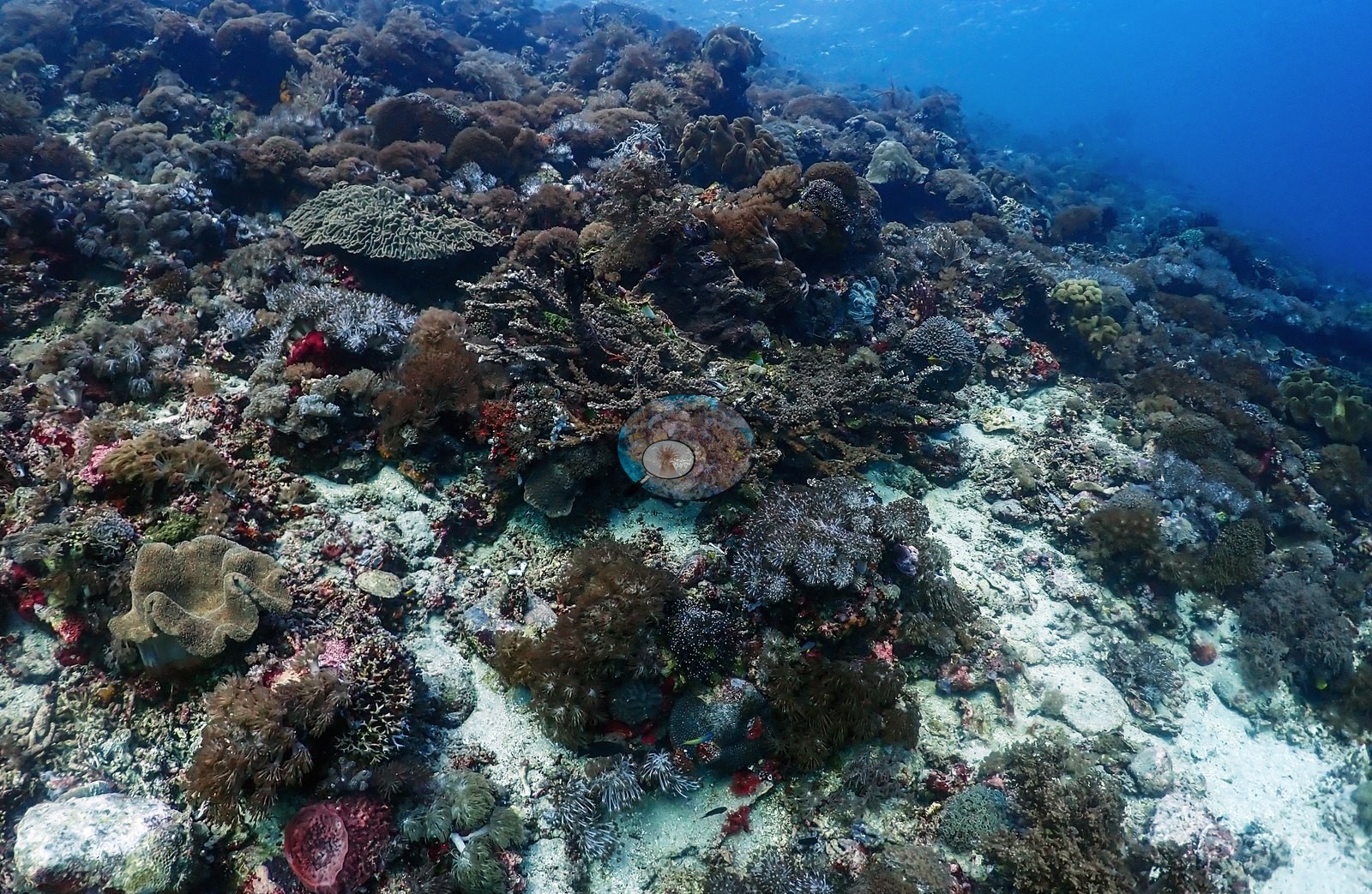
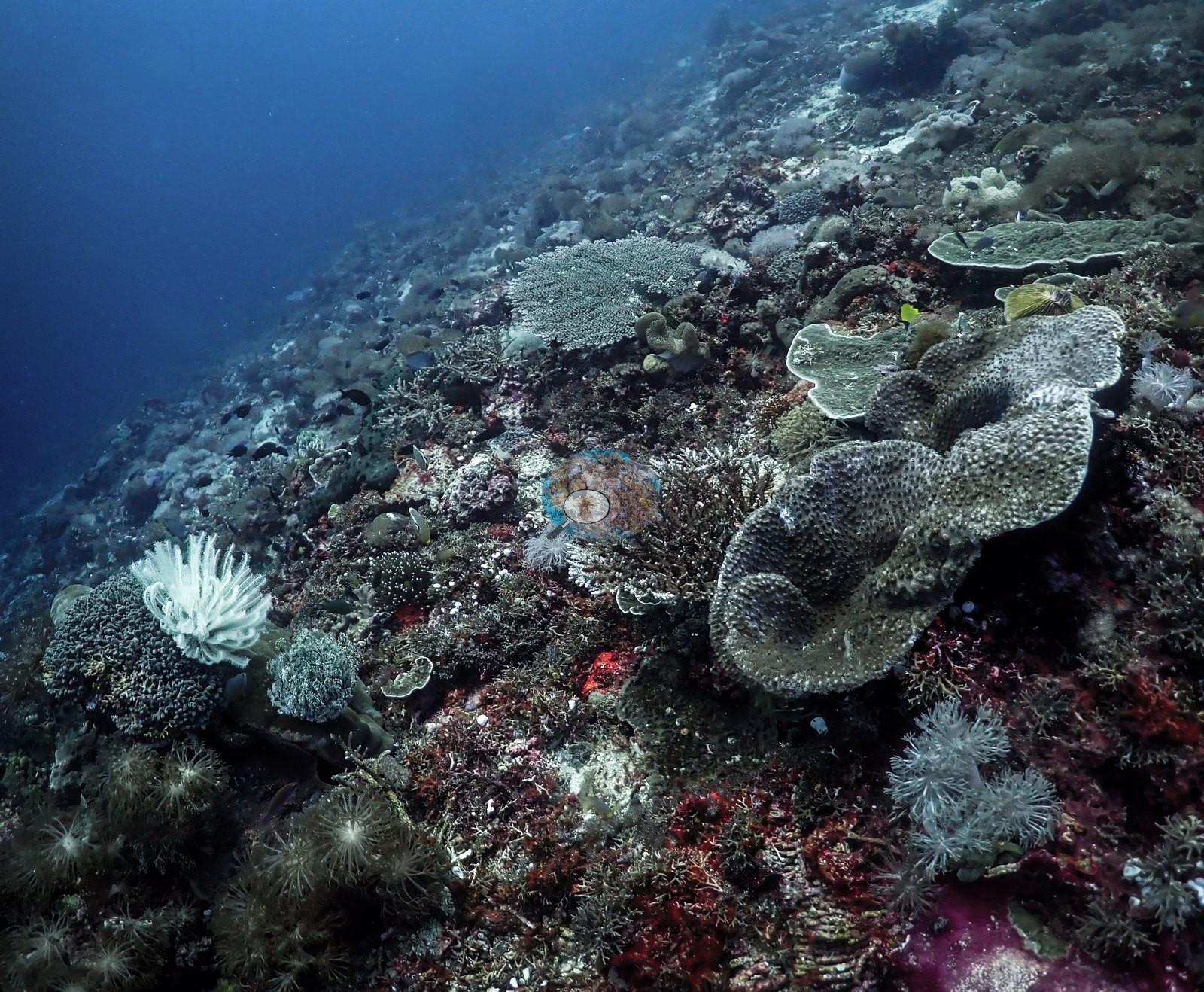
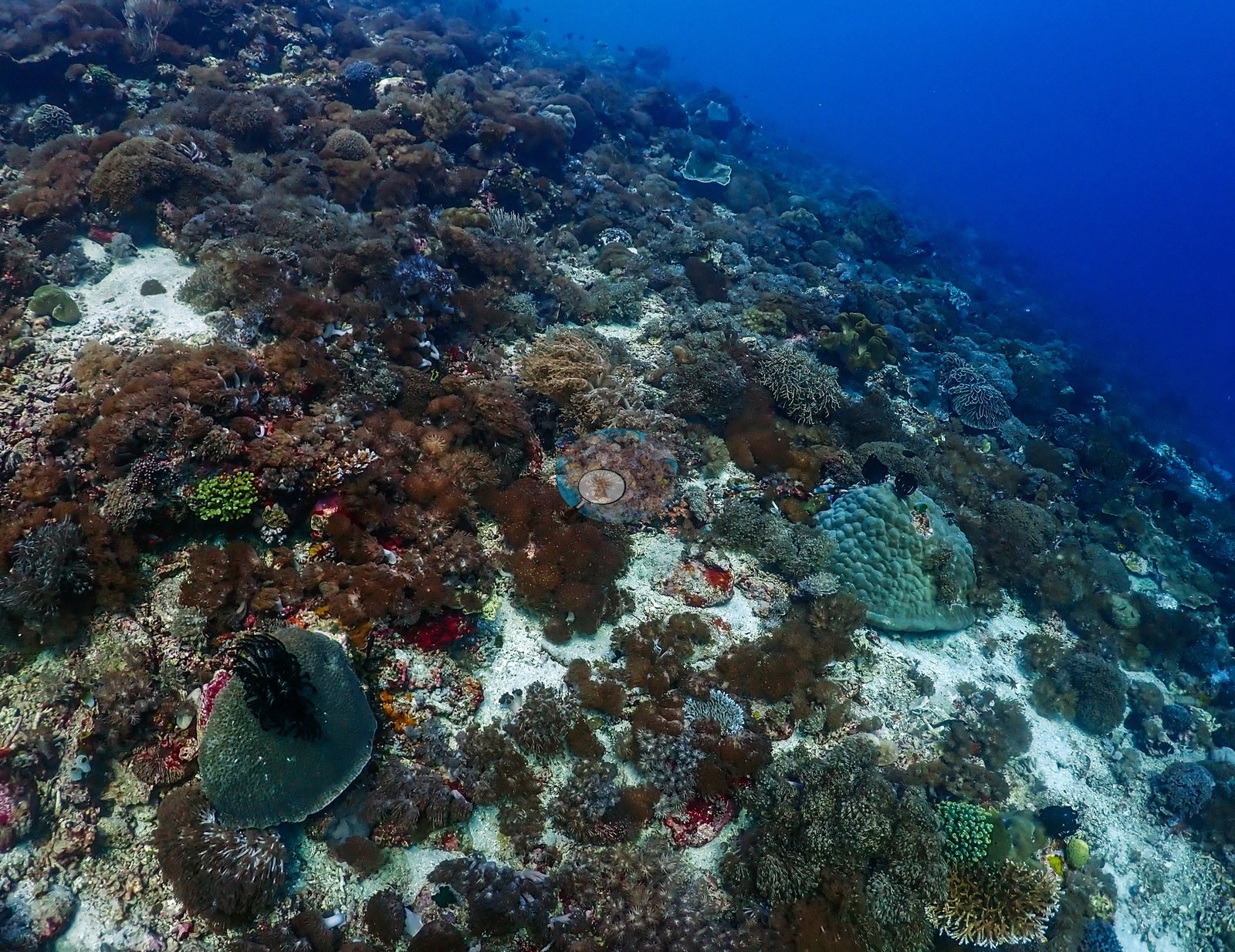
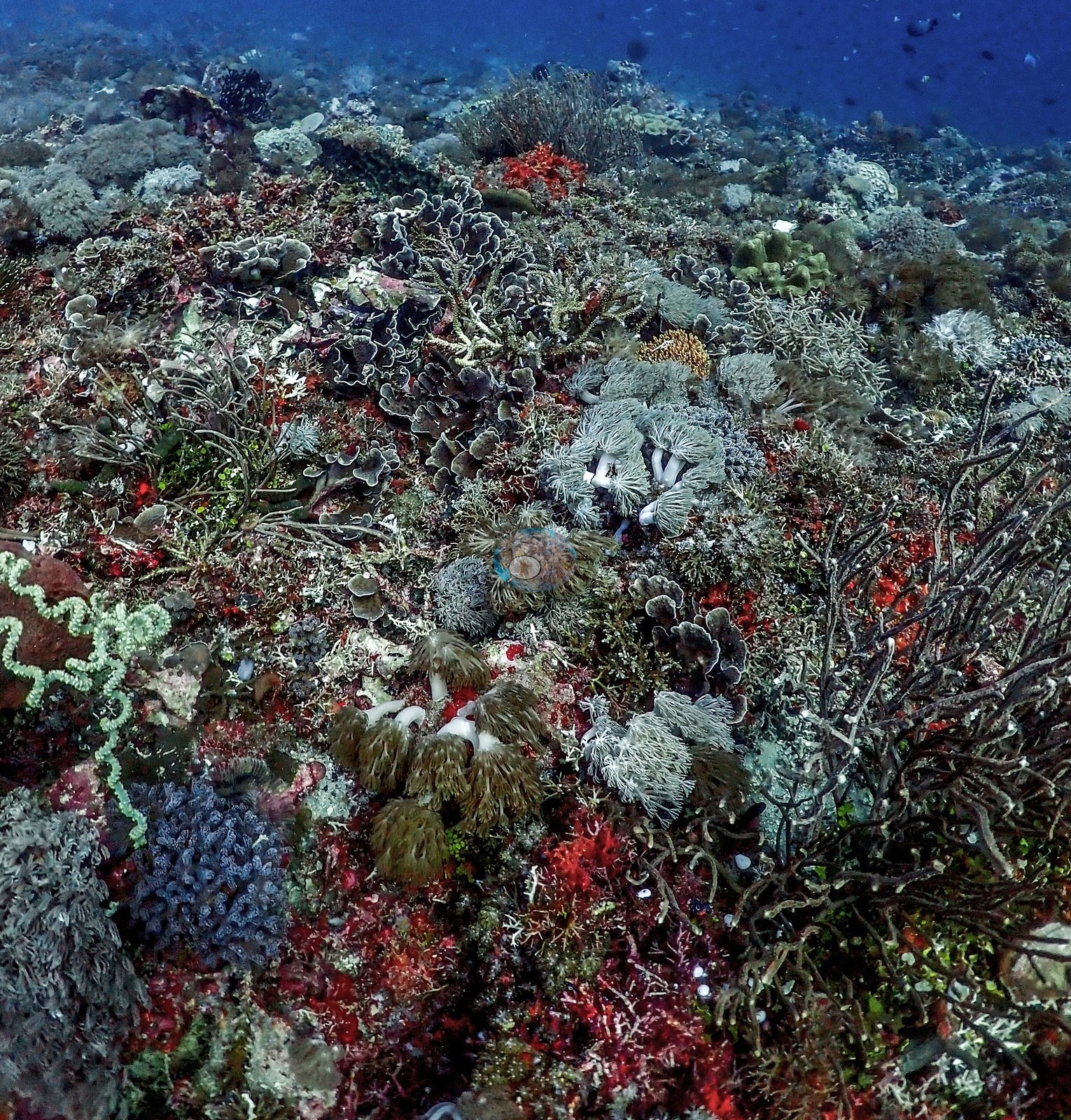
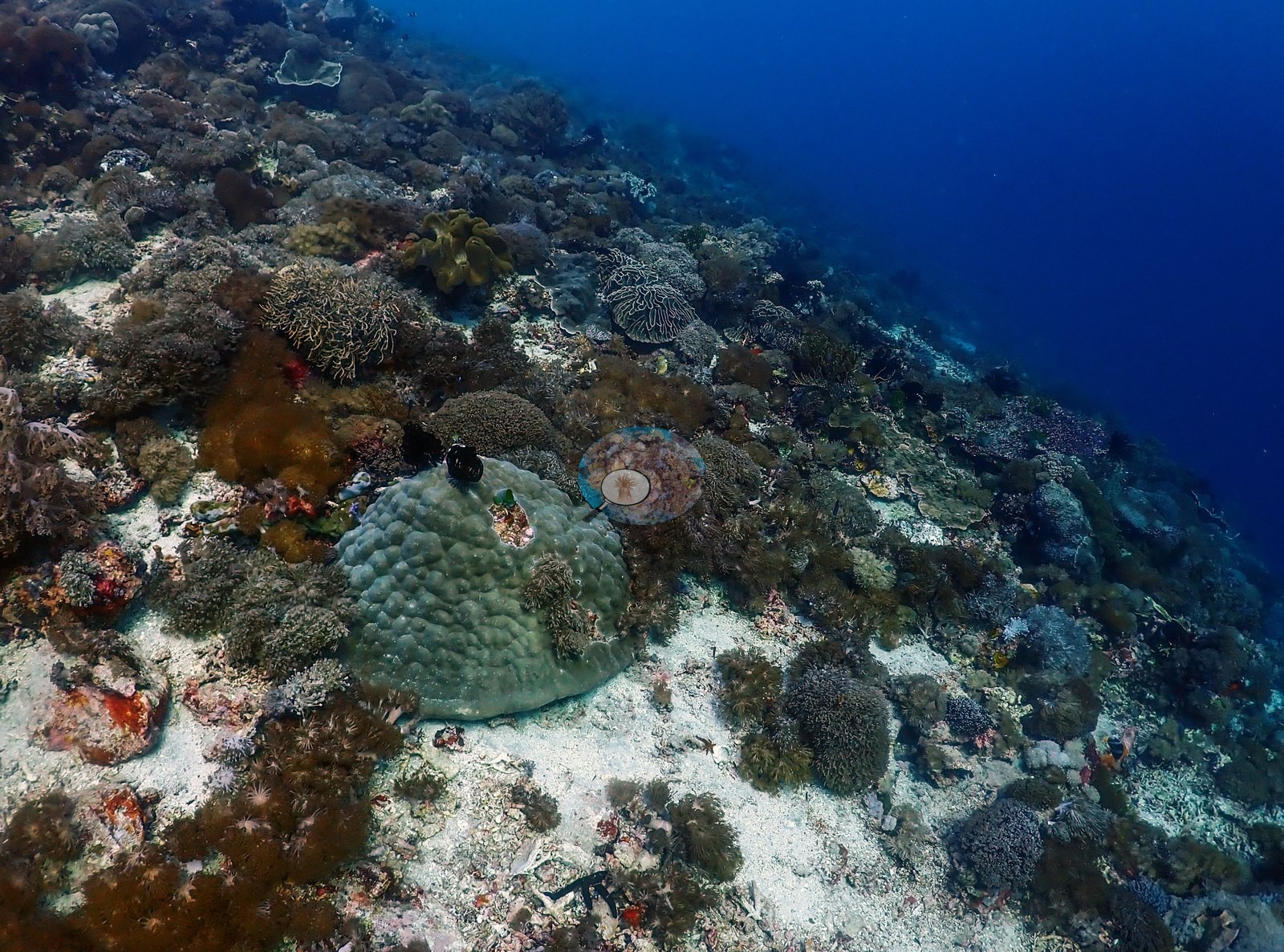
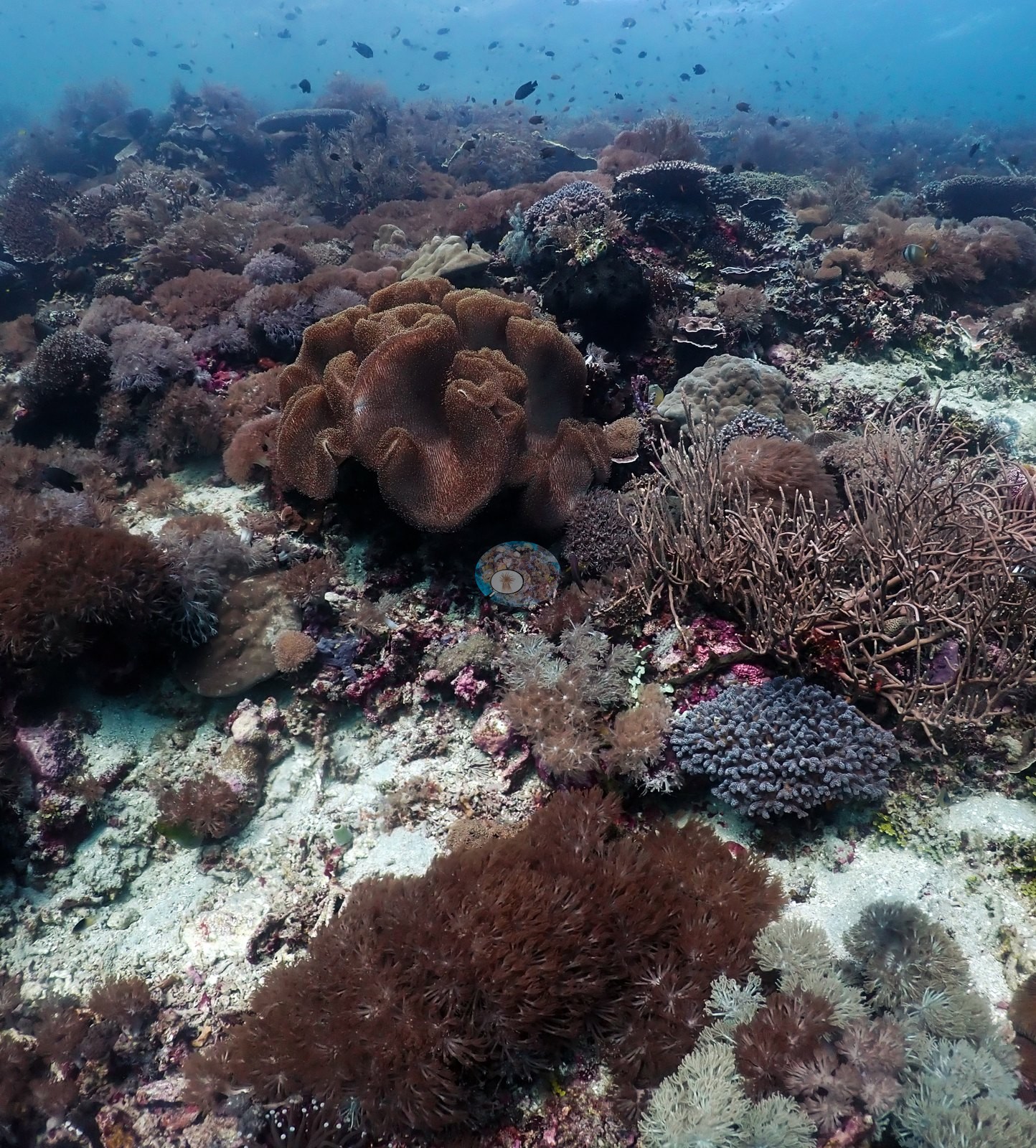
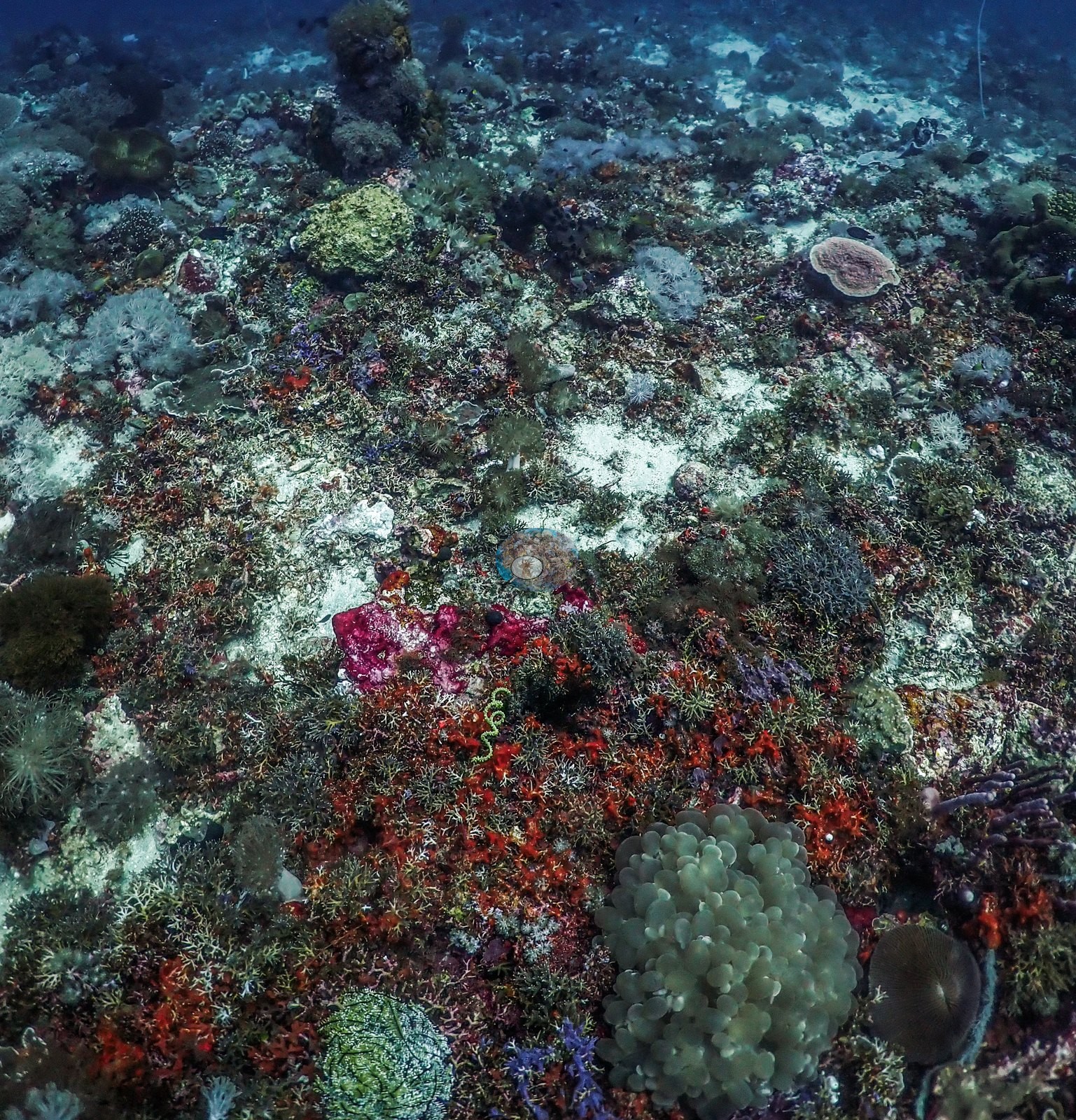
East Nusa Tenggara (NOAA CRW virtual station) · Lesser Sunda ecoregion mean=6.9°C-heating weeks Alor and the Pantar Strait sit in a zone of exceptionally strong upwelling, which holds these reefs several degrees cooler than NOAA’s satellite-derived figures imply. Read the heat-stress numbers here as a regional-scale indication, not as this reef’s own temperature history.A steep, structurally complex Alor slope with three distinct zones: a deeper band of plating corals and mushroom corals on rock splashed with red sponge, a mid slope with a near-continuous canopy of staghorn-type Acropora and leather corals, and a very diverse shallow terrace with massive Porites and bubble coral.
Lereng Alor yang curam dan rumit secara struktur dengan tiga zona yang jelas: pita yang lebih dalam berisi karang lembaran dan karang jamur di atas batuan yang berbercak spons merah, lereng tengah dengan kanopi hampir menyambung dari Acropora bertipe bercabang dan karang kulit, serta teras dangkal yang sangat beragam dengan Porites masif dan karang gelembung.
Terjemahan ringkasan ini oleh AI; versi bahasa Inggris yang berlaku.
Two other CRD dive sites within 5 km shown in orange — click a marker to open its page.
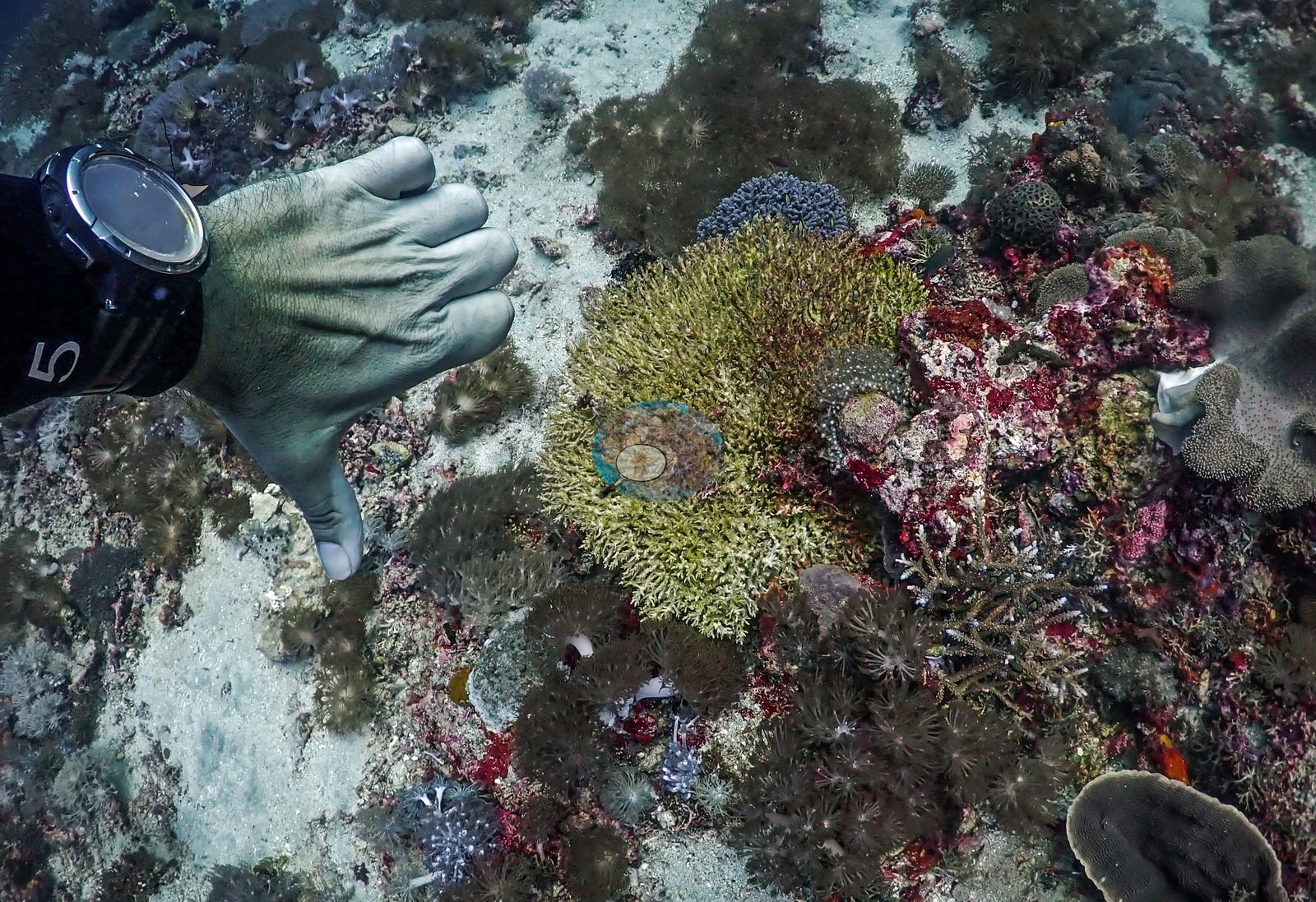
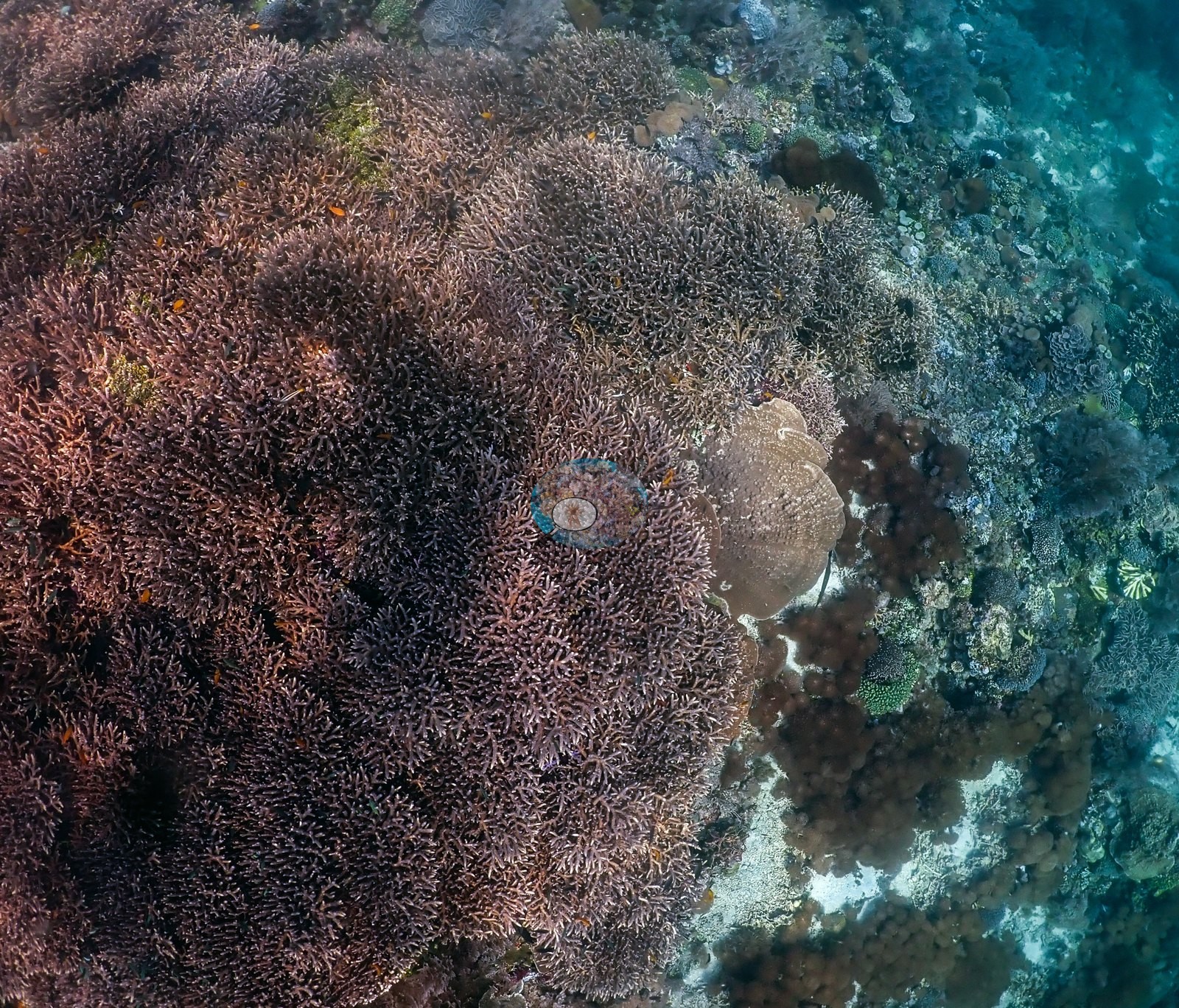
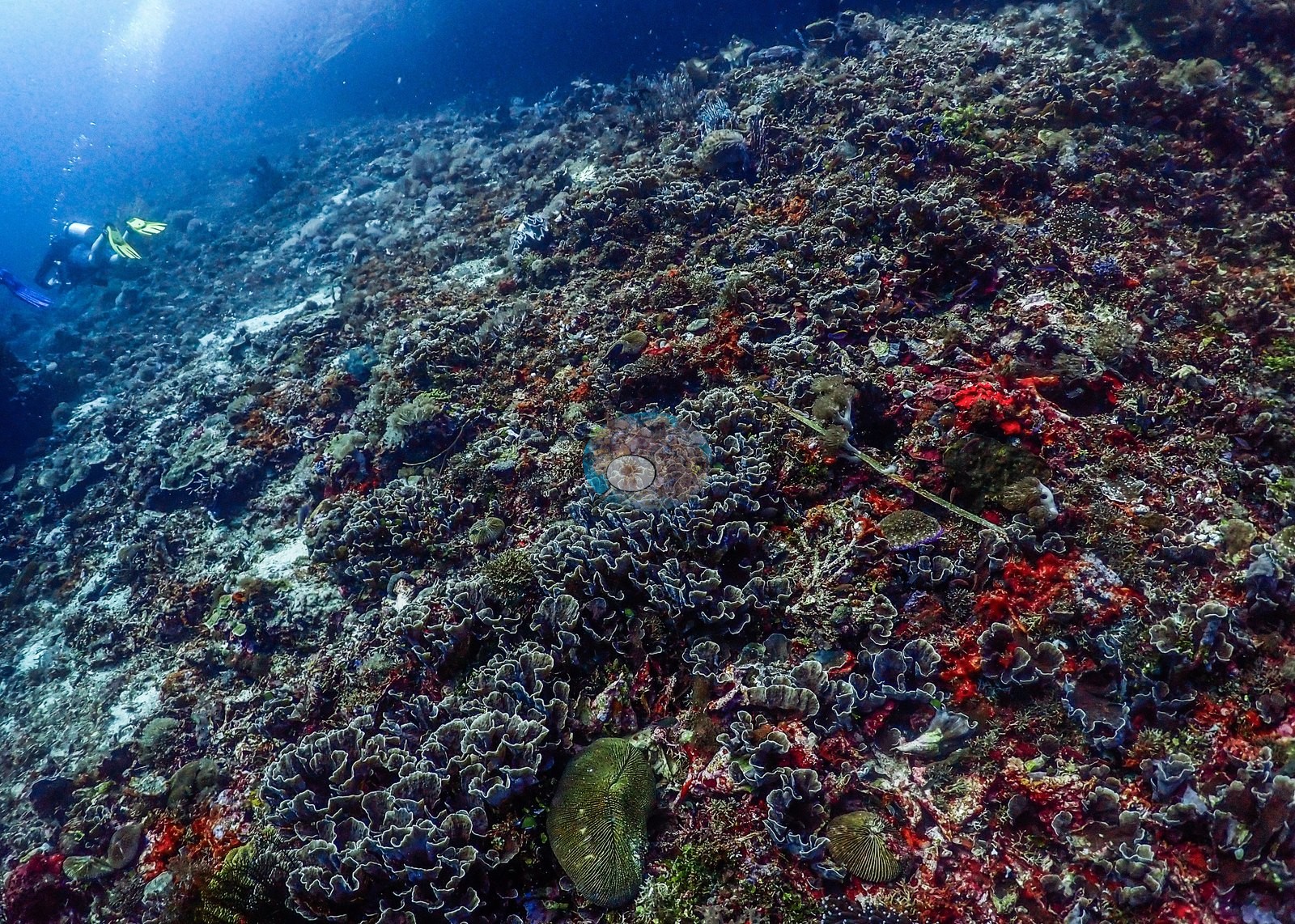
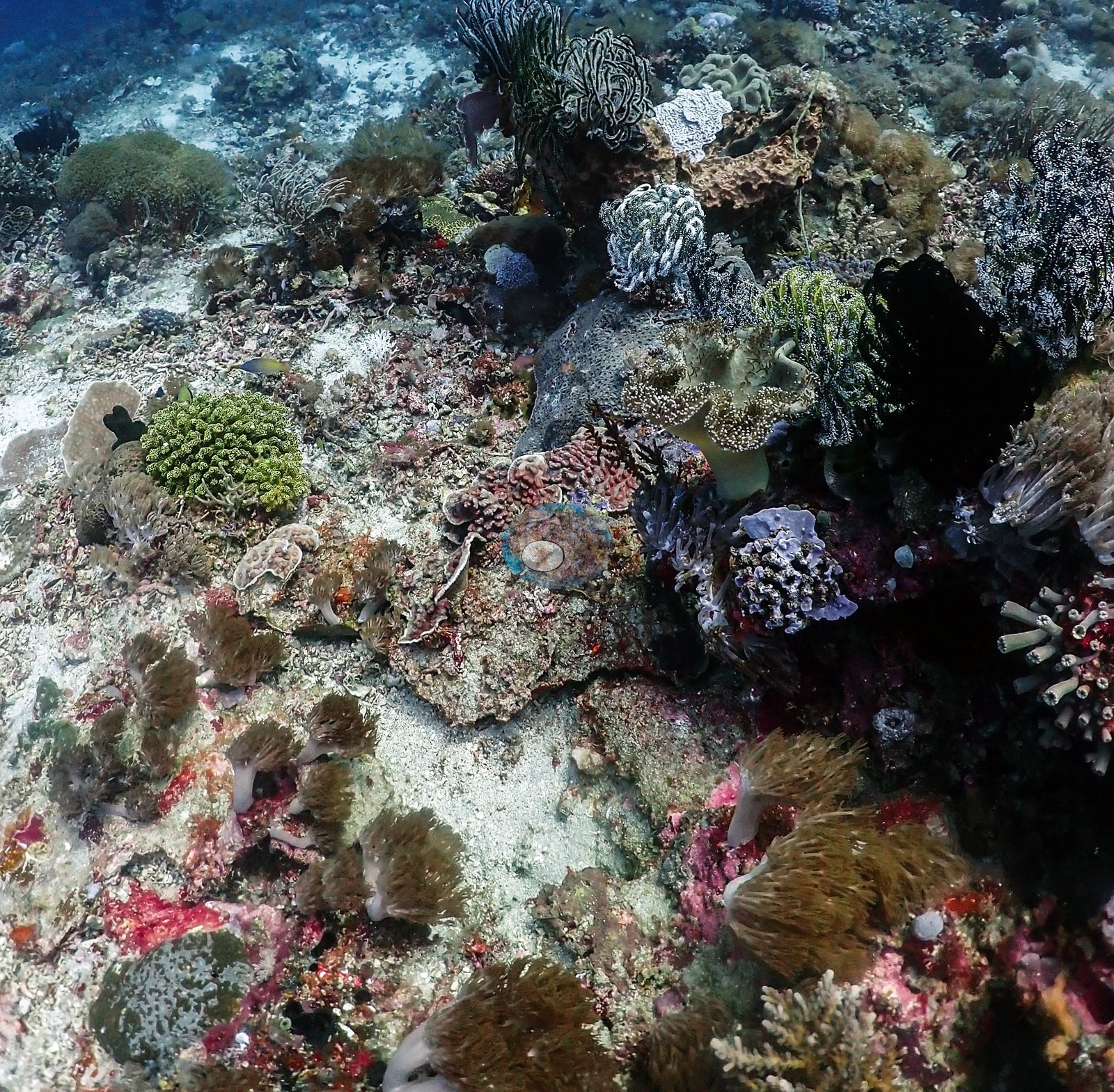
Site description
Setting
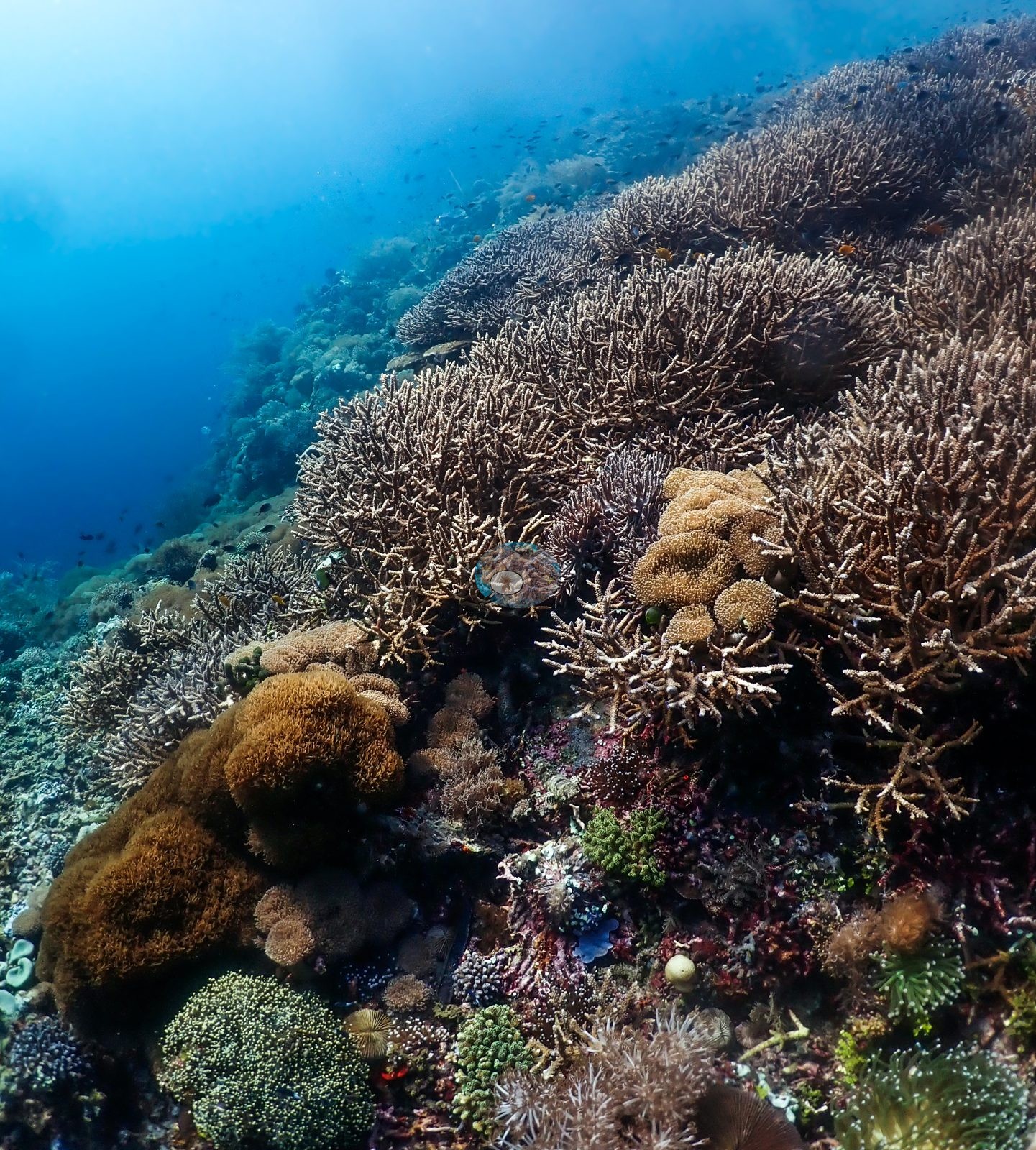
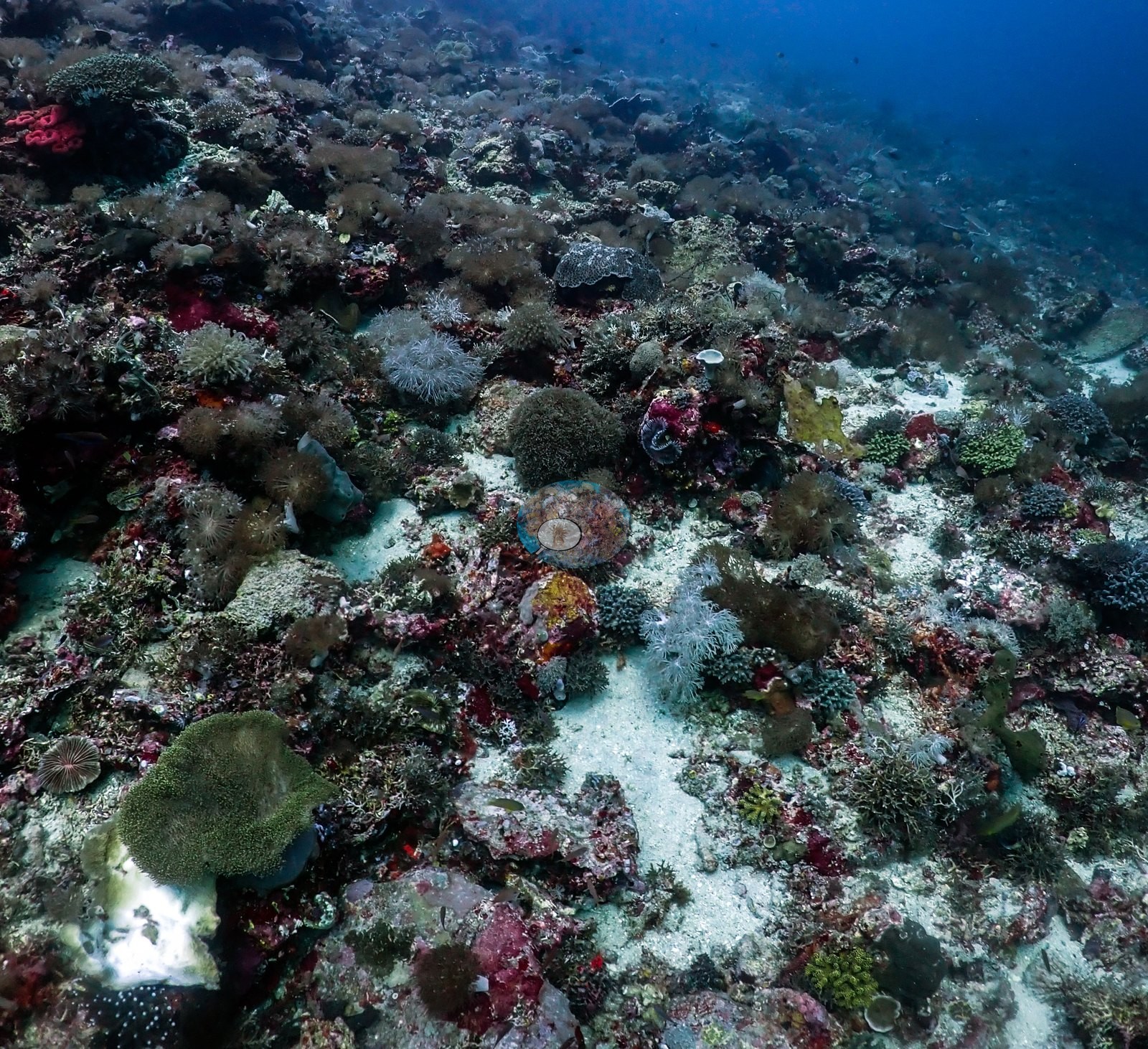
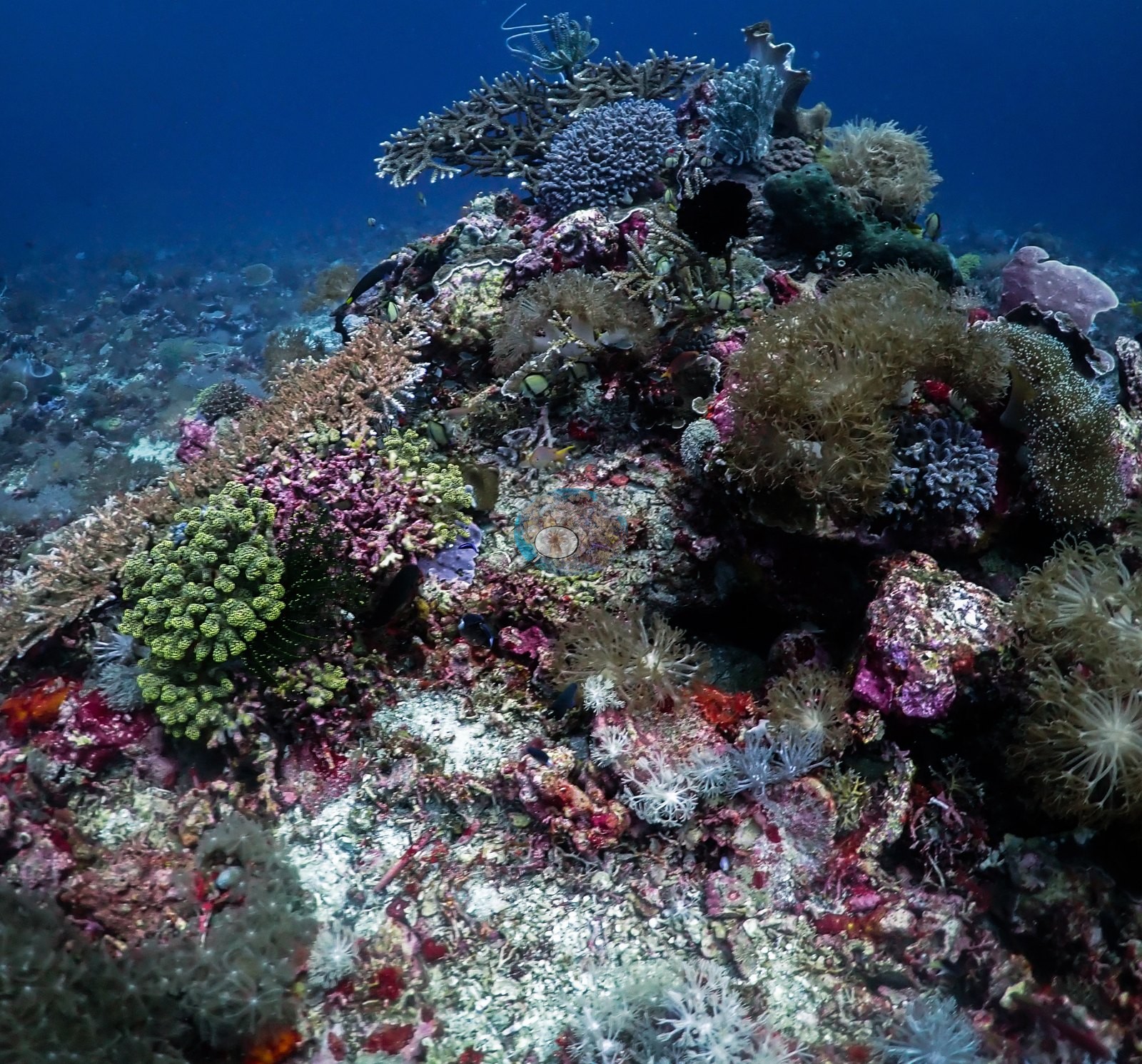
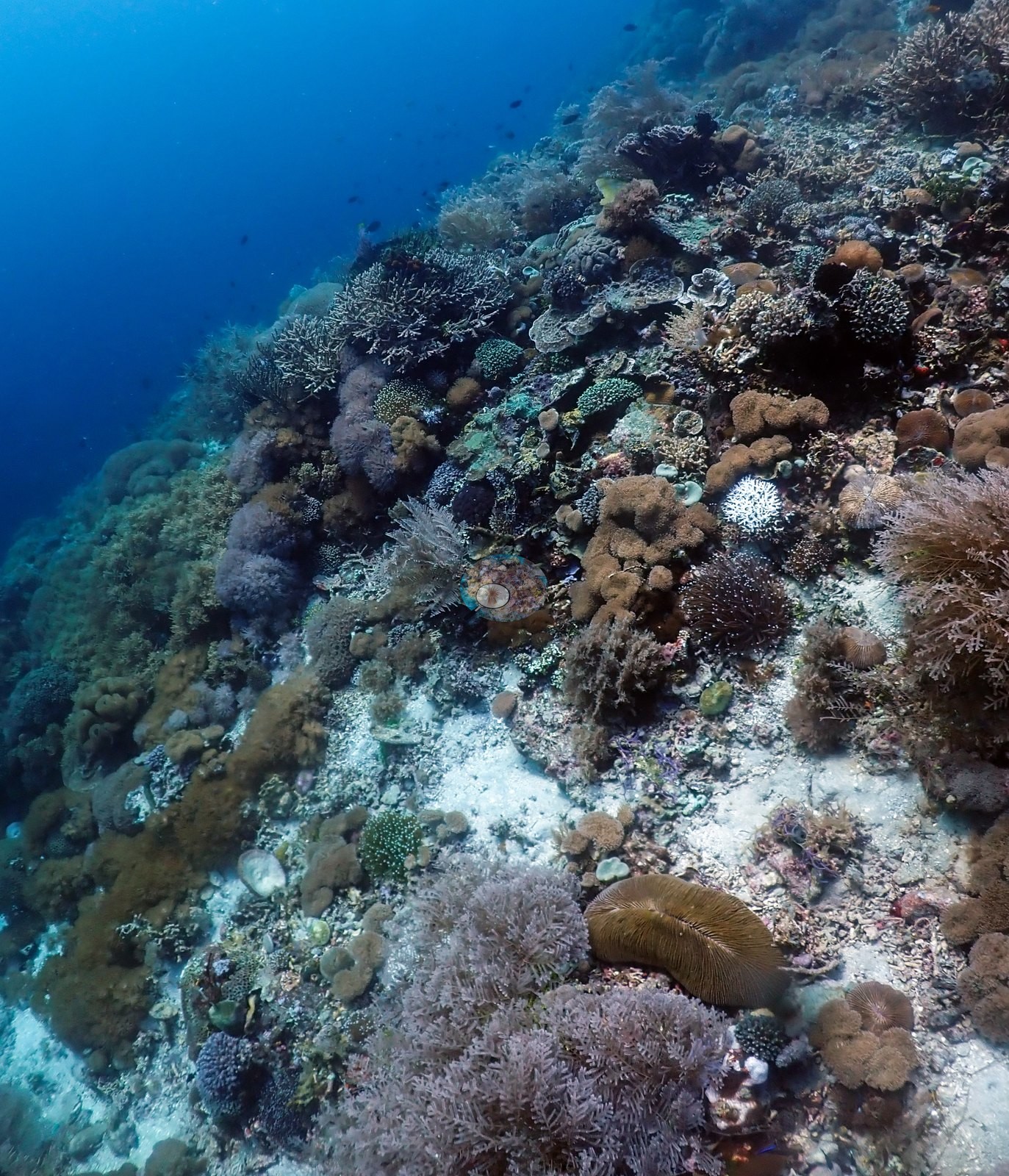
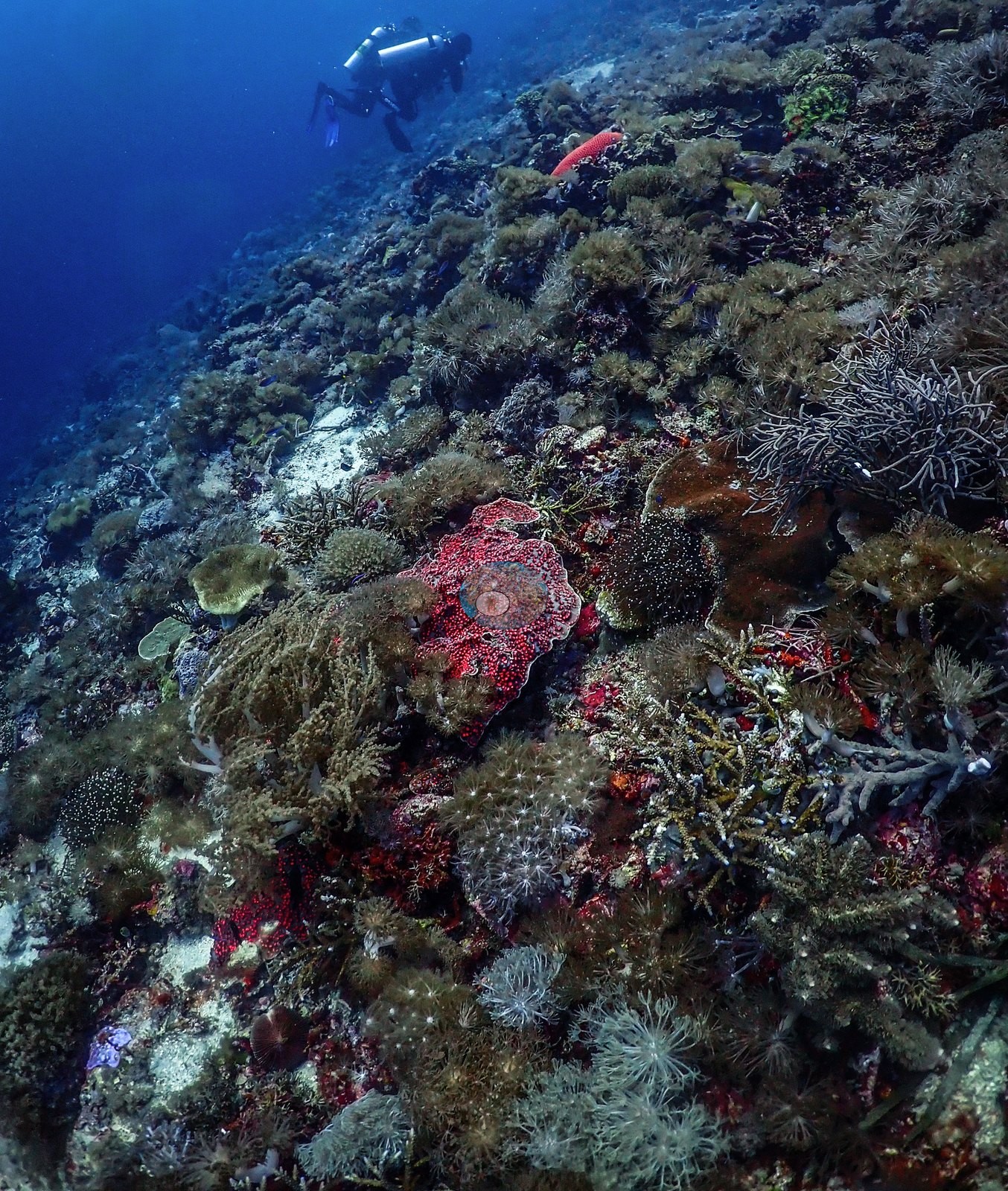
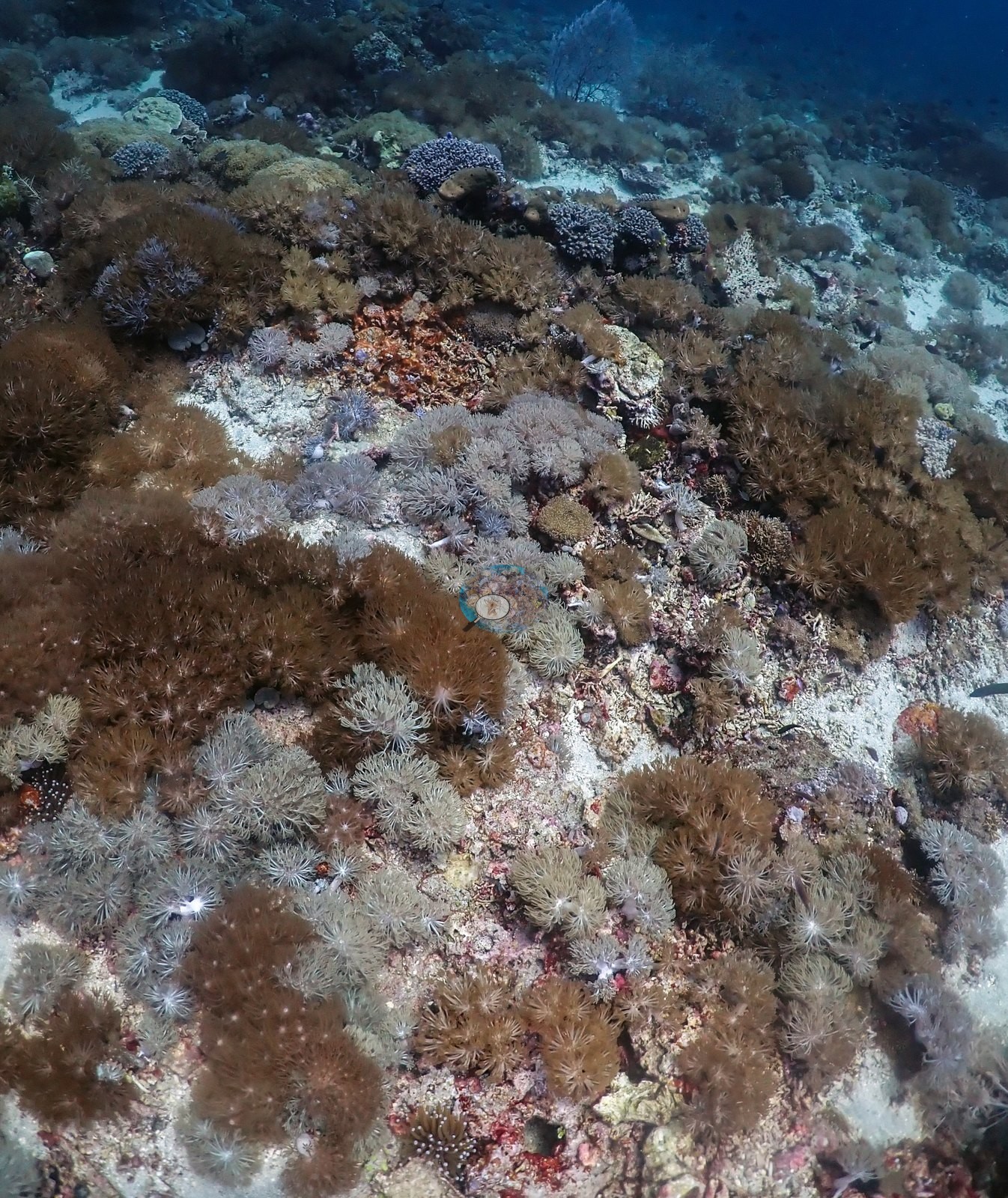
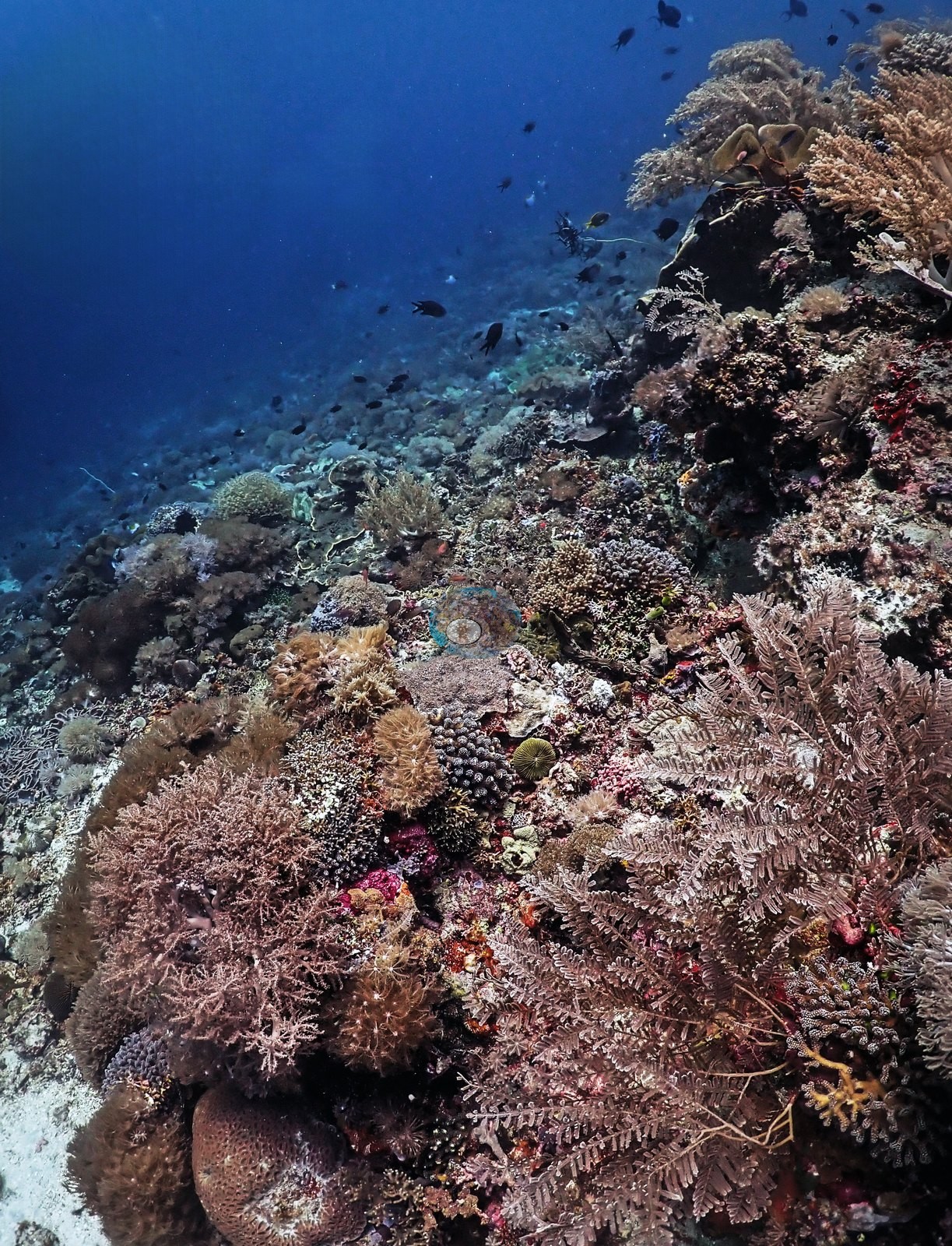
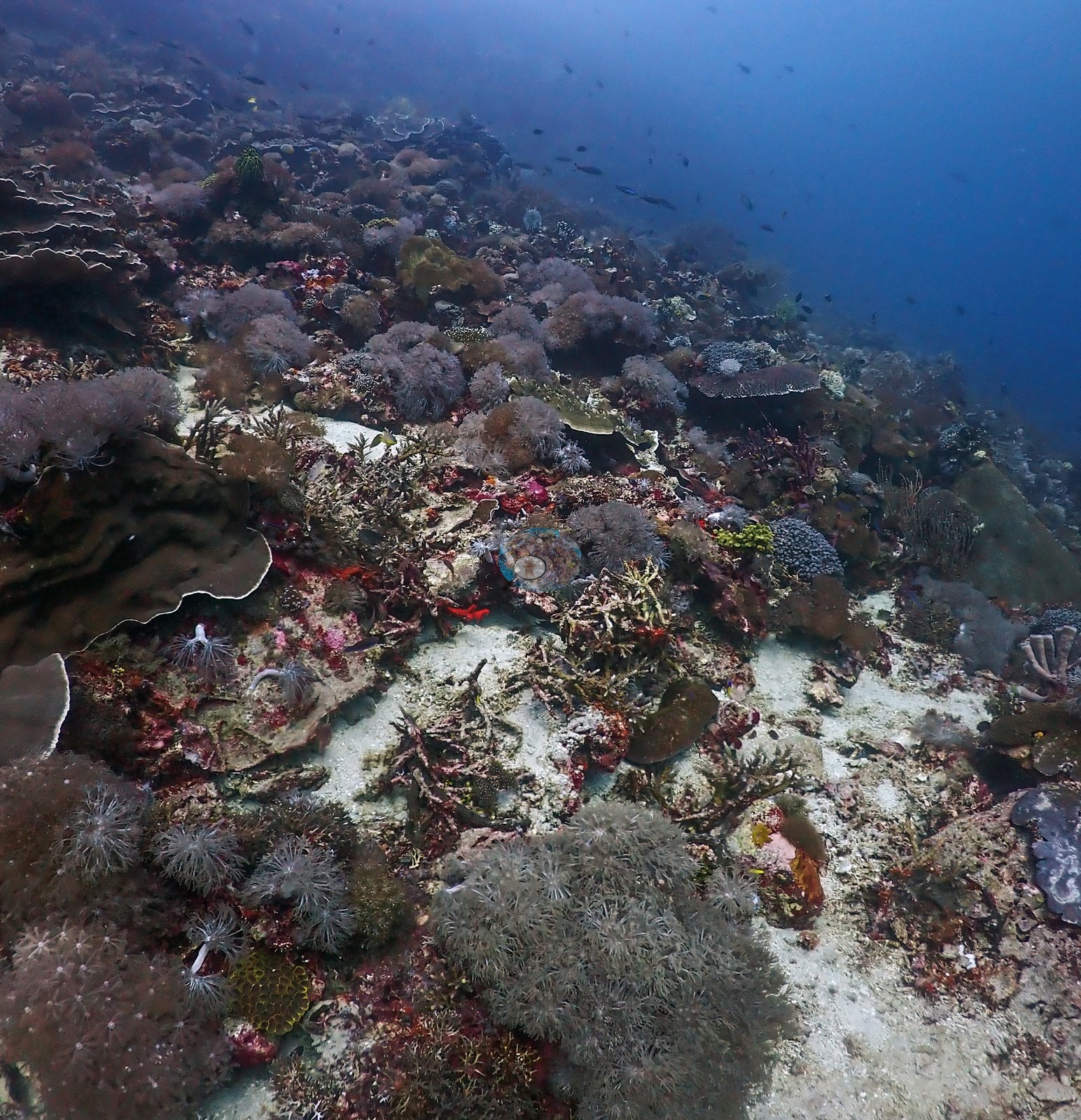
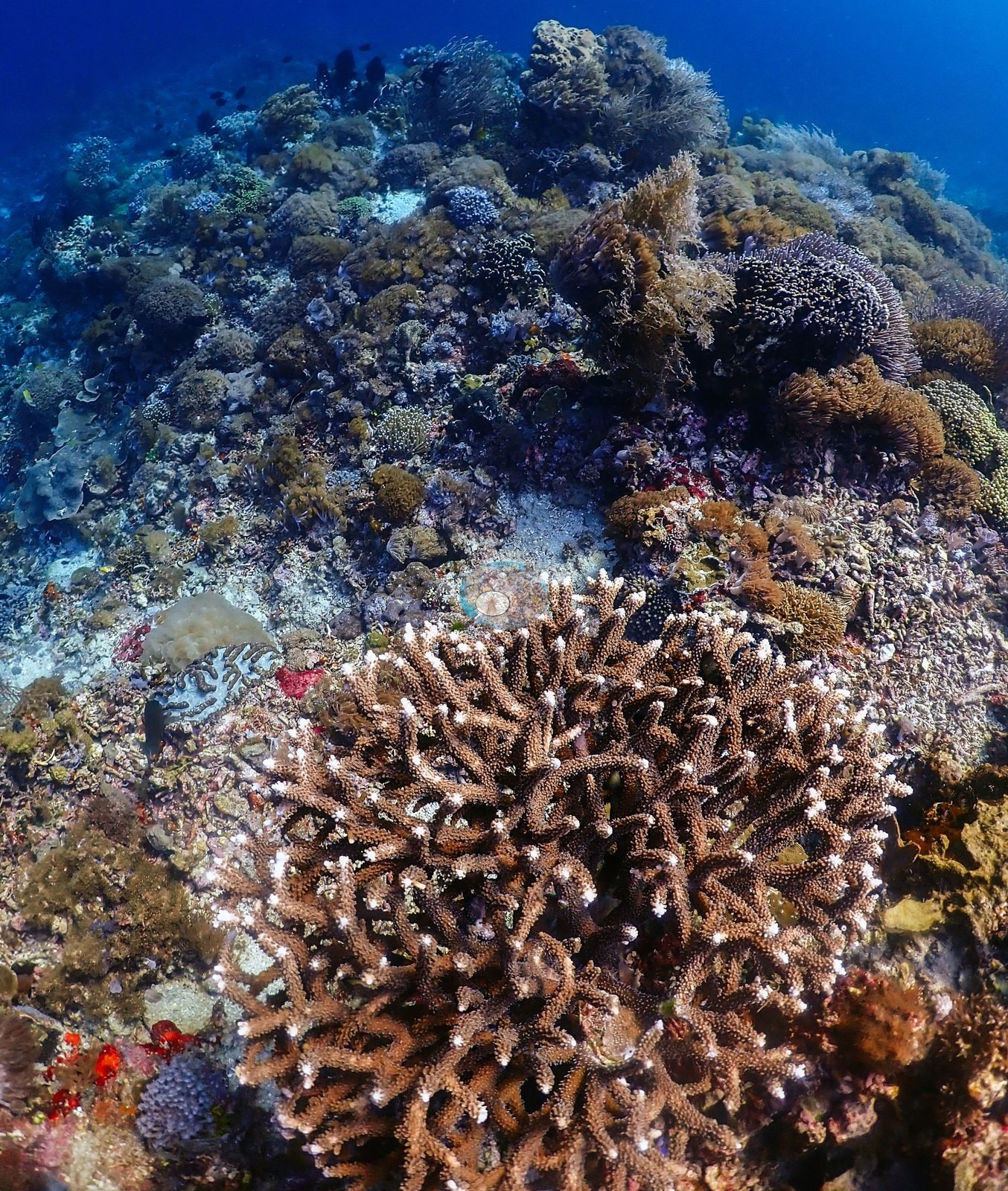
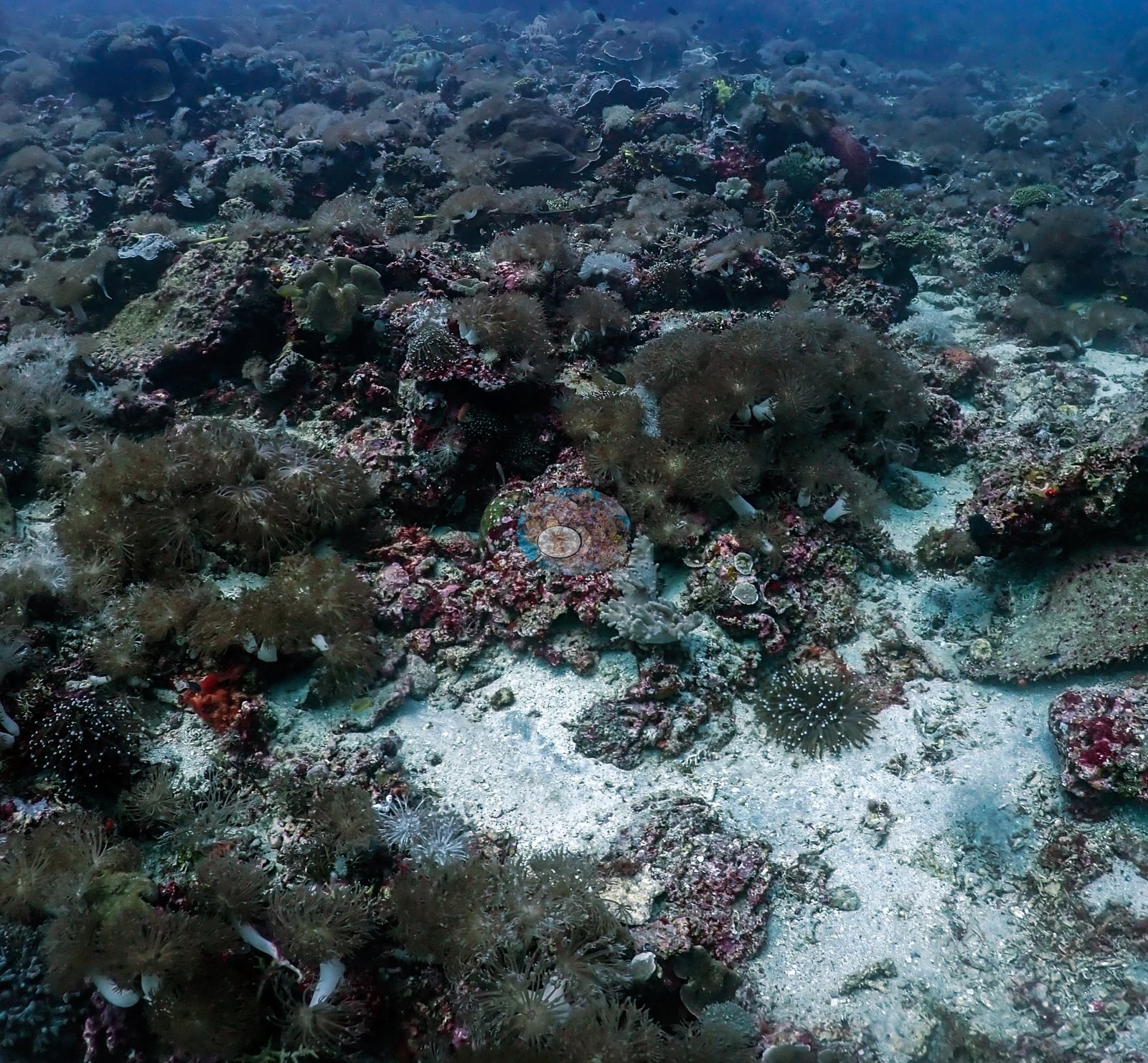
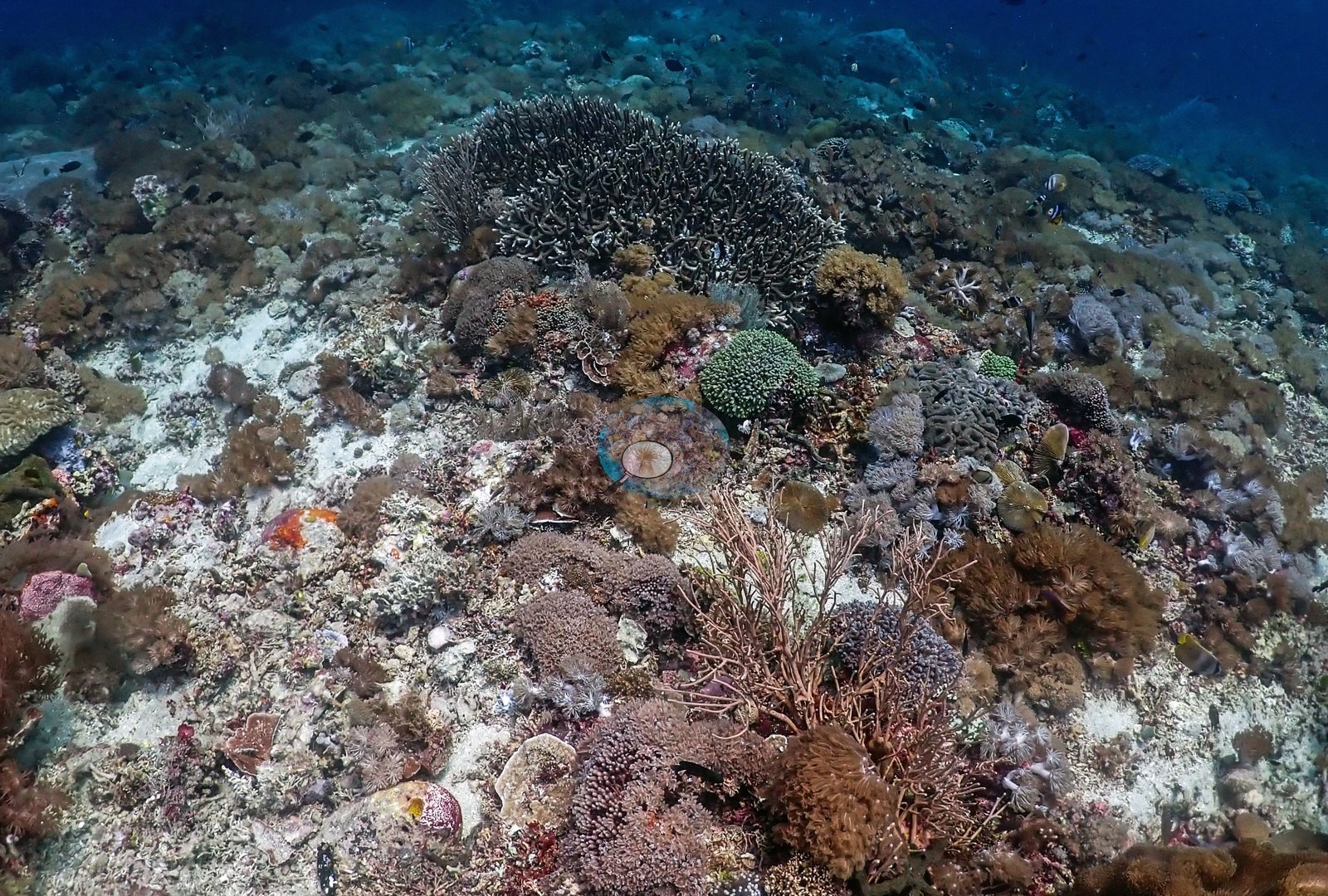
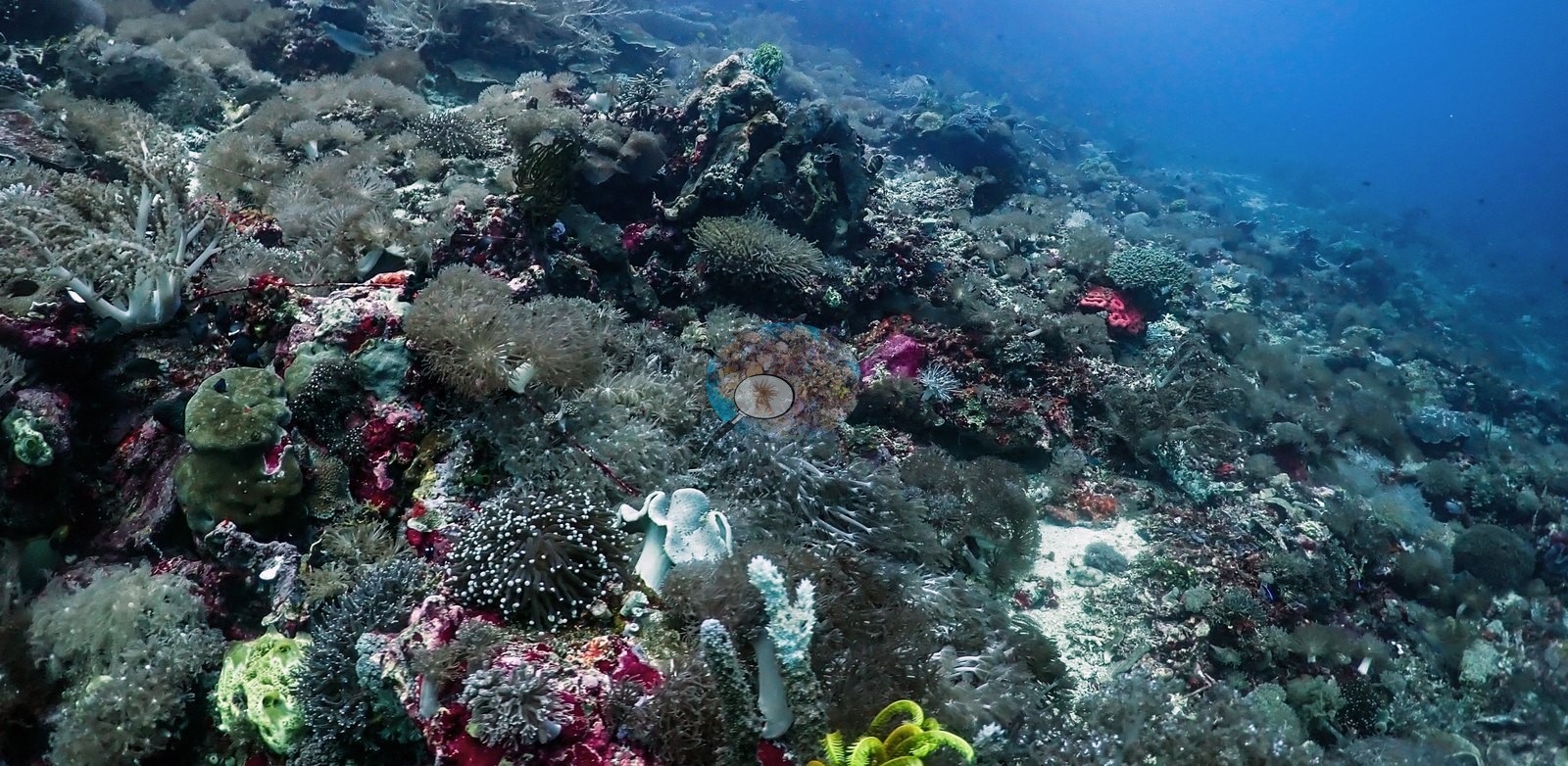
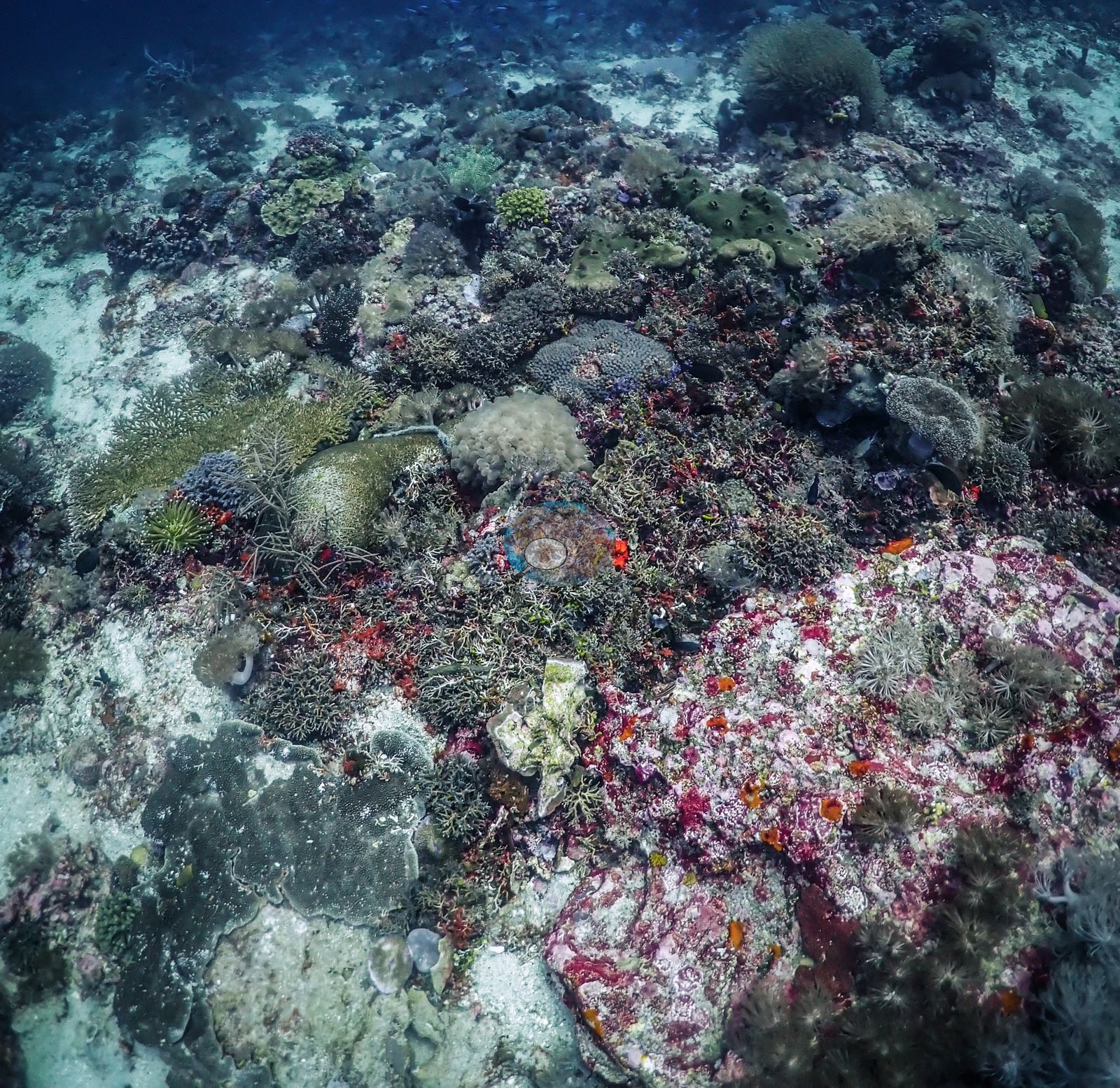
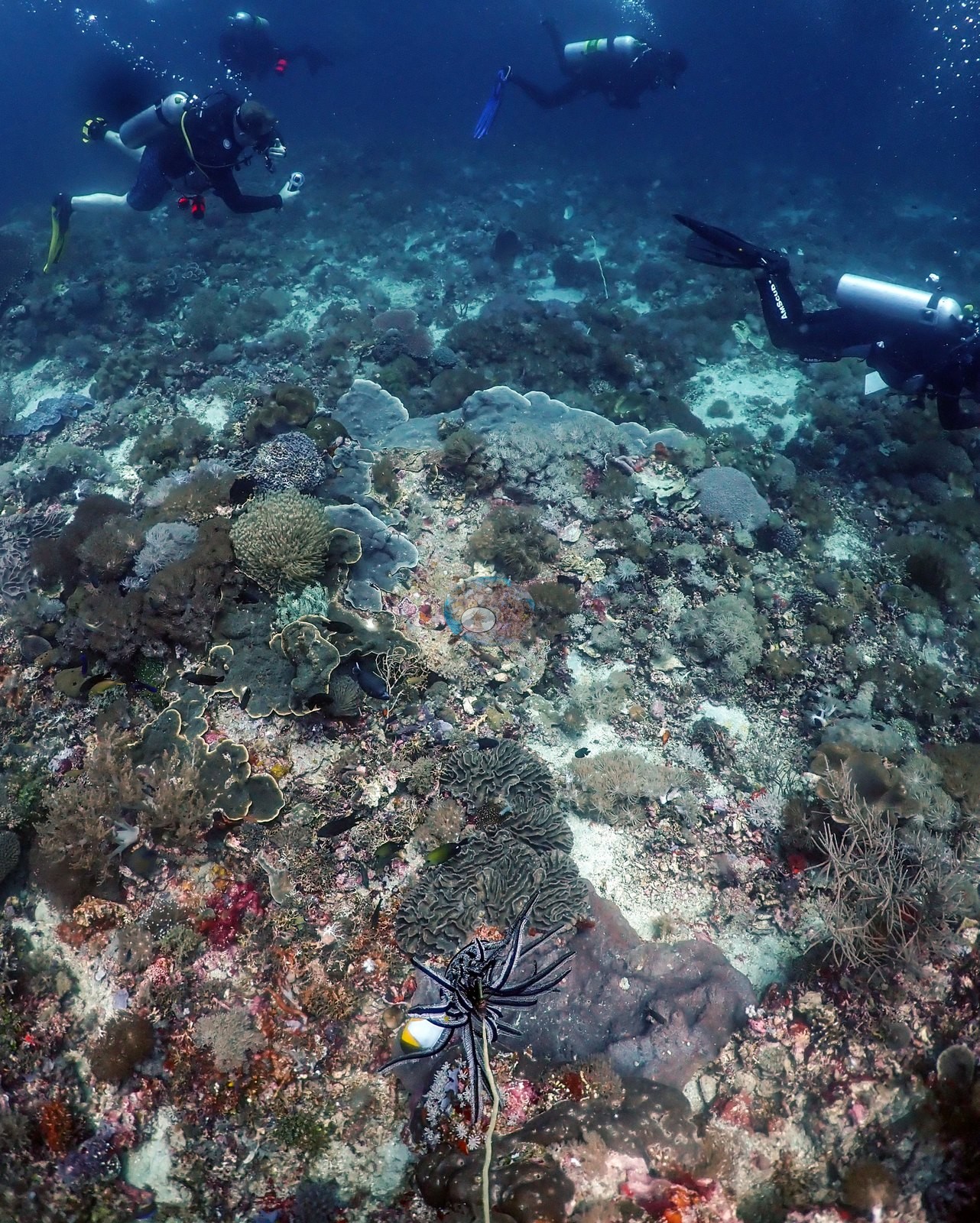
Alor Kecil, Goat Fence — one dive on 2026-07-28, worked from roughly 20 m up a steep, structurally complex slope into water shallow enough that the surface ripples fill the top of the frame. Visibility was good but the light drops off quickly down the slope, and the deeper frames are blue-shifted enough that color-dependent identifications there are weaker.
General benthic features
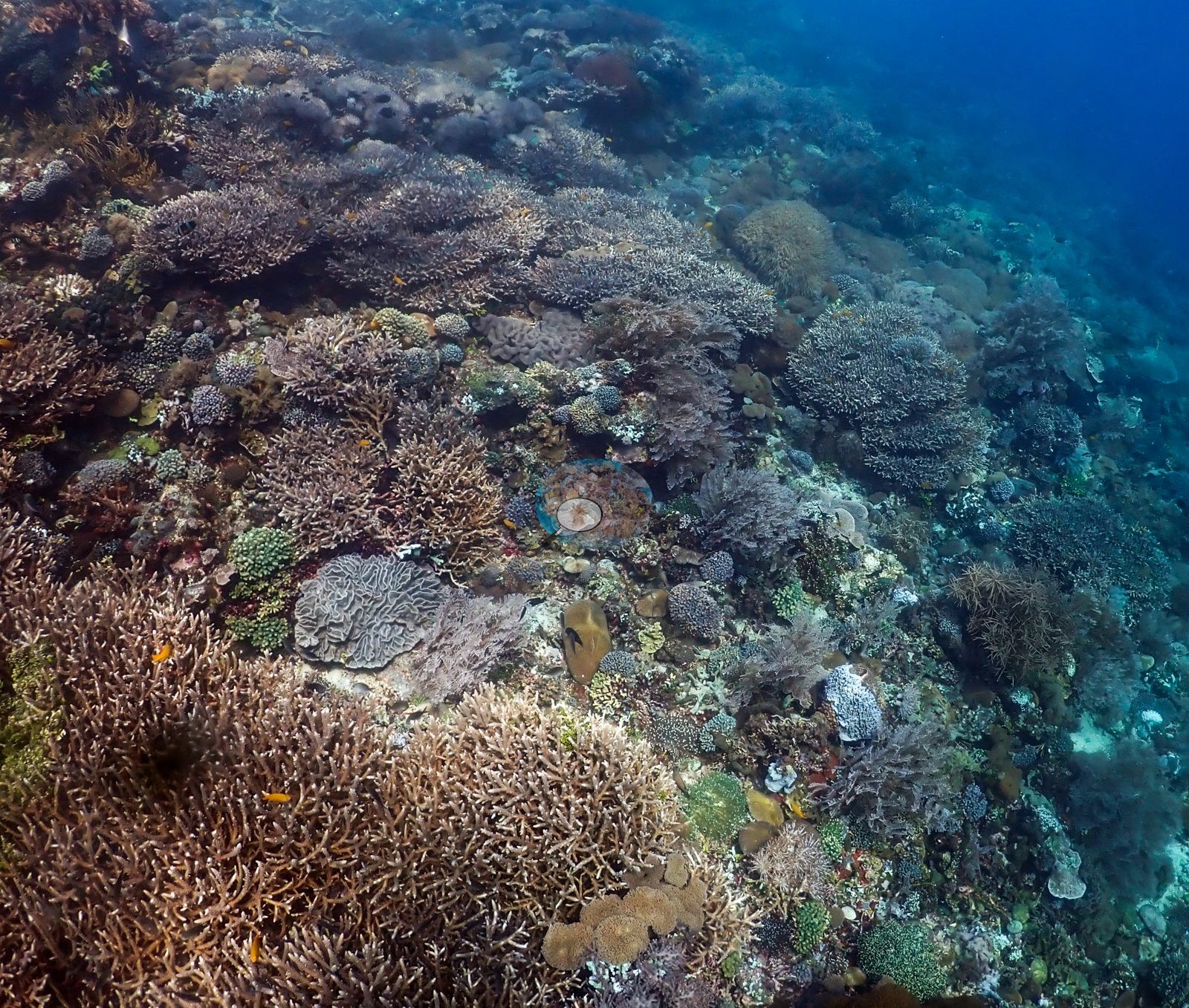
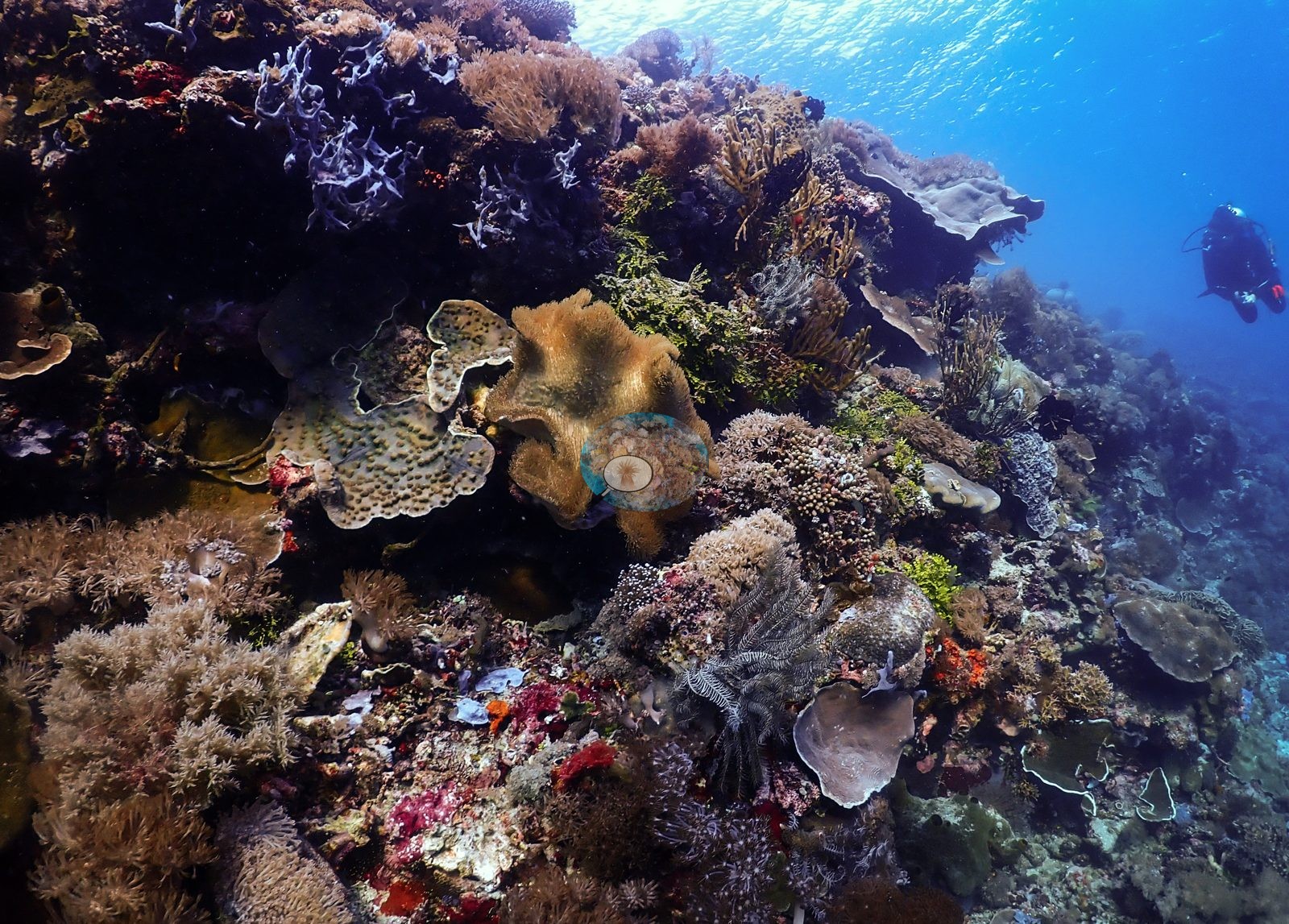
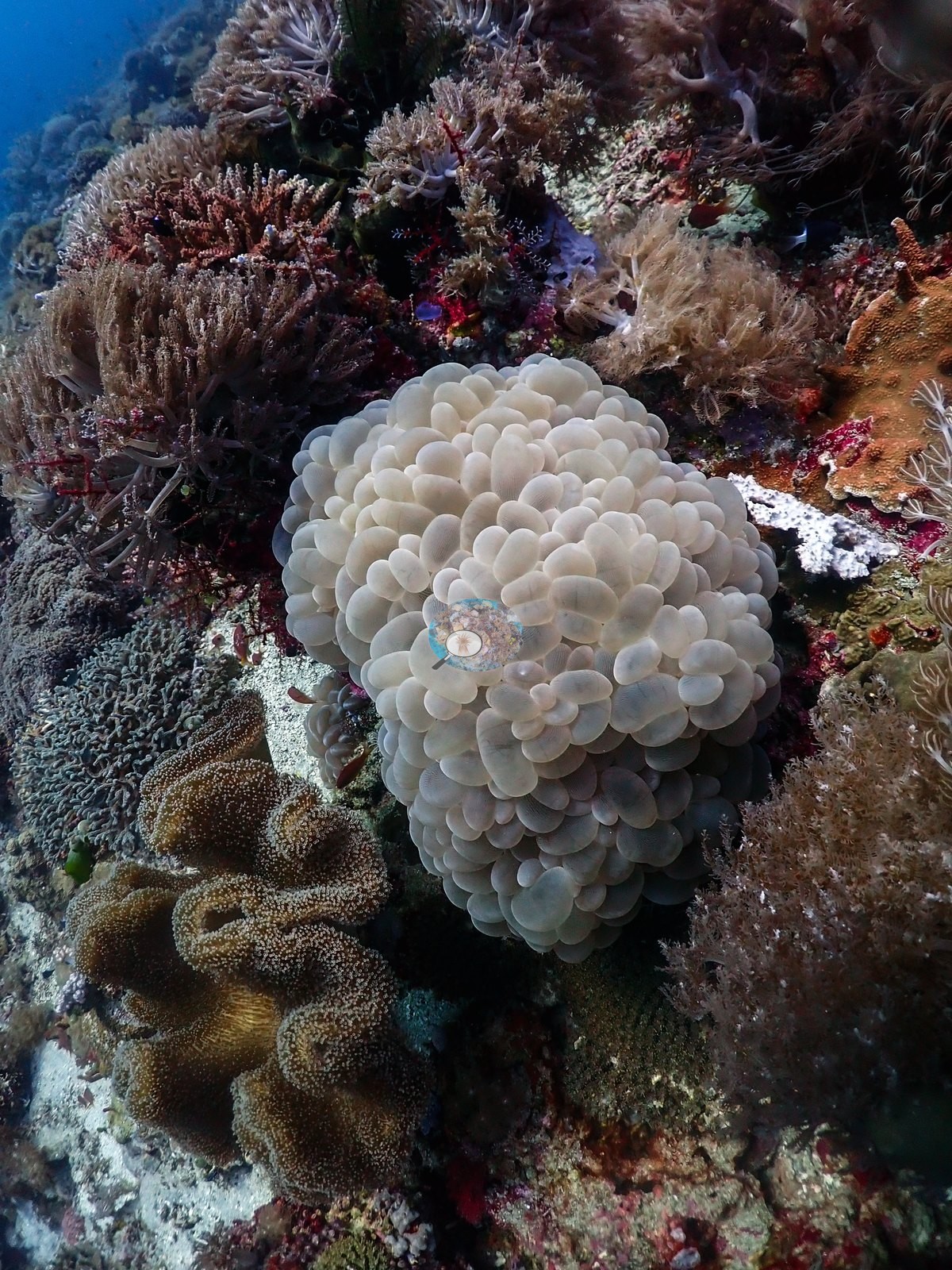
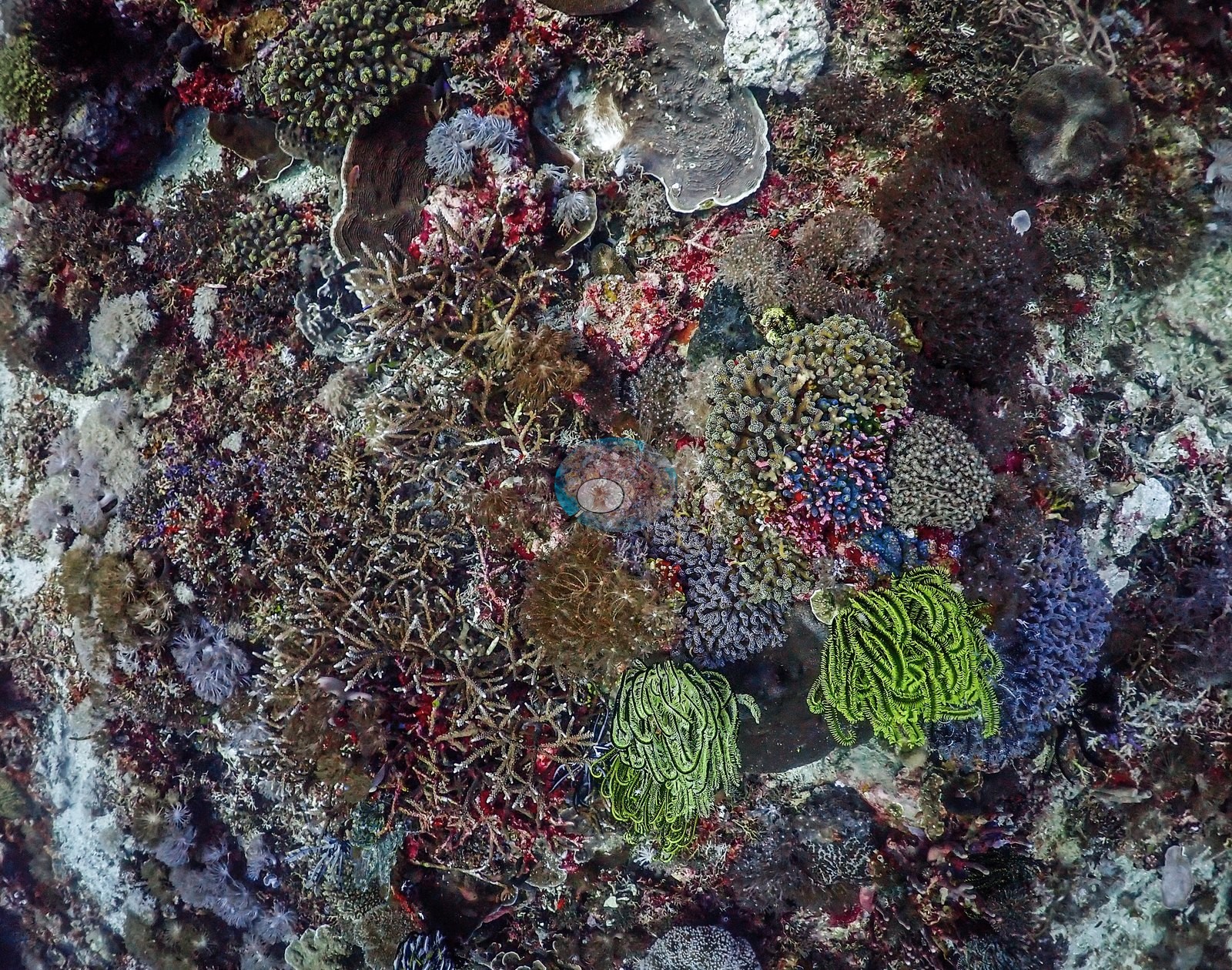
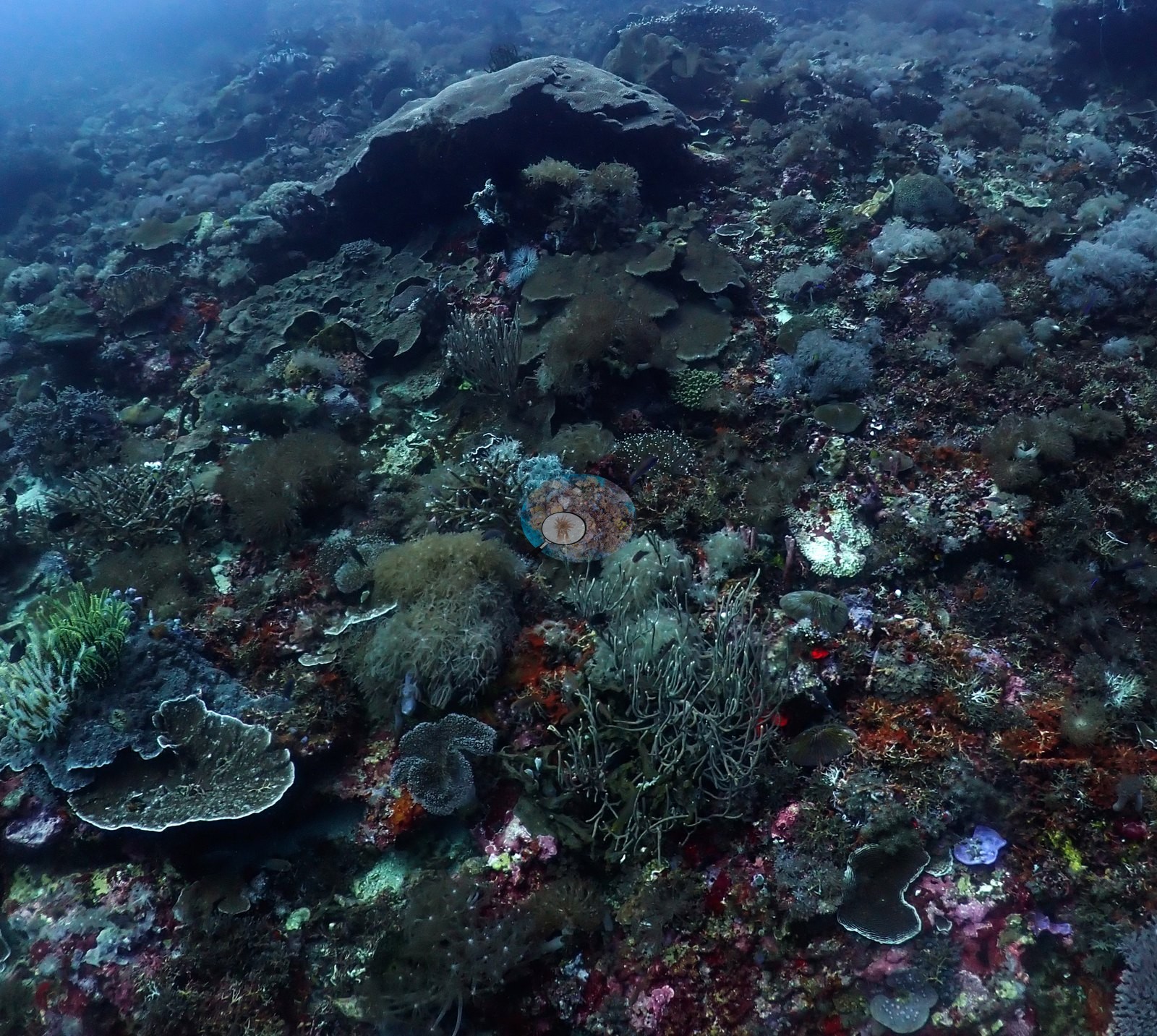
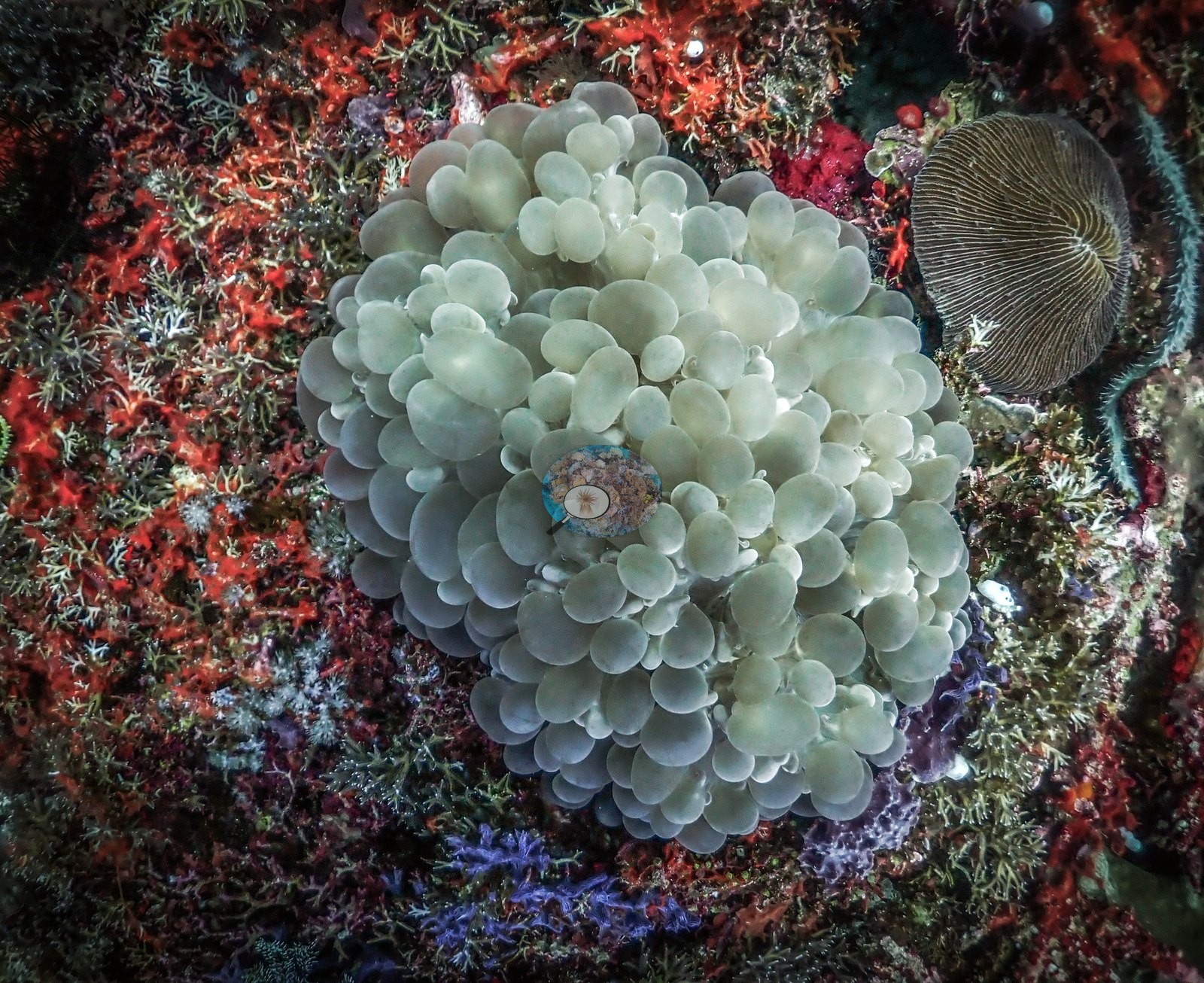
The photographs sort into three clearly different zones. The shallow crest and upper slope is the coral-rich end: continuous beds of corymbose and tabulate Acropora in brown, purple and gold, staghorn thickets with bright white growing tips, digitate Acropora and Pocillopora in lavender and blue, foliose Montipora and folded golden Turbinaria plates, and big toadstool leather corals (Sarcophyton) sitting among them. Carpets of pulsing Xenia/Anthelia soft coral cover whole stretches of the reef top, and orange anthias and damselfishes hang in clouds above them. The mid-slope is the most diverse ground in the set and reads as a mosaic rather than a monoculture: laminar and whorled plates consistent with Echinopora and Pachyseris speciosa (one colony a meter across in fine concentric ridges), massive Porites domes, large meandering brain corals consistent with Platygyra and Symphyllia, honeycomb Favites/Goniastrea, free-living Fungia mushroom corals scattered throughout, clusters of anchor/hammer coral (Euphyllia) with tan hammer-tipped tentacles, and at least three separate fully-inflated bubble corals (Plerogyra sinuosa) photographed close. Sponges are present but secondary — black and olive barrel sponges with open oscula, red and orange encrusting crusts, and a few blue-gray branching forms. The deeper slope inverts the picture: soft corals (Dendronephthya, Sinularia, more Xenia), whip corals and small gorgonian bushes take over, red fleshy macroalgae and turf mat large areas, magenta crustose coralline algae binds the rock, and broad bands of pale rubble and sand run between the colonies. Several deep frames are frankly low-cover — open pavement and broken branching rubble with widely spaced colonies — and a few show standing dead Acropora skeletons still in growth position.
Coral cover
Coral cover: 11% — a blind Claude computer-vision point count of 72 of Anderson's unedited photographs (20 points per photo; water, fish, and obstructions excluded). Other computer-vision methods are listed in the method table. Worth noting alongside that figure: this site's frames span an unusually wide range of habitats, from near-continuous Acropora on the crest to bare rubble at depth, so any single site-level cover number is averaging over genuinely different reefs. CoralNet will be used for final confirmation, and Anderson is still scouting better CV models.
Stressors
Condition otherwise is mixed but not alarming: at least four colonies in the set are stark, fully bleached white (a foliose plate beside an intact green neighbor, a small colony in the shallow Xenia field, and two pale gray-white encrusting-plating colonies on the mid-slope), and a handful of others carry small chalk-white patches of freshly exposed skeleton. Against that, the great majority of colonies photographed are fully pigmented and structurally intact; no crown-of-thorns, no bite scars and no reef-wide bleaching front appear anywhere in the 115 frames.
Fish and other fauna
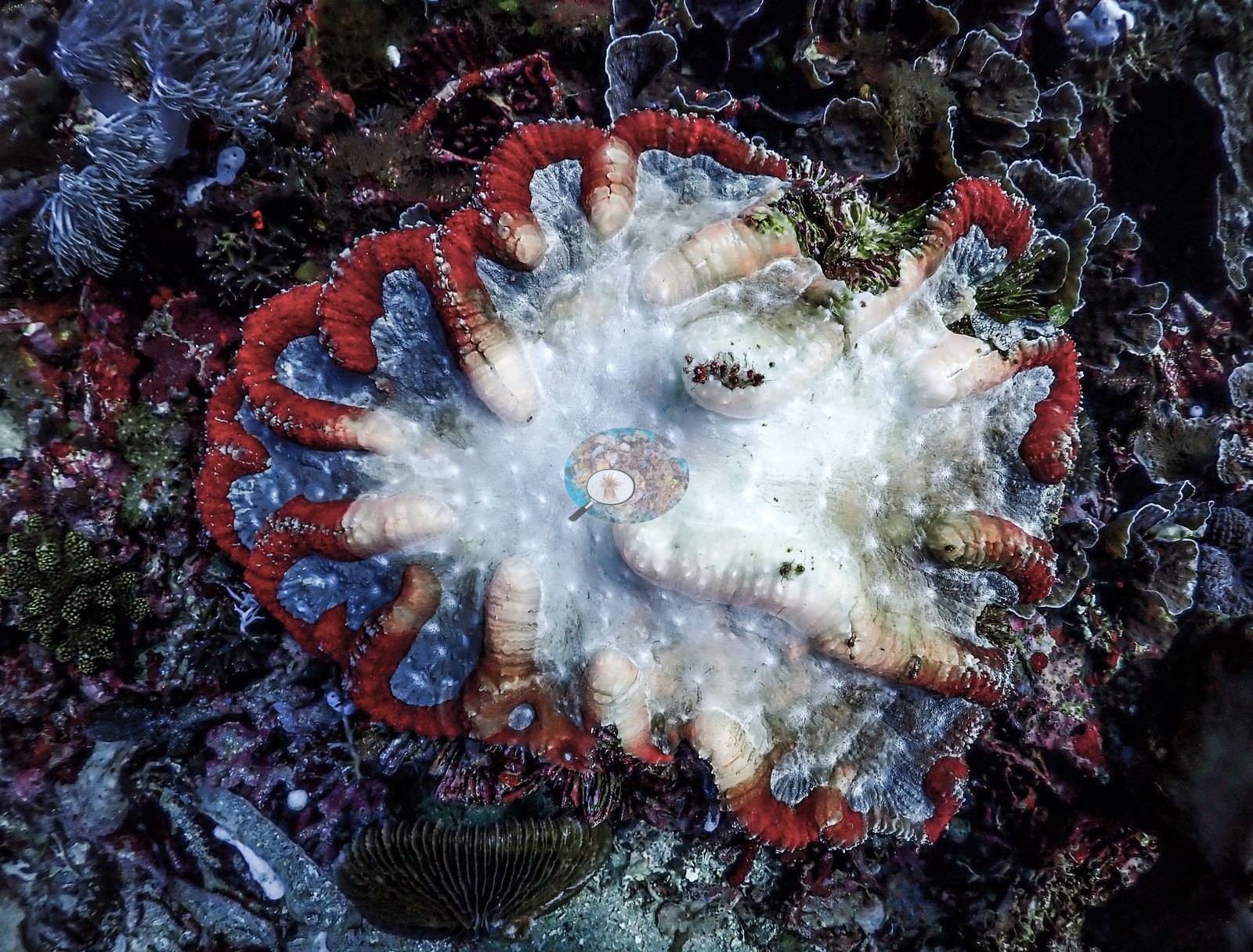
Invertebrate life is conspicuous: two giant clams (Tridacna) with speckled and green mantles, groups of magnificent anemones (Heteractis) with anemonefish, a carpet anemone, a blue Linckia sea star, black, white, gray, and vivid yellow-green feather stars on almost every high point, Diadema and other urchins, sea cucumbers, and a large solitary polyp with a deep red rim and pale oral disc consistent with Cynarina lacrymalis.
Comparisons with other data
No prior survey data from this site. If you would like to share yours, please email us.
Other notes
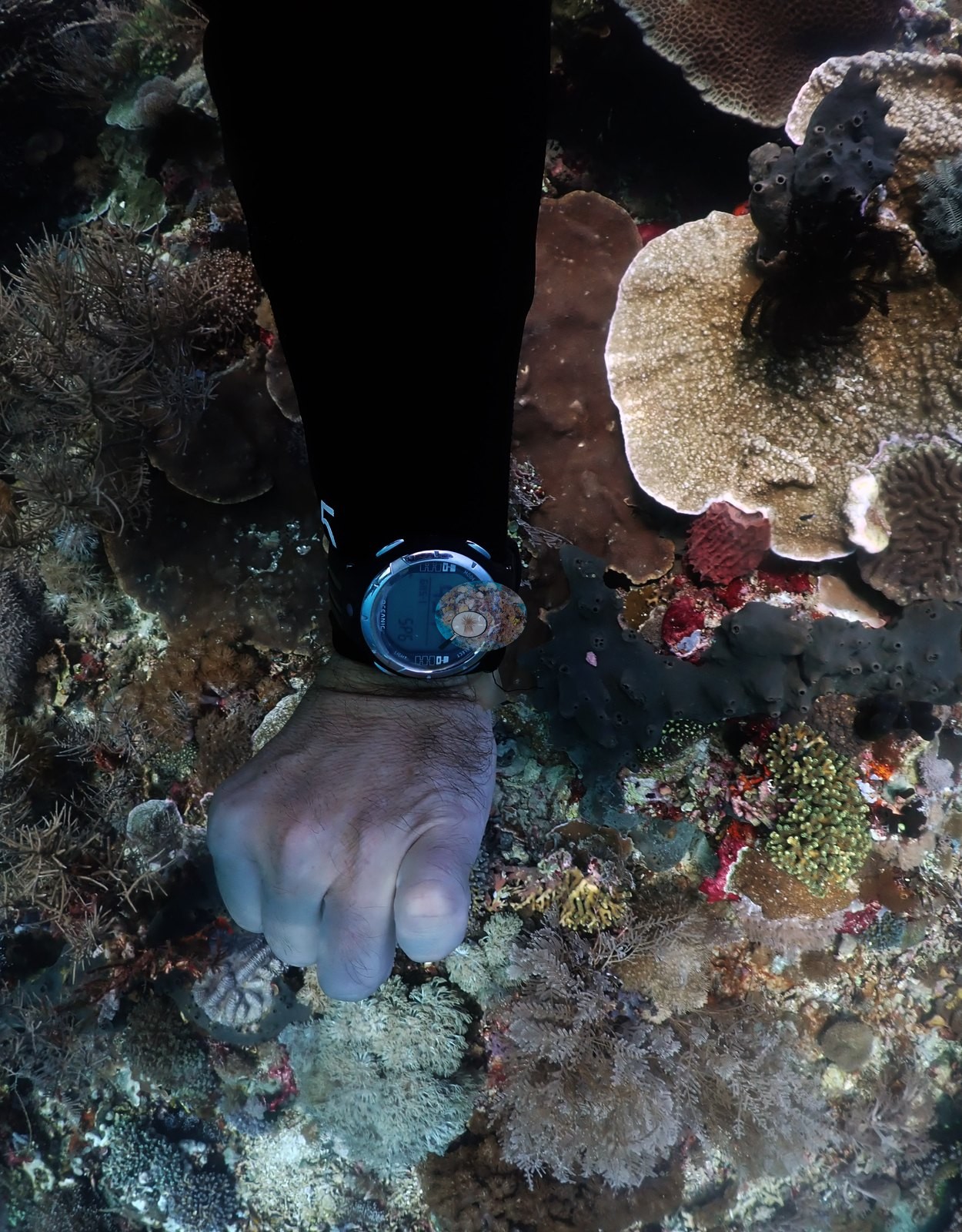
Man-made content is limited to divers and their gear, one wrist dive computer, and one wrist watch photographed against a table Acropora; a small pale rectangular object on a sand ledge in one deep frame may be litter but cannot be resolved.
CV model comparison
More info
DINOv3 and CoralSCOP were run on the same photos and are listed for comparison. Coralscapes v2 and v1 were also run but are not shown: Anderson does not consider Coralscapes reliable for these photos. No diver transect exists for this trip, so agreement between the rows is not accuracy, and as of September 2026 no computer-vision method estimates coral cover accurately on new images; treat every row as indicative.| Method | Hard-coral cover (%) |
|---|---|
| In-house DINOv3 | 19.3 |
| CoralSCOP unedited | 15.4 |
| Claude | 10.7 |
Data & links
All images from Coral Reef Diagnostics. Data are from Coral Reef Diagnostics.
© Coral Reef Diagnostics.