
Alor - Goa Wolang (Walang Cave)

Part of the regional summary: Indonesia - Alor
More info
East Nusa Tenggara (NOAA CRW virtual station) · Lesser Sunda ecoregion mean=6.9°C-heating weeks Alor and the Pantar Strait sit in a zone of exceptionally strong upwelling, which holds these reefs several degrees cooler than NOAA’s satellite-derived figures imply. Read the heat-stress numbers here as a regional-scale indication, not as this reef’s own temperature history.An Alor dive in three parts: a shaded overhang crusted in magenta coralline algae and hung with orange soft corals, a cave whose torch-lit interior holds only sponges and a solitary cup coral, and a broad pavement of coralline-crusted rubble with scattered live coral heads. The short photo set makes this more a record of the cave than of the reef.
Penyelaman Alor dalam tiga bagian: ceruk teduh yang berkerak alga koralin magenta dan bergantungan karang lunak jingga, sebuah gua yang bagian dalamnya — disinari senter — hanya berisi spons dan satu karang cangkir soliter, serta hamparan luas pecahan karang berkerak koralin dengan koloni karang hidup yang tersebar. Kumpulan foto yang singkat ini lebih merupakan catatan tentang guanya daripada tentang terumbunya.
Terjemahan ringkasan ini oleh AI; versi bahasa Inggris yang berlaku.
Three other CRD dive sites within 5 km shown in orange — click a marker to open its page.
28 of these 33 photographs are shown beside the text that discusses them under "Site description" below.
Site description
Setting
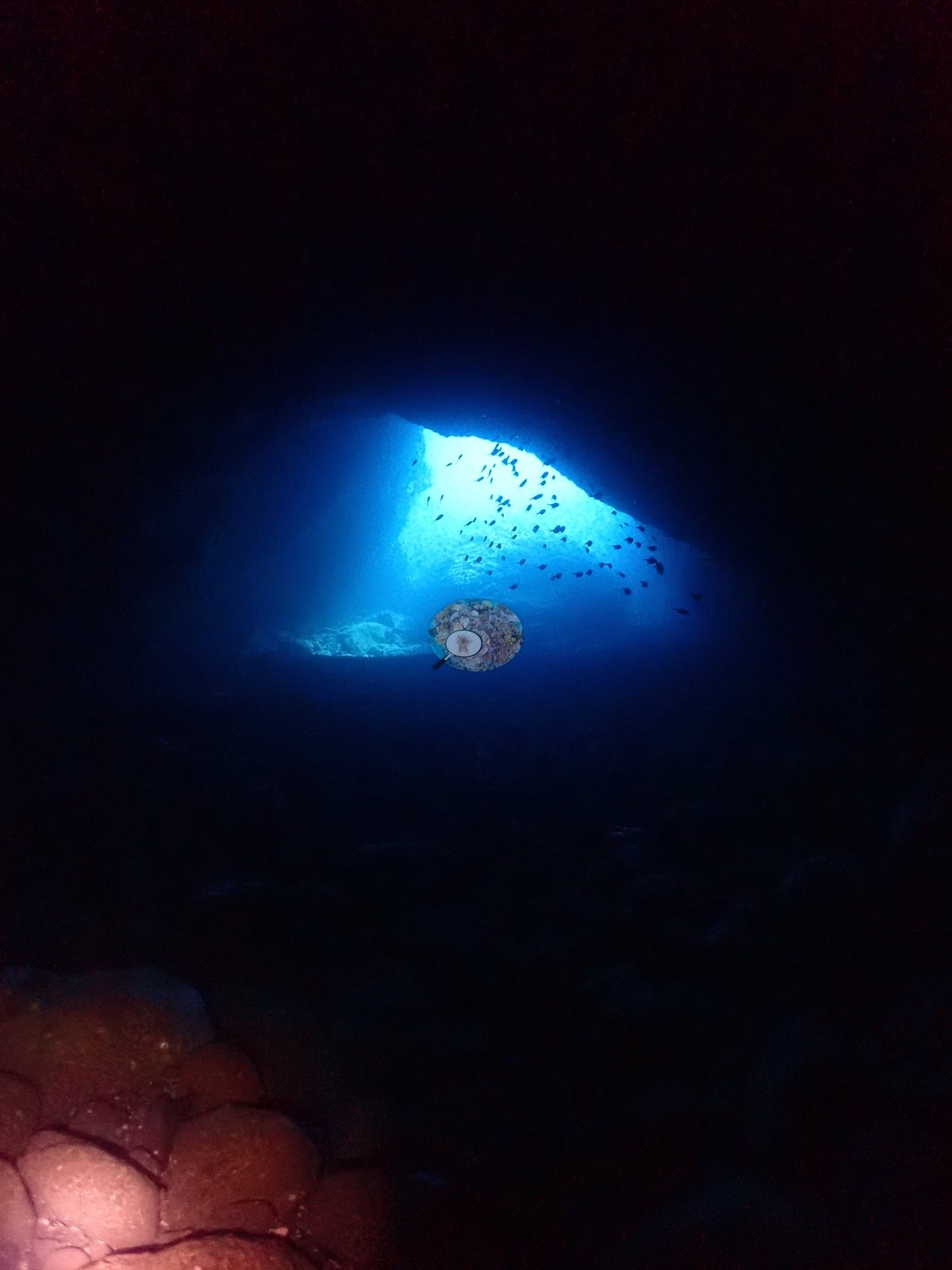
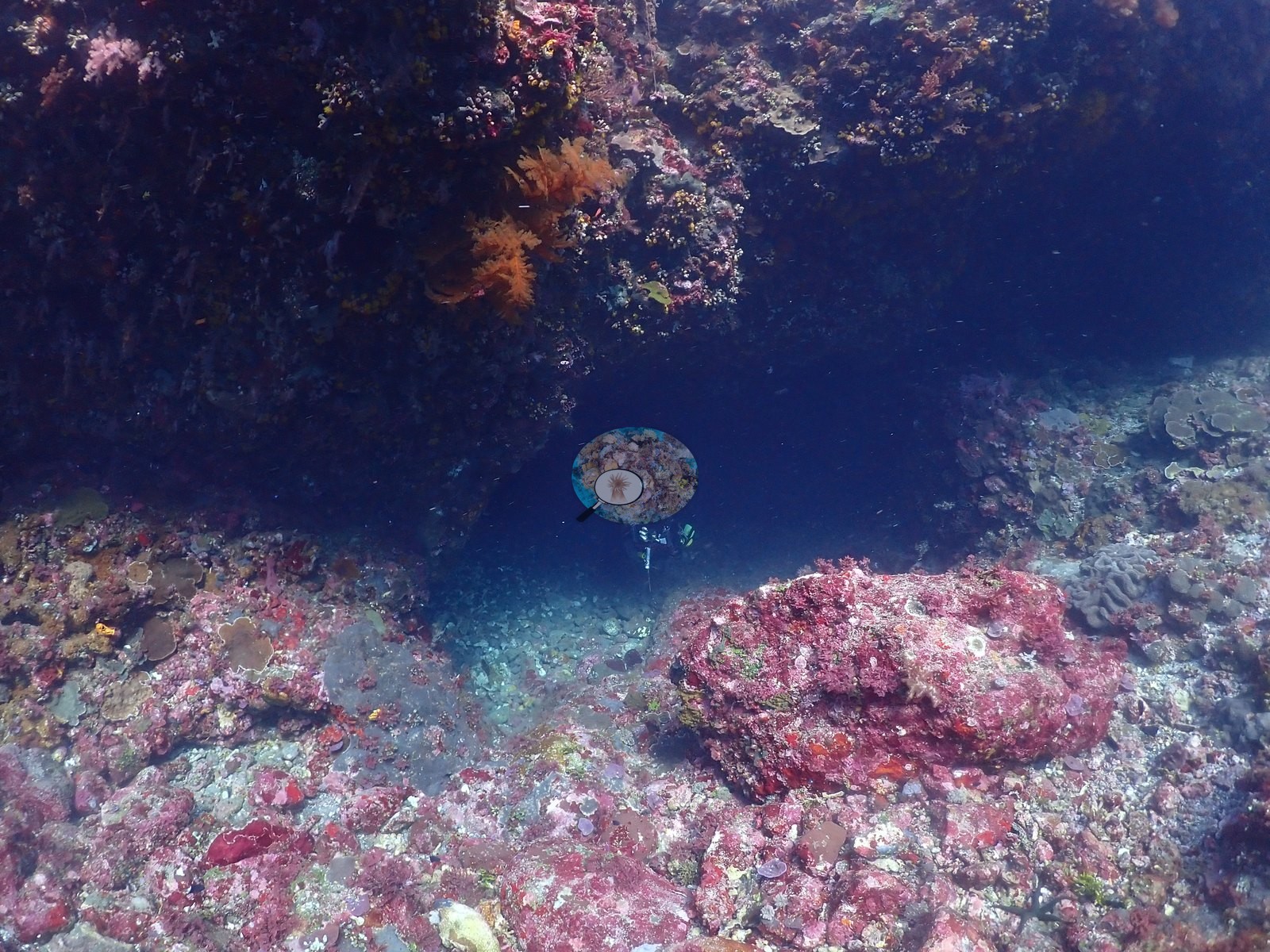
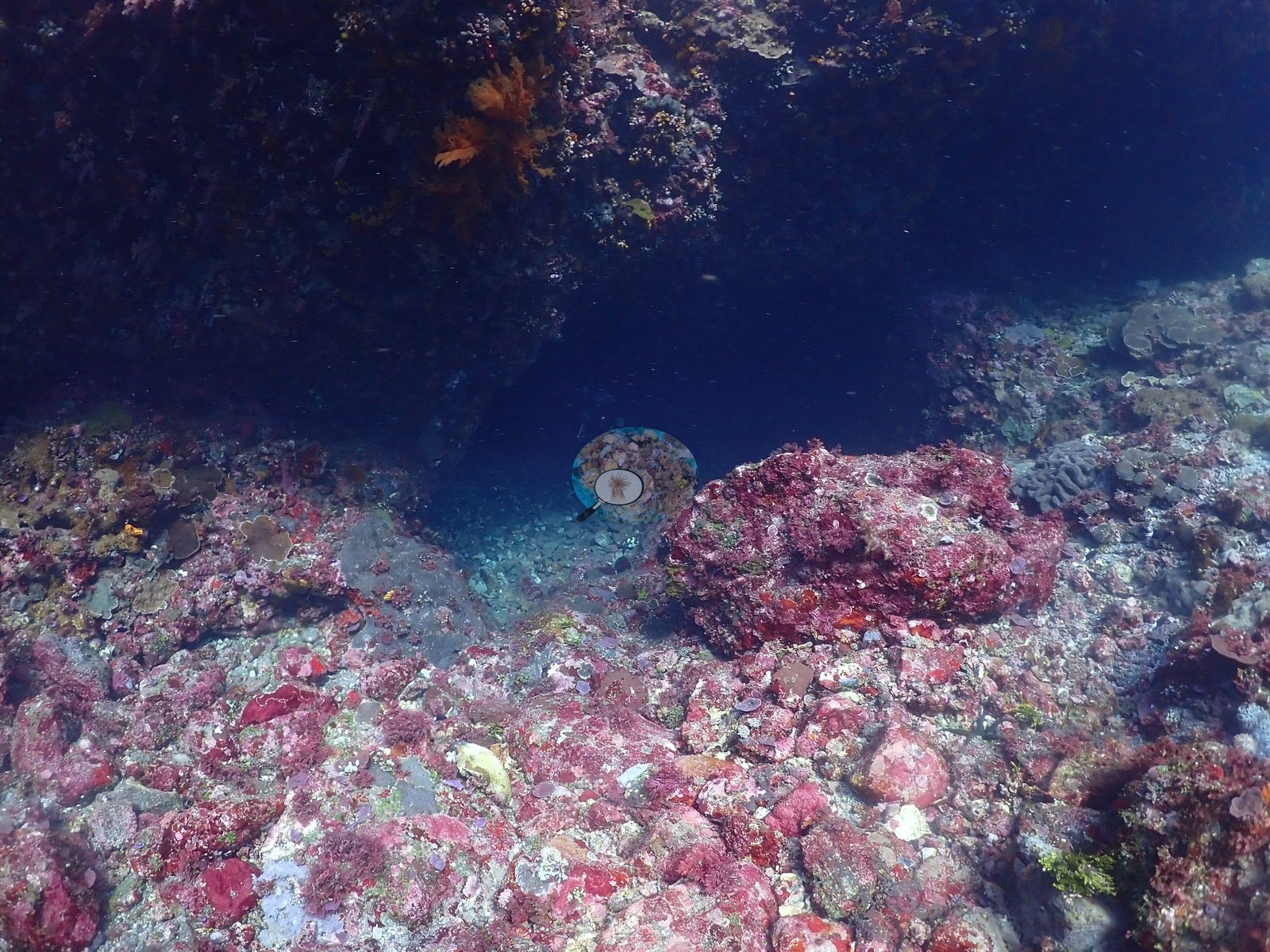
Frame by frame this dive splits into three habitats. Second, the cave: two frames show the entrance as a dark arch with a diver silhouetted in blue water, one looks back out at a bright triangular mouth (e.g., Image 16).
Visibility was good, roughly 15-20 m.
General benthic features
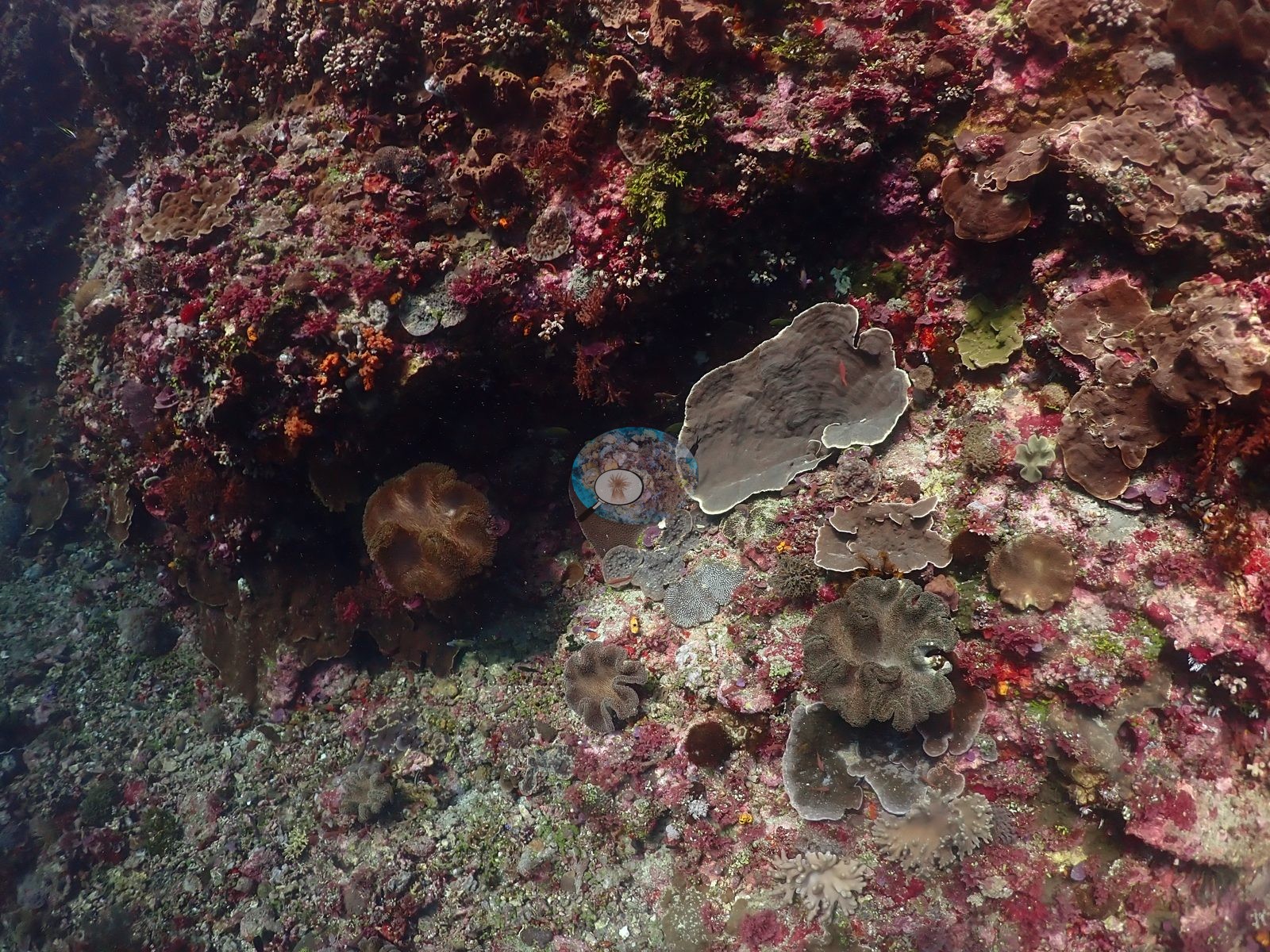
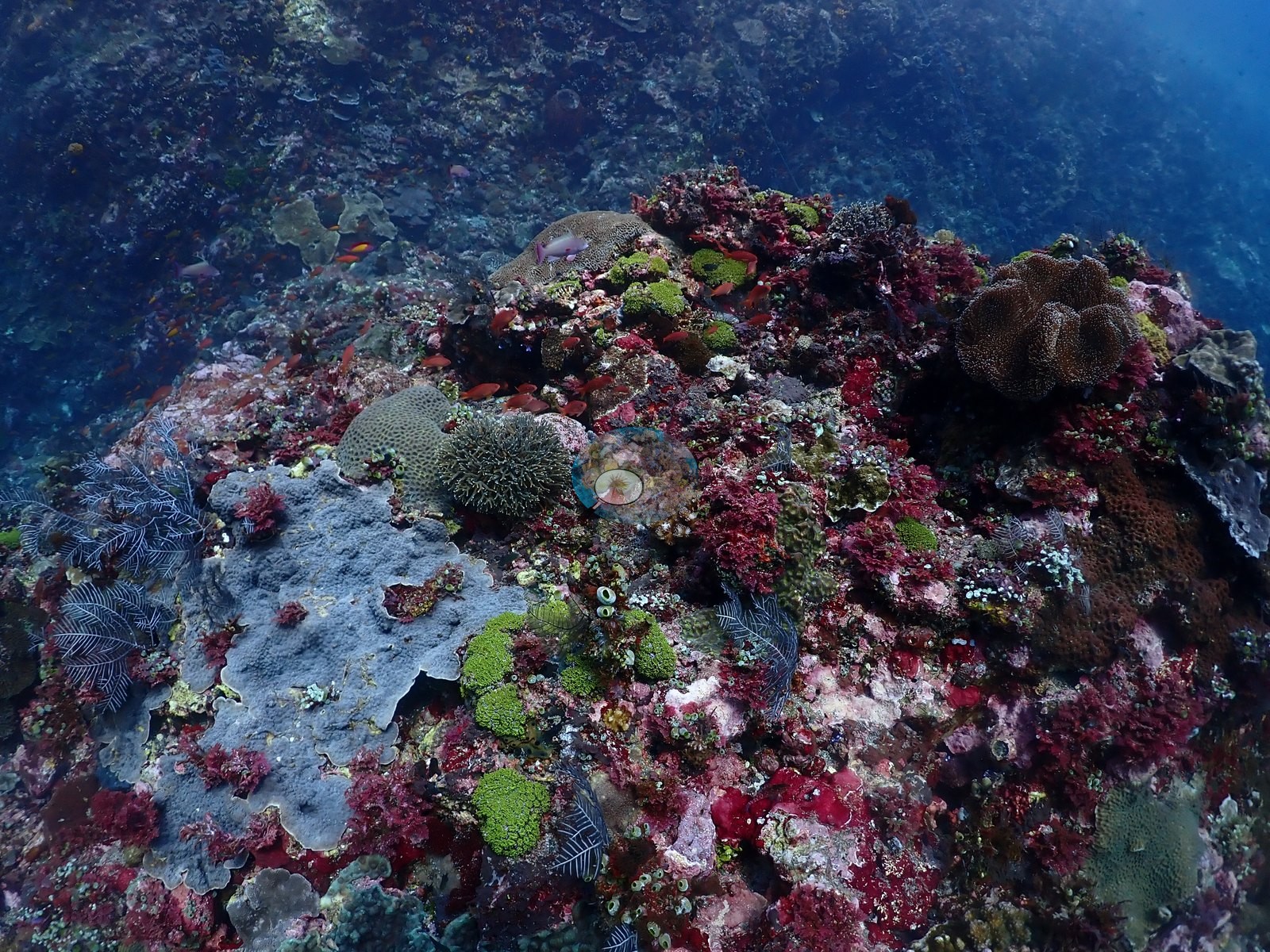
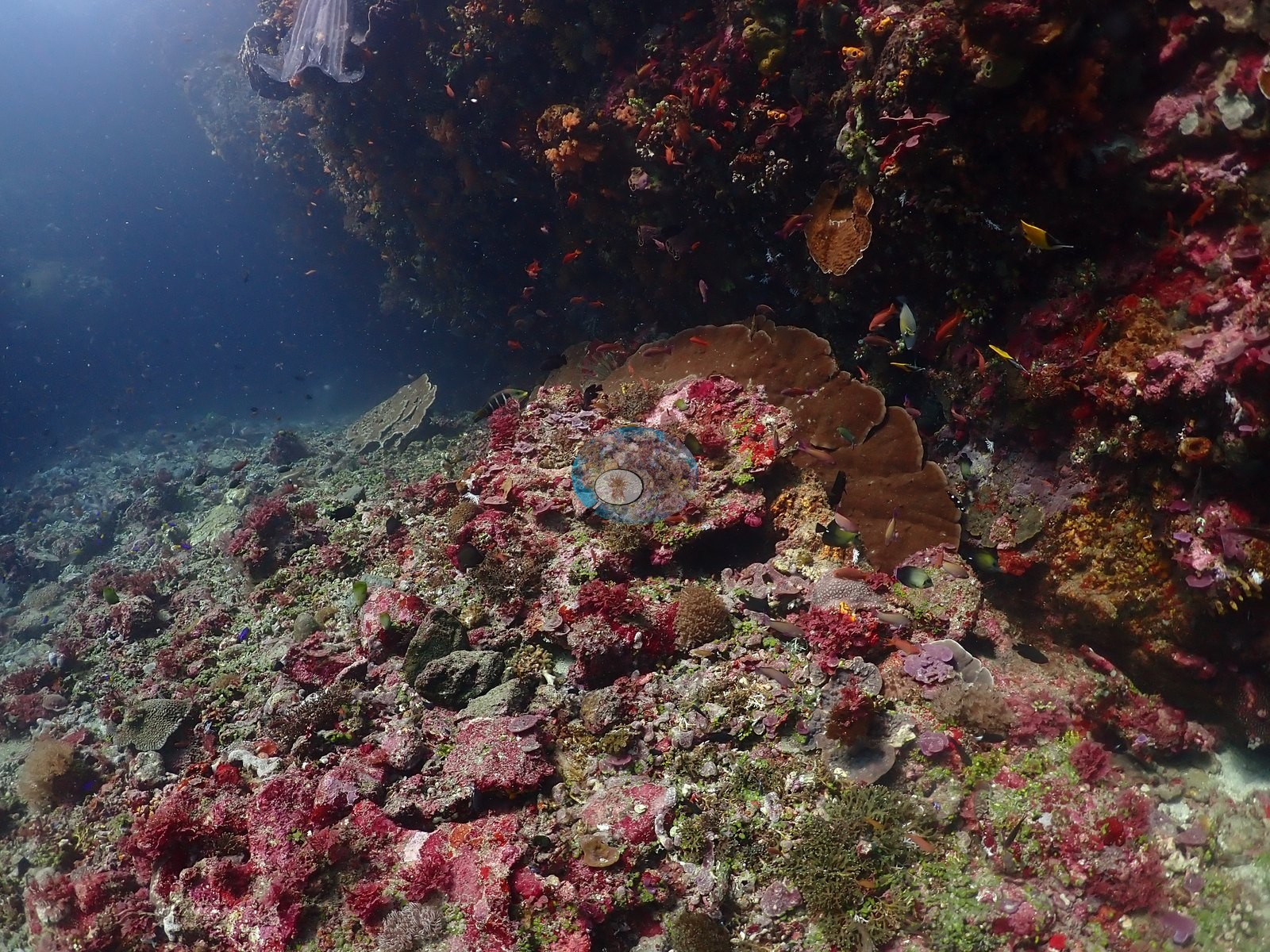
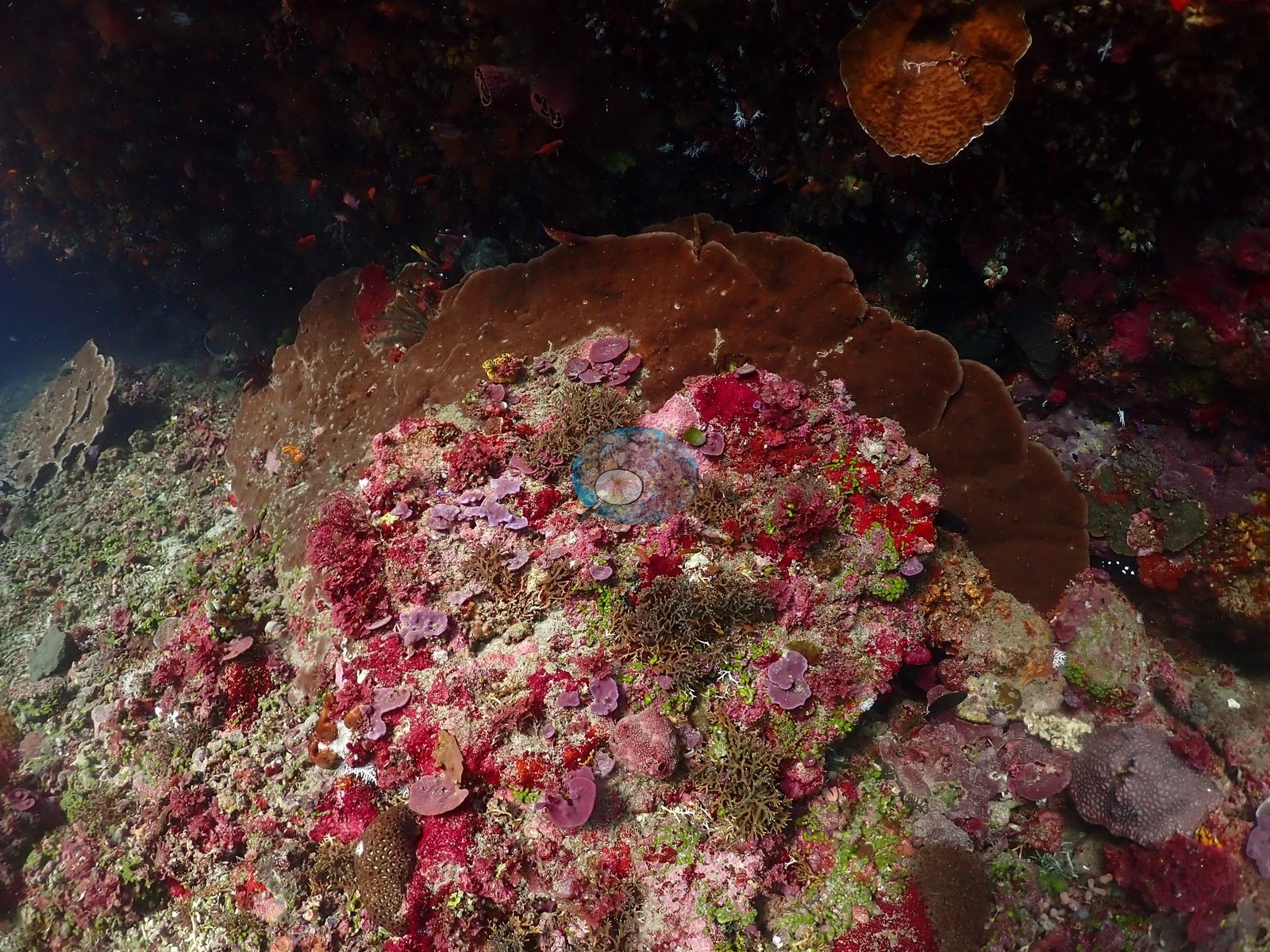
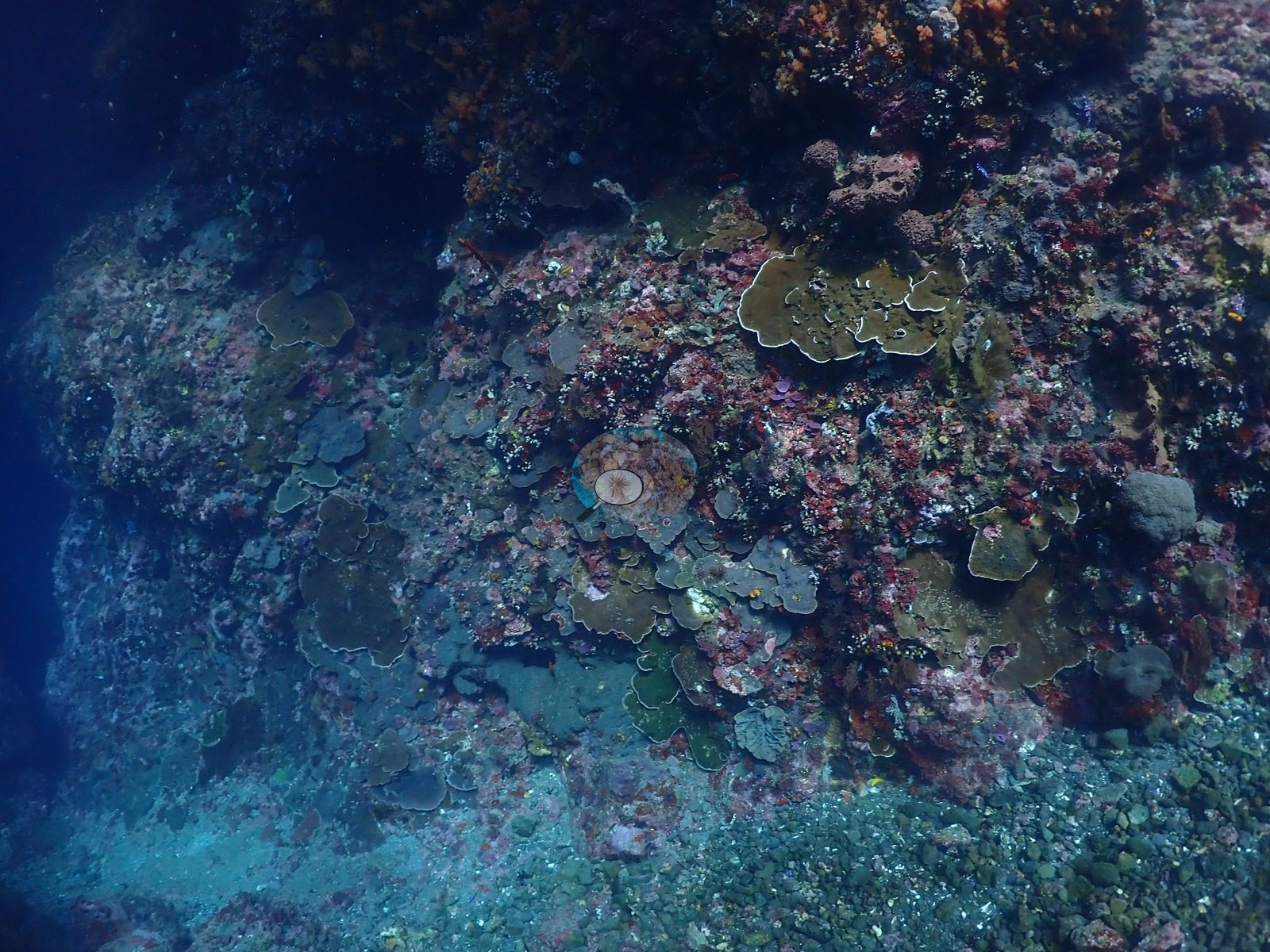
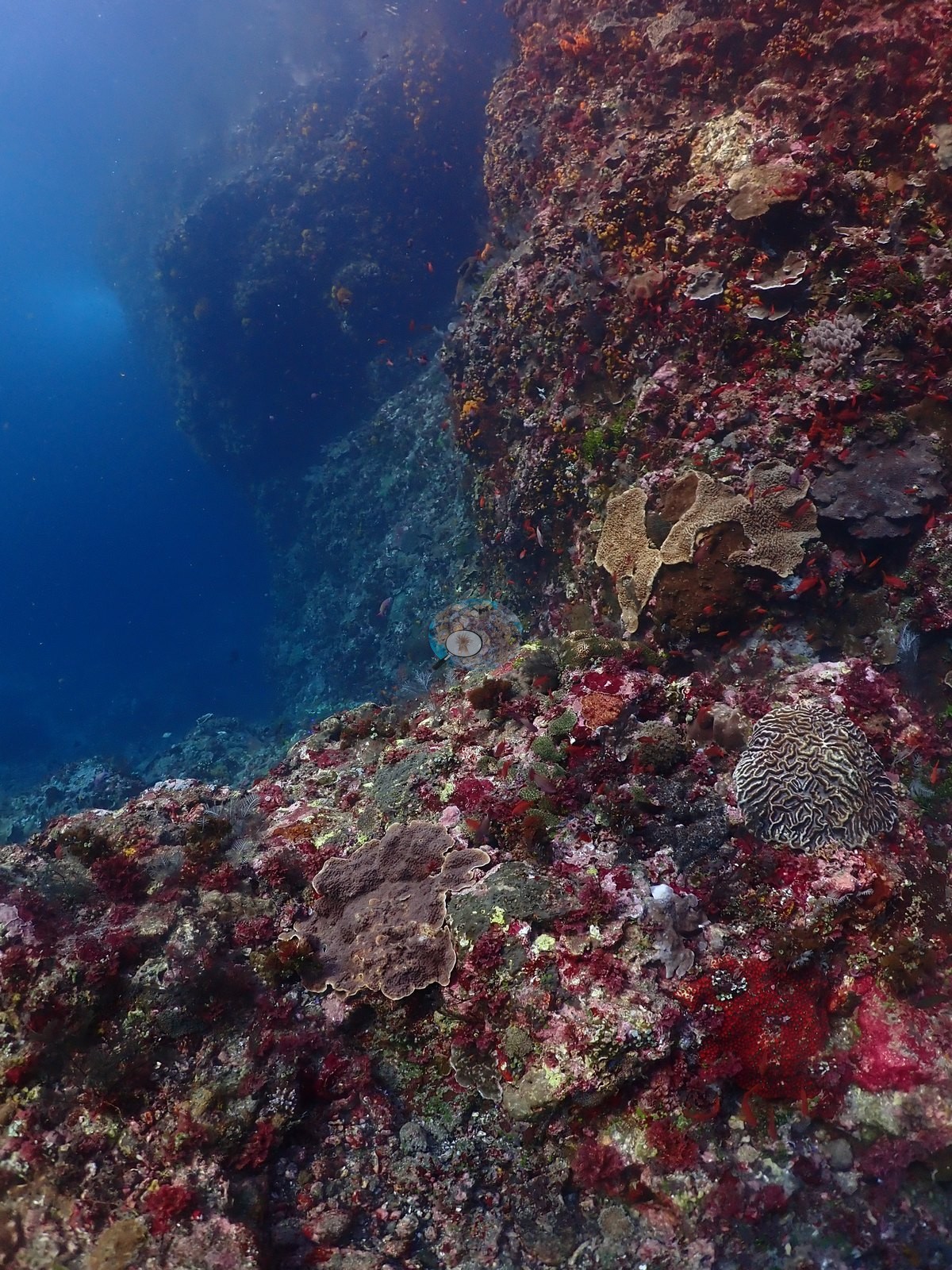
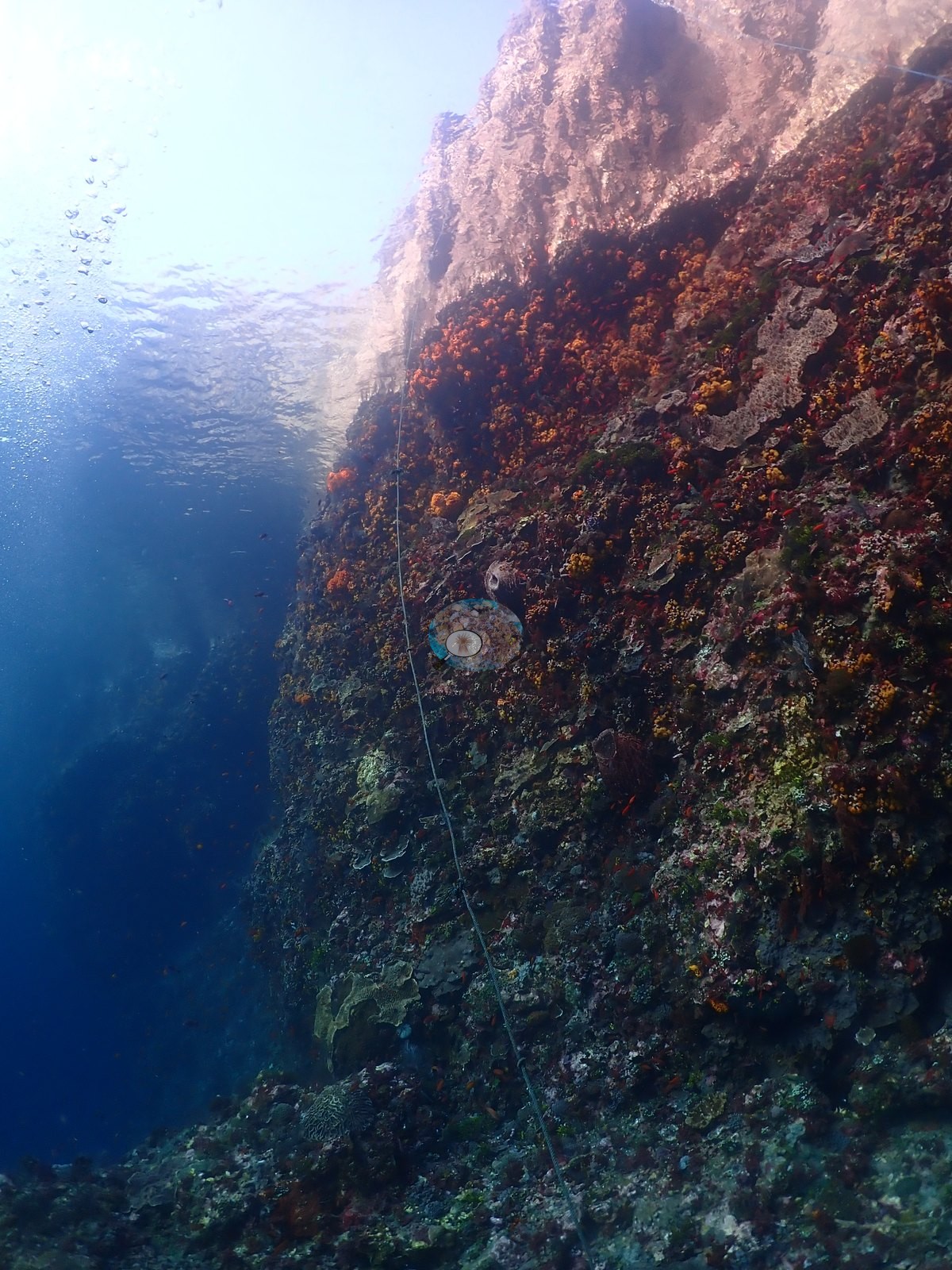
First, a shaded overhang and boulder base carpeted in crustose coralline algae in magenta, rose, and red, studded with red, and orange encrusting sponges (e.g., Image 1, Image 6, Image 13).
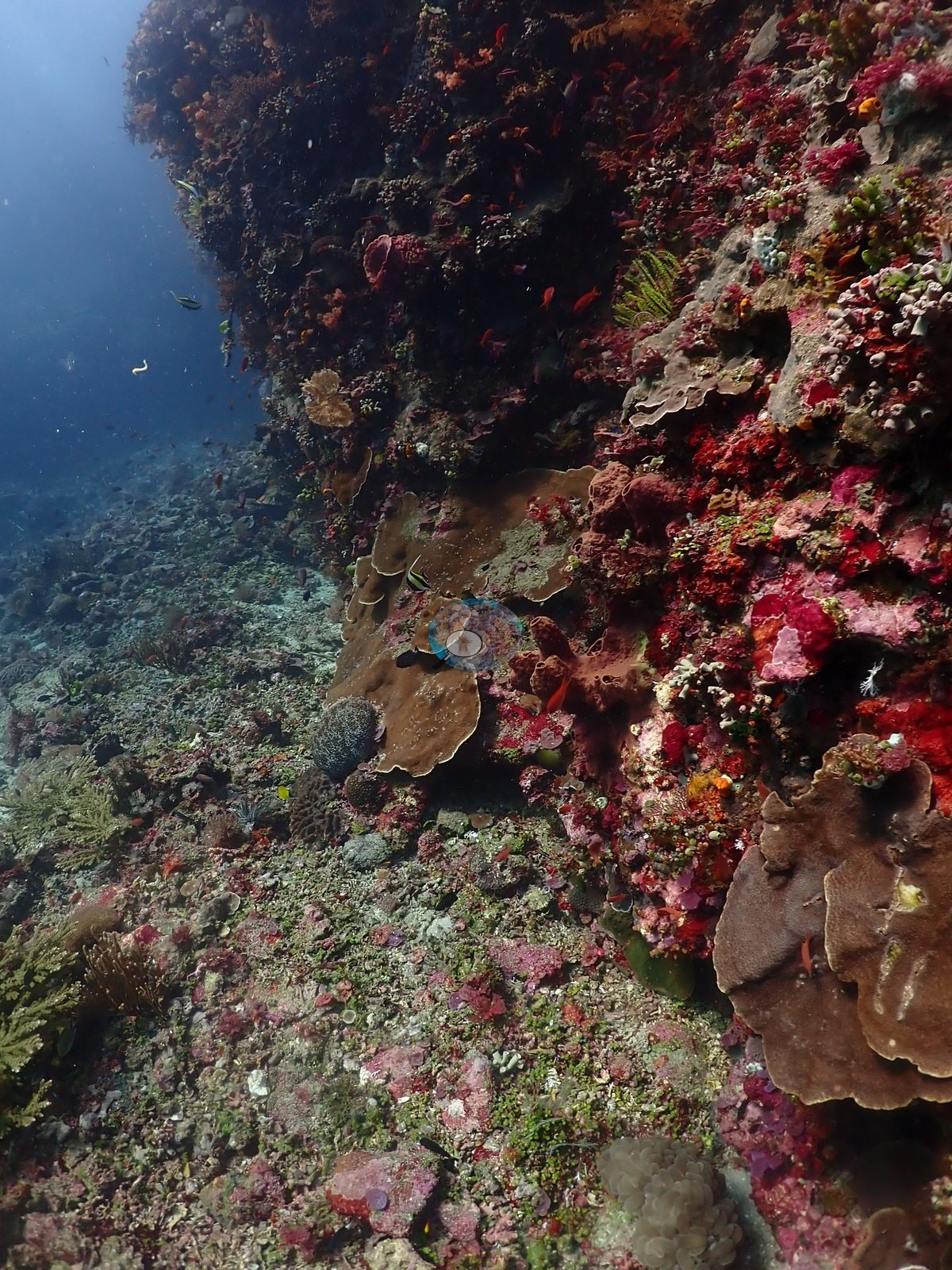
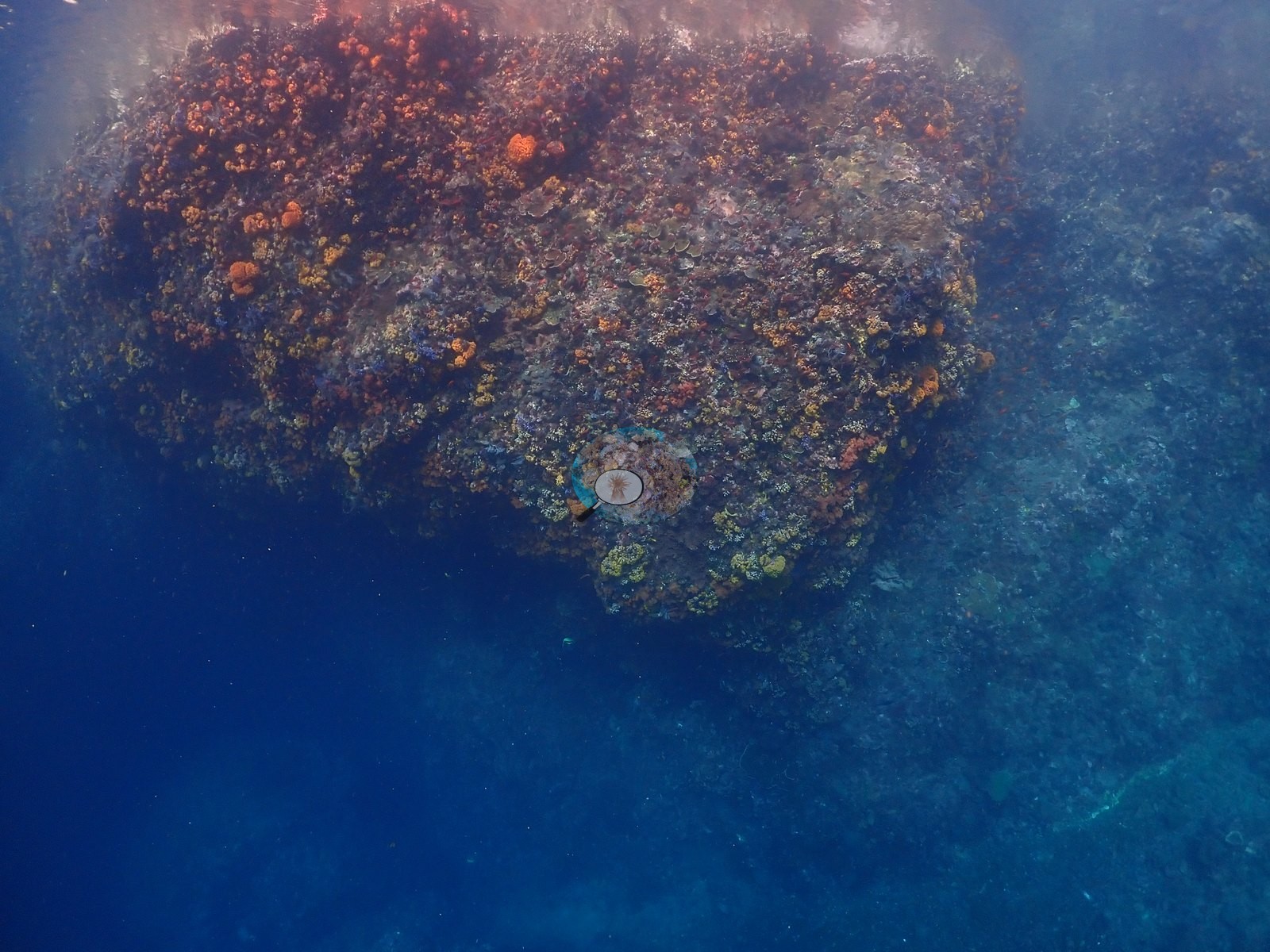
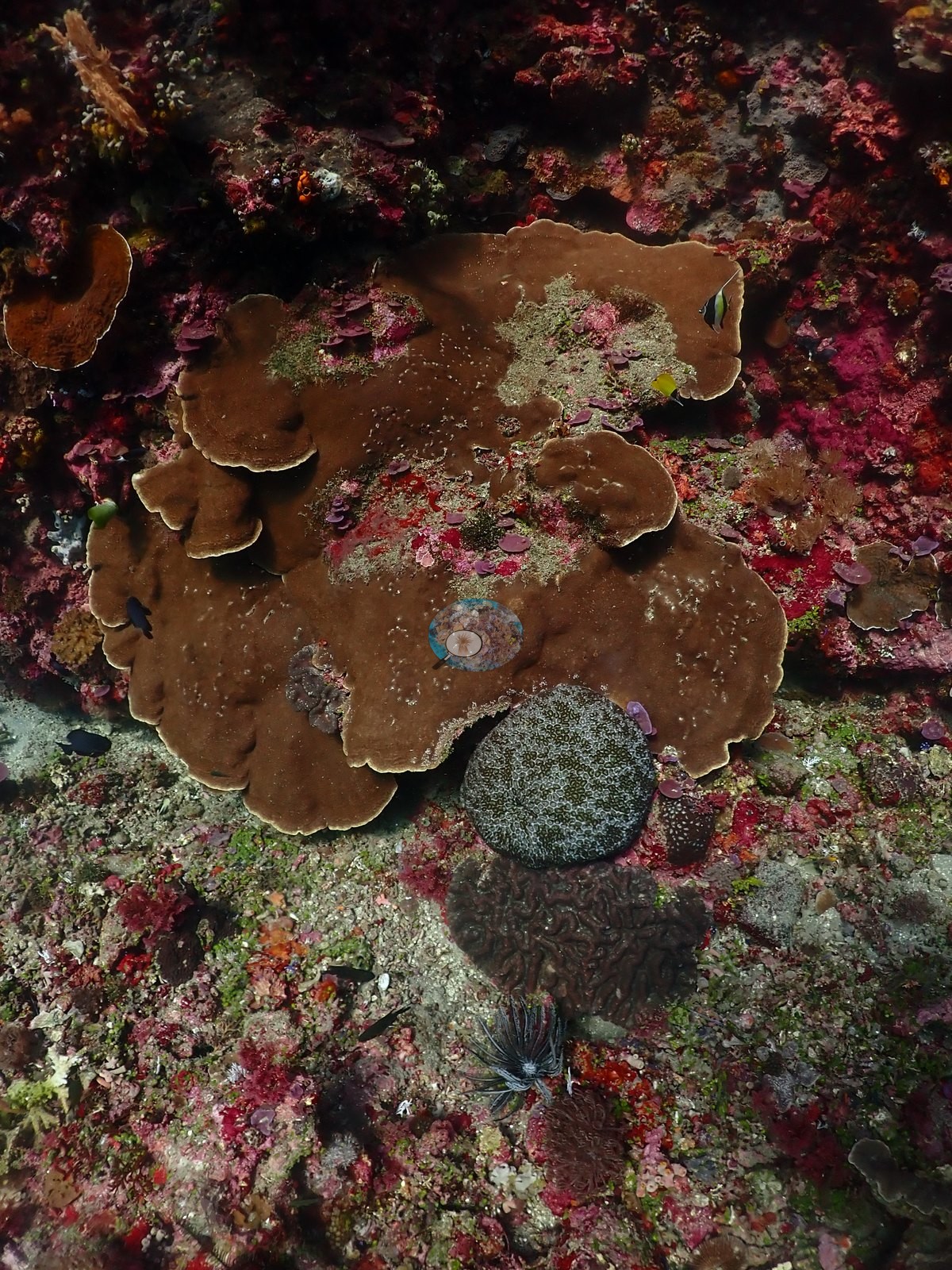
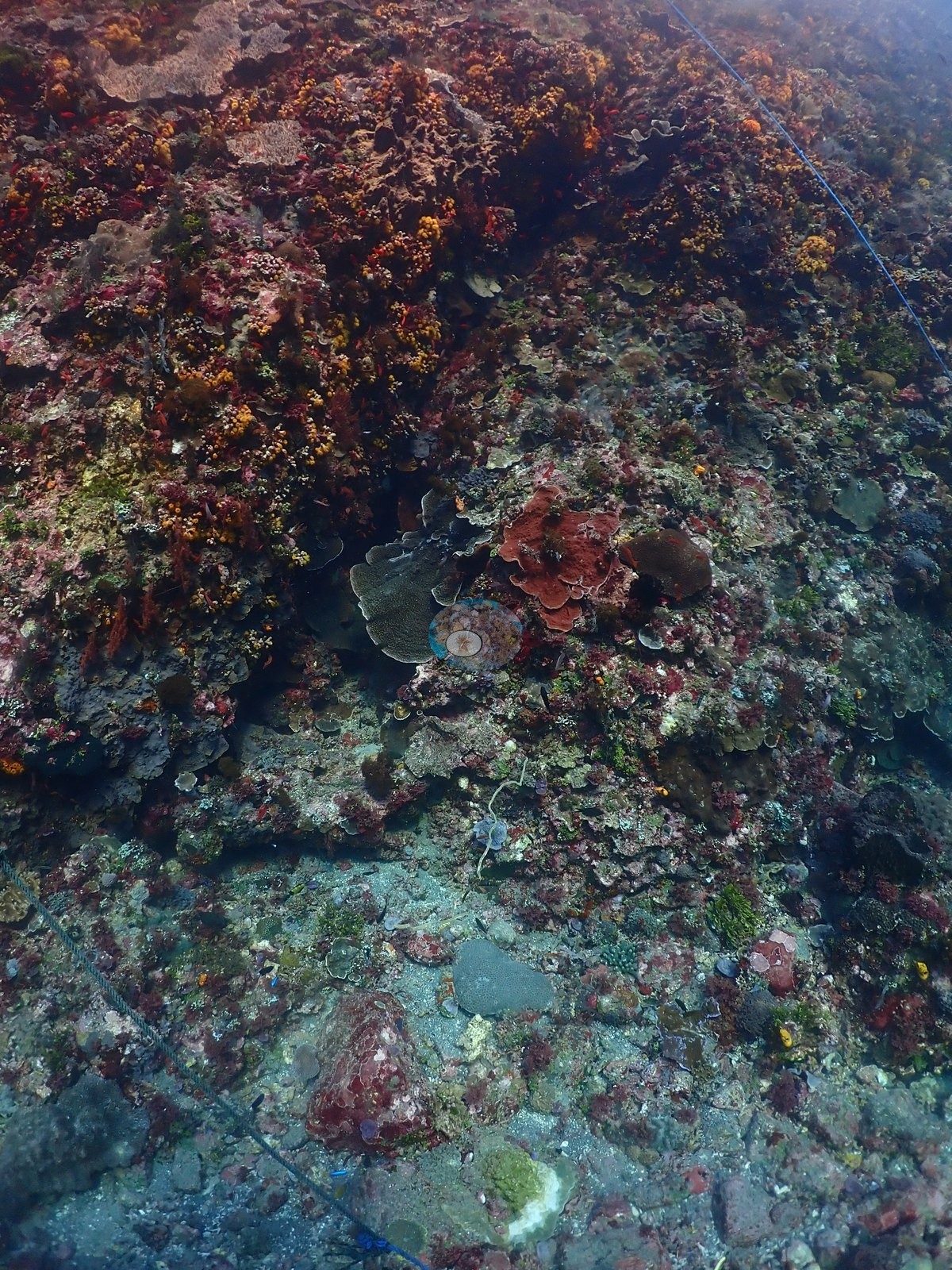
Coral here is overwhelmingly foliose and laminar, not branching: overlapping pale-brown plates with upturned, pale-edged margins compatible with Montipora and Turbinaria, small fleshy folded merulinid or lobophylliid polyps, squat Sarcophyton-type leather corals, and bushy orange Dendronephthya hanging from the roof with anthias beneath (e.g., Image 7, Image 9, Image 12, Image 21).
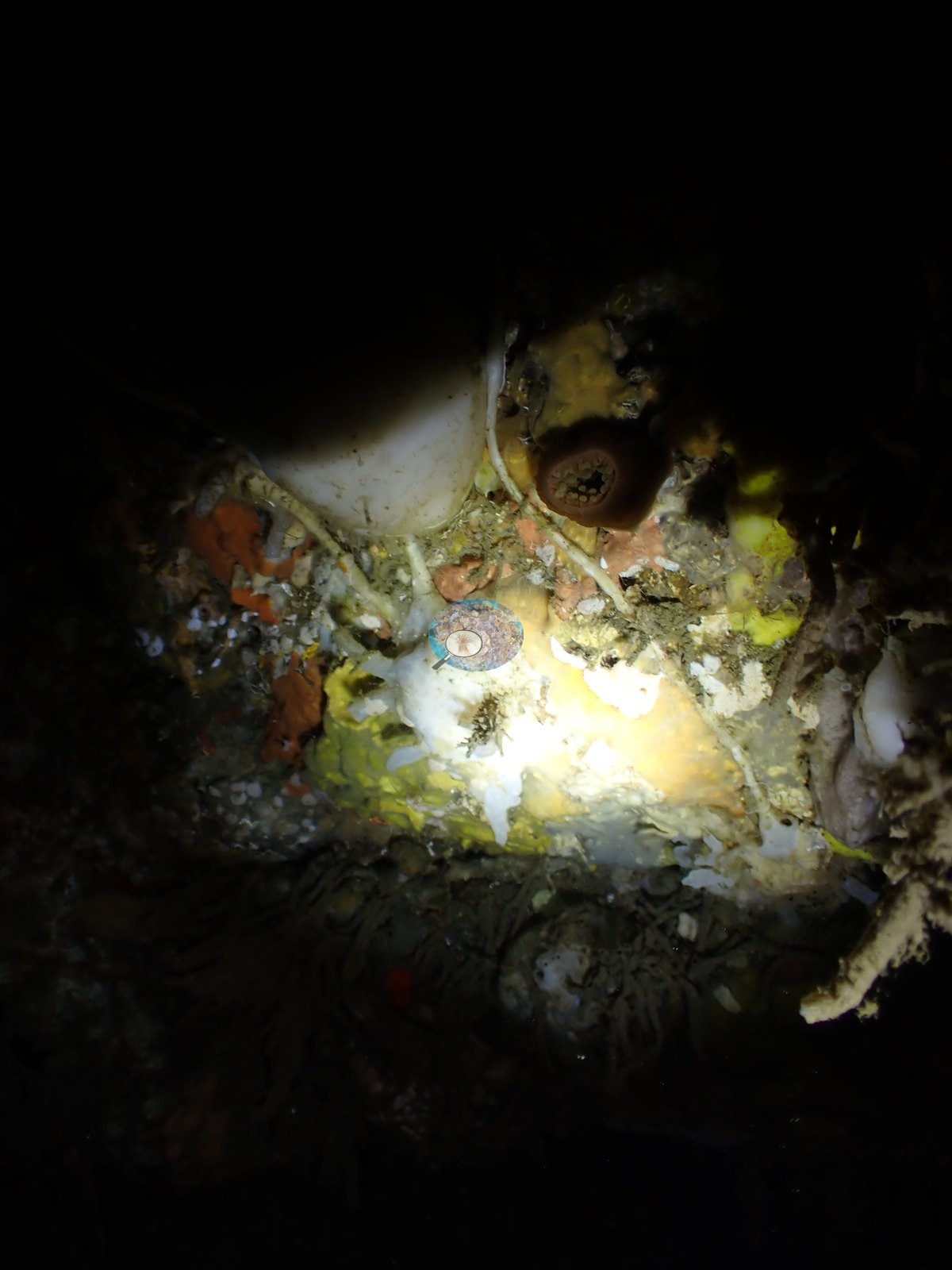
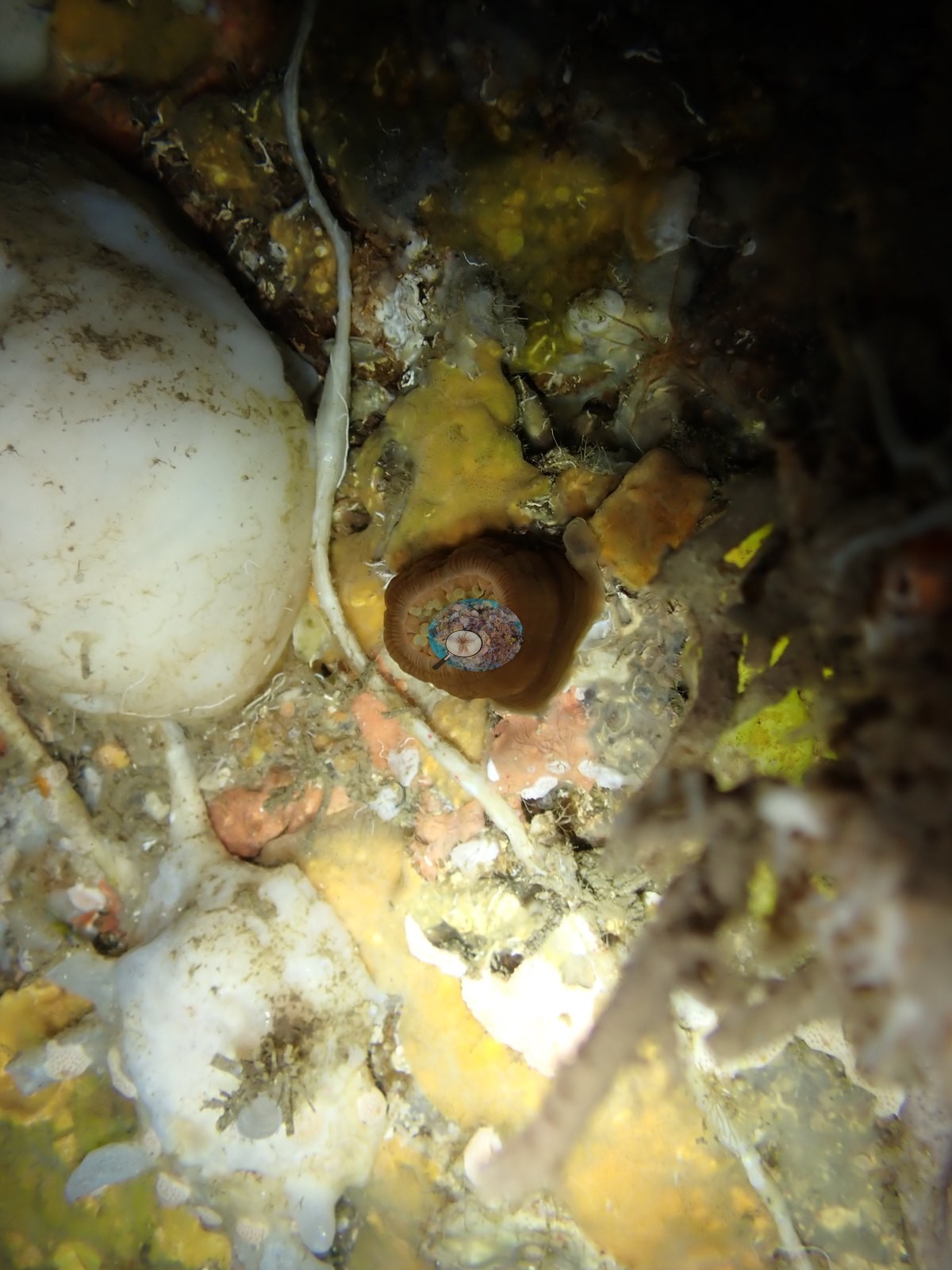
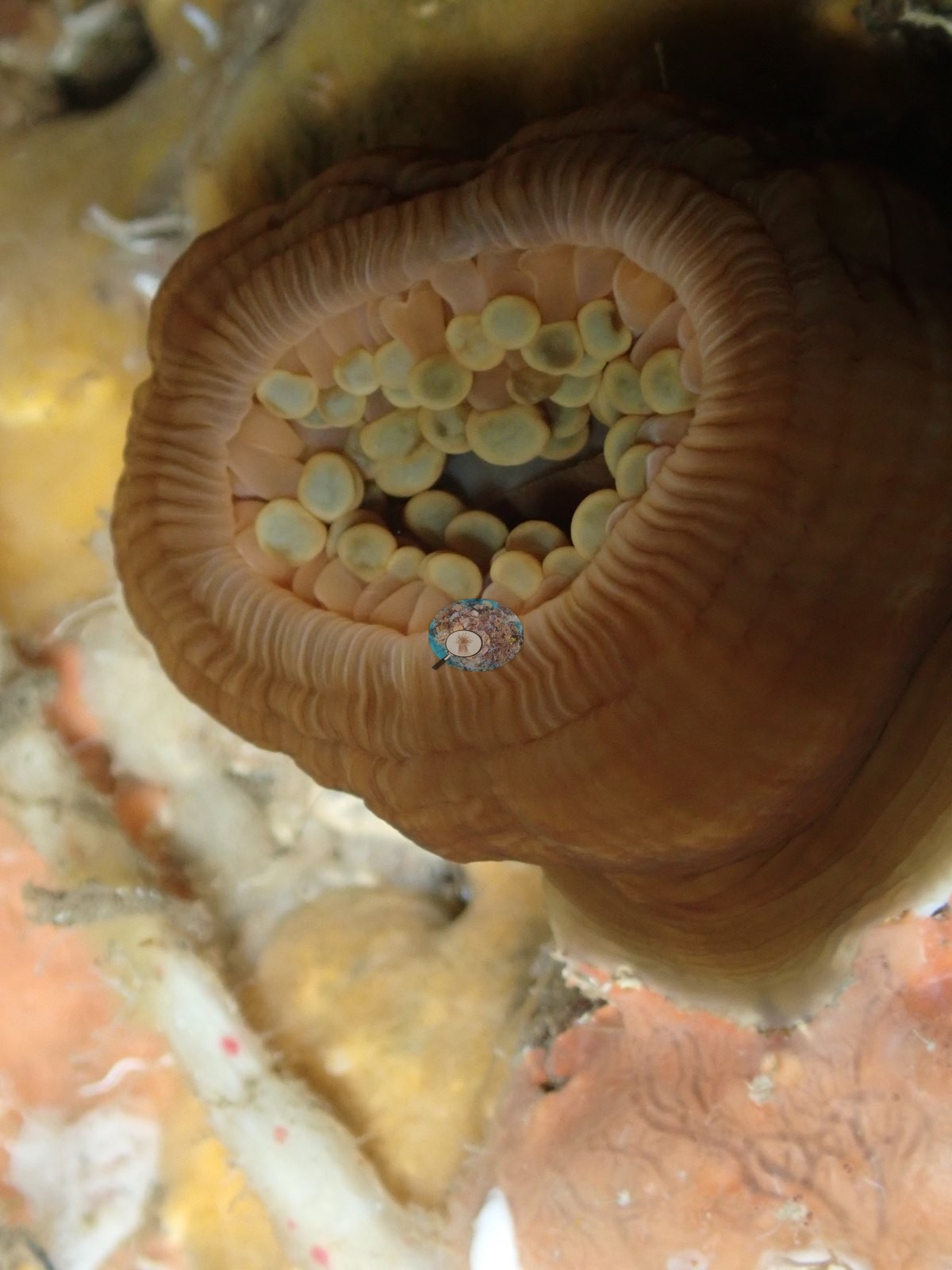
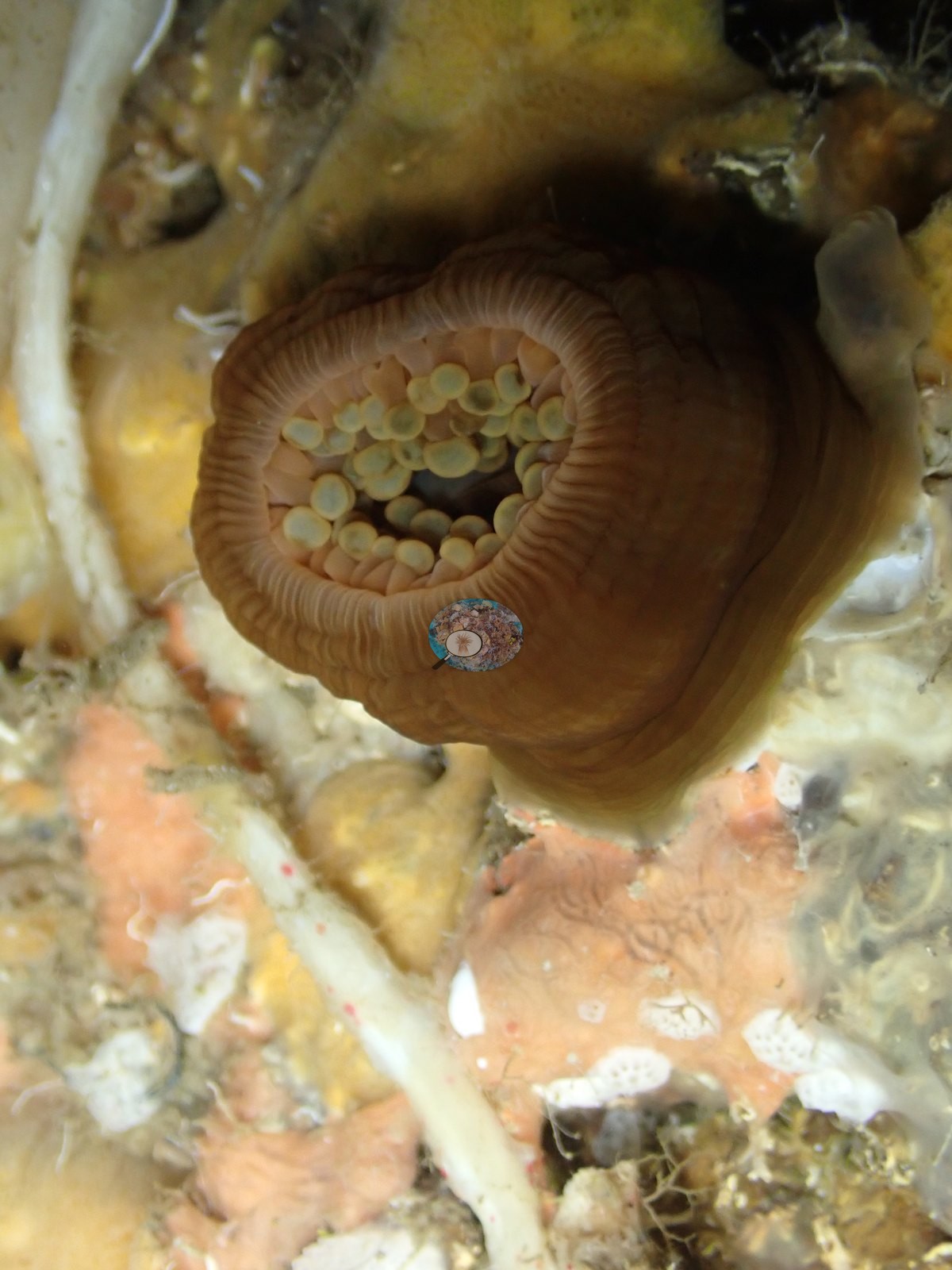
Four torch-lit interior frames hold no zooxanthellate coral at all - only white, yellow, and salmon encrusting sponges, spaghetti-like sponge processes, bryozoan or serpulid crusts, and one solitary cup coral with a ribbed brown wall and a ring of pale swollen polyp vesicles, shot three times (e.g., Image 10, Image 14, Image 19, Image 22).
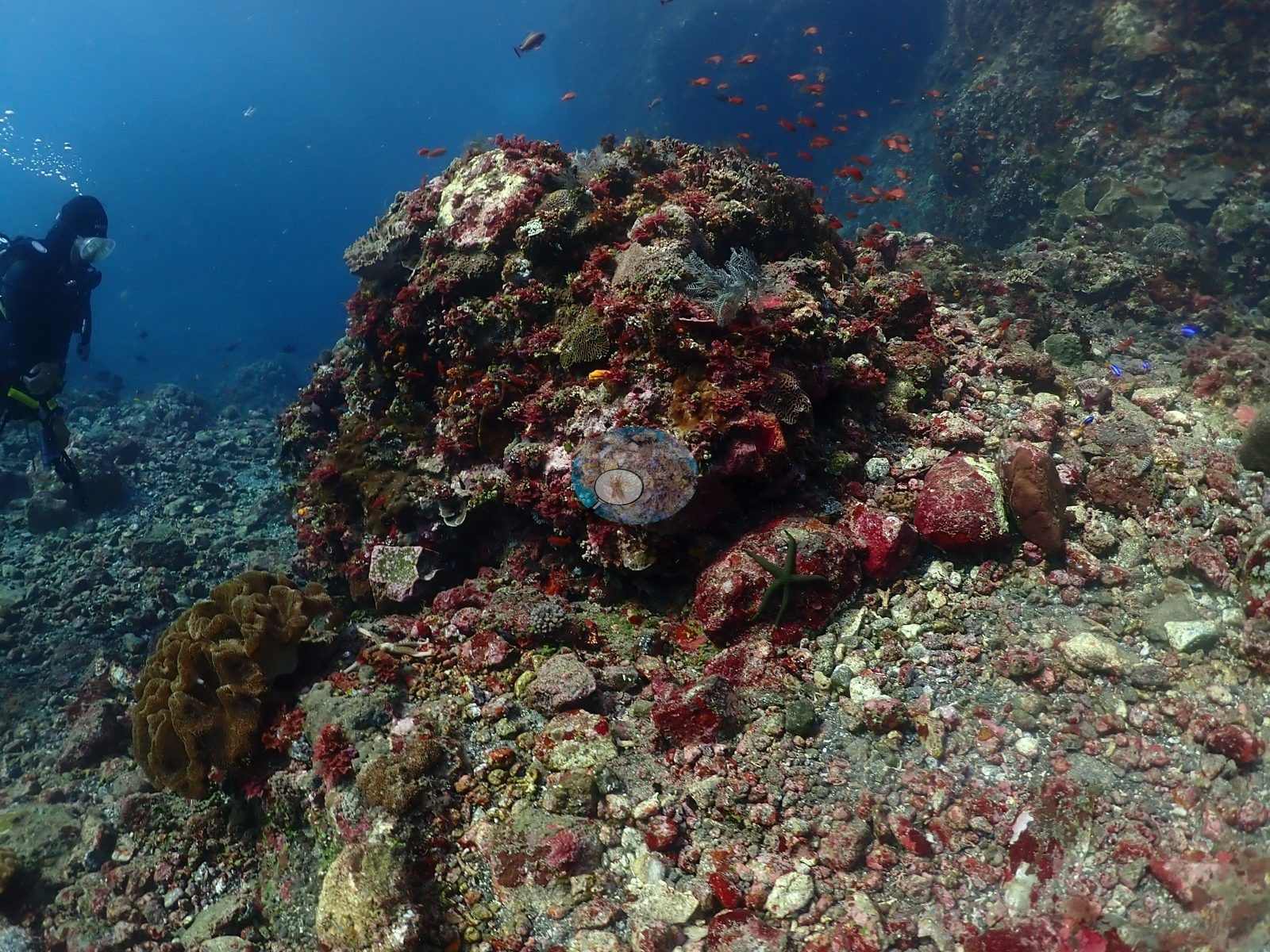
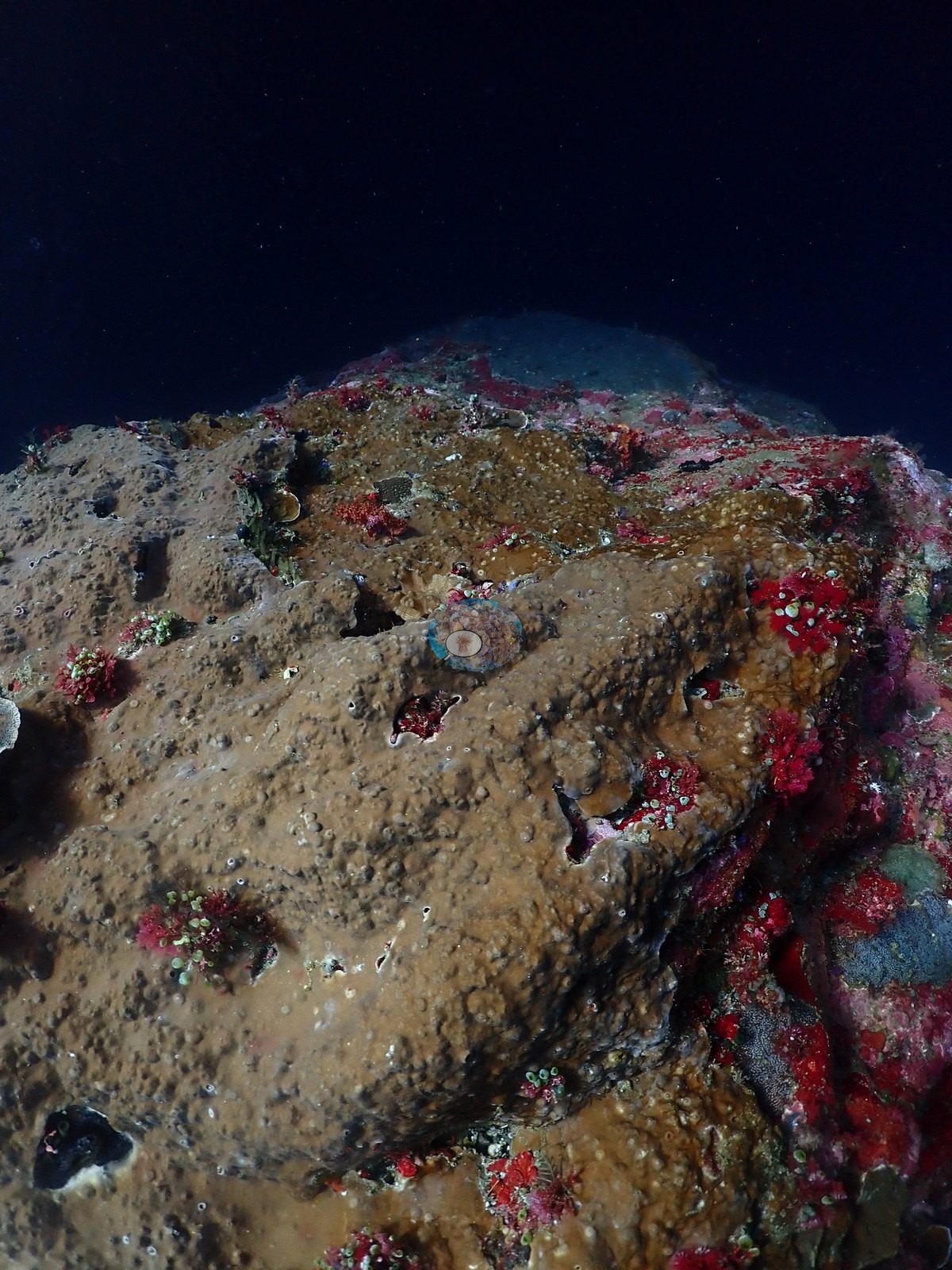
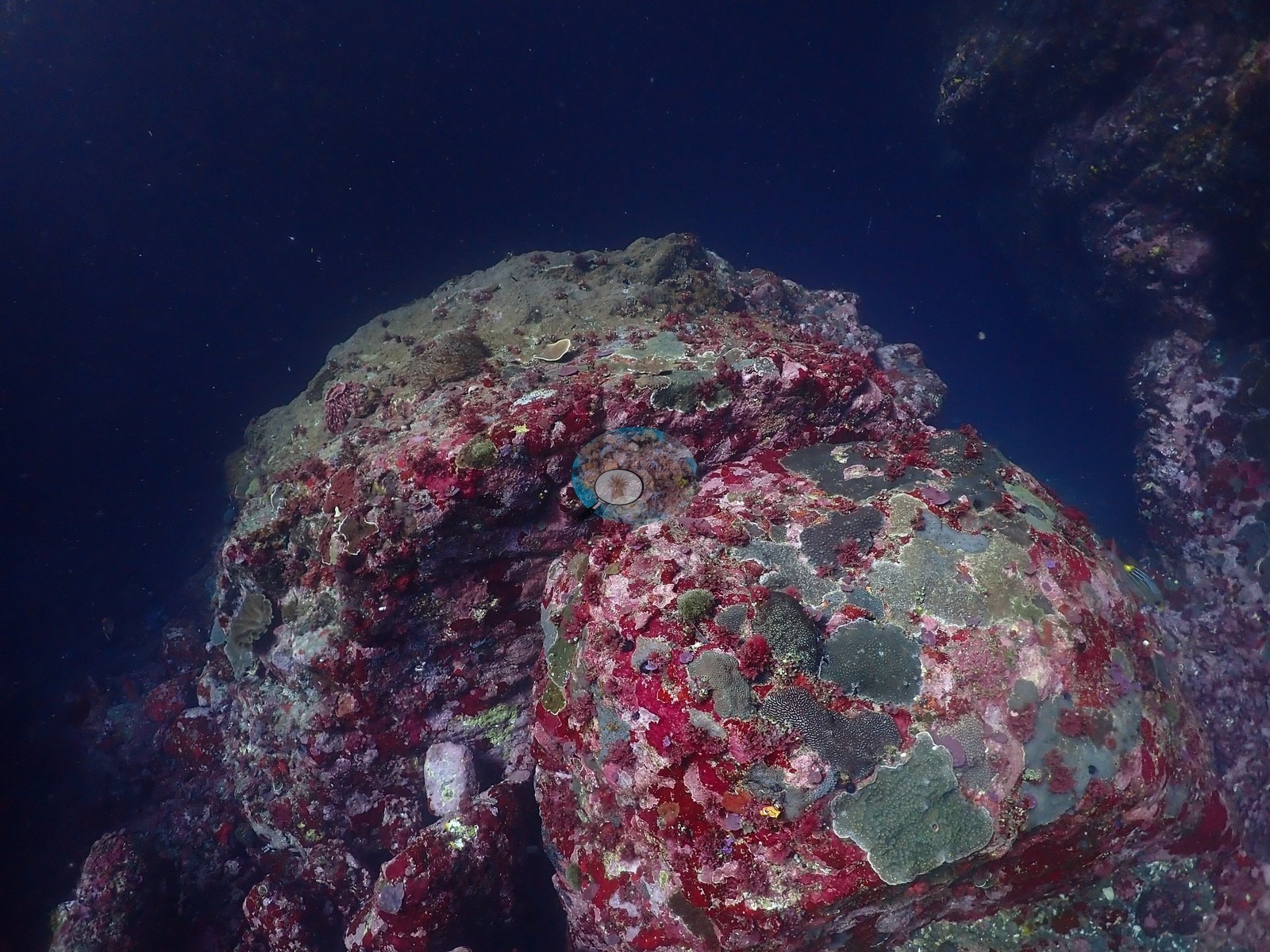
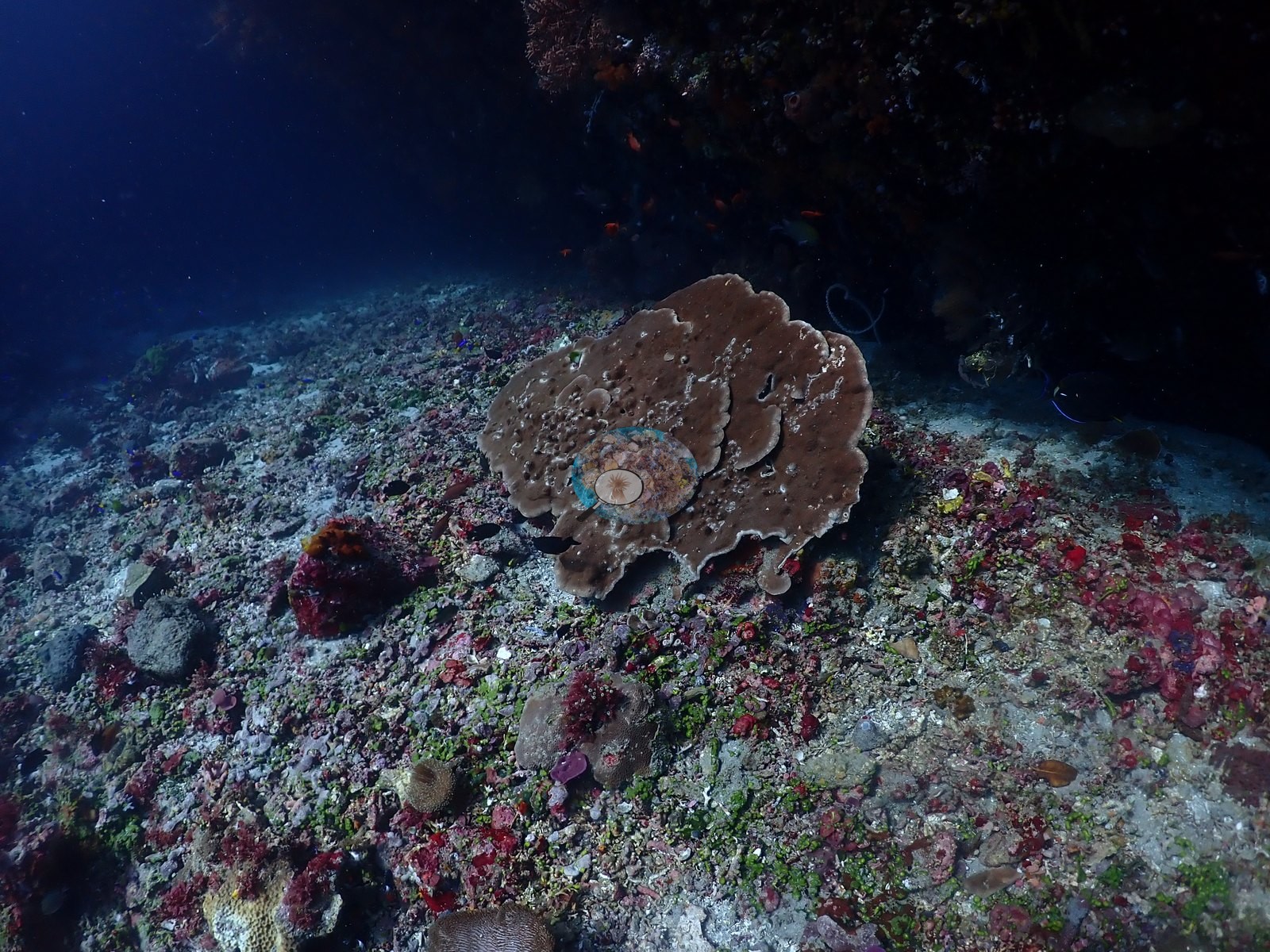
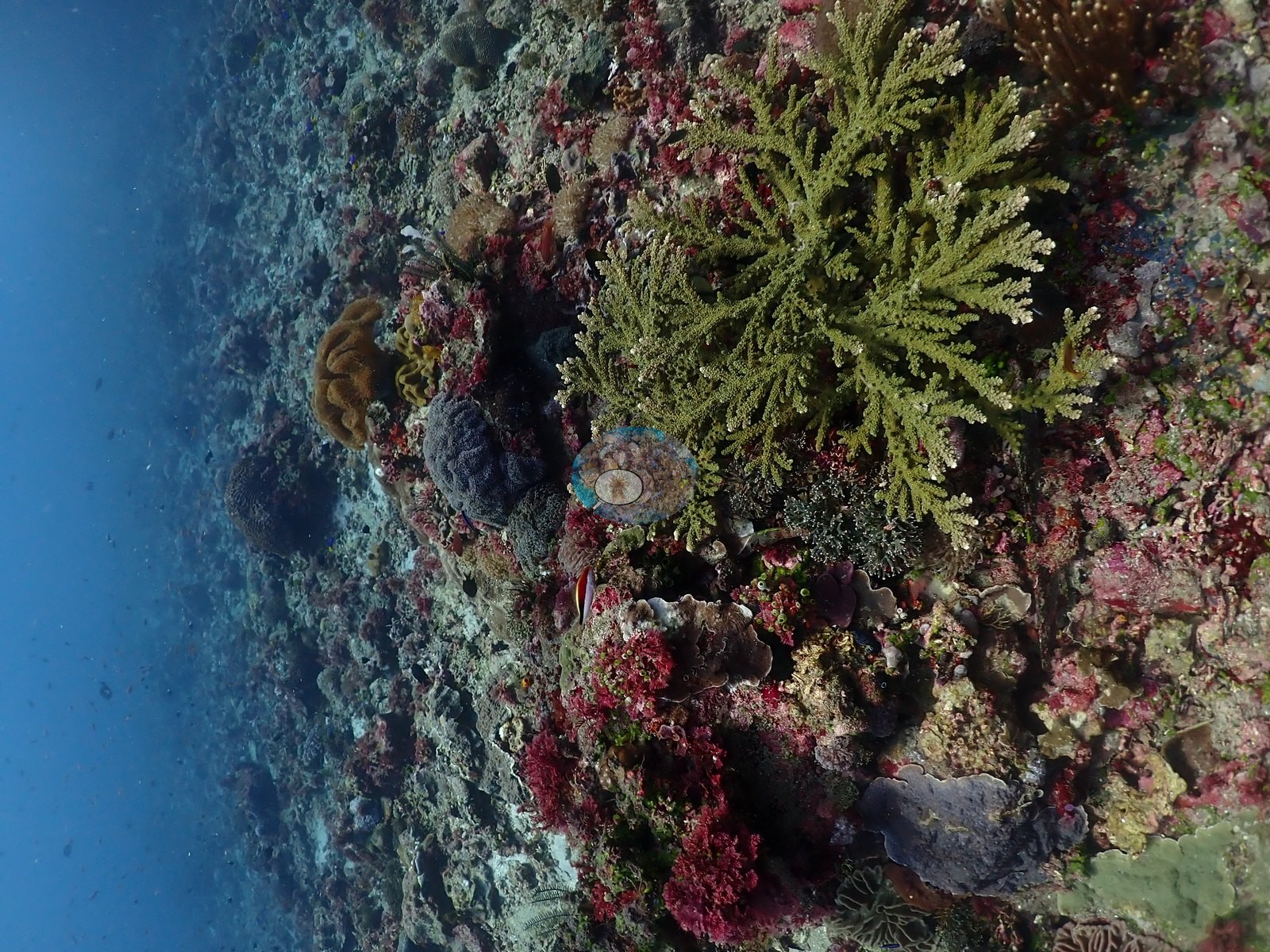
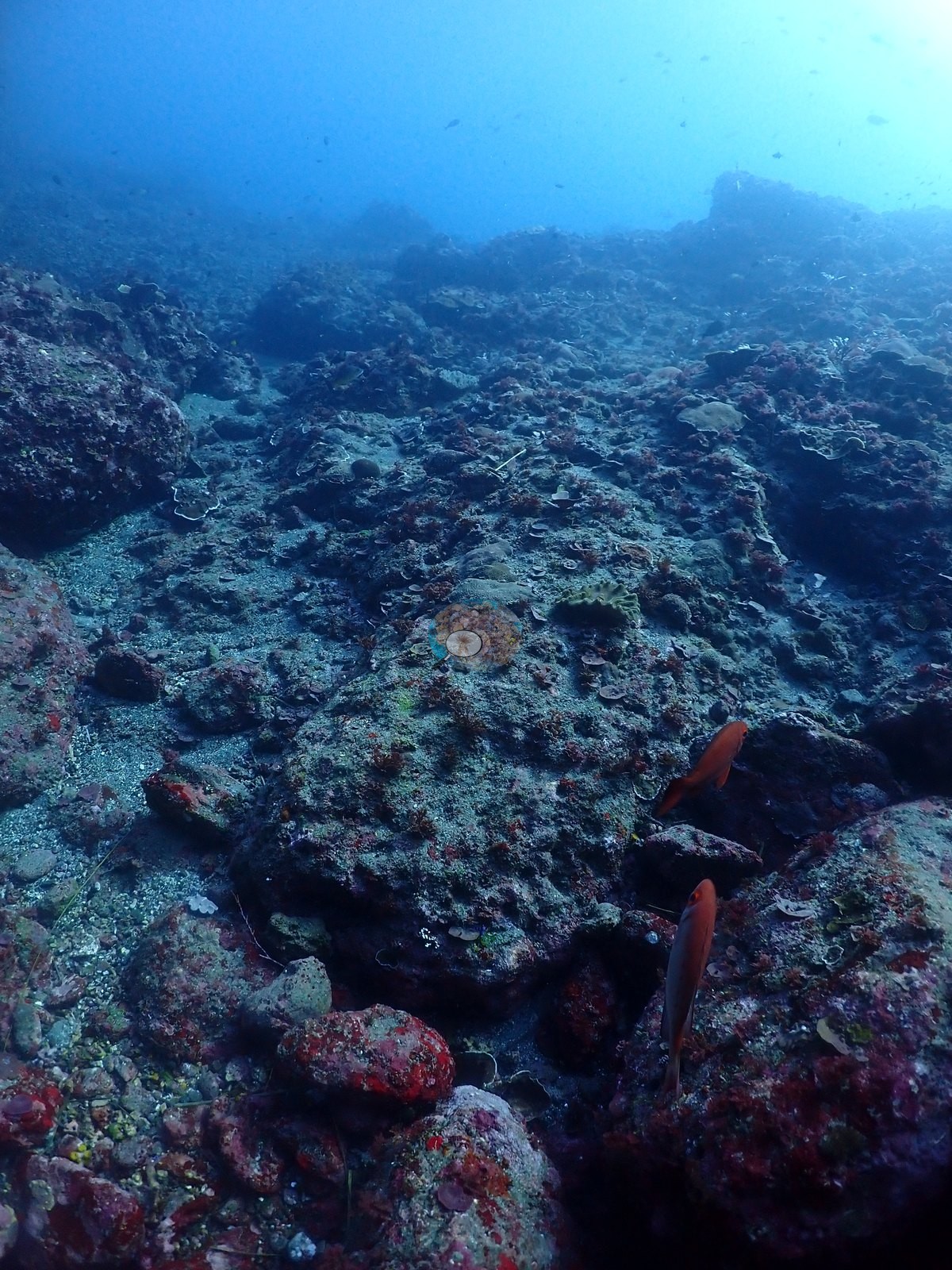
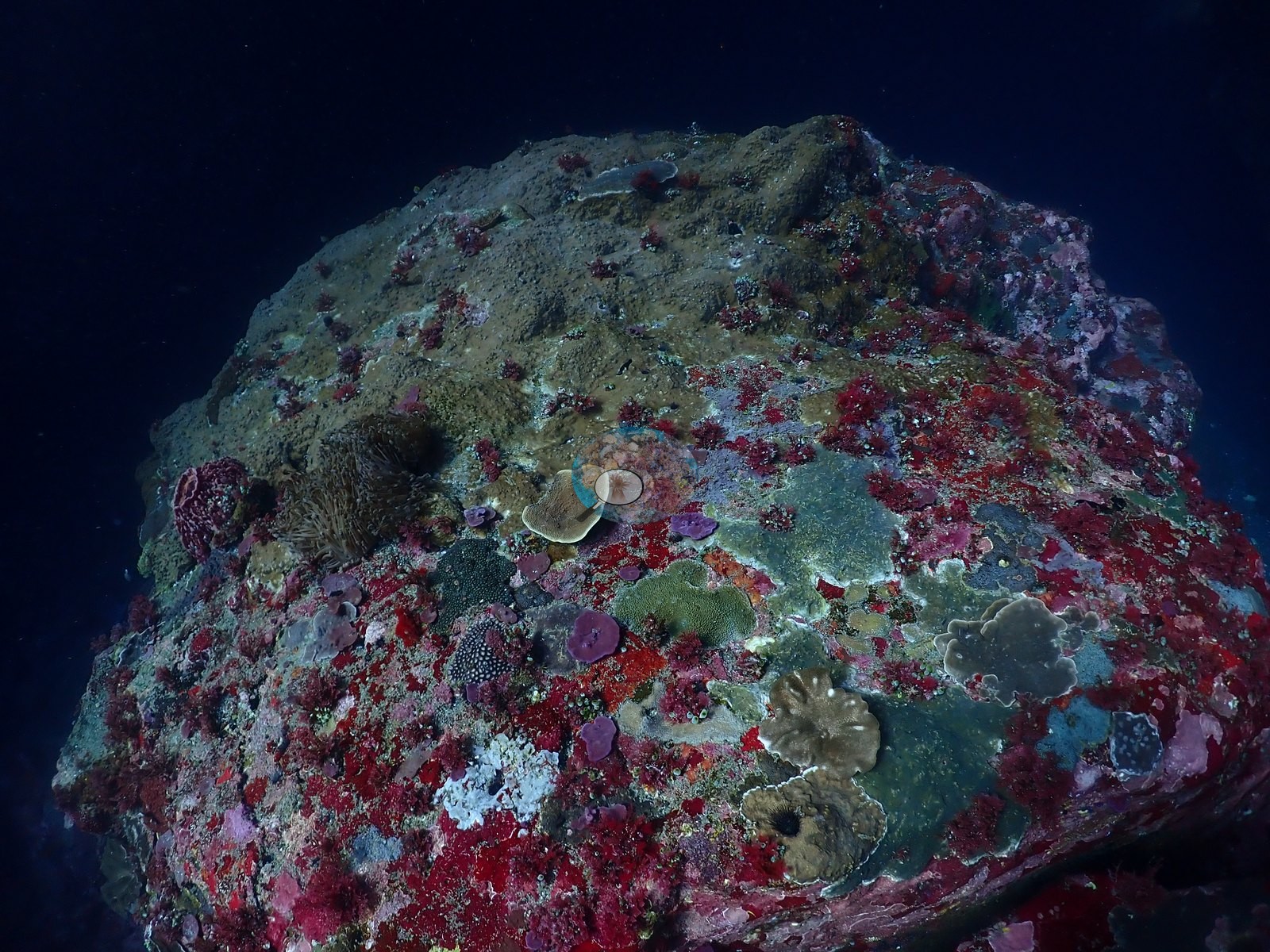
Third and largest, an open low-relief pavement of coralline-crusted rubble, cobble, and dead framework - repeatedly the most extensive substrate in the set (e.g., Image 4, Image 5, Image 15, Image 20, Image 25).
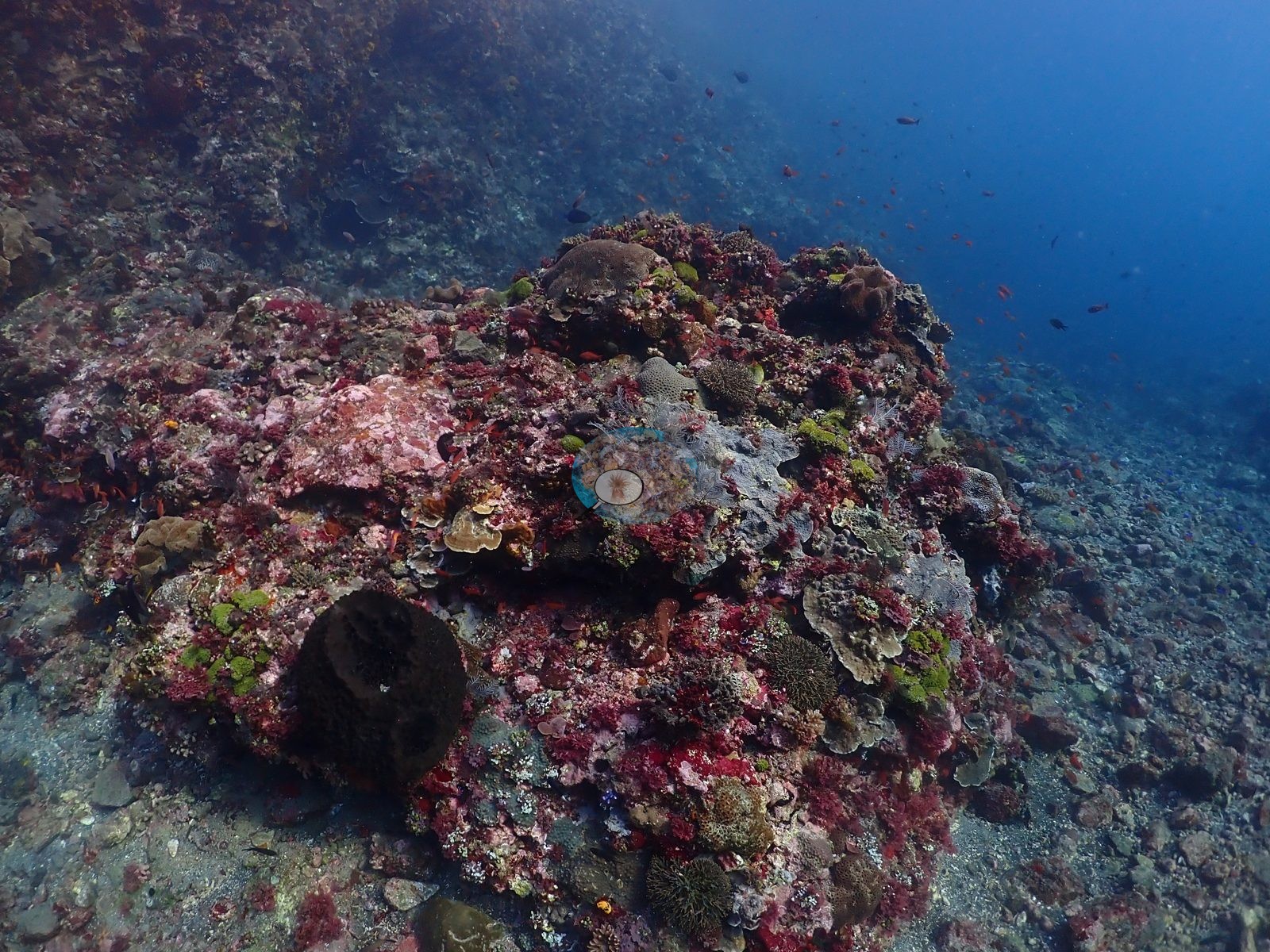
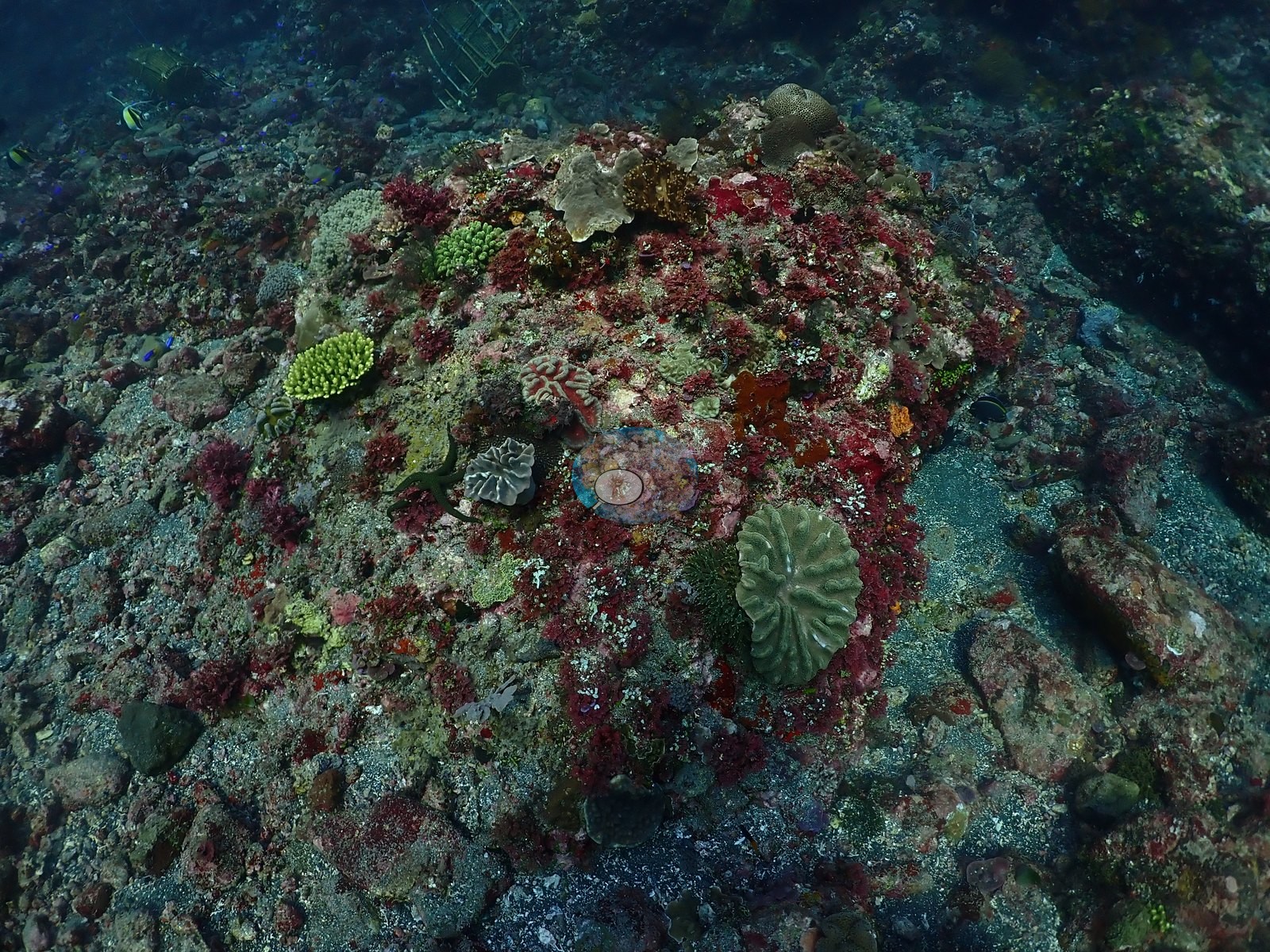
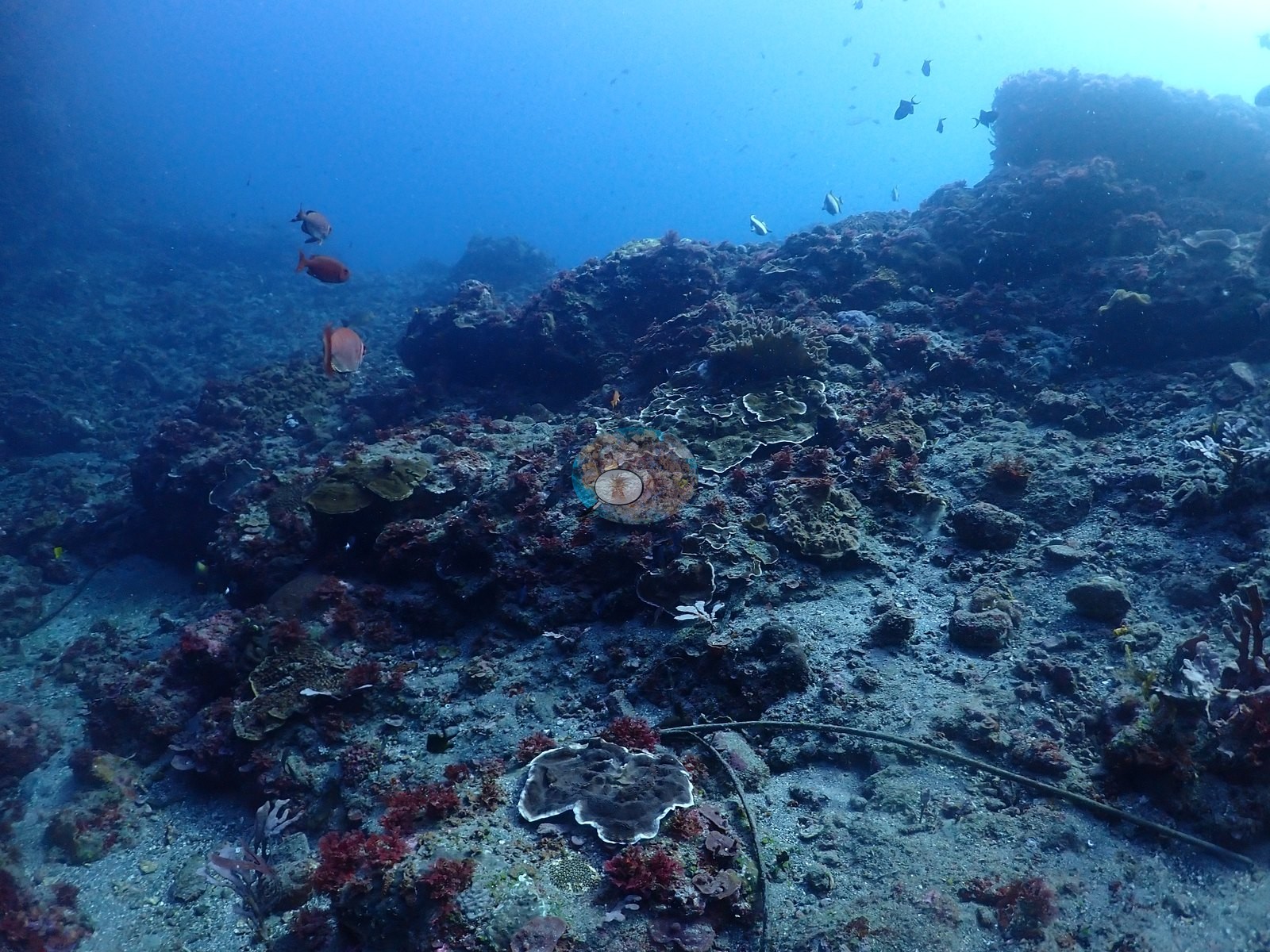
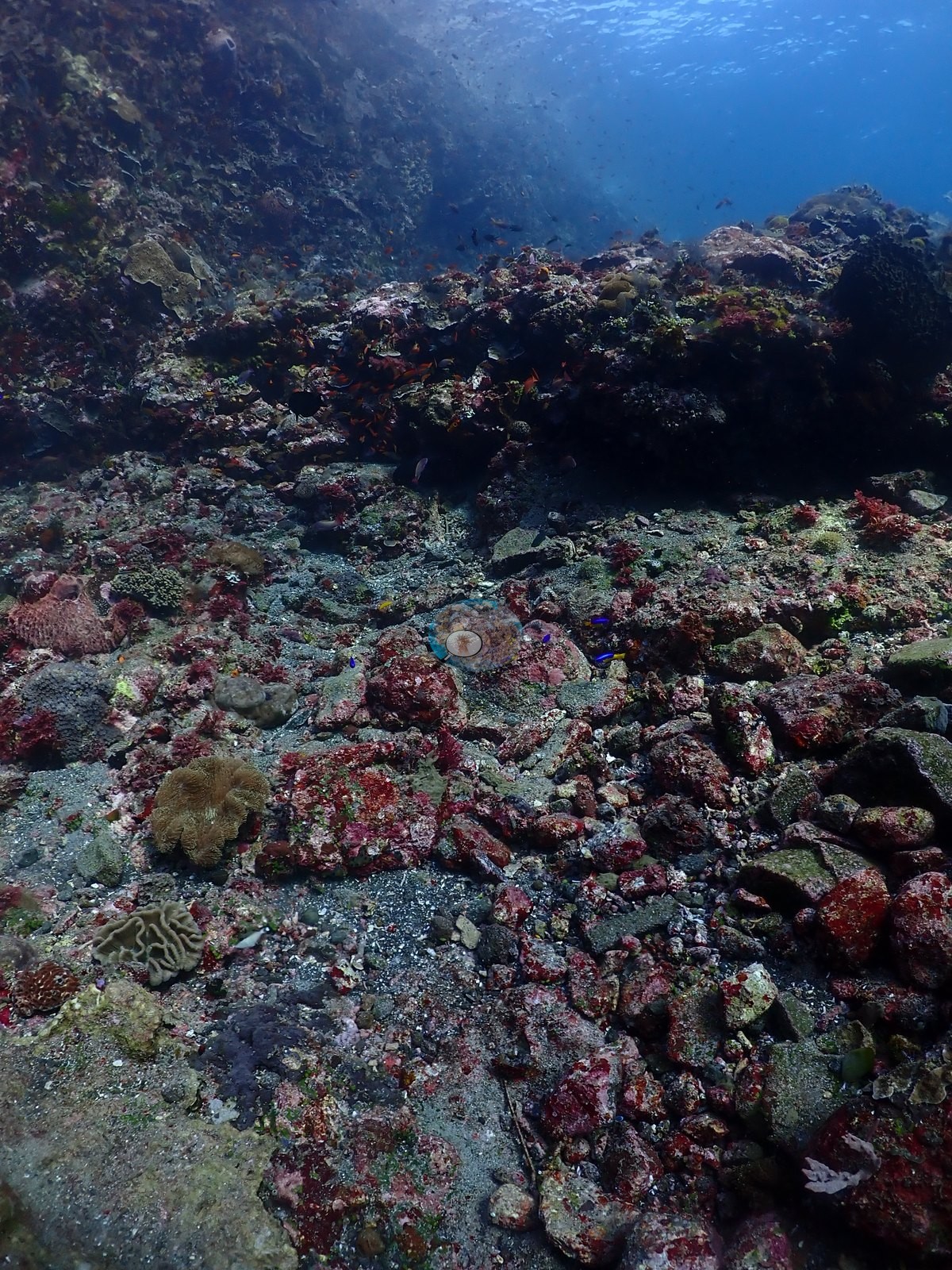
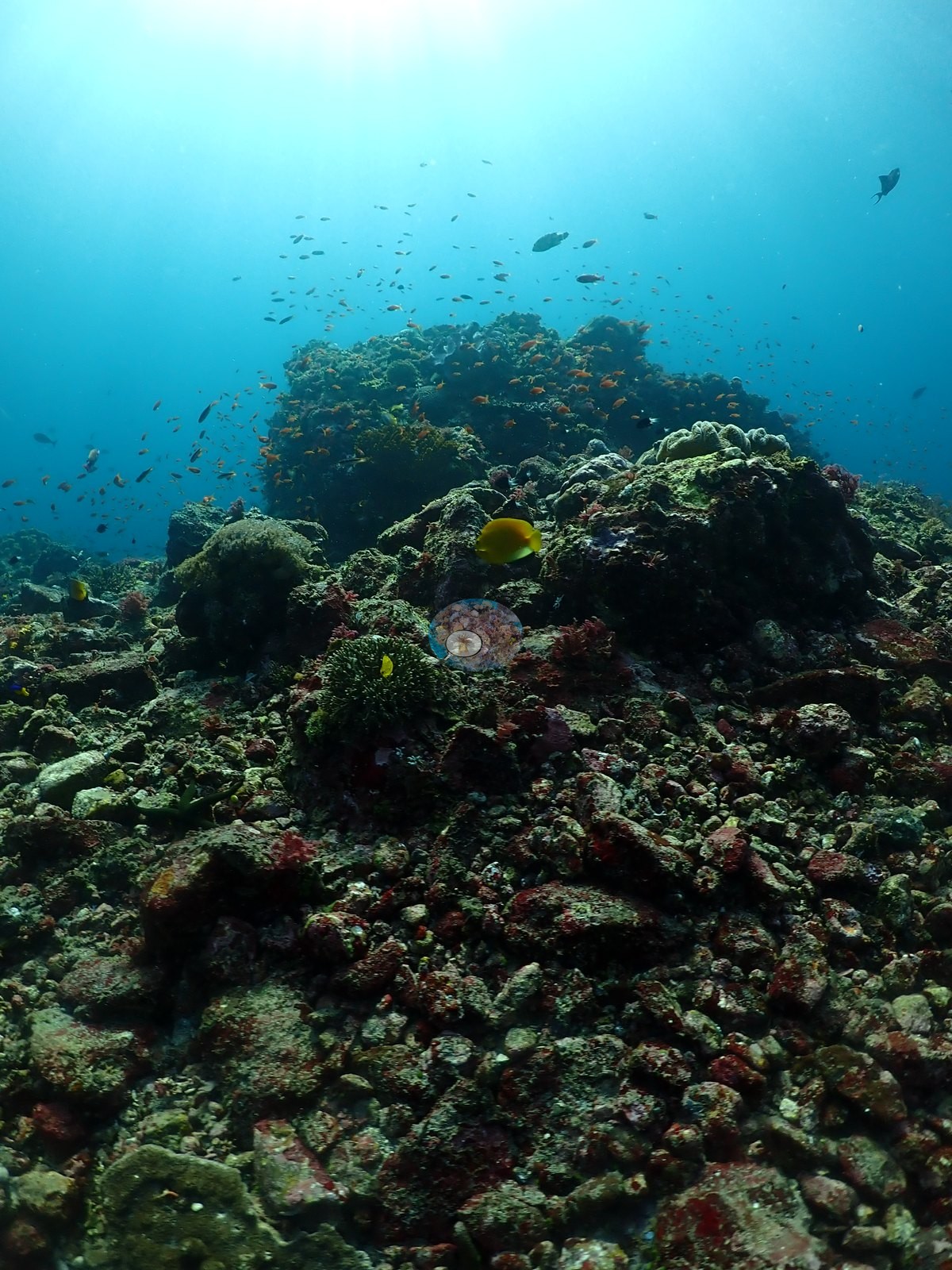
Live coral sits on it as isolated heads and patches: a tabulate Acropora beside a domed Montipora-type colony, a stout blue-gray branching colony with blunt tips, green-yellow digitate Acropora, meandroid Platygyra/Goniastrea-type brains, one large pale-green finely divided arborescent colony, feather stars, green turf, small gorgonians, a black long-spined urchin (e.g., Image 2, Image 18, Image 24, Image 28, Image 32).
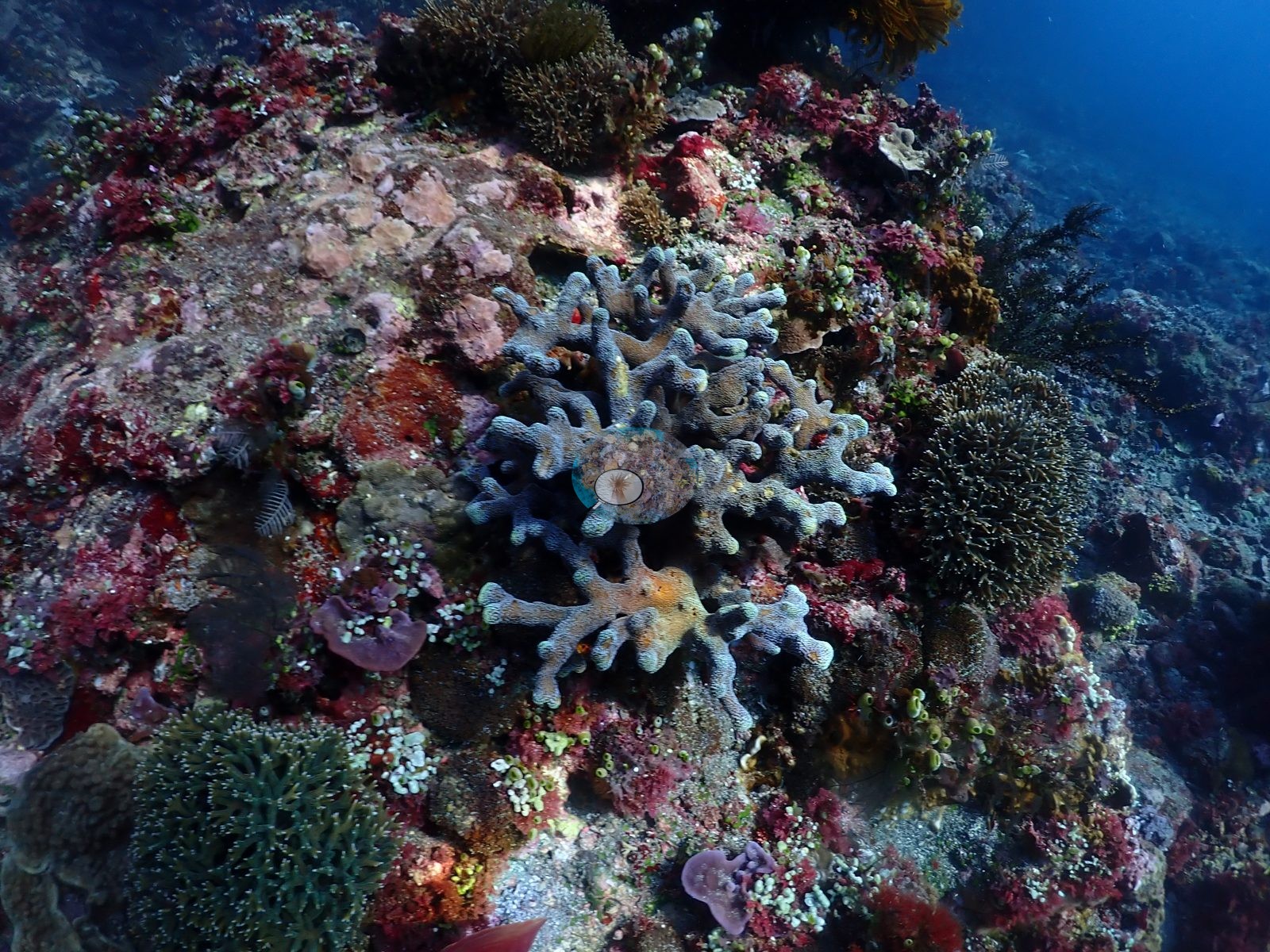
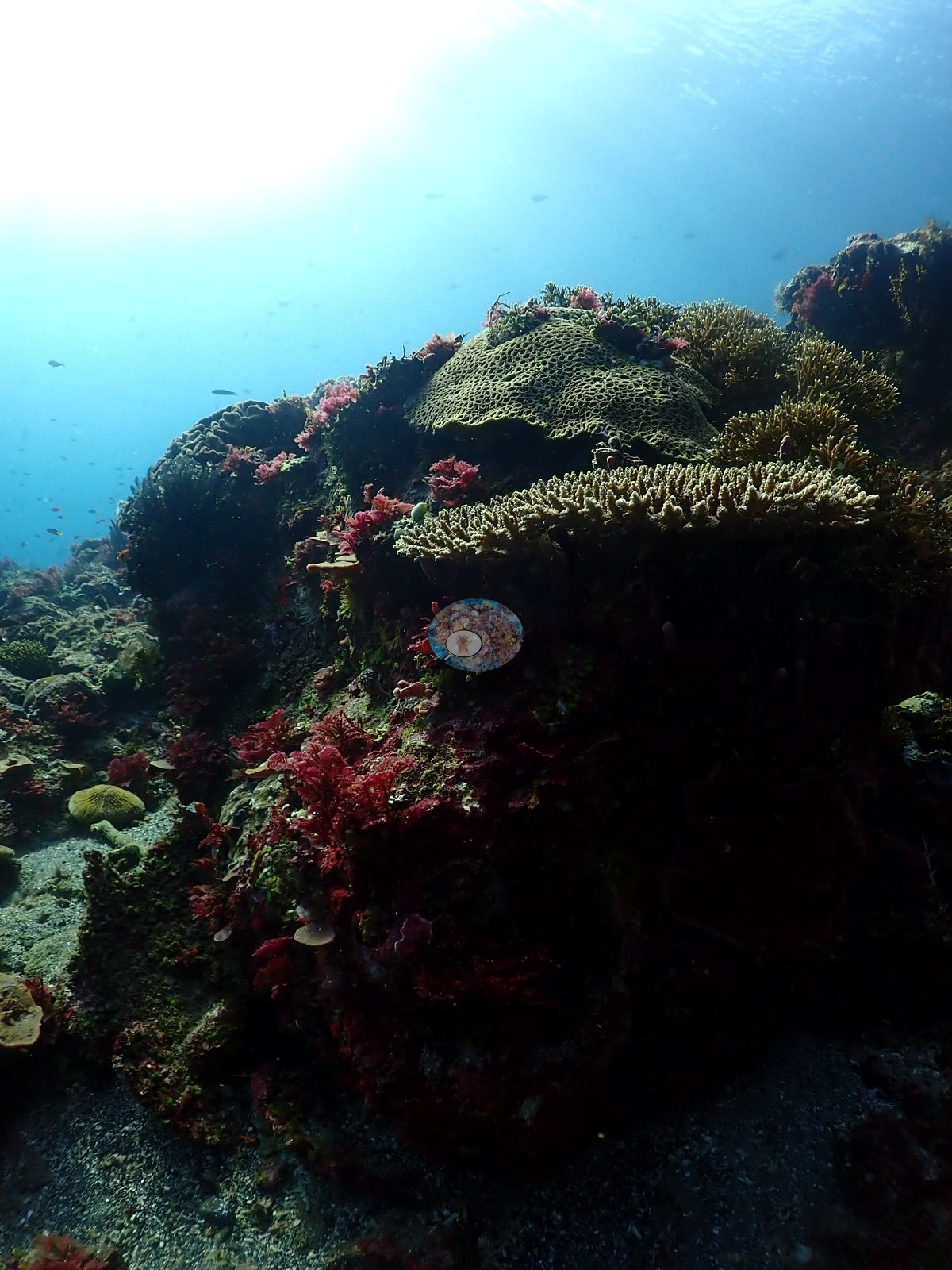
Coral cover
Coral cover: 7.7% — a blind Claude computer-vision point count of 28 of Anderson's unedited photographs (20 points per photo; water, fish, and obstructions excluded). Other computer-vision methods are listed in the method table.
Stressors
No bleaching, disease, or predation was evident - hard coral simply holds a minority of a mostly coralline-and-rubble surface (e.g., Image 29, Image 35).
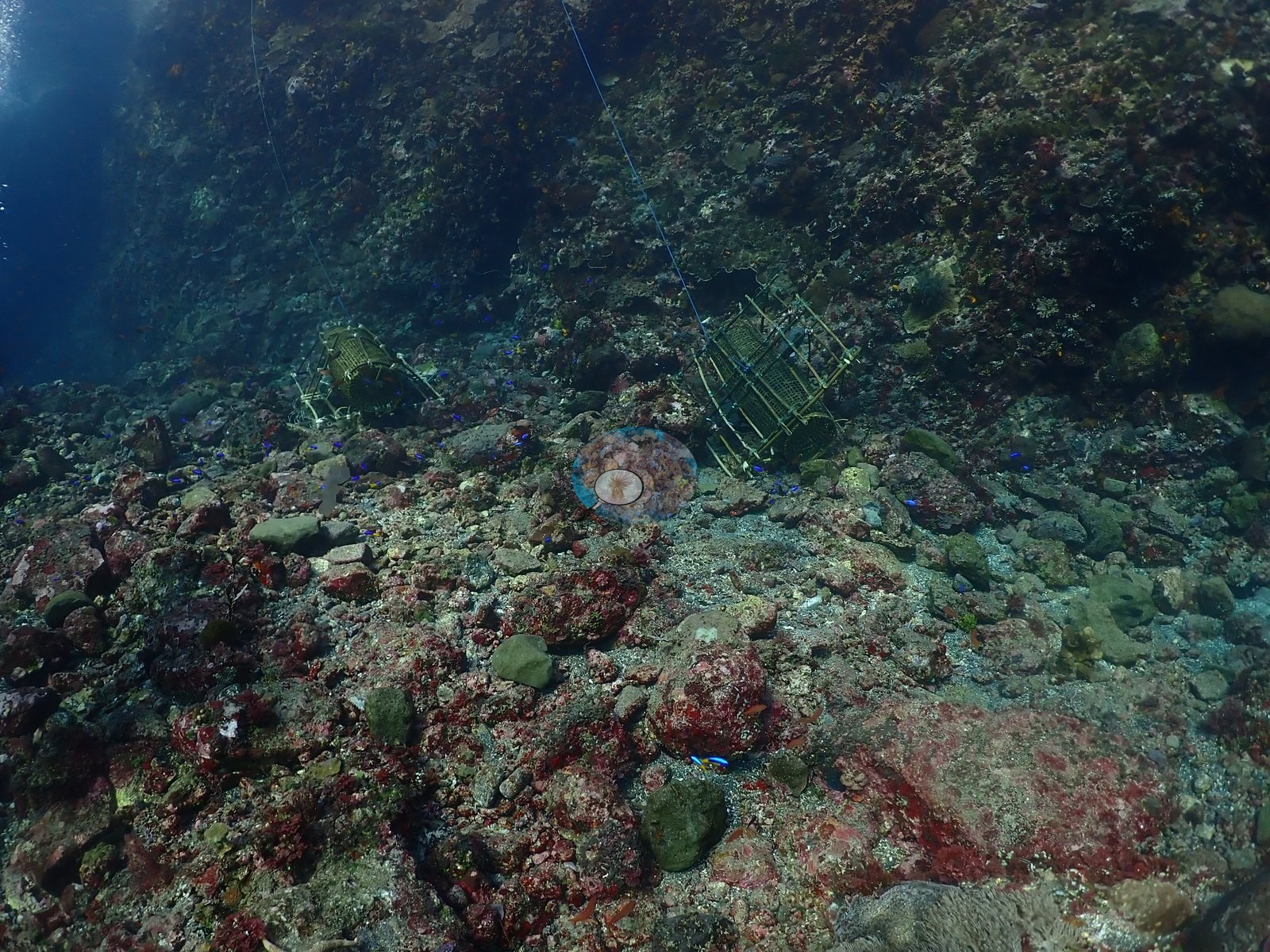
A metal cage or rebar frame with lines lies on the rubble, and a thin rope crosses three frames (e.g., Image 37).
Fish and other fauna
Fish were anthias and Chromis swarms, blue damselfishes, a yellow Chaetodon, and orange soldierfish; two shallow frames climb a near-surface wall dense with orange cup-coral-like polyps (e.g., Image 11, Image 31, Image 36).
Comparisons with other data
Also on record for this site: A rugged cave entrance and adjoining rocky reef with chambers and swim-throughs. Live hard coral cover was lower and more discontinuous than at the coral-garden sites, and the short sequence makes this primarily a topographic record.
CV model comparison
More info
DINOv3 and CoralSCOP were run on the same photos and are listed for comparison. Coralscapes v2 and v1 were also run but are not shown: Anderson does not consider Coralscapes reliable for these photos. No diver transect exists for this trip, so agreement between the rows is not accuracy, and as of September 2026 no computer-vision method estimates coral cover accurately on new images; treat every row as indicative.| Method | Hard-coral cover (%) |
|---|---|
| In-house DINOv3 | 19.1 |
| CoralSCOP unedited | 8.8 |
| Claude | 7.7 |
Data & links
All images from Coral Reef Diagnostics. Data are from Coral Reef Diagnostics.
© Coral Reef Diagnostics.