
Alor - Beang Abang (Baeng Beach / Baeng Jetty)

Part of the regional summary: Indonesia - Alor
2026-07-31
More info
East Nusa Tenggara (NOAA CRW virtual station) · Lesser Sunda ecoregion mean=6.9°C-heating weeks Alor and the Pantar Strait sit in a zone of exceptionally strong upwelling, which holds these reefs several degrees cooler than NOAA’s satellite-derived figures imply. Read the heat-stress numbers here as a regional-scale indication, not as this reef’s own temperature history.A muck and jetty site in Alor rather than a coral reef: the night dive over gravel turned up sun corals, commensal shrimp, a mantis shrimp, a small octopus, and a dwarf lionfish, while the day dive under the jetty found pilings sheathed in sponges and pink gorgonian fans. Three seahorses in olive, rust, and yellow were photographed.
Lokasi muck dan dermaga di Alor, bukan terumbu karang: penyelaman malam di atas kerikil memunculkan karang matahari, udang komensal, udang mantis, gurita kecil, dan ikan lepu kerdil, sementara penyelaman siang di bawah dermaga menemukan tiang-tiang terbungkus spons dan kipas gorgonia merah muda. Tiga ekor kuda laut berwarna zaitun, karat, dan kuning terfoto.
Terjemahan ringkasan ini oleh AI; versi bahasa Inggris yang berlaku.
20 of these 54 photographs are shown beside the text that discusses them under "Site description" below.
Site description
Setting
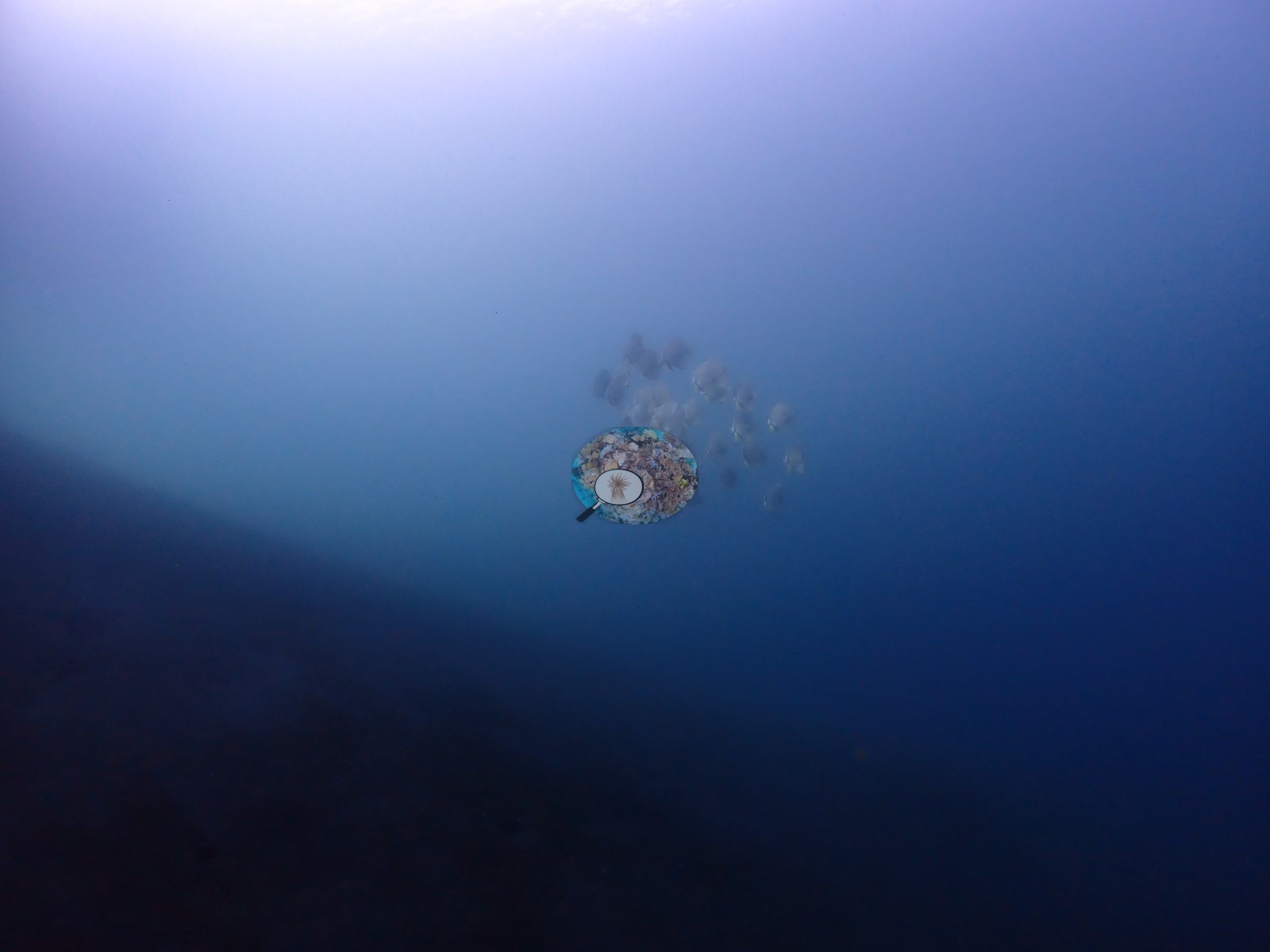
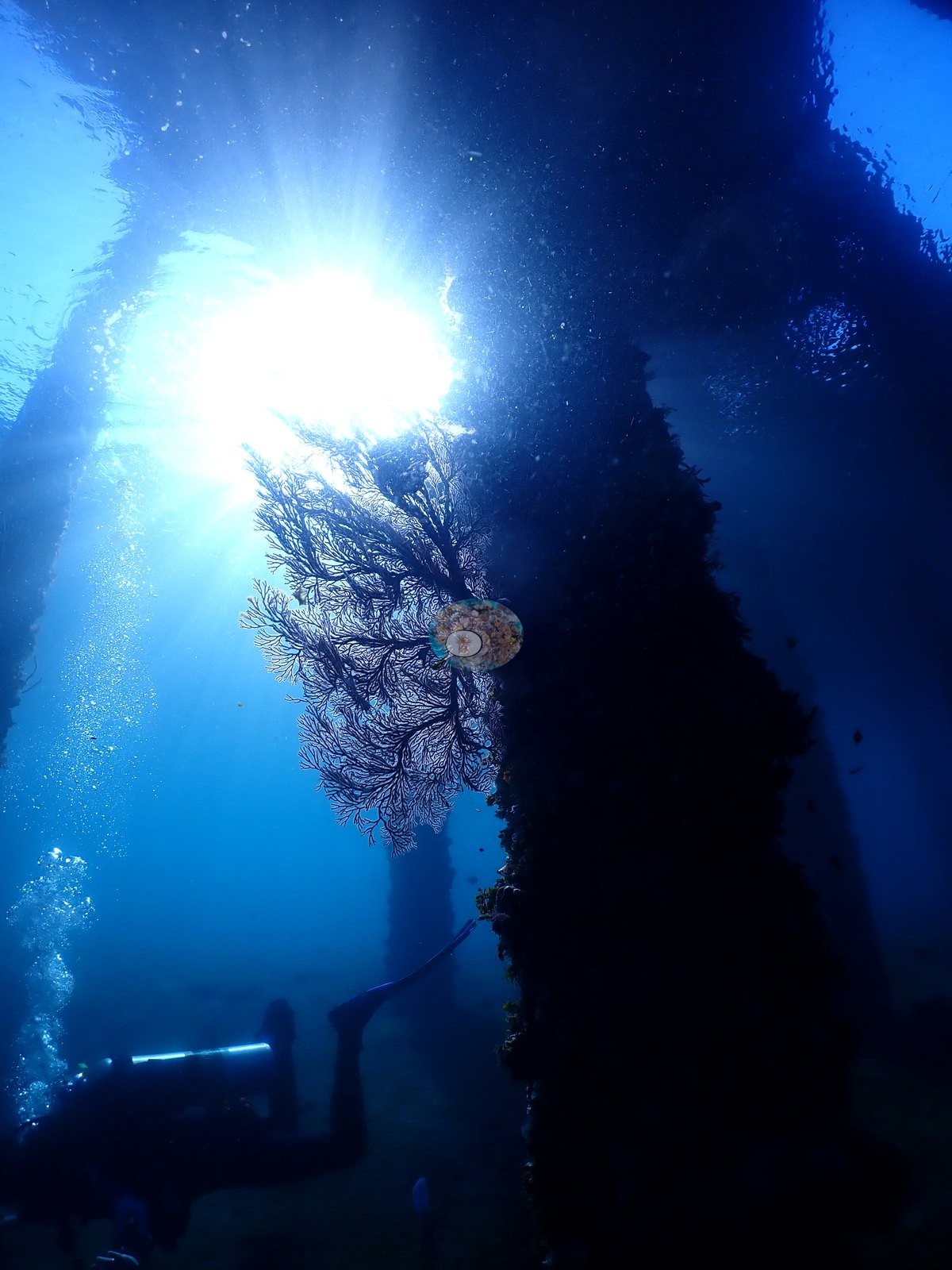
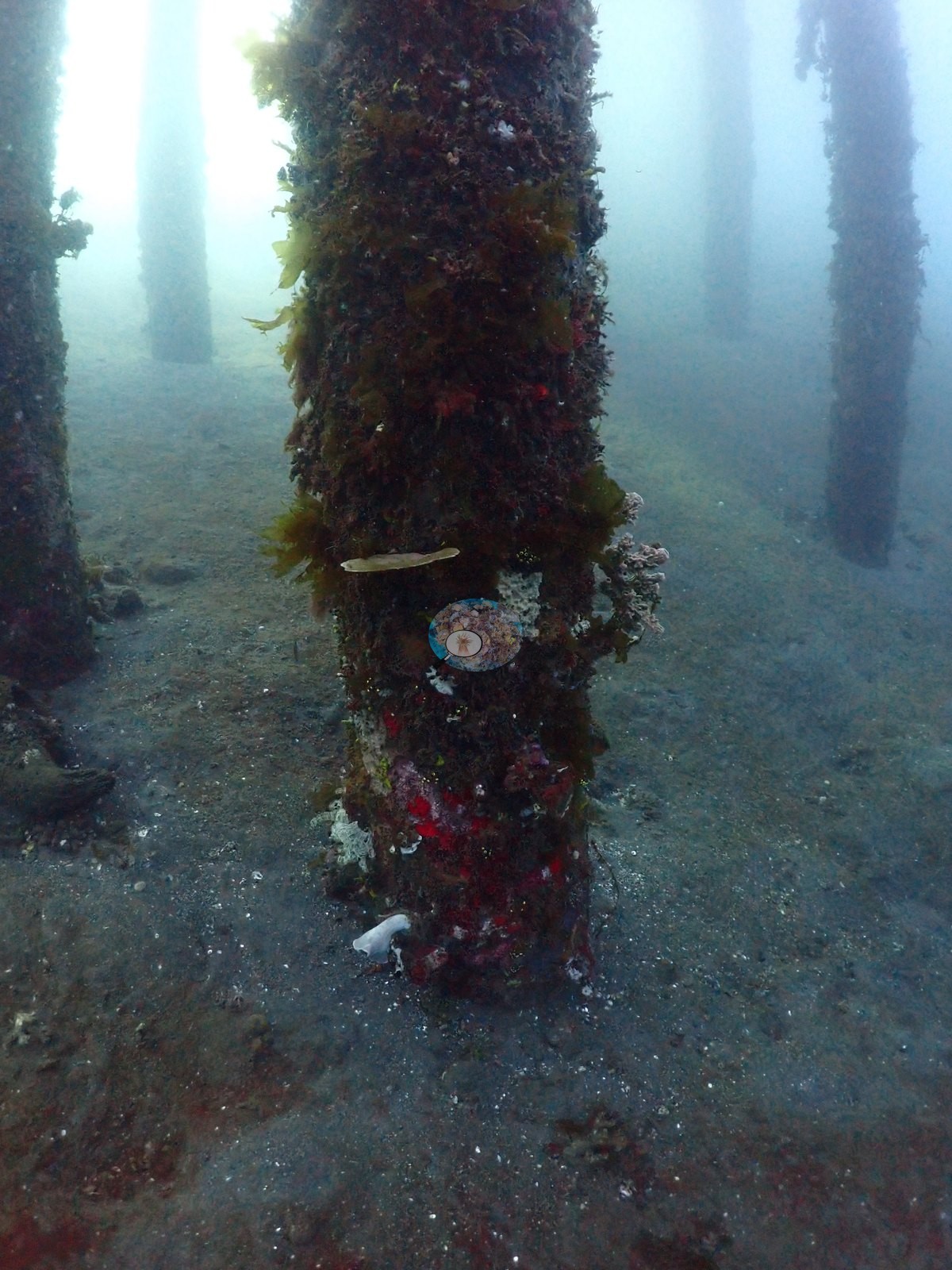
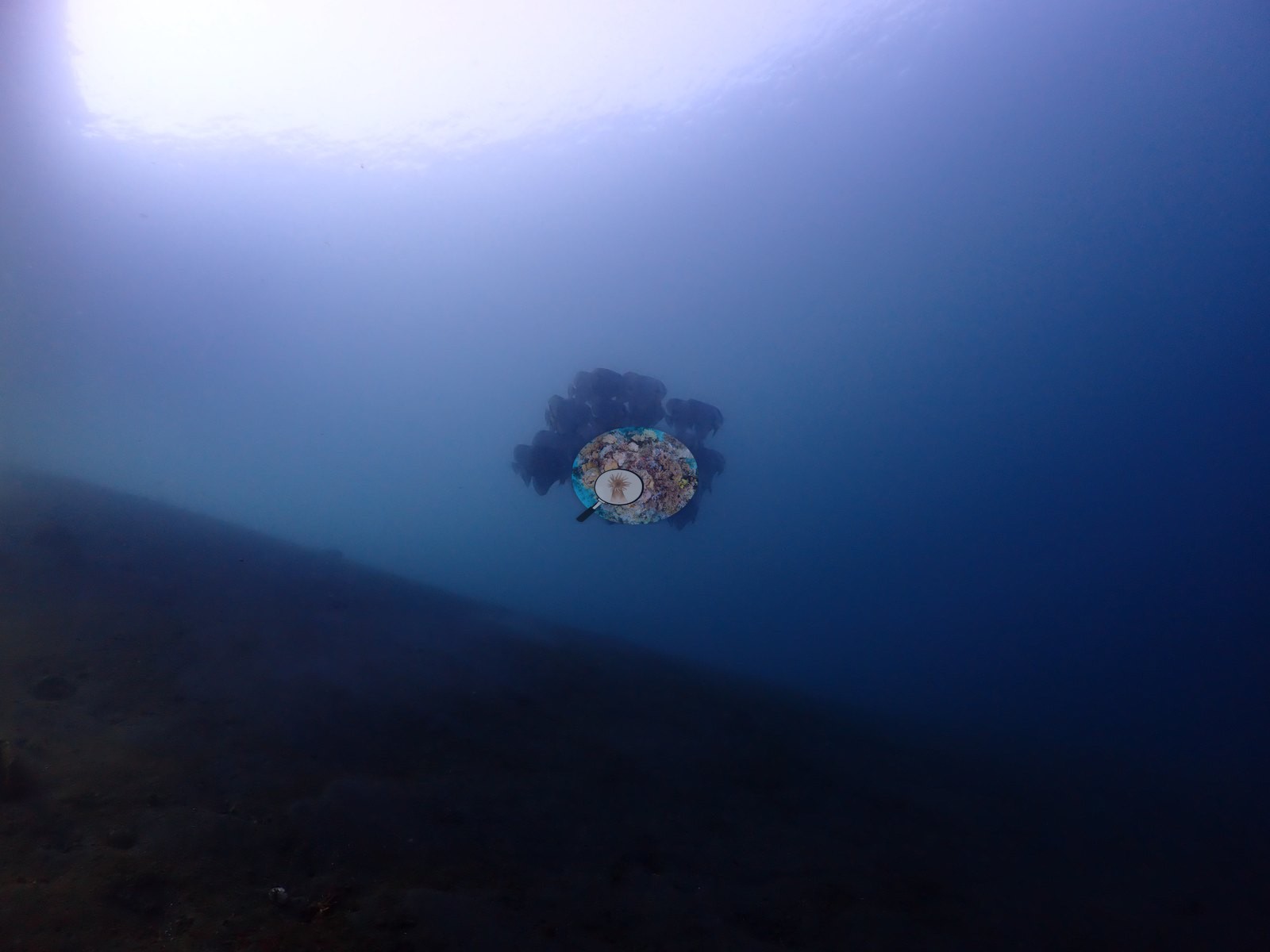
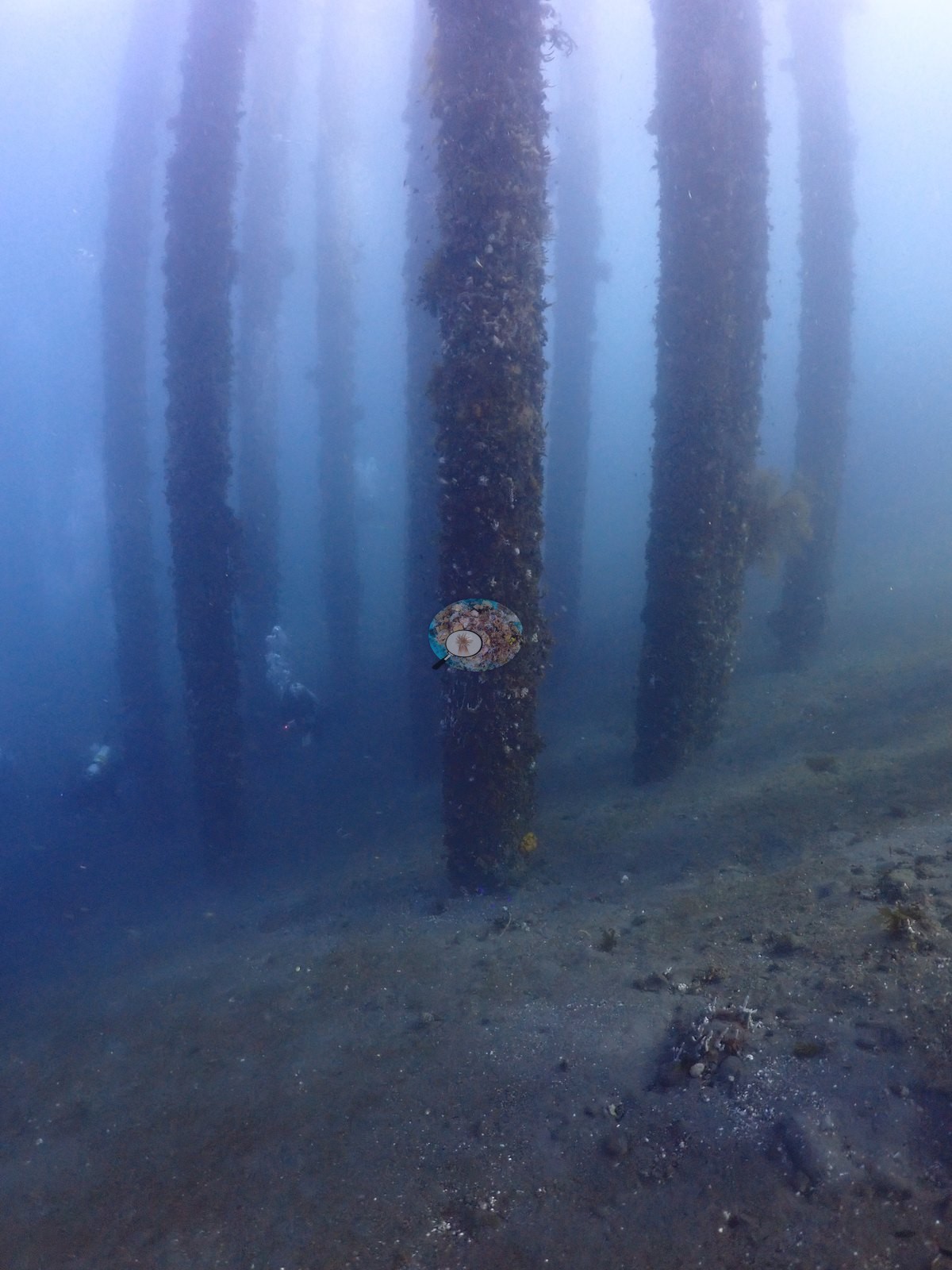
Visibility was milky green under the jetty, blue offshore (e.g., Image 36).
General benthic features
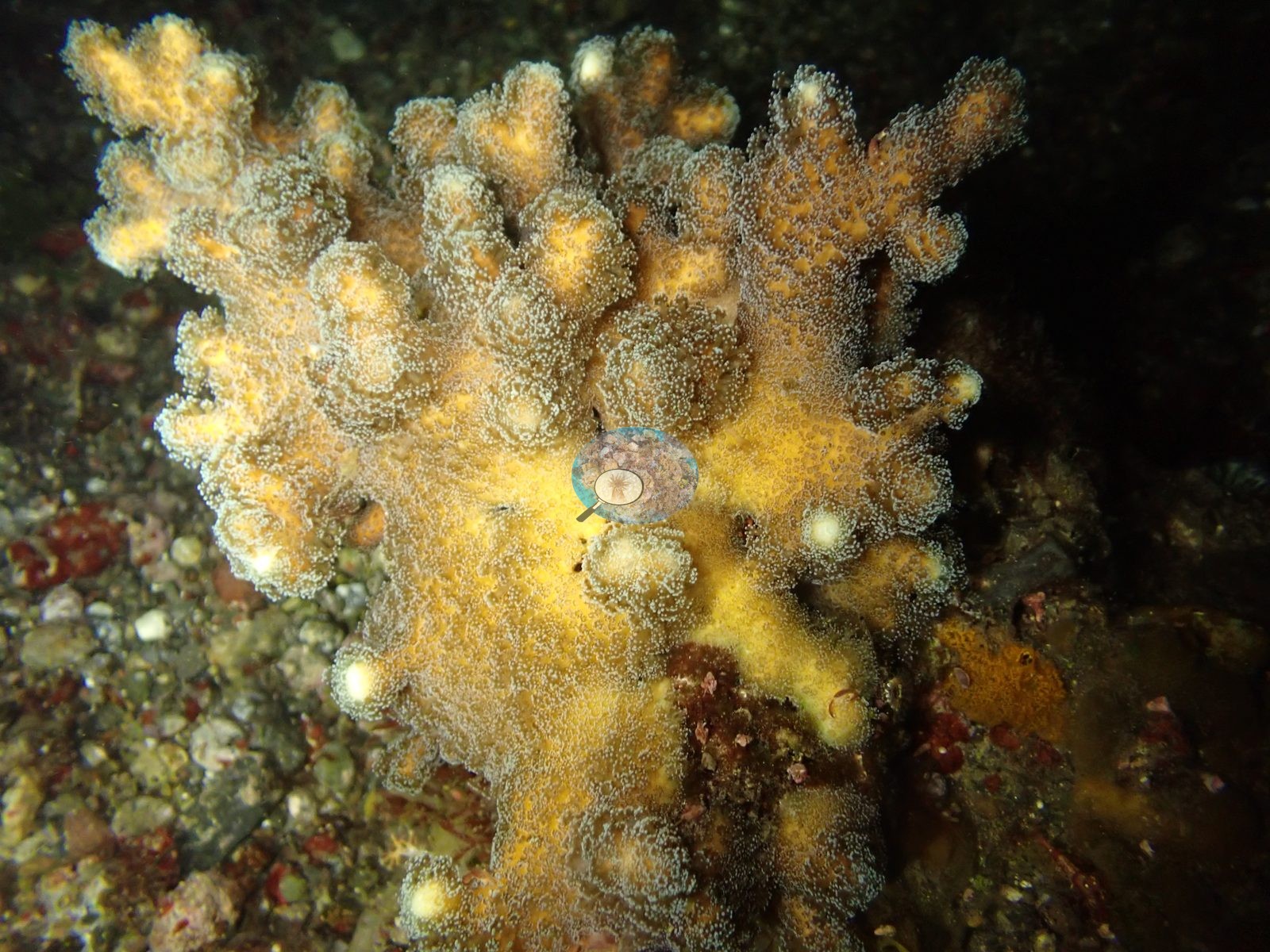
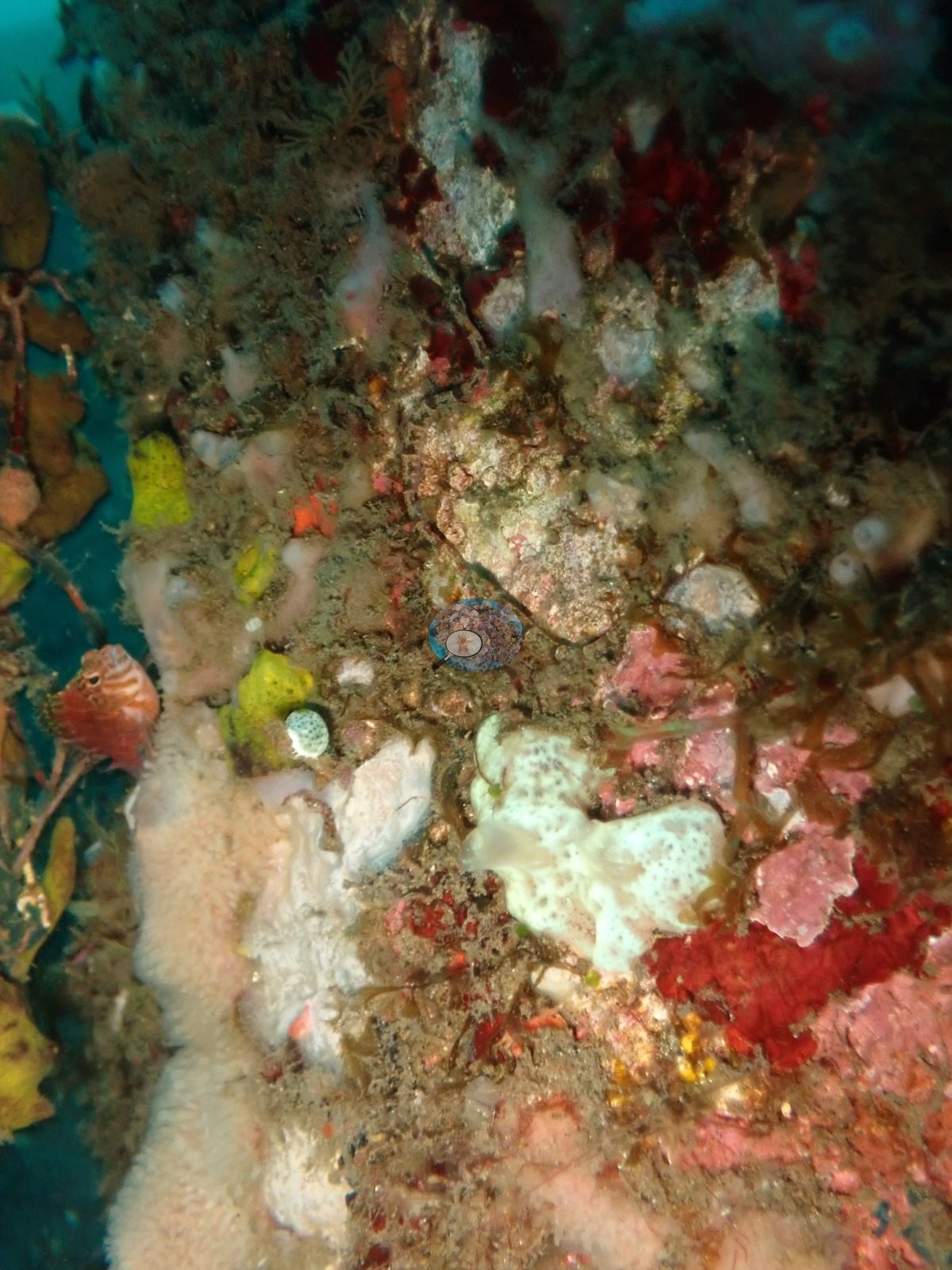
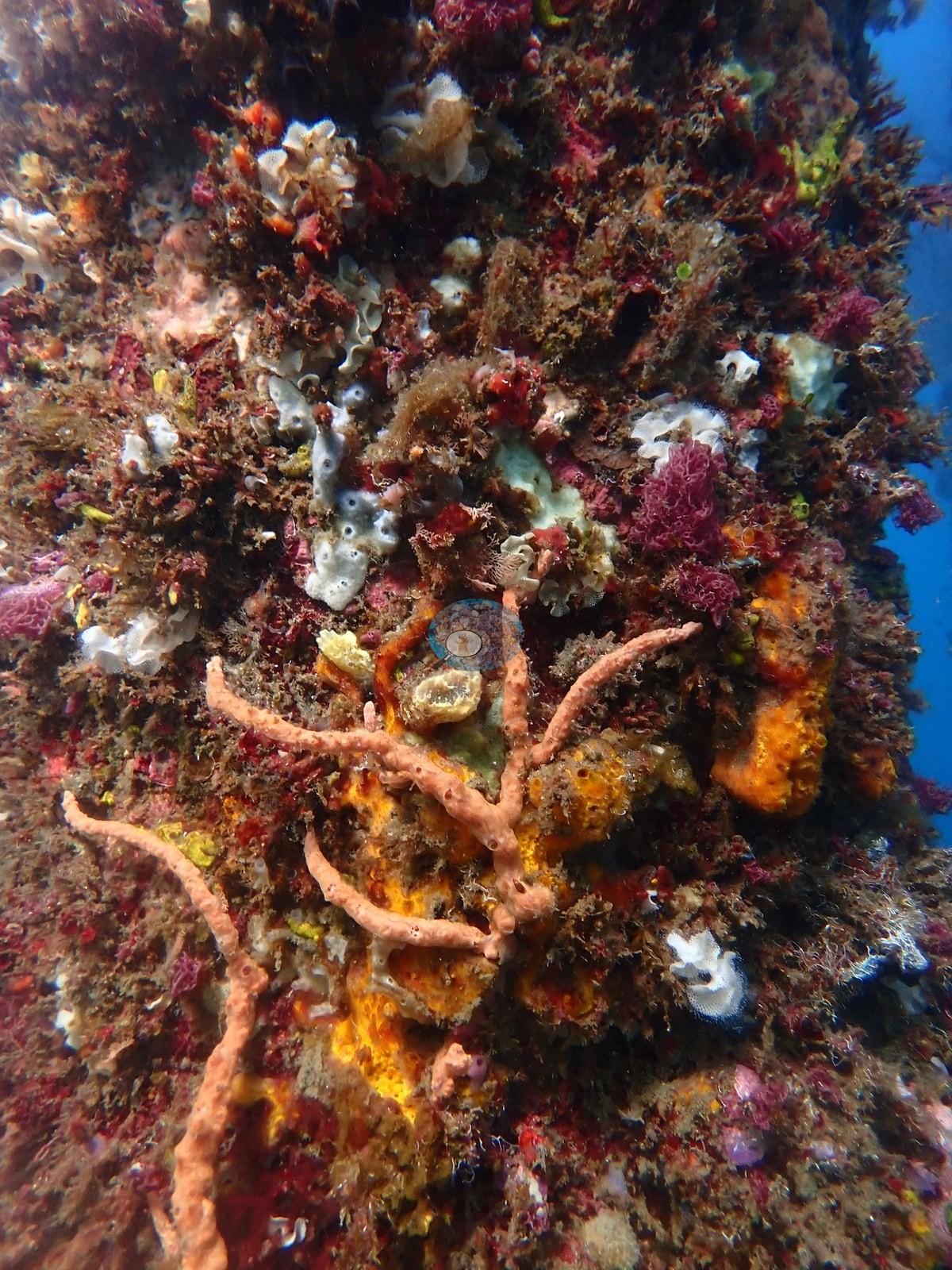
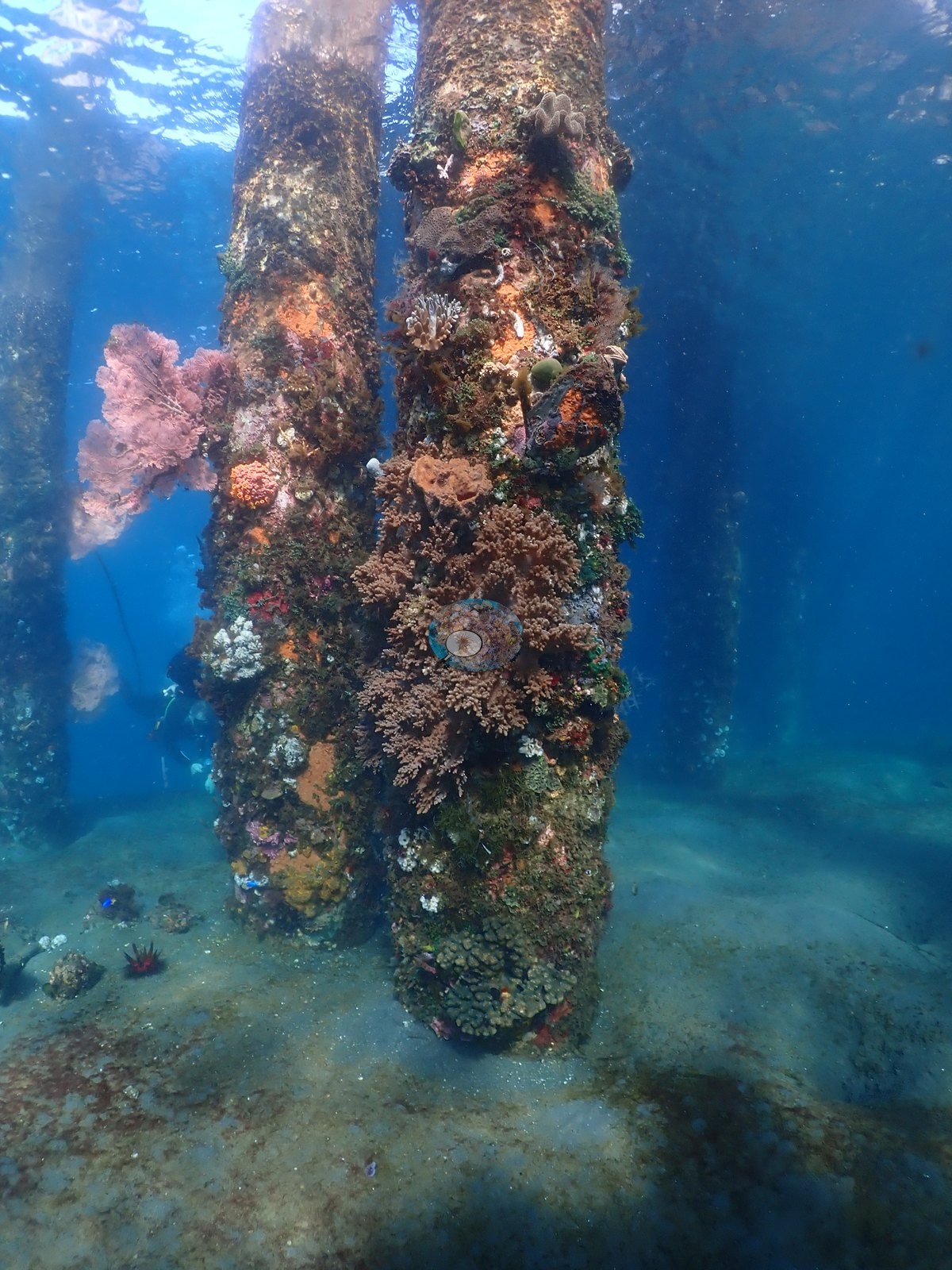
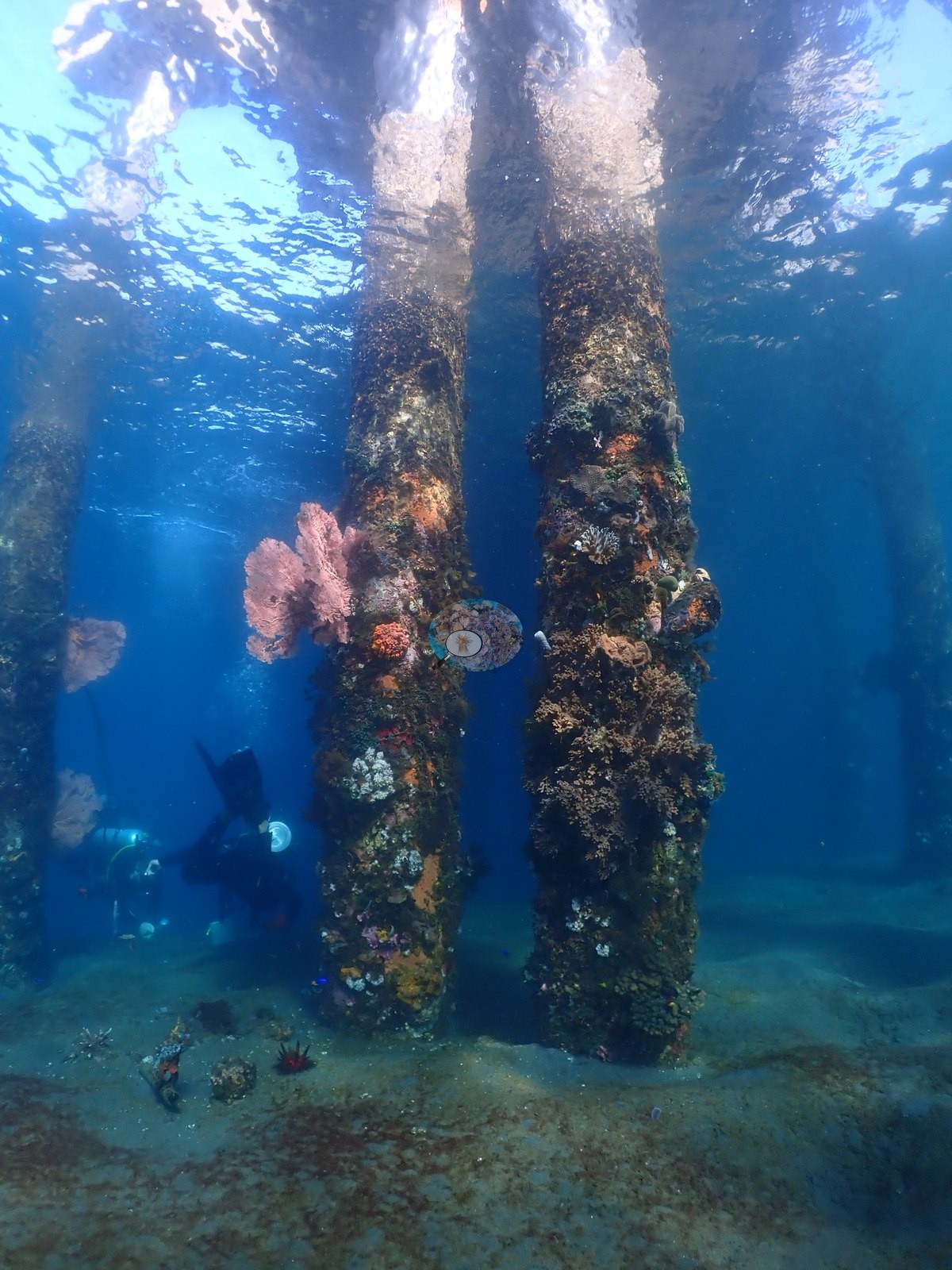
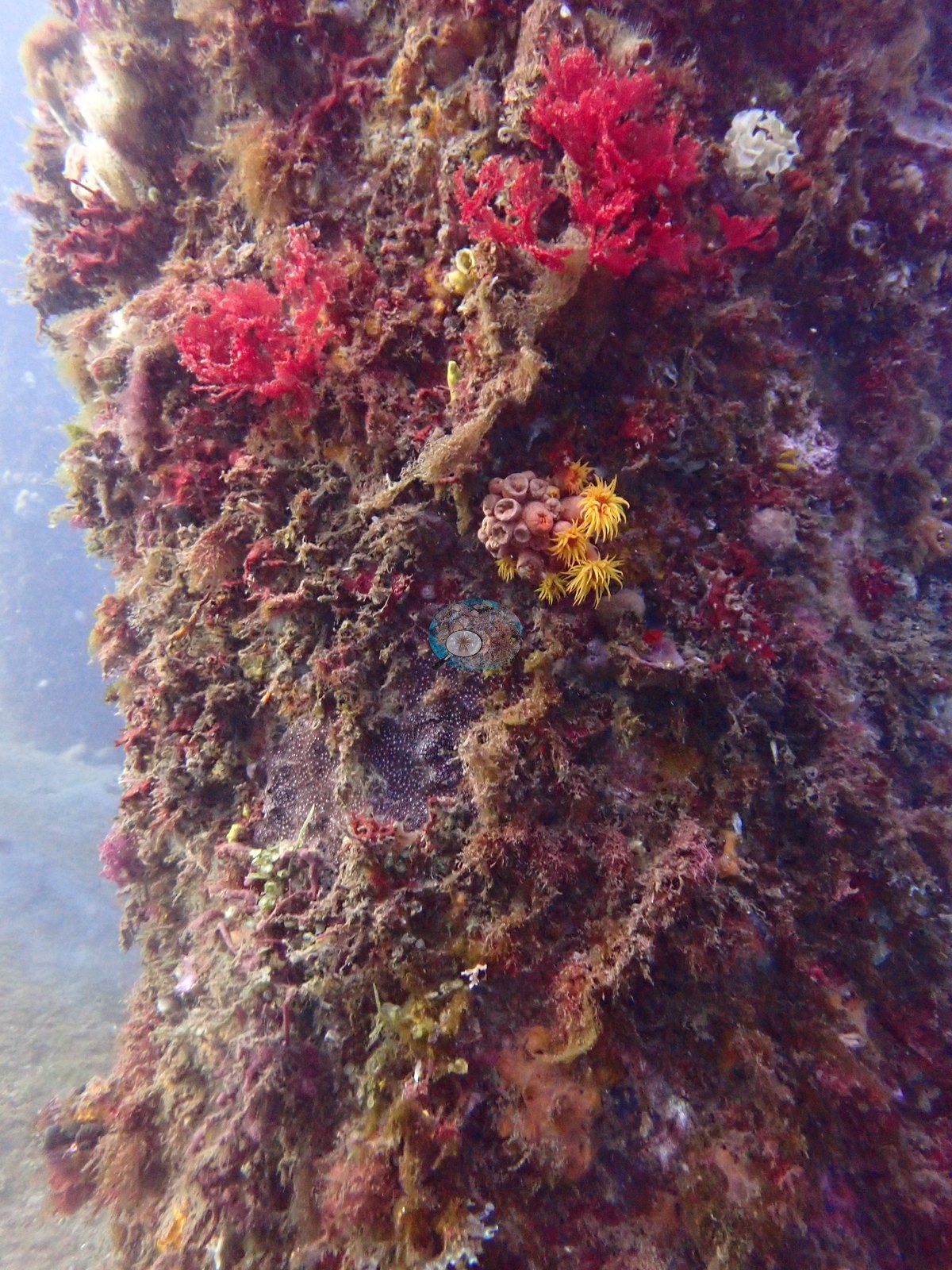
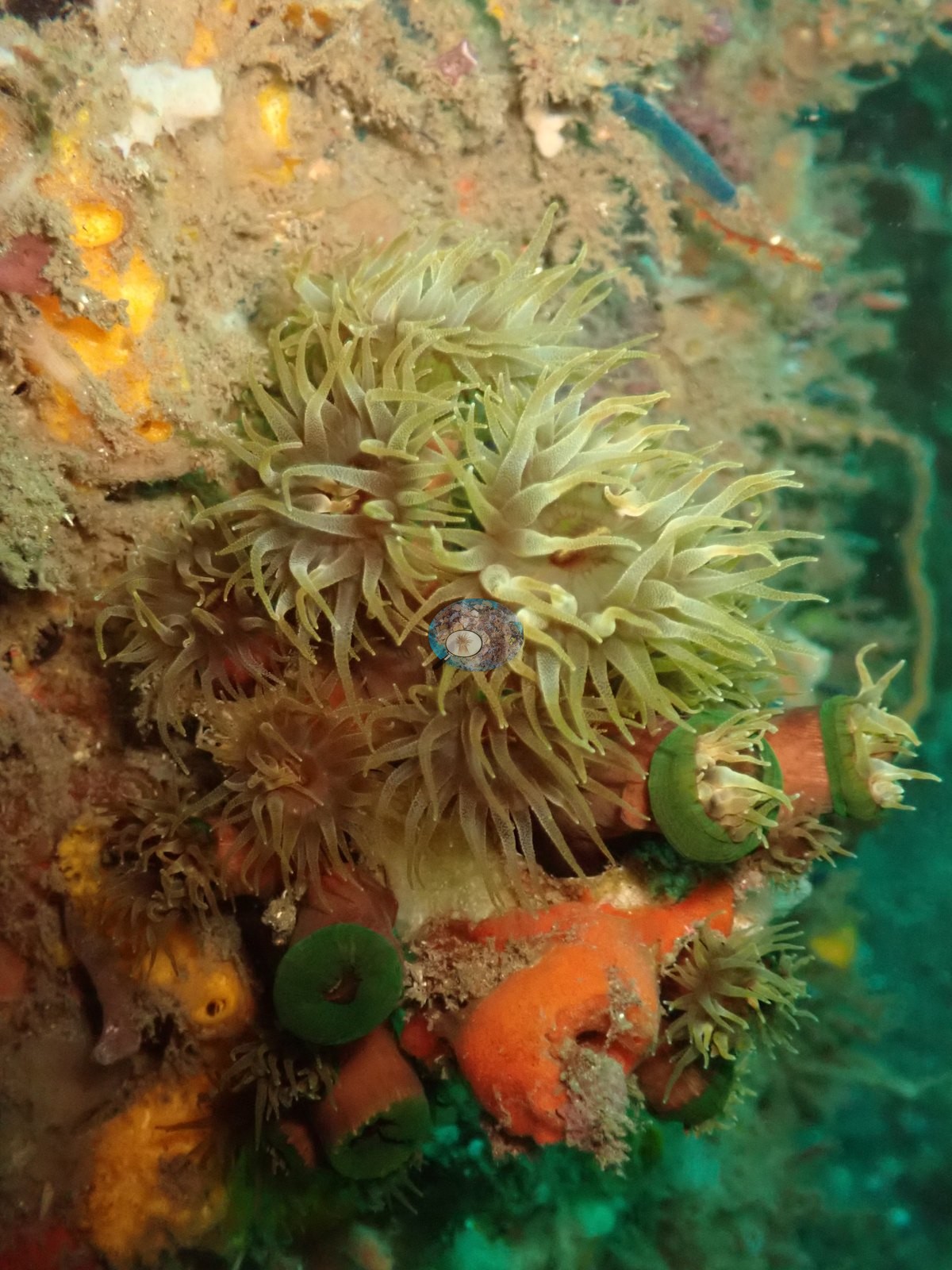
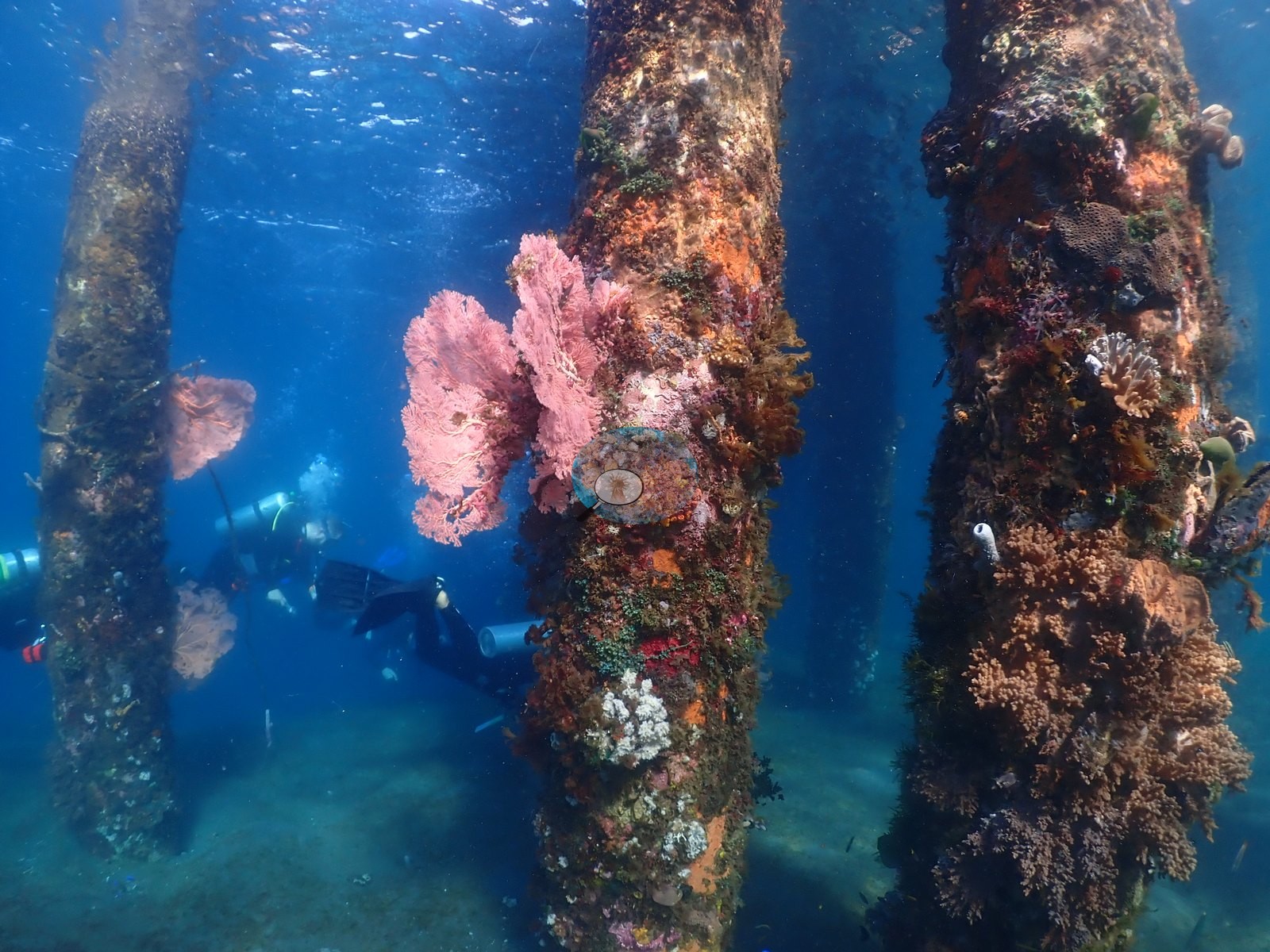
The day dive is 81 frames under a jetty: a forest of pilings, each sheathed in red, orange, and yellow encrusting sponges, coralline crusts, ascidians, bryozoans, hydroids, green Halimeda, Tubastraea, and large pink and cream Melithaea-type gorgonian fans that catch the surface light (e.g., Image 5, Image 6, Image 19, Image 29).
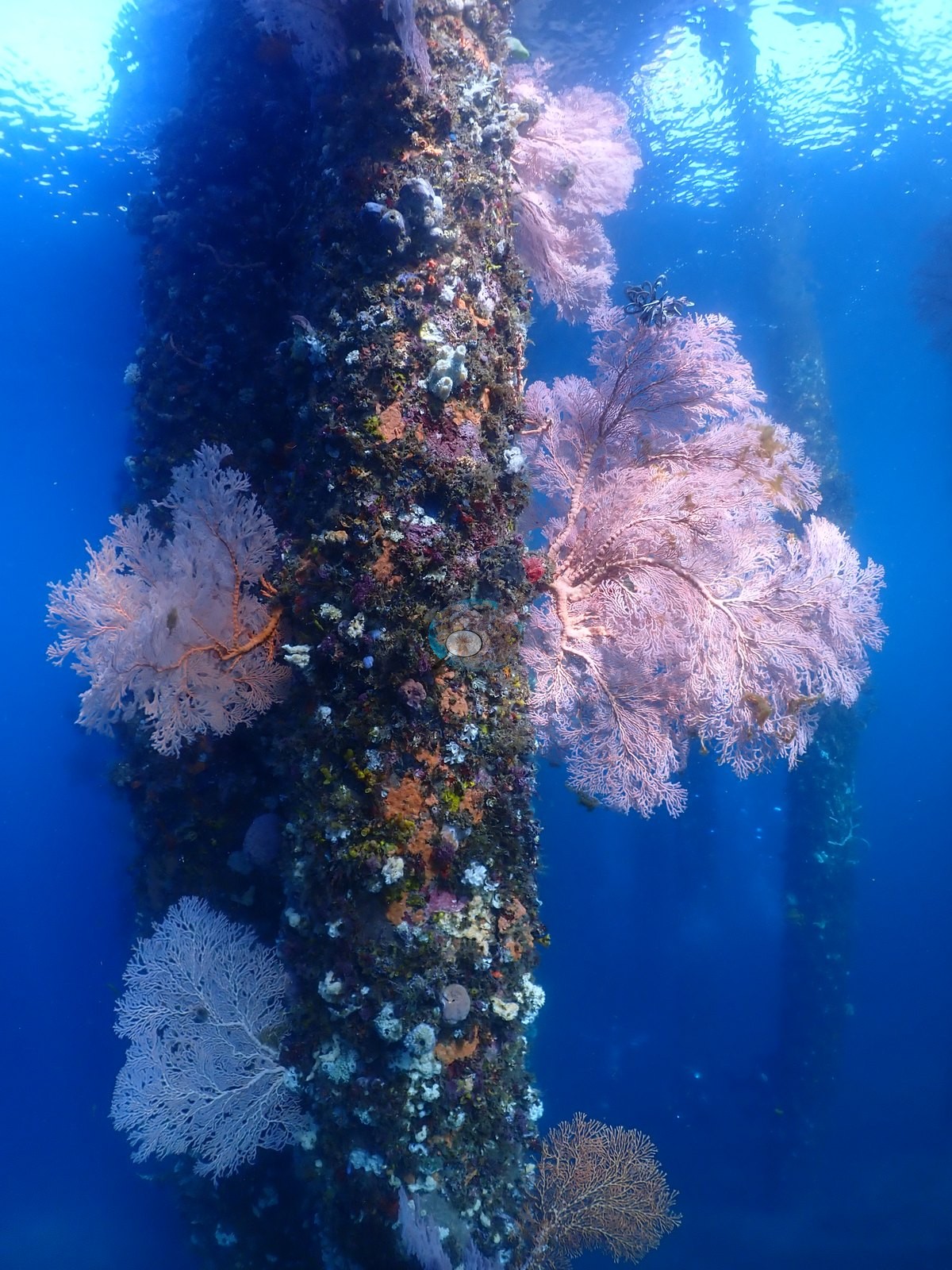
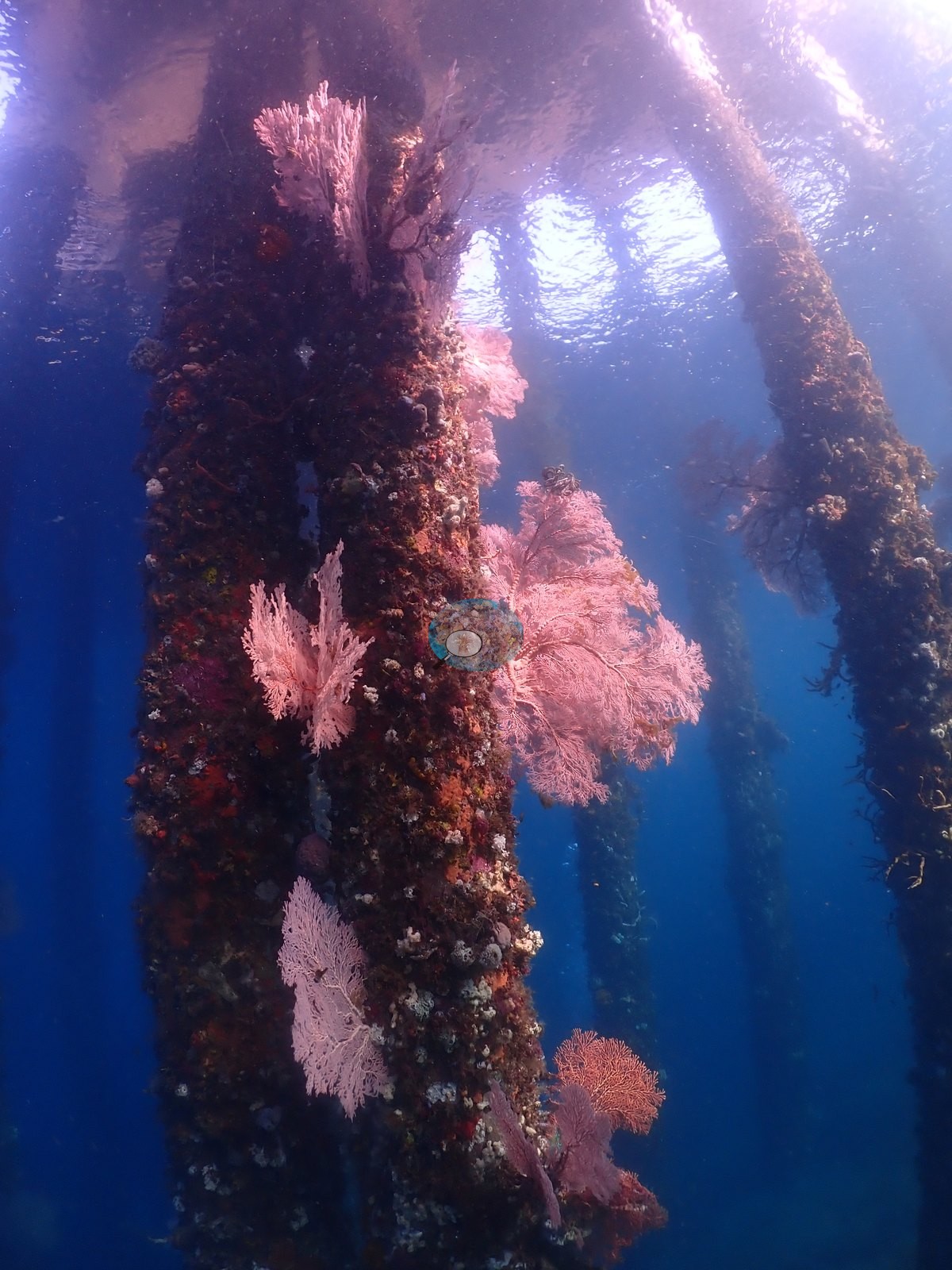
Pink Dendronephthya sit on the black volcanic sand between pilings (e.g., Image 11).
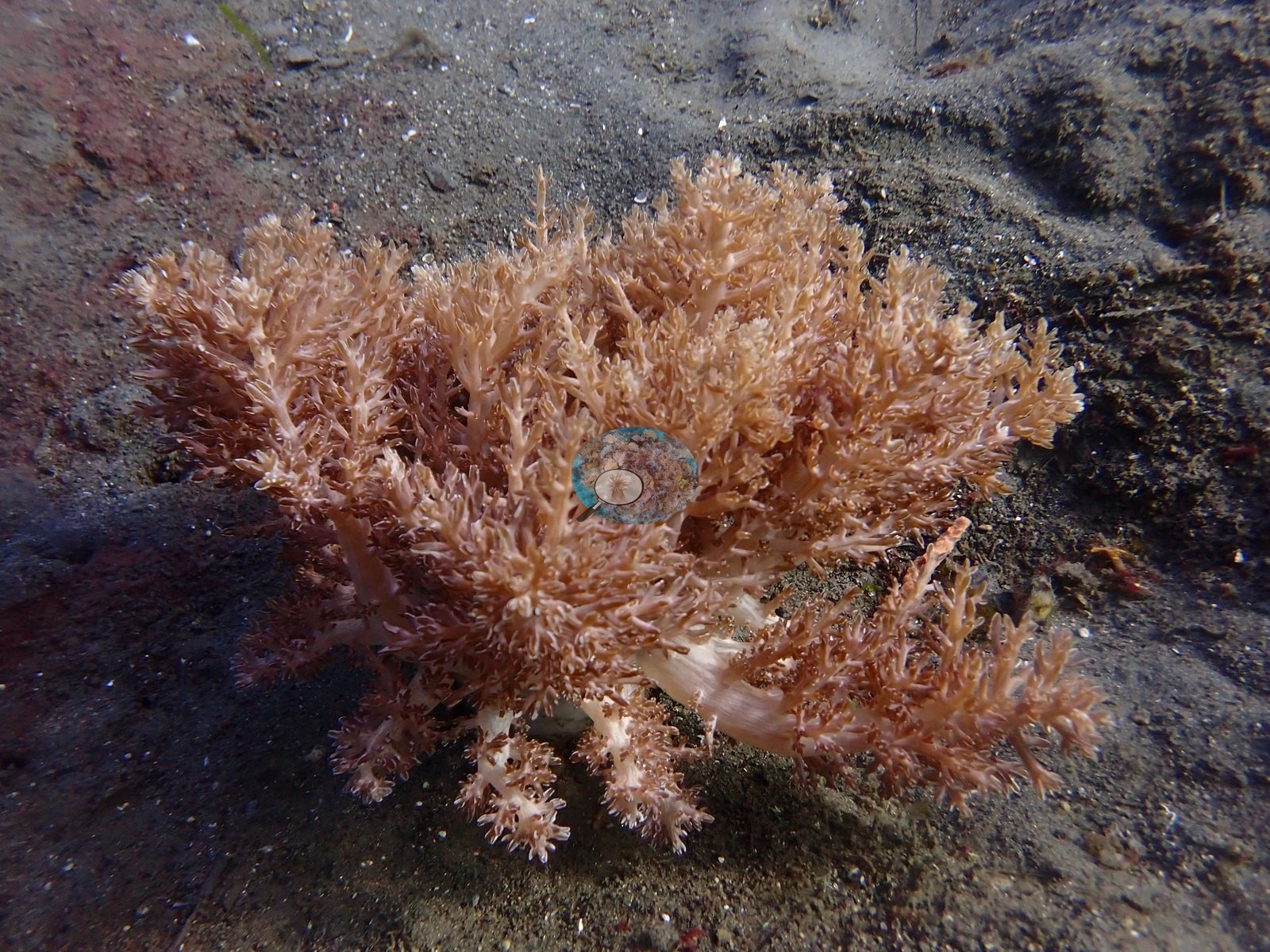
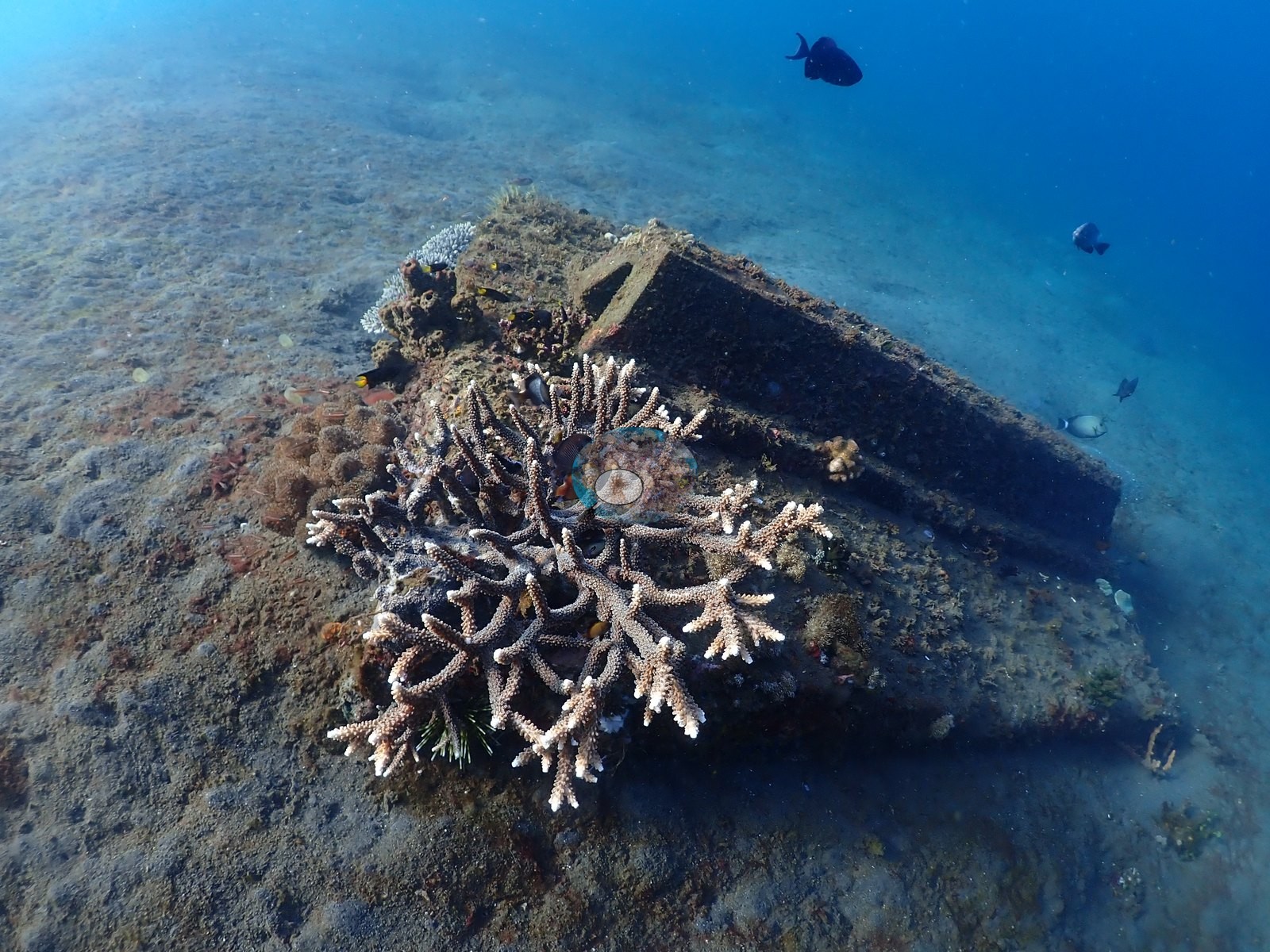
One frame is important: a concrete and rebar module on the sand carrying a large healthy branching Acropora - an artificial-reef or restoration structure (e.g., Image 18).
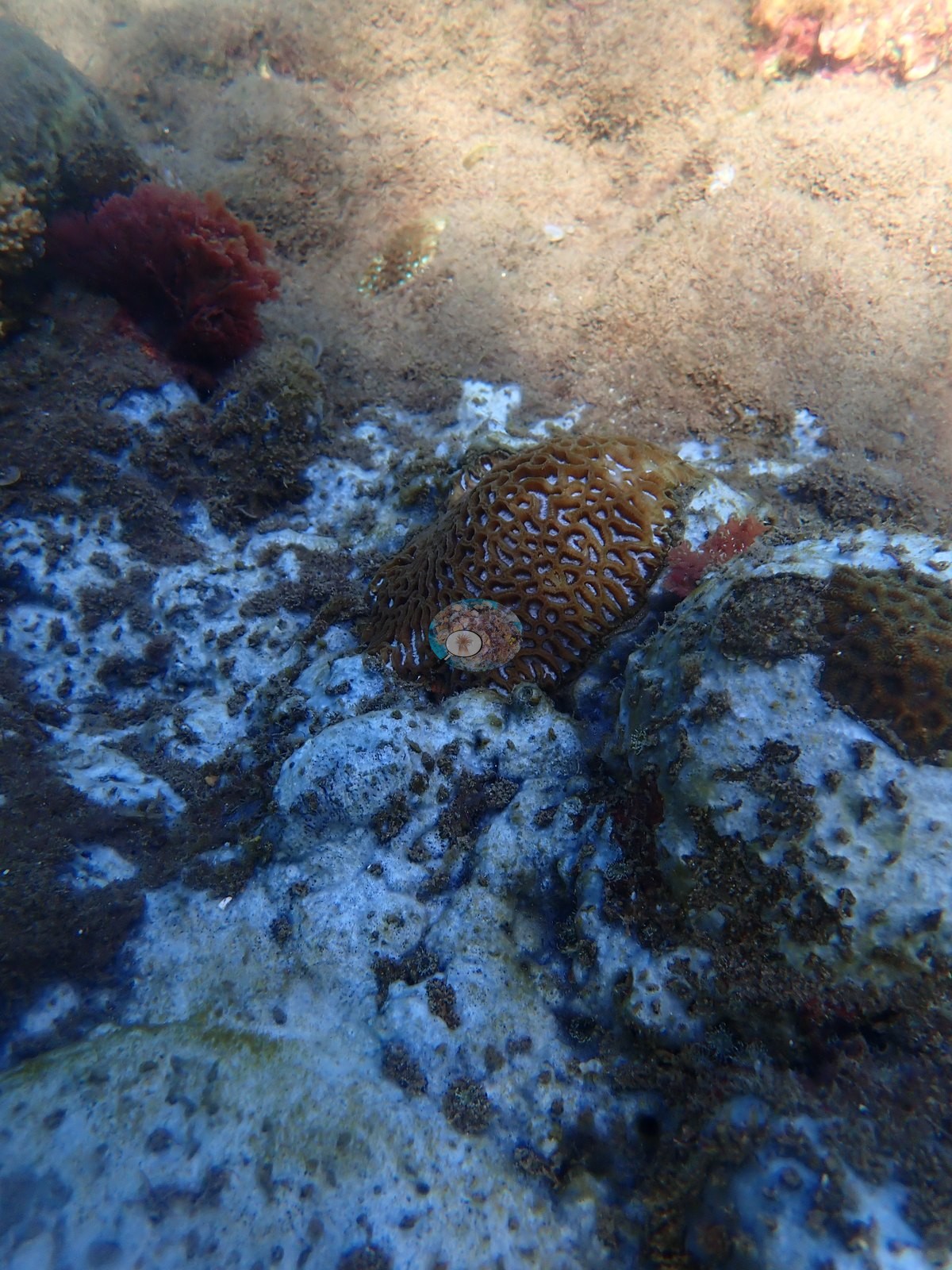
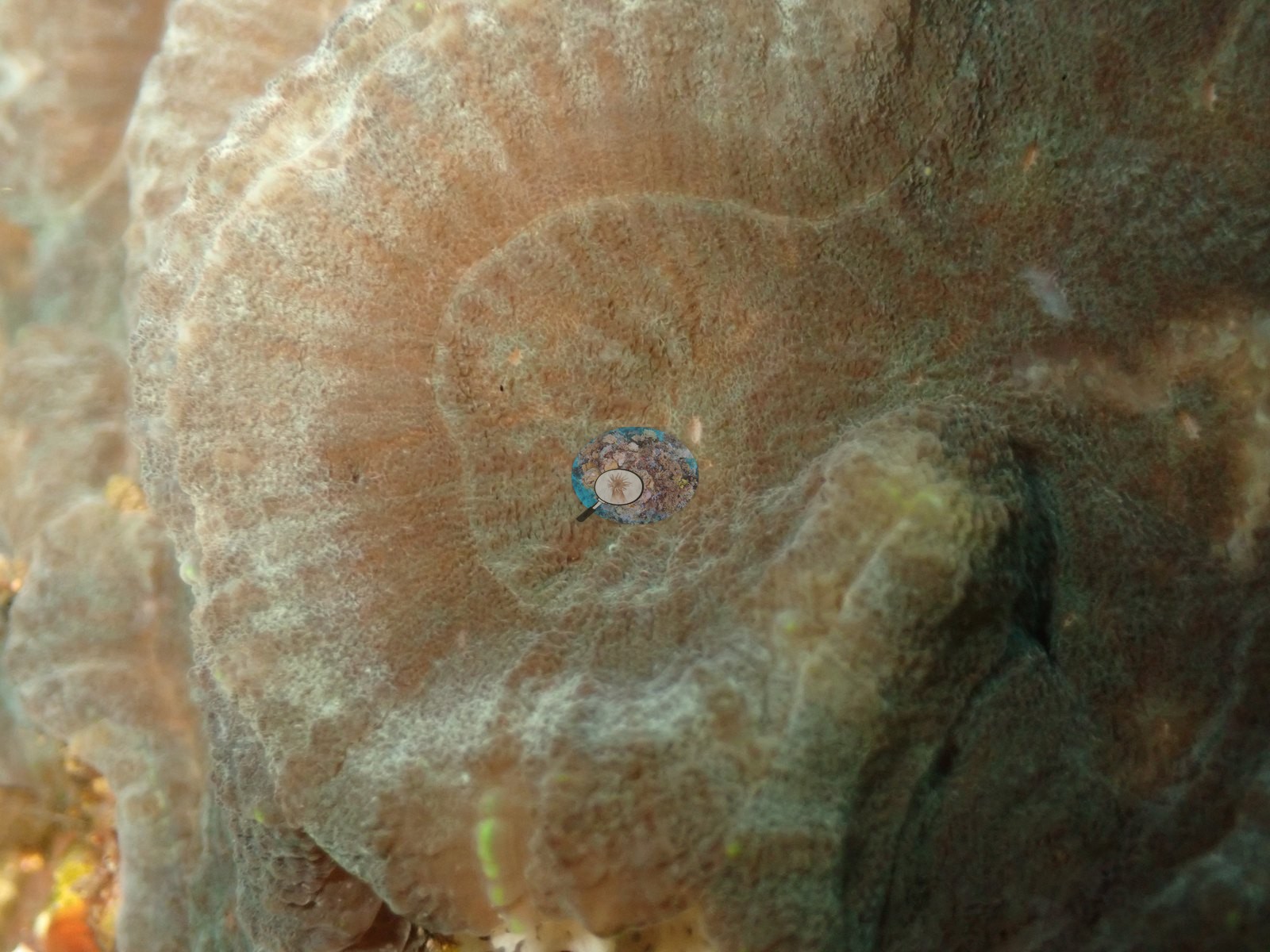
Only the last three frames find natural hard reef: shallow rock pavement with small digitate Acropora, Pocillopora, and merulinid heads (e.g., Image 47).
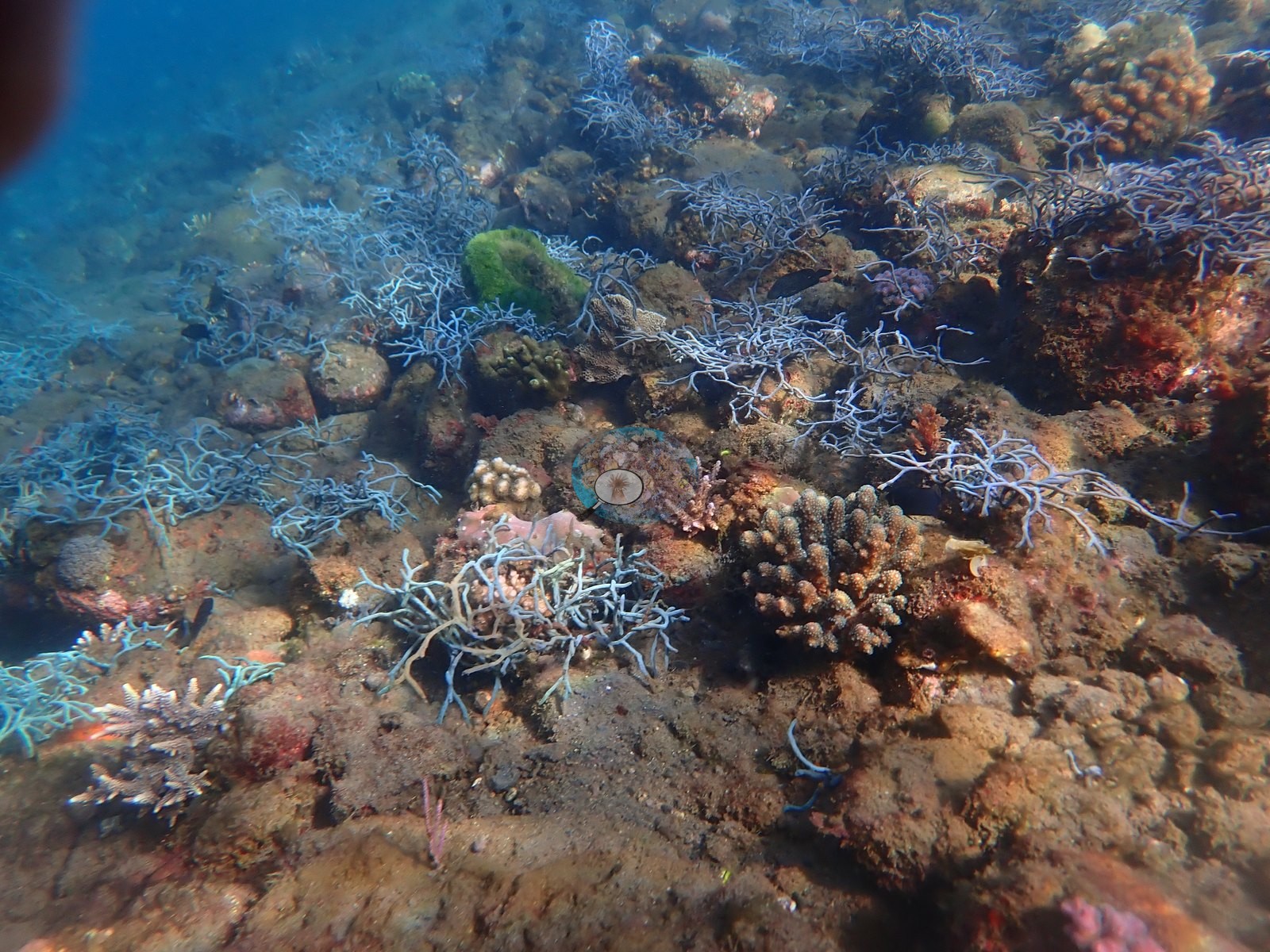
Hard coral is a minority component across both dives; sponges, soft corals, anemones, and the pilings supply the structure.
Stressors
No bleaching, disease, or predation was seen.
Fish and other fauna
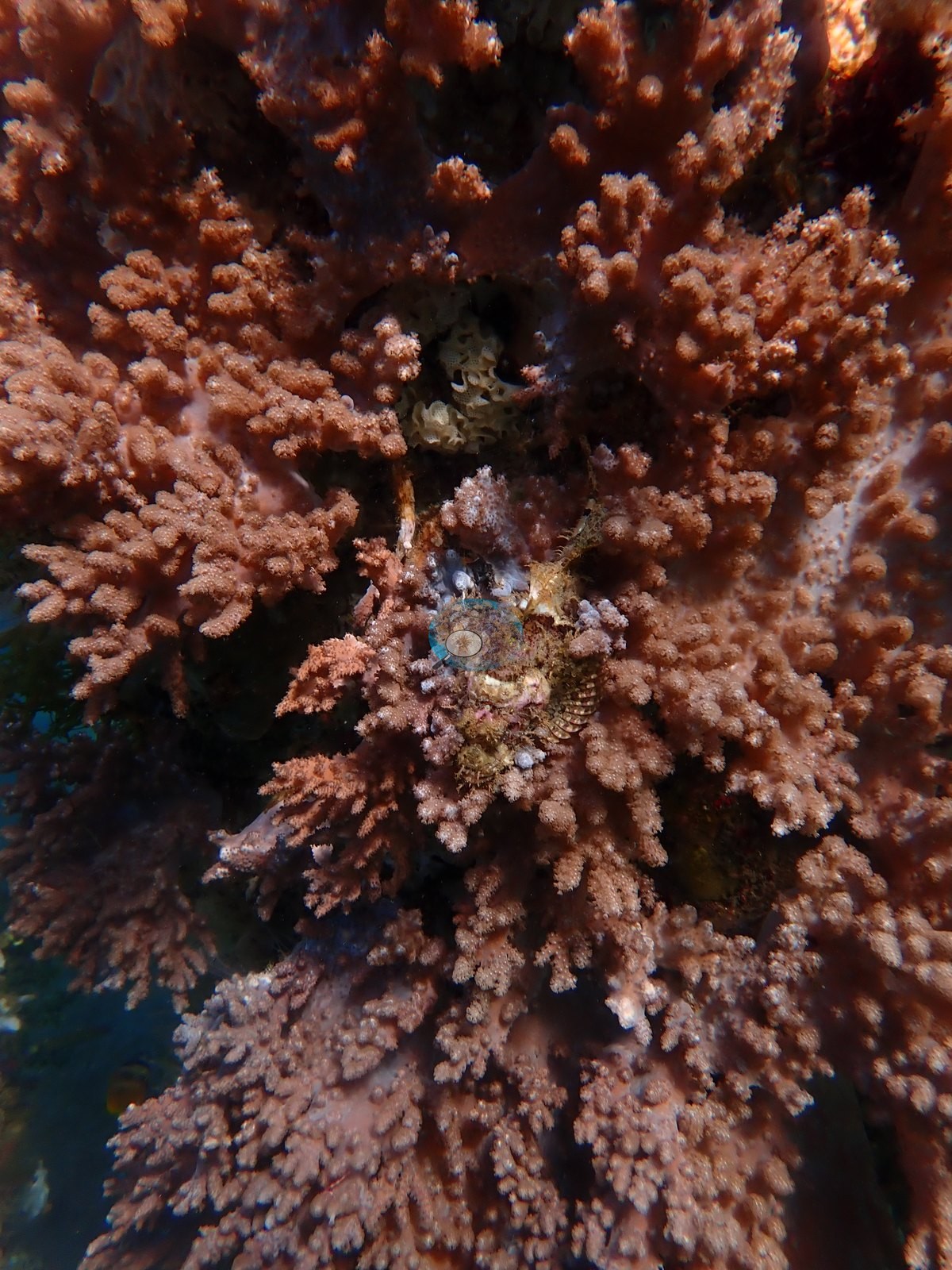
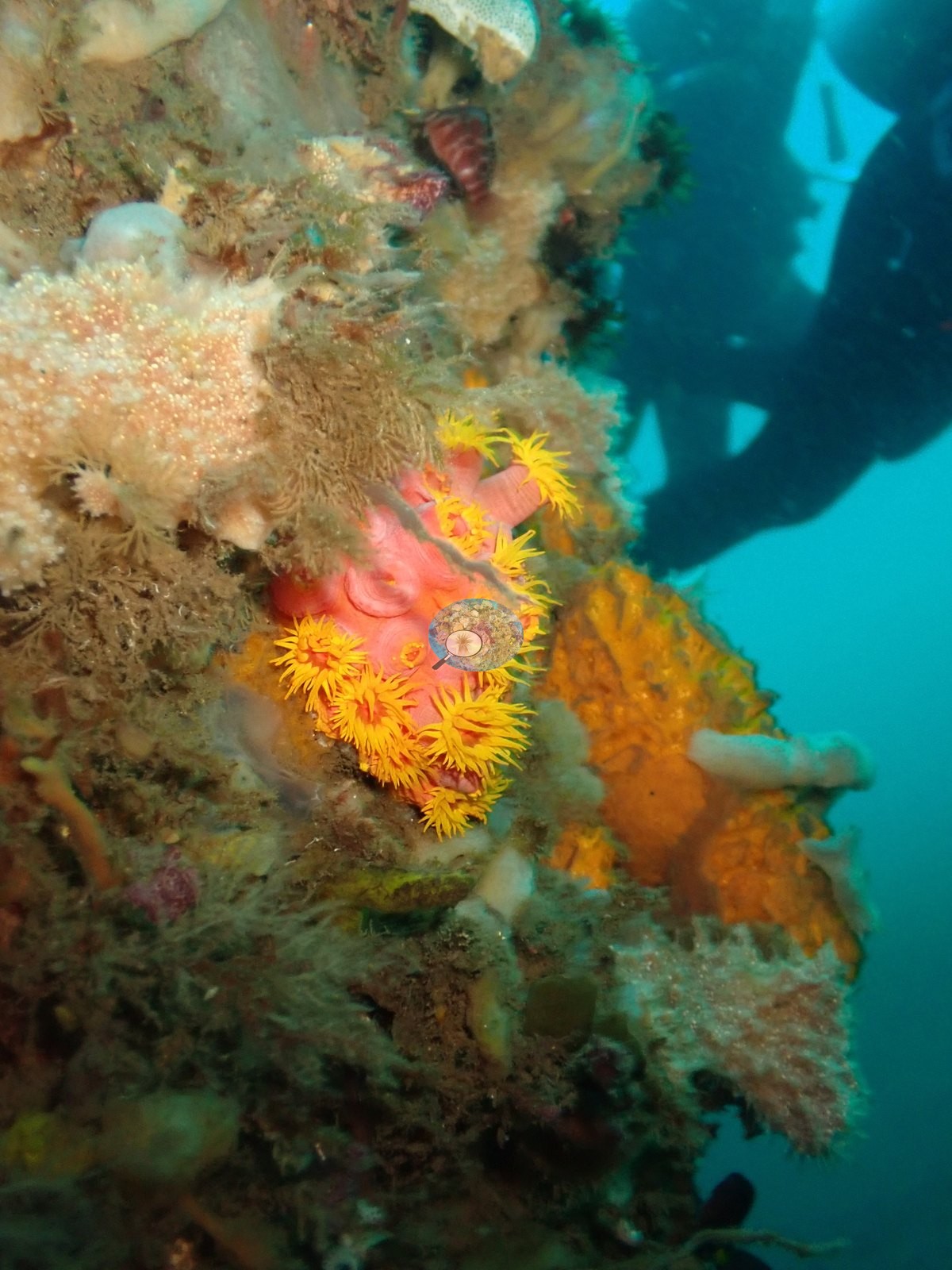
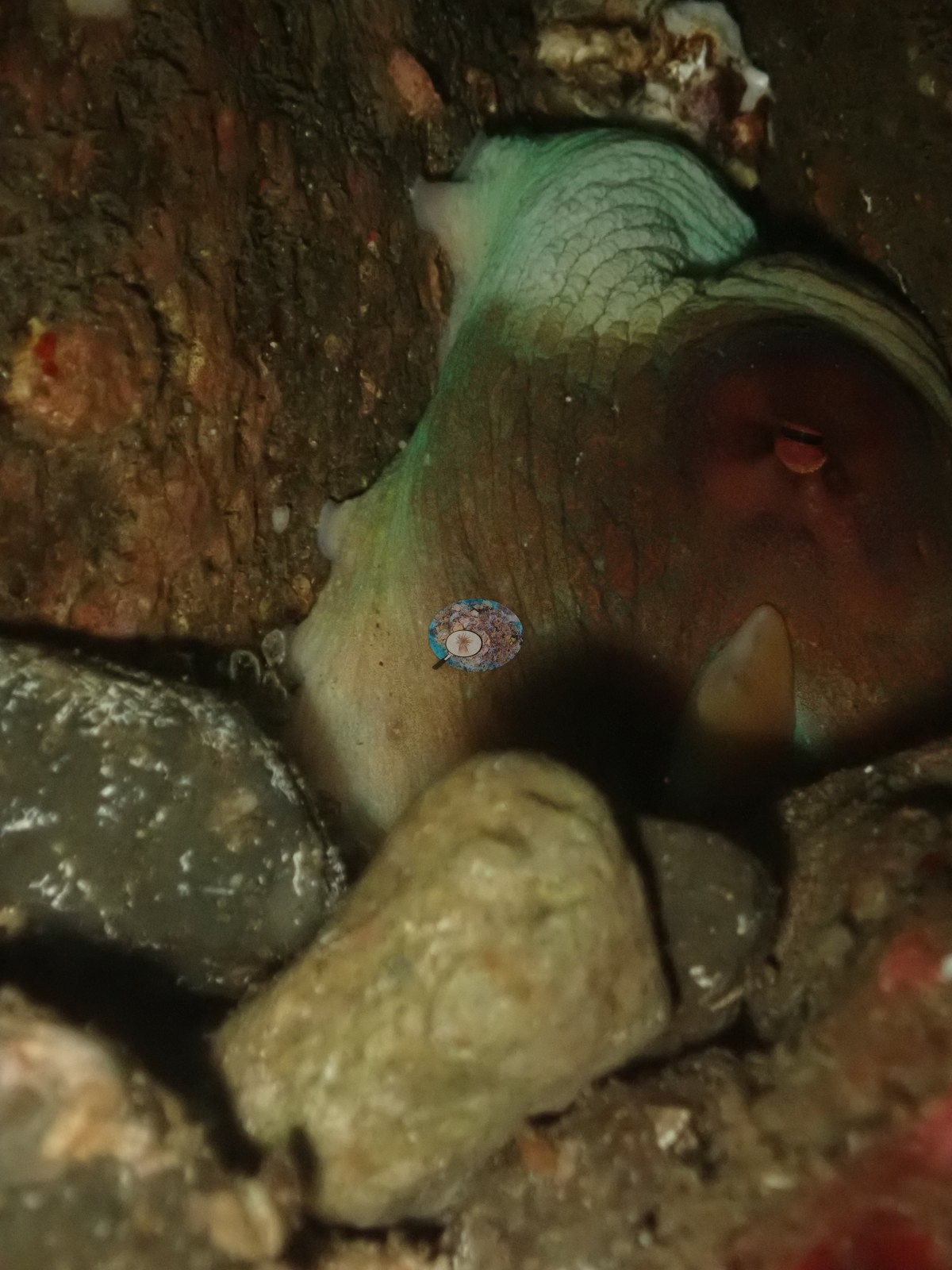
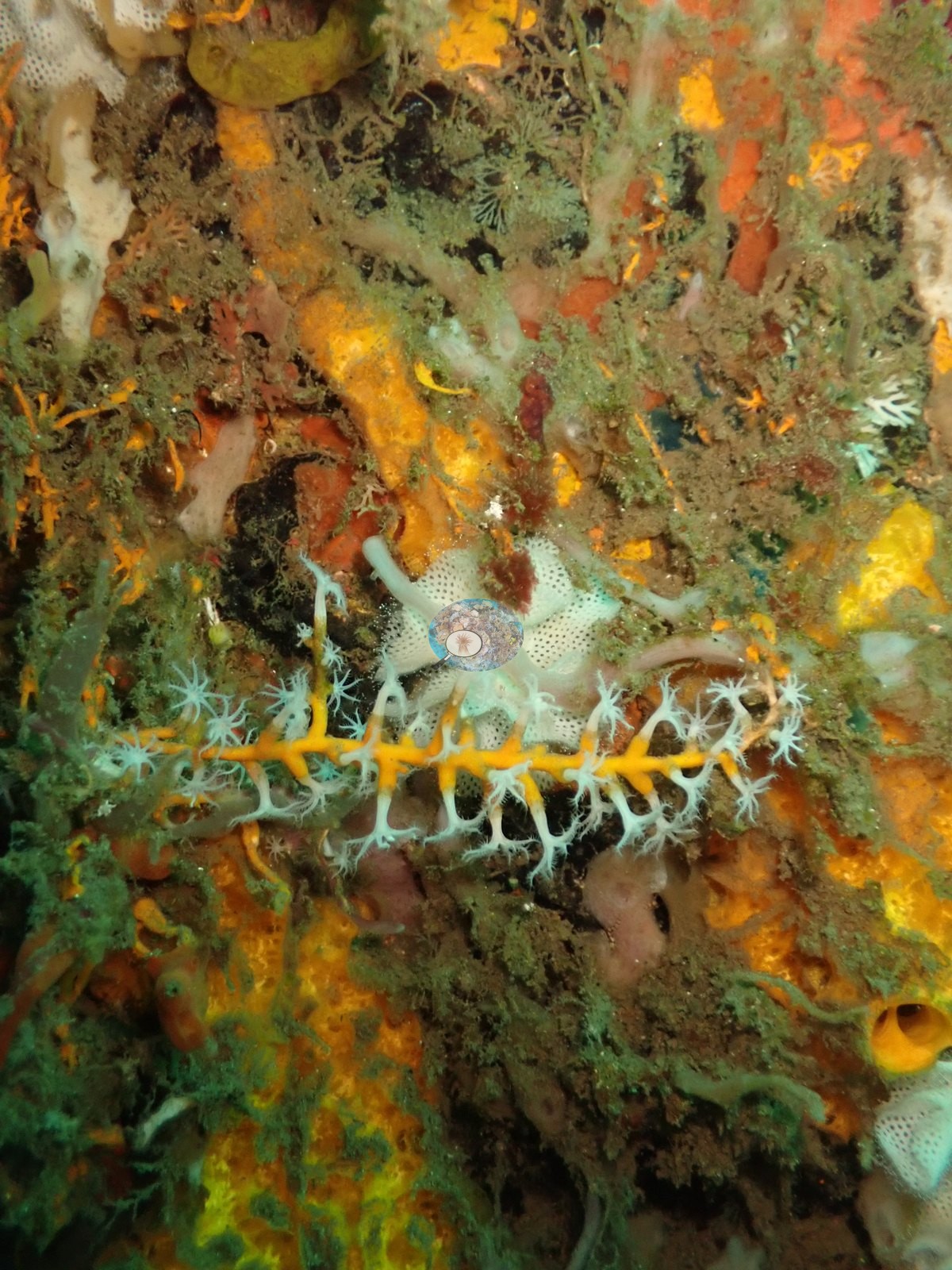
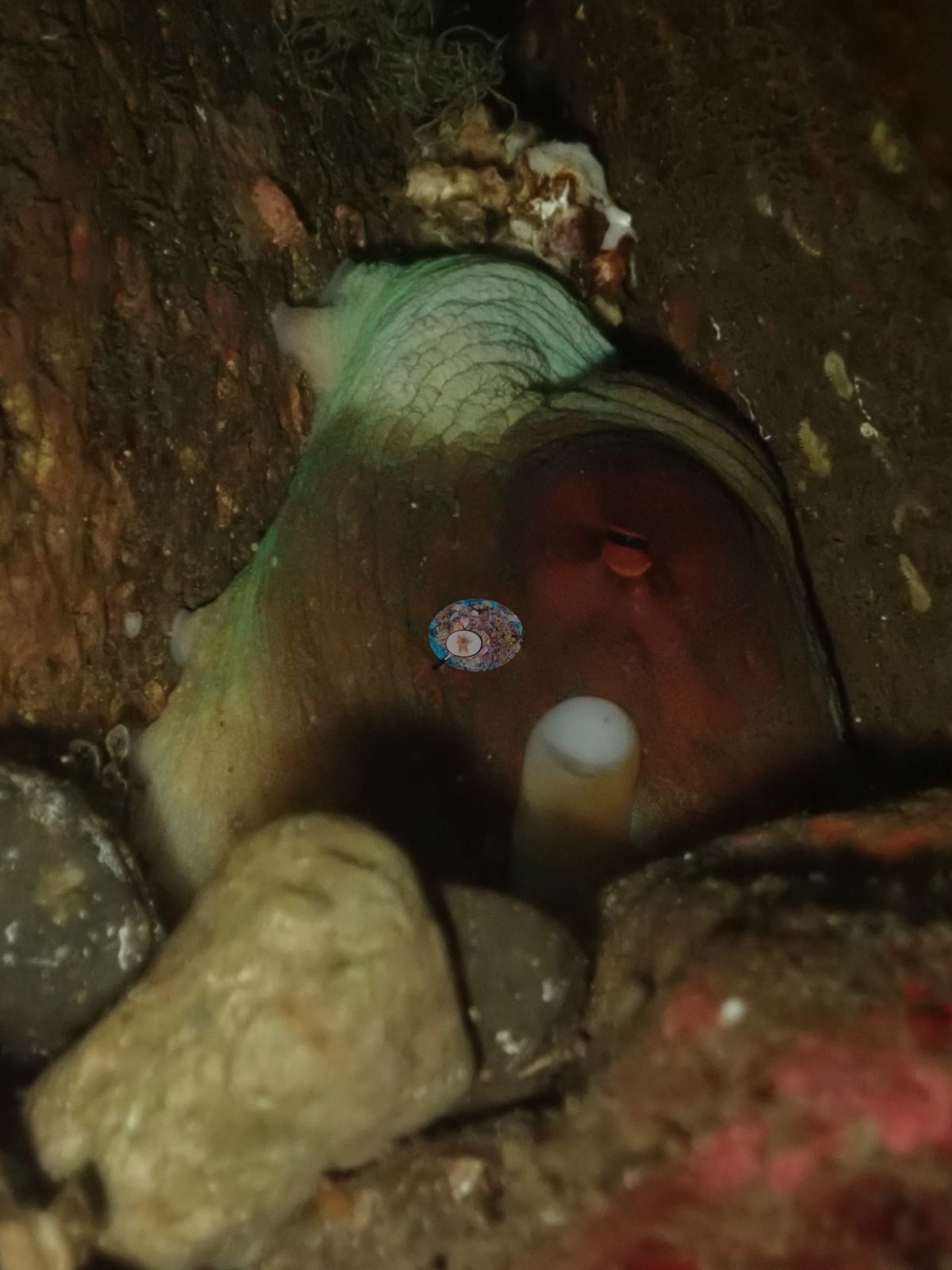
The night dive is 75 macro frames on coarse gravel, shell hash and coarse sand with almost no attached framework in shot: expanded yellow Tubastraea sun-coral polyps, gold-and-white spotted Periclimenes-type commensal shrimp on soft coral, dense aggregations of red hinge-beak shrimp, an Entacmaea-type bubble-tip anemone carpet holding a dozen saddle-spotted squat anemone shrimp (Thor amboinensis), four color forms of cerianthid tube anemone, a yellow amphinomid fireworm, a mantis shrimp filling its burrow mouth, a hairy hermit crab, a decorator crab clinging to hydroid stems across four frames, a giant-clam mantle, a small octopus over seven frames, a red-orange scorpionfish, and a dwarf lionfish (Dendrochirus-type) (e.g., Image 2, Image 28, Image 32, Image 33).
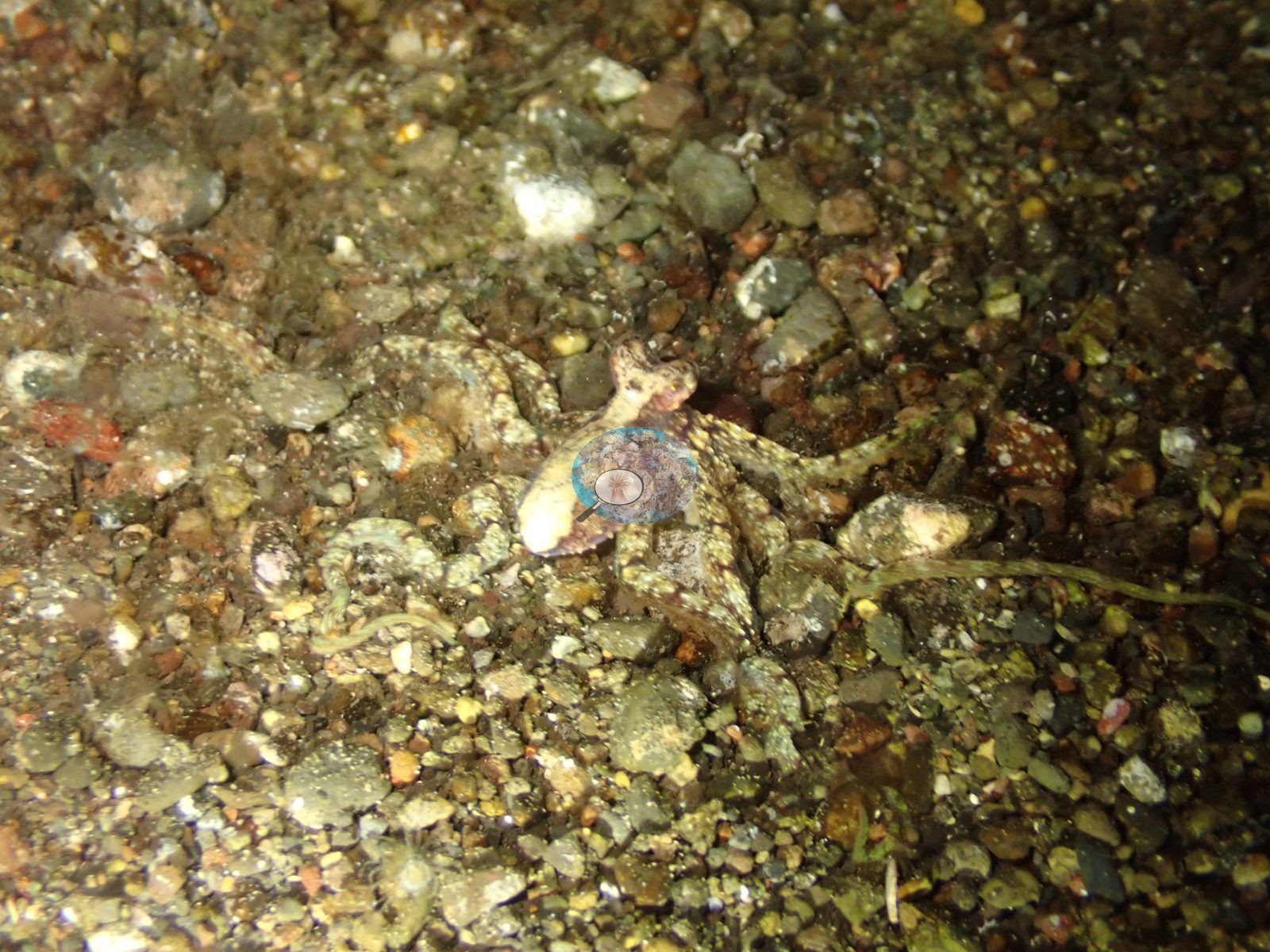
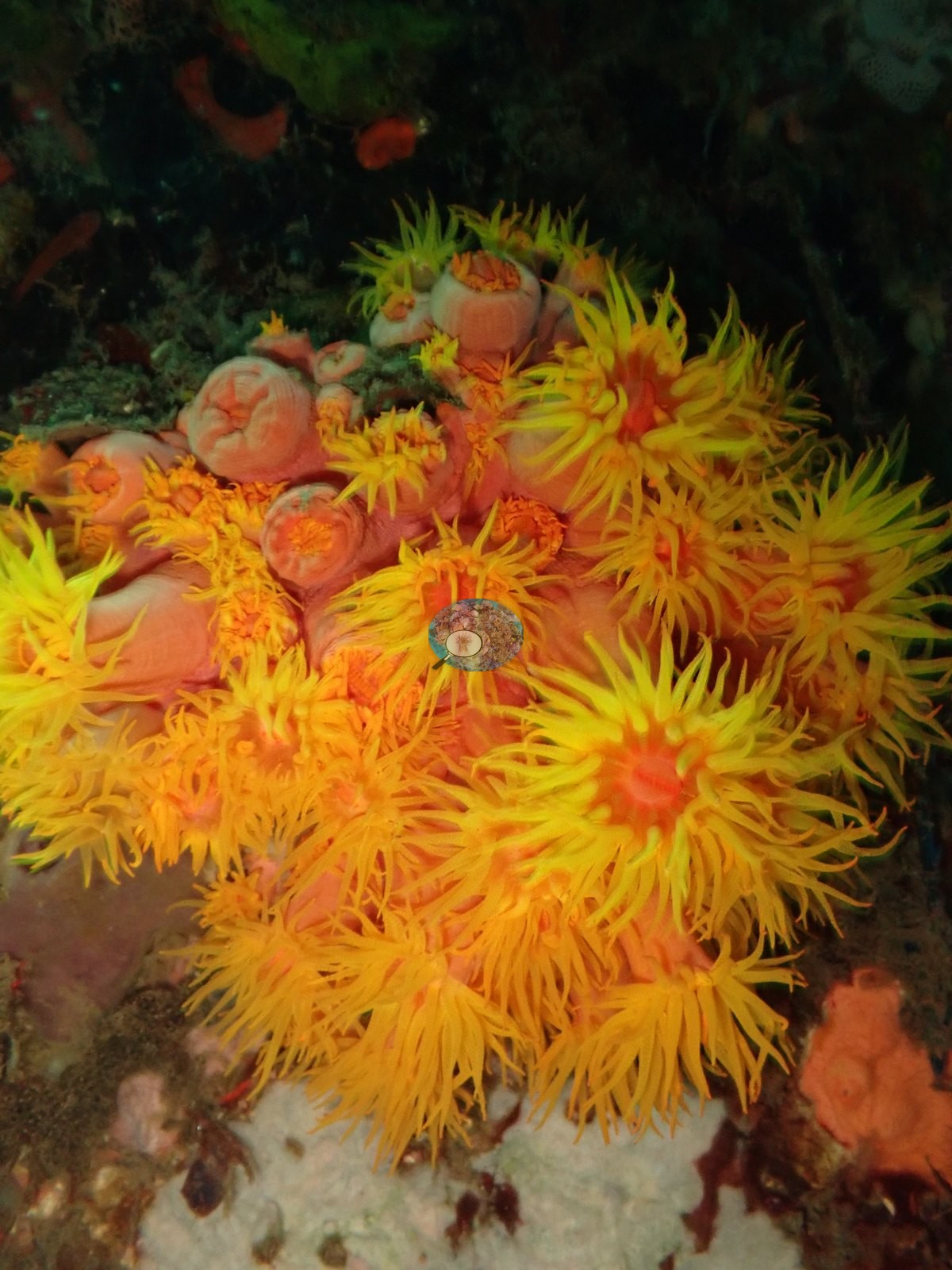
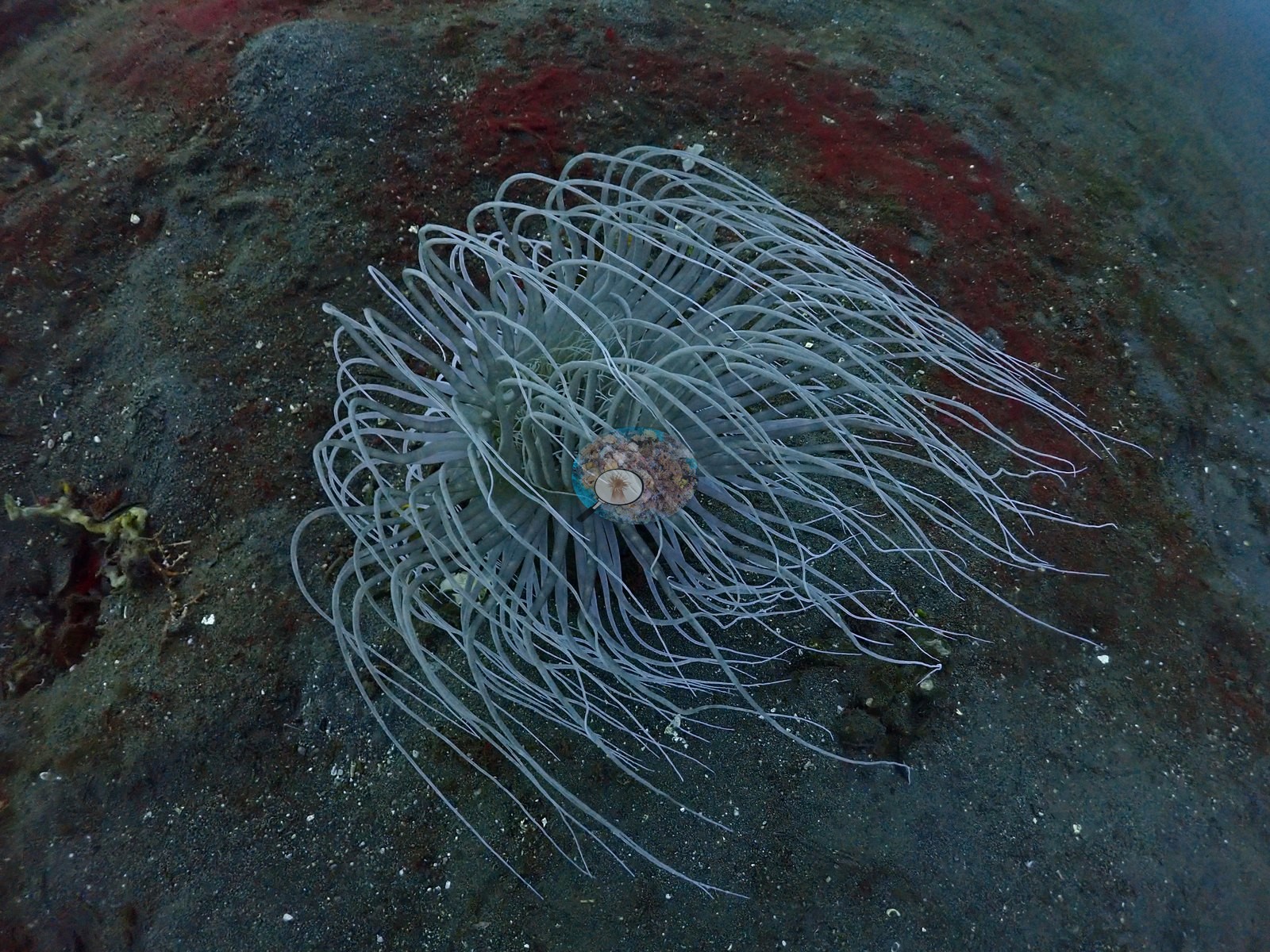
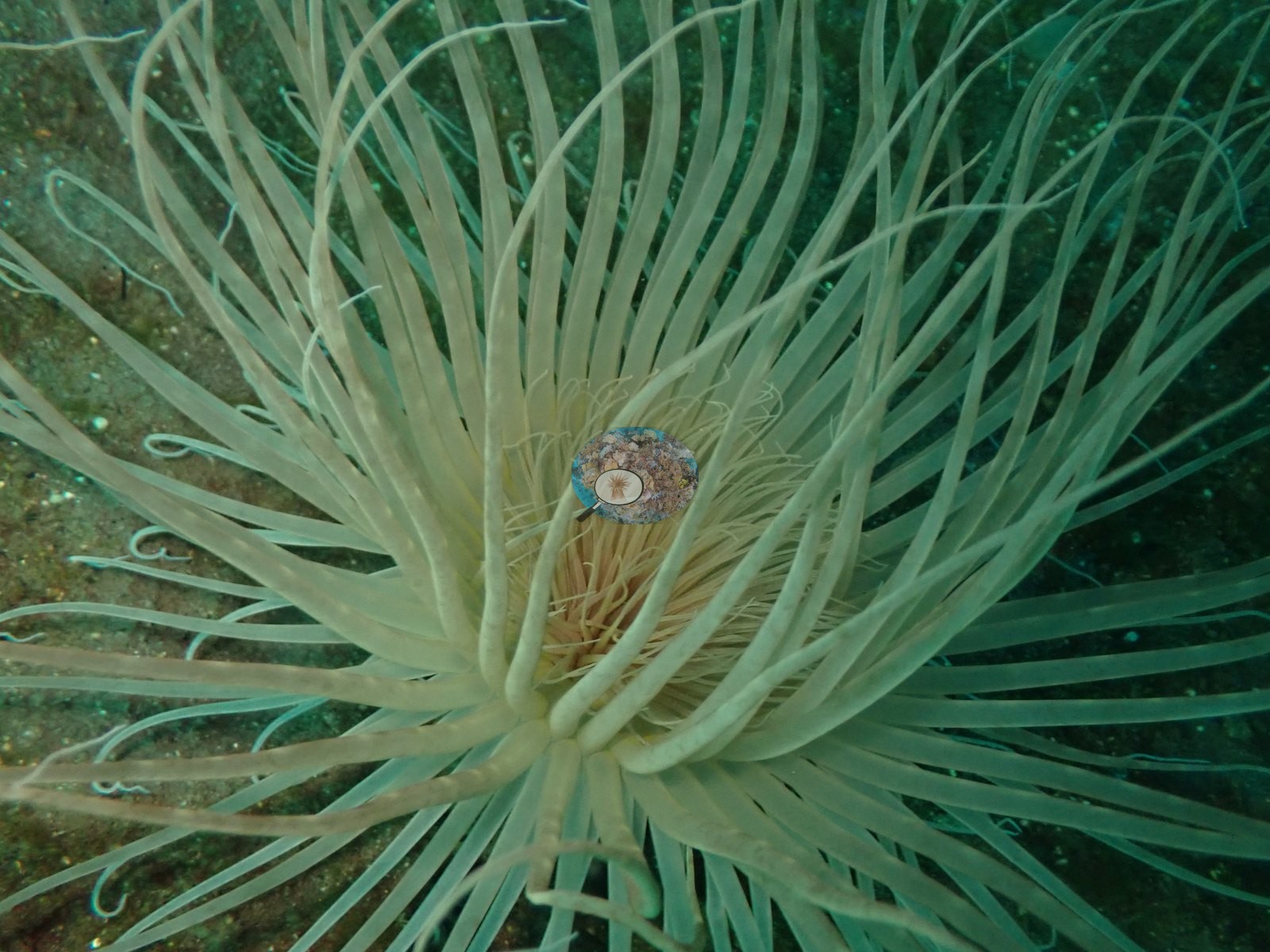
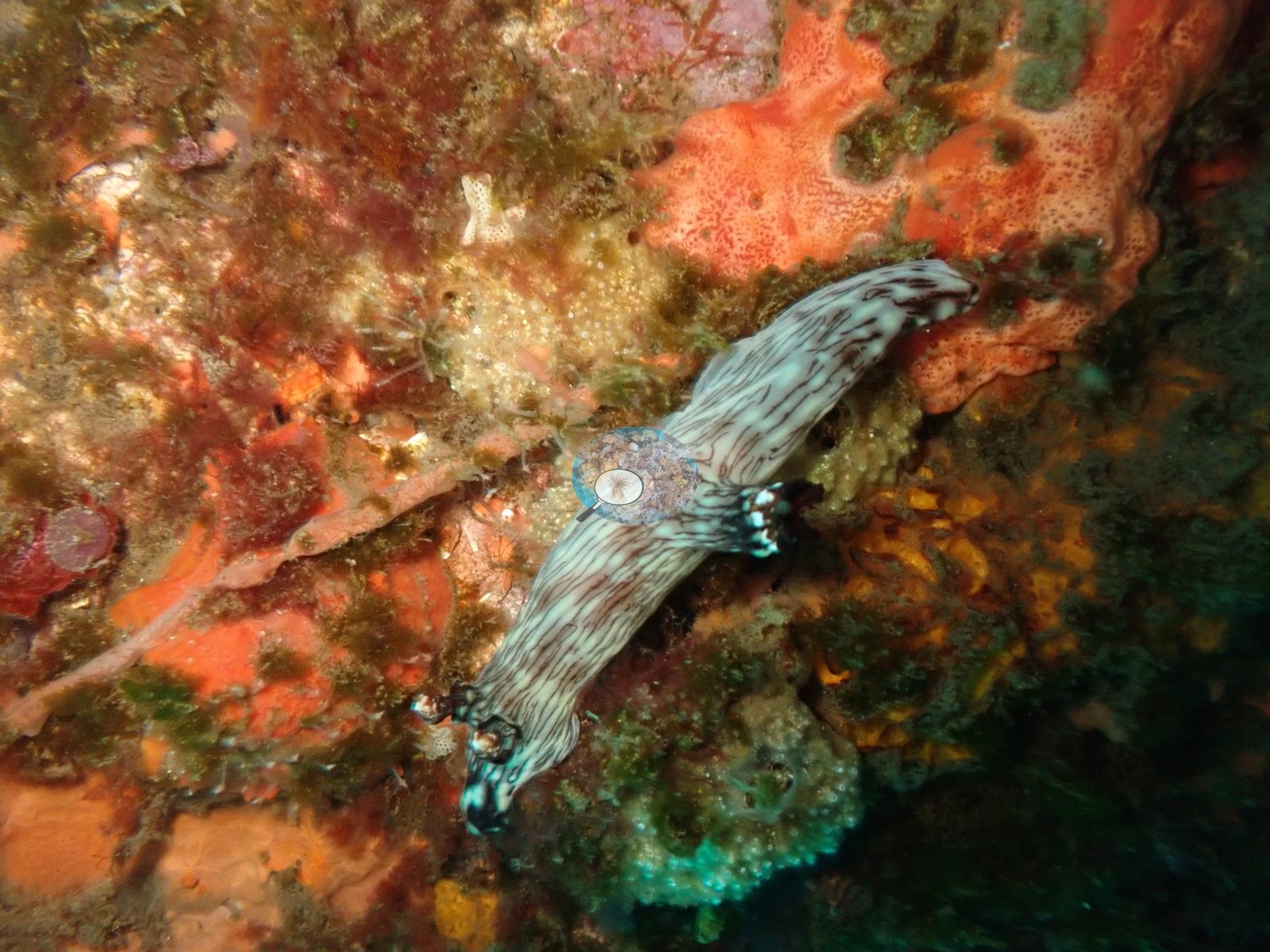
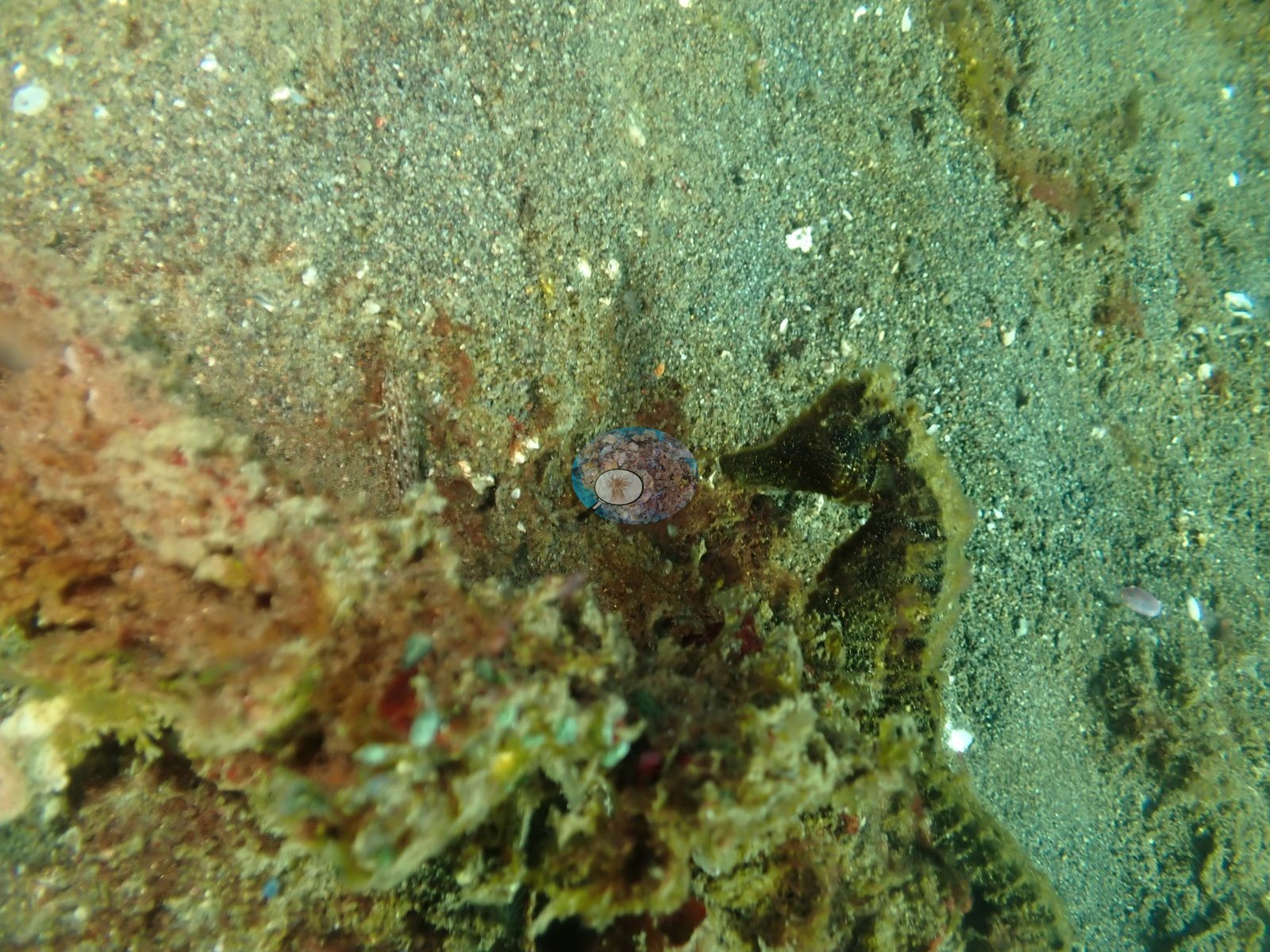
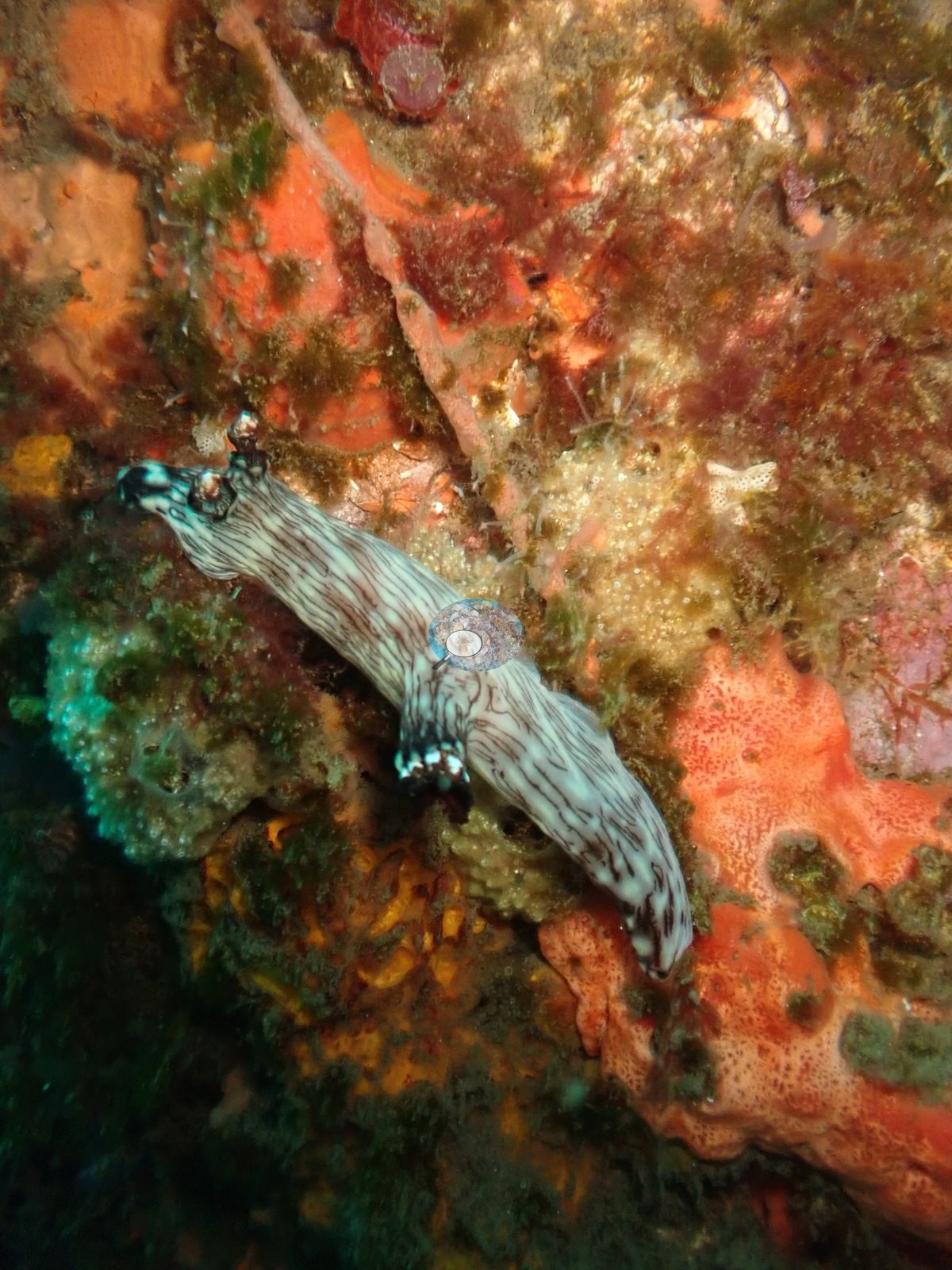
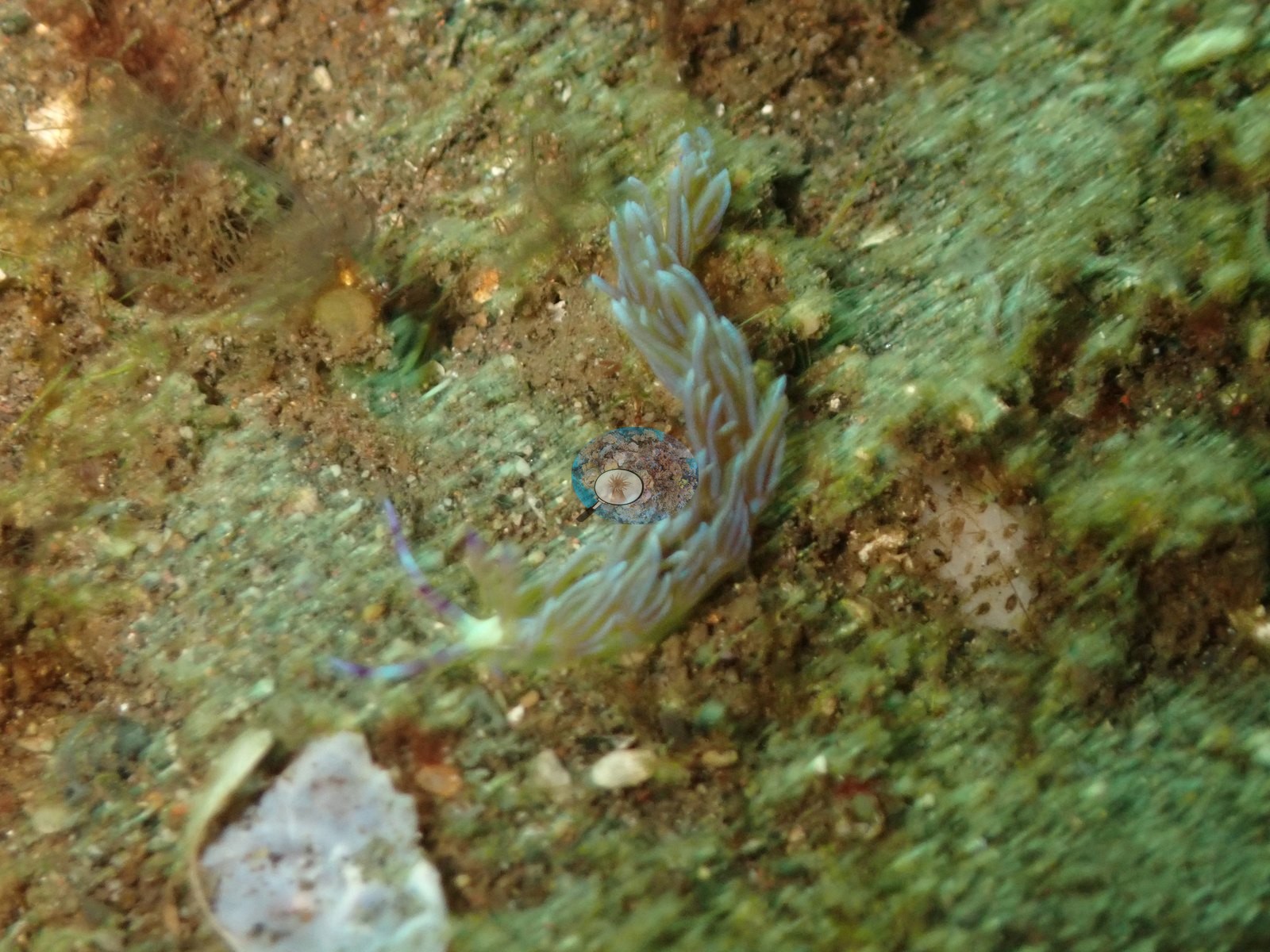
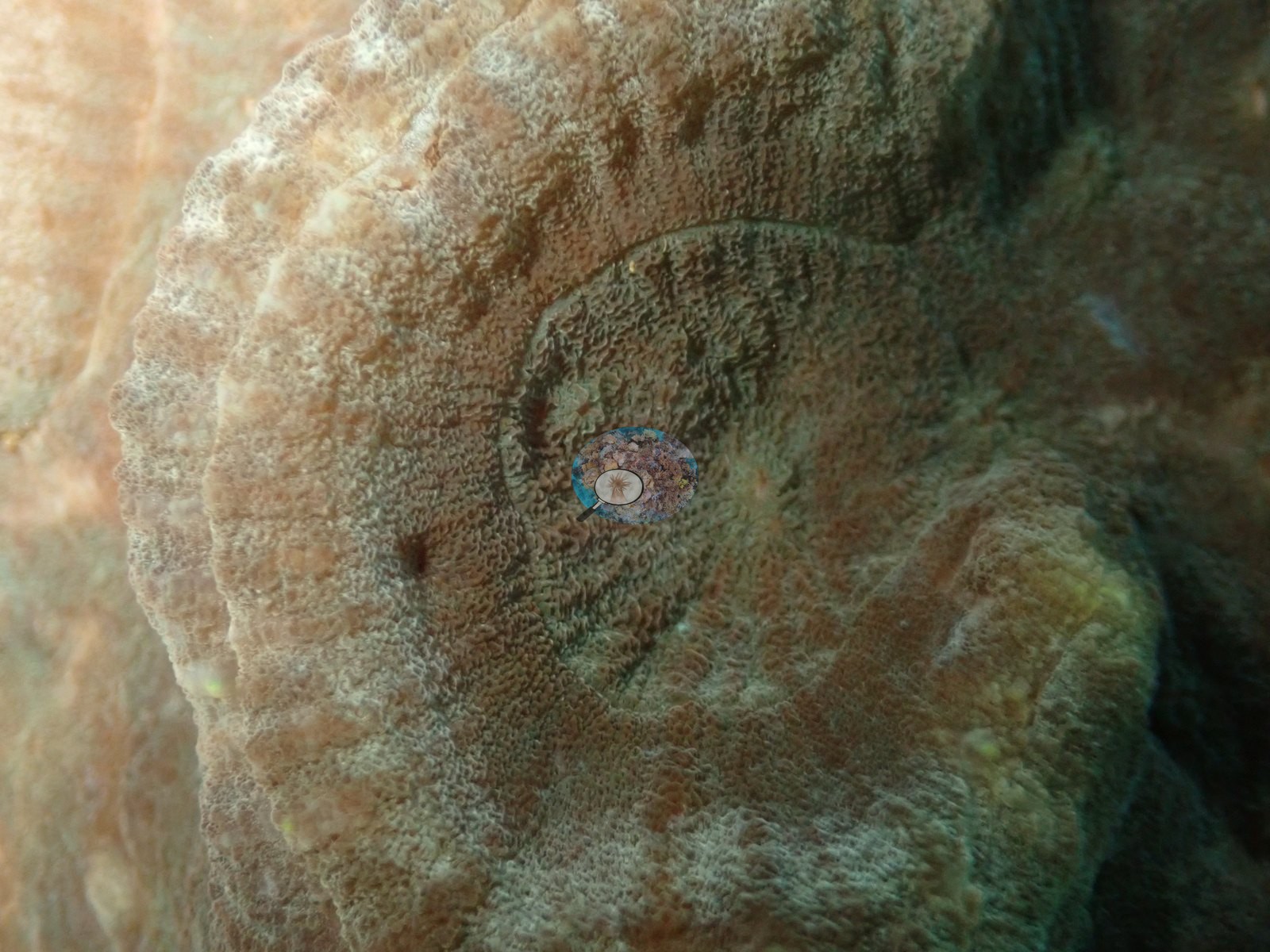
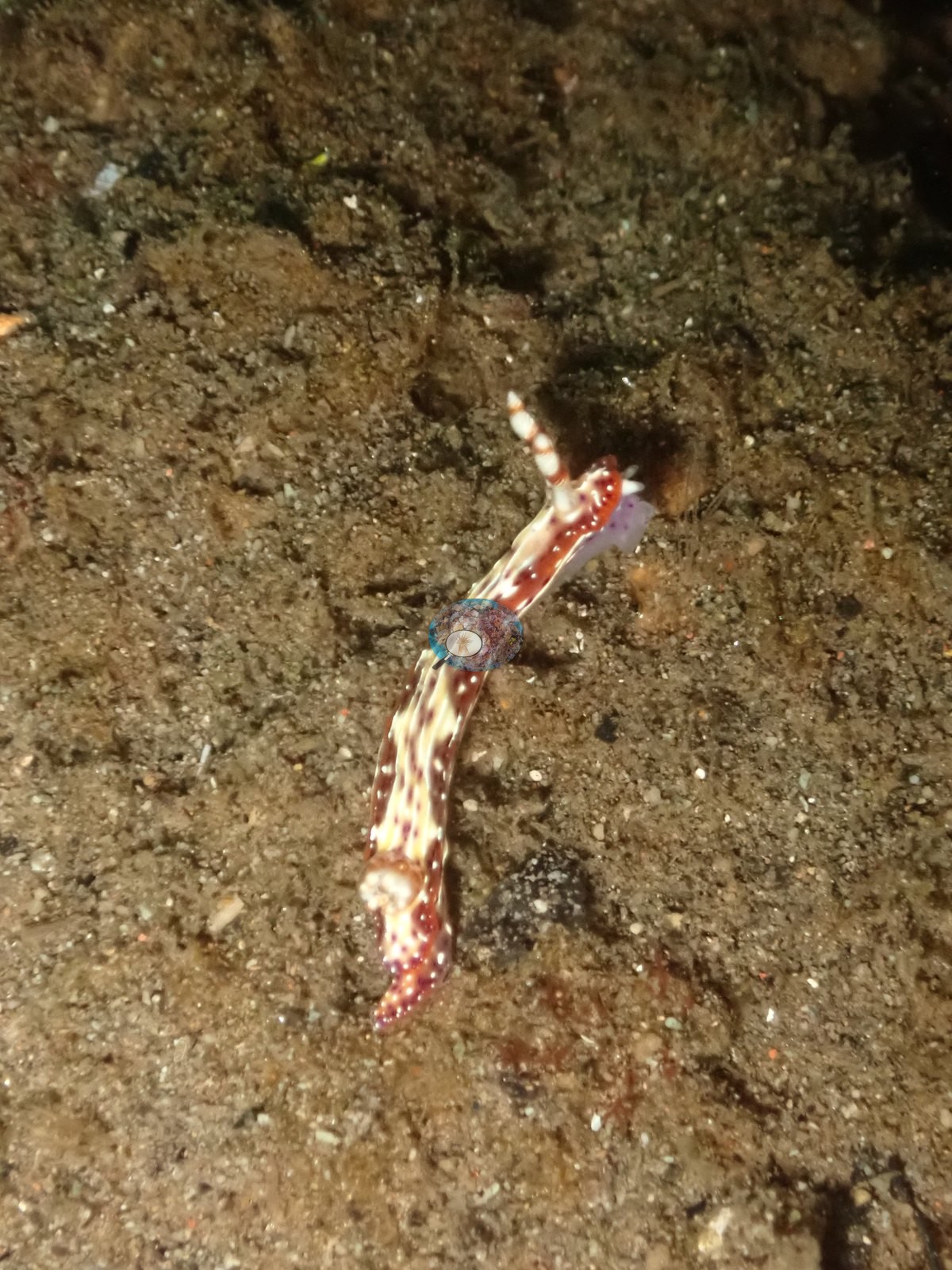
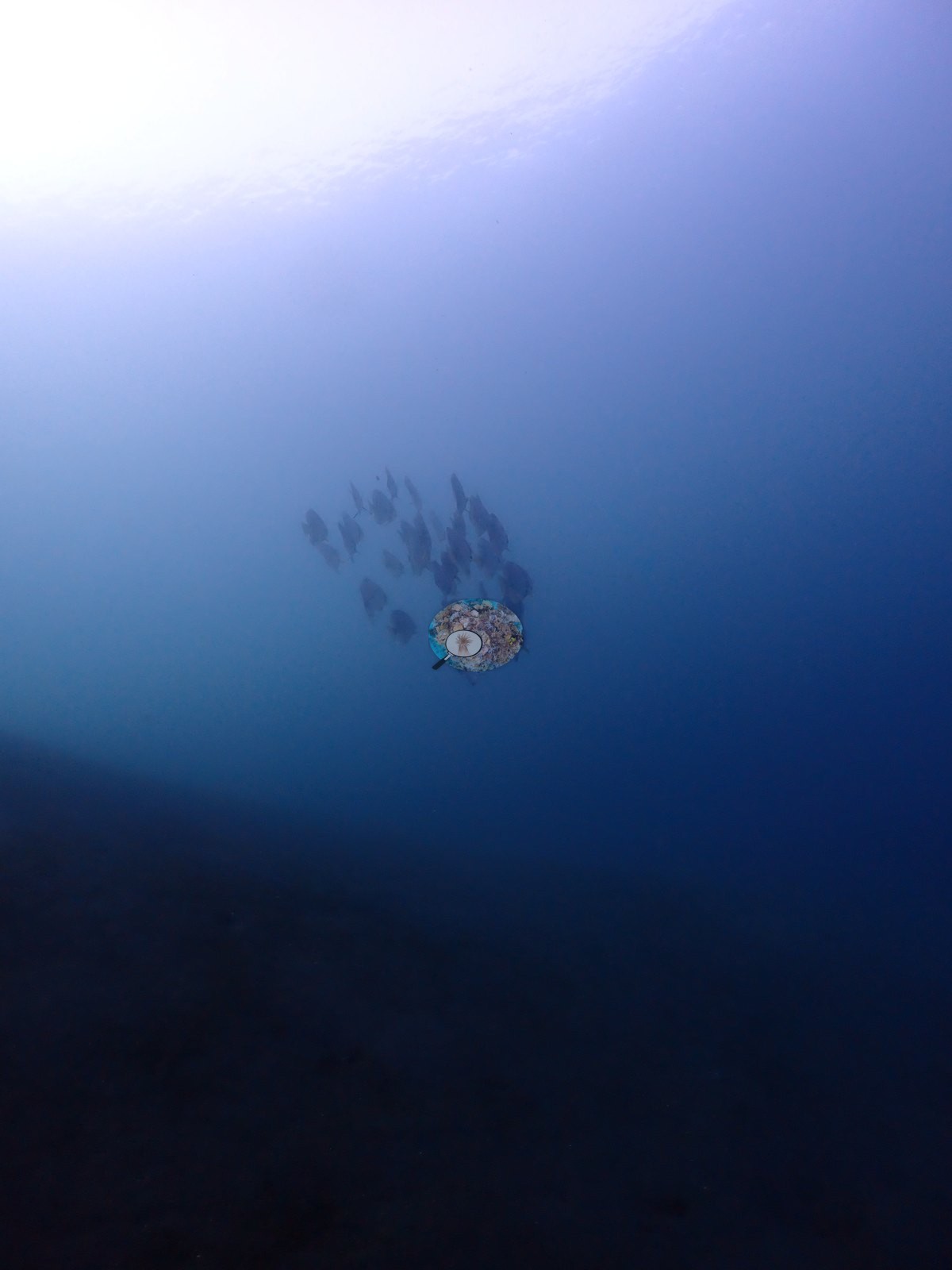
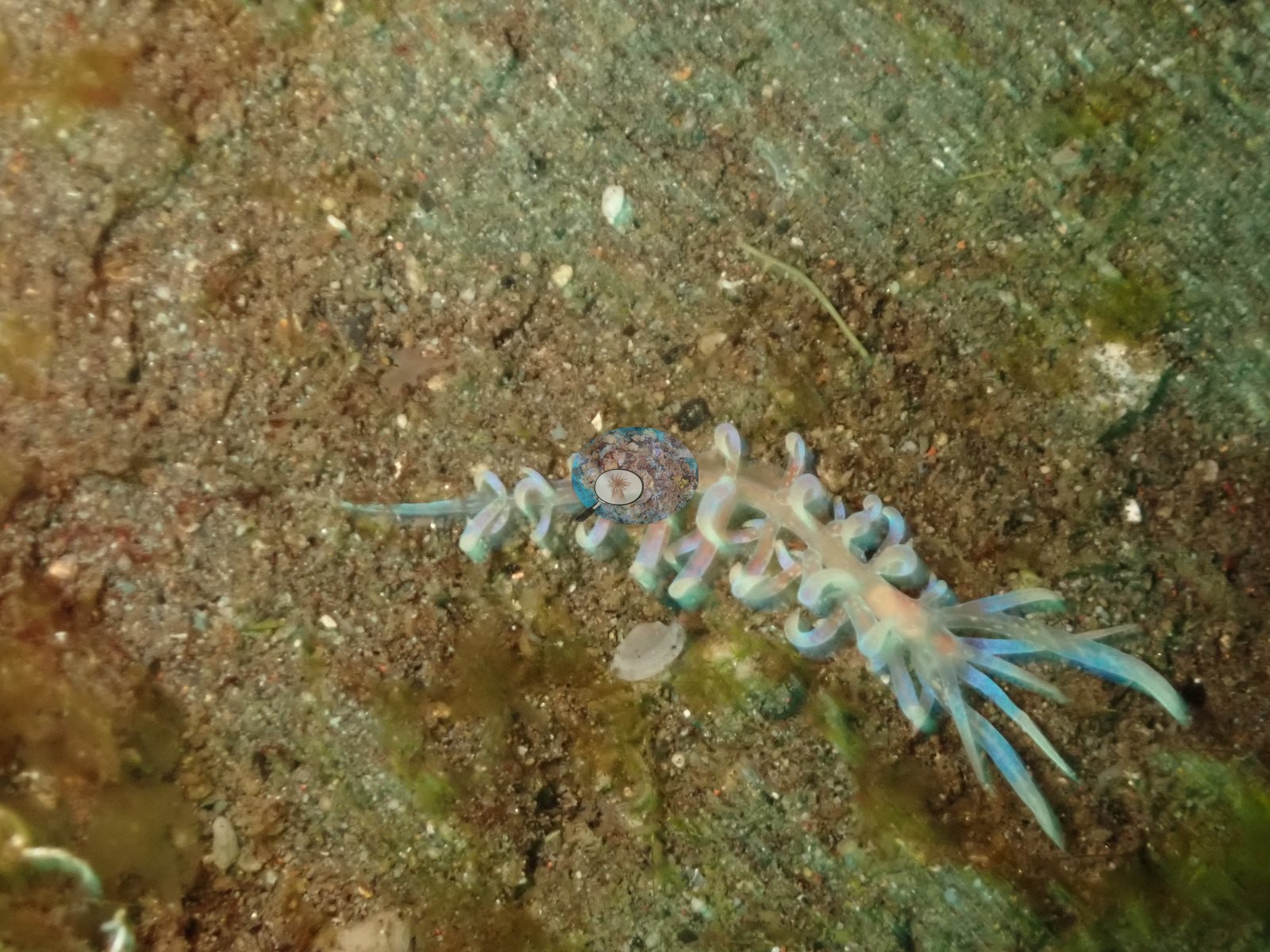
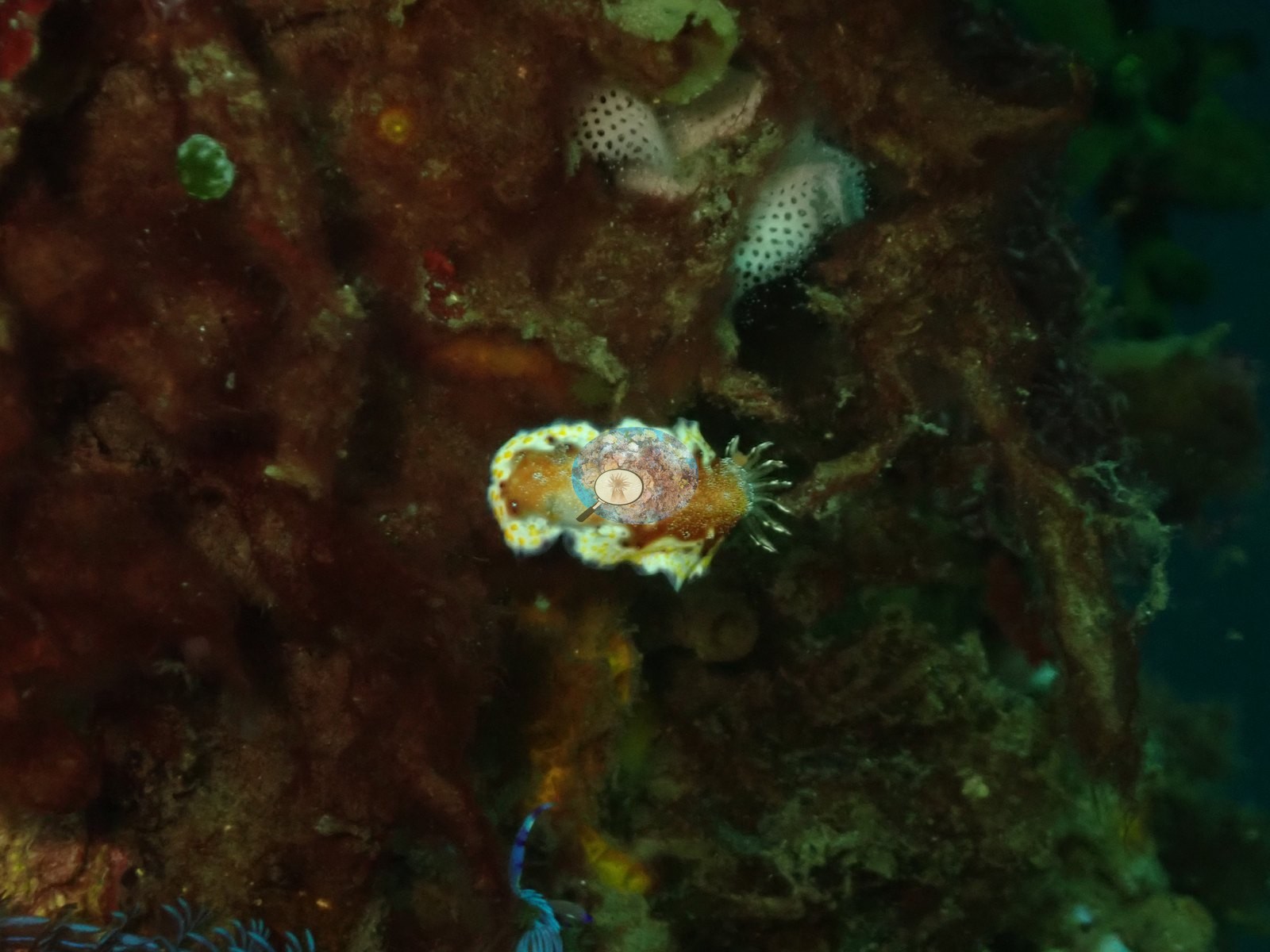
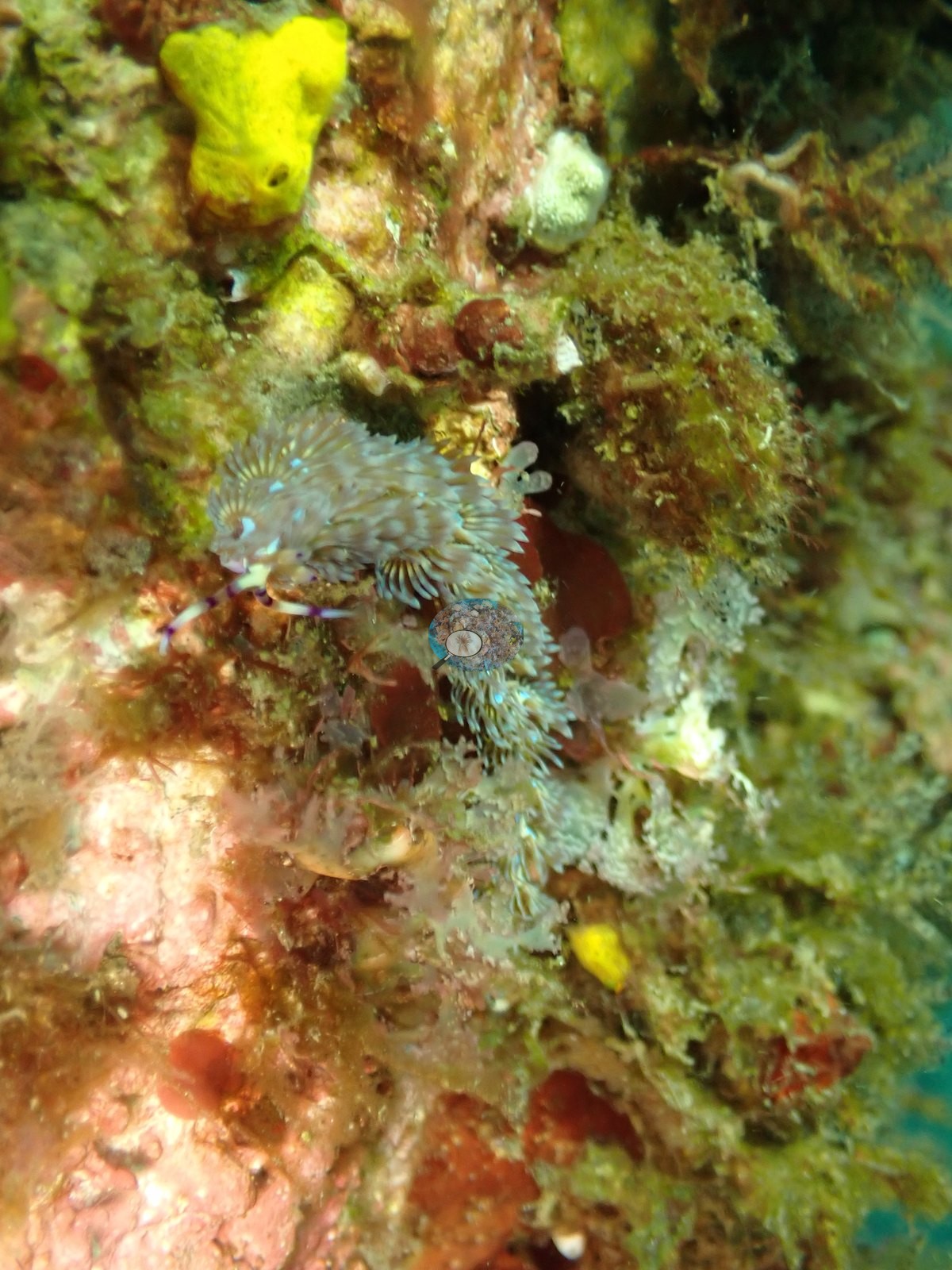
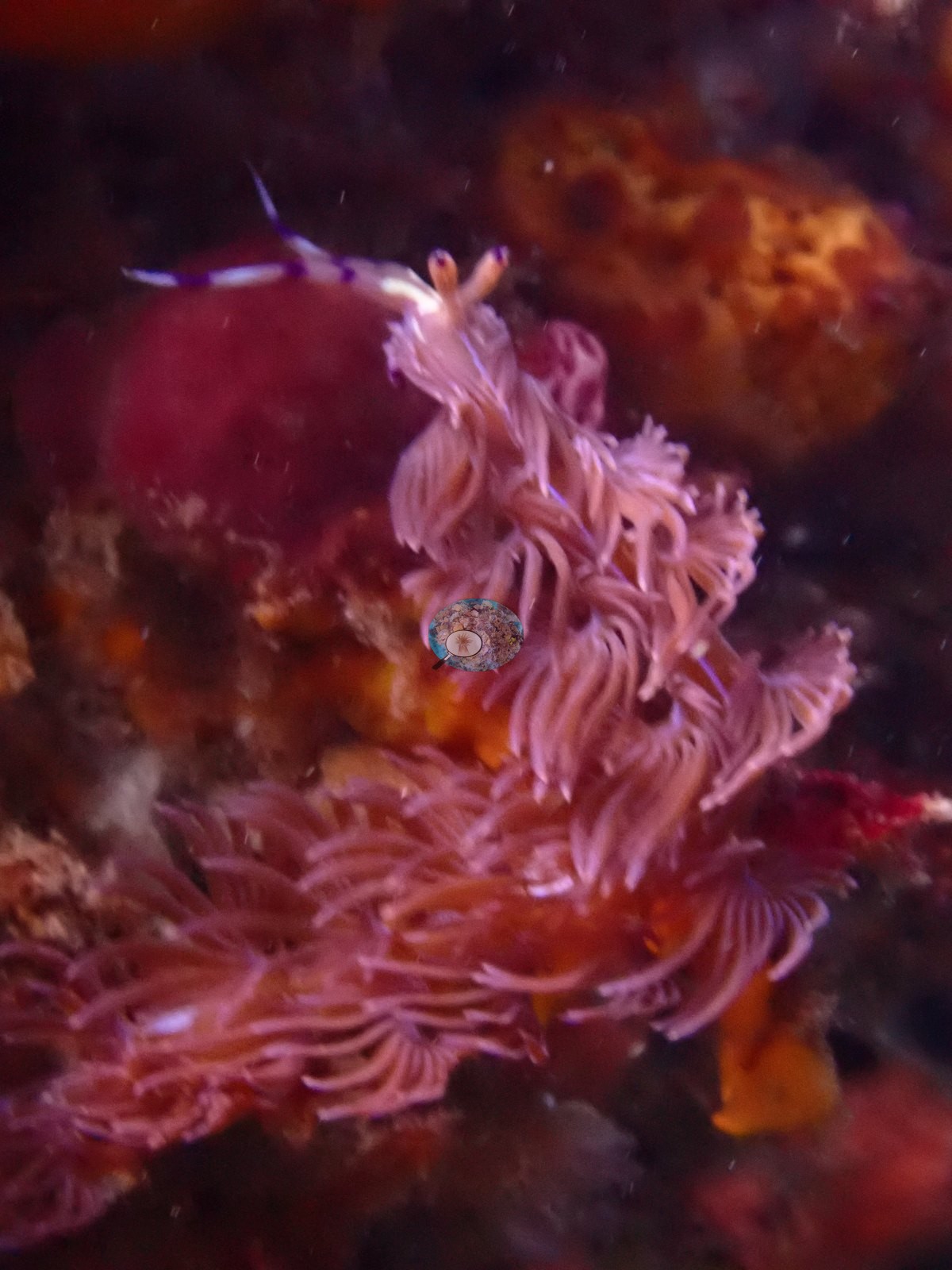
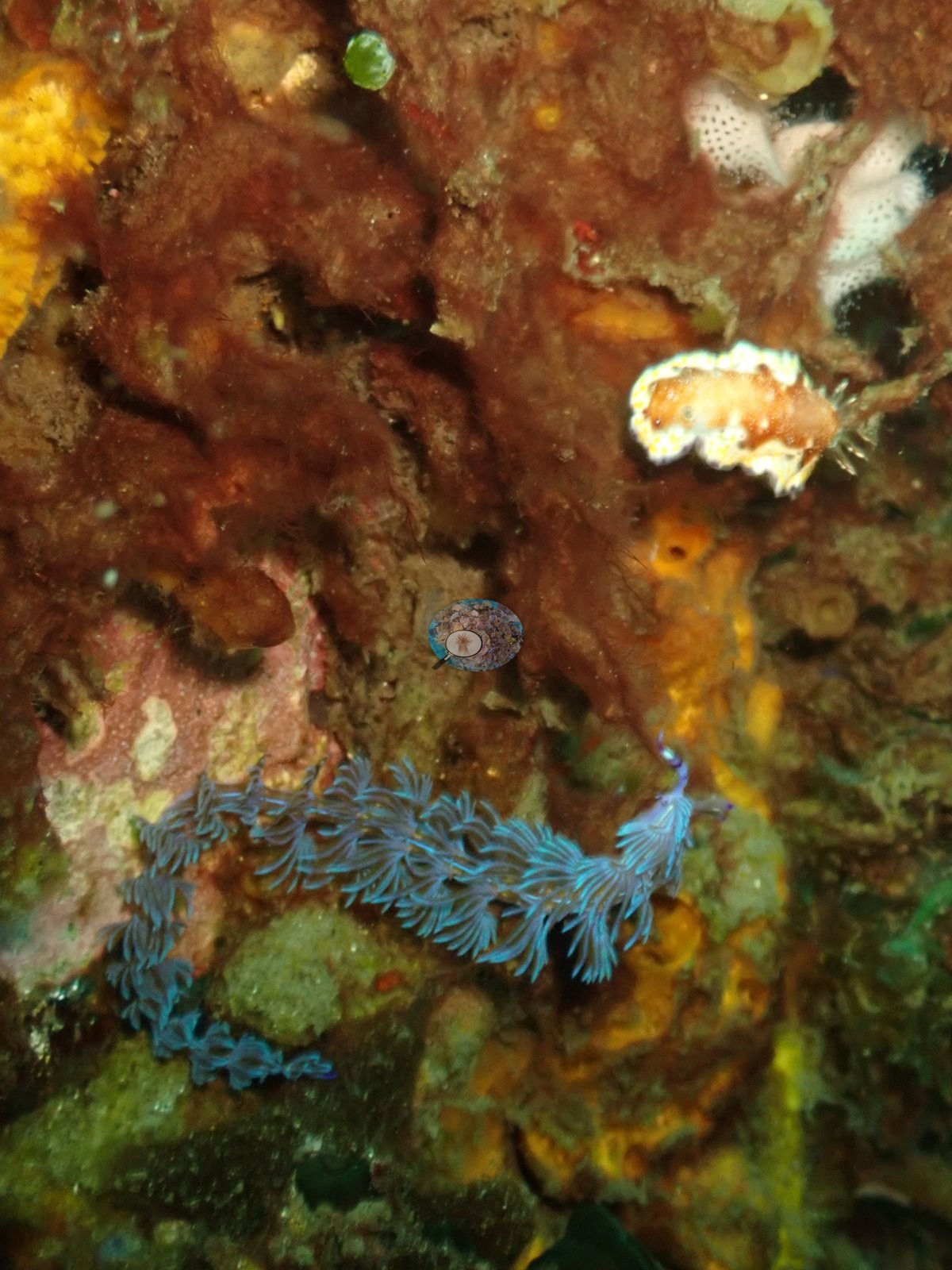
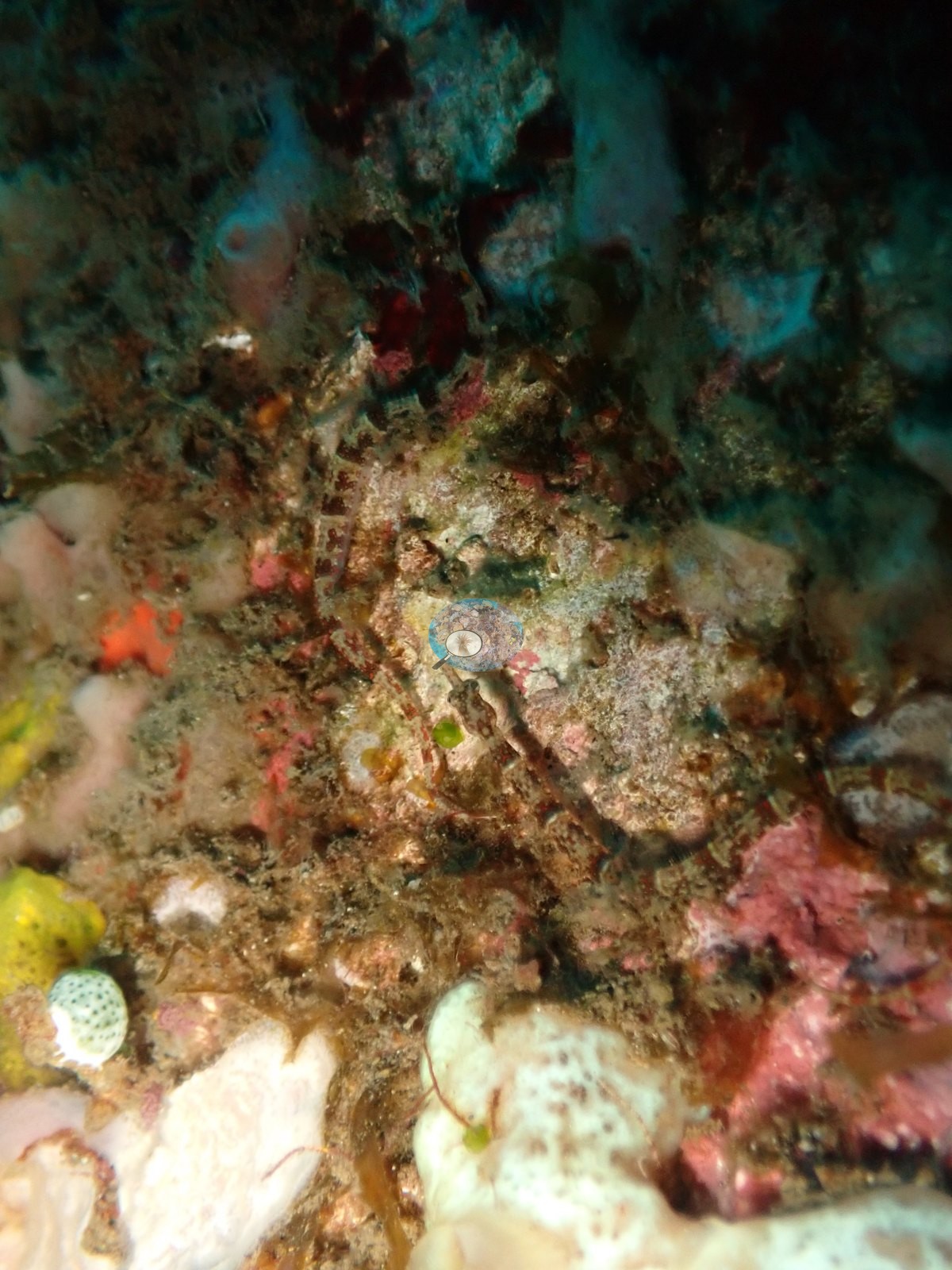
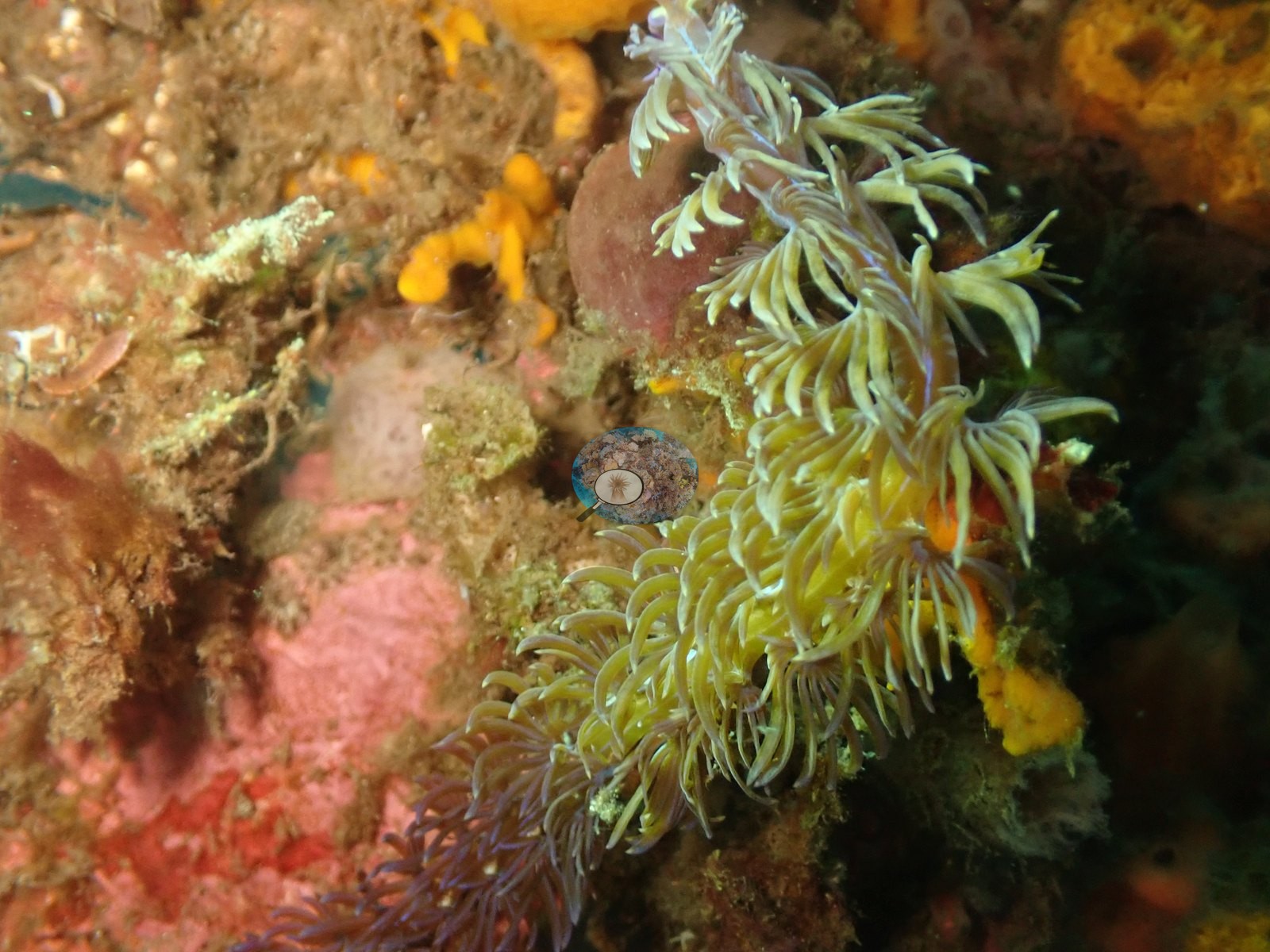
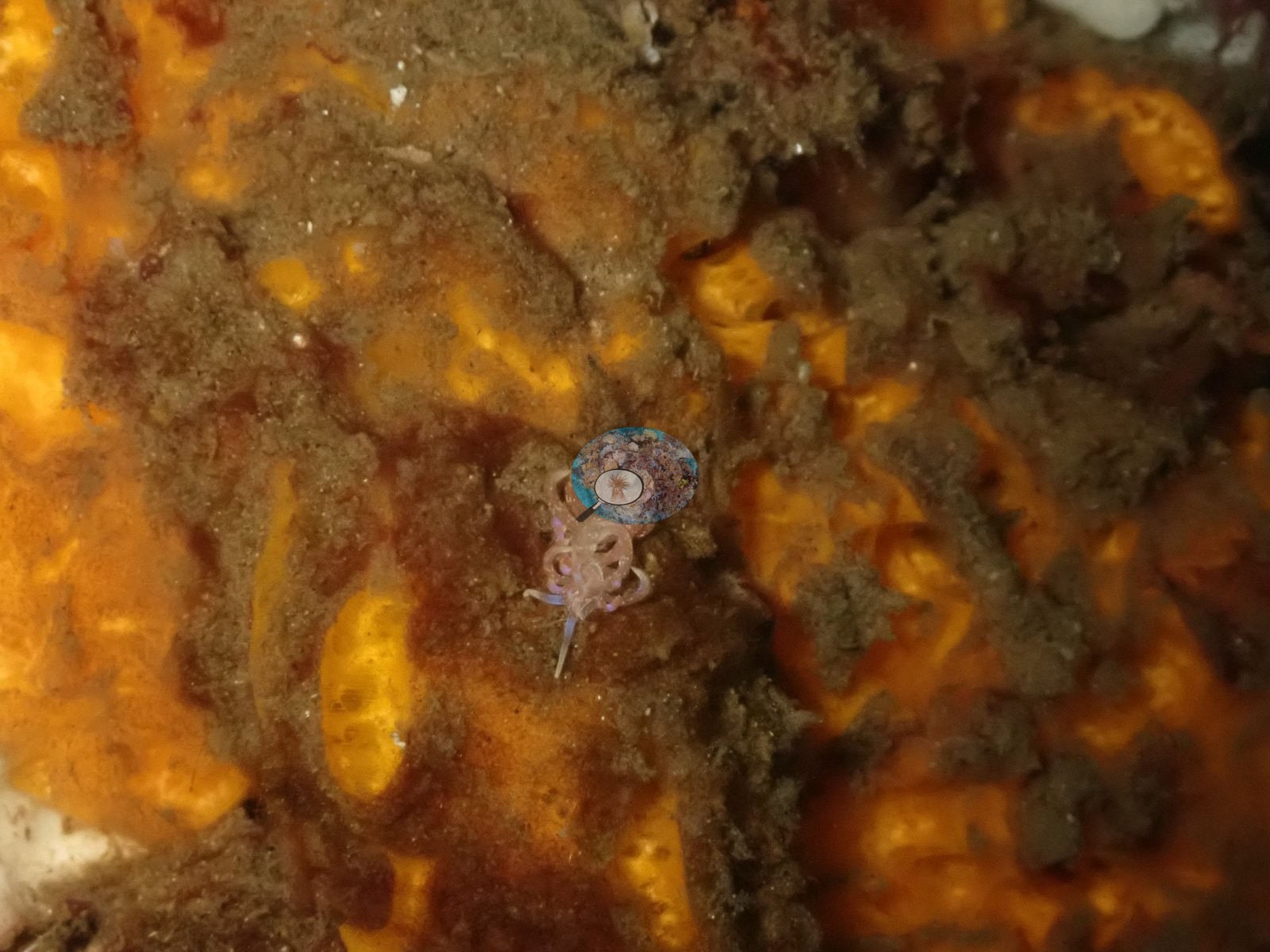
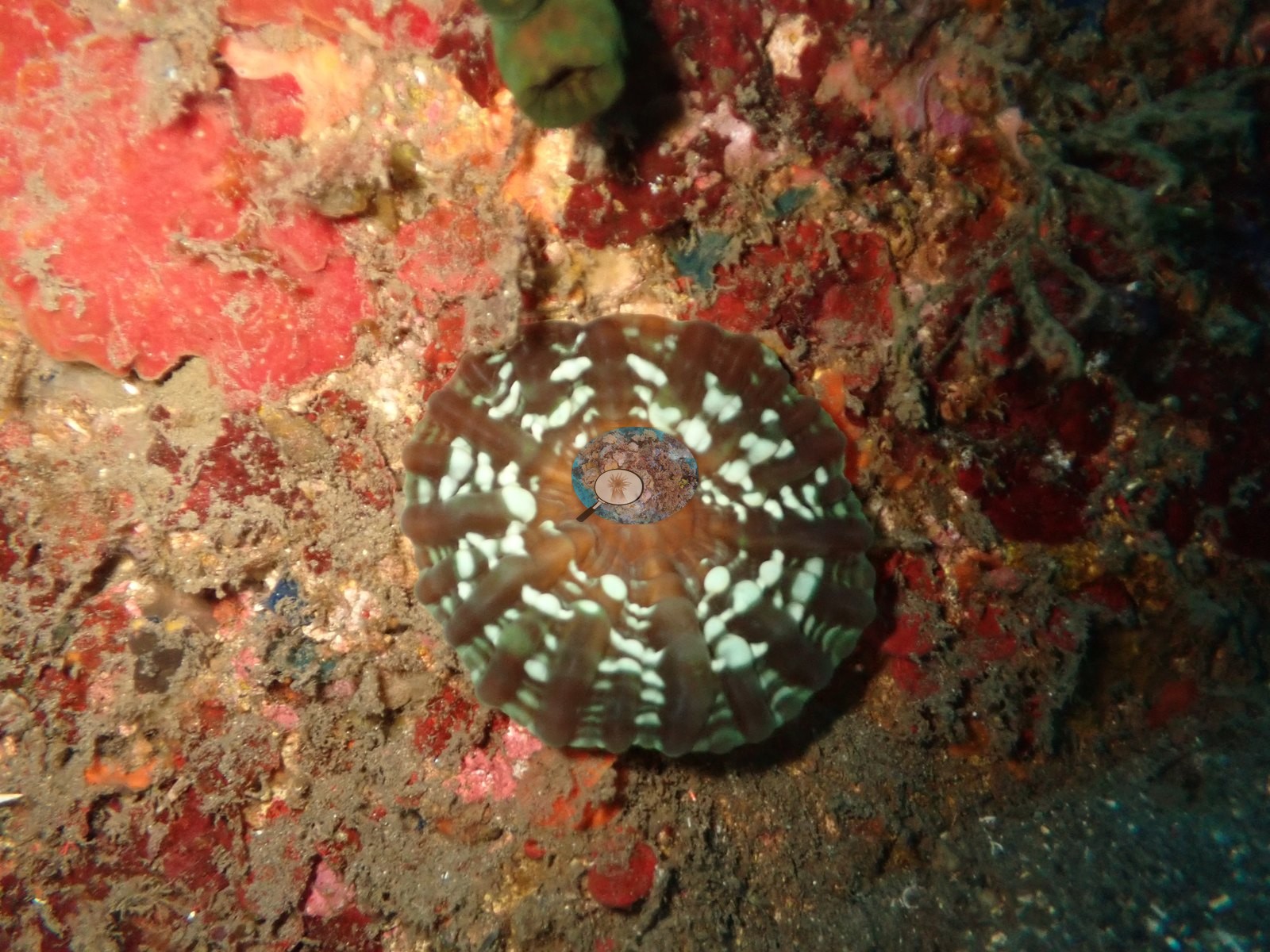
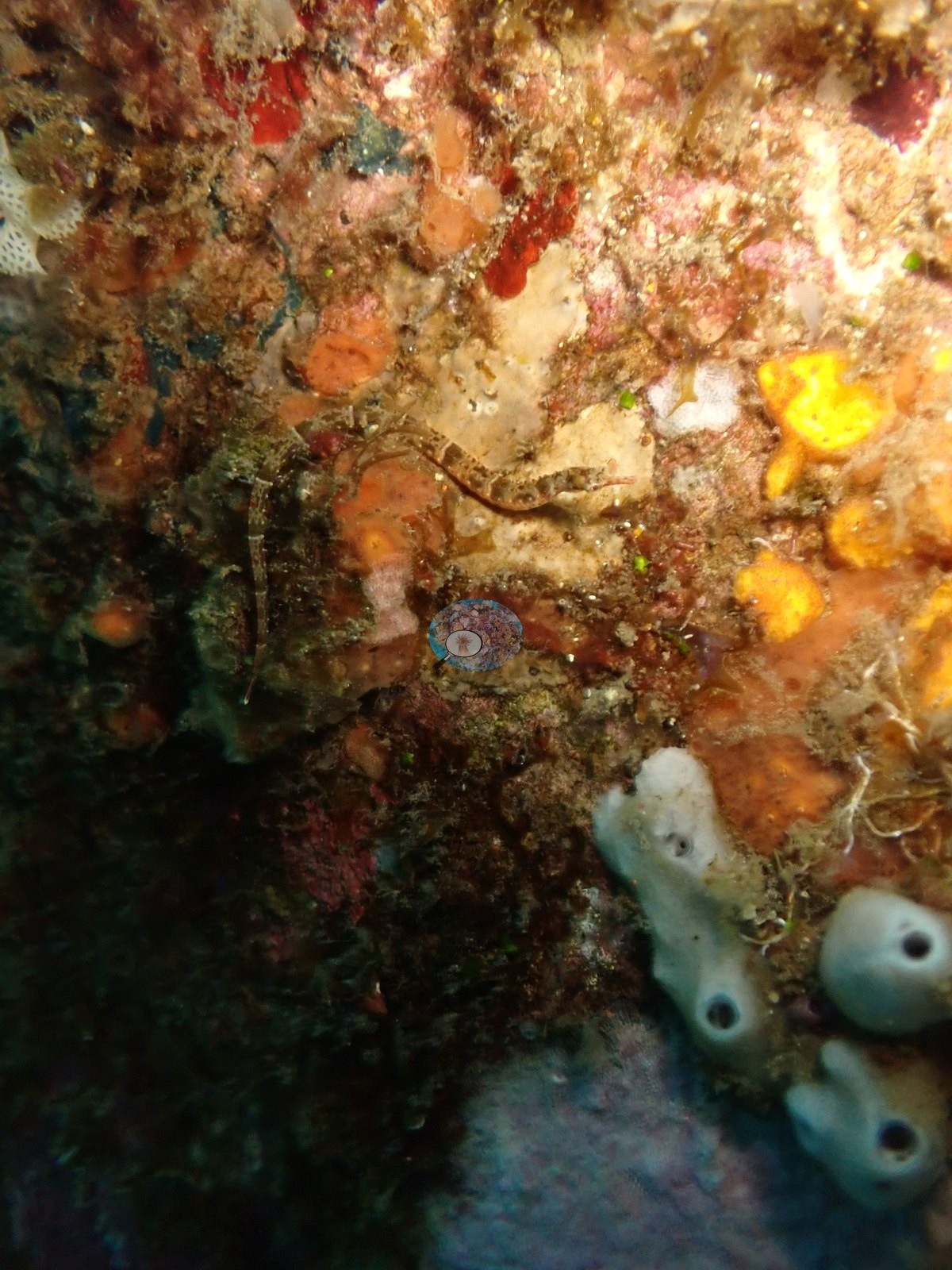
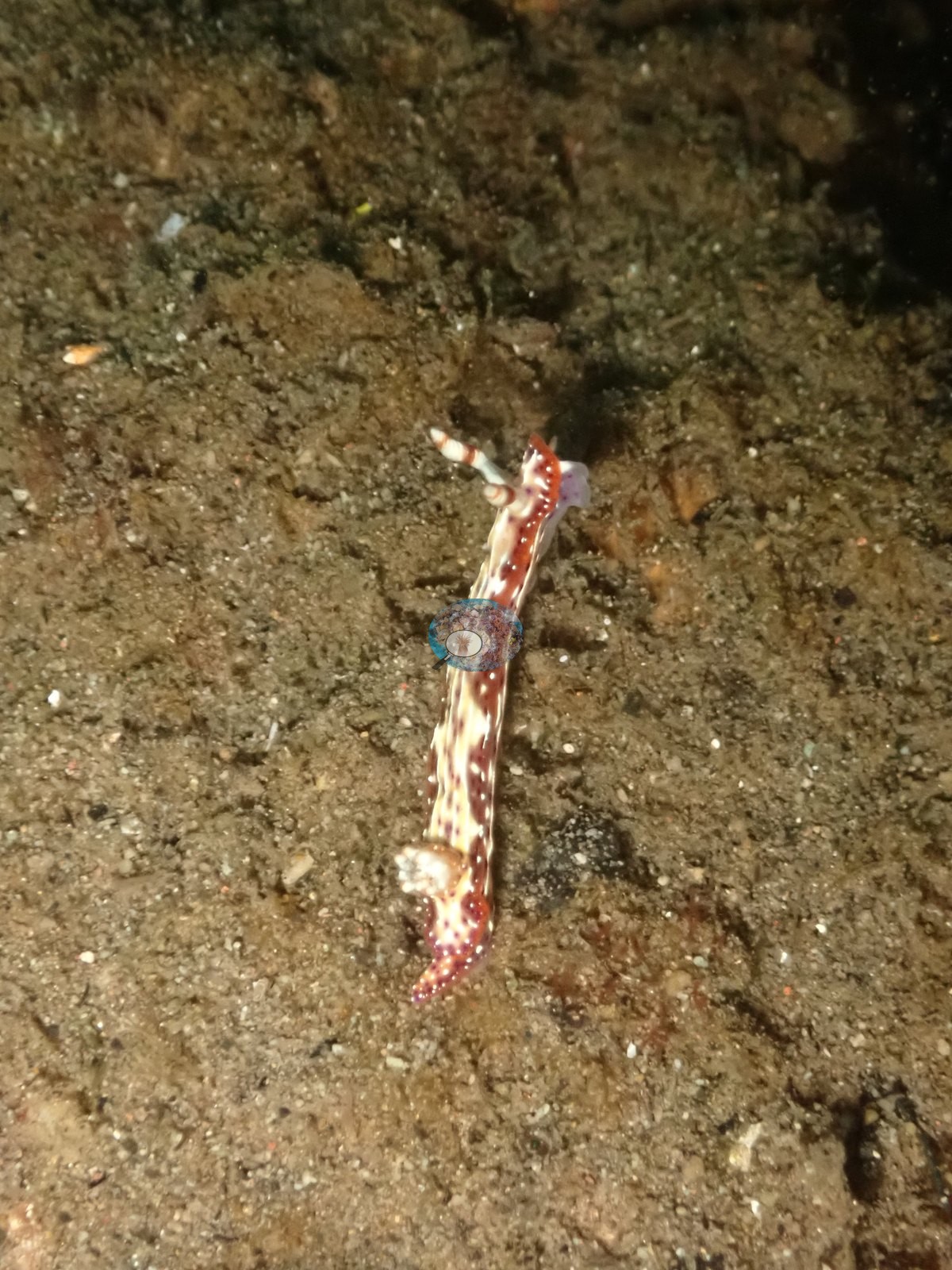
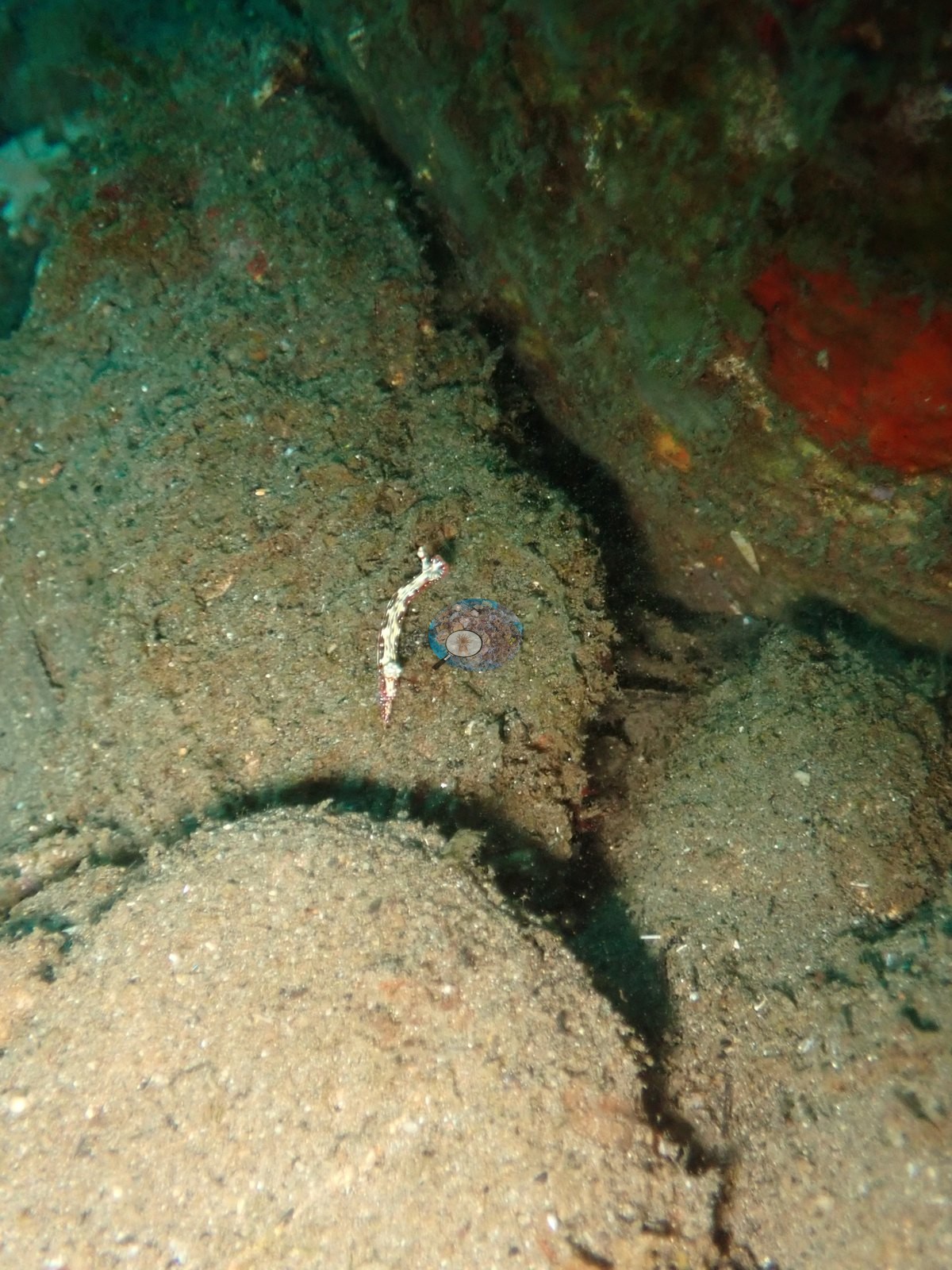
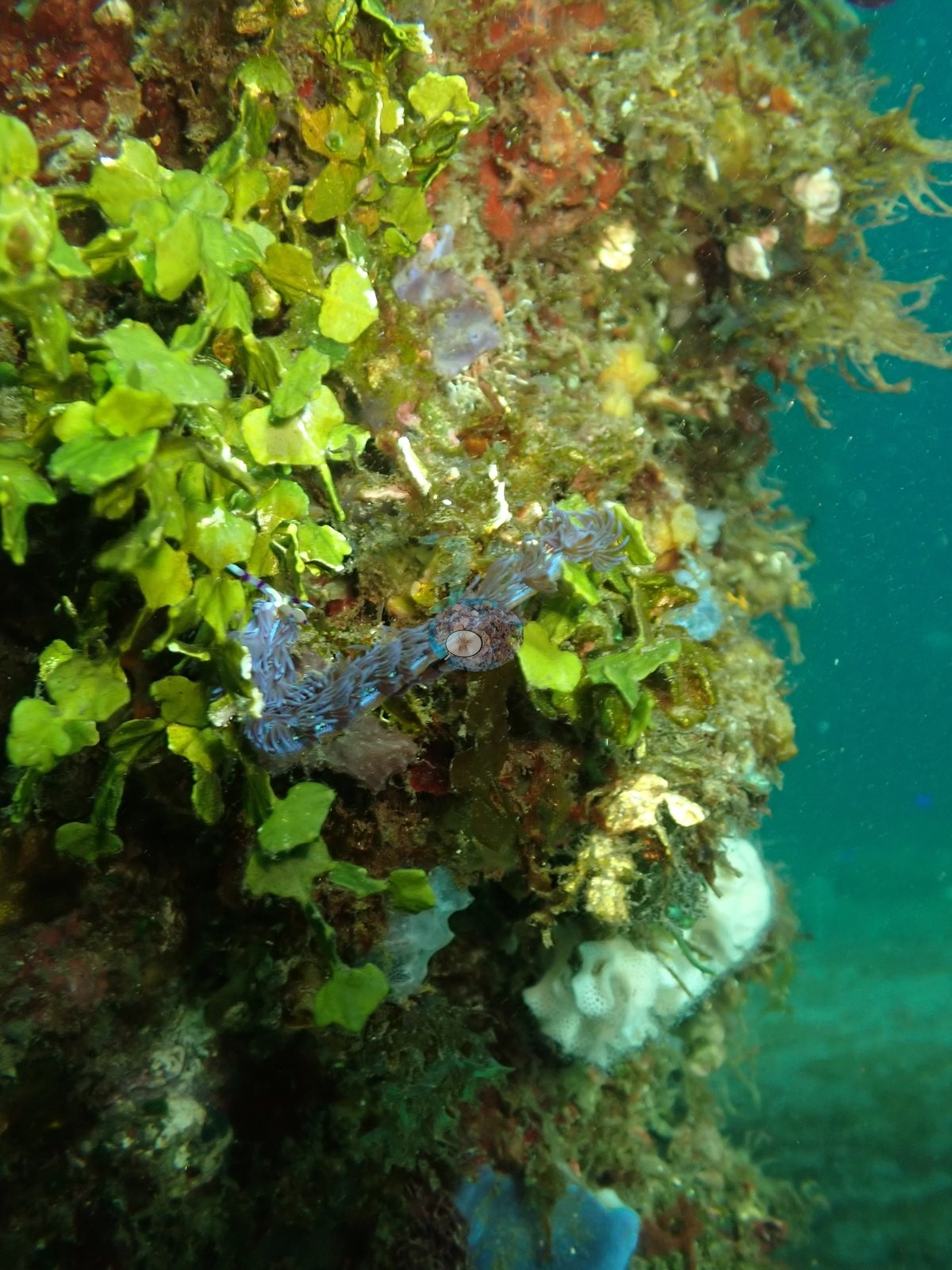
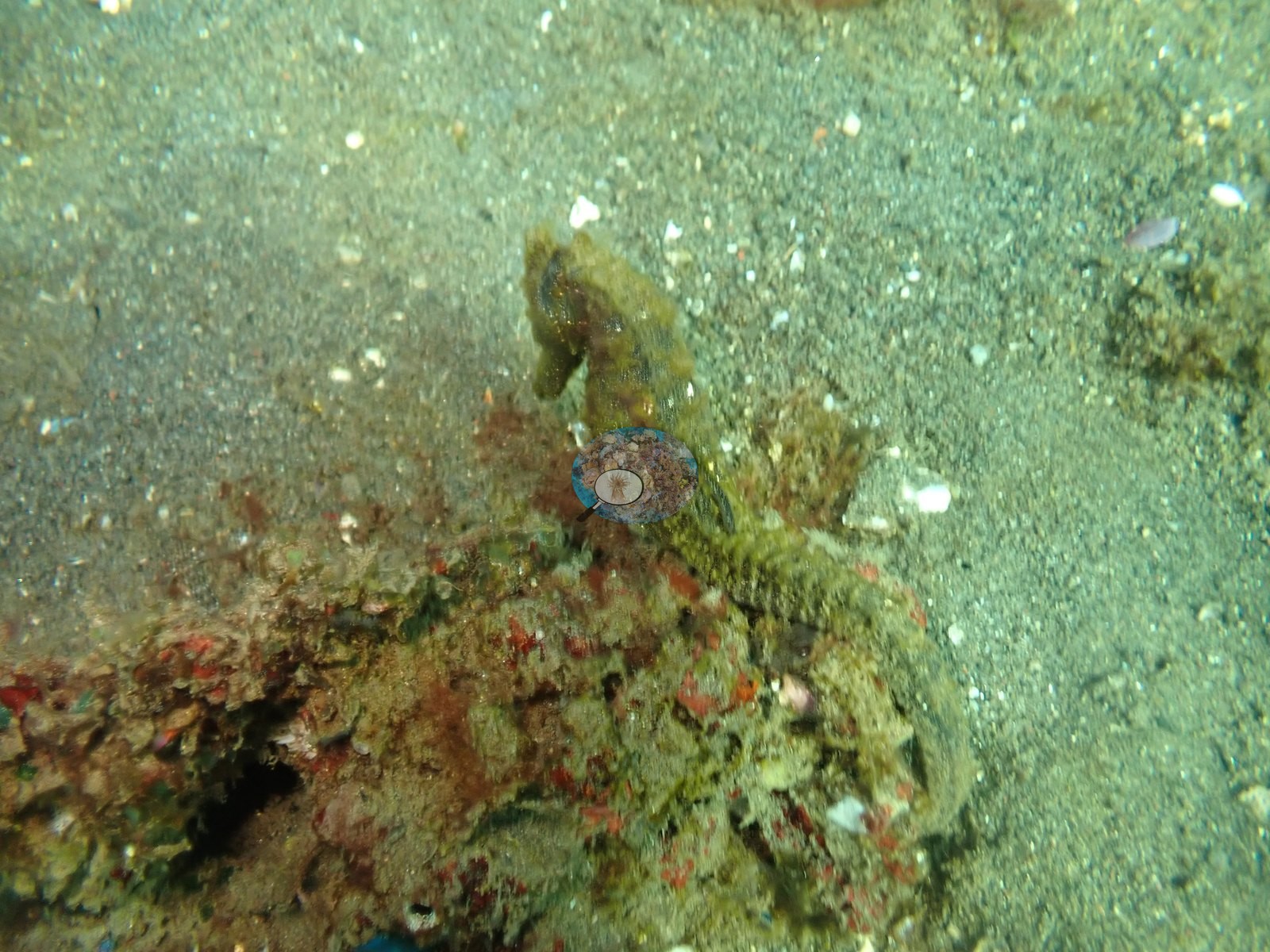
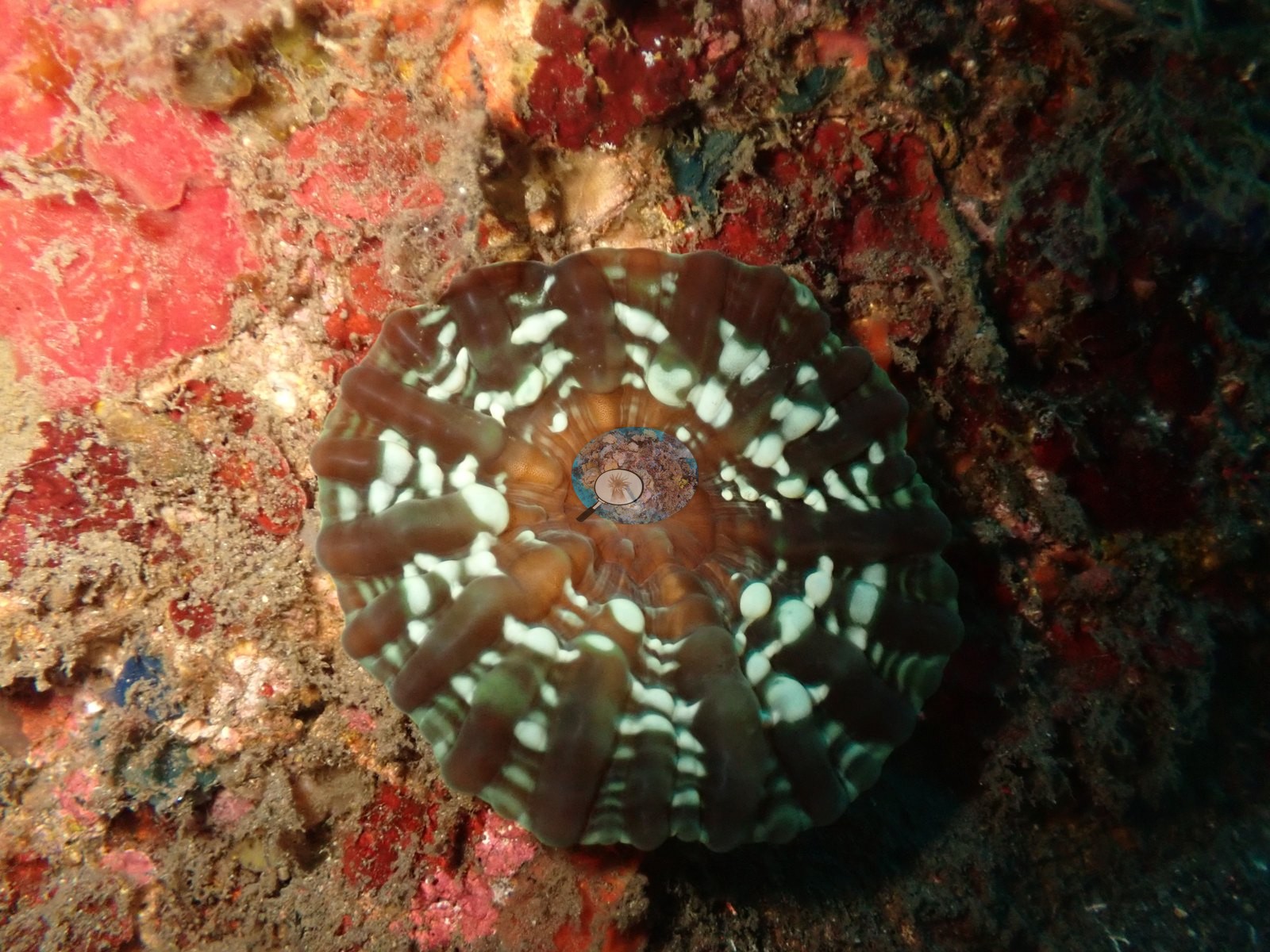
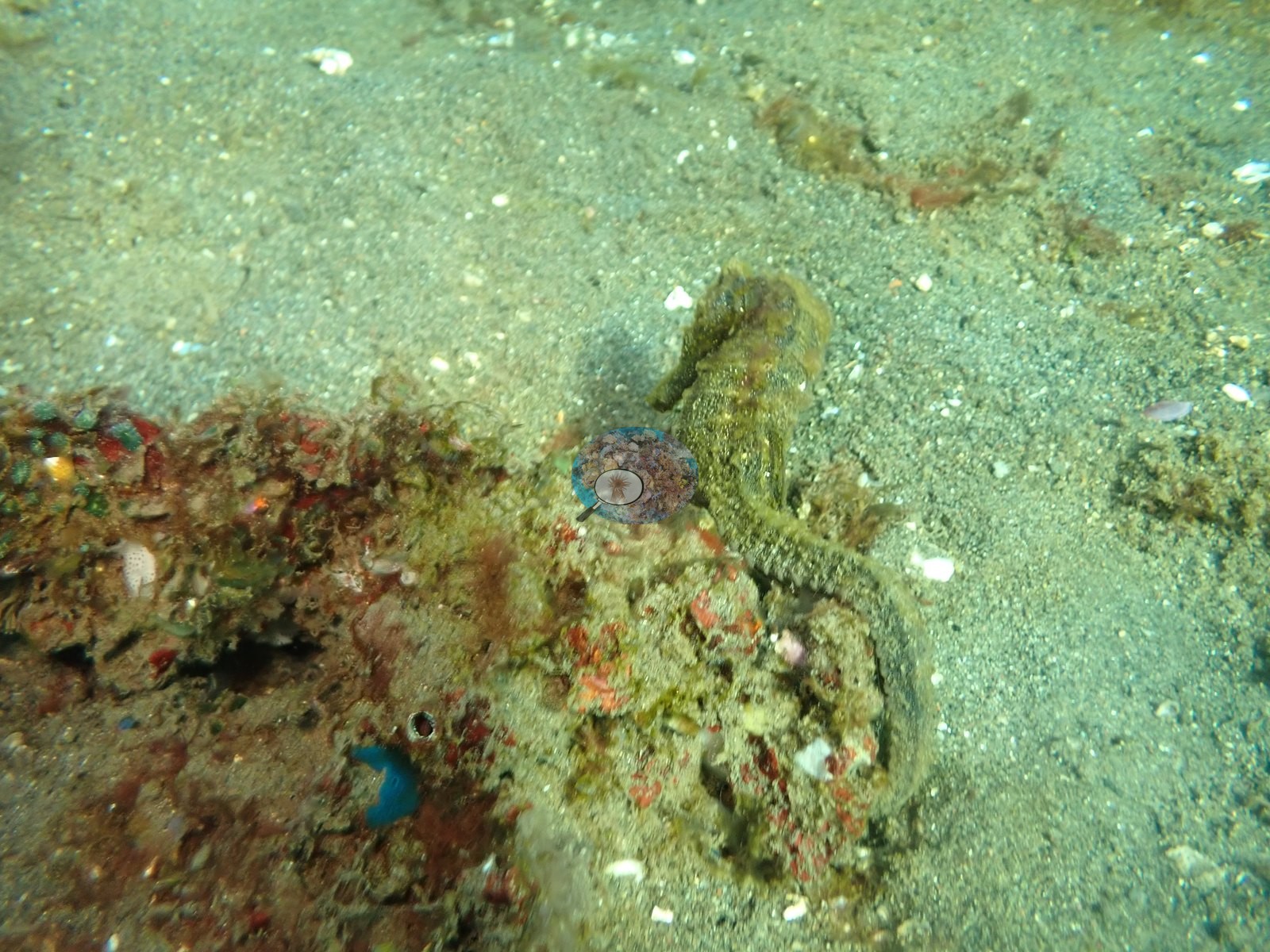
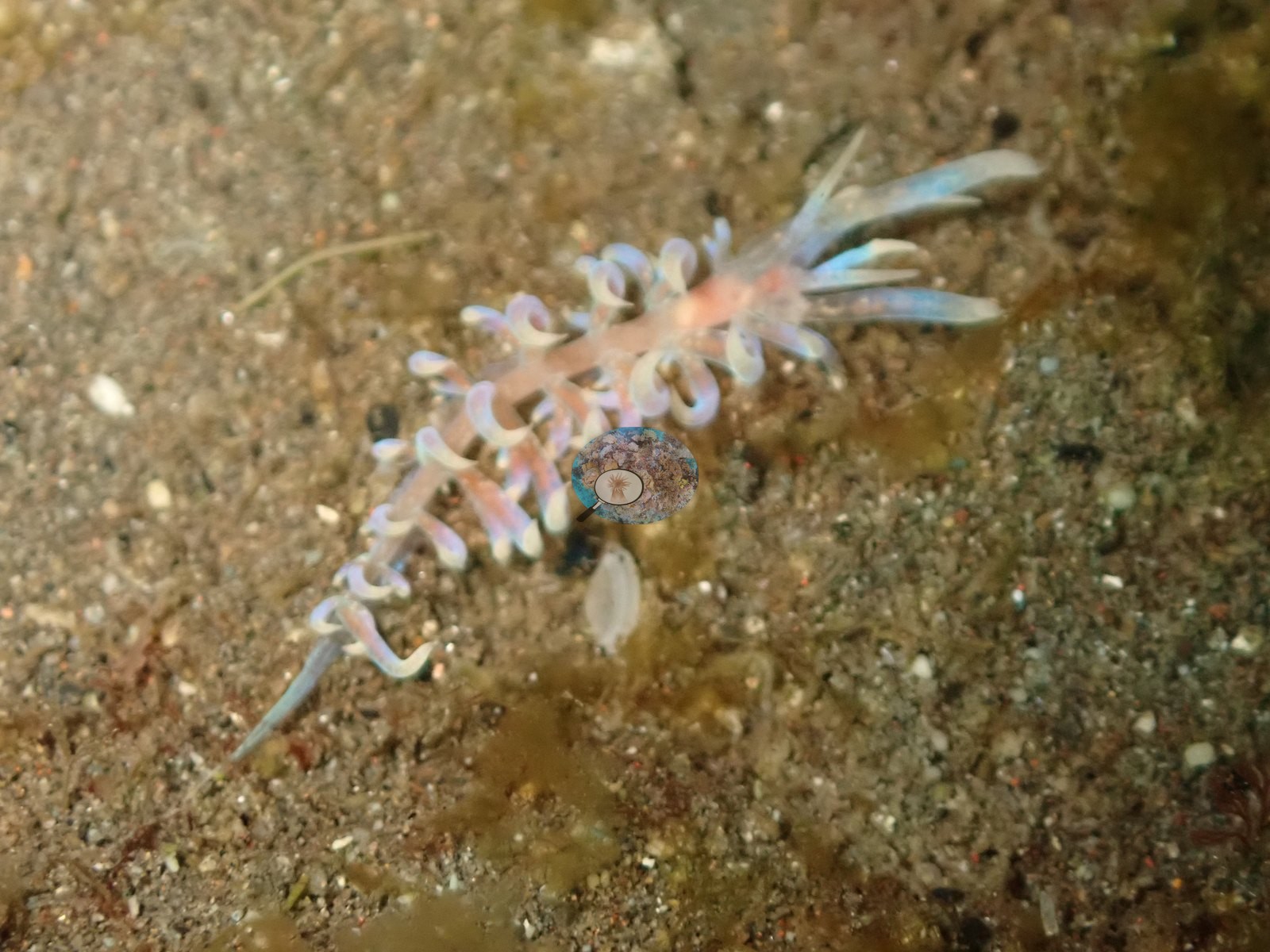
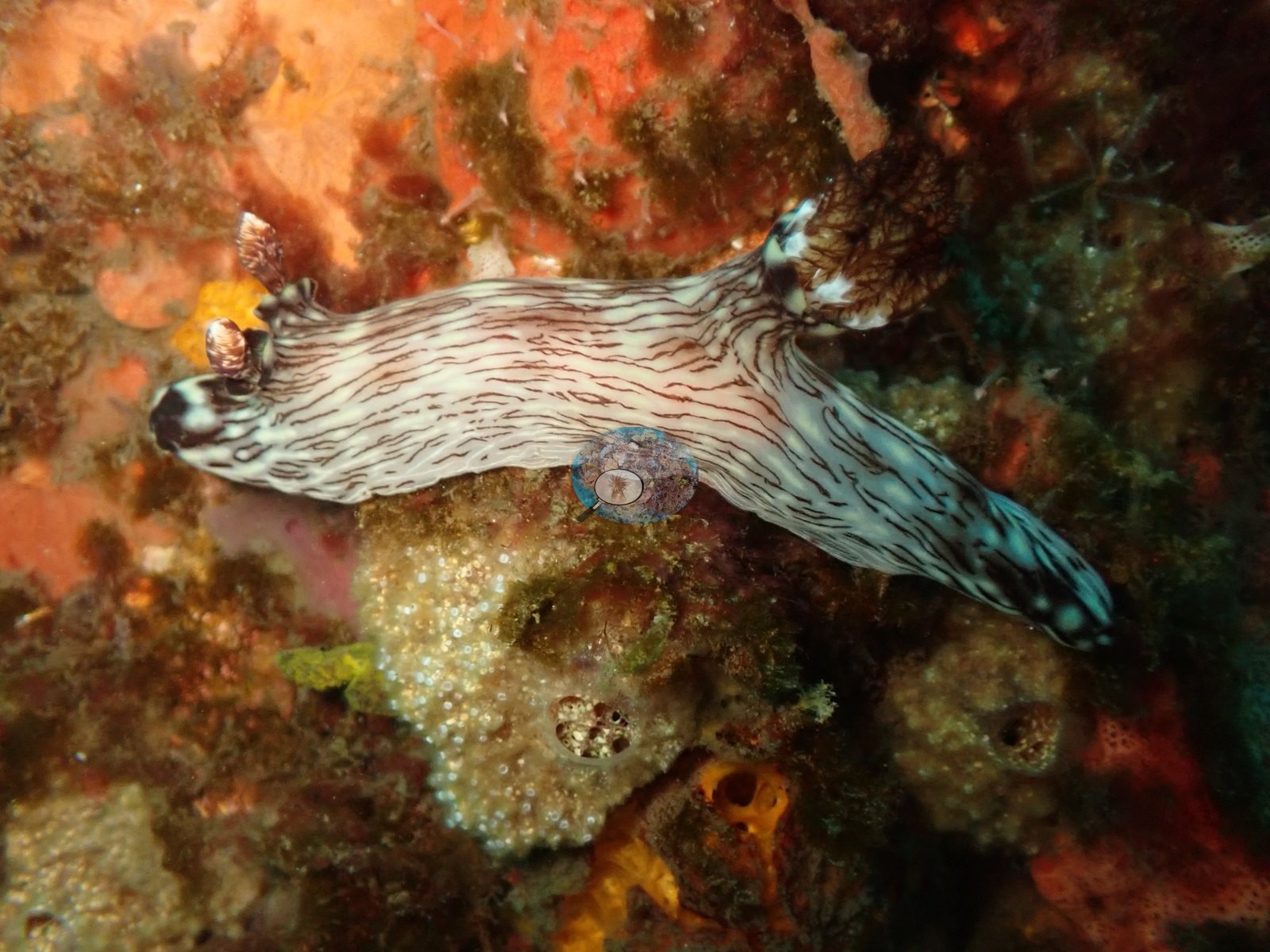
Three seahorses were photographed - olive, rust, and yellow - plus repeated blue-lilac Pteraeolidia-type aeolid nudibranchs, a large striped Nembrotha-type dorid, a solitary fluted button coral (Cynarina-type), scorpionfish tucked into soft coral, burrow-dwelling blennies, an octopus wedged in a crevice, and batfish schooling in blue water off the slope (e.g., Image 7, Image 9, Image 15, Image 22, Image 26, Image 34, Image 38).
Comparisons with other data
Also on record for this site: A muck and mixed-sediment macro site rather than a reef (e.g., Image 52).
Dive record
Two dives, reviewed frame by frame, and they are entirely different records.
Other notes
Also on record for this site: A muck and mixed-sediment macro site rather than a reef (e.g., Image 52).
Data & links
All images from Coral Reef Diagnostics.
© Coral Reef Diagnostics.