
Alor - Ampera

Part of the regional summary: Indonesia - Alor
More info
East Nusa Tenggara (NOAA CRW virtual station) · Lesser Sunda ecoregion mean=6.9°C-heating weeks Alor and the Pantar Strait sit in a zone of exceptionally strong upwelling, which holds these reefs several degrees cooler than NOAA’s satellite-derived figures imply. Read the heat-stress numbers here as a regional-scale indication, not as this reef’s own temperature history.A night muck dive over black volcanic sand and rubble in Alor, defined by macro life rather than coral: tube anemones with crowns of more than 100 fine tentacles, frilled disc anemones, a whip coral, and a giant clam mantle. No coral-cover figure is published, as the site has almost no reef framework.
Penyelaman muck malam hari di atas pasir dan pecahan karang vulkanik hitam di Alor, yang dicirikan oleh kehidupan makro alih-alih karang: anemon tabung dengan mahkota lebih dari 100 tentakel halus, anemon cakram berumbai, sebatang karang cambuk, dan mantel kima raksasa. Tidak ada angka tutupan karang yang diterbitkan, karena lokasi ini nyaris tidak memiliki kerangka terumbu.
Terjemahan ringkasan ini oleh AI; versi bahasa Inggris yang berlaku.
Three other CRD dive sites within 5 km shown in orange — click a marker to open its page.
25 of these 51 photographs are shown beside the text that discusses them under "Site description" below.
Site description
Setting
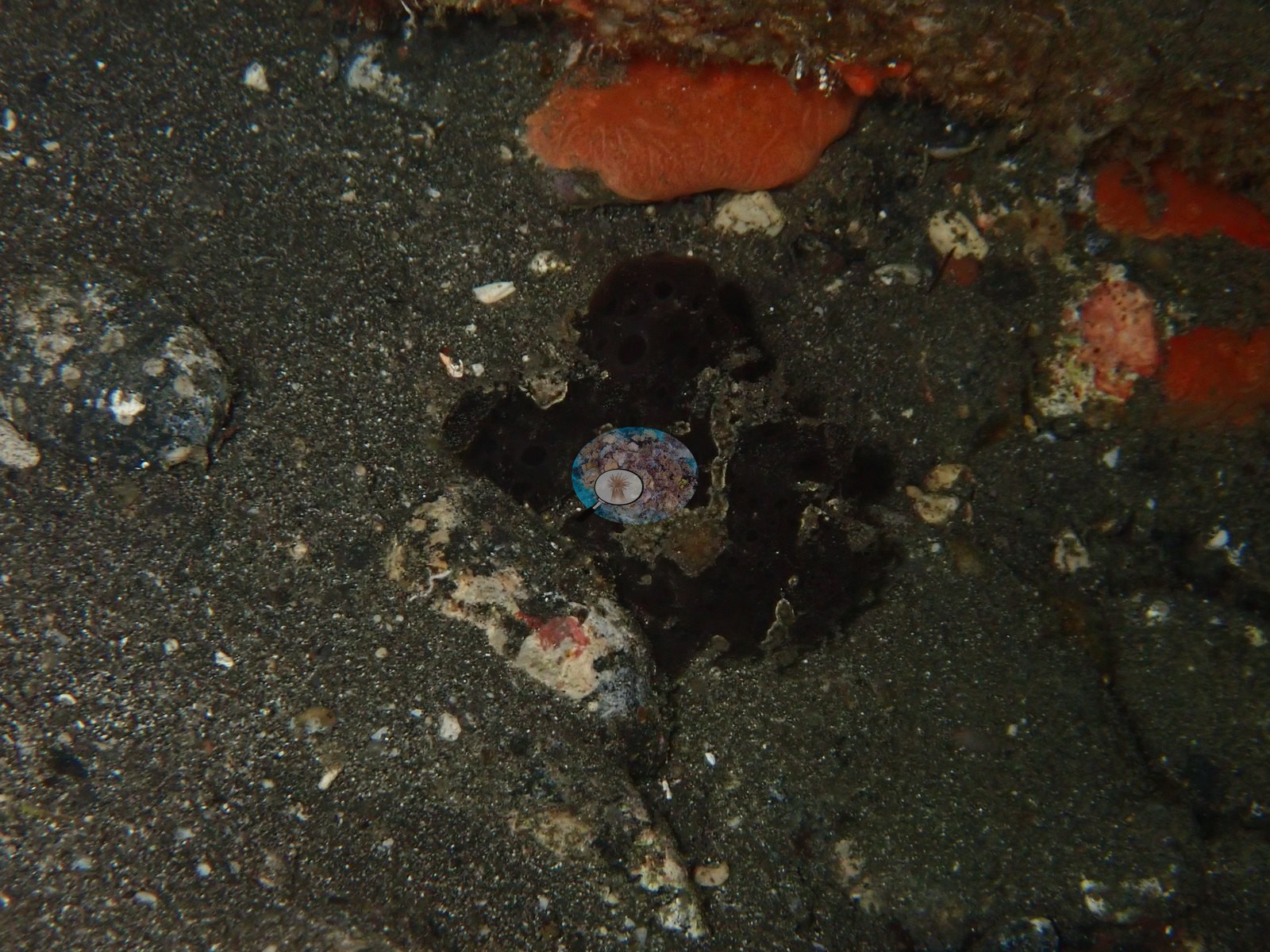
Visibility in the lit subjects is workable but the frames are otherwise black night-dive backgrounds typical of a single focused strobe; no bleaching, disease, or physical damage is assessable given the near-absence of scleractinian coral in this sample, and no man-made objects (wrecks, moorings, tags, tape) appear in the reviewed frames.
General benthic features
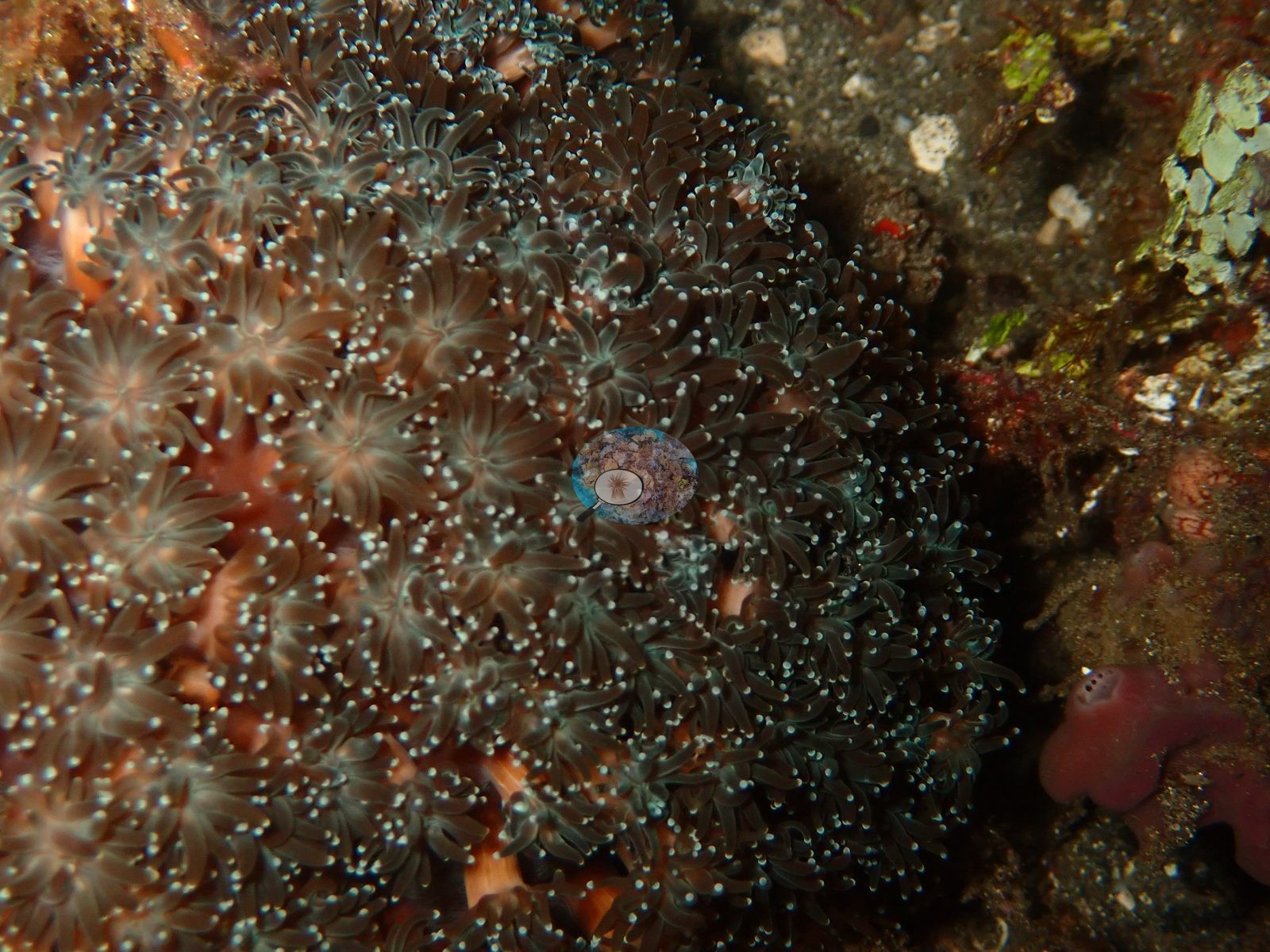
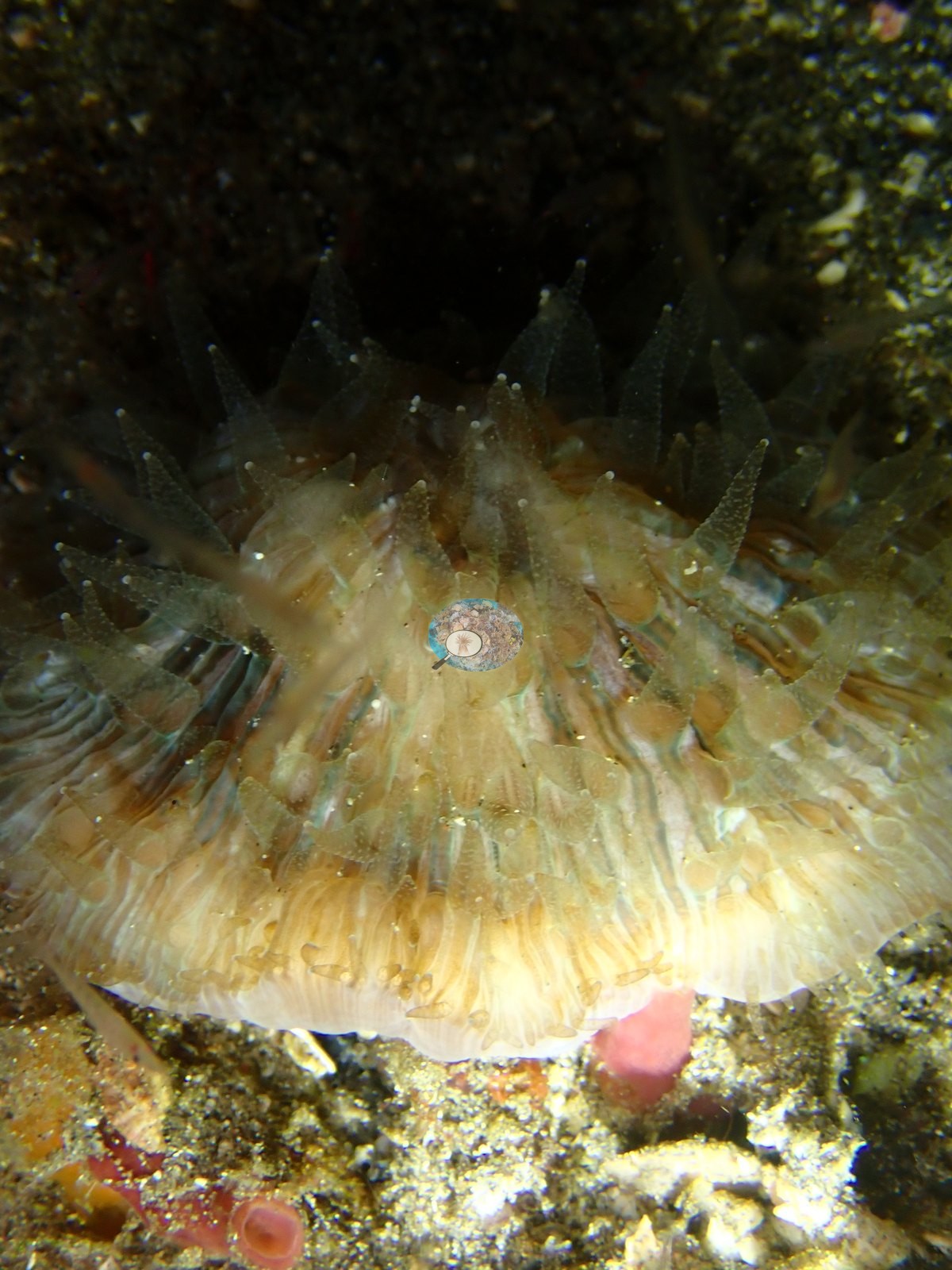
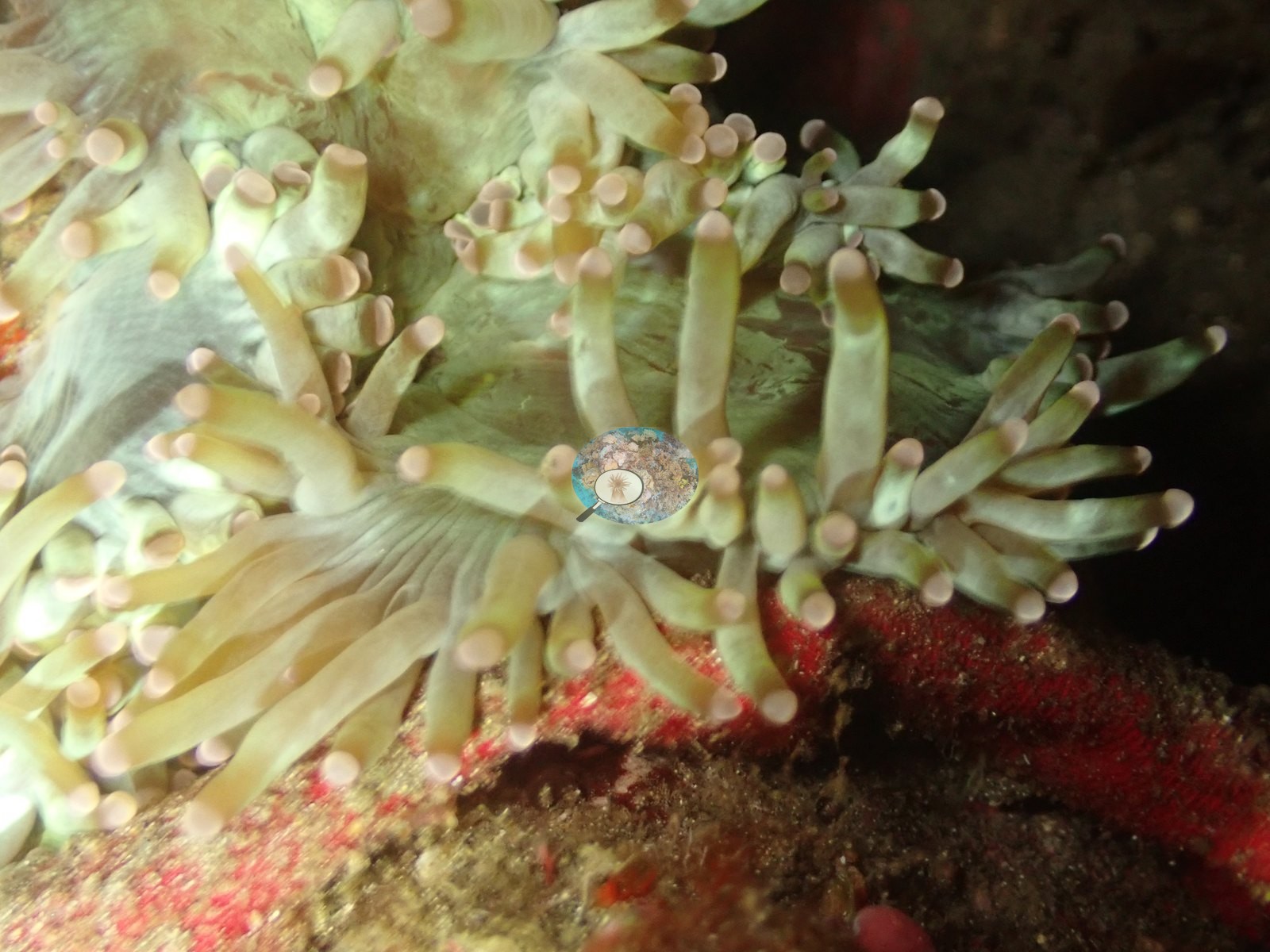
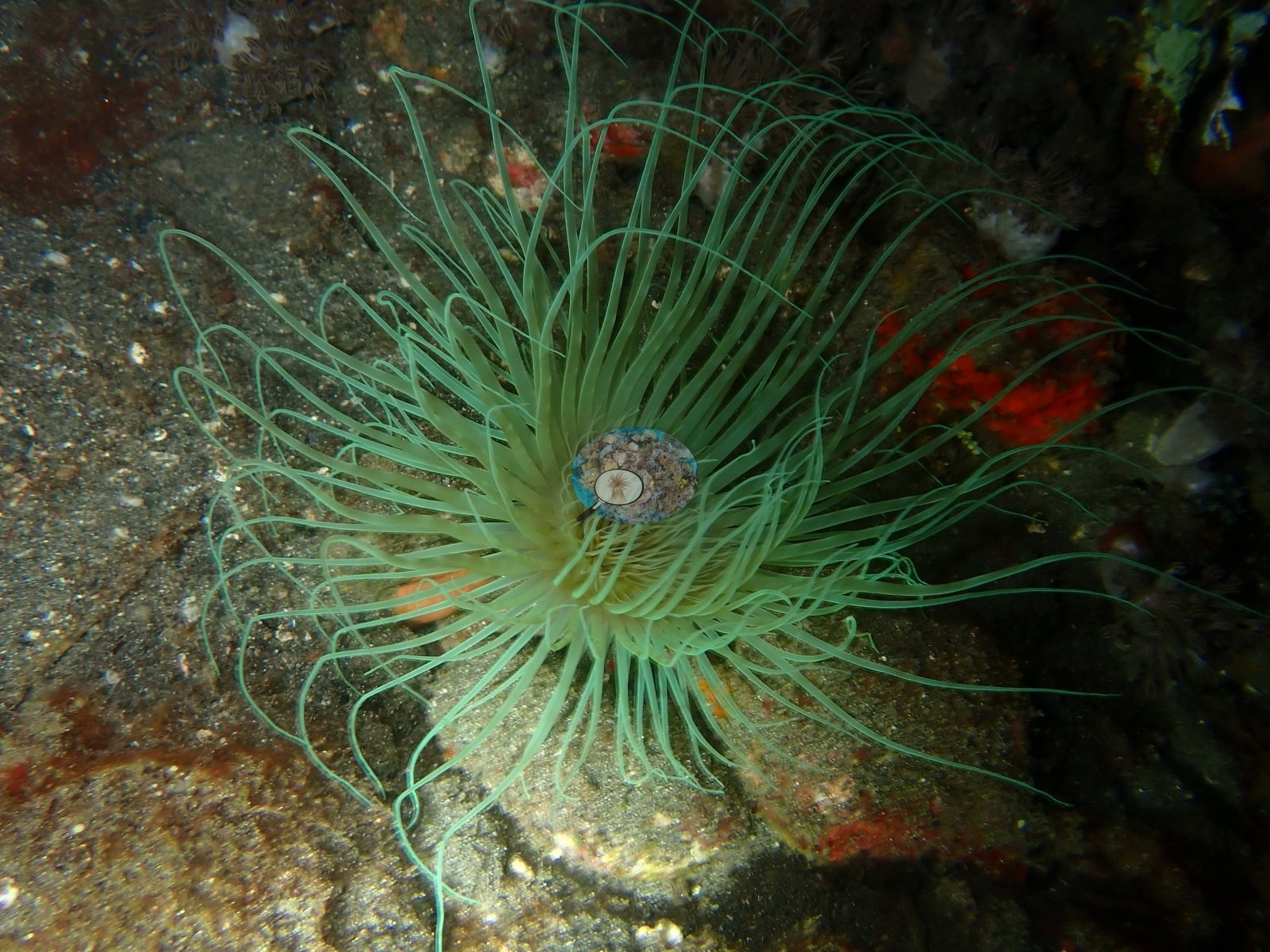
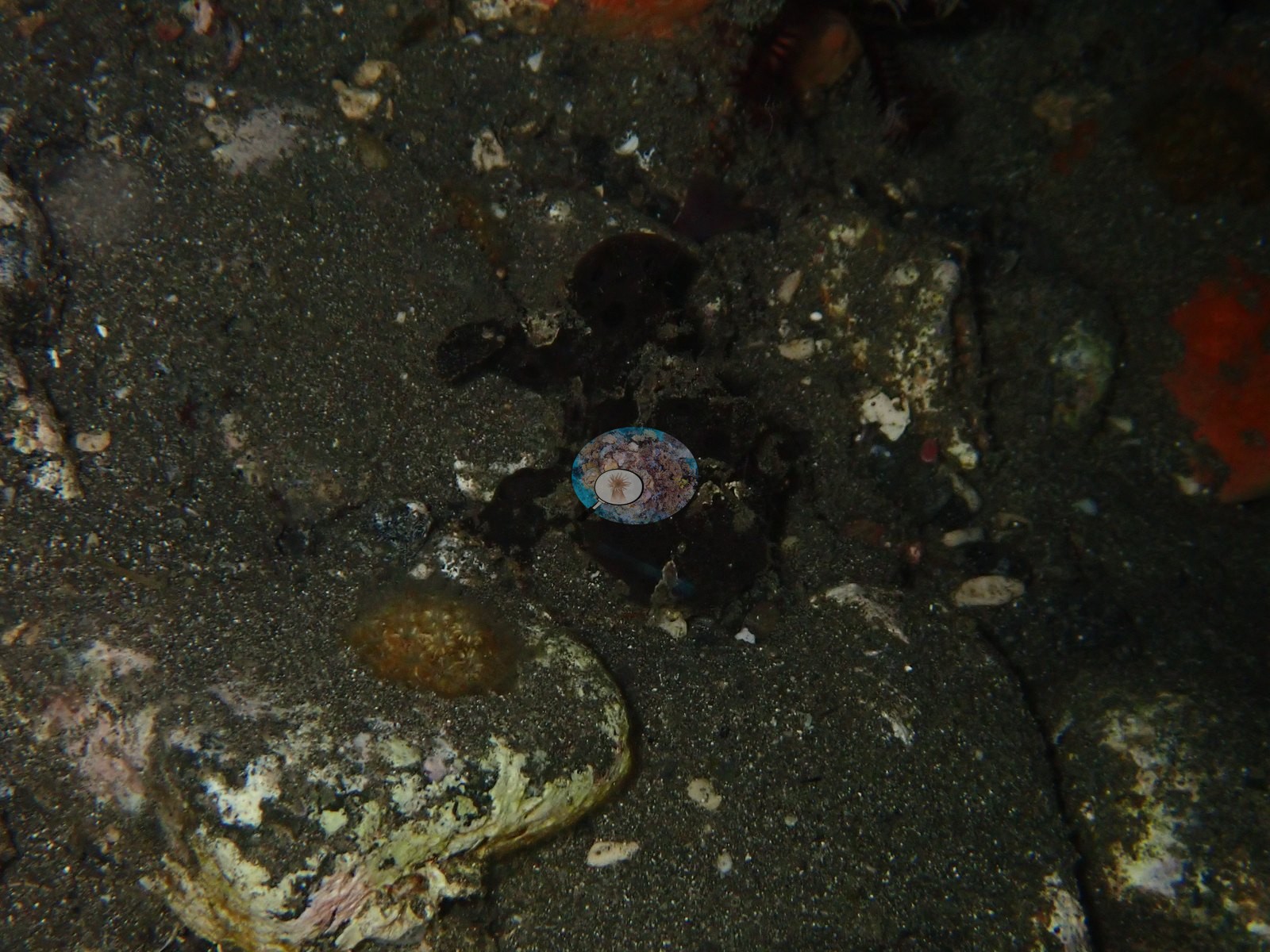
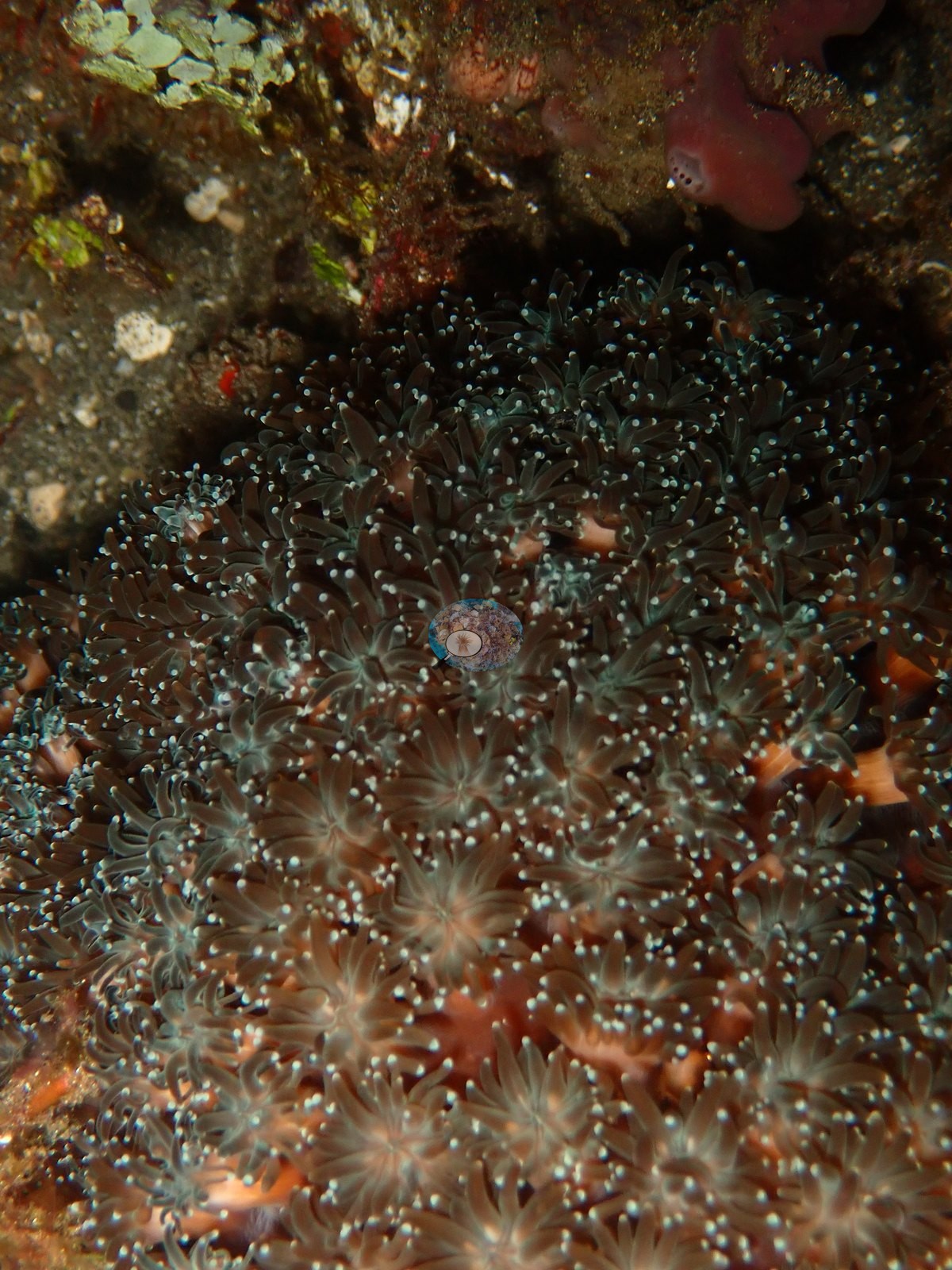
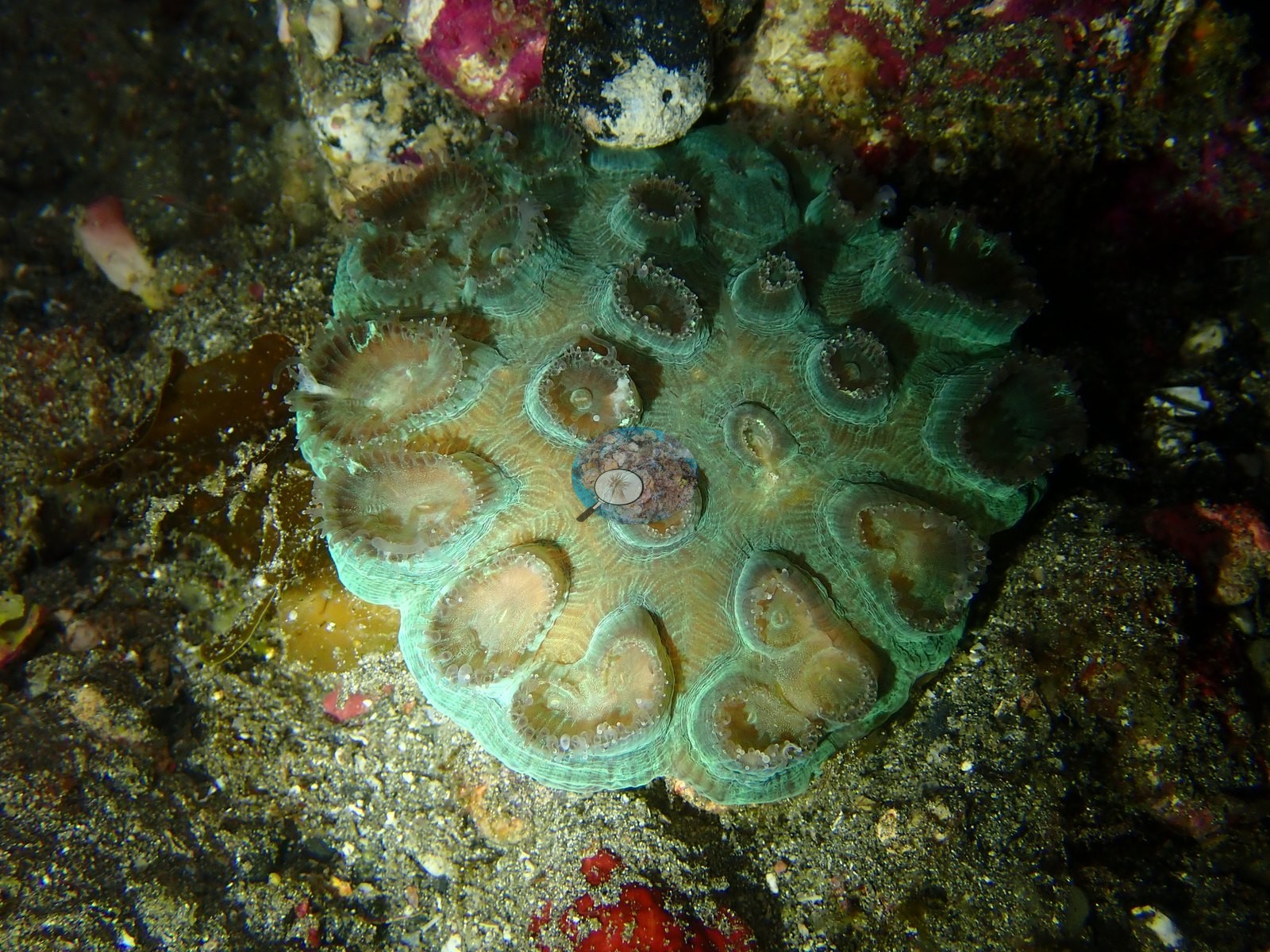
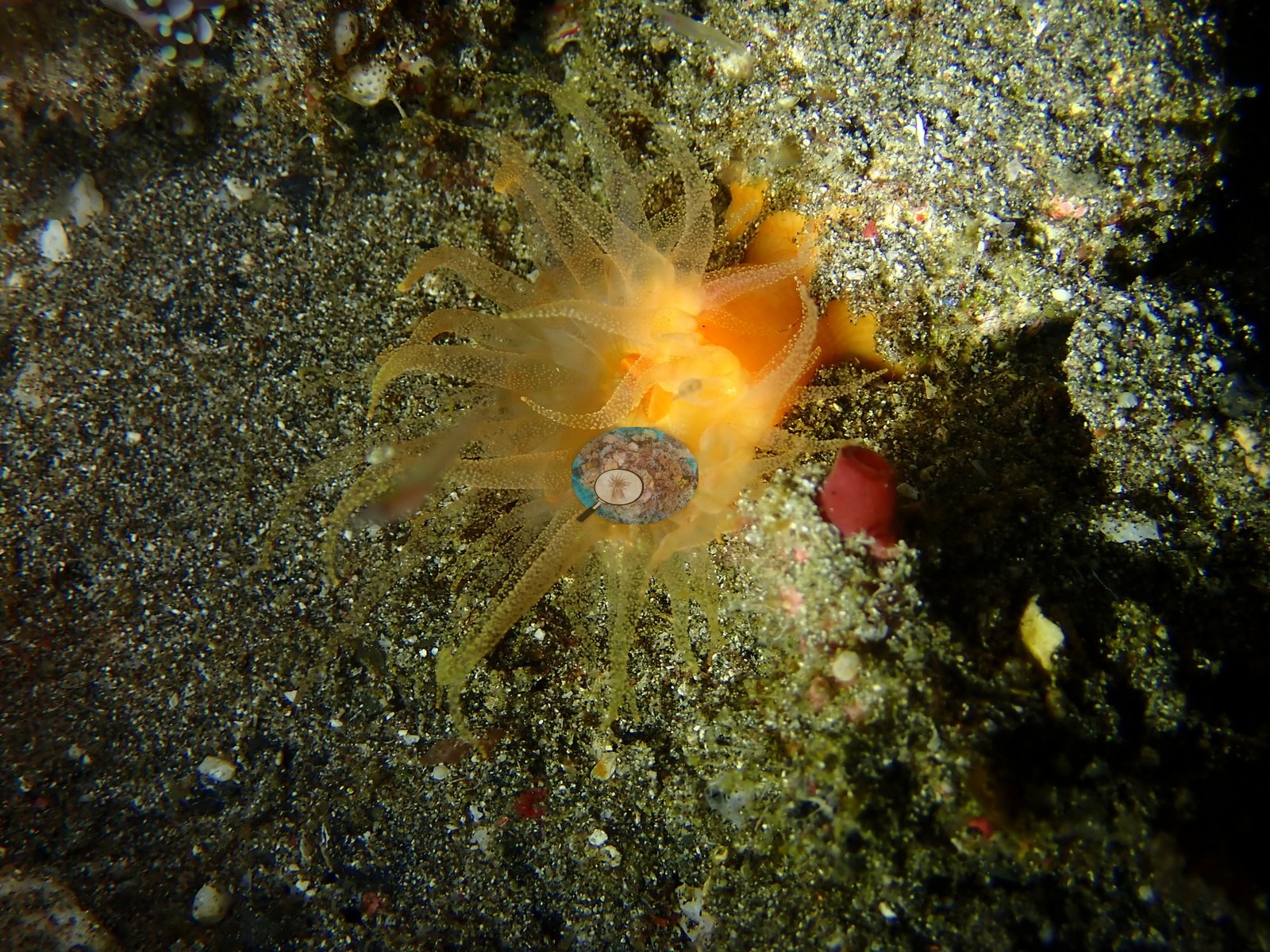
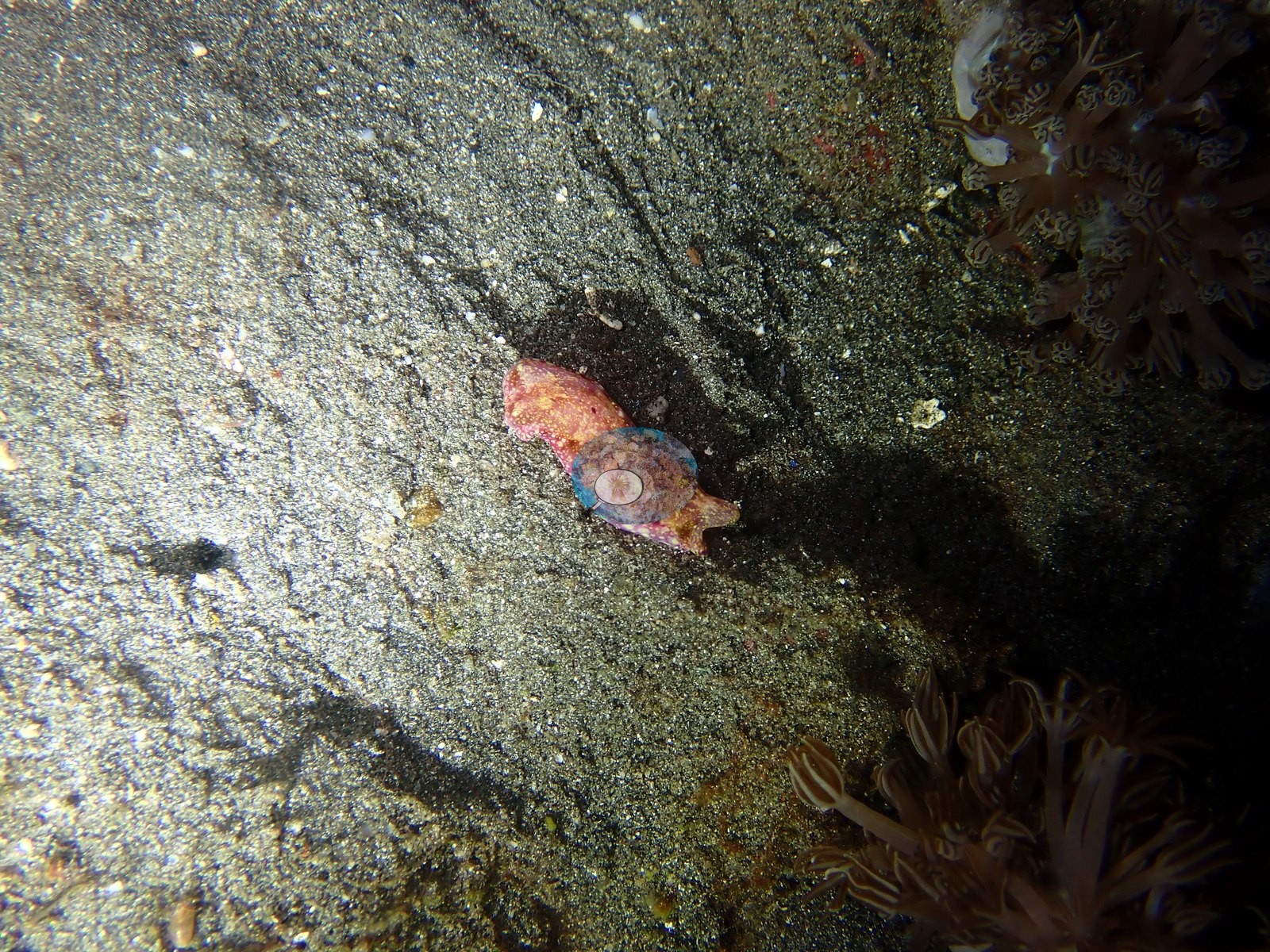
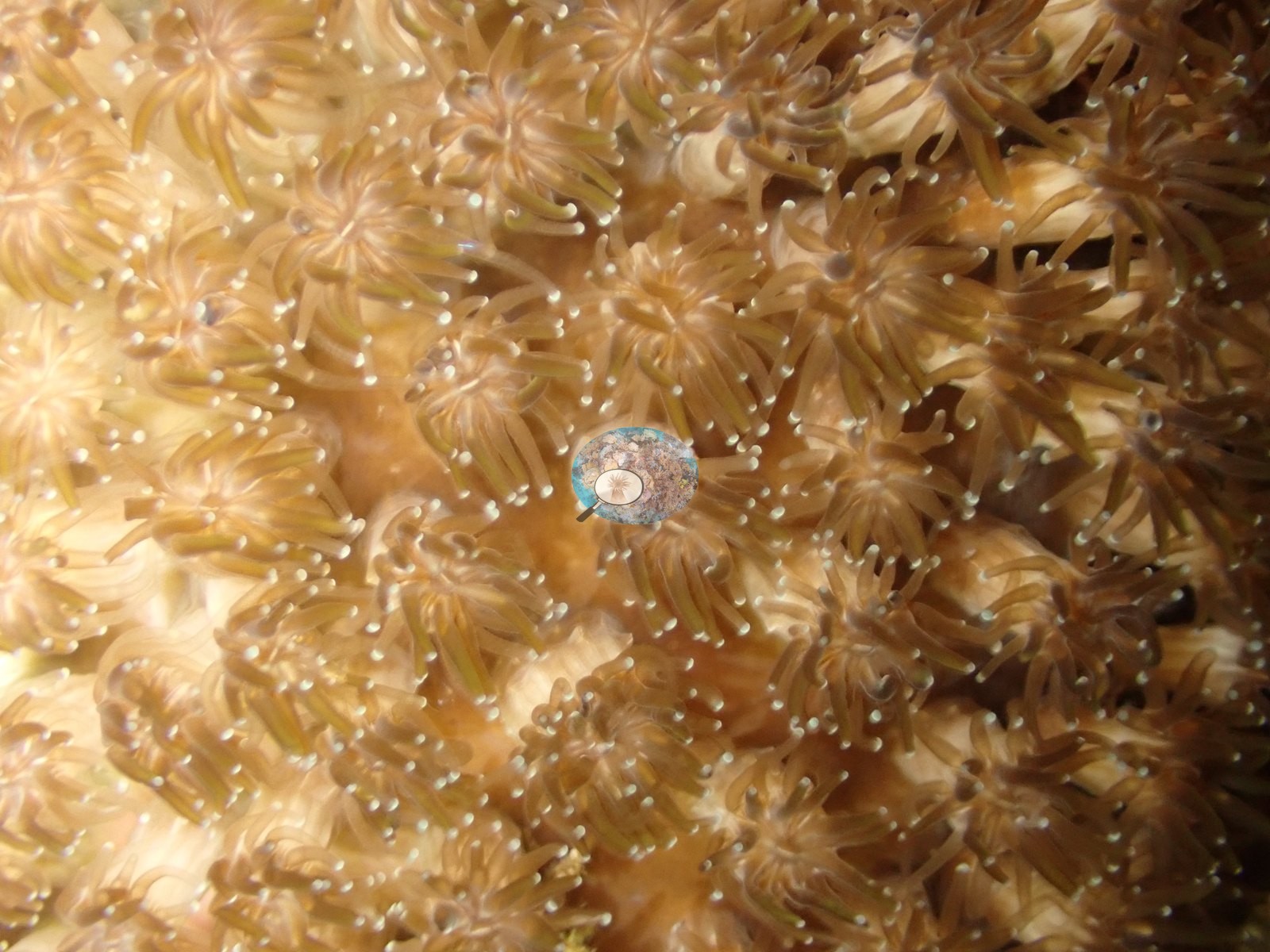
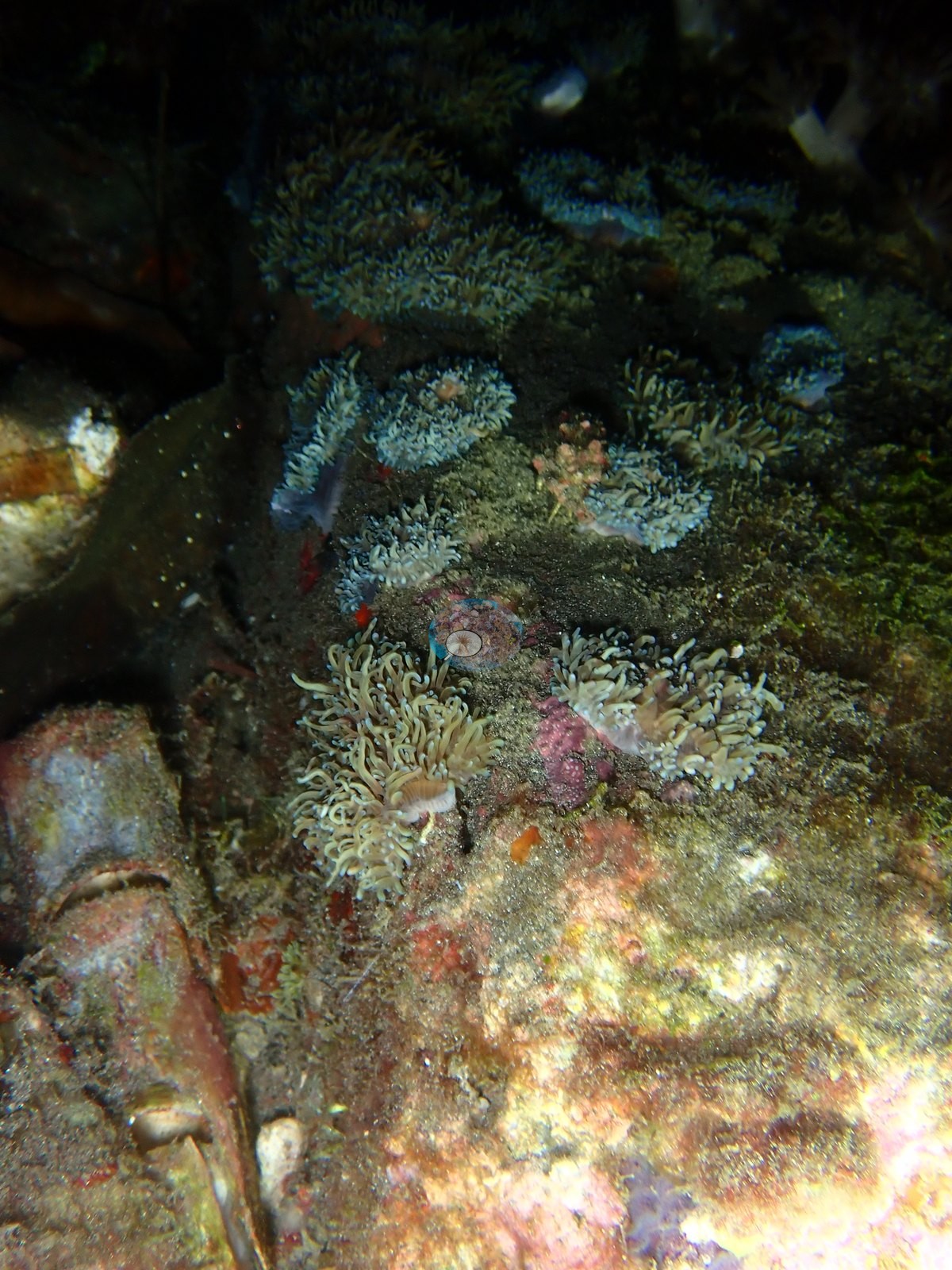
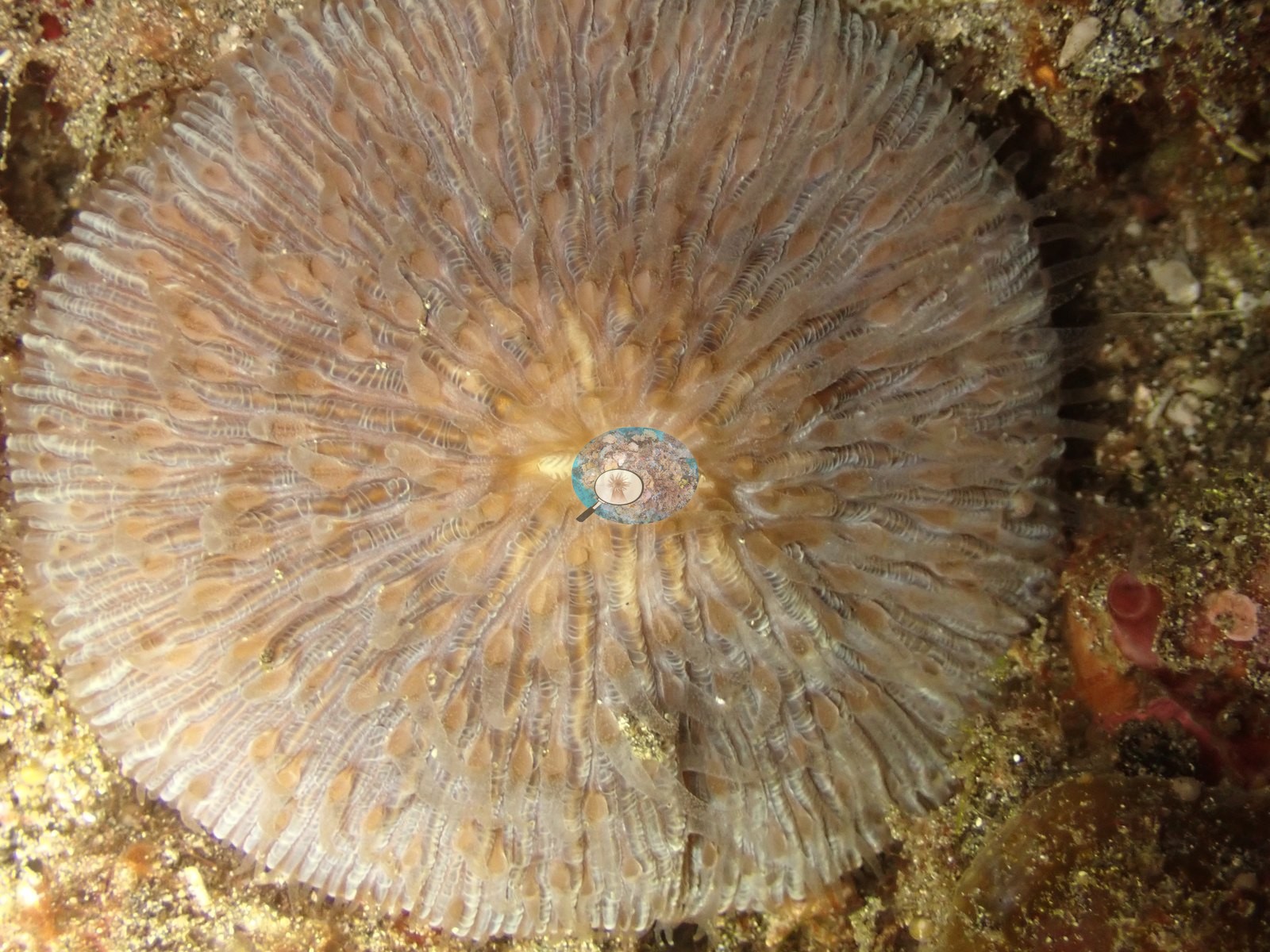
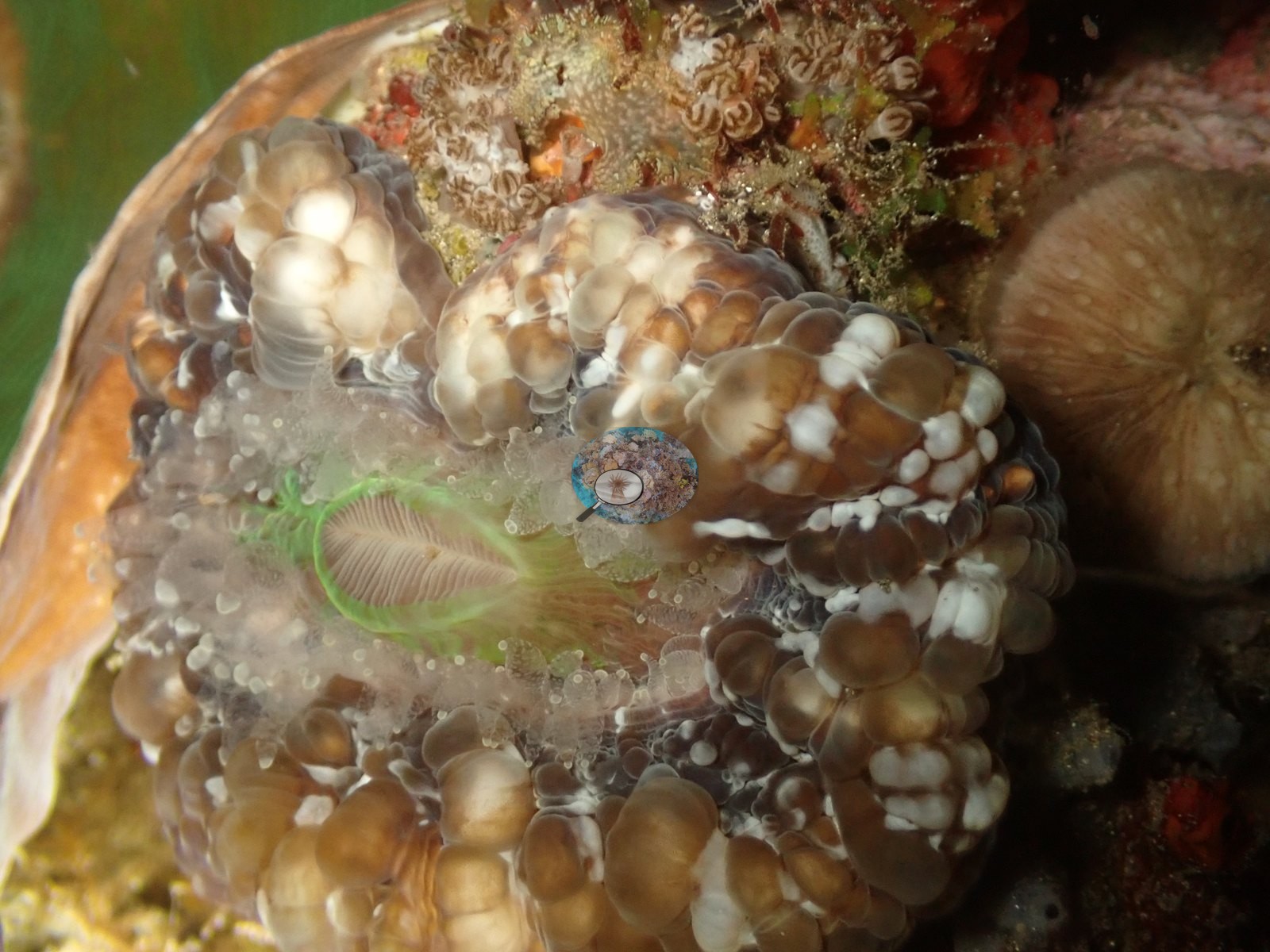
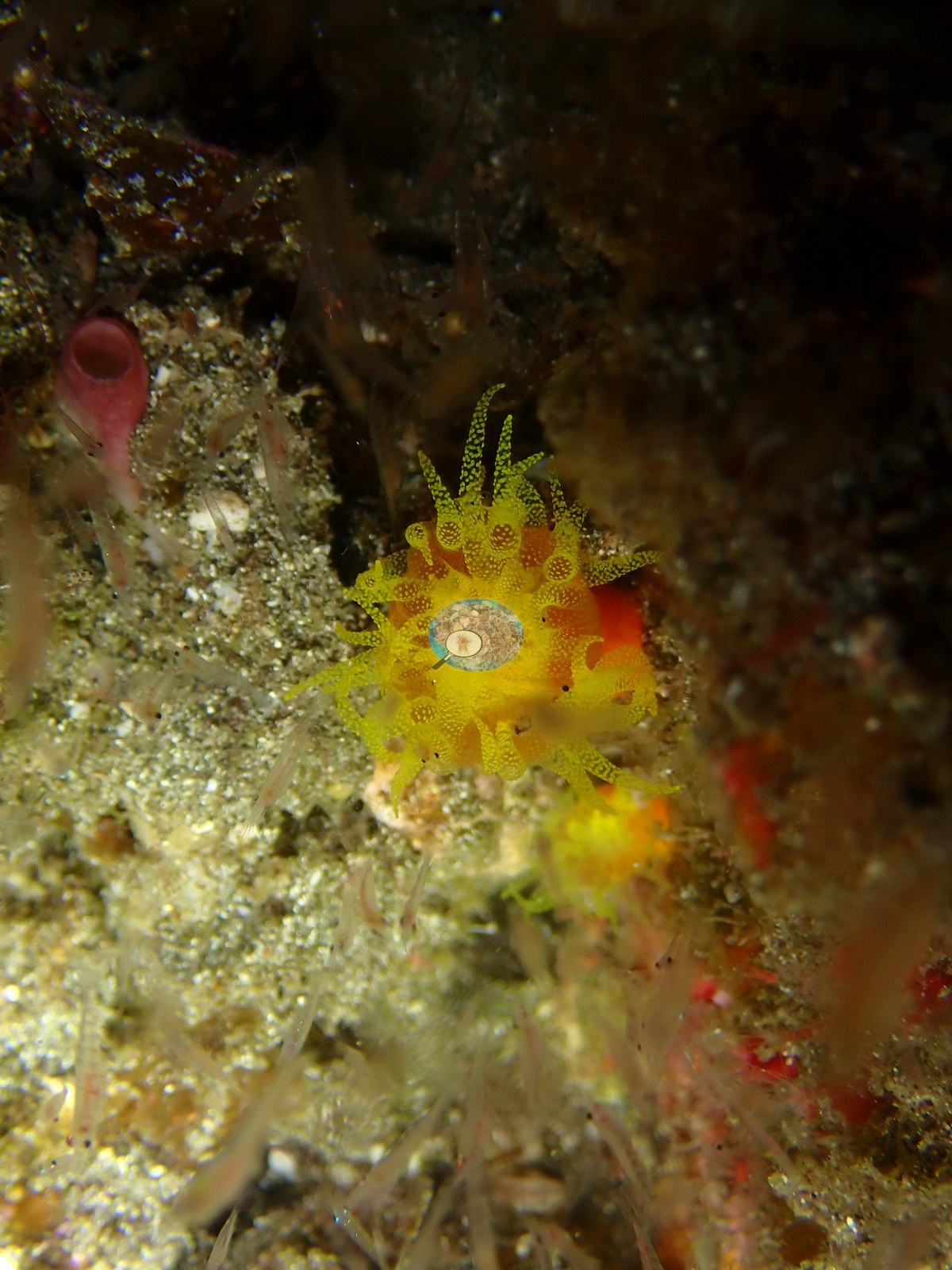
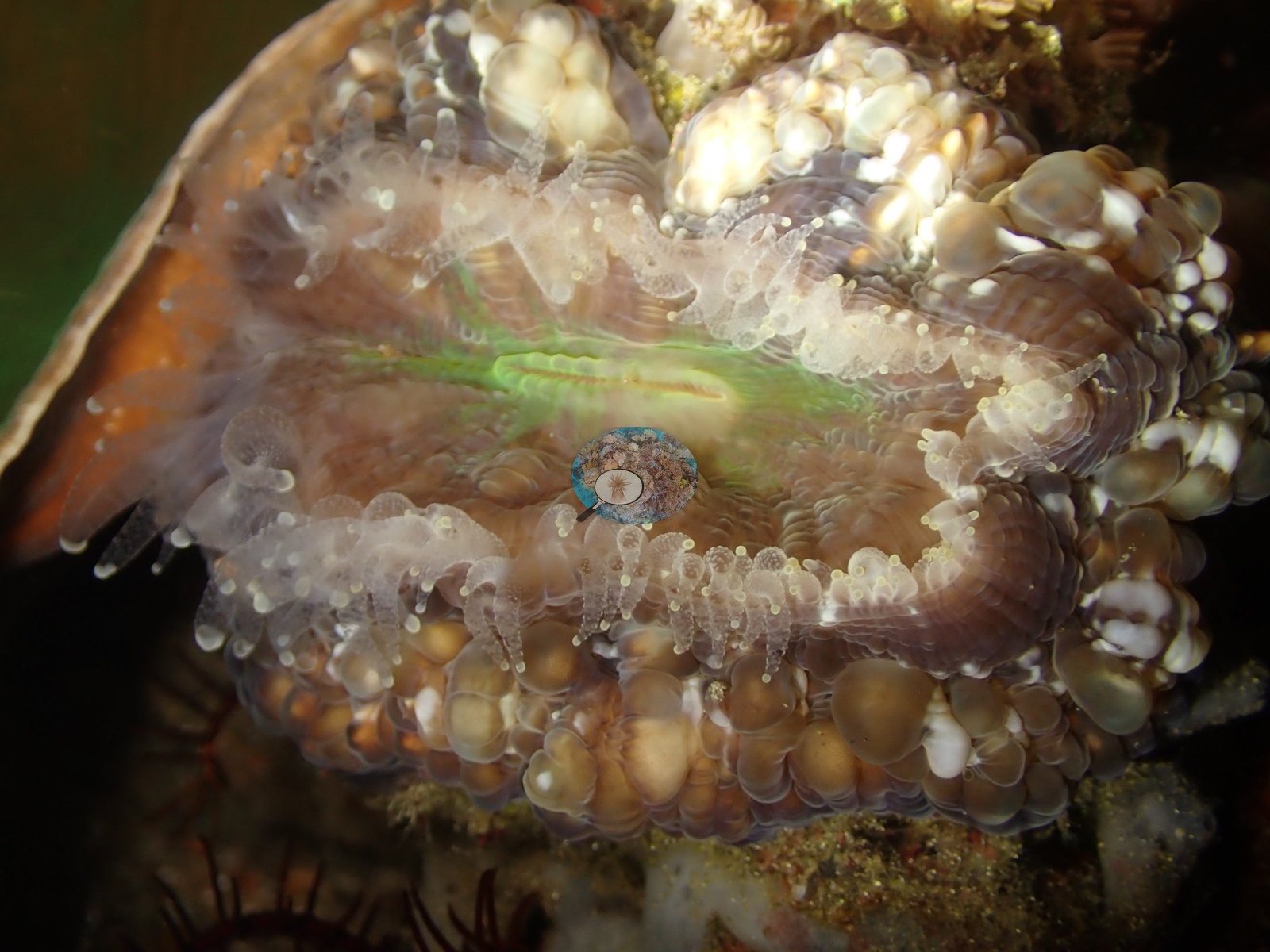
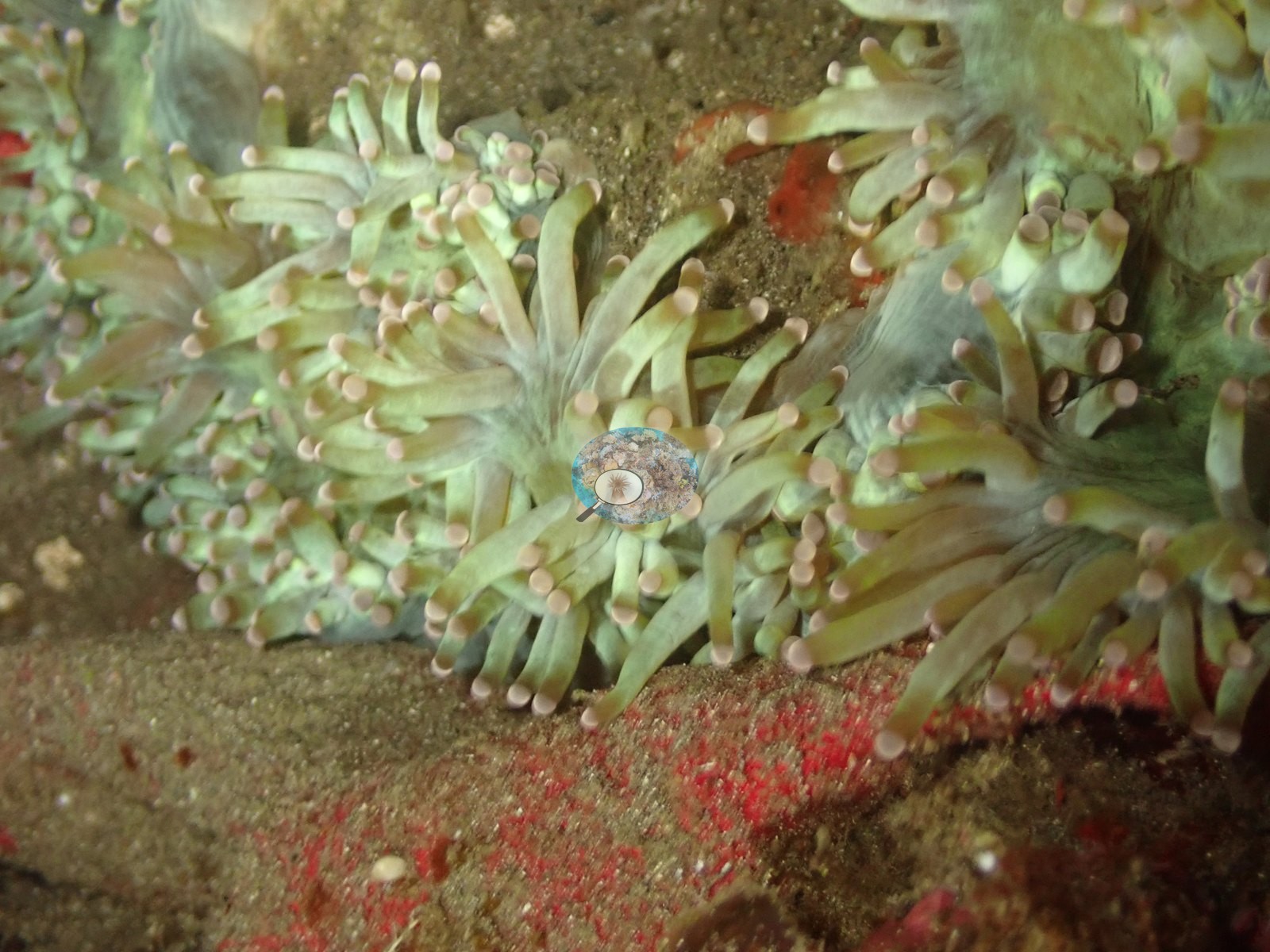
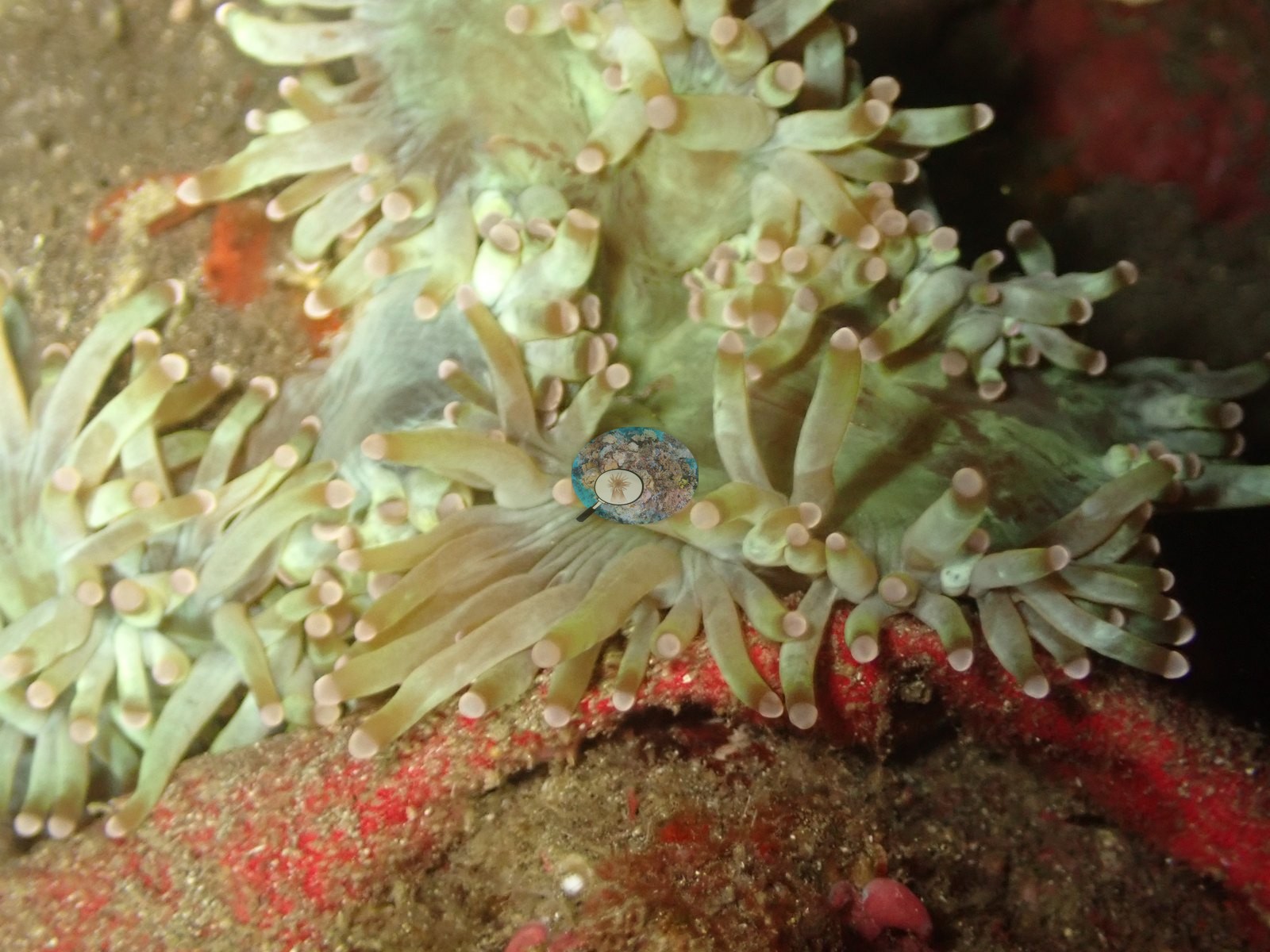
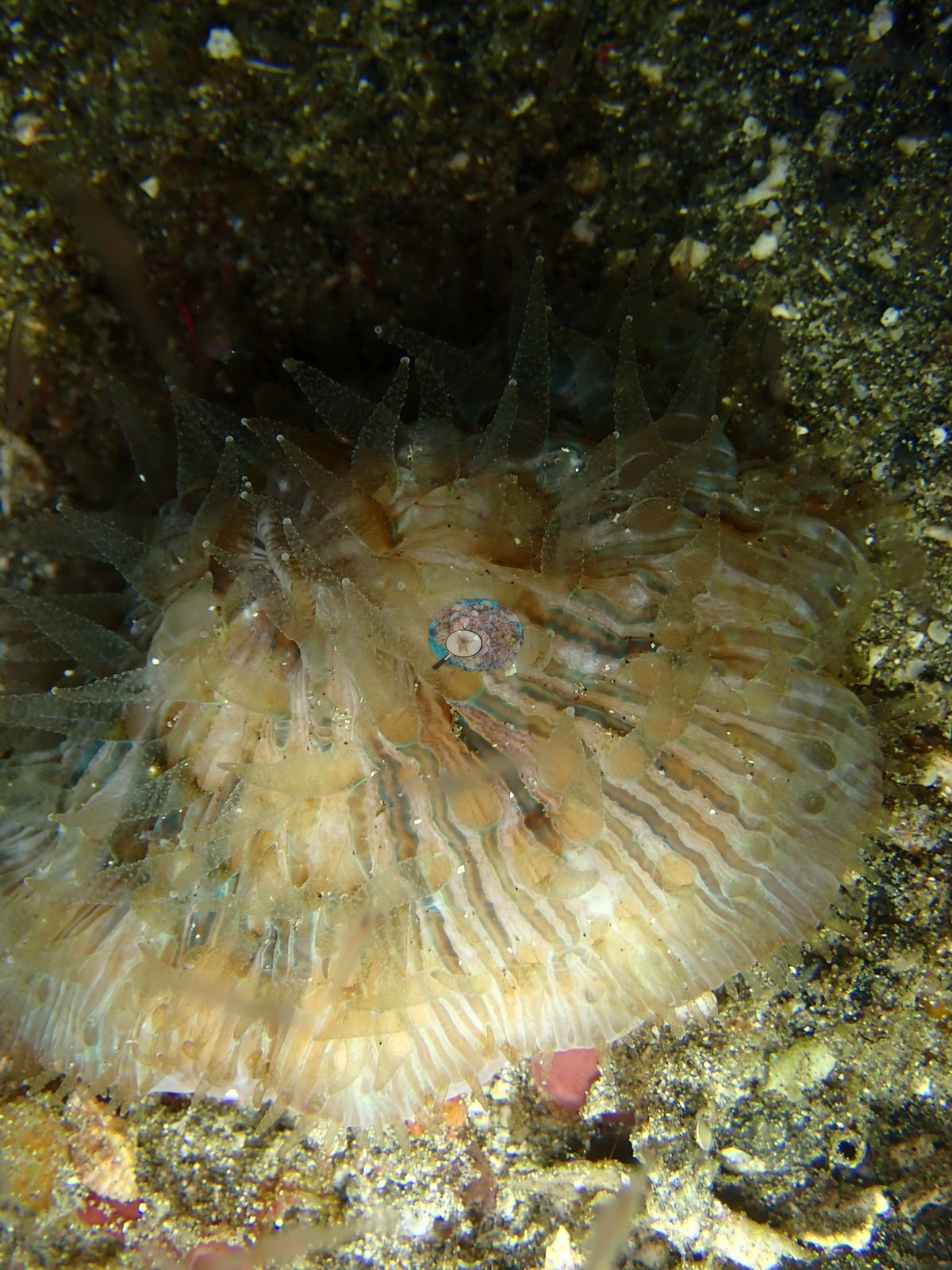
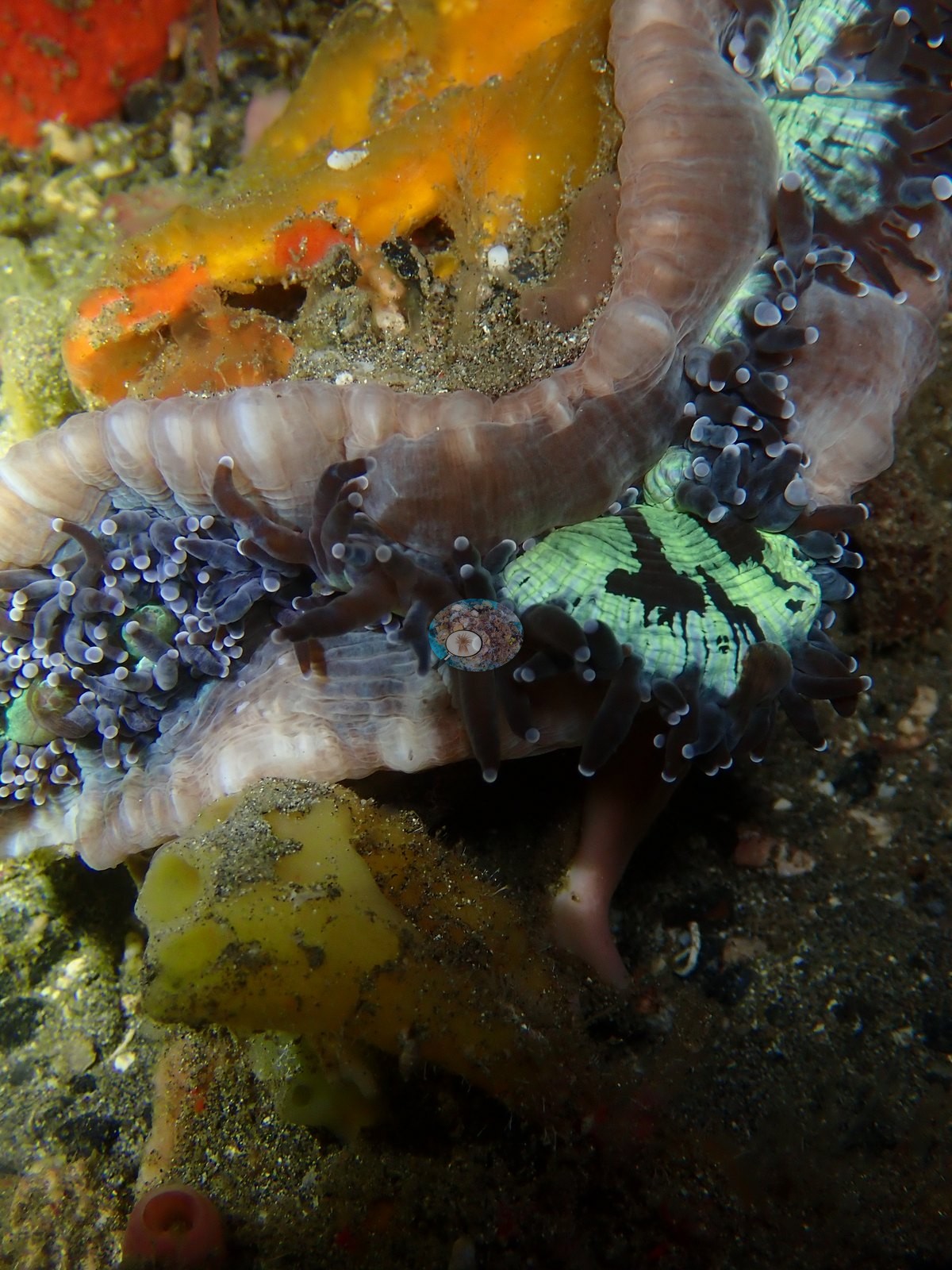
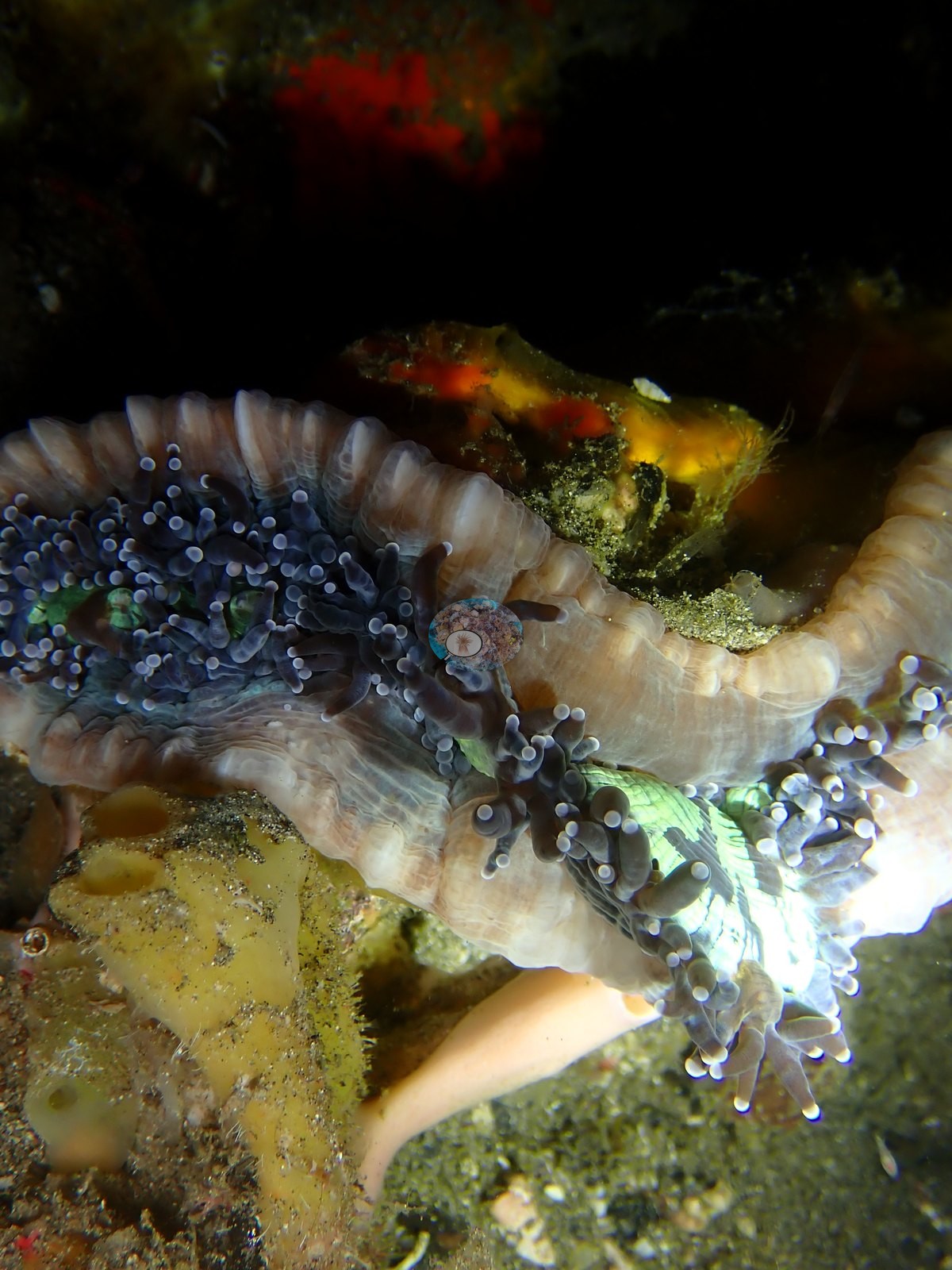
Sessile life is sparse and dominated by non-scleractinian invertebrates rather than hard coral: several tube anemones (Cerianthidae) extend dense crowns of fine, pale cream-to-pink tentacles from burrows in the sediment -- Image 37 shows one fully expanded with well over 100 tentacles radiating from a central mouth, and Image 38 shows a green-tentacled color morph of the same family; Image 14 shows a broad, frilled disc anemone or corallimorph with translucent, ribbon-like marginal tentacles over a pale central disc; a separate and unrelated organism in Image 47 is a green anemone-like disc with black blotched markings and a crown of short olive tentacles, growth form and coloring not confident enough to name to genus (e.g., Image 2, Image 9, Image 14, Image 20, Image 38, Image 40, Image 47, Image 49).
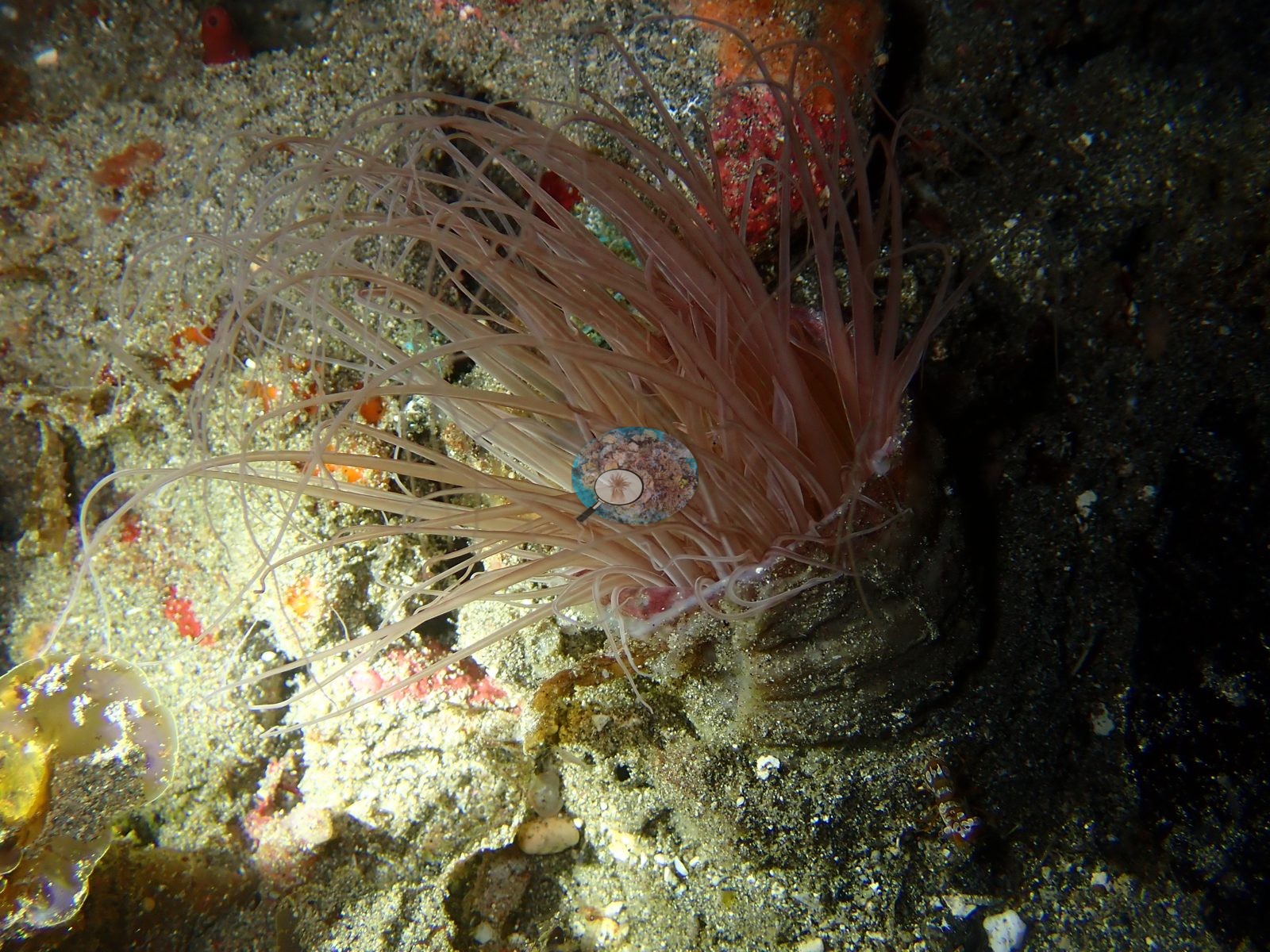
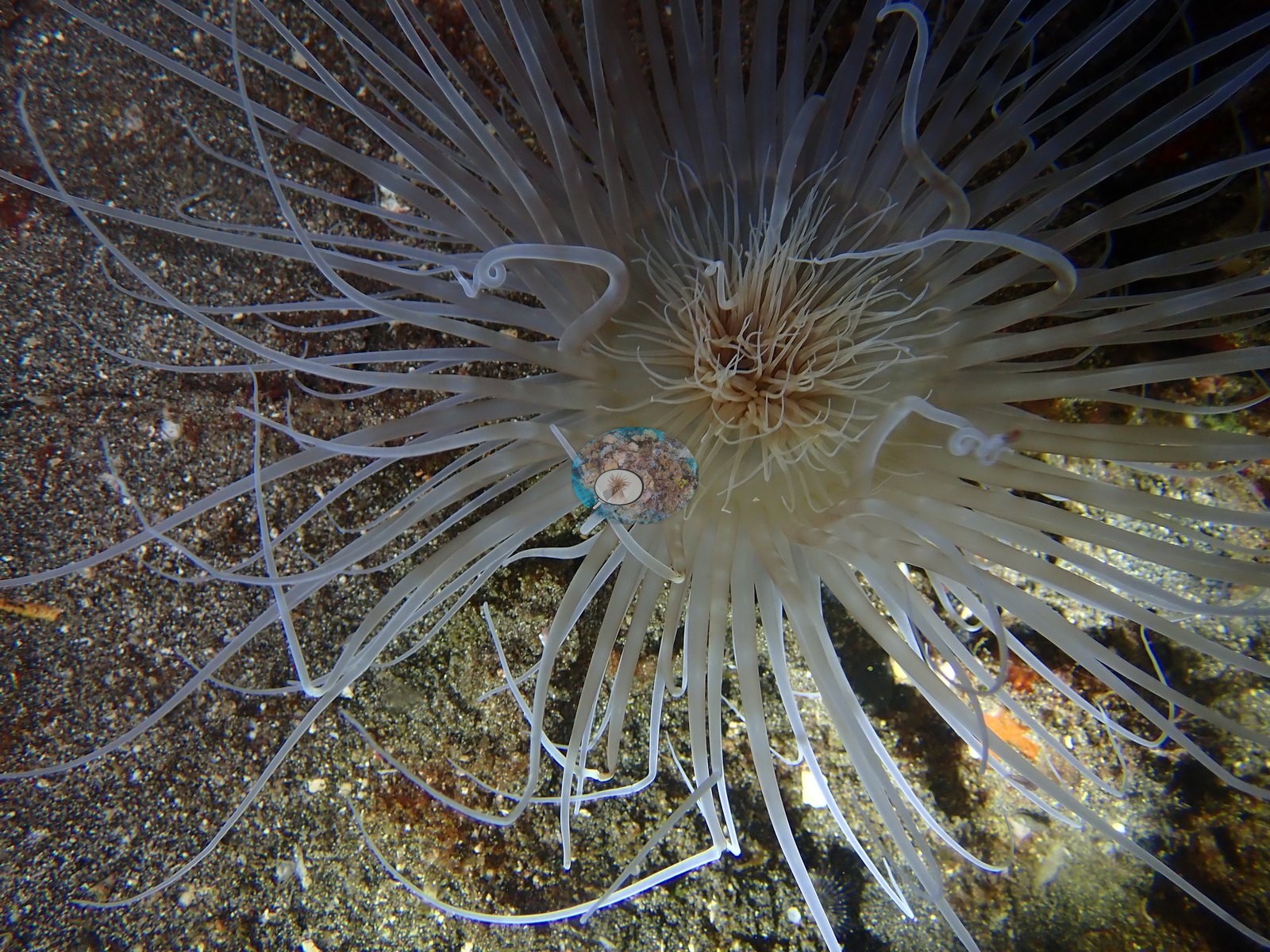
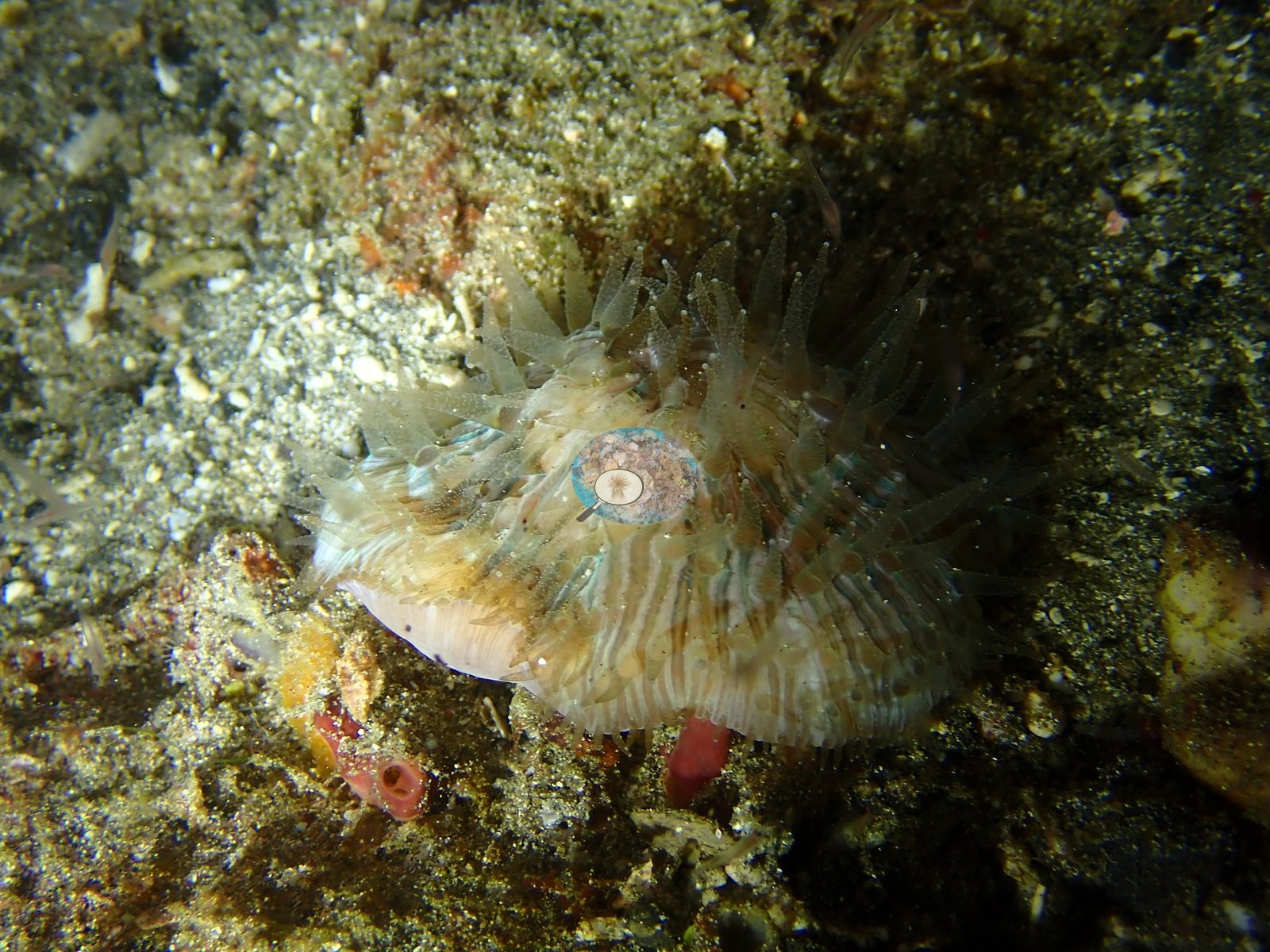
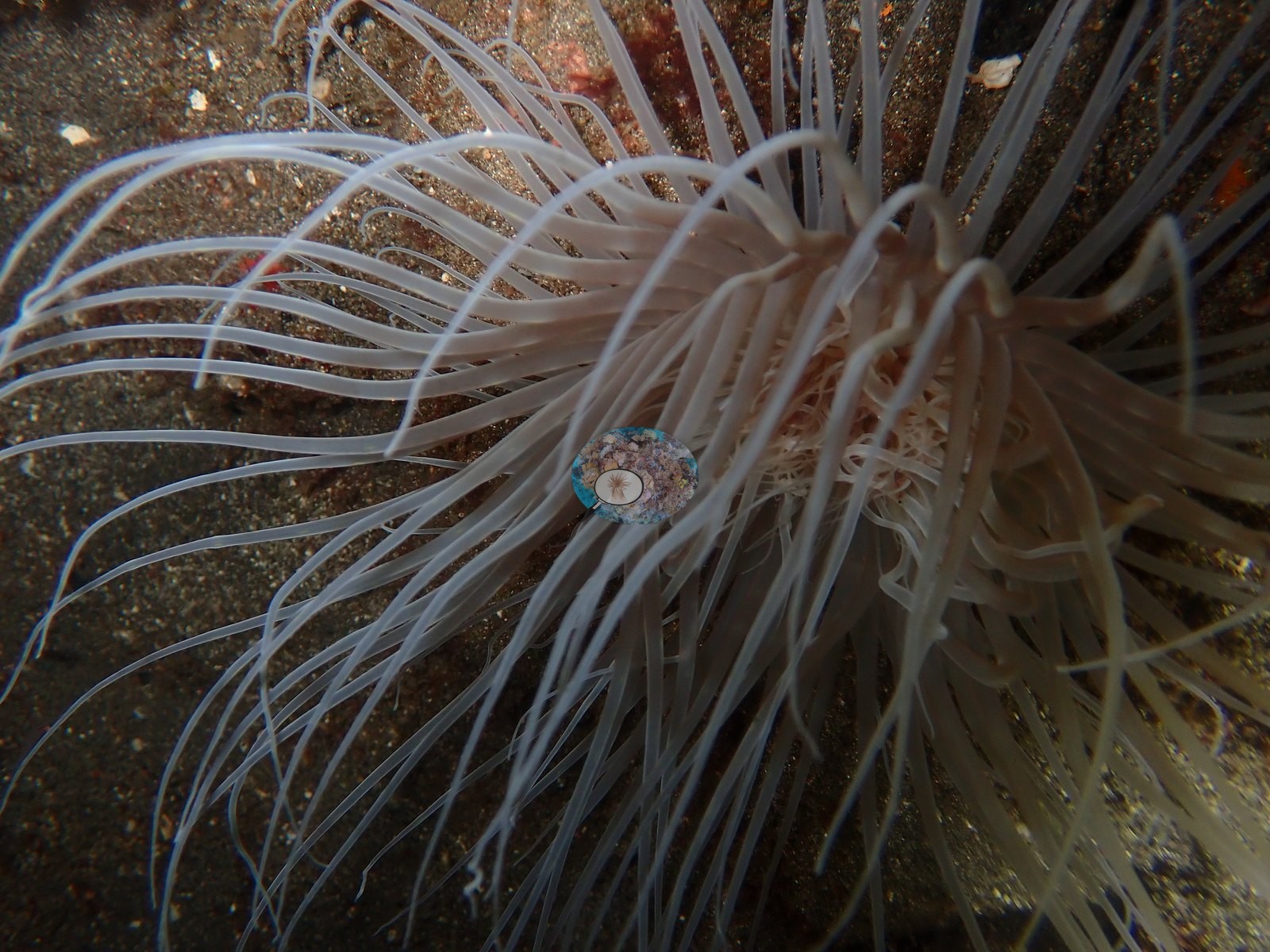
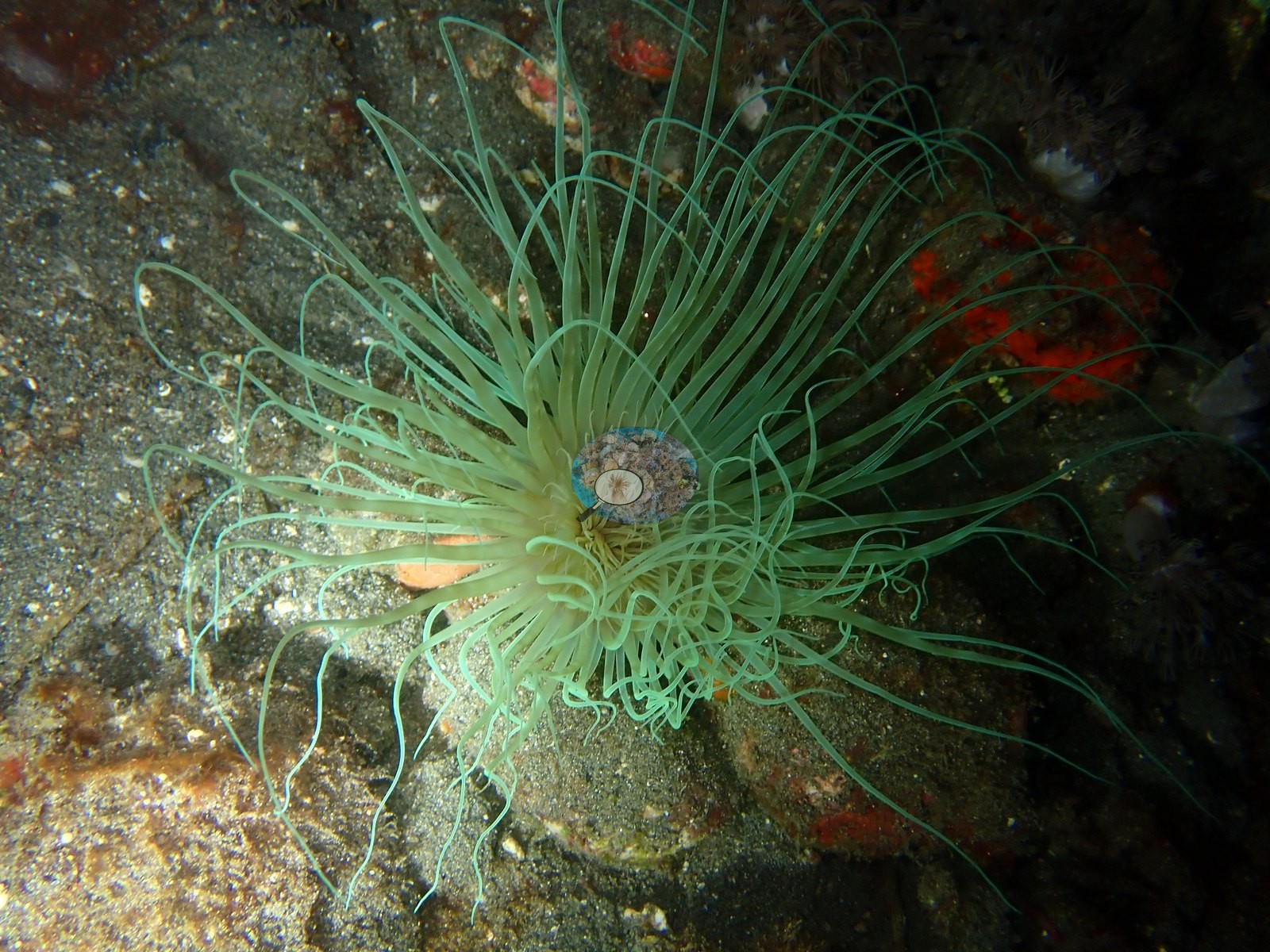
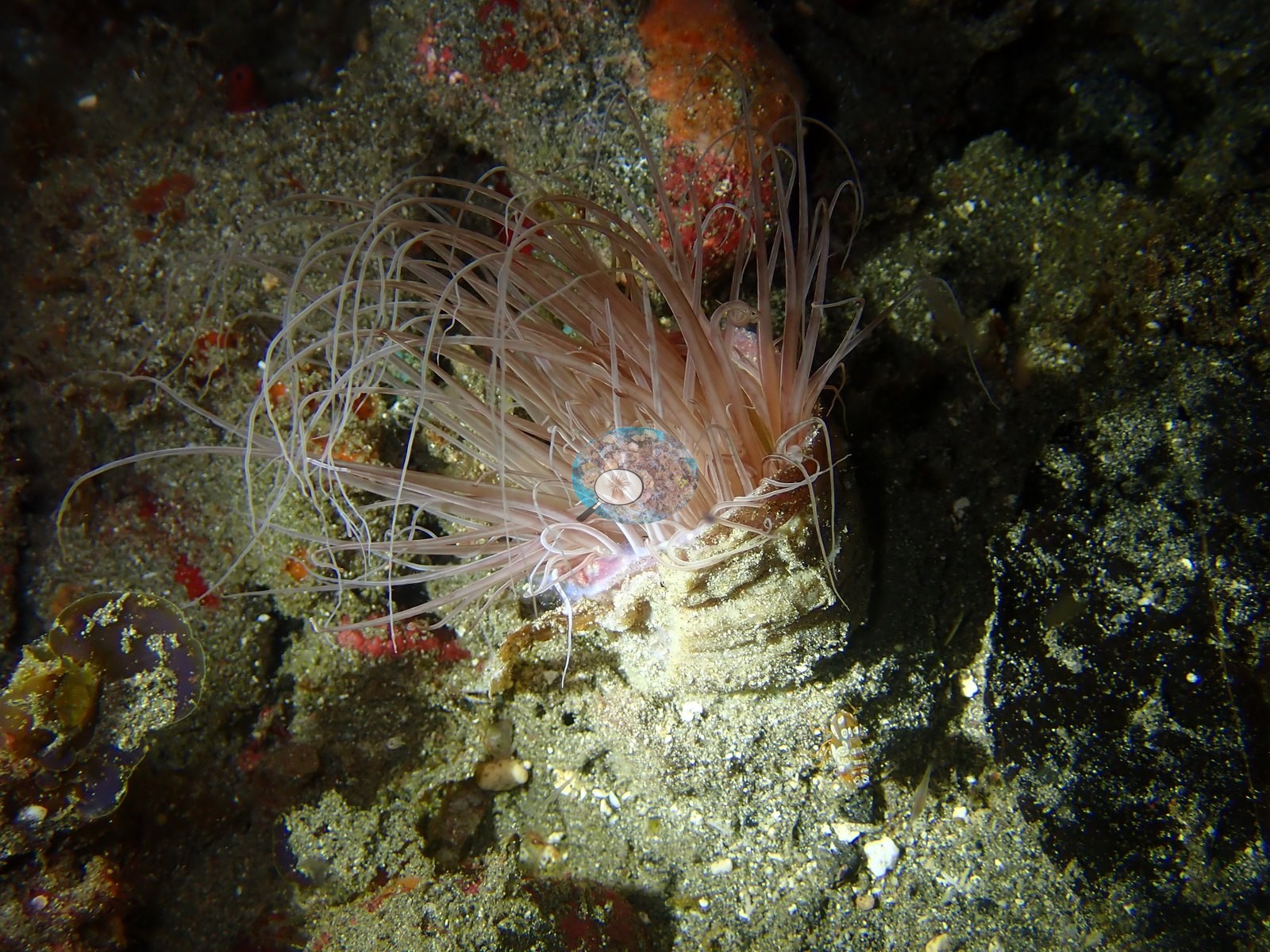
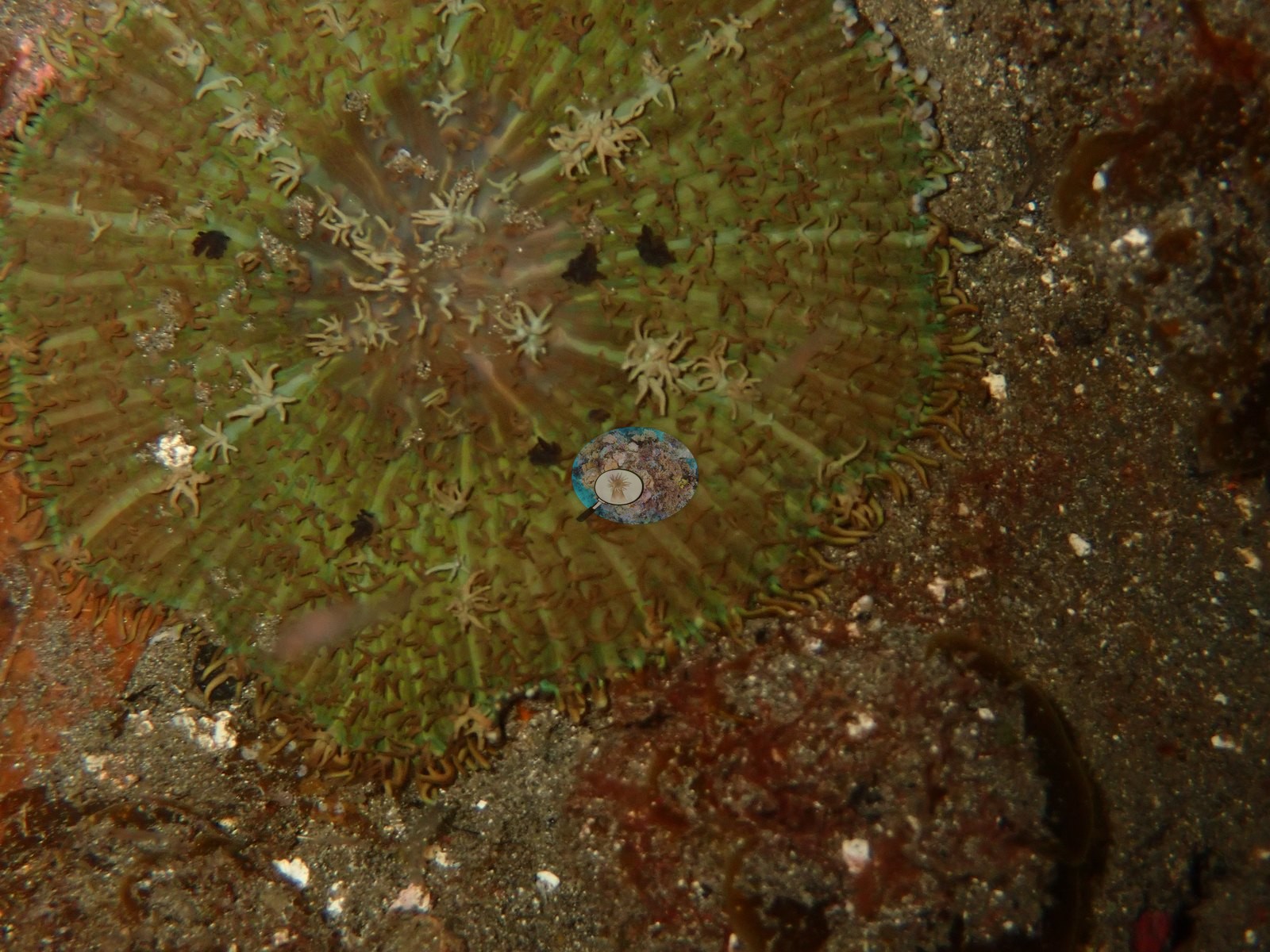
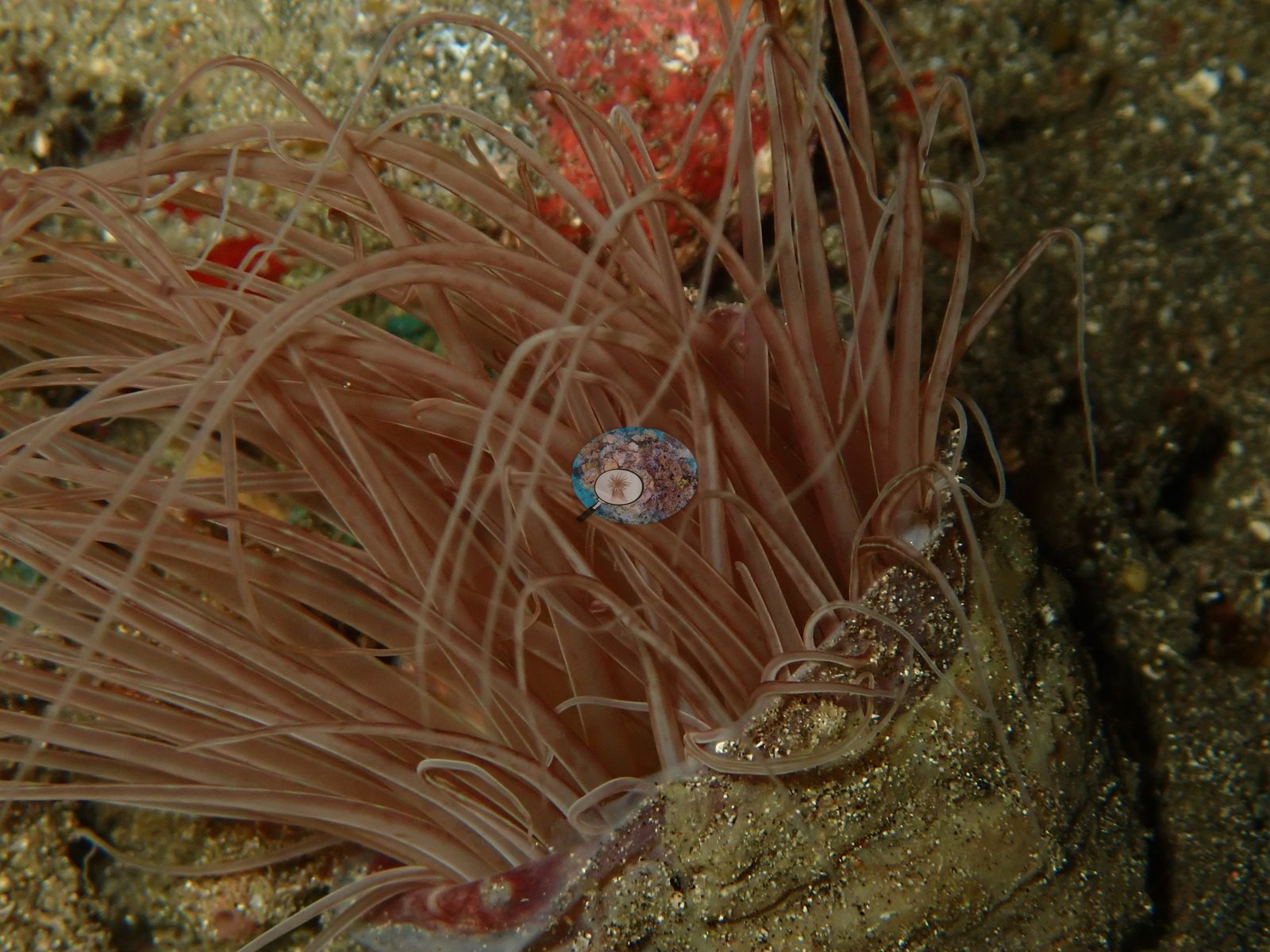
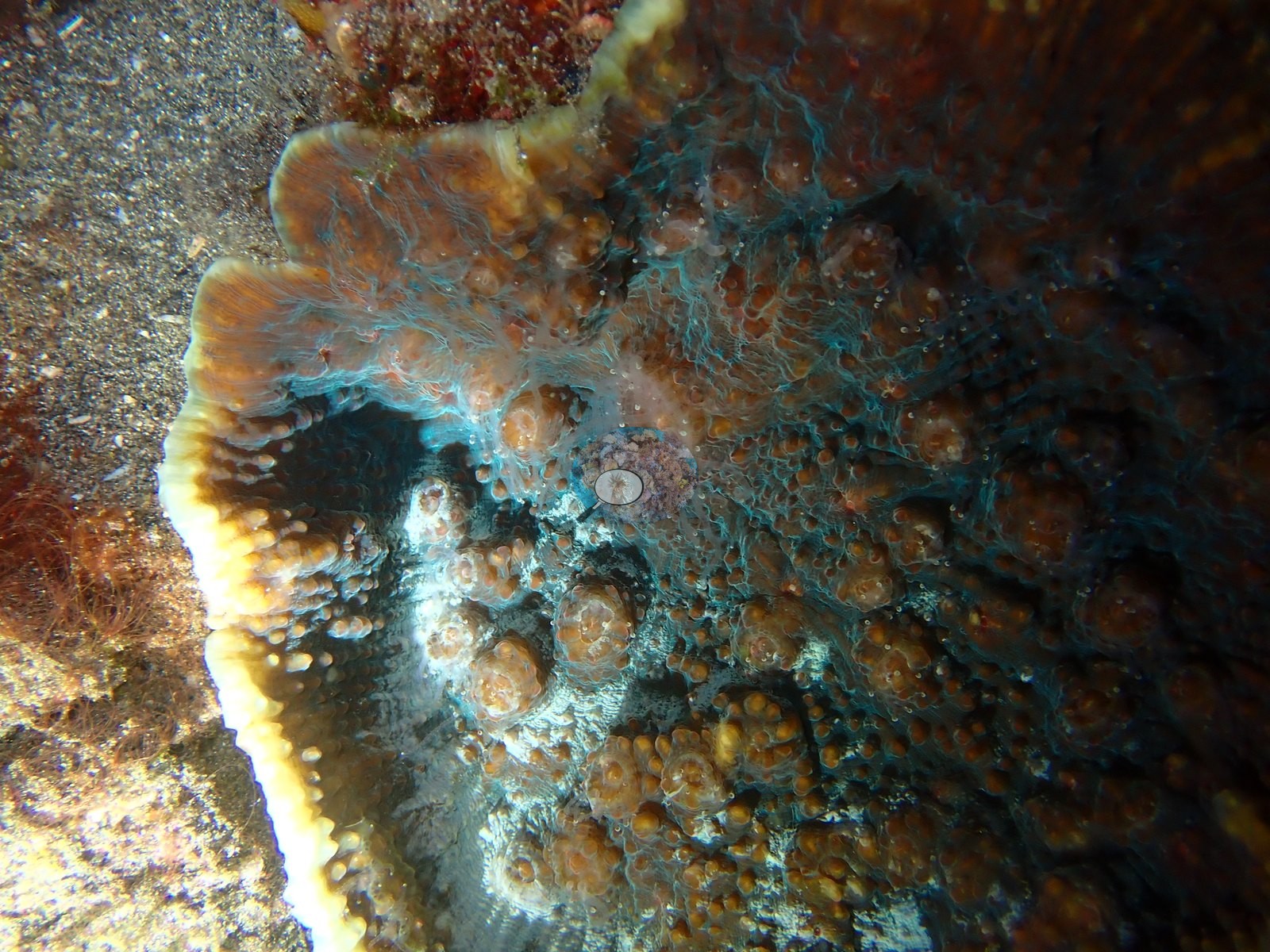
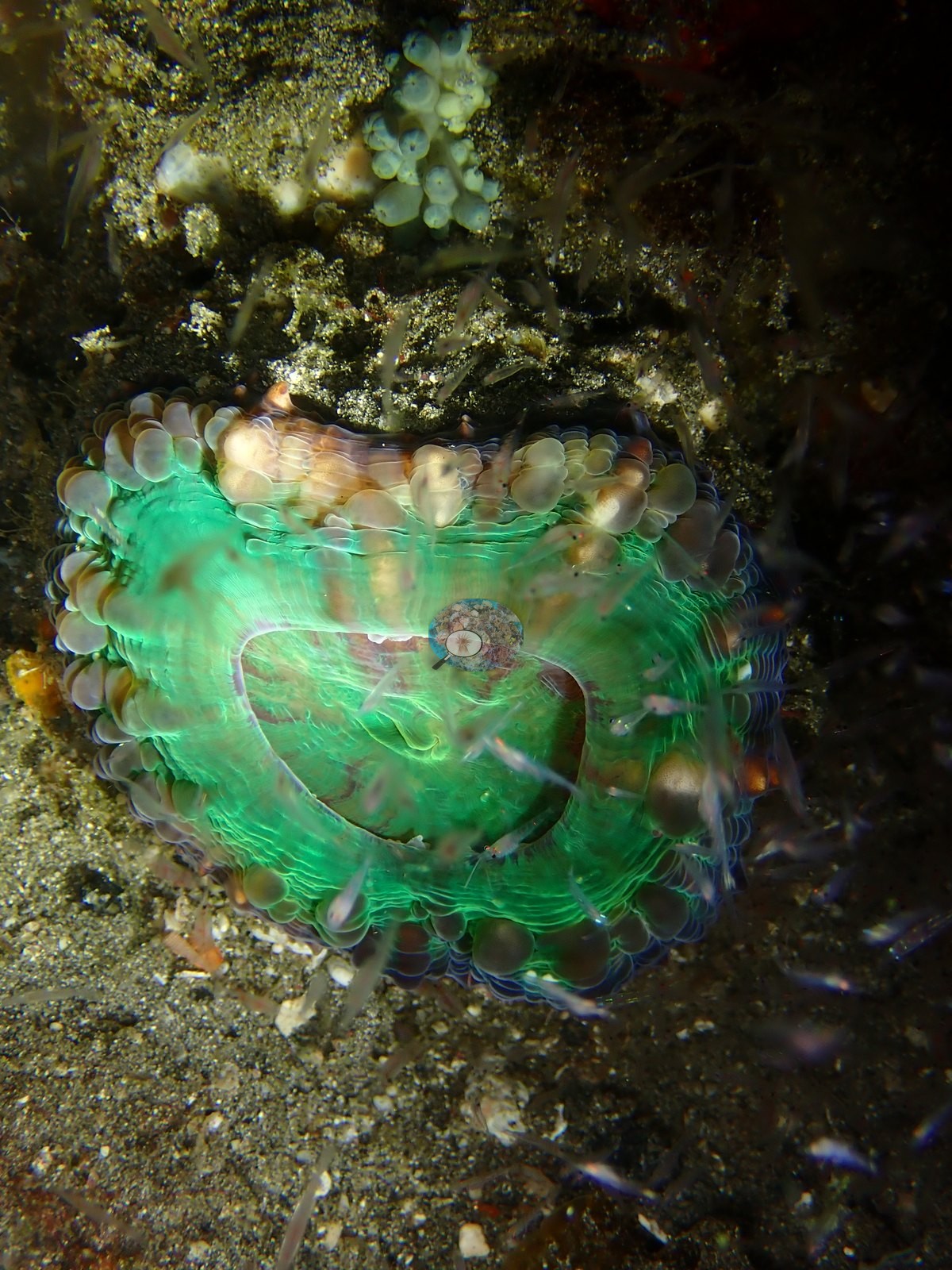
Image 51 is a close frame of ribbed mantle tissue, brown-and-cream papillae surrounding a green, finely ridged siphon visible through the shell gape, consistent with an exposed giant clam (Tridacna) mantle rather than a coral (e.g., Image 34, Image 51).
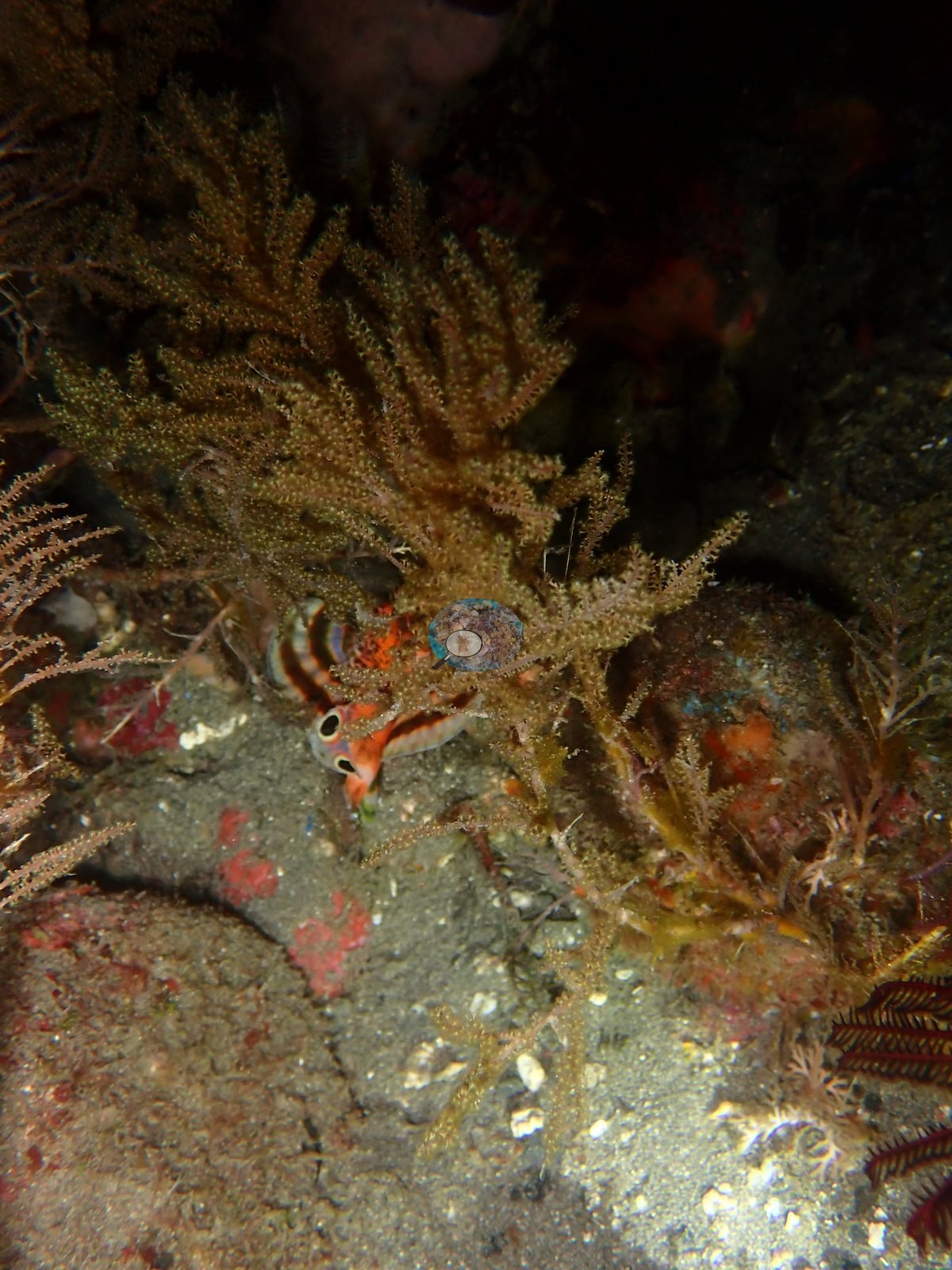
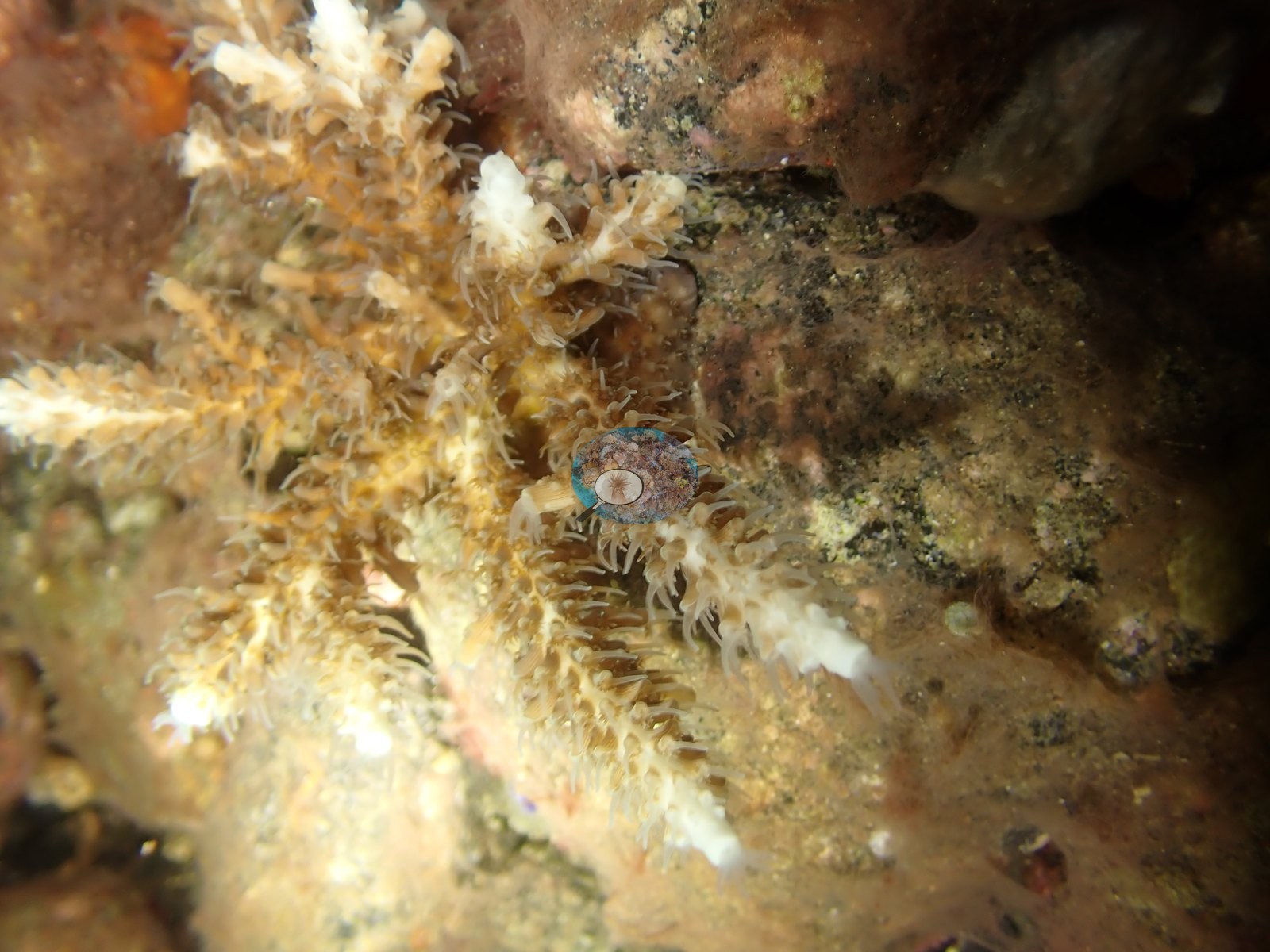
A wire/whip coral (cf. Cirrhipathes) grows in a loose spiral with small white star-shaped polyps extended in Image 50, and Image 11 shows a similar branching whip-like colony with dense white polyps and brittle-star arms wound around the stem (e.g., Image 11, Image 50).
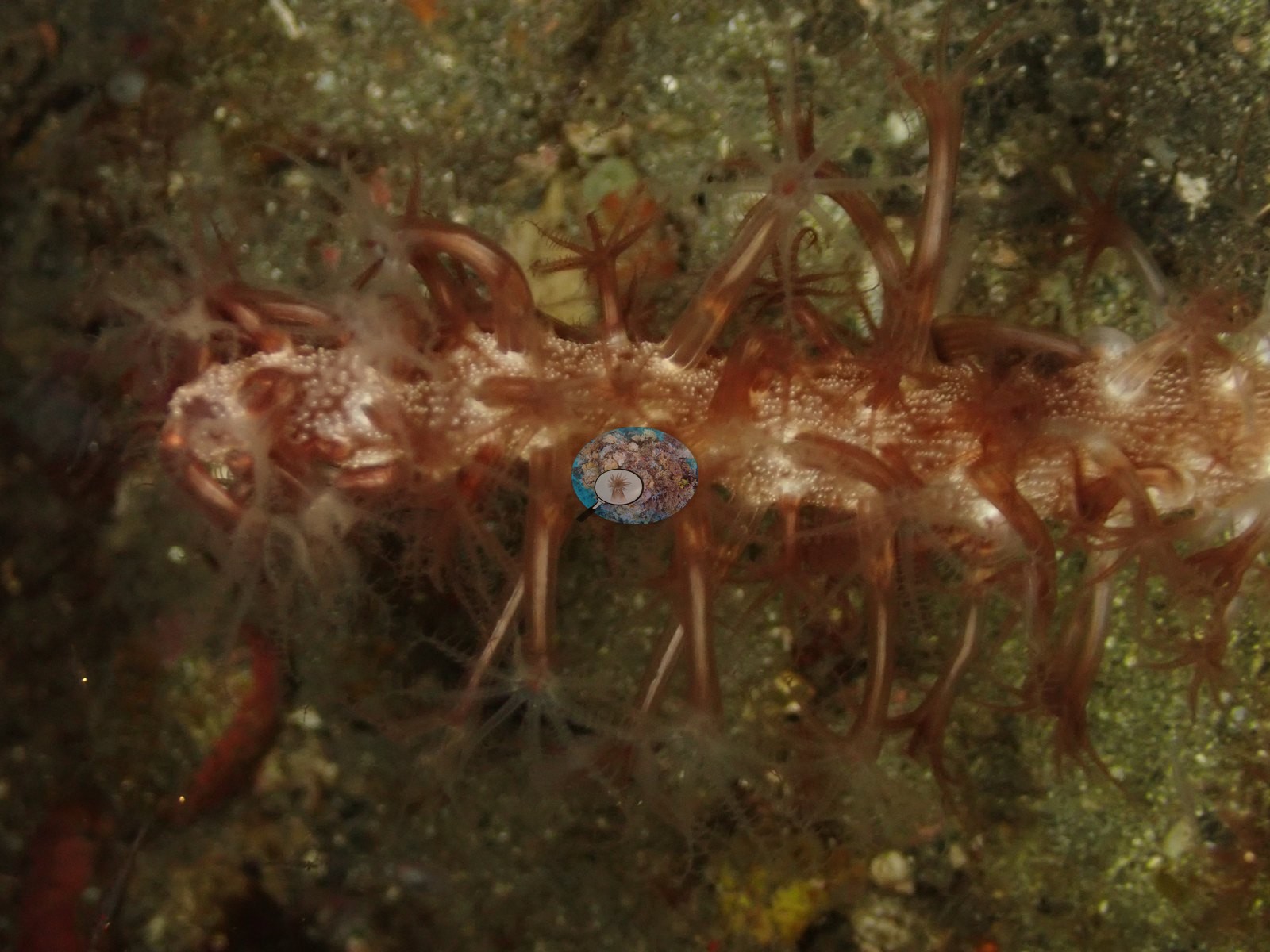
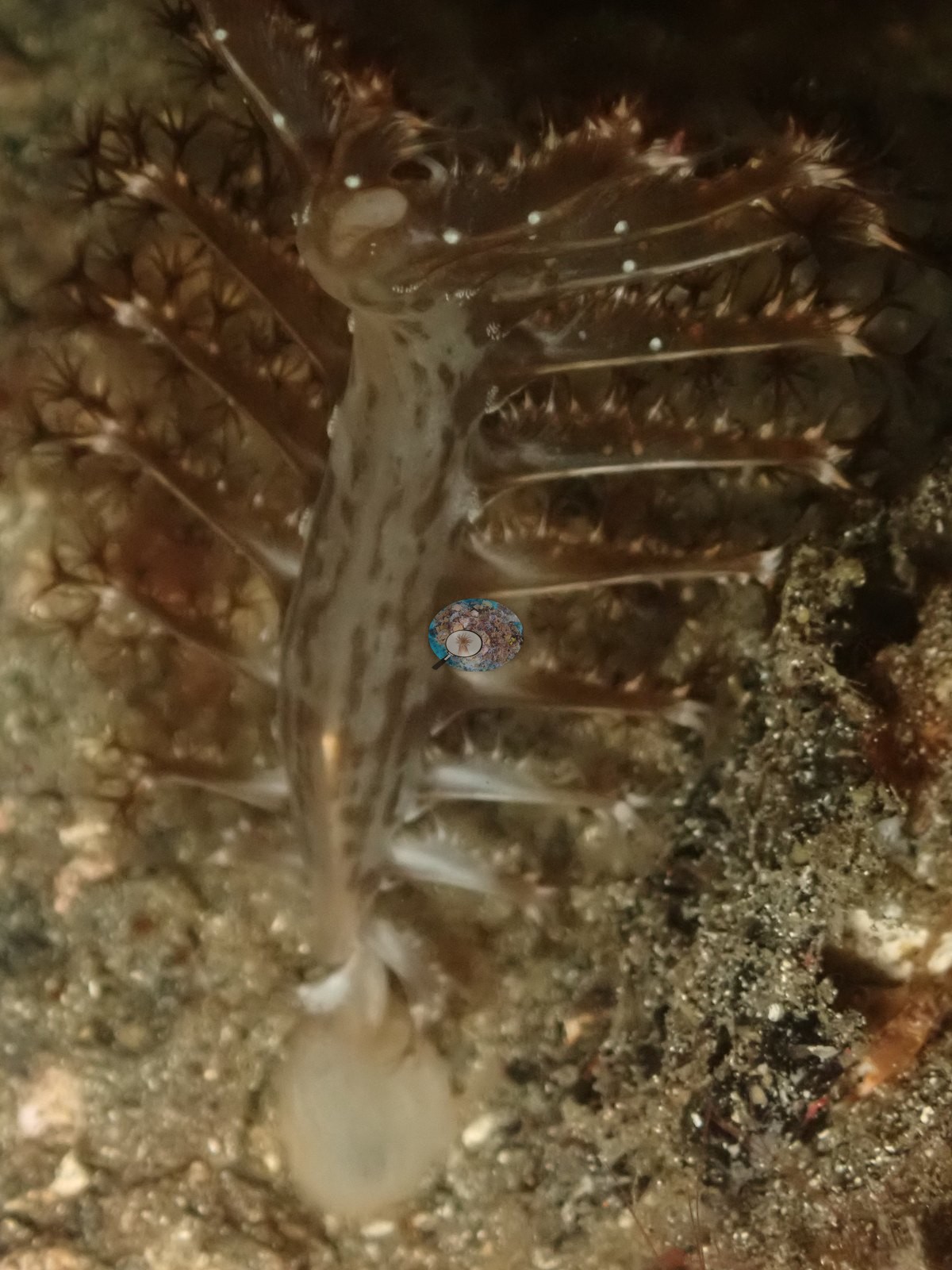
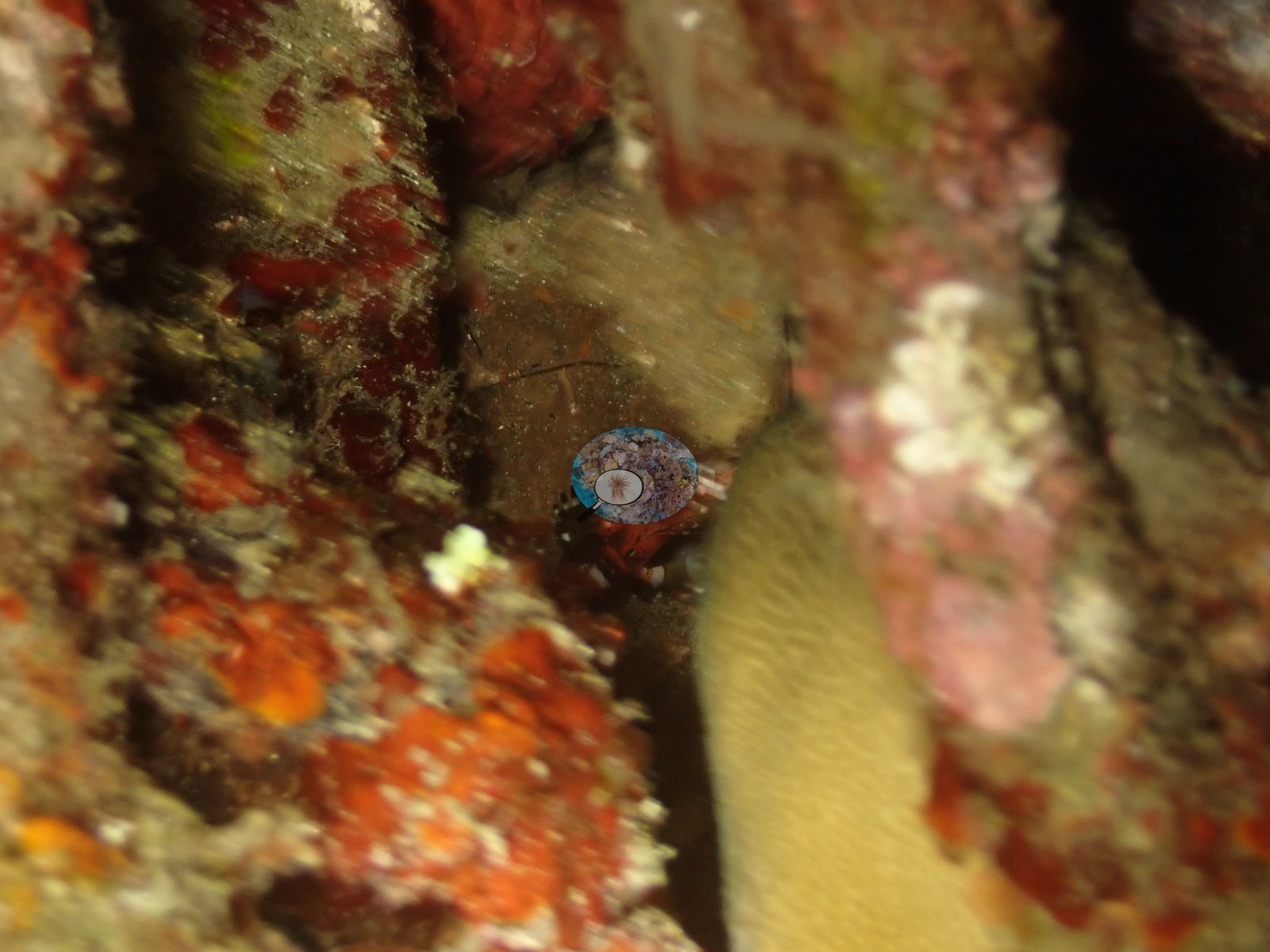
Image 34 shows red-maroon feather stars (crinoids) conspicuous on the rock face, arms fully extended for feeding, alongside long black sea-urchin spines and patches of red and orange encrusting sponge (e.g., Image 35).
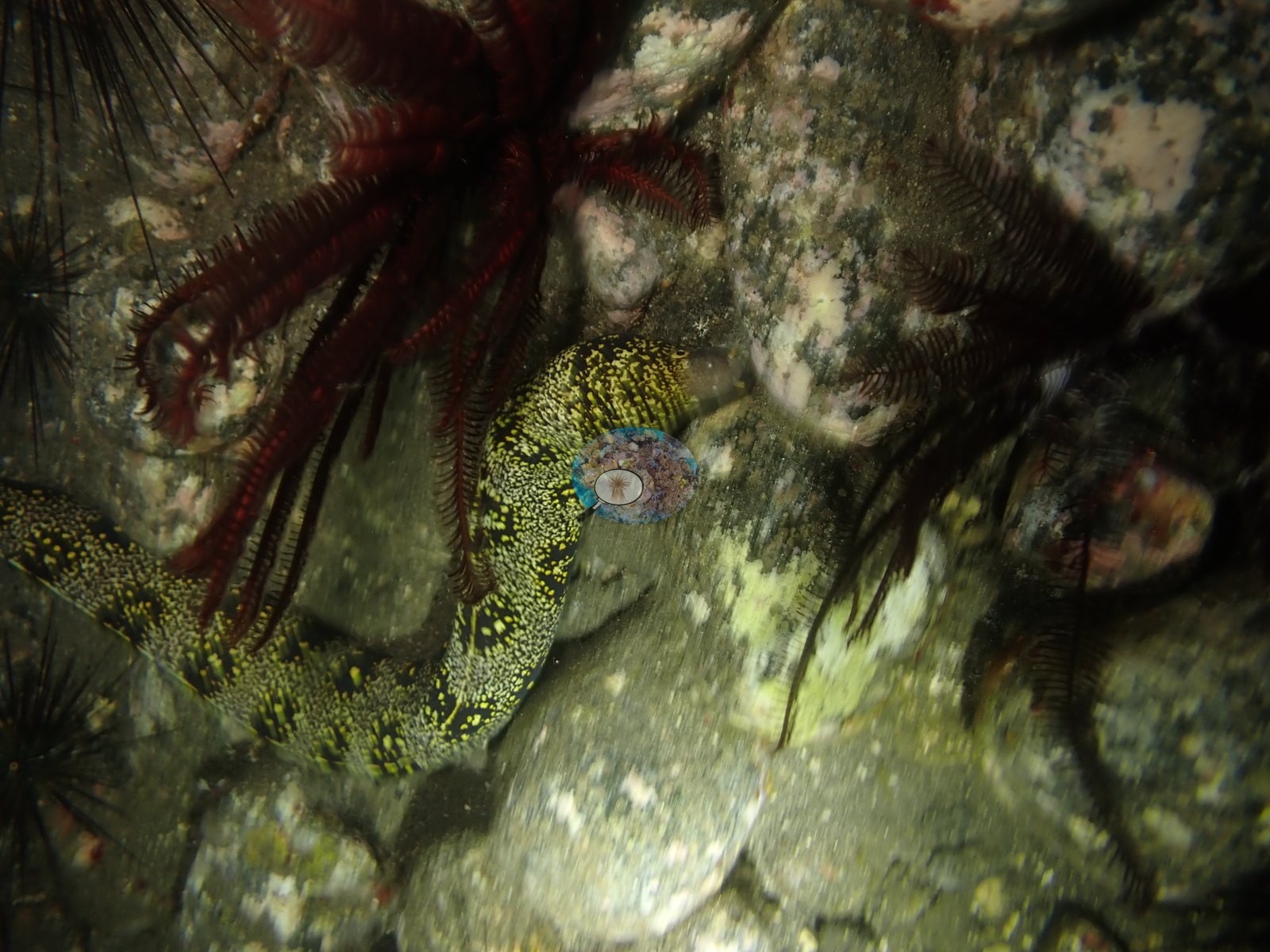
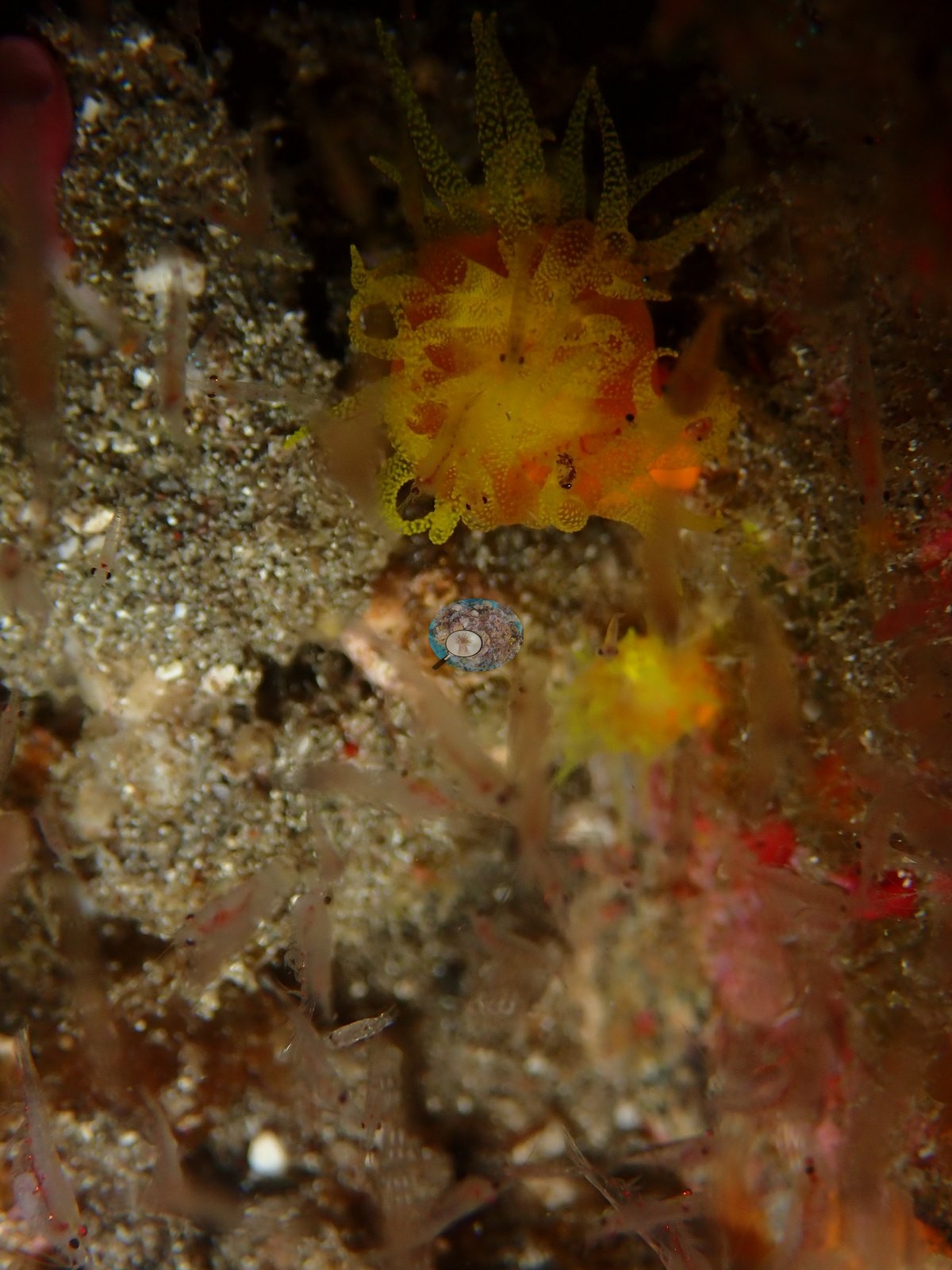
Image 39 shows a small cluster of cream-and-pink stalked polyps (colonial tunicates or zoanthid-type polyps) on rock.
Fish and other fauna
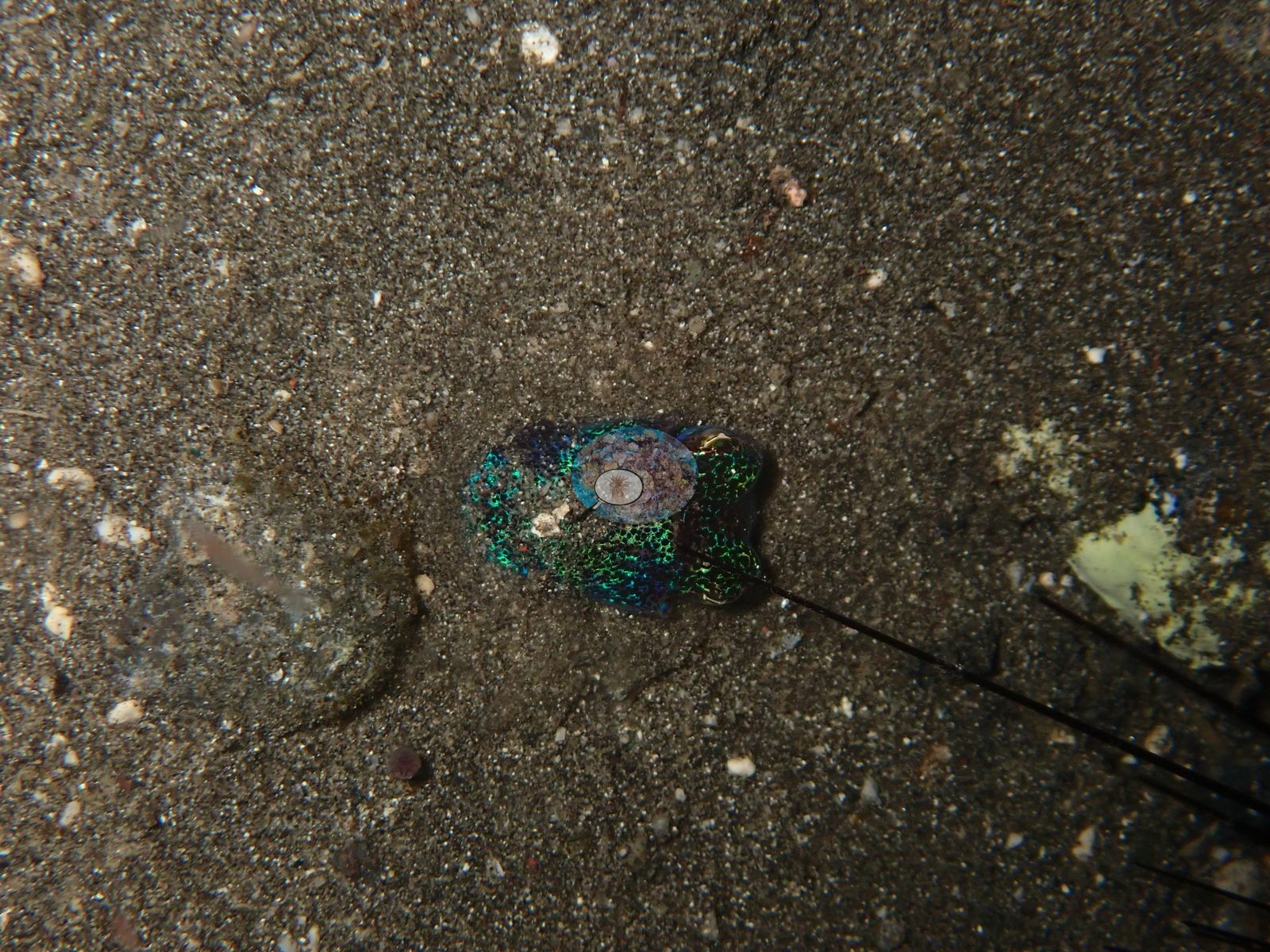
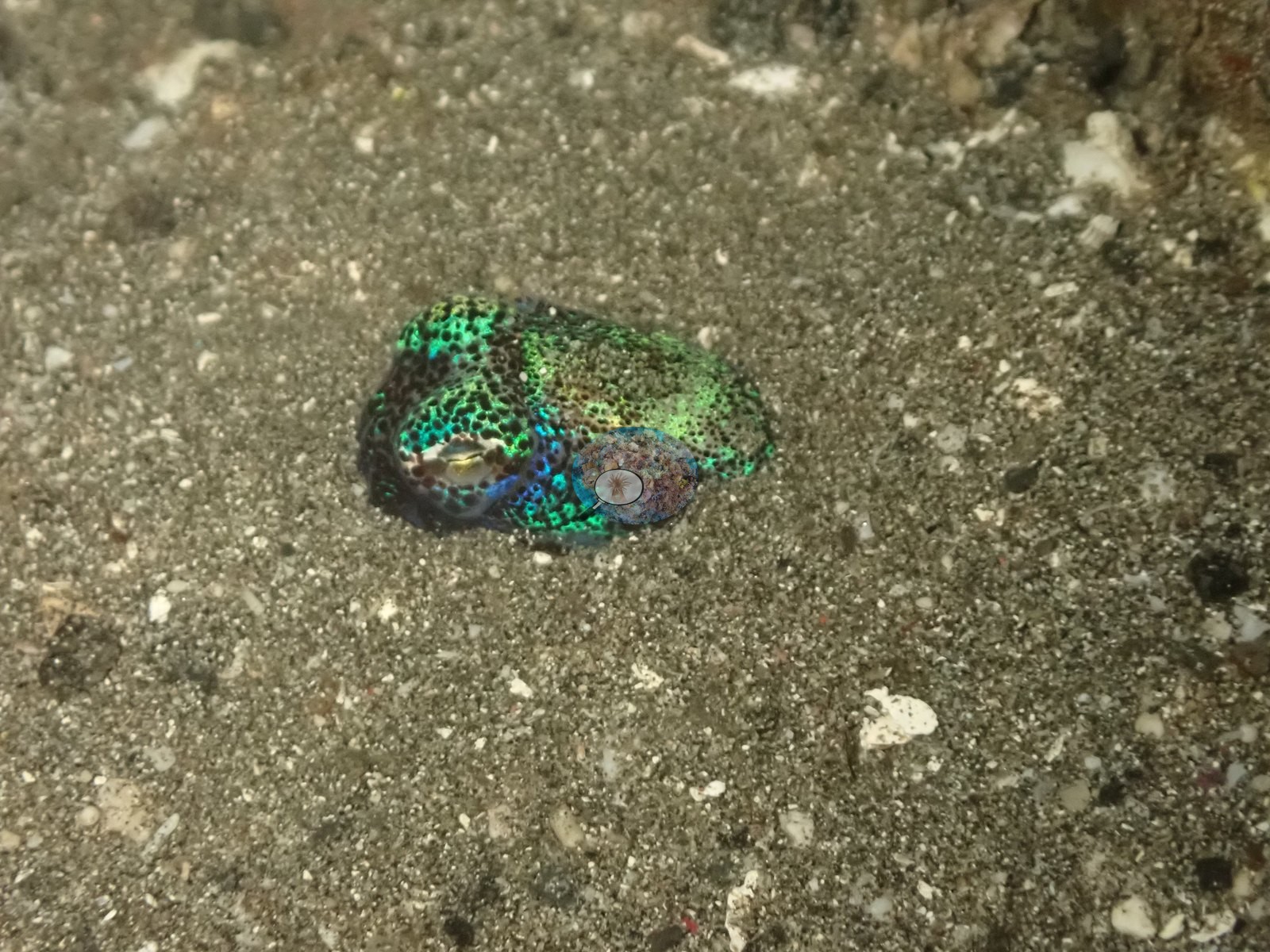
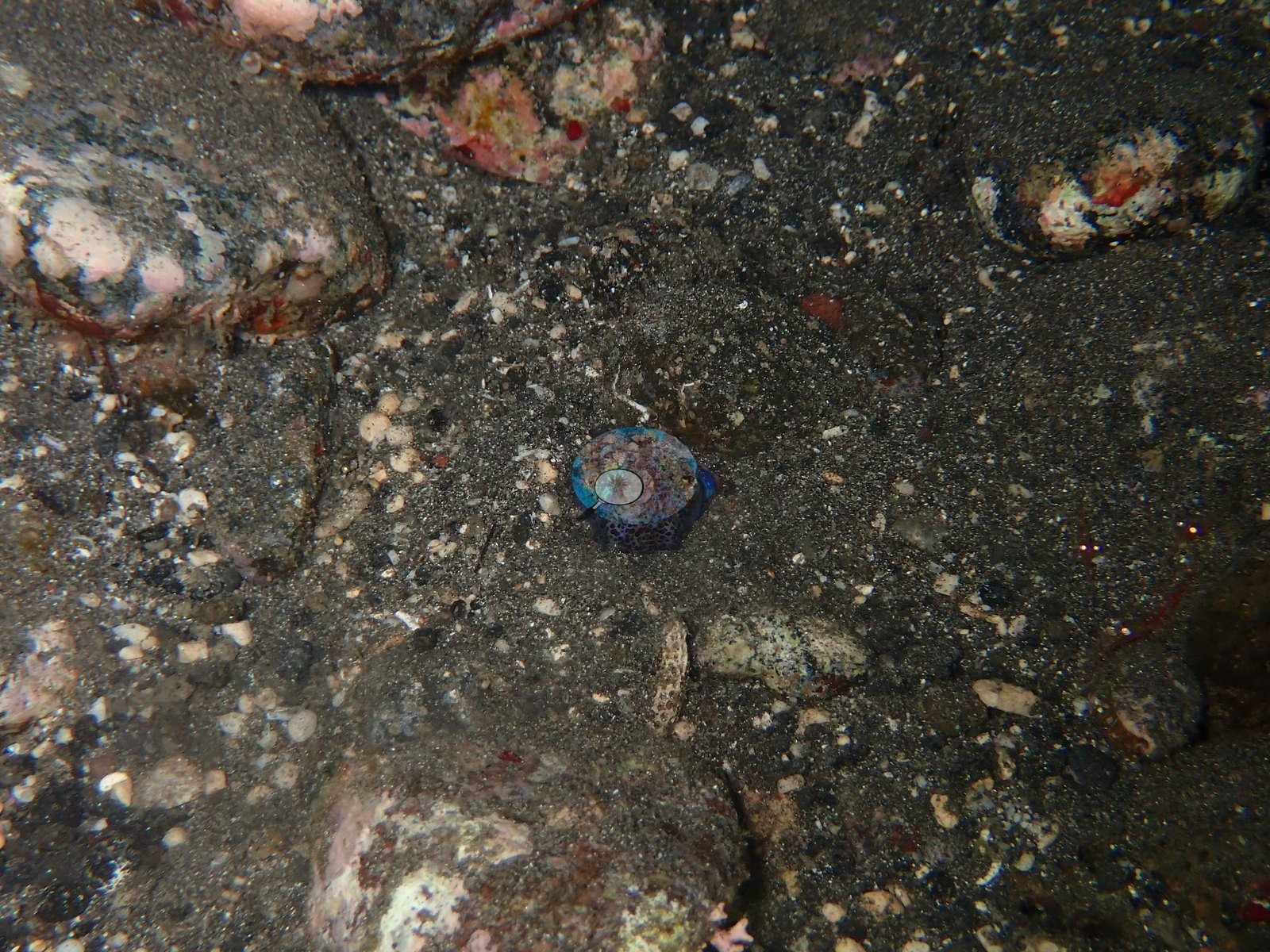
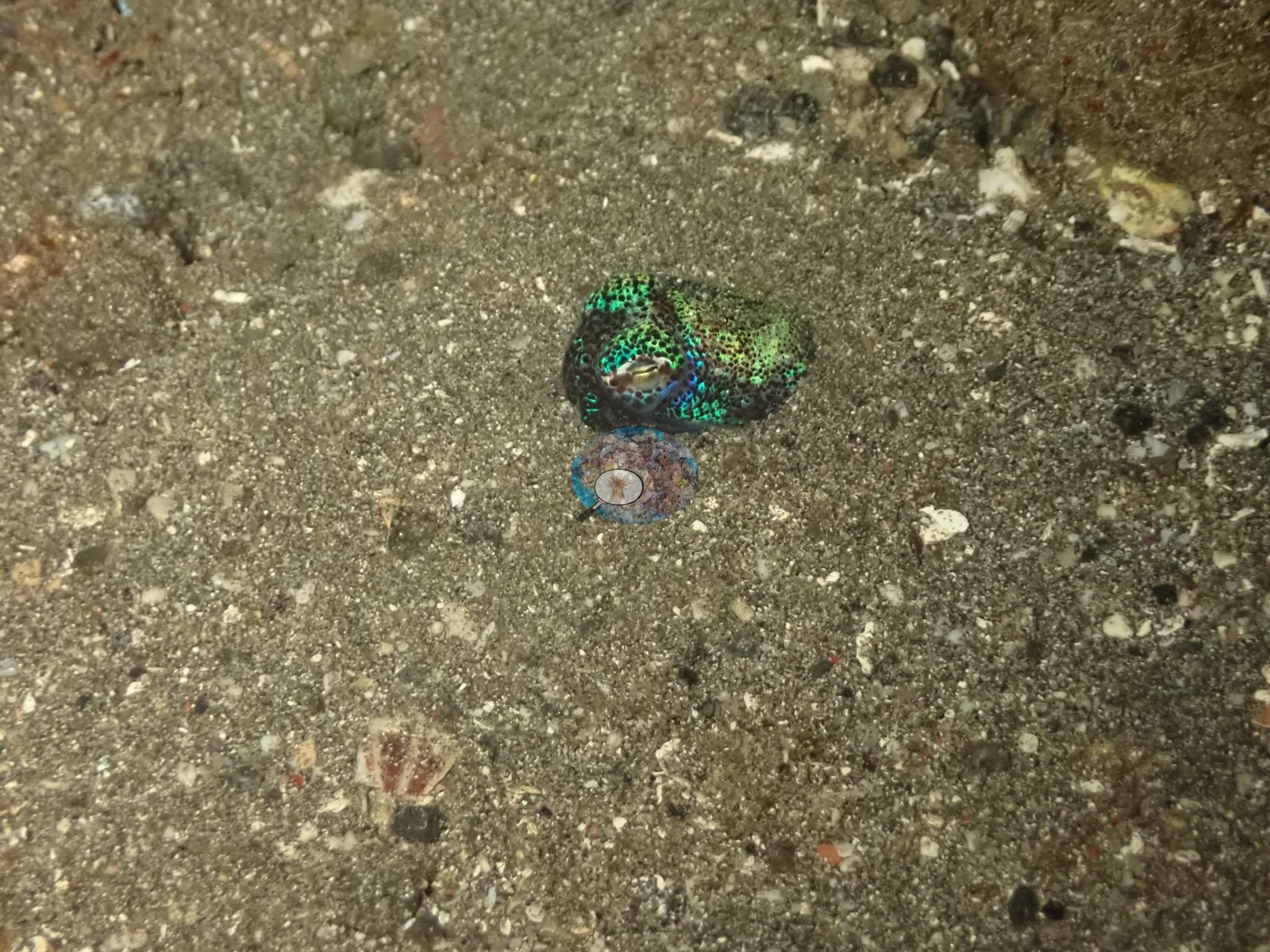
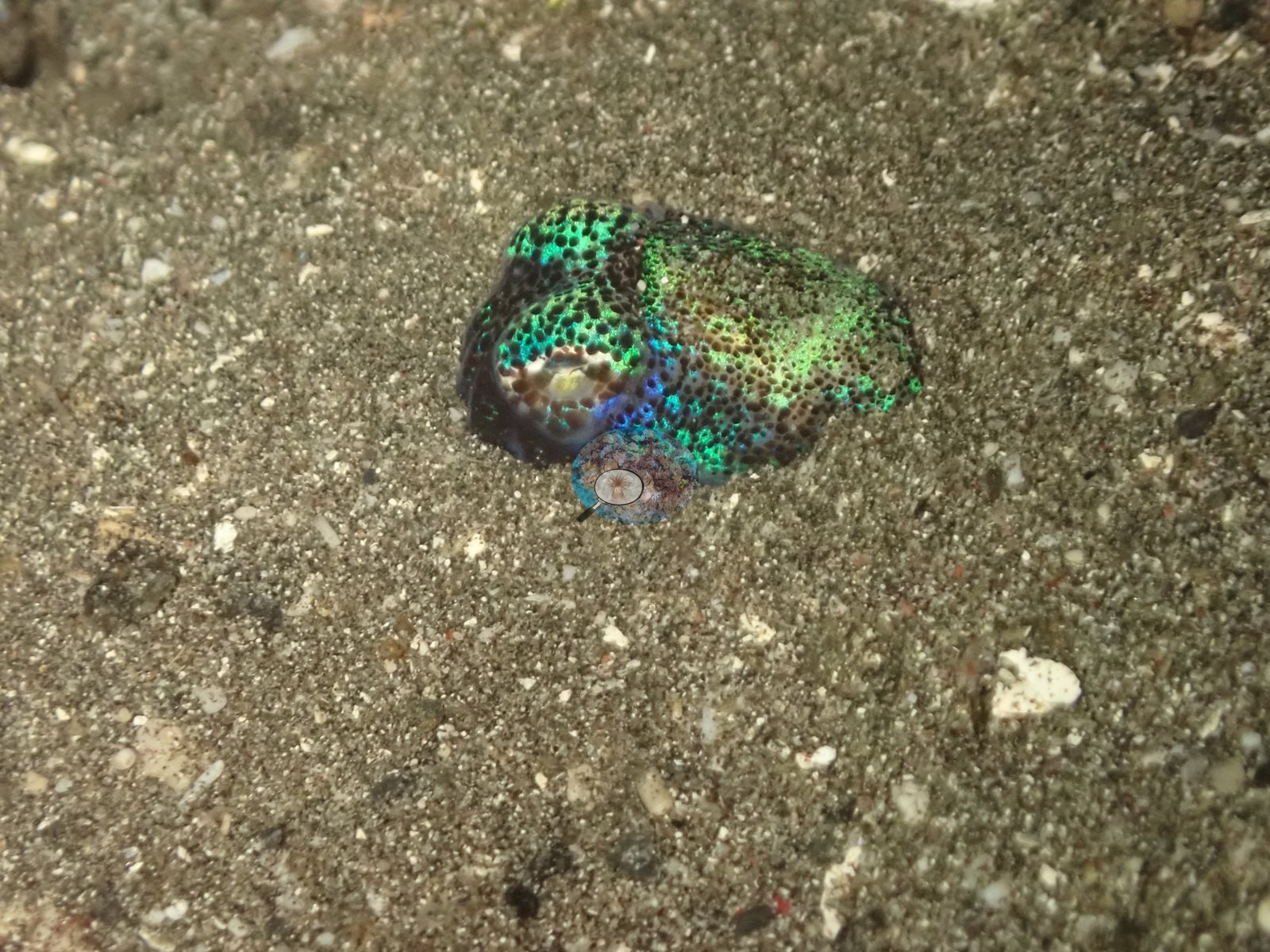
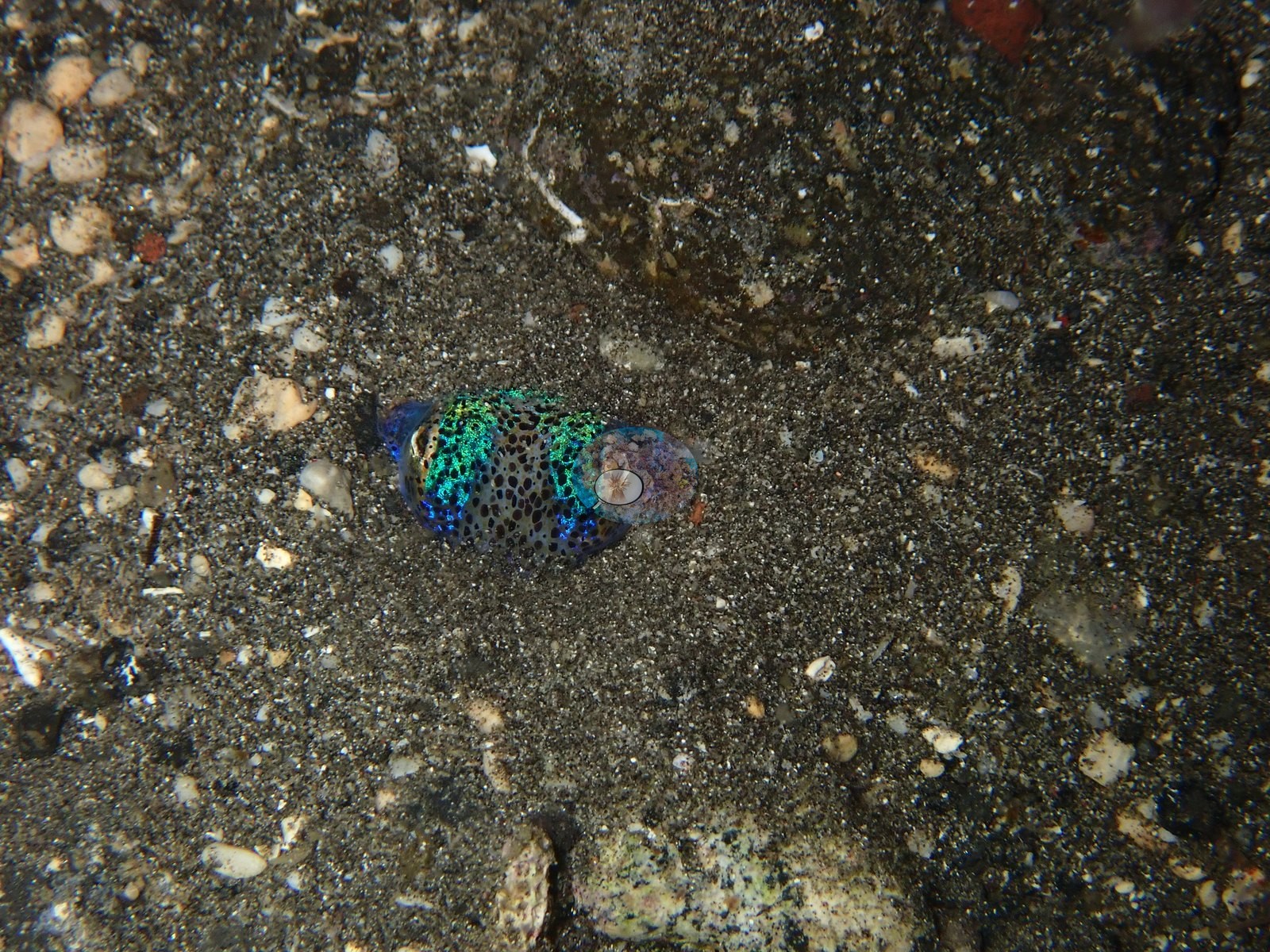
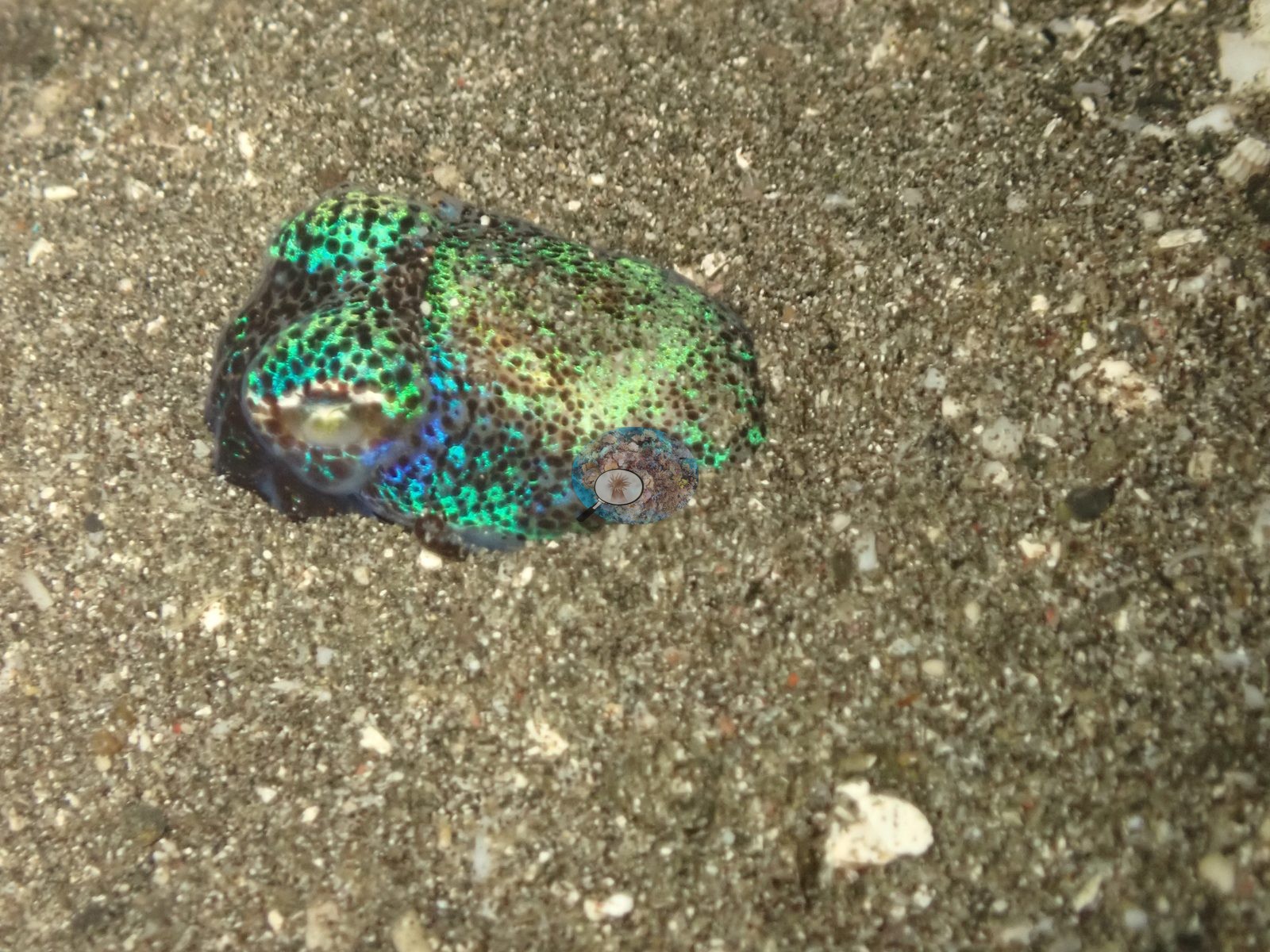
Fauna corroborate the existing pin text in part: the same Image 34 shows a small, mottled black-and-yellow moray eel coiled among the crinoid's arms, and a green, iridescent bobtail squid (Sepiolidae) sits exposed on open sand in Image 1 (several further frames elsewhere in the set show the same or a second individual moments apart and are not separately cited here) (e.g., Image 1).
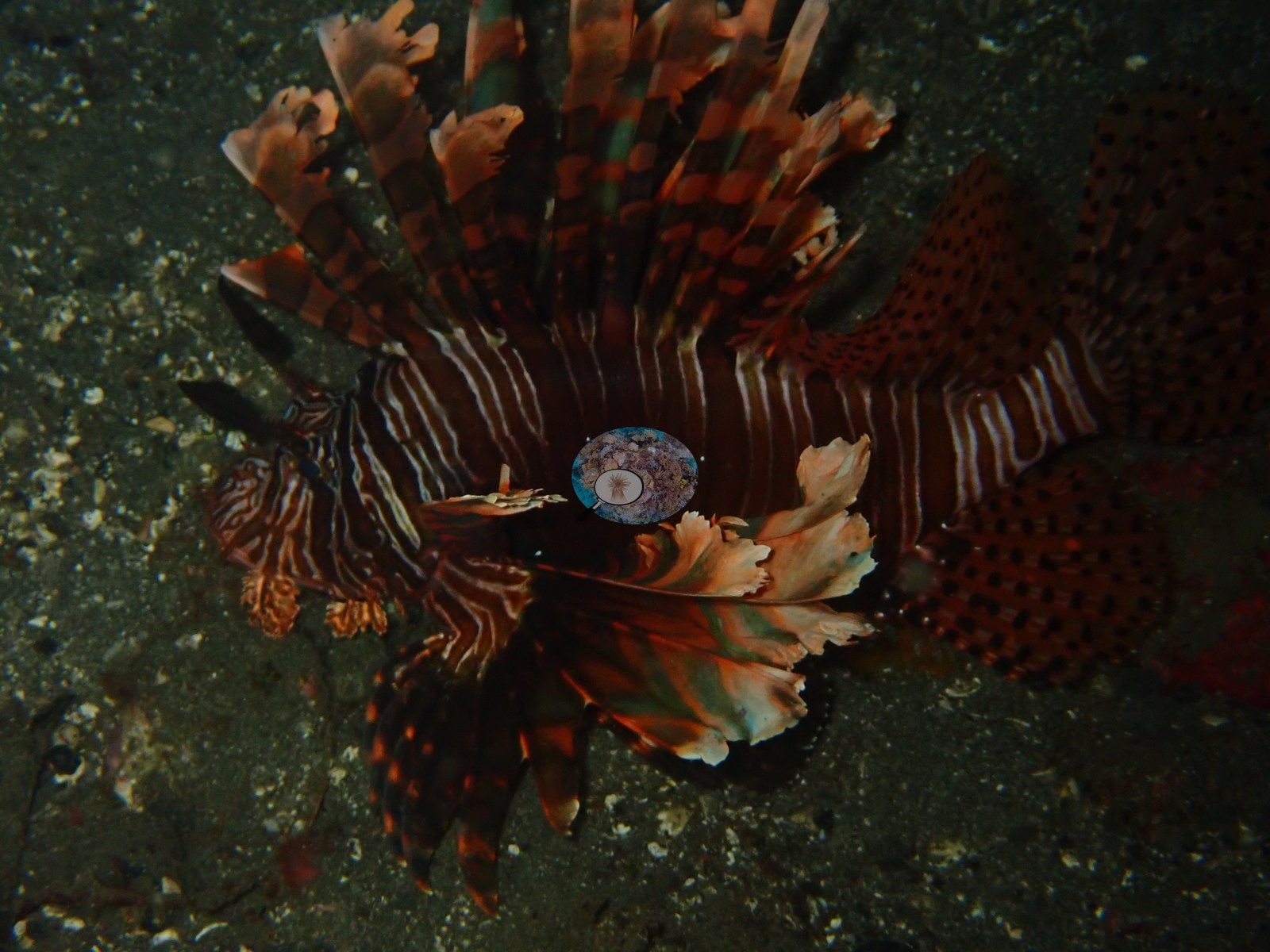
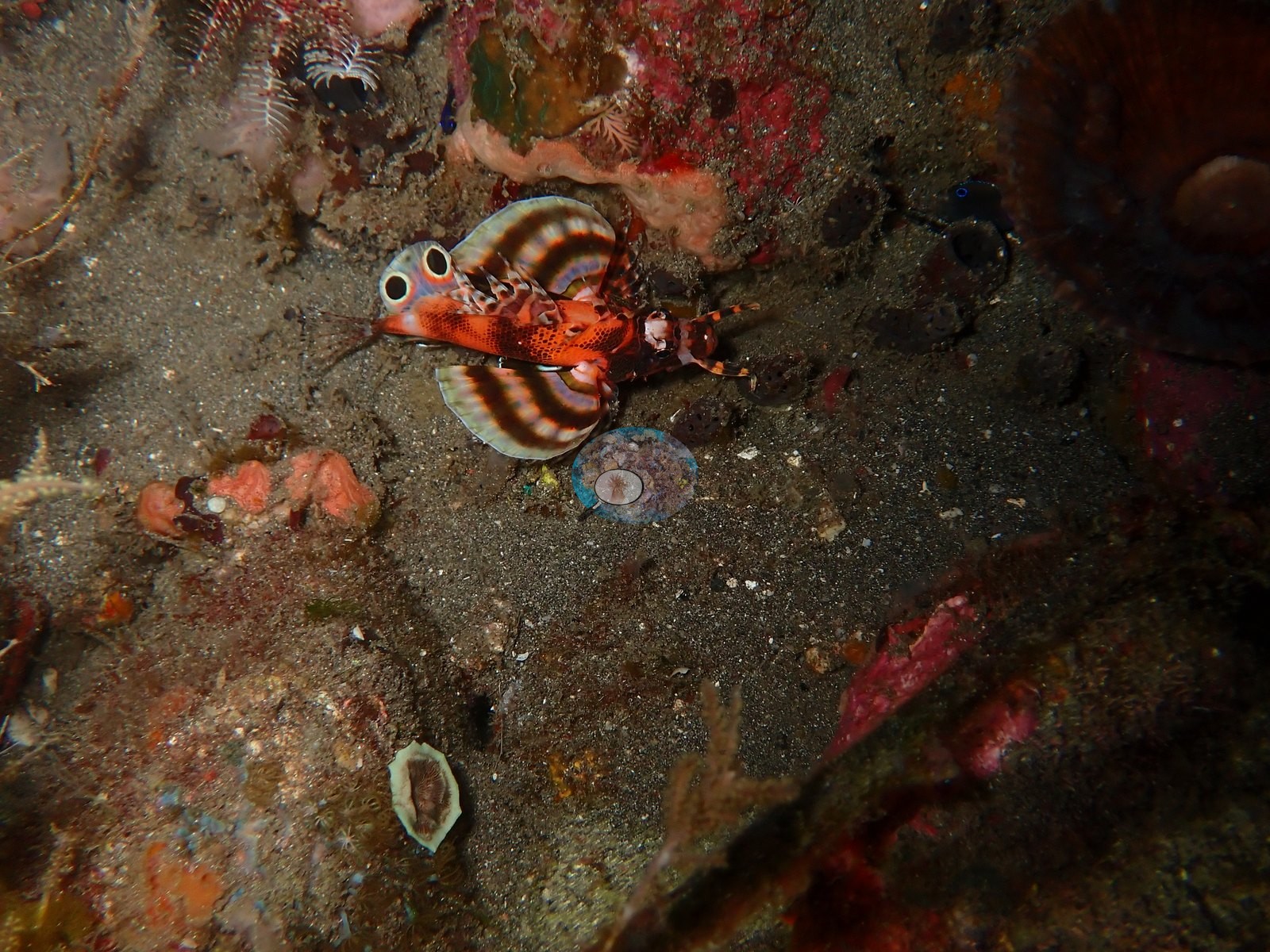
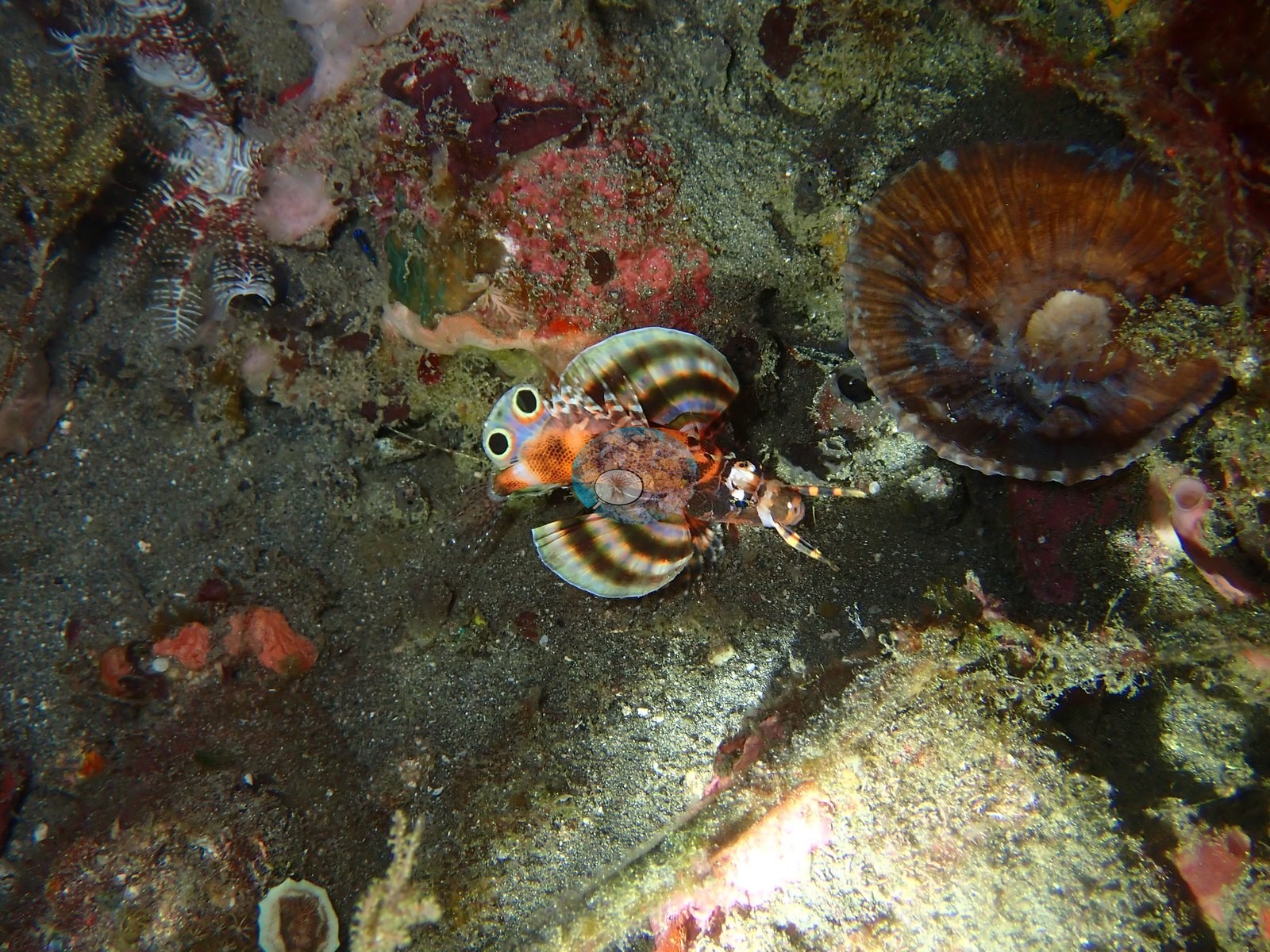
Images 5 and 8 (two angles of the same animal) show an orange-and-white mottled fish with large, paired bulging eyes and huge, fan-like pectoral "wings" banded in black and pale blue, held open beside a barrel-sponge- or mushroom-coral-like round structure -- this could be a flying gurnard (cf. Dactyloptena orientalis) or the site record's previously noted frogfish/scorpionfish-type ambush predator; the identification is not certain from these frames alone (e.g., Image 5, Image 8).
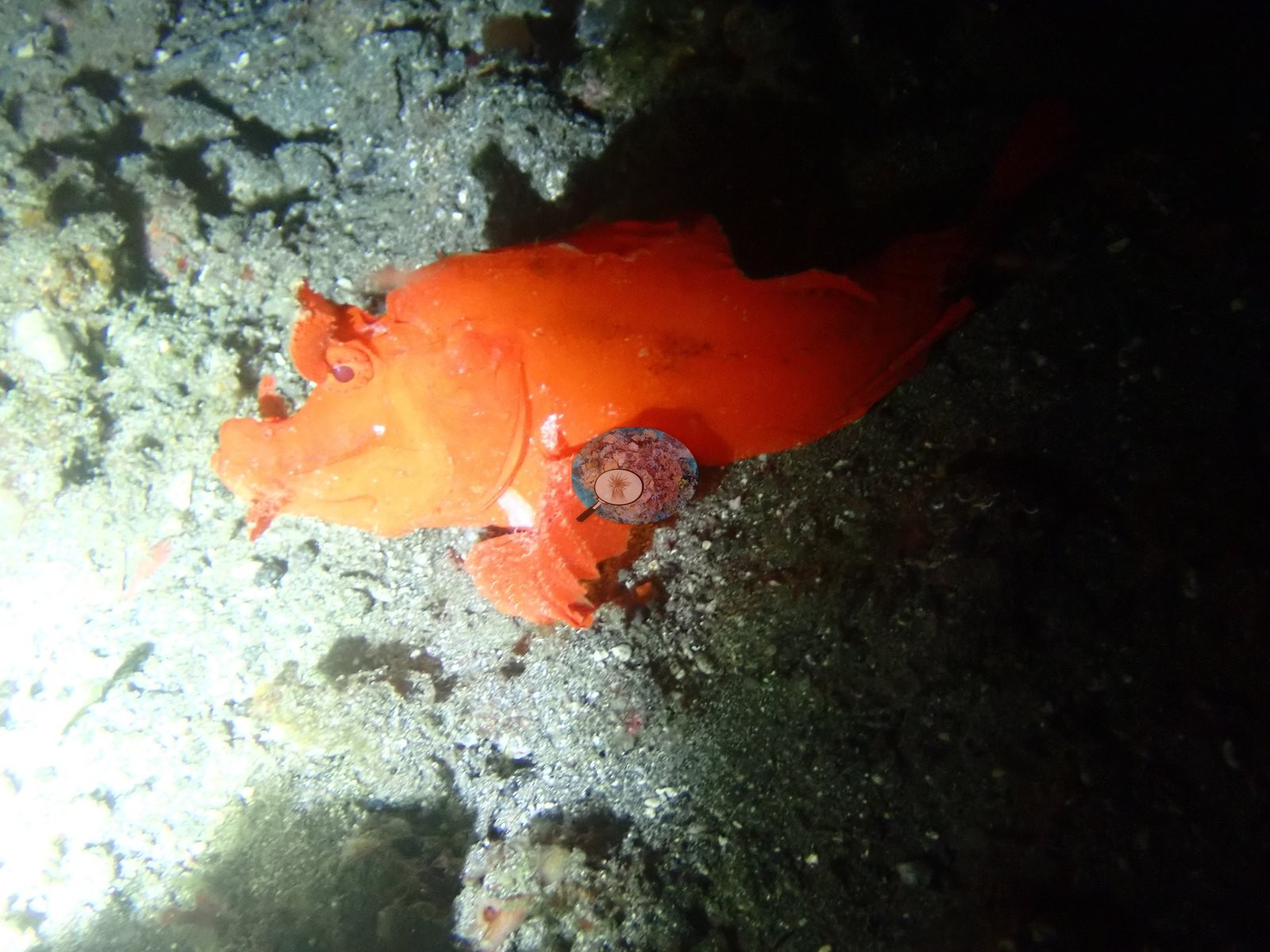
A second, distinct fish in Image 44 is a solid orange animal with a stout head, fused paddle-like pectoral fins, and warty skin, consistent with a frogfish (e.g., Image 44).
Comparisons with other data
Also on record for this site: A night dive on a gently sloping black-sand and rubble habitat with sparse attached benthos, isolated sponges and anemones (e.g., Image 12, Image 21, Image 29).
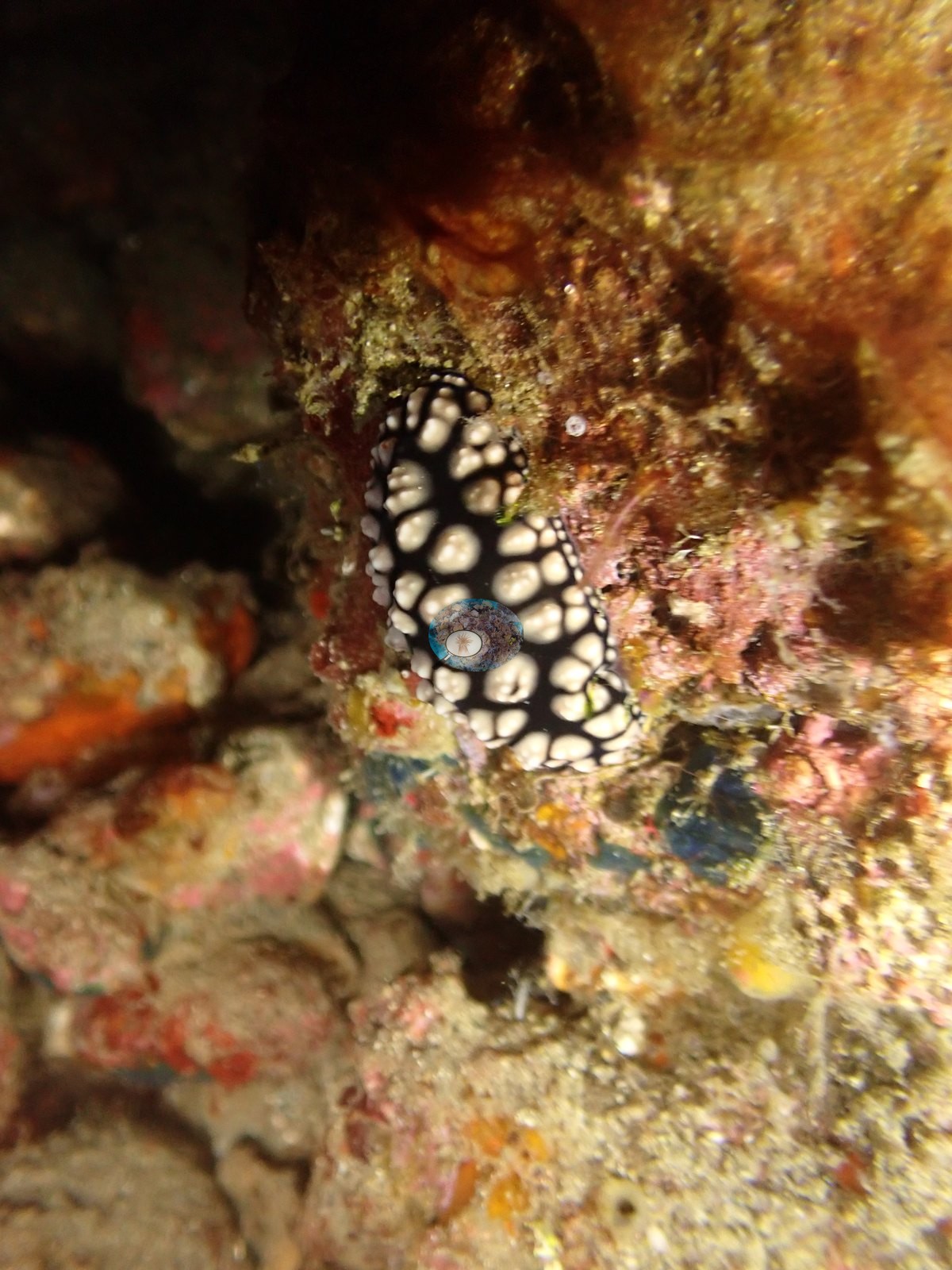
Sea cucumbers, nudibranchs, crinoids, and additional small crustaceans also occur (e.g., Image 10, Image 28, Image 30, Image 32, Image 42).
Data & links
All images from Coral Reef Diagnostics.
© Coral Reef Diagnostics.